

NORTH SAILS BLOG
All
Events
Guides
News
People
Podcast
Sustainability
Tech & Innovation
Travel & Adventure

MELGES 20 TUNING GUIDE
The following tuning guide is meant to be a good starting point when setting up your Melges 20. Depending on total crew weight, wind and sea condition and sailing style you may have to alter your set up slightly from what is given here. As you read this tuning guide, write down any questions you might have and we will be happy to discuss them in detail with you. The goal of this tuning guide is to achieve a rig set up that is fast in all conditions upwind and down. Your new North sails are designed with this “all around” philosophy in mind.
PRE-RACE PREPARATION
One of the most important items you and your team can do in preparing for high performance racing is to have your Melges 20 ready to race. Listed in this section are just a few items we feel are critical for success on the racecourse.
TRAILER AND BOAT
Make sure when transporting your Melges 20 that the keel bulb always sits perfectly in the keel bed of the trailer. If the boat is sitting where she belongs on the trailer you will find the bulb resting perfectly in the keel bed with space in the keel box both in front and in back of the keel. Also packing pre-cut foam between the keel edges / sides and the keel box will help prevent any movement of the keel when trailing. It is important to ensure that the keel fin is not touching the hull fairing plate prior to trailing. It is also important to ensure that the boat stays forward against the bow guide when trailering.
HULL, RUDDER AND KEEL
Class rules do not allow re-shaping of these items.
HULL – For traveling to regattas and general care of your new boat the investment of our bottom trailing cover and 1 piece top cover is well worth the protection it affords.
RUDDER – The rudder should always be removed when not in use and kept in its padded rudder bag. Remember to always put away dry.
KEEL – We just talked about taking care of your keel when the boat is on the trailer. When lowering the keel with the keel crane make sure you have rinsed out the keel box along with the keel guides. Make sure the keel box is free of any lines or padding. Also, make sure you keep the boat level when raising or lowering the keel to ensure the keel fin does not get damaged.
LAUNCHING AND RETRIEVING
Believe it or not this is when most damage occurs to Melges 20s. When trailer launching make sure the keel box is well packed with padding, as the keel wants to shift as soon as the transom starts floating. To ramp launch you will need to use the keel retractor crane and just lift the keel about ½” to ensure you do not damage the hull fairing plate. Make sure you pad the keel well on the leading and trailing edges and make sure you take great care when using the keel retraction crane.
When using an electric hoist be sure to keep the boat level or maybe a few inches down in the bow. Again we are trying to protect the keel. Also by holding the bow down just a few inches we are protecting the spreaders from possibly hanging up on the hoist arm as the spreaders pass the arm. Keep in mind when you lower the bow the keel fin is vulnerable so care must be taken not to damage the keel fin. Make sure you use the aft leg of the lifting bridle attaching it to the transom to help keep the boat in a slight bow down attitude when lifting.
When launching on a hoist it is best to use the keel retractor crane. Hook the keel retractor to the lifting ring on the keel, make sure the lift ring is screwed all the way in the top of the keel. Take tension on the keel lift winch and securely tie off the winch handle to the horn cleat. Install the lifting straps to the lifting pins alongside of the keel utilizing a luggage tag type install. Also, install the longer aft lifting strap through the top rudder gudgeon at the transom using a rudder pin. When hooking up the hoist, put one of the lifting straps over the hook, then the aft leg, then the last lifting strap. Now when you lift the boat take care not to hit the spreaders on the hoist arm. It is best to have the boat at 90 degrees or more to the hoist arm and hold the bow slightly down to keep the rig off the hoist. Keep the keel padding in place until the keel is ready to be lowered and be sure to always hold onto the winch handle, keep all body parts away from keel and take great care when lifting the keel or lowering the keel.
It is a good idea to put some soap and water on the keel guide blocks and in the keel box to allow the keel to seat more easily. If the keel guide blocks do not line up fore and aft perfectly, put a body on the bow or the stern to help tilt the boat to line up the keel guides.
DECK PREPARATION
The factory Melges 20 comes ready to race. There are a few small class legal modifications that really help with sailing the boat.
With your spinnaker up at maximum hoist mark the halyard with a black permanent marker.
With your bow sprit fully extended also mark the tack line/bow sprit extender line. Make sure that you have the proper knot tied in the end of the line to account for it being tied to the tack of the spinnaker. It is best to tie the loop with about a 65mm or 2.5” loop to prevent the tack of the kite from binding on the bow sprit end plug.
The bow sprit is shock corded to retract. Ensure that the shock cord is adjusted so that it is just enough to retract the bow sprit and not retract with too much force.
Attach shockcord from the top of the forward stanchion to the upper shroud above the turnbuckle to prevent the spinnaker sheet from dropping in and catching on the shroud car.
Apply some number scales to the jib track adjustment locations. Place these above where the jib sheet lead comes aft and above the spinnaker bag sock on the port side. Number 1 should align with the traveler car pin when the car is all the way forward on the track. (front of car even with front of track)
Practice – Practice – Practice!
It has been said that each mark rounding can be worth a minute on the course. Now that is a reference between the first group and the last group of boats. That is a lot of time and a majority of it comes at the corners and the first few minutes of a race. Knowing how your Melges 20 accelerates off the starting line is something you need to practice. Sets at the windward mark are critical, especially if you want to gybe right away. Having the ability to pass between two leeward gate marks absolutely requires that you and your crew understand all three spinnaker takedowns, the Mexican, the windward and the leeward. You do not have to have rock star crews in the Melges 20 class to be successful; you do need to have a regular steady crew who are willing to practice. If we had “Time On The Boat Meters” you would find the top finishing boats in our class had the most accumulated time together sailing the Melges 20.
We highly recommend the spinnaker launch system with the retrieval line and spinnaker storage sock in the cockpit. The spinnaker take downs become quick, safe and easy.
RIG SETUP
MAST DOWN
As the Melges 20 comes almost completely ready to race straight from the factory there is very little to do to prepare your boat and mast to be competitive. With the mast down, pull all the halyards down and tie off at the bottom, also make sure the turnbuckles are set evenly with similar amount of threads showing at the top and bottom of the open body. Another thing we like to do is tie some light weight shock cord between the two lower shrouds around the front of the mast 6”- 8” down from their attachment points, also above the lower spreader between the intermediates and the diamond stays, and below the port spreader, also between the Intermediates and around the front side of the forestay about 12” below their attachment points. This keeps the head of the spinnaker from getting jammed between the shrouds and mast on hoists and keeps the kite from getting caught above the lower spreader on a take down.
Double check the spreader angle and symmetry: The following process is performed at the factory when doing the final rigging on every mast. Every mast is laser straightened so when adjusting the diamond statys make sure to keep them symmetrical. We are providing the process for future field checks. Using an angle finder, level the mast using the mast base, check the spreader sweep by placing a straight edge from tip to tip on the diamond shroud or use a string pulled tight.
For masts built prior do July 2013: The upper spreader should measure from the string to the aft side of the mast track 9.2cm and the lower spreader should measure 31cm.
DO NOT ADJUST SPREADER ANGLE FORWARD OF 9 cm AT TOP AND 30 cm AT THE LOWER SPREADERS OR THIS WILL VOID THE MAST WARRANTY.
Spreader angles too far forward makes the mast less forgiving and more prone to inversion with the spinnaker up in heavy wind.
For masts built after July 1st, 2013 utilizing dyform rigging we use the following spreader angles: The upper spreader should be set to 115 mm, the lower spreader set to 320 mm.
To make sure the spreaders are symmetrical, use an angle finder and find zero or level at the mast base, then check the angle on the port spreader and then the starboard spreader. Adjust as needed to make symmetrical and at the same time maintaining the correct sweep. Make sure that the turnbuckle adjuster has at least 4 turns onto the threaded stud. After setting the spreader angle adjust the diamond stays so that you have approximately 75mm (3”) of prebend in the mast and sight up the tunnel and adjust the diamonds to make sure the mast is straight side to side.
Once the rig is ready to step you can slide the mast aft, place the diamond stay over the keel and lock in the mast base to the mast step deck plate. Rest the mast in the mast support on the rear mast hold down bunk. Now, attach the Intermediate shrouds to the outer shroud cars, make sure the shroud cars are all the way forward on the tracks. Also, attach the lower shrouds to the inner sidestay cars and insure that they are all the way forward on the tracks. You will want to ease both intermediates and lowers out at least ¾ of the way on the turnbuckles to ease in attaching the forestay for the very first mast stepping.
Set the diamond stays so that there is approximately 75mm (3”) of prebend in the mast. By tensioning the diamond stays you put more prebend in the rig. The diamonds accomplish two important tuning tasks. First, they put prebend in the mast to better fit the luff curve in the mainsail and set the rig up to sail in a wide variety of conditions without needing a backstay. The other important aspect of the diamond stays is that they support the top of the mast when you are flying the Asymmetrical spinnaker. So, it is important to have enough tension on the diamonds to support the mast with the gennaker is flying. Refer to tuning matrix chart in PDF.
Before stepping the mast it is best to pre furl the jib furler so it is ready to go before stepping the mast. When furling the jib it should furl counter clockwise, so, to wind up the drum turn it clockwise until the drum has filled up with the furling line.
It is possible to step the mast alone but will be easier if you have some one pull forward on the forestay as you walk up the mast. Ensure that the mast base stays securely locked in the deck plate and does not come out as you are walking the mast up. Also, place a sail bag, or the provided keel fin cover over the keel to protect the mast and keel from scratching when raising and lowering the mast. The spinnaker sail bag also works well for this or the factory supplied keel fin cover.
Once the mast is up, attach the Forestay to the furling tang.
MAST UP
With mast stepped attach a 15M or 50’ tape measure to the main halyard and hoist to the top and lock off on the halyard latch.
Check to see that the mast is close to centered by measuring to the top of the outer shroud track at the same position on both sides of the boat. Tighten/loosen the upper shrouds on each side so that the mast is centered side to side.
With the main halyard locked in the up position, measure to the intersection of the transom and the bottom of the hull. The measurement should be 9310mm or 30’6-1/2”. Tighten or loosen the turnbuckle on the forestay to achieve this measurement.
Use the follwing setting for masts built prior to July 2013 with 1X19 shrouds.: You will have to adjust the upper tension when adjusting the forestay to maintain a constant tension on the uppers of 250Kg (550lbs) when checking the mast rake. The upper shroud cars should be in the max forward position for tuning at base. The diamonds should read a tension of approximately 95Kg (210lbs) when the uppers are set at 250Kg tension. Now, move the lower shroud car two holes aft and measure the lower shroud tension at 130Kg (285lbs) and sight up the mast on the aft tunnel side to insure that it is straight side to side. Dial in the settings to achieve the desired tensions with the shroud cars in the base positions.
Be sure to adjust the diamond stays to this setting with the tension gauge and to set the uppers and the diamonds to this tension to check the final mast rake.
Finally, recheck to be sure the mast tip is centered side to side and that the mast rake is 9310mm or 30’6-1/2”.
For masts built after July 2013 with dyform shrouds we use the following base settings using the Loos PT-1 gauge to check the tensions. Note that dyform will produce a higher tension reading for the same tension compared to 1X19. Set the uppers at 275kg (#39), lowers at 135kg (#28), diamonds at 175kg (#28).
RIG TENSION
he tension on the upper shrouds is critical to the upwind shape of primarily the jib and to a smaller degree the mainsail. For maximum speed it is important to adjust the shroud car position on the upper and lower shrouds depending on wind and sea conditions. The Melges 20 is designed with shroud tracks on ramps to facilitate ease of rig tune with minimal turnbuckle adjusting. As the wind increases you can move the upper shroud cars aft to increase rig tension and headstay tension. This in turn helps flatten the jib and depower the rig. So as you start to get overpowered start to move the upper shroud cars aft on the tracks. You will want to be all the way aft by approximately 16knots of wind. The class rules allow for purchase on the sidestay cars to allow the cars to be adjusted more easily. Visit www.melges.com for the latest shroud adjustment system set up.
The lower shrouds control the side-to-side sag or bend of the mast, how much the mast can bend forward in the middle, and the headstay sag. We set the lowers so that when both cars are all the way forward in approximately 7 knots of wind there is approximately 10mm of sag in the mast at the lower spreader.
After you have set up the uppers to the correct wind speed, sail the boat on both tacks checking the mast sag side to side and adjusting the lowers according to the wind speed. Also, check the mainsail depth. If the main is overbending or showing a wrinkle into the mast below the bottom spreader you either need to ease off the diamond tension a bit if the breeze is lighter or pull the lowers aft on the tracks if it is breezier. This will straighten the lower mast section and increase headstay tension flattening the jib. Generally we like to set up the rig so that the main sets up fairly flat with the lower cars at base when we are sitting on the windward side of the boat. With this set up we can pull the lower cars aft to power up the main when needed and not have to pull too much vang on to flatten the mainsail. Generally, if the mainsail is backwinding with the jib in max trim position,(top leach telltale just on the verge of stalling at times but flowing 100% of the time) then you need to bend the mast more to flatten the sail. You can do this either by tightening the diamonds or moving the lower shroud car forward. You will want to just take out the backwinding in the main and not go too far unless you are overpowered and are looking to depower the mainsail further.
Using the North tuning chart in the PDF as a guideline for shroud tensions in the given wind conditions, we then play the cars to fine tune the power in the boat. Generally, if you are all the way aft on the shroud cars and still need to depower the rig further it is time to tighten to the next step in the tuning chart. If you are never moving the cars aft on a beat then generally, you are too tight and should loosen to the next step down on the chart.
Note that in heavy wind it is important to move the lower shroud cars forward 2 holes from your upwind setting prior to going downwind to allow the mast to bend forward down low and reduce the tendancy for the mast to inverse bend with the gennaker up.
SPEED TARGETS
Speed targets are important on any keelboat. If you dial in a good feel for a target speed in all the different conditions you will find that your performance gains will be significant.
Upwind targets are more important than downwind but both will be helpful. Upwind we have developed the following target range that we have found to be fast. An important note is that you need to use an accurate through the water speedo and that a GPS based system will not be accurate enough.
5 to 7 knots of wind = 4.7 to 4.9 knots of boat speed
7 to 10 knots of wind = 4.9 to 5.1 knots of boat speed
10 to 13 knots of wind = 5.1 to 5.3 knots of boat speed
13 to 18 knots of wind = 5.3 to 5.7 knots of boat speed
15+ = > 5.7 knots of boat speed
Downwind the condition where targets pay off the most is in the low soak mode. This speed changes a lot depending on wave and wind conditions and is best called by the tactician for each given condition based on boat to boat performance.
SAIL TRIM
MAINSAIL TRIM
Because the Melges 20 does not have a backstay or main traveler it is relatively simple to trim the main and steer requiring very little movement by the helmsperson. Like other boats main trim on the Melges 20 is keyed off the end of the top horizontal batten. In light to moderate air we trim the main so that the telltale on the top batten is stalled about 25% of the time (the second telltale from the top -at the second batten, is flying 100% of the time). As the wind increases both telltales will fly all the time. In light to moderate air the back end of the top batten should be parallel to the centerline on the boat, in heavy air it will be pointed out as much as 30 degrees. With the square top mainsail on the Melges 20 it is important to not over trim the mainsail. Twist is your friend, when it doubt, ease it out to get the boat going through the water. Also, keeping the mainsail trim soft and very twisted sometimes in order to sail the boat very flat can be very fast. It is important to experiment with given heel angles and main sheet tension in different conditions to see what is working the best.
Following is an overview of each main control and how it should be adjusted.
Outhaul
The Melges 20 likes to have some power down low in the mainsail so we like to keep the outhaul eased about 10-25mm in from the band In most conditions. In the heavy air setting we tend to pull the outhaul out to the band to flatten the sail, especially in flat water. In rougher seas it may be fast to keep the outhaul a bit looser to make the main fuller down low.
Vang
We use the vang upwind as soon as the boat is overpowered. At the early stages of being overpowered we simply snug the vang to help induce mast bend and flatten the mainsail. As you become more overpowered we pull the vang harder to flatten the mainsail and vang sheet. Downwind adjust the vang so the top batten telltale is always flowing, twist is generally good. Generally the vang with the slack taken out of it upwind will be too tight for downwind sailing. It is a good idea to put a number scale on the boom next to the vang track to keep track of fast settings and for an approximate downwind setting. A medium vang setting for the offset reach leg and then a loose setting for the run provides the best performance.
Cunnigham
We use the Cunningham on the Melges 20 as another one of the depowering tools. We pull on just enough to remove any horizontal wrinkles in the sail as soon as we start to get overpowered. As you become overpowered experiment with a very hard Cunningham to flatten the main, pull the draft forward and twist open the head. Again, different wave conditions warrant different settings so you must experiment to find the fast setting. Downwind the Cunningham should be off.
JIB TRIM
Because the jib on the Melges 20 is a high aspect sail (tall and skinny) it is very sensitive to small adjustments in jib sheet tension. Tightening or easing the jib sheet 1/2” can have a big effect on boat speed and pointing.
The Melges 20 jib halyard is set up on a halyard lock system similar to the mainsail. Some adjustment of jib height may be required using an extra shackle on the head of the jib. The standard setting sets the jib so the foot is just off the deck in light air and just touching in more breeze as the shrouds are tightened and is generally a good setting.
Generally in light to medium breeze set the jib lead so that when luffing slowly into the wind the luff breaks evenly. As the wind builds you will want to move the lead aft to flatten the foot and twist the head of the jib to depower.
It is a good idea to put some numbers and dashes corresponding to the different jib car positions on the track. We like to have a dash and number at each hole that the pull pin plunger will seat into. The first dash and #1 will start at the 4th hole back from the front end of the track, at this position the front of the car will be flush with the front of the track.
The Base setting for the jib car is #3. This puts the car in a position where the aft end of the car splits the second bolt from the front of the track.
In winds below about 15 knots it is legal to inhaul the windward jib sheet to narrow the sheeting angle on the jib. This is legal to do and is sometimes fast. It only requires a slight tension on the windward sheet to make a noticeable difference. Take care not to over inhaul as this will be slow. In light to medium conditions we inhaul as much as 25mm on the clew of the jib. It is best to mark the jib sheets in a way that you can easily replicate settings from tack to tack. When in doubt, ease it out! Note: On the newer jibs we’re finding that inhauling is rarely required so take care when inhauling.
We have placed a telltale on the upper leech (near the spreaders) of the jib to help you judge how tight or loose the sheet should be. The general rule of thumb is to trim the sheet hard enough so that the upper leech telltale is just on the edge of stalling, but never stalled. Just as with the mainsail it will be easy to stall the telltale in light air and very hard to stall in heavy air even with the sheet trimmed very hard.
Jib Cloth Tension
Adjust the small line at the tack of the jib so the luff of the sail has some slight wrinkles coming off it. It will be necessary to change the tension depending on the wind speed to keep the wrinkles the same in most conditions. In very heavy air, tension the luff so that the sail is smooth. In flat water it will sometimes be fast to carry some horizontal wrinkles off the luff.
Leechcord
Be sure that your leech cord is not too tight. It is very easy to put a lot of tension on the cord in heavy air and have it too tight in light air. The key is to just stop the flutter in the leach if there is any.
SPINNAKER TRIM
Spinnaker trim on the Melges 20 is much easier than that of a conventional poled boat. There are a few tricks that can make you faster downwind and make your sail handling easier.
You will want to set up the spinnaker sheets to always gybe inside the luff of the kite. So the tack line would be over the top of the spinnaker sheet as it comes aft to the kite. When rigging – “tack over sheet” is your reminder.
Always trim the kite so it is on the edge of collapsing on the luff, it is not fast to over trim the kite.
Gybing the Asymmetric
On the gybe, the fastest method is to have the trimmer ease the kite as the boat heads down, then the forward crew starts to trim the new sheet as quickly as possible to fill the kite on the new gybe. This is called the pre gybe and requires the driver to bear away to almost dead down wind and wait for the clew of the kite to be about half way from the headstay to the side shrouds before turning onto the new gybe.
Mexican Gybe
In heavier wind the Mexican style gybe works the best. It is also best to sail with the jiboutdownwindinplaningconditions. So, the trimmer will want to trim the jib in so that it is snug, the driver goes into the gybe straight away, the trimmer trims the kite in as the boat heads down, the kite fills and backs into the tight jib once the wind hits the kite and jib on the other tack, trimmer blows off the sheet and trims the new sheet as quickly as possible and releasing the jib sheet as soon as possible. When performed properly the kite will blow across the headstay and fill with a pop on the leeward side.
Spinnaker Sets
Forward crew pulls the spinnaker halyard up and the second crew pulls the tack/ pole out. Or, vice/verse, either way works well.
Spinnaker Douse
There are three types of takedowns: the windward, the leeward, and the “Mexican”.
The windward douse is used when doing a port rounding and you are approaching the mark on port tack. The “Mexican” is for rounding a mark to port but your approach is relatively shallow on a starboard tack. The leeward douse is for rounding a mark to starboard while on starboard tack or when you approach the mark at a very sharp angle while on starboard tack and you will have to gybe quickly around a mark leaving it to port.
For the leeward douse, you can either grab the lazy sheet off of the clew, or grab the sheet just above the anti hiking pad to strap the foot. The helmsperson then must bear off slightly, the clew should be pulled in under the mainsail to prevent the kite from blowing over the leech of the mainsail, and then the tack line must be blown off completely. The halyard should then be fed down as the crew gather the spinnaker. The key here is to maintain the tack and foot of the kite and keep it out of the water, also watch for the kite blowing behind the leach of the mainsail.
For the windward douse, the skipper can sail low, while the crew start to trim the windward sheet to pull the kite around to the windward side the forward crew should blow off the tack to unload the pressure off the kite. The clew should be grabbed inside the shrouds and start to stuff the kite in the bag gathering leach first for about 1/3 and then grab both. Steer under the foot to keep the kite on the deck.
For the “Mexican”, as you approach the leeward mark on starboard, the helmsperson should bear off into a slow gybe, the trimmer will over-trim the sheet as the boat gybes to port. Just as the boat is headed directly down wind and the mainsail begins to gybe, blow off the halyard. The spinnaker will blow against the rig and fall on the deck. When the sail is 2/3rds the way down release the tack and stuff the spinnaker in its bag. Practice of these three douses is vital to success on the racecourse.
Spinnaker Douse with Take Down Line
We highly recommend using the take down system on the Melges 20. This system adds greatly to the ease and simplicity of taking the gennaker down. With this system the entire process is simplified. The middle crew typically starts to inhaul the takedown line while counting down 3-2-1 and at zero the forward crew release the gennaker halyard and the tack line guiding the lines out so they do not snag. We always ease the halyard first, even on leeward drops. On a leeward drop after the halyard is eased and the tack released the forward crew should tend to the foot and tack of the kite to keep it out of the water. The driver needs to bear away to flatten the boat. The forward crew can help to stuff the last part of the kite into the sock.
On the set, it is helpful to pull the kite forward to the front of the sock to help it come out easier. Also, tending the kite halyard so it runs out freely helps insure a clean set.
Crew Positioning
Generally in light wind, you want to sit as far forward as possible between the stanchions. Keep in mind that you are not allowed to be in front of the mast. Downwind, you will want to also sit forward and heel the boat to windward as soon as you have enough pressure to sail deep. As the wind builds you want to move the weight aft upwind so the middle crew is centered on the mainsheet swivel. Downwind when planing everyone slide aft as far as possible unless you are in marginal planing conditions. Then it is best to keep the weight more centered and move the weight fore and aft to get the best feel in the boat and keep her planing as long as possible.
IMPORTANT TIPS FOR SAILING DOWNWIND IN HEAVY AIR CONDITIONS
Make sure the rig is set up for the wind and see conditions
Keep the outer shroud cars max aft
Big ease on the kite or blow off the sheet in extreme puffs and waves with bow bury
Mainsail sheeted in with vang off or if main is eased have some vang on
CONCLUSION
The Melges 20 is one of the most exciting new boats available today with rapidly growing fleets and excellent one design racing. We hope all of the tips we mentioned are helpful to your Melges 20 sailing program. Let us remind you that these are the most important and obvious helpful hints that we have provided. Our experts will be happy to go further in detail with you anytime.
Rev R12
READ MORE
READ MORE
ETCHELLS TUNING GUIDE
Download Australian Setup Quick Tuning Chart
Congratulation on your purchase of North One Design Etchells sails.
The following tuning guide is meant to be a good starting point in setting your Etchells rig and sails. (Download the PDF for tables and images.)
We recognize that each Etchells vary slightly from boat to boat and rig to rig. Following are 4 easy steps to set your Etchells up to establish your “BASE” positions for your mast step, rake, upper and lower tensions. You will see on the last page our Quick Tuning Chart with the base position setup for 6 to 9 knots TWS (True Wind Speed). Set your boat up to the “BASE”, and then apply our average wind range settings (yellow). From here we recommend that if necessary you customize and develop your own settings in the boxes provided (orange).
We recommend that you return your boat to “BASE” settings after each days sailing, reducing the chance of losing track of your fast rig settings. Write down the upper and lower turnbuckle calibrations to aid you with returning to BASE setting after each day.
RIG SETUP
SPREADERS
Before stepping your mast, make sure your spreaders are the same length by measuring from the shrouds perpendicular to the side of the mast. The spreaders should be fixed in place straight out, without any sweep forward or aft. Place two tape marks on the spreaders, 1’ 6 ¼” and 1’ 9 ¾” from the side of the mast. These will be used as a reference for jib sheet tension.
MAST STEP
The mast step position controls the pre- bend. Setting up with the correct amount of pre-bend is the platform to control both mainsail and jib shape. Pre-bend relates to forestay sag, being the principle control over the jib sectional shape and your steering groove. The pre-bend is governed by the relationship between the offset position on your mast partner, the alignment of the mast step and your spreader angles, a variable you cannot tune on the water. By working back from the mast partners we eliminate building variables reproducing a consistent pre- bend in your mast to marry the mainsail luff curve. Moving the mast step changes the amount the spreader engages or disengages with the uppers. By moving the mast step aft the pre-bend is increased and conversely moving the mast step forward reduces the pre-bend. This is an important step in matching your mainsail luff curve with your mast bend. This can be customized in the orange mast step box.
Measuring from the aft edge of the mast partner, measure aft along the centerline of the deck 12’ and make a mark.
From this mark on the aft deck measure 12’ 6 ½” to the intersection of the aft face of the mast section and mark the mast step “I” beam. This is now your “BASE” mast step position, for winds between 6 to 12 knots.
MAST RAKE
BASE Rake Setting – Disconnect the forestay above deck and swing it into the mast and mark the top of the gooseneck black bands onto the forestay. Reconnect the forestay and set the rake up at a distance of 48” measured from the black band mark down to the deck following the forestay. From BASE, in light airs we increase the forestay length by up to ¼” being 48 ¼”, subject to your boat helm balance.
MAST RAKE DEVELOPMENTS
In recent times we have seen a trend towards adjusting rake for conditions. The basic rule is longer forestay in light winds to induce weather helm/ feel, and carry a shorter forestay as the wind increases, which will reduce weather helm. If you wish to experiment with this variable we suggest trying base plus ¼” in light and base minus ¼” in fresh conditions.
IMPORTANT: Mast step should be left at BASE position if MAST RAKE is adjusted around wind speed.
UPPER SHROUDS POSITION AND TENSION
Check mast if it is square in boat, by measuring from chain plate to chain plate with the jib halyard (or tape measure) from hounds. Place the upper in chain plate hole # 2 (from the bow). Set the upper tension up using the following steps to achieve “BASE” being 6 to 12 knots TWS. Remove chocks, set backstay so forestay is tensioned to # 10 on the PT-2 ( Loos Gauge). Forestay and mast step must be on BASE.
LOWER SHROUDS POSITION AND TENSION
To establish the 6 to 12 kts TWS “BASE” lower tension place the lower in 4th hole from the front of chain plates. Adjust each lower to read ten on the Loos gauge sighting the mast track is straight. Then take four turns off to establish the 9 to 12 kts TWS “BASE” measurement. Four turns are for one end type turnbuckle (Brolga and Ronstan). If you have a double end turnbuckle, please divide the number by two.
The lowers affect the amount of mid mast sag (side bend). Controlling sag is crucial to setting up mainsail shape and affects helm/balance. Think of the mid sag being similar to how the head stay sag affects the jib. More middle mast sag in light air powers up the mainsail, and less sag in heavy air helps de-power the mainsail. Final adjustment of the lowers should be made while sailing by eyeing up the mast and judging the amount of mid mast sag in fractions. Please note that in fresh conditions the mid mast shall be straight or slightly to windward of a straight line when sighting up the mast track.
MAST BLOCKS
The function of the mast blocks is to adjust the bend in the mast for the conditions. Combined with the backstay and mainsheet tension, the mast blocks will control the bend of the mast and sag of the headstay, which helps the main and jib achieve a fast sail shape for the wind strength. When blocks are added in front of the mast, (step block raised) the bend is taken out, stiffening the mast for heavier air. This will have a great influence in decreasing your headstay sag. As the blocks are taken out from the front of the mast, (step block lowered) the mast is allowed to bend which moves the draft aft in the main, and adds to headstay sag.
If the mainsail looks too flat, or the headstay looks too loose, producing lee-helm, the mast should be moved back at the partners. If not possible, because mast is already against back of partners, then the mast step should be moved forward. If the mainsail looks full (round in the lower front area) and the headstay is too tight, move the mast forward at the partners or move the step aft.
MAIN CUNNINGHAM
Cunningham should not be used until 15 knots and more.
JIB SETTINGS
JIB LEAD
The measurement for an average lead position is 8’ 6 ½” from headstay at the deck to the middle of the jib car. To add power to the jib the lead can be moved forward as much as ¾”. Remember though, the lead position will have to be adjusted with any jib halyard changes. We have found that when the jib lead is set properly, the foot sets very flat.
Jib Twist and Sheet Tension – We sail with two black bands on the spreaders as described in the “Rig set up” section. Measuring from the side of the mast along the spreader to the inside band should be 1’ 6 ¼”. The outside band measures 1’ 9 ¾” from the mast to the band. Using these bands allows the leech of the jib to be adjusted while looking through the spreader window of the mainsail, and increases sheet tension accuracy for different conditions. In light air, the leech of the jib should fall just inside the outside band. As the breeze builds the sheet tension will get tighter, up to the point where the leech of the jib is at the inside band. As the breeze and sea conditions build, the sheet will be adjusted to keep the leech between the bands. In 18+ knots the leech will line up with the middle of the outside band. In huge puffs you may want to be even further out to help keep the boat in control.
On all our jibs we have placed a leech tell tale between the two top battens. This leech tell tale, will help determine the correct sheet tension. For best performance, the leech tale should be on the verge of stalling at all times.
Jib Halyard Tension – We have a jib halyard with 2 balls at 1” increments. Together with the jib halyard fine tune we get plenty of adjustability as the breeze increases and decreases. As a starting point the jib halyard should be adjusted with the tack of the jib about 3” from the deck. In light to medium winds adjust the halyard so wrinkles are barely visible at each tab.
We recommend adjusting the tack, for fine-tuning of the jib luff tension. Completely releasing the tack control will quickly add power to the sail for acceleration out of tacks.
In light to medium conditions, for maximum power, the jib luff should have very little tension and some scallops should be noticed. In breezy conditions, tension the luff quite hard to depower and hold the draft forward.
The LM-2H and GM-6.5 jibs are made standard with “dual set of tabs” for added wind range and versatility. Using the long tabs will add fullness and allow for a tighter headstay in choppy conditions. Generally we use the long tabs in winds below 12-15 knots. As a general rule, if you are not pulling on the backstay to depower, it is probably faster to use the long tabs.
Special note on the top batten pocket for your North Sails Etchells jib:
Your jib comes standard with both a full length and short top batten. Using the full length top batten can increase the effective wind range of your jib.
We suggest always using the short top batten in your jib in winds up to 8 Kts. When winds pick up above 8 Kts, remove the short batten and install the full length top batten. Also use the full length top batten when sail gets older. Any questions, please give us a call.
SPINNAKER SETTINGS
RIG SETUP WHILE RUNNING
Getting the mast raked as far forward as possible is critical to downwind speed. Take out all the blocks in front of the mast (completely lower the step block) after you get the spinnaker up. Ease the backstay off until the mast just rest on the front of the partners. The tip of the mast has moved through several feet, and the entire mast is now angling forward in the boat. To keep the mast from jumping around, it is common to have a separate piece of line attached to your jib tack shackle with a clip at the other end. Lower the jib to the deck, and attach the clip to the jib halyard shackle on the jib head. Pull the jib halyard tight.
Keep the inboard end of the pole approximately 30” above the gooseneck band. Under 8 knots of wind, the pole angle should be about 2 – 4” lower at the outboard end. In 8 – 13 knots of breeze the pole should be about parallel to the water. In over 13 knots, the pole should be raised as much as 6 additional inches at the outboard end.
SAIL CARE
Always store your sails away from the sun and make sure they are clean and completely dry.
Be sure that you always “roll “ your upwind sails. This will help then last longer and remain wrinkle free.
READ MORE
READ MORE
FLYING SCOT TUNING GUIDE
BOAT PREPARATION
MAST AND SHROUD TENSION
The Loose Rig
To measure the aft rake of your mast, hoist a tape measure on the main halyard and hold it tight at the intersection of the transom and the rear deck. This measurement (without your jib up), should be 28’ 4” to 28’ 5 1/2”. On our boat we have placed a channel adjuster above the deck at the joint of the forestay and the wire attached to the toggle. This allows us to quickly adjust the rake and lengthen the forestay if necessary.
To measure the “slop” of the rig, you need to measure the forward rake of the mast. With the tape still hoisted, push the mast forward until the shrouds restrict it. The difference between this forward measurement and the aft measurement should be approximately 2-3”.
The Tight Rig
The tight rig tuning is only functional with the jib cut for this tuning. A Loose Rig, or even a Snug jib put on a tight rig will be too flat, especially in medium winds.
First, drop your shrouds as low as possible in your channel adjusters. This should put the very bottom of the swage fork on your shrouds just barely above the actual chain plate that exits the hull. Raise the mast; hook your jib halyard to your bow plate (and perhaps tie your spinnaker halyard on the bow plate as well as a safety). Tighten the jib halyard until tensioned close to the suggested tension of 240lbs. We use a 3/8” socket wrench in the halyard box to crank the rig up tight enough. The standard aluminum cranks will break if used. It may be a trial and error process until you’ve reached the proper rig and tension. However, once achieved, you will not have to readjust the rig again! We suggest setting your rig up with the rig tension between 220 and 250 pounds. If less than 220, too much headstay sag will develop in medium winds, if more than 250; the mast may be pushed out of column in heavier winds.
The rake measurement, measured with a tape hooked on the main halyard to the joint of the transom on the back deck, should be very close to 28’4”- 28’5”. Farther forward than 28’5 1/2” will result in too “light” of a helm and the need to heel the boat more to keep in balanced. More rake than 28’3” will create too much weather helm.
Snug Rig Jib
The Snug Rig jib will tune very similar to the Tight Rig, using the same methods and tools above.
The rake measurement should still set very close to the 28’ 4”-28’ 5”. The rig tension will be considerably less then the tight rig, however. Set the rig to 80-110 lbs measured on the forestay.
NO MORE TOGGLE
It is no longer necessary to use the toggle to set your rake, jib luff tension or slop in the rig. In fact, you will never ever need to look at it again; your forestay will take the entire rig load while your jib halyard will simply adjust cloth tension.
RUDDER BLADE
In the past we have indicated in our Tuning Guides that the angle of the rudder blade to the rudder head should be set so the blade is much closer to parallel to the rudder head than comes stock from the factory. This has meant moving the blade and redrilling the rudder blade hole.
We have found that this change is not necessary and in some cases has perhaps contributed to rudder blade bending due to increased leverage on the blade.
Instead we feel confidant that setting the rudder blade angle similar to what come stock from the factory (the forward lower tip is approximately 5” aft of a straight line tangent to the forward edge of the rudder blade and parallel to the forward edge of the rudder head) increases the strength of the rudder blade without compromising speed or pointing ability.
SAIL TRIM
MAIN SHEET TRIM
The main should be trimmed so that the upper batten is parallel to the boom (sighted from under the boom looking up the sail). In lighter winds, or when sailing in a great deal of chop, it is helpful to ease the mainsheet slightly so the upper batten is angled out approximately 5º. In drifting conditions, when the boom is hanging on the leech and hooking the upper batten, set the upper batten parallel to centerline of the boat. Only in drifting conditions should the main be trimmed this way, as this will place the boom approximately 2’ (61 cm) off from centerline.
In very heavy winds, with the help of the boom vang, set the mainsheet tension so the upper batten is again angled outboard approximately 5º from parallel to the boom. It is important, in winds above 15 mph, to apply heavy boom vang tension so the mast and boom will bend correctly to sufficiently flatten the sail. When proper vang tension is applied it is not unusual that the boom be deflected from the straight line nearly 3 to 4” (7.6 to 10.2 cm) in heavy breezes. This heavy boom vang tension will help make playing the main much easier, as the sheet will not have quite as much strain as it does in even moderate winds.
Note: Make sure when rounding the windward mark that the boom vang is eased off so more strain is not applied to the mast and boom!
MAINSAIL STEERS THE FLYING SCOT
The mainsail is very important in steering the Scot. The skipper should always hold his mainsheet and be ready to ease it quickly when he feels an increase in his weather helm (i.e. load on the helm acts as a brake). When the boat is tracking well again, and the helm is balanced, he should slowly trim the mainsail back in.
Note: Double check that your mainsheet swivel cleat is angled properly for easy release in a puff. It is dangerous, and slow, to have to use your foot to kick the sheet free from the cleat to release it!
CUNNINGHAM/MAIN HALYARD TENSION
Pull the Cunningham just tight enough to leave a hint of horizontal wrinkles off the lower one-third luff of the sail. With the North Flying Scot main, it is better to err towards being too loose than being too tight. Of course, in a breeze it will require much more Cunningham tension to smooth the sail, but there should still be a hint of horizontal wrinkles.
It is important to start with the proper main halyard tension at the dock. There is a definite tendency to over-tension the halyard and pull all the wrinkles from the luff before any Cunningham is applied. This is especially important to avoid in lighter winds.
BOOM VANG
Downwind, trim the vang just hard enough to keep the boom down and the leech supported on the main. Still use the guide of setting the upper batten being set slightly out from parallel to the boom. When the boom vang is trimmed correctly on a beam to broad reach, the telltale should fly straight off the leech at the upper batten. There is a tendency for the boom vang to be pulled on too hard when sailing downwind, especially in light winds. This will over- tighten the upper leech and, due to the side bend of the mast, over flatten the mainsail. However, it is also easy to “under-vang” in heavier winds downwind and loose valuable power from the top of the main. Be conscious of your top telltale.
As previously mentioned, upwind in heavy air, the vang is set hard enough to restrict the upward movement of the boom to just allow the upper batten to ease no more than 5° to 10° past parallel to the boom. In these conditions, as mentioned, the mainsheet simply acts as a traveler and allows the boom to move mostly sideways and outboard. With each wind velocity the vang tension applied depends primarily on crew weight. Lighter weight crews will tension the vang earlier due to becoming overpowered earlier, while heavier crews might not need boom vang tension until much heavier winds.
OUTHAUL
Your North mainsail is constructed with a shelf foot so it is possible to make the lower half of the main deeper when sailing downwind. Usually the outhaul is tight enough upwind so that there will be only a 1 1/2” to 2” (3.8 cm to 5.1 cm) gap between the side of the boom and the shelf-foot seam in the middle of the foot. In heavy winds, pull the outhaul tighter to close the shelf and flatten the main. In extremely heavy winds, above 18 mph, the outhaul should be tight enough so there is a hard crease from the tack to the clew. In lighter winds or choppy seas, ease the outhaul until the gap between the side of the boom and the shelf seam is 2”. When going downwind, ease the outhaul (if there is time and opportunity) until the gap is a full 3-4”.
JIB LUFF TENSION
As wind velocity changes, it is necessary to change the luff tension on your jib (such as the Cunningham on the main). Simply crank your jib up tight enough to barely leave a hint of wrinkles along the luff. These will appear as “crow’s feet” off each snap. Never leave the halyard tension loose enough so that there is “sag” between each snap, but only crank the halyard so tight that the crow’s feet are removed in heavy winds when overpowered. There is no need to adjust the lashing at the head of your jib if you use the above suggestions.
JIB LEAD POSITION
In most conditions, keep the leads maximum forward on the tracks. In heavy winds and when overpowered, move the leads all the way aft on the tracks.
JIB SHEET TRIM: WINDWARD SHEET TRIM
Proper leeward and windward jib sheet tensions are important for top upwind performance in the Flying Scot. In light and moderate winds, the windward sheet is tensioned upwind in order to pull the clew of the jib to windward of the jib lead track. This will help narrow the slot (since the Scot’s jib slot is normally too wide) and make the lower sections of the jib more powerful.
To set up the trim for upwind sailing pull the leeward sheet until the foot of the jib is just smooth and not curled. The foot should be relatively flat and not baggy, but not so flat that the very bottom of the sail begins to curl up. Next pull in the windward sheet until the clew of the jib falls directly over the middle of the seat. On our boat we actually place a tape mark in the middle of the seat to make it easier to eyeball the position of the clew.
With the weather sheet trimmed the jib foot will become much fuller which will increase the boat’s power and ability to accelerate. Once the boat is up to top speed pull the leeward sheet again until the foot is flatter and the upper batten is angled straight back nearly parallel to the center line of the boat.
When hitting chop or sailing into a lull, ease only the leeward sheet so that the top batten angles outboard 15 to 20 degrees. When back up to speed, pull the leeward sheet back in until the top batten is nearly straight back. Throughout this acceleration process the weather sheet is never eased unless the boat is sailing in very light, nearly drifting conditions or very heavy winds (see below). In this condition the boat will be nearly “close reached” around the course and the weather sheet, therefore will not be applied.
We have found that in heavy winds and when the boat is overpowered the windward sheet will be well eased and at times all the way off. This is necessary because as the mainsheet is eased, you will need to help maintain an open slot between the jib and the main. Also this allows the leech of the jib to open up and be more forgiving, both in terms of heel and steering.
ATTACHING JIB SHEETS
It is best to tie the jib sheet onto the jib with an overhand know so that the knot is 6” away from the clew of the jib. This is important so that when windward sheeting pull from the windward sheet is primarily across instead of directly down. With the knot 6” away from the clew the windward sheet attaches to the jib lower and therefore pulls more sideways.
If you are sailing with 2:1 sheets, the blocks should be tied about 6” from the clew of the jib.
CREW WEIGHT
While the Flying Scot will perform with an extremely wide range of crew weights, we suggest trying to sail with as close to 360 to 450 lb. as possible.
CENTERBOARD
Keep the board all the way down when sailing upwind in all conditions. In heavier winds you may find that the helm balances even better when the board is rolled back from the bottom of the hump 1” to 2”. In very heavy, near survival, winds lower your board only to where the rollers are just touching the flat at the bottom of the hump.
Downwind remember to pull the board up to match the helm balance. On a reach it is not unusual for the board to be as high as 3/4 of the way up when it is breezy.
Remember that the only goal is to balance the helm when sailing off the wind and pulling the board up until the boat will almost sail itself when nearly flat will greatly help to improve the boat’s speed.
SPINNAKER TRIM
Always sail your North spinnaker with a 6” to 12” curl in the luff. Careful concentration is necessary. Use short, smooth, in and out motions on the sheet to keep the spinnaker trimmed correctly. Try to keep from jerking the sheet when the spinnaker begins to collapse! Keep the clews even at all times through adjustments to your topping lift (pole).
In some conditions it is difficult to see the leeward clew behind the mainsail, so you can use another guide, which is to adjust the pole height so that the center vertical seam in the spinnaker is parallel to the mast. We suggest easing the halyard so that the head of the spinnaker is 6” off the mast.
When running, in nearly all conditions, we suggest sitting fairly far aft in the Flying Scot. It is not unusual for the skipper to be up against the aft side of the cockpit with his crew just in front of him, especially when windy.
SHIM YOUR BOARD
On Scot’s older than 5 years it may be helpful to shim the centerboard and trunk for top upwind speed. When sailing through chop an unshimmed board can slop around and become quite inefficient. By gluing fiberglass battens or applying thickened epoxy to the inside of the trunk where the bottom meets the inside of the trunk, the board can be shimmed tightly so that sideways slop will be minimized when the board is fully lowered.
STEERING THE SNUG AND TIGHT RIG JIBS
In light to medium winds, these jibs will steer just similar to the loose rig style jib. When pointing high, allow the weather telltale to stall, but never sail lower than the leeward telltale on the luff of the jib-streaming straight aft. When accelerating, both telltales should be straight aft.
However, in breeze, when the boat is overpowered, it will be unusual, unless sailing through very large waves, that the weather telltale will not show a stall. In fact, in very breezy conditions, the luff of the jib will actually be breaking as far back as 12 inches. With the tight rig jib the groove is quite wide and when trying to accelerate, both telltales will nearly be straight aft, and when sailing in point mode and when trying to depower, again, the luff of the jib will be actually breaking.
When steering in the upper ranges of the “groove” don’t be afraid to allow the windward telltale, and at times even the luff of the jib, break.
SAIL CARE
Your North Sails are constructed out of the best materials on the market today. We make sure of this by testing every roll of cloth we use. Through proper care and maintenance your sails will give you the performance you have come to expect from a North sail.
The most important factor for a long life for your sails is to watch them for signs of wear and tear in high load and chafe areas. Be sure to wash the sails off with fresh water and dry the sails thoroughly before storing. A dry, mild climate is best. Excessive heat can cause problems with the sails due to the possibility of shrinkage. It is best to roll the mainsail and jib.
MAINSAIL
When hoisting and lowering the sail try to minimize the amount of creasing or wrinkling of the sail. Every time the sail gains a crease the cloth breaks down that much faster. Always have someone contain the leech and luff during these procedures.
The battens can be left in the sail without any problems. Be sure to roll the sail down the leech so that the battens will not twist. This could cause damage to the battens.
JIB
When rolling the jib keep the battens perpendicular to the leech. Pay special attention to the battens and batten pockets for wear and tear.
SPINNAKER
The spinnaker is fairly straightforward. Be sure to repair all tears and pulled stitches. Folding the sail when storing is best.
Rev. R03
READ MORE
READ MORE
ROUND NORTH ISLAND RACE
AROUND NEW ZEALAND’S NORTH ISLAND
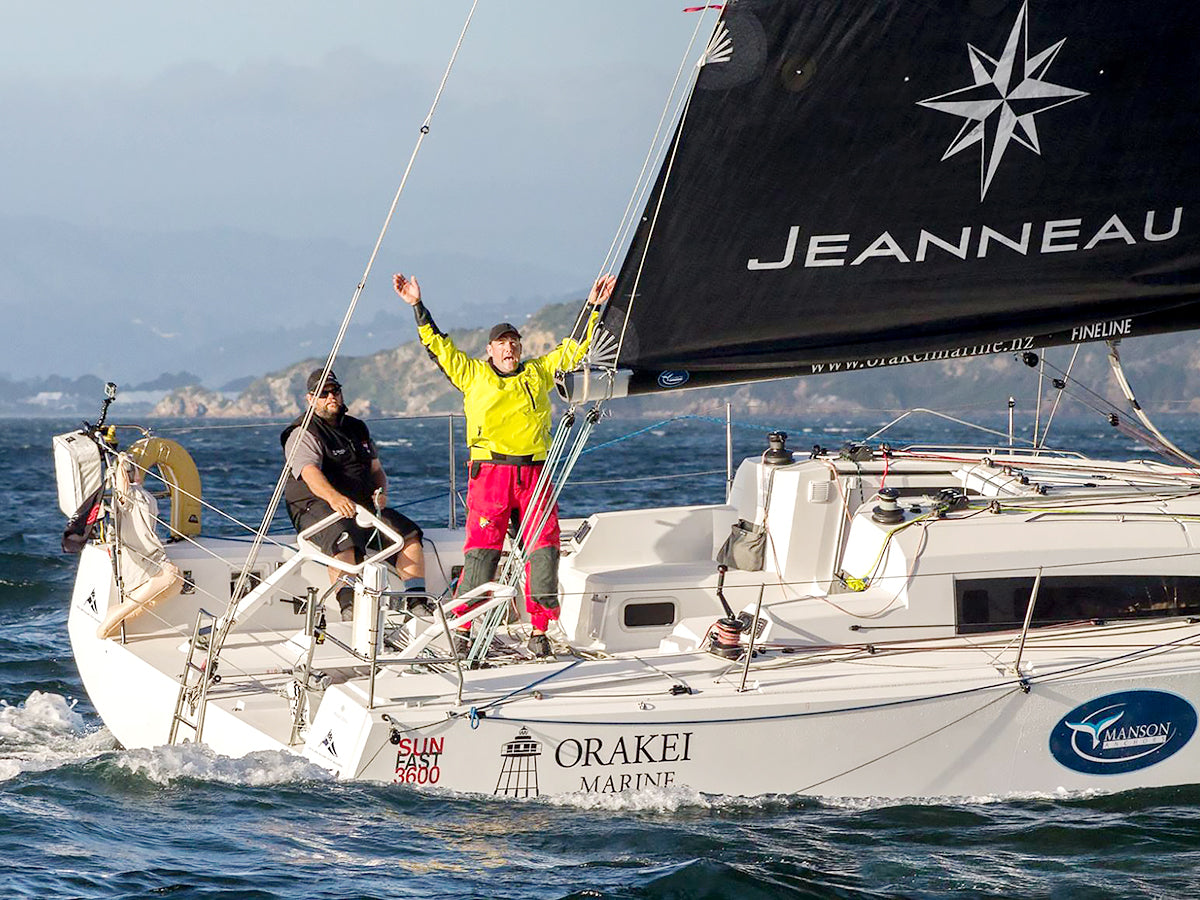
Co-skippers Joliffe and Tucker tie for first on IRC, record the fastest overall time on PHRF and the fifth-fastest elapsed time overall.
Joliffe’s 10.8 meter Jeanneau Sun Fast 3600 showed the big boys a thing or two at the SSANZ two-handed, Round the North Island (RNI) race. North Sails consultant Josh Tucker and co-skipper Damon Joliffe sailed the the boat to the to its full potential to tie for first on IRC and record the fastest overall time on PHRF, the fifth-fastest elapsed time overall.
Tucker and Joliffe have campaigned and practiced for 18 months prior to the race. Both knew what to expect: Tucker has completed the tough, 1,200 mile race three times, and Joliffe two. On top of doing a ton of double-handed racing together, the duo also spent a ton of time in the loft making sure no stone was left unturned in terms of sails.
“We knew from previous races the best sail combinations for reaching and upwind, which is what you mostly get in this race. It was also about knowing the crossovers for each sail. We pretty much knew exactly what we should have up at any time. We made notes as we went and fine-tuned it — it wasn’t just trial and error.”
Tucker says the combination that worked best during the race was reaching with the Code Zero up, with the staysail inside.
“If it got windy we’d reef the main and have the zero and staysail up to keep the center of effort forward. The boats next to us would be going full main and small jib, but we found we could get as good a speed as the forty footers with this combination.”
They also have a 3Di reefing jib. Having a reefing jib means the team didn’t do a single jib change the entire race. ‘We could use the medium-size jib to up to about 22 knots, then we’d reef it and it could go up to 32 knots. You can use up quite a bit of time changing jibs, and a lot of crew energy, too.’
Which brings up another important factor: Tucker and Joliffe undertook an intensive fitness program before starting the race, to make sure they were in top condition.
“We did eight months of boot camp twice a week and completed a half-marathon as a team to make sure we were as fit as possible,’ says Tucker. ‘There’s no point having the best sails if you don’t have the energy to use them properly!”
Richard Bicknell, from North Sails in New Zealand, did three-quarters of the RNI on canting Elliott 50 Ran Tan II, with owner Brian Petersen, before having to travel overseas to sail in a J-Class regatta. Ran Tan finished first in line honors on every leg, ahead of IRC 52 Miss Scarlet, but was ineligible for the overall prize because of the change of crew.
“It was my third RNI and Brian’s second, so we knew that the biggest influence on winning the race was consistency, finishing each leg as fast as possible with minimal downtime. It sounds obvious, but it is easy to lose two or more hours through small problems,” Bicknell said.
In Ran Tan’s sail wardrobe were a new North 3Di main and headsail — a number one headsail which could be reefed to a number three. They also had a furling J4 that sets back from the forestay, a North paneled sail with a locking staysail halyard; a NorLon A4, a fractional code zero on a roller furler, an A7 blast runner, an A2 cut down TP52 sail, a storm jib and trysail. “Being one of the line-honor contenders, we knew that would also mean any wind holes or transitions onboard would allow the back of the fleet to catch up to us,” Bicknell says. ‘That happened a lot — we were really pushed on the second leg into Wellington and only just managed to hang in there.”
North Sails New Zealand also supplied sails for around half of the rest of the fleet, including Shaw 40 “Blink”, which had a new 3Di main and reefing jib for the race; Stewart 34 “Pahi”, which was tweaked up with a push to fly asymmetric as well as a near full inventory of new sails; and Ross 40 “Marshall Law” and Elliott 1050 “Spearhead“, which both sported 3DL inventory.
Roger Hall from North Sails’ Bay of Islands loft traveled with the fleet to provide onshore repair services at each stopover location. North Sails additionally set up a temporary loft in Napier to work with the Wellington sales team, Todd Olson and Dave Molen.
© Steve Cowper
READ MORE
READ MORE

J/24 TUNING GUIDE
Download North Sails J/24 Quick Tuning Matrix: Loos Gauge PRO PT2 | Loos Gauge PRO Model B
Thanks very much for purchasing your J/24 sails from North Sails! We appreciate your business. This tuning guide will help you set up your boat for your new sails. If you have any questions along the way, please give us a call or send us an email. We are always ready to help you and your crew to get the most out of your new sails. Also, we have posted many J/24 related articles that will help improve your understanding of this great boat.
This tuning setup is designed to be as “all purpose” as possible. Like many one designs, the J/24 uses just a few sails to cover a wide range of wind and sea conditions. Set your boat up the way we have described here, and you will have great speed in all conditions.
WITH THE MAST DOWN
Measure the length of your spreaders from the side of the mast to the point where the shrouds touch the end of the spreaders. The spreaders should be as short as possible, 760 mm.
Make sure the spreaders are swept back the same amount on each side:
Tie a small string tightly between the shrouds just above the spreaders
Set the mast on sawhorses, track facing up, with the mast butt (plug in place) resting on a horse.
Using the back edge of the mast shoe as your guide, check to see the string between the shrouds and aft edge of the mast shoe are parallel. (See picture #1)
Picture 1 – If not parallel you will need to take the spreaders off and slide the thru bar in your mast to one side or the other to compensate. If you do not have a thru bar either file down the stubby male fittings or use spreader adjusters to make the sweep the same on each side.
Now check the deflection of the spreaders. This is the distance between the taut string and the aft side of the mast. For the Fathead main this should be 160-165 mm.
If your mast has not been shortened before, measure down the mast from the forestay fixing point as described in the class rule 3.5.2 (7725mm down from headstay pin center). You will need this mark later to find out if your mast can be shortened. You want your mast as short as possible.
The headstay should be as long as possible. To check this, attach the headstay and hold it alongside the front of the mast and make a mark on the headstay corresponding with the mark in Rule 3.5.2 (7725mm down from headstay pin center).
WITH THE MAST UP
Have a class measurer with an approved jig inspect your mast to make sure it is as short as possible. The mark you previously made on the mast must be no lower than 400mm above the sheerline. We like to cut our mast so the lower edge of the band is 405 mm above the sheerline to ensure that our mast will always measure in. See picture #2.
Picture 2
Step the mast and attach all shrouds very loosely (except the backstay) leaving any mast blocks out for the moment. Temporarily hold the mast butt in place on the “I” beam with a pair of vise grip pliers.
Make sure that the mast is positioned as far aft at deck level as possible. Have a friend hold the end of your tape at the stem measurement point and measure again straight to the lower edge to the mast band. We want this measurement to be as close to maximum as possible, 2925mm. Chock the mast at the deck to hold it in this position. See picture #2 above for determining measurement point at stem.
The next step is to place the butt of the mast in the proper position on the “I” beam down below.
Picture 3
Using a friend to hold the end of the tape, measure from the top of the third bolt holding the stem fitting on (inside the boat, up in the bow) to the intersection of the front of the mast and the shoe that rides on the “I” beam. This measurement should be 112.5”.
Hold the mast butt in place at this position temporarily with a pair of vise grips.
Now tighten the upper shrouds to 20 and the lowers to 15 on a Loos Model B tension gauge. Snug the uppers first and then, using the genoa halyard, measure down to the chainplates on both sides to be sure the mast is centered in the boat. Sight up the backside of the mast to be sure it is straight.
Now we will check to make sure the mast butt is in the right place. With the backstay connected (but very,very loose) measure the tension on the headstay. The tip of your gauge should be about 40-50 mm from the close side of the headstay wire. See picture #4 below. (Note: We typically use an older, separate Loos Gauge B for the headstay measurement to keep the new one in good condition!)
If your headstay is tighter than this, you will need to move your butt aft slightly; if it is looser, move it forward slightly. After moving the butt, check and adjust the tension on the shrouds before you recheck the headstay tension.
This should set up your mast with 2 – 2.25” of prebend. To verify, hold the taut main halyard at the gooseneck and sight up the back side of your mast. If you see something different, recheck your measurements.
TUNING CHART
The J/24 has just 4 sails to cover the entire wind range for racing. For the best performance in each condition, we adjust shroud tension depending on wind speed. As the final step in setting up your boat, fill in the attached tuning chart with how many turns of the turnbuckles it take to get from one setting to another. We often adjust our shroud tensions between races (it is against class rules to do so while racing), and it is impossible to get accurate tension gauge readings while the sails are up if there are any waves at all.
NEW LOOS GAUGE PRO MODEL PT-2
Wind Speed (Knots)
Uppers Tension
Uppers (Turns from Base)
Lower Tension
Lower (Turns from Base)
0-5
13
-1
9
-1
5-8 – BASE
15
BASE
12
BASE
8-10
17
1
13
0.5
10-12
18
0.5
15
0.5
12-14
22
1.5
18
0.5
14-16
24
1.5
22
1
16+
26
0
26
1.5
OLD LOOS GAUGE PRO MODEL B
Wind Speed (Knots)
Uppers Tension
Uppers (Turns from Base)
Lower Tension
Lower (Turns from Base)
0-5
18
-1
10
-1
5-8 – BASE
20
BASE
15
BASE
8-10
23
1
18
0.5
10-12
24
0.5
21
0.5
12-14
27
1.5
24
0.5
14-16
29
1.5
27
1
16+
29
0
31
1.5
Special note on the backstay: Adjusting the tension of your shrouds changes backstay tension too. Each time you tighten or loosen your shrouds, be sure to tighten or loosen the two smaller backstay turnbuckles too, so that the blocks riding on the backstay bridles stay 6-8” below the “y’ in the backstay when the adjustment line is slack. This is very important to make sure the headstay can get tight and loose enough depending on conditions. (We typically adjust 6 turns on each backstay leg between settings.)
You are now ready to start sailing!
SAIL TRIM
Follow these guidelines to set up and trim your sails.
Mainsail
Outhaul
0-4 knots: Clew should be ½ “ from black band
4+ knots: Clew should be at band
Cunningham
No cunningham until about 12 knots, then tension until wrinkles in luff are just removed.
Vang
Upwind, keep loose to 8 knots. 8-15 knots, tension to remove all slack. Above 15 knots, tension very hard so boom does not rise at all when the mainsheet is eased.Downwind, tension so top batten is parallel to boom.
Traveler
Keep all the way to windward until entire crew is sitting on weather side with legs out. As soon as crew is on the weather rail with legs over, drop down 6”. After that, use it to keep the boat flat by letting it down until the leeward edge of the car is in the middle of the track. If you have to drop below midline to keep the boat flat, pull on more backstay. We do not like to sail with the traveler to leeward of midline.
Backstay
Use to control fullness on main and genoa. Leave loose until about 8 knots. Slowly tighten as breeze builds to depower boat. At its tightest, the blocks will be all the way down to the top of the pushpit. A small adjustment (1-2”) can have a big effect. Be sure to adjust the backstay turnbuckles with the shrouds.
Mainsheet
Up to 10 knots of wind, tension the mainsheet so the top batten is parallel to the boom and the top tell tale is flying 50-60% of the time. In more than 10 knots, the top tell tale should be flying all the time, because the top of the main will be flatter.
Genoa
Trimming the genoa involves three major adjustments: lead position, halyard tension, and sheet tension.
Halyard Tension
Set the halyard so the luff of the genoa has just a hint of wrinkles. We have found that it is much better to have the halyard too loose than too tight. In light air, make sure that the luff is nice and loose. As the wind builds, tension the halyard to smooth out the luff
It is important to have a few marks on your genoa halyard near the cleats or stopper to duplicate fast settings for a range of conditions. We mark off ½” increments on the line.
Lead Position
It is important to drill two extra holes between each of the factory-drilled holes in your genoa track. The standard spacing is too far apart to be workable.
Having the lead in the correct position is critical for good speed. In moderate breeze (4-8 knots), trim the sail in and position the lead car so that the sail touches the spreader and the chainplates or turnbuckles at exactly the same time. Mark this position. This will be your neutral point for your jib lead.
Sheet Tension
We check the sheet tension by judging how many inches the sail is trimmed away from the end of the spreader. Generally we never trim the sail tighter than 1” from the end of the spreader.
MAINSAIL SETTING CHART
Wind Speed (Knots)
Traveler
Backstay
Topp Batten Angle
Outhaul
0-6
All way up
None
Closed 3 degrees
In 1/2″
7-12
Down 3-4″
1/4 on
Closed 3 degrees to parallel
In 1/2″
12-18
Middle
1/2 to 3/4 on
Parallel to open 3 degrees
In 1/2″
18+
Below CL 2-3″
Max on
Open 3-6 degrees
In 1/2″
GENOA SETTING CHART
Condition
Lead
Halyard
Sheet
0-6 Flat
1 aft of neutral
Wrinkles
3-4″ off spreader
0-6 Choppy
On Neutral
Wrinkles
3-6″ off spreader
7-13 Flat
On Neutral
Just smooth
2-3″ off spreader
7-13 Choppy
1-2 holes forward
Wrinkles
2-4″ off spreader
14-18 Choppy
1-2 holes forward
Smooth
4-6″ off spreader
18+ Choppy
On Neutral
Tight
6-8″ off spreader
Change your settings depending on the condition. As the wind builds and dies, you should be constantly adjusting the genoa sheet.
Class Jib
For fine-tuning the lead position, drill two extra holes between each set of factory holes in the jib track. Start with the jib lead block even with the chainplates and fine tune the lead position from there.
Unlike the genoa, the luff of the jib should always be smooth. In moderately heavy air, you can get the luff too tight. The luff of the sail should break evenly up and down. If the sail breaks high first, move the lead forward; if it breaks low first, move the lead back. Check this carefully and make a mark on the deck in the correct spot.
Sheet tension is critical. We like to adjust the tension on the jib sheet to balance out the helm. If the boat has a bit of weather helm, trim the jib slightly to pull the bow down. If the boat has leeward helm, ease the jib slightly. Because it’s a high aspect sail, you only need to change the tension on the sheet a small amount (1/2” increments) to have a significant effect.
Spinnaker
The spinnaker should be at full hoist at all times. The general rule of trim is to allow 2-4″ (50-102 mm) of curl in the luff of the sail. Set the outboard end of the pole at the same height as the free floating clew of the sail, and pull back on the guy until the pole is perpendicular to the apparent wind. Use the upper pole ring for most conditions. If you are going slow, try raising the pole a couple of inches.
Downwind — Light air
Concentrate on good communication between helmsman and spinnaker trimmer. The goal is to sail as low as possible, while still maintaining good pressure in the spinnaker (measured by tension on the sheet). Try not to sail too high and add distance, but do not sail too low at a slow pace. Be careful not to pull the pole too far aft because it flattens the spinnaker.
Downwind — Heavy air
Don’t square the pole back too far as this makes it easier for the spinnaker to roll out to weather. Do not let the clew of the spinnaker go past the headstay. To sail low without rolling to weather, keep most of the crew hiked to leeward.
Downwind Tips
Pole height is important and changes in increments of 1″ (25 mm) have a big effect on the spinnaker. The luff of the sail should curl evenly from top to bottom. If the spinnaker breaks high, raise the pole. If the break is too low, lower the pole.
Whether or not you use tweakers (or twings), it’s crucial to have a foreguy system that locks the pole in place. Every up and down or back and forth motion of the pole (and hence the spinnaker) is energy that will not be pulling the boat forward.
An efficient system for launching and retrieving the spinnaker is another must. We recommend a deep cockpit launching bag. Call us if you would like one made for your J/24.
In conclusion:
Always sail the boat as flat as possible, except in very light air
Sail as close to the max crew weight limit (400 kg) as possible.
Do not be afraid to change settings if you are slow.
Set up a tuning chart and use it.
Have open positive communication on board.
Sail fast and have fun!
SAIL CARE
Your North Sails are constructed out of the best materials on the market today. We make sure of this by testing every roll of cloth we use. Through proper care and maintenance, your sails will give you the performance you have come to expect.
The most important factor for long sail life is to watch for signs of wear and tear in high load and chafe areas. Be sure to wash the sails off with fresh water, and dry the sails thoroughly before storing. A dry, mild climate is best. Excessive heat can cause problems with the sails due to the possibility of shrinkage. It is best to roll the mainsail, genoa, and jib.
Mainsail
When hoisting and lowering the sail, try to minimize the amount of creasing or wrinkling of the sail. Every time the sail gains a crease, the cloth breaks down that much faster. Always have someone control the leech and luff during these procedures.
The battens can be left in the sail without any problems. Be sure to roll the sail down the leech so that the battens will not twist, which could damage them.
Genoa
With today’s Mylars becoming softer, rolling the genoa has become more difficult. When folding, creasing can develop along folds and accelerate the breaking down of the Mylar. The worst case scenario is for the sail to be rolled and then folded.
Jib
When rolling the jib, keep the battens perpendicular to the leech. Pay special attention to the battens and batten pockets for wear and tear. Since this sail is manufactured from yarn-tempered Dacron, problems can arise due to mishandling.
Spinnaker
Caring for the spinnaker is fairly straightforward. Be sure to repair all tears and pulled stitches as soon as possible. Store the sail folded.
This tuning guide only begins to cover all there is to know about racing the J/24, so North Sails J/24 experts have prepared a professional, in-depth J/24 racing clinic to help you and your fleet improve. In the course of an evening or weekend, you will learn more about racing your J/24 than you could possibly learn in a season of racing on your own. For more details, please call a North Sails J/24 expert!
At North Sails, we are constantly striving to make our products better. If you have any comments on this tuning guide, we’d love to hear from you. Please give us a call or send us an email.
READ MORE
READ MORE
J70 TUNING GUIDE
For answers to your speed and boat handling questions, read our tips and tricks in the J/70 Speed Guide.
READ MORE
READ MORE

3Di RACE REPORT | J/88 'JENGA'
© Paul Wyeth
The Jenga crew is led by two brothers, Sam and Mark Richmond. An avid sailor and Londoner, Mark owns the boat and skippered throughout the weekend. Sam, a North Sails expert out of Gosport, UK was onboard as trimmer. Despite the difficult IRC competition at the annual RORC Easter Challenge, the team had a great weekend on the water and appreciated the opportunity to work in their new sails. Following, as Sam takes a sailmaker’s perspective to review the new sails, Mark uses his experience on the helm to recount how 3Di RACE helped push the boat to its fullest potential.
Since Jenga raced in IRC for the Easter Challenge, their new 3Di RACE sails fell outside of class rules. “For this event, we needed slightly modified sails to get us up to speed with our competition,” said Sam, who coordinated delivery of the sails a few weeks prior. “There are lots of custom IRC boats that have been tweaked for years, but for us it was about seeing what we could get this boat to do. We used a bigger jib, a mainsail with a smaller head, and a lighter weight spinnaker and Code Zero.” The Code Zero is a furling sail, perfect for tighter, off-the-wind angles. “The race with a reaching start, followed by a two mile first leg, was our best result,” he recalled.
Having trimmed the mainsail on Jenga all weekend, Sam reported positively on the readability of 3Di RACE sails. “They have a ‘stiffness’ that allows for perfect shape once trimmed, and still allows the full range of tuning in a smaller boat with a bit more mast bend such as the J88.
“3Di RACE is the latest rendition of North Sails’ proprietary 3Di technology, and is designed to be very adaptable to any boat, making the sails a ‘go-to’ option for racing clients. “The sails held their shape perfectly with our Selden mast, and we could easily adjust our sail controls as the pressure built to maximize power as the mast bent. Overall, I was impressed.”
Mark remarked on the boat’s increased performance with new sails, and the work done to tailor the sails specifically for the J/88. “In over 12 knots the boat went much quicker downwind, especially wing-on-wing, which was a competitive move for us against the symmetrical spinnakers.”
“Smoothness of the sails was impressive. Trimming was significantly easier too, simply adjusting jib halyard tension and moving jib cars had an amazing effect through the transition period, while the wind built and died down. The sails worked well in wider wind ranges, the minor adjustments easing us through the transition while maintaining boat speed and power.”
Sam further remarked on the adjustments made within North Sails, between the design and sales teams, to refine the IRC inventory for the J/88. “We had a lot of work to do on the rigs when we first made J/88 sails. We’ve come a long way since then, which says a lot about the designers and development that’s been progressing which has really made it all come together for this boat. I lifted RACE main and jib onboard before racing and was really surprised with how light they were together. I was super impressed with how they performed after the fact.”
READ MORE
READ MORE
WORLD CUP SERIES 2017: HYERÉS
FINN WORLD CUP SERIES
Sunday wrapped up the World Cup Series in Hyerés, France for Olympic & Paralympic Classes. Competitors couldn’t have asked for more perfect sailing conditions in some of the most competitive fleets in the world. Over 500 sailors from 52 countries came to Hyerés to compete for first place and the gold medal. Familiar faces returned to Hyerés for redemption, and some to defend their previous titles. Lighter winds welcomed the fleet but towards the end of the event, they were seeing big pressure on all courses which made for some major competition. Consistency paid off in all fleets. The medal races concluded Sunday with medals won in the Finn, Laser, Radial, and 470 classes. Hyerés was event #2 in the World Cup series. Next up is Santander, Spain which will round-out the series for 2017.
North Sails clients duked it out to the very end, some claiming gold in the medal race with others achieving hard-won positions among the fleet. Congratulations to Finn sailors Nicholas Heiner for claiming 2nd overall (at his third Finn event!) and silver in the medal race, Ed Wright for achieving 4th position overall, and Ben Cornish for an amazing performance leading the fleet on day 1 & 2, and ending up in 8th place overall.
Best of luck to you all in Santander!
© Robert Deaves
© Robert Deaves
© Robert Deaves
© Robert Deaves
© Robert Deaves
© Robert Deaves
© Robert Deaves
© Robert Deaves
READ MORE
READ MORE
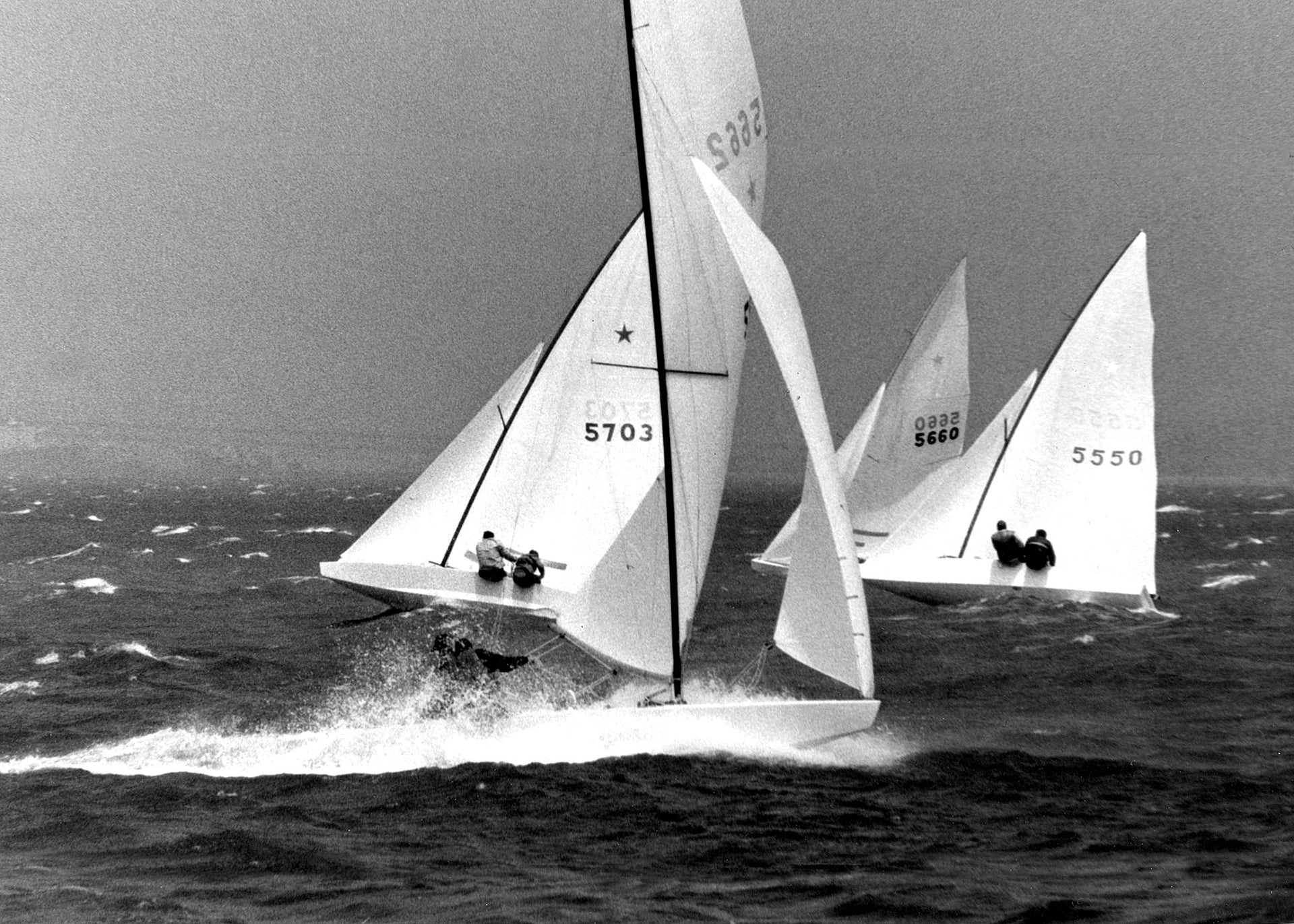
1945 - THE FIRST OF FIVE
Winning the Star Class World Championship is the holy grail of one-design keelboat racing. The classic 23-foot one-design class was launched in 1911, and has since attracted generations of highly skilled teams from around the world. Lowell North won the Star Worlds five times, a feat that has never been equaled. The first was in 1945, when a 15-year-old Lowell crewed for 17-year old Malin Burnham. In 1949 Lowell skippered North Star II in the Worlds and would have easily won except for a DSQ in the second race. His victory in 1957, however, was the most significant. Held in Havana, Cuba, the ’57 Worlds was a challenging light-air event featuring unpredictable winds and strong currents. Results were up and down for most in the fleet, but Lowell and crew James Hill sailing North Star III had an advantage…speed. Often finding themselves in the rear of the fleet like every other competitor, North and Hill displayed a remarkable ability to claw their way back to the front. Lowell followed with World Championship wins in ’59, ’60 and ’73, but 1957 was special. It was the year he started North Sails. Today, North Sails customers win more one-design championships than all other sailmakers combined.
On the water, Lowell is known as one of those guys who just “got it.” Renowned for his results in the Star Class, he medaled in 12 World Championships over 25 years and won gold at the 1968 Olympic Games in Mexico City.
The Star was the primary Olympic class keelboat from 1932 through 2012. Over 8,400 boats have been built, with more than 2,000 actively racing in 170 fleets.
You win some, you lose some. Peter Barrett and Lowell North work on their faces after barely losing the 1967 Star Worlds in Denmark, succeeding the win to Paul Elvstrom.
READ MORE
READ MORE
IRELAND OPTIMIST TRIALS WINNER - OLYMPIC HOPEFUL IN 10 YEARS!
Opti sailors all over the world are competing for a chance to sail at the premier IODA Optimist Worlds in Thailand and the European Championship in Bulgaria this July.
READ MORE
READ MORE
MELGES 24 EUROPEAN SEERIS #1
Thirty-three teams met in Portoroz, Slovenia for the 1st event of the M24 Euro sailing series!
North Sails teams finished 1,2,4,5,7,9,10 in Portoroz, Slovenia for the first event of the Melges 24 European Sailing Series. A fleet of 33 entries from 15 nations showed great representation from all over Europe and the United States. Beautiful spring weather blessed teams with sunshine, clear skies, and fair winds. Very close racing within the top, but the teams that got out ahead early were untouchable once in place. Andrea Racchelli and his team on ‘Altea’ came out 20 points ahead, with unbelievable teamwork and boat speed against their 32 competitors. ‘UpUpUp’ followed behind in 2nd, and ‘FGF Sailing Team’ came in third position.
This is event 1 of 6 total regattas within the 2017 Melges 24 European Sailing Series. The next event is held on Lake Garda in Italy, followed by Marstrand, Sweden in June, and Helsinki, Finland in July/August, where they will award an overall World Champion. The 5th event is taking place in Medemblik, NED just before the series ends with the 6th and final event in Luino, ITA in late October.
Some very competitive racing out there in Portoroz, we can’t wait to see who comes out on top at the end of the series!
‘Altea’, first place finisher in event #1 of M24 European Series © Mauro Melandri
READ MORE
READ MORE
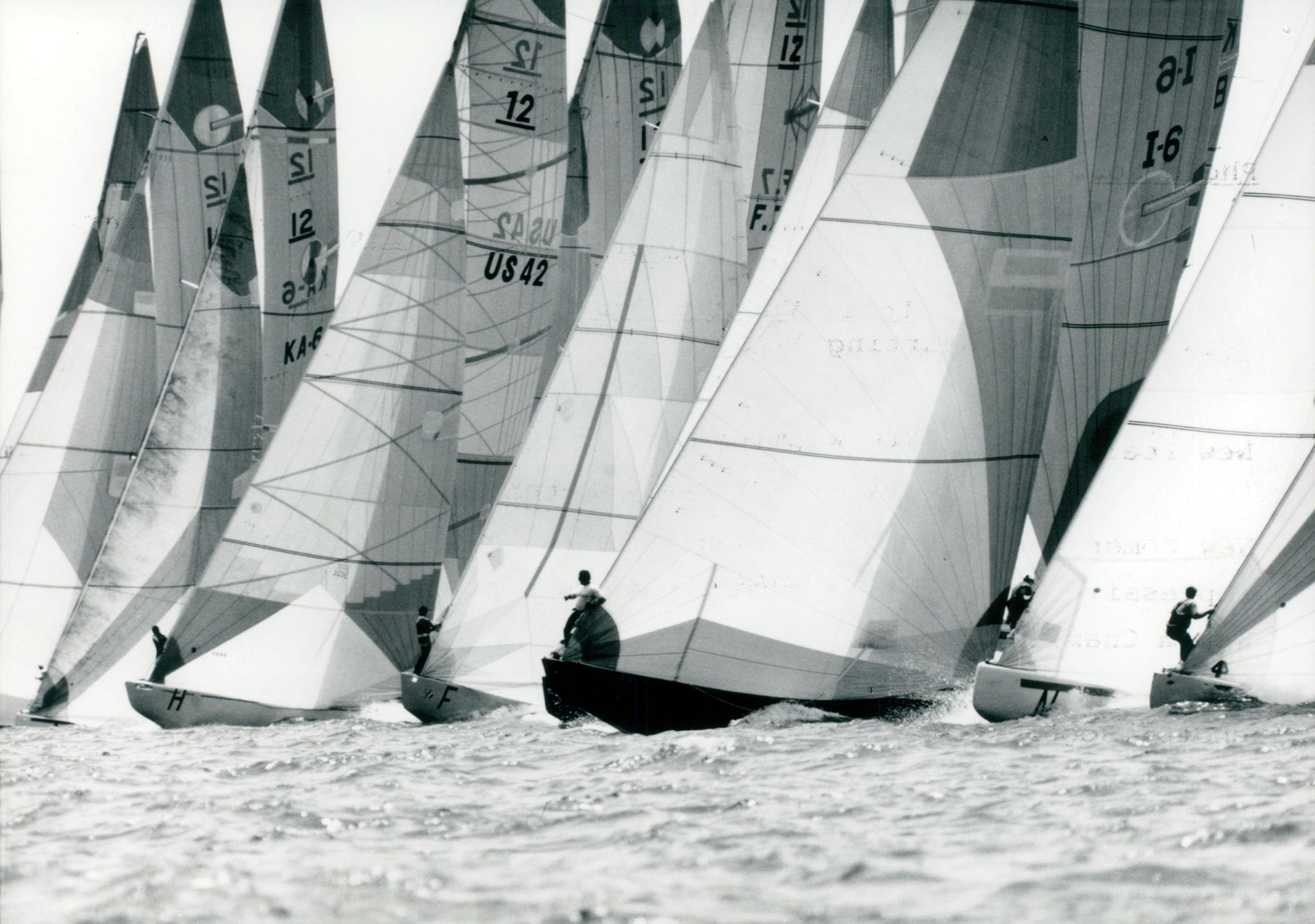
1986 - 12 METRE WORLDS
In early 1986, a series of races were held off of Fremantle as a precursor to the 1987 America’s Cup. Dubbed the 12 Metre World Championship, a dozen syndicates competed in what they considered a “shakedown series” to test their boats against the competition. Some of the teams had new builds, their first development boats. Others hit the line with retrofit, or modified yachts. Many programs built three to four boats in the lead up to the 1987 Cup.
Strong winds led to an extreme regatta, leading to four masts, a dozen booms and numerous sails being destroyed, and a few crew members overboard! Australia III, the heavy-weather Ben Lexcen designed successor to Australia II won the series. The New Zealand challenge boat KZ 5, a fiberglass Bruce Farr design, came in second, with the New York Yacht Club entrant America II third.
Of the visible genoas on the starting line pictured below, woven polyester and aramid cloth is predominant, some cross cut and some tri-radial. In this photo we see three sails made by North including the genoa at center (I-6) and three others (see caption). At this time, North Sails lofts around the word were individually owned and operated, and each loft used their own version of sail design techniques and production processes. This is apparent in the variety of layouts and materials used.
What has not changed is the independent development on each team. The difference between each of the sail plans in this photo is clearly visible in the variety of shapes and patterns. While less obvious today, variety in performance-related decisions, detail, and the resulting product, is still a hallmark of the America’s Cup.
At the starting line in the 1986 12 Metre Worlds off Freemantle. Visible from left to right: North Sails, Hood Sails, North Sails, unknown, Sobstad Sails, North Sails, North Sails.
READ MORE
READ MORE

RECAP: MELGES 24 EUROPEAN SERIES #1
Thirty-three teams met in Portoroz, Slovenia for the 1st event of the M24 Euro sailing series!
North Sails teams finished 1,2,4,5,7,9,10 in Portoroz, Slovenia for the first event of the Melges 24 European Sailing Series. A fleet of 33 entries from 15 nations showed great representation from all over Europe and the United States. Beautiful spring weather blessed teams with sunshine, clear skies, and fair winds. Very close racing within the top, but the teams that got out ahead early were untouchable once in place. Andrea Racchelli and his team on ‘Altea’ came out 20 points ahead, with unbelievable teamwork and boat speed against their 32 competitors. ‘UpUpUp’ followed behind in 2nd, and ‘FGF Sailing Team’ came in third position.
This is event 1 of 6 total regattas within the 2017 Melges 24 European Sailing Series. The next event is held on Lake Garda in Italy, followed by Marstrand, Sweden in June, and Helsinki, Finland in July/August, where they will award an overall World Champion. The 5th event is taking place in Medemblik, NED just before the series ends with the 6th and final event in Luino, ITA in late October.
Some very competitive racing out there in Portoroz, we can’t wait to see who comes out on top at the end of the series!
‘Altea’, first place finisher in event #1 of M24 European Series © Mauro Melandri
Link to final results
READ MORE
READ MORE
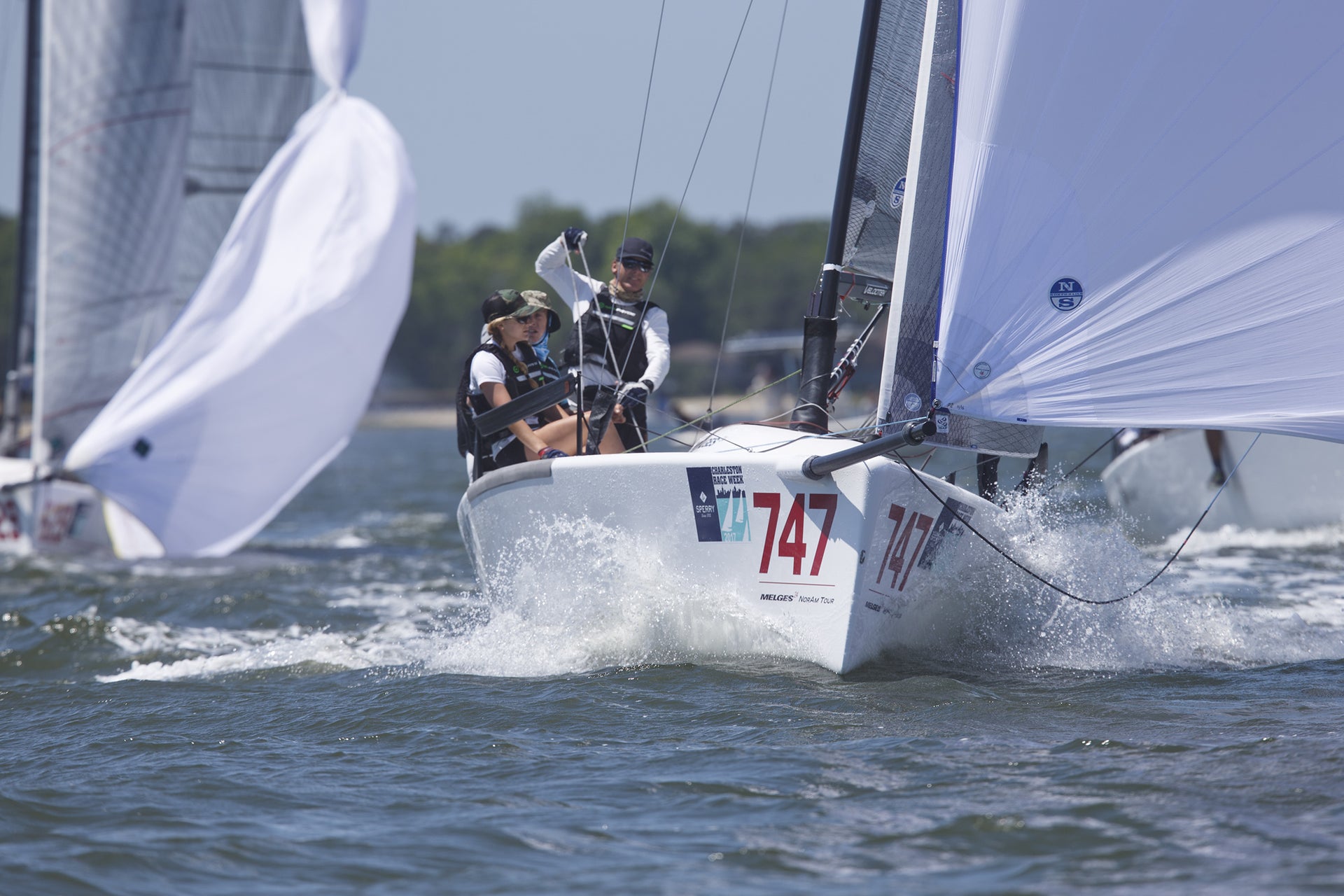
RECAP: RACE WEEK IN CHARLESTON, SC
A beautiful weekend in Charleston welcomed teams who traveled across the country to compete in one of the biggest regattas in the nation
Charleston Race Week 2017 saw 213 boats registered, which made for a fun and exciting week of racing! The J/24, J/70, and Melges 24 fleets were the largest this year with a lot of familiar faces ready to hit the water in one of the most exciting venues south of the mason dixon line, the Cooper River! With different locations and courses for each racing circle, current and land factors come into play and can make or break your strategic plan around the course.
Day one was a day to remember, with picture-perfect conditions for the OD courses inside Charleston Harbor. A building breeze made for fun racing later in the afternoon, especially in the J/70s who were up and planing for the last race. The current switched as the wind became shifty and puffy, which kept the sailors attentive to tricky course dynamics. Keeping track of the current direction in the different parts of the course was very important. “The best way to figure this out was to look at the marks and the committee boat to see which way they were sitting. The race committee boat is very helpful in determining just how strong the current actually is, and in what direction it is flowing which is helpful for starting techniques and calling the lay line,” said North Sails expert, Zeke Horowitz, of the J/70 class. “Constantly looking outside your boat is important as the angles are so apparent, and shifting rapidly,” he continued. “Having someone in the boat to keep an eye on fleet management makes it much easier to tell whether you have chosen the tack to get you ahead, or if you, in fact, need to tack.”
On day two, the J/22 and J/24 fleets were sent to a different location to race, south of the Cooper River Bridge. With the new location and new factors present in that area, it seemed that the leaders were successful by choosing their own destiny. “Looking beyond our current position, and thinking a step ahead allowed us to make gains in this area of racing,” said North Sails expert, Mike Marshall, who skippered J/24 USA 5208. Mike remarked on a solid showing in the J/24 and J/22 fleets this year, noting great competition and camaraderie in both fleets.
A front moved in slowly on Sunday and turned the big breeze on, which kept competitors on their toes while settling into the new pressure. The J/70s had a hard time starting together in both fleets, resulting in two general recalls which lead to the black flag. “Things got interesting when the second fleet finally got off to a good start, and the first fleet was already sailing downwind against the upwind sailors,” recalled Brian Janney of North Sails in San Diego, who sailed on 3 Ball JT. Brian noted the biggest factors of the final day were consistent, “Keeping your head out of the boat and staying in phase was an important part of maintaining confidence in your decisions. Tacking on each small shift made for big gains, as the fleet leaders dug closer and closer into shore.” With relatively flat water and consistent pressure, sailors reported a flatter sail plan worked well.
Another great race week in the books, with outstanding attendance in the J/70 division!
Melges 24 Team ‘SlingSHOT’ catching the perfect puff © Tim Wilkes
Joel Ronning’s “Catapult” coming around the offset mark-ready to roll downwind © Tim Wilkes
READ MORE
READ MORE
SEB MENZIES DOMINATES NEW ZEALAND OPTIMIST NATIONALS WITH 6 BULLETS
SEB MENZIES WINS 6 RACES AND THE CROWN OF THE 2017 NEW ZEALAND OPTIMIST NATIONALS
Seb on the North MZX4: “Always good in all conditions – You can rely on it!”
Our Optimist specialist Derek Scott caught up with Seb Menzies for a quick interview after winning all four New Zealand Ranking regattas and the Nationals championship. Seb used the North Sails crosscut design MZX4 which he describes as:
“Good pointing and fast downwind”.
Enjoy the interview!
READ MORE
READ MORE
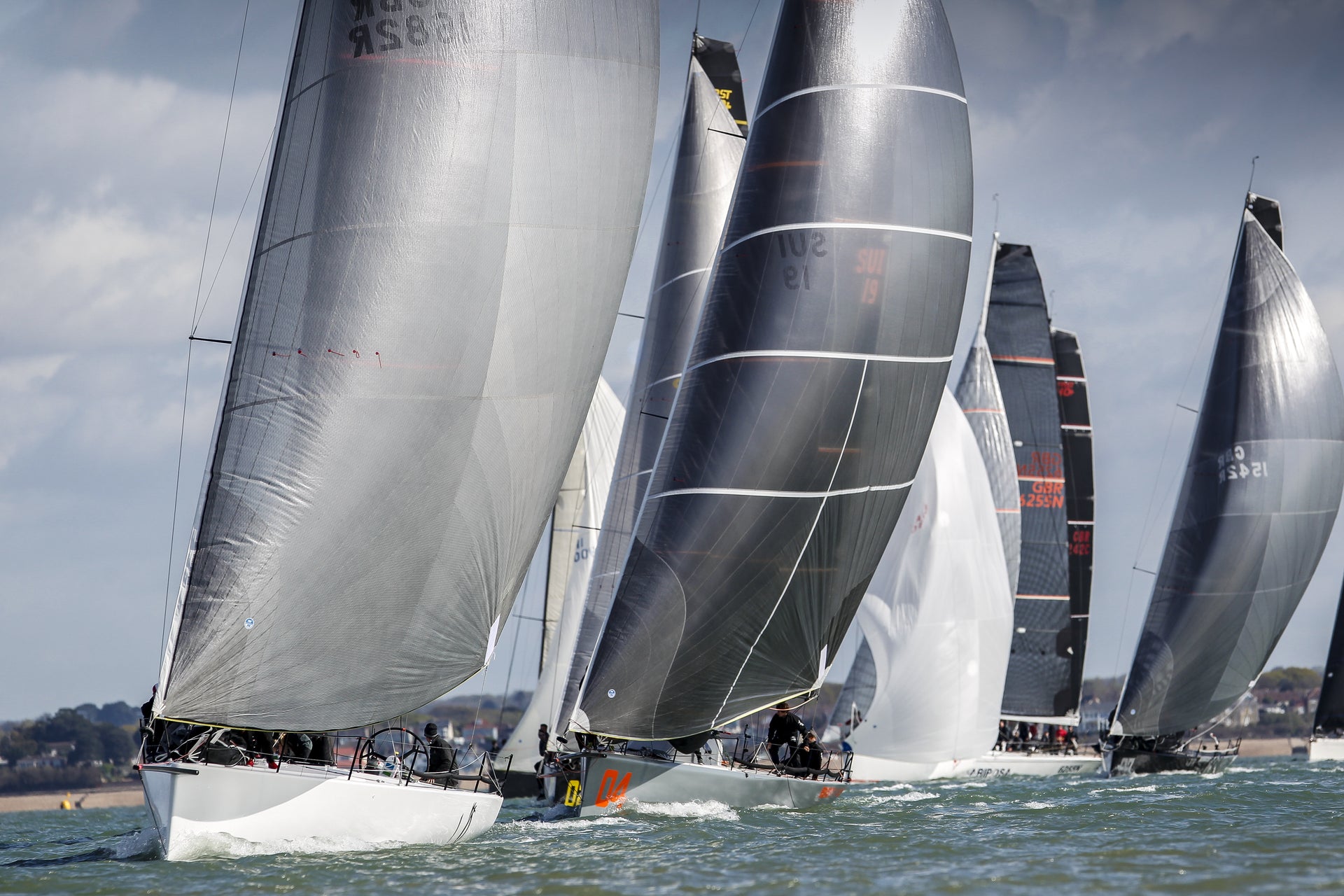
RORC EASTER CHALLENGE 2017
The Royal Ocean Racing Club (RORC) Easter Challenge is an annual event on the Solent off of Cowes, UK. North Sails is proud to sponsor the regatta and was thrilled to offer the Regatta Services program for the third year in a row, including on the water coaching and organized fleet debriefs.
The event was composed of three race days, kicking off with a high of 20 knot winds on Day 1. Temperatures were around 15-18 degrees celsius, which made for pleasant sailing conditions, and the pressure was pretty consistent in terms of speed from the Southeast. As day two came along, the breeze shifted toward the North and became significantly lighter. This made it very shifty and the water became much flatter. The fleet was postponed on Day 3 with WNW winds making for flat conditions again, yet so shifty it was nearly impossible to set an accurate course. Finally, the pressure filled in and was more consistent, allowing the RC to get races off in the best sailing conditions possible.
Tide has a major effect on the racing in this area. Race strategy is a huge part of pre-race set up and practice, which makes it key to get on the water a little early to figure things out. Starts are very important as it is very hard to catch up in a fleet like this. There are lots of experienced local sailors that compete at this event each year, which is obvious in the races as the competition is quite tough, and teams really know their way around this area with the crazy tides and current!
The fleet completed windward-leeward style races with three longer distance races around buoys that toured the Solent. Not the typical conventional racing, but it kept things interesting and was a lot of fun to sail all around the Solent. The event concluded with 8 total races, making for a successful finish for North Sails clients who secured places in the top five in all divisions.
Daily debrief with North Sails © Paul Wyeth
© Paul Wyeth
© Paul Wyeth
© Paul Wyeth
© Paul Wyeth
READ MORE
READ MORE

J/70'S AND J/24'S SPEND EASTER WEEKEND IN COLUMBIA, SC
Thursday before the event, North Sails Tim Healy ran a J70 clinic with practice races, and on-the-water coaching followed up by a well attended debrief.
READ MORE
READ MORE
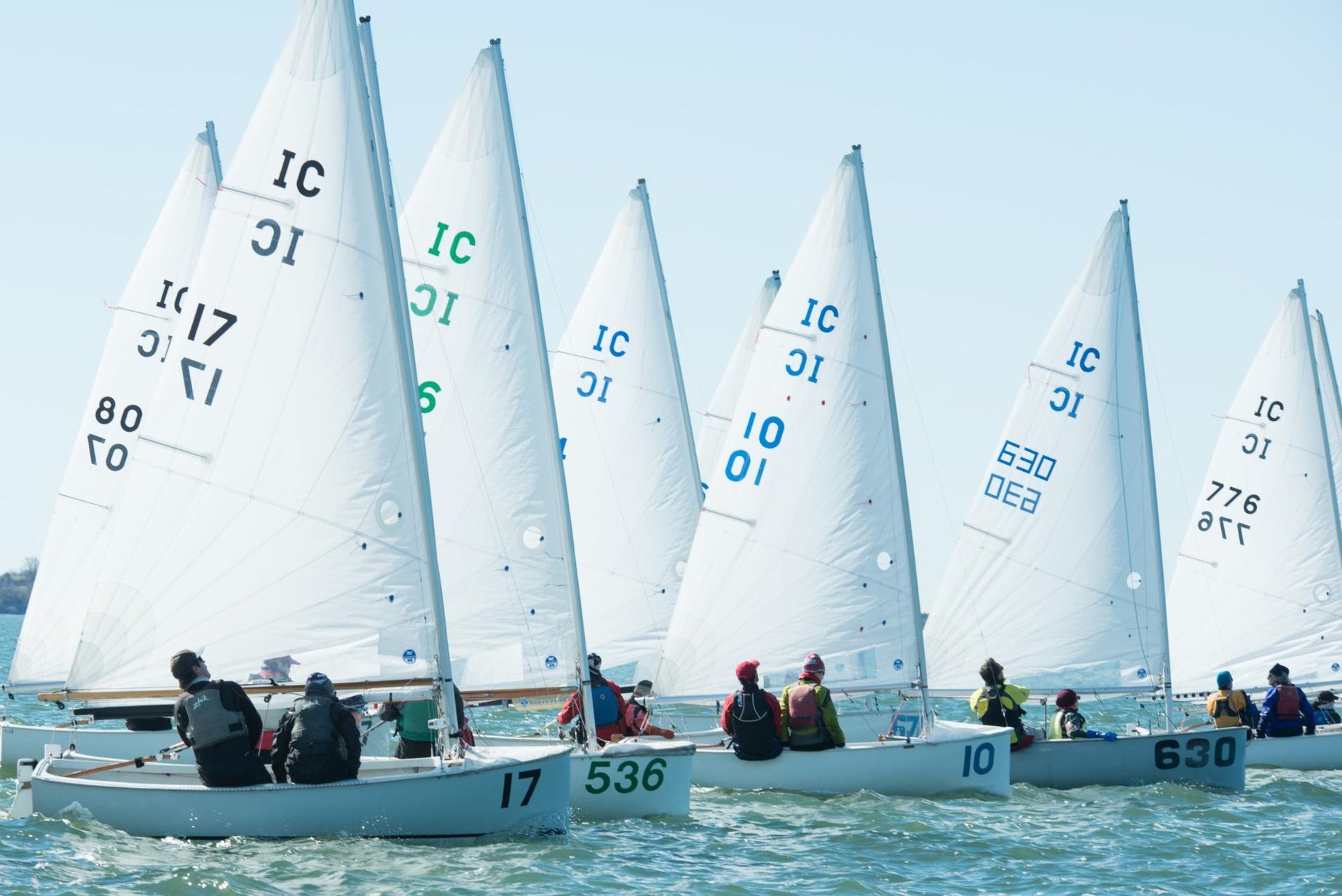
TED FERRARONE/MEREDITH KILLION WIN 2017 INTERCLUB NATIONALS
TED FERRARONE AND MEREDITH KILLION WIN INTERCLUB NATIONALS
The top ten finishers-all powered by North Sails
The weather is starting to warm up in the Northeast United States, and that means it’s time to pack up the boat for the summer! Sounds a bit strange, right? But for diehard Frostbiters, especially Interclub sailors, spring’s arrival and the penultimate event, Interclub Nationals, mark a close to the winter sailing season. This year 27 teams made their way to picturesque Cottage Park Yacht Club in Winthrop MA, for the 2017 edition of the event. Ten races were completed in the waters just north of the Logan Airport runway in shifty, nearly perfect spring breeze.
Ted Ferrarone and Meredith Killion found the secret formula for success; consistency. Team Ferrarone-Killion compiled a scorecard with a single race win and no finish worse than sixth. Their 37 overall points were enough to best Steve Benjamin and Daley Brooks by 19 points to secure the championship.
North Sails is honored to sponsor and support the 2017 edition, and we are proud to celebrate our clients’ successes with ten spots overall. The products of choice were the North RadIC or RadIC 12+ mainsail. Next fall will come fast. Contact our Interclub experts for more information on our Interclub sails and ways to prepare for the next frostbiting season!
Complete results
Champions Ted Ferrarone and Meredith Killion © Cedric Adams
© Cedric Adams
© Cedric Adams
© Cedric Adams
READ MORE
READ MORE
1997 - THE ENGINE ABOVE DECK
ENGINE ABOVE DECK
In 1997, North Sails designers and software engineers were given a mandate: to create a package that could model the forces of sailing, specifically those above the deck. What ensued was the process of synchronizing the capabilities of North Design Suite software, allowing a sail designer to link the design of a sail to that of a rig, and measure how they affect the performance of the boat.
READ MORE
READ MORE
LES VOILES DE ST. BARTH 2017
LES VOILES DE ST BARTH 2017
Celebrating a week in paradise for the 8th edition of Les Voiles de St. Barth
Spending a week on the island of Saint Barthélemy for the Les Voiles regatta is a not-to-miss opportunity. Keeping the competition level high and the ‘island feels’ strong, the sailors are welcomed throughout the town of Gustavia for a long week of sailing in the sunshine, authentic French indie cuisine, and warm salty air that would make any sailor want to stay forever. With races that span up to 30 miles long, Les Voiles de St Barth puts forth very challenging (and rewarding!) racing that keeps a wide variety of sailing teams coming back year after year.
The regatta incorporates both IRC and CSA racing rules, motivating teams to challenge their ratings with modified rigs, hulls, and sails. Challenging and fun, each race is scored with the ‘time on time rule’, where a boat’s rating is converted to a corrected time factor, which is then used to convert her elapsed race time. In some racing, being the first across the line doesn’t achieve the ultimate win, as the boat’s time correction factor is multiplied by the elapsed time from start to finish. It’s not always about crossing the line first, but putting the most time between you and your competitors, which make this Caribbean event quite special and truly one of a kind.
With a selection of twenty courses to pull from, the Race Committee chose wisely according to sailing conditions. Winds were between 8-15 knots early in the week, which made for competitive timed finishes amongst all divisions. On Friday the wind was much lighter, ranging between 6-10 knots, and tapered off drastically during the last two legs down to 5 knots which made for a very challenging ending to what would be the last race of the event. The selected courses were between 17-26nm, which made for long days out on the water. On Saturday, the wind did not live up to its promise and, at around 11:30am, racing was called off for the day.
North Sails Regatta Repair was on site with an overnight service loft. Certified Service Director, Ben Fletcher went to work with a small staff assisting sailors needing repairs, including some advanced sail modifications. The team completed overnight repairs Wednesday – Saturday, allowing competitors to make the utmost of the long distance round-the-island racing.
Congratulations to our clients on a job well done!
READ MORE
READ MORE
TOM CARRUTHERS WINS THE ETCHELLS MIDWINTERS IN SAN DIEGO
ROAD TO NAS & WORLDS: ETCHELLS MIDWINTERS WEST
Congratulations Tom Carruthers, Chris Bush and Andrew ‘Dog’ Palfrey
Twenty eight teams descended upon San Diego Yacht Club to participate in the West Coast version of the Etchells Mid-Winters. After the great team at SDYC got everyone checked in and weighed on Thursday afternoon and Friday morning, the stage was set for a great weekend of sailing. Super race committee chairman Bill Stump was able to hold all 11 races over the three days in some very trying conditions. The breeze was generally 6 to 10 knots with some really large swell which made for some interesting driving and spinnaker trimming conditions.
Tom Carruthers with crew Chris Busch and Andrew ‘Dog’ Palfrey prevailed for the weekend with great starts, solid upwind speed, sharp crew work and excellent downwind tactics—a very strong combination to say the least! They used the standard PC-F mainsail, the VMG spinnaker, and the LM-2L radial head jib. This is a new jib Norths Sails has been developing and they have been testing it for the past year. The goal of this sail is to fly exactly the same as the very well proven LM-2L jib, but this model has a radial head to go up range a few more knots and to help with longevity. It has a little smoother transition in the lower section but is still very powerful to help drive the Etchells in light air. However, Team Carruthers have also used it in up to 15-16 knots of wind and are very happy with their speed. In fact this past weekend they were able to win 5 races and they complimented the sail’s smoothness and versatility throughout the wind and wave conditions.
Bruce Nelson and Eric Doyle fought it out for 2nd overall with Bruce prevailing in the end. The top 7 teams all used entire North Sails inventories. Some teams with softer masts opt for the PC+ mainsail which has more luff curve to accommodate the softer masts, the LM-2 light was the jib of choice, and the VMG spinnaker was in range pretty much every run. We actually never pulled the heavy jib or the full runner spinnaker out of the bag.
Big thanks to regatta chair and fleet captain Xavier Sheid and the whole team at San Diego Yacht Club for a great weekend. This was the first regatta in the West Coast Spring Series with the next event being the Pacific Coast Championships on April 28-29 and the series culminates with the famous Orca Bowl on May 28 and 29. All this racing and the summer One Design Weekends will be great practice for the North American Championships which will hosted by San Diego Yacht Club in August.
It is shaping up to be an amazing year for Etchells sailing on the west coast and our entire group is looking forward to a great year. If you have any questions about the latest developments we are working on or need more information for your clients please contact Eric Doyle or Skip Dieball.
North Sails San Diego Team, 3rd place – Eric Doyle, Patrick Powell & Pike Harris
READ MORE
READ MORE
NORTH R-2 POWERS MARIA PERELLO TO WIN OPTIMIST SPANISH NATIONALS
NORTH R-2 RADIAL DESIGN POWERS MARIA PERELLO TO WIN THE SPANISH NATIONALS
“I Really Love the R-2!”
A short video-interview with Maria Perello
READ MORE
READ MORE

1987 - NORTH SAILS DESIGN SUITE EXPANDS WITH FLOW™ AND MEMBRAIN™
North Sails Design Suite Software Expands with Flow™ and Membrain™
Among the tools most commonly used by North Sails designers are the Membrain and Flow modules, which apply wind pressure to a sail’s surface and calculate the load forces created. Designers pressurize their sail shapes virtually to discover what their flying shape will be in the intended range. Flow and Membrain work in tandem with the sail shape moving back and forth between them. Designers first analyze the structure in Membrain and continue by applying pressure to see how the shape deforms when pressure is applied in Flow. They continue this feedback “loop” of testing and correcting until they are happy with both the sails’ structural integrity and flying shape.
Take a shallow dive into the technical and often intriguing world of Membrain and Flow with the screen captures below. Begin to understand the many ways design horsepower keeps North Sails at the forefront of sailing technology.
This image illustrating “Tip Vortex” was captured in North Design Suite Flow. When wind passes over a sail, the flow is disturbed more at the foot and the head of the sail, where it gets sucked from the high pressure side to the low pressure side, initiating the “vortex” which expands downstream. Flow Panel Code was introduced in 1984 and is still in use for upwind sails today. While this early version of Flow is less accurate than OpenFoam RANS, it is much quicker. Designers can run this type of analysis instantly, whereas RANS takes hours.
At left: This image of a Dubois 58 sail model was captured in MemBrain and demonstrates “Major Strain” or the amount of stretch occuring under applied pressure. The green areas signify the most amount of stretch in the sail (.0857%), whereas the deepest blue signifies no stretch. The small white lines represent the direction of the strain. At right: This capture shows a slightly different view within MemBrain, of strain analyzed per 3Di tape, measured in the direction of the tape. In this view, designers look at which tapes could potentially be removed (those deep, deep blue), and which will need additional reinforcement (red). They do this by adjusting the density of the tapes in those areas.
This Membrain capture shows the effect of pressure calculated in Flow (left image) and OpenFoam RANS (right image). Specifically, it shows the pressure distribution between the different sails on the rig, which all work together as a double slotted foil. Green and blue indicate high areas of pressure.
This image from Flow shows the close interaction between the headsail, mizzen and mainsail on a classic boat. The tip vortices merge and roll-up together in the downstream, illustrating the amount of induced drag.
Captured in RANS, this image illustrates the partially separated flow over the gennaker. One concept North designers work with is attached vs detached flow – where attached flow indicates areas of lift, and detached flow indicates areas of primarily drag. In this image, red indicates the area of the sail with attached flow, followed by areas where the flow detaches from the sail, marked by the zone in yellow.
READ MORE
READ MORE
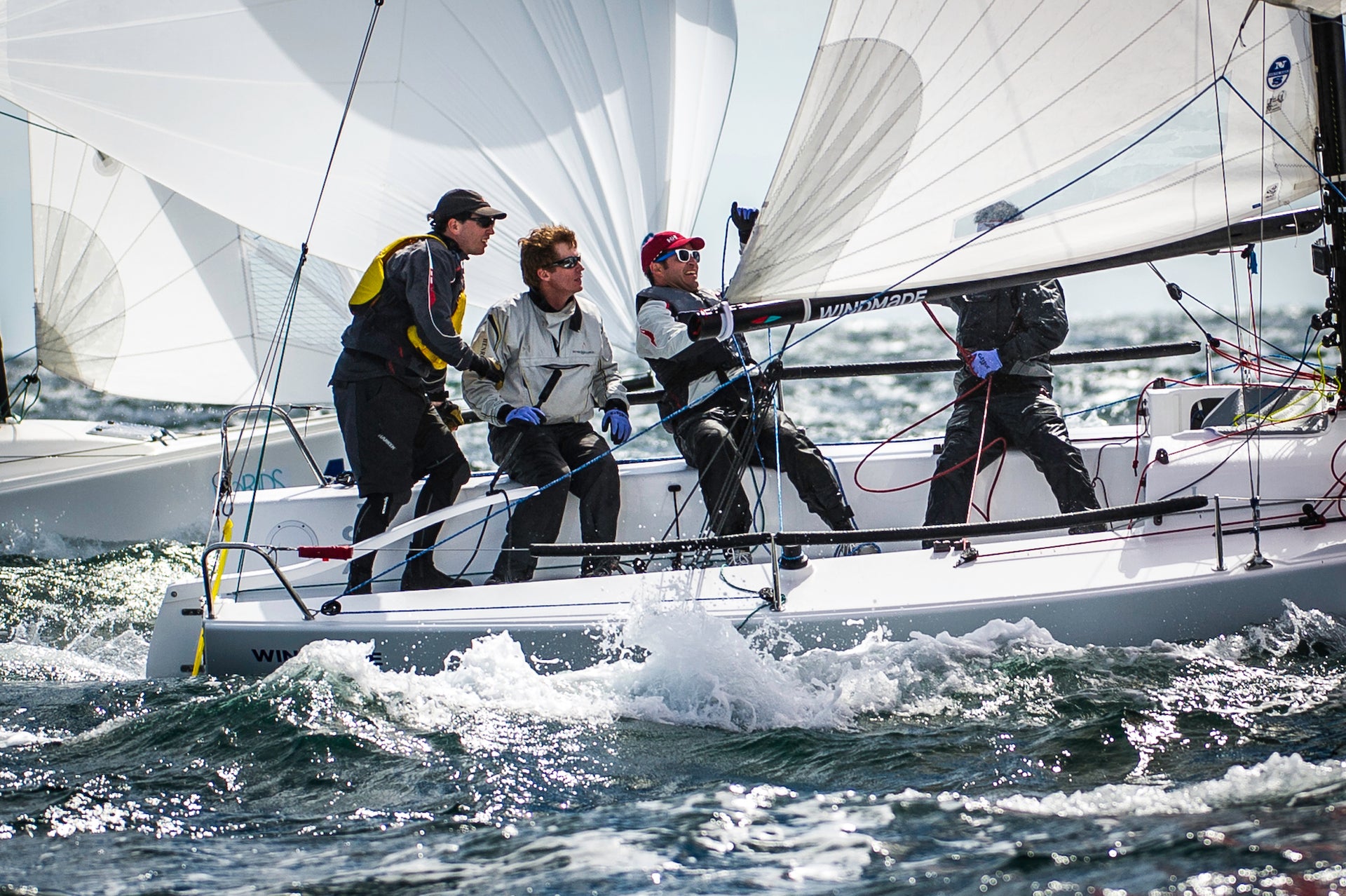
PRE-RACE PREPARATION: ARE YOU READY?
From sail selection to rig tune, a lot happens before you leave the dock. Follow these tips to help your team get race-ready before casting off.
1. Building a Crew
It is good to have the right number of crew onboard, but if no one can do bow, you aren’t in great shape! Ask yourself, do you have the key roles covered? Know who is responsible for what, and keep a roster of crew contacts on the back burner – these are the people you’ll call when someone can’t make it. Help your team by networking to fill open spots, spread the word and confirm new members as early as possible before an event. (Tip – try out a free service like Google Forms to get needed information, such as availability or gear requirements, organized and in a central place).
2. Weather & Sail Selection
Ask your navigator or tactician to inform the crew a few days out on what the forecast is expected to be. Helpful information about courses, start time, and how soon you want to get out on the water are important so everyone is on the same page. Include what time to meet at the boat (not the coffee shop) . Setting a specific dock call time will help the crew plan accordingly and get their gear and spare equipment onboard so dock-out time isn’t delayed.
The weather forecast and course information will also determine your sail choices for the day. Whether windward – leeward courses, round the cans or offshore distance racing is in your future, consult with the skipper, tactician and navigator to make a collective decision on the day’s inventory. Often, the biggest impact on sail power is the choice of genoa. Sail selection can be a tough call and North Sails is happy to help, so don’t hesitate to ask your local contact. Each sail has been designed for a specific range of wind strength and sailing angle, due to its size, weight or structural capacity (DPI). Batten up the jibs you will take for the day and stow the extra sails onshore in a safe, dry place. Extra sails are extra weight, so crucial decisions need to be made prior to leaving the dock.
Meanwhile, One Design sailors must remember class rules – Fast 40 rules allow sail changing each day, while J/109 rules require all sails to be carried. IRC events require you to have the same sails on board from the start of the event to the finish, and PHRF and ORR may also have separate restrictions.
3. Rig Setup
Tuning your rig is not a dark art but it is a whole job in itself. You will need to adjust your rig as the conditions change to get the best performance from it. Find out if your class, or boat, has a tuning guide, and follow it! As your team gets more experienced, practice fine tuning for your boat and see what feels fast. Work toward finding that little extra speed, it will make all the difference. Always carry a wet notes pad to make notes onboard. Record everything from the conditions, rig tune, and fast trim, and be sure to include TWA and TWS for reference. After racing, revert your rig back to base settings overnight so you can start with a clean slate the next day.
4. Leave time to Warm – Up
Maintaining communication with the crew on when to meet and being prepared can save you time so you can get out early and practice techniques, decide on which sails to use, and help the skipper get an idea of how long it takes to get the boat up to full speed off the line. Being able to sail around prior to the first race will help the tactician determine lifted tacks, where the holes are on the race course, and get the crew coordinated to get “in the groove” and up to full speed. Getting out there early will also allow for a quick snack and hydration before the warning signal. Something that can easily be forgotten, food and hydration helps focus and energy levels, which are key to doing well.
5. Notes on Sail Care
First rule of thumb, never walk/stand/or lay on sails. This crushes the materials and is devastating to your boatspeed! Just like an engine, your sails must be treated well and taken care of as you depend on them.
When putting sails onboard, make sure they are properly flaked so that the bowman can easily hook them up and hoist them. Although a leech flake gives the best possible flake with the battens in, the luff flake is best for your teammate to prevent the luff tape from tearing during the hoist.
When hoisting the mainsail, always slowly “back down” or reverse. This will take the apparent wind out of the sails, reduce flapping, and help prolong the life of the sail. This is a great method to practice, added bonus is it will clear any seaweed from your keel to limit drag. Extra precautions need to be taken in heavier air.
When hoisting the jib, you always want to do it when you are head to wind, or when you are dead-downwind. Never hoist your jib on a reach. Not only is it difficult for the guy on the halyard, it is not good for the sail if it gets dragged over the lifelines. Make sure there is slack in the sheets to avoid any friction on the hoist.
After sailing, it is a good habit to ease the batten tension. Sails tend to shrink a bit overtime, so tension will increase. Roll or flake your sails for storing , and lay them on a flat surface whenever possible.
Taking care of your upwind sails is just as important as tending to your kites. Make sure your spinnakers are dry and remove any luff cables before storing (tip: mark the cable where the luff should end to help when you go to use them next time). Flake the furling sails to make it easier on yourself, especially if it’s a top down furl. If laying a out to dry, make sure it is secured at the head and tack so they don’t escape!
6. Debrief
Often the best way to prepare for the next race (or the next regatta) is to review the race you just finished. This can happen on the way in, or upon return to the dock. What worked, didn’t work during the race? Review upwind and downwind tactics and boat handling. How can maneuvers be smoother, or boat speed be improved? For some crews, the discussion may happen organically. For others, you may want to develop a post-race checklist, or debrief outline, to encourage communication and keep the crew on the same page.
READ MORE
READ MORE
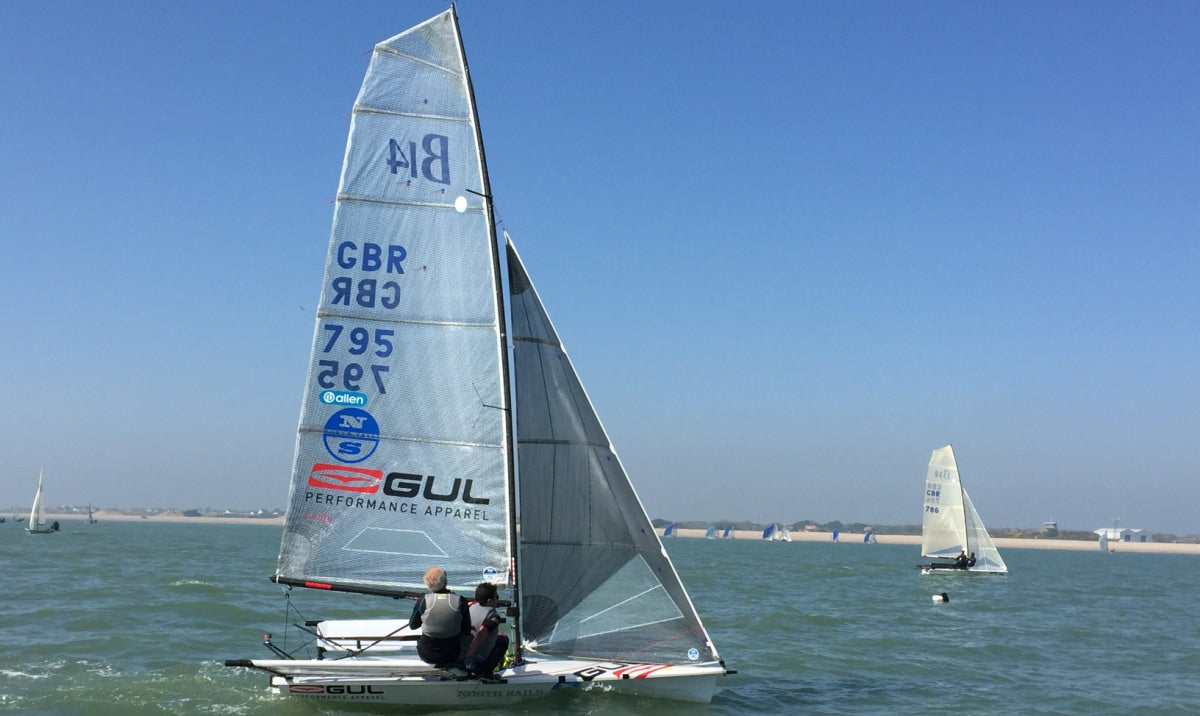
GUL B14 TT SERIES ROUND 2
GUL B14 TT SERIES ROUND TWO STOKES BAY
So, April arrives and the joker has been played. What did we do to Blue Badge and Team Marlow at Rutland. Both teams have doctor’s notes due to physical injuries to their helms, so both had to sit this one out, but will hopefully be seen again soon
However, Chapter two saw the resumption of the battle royal between Team P&B (Jasper Barnham/Ollie Wells) Wonkey Donkey (Mark Watts/Kathy Sherratt (Watts) (standing in for Bish) and Team GUL/North Sails (Mark Barnes/ Amir Shamuddin (standing in for Char). To add spice Torq (Gerry Fermor/Leakey Fermor) light airs specialists were in the mix.
Day 1 was all about the strong tide and shingle beach. The course was set in a SE force 2 – 3 and easterly tide. Russian roulette and holding one’s nerve would be a good way to put it. Over the first two races, places changed a lot both upwind and downwind with B14s skimming the shoreline with slightly raised boards. Go offshore and you lost places. All teams touched to varying degrees as did several RS800s. Wonkey Donkey in race 2 shook a leg and hit a rise hard, damaging their board and chipping their nice new B14. Alas end of race 2 and the 3 legged donkey, after capsize inspection retired to the grazing to be had ashore, not to be seen again over the weekend. GBR 789 (Henry Metcalfe/Jasmin Husband) also hit hard and bailed out with a capsize to save the kit which must have surprised the spectators but other than that, they held onto the coat tails of Torq, P&B and GUL/North Sails who battled throughout with little to chose at times. GUL/North Sails Held the lead by a nags head overnight from Torq and P&B not far behind. The classic fleet also fought their own battle between White Cover/GUL (Alex Horlock/Tim Pearce) and White Stilletto (Liam Willis/Abby Keightley-Hanson) with one point gap overnight. Throughout the fleet there were battles with some new faces attending their first B14 TT.
So it was to Dan Vincent’s quiz night and the mini Easter egg hunt. All great fun and the Mustos were hounded by the B14s. With little to choose between them, the B14s played their joker, 45 chickens eggs which would have won it. After the judiciary had sat, they were excluded and the B14s conceded to the Mustos and others
Sunday dawned bacon butties were consumed and more of the same once the breeze set in. Jousting commenced, and the runners and riders hit the shore in the westerly tide and SE force 2-3. As race 4 closed out it came down to a resurging GUL/North Sails doing a crash gybe drop with P&B a nose ahead, then the sprint to the finish with kites gathered on both teams crew’s laps, both driving hard. P&B got it by less than 0.5 m. More was to follow, with hopefully Torq not mounting the windward mark again as she was swept onto the mark in race 4.
Torq led race 5, but spent most of the race shadow boxing GUL/North Sails over the three laps, whilst the B14s chased down the bulk of the RS800s, who then became the pawns in the battle for supremacy in the race. In the dying breeze GUL/North Sails closed it out from Torq and P&B. White Cover/GUL also managed to close out White Stilletto with one advantage to each team
In the fading breeze, Mike the R/O and his team called it time before the breeze completely died and all retired to a well earned lunch and cold drinks.
So another nice sunny weekend and close racing with quick turn arounds and good catering ashore with Dan and co as the ring masters on Saturday night, and to GUL for the tokens that the fleet appreciate. The Merit prize went to James and Anne Gardener.
After a couple of the steeds including Wonkey Donkey have been refreshed by Solent Boatworks, they’ll be on their way to Porthpean for round 3 over the bank holiday 29.04.2017 to experience great Cornish hospitality.
Those looking to training, there will be training events going on in May with the first at Whitstable Yacht Club on the 5 – 6 May. So if wanting to be included, you need to let the class know ASAP.
North Sails Results
1. Mark Barnes & Amir Shamsuddin
2. Gerry Fermor & Leaky*
4. Henry Metcalfe & Jasmine Husband
5. Alex Horlock & Tim Pearce*
6. Liam Willis & Abby Keightley-Hanson
7. Alex Cappon & Tyler Stonebridge*
9. Mark Watts & Kathy Sherratt*
10. Barry Price & Gareth Lincun
* Denotes partial inventory
READ MORE
READ MORE
CHARLESTON LOFT SET TO INCREASE SUPPORT IN THE SOUTHEAST
EXPERT SAILMAKERS TRIPP FELLABOM & JOHN BOWDEN JOIN NORTH SAILS
Charleston sailmakers join forces to strengthen North Sails support in the Southeast
Newport, RI (April 11, 2017) – North Sails is pleased to extend its global network to a new location in Charleston, South Carolina. With the addition of local experts John Bowden and Tripp Fellabom, the world’s leading sailmaker will offer state-of-the-art products and certified service to the diverse sailing community in Charleston and throughout the Southeast region. Both John and Tripp bring a wealth of industry knowledge to a newly established loft in the Charleston City Marina, offering solutions for boats and sailors of all types.
A lifetime sailor with nearly 40 years experience in sailmaking, Tripp brings a strong foundation of knowledge to the North Sails team. His time on the water has earned recognition in classic southern regattas such as the SORC, the Charleston to Bermuda Race, and MORC International. Tripp won Key West Race Week in 1991 and has also tried his hand in competitive one design racing, especially in the J/24. “Joining North Sails presents a golden opportunity to offer the best sails on the market to our current and future clients,” said Tripp.
John, who opened his own loft in 2008, will rejoin the group after a nine-year hiatus. “I am excited to be back with North Sails, and I look forward to increasing support for sailors throughout North Carolina, South Carolina, Georgia and Northern Florida,” said John, who’s experience bridges hard work in the loft with fair play on the water. During his time at College of Charleston, John received the ICSA Robert H. Hobbs Sportsman of the Year award, and since then has achieved a number of notable sailing victories, including National Championship wins in the Melges 32, Melges 20 and J/88. John topped the 2014 Melges 20 world ranking as the tactician/trimmer on The Portobello. “Tripp and I are fortunate to work in a healthy sailing community, filled with great people and competitive sailing,” said John.
“North Sails is committed to improving our presence and providing more sales representatives and sail care lofts to the thousands of sailors in the southeast,” said Pete Colby, Director of Service Operations in North America. “We look forward to setting a new foundation in Charleston and trust that the wealth of experience between John and Tripp will put the region in great hands.”
Tripp can be reached by calling 843-722-0823 or by email: tripp.fellabom@northsails.com
John can be reached by calling 843-754-9547 or by email: john.bowden@northsails.com
READ MORE
READ MORE
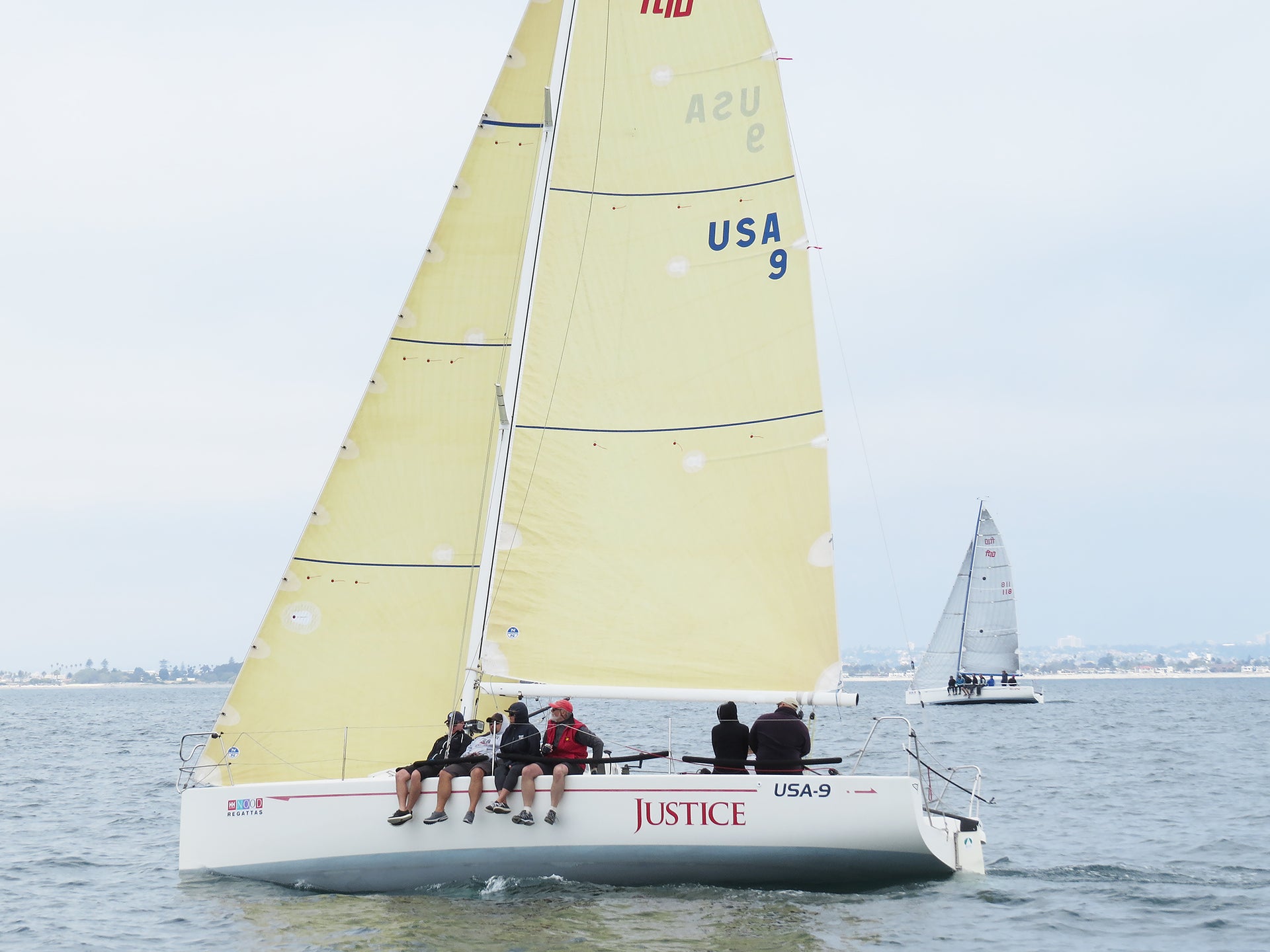
3Di RACE REPORT - FLYING TIGER 10M JUSTICE
John Harrop reports on his 3Di RACE sails after a year of use on Flying Tiger 10m Justice
A well known Southern California sailor, John Harrop spends his days off the water practicing as a licensed paralegal. His Flying Tiger 10m Justice was recently fit with a new set of gold North Sails 3Di RACE upwind sails, which John has repeatedly used to bring his competitors to “justice” on the race course! We caught up with John after he raced in the San Diego NOOD regatta to get his impressions on the sails.
“The 3Di RACE sails are truly awesome, a great plug and play product.” John reported that he and the crew on Justice had been able to try the new set in a variety of conditions over the last few months. “The sails are very sensitive and receptive to rig tune and setup. Halyard and headstay sag adjustments give the jib a great range of power and point through all conditions.” The latest application of North Sails proprietary technology, 3Di RACE is designed to be a practical and durable option for racing sailors.
“In theory, one of the main user benefits of 3Di RACE is sail longevity. These sails have proven to hold their shape longer, and shrink less than a laminate. This is what I’ve noticed that makes the product unique in its own way, in its construction and materials. It is innovative and has proven itself to work exceptionally well for me and my boat.”
With a 100% corinthian crew, John describes their sailing style as somewhat conservative, especially at starts. The Justice crew appreciates the reliability of 3Di RACE, coupled with its ability to perform well throughout a wide range. “After almost a year of use, the main and jib look great, they trim well and produce results that keep our boat at the front of the fleet. We are not a pro team, and we don’t really practice. We trust the confidence gained by a well prepared boat and great sails like these.”
READ MORE
READ MORE
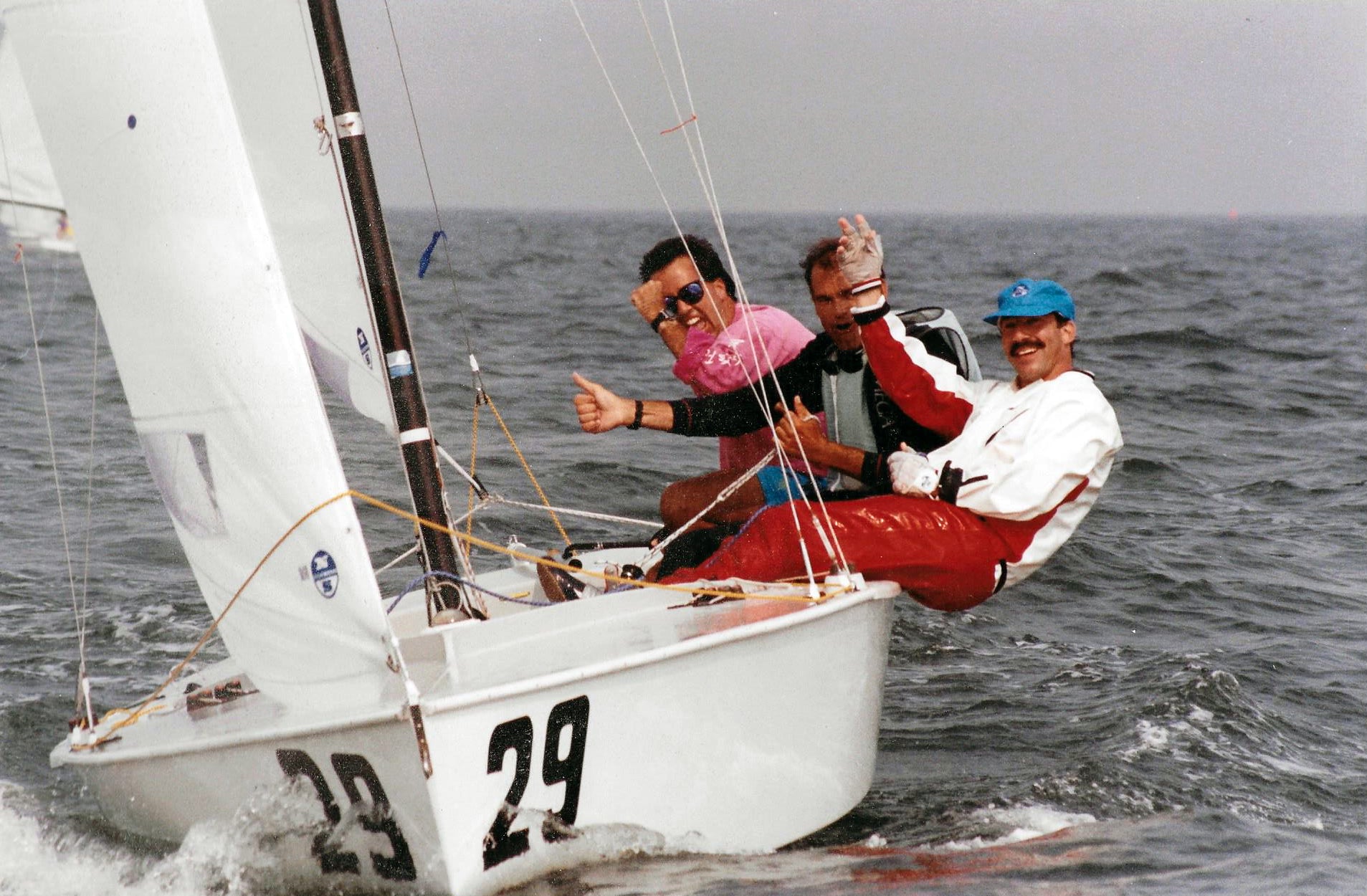
TRIBUTE TO THE "KING OF THE SOUTH"
THE ‘KING OF THE SOUTH’ WEARS THE CROWN ONCE AGAIN!
It was in the early 1990’s when the moniker “King of the South” became attached to Ched Proctor in the Lightning Class. By then Ched had been making waves in the Lightning Class for over a decade and, by 1995 had won the Lightning Southern Circuit four times over a nine year period. Fast forward to 2017, Ched recently secured his 7th Southern Circuit crown, a feat that no one, in the 70 year history of the Southern Circuit has accomplished. This year he and his team also managed to win his 4th Midwinters title (in Miami) and 2nd Winter Championship (in St. Petersburg).
Ched (middle) after winning the North Americans in 1991 for the first time as crew
To say Ched is knowledgeable about making Lightnings go fast is akin to saying “water is wet.” It’s unbelievably obvious that even mentioning it may make someone question your sanity! The fact is, Ched has been trying to help make everyone go as fast as him for decades. A bit of a “speed savant,” he has made a career out of trying to figure out how to make sails (and boats) go faster and has always been quick to share his thoughts and tips with anyone who asks (and sometimes even when they don’t). Ched, while generally a man of few words, has always been the guy in the parking lot, helping a competitor tune his or her boat, explain pre-bend and headstay sag or trying to explain why he trims the sails the way he does. Through his incredible comprehension of sail shapes and tuning details, he has likely helped more people understand how sails and boats work together to maximize efficiency better than anyone over the past 30 years. Ched’s advice spans everything from giving insights on how to trim in big breeze to how to play your backstay, and even providing intel on what cleaning methods he uses on his boat during major events. A legend to the Lightning Class and One Design sailing, his fellow competitors always enjoy competing against him, and if you do manage to beat him, you know you can compete with anyone because you will have managed to beat the best in the class!
Miami 1997
The Lightning resume Ched has produced over the past 30 years shows a consistency and commitment to excellence that is arguably unmatched and clearly locks him in as one of the top Lightning sailors of all time. In addition to his unequalled record on the Southern Circuit, Ched has won 4 North Americans (1993, 1994, 2000 and 2011), the International Masters Championship (2013), North Americans Masters (2013), and the Canadian Open National Championship (2000, 2009). He has also won multiple Atlantic Coast Championships, Districts, regionals and local events all while doing his best to help others in the class learn to get faster and enjoy Lightning sailing that much more. It is fair to say, for decades fellow sailors have looked to him for advice showing their admiration and respect for him. Ched is a role model both on and off the race course. He is an intricate part of the Lightning Class and has been sharing his amazing adventures with sailing enthusiasts over the last 30 years. In November of this year, Ched and his team head off to the World Championships in Salinas, Ecuador to chase down the one title that has eluded him in his illustrious career. We wish him luck and know that he has the skills, experience and talent to get to the top of the podium.
Miami 2017
St. Petersburg at the Winter Championships 2017
READ MORE
READ MORE
1977 - NORTH SAILS INTRODUCES DIGITAL SAIL DESIGN
DIGITAL SAIL DESIGN
Lowell North diverged from the traditional, artistic approach to sailmaking by closing his eyes. Lowell listened to the numbers. Historically, sailmaking depended on the eye of the craftsman, who drew from experience and tradition to create beautiful sails in a classic shape and style. From the beginning, Lowell embraced a scientific approach to making sails, and North Sails has followed a path of increased development in sail design and production ever since. Remaining at the forefront of design is possibly the clearest example of how Lowell’s core values enabled his company to prosper well beyond his own tenure.
This photograph from the mid 1980s shows the strength of Lowell North’s design team. It was taken at one of his regular meetings, which he hosted to foster the exchange of ideas and experience. *Names at base of page.
It started with testing raw material properties. The early North Sails team in San Diego pushed innovation in sailmaking to new heights by contriving devices that would apply measurable wear and tear to cloth samples, eventually introducing controlled environments with wind tunnel testing and model sails. The process took a digital direction in 1977, when North transitioned from shaping broad seams on the floor to generating 2D curves with a computer. Working from North Sails in New Zealand, Tom Schnackenburg based the software on a library of designs selected by group consensus. For a given sail order, a designer would select a curve type from the library, and the software would generate the broad seams for every seam in the sail. The term “consensus” was an important item of discussion at every design meeting, because it would ensure the same sails could be produced at every North loft. At the same time, Tom pioneered 3D design software for sails (insiders call this the “Tin Sail Program,” due to the sail shape being fixed in space), which he used to derive the 2D broad seam curves.
Prior to the arrival of common computers, a designer would run both the 2D and 3D programs on a dial-up service to a main frame. Essentially, they were connecting via a phone line to a computer the size of a hotel room.
The first in-house computer arrived at the loft in San Diego in 1979. It was a Cromemco, presumably considered the Cadillac of desktop computers if only because of its size. Tom had just opened a loft in Auckland, and a fellow North programmer, Michael Richelsen, brought the computer to New Zealand as checked luggage. Tom started to port his 2D and 3D design software from the main frame to the Cromemco, which was running an early version of Microsoft DOS.
Lead programmer, Michael Richelsen, works on a Norputer (large box underneath the Xerox matrix printer), which was a self-assembled desktop. This photo was taken at the North Sails loft in Milford, CT, in 1983, prior to the last America’s Cup in Newport, RI.
It was in the early 1980s when Michael began focusing on the work that would eventually expand the North Design Software to what it is today. By 1987, Flow™ and Membrain™ made it possible to apply wind pressure to a sail’s surface and calculate the load forces created. Designers could pressurize their shapes virtually to discover what the flying shape would be. This was the beginning of the Virtual Wind Tunnel™, which models air flow on upwind and downwind sails. By the early 1990s, the addition of the VPP (velocity prediction program) would allow designers to further quantify the performance of the flying shape.
Meanwhile, progression in design evolved into computer-driven production, with large plotter tables drawing and cutting panel shapes to the design spec. This required North to collaborate with early plotter table manufacturers such as Lawson; later the team would build their own and install them at central lofts throughout Europe, North America, and Oceania.
1977 was an important year because it put North Sails on the map in the earliest days of digitalization. Steve Jobs finalized the Apple 1 in the same year. The first microprocessor was only introduced by Intel in 1973. The first computer to use the standardized user interfaces of today, such as icons, a mouse and a desktop screen, was introduced by Xerox in 1975.
Today, North Sails Design SuiteTM (NDS) is the most powerful and diverse sail design tool in the industry. A family of 14 specialized software modules, NDS delivers unprecedented power and flexibility to sail design and rig/hull analysis. The modules interface with each other to make it possible for North Sails designers and engineers to virtually test a boat and sails in an infinite variety of conditions before the boat is even built. NDS significantly expands a designer’s ability to compare different sail and rig combinations and accurately measure results.
Thanks to North Sails’ heritage and design experience, we know that our software models accurately replicate how sails perform on the water. For 40 years this analysis, data and insight has been an integrated and crucial tool for clients all over the world, from huge new concept projects through to habitual cruising and racing sailors.
North Design Suite enables designers to generate realistic flying sail geometries, which puts them in a unique position in the marine industry with regards to computing sailing loads and undertaking VPP analysis. Soon the design suite will expand with hydrodynamic CFD (computational fluid dynamics) capabilities, assessing the load and displacement properties of a hull moving through water.
North Sails Designer, Dave Hirsch, at North Sails in Milford, CT, early 1980s. Dave is using an Olivetti portable – or “luggable”, as it was the size (and weight) of an overly stuffed carry-on piece of luggage. The keyboard he uses fits onto the screen end of the computer, to protect the monitor when traveling.
*Group photo: back row from left to right: Paul Davis, Keith Lorenz, Lowell North, Peter Mahr, Dave Hirsch, Albert Schweitzer, Angus Melrose, Larry Herbig, Jay Goebell (second from right). Front row from left to right: Joep Strauss, Mike Schreiber, Steve Reid (behind), Rick Sternkopff (in front), Steve Grover (behind), Michael Richelsen (in front), John Marshall, Monica McCantz, Tom Schnackenberg, Peter Kay, Robert Hopkins, Bill Bergantz.
READ MORE
READ MORE

CHED PROCTOR WINS LIGHTNING MIDWINTERS IN SOUTHERN CIRCUIT FINALE
VEGGIE SUB WINS LIGHTNING MIDWINTERS IN SOUTHERN WINTER CIRCUIT FINALE
The Lightning Midwinters ended Saturday with four races in windy conditions of 15-22 knots on beautiful Biscayne Bay in Florida. The Coral Reef Yacht Club race committee, led by Jane Anne Pincus, kept the fleet of 30 teams in the northern end of Biscayne Bay and ran flawless W4 and W5 courses in challenging but consistent breeze. There proved to be a definite left side advantage in the first three races, which gave those who got left early a chance to break free and gain a nice advantage on those who went right.
In race 1, Ched Proctor’s team Veggie Sub, consisting of Ben Cesare and Jay Lurie, was pushed hard by David Peck, his wife Nina and son David on 15215. Peck led around the windward mark in Sunday’s first race and benefitted greatly from Ched’s “nose dive” into a wave just after the weather mark that nearly filled the cockpit to the seats, which allowed the Peck team to run away with that race as Ched narrowly fended of Jeff Linton’s team on xx.
The left corner shifts seemed to pay off for Veggie Sub in the second race, working their way to the top mark in first place and avoiding all downwind hazards to win the race. The third race of the day was a close battle between the top three teams. Ultimately it was the Cristobal Perez and his team from Chile who caught the last big gust of the race, and surged ahead just before the finish to take the win. Jeff Linton was close behind until a mishap caused a capsize just before the finish line.
The last race of the series presented the fleet with a 15 degree right shift that made it hard to get out of the left corner for those who committed early on, although Dave Peck’s 15215 pulled off the feat by over-standing the windward mark and reaching in on port tack full speed, to just barely make it across the bows of the starboard tack lineup on the layline.
Team VeggieSub, with North Sails expert Ched Proctor at left, wins the Lightning Winter Championship, Midwinter Championship, and Southern Circuit Championship of 2017!
The final standings for the Midwinters saw North-powered teams in the lead with Ched Proctor’s Veggie Sub taking the overall win, the Peck family on 15215 finishing second, Chris Perez sailing No DesesPerez in third, and Jeff Linton with team xx finishing fourth.
We are very proud of all the North teams that performed so well this year on the Southern Circuit and dominated the results at all the events! The Midwinters marked the end of the Southern Circuit events, which also included the 70th annual St Petersburg Winter Championship that finished earlier in the week.
In the Southern Circuit overall results, North clients placed 1-14. Top five are Ched Proctor and team Veggie Sub, Cristobol Perez and team No DesesPerez, Jeff Linton with team xx, Tom Allen with team 9, and Neal Fowler with 11346.
Congrats to Ched and his team for winning the Midwinters, Winter Championship and overall Southern Circuit titles and to our clients for participating in and dominating the results in the Southern Circuit series events!
Complete results for the Southern Circuit HERE
Results for Miami Winter Regatta HERE
READ MORE
READ MORE
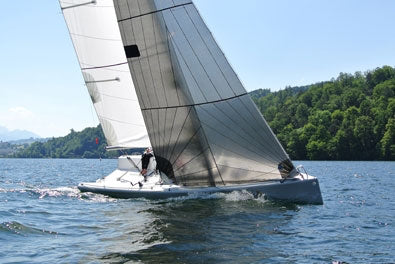
CLASSE BLU 26 - ONE DESIGN SUISSE
Classe Blu 26 - One Design Suisse
Newsletters
Cliquez ici pour obtenir les dernières news de la classe (blog officiel en anglais et en allemand)
Référent pour cette classe
> Julien Monnier
Tél. voilerie : + 41 22 782 32 22
Mob. : + 41 79 574 11 15
julien.monnier@northsails.com
Liens utiles
- Classe
- Chantier - Bluboats
READ MORE
READ MORE
NEW 470 MAINSAIL: DEVELOPED BY MAT BELCHER AND NORTH SAILS JAPAN
NEW 470 MAINSAIL DEVELOPED BY MAT BELCHER & NORTH SAILS JAPAN
The New N14- L18 Mainsail
The N14-L18’s powerful depth in the head of the sail, gives an ideal twist for driving the boat to speed and for quick acceleration in planing conditions. Lower drag is created by the shape from the bottom to the middle which works for both speed and pointing performance under full power conditions, where you need to keep the boom completely at center.
“I am very fond of the N14-L18 Mainsail, which was developed during our last two Olympic campaigns. It is very special to us. We used this sail to win 6 world titles and 2 Olympic medals. The sail is fast in all conditions and easy to trim, which has enabled us to focus on racing and has helped us get out of a lot of tight situations.” – Mathew Belcher, Silver Medal Rio 2016″
Contact our 470 Class Experts for further information.
READ MORE
READ MORE
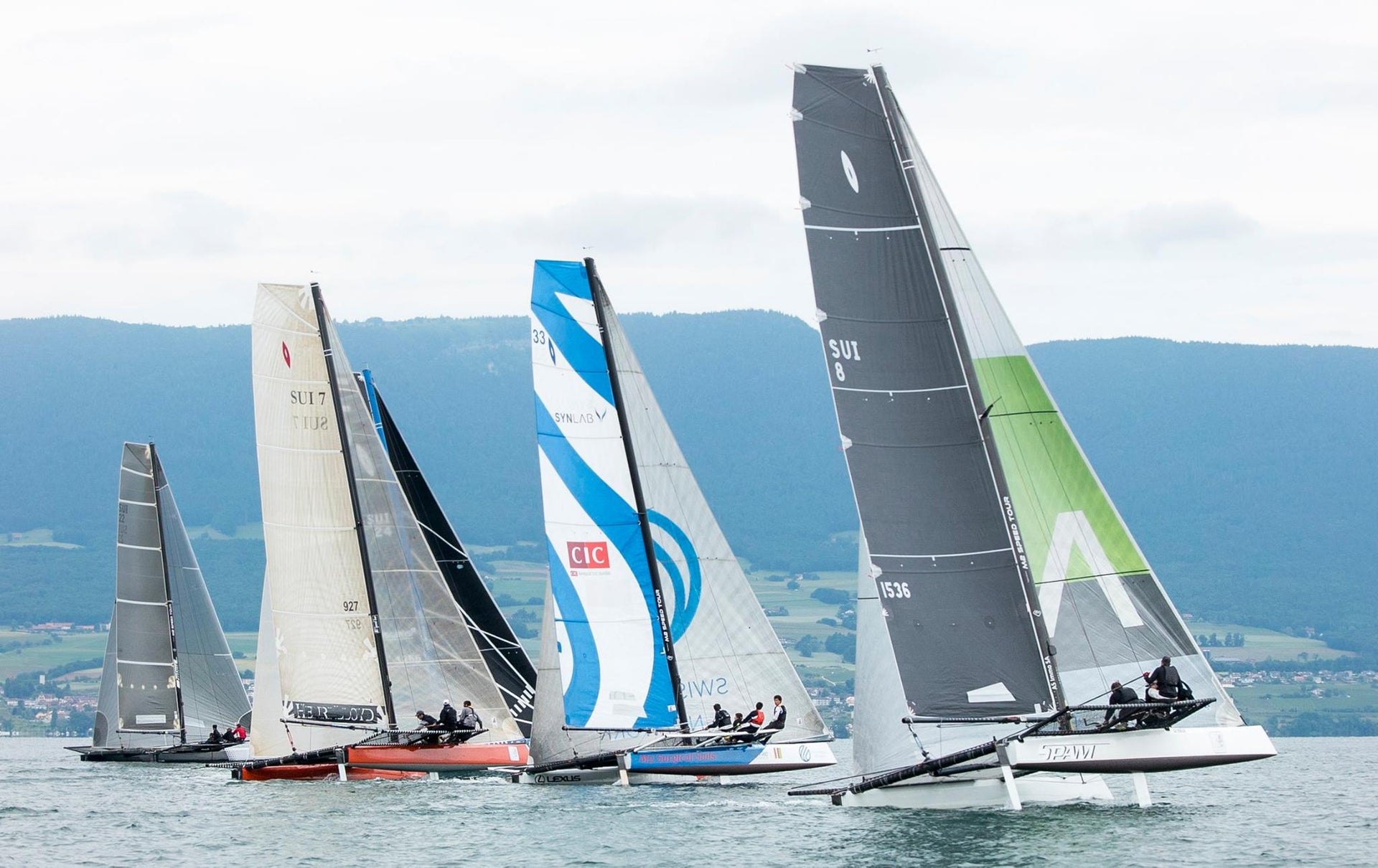
CLASSE VENTILO M2 - ONE DESIGN SUISSE
Classe Ventilo M2 - One Design Suisse
Newsletter
21 septembre 2016 : Infos classe M2
Référents pour cette classe
> Michel Vaucher
Mob. : + 41 78 898 20 24
michel.vaucher@northsails.com
> Julien Monnier
Tél. voilerie : + 41 22 782 32 22
Mob. : + 41 79 574 11 15
julien.monnier@northsails.com
Liens utiles
- Classe Ventilo M2
- Chantier - C-SYSTEM
READ MORE
READ MORE
CLASSE TOUCAN - ONE DESIGN SUISSE
Classe Toucan - One Design Suisse
Référent pour cette classe
> Bernard Schagen
Tél. voilerie : + 41 22 782 39 43
Mob. : + 41 78 803 60 58
bernard.schagen@northsails.com
Lien utile
- Classe
©TrisDesign
READ MORE
READ MORE
CLASSE LUTHI 870 - ONE DESIGN SUISSE
Classe Luthi 870 - One Design Suisse
Référent pour cette classe
> Bernard Schagen
Tél. voilerie : + 41 22 782 39 43
Mob. : + 41 78 803 60 58
bernard.schagen@northsails.com
Liens utiles
- 3DL 600 performance
- 3Di 760M
READ MORE
READ MORE
CLASSE ESSE 850 - ONE DESIGN SUISSE
Classe Esse 850 - One Design Suisse
Guide de réglage / Tuning guide
- Quick tuning guide (Fr. / Eng.)
Product list
- Tarif Esse 850
Newsletters
- 14 septembre 2015 : Saison 2015 et nouveautés pour 2016
- 3 septembre 2014 : promos d'automne, bilan positif pour la 1ère saison du 3DL en Esse 850, palmarès 2014, nouveautés 2015 & accessoires, trucs & astuces.
Référents pour cette classe
> Daniel Schroff (North Sails Schweiz)
Zelgstrasse 1
8280 Kreuzlingen
Tél. voilerie : +41 71 686 85 25
daniel.schroff@northsails.com
> Julien Monnier
Tél. voilerie : + 41 22 782 32 22
Mob. : + 41 79 574 11 15
julien.monnier@northsails.com
Liens utiles
- Classe Esse 850
- Chantier - Schuchter Sportboot AG
- Chantier - Chantier Naval de Vidy
READ MORE
READ MORE
HOW TO TRIM LIKE A PRO
HOW TO TRIM LIKE A PRO
Everything You Need To Know
One of many key positions on a race team, the sail trimmer takes responsibility for optimizing sail performance. While the most important time to shine is during the race, a good trimmer knows that success starts before the boat leaves the dock. Read these tips from North Sails expert Sam Richmond, who moonlights as trimmer on Maxi 72 Jethou and Fast40+ Ino, and learn why attention to detail makes the difference between “good” and “great” in every situation.
Guidelines for Good Sail Trim
Power from your sails comes down to three sources: Angle, shape, and twist. A trimmer’s job is to achieve the most amount of power, while keeping in mind the balance of trim between sails.
Angles: Pull the sail in to add power and ease the sail out and to reduce power. Heading up will also reduce the power, whereas if you trim on or bear away you increase this. This is a common technique for the starting line.
Sail Shape: deeper sails generate more power. Flat sails generate less power and also create less drag. Depth is adjusted in a few different ways; sheet tension, forestay and backstay tension and lead/jib car position.
Twist: A closed leech will generate more power where as a twisted, open leech spills power. Twist is controlled with lead/car position and sheet tension.
Calibration
Always carry a wet notes pad to make notes onboard. Record everything from the conditions, rig tune, and sail trim, and be sure to include true wind speed and angle for reference. This will give you a foundation to base your decisions on, and provide a guide for making changes and improvements with your team.
Every line that can be adjusted needs a mark – use your marks to re-create settings that were fast. Aside from your sheets, think of your jib car position, in-hauler, outhaul, cunningham, halyards, traveller and backstay. These all affect the way your sails behave so try different settings until you find the sweet spot. Once you’ve found the groove, mark the line so you have a place to work from, and you know where to set it without hesitation.
When using an asymmetrical spinnaker, mark your sheet at the point where enough is pulled forward to prevent the windward sheet from going tight on the hoist. On a symmetrical chute, mark the guy so you know the foreguy/pole can still go up. Mark the inboard end of the pole on the mast so you can gybe as soon as possible if if you need to.
At the leeward mark, remind the pit person to hoist the jib and set the backstay to the mark you’ve made. This will allow for a smooth, clean mark rounding. Thinking about these things ahead of time allows the crew to focus on boat speed as soon as you round, while other competitors are struggling to get the set up correct for the next upwind.
Best Practices
The headsail trimmer should be constantly monitoring performance by using comparison tools onboard. Comparing your boat to other boats, target boat speeds and angles, how are “we” doing compared to just when we last made a change, and the feel of the boat. A good trimmer can feel a loss of power in the boat before it shows up as a loss of speed.
Take photos of your sails and send them to us so we can analyze the sail shape, compare them to new ones, and show you where improvements can be made. It is much easier to do this in the pre-start routine and shouldn’t be done during the race.
Communication is key. Making constant trim adjustments to improve or maintain performance, the trimmer must also communicate the current state of performance to the crew, suggesting how to improve, and reporting progress as adjustments take hold. Constant communication will keep your team attentive and working together. For example, if you encounter a lull in pressure, it would be common for a trimmer to call for the backstay to be eased. The mainsheet trimmer knows he needs to ease the sheet and the jib trimmer will ease too, while the helm “falls off” to help get the boat going again. Perhaps at the same time, the crew moves their weight to windward to help bear off.
Small efforts make a big difference in getting your boat back up to speed first. These constant changes or “transitions” in sail trim and crew weight placement can be the difference between the best and the rest.
Sail Changes
When conditions put you at a crossover between sails, a few extra factors come into play. Most notable are sea state, trending conditions, and past experience. In waves or chop you may opt to use the larger of two headsails for extra power when driving up and over waves. In flatter water a smaller sail can enable you to sheet harder and therefore point higher.
Consider the weather forecast and the conditions you have experienced up to the decision point. Are you anticipating the breeze to build up, drop off or shift? Also keep in mind that in a building breeze the sea state may remain flat, but in a dying breeze there will be leftover swell and power may still be needed.
As you gain experience with a specific boat and sail inventory, your notes on past performance will inform your decision on what sail to use. For example, in flatter water you may choose to use the J2 down to 8 knots, but as the chop builds, the J1 may be a bit faster with the slight increase in pressure. If time allows, you can try both options before the race and choose based on how the boat feels when testing your straight line speed.
Never Relent
A trimmers job is never done. Don’t cleat it and certainly don’t hang out to leeward! The jib trimmer will be the last of the crew to the rail, so only stay to leeward if conditions allow. Once the crew is fully hiked out, the trimmer should hike too, and take the tail of the sheet with you so you can ease quickly if you need to without leaving the rail. Keeping the boat flat in pressure allows the foils to do their job.
READ MORE
READ MORE
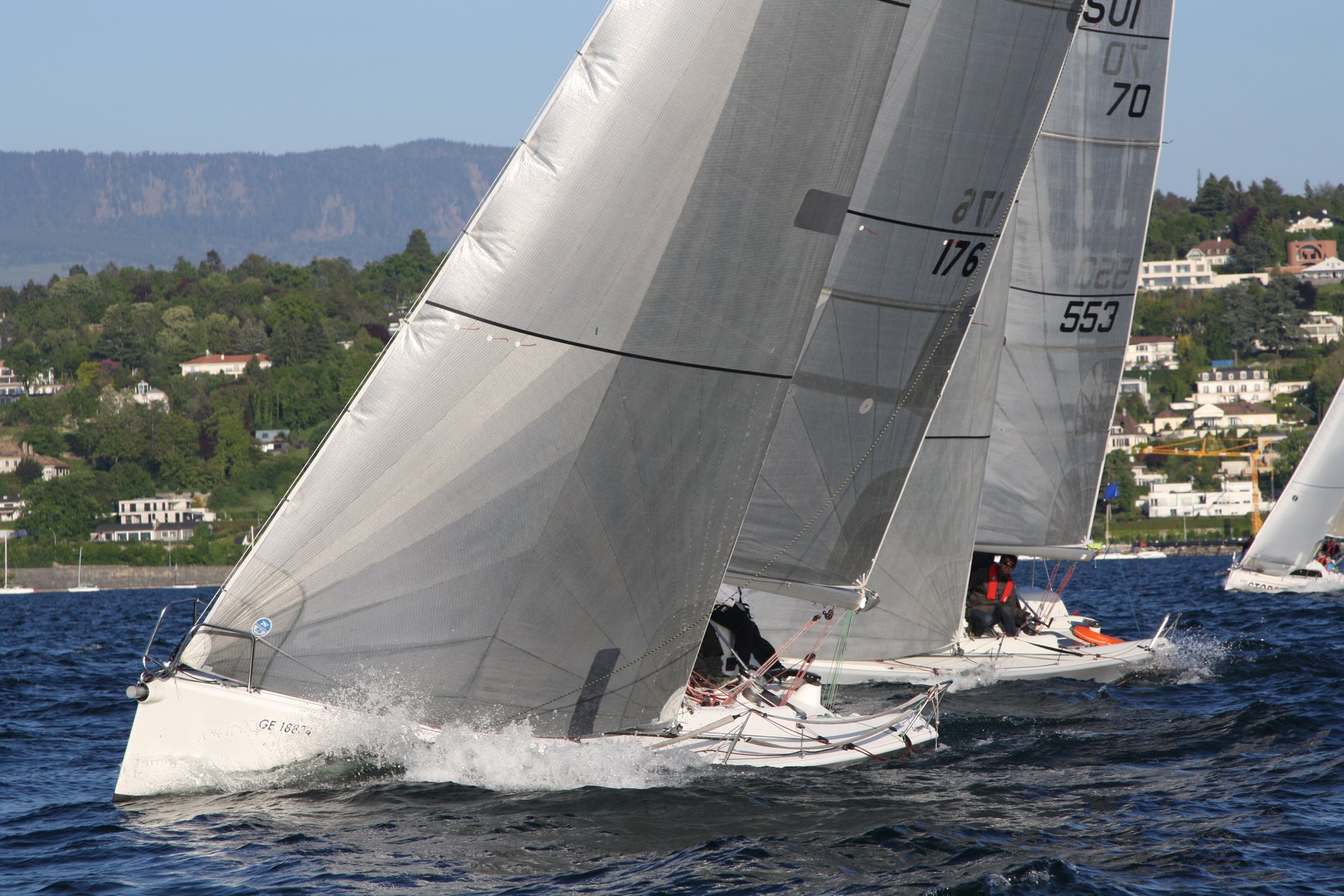
CLASSE GRAND SURPRISE - ONE DESIGN SUISSE
Classe Grand Surprise - One Design Suisse
Référents pour cette classe
> Pierre Ratajski
Tél. voilerie : + 41 22 782 32 22
Mob. : + 41 78 870 60 95
pierre.ratajski@northsails.com
> Julien Monnier
Tél. voilerie : + 41 22 782 32 22
Mob. : + 41 79 574 11 15
julien.monnier@northsails.com
Liens utiles
- Association suisse des propriétaires de Grand-Surprise
- Chantier - Archambault
- Chantier - François Séchaud
- Chantier - Léman Plaisance (Philippe Raphoz)
READ MORE
READ MORE
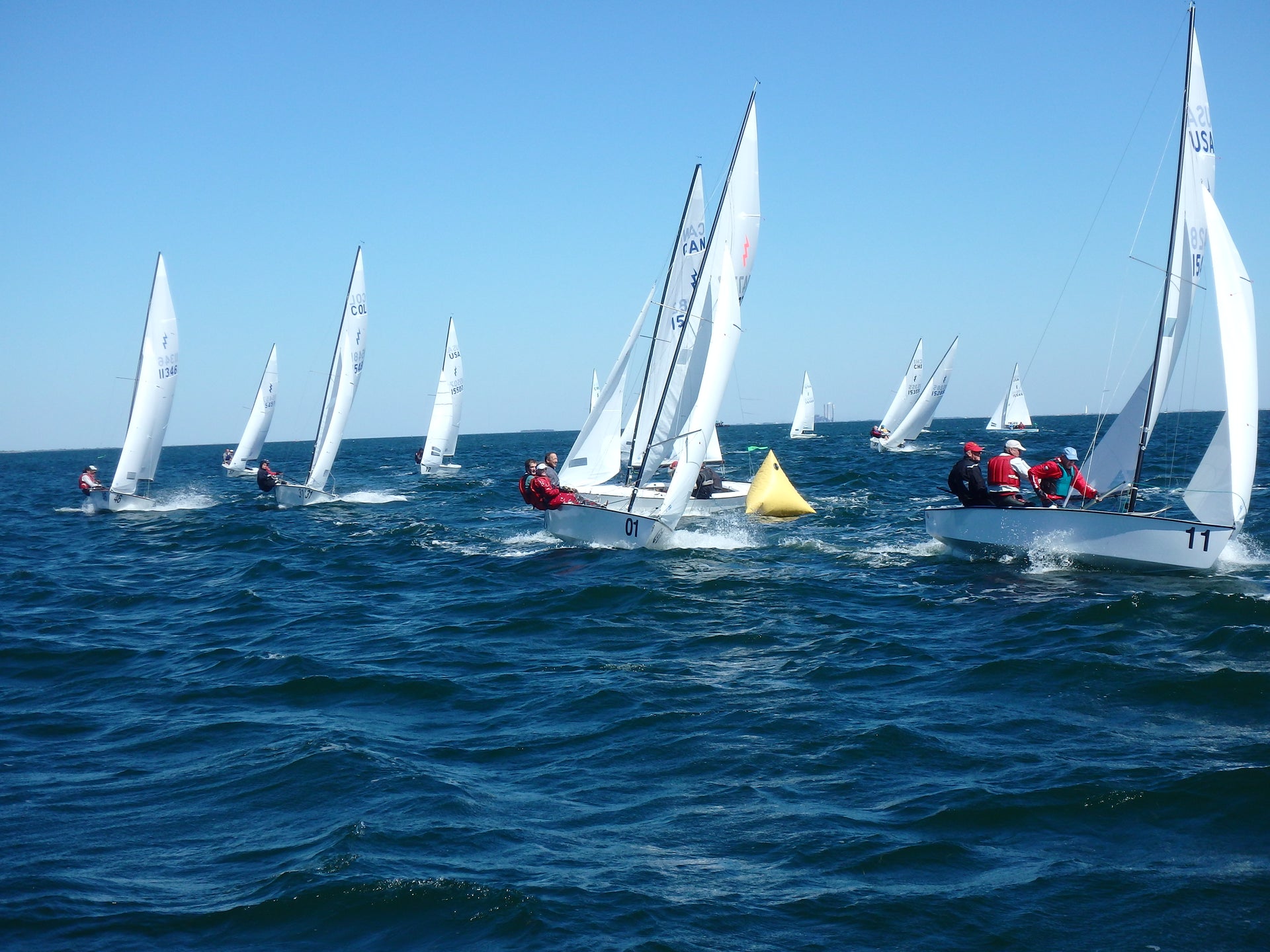
VEGGIE SUB TAKES THE LIGHTNING WINTER CHAMPIONSHIP IN ST. PETERSBURG, FL
CHED PROCTOR WINS LIGHTNING WINTER CHAMPIONSHIP
Ched and team ‘Veggie Sub’ in the lead!
Day one of the winter champs began with a front that brought NW breezes in the 8-12 knot range and built throughout the day to 22+ knots. The fleet successfully completed four races as attrition took its toll on the fleet. Capsizes, bent spreaders, and one broken mast resulted in very sore and tired sailors!
Day two was primed to be “moving day” with many teams set to work their way up the leaderboard. Unfortunately the wind wasn’t in the mood to get “moving” until late in the day as the fleet waited onshore until 3pm for the sea-breeze to build. Patience was rewarded with a very nice 5-leg race in a pleasant 8-12 knot westerly breeze, which was challenging to the fleet because of the shifty and puffy wind behavior.
David Starck on ‘Team Patstrong’ got out early in the first beat, never looked back, and took the race win. The rest of the top varied throughout the race and changed every leg with several teams moving into and out of second through fifth. In the end, Jeff Linton got to the right of Marvin Beckman and Mike Holly on the final beat to take second place. James Taylor was there to round out the top 5.
Fleet lined up ready for the start of the race
Once sailors got to shore, the ‘Lutz Rum Party’ at St. Petersburg Sailing Center was a nice way to end a solid day of racing.
The final day was a test of patience as the 40 teams were postponed onshore waiting for the promised afternoon seabreeze. After a little over four hours postponed the fleet headed out into the building breeze, which finally turned southwesterly.
While the majority of the fleet turned right after the start to chase the expected wind shift, event leaders Ched Proctor and David Starck got out to the left side of the course where they found a bit more pressure. This enabled them to get over the top of the boats on the right and round the top mark first and second again, with Ched holding a one-boat length lead on second place. From there it was protect and extend for team ‘Veggie Sub’ as they covered ‘PatStrong’ throughout the race to earn their third victory and overall regatta win. The Starck team crossed the finish line in the final race in second, followed by Tom Allen in third, Jeff Linton in fourth and Cris Perez in fifth.
In the overall result, team “Veggie Sub” with Ched Proctor, Jeff Eiber and Tim King won the 70th Winter Championship. This was Ched’s 2nd Winter Championship victory
The teams of David Starck, Marvin Beckman, Cris Perez, Tom Allen and Jeff Linton rounded out the top 6 places, all powered by North Sails.
Congratulations Ched Proctor and team ‘Veggie Sub’ for taking the overall win at the winter championships and to our clients for sailing well!
Full results can be found HERE
READ MORE
READ MORE
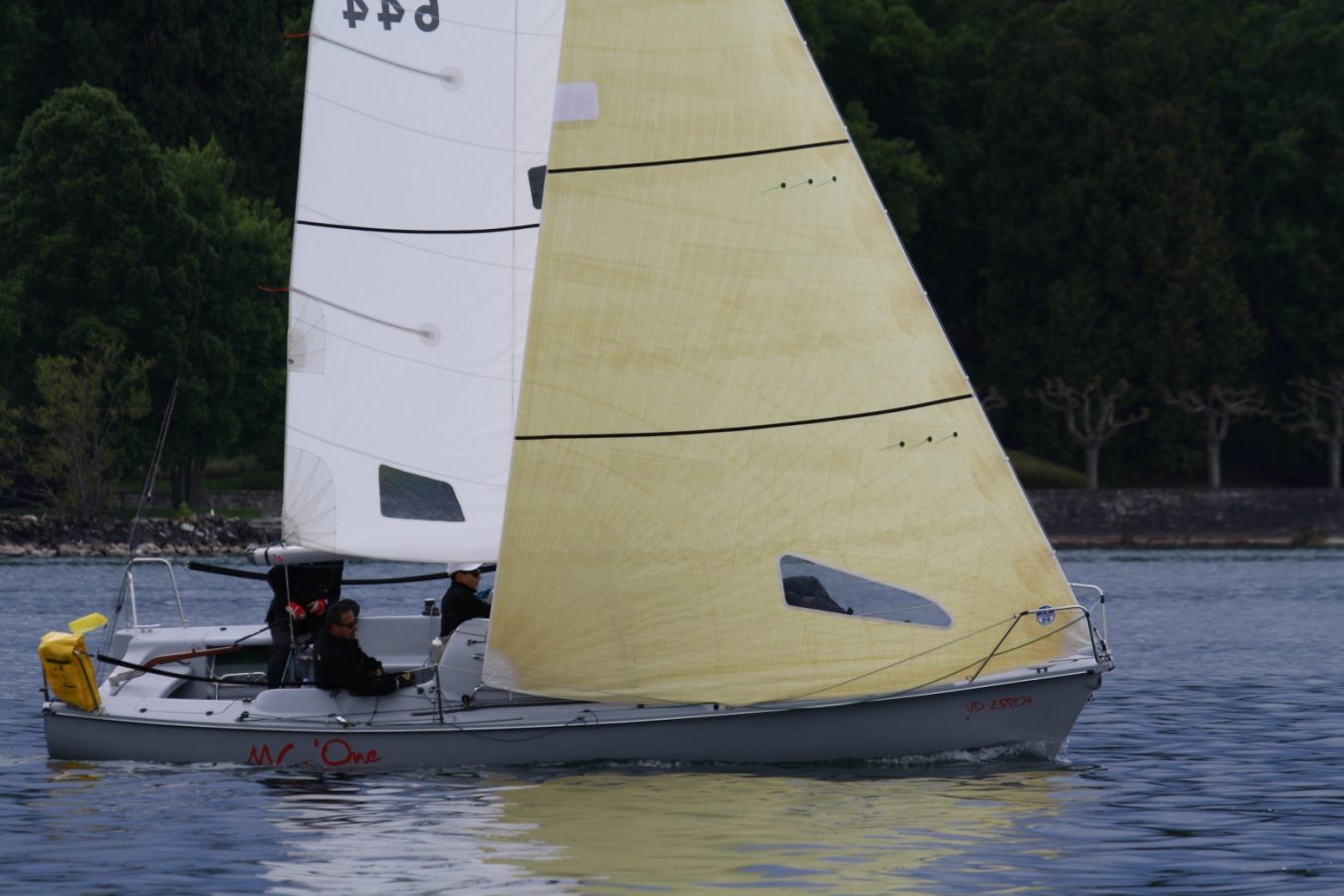
CLASSE SURPRISE - ONE DESIGN SUISSE
CLASSE SURPRISE - ONE DESIGN SUISSE
Guides de réglage / Tuning guides
- Tableau récapitulatif
- Livret de réglages complet (en français)
- Full tuning guide (English)
Référent pour cette classe
Julien Monnier
Tél. voilerie : + 41 22 782 32 22
Mob. : + 41 79 574 11 15
julien.monnier@northsails.com
Liens utiles
- Association suisse des propriétaires de Surprise
- Association française des propriétaires de Surprise
- Association autrichienne des propriétaires de Surprise
- Chantier - Archambault
- Chantier - François Séchaud
- Chantier - Léman Plaisance (Philippe Raphoz)
- Blog - CER
- Blug - CUST
READ MORE
READ MORE
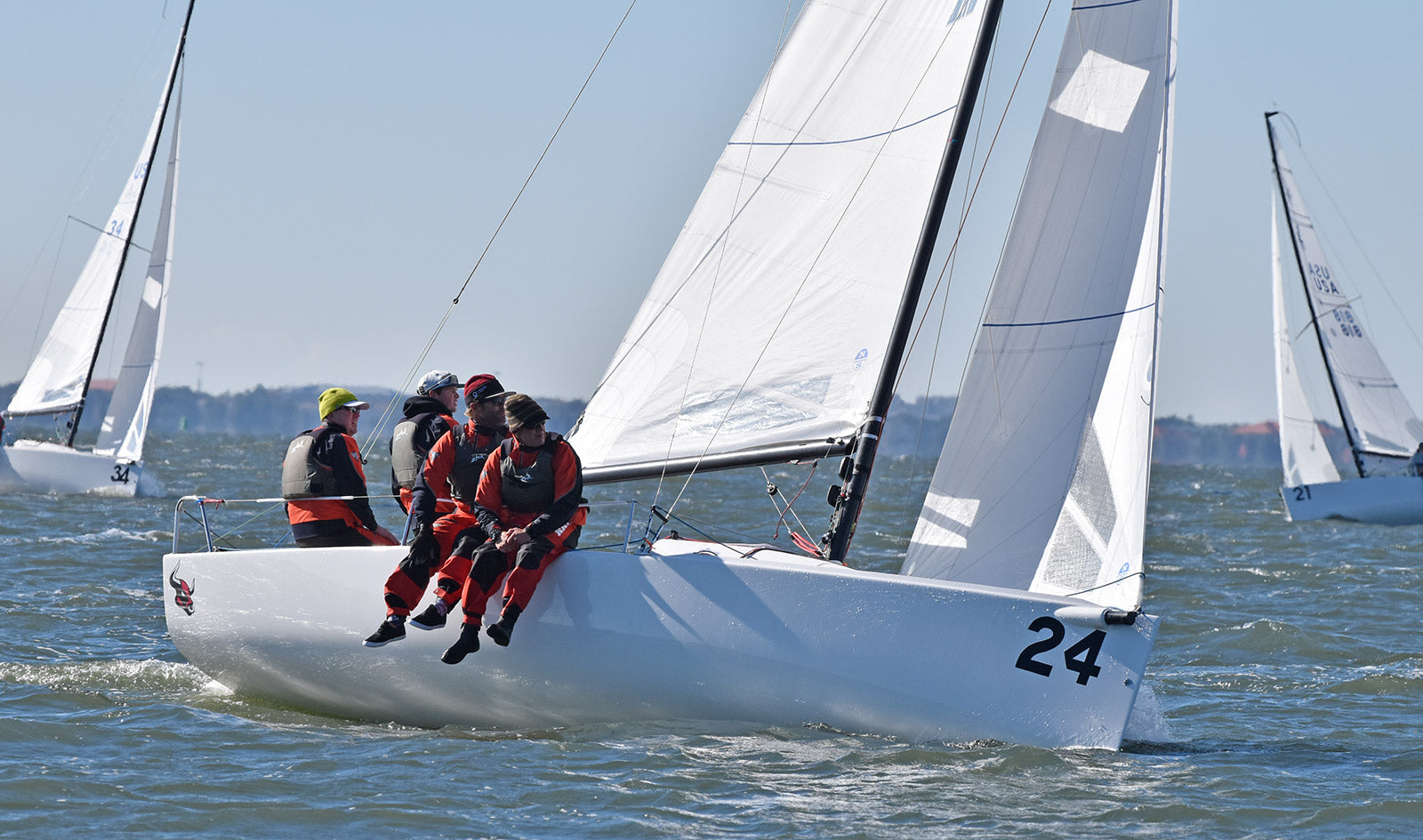
THREE REASONS 'STAMPEDE' CHARGED THE J70 WINTER SERIES
We caught up with Bruno Pasquinelli who is owner and helmsman for J70 “Stampede”. Bruno won the J70 Winter Series held in Tampa, Florida at the Davis Island Yacht Club this year.
The J70 Winter Series is composed of 3 events between December-February with one overall series winner. We asked Bruno how he prepares for events like this, and how it contributed to his success.
What are the three most important factors that helped you and team Stampede win the 2017 J70 Tampa Winter Series?
Boat/Sails/Crew
I have great ground support from Jay Vige. The boat is well prepared and maintained when we get to the regatta and need to go sail. The electronics have batteries, the radios work, preventive maintenance has been done, the rig is set to the micrometer settings, etc.
“We have confidence that our boat is ready for the event and are not distracted by boat issues.”
Work on my skills
Stampede sails each big event with a top tier team of sailors. I am the weak link on the boat. I am an amateur sailor with no formal training. I try and learn things every time I sail. I keep a detailed journal about the boat/rig/sails/conditions for each race we sail. This is helpful when we meet as a team prior to an event and then every day before we sail to make sure the boat is going out to the course with an effective setup for the conditions that day. I also put notes in the journal about skills or situations I don’t execute well. I have sailed with some great people over the last year and the first thing I tell them when they get on board is that this is recreation(fun), I want to do well, and that they are my coach. I want feedback on things that will up my game. These things go in my journal. Some of my notes over the last year include entry/exit angles for mark roundings, tiller movement on tack/jibe/mark rounding exits, slowing down at the leeward mark to not get stuck outside the pinwheel, starting techniques, etc. I draw diagrams in the journal and study them before I sail at each event. I have GoPro footage from every race and I review the footage on the plane while traveling to the events. The camera is mounted directly over the tiller and the video clearly shows when I drive well and when I don’t. I review the video of the “incidents” in my journal.
Sail a big event every month
This helps me retain the skills I am learning from each event and raise the performance of the boat.
“Trying these three things together gives me the confidence to concentrate on my job on the boat and leave everything else to the team. It is working.”
We had a great Worlds in San Francisco and won the Davis Island Winter series. Lastly, our sails are awesome, thanks North Sails!
READ MORE
READ MORE
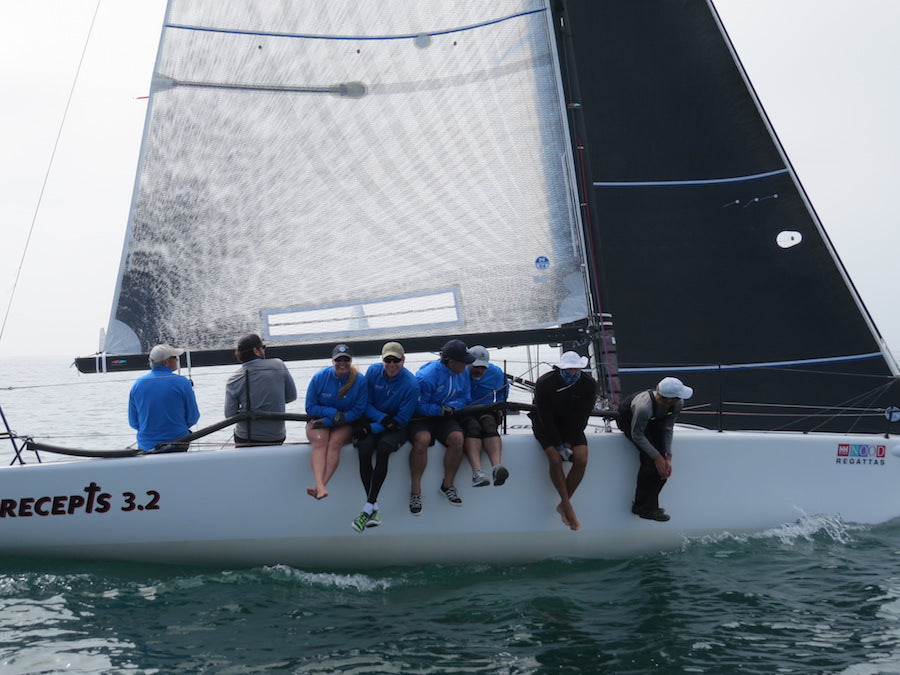
WEST COAST REGATTA REPORT: SAN DIEGO NOOD
2017 SAN DIEGO NOOD REGATTA: WEST COAST RECAP
The San Diego NOOD was an all around success. Beautiful conditions gave sailors the opportunity to enjoy the fresh west coast air and all the things southern California has to offer. Coronado Yacht Club welcomed the fleet Friday, with heavy fog that cleared by the early afternoon allowing for a light breeze to fill in. North Sails assisted sailors with a weather briefing just prior to the skippers meeting, providing local insights to visiting sailors. Dock talks for the J70 and Ultimate 20 fleet featured photo and video and gave fleet members the chance to notice opportunities for improved speed, fine tuning, and steering.
North Sails Saturday started with the Rally Race for cruisers. 11 miles were sailed in fresh breeze inside the harbor. Drew Belk’s Melges 32 ‘Precepts 3.2’ was awarded North Sails Boat of the Day. Sailors collected daily awards and viewed photos and video from racing at the North Sails tent after each day on the water. 1st place in Rally Race division A went to Corsair 31 ‘F- Bomb” with Lawrence Adams. 1st place in Rally Race division B went to 6m ‘Sprig’, with Greg Stewart.
Congratulations to our clients for taking 1st place in the J70, J105, Flying Tiger 10m, J120, Viper 640, and Rally Race fleets. Congrats to overall NOOD winner, Argyle Campbell with Etchells team “Rock n’ Roll”.
“Sanity”, 1st Place J105 with Rick Goebel
First Place – North Sails Rally Race- Greg Stewart’s 6m “Sprig”
Kym Kapalla’s “M2”, Melges 32 – 1st Place in ORC
North Sails Boat of the Day Winner, Drew Belk on “Precepts 3.2”
1st Place J70- Jeff Janov “Minor Threat”
North Sails Saturday- Rally Race!
1st Place Rally Race Winner Lawrence Adams “F Bomb”
READ MORE
READ MORE
OFFICIAL PARTNER OF THE J-CLASS ASSOCIATION
J-CLASS OFFICIAL SAILMAKING PARTNER
Combining unprecedented experience and heritage in the class, North Sails is the leading sailmaker of the J-Class fleet. Reinforcing the relationship further, this year North Sails also becomes the Official Sailmaking Partner of the J-Class Association.
J-Class Association and North Sails are proud to announce the inaugural Kohler Cup, a trophy named in memory of Terry Kohler, former owner of North Sails, entrepreneur and philanthropist. The Kohler Cup is a season-long points championship awarded to a J-Class yacht. Over the course of the season, each yacht will accumulate points based on their results, with events bearing more significance as the season progresses. The trophy will be presented at the J-Class World Championship in Newport, RI, August 2017.
High Scoring Point Breakdown for the 2017 Season:
St Barth’s Bucket = Total Fleet x 1 point
America’s Cup J-Class Regatta = Total Fleet x 1.5 points
J-Class World Championship = Total Fleet x 2 points
“North Sails looks forward to a historical year of J-Class Racing,” said Ken Read, President of North Sails. “The Kohler Cup, like Terry himself, embodies excellence, perseverance and sportsmanship. This award is exactly what Terry Kohler was all about.”
READ MORE
READ MORE
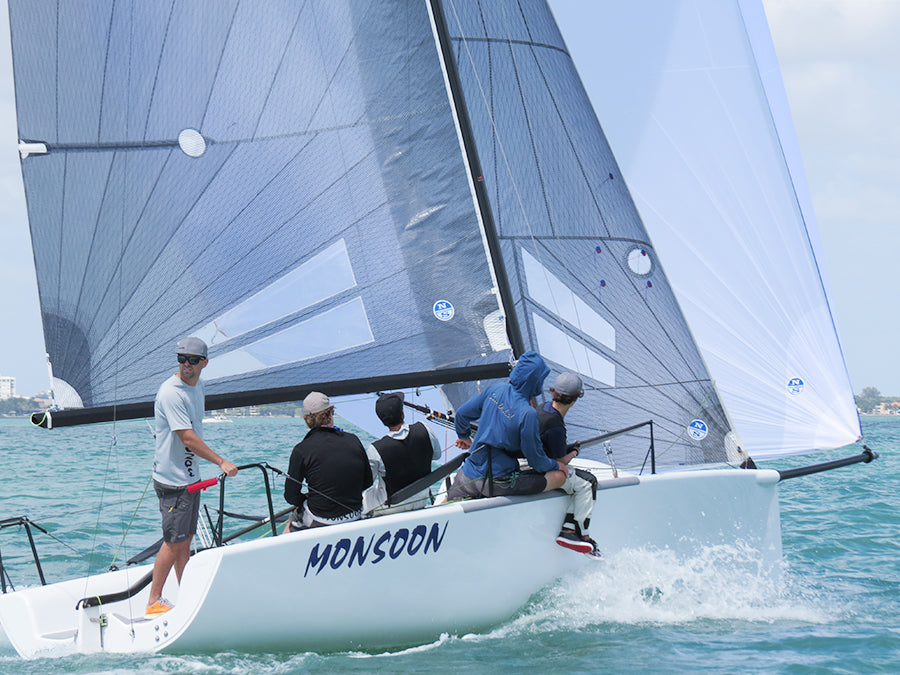
BACARDI SAILING WEEK RECAP
BACARDI SAILING WEEK RECAP
Bacardi Sailing Week is a wrap in Miami, Florida! Onsite support from North Sails Regatta Services included pre-event practice days and post-racing debriefs for select fleets. The event kicked off early for J70 and Melges 24 sailors who joined in practice starts and races run by North Sails for all competitors. This was a great way for sailors to warm up before sailing the event, especially those that were new to the fleet.
Competitors that had the opportunity prior to the start of the regatta to practice had the upper hand when it came time to race. North Sails Regatta Services team was on the water to take photos, give pointers, and provide constructive feedback for sailors.
Fleets had post-racing debriefs that allowed competitors to view photos and have an open discussion with onsite class experts. Zeke Horowitz (Viper 640), Tim Healy (J70), Ched Proctor (VX ONE) and Brian Hayes (Flying Tiger) all gave great feedback and provided insights. Talking about the racing after spending the day on the water is a great way to wind down and recognize things that can be improved within each team. The debriefings were quite informative and motivational, which was not only helpful but also was received well amongst the fleet.
Congratulations to our clients for sailing well over the course of the event, hanging in there when conditions got light and tricky, and motivating each other to keep working hard to improve their overall results!
READ MORE
READ MORE
SÉBASTIEN DESTREMAU CLOSES THE 8TH VENDÉE GLOBE FINISH LINE
SEBASTIEN DESTREMAU FINISHES VENDEE GLOBE
The final skipper reaches Nouch Sud with 100% re-fit North Sails inventory
Following an intense career in inshore racing, Sébastien Destremau decided four years ago to go for the big one – the Vendée Globe. A singlehanded circumnavigation is a different game, and Sébastien’s determination pushed him past a number of obstacles including one of the tightest budgets in the fleet. Nonetheless, Sébastien sailed his IMOCA Technofirst – faceOcean across the finish line Friday night, March 10th, and entered the channel of Port Olona Saturday morning when the tide was high and the fans loud.
S
ailing on his IMOCA built in 1998, which has already been around twice in this iconic race, Sébastien had one of the more challenging races among the fleet. Dismasting two months before the start, enduring the loss of his start engine two weeks into the race, and capsizing in the Indian Ocean start to paint a picture of the hurdles this tough sailor surpassed. Add to it two broken ribs, having to stop a few days in Tasmania for repairs and maintenance, and losing his sea generators after Cape Horn, and you’re left thinking this guy may never brave the ocean again. However, the crowds that welcomed him into Les Sables on Saturday can vouch – his smile was as broad as the winner, and every finisher in between. Four months of sailing, even rationing his food for the last three weeks, it is water under the bridge of this heroic finish.
Stepping ashore, Sébastien thanked North Sails and especially his twin brother, Hugues, who helped patch a seaworthy inventory together from existing stock, recutting and reusing sails that had many stories already to their name.
“When I decided to go for North, I knew my brother was going to look after me. What I didn’t expect was that so many staff members (such as Thibault and others) put so much effort into my program, and worked tirelessly into completing our sail inventory.
North Sails France looked after this very small project probably the same way as they looked after the biggest Vendée Globe campaigns. There are no small or big customers with you guys. There is just a customer … and that’s a testament to your firm. So thank you very much for this.”
Sébastien’s inventory was made of used sails including a North Sails NPC TOUR mainsail, years old, North Sails 3DL jib, and a pair of re-fit North gennakers. Not one single sail was built for this boat, so the North team in France worked to modify stock sails, making adjustments so the sails would fit for the circumnavigation.
By crossing the line today, Sébastien wraps up a tremendous Vendée Globe for North Sails. Twelve boats carried full North Sails inventories including the record-breaking winner, Armel Le Cleach on Banque Populaire. In total, six of the top seven boats were powered by North Sails, and 22 out of the 29 Vendée skippers had North Sails onboard.
The Vendée Globe is above all a voyage to the ends of the sea and deep down into the sailor’s soul. Since its introduction in 1968, 167 sailors have lined up at the start of the Vendée Globe, while only 89 have managed to cross the finish line. This figure alone expresses the huge difficulty of this global event, where brave sailors set off alone to face testing seas immediately in the Bay of Biscay, hit record-breaking speeds through the Indian Ocean, leaden skies and crushing temps in the Southern Ocean, and the patience-testing highs and lows of the Atlantic. Starting alone is victorious.
“I made a key to close the door behind me in the Pacific and now I have another one to close the harbour entrance, as I’m the last one here in Les Sables d’Olonne.” – Sébastian Destremau closes the 8th Vendée Globe finish line on Saturday, March 11th, 50 days after the winner.
Congratulations to the skippers of the 8th Vendée Globe – that’s a wrap!!
READ MORE
READ MORE
NEW MELGES 24 WORLD RANKINGS
NEW MELGES 24 WORLD RANKINGS
North Powered Teams Dominate Latest Melges 24 World Rankings
The World Rankings are determined by performance and participation at official class series events. Overall results are taken from high point scoring systems and are determined by four key events sailed for each team, with the highest scores accumulated. Ambitions of the IMCA World Ranking System set the tone within the class globally, giving sailors the aspiration to travel and attend the key events that will determine their overall ranking. There are 4 Ranking categories: European, North American, Australasian, and World.
Latest Melges 24 World Ranked Teams:
European Ranking Champion: Andrea Racchelli on ITA735 Altea
North American Ranking Champion: Conor Clarke/Stu McNay on IRL829 Embarr
Australasian Ranking Champion: David Young on AUS746/655 The Kraken
Overall World Ranking Champion: Andrea Pozzi/ Giulio Desiderato on ITA841 Bombarda
Team Bombarda, #1 World Ranked Melges 24 Team ©Carlo Borlenghi
The Melges 24 is fast, fun and provides sailors with the thrill of high-performance racing amidst top-level competition. Truth be told, over 800 boats are racing all over the world today, and for a good reason! Designed by Reichel Pugh and Buddy Melges, the Melges 24 has grown in popularity since its introduction in 1997. That same year, the class held its first World Championship with 98 boats participating. There are established fleets across the globe in North America, Europe, and Australia, and more developing in parts of South America and Asia.
“Embarr” 2016 Melges 24 World Champions, #1 Ranked in the US ©Pierrick Contin
We caught up with Giulio Desiderato, tactician on ITA841 Bombarda and asked him about his teams’ accomplishment as the top boat in the Melges 24 Class World Rankings.
How long have you been sailing with Bombarda?
“I met Andrea Pozzi two years ago during a Melges 20 regatta. The first time that I worked with him, I was coaching his Melges 20 team during an event in Riva del Garda, Italy. From the beginning, we’ve started something good after some key events racing together. He called me, and I started sailing with him on the Melges 24, calling tactics. Ciampalini (“Ciampa”) was already with the Bombarda team while myself, Carlo Zermini and Nicolas Dal Ferro started after the World Championships in Denmark. It has been a perfect combination from the beginning.”
What was a highlight onboard from the Kieler Woche Regatta?
“Kieler Woche was the first victory for the Bombarda team. We were coming from a productive winter preparation and getting up to speed, faster and faster. We started the regatta focused on doing our best, and not on the end results. Sincerely, we did not think we would win the regatta. We ended up with an incredible score, winning the last two races of the regatta.”
Bombarda and Altea sailing upwind. ©Mauro Melandri
What’s your next event as a team?
“We have stopped our journey for now. Andrea will be really busy this year, and for the moment he is focused on improving his skills in the International Moth. We want to come back next year, determined as usual to do our best on this fantastic boat and competitive fleet.”
Do you sail together on any other boats?
“Actually, no. For our team, we are all good friends and we are constantly in contact with each other. We see each other all the time in different sailing circuits, but at the moment we shall remain good enemies on the race course .”
“I’m speaking with the Pozzi family about another project, and will most likely have the pleasure again to sail with his team, calling tactics as usual, but this time in a bigger boat.”
How does it feel to be at the top of the Melges 24 World Rankings?
“Looking back, it’s incredible. As I told you before it has been a perfect journey. Our goal was to improve and grow up through every regatta, and now at the end of the season we can read the name Bombarda at the top of the world ranking. Andrea is one of the most passionate people I know, and I have to thank him for making this possible.”
Andrea Pozzi and his team Bombarda ©Carlo Borlenghi
Any advice for your competitors?
“Be focused on the journey and not the single race or regatta. Consider the team a group of friends and be determined to achieve the goal together. The strong point of Bombarda was that we didn’t give up. After a bad start or a wrong maneuver, or a bad tactical call we never got upset, but we were always determined to do our best and come back as a team. Racing with them I understand why these guys are such successful sailors.”
Congrats to all teams taking the top spots in the Melges 24 World Rankings for this year, and we wish you all the best in your future endeavors!
Team Altea, Ranked #1 in Europe ©Mauro Melandri
North Sails One Design | Melges 24
Melges 24 Class Association | Ranking Results
READ MORE
READ MORE
INTERVIEW WITH J70 TEA DANCE SNAKE
North Sails caught up with Todd Jenner and Peter Bowe from “Tea Dance Snake”, winners of J/70 class at the 2017 NOOD Regatta in St. Pete.
READ MORE
READ MORE
THURLOW FISHER LAWYERS CLAIMS JJ GILTINAN 18FT SKIFF CHAMPIONSHIP
The 2017 JJ Giltinan 18ft Skiff Championship did not disappoint! With seven official races over ten days, 26 teams participated in action packed racing on Sydney Harbor amidst spectators cheering from harbor ferries. Team Thurlow Fisher Lawyers of Michael Coxon, Dave O’Connor, and Trent Barnabas were declared champions with a race to spare. However, racing was tight among the rest of the fleet with only seconds between competitors at each mark. Ultimately the top-ten were determined in the series final, with only five points separating 2nd-6th place. Congratulations to North-powered teams who finished 1, 2*, 3, 4, 5, 6 & 7th with most using North Sails 3DL and some using a combination of North Sails 3Di RACE and 3DL.
The winning team of Thurlow Fisher Lawyers had 3Di RACE for their larger mainsail and jib, both new this season. 3Di RACE is a new product targeted to smaller racing boats, which benefit from the product’s wide wind ranges and increased “readability.” The 18ft Skiff is no doubt the smallest application we have seen for the 3Di product, so we asked Dave O’Connor, trimmer on Thurlow Fisher Lawyers, to report on how the sails have handled: READ MORE
2017 JJ Giltinan 18ft Skiff Champions, Thurlow Fisher Lawyers
Defending champion Smeg and Asko Appliances in close racing duel.
Charge from the first windward mark.
Appliances Online skipper David Witt competes in his last 18ft Skiff race!
READ MORE
READ MORE
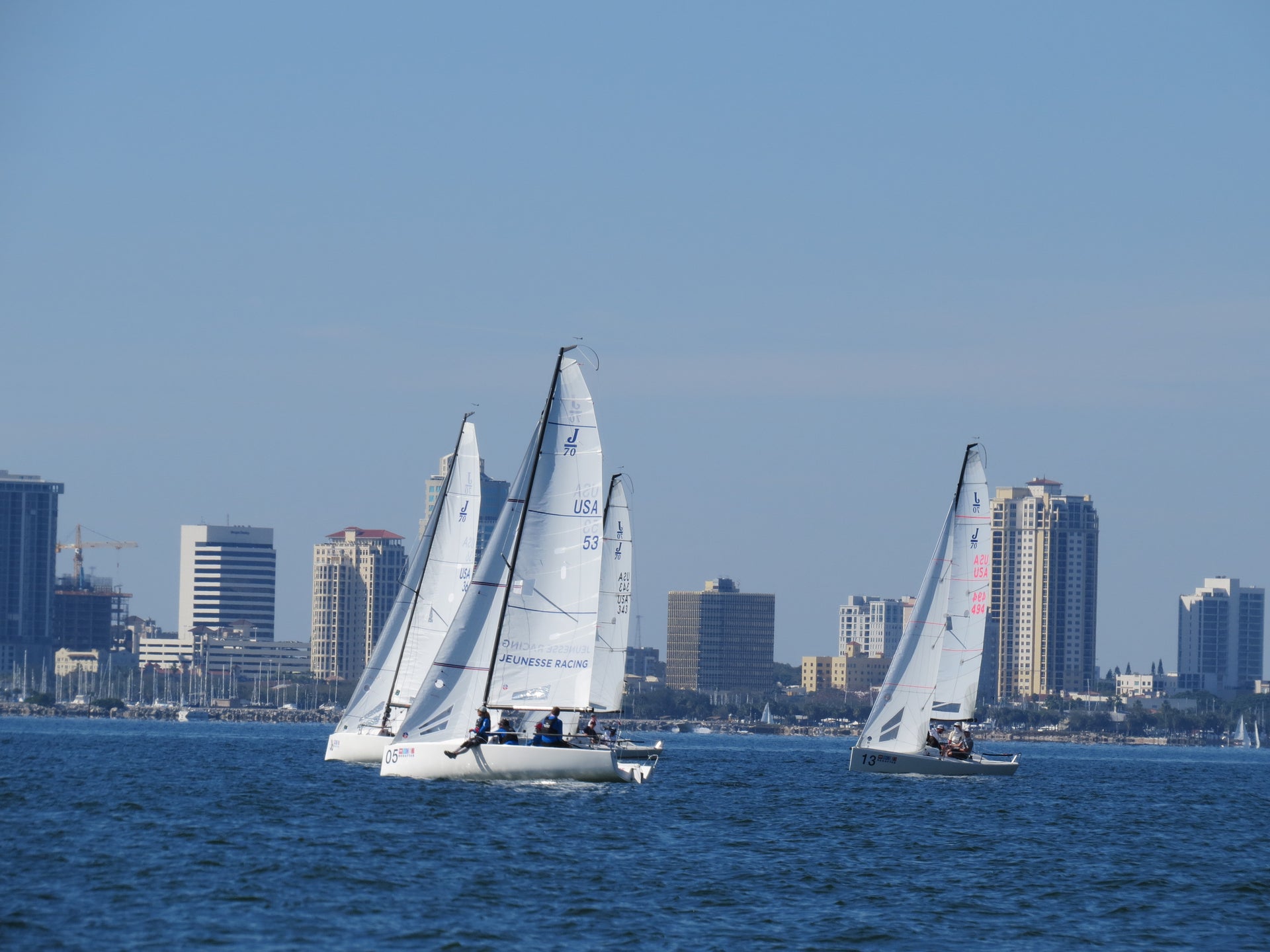
CORINTHIAN SAILORS THAT INSPIRE US
INTERVIEW WITH THE TOP CORINTHIAN AT THE J70 MIDWINTERS
Andrew & Melissa Fisher, owners of J70 Button Fly
Andrew and Melissa Fisher are no new faces to the J70 Class. What’s inspiring about Andrew’s team is the dynamic they impose on their competition. The Button Fly program predated Andrew’s Paralympic campaign, where he competed for a spot to represent the US in the Rio Olympics. Andrew has since chosen the J70 Class because there are a lot of boats that compete and he finds it to be sporty and manageable for him and his wife, Melissa. Andrew truly has the best of both worlds sailing with his corinthian team Button Fly, and having fun with the ones he cares about most. This is truly what it’s all about. Without corinthians, the sport of sailing wouldn’t be what it is today.
We caught up with Andrew and Melissa after their big win to share their excitement and passion for sailing and find out what it means to them.
Team Button Fly
Melissa and Andy, congratulations on your 1st Corinthian Division win at the 2017 J70 Midwinters. It was a tricky regatta featuring nearly every condition. What were some of the keys to helping you to the to victory lane?
“Thanks. J70 is a very competitive fleet. Due to the crazy conditions during some races, luck played its part more than usual. That said, our team has sailed the J70 together for over 2 years and has put in quite a bit of time training and learning what makes this boat go fast.”
The ButtonFly program started a few years back when Andy was on the US Paralympic Team competing for a spot to represent the USA in Rio. Why did you guys decide to get into the J70 at that point in your sailing career and do a “defacto” 2 boat campaign?
“The Button Fly program predated my Paralympic campaign, going back to bigger boat racing. The J70 is a downsize for us. Melissa and I love racing together. We looked at other classes of boats but decided on the J70 due to its popularity and a good balance of sportiness without being overly athletic. Managing a 4-person team is far easier, and the fleet is big enough that there are usually plenty of boats at the regattas for great competition. I had the luxury of having enough time to spend time doing both.”
Melissa, you have been the one constant on your program as a key crew member. What makes J70 sailing so much fun for you and how has it helped your sailing?
“I sail the boat with my husband. evolving to the smaller, 4 person program has been a great learning experience in that everyone plays a bigger role in getting the boat around the race course. in addition to loving the racing, the social aspects of the class make going to regattas special.”
It seems every team has a style and adjusts their program to maximize their strengths so when you are working on tuning and trimming style how much do you deviate from the “standard” tuning guide settings and performance articles you read? Are there any things you have found that work with your team that stands- out as a performance “game changer”?
“Our program is somewhat unusual, in that I have disabilities that we need to work around. We spend a bit of time figuring what we need to do to minimize my weaknesses, and practicing the weakest ones. Our boat tuning is very close to standard; however, we’re very conscious of thinking forward to our set up for expected conditions. For example, before one race at Midwinters, we noticed that the wind vs tide current made it appear that there was more breeze up the course than there was, so we adjusted our rig accordingly. In the end, the biggest “game changer” is quality practice.”
A few years back you guys dedicated yourselves to sailing Corinthian and have really locked into a great team with the Burke brothers on board. Tell us how that came together and what Steve and Shawn have brought to the ButtonFly team.
“Steve and Shawn have sailed with us for over 10 years. They both have been racing their whole lives, and, while their careers don’t involve sailing, they view racing as their primary pastime. Melissa and I are lucky to have them want to sail with us. In addition to being good sailors, the consistent time we’ve put in sailing the J70 together has really allowed us to develop our race course dance and improve.”
Obviously, our team here at North is very excited for you guys as many of us have worked with the ButtonFly program in some capacity. Since Andy has an unquenchable thirst for knowledge and never seems to stop asking questions and learning to be a better J70 sailor, how has the experience working with the North J70 team helped your program?
“We have been North customers for many years, so when we moved to the J70 it seemed natural for us to continue our relationship. To our mind, the support surrounding the purchase, teaching and sharing technique, the on-water coaching, all are essential to picking the right sailmaker. North has been there for us. They’ve spent time with us when we first bought the boat, have provided training opportunities, have raced with us on occasion, and are always available and open to discussing the latest thoughts on go- fast techniques. From a sailmakers perspective, it helps when your sails win. We’re trying to do our part.”
If you could share any advice for other Corinthian teams to move up in the standings what would you tell them?
“It’s far tougher to field a good Corinthian team than one with pros. By definition, they have more to juggle to be able to make the events, so once you find your guys, treat them well. Consistency is key.”
USA 501 has become a staple at many of the J70 circuit events. What is on your calendar for the rest of 2017 and what are the long term plans?
“We’re off to Miami for the Bacardi cup, then Charleston on our way back to the Northeast. Our goal is to peak for the North Americans this fall at our home club in Rye, New York.”
Andrew and Melissa have a competitive road ahead of them. We wish Andrew and his team the best of luck in the upcoming events and can’t wait to see them shine. Sail fast and keep having fun!
READ MORE
READ MORE
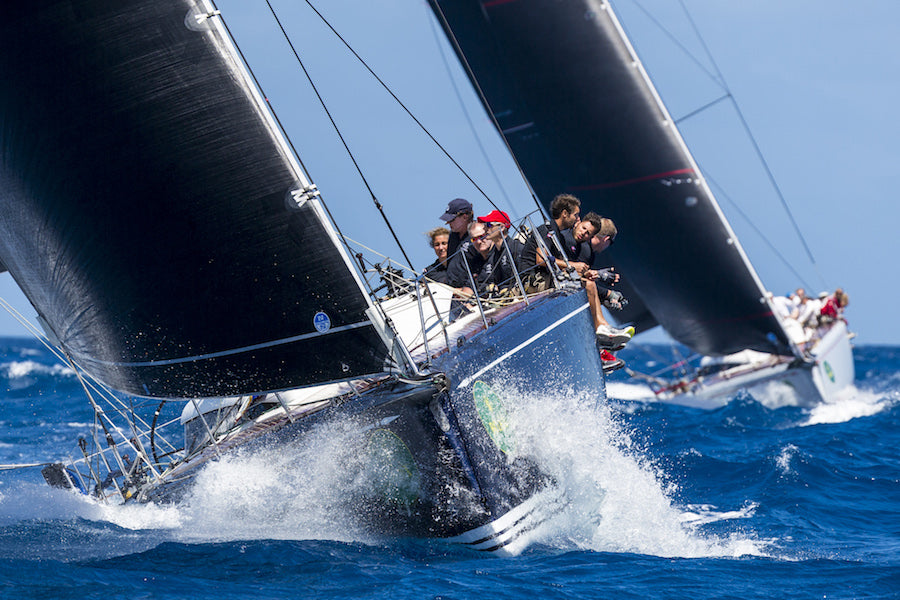
ROLEX SWAN CUP CARIBBEAN WRAP-UP
THE 2017 ROLEX SWAN CUP CARIBBEAN IS A WRAP!
The 2017 Rolex Swan Cup Caribbean came to a close yesterday at the Yacht Club Costa Smerelda clubhouse in Virgin Gorda. This biennial event brings together the unique Nautor Swan family of yachts from 36 – 115 footers, and this year will feature the new one-design Club Swan 50, a self-professed “small revolution” in performance and sailing pleasure. Two entries of this newly competitive design joined 20 boats split between the Maxi and Grand-Prix/Mini Maxi divisions for three days of racing amidst the breathtaking scenery of the British Virgin Islands.
The final race of the event delivered 15-20 knots from the Northeast on a course that sent both fleets around “The Dogs”, a pair of islands on the Northwest side of Virgin Gorda.
Don Macpherson’s Swan 90 Freya sailed extremely well over the four days of racing, scoring three wins out of four races. Freya entered the final day of racing with a comfortable lead, despite a pair of penalty points off the starting line, and secured the overall trophy in the Maxi division. This week’s title makes her a winner on both sides of the Atlantic, having won the 2016 Swan Cup in Porto Cervo. She sails with an inventory of North Sails 3Di ENDURANCE and NPC DOWNWIND, including a four-year-old mainsail (shown below). North Sails Kimo Worthington was among the crew as tactician. Vicente Garcia Torres’ Swan 80 Plis Play earned second place in a tight fleet, followed by Stuart Robinson’s Stay Calm in fourth place.
Freya’s 3Di ENDURANCE mainsail, delivered 2013
With two Club Swan 50s in the Mini Maxi/ Grand Prix fleet, it became nearly a ritual for Leonardo Ferragamo’s Cuordileone and Hendrik Brandis’ Early Bird to find themselves in “match race” circumstances at least once per day! Ultimately Cuordileone claimed the class win with three bullets in four races. North Sails President, Ken Read, called tactics with Ferragamo at the helm, and both Cuordileone and Early Bird raced with an inventory of North Sails 3Di RAW and NPC DOWNWIND sails.
As the owner and driver of the winning boat as well as Chairman of Nautor’s Swan, Ferragamo was doubly satisfied with the week’s events:
“We had a fabulous week. The racing was phenomenally good, I think this place is pretty close to paradise and the sailing and racing conditions were just perfect. The racing was fun and competitive among all the various participants. I got to drive the ClubSwan 50 and it was great to see very tight racing and the two boats just seconds apart on the finish line and of course I’m extra happy about Cuordileone’s win.”
North Sails joined Nautor’s Swan and Juan Yacht Design to collaborate on the Club Swan 50 design, advising on solutions for a rig and sail plan that drew optimum performance from the boat and synchronized well with the hull and deck systems. Read more about the design process and the resulting sail inventory HERE.
Club Swan 50 Cuordileone
Club Swan 50 Early Bird
READ MORE
READ MORE