


NORTH SAILS BLOG
All
Events
Guides
News
People
Podcast
Sustainability
Tech & Innovation
Travel & Adventure

WHO WE ARE: DREW MITCHELL
WHO WE ARE: DREW MITCHELL
Getting To Know Your Local Sales Expert
Drew Mitchell was born in Halifax, Nova Scotia and has worked at North Sails for nine years as a sales rep and loft manager for the Vancouver loft. He is 32 years old and the first boat he sailed on was a Bluenose Sloop.
What is your favourite local regatta/race and why?
Van Isle 360. I enjoy this race as it is a pretty neat mix of sprint and distance racing with such amazing scenery. The stopovers are always fun as you get to mingle with other racers and chat about successes and failures on the race course. Also as an east coast kid it's a pretty neat way to some neat spots on Vancouver Island.
Where is your favourite spot to go cruising and why?
I've only ever cruised once in my life so I would have to say Alexandra Island RVYC outstation. It was on a 242 my buddy owned so it was more like camping on the water.
What is your favourite design of boat and why?
Bluenose Sloop. It is a classic Nova Scotian design that has been modified with fibreglass for racing. Currently it is the most competitive one design fleet in Nova Scotia with 25 + boats showing up for Chester Race Week. I am lucky enough to race on borrowed boats in the fleet with my brother. I hope to own one with him in the future.
What is it about sailing that you enjoy the most?
I enjoy all the uncontrolled variables that sailing has to offer and trying to manage them better than the competitors, it is like no other sport. I also enjoy the team aspect of sailing especially when I get to sail with my brother and close friends. My favourite type of sailing is large one design fleet racing.
What activities do you enjoy outside of sailing?
I enjoy hockey, surfing, snowboarding, powerboating and now golf.
What is something interesting about yourself that most people would not know?
Before moving to BC I played on both the Nova Scotian Box and Field lacrosse teams. I played in two founders cups (Jr b box national championship) and 1 Art Ross Victory Cup (Senior field national championship). I also played for STFX University team for 5 years, winning back to back MUFLL (league) championships and received league awards such as Rookie of the year, couple 1st team all stars and also won the league scoring title.
How have you been keeping busy since all racing has been cancelled?
I picked up golf, I am currently not very good but am really enjoying learning a new sport that I find is very difficult. Looking to shoot under 100 before sailboat racing ramps back up!
READ MORE
READ MORE
NORTH SAILS PARTNERS WITH WORLD CRUISING CLUB
NORTH SAILS PARTNERS WITH WORLD CRUISING CLUB
Supporting Bluewater Around the World Adventures with Expert Support and Global Service
North Sails announces an exciting new partnership with leading sailing rally organizers World Cruising Club. The aim of the partnership is to inspire sailors around the world to embark on a cruising adventure, using North Sails experts and resources to guide the way.
World Cruising Club are organizers of Atlantic Rally for Cruisers (ARC) and World ARC circumnavigation adventure, helping thousands of sailors annually cross oceans safely. North Sails is excited to provide the bluewater cruising community with access to its 110 sail and service lofts around the world and support to help advise them at every step of their journey.
With over six decades of experience, North Sails is the industry leader in sailmaking and service. Reliable equipment is paramount for cruising safely. North Sails can provide that comfort to cruising customers, who know their experts are never more than a satellite call, cell phone call, or email away.
"Welcoming North Sails as our preferred sailmaking partner for World Cruising Club rallies will benefit cruising sailors on their journeys across the Atlantic and around the world."
This partnership comes at an exciting time, as North Sails has fast-tracked its development for an expansion of key cruising products. These are strictly for sailors who want to look at and trim beautiful, modern, and incredibly durable cruising sails. In a typical year over 1.5 million ocean miles will be sailed by boats in World Cruising Club’s rallies, so having the right sails is vital for successful ocean voyages.
“North Sails is extremely proud of their cruising products, and we make more cruising sails than anyone in the world.” Said North Sails President, Ken Read, “We have always been a part of the cruising community and we are committed to serving our cruising customers in the same capacity we support racers. I, personally, am looking forward to local racing, yacht club cruises, and day sailing this summer.”
World Cruising Club Managing Director, Andrew Bishop says “Welcoming North Sails as our preferred sailmaking partner for World Cruising Club rallies will benefit cruising sailors on their journeys across the Atlantic and around the world. Our partnership means the experienced North Sails team will be on hand to provide reliable advice about the selection, care and maintenance of sails for long-distance cruising at our forums and seminars supporting our participants, as well as delivering a long-lasting, quality product to help our participants achieve their sailing dreams with our rallies.”
Cruising boats are a unique sanctuary in which to escape from day-to-day pressures on land. The pure fun of time spent away from shore with family and friends is of greater benefit than ever before. A partnership with World Cruising Club is just one of the ways that North Sails is supporting its customers in new and innovative ways. Keep an eye on your inboxes as North Sails has an exciting product announcement on the horizon. Join the waitlist today.
📸 Amory Ross / North Sails
READ MORE
READ MORE

NORTH SAILS IS OPEN FOR BUSINESS
NORTH SAILS IS OPEN FOR BUSINESS
But the fact is, we never closed
It’s still a complicated time in many places around the world, and a huge thank you to our entire North Sails team, clients, and friends who have pulled together in a way that is quite frankly remarkable.
Our summer calendar may not be filled with the normal regatta schedule, and local guidelines are certainly making us look at all aspects of our lives, but sailing remains a unique way to escape from day-to-day pressures on land. Many new and creative events are popping up around the world: single-handed, double-handed, social distance crewing. Our calendars are filling up with a unique style of racing, alongside day-sailing and cruising of course. Simply, “getting out there” is our new normal.
So what’s been going on at North Sails?
North Sails have 110 sales and service sites, and seven manufacturing facilities globally. We did have limited production for a time but are now running at full capacity at our manufacturing sites, and have been since mid-May. Some of our delivery times were pushed out a bit because of government restrictions at specific locations. Still, our manufacturing team has kept safety at the forefront while getting back on schedule. The great news is, we have already caught up to the point of taking new orders for delivery as early as July.
As always, your local North Sails sales and service team are on hand to help and to answer questions as we help get you back on the water. Pre-season service, measurement, new sails, tuning, sail checks, we are simply a phone call away. Our Certified Service facilities are open globally, with many facilities offering curbside pickup and drop off. Use our loft finder below to access contact details and get in touch with your closest North Sails.
We spend every minute of every day, making beautiful sails that improve your sailing experience. Take advantage of the North Sails expertise, and find out how much more fun you can have on your boat.
FIND YOUR LOFT TALK TO AN EXPERT REQUEST A QUOTE
READ MORE
READ MORE

LET'S TALK ABOUT SPEED WEBINAR
LET'S TALK ABOUT SPEED WEBINAR
Trimm Tips
Daniel Schroff, Inhaber der Firma North Sails Schweiz GmbH, spricht am 27. Mai um 19:30 Uhr CEST über den Segeltrimm, und zwar von den Grundlagen bis zu den Feinheiten. Es geht dabei nicht nur ums Regattasegeln, sondern ihr bekommt einen Trimm-Refresher. Moderiert wird das Webinar durch Claudia Böhm, die eure Fragen aus dem Chat an Daniel weiterleitet.
Wir freuen uns auf viele Teilnehmer und eure Fragen. Natürlich steht euch das North Sails Schweiz Team jederzeit für Fragen, Anregungen oder Bestellungen mit Rat und Tat zur Seite.
Anmelden
READ MORE
READ MORE

TEAM SPOTLIGHT: MIRO BALCAR
TEAM SPOTLIGHT: MIRO BALCAR
A Discussion With Everyone's Favourite Frenchman
Hugh Beaton from North Sails in Toronto chats with Quebec area representative Miro Balcar on his sailing career and what motivated him to join the North Sails team.
What was it that attracted you to become a sales rep for North Sails?
Love the sport, want to learn, appreciated the company's quest to build the best sail. What motivated me to become a North Sails rep. was that after many years of performance sailing on Lake Champlain, there were only a few sailors purchasing from North Sails a product developed using advanced technology well suited for any type of sailboat .
It has been a very good 10 years - did you have any idea that it would be so successful? Over 400 sails since we started our partnership on Lake Champlain is quite an accomplishment.
Quebec - Lake Champlain territory allowed me to work on many interesting projects in cooperation with Beneteau dealer Gosselin Marina, mainly with support of Guy, Christina and Martin Gosselin.
The market seems particularly interested in our Performance Cruising products and wanting to get the most out of their boats. What is the ideal inventory for a 45 ft cruiser that wants modern sails to give the boat a boost in performance?
To highlight some of these was supplying 3Dl sails for 5 Beneteau First 36.7 and First 40 and lately the new generation of Beneteau Oceanis from 40 to 58 feet. This new line of boats have modern sail plans benefiting greatly from three choices of the North Sails product line: NPL Tour, 3Di Nordac or 3Di Endurance and introducing Vertical Batten option to the Mainsail and 105% Jib helped profoundly to the sailing quality of these boats.
I have worked with you on some very interesting projects including several of the new Beneteau's that require a Code Zero. How important do you think this sail is for the latest generation of cruisers?
My customers are also interested in purchase of Code 0, which they discover makes these boats sail well in lighter wind conditions and because of the furling system we facilitate to sell with the Code 0 , it is very easy to use by the crew of husband and wife.
Lake Champlain is certainly a beautiful cruising ground - for you, what is the perfect day on the water?
My perfect day on the water is sailing my X yacht 46 in light wind conditions in around 5 kn TWS, in flat water, without any preconceived destination where there is quiet anchorage waiting to enjoy nice single malt whisky with good friends , before making plans for tasty meal.
READ MORE
READ MORE

PHRF SPRING REFRESHER
PHRF RACING SPRING REFRESHER
Conseils de mise au point pour les courses de nuit de nos experts
📸 Cate Brown
Les experts en voile Tom Castiglione et Jack Orr basés à Milford, dans le Connecticut, ont organisé un webinaire PHRF Spring Refresher qui aidera tout coureur de semaine / guerrier de fin de semaine à améliorer son jeu pour la prochaine série. Voici quelques points à retenir du webinaire qui s'appliquent à tout coureur de club.
Comment obtenir un réglage optimal du gréement.
Vous devriez utiliser le même processus à chaque fois que vous réglez de votre gréement pour des conditions données. Voici comment vous assurer de bien faire les choses, à chaque fois.
Notez tous vos paramètres: votre réglage de base, petit temps, moyen, brise
Familiarisez-vous avec votre guide de réglage et soyez à l'aise pour ajouter / reprendre des tours à quai et sur l'eau lorsque les conditions changent
Pendant que vous êtes au ponton, rendez le mât droit en ajustant les diagonales et les haubans. Gardez à l'esprit que vous essayez simplement d'obtenir votre réglage de base.
L'utilisation d’un tensiomètre de type « Loos » vous aidera à rester sur la bonne voie avec des ajustements incrémentiels. Fixez votre tensiomètre à environ 2 mètres du pont (au niveau des yeux)
Dupliquez vos paramètres au fur et à mesure et mesurez toujours au même endroit à chaque fois
Si vous avez passé une belle journée sur l'eau, prenez-en note. Il est bon de revenir au réglage de base à la fin de chaque journée, mais assurez-vous de savoir où vous vous trouviez dans ces conditions dans lesquelles vous avez bien navigué afin de pouvoir répliquer à nouveau ces paramètres le jour suivant.
Les outils de réglage varient pour des bateaux de tailles différentes. L'utilisation de ruban électrique pour marquer vos barres de flèches et un marqueur pour que vous puissiez prendre des notes sur le pont aideront vos régleurs à trouver le bon réglage sans se poser de questions.
Comment le réglage du gréement influence-t-il la forme des voiles?
Gréement mou - Voiles plus creuses
Gréement tendu - Voiles plus plates
Essayez d'équilibrer les deux voiles
Un pataras réglable facilement vous aidera à affiner vos voiles sur l'eau.
En savoir plus sur la façon d’équilibrer votre plan de voilure.
Changer de braquet
Il existe quatre modes de navigation. Ces modes sont importants à comprendre pour que vous puissiez « allumer » lorsque vous en avez l'occasion, ou maintenir votre cap lorsque vous en avez absolument besoin.
Mode bas:: conçu pour générer de la vitesse. Chute ouverte de 4-5cm par rapport au réglage de base sur les barres de flèches. La drisse est relâchée, le pataras est mou, le chariot de GV est sur l’axe-bateau ou légèrement en dessous.
Mode normal: ne pas se battre pour préserver son cap, naviguer sur sa meilleure VMG, naviguer sur la cible. Chute ouverte 1-2 cm par rapport aux barres de flèches.
Mode haut:: vous avez besoin de hauteur (cap), limite lay-line, un bateau sous le vent que vous essayez d'éviter. 0 cm du réglage max sur les barres de flèches = chute tendue. La drisse est tendue, pataras (continuez à pomper le pataras), le chariot de GV est sur l’axe-bateau ou légèrement au-dessus, la latte haute alignée sur l’axe ou légèrement en dessous de la bome.
Mode de-power: pataras tendu, drisse tendue, hale-bas tendu pour garder la bome basse. Si vous voyez des plis provenant du mât se diriger vers le point d'écoute de GV, vous avez trop cintré votre mât et trop de pataras.
Petit conseil: utilisez vos barres de flèches comme point de référence. Marquer vos barres de flèches au préalable vous aide à atteindre chaque mode, rapidement.
📸 Paul Wyeth
Déplacement des poids
Attribuer à un membre d'équipage la gestion de ceci pour chaque manœuvre
Gardez votre équipage proche au rappel
Dans le petit temps, envoyez votre équipage en bas et en avant. Si vous restez sur le pont, restez bas!
Assurez-vous que votre équipage reste au rappel pendant les passages de marque. Il est essentiel de garder tout le safran dans l’eau! Trop de gite réduit l’efficacité de votre quille, ce qui vous fait dériver. Cela peut également vous forcer à lofer dans une risée.
Choquez bien les voiles à la marque au vent, pour vous aider à abattre. Si vous utilisez bien votre poids et vos voiles, vous ne devriez pas avoir besoin de beaucoup de barre pour diriger le bateau.
Attendez que le bateau soit stabilisé avant de commencer à ranger le pont, sauf si vous vous préparez à une manœuvre rapide.
Au portant, l'équipage doit avancer dans le petit temps. Si le vent est plus fort, faites reculer l'équipage ; assurez-vous de ne pas avoir l’étrave trop profonde ou au contraire trop cabrée. Le placement des poids sur le pont peut aider votre bateau à mieux garder le bateau à plat et à être prêt lorsqu'une risée frappe.
Si vous êtes à l'aise, vous vous trompez!
📸 Cate Brown / BIRW 2019
Communication
Il devrait y avoir un flux constant de communication entre les régleurs et la barre. Un dialogue constant maintient les voiles réglées ensemble et en même temps. Si vous êtes à la recherche de plus de puissance, le régleur de GV et celui de voile d’avant doivent être informés afin qu'ils puissent régler / choquer / border en conséquence. Si l'un est choqué et que l'autre est complètement bordé, ce n'est pas rapide. En savoir plus sur la communication avec l'équipage et la chaîne de commandement appropriée à bord. Learn more about crew communication and proper chain of command onboard.
Que faire au ponton:
Nettoyez votre bateau. Si vous n'avez pas besoin de ces diverses choses pour courir, vous n'en avez pas besoin sur le bateau!
Vérifiez votre coque. Les algues et l'usure de la coque sont une perte de vitesse. Même peu fait la différence!
Assurez-vous que vos instruments fonctionnent correctement. Vérifiez vos instruments pour vous assurer qu'ils sont correctement calibrés et assurez-vous que tout le monde à bord sait comment les utiliser. La dernière chose que vous voulez, c'est que quelqu'un appuie sur le bouton «off» lorsque vous essayez de marquer 5:00 minutes ou bien cibler la mauvaise extrémité de la ligne.
Réglez votre gréement. Sans un mat correctement réglé, vous ne pourrez pas contrôler le comportement de celui-ci sur toute la gamme des conditions de vent. Heureusement, le réglage des gréements est un processus pas à pas simple pour les gréements en tête de mât ou fractionnés. Apprenez-en plus sur la façon de régler efficacement votre gréement. Learn more on how to effectively tune your rig.
📸 Richard Mark Dobson, Adina
Reacher & trinquette
Une trinquette de genois peut être installée à l'intérieur d'un foc
Un Reacher peut également être conçu pour s'installer sur le beaupré, ce qui ajoute des performances
Modifications du beaupré pour simplifier votre navigation (pour le côtier et l'offshore)
Idéal pour les angles lorsque vous ne naviguez pas souvent plein vent arrière.
Si vous naviguez en banane à 15 nœuds, vous aimerez peut-être mieux l'option symétrique.
En général, passer à l’asymétrique peut augmenter les performances du bateau, augmenter la vitesse, mais tout dépend du type de parcours que vous naviguez et cela indiquera ce qui vous convient le mieux.
Il est essentiel de s'entraîner avant l'heure de la régate. Lorsque vous arrivez dans votre zone de course, que pouvez-vous ajouter à votre check-list d'avant course?
Passez une journée à debugger les diverses manœuvres
Chronométrer la ligne de départ
Spinnaker envois et affalages
Virements et empannages
Utiliser votre poids d'équipage pour aller vite
Les bateaux qui s’entrainent gagnent les courses!
Missed our PHRF Spring Refresher webinar? Catch up and learn more from our experts on how you can enhance your performance on your next weeknight race / weekend regatta.
Watch PHRF Webinar
Have questions about optimizing your boat for weeknight racing? Contact PHRF experts Jack Orr or Tom Castiglione.
Email Jack Email Tom
Want to know how to choose the best sails for your next club race?
Learn More
READ MORE
READ MORE

NORTH SAILS IRELAND: SAIL DESIGN WEBINAR TONIGHT
NORTH SAILS IRELAND: SAIL DESIGN WEBINAR TONIGHT
Live With North Expert and Head of Design Jeremy Elliot
North Sails Ireland will be running the next of their local Irish webinar series on Wednesday the 13th May at 8.30 pm. During this live, interactive webinar, the experts will discuss the North Sails design process, "From Concept to Reality", and explain how we go through the various stages of design from start to finish. Presenters Nigel Young, Maurice 'Prof' O'Connell and Shane Hughes will be joined by friend and collegiate, Jeremy Elliott. Originally from Kinsale and now residing and working in the UK, Jeremy is Head of Design for North Sails and has been involved in many Irish projects and sailing teams over the years. The team at North Sails Ireland have all had the pleasure of working and sailing with Jeremy over the years and are delighted to have him as the guest for the presentation on Wednesday evening. Please sign up in advance using the registration link.
The webinar is free and open to all Irish sailors. We look forward to seeing you on Wednesday the 13th May at 8.30pm and in the meantime, check out a short preview clip below of what to expect.
READ MORE
READ MORE

THE NEXT GREAT FRONTIER
THE NEXT GREAT FRONTIER
Interview with Noel Drennan on Etchells Racing
Noel Drennan with Billy Merrington, and Lewis Brake during the 2019 Etchells Australian Championship at RQYS © John Curnow
The overall concept for conducting the North Sails Etchells Webinar, was to educate the fleet on the entire sail and mast package that Iain Murray (Havoc) and Graeme Taylor (Magpie) have been using, and to show it’s not just about the in hauling of the jibs. We have reviewed the questions received during and after the webinar that you can watch again, and have prepared these answers specifically to match them. Article republished from Sail-World / Etchells Australia, courtesy of John Curnow.
Do I have to change my current mast and sails combination to the same as Iain Murray and GT?
NO is the answer. The standard mast set up, (Sparcraft/Smidmore/Selden) with spreaders straight out, and LM series Jibs, is still very competitive. At the Australian Championship, both Mark Roberts and Kirwan Robb demonstrated this superbly, and both also won individual races over that very strong fleet, placing 4th and 6th overall, respectively.
The important thing is to know your settings, regardless of the sails/mast combination, which is only solved by sailing and racing.
Note that at the nationals, where Graeme Taylor was first, Iain in second, and then John Bertrand in third place, probably would have had the same result if they were all using the standard LM series Jibs without inhauling.
Should I alter my Etchells to in-haul?
I do believe it’s worth fitting an in hauling system, and it does not have to be the complete system change matching Iain and GT, but there is value in at least having the ability to in haul to the cuddy cabin edge or just inside.
Do I have to move my shrouds for different conditions?
There is value in moving the shrouds on the chainplates for different conditions. If you have a standard spreader set up mast, for example a Smidmore mast, I would only move the shrouds in top and bottom of the wind ranges, and only by one hole. That is to say that the Cap shroud should be in the front hole under 8 knots, and then hole position three over 18 knots, and for rest of the time in the standard hole #2. If in doubt about the possible sailing conditions, I would leave the shrouds in the standard #2 and #4 slots.
It is important to remember that with the standard Smidmore mast, the spreader configuration is forward of straight out from the side of the mast, so quite different to Iain’s and GT’s masts.
Should I try the MAL jib without the full in-haul jib sheeting system?
This will work, but you’ll probably get even better results by in hauling to at least to the cuddy cabin, since you would be setting up with a slightly straighter forestay than a LM2L, or GM style jib, and the leech would be very open, or twisted leech, without any form of inhauling in place.
Please have a look at Billy Merrington’s videos of how he economically retrofitted his Etchells to have an inhauling system, using many parts from his original set up.
Part 1 Part 2
Can I compete with Iain and GT in my standard set up Etchells?
The easy answer is yes, but can you then answer the following: Is your hull finish the same standard as Iain’s? Are you starting as well as GT and Iain? Are your sails in as good condition? Am I going the right way consistently, and hiking hard, with solid crew work?
The Etchells class in Australia is the top end of one design racing, and there is a reason guys like JB and Iain Murray have raced the boat for 30 years. The impressive thing is they are both as keen to improve today as they were when starting in the Etchells class.
Let’s look at Iain and his crew:
Iain has been at the forefront of Australian sailing forever, from the 18s to America’s Cup, and the Star at the Olympics, etc.
Richie Allanson has an incredible, long time and broad base of experience in racing and sailmaking, and living Etchells everyday.
Then you have Col Beashel, a six time Olympian, three time Etchells World Champion and winner of a small regatta in Newport in 1983.
Graeme Taylor’s Magpie team have many regatta wins over the last years, and the scary thing is that GT is the only one on Magpie that has not won an Etchells Worlds, with both James and Tom previous Etchells World Champions!
That is all pretty impressive, and yes, hard to compete with, but that’s why we race Etchells. The best thing about Etchells you can go to any fleet club race in Australia, and you will have to sail well, start well, and go the right way if you want to win. It is not easy.
The zoom format has opened up a new world for sailor education, and is definitely going to be something used in the future. The Melbourne Etchells fleet and Adrian Finglas have been using zoom for coaching sessions during our COVID-19 downtime, which is just awesome, and a great way to educate the fleet. Zoom debriefs, for example a few days after the regatta has finished, will be an incredible tool for developing your Etchells sailing.
READ MORE
READ MORE
RACING RESTART
RACING RESTART
It's Time To Get Back On The Water!
Ervin Grove from North Sails in Charleston shares how they are helping local sailors get back out on the water safely and within government guidelines.
For many of us “racers” our sailing style could be defined as analytical, obsessive, competitive and most importantly, passionate. Whether its an International event, an Offshore event or the Charleston Wednesday Night Summer Series– as soon as we leave the dock for a race, we have reached our happy place.
In South Carolina we have been fortunate to see less boating restrictions compared to other parts in the world. While public access was closed for several weeks, we never saw the boating scene shut down. Since we were lucky enough to have access to our waterways although under certain restriction, we've taken up a new love for cruising.
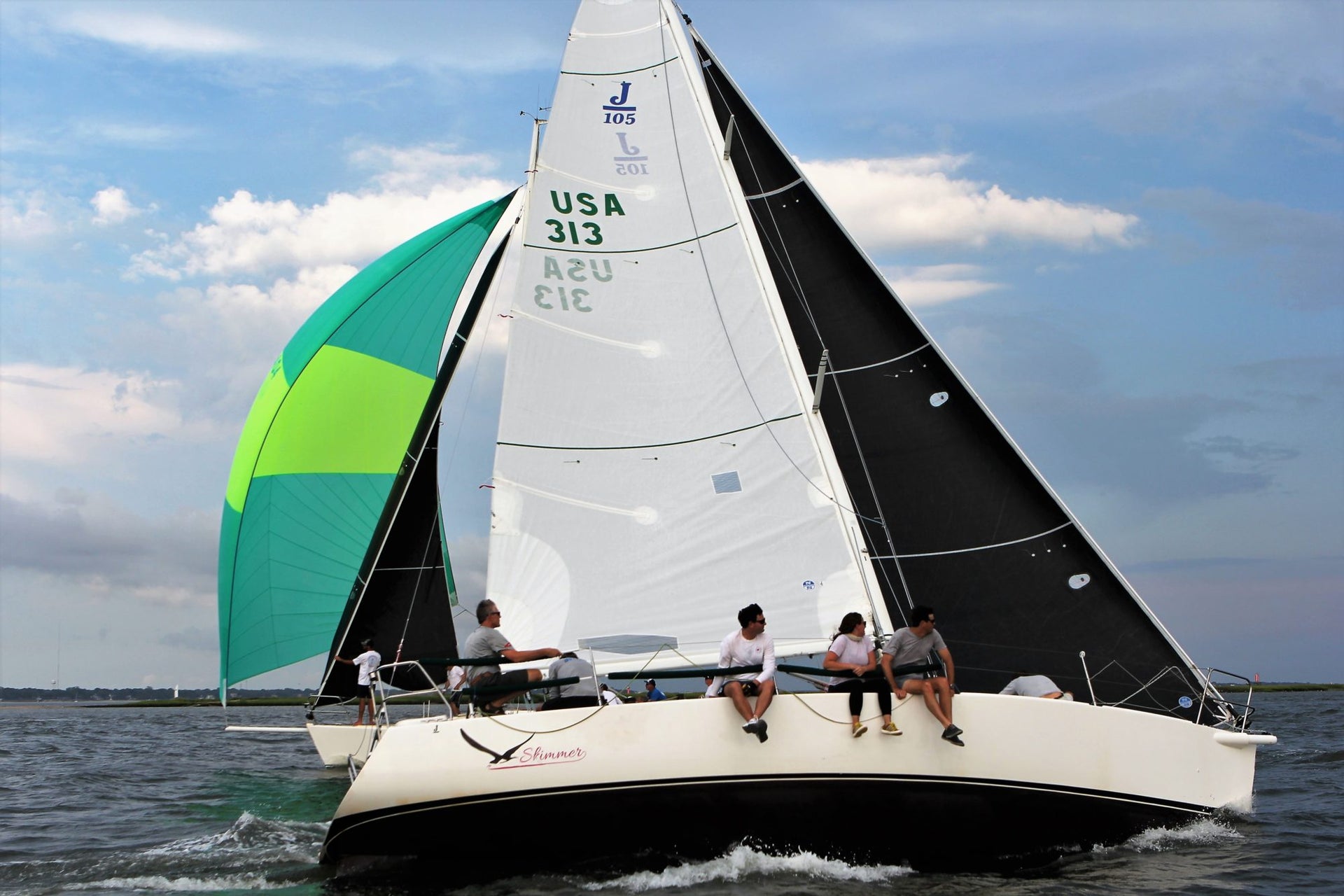
John partnered with an old College of Charleston Sailing teammate, Joe Pitcavage last year on a J/105. Since then, his boat partner has used the boat regularly for harbor races. John has also used the boat extensively, but for family cruising. The J/105, like many racer-cruisers, can be set up to do both well. However, a month into this crisis our discussions turned to the unknown fate of sailboat racing. John commented;
"Things have changed and the events aren’t coming back– until we bring them back. Our local sailing community is in the process of a full restart, as many of our friends already have boats. There are some clients that have boats that haven't been as active on the water as they are more into the racing aspect of the sport. Our goal is to get all sailors out on the water, and we've got a good reason to!"
The drafting began and with the help of North Sails cruising expert, Bob Meagher out of Ft Lauderdale. We have now published our Notice of Cruise (NOC). The “Cabin Fever Cruise” is a 7-mile race around government marks in Charleston Harbor. Along the cruise you pass landmarks such as Battery Park, Ft Sumter, the USS Yorktown and the Ravenel Bridge. The start, much like the New England favorite, “Figawi”, is a pursuit style start with starting times published in the NOC. This distance cruise usually takes between an hour and a half to two hour total. This new style of sailing event has brought much interest to the sailors of Charleston and we have seen competitors join in in all types of boats, ranging from a Catalina 22 to a Gunboat 55. The last three Saturdays we had 15 to 20 boats out cruising and we expect to see that number to continue to grow.
You can find our Notice of Cruise below and we hope you will adapt along with it to fit into your local communities guidelines when the time is right. We will see you back on the water soon! And for all the local Charleston Cruisers, we'll see you out there at noon on Saturday!
Cabin Fever Cruises Sailing Instructions
READ MORE
READ MORE
HURRICANE SEASON PREP
HURRICANE SEASON PREP
North Sails Experts Share Their Tips
Once again, the experts have predicted an active hurricane season this year, but in 2020, preparations will be made within the context of COVID-19. As a result, boat owners must consider changes to their annual plans to address threats to their boat and their health, as the season begins June 1.
Run or Hide?
The decision to run from a storm or hunker down is easier for some. Boats on trailers can be protected in a number of ways. A rented warehouse can cost far less than damage from blowing debris. If a boat's left outside, consider filling the cockpit or bilge with water to help weigh it down, place blocks beneath the trailer frame on either side of the wheels, and then deflate the tires completely. Twist or drill auger-type tie-down anchors into the ground, tie the boat to the trailer, tie the boat to those anchors, and remove everything you can. For larger keelboats, finding shelter often requires more planning. According to BoatUS, "the choice of locations is the single most important decision a boat owner has to make before a storm. It dwarfs all others." Boats on the hard are less likely to suffer serious damage on shore, even if toppled. If you'll stay afloat, investigate a marina's piling height and depth, floating vs. fixed docks, and the comprehensiveness of its operator's storm plan. Additionally, owners need to know their marina's policy and state law very well to ensure they understand their rights and responsibilities in a storm with regard to the facility. Many insurance policies require cruisers to exit latitudes perceived to be more hurricane-prone. In a year when the Bahamas and many Caribbean countries have discouraged visitors with quarantines and lockdowns, marinas in the Carolinas, Chesapeake and further north may have less availability. Of more concern, in April, states like Rhode Island took a hard line toward anyone arriving on the water from out of state, either prohibiting transient boaters or imposing a two-week quarantine before coming ashore. If your insurance requires to you leave one part of the world, make sure you have well-thought out plans for arriving at your destination in case such policies resume.
Supplies
In the past, hurricane preparation involved hours inside West Marine or other chandleries buying rope, bumpers, and other supplies. Any specific hurricane threat will likely overcome this year's social-distancing concerns, but advanced preparation can mitigate both risks. Dust off last year's list of all the materials you will need to prepare your boat. Combine resources with others to buy spools of mooring rope or chain at deep discounts. After familiarizing yourself with your vendor's return policy on hurricane-related items, buy online, for home delivery or curbside pickup.
Sails
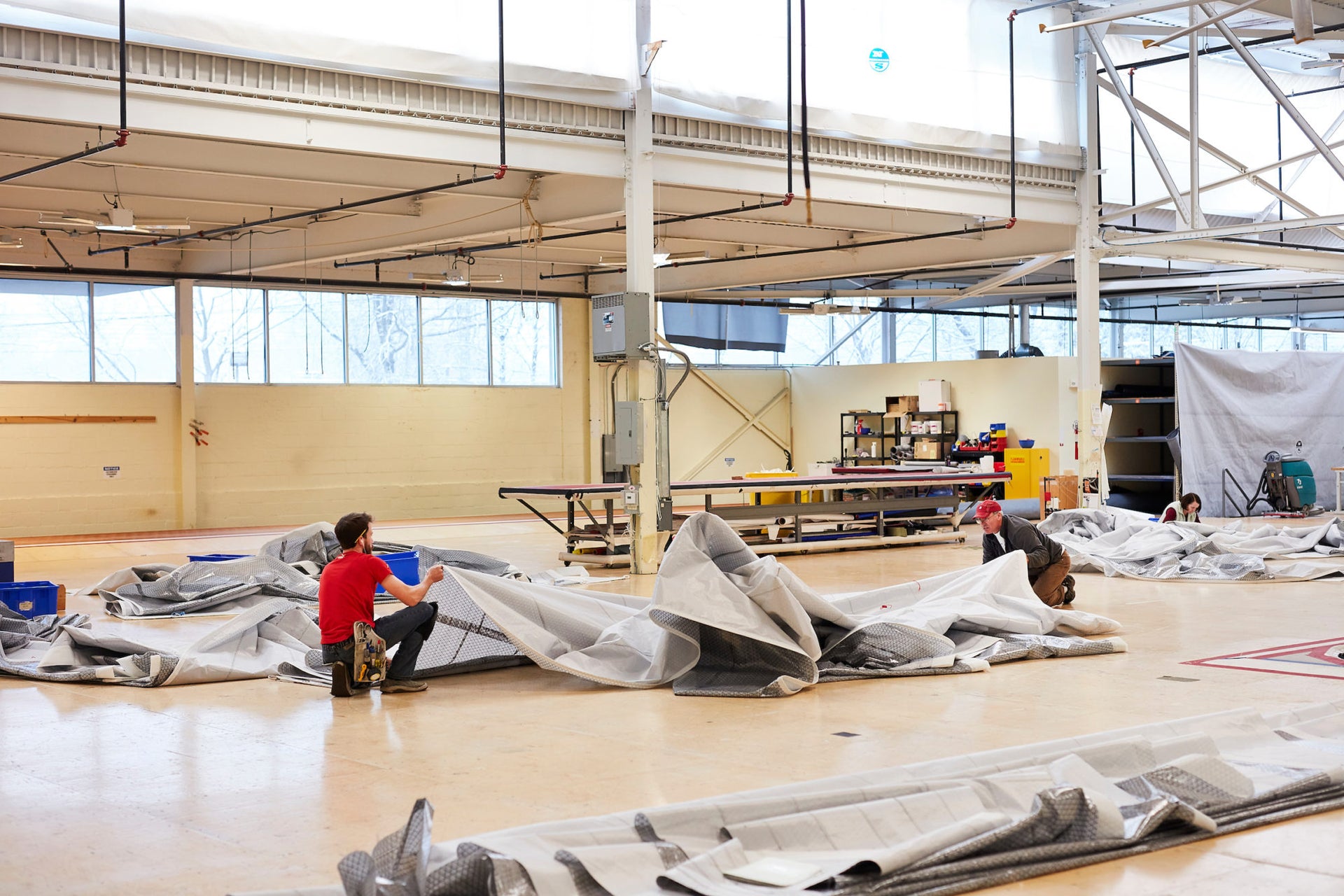
Without question, plan to remove your sails from your boat long prior to the storm. If you're familiar with the process you'll know how long it takes, but if it's been a while, anticipate two people will need at least an hour total for the main and genoa on a 40-footer, double that on a larger mainsail with full battens. If your sails haven't been serviced in a while, most North Sails facilities will be open leading up to the storm and able to store them for review and regular repair after the threat has passed, but call ahead to ensure staff isn't securing their own homes when you want to drop by. If curbside drop-off remains the preferred practice, you may be asked to provide all your contact information and work required ahead of time. If you wait too long and have to leave the sails in place, wrap them tightly, using a spinnaker or spare genoa halyard to "barber-pole" the furled genoa, and spare line to lash the mainsail tightly to the boom. Remember, even tightly-wrapped sails like this greatly increase the boat's windage and load and chafe on mooring lines so consider this a last resort.
Personal Safety
The loss of life from 2019's Hurricane Dorian in the Bahamas will never be fully known. A stationary Category 5 storm wreaked unprecedented devastation on even well-fortified structures, and should remind us all that personal safety comes ahead of protecting our boat or other replaceable items. Liveaboard cruisers in the path of a storm may have to rely on local hurricane shelters for this last-resort protection, and in the era of face-masks and hand sanitizer, should have plenty of each to increase their safety when enclosed with dozens of area residents during a storm.
Next Year
Hopefully 2020's preparations will be time well-wasted, and storms will stay out to sea. If so, learn from the experience. Just like after a regatta or long passage, as you let down your guard in the Fall, ask yourself what you did well, and what could have been improved, and make notes for next year. Hopefully the 2021 hurricane season will just be another typical "above average" season without the parallel viral threat complicating our plans.
READ MORE
READ MORE
ROYAL VICTORIA YC SUPPORTING SAILING
ROYAL VICTORIA YC SUPPORTING SAILING
Maintaining Social Distancing While Keeping Local Sailing Alive
Drew Mitchell, North Sails expert from our Vancouver loft, check-ins with Andrew Madding from Royal Victoria Yacht Club. Madding shares how they are getting members on the water and racing during these unprecedented times.
Words on the docks is that the Royal Victoria YC are running sailboat races. What are the new rules in terms of crew members with social distancing regulations in effect.
All boats must be sailed with only crew and skippers living in the same household, there shall be no socializing before or after the race(s) and no burdened vessel shall come within one boat length of an advantaged boat. In terms of on shore etiquette, participants are encouraged to allow plenty of time to launch or prepare your boat, wipe all public surfaces (gates, crane controls, knobs, etc.) before use and wear gloves, stay six feet or more away from anyone else.
We encourage anyone showing flu-like symptoms to stay home and remind everyone that respecting social distancing on and off the water will help ensure that sailing and racing remain available during this difficult time. Social distancing deniers are not welcome.
What do you think the average crew number is ?
Single Handed or Family members...so hard to say average. as one can be crew or a Family with kids might be 7 in all.
Looks like you guys have quite the attendance when/what time is the racing and how many boats are you getting out?
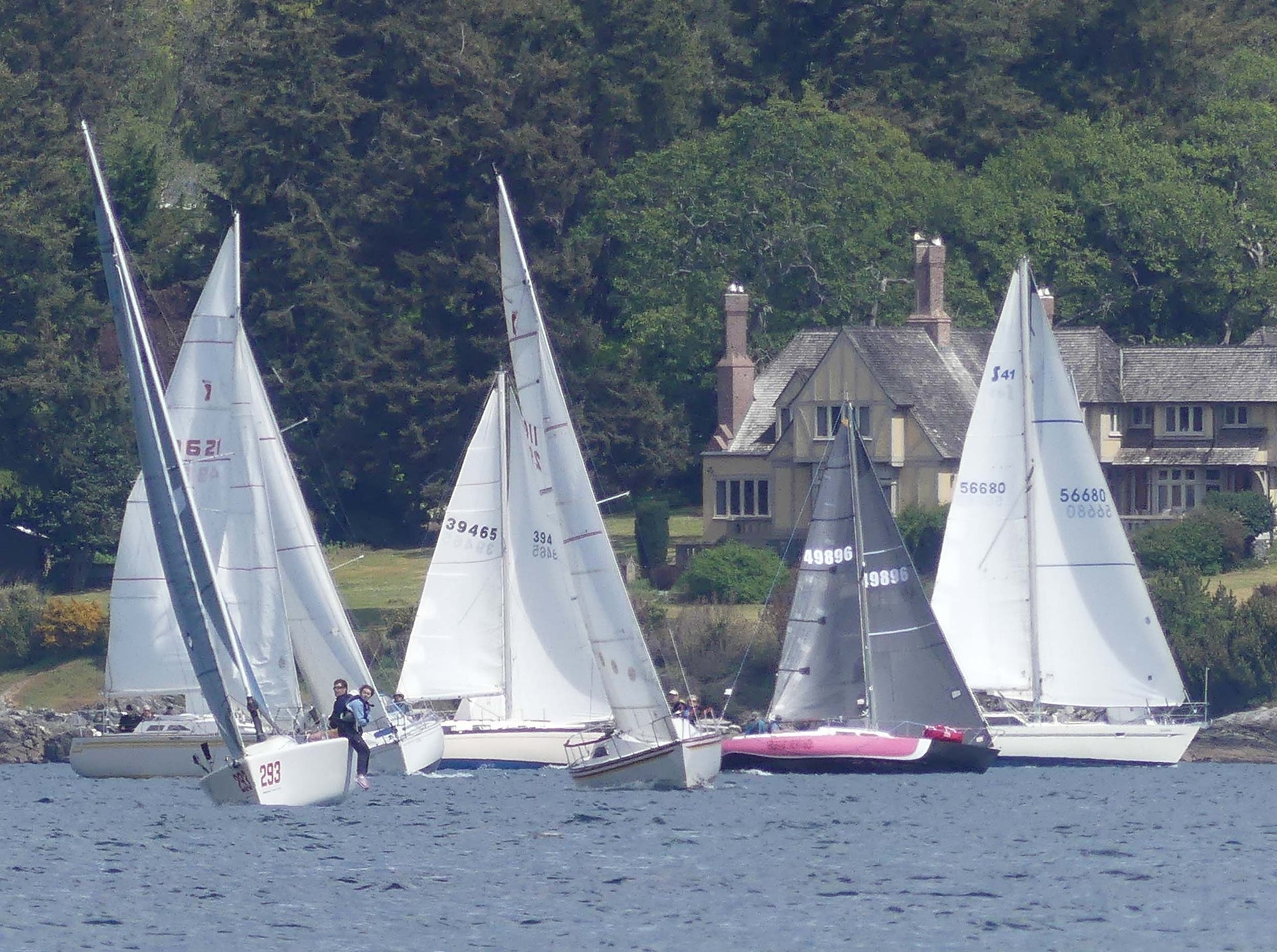
The race shall start at 12:00 GPS time, usually on Sundays. The SI’s sent out ahead of time include all the specific start time + date information. The first race had about 20 boats and now it is growing as word spread.
How are the races started and finished, any different than normal?
The start/finish line shall be between the Northern most barber pole on the breakwater and the white mooring buoy in the center of the bay. There are no flags or signals however boats can communicate on channel 9 if needed.
All boats shall return on reverse course once the fastest boat has reached the furthest outgoing mark. All boats shall reverse course if no vessel has reached the furthest mark within one hour. There may be more than one race and spinnakers are optional.
Has the Corona Virus saved sailing? Royal Victoria Yacht Club has had 35 boats out racing the last three Sundays for the Single Handed/Household family members racing, this is way up from the 10-15 boats we have been getting out for club racing over the past few years. Maybe sailing has gotten to competitive even at the club level for most, no results, everyone turns around when the fastest boat reaches the halfway mark of the race.
- Fraser McMillan
Why do you think you guys are getting such a good turn out?
The first race had about 20 boats...once the word got out..from me putting the images that I took on the Clubs Facebook Racing Page and from word of mouth, I started getting emails as to how do we find out about the next race.
Is the yacht club open and or services available?
Friday, Saturday and Sunday they have a take out menu that you can access on line and they will bring your order out to your car once a time is set when your order will be ready. via email/phone calls.
From the pictures I saw and the attendance record why do you think racing is so important to a sailing community at a time like this?
I don’t like having to stay at home all the time. In my case my boat is at a marina half a block from my house, so I’m isolated on it most days. This time of year there were races happening every weekend, and it was suggested that although no one was out sailing it would be nice to remember what we did in pictures. So it began, sailors would send in to the Club’s Facebook page pictures of them out sailing. As I have been one of the Photographer’s for the club for many years I have thousands of pictures of Yacht Races, not just from this Club but from the lower part of the Vancouver Island going back to the 1990. I started going back many years of racing and pulling out images I thought people would enjoy....it wasn’t long before Don Sargent a Club member came up with the idea of a single handed race...He sent out invitations via email to various skippers and the first race Happened April 5, 2020. And the rest is history.
READ MORE
READ MORE

CALENDARIO DE SEMINARIOS WEB
CALENDARIO DE SEMINARIOS WEB
Durante esta temporada de confinamiento, North Sails ofrece una serie de seminarios web sobre diferentes temáticas, de acceso totalmente libre. A lo largo del mes de abril se ha hablado de navegación en empopada, de vela oceánica, de reglamentación en paso por boya en regata, de navegación en multicascos, de enrollado, de navegación en Dragón y en Etchells,..
Nuestros expertos están diseñando los contenidos de nuevos e interesantes webinars que iremos anunciando puntualmente. El programa completo de seminarios web está disponible en el perfil de North Sails en Facebook. Ante cualquier duda, puedes consultarnos directamente en info@es.northsails.com. Durante esta temporada de confinamiento, North Sails ofrece una serie de seminarios web sobre diferentes temáticas, de acceso totalmente libre. A lo largo del mes de abril se ha hablado de navegación en empopada, de vela oceánica, de reglamentación en paso por boya en regata, de navegación en multicascos, de enrollado, de navegación en Dragón y en Etchells,..
READ MORE
READ MORE
CRUISING TO THE 1000 ISLANDS
CRUISING TO THE 1000 ISLANDS
George Jackson Shares His Favourite Must-See Attractions
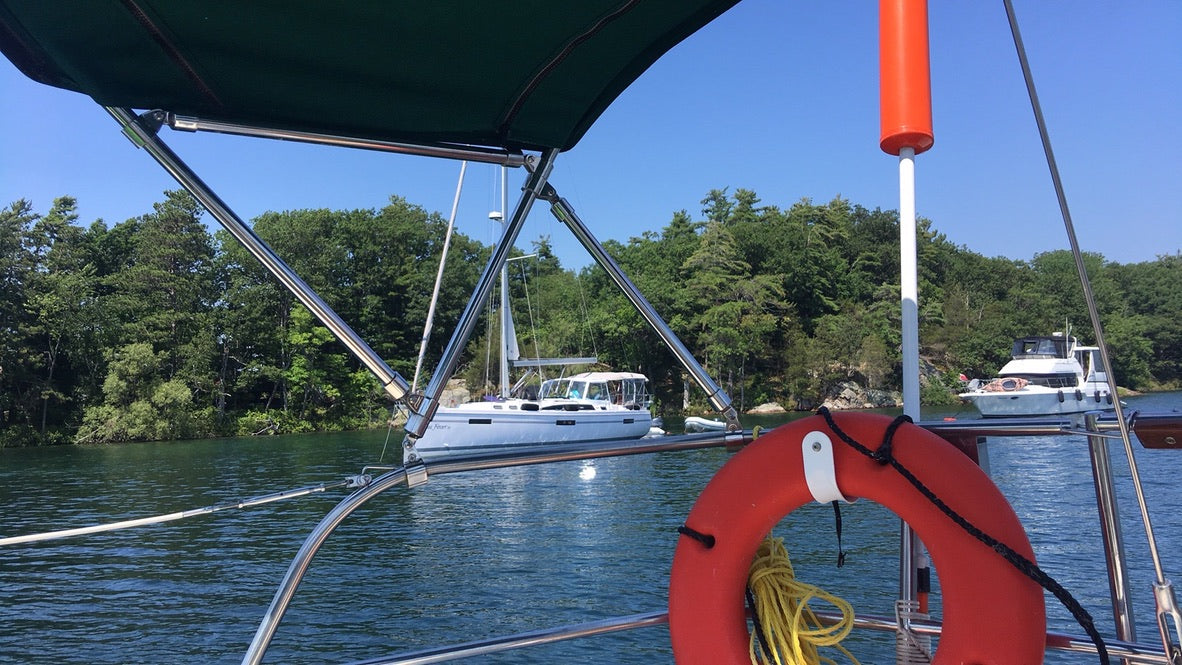
While self-isolating, dreaming of sailing again, open up your favourite navigation app, Navionics, perhaps. Or Google Earth. Scroll over to eastern Lake Ontario...Take note of the north shore of eastern Lake Ontario. Within a long day's sail, the varied and vast cruising grounds of eastern Lake Ontario and St. Lawrence river await. Beginning in Brighton and ending passed Brockville, there are so many coves, harbours, open reaches, and terrific freshwater sailing to be had. So many different itineraries could be plotted. A great feature of cruising these waters is flexibility due to changes in weather. Protected waters can be found easily, no matter the wind direction.
Last summer, asked by a former Royal Canadian YC commodore to join a portion of his summer cruise to the 1000 Islands, my backyard, I could not refuse his invitation.
He sailed his Niagara 35 down from Toronto to Belleville. I took the train from Kingston. A VIA train is a great way to shuttle back and forth along this cruising route. Also joining us was another friend of the Commodore, a former BC Ferries captain who had long wanted to sail among the 1000 Islands.
My skipper's goal was to get to the granite-featured, historic 1000 Islands straight away. Had he wanted to explore "the county" as Torontonians call it, Prince Edward County is an impressive cruising ground -- Picton. Adolphus Reach. Waupoos Island. Prince Edward Bay. Prinyer's Cove. A region distinguished by limestone cliffs, fresh, clear water, gravelly beaches and good anchorages. Instead, we pressed on.
Towards Kingston, Amherst Island provides excellent protection from the swells but ample water to sail back and forth between the mainland and the north shore of Amherst. Here too are some lovely anchorages -- Kerr Bay, Loyalist Cove, Preston Cove and Collins Bay – all before Kingston is even in sight. For the more adventuresome, pass through the Upper Gap and make Main Duck Island and School House Bay a destination before heading back to Kingston on what could be a downwind sleigh ride from The Ducks given the prevailing southwest winds.
I'll pass over Kingston for now. But let me say this, try to book ahead if you want to stay at any of the clubs or marinas in the area. Spots get booked up. This holds for the marinas in both the US and Canadian waters along the St. Lawrence.
Kingston is called the Limestone city, yet you quickly leave the grey rock behind and begin to sail through what is known as the Frontenac Arch or Axis. The Axis is an exposed strip of Precambrian granite rock that links the Canadian Shield from Algonquin Park through to the Adirondacks. It's this feature that makes a tour of the 1000 Islands so unique yet like Manitoulin Island or the East Coast. Once again, so many options. So little time.
A word of extra caution. No doubt, you have had a proper study of the charts as you have sailed or motored to this point. In these waters, safe, damage-free passage making requires vigilant navigating. Use the guides. Use your mobile Navionics app, use your eyes and binocluars but know where you are and where you are going. As they say, the water can get hard fast if one is not paying attention.
What attracts many mariners is the Thousand Islands National Park system, established in 1904, formerly known as the St. Lawrence Islands National Park. The park consists of 21 islands plus many smaller islets. Depending on the island, there may be a dock or a mooring ball or a quiet cove to anchor. Life on the hook is idyllic. But be sure to have screens, it's a little buggy at dawn and dusk. On either the north or south mainland shores are pretty towns and villages each with services but also fun things to do. For instance, Gananoque has its 1000 Island Playhouse, a summertime, waterside, theatre. Clayton, NY, has the Antique Boat Museum. Grab your guide book or search Google and plan away.
As you cruise into the islands, there are abundant sailing opportunities, but they may be limited depending on wind direction, strength and your next destination. Even with good winds, you may find yourself motoring more, so keep an eye on your fuel, oil levels and water discharge although the water is pristine, there is floating debris, like plastic bags lurking to clog water-intakes.
The 1000 Islands are really closer than you think. The sailing is good, with lots to see and do.
All this to say, go! Go as soon as you can. Who knows when, but plan and go.
Learn more about cruising sails to help with your adventure here.
READ MORE
READ MORE
UNSUNG HERO'S: TRIBUTE TO YOUR SERVICE
UNSUNG HERO'S: A TRIBUTE TO YOUR SERVICE
North Sails Ireland Salute Richard Marshall and Team for Front Line Supplies
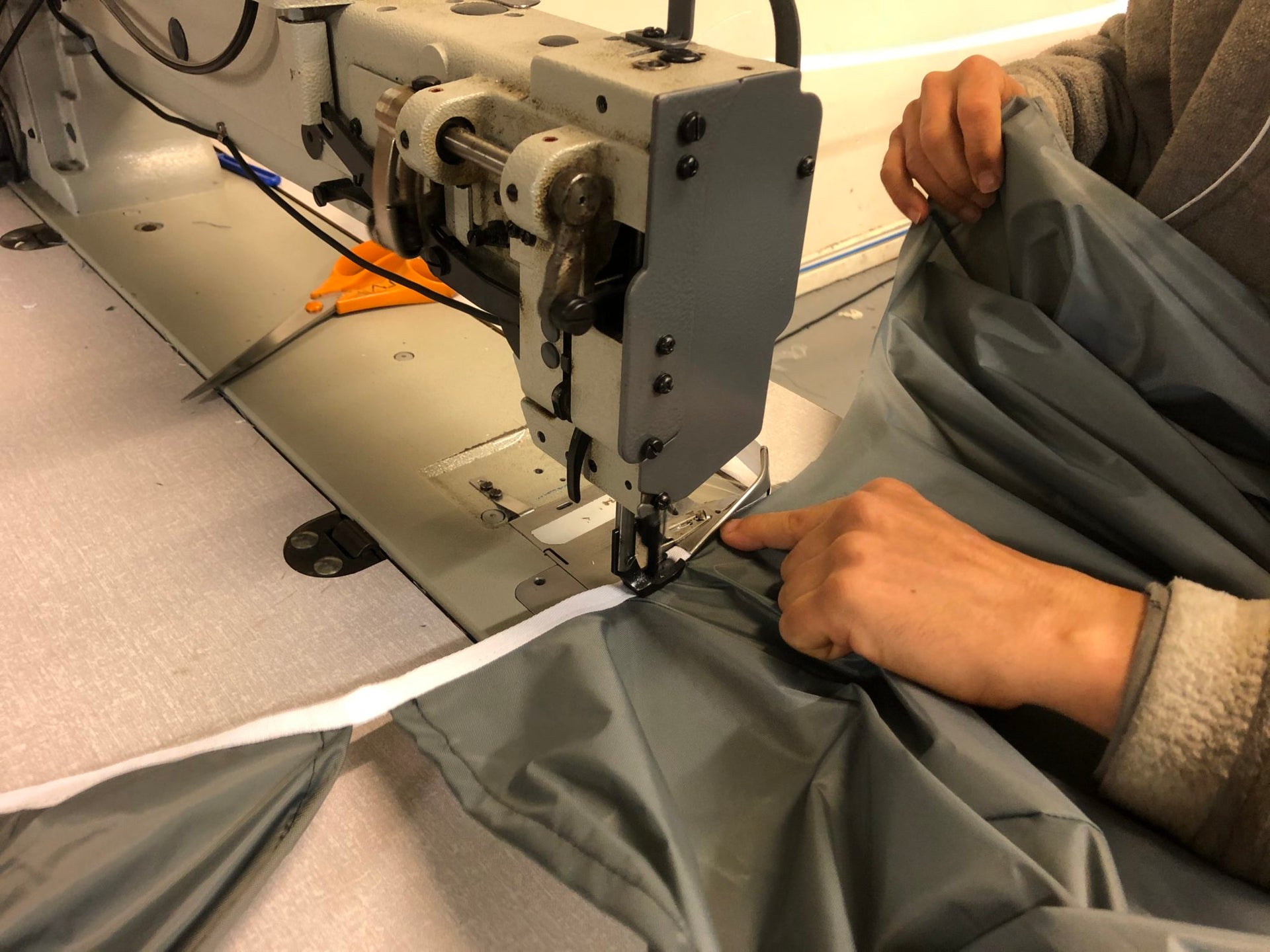
Here at North Sails Ireland we are delighted to work with Richard Marshall and his Marshall Marine Textiles Team for the service arm of our business. Richard is a very experienced sailor in his own right and a magician when it comes to repairing sails or working with any type of fabrics.
Our local team has been working with Richard since 2004, when North Sails Ireland was founded. It quickly became apparent to me that there is nothing that Richard and his team at Marshall Marine Textiles cannot do with fabrics.
It was no surprise to me to find him supplying PPE to the front line long before anyone else had even thought about it! Not one to blow his own trumpet, Richard was very slow getting the message out to the World about what he was up to as he was unbelievably busy
Now in a very short time Richard and the team have produced thousands of items with many more on order from the HSE. It's hard to keep up with him in number terms but I normally talk to him a couple of times a week just to check in. This week he passed a major milestone having sewn over 10,000 pieces of PPE equipment in record time!
Here at North Sails Ireland we would like to salute Richard and his team for the amazing work and we are extremely proud to be working together for the last 17 years. We have had some very interesting times together over the years but I have to say that this current period is one that none of us will ever forget.
Keep up the great work, you guys are truly amazing!
READ MORE
READ MORE
SAIL TO CATALINA: PART TWO
SAIL TO CATALINA: PART TWO
The Best Sails To Use When Sailing To And From The Island
Part two of North Sails experts Alex Curtiss and Bill Herrschaft advice for which sail is the best to use when heading to Catalina Island from Marina del Rey.
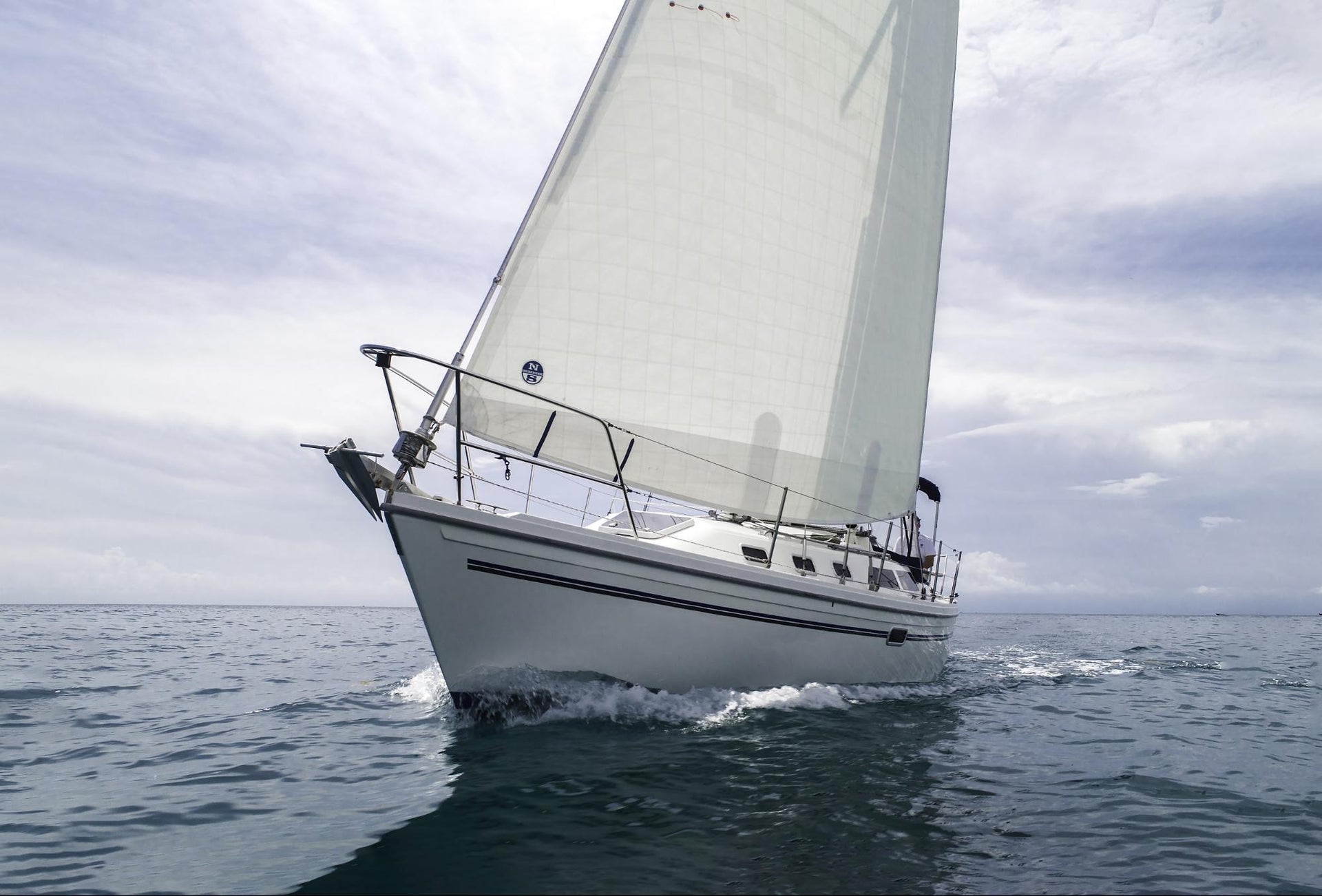
Catalina Island is a fixture in Southern California. North Sails Bill Hershaft had an incredible article on efficient, fun sailing from Marina Del Rey. Now we build on that by talking about sailing from Long Beach and San Pedro over to the island. With summer right around the corner people will be eager to get over to the island faster.
My good friend Erik Shampain used to have a fun way to know if you need new cruising sails. He says, “If your partner likes drinking wine, and sailing, the quickest way to ruin that is to have baggy sails. That's because baggy sails make the boat tip over and the wine will spill. New sails are flatter and will keep the wine in the glass.” This is especially the case when sailing from Long Beach. If you are traveling to Whites Cove from San Pedro, you are probably sailing with a TWA at 90 degrees and your AWA is probably closer to 45 degrees. With this in mind a nice 135% genoa is the correct head sail to have.
In racing we always say the quickest way to get faster is a new genoa. This is the same case when cruising. New technology which has been developed the last few years even allows sailors to take away sail area with what is called a “foam roller reefing pad” which is along the luff. That way if it is above 17 knots and you are feeling overpowered? No problem just roll the sail up a little and you are instantly more stable.
When it comes to materials, North Sails offers several levels of high quality material based on budget. For those who maybe aspire to head to Mexico or beyond one day, the 3Di material is a low stretch, high durability option. For those who are intending on just heading over to the island a few times a year, the cross cut may be the sail for you. Head to North Sails cruising page for more information.
I also want to talk about the way home from Moonstone cove to Newport Beach. Some of the most fun I have had sailing in my life is that sail. Usually, in a traditional westerly, a running spinnaker is the way to go. Spinnakers can be a little intimidating but with the invention of the Snuffer, spinnakers are now very easy to use.
Usually when sailing back to Newport, you are usually sailing TWA 125-145 depending on the day. For that angle of sail we would recommend a G2 runner.
In part one of the Catalina series, Bill talked about how these lightweight nylons make any sail home perfect. If you don't have a tack point, feel free to contact your local North Sails rep to discuss possible options. There is a surplus of low cost ways to create tack points. But making sure you set it up properly will prevent headache down the road.
READ MORE
READ MORE
GENOIS SUR ENROULEUR ET TAUDS DE SOLEIL: CE QUE VOIS DEVEZ SAVOIR
GÉNOIS SUR ENROULEUR ET TAUDS DE SOLEIL : CE QUE VOUS DEVEZ SAVOIR
Comprendre le bon fonctionnement d’un enrouleur peut vous éviter de sérieux ennuis
📸 Billy Black
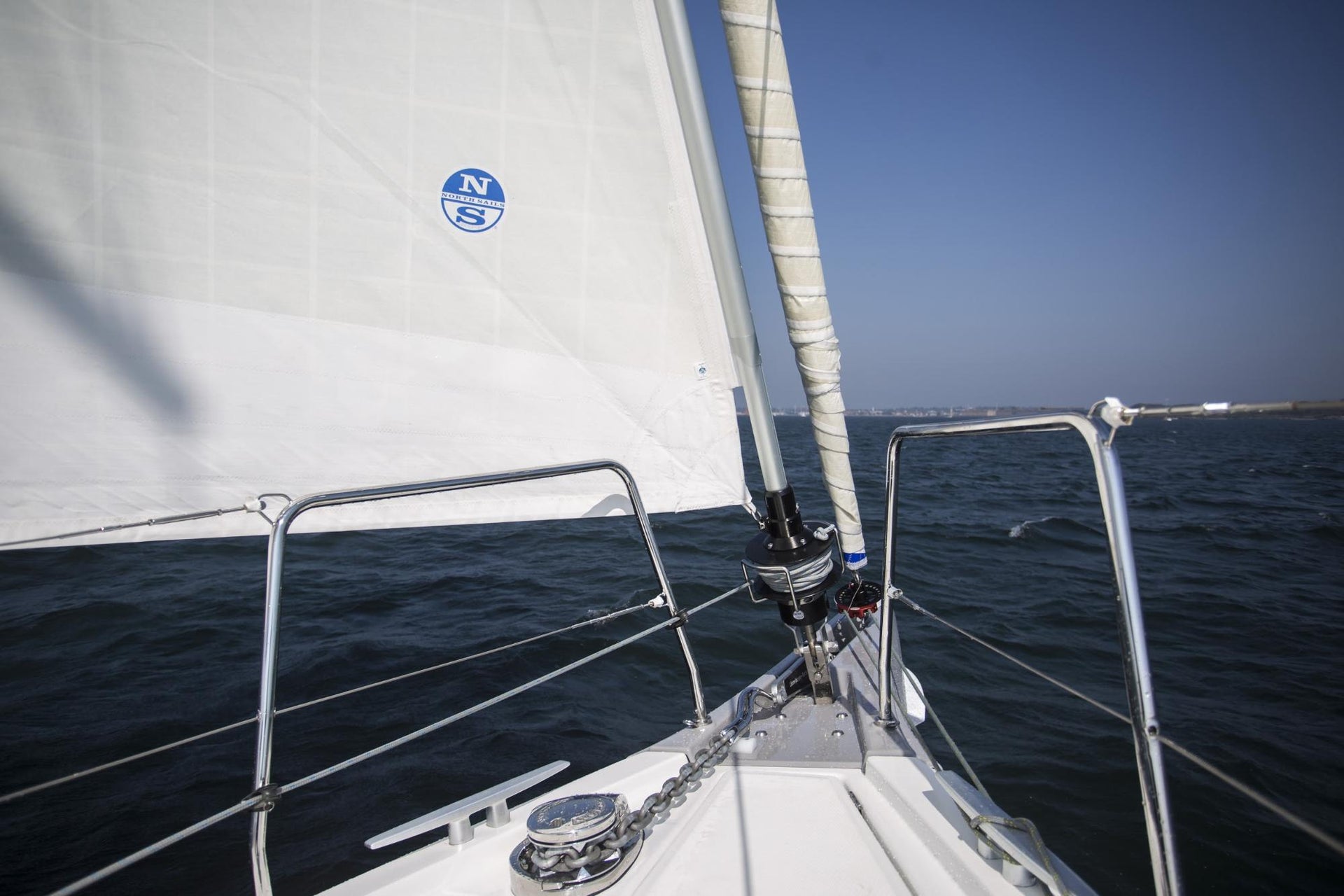
Que se passe-t-il si vous enroulez votre voile dans le mauvais sens ? C’est-à-dire avec la protection solaire à l’intérieur et non à l’extérieur de l’enrouleur ? Les UV détériorent sérieusement la partie de la voile exposée au soleil. Malheureusement, nous constatons très souvent les effets de cette erreur de manipulation dans nos ateliers de réparation du monde entier.
Cela se produit fréquemment lorsque la protection anti-UV est de la même couleur que le tissu de la voile. Par exemple, une protection blanche sur une voile blanche ou une protection grise sur une voile grise. Lorsque la voile est enroulée autour de l’étai dans le mauvais sens (avec la protection UV à l’intérieur du rouleau), il n’est pas toujours évident de faire la distinction entre les deux côtés.
Dans certains cas, cette situation peut se produire sur une voile neuve qui a été mal installée – la bande UV se retrouve à l’intérieur du rouleau selon la direction dans laquelle tourne le tambour (sens horaire ou antihoraire).
Cela peut également se produire en début de saison lorsque le bateau n’est pas gréé ou mis à poste. Si la drosse d’enroulement est remontée, elle doit être enroulée autour de l’enrouleur dans le bon sens pour être compatible avec la voile.
Chez North Sails, nous plaçons toujours en prévention un autocollant pour marquer visuellement le côté où la protection UV est appliquée et ainsi montrer le bon sens d’enroulement.
📸 Michael Egan/ Egan Images
Pour éviter cette erreur qui peut entraîner des frais de réparation sur la voile, voici quelques conseils pour vous assurer que votre voile est correctement installée avec la bande UV à l’extérieur : Vérifiez de quel côté de la voile la bande UV est positionnée – pour les matériaux UV colorés, c’est facile, mais cela se complique si les couleurs sont similaires. La couverture UV est du côté bâbord ou tribord de la voile. Si vous avez le moindre doute, contactez votre conseiller North Sails. Il répondra à toutes vos questions et vous aidera à déterminer le côté de la voile protégé. Il existe de nombreuses façons simples de savoir de quel côté votre protection UV est posée.
Vérifiez ensuite que la drosse d’enroulement a été correctement chargée dans le tambour, pour que la voile s’enroule dans le bon sens.
La règle est que la drosse doit entrer/sortir du tambour du côté opposé à la protection UV : c’est-à-dire que si la bande UV se trouve à bâbord de la voile, la ligne d’enroulement doit sortir du côté tribord du tambour.
Normalement, c’est très facile de remonter votre drosse d’enrouleur en la déroulant complètement, puis en l’enroulant dans le sens opposé (avant de hisser votre génois).
Une fois que vous êtes certain du bon sens de l’enroulement, vous pouvez laisser votre voile hissée et enroulée pendant de longues périodes en toute confiance. Veuillez noter que le type de matériau anti-UV et votre position en latitude font une différence substantielle quant à la durée et le niveau de protection que vous pouvez attendre de vos protections UV.
📸 Michael Egan/ Egan Images
READ MORE
READ MORE
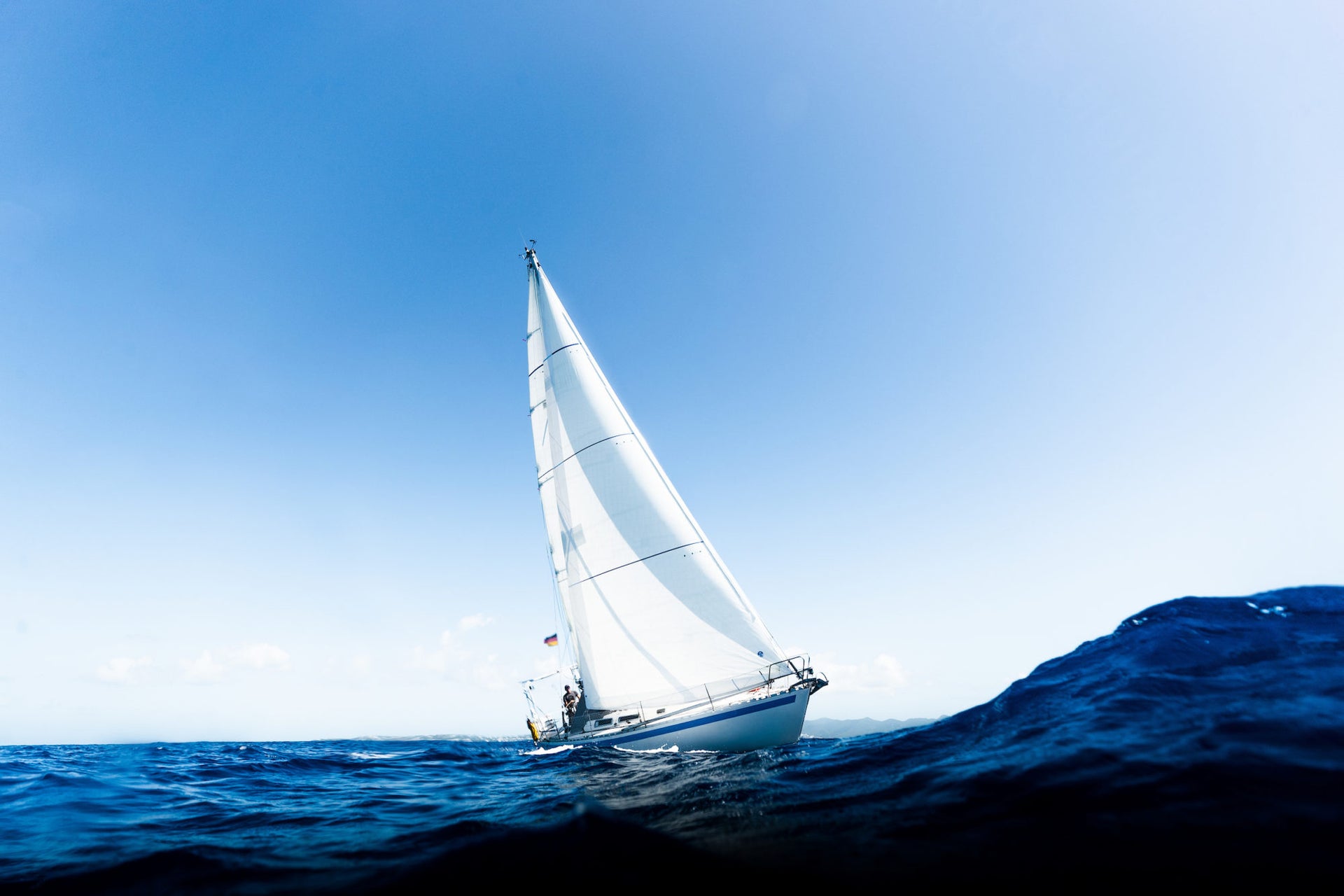
PERFORMANCE DES VOILES DE CROISIÈRE
PERFORMANCE DES VOILES DE CROISIÈRE
Au-delà de la vitesse
North Sails est fier de vos nombreux succès sur l’ensemble des plans d’eau, mais saviez-vous que plus de croiseurs comptent sur North que tout autre voilier? Chez North Sails, nous sommes passionnés par la performance. Mais pour les marins de croisière, cela signifie beaucoup plus que la vitesse pure.
Sur la base de ces antécédents, vous pourriez supposer que chez North Sails, nous nous concentrons uniquement sur la course. Mais en fait, beaucoup d'entre nous chez North somment des croiseurs. Nous avons grandi en croisière avec des amis et la famille, possédons des bateaux de croisière et profitons de nos aventures de voile. Oui, nous naviguons pendant notre temps libre, tout comme vous. La croisière est une grande partie de la navigation et la voile est notre passion. En tant qu'entreprise, notre histoire, nos traditions et notre technologie nous ont donné les compétences, l'expérience et les outils nécessaires pour construire les meilleures voiles au monde.
Lorsque nous parlons de performances de croisière, nous n'essayons pas de gagner la prochaine course. Au lieu de cela, nous cherchons à fournir un ensemble de voile qui aide un bateau et nos clients à réaliser leur plein potentiel, et une expérience sûre, facile et agréable pour tout le monde à bord.
La bonne voile
.
Faible allongement
La gite, l’angle de barre et la dérive nuisent aux performances et au confort de croisière. Un bateau qui gite trop est inconfortable, une dureté de barre excessive tue la vitesse et lorsque vous dérivez, il faut beaucoup plus de temps pour progresser contre le vent. Une voile doit conserver sa forme aérodynamique sur une grande variété de vitesses de vent et pour une durée de vie appropriée. Quand les voiles s'allongent dans le vent forcissant et qu'elles vieillissent, elles deviennent plus creuses et perdent leur forme optimale. L'augmentation de la traînée qui en résulte entraîne une dégradation des performances du bateau. Chez North Sails, nous utilisons des outils sophistiqués pour adapter la densité et le module de la fibre (résistance à l'étirement) au moment de redressement de votre bateau. Cela permet à nos experts de sélectionner le tissu de croisière qui gardera sa forme et fournira des performances optimales sur une large plage de vent et une période de temps plus longue.
Haute résistance
La durabilité est sans doute la plus haute priorité de tout marin de croisière. L'intégrité structurelle, la résistance à la rupture, aux UV, au raguage et à la résistance à la flexion sont toutes des qualités qui rendent la voile robuste et tenace. Les voiles de croisière North sont dessinées et construites en tenant compte de ces facteurs, et les matériaux de croisière North sont conçus pour résister à des conditions extrêmes. Les détails de finition tels que les coutures, les patchs divers et les renforts structurels sont construits selon les conditions rencontrées par les marins en croisière. Nous sommes confiants dans nos produits et notre qualité et nous supportons chaque voile que nous livrons.
Manoeuvres faciles
Sortir sur l'eau ne devrait pas être un problème. Nos voiles sont faites pour monter et descendre facilement et s'enrouler et sortir correctement. Chaque voile North est dessinée sur mesure et spécialement conçue pour s'adapter à tout système d’accastillage. Nous proposons également une large gamme de fonctionnalités pour faciliter la navigation. Les voiles à faible élasticité et haute résistance ne doivent pas être excessivement rigides ou lourdes. Nos techniques de conception et de fabrication garantissent des voiles légères relativement à leur solidité et leur durabilité.
Ajustement et fonctionnement corrects
Le dimensionnement 2D de toute voile est une caractéristique importante des performances et de la durabilité globales de la voile. Si les points d'attache ne sont pas correctement alignés, des points de contrainte sont créés qui peuvent abimer et déchirer une voile. Si la voile n'est pas conçue pour s'adapter au gréement, des frottements et une abrasion peuvent se produire. Les patchs de barre de flèches, de chandeliers et de radar doivent tous être positionnés et installés avec précision. Le dessin et la construction des voiles ne sont qu’une partie des performances globales des voiles. Chez North Sails, nous nous assurons que chaque voile que nous construisons s'adapte et fonctionne correctement.
Forme correcte
Une voile de croisière doit avoir la bonne forme aérodynamique, être facile à régler et doit bien fonctionner dans un large éventail de conditions. C'est là que notre pedigree de course porte ses fruits. Chez North Sails, nous savons ce qui fait une voile rapide. Nous savons également ce qui rend une voile facile à régler et polyvalente sur une gamme de vitesses et d'angles de vent. Une voile de croisière North a une forme conçue pour correspondre aux performances de votre bateau. Elles ont aussi une large plage de réglage et sont faciles à vriller, ce qui rend leur réglage et la conduite plus conviviaux.
Matériaux de qualité
La qualité globale de la voile est la somme des composants. La conception et la fabrication reposent sur des matériaux de qualité aux propriétés prévisibles et fiables. North Sails a été le pionnier dans l'approche scientifique de la fabrication des voiles. Nous testons chaque rouleau et inspectons chaque centimètre de tissu à voile que nous utilisons. Nous ne nous associons qu'avec les meilleurs fournisseurs de matériel et de tissus et si nous ne pouvons pas trouver des matériaux qui répondent à nos normes, nous le faisons nous-mêmes.
Conception et ingénierie
Utiliser les meilleurs matériaux et avoir la meilleure fabrication n'est pas utile si une voile n'est pas dessinée et conçue pour répondre aux exigences de la croisière. Une voile de croisière de qualité doit être conçue sur mesure et construite à cet effet. Les concepteurs de North Sails comprennent la nature dynamique des charges et les propriétés physiques des matériaux des voiles. Ils utilisent cette connaissance et l'appliquent à la structure de voile avec des outils de conception de pointe. North Sails est capable de modéliser tous les aspects d'une voile, de la géométrie du gréement et du pont en 3D aux formes des voiles volantes avec FEA et l'analyse du flux d’air. Chez North Sails, les meilleurs designers travaillent avec les meilleurs outils pour créer les meilleures voiles de croisière.
Service de qualité
Même les meilleures voiles du monde ont besoin de soins périodiques. Chez North Sails, notre réseau mondial d'installations de maintenance de voile certifiées vous couvre partout où vous allez. Nous accordons tellement d'importance au grand soin de la voile, que nous le proposons gratuitement pendant la première année d’acquisition. Que vous déchiriez une voile sur le quai ou que vous soyez pris dans une tempête, notre offre d’entretien de voile gratuite fait partie de notre promesse de garder votre voile performante.
Excellent rapport qualité-prix
En répondant à toutes ces normes élevées, une grande voile de croisière offrira un grand retour. L'achat d'une voile de croisière North Sails signifie plus de «performances de croisière» et plus de plaisir sur l'eau.
READ MORE
READ MORE
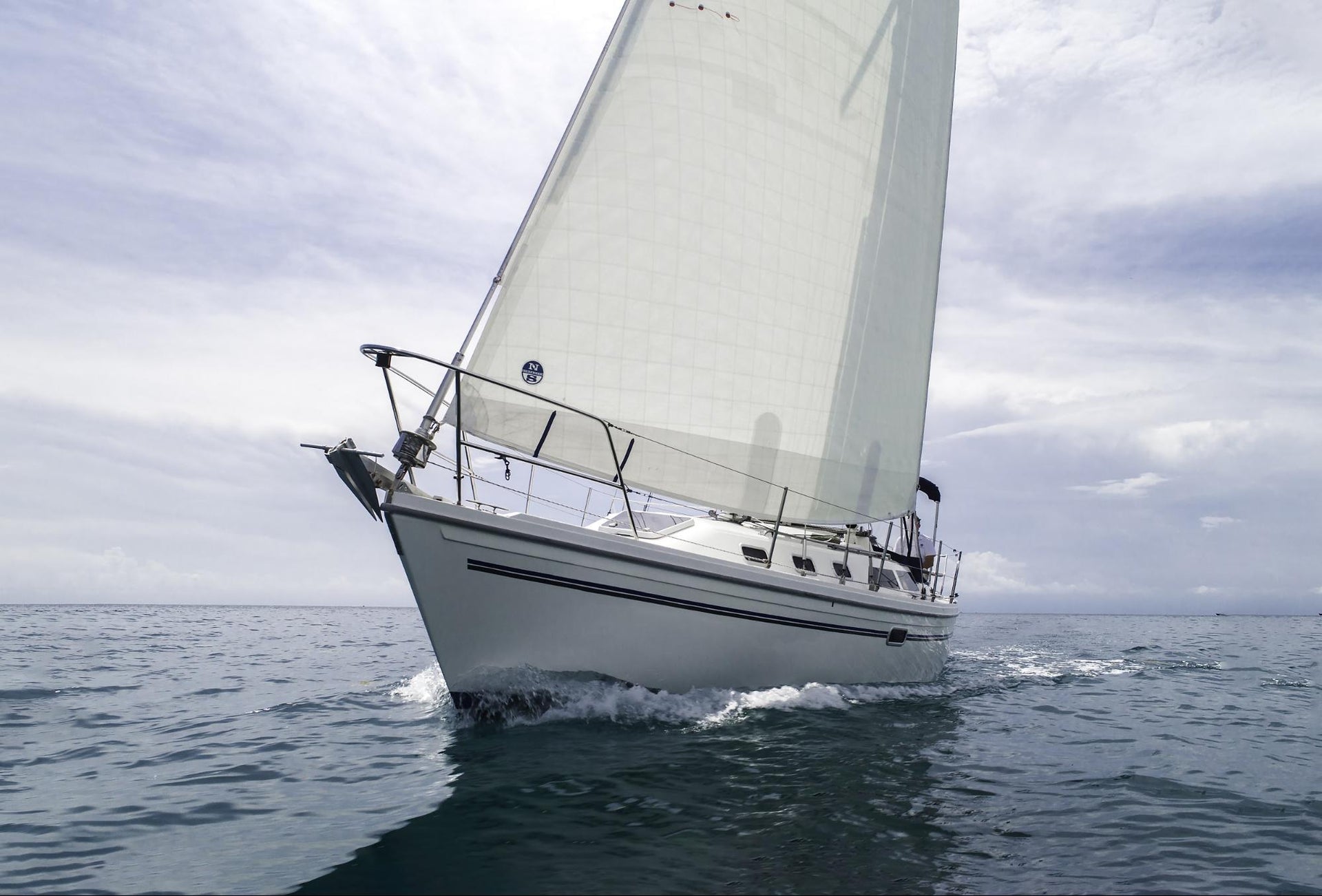
DURABILITÉ DES VOILES DE CROISIÈRE
DURABILITÉ DES VOILES DE CROISIÈRE
Les marins de croisière exigent l'endurance
Les croiseurs exigent la durabilité. Pourtant, la durabilité n'est pas un élément facilement quantifiable des performances. Prédire la durabilité est un défi difficile, car les voiles sont soumises à de nombreuses formes et conditions d'utilisation. Cela dit, la question la plus fréquente des croiseurs est: "Combien de temps dureront mes voiles?" Ici, nous allons essayer de fournir quelques conseils. Le facteur contribuant le plus à la durée de vie d'une voile est son matériau. Le tissu à voile de croisière doit être solide et à faible allongement. Il doit également être solide - résistant à l'abrasion, à la flexion, aux chocs et à une variété d'expositions environnementales à long terme, notamment les UV, la chaleur, l'humidité, le sel et la moisissure. À mesure que les voiles de croisière vieillissent, la forme de la voile et l'intégrité mécanique du matériau se dégradent. Les marins déterminent la durée de vie de leurs voiles lorsque les performances de forme ou la fiabilité structurelle sont compromises au-delà de leurs normes personnelles. Aucun navigateur ne devrait jamais accepter la possibilité d'une rupture de voile en cours de route.
Matériaux Construction Maintenance Use & Longevity Demandez un devis
Les matériaux
Les matériaux de croisière sont disponibles en trois styles distincts: le polyester tissé («dacron»), les laminés de croisière et les matériaux composites 3D. Chacun offre un équilibre différent de durabilité et de performance. Les tissus Dacron sont les plus résistants et les plus stables structurellement. Les laminés Croisière offrent un poids plus léger et une meilleure tenue de forme. Les composites 3D sont une nouvelle génération de matériaux de croisière avec une tenue de forme et une intégrité structurelle exceptionnelles au-delà de nombreux laminés. Dans chaque catégorie, différentes fibres et constructions sont combinées pour répondre à différentes exigences de prix et de performances. Pour un aperçu complet, voir le Guide North Sails sur les fibres et les tissus. La qualité du tissu est primordiale dans toute discussion sur la durabilité. Les tissus à voile bien conçus et bien fabriqués durent plus longtemps. Les matériaux de la plus haute qualité sont produits dans des installations de fabrication spécialisés et utilisent des fibres, des films, des résines, des revêtements et des systèmes adhésifs de qualité supérieure. Les voiles de qualité sont bien sûr issues de matériaux de la meilleure qualité. Voyez ci-dessous un tableau qui vous aidera à comparer les différents types de matériaux de voiles de croisière.
Construction
Des voiles bien faites durent plus longtemps. Les voiles de croisière doivent être dessinées sur mesure et spécialement conçues pour répondre à la géométrie exacte du gréement. Les points d'usure tels que barres de flèches, chandeliers et radar doivent être recouverts de patchs. Les coutures doivent être cousues correctement avec du fil résistant aux UV, une largeur de couture et un nombre de coutures appropriés à la taille du bateau et au style de matériau. La conception et la construction des patchs, des goussets de lattes, des nerfs de chute et de bordure et autres accastillages, tous affectent la longévité de la voile.
Utilisation et maintenance
La façon dont les voiles sont utilisées et comment elles sont entretenues sont les autres facteurs les plus importants dans la durée de vie des voiles. Laisser une voile hissée et faseiller dans un grain pendant 30 minutes peut représenter 50 heures de navigation «normale». Naviguer régulièrement avec une voile au-delà de la plage de vent pour laquelle elle a été conçue peut également la faire vieillir bien avant son heure. De même, laisser la chute vibrer sans utiliser le nerf de chute endommagera autant le matériau de la voile. Les petits problèmes laissés sans surveillance deviennent de gros problèmes plus tard. Un service régulier permet aux voiles de durer plus longtemps, tout comme avec le moteur de votre voiture. Une inspection régulière détectera les points de raguage non identifiés, les dommages causés par les UV, les coutures tirées ou cassées et les éventuels problèmes d’accastillage. Un rinçage régulier élimine le sel, qui contribue au frottement et dégrade également les laminés de croisière en retenant l'humidité. Mais LA plus grande menace environnementale est l'exposition aux UV. Les voiles laissées au soleil doivent être couvertes. Un vieux taud de soleil perd de sa protection UV avec le temps, donc un nouveau taud devrait idéalement accompagner la fourniture de nouvelles voiles.
La question de la longévité
Combien de temps faut-il s'attendre à ce que votre voile de croisière dure? Les flottes de charter prévoient 2 à 3 ans d'utilisation des voiles en polyester tissé basique, ce qui se traduit par environ 1 500 à 2 500 heures. Après 2000 heures, ces voiles sont généralement considérées comme usées. Une saison typique pour de nombreuses familles pourrait être de 5 heures par jour pendant 30 jours par an - pour un total de 150 heures. Cela signifie qu'un croiseur moyen peut s'attendre à environ 10 ans d'utilisation d'une voile de croisière en polyester de qualité supérieure. "Côté performances, sachez que le multicoque Ultim Sodebo a utilisé une grand-voile composite 3Di pour traverser l'océan Atlantique neuf fois avant d'établir un record de distance de 24 heures en solitaire de plus de 600 miles. Nous voyons régulièrement des bateaux océaniques de haute performance faire le tour du monde et continuer à faire campagne avec le même jeu de voiles en composite."
Demandez un devis Retour en haut de page
READ MORE
READ MORE
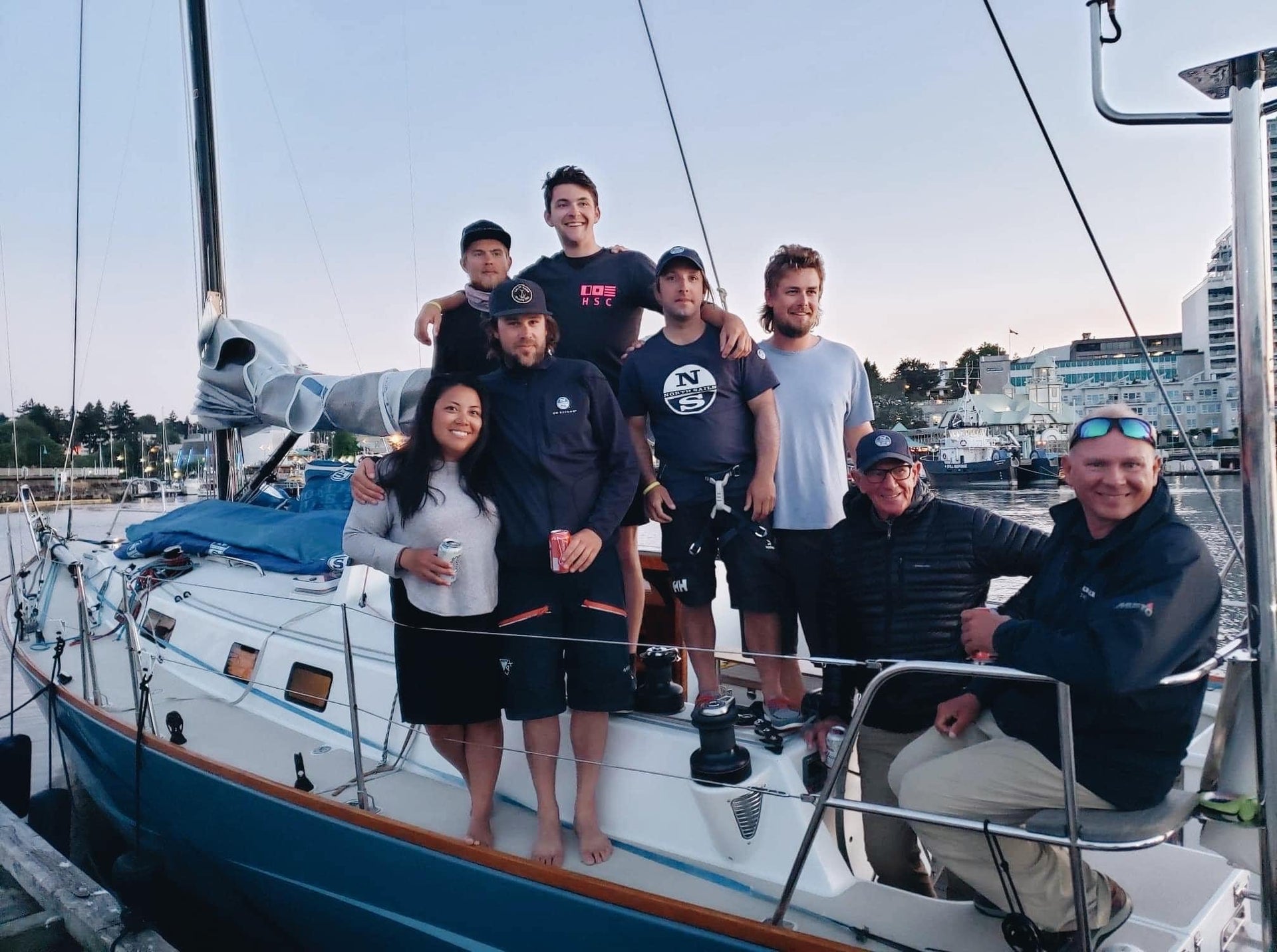
THE YOUNG AND TALENTED
THE YOUNG AND TALENTED
Local Sailor Aidan Koster Shares His Sailing Story
Aidan Koster, 26, grew up in Victoria, British Columbia and started sailing out of Caddy Bay with his parents at a young age. By age 8, he was hooked thanks to summer sailing camps. By age 10 he was racing Opti's. Fast forward to now, he is currently racing out of Royal Victoria Yacht Club and crewing on Sunnyvale, a local Melges 24, who finished 5th overall, 1st corinthian at the 2019 Melges 24 North Americans. He shares his sailing story with local North Sails expert Drew Mitchell.
How old were you when you really started fall in love with racing and what was it about the sport that intrigued you?
I got to go to my first away regatta in Comox in 2004. A couple friends and I loaded the Opti's into the back of my dads truck, and he drove us up there for the weekend. The regatta was sponsored by Red Bull (like an 11 year old needs more energy), and I remember having a blast with my friends. This regatta was when I realized if I really pursued sailing it was not only an opportunity to travel, but to also do it with my friends.
You were pretty successful in dinghies at a youth age, what do you think helped you find success on the course at such a young age?
Not long after I joined the race team Karen Douglas became the Opti coach. She was very patient, and taught me lots of tips and tricks. It was under her guidance that I qualified to go to the Opti Europeans In Varkiza, Greece. Joining the race team around the same time as me were two friends, Reid Cannon, and David Berry. We were all roughly the same age/size/skill level, which created a healthy competition improving our skills and making racing enjoyable. As I graduated into Laser Radial, and eventually Laser Stephen McBride was the head coach and once again was very influential in turning me into the racer I am today.
Growing up in Victoria there is a lot of racing and good racers, who did/do you look up as mentor and why
Robert "Bob" Britten has been a great mentor for me at RVicYC. From racing against him in Lasers, to more recently in Melges 24's he has always been a great mind to bounce ideas off of, and exchange banter with. I learned at a fairly young age that if you are racing in and around Caddy Bay it is always a good idea to keep in mind which side of the course Bob is on. I admire his ability to engage with the youth of the club and stay in a Laser for so many (100?) years.
The sport looses a lot of good dingy sailors after they “age” out of junior sailing, what made the transition from dinghies to keel boats seem so effortless for you?
I have to credit Mike Turner for this. While I was racing Lasers on the Race Team with his son, Matt, he invited me on to his Elliot 770 for the local beer can racing. This was my introduction into the keelboat/sport boat racing scene, and I was hooked from there. As the local Melges 24 fleet grew it turned into a One Design fleet which peeked my interest. Before long I was racing on Psyclone, Light Scout, and Goes to 11 before starting the Sunnyvale program with the Wet Coast Sailing Team. The other turning point for me was answering a Facebook message to crew on "Shadow" a 1D35 out of West Vancouver for a Swiftsure race. This got my foot in the door for big boat distance racing. Through racing with them I met Drew Mitchell who I got along with like a house on fire. He has been responsible for many of the introductions that have enabled me to race in the keelboat scene.
What do you think was the biggest adjustment moving from dinghies to keelboat racing?
The biggest adjustment for me was moving from a single handed boat where I had control of everything, to a multiple person crew where I was just a piece of the puzzle. The game moved from managing the entire boat/fleet/conditions, to just focusing on the tasks that I needed to perform as a part of that team. Learning to depend on my teammates to collectively try and achieve a good result has been one of the biggest takeaways from moving into keelboat racing. Moving into bigger boats with multiple people made the social aspect of sailing much more fun.
In 2015, you and four other sailors under the age of 30 joined forces and started campaigning a Melges 24. Why did you guys choose the Melges 24.
Correct, In 2015 "Wet Cost Sailing Team' was inaugurated. At the time Melges 24 was the strongest One Design keelboat fleet at Royal Victoria Yacht Club. It was announced that Victoria was going to host the 2018 World Championships so we decided to put a team together for it. Fraser McMillan, Keegan Moynihan, Kieran Horsburgh, and Harry Miller bought hull #151, and I joined them to make a bid for a good result at the 2018 Worlds. Since the 2018 worlds Alex "The Machine" Levkovskiy joined the team, and we purchased hull #415 with the goal of winning the 2020 Corinthian worlds. This event has now been cancelled, so we will have to wait and see what the future holds for us.
You guys had a pretty young team relative to the rest of the local and international Melges fleet. You seemed to have success right out of the gate, what would you contribute your early success too?
I would attribute the majority of our success to time spent on the water. As a lower budget team without pro sailors on board, we figured our best shot was to try to improve our boat handling to be one of the best in the world. In the three year lead up to the 2018 worlds the majority of my spare time outside of work was spent either on the water, or working on the boat. While watching the Match Race World Cup I heard an audio clip from Phil Robertson, "We can out hike these guys, they are OLD Men". Having the youngest average age in the local fleet this became a common tag line on our boat, being younger and more agile is an advantage in handling the Melges 24.
In 2018 the Melges 24 world championship was held in Victoria, BC, your teams home waters. Your team hoped to win the corinthian title but came short of the goal. What did you learn from the event and what would be your advice to teams struggling in a big event?
What I learned from that event is that no matter how hard you train, or how much you plan for something, it isn't always going to go your way. My advice is to enjoy the journey; looking back on that campaign, it didn't have the intended result, but I have many fond memories of the build up to that event. On a personal level I met my lovely girlfriend who is also a sailor, at this event. So not all bad right?
After the 2018 worlds you guys switched the crew up after loosing two crew members and adding one. Melges 24’s are usually sailed with 5 and right at the class weight limit. Your team was now racing with 4 and under the class weight limit. What adjustments did you and the team need to make ?
When "The Machine" joined the team in 2018, we were roughly 180 lbs. under the class weight limit. All 4 of us went from a "loose weight" lifestyle to a "gain weight" lifestyle. By the next summer's events we had collectively gained around 90 lbs. to to offset our weight deficit. As we learned our new roles sailing the boat with 4 we made several adjustments. Keegan had moved from the also bow position to trimming, as Alex took over the bow. In order to create more righting moment I, being the heavyweight, moved forward one position to place myself closer to the widest part of the boat, and middle of the hiking strap. We learned little tricks to sailing light with 4 such as tensioning the rig to de-power a little earlier than before. Some bonuses we found to sailing with 4 was amount of room in the cockpit for maneuvers, and the increase in downwind speed and angle.
Again this team of 4 seemed to be fast if not faster. You guys did well at North Americans in the Gorge and then again at US Nationals in Michigan walking away with the corinthian title in both. I noticed you guys switched from UK sails to North Sails, why the switch ?
The Gorge One-Design regatta was our first real test since the worlds to see if our adjustments had paid off. We were pleased to note that though our upwind speed wasn't anything special in the big breeze we were able to hang with the "Big Boys". On the downwind we used a P-2 spinnaker for most of the event, combined with our light crew weight made for some fast rides. This gave us a lot of confidence going into the North Americans in Michigan. North Americans was for the most part a light-medium air event (Other than 1 race on the last day) which made our light crew weight an advantage. Switching to North sails was very beneficial in allowing us to tune with our competitors. Racing with a North inventory gave us the ability to be competitive in a wide wind range with the top of the fleet.
What are the challenges and on the flip side the benefits of being a corinthian team in a heavily dominated pro class?
I welcome the challenge of competing against the pro sailors/boats in the class. In my opinion there is no better way of learning how to become a better sailor than being in and amongst the best. Being able to talk to the pro sailors before and after racing is a great way to dramatically improve the learning curve. Having both divisions race together makes for good racing, and when you do well, makes the victory that much sweeter.
You have also done quite of bit of distance racing around the PNW. What would you consider your favourite race and why ?
My favourite distance race in PNW is the Van Isle 360. I consider it "adult summer camp", It is hard to think of a better way to spend two weeks in the summer than doing 9 distance-sprint legs around Vancouver Island. On top of the great racing and beautiful scenery you spend countless evenings with all the other crews, in remote locations all over the island. I have made many connections, and even more great memories on the two times that I have done this race aboard "Zulu".
Last question, what advice would you give a young corinthian team looking to put together a team to race internationally?
My advice to a young team would be to find a group of like-minded people that want to achieve the same goals as you. If everyone is on the same page and buys in, the possibilities of what you could achieve are endless. Be ready to put the time in to train hard, and enjoy the ride!
READ MORE
READ MORE
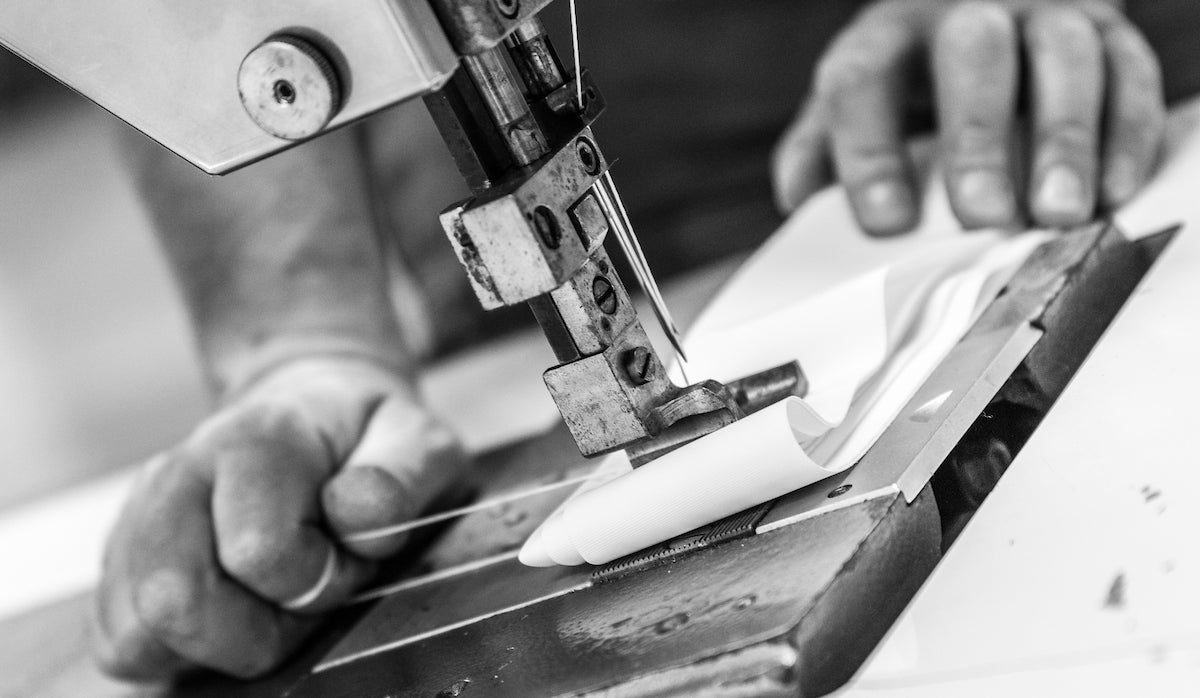
NOS SERVICES SUR MESURE
NOS SERVICES SUR MESURE
Découvrez en détail tous les services sur mesure proposés par notre équipe North Sails Suisse.
Web séminaires De votre salon à chez nous, nous vous invitons à rejoindre notre équipe d'experts pour des séminaires sur différentes thématiques ! Ecoles de voiles, classes spécifiques, thème personnalisé : n'hésitez pas à nous contacter pour organiser votre web séminaire sur mesure. Coaching et conseils personnalisés avec North Experience Que ce soit en Surprise, Grand Surprise, Luthi, Psaros, Esse ou M2, profitez d’un moment unique afin d’apprendre tous les trucs de nos navigateurs professionnels, autant lors d’une navigation qu’à terre ! 3 types d'accompagnements ; à bord "in situ spécial régate", depuis un coach boat relié par VHF, ou théorique à la voilerie, profitez de l'expérience de nos experts. Exemple en détail ici. Mise à bord, aide aux réglages, livraison et mise en place En début de saison, contactez-nous pour organiser la livraison et la mise à bord de vos voiles. Nous vous proposons également une aide pour les premiers réglages. Listing de voiles d’occasion Nous proposons une série de voiles d'occasion. Découvrez la liste complète ici. Réparation et nettoyage de vos voiles toutes marques Confiez-nous vos voiles, quelque que soit la marque, et nous vous les réparons dans la semaine. Si vos voiles sont pliées dans le cockpit, un service d'enlèvement et de rapatriement sera mis en place. Inspection annuelle "Certified Services" En 10 points, profitez de notre contrôle service certifié : détail ici. Travaux de sellerie Protéger votre voile, votre bateau ou vos meubles extérieurs avec une housse ou une bâche, c’est garantir leur longévité. Une housse protègera des agressions extérieures et mettra votre matériel à l’abri des changements climatiques. Une voile est solide, mais ne résistera pas longtemps au soleil et aux UV si elle n’est pas protégée. Contactez-nous dès maintenant par mail ou téléphone et discutons des possibilités en terme de matière, de tailles et de couleurs ! Toutes nos réalisations sont faites sur mesures et coupées dans des matériaux de première qualité. Toiles d’ombrage et décoratives : North Sails Sun Besoin d'une housse pour votre parasol, d'une toile pour ombrager votre terrasse ? Prenez contact avec nous et expliquez-nous votre projet. Forfait hivernage Comprenant l'enlèvement à bord, le contrôle complet, le renforcement et le stockage durant l’hiver Service assuré en Suisse et en mer Plusieurs manières de contacter, par email ou par téléphone, notre équipe à la voilerie ou chez nos revendeurs ! Pour un service de proximité, faites appel à nos collaborateur qui sillonnent la région ou utilisez nos points de dépôts autours des lacs romands. Nos collaborateurs descendent régulièrement sur le pourtour méditerranéen et atlantique pour prendre des mesures, assurer une livraison ou mener des essais en mer. De plus, nos voileries de service situées à proximité des grands ports peuvent en tout temps effectuer des interventions, recoupes et réparation en coordination avec notre bureau technique de Genève. La liste de nos revendeurs et services points ici.
READ MORE
READ MORE
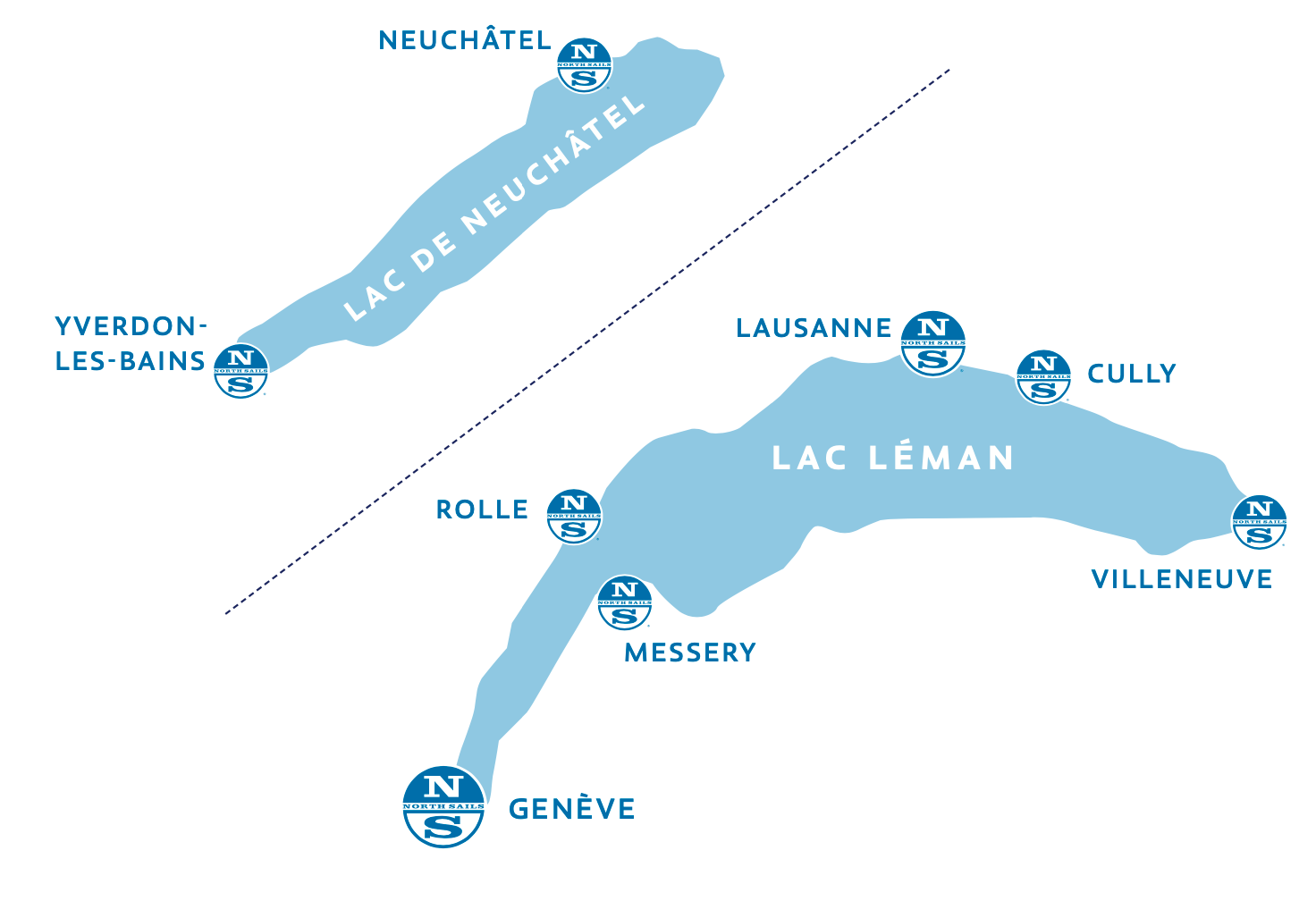
RÉSEAU DE REVENDEURS & POINTS DE DÉPÔTS
FAISONS ÉQUIPE ENSEMBLE POUR UN SERVICE DE PROXIMITÉ
Réseau de revendeurs et points de dépôt autour des lacs Léman et de Neuchâtel : contactez nos revendeurs ou nos services points les plus proches !
Depuis la fondation de l’entreprise il y a plus de 60 ans, North Sails s’investit pour les techniques révolutionnaires et les idées innovantes. Aujourd’hui, le nom de North Sails est synonyme de technique de pointe, de qualité et de service de proximité. Lors de l’achat d’une voile, un bon conseil est indispensable : vous ne profiterez pleinement de votre voile sur le long terme que si elle convient parfaitement à vos besoins. Nous vous conseillons en détail et restons à vos côté, même après votre achat, avec des conseils d'utilisation et des astuces de réglage. Plusieurs manières de nous contacter, par email ou par téléphone auprès de notre équipe à la voilerie ou chez nos revendeurs. Pour un service de proximité, faites appel à nos collaborateur qui sillonnent la région ou utilisez nos points de dépôts autours des lacs romands.
Notre réseau de revendeurs
HAUT LAC Chantier naval Ygor Yachting Route d’Ariel 15 / ZI B.55 1844 Villeneuve +41 79 947 08 59 ygor-yachting@bluewin.ch www.ygor-yachting.ch Chantier naval Birbaum & fils Route de Préverenges 10 1026 Denges +41 21 802 65 15 birbaum.fils@gmail.com www.birbaumfils.ch LA CÔTE Pro-sailing Patrick Tosh Huguenin Case Postale 1063 1180 Rolle +41 79 413 5911 / +41 21 808 06 41 patrick@pro-sailing.ch www.pro-sailing.ch LÉMAN FRANÇAIS Léman Plaisance Philippe Raphoz 62 route de la Pointe FR - 74140 Messery +33 4 50 94 73 07 courrier@lemanplaisance.com www.lemanplaisance.com
Nos services point
NEUCHÂTEL Chantier Naval L. Burkhalter Rue du Parc 15 1400 Yverdon-les-Bains 024 425 74 64 chantierburkhalter@bluewin.ch Centre de Formation Nautique Jean-François Zesiger Port du Nid du Crô 2000 Neuchâtel 079 242 12 88 info@cfn.ch
LAUSANNE Chantier naval de Vidy Allée du Bornan 2 - Port de Vidy 1007 Lausanne 021 616 08 48 info@bateau.ch www.bateau.ch Marine Pro Sàrl Chemin des Pêcheurs 9 1007 Lausanne 021 616 41 81 info@marinepro.ch www.marinepro.ch
GENÈVE MW Matelotage Denis Ménétrey Route de Compois 23 1252 Meinier/GE 079 203 41 11 denis.menetrey@mwmatelotage.ch
CULLY Chantier Naval de Moratel Yves Estermann Route de Moratel 4 1096 Cully 079 565 69 60 yves@c-n-d-m.ch www.c-n-d-m.ch
CONTACTEZ NOS COLLABORATEURS NORTH SAILS SUISSE Direction
Julien Monnier : mob : +41 79 574 11 15 - julien.monnier@northsails.com
Pierre-Yves Jorand : mob : +41 79 418 63 91 - pierre-yves.jorand@northsails.com
Experts
Julien Monnier : mob : +41 79 574 11 15 - julien.monnier@northsails.com
Michel Vaucher (monotype specialist) : mob : +41 78 898 20 24 - michel.vaucher@northsails.com
Nicolas Groux : mob : +41 78 736 96 90 - nicolas.groux@northsails.com
David Guertzenstein : mob : +41 361 08 05 - david.guertzenstein@northsails.com
Pierre-Yves Jorand : mob : +41 79 418 63 91 - pierre-yves.jorand@northsails.com
Bernard Schagen : mob : +41 78 803 60 58 - bernard.schagen@northsails.com
Atelier: +41 22 782 32 22
Bureau d'études et dessins: +41 22 782 32 22
Patrick Mazuay (patrick.mazuay@northsails.com) & Kilian Wagen (kilian.wagen@northsails.com)
Administration et comptabilité +41 22 782 32 22 - info@ch.northsails.com
Marketing, communication et événementiel +41 22 782 32 22 - info@ch.northsails.com
READ MORE
READ MORE
A SAILING LEGEND: DAVE MILLER
A SAILING LEGEND: DAVE MILLER
Local Vancouver Resident Makes Big Splash In Sailing
Dave Miller was born in 1943 in Vancouver and since then has created a life impacting the sailing world both locally and globally. His Olympic results include 7th place in the Star Class at the 1964 games in Tokyo, Japan, 4th place in the Dragon Class at the 1968 games in Acapulco, Mexico and Bronze at the 1972 games in Germany in the Soling class. His offshore racing includes two Admirals Cup in England, Sardinia Cup, Kenwood Cup in Hawaii, SORC in Florida, Vic-Maui and TransPac. His Canadian North American and World Championships include 1st North American Junior (Sears Cup) in 1960, 1st at Geary 18 North American Champion in 1960, 1st in 19731 at the Albacore North American Championships and 1st at the 1984 Dragon North American Championships. He has been elected to the Inter Collegiate Hall of Fame in 1973 and British Columbia Sports Hall of Fame in 1989. Most recently though, he has been inducted into the Canadian Sailing Hall of Fame. Dave shares with us his story of sailing and sailmaking.
Where did you grow up sailing/home club?
Our home was only a 6 block walk from RVYC and so you could say I started going to the club pushed in a pram by my Mother. My Dad and Uncle joined in 1936. I officially joined in 1954 and started racing that same year and also started sailing in the junior sail program.
At what age did you start sailmaking?
My Dad and Uncle started making their own sails in the late 1940’s and decided to start their own sail loft in 1950, Miller Brothers Sails. So as I grew up I started working in the loft part time as I went through University, UBC- Commerce.
Who did you look up to in the sport while you raced?
There are so many great racing sailors out there but I think Paul Elvstrom would have to be at the top of my list. Four successive Olympic Gold Medals as well as World Championship titles in seven of the most competitive of the international classes. Close behind would be Buddy Melges, one of the most natural sailors anywhere. Gold Medal in the 1972 (soling) bronze in the 1964 Olympics. Dutchman two time star class World Champion. Three time 5.5 meter world champion and numerous ice boat championships. And he won the America’s Cup.
Which America’s Cups were involved in?
Played a role as a coach for the two Canadian America’s Cup efforts. In 1983 helped out with Canada in Newport R.I. and in 1987 helped before the boat was shipped to Perth for the American’s Cup.
You owned the first North Sails Loft in Canada. Why do you think North Sail decided to choose Miller Brothers Sails to purchase?
Well it’s an interesting story and all comes down to the albacore dinghy. After winning the bronze medal in solings at the 1972 Olympics, which were sailed in Keil Germany, I got a call from the Albacore Dinghy Association. They wanted to invite myself and three others to come and race in the 1973 North American Championships in Ottawa. They thought it would bring some interest to the class and the event. As well as myself they invented Peter Barrett who was running one of the NOrth Lofts out of Wisconsin and was an Olympic Gold and silver medalist (crewed with Lowell North in the 1968 Olympics); Bill Shore, lightning world champion and Bruce Kirby, top dinghy racer and yacht designer. I asked Steve Tupper if he would like to crew, I sailed with Steve in the 1968 Olympics and he said it sounded like fun. I barely know what an Albacore looked like and had never sailed one. We found out they had some over at the Holyburn Yacht Club so we thought it would be a good idea to see what they are like. There was Hardly any wind, we drifted around for about an hour and then came ashore. The next thing I could not go to a Regatta with someone else's branded sails so I got the rules out and made a set of Miller Sails. Well you know what happened, there were 58 boats and we won the regatta! Peter Barrett was second. About a week later, back in Vancouver I got a call from Peter Barrett asking if I would like to start up North Sails in Canada.
How long did you run North Sails Vancouver with your wife Marcia?
Marcia started working for North Sails in 1981 and worked with me till we retired in 2010. She was perfect for the job, bright, organized and wonderful with people. The loft was very fortunate to have her “running the show!”
How Long was North Sails Vancouver a Production Facility?
In 1974 North bought out Miller Sails. The loft was on Hamilton Street in Downtown Vancouver and stayed there till 1979. At that time the company moved to its current location in Richmond. It continued to produce sails till 1983 at which time the company decided to centralize production so the loft became a sales and service facility.
Sailmaking has changed drastically since you started. What was the biggest game changer you saw in the industry?
There have been a lot of changes to sailmaking over the years. Fabrics have developed, sail design has advanced and construction has changed. To0 me the big game changer was the introduction of moulded sails which North called 3DL. Sails were now made by laying fibers over a full size mould. An advancement of this has been 3Di which is currently the best for controlling shape. A little bit of nostalgia on how Miller Sails made some very large sails for the Navy’s 90’ Oriole. Because the sails were so large we could not lay them out at the loft so we ended up laying them out at the Forum Ice Rink. To hold the fabric in place we would press the palm of our hand on the fabric, the ice would melt and then when we lift our hand up it would refreeze hold the cloth in place. How low tech is that.
What was your most memorable accomplishment as a sailor?
There is no doubt that my most memorable accomplishment was winning the bronze medal at the 1972 Olympics. The Olympics is special, only held every 4 years and only one person per country. It is not easy to medal and that makes it so special.
What was the most challenging event you had as a sailor and how did you deal with it?
My most challenging time, well I have had a few but think about an incident while doing the Southern Straits Race on Roy Hossack and Bill Longs J36 HARWAR GOES TO THE TOP. We had just finished rounding Ballenas Island. It was blowing really hard from the west, gusting in the 35-40 knot range. We were on starboard tack and rapidly closing on the shore. I decided to jib the boat and got all the crew to get as low as possible. My plan was to then turn the boat quickly and the main would jibe on its own. Well I turned the boat as fast as I could, the main slammed over but the problem was that the main sheet caught the steering pedestal. It ripped the compass off into the water and the pedestal got bent forward 3-4”. Bottom line I should have tack jibbed rather than jibbed. Fortunately no one was hurt but it was a lesson learned.
What was your favorite regatta in the PNW Pacific NorthWest?
I would say swiftsure would be my number one race. Challenging winds and currents, great scenery and large numbers of boats. It was alway fun! Favorite regatta was Whitby Island Race Week. It was a location that worked for both Canadian and American boats and alway had a good turnout.
Why has North Sails become the industry Leader?
Its always been about getting the best people. Lowell used to refer to his sailmakers as”Tigers”. They were a collection of some of the world's top sailors and bright minds. The company was always pushing for some better design or process.
When 3Di was introduced did you think it would be as successful as it is?
I remember at one of our managers meetings Jay Hansen brought a proto type of a 3DL sail to the meeting for us to see. When we saw it I think we knew it was going to be special. As they say a real “game changer” and it was.
Are you still involved in racing?
As much as I loved getting out there on the race course the time has come for me to “hang up my wet gear”. I do get out and do the odd local race, subject to the weather of course!
What advice would you give to the next generation of young sailors looking to go to the Olympics or sail professionally?
First you really need to have a love for this sport. That passion needs to be there. Assuming you have that then learn all you can- boat handling, rules, tactics ect. Then get out there and see how high you can go!
READ MORE
READ MORE
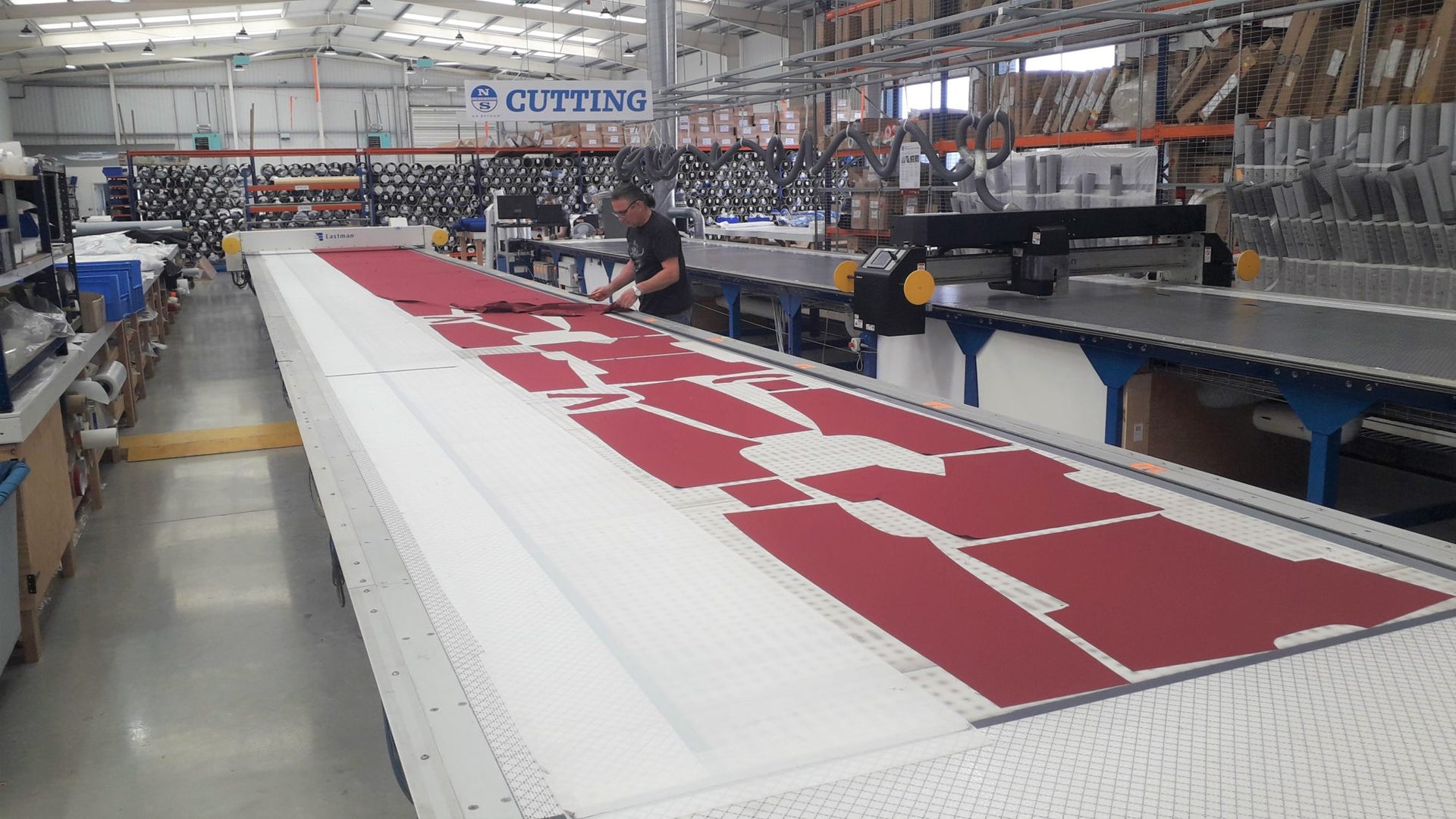
NORTH SAILS CUTTING PPE FOR FRONT LINE
NORTH SAILS CUTTING PPE FOR FRONT LINE
Local Marine Industry Business Team Up to Support Their Community
The North Sails loft in Gosport UK has stepped up to show their support to local front line workers by manufacturing PPE. In collaboration with EXE Sails & Covers who is providing the material, North Sails is providing the equipment to cut scrubs. The initial cut files were provided by Cedric Bontemps of Iktus Wings and a troop of volunteers are sewing and driving the finished goods to NHS Exeter and South West Hospitals.
Customer service has always been at the core of the North Sails mission, and we’re honored to be able to support our community during this time. A big thank you to Sam Woolner and Matt Reeves of EXE Sails for organizing this initiative. Get in touch with EXE Sails to learn more and ask how you can get involved.
Learn More
READ MORE
READ MORE
UPDATE FROM NORTH SAILS NEW ZEALAND
UPDATE FROM NORTH SAILS NEW ZEALAND
Time to Get Your Annual Sail Service
North Sails New Zealand will be re-opening the production and service lofts in Auckland and Opua during alert level three. The sales experts will continue to work remotely.
We will offer a complimentary pick-up and delivery service from the major marinas in Auckland. We are also accepting drop-offs to our loft during business hours, whilst adhering to health and safety precautions in order to protect both you and our team. Leave your sails in a drop box at the loft by following the posted instructions.
There is no better time to have your annual sail service than now. Get ready to be back on the water as soon as we can with North Sails Certified Service. For general queries, please call our team on 09 3595999 or contact our Service Manager, Ben Costello, on +6421878875 or nz.service@northsails.com.
READ MORE
READ MORE
SPRING CLEANING
SPRING CLEANING
Enhance Your Sails or Canvas
As we wait for an opportunity to get down to our boats and begin spring cleaning, now is a perfect time to get your sails and canvas work cleaned and serviced with our 10 Point Inspection.
With clean sails, and new UV covers you will be ready for the season. Why clean your sails or install a new UV? Covers older than 10 years offer poor UV protection leading to fabric and seam failures, torn and frayed covers tend to roll up with folds and flaps that can unfurl in storm winds leading to significant damage and lastly new covers make the boat look fresh and clean. Furthermore, exposure to the UV will eventually dry rot your stitching, Velcro and zippers and should all be checked over yearly.
Additionally, the canvas on your boat is exposed to the UV and weather more than anything on your boat. Its never too late to get work done on your canvas; our experts are available to speak with you on the condition and what we can do to expand the life, purchase new, or modify old.
Sails always come out of sail washing brighter, looking like a new sail due to the solution used. The sail itself is cleaner as the dirt is removed during the soaking process. As a result, the life of your sail is extended because you’re getting rid of any mold or mildew therefore it does not rot the sail.
The process itself is pretty simple and takes about a week to complete from start to finish. When sails come in we soak them in a highly concentrated formula overnight and then spray them down to remove any final bits of dirt. Once this is complete we hang the sails to dry for 2-3 days before completing our 10 point inspection.
In addition to sails, we also have the ability to wash canvas! Anything from dodgers to biminis to wheel covers – we do it all.
Spring Cleaning Services Available:
Sail washing
Bimini and Dodger washing
UV cover replacement for furling headsails
New mainsail covers
Contact us to schedule a drop off, or to arrange shipping of items to our Toronto location.
READ MORE
READ MORE
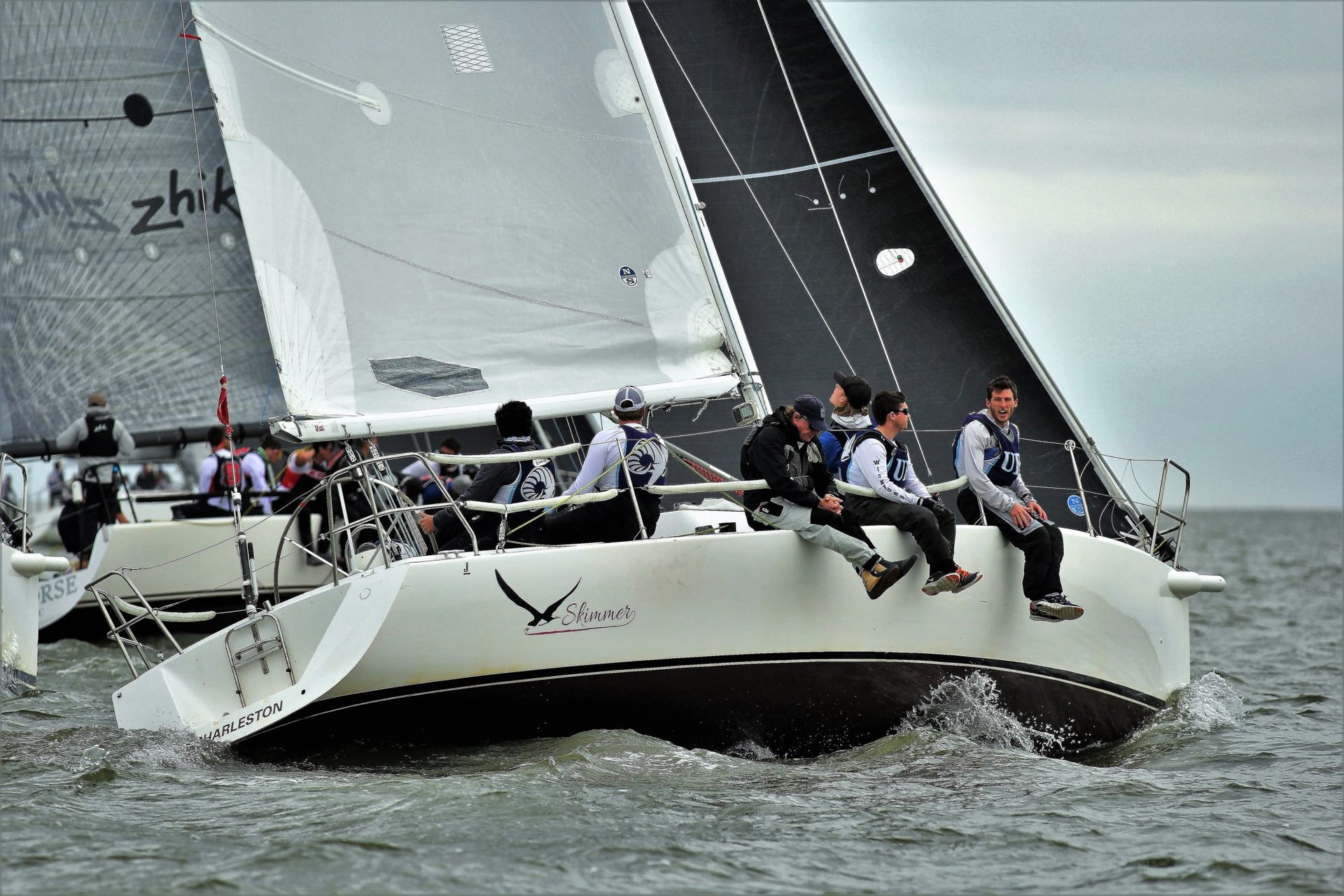
WE'RE MORE THAN SAILMAKERS
WE'RE MORE THAN SAILMAKERS
Customer Appreciation for North Sails Charleston
Photo Credit: Priscilla Parker
"What a great team at North Sails Charleston! These guys are so much more than just sailmakers. In addition to giving expert advice on new sail inventories and making timely repairs, they make themselves available to sail with customers and help get the crew and sails up to speed. They are truly a full service loft.
"Expert Advice, timely repairs, and they help get the crew and sails up to speed."
Also they are all leaders in the sailing community. North Sails Charleston sponsors the Summer Wednesday Night Series and have been instrumental in organizing and promoting the Southern Offshore Collegiate Regatta. Tripp, John and Ervin can always be found at practically every sailing event in Charleston Harbor. We are fortunate to have such a talented and energetic team in Charleston."
Miles Martschink
-J105, Skimmer
Photo Credit: Priscilla Parker
READ MORE
READ MORE
YOUTH RACING & YOU
YOUTH RACING IS THE FUTURE OF SAILING
How You Can Help Propel The Next Generation
Chris Bobyk of Mimico Cruising Club shares his thoughts on the importance of giving youth sailors opportunity to sail on keelboats and shares ideas on ways to involve them.
When asked by the Toronto North Sails Loft if I could provide my perspective and experience in promoting youth racing , it was with great enthusiasm that I responded with a resounding YES! Why? Because the youth are the future to the sport of competitive racing on the lake. As our racing fleet numbers continue to decline often due to either lack of crew or reduced yacht participation , or both, fostering the next generation of owners and crew has become very relevant to ensure the future success of racing. So being given an opportunity to share my efforts over the years to involve the younger generation on our family boat Blast, my hope is that it will motivate local owners, either currently participating in racing or wanting to participate in racing, to outreach to our sailing youth, to provide them the experience and the opportunity afforded by keel boat racing. The more sponsors to the progression of our young racers into the sport of Keel boat racing the better the chance of their future long-term involvement in the sport. It's all about the transition of our junior dingy racers into keel boat racing either as crew or future owners. It's one aspect of contributing to the future of our sport.
I can take no credit for the desire to promote youth racing, it was bestowed upon me by the generation of sailors before me when I was a youth sailor. My experience in the sport of sail boat racing started as a kid as it did for many in our existing sailing community. My desire to pass the torch to sailing youth is not something I came up with but rather what I feel is a responsibility that was passed onto me as a young racer by others with a passion for sharing a sport that was important to them. I was fortunate to have had wonderful mentors who welcomed me to gain experience and learn with them on their boats during and post my sailing school and dingy racing endeavors. This is where it all starts as it's the youth of today in the sport that will be the mentors for the youth coming up behind them. I am a believer in empowering our younger sailors, let them make decisions, step in when asked/required or when your experience dictates in critical situations. You will be rewarded as an owner, you will be inspired with what you observe and the result, you will be developing the future of yacht racing.
The model for promoting youth racing is simple - its all about providing junior racers the experience of both regatta racing and long-distance offshore racing. At a young age both my father and godfather and close family friend Don Green and their sailing futurity of friends involved me in their collective yacht racing adventures. My dad as a young man was brought into the sport by Don by providing the experience on his father's boat. We actively raced as a family out of National Yacht Club on our family boats with my dad often taking other junior sailing school keeners with us , and my Uncle Don as I called him provided me the opportunity of racing with him on a number of distance races on Lake Ontario on his C&C 35 Motivation, as well as having me assisting in shore support for Evergreen during the Canada's Cup. I was given the opportunity at a young age to sail with remarkable sponsors on not only the family boat but on other members boats at NYC, actively participating in racing around the lake. Beyond my parents and Uncle Don other owners also provided me the opportunity to be involved in the maintenance and caring for their boats, providing best practices and education beyond racing and crewing which for a perspective future boat owner I found invaluable. In all this forged my passion for sailing and racing. I was even given the opportunity in my early 20's to help transport a Whitby 45 from the Annapolis boat show to Florida off shore on the Atlantic. These opportunities provided by owners gave me seamanship and yacht handling skills that I rely on today, transitioning me into an owner and active adult racer. I am a believer that mentor ship of our young sailors is a critical element of the process for long term engagement in the sport either as adult crew or future owners /racers. Its giving back with the same passion I have to the sport instilled in me by others.
Our younger generation of racers need a continued platform of support beyond sailing school to provide them with experiences that will keep them passionate and involved- racing boat owners have the opportunity to provide the vehicle (mentoring youth crew) on their racing boats.
The Etobicoke Yacht Club (EYC) sailing school program is where my initial focus was, in part being close to Mimico Cruising Club (MCC) but also due to my association with the junior racers , resultant from our boys Ryan and Trevor both attending sailing school at EYC and Ryan instructing , and later joining the dry sail program with a laser followed by a 29er. Recruitment of young racers grew from there to Oakville/Brontë and the NYC programs. The experience provided by keel boat racing being the natural progression from dingy sailing can only in most circumstances be provided by existing owners that participate or want to participate in racing. It's a two-way street they learn big boat handling, navigation and other essential skills beyond dingy racing and owners learn from them , not to mention the enthusiasm and athleticism junior sailors bring to the crew. Having watched these junior sailors learn and grow with my two boys on Blast as competent skilled racers, starting in their teenage years has been extremely rewarding. Some have purchased their own boats which they race today while joining the Blast team on select events. Its common place today that Blast is on the race course with a younger generation of crew. I often get on the boat not as the skipper or crew, but rather to provide support and suggestions. It's inspiring to be in a position today to observe the magic of them working together, arriving at tactics, problem solving, navigating and doing well on the race course.
It's about providing the opportunity and experience to the younger generation to ensure the successful future of racing on the lake and elsewhere. It has been well worth it and very fun. I know they will do the same as I have done to promote the next group of junior racers.
READ MORE
READ MORE
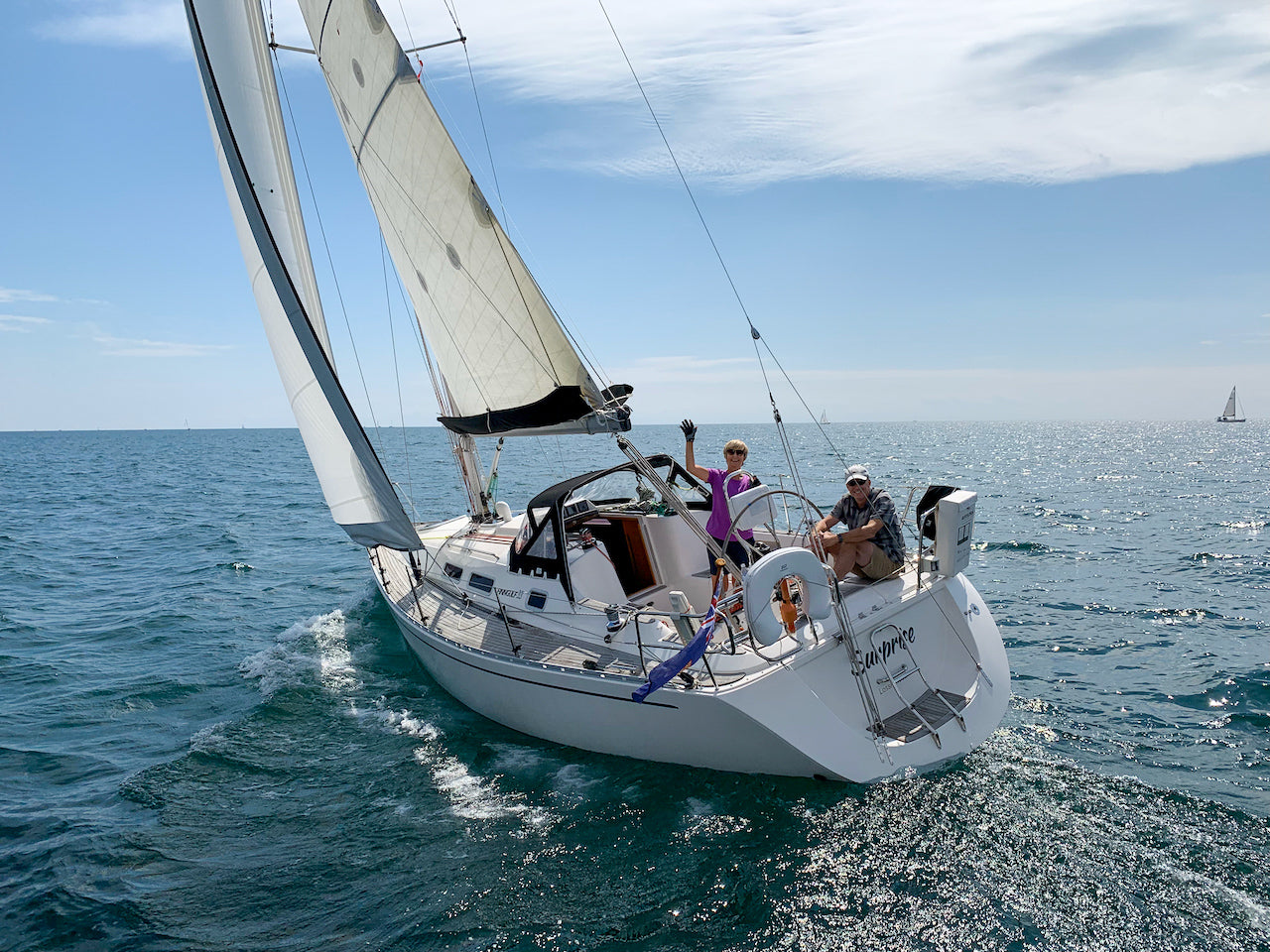
IT ALL BEGAN OUT EAST WITH FAMILY
IT ALL BEGAN OUT EAST WITH FAMILY
One Sailors Story To 3Di NORDAC
Dave Rankin grew up sailing at a young age with his family in PEI and has kept that passion for sailing going throughout his life. From J/24's to Albacore's to his FinnGulf 33, Dave has always loved cruising and racing. Last year, it was time to upgrade his mainsail for his FinnGulf 33, Dave shares insight as to what led him to go with North Sails 3Di NORDAC.
How did you get into sailing?
Now as far as sailing goes, I started sailing when I was pretty young. My family, there's two parts of my family. One part in the East and they've been sailing for many, many, many years and the other half of my family was here on the lakes. Sailing was not quite as important to them as it was back East, but certainly sailing lessons and then belonging to the Hamilton Burlington Sailing Club when I was pretty young was certainly something that started me off in the right direction. Every summer I would go out East and sail with my cousins and then come back here and sail on Lake Ontario. So I was pretty, pretty lucky.
Were you mainly doing cruising when you went back out East?
No. No, no. All racing. It was all racing out of CYC (Charlottetown Yacht Club), that's where my cousins and uncle and aunt they're all members. That's the exposure sailing from an early age was getting that kind of influence and then coming here, staying in Ontario and sailing with family, I guess from my teens. Then of course with Hamilton Burlington Sailing Club I was able to race Albacores and we had an Albacore fleet there.
Would you say that if you had to choose between doing weeknight racing or long distance racing, let's say, because you're heavily involved in both, do you have a preference of one over the other or do you enjoy both equally?
I enjoy regattas with windward/leeward racing probably more than distance racing. That may be because of how I was brought up. You might get three or four chances during one day of racing, whereas on a distance race, you only got one chance at a start and if you get fouled well then that's quite damaging throughout the entire race or it could be the difference between first or last. But I think as one grows older and becomes less agile, your feelings could change. The other thing is dependency on crew, which can get harder to figure out if you are doing a distance race. For example, with the J/24 , there were challenges with getting crew organized because we sailed with five people. The time available for the boat was key for all the different crew members. It worked for when we're pretty young. But as one gets older, it's difficult to keep accruing the right number of people at the right times.
What do you think are some suggestions or ways we need to adapt to getting more people involved?
I think from the top North is more advanced. It has more of an opportunity than other sailmaker has provided. And the reason I say that is because North's technology is what is driving newer, faster boats. So I think the cloth that North is developing is really better to attract more youth and to attract a different type of caliber of sailor. The types of cloth that they use generates foiling technology. This high-performance aspect is what attracts young sailors. I think staying ahead with technology and offering technology through new cloth and new types of designs of sails is really something that a company like North can contribute to the sailing world. I think, to be honest, I mean there's lots of discussion about attracting more youth into sailing. That's one thing for sure that has to happen. But at the same time you're doing part of that just by offering new technology.
Would you say that that technology helped influence your decision to purchase the 3Di Nordac? Or was it more of you really needed a main sail?
It was both. My main was nine years old and it was a North mainsail. It was in good shape, but it was nine years–almost 10 years old. And it was heavy. So I wanted something that was lighter to hoist and that in fact had better shape with reef points. So yes, for sure it was an easy decision for me to go with the main and the next in the lineup is actually the headsail. I contacted North Sails expert Pete Colby because Pete had it on his J/30 and I just wondered about his view on it. So he got back to me and let me know how things were going with it. Because he had it for a year and a half I think at that point. He was really happy with it. I know him well enough to know that he would tell me exactly how he felt. So I thought, well that's a good investment for me to make with the boat, for sure.
Would you say that it perform right to your expectations, or exceeded or it's just exactly what you kind of needed?
I've only had it for one season really so I'm still playing with it but I can tell you Shelley's happy with it. It's a good sail. I have high expectations for it after hearing different comments. At this time, I can say that my new sails meet my expectations and in some cases, it exceeds them!
READ MORE
READ MORE
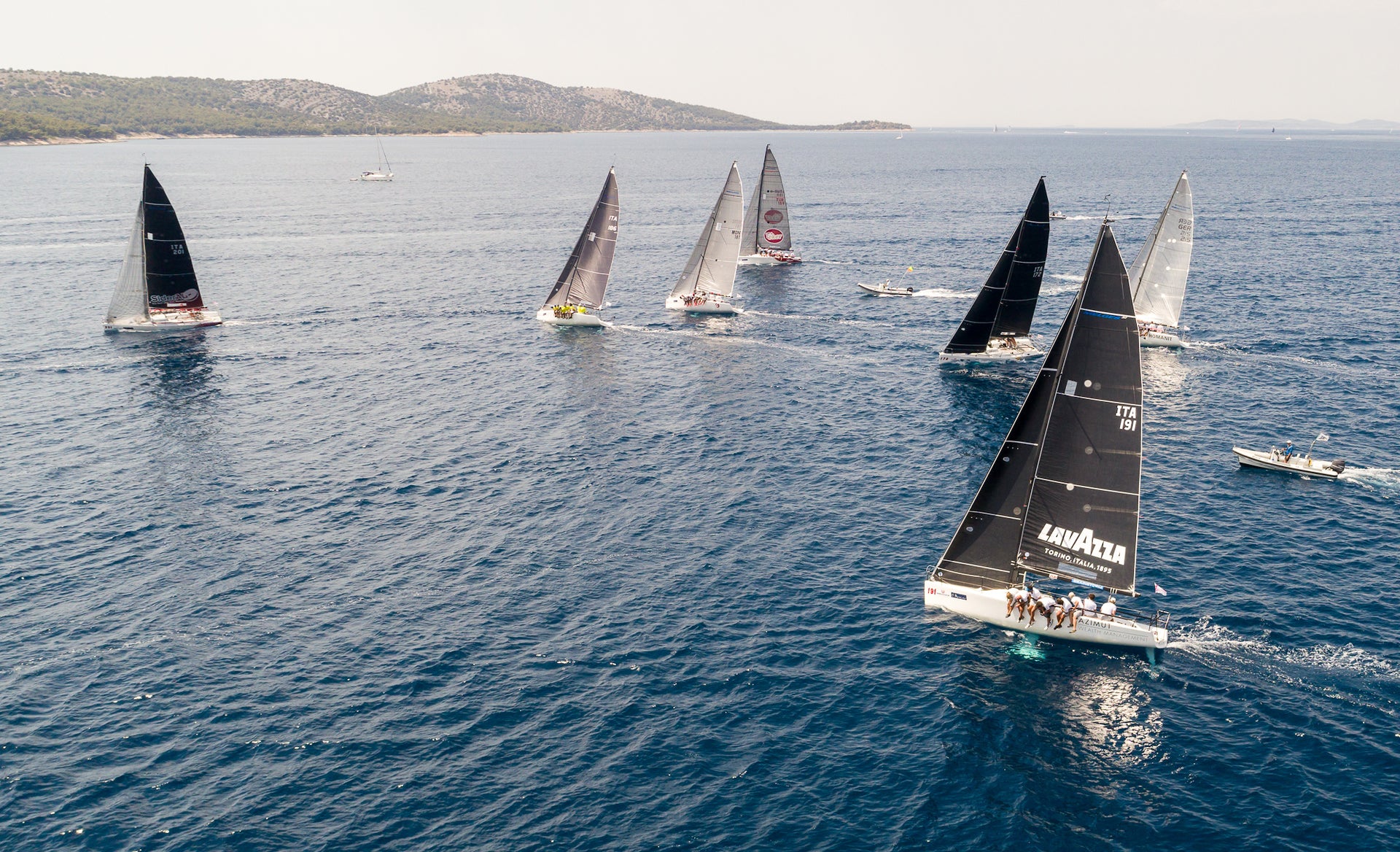
MELGES 32 FLEET BUILDS IN GREAT LAKES
MELGES 32 FLEET BUILDS IN GREAT LAKES
Popular Class Extending Reach Into Fresh Water Territory
Sooner or later all the boats will be launched, and summer will come. This season will be especially sweet. There is no end to the type and size of sailboats on Lake Ontario, but it is worth noting a small burgeoning fleet of Melges 32’s moving into the GTA, and the Great Lakes. There is a long standing tradition of older designs finding their way to fresh water. And why not, older boat prices will have depreciated by a huge margin, boat longevity is longer in freshwater, and maintenance is easier. What is notable about the Melges 32 is that there is no pretext of amenities. These boat owners have all had larger cruise/race boats in the past with lots of creature comforts, but they have found that they didn’t enjoy overnighting aboard them. At the same time the extra weight of all that furniture, and the upkeep of all those systems, diminished their excitement for racing. On the other hand the fun versus nuisance ratio of Melges 32 ownership is a bargain.
The Melges 32 was first built in 2004. During the intervening years the class enjoyed a great deal of international success, with a long list of high powered owners and well known professionals battling for glory. Most of those players have now moved on to other venues, but the class persists. The boat is a bit dated now by east coast standards, but it still has plenty of attributes that make it ideal for western Lake Ontario including its competitive design, rating, and how exciting it is to sail. There have been plenty of boat reviews and youtube footage of these boats so no need to recap all that here. But let’s take a look at why the Melges 32 is enjoying a second life on the Great Lakes.
The price of the boat is very reasonable. Some of these boats were campaigned at the extreme high end. Nothing was spared to make the boats faster, and easy to transport. Often they come with trailers full of valuable sails and spare equipment. There are covers and pads for everything. All the boats come with a trailer, and the keels retract into a trunk. That makes trailering dead easy, and it allows for the possibility of racing at distant locations. There are currently a number of small fleets around the great lakes, and in Florida. The last few winters Davis Island Yacht Club in Tampa has hosted a winter circuit of three separate weekends. They have allowed the boats to be stored there with the masts left up. Traveling to regattas is a nice way to maintain excitement, but more importantly the boat owners are all like minded. They are talking to each other, and coordinating regattas where they can get together. There is a lot of camaraderie. The focus is on fun racing, and sharing skills, rather than expensive diners or elaborate awards. The atmosphere at the boat park is friendly and helpful. If you need a tool, or some help pushing a trailer around there is always someone there with a smile because they may need something from you soon.
The main reason the Melges 32 is a good fit for western Lake Ontario is because the boat lights up in as little as 6- 8 knots true wind. Unfortunately, this part of our lake is notorious for light air. Too many evening races have us sitting on the leeward rail minimizing tacks. For example Port Credit Yacht Club has had two Melges 32’s racing Wednesday evening PHRF fleet for the past three seasons. It isn’t uncommon to have the wind drop, and have the entire race/cruise almost stop. While the rest of the fleet is just trying to maintain steerage the battle rages on between the Melges 32’s. Sometimes it is like racing through an obstacle course where the heavier boats appear to be motionless. The 32’s are always the first boats back to the dock sometimes hours before the rest of the fleet.
The boats are all cockpit, and easy to sail, but they aren’t for everyone. When there is a bit of breeze the boats are lively, and capable of unbelievable downward speed. With that speed can come the occasional “spinout” That is the exciting part. But, they recover well and are easy to get them pointed back downhill. It is the kind of boat where you get suited up “before” you push off the dock. The extra large cockpit is also perfect for après race socializing. For those sailors who don’t enjoy overnighting aboard their boat, and who enjoy the racing, and the social aspect of it the Melges 32 may be a good option. Stop by one of the 4 or 5 boats that will be racing in the GTA this summer. I am sure the crew will be smiling and happy to give you a tour. If you have any interest in joining in on the fun, feel free to contact local North Sails expert Geoff Moore.
Explore more information on Melges 32 tuning guides, latest information and sail options today.
READ MORE
READ MORE
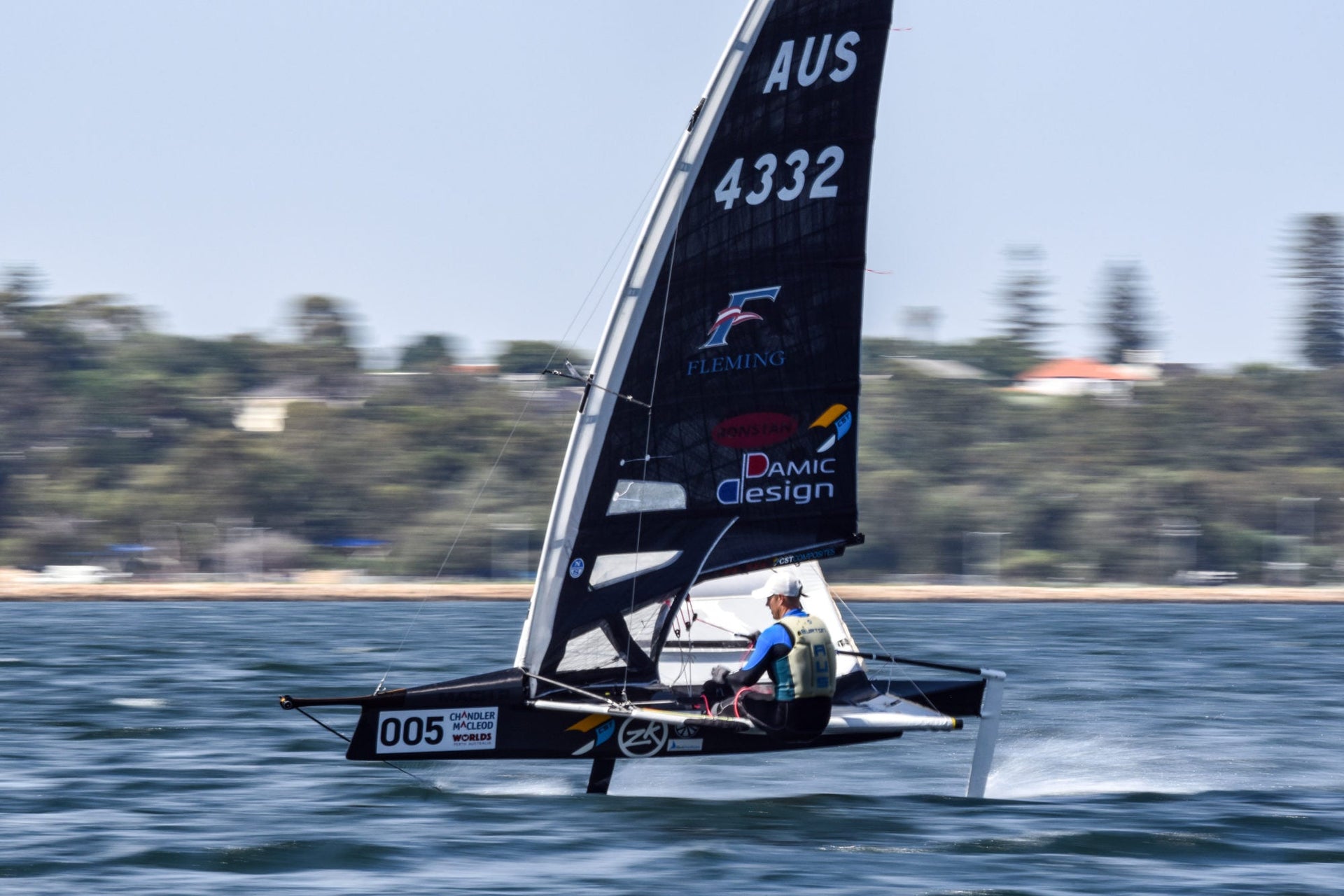
VICTORY AT THE 2020 NEW ZEALAND MOTH NATIONAL CHAMPIONSHIPS
VICTORY AT THE 2020 NEW ZEALAND MOTH NATIONAL CHAMPIONSHIPS
A Look Into The Winning Combination
North Sails Photo: James Tomlinson
A bit of teamwork and North Sails 3Di technology proved to be a winning combination for Auckland sailor Graeme Sutherland at the 2020 Moth national championships — sailed just days before the nationwide lockdown took effect.
Sutherland, who finished top Kiwi at the Moth world championship in Perth in December, sailed a strong and consistent series over two days out of the Sandspit Yacht Club north of Auckland, to finish clear ahead of Olympic bronze medalist Sam Meech.
“The final results probably make it look easier than it actually was,” says Sutherland, who dropped a second and an eighth placing to finish with a perfect scorecard.
The development class regatta was held in Sutherland’s home waters of Kawau Bay, which he says provided ideal conditions and plenty of open water. There were almost twice as many entries for the regatta than for the 2019 nationals, with 22 entrants, including young up-and-coming sailors such as George Gautrey and Nick Egnot-Johnson.
The first day’s racing was light and shifty, with some up-and-down performances, and Sutherland was tied for the lead with Stu Goodes after four races. However, on the second day, Goodes was knocked out of the regatta after breaking a spreader, and Sutherland found himself having to stay in front of Meech to take the title.
These three sailors were the top three Kiwis at last year’s worlds, and Sutherland says they have worked together to raise their performance. All three sailors have worked with the North Sails One Design team, led by Derek Scott, to optimise their 3Di sails for their New Zealand-built Bieker Moths.
“We decided to get the same gear and work as a squad, all using the same boat, rig and sail, and try to play off each other to improve,” Sutherland says. “It’s a hard class for sailmakers to keep up with, as things change so much. There’s always a bit of last-minute development, and before the worlds we managed to go into the North loft and do some small modifications to the sail and deck-sweeper area.
“After the worlds we went back into the loft and made a couple more minor tweaks, so coming into the nationals we were all on the same page and up with the latest developments.”
Sutherland says the sail he is currently using has increased depth in the luff curve, which allows him to power up a lot more, especially in light conditions and downwind.
The big question now is whether the next worlds, scheduled for Weymouth, England, in September 2020 will go ahead. The New Zealand nationals were held under the increasing threat of Covid-19, which saw the country move to alert level 2 on the Saturday of the regatta.
“It was good that we got the regatta done in time, but it was a pretty close thing,” Sutherland says.
Also managing to complete its nationals series before Covid lockdown was the Flying 15 class, hosted by the Onerahi and Marsden yacht clubs in Northland. Finishing third overall, and securing a spot at the next Flying 15 world championships, scheduled to be held in Fremantle in February 2021, was the new pairing of Napier sailors Nathan Percy and Scott Pedersen.
Both are also keen Paper Tiger sailors, with Pedersen normally sailing with Nathan’s brother Hayden, a former Paper Tiger national champion. However, after Hayden was injured, Nathan stepped into the helmsman’s role in the Flying 15. Despite their lack of experience together, they won one race and chalked up four second placings in the nine-race series.
Derek Scott of North Sails One Design says using a new set of North Sails, including a radial-cut mainsail developed by North Sails UK, was key to Percy and Pedersen’s success.
“Having not really sailed the boat together before, they still managed to be absolutely on the pace and also pick up some top placings,” he says.
READ MORE
READ MORE
SAIL TO CATALINA: PART 1
SAIL TO CATALINA: PART 1
The Best Sails To Use When Sailing To And From The Island
North Sails experts Alex Curtiss and Bill Herrschaft share their advice for the best sails to use when heading to Catalina Island from Marina del Rey.
Bill shares, "Back in the early 70’s, my mom, dad, two brothers and I would do weekend trips to Catalina from Marina del Rey on our Catalina 22. That’s right, a family of five on a 22-foot boat towing a dinghy all the way there, 42 miles. Needless to say, it took forever. It was a fun adventure and we would play with the other yacht club kids once we got there."
Nowadays, production sailboats have evolved with better hull, rig, and sail plan designs that make sailing easier and certainly a lot more comfortable. With the advent of modern sail handling systems, it’s easier to hop on your boat and get out of town. Almost all production boats come with a furling genoa, and your choice between an in mast furling main or the “Classic” mainsail you have to actually hoist. Great stuff for a new boat owner in terms of sail handling convenience.
One thing Bill likes to look at with a typical round-trip sail from Marina del Rey to Catalina; How can we add performance and fun when the wind goes aft and the stock genoa looses pressure and just sags?
Enter the G1 All Purpose Cruising Spinnaker, or Gennaker as we call it. It’s an asymmetric spinnaker, designed to be flown without a spinnaker pole, on a beam or broad reach. Usually built out of ¾ or 1.5oz Nylon, they’re easy to trim and do not add any complicated rigging or huge expense. You hear a lot about racing Asymmetric spinnakers that take a crew of 15 to handle, but these sails have been around for over 30 years and designed for short handed sailing. Gennakers come with a Snuffer, a long sock type arraignment with a molded cone at the bottom to help control, deploy, and take down (snuff) the gennaker.
So, what are the weather conditions you can expect on a typical trip from MDR to Catalina? Starting out in the early morning the breeze will be a light southerly, probably motor sailing or sailing upwind with main and Genoa. Once past Palos Verdes, and away from land influence, the wind should increase and move aft. This is the perfect time to try our your new Gennaker in the wide open Catalina Channel before it gets too windy.
Hoist the Gennaker in its Snuffer all the way up. The sail is contained in the Snuffer until you’re ready to deploy. Bear away to a broad reach, snug the sheet a little and use the Snuffer control line to raise the sock and open up the Gennaker. Slowly head up and sheet in until you feel the Gennaker fill and pressurize the boat. Once sailing a comfortable course, ease the sheet until the Gennaker luff curls, then sheet in slightly to achieve the proper trim.
Now is the time to get a feel for your new Gennaker and try sailing up (closer to the wind) or down (a deeper angle to wind direction). Alex points out, " These sails are more sensitive to wind speed and angle than a genoa so it’s good to learn how high or low you can effectively sail in a given wind speed." Generally, a tight reach in light air, or a broad reach in higher wind speeds. You do not need complicated wind instruments to sail with a cruising spinnaker. Just a mast head fly for wind direction, and a simple anemometer for wind speed. Or, the old fashioned way, a feel for wind on your face.
To douse or Snuff the Gennaker, do these easy steps. Simply bear away and sail low enough so the mainsail helps block the wind and “relaxes” the pressure in the Gennaker. Go forward and pull the sock’s control line down so the sail is contained in the sock all the way to the clew. You now have time to safely ease the spinnaker halyard and snake the entire package on deck.
How about coming home from Catalina? Depending on the time of day, the wind in the Catalina Channel could fill-in nicely. If you can maintain a comfortable sailing angle heading to Palos Verdes, then deploy the Gennaker. Sometimes the wind will head, or go forward, as you get closer land (Palos Verdes Peninsula) and you might need to douse the sail to get around the point. Once past the point, you will almost always have a good wind angle to use the Gennaker all the way back to Marina del Rey.
A Gennaker will add fun and horsepower to your boat for shorthanded sailing without unnecessary complication.
Read Cruising to Catalina, Part II
Learn more about cruising with our Cruising Tool Kit.
READ MORE
READ MORE
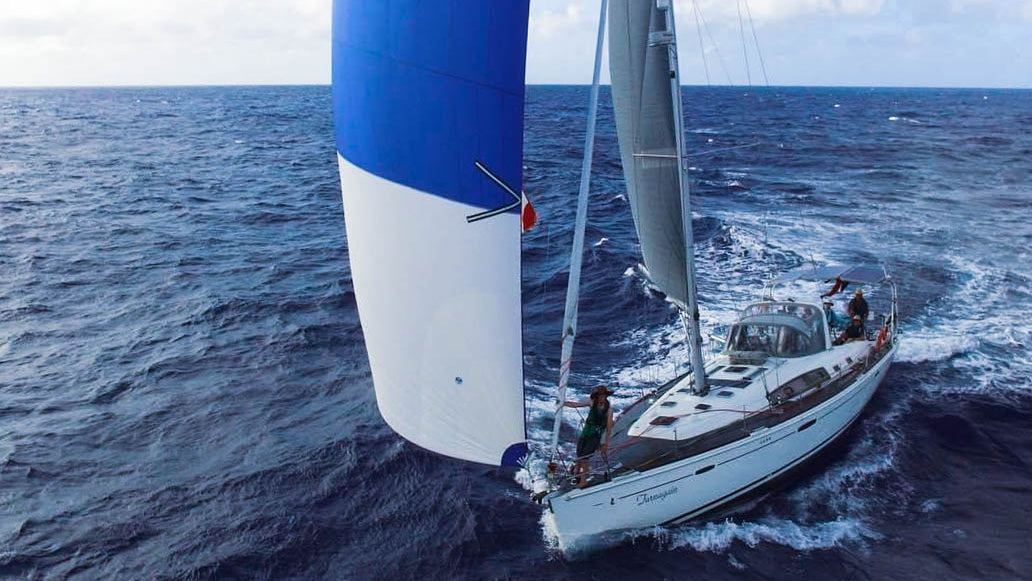
FRIENDS REFLECT ON A GREAT SAILOR AND PARTNER
FRIENDS REFLECT ON A GREAT SAILOR AND PARTNER
Remembering Travis McGregor
Travis was a great sailor and a great friend of mine. I contacted the sailor who spent the most time racing with him on Turnagain as well as his partner and asked them a few questions.
Here are their responses to the questions I asked Uncle Vern Burkhardt.
Your first time meeting Travis.
I met Travis in Victoria during the Swiftsure International Yacht Race while I was the Chair of this event. A great friendship subsequently began when Travis was a student in 2013 of an Offshore Personal Survival Course (Safety at Sea) where I was one of the three instructors. Early on it was apparent that Travis was a highly skilled mariner who loved to sail and to compete in sailboat races.
How many races/deliveries have you done with him?
I raced with Travis in about four Oregon Offshore Races (since renamed the Pacific NW Offshore Race), four Swiftsure International Yacht Races, two Southern Straits, a Snowflake winter series run by the West Vancouver Yacht Club, and two Vic Maui Races (2016 and 2018). I also helped him deliver his SV Turnagain from San Diego to Vancouver.
Also, we jointly arranged and took turns skippering various legs in the delivery of John and Judie Abel’s Beneteau 49 from Puerto Rico through the Panama Canal and back to Victoria via the Galapagos Islands, Marquesas, and Hawaii (over 11,000 nautical mile delivery). We also helped Abels deliver their newly acquired yacht from Halifax NS to New York City.
A funny experience with Travis.
Travis and I had many wonderful times together and shared some funny and also some very challenging conditions. We both loved to fish while offshore by dragging behind the boat a 1/8” line attached to a leader and lure. Whenever we had a fish strike Travis would become highly excited, unusual for Travis, and rush to grab the line to bring in the fish.
The only time I would get to the line before Travis was when he was sleeping, but even then a few times he rushed out from below and grabbed the line with the fish before anyone in the cockpit could get to it. With a “fish on” he became very animated and excited when it was landed.
Whenever we raced in the Pacific NW Offshore Race we would sail to Astoria a week in advance presumably to be in Astoria in time for the start of the race. The real reason, it seems, was that Travis loved to sample the libations offered by the many brewpubs.
Almost every time we headed offshore for a delivery or a race, Travis would be seasick for the first several days. When asked why he didn’t quit sailing and instead take up golf he replied, “You can’t golf at night.”
One of the most memorable experience with Travis was during the delivery of SV Turnagain from San Diego to Vancouver. We were off the Oregon coast at night and it was pitch black with no moonlight. Travis and one other crew member were below decks as they were off watch, and I was on the helm. A wave hit the side of the boat hard and washed over the deck knocking me off the helm and with great force against the pushpit. Travis bolted out of the cockpit and yelled, “Are you still on the boat” as the MOB ring and light were disappearing behind as its bracket attaching it to the boat had been bent by the wave.
In a few hours Travis lamented that we missed a great opportunity to practice a MOB recovery drill in the extreme wind and sea condition by retrieving the MOB ring and light. He didn’t mention, but I’m sure it was in his mind, and save the cost of replacement. Two years later the life ring was retrieved by a mariner off the Brooks Peninsula, and through luck the MOB life ring minus the light was returned to Travis only a week before his death.
What was the best attribute Travis brought to a sailing team?
Travis was meticulous in his preparation of SV Turnagain for any race. He knew every aspect of his yacht and had thoughtfully equipped it with incredible attention to detail. He was one of the best helmsmen, and a highly competent navigator and leader on a boat. Travis never lost focus and was always thinking about how to go faster and in the right direction to gain advantage.
A time Travis went above and beyond to make sure his team was safe.
Travis always went above and beyond to make sure his team was safe by ensuring the boat was well prepared, and he was physically and mentally up for any challenge that came along.
He showed his leadership skills when we lost the quadrant in the steering system in the 2016 Vic Maui Race. His first priority was the safety of crew and leading the crew in making a decision whether or not to continue racing with our emergency steering system knowing we were no longer competitive or change our mission to arrive in Lahaina, Maui in time for the Awards Party. The party option was the chosen option.
Travis’ crew briefings prior to each race or offshore passage were thorough and clear. He had a checklist of items to cover and did so in a manner that all crew were aware that a safety first culture prevailed on the boat. And he led by example.
What do you think Travis should be remembered for?
Travis loved his two children and was often melancholy about being away from them when we were offshore. He often spoke about them and how proud he was of them—a great role model for a father. He should also be remembered as a highly accomplished mariner who loved being on the water. He was a wonderful gentleman, a great friend, and respected and admired by an incredibly large number of people.
Kaitin Brunt:
When was your first experience sailing with Travis?
The first time Travis and I went sailing was for a few days cruising in the Gulf Islands. He picked me up at a tiny dock where he maneuvered Turnagain (in reverse!) into this super tight slip and made it look effortless, as he did with most things. As I was stepping onboard I thought to myself, "Oh my god, who is this guy??"
What was your favourite memory on Turnagain?
We were sailing back from Wigwam with Travis's kids. It was sunny, we had a beautiful breeze behind us, and Sylvia (his daughter) was driving. He loved being out with his kids and having them participate in the sailing. Sylvia was doing an amazing job and Travis was such a proud dad!
What were Travis's favourite activities/passions outside of his boat?
He loved to explore, be active and be in nature. He loved skiing, diving and hiking, anything that brought him outdoors. He was also a fantastic cook!
Who did you consider Travis favorite person to be on a boat with?
He was definitely happiest when his kids were onboard. He really wanted to show them the world by boat.
Where was Travis' favorite or top spot he enjoyed sailing ?
Tough question... I think he loved all his sailing adventures, whether it was Gulf Islands, Hawaii, or Galapagos. He really wanted to see it all by boat, but I think his heart belonged to the coast. Secret Cove, Tribune Bay, Princess Louisa .. he always said he wanted to end up here.
Which do you think Travis enjoyed more cruising or racing ?
Travis was definitely a cruiser. He enjoyed racing because it got him on the water but he was happier to explore on his own time. He liked racing because it was a great excuse to sail to Hawaii, but he would have cruised there if he could have justified it!
Our sailing community lost an amazing sailor and friend. Before Travis passed he was co-chair of the Vic Maui and one of the reasons that the race has been as successful as it has been over the last few editions. He also helped a local couple deliver their boat home from the Caribbean. Travis always had his next adventure on his mind and I hope that his legacy will live on in the memories of his friends.
READ MORE
READ MORE
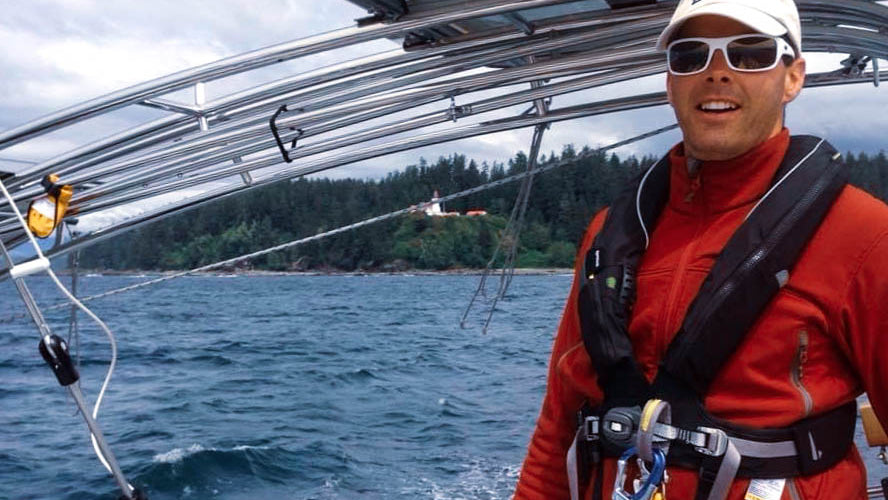
REMEMBERING TRAVIS MCGREGOR ; A CRUISER, A RACER, A FRIEND
REMEMBERING TRAVIS MCGREGOR
A Cruiser, A Racer, A Friend
The first time I met Travis was on his Beneteau Oceanis 50 Turnagain when installing a new sail he purchased from North Sails Vancouver. 6 years later I was invited by Travis to race to Hawaii on the same boat in the 2018 edition of the Vic Maui.
When I first met Travis he was a full on cruiser and he decided to join the Vic Maui in the cruiser class to get some ocean miles under his belt. He enjoyed his first Vic Maui so much he decided to do it again in 2016. Travis also raced on many other boats in the PNW as his boat was set up for ocean sailing.
After racing Travis was a social guy and you could always be sure to find him enjoying a hoppy beer either on the docks or in a local brewery. I think a bit of the local racing and his enjoyment during his first two Vic Maui's really started to push him to truly crave ocean racing. He put a real competitive team together for the 2018 Vic Maui which I was lucky enough to be invited.
Travis was competitive but results were not first priority, the list went like this 1) the personal safety of the crew 2) boat preservation and then 3) results. I learned a lot from Travis and his ability to prepare and organize an ocean racing boat and team. One of the coolest things Travis could do in my opinion was while laying down underneath he could tell if someone was not driving the boat correctly.
He put a lot of miles on Turnagain and it was almost like when he was on the boat, him and the boat were one... as weird as that sounds. He took very good care of Turnagain and I even remember when we got to Lahaina and he was giving the final crew briefing before we hit the docks to celebrate with family and the organizers and he said "so they are going to give us champagne and whatever you do, DO NOT spray it on the boat!"
Another little story about how safety orientated he was after we finished the 2018 Swiftsure Yacht race we hit the docks at 6 am for breakfast and listened on the radio for the rest of the finishers. I had done the math and we were looking good to win our division overall, Travis was listening but made every single crew member coffee and breakfast while I kept my ear glued to VHF. After breakfast the final few boats we were worried about finished, I did the math and I had announced that we won our Division. As soon as we found out that we had won, dock lines came off the dock and we headed out for a man overboard drill... you'd think after 24 hours of racing and winning the division the captain would let us sleep a little.
I asked Travis why he thought it was so important to go and do a man overboard drill at 6 am and I will never forget his reply, he said " I want to practice this drill while everyone is overtired and worn out as that could be the same state we are in if someone falls overboard.”
Hear more about Travis and the impact he made on his friends and competitors.
READ MORE
READ MORE
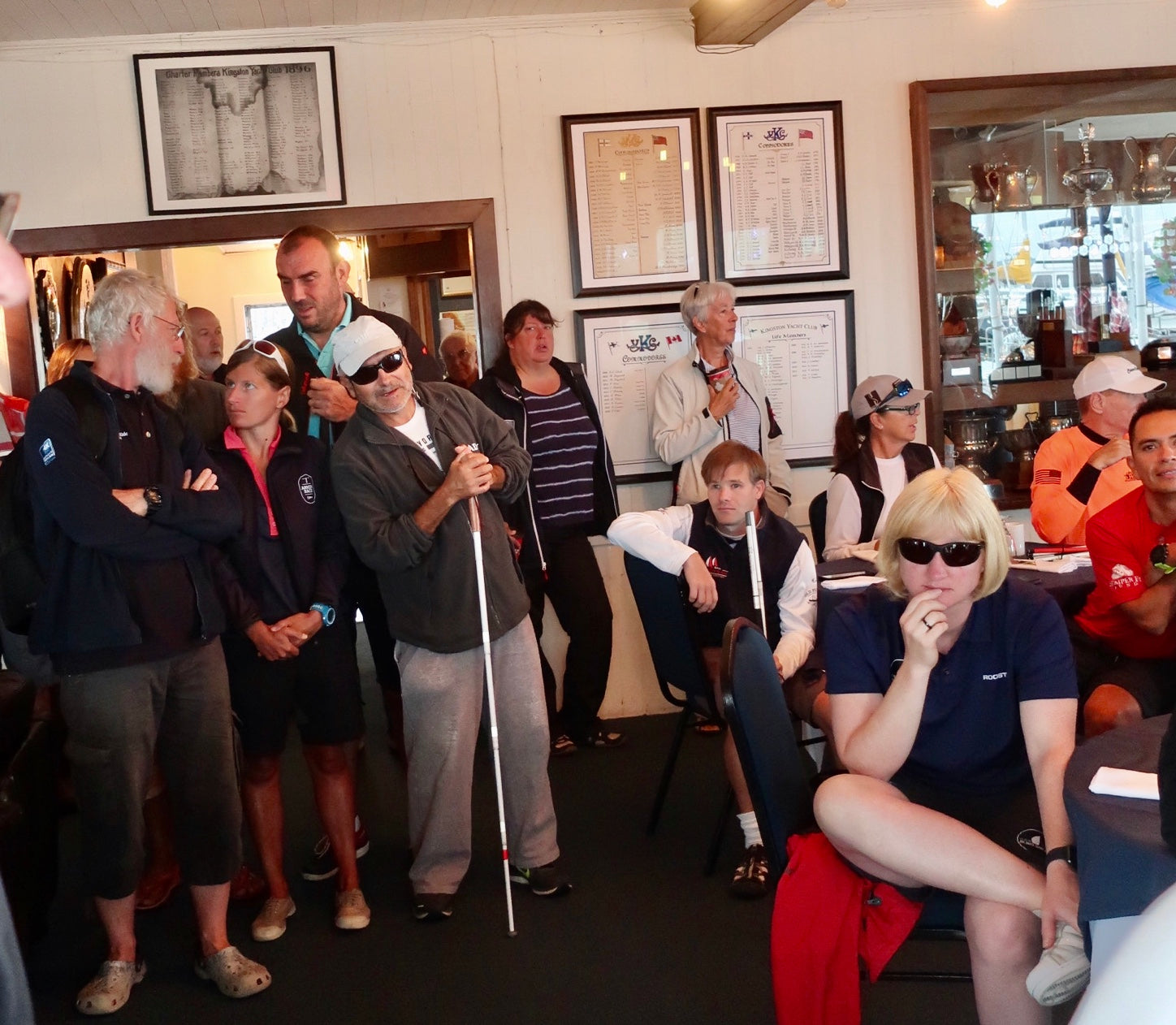
INSPIRED RACING. EMPOWERED RESULTS.
INSPIRED RACING. EMPOWERED RESULTS.
Blind Sailing Worlds 2019
If you think you are up for a challenge, try this the next time you go racing. Put a blindfold on your skipper and jib trimmer before the start of a race. If you somehow manage to avoid a collision in the first four minutes, the prospect of making the starting line let alone making it around the first mark of the course are dim.
This past September, Kingston Yacht Club welcomed fourteen teams from 6 nations at the World Championships for Blind Fleet racing -- the first Blind Worlds hosted in Canada. The regattas high profile garnered the attention amongst many, Kingston's mayor and provincial member of the legislature, beginning with the opening ceremonies and all through the week of racing. Club members, family and media jumped onto spectator boats to be treated by all the action.
Watching blind and visually impaired sailors take their sighted crew around a windy, wavy racecourse is inspiring. Made more impressive since the Shark, at 24 feet, is a tight ship for a crew of four adults (two sighted crew to call tactics and trim the main ONLY) with no lifelines.
Approached by the race organizers, North Sails supplied the 150% genoas for the chartered Sharks. It was an honour to be a part of this transformative event. Most of the top sighted crews race Sharks with 180% genoas even in the windiest conditions. For crews new to Sharks, as almost all these teams were, the 150% genoas can be a handful in 12 knots true or more. The fleet of Sharks were equalized as much as possible with the Dacron 150% genoas as an excellent middle ground; capable of powering the boats through all the wind and wave conditions Kingston offered up.
The on-water racing was as intense as you will find anywhere. The adaptive skills and competitive drive of this group of sailors were only matched by their outgoing friendliness and camaraderie. Trans-formative was the common refrain from so many of the 70 volunteers. Fun was the word used by competitors. Noted repeatedly was how sailing and racing empowered these athletes to rise above their visual challenges.
At the recent Sail Canada Awards Gala, in recognition of the fantastic effort put forth by the race organizers, officials, and the host club volunteers, Sail Canada selected the Blind Worlds as the top regatta in the country for 2019.
Discover all Shark sails available from North Sails here.
READ MORE
READ MORE
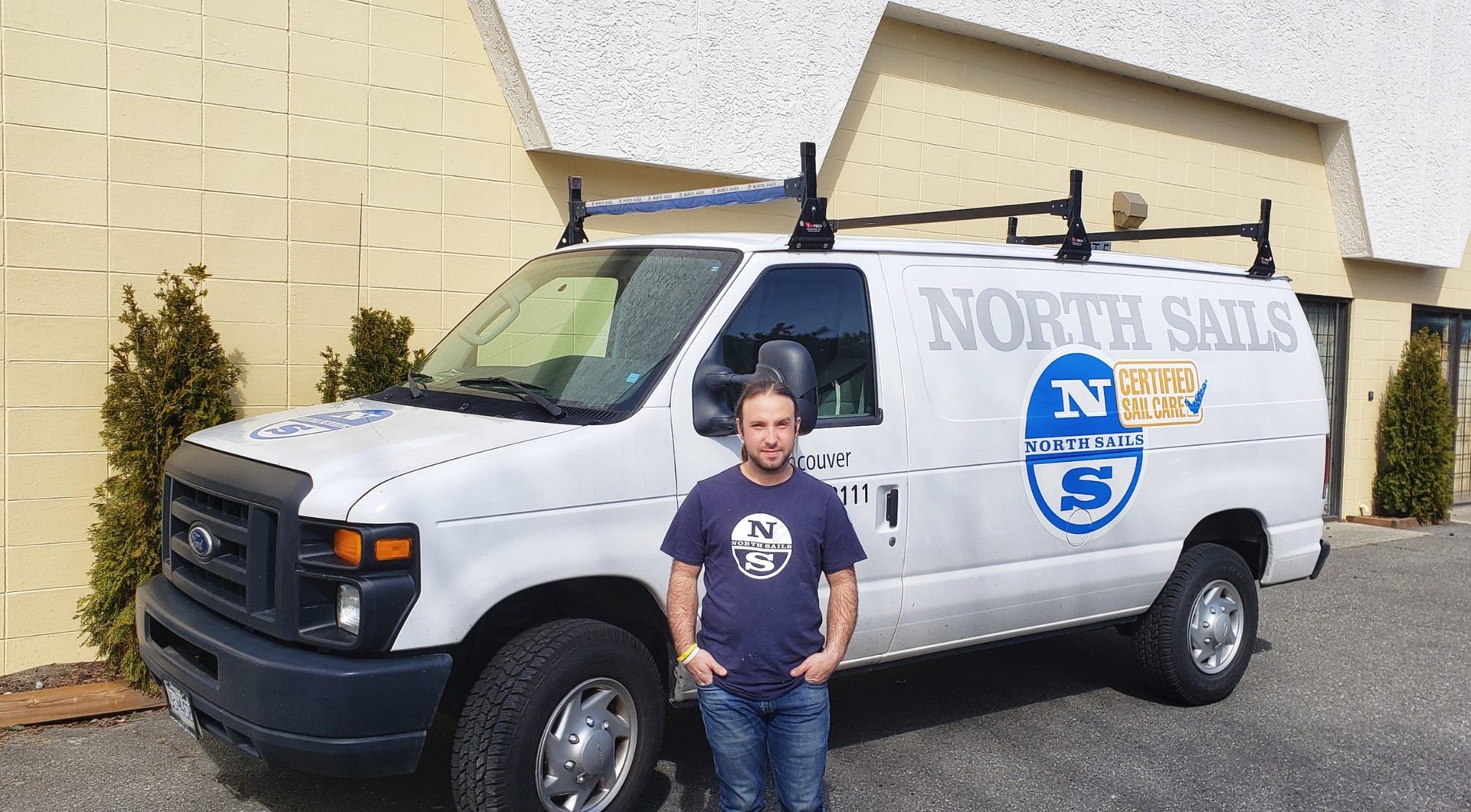
CURBSIDE SERVICE
CURBSIDE SERVICE
Preparation Starts Today
North Sails Vancouver wants to help you get ahead this season and your local service expert Chris Walter is here to make it happen. Due to our current global situation, please call us to arrange for pick-ups or drop-offs Monday thru Friday, 8am-4pm. In order to maintain social distancing and follow government guidelines, our loft is closed to visitors, but our sales team and admin are still working remotely.
Pre-arranged drop-off will be in the parking lot of our building. We are offering complimentary pick-up and drop-off in the Lower Mainland. All invoices must be paid prior to pick-up. Please provide payment when you arrange for your pick up by calling us direct at 604-271-2111. Have questions? Contact Chris.
READ MORE
READ MORE
WEBINARI - ZA SVAKOG PONEŠTO
Webinari - za svakog ponešto
Kako se u skoro cijelom svijetu ograničilo slobodno kretanje i boravak na otvorenom, pa tako i na moru, bilo bi dobro iskoristiti sve ovo "slobodno" vrijeme za unaprijeđenje bar teoretskih znanja. Zato je North Sails prošli tjedan krenuo s online edukacijama. Pokrenut je veliki tim stručnjaka iz raznih područja jedrenja i bilo bi šteta to ne iskoristiti.
Ovisno o tome gdje se nalaze pojedini predavači, vremena održavanja webinara bit će različita, neka će više odgovarati publici u Europi, a neka onima preko nekog od oceana. U svakom slučaju ovdje možete pronaći popis tema koje će se obrađivati tijekom idućeg tjedna krenuvši od ponedjeljka.
Nadam se da će svatko pronaći nešto što ga zanima!
KLASA J 70 - 2. DIO
PONEDJELJAK, 06. TRAVNJA, 20:00 GMT
FINO TRIMANJE JEDARA I SAVJETI ZA OPTIMIZIRANJE KOMUNIKACIJE NA PALUBI
LINK ZA REGISTRACIJU
MALE KLASE - JEDNOSJEDI
UTORAK, 07. TRAVNJA, 13:00 GMT
SAVJETI ZA POVEĆANJE BRZINE NA REGATNOM KURSU, OPREMANJE JEDRILICA I POSEBNI SAVJETI ZA JEDRENJE U ORCU I U KRMU.
LINK ZA REGISTRACIJU
NORTH U WEBINAR
UTORAK, 07. TRAVNJA, 13:00 GMT
OSNOVE STRATEGIJE, TAKTIKE I PRAVILA.
LINK ZA REGISTRACIJU
UGODNO KRSTARENJE
UTORAK, 07. TRAVNJA, 13:00 GMT
SAVJETI ZA UGODNO JEDRENJE POPUT TRIMANJA VELIKE GENOVE PO JAKOM VJETRU ILI PRIPREME ZA KRAĆENJE JEDARA... PRIMIJENJIVO NA IZNAJMLJENOJ CHARTER JEDRILICI, TAKO I NA OKRETNOM REGATNOM KRSTAŠU.
LINK ZA REGISTRACIJU
KLASA VIPER
SRIJEDA, 08. TRAVNJA, 20:00 GMT
SAVJETI ZA TRIMANJE I KAKO SE POSTAVITI NA ČELO FLOTE.
LINK ZA REGISTRACIJU
KLASA MOTH - 3. DIO
SRIJEDA, 08. TRAVNJA, 21:00 GMT
SAVJETI IZ PRVE RUKE OD TOMA SLINGSBYJA, PROŠLOGODIŠNJEG SVJETSKOG PRVAKA.
LINK ZA REGISTRACIJU
KLASA OPTIMIST
SRIJEDA, 08. TRAVNJA, 22:00 GMT
O SVEMU ŠTO JE VAŽNO U OVOJ KLASI.
LINK ZA REGISTRACIJU
10 STVARI O JEDRIMA ZA KRSTARENJE
ČETVRTAK, 09. TRAVNJA, 17:00 GMT
ZANIMA VAS ZAŠTO SU NAJBOLJI TIMOVI TOLIKO BRZI? SAVJETI IZ PRVE RUKE OD ČOVJEKA KOJI RADI S NAJBOLJIMA.
LINK ZA REGISTRACIJU
KLASA J 22
PETAK, 10. TRAVNJA, 20:00 GMT
SAVJETI ZA MAKSIMIZIRANJE UČINKA JEDRENJA U ORCU.
LINK ZA REGISTRACIJU
SAVJETI "LETEĆIH ŠKOTA" - BRIAN HAYES, ZEKE HOROWITZ, GREG FISHER
SUBOTA, 11. TRAVNJA, 20:00 GMT
RAZNA PITANJA I ODGOVORI NA NJIH! SLOBODNI STE PITATI SVE ŠTO VAS ZANIMA.
LINK ZA REGISTRACIJU
Možda neke stvari neće biti zanimljive našoj publici jer je riječ o klasama na kojima se ne jedri u Hrvatskoj, ali svejedno, mnogo stvari se može univerzalno primijeniti i u drugim sličnim klasama.
Što se tiče troškova sudjelovanja njih nema u 9 od 10 webinara, a jedini u kojem je potrebno uplatiti kotizaciju je North U webinar Billa Glasdstonea.
Vidimo se u online učionicama!
READ MORE
READ MORE
INFORMATION I FORBINDELSE MED CORONAVIRUS
CORONAVIRUS (COVID-19)
Information
Hos North Sails overvåger vi nøje udviklingen af Coronavirus (COVID-19) situationen og følger den aktuelle vejledning fra myndigheder og sundhedsmyndigheder for at sikre, at vi træffer de rigtige beslutninger for at beskytte vores kunder og ansatte.
Det betyder at alle vores sælgere samt designere i denne tid arbejder hjemmefra. Vores Serviceafdeling kører på fuld styrke for at sikre at alle sejl bliver klar til sæsonstart. Så er dine sejl klar til afhentning, bedes du ringe på forhånd, så vi kan aftale hvilke forholdsregler der skal tages med henblik på udlevering.
Vores sælgere og designere kan selvfølgelig kontaktes på e-mail eller telefon indenfor vores normale åbningstider:
Mandag - torsdag kl 9:00 - 16:30
Fredag 9:00 - 16:00
Telefon 39204090
Email: DEN@northsails.com<
READ MORE
READ MORE

BUILDING YOUR SAIL INVENTORY
BUILDING YOUR SAIL INVENTORY
A Look Into Code Zeros
Local North Sails expert Hugh Beaton shares advice on building your sail inventory when it comes to Code Zero's. It all starts in a consultation with lots of open questions to fully understand how the sail will be used and where it fits into the rest of the boat’s inventory of sails so that good crossovers can be achieved. This past year I had the pleasure of working on a new project where the inventory of sails needed to be simple and easy to handle by a small crew when sailing offshore, and yet high performance to compete in the premier races on the Great Lakes. Suspect was launched just days before the Susan Hood Race, and completed her sea trials during the race. Well done to all that worked on her beautiful refit. Our task in designing the sail wardrobe was to cover as much of the wind speed and wind angle chart as possible with just four sails; Mainsail with three reefs, 135% furling genoa, A2 spinnaker, and a versatile Code Zero. Later in the summer I was able to join the boat for the Lake Ontario 300 and use the sails in a wide range of challenging conditions.
"This experience allowed me to came away with a new appreciation of what Code Zero's can offer for all of us, regardless of the speed of the boat or the size of the budget", commented Hugh.
In the case of Suspect, the design of the sail is much more full to give the sail a clean and easy-to-use reaching shape that works really well in the 55-90 awa range (apparent wind angle). In light winds the A2 crossover is at 75 AWA, compared to 90-100 AWA for winds above 12 TWS. For modern sailplans with non overlapping jibs, the Code Zero can be a very different sail, targeted to tight wind angles and light winds, offering the performance of a huge genoa. Our new Helix family of Code Zero's is ideal for these applications offering a flatter shape while maintaining a clean leech exit. For any type of distance racing, a modern Code Zero that has been custom designed for the application is a very valuable weapon - a must have for most.
READ MORE
READ MORE
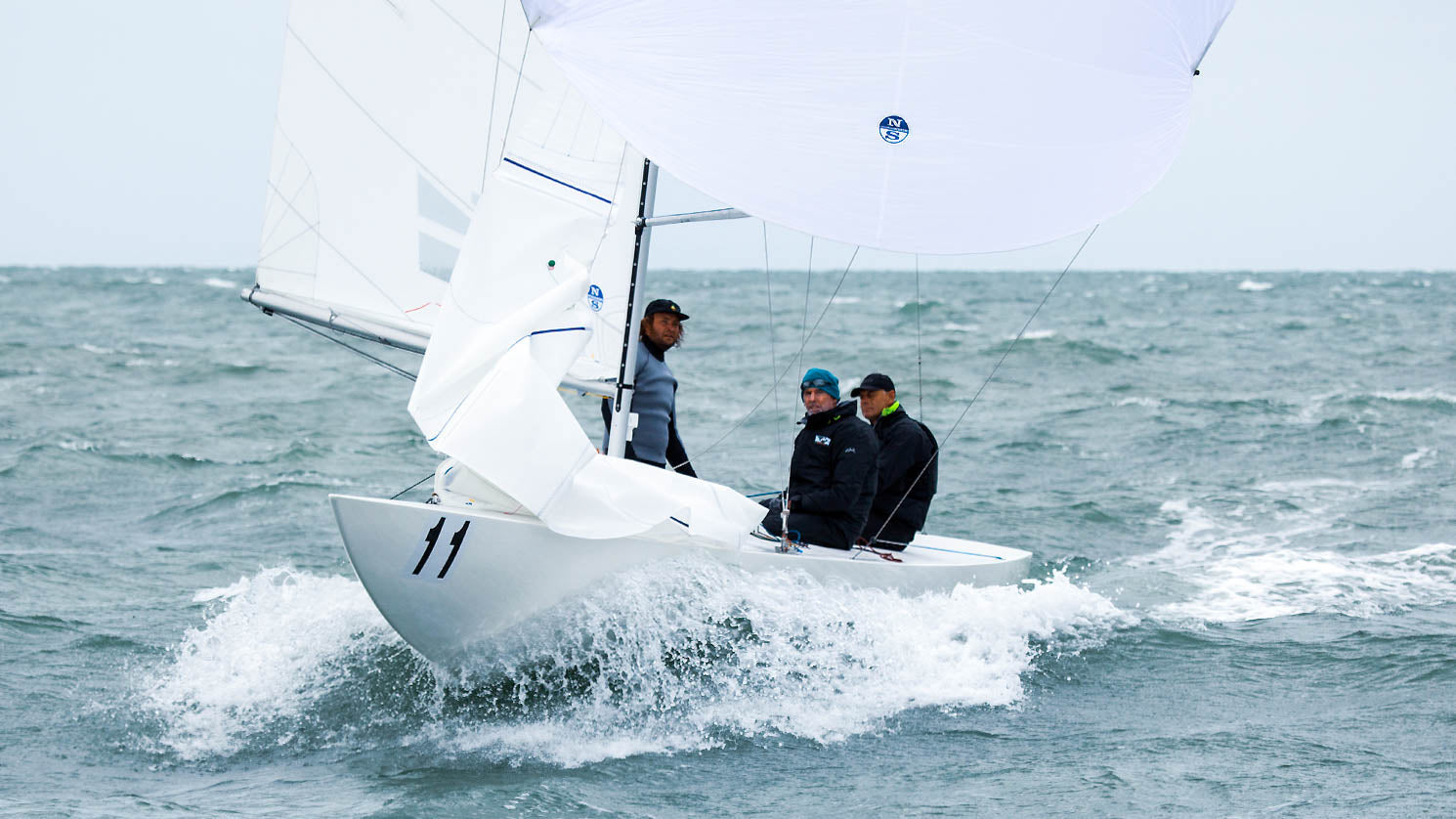
READY FOR THE ETCHELLS WORLDS
READY FOR THE ETCHELLS WORLDS
Successful Australian Season Comes to an End
Magpie 📸 John Curnow
North Sails Etchells designs dominated four Australian events leading up to the 2020 Worlds in Fremantle in November: the state championships for Queensland, New South Wales, and Victoria, and the Australian Nationals.
Graeme Taylor helped the team onboard Magpie claim the National title and then went on to win the New South Wales Championship on Lake Macquarie where North boats claimed the top four finishing positions.
Another very strong fleet turned out for the Victorian States, and this time it was Iain Murray’s Havoc that took the win with a race to spare. Despite extremely shifty, offshore, easterly winds, no other boat came close to their consistency; Murray and his crew won all three races.
Havoc 📸 John Curnow
Both teams used the same designs that won last year's Worlds in Corpus Christi, Texas: PC-FM Mainsail, MAL and GT jibs, and FR-2 spinnaker. A more recent introduction is the VMG-3 down-range spinnaker.
Asked what makes North designs so quick, Etchells class expert Noel Drennan replies, “Our Etchells sails benefit from old-school style tuning and are designed by people with an experienced eye. The MAL and GT headsails were developed from long-standing North designs, using straight-line sail testing; if it's not faster, try something different.’’
“Our Etchells sails benefit from old-school style tuning and are designed by people with an experienced eye. The MAL and GT headsails were developed from long-standing North designs, using straight-line sail testing; if it's not faster, try something different.’’
Taylor and Murray two-boat-tune together before each regatta, which helped Murray win the 2019 Worlds. Drennan says that this team approach is being replicated by several other Australian Etchells teams. “With many teams now armed with both the PCFM/MAL/GT jibs and a full understanding of the tuning, we are seeing very strong performances from people like John Bertrand, JC Strong, Chris Hampton, David Clark, and Mark Thornborrow.’'
2020 Worlds Local Knowledge
Drennan knows Fremantle well. “In a normal sea breeze day with two races, I would expect the first race to be approximately 10-14 knots and the second 14-18 knots, probably building after racing has finished. That being said, the Swan River fleet had a training camp in November 2019, and the entire week was light air.''
"There is a high likelihood of sailing in fantastic upper-range, sea breeze conditions. The local fleet is very much behind the regatta, and it will be a fantastic championship.’’
“Tactically, in a normal sea breeze race, a good start with the ability to stay on starboard tack for at least four to six minutes will probably be rewarded,’’ he continues. “If the wind comes off of the land instead, it will be a case of looking upwind and using what you see, knowing that every course option is open. In this breeze, there will be many opportunities for teams that have slipped behind to recover, making for some exciting racing.’’
Leading up to the Worlds, the Swan River Fleet has mini-regattas planned monthly through the winter at the racing venue. The Syd Corser Regatta in October is a very prestigious Etchells event which is likely to have a strong turnout, and the Australian Championship is planned for mid-November.
“Freemantle is one of the epic sailing venues of the world,” Drennan says, “with a history of hosting racing for America’s Cup and Olympic classes, as well as Etchells, Dragon, and Soling Worlds. There is a high likelihood of sailing in fantastic upper-range, sea breeze conditions. The local fleet is very much behind the regatta, and it will be a fantastic championship.’’
Forte 📸 John Curnow
Lisa Rose 📸 John Curnow
Havoc 📸 John Curnow
READ MORE
READ MORE
PARABÉNS O SEU VOUCHER FOI VALIDADO COM SUCESSO!
PARABÉNS O SEU VOUCHER FOI VALIDADO COM SUCESSO!
Veja a nossa colecção aqui!
O vosso pedido de encomenda com referência, quantidade e cor deve ser enviada para office.cascais@northsails.com
READ MORE
READ MORE

VOS QUESTIONS, NOS RÉPONSES
La crise de santé publique que nous traversons aujourd’hui est au cœur de toutes les préoccupations. Chez North Sails Suisse, nous souhaitons répondre aux incertitudes de nos clients pour les servir au mieux et le plus sereinement possible. À l’issue des nombreuses questions que nous avons reçues, nous avons élaboré ce document de questions/réponses pour faire le point sur la situation et préparer le retour à la normale une fois cette catastrophe sanitaire passée.
Vos centres de production de voiles sont-ils toujours opérationnels ?
Oui. Chez North Sails, nous prenons toutes les précautions de sécurité recommandées pour limiter l’impact du Covid-19 dans nos ateliers de fabrication. L’un des avantages de notre présence à travers le monde est que notre production n’est pas à l’arrêt. En effet, plusieurs pays dans lesquels nous fabriquons nos voiles sont moins affectés par la crise sanitaire. En revanche, l’impact est plus important dans certains pays qui ont dû par conséquent fermer leurs installations. Nous assurons les fonctions de production sur nos sites lorsque cela est permis et dans la mesure où la santé et la sécurité de notre personnel et de nos clients ne sont pas compromises. Dans l’ensemble, nous sommes aptes à fonctionner au mieux de nos capacités durant cette crise.
Puis-je encore faire réviser mes voiles ?
En Suisse, la voilerie est actuellement fermée au public, mais notre activité sur le plancher se poursuit à taux réduit et en télétravail. Nos collaborateurs sont à votre disposition principalement par téléphone, What’s App et e-mail (info@ch.northsails.com), afin de gérer avec vous le retrait, la livraison de vos voiles ou pour toutes autres questions.
Lorsque je commande de nouvelles voiles, je viens généralement au bureau et je passe en revue tous les détails avec mon représentant commercial. Pouvons-nous faire tout cela par téléphone ou par Internet ?
Absolument. Nous continuerons à fournir à nos clients un service de qualité par téléphone, par SMS, e-mail ou lors de réunions virtuelles. Nous pouvons demander à notre designer de se joindre à l’appel. La majorité de notre personnel travaille à distance et se tient à votre disposition pour répondre à vos questions et vous assister dans la mesure du possible. Vous trouverez les coordonnées de votre équipe locale sur northsails.com.
J’ai commandé des voiles. Quand puis-je être livré ?
À ce stade, nos installations sont pour la plupart opérationnelles. Cela dit, nous prévoyons certains retards car les pays, les États et les régions décident à chaque instant d’imposer le confinement à la population ou de laisser les gens continuer à se rendre à leur travail en toute sécurité. Il y a également beaucoup de questions relatives au transport, aérien comme maritime, l’un comme l’autre étant fortement affectés. Actuellement, nous traitons toutes les questions concernant l’expédition sur une base individuelle et nous recommandons à notre équipe de rester souvent en contact avec ses clients. En résumé, nous essayons de respecter au mieux notre calendrier de commandes, mais nous nous efforçons d’anticiper les retards de planning imprévus et nous travaillerons avec nos clients au cas par cas.
J’ai commandé des voiles mais je n’en ai pas l’utilité en ce moment. Allez-vous stocker mes voiles jusqu’à ce que je puisse les utiliser ?
Absolument. Nous stockons gratuitement vos voiles dans nos locaux. Nous émettons une facture une fois la voile produite, comme à l’accoutumée, et nous vous envoyons un courriel de confirmation. Nous stockons vos voiles jusqu’à nouvel ordre et nous vous les livrerons dès que vous en aurez besoin. Nous espérons que vos voiles ne resteront pas longtemps sur nos étagères et que nous serons tous bientôt sur l’eau !
J’envisage d’acheter de nouvelles voiles et j’espère pouvoir naviguer d’ici le milieu de l’été. Pouvez-vous respecter cette date de livraison ?
À l’heure actuelle, oui. Selon le type de bateau que vous possédez et la voile dont vous avez besoin, nous avons des créneaux de livraison disponibles à la fin juin, juillet et août, mais sachez que nous nous attendons à une reprise chargée, il est donc plus sûr de passer votre commande dès maintenant, plutôt que de le faire dans l’urgence par la suite. Là encore, la réglementation du pays concernant nos installations de fabrication aura une incidence sur notre service et les délais. Nous mettons tout en œuvre pour respecter au mieux les demandes de nos clients.
Comment North Sails apporte-t-elle son aide dans cette crise ?
Actuellement, dans de nombreux pays où nous disposons d’installations de service et de fabrication, nous travaillons avec les autorités locales, régionales et nationales pour lancer la production de masques de sécurité. Nos collègues de North Sails en Italie ont été les premiers à lancer cette initiative. Les ateliers de voilerie peuvent contribuer à alléger le fardeau d’une pénurie d’équipements essentiels comme les masques en ces temps de crise. La priorité de North Sails est de mettre à contribution nos compétences et capacités pour apporter notre assistance dans la mesure du possible.
READ MORE
READ MORE
NIŠTA OD TOKIJA OVOG LJETA
Ništa od Tokija ovog ljeta
U utorak 24. ožujka Međunarodni olimpijski odbor je prekinuo nagađanja i kalkulacije oko odgađanja 32. Olimpijskih igara koje su bile planirane za ljeto ove godine. U jednu ruku, odluka je ipak očekivana i u skladu s trenutnom situacijom u svijetu, a to je da je situacija s Korona virusom još uvijek neizvjesna i da je najbolja odluka ipak da se Olimpijada odgodi za godinu dana.
Među svim sportašima koji su osvojili kartu za sastav u prestižnoj nacionalnoj vrsti trenutno se nalaze tri jedriličara i jedna jedriličarka, a još nekoliko ih ima šansu za kvalifikaciju. Evo njihovih dojmova i emocija o cijeloj ovoj situaciji.
Jedno su želje, a drugo je realnost. Stvarno su bile veće šanse da se neće održati, nego da će se održati, jer se ne vidi kraja ovoj situaciji. Možda s druge strane ipak je manje presudilo to što se ne vidi kraj, već to što ne treniramo. Koliko sam uspio saznati većina jedriličara ne trenira i možda samo jedan mali postotak trenutno može jedriti. Tako da mislim da nitko od nas tamo ne bi došao spreman ni blizu onoliko koliko bi bio spreman da nema Korone i da su uvjeti normalni. I mislim da je ovo najrealnija i najbolja opcija. A to što ova odluka utječe na planove za 2021.... preživjet ćemo. Inače, u 2021. sam planirao više jedriti u Stelli. Zajedno s Tudorom Bilićem sam osmislio plan regata i aktivnosti u tom smjeru. Čak smo dogovorili i nabavku nove jedrilice, ali sad ćemo teško to ostvariti, pa će taj projekt morat čekati bolje dane i da prođe ljeto 2021. Zbog toga neću jedriti ni na Europskom prvenstvu za Stelle koje će organizirati JK Mornar u svibnju iduće godine. Što je tu je. Ali u svakom slučaju u planu nam je da odjedrimo regatu Svjetskog kupa u Miamiju u studenom.
Tonči Stipanović, klasa Laser Standard
Po pitanju kućnih treninga i kod Tonča je slična situacija kao i kod sviju ostalih. Srećom po sportaše, njihove obitelji su svjesne situacije i da oni svoje treninge moraju napraviti u svakom slučaju, pa su svi u domove dovukli raznoraznu opremu i rekvizite. Tonči ponekad ima jedan trening dnevno, a nekad i dva, ali nakon ove odluke o odgađanju Olimpijade najvjerojatnije će sve treninge svesti na jedan dnevno.
FOTO: OSOBNA ARHIVA
Slična situacija je i u Zadru, rodnom gradu braće Fantela, naših predstavnika u klasi 49er. Njih dvojica su u nešto ozbiljnijoj situaciji u odnosu na Tonča, jer su u Zadar stigli s Palma de Mallorce gdje su se pripremali za Trofej princeze Sofije. Zbog Korone je regata otkazana i svi jedriličari su se vratili doma i ovisno o danu povratka dio njih je s aerodroma morao obavezno doma u izolaciju jer su se vratili iz rizične zone.
Evo brojim još nekoliko dana da završi karantena. Doma sam sa ženom i malim, brat je s ocem doma. I nedostaje mi malo izaći vani, bar eto nisam sam, eventualno izađem na balkon na svjež zrak i to je sve. Stvarno nedostaje malo svježine. Mislim da smo svi završili u izolaciji nakon povratka s Palme... ja, Miho, Edo, Karlo, Enia, Mihaela, Igor, Mate Arapov, Ivan Bulaja... jedino mislim da je Neno Bugarin ostao iza nas na Palmi. Ali srećom svi smo zdravi i sa svima je sve u redu! Što se tiče odluke o odgodi Igara, mislim da je odluka dobra, jer ne zna se koliko će to trajati i kad će sve ovo proći. Neke zemlje su OK, neke nisu, neki su mogli trenirati, neki mogu još uvijek trenirati, a većina je zatvorena doma i ne smije nigdje izaći. Olimpijski odbor je jedno vrijeme govorio da će Igre ići u dogovorenom terminu, pa se baš loše osjećaš kad to slušaš, a ne možeš se maknuti iz kuće. Mislim, nama je to posao i moramo biti u top formi, a vrijeme nam nepovratno prolazi. Tako da to emocionalno nije bilo dobro... stalno su se mijenjali planovi, svaki dan se odgađala neka regata. Pa se treba kontejner s opremom idući tjedan slati u Japan... pitanje je hoćemo li ga slati... da bi imali brod tamo u lipnju kontejner treba sad na put... Puno tih stvari bilo u zraku, mislim, nismo znali koja će biti odluka. I onda mi je stvarno laknulo kad su to odgodili. Mislim, svi želimo da ovo što prije prođe i da smo svi zdravi, ali kako smo ja i Miho u cijeli projekt ušli 2017., relativno kasno, nama ta jedna dodatna godina puno znači. Naravno, ako ćemo krenuti s jedrenjem za mjesec dana, ali ako budemo morali čekati pet mjeseci onda smo na istom... Najvažnije nam je da što prije izađemo na more, da možemo jedriti ovdje u svom gradu, a odlasci na regate su tek na drugom mjestu.
Šime Fantela, klasa 49er
Što se tiče nekih eventualnih dodatnih kvalifikacija, one ne dolaze u obzir, bar što se klase 49er tiče. Tu su zauzeta skoro sva mjesta i ostalo je još samo po jedno mjesto po kontinentu. To mjesto za Europu se trebalo dodijeliti na regati u Genovi, ali nakon stabilizacije globalne situacije donijet će se odluka o novoj regati na kojoj će se zaključiti startni popis ove klase.
FOTO: OSOBNA ARHIVA
Također su od Genove puno očekivale naše djevojke u 49erFX i momci u klasi Finn, jer je i njima to bila posljednja šansa za upadanje u reprezentaciju.
A trenutno jedina jedriličarka u ovom prestižnom društvu je Elena Vorobeva, djevojka koja je Moskvu zamijenila Splitom i klasu Elliott 6M u kojoj je jedrila za Rusiju na OI u Londonu s klasom Laser Radial u kojoj će imati Hrvatsku zastavu na jedru.
Ona je svoju olimpijsku normu ostvarila na nedavno završenom Svjetskom prvenstvu koje se jedrilo u Australiji.
Po mom mišljenju odgoda je bila jedina pametna odluka i u rok od godinu dana trebao bi biti dovoljan da se sve smiri i vrati u normalu. Zadnji mjesec živjela sam pod pritiskom nepoznanice. S obzirom da su krenuli otkazi predstojećih regata, koji su nam bili u planu, odlučili smo da ćemo do zadnjeg trenutka ostat kući i jedriti na domaćem moru. A kad su nam i to zabranili zabrinula sam što će sad biti s treninzima i što s Olimpijadom... Dogodilo se to da nisam bila u istim uvjetima s ostalim sportašima, npr Englezi su još uvijek redovno trenirali na moru do početka ovog tjedna, a mi ne smijemo ni napustiti kuću. I zahvaljujući jačim državama i njihovim savezima, kao što su Kanada, Australija, Norveška... zbog njihovih pritisaka da neće poslati svoje sportaše ove godine u Japan, MOO je dosta brzo odlučio. Inače su htjeli čekati još mjesec dana i držati svih stand by. Sljedećih dana mijenjat će se i kalendar regata koje još nisu bile otkazane za ovu godinu. Nama je npr. bitno Europsko prvenstvo, koje je prebačeno na 10. mjesec. Uglavnom, dobila sam dodatnu godinu za pripremu do OI. Zadnjih 6 godina nisam imala normalne uvjete za to. Bila sam sama sebi i trener i manager i logističar, prošla sam kroz puno izazova ali još uvijek bila konkurentna pored onih koji imaju to sve uređeno. A od prošle godine, od kad sam došla u JK Split i od kad je nešto kasnije u ovaj klub došao i vrhunski trener Tonći Antunović, moj život je postao puno lakši. Mogu se koncentrirati samo na sebe. I naravno da gledam na ovu dodatnu godinu kao sudbinski poklon. Nakon što ovo ludilo s Koronom se smiri, krenut ćemo ozbiljno i iskoristiti ćemo ovu odgodu što bolje. A trenutno vježbam u kući, skupila sam po kući sve utege, bicikl, simulator za višenje - improvizacije u toku.
Elena Vorobeva, klasa Laser Radial
FOTO: BOGEE TOTH
A da je termin OI ostao isti raspored kad bi navijali na naše jedriličare bi izgledao ovako:
LASER STANDARD:
regata: 26. - 31. srpnja
slobodan dan: 29. srpnja
medal race: 2. kolovoza
LASER RADIAL:
regata: 26. - 31. srpnja
slobodan dan: 29. srpnja
medal race: 2. kolovoza
49ER:
regata: 28. srpnja - 01. kolovoza
slobodan dan: 30. srpnja
medal race: 3. kolovoza
Pomicanje Tokija za godinu dana ne bi trebalo utjecati na Olimpijske igre u Parizu i one i sve koje idu iza bi se trebale nastaviti u već određenom četverogodišnjem ritmu. U prilog tom zaključku ide i to što su organizatori ovogodišnjih Igara odlučili ostaviti u nazivu Tokio 2020, a ne Tokio 2021.
READ MORE
READ MORE

HONDA MARINE HANGS ONTO THE 18FT SKIFF WORLD TITLE
HONDA MARINE HANGS ONTO THE 18FT SKIFF WORLD TITLE
Third Time's a Charm
📸 Michael Chittenden
After nine exhilarating races on Sydney Harbour, Honda Marine took the prestigious JJ Giltinan 18ft Skiff Championship title for the third year running. An equivalent regatta to a World Championship, the crew combination of Matt Steven from North Sails New Zealand (middle-crew), Brad Collins (bowman) and David McDiarmid (helmsman) proved unbeatable yet again.
The trend was set in 2018 when Honda Marine became the first New Zealanders in 45 years to win the JJs with the same crew as today. Asked how it felt to maintain this record, One Design expert Matt Steven replies, “It is very special; 18ft Skiff racing has a huge following and a rich history in New Zealand. Many older sailors have sailed them in the past and the Trans-Tasman rivalry makes it one of the most followed events in New Zealand.’’
Steven is no stranger to sailing on Sydney Harbour. “It is a testing venue with an enormous amount of challenges and obstacles, including wind, headlands islands and most importantly, the traffic.’’
Sailing with a full 3Di inventory, the team has used their mainsails for three years and jibs for two years: “The fact that our mainsails have lasted every race and training session for three years is a massive statement in itself. We ran two new jibs this year with the Helix luff structure in them; with the stiffness of 3Di and the amount of control we have over our jibs now, it’s quite amazing how much you can alter the shape with very little adjustment.’’
Asked which conditions the 3Di sails excelled in, Matt says “They perform well across the whole range. As the breeze gets up they have more responsiveness which allows us to change gears better than the competitors.’'
“The fact that our mainsails have lasted every race and training session for three years is a massive statement in itself. They perform well across the whole range. As the breeze gets up they have more responsiveness which allows us to change gears better than the competitors.’’
The Honda Marine crew sailed a strong regatta, discarding a fourth place in race 7. Speaking for the team, Matt says “We were very lucky on that day. We made the wrong rig choice and with two rigs moded for 0-12 and 12-25 knots respectively, the decision can be critical if you get caught out of range which happened to us in race 7. We pulled a few good maneuvers out of the bag and maintained our fast downwind speed to finish with a fourth. The next day, we prioritized the rig choice decision and got it right to match the conditions.’’
With clients on Winning Group finishing just four points behind Honda Marine, we asked Matt what their tactics were going into the final day. “Our game plan was to sail how we had sailed every other day,” said Matt “The goal was to beat Winning Group in the first race of the day which we managed to do. They were getting quicker every race and we knew they would come for us - having won four JJ titles together as a combination, they were our serious rivals throughout the entire event.’’
Having sailed as a combination for five years, about 70% of their preparation goes into boat handling to control such high-powered skiffs in a busy fleet. “The gains and losses in boats like these are huge when it comes to turning corners,” Matt explains. “We know each other well which is key to pulling off maneuvers in pressure situations.’'
So what is next having won the JJs for three years in a row? “We are all on the same page that we would love to do another one as we have some ideas on improvements we can make to the boat. We are still enjoying sailing together, so why not?!’’
📸 Michael Chittenden
📸 Michael Chittenden
📸 Michael Chittenden
READ MORE
READ MORE
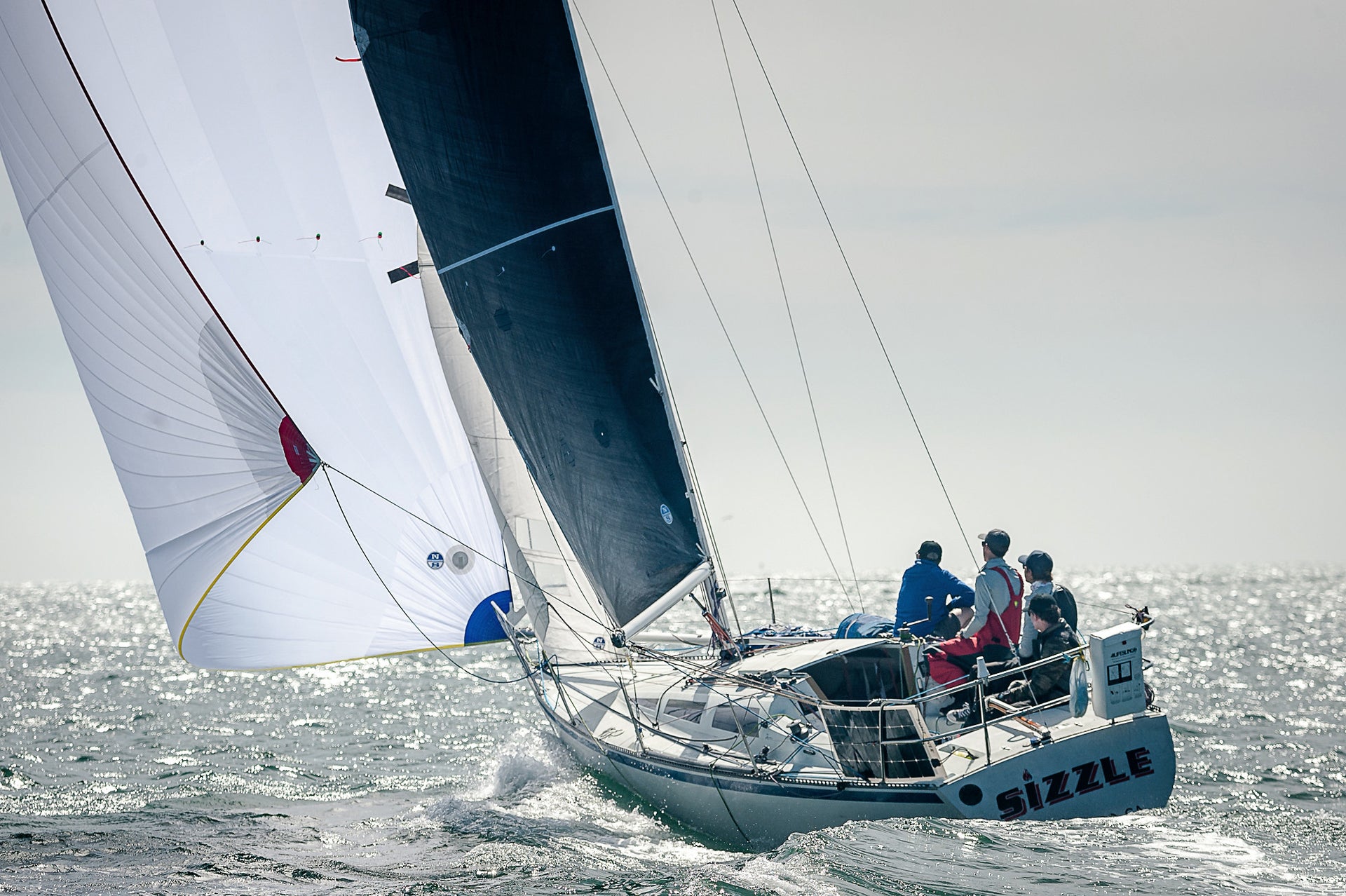
SIZZLE WINS PUERTO VALLARTA
HOBIE 33 SIZZLE WINS PUERTO VALLARTA
Boat prep, Sail Selection, and Keeping an Eye on the Prize
📸Mark Albertazzi / PV 2020
Talented tactician and helmsman, Bill Hardesty has been part of sailing’s winning history in the J/70, Etchells, Melges 20, Melges 24, Farr 40, and has won a total of 12 World Championship titles, which include three in match racing. He awarded Yachtsman of the Year in 2011. Bill hails from San Diego Yacht Club, California, and recently competed in the 1020nm race from San Diego to Puerto Vallarta, Mexico, on his club racer, Hobie 33, Sizzle. This race was different from Bill’s normal regatta weekend. It was his first time on a boat this size, sailing distance offshore. North Sails Expert Patrick Murray, based in San Diego, California, spoke with Bill about the race and got the full scoop on what made team Sizzle’s experience a memorable one.
The crew
Hardesty’s crew consisted of Bad Pak former owner Tom Holthus, Chuck Eaton, and Parker Mitchell. “A few months before the PV race, I got a call from Tom, and he said, “What’s up! I haven’t heard from you yet, are you doing the PV race?”. “Tom wouldn’t take no for an answer, and I knew it would be a great experience for the team, so I agreed.”
“It really was quite simple to join the Sizzle team,” said Tom. “Bill and I had a great time sailing BadPak so the history was there. I sold BadPak after we won the Transpac and I had the time to help out. We both saw that the little Hobie 33 had potential. The boat can really move in lighter breeze conditions–just as well as any big boat– and we saw a lot of light breeze during the race. Billy is an awesome sailor. He sails offshore just like he does inshore – with high intensity where everyone had to and wanted to do their watch like it was a short dinghy race. We kept saying that we can sleep when we die.”
“We tested our systems with Patrick, practiced with our inventory to fine-tune, and figure out what we needed. Patrick checked our sail repair kit and made sure we had the right batten tools. That was next level support”, said Bill. Patrick commented, “I wasn’t the only one checking out the boat before the race. People were coming by to see how preparations were going on the ‘race winner’, so it was no doubt in everyone’s minds that they could win it.” “We took the rig down and cleaned it up–we made sure we had Sizzle set up for success,” said Bill. “We cleaned the boat well and polished the bottom; we did everything we could do to gain speed. Tom made a good teammate, which was no surprise, and the entire crew kept the fun -factor high.”
Keeping an eye on the prize
Sizzle started the race on Thursday, in ORR-6. Conditions at the start were north-westerly offshore, and once the fleet cleared the bay, it was DDW from there. “We set the kite and sailed into the darkness, sailing as deep and as fast as we could,” Bill said. “We had originally planned to go between the islands, and we ended up not laying it, so we had to jibe. We lost a bit of distance, and the One Design 35 crossed us once, but once we jibed onto port, we got the boat going again and never saw them again.”
“Sizzle was ahead on the tracker almost all the time,” said Patrick, who was following the race remotely from the Caribbean. “Everytime I downloaded their latest positioning, they were holding down the lead. I was amazed how long they were able to hold off the bigger boats. It’s really amazing for a Hobie 33! Everyone had high expectations for this team, and it was great to see them leading.”
Bill commented, “We were pretty new to the systems on board, and I think that may have been to our advantage. Not having our tracker on kept us on our toes and not looking at the screen–it kept us working hard the whole time. We always assumed someone was outside, going faster, in better breeze–whether we could see them or not. We would jibe and catch a puff and ride that for a few hours; the crew worked hard the entire race.”
Once they got down to the Baja Peninsula, it got lighter and warmer. Bill sailed the shortest distance possible. “We pretty much stuck to the rhumb line from there until we got to Cabo. We did some sail changes to our light air sails–it was nice to have the options. Sea state was dead-flat, but that turned out to be in our favor. Once we built up our apparent wind, we were able to generate enough power to get her going fast and maintain speed with the waves.”
Hobie 33 Sizzle sailing downwind with A2.5 + genoa staysail and 3Di RAW 360 mainsail. 📸Mark Albertazzi / PV 2020
Once Sizzle made it to Cabo, they downloaded the tracker information and could see their positioning for the first time since the start of the race. “We could see the bigger boats offshore coming up quickly,” said Bill. “Pyewacket was one of them, but surprisingly there wasn’t anyone else in our division that was that close. It all worked out. Not knowing about other boats allowed us to focus on what we could do to sail faster.”
"Our mix of sail options, paired with the conditions we had was what we needed to perform our best."
“We saw there was more wind coming down the Sea of Cortez,” said Bill, “and we just kept focusing on sailing as deep as we could. The wind appeared to be shifting left, so we got back on the rhumb line. The crew was on the rail for the tighter reaches in the morning, sailing 100 to 110 TWA (true wind angle). I can’t say the boat liked that, but once the waves kicked up and the breeze shifted aft, we were back DDW and could bring the pole back 165 degrees. We hit nine knots at one point. The boat sailed exceptionally well in those conditions.”
📸Mark Albertazzi / PV 2020
Sail selection & crew management
North Sails 3Di 360 is made for smaller boats, like Bill’s under 30’. Sizzle’s new 3Di RAW 360 mainsail made a positive impact on their performance. It was twelve lbs lighter than Sizzle's standard dacron main and had perfect flying shape. Bill commented, “We had a flat, smaller A1 which was good for the tight reaching and lighter stuff”. “The A2.5 was a rocketship for the middle ranges. Patrick adds, “We built Sizzle a new A2.5 that would be great for the bow-up offshore points of sail. The 2.5 is optimized for planing conditions when the boat is ‘on the step’. Our genoa staysail was a Star headsail, which gave us a half-knot increase. “Our mix of sail options, paired with the conditions we had was what we needed to perform our best,” said Bill.
Crew weight placement was important on this boat, especially in the lumpy conditions. “The boat is very narrow, so we had to be gentle when we would move about the ship. If you had to wash your hands or use the head, you’d go forward instead of back to the stern,” said Bill. Small boat sailing offshore was a bit different than what Bill regularly experienced on a 52-footer. The boat was super sensitive to any weight changes. “We were tip-toeing just like we would’ve done on a dinghy.”
Hardesty and crew took first in ORR-6, and Overall. Sizzle started the race on March 5th and crossed the finish line in Mexico on March 12th, with a corrected time to win it all of 6 days, 3 hours, 37 mins and 25 seconds. Congrats team!
Have questions on how we can help you optimize your sail selection, including spinnakers and staysails for offshore sailing? Contact Patrick Murray for more information.
READ MORE
READ MORE
ACOMPANHE A REGATA J BOATS PORTUGAL VR SERIES
Seja como participante ou espectador,
este é um Campeonato de Vela que não pode perder!
Fique atento às informações sobre as próximas edições, seguindo toda a informação através do Facebook da J Boats Portugal VR Series.
Para assistir às regatas ligue-se através do Youtube ou Twitch
#SailFast #StaySafe
READ MORE
READ MORE
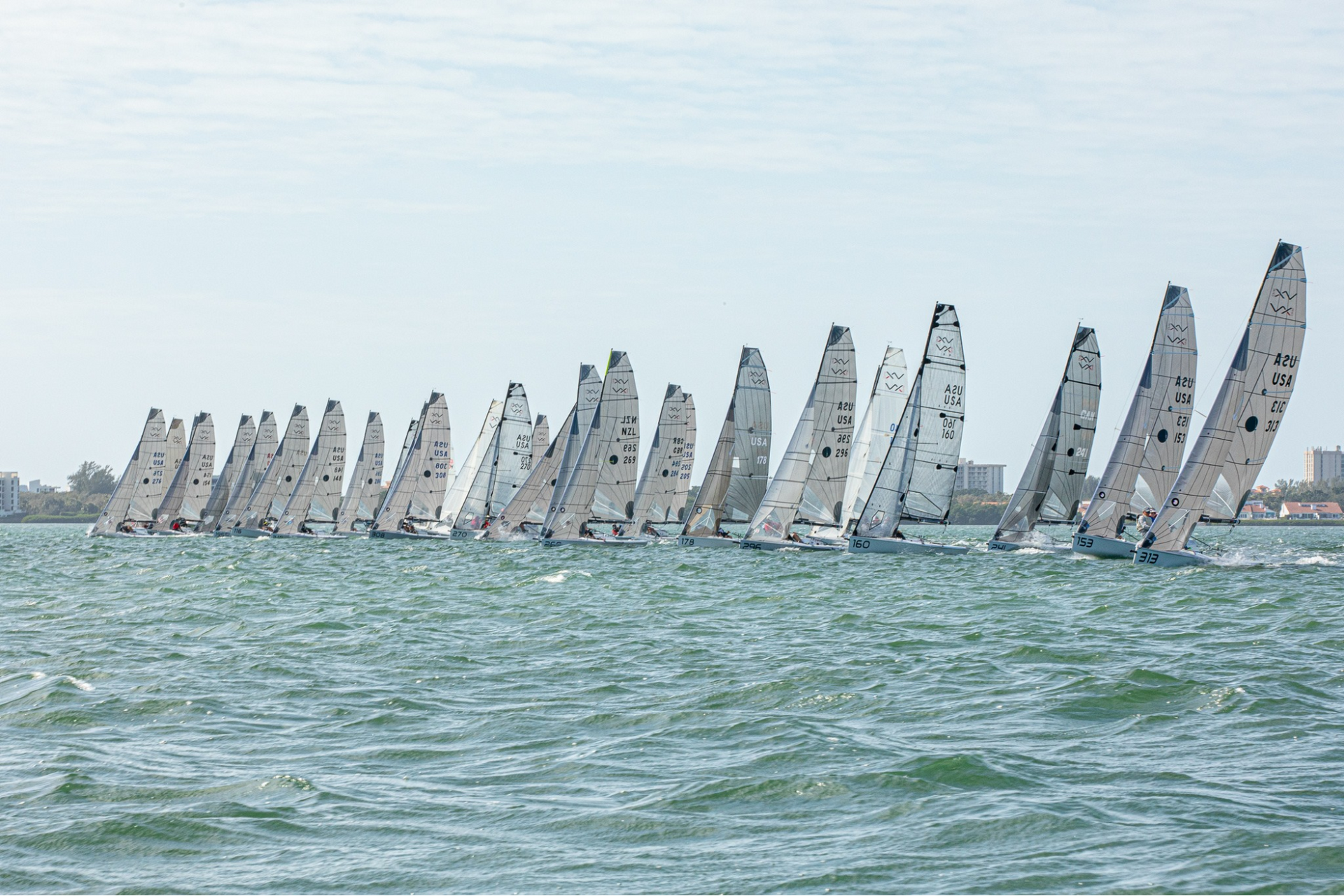
CREATING A STARTING PROCEDURE
CREATING A STARTING PROCEDURE
How To Use A Conservative Starting Routine To Eliminate Big Scores
When you look at the best teams in sailing, a common trend is how regimented and organized they are at a regatta. They show up each day well ahead of time and generally follow the same pre-race routine, the same on the water warm-up, and meticulously mark settings and take notes about each day's races and lessons learned. This is done to eliminate as many variables as possible to give themselves the best chance of winning the event. Creating team procedures and schedules can drastically reduce mistakes and allow the team members to maintain a more relaxed and procedural mindset on the water.
A common misconception is that starting has to be this chaotic event at the beginning of each race that is won with instinct and improvisation. Starting can actually be treated very routinely with a few steps that can land front row starts the majority of the time. When I sail with someone who is having a tough time finding a consistent start, we break it down into a step by step, conservative method to get off the line and head to the correct side.
Pre-Start Plan
Before the sequence even begins, I go through the starting plan with the skipper to make sure that we are both on the same page with how the start should go. In this time we work through pinging the line, a wind shot, and a proper back down to clear the foils. We then identify which third of the line we want to start in (pin third, middle third, boat third). As the skipper gets more comfortable with the routine we might get closer to each end, but to just get in good starting habits we try to keep it as simple and as low density as possible. It is also important to clearly establish the terminology that will be used on the starting line. Using terms like “copy” and “understood” help keep tensions down when trying to determine whether crew members are hearing communications.
If you are in a starting rut, keep it to the low density areas away from the ends. As you get more comfortable you can start closer to the ends if the situation calls for it.
The Circle
Harping back to keeping it simple I get the skipper immediately into the circle that the majority of the fleet ends up in during the pre start sailing on starboard towards the pin and the gybing and heading on port towards the boat. At first, it is always a gybe at the pin and a tack at the boat side. If you are in a class where you are allowed an instrument that gives you distance to the line, I will also give the target distance in which we want to be sailing. The more data driven I can be with these directions, the easier it is to be on the same page as the skipper.
The distance from the line you want to be circling is very boat and condition dependent. The most important is to communicate the target depth to keep the entire crew on the same page.
Port Tack Approach
When it is time to head back on port for the final approach towards our intended hole, I will give a time to turn back and a final depth in the box number. Generally the windier it is, the deeper in the box we will be because we will eat up distance quicker in the breeze. If we are trying to start in the boat third, the turn back time will be sooner than if we are shooting for a middle or pin third start. For example we might turn back at 1:45 for the boat, 1:30 for the middle and 1:15 for a pin third start. As we prepare to tack into a hole, I will identify which boat that we will tack underneath in advance.
If you are in a starting rut, keep it to the low density areas away from the ends. As you get more comfortable you can start closer to the ends if the situation calls for it.
Tacking into the Hole
The target of this tack is to get as close as we can to the windward boat and to generally keep at least a quarter of the bow out ahead of the windward boat. I will generally talk through the tack about exit angle weather we want to be tight to the wind or on a general close hauled course. After the tack we need to immediately be looking for boats trying to do the same to us. Generally the best defense when a boat comes into leeward is to show your bow down parallel with the line for a brief moment to force the leeward boat to tack early and then turn back up. With this maneuver you will at least have one boat length of space to leeward. From this moment it is important to not let any boats come from your weather side and hook you to leeward. Crew communication here is key to have someone keeping an eye behind.
Tacking tight to the boat to the windward side is paramount. Staying high out of the tack helps kill speed and maintain height inside of your hole.
Approaching the Line
“We are in our final approach, we have a nice hole to leeward, what now?” Once we have our hole, I relay to both the trimmers and driver the rate at which I want to approach the line. Remember, if the wind is shifted right you will use up distance to the line at a quicker rate than if you are in a left shifted breeze. The goal is to always be sailing toward the line on a close hauled course luffing when needing to control speed. Too many times boats that have to head onto a reach to stay below the line use up their hole to leeward and get pinched off soon after the start.
Try to leave room to sail a close hauled course to the line. Try and avoid reaching right before the start as you lose your hole to leeward and can slip sideways on the turn up.
The Start
We hit the line with speed and in the front row, now it is time to work to stay punched out until the first shift. Final starting jobs include one member on the radio to listen for OCS boats, and one person giving relative speed and height to the immediate boats around off of the line.
In putting your starting routine together, the main aspect to focus on is to identify the critical pieces of information that the particular helmsman is looking for. Finding conservative ways to be in the top group off of the line EVERY time and not just gambling at the ends is the priority. Following some of these steps will help eliminate the starts that cost major places over the duration of your next regatta.
Crew starts calling relative speed and height immediately to try and maintain a clear lane.
READ MORE
READ MORE
MEET OUR FURRY COWORKERS
MEET OUR FURRY COWORKERS
Working From Home Has Its Perks
Meet Louisa's furry coworker while she works from home.
Tell us about your furry companion, name, age, favourite activities?
Jack is a fur-ball of fun at 7.5 months old labradoodle who is quickly growing into his floppy ears. He weighs in at a hefty 55 lbs for a puppy who is constantly burning energy. His favourite activities are stealing his parents socks and eating his dad's shoes, not to mention cuddling as much as possible (belly rubs are his favourite).
Do you take him/her sailing with you ever?
We hope Jack is a nautical dog. He hasn’t been on a boat yet however we’re hoping to get him on the sailboat as soon as possible. He loves walks on the beach and close to the water, even though he doesn’t like the sound of waves. It’s a work in progress though and he will be getting his first lifejacket very soon.
How is he/she adjusting to your temporary work from home order?
Jack is loving having both of his parents home 24/7. He is a great assistant who helps bring laughter throughout the day. He occasionally sleeps on the job but being cute is hard work! He gets paid in treats and belly rubs, you may occasionally hear him on a video call, he always wants to say hi.
How are you reacting to the work from home order?
Working from home is great. Other than the mound of boxes as I am trying to move, things are going pretty well. Our loft as a whole has been able to adjust to the conditions and make a plan that works for us and helps customers. Our priorities are always to keep everyone safe, healthy and follow government guidelines. We are working with multiple plans and backup plans to ensure customers can go sailing when the weather gets warm and it’s safe to do so. We appreciate everyone’s understanding and cooperation during this time.
READ MORE
READ MORE
MEET OUR FURRY COWORKERS
MEET OUR FURRY COWORKERS
Working from Home has its Perks!
Meet Chelsie’s new co-workers, keeping her company during her time of working from home.
Tell us about your furry companion, name, age, favorite activities?
My furry companions are Chow and Miss Poot. Miss Poot is featured in a beautiful North Sails scarf and is ready for action. She weighs in pretty hefty at 18.4 lbs, but she is on a new diet plan to work on her figure for spring (and little does she know, for the rest of her life). She has her eye on a local fella cat which helps keep her motivated. The next contestant, Chow, found a way to activate my printer and print the ink level reports to help out with my workload. He likes to be the center of attention. If things are not going his way, he enjoys eating things he isn't supposed to, scratching pictures off the wall, and meowing. He also enjoys sleeping and climbing trees.
Do you take him/her sailing with you ever?
Miss Poot doesn't partake in sports but she has modeled at a Nautical themed fashion show for big and tall models in the past. Chow did go on a boat ride once, but he literally jumped ship and we decided not to ever take him on the water again because we kinda like the handsome fella. They do both fancy sitting near the pond and watching fish.
How is he/she adjusting to your temporary work from home order?
Miss Poot is still getting her beauty sleep as of 3:02pm and as long as the feeding schedule remains intact, she is A-OK. Chow needed a special space created Just for him in the new office...otherwise he threatened to keep pushing buttons on the printer. After that, he calmed down and went to sleep. So overall, I would say, pretty good.
How are you reacting to the work from home order?
My position as office admin within the loft allows me to be able to function pretty well from home. After getting the kinks out, our loft has been able to formulate a plan as things continue to develop. Our priorities right now are keeping everyone safe, following the guidelines set forth by our local government, and finding creative ways to take care of our customers as we near the sailing season. We are also working on Plans A, B and C to make sure everyone gets their sails in time. We will have more information on that for everyone soon. So far, customers have been understanding and helpful with our shelter in place restrictions. All in all, I think everyone is working together to weather this storm so we all come out ok on the other end.
READ MORE
READ MORE
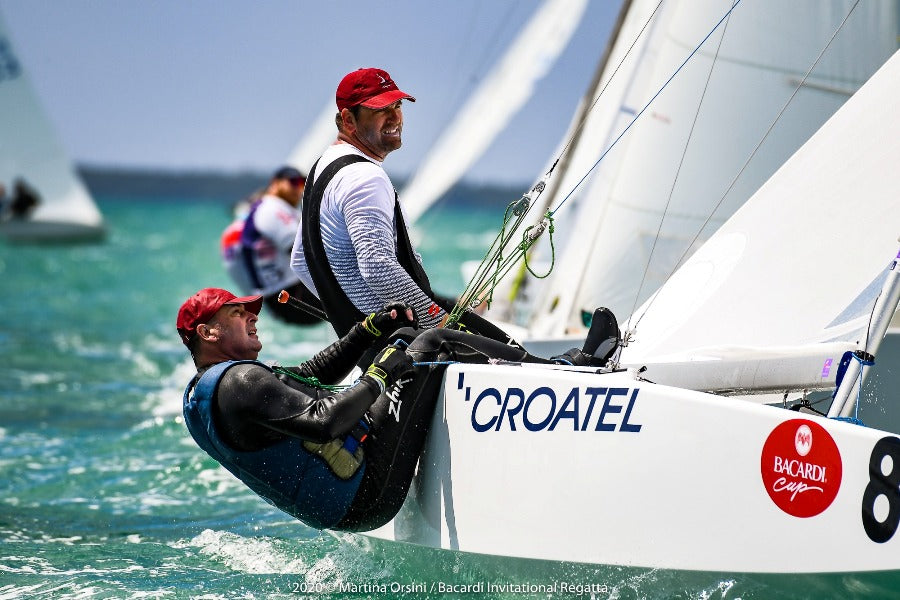
BACARDI CUP 2020.
Bacardi Cup 2020.
FOTO: MARTINA ORSINI
I ove godine posada Marin Mišura - Tonko Barač, naš najbolji dvojac u klasi Zvijezda, dobio je pozivnicu za jedrenje na prestižnom Bacardi Cupu. Svi sudionici, a bilo ih je u osam različitih klasa, na Floridi su boravili od 1. do 7. ožujka.
Mišura i Barač su ujedno bili i jedini hrvatski predstavnici na ovoj regati i s obzirom na aktualnu Korona situaciju imali su dosta sreće, jer ih nisu zadesili nikakvi problemi prilikom povratka na stari kontinent. A kao i većina razgovora ovih dana u cijelom svijetu i ovaj je počeo s njom u prvom pitanju.
Kad smo mi bili tamo nije bilo opasnosti. Mislim da je tada aktualno bilo samo na sjeveru i u Kanadi i još se nije spustilo na jug. Tako da mislim da smo od tamo otišli u posljednji tren. Sletjeli smo u Munchen kao da se ništa ne događa... kad smo došli doma nitko nas nije ništa pitao, tako da nismo u nikakvim karantenama i samoizolacijama. A i obojica smo još uvijek bez ikakvih simptoma. A regata... moje mišljenje je da je dobro prošla... rezultat je puno bolji nego što je bilo moje jedrenje. Ja se nikako nisam mogao spojiti s taktikom. Gdje god sam išao nisam mogao pogoditi stranu. Tu smo se puno mučili... Onda opet i ono naše standardno, da smo išli praktički bez treninga. Dok pohvatamo krmu i sve ostalo prođe pola regate. Ovo 24. mjesto u prvom plovu... da smo bili u treningu sigurno bi u cilj ušli 13. ili 14. jer smo tako i okrenuli prvu bovu. Tako bi imali to 24. manje. Miami je specifičan. To najviše dolazi do izražaja kad je mali i srednji vjetar. Onda je teško vidjeti vjetar na moru. Boja mora je takva da se vjetar i refuli ne mogu baš tako lako razlikovati, a puno je rupa. Može se desiti da brod koji je ispod tebe dvadeset metara, njega uhvati pritisak, a tebe ne i onda on napravi razliku. Ako si to skužio onda si stvarno mogao profitirati. A u globalu je bio mali vjetar. I onda je to veliki problem sa Stellom, pogotovo kad se jedri krma. Tu nastaju velike razlike i tu se dosta gubilo. Mi smo se zato najviše nadali da ostanemo na poziciji na kojoj bi okretali prvu bovu, a stalno smo bili u prvih 10-12 brodova u prvoj orci. Tako da je na kraju taj rezultat stvarno puno bolji od onoga kako sam se ja osjećao. Mislim, nisam nezadovoljan rezultatom, već s tim kako sam ja jedrio. Mučio me onaj osjećaj kad nisi siguran što radiš unutar polja. S druge strane iznimno sam zadovoljan sa startevima! Sve skupa smo napravili 9 ili 10 starteva. Jedan nije bio toliko loš, ali nismo bili dovoljno komodni nakon njega, dok smo sve ostale mogli birati gdje ćemo i na kojoj strani nastaviti regatu. I onda me ljutilo to što iz tih situacija nismo mogli izvuči najbolje moguće. Po pitanju vjetra bilo je isto zanimljivo. Jedan dan smo imali 15-18 čvorova, ali ne može se reći da je bio dan s jakim vjetrom, jer je to bilo nešto slično našoj buri. Puhalo je doslovno sa sjevera... doleti reful od 18 čvorova, a onda padne na 7... A ostalih dana smo imali neki njihov lokalni jugozapdnjak. Jednog dana je puhao 14-15 čvorova, pa jedan dan ga je bilo 5-6, pa 8... tako da je bilo svega. Najgori nam je bio dan kad se spustila užasna vlaga. Lokalci su nam rekli da sigurno dvadesetak godina nije bila tolika... temperatura 38°C, sjediš u hladu i znoj ide s tebe... dok sve ostale dane oni koji ne trpe zimu su mogli nositi lagane jakne. Čak je u najavi bila i jedna velika nevera, pa su organizatori kombinirali različite varijante programa, ali na kraju je to stiglo u nedjelju, nakon što je regata završila. Moram reći da smo imali i problema s kutom u orcu. Ali mislim da je to bilo više do moje ruke.
Marin Mišura, kormilar
FOTO: MARTINA ORSINI
Ova regata je bila prva na kojoj su Mišura i Barač jedrili nakon pauze od sedam mjeseci, odnosno nakon Svjetskog prvenstva. U Miamiju su jedrili na iznajmljenom brodu, što je i logično s obzirom na lokaciju regate, ali u sličnom problemu bi bili i da su nastupili na nekoj regati u Europi. U Splitu su primijetili da su se pojavili "valovi" na površini kormila s jedne strane i s obzirom da nije malen posao skinuti kormilo s ove jedrilice, pred odlazak u Miami poslali su je na remont u Italiju kod proizvođača.
S obzirom na trenutnu situaciju jedrilica je i dalje na Lago di Como.
Naša posada je regatu završila na vrlo dobrom 15. mjestu između 66 posada! Osim analiziranog prvog plova i odbačenog 24. mjesta, u cilj su dva puta ušli kao 12., jednom 13, te još 19. i 23. Jedan bod ih je dijelio od švedske posade na 16. mjestu, dok su im 14. bježali za 15 bodova.
Pobjednici regate su posada Mateusz Kusznierewicz - Bruno Prada. Kombinacija koja u različitim klasama ima pregršt medalja sa svih najvećih globalnih natjecanja.
Kompletnu rezultatsku sliku možete pronaći na ovom linku.
FOTO: MARTINA ORSINI
Nije loše podsjetiti da su Split, JK Mornar i Dalmatinska flota dobili domaćinstvo Europskog prvenstva klase u svibnju 2021.
Nadajmo se da će do tada globalna situacija po pitanju pandemije biti samo jedna priča koju ćemo svi ostaviti iza sebe i da neće biti problema u organizaciji. Jedino što je trenutno izgledno je to što su Olimpijske igre u Tokiju prebačene na ljeto 2021. i to će sigurno utjecati na startnu listu počevši već od našeg laseraša Tonća Stipanovića koji će u tom periodu biti maksimalno fokusiran na olimpijsku regatu u Japanu.
Ali slavnih imena iz svijeta jedrenja ne bi trebalo nedostajati, jer je napravljen dogovor sa Star Sailor League o sponzoriranju u vidu trackinga, video prijenosa u živo i osiguranja jedrilica za natjecatelje s drugih kontinenata.
Možda niste znali... pravila klase na velikim natjecanjima predviđaju samo po jedno jedrenje na dan.
READ MORE
READ MORE