


INSIDE THE 80TH ROLEX SYDNEY HOBART RACE: WHAT TO EXPECT THIS YEAR
An expert preview of the milestone Rolex Sydney Hobart Yacht Race, featuring insights from North Sails veterans on the big boat showdown, the technology behind winning and what makes this year unique.
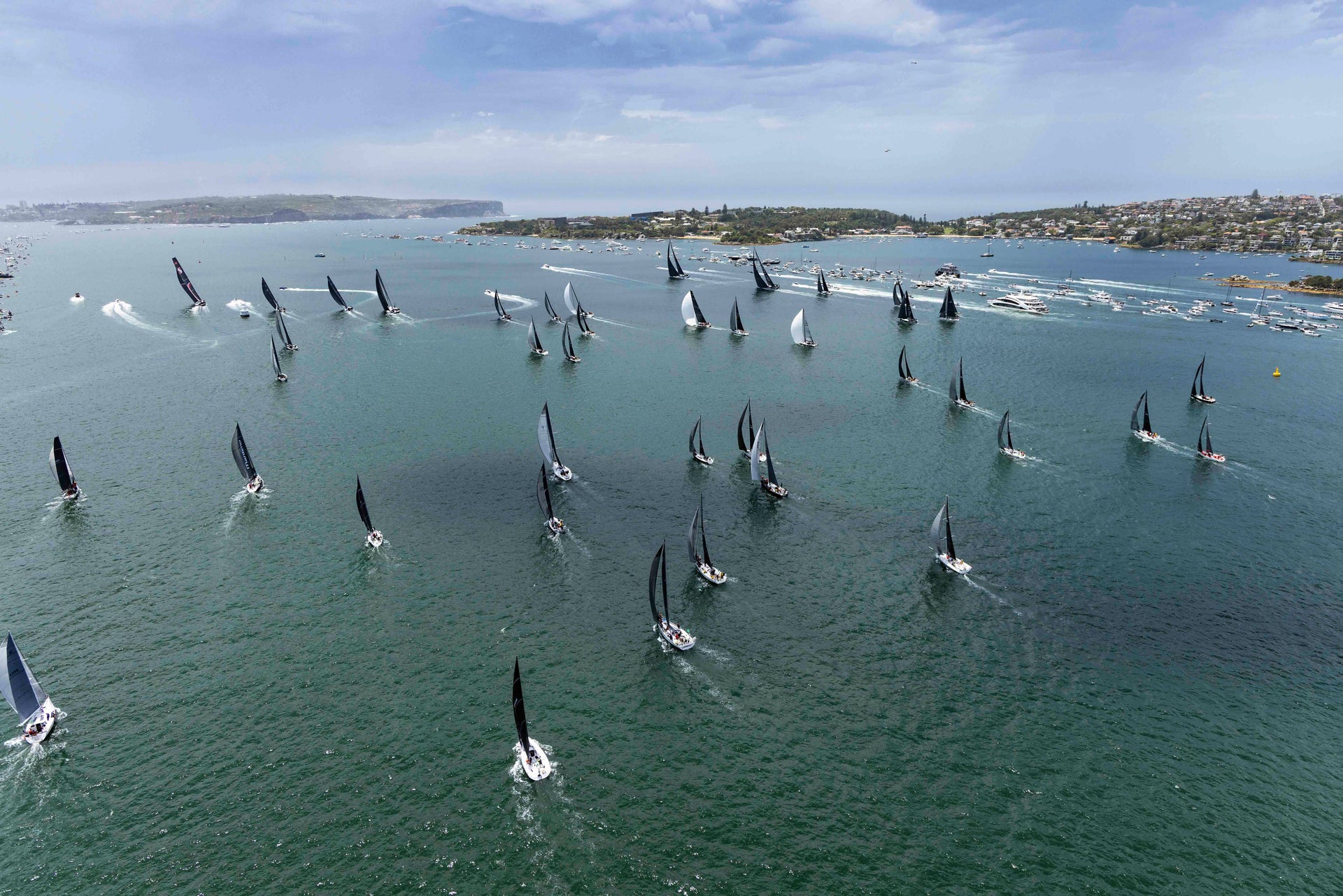
Anticipation is building for the 80th edition of the Rolex Sydney Hobart Yacht Race—a landmark moment for one of offshore sailing’s most demanding and celebrated tests. Since its first start in 1945, the course from Sydney Heads to Hobart has delivered every flavor of ocean racing: fast-reaching, brutal upwind, glassy calms, and the famous southerly changes that test crews and equipment in equal measure. An anniversary year amplifies the excitement, with a larger, more international fleet and a renewed focus on Grand Prix campaigns at the front of the pack. In this preview, North Sails experts and veteran Hobart competitors Alby Pratt and Mark Bradford offer an insider’s view into what makes 2025 unique—and how teams are preparing to perform when it matters most.
Anniversary years carry extra significance. The 80th edition of the Boxing Day classic features past winners and ambitious newcomers alike, and it underscores why Sydney Hobart remains a global benchmark. It’s one of the few major offshore races run annually, demanding consistent preparation and commitment from crews and support team. That consistency, coupled with the race’s storied history, draws a deep fleet across every size range—from the 100’ Supermaxis to production 40-footers—each with its own definition of success.
Whether you’re chasing Line Honors or the Tattersall Cup for overall winner, Rolex Sydney Hobart’s prestige is as much about the journey as the result.

This year’s entry list signals a big-boat showdown. Expect familiar 100’ heavyweights at the front, including campaigns outfitted with new North Sails inventories and targeted performance upgrades across the varying conditions—heavy-air downwind, all-around reaching, and upwind efficiency. Alongside these headline projects, there’s meaningful momentum among smaller boats, with ambitious 40–50' programs sharpening their handicap prospects. The takeaway: fortune favors depth and diversity. The Supermaxis may capture the spotlight, but the 2025 race includes a robust middle fleet and well-prepared smaller boats that can seize opportunities when the weather turns their way.
THE TECHNICAL CHALLENGE: FORECASTING, ROUTING, AND SMART SAIL SELECTION
Sydney Hobart’s personality is its variability. A fast exit from Sydney can evolve into an upwind grind in Bass Strait, followed by light-air puzzle-solving along the Tasmanian coast. Modern connectivity has changed tactics—many teams now stay continuously updated on weather and fleet positions—but the essentials remain: great decisions begin with robust routing, realistic polars, and disciplined sail selection.
North Sails experts describe a pragmatic approach: run the forecast, map the routing, and analyze usage percentages for every sail across the projected race. If a specialty sail appears only for a short window, weight-sensitive programs may leave it ashore, favoring versatility and trim range over micro-optimization. Conversely, when a forecast suggests extended use of a particular mode—heavy-air running for the Supermaxis, for example—teams will lean into purpose-built solutions that turn high-probability scenarios into consistent boat-speed gains.
A cornerstone of North Sails’ philosophy is that even within similarly named sails, each program has a bespoke sail design personalized to their performance ambitions. Differences in righting moment, hull form, appendages, and target boat speeds mean each inventory is bespoke to the campaign. A Supermaxi that thrives with more heel may carry a slightly fuller, larger sail in certain codes; a lighter, low-moment platform might require a flatter, more stable shape for control and efficiency. This isn’t theory—it’s applied design, where aerodynamic modeling, structured luff concepts, and fiber mapping converge to deliver repeatable performance across variable modes.
That bespoke mindset extends beyond design into manufacturing precision, delivery timelines, and ongoing service. Sydney Hobart is a logistics test as much as an engineering one; the ability to commission, fit, and fine-tune inventories on tight schedules is part of what teams value most when the stakes are high.

FRONT-OF-FLEET CALL‑OUTS: SUPERMAXI INVENTORIES & UPGRADES
Master Lock Comanche: Comanche enters with a new 3Di mainsail engineered for durability and shape stability under extreme loads, plus a specialist heavy-air spinnaker (FRO) designed to maximize VMG running in strong breeze. The team also added a Helix luff J2 for improved upwind performance in the mid-range.
Palm Beach XI (formerly Wild Oats XI): A complete bespoke 3Di inventory, including optimized A2 and A6 asymmetric sails for reaching and running, and Helix structured luff headsails for versatility in light-air transitions through to heavy air. The North Sails Design Suite was used extensively to provide aerodynamic modeling for the fully optimized sail package to achieve the new configuration of target speeds and angles after the recent hull and rig refit.
SHK Scallywag 100: Positioned for lighter conditions, Scallywag’s sail plan includes a full Grand Prix family of 3Di sails, with a light-air J1 and A1.5 asymmetric for maximizing pace when the breeze softens. The program prioritizes low drag and fast transitions.
Lucky: Fresh off record-breaking offshore runs, Lucky brings a new A2 sail for VMG running and a 3Di mainsail optimized for durability and shape retention. The focus: sustained speed in long downwind legs and reliable performance in mixed conditions.
NOTABLE PROGRAMS THROUGHOUT FLEET
URM 72: New rig paired with a North Sails IRC package: 3Di mainsail, J1/J2 structured luff headsails, and a versatile A2 runner for reaching legs. The inventory balances power and control for a competitive handicap campaign.
Celestial (Volvo 70): New North Sails on board, including 3Di mainsail, J2 and heavy-air J3 with a Helix A3 and NPC A4 spinnaker for Bass Strait conditions. Commissioned and tuned by North’s pro sailors to ensure durability and performance under demanding loads.
No Limit (RP63): Features a downwind development sail from North’s R&D program, paired with a 3Di mainsail and structured luff headsails. The goal: improved upwind efficiency and lighter downwind modes after recent ballast modifications.
The 40‑Foot Fleet: Several well-prepared IRC contenders are running panel sails and 3Di upgrades, focusing on durability and versatility for variable conditions. Expect tight racing where smart sail selection and routing can deliver big results.

NORTH SAILS IS ON YOUR TEAM AND AT YOUR SERVICE
Sydney Hobart is a bucket list race for many reasons. For first-time entrants, it’s about achievement and camaraderie. For Grand Prix programs, it’s about optimizing every detail to be first to Constitution Dock. North Sails is embedded at every level, with sailmakers who are also accomplished sailors supporting campaigns on the water and in the loft. That dual expertise—product plus people—helps teams convert design intent into race-day performance, from hoist to headsail change, from trim targets to damage control.
This depth matters across the fleet. Whether a team seeks a safe, efficient passage with durable panel sails or a max-effort line honors run with cutting-edge membrane and downwind solutions, North Sails brings a fit-for-purpose plan that aligns inventory, service, and on-board coaching with program goals.
When the race becomes a milestone, teams look for partners who deliver confidence. The reasons they choose North Sails are clear: bespoke sail design and support, end to end capacity from robust R&D to pre-race local support, and a commitment to ensure each boat and their sails are race ready from preparation through when they cross the finish line.
The 80th Sydney Hobart promises a fleet rich in stories—record chasers, handicap contenders, and first-time crews making the leap. Follow our updates as the race unfolds, and explore how a tailored North Sails approach can help you meet your own offshore goals—whether that’s a faster mode, a more versatile inventory, or the assurance that your sails will deliver when conditions get demanding.