
NORTH SAILS BLOG
All
Events
Guides
News
People
Podcast
Sustainability
Tech & Innovation
Travel & Adventure
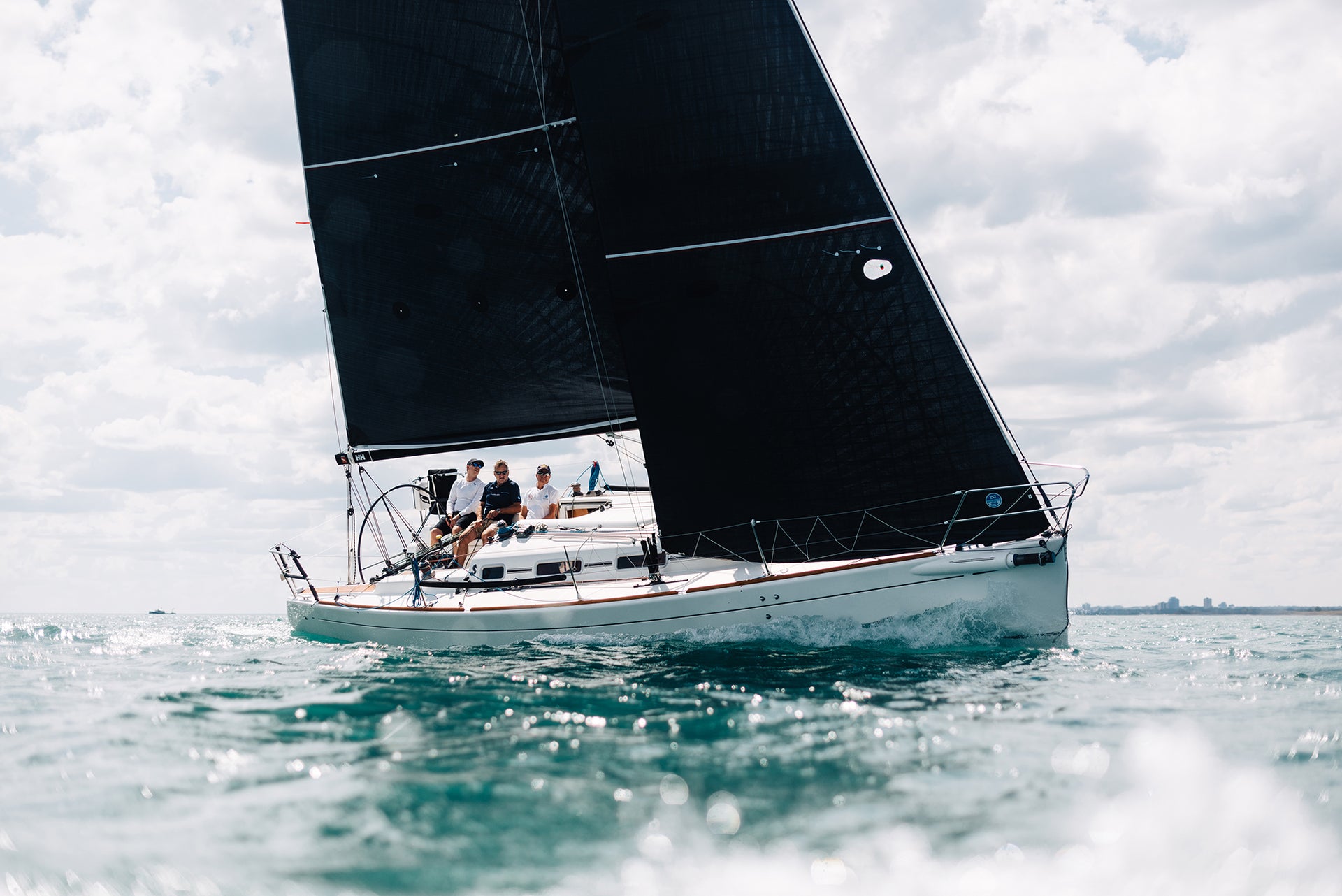
DE BEDSTE SEJL TIL CRUISING
North Sails har sejl til alle slags sejlere
Lær om forskellen mellem sejl til klubkapsejlads og sejl til cruising og tursejlads, samt de muligheder du har, når det handler om at finde det helt rigtige sejl til dine behov. Er sejl til Klub-kapsejlads og sejl til cruising det samme? Nej, og i denne artikel vil vi forklare hvorfor. Sejl til klubkapsejlads har et snævert anvendelsesområde sammenlignet med den enorme variation af sejl til cruisingsejlads. Så modsat artiklen om sejl til klubkapsejlads (hvor blandt andet størrelse og facon på sejlet blev diskuteret), vil vi her nøjes med at tale om materialer.
Hvilken sejldug skal jeg vælge?
Med panel sejl til kryds og bidevind, tilbyder vi en tætvævet NPC CROSS-CUT, NPC RADIAN, NPL SPORT og NPL TOUR. Nu skal vi så også tage det nye udvalg af 3Di-støbte sejl med i overvejelserne; vores 3Di OCEAN produktserie som er bygget af tre typer 3Di-materialer, til både af forskellige størrelser: OCEAN 330, OCEAN 370 og OCEAN 700. Og vi må ikke glemme at 3Di ENDURANCE-serien repræsenterer et "crossover" zone med sejl der er egnet til både cruising og kapsejlads. Og så er der de vævede nylonmaterialer, Code sejls laminater og 3Di Downwind mulighederne at vælge imellem når man overvejer en asymmetrisk eller symmetrisk spiler. Er der nogen der behøver alle disse valg? Nej. Men alle gør.
En 22 fods turbåd og en 22 meters yacht kan hver især blive matchet med det ideelle materiale fordi der er for mange muligheder for begge. Tricket er at tage en snak med din sejlmager for hurtigt at indsnævre udvalget af sejl duge til måske to fornuftige muligheder, baseret på dine krav. Herefter kan du slappe af og nyde hele processen med at beslutte nøjagtigt, hvad der er bedst for dig af materiale, overlappet på din genua, kappens størrelse på storsejlet, antal sejlpinde, farve og så videre. Dette kan og bør være sjovt.
Hvad du bør overveje når du indkredser dine muligheder:
Dit budget
Dine forventninger til hvor lang tid et sejl skal holde
Dine forventninger til sejlets facon når sejlet bliver ældre
Den lavest mulige vægt af sejlet hvis ovenstående kriterier bliver mødt
North Panel Sejldug
Lad os blive ved sejl til kryds og bidevind for nu og begynde med panelsejl (paneler af sejldug er skåret fra ruller af dug) hvor udgangspunktet er vævet polyester, ofte kaldet “Dacron”. Polyestergarn er et godt all-round produkt på små til mellemstore både. Det er modstandsdygtigt overfor slid, sol og vind. Det er relativt stærkt og ikke særligt strækbart. Og prisen på Dacron er i den lave ende. Lad os opsummere i en punktliste:
NPC CROSS-CUT - Tæt vævet Cross-cut Dacron sejl
Budget: Når prisen skal være så lav som muligt, er et NPC Cross-Cut sejl det rigtige valg.
Holdbarhed: Disse sejl forbliver intakte, selv efter mange sæsoners brug.
Sejlfacon: Rimelig som nyt men faconen i sejlet ændrer sig meget med tiden.
Vægt: Ikke let. Det er ikke et problem på mindre både men meget mærkbart i takt med at båden bliver større.
NPC RADIAN - Radian Warp-Oriented Dacron Sejl
NPC RADIAN er en forbedret version af dacron panelsejlet. Paneler kan være radialt orienteret i disse sejl, hvilket giver en markant forbedring af sejl faconen.
Budget: Stadigvæk en relativ lav pris, prisen på Radian er kun en smule højere end på NorDac.
Holdbarhed: Disse sejl forbliver intakte, selv efter mange sæsoners brug.
Sejlfacon: Rimelig som nyt men forvent nogen faconændringer med tiden.
Vægt: Ikke let - men lettere end et crosscut dacron sejl.
North Panel Laminat
Vi bliver ved sejl materialer og panel sejl til bidevind sejlads; næste niveau af materialer er lamineret dug (på North-sprog hedder det NorLam). Laminater giver mulighed for at reducere sejlets vægt, forbedre sejlfaconen samt inkorporere high modulus (lavt stræk) og stærke fibre samt polyester i form af både tråde og film. Når laminat sejldug er designet og produceret korrekt, er det meget holdbart samtidigt med at sejlet har en fornuftig vægt, hvilket resulterer i en rigtig god sejlfacon.
NPL TOUR & TOUR ULTRA
Xi Cruise serien er rettet til mellemstore turbåde, som både søger et kompromis mellem prisniveau og sejl præstation. Xi Cruise serien består af lag af vævet polyester udenpå og polyesterfilm og aramid fibre indeni. Det ydre polyester lag beskytter aramid tråden mens aramid -indholdet reducerer buler og stræk.
Budget: Medium prisniveau.
Holdbarhed: Ikke helt så lang en levetid som vævet dacron men sejlet ældes pænt.
Sejlfacon: Rigtig godt som nyt med moderate ændringer med tiden.
Vægt: Medium - på større både er vægtreduktionen en betydelig forbedring sammenlignet med dacron.
NPL TOUR ULTRA - NorLam Ultra X
Ultra X-serien kan fås til mellemstore og helt op til kæmpestore turbåde. Den store forskel mellem Xi Cruise (beskrevet ovenfor) og Ultra X, er brugen af UltraPE fiber i Ultra X. UltraPE giver en noget nær ideel ydeevne af fibrene, med meget høj modulus og styrke, sammen med bemærkelsesværdig robusthed og modstandskraft overfor UV, slid m.m.Vi væver UltraPE ind i laminatdug og vi pakker godt med fiber ind i dugen. Det er ikke en billig tilgang, men det resulterer i forbedret ydelse og forlænget levetid for sejlet.
Budget: Højere prisniveau.
Holdbarhed: Fremragende
Sejlfacon: Rigtig god da der er en stor mændge UltraPE i materialet.
Vægt: Medium
NPL SPORT - NorLam Ultra XC
Tag alt fra ovenstående beskrivelse af Ultra X og tilsæt carbonfibre. Jeg vil gå ud fra at alle kender til carbonfibre i betragtning af det bliver brugt i racerbiler, cykler, der ser ud til at veje næsten intet, 80 fods både, der ser ud til at veje næsten intet, og stort set hvert cool højtydende produkt, der ser ud til at veje næsten intet. North Sails har lamineret UltraPE med carbonfibre i cruising sejldug til større både i mere end 25 år og resultatet er stadig bemærkelsesværdigt.
Budget: Højt prisniveau.
Holdbarhed: Fremragende.
Sejlfacon: Rigtig god, nærmende sig fremragende.
Vægt: Medium (Lettere end Ultra X, men man skal stadig pakke en stor mængde fibre ind for holdbarhed).
Og nu… i 3D!
Vi har for nylig kodificeret en komplet serie 3Di-produkter, der specifikt er lavet til turbåde under serienavnet OCEAN. Et vigtigt element ved at identificere denne linje var introduktionen af en ny 3Di "materialetype" - 3Di OCEAN 370. Lad os grave lidt dybere i, hvad der gør 3Di OCEAN ideelt egnet til cruising, i en lignende materialebaseret kontekst som den for panelsejl ovenfor.
Men først, hvis du ikke er klar over forskellene mellem 3Di og panelsejl (eller 3Di og "strengmembran" -produkter), kan du kigge på vores materialeside for at få flere oplysninger om forskellen i sejlmaterialetyper. 3Di repræsenterer et teknologisk spring i niveau inden for produktion af sejl. Det er en mere kompleks og derfor dyrere måde at fremme sejlproduktionen på. For tursejlere har denne kompleksitet åbenlyse fordele: bedre sejlfacon i sejl med lettere vægt og ingen nedgang i holdbarheden. Bør enhver tursejler så glemme alt om panelsejl som en mulighed i betragtning af 3Di's overordnede overlegenhed? Nej. Panelsejl forbliver et væsentligt valg af alle de ovenfor nævnte grunde; og afhængigt af dine prioriteter og dit budget, også en god mulighed for mange sejlere.
3Di OCEAN 330
Alle fordelene ved NORDAC polyester som beskrevet ovenfor og forbedret med teknologien fra 3Di - det er OCEAN 330. OCEAN 330, oprindeligt kaldet 3Di NORDAC, får mest muligt ud af polyesterfibrene i upwind sejl.
Budget: Medium prisniveau i forhold til dacron sejl, lavt i forhold til 3Di.
Holdbarhed: Fremragende.
Sejlfacon: God (rigtig god, hvis ikke fremragende i forhold til vævet polyester sejldug).
Vægt: Medium (ikke let, en masse fiber i form af filament er pakket ind i disse sejl).
3Di OCEAN 370
OCEAN 370 bringer UltraPE ind i blandingen sammen med polyester, hvilket øgerstyrken markant og forbedrer strækydelsen. Der er et størrelse / belastningspunkt med 100% polyestersejl, hvor sejlene bliver for store, og vægten til virkelig begynder at skade bådens ydeevne. Disse sejl er vanskelige at håndtere og opbevare. Ocean 370 træder til, hvor Ocean 330 ikke kan - omkostningseffektivt, mens det pænt balancerer egenskaberne ved sejlspræstation og forlænget levetid.
Budget: Medium.
Holdbarhed: Fremragende.
Sejlfacon: Rigtig god sammenlignet med de konkurrerende muligheder indenfor tursejl.
Vægt: Medium.
3Di OCEAN 700
OCEAN 700 er en ideel løsning til større både med sejl med en større belastning. UltraPE er den primære filament / fiber type, med aramid, der i rette mængde indføres i sejlets maksimale belastningszoner. Ocean 700 er stærkt, med lavt stræk og konstrueret til at mange års brug. Det er referencestandarden for mellemstore både til superyachts.
Budget: Medium.
Holdbarhed: Fremragende.
Sejlfacon: Rigtig god.
Vægt: Medium.
Dette beskriver hele vores udvalg af sejl til turbåde. Vores North Sails repræsentanter har ekspertisen til at guide dig til det helt rigtige sejl inden for dette store udvalg. Hvis du både vil sejle kapsejlads og tursejlads, giver 3Di ENDURANCE-serien den perfekte kombination af facon, vægt og ydeevne, som kapsejlere søger. Og vores hardcore kapsejlads produktserie, 3Di RAW, leverer fart som ingen andre sejltype kan. Hold øje med en opdatering om de bedste materialevalg til spiler og gennaker, uanset om du vil sejle tur- eller kapsejlads.
Læs også artiklen “Hvilke sejl er de bedste til klubkapsejladser”
Kontakt os i dag Få et tilbud
READ MORE
READ MORE

TWO ETCHELLS STATES IN A ROW FOR FIRST TRACKS
TWO ETCHELLS STATES IN A ROW FOR NORTH SAILS FIRST TRACKS
Peter Merrington and his team claim victory in the fiercely competitive NSW Etchells fleet
📸 Dickson Leung
Long-time North Sails customer Peter ‘Billy’ Merrington, with his crew of Ian McKillop and Grant Simmer, claimed a second NSW State Championship in a row last weekend, with a convincing win in Gosford. With usual team member Steve ‘Mothy’ Jarvin unavailable for this regatta, Australian Sailing icon Grant Simmer provided some “pearls of wisdom” to the experienced race team.
“Ian and I have sailed together for at least nine years as a partnership across three or four different Etchells now, so we know each other pretty well,” said Billy. “I’ve always wanted to sail with Grant Simmer, and we sailed with him for the Goblets and a couple of training sessions. He got us thinking about a few little changes we needed to make to our setup, and obviously on the race track he’s very smart.”
“The races were really tight, and it was a great quality fleet with the Mould 11 hulls coming back in and expanding the fleet again. It was good tight racing on a tough race course. The first day was really light and shifty. We had two good races that day and then a third race which was a 13, which came from a bad start and we got bounced around the whole race, it pretty much happened to everyone at some point of the weekend I think.”
“The second day was more of a steady Nor’easter, and we sailed really well that day, with great speed and had good starts, and the team did a really great job, so it was an awesome day and couldn’t get much better than that!”
Billy and his team have used North Sails since joining up with Ian in the Etchells fleet in 2014, using the North Sails tuning guide and modifying it slightly based on the feeling out there each day.
📸 Gosford Sailing Club
“Over the years we’ve developed a few little tweaks to our rake setting and our sidestay settings which we feel most comfortable with, but in general it’s pretty much the standard sails and setup. We’re using the PC-FM Radial Head mainsail, which is pretty much the standard across the Australian fleet now. We use the MAL Jib and GT Jib for up-range, and the standard VMG Spinnaker and the Full Radial Spinnaker North Sails Australia designed shutes. We probably use the VMG more up-range than most other teams - we tend to use the VMG shute up to 12-13 knots, whereas other people probably bring it in at about 10 or 11 knots of wind,” Billy commented.
As one of the most consistent competitors in the Australian Etchells fleet, First Tracks attributes their successful performances to their understanding of their equipment setup and on-water preparation as a team.
“I think we just try to make sure we keep training enough to keep our skill level and speed up. We always try to make sure we get a number of training sessions between each event to keep ourselves tuned in and having a good consistent crew. The other thing is, because we’ve sailed together for so long, it’s a bit like getting back on a bike. I think one of the keys is having a good consistent crew and just getting on the water.”
“Ian and I are extremely thankful to Mothy, this is his boat we get to race and his support of the Etchells class that gives us the opportunity to sail on a weekly basis. He’s such a great supporter of the class.”
With Mothy rejoining his team, First Tracks have their eyes firmly set on the future. “We’ve got a bunch of regattas in the middle of the year, so we’ll do the Midwinters in Brisbane, and a regatta in the Gold Coast we’re seriously considering doing as well. We’re disappointed to not be going to the upcoming world championships in Miami in a couple of weeks, that’s for sure, but the next ones are a serious goal for us being in Perth next year.”
📸 Glen Hickey
READ MORE
READ MORE
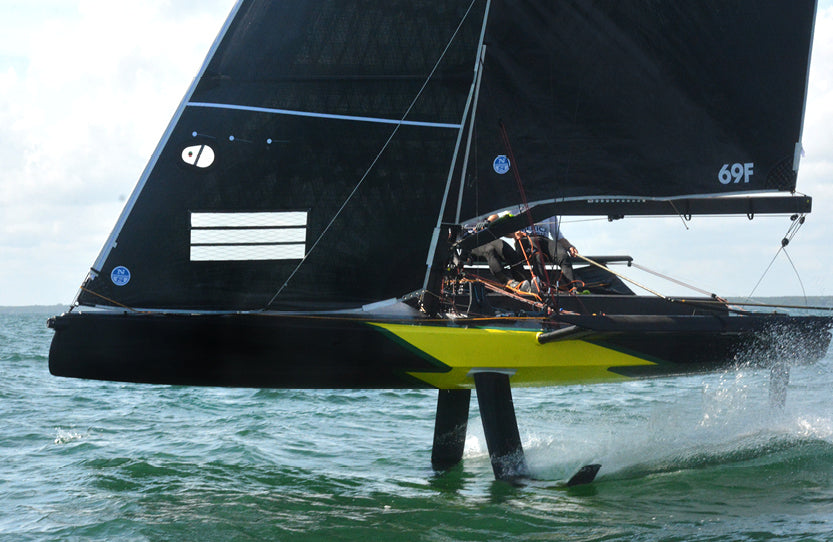
NORTH SAILS NAMED SAILMAKER TO 69F
NORTH SAILS NAMED SAILMAKER TO 69F
69F Partners with the World’s Leading Sailmaker to Power the Foiling Class
North Sails is proud to be named the exclusive sailmaker to the revolutionary 69F class. The 69F is the only one-design, full-foiling monohull for teams. With state-of-the-art design and construction, the 69F has introduced a one a kind of class format. This format features a six-pack charter boat program and a robust events schedule across Europe, the United States, and the Youth Foiling Gold Cup open to sailors under 25.
69F Co-Founder Giorgio Benussi commented on the partnership with North Sails:
“Bringing North Sails on board as our sailmaker is the natural next step in the evolution of the 69F. North Sails is the industry’s top player. From dinghies to maxis and now foiling, North Sails has a reputation for expertise that is renowned worldwide. We all look forward to working together, learning, and expanding the success of the 69F.”
North Technology Group President and North Sails President Ken Read:
“The 69F is a fantastic new class offering a foiling experience to many who have never experienced or may not have even considered foiling. Access for young sailors, owner drivers, pros and amateurs alike–the 69F is an all-inclusive foiling option. Today, the North Sails design tools and sail technology power the AC75, the AC40, IMOCAs, Ultimes, and dominate small foiling boats like the Moth. The 69F opens the door to so many more and helping expand the sport.”
North Sails and the 69F team have undergone sail testing in Miami to review and finalize the new sail designs. The North Sails 69F inventory consists of three sails; a 3Di Square Top Mainsail, a 3Di Helix Jib, and a Helix Code Zero. In line with the objectives of the class, the 69F has a hi-tech, high-performance inventory that showcases the latest innovations from North Sails.
The first sail set under the partnership will be delivered before the start of the 2023 European season in April.
North One Design Expert Giulio Desiderato (ITA) will lead the client management and service as the primary North Sails contact for this exciting partnership. He’ll be directly supported by sail designer Mike Marshall (USA), and they’ll also draw on the broader resources within the North Sails network.
To learn more, contact info@69fsailing.com.
READ MORE
READ MORE
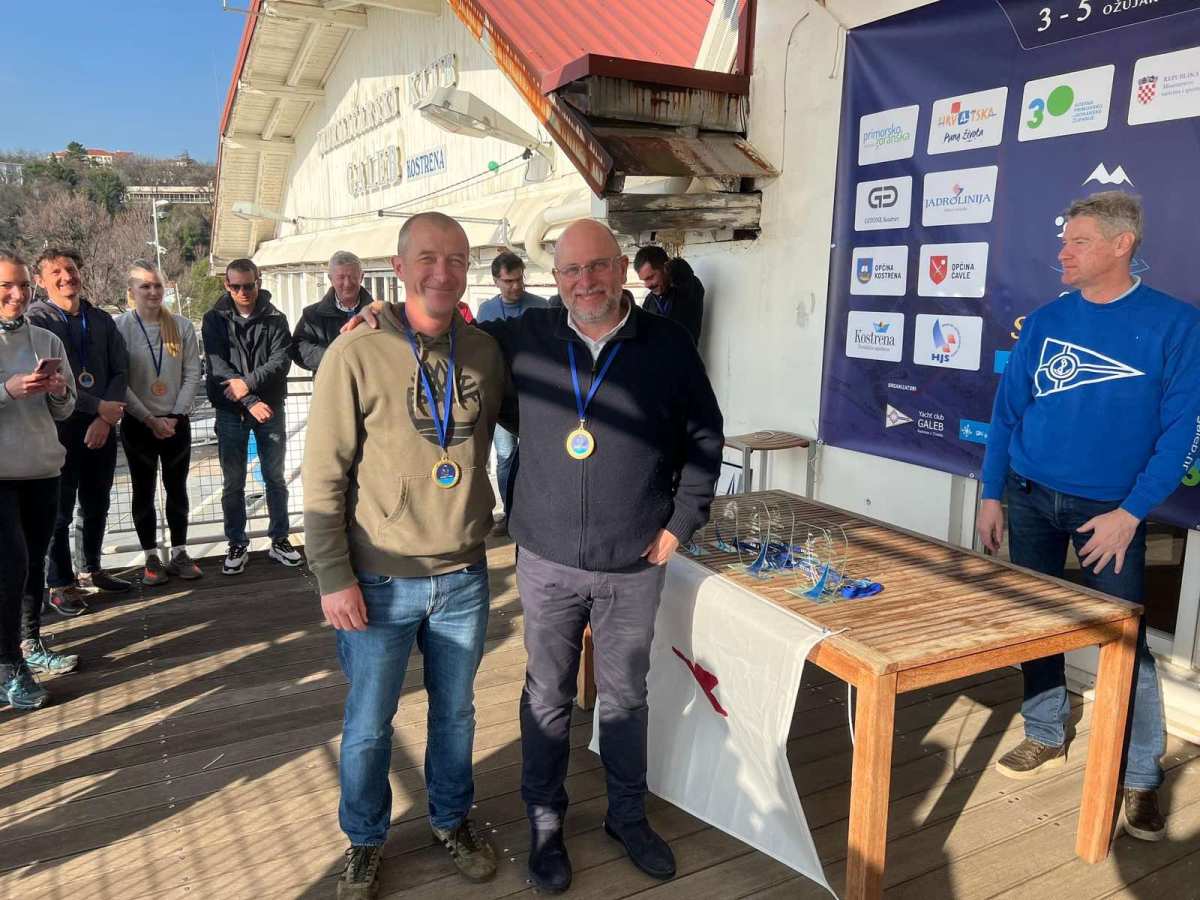
GALEB SNIPE & SKI RACE
Galeb Snipe & Ski Race
JK Galeb je od petka 3. pa do nedjelje 5. ožujka, organizirao jedriličarsko skijašku manifestaciju koja je okupila devet posada u klasi šljuka, a koje su uz jedriličarska znanja morale pokazati i svoje skijaške vještine.
Po programu manifestacije petak je bio rezerviran za skijanje na Platku, a organiziran je u suradnji sa Ski klubom Rijeka, Goranskim sportskim centrom i PGŽ. Više detalja o svim ovim aktivnostima ispričao nam je Milko Volarić, član organizacijskog odbora.
U petak smo imali dvije vožnje veleslaloma. Početak prve bio je u 17, a druge u 18 sati i skijalo je ukupno 45 natjecatelja.
Skijalo se po FIS pravilima. Znači, redoslijed prve vožnje bio je po bodovima, dok je druga išla po plasmanu... najsporiji je startao prvi, a najbrži je startao posljednji.
Osim jedriličara šljukaša skijali su i drugi jedriličari koji nisu zajedrili u subotu i nedjelju kao i članovi skijaškog kluba.
Najbolji šljukaš na skijama bio je Slobodan Velikić, a u generalnom plasmanu skijaškog dijela natjecanja završio je na 4. mjestu. Nakon završetka drugog veleslaloma nastavili smo se družiti u klasičnom skijaškom okruženju uz hranu i piće.
Jedriličarski dio eventa jedrio se u Žurkovu. U subotu su odjedrena dva plova po idealnim vremenskim uvjetima sunčanog vremena i bure koja je puhala od 15 do 20 čvorova. Startalo je devet šljuka i zanimljivo je da se za kombinaciju bodovalo skijanje i flokiste i kormilara, odnosno njihova vremena su se zbrajala.
Nedjeljna bura bila je slabija i kasnije je okrenula na lebić. Po takvim uvjetima odjedrena su još po dva plova.
Jednako kao što se posebno bodovalo skijanje, tako je bilo i s jedrenjem. Najbolja na moru bila je posada Marko Marinović / Damir Vranić, a nakon što se napravilo kombinirano bodovanje pobjedu odnosi posada Igor Ružić / Slobodan Velikić.
U klubu smo imali i društvenu večer u subotu nakon jedrenje i stvarno su svi bili zadovoljni s organizacijom i na planini i na moru.
Milko Volarić, JK Galeb
📸 JK Galeb
Regata je organizirana u sklopu nekoliko obljetnica. Ove godine JK Galeb slavi 90 godina od osnutka, tako da je ova regata dio skupa prigodnih manifestacija. Također je ove godine 90 jubilej od organiziranja prvog Jadranskog slaloma koji se održao na Platku i 30. godišnjica od osnutka Primorsko Goranske županije.
Tradicija organiziranja ovog kombiniranog sportskog događaja seže u osamdesete godine prošlog stoljeća kad se nakon skijanja jedrilo na daskama za jedrenje, a redoviti gosti i natjecatelji bile su tadašnje skijaške zvijezde poput Bojana Križaja, Roka Petroviča, Grege Benedikta, Borisa Strela.
📸 JK Galeb
Rezultate regate i kombinirane rezultate skijanja i jedrenja možete pronaći na ovom linku.
U skladu s kombiniranom prirodom eventa bile su kombinirane i neke od posada. Bojan Grego je kao olimpijac jedrio s olimpijkom u skijanju, Idom Štimac, koja je sijala na olimpijadi u Pjongčangu, a njegov brat Grego je u drugoj Šljuci jedrio s kolegom olimpijcem u skijanju, Sebastianom Brigovićem koji je nastupio na olimpijadi u Sočiju.
Naslovna📸: JK Galeb
READ MORE
READ MORE
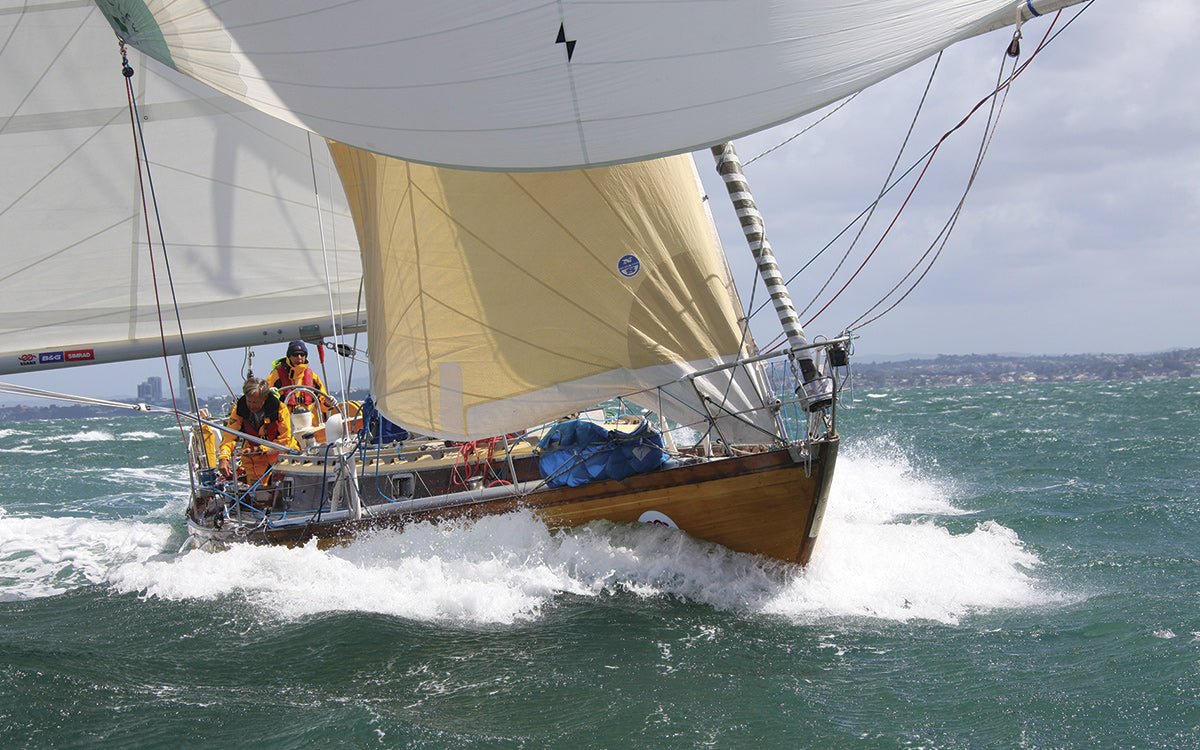
A BEAUTIFUL BLEND OF CRUISING & RACING
A BEAUTIFUL BLEND OF CRUISING & RACING
Taking on New Zealand's North Island
Back into it for legendary sailors Vicky & Tom Jackson as they set out for the 2023 Two-handed Round North Island race (RNI). After settling into their first home together down in Nelson, the Jacksons have decided to get back into some racing after some itchy feet. Impressively, they have decided this years 50th Wedding Anniversary present to each other would be competing in the RNI, definitely not out of the ordinary for a couple like this.
When asked what their reason was for still competing, Tom and Vicky jokingly blamed it on their ‘Geriatric Foolishness’. They went on to say, “the challenge is addictive, we enjoy the preparation that goes into competing, from the boat maintenance, physical prep, and putting on our meteorologist caps.”
This incredible couple lived aboard their beloved 39 foot Sparkman & Stephens sloop ‘Sunstone’ for 35 years, impressively sailing over 200,000 nautical miles, completing 6 Pacific Ocean and 2 Atlantic Ocean crossings, alongside throwing in some racing here and there. Whilst clocking up the nautical miles, they competed and won their divisions in the Sydney-Hobart Race and Swiftsure. They are not newcomers to the RNI, having won it back in 2008, and only a few years later winning the 2012 Two-Handed Round New Zealand Race.
The Jackson’s have been longstanding North Sails customers, having known our Sales & Marketing Manager Andrew Wills since back in 1999, being one of his first clients. Their appreciation for North’s has only gotten stronger since then, as they love the tailored blend of sails in their locker. Able to fit their lifestyle of cruising, and ability turn it up a notch when they want to go racing. Keep an eye out for The Jackson’s currently competing in the RNI, onboard their new noble steed, Zest, equipped and battle ready with a new Code-Zero from the North Sails team. See below for some tips from the team about getting your cruiser into racing shape.
Paper Tiger National Champion Finds a New Gear
The start of 2023 kicked off with a hiss and a roar, as a contingent of Paper Tiger sailors made their way to Napier Sailing Club for the start of their nationals. The Hawke’s Bay waters turned it on for some glamour yachting conditions, really testing the limits of the 50 year old class. Some regular frontrunners were in the mix, from the likes of Dave Shaw, Scott Pederson, and North Sails OneDesign expert Derek Scott. Derek was full of praise for the national champion Dave Shaw, stating “Scott sailed super well, and since his change to North Sails, its almost like he’s found a new gear.”
Shaw culminated an almost perfect scorecard as he sailed to victory, winning 9 of the 11 races completed. Derek Scott just a click off the pace, yet finding some consistency to pick up second place. Local Napier sailor Scott Pederson, started off with a bang, winning the first race of the regatta, navigating his way to a comfortable bronze. If you want to find another gear, get in contact with our OneDesign team.
#NSVictoryList #PaperTiger
BOISW
Celebrating its 20th edition, Bay of Islands Sailing Week is a premier yachting event in the Southern Hemisphere and New Zealand’s biggest regatta of its kind. Divided into many classes, it’s a fun and competitive regatta for sailors of all kinds. This year’s edition was marked by big waves and big winds for the 103-strong fleet which made for exciting racing. North-powered teams topped the leaderboard in 10 out of 13 divisions
Many boats competing in the regatta sailed with a North Sails #EngineAboveDeck. In Northland Inc A Division, Harry Dodson and Tony Bosnyak sailed Mayhem to victory with line honors in all four races, and first place on both PHRF and general handicap. While in North Sails B Division, there was fierce competition among the 40 footers. Newcomer Sassinate skippered by Mikayla Plaw put the fleet through its paces to claim line honors with two first and two second on line placings. Full results can be found here.
Our New Zealand team of experts were also on hand to help competitors around the clock with their sail care needs.
The next Bay of Islands Sailing Week is scheduled to take place from 23 to 26 January 2024. See you there!
READ MORE
READ MORE
ALLT FÖR SJÖN 2023
ÄNTLIGEN BÅTMÄSSA!
Och vi har som vanligt mycket nytt att visa!
Covid-restriktionerna gjorde ju att Allt för Sjön 2020 fick avbrytas mitt i och under 2021 och 2022 blev det inga mässor alla. Men nu är äntligen dags igen.
North Sails monter hittar du i A-hallen och den är bemannad under hela tiden som mässan är öppen. Är du ute efter nya segel så har vi allt från klassiska dacronsegel till högteknologiska kompositsegel i aramid eller kolfiber. Besök oss under mässan så hjälper vi dig att hitta det segel som passar allra bäst för din båt, ditt sätt att segla och din budget!
På North Sails har vi alltid något nytt på gång och här tipsar vi om några produkter som känns särskilt aktuella just i år:
North Sails Easy Furling Gennaker
Lanserades i höstas och är redan är en av våra mest efterfrågade cruisingprodukter. Perfekt för dig som vill kombinera pålitlig top-down-furling med riktigt vassa länsegenskaper. Läs mer här.
3Di-segel för racing och cruising
Lättare, starkare och framför allt mer långlivade än allt annat på marknaden. På marknaden sedan 2010 och i ständig utveckling sedan dess. En spännande specialvariant är 3Di Helix Upwind, som enkelt uttryckt är ett förseglet som på ett nästan magiskt sätt kan planas ut när vinden ökar.
Läs mer här.
Reaching-segel
Årets ORC-VM seglas i Kiel. SM i SRSv fullcrew äger rum i anslutning till Öland Runt. Båda mästerskapen har mer fokus på offshore än tidigare, och det lär bli mycket segling med lätta skot. Kom förbi vår monter så berättar vi mer om hur du kan optimera prestandan med hjälp av exempelvis reaching-stagsegel och spinnaker-stagsegel.
READ MORE
READ MORE
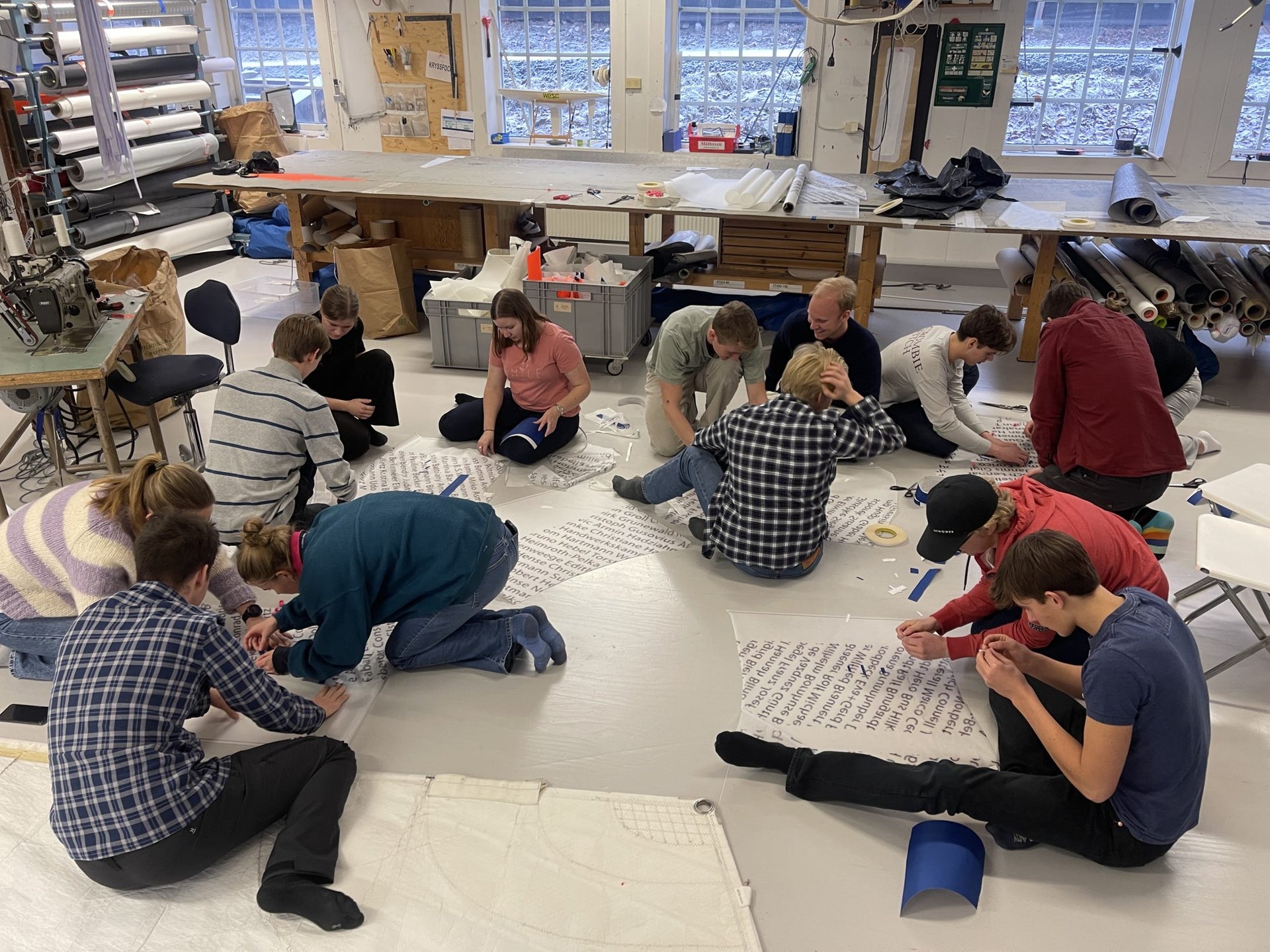
NYSTART FÖR UNGDOMSAKADEMIN
NYSTART FÖR UNGDOMSAKADEMIN
Ungdomsakademin är en samarbete mellan Stockholms seglarförbund, North Sails och Happy Yachting
Ungdomsakademin är en samarbete mellan Stockholms seglarförbund, North Sails och Happy Yachting
Syftet är att stimulera och stötta unga seglare som vill ta steget från jolle till kölbåt. För någon som kanske bara har erfarenhet av optimist och ILCA kan det upplevas som ganska svårt. Första upplagan genomfördes 2020 under succéartade former och allt var upplagt för en fortsättning året därpå. Det där satte förstås pandemin stopp för. Men i höstas var det dags att väcka Ungdomsakademin till liv igen, och sedan december har ett fyrtiotal unga seglare ägnat ett par intensiva helger åt att lära sig mer om vad kappsegling i större båtar innebär. Tanken är att köra ytterligare en eller ett par helger under våren och avsluta det hela i samband med Gotland Runt.
Kursen är gratis för alla under 25 år, men även äldre seglare är välkomna mot en närmast symbolisk avgift på 500 kronor. Kursledare är Christian Harding, välkänd mångsysslare inom segling, och han driver projektet med sedvanligt engagemang.
Upplägget bygger på en lagom blandning av teoretiska föreläsningar och praktiska övningar. Bredden är enorm. På schemat står allt från splitsning, reparation av segel och underhåll av vinschar till performance-analys, mätregel-optimering, instrumentering, besättningsarbete, marknadsföring och hur man håller sina sponsorer på gott humör. Med mera, med mera, med mera. För innehållet och sakkunskapen står några av Sveriges mest rutinerade seglare (som exempelvis Johan Barne, Anna Drougge och Jimmy Hellberg) men även experter inom områden som design, båtbyggeri, meteorologi, sociala medier och mycket annat.
När det gäller rigg och segel har vi ju själva en del att bidra med, och under en helg i januari var utbildningen förlagd till North-loftet på Lidingö. Martin Gradman på Happy Yachting berättade om stående och löpande rigg, medan våra segelmakare Martin Angsell och Anders och Tore Lewander gick igenom bland annat segeldesign, segelvalstabeller och crossover-diagram.
Ett viktigt syfte med Ungdomsakademin, förutom själva kunskapsbiten, är att ge deltagarna en chans att bygga upp ett nätverk och få kontakt med seglare och kappseglingsteam som behöver gastar. Här kan även du göra en insats. Om du har möjlighet får du gärna ta med en eller ett par av de unga seglarna på någon träning eller regatta. Vi tror du kommer märka att de kan tillföra en hel del.
Hör av dig till oss så förmedlar vi kontakten vidare!
READ MORE
READ MORE
ORC DH EUROPEAN CHAMPIONSHIP 2023
ORC DOUBLE HANDED EUROPEAN CHAMPIONSHIP 2023
Kapsejladsen finder sted d. 10.-17. juni i Helsingør Sejlklub
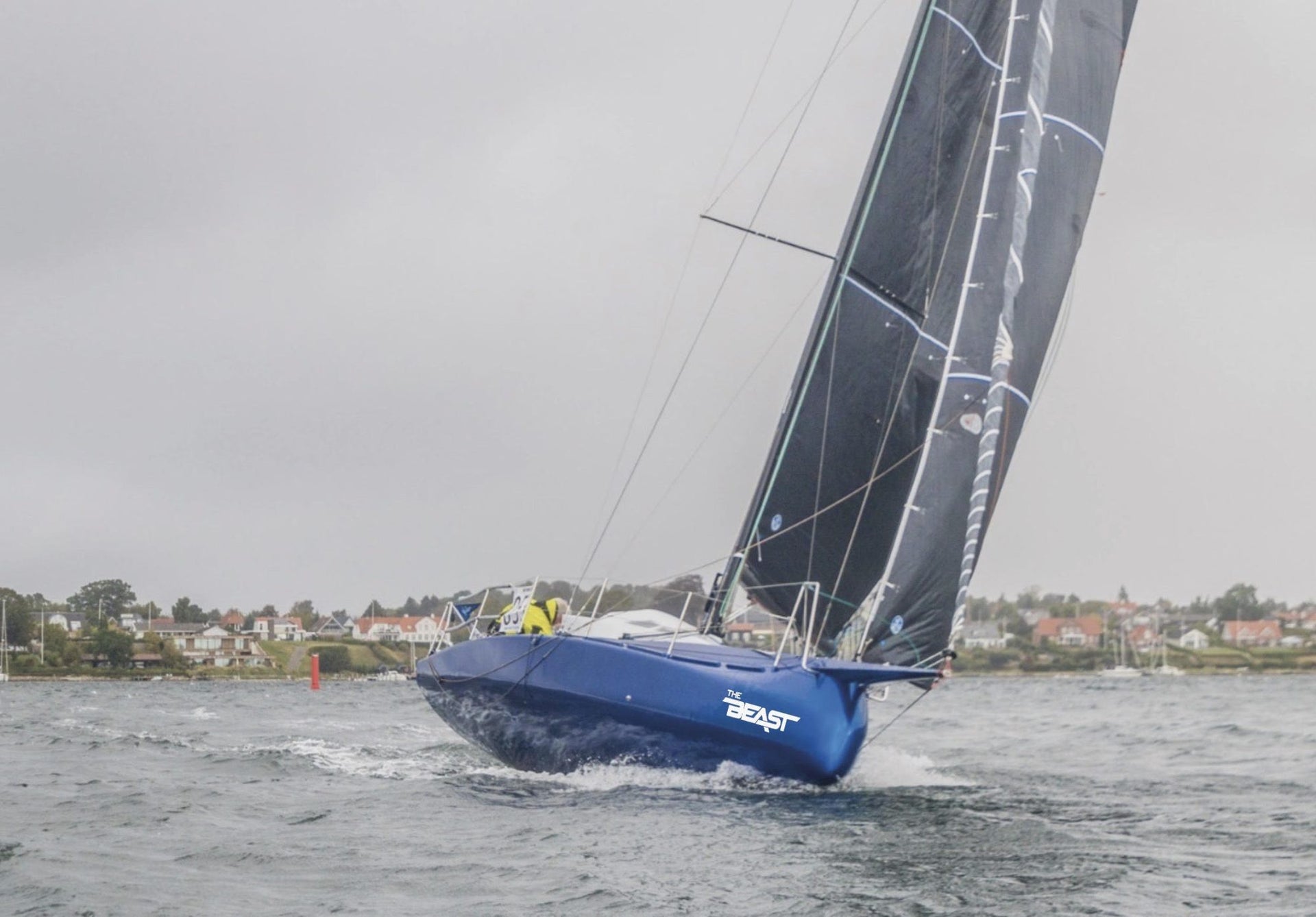
Jan Hansens nye Aeolos 30, “The Beast”
Kapsejladsen finder sted fra den 10.-17. juni 2023 og afholdes under ledelse af Offshore Racing Congress (ORC), Dansk Sejlunion og Helsingør Sejlklub. Stævnet løber at stablen i Helsingør Lystbådehavn i den smukke by Helsingør med Kronborg Slot som baggrund.
Siden 1947 har Helsingør Sejlklub været vært for Sjælland Rundt kapsejladsen. Mens kapsejladsen startede i det små lige efter Anden Verdenskrig, voksede Sjælland Rundt sig til mere end 2.000 både i begyndelsen af 80’erne, hvor alle danske sejlere ønskede at prøve det, der lokalt er blevet kendt som "Havets Marathon".
ORC Double Handed European Championship er åbent for enhver båd med et gyldigt ORC DH Certifikat og lige nu er tilmeldingslisten på 24 både tilmeldt og arrangørerne forventer yderligere 10-15 både på startlinjen.
North Sails har til mange af de deltagende både, leveret en komplet garderobe af sejl designet netop med henblik på single- og double handed sejlads.
En af deltagerne med fuld North Sails sejl garderobe er Jan Hansen med sin nye Aeolos 30. Bådens navn er "The Beast" og båden har vist sig at være et udyr på den gode måde...
Jan Hansen siger: "Forberedelserne til EM er allerede godt i gang med bl.a. 3D scanning af båden, vejning af mast og mange andre detaljer. En meget væsentlig brik i spillet er sejlpakken. Jeg har valgt 3Di Raw til alle sejl, med undtagelser af de 2 asymmetriske og stormfokken. 3Di sejlene sikrer mig en lang kompetetiv levetid på sejlene. På min forrige båd, Figaro 2, starter sejlene nu på 5. sæson og er stadig konkurrencedygtige."
Udgangspunkt er at have disse sejl med til EM:
Storsejl m. 2 reb. Det er vigtigt at 2. reb er placeret så højt at man undgår krav om trysail.
Jib 1 medium Helix. Helix er et meget vigtigt tilvalg for at få så stor windrange på sejlet som muligt.
Inner jib
Jib 0
Code 0 65%
A5
A2
Så snart bådens scanningsdata er færdigbehandlet, begynder en proces med optimering af sejlvalget. Det kan ikke udelukkes at eksempelvis Code 0 vil give for stor straf på ratingen og derfor må blive i land. Det er en uvurderlig hjælp at have North Sails design teams input til den sidste optimering.
Alle oplysninger om stævnet og andre detaljer kan findes på eventets dokumentside.
Anden information findes på arrangementets hjemmeside.
Så hvis du går med tanker om at sejle ORC Double Handed EM og mangler sejl i din sejlgardarobe, så kontakt North Sails og så hjælper vi dig med det mest optimale setup.
Kontakt os i dag og få en uforpligtende snak med vores eksperter.
Jan Hansens nye Aeolos 30, “The Beast”
READ MORE
READ MORE
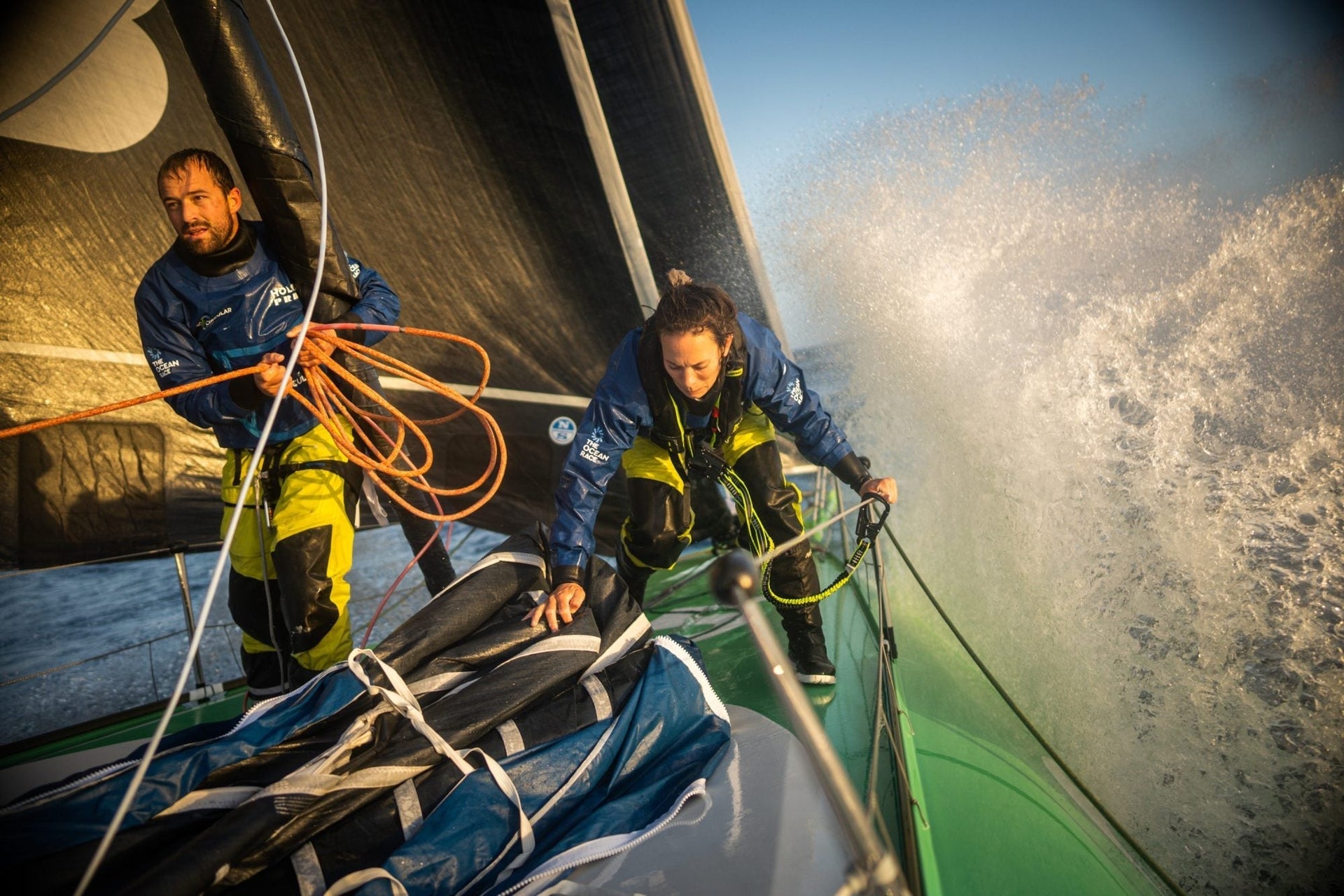
SAILS ENGINEERED FOR FAST AND DESIGNED TO LAST.
The unique sail requirements for Southern Ocean racing. At North Sails, our focus is on the performance of the sails that power this journey.
READ MORE
READ MORE
TAKING ON THE SAILING INDUSTRY
TAKING ON THE SAILING INDUSTRY
Charlotte Hinman Shares Her Sailing Journey
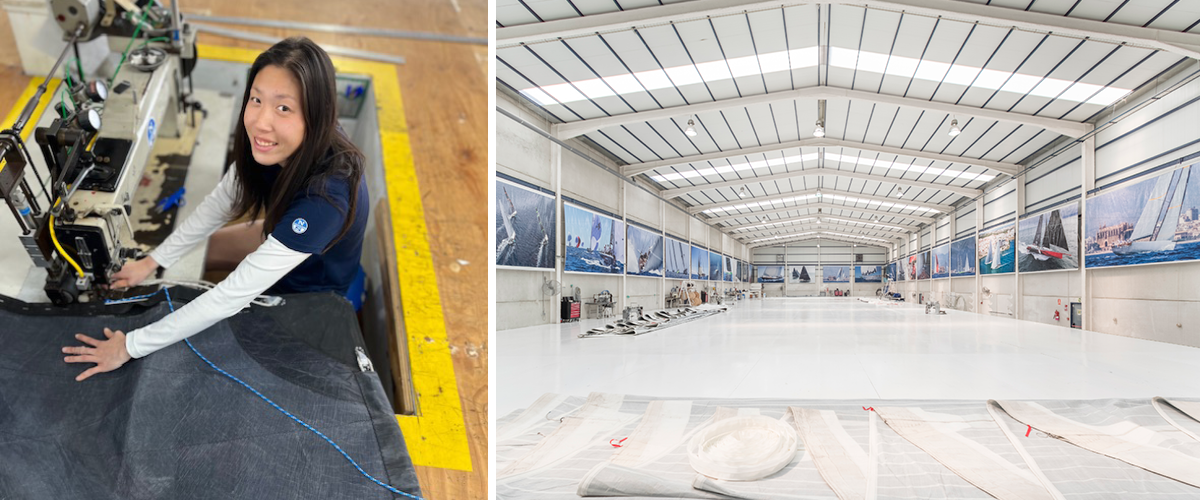
Charlotte Hinman grew up sailing in Brooklin, Maine at the age of six out of Centre Harbor Yacht Club. Like most sailors, she began in Opti’s then quickly worked her way up to Beetle Cats and finally 420s. This is where she got hooked on racing and sailing, beginning a life long dream to sail in college. Fast forward a few years, she is now a part of the service team at the San Diego loft of North Sails. She shares her path that led her to sailmaking.
When and where did you grow up sailing?
My parents signed me up for my first sailing class ever in Brooklin, Maine at Center Harbor Yacht Club (CHYC). At age six, starting as a beginner, I timidly got on the water for the first time. I remember disliking the fact that I didn’t know what was under me while I was stuck in a little Opti trying to figure out how the boat worked. Not knowing what was under me was my biggest fear, but quickly realized that it didn't matter if I could put in the effort to prevent capsizes and learn the basics. Then I started loving it.
This sparked my interest in getting better to move up and be able to sail different types of boats. I climbed the program, getting into the Learn to Race classes around ten years old. Instead of sailing Optis, we moved to Beetle Cats where I could start to understand the many techniques of racing. From starts to proper mark roundings, learning the sequences, and putting into play the rights of way.
By thirteen, I made it to the Advanced Racing Class. This class solidified my love for racing and sailing. We sailed Z420s and C420s. The amount of movement I could do to keep our speed, while keeping the boat flat and constantly looking for puffs was thrilling to me. After two years of being in that class, I knew I wanted to sail in college.
What brought you to California?
Keeping in mind that I wanted to sail in college, I looked at schools ranging from Florida to Rhode Island. After researching sailing programs, I fell in love with San Diego and decided SDSU was the best fit. What really pulled me in was the combination of getting to continue the sport I loved, mixed with amazing weather, wind conditions, and a school I could call mine.
What made you want to be a sailmaker?
After being on the SDSU Sailing Team for a couple years, I was offered a position as a coach at Southwestern Yacht Club in San Diego. I was coaching the Novice Beginner Class and soon moved on to coach the Race Team for a while. My time there taught me valuable lessons and ultimately was the reason I became infatuated by sailmaking. I always think to myself how funny it is that the smallest task could lead to something bigger. That’s exactly what happened here; I was assigned to put battens in Sabot sails and hand stitch the end of the pocket so they wouldn’t go anywhere. I spent only about thirty minutes doing that and very quickly acquired a strong liking towards working with sails.
You've been with us nearly a year, share some highlights with us?
Since starting work at North Sails, San Diego, it’s been the best journey and experience I’ve gone through in my entire life. From the minute I walked through the door to now, there’s never been a dull moment. I’ve learned so many skills and sail techniques that I never thought I’d be able to grasp. One of the main highlights of working here is definitely the people I work with. From day one, the entire loft was so welcoming, kind, ready to help, and never once made me feel like a fish out of water. In particular, Johnny R, Pike Harris, and Marnie Jenkins have given me some of my best experiences at the loft.
One of the the most amazing teachers I’ve had in my life has been Johnny R. The patience he had when it came down to teaching me small details as well as answering general questions, made the whole learning process achievable. Also Pike has taught me so much about bigger boats and how to work with and on those sails. And Marnie, from day one, was there with support and pushed me to do the best I could do. She’s pushed me to get on bigger boats that I wouldn't have a couple years ago. She’s become a role model to me.
The most rewarding aspect of sailmaking to me is finishing a sail. My biggest highlight by far has been conquering spinnaker tears. Being able to repair a panel, fly it, and lose it is very satisfying to me.
Has becoming a sailmaker changed your eye and experience racing?
From little boats to big boats, I’ve found that becoming a sailmaker has not only taught me a lot, but also has improved my sailing and racing skills in huge ways. I find myself adjusting controls to get the correct sail shape from a sail that I’ve seen at the loft for speed. I didn’t know much about big boats when I started. Now I know the differences between an A1.5 and an A7 spinnaker and more. My experience grew because I started sailing big boats and got to put my little boat experience into play. It’s easier for me now to identify a problem with the sails on a boat more than before; I feel more comfortable as a sailor in general.
What are some of your goals in life?
I thought I wanted to be a film director. After working here, I’m pretty sure my goals have changed. I would like to get into big boat sailing to the point where I can race around the world. Currently my biggest goal is trying to win an FJ or Snipe National Regatta with either one of my skippers, Blake Buckner or Chris Hopkins. I’m still young, and just getting on track, but give me a couple years and I’ll be a greater force in this industry.
READ MORE
READ MORE
KENNIS DELEN TIJDENS J/80 KLASSE TRAINING
Kennis delen tijdens J/80 klasse training
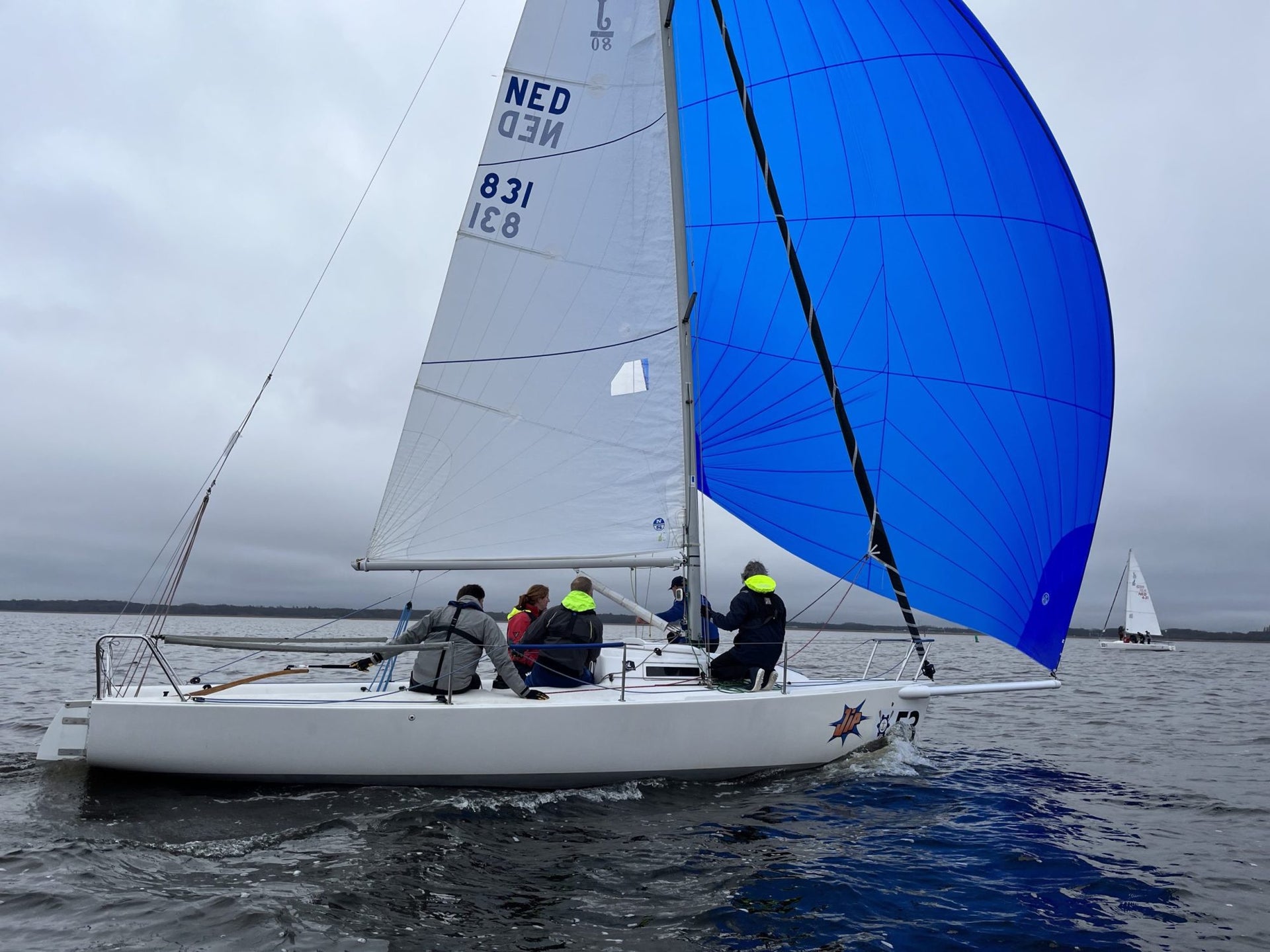
Tom stapt aan boord bij team Jip en geeft de nodige tips om nog actiever te varen
North Sails is goed vertegenwoordigd in de J/80 klasse. Ruim de helft van de deelnemers in de Nederlandse vloot vaart met een set van North Sails. Bij de training op zondag 19 februari op het Gooimeer waren zowel klanten als niet-klanten welkom. Met zeven boten op het water kon iedereen op voldoende aandacht rekenen van onze Sail Experts Wouter Köllmann, Tom van der Vecht en Jacco Huijgen.
De drie mannen zijn bekenden in de klasse. Tom en Jacco zijn al meerdere keren Nederlands Kampioen geworden met verschillende teams. En Wouter staat met zijn team DonJuan momenteel eerste in het tussenklassement van de winterserie Frostbite Cup. “Het is een mooie klasse waar we de laatste jaren veel aandacht hebben besteed bij North Sails. De volledige set van grootzeil, fok en gennaker hebben al meerdere doorontwikkelingen meegemaakt,” vertelt Jacco. “Vooral in de winter is de J/80 klasse erg actief met zo’n dertig boten bij de winterserie, welke wordt gevaren vanuit Naarden. De klasse wordt gekenmerkt door het grote verschil in ervaring en leeftijd, maar desondanks is het niveau van alle deelnemers de afgelopen jaren enorm gestegen. Samen word je ook sterker en als North Sails dragen we hier graag aan bij door onze kennis van de zeilen en de boot te delen.”
De rustige weersomstandigheden waren ideaal voor de deelnemers om het ‘wing on wing’ varen uit te proberen
Trimmen en tuning guide
De training was vooral gericht op trim. Bij de voorbespreking kwam de tuning guide ter sprake en rees de vraag; bij welke windkracht ga je naar een andere setting? Het antwoord: als je bent uitgetrimd. Dat konden de deelnemers op het water uittesten en bespreken met de Sail Experts. Er werden meerdere starts gedaan waarbij het erom ging om met alle boten op te lijnen. Op die manier konden de teams de krachten onderling meten en konden de Sail Experts observeren, tips geven en foto’s maken. In het voordewindse rak stapten zij een voor een bij een team aan boord om de bevindingen aan de hand van de foto’s te bespreken.
Ook werden de teams uitgedaagd om ‘wing on wing’ te varen, waarbij gennaker en grootzeil voor de wind over een aparte boeg worden gevaren. Deze truc van onder andere de J/80 wereldkampioen 2022 (team Le Tigre) werd zeker uitgetest door de deelnemers.
De tweede helft van de training bestond uit meerdere korte wedstrijden, waarbij de Sail Experts wederom bij de teams aan boord stapten. Nu lag de nadruk meer op handling, taakverdeling, gewichtsverdeling en actief bezig zijn met het voltallige team. Deze opzet werd zeer gewaardeerd door de teams en maakte een lange, algemene debriefing overbodig. Tom: “Er was geen gemene deler wat alle teams kunnen verbeteren, dus dan is zo’n individuele aanpak veel effectiever.” En het maakte dat de borrel kon worden gebruikt waarvoor deze is bedoeld; onderling ervaringen uitwisselen met een drankje in de hand. “Dat is minstens zo belangrijk,” aldus Jacco.
Tijdens de korte debriefing door Tom werden nog enkele vragen beantwoord
J/80 Tuning guide
READ MORE
READ MORE
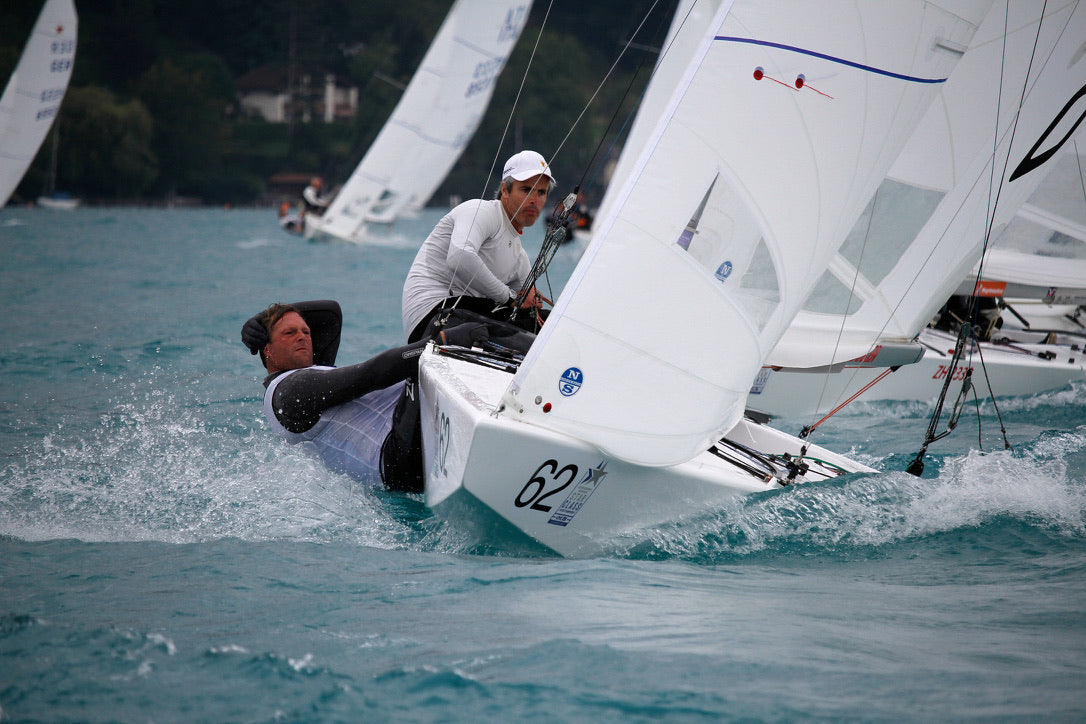
EVEN VOORSTELLEN: JOOST HOUWELING
EVEN VOORSTELLEN: JOOST HOUWELING
North Sails One Design Expert
Van jongs af aan draait het leven van Joost Houweling (45) om zeilen. Dat heeft niet alleen veel reizen met zich meegebracht, maar ook een groot netwerk in de zeilerij. Dat komt goed van pas bij zijn functie als One Design Expert bij North Sails. Wanneer we hem spreken, komt hij net terug uit Miami waar hij twee zeilevents heeft gevaren in twee verschillende klasses.
Reizen en meedoen aan zeilwedstrijden klinkt als een droom... Is dat het ook?
Je kunt wel stellen dat mijn werk en leven helemaal verweven zijn met mijn hobby. Zelf vaar ik onder andere Finn en Star. Boten die heel technisch en veeleisend zijn. Het leuke is dat ik de materie nog steeds aan het onderzoeken ben en telkens nieuwe afstellingen ontdek. De bevindingen die ik opdoe op het water bespreek ik tijdens de zeilevents met de aanwezige, internationale collega’s. Na het evenement hebben we een debriefing, productanalyses en houden we de tuning guide onder de loep. Alles om de North Sails producten verder te ontwikkelen en onze kennis te delen met klanten.
Wat is het leukste aan jouw baan?
De collegialiteit, zowel in de Benelux als internationaal. We hebben een heel leuk team in Nederland en België. Daarnaast kom ik dus veel collega’s tegen bij de evenementen. Deze groep is heel groot, maar een vraag is zo beantwoord. We weten elkaar goed te vinden en dat is maar goed ook, aangezien we de aandacht op de verschillende klasses hebben verdeeld. Zelf focus ik vooral op de Finn, Pampus, Star, Draak, Regenboog en Yngling, maar als lokale One Design Expert kunnen al onze klanten in de Benelux bij mij terecht met vragen. Als ik zelf het antwoord niet weet, zet ik de vraag uit bij mijn internationale collega’s. Dat is echt de kracht van North Sails.
Waar ben je het meeste trots op?
Dat is lastig, want ik weet niet meer alle overwinningen. Dat is niet arrogant bedoeld, want de Finn Gold Cup en de Star Mid Winters die ik beide net heb gevaren in Miami, waren wat teleurstellend. Zelf vaar ik momenteel vooral in deze twee klasses en maak ik af en toe een uitstapje naar de grote boten. Zo heb ik afgelopen zomer met een Australische IRC 40 de New York Yachtclub Race Week gewonnen en het TP 52 wereldkampioenschap gevaren met het team van Marc Blees. Ik vaar heel vaak met en tegen zeilgrootheden. Dat geeft echt een bevoorrecht gevoel. Maar als ik maar één prijs mag noemen waar ik echt trots op ben, dan zeg ik de Dragon Gold Cup. In 2015 mochten we deze prestigieuze prijs in ontvangst nemen en die heb ik wel onthouden.
Hoe ben je bij North Sails terecht gekomen?
Dat is allemaal heel natuurlijk gegaan. Ik ben opgegroeid op de Braasem en mijn ouders waren enthousiaste watersporters, dus de Optimist kwam er als vanzelfsprekend. Daarna heb ik nog even Splash gevaren, om daarna snel over te stappen naar de Regenboog en Star. Hier kwam ik Roeland Wentholt tegen, een van de grote zeildoekleveranciers en tevens leverancier van North Sails. Met hem ging ik internationale wedstrijden varen en onderweg bezochten we zeilmakerijen. In die tijd leerde ik veel belangrijke figuren in de zeilsport kennen en zeilde samen met mensen als Pieter Heerema en Olympiër en oceaanracer Lawrie Smith. Uiteindelijk werd ik in 2009 benaderd door North Sails met de vraag of ik de One Design tak wilde beheren. Ze hadden specifieke kennis nodig en daar gaat veel tijd in zitten. Deze baan past nog steeds uitstekend bij mij.luxe
Wat is jouw (zeil)advies?
Ga genieten van watersport! Bezig zijn op het water doet een mens echt goed. En dat hoeft niet per se in een zeilboot te zijn. Zelf ga ik bij mooi ook niet zeilen als ik vrij ben. Ik zeil nog wel voor m’n plezier, maar zeilen is wel werk geworden. Dat is niet erg, want daardoor heb ik het leukste werk denkbaar. Als ik vrij ben, pak ik wel vaak de sloep. Mijn twee zoons van 14 en 16 hebben het zeilvirus niet echt van me overgenomen. Dat is niet erg, ze mogen zelf hun sport kiezen. Als ze maar sporten! Toch krijgt mijn oudste zoon langzaamaan wel meer interesse in het zeilen. Afgelopen Sneekweek hebben we samen in de Pampus meegedaan. En dat was vast niet de laatste keer!
READ MORE
READ MORE
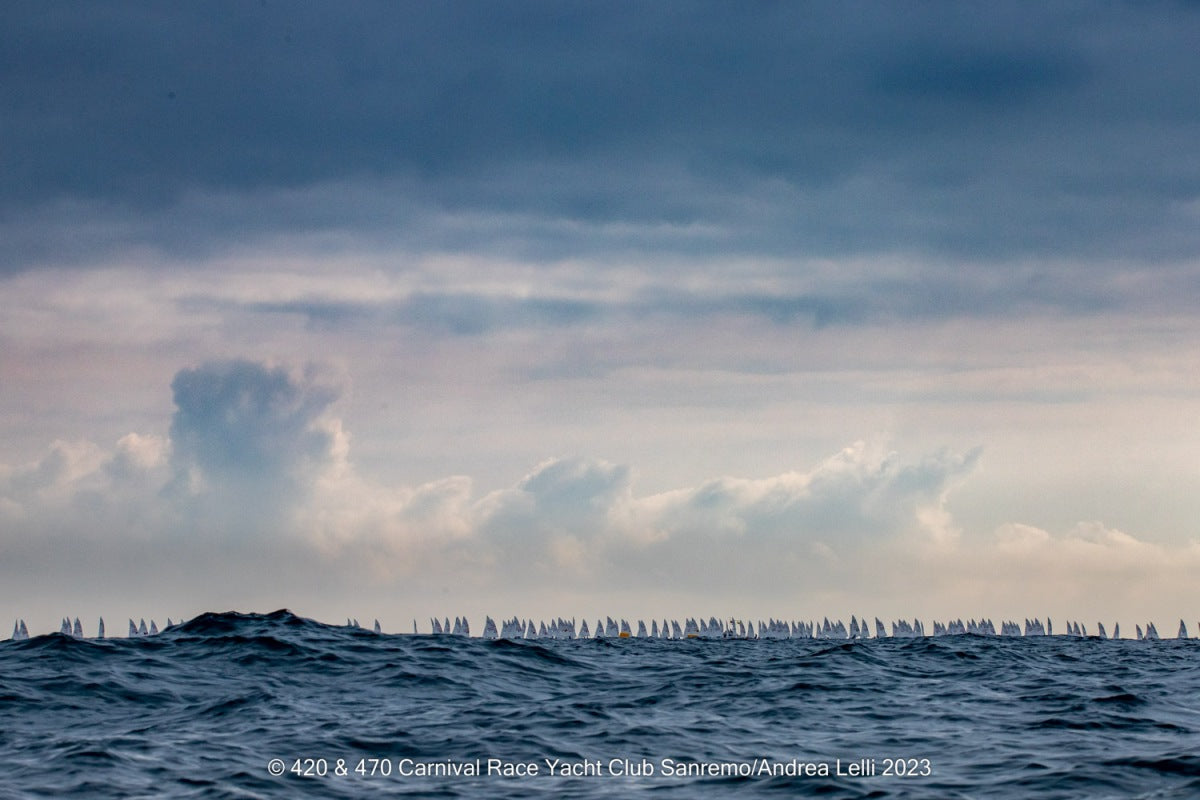
420 & 470 THE CARNIVAL RACE
420 & 470 The Carnival Race
Mješovita posada sastavljena od kormilarke iz JK Sv.Nikola, Eme Samaržija i flokiste iz JK Galeb, Leona Scheidla, u studenom se oprostila od klase 420 i napravila korak naprijed prema vrhunskom seniorskom jedrenju prebacivanjem u olimpijski dvosjed, klasu 470.
Kako je Ema ove jeseni upisala fakultet u Opatiji tako im je organiziranje zajedničkih treninga postalo mnogo lakše nego što je to bio slučaj dok su oboje bili srednjoškolci, pa su se morali pažljivo planirati vikendi u Rijeci ili odlasci na dodatne treninge u Zadar. Također im je sad mnogo zgodnije dogovoriti i zajedničke treninge s posadama u Portorožu, a ni Italija nije mnogo dalja.
Jedrilicu klase 470, u kojoj su počeli jedriti, nabavili su u Francuskoj, a nakon što su je u ovih par zimskih mjeseci uspjeli dovoljno upoznati odlučili su se i na prvi nastup na regati. Izbor je pao na međunarodnu regatu 420 & 470 The Carnival Race koja se od 16. pa do 19. veljače organizirala u San Remu u Italiji. Na regatu su otputovali sami, a podršku na moru pravio im je slovenski trener Mitja Mikulin.
Slično kao što je bilo i na Jadranu tih dana, ni u San Remu nije bilo vjetrovitije. Od četiri dana predviđena za jedrenje uspjeli su korisno iskoristiti samo dva.
📸 regate.com.hr
Prvi dan bilo je samo 3 čvora vjetra, tako da nismo odjedrili niti jedan plov, ali drugi dan smo uspjeli odjedriti 3 plova.
U prvom smo završili šesti i to po laganom vjetru. Na početku je puhalo 6-8 čvorova, a onda su na bovi od orce gdje je puhalo desetak čvorova dignuli Oskara (dozvola za pumpanje).
Tu bovu smo okrenuli treći, odmah iza Giacoma Ferrarija koji je talijanski olimpijac i Tine Mrak. Međutim, još nismo dovoljno dobri u jedrenju u krmu, pa smo tu izgubili nekoliko mjesta i na kraju u cilj ulazimo na šestom mjestu.
U drugom plovu ponovno je puhalo desetak čvorova. Do druge orce držali smo 6. mjesto, a onda nam je pukao trapez. Tu smo izgubili četiri mjesta i na kraju u cilj ulazimo kao 10.
A u trećem plovu spušta se Oskar, vjetar je malo oslabio, dobro startamo i neloše jedrimo i u cilj ulazimo kao osmi.
Treći dan je bila bonaca i nismo niti izašli na more. Zato je četvrti dan bilo malo više vjetra i jedrimo još dva plova.
Prvi smo odjedrili po otprilike 13 čvorova i tu smo imali problem što nam je bio krivi trim broda. Zbog toga nam je bilo teško držati korak s ostalima i završavamo na 12. mjestu.
Za zadnji plov smo se malo pretrimali, a i vjetar je oslabio, pa smo uspjeli završiti na šestom mjestu.
Leon Scheidl, flokist
Konačni rezultat regate u San Remu bilo je 7. mjesto od 15 mješovitih posada. Stvarno dobar rezultat s obzirom da je u pitanju bila prva regata i stvarno mali broj treninga u novoj jedrilici.
Nastavak regatnih aktivnosti ove mlade posade već je idućeg mjeseca na velikoj regati na Palmi, a također planiraju nastup u Hyeresu, da bi drugi dio proljeća i ljetne mjesece proveli na juniorskim i seniorskim Europskim i Svjetskim prvenstvima koja će se s izuzetkom seniorskog Europskog prvenstva koje će se jedriti u San Remu, sva jedriti na sjeveru Europe.
Kompletne rezultate The Carnival Racea možete pronaći na ovom linku, a ovoj ambicioznoj posadi želimo uspjeh u novoj klasi i da im se ispuni san, a to je nastup na Olimpijskim igrama 2028. u Los Angelesu.
READ MORE
READ MORE
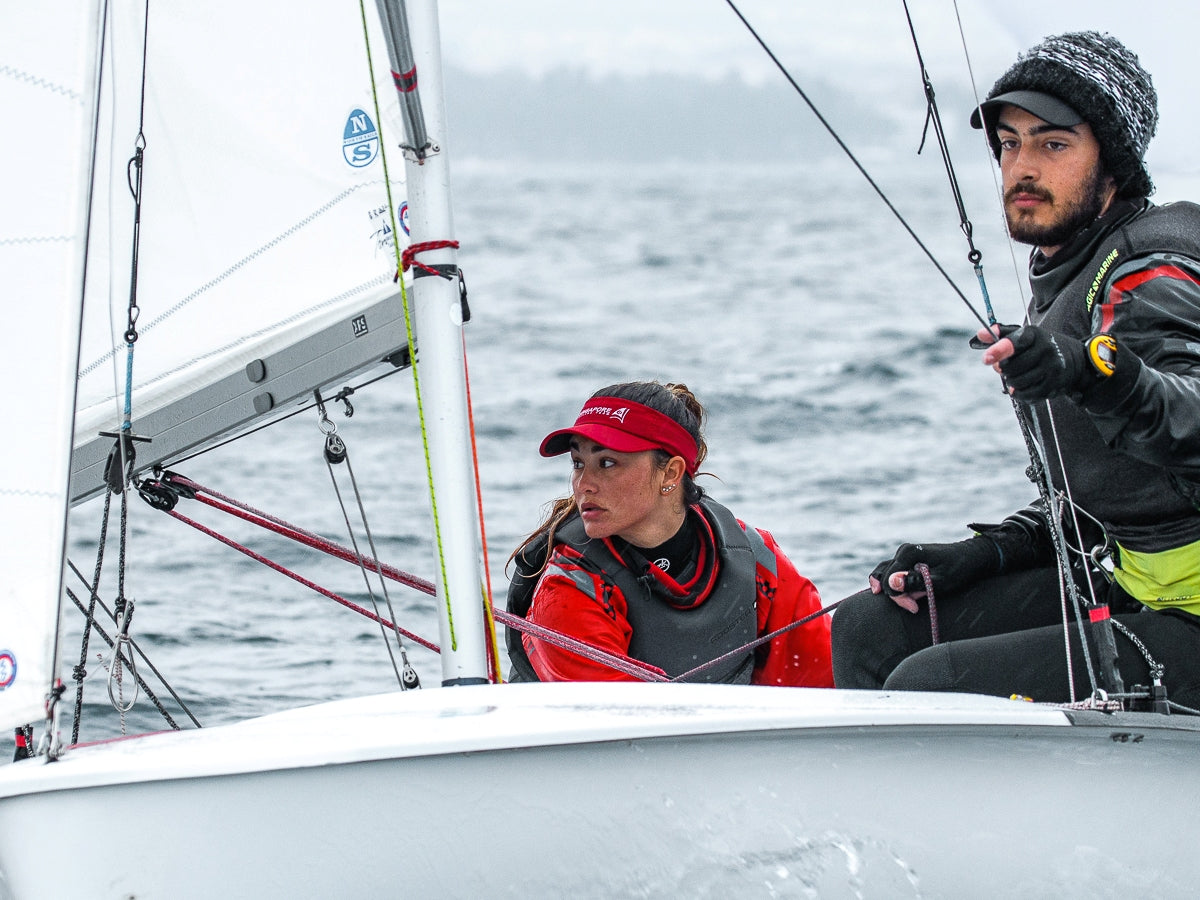
420 ZADAR OPEN
420 Zadar Open
Drugi dio zimskih praznika juniori iz klase 420 proveli su u Zadru gdje im je domaćin bio JK Uskok, a vrijeme su proveli u pripremnom kampu i završnoj regati.
Okupljanje u Zadru postalo je nezaobilazna destinacija za sve hrvatske posade, kao i za posade iz Slovenije i Poljske, a ponovno su im se pridružili i kolege i kolegice iz Italije. Ovogodišnje veljače sudjelovalo je 29 posada, od čega ih je 28 jedrilo na regati koja je trebala biti trodnevna, ali zbog najave orkanske bure za nedjelju 26. veljače, organizatori su odlučili da svim sudionicima pruže šansu da se na vrijeme vrate svojim domovima i u subotu proglašavaju najbolje.
Kako se u nedjelju pokazalo, ta odluka je bila pravovremena i svi koji su iskoristili subotnje poslijepodne da se upute na sjever napravili su najbolji mogući potez. Već u nedjelju ujutro, cesta podno Velebita zatvorena je za sva vozila osim osobna, a kroz Liku i Gorski kotar već od jutra snijeg stvara probleme, a kako dan odmiče tako se ceste koje spajaju unutrašnjost s Dalmacijom zatvaraju i na snagu stupa zabrana prometovanja. Ali, vratimo se jedrenju.
📸 regate.com.hr
4 posada s CRO jedrima sudjelovalo je u kampu. Uz Zadrane tu su bili članovi JK Galeb, JK Sv.Nikola, JK Labud, a po prvi put i jedna djevojačka posada iz šibenskog JK Val.
Cijeli pripremni tjedan prošao je u znaku slabog vjetra, a težište priprema bilo je na flotnom jedrenju i treniranju starta.
Da bi priča bila zaokružena pobrinula se sinoptička situacija s dijametralno suprotnim vremenskim uvjetima na regati u petak i subotu. Vjetra je oba dana bilo značajno više, a u subotu dodatnu težinu boravku na moru davale ja kiša koja je padala od signala starta prvog plova.
I u petak i u subotu odjedrila su se po tri plova. U petak po vjetru koje je puhalo između 11 - 13 čvorova, dok su u subotu refuli išli i do 19 čvorova.
U razgovoru s predstavnikom Uskoka, Karlom Krpeljevićem, saznali smo da je u svim jedrenjima presudna bila prva dionica, od starta do oznake orce. Jedrenja u mezzonavu i krmu bila su uglavnom "vlakići" u kojima je najvažnije bilo da ne dođe do prevrtanja.
Flota je bila miješana gdje je čisto djevojačkih posada bilo 5, čisto muških 14, a kombiniranih 9.
Na kraju su se najboljima pokazala miješane posade u kojima su djevojke bile na kormilima, a dečki u ulozi flokista. Sva tri mjesta na postolju u generalnom poretku otišle su ovim posadama.
Za razliku od lanjskog izdanja ove regate, kad je nabrža bila posada iz Slovenije, ove godine zlato uvjerljivo osvaja talijanska posada Lisa Vucetti - Vittorio Bonifacio. Pobjedu su odnijeli sa samo 6 kaznenih bodova, dok su drugoplasirana i trećeplasirana posada imale po 17 kaznenih bodova.
Srebro su osvojili Uskokovci Noela Petešić i Adrian Peović, dok je bronca otišla na Jarun u vitrine Sv.Nikole a osvojili su je Mara Samaržija i Tin Fike.
Zanimljiv detalj je da ni jedna od ove dvije posade nije uspjela osvojiti pojedinačni plov, a prevagu u korist domaćina odnijelo je to što je njihov najbolji finiš bilo drugo mjesto (i to tri puta), dok je posadi iz Zagreba najbolji rezultat bilo treće mjesto (dva puta).
Nakon tjedna u Zadru naše posade u klasi 420 čekaju dvije regate u ožujku i to u Sloveniji i Italiji. Nakon toga slijedi talijanska turneja, a prva regata u Hrvatskoj tek je na rasporedu u rujnu.
Kompletne rezultate Zadar Opena možete pronaći na ovom linku.
READ MORE
READ MORE
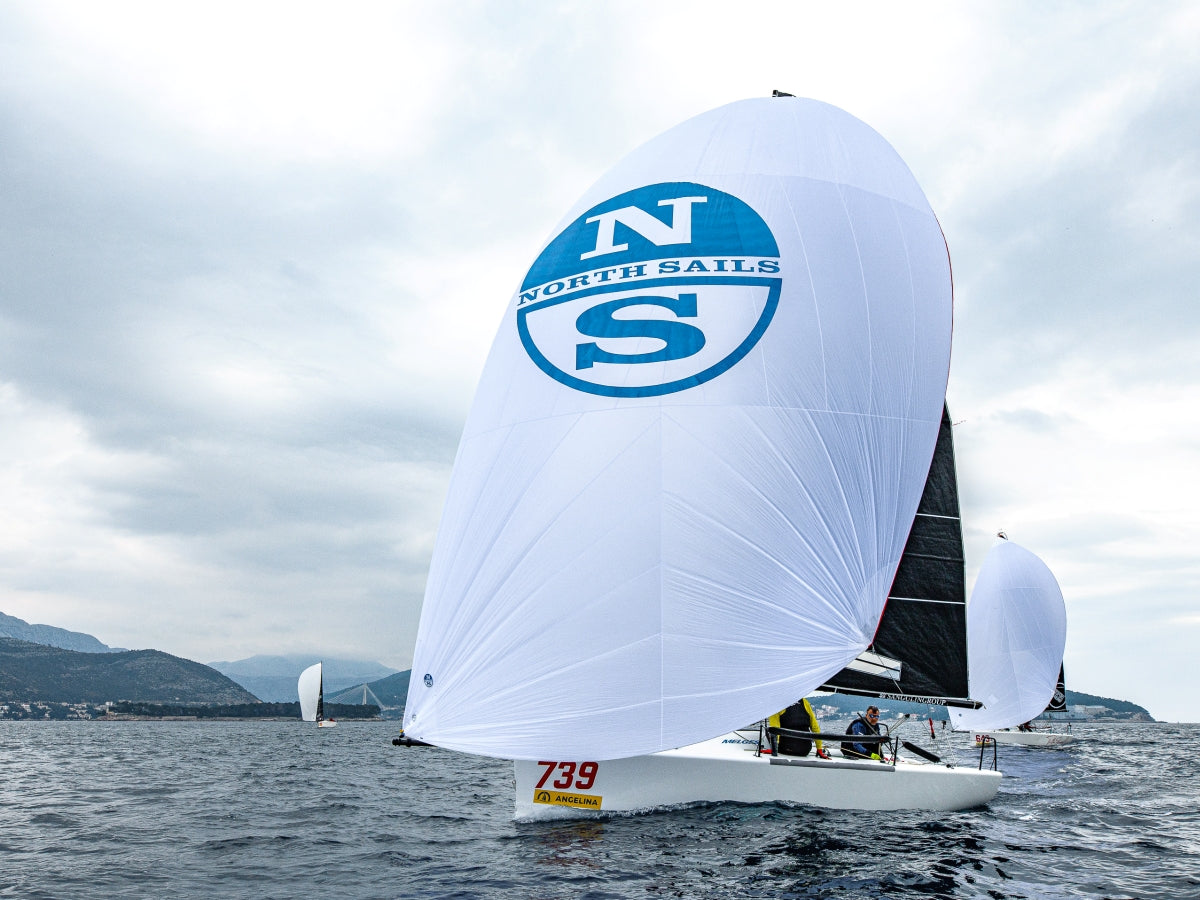
NORTH SAILS KLIJENTI PONOVNO NA POSTOLJU
North Sails klijenti ponovno na postolju
Deset posada sudjelovalo je na otvaranju CRO Melges 24 serije regata. Prva regata ponovno je organizirana u Dubrovniku gdje su domaćini bili članovi JK Orsan i posada Melgesa 24 - Lero.
Uvod u regatu bio je uobičajeni šušur po društvenim mrežama gdje su se objavljivale fotografije i video materijali novih jedrilica u floti, treninga u novim sastavima, polaganog buđenja nakon spektakularnog Prvenstva Hrvatske jedrenog u studenom i zimske pauze. Posljedica bildanja atmosfere bile su prijave poslane od strane 11 posada, da bi na kraju zbog sezonskih zdravstvenih razloga jedna posada otkazala pred sam početak.
Za razliku od prošlogodišnje regate u Dubrovniku kad je na regatnom polju dominirala bura, ovog puta jedriličare je dočekala drastično drugačija sinoptička situacija na regatnom polju. U subotu vjetra nije bilo, dan je bio sunčan s mjestimičnim prolaznim oblacima i primjereniji šetnji po Dubrovačkim zidinama nego čekanju na eventualnu termiku koja na kraju uopće nije došla.
📸 regate.com.hr
Nedjelja je po svim prognozama bila primjerenija za jedrenje, što se potvrdilo točnim iako to nisu bili spektakularni uvjeti kakvi bi se očekivali za ovo doba godine. Cijeli dan nebom je dominirala naoblaka koja je dolazila s juga, dok je na regatnom polju smještenom u trokutu između Dakse, Grebena i Koločepa puhalo jugo s levanta uz jake lijeve driceve.
Brzina vjetra uglavnom nije prelazila 6 čvorova, pa je par refula koji bi zapuhali malo više bili pravo osvježenje. Tako lagan vjetar pratilo je i relativno mirno more i tek nakon podne more se počelo malo ozbiljnije mreškati.
Također se mora spomenuti i prisutnost jakog južnog kurenta koji je značajno utjecao na jedrenje, a što se može dosta dobro primijetiti u playbackovima jedrenja u zonama prilaska privjetrinskim oznakama.
S prvim jedrenjem krenulo se točno u 11 sati. Start na sredini startne linije i zatim dugo jedrenje na lijevu stranu pokazalo se dobitnom kombinacijom za posadu Universitas Nove. Studenti su ovim potezom iskoristili prednost lijeve strane i izbacili se na vrh flote na kojem su bili sve do cilja. Uz njih je cijelo vrijeme u prvom dijelu plova jedrila i nova postava na jedrilici Tutta Forza, dok su Panjić (u ovoj sezoni s novim kormilarom) i Mataran prvu orcu okrenuli iza njih.
Ovakav raspored ostaje do prve krme, kad Tutta Forza ne uspijeva održati kurs koji bi ih odveo na lijevi gate. Ovaj taktički propust iskorištavaju i Panjić i Mataran, a prebacivanjem na lijevu stranu polja, pred kraj druge orca i Point One prolazi ispred Zadrana.
Inače, za vrijeme prve krme RO je donio odluku da se produlji orca, pa je zbog toga u gateu signalizirano postavljanje oznake Charlie.
Drugi plov starta ubrzo, a s obzirom na limit duljine zone u kojoj se jedrilo, RO obavještava natjecatelje da će se plov jedriti u tri kruga. Uvjeti nakon starta ponovno su takvi da se boljom pokazuje lijeva strana. Ovog puta primat preuzima posada Matarana 24, a na opće iznenađenje cijele flote ekipa Palmine okreće odmah nakon njih, a za njima ponovno Tutta Forza.
Međutim, u krmi dolazi do promjene, odnosno lijevi dric nije toliko dominantan i ovog puta bolje prolaze jedrilice u sredini polja. Osim Matarana to je prepoznala i posada Joyrunnera koja ga u nastavku prati u brazdi i zadržava poziciju.
I druga orca se jedrila na iste koordinate orce i offseta, ali sad već okretanje vjetra u lijevo tjera RO da za treću orcu ponovno angažira course settere da postave Charlija petnaestak stupnjeva u lijevo i da za kabel-dva skrate duljinu.
U ovoj posljednjoj etapi polje više nije preferiralo neku od strana, pa su Panjić i Tutta Forza pokušali napasti Matarana i Joyrunnera s desne strane. Panjić se čak i približio Joyrunneru na par duljina, ali klasičnim pariranjem Joyrunner nije dozvolio da se Panjić opasnije približi.
📸 regate.com.hr
Pred treći plov korigirani su i gate i orca i ponovno se jedre tri kruga. Od starta flotu ponovno predvodi ekipa Matarana s Panjićem i Universitas Novom za petama. Prednost ostvarena u prvoj dionici bila je nepromijenjena sve do treće orce kad se Trogirani uspijevaju značajno odvojiti.
Inače, treća orca ponovno je završavala kod Charlija kojem je ovog puta uloga bila samo da skrati rutu, jer je vjetar počeo slabiti.
Kad se na kraju podvukla crta i napravio konačni obračun pobjedu odnosi posada Matarana 24 na svojoj novoj jedrilici. Osim novog plovila, novost kod njih je i to što od ove sezone ne jedre više u corinthian skupini. Do pobjede dolaze s minimalna dva boda. Do takvog netto rezultata došlo se primjenom novosti vezane uz klasu i bodovanje na njenim regatama, a to je da se odbacivanje uvodi već nakon tri odjedrena plova.
Što se tiče srebra i bronce, bodovi obje posade iznose 4.0, a pobjedu odnosi posada Universitas Nove jer su imali jednu pobjedu, dok Panjiću to nije pošlo za rukom.
Definitivno pozitivno iznenađenje plasman je Joyrunnera na prvu poziciju ispod postolja, dok se Point One morao zadovoljiti petim mjestom.
Nakon petorke u apsolutnoj kategoriji smjestila se i petorka iz corinthian skupine, a njih je predvodila posada Tutta Forze. Što se tiče ostatka postolja za skupinu koja je po World Sailingu kategorizirana kao amaterska, situacija je bila identična onoj kao kod "profesionalaca". Palmina i Iggy imaju jednak broj bodova, a s obzirom na jednake ulaske finiše presudio je bolji plasman Palmine u posljednjem jedrenju.
Na dnu ljestvice završavaju Lero i Orage, a kompletne rezultate jedrenja možete pronaći na ovom linku.
📸 regate.com.hr
Što se tiče statistike i playbackova, oni se nalaze na priloženim linkovima. Jedino treba primijetiti da je statistika pripremljena za prvi plov, a razlog je nepripremljen softver za kalkuliranje u kombinacijama regatnog polja koje su bile u drugom i trećem plova. Ali čim se to sredi bit će dodani i ovi podaci.
Statistika
STAT - 1. PLOV
Playbackovi
P L A Y B A C K - 1. PLOV
P L A Y B A C K - 2. PLOV
P L A Y B A C K - 3. PLOV
READ MORE
READ MORE
NORTH ON SOUTH: TALES FROM THE SOUTHERN OCEAN
NORTH ON SOUTH: TALES FROM THE SOUTHERN OCEAN
Legendary Round-the-World Sailors Preview Leg 3 of The Ocean Race
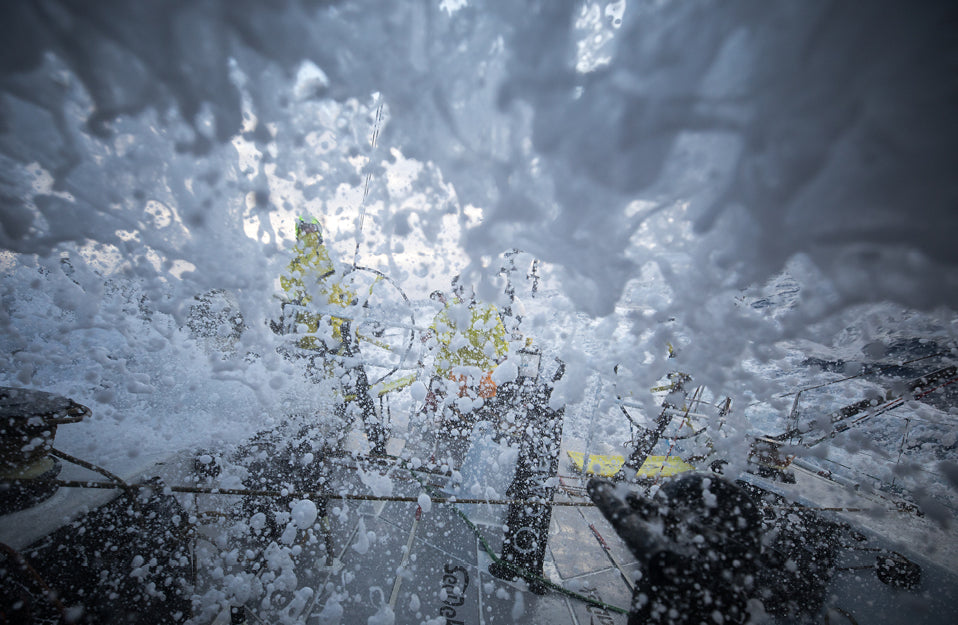
It was a straightforward question, put to three of the most experienced offshore sailors on the North Sails team, all of whom have made multiple forays on round-the-world races into the mythical, mystical Southern Ocean. The legendary body of water on the planet’s southernmost reaches includes Cape Horn at the very tip of South America, a rounding of which many mariners believe is a crowning sailing achievement akin to an alpinist summiting Mount Everest. Simply put, what immediately comes to mind when hearing those two words: Southern Ocean?
“Lack of sunlight. Gray skies. Long nights. Short days,” said Ian Walker, the two-time Olympic medalist and America’s Cup veteran who won the 2014-15 edition of the Volvo Ocean Race as skipper of Abu Dhabi Ocean Racing. “It’s a bit of a love-hate thing. On the one hand, it can be the best sailing you’ve ever done in your life. On the other hand, I remember some pretty miserable times when it’s windy and cold and you just can’t wait to round Cape Horn and turn north and get out of there.”
“Nasty. Lonely. Out of your comfort zone,” said North’s president Ken Read, who twice served as skipper in a pair of Volvo Ocean Race campaigns. “People can talk until they’re blue in the face about it, but until you get there, you can’t understand what a different feeling it is to sail there. The albatrosses are taunting you. The interior of the boat is just raining with moisture and it’s freezing cold. Your sleeping bag is soaked. It’s just relentless. That’s another good word for it. Relentless.”
📸 ©Amory Ross / Volvo Ocean Race
“Cold. But beautiful,” said Dutch sailor Bouwe Bekking, who has rounded the Horn an incredible nine times in round-the-world races, including a quartet as skipper. “It’s horrible and beautiful at the same time. There’s hardly anybody else there, one or two crazy fishermen, and it’s always a challenge. But I love that part of the world. It’s so real. I think the rest of the planet has been treated by human beings in ways it shouldn’t be. But the Southern Ocean? It’s pure. It’s a special place.”
Sometimes mesmerizing, oftentimes appalling, the Southern Ocean—loosely defined as the southern waters known as the Roaring Forties, Furious Fifties and Screaming Sixties for the bands of latitude they encompass, with the continent of Antarctica the southernmost border—is especially relevant right now as the IMOCA fleet in the current edition of The Ocean Race are in final preparations for the upcoming, record-breaking Leg 3 from Cape Town, South Africa to Itajaí, Brazil.
Scheduled to begin on February 26, the 12,750 nautical-mile voyage, which will leave to port the trio of great southern capes—South Africa’s Cape of Good Hope, Australia’s Cape Leeuwin and formidable Cape Horn—is expected to take over a month and represents the longest distance in the contest’s 50-year history. While the leg may be treacherous, it counts double in terms of points, which also makes it potentially very rewarding: The first set of points will be awarded for the order the boats pass longitude 166° 25’ East (close to the western tip of New Zealand) and the second set for the finishing order in Itajaí.
So what, exactly, can The Ocean Race crews expect to encounter as they depart Cape Town and steer west into the open, watery void? If the experiences of Walker, Read and Bekking are any indication, a little bit of everything.
Walker in particular, has tasted exalting highs and devastating lows. The latter occurred in the 2011-12 running of the race when the boat he was skippering, Abu Dhabi Ocean Racing, began to delaminate near what is known as Point Nemo; it’s the furthest spot on the planet from any speck of land, officially making it the world’s most remote location. “We came off a couple of big waves and they delaminated a section of the hull measuring about ten feet by four feet in the middle of the boat,” he said. “We made a temporary repair by actually bolting the skins back together. We scavenged as many bolts as we could, heeled the boat onto its side, and drilled through the hull, with a guy on a harness on the other side to put the bolts through.” Right. Just another day at the office. A pit stop in Chile was made to conduct a more lasting repair.
But in the race’s next edition in 2014-15, again in command of the Abu Dhabi crew, it all came together for Walker in a winning effort, which included a 24-hour distance record of 550.82 nautical miles. Sailing at such high speeds, he recalled, was a bit of a balancing act. “I remember the speedo flashing over 40 knots,” he said.
📸 Matt Knighton / Abu Dhabi Ocean Racing / Volvo Ocean Race
“Whoa,” he continued. “Any time you’re averaging in the low twenties you’re regularly sailing at 30 knots. Doing a record run is about two things really: keeping a fast average speed and sailing in a straight line. When you’re screaming down the face of a wave there’s a seamanship side to it. You need the right sail plan for the conditions, so you’re neither pooped from astern or by breaking waves, but not going so fast that you go down the mine so hard you wind up end over end at the bottom of a wave. If you go too fast you start catching waves that sometimes you wish you hadn’t caught!”
Before he skippered the PUMA Ocean Racing entry in the 2008-2009 and 2011-2012 editions of the Volvo, Read actually got his first exposure to the race in the final legs of the 2005-2006 race with the Ericsson Racing Team. And while he didn’t see the Southern Ocean in that stint, the race left a profound impact on him. “After my third America’s Cup, I was tired of going around the buoys and was looking for a change,” he said. Man, did he get one.
“I got off Ericsson after the Transatlantic leg and asked myself, ‘Do I really want to do this again?’ Part of me was terrified and another part was like, ‘That’s the most interesting thing I’ve ever done in my life.’ I had two guys on my shoulders, one saying, ‘Don’t be an idiot’ and the other going, ‘Do it, you’ll love it the rest of your life.’ I let that guy win. And he was right. Getting involved with the Volvo was one of the great sporting decisions of my life. It changed my life and it’ll always be changed because of those adventures.”
It was in his second PUMA campaign, deep in the Southern Ocean, that he endured one of those defining adventures. “We knew three days before leaving New Zealand that we were going to get our butts kicked,” he said. Which is precisely what transpired. “At one point we got hit by two really bad cold fronts. We sailed the first one with a storm jib and three reefs. Then there was a day of nice sailing and then like nine days in a row of 35- to 55-knot winds. Three of our drivers were injured and in their bunks. A couple of boats almost sank. It was one of the few times in my ocean-racing career that we pulled back. We actually took down the sails and backed off. Thanks for stirring up all these memories. Now I need a Xanax.”
For each and every Southern Ocean boat and competitor, the leg has one common denominator: No matter what route you’ve chosen, or how wonderful or terrible the conditions you’ve encountered along the voyage, everyone must round Cape Horn, the legendary promontory at 57 degrees South.
📸 Team Brunel / Volvo Ocean Race
“If you’re crossing the Atlantic and see a big weather system coming, you have choices,” said Walker. “You can go north or south. And depending on the quality of the weather information you have, you can pretty much choose the maximum wind speed you want to sail in by positioning yourself accordingly. The thing I always say about Cape Horn is you’ve got no choices. You’ve got to go around it.
“You’ve got a lee shore on the South American coast so you can’t run for cover,” he said. “You’ve got this change in the ocean shelf rising up, and the massively decreasing depth combined with the adverse ocean currents kicks up a nasty sea state. And there’s often a huge increase in wind strength, as the breeze is blowing uninterrupted around the length of the Southern Ocean before piling up at the tip of South America. It’s this perfect storm of adverse conditions. It’s basically the luck of the draw.”
“I used to call it the funnel,” said Read. “There’s no right turn, no left turn, there’s only straight ahead and that’s it. The weather systems accelerate through there. You know all the history and how violent it can be. You’re jumping into a funnel, and playing Russian roulette at the same time. The funnel’s either going to kick your ass or give you a blessing and let you pass unscathed. Either way, there’s a special bonding moment with the guys after you get around. The relief just washes over you.”
So, with the combined record of over a dozen Southern Ocean passages, what advice can the North Sails crew offer to those headed south for the first time?
“Take somebody with you that’s been there before,” laughed Bekking. “You’re going to make mistakes, but if you can minimize them, your trip will be much better. And the way to make fewer mistakes is to have someone experienced by your side.”
“Preparation is the key,” said Walker. “Being well prepared in what you eat, what you wear, how you look after yourself, it’s all critical. Because once you start to go downhill, it’s very hard to turn around.”
“Getting through it is the most important thing,” said Read. “At some stage you’re going to need to check your ego at the door and just make sure you get through this night or this day in one piece, because you’re going to have one of those experiences. The wind is different. The waves are different. It’s all just different. So use some common sense, live to fight the next day, and you’ll probably be just fine when it comes to the race result at the same time.”
READ MORE
READ MORE
NORTH SAILS Y THE OCEAN RACE, EN EL ROLE
NORTH SAILS Y THE OCEAN RACE,
EN EL ROLE
En el segundo capítulo de North Sails en el Role, Luis Martínez Doreste explica cómo son, cómo se fabrican y algún que otro secreto de las velas que equipan los participantes de The Ocean Race.
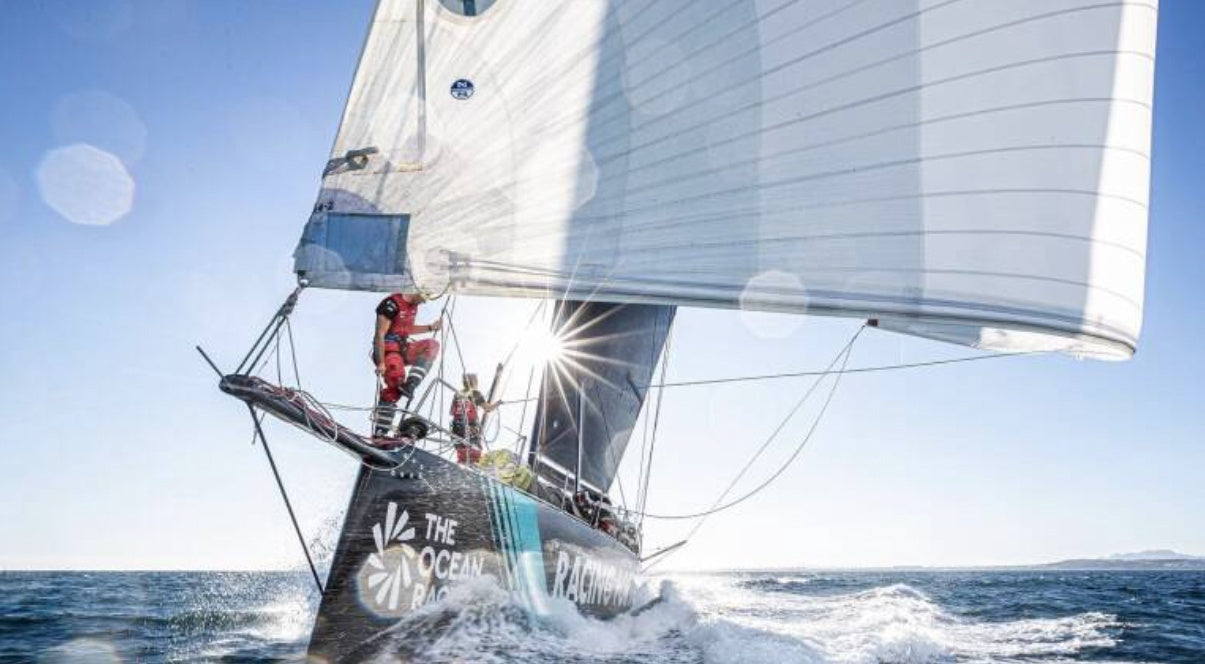
North Sails equipa a diez de los once barcos que participan en la edición 2023 de The Ocean Race, la regata de vuelta al mundo con escalas que partió de Alicante el pasado mes de enero. North Sails es el proveedor oficial de velas de la clase monotipo VO65 y fue elegida por cuatro de los cinco equipos de clase IMOCA.
En el segundo capítulo de North Sails en el El Role, Luis Martínez Doreste explica todos los detalles de las velas capaces de propulsar a la flota alrededor del mundo, caracterizadas por un equilibrio excepcional entre prestaciones y durabilidad. El director comercial de North Sails España desvela cómo se fabrican, qué diferencias tienen con las de otras disciplinas y algún que otro secreto de las velas más populares entre los participantes de The Ocean Race: las North Sails 3Di.
El segundo capítulo de North Sails en El Role está disponible en este enlace bajo el título Todos los secretos de las velas de The Ocean Race.
El Role está dirigido y presentado por el periodista Nacho Gómez. Se emite en Plaza Radio y en las principales plataformas de podcasting (Apple, Spotify, Ivoox, Goodle Podcast y Amazon Audible).
North Sails es la velería oficial de la clase VO65 en The Ocean Race.
READ MORE
READ MORE
CALENDARIO NORTH SAILS DE SERVICIO EN REGATA 2023
CALENDARIO NORTH SAILS DE SERVICIO EN REGATA 2023
Reparación y puesta a punto, a pie de pantalán
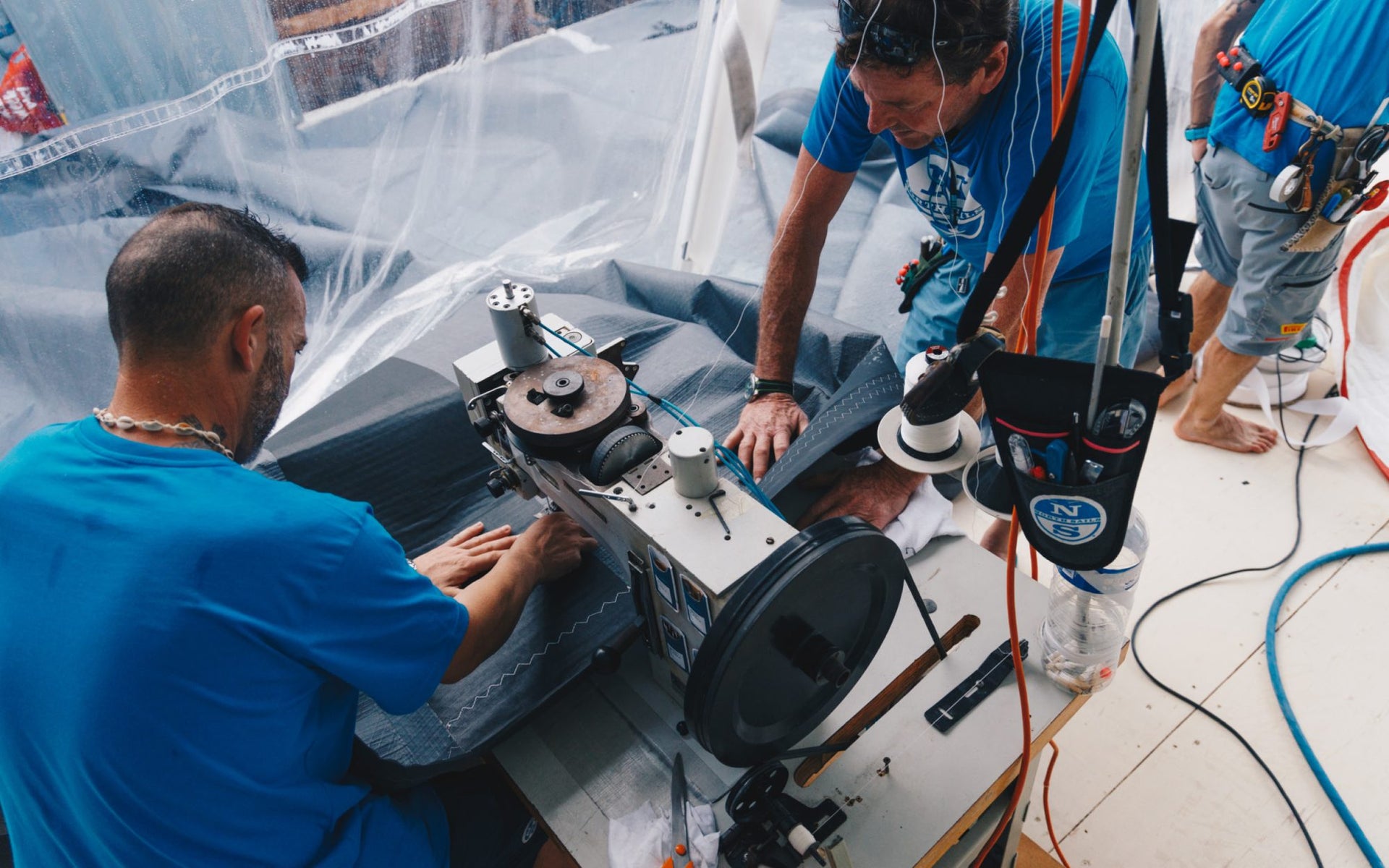
North Sails volverá a contar con su programa de servicios de reparación de regatas en 2023. La combinación de nuestra amplia red de velerías y los talleres itinerantes permite ofrecer el servicio oficial North Sails a las tripulaciones de las mejores regatas internacionales de Superyates y competición Grand Prix. Nuestros expertos recogen las velas al finalizar la jornada a pie de pantalán y trabajan de noche para garantizar que están listas para dar lo mejor de sí el día siguiente.
Este año, el servicio en regata de North Sails estará disponible en la St Barth's Bucket (16 a 19 de marzo), en varias regatas del circuito Swan One Design, en la Maxi Yacht Rolex Cup (3 a 9 de septiembre) y en Les Voiles de St Tropez (29 de septiembre a 7 de octubre), entre otras. Coordinar la logística, los detalles y el personal no es una hazaña fácil, pero resulta posible gracias a nuestra experiencia y a un equipo de servicio centrado en el cliente.
El equipo de profesionales North Sails es consciente de que cada segundo en el agua cuenta, y por ello se compromete a maximizar ese tiempo para nuestros clientes. Esto a menudo se traduce en largas noches que se convierten en madrugadas para nuestros veleros con el objetivo de asegurarse de que las velas estén listas la jornada siguiente.
El programa completo de servicio North Sails en regata 2023 está disponible en el listado al pie. No olvides seguirnos en Facebook, donde continuaremos ampliando este listado a medida que avanza la temporada.
READ MORE
READ MORE
EXCELENTES RESULTADOS EN LA LANZAROTE INTERNATIONAL REGATTA
EXCELENTES RESULTADOS EN LA LANZAROTE INTERNATIONAL REGATTA
Podio completo North Sails en 470 Mixed
51 Trofeo S.A.R. Princesa Sofía Mallorca, first event of the 2022 Hempel World Cup Series 09 April, 2022 © Sailing Energy / Princesa Sofía Mallorca
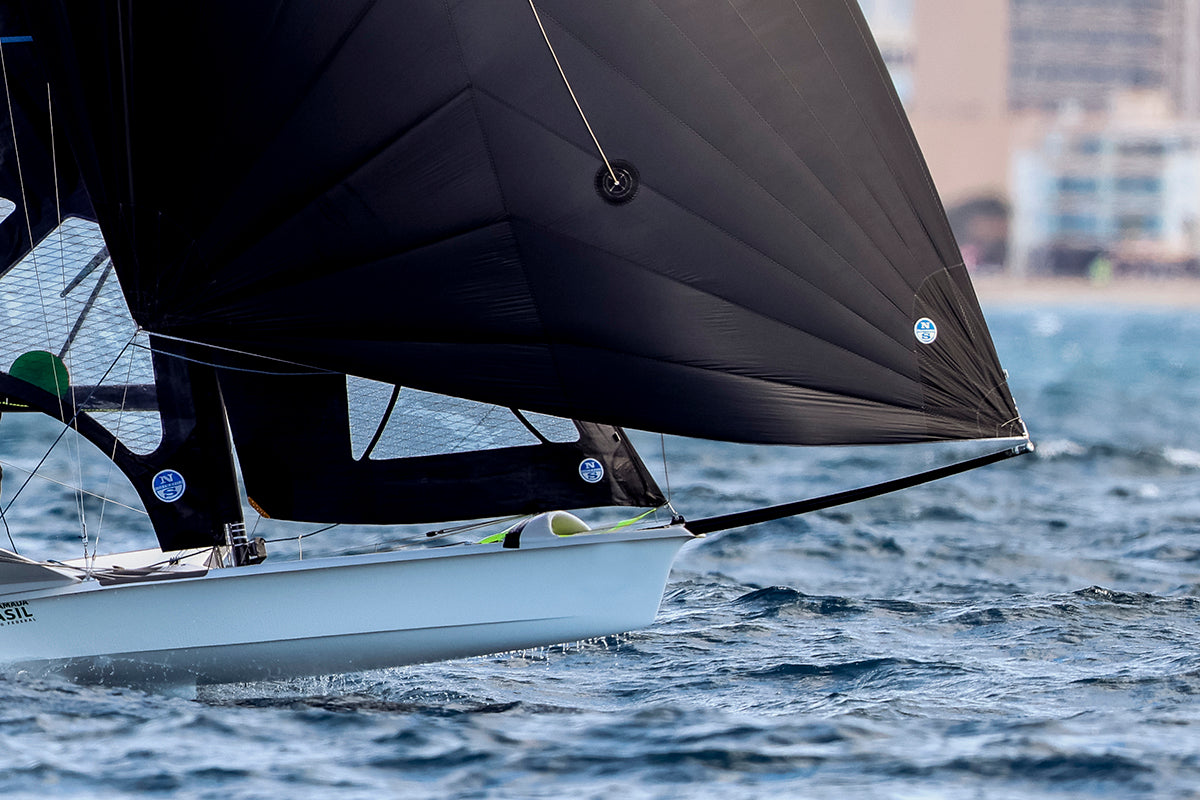
La Lanzarote International Regatta 2023 reunió a seis clases olímpicas en aguas de Canarias. En su condición de velería oficial de clase para los JJ.OO. de París 2024, North Sails propulsó a todos los equipos de 49er y 49er FX. El podio al completo de 470 Mixed también equipó velas North Sails.
La Lanzarote International Regatta reunió en la isla canaria a cerca de 370 regatistas de 39 nacionalidades distribuidos en seis de las diez clases olímpicas que competirán en París 2024. En su condición de velería oficial de los próximos Juegos Olímpicos, North Sails equipó a los 29 barcos de clase 49er y los 30 de clase 49er FX con sus reconocibles velas 3Di negras. La victoria de 49er correspondió al tándem británico formado por James Peters y Flynn Sterrit, y en 49er FX a sus compatriotas Freya Black y Saskia Tidey.
North Sails también fue protagonista en clase 470 Mixed al ser la velería de elección de los tres equipos del podio en Lanzarote: los campeones Jordi Xammar y Nora Brugman, los también españoles Silvia Mas y Nico Rodríguez y los suecos Anton Dahlberg y Lovisa Karlsson.
Los resultados completos de la Lanzarote International Regatta están disponibles aquí.
Desde North Sails España felicitamos a todos ellos por sus resultados y enviamos un agradecimiento especial a los campeones de 470 Mixed por elegir velas North Sails.
Visita www.northsails.com para ver lo que North Sails puede hacer por tu 49er, 49er FX y 470.
READ MORE
READ MORE
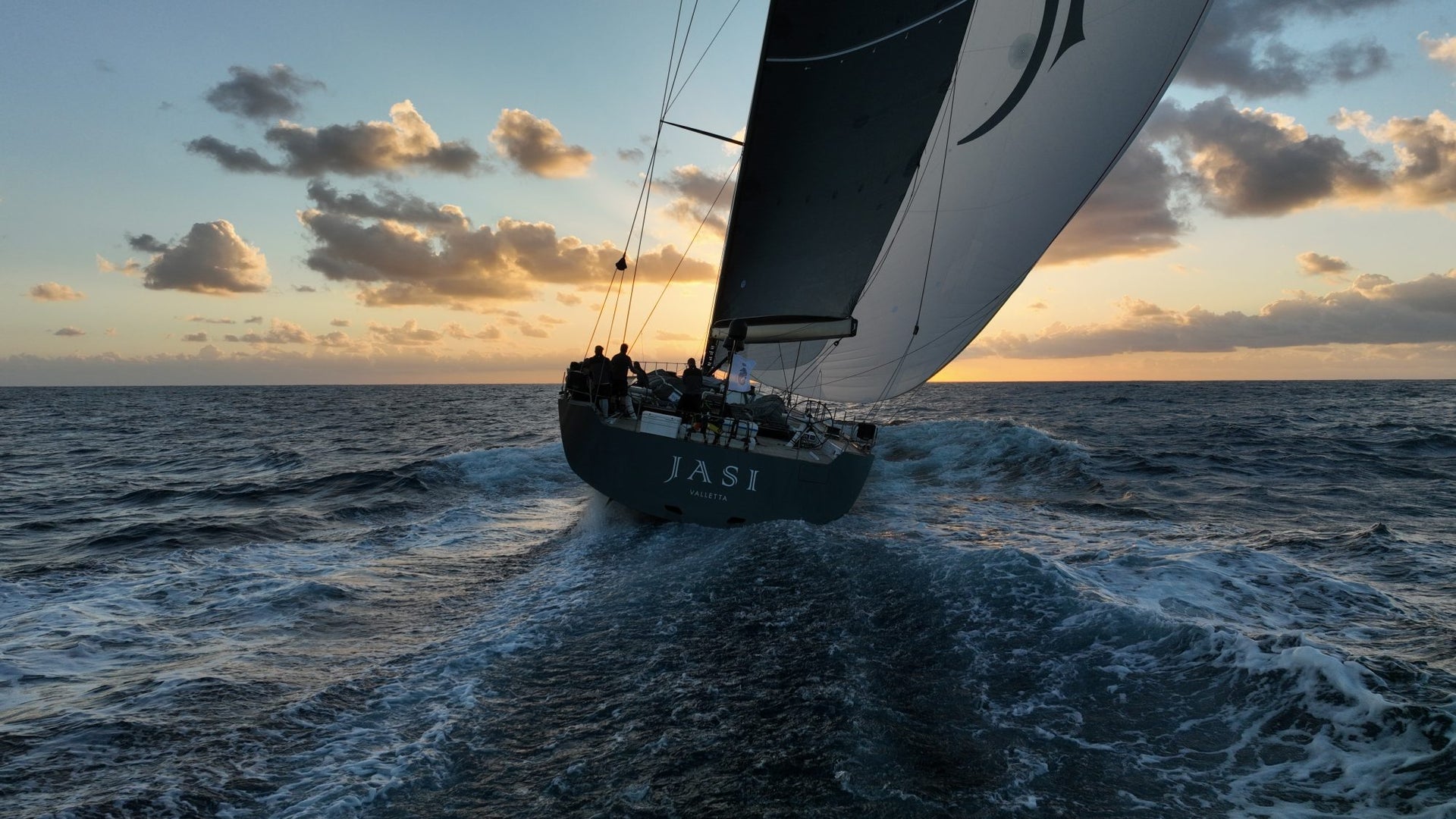
JASI: SUPERYACHT SPEED IN RORC TRANSATLANTIC RACE
JASI: SUPERYACHT SPEED IN RORC TRANSATLANTIC RACE
North Powered Swan 115 Sets Unofficial Superyacht Race Record
📸 Balta Montaner
North Sails and North Technology Group President Ken Read has logged thousands of ocean miles in three round-the-world race programs, over a dozen Transatlantic crossings, and countless high-profile distance races. For the 2023 RORC Transatlantic Race, Ken was a Watch Captain on board Swan 115, Jasi. A true performance cruiser, Jasi completed the 3,200-mile race in an elapsed time of 09 days, 14 hours, 43 mins, and 37 seconds. Notably, this is the fastest time for a superyacht in the nine-year history of the race, besting the previous “unofficial” superyacht record set by the 130ft Baltic My Song in 2018 by 15 hours.
“This was a completely different experience from any other offshore racing I have ever done. When you go down below on Jasi, you walk into a luxurious, quiet, air-conditioned condominium that just so happens to have some pace.” said Read. “On board, the crew takes showers, eats excellent food, and each has a bunk to sleep in. This race was a downwind dream ride, but on a boat of Jasi’s size, you have to manage safety and competitiveness in equal measure.
Up on deck, it was definitely a boat race. The primary mission for Jasi’s owner and his two friends, dubbed the ‘three amigos,’ was to experience a true offshore adventure. And the RORC Transatlantic Race delivered.” Trim, tactics, pace, crew work, sail changes, squalls, watch systems all on a 90-ton superyacht to drive down waves and push like a race boat.
“Jasi, as a sailing machine, was still new to racing. She had done a few inshore regattas but had yet to put on any real ocean miles. We had a bunch of first-time transatlantic sailors on board, and it was fun for me to pass on a bit of knowledge and share my experience, especially with the younger crew members. Hopefully, I helped them avoid some of the mistakes I have made (and learned from).”
📸 Balta Montaner
Learning on the Fly
“Very quickly during this race, the three amigos settled into the watch rotation, and the crew opened up their personal playbooks to start sharing their knowledge of offshore sailing.” According to Ken, wWatching the amigos experience offshore sailing and learning was the trip’s highlight.
The owner made an incredibly quick study of apparent wind driving, and Jasi is a challenging boat to drive. He was fearless, never missing a beat driving through a 27-knot squall. He never thought about relinquishing the helm, nor did it cross our minds to ask him.
Jasi had a team of 21, living together in reasonably close quarters, so like all offshore adventures, everyone had to be on the team. For example, a few days into the race, one of the newbies came up on deck with ten sandwiches. He never would have done that at the start of the race; more likely simply making one sandwich for himself Making ten wouldn’t have occurred to him. “When offshore, it is not just the subtleties of learning how to use a boat; it’s also learning how to be a team player.”
Jasi’s program in the Caribbean will include the famous Supermaxi regatta, St. Barths Bucket. Read believes that the lessons learned in the RORC Transatlantic Race will be of great use at the regatta. “The skills and knowledge learned are 100% transferable to inshore racing.”
View this profile on Instagram
Royal Ocean Racing Club (@rorcracing) • Instagram photos and videos
“In many ways, the Transatlantic was a ten-day practice session for the ‘Bucket. Changing spinnakers, for example, all of the systems and maneuvers will be the same, and during the Transatlantic, we got progressively better and compiled comprehensive speed, angle, and polar data. The big goal for the team and the owner is to finish each day satisfied that we sailed the boat well and let the chips fall on where we stand after time correction.”
Ken knows that there is no question that the transatlantic rookies all went home telling all their friends about their amazing experiences. “We need to bring new blood into our sport, and the RORC Transatlantic is a perfect way to do that. For many yachts who started the race, it was never about winning and losing, but it was about the experience; the stars at night, the marine life, and living offshore.”
📸 Balta Montaner
Jasi’s Inventory: Her Engine Above Deck
Mark Sadler from North Sails Palma, was the project manager for Jasi’s sail inventory and also raced on board for the RORC Transatlantic Race. Mark is a fantastic sailor in his own right and was a watchmate of Ken’s for this trip. For over a decade, Sadler has competed in and supplied sails to many Superyacht, Offshore, and Grand Prix regattas for North Sails. Like all successful teams, its people like Mark and their experience that remain a significant strength for North Sails.
Jasi’s sail inventory is made up of: 3Di Raw 870 mainsail, 3Di Raw 870 Helix J2, 3Di Raw 760 Helix J4, J5 storm jib, 3Di Raw 760 Genoa staysail, Cuben fiber Spinnaker staysail, A1.5 Nylon spinnaker, A4 Polyester spinnaker, A6 Polyester spinnaker, Top Down Furling Helix Code 0, Storm Trysail
Ken recalls, “We may have done about 30-40 sail changes during this race. We used the J2 only at the start and the finish, but the Code Zero saw a ton of use. The J4 was used as a staysail and a Genoa Staysail as a triple-head sail. We had three kites that had plenty of use, and the loads kept working against us. We had to attend to some small nicks after the lazy sheet burned a few holes in the luff sections.“
Worth Noting
One recommendation Read had for future racing with Jasi is to bring a sewing machine on board. Squalls are a huge part of sailing in the ocean, morning, evening, and nighttime, requiring multiple sail changes to ensure they didn’t have too light a sail flying in the more punchy squalls.
This race was a great reminder of the total team effort it takes to pull off any transatlantic race, not just out on the water but also in advance, getting the boat race-ready. Toby Clarke and all the permanent crew did a fantastic job. Read shares “A big thank you to the Royal Ocean Racing Club for providing a safe and well-organised race.”
North Sails powered all of the major winners in the 2023 RORC Transatlantic Race, including Multihull Line Honours winner Maserati, Monohull Line Honours winner I Love Poland, and the Overall Winner, NMD54 Teasing Machine.
READ MORE
READ MORE
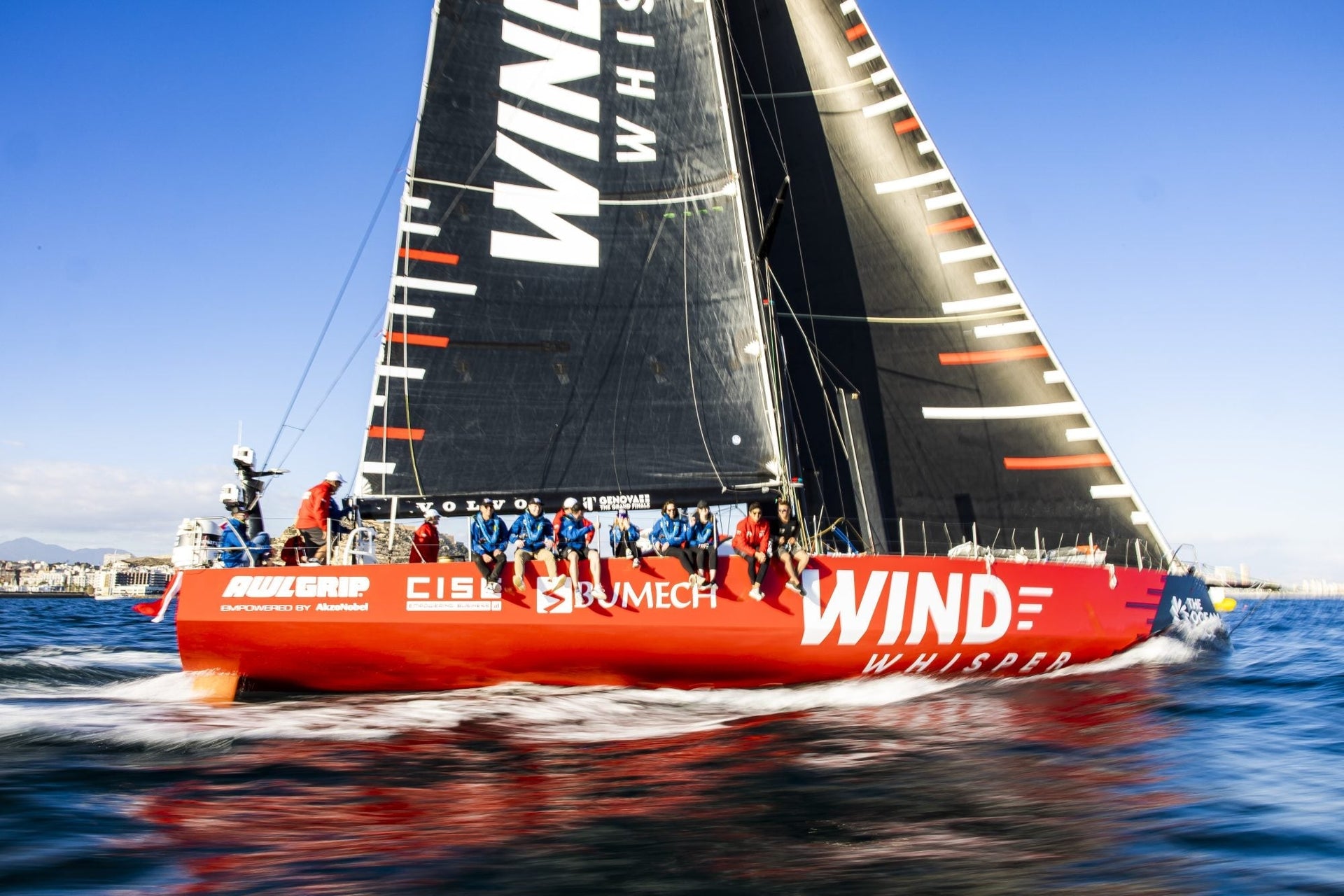
NORTH SAILS, EN MODO OCEÁNICO CON THE OCEAN RACE
NORTH SAILS, EN MODO OCEÁNICO CON THE OCEAN RACE
The Ocean Race celebra este año sus bodas de oro
📸 Sailing Energy / The Ocean Race
The Ocean Race 2023 partió de Alicante el 15 de enero con una flota que por primera vez en los 50 años de la regata oceánica reunió a monocascos IMOCA 60 y VO65. North Sails es la velería elegida por diez de los once equipos participantes, incluyendo a los ganadores de la primera etapa en ambas clases. The Ocean Race celebra este año sus bodas de oro. Desde que revolucionara el mundo de la navegación oceánica en su primera edición de 1973, la regata ha ido evolucionando al ritmo de la industria náutica. En su edición 2023 reúne por primera vez a monocascos VO65 e IMOCA 60. El programa de los IMOCA 60 consta de siete etapas entre la salida del 15 de enero desde Alicante y la llegada prevista para finales de junio, visitando Cabo Verde, Ciudad del Cabo (Sudáfrica), Itajaí (Brasil), Newport (Estados Unidos), Aarhus (Dinamarca), La Haya (Holanda) y Génova (Italia); los VO65 competirán en tres etapas (Alicante-Cabo Verde, Aarhus-La Haya y La Haya-Génova). Diez de los once equipos participantes equipan velas North Sails, que además es la velería oficial de los monotipos VO65.
📸 Sailing Energy / The Ocean Race
Rápida primera etapa
La victoria de la Etapa 1 en categoría VO65 correspondió al WindWhisper Racing Team, que completó las 1.900 millas náuticas entre Alicante y Cabo Verde en 6 días, 1 hora, 11 minutos y 14 segundos. Pablo Arrarte, patrón del barco ganador, comentaría: “Las velas han vuelto a demostrar que son rápidas, potentes y súper robustas, toda una garantía de tranquilidad en competición oceánica. Algunos barcos utilizan velas de la última edición de Volvo Ocean Race, con unos buenos miles de millas de uso, y ha habido muy pocas incidencias pese a que tuvimos un principio de etapa muy duro, con vientos por encima de los 50 nudos. En nuestro barco navegamos con un juego nuevo y no sufrimos absolutamente ningún problema. El VO65 tiene un inventario bastante completo, con un rango muy amplio, y a lo largo de la primera etapa usamos las nueve que llevamos a bordo”. WindWhisper añadió esta victoria a su contundente triunfo en la regata In-Port disputada en Alicante y lidera la provisional de VO65. Entre los IMOCA, el más rápido entre Alicante y Cabo Verde fue el suizo Holcim – PRB del patrón francés Kevin Escoffier, que además de equipar velas North Sails también confía en la ropa técnica de North Sails Performance como equipamiento oficial a bordo. El Holcim – PRB completó la etapa en 5 días, 11 horas, 1 minuto y 59 segundos. Más información sobre la participación de North Sails como velería oficial de la clase VO65 en The Ocean Race, aquí
📸 Sailing Energy / The Ocean Race
READ MORE
READ MORE
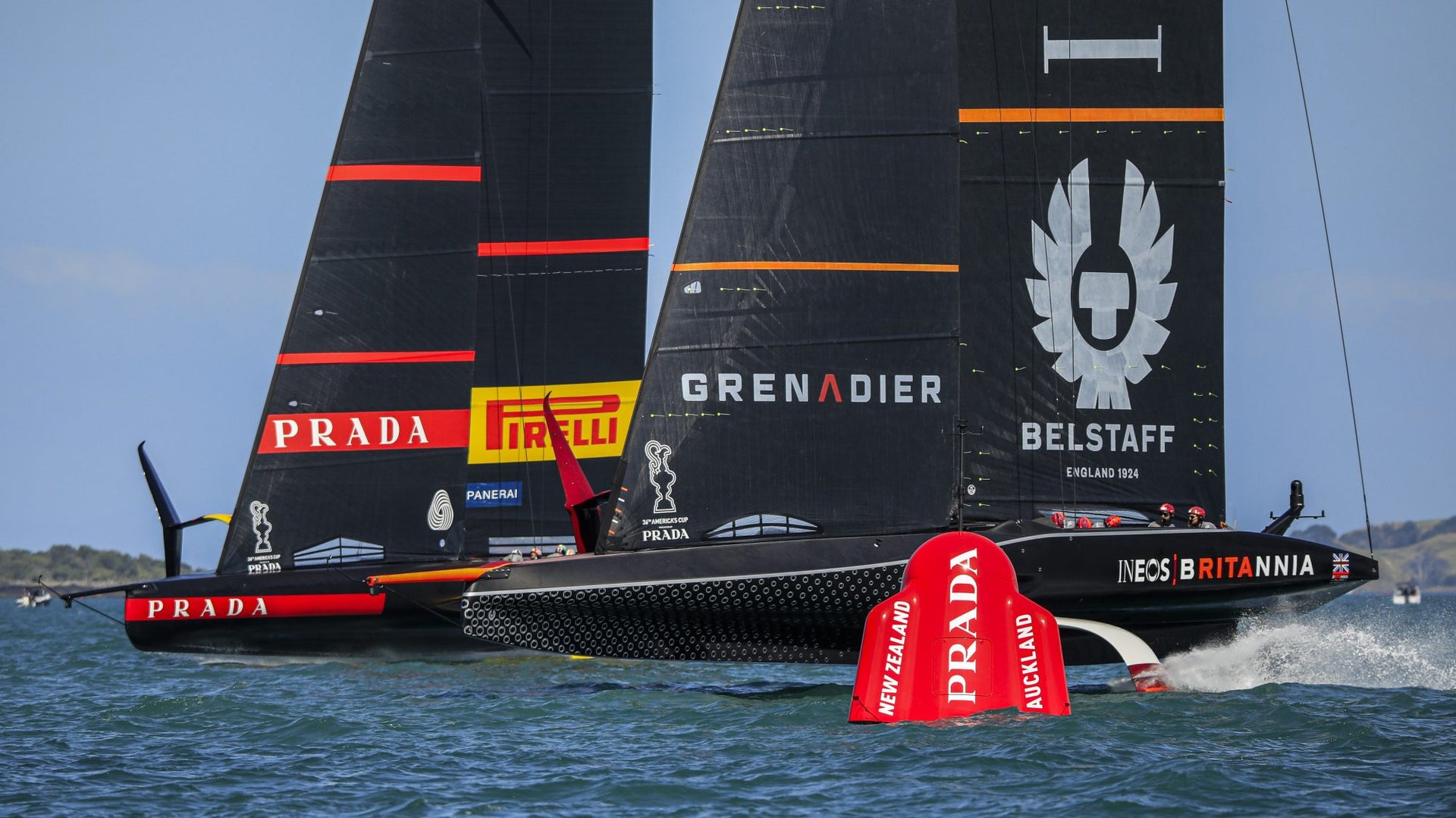
NORTH SAILS SE APUNTA A EL ROLE
NORTH SAILS SE APUNTA A EL ROLE
Luis Martínez Doreste, director comercial de North Sails España, colabora con el podcast dirigido y presentado por el periodista Nacho Gómez
La primera colaboración de Luis Martínez Doreste en El Role se centra en la tecnología Boomless de los barcos de la próxima America’s Cup. El director comercial de North Sails España explica cómo funcionan las velas mayores gemelas sin botavara de los AC75, un sistema que pudo verse por primera vez en la anterior America’s Cup y que han adoptado todos los equipos de cara a la edición de Barcelona 2024: “En la pasada Copa, los únicos dos equipos que no llevaban botavara eran el New Zealand y el Prada que, casualidad o no, son los que llegaron a la final de la Copa America", explica Martínez Doreste en su primera participación en El Role.
El primer capítulo de North Sails en El Role está disponible en este enlace bajo el título ¿Por qué los Copa América ya no llevan botavara?
El Role está dirigido y presentado por el periodista Nacho Gómez. Se emite en Plaza Radio y en las principales plataformas de podcasting (Apple, Spotify, Ivoox, Goodle Podcast y Amazon Audible).
North Sails es la velería oficial de la 37 America’s Cup.
READ MORE
READ MORE
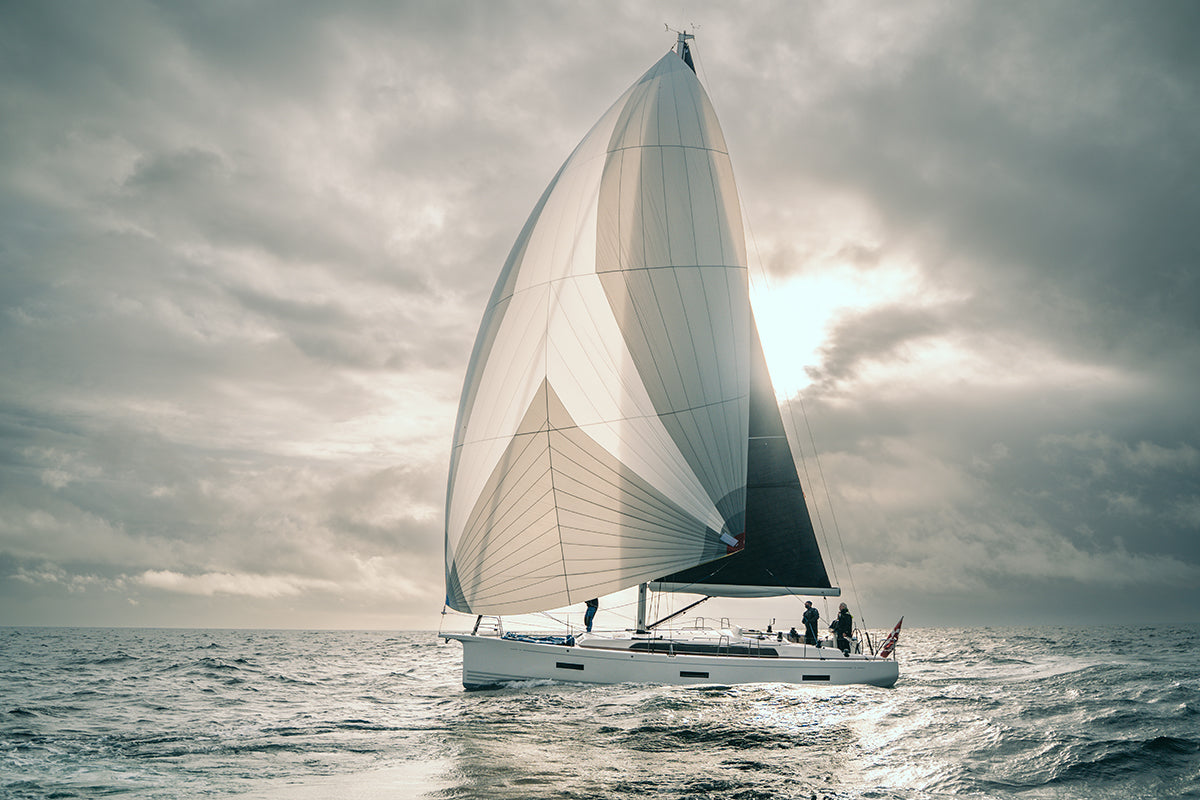
EASY FURLING GENNAKER
A Must-Have for Downwind Cruising
📸 X-Yachts
The name says it all. North Sails introduced the Easy Furling Gennaker for cruisers who want the reliability of top-down furling without sacrificing the ability to sail deep downwind. This sail is designed to maximize sail area, constructed with lightweight nylon spinnaker cloth, and is engineered exclusively for cruising downwind.
ESSENTIAL FACTS
The Easy Furling Gennaker is a must-have for downwind cruising
This running-oriented gennaker is the deepest-wind-angle furling sail in the North Sails downwind cruising line-up
Suitable for all cruisers and is especially advantageous when sailing short-handed
BENEFITS
Optimized for Downwind running
Safe and reliable top-down furling
Easy to use and will exceed your expectations
FEATURES
Available in a wide range of colors
Bespoke internal luff cord for reliable top-down furling
One year of free sail care
Watch our Easy Furling Gennaker How-to videos in Danish here
Read more
READ MORE
READ MORE
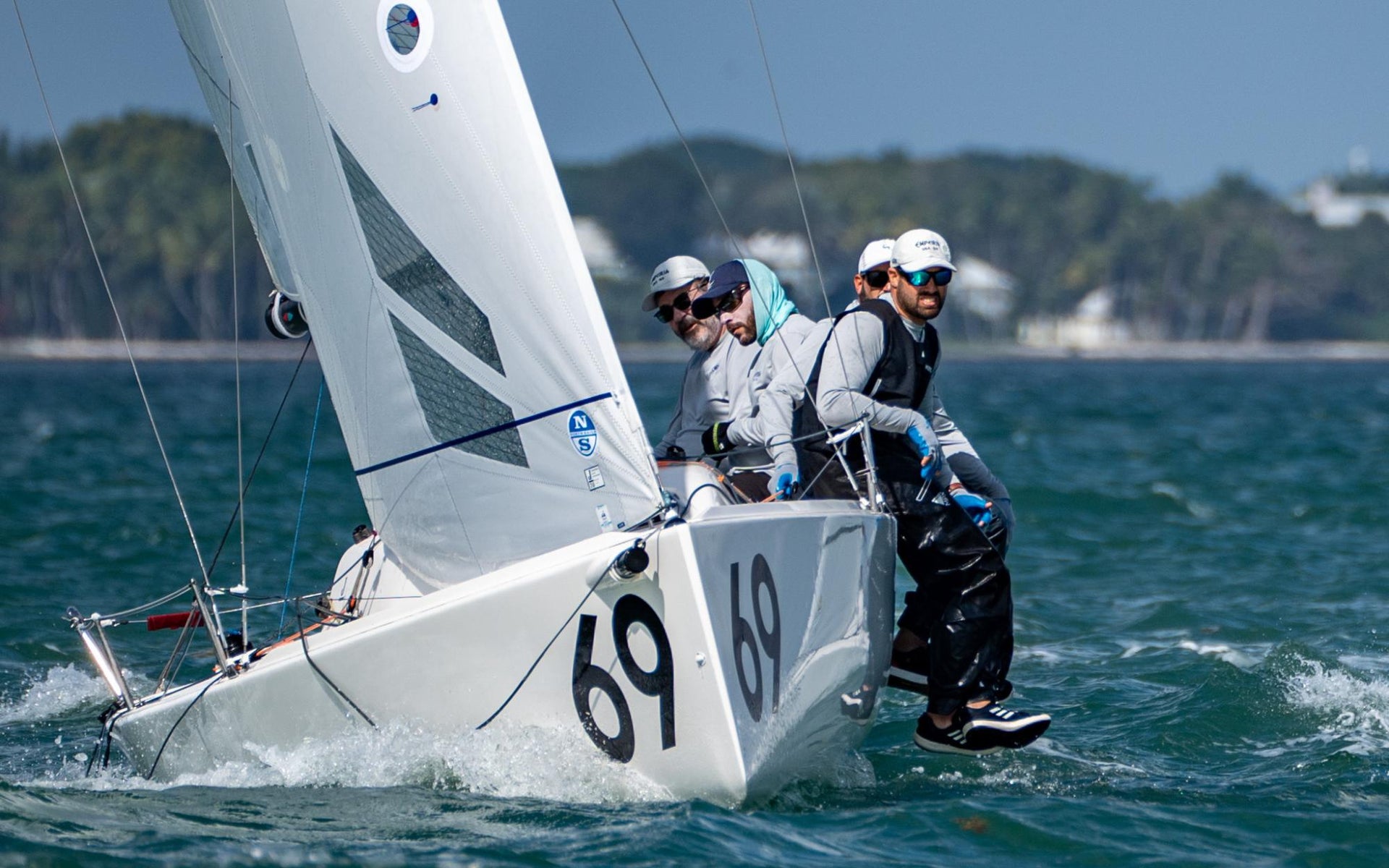
J70 UPWIND TIPS FOR BIG BREEZE AND CHOP
J70 UPWIND TIPS FOR BIG WIND AND CHOP
Be Prepared for Your Next Event
📸 Chris Larson
North Sails J70 expert Zeke Horowitz reflects on the 2023 Bacardi Invitational Winter Series in Miami, Event 2, and shares his key takeaways after winning the event.
The second event of the Bacardi Invitational Winter Series delivered the best sailing conditions a fleet of J70s could ask for. Friday had a glorious Northerly, which delivered shifty and puffy winds that challenged the fleet to find the right mode. Saturday brought a full breeze-on day with gusts into the low 20-knot range, allowing the fleet to enjoy a bunch of blast reaching around beautiful Biscayne Bay. And Sunday brought a delightful 10-15 knot easterly, providing ideal conditions for the fleet to duke it out for the final standings.
Winning this event onboard John Heaton’s Team Empeiria was no easy feat. The immense talent throughout the 26-boat fleet made for super tight mark roundings and photo finishes. There was never an inch to spare around the race course, so finding consistent top-end speed was the name of the game. Our speed and conservative tactics allowed us to lay down a consistent scoreline with no major mishaps. We worked very hard to shift gears upwind through the major changes in velocity and ferocious chop.
Below are some of our key takeaways that will help you beat the chop and big breeze at your next event.
© Bacardi Invitational Winter Series / Hannah Lee Noll
It’s all About the Heel
Because the J70 has such a “deadstick” feel on the helm, it’s very easy to want to sail the boat with a lot of leeward heel. The heel gives the helmsperson a bit of tug on the tiller which makes the boat feel loaded and good. But this creates drag on the rudder and also decreases laminar flow on the keel resulting in less speed and less height; essentially the boat will slip to leeward when it heels. In aggressive chop, the desire to heel becomes even more extreme, but time and again we found that even in terrible chop with the boat slamming through wave after wave, it is better to try to sail the boat flat. The boat may slam a little harder, but you’ll find that your boat speed comes back on quicker and without a sacrifice in height if you’re patient and drive through it.
It is quite difficult to sail the boat with less than 20 degrees of heel when the wind is in the upper teens or low twenties but there is a huge cliff when the boat heels past that 20 degree point. We set a goal of sailing at 14-17 degrees of heel in the big breeze and chop. We set mental and verbal alarms for any time the boat heeled over 20 degrees. It takes the right rig tune, sail trim and steering technique to keep the boat going in this narrow groove and it requires a lot of teamwork.
The jib trimmer needs to be playing the in-hauler (banjo style) on the weather rail so it can be dumped in big puffs and pulled back on through big lulls. The main trimmer needs to be going through a range of backstay and mainsheet with the boom vang just taught (easing sheet and tightening backstay in the big puffs, easing backstay and tightening mainsheet in the lulls). Make sure your backstay is in a range where you can “invert” the main with a diagonal wrinkle out of the clew in the biggest puffs and then ease the backstay to erase that wrinkle in the lulls. The bow person must be extremely accurate with both their puff and lull calls. However, the hardest job is that of the helmsperson. They need to keep sharp focus on the tell tales, waves, speed target and heel target so they can keep the boat in a narrow groove. If the boat is approaching 20 degrees of heel, they need to be delicately feathering up to take some heel out even if they are about to be smacked by a set of steep chop.
It’s a hard skill to develop, but focusing on the speed and heel target will give some peace of mind when it feels terrible. The trimmers should try to communicate when they’ve reached the extreme end of their range so the driver knows the trimmers can no longer save the heel angle. Saying something like, “main’s out, max heel” to the driver will let them know that it’s all on them now to feather up to keep the boat flat. We often joke that if it feels good, you’re probably doing it wrong. Learn to feel good sailing flat and chopping wood. I recommend a digital heel angle display and a paddle wheel speed read out for the most accurate information.
© Bacardi Invitational Winter Series / Hannah Lee Noll
Weight Back
The J70 loves to have weight forward in most conditions. But adjusting the weight aft as the breeze and chop comes up is imperative to let the boat sit on its lines as it smashes through waves. The more you slide the weight back, the less slamming you will do but it will also help you sail a bit lower on average without over-heeling. (Weight forward tells the boat to point and weight aft tells the boat to foot). A “normal” hiking position is to have the bow person just a couple inches aft of the stanchion near the shrouds, the jib trimmer pressed right up against them, the main trimmer sitting just forward of the winch and the helmsperson just aft of the traveler cleat. But in the extremely choppy conditions, as we saw in Miami, it was critical to get the weight back such that the main trimmer was either straddling the winch or just behind it with the jib trimmer just in front of the winch and the bow person even with the jib sheet cleats. The helmsperson only slides back a couple of inches so they are still comfortable and accurate with steering. Should you find a bit of flat water, try to push forward a few inches and then call for weight back when a big set of waves is coming. Keeping the crew weight together is very important as well and when you combine this fore/aft movement with the trimming and steering technique described above, it allows the boat to sail flat while sailing low enough to power through the waves.
Don’t Let the Main “Blow Up”
In the windiest stuff we saw, there were times that the main trimmer would have to let the main sail completely luff in order to keep the boat from over-heeling however this is not ideal. If the main is eased so much that it’s flapping, that creates drag and slows the boat. Even when you’re overpowered, you want to be able to keep the main engaged so that the boat is balanced and easy to steer straight. Making the main flat is the first step which starts by having enough rig tension. Your uppers and lowers should both read about 31 or 32 on the Loos Gauge at your tightest setting. Next, you must have enough backstay gross-tune on so that you can still invert the main (overbend wrinkles) with the backstay control line. Lastly, make sure you’re not shy about using the cunningham. This takes those overbend wrinkles away, essentially allowing you to pull even more backstay on to flatten out the main. But a great jib trimmer knows that they actually control a lot of this issue. If the jib is too full or sheeted too hard, it will cause the air to flow to windward as it exits the leech of the jib and spill into the leeward side of the main making it luff. So if you’re noticing that the main is blowing up multiple times per beat, you need to try to flatten out the jib by either easing the inhaul, pulling the jib leads back, or easing the primary sheet. Also be sure there is enough jib halyard on that the luff is smooth with no horizontal wrinkles coming back off the luff. There should be an alarm that goes off in the jib trimmer’s head any time they hear the main blowing up. Of course at some point when it gets windy enough, the main just has to rag to keep the boat upright but this should be once it’s blowing over 25 knots or so. The further your team can go up the wind range without blowing up the main, the faster you’ll be.
Mastering the J70 in steep chop and big breeze is about as hard as it gets; however learning to feel good when it feels bad will make it a whole lot easier. For more in depth information, the latest tuning guide or for any specific questions, don’t hesitate to reach out to your North Sails J70 class experts.
Contact your North Sails J70 North American Experts here:
ZEKE HOROWITZ ALLAN TERHUNE ALEX CURTISS
READ MORE
READ MORE
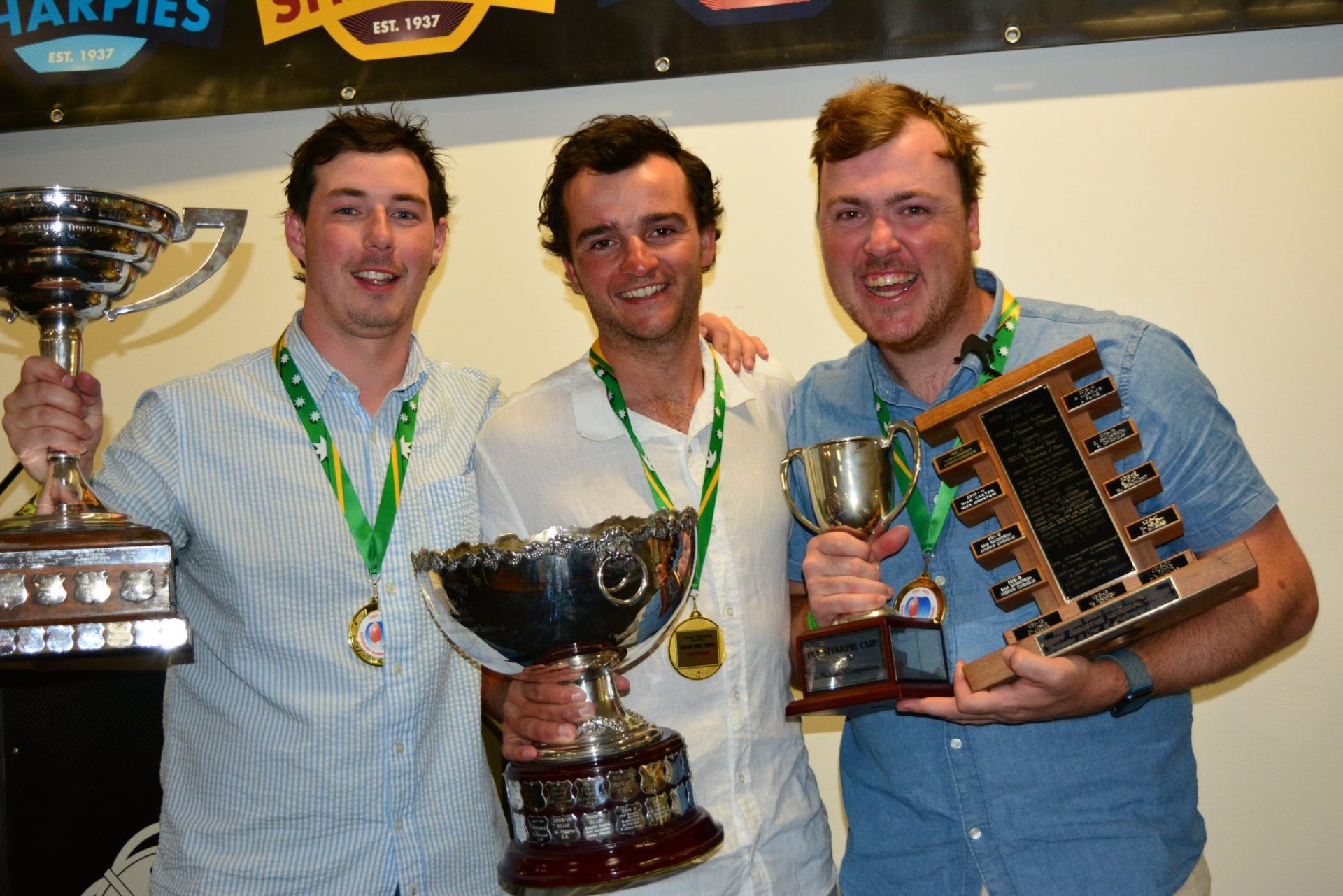
NORTH SAILS SUCCESS IN AUSTRALIAN SHARPIE NATIONALS
NORTH SAILS SUCCESS IN AUSTRALIAN SHARPIE NATIONALS
Q&A with newly crowned Australian Sharpie class national champion skipper Alex Blacker, who successfully took out the title sporting North Sails.
How does it feel to win your first Sharpie Nationals?
Honestly, it really is the most amazing feeling, there’s people out there that try their whole lives to win one of these, and for us to be able to achieve it so early in our senior sailing careers is just amazing. But also to be able to do it with two of your best mates makes it that much sweeter.
What was your secret to success in this regatta?
I feel like our boat setup, speed, and high/low modes played a huge part in our success in Hobart. Having such a well-tuned platform allowed us to keep our heads out of the boat as much as possible and just watch what was going on all the time. As well as having such a close bond amongst the three of us, we were prepared for all the tricks the River Derwent throws at you and gave ourselves more options right across the race course. The crew work was key, to be able to sail with a couple of your best mates who are all on the same page when it comes to what you want to achieve was critical.
It was a very competitive fleet with a few past champions, were you doing anything different to them?
I wouldn’t say we have done anything drastically different to the other guys, but we’ve really focused on our weaknesses and ironed them out this past year. We also worked really hard on our consistency as we knew coming into this regatta everyone was going to have their fair share of bad races, even the good guys. But we knew if we could keep our heads up and keep pushing through the fleet to a salvageable result in every race, then it would pay off massively by the end of the event.
I assume your crew played a big part in it, tell us about them?
Absolutely, I’ve got Harry Fisher up front, who I’ve been lucky enough to sail in Sharpies with for about four seasons, and for those who haven’t had the pleasure to meet him, he is a legend of the class, having competed in 14 Sharpie nationals over 17 years, starting when he was 14 years old. The knowledge of the class that Harry has brought to the campaign has been unreal. Then on sheets, I’ve got Sean Keen, who has done a bit of sailing with us over the years, but we finally convinced him to jump on with us full-time just more than a year ago. Since coming on board, Sean has brought a lot of energy to the boat as well as a really strategic way of thinking, which has helped us improve our regatta management. He is also a very driven bloke with a wealth of knowledge and is an absolute powerhouse in the middle.
What’s racing on the Derwent like?
I had never sailed on the Derwent before this nationals but now I can happily tick that box. I really enjoyed it, there’s some big shifts and big bends in the wind so there’s always opportunities and passing lanes. There’s also a lot of water movement from the tide and the river so it definitely throws up a lot of challenges, but once you somewhat get your head around it, it can be very rewarding if you sail well.
The top four were very close going into the last race, what was your strategy (for that race), and how did that play out?
Going into the last day, we were just behind the lead, but the second drop was going to kick in after the first race that day, so we had to crunch the numbers on the water. After the second drop kicked in, we ended up taking the regatta lead ahead of Noah Taylor from Canberra heading into the last race. We’d done the math, but we pretty much knew as long as we kept sailing the way we had been all week and we stayed close to the three other boats behind us, we would be fine.
We also knew that we couldn’t finish worse than eighth, or else the drops would be recalculated, and Noah would overtake us regardless. The Derwent certainly threw some tricks our way and rounded the top mark about 20th in the last race with Mark Soulsby (third overall) in the leading pack and Noah Taylor (second overall) behind us. We thought to ourselves, the only thing we could control was to try and sail into eighth, keep Noah behind us, and hope Soz (Soulsby) didn’t win the race. It was a short race with only two upwind legs and a downwind finish, so on the last upwind leg we managed to get into a real nice breeze pattern up the guts while everyone else was playing the left. We sailed the race of our lives after that first work and pulled through enough boats to round the top can in eighth. Then from there, we just consolidated our position on the last downwind leg and went through the finish in the same spot.
You are using the North Sails main and jib, what do you like about them?
I’m a huge fan of the North Sails working gear, I find the main very responsive to controls and sheet tension, which has been huge for when we were changing gears. It knuckles up really nicely for when you’re chasing power, and it flattens off and opens up nicely for the really light stuff and the windy conditions. The jib is fairly deep but is super responsive to sheet tension and opens up nicely when the breeze picks up. It’s a really nice sail to drive to and has some wicked grooves as well.
It’s also been a pleasure working closely with Sandy Higgins at Binks Marine, our local North Sails agent in South Australia. The work he has done, as well as Andrew Harry in Western Australia, to get North Sails on the pace in the Sharpie class has been really pleasing to be a part of. By jumping on the North Sails program, we have had full confidence in the manufacturing quality that comes with such a reputable brand, combined with the local experience to really ensure we gave ourselves every chance to be as quick as possible this season.
Where to from here? What goals do you have for the future?
All going well, we are keen to lock in to defend our title next year at the Mordialloc Sailing Club in Melbourne. From a Sharpie point of view, it would also be nice to try and snag a State Title, as they are incredibly hard to win against a strong local fleet. There’s also some 505 sailing in the pipeline for me with the Worlds coming up in Adelaide in two years, so I’m sure it’ll be a big couple of years on the water.
Great to catch up with you Alex, and congratulations once again to you and your crew on a great victory; very well deserved!
READ MORE
READ MORE
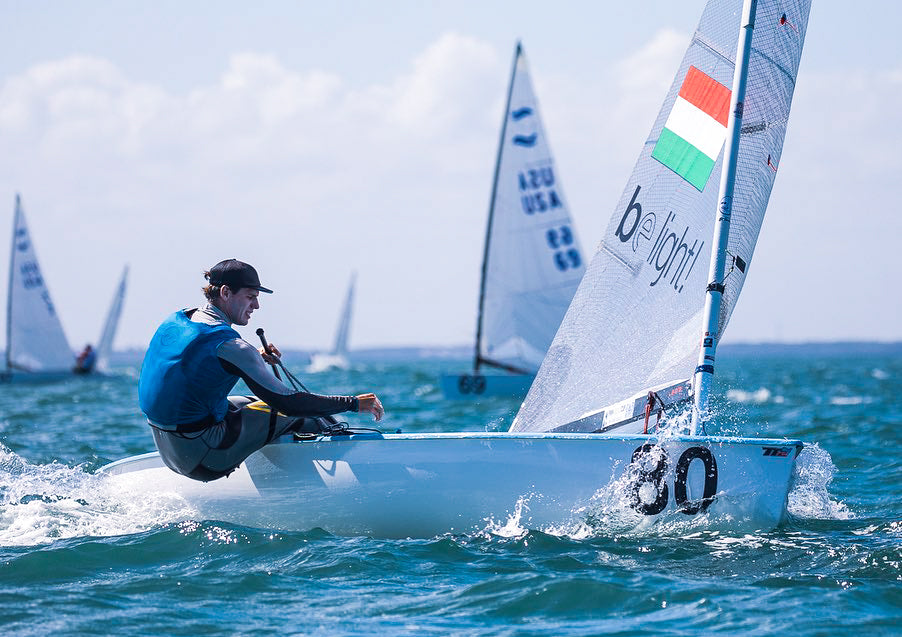
#NSVICTORYLIST NÉMETH DOMA 🥈- FINN DINGHY - VILÁGBAJNOKSÁG - MIAMI - 2023
Változatos szélviszonyok között került megrendezésre a 2023-as Finn Gold Cup Miami-ban.
Gratulálunk Németh Domonkos kiemelkedő teljesítményéhez, amivel a világbajnoki 🥈 második helyet szerezte meg.
Az első 10 helyezettből 9-en köztük Doma is North Sails vitorlával versenyzett.
READ MORE
READ MORE
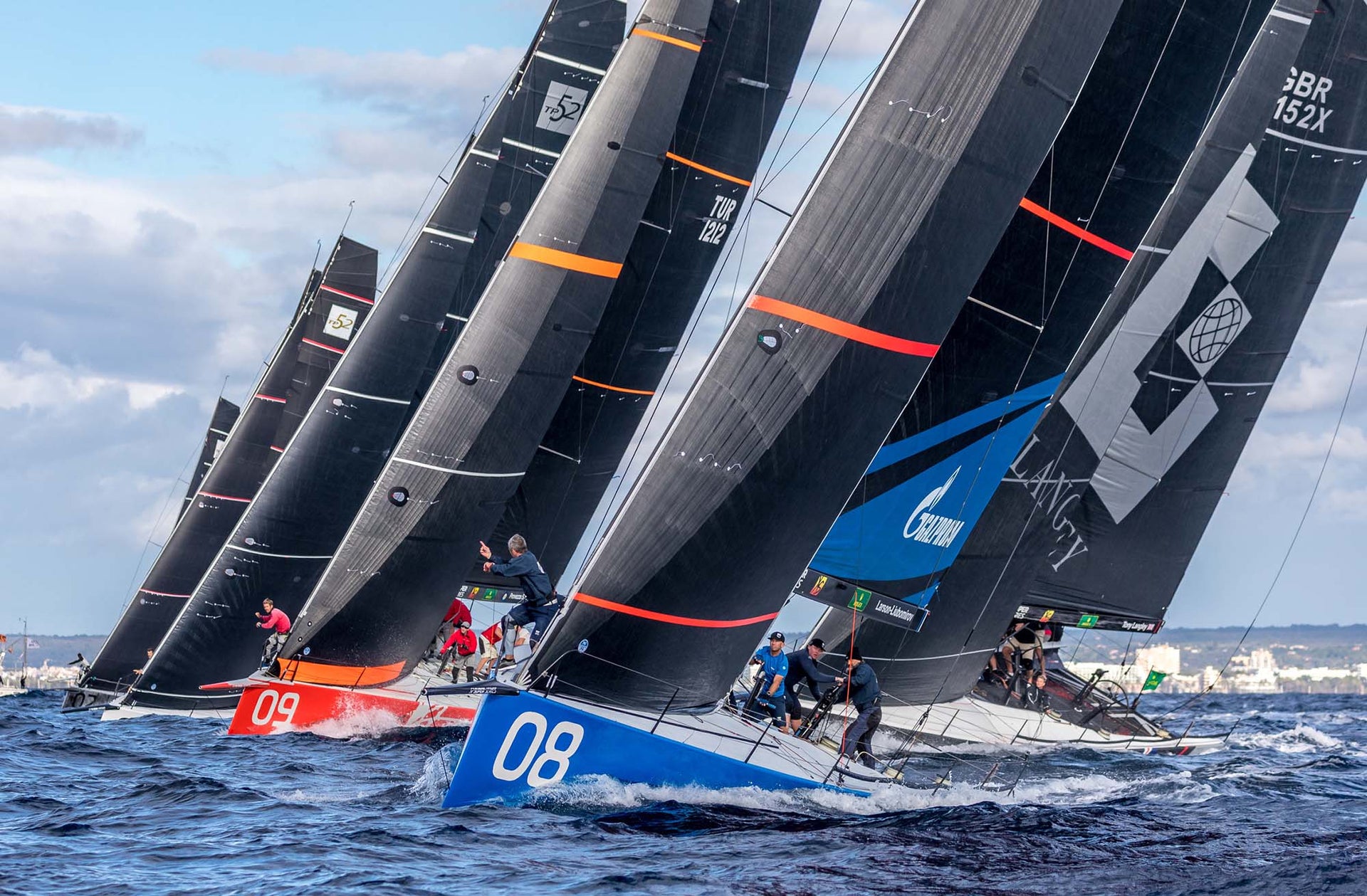
3Di HELIX UPWIND HAR INGET MED MAGI ATT GÖRA. DET BARA KÄNNS SÅ
3DI HELIX UPWIND HAR INGET MED MAGI ATT GÖRA. DET BARA KÄNNS SÅ
Nu har 3Di-teknologin resulterat i ett försegel som kan planas ut när vinden ökar
Ett storsegel är lätt att plana ut när vinden ökar. Det är ju bara att dra lite i akterstaget. Det gör seglet effektivt genom hela registret från lättvind till hårdvind.
Något liknande går inte att göra med en fock eller genua. Seglets djup och infallsvinkel kan i och för sig påverkas genom att man med hjälp av akterstag eller backstag justerar spänningen (eller rättare sagt sagget) i förstaget. Men det fungerar bara upp till en viss gräns.
Men nu har focktrimmaren fått ett nytt värdefullt instrument att spela med. 3Di Helix Upwind är enkelt utryckt ett 3Di-segel som utöver sin vanliga struktur har ett extra kraftupptagande fiberpaket längs förliket. Det här möjliggör det som på North-språk kallas för Active Camber Control, och som innebär att du genom att justera förliksspänningen kan förändra både djupet och formen på din fock eller genua. Resultatet är ett försegel som kan planas ut när vinden ökar.
Det här överträffar alla tidigare kända gränser för vad som är möjligt att göra med en fock, och det är nu känslan av magi kan infinna sig. Hur är det möjligt? Och vad är det egentligen som händer?
Hur funkar det i praktiken?
Det som möjliggör den här effekten är det kraftupptagande förliket, där fibrerna ligger i en bågform mellan hals- och fallkorn. När man tar hem (kraftigt) i fall eller cunningham strävar de bågformade fibertrådarna efter att räta ut sig och det leder till att förliket trycks framåt.
Det som händer är egentligen samma sak som när du planar ut storseglet genom att krumma masten: Avståndet mellan förlik och akterlik ökar, vilket resulterar i ett planare segel.
Ta nu en noggrann titt på de två till synes likartade bilderna på en fock. Det är samma segel på båda bilderna och de är tagna vid samma tidpunkt. På den första bilden har seglet en "normal" spänning i förliket. På den andra har focktrimmaren dragit rejält i cunningham.
Med hjälp av North Sails Sail Scan-program är det enkelt att se vad som händer, eftersom systemet levererar exakta siffror på alla väsentliga variabler. Som du kan se har bukdjupet i mittensektionen reducerats från 14,6 % till 12,7 % (av cordalängden).
Knappt två procent skillnad låter kanske inte så mycket. Men tänk nu på att procent och procentenheter inte är samma sak. Att bukdjupet har minskat från 14,6 till 12,7 procent(enheter) innebär i själva verket att seglet har blivit nästan 15 procent planare. Detta trots att vinden under samma tid har ökat från 9,7 till 10,6 knop.
För en erfaren trimmare eller segeldesigner är det här är en ganska dramatisk skillnad. "Det motsvarar nästan skillnaden mellan en Jib 1 och en Jib 2", säger Tore Lewander, segeldesigner på North Sails Sverige.
Fördelarna är uppenbara. Du får ett segel med bredare register. En extra växel om du så vill. Med ett bredare register behöver du inte skifta segel lika ofta – och det kan rent av leda till att du kan banta segelgarderoben lite utan att för den skull tappa märkbart i prestanda.
3Di Helix Upwind går att använda på alla typer av båtar. Men du bör vara medveten om att krafterna ökar, och det är viktigt att du ser över och kanske uppdaterar fallboxar, block, fall och avlastare.
Vill du veta mer om 3Di Helix Upwind?
Kontakta oss eller besök oss på någon av båtmässorna under våren. Vi är med på både Båtmässan i Göteborg (4-12 Februari) och Allt för sjön (9-19 mars).
READ MORE
READ MORE

UPPDRAG UTFÖRT FÖR JONAS GRANDÉR OCH TEAM MATADOR
UPPDRAG UTFÖRT FÖR JONAS GRANDÉR OCH TEAM MATADOR
Målet var att segla fem havskappseglingar på tre kontinenter, men det blev mer än så
Om man älskar havskappsegling finns det några klassiska race som lyser som fyrar i mörkret. Fastnet Race är väl det mest kända, Sydney-Hobart det kanske mest ökända.
Om man tar dessa två och kompletterar med ett par-tre till av samma dignitet har man en bucket-list som heter duga. Om man dessutom får för sig att hela listan ska bockas av under en femårsperiod står man inför en... rejäl utmaning.
Men det går. Det har Jonas Grandér och hans besättning på Elliot 44:an Matador bevisat. Vi på North Sails har följt projektet på nära håll ända sedan starten, inte minst genom vår egen Tore Lewander som både designat seglen och ingått i besättningen.
Det ena ledde till det andra...
Det hela började under en jullunch 2015 med några seglarkompisar. Samtalet kom in på Sydney-Hobart Race som skulle starta på annandagen. Kappseglingen är på över 600 sjömil och anses vara något av det tuffaste man kan ge sig på.
Det här måste vi väl ändå vara med på någon gång, gick snacket.
Ofta stannar det ju vid just snack, men Jonas hade bestämt sig. Tanken var att hyra en båt i Australien men han hittade inte någon som han tyckte passade. Däremot fanns det en fin båt till salu, och det var så han kom över sin Matador, en Elliot 44 CR, ritad av nyzeeländaren Greg Elliot och byggd i Kina av ett australiskt företag.
Det blev inte någon särskilt framskjuten placering i Sydney Hobart Race 2016. Men Jonas och hans besättning hade fått blodad tand. Kvar på den bucket-list som nu tog form var Fastnet Race, Middle Sea Race, Caribbean 600 och Newport-Bermuda Race. Lite av "The Big Five", skulle man kunna säga. Alla över 600 distans, utspridda över tre världsdelar.
Ett race om året lät lagom, tyckte man från början, och i den takten skulle målet vara uppnått 2021. Men det var innan pandemin slog till.
En seriös satsning med ett "gött gäng"
Besättningen på Matador består av ett tiotal personer och de flesta har seglat ihop under många år. De är rutinerade, välmeriterade seglare men amatörer i den meningen att de har vanliga jobb och inte får betalt för att kappsegla.
Ibland kompletteras besättningen med en eller ett två professionella seglare. Volvo Ocean Race-veteranerna Martin Strömberg och Aksel Magdahl har exempelvis varit med några gånger. Anledningen är förstås att de har mycket att bidra med som seglare, men också för att de passar in i teamet.
"Vi är ett gött gäng", säger Jonas, "och vi har en väldigt hög garvfaktor ombord".
Det främsta syftet med hela projektet är just att ha kul, påstår han. Det låter anspråkslöst men nu är det ju ändå så att inget höjer humöret så mycket som goda prestationer och bra resultat.
Det här är en ambitiös satsning. Team Matador vill placera sig väl och lämnar inte särskilt mycket åt slumpen.
Båten hålls i toppskick och uppdateras löpande. För några år sedan fick den exempelvis en ny djupare köl. Och segelgarderoben har varit i ständig utveckling ända sedan Jonas köpte Matador. Det sker i nära samarbete med framför allt Martin Angsell och Tore Lewander på North Sails Lidingö. Att Tore, som designar seglen, ingår i besättningen underlättar förstås.
Att skapa en segelgarderob som är optimalt anpassad till den specifika båten och dess egenskaper och att sedan få till rätt design på varje enskilt segel gäller ju för alla projekt. Men här finns ytterligare komplikationer. Matador har både ORC-, IRC- och SRS-mätbrev och de olika reglerna hanterar seglen på olika sätt. Ett segel som straffas hårt i ena regeln kan få en mildare bedömning i den andra. De har även skilda bestämmelser för hur många segel man får har ombord och hur många som får vara hissade samtidigt.
Inför varje specifikt race måste man dessutom ta hänsyn till de förhållanden man statistiskt sett kan förvänta sig. Det är inte lätt att som svensk veta vad som gäller på låt säga amerikanska ostkusten eller i Karibien, men för Tore som är uppkopplad mot North Sails hela nätverk av designers är svaret aldrig långt borta. Det är en av fördelarna med att vara en del av en global organisation.
Så, hur gick det då?
Nu har det gått sex-sju år sedan sedan Team Matador gav sig ut på de sju haven, och man kan inte säga annat än att de har fått se sig om i världen.
Det hela gick enligt plan de första åren, men när pandemin slog till ruckades schemat. Det tog de å andra sidan igen så fort det lugnat ner sig. Under mindre än ett år – från augusti 2021 till juni 2022 – genomförde de Fastnet, Middle Sea, Caribbean 600 och Newport Bermuda nästan i ett svep. Därmed var hela listan avbockad.
Tempot har stundtals varit frenetiskt. Några av de nämnda kappseglingarna har de seglat både två och tre gånger och till detta ska läggas ett omfattande program på hemmaplan och i norra Europa – Marstrand Big Boat Race, norska Færderseilasen, Skagen Offshore Race och Gotland Runt är bara några exempel.
2018 tyckte Jonas att det var lite tunt med havskappseglingar på ostkusten så han tog initiativ till Visbypokalen (och vann själv premiären). Och när Gotland Runt ställdes in på grund av pandemin startade han "Öppet Hav", en garanterat covid-säker segling utan vare sig startavgift, rorsmansmöte eller regattamiddag.
Frågan är om Sverige någonsin har haft ett team som deltagit så flitigt i internationella havskappseglingar. Vi får nog gå tillbaka till 1980-talet i så fall.
Och de har radat upp utmärkelser och sportsliga framgångar. 2017 och 2019 utsågs Jonas Grandér och Team Matador till "Årets havskappseglare" av Svenska seglarförbundet. Den största framgången kom dock ett par år senare: I Fastnet Race 2021 slutade de på tredje plats i sin klass och fyra totalt av över 250 IRC-båtar. Det är ett resultat i absolut världsklass.
READ MORE
READ MORE
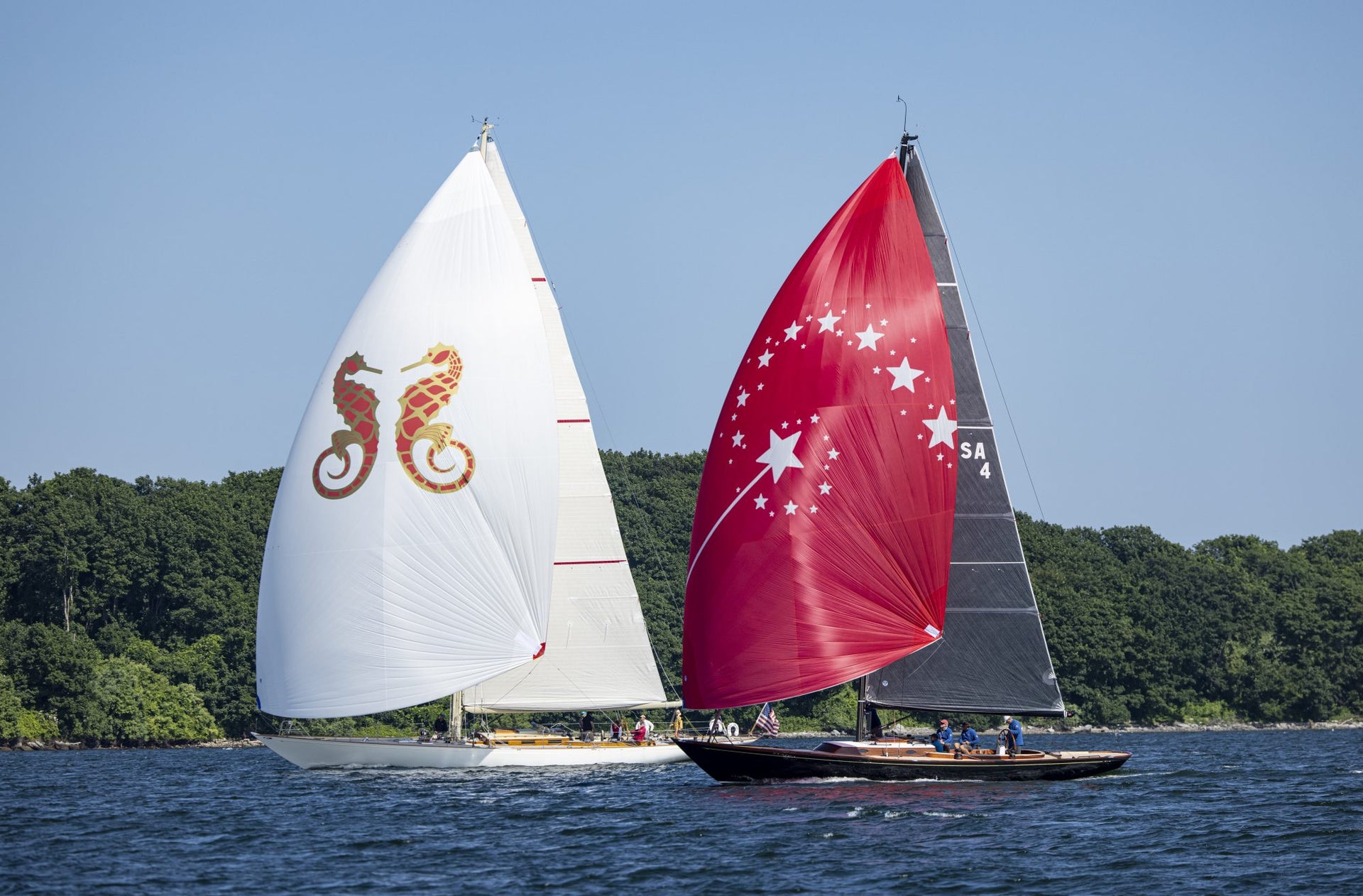
NYHET: NORTH SAILS EASY FURLING GENNAKER
NYHET: NORTH SAILS EASY FURLING GENNAKER
Ett segel som kombinerar pålitlig top-down-furling med maxprestanda på läns
Fylliga, länsbetonade gennakers med hög prestanda på djupa bogar har funnits sedan slutet av åttiotalet. Lättanvända, pålitliga rullgennakers för cruising har funnits länge. Det som har saknats är ett segel som kombinerar båda dessa egenskaper.
Men nu är det här. North Sails Easy Furling Gennaker är, som namnet antyder, ett segel som utvecklats för enkel och pålitlig hantering samtidigt som det är effektivt ända ner till 160 graders vindvinkel, det vill säga läns med lite lagom skärning. Det är faktiskt unikt.
Rent teknisk bygger det på pålitliga, beprövade lösningar. North Sails Easy Furling Gennaker har inte någon yttre, fritt hängande torsionskabel som kan fånga fel del av seglet när man rullar in, utan har istället en integrerad förlikskabel insydd i förliket. Top-down-furling innebär att seglet börjar rullas in uppifrån, vilket gör att man alltid får med sig toppen och undviker att det bildas en "bubbla" i toppen av det inrullade seglet.
Men det nya ligger framför allt i hur själva seglet är designat och hur det trimmas. North Sails Easy Furling Gennaker tillverkas i lätt nylonduk i maximal storlek och har en bred, djup topp. Trimmet är enkelt att få till. När seglet rullas ut eller in ska förliket vara hårt sträckt. När du sedan faller av till en plattare kurs släpper du några decimeter på antingen fallet eller halslinan. Det frigör den stora toppen och gör att förliket projiceras ut mot lovart, där det inte störs av storseglet. Detta gör det möjligt att segla en mycket lägre kurs än de planare rullgennakers som världens cruisingseglare hittills har fått hålla tillgodo med.
North Sails Easy Furling Gennaker kan med fördel hissas redan innan du lämnar kaj. Du sätter fast rullen framför förstaget, gärna på ett peke, fäster fallet i den övre svirveln, trär i skoten och hissar upp hela det inrullade paketet. Då har du alltid gennakern laddad och klar för att användas. Sedan är det bara att rulla ut och rulla in efter behag. Väl tillbaka i hamn sänker du åter ner seglet och stuvar undan det i sin säck.
North Sails Easy Furling Gennaker lanserades hösten 2022 och är redan en av våra mest efterfrågade cruisingprodukter. Vi är inte förvånade. För en cruisingseglare som vill kombinera enkelhet och pålitlighet med maximal prestanda på läns finns det helt enkelt inget bättre.
Vill du veta mer om North Sails Easy Furling Gennaker?
Kontakta oss eller besök oss på någon av båtmässorna under våren. Vi är med på både Båtmässan i Göteborg (4-12 Februari) och Allt för sjön (9-19 mars).
READ MORE
READ MORE
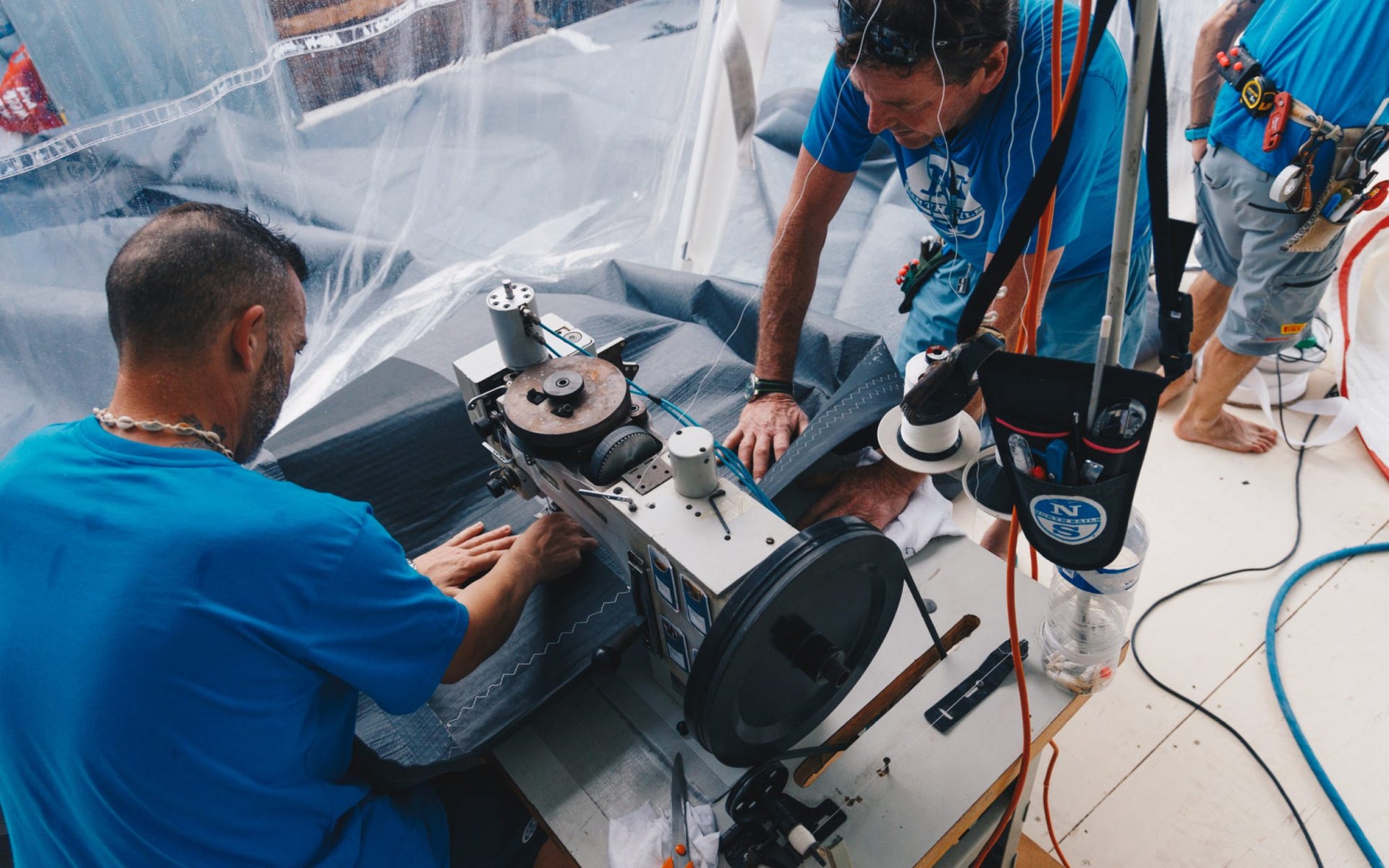
NORTH SAILS 2023 SUPERYACHT AND GRAND PRIX EVENT SERVICE SCHEDULE
NORTH SAILS 2023 SUPERYACHT AND GRAND PRIX EVENT SERVICE SCHEDULE
Regatta Repair and Support On The Global Race Circuit
North Sails is proud to release our 2023 Regatta Repair Service schedule. Through our network of full-service lofts and on-site pop-up locations, Regatta Repair supports Superyacht and Grand Prix crews at major international events with overnight turnaround, ensuring their sails are delivered back in time for the next day’s start.
This year North Sails lofts will be available at the St Barth’s Bucket, various Swan One Design races, the Maxi Yacht Rolex Cup, and Les Voiles de St Tropez – among others. Coordinating logistics, details, and staff is not an easy feat, but it appears almost seamless thanks to our experience and customer-focused service crew.
As the world’s leading and largest sailmaker, the North Sails team knows that every second spent on the water counts and is committed to maximizing that time for our clients. This often results in late nights that run into early mornings for the service crews ensuring sails are race-ready by daybreak.
You can view the 2023 Regatta Repair schedule below and our full event schedule on Facebook as we add many more events throughout the race season.
READ MORE
READ MORE

MEASUREMENT & CERTIFICATE EVENT
MEASUREMENT & CERTIFICATE EVENT
Get Ready For Racing
Our team of North Sails experts will be on-hand to help racers get prepared for racing with everything from measurement, re-measurement or 10 Point Inspection. Racers will be able to get their sails measured and certified for everything from local racing to offshore racing such as the Transpac. Our team of experts will walk sailors through the measurement process, what's involved in servicing them, if any service is required, and recommendations for improving sail handling. Join our team from 10am to 2pm on April 8th where you can bring in your sails, tour the loft and grab a hot dog. Calling ahead to reserve a time slot is encouraged but not required. Can't make the event? Not to worry. Bring your sails in anytime and our service team can help get your sails measured & certified, both for PHRF and ORC ratings. Have questions about our products? Contact us today.
READ MORE
READ MORE
TWEEDE PLAATS VOOR NIC BOL EN ZOON BIJ MIDDLE SEA RACE 2022
TWEEDE PLAATS VOOR NIC BOL EN ZOON BIJ MIDDLE SEA RACE 2022
Zeilen met je zoon of dochter... Een fantasie of iets om op de wensenlijst voor 2023 te zetten? Volgens North Sails’ Sails Nic Bol is het zeker een aanrader! Hoewel hij al vaker met zijn zoon op één boot zat, was de Middle Sea Race afgelopen oktober een geheel nieuwe ervaring. “Toen we samen over de finish kwamen, was dat een geweldig moment!”
Gek genoeg is Nic Bol (nog) geen doorgewinterde offshore zeiler. “Het is simpelweg niet echt op mijn pad gekomen,” vertelt de Sail Expert. “Tot afgelopen ajaar. Een kleine drie weken voor de start van de Middle Sea Race werd ik gevraagd om mee te gaan. Aangezien ze nog meer crew zochten, is ook mijn zoon Christopher (23) aangemonsterd.”
Ervaring in het samenwerken aan boord hadden Nic en Christopher al. Eerder werden ze Wereld Kampioen in de J/22 en hebben ze veel wedstrijden gevaren op de ‘K-Force’, een Swan 45. Nic: “Christopher is een goede zeiler. Hij volgt naast zijn studie een opleiding bij de Heiner zeilacademie. Het is mooi om een passie te delen met je kind. Zo mogen we ook graag tegen elkaar strijden in de Laser op de Kralingse Plas in Rotterdam.”
Wacht lopen
De deelname aan de Middle Sea Race met de Grand Soleil 44 ‘Esentia’ was toch een heel andere ‘league’ voor beide zeilers. “Door het lichte weer hebben we er uiteindelijk zes dagen en ruim drie uur over gedaan. Dat was voor ons allebei veruit de langste wedstrijd die we ooit hadden gevaren! Christopher was mee als voordekker en trimmer. Zelf was ik stuurman. Het mooiste was dat we in dezelfde wacht zaten. Met de elfkoppige bemanning zaten we in een cyclus van vier uur zeilen, twee uur stand-by en vier uur slapen. Tijdens onze wacht konden we genieten van zowel de zonsopgang als de zonsondergang.”
De route van de Middle Sea Race leidt de vloot iedere editie rond Sicilië en telt zo’n 606 mijl. Traditiegetrouw wordt er gestart vanuit de haven van Valletta op Malta. De ‘Esentia’ was meteen goed weg, volgens Nic. “In onze groep - ORC 4 - waren we als eerste de haven uit. Na de eerste nacht lagen we echter tweede en was onze plek al bepaald. Het was een lastige week vanwege het zeer lichte weer, maar navigator Axel heeft het fantastisch gedaan. Hij raadpleegde vele weermodellen en alles wat hij zei kwam uit. Uiteindelijk eindigden we als tweede in onze klasse.”
Voldoende water
Van de 118 jachten die van start gingen, heeft maar ongeveer de helft de finish gehaald. Ook op de ‘Esentia’ was er halverwege de week overleg. “Je gaat je afvragen of het nog zin heeft. Het water was als een spiegel zo glad. Uiteindelijk kwamen we tot de conclusie dat we nog voldoende water en voedsel aan boord hadden en besloten we om de race uit te varen. Normaliter vaar je er drie tot vier dagen over, maar gelukkig hadden we al rekening gehouden met de lichte wind. We hadden extra water ingeslagen en één teamlid aan wal gelaten.”
In principe kan iedere zeiler deelnemen aan de Middle Sea Race met een eigen boot, of aanmonsteren op een van de andere deelnemende jachten. Nic ziet het wel zitten om opnieuw mee te doen in 2023. “Ik ben benieuwd wat voor weer we dan hebben. Vorige editie hadden ze 40 knopen wind. De vulkanen op Stromboli en ook de vulkaan Etna hebben grote invloed op de wind in dit gebied. Daarnaast hoop ik dat Christopher dan ook weer mee kan. Er zijn maar weinig sporten die je zo intensief met je kinderen beleefd als het zeilen. Dat begon al in de Optimist. Dan gaat het niet over een paar uurtjes, maar vaak een heel weekend. Of zoals deze race; bijna een week!”
READ MORE
READ MORE
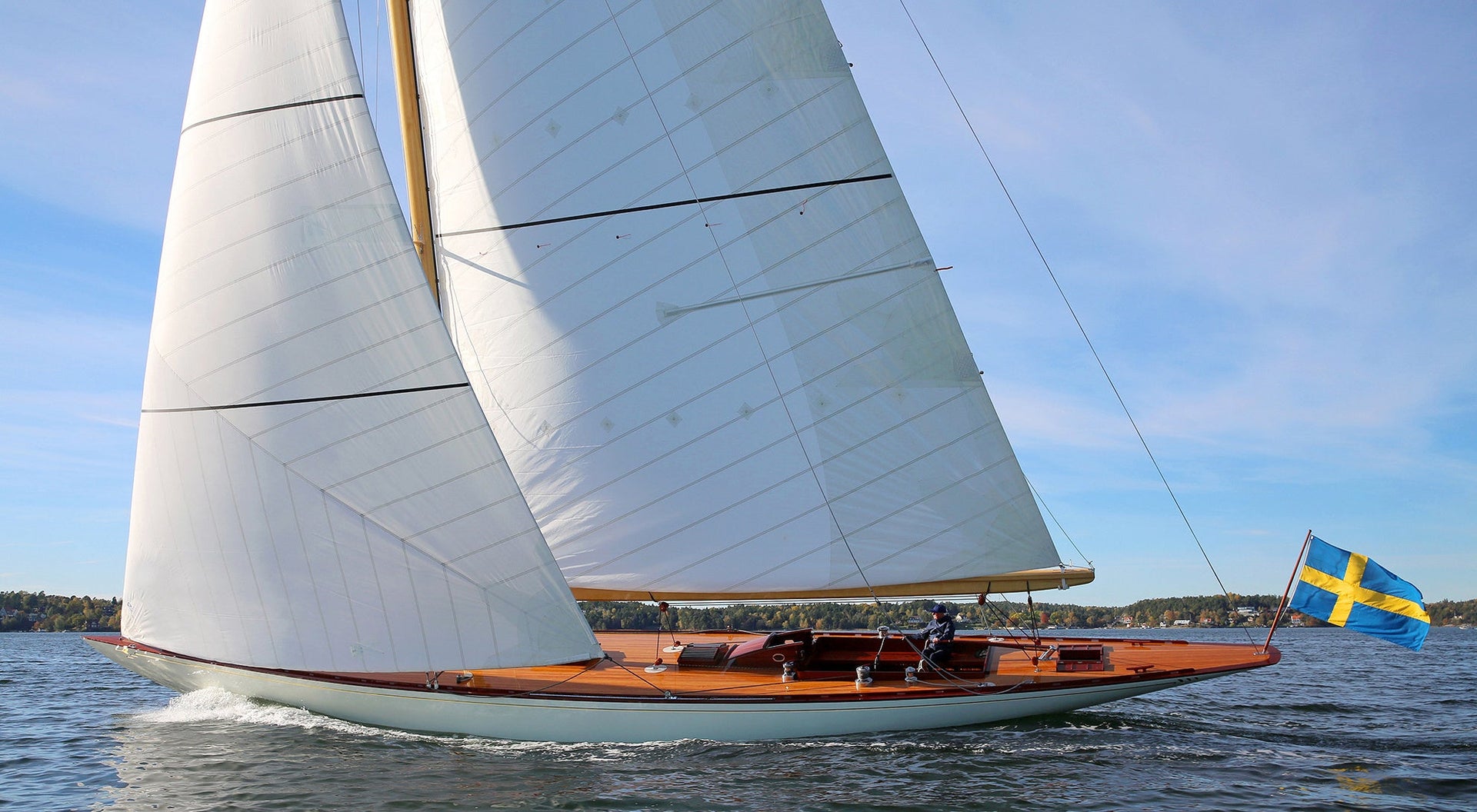
ÄNNU EN MILSTOLPE PASSERAD FÖR PRINCESS SVANEVIT
ÄNNU EN MILSTOLPE PASSERAD FÖR PRINCESS SVANEVIT
📸 Malcolm Hanes
Princess Svanevit sjösattes i slutet av juni och riggades i början av oktober. Några dagar senare hissades de nya North-seglen och hon seglade för första gången på över tjugo år. Med på jungfrufärden, om man kan säga så när det gäller en 92 år gammal båt, var Anders och Tore Lewander från North Sails Lidingö. Anders har fungerat som segelkoordinator och har lett processen från North Sails sida och Tore är den som har designat seglen. De nya seglen har vi beskrivit i en tidigare artikel (där vi också berättade den fantastiska historien om Princess Svanevit), men sammanfattnings kan man säga att vi förutom att uppfylla alla tekniska krav har lagt stor vikt på det estetiska uttrycket. Seglen är byggda i modern, högkvalitativ dacron och är utrustade med moderna kolfiberlattor, men vådlayout, förstärkningar och andra detaljer är utformade på ett sätt som kan föra tankarna till gamla tiders bomullssegel. Det här är genomgående tema ombord på Princess Svanevit. Nästan allting ser ut att vara tillverkat på 1930-talet. Men där det har varit möjligt – och där det inte syns – har båtbyggarna passat på att använda sig av moderna metoder och material. Trädelarna till den totalt 27,5 meter långa masten har exempelvis frästs med CNC-teknik och limmats samman med epoxi innan den förseglats med åtta lager fernissa. Resultatet är en enastående vacker trämast med alla historiska värden i behåll, och som funktionellt sett är överlägsen den gamla originalmasten. Det kan behövas. En sådan här båt genererar enorma krafter och under sina första år på 1930-talet drabbades Princess Svanevit av flera masthaverier. Den nya riggen har för övrigt konstruerats av den tyske båtkonstruktören Juliane Hempel. Hon har stor erfarenhet av liknande projekt, och efter att ha ritat ett antal R-båtar – en sexa och flera åttor – kan hon regeln på sina fem fingrar.
📸 Malcolm Hanes
Ingen nöjessegling
Att segla en stor R-båt liknar inget annat. När krysseglen på 240 kvadratmeter skotas hem är det 27 ton som sätts i rörelse. Det tar sin tid, men väl uppe i fart har Princess Svanevit en levande kraft utan like. Hon är en pampig dam som rör sig med värdighet och pondus – och hon levererar en seglingskänsla som skiljer sig från alla moderna segelbåtar. Hon är ett nöje att segla, intygar Tore, som fick känna på rodret en stund. Men det är inte för nöjes skull som hon seglats nu under hösten. Det är egentligen bara en del i förberedelserna inför vinterns fortsatta arbete. Syftet är att skaffa sig den kunskap som krävs för att få henne intrimmad och klar så fort som möjligt nästa vår. Det handlar om att få en bild av krafterna på rigg och segel. känna på båtens balans och stabilitet, stämma av skotpunkter och mäta upp hur den nya masten krummar. Seglen fotograferas, analyseras i North Sails Sail Scan-program och jämförs med Tores designfiler, vilket ger oss värdefull input inför vårens finjusteringar av riggtrimmet. En central uppgift är att hitta det rätta flytläget. Hon är ju ritad för att mäta in i R-regeln och den ger inte utrymme för några större marginaler. Om båten flyter lite för lågt, eller dippar lite framåt eller bakåt, är risken stor att ekvationen som ska sluta på högst 12,00 meter inte går ihop. I så fall kan båten inte mätas in och rent formellt skulle det betyda att Princess Svanevit inte längre är en äkta 12 meter R-yacht. Just ny flyter hon lite högt. Det är helt enligt plan och beror på att hon fortfarande är i stort sett som invändigt. Inredning, motor och tankar återstår fortfarande att montera och det gör att det så att säga finns lite kvar att spela på.
Till våren ska allting vara klart
Provseglingarna med Princess Svanevit innebär att ännu en milstolpe bockats av. Men än återstår en hel del och när du läser detta är hon tillbaka på Stockholms båtbyggeri, som kommer ägna vintern åt att göra henne färdig för nästa års seglingar. För stiftelsen som kommer äga båten de närmaste fem åren gäller det nu också att få en effektiv organisation på plats, med skeppare, besättning, logistik, finansiering och mycket annat. Ansvariga för det praktiska ombord blir Olle Jo Johansson och Thomas Gross. Olle Jo är en tidigare olympisk seglare och var rorsman på New Sweden under VM för R12:or i Luleå 1988, så kan kan en del om tolvor. Fortsättning följer, som det brukar heta.
📸 Malcolm Hanes
READ MORE
READ MORE

NYA SHOGUN 43: OPTIMERAD FRÅN START MED NORTH DESIGN SERVICES
NYA SHOGUN 43: OPTIMERAD FRÅN START MED NORTH DESIGN SERVICES
Det har kanske aldrig byggts så många häftiga segelbåtar i Sverige som just nu. Nivån är i internationell toppklass och bredden är stor. Den makalösa renoveringen av den klassiska tolvan Princess Svanevit är traditionellt hantverk på allra högsta nivå, och i andra ändan av den skalan hittar vi bland annat VM-vinnande Z30+ (som vi berättat om här, här och här).
Och så har vi Shogun 43, som sjösattes i november och provseglades i början av december. Det är en uppföljare till Shogun 50, som kom för några år sedan. Båda båtarna är ritade av Håkan och Oscar Södergren och byggs med avancerade metoder och material – läs kolfiber – på Rosättra Båtvarv, med hjälp av bland andra Vaxholm Komposit och Marstrom Composite.
North Sails har varit involverade i projektet sedan start och har förstås utvecklat seglen du ser på bilden. Det finns mycket att säga om dem, men det sparar vi till våren när båten är helt färdig. Här och nu tänkte vi istället backa bandet lite och beskriva hur det gick till när konstruktörerna tillsammans med North Design Services använde sig av avancerad programvara för att analysera och optimera båtens prestanda.
"En extremt användbar tjänst"
North Design Services är en del av North Technology Group (där även North Sails ingår), och syftet är att hjälpa North Sails kunder att optimera sina båtars totala prestanda. I detta ingår inte bara rigg och segel utan även allt annat som påverkar farten, som skrov, köl och roder.
Arbetet leds av Jeremy Elliot på North-loftet i engelska Gosport. Han har en masterexamen i Naval Architecture från universitetet i Southampton och har lång erfarenhet av utveckling och optimering på Grand Prix-nivå, inklusive America's Cup och Volvo Ocean Race.
"Det är en extremt användbar tjänst", säger Oscar Södergren.
Oscar är industridesigner med examen från Konstfack. Någon regelrätt utbildning inom båtkonstruktion har han inte, men den biten har han fått med modersmjölken. Båtar har han ritat sedan han var barn och en bättre lärare och mentor än pappa Håkan är ju svårt att tänka sig.
Idag har många båtkonstruktörer, inklusive Håkan och Oscar, tillgång till någon form av hydro-CFD. CFD står för "Computational Fluid Dynamics" och förledet "hydro" betyder att det är en programvara som kan användas för att analysera strömningen kring en båts skrov, köl och roder. Däremot saknar de som regel effektiva verktyg för att göra motsvarande optimering av aero-delen, det vill säga rigg och segel.
Det är här North Design Services kommer in i bilden. De har tillgång till branschens förmodligen mest kraftfulla hydro-CFD, men det som verkligen sticker ut är att de även har utvecklat en egen aero-CFD som är sömlöst integrerad med hydro-CFD:n. De har därmed möjlighet att analysera hela båten som en enda helhet.
Massor av data, massor av insikter
Det är ingen enkel process och det går inte fort. En CFD-körning – i princip en virtuell testsegling – kan innebära att en dator står och tuggar i tre dygn. Därefter utvärderar man resultatet och börjar om igen. Ett närmast ändlöst antal konfigurationer jämförs med varandra och steg för steg jobbar man sig fram mot den totalt sett mest optimala lösningen. Processen med Shogun 43:an pågick under drygt sex veckor och involverade fyra personer.
"Vi har fått ut en enorm mängd data", säger Oscar. "Mer än vi behöver egentligen, men fördelen med detta är att vi kan fördjupa oss i vissa delar och få ut väldigt värdefulla insikter."
Det man får ut av den här typen av simuleringar är exakta värden på allt som påverkar prestandan: strömningen kring skrov, köl och roder, båtens avdrift i olika farter och krängningsvinklar, rodertryck och rodervinklar. Man får data på luftmotståndet från rigg och segel – och svar på exakt hur mycket man förlorar på att inte byta från fock 1 till fock 2 i tid. Man får fram vilka fockskotvinklar som är optimala i olika förhållanden och hur besättningens vikt och placering påverkar farten. Med mera, med mera, med mera.
Oscar påpekar dock att systemet inte levererar några förslag på lösningar utan bara ren data. Den måste tolkas och sättas i ett sammanhang för att bli användbar. Här har han haft hjälp av erfarna designers från både North Design Services och Södergren yachtdesign. Pappa Håkans erfarenhet har varit oerhört viktig för att förstå vad exempelvis vissa värden kring rodertryck innebär för känslan i ratten.
Shogun 43 har aldrig varit tänkt som någon råbarkad racer. Målet har istället varit att skapa en båt med enastående prestanda i ett bekvämt och lätthanterligt format, därtill med ett modernt formspråk som får folk att vända på huvudet.
Prestanda, trivsel och bekvämlighet är inte alltid enkelt att förena. Men det går, menar Oscar, som har lagt "otroligt mycket designtid" på inredningen. Dels för att göra den bekväm, praktisk och vacker men också för att minimera vikten. Han uppskattar att han genom det här har lyckats spara 400-500 kg.
Var det värt det? Oscar tvivlar inte det minsta. Samarbetet med North Design Services har gett honom siffror som en gång för alla bevisar den saken.
READ MORE
READ MORE
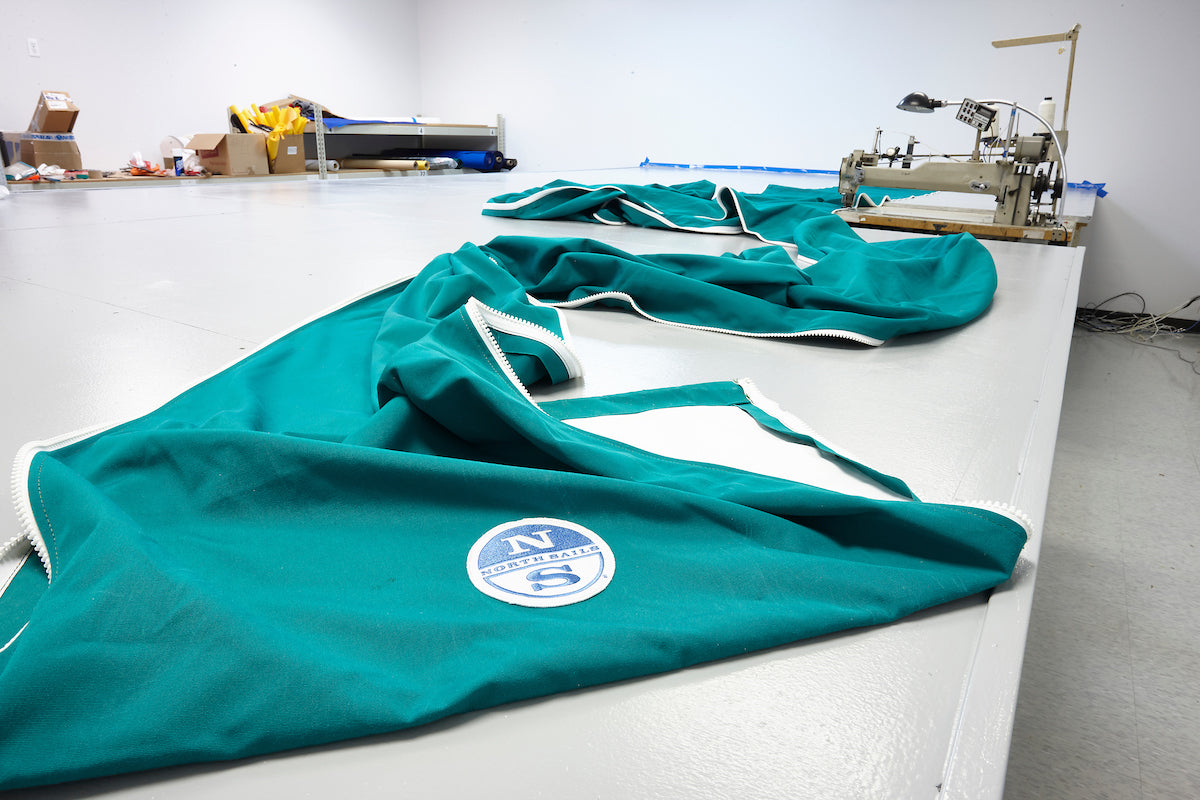
VINTERTILBUD PÅ CANVAS
HAR DU EN EASYPACK, BOMPRESSENING, BOMTELT, FORESTAYCOVER, WHEELCOVER, DECKBAG
...eller andet, der er ved at være godt slidt?
Så er det nu, du skal bestille nyt! Vi hjælper dig med at blive klar til den nye sæson, uanset om det er sejl, covers, UV-beskyttelse eller canvas, der trænger til en opdatering eller en reparation.
Kontakt os i dag på telefon 39204090 eller send os en email på DEN@northsails.com og få et rigtig godt vintertilbud, på lige netop det, du har brug for.
READ MORE
READ MORE
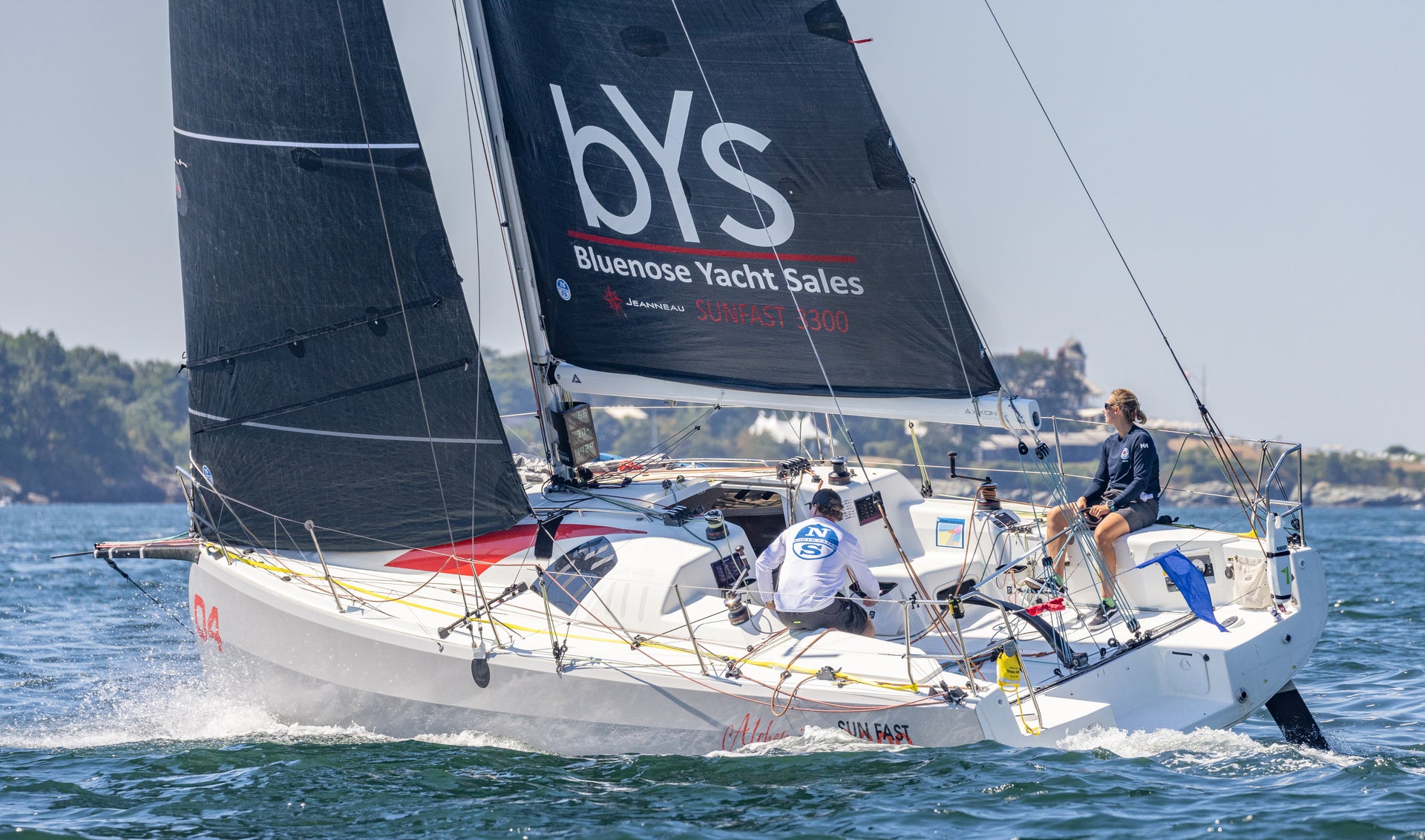
JOIN US FOR A SHORTHANDED SPEAKER SESSION
SAVE THE DATE: SHORTHANDED RACING SEMINAR
Thursday, February 9th, 2023, at the North Sails Loft Portsmouth RI
📸 Stephen R Cloutier
North Sails and Bluenose Yachts invite you to join us for an informative discussion on shorthanded racing with Ken Read, Suzy Leech and Ellie Driver. Other North Sails and BYS representatives will be there to answer your questions.
Thursday, February 9th, 2023, from 7-9 pm at the Portsmouth loft. Cocktails and snacks will be provided at 6:30 pm.
North Sails Portsmouth Loft | 1 Maritime Dr. Portsmouth, RI 02871
RSVP below.
READ MORE
READ MORE

INTERNATIONAL MOTH TUNING GUIDE
This guide is designed to add additional support information to sailors rigging their International Moth Helix sails for the first time. There are some fundamental differences with the Helix sail, ‘twin-skin’ split batten technology, compared to previous models. The Helix sail offers a large step forward in performance, however, there are some new learnings required when rigging, which once understood, is neither complicated nor time-consuming.
Initial Set-Up
When your sail arrives the following should be included:
1. 7 x Full Length Split Battens
2. 6 x Decksweeper battens – Glass RB
3. 13 x Rocket Adjusters
4. 6 x mast cups. Numbered 1-6
These battens should be cut to length and there should be no requirement to adjust the length of them. Please contact a North Sails representative if you feel the battens need to be adjusted. Any batten length adjustment should be off the back of the batten and not from the split end.
Batten lengths may vary +/-20mm
These parts should be fitted, but if not, take the following steps:
Battens
Step 1: Batten Cups
The battens cups need to be threaded onto the webbing strap found inside the luff tube. The webbing strap prevents the cups from moving in a vertical direction whilst sailing, hence the cups grip onto the strap quite tightly.
Once the cups are threaded onto the webbing strap, pass the strap down the luff tube, ensuring to remove any twists from the strap.
The Cups may need adjusting slightly once you are rigged. Follow the impression of the batten along the batten pocket and aim to keep it aligned or fractionally on the high side of the pocket. The webbing strap may be overlength and can be cut to length – around the height of the boom. There is no requirement to locate the lower end of the strap.
Step 2: Batten insertion
Batten #1
The top batten doesn’t have a mast cup. There are however 2 batten pockets on the luff tube, one on each side. The split batten end needs to pass into each of these pockets. The batten pockets are offset so that each of the split tips can be inserted in turn. Put your hand up inside the luff tube from the zip at batten #2. Pass the tip of the #1 batten into the pockets on each side of the sail. This process can be slightly tricky but easily managed and only has to be done once.
Batten #2 - #7
These battens are to be inserted from the rear end and then the split tip is inserted into the receptacles on the rear face of the cups. There are sacrificial pieces of plastic within these receptacles that are designed to break and distort to add friction to the batten and prevent it from falling out. The batten will need to be pushed firmly into the batten cup receptacle. At batten #7 there is a batten holder on each side of the luff tube. Each half of the batten needs to be passed through these.
Add rocket batten tensioners to all battens.
Step 3: Deck Sweeper Battens
There are 6 x deck sweeper battens that can be fitted and rocket tensioners added.
The diagonal deck sweeper battens are the only battens that need removing for de-rigging and sail rolling.
Rigging
Step 1
Insert the mast into the luff tube, as per all previous models, ensuring to pass the mast above the battens and not through any of the split battens.
Note:
Avoid wrapping the mast tip around the webbing strap
At batten 7 there are batten holders on each side of the luff tube, the mast must pass in front of these.
Once the mast tip reaches batten #2, the uppermost batten cup, ensure to thread this batten cup onto the mast (pushing the mast in front of the cup). Continue to push the tip of the mast into the head of the sail.
Step 2
Shuffle the luff of the sail down the mast until you can see the forestay and spreader fittings.
KEEP ALL BATTEN CUPS OFF THE RIG AT THIS STAGE (except for Batten #2 – cup #1)
Step 3
Continue to rig the sail onto the boat. Attach the clew and boom vang. Some pre-bend will be required to attach the batten cups.
Step 4
Once there is some pre-bend, achieved by some vang load, the next step is to put the batten cups onto the rig. Work from the top down, carefully putting each cup onto the rig. Normally twisting them slightly can help to get them on. Once all the cups are on, slide the luff tube downwards and attach the cunningham.
De-Rigging
Aim to do the above procedure in reverse. Remove cups from the rig before releasing the clew. This de-loads the sail and it's far easier to remove spreaders etc.
Tuning & Race Set-Up
Battens
In general batten tension should increase from top to bottom. Aim for one or two small creases in batten #1, one crease in batten #2, half a crease in batten #3, and no creases in battens #4-7. Luff round and sail camber can be tailored with batten tension in the lower battens. Adjusting batten tension to different wind conditions will produce performance variation as the batten tension will increase camber.
Batten cups
When fully rigged with vang and cunningham loads @ 70% ensure the battens run along the batten pockets and the cups are not sitting too high or too low. Aim to have the batten and cup just high within the batten pocket.
There are a few nuances to this new design, but once understood, rigging time is very similar to previous models.
Please feel free to contact Rob Greenhalgh with any questions.
READ MORE
READ MORE

LIGHTNING TUNING GUIDE
Proper boat speed depends mostly on constant and consistent adjustments to your rig and sails. The following measurements are those we have found to be the fastest settings for your new North Sails.
READ MORE
READ MORE
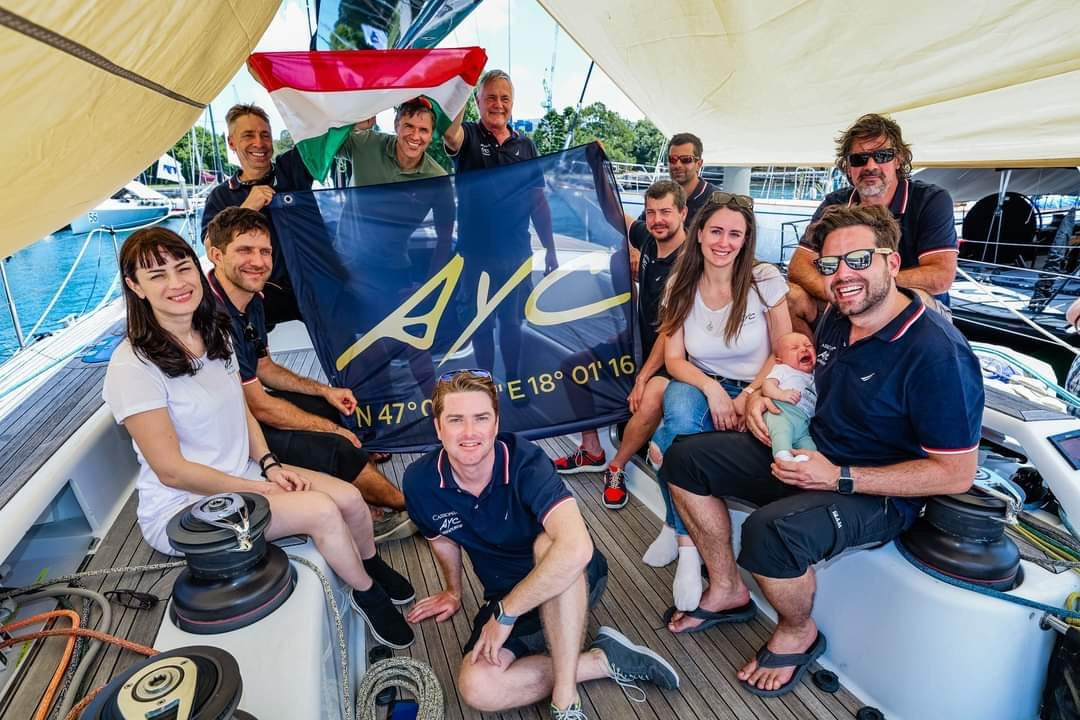
SYDNEY HOBART - 2022 - HUN 68 - CASSIOPEIA
Sikeres Magyar részvétel a 2022-es Sydney Hobart-on. A 100%-ban Magyar legénység a kiemelkedő, összetett 29. helyen vitte be a 68 lábas CASSIOPEIA-t a Tasmánia-i befutón. Gratulálunk a legénységnek: Nobilis Kristóf, Nobilis Demeter, Nobilis Ágoston, Perényi Péter, Sipos Ágoston, Sipos Bálint, Vándor Róbert, Weöres Szabolcs, Újhelyi-Gáspár Miklós. Teljesítményüket NORTH SAILS 3Di Endurance vitorlák is segítették.
READ MORE
READ MORE
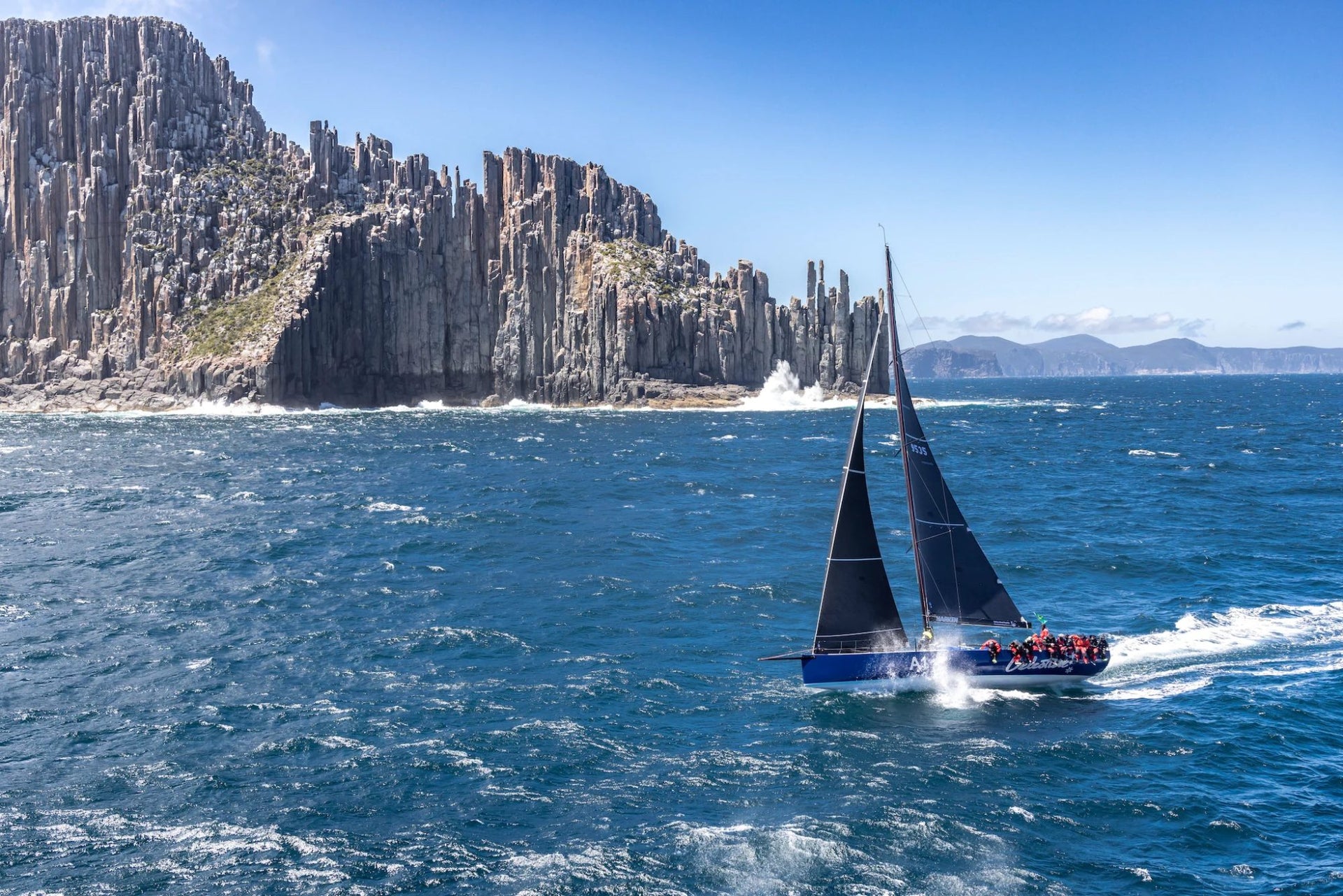
NORTH-POWERED CELESTIAL WINS ROLEX SYDNEY HOBART YACHT RACE
NORTH-POWERED CELESTIAL WINS 2022 ROLEX SYDNEY HOBART YACHT RACE
Sam Haynes and crew hoist the coveted Tattersall Trophy
The waiting game is over for North Sails-powered TP52 Celestial, who has been declared the Overall Winner of the 2022 Rolex Sydney Hobart Yacht Race. Hoisting the coveted Tattersall Trophy to celebrate the Celestial’s victory is a massive achievement for longtime North Sails friend and customer Sam Haynes, whose hopes of victory were dashed last year by protest. In addition to Overall Winner Celestial, North Sails was onboard with five of the top ten finishers.
Haynes commented on the team’s win:
“It’s like an elation – it’s huge for me and the crew. I can’t believe it; it’s a bit of a life changer. It was hard waiting (to be told one way or the other). It was extremely difficult waiting. We couldn’t really enjoy the experience until now. I’m so proud of the whole background – our program – and to sail against the best IRC fleet I’ve sailed in, ever.”
Haynes works closely with the North team in Australia, and North Team Rider Rob Greenhalgh was on board for the 2022 win. Many of the North Sails team are multi-year Sydney-Hobart veterans and were participating in this year’s edition of the “Great Race.”
With the 2022 results stamped in history, it’s time for a well-deserved rest.
📸 Salty Dingo
READ MORE
READ MORE
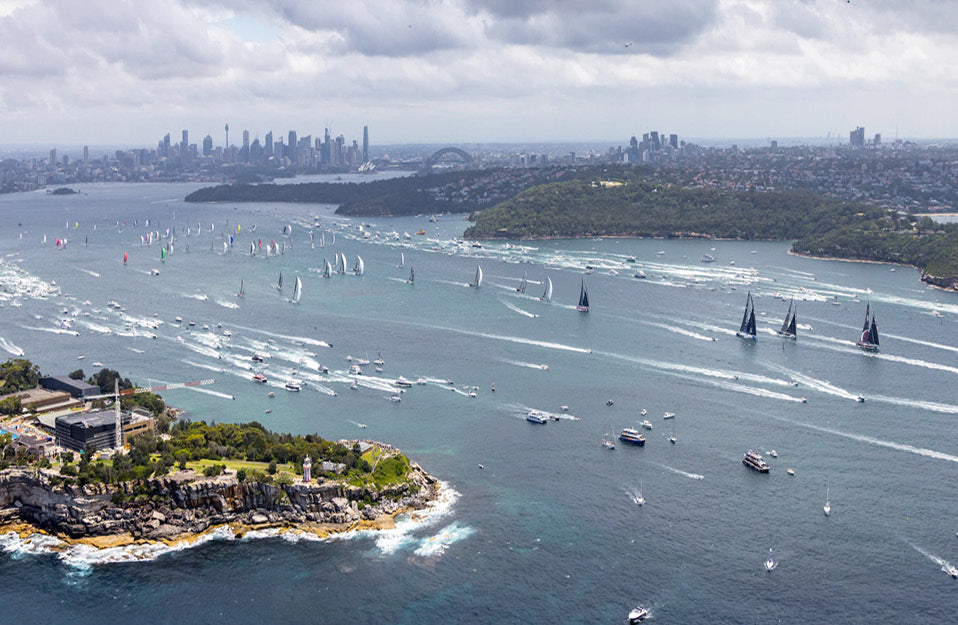
ROLEX SYDNEY HOBART RACE 2022 - HOW TO FOLLOW
ROLEX SYDNEY HOBART RACE 2022: HOW TO FOLLOW THE 628-MILE OFFSHORE CLASSIC
Race weather preview from Chris Bedford and must-save links
📸 Rolex / Andrea Francolini
The Rolex Sydney Hobart Yacht Race is one of our sport’s revered offshore races. Each Boxing Day, hundreds of sailors, watched by thousands of shoreside spectators, depart Sydney Harbour for the trek to Hobart. For the past 76 editions, the 628nm route has challenged competitors from Corinthian family programs to some of the highest-profile names in sailing, and this year will be no different. The 2022 race features 100+ boats that are chomping at the bit to get to the “The Great Race” underway.
North Sails, and our Sydney loft, in particular, has a rich history with the Rolex Sydney Hobart Yacht Race. Our Australian-based teams have collectively sailed in hundreds of races, while North clients have consistently found themselves at the top of leaderboards over the years.
We asked our friend, meteorologist Chris Bedford to provide insight into this year’s race conditions. Read on for the forecast and details on how to follow the start on December 26th.
Chris Bedford’s Weather Forecast:
Bedford is respected worldwide for his experience and expertise in marine and coastal meteorology. He, through his business Sailing Weather Service, provides customized weather solutions to some of the world’s leading competitive sailing teams and events. Here is Bedford’s preview for the race:
For anyone following the weather around southeast Australia, Tasmania, and the adjacent waters, you know it has been quite unusual this Spring – with record rains and cold temperatures. Indeed this unusual weather pattern has been a challenge to predict as well, and locals have been voicing their frustration with the weather forecasts relentlessly.
📸 Rolex / Carlo Borlenghi
Interestingly, while many blame the La Nina pattern of cooler waters over the Pacific Ocean, the actual culprit is something called the Indian Ocean Dipole (IOD). This IOD is an index relating the temperatures over two areas in the western and eastern Indian Ocean to weather over Australia. Indeed the IOD Index has been strongly negative for much of the Spring, which correlates directly with the unusually wet and cool weather experienced over southeastern Australia. However, over the last few weeks, the index has trended back to neutral, which suggests a return to more typical weather patterns for the Australian summer and race period.
For the Sydney to Hobart Race, there are usually two basic weather scenarios under consideration:
High pressure over the Tasman Sea at the start and a cold front approaching from the Australian Bight. Ahead of the front, NE/N winds around the western side of the high and down the NSW coast mean a relatively quick downwind start. Depending on how advanced the high and/or front are, it is possible that the fleet encounters the front with abruptly shifting winds bringing SW/S conditions, squalls, much colder air, and rough seas. These fronts make up the so-call Southly Buster that can quickly expose both the prepared and unprepared teams in this race.
The other scenario is when the front has already moved through Sydney and lies east of the Rhumb line. In this scenario, upwind S/SW winds prevail out of the start and much of the way south across the Bass Strait. Often, high-pressure building east from the Australian Bight eases winds with distance south, making for a lighter, more shifty, and more challenging finish.
Real life is never perfectly described by these scenarios, and reality will likely be something in between. Crews will be considering the impact of thermal sea breezes (daytime onshore flow) and land breezes (nighttime offshore flow) close to the NSW and Tasmanian coasts. In addition, the East Australian Current (EAC), which generally runs north to south along and east of the Rhumb line – offers a possible favorable push if the weather and route line up appropriately. That said, the EAC breaks away from the coast in loops and eddies, which can create a zone of adverse current to be avoided along the way.
While at this point, it is not clear which of the above scenarios will dominate, the latest consensus is that some variation of the first scenario – downwind once outside Sydney Heads – will define the 2022 race. There is plenty of time for this to change, and just a few hours of realignment could shift the race into the second scenario (upwind start). Crews will be studying the weather forecasts closely over the next few days to see whether the trends will favor or sour their expectations for a quick race south to Hobart.
If you’re in Sydney:
Spectator boats positioned in the eastern channel can watch the race start and then follow the fleet down the harbor to the iconic Sydney Heads before heading out to sea. Once underway, the fleet will move quickly, so it’s recommended to get a ways down the harbor towards Middle Head before the start to see the leaders sail through the Heads. At the Heads, make sure to keep well clear of the rounding marks.
If you only plan on watching the start, head to the western side of the harbor. Good vantage points for spectator boats include: Taylors Bay, Chowder Bay, Obelisk Bay, and North Head on the west and Rose Bay, Watsons Bay, Camp Cove, and South Head on the east.
For our global audience watching from home:
Watch the race start live right on the Rolex Sydney Hobart Yacht Race homepage.
If you miss the live webcast, a replay of the start program will be available on the website as well. Additionally, on the website is the complete list of yachts entered in the 2022 edition of the race. You can also view past race data, including previous results, historical reports, and statistical information; boat designers of line and overall winners; as well as profiles of some of the race personalities over the years.
Follow along on Social:
Official race social channels will keep followers updated from race start through finish. There will be a live stream of the start, as well as race updates, Line Honors announcements, an Overall Winner Declaration, as well as a Regatta Recap.
Rolex Sydney Hobart @Officialrolexsydneyhobart @RolexSydneyHobart
North Sails @North_Sails @NorthSailsWorldwide
Track the fleet:
Each competing yacht is fitted with a tracker that uses the GPS satellite network to automatically update the yacht’s latitude, longitude, course over ground, and speed over ground. The yacht tracker system also shows distance to finish and progressive corrected time positions under the IRC, ORCi, and PHS handicap divisions.
Follow the 2022 fleet from start to finish with the Yacht Tracker. Yacht Tracker uses a specially designed tool that calculates the predicted results for each and every boat in the fleet, so you can see how each boat is performing.
TRACKER
Line honors and progressive predicted corrected times under the IRC, PHS, and ORCi handicap categories are updated every 10 minutes.
READ MORE
READ MORE
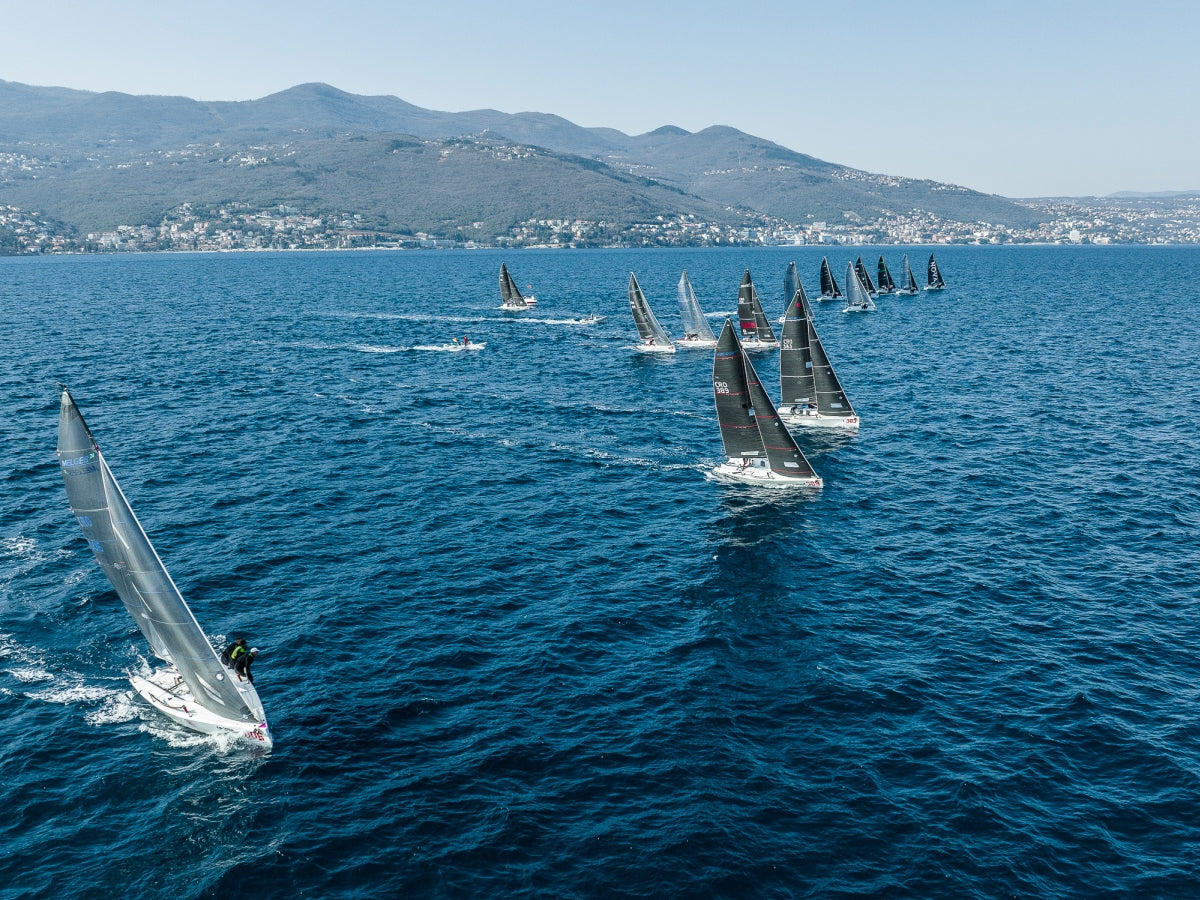
REZIME DRUGE SEZONE M24 KUPA
Rezime druge sezone M24 Kupa
Nakon što se na kraju godine napravi finalni obračun dobije se da je sezona završena nakon sedam održanih regata s ukupno 43 odjedrena plova, a da jedrilica s CRO oznakom na jedrima ima 22! Kako je sve ovo ostvareno u iznimno kratkom roku može se slobodno reći da je riječ o jednoj od najljepših sportskih jedriličarskih priča u Hrvatskoj u posljednje vrijeme. E da, treba dodati da je trenutno Hrvatska flota jedna od najbrojnijih ne samo u Europi, već i u svijetu!
S obzirom da je riječ o jedrilicama koje omogućuju sportsko jedrenje neovisno o godištu članova njihovih posada, to je nešto apsolutno drugačije nego kad se govori o sportskim dosezima i aktivnostima jedriličara koji karijeru ostvaruju u malim klasama.
Aktivno sportsko jedrenje u malim klasama je ipak ograničeno na mlađe dobne skupine i do sad je u Hrvatskoj uglavnom tu i završavala prava sportska priča kad je naš sport u pitanju. Iako je u inozemstvu sasvim normalno da se nakon rasplinjavanja snova o plasmanima u reprezentacije i odrađivanja olimpijskih ciklusa nastavi s aktivnim jedrenjem i u laseru (ILCA-i) i u Finnu i u 470 itd... u nas je dugo vremena jedina šansa za nastavak jedrenja bila ulazak u sastav posade na nekom od krstaša.
Tek posljednjih par godina slika se počinje postupno mijenjati. Uz glavne junake ovog članka, Melgese 24, u nas je posljednjih par godina krenulo i seniorsko/veteransko jedrenje u klasi Flaying Dutchman. Ali za sad je to samo jedna iznimka koja je skoro pa u domeni statističke pogreške. Kad se pogleda koliko je u Hrvatskoj jedriličara koji su u posljednjih 50 godina izašli iz malih klasa onda je tih desetak posada u FD stvarno malen broj. U M24, iako je tu više nego duplo veći broj posada, a i posade su minimalno duplo brojnijeg sastava, ipak je i to malen broj onih koji bi trebali nastaviti s jedrenjem nakon što su realno gledajući u dobnoj skupini rekreativaca. Ali ako ništa drugo ipak je riječ o iznimno pozitivnom pomaku i trendu za kojeg se iskreno nadam da se neće zaustaviti!
Što se same klase M24 tiče vjerojatno smo stigli do broja za kojeg slobodno možemo reći da je maksimum koji ćemo imati. Sigurno bi se moglo oformiti još nekoliko posada, ali kad se uzme u obzir dostupnost jedrilica na tržištu, troškovi održavanja, troškovi jedne sezone, treninzi i sve što ide uz ozbiljniju sportsku priču vjerojatnije je da možemo biti zadovoljni ako ostanemo na broju 22, a tek kad bi sve 22 posade mogli dovesti na jednu regatu...
📸 regate.com.hr
Ali vratimo se na ovogodišnju sezonu. Slobodno se može reći da su svi naučili nekoliko stvari, što po pitanju jedrenja, što po pitanju organizacije.
Krenimo od organizacije. Definitivno je zaključak da se organizacije jedne M24 regate ne može uhvatiti bilo koji klub, neovisno o tome koliko je posada član tog kluba. Osnovni ograničavajući faktor je ozbiljna logistička podrška u klupskoj lučici ili na mjestu gdje se održava regata. Naime, bez dizalice ili mjesta do kojeg može/smije doći kamion s dizalicom, nema smisla niti razmišljati o kandidaturi za domaćinstvo. Također, ako nema mjesta za sigurno vezivanje bar 20 jedrilica bilo ispred kluba ili na gradskoj rivi nema nemojte niti razmišljati o kandidaturi za domaćina. Regata može biti najbolje organizirana, super popratni program, uvjeti na moru idealni, ali ako se iskrcavanje s trajlera i vraćanje na iste ne može napraviti na siguran i nezahtjevan način ostat će gorak okus u ustima.
Zaključak je, prvo dobro provjerite da li zadovoljavate spomenute minimume, pa tek onda vidite s klasom da li su zainteresirani za suradnju s vama.
Jedrenje je iduća tema. Kako su društvene mreže nešto što mora biti uključeno u sve što se radi u modernom društvu, tako je osmišljen i hashtag koji je klasa prihvatila kao svoj prepoznatljivi znak, riječ je o #najboljiodnajboljih. Iskreno govoreći trenutna situacija i jest takva.
U formiranim i aktivnim posadama nalaze se skoro svi naši jedriličari koji su bar jednom zajedrili na olimpijskim igrama, na svjetskim i europskim prvenstvima, također su i državni prvaci u raznim klasama, ali među njima se nalazi i određen broj jedriličara koji se ne mogu pohvaliti tako visokim dostignućima. Međutim, rezultati na regatama pokazuju da se ne treba nitko nikog bojati, a s druge strane tko je spreman učiti i kome ne smeta da u ovoj konkurenciji jedri u sredini ili na začelju flote, može biti zadovoljan i sobom i svojom posadom i sigurno će iz svakog plova izaći obogaćen novim iskustvom i saznanjem.
Kao što sam na početku napisao, ipak je riječ o jedriličarima koji su već zašli u ili se nalaze u ozbiljnim godinama u kojima su na cijeni neke druge vrijednosti u odnosu na mladenačke dane kad je bilo najvažnije pobijediti. Sad su neke druge vrijednosti na cijeni, premda je dobar rezultat uvijek dobrodošao. Ali ono što je bitno je to da se više ne odustaje tek tako. Iskreno govoreći, biti na regatnom polju u isto vrijeme s ovakvim imenima nije mala stvar i svakome treba biti čast. S druge strane, kad je flota vezana za kraj, svatko od tih "velikih" spreman je bez nagovaranja da odgovori na bilo koje pitanje i da savjetodavno djeluje u najboljoj mogućoj namjeri!
Zato ako dobijete ponudu da zajedrite u nekoj od posada u Cupu ili razmišljate o formiranju svoje posade, nemojte odustajati, sigurno ste dobrodošli!
📸 regate.com.hr
A sad, vratimo se činjenicama iz 2022. :)
Odjedreno je 7 regata... u Dubrovniku, Biogradu, Opatiji, Rovinju, Split - Labud, Split - Mornar i u Zadru. Ukupno su odjedrena 43 plova, što je u prosjeku nešto više od 6 jedrenja po regati. Većinom su to bile dvodnevne regate, a po tri dana se jedrilo u Rovinju i u Zadru.
Sve jedrilice koje su stigle u Hrvatsku za sad su i ostale u njoj. Neke su promijenile vlasničku strukturu, ali uglavnom jer su dotadašnji vlasnici htjeli nabaviti neku drugu. Jedina koja je otišla iz Hrvatske je Strilica Zuxu, jer se njen vlasnik želi totalno posvetiti plasmanu na OI u Parizu, tako da je odluka o njenoj prodaji opravdana i razumljiva.
Što se tiče priprema za sezonu 2023. neke posade su već poduzele korake da nabave novije jedrilice, ali za sad je još nepoznanica da li će njihove sadašnje jedrilice preuzeti neki novi vlasnici u Hrvatskoj ili će i one negdje u inozemstvo.
📸 regate.com.hr
Čak osam posada odjedrilo je svih sedam regata i za razliku od prethodne sezone Panjić više nije imao apsolutnu dominaciju na regatnom polju. Ove godine ozbiljna najozbiljnija konkurencija bila mu je Universitas Nova, dok je konstantan pritisak tijekom cijele sezone radio Mataran 24.
Sistem bodovanja koji je klasa odlučila primijeniti je taj da se boduje svaki odjedreni plov s tim da je na broj odjedrenih plovova bilo i odbacivanje deset najlošijih rezultata. Na taj način se želi motivirati što više posada da odjedre što više regata, ali treba primijetiti i da je jedan dio posada na kraju ostvario sasvim solidan finalni plasman i s određenim brojem izostanaka. Naravno, za to su zaslužni dobri rezultati na regatama na kojima su sudjelovali, ali ipak je u ovom slučaju i kvantiteta važan element.
Uglavnom, što se vrha tiče, samo 8 bodova je bila razlika između dvije prvoplasirane posade!
Lanjski pobjednici Kupa, posada Panjića, ove godine na kraju je imala 88 bodova, dok su novi pobjednici, posada Universitas Nove osvojili 76 bodova.
📸 regate.com.hr
Kormilar Universitas Nove je Ivan Kljaković Gašpić, a s njim su jedrili Marin Golem, Filip Miroić, Mia Kljaković Gašpić i Šime Markić.
Pretpostavljam da su čitatelji već upoznati s tim da se bodovanje na Melges 24 regatama vrši u dvije kategorije. Jedna je "apsolutna" i Universitas Nova je odnijela pobjedu u toj kategoriji, a druga kategorija je "corinthian" i u njoj se boduju rezultati posada u kojima nema niti jednog jedriličara koji je vezan uz jedrenje na način da spada u kategoriju profesionalca po kriterijima koje je propisao World Sailing.
U toj konkurenciji pobjedu je odnijela posada Matarana 24.
📸 regate.com.hr
Kormilar ove posade je Ante Botica, a uz njega stalni članovi su Damir Civadelić, Ivo Matić i Mario Škrlj, a tijekom sezone s njima su jedrili još Pina Buble, Marin Radačić, Max Čarija i Bruna Princivali.
Posada Matarana zauzela je treće mjesto u generalnom poretku s dvadeset kaznenih bodova više od drugoplasiranih Panjića.
Kompletnu ljestvicu na kraju sezone 2022. možete pronaći na ovom linku.
READ MORE
READ MORE
CHARLES CAUDRELIER – ROUTE DU RHUM WINNER 2022
CHARLES CAUDRELIER | ROUTE DU RHUM 2022 WINNER
Aboard With the Maxi Edmond De Rothschild Skipper
📸 © Eloi Stichelbaut / polaRYSE / Gitana SA
If Charles Caudrelier were a superhero, then he would have to be Clark Kent / Superman. Ashore, he is quintessentially Clark Kent; mild-mannered and self-effacing. Caudrelier doesn’t need a telephone box and a cape to turn into Superman, though; he just needs to step aboard a boat. Racing the Ultime, Gitana Team Maxi Edmond de Rothschild, Caudrelier’s recent performance to win the 2022 Route du Rhum – Destination Guadeloupe was the stuff of superheroes.
The Maxi Edmond de Rothschild is an extraordinary machine; launched in July 2017 at 32m long, she was the first offshore maxi-multihull built to foil across oceans and around the world. And she does this at a fighting weight of 16.5 tons with 650m2 of downwind sail area, that’s more than three tennis courts worth of high-technology fabrics.
Imagine being onboard while she’s going full-throttle at close to fifty knots, in the dark, in the mid-Atlantic. Airborne and alone. This is not a job for mere mortals… but it was just one more extraordinary performance in Caudrelier’s career, one that has already included a win in the solo Solitaire du Figaro, two wins in the two-handed Transat Jacques Vabre, and double victories in the fully-crewed Volvo Ocean Race, the second as skipper.
When it was pointed out that all this puts him on a pedestal with the true greats of ocean racing, Caudrelier replied, “If I see the line of my career, it’s amazing… but… I don’t know what to say, I don’t want to be arrogant… I think I’ve done a good job, and I’m also very lucky in my career to be in good teams and to be surrounded by amazing people and sail with lots of the best sailors in the world. And I’m like a sponge, I think. I like to watch the best and take the best things from the best guys.”
It’s a strategy that has now made Caudrelier ‘the best guy’ – so, what qualities did he bring to the performance? “I think my ability to work with a team and to push everybody in a good direction, and to be surrounded by good people has always been one of my strengths. I also think it’s my determination to be there; I worked hard, and I had to do a lot to be chosen as skipper of a team like this. My motivation was 100%, I’m able to push… that’s what my routeur said, he said, ‘you are the same percentage of performance as with the crew.’”
Caudrelier’s elapsed time of six days, 19 hours, 47 minutes, and 25 seconds was more than 18 and a half hours quicker than the record set by Francis Joyon in 2018. And the new record was achieved in far from ideal conditions, with the Ultimes facing complex weather patterns and being forced to negotiate a series of transitions and fronts.
“I had the most experience, and I knew exactly how to trim my boat,” Caudrelier explained. “If you give me a true wind angle and a true wind speed, I can tell you where to put all the settings of the boat to be fast. I could see that in every transition, I was faster, and I was able to do different modes.”
Maxi Edmond de Rothschild has been the boat to beat since she was first launched, and it’s particularly impressive that the team has maintained their advantage for so long in this almost unlimited design space. It revealed much about their approach when Caudrelier was asked what it was that made the boat a winner, and he replied with three different areas. “We made a big step this year with the new appendages… I think our foils are just a weapon.
📸 © Eloi Stichelbaut / polaRYSE / Gitana SA
“Today, I’m very focused on the appendages because this is an area where we can improve. I don’t have the experience of Franck because 80% of my career has been spent in one design… So compared to Franck, I was a rookie, but with him and the guys around me, I learned a lot, and I think that now I have good experience and a good feeling about what to do.
“That’s where it’s very interesting to sail on a team because the feedback of the sailors is really important. And it’s also very important to understand all the appendage work and to watch them while you are sailing; watch where there is cavitation, where there is ventilation, and the behavior of the appendage in the water… I think today, I’ve become useful for my design team.”
Maxi Edmond de Rothschild has a full North 3Di inventory – and Caudrelier was wearing the North Sails Collection Performance gear. “And this year, for example, I think we gained a lot from the new sails… I think we were the first team to play with load sharing Helix technology>. We have a lot of experience with load sharing because we have worked with it since 2019.
“We have also designed a different J1,” continued Caudrelier, “with a top halyard where everybody has a lower forestay, and that gives us more area but also a different shape… and also in the shape of the sails, we are a bit different. We are probably deeper on the mainsail and flatter on the front sails than the other boats, and I think we made good gains this year with that.”
Caudrelier pointed out that it’s not easy to make gains when all of your main competition are also using North Sails. The whole Ultime podium was using North Sails (along with the IMOCA podium, the winner in the Ocean Fifty Class and second and third in Class 40). Caudrelier put much of their success down to the strength of their relationship. “All the good teams work with North Sails, so there are no big differences, but some details… The designer has an idea about what is best, but he needs feedback from us, and he has to make choices about area, about the power of the sails, and that’s what we do together… They know we like to innovate. So usually we are the first ones they propose a new idea because they know we will say yes… We have an amazing relationship with North Sails, and we are very happy about that.”
These days the aero package isn’t just about the sails either. “We have been working a lot on the aero with lots of details that we have improved.”
“It’s very important… We have a bigger range of true wind angles , which makes it very complicated to close the gap between the front sail and the platform. But on the back … that was one of our innovations, we closed the gap between the mainsail and the cockpit, and it’s a big gain… We have done a good job on that, I think.”
The overall approach is not to look for the ‘silver bullets’ though. “We always push and try to improve the really small details. And the fact is that the team never says no… We have amazing people within the Gitana Team! we have been pushing a lot… and improved a lot… maybe 100 details make a difference today in speed.”
The reliability of the fleet was noticeably improved in this race compared to the previous edition four years ago, but it was yet another strength for Maxi Edmond de Rothschild – the toolbox stayed stowed. “I’ve never damaged any sails on the boat,” said Caudrelier. “It’s about working, sailing, and making good choices… but maybe if we don’t ever break anything, then we are too strong. So, we have to find the right balance. I think today we have it, but we’ll see…
“Don’t forget that these boats are designed to do a race around the world, and it is only a six-day race, which is almost an inshore for these boats. Soon we are going to try the Trophée Jules Verne again… We’ll see if we manage to finish that race down the road.” Don’t bet against it being the next glittering prize in the inexorable rise of Charles Caudrelier.
📸© Marin Le Roux / polaRYSE / Gitana SA
READ MORE
READ MORE
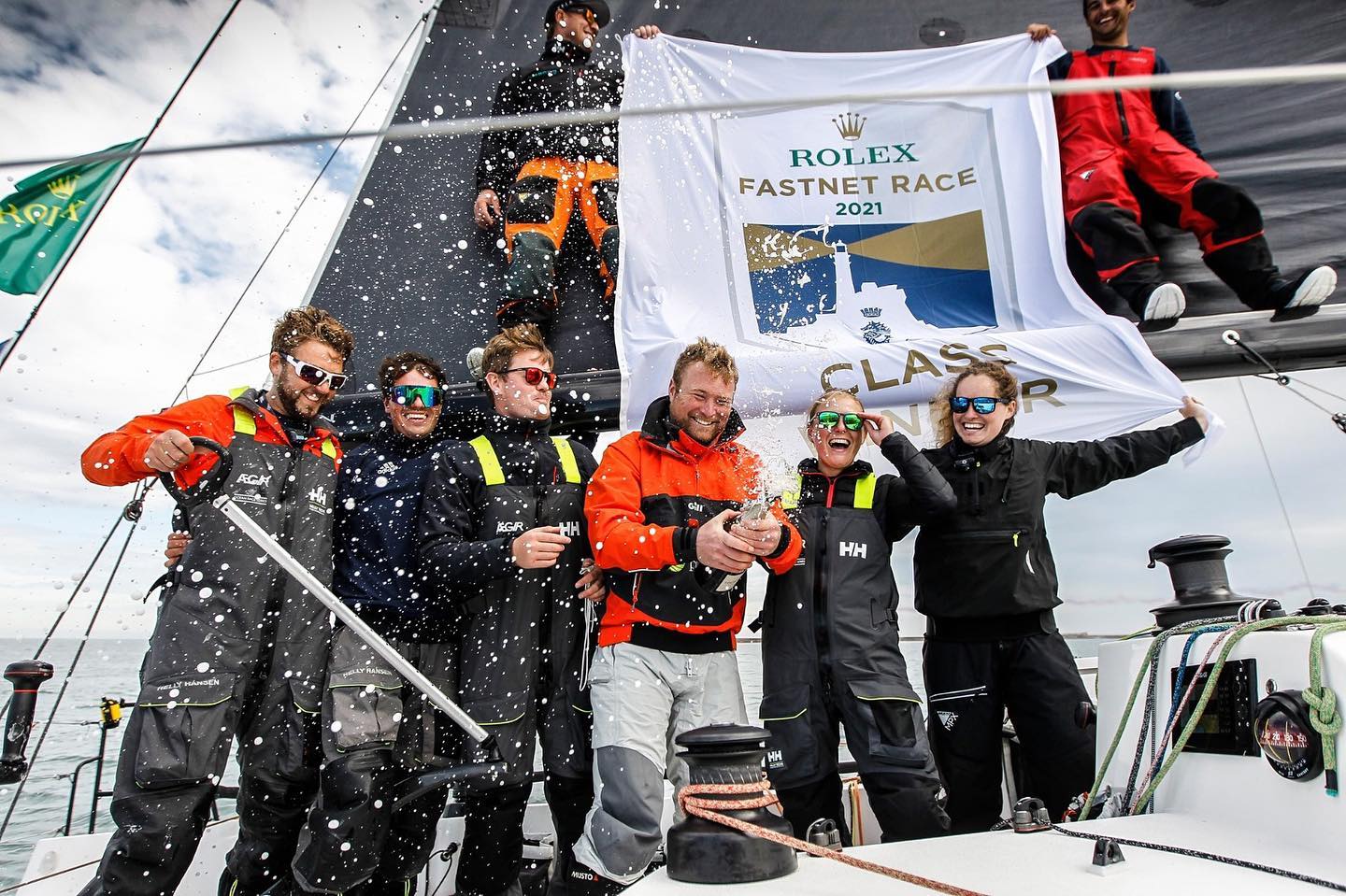
SUNRISE DOWN UNDER
SUNRISE DOWN UNDER
Off the back of their successful 2021 season, longstanding North Sails customer Tom Kneen and his team are heading “Down Under” to take on the Rolex Sydney Hobart Race. North Sails have been working with Tom and the team from the start and are proud to be part of the next chapter.
Tom Kneen and his team have been making waves on the international stage recently, winning the Rolex Fastnet Race Overall in 2021, infamously coming second in the Rolex Middle Sea Race 2021, and winning their class in the Caribbean 600 in 2022. Their scoreline in the 2021 Royal Ocean Racing Club Championship was unprecedented in its 21-year history. As a result, there is ‘plenty of hype’ already around the first British-based yacht and team to make the trip to compete in the Great Race for over 10 years.
North Sails Expert Mike Henning has been working with Tom since 2014 when he bought his first yacht, a cruiser/racer Elan 350. By his own admission, Kneen’s first Rolex Fastnet Race in 2015 was “a comedy of errors” but a great introduction to yacht racing that left him thirsty for more. Seven years down the line, the team and the boat have evolved quite significantly. Tom’s first move was into a new JPK 1080 before taking delivery of the current Sunrise, JPK 1180 Hull #2, in 2018.
📸ROLEX | Kurt Arrigo
The JPK 1180 was initially designed with a symmetrical setup. The team at North worked to optimize the sail inventory, with the initial targets being a mix of inshore and offshore racing. After the first season, the team began to focus more on offshore racing, so the next challenge arose. The North Sails design team was tasked with optimizing for offshore by transitioning to a longer bowsprit and a fully asymmetric setup, which the team are still racing with. This setup, along with a new rig and taking some weight out of the boat, has brought Sunrise to where she is today.
We spoke to Tom just before he headed south, “For North – “When I started my sailing journey, I was skeptical and didn’t understand or appreciate the massive value that working with North Sails would bring to the Sunrise project. We have been working with the team at North for almost 6 years and, given our tight budget, have invested time in developing the relationship so designs are optimized. The quality of the product is second to none, and the results speak for themselves. When taking on challenges such as the Sydney Hobart Race, it’s good to have peace of mind that our sails are the best they can possibly be!”
With a full new wardrobe on the way for the Rolex Sydney Hobart Race, Sunrise will be sporting a new 3Di mainsail, 3Di Helix™ upwind jibs, 3Di Helix™ Code Zero, and a Full Nylon Inventory including a new design A3. The Gosport team has been working with the Mona Vale loft in Sydney to ensure that Sunrise’s sails are delivered, IRC measured, and ready to race when they touch down in Sydney next week.
Mike Henning said, “We at North Sails have had great pleasure in working with Tom over the years and, more recently, refining and developing his sail inventory in collaboration with the Sunrise crew and our design team. The new sail wardrobe should put them in a great position to challenge in the race, and they will be serious contenders.”
A strong fleet of 115 yachts are entered for the 2022 edition of the Rolex Sydney Hobart Race. The renowned 628 nautical mile (1,163 kilometer) offshore race begins with a journey south from Sydney, taking competitors on a challenging racecourse comprising a long passage down the New South Wales coast and then across the easternmost edge of the exposed and infamous Bass Strait.
The race begins at 1300 (GMT+11) on Monday 26th December in Sydney Harbour.
📸Paul Wyeth | RORC
READ MORE
READ MORE
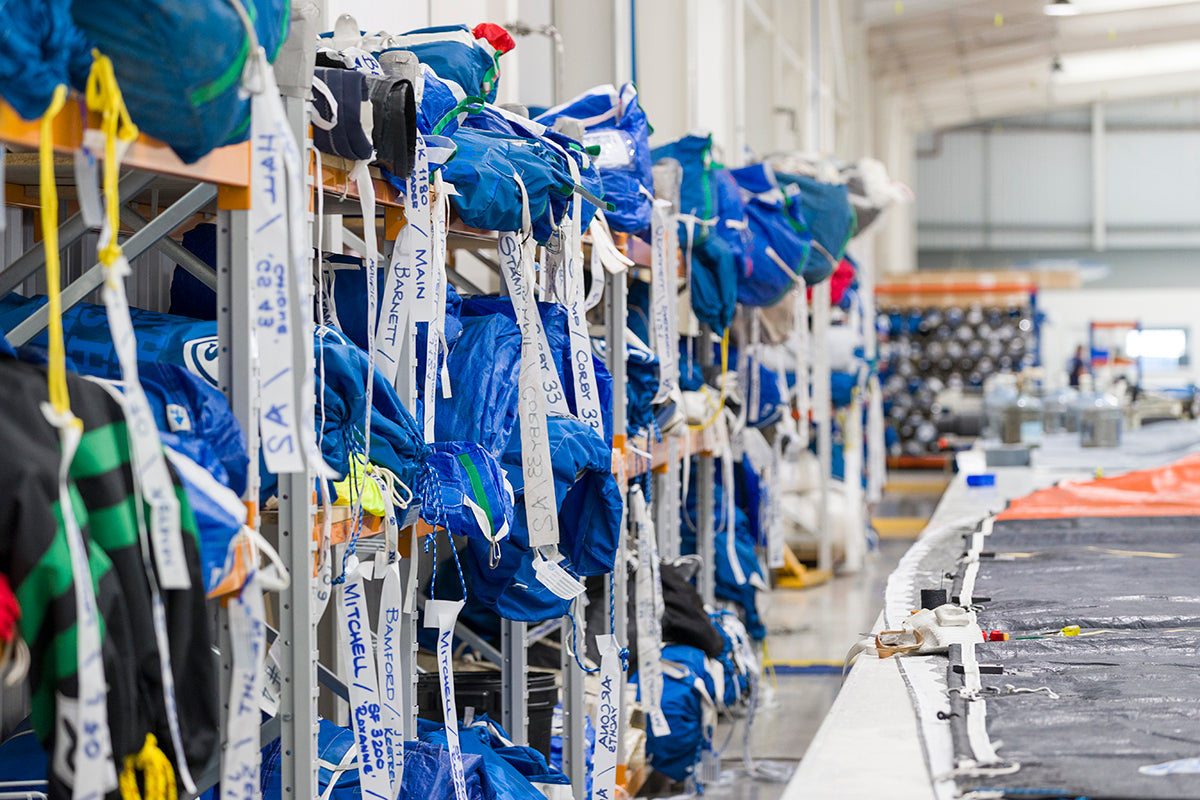
TAK FOR I ÅR!
MANGE TAK FOR ET GODT ÅR.
Julen nærmer sig, og vi vil ønske alle en god jul og et godt Nytår.
2022 har været et fantastisk år for North Sails, med mange succeser på kapsejladsbanerne rundt om i landet.
North Sails har været ombord på rekordmange DM-vindere i år og det er vi utroligt stolte af!
Vi introducerede flere spændende nyheder til både tursejlere og kapsejlere i 2022 og der kommer flere i det nye år.
En spændende 2022 nyhed, er vores Easy Furling Gennaker, hvor vi ovenikøbet har lavet en instruktionsvideo som enkelt forklare, hvordan du sætter, trimmer og bjærger sejlet igen. Læs mere og se filmen her
Husk vores åbningstider i juledagene:
Vi holder lukket fra den 22. december til den 3. januar 2023. (Begge dage inklusiv)
Glædelig jul og Godt Nytår.
READ MORE
READ MORE
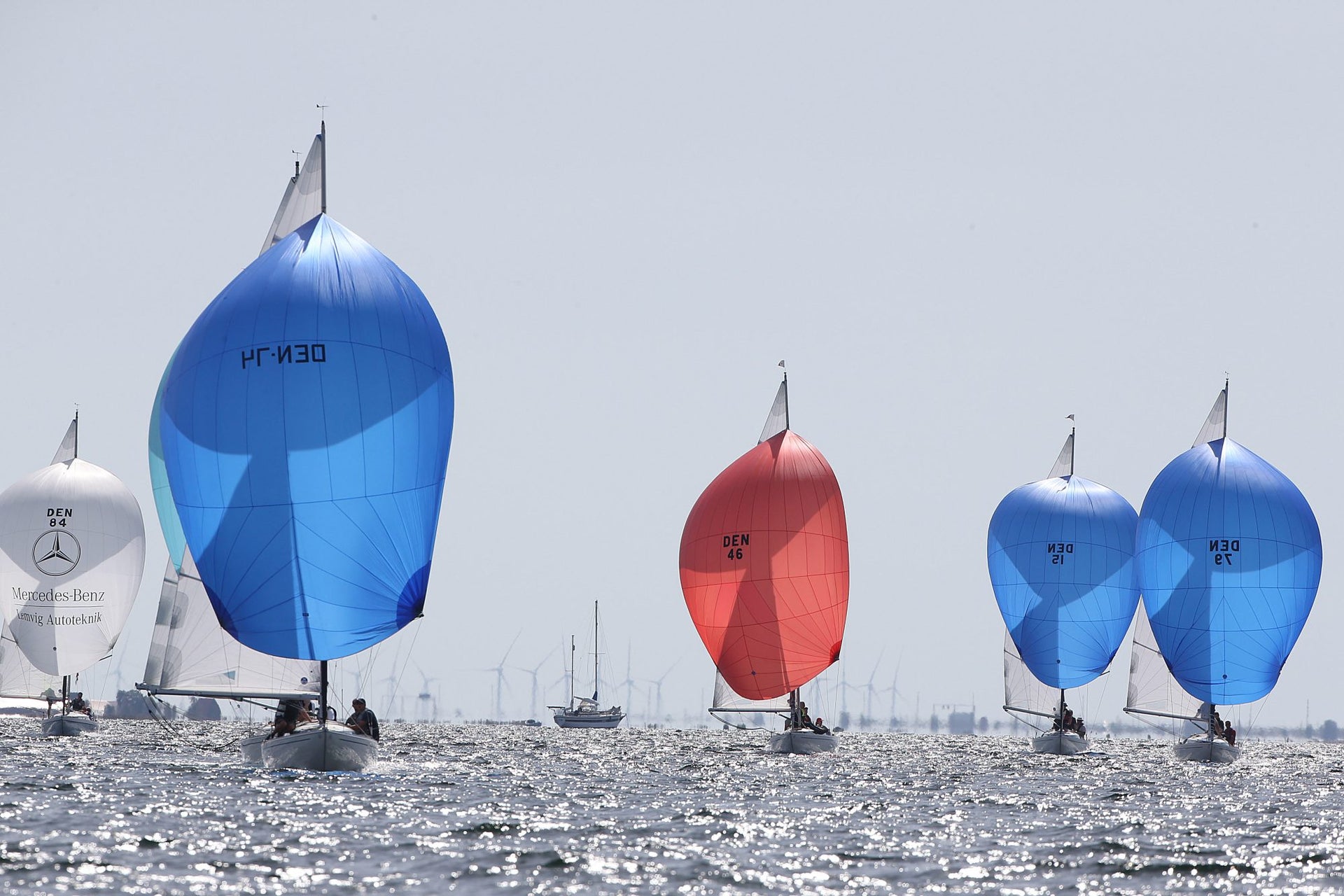
NORTH SAILS RESULTATER OG EVENTS 2022
NORTH SAILS RESULTATER & EVENTS 2022
2022 blev endnu engang en stor sæson for North Sails Danmark på både de danske og de internationale kapsejladsbaner
BB-10 Meter DM i Sundby. 📸 Per Heegaard
Specielt på de mange klassebådsstævner var vi stærkt repræsenteret og med mange dominerende og imponerende resultater.
Hermed en lille resultatliste over Danske Klassebåds Mesterskaber, hvor følgende placeringer blev sejlet hjem af teams med fuld NORTH SAILS sejlgarderobe.
BB-10 Meter: 1,2,3,5
Nordisk Folkebåd: 1,3,4,5,6,7,8,9,10
Knarr: 1,2,3,4,5,6,7,8,9,10
J-70: 1,2,3
Spækhugger: 3,6
CB-66: 1,2,3,5,6,8,9,10
H-Båd: 2,4
J-80: 3,4,6,7,8
L-23: 1,3
Ylva: 2,5,6,8
Finn jolle: 1
Ok Jolle: 2
Udover de hjemlige sejladser var det danske north sails team stærkt repræsenteret på den internationale scene. Her nogle enkelte resultater:
Palma Vela - Swan 42: 4. plads
Club Swan 42 World Championship: 4. plads
6m European Championship: - 2. plads
Swan Rolex Cup - Swan 42: 3. plads
Giorgio Armani Superyacht regatta 2022 - BRIAND 108 - 4. plads
Rolex Maxi Yacht Rolex Cup - Wally 100 - 6. plads
Se også de mange imponerende resultater fra rundt om i verden på vores North Sails Victory List.
Som en lille teaser og opvarming til det næste års sejlsæson her i en kold tid, er her lidt lækre videoer fra årets sejladser, hvor vi deltog på forskellige både:
St Barth Bucket
Ice Cup 2022
Giorgio Armani Superyacht Regatta
Rolex Giraglia
Club Swan Worlds 2022
Maxi Yacht Rolex Cup 2022
Les Voiles de Saint Tropez
Middle Sea race Rolex Swan Cup
READ MORE
READ MORE
TECHNOLOGY, TRENDS AND TALENT
TECHNOLOGY, TRENDS AND TALENT
Debriefing the North Sails Presence at the 2022 Yacht Racing Forum
When North Sails UK General Manager Ian Walker and Head of Design Services Jeremy Elliott traveled to Malta in November to attend the 2022 Yacht Racing Forum, the British duo had a number of objectives in mind.
Now in its thirteenth edition, the annual Yacht Racing Forum – incorporating the Design and Technology Forum – features two days of high-level presentations and extensive networking opportunities and has become a must-attend fixture for the yacht racing industry’s business leaders.
The Malta event attracted 250 delegates from 23 countries, and according to Walker, a two-time Olympic silver medallist and winner of the Volvo Ocean Race 2014-15, who joined the North Sails management team in August this year, it provided the perfect opportunity to highlight what it is that sets the global sailmaking company apart from its competition.
“We wanted to showcase the best of our technology to industry leaders by demonstrating what we have been working so hard on,” Walker said.
Likewise, Elliott – whose Design Services division is responsible for making North Sails expertise and technology available to the North Sails Technology Group companies and their clients – welcomed the chance to give a presentation titled Technology, Trends, and Talent to approximately 90 delegates at the Design and Technology Forum.
Among the trends Elliott highlighted was the increasing importance of the internal structure of sails, which he said is, in many ways, as important as the sail’s shape.
“Increasingly, modern sails are required to do much more than simply hold their shape as long as possible as the wind strength increases,” he said.
“For a long time, we had sail structures that inevitably grew when they loaded up – as the wind built the sails basically got deeper. It was quite an achievement some time ago when we evolved the 3DL string sails to a point where they held their shape over the wind range.”
“Now, with 3Di applied through concepts such as the HELIX Structured Luff we have a structure that can naturally flatten as the load goes up – even after you’ve used up all your trimming options such as mastbend, headstay tension, and so on.”
North’s ability to produce such remarkable sails is based on its patented 3Di composite sail technology, which, Elliott said, has expanded into areas that were originally felt to be less suited to such a structure.
“Everything from dinghies and small light boats with really flexible rigs to spinnaker staysails for big boats – we now see 3Di has been hugely successful in all these areas,” he said.
Building sails that are flexible enough to enable the shape to stretch out rather than to stretch in is a critical element of achieving a wide shape range – a requirement that plays nicely into North’s Helix Structured Luff load sharing technology.
“The sails we are designing today need to look after themselves,” Elliott explained.
“The more adaptable the structure is, the wider the range of flying shapes you can have. We are now finally in a situation where as the breeze goes up and the load in the sail increases, the sails naturally become flatter– which is precisely what we need.
“For a long time the goal was just to resist the growth and hold the original shape but now we can have whatever shape we want in whatever wind strength.”
Although originally developed for larger yachts, expanding its application into smaller craft like windsurfers and high performance dinghies such as the International Moth and 49er skiff, this new highly responsive construction technique owes more than a little to North’s 3Di Ocean cruising product which incorporated polyester yarns that are better suited to smaller more lightly loaded sails.
“That opened the door to the smaller boats,” Elliott said. “But learning lessons like that allows you to look afresh at other areas you had ignored.
“A good example is spinnaker staysails on bigger boats where previously an ultra-light laminate paneled sail was the only construction that worked. Now, though, we can apply what we learned with our smaller boat solutions and we get a lay up that works really well for big spinnaker staysails in 3Di.”
Also benefiting from these advancements are the fast foiling big monohull yachts of the America’s Cup.
“In those boats you can have an apparent wind of eight knots before take off, but when you get foiling, the apparent wind can rocket up to over 40 knots.
“That sort of breadth of apparent wind range for a single sail has never been seen before. In the past, the apparent wind range for any sail was about 10 knots – maybe 10 knots to 20 knots or 20 to 30, but never eight to 40+ knots.”
“You can’t be changing jibs in the middle of that transition, so you have to have an ultra-adaptable sail. That changes the game quite dramatically because you need such a huge range of flying shapes now, and that is achieved through the structure of the sail much more than it ever did from the molded shape. That’s the challenge our America’s Cup designers are constantly facing so 3Di and HELIX are essential assets in their armory.”
Indeed, Elliott believes that developments in sail structure have become a key battleground in the latest cycle of the America’s Cup.
“I see the structure in the sails nowadays in the same way that the shape of the keel bulb was regarded 20 years ago – because it is such a significant part of the boat’s performance,” he said.
“It is no surprise that you see so little of what is actually going on inside the sails. The filaments can now all be black so you cannot tell whether the sail is, say, 60 or 80 percent carbon, or 40 percent polyester and elastic – or somewhere in the middle.
“In the old days of the America’s Cup, anyone could look at a sail on a Version 2 IACC boat and tell what the structure was – what materials had been used and what the primary structural groups were.
“That meant it was relatively easy to reverse engineer someone’s sail, but it’s almost impossible now and it is one of the biggest elements of the sail plan and the performance potential of the boat.”
Despite the remarkable advancements North has made with its proprietary 3Di technology since its inception 10 years ago Elliott believes the company has still only scratched the surface in terms of its future potential.
“We have come a very long way in ten years. The product is unrecognizable and is significantly better across pretty much every metric you could choose – and we have expanded into a whole bunch of areas we thought would be off limits. I am certain that in another 10 years the product will probably be unrecognizable from where we are now.”
As compelling as North’s technology narrative might be, Elliott and Walker both agreed that the company’s ongoing investment in talent throughout the organization is equally important.
“As an organization, we recognize that the industry we are in is just as much about people as it is about product,” Elliott commented. “In the past, we have tended to make a bigger deal about our technology, our design, and our product than we have about our people.
“We have added a sizable amount of talent across all areas of the company in the last three or four years – across management, design, admin, finance, and elsewhere – and in all of those areas we now have lots of new faces who have really raised our game.”
Walker – who joined North Sails to head up the UK operation after a four and a half year stint at the Royal Yachting Association as Performance Director for the British Sailing Team – agreed that the company was as focused on its people as it was on its technology and product.
“Like most things, if you don’t have good people then you have a short shelf life,” he told the Yacht Racing Forum audience.
“That’s why we continue to recruit amazingly talented people around the world – whether that be an incredible designer like Flavia Tomiselli in Palma, Robert Hook in Australia (who was the designer of the ORACLE trimaran sails in 2010), top Volvo Ocean Race sailors like Bouwe Bekiing, Pablo Arrate and Phil Harmer, or Olympic gold medallists like Sime Fantella.
“North Sails is a people business and our ethos is to put our customers at the center of everything and focus on what they want,” Walker said.
“We believe that they want the best product and the best possible service and we achieve that by hiring top people who can develop remarkable technology and deliver an exceptional customer experience.”
READ MORE
READ MORE
WHO WE ARE: ALEX LEVKOVSKIY
WHO WE ARE: ALEX LEVKOVSKIY
Get To Know Your Local Sales Expert
What do you enjoy most about sailing?
I really enjoy being on the water and sailing in strong winds, especially downwind. The feeling you get when a boat is locked and loaded on a plane is hard to compare to anything else. The social part of sailing is also very enjoyable, the majority of my friends are sailors or people who are involved in water sports in some form. And of course the racing part, having a great competitive team and boat is always good fun. You also get a chance to travel the world and meet new people. Now sailing is not only a hobby and passion for me but a job as well.
How did you get started in the marine industry? What do you enjoy most about it?
I grew up sailing from a young age and continued racing into adulthood. When I moved to Vancouver I took all my sailing experience and knowledge and transferred it into my first job in the marine industry. Over the years I continued to learn more about different areas of the sailboat industry such as spars, running and standing rigging, electronic systems and sails. I'm excited to continue that journey with North sails.
I love the technical side of things. Selection of the right sails and rigging package can make your time on the water very enjoyable no matter if you're cruising with your family and friends or racing at the highest level. You also never stop learning, the industry always comes up with new materials and technologies and you have to stay on top of the things in order to be at the leading edge of it.
What boats/classes do you sail in?
I began racing Optis and Lasers then made a switch to keelboat racing at the age of 16. For the past 12 years I have raced a wide range of keelboats from J24 to TP 52s. At the moment I am focusing on classes such as Melges 24, Melges 32, Martin 242 and Farr 30. Recently wing foiling caught my attention, I’ve enjoyed getting into it over the past year.
What is your favourite cruising spot and why?
To be honest I don’t cruise that much but I know that the Pacific Northwest is a one big cruising spot in itself. When I do go cruising it is in the area near Vancouver island, which is relatively easy to access and super sheltered. You get to go to a place with few people around and enjoy nature at its best form.
What is your most memorable race and/or regatta?
That’s a hard one. I really enjoyed all the match racing events I've done, especially ISAF Nations Cup Finals. We sailed with a very young team back then and got a ton of experience racing against some tough teams. Also events with the Melges 24 team Sunnyvale. A few of my buddies and I owned a boat and we sailed all sorts of different events starting from PHRF club racing up to North Americans and Worlds.
What are you most looking forward to about joining North Sails?
North Sails is a company with a long history and incredibly talented team behind it. I’m looking forward to learning from the best in the industry and beginning a new chapter in my career. I’m very excited to help our clients to achieve their goals and set them up for success in any type of sailing they are involved in.
READ MORE
READ MORE

SÅ LET BRUGER DU DIN EASY FURLING GENNAKER
EASY FURLING GENNAKER
Navnet siger det hele.
North Sails introducerer Easy Furling Gennakeren til tursejlere, der gerne vil have pålideligheden ved et Top-Down rullesejl uden at skulle gå på kompromis med muligheden for at sejle læns. Sejlet er designet med det største sejlareal, der passer til din båd og stadig med de bedste rulleegenskaber. Sejlet er konstrueret i nylondug og udviklet specifikt til sejlads på læns. Se videoerne herunder, hvor let det er at bruge.
Easy Furling Gennaker - Tilrigning
Denne instruktionsvideo er en skridt for skridt gennemgang af de få og lette trin, der skal til for at få succes med en top down rulle gennaker. En gennaker på rulle kræver en smule øvelse at håndtere, men vil hurtigt og nemt blive til dit fortrukne sejl på læns. Easy Furling Gennaker er et cruisingsejl til læns, det er et sikkert sejl at rigge til, rulle ud og giver god fart på turen.
Easy Furling Gennaker - Trim
Uden store udfordringer kan du få din rulle gennaker til at performe på læns. Med lidt øvelse er det nemt og sikkert at håndtere sejlet. Kun få justeringer og trim og du er godt på vej. Det er en fornøjelse sejle i medvind, og du kommer længere med de mange kvadratmeter rullet ud.
Easy Furling Gennaker - Afrigning
Uden stor besætning kan sejlet rulles væk, når der er brug for det. Her viser vi at Top down furling giver mulighed for at sejle med gennaker med en lille besætning. Sejlet er let og bygget til cruising og er et stærkt supplement til din sejlgarderobe.
Klik her og få et tilbud på EASY FURLING GENNAKER
READ MORE
READ MORE
THOMAS NORMAND APPOINTED OPERATIONS MANAGER AT NORTH SAILS FRANCE
THOMAS NORMAND JOINS THE TEAM
A New Operations Manager at North Sails France
Thomas Normand, former director of Mer Concept (sailor François Gabart’s ocean racing team), is joining North Sails France as operations manager. He will be responsible for the operational strategy within the three French sites in Vannes, Lorient (Brittany) and Mouans Sartoux in the South of France. He will support the management team, which includes managing director Gautier Sergent, manager and sales director Philippe Touet.
Thomas Normand (36 years old) will have as main missions the management of the teams, the optimization of processes and products, as well as the implementation of methods and projects. Reporting to the general management, he will act as coordinator and administrator between the different teams of the company, both nationally and internationally with the North Sails group. He will take up his position early December 2022.
“We are delighted to welcome Thomas Normand to our team,” said Gautier Sergent. His skills and experience will complement and strengthen our current capabilities. We are confident in his ability to maintain a smooth and positive development of the organization. And like all of our team members, Thomas is driven by the same passion for sailing and for excellence.”
“We have a great team that performs well whether it be commercially, technically or productively,” adds Philippe Touet. And Thomas will support this team with the objective of operational efficiency.”
“I am proud and excited to join the North Sails France team,” says Thomas Normand. “After four great years with Mer Concept, I wanted to get away from the world of sponsorship and broaden my horizon. The North Sails proposal came at the right time. It is a company with a strong reputation and a long history in the sailing world, especially through prestigious events such as the Route du Rhum, the Vendée Globe, the America’s Cup or The Ocean Race, races that have made me dream since I was a child. North Sails is also the reference in terms of advanced technology and a research and development unit placed at the center of the organization’s strategy. My role as Director of Operations will be to understand and deal with the problems and issues of each other in order to move forward. Another aspect and not the least, Thomas is a sailing enthusiast. “Continuing to work and exchange with the sailing teams will allow me to stay in touch with this magnificent sport.”
Thomas Normand holds a state sailing diploma, a master’s degree in sports management and recently a Goldman Sachs University Diploma from Essec. He began his career as a professional sailor in Mini 6. 50 and Figaro (Mini Transat 2011, 2nd in the prototype category and Solitaire du Figaro 2012, 14th and 1st Rookie) within Jean-Pierre Dick’s Absolute Dreamer team before putting his university education into practice at CapGemini engineering, a world leader in the engineering services sector, where he was head of the Energy department for four years, and then at Mer Concept as General Manager from 2018 until today.
READ MORE
READ MORE