

NORTH SAILS BLOG
All
Events
Guides
News
People
Podcast
Sustainability
Tech & Innovation
Travel & Adventure
2017 CANAM CHALLENGE
2017 CAN AM CHALLENGE
Where the Niagara River meets Lake Ontario, North Sails Clients come out on top in the J/22, Beneteau 36.7, 8 Metre, and PHRF Division
Hosted by Youngstown Yacht Club on Lake Ontario, this year’s CanAm Challenge saw an excellent turnout with a variety of One Design fleets, as well as four PHRF divisions representing the United States and Canada. Never ceasing to disappoint, the hospitality at YYC is one of a kind, complete with a fantastic Race Committee team.
Saturday evening after racing, North Sails Mike Ingham and Dan Fien recounted their day on the water with fellow sailors. Key takeaways included: making smooth maneuvers, having consistent crew work, trimming the jib without disturbing the flow, and using the headstay to balance power and point while racing. Thanks to the North U crew for providing technical insights to support the competitors and help keep the level of competition at its highest!
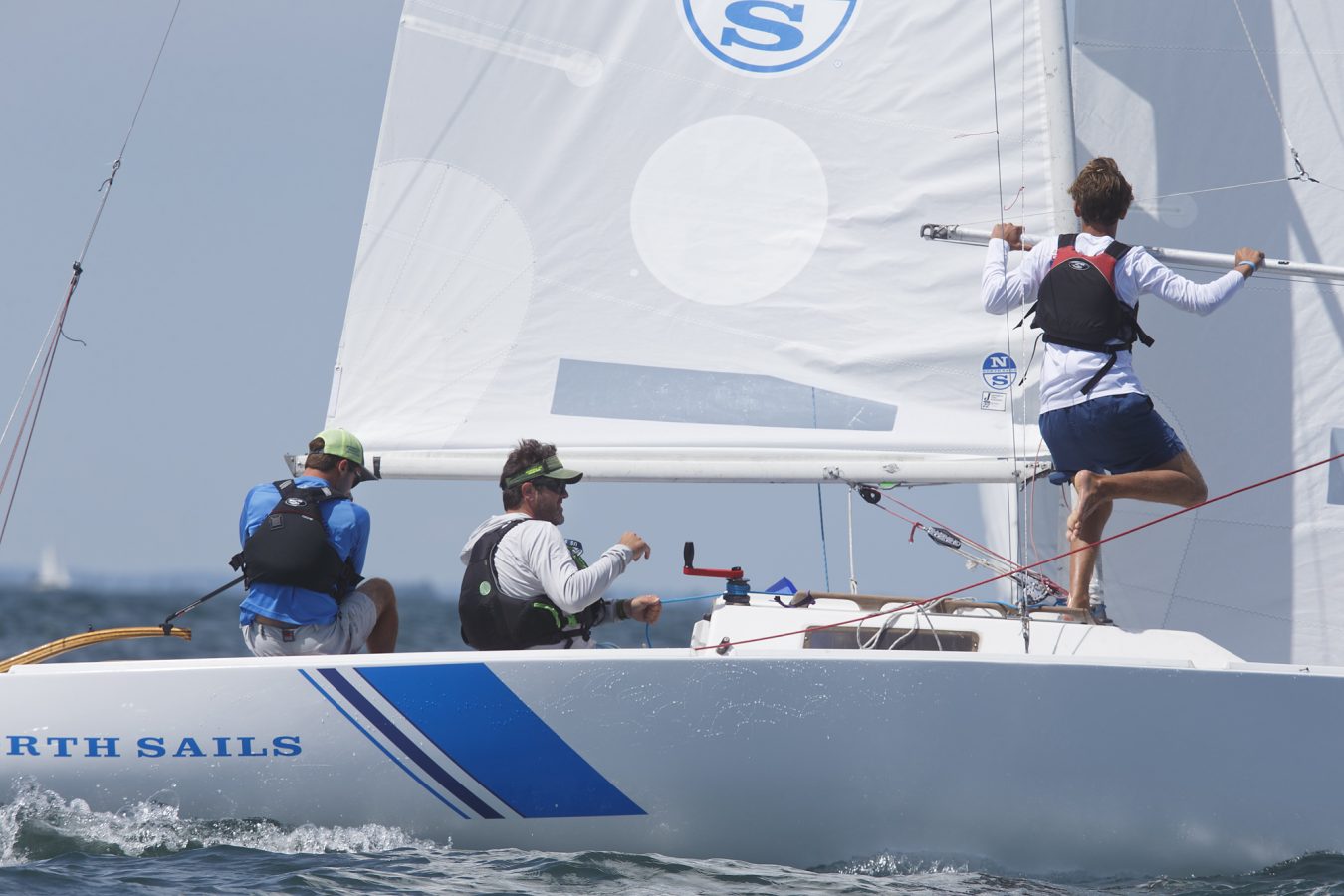
A highlight of the weekend was the J/22 Grant Team North Sails, led by Alfonso Bringas coming out on top of the fleet with flying colors. North Sails One Design is proud to partner with the US J/22 Class Association to build its Scholarship Boat Program by providing new sails for the team selected for the grant. With fostering youth sailing in the J/22 Class as the main goal, our team at North Sails has created this unique opportunity for young sailors. Congratulations to Alfonso and his team for placing 1st in the J/22 fleet after only their 2nd event in the boat in a highly competitive fleet.
Alfonso and his team racing to the #1 spot at the 2017 CanAm Challenge
The J/88s, competing in their North American Championship, had an amazing turnout with 13 boats on the line making for some very competitive racing and one of the biggest roll calls at an event for the class. Congrats to Douglas Newhouse and his team on Yonder for staying consistent and finishing 3rd overall in the North Americans.
Richard Reid’s Zingara powered by North Sails 3Di won the Beneteau 36.7 fleet with five straight bullets, defining perfection in crew work, fleet management, and tactics. John Mitchele and his 8 Metre team on Thisbe won all but one race, sailing very consistent to take home 1st place in their class. Dan Berezin and his Melges 24 team on Surprise, powered by North Sails, on took 1st overall in their division by three points. In the PHRF 1 – Spinnaker division, Andrew Kooiman and his J/35 team Loyalist took first place in PHRF 1 Spinnaker Division. In PHRF 2 -Spinnaker division, the C&C 29-2 Sting with skipper Joel Doyle claimed 3rd overall.
North Sails is a proud sponsor of the CanAm Challenge, keeping sailors out on the water racing each day with overnight sail repair services. Nice job this year, sailors!
Full Scores
READ MORE
READ MORE

FAIR WEATHER ROUNDS OFF THE ORC EUROPEANS
FAIR WEATHER ROUNDS OFF A TIGHTLY FOUGHT OUT ORC EUROPEANS IN GDANSK
North Sails clients top the scoreboard in three divisions!
ORC Europeans 2017
Eighty-two boats from 14 nations came to Gdansk, Poland to compete in the ORC Europeans last week. With wet and windy conditions, competitors duked it out all week sailing six races over four days. The sun finally appeared at the end, giving sailors two final races in beautiful weather and a steady breeze, completing the series where the ORC European Champion would be decided. Keeping things interesting, the first race of the series was a distance race offshore. Five inshore buoy races followed, allowing for a different type of sailing experience where sailors used their local knowledge, fine-tuned crew work, and short course tactics to get around the race course.
In Class A, Tea Ekengren’s Swan 45 Blue Nights scored 2-2-1-2-2-(6) giving them a 5 point lead ahead of Erik Berth’s Tarok VII in second place. Class B saw the X-41’s dominate the top end of the fleet, with all podium places being of this class. Martin Estlanders’ Xini Freedom came out on top with only a 2 point lead on second placed Dockenhuden skippered by Thomas Jungblut, who was also only 1 point ahead of third place Premium, with skipper Priit Tammemägi, completing the top 3. Patrick Forsgren’s Pro4u/Malin took the title for class C with 1-1-3-(8)-1-3.5 on the scoreboard, with Kaivar Tuulberg’s Katariina II following closely behind in second place.
Overall, the ORC Europeans was a successful week for North Sails customers. Congratulations to our clients on a job well done!
Full Results
ORC Europeans 2017
ORC Europeans 2017
ORC Europeans 2017
READ MORE
READ MORE
NATHAN & GRAHAM HETZLER WIN X INLAND CHAMPIONSHIP
2017 X INLAND CHAMPIONSHIP DECIDED IN EPIC LAST RACE
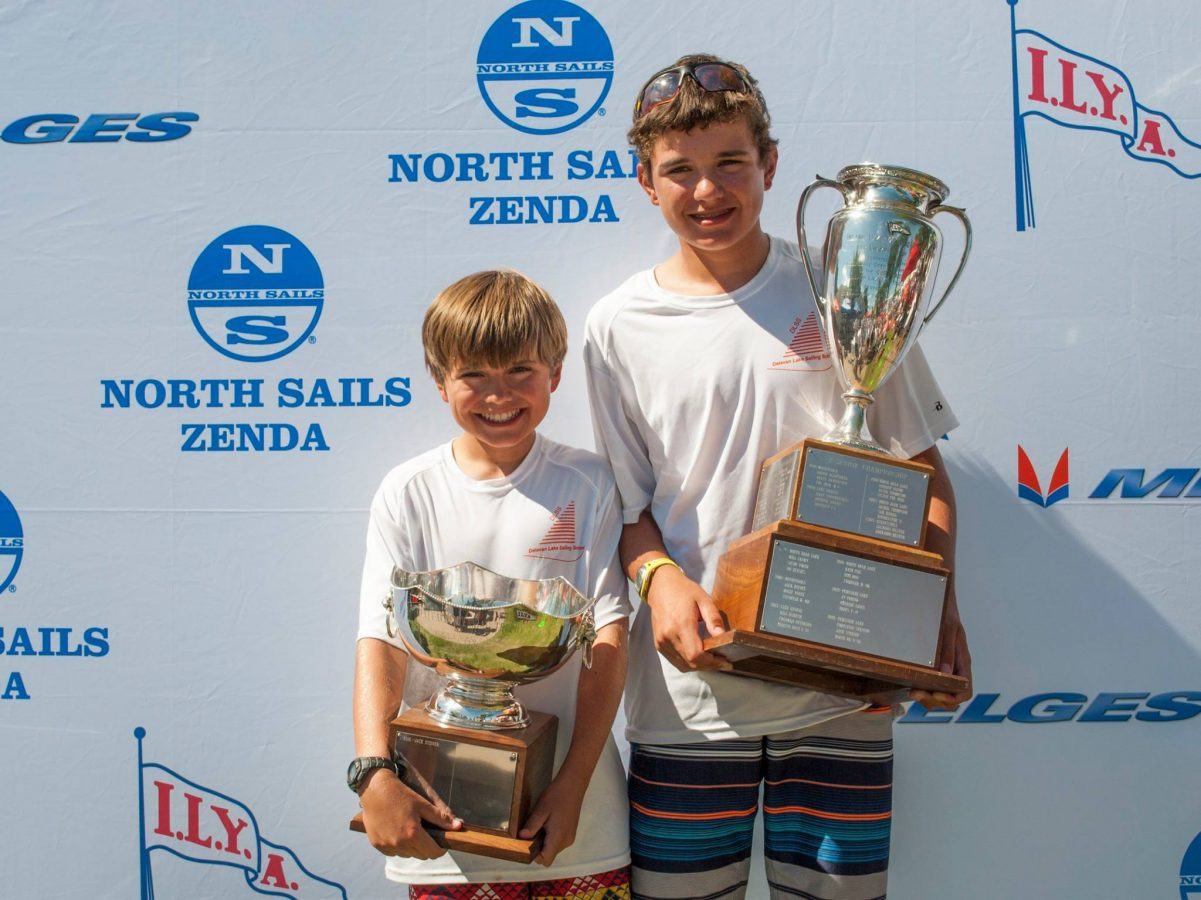
Congratulations Nathan & Graham Hetzler!
With an unbelievable tie after seven races, the stage was set for an epic showdown between D-30, I-25 and I-11. In the who-beats-who final race, Nathan Hetzler, Chapman Petersen, and Kyle Navin finished first, second, and third. Delavan Lake’s Nathan & Graham Hetzler are your newest X Boat Champions!
Congratulations to the Simon siblings who earned the title in the junior fleet of 67 X Boats! Pewaukee’s Meta & Fritz Simon sailed an incredibly consistent event averaging less than four points.
Every X Boat has a place in this lifelong Inland community. In the words of Dr. Tom Hodgson:
“Treasure this moment kids. It is a very special moment in your life. You are making friends here that will be your friends for life.”
The Melges X Boat is the path to the Inland. A community of fast, FUN, family sailing. After kids age out of X Boats, they move into the Melges MC, C, E, and A. This is scow country! Home to Olympians, Rolex Yachtsmen, and Inland Legends.
Learn more about North Sails fast X Boat sails
Full Results
READ MORE
READ MORE
NORTH SAILS BENELUX AANWEZIG OP HISWA TE WATER. KOMT U OOK?
North Sails Benelux aanwezig op HISWA te water, komt u ook?
(langs de waterkant, standnummer K.150)
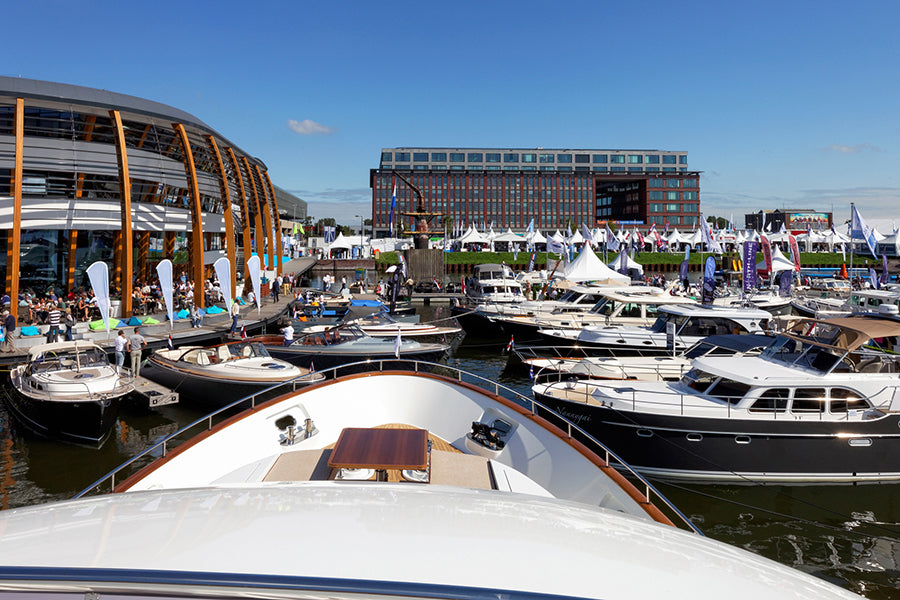
Over een paar weken start de HISWA te water, dit jaar voor de vijfde en (voorlopig) laatste keer in Amsterdam. De HISWA te water vindt plaats van 29 augustus t/m 3 september, de beurs is elke dag van 10:00 – 18:00 geopend. North Sails Benelux is de gehele week aanwezig met een eigen stand.
3Di NORDAC op de HISWA te Water
We praten u tijdens de HISWA graag bij over de nieuwste toepassing van onze 3Di zeiltechnologie: 3Di NORDAC. Ook hebben we 3Di NORDAC sample zeilen bij ons op de beurs. Wanneer u tijdens de beurs uw nieuwe zeilen in bestelling geeft kunnen we u een scherpe beurs aanbieding doen.
HISWA te water in 2018 in de Bataviahaven in Lelystad
Vanaf 2018 verhuist de HISWA te water naar de evenementenhaven Bataviahaven in Lelystad. De grootste in-water boot show van Noord-Europa is met het oog op de toekomst op zoek gegaan naar een ruimere locatie. Met onze loft in Almere zijn we verheugd dat de beurs in 2018 bij ons in de achtertuin plaats gaan vinden. Dit biedt ook voor North Sails veel perspectief!
Afspraak maken?
Wilt u graag een afspraak maken met één van onze experts? Neem dan contact op met North Sails Almere.
Tickets bestellen?
Bestel hier uw tickets voor de HISWA te water.
Ps. Voor onze vaste klanten en nieuwsbrief abonnees zijn er gratis kaarten beschikbaar voor de HISWA te water. Binnenkort ontvangt u hierover meer informatie.
Credits: OTTI fotografie
READ MORE
READ MORE
2017 THISTLE NATIONALS
2017 Thistle Nationals
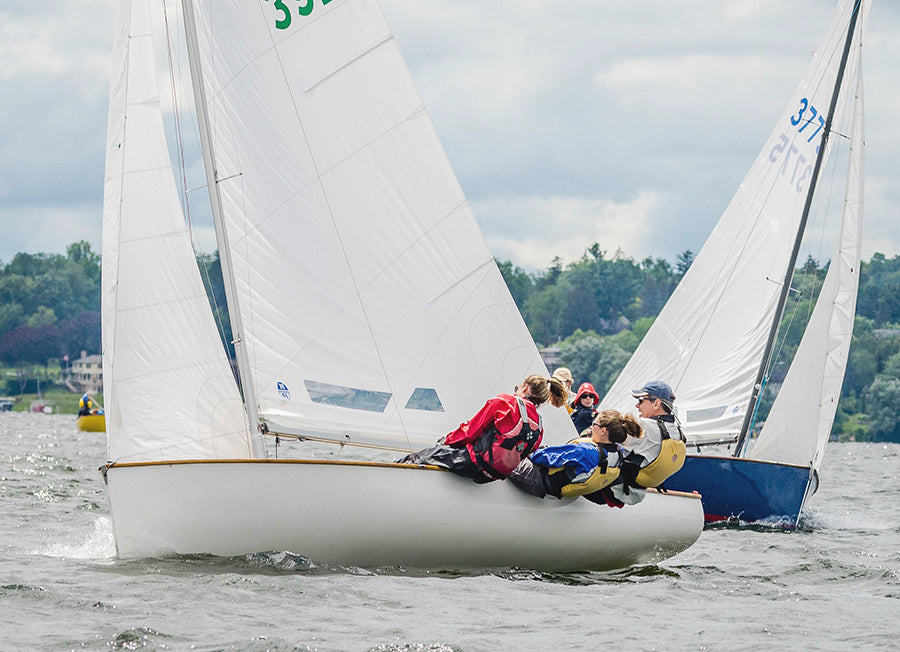
Thistles descended on the challenging Lake Chautauqua for the 2017 Nationals with North Sails taking top positions at Women’s, Youth, President, and Open Nationals Championship Divisions.
The 2017 Thistle Nationals was a big success with close to 90 boats on Lake Chautauqua in New York. Past U.S. Sailing President, Tom Hubbell, hosted the event out of the town park in Mayville, NY. With so many boats and no physical clubhouse, the event base was at a public park so it had a different social feel than other events we’ve seen. Throughout the week sailors were tested throughout a variety of weather conditions, keeping things interesting and exciting on the water.
The regatta festivities were casual and fun. Two of the nights, the local fire department hosted a BBQ for the competitors which was a big hit. Another night we took the Chautauqua Bell (a classic steam paddle wheel boat) over to event organizer Tom Hubbell’s home for a neighborhood dinner which made for a nice evening with our fellow competitors. PRO Matt Bounds had his hands full, not only with 90 boats but also in dealing with a shifty inland lake conditions. It’s one thing to manage a shifty small lake with a small fleet, yet another to set good courses and complete a series successfully with so many boats. Matt pulled it off well, and the sailors were happy to get some great racing in.
Each morning about an hour before we launched, Paul Abdullah and I hosted Coffee with North and provided sailors with some tips for the day under the North tent. The crowd was quite large, with roughly 140 sailors tuned-in, so the tips session was moved under the main regatta tent to accommodate everyone. Between the North U Clinic, the Women’s and Junior Nationals, the practice day, and 5 days of championships style racing, it was an intensive week of Thistle sailing. Managing the shifty and puffy conditions while maintaining boat speed and making good tactical decisions were key topics of each group discussion.
Thanks to the Chautauqua Yacht Club and the Thistle Class Association for organizing a great event. Congrats to our clients for your hard work at Nationals last week and your dedication to the Thistle Class!
For more information on Thistle Class Sails, contact your local North Sails Expert, or visit our Products Page
Thistle sailors eager to learn at the morning briefings with North U tips for the day
Full Results
READ MORE
READ MORE

FLYING SCOT SANDY DOUGLAS MEMORIAL REGATTA
ZEKE HOROWITZ & COLE ALLSOPP WIN 2017 SANDY DOUGLAS MEMORIA REGATTA
Deep Creek Lake, mountain lake sailing at its finest!
This past weekend 52 Flying Scots descended upon Deep Creek Lake – home of the Flying Scot Inc. factory to race for the Sandy Douglas Memorial Trophy. This is the biggest event in Deep Creek which is the biggest Flying Scot fleet in the country. It is mountain lake sailing at its finest! The breeze is constantly shifting and it’s rare to be sailing in the same wind as the boat 10 yards away from you. This regatta is all about having fun in one of the most beautiful venues you could ask for.
Five races were sailed in fantastic conditions, with Zeke Horowitz and Cole Alsopp coming out on the top of the leaderboard with 8 points. Tyler and Carrie Andrews were close behind with 11 points, taking 2nd overall. Before racing on Saturday, Zeke offered some insights to the fleet with a key tip:
TIP FROM ZEKE: Remember in shifty and puffy conditions to always have a hand on the vang! It might even be prudent to have the crew playing the vang because it is so important to ease the mainsheet and tighten the vang hard when you get a big puff. As soon as the puff leaves, the vang must get eased back off quickly to power the boat back up. You should be adjusting the vang nearly as often as you adjust the main sheet!
Learn more about North’s fastest Flying Scot sails
Full Results
READ MORE
READ MORE

OSVRT NA KORNATI KUP 2017 S TEAM X-CITE
Jedrenje s timom X-cite, na njihovoj X-41 jedrilici s North Sails jedrima, kroz Nacionalni park Kornati. Posada Angelina pobijedila je sve, a ova regata nije bila iznimka.
Kup Kornati se održava već više od 30 godina; dobro organiziran i uvijek popularan, ova regata privlaći jedriličare iz cijele Europe. Ove godine bilo je prijaviljeno preko 100 brodova, svaki s posadom od otprilike osam članova. Kornati kup jedna je od najvećih regata u Hrvatskoj. Većina natjecateljskih brodova su charter jedrilice, međutim, članovi posade su cjeloživotni jedriličari i postoji ista glad za pobjedom koju biste našli na bilo kojoj regati višeg ranga.
U ponedjeljak smo uživali u dvije regate jedrene u štapu po laganom vjetru od oko 5 do 8 čvorova ispred Pakoštana nekon kojih su posade uputile u Marina Piškera kako bi prenoćili.
Utorak je donio 10-15 čvorova sa sjeverozapada te je jedrena navigacija u Kornatskom i Žutskom kanalu. Po dolasku u Marina Žut te večeri, svi natjecatelji bili su zadovoljni s dvije pristojne utrke.
U srijedu su posade prvo čekale vjetar pored Žuta, da bi se regatni odbor se zaputio put otoka Gnalić u iščekivanju istog. Na tom putu mnogi brodovi su bili vezani zajedno, neki su se lovili ribe, a sa sigurnoj udaljenosti svjedočio sam kupanju jednog natjecatelja potpuno golog. Po laganom vjetru od oko 7 čvorova, oko otoka Ošljak Mali, Ošljak Veli, Gnalić, Artica Vela i Mala održana je navigacijska regata. Ciljna linija nalazila se pored pristaništa u Biogradu. Večernja proslava uključivala je natjecanje u stand-up-paddleboard i glazbu uživo.
Izvješće o vjetru za četvrtak nije bilo obećavajuće. Iz različitih smjerova i ne više od 5 čvorova. Utrke su zakazane i pokušane; Bavaria 41 su uspjeli prijeći cilj, sve ostale klase su napuštene. Atmosfera je bila neodoljiva na dodjeli nagrada i mnogi su se odmah registrirali za sljedeću godinu.
Luka Šangulin, vlasnik Angeline Yacht Charter, http://www.angelina.hr, je bio korimilar jedrilice X-cite na ovoj regati. Imenovana po Lukinoj baki, obiteljska charter tvrtka posjeduje s preko 120 različitih jedrilica i motornih jahti, a 2015. godine dobila je nagradu za najbolju charter tvrtka u Hrvatskoj. Oni su regularni sudionici Kornati kupa i bili su ponosni s još odvojanjem još jedne regate u nizu. Ručak na brodu X-cite nije bio uobičajeni pre-made sendviči, već mali piknik. Drvena pasarela namještena popreko koja je glumila stol s hrvatskim mesnim prerađevinama i sirevima. Posada koja jede, ostaje zajedno ... i očito jako pobjeđuje.
North Sails Hrvatska sretni su što imaju Team X-Cite i Angelinu Yacht Charter kao kupce. Pružamo osobne usluge i kvalitetne proizvode, podržavajući lokalne tvrtke i održavajući hrvatsko gospodarstvo u prvom planu.
Like Facebook za više.
READ MORE
READ MORE

J-CUP REGATTA REPAIR SERVICE
The North Sails Crew is here for you
North Sails is proud to be supporting the Landsail Tyres J Cup, August 17th - 19th, both on and off the water. Our crew will be on the water taking photography and drone footage to use for daily debriefs post racing. Join us after racing each day for a panel discussion and footage analysis to go over what really happened on the race course.
Our Certified Service team will be on hand for overnight repairs. Contact Jonty Cook 07470 409213 for all your sail care needs make sure you don’t miss out, sign up for the regatta today!
For more information and to keep up to date during the regatta, be sure to follow us on Facebook @NorthSailsWorldwide
READ MORE
READ MORE
NORTH SAILS I HRVATSKO SUNCE - UV TESTIRANJE
Ispitivanje kvalitete North Sails-a je rigorozno. Kombinira promatranje učinaka sunca, vlage i plijesni na vlakna s dodatnim kontroliranim istraživanjem kako bi se bolje razumjelo što uzrokuje prirodnu degradaciju jedara.
U suradnji sa UV istraživačkim laboratorijem na Floridi, North Sails provodi dugoročne testove na cijeloj proizvodnoj liniji. Ovaj laboratorij je specijaliziran za promatranje izloženosti materijala sunčevim zrakama. Jedna od najčešće korištenih metoda je izvođenje testova s umjetno induciranom UV simulacijom. Ova metoda daje rezultate u kraćem vremenu od vanjskog izlaganja, no šteta nastala ovim testiranjem nije konzistentna sa vanjskim realnim izlaganjem. Vanjsko testiranje na prirodnom sunčevom svjetlu i učinak jedrenja zahtijeva više vremena, ali pouzdanost podataka je znatno veća.
Do danas je testirano preko 750 uzoraka kako Northovih tako i konkurentskih jedara, s najsloženijim UV testiranjem u proizvodnji jedra. Razgrađena platna analizirana je nakon 500, 1000, 1500 i 2000 sati izlaganja suncu. Polovica uzoraka ispitana je za izdržljivost čvrstoće vlakana, dok je druga polovica testirana testom FlexCycle koji simulira zamorno trzanje jedara te se naknadno testira čvrstoća vlakana.
Istraživanje se ovdje ne zaustavlja. Northovi UV testovi također su uključivali uzorke jedara prikupljenih od Open 60 jednotrupaca koji su jedrili oko svijeta. Uzorci su također izvučeni iz sličnih površina konkurentskih jedara, uključujući dijelove podvrgnuti kompresiji, savijanju i neke čiste površine jedara. Budući da ti brodovi jedre istim rutama sa sličnim uvjetima, rezultati pružaju pouzdanu usporedbu degradacije jedara na poznatom udaljenost i vrijeme. Na vrelom suncu Hrvatske, North Sails jedra su odlična!
Snažna, dugotrajna i mudra investicija za vašu jedrilicu.
Like Facebook za više.
READ MORE
READ MORE
THE JUG 4 1 TOPS OFF THE FLEET AT THE J/22 NORTH AMERICANS
THE JUG 4 1 TOPS OFF THE FLEET AT THE J/22 NORTH AMERICAN CHAMPIONSHIPS
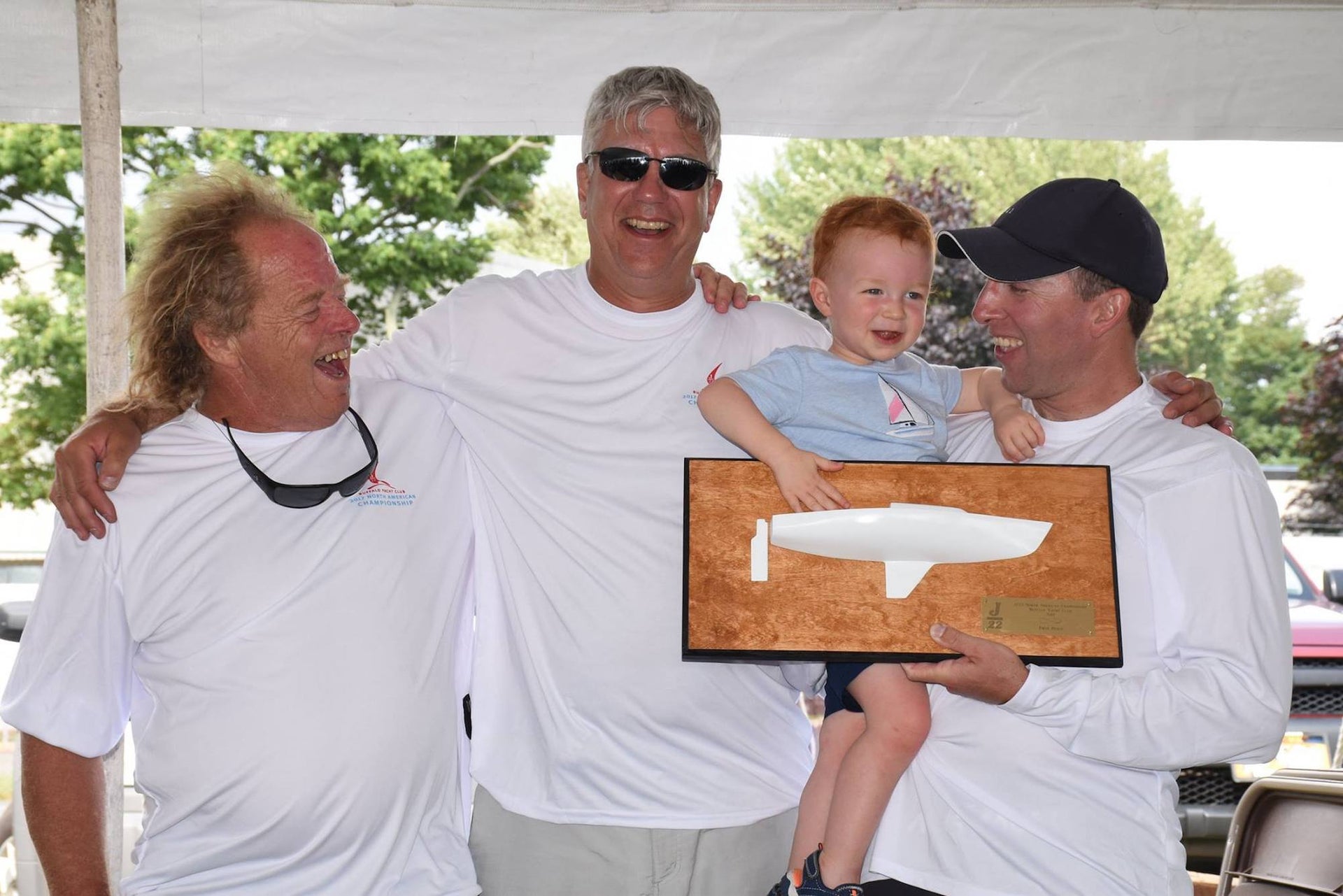
Former World Champion, North-powered Chris Doyle and his team Jug 4 1 win the J/22 North Americans in Buffalo, NY
Will Harris, Chris Doyle and Adam Burns on team ‘Jug 4 1’, the 2017 NA Champions!
Thirty J/22 teams met in Buffalo, NY for the 2017 North Americans. Weather predictions had many different outlooks and it came down to the very day to know what the weather was going to bring. The practice race was cancelled due to thunderstorm activity, some teams were able to get sailing time in after the weather cleared and before the wind died off completely. North Sails Expert Mike Marshall organized a Q & A panel with the keg at arm’s reach, and 60-70 competitors asked a ton of questions that helped sailors get in the right frame of mind for racing.
Nine races were successfully completed over three days in a light to moderate breeze that built to the low teens for the final day. The chop emphasized the importance of changing gears as quickly as possible while keeping things smooth in the boat. Immediately after the start it was a race to the course left side, with little to no room for errors in tactics or boat speed.
Familiar face to the J/22 Class, Travis Odenbach, lead the debrief after the first day, with a panel of familiar faces. Previous World Champion Chris Doyle gave insights on sail trim and boat speed, along with Luke Lawrence and North Sails Expert Zeke Horowitz.
On the last day of the regatta the breeze shifted between 30-40 degrees, which made it impossible to recover from a bad decision ( some of us found that out the hard way!). The first race worked well for North Sails Expert Jeff Todd with his team Hot Toddy, moved into the lead by escaping out to the right side with amazing boat speed. After an hour delay, the second race started in very light air. Local team and previous World Champion, Chris Doyle and his team on Jug 4 1 were faster than ever and left no chance for their competitors as they were going, going, gone!
In the overall standings, consistency was key. Only the top two boats were able to get away with all single digit finishes. Congrats to our clients for your outstanding performance. Thanks to the Buffalo Yacht Club for hosting this years North Americans. It was a great event and a lot of fun for competitors!
Tips from North Sails Experts Zeke Horowitz & Mike Marshall:
Boat Setup and Crew Positioning
1. Don’t be afraid to loosen the lowers a lot. It’s important to generate 3/4 of an inch of mast sag, which requires aggressively loose lowers. Maybe it sounds risky, but it worked 100% of the time!
2. Using main leech tension to power up the boat and get people to the high side was important. It seemed a relatively tight main and slightly eased jib was fast in under ten knots and flat water.
3. A lot of concentration on sail trim was a key factor. The helmsman needs to focus on maintaining a balanced helm, not over steering, and letting the boat ‘steer itself’. Moving the crew weight was essential to achieve a neutral helm.
Boat speed and Decision Making
1. Jib halyard tension was pretty critical. Over the range of conditions, the goal was wrinkles just forming off each of the snaps. Scallops meant the luff was too loose and no wrinkles meant the luff was too tight.
2. Match the boat speed of the boats around you before trying to match the height. We were able to point higher when the boat was up to speed and the keel was working.
3. Staying out of the middle of the course was also very important. When the wind was that light, the breeze would fill in from either edge. If you were in the middle, you could lose out on both sides, especially if you tried to run to the side with the shift instead of waiting for pressure on the side you were on. Patience was key!
Click here for more information on North Sails J/22 Products or to speak with a North Sails J/22 Class Expert.
Full Results
READ MORE
READ MORE
FLYING SCOT WIFE-HUSBAND CHAMPIONSHIP
FLYING SCOT FAMILY SAILING: WIFE-HUSBAND CHAMPIONSHIP
Couples gather in Rockport, MA for a fun, competitive sailing event
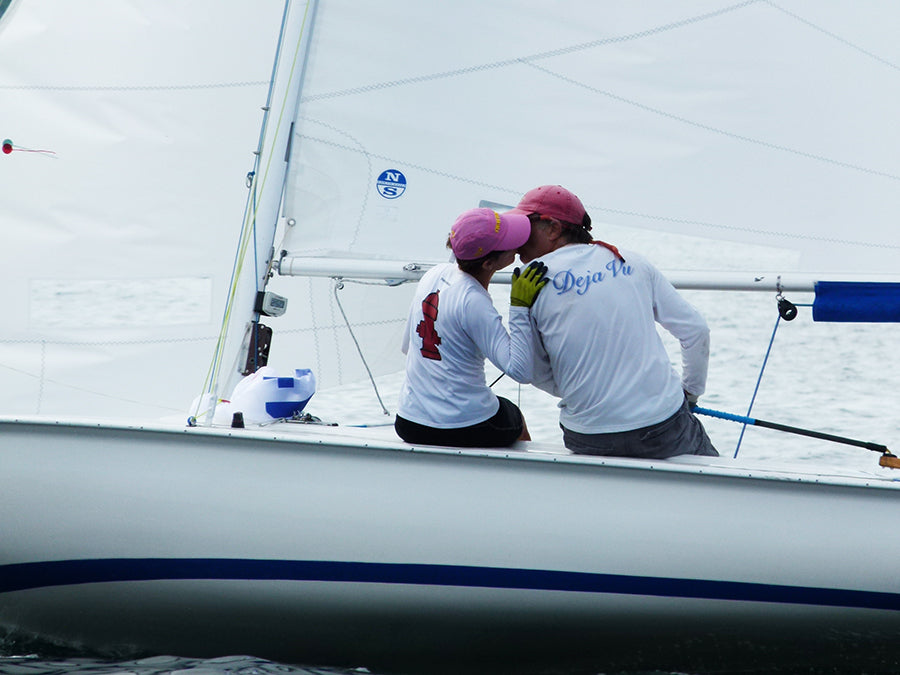
Race one winners Sharon and John Wake
It is fair to say that the Flying Scot Class is one of the biggest supporters of family sailing in the US and the Association strongly supports and encourages families to sail and race together. To that end, the class holds an annual Wife/Husband North American Championship which is, perhaps, the most well attended and competitive spouses-only event in the country. This years W/H NAC, which attracted 29 teams, was held in beautiful Rockport, MA and hosted by the Sandy Bay Yacht Club.
The teams arrived Friday throughout the day and after rigging the boats they were hooked up to the SBYC hoist for the 15-30 foot (depending on the tide) descend into Rockport Harbor where all 29 boats spent either on club docks or courtesy moorings. On Friday evening North Sails Expert Brian Hayes gave a short tuning and trimming talk to the group going over rake settings, vang tension and sail trim tips before the group dispersed throughout the town to enjoy the area restaurants and shops.
PRO Stephen Oulette greeted the group on Saturday morning with the traditional competitors briefing with the exception of mentioning that the protest committee would not be hearing any “intra-boat” disputes! Even though all the teams were ready to roll the breeze was not, and a 1 1/2 hour postponement was whittled away reviewing some archived Scot footage that Brian had from previous events and sharing tips with the fleet.
Saturday afternoon mustered up enough breeze to create tricky “current vs. breeze” conditions with large position changes in both fleets. Sharon and John Wake figured it out in Race 1 with a 2 minute race win while Amy and Jeff Linton sailed through the fleet in Race 2 for another convincing win.
Sunday brought a fresh, new wind direction and more velocity. Some teams used the wind speed/marital harmony equation and opted to sit out the days races, but a majority of the gang hit the water in a fresh 15 mph of breeze with big, open water, waves testing their abilities. Those who ventured out were rewarded with two more great races in a consistently softening breeze with Amy and Jeff Linton leading the way in both races to win the 2017 Wife/Husband Championships with 5 total points.
Full Results
Tyler and Carrie Andrews with winners Amy and Jeff Linton in front
Regatta Chair Margot Hintlian and Ralph Block
Charlie and Cindy Clifton
READ MORE
READ MORE

FLEET CHARGES LAKE MICHIGAN IN 109TH EDITION OF RACE TO MACKINAC ISLAND
FLEET CHARGES LAKE MICHIGAN IN 109th EDITION OF RACE TO MACKINAC
North-powered teams win ten divisions and Chicago Mackinac Trophy in Chicago Yacht Club’s annual race to Mackinac Island
© Onne Van der Wal
Sailors on 301 boats joined a quest for speed in the Chicago Yacht Club’s 109th Race to Mackinac. North-powered teams held on strong to the finish and won 10 classes, including the Chicago Mackinac Trophy, won by David and Peter Askew’s Wizard. This year Lake Michigan delivered a race of all sorts, with moderate reaching conditions turning to running conditions and a severe frontal passage that hit hard for some of the teams. Many encountered gusts over 50 knots on the evening of the 15th, upping the level of competition as well as endurance for some.
The 20 crew members on 74’ Reichel Pugh Wizard saw nothing stronger than 30 knots, reported crew member Charlie Enright. “Our takeaways were that we got a jump on the competition through smooth and timely sail changes,” he said, noting that the conditions lighted up substantially toward the end of the race.
David and Peter grew up running boats on the Great Lakes and have a fair amount of local knowledge in the bank, which paired nicely with Wizard’s well-planned sail inventory. After rigging a new 3Di mainsail for the Pineapple Cup in February, Wizard started the race to Mackinac with a fresh 3Di jib, genoa staysail, and masthead zero. As a North Sails expert based in Portsmouth, RI, Charlie manages the inventory for Wizard in between a number of independent offshore projects. His next adventure will be onboard Team Vestas / 11th Hour Racing in the 2017-18 Volvo Ocean Race.
“3Di is a robust product that gave us a lot of confidence. We’ve noticed the differentiation of 3Di to string sail products is indisputably better, especially within offshore racing.”
Wizard’s corrected time of 38:45:04 earned them 1st in the Turbo division and 1st place in the Big Boat Division, claiming the the Mackinac Trophy.
Congratulations to our clients for your steadfast performance this year in one of the most challenging distance races in the country. Glad you made it home safely!
Full Results
For more on preparing yourself for offshore racing, check out our Expert Tips by Charlie Enright
READ MORE
READ MORE
NEW J-6 HEADSAIL BUILDS ON CONSISTENT RESULTS WITH NEW FEATURES AND BENEFITS
NORTH SAILS ADVANCES WINNING J/70 HEADSAIL DESIGN
New J-6 Headsail Builds on Consistent Results with New Features and Benefits
July 25, 2017 (Newport, RI): North Sails released its latest headsail design for the competitive J/70 class today. Based on North’s popular J-2 design, the J-6 headsail brings new benefits to sailors seeking an all-purpose option that excels in maximum in-hauling conditions.
Since day one, North has remained at the forefront of sail development in the J/70. Development efforts originated with an out-of-the-box solution released alongside the launch of hull #1 in 2012. Powered by North Design Suite software, the one design sail package was designed in tandem with the J/70 hull and rig.
“The J/70 is an important class for North Sails, we’ve enjoyed watching the class take off in the States, and expand to sailing communities abroad these last few years,” said Tim Healy, World Champion J/70 skipper and President of North Sails One Design. “Our team continues to unlock performance with new sail shapes, and we are excited to offer the J-6 as our latest development for J/70 sailors.”
The J-6 headsail offers familiar sail shape with a few key performance enhancements. A shortened leech creates a higher clew position for more aggressive windward sheeting over the cabin house. The sail also features a slightly deeper entry and a straighter exit down low, allowing a more forgiving steering groove and opportunity for tighter sheeting angles. Based on North’s trademark J-2 J/70 headsail, which clients used to win the 2014, 2015 and 2016 World Championships, the J-6 takes proven performance to the next level by offering a fresh solution to sailors upping their game this season.
“We are very pleased with the new J-6 headsail from North Sails,” said Brian Keane, owner-driver of J/70 Savasana who tested the J-6 during a local event in June. “We believe it is highly versatile, balanced, and allows for aggressive weather sheeting.”
Contact a North Sails expert today to learn more about the North Sails J/70 inventory.
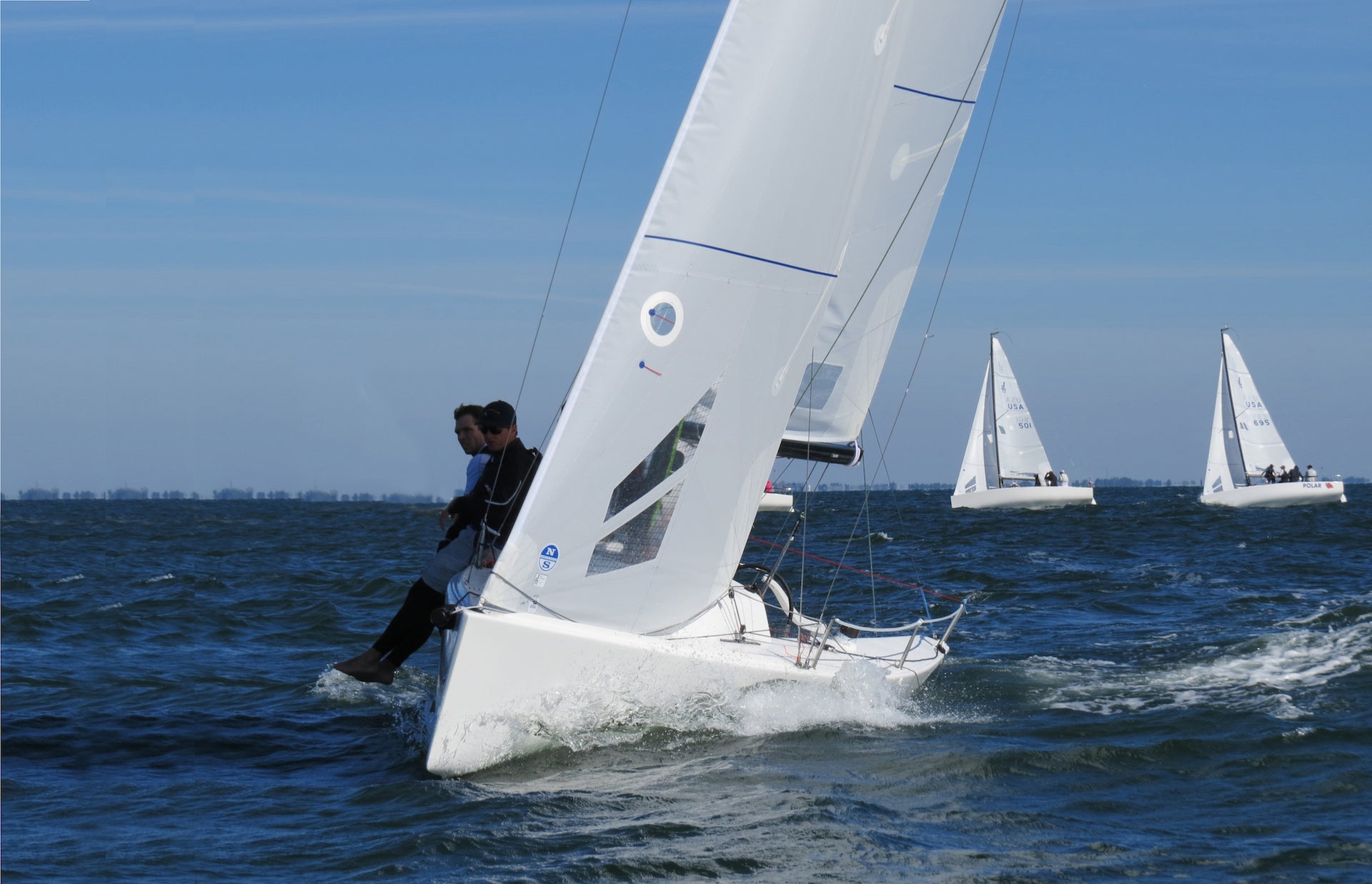
Brian Keane’s Savasana racing with the new J-6 from North Sails, to win the NYYC One Design Regatta in June.
READ MORE
READ MORE
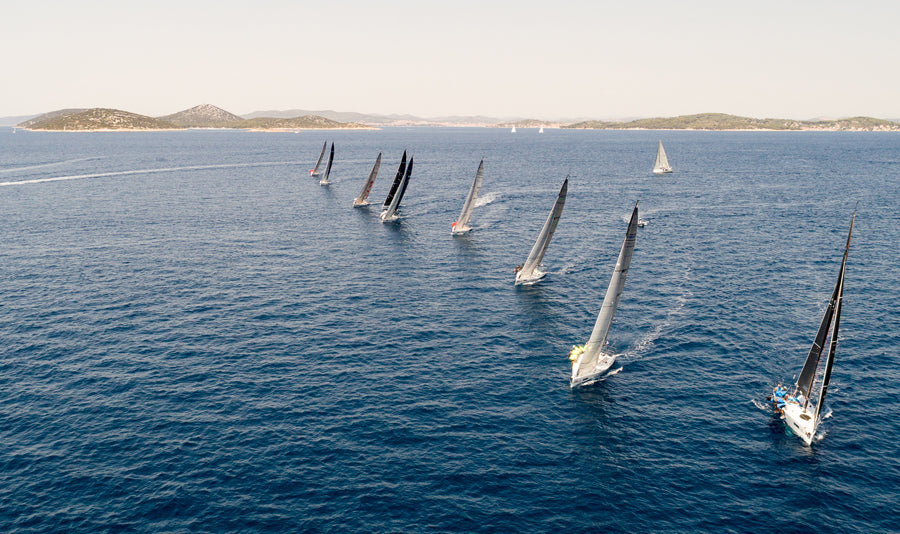
NOWER-POWERED TORPYONE WINS THE MELGES 32 EUROPEANS
TORPYONE PROVES CONSISTENCY IS THE KEY TO WINNING AT THE MELGES 32 EUROPEANS
©Mauro Melandri
The Melges 32 Europeans, hosted in Sibenik, Croatia brought 17 teams together for three days of some highly competitive and close racing. This was the final test event for the class before the Worlds in Monte Argentario, Italy in late August.
The first day of racing was tough racing in light air with only two races completed before the wind completely shut down. The fleet went back ashore in hopes the weather would cooperate the next day. Day two unfortunately was very light again, and only one race was completed leaving all-to-play for the series on the final day of racing. With no discard on the scoreboard yet, the podium positions were an open to anyone, making things exciting as the stakes were very high coming into the final day for the European title.
On the last day, the weatherman delivered! The wind was oscillating out of the South at 18-20 knots, which gave the competitors a thrilling day on the water. While conditions were prime, this allowed teams to push the boundaries in speed downwind and be much more physical upwind while hiking.
Torpyone scored a 9-3-4, using up their only discard. Despite having to discard their 9th place, their incredible consistency showed that winning races is not essential to winning a regatta, but that achieving consistent podium results is. With all but one race finishing in the top three, the European Championship title was theirs this time around. This win is their best result in the Melges 32 fleet to date. G-spot skippered by Giangiacomo Serena di Lapigio fought hard on the final day scoring 2-1-2 making them runners up, followed by Richard Goransson’s team on board Inga. Both teams discarded a 12th place, but G-Spot was able to keep 2nd overall with a 1st place finish in race five, winning the tiebreaker.
Congratulations to all North-powered customers in the Melges 32 fleet and good luck at the World Championships in August!
For more information on North Sails Melges 32 products
Full Results
Team Torpyone -European Champions! ©Mauro Melandri
©Mauro Melandri
©Mauro Melandri
©Mauro Melandri
READ MORE
READ MORE
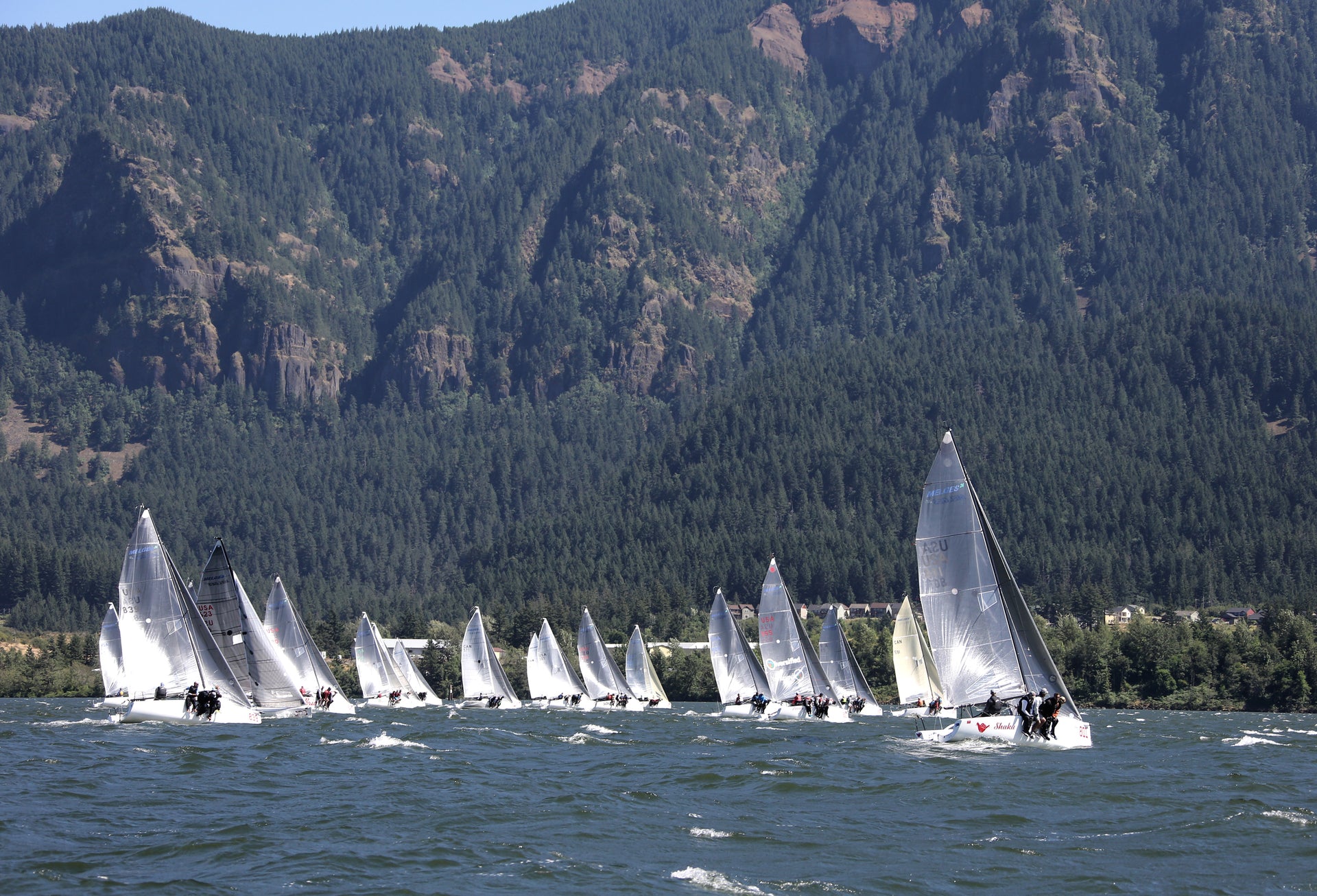
MELGES 24 SAILORS REAP THE WIND AT THE COLUMBIA RIVER GORGE
MELGES 24 SAILORS REAP THE WIND AT THE COLUMBIA RIVER GORGE
North-powered MiKEY tops the fleet at the 2017 North Americans
© Jan’s Marine Photography
One of the most famous places in the United States, the Columbia River Gorge serves its visitors the ultimate “wind” experience, typically ranging in the 20-50 knot range is one of the best-known places for kiteboarding, windsurfing, and sailing. The Gorge is a part of our Earth’s natural history, and with its amazing geography, it creates the best recipe for wind, as it functions as a wind tunnel with its steep walls and narrow river. With dangerous rapids and very strong river flow, her beauty distracts travelers from her daunting and potentially perilous waters. We can’t think of a better location for the Melges 24 Class to host the 2017 North Americans! Twenty-nine teams showed up to Hood River at the Columbia River Gorge in Oregon and they were greeted with pristine and breeze-on sailing conditions, not to mention breath-taking views! Twelve races completed over four days was a great experience for all, and gave competitors plenty to share with their families and friends when they returned home.
Kevin Welch’s team MiKEY was unstoppable claiming 1st place by sixteen points, followed by Michael Goldfarb’s Warcanoe. Kent Pierce’s Average White Boat came in 4th, followed by British Columbia’s Kirk Palmer, with his team on Light Scout.
Congratulations to our clients for your performance last week, having the opportunity to experience one of the Earth’s most unique places in North America.
Full Scores
READ MORE
READ MORE
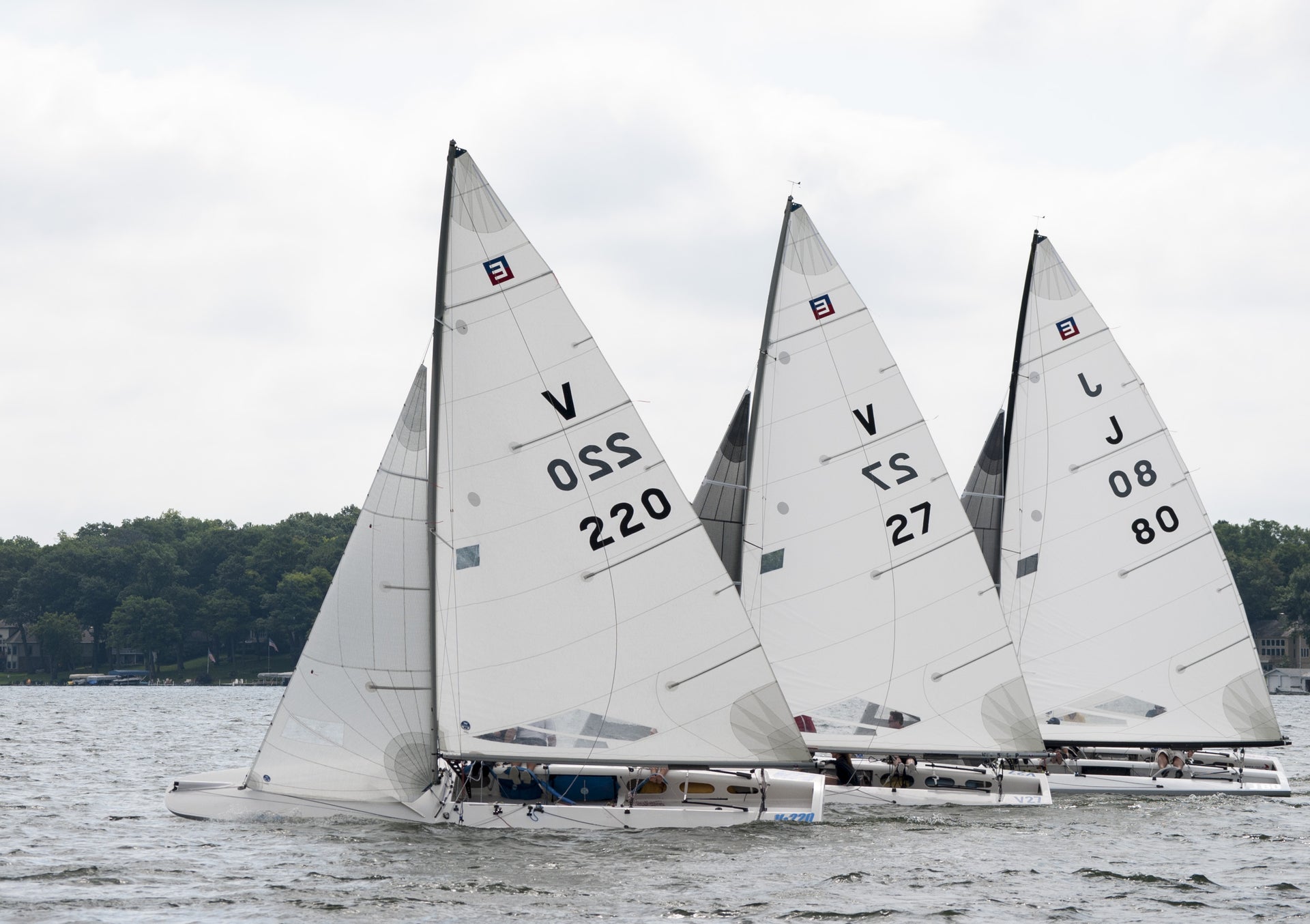
A NORTH-POWERED PODIUM AT THE ILYA E SCOW INVITATIONAL
ILYA E SCOW INVITATIONAL
Congratulations Tom Burton and Team M-9!
A full round of congratulations is in order for Tom Burton and the M-9 team, champions of the ILYA E Scow Invitational Regatta! Cygnet earned three race wins in the first three races. The top ten regatta leaders all sailed North.
The North Sails E Scow Whomper was truly the spinnaker to use this past weekend on Pewaukee Lake – The top five teams all sailed with the new Harry Melges designed kite, allowing them to sail lower angles downwind yet still maintain top speeds.
Learn more about the North Sails Whomper
Full Results
READ MORE
READ MORE

BILL TOTTEN WINS Y-FLYER NATIONALS
Y-FLYER NATIONALS
Congratulations Bill Totten and Paul Abdullah!
Paul Abdullah and Bill Totten, 2017 Y-Flyer National Champions
The 2017Y-Flyer National Championship was hosted by the Louisville Sailing Club. Twenty two teams faced the challenge and excitement of Ohio River in a six-race series dealing with strong currents and variable conditions. Bill Totten, sailing with Paul Abdullah, won the title with results 2-8-4-1-3-3 for a total of 12.75 points. Bill and Paul used the North Sails DSD design. This was Bill’s first ever Y-Flyer Regatta! Congratulations Bill!
Thanks to Paul Abdullah for the great interviews during the event:
DAY 1: Drew Daugherty’s tips from day 1
DAY 2: Bill Totten recap on the second day
DAY 3: Shelby Hatcher on winning race #5
Learn more about North’s fastest Y-Flyer sails.
READ MORE
READ MORE
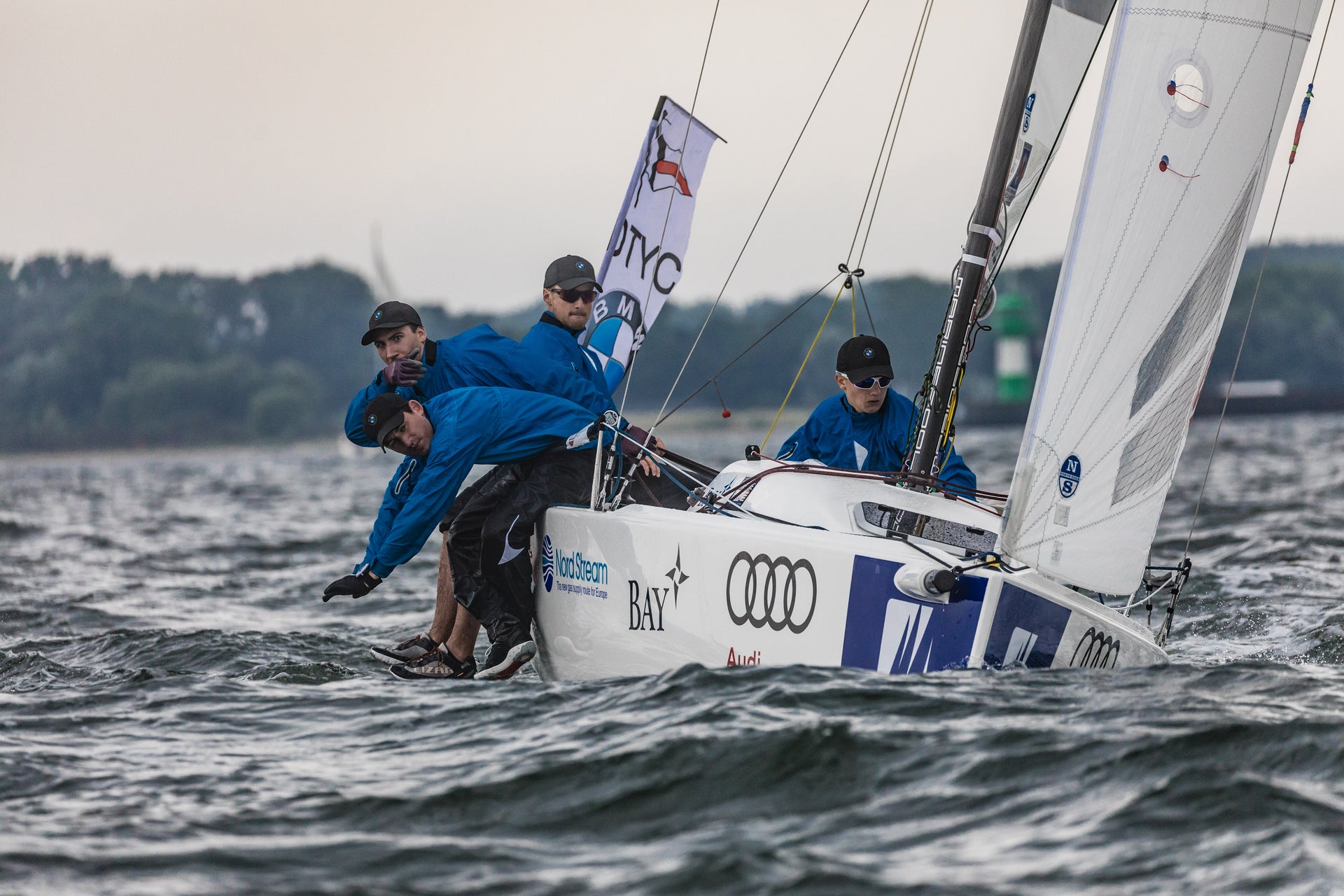
BUNDESLIGA 4. SPIELTAG: DTYC GEWINNT HAUCHDÜNN VOR SMCÜ
Vom 21. bis 23. Juli segelten die 36 Clubs der 1. und 2. Segel-Bundesliga zum Auftakt der 128. Travemünder Woche bei überwiegend schwachen Winden um die ersten Tabellenplätze. Es war eines der spannendsten Wochenenden in der Liga-Geschichte: In der 1. Liga kam es erst im letzten Rennen am Sonntagnachmittag zur Entscheidung.
Der Deutsche Touring Yacht-Club (DTYC) mit Steuermann Julian Stückl, dem ligaerfahrenen Sebastian Bühler, Neuzugang Dominik Müller sowie Marco Tarabochia konnte sich bei wechselhaften, schwierigen Bedingungen den ersten Platz auf dem Siegertreppchen knapp vor dem Segel- und Motorbootclub Überlingen (SMCÜ) sichern. „Mit den schlechten Starts am letzten Wettkampftag haben wir unsere Führung unnötig riskiert“, erklärt Julian Stückl sichtlich erleichtert.
North Sails ist stolzer Partner der Segel-Bundesliga und exklusiver Segellieferant. Alle J-70 der ersten Bundesliga fahren mit den regulären One Design Klassensegeln. Für die zweite Liga stellte North Sails neue Vorsegel vom Typ Club.
Der Segel- und Motorbootclub Überlingen (Tino Mittelmeier, Jan Fritze, Alexander Gaiser, Frederik Schaal) vom Bodensee verpasste den Sieg in Travemünde nur knapp. Am Ende reichte der 3. Platz im letzten Rennen nicht für den SMCÜ. Beim Punktgleichstand mit 48 Punkten konnte sich der DTYC mit mehr Erstplatzierungen den Sieg in Travemünde sichern. Die Süddeutschen waren nicht mit hohen Erwartungen nach Travemünde gekommen. „Aber bei unseren Lieblingsbedingungen mit wenig Welle und zehn Knoten Wind konnten wir konstant gute Ergebnisse und damit eine absolute Top-Platzierung einfahren“, freut sich Steuermann Tino Mittelmeier.
In der Gesamtwertung führt nach vier von sechs Spieltagen der SMCÜ vor dem DTYC und dem Norddeutschen Regatta Verein aus Hamburg, der die Tabellenführung abgeben muss.
1. Platz – 1. Segel-Bundesliga: Deutscher Touring Yacht-Club © DSBL/Lars Wehrmann
1. Platz – 2. Segel-Bundesliga: Seglervereinigung Itzehoe © DSBL/Lars Wehrmann
READ MORE
READ MORE
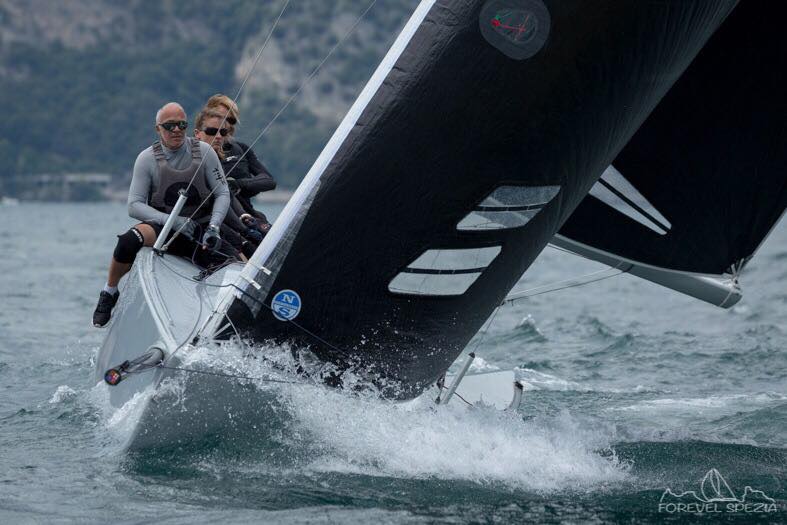
ESSE 850 EUROPEAN CUP - NUR NORTH SAILS AUF DEM PODEST !!
Esse 850 European Cup - nur North Sails auf dem Podest !!
Vom 13. - 16. July massen sich 18 Esse 850 aus der Schweiz, Italien, Österreich, Holland und Deutschland bereits zum 10. Mal am European Cup vor Malcesine am Gardasee.
Erstaunlich viele Boote bereiteten sich diesmal auf den Anlass vor und konnten ein paar wunderschöne Trainingstage geniessen.
Am Freitag ging es mit einer starken Ora nach dem Mittag pünktlich los. Es konnten 4 faire Läufe gesegelt werden. Obwohl der Wind konstant war, liess er taktische Überlegungen zu und man konnte sowohl auf der Kreuz, wie auch auf Vorwind Plätze gut machen.
Der Samstag war windtechnisch gesehen der schwächste Tag. Der Erste Start war auf 13.00 Uhr angesetzt, doch erstmal hiess es warten. Es konnten später zwei Leichtwindläufe und danach ein noch leichterer Leichtwindlauf mit Ziel im 2. Luv gesegelt werden. Dabei schafften die hintersten Boote das Zeitlimit nur knapp und die Segler kehrten erst um 19.00 h in den Hafen zurück.
Abends wurden die Segler im Club wie jedes Jahr verwöhnt.
Trotzdem musste am Sonntag früh aufgestanden werden, da Morgenläufe angesetzt waren. Leider war es kein 'normaler' Vento, sondern eine stark abgeschwächte Version davon. Trotzdem brachte die wie immer sehr professionelle Wettfahrtleitung die zur kompletten Serie noch fehlenden 2 Läufe am Morgen unter Dach und Fach.
Der 2. Lauf war allerdings schon eine Zitterpartie und das Ziel wurde wieder ans 2. Luvfass verlegt.
Überragender Sieger des Europacups 2017 mit nicht weniger als 8 Laufsiegen war Alain Marchand auf SUI-172. Er fuhr mit einem kompletten Satz der neuen 3Di Segel von North Sails. Komplettiert wurde das Podium mit Robert Hartmann auf SUI-153 und Daniel Schroff auf SUI-156, beide ebenfalls mit North Sails, Daniel Schroff mit einer neuen 3Di Fock.
North Sails ist stolz auf diesen Erfolg, der zeigt, dass die Segelentwicklung in die richtige Richtung geht!
Am European Cup fuhren 13 von 18 Teams mit North Sails - danke euch allen für euer Vertrauen!
Für mehr Informationen über die neue 3Di Technologie könnt ihr euch gerne an Daniel Schroff wenden:
+41 71 680 00 80
Rangliste
READ MORE
READ MORE

NORTH SAILS POWERS 2017 OPTIMIST WORLD CHAMPIONSHIP WIN IN THAILAND
NORTH SAILS POWERS 2017 OPTIMIST WORLD CHAMPIONSHIP WIN IN THAILAND
Recently launched Radial R2 design powers María Perelló to win the Optimist Worlds Girls Division
Spanish sailor María Perelló won the 2017 Optimist World Championship Girls Division in Pattaya, Thailand. Using the Radial R2 North sail, she finished 15 points ahead of 2nd place.
The R2 design was developed by the team at North Sails in Japan for better pointing capability and maximum acceleration. North’s Radial Series consists of four sails: R1,R2, R4 and the recently launched R5, each optimized for the sailor’s weight.
The Worlds was hosted by the Royal Varuna Yacht Club with a record-breaking 281 sailors from 62 nations attending the event. Authentic Thailand weather brought the best of everything from rain storms to wind storms, and extremely light wind towards the end of the week. Principal Race Officer Neil Dunkley worked hard around the variety of weather conditions, achieving six quality races for the fleet into the qualifying series and three races into the final medal fleets, making for a very successful event overall.
At just 12 years of age, María has demonstrated amazing talent in the Optimist. Among other titles, she also won this year’s Spanish National Championship. Congratulations María!
Learn more about the fastest sails for the Optimist
READ MORE
READ MORE

EDINBURGH CUP 2017
THE ISLAND SAILING CLUB HOSTS THE 69th EDINBURGH CUP
Thirty-eight teams came to Cowes with the hopes of engraving their names in the prestigious Edinburgh Cup Trophy
The Dragon Edinburgh Cup this year was sponsored by Oliver Morgan Architects and Stoneham Construction Ltd. and came to a stylish conclusion in Cowes with a thrilling race which determined the winner. A spectacular prize giving dinner and closing ceremony created the perfect ending to this successful event.
Going into the final day, four boats were in contention to claim the prestigious Edinburgh Cup, which was first raced out of Cowes from the Island Sailing Club 69 years ago. This year 38 teams from six nations challenged each other for the right to engrave their names onto the trophy. With a week of mixed weather conditions from light winds to heavy, sun and rain, the sailors were tested in all conditions making this a true competition of who could overcome all obstacles.
Congratulations to Graham Bailey, Julia Bailey, Will Heritage and Will Bedford for clinching the title in the final nail-biting race of the series. North sails clients finished strong, placing 2, 3*, 4, 6*, 7, 8 ,10 and were a dominant feature in the fleet. Congrats to Andy Beadsworth and team on Provezza Dragon for hanging in there!
(*Denotes partial inventory)
Full results
Provezza Dragon – Edinburgh Cup 2017
Edinburgh Cup 2017
READ MORE
READ MORE
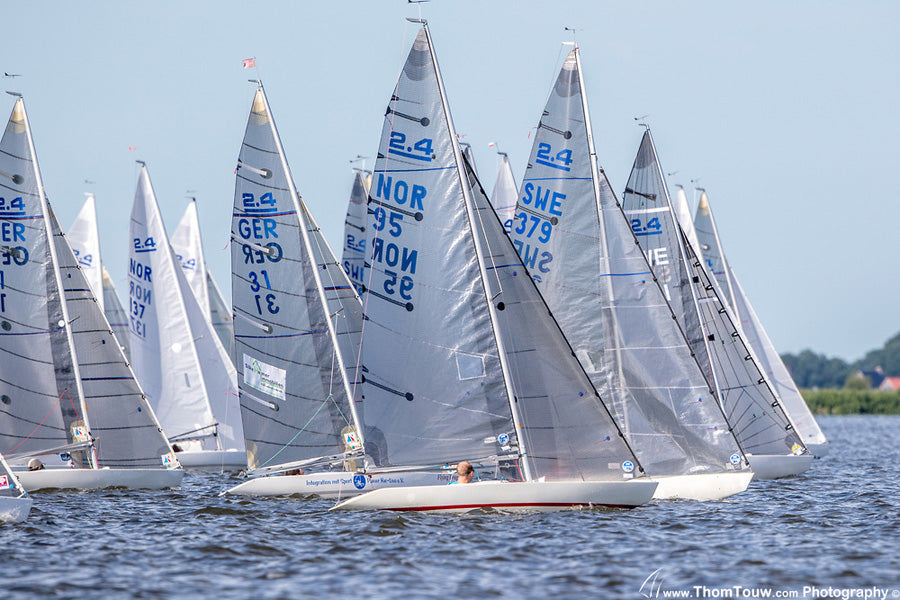
EXTREME CONDITIONS AT THE 2.4MR WORLDS
STELLAN BERLIN WINS HIS 10TH 2.4mR GOLD WITH FIVE BULLETS
Heavy winds followed by no wind welcomed 84 teams from 14 countries to Holland
2.4mR Worlds 2017
Eighty-four boats representing 14 different nations headed to Sneekemeer, Holland for the 2.4mR Worlds, hosted by Koninklijke Watersportvereniging.
The first five days of racing brought the sailors an average of 19 knots gusting up to 24 knots of wind which is towards the upper limit of racing conditions in the class. Despite the strong winds, the race committee got in 3 races for all 4 flights. The fleet was split in 2 starts with 42 boats in each, a total of 84 boats. The first 6 races were qualifiers where the best sailors were split in different fleets.
The following days would bring light air conditions which made it shifty and tricky for sailors when it came down to making tactical decisions. Unfortunately, due to the lack of wind on the last day, the race committee was unable to achieve any additional races, as conditions were not sailable. Despite the conditions, ten great races were completed in the series allowing for two discards in the scoreboard.
“The days with strong and steadier winds the North heavy air sails are really good to find the balance and boat speed needed. On the light and shifty days, I sailed more conservative and could compensate not going all the way to the corners by very good downwind speed thanks to the CA-T75 light air jib.” Stellan Berlin
North Sails clients placed within the top 10 finishers. There was a variety of North sails products being used amongst the top of the fleet. Stellan Berlin, SWE 379, who took the World Championship title with 5 bullets in the gold fleet, while using the sails designed for the Charger Mast, the FL-4, FH-2, CA-T75, TB-5, and HB-4. This was his tenth gold title within the fleet using North Sails winning sail design.
Immonen, FIN 166; Cichocki, POL 7; and Kokkala, FIN 190 who finished 7th, 8th, and 9th respectively, were also using partial North Charger designs. Pascoe, GBR 141, who finished in 4th place used the North Sails Superspar Design.
North Sails 2.4mR Products
Full results
2.4mR Worlds 2017
2.4mR Worlds 2017
READ MORE
READ MORE
J/80 WORLDS
J/80 WORLDS
North Sails, proud sponsor of the J/80 Worlds, supporting yet another successful event for sailors in Hamble
The J/80 Worlds was a successful event for all, hosted by the Royal Southern Yacht Club in Hamble, UK, where sailors tested their strengths on the infamous Solent. 48 teams met at the Yacht Club on Monday, July 10th, representing six different countries to battle for the World Championship. The week started out windy, with plenty of on-the-water action keeping things interesting and exciting for competitors. The J/80 is very swift in the bigger breeze, making for fun downwind runs surfing in the waves, and tough and physical upwind legs testing strategy and seamanship.
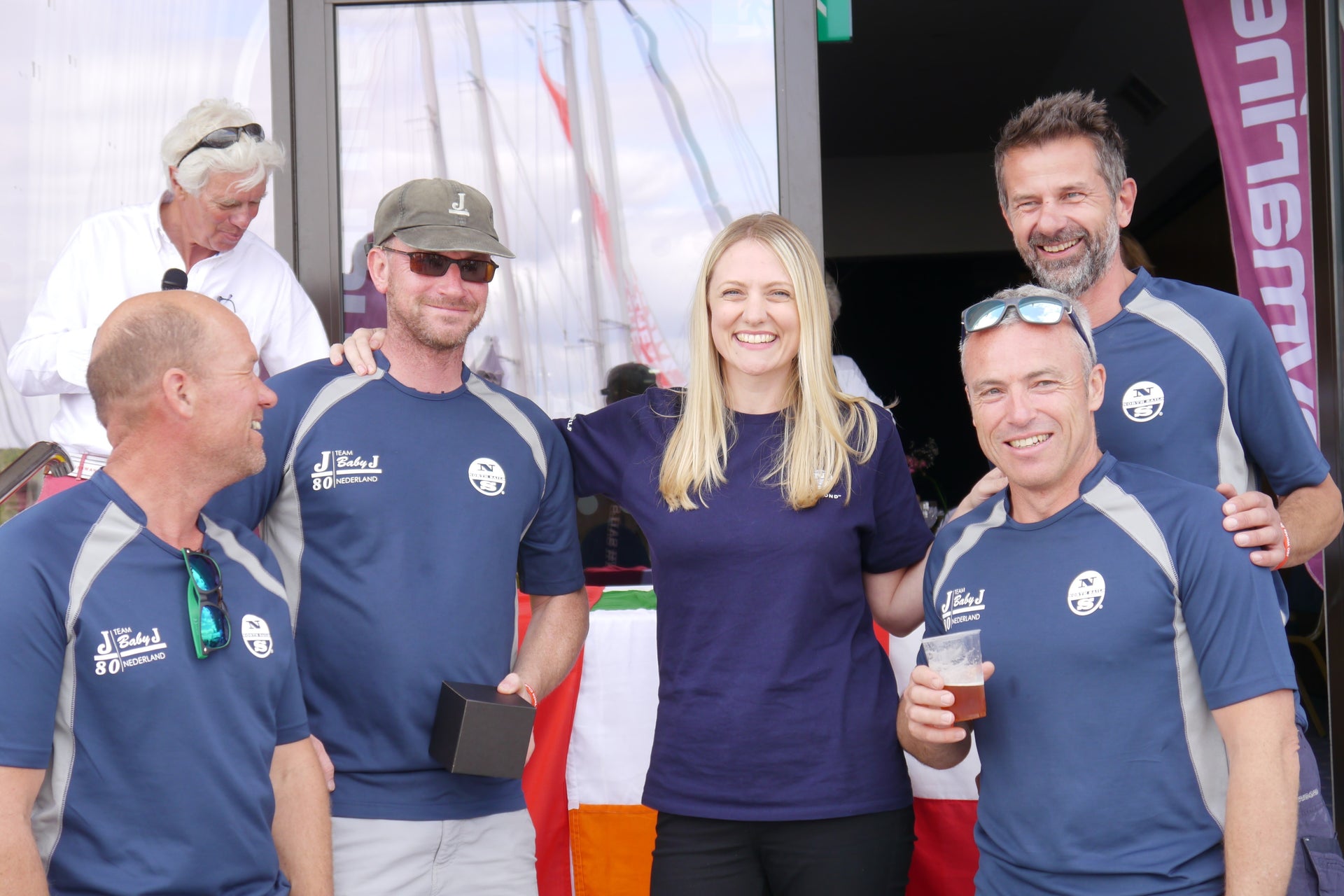
Team Baby J – Corinthian
Three-time World Champion skipper, Rayco Tabares and his team on Hotel Princesa Yaiza were faster than ever, achieving five bullets, having only 3 races out of the top 5 positions. With 18 points to throw-out, they were untouchable with their outstanding consistency.
Wednesday was North Sails Day, where prizes were given to the top sailors in the fleet. Prizes went to the Top Youth Team, Boysterous skippered by Angus Gray-Stephens. First overall for the day was awarded to Brezellec Eric with his team on Courrier Junior taking a 3-3-1, being the best team average for the day on the scoreboard.
Prizes were awarded to the first Corinthian team HM Hotels with skipper Javier Chacártegui Cirerol, as well as a special award that was given to team Startijenn with skipper Claire Montécot for having a breakdown and being able to get her repairs done so her team could get back out on the water to continue racing. Another breakdown on the racecourse on Wednesday involved team Baby J who was also able to get put back together so they could continue racing. Big thanks to the North Sails team that was on-site to support the J/80 World Championship, making this one of the best years yet.
Full Results Here
Team Boysterous – Corinthian
Team Courrier Junior
Claire Montécot – Startijenn
READ MORE
READ MORE
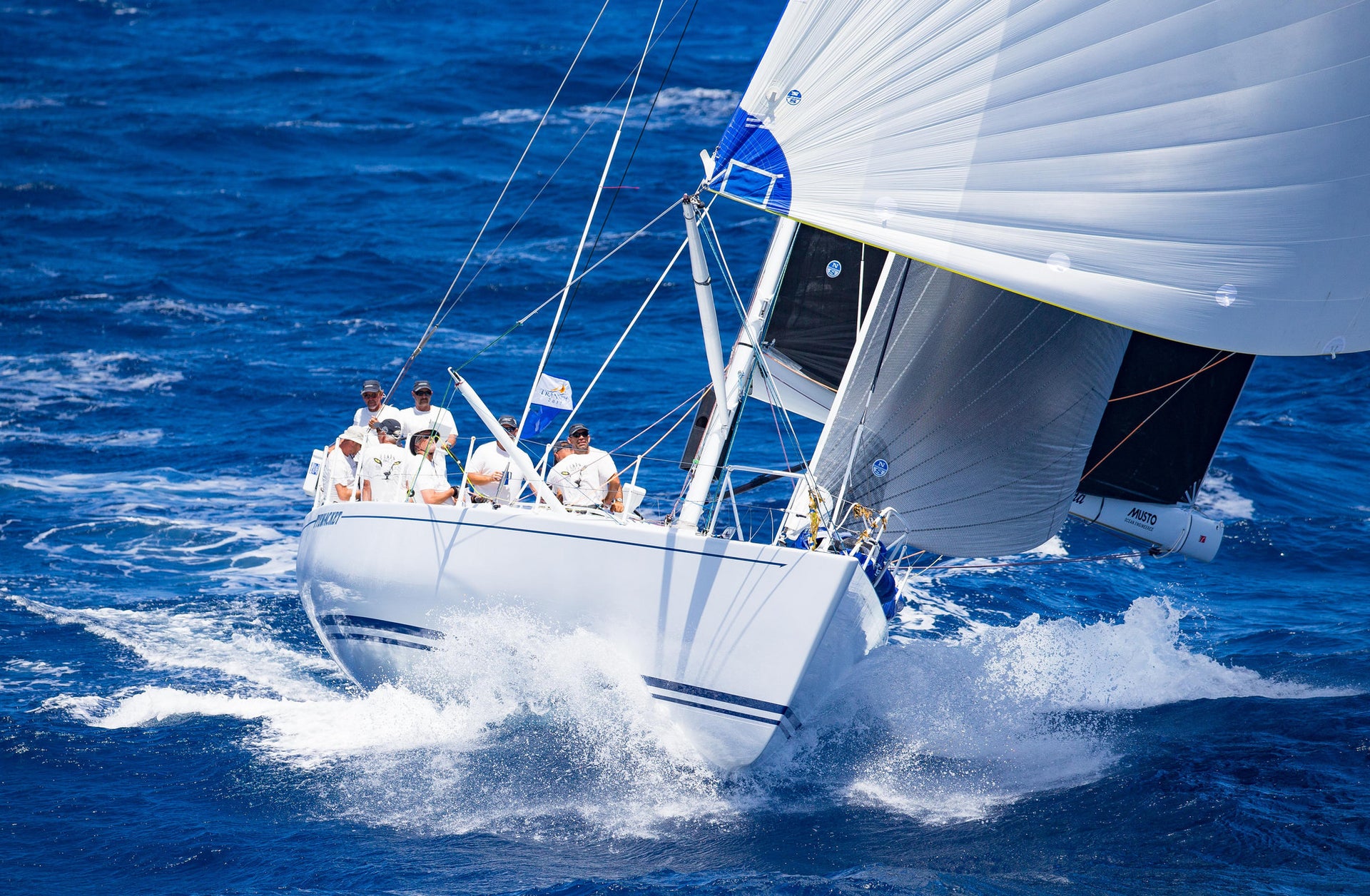
TRANSPAC 2017 - ONE FOR THE RECORD BOOKS
TRANSPAC 2017: ONE FOR THE RECORD BOOKS
North Sails clients win seven classes, set three race records in the 2017 Transpac Race from Los Angeles to Honolulu
Division 2 winner, Pyewacket 2 © Sharon Green
The Transpac Yacht Race first kicked off in 1906. As one of the longest ocean races, it is now considered one of the oldest distance races in the sailing world. North Sails is proud to support clients throughout the fleet in their pursuit of unique performance goals, ranging from the Hobie 33 to the MOD 70!
Competitors began their journey from Los Angeles, CA to Honolulu, HI beating against rough conditions as they worked offshore. In true Transpac fashion, the fleet found sweet relief by reaching the Eastern trade winds, sending them on an easier heading to Diamond Head, Oahu. “Even the most hard-core offshore sailors will experience seasickness in that first offshore stretch,” explained Steve Calder, North designer and main trimmer on H.L. Enloe’s Mighty Merloe, which broke the multihull course record this year.
The Transpac can be a trying race for sailors of all ranks and ages, with wind reports often ranging from 15-50 knots. A diverse fleet of yachts reflects the depth of offshore racing in Southern California, with each owner, charterer, and navigator completing a minimum of 150 nm offshore before entering, as well as a list of safety checks for the boat and crew.
In its 49th edition, we have witnessed three elapsed time records set and a strong performance by North Sails clients throughout the Transpac fleet, which was split into four starts. The record-setting Maxis, MOD 70s and ORMA 60s of the 3rd and 4th start were sipping Mai-Tai’s onshore after a five-day sprint. This year the faster-rated boats managed to fare well on corrected time by staying ahead of a high. Some of the sailors are still working their way toward Hawaii, with a large crowd of fellow sailors there to greet them.
Setting a new time-to-beat for multihulls, ORMA 60 Mighty Merloe won 1st in Line Honors and 1st in Multihull Division 0. Second place in Division 0 was Lloyd Thornburg’s MOD 70 Phaedo3, followed by Gunboat 62 Chim Chim, MOD 70 Maserati, and LoeReal, a Jeanneau Trimaran. North Sails is proud to power all multihulls in the fleet this year with a mix of 3Di upwind and downwind sails.
Super-maxi Comanche was another North-powered boat making waves this year, setting the monohull course record and covering 484.1 nm in 24 hours on the way, thereby setting a new 24hr Transpac speed record. Comanche, finishing in 5 days 1 hour 55 minutes 26 seconds, also secured the race’s Merlin Trophy: the fastest elapsed time by a power-assisted yacht. Manouch Moshayedi’s Rio 100, secured the Barn Door Trophy for the second time in a row for the fastest elapsed time by an unassisted monohull, racing this year with an A3 from North Sails.
The Pac 50’s in Division 1 had great speed in the conditions. North-powered Invisible Hand placed 1st in Division 1 followed by Bad Pak in 2nd. Invisible Hand also took First Place Overall in ORR.
Congrats to Roy Disney’s Pyewacket, Transpac winner in 1997 and 1999, who won Division 2 this year. Followed by fellow North client’s Catapult and Merlin, finishing 2nd and 3rd in Division 2.
Division 5 winner, Summit 40 Locomotive, finished July 15th after covering 2,342nm. Team Loco is happy! © Betsy Crowfoot
Enloe’s ORMA 60 Mighty Merloe cruises into a record-breaking finish at sunset. © Sharon Green
Pac 50 Invisible Hand took 1st place in ORR #1 and Division 1. © David Livingston/ Invisible Hand
Super Maxi Comanche on her record-breaking 2017 Transpac run. © Sharon Green
READ MORE
READ MORE
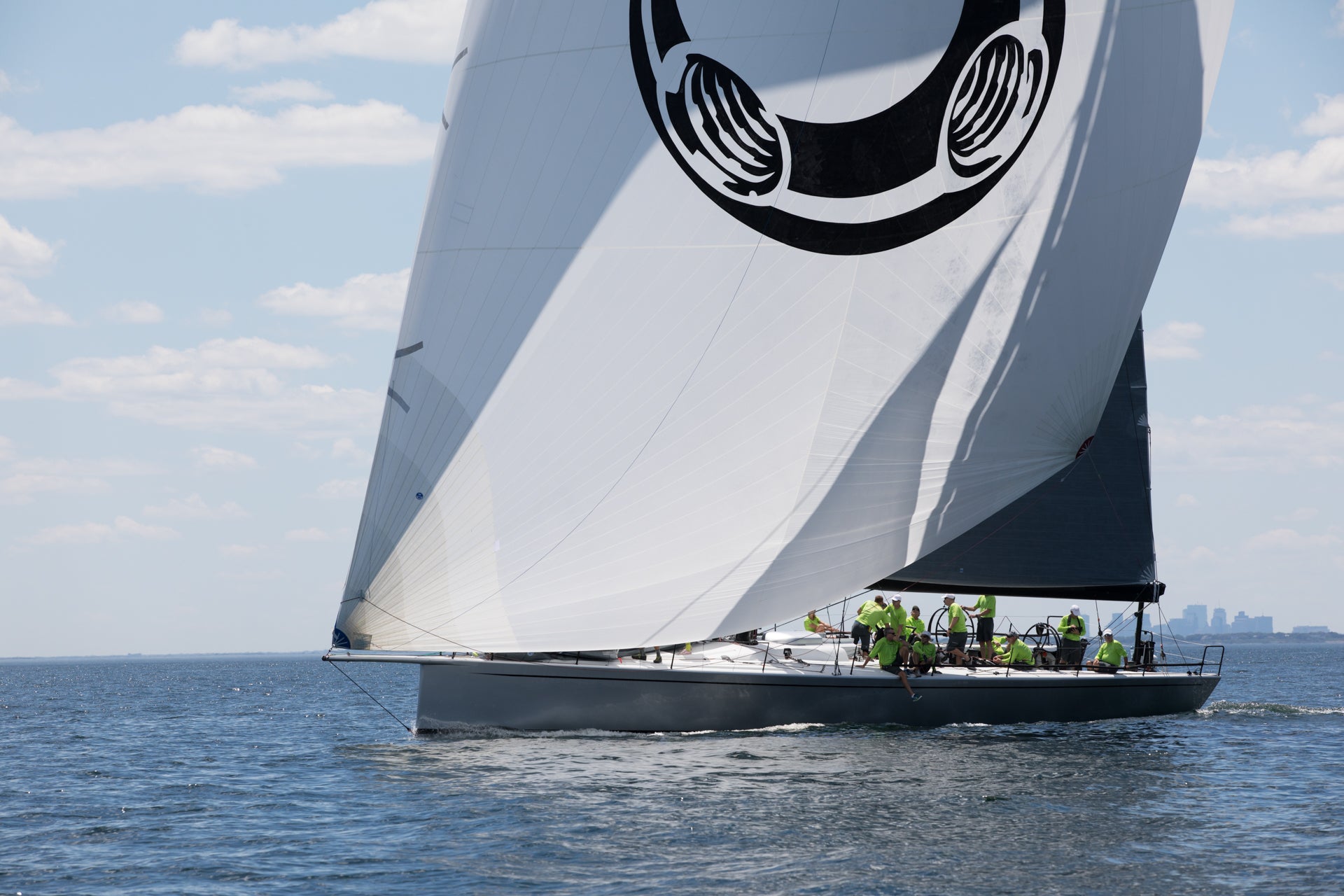
PROSPECTOR SETS NEW RECORD IN MARBLEHEAD TO HALIFAX RACE
PROSPECTOR SETS MARBLEHEAD TO HALIFAX RACE RECORD
Powered by North Sails 3Di ENDURANCE, Mills 68 Prospector sets new race record in Marblehead to Halifax race by more than 2 hours
The 363 nm race from Marblehead to Halifax dates back to 1905, and this year welcomed a strong fleet of 73 boats to the starting line. Charging into the finish at 16 knots under main and jib, the crew on Mills 68 Prospector was unaware they had broken the race record until the crowd congratulated them at the dock Monday evening. Paul McDowell, David Siwicki, Larry Landry and the Prospector team beat the record set by Tripp 75 Bella Pita in 2011 by two hours, with a race time of 28 hours, 28 minutes, and 50 seconds.
Built in 2008, Prospector is a well oiled machine. After building offshore experience at events such as the Middle Sea Race, Les Voiles de St. Barth, the Fastnet Race and the Pineapple Cup, she entered Marblehead to Halifax ready to show her best, and she did just that.
The breeze went from light to breeze-on, so they decided to hoist all three sails and were hauling the mail at 17 knots in smooth seas, feeling faster than ever and confident she would be leading the charge. Carrying the A3 and genoa staysail as long as they could, they went for a peel, which then favored the A3 and spinnaker staysail, allowing them to carry a better true-wind course.
“She was jumping and charging like an animal that wants you off its back, and only got faster and more stable as she figured we weren’t going anywhere”.
Upon arrival in Halifax, the crew celebrated with their onshore team – libations and cigars all around!
© Craig Davis Photography
READ MORE
READ MORE
CHED PROCTOR WINS LIGHTNING CT-RI DISTRICTS
CHED, CHARLIE & MEREDITH WIN CT-RI DISTRICTS WITH TRIPLE BULLETS
Light Winds and Strong Currents – The Excitements of Niantic Bay!
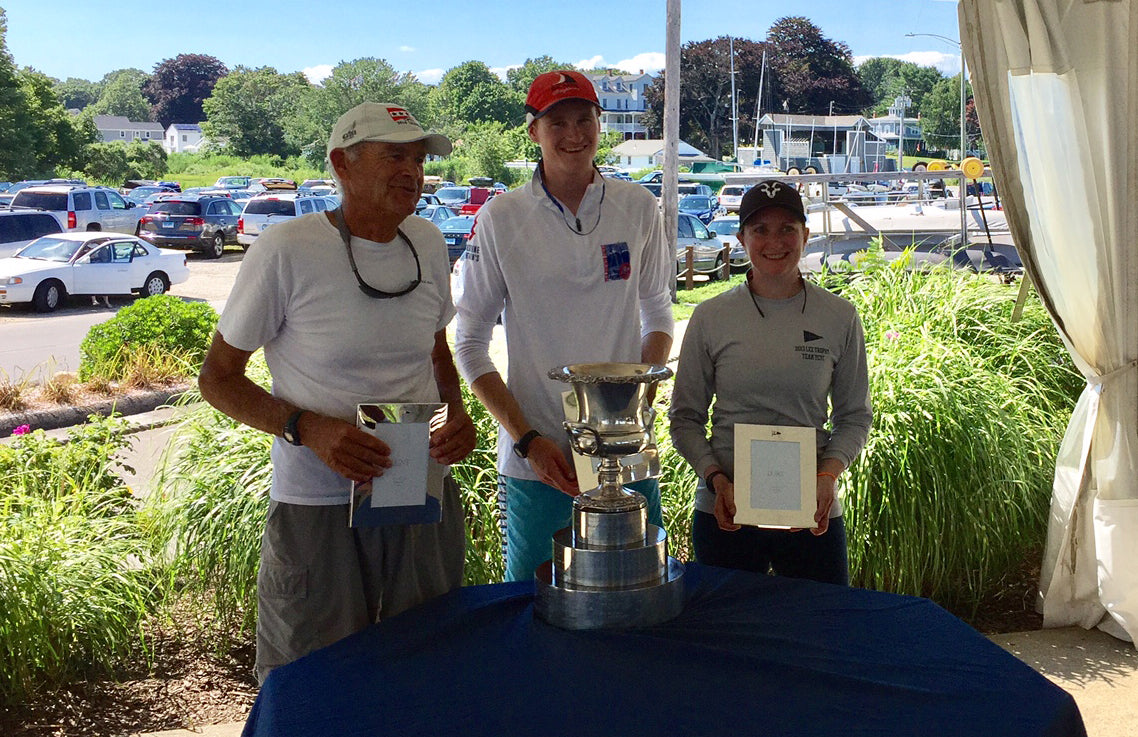
Ched Proctor, Charlie Proctor and Meredith Killion – 2017 District Champions!
The 2017 Lightning Class Connecticut-Rhode Island Districts were held at Niantic Bay Yacht Club this weekend with 18 Lightnings at the race course. Although the wind forecast was pretty dismal for the whole weekend, we were able to race all six scheduled races, three on Saturday and three on Sunday. Wind direction was from the 130 to 140 on Saturday. The first race was started with the normal 200+ direction. Later the cloud cover prevented the thermal influence and it backed into the 160-170 direction, however one puff did come from around 70 for the last leg of the third race on Saturday. Regatta chair, Dave Peck sailing with his wife, Nina Peck and Brian Lilly used this puff to pass half the fleet and win the race. Most of Saturdays racing was light to very light. At night we had a great steak dinner and the fleet and club members were treated to a local fireworks display.
We were greeted by a light Southerly justifying an on time 10:30 am start on Sunday morning. The wind came around to the common 235 direction. For many years, text book way to sail in this wind direction is: tack to port off the starting line, go to the layline and gain from the righty puffs off the shore. Since most competitors have this pattern ingrained in their minds, the starting line was very crowded at the weather half. It was very challenging to find a spot on the line. This led to a few general recalls and PRO Franz Edson utilized an I flag, then black flag to keep the fleet behind the line.
Notable exception was that defending District champion, Nick Sertl that started several races off the leeward end of the line all alone and with a very good high mode. They was able to be one of the early leaders to the right and by picking the layline well, thy were able to arrive at the weather mark consistently among the leaders and finish second in the regatta.
With a flooding current, you tend to get pushed to the mark on starboard tack. This made picking the layline from a half mile out and having a clear lane the keys to getting to the weather mark in the lead.
At the end our team with my son Charlie Proctor and Meredith Killion, picked the right spot more often than not to emerge in the lead. It was a bit challenge after several of my starts that left us looking for a clear lane before we could settle into the parade to the shore. The exception came on the last beat of the day. We had rounded the leeward mark in the lead and chose to protect the usually successful right side of the course. Long time local, Don Barrett, led a group of three out to the left corner. It was prescient, since Saturday morning he had told me that the flooding current at the mouth of the bay takes you to the mark. And the current is strong! He led this group back on port tack to come out bow to bow with us 50 meters from the finish line. Only two quick tacks saved the race for us, while the group of three from the left took 2nd, third and fourth in the race. Such is the excitement of racing in Niantic Bay.
Learn more about the fastest Lightning sails.
READ MORE
READ MORE
420 FRENCH NATIONALS 2017 - RECAP
AUSTRALIAN TEAM WINS 420 FRENCH NATIONALS 2017
North Sails Powers the Winners in the Men and Girls Fleet!
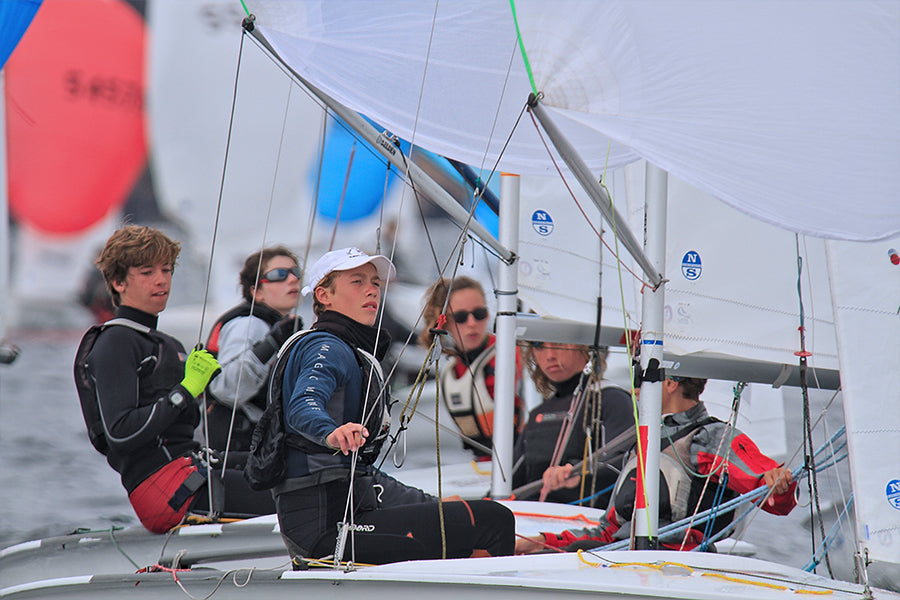
The 420 French Nationals were hosted by Crozon-Morgat Nautical Centre, sailing in Douarnenez Bay last week. 85 boats entered the event representing 5 different nations.
After 12 races, which were completed in a range of conditions, the Australian team Otto Henry and Rome Featherstone won the event, followed closely by French team Enzo Ballanger and Gaultier Tallieu Gueydan. In third place was Hugo Le Clech and Zachary Le Bris.
Learn more about the fastest 420 sails
Full results
READ MORE
READ MORE
CHASE DECKER WINS NAPLES SABOT II NORTHERN REGIONALS
CHASE DECKER WINS II SABOT REGIONALS WITH ALL-BULLETS
Brand New to North Sails, a Win to be Remembered
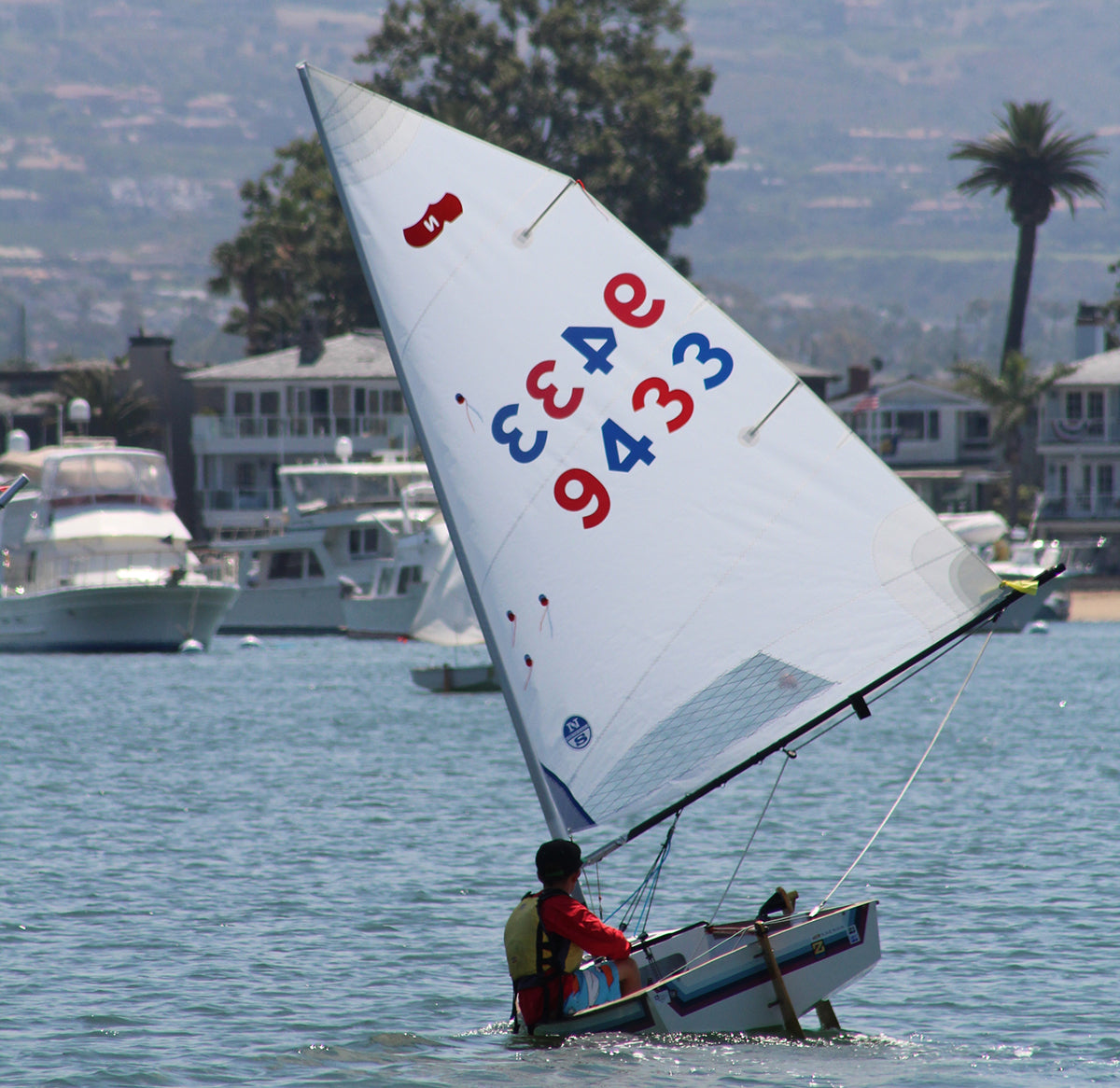
A mother’s comment needs no editing. ” I thought you would be happy to hear that our brand new Sabot North sail just won the Naples Sabot II Northern regional Championship yesterday at Lido Isle Yacht Club.
Chase won with all bullets!”
Conditions were 10-12 knots.
Congratulations Chase! We are happy that the sail helped you win and improved your performance.
Learn more about North’s fast Sabot sails.
READ MORE
READ MORE
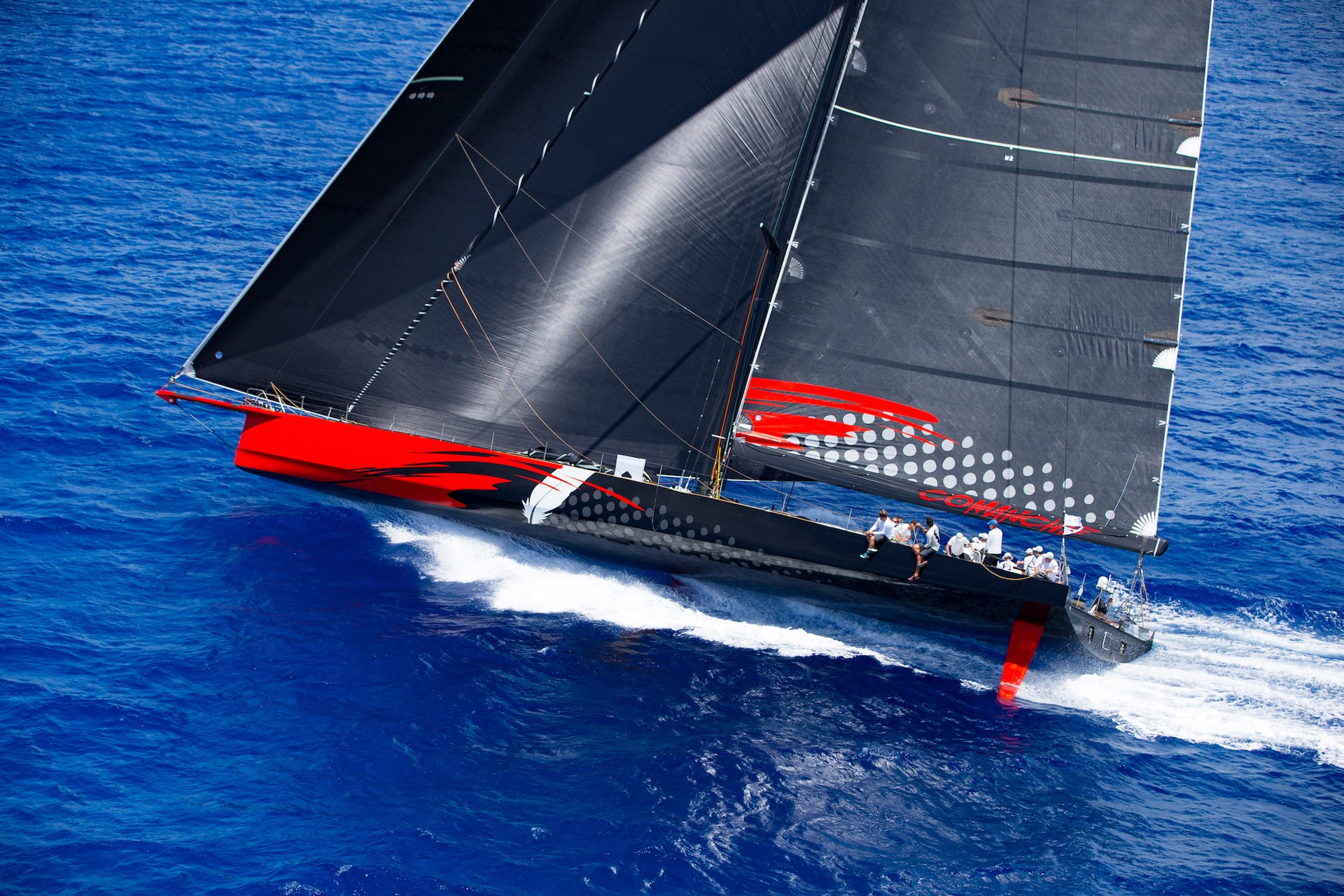
SUPERMAXI COMANCHE SMASHES TRANSPAC MONOHULL COURSE RECORD
SUPERMAXI COMANCHE SMASHES TRANSPAC MONOHULL COURSE RECORD
Comanche surfs into Transpac history books with a token spinnaker made of North Sails 3Di FORCE
Jim and Kristy Clark’s record breaking machine, Comanche, started their 2017 Transpac Race off with a bang. Halfway from Los Angeles to Hawaii, she broke the race’s 24hr distance record, averaging around 20.2 knots and covering 484.1 nautical miles. They didn’t slow down! With a smaller crew and sail inventory than normal, the crew pushed the boat to the finish line in a record time for the race, 12 hours, 40 minutes and 54 seconds faster than Alfa Romeo’s time to beat in 2009.
“This was another proof of concept for this boat,” he continued. “We can adapt it to be competitive in any race around the world. We are all just stunned at what this boat can do” said Stan, being his 7th first-to-finish result in the Transpac race, and the 4th time he has assisted in the win for the Elapsed Time Record Trophy as the navigator.
“The perfect boat with the perfect crew, we did a lot of work to mode Comanche to the lowest safety limits of stability and to minimize the weight wherever possible,” said Ken Read, skipper of Comanche and President of North Sails Group. A steady 10-20 knot breeze was the perfect conditions for the “fat-bottomed girl”, traveling at full steam (an average of 24 knots) across the Pacific to the big island.
With a crew of just 15 onboard, the 2017 Transpac was a new test for Comanche. They also had a limited sail inventory, consisting of one mainsail, one code 0, three headsails, two staysails, and only one A3 spinnaker. The inventory is 100% North Sails 3Di – both upwind and downwind sails. “That A3 has proven to be an extremely versatile and fast sail for us,” said Honey, referring to the newest sail onboard made of 3Di FORCE – a new application of 3Di technology specific to downwind sails.
“It’s nice to be in Hawaii, but when you get to sail a boat like this, this is special, this is an honor, this is something that none of us take lightly. We know how privileged we are to sail on this boat. It’s up to us to just let the boat do its thing and then some.” said Read.
© Sharon Green
READ MORE
READ MORE
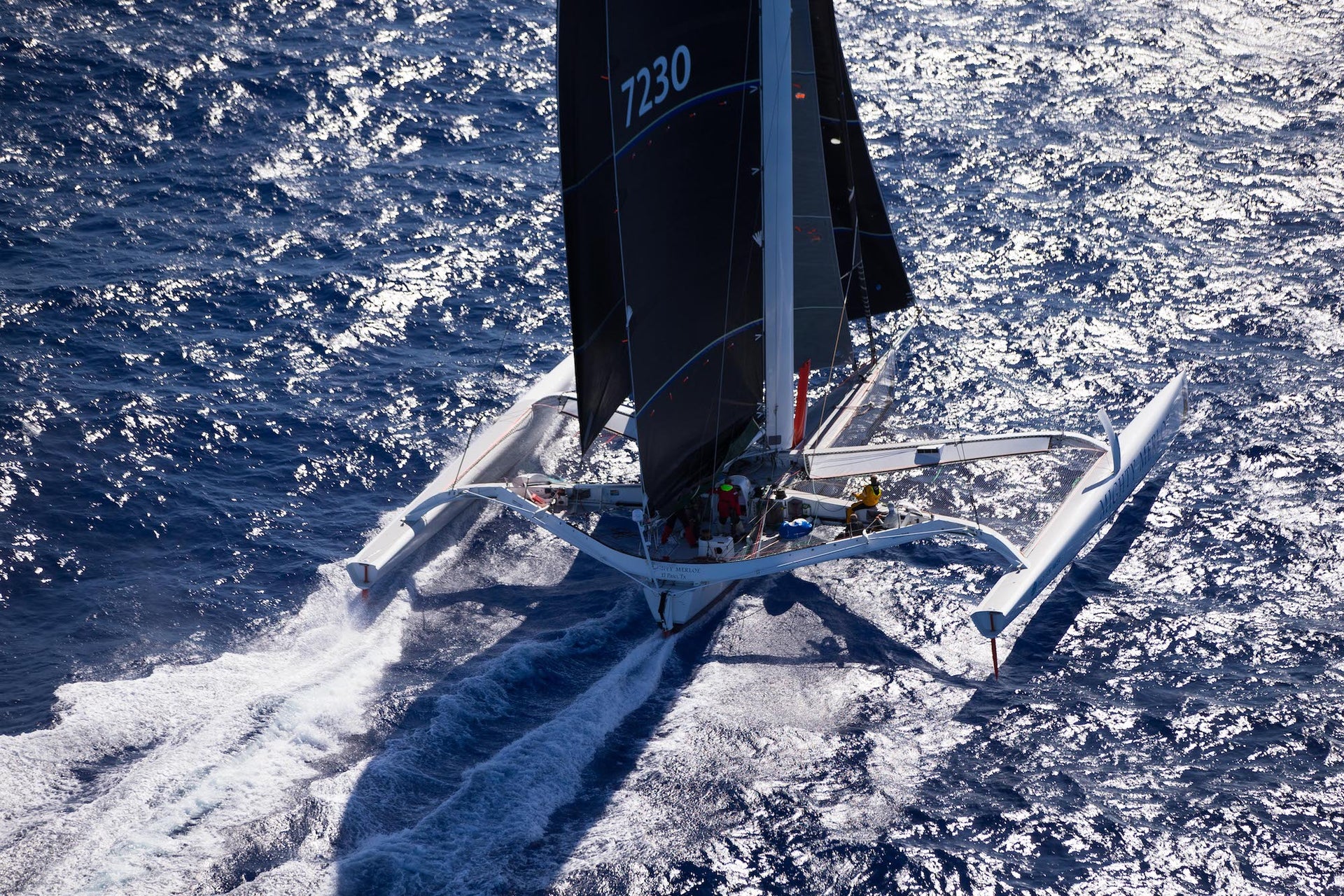
MIGHTY MERLOE SETS TRANSPAC MULTIHULL COURSE RECORD
HL ENLOE AND MIGHTY MERLOE MAKE TRANSPAC HISTORY
Mighty Merloe Sets Transpac Multihull Course Record, finishing three hours ahead of Thornburg’s Phaedo 3
© Sharon Green
When HL Enloe brought his Orma 60, Mighty Merloe, to California, he set a new bar for speed that was not only striking but rather inconvenient. “In the beginning, we convinced race committees to let us enter, and not surprisingly we’d reach the finish line days ahead of the fleet. With no witnesses present, we called in our finish time and that was that,” recalled Steve Calder, a long-time crew member on Mighty Merloe and a sail designer at North Sails.
Now five years later, the SoCal offshore racing scene is fully onboard. Under yesterday’s afternoon sun, Mighty Merloe sailed the last hundred miles to Hawaii to finish the 2017 Transpac Race first in a class of five maxi trimarans, setting a new elapsed time-to-beat for multihulls: 4 days, 7 hours, 3 minutes and 30 seconds.
“The enthusiasm Enloe has put into this program really opened a door to multihull sailing in Southern California,” said Patrick Murray, the North Sails Expert in San Diego, who manages the inventory for Mighty Merloe.”
“This is an important record because it will be hard to break, but also because the team has put in so much these past few years. The Transpac Record has been an important goal for everyone.”
Together, Patrick and Steve Calder spend time sailing with the crew and then use the North design tools to maximize the Orma 60’s performance potential.
A new set of 3Di RAW upwind sails (mainsail and one new headsail) and a 3Di FORCE Gennaker were added to the inventory this year. “Transpac was the goal, so we did quite a few regional offshore races early in the season to prepare,” said Patrick. Enloe and crew broke the Socal 300 record last month and put forth a strong performance in the Newport – Ensenada Race, ceding the win to Lloyd Thornburg’s Phaedo 3 just before the finish.
For Transpac, offshore names you may have heard before (Loick Peyron, Jacques Vincent, and Franck Proffit) all brought onboard a lot of multihull expertise. Combined with Enloe’s steadfast team, the well prepared – and optimally tuned – boat scored the most important race win of the season.
In true Transpac fashion, the course was brutally rough for the first 24 -36 hours, until the fleet reached the trade winds and could head south. “We had no idea we would get a record – it started as a race against other boats,” Steve explained, referring to tough competition from MOD 70s Phaedo 3 and Maserati.
“We knew to push hard against the 70s in those early reaching conditions, and that would leave us in good shape for the tradewinds.”
In the end, preparation was key; Steve said their pre-racing planning and weather routing was spot-on. “We sailed very much to our own race, knew what to look for and played our cards as best we could.” The crew kept their heads out of the boat when things got tricky, being selective on maneuvers and jibing when it was appropriate. “We jibed six times. From what we gathered, the other guys jibed double digits we think because they stayed farther south. It was a tough call for us to stay to the North, and in the end, we stuck with our routing and the original plan paid off.”
Phaedo 3 finished close behind Mighty Merloe, with Giovanni Soldini’s Maserati in third. Two other multihulls (Gunboat 62 Chim Chim, and the 60’ Jeanneau Trimaran LoeReal) are currently still racing, yet very much in the mix on corrected time.
North Sails provided sails for the entire 2017 Transpac Multihull fleet. The majority chose 3Di RAW and 3Di ENDURANCE for their core qualities of performance and durability.
Steve and Patrick both expressed appreciation for being part of such an influential program. To learn more about Enloe’s story, check out The Multihull Maverick, an article published by Sailing World in 2014, which quotes project manager Nat Iyengar:
“Enloe is a trailblazer. He has put himself out there to experience something significant, which in his case, is extreme speed.”
Transpac 2017 winning crew on Mighty Merloe:
HL Enloe, Steve Calder (Main Trimmer), Jay Davis (Bowman), Artie Means (Navigator), Loïck Peyron (Helm), Franck Proffit (Helm), Will Suto (Grinder), and Jacques Vincent (Co-Skipper).
Loïck Peyron, helm for Mighty Merloe, and Lloyd Thornburg, owner of Phaedo3 celebrating their finish on the big island of Hawaii © Richard & Rachel / Team Phaedo
READ MORE
READ MORE
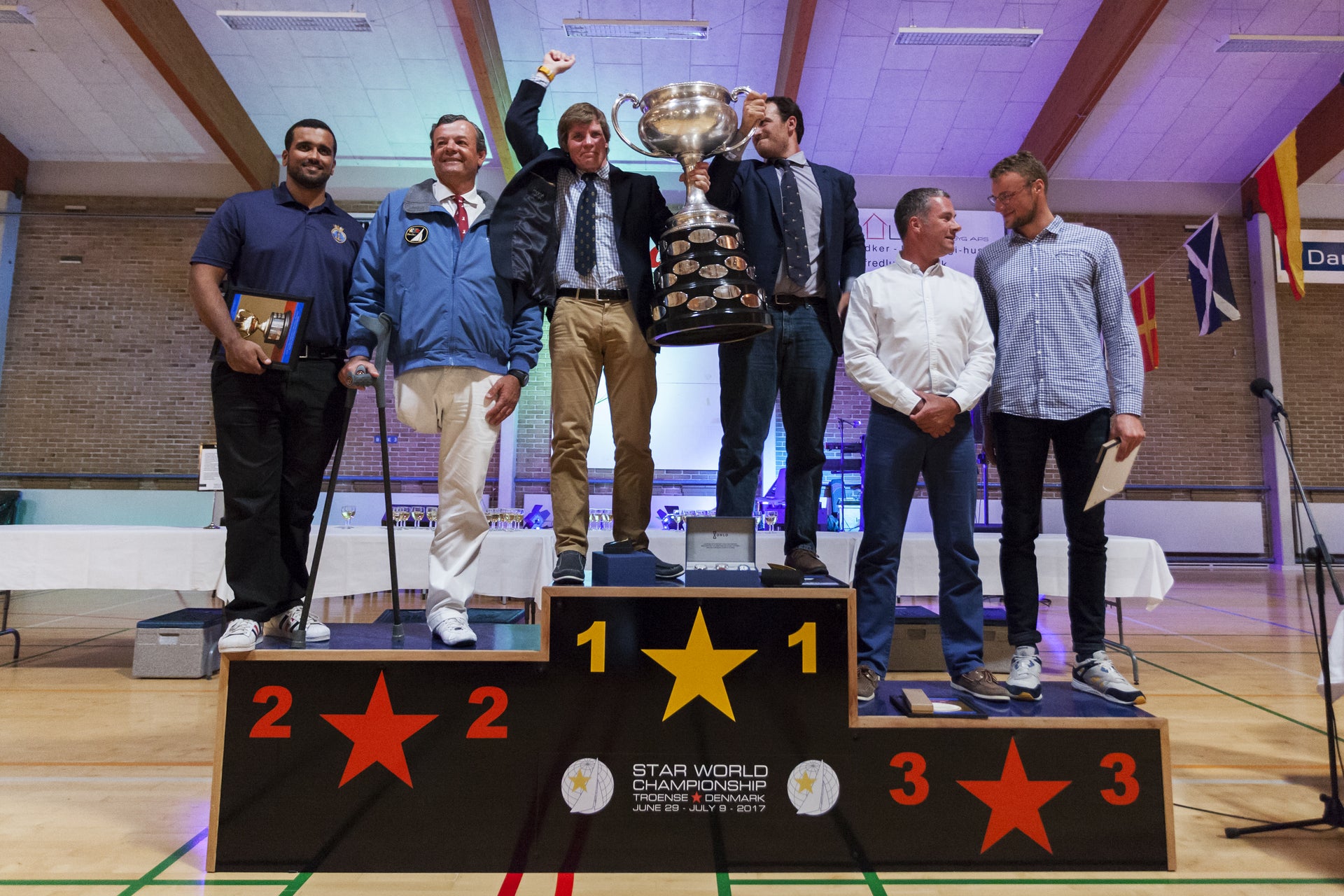
NORWEGIAN TEAM WINS 2017 STAR WORLDS
Eivind Melleby and Joshua Revkin take the win at the Star Worlds
The 2017 Star World Championships took place in Troense, Denmark last week with 70 boats entered into the regatta.
Star World Championships Podium
Day 1 started with 15-20 knots, which the race officer Thomas Jørgensen described as ‘perfect Star conditions’. The wind, however, picked up throughout the day to 25 knots which proved too windy for some of the competitors, with several boat breakages due to the wind. With more wind forecasted for day 2, racing was abandoned for the day to keep the sailors and their equipment safe onshore.
Coming into day 3 there were strong winds again. Racing was again postponed for the day for a couple of hours, allowing the wind to drop down to manageable conditions which meant the second race of the series could take place. Day 4 the wind settled down to 15-20 knots allowing the race committee to fit 2 more races into the series.
The morning of the final day of racing, there was little wind in the harbor, meaning racing was again postponed, however as the day went on the wind filled into 8-9 knots fitting in the final race of the series in comfortable sailing conditions.
If you are interested in updating your sail inventory get in touch with our Star Experts!
Get more info on the fastest sails in the Star Class
Hubert Merkelbach & Brian Fatih
Stefan Myralf & Magnus Elvström Myralf
Facundo Olezza Bazan & Juan Pablo Engelhard
READ MORE
READ MORE
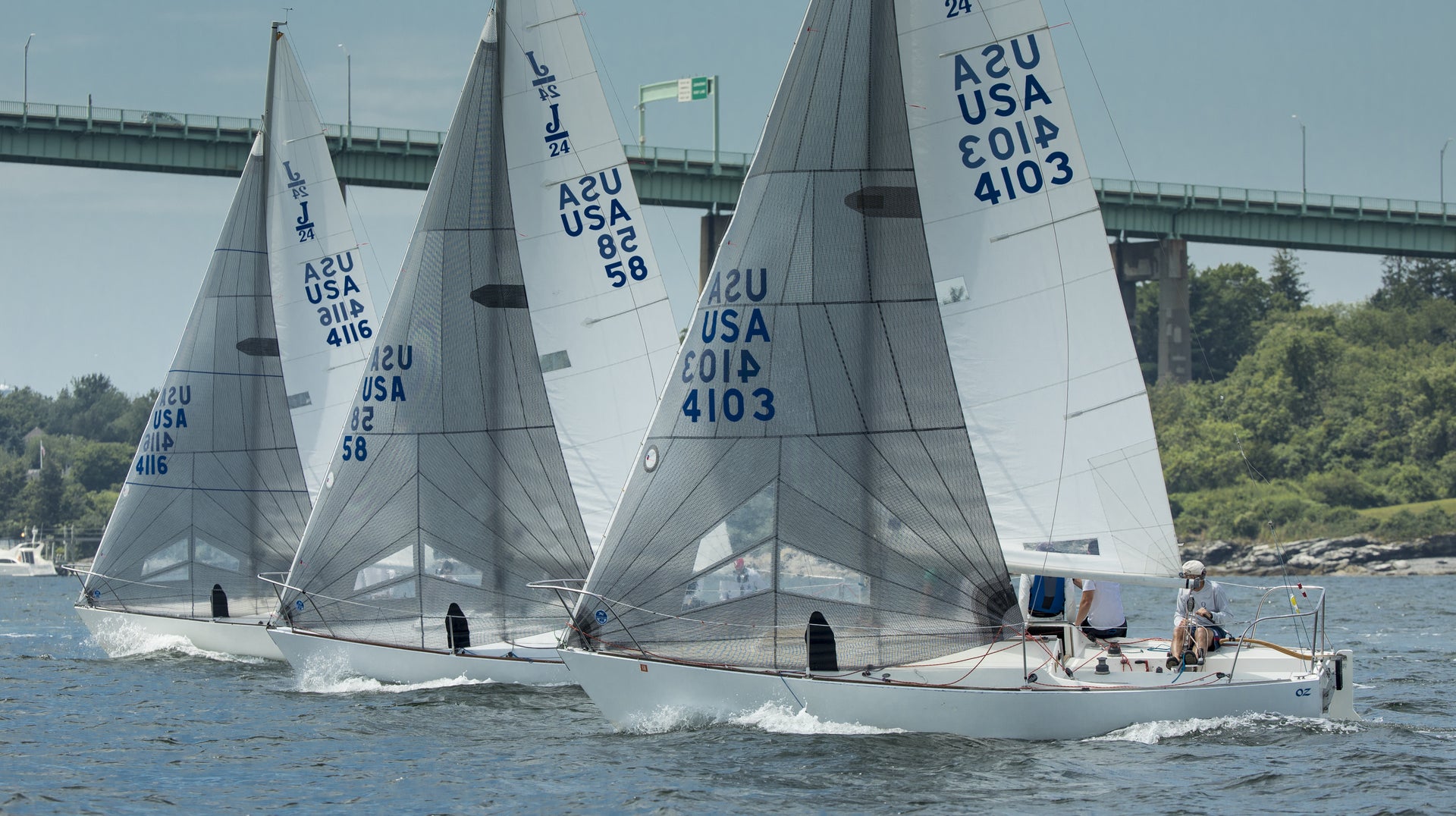
33RD ANNUAL NEWPORT REGATTA
33rd ANNUAL NEWPORT REGATTA
Narragansett Bay delivers mixed conditions for the 33rd annual Newport Regatta, with North Sails clients finishing strong across the board
Another action-packed weekend took place on the docks at Sail Newport, as 177 boats flocked to this local sailing hub to take part in the annual Newport Regatta. Sailors from 24 U.S. states and three countries made for tough competition across the board, and the event was full of surprises as the weather served up new conditions each day-keeping fleets on their toes and ready for anything.
North Sails is a proud sponsor of the Newport Regatta, offering on the water support through North U Regatta Services, post-race debriefs and a dedicated clinic for the J/24 fleet – a popular class among local sailors.
The clinic featured a panel discussion with North U coach and J/24 skipper, Mike Ingham, North Sails designer, Mike Marshall, President of North Sails One Design, Tim Healy, and prior NA Champion, Travis Odenbach. The group answered questions about their different preferences in rig tuning and setup, offering ideas about would work well and what wouldn’t in the expected conditions. Insightful questions from fellow fleet members focused around sail trim, and the big question of the day was when to make the decision to switch from the Genoa to the blade. Ultimately the deciding factor was your sailing area. Sailors were advised to keep the genoa when breeze is up and waves are bigger; even though you would be using it at the top of its wind range, the sail will provide more punch through the waves and maintain boat speed. The blade should be used in shifty, flatter water where you expect to tack more often, and/or when you need to make quick maneuvers in the heavier air. The J/24s were not able to go out as a fleet for the clinic due to inclement weather, but much was observed and retained from the class experts panel discussion.
The Melges 20, J/70s, RS Aero, 110, and M32 fleets started racing Friday in very challenging conditions. Hard rain fell consistently with shifty winds, and large puffs streaming down the race course, making things interesting for sailors and race committee alike. The wind was shifted 30-90 degrees throughout the day, keeping the competitors and committee on their toes and ready for changes to incur.
Saturday was a completely different day, where fog off Block Island sound greeted sailors on the outside circle, but slowly dissipated and brought a lovely 10-12 knot breeze. With another fog line that moved in, the wind was shifty, but cleared and settled, building to a beautiful 15-17 knots and two additional races were completed in great sailing conditions.
On Sunday the sea breeze was tricky to settle, but when it did, it was a full on 18-20 knots, with some larger gusts keeping things exciting and fun, proving that Newport in the summertime can really offer fantastic sailing. Sailors went home tired and happy.
Awards set up and ready!
Pacific Yankee, Melges 20 Winners
110 Winners, Team Retrad
Ensign Winners, Team Chowder
READ MORE
READ MORE
HEADING TO CHAUTAUQUA LAKE FOR THE THISTLE NATIONALS?
NORTH SAILS WILL BE AT THE 2017 THISTLE NATIONALS
Join Mike Ingham and Paul Abdullah at Chautauqua Yacht Club
ON-THE-WATER CLINIC WITH MIKE INGHAM
Join Mike Ingham on Friday July 21st at 1:00pm for an on-the-water clinic followed by a debrief.
COFFEE WITH NORTH & TIP OF THE DAY
Join us Monday-Friday between 7:00 and 8:00 am for your morning coffee under the North tent. Also, at 7:30 every morning we will be presenting the “Tip of the Day” where Mike, Paul and other Thistle experts share their thoughts on what they expect for the day’s racing.
POST-RACING DEBRIEFS
Mike and Paul will moderate several debriefs throughout the regatta. Stay tuned for dates/times. This is your chance to hear from the days top performers and learn their secrets to success as well as ask questions from the successful teams that day.
Learn more about North Sails’ fast Thistle sails
2017 Thistle Nationals website
READ MORE
READ MORE
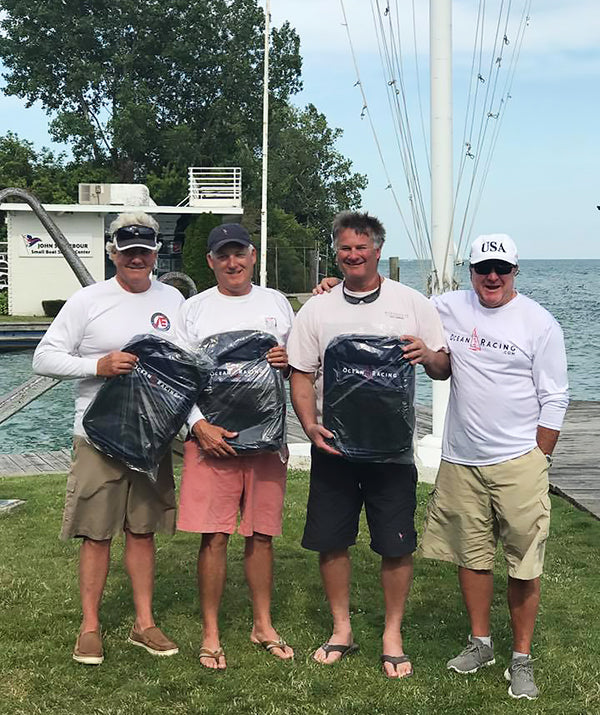
GREAT LAKES CHAMPIONSHIPS
A TRIPLE HEADER WEEKEND, NORTH SAILS TAKES THREE CLASS WINS IN THE ETCHELLS, SNIPES, AND LIGHTNING GREAT LAKES CHAMPIONSHIPS
In Detroit at the Bayview Yacht Club, 10 Etchells teams competed in the Great Lakes Champs with North Sails client Bruce Burton and his team on Firing Line took the overall win after eight races. Bruce and team used the PC-F, LM-2L, LM-2H, AUS VMG, and Full Runner spinnaker. Congrats to our clients for finishing 1, 2*, 3, and 4, and winning 7 out of 8 races.
At the North Cape Yacht Club, the Lightning Class also had their Great Lakes Champs, with Ernie Dieball’s team with Jacqueline Dieball and Amy Simonson taking home the 1st place trophy. North Sails clients finished 1, 2, 3, 4, 5 overall. Ernie’s weapon of choice was the M5, 5A+, and R2.
Also at the NCYC, the Snipe fleet had their Championships, with Jno and Karen Disch took the win using North’s SW-4 main and R3 jib.
Congrats to our clients for winning all three Great Lakes Championships Titles!
Lightning Great Lakes Champions! Skipper Ernie Dieball with his team
Etchells Great Lakes Champions! Team Firing Line all smiles
READ MORE
READ MORE
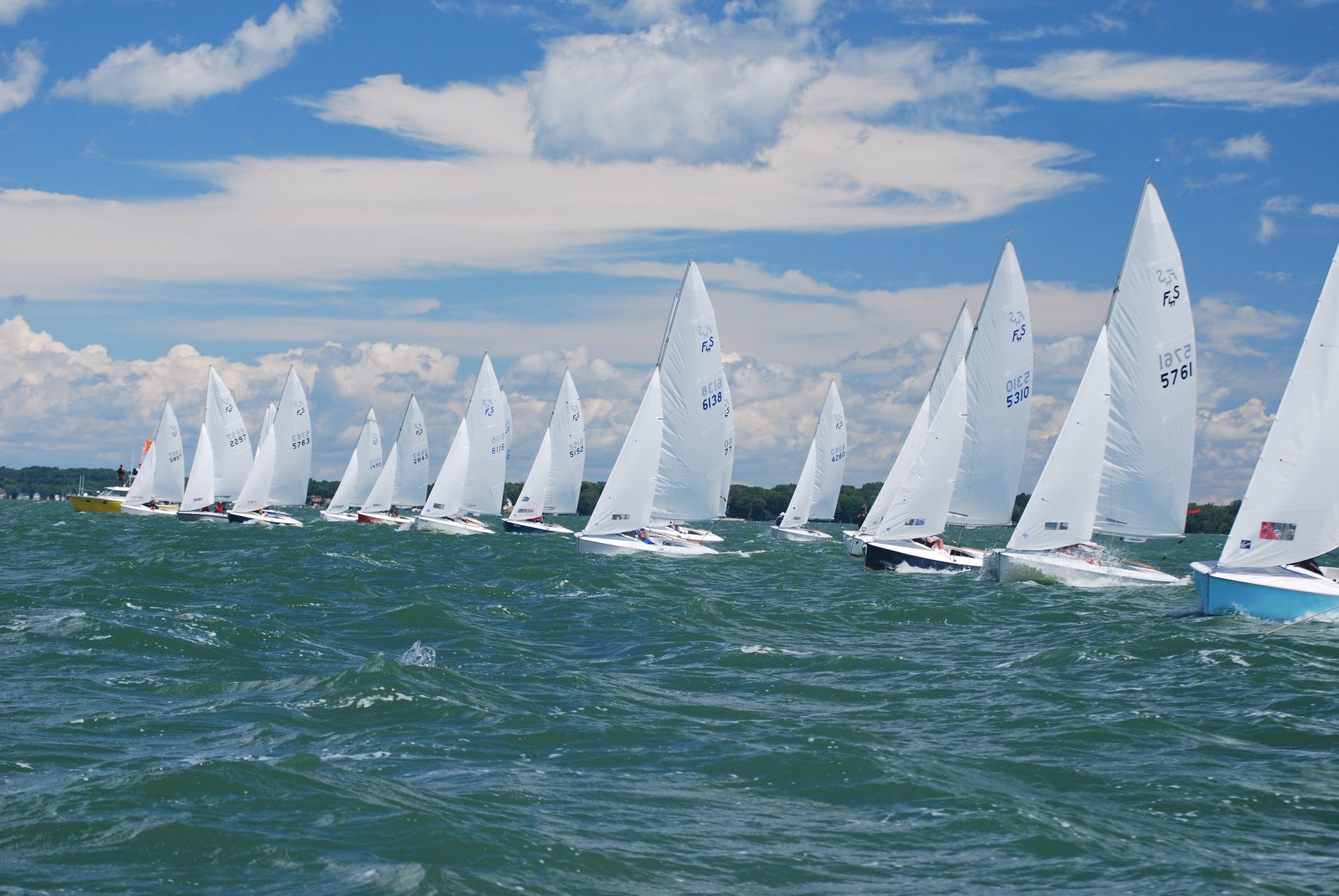
THE LINTONS WIN THEIR FIFTH FLYING SCOT NORTH AMERICAN TITLE
AMY & JEFF LINTON WIN THE 2017 FLYING SCOT NORTH AMERICANS
The Flying Scot North Americans were jammed packed with great sailing and fun for all! Sailors using North Sails dominated the results placing 1,2,3,4,5,7,8*, and 9th overall!
A trip to the midwest in the summer typically means sailors prepare for warm temperatures and light breezes however Sandusky Bay had something else in mind for the last week of June this year. Lake Erie and northern Ohio reared back and threw the 68 teams at the 2017 Flying Scot North American Championships quite a curveball as, it seemed, someone turned on the wind machine and forgot to turn it off! Westerly breezes dominated all 5 days of the event with breezes ranging mostly between 14 and 20 mph (with a few exceptions) and while the breeze created a challenge for some of the lighter teams the regatta was flawlessly organized with plenty of opportunities to enjoy camaraderie, win some fun prizes and even pick up a few tips from some of the class experts throughout the week.
Brian Hayes and Zeke Horowitz hosted a morning coffee talk each day affording competitors a chance to pick up a tip and to to chat about techniques that work well, sail trim, and maneuvers that prove to achieve race wins.
Friday night and Saturday were spent measuring boats, practicing, and tuning rigs for competitors. Zeke and Brian did a presentation for the club on sail shape and trimming on Saturday night, which was informative for all who attended. Sunday there was more wind than anyone had asked for which led to the Women’s and Juniors events being cancelled and kept all the boats on their trailers, so the fine tuning tricks continued onshore, and sailors prepared for the racing that would begin the next day. Monday, the North Sails team hosted “Coffee with North”, which included a tip of the day. The majority of the fleet attended, and found it helpful to hear the guys talk about their techniques in big breeze. How to make a Flying Scot “go” in big breeze and chop was the most valued tip of the day-Spoiler alert! It’s tricky!
The first two days of the event was the qualifying round where fresh breeze greeted competitors, allowing for 2 races to be completed. After racing, North Sails Expert Zeke Horowitz hosted a debrief for the fleet where sailors asked questions and learned some new tricks to better their performance for the remainder of the week.
The Championship races held in much more temperate wind conditions until Thursday’s finale where a ‘wall of wind’ filled in, deeming conditions unsafe for sailing. All in all a great week spent in Sandusky, with challenging conditions raising the bar for the Flying Scot sailors. Overall sailors seemed happy with their performances and word in the parking lot was that the coffee with North morning briefings and afternoon debriefs helped them learn a lot from the class experts. Certainly, at a minimum, everyone had a great time enjoying the hospitality, catching up with old friends and making new connections.
Congratulations to the Ohio District, Sandusky Sailing Club and the bevy of volunteers for running and organizing one of the finest NACs in years. Also, congratulations to our clients for upping the competition and sailing to the top of the leaderboard this week!
Learn more about the fastest sails for the Flying Scot
Full Results
READ MORE
READ MORE
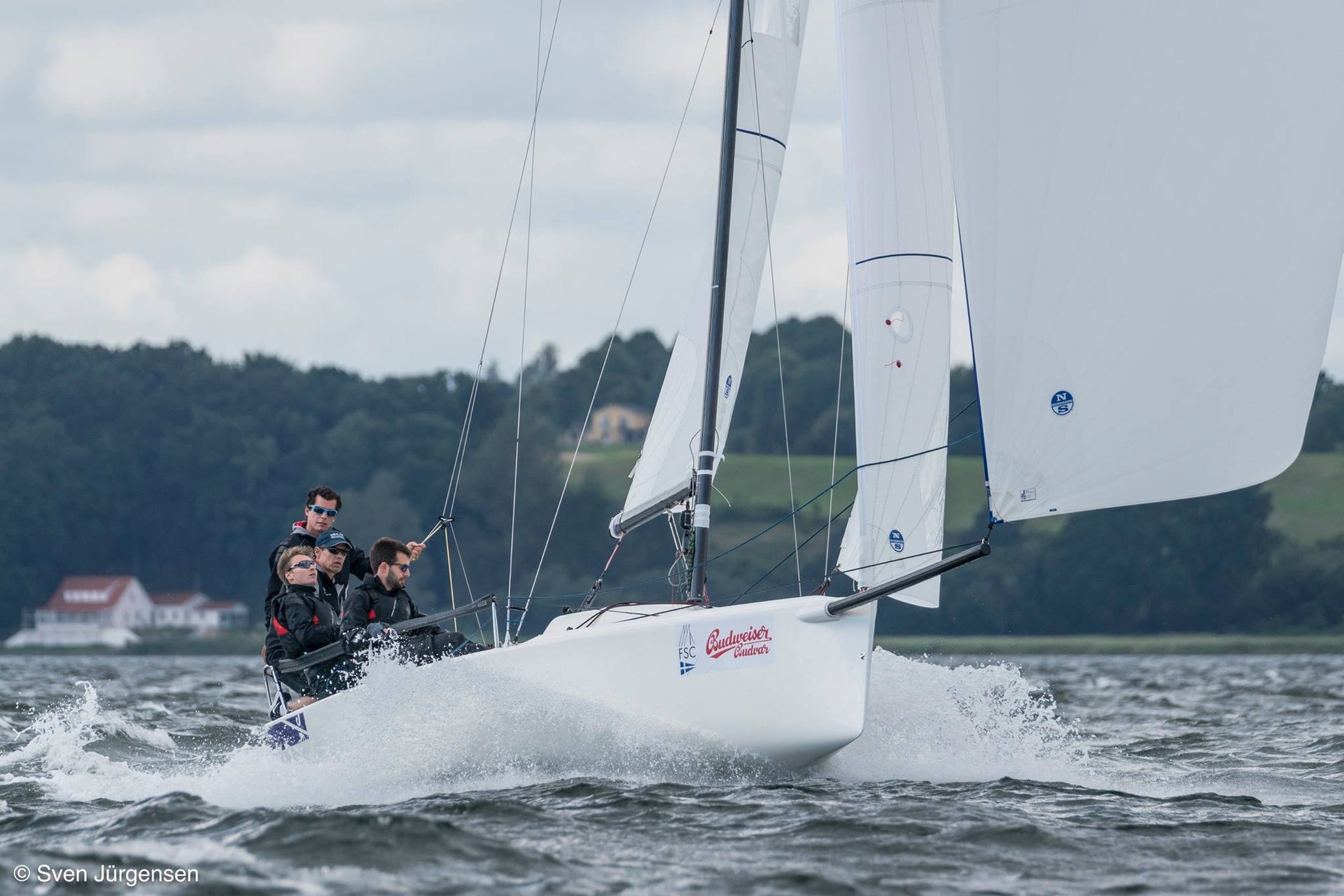
IDM J-70 - NORTH SAILS KUNDEN AUF DEM PODIUM
North Sails Kunden auf dem Podium
Fotos: Sven Jürgensen
Die J/70 Internationale Deutsche Meisterschaft am vergangenen Wochenende in Glücksburg (FSC) hat alles geboten. Die 38 Teilnehmer haben sich an vier Tagen bei Leichtwindrennen, Flaute, viel Wind und stark drehenden Winden in acht Wettfahrten gemessen.
Carsten Kemmling mit North Sails Miklas Meyer und Crew konnten sich am ersten Tag an die Spitze setzen und mit einer konstanten Serie von Top-5-Platzierungen (11. als „Streicher“) den Titel des Deutschen Meisters sichern. Auf Platz 2 und damit Vize-Meister segelte Michael Grau, gefolgt von Florian Haufe auf Platz 3 (alle drei Hamburg, NRV).
Aufgrund der abwechslungsreichen Bedingungen mischte sich das Feld oft durch und es blieb bis zum letzten Rennen spannend, besonders am letzten Tag im vorderen Drittel.
Unsere Kunden sicherten sich mit den Plätzen eins bis acht nahezu alle Top 10 Platzierungen. Die meisten von Ihnen setzten Segelwahl auf das XCS-1 Großsegel, J-2 Fock sowie den AP-1 Gennaker.
Das nächste große Event und für viele das Saisonhighlight ist die WM im September vor Porto Cervo. Meldungen jenseits der 150 Teilnehmer aus aller Welt, lassen jetzt schon erahnen dass es sich um ein hochkarätiges Event handeln wird.
Wir beglückwünschen unsere Kunden zum Erfolg am Wochenende und bedanken uns für das Vertrauen.
Alle Ergebnisse: J-70 IDM
Die GER-958 Eberhard aus Hamburg auf einem der vielen schnellen Vorwindgänge am Samstag.
Deutsche Meister 2017: Carsten Kemmling, Mitja Meyer, Miklas Meyer und David Heitzig (v.l.) - alle NRV Hamburg
Die Vize-Meister: Michael Grau und Crew auf Painted Black
Bereits nach dem ersten Tag in Führung: GER-958!
READ MORE
READ MORE
FROM THE EXPERTS: LOCAL KNOWLEDGE TIPS FOR RACING ON NARRAGANSETT BAY
LOCAL KNOWLEDGE TIPS FOR RACING ON NARRAGANSETT BAY
Catch your racing tips from J/22 World Champion and North Sails Designer, Mike Marshall
When sailing in Newport, the wind will either blow from the North, or we’ll get the trademark Southwest sea breeze. The other wind directions, East and West, are far less common.
If you are sailing on an offshore circle in the sea breeze, the typical wind direction is between 215-255 degrees. The general rule of thumb is if it blows left of that, you end up going to the left, and likewise, if it trends to the right side of that range, you’ll end up hitting the right side of the course. As the sea breeze builds, it tends to fill from the ocean. On the first beat of a race in filling sea breeze, you’ll want to be on the tack that leads you farther into the ocean. The current will either be coming in or leaving the bay. As it leaves the bay, it will either curve to the left and into Block Island Sound, or curve right. It’s always smart to get out there early and look at the lobster pots around the course – the further you sail up the course, the more thorough your understanding will be of the tide on that day.
Racing on the inshore circles will be more current sensitive. The ebb and flow will switch close to the times posted, but keep in mind we had a lot of rain on Friday. As a general rule of thumb, the current tends to switch on the Jamestown side first, close to the shore, and then move across the bay. Probably the last area to completely switch is the channel. Again, lobster traps and boys are plentiful and offer a great read on what is happening with the current. Whoever catches that current switch first, and makes the most of it, are going to be the boats leading the race. There are a couple of places you can hide from the current – shallow areas and beneath Rose and Gould Island (depending on your racing area) are examples.
Pressure south of Rose and Goat Islands will be shifty in the Northerly direction and fairly steady in the sea breeze. The current will largely dictate your decisions.
Courses North of the bridge can be a little tricky. In Potters Cove, the southerly breeze will partially funnel over the land and drop in on the south side of the course. You can end up with two breezes – one that is coming down the bay and under the bridge (this tends to be a little bit more left), and one that fills over Jamestown and into Potters Cove (this tends to be a little more right). A good rule of thumb is to figure out which breeze the windward mark sits in and, depending on how much the current is helping our hindering you, working the same breeze the windward mark is in will get you that last shift to cross in.
© Chris Howell
© Chuck Allen/ North Sails
READ MORE
READ MORE
AROUND THE ISLE OF WIGHT RACE
AROUND THE ISLAND IN RECORD TIME!
North-powered clients top the leaderboard in 50-mile race around the Isle of Wight
The Round the Island Race in Cowes, UK is a fun and exciting distance race where sailors from all over the world test their racing skills around the Isle of Wight. This year, 1,342 boats started the counterclockwise race around the island, totaling just over 50 miles. The racing divisions were split into eleven starting groups which rendezvoused off of Yarmouth. With nine observation points, it was easy for spectators to catch the racing action. For many boats in the fleet, this would be their first race against such a large number of overall competitors.
Plenty of wind and a nice ebbing tide made for a quick race for those who had earlier start times and lighter hulls. Congratulations to our clients for a steadfast performance, including a record-breaking course time for MOD70 Concise (2 hours, 22 minutes, and 23 seconds), who took 1st in line honors and raised the benchmark for speed in this iconic offshore race. This year 95% of the boats that entered the race were able to complete it before the time limit.
Highland Fling XI with owner Irvine Laidlaw took 1st in the Monohull Division, winning the Observer Trophy & Decanter. Highland Fling XI also took the Silver Roman Bowl Trophy for placing 2nd in O/A IRC. Yes! with Adam Gosling took 1st Place in O/A IRC, and the Gold Roman Bowl & Cloudy Bay Decanter. Fast 40+ winner on corrected time was Sir Keith Mills’ Invictus, winning the Cloudy Bay Trophy for 1st place overall.
In the IRC division, more classic boat designs were racing for the best corrected time. Some sailors in the IRC divisions had already done this race before this year, so things played out as usual. The dying pressure after the start impeded on some expectations, but IRC sailors that had later start times still enjoyed their race, which for some was nearly 9 hours or so. Mandarin, an International Folkboat who ended up taking the overall win in Class 3, slowly pulled away enough to secure the race win.
MOD70 ‘Concise’ takes 1st in Line Honors, breaking the record around the island in just over 2 hours and 22 minutes! © Sportgraphy.tv
READ MORE
READ MORE
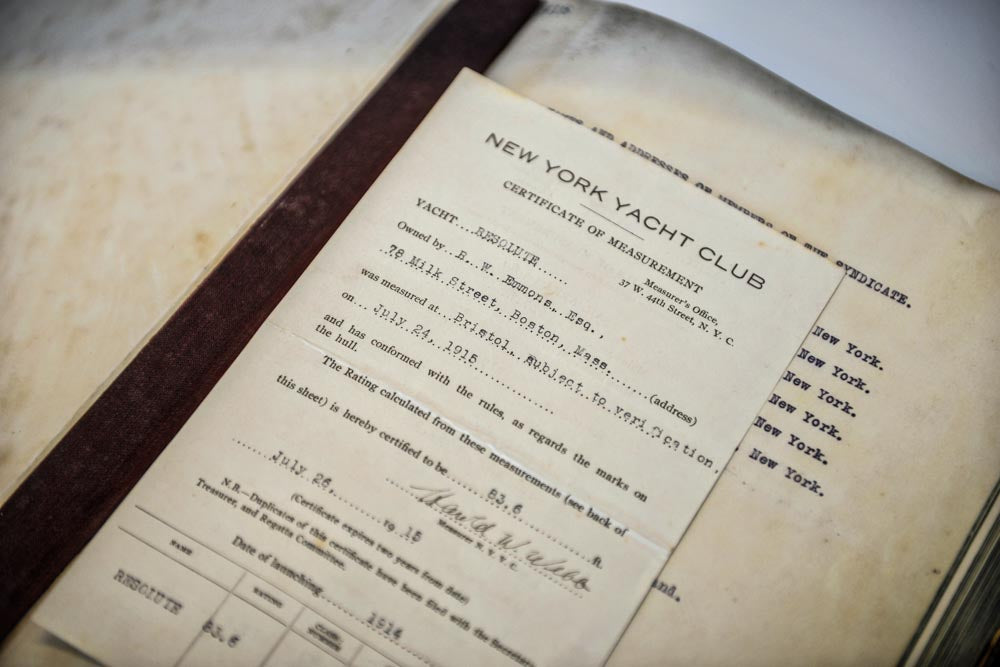
FLASHBACK TO 1920: THE AMERICA'S CUP
FLASHBACK TO 1920: THE AMERICA’S CUP
First sailed in 1891, the America’s Cup has gone on to become not just the oldest trophy in international sport but potentially the most difficult to win. The Cup has a strong tradition of bringing the best of the marine industry together. From designers and engineers, to boat builders and the sailors who push the boats to the edge of breaking, each team shows up at the start line with their A-game. Ready to sail, ready to win and knowing that “there is no second.” 2017 begins another new era in America’s Cup history; the Cup is now New Zealand’s to defend.
The North Sails corporate office sits in an old building in Newport, Rhode Island. Across the hall is a library filled with sailing history and artifacts, dating as far back as the late 19th century. One of the items housed in the library is the log book from Resolute, the American Defender of the America’s Cup in 1920. With a few America’s Cup veterans in the Newport office (notably Ken Read and Kimo Worthington) you can bet we took pause for a few hours to dig through the handwritten log. A step back in time to see how far this race and the yachting industry has come.
From the beginning, the America’s Cup has always been a race of technology and innovation. In the 35th edition, we saw foiling catamarans, wing sailors, computer generated graphics and the army of cyclers on Emirates Team New Zealand. We’ll soon turn the page to the 36th edition of the America’s Cup. And the rest is history.
READ MORE
READ MORE
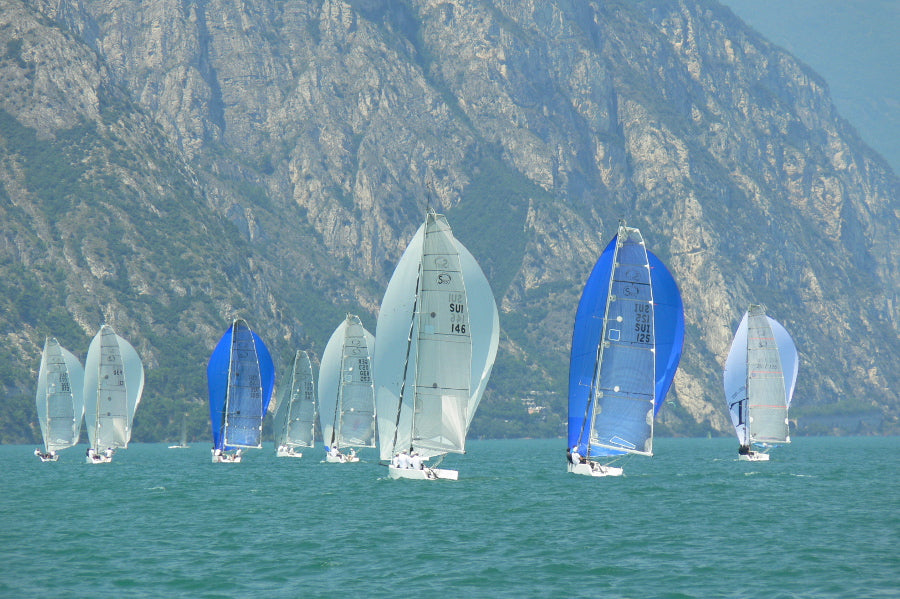
NEWS - NORTH SAILS TEAM AT YOUR SERVICE IN MALCESINE - 13TH, 14TH & 15TH OF JULY
NORTH SAILS TEAM AT YOUR SERVICE IN MALCESINE - 13TH, 14TH & 15TH OF JULY
We would like to inform you that Julien & Michel (North Sails team members) will be available next Thursday 13th, Friday 14th and Saturday 15th of July in Malcesine for the opening of the Esse European Open 2017.
On Thursday, the 13th :
> From 8am until 3pm : mast & rig tuning, advises, questions on trim, boat set up and batten tension etc.
Please contact Julien to schedule your most convenient time (julien.monnier@northsails.com / +41 79 574 11 15)
> From 3pm : on water coaching and observations during the practice race, followed by individual debrief on request at the dock.
> After sailing, on the Yacht Club terrace : North Sails invites all competitors for a personal debrief with fresh drinks !
On Friday, the 14th and Saturday, the 15th :
> From 8am until noon : mast & rig tuning, advises, questions on trim, boat set up and batten tension etc.
Please contact Julien to schedule your most convenient time (julien.monnier@northsails.com / +41 79 574 11 15)
From 12:30 : on water coaching and observations during racing, followed by individual debrief on request at the dock.
> After sailing, on the Yacht Club terrace : North Sails invites all competitors for a personal debrief with fresh drinks !
If you need anything, all the common supplies will be provided by our team. But if you have any special requests, please contact Julien (julien.monnier@northsails.com / +41 79 574 11 15), he’ll be happy to help you.
See you there !
For North Sails Schweiz and North Sails Suisse
Daniel, Michel and Julien
Esse 850 website : http://www.esse850.org
READ MORE
READ MORE
3Di NORDAC - UUDEN AJAN MATKAPURJE
North Sailsin kehittämä 3Di teknologia on dominoinut maailman kilparatoja lanseeraamisestaan asti, niin ratapurjehduksessa kuin maailmanympärikilpailuissakin. Kolmiulotteisessa muotissa tehtyjen komposiittipurjeiden edut ovat nyt myös matkapurjehtijan saatavilla.
Heinäkuun ajan on mahdollisuus hankkia maailman edistyksellisin matkapurje – perinteisen panelipurjeen hinnalla.
READ MORE
READ MORE
NEWS - PROMOS 2017: VOS VOILES AU MEILLEUR PRIX, C’EST MAINTENANT !
VOS VOILES AU MEILLEUR PRIX C’EST MAINTENANT !
Bénéficiez de prix très attractifs en planifiant l’achat de vos voiles cet été.
Contactez sans tarder un membre de l’équipe North Sails Suisse pour obtenir une offre à petit prix pour votre future garde-robe.
Cliquez ici pour obtenir un devis
Excellent été à tous !
READ MORE
READ MORE

P CLASS TUNING GUIDE
Thank you for choosing a North Sails P Class Sail.
Your North Sails P Class sail has been designed to be easy to use and fast in a full range of conditions. If you look after your sail and set it up correctly, it will give you good boat speed for all conditions.
We have done a lot of work to develop a full range of sails to suit all mast types and the size and weight of the skippers. Some of our base designs have the option of two luff curves depending on which type of spar you are using so if you are ordering a sail be sure to specify which type of mast you have. The difference between the curves is small so either luff curve will work well but for optimum performance it is best to have the correct luff curve for your spar.
P Class Sail Care
Your Sail is made from a fabric called Contender 2.6oz Polykote. This is a very high tech cloth in the way that it has been woven together. Do the best you can to make sure that the sail does not get unnecessarily creased. Creases are sail killers and are the primary reason for sails not lasting as long as they should. The worst time for getting creases is during hoisting and lowering your sail as the sail catches on sidestays and other fittings.
– Always roll your sail and keep it in its bag when not in use.
– Ideally remove the battens after use. If you don’t want to do this, then release the battens from the pocket elastic and roll the sail parallel to the pockets. If you are rolling onto a tube, tie the clew first and roll the sail a couple of turns before attaching the tack. This will allow you to roll the sail parallel to the batten pockets on the tube.
– Wash the salt from the sail every 3-6 weeks depending on how often it gets wet. Do this on a light day by hosing the sail while rigged, and leaving to dry.
Setting Up
HOIST
Make sure the sail is right up to the top black band when hoisted.
TACK
Sails are fitted with a tack strap and an eyelet so you can have a choice of how you wish to set the tack of your sail up. Remember you aren’t allowed to adjust this while racing. When you have your sail hoisted and fitted along the boom, adjust the strap or whatever method you are using to fix this area in place, so that the tack area is smooth. The idea of this area is that the strap around the mast takes the outhaul load and the cunningham takes any up / down load. You may wish to have a separate piece of rope (or shockcord) tied loosely around the gooseneck area just to prevent the tack riding up the mast when the cunningham is released.
FOOT
Check that the black band is in exactly the right position on the boom, as you will need every millimeter of outhaul in the breeze. For really heavy conditions when the tack setting up smoothly is less important as you will be using quite a bit of cunningham load, you may want to use the strap to pull the tack forward toward the mast and give you more outhaul travel.
BATTENS
Your sail will come with a 2 top battens and four shorter battens. The four lower battens are interchangeable and are numbered 1 to 4. 1 is the softest and 4 the stiffest. We suggest using (from bottom to top) 3, 2, 1 for light to moderate airs and 4,3,2 for heavier airs. Use the lighter top batten up to 15-18 knots and then begin using the stiffer one. While these options will give you a full range of performance, we don’t want to discourage you from trying other options. Experiment yourself. To test batten stiffness, use a set of kitchen scales and holding the batten vertically, push down. You will see that after a while the scale doesn’t change any more- even if you push harder. This is the ‘stiffness’ of the batten. You can write this on each batten along with it’s draft position as a reference if you are testing various options.
E.g. one batten might have 0.75kg @ 45% on it and another 0.75kg @ 50%
Once you are used to looking at the shape of your sail and the feel of it over a range of conditions, try experimenting with different batten options and see what happens.
Remember….. The stiff end of the batten is the back. Bendy end forward!!!
OUTHAUL
Hopefully you will have an outhaul fitted to your boat. Make sure that this works. There is no point having all the fancy bits, if when you let off the outhaul, nothing moves!. We suggest 4:1 purchase inside the boom, so you can make small repeatable adjustments. Make sure you have a system of marks so you can repeat you fast settings from upwind to downwind- or when the breeze changes.
Don’t ease the foot too much. If you are getting vertical wrinkles off the boom, then you have gone too far.
As a basic rule, easing the outhaul will help you point higher- but may make you a little slower sometimes. Tightening the foot will help the boat go forward easier, but over- tightening may hurt you height or power.
Use the other boats around you as a guide as to what you should try. While training, try a few variations so you get the feel for how the outhaul really affects your performance.
RAKE
The correct rake for your weight and the conditions is one of the primary factors in good performance. Because there is a variation in the hulls, there is no correct rake to suit all boats so we cannot provide a standard rake to work from in this guide. There is a correct rake for your individual boat and you should have a record of this and of the rakes you try. At the back of this tuning guide is a formula for working out the correct mast. Another way to find a starting rake is to level your hull alongside a top boat with a skipper of similar weight. Then sight the masts and set your mast up to the same angle. Measure this from a mark permanently etched on your mast to a mark on the stern. This is your rake. Generally as you get bigger and better you will be able to increase that measurement. ie. rake it further forward. Note: we now measure up the mast 2.8m, and then back to the center of the transom to aft deck join.
Remember – you don’t learn if you don’t try so use the rakes suggested as a starting point, and try experimenting with different rakes. Keep a good record of what works and what doesn’t. You may find that you come up with something that works better than what we suggest.
Use our suggested rake as a point to start from!!!
SAIL SHAPE
Your sail comes with 3 camber stripes. It is a good idea to glance up at your sail occasionally especially when you are going fast- (or really slow) to see what your rig looks like and therefore be able to eventually memorise these shapes and settings. The concept of the sail is that it is very easy to trim. To do this it is made with a very open leech. This means that you don’t have to be so careful not to over-sheet in the light, and should be able to sail with a more constant sheet tension through the range. Compared to other sails you have used, you may find you need to use a little more sheet tension with your North sail.
RIG TENSION
Tight v’s loose. I prefer a firm rig. The tension should be so that by pulling forward on the mast you can just do up a shackle on the forestay. Any tighter than this is unnecessary. My reasoning is purely practical.
There are pro’s and con’s for the 2 extremes. If you have a loose rig, it will give you more optimal fore and aft rake upwind and downwind, whereas a tight rig can’t move. However a loose rig also means it falls away sideways which isn’t desirable. I think that this is why the 2 styles ultimately perform equally. Of course what the top skipper is using will always appear fastest!!- but look carefully at what else he/she is doing.
My practical reasoning is simple. A loose rig is more susceptible to wear and therefore failure. The movement also makes it more prone to shackles etc working their way loose. If you are a methodical type of person and check your gear often, then by all means go for a loose rig if you believe it to be the way to go.
Remember: The class rules say that you can’t change anything on the masts. Don’t drill any holes, change any fittings or do any painting without contacting the manufacturer to make sure it is allowed.
BOOMS
A small amount of boom bend is desirable. This should be mostly in the back part of the boom and should be in unison with the mast. As a gust hits, the boom should help the lower leech flick open and flatten just the same way the top of the mast works. For heavier skippers, it may be impractical to find a boom section which is stiff and strong enough for everyday sailing and which also bends as desired. For skippers under 55kg, we recommend the triangular extruded section. For heavier skippers the StarlingF4 section is better.
VANG
Your vang is there to control leech tension once you run out of width on your traveler. If the breeze is light and you aren’t having to ease the main in gusts, then you don’t need any vang. In these conditions you should have it just eased, so that it isn’t taking any load. However, you don’t really want it too loose or else it will take too long to pull on should the breeze increase. In the lighter breezes you are quite often sheeting quite loosely, so make sure there is no tension on the vang. As soon as you find yourself easing the main in the gusts, you should have vang on. This should mean that as you ease the main in the gust, the boom moves outwards only- not upwards. This is a similar motion as in a keelboat, where the mainsheet is cleated and the traveller is moved in and out in the gusts. Remember vang bends the mast and flattens the sail a lot, so if you are hunting for power, make sure you don’t have too much vang on. Be sure your rig and fittings are strong enough, so that you aren’t afraid to use a lot of vang when the wind increases. Reaching is similar in trim to upwind. In the light you will have to be careful not to close the leech too much, however as the breeze increases, you will need to slowly increase the amount of vang to keep the leech under control and keep powered up. Again too much vang will bend the mast too much and lose power.
Downwind you will need less tension than you have had upwind or on the reach. Ease vang as you go around the mark. If you can imagine looking along the boom, the ‘twist’ or amount the leech opens, should be nearly the same on all points of sail, in all conditions.
For this reason it is a good idea to get used to looking up at how open the top batten is and try to adjust the vang to keep it looking the same as the wind changes.
CUNNINGHAM
Cunningham does two things. It moves the shape forward in the sail, and then as you use more, it bends the top of the mast and opens the leech in the head. Use very little cunningham until you are very overpowered. You may want to use up to 25mm or so to remove wrinkles. (the sail is cut about 25mm longer than the mast to add extra depth downwind) When you are over powered start using more and more. When it is really windy, pull on as much as you can.
CENTREBOARD
Your centerboard is another very important control to how the boat sails. The rake and positioning of the centerboard changes the balance of the boat and makes it easier or harder to sail.
Test this in moderate conditions to learn for yourself how important it is. You should feel a big difference in how heavy the helm is if you test the extremes of board forward and then board aft in your case. Basically the further forward and further down the board is, the more power you will have. You may even try raking it forward a little in the light. As the breeze increases you will begin getting overpowered and the helm will start getting heavier. A heavy helm is slow, as you are holding the rudder against the water flow and creating drag just like a big brake. Therefore as it starts getting noticeably heavier, it is time to start moving the board back. Firstly do this by raking the board. Leave the top at the front of the case, and let the bottom move as far aft as possible. You will probably find it faster if you begin doing this a little earlier in choppy conditions. As it gets windier still, you can begin moving the whole board aft in the case, until you are hard up against the back of the case. If you are still overpowered, you can now start lifting the board. Don’t be afraid to sail around with 150mm of board up if it is windy. This will allow the boat to sail flatter, especially through the gusts, and to move faster through the water. Be aware to begin putting it down again if it lightens, or else you will find yourself not pointing.
RUDDER
The rudder is one of the more important items to get right in the P Class. This is because of the angle it is on and how heavy this makes the helm. A heavy helm is slow, so anything you can do to help this is good. Make sure your rudder is as vertical as possible within the rules. Ask the measurer to check it, and watch carefully to see if there is any way you can rake it further forward- even another 5mm is very important.
P Class Mast Rake Formula and Mast Bend Measurement
INSTRUCTIONS
Mast Rakes
We don’t give fixed mast rake numbers in our tuning guide. This is because hulls vary so much that the current way of measuring the rake is only accurate to around 30mm!! We have come up with the following method which will eliminate the hull variable, and hopefully create a standard metric rake system.
1) Measure up 2.8m from the deck and mark the back of the mast -(not the back of the track)- this is the new rake measuring point.
2) Measure up 100mm from the deck on the back face of the mast. Measure from this point to the stern and mark the stern point. The distance is ‘deck’ in the formula.
3) Calculate the correct rake for your hull using the Fctr that corresponds closest to your body weight. Use the table or graph below to get the correct factor (Fctr) for your weight. Use metres in the formula.
Formula = The square root of (7.29 + deck + (Fctr x deck))
READ MORE
READ MORE

STREAKER TUNING GUIDE
Streakers are relatively easy boats to set up. There are 3 dimensions which position the mast for the correct rake and
give you a repeatable setting. See the below points to guide you through our Streaker Tuning Guide.
1. This set up is best done on a windless day.
2. Find the ‘Transom datum point’ on your Streaker as shown.
3. Set the boat level.
4. Initially put the mast in the boat, don’t bother attaching shrouds or forestay at this stage. The back of the mast should be touching the aft edge of the deck mast gate.
5. Measure the distance from back of mast at the heel along the hull centreline, over the top of the board- case and aft tank to the Transom datum point. Dimension ‘A’ should be 2885mm +/- 5mm.
6. Adjust the pins/stops on the mast step track as required to get dimension ‘A’.
7. You can now attach the forestay. Do not tension, just enough to take out the slack. The mast should still be touching the aft edge of the mast gate.
8. Hoist your tape measure on the main halyard to the top of the mast. Measure back down the mast to the top of the bottom black sail band. Adjust and cleat the halyard so Dimension ‘B’ is 5095mm and cleat the halyard.
9. With the halyard cleated still as in 8, swing the tape to the transom and measure Dimension ‘C’, top of mast to Transom datum point. 6130mm +/- 20mm. Be careful not to bend the mast when pulling the tape taught.
10. You may have to adjust Dimension ‘A’ to achieve the desired rake of 6130mm but within 40mm of this rake is acceptable. These setting should cover all Streakers, Butler and Beer/Rooster FRP boats and Wood/Composite boats. All Streaker’s will vary slightly with regard to the height of False Floor, height of deck and position of the mast gate. These variables will affect the given rake from one Streaker to another. So you may have to adjust to suit your type of Streaker. The type of mast for these settings, Selden Lambda / Superspar Rigel there is no difference.
Streaker Shroud and Forestay Tension
We recommend you use the multi-stay adjusters by Allen Bros. for both shrouds and forestay. Once you are happy with the mast rake you can then attach the shrouds.
Streaker Superspar Rigel
Take the slack out of the Shroud and put the shroud pin into the stay adjuster that you alone can get the pin in easily. (Don’t apply tension or push the mast sideways to get in a certain hole).
Streaker Selden Lambda
Same as the Rigel but then let the shroud even slacker (up) by one full hole. Assuming that your shrouds are the same length, you may find on some Streakers that the shrouds do not go in the same hole in the shroud adjusters. It is not the rig that is at fault but the hull, which may be as much as 10mm higher on one side to the other. The forestay is set in the same way, pull to take out the slack and put the pin into the hole that is easiest. These shroud and forestay settings are good for most conditions, except you may want to ease the forestay by half a hole in a blow. Check measure the rake Dimension ‘C’ once the shrouds and forestay have been connected.
READ MORE
READ MORE
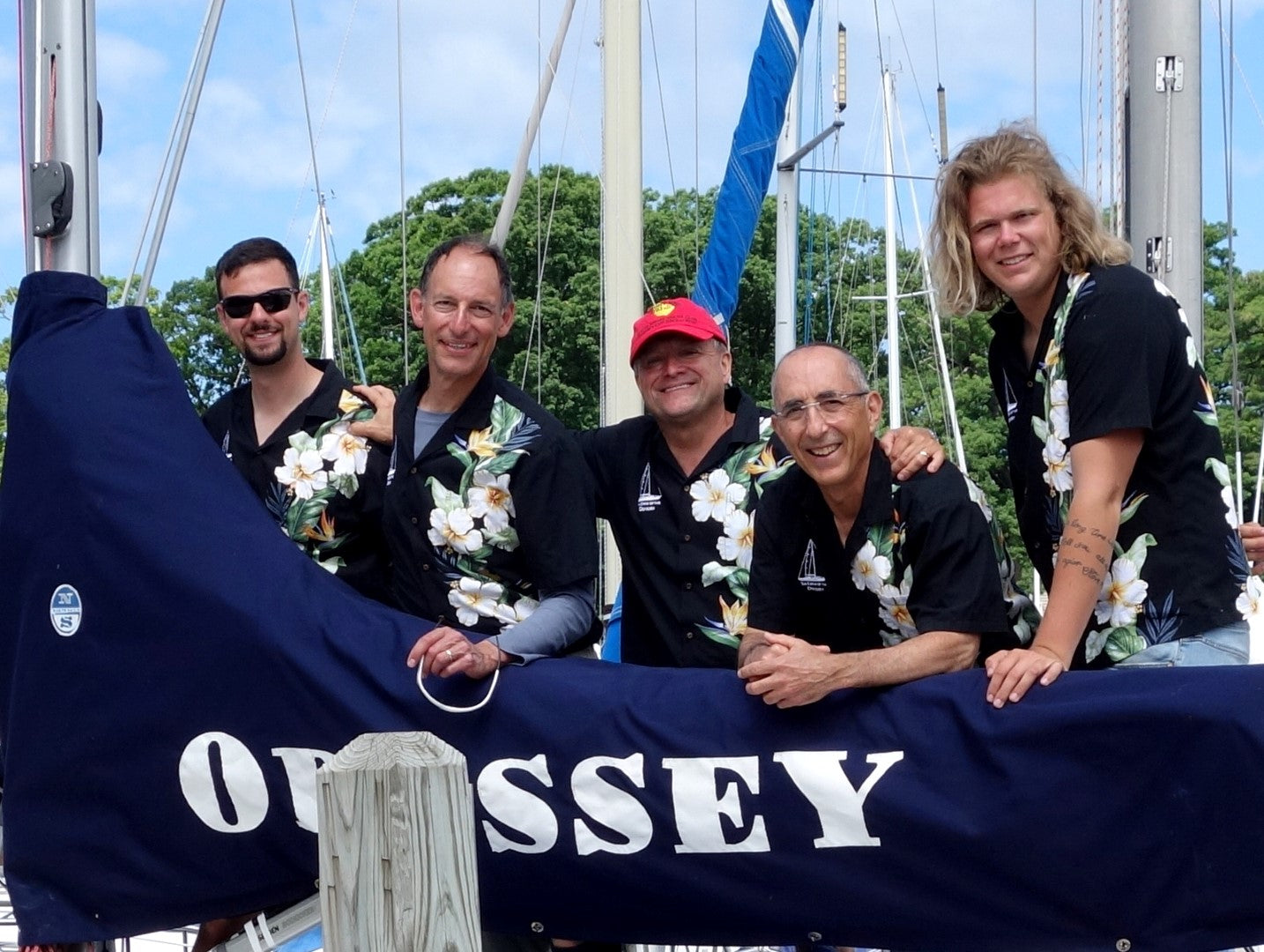
79TH ANNUAL QUEEN'S CUP
79th ANNUAL QUEEN’S CUP
Sailors in the Midwest race across Lake Michigan in the 79th Annual Queen’s Cup Distance Race, where North Sails clients proved to be fastest, finishing as dawn struck and on top of the leaderboard!
With ideal sailing conditions, the 79th Queen’s Cup was smooth sailing for 140 competitors. An annual distance race from South Shore YC in Milwaukee across Lake Michigan, North Sails Clients finished in the top three in 12 classes. A North U weather briefing was hosted by program director Bill Gladstone at 11:00 am on the morning of the race. In his presentation Bill suggested the bigger boats could pretty much stop paying attention after the midnight forecast, as the great majority of the fleet were expected to finish after racing 76.3 miles by sunrise. Well, Bill’s prediction was spot-on! The winds were nearly dead aft with an average around 15 knots; the ORMA 60 made it across the lake in just over 5 hours, and VO70 il mostro completed her crossing in just over 6 ½ hours.
North U’s Expedition and Routing Weather Briefing with Bill Gladstone
Using the Sailing Weather Service forecast, Bill Gladstone ran a number of Expedition tracks for boats of various sizes and performance levels, to give sailors an idea of what to expect during the course of the race. Bill, who sailed on Dave Bohl’s Odyssey as navigator, has been briefing the Queens Cup fleet on weather and routing for three years and it is always extremely well received because he really knows his stuff! Expedition routing had nearly identical tracks for all classes; head South on starboard gybe until you were nearly on the same latitude as the finish, gybe onto port and in. Winds held at the predicted 15 knots with the occasional rain cloud causing velocity changes.
“As we hit the starting line in full flight with our spinnaker up, we knew the weather had lined up perfectly for us. I felt like if we didn’t do something special it was probably operator error. There would be absolutely no errors on the part of the humans on this night,” said Dave Bohl, skipper of Tartan 34 Odyssey, who took 1st on PHRF overall. “To average 6.4 knots of VMG on a 34-foot boat manufactured in 1972 is evidence of some pretty favorable conditions for her. There was enough wind for us to hit her hull speed, while the big boys would have benefitted from more. My little boat now can brag winning both the Chicago Mac and Queens Cup!
“I really feel like we are just hitting our stride, and I take great pride in the team that has come to surround her.”
Dave and the team on Odyssey race in PHRF with North 3Di upwind sails, and credit no special tricks to their success. “Practice helps a ton. Attending the North U. Race Week in Captiva made a huge difference this year. It knocks all the rust off and I always learn something important that I can use later down the line at regattas. We put Odyssey on the starting line exactly twice a year: for the Queen’s Cup and the Chicago-Mac (they are all my wife lets me do!), so to be able to say she has won both races is both great and extremely hard to believe. I recognize that far better sailors than me in far bigger and fancier boats spend their sailing lives trying to win one of these races and most never do.”
“An overall fleet victory in a big mixed fleet such as the Queen’s Cup requires many elements: A properly prepared and well sailed boat combined with sailing conditions that favor the particular size and type of boat. There are elements you can control and those that you can’t. The challenge is to do your part and hope the other elements fall into place. For Dave Bohl and the crew of Odyssey, this year it did.”- Bill Gladstone, Navigator onboard Odyssey
A very special congratulations to North clients at the Queen’s Cup: PHRF Overall Queen’s Cup winner, Dave Bohl, and his team on Tartan 34C Odyssey sailed well, and fast! ORR Silver Jubilee Trophy Winner, Mike Schoendorf, on his Riptide 41 Blue was also very fast, and his crew did an excellent job keeping him in the lead.
1st Overall PHRF, Odyssey!
Onboard Tartan 34 Odyssey
The navigator takes a breather onboard Odyssey!
READ MORE
READ MORE

PLATU 25 TUNING GUIDE
Introduction
The purpose of this Platu 25 tuning guide is to give our clients in the Platu 25 class some guidelines on how to get the most out of their North Sails.
Follow the guidelines, but always experiment and try finding your own trim. The weight of the crew, the balance of the boat, the stiffness of the mast together with specific local wind and sea conditions all have influence on the fastest and final trim.
Rig set-up
The North Sails TB-2 Main and LM-4 Jib are “state of the art” sails which did very well throughout the 1999 season. The main is quite powerful and needs some “prebend” (i.e. mastbend in non sailing conditions) in rig set-up. The pre-bend should be something like 50 mm. The best way to check this is tie the main halyard at the gooseneck, pull the halyard very tight and check the distance between the halyard and the back of the mast. This should be 50mm or close to that.
The uppershrouds must be very tight and as tight as possible in hvy. air conditions in order to tension the headstay. In lighter air you should slacken the upper shrouds at least 3 360 degree turns in order to get some headstay sag to make the front of the LM-4 jib as full as possible. In heavy air you should use the GH-2 jib (which is a bit smaller and Flatter as the LM-4 and better in a breeze).
The lowershrouds should be adjusted according to the pre-bend as described before. The mast should not bend more as 130-150 mm’s. Check the intermediates (shroud from the lower spreader to the upper spreader) in all settings (tight and less tight) so the mast is straight up untill the hounds (this is where the forestay comes into the mast). Some sideways mastbend must be accepted, because this cannot be influenced by any adjustment.
Mainsail Trim
Never pull the backstay. Sheeting the mainsheet does all you need to flatten the mainsail sufficiently. Adjust the foot of the sail (along the boom) enough the reduce the helm (pressure). Never pull the mainsail very flat on the boom, specially not when the waves are choppy and short. The boat needs enough “drive” to power through the waves, since it is very short and starts “hobby-horsing” i.e. bow up&down quite easy. Traveller should be played all the time in every gust, so the boat is feathered and not heeling, because that is really slow. If the traveller is not enough, ease the mainsheet a bit to keep the boat on its feet.
The cunningham should be used with care, never pull too much, it moves the draft (deepest point of the main) too far forward. Pull enough to remove some wrinkles, BUT NOT ALL WRINKLES !!Try to accelerate, and NOT to heel!! The boats are very sensitive, and must be sailed with a lot of concentration and dedication, specially from the mainsail trimmer.
Keep the crew on the rail ALL the time. Use 400 Kgs of crew weight which is allowed since 1999.
Jib Trim
First thing you have to do is make marks at the upper spreader. Make a mark every 5 cmtrs. from the outboard end going towards the mast.
The last mark should be at 25 cmtrs. NEVER sheet the sail harder as to this last (most inboard) mark, so this mark should be a bit fatter or another colour, so it’s easy to see through the window in the main. The lead (trackposition of the jib) should be very close to the most forward end of this track. This makes the jib look a bit crazy, but believe me, that’s fast. The barberhauler MUST be pulled INBOARD all the time. In smooth water (no waves) up to 10 cmtrs. In waves no more as 5 cmtrs. Look at your boatspeed, and work the jib barberhauler, just as you must do with the mainsail traveller. More wind -> outboard, less wind ->inboard.
The best way to do this is lead the barberhauler across the boat. This means the barberhauler from starboard is led to the port cleat, and vice versa. That way you can adjust the barberhauler without leaving the rail, remember, the crew must hike HARD!
Length of Headstay
In light air you should use the longest headstay possible in order to create more weather helm.Remember to adjust the shrouds as described above. In heavy air go 1 hole shorter on the adjuster, and again, adjust the shrouds.
Tips & Tricks
Put a device on the bow of the boat which prevents the spinnaker sheet from falling in the water. You will drive over the spinnaker sheet, and that’s slow, and difficult to get back on the boat as long as the boat moves forward.Put a sailbatten on the top of the mast to prevent the mainsail leech from hooking behind the backstay. This is nasty, especially gybing in light air, which must be done frequently.
Crew weight & position
Move forward with 3 crew in light air, at least around the mast. This must be done with less boatspeed as 3 knots. Above 3 knots move backwards, but not a lot. Above 6 knots the crew can be in “normal” position.Wind angles downwind (Spinnaker)
The Platu 25 is very sensitive to apparent wind speed. Smaller wind angles make the boat go a lot faster. My experience is to keep the wind angles as small as 95 to 100 degrees in light air.
Look at the boat speed, and check the win dspeed at all times. More wind, steer deeper (more downwind), less wind, steer higher (closer to the wind). Keep concentrated downwind, you can gain a lot of distance, but you can also loose a lot of distance.
Check the truewind angle. If neccesary gybe as soon as the wind shifts in your favour i.e. the app. windangle is getting greater. Talk with the crew trimming the spinnaker, let him decide if there is “pressure” or “less pressure”. He feels most, having the sheet in his hands.Running in more breeze “work” the boat. Point the bow of the boat down the waves at all possible times and “rock” the boat, i.e. pull hard on the mainsheet and pull hard on both spinnakersheets. Your crew must be very tired after this leg. If not, they did not “work” enough!
Good luck on the water!
READ MORE
READ MORE
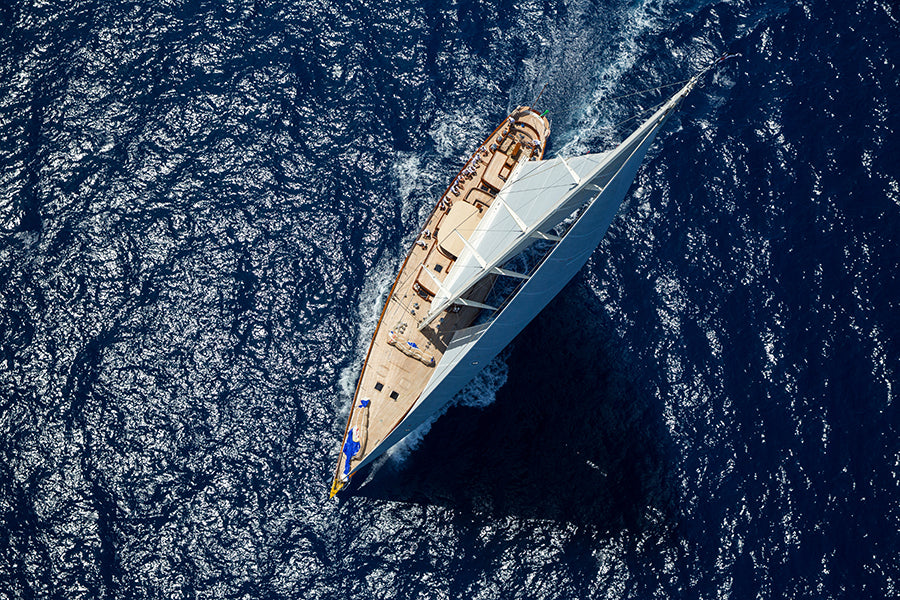
SUPERYACHT CUP, TERRITORIO NORTH SAILS
SUPERYACHT CUP, TERRITORIO NORTH SAILS
La Superyacht Cup (Palma, 21-24 de junio) reunió a una decena de superyates con esloras comprendidas entre los 27,5 y los 46 metros (entre 90 y 151 pies) para tres jornadas de competición de gran calibre.
© Stuart Pearce
North Sails propulsó a nueve de los diez barcos participantes, incluyendo a los tres primeros clasificados de ambas categorías. En Clase A ganó el Baltic de 33 metros WinWin diseñado por Javier Jáudenes (con velas 3Di ENDURANCE) y en Clase B el Farocean de 32 metros Bolero (equipado con 3DL). Las velas más utilizadas por la flota fueron las North Sails 3Di Endurance (cuatro barcos), 3Di RAW (dos) y 3DL (dos).
READ MORE
READ MORE

MERLIN ROCKET TUNING GUIDE
Introduction
These are the current settings for the North Sail range of Merlin Rocket sails. This information will give the ability to pre-bend the mast when required and control the rig over the full range of conditions. With the ability of the modern Merlin to be able to make almost infinite adjustment whilst afloat this tuning guide will walk through setting up the standing rigging and then the control of the rig whilst sailing.
Spreader settings
The settings shown below for the Jackson/Chipstow mast are also a good starting point for all other masts. The focus being around 38mm of pre-bend, see below.
MERLIN ROCKET JACKSON/CHIPSTOW MAST
• Mast track to shroud wire – 365mm
• Tip of track to straight edge between shrouds – 140mm
• Shroud to shroud – 677mm
MERLIN ROCKET SELDEN SKINNY MAST
• Mast track to shroud wire – 365mm
• Tip of track to straight edge between shrouds – 137mm
• Shroud to shroud – 685mm
Standing Rigging Assumptions
The ‘jib hook’ position is crucial to maximize your mast rake.
• Jib halyard hook at ‘most upright’ setting – Shrouds and lowers loose, just able to get jib halyard onto hook (this is another crucial element, the shrouds should be adjusted so that there is only just enough slack to place the jib halyard on the hook)
.• Set the bow of the boat to perpendicular.
• The mast should now be perpendicular. Adjust the jib strop/halyard until this is achieved and this should be done before proceeding further.
Base Settings
Apply some rig tension 200kg (28-29 on Loose gauge PT-1) which equates to helm and crew sitting on the side deck and snugging up the leeward shroud plus a little bit.With the lowers fully released this should give you about 38mm of pre-bend at the spreaders. To measure this, the main halyard should be tied to the gooseneck and touching the mast at that point.
Note: Be careful that you don’t pull it so tight as to bend the mast further!Once this has been achieved pull on the lowers until the mast just starts to invert. The lowers need to have sufficient range to go from this base setting to totally free.Make a careful note of jib, shroud and lower settings. These are essential to enable easy replication when on the water.Apply more rig tension and possibly lowers as the wind increases to keep the leeward shroud snugged up. Rake when the top batten starts to invert or when the boom is off the centre line more than 50% of the time.
Fig. 1: shows the rig without lowers. You can see the little gauge at the spreaders which is used to measure the pre-bend, the thicker cloth ends 25mm from the mast track therefore 38mm pre-bend.
Fig 2: shows the slight inversion in the lower section (deck to spreaders) and the pre-bend reduces to 15 mm.
Basic principles
Why do we want all of this adjustment? The fundamental is to match the luff round to the mast bend and optimise the two. It also means that we can adjust the shape of the rig to maximize performance for the given conditions, flat mainsail in calm and windy, full in mid range to power up.
Good luck on the water!
READ MORE
READ MORE

SÚPER VELAS PARA SUPERYATES
SÚPER VELAS PARA SUPERYATES
En el extremo superior del sector de los barcos a vela se encuentran los superyates, auténticos gigantes flotantes en los que todo adquiere proporciones colosales. También las velas. En su condición de velería líder mundial, North Sails ofrece una respuesta a cada necesidad con un rendimiento superior. Analizamos qué tienen de especial estas súper velas para superyates.
El muestrario North Sails abarca todo el espectro de embarcaciones a vela, desde los pequeños Optimist de 2,3 metros de eslora (con velas de aparejo tarquina de 3,5 metros cuadrados) hasta los colosales superyates, cuyas dimensiones adquieren nuevos límites cada año en función de la evolución tecnológica y los gustos de sus armadores.
Las velas para los superyates se hacen a medida en función de las características de cada barco. No hay dos iguales. “Nuestro muestrario para superyates está indicado para barcos con esloras entre 100 y 300 pies (30,5 a 91,5 metros) con grátil de hasta 85 metros”, explica Scott Zebny, especialista de North Sails para el segmento de los superyates. “Pero en realidad no hay límite en dimensiones, porque fabricamos las velas en secciones y podemos adaptarlas a las particularidades de cada proyecto”. Las nuevas instalaciones de North Sails en Gosport (Reino Unido) están adaptadas específicamente para fabricación de velas para superyates, aunque otras como la de Cuntis (Pontevedra) también producen estas piezas únicas.
Un ejemplo es el Código 1 que North Sails fabricó para el Aglaia, un 66 metros de eslora diseñado por Dubois y arbolado con un palo de carbono 83 metros de altura, el equivalente a un edificio de 27 plantas. “Para mí es la vela más espectacular que hemos fabricado, ya no sólo por sus dimensiones, sino por sus gráficos”. Se trata de una vela de 3.600 metros cuadrados (el equivalente a 13 pistas de tenis) decorada por un gráfico del artista noruego Magne Furuholmen, que ostenta el récord como la obra de pintura sobre lienzo más grande del mundo.
El proceso de diseño y fabricación de velas de superyates es totalmente individualizado. Cada barco es montado virtualmente en el ordenador, y gracias al software exclusivo North Design Suite y a los programas de diseño CFD (Computer Fluid Dynamics), los expertos de North Sails conocen cómo se van a comportar vela y aparejo en navegación real antes de iniciar su producción. Esos programas tienen en cuenta las cargas que se generan en la vela, y en qué direcciones y en qué densidad se tienen que disponer las fibras que las componen. Según Zebny, “las cargas que soportan las velas en un superyate pueden alcanzar las 20 toneladas”, por lo que el material tiene que estar preparado para semejante presión, lo que implica fabricar velas de hasta 1,5 toneladas de peso.
Regata y crucero
Los superyates suelen tener una doble personalidad: auténticas mansiones flotantes para disfrutar del lujo en navegación de crucero, y purasangres de competición para regatear contra otros colosos a vela; es el caso de los elegantes J-Class, que han elegido a North Sails como velería oficial para disputar su circuito mundial, una suerte de segunda juventud que reunió en Bermuda a siete unidades para la regata más multitudinaria de la historia de la clase. Cada una de estas facetas implican velas diferentes, como si cambiáramos los neumáticos a nuestro coche dependiendo de si circulamos tranquilamente por carretera o entramos en circuito para competir.
“Las velas de los superyates dependerán del uso que se les vaya a dar: las de crucero están más enfocadas a la durabilidad, mientras que en las de regata se anteponen las prestaciones”, indica Zebny. El muestrario North Sails ofrece respuestas para cada necesidad, destacando las gamas 3Di Endurance para crucero y 3Di RAW para competición. Ambas comparten las mismas características asociadas a la tecnología 3Di, pero las Endurance añaden capas exteriores para incrementar su durabilidad; la ausencia de esas capas en las 3Di RAW implica una mayor ligereza, lo que redunda en mejores prestaciones.
Valor añadido
North Sails vende anualmente alrededor de 150 velas para superyates. Su principal mercado es Palma, auténtico centro mundial de estos titanes del mar. “Nuestro valor añadido es una combinación de producto y servicio”, explica Zebny, quien precisamente opera desde el centro de North Sails en Mallorca. “En North Sails disponemos de 170 puntos de servicio en todo el mundo, 13 de ellos específicos para superyates”. La firma dispone de la red de servicio más amplia del mercado, con instalaciones específicas para superyates en Nueva Zelanda, Palma, Rhode Island, San Diego, Singapur y Antigua. “Esto supone un valor añadido especialmente apreciado por los armadores, que saben que a través de nuestra red pueden disponer del servicio de nuestros expertos prácticamente en cualquier rincón del planeta donde naveguen, tanto de crucero como en regata”.
READ MORE
READ MORE