



NORTH SAILS BLOG
All
Events
Guides
News
People
Podcast
Sustainability
Tech & Innovation
Travel & Adventure
NEWS - RETOUR D’EXPÉRIENCE (SUITE) : COACHING PERSONNALISÉ ET CPL
RETOUR D'EXPÉRIENCE
Depuis le début de l’année, North Sails Suisse accompagne un équipage tiré au sort lors des épreuves du Championnat du Petit-Lac.
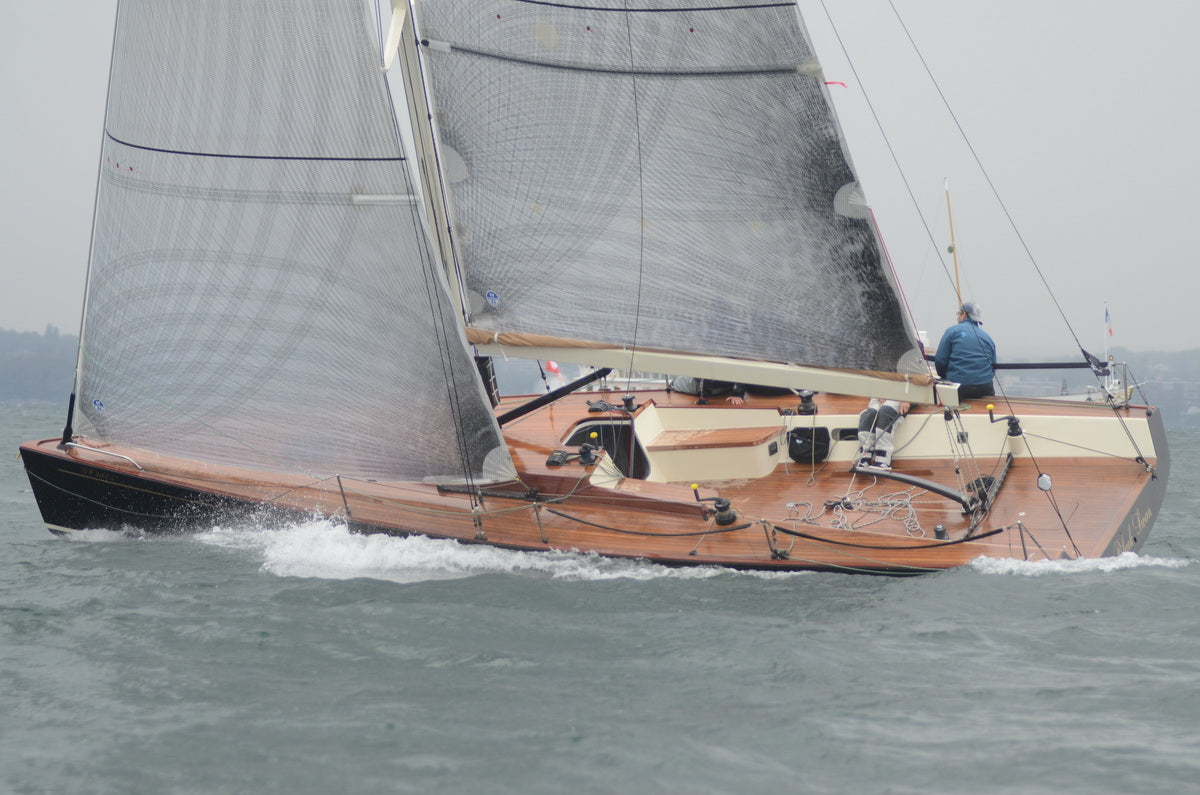
Cette fois-ci, c’est Black Swan, un Luthi 36 Classic, qui a bénéficié du coaching personnalisé de Patrick Mazuay et de sa présence à bord lors de la Genève-Rolle-Genève et du Bol d’Or Mirabaud.
Philippe de Weck, skipper de Black Swan
« Nous avons eu la chance d’avoir Patrick à bord lors des deux plus grandes régates de l’année. Comme il y avait beaucoup de vent lors du Bol, nous avons même pu garder l’équipage au complet sans être pénalisé ! Il est dynamique en tant que régleur de grand-voile, et c’était intéressant d’écouter ses conseils sur la conduite au près par exemple. Nous avons même fait le meilleur temps en réel au Bol !
Deux de mes fils ont fait chacun une régate avec nous, Alexander sur la Genève-Rolle et Micha lors du Bol d’Or. J’étais très heureux de pouvoir partager ces moments avec eux et continuer à leur transmettre ma passion. C’était clairement l’un de mes objectifs principaux en passant du Tofinou à Black Swan.
Pour en revenir à Patrick, il nous a également bien aidé à maximiser le rendement de toutes nos voiles. C’est lui qui les a dessinées et il nous aura bien aidé tout le long du process ! Je pense particulièrement au nouveau foc 3Di raw reçu à l’automne dernier. Il est très efficace pour le petit temps. Tout comme le nouveau spi qui nous permet de bien descendre au portant. Depuis l’arrivée de ces voiles à bord, le bateau est plus compétitif, malgré son poids assez conséquent car je souhaitais également avoir un bateau rassurant pour les sorties en famille, hors du cadre des régates.
En tous cas, toute l’équipe était ravie de l’avoir à bord, nous n’avons plus qu’à continuer sur cette lancée et bien prendre en compte toutes ses recommandations afin de viser le podium des prochaines régates ! »
Pour mémo – Le concept de coaching personnalisé avec North Sails Suisse
Un équipage sera tiré au sort pour un accompagnement de type coaching personnalisé durant une semaine, sur les épreuves du Championnat 2017. Un équipage gagnant ne pourra pas être sélectionné une deuxième fois.
Dans une atmosphère conviviale et avec pour objectif de partager notre passion commune, ce coaching personnalisé comprend les actions suivantes :
J-5 avant l’épreuve : Briefing par téléphone ou à la voilerie avec le skipper et/ou l’équipage (tendance météo pour l’épreuve, passage en revue de la check list performance (carène, voiles à bord, électronique, etc.), point sur la liste d’équipage)
J-4 : Entraînement du mardi soir à bord, avec si possible l’équipage au complet (à la SNG ou à Nyon) : briefing, réglages du mât et des voiles, point tactique, session de manœuvres. Puis débriefing au retour à terre et établissement d’une “to do list” d’ici à la course
J-1: Briefing météo, réglage du gréement affiné selon les conditions météo, lecture des instructions de course, préparation finale du bateau
H-3 : Dernier point sur la météo, stratégie générale, check list des priorités
H : Selon votre configuration d’équipage, navigation à bord ou suivi de la régate par un membre de North Sails Suisse, photos techniques, vidéos et prise de notes en vue du débriefing
J+3 : Synthèse avec l’ensemble de l’équipage à la voilerie, analyse et transmission des photos et vidéos, établissement de la liste des pistes d’amélioration pour les prochaines navigations.
Avec nous, les pros, c’est vous ! Nous partagerons les trucs & astuces pour booster les performances de votre speedo, améliorer vos manœuvres en toute sécurité, affiner vos réglages et tactiques sur des bases simples mais efficaces.
Loris von Siebenthal
READ MORE
READ MORE
BLOCK ISLAND RACE WEEK 2017
BLOCK ISLAND RACE WEEK
Sail, power or ferry yourself to Block Island for a great week of racing and the best mudslides, where North Sails clients topped 11 fleets in the 26th annual Block Island Race Week
For the third year in a row, North Sails is proud to sponsor Block Island Race Week. A local favorite to kick-off the summer, one-hundred forty-three boats convened for a week of racing around the buoys, and around the island, in one of New England’s most unique sailing venues. Sailors enjoyed the sights, sounds, and tastes of the island with old and new faces connecting, all with the passion for sailing matched with fantastic social events after racing.
There were highlights all across the board, from the J/105 class to the ORC Club division. North U was on site to host dock talks, evening clinic debriefs, and on the water coaching with the J/109, J/105, and J/88 classes. Sailors got the most out of collaborating with North Sails experts and reviewing video and photos after sailing, where they could engage with their fellow competitors. Points of focus included hiking techniques, weight placement, sail trim, and mainsail twist. For those that needed repairs, North Sails loft was onsite and provided overnight repair services, making sure sailors were able to get back on the water everyday. We enjoyed our time “on island” and would like to extend our congratulations to North-powered clients for sailing well, topping no less than 11 fleets.
Recap from the J/88 fleet
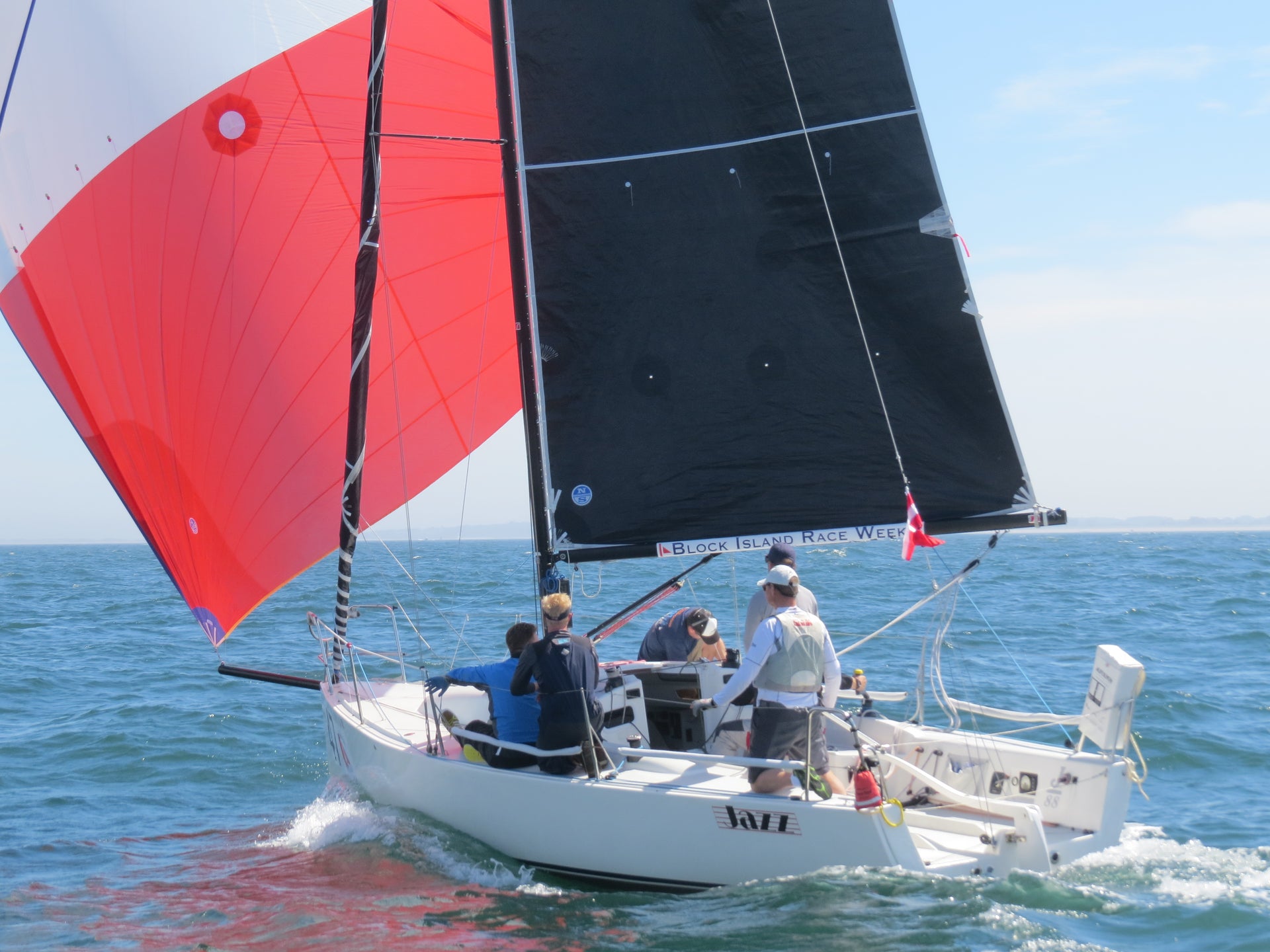
In a small but competitive fleet, Doug McKeige and Mike Bruno showed up with 3Di sails and blew the competition out of the ballpark. As always, it came down to starts, speed, boat handling, and tactics. Starting was easy in the J/88 (particularly at this event) because it was a very spacious line, making for little to no excuse for a bad start. Speed favored the North customers, Jazz and Wings in particular, who seemed to have better speed all week with their new North 3Di. The tactician on Wings was hiking hard and keeping his team very motivated not only in speed but also in determination.
At the North U debrief on Tuesday, the key takeaway was that rig tension matters a lot. The new North tuning guide is out and quite accurate, with the caveat that more tension on the lowers can be used as soon as the bottom third of the main starts to look too flat. In the big breeze, dropping the in-hauler to open up the slot helps make the steering easier. Lastly, if you have a long drag race, the main trimmer should hike as much as possible. Hiking in the J/88 matters almost as much as it does in a Laser. Make sure you’ve got good lifeline covers for your crew!
Iris Vogel, skipper of Deviation generously hosted a fleet party at her house on Tuesday. All J/88 competitors enjoyed the fact that the skies parted and we had the opportunity to share a meal and a few cocktails with friends with a great view overlooking the ocean. The talk of the evening turned to the North American’s in Youngstown which everyone in attendance is fired up to attend.
Morris 42, Ranger, sailing beautifully with North 3Di sails in PHRF 2
Gossip, 3rd Place J/109
Team Jazz, J/88 First Place Winner
‘Spookie’ on North Sails Wednesday’s race around the island with their Fractional Code 0
2nd Place Corinthian, J/109 Emoticon
J/105 winner, Good Trade
TP52 winner, Spookie, IRC 1
3rd Place PHRF 3, Cymothoe
J/111 Partnership, winner of PHRF 1
Ker 50 Temptation, winner of IRC 2
Swan 42 The Cat Came Back, winner of Club ORC
J/122, Teamwork, winner of IRC 3
Gunboat 55 winner, Jammy
North U on the water coaching and support with expert, Chuck Allen
READ MORE
READ MORE
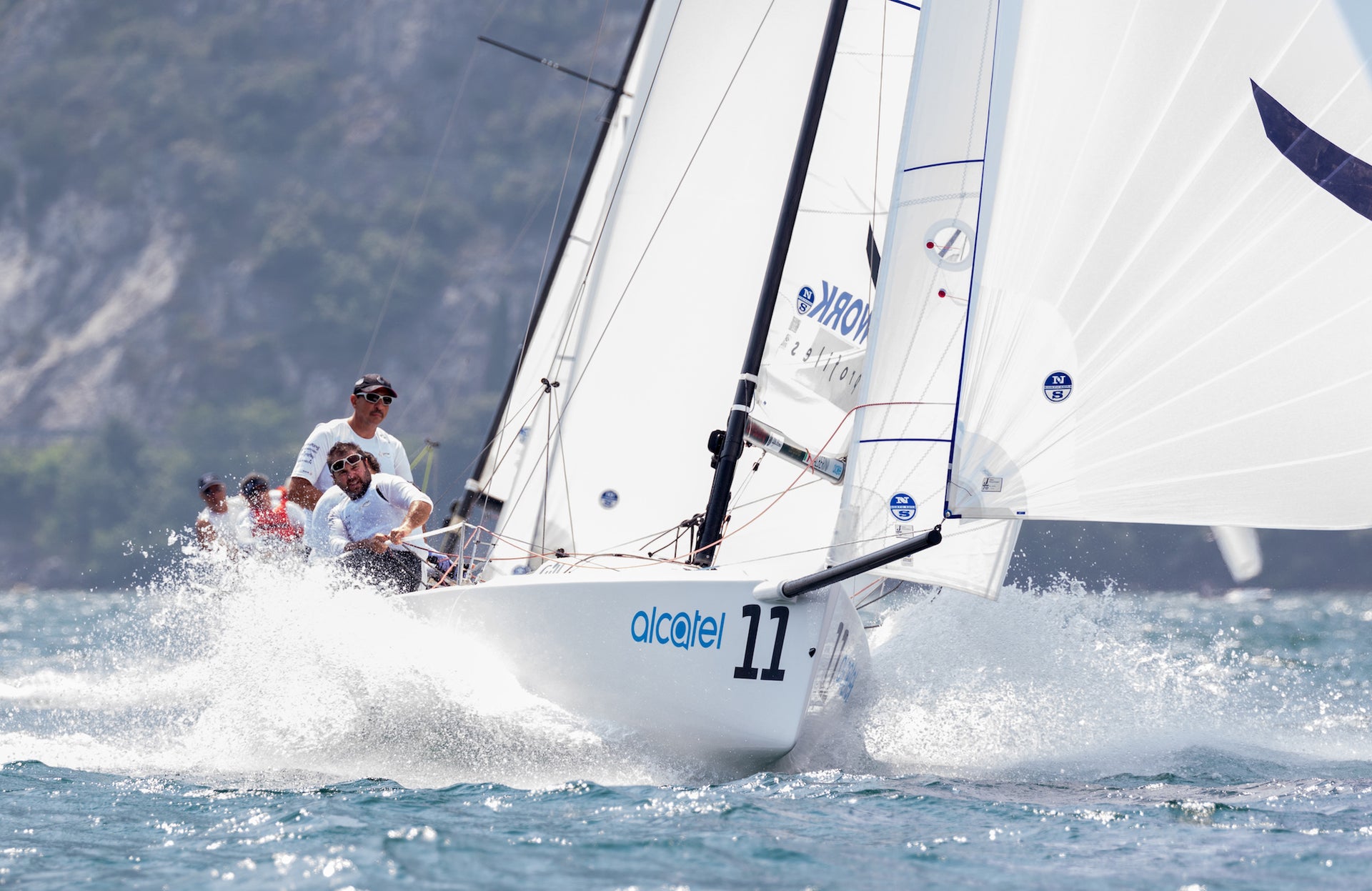
J/70 ALCATEL CUP-ACT 3
J/70 ALCATEL CUP-ACT 3
73 boats met in Riva del Garda for one of the biggest European J/70 events of the season with North-powered teams finishing at the top!
With perfect sailing conditions, amazing competition, and one of the most competitive J/70 fleets in the world, the 3rd Act of the J/70 Alcatel Cup on Lake Garda was an all- around success for all sailors. Claudia Rossi’s Petite Terrible topped the seventy-three boat fleet with two race wins and a total of only 18 points. In second place was Carlo Alberini’s Calvi Network, followed by Mauro Roversi with his team J Curve. Petite Terrible sailed with North Sails XCS-1 mainsail, J-2 Jib and AP-1 Spinnaker. Learn more about our winning J/70 products.
Congratulations to our clients on yet again another perfect performance. We’ll see you in Scarlino for the 4th act of the series!
© Mauro Melandri / Zerogradinord
© Mauro Melandri / Zerogradinord
© Mauro Melandri / Zerogradinord
© Mauro Melandri / Zerogradinord
© Mauro Melandri / Zerogradinord
© Mauro Melandri / Zerogradinord
READ MORE
READ MORE
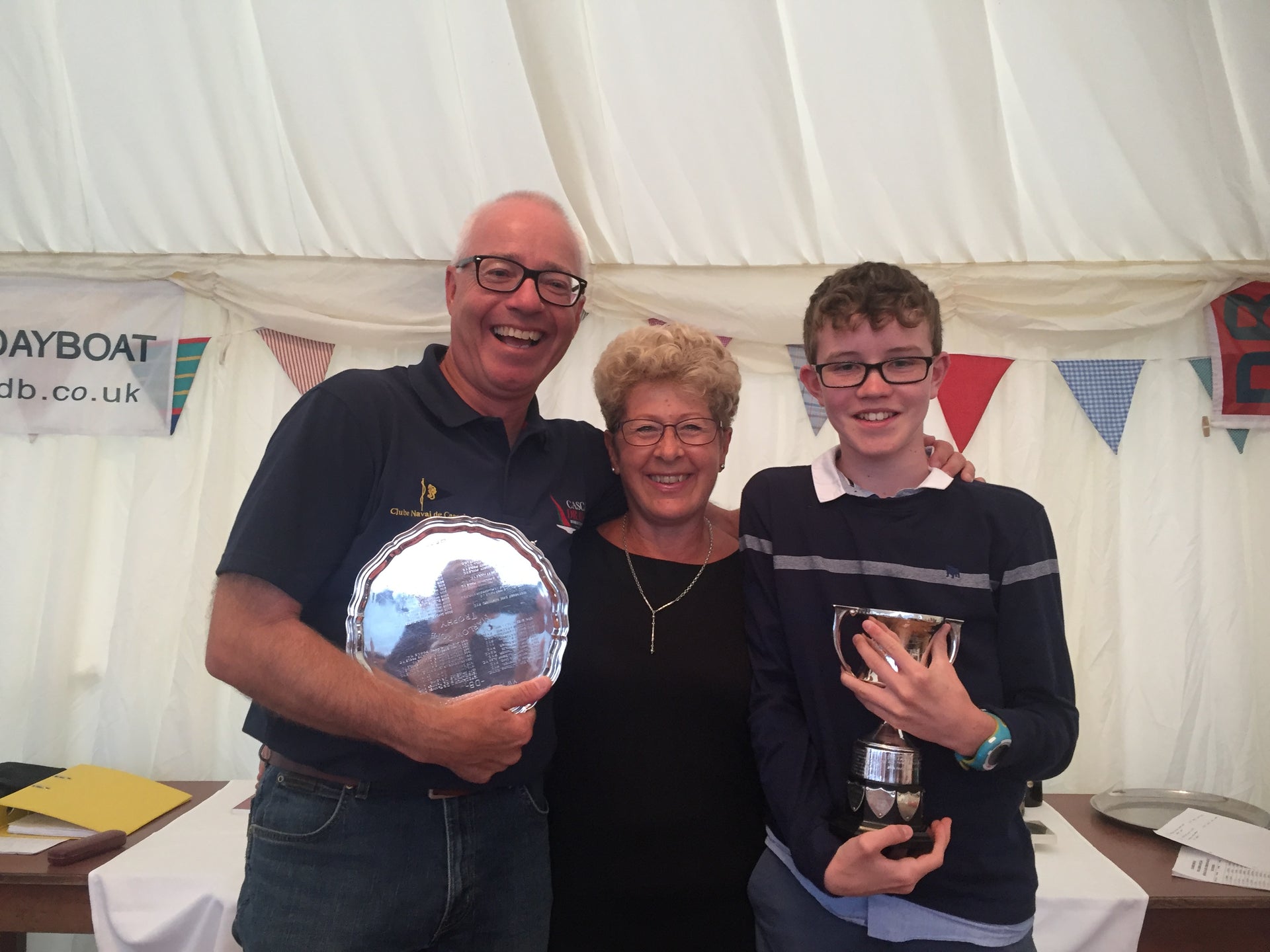
YACHTING WORLD DAYBOAT RACE WEEK 2017
YACHTING WORLD DAYBOAT RACE WEEK 2017
Father and son duo takes the #1 spot, continuing their family legacy
North Sails Ireland’s Nigel Young and his youngest son James, aged 11, raced at this year’s YW Dayboat Week in a boat built by Nigel’s father, Don Young. The regatta was hosted by the Royal Cornwall Yacht Club in Falmouth. James succeeded in winning the Cadet Race and his name will now appear alongside his father, who won the trophy back in 1980 and his older brother Jack, who won in 2016.
The Young Family have a long association with the YWDB Class, as Don built his first boat back in the 60’s and since that time has built about six more boats. They are all cold molded smooth skin boats and all varnished, no painting allowed! Nigel’s current boat PaPa 2 has now won the Championship three times and the family look forward to defending the title again in 2018. Fully powered by North Sails, the NY-4 Jib and the M-4 Mainsail, these designs now also have the three Championship titles under their belt.
For more information on North Sails products for Dayboat sailing, visit our class page!
Nigel and his son James, share the family passion of Dayboat sailing
YW Dayboat winners! Father/son duo, Nigel and James!
READ MORE
READ MORE
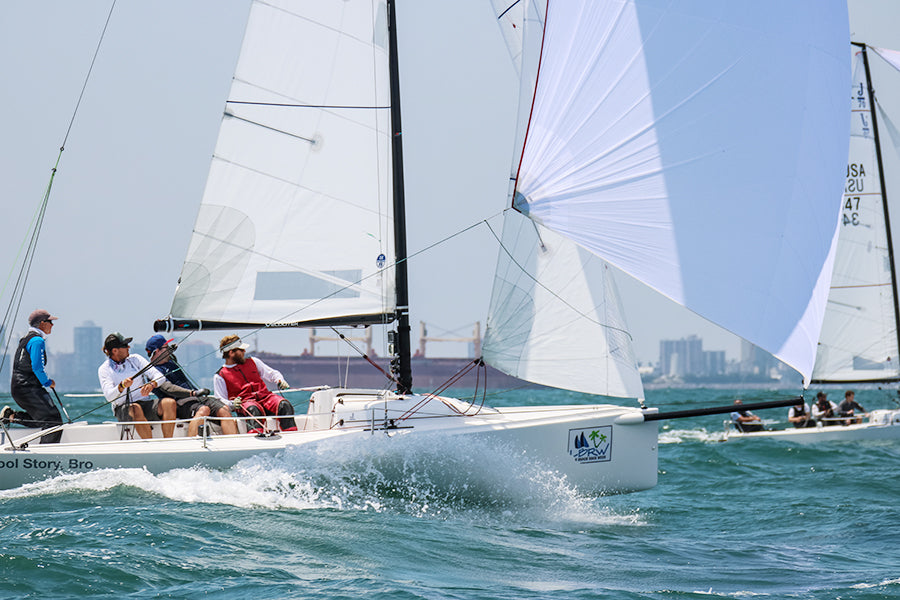
SOCAL SAILING AT LONG BEACH RACE WEEK
SOCAL SAILING AT LONG BEACH RACE WEEK
North Sails teams sweep J/70, Viper 640, Sportboat, Farr 40, and the newest class at Race Week, the Pac 52
Long Beach Race Week 2017 was an absolute success with amazing breeze, comfortable warm temperatures, and lots of fun and exciting racing. Winds ranged between 10-24 knots all three days, keeping things interesting on all three race courses. Fourteen fleets raced either inside the breakwater or just outside the harbor. The kelp was a major factor for those racing inside, while those outside battled the swell, especially on Sunday. The weekend was full of fun, competition, carnage, parties, and a water taxi between Alamitos YC and Long Beach YC made sure no social gatherings were missed.
West Coast sailors always look forward to LBRW. The close proximity of the open ocean and a large bay behind what has to be one of the world’s largest breakwaters makes for some prime sailing conditions for boats of all sizes.
This year’s edition added extra excitement with four brand-new Pac 52s racing one design. The Pac 52 class is growing, and six boats are expected on the start line in September for San Francisco’s Big Boat Series. J/70 sailors had 28 boats, close to the same number at the World’s last September. Winning crew on ‘Cool Story Bro’, led by North Sails Chris Snow, won the class and three 1st place finishes also earned them One Design Boat of the Week. The top Corinthian boat, Pat Toole’s ‘3 Big Dogs’, also used a full North Sails inventory.
Conditions were very typical for Long Beach this time of year, with moderate southwest breeze each morning that increased and clocked right through late afternoon. The J/70 course inside the breakwall had a ‘washing machine’ effect that kept things challenging. With three days of racing, and no throw-outs, winning teams had to be on their game and completely focused.
Chris Snow’s J/70 takeaways:
Don’t foul
Don’t be over early
Start in an non-congested area of line and keep the bow down through the chop
Downwind, sail in your own water and work the boat aggressively
“We sailed with 745 pounds of crew weight. 720 is a good all around number so I was worried about being too heavy. The practice days last week were on the lighter side and so I was pleased to see we were OK going downwind, which is where being too heavy would typically show up.”
We set our forestay at 4’7″ of rake, 1/2″ longer than our tuning guide suggests. I was happy with this setting especially as the breeze came on. In general the J/70 has neutral helm due to its high aspect rudder. As the breeze builds and you drop the traveller and ease the mainsheet to keep the boat from heeling too much, the tendency is for the helm to get very light; so light that when you ease the main a lot in a puff, the bow of the boat will go away from the wind rather than towards it. Adding more rake helps the boat to luff up slightly in the puffs, which is much better for performance and VMG upwind.
Below is the tuning guide we follow. Our base is 16 on the uppers and two full turns off the lowers after they are set to 15 on the PT-2 gauge. Remember that as you tighten your shrouds, you must also tighten the backstay. When it is breezy, the backstay bridle should be VERY tight so you can get extra leverage with the backstay adjuster. You can also shorten your backstay 2-3 feet to bring the apex of the bridle higher and get even more leverage.
We had good speed upwind and downwind. Here are some things we worked on for each part of the course:
Upwind:
Keep the boat on an even angle of heel all the time
Traveler in the middle to two car widths above the middle
Play the backstay almost constantly, the skipper can do this
Play mainsheet constantly, tactician
Outhaul tight but not max tight
Cunningham to smooth luff in over 14 knots
Downwind:
Pump kite and main together to help get the boat on a plane
Trim vang when pumping main. Ease quickly after pump, then pull back on
Once on wave steer down aggressively to better VMG downwind
Head up before bow buries into wave ahead
Win-on-Wing does work when it is windy and is a great way to get away from bad air or wave train
Practice this first
Sails:
For sails we used the standard North XCS main, J2H jib and AP-1 spinnaker. These same sails were used by the team who won the Corinthian fleet.
Other tips:
Install Auto-Ratchet blocks for both the spinnaker and jib sheets (On the jib it makes furling the jib a breeze)
On the jib sheets don’t scrimp on line diameter-Larger is easier on the hands
Learn to use the Velocitek if you have one and have one crew constantly call in distance to the line
Remember the Velocitek reads distance 90 degrees to you from the line (not the distance straight ahead to the line)
Thanks to Jim Murrell and the J/70 West Coast class for rallying for a great event.
Congratulations to our clients!
1st Place J/70 team ‘Cool Story Bro’ © Joy Sailing
© Joy Sailing
© Joy Sailing
© Cynthia Sinclair
© Cynthia Sinclair
© Cynthia Sinclair
© Cynthia Sinclair
© Cynthia Sinclair
© Cynthia Sinclair
© Cynthia Sinclair
© Cynthia Sinclair
© Cynthia Sinclair
READ MORE
READ MORE
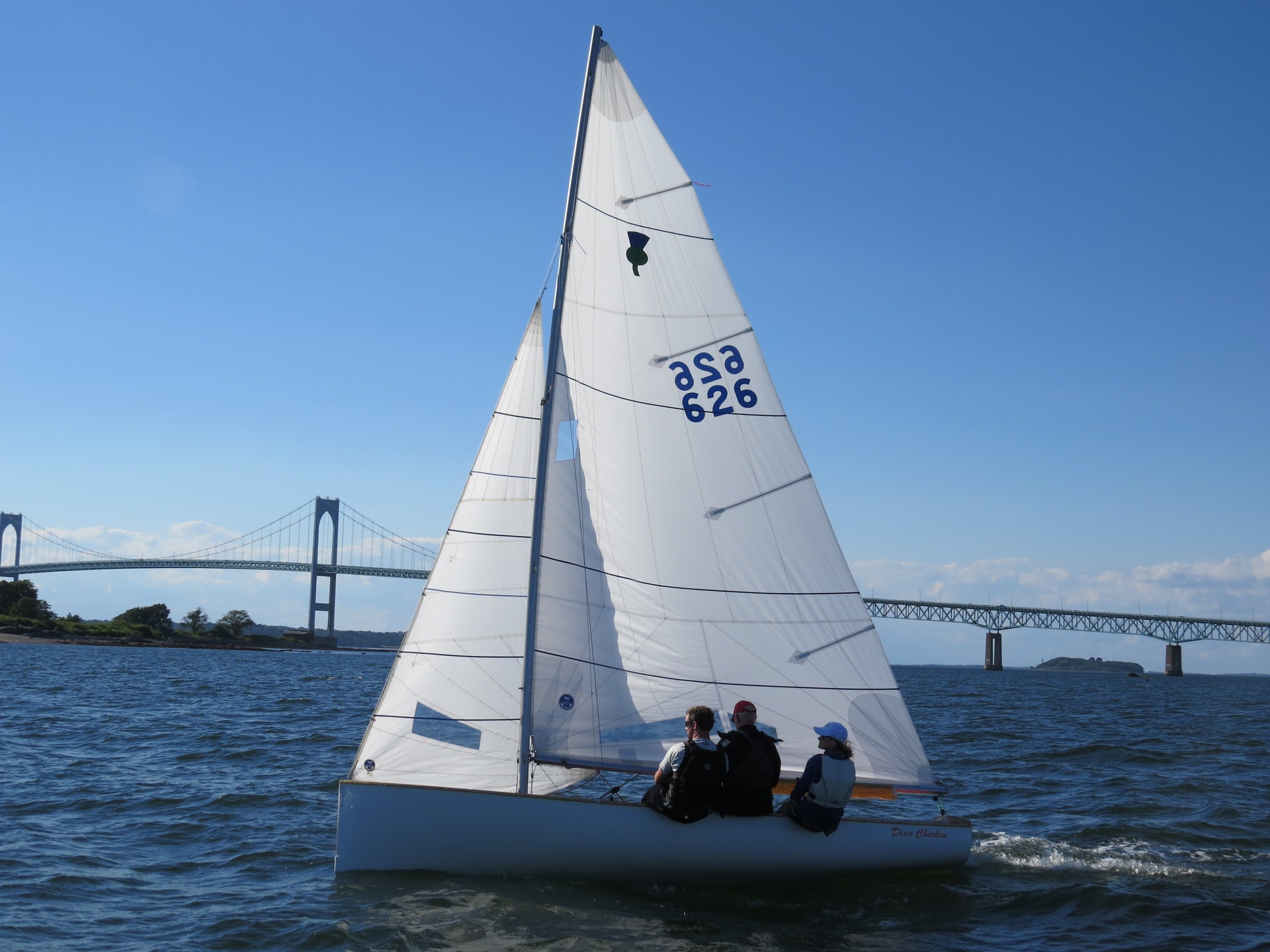
NORTH U HOSTS MONDAY NIGHT THISTLE CLINIC WITH EXPERT MIKE INGHAM
NORTH U HOSTS MONDAY NIGHT THISTLE CLINIC IN NEWPORT WITH EXPERT MIKE INGHAM
Local Thistle fleet sailors joined Mike Ingham for a clinic and some fun weeknight racing – A solid start to a beautiful week in Newport, RI
Thanks to the new and growing Newport Thistle fleet and IYAC for hosting. We spent some time in the parking lot getting boats ready then headed on the water to help out while the fleet sailed 3 races. It could not have been a nicer night with 10-13 knots SW breeze. There were a couple of themes that came out of the on the water coaching as well as the follow up discussion prompted by Chuck displaying the photos on the big screen at IYAC.
Keep the boat flat. Really flat. It’s easy to think you are sailing flat, but really you have a little heel. As a sanity check, the helm should be really neutral. It’s almost uncomfortably flat. It does not “feel” fast, but a flat hull and neutral helm IS fast.
A good example of a reasonably flat boat.
If it’s windy, keep the boat flat by feathering and easing the sails. The right amount of each is a bit of a “hunt and peck” thing. But you can feather quite a bit without losing too much speed –especially in flat water. Either way, you need to be aggressive about each – heeling is slow!
If you get a lull and you are fully hiked, keep hiking and keep it flat with main trim and feathering less.
What you do NOT want to do is stop hiking if you have things you can do to get power back (trim in, bear off). Sure you have to lean in to balance the boat if the lull is big enough, but until then, keep hiking and keep the flat by powering up.
The mast bend on these boats is critical. Since the mast is deck stepped and there are no swept spreaders or lowers, not chocks, and no backstay the bend comes from compression of the mast on the mast step and from vang / mainsheet.
Getting that right is the magic part of tuning a Thistle. When you look at the main, it will likely have overbend wrinkles. If they go more than halfway back, your mast is too bent. If you can barely see them, you are not bent enough.
You can fix this by experimenting with shims behind (or even in front –but this would be to fix an unusually flexible mast).
A good example of overbend wrinkles going just a bit too far back on the main because they go past the middle of the window.
Heel to windward downwind and get the spin out from behind the main by squaring the pole all the way back and flying the clew about at the forestay.
This is an example of nice heel and trim.
It’s a fun group with the right Monday racing attitude. Thanks to IYAC and the fleet for making it happen!
Get involved with Local Thistle Fleet 169 !
We were lucky to have the tuning session, on the water coaching, and video debrief with Mike and Chuck. These guys know how to make Thistles go fast and they did a great job raising the bar for the whole fleet. NorthU is something I would suggest for every fleet. We call ourselves the fastest growing fleet in North America, so grab a boat and come join us! – Ervin Grove, 626
The Monday night clinic with Mike and Chuck was fantastic, and very thorough. From tuning tips and advice on land before, to on the water coaching, to pictures and video afterward is incredibly helpful. In only a few hours on Monday night after work, it made our entire fleet better. – Patrick O’Connor, 1021
Will Bomar handling the bow.
READ MORE
READ MORE
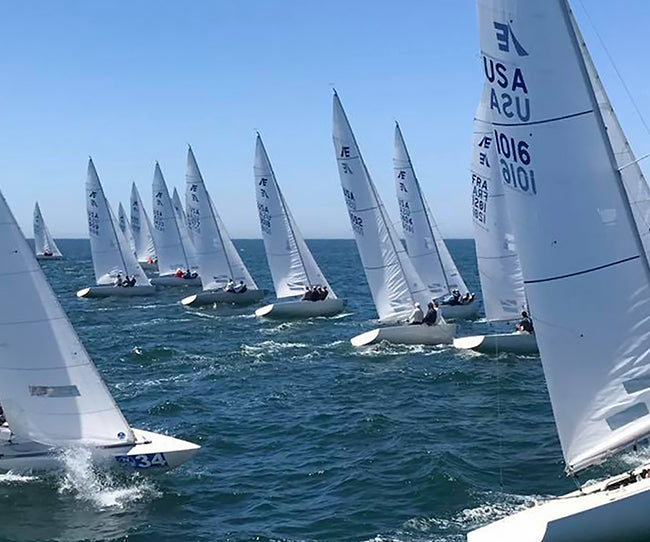
ETCHELLS PACIFIC COAST CHAMPIONSHIPS
ROAD TO NA’S AND WORLDS: ETCHELLS PACIFIC COAST CHAMPS
North Powered Teams Finish on Top in San Diego!
San Diego delivered excellent and challenging conditions for the 2017 Etchells Pacific Coast Championship. Winds from 3-16+ knots were seen over the two-day event sailed on the Coronado Roads. The head of the class this weekend was Argyle Campbell and his crew of Victor Diaz, Alec Anderson and Jeremy Wilmot on ‘Rock n’ Roll’. They never finished a race out of top three and won the regatta with a race to spare. Nice work guys!
Second overall was the Corinthian team ‘Blonde Antelope’ led by Keith Whittemore. Keith’s crew consisted of Brian Thomas, Kevin Dow, and local rockstar Sabot sailor, Peter Busch. Keith’s team sailed a consistent series with only one race out of the top ten and had a very strong second day scoring 3,4,4,1, on Sunday. It is great to see these guys performing so well!
Most teams are using the PC-F main, LM2-H and L jib, and full Radial/VMG spinnaker combinations. Most are opting for the LM-2H when is doubt as to how the conditions light play out in a particular race. The combination of double snaps on the luff and the different batten combinations to round up or straighten the leech of the LM-2H make it a very versatile sail for this classic designed boat.
Congratulations to our clients for placing in the top 10 at the PCC’s!
Next up for the West Coast Etchells fleet is the Orca Bowl at SDYC May 20-21. August 16-19th SDYC will host the 2017 North Americans. The big event of the year is the 2017 Worlds which will be hosted by San Francisco Yacht Club September 23rd to 30th. For any help with your Etchells program do not hesitate to contact Skip Dieball, Chris Snow, Eric Doyle or any member of the North One Design North America team. Our team is standing by to help your team get the most from your sailing!
Full results
1st Place Corinthian ‘Blond Antelope’
1st Place Overall ‘Rock n’ Roll’
READ MORE
READ MORE
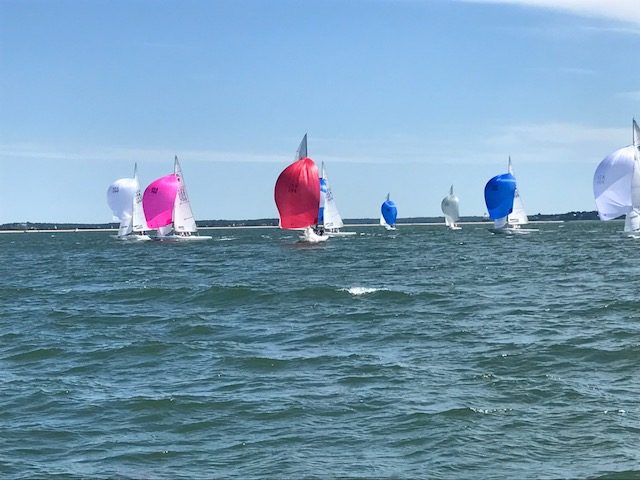
ETCHELLS ATLANTIC COAST CHAMPIONSHIP
ETCHELLS ATLANTIC COAST CHAMPIONSHIP 2017
Boats powered by North place 1, 2, 4, 5,6, 7,9 at Etchells ACC’s in Shelter Island, NY
The Atlantic Coast Etchells Championship was hosted by the Shelter Island Yacht Club and the Shelter Island Etchells Fleet. Saturday was an epic day; the fleet stayed ashore until a line of thunderstorms passed through, then hit the water for five great races. Unique to racing at Shelter Island, the Race Committee has a choice of three different racing areas to use. Both days they chose the closest one, located in Orient Harbor. The wind filled from the North West (290 degrees) in post-frontal conditions. Since the forecast for Sunday was for very light to no wind, the RC gave us five, four leg windward-leeward races. The 5th race was a five leg course. The bay is just big enough to set 1-mile legs with reasonable distance from the shore. The effects of strong current circulating in the bay, plus the short course and tight fleet, made for interesting racing. There is much discussion about which way the “toilet bowl is circulating today” in this area, always keeping things interesting on the race course.
Saturday’s breeze blew up as hard as 23 knots for the first three races of the day. For the last race, it dropped down around 8-10 knots. This called for a lot of rig adjustment, for the condition changes. At the end of Saturday’s five races, local Shelter Island fleet member Scott Kauffman with his team of Austen Anderson, Victor Diaz, and Evan Aras, held a one-point lead over Steve Benjamin’s team with Michael Menninger, Dave Hughes, and Ian Liberty. The top fully amateur team of Mark Jacobi and Taylor Walker, steered by Steve Girling, held down fourth.
Sunday there was a delay onshore as the very light West wind petered out which eventually would allow the thermal Southerly wind to fill in. Getting two races completed, the west wind held for the first race before shifting. The axis for Sunday’s first race was 270 degrees, with the wind shifting left as the race progressed. Scott Kaufman started at the weather end of the starting line and tacked immediately to port. Steve Benjamin started near the pin and went to the left side. The two came together in the lead at the weather mark rounding 1-2. Scott jibed to port and found some nice breeze to take the lead, which he held to the finish to gain a three-point advantage going into the last race of the regatta.
The start of the last race was delayed as the westerly petered and the wind filled more from the South requiring the race committee to move the starting line to a different corner of the bay. The final race of the regatta was a three leg course Windward Leeward Windward. The wind picked up to 10 knots and built to 12 by the end of the race, the fleet bunched toward the leeward end of the starting line. Everyone seemed to think getting close to the beach on the left side of the course would be the fast route to the weather mark. This eventually proved to be the case. After one general recall and a slight adjustment to the starting line the fleet got off to a clean start. Steve Benjamin’s and Peter Duncan’s teams popped out to nice positions. Scott Kaufman’s team wasn’t able to hold the front row to the port tack layline and tacked out to the right early. This proved to be their downfall as Benjamin’s team held the leeward advantage all the way to the port tack layline and eventually came into the weather mark, traveler down, full tilt to take the lead. The fleet was very closely bunched on the run. This made boat placement and getting a clean rounding of the right, facing downwind, gate mark and fast line to the left, the ticket to a quick upwind leg to the finish. Benjamin held the lead over the junior team steered by Conor Needham. As the Kaufman team sailed to an 11th place finish for their drop race, this gave Benjamin the regatta win.
Notable to the regatta was the participation of junior teams sponsored by class members. Steve Benjamin provided one of his many Etchells for the team to use, steered by Conor Needham, who sailed to a fifth place finish. Michael Gavin kindly provided his Etchells 1305 to the other junior team, helmed by recent Yale Grad, Marly Isler. He was also kind enough to offer his second boat for team White Boat to use, making for yet another competitor on the starting line.
Shout out to Fleet 15 and the Race Committee and volunteers this past weekend for helping make the ACC’s a success.
A statement throughout the fleet, 19 of 25 boats competing were all equipped with North Sails. Congrats to our clients for sailing fast!
Full Results
READ MORE
READ MORE
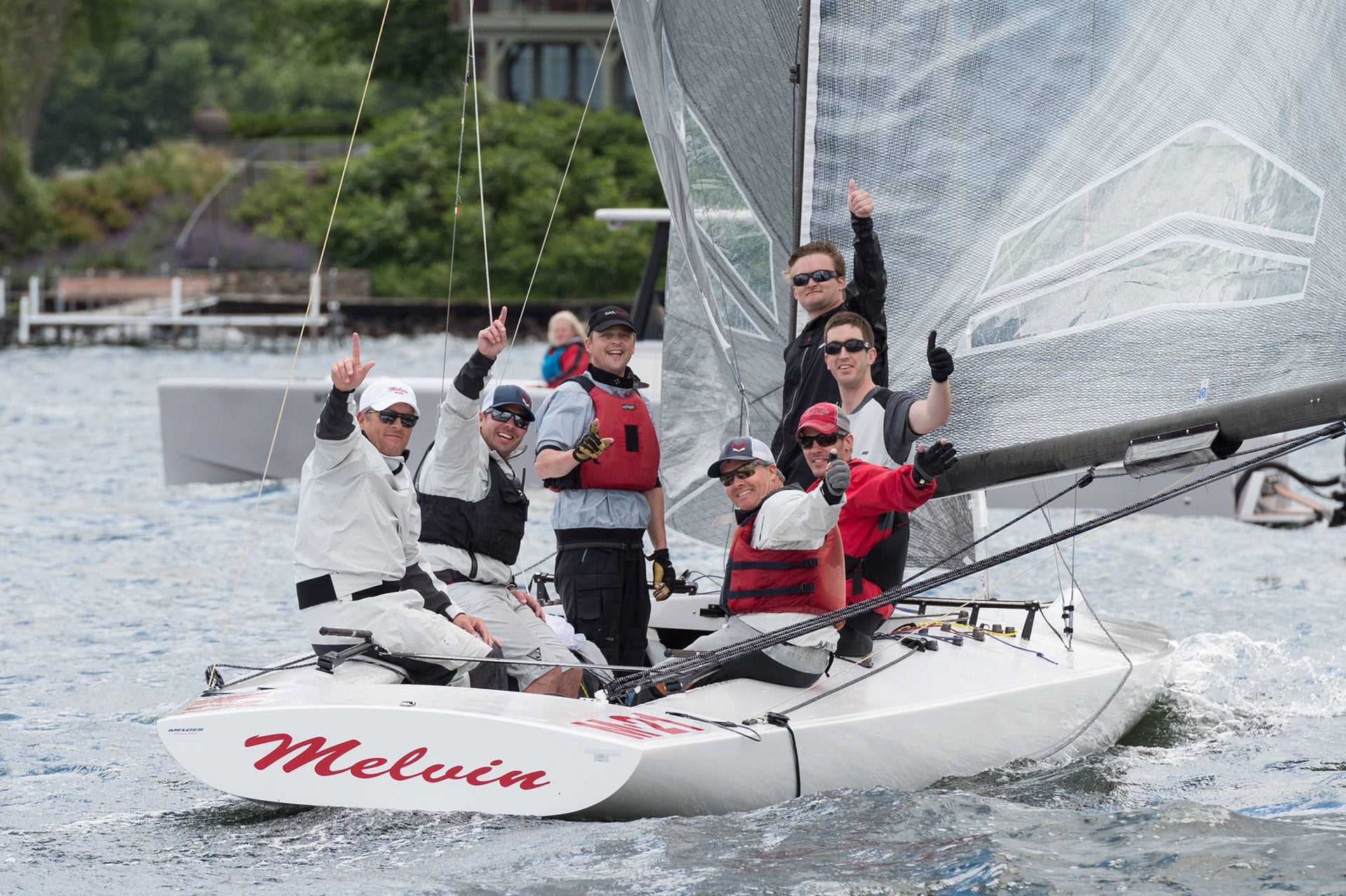
PAT HUGHES WINS THE A SCOW NATIONALS
PAT HUGHES’S MELVIN WINS THE A SCOW NATIONAL CHAMPIONSHIP
North-powered boats finish 1-2-3-4-5!
Minnetonka, Minn. (June 23-25, 2017) — Pat Hughes and the Melvin team were crowned A Scow National Champions. Hughes put up an impressive 13 points over six races at the championship hosted by the Minnetonka Yacht Club. Sailing on the Melvin (M-21) alongside Hughes was Harry Melges, Coye Harrett, Tony Jewett, Chris Jewett, Matt Ripkey and Mark ‘Doctor’ Christensen.
Vincent Porter and the Eagle (I-1) finished the regatta on a high note, winning both races on the final day. His two race wins squeezed him a notch higher on the leaderboard, landing the Eagle team in second place overall with 21 points. With 22 points, Tom Whowell’s G Force (I-12) helmed by the young R.J. Porter took third place. Rounding out the top five were Mike Keefe’s Ajax and Tom Freytag’s MadCap.
“We had a great three days with unbelievable conditions and a great group of people. This win is really good for our youth program here. It’s a big deal to win the championship on your own lake at your own yacht club; it’s very encouraging to these young local sailors.”, said Hughes.
Minnetonka Yacht Club pulled out all the stops for the national championship. Lighthouse Island and the surrounding waters of Lake Minnetonka proved to be the perfect battleground.
Spectators came from all around to watch the mighty A Scows duke it out. Twenty of these 38-foot yachts raced in the event. Melges A Scows are built by Melges Performance Sailboats in Zenda, Wisconsin USA. With six or seven crew, the A Scow is the fastest and largest of the Melges Scow family. Nothing compares to its century of heritage, delivering a combination of raw power, speed and performance unmatched in one-design sailing. A true classic, the A Scow is monumental to watch, not to mention powerful to race.
READ MORE
READ MORE

KIEL WEEK 2017
Kiel Week 2017
North Sails powers leaders in the J/24, J/70, Melges 24, 470 Men’s and Women’s Classes at Kiel Week
One of the largest sailing events of the year, Kiel Week is an annual regatta held in the capital of Schleswig-Holstein, Germany. The event attracts 5,000 sailors on roughly 2,000 ships, and estimates a total of three million visitors each year. A competitive event, especially for Olympic Classes, Kieler Woche is organized in a team effort between the Yacht Club of Kiel, the Norddeutscher Regattaverein, the Hamburger Sailing Club, and the Verein Seglerhaus am Wannsee.
North clients performed well in the men’s and women’s 470. Men’s Team Mat Belcher and Will Ryan claimed the gold medal, 20 points ahead of 2nd place finishers from Russia, Pavel Sozykin and Denis Gribanov. In the Women’s 470, Frederike Loewe and Anna Markfort finished 2nd in the medal race, won the tie-breaker overall against Poland’s Agnieszka Skrqypulec and Irmina Gliszczynska, taking home the 1st Place Victory.
In the competitive J/70 and Melges 24 fleets, North-powered boats took the win with German sailors, Jens Marten, topping the J/70 and Lennart Burke winning the Melges 24. Congratulations to our clients for a fantastic week of sailing!
North U’s Mike Ingham Leads J/24 Fleet in Race Clinic
A clinic hosted by the local J/24 class was opened to all competitors during the week. Coach Mike Ingham of North U stepped in to host the off-the-water presentation on the evening before the final race day, where he focused on the stark contrast in conditions between day 1 and 2. Mike was sailing on Nautalytics Following is a synopsis of what the class learned and discussed, written by Mike.
Day 1 and 2: Rig Tuning in Big Waves and Breeze
Day 1 was windy with sharp confused waves, especially difficult on port tack. We tuned one level down on the shrouds for power and soon realized, with the waves, we needed more power than so we eased off to one step below maximum tensions.
I twisted the main on port, by pulling up the traveler and easing the mainsheet – neither of which I would do if the water was flat. This eased the helm and allowed me to bear off easily and power through the worst chop without stalling my rudder. Max, our genoa trimmer, kept a sharp eye out for waves and was constantly easing the sheet maybe an inch or two for the bad wave sets, then immediately bringing it right back in after the waves. It was windy and my backstay was on as much as I dared without distorting the main. Main distortion happens by over bending the mast past the mainsail luff curve.This kept the forestay reasonably tight, though still less than if we had the rig set to the tightest settings.
Day two was a totally different kind of day. Light wind with small waves were the main setting here. We kept our rig loose enough that our headstay sagged a little. Even though the waves were small, it was so light that even some of the smallest waves pitched the mast-disturbing the flow over the sails. I needed some power in the rig to get back up to speed. It was too light to point, so I concentrated on keeping the boat moving. The rest of my focus was dedicated to the top main telltale. I adjusted the mainsheet often because even a small change in wind speed changed how that telltale flew. I was looking to keep it flowing 90% of the time for optimum flow.
Once the rig was set to the conditions, we figured out what the right combination of height vs punch was, then on how to trim specifically for that angle.
There is a ton of support within the J/24 class in Germany. It was great to see so much support go to the younger sailors in such an established fleet. An all-in-all great experience for J/24 competitors this year at Kiel Week.
Congratulations to our clients for winning performance in Kiel!
North Sails Mike Ingham provides insights to J/24 fleet competitors
© www.segel-bilder.de
© www.segel-bilder.de
© www.segel-bilder.de
© www.segel-bilder.de
© www.segel-bilder.de
Podium shot for the J/24 fleet.
1st Place team Nautalytics with helmsman Mike Ingham
READ MORE
READ MORE
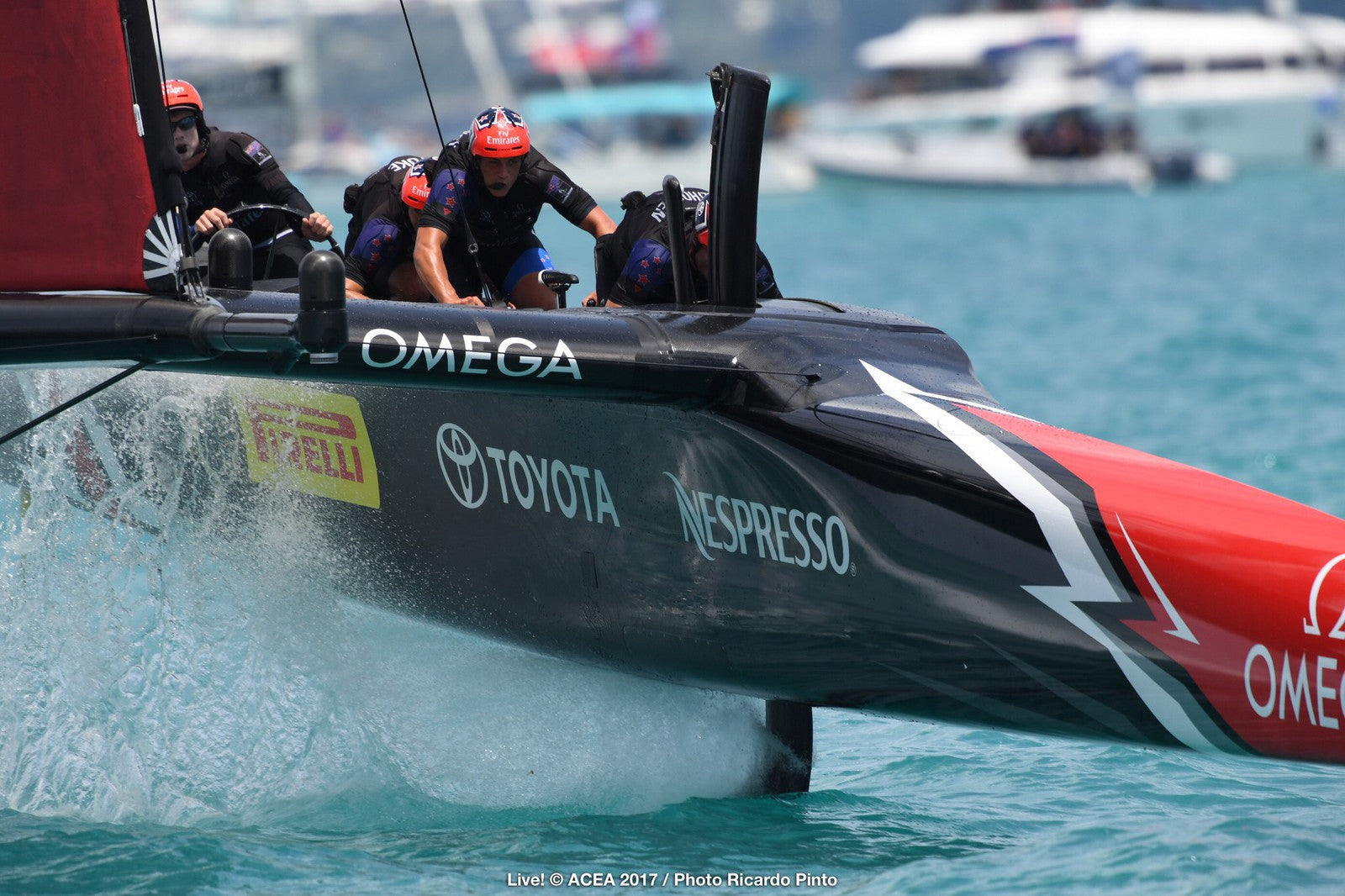
AC35 UPDATE: CONGRATULATIONS ETNZ!
As the Official Sailmaker to the 35th America’s Cup, North Sails is proud to be an exclusive supplier to a historic generation of America’s Cup sailing. Congratulations Emirates Team New Zealand! A world-class victory for the Kiwis and a new era for the oldest trophy in international sport.
READ MORE
READ MORE
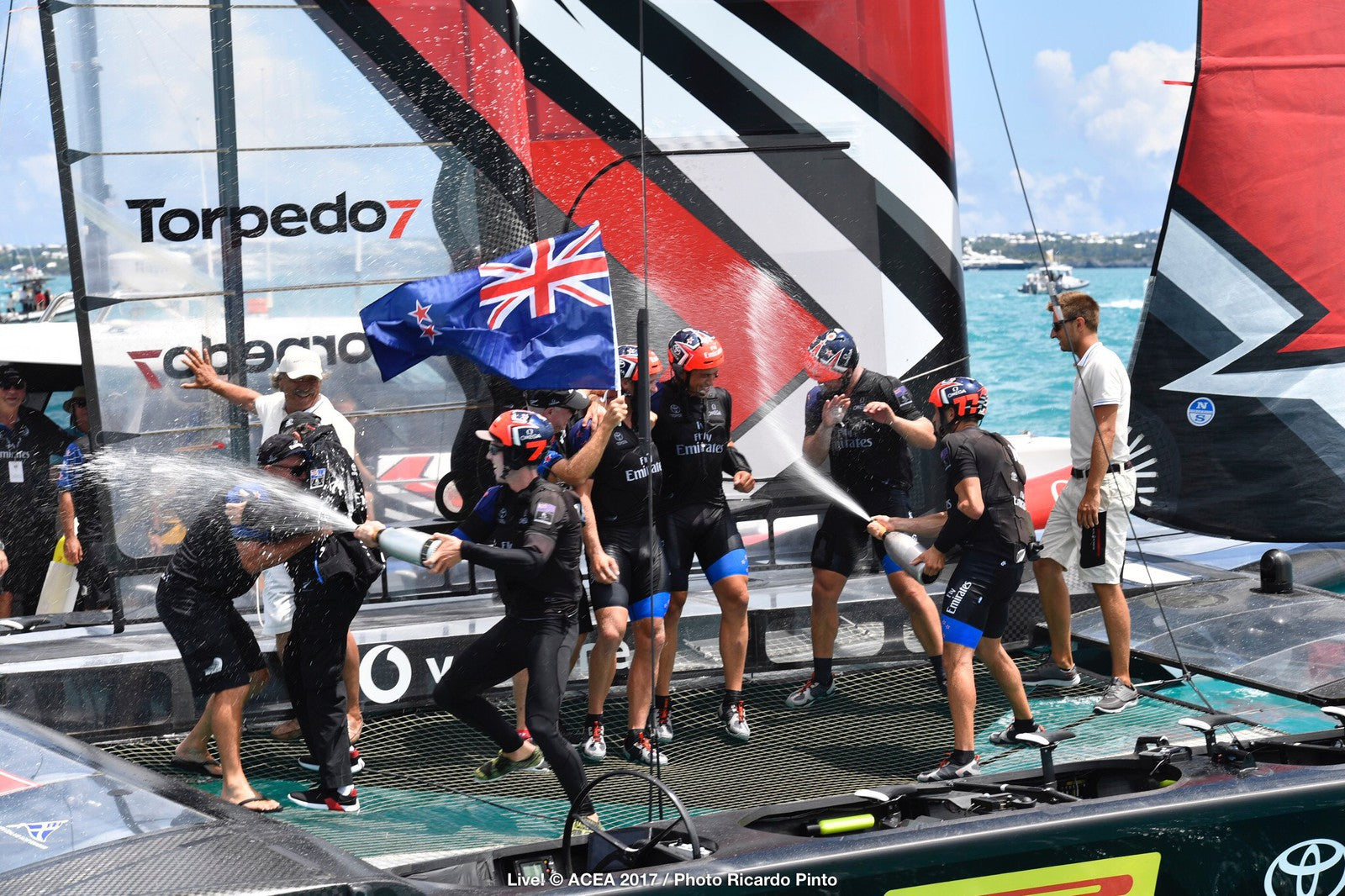
EMIRATES TEAM NEW ZEALAND WIN 35TH AMERICA'S CUP
North’s relationship with the 35th America’s Cup winner Team New Zealand runs deep. Named Official Sail Supplier in this edition of the Cup (and the first time in history!), North Sails were exclusive on all the boats, Defender and Challengers. All teams entered racing with a one-design set of North Sails 3Di jibs, used in tandem with a fixed wing. With the ever-changing landscape of our sport, North Sails has remained the technological leader in sailmaking. Today, North Sails supports Cup teams with crucial aerodynamic design support, producing sails that are consistently flatter, faster, and more durable. Our North Technology Group sister company, Southern Spars built the Emirates Team New Zealand winning boat; from hulls to foils and all the parts in between. The last few weeks have been a spectacle to watch and we’re already looking forward to the 36th edition of the oldest trophy in all of sport.
Race Nine. The score was set at 6-1 (ETNZ – ORACLE TEAM USA) as the teams docked off amidst a sea of fans for day five of the finals. It was “match point” with just one more point required of Team New Zealand before winning the Cup. While fans of ETNZ called for the team to bring the Cup home some 9,000 miles to New Zealand, Oracle fans cheered the defenders to repeat their legendary comeback of 2013, when the Americans fought back against the Kiwis in what may have been the greatest comeback in history.
Not this time. Not with steadfast Glen Ashby as skipper and ever cool Peter Burling at the helm. After a strong start, ETNZ wasted no time catching Oracle’s heels, scraping past after a gybe on the second leg and maintaining a strong lead for the remainder of the race.
Team New Zealand celebrated, a smiling Peter Burling exclaiming, “It’s unreal, this is exactly what we came here to do, I’m just on top of the world.” With today’s historic win, ETNZ will bring the Cup back to New Zealand. In addition, Peter Burling becomes the youngest skipper to win the America’s Cup at age 26. “It’s been three years of hard work, probably 100 people working together toward this goal. We are just on top of the world. We’ve just been blown away by the support we’ve been getting on shore and back home, we’re just really excited to share it with everyone now.”
For Skipper Glenn Ashby, who was part of the 2013 ETNZ squad, today’s victory was especially sweet (possibly sweet revenge?). “It’s been an amazing journey for Emirates Team New Zealand, one of those rocky roads that encompassed much more than just the past four years. The guys behind me and our entire team have fought tool and nail to win this trophy!”
“We’d also like to pass on our heartiest congratulations to ORACLE TEAM USA. They set the bar for the racing and were fantastic competitors. Thanks for sharing it (the America’s Cup) around!”
Congratulations to ENTZ, who we’re sure won’t be hi-fiving each other at tonight’s celebrations.
READ MORE
READ MORE
SE HVORDAN ET 3Di SEJL BLIVER TIL
TAG MED TIL MINDEN, NEVADA OG SE, HVORDAN ET 3DI-SEJL BLIVER TIL.
I år er det 25 år siden, at North Sails lancerede 3DL-sejlene. Vi tog skridtet fra håndværk til industri, da vi begyndte at støbe laminerede sejl. I 2010 gik vi niveauet højere, da vi introducerede 3Di, udviklet for undgå problemet med delaminering.
Fabrikken i Minden er udviklet til at producere 3DL-sejl, men er sidenhen blevet tilpasset 3Di-teknologien. I princippet er det eneste, der er tilbage de store justérbare forme og symaskinerne, der bruges til at lave finish på - forligsbånd, gjorde, mm.
Set med danske øjne, så var 1992 også et stort år. Tre ud af de otte både, der kæmpede om en plads i America’s Cup, havde en diamant i alle sejlene. D’herrrer Søderlund, Christensen og Ussing Andersen fornemmede dog hurtigt, at 3DL kunne noget helt specielt! Det var grunden til, at de besluttede sig for, at diamanten måtte lade livet til fordel for den teknologiske udvikling. De har ikke set tilbage siden. De har kun set frem og været en væsentlig del af udviklingen siden 1995.
De husker dog tydeligt, at det spredtes som en steppebrand gennem hele branchen, da 3DL blev introduceret. Det var ikke blot et unikt og banebrydende produkt, hvor man kunne støbe et helt sejl, i lige præcis den facon, der passede til båd og vejrforhold, i én samlet proces. Al anden teknologi blev med ét gammeldags. Det fremtvang også en gennemgribende omstrukturering af resten af en branche, der mere eller mindre havde arbejdet ud fra samme princip i 1000 år.
Design på computer, og generel videnskabelig tilgang, var ikke noget nyt i den forstand - også her var North Sails pionerer – men inden 3DL kom ind i billedet, blev de fleste sejl lavet lokalt af sejlmagere, som kravlede rundt på gulvet for at skære panelerne, hvorefter de satte sig i huller og bukkede sig over symaskinen for at samle dem. Pludselig var sejlloftet blevet en avanceret fabrik med robotter. For at følge udviklingen skulle man ikke længere blot have knowhow. Man skulle bygge et helt produktionsanlæg, som ingen tidligere havde været i nærheden af. Det tog nogle år, men så begyndte resten af branchen at tilbyde et lignende produkt. Ingen har dog til dato udviklet en proces, der bygger et sejl fuldstændig uden sammensyninger, som North Sails har. Med konkurrenterne i hælene, måtte North Sails holde egen udvikling i højeste gear. Det resulterede i lanceringen af 3Di i 2010. Her lagde vi barren et hak højere. Det teknologiske niveau i 3Di-processen satte endnu en gang større krav til knowhow og maskinpark.
Vi inviterer hermed indenfor på vores fabrik i Minden, Nevada – langt fra havet, for at vise, hvordan et 3Di-sejl bliver støbt i ét helt komposit. Som du kan se, minder den ikke særligt meget om et klassisk sejlloft, som for bare 25 år siden var symbolet på vores branche.
READ MORE
READ MORE
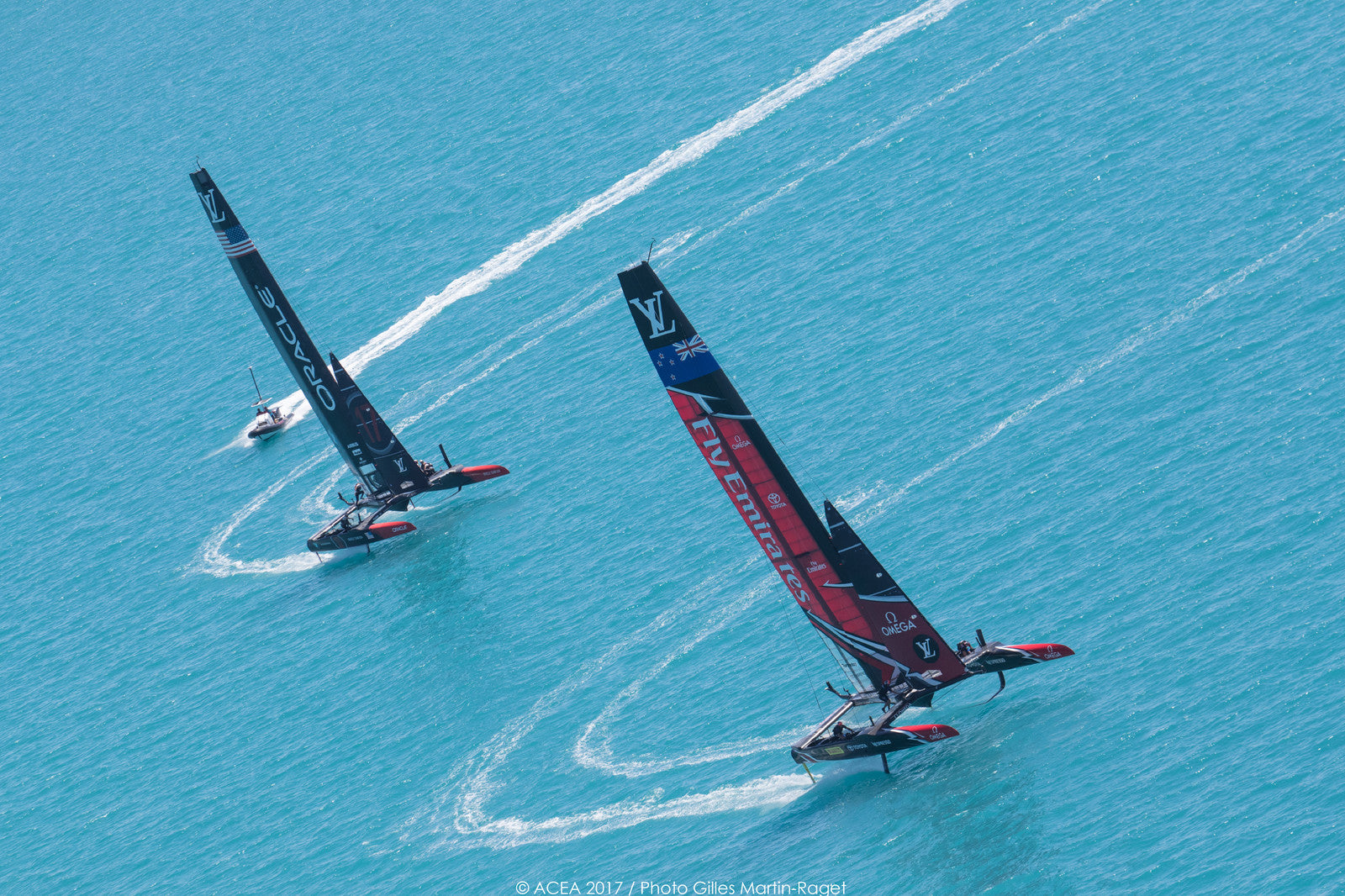
AC35 FINAL MATCH: UPDATE #2 FROM KEN READ
35TH AMERICA’S CUP FINALS
An update from North Sails President, Ken Read
Bermuda has not disappointed! After a leisurely superyacht event and J-Class regatta, sailors, fans, and event organizers had a bit of time to take in the previous four America’s Cup races. The Kiwis on Emirates Team New Zealand enter this weekend’s finals with a four point lead ahead of Cup defenders ORACLE TEAM USA. No telling what the next few days hold for these two teams, but we can promise to be watching every single minute!
READ MORE
READ MORE
J/70 GERMAN SAILING SERIES: ACT 3
SEGEL-BUNDESLIGA
North Sails powers leading J/70 teams in Act 3 of German Sailing Series
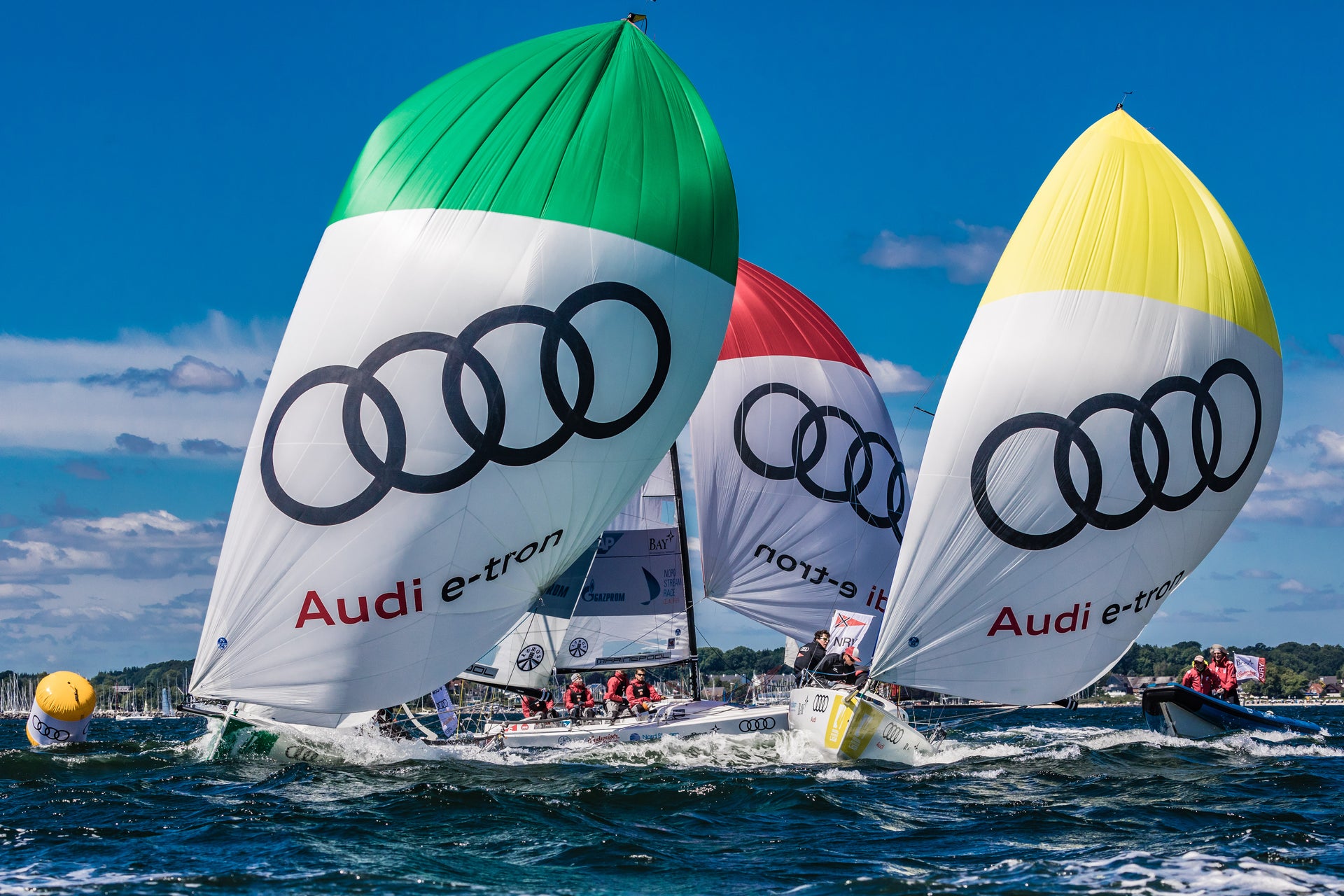
Eighteen J/70 teams arrived in Germany to compete in Act 3 of the class’s Sailing Series. The event overlapped with Kiel Week (Kieler Woche), held in front of the Olympic harbor in Kiel-Schilksee. The sailors got the most out of their visit to Kieler Yacht Club, completing 45 exciting races in difficult sailing conditions on Kiel Fjord. Lots of races to keep the sailors happy all weekend long, with most finishing positions coming down to less than a meter!
“Even though we have made too many mistakes at the start, we were able to make good use of our chances on the race course,” explains Tobias Schadewaldt.
The team Norddeutscher Regatta Verein, from Hamburg won in front of Segelkameradschaft Das Wappen von Bremen and the Berlin Yacht Club. The two-time “German Sailing League Masters” from Hamburg were happy to take the trophy home in the first event of this season.
North Sails, partner of Kiel Week and the German Segel-Bundesliga, has equipped all the Bundesliga J-70s with North Sails One Design sails. A set consists of the world champion XCS-1 Mainsail and J-2 Jib, as well as the asymmetric race spinnaker in the AP-1 layout made from Norlon 75. The team from Norddeutscher Regatta Verein (NRV), with former Olympic sailor Tobias Schadewaldt onboard, managed to keep their leadership position over a number of days. With the southern winds declining on Monday, the team finished the third event with 37 points. A major contribution to their team work, Tobias Schadewaldt, Daniel Reichart, Florian Weser, and Klaas Höpcke had the goal of sailing consistently, knowing they could be out in front of the fleet in the changing wind conditions. Not always the easiest task in tricky conditions, teams were in a thick battle for the top three podium positions.
“We are more than content with this victory. The conditions have been a bit more difficult at the beginning, but with the continuous performance of the last days, we could keep the lead. We are very happy.”
Second place in Kiel was team Das Wappen von Bremen with team members Gordon Nickel, Thomas Dehler, Klaas Simon, and Morten Nickel with 39.6 points.
“We had hoped for a lot of wind on the Kiel Fjord and with that for podium spot. It is a big surprise for us to achieve it even with light winds on the second racing day,” said Morten Nickel.
Team Berlin Yacht Club, with Philipp Bruhns, Valentin Gebhardt, Maximilian Nickel, and Max Wohlfeil finished third with 41 points. “After a weak result on Sunday, we have completely turned it around. The change in wind conditions proved to be very helpful for us,” said Nickel. The three top finishers from the North agreed:
“The Kiel Fjord is our area – we do not give the Southern Clubs any breaks,” said Gordon Nickel on team Das Wappen von Bremen.
READ MORE
READ MORE
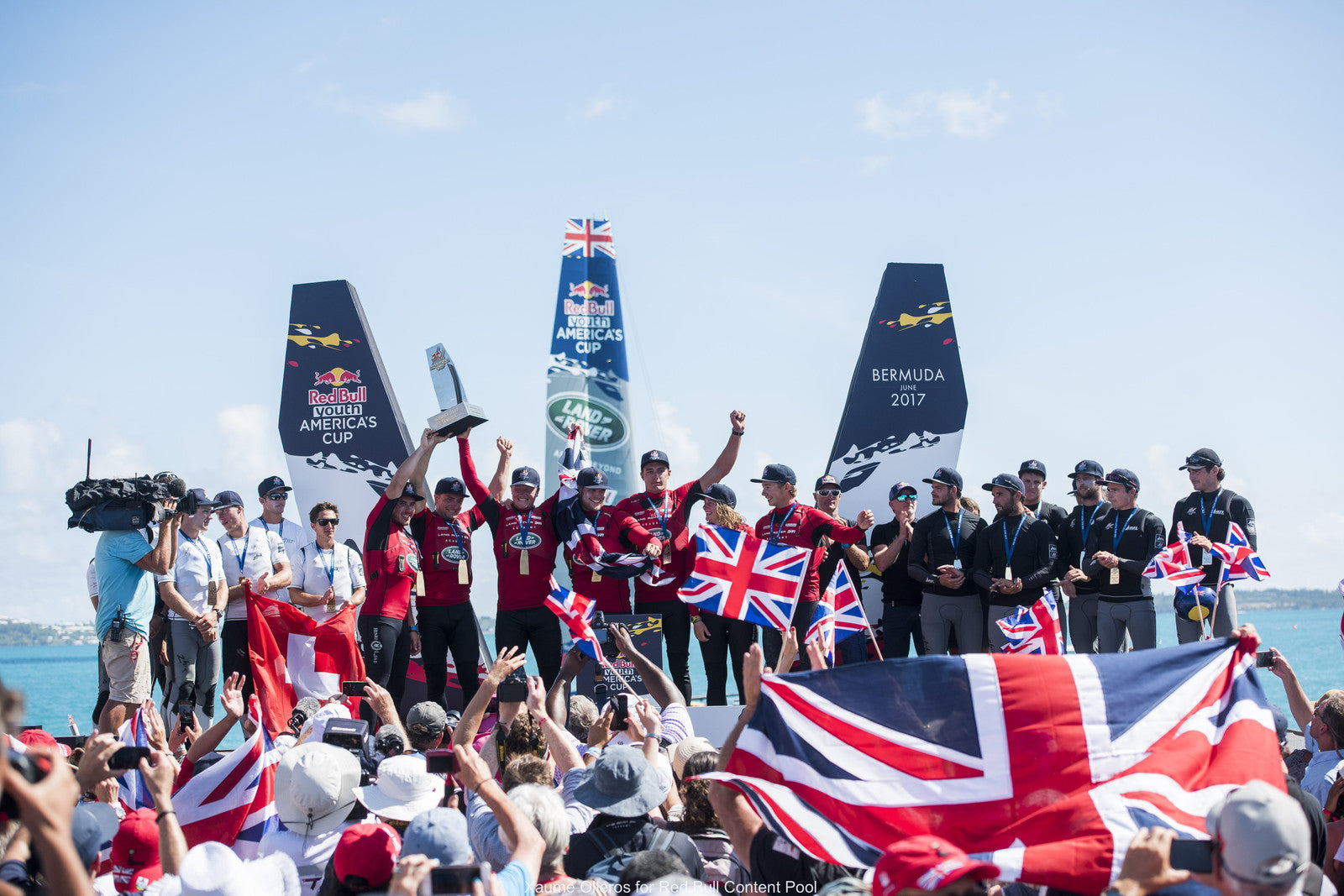
LAND ROVER BAR ACADEMY STEAL VICTORY IN RBYAC
LAND ROVER BAR ACADEMY STEAL VICTORY IN RBYAC
The Red Bull Youth America’s Cup came down to the final race in a climactic day on Bermuda’s Great Sound
Great Britain’s Land Rover BAR Academy pulled a dramatic victory in the Red Bull Youth America’s Cup following a fantastic final day of racing on Bermuda’s Great Sound. Top youth teams from New Zealand and Switzerland rounded out the podium.
North Sails is proud to be the Official Sail Supplier of the America’s Cup, and to have supplied sails to every team competing in the Red Bull Youth AC. Sail graphics were applied by North Graphics to all 26 sails (the AC45s sail with a soft jib and furling code zero) that were team-specific and seamlessly coordinated from sail to wing, to hull.
Developed by Sport Directors and Olympic sailing legends Roman Hagara and Hans Peter Steinacher, the Red Bull Youth America’s Cup was introduced in 2013 as a launching pad to a professional career for the world’s sailing talent aged 18-24. Nine previous members of the Red Bull Youth America’s Cup are now on senior America’s Cup teams. Helmsman of Cup challenger Emirates Team New Zealand, Peter Burling, in fact drove the winning boat in the 2013 youth regatta.
“These young talents are the superstars of the future, and after seeing the level of skill and competitiveness they’ve shown here in Bermuda, there’s no doubt they’re going to take the sport to the next level,” said Hagara.
READ MORE
READ MORE
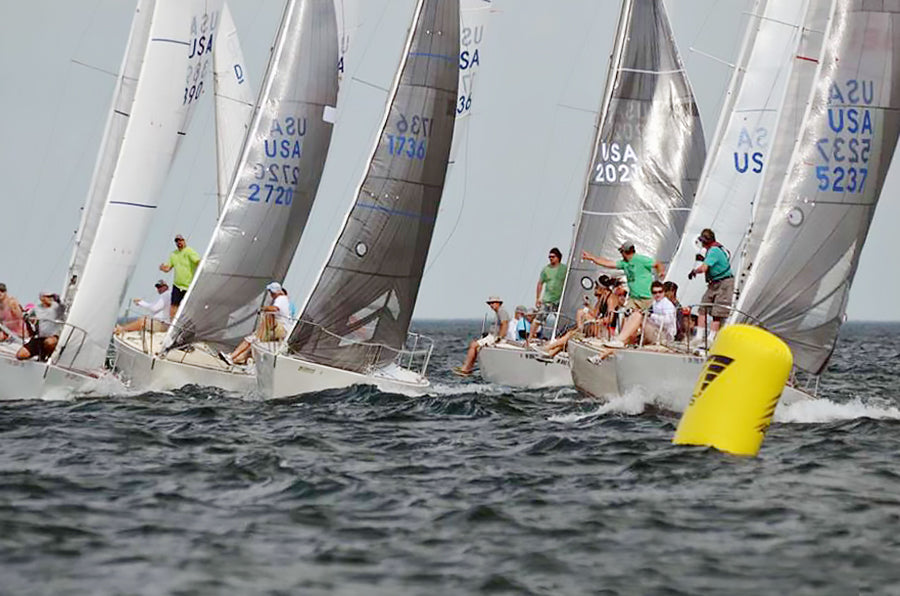
CLEVELAND RACE WEEK 2017
CLEVELAND RACE WEEK 2017
North Sails clients top One Design weekend in Ohio for Race Week!
It was a nice weekend for sailing in Cleveland with 11 classes participating in One Design weekend, which also served as the Star Western Hemispheres, T-10 Lake Erie Championships, and the J70 Great Lakes Championships. North-powered clients took the top positions in seven divisions, taking the top five in the Interlake and Jet 14 classes. The Interlakes had a big turnout, much bigger than normally expected with 19 boats on the line. In this fleet alone there were five previous National Champions, making for a very competitive event for the division. The Tartan 10 fleet also had great numbers and excellent competition. Congratulations to our clients for finishing 1st through 5th in the Interlake Class, 1st overall in the J/22’s, 1st in J/24’s, 1st in J/70’s, 1st through 5th in the Jet 14 Class, 1st in the Melges 32 division, and 1st overall in the T-10 division.
North Sails is a proud sponsor of Cleveland Race Week. We are happy to see the event be such a success and for our clients to do well in the standings!
© DAVE MATHIAS
© DAVE MATHIAS
© DAVE MATHIAS
© DAVE MATHIAS
© DAVE MATHIAS
© DAVE MATHIAS
READ MORE
READ MORE
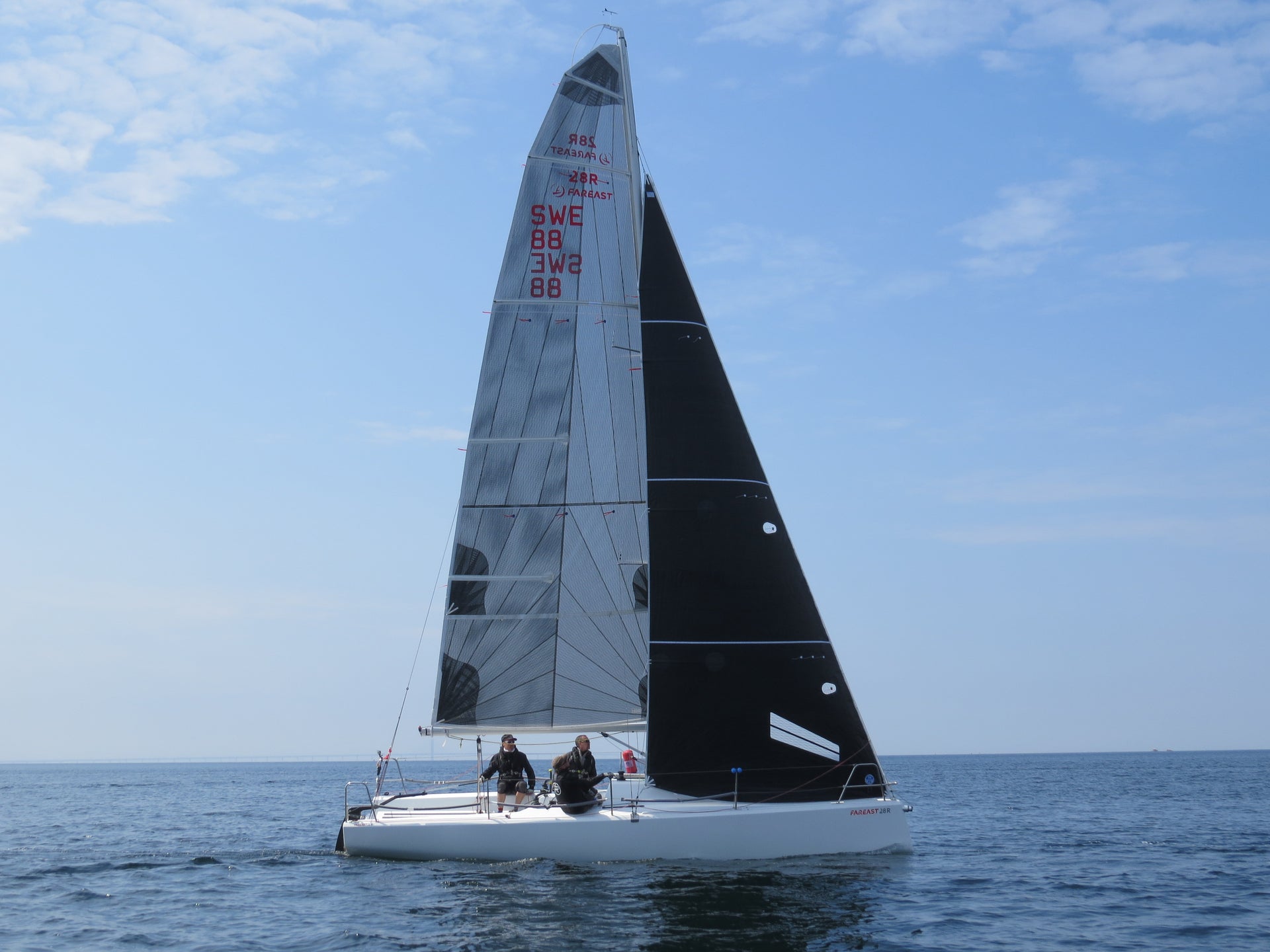
3Di RACE REPORT - FAREAST 28R RÖDEORM
North 3Di RACE helps Swedish Fareast 28R team prepare for the Worlds
RödeOrm sailing with a new North Sails 3Di RACE jib at the North Sails Trim Cup, May 2017
This August, Malmö, Sweden will welcome thirty teams from ten countries for the first-ever Fareast 28R World Championship.
Göran Wiking is hoping to place in the top half of the event, which takes place at his home club in Malmö. He sails with good friends who “find sailing and racing very fun,” and together they cruised and raced an X-119 until moving to the 28R almost a year ago.
In preparation for such a big regatta, Göran invested in new North 3Di RACE sails. Designed for boats under 40 feet, 3Di RACE delivers optimized performance through wide wind ranges. “We had a 3Di genoa on our X-119,” Göran explains. “I found it excellent, both in form and in endurance, so when we needed new sails for the Fareast 28R it was an easy choice.”
“So far we have used the new 3Di for four days of racing,” Göran continues. “The form is excellent.” North Sails 3Di RACE is built with super-thin structural fibers that are laid out along the load path direction in multiple orientations and layers and then molded into a single balanced membrane. This construction method spreads the loads more evenly than a “string” sail, which means each sail maintains a consistent design shape up the wind range. Or as Göran puts it, “It keeps the form up in the wind register and is easy to trim.”
The other advantages of 3Di RACE are easier handling and flaking and a longer competitive lifespan. “We are very satisfied with them,” Göran says.
For more about the Fareast 28R World Championship, visit the event website. http://fareast28r.com/world-championship-2017/entrylist/
Wiking’s Fareast 28R RödeOrm heats up for a leeward end start at the North Sails Trim Cup, May 2017
READ MORE
READ MORE
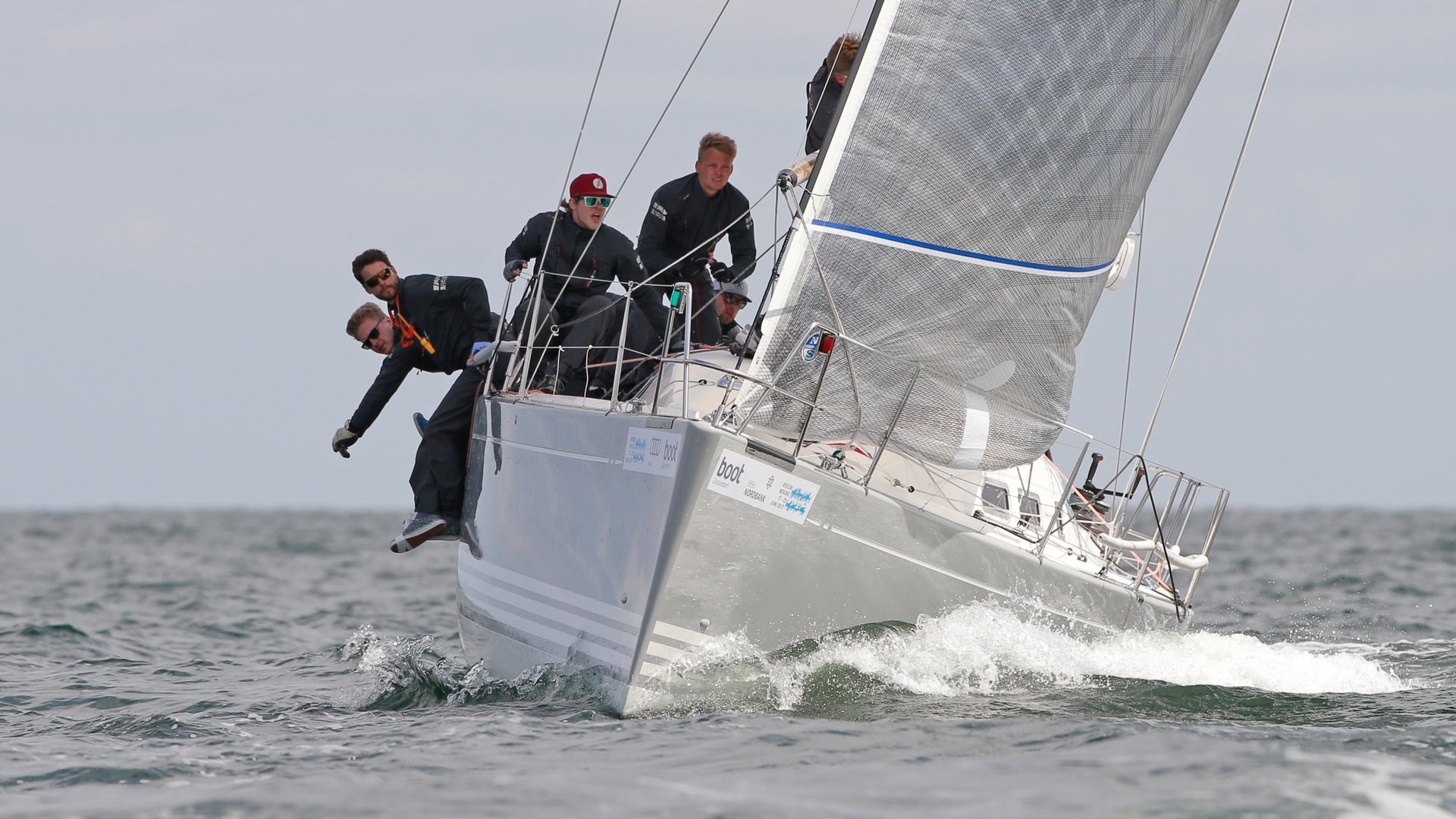
KIELER WOCHE 2017 - ORC
Kieler Woche 2017 - ORC
Nach drei ereignisreichen Segeltagen ging am 21. Juni der Kiel-Cup Alpha der ORCi Yachten zu Ende. Acht Wettfahrten wurden unter der gewohnt souveränen Führung von Stefan Kunstmann gesegelt. In Gruppe A setzte sich die X-41 Halbtrocken 4.0 von Michael Berghorn durch. Sie verwies die Dockenhuden, ebenso eine X-41, um North Sails Händler Thomas Jungblut auf den zweiten Rang.
Beide X-41 setzen auf North Sails 3Di und 3DL am-Wind Segel. Mit Rang vier sicherten die Tutima um Steuerfrau Kirsten Harmstorf und die XP-44 X-Day auf Rang sechs um Steuermann Max Gurgel North Sails weitere hervorragende Resultate.
Mit North Sails zum Sieg: X-41 Halbtrocken 4.0 Foto: okpress
Topas durchbricht Italia 9.98 Phalanx
Die Gruppe B sah einen langen drei Kampf der Italia 9.98 Yachten. Am Ende durchbrach die Farr 30 Topas von Harald Brüning die Phalanx sicherte sich den zweiten Rang. Mit 3Di Raw, 3Di Race und 3DL Segeln verwies die Topas die Italia 9.98 One Group um Steuermann Niels Gauter auf den dritten Rang. Auch die One Group ist aus gestattet mit North Sails 3Di Segeln sowie einer 3DL Race Leichtwind Fock.
Schließlich gratulieren wir unseren Kunden und beglückwünschen Sie zu Ihren Ergebnissen.
READ MORE
READ MORE
VI FLYTTER TIL NYE LOKALER
SÅ LYKKEDES DET!
Vi har fundet de lokaler, der passer perfekt til North Sails Danmarks nye forhold. Eller det kommer de til!
Vi er i fuld gang med en gennemgribende modernisering og tilpasning til de særlige krav, der stilles til et sejlloft i 2017. Der bygges et bord på 400m2, som vores sejlmagere kan stå og gå rundt om, så knæene får et velfortjent hvil. Indbygget i bordet er der en roterende pit, der gør det væsentlig lettere at håndtere det tunge sejl, når det skal igennem symaskinen.
De lyse kontorer bliver spækket med det ypperste design-software, vores erfarne designere og habile sælgere, når de ikke er på vandet.
Vi flytter ind 1. juli, men venter med åbningsfesten til alle er tilbage fra ferie og vi har fået det hele på plads. Vi ser frem til at byde alle velkommen på Lyskær 10 i Herlev. I hører nærmere om indvielsen, når tiden er inden.
På gensyn og god sommer til jer alle.
READ MORE
READ MORE
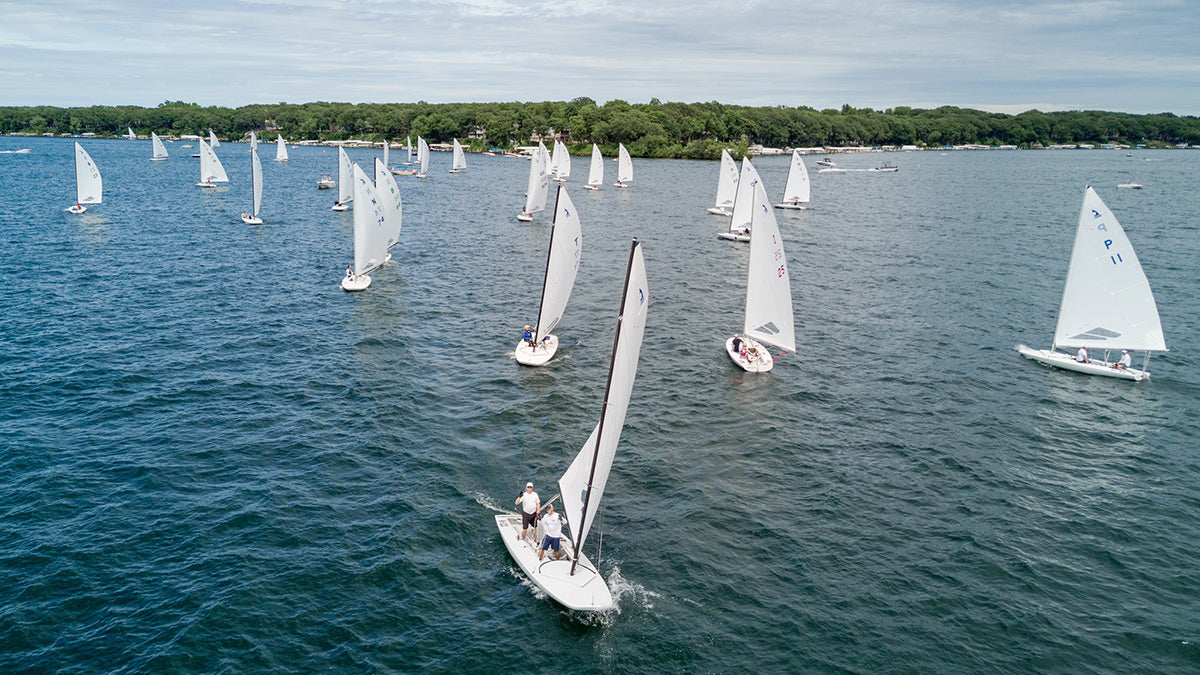
PAUL REILLY DOMINATES THE C SCOW NATIONALS
TEAMS POWERED BY NORTH SAILS WIN EVERY RACE AT THE C SCOW NATIONALS
Congratulations Paul Reilly, Matt Pistay & Austin Jaessing!
Paul Reilly from Cedar Lake, Wisconsin dominated this year’s C Scow National Championship held in Okoboji, Iowa June 16-18, 2017 . Reilly with crew Matt Pistay and Austin Jaessing showed superior speed and tactics through the six race series. Okoboji Yacht Club hosted the fleet and put on quite a show with 50 boats in attendance.
Paul Reilly is already a two-time Inland Champion in the Melges C Scow. Winning the National Championship will now allow him to fly the prestigious Gold C on this mainsail. Congratulations Paul and Team A-14!
Learn more about the fast North C Scow sails.
Photo David Thoreson
Photo David Thoreson
PhotoTom Gustafson
READ MORE
READ MORE

NORDIC FOLKBOAT TUNING GUIDE FOR ALUMINIUM MASTS
INTRODUCTION
The purpose of this tuning guide is to provide our clients with standardized guidelines on how to get the most out of their new North Sails Folkboat sails. This guide was written by Soren Kæstel, Per Jørgensen and Theis Palm.
Follow these instructions as closely as possible. However, it is always a good idea to experiment. Your boat, the weight of the crew, the boat’s balance as well as local conditions will also affect the optimal trim.
MAST TRIM
The mast on a Folkboat is probably the most critical component of the boat’s trim, especially with the introduction of the class-legal aluminum mast. The aluminum mast has the proper stiffness. Therefore, it is important that these trim instructions are followed carefully in terms of how much pressure the mast applies to the aft edge of the mast hole.
1 Verify that the mast is vertical. This is best done by moving each shroud along the mast and make a mark on the shroud that matches the top of the gooseneck mark. Reattach the shrouds to the chainplates and measure from the mark to where the turnbuckles enter the deck – the distance should be the same on both sides.
2 Set the mast rake. Detach the forestay from the deck and place it along the mast. Stretch the wire as much as possible and make a mark that matches the top of the gooseneck mark. Reattach the forestay. The mark should be 1.31 m from the deck along the forestay.
3 Position the foot of the mast. Move the foot of the mast aft until the mast just touches the aft edge of the mast hole. In light winds (0-8 knots) the mast should be relatively hard on the aft edge and pressed 22 mm aft along the mast foot rail for the mast to bend smoothly. In the wind 9-14 knots of wind, press the foot of the mast 16 mm astern and in strong winds 10 mm astern.
4 Adjust the jumpers. Pull-on the backstay. Look up the sail track and make sure that the mast is straight and the jumpers are equally tight. If not, adjust the jumpers until the mast is straight. Jumpers are set relatively loose in light winds and strong winds. In medium winds, tighten the common turnbuckle 2-3 turns. The maximum draft in the top of the mainsail should be 47% aft along the chord. The most important thing is that the mast curve is even from deck to top. If the jumpers are too tight, the mast will curve too much in the bottom and be too straight in the top. If the jumpers are too loose, the bottom will be straight and the top will curve if the jumpers are set to loose. A consistent curvature gives the leech a nice, even twist.
5 Set the forestay tension. Initially, the mast hole helps to push the mast forward and thus get the forestay loose. In light wind the forestay should sag about 8 cm. Tighten the shrouds while sailing until the 8 cm sag is obtained. In medium wind, tighten the shroud turnbuckles 1½ turns and a further 1½ turns in strong wind, thus tightening the forestay under increased wind pressure.
MAINSAIL TRIM
The mainsheet is critical in setting the shape of the sail and small adjustments can have a big effect on speed and pointing. If the mainsheet is sheeted tight, the leech will close and put more pressure on the rudder – on the other hand pointing ability is improved. This can be used in medium winds and flat water, where the boat can be kept flat by hiking.
In light winds the mainsheet is eased so that the top tell-tale flies straight. In heavy winds, sheet tight and pull the backstay until the rudder feels light again (but without losing pointing). In large waves, let the leech twist a little more to have a wider steering angle. This increases speed, and therefore pointing, at the same time. As a thumb rule the top batten is trimmed parallel to the boom in almost all wind strengths.
1 Outhaul. The outhaul is also an important factor when trimming as it controls the draft in the bottom of the sail. In very light winds (0-5 knots) the sail should be 3 cm from the mark. In medium winds (5-12 knots) about 1.5 cm from the mark andin more wind than this pull the sail all the way to the mark.
2 Cunningham. Do not set the cunningham in light winds. In medium winds set the cunningham so that the wrinkles in the luff disappear. When the wind exceeds 15 knots it is pulled hard to open the leech and keep the draft forward in the sail.
3 Traveller. It is a good idea to have two cars on your traveller. They are then connected by two wires of about 40 cm leading to a mainsheet block. This facilitates sailing in light and medium winds. In light winds (0-6 knots) pull the traveller cars 15-20cm to windward. In medium winds (6-14 knots) set them in the middle. In higher wind the cars are eased to leeward to decrease heel and thus rudder pressure.
4 Backstay. The backstay has two functions: To control draft in the mainsail and to control forestay sag. When the backstay is tightened, the mainsail flattens, the leech opens, and there is less forestay sag and, therefore, a jib with less draft. It is agood idea to put marks on the backstay, e.g., every 20 cm, to facilitate finding the right trim after mark roundings, etc.
5 Kickingstrap / Boom Vang. The kickingstrap is used when sailing upwind in strong wind and also downwind. Upwind, the kickingstrap pulls on the mast and opens the leech in the bottom part of the mainsail and keeps the boom down when easing in the gusts. Never use the kickingstrap upwind in less than 18 knots and use caution. Remember always to ease the kickingstrap for downwind sailing when bearing off, otherwise the boom might break. Downwind the kickingstrap is trimmed so that the top batten is parallel to the boom – on all sailing angles and in all conditions.
JIB TRIM
North Sails jibs are made for sheeting points both on deck and cabin top. However, we recommend sheeting from the cabin top to make the jib-leech twist more freely and thus allowing the gap between main and jib to be as wide as possible. Furthermore, the control of the jib is improved (particularly in heavy winds) because of the shorter distance from clew to block. The jib-lead track is placed with its centre 58 cm from the boat’s centreline. When sheeting from the cabin top, we recommend using a swivel block on the deck, so that the jib sheet does not create an overwrap on the winch.
1 Sheeting Point. The position of the jib lead is crucial for the jib trim. As a reference point measure 2.65 m from the pin in the forestay to the centre of the block (if the lead is on the cabin top). The jib shall luff evenly, i.e. tell-tales must fly at the same time intop and bottom.
2 Jib Sheet. As a general rule sheet the jib so that the middle batten is parallel to the centreline in most conditions, but in light winds (0-5 knots) leave 2-3 degrees of twist. If the sea is lumpy, move the jib lead two to three “holes” forward to getmore draft and power in the jib (the middle batten shall still be parallel to the boat’s centreline). In heavy winds move the lead on to two “holes” back without letting the foot of the sail become loose and flutter.
3 Halyard Tension. Never pull the halyard too tight. This will cause the draft of the jib to move too far forward. Pull it until the wrinkles in the luff disappear. In light wind the best shape is obtained when leaving small wrinkles in the luff.
Please get in touch with Theis Palm for any more information.
READ MORE
READ MORE
KESTREL TUNING GUIDE
This Kestrel tuning guide is meant to be a starting point from which you can experiment and find the setting that work best for your boat crew weight and sailing technique. If you have any specific questions please contact Tim Rush – tim.rush@northsails.com.
Mast Rake
23′ 6″ Tip of mast to top of transom
23′ 6″ Light to Moderate
23′ 0″ – 23′ 3″ Heavy
Rig Tension
250 – 300 lbs on forestay
Spreaders and Pre-bend
LIGHT CREWS
Spreaders 425mm long
Sweepback 200mm
Pre-bend 45mm
HEAVY CREWS
Spreaders 435mm long
Sweepback 190mm
Pre-bend 40mm
Jib Sheet
Extension of jib sheet to intersect luff 2110mm above the tack
Transom to front of mast 3175mm
Transom to Centreboard bolt 2550mm
READ MORE
READ MORE

INTERNATIONAL FOLKBOAT TUNING GUIDE
Introduction
North Sails tuning guide is written to help you get the best performance from your International Folkboat sails. The measurements and settings included in this guide are the ones that we have found to be the fastest settings for the IF-Boat. Since crew, wind and sailing conditions vary, you may find slightly different settings are better for you. However, by following these instructions, you can be confident that you are well set up to win at any level. We believe this guide will make your sailing experience simpler, more successful and most of all more fun.
The tuning guide was written by Björn Österberg at North Sails One Design.
Preparation
This chapter explains rig tuning and the trim control systems required to be able to get full potential from your North Sails. Always consult the Class Rules while working with your boat and equipment.
MAST RAKE
The IF-Boat has relatively little helm and is, unlike most boats, even more neutral when heeled. To get enough helm for good pointing ability upwind the mast is raked aft. The length of the headstay determines the amount of rake. We recommend a total headstay length of 8400mm. You will most likely need to add one or two toggles to the original headstay to bring it up to this length. A popular alternative is to get a new headstay without turnbuckle made to the total length of 8400mm.
While measuring the rig you can also check other measurements including J-measurement an spinnaker pole length to make sure they are on maximum and according to the class rule.
RIG TENSION
IF-boats are typically 20 –30 years old and therefore checking points that effects rig tension can be worth while. The cabin top underneath the mast step and the hull around the chainplates are the most critical areas. A ”knee”, which strengthens the hull and deck at the chainplates, is allowed. This procedure is described in the class rules.
The settings for rig tension and prebend should me taken with no load on the backstay. Using a tension gauge helps finding and repeating a desired rig trim. We use the Loos Tension Gauge mod. B rig. The base setting is 22 (220kg) headstay tension. To achieve that the values for the upper and lower shrouds are 37 and 20. In certain conditions, when the boat needs a lot of power, a looser rig set-up with a headstay tension of 18, can be worth trying. A looser headstay adds power to the genoa, making it easier to build and maintain botspped.
PREBEND
The tension of the lowers affects two things. Adding tension to the lowers increases tension in the forstay. It also affects the amount of prebend in the mast. The amount of prebend determines the amount of camber in the mainsail. Your North manisail is designed to a prebend of 20 mm. Setting your rig with a greater prebend will flatten your mainsail. Setting the mast with less prebend, a straight mast, will add more power to the mainsail.
SPREADER SWEEP
According to the class rule the spreaders has to be able to move for and aft in the spreader brackets. Reducing the aft movement of the spreaders creates a better support for the mast. Using a string, tie the shrouds to pull the spreaders back as far as they will go. Then measure 280 mm from the string to the aft face of the mast to get the recommended sweep.
TRIM DECALS
Your sail is delivered with 4 small and 6 large trim decals. The small decals can be used for outhaul and other small range adjustments. We use the large decals for genoa halyard, genoa cunningham, genoa- and main tracks. Cutting the decals into “loose” numbers allows you to match the numbers to positions on genoa track.
MAINSHEET TRAVELER
The main traveler has to be easy adjustable. A low friction traveler car with a 2:1 purchase will ensure that adjustments can be made even in heavy conditions.
OUTHAUL
With eased outhaul the elliptical foot panel gives the mainsail a deep and smooth shape. When tensioned for upwind sailing the lower half of the mainsail is flattened. The purchase of the outhaul should be at least 6:1. The tailing end can either stop underneath the boom (as shown) or be lead to the cabin top.
CUNNINGHAM
Cunningham adjustment affects draft position. With loose cunningham the draft will be further aft. When the cunningham is tensioned the draft will move forward and open the leech of the mainsail. A 3:1 purchase lead back to a cleat on the cabin top ensures easy adjustment.
VANG
We use the vang mainly to adjust mainsail twist on downwind legs. The vang can also be used to help the mast bend in the lower sections on a heavy air beat. Using a tight vang while manoeuvring in the pre-start will make the boat accelerate faster. An 8:1 purchase with an easy to reach cleat is recommended.
BACKSTAY
The backstay is the key to balance and speed in medium and heavy air. It has to be easy adjustable even when the crew is hiking from the windward side of the cockpit. The backstay can either be lead to both sides of the cockpit or to a center cleat with the line lead underneath the hatch (as shown). We recommend minimum 16:1 purchase.
INNER GENOA TRACKS
The genoa has a flat leech section that allows us to sheet the genoa on an inner track in all conditions. The position of the track is 100 to 150 mm inboard of the standard track. The aft end of the track is 600 mm forward of the cut-out in the gunwale. The track is 500 mm long. Because of the low clew of the genoa it is important to have the spacing of the trim positions tight enough. Drilling an extra hole between factory holes, bringing the spacing down to about 50 mm will do the job.
GENOA SHEET WINCHES
Sheeting the genoa from winches on the cabin top gives the trimmer a better position. Further forward and facing in to the slot between genoa and main it is easier to get the right genoa trim. With low handle winches, such as Andersen, the handle can be left in the winch while tacking.
GENOA HALYARD
Put a mark on the genoa halyard in front of the cleat. A “North Sails Trim Decal” underneath the mark helps keeping track of the hoist. Adjusting luff tension can be done with either halyard tension or a genoa cunningham.
The cunningham alternative has the advantage of not affecting the head of the sail and therefore leaving the sheeting position unaffected. It is easy to underestimate the force in the cunningham and use a too stretchy rope. We use a 6mm spectra core with a 6:1 purchase arrangement on the aft starbord side of the cabin. Since the tack of the genoa is about 200 mm above deck it is important to keep the sail forward towards the forstay. If this is not done properly the sheet tension will pull the tack of the genoa aft, causing a wrinkle from the firs luff hank. If you use a rigging screw at the lower end of the forstay, just tie a 4mm spectra loop twice around the rigging screw and the trough the tack ring. If you are using a cunningham you might want to put a thin aluminium pipe around the rigging screw to reduce friction. Having a full-length forstay use the extra luff hank right close to the tack ring.
TWEEKERS
Tweekers (twing lines) serve many purposes: they keep the after guy out of the way of the crew on reaches. They reduce the need a forguy and keep the spinnaker more stable in manoeuvres making it easier for the bowman. We put the tweeker blocks at the forward end of the standard genoa tracks where the boat is at maximum width.Sailtrim
The IF sails well unreefed even in heavy air. Using the jib in winds above 18 knots will make both manoeuvres and keeping boatspeed easier. Because the centre of effort moves forward with the jib, pointing is the critical thing with the jib. The confident crew will therefore use the genoa in all windstrenghs because of the importance of good pointing, especially in bigger fleets. We recommend using the inner genoa track in all conditions.
A good way to move quickly up the learning curve is to mark all trim control lines and positions. This will enable you to copy a trim you have found fast in the past, giving you confidence in boatspeed and allowing you to concentrate more fully on tactics.
MAINSAIL
In very light air the mainsail should be trimmed with an open leech to allow the wind flow to follow the sail. The traveler is kept about 300 mm to windward of the centerline with the sheet tensioned to position the boom about 200 mm to leeward of the centerling. Check that the top telltales flow to make sure the leech has enough twist.
Keeping the crew weight to leeward in these conditiond helps opening the leeches of the sails. The outhaul is set at #3 on the small trim decal on the boom. When the breeze builds to about 6 knots the sail can take more sheeting while still maintaing good windflow. The traveler is dropped to about 100 mm to windward and the sheet is pulled to centre the boom. In light air when the mast is straight the cunningham should be slack and small horisontal “sped wrinkles” should bee seen in the luff of the sail.
LIGHT AIR
In the 6 to 12 knots wind range the mainsail can be sheeted tight, letting the top telltale stall at about 50% of the time. A closed leech puts priority on pointing whereas a more open leech gives extra speed. In choppy conditions it pays to ease a few inches in the sheet after tacking to help acceleration. When the boat is up to speed the sheet is pulled tight and the focus is back on pointing. At 10 knots you can start flattening the main by pulling the slack out of the backstay and tightening the outhaul.
MEDIUM AIR
In about 14 knots of wind the boat will start to heel with the trim described above. The solution is to tighten the backstay. This will depower the main and twist its upper part. The boom can still be held on the centreline to match the overlap of the genoa. To keep the draft position in the middle when bending the mast you need to pull the cunningham. A new sail needs only little cunningham tension whereas an older sail requires relatively more luff tension.
HEAVY AIR
In winds above 16 knots the mainsail is depowerd and used mainly for controlling helm. Controlling the power with backstay works well in steady wind conditions. In gusty conditions this method is too slow and we have to work the traveler instead. Make sure the boat is well-balanced in heavy seas. With the right trim the boat should flow naturally through the waves. If the boat feels “sluggish” it can be a sign that the main is giving too much power. With the right, open-leech, trim the boat will be easy to steer and accelerate quickly after big waves.
GENOA
To get the right clew height you need to set the tack about 150 to 200 mm above deck. Regardless if you use cunningham or not, it is important to make sure the tack does not move aft with increased sheet tension. If you use a rigging screw at the lower end of the forstay, tie a 4mm spectra loop twice around the rigging screw and the trough the tack ring. With a full-length forstay use the extra luff hank right close to the tack ring. The best reference for genoa trim is the distance between the leech and the spreader tip. The following measurements refer to spreaders with reduced sweep (as described earlier). For standard sweept spreaders add 50 mm to the measurements below.
LIGHT AND MEDIUM AIR
The right genoa lead for light and medium wind is set when the luff of the genoa breaks evenly from top to bottom. If the top luff breaks earlier the lead is too far aft. In light air the luff should be tensioned so that a few wrinkles remain. Under 6 knots the distance between the leech and spreader tip is 100 mm. When the breeze builds to 8 knots the luff is tightened to remove wrinkles and the genoa is sheeted to 20-30 mm from the spreader tip. In flat water the sail can be sheeted all the way in to the spreader. With tighter sheeting the car has to be moved aft about 50 mm to ensure an even break in the luff.
HEAVY AIR
As with the mainsail the genoa should be flattened and twisted in heavy air. The luff is tensioned and the lead is moved another 50 – 100 mm aft. The upper part of the luff will now break earlier than the bottom part. The foot of the sail is sheeted tight around the chainplates and the leech is further away from the spreader. In 14 knots the distance is 100 mm. With winds above 20 knots the lead is moved further aft and the distance from leech to spreader is 250 mm. This allows the mainsail traveler to be dropped without closing the slot too much. The harmony between main and genoa is important. An adjustment in the genoa is normally followed by a matching adjustment in the main. In stronger winds the amount of backwind in the main will give a hint about the relative trim of the sails. Compared to other boats the IF can be sailed very close to the wind (with a considerable break in the genoa luff) in strong breeze and flat water.
DOWNWIND TRIM
Because we no longer sail reaching legs this part only describes downwind (VMG) sailing. The rule-of-thumb for spinnaker trim is to keep both clews on the same height and the spinnaker boom in right angle to the apparent wind. In light winds this will mean a lower boom and for heavy air the boom can be carried higher. If the spinnaker boom is on an adjustable track on the mast, keep the boom horizontal to get maximum effect. The afterguy (brace) should be set with a tight tweeker. The exception is when the boat is sailed on very deep angles where the tweeker should be eased 500 mm to avoid a sharp bend at the tweeker block.
The spinnaker sheet is eased just to get a slight curl in the luff of the spinnaker. In light airs sailing higher angles even on downwind legs can use the effect of the apparent wind. The angle determines by the spinnaker sheet pressure. Communication between spinnaker trimmer and helmsman is the key. When the pressure builds the trimmer tells the helmsman to bear off and when pressure drops the trimmer tells the helmsman to luff up.
In winds above 10 knots the main is eased all the way to the shrouds. In lighter winds when steering higher angles she main is sheeted tighter to provide a slot between spinnaker and main. To give the mainsail powerful and even camber, make sure the outhaul is eased to #5 and the cunningham and backstay is slack. The vang should be tensioned just enough to keep the top batten parallel with the boom.
Spinnaker sailing is easier if you get rid of the genoa. Roll the genoa parallel to the headstay. Start with the clew and roll the sail vertical behind the headstay. Have a 500 mm rope and tie it around the sail and headstay. When the genoa is not furled make sure the genoa sheet is loose. An overtrimmed genoa will create turbulent air for the spinnaker, making it unstable and hard to trim.Crew WorkThe IF is normally raced with 3 persons. It is not possible to describe the “perfect” crew organisation for all boats. The knowledge, experience and the ambitions of the crew should determine who does what. The idea with the following chart is to present a proposal and an inspiration to make your own chart for your boat. By making a chart you have to think and talk trough the crew work. By assigning a job description to each position, a new crew member can be easily integrated into your boat handling team.
In organising the crew of your boat your goals should be to:· Involve all crew members in each manoeuvre· Avoid having crew members cross paths with each other· Talk about and decide tactical matters to involve the whole crew
SPINNAKER HANDLING
We hoist and retrieve the spinnaker trough the fordeck hatch. We like this method because the spinnaker has a shorter distance to get from stored to set, especially at gybe sets. With the traditional way of hoisting from the cabin hatch the spinnaker has to be led past the boom, vang and shrouds before getting in position. Another advantage is to have the bowman work from a position around the mast. This will make the cockpit less crowded and keep the crew weight well forward.A short description:
To allow the spinnaker to be hoisted from the mast, exit the spinnaker halyard 2000 mm above deck on starboard side. Mount a cleat 400 mm underneath the exit. The forward closing fittings of the fordeck hatch can be removed while racing. The hatch is heavy enough to keep the water out even in rough conditions.
Store the spinnaker in the fordeck hatch. Have the head and clews sticking out a few inches. The halyard is led forward to the forstay to keep it out of the way of the genoa. Use the gunwhale fairlead or a hook mounted close to the headstay.
READ MORE
READ MORE
TESTIMONIOS 3Di NORDAC
TESTIMONIOS 3Di NORDAC
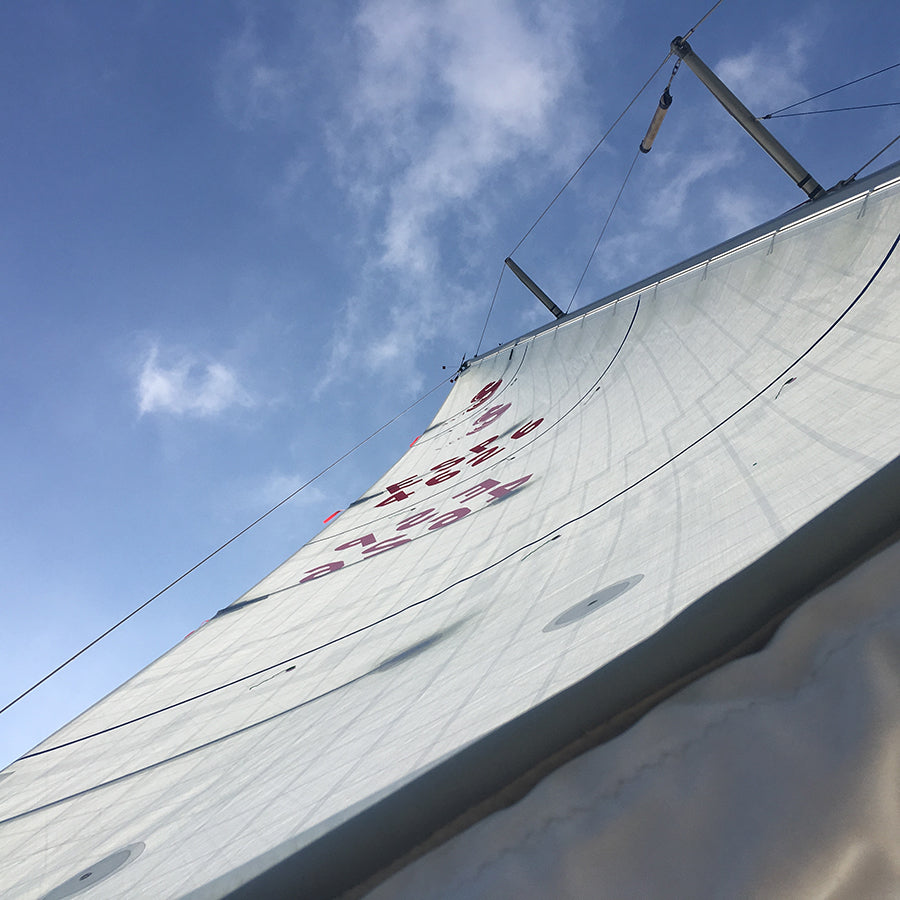
Paco Alarcón, armador del First 33.7 “Silke”
Mayor 3Di NORDAC
“Estoy muy satisfecho con la vela que he recibido. El material parece muy robusto, y su forma no tiene nada que ver con una vela de Dacron. La verdad es que es muy interesante pensar que tenemos una vela de crucero fabricada con la misma tecnología de los foques de La Copa América”.
READ MORE
READ MORE
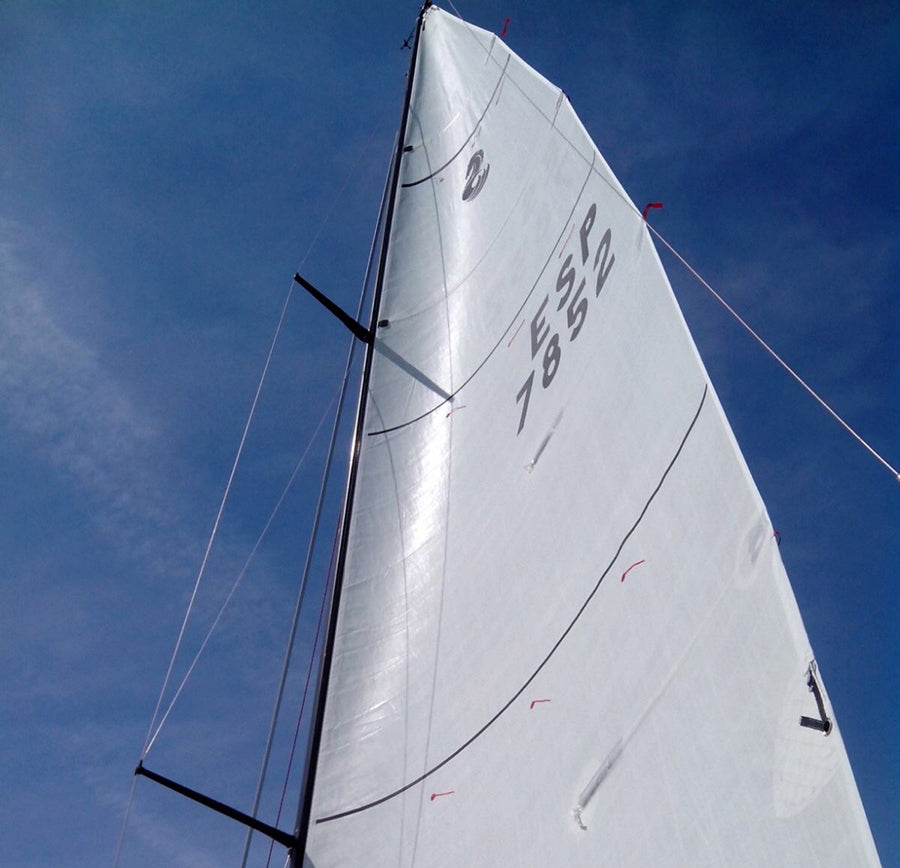
TESTIMONIOS 3Di NORDAC
TESTIMONIOS 3Di NORDAC
Enrique González, armador del First 34.7 “Vikingo”
Mayor 3Di NORDAC
“Me ha gustado mucho la vela, incluso ha superado mis expectativas. Mirando a las bandas de trimado, la forma de la vela es perfecta. Además, el material parece muy duradero, por lo que supongo que este ‘shape’ se mantendrá mucho tiempo. Salí a navegar junto a otros barcos con los que navego habitualmente y sentí el barco realmente rápido”.
READ MORE
READ MORE
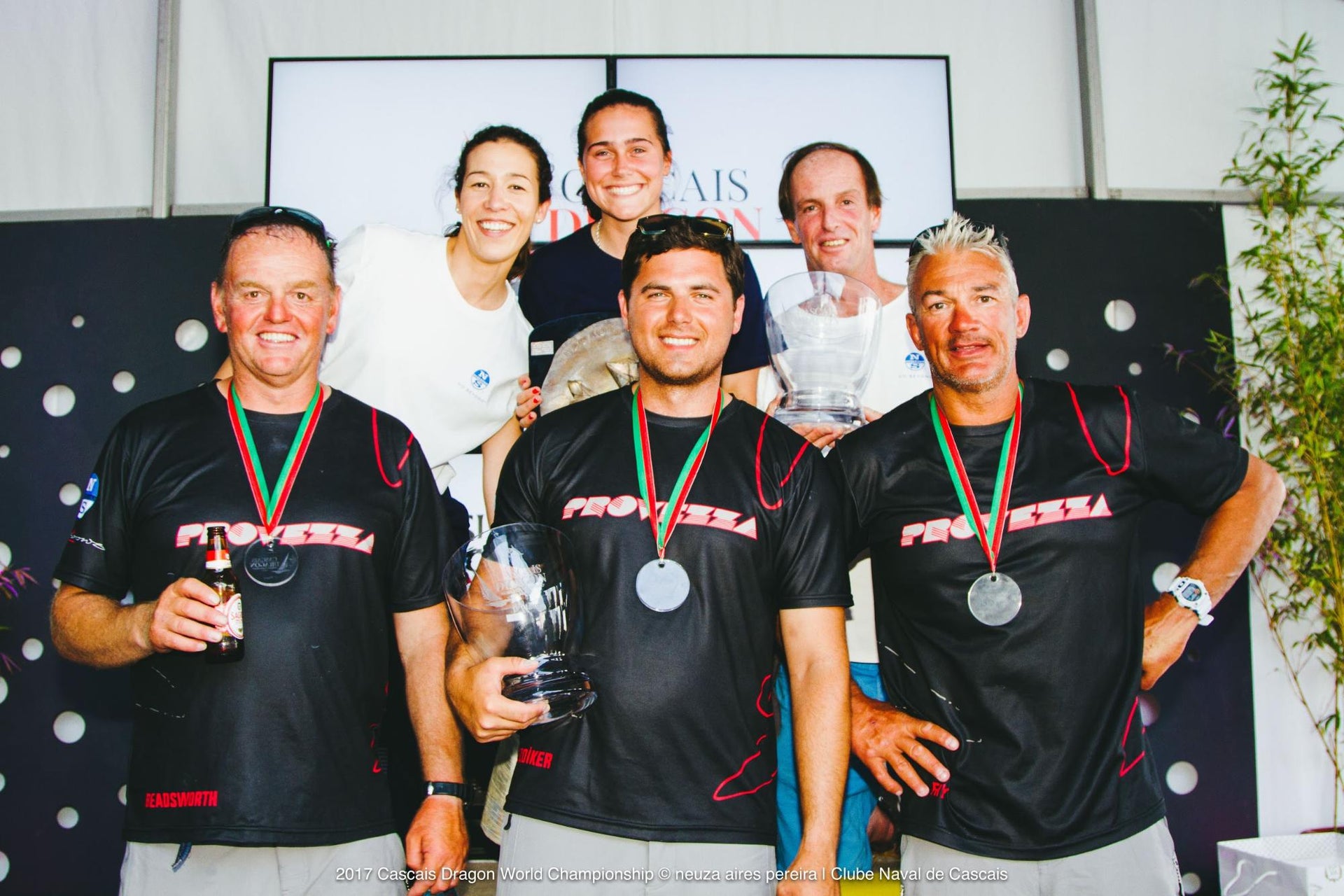
2017 DRAGON WORLD CHAMPIONSHIPS
Boats representing 18 countries battled in one of the toughest regattas of the year, with North Sails powering clients to place 1,3,4,5,9, and 10th overall
The Dragon World Championships, which happens every two years, was an all-around success this year with nine beautiful days of racing in Cascais. Twenty four teams, representing 18 nations, brought their best performance to races held out of the Clube Naval de Cascais in breeze ranging from 15-22 knots. North Sails clients found great speed on the water, placing 1, 3, 4, 5, 9, and 10th overall. Also powered by North was 1st place Corinthian Rosie, with skipper Benjamin Morgen.
Vicente and Joana Pinheiro worked tirelessly with their team at North Sails Cascais, offering overnight repairs to competitors throughout the week. Big thanks to the Cascais team for being there on site for the competitors. Happy sailors make for successful events!
Congratulations to Andy Beadsworth and his team on Provezza Dragon for winning the 2017 Dragon World Championships!
1st Place Dragon World Championships! Congrats team Provezza, job well done! © Neuza Aires Pereira
© Elena Razina
North Sails Cascais Team © Neuza Aires Pereira
© Neuza Aires Pereira
© Elena Razina
© Elena Razina
© Elena Razina
© Elena Razina
© Elena Razina
© Elena Razina
READ MORE
READ MORE
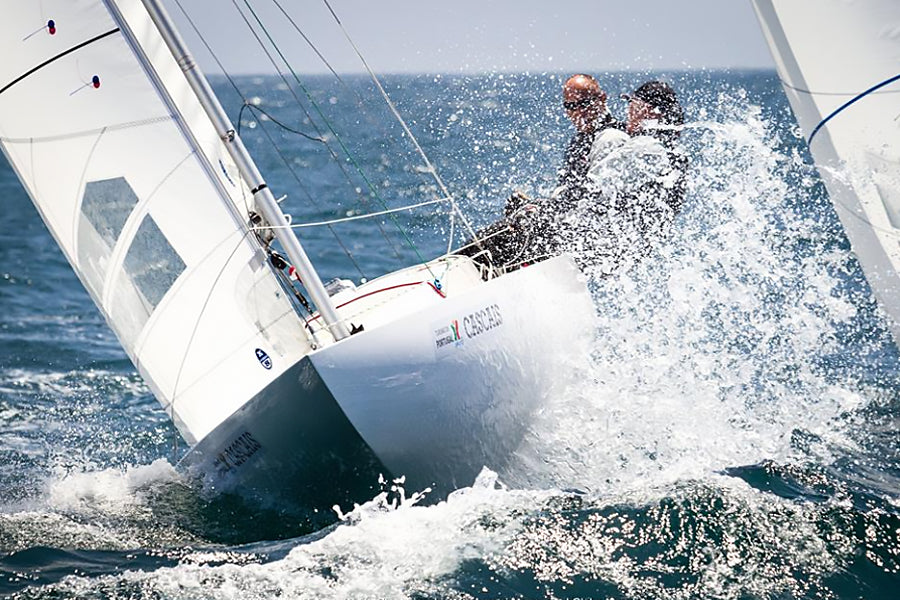
DRACHEN WELTMEISTERSCHAFT
Drachen Weltmeisterschaft
Boote aus 18 Nationen kämpften in einer der anspruchsvollsten Regatten des Jahres um Sieg. North Sails Kunden sichern sich die Plätze 1, 3, 4, 5, 9 und 10.
Die alle zwei Jahre stattfindende Drachen Weltmeisterschaft war ein voller Erfolg. Neun Tage lang bot Cascais spannende Regatten bei 15-22 Knoten Wind. 24 Drachen aus 18 Nationen erlebten eine vom Clube Naval de Cascais hervorragend ausgerichtete Meisterschaft. Die North Sails Kunden segelten mit hervorragender Geschwindigkeit auf dem Wasser und sicherten sich die Plätze 1, 3, 4, 5, 9 und 10. Benjamin Morgen gewann mit Rosie den Corinthian Titel.
Vicente und Joana Pinheiro arbeiteten unermüdlich mit ihrem Team bei North Sails Cascais und boten den Teilnehmern den benötigten Overnight-Serivce an. Vielen Dank an das Cascais-Team, welches für die Teilnehmer vor Ort da war. Dadurch sah man glückliche Segler und damit ein erfolgreiches Event!
Herzlichen Glückwunsch an Andy Beadsworth und sein Team auf Provezza für den Gewinn der 2017 Drachen Weltmeisterschaft!
© Elena Razina
READ MORE
READ MORE
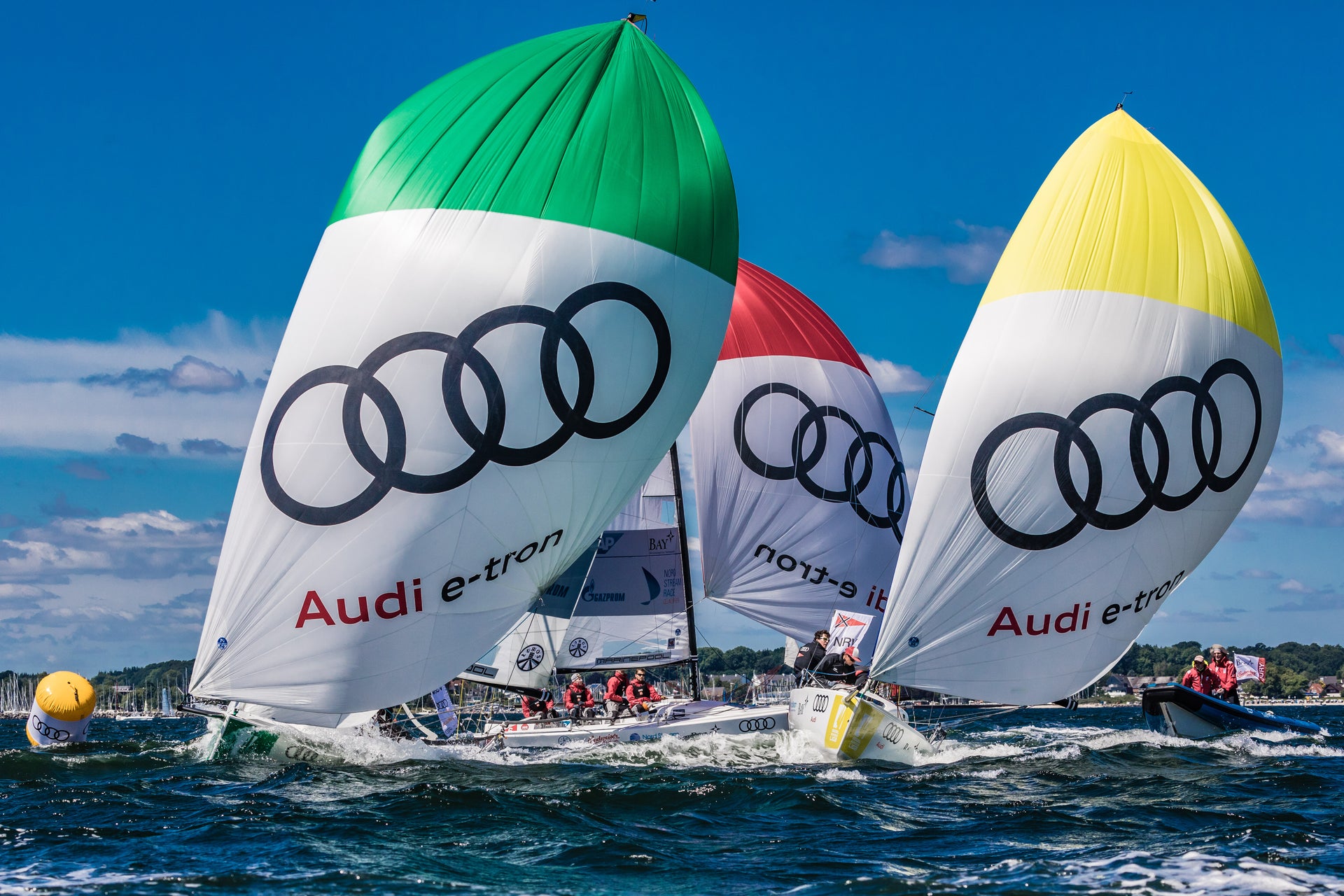
3. SPIELTAG DER 1. SEGEL-BUNDESLIGA
3. Spieltag der 1. Segel-Bundesliga
Die 18 besten Segelclubs der 1. Segel-Bundesliga haben von Samstag bis Montag (17.-19. Juni) im Rahmen der Kieler Woche direkt vor dem Olympiazentrum in Kiel-Schilksee ihr drittes Event ausgetragen. Die teilnehmenden Teams aus ganz Deutschland kämpften in den baugleichen, knapp sieben Meter langen J/70 Kielbooten auf der Kieler Förde bei mittleren westlichen Winden in 45 kurzen, spannenden Wettfahrten um die Tabellenführung. Der Norddeutsche Regatta Verein gewinnt vor der Segelkameradschaft „Das Wappen von Bremen“ und dem Berliner Yacht-Club.
Norddeutscher Regatta Verein © DSBL/Lars Wehrmann
North Sails, Partner der Kieler Woche und der Segel-Bundesliga, hat alle Bundesliga Schiffe mit North Sails One Design Segeln für die J-70 ausgestattet. Ein Satz besteht aus den Weltmeister-Segeln XCS-1 Großsegel und J-2 Fock sowie die Gennaker im AP-1 Layout aus Norlon 75.
Dem Team vom Norddeutschen Regatta Verein (NRV) mit dem ehemaligen Olympiasegler Tobias Schadewaldt gelang es, auch am dritten Tag seine Führungsposition vom Vortag zu halten. Bei abnehmenden südlichen Winden am Montag beendet das Team mit 37 Punkten als Sieger das dritte Event. Dabei zeigten sich die besonderen Qualitäten der Mannschaft (Tobias Schadewaldt, Daniel Reichart, Florian Weser, Klaas Höpcke), die auch bei unterschiedlichen Windbedingungen konstant auf die vorderen Plätze segelte. Aber nicht alles war perfekt beim NRV-Team: „Obwohl wir noch zu viele Fehler am Start gemacht haben, konnten wir aber im Gegenzug unsere Chancen im Rennverlauf gut nutzen“, erklärt ein sichtbar überglücklicher Tobias Schadewaldt und ergänzt: „Das war super knapp und wir sind sehr happy“.
Quelle: Deutsche Segel-Bundesliga GmbH , Fotos: DSBL/Lars Wehrmann
READ MORE
READ MORE
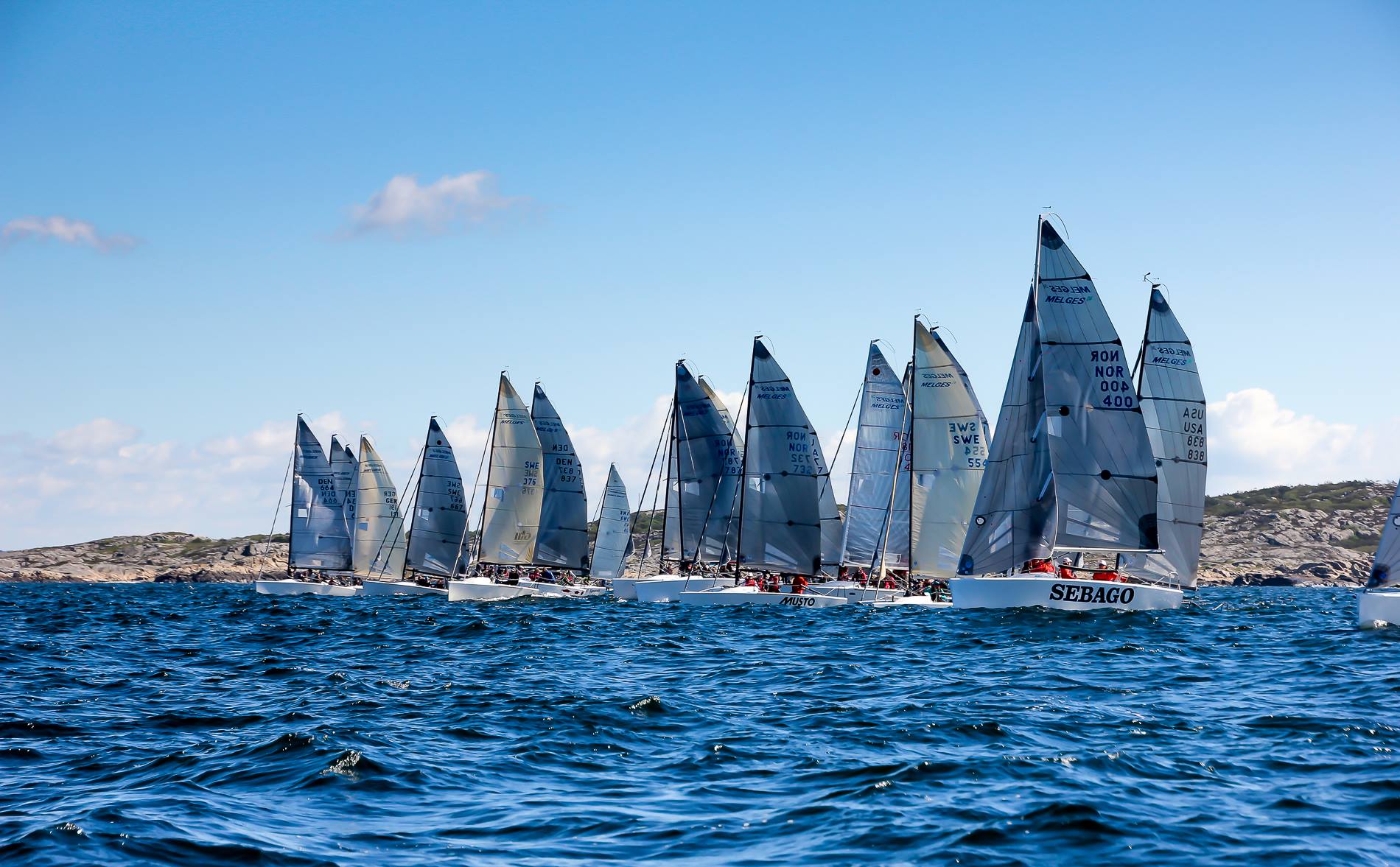
MELGES 24 EUROPEAN SERIES ACT #3
North powered teams stack the top of the fleet in Sweden for Act 3 of the European Series
In ideal conditions for the Melges 24, the top places in Act 3 of the class’s European Series were taken by corinthian teams, making for a refreshing change for the Swedish and Nordic Championships. In blustery conditions, waves were big, winds were strong, and team spirits were high as boats enjoyed thrills and spills in the top of the fleet. North powered teams placed 2nd through 5th overall; Geoff Carveth’s Gill Race Team in 2nd, Wes Whitmeyer Jr. close behind in 3rd with his team on SlingShot, followed by skipper Jason Rhodes with his team, MiKEY. In 5th was Blow Slam Racing, with Norway’s skipper Peder Nergaard.
Nice job to our clients! Next stop, the World Championships in Helsinki, Finland July 28th!
© Piret Salmistu
© Piret Salmistu
© Piret Salmistu
© Piret Salmistu
© Piret Salmistu
© Piret Salmistu
© Piret Salmistu
© Piret Salmistu
© Piret Salmistu
© Piret Salmistu
© Piret Salmistu
© Piret Salmistu
READ MORE
READ MORE
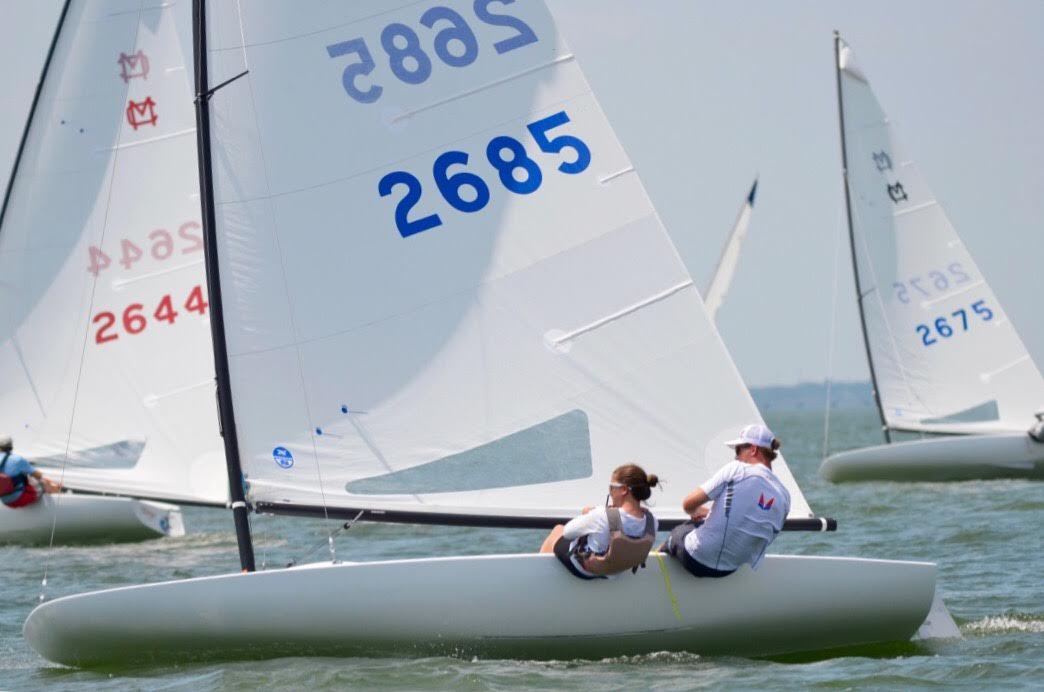
EDDIE AND KATE COX WIN MC NATIONAL CHAMPIONSHIP
SIBLINGS EDDIE & KATE COX WIN 2017 MC SCOW NATIONALS
North Sails’ Z Max Design Used by the Winners of All Divisions
Photo by Regatta Girl Photography
Rush Creek Yacht Club, Texas (June 17, 2017) – Eddie and Kate Cox took the MC National Championship title in a brand new Melges MC Scow powered by North Sails’ Z Max design. It is the first MC Nationals win for the sibling duo from White Bear Yacht Club. Cox won three out of seven races.
The title came down to the final race. Leading up to the final day’s one scheduled race, Cox was close at the heels of regatta leader Mark Tesar. It was Cox vs Tesar in the final shootout. Cox set up on the starting line immediately to leeward of Tesar. Cox’s boat speed put his bow out, and just after the cannon the race was his to control. At the first windward mark he had a 30 second lead ahead of Kenny Wolfe and Virginia Hannen, the second place boat. Tesar was 18 boats back. Cox led the race wire to wire, holding off Wolfe and Tesar. Tesar climbed back on the last beat and finished with a 13th place, the deepest finish in a very strong, consistent regatta for the MC veteran.
The day started with winds blowing 20 to 26 mph. A very patient Principle Race Officer Chip Mann and the race committee team held the fleet onshore until the breeze came down to 15 to 20 mph. It was fun sailing all regatta long with fair racing in moderate to heavy winds on Lake Ray Hubbard. Rush Creek Yacht Club proved to be a great venue for the championship, bringing masses of volunteers, strong leadership, and an excellent racetrack.
North Sails finished first and second. Andrew Vandling won the Youth Division. Katie Arvesen took the Women’s Division. In the Grand Master’s Division, Greg Gust edged out Eric Hood and Kelson Elam. Mark Tesar won the Master’s Division followed by Bill Draheim and Ron Baerwitz. Mike Keenan took the Mega Master’s Division. In the Singlehanded Division, Mark Tesar beat out former US Sailing Team member Andrew Casey and Ivan Lopatin. Races were won by Eddie Cox, Mark Tesar, Bill Draheim, Will Crary, and Ivan Lopatin.
The next three major-scale events for the fleet are the Masters Nationals, the Inland Lake Yachting Association Championship and the Western Michigan Championship.
READ MORE
READ MORE

A CLASS CATAMARAN TUNING GUIDE
MAST
UPWIND
DOWNWIND
WIND SPEED (Knots)
SPREADER RAKE
PREBEND
CUNNIGHAM
BATTENS (Top 4 battens)
MAST ROTATION
CUNNIGHAM
MAST ROTATION
TRAVELER (off the center line if foiling)
5-8
42 mm
20 mm
OFF
Light
45-50 degrees
OFF
80 degrees if foiling
180 mm
8 - 12
56 mm
27 mm
15 - 40%
Light Medium (10+ kts)
35-45 degrees
10 - 25%
70 degrees
220 mm
12 - 16
60 mm
32 mm
100%
Medium
25 - 30 degrees
60 - 75%
65 degrees
300 - 400 mm
16 - 20
75 mm
38 mm
100%
MediumHeavy (18+ kts)
20 - 25 degrees
80%
80 degrees
500 mm
20 - 24
90 mm
42 mm
100%
Heavy
20 - 25 degrees
80%
80 degrees
500 mm (Hang on!)
For best performance, a lighter skipper will slide the settings up the range one, and a heavier skipper will stay down the range one setting. (70kg is light; 90kg is heavy.) The Mainsheet should be tensioned enough to have an even twist profile from top to bottom, and all tell tails should fly evenly.
READ MORE
READ MORE
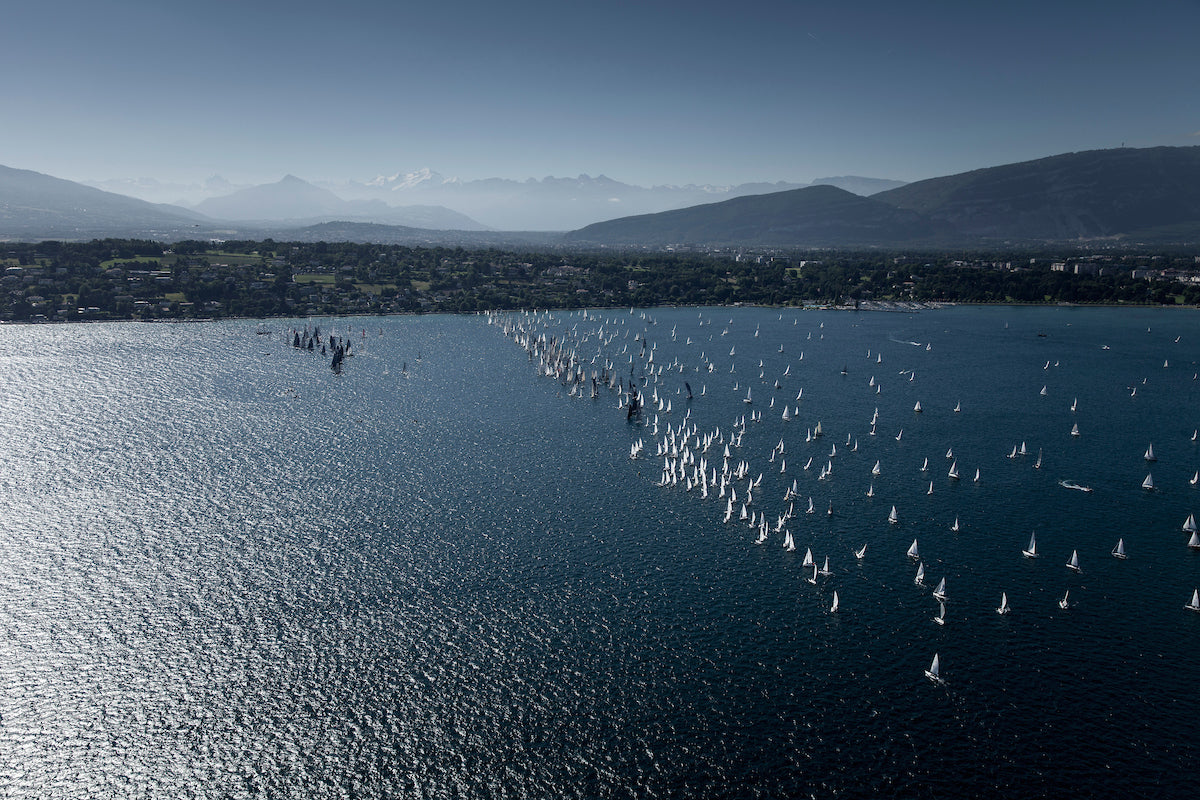
NEWS - CARTON PLEIN POUR LES VOILES NORTH SAILS SUR LES PLUS GRANDES RÉGATES LÉMANIQUES
CARTON PLEIN POUR LES VOILES NORTH SAILS SUR LES PLUS GRANDES RÉGATES LÉMANIQUES
Après la Genève-Rolle-Genève et le Bol d'Or, le bilan est plus que positif pour les voiles North Sails!
© Nicolas Jutzi
Sur ces deux derniers week-ends, les deux plus grandes régates lémanique se sont déroulées dans des conditions très différentes: du petit temps pour la Genève-Rolle-Genève et une bise bien soutenue lors du Bol d'Or. Dans les deux cas, les voiles North Sails ont fait un tabac: sur les 6 podiums de la Genève-Rolle-Genève, 13 bateaux portaient nos couleurs. Et rebelote pour le Bol d'Or, avec 13 coureurs équipés par North Sails sur les 5 podiums. Un véritable succès!
Suite à ces épreuves éprouvantes, toute l'équipe se tient à votre disposition pour des conseils d'entretien ou des petites réparations de remise en état sur vos voiles. N'hésitez pas à nous appeler pour un devis, ou à prendre contact pour un coaching personnalisé en vue des prochaines régates!
Nous félicitons chaleureusement tous les marins ayant pris part à ces épreuves, et nous nous réjouissons de vous revoir, sur l'eau comme à la voilerie.
READ MORE
READ MORE
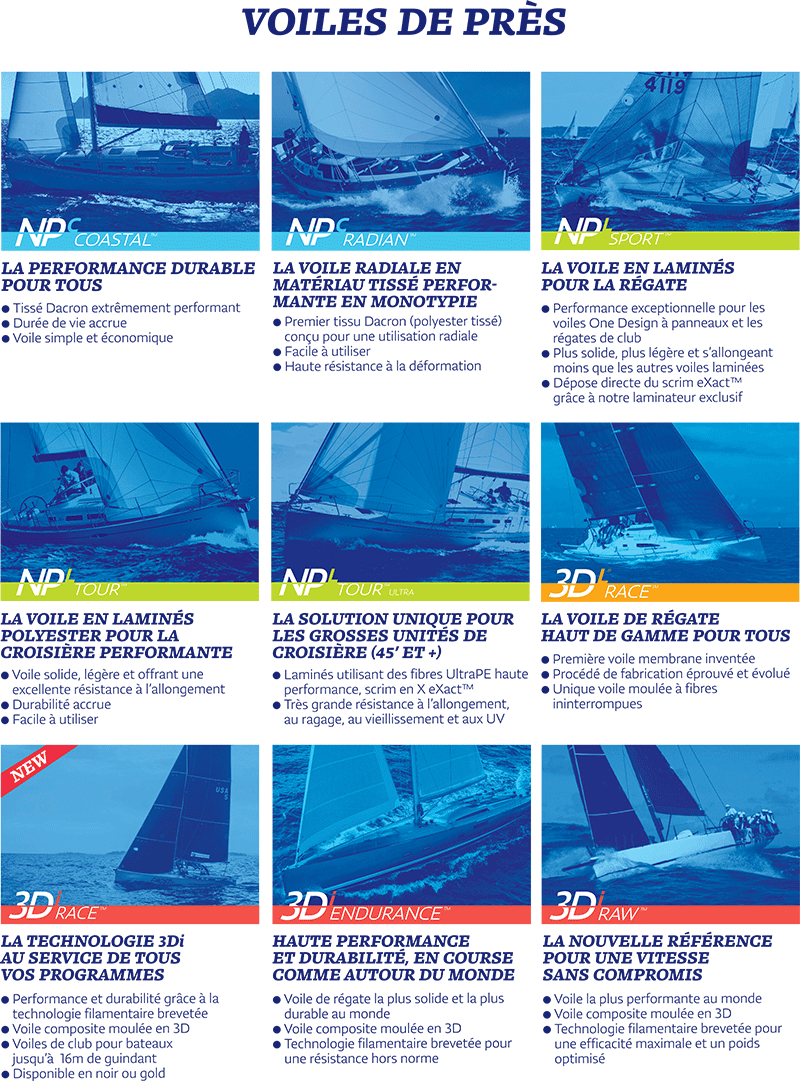
GAMME DE VOILES NORTH SAILS 2017
GAMME DE VOILES
Découvrez tout ce que North Sails peut vous offrir en terme de gamme de voiles sur le récapitulatif ci-dessous.
Bonne nouvelle ! Pour chacun de vos programmes (croisière, compétition, course-croisière et bien d'autres), North Sails a ce qu'il vous faut !
Pour toutes questions, contactez la voilerie : 022 782 32 22 / info@ch.northsails.com
READ MORE
READ MORE
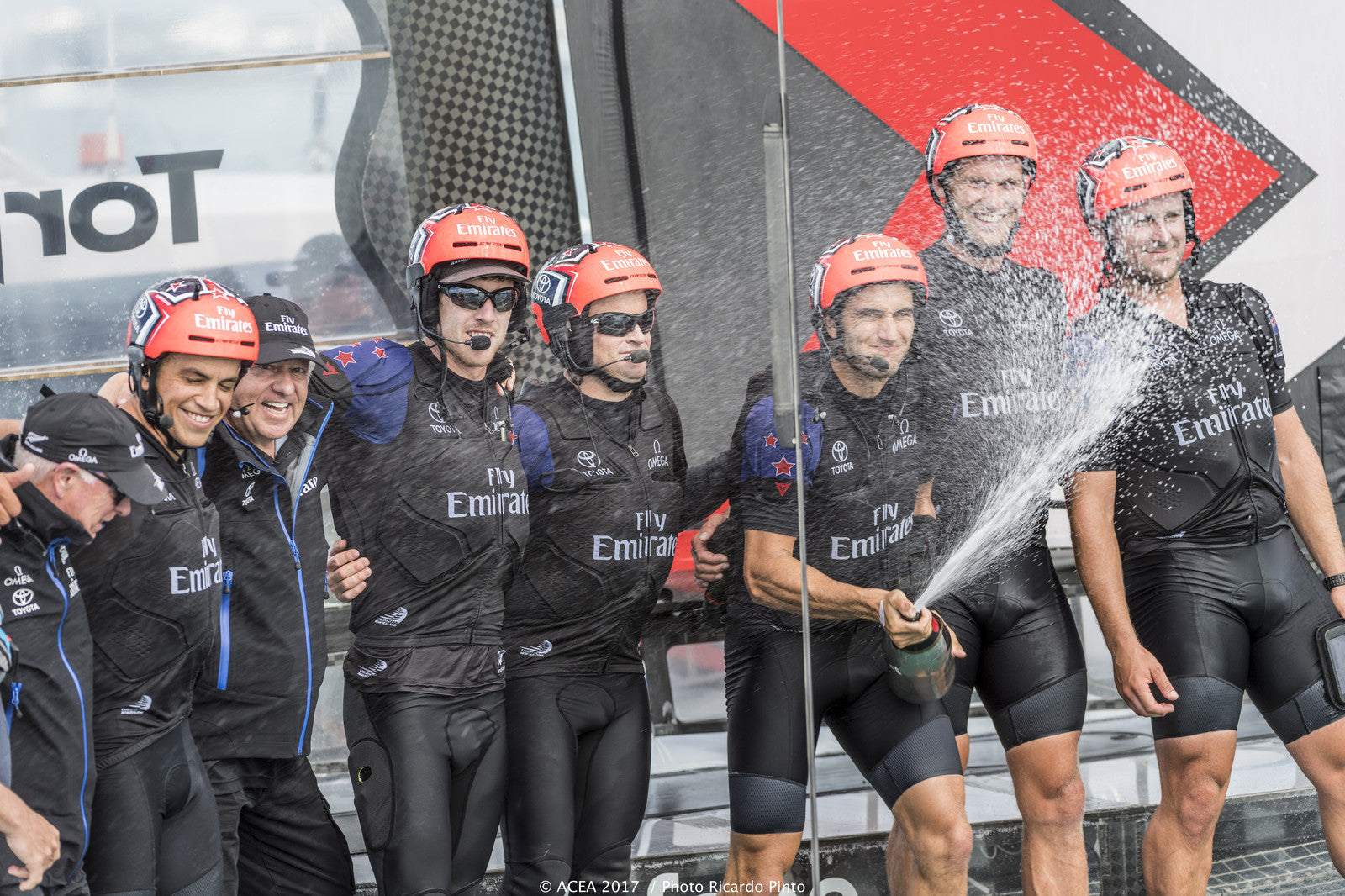
AC35 FINAL MATCH: UPDATE FROM KEN READ
Update from North Sails Ken Read ahead of the America’s Cup finals
The 2017 America’s Cup has delivered thrills, chills, and spills – and also great quality racing. Recap two weeks of racing before challengers Emirates Team New Zealand face ORACLE TEAM USA in the ultimate re-match. Since packing up their bases in 2013, New Zealand has not taken their eyes off the prize. Saturday, June 17th begins their final quest, the first team to win seven races will claim the Cup.
READ MORE
READ MORE
CALENDRIER DU TEAM NORTH SAILS SUISSE
CALENDRIER DU TEAM NORTH SAILS SUISSE
Pour rencontrer les membres de l'équipe hors de la voilerie, lorsqu'ils sont en régate ou en déplacement dans des ports, cliquez ici pour consulter l'agenda.
READ MORE
READ MORE
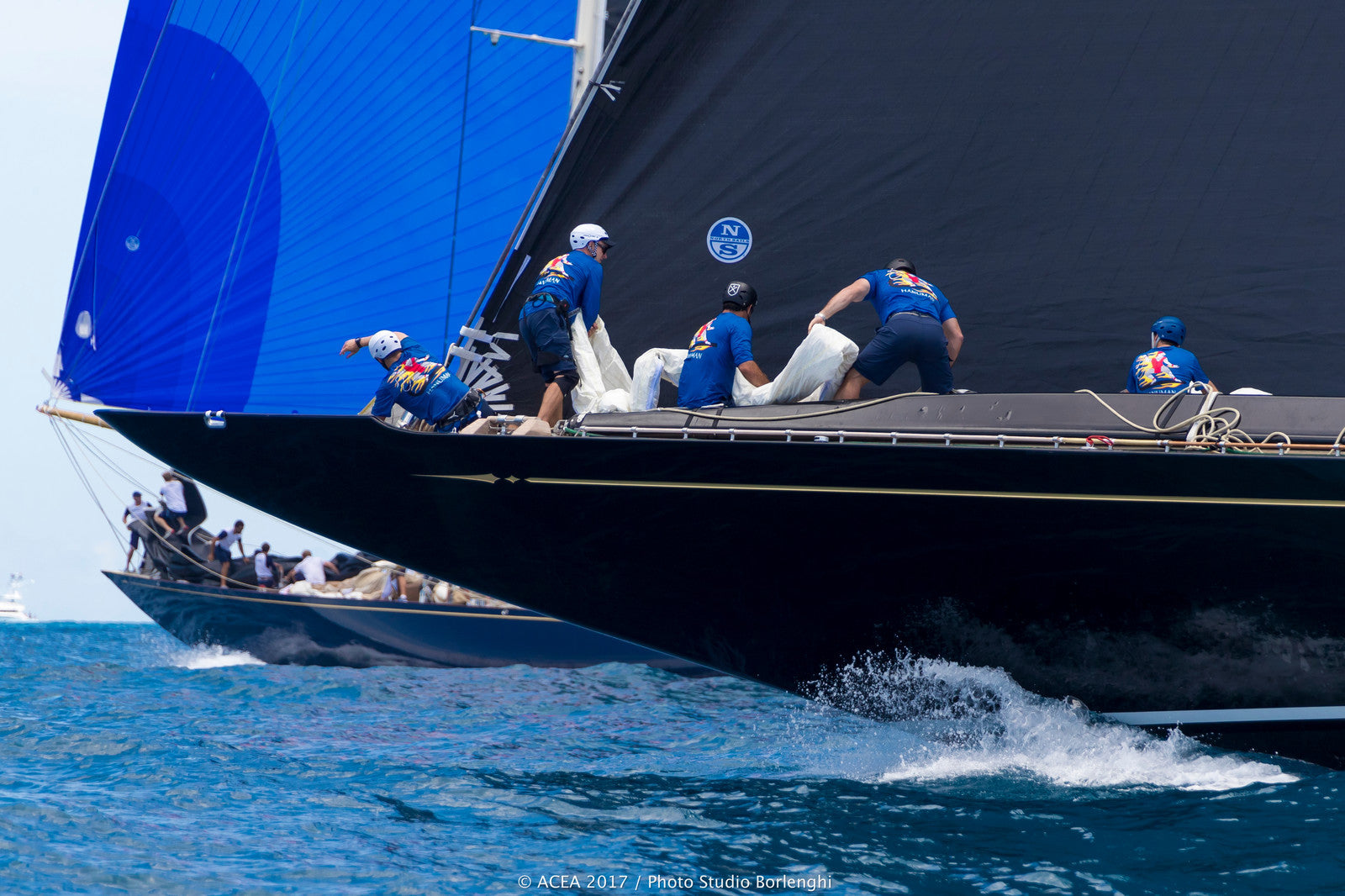
J CLASS BATTLE FOR THE KOHLER CUP POINTS IN BERMUDA
The second installation of the Kohler Cup presented by North Sails will take place when the 35th America’s Cup hosts the J Class Regatta June 16, 19-20 in Bermuda. The Kohler Cup is a season long cumulative point championship. Throughout 2017, each yacht will accumulate points based on their results, with events bearing more significance in the lead up to the class Worlds in Newport, RI, August 21-26, 2017. Bermuda will see 2017’s largest fleet and the overall J Class Regatta winner will add 12 points to their series tally.
Jim and Kristy Clark’s JK6 Hanuman leads the Kohler Cup series, collecting six points in St Barth’s. JK7 Velsheda and JK1 Lionheart round out the leaderboard with four and five points respectively. America’s Cup veteran and North Technology Group CEO Tom Whidden joins JS1 Svea in her regatta debut and will be looking to capitalize on the bonus points for winning in Bermuda.
Although the J Class is considered a Superyacht, a betting man (and J Class crews!) will tell you the gloves are off and these boats will be sailed more like small dinghies. Just as modern innovation has delivered the foiling America’s Cup Class, today’s generation of J Class yachts are more responsive and have better boat handling, allowing skipper and crews to race with more confidence. Close racing, close calls and a few choice words are sure to be heard on the racecourse.
Introduced during the 2017 St Barth’s Bucket, the Kohler Cup is named in memory of Terry Kohler, former owner of North Sails, who passed away in September 2016. North Sails is proud to be an Official Partner to the J Class Association and the presenting sponsor of the Kohler Cup.
Join @North_Sails on Instagram Stories for live updates from the J Class Regatta in Bermuda.
J Class run downwind at the America’s Cup Superyacht Regatta in Bermuda.
Ranger, a replica of the original “Super J” that successfully defended the cup from Endeavor II, chases the 1935 design, J-Class Topaz, launched in 2015.
The crew handle sails on the deck of Hanuman, a replica of the biggest J-Class ever built to date: Thomas Sopwith’s 1936 J Class, Endeavour II.
Terry Kohler, owner of North Sails from 1984 – 2014, worked to maintain and reinforce the company’s position as the technological leader in sailmaking.
READ MORE
READ MORE

FLYING FIFTEEN TUNING GUIDE
FLYING FIFTEEN TUNING GUIDE FR-3/FR-5 MAINSAIL & NXG-3 JIB
WIND SPEED (knots)
0 - 4
5 - 8
9 - 12
13 - 16
17 - 22+
Sea State
Flat <---> Choppy
Flat <---> Choppy
All Sea States
All Sea States
All Sea States
Mast Rake
24'11 (7595mm)
24'10 (7570mm)
24'10 (7570mm)
24'9 (7545mm)
24'8 (7520mm)
Rig Tension
180 kg <---> 160 kg
160 kg <---> 140 kg
160 kg
160 kg
180 kg
Kicker Tension
Slack (set for downwind)
Just snug
Tension until 2nd tell tail on the leech stalls 10% of the time
Increase tension bit by bit as the wind increases
30-50%
Ram
Pull fwd 30mm <---> Pull fwd 20mm
Pull fwd 15mm <---> Pull fwd 10mm
Neutral position
Neutral position
Ease fwd 5mm
Outhaul
Ease 10mm from max <---> Ease 20mm from max
Ease 20mm from max
Ease 10mm from max
Max outhaul
Max outhaul
Cunningham
None (see notes)
None (see notes)
None (see notes)
Removing all wrinkles on the luff
Increasing to max tension
Jib Inhauling
None (see notes)
50% <---> 25%
25-50%
None
None
Jib Luff Tension
Soft, slight wrinkles on luff
Soft, slight wrinkles on luff
Just removing wrinkles
No wrinkles
Firm
Notes:
Spreader Length:
420mm-430mm based on overall crew weight, heavy teams should use 430mm, lighter teams 420mm, (if under 23stone then reduce to 410mm)
Spreader Angle:
FR-3 mainsail use 175mm, for FR-5 mainsail use 185mm
Ram:
The Neutral position is set on the dock using 24'10 rake and 350lbs of rig tension, this should produce around 20-25mm of pre bend, Mark this position at deck, this is the zero point or Neutral. Move the ram from this position the amount in the guide.
Cunningham:
Our mainsails use a rubber luff rope which is slightly elasticated which helps to release tension when the cunningham is eased, it does mean it can create larger wrinkles off the luff so its best to lightly snug the cunningham in the lighter winds to remove the larger of these wrinkles without affecting sail shape.
Jib Inhauling:
With the newer higher aspect jibs there is the option to sheet the sail closer to the centreline, there are too many different sheeting setups to give a measurement figure but if you try using the max you think you could inhaul for a short spell, 30 seconds off a start line for example, this is 100% inhaul, use the % guide figure as a ball park to how much you can use in regular sailing in the longer term. I.e 8 kts in flat water would be the likely most effective inhauling condition using 50% of max. You need to ensure the boom is on or even slightly over the centreline to make this work as effectively as possible.
READ MORE
READ MORE


FARR 3.7 TUNING GUIDE
Mast Rake
Use Bruce Farr’s mast rake diagram as a starting point. Most top boats have recently had the centre of their mast set 60 -80mm (2 or so inches) aft of the intersection point of the tapes. When your boat is going well, use a stick to measure your forestay lashing so that you can set it at the same place every time, or experiment knowing what your rake actually is. 4mm on a forestay changes the rake quite a bit (check it out and see). Use a measuring stick - don’t try to experiment by the power of your biceps when setting up the mast. The writer’s experience is that even though in principle everything should be equal, the forestay sets mast rake, while the tightness of sidestays affects rig tension before it seriously affects mast rake. Sailing upwind, it is definitely the forestay that remains tight, and upwind is where the rake matters most. Don’t be afraid to vary your mast rake according to wind conditions, fresh or salt water. (Forward on fresh water, unless it is choppy). Raking your mast too far aft, or forward, will lose you upwind pointing ability. If your rake is too far aft in strong breeze you will capsize a lot. Some skippers believe that as soon as you are in big waves or chop, having your mast raked forward will make your boat bunt into the waves and go slow upwind. If you rake it correctly aft, the bow will lift nicely through the waves without you having to move back in the boat while trapezing.
Rudder
Class Restrictions give you total freedom for your rudder design. Some believe that when you are planing at high speed off wind, the distance between the centreboard and rudder determines how sharply you will turn with whatever minor movement you make on the tiller. If you want to survive more easily in 20 knots plus, (downwind, of course) hang your rudder blade at least 6 inches aft of the transom and have both your rudder gudgeons and your rudder blade raked at the same angle as your centreboard. A thick, rounded leading edge should help reduce your rudder’s tendency to cavitate (suck air right down, make spray, and stop steering.) At high speed, you will not have very good control of your boat if there is a lot of play in your rudder gudgeons. At high speed (ie, off-wind in a blow) the boat is controllable only through ultra-quick use of the tiller and very quick shifting of body-weight - and both controls must be precise. Don’t be afraid of some swims in the learning stages. You’ll know you’ve made it when you’re with the guys who don’t swim. (If you aren’t willing to enjoy the odd massive wipe-out, maybe you should stick to sailing Optimists!) Unless something major is wrong with your board or rudder blade, 90% of your boat speed will stem from your rig (mast rake, mast bend, and sail shape), assuming your hull and body are down to weight.
READ MORE
READ MORE

EUROPE TUNING GUIDE
Introduction
First we would like to congratulate you for choosing North Sails Europe Class sails. Here we will present the basic set up and some guidelines on how to get the most out of your North Sail.
Follow the guidelines, but always experiment and try finding your own trim. The weight of the crew, the balance of the boat, the stiffness of the mast together with specific local wind and sea conditions will all influence the fastest and final trim.
Upwind Trim
Even though the Europe is not as physical as the Laser or Finn you will still need to hike to get the maximum performance out of your sail when sailing upwind. If your sails are trimmed perfectly and you are just sitting on the side enjoying the scenery, you will be slow. So remember to take care with your self-preparations. It is always a good idea to use trim scales on your boat so that it is easier to get a reference point.
One of the most important trim functions on the Europe is the mast rake. We have found that 5440cm is a good base position to start from.
0-5 KNOTS
In less than 5 knots, when hiking is not required, concentration and setup are crucial. In light wind conditions we find that raking back the mast approx. 2cm from base position gives the boat more feel and will help you control the leech easier. Play the mainsheet so that the top tell tail stalls 20% of the time. To keep the leech loose in light conditions is very important. The traveller should be adjusted so that the end of the boom is at mid tank. In light air the outhaul should be 6cm forward of the black band and the inhaul should be loose, 3cm back from the aft edge of the mast. The cunningham is kept loose.
5-10 KNOTS
As wind velocity increases, your primary concern is leech tension and traveller position. At around 5 knots of wind the mast can still be raked back 2cm from base position to help you control the leech. As wind velocity increases, from 6 knots of wind, the mast should be raked forward to base position. As you slowly tighten your leech by pulling the mainsheet you should at the same time work with the traveller. The end of the boom should be around mid tank to transom corner depending on the conditions. The top tell tail should stall 30% of the time. From around 9 knots of wind the end of the boom will hit the deck and the top tell tail will probably fly all the time. When the boom hits the deck you can no longer control the leech tension with the mainsheet. Rake forward the mast 1-2cm from base position to help you get the proper leech tension. The outhaul trim depends a lot on the sea state. In flat water conditions the outhaul should be approx. 6cm from the black band and in choppy conditions approx 10cm from the band. With the inhaul trim it is the opposite way. In flat water it is kept loose, 3cm from the mast, and in choppy conditions it will be tightened. The cunningham is kept loose.
10-15 KNOTS
In 10 knots of wind the Europe is fully powered. Mast rake will be from base position to 1-2cm forward. The boom should be touching the deck at all times. The traveller position should be so that the end of the boom is from 3cm from the inside corner to the transom corner. Remember to play the traveller in puffs to help you balance the boat. The outhaul trim follows the same ground rule as in 5-10 knots but should be kept tighter, 4-9cm from the band. The inhaul should be tightened. As wind velocity increases to around 14 knots you will also start to need to use the cunningham. A good starting point is to start smoothing out the wrinkles along the mast. From around 14 knots of wind you can also lift the centreboard, approx. 10cm, to help balance the boat.
15-20 KNOTS
At this stage it is really time to start de-powering the Europe. To keep the boat well balanced is the main focus. At around 15 knots of wind the mast rake will still be from base position to 1-2 cm forward. As wind velocity increases, to around 20 knots, use base position. The mainsheet should be kept tight with the boom touching the deck at all times. The traveller position should be so that the end of the boom is from the transom corner to some cm outside corner. The outhaul should now be from approx. 4cm from the band to maximum tension. The inhaul should be tightened even more to maximum tension. The cunningham should also be tightened, smoothing out all the wrinkles along the mast. The centreboard can be lifted approx. 20cm.
20-25 KNOTS
As we have said before a well balanced boat is the key to success on the race course. It’s all about de-powering. Mast rake should be in the base position to 1-3cm back. The mainsheet should be kept tight but can be played in the puffs. The traveller position should be so that the end of the boom is outside the transom corner at all times. The outhaul and inhaul should be at maximum tension. The cunningham should be kept tight to maximum tension. The centreboard can be lifted even higher, almost to deck level as the wind velocity increases.
Downwind Sailing
Downwind sailing is an art in itself. Many sailors like to compare it to, for example dancing and they are in many ways right. It takes many hours on the water to really master the art of downwind sailing so be prepared to do some hard work out there. Here we will present some guidelines for helping you to reach that medal winning downwind speed.
When approaching the weather mark try to adjust all the sail controls before you reach the mark so that you can concentrate on surfing that first wave instead of messing with your lines. Release the cunningham and inhaul. How much you release the outhaul depends on the wind velocity, you still have to get around that mark in one piece. In higher wind speeds you can also preset the vang. The vang should be set so that the top batten is 2-3° open relative to the boom.
Play the mainsheet directly from the boom (1:1) until it feels like you are going to be pulled out of the boat, from that point it is not longer effective. Remember that steering always comes first, before pumping and rocking the boat. With too much power in your arm you can no longer concentrate on finding the right way through the waves but are instead just wrestling with your mainsheet which is not fast. At this point switch to 2:1, it then becomes more manageable and safer. As the wind velocity increases even more, pull the mainsheet directly from the ratchet. When surfing, always concentrate on finding your way through the waves. Don’t be greedy and stay too long on each wave. Instead you should use the top speed gained on each wave to try catching the next one. You should always aim to surf from one wave to the next continuously.
Good luck on the water!
READ MORE
READ MORE
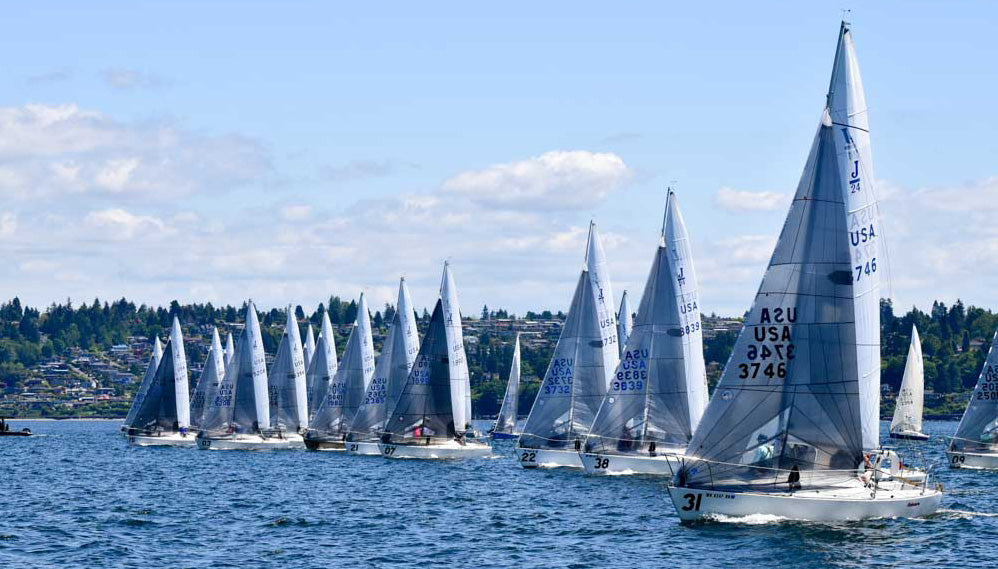
ROAD TO THE J/24 WORLDS
TWO EVENTS LEADING TO THE J/24 WORLDS
Around the Island Race to Celebrate the J/24 Class’ 40th Anniversary
NEWPORT REGATTA
North Sails Clinic with Will Welles & Tim Healy – Friday 1:30 – 4:00 pm
The Newport Regatta will be a great tune-up event for the Worlds. Join Will and Tim at Sail Newport on Friday (1:30-4:00 pm) for a North Sails clinic.
Make it a long weekend! Fleet 50 invites all out of town teams to sail in the Thursday night race and enjoy the camaraderie of the fleet members.
J/FEST & AROUND THE ISLAND RACE
To commemorate the 40th Anniversary of the J/24 Class, J/Fest New England and Sail Newport invite all J/24 sailors, past and present, to enter the Around the Island Race on Friday, August 11th. Stay for the weekend and sail the J/Fest New England Regatta.
READ MORE
READ MORE
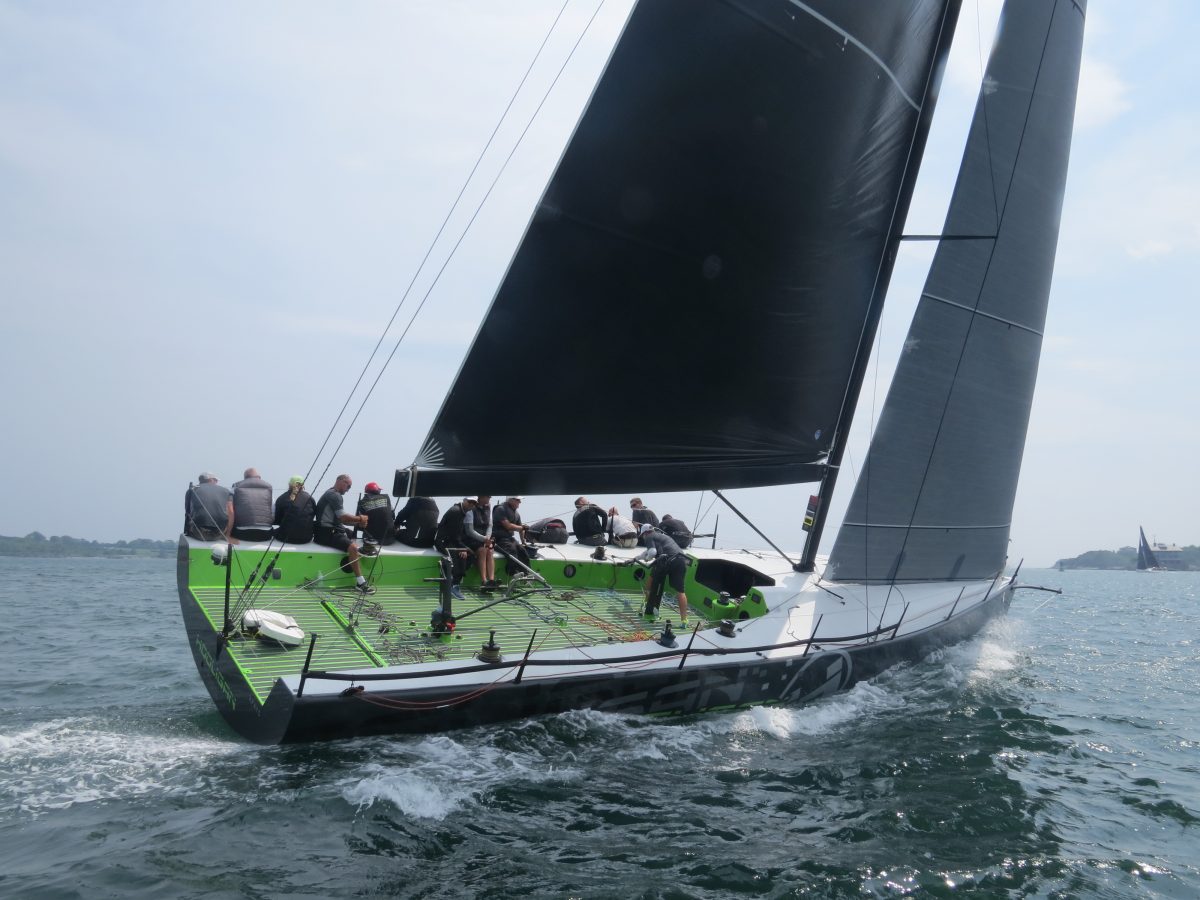
163rd NEW YORK ANNUAL REGATTA
North powered clients finish 1st in six divisions, wrapping up a fun and warm summer weekend in New England
A beautiful weekend in Newport, RI for the 163rd New York Yacht Club Annual Regatta where 131 boats from all over North America came to enjoy sights and sounds of Newport as well as experience the beautiful New England weather. The dying westerly presented interesting sailing conditions for Friday’s around the island race, which is roughly an 18-mile race that goes around Jamestown. As the sailors were closing in on their finish line, the westerly had completely dissipated and the southerly filled in, giving everyone a chance to feel the cool sea breeze. Because it was delayed, the race was very close to being over, so sailors had to maintain their sail combinations, carrying them through the next range.
Saturday was stadium style, which made for a great spectator day with fleets racing inside Narragansett Bay, and under the famous Newport Pell Bridge. Fantastic conditions, tough competition, and close quarters made for some great racing! Sunday’s racing for most classes was held offshore, also in sustainable wind conditions, creating the perfect ending to a weekend of pure sailing satisfaction.
Congratulations to our clients!
READ MORE
READ MORE
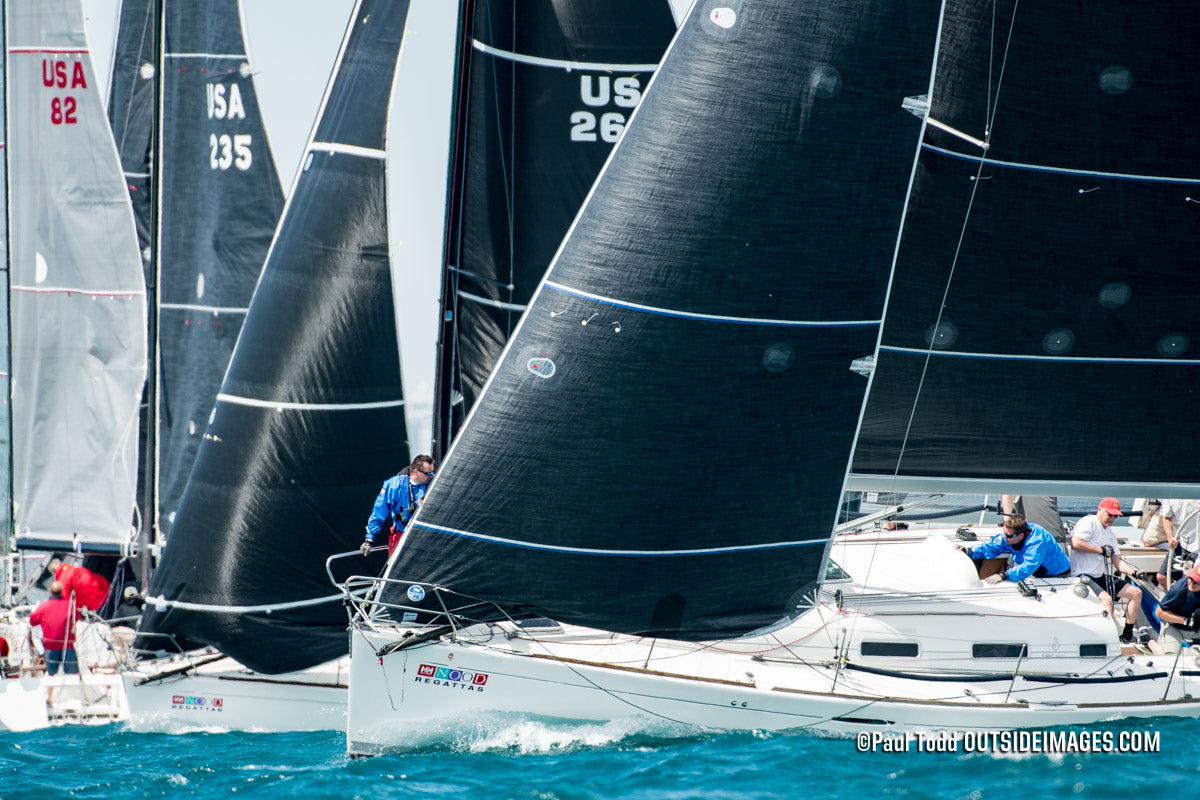
CHICAGO NOOD
The Windy City keeps her promise and North Sails clients take the win in five classes overall, with local presence strong as ever
The windy city did what it does best! A fun weekend in Chicago for the NOOD regatta where 146 boats came to compete on the cold and shifty waters of Lake Michigan. The local representation at the Chicago NOOD was top notch, with all but seven boats from Illinois or Indiana area being members of CASRA (Chicago Area Sail Racing Association). The overall attendance was strong from the Midwest, with many familiar faces, families, and friends sailing together on their hometown lake.
North Sails local knowledge and weather briefing, lead by Perry Lewis and Andrew Kerr
As predicted by North Sails Perry Lewis and Andrew Kerr in the local knowledge and weather briefing Thursday evening, a solid breeze delivered excellent and very challenging racing on the great Lake Michigan. When the gradient breeze is battling the thermal, anything can happen on the lake. Choosing the correct side, maintaining boat speed, sailing out of a hole with light wind (specifically on Friday), and often taking a “chance” on a side were all concerns for sailors in the tricky, shifty conditions.
Being familiar with the breeze directions helped sailors navigate through Friday’s ups and downs. On Saturday it was a whole new ballgame with winds consistently above 20 knots, with occasional gusts over 30, leaving North Sails Saturday competitors and Rally Racers pushing their boats and crew to the max. Some, unfortunately, were unable to finish because of breakdowns, while most boats needed repairs at the end of the day. Smiling sailors still looked forward to redemption on Sunday and to hear stories of carnage and excitement from their fellow competitors at the regatta tent that evening. Sunday was a day for all, with the wind between 12-18 making it much easier for everyone to get around the race course. This upped the competition, with many close calls on the scoresheet as the sailors battled for 1st position in their class.
Congratulations to North Sails clients at the Chicago NOOD and a special shout-out to local sailors onboard Tartan 10 ‘Mutiny‘ who’s fantastic performance secured them a spot at the NOOD Championships in the British Virgin Islands this October!
North Sails Saturday: Rally Race award winners with Beneteau 40.7 team ‘Badge’
READ MORE
READ MORE
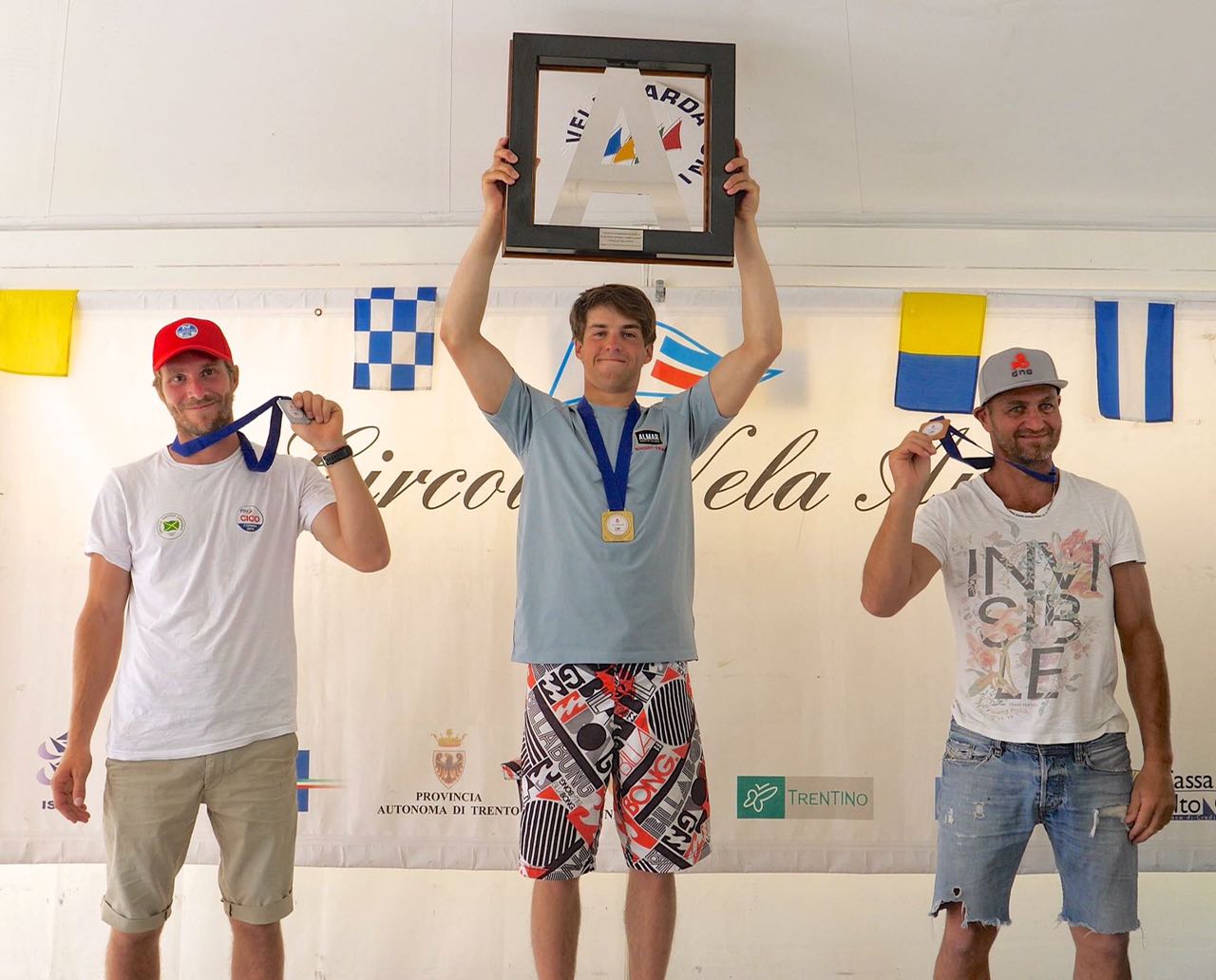
OLYMPIAN VITTORIO BISSARO FLIES WITH NORTH SAILS
OLYMPIAN VITTORIO BISSARO FLIES WITH NORTH SAILS
It was a great start for Vittorio Bissaro in the A-Class, the Italian athlete was second on the podium of the European Spring Championship, Arco. Despite being only his second race in the A-Class, Bissaro was successful in a fleet of almost 50A flying catamarans, among which there were previous World and European champions. Vittorio’s venture into the A-Class follows his Rio Olympic Games campaign with Silvia Sicouri, in the Nacra 17 Class.
After the Olympic games in Rio de Janeiro, you moved your attention to the A-Class. Is your Olympic games experience over, or will you be looking to participate in Tokyo in 2020?
The idea of trying the A-Class was born exactly by the fact that I have never stopped thinking about the Olympics. After the last four years racing in the Nacra, there are people now talking about the foiling Nacra for Tokyo 2020. Because delivery times are extremely long, instead of waiting and doing nothing I decided to join the A-Class to learn in a class that is continuously developing globally. The A-Class started foiling three years ago for downwind sailing, while the ability to foil upwind is just a recent phenomenon, I would say it started no more than one year ago.
The A-Class is an open class, how was your boat developed?
Currently, in the A-Class there are two predominant boat builders that build the boat for almost 98% of the fleet, DNA in the Netherlands and the Polish shipyard Exploder, where my boat was built. I opted for the Polish because the boat is more flexible and adjustable. Knowing from my first experience with sailing the Nacra, I wanted to have some space to maneuver for adjustments. In fact we worked a lot on the catamaran this winter and I would say that results of our work were pretty good in the first regatta of the season, held last week in Arco. Mischa Heemskerk, the current World champion, remained behind me in a few races, which was very satisfying.
North Sails is helping you in the development of sails for the Nacra. What are your feelings about this collaboration?
In contrast to the boat builders, the choice of sailmakers is much wider, there are at least five or six suppliers for sails to the A-Class. I first started with a Polish sailmaker who was recommended by the shipyard, but a series of issues with the design, the service and the quality, made me switch to North Sails. The idea of cooperation was proposed by sails specialist Giulio Desiderato. I also knew that North Sails was already working on projects with Glen Ashby, 13-time World champion and a legend in the catamaran. The designs are great, the quality is excellent, and Giulio has supported me all through the process making it the perfect choice. Since the very first day I knew things with North Sails would work great.
The A-Class is in continuous development, are these changes perceivable also during races?
Well, yes. The A-Class goes further than the choice of profile for sails. After foiling, some athletes started to work on masts, rigs, distribution of weights, etc. Everything is continuously changing and probably now it is really worth concentrating on the settings of the boat as a whole.
Despite that you are a newcomer in the A-Class, you have already obtained some great results. What are your plans for the rest of the season?
In mid August we will have the most important event of the season, the Worlds in Poland. Before that, I will go to Lake Iseo at the end of June for another event in the A-Class circuit and that will be my third race ever in the A-Class. The season is going to finish in Campione, but immediately after the Worlds all attention will be focused on 2018.
You are not alone in this experience in the A-Class. Who is sharing it with you?
I’m sharing it with a team, Lorenzo Bianchini is always training with me, he has the same boat as mine and also uses North Sails. Working with similar materials helps us to make better adjustments to the boats, otherwise you risk getting lost in the myriad of possible refinements that you can do on an A-Class.
What are your feelings over the Nacra? Are you planning to have a new crew?
The Nacra Class grew a lot in the lead up to the Olympics in Rio, but then it experienced a slow down. We are all waiting for the introduction of the new platform of the Catamaran, which will be presented at the end of June. The new Nacra should have Z-foils instead of C-foils and L helms, much similar to the actual configuration of the A-Class. These new introductions will change the conduction of the boat under the technical point of view. The Nacra should manage to fly both downwind and upwind, this will make races even faster and more acrobatic. It will be when this introduction is released that we will all start to focus on the Nacra again.
Learn more about the North Sails A-Class designs.
READ MORE
READ MORE
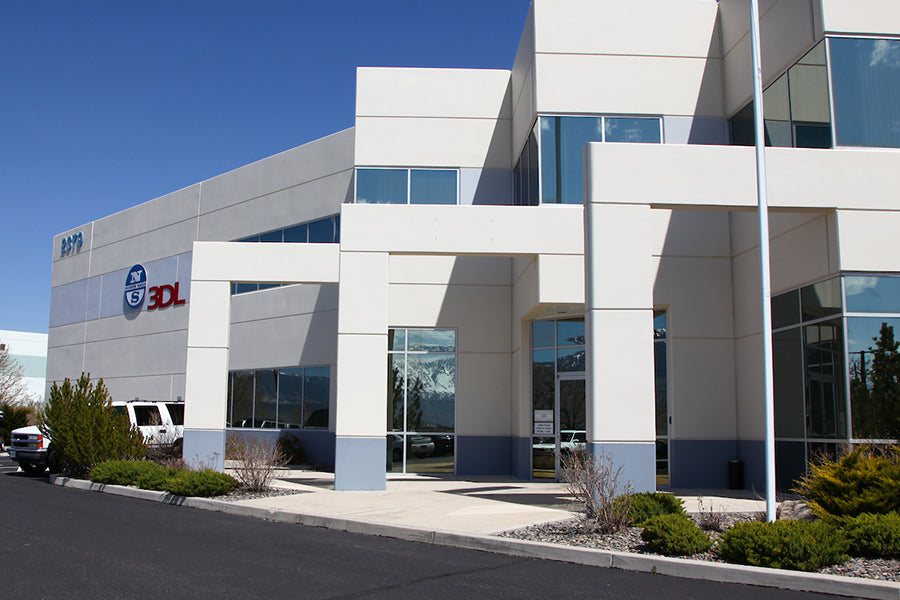
BESÖK NEVADA OCH TA EN TITT I 3Di-FABRIKEN.
TA EN TITT I 3DI-FABRIKEN.
När 3DL lanserades för 25 år tog vi steget från hantverk till industri, och när 3Di kom 2010 skruvades nivån upp ytterligare. Följ med på ett besök till Minden, Nevada och se hur ett 3Di-segel blir till!
Fabriken i Minden, Nevada byggdes ursprungligen för produktion av 3DL-segel, men har styrts över till 3Di-teknologin. Det i princip enda som är kvar från tillverkningen av 3DL är de stora, justerbara 3D-formarna och symaskinerna som används för slutarbetet med exempelvis travare och likband.
Vi kanske inbillade oss, men det kändes som att det gick en skälvning genom branschen när 3DL introducerades för 25 år sedan. Det var inte bara en en unik och banbrytande produkt som i ett slag gjorde den dåvarande tekniken gammaldags, utan skulle också komma att tvinga fram en genomgripande omstrukturering av en bransch som hade fungerat på i princip samma sätt sedan mänskligheten lärde sig segla.
Datorstödd design och ett allmänt vetenskaplig synsätt hade i och för sig funnits ganska länge – North Sails var pionjärer även här – men innan 3DL kom in i bilden producerades de flesta segel lokalt av segelmakare som kröp omkring på stora golv, klippte i dukrullar och hängde över symaskiner. Nu blev segeltillverkning en avancerad industriell process med fabriker och robotar. Det som krävdes för att hänga med i utvecklingen var inte bara know-how, utan också produktionsanläggningar som ingen tidigare varit i närheten av.
Det tog några år men med tiden fick branschen upp ångan och lyckades så småningom få fram alternativ till våra 3DL-segel. Det var nog bra, för utan konkurrenter som jagar en i hasorna är det lätt att sluta utvecklas. Men de lär få fortsatta att jaga, för i och med lanseringen av 3Di 2010 tog vi ett nytt stort steg i utvecklingen. Den tekniska nivån har skruvats upp ytterligare. Likaså kraven på både know-how och maskinpark.
I den här artikeln tar vi en tur till vår fabrik i Minden, Nevada, och tar en titt på hur 3Di-segel tillverkas. Som du kommer se påminner det inte så värst mycket om de klassiska ”loft” som för bara 25 år sedan var själva sinnebilden för vår bransch.
READ MORE
READ MORE
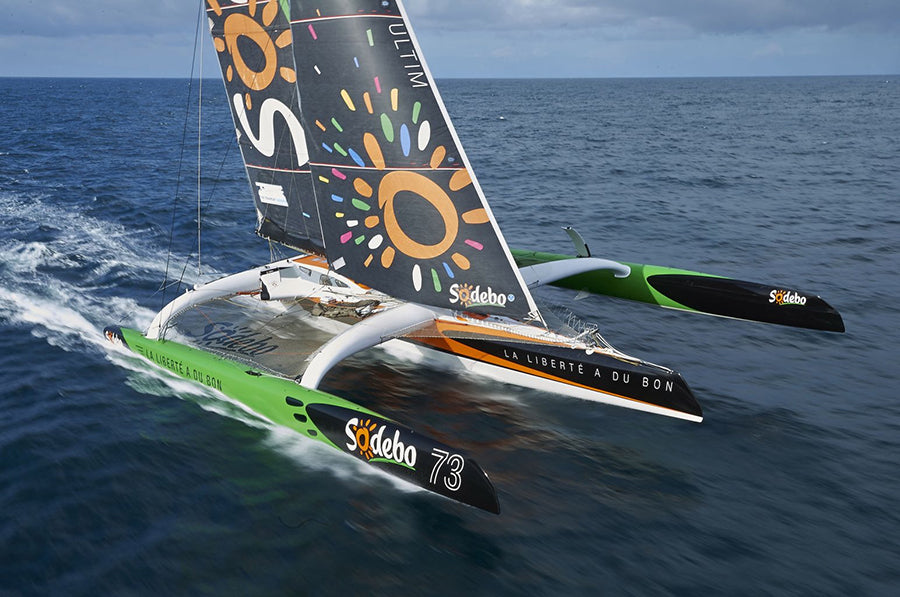
INGEN VET HUR LÄNGE ETT 3Di NORDAC-SEGEL HÅLLER. MEN RACINGVERSIONEN KLARAR MINST ETT VARV RUNT JORDEN.
INGEN VET HUR LÄNGE ETT 3DI NORDAC-SEGEL HÅLLER. MEN RACINGVERSIONEN KLARAR MINST ETT VARV RUNT JORDEN.
3Di-segel är lättare och stummare än alla andra typer av segel. Men den viktigaste fördelen är att de har en oslagbar slitstyrka och en livslängd som inget annat prestandasegel ens kommer i närheten av.
2016 seglade Thomas Coville ensam runt jorden på 49 dagar och tre timmar och krossade rekordet i Jules Verne Trophy. Båten, en trimaran på 105 fot, var utrustat med ett tre år gammalt 3Di-storsegel, byggt i kevlar och dynema. Totalt har seglet tillryggalagt över 75.000 sjömil och är fortfarande i användbart skick. .
3Di-segel är lätta och töjer sig minimalt, vilket är exakt vad kappseglaren eftersträvar. Men de är framför allt hållbara på ett helt annat sätt än exempelvis våra 3DL-segel, som ändå får betraktas som ledande inom kategorin membransegel.
Och det är inte några små skillnader vi talar om. 2008-2009 var sista gången någon använde membransegel i Volvo Ocean Race. Vi på North Sails levererade seglen till samtliga båtar, och hade bullat upp med det absolut bästa som gick att få fram. Ändå krävdes det tre storsegel för att ta sig varvet runt – och det första var slut efter två etapper.
I den senaste upplagan var samtliga båtar istället utrustade med 3Di-segel. Den här gången klarade man sig med ett enda storsegel under hela racet. Dessutom såg det nästan oförskämt bra ut efter målgång. Det som hade slitits mest var faktiskt inte själva strukturen utan de påmålade sponsorlogotyperna. Bouwe Bekking, skipper på Team Brunel, konstaterade efteråt att det det nog hade kunnat klara ett varv till om så krävdes:
”Give it a new paint job and I bet if you would ask somebody he/she would say this is a brand new main. Same for the other sails. You can see they’ve been used but they are still in good shape.”
Då ska vi betänka att båtarna pressades oerhört hårt, och att storseglen inte fick en minuts vila under hela racet. De satt uppe i ur och skur och utsattes för allt från stormvindar och snöglopp till stekande sol under drygt 3.500 timmar.
Det kan å andra sidan verka nästan kännas futtigt i jämförelse med vad seglen till den 105 fot långa katamaranen ”Sodebo Ultim” fått utstå. Båten användes när Thomas Coville hösten 2016 seglade ensam runt jorden på 49 dagar och 3 timmar, och därmed putsade det tidigare Jules Verne-rekordet med över åtta dagar. Det intressanta i sammanhanget är att han gjorde det med ett storsegel som var tre år gammalt redan vid starten. Idag har seglet gått över 75.000 sjömil – vilket motsvarar tre jorden runt-seglingar – och är fortfarande i användbart skick.
I båda fallen handlar det om racingsegel där fibern framför allt består av kevlar och dynema. Livslängden för 3Di Nordac, som ju är ett likadant segel fast med fibrer i polyester, lär knappast bli kortare.
Under Volvo Ocean 2008-2009 behövde varje båt tre 3DL-storsegel för att sig runt jorden, och det första var slut efter två etapper. I den senaste upplagan 2015 var alla båtar utrustade med 3Di-segel, och då räckte det med ett enda. Och när man inspekterade seglen efter målgång såg de ut att kunna klara ett varv till.
READ MORE
READ MORE
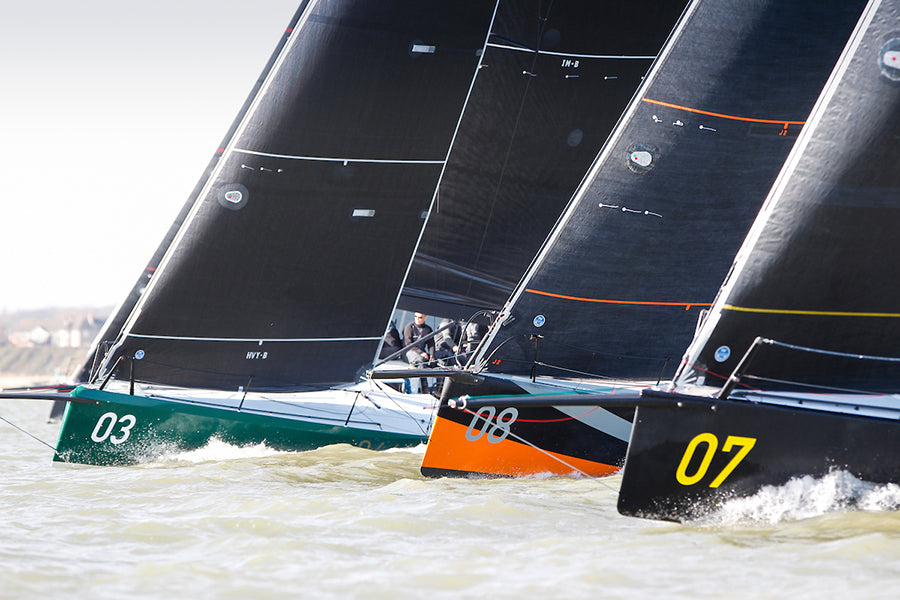
3Di-SEGEL ÄR LÄTTARE OCH STUMMARE ÄN ALLT ANNAT. MEN DET ÄR INTE DEN VIKTIGASTE FÖRDELEN.
3Di-SEGEL ÄR LÄTTARE OCH STUMMARE ÄN ALLT ANNAT. MEN DET ÄR INTE DEN VIKTIGASTE FÖRDELEN.
Vad innebär 3Di-teknologin? Vad är skillnaden mellan 3Di och 3DL? Och vad är det egentligen för fel på dagens membransegel? Det reder vi ut här. Häng med på en resa som spänner över 25 år!
3Di-seglen lanserades 2010 och tog seglarvärlden med storm. Snart satt det 3Di-segel på de flesta av världens hetaste kappseglingsbåtar. Bilden var tydlig; Om du kappseglade och verkligen siktade högt, då var det 3Di du skulle ha.
Det var förstås bra. Men det gjorde kanske också att den absolut största fördelen med 3Di hamnade lite i skymundan.
Ett 3Di-segel är lättare och stummare än allt annat på marknaden, ja. Men det viktigaste är att de håller mycket längre än alla andra typer av prestandasegel.
Skillnaden är faktiskt dramatisk. Det finns 3Di-segel som har gått 75.000 sjömil och som fortfarande är i hyggligt skick. Och då talar vi om racingsegel byggda i stumma material som kevlar och kolfiber, och sådana är ju inte direkt kända för att vara långlivade.
Membranseglens uppgång och fall
För att förstå det unika med 3Di-teknologin får vi börja med att titta lite närmare på hur ”membransegel” eller ”stringsegel” är uppbyggda. Anledningen till att vi för drygt tio år sedan började utveckla 3Di var nämligen att komma tillrätta med de ganska allvarliga brister som den här typen av segel har. Det gäller såväl våra egna 3DL-segel som alla de andra varianterna av membransegel som numera finns på marknaden.
Först en snabb recap: Våra 3DL-segel, som väl får betraktas som alla membransegels moder, gjorde entré 1992 och under de 25 år som gått sedan dess har de vunnit allt som går att vinna på världens kappseglingsbanor, från Americas Cup och Volvo Ocean Race till lokala klubbkappseglingar.
Vi var länge ensamma om tekniken, men dag kan alla segelmakare erbjuda sina kunder något liknande. De större kedjorna har byggt upp egna produktionsanläggningar och mindre segelmakare köper membran eller rent av färdiga segel från bland annat Kina.
Vi är oerhört stolta över våra 3DL-segel och vad de inneburit för segelsporten. Samtidigt är det uppenbart att den här typen av segel har inneboende problem som aldrig kommer att kunna lösas.
Vi kan ju inte tala för resten av branschen, men för oss är lösningen ganska självklar: Det börjar bli dags att låta membranseglen gå i pension.
Vi är oerhört stolta över våra 3DL-segel och vad de inneburit för segelsporten sedan de lanserades för 25 år sedan. Men som alla membransegel har de en del fundamentala problem som aldrig kommer att kunna lösas. För oss är lösningen ganska självklar: Det börjar bli dags att låta membranseglen gå i pension.
Utmaningen: Att ta fram ett segel helt utan film
Ett membransegel skapas genom att långa strängar av någon stark fiber (exempelvis kevlar eller kolfiber) limmas ihop med ett eller flera lager av mylarfilm. Ibland lägger man också på ett skyddande lager av tunn väv. Konstruktionen anpassas efter varje specifikt segel, och fibrerna läggs så att de följer den förmodade kraftriktningen i seglet. Det får på så sätt ett karakteristiskt och ganska vackert utseende med bågformade linjer från horn till horn. Strukturen är särskilt tydligt i motljus.
Man kan säga att membransegel bygger på en sorts lager-på-lager-princip. Man skulle också kunna säga att det i grund och botten är ett mylarsegel förstärkt med tunna strängar av kevlar eller kolfiber.
Och det är just mylarfilmen som orsakar de största problemen.
Filmen har egentligen bara en enda uppgift, och det är att hålla de kraftbärande fibrerna på plats. Mellan strängarna uppstår ett ”mellanrum” som bara består av mylar. Det är ett tunt och sprött material, känsligt för UV-ljus och obetydligt starkare än en vanlig presenning. Och det här gör seglet känsligt för veck, fladder och nötning.
Fiber och film har också helt olika egenskaper, inte minst när det gäller elasticitet, vilket gör det svårt att få dem att fungera bra ihop. Dessutom är det bara en tidsfråga innan fibern och filmen börjar släppa från varandra. Man brukar tala om delaminering. Om du någon gång haft ett laminatsegel med några år på nacken vet du nog vad det innebär.
Problemet är varken nytt eller specifikt för just membransegel. Det har varit känt ända sedan Lowell North hissade den första mylargenuan (känd som ”The garbage bag” på grund av dess gröna kulör och glansiga ytfinish) på tolvan Enterprise under Americas Cup 1977.
Efter att ha brottats med det här problemet i över 30 år insåg vi till slut att enda möjligheten var att utveckla en helt ny typ av segel som inte innehåller någon film.
De första stegen togs i samband med Americas Cup 2007 med ett projekt som gick under kodnamnet ”Amalgam”. I största hemlighet byggde vi 19 segel helt utan film till Team Alinghi. Seglen blev ärligt talat ganska misslyckade men vi lärde oss massor. Året därpå hade vi lyckats utveckla ett fungerande segel och 2010 hade vi en färdig produkt som gick att sälja. Vi kallade den 3Di.
En helt ny typ av segel
3Di-teknologin är alltså INTE en utveckling av 3DL, och ett 3Di-segel har egentligen ingenting gemensamt med ett membransegel. 3Di är en kompositkonstruktion där två olika material, i det här fallet fiber och en speciell sorts lim, via en kemisk reaktion omvandlas till ett enda homogent material. Det är precis som när man bygger ett båtskrov i glasfiber och polyesterplast. Om du sågar ut en provbit från skrovet på din båt och tittar närmare på den kommer du inte kunna skilja glasfibern från plasten. Efter härdning är det ett och samma material. Så är det även med ett 3Di-segel.
Rent konkret byggs seglet upp genom att speciella fiberförsedda tejper (som vi själva tillverkar) läggs om lott enligt ett givet mönster tills det får formen av ett segel. Materialet läggs sedan upp på en tredimensionell form där det värms upp under tryck, vilket sätter igång härdningen.
Själva fibern är oerhört tunn – som ett hårstrå ungefär – vilket gör att de till skillnad från fibersträngarna i ett membransegel kan läggas extremt tätt utan att få problem med vidhäftningen. Därmed undviks de ”mellanrum” av mylar som är ett av problemen med membransegel. I ett 3Di-segel är varenda kvadratmillimeter täckt med fiber.
Tejperna med fiber är förimpregnerade (pre-preg kallas det på fackspråk) med en speciell sorts härdplast som aktiveras när den värms upp till en viss temperatur, och som därefter får en stark och kemiskt sett mycket stabil struktur. I ett membransegel består limmet däremot av en sorts termoplast. Det är samma typ av material som används i exempelvis glassbyttor eller köksskålar, och den är allt annat än stabil. Testa att hålla en plastmugg över ett stearinljus så får du se vad som händer.
3Di har fler fördelar. Ett membransegel består till stora delar av mylar, och ibland även väv, och inget av detta bidrar till styrkan. Däremot väger det ju en del. Det finns också en övre gräns för hur mycket fiber man kan laminera in mellan två mylarskikt. I ett 3Di-segel kan man lägga in hur mycket fiber man vill och konstruktionen innehåller ingen som helst film. Fiberhalten i ett 3Di-segel är därför nästan dubbelt så hög som i ett membransegel med samma vikt.
Detta är en av anledningarna till att nya 3Di Nordac håller formen så bra, trots att konstruktionen baseras på en fiber med viss flexibilitet: Skillnaden i töj mellan ett membransegel som innehåller 10 kilo kevlar och ett 3Di-segel med 20 kilo polyester är knappast synbar för andra än rena experter.
3Di-segel har egentligen ingenting gemensamt med membransegel, som exempelvis våra 3DL-segel. 3Di är en kompositkonstruktion där fiber och en speciell härdplast via en kemisk reaktion omvandlas till ett enda homogent material, på precis samma sätt som när man bygger ett båtskrov i glasfiberarmerad plast.
Det finns ett 3Di-segel för alla behov
Möjligheterna att skräddarsy 3Di-segel är nära nog oändliga. Genom att laborera med olika typer av fibrer i olika kvantiteter kan vi få fram segel med vitt skilda egenskaper. Valet man gör handlar främst om hur man prioriterar mellan å ena sida låg vikt och å andra sidan styrka och livslängd.
Det finns dock ett antal standardmodeller, med namn som exempelvis ”3Di Endurance”, ”3Di Race” och ”3Di Raw”. Och nu får alltså 3DI-serien ett nytt tillskott i form av 3Di Nordac. Det är kanske inte det ”häftigaste” seglet i familjen, men på ett sätt det kanske viktigaste av alla.
3Di Nordac produceras med exakt samma avancerade teknik som de andra 3Di-varianterna, men eftersom det baseras på en i sammanhanget billig fiber har vi kunnat få ner priset till en nivå som faktiskt ligger närmare ett dacronsegel än ett membransegel.
Äntligen ett 3Di-segel som är tillgängligt för en bredare skara seglare!
En helt unik teknologi
Till sist: Ibland får vi på omvägar höra att det finns branschkolleger som påstår sig kunna erbjuda segel som är ”ungefär som 3Di”.
Men det kan de inte. Det här sättet att bygga segel är helt unikt och skyddas av en rad patent. Ingen annan segelmakare kan göra något som ens liknar 3Di-segel utan att få ett antal barska, förmodligen amerikanska, advokater på halsen. Att man är så på hugget på vårt huvudkontor beror förmodligen på att det så att säga ligger mer än bara segel i potten; 3Di-teknologin används numera även inom rymdindustrin, flygindustrin och Formel 1.
Mycket spännande. Men det är, som det brukar heta, en helt annan historia.
READ MORE
READ MORE
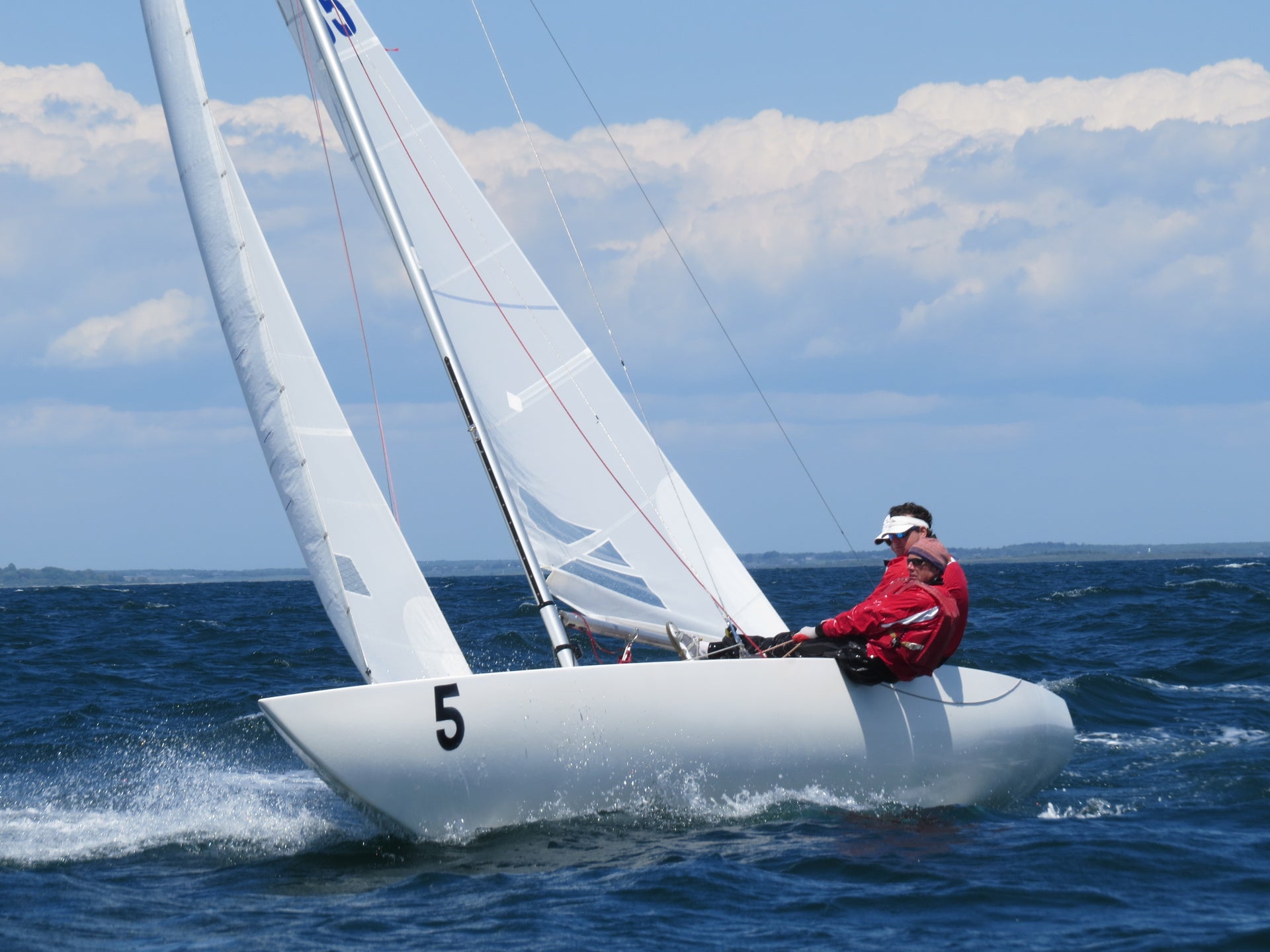
NEW YORK YACHT CLUB ONE DESIGN REGATTA & ETCHELLS NATIONAL CHAMPIONSHIPS
TRIPLE WIN FOR NORTH SAILS CLIENTS AT NYYC OD REGATTA
North Sails powers Etchells National Champions, Melges 20, and J/70 Class Winners at the 2017 NYYC One Design Regatta
Last weekend’s New York Yacht Club One Design Regatta was a great event and had perfect sailing conditions for all Etchells, Melges 20, and J/70 competitors. This event was also a part of the Etchells Atlantic Series and scored as the fleet’s 2017 U.S. National Championships, which began on Friday, June 2nd. Eight races were completed in the Etchells, allowing one discard. Twelve Melges 20 teams and 14 J/70 teams competed on June 2nd-3rd, totaling five races, also allowing one discard.
Competing for the National Championship in the Etchells fleet, Steve Benjamin and his crew aboard ‘Stella Blue’ were untouchable with a total of 11 points after a 7th place throw-out, followed by George Francisco and his team on ‘American Baby’ with 28 points. A close battle for 2nd place, Chris Larson was just one point behind Francisco, with his team from Annapolis Yacht Club. North powered teams finished 1,2,3,4,5,6*, and 7th out of 15 boats. Congratulations to 1st place finisher ‘Stella Blue’ for winning the 2017 Etchells National Championships!
The J/70 division saw a great turn out with 14 boats and tight racing, especially in the lead pack. Brian Keane’s ‘Savasana’ took first place, followed by John Brim and his team on ‘Rimette’. Bruno Pasquinelli placed 3rd with team ‘Stampede’. Beautiful racing conditions on both the J/70 and Melges 20 race courses, with excellent sailing from some familiar faces. The Melges 20 fleet was topped by Wes Whitmyer Jr. and his team on ‘Slingshot’ by four points. In second was Drew Freides and his team ‘Pacific Yankee’, who were also the overall winners of the Miami Series this past winter.
The Melges 20 fleet is gearing up for the World Championship, which will be in Newport later in the fall. Some serious competition is expected from boats all over the world which will make for a great event. Congratulations to our clients this weekend on a job well done!
READ MORE
READ MORE

ERSTE-HILFE FÜR KIELER WOCHE-TEILNEHMER MIT MOBILER WERKSTATT
Erste-Hilfe für Kieler Woche-Teilnehmer mit mobiler Werkstatt
Wenn am Freitag die Kieler Woche beginnt und 4.000 Seglerinnen und Segler den Olympiahafen in Schilksee bevölkern, wird auch North Sails nicht fehlen. Zum zehnten Mal in Folge zieht die Hamburger Segelwerkstatt um und bietet an allen Regattatagen einen umfangreichen Reparaturservice für die Teilnehmer der Kieler Woche.
Ein defektes Segel könnte für viele Teilnehmer ohne den Reparaturservice ein bitteres und frühzeitiges Ausscheiden bedeuten. Damit es erst gar nicht soweit kommt, bietet North Sails den Teilnehmern mit seiner mobilen Segelwerkstatt direkt vor Ort schnelle und unkomplizierte Hilfe bei Schäden an ihrer Segelgarderobe.
Segelmacher von North Sails neun Tage im Dauereinsatz
Dafür zieht das komplette North Sails-Loft von Hamburg in den Kieler Olympiahafen, inklusive Nähmaschinen, Werkzeug, Ersatzmaterial, Tuche – alles muss mit. Für die bis zu acht Segelmacher und Helfer ist nicht nur der Umzug ein gewaltiger Kraftakt. Da die beschädigten Segel bis zum nächsten Morgen repariert sein müssen, wird häufig die ganze Nacht durchgearbeitet. Je nach Wetterlage repariert das North Sails-Team während der neuntätigen Veranstaltung bis zu 250 Segel – vom Jollen-Spinnaker über schwere Sturmsegel bis zum Folien- und Membransegel.
Wer glaubt, dass dabei keine Zeit bleibt, um selbst zu segeln, der irrt. Teilweise sind die North Sails-Mitarbeiter sogar noch selber auf den Regattabahnen als Trimmer, Taktiker oder Vorschiffsmann aktiv. Tagsüber Rivale und im Anschluss Helfer in der Not. Das ist wahrer Sportsgeist.
READ MORE
READ MORE