



NORTH SAILS BLOG
All
Events
Guides
News
People
Podcast
Sustainability
Tech & Innovation
Travel & Adventure
CHECKING IN WITH THE TRANSAT BAKERLY FLEET
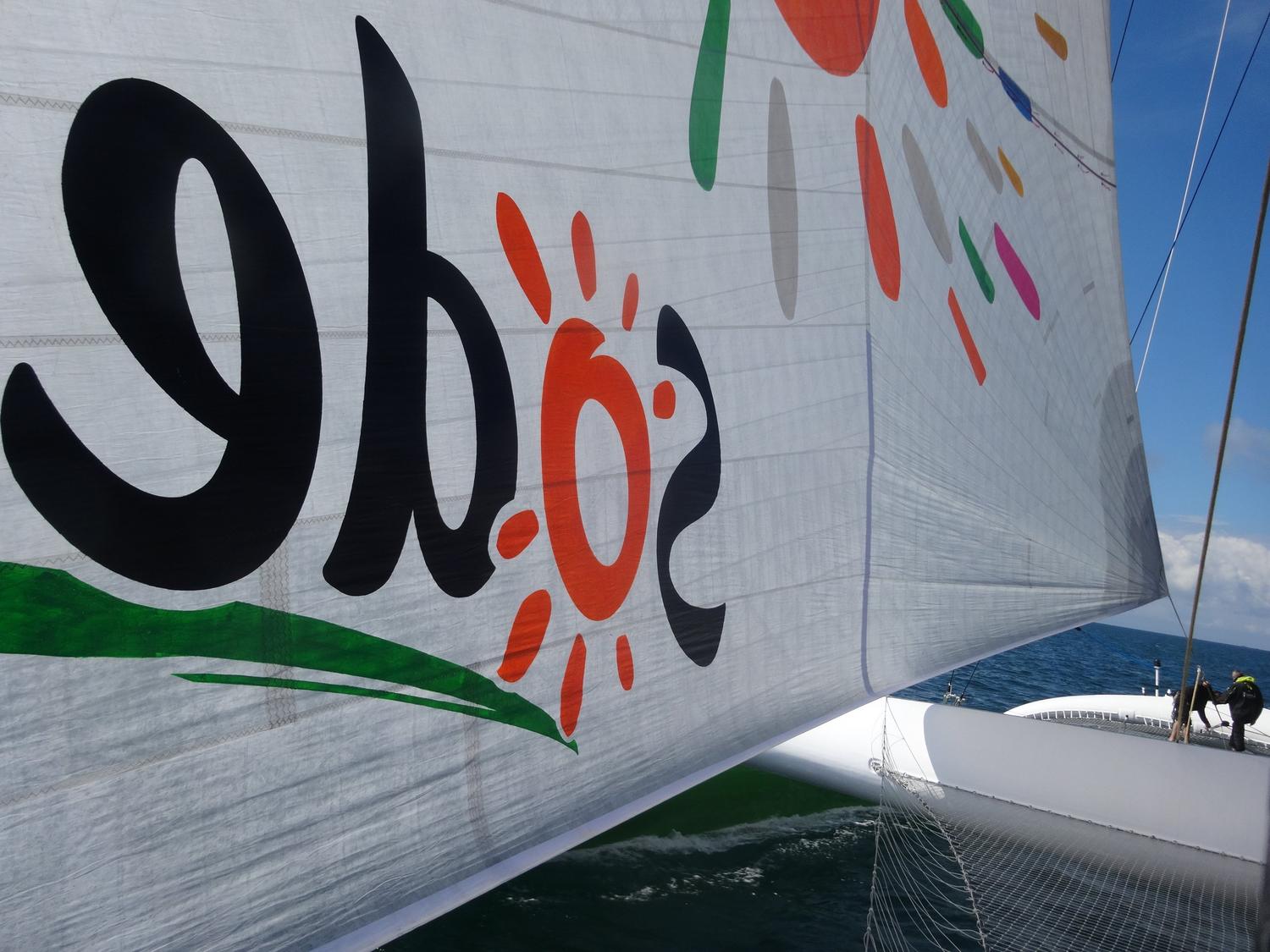
Gautier Sergent, North Sails designer, recently met up with the Transat bakerly fleet as it finished in New York City. Sergent had helped design new 3Di sails for several teams, helping each singlehanded sailor pick the best possible inventory based on the type of boat, skipper’s experience and preferred modes, predicted routing, and of course computer-aided design and VPP analysis. And with eighteen boats in four classes (Ultime, IMOCA 60, Multi 50, and Class 40) sailing over 3,000 miles from England, it was a great opportunity to see how the new sails lived up to durability and performance expectations. “It is always best to debrief right upon arrival to get unbiased first impressions,” Sergent said during a recent interview. “Rewind and redo the race with all the key moments: where the boat performed and where it did not, compared to others.”
Sergent also wanted to assist with any service that might be required, since many of the boats were quickly heading back across the Atlantic, either as part of the New York-Vendée Race or to attempt a North Atlantic record. And with the start of the ultimate solo race, the Vendée Globe, less than five months away, “the Transat bakerly is one of the last big events before the Vendée Globe for the IMOCA and the Jules Verne for some Ultimes.”
Overall, Sergent was happy with the feedback he received. “The new sails we made matched expectations—how the sailors were hoping they would use them and how they would perform. Our upcoming downwind product 3Di FORCE has made a very strong impact on the maxi tris and IMOCAs. It retains deeper angle performance, while offering better acceleration and more potential to sail tighter angles.”
And now Sergent will take this data back to the drawing board and share with the rest of the design team, material engineers, and R&D lab. “Interpret the results, project this onto the next race, etc…” At the end of the day, client impressions help create and improve these designs and each is tailor made to suit. “The latest layout updates seem a good improvement, thanks to field feedback.”
It’s important to be involved from the start of each project, Sergent explains. “The teams enjoy our expertise and our involvement right from the beginning of the design of the boat, giving us a unique understanding of how the boat works and what the skipper expects.” And the sailors appreciate the proven track record in performance and durability that North 3Di offers. “We have powered every single major IMOCA race win since 2011: Barcelona, Vendée Globe, Route du Rhum, Transat Jacques Vabres… Same with the Ultime.”
Of the Ultimes, Coville on Sodebo recently broke the 24 hour solo sailing distance record: 714 nautical miles. The Ultime MACIF is on stand by for a North Atlantic/24 hour record attempt, while the IMOCA 60s have just finished their return sprint across the Atlantic as part of the inaugural New York-Vendee Race, their last chance to qualify for the Vendée Globe. The Class 40 and Multi 50 will do the Quebec / St Malo race next. Then, Sergent says, “We will have more debrief and analysis before the sprint to the start of the Vendée Globe or Jules Verne, to confirm the choices and final sail inspection.” Records may fall, but for this sail designer, the learning never ends.
READ MORE
READ MORE

FIRST HOIST
FIRST HOIST
When summer arrived in Newport, RI, Onne and his family were excited for their first hoist of the sailing season
Onne van der Wal and his family spent the winter restoring their 1972 Pearson 36, Snoek. And then came summer, and their reward: the first sail. The skies opened up for their first day with the new sails. Onne and his daughter, Read, teamed up with North Sails’ Bill Fortenberry to rig up and sail the boat, and together they captured the day through Onne’s lens. Following are some highlights with their remarks.
READ MORE
READ MORE
HIGHS AND LOWS IN CHICAGO WRAP WITH SPECTACULAR SUPER SUNDAY
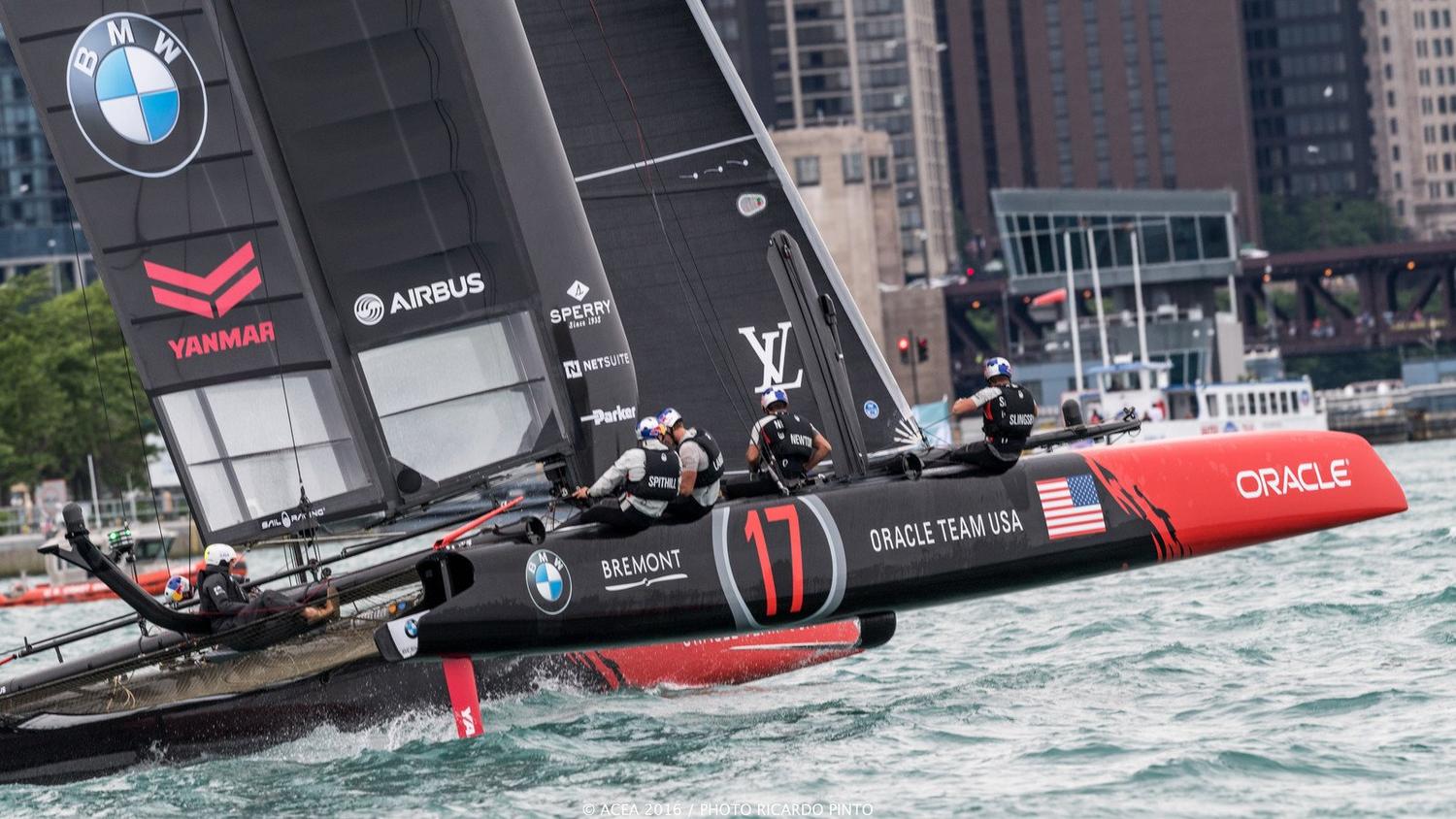
This Louis Vuitton America’s Cup World Series has been snake-bit like I have never seen. They’ve lost more days due to too much wind or lack of wind, to a point that is really unprecedented. Usually it happens once in a blue moon, but in the past year it has become all too common. The America’s Cup solution is the Substitute Race. So, if there are good conditions on the practice day, they put a race in the can and use it on a day where there potentially is no racing. On Saturday in Chicago the first race ended up being counted as the substitute race from Friday. I haven’t talked to the teams, but if I was a competitor I would say put three substitute races in the can on Friday. Television and promotion of our sport is a huge part of what the America’s Cup is trying to do, so it’s simply being a bit more creative and open-minded about how to pull it all off in less than ideal situations.
“The enthusiasm of not just Mid-West sailors but sports fanatics was out there on the Navy Pier. Anyone who was out there Sunday walked away going “Woah, that is not the sailing I’ve seen before”. That’s good for sailing.”
The other thing that sailors don’t realize is that every time you go out on a race course, in your local bay for example, and conditions are too light or windy in the morning, you just delay and wait for the conditions to get better. So essentially you have an all day window to pick the right conditions. Well, because of television and when the racing goes live around the world, you don’t have that luxury. You go when you go. That’s it, whether it’s the best or worst conditions of the day. It’s one of the drawbacks of modern, televised sailboat racing. The substitute race buys a little bit of broadcast time. And the great thing in Chicago was that after the race period expired for live television, they kept the boats out and the wind filled in to deliver a terrific race that afternoon, and that became a substitute race for Sunday. But what it also did was offer a sailboat race to the thousands and thousands of spectators on Navy Pier. Too put it perspective, it’s tough to hold a crowd during a rain delay in baseball, but on Saturday in Chicago, nobody left the pier. The boats put on a great show in a good breeze later in the day, and everyone went home happy.
Then Sunday doesn’t even compare: on schedule, three race day, drama, upsets, cool passes and great sailing by Artemis. Although they did try pretty hard to lose it at the end of the final race! It was great to see some of the new blood thriving. I felt really happy for Soft Bank Team Japan finishing off the regatta with a win, and getting on the podium. I’m also happy that Artemis pulled together a string of consistent races. And some of the big guns like Ainslie figured out how not to sail his best but at the same time come within a couple of points of winning the regatta. And Oracle Team USA and Emirates Team New Zealand did not have their best regatta. You can really see how the breaks come your way from time to time. They didn’t get any breaks and they didn’t sail perfectly. All of a sudden the overall series is really tight.
Chicago was great: the venue was unbelievable. The enthusiasm of not just Mid-West sailors but sports fanatics was out there on the Navy Pier. Anyone who was out there Sunday walked away going “woah, that’s not the sailing I’ve ever seen before”. That’s good for sailing. But venues, and venue times, are becoming more and more critical with televised sailing. Everyone is really learning that you have to consider the time and place based on historical wind and weather data. But I’m really proud of Chicago – the VIP experience through to the fan experience was especially well done.
Next is Portsmouth – the first time for me that I’ll be returning to a venue for the second time. The first event was terrific, heaps of people. But it was only a one day regatta. So let’s all root for two good race days. And we know the British are enthusiastic not only for their team but also for sailing and for the America’s Cup. I have no doubt that what they have learnt across all the events since last time, it should be a great experience and a heck of an event.
READ MORE
READ MORE

FLYING SCOT SUMMER TIPS
GET READY FOR SUMMER SAILING
Few tips from our Flying Scot experts Zeke and Brian
If you are like most of us getting into the swing of things at the beginning of the summer sailing, season gets very exciting though, sometimes, we can forget some very basic things that make sailing and racing the Flying Scot fun. Here are five “reminder” tips from Zeke and Brian to refresh your memory on things that may easily be overlooked.
GET THE RIGHT HALYARD TENSION
MAINSAIL HALYARD – It is very common to see many teams sailing with incorrect main halyard tension. Generally we see the sail is not hoisted high enough. This causes the boom to “droop” and creates a bad sheeting angle. Even being as little as 3/4″ too low can make a big difference. Next time out try to hoist the main until the luff goes smooth then lower it one or two clicks until some wrinkles appear. This is a good starting point and a way to make sure you hoist high enough.
JIB HALYARD – Jib halyard tension, like the main, can be tricky. We don’t like to see “scallops” (or gaps between the snaps) with our jibs. However, we do want to see some “crow’s feet” on the bottom 2 or 3 snaps. “Crow’s feet” are small wrinkles that go into the sail about 2″ at the snaps and, if we have them at the bottom 3 snaps, it tells me the halyard isn’t too tight or too loose. If, when sailing, we see the sail sagging between the snaps, we need more halyard. If the sail is smooth all the way up the luff, it may be a click too tight. Note: As sails age it is better to be a click too tight than too loose on both halyards.
CREW WEIGHT POSITIONING
Crew weight positioning is critical in the Scot. We work to keep our crew weight close together and centered. This helps keep the boat balanced and on it’s designed lines. As the wind increases we move aft to keep the bow “knuckle” just out of the water or “kissing” the waves.
Also, it is very important to keep the big bow out of the water while sailing downwind. As soon as the wind is over about 6 knots, the skipper should sit all the way at the back of the bench. The crew should never be more than a body width forward of the main sheet block. As the breeze picks up, the crew should keep scooting back until they are all the way back against the skipper in over 15 knots.
MARK YOUR SHEETS AND HALYARDS!
Sailing fast consistently requires being able to repeat past successes so we have marks on our halyards and sheets. Some folks even mark the vang, centerboard and cunningham. The important thing is to find what makes you go fast and be able to repeat it the next time conditions are identical.
PLAY WITH YOUR CENTERBOARD HEIGHT GOING DOWNWIND
The boat reacts very sensitively to board height downwind. You want to have the board as far out of the water as you can to reduce drag. Proper board height helps the boat track straight and fast. If the helm is telling you the boat wants to head up, try pulling the board up another couple of inches until the helm goes neutral. Conversely, if the helm is telling you the boat wants to head down, try letting the board down a couple of inches.
DON’T BE AFRAID OF THE VANG!
Remember that the only really effective way to de-power your Flying Scot is to pull the vang on HARD! The more over-powered you get, the more vang you pull on so that you can ease the main sheet. In fully over-powered breeze strengths, the vang should be on so hard that the boom has a visual bend in it and the main sheet can be eased so that the boom is all the way past the corner of the transom. Just remember to ease the vang when you get to the weather mark!
These tips were provided by the North Sails Flying Scot experts Zeke Horowitz and Brian Hayes. Feel free to contact them if you have any questions or need any assistance. We want to help you make your Flying Scot fly so you can exceed your expectations and GO BEYOND this summer!
Good sailing!
READ MORE
READ MORE

COVILLE STRIKES AGAIN
North Sails 3Di ENDURANCE powers Coville to another offshore milestone
Thomas Coville has broken the 24 hour solo distance record by sailing 714 nautical miles in a single day. The record was broken at roughly 2000 UTC on June 8th after departing New York City on a record attempt onboard the 100’ trimaran Sodebo Ultim. Coville was racing with one reef in Sodebo’s North Sails 3Di ENDURANCE mainsail and a 3Di RAW J1 when he set the record, averaging just under 30 knots.
This whopping 714nm beats Armel Lecleach’s 2014 record on Banque Populaire VII (now IDEC Sport) of 682 miles in 24 hours. Coville’s record marks the first time a single-handed sailor has broken the 700 mile mark in 24 hours. The record was announced this morning by Team Sodebo, and must still be ratified by the World Sailing Speed Record Council.
North Sails is proud to supply Sodebo Ultim with a full inventory of offshore sails including North Sails 3Di ENDURANCETM and 3Di RAWTM:
North Sails 3Di ENDURANCE Mainsail (built in 2014)
North Sails RAW J1
North Sails Endurance J2
North Sails Endurance J3
North Sails Panel Laminate (NPL) J0
North Sails 3Di composite sailmaking technology is proprietary and exclusive to North. Launched in 2010, the 3Di product has now sailed around the world multiple times on varied platforms and applications. In addition, 3Di has powered the following sailing speed or distance records:
Sodebo Ultim: 24 hour solo distance record with Thomas Coville | 714 nautical miles
Spindrift 2: Ushant to the Equator | 4 days 21 hours 29 minutes
Spindrift 2: Ushant to the South of Tasmania, the entrance to the Pacific | 20 days 04 hours 37 minutes
IDEC Sport: Crossing the Indian Ocean
Spindrift 2: Ushant-Cape Horn | 30 days 04 hours 07 minutes
Dona Bertarelli: Fastest circumnavigation by a female sailor | 47 days 10 hours 59 minutes
Comanche: 24 hour monohull distance record (fully crewed) | 618 nautical miles
Phaedo 3: Bermuda to Plymouth | 2870 nautical miles
Phaedo 3: Rolex Fastnet Race original course | 595 nautical miles
IMOCA Macif: 24 hour solo distance record on a monohull with Francois Gabart | @550 miles
“I am sat(sic) at the nav table on Sodebo and as I looked up out of my window at my mainsail I was thinking: this is the most beautiful mainsail I have ever had.” – Thomas Coville describes his 3Di Mainsail just before finishing the 2015 Transat Jacques Vabre
We congratulate Coville on his third time setting the 24 hour solo distance record, this time surpassing his previous record by nearly 100 nautical miles!
READ MORE
READ MORE
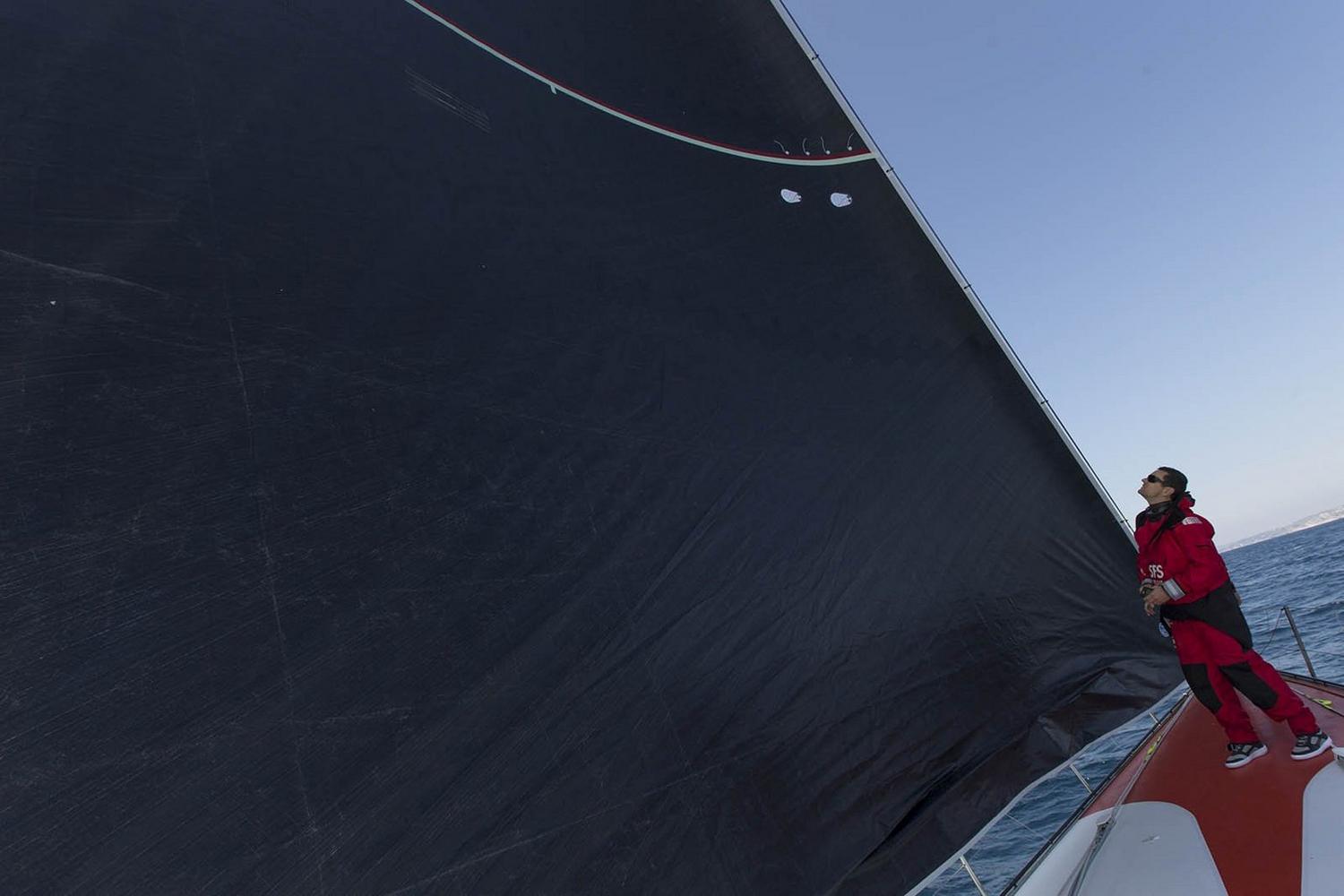
NORTH CREW JEAN-PHILIPPE GALLOIS
Jean-Philippe, could you describe what you do at north sails and why you enjoy it?
At the base level I work as a Salesman to improve the experiences of our local customer on and off the water, and to support various local events. I also work to discover new prospects and I enjoy collaborating with them to optimize their boat and onboard performance.
As a Technical Consultant I contribute to racing teams with sail plan optimization, sail charts, rating and often assist as a sail trimmer or tactician. I would love to design the sails but I’m not good enough with the software (laughs…), so I leave this to the real designers and try to give precise, useful feedback on behalf of me, the owner and crew.
I like my job first of all because it is a passion and without passion you cannot do a good job, especially when striving to push the limits, be as precise as possible and go beyond the status quo as we do at North. It is very exciting to work in a company where the goal is to give to the customer the best product with the best service. North Sails is considered a luxury brand in the yachting field, often compared to Formula 1 for the high level of products we deliver.
I’m also lucky to have met very interesting people. It helps me to grow and continually improve. Now 16 years have passed since I entered the company and I have the same motivation because each project is unique. I started from the bottom of the ladder and I intend to continue to growing within the company.
Most recently you have completed a re-configuration for the Volvo Open 70 SFS. Can you tell us about this process and the end results you are experiencing?
The objective for SFS was to move from the Volvo Ocean Race (VOR) box rule to a true IRC plan, where we know the rating is a big part of the equation. It was not an easy job. On SFS we have been running a Pro-Am system with six different guests on board during racing. We wanted to adjust the sail inventory in order to be quicker in maneuvers, reduce effort for the crew and increase performance inshore and offshore.
In March 2015, a new spinnaker staysail, A2, and a North Sails 3Di RAWTM IRC Code 0 were added. The Code 0 replaced the original Masthead Code 0 with equal area and 48kg weight savings. More recently, we switched from overlapping genoas to small jibs and added some padeyes to play more with the in-hauler and up & down system.
The new configuration gives us more ability to manage the sails. Other notable sailplan modifications included a larger and lighter #4 Jib; increased apparent wind angle in the new #2 Jib. The #1 Jib (largest Jib) was switched from a standard overlapping genoa on hanks to a furling masthead genoa with equal area (191m²). The inshore mainsail was built with three full battens instead of 6-7 in the previous main, plus one reef.
This new configuration give us more flexibility managing the sails.
In total we saved more than 200kg in comparison to the Volvo inventory and experienced even, or faster, speeds and a higher angle. Today the boat handles more like a TP52. Overall we have experienced even or faster speeds and a higher angle. We have two certificates for IRC: one with and one without the spinnaker.
On the Offshore Side, we still use the original Masthead Genoa and we had a new furling Cuben Fibre A3 for IRC racing.
What advice do you have for a young person with big aspirations in sailing?
This question makes me smile because it means I am passing to the other side of the barrier, even if I am still 18 years old in spirit (smiles).
To someone with aspirations in sailing, I will advise them to tell the truth and not be afraid to say “I don’t know, but I can find out” instead of saying something wrong, as I hear too often in this business. Stay humble. Because we are fortunate to sail on such prestigious boats does not permit us to forget where we come from (by instance, I still sail on 7m boats with friends / customers. Sometimes it is good to trim a sail you can bring in with two fingers).
In the end don’t hesitate to share and smile. I am convinced the more you give, the more you will receive. But this is more a way of spirit and a philosophy than a piece of advice, so you may take it or leave it!
Images © Gilles Martin Raget
READ MORE
READ MORE
INSIGHTS FROM J/30 ANNAPOLIS NOOD WINNER BOB RUTSCH
INSIGHTS FROM J/30 ANNAPOLIS NOOD WINNER BOB RUTSCH
After Bob Rutsch won the J/30 class by one point at the 2016 Annapolis NOOD with two firsts on the final day, Jonathan Bartlett from North Sails Chesapeake asked him a few questions about his program.
How do you fit successful resutls into such a busy life?
There’s never enough time. An injury this winter didn’t allow me to get to the boat put away properly or get winter upgrades done so it was a struggle to get the boat ready on time. Not sure how we would do it without Bobby Muller. His crew had the bottom ready as always and installed a new hatch that we broke at the end of last year. Then our crew all pitched in to get us ready before Annapolis Yacht Club One Design event, which we used as a shake down for the NOOD. Good thing as we broke the topping lift.
Who is on your crew? What are their responsibilities? Do you always sail with the same people?
My boat partner and brother-in-law Mike Costello handles tactics and main. After 20+ years he can do it all and we always have fun. But he’s so busy with three kids playing baseball and soccer that I only get him out for a couple events a year: NOOD, Race Week and NA’s.
Daughter Poncie Rutsch, now 25, trimmed spinnaker. Matthew Wienold was bow and has been my most dependable crew since he joined us ten years ago. Barry Deren did mast. He’s been on the boat since we bought it in 1984. Brad Blash is our primary jib trimmer. He’s been with us five years and is good for jokes and morale. Janie Gittleman was our floater/squirrel.
I also have a couple of new people I can call on who are still learning. After that it’s friends, neighbors, and crew on loan from boats in the fleet that are not sailing a particular event.
How critical is rig tune through the range of conditions?
For many years we used a median setting with Class maximum headstay and only cranked on turns when it blew over 15. We had to up our game when John White joined the fleet. Since we don’t have wind instruments after every race I download ten-minute wind and sea conditions from NOAA and log it with our tune and sail usage. I also look at our GPS track to see what we did right or wrong. We can generally hit our desired tune on the water by adding or subtracting turns for wind speeds from 6-20 at two-knot intervals.
If you have to give three pointers to other teams on how to get the best performance out of the J/30 what would these be?
Only three? After thirty-two years in this boat there’s more but I’ll try to keep it short.
Boat prep is a necessity–a smooth and clean bottom, good sails, and up-to-date rigging.
Sail inventory
So far the 3DI Genoa has been everything I hoped for. It has maintained its shape through two years—52 races and counting. No apparent material deterioration. Normally after 50 races I would be planning on a new genoa for the NA’s this fall.
A typical laminated genoa would be getting brittle, starting to delaminate at this point. The J/30 with a 162% overlap takes a beating during the tacks from the mast, the halyard turning blocks, spin pole ring and stanchions. The extra thickness built in for this down low and wear patches seem to have helped.
After a year the #3 3DI has only been up to see if it fit and an couple tacks while warming up on opening day this year. Looking forward to using that next time it blows.
As for care, we try to rinse it off occasionally if it gets salty and give it time to dry. It probably helps that we take our sails off the boat and store them inside when we are not out sailing.
Crew work
I like to sail with people I enjoy spending time with, who are willing to commit to our program. Talk about or show your crew how you want to handle maneuvers, and cross-train so everyone is at least able to step in and help if needed. There are good crew guides for the J/30 available online but adapt them to your needs. Get the sails up before the first race of the day and practice at least a few tacks to get your compass numbers. Then do a set, some jibes and a douse. Use time between races or on the way in to the dock to work out any problems and find solutions.
Change gears with the conditions
Keep making adjustments as wind and sea conditions change–crew weight, sail trim, and settings like outhaul, halyard tension, traveler and backstay. Compare speed and angle to competitors around you: always speed first, then angle.
There’s lots more but that will do for now.
READ MORE
READ MORE
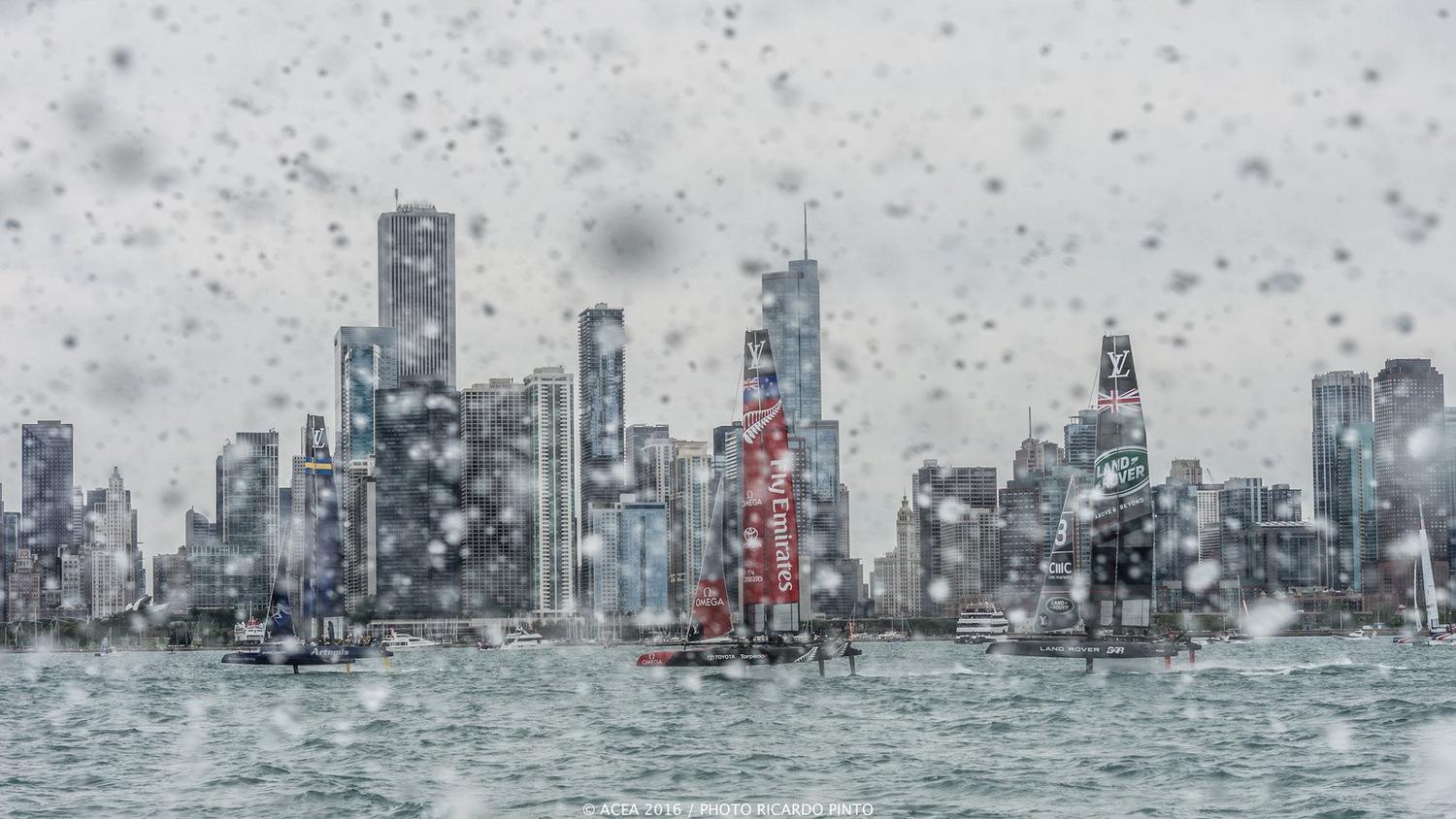
AFTER THE CRAZINESS OF NEW YORK, DON’T EXPECT THINGS TO GET EASIER IN THE WINDY CITY
New York was more than slightly crazy, it was fully fledged crazy! Even with all of the insanity on the water, the same couple of teams keep coming out ahead. If I were a competitor I’d be saying “That was a fluke! It was crazy! That was luck of the draw!” And isn’t it strange that Emirates Team New Zealand and Oracle Team USA are consistently right there. Land Rover BAR has certainly had their moments. Chicago will be difficult, but things are possibly becoming more predictable…
I was quite nervous that New York was going to be just another event happening in the biggest city in the world. I was very, very surprised and thankfully wrong! Good for New York! Even on Saturday, which was a complete washout breeze-wise, there was an incredible number of people. The Louis Vuitton America’s Cup World Series always puts itself in a bit of a tough spot with its time restrictions for television and its location restrictions for helicopters, security and everything else. Some people complained, but they couldn’t just move the race course around the island, it’s not possible. We’re committed to time and space because there are so many other variables that none of us can ever imagine. But even without the perfect race track and with a flukey wind blowing across the channel, the same teams keep winning.
Chicago, as a venue, will potentially impress and surprise people. Some of the diagrams I’ve seen of the race locations show that it could be really fun for spectators right off the Long Docks. That said, the most wind I have ever seen in my whole life on a sailboat has been in Chicago: 70 knots. To think that you’re going to a cute little lake to zip around and have fun, like your grandparents, is not necessarily the case! You can get really steep waves there, it can be windy and rough – it can be nasty. But hopefully the weather prevails and we’ll finally get a series with the races and schedule going off on time. We’re due for a good weekend!
It’s interesting to see how each team has its own level of expectation. For example, I think Groupama Team France were thrilled to come in third in New York, whereas Oracle Team USA were devastated, in a way, to come in second. There’s no question that Ben Ainslie and his supporters have very high expectations. But if you follow America’s Cup tradition and history, expectations from your most avid supporters tend to be far overblown, almost unreachable. So it’s a big job for skippers and CEOs of these projects to manage those expectations. And I think they have to be managed, because if you just come out every other day and say “We’re going to win the America’s Cup, we’re going to win all the regattas, we’re the best, look at us” – OK, maybe it helps raise money in the short term – but for the long term, you’re setting yourself up to be in the serious hot seat given any little hiccup. So I’m sure all these guys are figuring out how to manage expectations as they go, and they’ll have to keep that high on their list of daily priorities.
Bring on Chicago!
READ MORE
READ MORE
SOLO UK SOUTHERN CHAMPIONSHIP
SOLO UK SOUTHERN CHAMPIONSHIP
Won by Pete Mitchell
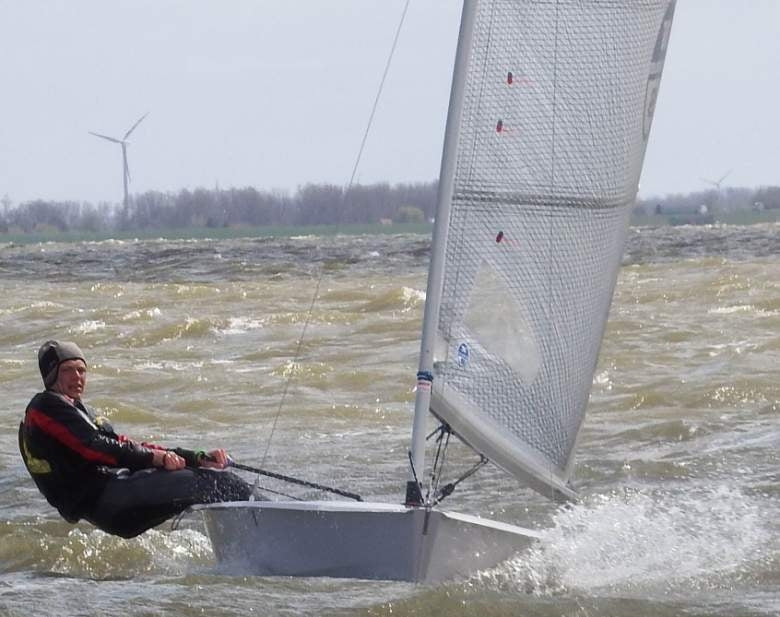
Congratulations to North Sails Pete Mitchell who won the Solo UK Southern Championship at the weekend.
Pete won 3 of the 4 races and sailed using an ST-2K design.
Well done!
READ MORE
READ MORE
LIGHT AIR GYBE STEP-BY-STEP
LIGHT AIR GYBE STEP-BY-STEP
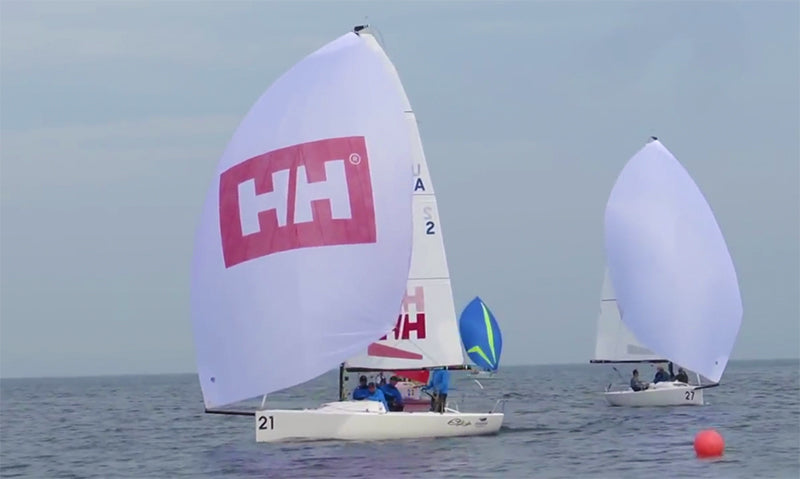
The video below shows Tim Healy and his J/70 team performing a perfect light-air gybe. These tips can be applied to any boat.
1. Clear all spinnaker sheets and make sure no one is stepping on them
2. Initiate gybe with slow turn down and slowly ease the spinnaker sheet to get clew forward
3. Vang on to firm up main leech (See step 6)
4. Roll hard when boat is turned downwind and speed up turn
5. Sheet spinnaker around with new sheet. Second crew back pulls on sheet, back and down
6. Turn up to fill spinnaker and pressure up sails, trim main to pop main battens on new gybe.
7. Flatten aggressively, accelerate and carve turn back down to best VMG course.
READ MORE
READ MORE
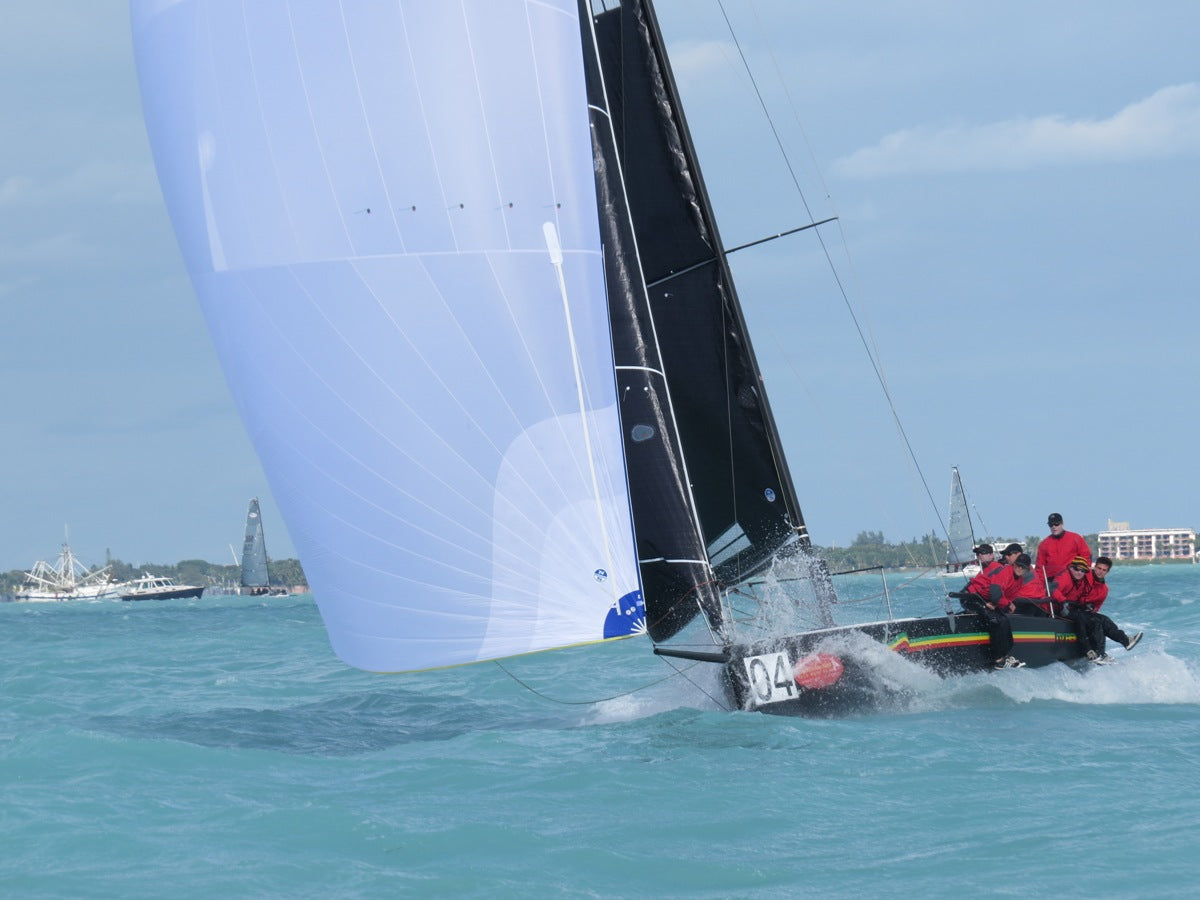
INTERVIEW WITH C&C 30 OWNER ANGUS DAVIS
INTERVIEW WITH C&C30 OWNER ANGUS DAVIS
Angus Davis took time out of his busy day job to answer some questions, after winning the 12 boat Annapolis NOOD on Nyabinghi in this hot new one design class.
YOU ARE AN EXTREMELY BUSY GUY, HOW DO YOU ORGANIZE YOUR PROGRAM TO HAVE SUCH A SUCCESSFUL RESULT?
Racing the C&C 30 is a “mind clearing event” … during my time on the water, I am in control of boat speed and the maneuvers, and everything else fades away. The key is being able to focus on sailing—and this is what attracts me. For a busy business person, competitive sailing is an oasis.
WE UNDERSTAND YOU COME FROM A WOODEN BOAT BACKGROUND. HAS IT BEEN DIFFICULT LEARNING A NEW PLATFORM?
I grew up sailing Herreshoff S Boats with my dad, in Narragansett Bay. They were the C&C 30 of their day: 28 feet long, high performance for their time, and most importantly, one design. The Narragansett Bay fleet is the oldest one design fleet in America still racing in their original boats. I thought my lack of planing keelboat experience would be a disadvantage, but I picked it up quickly thanks to good teachers. And my experience one design racing is an advantage over those with backgrounds in IRC or other handicap racing.
WHO IS ON YOUR CREW? WHAT ARE THEIR RESPONSIBILITIES? DO YOU ALWAYS SAIL WITH THE SAME PEOPLE?
We have some “steady” folks on the crew, like our runner guy. We call him Bobcat but his real name is Nick Campagna. When he drops the winch handle overboard, usually once every few regattas, we call it a “Bob-splash.” On one occasion, he dropped a VHF overboard, which we refer to as a “Bob-squawk.”
In the pit we have a rotation between Leeds Mitchell and Chase Hogoboom. Both are longtime personal friends who would bail me out of jail if afforded the opportunity. (I hope to avoid this.)
On bow, we usually have Norm Berge. We have been fortunate to have him aboard… and like all the folks on the boat, he has a positive attitude.
Usually on main trim we have Pete Levesque, who is one of our two Cat 3s. His knowledge of rig tune gives us a leg up, and sometimes we share dad advice between starts.
In Annapolis, Charlie Enright trimmed main and trimmed the kite downwind. Every day on the water with Charlie I consider a privilege.
On headsail trim, we have many “friends and family” helping with different events. In Annapolis, Chuck Swanson did a good job in this position. Sometimes the headsail trimmer becomes the whipping boy for the tactician, but in reality, any boatspeed problems upwind are usually the owner/helmsman’s fault.
Over the last year we’ve had a range of folks calling tactics and I have learned different things from each of them. In Annapolis we had Mike Buckley. Mike is able to raise our level of competition without unduly raising our personal stress levels.
HOW WAS YOUR SPEED THROUGHOUT THE COURSE OF THE EVENT?
On the last day, we had some sort of asymmetry in our rig setup, which hampered our speed on one tack. Otherwise, our upwind boat speed was an effective weapon against the competition. Over the last year, I have really improved with our team in a range of different wind conditions, and also in tight tactical situations where you need to “live in a tight lane.” I feel like we definitely have this gear in all conditions now.
Off the breeze, we have moments of greatness for sure, but it’s not yet the strength I know it will be with a bit more work.
HOW CRITICAL IS RIG TUNE THROUGH THE RANGE OF CONDITIONS?
The boat is highly sensitive to rig tune adjustments. You have to live with your rig tune for the entire race, so part of this means skating to where the puck is going to be. Having the right rig tune won’t win races on its own, but having the wrong tune can lose them.
You looked to be consistently in the top group in most of the races, how did you manage to do that in such different conditions? The biggest contributing factors to our success were: competitive boat speed, smart tactics, and not making too many bad boathandling mistakes.
WHAT ARE A COUPLE THINGS YOU AND YOUR TEAM DO DIFFERENTLY THAN OTHER BOATS?
The name of our boat is a tribute to reggae music, which is full of positive energy. We are serious about winning, but we try to have a lot of laughs. Look forward, let’s go: that’s our team’s attitude, and it has served us well, in both victory and in defeat.
Also some of our other close competitors sail with another brand of sails. On Nyabinghi, the focus with our friends at North is always on learning, development and improvement. Working with North Sails gives us a technological edge, which appeals to me as the executive of a software company.
NOW THAT YOU HAVE SAILED A COUPLE EVENTS IN THE C&C 30 CLASS, WHAT COMMENTS DO YOU HAVE ON THE BOAT AND CLASS?
The boat is a pocket rocket that offers true one-design competition. The class is owner-driver with clear, strict rules that give everyone a chance to win. The racing is close, and the camaraderie off the water is strong. And the sailors are very welcoming of newcomers.
IF YOU HAVE TO GIVE THREE POINTERS TO OTHER TEAMS ON HOW TO GET THE BEST PERFORMANCE OUT OF THE C&C 30 WHAT WOULD THESE BE?
Manage your heel angle, and get the foils working for you upwind.
Don’t get too cute at the start, i.e. don’t strike out at the plate swinging only for home runs.
Always remember it is a privilege to be able to go sailing, so have fun on the course and keep a positive attitude.
WHAT’S NEXT FOR THE NYABINGHI PROGRAM?
We’ll compete in the NYYC Annual Regatta in June, and in the Race Week at Newport in July, which are our North American championships. That event ends on July 16, just 5 days before our third child’s due date! My wife Joanna told me, “With a sufficient outboard motor, you are no more than an hour or so from anywhere the next baby may be born.” In our family, sailing runs deep.
Nyabingi races with North Sails 3Di RAW upwind and North Paneled Cloth (NPC) downwind sails.
READ MORE
READ MORE
ADINA EXPLORES SRI LANKA PART II
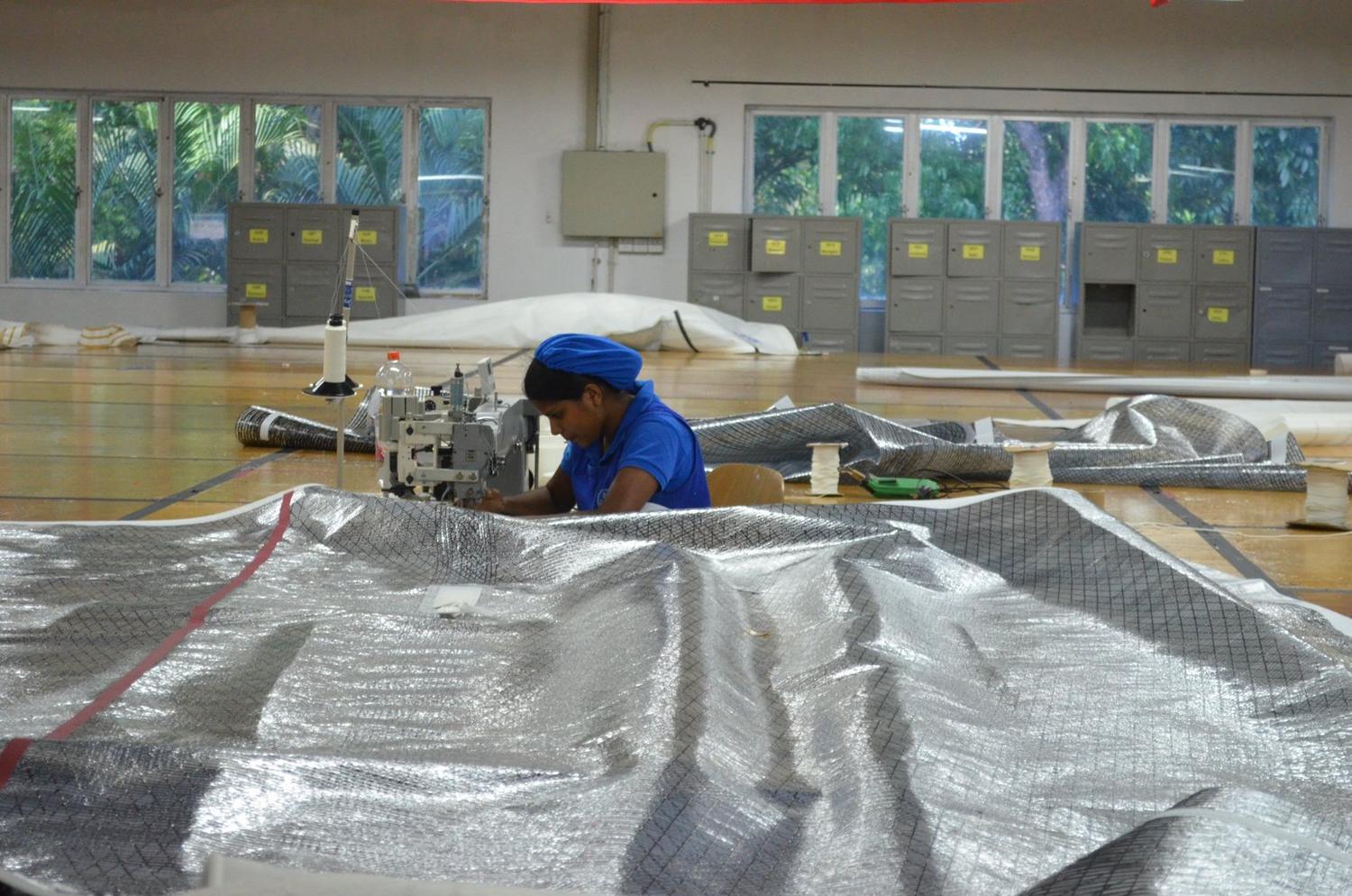
After just over two weeks of exploring Sri Lanka we returned to Mirissa and worked to prepare Adina for her next leg to the Maldives. A break in our preparations involved a trip to the North Sails loft just outside Colombo. It’s not every day you get to see where your sails are made and we had heard a lot of good things about the loft so were quite excited to see it all. During our visit many things stood out giving us a fresh perspective on Adina’s new sails.
Scale: North Sails seek to manage everything in-house meaning the sheer scale of the operation immediately impressed us. But more than that, what really stood out was the combination of technology, skilled craftsmanship and quality control. Everything from sails for dinghies to large offshore racing yachts were being made with the same meticulous level of detail. Machines using bobbins of thread that took a week to set up weaved away, plotter machines precision-cut sail panels, yet more machines laminated cloth and carbon using hi-tech adhesive. At the top end, machines followed by a person suspended in the air laid out carbon on huge automated platforms modeled to replicate the exact shape of a sail.
Expertise: Alongside the technology, each and every sail was being made with some element of human craft and skill. Spinnaker panels were laid together by ladies with an eye for precision, looking up and down the panel to determine where it needed to be laid before gently but confidently pressing it down. People sat in pits in the midst of huge platforms with sewing machines carefully stitching sails or sewing parts into them. Even top of the range carbon sails were hand finished by a professional with a pair of scissors and an eye for detail.
Pride: It was all carried out in a calm focused manner, people going about their jobs, knowing what they needed to do. Stopping to ask any Sri Lankan supervisor a question soon made you realise these people took pride in their job – quite often they would lose us as they leapt into intricate detail!
Quality: And then there was the quality control. Each sail is accompanied by a ‘ticket’, essentially a number of pages explaining the make-up of that individual sail, what needed to be done, what parts would accompany it and a list of checks to make sure it was delivered as it was designed. The name of the yacht was given and the sail’s destination – literally sails being made for the world!
Chamini Kanchana (left) and Nadisha Liyanarachchi (right) measure the placement of reinforcement panels on a 3Di sail.
Dilki Kumari lays nylon spinnaker panels on a small-boat downwind sail in building eight.
A loom sits loaded in Building 2 at North Sails in Sri Lanka. North Cloth takes up one of nine buildings at the North Sails complex in Sri Lanka.
As an owner of a set of North Sails sails, it really did give us the assurance that our sail had been made to a very high standard by a factory well equipped, by talented people and that it had all been quality checked. We now look at our sails with a different eye. On our sail is a little label that has the North Sail logo and states ‘Made in Sri Lanka’. It should read ‘Made with Pride in Sri Lanka’.
Adina’s time in Sri Lanka was up far too quickly. We had thoroughly enjoyed this land of variety, its people kind, warm and welcoming – it certainly sits high on our list of countries that should be visited.
Next…Adina visits the many atolls of the Maldives before heading to the remote British Indian Ocean Territory islands, azure blue seas are promised.
At Top: Chanika Panapitiya stitches the leech tape on a 3DL RACE sail.
READ MORE
READ MORE
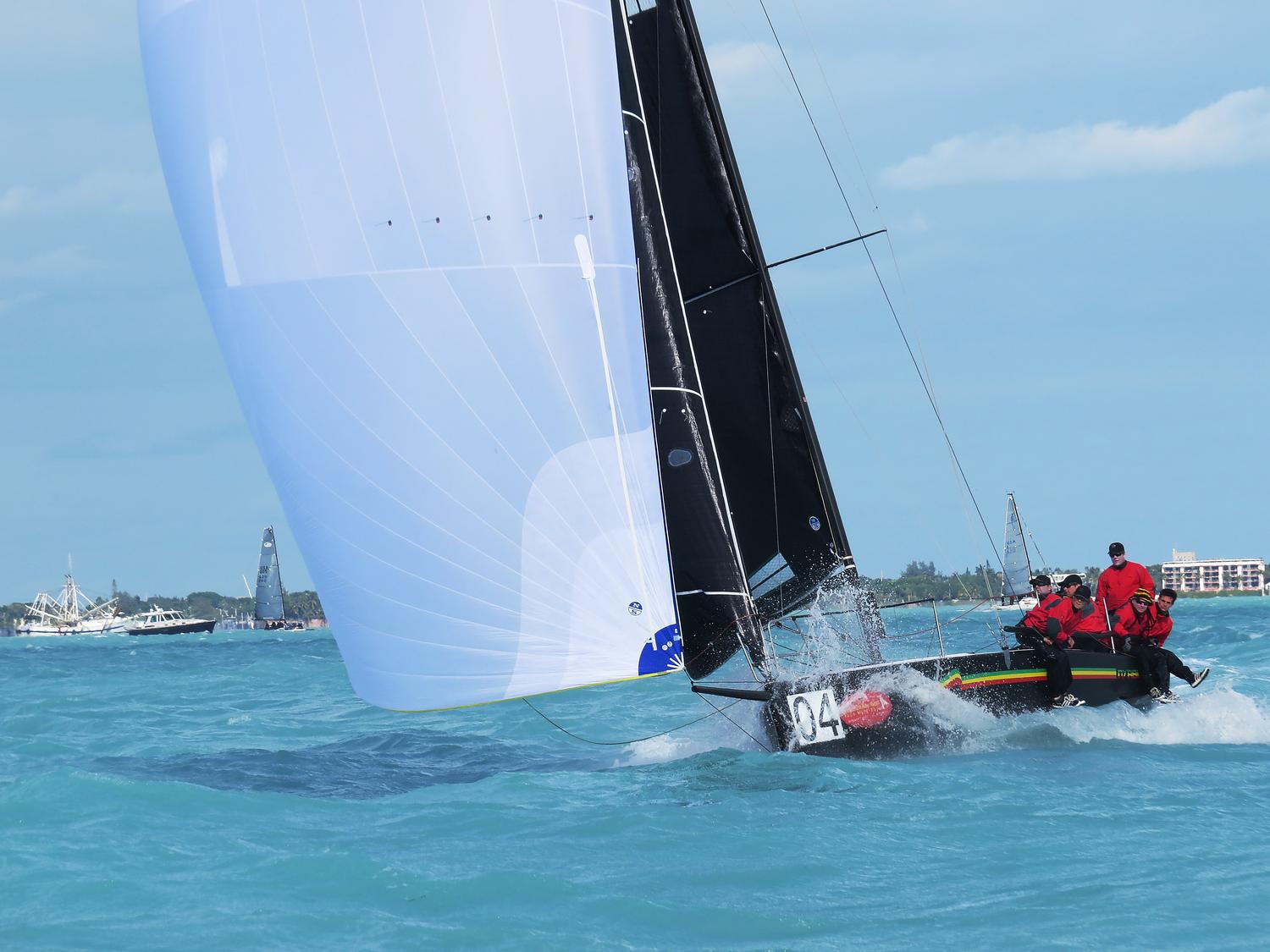
C&C30: NYABINGHI'S QUICK VIBES
You are an extremely busy guy, how do you organize your program to have such a successful result?
Racing the C&C 30 is a “mind clearing event” … during my time on the water, I am in control of boat speed and the maneuvers, and everything else fades away. The key is being able to focus on sailing—and this is what attracts me. For a busy business person, competitive sailing is an oasis.
We understand you come from a wooden boat background. Has it been difficult learning a new platform?
I grew up sailing Herreshoff S Boats with my dad, in Narragansett Bay. They were the C&C 30 of their day: 28 feet long, high performance for their time, and most importantly, one design. The Narragansett Bay fleet is the oldest one design fleet in America still racing in their original boats. I thought my lack of planing keelboat experience would be a disadvantage, but I picked it up quickly thanks to good teachers. And my experience one design racing is an advantage over those with backgrounds in IRC or other handicap racing.
Who is on your crew? What are their responsibilities?
We have some “steady” folks on the crew, like our runner guy. We call him Bobcat but his real name is Nick Campagna. When he drops the winch handle overboard, usually once every few regattas, we call it a “Bob-splash.” On one occasion, he dropped a VHF overboard, which we refer to as a “Bob-squawk.”
In the pit we have a rotation between Leeds Mitchell and Chase Hogoboom. Both are longtime personal friends who would bail me out of jail if afforded the opportunity. (I hope to avoid this.)
On bow, we usually have Norm Berge. We have been fortunate to have him aboard… and like all the folks on the boat, he has a positive attitude.
Usually on main trim we have Pete Levesque, who is one of our two Cat 3s. His knowledge of rig tune gives us a leg up, and sometimes we share dad advice between starts.
In Annapolis, Charlie Enright trimmed main and trimmed the kite downwind. Every day on the water with Charlie I consider a privilege.
On headsail trim, we have many “friends and family” helping with different events. In Annapolis, Chuck Swanson did a good job in this position. Sometimes the headsail trimmer becomes the whipping boy for the tactician, but in reality, any boatspeed problems upwind are usually the owner/helmsman’s fault.
Over the last year we’ve had a range of folks calling tactics and I have learned different things from each of them. In Annapolis we had Mike Buckley. Mike is able to raise our level of competition without unduly raising our personal stress levels.
How was your speed throughout the course of the event?
On the last day, we had some sort of asymmetry in our rig setup, which hampered our speed on one tack. Otherwise, our upwind boat speed was an effective weapon against the competition. Over the last year, I have really improved with our team in a range of different wind conditions, and also in tight tactical situations where you need to “live in a tight lane.” I feel like we definitely have this gear in all conditions now.
Off the breeze, we have moments of greatness for sure, but it’s not yet the strength I know it will be with a bit more work.
How critical is rig tune through the range of conditions?
The boat is highly sensitive to rig tune adjustments. You have to live with your rig tune for the entire race, so part of this means skating to where the puck is going to be. Having the right rig tune won’t win races on its own, but having the wrong tune can lose them.
You looked to be consistently in the top group in most of the races, how did you manage to do that in such different conditions? The biggest contributing factors to our success were: competitive boat speed, smart tactics, and not making too many bad boathandling mistakes.
What are a couple things you and your team do differently than other boats?
The name of our boat is a tribute to reggae music, which is full of positive energy. We are serious about winning, but we try to have a lot of laughs. Look forward, let’s go: that’s our team’s attitude, and it has served us well, in both victory and in defeat.
Also some of our other close competitors sail with another brand of sails. On Nyabinghi, the focus with our friends at North is always on learning, development and improvement. They have a technological edge, which appeals to me as the executive of a software company.
Now that you have sailed a couple events in the C&C 30 class, what comments do you have on the boat and class?
The boat is a pocket rocket that offers true one-design competition. The class is owner-driver with clear, strict rules that give everyone a chance to win. The racing is close, and the camaraderie off the water is strong. And the sailors are very welcoming of newcomers.
If you have to give three pointers to other teams on how to get the best performance out of the C&C 30 what would these be?
Manage your heel angle, and get the foils working for you upwind.
Don’t get too cute at the start, i.e. don’t strike out at the plate swinging only for home runs.
Always remember it is a privilege to be able to go sailing, so have fun on the course and keep a positive attitude.
What’s next for the Nyabinghi program?
We’ll compete in the NYYC Annual Regatta in June, and in the Race Week at Newport in July, which are our North American championships. That event ends on July 16, just 5 days before our third child’s due date! My wife Joanna told me, “With a sufficient outboard motor, you are no more than an hour or so from anywhere the next baby may be born.” In our family, sailing runs deep.
Nyabinghi races with North Sails 3Di RAW upwind and North Paneled Cloth (NPC) downwind sails, check out the North Sails full offering for the C&C30.
READ MORE
READ MORE
ATLANTIC CUP EXPERT PREVIEW
Have a question? Ask them here.
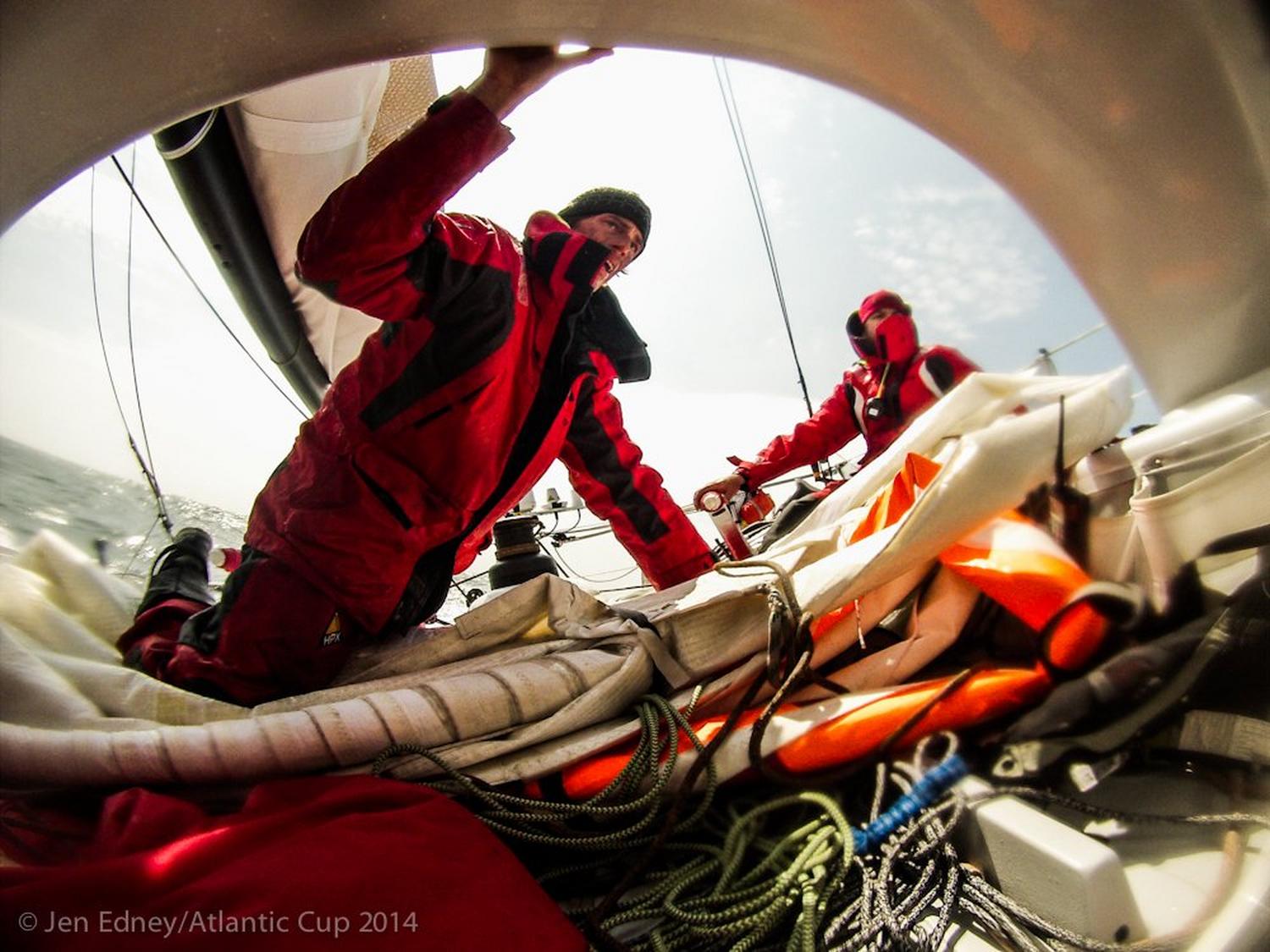
Never finish an ocean race in a location colder than where you started: this is one of the golden rules of offshore sailing and one which The Atlantic Cup knowingly breaks for all the right reasons. This May, the best Class 40 sailing in the United States is back for its fifth edition and here at North Sails, we are thrilled to be a part, sponsoring the “Ask The Expert” forum throughout the event. The Atlantic Cup, the brainchild of Hugh Piggin and Julianna Barbieri of Manuka Sports, challenges sailors over three weeks of sailing across all disciplines. Starting with two double-handed offshore legs and then switching to fully crewed inshore racing, it is a true test of all around sailing skill. While the Portland inshore series is crucial and weighs heavily on the overall win, it is the two offshore legs which provide the greatest variety in challenges faced. For the twelve competing teams, those who are the most studious and nuanced in their approach will find themselves entering that decisive weekend with a sizable advantage. Here is a quick guide on each of the two offshore legs.
CHARLESTON TO NYC
New York City is quite familiar to people arriving by boat, but rarely do they arrive on such toys as a Class 40. Small but powerful, and built purely for offshore sailing, the class has been hugely successful due to the boat’s versatility and stability. However, the Class 40 still suffers from the age old problem of being unable to sail when the winds are light, and the opposing current is strong. Many an Atlantic Cup have been decided in the waning moments as boats struggled against the mighty Hudson River in the light springtime breezes and this year a large number of teams and the even skill amongst them could well set us up for another nail-biting finish. But we’re getting ahead of ourselves… Let’s start at the beginning.
Read more on Pg. 3 of the Atlantic Cup Race Preview.
NYC TO PORTLAND
Leaving NYC on June 4 will take our fleet of twelve back out from the city on a route the reverse of how they came in. With a packed schedule of events while in New York, teams will be feeling as though they need some time off following the grueling Leg One. However, that is not the case. They’ll jump right back into it facing the same challenges as when they entered, as the “city that never sleeps” is an accurate description of NYC on the water as well as on land. The sailors will quickly find themselves dodging ferries, barges, and large commercial ships (not to mention one another) on their way back to the open ocean down a narrow channel.
From there, turn left and head to Maine. Sounds so simple, right? Read more on Pg. 3 of the Atlantic Cup Race Preview.
After teaming up for the last Volvo Ocean Race, Charlie Enright and Anderson Reggio are North Sails’ offshore experts for the Atlantic Cup 2016! Have a question? Ask them here.
READ MORE
READ MORE

INTERVIEW: CHAD ATKINS ON THE NEW DN SAIL DEVELOPMENT
NORTH SAILS DN ICEBOAT SAIL DEVELOPMENT WITH CHAD ATKINS
Sail Designer Mike Marshall Interviews Chad Atkins
You just finished sailing the DN North Americans. What conditions did you encounter at this event and how prepared for them were you?
The NA’s were held in Madison, WI the last week of February on a nice sized plate that had been resurfaced by some rain, wind and warmth just prior to the event. This left a reasonably flat and slightly textured surface that was somewhat soft and would go away quick in bright sunshine but would stay hard under cloud cover and wind. We had sunshine and very light winds that we couldn’t do much with the first few days followed by full on-hold on breeze for a couple days and ending with a light to moderate last day.
I was about as prepared as I could be with two young kids and my wife Kate that puts up with this madness. There were some late nights just prior preparing and aligning runners, making sure the gear I had was in order and thinking about bearing away around that windward mark fully warped out holding on and ripping downwind! Time in the boat is king (unless your Struble- Gonna need non-human life form testing at his next event!) and I got about 6-7 days in through a range of ice and wind conditions.
You spent a great deal of time this winter working with North Sails to design a set of DN sails for the NAs. What was that experience like?
It was interesting, that’s for sure. Starting from scratch there is a lot that goes into trying to break into a well developed class of a fringe sport. I liked that none of us had designed DN sails before so any ideas moving forward were open for experimentation. Even before the boat was set up in the loft and measured to put in the program, we went over the details of the sails that most of us were using and what the goal was for these designs. The first goal was to reduce weight and windage from any external reinforcement and unneeded extra cloth. We got rid of the aluminum headboard, came up with a way to bury the inboard batten pocket caps and flushed out the outboard ends with internal RBS rocket adjusters. The second was to try and have more twist with a similar amount of power at the bottom end. We incorporated a bolt rope that slides in the mast easier and could possibly stretch some as the sail loads up.
It was great that the team over in Sweden shared files so we could use their basic triangle and window layout. The team in San Diego got sails to me on deadlines that would lineup over all the fall and winter holidays. The Rhode Island loft made this happen with modifications and re-cuts. Much appreciated, Thanks!
Many steps are involved when starting from square one to design new sails. Which of these steps was the most interesting for you and why?
No kidding! These designs just don’t fall out of the computer after an hour! The most interesting thing about DN’s and the speed these little garage rockets have is the mast and how it bends as the boat powers up and takes off. With this the mast/sail combo is key to have match through a wide range of ice surface and wind conditions. In the DN class we are allowed two sails during an event,. Spanning this range with two sails is good for the class but tough on the sail and mast design. I would say the sail testing and modification were the highlight for me as I got to take the design produced, use it, figure out what modes worked or didn’t, then come back and help tweak it on the floor, and get back after it again when the ice allowed. Taking something to battle in which you have invested time has always appealed to me and is a base for the DN class since a lot of us build and tune most of our own equipment.
How did you decide what changes you wanted to make during the design process? Were you tuning against other boats?
Since we run from stop off the line, the only way to carve or hold your lane is to get in the gym and have a sail that can keep some leech tension early but twist off evenly as the boat accelerates and mast starts to bend. We had the acceleration and speed part down out of the gates but things seemed too open all the time as height early was an issue and I had to keep the boat a few degrees hotter downwind to stay even. Through many design tweaks of what I was feeling and seeing, we were able to get to the NA’s in a very short amount of time with a couple designs that I am excited about moving forward with!
Tuning Partners – yeah, those guys…. I should leave it at that! Seriously though- James “Irving” Thieler or “T” as most know him and Oliver “The Kid” Moore were a big part of fast-tracking this development program forward. They have both been sailing a ton the past few years, here in the States and over in Europe. We say this sport is 50% sailing and 50% social. For the three of us based in RI I think we tip the scales towards social just to get to the ice! Once there we try our best to break out of the coffee induced conversation and get our stuff onto the ice, rigged up, ice checked, marks up, track scouted and right into it.. RI is not an epicenter of iceboating but these guys it make it a lot easier to stay on pace in a tough, warm winter!
It seemed that your results were improving during the NAs. Did you change anything to accomplish this? Did you start sailing the boat differently?
The Regatta went from super mellow, calm and un-sailable to full- on overnight. Once the Silver mini Qualifier was finished and the top finishers moved up into Gold Fleet it was time to line ’em up. It was fast and furious for the first race and a bunch of us had gear failures. I broke a mast but luckily didn’t run a shroud over (causing hours of runner work and a new shroud) or create any other havoc while cleaning up and getting back to the pits while the rest of the fleet ripped around the track. I had another mast in the trailer ready to go that Oliver got out to me in record time but racing was cancelled for the day with most of the fleet reaching into the pits on bare poles. Day 4 dawned breeze on again that saw me struggle to find my settings in the first race and gradually start clawing my way through the chain fight. Day 5 of the new NA format was going to be it. Awesome because under the old format we would have been headed home on a nice light- moderate day of sailing and it was only Friday. I woke up early and got down to the boat to move my plank forward, mast step back, and mast socket forward each one hole, tightened the side stays and had the shrouds just tight with my weight on the plank, then off for some good tuning while the breeze was settling in. I was going pretty good against “T” so left everything as is for the first few races. As the breeze built through the day I slowly tightened the headstay maybe a full turn by the last race. It was a great day and pretty cool to have to sail into the measurer’s zone race after race.
Finally, where do you currently stand in the sail design process? What’s your plan going forward and how do you improve from here?
The design and trial process was a bit of chutes and ladders going up against designs that have been proven and tweaked for the last 15+ years. I am psyched to have done what we did in just a couple of months with very limited ice time here in the east. I feel like we have developed two solid designs that are a touch on the fuller side but have tested well at the NA’s and a few times after. I think the next step will be to refine the speed sail and get that up and tested as best we can in the warmer months to roll right into the GWC the first weekend of December somewhere in Minnesota. I guess most of us can start thinking of soft water for a month or two unless you are headed to Thunder Bay, Ontario or Lake Baikal in Siberia. Good luck and congrats to Matt Struble as well. Nice to have him back in the fleet to see where the bar is set leading into a North American Worlds next year.
READ MORE
READ MORE
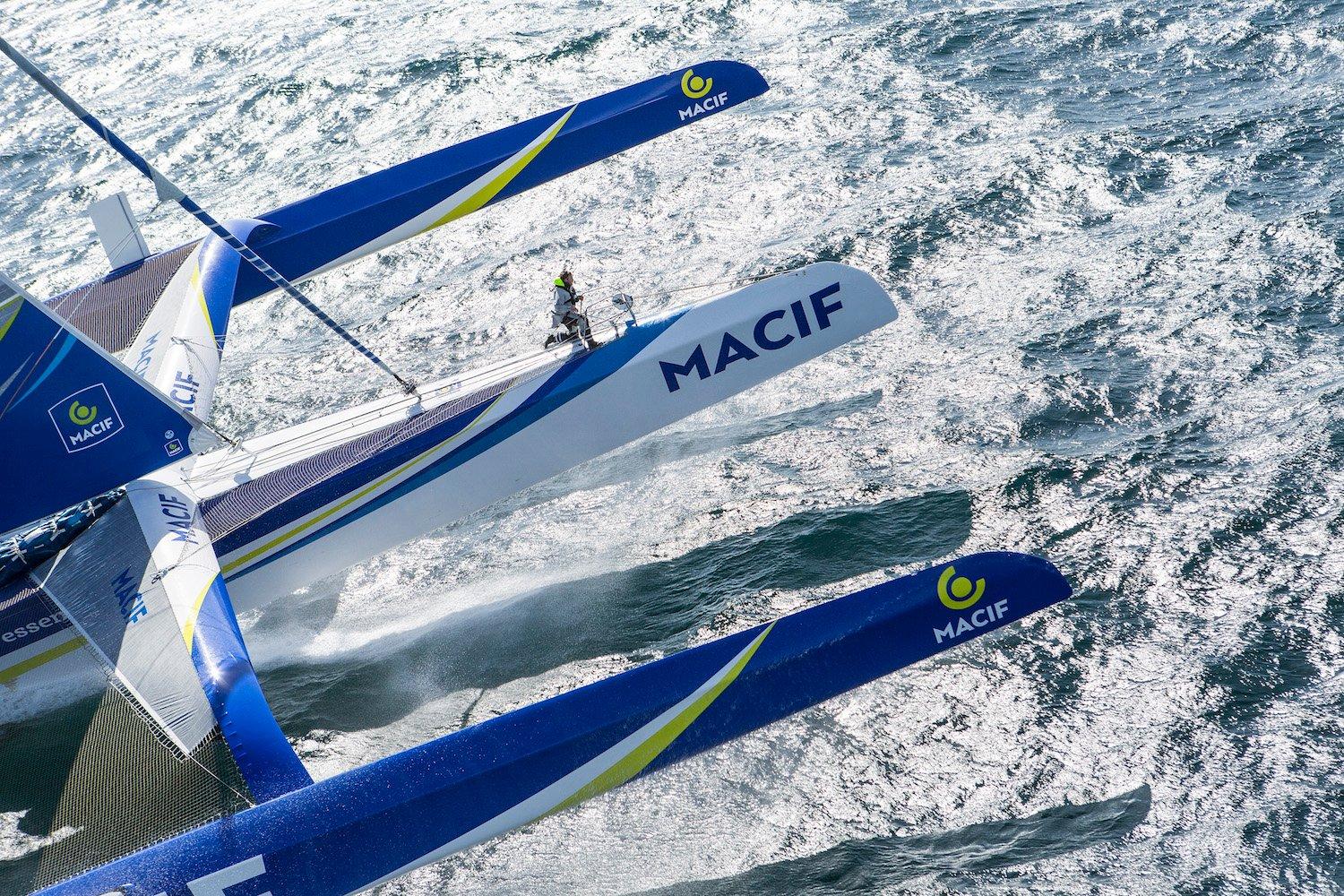
GABART CLAIMS "GRAND SLAM" WITH TRANSAT BAKERLY WIN!
The French skipper chose North Sails 3Di ENDURANCETM patented composite three-dimensional sailmaking technology to claim unprecedented victory in the four pillars of offshore racing – 2012-2013 Vendée Globe, 2014 Route du Rhum, 2015 Transat Jacques Vabre, 2016 Transat.
A winner has emerged from the Transat bakerly fleet after 33 year-old Francois Gabart was first to cross the finish line off of New York City last night at 18:24 EDT (22:24 GMT)! Gabart sailed into the star-lit city skyline accompanied by cheers and celebration from the MACIF team and sailing fans.
This is Gabart’s first solo win aboard the giant MACIF Trimaran, a 100’ VPLP design that launched last summer. Although a great initial test for him and the boat, today is only the beginning of the MACIF program as the young, yet experienced, ocean sailor sets his sights on a solo non-stop round-the-world record attempt.
“It was a big challenge for me. You should have 10 or 15 people to manage these boats, and it’s just me. It was my first solo race on MACIF, and I didn’t know if I would be able to do it, so I am really proud of what I did… To arrive into New York was perfect. The boat is in good shape. Me? Well, maybe not! I’m very tired, but I’m incredibly proud.”
The similarly sized Sodebo was close at his heels, reinforcing the fantastic potential of class competition among the Ultime 100’ trimarans – indeed on a grand scale! Gabart recalled:
“The competition with Thomas on Sodebo was wonderful. It made the race incredible for me. We are working together to organize more races for these type of boats, and when we see what happened in The Transat bakerly, and how close the competition was, we know there is a place for it. This is just the beginning of the journey.”
Gabart on MACIF and Thomas Coville at the helm of Sodebo spent the first three days within sight of each other after the start in Plymouth, UK. All three Ultime trimarans in the Transat bakerly, including Gabart’s MACIF, Coville’s Sodebo, and Yves Le Blevec’s Team Actual race with North Sails 3Di ENDURANCE.
:::
Now, to put this initial success for Gabart and MACIF in perspective, by winning the Transat last night, François has achieved the “Grand Slam of Offshore Sailing”. In just four years he has won:
2012-2013 Vendée Globe (solo nonstop round the world race) on his IMOCA 60 MACIF establishing a new race record at his first participation and, at age 29, the youngest to ever win the race.
2014 Route du Rhum (solo race between France and the Caribbean) on his IMOCA 60 MACIF
2015 Transat Jacques Vabre (double-handed race between France and Brazil) on his new trimaran MACIF, 1st race on this boat.
2016 Transat (solo race between the UK and the US), his 1st solo race on the boat.
Only the greatest offshore sailors have achieved this level of success: Loïck Peyron, Michel Desjoyeaux, and Franck Cammas among them.
Gabart has won all of his major offshore titles using patented, three-dimensional composite sailmaking technology from North Sails. North Sails 3Di™ is the only sail on the market made with Thermoset adhesive (no delamination), precisely mapped load patterns using CNC laid tapes, three-dimensional molding, and proven durability over 50,000 miles. Patented technology with proven results – North Sails 3Di will perform better and last longer than any other sail on the market.
About North Sails
North Sails, the largest division of North Technology Group, has become the world’s leading sailmaker through an ongoing commitment to superior performance, technical innovation and elevating the sailing experience of our customers. North Sails holds the patents for 3DiTM, a unique composite construction process resulting in high-performance sails that approach the shape holding of a rigid foil. By competing at the highest levels of our sport, North Sails tests and improves our products in the most demanding environments. The success we enjoy in the America’s Cup, Around-the-World challenges, Grand Prix racing circuit and One-Design Championships translates into sails that perform better, last longer and provide more enjoyment… no matter what and where you sail. That dedication has reshaped modern sailmaking. It is what drives us to push boundaries, pursue adventure, and always #GoBeyond. 87
READ MORE
READ MORE
BRITISH DUO STEAL VICTORY FOR 470 WOMEN IN HYERES WORLD CUP
The 470 Women delivered some dramatic action on the final day of racing at the Hyeres World Cup in France as the countdown to the Olympics reaches its climax. The French pair of Camille Lecointre and Helene Defrance had been leading the regatta, one final big event ahead of Rio, after some tight racing between some of the biggest names in the competitive class. But the home favorites went into the final race only one point ahead of the British duo of Hannah Mills and Saskia Clark, and only two points ahead of Brazilians Fernanda Oliviera and Ana Luisa Barbachan.
It was the Brazilians who got off to the superior start in the decisive medal race, leaving Mills and Clark in a dogfight to defend their position against the home favorites. However, Oliviera and Barbachan could not hold their position out front from New Zealand Olympic champions Jo Aleh and Polly Powrie. And when the Kiwis moved into the lead on the second lap, the British girls, the 2012 World Champions, were then able to take advantage of the Kiwi’s work to beat the French team to third and ensure their gold medal. The strong showing from the Brazilian pair saw them claim a silver medal overall, finishing only one point behind the Brits and tied on points with the French.
With the British pair aiming to convert their silver medal from London 2012 into more gold this summer, Sunday’s victory could not have come at a better time. “It was exciting – it was absolutely freezing as well,” said Mills. “I think some English weather may have helped us today. It was really exciting and really tight, and all the top boats were right up there in the mix so it was a ‘who beats who’ scenario. We had our eyes on what was going on and we caught the Brazilians up quite a lot on the second beat. Once we saw that the Kiwis had definitely passed them, we relaxed a bit and really wanted to protect the French to make sure we got the win.”
North Sails are the sail of choice for all the leading pairs, holding a market share in excess of 90%, and the podium of Britain, Brazil and France all use North Sails mainsails. The North Sails radial-cut offering for the Women’s 470 is designed and produced in Japan.
For more results, please visit: http://www.sailing.org/worldcup/regattas/hyeres_2016.php
READ MORE
READ MORE
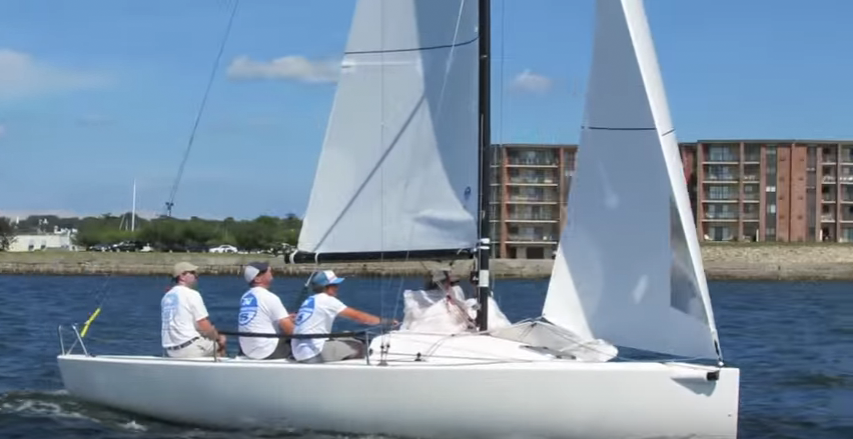
VIDEO: J/70 BOAT HANDLING WITH TIM HEALY
BASIC J/70 BOAT HANDLING WITH TIM HEALY
Spinnaker Set Up
Spinnaker Take Down
Tack and Gybe
Get in touch with Tim Healy if you have questions.
READ MORE
READ MORE
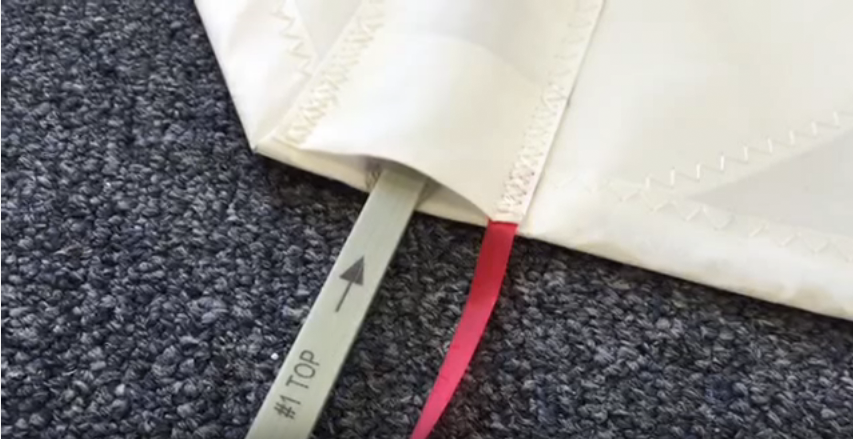
VIDEO: HOW TO TENSION FULL LENGTH BATTENS
TENSIONING FULL LENGTH BATTENS
How to properly tension full length battens using the “rocket” batten ends
The “rocket” comes standard on North Sails mainsails for the following classes: J/70, Etchells, Viper 640, Melges 24, International 14, International Canoe and F-18.
READ MORE
READ MORE
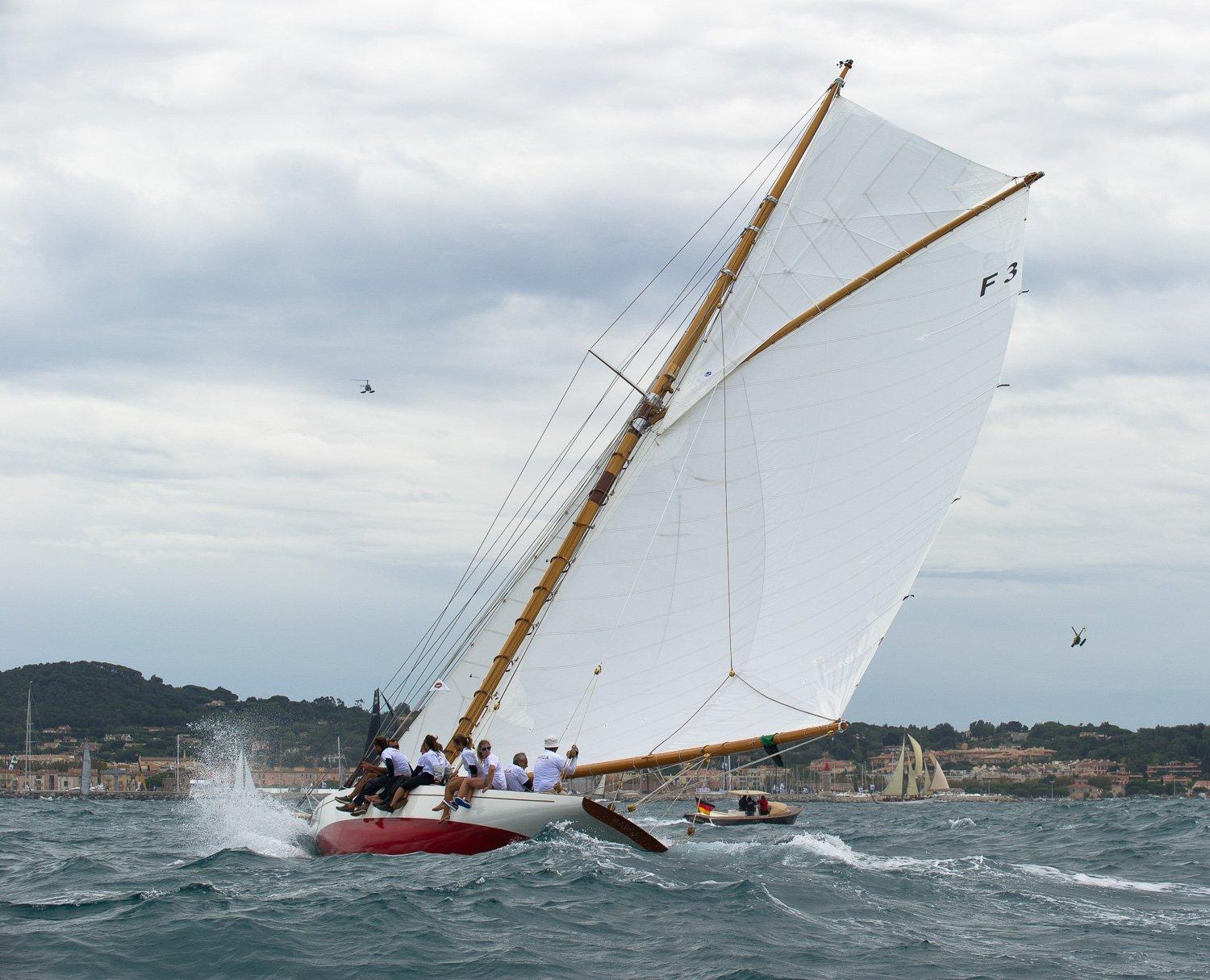
CLASSIC YACHT MARGA BEGINS NEXT CHAPTER
North Sails designer, Guido Cavalazzi speaks about his involvement in the yacht Marga, recently awarded Restoration of the Year by Classic Boat Magazine, as voted by readers for the Classic Boat Awards 2016.
I love sailing boats like this and in particular, this boat. I have spent a lot of my sailing career working with modern boats including lots of Americas Cup teams – I was involved with different campaigns over 7 America’s Cups finishing with Luna Rossa in 2014 so this is very different, but a great project.
This boat has a very interesting history. When the owners bought it, it needed a lot of attention. The hull had a little house thing built on top of it, which was being lived in. It’s a very sleek boat – it was a metre boat of the first rule when the rigs were gaff riggers in the early 1900’s – and very beautiful. So imagine that hull with a little house thing on top – really horrible! But that was what it was, laying in the boatyard just outside of Rome when the owners bought it and decided to restore it.
They basically ripped everything off and started to make everything as it was originally. They did a lot of research into how it looked back then, the sail plan and everything. And now you just have to look at it to see that they did a very good job.
For lots of reasons, I actually only came on quite late in the project. I knew one of the owners, he was a friend of my son’s from his sailing days in Sardinia and also, I knew Enrico who was in charge of the restoration. He has restored lots of boats in Italy and I know him, as he is very involved in association of sailing yachts in Tuscany. Anyway, I made a presentation to the owners about the sails and what
I thought we could do for them and some time later they asked me to come and start working with the project. I think they liked the work we had done on the NY-40 one design, gaff-rigged boat, Chinook, and on a 15m Int’l, Mariska. I started talking to Enrico about the sail plan and we went on from there.
You have to remember about this boat, that there are no winches – everything has to be done by hand, it is all block and tackle and no mechanics. I actually also did some consultancy with them on the deck plan as I was familiar with what this sort of boat needed. The deck plan is also very closely linked to the sails as it matters a lot what the deck layout is when you are working with just rope and nothing mechanical!
When it came to making the sails it was very different to modern boats. The modern racing boats we design sails for are done using the technique of one molded piece (whether that be 3Di, 3DL etc) so there is no stretch at all. This delivers very good power but would not work for this sort of boat as everything stretches on this boat – the wood (the hull), the shrouds – everything is moving so we have to make the sails the same. It’s nice actually as I use Dacron for these sails – it is a technique and material that I used to use when I first started in sail making, when racing sails were made in Dacron, and I have now gone back to it. Dacron started as the material of choice for sailmaking but then moved on to being used in cruising sails as racing sails changed to Kevlar and then carbon. In this case, the spars bend and then affect the sail shape and we have to take that into account when we design these sails. In fact, we have to treat the stretch in these boats as part of the design rather than a problem. It’s a bit like the fact that when you sail against a strong tide you take that into account when you work out where you put the bow, you adjust your course a bit. It’s the same for this – we have to aim the shape in a substantially different direction to make sure that with all the stretch factors we end up where we want to be.
We delivered the sails in August 2015 and then the owners decided to go to Cannes to race. I went with them and to be honest we didn’t do that well, but that was really because we hadn’t done it before and we were all just learning about how to sail the boat. They are now planning for the 2016 season, which is really like the first racing season for this boat. The boat will go to Antibes for the start of the Panerai series and I am very happy they have asked me to sail with them and do again the mainsail. Like I said at the beginning I really like sailing this boat. Most Classic boats owners have a very nice attitude towards their boat – they don’t really see themselves as owners but instead custodians. Its like the well being of the boat has been assigned to them for a certain period and then it will be passed on to be sailed by someone else and in the meantime it is their duty to make it nice. It is like a 1700 Stradivari violin – its life will go on after you have used it, you would never throw it away. It’s just like that. In modern sailing and modern boats there is not that same feeling so it is very nice to be involved with a project like this.
Guido Cavalazzi has been with North Sails for nearly 40 years, the majority of which he spent designing sails. He designed 11 sails for Classic Yacht Marga including a Gaff Mainsail and a Delivery Main (Bermudian), a Jack Yard Top sail, Working Top Sail, Jib and Jib Top, Staysail, Light Reaching Staysail, Yankee, Medium Asymmetrical runner, and a Heavy Asymmetrical reacher. The upwind sails are all made of North Sails NPC COASTAL dacron product and NPC DOWNWIND were used for the runner and reacher.
Image credits: © James Robinson Taylor
READ MORE
READ MORE
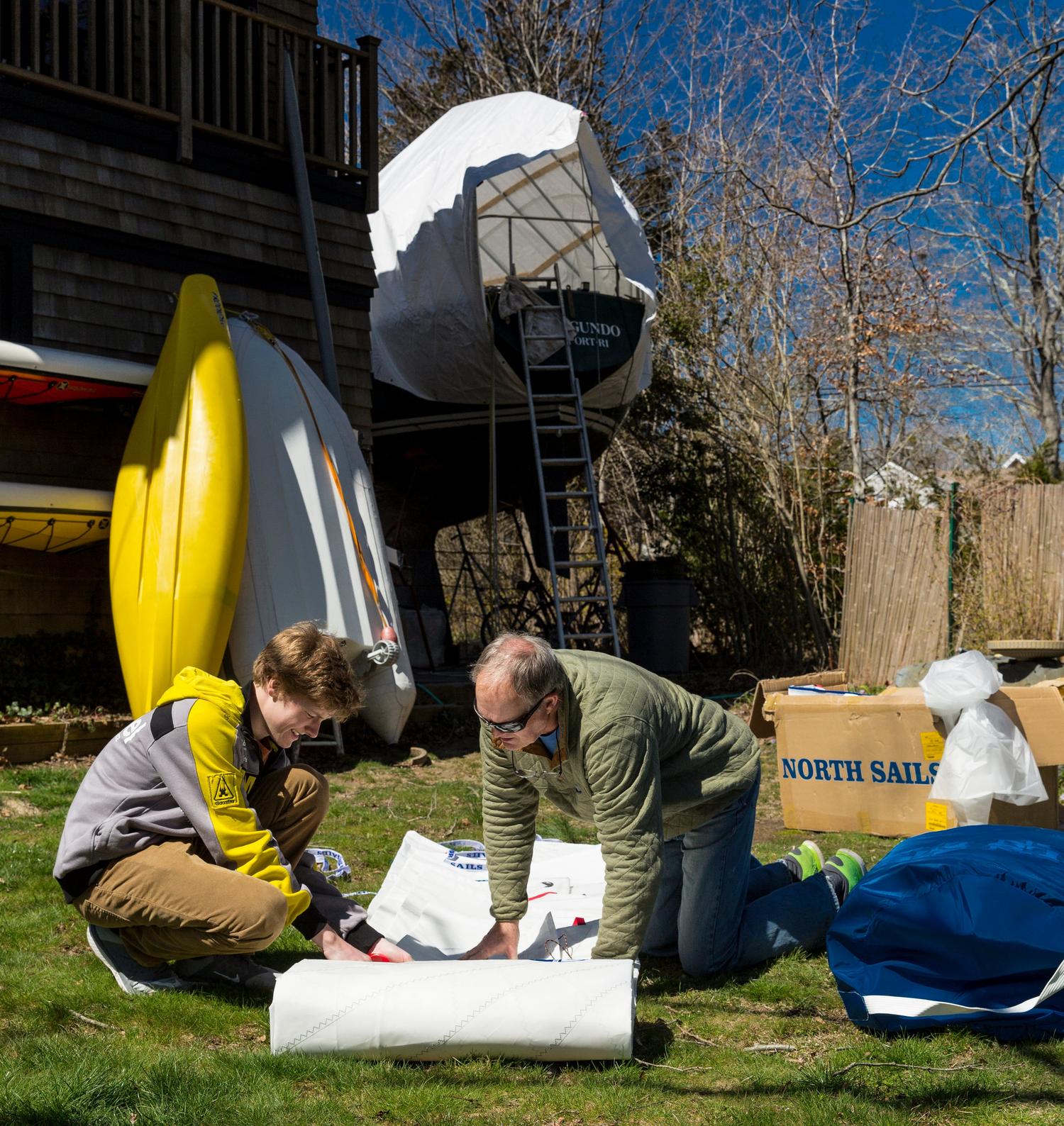
PEARSON 36 SNOEK PREPS FOR THE FIRST ADVENTURE
Onne van der Wal and his family have spent the winter restoring their 1972 Pearson 36, Snoek. This summer they will take to the waters of Narragansett Bay to stretch their legs and get to know the boat. One of Snoek’s many upgrades was a new suit of North Sails.
A renown nautical photographer, Onne spent some time on the “other” side of the lens for this project! We look forward to hearing more from the van der Wal clan as they set off on various adventures this season. Stay tuned!
Onne van der Wal and 17 year old son Adrian recently unpacked their brand new North cruising sails for their 1972 Pearson 36, Snoek. They were closely supervised by Lucy the beagle, who will join the family cruising on Narragansett Bay this summer.
While Lucy looked on from a safe distance, Onne gave each of the three sails (mainsail, genoa, and gennaker) a careful inspection, partly to familiarize himself with what state-of-the-art cruising sails look like. “The level of detail and finish work are very impressive,” he said.
Telltales have been carefully placed to provide the best trim information for a variety of sailing angles, and the gray sunshade will protect the rest of the sail from UV. The sails are made of North Sails NPC RADIANTM, a patented warp-oriented cloth with superior shapeholding qualities. The blue rope luff reefing pad maintains optimum shape when the sail is reefed.
Surrounded by a backyard full of boats, the spring lawn became a sunny sail loft for the afternoon. Adrian, a racing sailor, spotted the batten pocket detail on the main.
“I can’t wait to use this genoa,” Onne said. “The leechline and footline have been really well thought out for ease of use, without leaving any loose ends that could catch on something. And the soft clew will really save the mast from getting beat up if our tacks aren’t quite perfect.”
The genoa leechline has a purchase and retractor system, making for easy adjustment. “We’re not going racing,” Onne reminded us. “We want these sails to last many years. So it’s nice to see North has thought out how to keep the leech from fluttering, once they’re not quite as new as they are now.”
Onne and his family spent much of the winter updating the Pearson 36, so they will proudly display the Pearson logo every time they hoist the mainsail. “It’s a great classic design, so we want people to know what she is as we sail her around Narragansett Bay.”
Each sail has a unique number stamped on the logo. The serial number matches Onne’s order number and is used to reference the sail’s history and service record.
They saved the best for last: pulling the Gennaker™ out of its turtle. “The boat’s getting repainted at Bristol Marine in Awlgrip’s Stars and Stripes blue,” Onne said. “So this red white and blue kite is going to look really good.”
“Family cruising should be easy, but I like to set a kite,” Onne said. “So the gennaker’s a good compromise.” The North SnufferPlus™ will make deploying and dousing a breeze.
Once the careful inspection was complete, Adrian and friend Alden Grimes made quick work of packing the Gennaker back into its turtle.
Lucy the beagle declared the afternoon a success, though she is still wondering when her own big box of treats is going to be delivered.
READ MORE
READ MORE
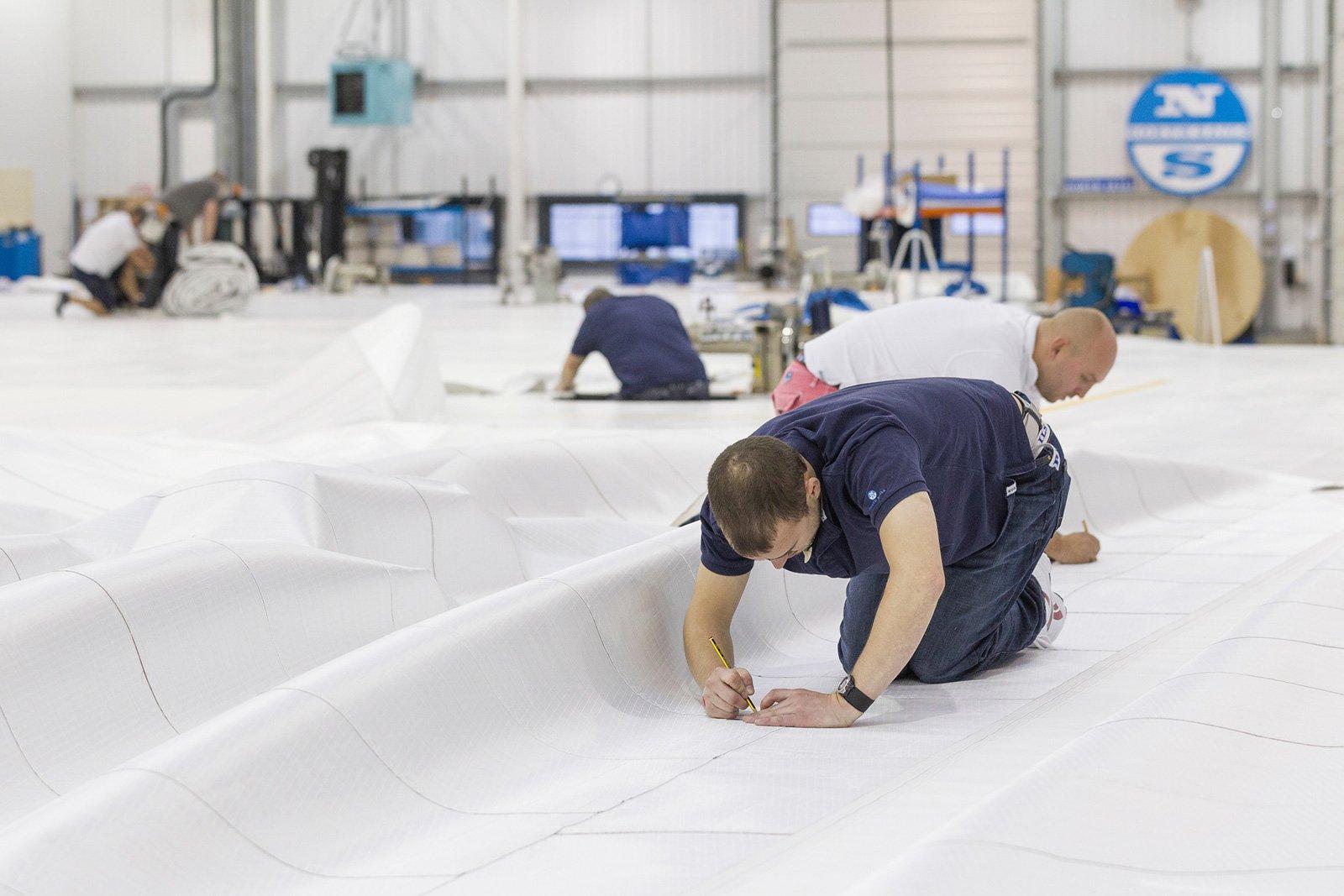
NORTH SAILS UK HAMBLE VILLAGE, HAMPSHIRE
The purpose of this new base is primarily for after sales & service care. We have chosen to open it in this location in order to support our growing customer base and have feet on the ground in this very active marina setting. Every type of yacht is catered for in Hamble and we recognize the importance of having staff there at key times.
The office will be staffed on Mondays and Fridays and any other time by appointment. Please contact Frank Gerber to make an appointment – frank.gerber@northsails.com or 07887 555 779.
During opening hours we will also be on hand to quote for new sails, be a source of information for all things North Sails and help answer any questions as they arise. There will be a stock of common items from battens and batten ends to clew straps.
Please drop by and say hello if you are in Hamble or the local area and need our assistance.
Image credit © Paul Todd / OUTSIDEIMAGES.COM
READ MORE
READ MORE
GP14 WORLD CHAMPIONSHIP 2016
GP14 WORLD CHAMPIONSHIP 2016
BY ALISTAIR IRELAND
Back in 2014 I was offered the chance to become a North Sails Jockey by the Dinghy Specialist Sailingfast. Fresh out of the 420 youth class there was no better way to start the next step in my sailing career.
For the last two years North Sails powered the Flying Fifteen I was sailing. In 2015 I won the British National Championship on home waters with my Dad with a brand new set of North Sails. This was shortly followed by winning the Scottish Nationals at Loch Lomond with Philippa Benson the following month. I later found out later that both boats powered by North Sails won the Silver/Classic and the Modern class at Loch Lomond.
Following this success we decided to take on our next challenge at the 2016 GP14 World Championships in Barbados. North Sails were happy to provide our gear for the event and get behind one of the youngest teams. Turns out we were one of the lightest teams at what was to be a heavy wind event! Thankfully North had provided us with a personalised tuning guide with special recommendations from ex-GP14 sailors. Having a guide that was personally tailored gave us an advantage that was welcomed in such a high standard fleet.
Despite the heavy airs myself and Philippa finished the 2nd under 21 boat and 37th overall in a strong fleet of 105.
We would like give a big thank you to North Sails and Sailingfast for their on-going support and we look forward to the next big event!
READ MORE
READ MORE
CALIFORNIA OFFSHORE RACE WEEK
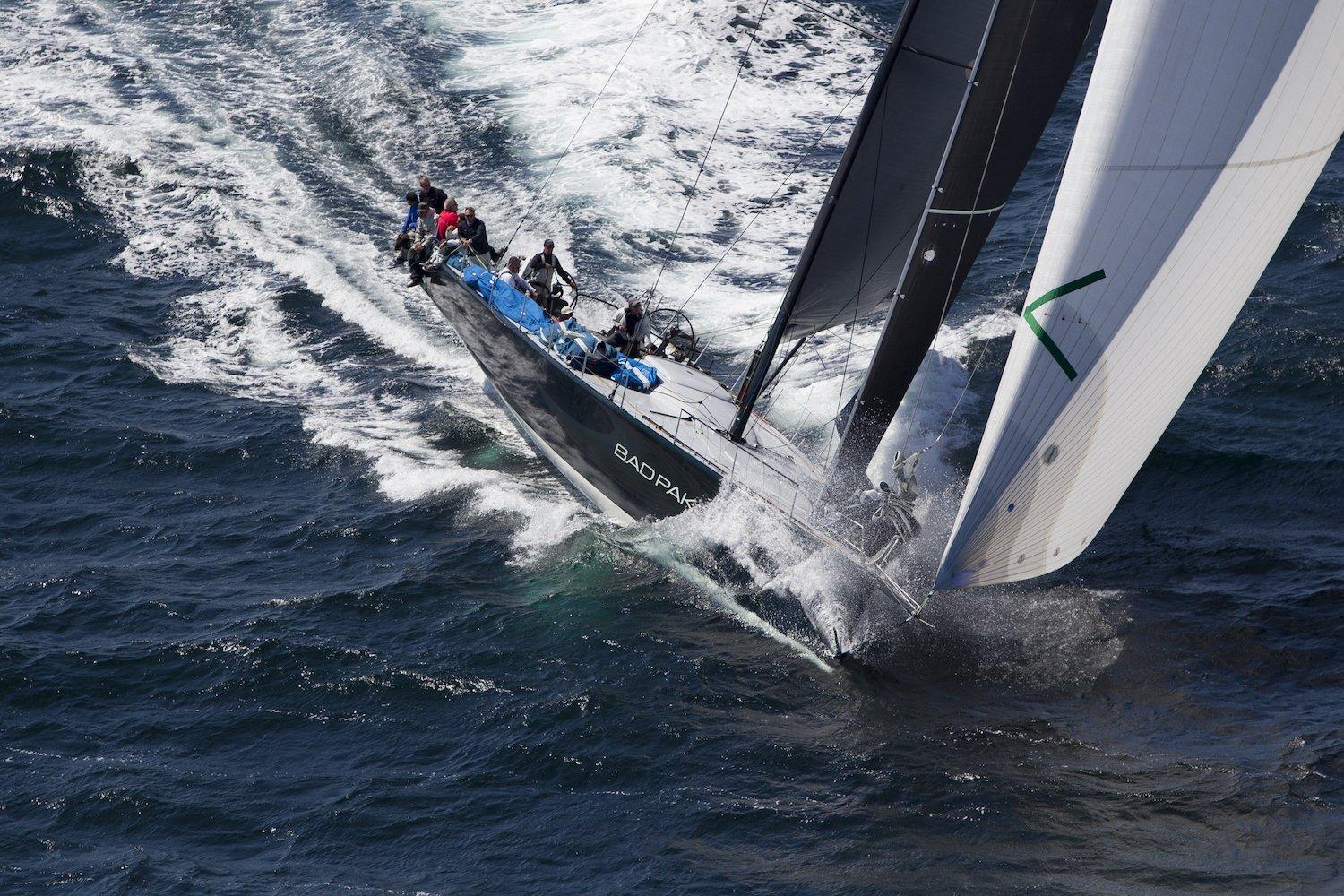
Kicking off the first installment of this event, we congratulate the CORW race organizers and share in their excitement to see the regatta grow. Read the full release on the official regatta website.
California Offshore Race Week is the exciting grouping of three California coastal races, five yacht clubs and one in-port race under an overall trophy. We’d like to thank SD Boatworks, North Sails, Mount Gay Rum and The Pirates Lair for making this race come to life!
Starting on Friday, May 27 in San Francisco Bay, the series takes off under the iconic Golden Gate Bridge on an 88nm trek to Monterey. Here they will spend a day long layover to get rested and ready for the sled ride to Santa Barbara. Picking up on Sunday, May 29, the Coastal Cup starts in Monterey Bay and runs 200nm around Point Conception and into Santa Barbara. A multi-day layover in Santa Barbara will allow racers to recoup, repair and enjoy the local scene. Santa Barbara Yacht Club will be hosting shoreside parties and all will be invited to a ‘just for fun’ in-port race on Wednesday afternoon, which will see the offshore crews link up with the local Beer Can racers for fresh round of buoy racing. The final leg starts on Friday, June 3 with the SoCal 300 sending the fleet through the channel islands on their way to San Diego, a total trip of 254nm. The awards ceremony will be held on Sunday, June 5 at San Diego Yacht Club. California Offshore Race Week has been endorsed by the Offshore Racing Association as the official “California Offshore Championship”, hence the winner will stand as the 2016 California Offshore Champion… until next year!
Get your offshore inventory ready to go for this annual event, and remember North Sails is here to help you!
2829 Historic Decatur Rd. San Diego, California 92106-6014, USA | +1 619 224 2424
Lynsi Gibbons (Office Manager) – (T) 619-224-2424 – lynsi.gibbons@northsails.com
Eric Heim (Sail Care) – (T) 619-224-2424 – eric.heim@northsails.com
Jon Gardner (Sales) – (T) 619-224-2424 – jon.gardner@northsails.com
Patrick Murray (Sales) – (T) 619-224-2424 – patrick.murray@northsails.com – (M) +1 619 347 0399
Eric Doyle (Sales/ One Design) – (T) 619-224-2424 – eric.doyle@northsails.com – (M) +1 949 228 7185
Image Credits (top and below): © Sharon Green / Ultimate Sailing
READ MORE
READ MORE
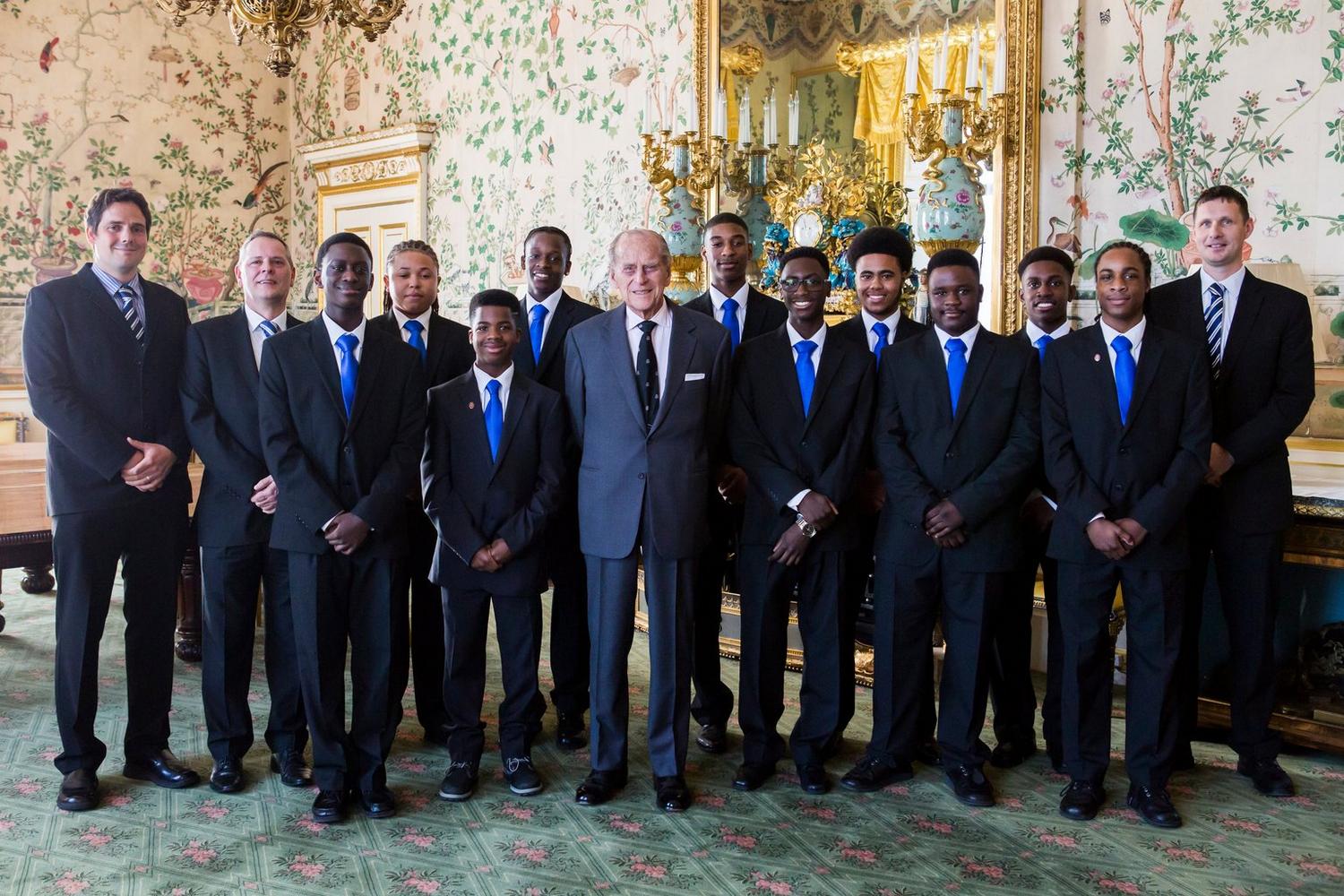
NEW SAILS FOR GREIG CITY ACADEMY'S SCARAMOUCHE
NEW SAILS FOR SCARAMOUCHE
London’s first inner-city school sailing club fosters on-the-water experiences for the next generation
It began approximately two years ago when teacher and program initiator, Jon Holt, began taking groups of 24 students at a time down to Poole Harbour to work toward getting their Level 1 RYA Dinghy Sailing certificates. Over 250 students completed the course. The emerging crew members set their sights on the horizon and, after spreading the word to their peers, salvaged and restored a MacGregor 26 to spend the afternoons sailing out of Poole. Holt spearheaded a fundraising effort to acquire Scaramouche, a 45ft German Frers yacht. Holt and a crew of eight 15 year old students restored and sailed her throughout the summer before they entered and won the ASTO Small Ships Race, a national training regatta. Now, with a gem of a racing boat on their hands, the group has an ultimate goal of entering the 2016 Round the Island Race and next year’s Rolex Fastnet.
“The crew have worked very hard, not just sailing but also promoting sailing to others who normally cannot access the sport. They now have delivered their presentation 30 times to 22 primary schools. They were invited twice to speak at the Royal Yacht Squadron and their talk was very well received,” said Holt.
The North Sails team in the UK has already built a new jib and are working on a new mainsail for the team with extra support from British sailing legend Lawrie Smith.
“Lawrie has been the inspiration behind this and following his input has driven my crew to not just sail when I organize trips, but to buy dinghies off eBay and sail them on King George’s Reservoir in London,” said Holt.
Nigel King, former keelboat manager of the RYA and part of the Academy’s initiative to foster experiences on the water, reminds us of the primary individuals creating these opportunities: the teachers.
“I gave them a few contacts initially. They have run with them and moved forward. It is really about the youngsters, just really ensuring they get every opportunity possible,” King remarked. “But the bit that stands out for me is that the teachers are really taking a punt. There really are a million reasons why they would not want to do this. It is scary and different. But what they are doing is planting a seed and then, hopefully, we can all help take it forwards.”
The crew of Scaramouche spent an afternoon with the North Sails UK team at the new cutting-edge sail loft in Gosport, likely spotting their new mainsail in the works. Regional sales manager, Sam Richmond, reported the young team’s enthusiasm was an inspiration, “It is truly gratifying to see programs like Greig City Academy finding unique opportunities for students to explore outside the classroom. Even more exciting is they have chosen sailing as their platform. Of course we are thrilled to help in any way we can.”
Follow the team’s progress on the Greig City Academy website and Facebook page: facebook.com/GreigCityAcademy
Images; Top: The Greig City Academy crew were invited to talk with the Duke of Edinburgh at Buckingham Palace, February 2016; Above: Montel at the helm of Scaramouche
READ MORE
READ MORE
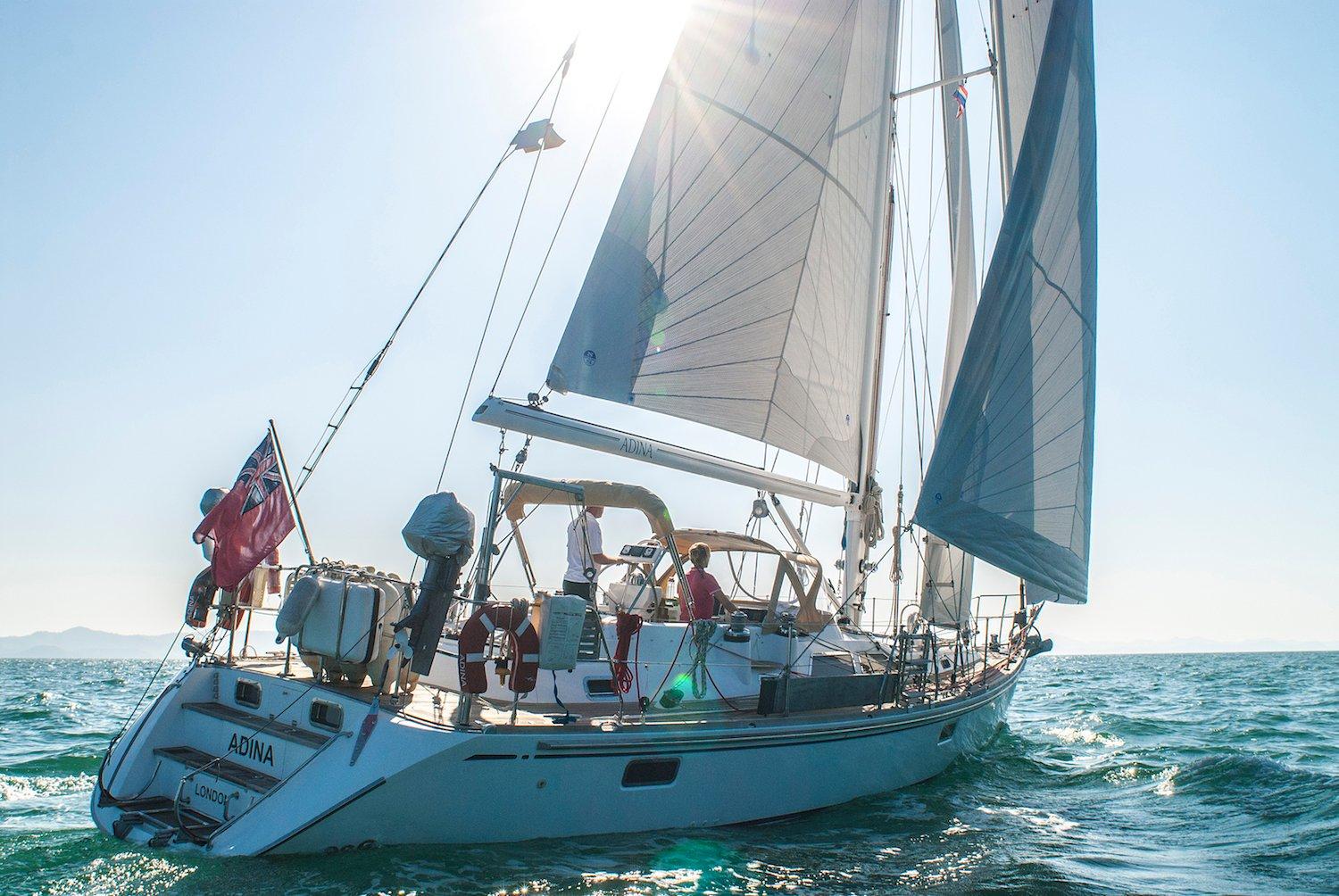
ADINA EXPLORES SRI LANKA PART 1
ADINA EXPLORES SRI LANKA: PART 1
Tom and Susie Partridge explore the natural beauties of Sri Lanka onboard Adina
After two months of solid work in Malaysia and Thailand readying Adina for the new sailing season, we were all set to go. Our target this year is Cape Town, South Africa, sailing across the Indian Ocean. Along the way we plan to visit Sri Lanka, the Maldives, British Indian Ocean Territory (Chagos), the Seychelles, Comoros and Madagascar, each one promising its own form of adventure. The first leg of 1120 nautical miles from Thailand to Sri Lanka is actually the longest we should undertake on our way to Cape Town. Leaving the creature comforts of South East Asia behind, the initial winds were light and sailing downwind we flew our spinnaker as we eased into our passage. The forecast for the North East trade winds to fill in directly from behind and strengthen with increasing seas soon proved to be accurate. Cruisers by nature will always chase a rhumb line – gybing way off course downwind for more speed is left to our racing brothers and sisters! In this case to keep sailing a downwind rhumb line meant sailing wing-on-wing or goose-winging as it is more eloquently known, flying one sail to port and the other to starboard. On Adina this means we pole our genoa out to the one side and pin the mainsail on the opposite side. The downside to this is that it is without doubt the most uncomfortable point of sail as the boat will roll – no escaping it, we really should learn to sail off course! We’ve spent ages researching how to reduce the roll and at the end of the day it boils down to your boat design – some boats roll more than others. We deploy a few techniques which are largely based around the sea state. In predictable seas it pays to get as much sail up as you safely can, the faster speed making for a smoother ride. In sloppy irregular seas we will bring the mainsail in so that it is trimmed for a beam reach to help reduce the roll. Another tip is to reduce any twist in the top of your genoa by sheeting on or lowering the spinnaker pole.
After eight days of exhilarating sailing we made landfall in Galle, a port located in the south-west of Sri Lanka. A night time arrival, we slowly and carefully found ourselves a protected spot to drop the anchor and get some sleep. Lengthy formalities complete, the next afternoon we headed fifteen nautical miles east to the delightful fishing harbour of Mirissa which was to be Adina’s home for four weeks. Sri Lanka represented a new cultural experience on our trip and we were excited to explore the country renowned for its many sights and friendly people. In fact it wouldn’t be wrong to say we took one look, smiled with glee and ran at it, arms waving madly. Tuk-tuks – bring it on; mad local buses – we’ll try them; spicy food – we’ll eat it!
Sri Lanka is often referred to as a gentler, calmer version of India and we think that’s an apt description. Except when it comes to the driving. Our tuk-tuk driver, Suranga, took us to visit the old fort at Galle and demonstrated why Formula One racing should seriously consider Sri Lanka as a place to source their drivers. There’s definitely a pecking order on the roads here. Tuk-tuk drivers are bottom of the ladder and to survive they need fast reflexes; buses and vans will happily mow them down but they duck and dive here and there finding gaps, dodging pedestrians and dogs. Next up the pecking order are vans and cars – probably the most comfortable form of travel, they have to keep their eyes on the tuk-tuks and bigger buses. Buses rule, they are bigger and they know it. Through the mountainous interior they tear along, throwing themselves around corners, seemingly determined to run man, dog, stray monkey and tuk-tuk down. A town centre doesn’t mean they slow down – they keep going! It’s a brave man who sits at the front of the bus looking forward. Yet we always felt safe and it made us smile and chuckle as we hurtled and bounced along.
The old fort town of Galle where Adina completed formalities
Black lake in Mihintale, the birthplace of Buddhism in Sri Lanka
Elephant in Yala National Park
Spending time with the ladies
Sri Lanka has a wide variety of sights to be seen. Temples old and new abound and religion is an important aspect of life with people taking time to pray, reflect and make offerings. There are countless national parks to explore and we were fortunate enough to tick off sightings of leopard, elephant, deer and more crocodiles than we had expected! Up in the hilly interior temperatures are cooler and with Sri Lanka being the world’s third largest tea producer a visit to a tea plantation to learn more about this product we English so enjoy was a must!
A highlight for us was walking up Adam’s Peak, a pilgrimage site for the people of Sri Lanka, climbing 5500 steps to see the Buddha footprint that sits at the top of it. We had timed our visit on a weekend – or should we call that planning gone awry? Thousands turned up with us to complete the pilgrimage! The goal is to see the sunrise from the top so we duly set off at 1.30am. What we found most impressive about the pilgrimage is that the entire family comes along, and we mean the entire family; junior, the teenagers, boyfriend, girlfriend, Mum, Dad, Aunty, Uncle and the grandparents too! We saw little ones less than five years old and old ones well into their eighties.
After two hours of focused climbing, the mass now five people wide came to a complete halt as far as the eye could see. We saw some teenagers scampering off down a side path and were able to follow them and make it to the summit using a different approach to enjoy a magnificent sunrise. Walking back down we could still see long queues waiting to reach the top. And lots of tired weary bodies slowly going down. We went as fast as we could, fired up by the thought of the tasty local dish of pancake-like hopper, banana and honey waiting for us at the bottom!
Travelling around, we opted to stay in local homestays which gave us the chance to meet local people. On Adina we like to cook recipes that we collect from around the world and our hosts were always only too happy and proud to show us how they prepare their curries. Sri Lankan curries take a long time to prepare and the reason quickly becomes obvious. Rice and curry (not curry and rice) always consists of three to five curries (and sometimes ten on special occasions) whereas in most countries it’s just one curry. The individual curry sizes are smaller but three to five curries takes a lot of preparation. And tasty they certainly are.
After just over two weeks of travel we returned to Mirissa and worked to prepare Adina for her next leg to the Maldives. A break in our preparations involved a trip to the North Sails loft just outside Colombo. It’s not every day you get to see where your sails are made and we had heard a lot of good things about the loft so were quite excited to see it all.
Below: Looking out from the fishing village of Mirissa, on the south end of Sri Lanka
READ MORE
READ MORE
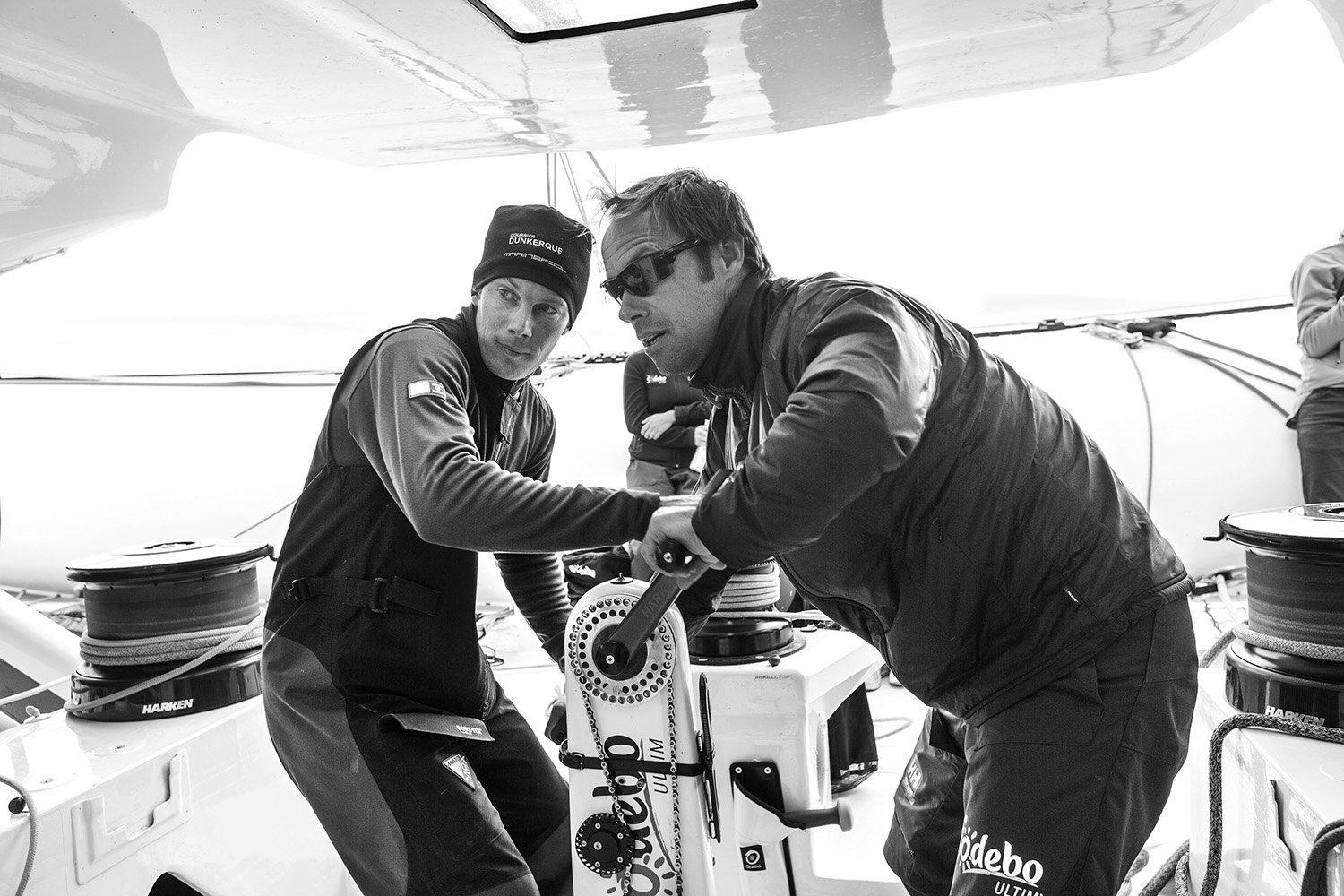
NORTH CREW: QUENTIN PONROY
A qualified engineer, experienced sailmaker and sail designer, Quentin Ponroy is also a very good sailor. In 2014 he won the J/80 Europeans (tactician) and the Tour de France à Voile (mainsail trimmer). He also enjoys sailing famed French boats such as Multi50, Mini, Figaro Bénéteau II or Open 7.50 with great success. This week you will find him on the Diam 24 course at Spi Ouest.
Pictured left with Thomas Coville on the 102ft trimaran Sodebo Ultim’, Quentin is also making great strides in the ocean racing sphere.
“At North Sails, I am fortunate to be involved in very different projects from the Mini 6.50 to the Maxi Sodebo, including IRC boats or the Figaro for example,” he said. “My job on the design team is to work fast and perfect sails by using different shapes and materials in the design. I enjoy this job because it’s never finished and I also spend time sailing.
When asked for his advice to a young person with big aspirations in sailing, Quentin had the following recommendation:
“Spend time on the water no matter the boat. And be conscious that the technical dimension is more and more important to understand modern boats.”
Image credit © Jean-Marie Liot
READ MORE
READ MORE
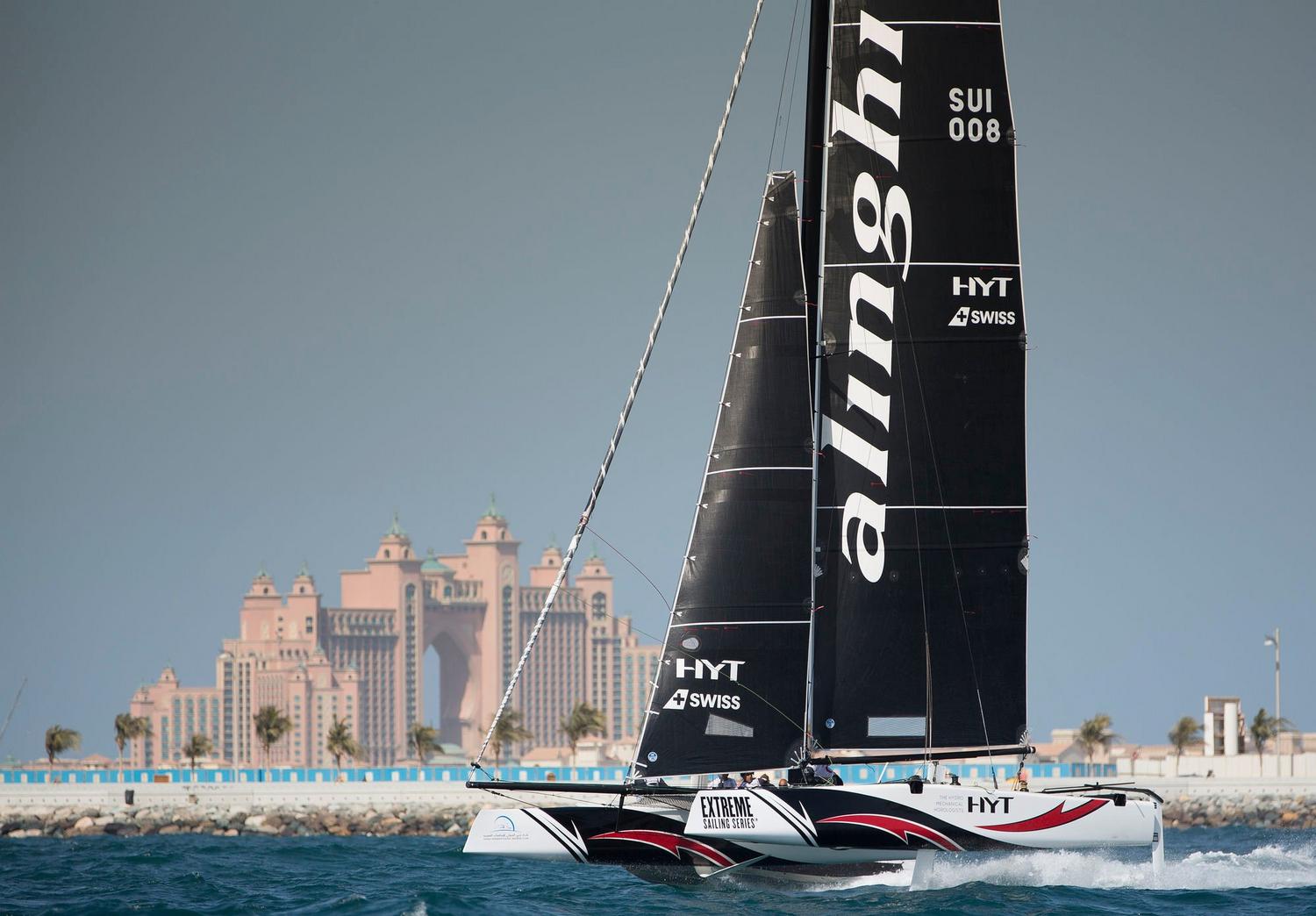
NORTH CREW: ARNAUD PSAROFAGHIS
As a sail designer for North Sails in Geneva and co-skipper of team Alinghi, Arnaud Psarofaghis maintains an envious balance of work and play. With the Extreme Sailing Series kicking off in Oman, this week you’ll find him foiling at the helm of Alinghi’s GC32.
“I have been a designer at North Sails Geneva for 10 years and enjoy it a lot. We face new challenges every day to build the fastest sails whilst also meeting demands from the customer. It’s nice to be able to create something new every day.” Lake Geneva is likely the perfect place for a multihull sailor like Arnaud. Originally from Corsier, he has risen as one of Switzerland’s top sailors and in 2014 was named the country’s Male Sailor of the Year. He has a broad and detailed range of experience across the multihull world, having found success in the D35s, the Ventilo M2, the Extreme 40 and also the AC45.
While sailing with Team Tilt, he won the 2015 D35 Trophy, a title that included a win in the iconic Bol d’Or. He also has made a big name for himself in the Moth Class of dinghy racing.
When asked for his advice to young sailors with big aspirations, he said:
“The key element is to be able to sail on several different types of boats to gain overall experience with different teams and sailors. All of my opportunities in sailing came from being able to spend a lot of time on the water.”
READ MORE
READ MORE
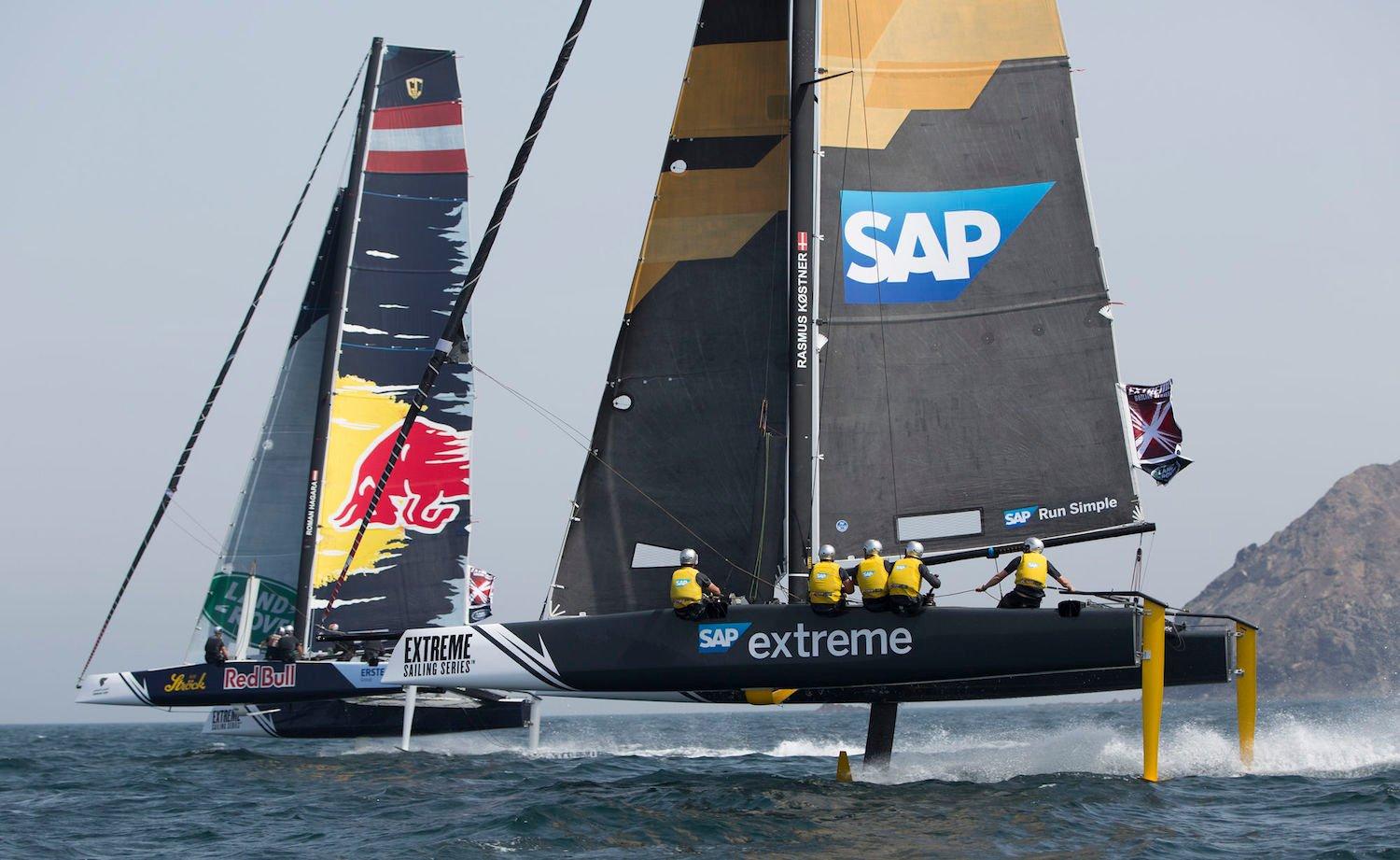
EXTREME SAILING SERIES 2016: DESIGNING SAILS FOR THE GC32
To foil, or not to foil? That’s a constant question for the GC32, the newly selected platform for the Extreme Sailing Series. And since the answer depends on conditions, it can change from moment to moment and will definitely vary from one event to the next. Which brings up a word you don’t expect to hear from a sail designer: “forgiveness.”
Gautier Sergent designed the sails for the GC32 (mainsail, two jibs, and a gennaker); all are North Sails 3Di. “You have to go from wider apparent wind angles and lower apparent wind speeds to tight angles and high speeds with one sail inventory,” he explains. ”And obviously ESS races are very demanding in terms of maneuvers, which is always hard for the sails. That is why we have a full 3Di inventory.”
The sails also have to be forgiving to cover a wide variety of racing formats, since the ESS uses the one design class-legal sails. “The difficulty (and the fun) is that the GC32 are foiling catamarans sailing in a wide variety of racing formats (GC32 circuit, ESS, Bol d’Or long distance sailing) and on many different stretches of water (from lake to ocean). You need to cater to all this with only four sails in total.”
So the sails need to be light enough to handle lake sailing, where the boats are often in displacement mode. And those same four sails need to be strong enough for foiling in the roughest ocean conditions. Add to that this fact: since the GC32 is still a relatively young class, sailors are still figuring out the boats. It adds up to a tough challenge in terms of ease of use, durabllity, and lifespan—which fortunately 3Di can handle.
This will be the second year North Sails has been involved with the GC32 class, and Sergent (along with class leader Alan Pennaneach) have used their knowledge gained from designing to other strict one design rules. “We’ve been involved from day one,” Sergent says, “taking part in designing the sail plan with Martin Fisher and Southern Spars.” Through sea trials and boat development, the team has also worked closely with the class and Laurent Lenne.
“This will be its first year in the ESS and I am sure we will learn a lot on how the teams use the boats and how we can improve,” continues Sergent. “It is also the first year that we have a full 3Di inventory. Up until last year the gennaker was 3DL.”
And it will be the first year the ESS incorporates a wide variety of courses into each event. Fortunately, the standard GC32 sails are already geared toward variety, so they can handle it. “The key word is forgiveness,” Sergent reminds us. “3Di really helps in this respect, because they are very reactive and sensitive to trimming and tuning.”
And on the eve of the first ESS event, Sergent does have a prediction about who will win—though he admits, “There is such a high level of skill that it is very tricky to predict.” But “if we had to be biased, we would say Alinghi or Spindrift since we have North Sails representatives Pierre Yves Jorand and Arnaud Psarofaghis on Alinghi, and Jacques Guichard on Spindrift…!”
Racing begins March 16, more on the event website.
For more information about the North Sails GC32 sail offering, contact: Alan Pennaneach +33 2 97 40 90 90 | alan.pennaneach@northsails.com
READ MORE
READ MORE
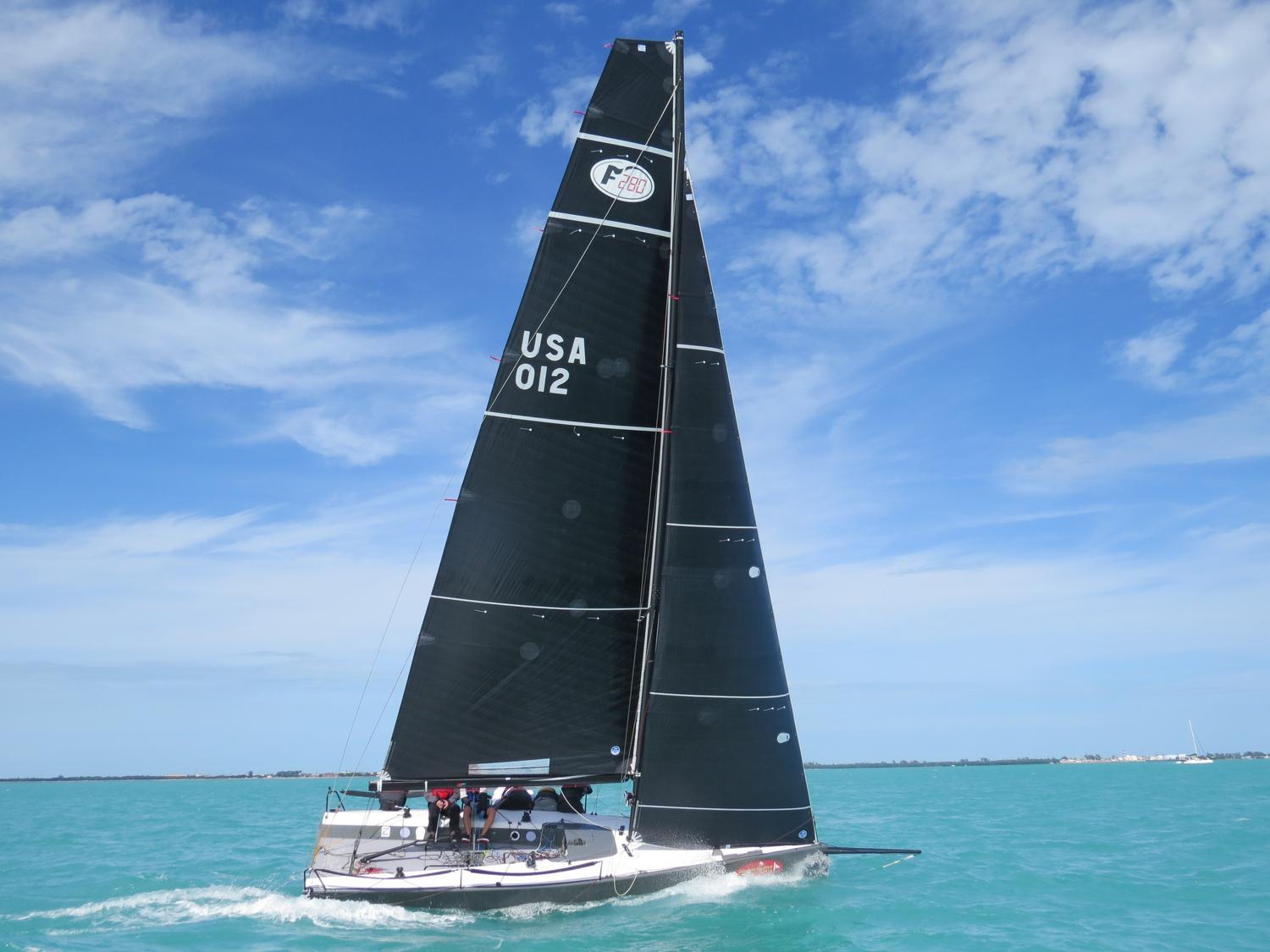
FARR 280 SWORDFISH: KEY WEST DEBUT
This past Key West Race week I sailed with the newest Farr 280 owner Chris Pesch on Swordfish. The Farr 280 is relatively new to the racing circuit and brand new to me. I had never met Chris before either. I had a few references and after an introductory phone call with him I felt encouraged and grateful to be sailing with him. As it turns out, Chris too had never sailed the Farr 280 other than a short intro sail before buying the boat. Nevertheless, tickets were purchased and off I went to Key West.
Swordfish showed up to Truman Annex two days before the event, still wrapped up in its original packaging. After a lot of work we had her in the water and ready to race by day one. We competed in the 8 boat ORC 2 class. Our learning curve was steep and a few adjustments to the boat had to be made but by day three we felt as if we had been sailing the boat all year.
Chris’s story is one that, in this new age of small boat one design racing, brings hope and promise to the sport of sailing. He grew up spending his summers in Martha’s Vineyard with his family. Bored with sitting on the beach, he found himself an old Snark and through local sailing literature he taught himself the basics.
Not long after, Chris joined his local club and his love for the sport grew. He spent his first two years of college sailing for Arthur Knapp at SUNY Maritime Academy. He enjoyed the structured sailing practices and used the time to really hone his skills as a helmsman. After college he stayed current with the sport, sailing what he could as often as possible. He competed in a range of classes from Farr 40s to one-tonners to a range of IMS boats.
Once Chris settled down and started a family his time commitment to the sport was limited. He moved a few times and didn’t own a boat so he wasn’t able to compete. Finally ending up in Fort Lauderdale, he worked his way back into the scene with his brother in a J boat and re-discovered his love for the sport.
He decided to invest in a boat and came to Annapolis to test the Farr 280. He was looking for a state-of-the-art small boat that could be left on a trailer and easily packed up for travel, but his main focus was sailing with his son, Patrick. They sailed a small amount when Patrick was younger and as he grew he did a bit of his own sailing as well. But they were searching for something they could both sink their teeth into and enjoy together or individually with limited headache. There is nothing like a high performance sailboat to bring families closer. Sailing with family, although often challenging, can be one of the most rewarding experiences one could hope for. Chris settled on the Farr 280 because he liked the ease and stability of the boat and was pleasantly amazed by the power and the precision at all points of sail. It was both state-of-the-art yet accessible and simple enough to master. Rigging and tuning were made easy by an adjustable mast jack. Most importantly the boat looks amazingly cool! The Farr 280 is a blend of the grand prix racing scene, with its ever-advancing technological aspects, and hyper-competitive one design fleets that are currently attracting sailors from all levels of the sport.
The racing community often debates the “trickle down effect” of technology innovation. Are high-end sails such as 3Di™ necessary in these markets? Chris seems to think so. He describes the sails as nothing short of perfection. When you boil it all down it’s a matter of simplicity. 3Di gives us the ability to be exact, to change our margins by such a small amount that when you look up at a sail you think maybe one more click of trim and we’re there.
Are high-end sails such as 3Di™ necessary in these markets? Chris seems to think so. He describes the sails as nothing short of perfection.
A puff comes and we ease out two inches, let the boat accelerate and bring the sheet back in one or two clicks. But here is the important part, in Key West we could do that for five days straight in heavy air conditions! It’s hard to appreciate the value of that until you’re the one sailing the boat, or more precisely the one trimming. So when undeniably good sail trim is more available to the masses it makes it more fun and exciting for all of us. Every time I looked back Chris was beaming.
“We put up the sails and went out to race one and the sails were perfect the first time,” said Chris. “We never had a problem and we didn’t need to adjust which made the whole thing much easier.”
I could tell this boat was allowing him the opportunity to have a great time with his son and not punishing him in the high winds and big waves.
Sailing with Chris and his family reminded me of why I have come to love this sport. With a great love of sailing comes hard work and commitment and any good sailboat will reward both many times over. The Farr 280 and boats like it serve many purposes – the most important I see is to bring that love back to our sport. These boats combine awe inspiring, cool features with the most basic and fun principles to make competitive boat racing what it needs to be again. It is a lot to handle, even with an experienced crew, but it also allows for flexibility and diversity in the team. As professional and expensive as the sport has become, we can still strive to maintain the enjoyable aspects while advancing technology.
If you have found yourself pushed away by huge hyper-competitive one design classes or mismanaged local fleets with under-maintained equipment – take another look. The answer may be where you least expect it to be.
READ MORE
READ MORE
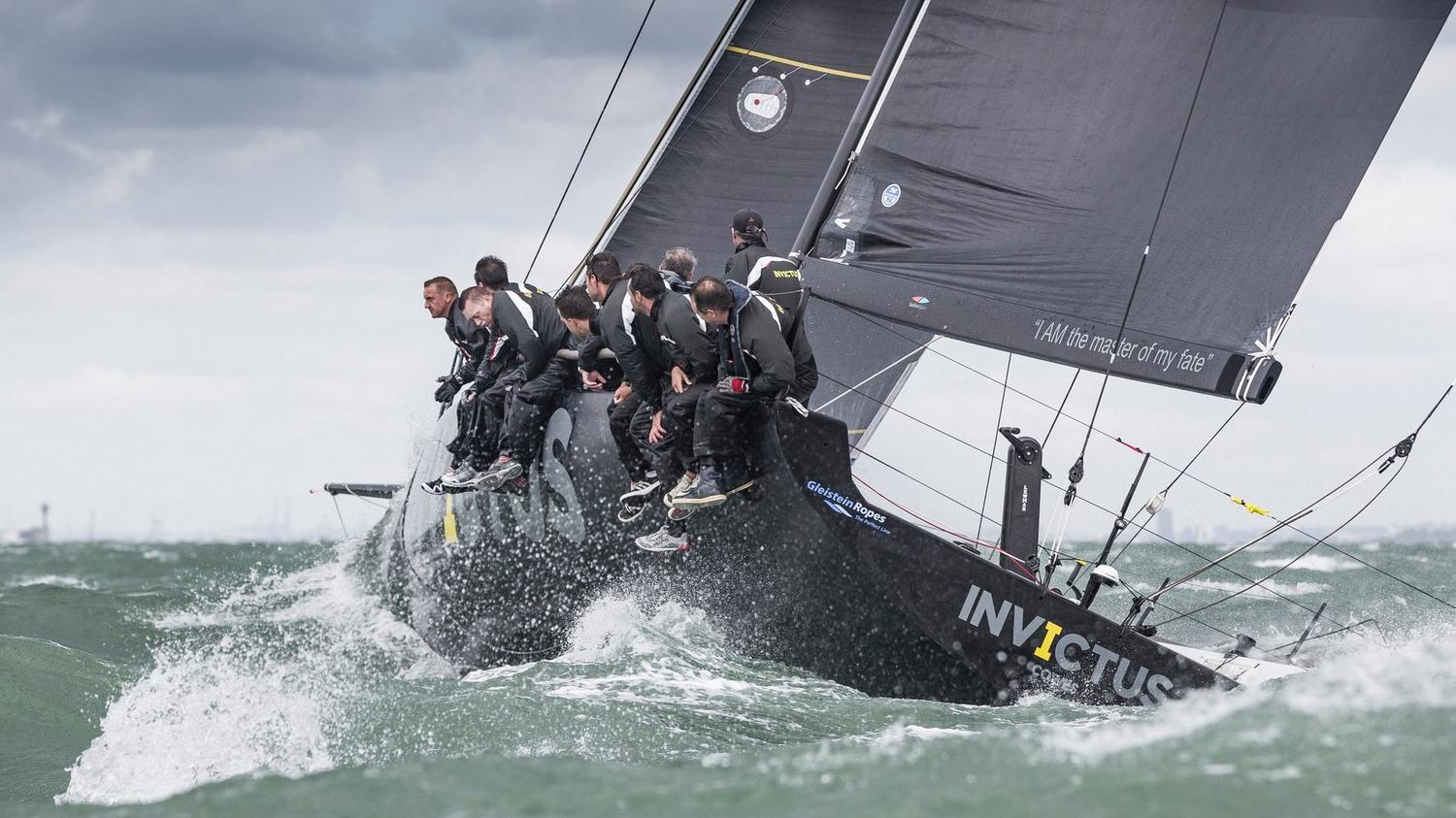
JUMP START: GET READY FOR THE EASTER CHALLENGE
The Royal Ocean Racing Club’s UK domestic season fires up with the Easter Challenge, taking place on the Solent over the Bank Holiday weekend of 25-27th March. For many crews, the Easter Challenge marks a key opportunity to get up to speed again as quickly as possible and because of this has become a popular start of season training regatta. To help raise the standard of its racing, the Royal Ocean Racing Club provides coaching for free to participants in the Easter Challenge.
The RORC ropes in some of the world’s best to carry out this tuition. The coaching team will once again be led by Jim Saltonstall, MBE. Too modest to admit it, Saltonstall has played a pivotal role in the success of most of Britain’s leading Olympic sailors including Sir Ben Ainslie, Chris Draper, Iain Percy, Nick Rogers and the RORC’s own Principle Race Officer, Stuart Childerley. He will be supported by the RORC’s CEO Eddie Warden Owen, himself a former America’s Cup coach with Team New Zealand and latterly with the Spanish Desafio Espanol team in Valencia in 2007.
Once again integral to the coaching will be North U. Regatta Services, with specialists Chuck Allen and Andreas Josenhans flying across to the UK especially for the regatta. Both are well known sailors and highly experienced coaches and sailing performance analysts in the USA.
Based out of Rhode Island, Allen was a two-time college all-American champion and is one of North Sails’ one design specialists, currently part of their Class Sails Development team. Josenhans is accomplished enough to get his own Wikipedia page: A two-time Soling and one time Star World Champion (the latter with Buddy Melges), he was also crew on Bill Koch’s America’s Cup winner, America 3, and subsequently on Young America.
The team will be supplemented by other luminaries of the North Sails UK team.
“The RORC Easter Challenge is a great opportunity to tune up for the season. It’s the first time to line up with top competition, and refresh your knowledge of the complex Solent tides,” said North Sails regional Sales Manager, Sam Richmond. “Our North Sails team looks forward to working closely with sailors both on the water and at post-racing with interactive video debriefs.”
READ MORE
READ MORE

NORTH CREW: BURNS FALLOW
You’ve been with North Sails for more than 25 years. What has kept you there for so long?
There’s never been a dull day at North Sails. If you’d been in the same job for 25 years and nothing had changed then that would be pretty hard for anyone to stomach. Every year or two there is something really significant which changes in the design world and the job grows. I was meant to be an engineer and qualified in college as such, but then couldn’t face the reality of doing a normal engineering job so I consider myself very lucky to have landed the job at North Sails. But as time has gone on it hasn’t just been about design, there’s been a lot of management, and the company can take you wherever you want to go.
Tell us about your experience with the America’s Cup.
I’ve done five campaigns with Team New Zealand going all the way back to 1995. It has changed a lot – the first four iterations were developments from where we were with the old IACC Class 80 foot monohulls. Each time you would learn a bit more and the rules would develop, but then of course in the last one it was a complete seismic shift when we went from 25 tonne monohulls with sails to 6 tonne machines with a fixed wing.
In the 2013 campaign, I was very much involved with the fixed wing. I was the aero-coordinator and there was a team of four of us who came up with aerodynamic design of the wing. Another team took care of the structural side led by Steve Wilson from Southern Spars. We had to learn a hell of lot very quickly in 2011. None of us had ever been involved in wing design before, not for boats at least. We had some pretty good tools at our disposal to combine the aerodynamics with the structural model which nobody else had at that time.
Do you ever see the fixed wing design breaking into the wider sport of sailing?
It’s got three problems. The first one is the cost, which is unbelievably high. Maybe if it became a mass market product it might come down a little bit but it’s still very high for entry level. Second problem is getting the wing in and out – what do you do with it at the end of the day? You can’t drop it! And finally, the third problem is it is not reef-able. If you came up with something reef-able you might also solve the second problem of dropping it. Those are the barriers and they’re not insurmountable, there’s lots of smart people in the world, but those are the barriers currently stopping wings dominating sailing.
How are North Sails involved in the ACWS and America’s Cup 2017?
I can essentially say that I have retired from the America’s Cup as the whole environment has changed. The shape of the wings and the sails are all one design across the entire fleet. JB Braun from North Sails has worked with Oracle to come up with the designs which you buy off the shelf from North Sails.
How has the America’s Cup influenced sail technology across the sport?
If you take a really broad view, in 1995 it was the first time that 3DL really came through as a major breakthrough product and the next three campaigns were all about refining our understanding to make them work best. Then 3Di was born out of North Sails working with Alinghi in 2007, but we got hold of it and changed it a lot. 2009 to 2012 was a very active time for designers learning about 3Di. And compared to 3DL we had much better structural models trying to predict what was going on and we had a much more scientific approach. When 3Di was first conceived with Alinghi in 2007, the expected lifespan was literally hours. But by 2011 the product was on Volvo boats sailing around the world with them.
Do you see 3Di technology being adopted across the sport at all levels?
Well it’s happened with pretty much every other development coming out of the top end of the sport. If you go back to the early 1980s, Kevlar or even laminate Mylars were brand new then and only on America’s Cup yachts. But by the end of the 1980s club racers were getting panelled Kevlar sails. The same thing happened with 3DL. You will see it with 3Di for sure.
And look at foiling. Prior to 2012, very few boats foiled – the moths did and not much else. Now we see a lot of boats out there foiling. So that area has trickled down pretty well. Whether the fixed wings do, that depends on those barriers that I mentioned earlier. The biggest surprise with 3Di was its durability. The ultimate lifespan and how long it holds shape is incredible. But then 3Di Raw came out of the Artemis campaign in 2013 and took it to a new level. And now 3Di Endurance is coming out really soon and is proving hugely popular with superyachts. We’ve had 3Di on superyachts for 5 years or so now, but if you look at the volume of 3Di sails being ordered for superyachts it’s quite staggering how quickly it’s being adopted by that fleet. And these sails last a long, long time.
Take the J Classes. North Sails have worked with quite a few J Class boats since 2006 and every two years we would replace the 3DL mainsail. They would race pretty hard and the sails would get beaten up pretty hard. So it required a pretty constant rate of change. But then in 2012 we put 3Di sails on those J Class boats, and those sails are still on those boats. They’ve raced four seasons with those same sails which is an incredible testament to the product.
You have a long connection to superyachts. Didn’t you help develop the inboom furling systems?
The boom furling started in the early 1990s on small boats. Then it was a real leap of faith to then take it from 40-50 footers to start putting it on 110-120 footers. One of the nice things we’re doing with 3Di is that it is just so physically thin, because the composite is so integrated, that it furls very nicely inboom.
Now the concept of what a Superyacht sail can be is being stretched as people want more out of their Superyachts, so now we’re doing square-top mainsails which furl! So we need to come up with some quite tricky systems with the battens. We have to work really closely with the spar makers to find a solution.
What’s the next game-changer trend or technology?
I’m too much of an engineer to be a visionary! But I think one thing North Sails does very well as a company is take ideas and develop them, an turn them into a really robust product.
For a recent yacht forum presentation I gave, I decided to explore some of the key performance parameters as a theme and see how they’ve changed over 30 or 40 years – records, top speeds, distances. And you find that they’ve all increased by a very similar amount, which is something like 60-70%. Which is just a staggering amount. If you look at any other sport or any other record, they change incrementally. I know that it’s an unfair example to compare humans to machines, but the 100m record has got better by 3%. Sailing is changing and it doesn’t look like flattening out.
Tell us about how North’s relationship with their customers drives technology and development.
To be honest, it’s another example of trickle-down from the America’s Cup because the integrated relationship between customer and designers was born out of team New Zealand when they won the Cup in 1995 in San Diego. That whole team was built on the philosophy of not just getting the sail designer involved early but treating the crew as the client. So the boat, mast and sail designers don’t just work in isolation – you all work at the same time on solving the problem and interact. And put the users in the mix as well. What we see now is that whether it’s a club racer, superyacht or grand prix racer, North Sails are now seen as an important part of the process from early on. In Superyachts we’re involved in design work before the owner has even given the go-ahead on the yacht, just part of the Research & Development to see if the project is viable.
In the past, you’d design a boat and build a boat. Halfway through the process they’d think “we’d better order a mast” and then at the end order the sails right at the end. That was very common. But we’ve realized boats are a system and need to tap into all the smart people across the industries. And this philosophy has been adopted by North Sails across the company and around the world, so every customer benefits from this approach at all levels.
What are you excited about for 2016?
For me personally, I’m excited about the Superyacht season. There’s so much going on there and how much things are developing, so there’s lots of interesting challenges. That’s what’s going to keep me busy.
And the Olympics will be interesting. Especially as a kiwi, we’re all excited about Pete Burling but he’s got a busy time on juggling America’s Cup and his 49er. I hope he can carry on through and bring home the gold medal! And the Olympics is where the future of our sport lies.
READ MORE
READ MORE
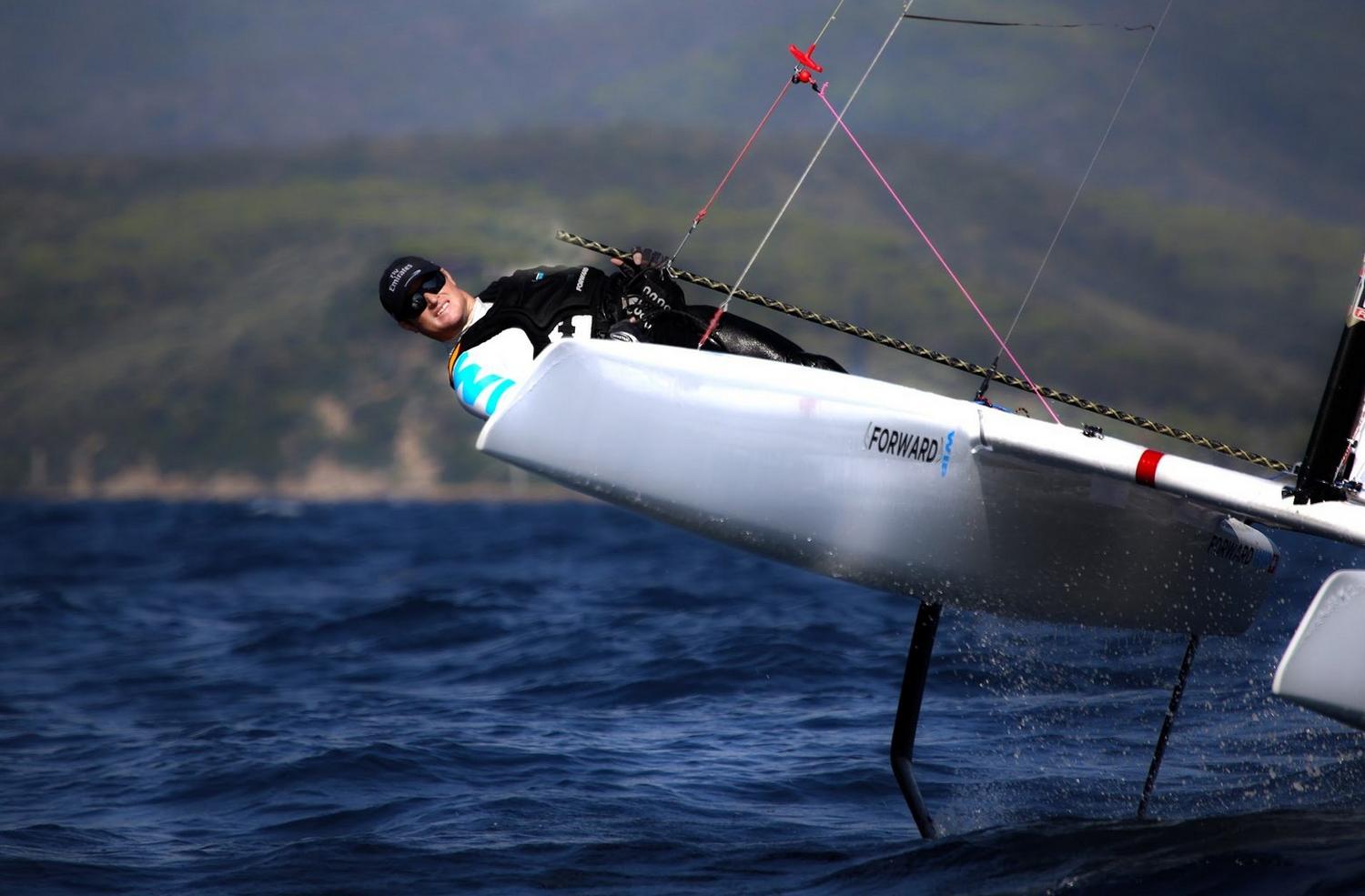
NORTH SAILS PARTNERS WITH GLENN ASHBY IN ONE DESIGN SAIL DEVELOPMENT
In an exciting development for the future of One Design multihull sails, Glenn Ashby, world class sailor and multiple multihull world champion, has teamed up with North Sails to develop and market the Glenn Ashby Signature Line of multihull sails including the A-Class, Taipan and Tornado.
The skipper of Emirates Team New Zealand will be bringing his design history and expertise to develop the signature line of sails that will be based on the current Ashby Sails models. He will be working on product and tuning development alongside the North Sails One Design team worldwide.
North Sails, the world leader in sailmaking, shows once again through this partnership with Ashby, the importance the company puts on working with the best in the business to create leading-edge products.
Paul Westlake, Global Head of Sales said: “We are delighted to team up with Glenn to create this new Glenn Ashby Signature Line. Glenn’s credentials and prowess speak for themselves and this is a great step forward for us in our One Design multihull offering. As a company we are constantly striving to be the best at what we do and we firmly believe that our customers will benefit greatly from this partnership.”
Tim Healy, President of North Sails One Design comments: “Glenn’s experience in this arena is invaluable and will help us get on track straight away. His multihull sailing knowledge packaged with the North Sails Suite of design tools will help us bring sail development in these classes to a new level.”
Glenn Ashby said: “I am really looking forward to an exciting future working with North Sails and have complete confidence in continuing to provide our worldwide customers and friends with the highest quality personalized products. The Signature line of sails will utilize proven winning designs as a base for new development utilizing the ultimate in technology and product quality.”
Ashby will continue to be active in the international A-Class regatta circuit within the bounds of his current America’s Cup commitments.
READ MORE
READ MORE
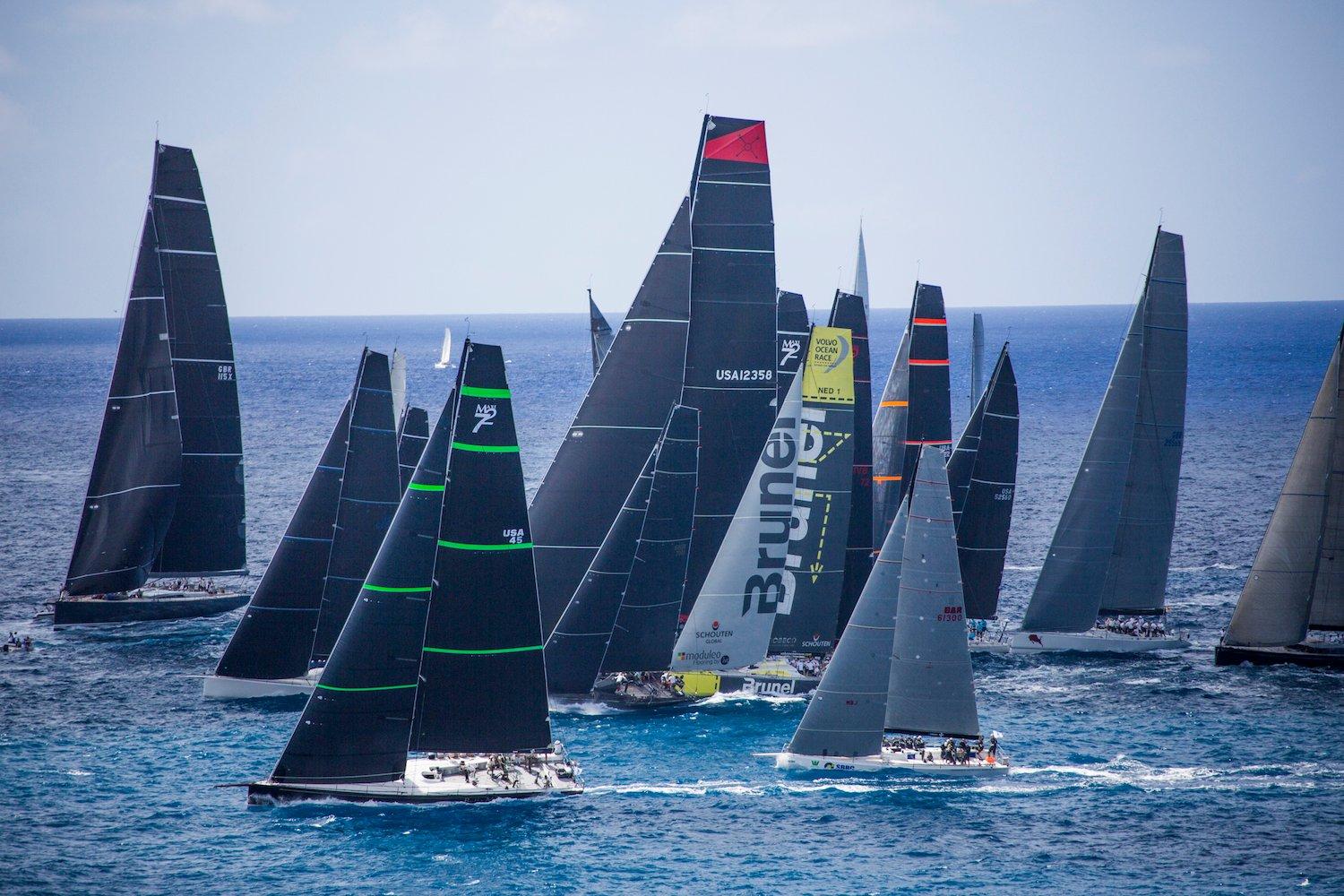
CARIBBEAN 600: TOP 10 SWEEP
The team on Teasing Machine began their 2016 season the same way they ended 2015: as class winners. After taking IRC 3 in the Sydney-Hobart Race, they loaded the 43 foot Archambault A13 on the same ship as Comanche, beat that maxi to Antigua (thanks to starting several days earlier from a different port), and then won IRC 1 in the Caribbean 600—which was the event that had forced them to hurry from Hobart to Antigua. Overall they finished third in the seventy boat fleet, the first boat under 50 feet ever to make it onto the event’s biggest podium.
“We like to win, but not at all costs,” owner Eric De Turkheim explained on the dock afterward. He said the team toasted the glorious sailing conditions—and their performance—with an evening glass of red wine.
Teasing Machine tactician Laurent Pages says, “We were careful to avoid making any big loss and one of the key areas was Guadeloupe; we didn’t stop at all in the wind shadow of the island and a lot of that was due to our navigator, Jeremie Beyou.”
With a carbon deck, twin wheels and twin rudders, Teasing Machine has a lot of stability and power, and she ate up the Caribbean tradewind reaching conditions. Her North Sails inventory includes 3Di ENDURANCETM sails and nylon spinnakers.
Congratulations to the rest of the top ten finishers, all powered by North Sails: Proteus, Momo, Jethou, Comanche, Spookie, Nikata, Tonnerre 4, Team Brunel, and La Bête. North also helped teams win the top five spots in IRC Z, top three in IRC CK, top two in Multihull, and first in the Class40 and superyachts classes.
READ MORE
READ MORE
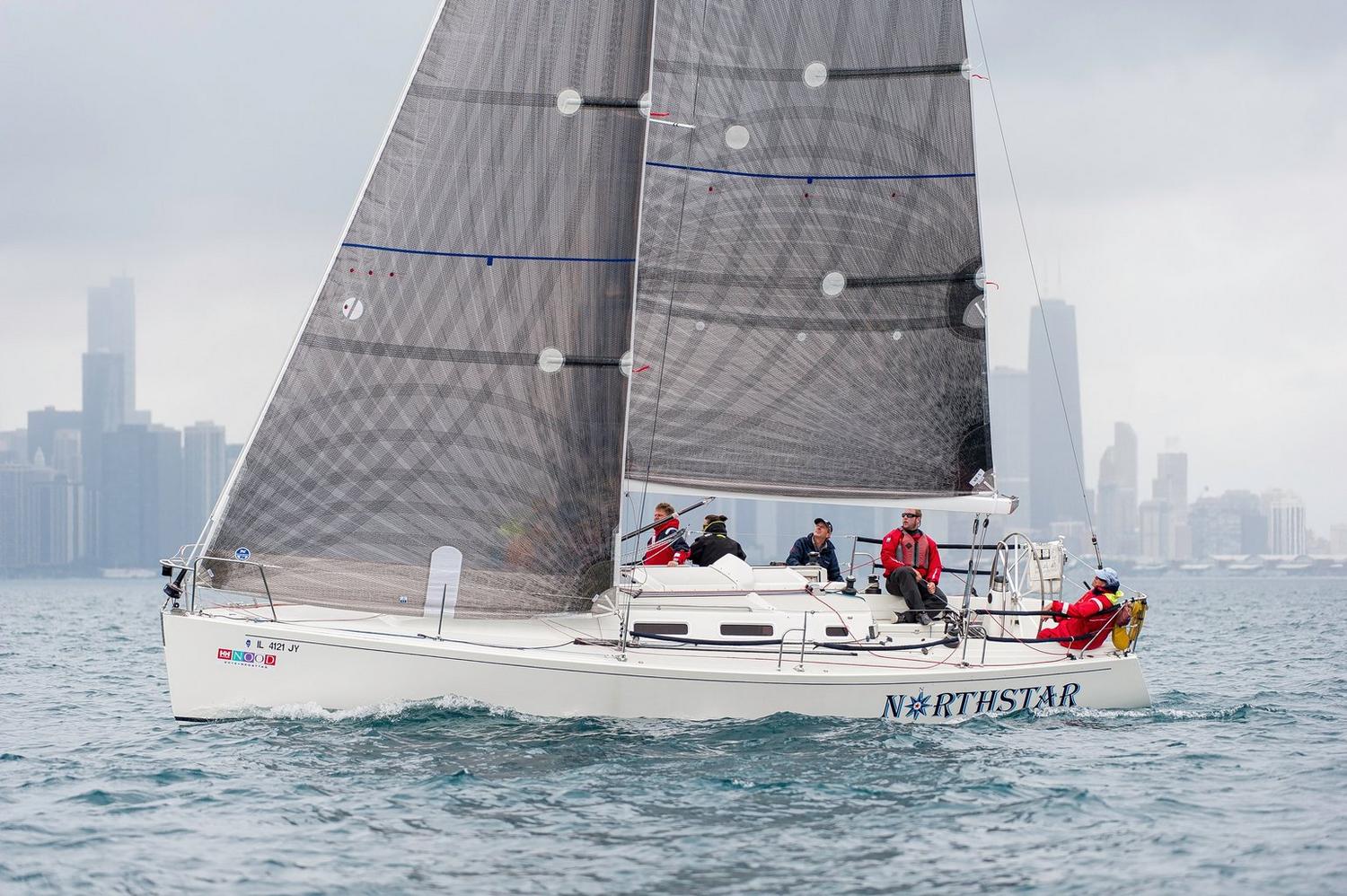
J/109 CLASS ADDS JIB IN-HAULERS
Fifteen years after the first J/109 was launched, the class is experiencing a resurgence as second- and even third-generation owners buy up used boats. The 2015 North Americans (run as part of Block Island Race Week) had twenty-five boats on the line.
The 109 is still the same boat: a simple racer-cruiser that can be raced one design or under IRC. And with the newest crop of owners making racing their top priority, improving performance is considered more important than keeping the boats ultra-simple. Beginning with the 2016 season, the class will allow the use of in-haul systems on jib sheets. The goal is to help light air performance, and to help make the class jib more competitive for handicap racing. The in-haulers are rigged between the clew and the lead block, deflecting the sheet inboard.
To take advantage of the new performance possibilities, North Sails J/109 expert Jack Orr spearheaded the design of a new class legal jib, the AP-6. The new model allows for sheeting angles of eight to nine degrees, significantly inboard of the standard J/109 tracks. It also has a higher clew, so that the sail doesn’t hit the coach roof when it’s deflected inboard. And the luff has been increased to the maximum legal length allowed under class rules.
After extensive on the water testing and a few recuts, the new sail design is now ready for production. Jack notes, “We also tested a new, external roller batten pocket that rolls better and will reduce the chance of the battens compressing towards the leech and breaking.”
In order to see the benefits of tighter sheeting angles across the entire wind range, performance-oriented owners will also want to upgrade their heavy air jibs. The new HA-4 is built out of North Sails 3DiTM and can do double duty as a handicap #3 jib.
“We think the new class jib designs, combined with 3Di construction, will provide a faster setup and a longer lasting sail,” Jack explains. “Customers that want to stick with 3DL to save some cost can get the same new designs.”
In addition to the new class-legal one design jibs, North also offers the APG-4 145 percent genoa for PHRF/IRC racing, which is built out of 3DL. The 2016 J/109 regatta season gets started in April with the American Yacht Club Spring Series. The North Americans are scheduled for June 12-16 in Newport, RI.
For more information about the North Sails J/109 product lineup, visit offshoreonedesign.com contact Jack Orr. Jack.Orr@northsails.com | 203 887 7621
READ MORE
READ MORE
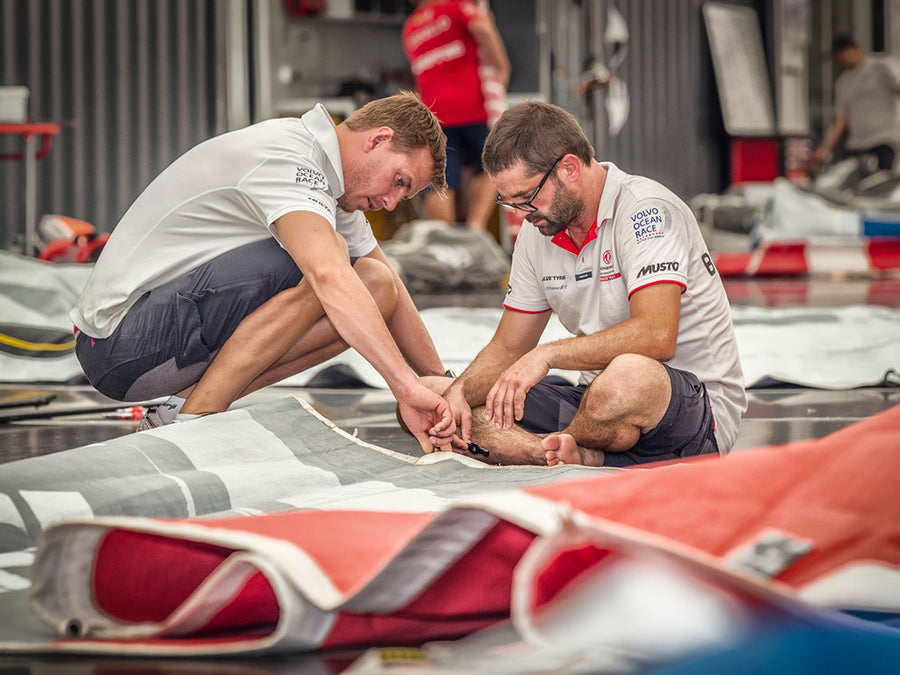
VOLVO OCEAN RACE: NORTH SAILS WILL BE EXCLUSIVE SAIL SUPPLIER FOR 2017
EXCLUSIVE SAILMAKER OF THE VOLVO OCEAN RACE
© Ugo Fonolla / Volvo Ocean Race
The Volvo Ocean Race announced today that North Sails is the exclusive sail supplier for the 2017-18 edition. One of the ocean’s toughest races, the VOR draws the world’s most skilled offshore sailors to compete in a highly competitive drag race around the planet. Equipping teams with the industry’s most reliable high performance products is paramount to the success of the Volvo Ocean Race, it’s sailors, sponsors, and fans across the globe.
North Sails has been deeply involved in the Whitbread and Volvo Ocean Race since the mid-1980’s. Collaboration between North Sails and Volvo Ocean Race programs has lead to breakthrough technology, most recently North Sails 3Di ™, which was born in response to skipper requests for reliable shape holding, durability, and of course lightweight, performance sails.
The extreme conditions of the Volvo Ocean Race demand sails that can withstand upwards of 45,000 nautical miles and four equator crossings. 3Di ENDURANCETM has proven itself worthy of this epic adventure in the last two editions of the race, allowing teams to push their boats harder than
ever — a valuable advantage in any one design competition.
“The 3Di sails from North have been excellent. We just compared a picture of our mainsail from just before the start with one of today after 35,000nm usage. Bit more draft aft. Give it a new paint job and I bet if you would ask somebody he/she would say this is a brand new main,” said Bouwe Bekking, Skipper of 2014-15 2nd place finisher Team Brunel. “Same for the other sails, you can see they have been used, but still in good shape. This mileage would be a lifetime for the average cruiser. I know what I would buy.”
The 3Di product’s unique construction process allows for repairs that do not compromise the structural integrity of the sail. With a tightly designed inventory, both durability and ease of repair are key.
“Most boats made it to Itajai on their first set of sails. This is unheard of.” said Nathan Quirk, Sail Loft Manager in the Volvo Ocean Race Boatyard, in reference to the 2014-15 race. “3Di can be maintained and repaired easily with confidence. Hard to imagine doing this with string sails.”
The North team looks forward to working together with Volvo Ocean Race to further push technical and durability boundaries to new territories. For 2017-18 the VO65s will be equipped with 100% 3Di inventories, pushing latest technology to the downwind sphere for the with the introduction of 3Di FORCETM. 3Di Force boasts downwind performance characteristics of unmatched stability, high tenacity, UV resistance, and low water intake. Produced on a 3D mould, 3Di FORCE runners will benefit from unmatched design execution, making the ranges more precise when sailing on the ocean.
“The team at North Sails especially looks forward to continuing our development and execution of cutting edge products with the Volvo Ocean Race. This will be my fifth design generation with this ever challenging race and ultimately our goals and motivations are the same – make for a trouble free race, exciting for all the right reasons!” – Gautier Sergent, 2014-15 VOR Designer of Record and Manager of North Sails 3D.
North Sails 3Di ENDURANCE is preparing sailors the world over to #GoBeyond. Discover more at NorthSails.com, on Facebook (@North Sails), Twitter (@NorthSails) and Instagram (@north_sails).
Image credits © Matt Knighton / ADOR / Volvo Ocean Race (top); © Ainhoa Sanchez / Volvo Ocean Race (left); © Matt Knighton / ADOR / Volvo Ocean Race (left)
READ MORE
READ MORE

WHEN ARE WRINKLES FAST?
WHEN ARE WRINKLES FAST?
Optimist Sail Designer Mike Marshall’s Guide to Identify the “Fast” Wrinkles from the “Slow” ones
When you look at your sail on the water, your eyes are usually drawn to any imperfections. Sometimes these are in the sail’s shape, but other times there are wrinkles in the sail. As air tries to flow over wrinkles, it becomes disturbed and slows. And if the air can’t travel as fast as possible across a sail, the sail may not be as efficient as it could be, therefore reducing boat speed.
Optimist sails are just as susceptible to wrinkles as any other boat’s sails are. But the good news is that most of the wrinkles that harm a sail’s performance can be removed with fine adjustments to the sail. The key to dealing with wrinkles is learning some basic facts about them, especially what causes the different kinds of wrinkles that may occur.
In most cases, wrinkles that you want to get rid of tend to expand from a source and form a line, which means that they will often point to their cause. For example, in an Opti sail it’s common to get wrinkles near the sail’s luff. In the photo below, you can see such wrinkles spreading away from the luff and along the sail. Notice how these wrinkles seem to be pointing to a specific sail tie. If this sail tie is too tight, it will pull the cloth in that area forward, causing wrinkles to form. When the sail tie is eased, the cloth should relax and the wrinkles smooth out.
The arrow points to the sail tie that is causing a wrinkle to form. Loosening that sail tie by a few millimeters will relax the cloth and make the wrinkle disappear.
It’s also important to know that all wrinkles aren’t necessarily bad. Because an Opti sail must cover a very large range of wind speeds, sometimes the sail will become deformed to fit a certain wind condition, and as a result wrinkles will appear. These wrinkles generally can’t be removed without changing the sail’s shape into a less desirable one. So you can think of these wrinkles as indicators that the shape of the sail is correct for the existing wind condition. For instance, a wrinkle along the sail’s foot that occurs in heavy air is a good indicator that the outhaul is tight enough. Another example is shown in the photo below where the sail has wrinkles perpendicular to the sprit. Such wrinkles may occur in very light air when the sprit is eased to create twist in the sail. The increase in twist allows the sail to be trimmed tighter while keeping the upper leech open, which helps pointing ability. Wrinkles may also occur in heavy air when the sprit is loose. As the sprit is eased, the top of the sail flattens and opens, depowering the sail and making the boat easier to keep flat. In either case, these wrinkles arise because the sail is being manipulated to give it the correct shape for the current winds.
The arrow points to a “good” wrinkle, one that shows the sail is properly adjusted for the wind condition it’s being used in.
So how do you tell the difference between these two types of wrinkles – the “bad” ones that are slowing your boat and the “good” ones that indicate your sail shape is right? A useful rule of thumb is to ask yourself if removing the wrinkle will make the shape of the sail better or worse for the condition you’re sailing in. If the shape will improve, then follow the line of the wrinkle to its source and fix the problem to remove the wrinkle and make the sail perform better. On the other hand, if you think you’ll detract from the shape of the sail by removing the wrinkle, leave the wrinkle in. This wrinkle is there because of the sail shape you’re trying to achieve, so consider it an indicator that the shape is correct. Eliminating this wrinkle would hurt the sail’s performance by making its shape less desirable. Another tip to help identify these “good” kinds of wrinkles is to keep in mind that they generally occur when you’re sailing in extreme conditions, such as very light or very heavy air.
Careful preparation of your sail before you race can help reduce the chances of “bad” wrinkles occurring. This preparation will make your racing less stressful and more fun. And as we all know, having fun is the most important rule of sailing!
WHAT’S THE NORTH DIFFERENCE?
It’s not just a catch phrase.. It’s our way of working.
It’s helping sailors of all ages and skill levels get better.. get smarter… get faster..
It’s our designers and Opti experts attending major events and clinics to get input from sailors, coaches and parents on how we can do things better to make sailing more fun for you.
It’s somewhere you can ask questions and get answers and support..
It’s fast sails, unequaled customer service and a desire to help our clients to GO BEYOND.
Sail with a North sail and see how we can work together to make a difference for you and join with other North Opti sailors from around the world who are seeing the difference sailing with a North Opti sail has made for them.
READ MORE
READ MORE
VIDEO: WING-ON-WING DOWNWIND TECHNIQUE
WING-ON-WING WITH TIM HEALY
Downwind Technique
The J/70 class at the 2016 edition of Key West Race Week saw more of the same in addition to a new twist. As in previous years the J/70s had the largest fleet (54 boats) and some of the toughest racing against a very talented group of sailors. What was new this year was how many of those sailors were sailing their boats on the downwind legs.
Sport boats like the J/70, with asymmetrical spinnakers, sail faster at higher angles, but the trend in Key West this year was to sail the boats Wing-on-Wing downwind. At first, the sight of these sport boats attempting to sail straight downwind seems counter-intuitive, but many seemed to be making it work to their advantage. Not really a big surprise that there is something to gain from sailing the straightest course to the mark while other boats in the fleet sail traditionally higher sailing angles and longer distances.
After talking with some of the J/70 sailors in Key West, this new downwind mode has resulted many teams practicing and perfecting the specifics of the Wing-on-Wing trimming and sail handling. However, even with teams practicing, the big question for the boats attempting this unorthodox downwind mode is: When does it work and when is it better to keep this mode in the bag? Wing-on-wing can provide an advantage in certain conditions and situations. If it is used at the wrong time, distance can easily be lost to other boats in the fleet. Our team, having practiced sailing wing-on-wing in a variety of wind conditions and sea states, has decided that the maneuver is something to be used sparingly.
WHEN IS THE BEST TIME TO SAIL WING-ON-WING?
We have found that there are 3 criteria that need to be met in order for Wing-on-Wing to be an effective option. Those criteria are:
1. Wind Speed
The amount of true wind is important because the asymmetrical spinnaker is unstable and difficult to fly when sailing straight downwind. If the wind is too light, the pressure in the spinnaker will not be enough to help it fly away from the boat while on the wing. 9-13 knots of wind seems to be the sweet spot for the wing mode. Basically, enough wind to fly the sail Wing-on-Wing and not yet, windy enough to plane.
2. Boatspeed
Once sailing Wing-on-Wing, boat speed is the test to see if the downwind mode is working or not. Our criterion for boat speed is after changing our mode from VMG towing-on-wing we ask, how much did our speed drop? For the wing mode to be effective, there has to be little or no speed loss relative to the boats sailing the VMG mode. Since Wing-on-Wing is most effective in the same conditions as the normal VMG mode, the speeds while sailing in pressure should be comparable and the gains made are due to sailing the shorter distance(lower angle) downwind.
3. Sailing Lane
Sailing the traditional VMG mode downwind allows a range of sailing angles, like sailing higher in the lulls and lower in the puffs. When sailing Wing-on-Wing, the mode demands a very specific sailing angle in order to fly the sail and it is important to ensure that your sailing lane is clear because changing course can easily collapse the spinnaker. We always have someone watching behind while on the wing to make sure our land and wind is clear and we are able to sail the proper angle while on the wing.
After deciding to switch from VMG mode to Wing-on-Wing, the technique and boat handling can make or break the success of the maneuver. Here some of the boat handling tricks we use to help get to the wing mode, stay Wing-on-Wing and switch back to VMG mode.
Going from VMG to Wing-on-Wing
Transitioning from the normal VMG mode toWing-on-Wing is best achieved by gybing the mainsail and keeping the spinnaker flying on its current side. When the crew is ready, the boat is turned downwind and the main is pulled across to the other side. As the boom crosses the centerline, the boomvang should be pulled tight to help flip the full battens and avoid catching on the backstay. While the main is gybing, one crew member should stand up and briefly hold out the spinnaker sheet in order to keep the clew of the sail from falling in toward the boat.
Angle of Heel
Once the main has been gybed, the boat should be quickly heeled to windward (boom up) about 10-12 degrees. The skipper or other crew member should continue to hold the spinnaker sheet away from the boat while the trimmer maintains the sheet tension. Maintaining windward heel is critical to keeping the clew of the spinnaker away from the boat, especially in the lulls.
Apparent Wind Angle
Along with the proper heel angle, maintaining the most efficient apparent wind angle is also important sailing Wing-on-Wing. We have found that sailing an apparent wind angle of 5-10 degrees higher than straight downwind is the best to keep the spinnaker flying and will maximize boat speed. Sailing too high could cause the sail to collapse and sailing too low will cause the main to shadow the spinnaker decreasing the pressure in the sail.
Back to VMG mode from the Wing
Switching back to VMG mode from Wing-on-Wing can be done by gybing the main or the spinnaker. Gybing the main is the quickest and easiest. Turn the boat into the gybe and like going to wing mode, as the main is crossing the centerline pull the boomvang tight to help it clear and fill on the new side. Rolling during the gybe will also help the boat turn and allow the crew to flatten the boat after the gybe aiding in acceleration. The other option back to VMG mode is to gybe the spinnaker. Simply, boat is heeled to leeward and turned up as the spinnaker is rotated to the new side. To help the spinnaker switch sides, and prevent it from wrapping, the trimmer should start rotating the sail just before the boat is turned.
After all the practice and racing in Key West, totaling around 50 downwind legs, I would say we used Wing-on-Wing mode on about 10-15 legs during the week. Of the legs where wing mode was used by our team, we averaged about 1-2 minutes per attempt and would switch back quickly to VMG when we were not gaining or after we had already consolidated our position on boats near us. Not every attempt we made at Wing-on-Wing worked in our favor, in fact during the event we were learning which situations were working best for our boat. Anytime we felt a loss in either our relative position, or distance on boats around us, we noted the reasons why the mode was less productive. Normally, our Wing-on-Wing losses were due to one or both of two factors…
1. Not Enough Wind
Because of a drop in pressure or being blanketed by another boat.
2. Bad Lane
Forcing us to change our apparent wind angle outside the optimum for the wing mode.
In the end, our team will be practicing ourWing-on-Wing mode more often to help ourselves and others better understand when to (and not to) use it on our way to the finish line.
North Sails One Design is proud of our continued commitment to developing the fastest sails and providing the best personal service and support for J/70 sailors. The proven performance along with our team of J/70 experts to help you to GO BEYOND is unmatched. Let us know if you need any assistance with sails or getting ready for your next regatta.
READ MORE
READ MORE
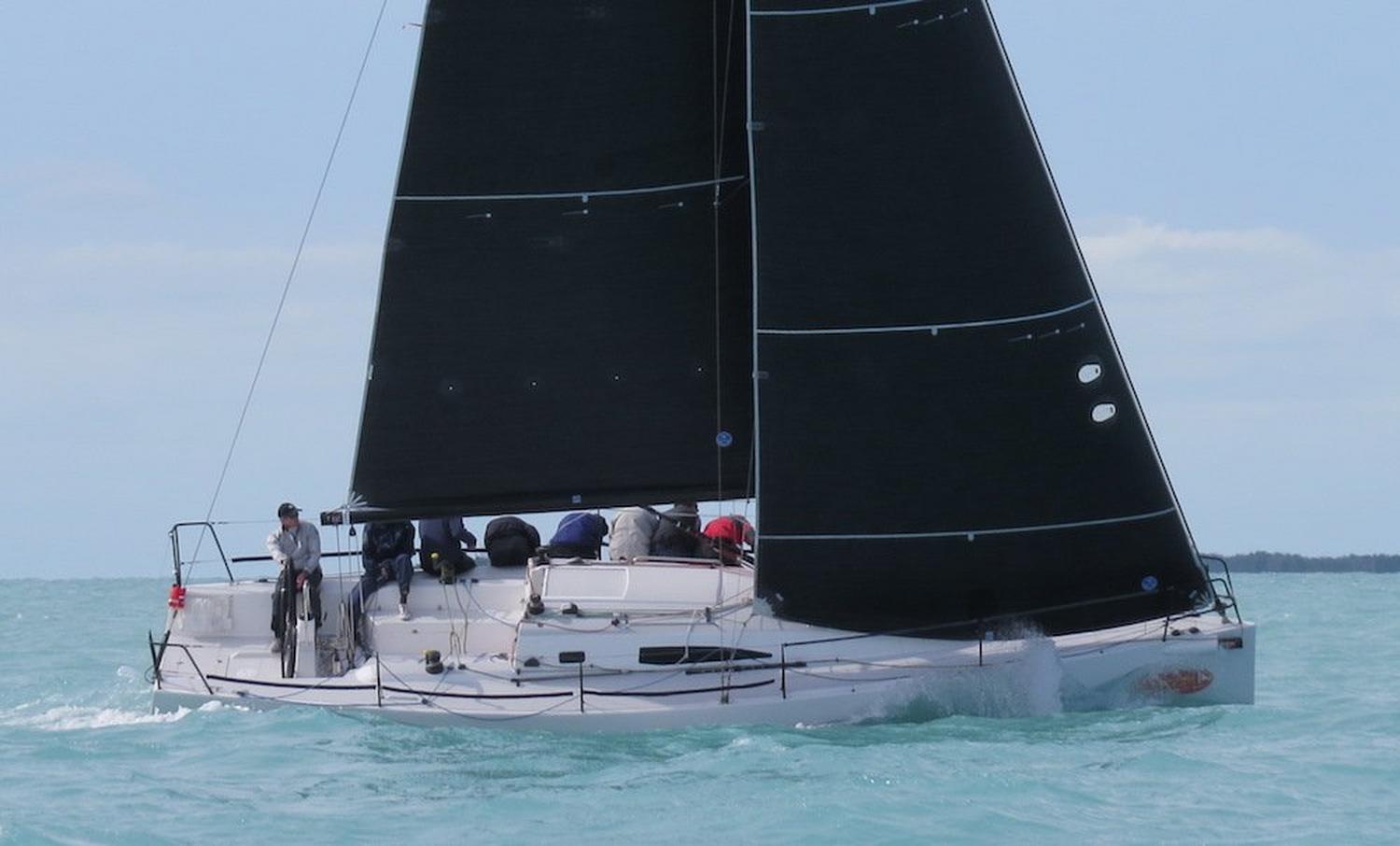
THE KEY TO KEY WEST
North Sails clients won 8 out of 13 classes in Key West, including Melges 24, J/70, Farr 280, ORC 1, ORC 2, Performance Cruising, and Multihull. With seven bullets in nine races, Peter Wagner’s team on J/111 Skeleton Key dominated the class Midwinter championship by 14 points.
“We are from San Francisco so big breeze is clearly familiar to us.” And for Peter Wagner and his crew on Skeleton Key, going fast through wind and chop were clearly important skills at the 2016 edition of Key West Race Week. The team posted no finish worse than second over the weeklong event.
STARTS AND BOAT SPEED
When asked what the biggest factors were in their victory, Wagner’s response was hardly unusual. “We were able to start cleanly with strong control of our lane in eight of nine races. We then had strong enough upwind boat speed to turn these starting opportunities into defensible leads.”
And even when they had trouble on the starting line, Skeleton Key was able to grind back. “In race nine, we got a bit surprised at the start by a late-forming crowd at the boat, and had to bail out to the right side shortly after the gun. The left corner paid massively on that first beat, and we spent the race clawing back. We felt fortunate to salvage a second, passing Wooton on the last leg.”
SAILS USED
Skeleton Key sailed with their North Sails 3Di Main and Medium/Heavy jib for the entire regatta, except for one beat when they used a 3Di RAW Light jib. Downwind they used an A2 spinnaker, except for one run sailed with the A4.
Wagner calls the 3Di Medium/Heavy “a great sail which has been our workhorse throughout the event.” Tactician Seadon Wijsen adds, “The 3Di Medium/Heavy jib we used is very versatile. We used it from 9-21 knots and it was fast, especially in the higher wind ranges. As a testament of the 3Di product durability, this sail had been used for five previous regattas and practice days and still looked and performed great.”
Of course great boat speed is not the only factor to winning a big regatta, and Wagner and Wijsen both credit teamwork with keeping them in front of the fleet. “The crew work was flawless all regatta long,” said Wagner, “which didn’t give the rest of the fleet any openings to capitalize on.”
Wijsen agreed. “We practiced one day in San Francisco in October and the Saturday before the regatta began. Our team was a little erratic and nervous early but after winning the first two races everyone settled down and focused on their roles. We just got stronger after that.”
TRIM & TUNING
Saturday’s practice in 9-13 TWS helped the Skeleton Key crew adjust to Key West conditions. “I thought the rig was a little loose on Saturday, so we adjusted for Monday to +14 full turns on uppers and +5 full turns on D1’s from our tuning guide BASE setting,” recalled Wijsen. “We sailed Tuesday and Thursday at +9 full turns and +3 full turns from BASE. I felt the tight rig being good on the J/111 even in chop. We did not adjust the headstay during the event and I am not sure we would ever adjust the headstay because the boat seems to like the BASE rake in all conditions.”
“Jib halyard we kept a little tighter than normal to get the mid leech a little tighter. Because the waves didn’t match the wind direction, we set the boat up asymmetric on traveler, mainsheet tension, in-hauler and jib sheet tension. Twisted and looser on port into the chop and flatter, tighter on starboard for pointing in flatter water.”
J/111 THOUGHTS
This was Wagner’s first year in the J/111, and his first KWRW. “What we have learned in our relatively brief experience in the J/111 is that upwind performance is all about boat speed,” he explained. “The boat will point very nicely once it is up to speed, and it’s very important to maintain strong flow in order to establish height, especially in chop. Sounds obvious I know! Doing it well requires good coordination between mainsheet trimmer and helmsman, as well as creativity on more open jib sheeting angles depending on the sea state.”
The next event for Skeleton Key will be Charleston Race Week in April. “We would encourage all J/111s to come join in what promises to be a fantastic event,” Wagner said. “The fleet momentum is building, and this is a simply great group of sailors to race with.”
Wagner also complimented one sailor in particular. “Seadon Wijsen called superb tactics throughout the series, staying patient and always putting us in position to leverage our speed edge.” And Wijsen had his own praise for the owner: “Peter really did a great job in making sure there was nothing we wished we had or had done before the racing began.”
With the help of North Sails Seadon Wijsen and sail designer Phillip Williamson from North Sails, a new J-111 Tuning Guide is under development and will be uploaded to the North Sails Offshore One Design J/111 webpage next week.
Questions on the event or North’s J/111 sail inventory can be directed to Seadon or Phillip:
Seadon Wijsen: seadon.wijsen@northsails.com | +1 415 339 3000
Phillip Williamson: phillip.williamson@northsails.com
READ MORE
READ MORE
3Di SOLO SAILS FOR RECORD ATTEMPTS: PAUSE-RESET, PRESS PLAY
Rewind to January 2014 | A new suite of 3Di sails has arrived on the finishing floor at the North Sails loft in Vannes, France. The sails will be hoisted for the first time on maxi trimaran Banque Populaire VII (ex Groupama3), to fuel the pursuit of transatlatic speed records under the helm of Armel Le Cleach, both solo and crewed.
The main, J2, reacher and Gennaker™ powered Loick Peyron (filling in for injured LeCleach) to win the Route du Rhum that year. The sails were used for the delivery from New York to France, and back to France from the Caribbean. The inventory included a North Sails 3Di ENDURANCE mainsail and J2, complemented by a 3Di RAW reacher and NPL SPORT gennaker. The sails saw a thrilling first run with LeCleach, and that was only the beginning.
Early 2015 | North Sails designers are back on the loft floor prepping the sails for a Jules Verne attempt, this time under its new name IDEC Sport. Legendary french sailor, Francis Joyon, will challenge the record with a crew of five. They will use the same sails that were built for LeCleach. The designers are scratching their heads. Fully crewed round-the-world sailing was not in the picture. Lower loads were specified, minimum weight was the goal.
“We really pushed for the weight to be light and we succeeded in that for the solo trip.” recalled North Sails designer Gautier Sergent. “To shift gears for round-the-world sailing, we ran the numerical models again for the new constraints. We reinforced the sail mainly only with flat tapes, and added chafe protection in the exposed areas.”
“Yann Regniau and myself also designed a new J1 to complement the existing sail robe and optimize the boat performance now sailed by a crew. We made a new J3 to replace the old cuben J3 from the Groupama3 era.”
November 2015 | The team’s intention to sail around the world had given the designers reason for pause. They applied the best solution available by adding minimal post-production structure to increase load capacity. The sails were ready, Joyon was happy. IDEC Sport sets off from Ushant with no time to waste.
December 2015 | Now over half way around, IDEC reaps the benefits of their risky dive South – an attempt to make up time. Sailing past icebergs at high speeds, they made up close to 1000 miles on the record pace. They are back on track as the boat appraoches Cape Horn.
January 8, 2015 | IDEC Sport finishes their lap around the world. They clocked another 29,000nm on the boat’s 3Di sails, and set the 3rd fastest time in history. The six men celebrate. The designers rest.
One of North’s experts, Quentin Ponroy, joins the delivery crew for the sail from Brest to La Trinité. They clean up the boat and inspect the equipment. Ponroy assists in derigging the sails and checking for wear.
Last Week | Ponroy reports to Sergent back in Minden. The sails are in very good condition and Joyon does not plan on buying new ones anytime soon. He did seem to indicate another attempt for the Jules Verne record this fall…
READ MORE
READ MORE
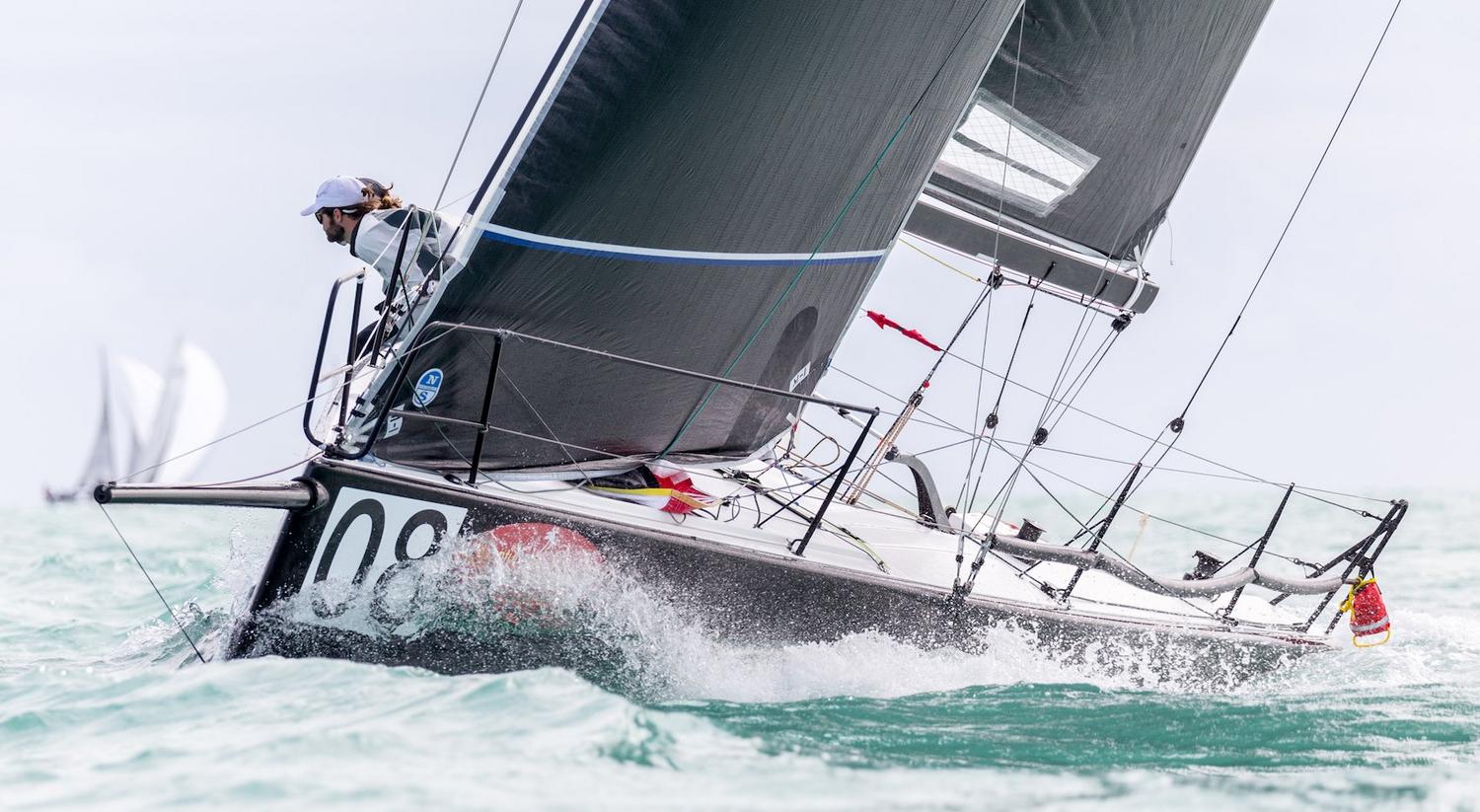
KEY WEST 2016: RECAP
North Sails clients enjoyed a full week of sailing in Key West, winning eight classes at the annual regatta put on this year by the Storm Trysail Club. The prevailing NNE was too strong for sailing on Tuesday, yet otherwise delivered four days of big breeze racing.
Dedicated teams hit the water early for pre-regatta sessions with North Sails Offshore One Design scheduled for Saturday and Sunday. Sailors in the J/70, C&C30, J/111, and IRC classes spent a full day in clinics before wind speeds kept them on the dock for all of Sunday. While practice was blown out, J/70s sailors gathered on the ramp for a tuning clinic with top North one design sailors Tim Healy, Geoff Becker, and Bill Hardesty accompanied by J/70 pro, Willem Van Way. Conversation centered on the fresh trend of sailing wing on wing in mid-range breeze (9-13kts). Look for an instructional video coming soon from North Sails One Design.
The regatta kicked off with the windiest and waviest racing of the week on Monday; NNE at 22kts gradually dropping to 16kts. Racing resumed on Wednesday with steady conditions that lasted through Friday. Pete Wagner’s North-powered Skeleton Key was fast out of the blocks and consistent all week, ultimately winning the competitive J/111 class. In the Melges 24, Blind Squirrel held a firm lead until Black Seal surpassed them by a point in the arms race for first. Both boats raced with stock North one design sails. In IRC, Steve Benjamin’s relaunched TP52 Spookie sailed a solid regatta off the back of his Rolex Yachtsmen of the Year award last week. North clients won their classes in the J/70, Farr 280, ORC 1, ORC 2, Performance Cruising, and Multihull.
Detailed Race Reports
Cumulative Results
READ MORE
READ MORE
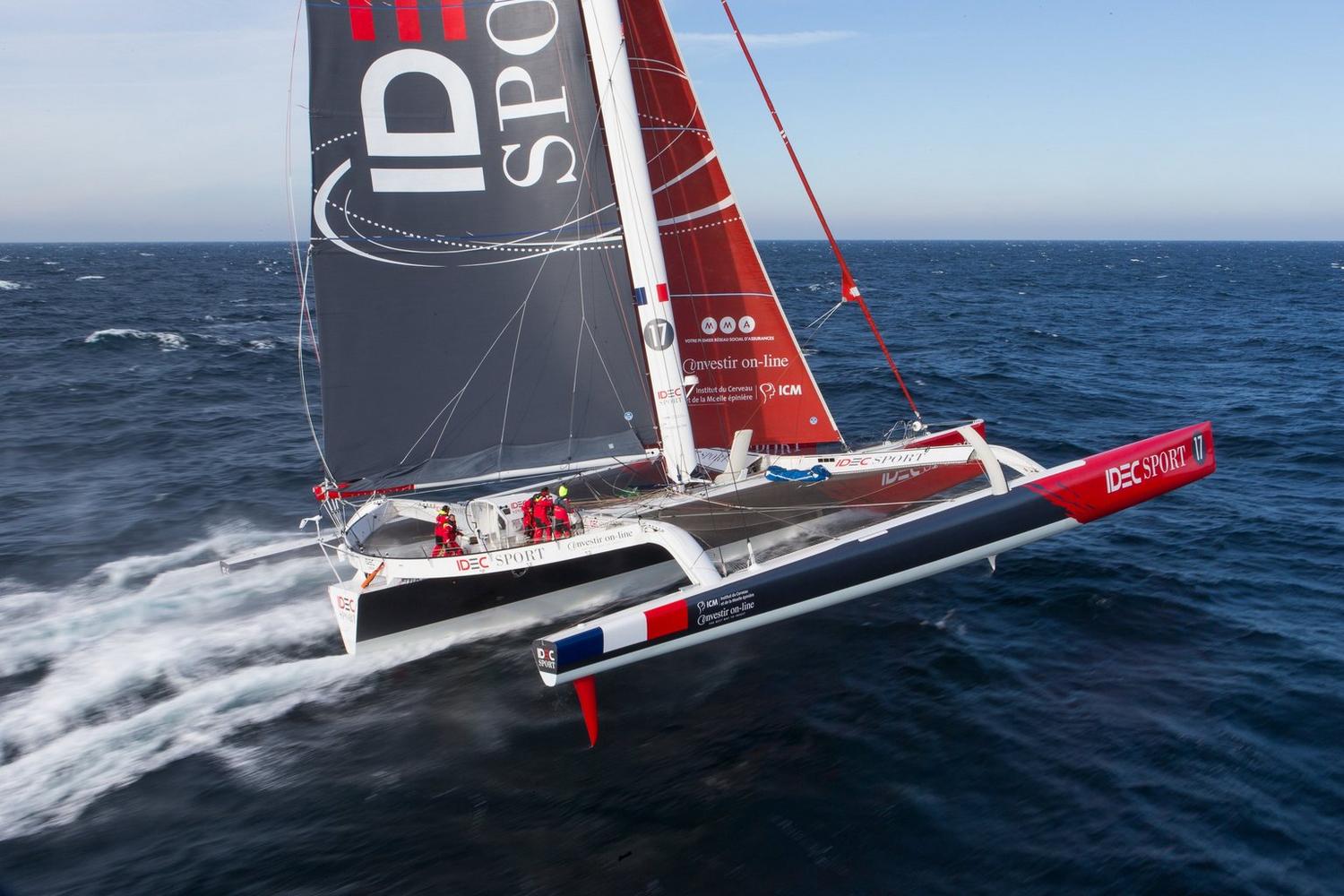
JULES VERNE: FAST BUT NOT FURIOUS
Having set off together on November 22, North-powered Jules Verne contenders Spindrift 2 and IDEC Sport completed their circumnavigation on Friday within 5 hours of each other at the finish line in Ushant. After hoisting 3Di sails, the journey began with a record-setting pace to the equator and continued down the Indian Ocean, where IDEC Sport crossed in record time by sailing south to 6 degrees latitude. Icebergs in the Southern Ocean stunned them before rounding a magically still Cape Horn. In the final push, the crews withstood a brutal beat up the Atlantic before greeting friends, family, teammates, and the greater community at the finish line.
Spindrift 2 crossed at 15:01 UTC on Friday 8th January to claim the second fastest circumnavigation on record. They sailed over 29,000 miles in 47 days 10 hours 59 minutes and 02 seconds, clocking an average speed of 25.35 knots. Skipper Yann Guichard sailed with 13 crew members including Sail Expert Jacques Guichard who works out of North Sails France. Also onboard is driver/trimmer and co-founder Dona Bertarelli and Sébastien Audigane, Antoine Carraz, Thierry Duprey du Vorsent, Christophe Espagnon, Erwan Israël, Loïc Le Mignon, Sébastien Marsset, François Morvan, Xavier Revil, Yann Riou and Thomas Rouxel. The time makes Driver/Trimmer Dona Bertarelli the fastest woman to sail around the world.
IDEC Sport finished at 1650hrs UTC on Friday 8th January to claim the third fastest time on record. Finishing in 47 days 14 hours and 47 minutes, they beat the boat’s 2010 record trip by 17 hours. Legendary French solo sailor, Francis Joyon, sailed with a crew of only five: Bernard Stamm, Gwénolé Gahinet, Alex Pella, Boris Herrmann, and Clément Surtel.
47 days is no time at all. In these 47 days we have watched them from the comfort of our homes and offices, debriefing their routes over Christmas dinner, watching from our tablets as we rang in 2016, constantly reminded of what a special achievement it is to sail around the world. Both Spindrift 2 and IDEC Sport used North Sails 3Di Endurance sails for the circumnavigation, which offer the highest durability and performance ratio of the North Sails range of products. Congratulations to the crews on Spindrift 2 and IDEC Sport for a safe and fast lap around the planet. Here’s to the next one!
The Records:
Spindrift 2: Ushant to the Equator in 4 days 21 hours 29 minutes
Spindrift 2: Ushant to the South of Tasmania, the entrance to the Pacific, in 20 days 04 hours 37 minutes
IDEC Sport: Crossing the Indian Ocean
Spindrift 2: Ushant-Cape Horn in 30 days 04 hours 07 minutes, which brought a lead of 18 hours and 11 minutes over Banque Populaire V.
Dona Bertarelli: The fastest female sailor to circumnavigate in 47 days 10 hours 59 minutes and 02 seconds
”This Jules Verne Trophy has been a series of firsts for me: going around the world, rounding the three capes, having so many days on the clock… And I really want to get back out there. The boat is perfectly adapted for this task, we’ll just need the weather to be with us. And then the South Seas, they’re magical. The Indian Ocean was rather grey, but in the Pacific we were treated to some incredible light when we went down to almost 60° South… But I’ll remember all the birds most: the albatrosses, petrels, fulmars and Cape petrels constantly following us.” – Yann Guichard, skipper of Spindrift 2
“There were a lot of great moments. I shall most remember a classic one: rounding Cape Horn in very pleasant conditions and in an incredible light… But the most important thing was the pleasure of being with a crew. We really worked well together and got on well. Our skills were fairly complementary. There were several solo sailors in this crew and that made a good mixture… Will we do it again? If we could set off again as a crew on this boat, we’d willingly do it.” – Francis Joyon, skipper of IDEC Sport
Image credits: top © Jean – Marie Liot / DPPI / IDEC Sport; right ©YannRiou / Spindrift Racing; below © Yann Riou / Spindrift Racing.
READ MORE
READ MORE
STAR: WHAT'S THEIR SECRET?
WHAT’S THEIR SECRET?
Interview with Lars Grael, Carl Buchan and Hubert Merkelbach
As teams from all over the world prepare for the prestigious Bacardi Cup and Worlds in Miami we caught up with North customers Lars Grael (World Champion), Carl Buchan (North American Champion) and Hubert Merkelbach (Eastern Hemisphere and South American Champion) to get their thoughts and tips on their successes in the Star boat during the 2015 season.
BOAT
LARS: I have 3 Stars all made by Folli.:
“Get Back” 7284 (Black Star), built in 1987 and still light, dry and strong. I keep her in Brasilia for lake sailing. Very competitive.
“Come Together” 8392, built in 2009 and is as good as my newer boat. I keep her in Rio de Janeiro.
“Renata” 8474 (different mold as 8392) built in 2012 used at the Bacardi Cup from 2013 until 2015 and the Worlds in Buenos Aires.
HUBERT: We used Folli 8450, bought from Freddy Loof. I think it was built 2010 or 2011.
CARL: P-Star built in 2011
SPREADER SWEEP
LARS: There are many different ways to how to determine the spreader sweep. I measure from the bolt that attaches the shroud to the other (a tensioned line between them). Mast with track upside down. Maximum hand tension to try to close the spreaders and then I measure from the line. For the symmetry I use not only my eyes (getting worse) but levels for an accurate measurement on the line and at the mast step. Numbers varies a lot from the conditions and (or) if I have a stiff or more flexible mast.
Numbers vary from 115mm to 135mm (4.5″ – 5.3″) depending on weather, sail and mast. In Buenos Aires we had 131mm (5.15″) till the third race and then we changed for 120mm (4.7″) when the wind got lighter.
HUBERT: We always had a distance of 127mm (5″) measured from a thin shockcord which came through the shroud holes to the end of the mast. We never changed that in Argentina.
CARL: We are at (5-1/2”) (139mm). We had a fair bit of play in our butt, so the effective sweep may be more like 6” (152.4mm). It may have been even more, but I squeezed the mast step a bit tighter before the NA’s. That may have helped pointing a bit.
RAKE
LARS: Rake changes a lot. 8474 is from a different mold and we have to increase 14mm on a basic rake number as the bow is lower according Andrea Folli. We sail with 99cm (39″) on light air (up to 8 knots), 97.5cm (38.3″) on medium air (9-16 knots), and 98cm (38.5″) on heavy air.
HUBERT: Our base measurement (sailing in 12 knots) for the rake is 950 mm (37.4″)(measured from the deck to a mark on the forestay. You get that mark, when you pull down the forestay along the mast and take the upper end of the black band of the mast). We changed the rake due to the wind and sea conditions. In lighter air and flat water (crew sitting on the deck) we put the mast more upright about 10 mm. If it was very, very light you have to give more rake again. Also if we start to get overpowered in a breeze and if the waves get bigger, we give more rake (about 20mm).
CARL: 36.5” on our boat I think, maybe a little less. Our butt is one hole further forward than many P-stars I have seen, so it takes slightly less forestay length to get the same effective rake. Once I get it in a good spot I tend to leave it.
SHROUD TENSION
LARS: The variation between light and really heavy can get to 2 ½ full turns. The Loos & Co measurement device is not precise and changes from a tool to another. With a recent tool, I would say we sail with 22 in light air; 23 ½ in medium air; and 24 ½ in heavy breezes. Much more than that, the mast collapses with only more bend without adding tension, except you have a really stiff mast. I have one stiff mast on my 8392 in Rio.
HUBERT: Base trim on the uppers (10-12 knots) is 23. In less wind we went to 22. In more wind, getting overpowered 24 or sometimes more. Distance between Lowers were 710 mm measured 910 mm up from top of the black band of the mast. With the Lowers we did only very small changes (one face tighter or looser on the starmasters).
CARL: 22 to 23 on the outer lowers, 28-1/2” on the inner lowers. We are at the high end of the range on the intermediates (2-15/16”) Do you change with the wind strength or sea conditions? We did not change things much. If I spent more time sailing, I would like to work on other settings to expand my range, but for us it is best to keep it simple.
CHANGES OF TRIM FROM BUMPY TO FLAT WATER
LARS: On flat water, the flatter sails give more pointing angle and even speed. On bumpy waves, you need more power (fuller sails) but, at the same time, a capacity to open the leech when the boat gets stuck on a wave. After sailing Tornados for many years, I pay a lot of attention to the upper mainsail batten.
HUBERT: Due to the shallow waters in Buenos Aires, we often had choppy or bumpy conditions. In these conditions you want a powerful sail (especially more in the bottom) which is twisting in the upper leach so you can steer more easily through the waves. You want to go fast and not get stuck in the waves by trying to point too hard. A common mistake in choppy water and light wind is going with a flat sail and tight mainsheet – your boat will slow down and cannot move through the waves. Depending on the wind strength I think it is easier to go with a little more rake or ease the mainsheet some cms and give more tension on the lower backstay, so you can power through the waves. In light wind you can also ease the outhaul and cunningham a little. It was very hard to steer the boat very concentrated all through the race in this difficult bumpy conditions.
On a more flat water you can come back to a more flat sail profile, with the leach of the main more closed (less rake, mainsheet tighter).
CARL: Sheet tension is, of course, the big one. I probably use more lower backstay tension in smooth water also.
DOWNWIND
During the Worlds Lars was the fastest boat downwind, with many great comebacks that helped them to win the title. We asked: Are there one or two things that you focus on setting the boat up downwind? Is it mast position or vang tension? What is the most important for you?
LARS: Both. Mast position has to go forward enough. Some old Stars get more competitive when you open the deck hole to allow to move forward, but of course there is a limit. The vang is extremely sensitive and you have to try until you feel the boat is nice to drive on the waves. In doubt? Release it!!! The boat lateral heel is also very sensitive. When to heel to leeward and when is time to change to windward? Not only depending on wind speed, depends on your goal to go faster or sail deeper. The Folli boat is more critical in defining a correct heel angle. It doesn’t like to sail horizontal downwind NEVER! (in my opinion)
TRAINING & PREPARATION
LARS: The regattas against a good part of the top level fleet helped a lot our preparation – The Star Winter Series + Bacardi + Western Hemispheres in Miami. At the Europeans we chartered a good boat but we felt some deficiencies to improve. Racing in Brazil against guys like Torben, Pascolato and Fuchs, for an example, push us harder. I believe the days that we spent in advance in Buenos Aires were crucial to the win.
HUBERT: For the South Americans Markus and I had no particular training, we only sailed the Western Hemisphere in Miami. But both of us sailed several races in the Star or other classes like J/70 and Dragon. My last regatta in the Star before the South Americans was the Eastern Hemisphere Championship in the Netherlands. It took the first two races in the South Americans for Markus and I to get used to the wind, wave conditions, the current and also to get accustomed to our boat handling. Fortunately Markus could compensate several mistakes I did. It was a pleasure to race with him in the South Americans and the Worlds in Argentina! We will team up again for the World Championship in Miami in April 2016.
CARL: In the past my method for tuning the boat was to let my Dad borrow it and then just never touch anything. For some reason, I have not really done that with this boat, so it took me a while. As you can see, most of our settings are geared more toward lighter air and pointing. This is mainly because those seemed to be our weaknesses, and these settings give us the best all-around performance. Once we got things set up where we were comfortable, we just tried to concentrate on sailing, sail trim and keeping our heads out of the boat. I felt like we were pretty good in transitions and that was largely because we were comfortable and confident with the boat and shifted quickly into the right gear without having to take our attention away from tactics.
This interview was prepared by Eric Doyle, North Sails’ Star class leader in North America. We want to thank Lars, Hubert and Carl for sharing their information with us.
North Sails One Design is proud of our continued commitment to developing the fastest sails for Star sailors. The proven performance along with our team of Star experts to help you to Go Beyond is unmatched. We look forward to seeing you at the Bacardi Sailing Week and World Championship in Miami. Let us know if you need any assistance.
READ MORE
READ MORE
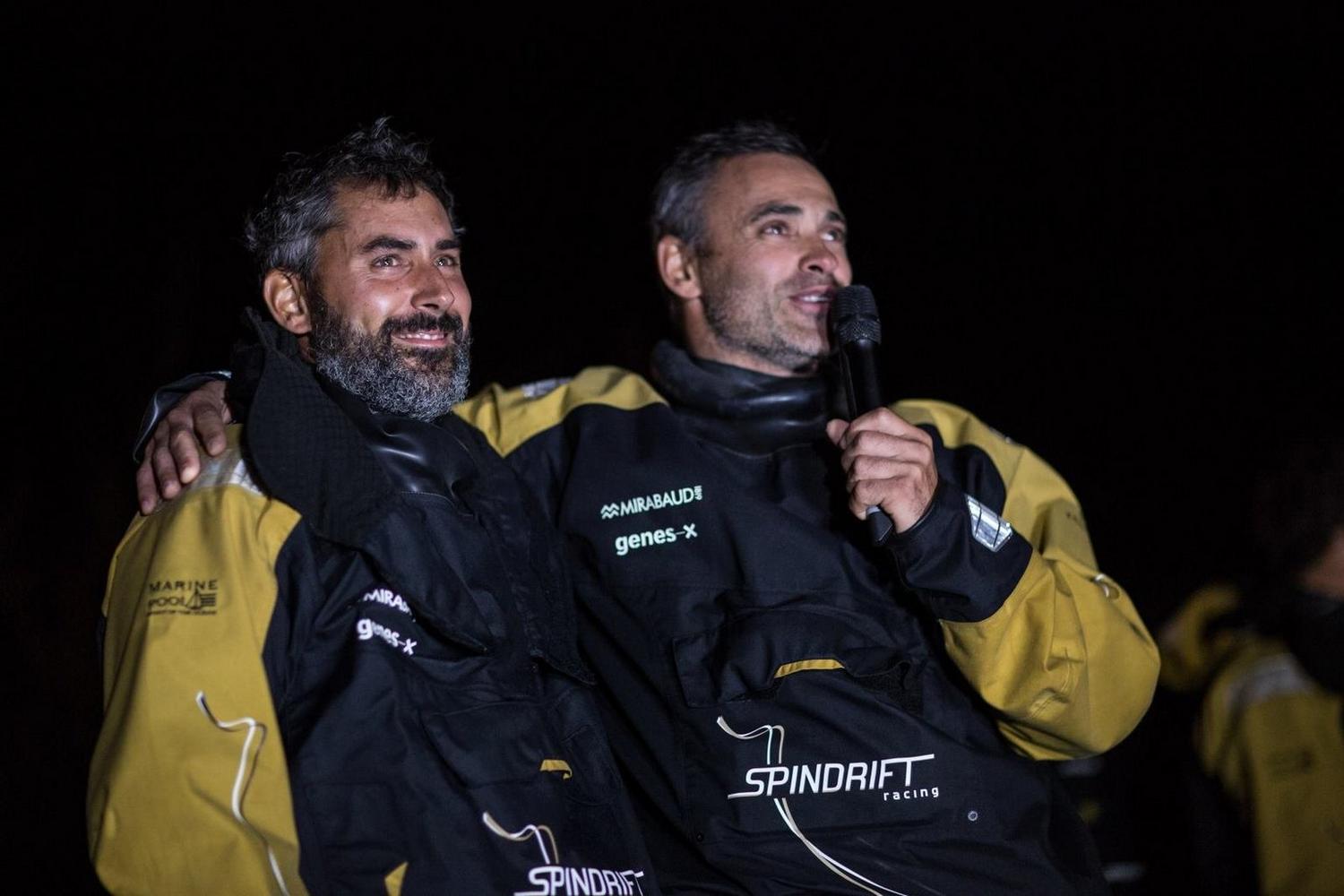
JULES VERNE CONTENDERS FINISH IN UNDER 47 DAYS
Spindrift 2 finished a Jules Verne record attempt at 15:01 UTC on Friday January 8th, claiming the second fastest circumnavigation on record. They sailed over 29,000 miles in 47 days 10 hours 59 minutes and 02 seconds, clocking an average speed of 25.35 knots.
Among the 13 crew onboard is Jacques Guichard, who has sailed with the team since 2012 aboard the Maxi as well as the MOD70, D35 and GC32. Jacques is a North Sails project manager based at the loft in Vannes, FRA, a well known loft among French offshore sailors. Managing the sail program for Spindrift 2 is a unique project with many demands and specifications, which depend largely on the next world record the team sets out to break.
For their attempt at the Jules Verne Trophy, Jacques opted for North Sails 3Di ENDURANCE for its unmatched qualities of performance and durability. “ I know every square inch of the sails!” he said, acknowledging the design vision and workmanship that went into them and confirming the crew did not experience a single issue throughout their lap of the globe.
We caught up with Jacques to hear more about his Jules Verne experience, and we were not disappointed! Read on to learn of his experiences sailing the 131’ machine that is Spindrift 2.
NS: Around the world in 47 days is no time at all. Did the experience fly by? What are the parts you will remember most?
JG: Yes, before this one I had never spent more than 12 days at sea, back in 2004 on a 60′ ORMA trimaran. In fact time really flies by with everything you have to do: helming, trimming, the maneuvers, plus the daily maintenance and cleaning of the boat. Only the days when we were slower (On Spindrift 2 you feel stuck when boatspeed is below 25 knots….) felt a bit longer.
The best memories are definitely the first few days at full pelt downwind (3 days to Cape Verde), Cape Horn in perfect conditions and 500 nm ahead of the record, and obviously helming sessions at 40 kts!
NS: There were days we heard from the boats about severely rough weather. At one point both IDEC and Spindrift 2 decided to stay North of a storm because the risk was too great. Can you tell us what was going through your head at this time?
JG: This boat is designed to sail fast in big breeze and heavy seas and we trust it 100%, however at some point you need to slow down. Fast but not furious as Loïck Peyron said before us…
NS: A true test of a good sailor is to know when to push and when to throttle back. In your experience, what is the best way to understand the limits of your equipment and your crew?
JG: On multihulls and especially the big ones, anticipation is key. Everything is so loaded that you can make mistakes and break things very quickly. So when you plan to furl your headsails or take a reef everything needs to be prepared well in advance. If you are late you can severely damage the sails or lose control of the boat, and then it becomes dangerous. Sails are damaged during maneuvers if you do not pay enough attention, so you must remain in control all the time. Remember we almost have 30+ knts AWS all the time…
NS: Lets talk about the sails, you were instrumental in their creation and oversaw every detail before, during and after the record attempt. Will you describe this process and tell us the sails’ performance underway?
JG: I know every square inch of the sails!
Spindrift 2 has been a really special project. The worlds largest trimaran – with my brother at the helm! – I worked 200% to make sure everything was perfect. So I have been a real pain onboard but in the end I am super happy since we did not have a single issue… except a broken zipper on a bag!
To be a good sailmaker you need to go sailing because no computer can simulate the exact sea state, the sudden squalls, the way sails are moved around on the boat (where they suffer most!); nothing can beat a round-the-world trip for that!
As a project manager at North Sails, I provide technical and design input before the sails are built, then I follow the manufacturing process very closely and finally I go sailing and fine-tune the sails with our customers. So it’s really an A to Z job and this is why I like it so much.
NS: Were there any fun or humorous moments among the crew that you can share with us? Excerpts of “living” onboard the Maxi?
JG: Sure! Christmas on board was fun , we had our own Santa Claus who brought presents for everyone… We also ended the trip with new nicknames as detailed by Dona. Finally for one hour a Northern Gannet has tried to land on our mainsail’s square top but he just could not because of the boatspeed, and kept sliding back… that was fun to watch but it almost broke our masthead unit!
NS: Completing a circumnavigation is a major milestone. What did it mean for you and will you do it again?
JG: For me the milestone of this trip was definitely Cape Horn. This is a special place and the world’s greatest offshore sailors have been there so I was very happy to see it after 30 days and a few hours (a new world record). However, we missed the Jules Verne Trophy by 45 hours, so this is unfinished business for all of us. We will get back and this means I will be on stand-by again in 10 months time (laughs).
Based in the south of Brittany, the racing stable Spindrift racing was founded by Dona Bertarelli and Yann Guichard in 2011. Spindrift racing runs six boats for four complementary projects: a trimaran MOD70 (Spindrift), a Decision 35 catamaran (Ladycat powered by Spindrift racing), two trimarans Diam 24, a GC32 foiling catamaran and the 40 metre maxi-trimaran (Spindrift 2). You can follow their ventures at Spindrift Racing.
READ MORE
READ MORE
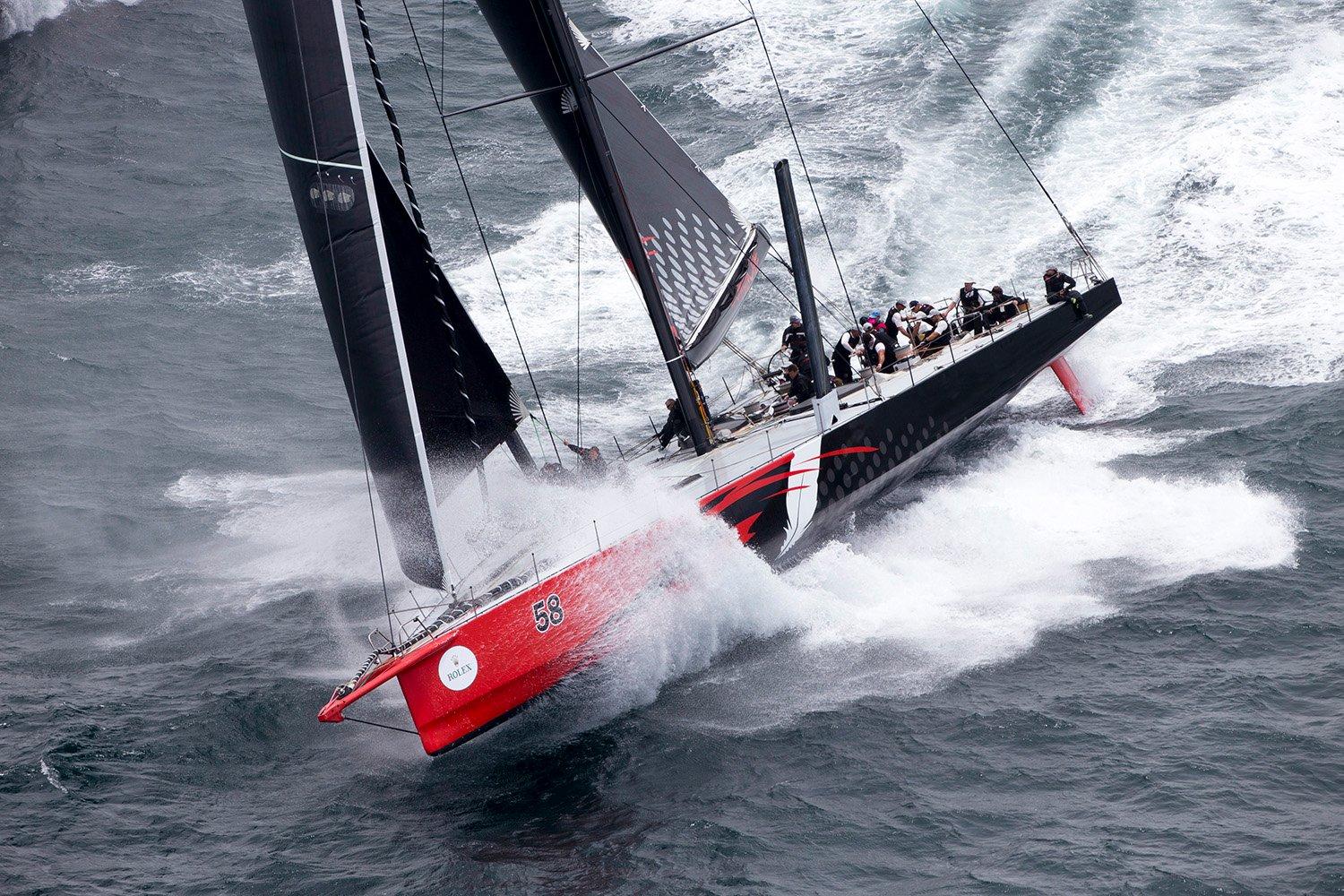
COMANCHE CLAIMS ROLEX SYDNEY HOBART LINE HONORS
After leading the ‘big five’ out of Sydney Harbor (Robert Oatley’s Wild Oats XI, Andrew Bell’s Perpetual Loyal, Sid Fischer’s Ragamuffin 100, and George David’s Rambler 88), super maxi Comanche incurred sudden damage to their starboard rudder on Saturday night. From near retirement that first night to a repair and re-entry, further maintaining their lead to the final hours, the team exceeded all expectations in reaching the dock in Hobart with line honors.
“We had to get rid of the daggerboard, which was attached by a number of lines, dragging under the boat and damaging the bottom of the hull with every wave. When we cut it free we saved the hull, but the board flew back and took out the rudder and simultaneously wrecked the steering system inside the boat. The tiller arm got broken off,” recounted Ken Read, North Sails President and skipper of yacht Comanche.
“When we finally inspected the rudder, we saw that it was facing backward. That’s when we said “well, we are done.” We took the sails down and started drifting back toward Sydney.”
“That’s when I saw the tools come out.” He continued, explaining that is a sign the crew has a solution. Upon their victorious arrival at Constitution Dock, the boat’s steering system was holding on by three stainless threads.
While at sea, the after-guard unanimously decided it was safe to push on. “We are here to sail the Sydney-Hobart Race first and to be successful second,” Read explained, later stating “…We came here to finish, one way or another we’re going to finish this damn race!” With that, the crew proceeded to sail the boat back into first place and onto the finish.
Americas Cup skipper Jimmy Spithill gave all credit to the resourceful team onboard, “Full credit to Casey* and the boys for getting it fixed, because we were on our way back to Sydney! That’s what this race is about, I’d be surprised if any of the boats got through unscathed. Again, good on the crew for getting us through it.”
Comanche claimed line honors with a race time of 2 days 8hrs 58min 30 sec, with George David’s Rambler 88 trailing close behind until the wind utterly died just a few miles from shore. Rambler 88 recently finished in third place and VO70 Maserati in fourth. Comanche, Rambler 88, and Maserati all raced with complete North Sails inventories.
Other North-powered boats duked it out for top finishes, including Rupert Henry’s Chinese Whisper and Matthew Allen’s Ichi Ban, who finished within ten seconds of each other to claim IRC DIV 0. French boat Teasing Machine currently leads IRC3 with 11 miles to go! Track the fleet live at: http://bit.ly/1JdKytM
*Casey Smith is boat captain of Comanche and led the charge on repairing the steering system while at sea.
READ MORE
READ MORE
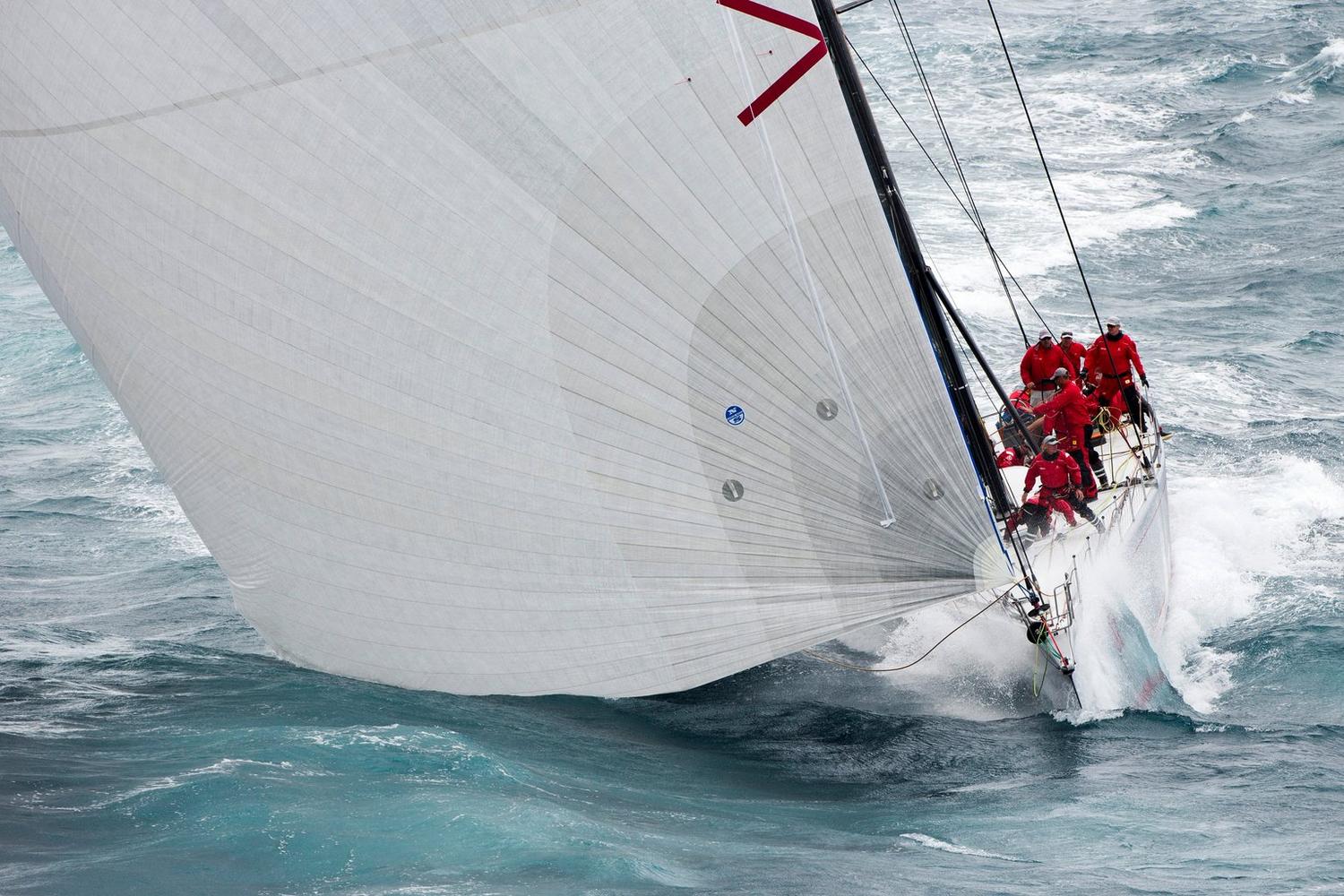
WILD OATS XI RECOUNTS SOUTHERLY SQUALL
One of the many early retirements of the 2015 Rolex Sydney-Hobart was race favorite Wild Oats XI, who was vying for her ninth consecutive line honors win. With 31 retirements so far, this year’s installment of the prestigious annual regatta is regarded as the toughest since 2004 when 50% of the fleet was forced to retire.
At the front of the 100 boat fleet, the Wild Oats XI crew was among the first to hit a predicted southerly squall and thus one of the first to retire, after ripping the mainsail while attempting to put a reef in. In our first contact with Wild Oats XI upon return to Sydney Harbour, Alby Pratt, crew member and sales manager at North Sails Australia, reported:
“When the front hit last night we were well prepared. Unfortunately in the process of reefing the mainsail we made some errors which caused us to break a couple of battens, damaging the mainsail beyond what was repairable onboard.”
WOXI Skipper Mark Richards later confirmed that their 12-month-old 3Di mainsail tore while reefing amidst the storm. He recalled the luff “down-line” broke or came undone when the front came through at 40 + knots. While attempting to reef, the sail flogged to death because the crew couldn’t get it down. His quote: “That mainsail is unbelievably strong. The only reason it broke was when a batten finally broke and tore through the material. It seemed like it flogged in 40 knots for a half hour and I can’t believe it lasted as long as it did. Certainly not the mainsail’s fault.”
The crew plans to have the sail repaired at the North Sails loft in Sydney, Australia and begin preparations for some sailing in late January. All communication indicates they will be back again next year as strong as ever. A statement on behalf of the WOXI team sent hearty congratulations to the crew on super maxi Comanche, their race rival, for pressing on to achieve line honors. As for all of us at North Sails, our bets are on a 2016 rematch next December, we only need to get Comanche back down under!
READ MORE
READ MORE
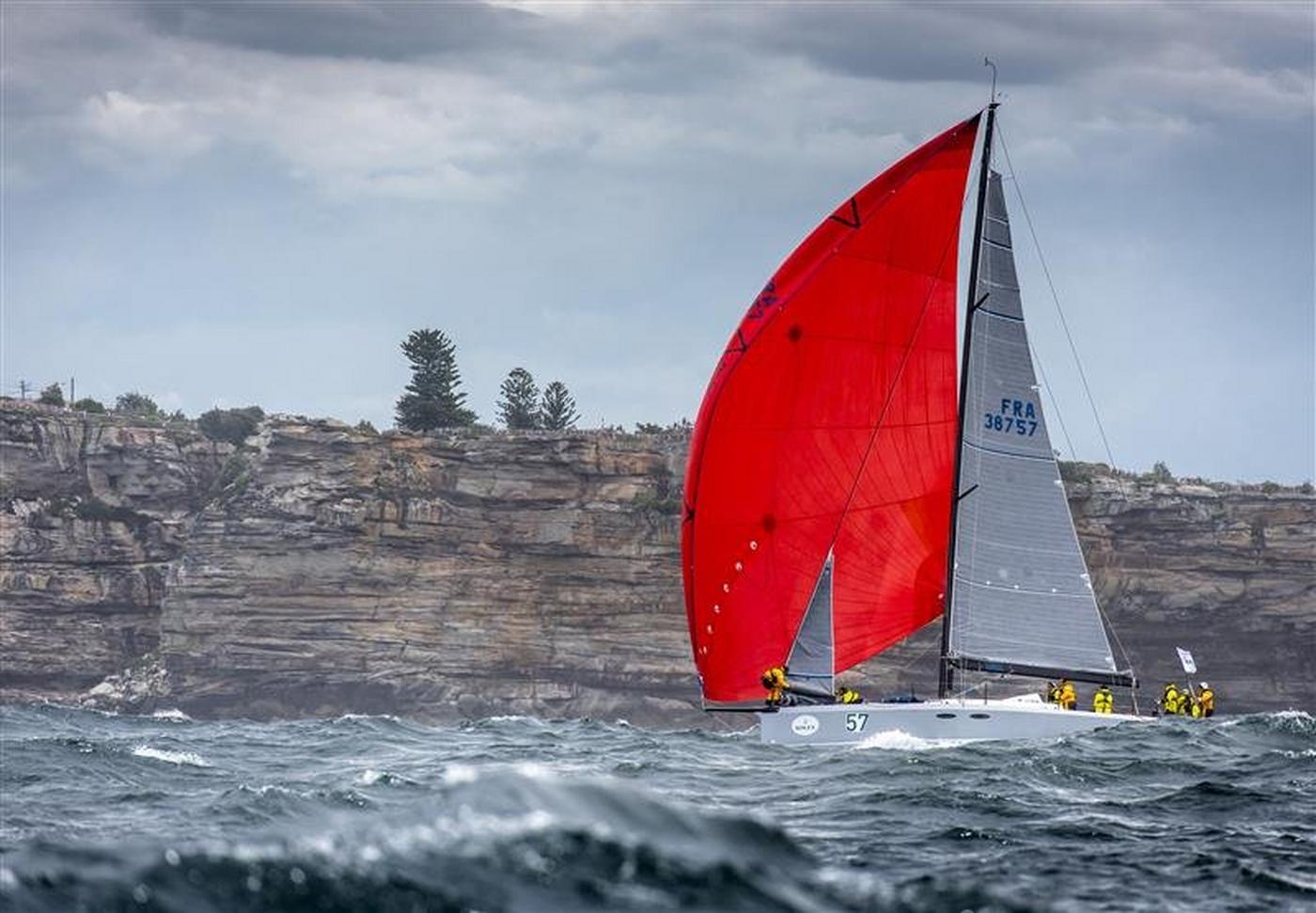
ROLEX SYDNEY HOBART OCEAN RACE: ONCE IS NOT ENOUGH
An IRC Overall Victory was within reach for the Rolex Sydney-Hobart contender Teasing Machine, until the wind completely died off the coast of Tasmania. Nevertheless, they went on to finish at the top of their class in IRC Div 3 and fulfill a lifelong dream for owner/driver Eric de Turckheim.
“When you’re sailing you cannot be disappointed. A race is a race, we arrived in a very good time and had a great race overall. Very varied conditions, we had a tough time at the beginning, but we know how to deal with that,” said Turckeim in an interview after reaching Constitution Dock.
“I would certainly consider coming back again. Dreams are dreams, doing the race one time is good, but we have to come back!”
For the Teasing Machine crew, the Hobart success comes off the back of a star-studded year. The team sailed fantastically to win IRC 1 at AAM Cowes Week and IRC Overall in the RORC Channel Race. The French team also placed 3rd at the Rolex Fastnet Race in IRC 1.
Launched last year, Teasing Machine sails with a complete North Sails inventory including 3Di upwind sails and nylon spinnakers. The boat is a 43’ Nivelt design, built by French boatyard Archambault and thus called an A13 (Archambault 13m).
Here’s to another year of great sailing in 2016, beginning with their next conquest: the Caribbean 600. We look forward to seeing more of this team!
*Image credit © Rolex/ Kurt Arrigo
READ MORE
READ MORE
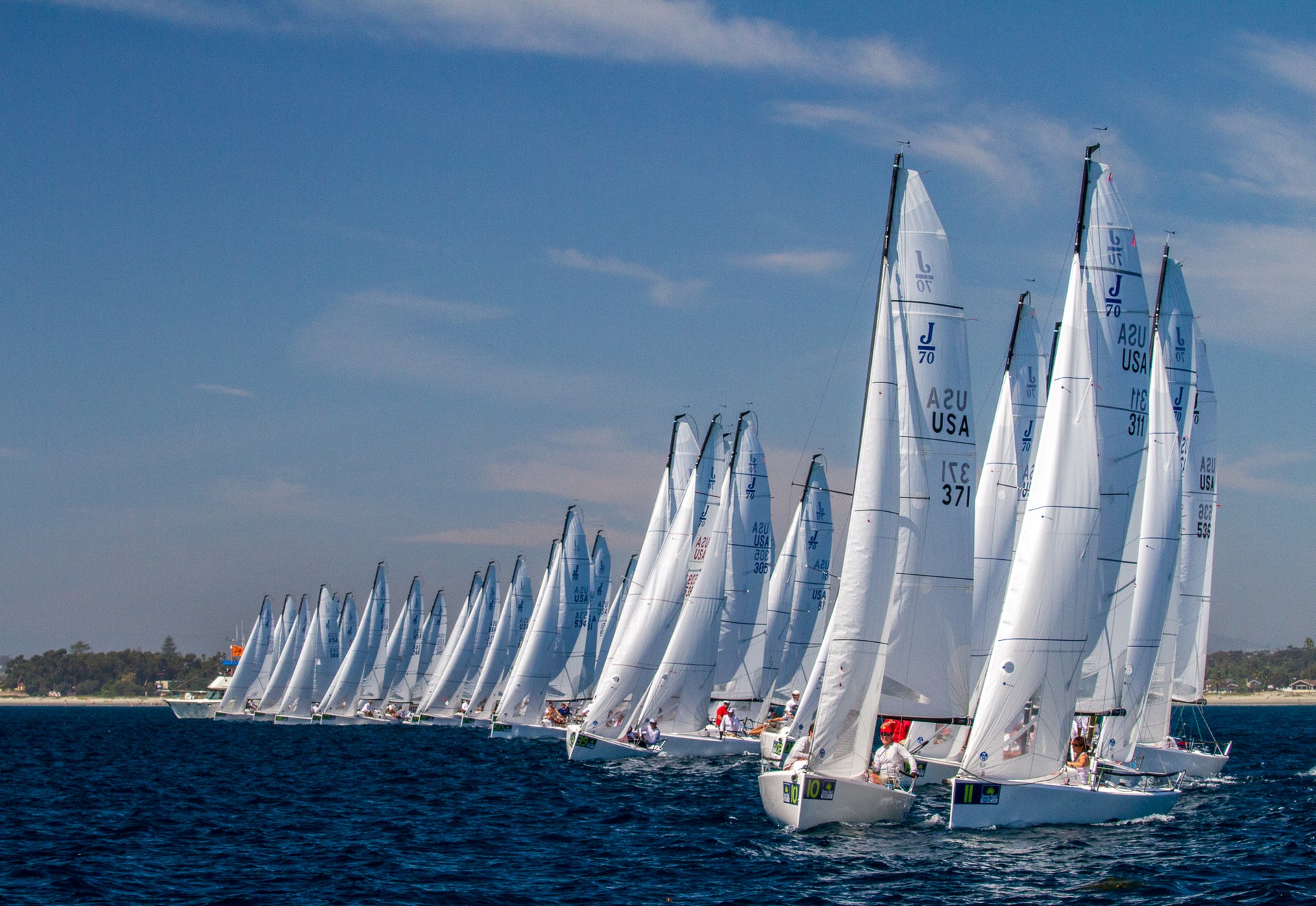
NEW TO THE J/70? 10 TIPS TO GET YOU UP TO SPEED
NEW TO THE J/70?
Ten tips to get you up-to-speed
“Before the 2015 J/70 North Americans I had crewed on the J/70 for a couple of years and thought I knew it pretty well. Steering is different (not harder) that crewing. We finished fifth overall which was a good start. Here are ten things I learned from this experience that will help you in almost any boat”. – Chris Snow
10 Tips:
Have clear consistent marks on your jibs sheets, both windward and leeward
You must have marks on the deck and clear marks on the sheets as reference points to duplicate fast trim setting on both tacks.
Do not steer the boat—rather steer as little as possible
Any small boat slows when the tiller is moved. I purposely held the tiller extension on my thigh upwind to minimize movement. Do your best to steer with crew weight-this applies to any boat.
The spinnaker trimmer steers the boat downwind
Be sure the spinnaker trimmer is constantly talking about pressure in the sheet downwind and telling you when to come up and down to optimize your angle downwind. She/he can feel that 100% better than you, the helmsman, can.
Check for weeds constantly.
In San Diego we had lots of weed and kelp. There is nothing slower than having weed or kelp on your rudder or keel. Keep a constant lookout and visually check if you have any doubts.
Have a tuning matrix and follow it.
Check your sailmakers tuning guide for rig tensions at different wind speeds. Make a chart of turns needed on your boat to get from one to the other. Follow it and set the rig back to base each time you return to the dock. This eliminates variables and second guessing and lets you concentrate on the race.
Sail the boat at a constant angle of heel upwind.
Very important to keep the boat at a constant angle of heel upwind. Use the head stay against the horizon as a guide. If you cannot hold the boat on a constant angle of heel the boat is either underpowered or overpowered. Decide which and adjust.
As helmsman downwind, help the crew with what is happening with the shifts downwind.
It is hard for the crew to know whether or not you are getting lifted or headed downwind (upwind it is easy) helmsman should keep an eye on the compass downwind and communicate to the crew what he/she is seeing.
On the J/70 learn to sail wing and wing easily.
Practice how much you need to turn the boat downwind to go to wing and wing and what conditions is works in (flat water, moderate winds). This is a tool that can come in very handy if you have it available but it takes some practice so as not to be too disruptive.
Trust your Velociteck!
This little wonder tells you how far from the line you are. Get good “pings” on both ends (be sure the line is set first) and trust it. I found it very helpful to have one of the crew calling time and another calling distance to the line converted to boat lengths (the unit displays in meters). You can use it to help you know when to accelerate for the line. See tips on how to get more from the Velocitek
Sail the boat like a dinghy.
All smaller one designs benefit from being sailed like an even smaller boat. Use your crew weight always to steer, move forward and aft depending on wind and sea state. Get good at roll tacking and jibing in lighter air. Heel the boat to leeward to round the leeward mark, etc… All boats will benefit from this.
More questions? Contact Chris Snow.
READ MORE
READ MORE
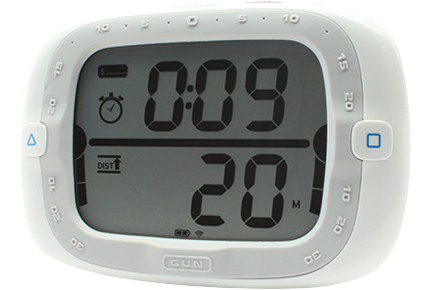
GET MORE FROM THE VELOCITEK
GET MORE FROM THE VELOCITEK ON YOUR J/70
Excellent Tool for Great Starts
Most of the one-design boats do not allow the use of a device like the Velociteck that stores information. Getting used to use it can take some time. If you are like most one-design sailors, you like to look at the boats around you at the start rather than a display, which can make you feel hopeless when you first begin to this tool. At the 2015 J/70 North Americans our tactician Eric Doyle was adamant we use it and he was sure correct. The Velocitek helped us to get some great starts, starts that had we not had it I would have been sure we were over the line.
Here are some tips:
Designate a crew member to watch the Velocitek
Have one of the crew designated to watch the Velociteck and call distance from the line converted to boat lengths (it reads in meters)
“Ping” before the start
Ping when the bow of you boat is at the pin and flag on the boat end.
Know roughly how many meters per second your boat travel
On smaller boats like the J/70, Melges 20, etc you can assume 1 meter per second. Using that in the final minute before the start you can gauge when to start accelerating. If you have 30 meters to the line but only 25 seconds left you are already late, aim for “1 to 1” when the time and distance to the line are the same.
Practice
You can practice this by setting a start line (long) and running through a bunch of three minute practice starts with a coach boat watching and telling you where you are on the line at zero seconds each time. This is a great way to get a feel for when or when not to accelerate. Get good at this and you’ll be able to be on the line in clear air many times.
READ MORE
READ MORE

CAPE TOWN SAILORS FLOOD TABLE BAY FOR 44TH ANNUAL RACE WEEK
A storied annual regatta held on iconic Table Bay, Cape Town Race Week wrapped up on 16th December seeing North-powered teams at the front of IRC and Club Racing fleets. The event draws back to the first Rothmans Week held in 1974, when it was a week long regatta capped off with a two day long distance race.
Now 40 years later, the passion for a premier event remains. The Royal Cape Yacht Club has found a solid partner in Maserati, a team that aims to grow the event, under a new guise, to once again become the prominent regatta it was.
One of five regional IRC events held between late September and late February, Cape Town Race Week is host to a quality local IRC fleet and two divisions sailing under the RCYC Club handicap system. Johannesburg’s Mike Hayton claimed the big win under IRC, for the Overall IRC title, with his Corby 49 Nitro. Among the Nitro crew was North Sails’ David Rae, one of many North Sails team members on the water that weekend.
Racing kick-started on Friday with an evening race held just off of the V&A Waterfront, in a dying westerly wind which slowed leaders until the wind filled from the northwest, ensuring a complete race before competitors retired at dusk. Saturday greeted Race Officer Rob Willcox with a glassy sea, steering his choice of course off the Sea Point for a triangular sprint race. Soon the wind started to swing rapidly toward the prevailing southeasterly, making the afternoon race interesting to say the least! A longer coastal race was set with a changeable windward leg, directly into the switching southerly. The course sent competitors around the breaking Barker Rock off Clifton, and doubled back to the start off Rocklands near Sea Point. The faster boats raced two laps. Before their midway point the gusts were pumping down the mountainside with winds varying as high as 20 kts and as low as five knots within minutes.
Sunday marked the Medium Distance Race, a 26 mile course leading the fleet down to a mark off Koeberg, about 12 miles to the north of Cape Town, and back. The fourth and final race day was a public holiday and racing resumed with some excellent sailing held off the Granger Bay/Green Point coastline. Here the southwesterly funnels down Signal and Lions Head peaks, creating more wind than anywhere else in the area. The fleet raced up and down close to the shore to use the port lifts right alongside the Kelp beds.
Clients of North Sails dominated IRC 1, IRC 2 and RCYC Div 1 podiums, while RCYC Div 2 saw North-powered boats claim 2nd and 3rd place.
Mike Hayton of Johannesburg claimed the big win under IRC, for the Overall IRC title, with his Corby 49 Nitro. Hayton brought outstanding feedback on their new code sail which was designed for a wider range, “The new North Sails furling Code 0-5 is a real weapon and we had a moment when we set it on the Medium Distance Race on the final reach into the finish in 25-28 knots at 115 TWA – We were absolutely flying at 18-20 knots, an awesome sail!”
Vulcan was a strong challenger and used her new 3DL 860 main and J1 light – medium to great effect. Arguably the most competitive downwind boat, she has certainly lifted her upwind speed dramatically since fitting these two sails.
IRC Class 2 podium finisher JJ Provoyeur sailed his Mumm 36 BallyHoo Too using a new aramid main and found a few new gears. The team lifted their performance enough to claim victory from J133 Jacana.
RCYC Div 1 top boats featured new North Sails as well. Aboard Yolo was a short luffed, roachy J1 medium-heavy which proved their “go to” sail. While the South African Navy entry Amusha Moya, in 2nd place, extended their inventory by adding a new S2, J1 and Code Zero. In 3rd place, Luke Scotts used his new S2 a huge amount for a boost in light to medium air, which North Sails built in the week prior to the regatta.
“North Sails puts a massive effort into the competitors who race these events and the rewards are there to see,” said Rick Nankin, manager of North Sails Cape Town. “With big participation from North staff, spread across a number of successful yachts, we open opportunities to help owners get the right sails on board and sail faster with improved results. We greatly enjoy working with this small but keen and passionate fleet of Cape Town sailors.”
North Sails Cape Town is located at 44 Auckland Street Paarden Eiland, for information on North Sails products and service in the Cape Town area, please contact Rick Nankin: rick.nankin@northsails.com | +27 (0)828309892
All images credit Trevor Wilkins Photography
READ MORE
READ MORE