

NORTH SAILS BLOG
All
Events
Guides
News
People
Podcast
Sustainability
Tech & Innovation
Travel & Adventure
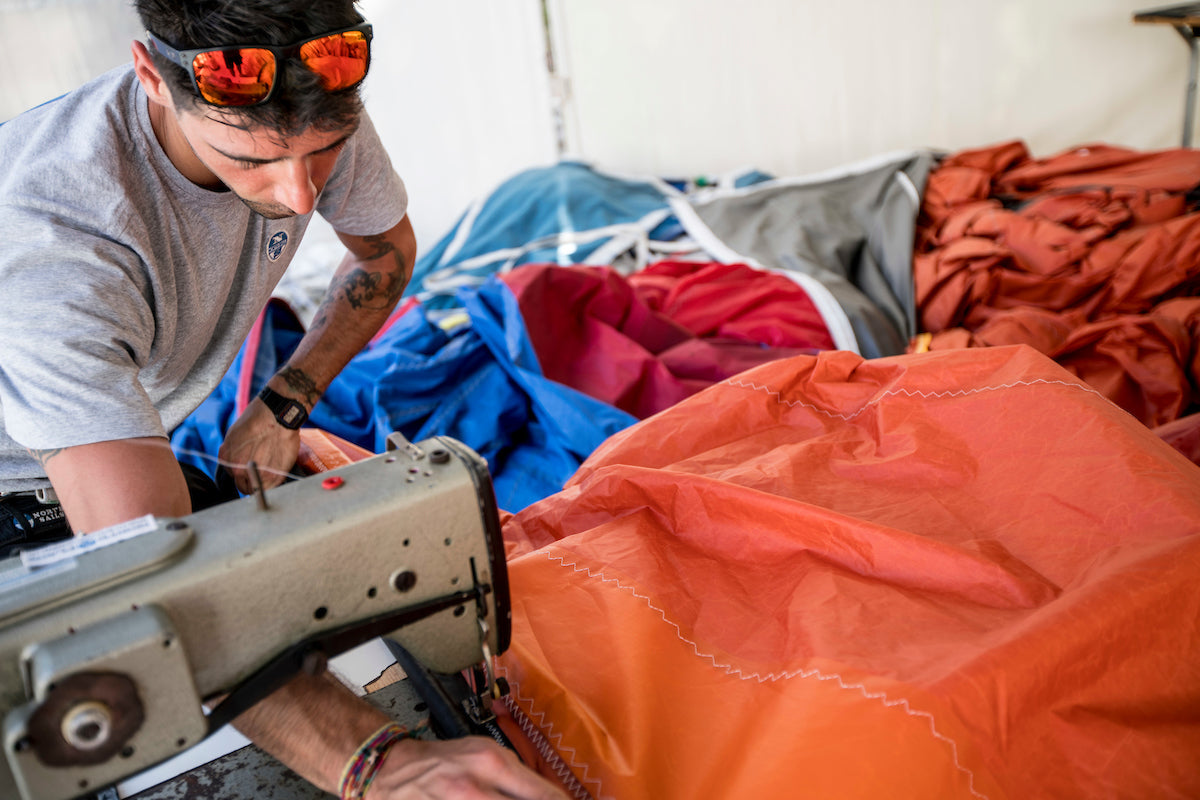
TIPS VOOR WINTER ONDERHOUD ZEILEN VAN ONZE NORTH SAILS EXPERTS
10 tips voor winter onderhoud van uw zeilen
Winter onderhoud zeilen - Met de winter voor de deur maakt het North Sails Service Team zich wereldwijd op voor enkele drukke maanden. We helpen onze klanten om zich voor te bereiden op het Caraïbische seizoen en zijn druk met het klaar maken en servicen van boten voor de winterperiode.
De in Palma gevestigde Ben Fletcher is Global Service Manager voor North Sails en deelt zijn beste tips om uw zeilen goed te beschermen: "Bij North Sails bieden we onderhoud service aan al onze klanten, vanaf een kleine Optimist tot aan een Tripp 85m."
"Voor alle eigenaren van alle boten, groot of klein, geldt exact hetzelfde; ze verdienen allemaal de beste, optimaal onderhouden zeilen. North Sails Certified Service voorziet hierin. Of u nou een wedstrijdzeiler bent of een toerzeiler, er is niemand beter in staat om samen met u uw zeilen in optimale conditie te houden, de levensduur te maximaliseren en de ultieme zeilperformance te behouden."
1. Voorkom onnodig klapperen van zeilen
Klapperen en trillende achterlijken kunnen de levensduur van uw zeilen aanzienlijk verkorten. Minimaliseer tegen de wind in varen op de motor met de zeilen omhoog en probeer zo snel mogelijk na het hijsen van de zeilen een koers te varen waarop de zeilen vol staan.
2. Verstel de reguleerlijn om trillende achterlijken te verhelpen
Afhankelijk van de leeftijd van het zeil, de windsterkte en de spanning op de schoot dient de spanning op de reguleerlijn aangepast te worden. Bij te weinig spanning zal het zeil klapperen en bij teveel spanning zal het achterlijk naar binnen gaan staan. Een goede stand is de reguleerlijn net iets meer aan trekken dan het moment waarop het klapperen stopt.
3. Gebruik uw zeilen voor het ontworpen windbereik
Neem contact op met uw North Sails Experts wanneer u het aanbevolen windbereik voor uw zeilen niet weet.
4. Laat de zeilen niet onder spanning staan
Zorg dat u de spanning van de genuaval, onderlijkstrekker en reeflijnen af haalt wanneer u klaar bent met zeilen. Op deze manier staan de zeilen niet onnodig onder spanning. Wanneer u langdurig van de boot weg gaat raden wij ook aan de spanning van de zeillatten te halen.
5. Voorkom onnodige blootstelling aan UV
UV straling is één van de grootste vijanden van uw zeilen. Het beste is om rolgenua’s te beschermen met een UV strook op het achter- en onderlijk. Wanneer u uw grootzeil op de giek laat, zorg dan dat deze altijd afgedekt wordt met een goede hoes.
6. Spoel uw zeilen met zoet water en droog ze voordat u ze opbergt om schimmel en uitgelopen kleuren te voorkomen
Spoel de hardware van het zeil met zoet water om corrosie te voorkomen en bewaar uw zeilen op een goed geventileerde, droge locatie. Daarnaast is het drogen van de zeilen voordat ze opgeborgen worden minstens zo belangrijk als het spoelen zelf. Natte zeilen veroorzaken schimmels. North Sails kan het reinigen van de zeilen ook voor u verzorgen.
7. Voorkom dat kreukels blijvende vouwen worden
Voorkom het vouwen van de zeilen op reeds bestaande vouwen zodat kleine kreukels in het zeil niet blijvend zijn.
8. Spoel zeilzakritsen regelmatig en spuit deze in met een siliconenspray
9. Laat uw zeilen minstens een keer per jaar controleren door een North Sails Certified Service expert
Wanneer u uw zeilen regelmatig laat controleren door een North Sails Certified Service expert kunt u op tijd kleine beschadigingen aan uw zeilen laten herstellen en voorkomen dat grotere problemen uw weekend of vakantie verstoren.
10. Houd een zeil logboek bij
Maak regelmatig foto’s van uw zeilen en houd bij hoe vaak u de zeilen gebruikt zodat uw zeilmaker een goed overzicht heeft van uw zeilinventaris. Uw foto’s kunnen ook gedigitaliseerd en geanalyseerd worden met een North Sail Scan. Neem contact op
met Jacco Huijgen voor meer details.
Voor meer informatie of vragen over winter onderhoud van uw zeilen kunt u contact opnemen met één van onze North Sails Experts in Stabroek, Rotterdam of Almere.
READ MORE
READ MORE
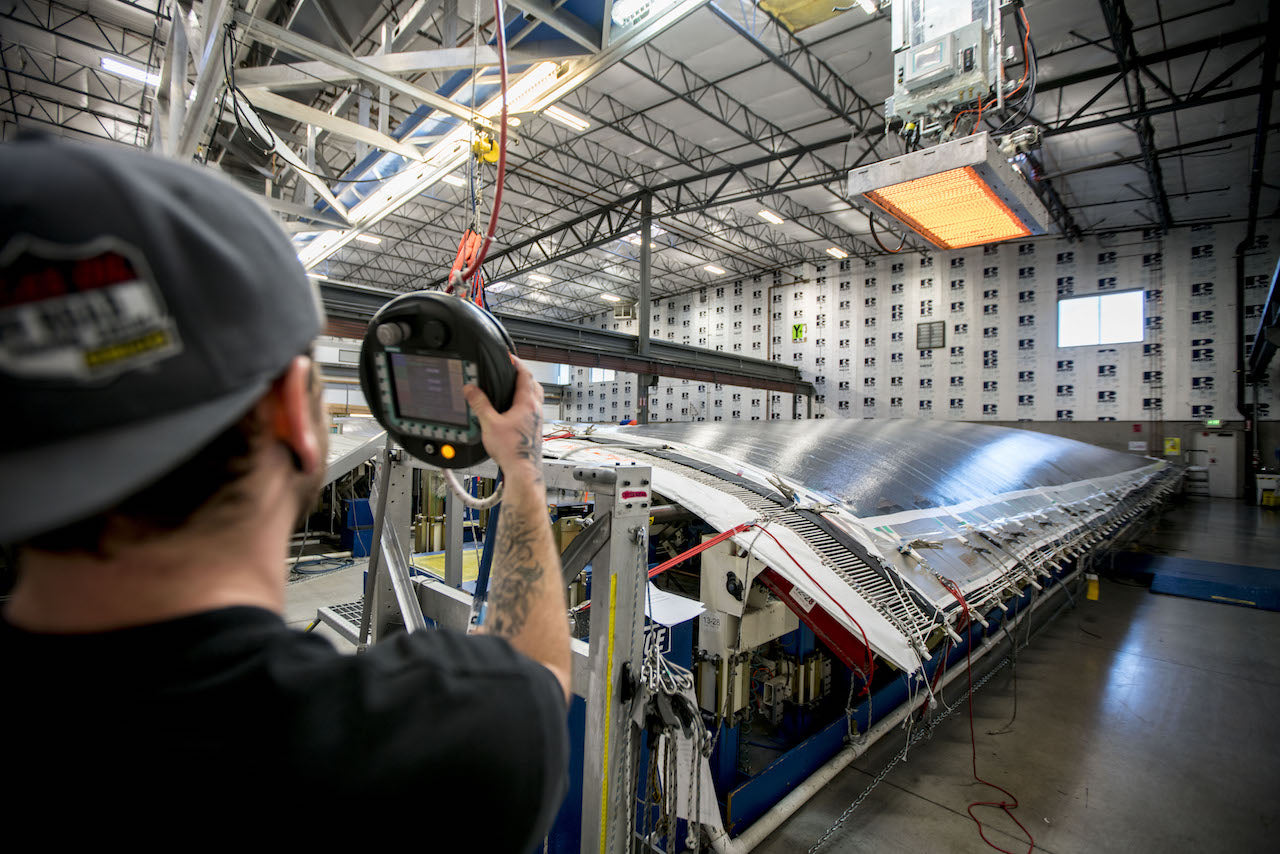
NORTH SAILS DOUBLES DOWN ON R&D
NORTH SAILS DOUBLES DOWN ON R&D
At North Sails, product development and technological innovation have been core functions for 60 years. As we look toward 2018, the company will further solidify its research and development roots by establishing a formal R&D hub at the loft in Vannes, France. Head-up by French designer, Gautier Sergent, the R&D center will organize the activities and energy that have historically been widespread throughout North Sails.
Most of the significant breakthroughs in sailmaking, from 3D molded sail manufacturing through to today’s 3Di composite foil structures, have been achieved by merging sophisticated computer modeling with creative mechanical engineering and bold ideas hatched on the water. With the Vannes R&D center, North Sails takes a proactive approach to bringing these three pillars of progress together.
Tools of the Trade
Fluid-Structure Interaction, or “FSI” in engineer-speak, is the practice of analyzing the relationship between a structure and its fluid environment, such as a hull passing through water or a sail through the wind. North’s development of bespoke software began in 1977 with the digitalization of 2D curves on the world’s first computers. Over the years it evolved to include a family of modules, notably MemBrain™ and Flow™ in 1987, which couple to apply wind pressure to a sail’s surface, calculate the load forces created and the resulting deformed shapes. Today, North Sails Design Suite™ (NDS) is the most powerful and diverse sail design tool in the industry with 14 modules delivering unprecedented flexibility to sail design and rig/hull analysis. By interfacing with Open Foam software, NDS offers a complete FSI and the ability for North Sails designers to virtually test a boat and sails in an infinite variety of conditions before the boat is even built.
Even Better in 3D
If designers use software to draw a perfect shape, it’s the engineer’s job to build it in real life. North Design Suite is fully integrated with North’s automated 3D manufacturing, providing the designer and the engineer complementary tools to achieve results. Starting with raw materials, the North Sails R&D team is able to design and manufacture a sample completely from scratch within a controlled manufacturing process. This opportunity for in-house development has fueled the patent of new manufacturing technologies and breakthrough products. The 1992 introduction of North Sails 3DL marked the first sails to be built on a three-dimensional mold according to a design load path. North Sails 3Di followed in 2010 to mark the first composite sail ever brought to market. Also built on a 3D mold, North 3Di has set a new standard for shape and structural durability, with clients sailing upwards of 5,000 hours on the same set of sails, while breaking the toughest records on the ocean.
Dreams with Discipline
Our founder, Lowell North, pioneered his own approach to sailmaking by applying a scientific method to the pursuit of his vision. Remaining at the forefront of development is possibly the clearest example of how Lowell’s core values have enabled North Sails to prosper well beyond his own tenure. No idea is rejected for being too difficult. All development is carried out with the discipline of scientific method.
It takes confidence to dream, and expertise to make dreams reality. By anchoring North Sails R&D in Vannes, the team joins a community that has consistently pushed the boundaries of our sport harder, and earlier, than anywhere in the world. North’s track record of disrupting the industry with new technology matches the ambition of the world’s top sailors, many of them based in France.
As the new leader of North Sails R&D, Gautier Sergent brings a wealth of experience and fresh energy to the department. A French native, Gautier started out as an apprentice designing for a senior team at North Sails in New Zealand – another highly innovative sailing pole – after which he took on a sequence of major design projects for the company. Gautier is the Volvo Ocean Race sail designer of record for the VO65, including the 2014-15 and 2017-18 race inventories, and designs for a handful of high profile clients currently making history on the water; Thomas Coville, Francois Gabart, Jean-Pierre Dick to name a few. As Thomas broke the Transat Jacques Vabre course record this week, Francois broke his own standing 24hr solo distance record on Tuesday, November 14th. At the moment the young Francois is sailing well beyond the pace needed to surpass Thomas’ circumnavigation benchmark, on a boat that dates our wildest dreams by a year or two.
After breaking the singlehanded circumnavigation record last Christmas, Thomas Coville thanked North Sails.
“I want to thank North Sails for trusting in me. It’s easy to find people to trust you after the idea works, but North Sails was with me from the start. And that is why I am here today. With our project, with our dreams, you prove there is nothing and no one who can stop you if you have a dream.”
In the past three years, Gautier relocated to Minden, NV in the United States to manage the company’s 3Di production hub. The 3D factories are special places where material science, mechanical engineering and machine build are all handled completely in-house. Three years of working in close proximity with North’s inventive staff has given Gautier a solid foundation in our capabilities, the potential of our materials and the R&D process that has proven successful. Along with his background in sail design, this experience combines well with a personal passion for cultivating ideas and leading a team to pursue the impossible.
READ MORE
READ MORE
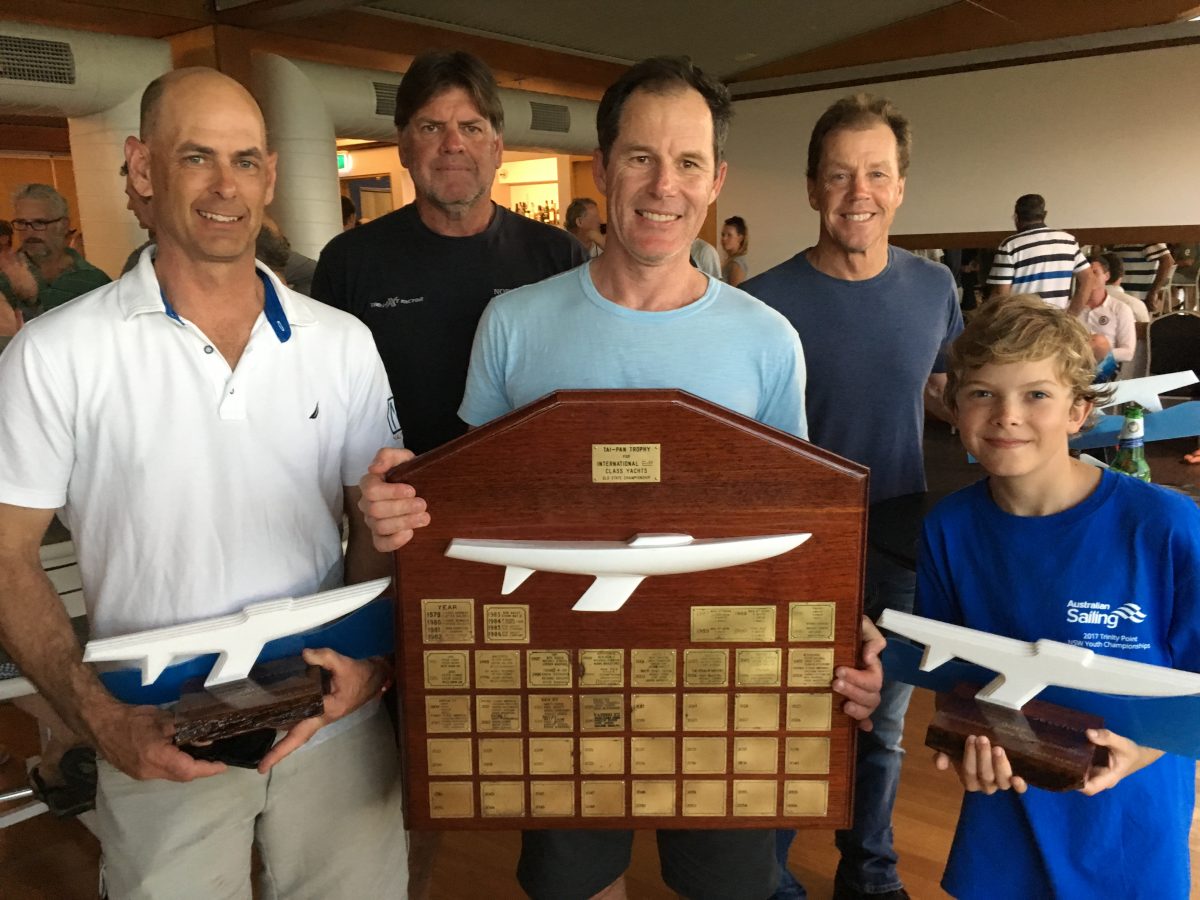
"CLARKY" WINS ETCHELLS QLD STATE TITLE
Australian Etchells Class expert Ian Johnson interviewed David Clark (Clarky) after his convincing win at the QLD, Etchells State titles against a very strong fleet.
Clarky teamed up with well known Western Australian sailors Ray Smith, Alan Smith and young champion from QLD Mitchell Luxton at just 11 years of age.
The winning team © Kylie Wilson - positiveimage.com.au
Backing the team up was larger than life Mike Hughes also from W.A. Hughesy ran the coach boat and kept the team in check on and off the water.
All of them had sailed with each other before but not as an Etchells team of four.
Having the two days on the water prior to the regatta to get the team work and boat speed on track was invaluable. This is when having a coach and coach boat pays off says Clarky. Tuning up with Bruce Ferguson and his team was great to get up to speed.
I asked Clarky about the crew roles on the boat.
"All of us knew each other well and the dynamics fitted pretty quickly. Young Mitch Luxton sails Optis. He also sails with his brothers and family at RQYS. Having a young set of eyes and extra set of hands was great. "
"Ray Smith did the main sheet and kept the boat rolling, and me in check. Ray is a great sailor and loves his Etchells racing. This program was put together by Ray.
Alan Smith sat up the front and did tactics. Alan and I sailed together in the Sydney Worlds so It didn't take long to get our communication up to speed. He did a very good job."
Working hard down wind © Kylie Wilson - positiveimage.com.au
What boat equipment were you using Clarky?
"The boat is a new Smidmore boat and Smidmore mast.
We used North Sails Jibs, LM2L and LM2H, Main TKR and a VMG Spinnaker."
It was the first time I have sailed with North Sails in a long time. I never felt compromised with boat speed. It was nice not to think about sails and go yacht racing.
What's next Clarky?
"I will start thinking about putting the program together for the Worlds in Brisbane next year. It was great to sail at RQYS, It's an amazing facility, race track and organisation I and look forward to coming back next year."
READ MORE
READ MORE
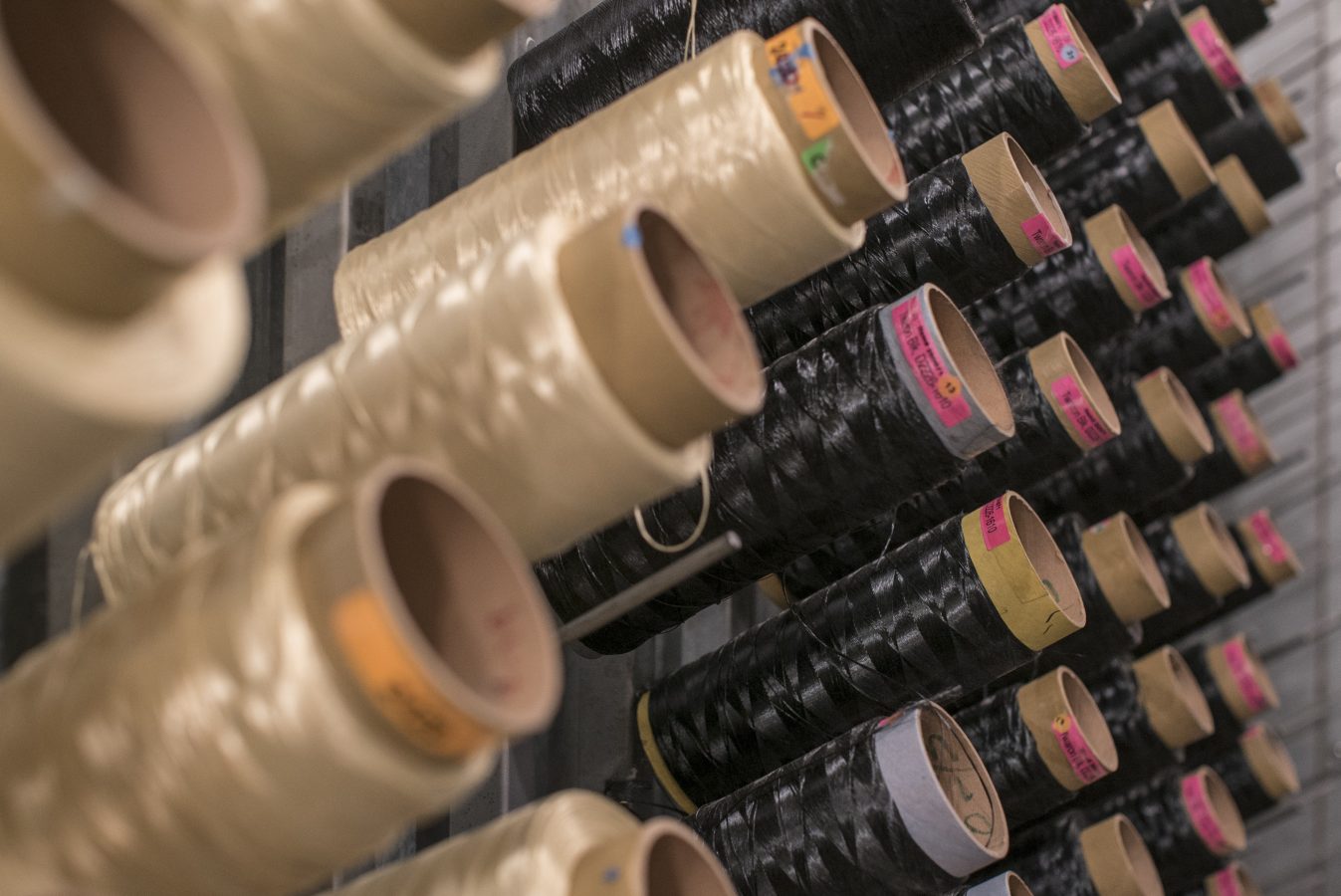
NORTH SAILS GROUP SELECTS VANNES FOR ITS GLOBAL R&D HUB
North Sails Group selects Vannes for Global R&D Hub
Boat Industry interviews North Sails head of R&D, Gautier Sergent on his ambitions for the department
2018 will see North Sails found a center for Research and Development out of Vannes (France). Experienced designer and department head, Gautier Sergent, explains to BoatIndustry their objectives and philosophy, which have the potential to go beyond sails.
You are going to take charge of the North Sails R&D center in Vannes. Could you tell us how you got here?
Gautier Sergent: After completing my studies in engineering in France, I joined North Sails in New Zealand in 1999 for a final internship. At the dawn of the America’s Cup in 2000, the teams were very busy out there and so I was able to help, which got my foot in the door. I was hired by the sail loft whilst also undertaking a Masters at Auckland University in the Yacht Research Unit at the same time. I then worked on the development of the software for CFD (Computational Fluid Dynamics), and then I became a designer.
In 2010, I returned to France to work on the Groupama project in the Volvo Ocean Race. I spent time with members of the crew who also each had their own teams, such as Thomas Coville. We built up some great relationships and I stayed in France to work on a number of IMOCA and Ultime projects.
In 2014, I became head of the 3D factories for the North Sails group in Minden (USA) and Sri Lanka. At the end of three years, which we had agreed would be the minimum required for such a post, we determined with management that my profile and expectations corresponded to the new project to develop R&D within the group. From October 1st 2017, I will therefore take charge of the new R&D center.
How has R&D at North Sails worked up until now and what were the reasons behind creating this R&D center?
GS: Of course R&D existed before this initiative. It is even part of the DNA of North Sails, but up until now it was spread within all the different entities of the group. It was never the priority of one person in charge, which could slow down the process. Moreover, it was never considered for all the markets and the information was scattered.
From now on, I will be in charge of structuring and coordinating the R&D efforts for North Sails around the world. Thanks to the R&D center, we will be able to streamline and ensure the research efforts are as efficient as possible. As a first step, I want to establish an inventory and back catalogue of North Sails R&D. From there, we will be able to establish a 5 year plan of attack and forecast the budgetary and personnel requirements. The objective in the long term will be to hire 3-4 people.
What are the main areas of R&D that you are exploring?
GS: Even if the subjects are refined after the inventory, several research topics are already envisaged. There will obviously be development for CFD software. We will also work to simplify and integrate as much as possible, or even completely remove the some finishing aspects of sails, such as straps. We are going to study the integration of the mast and sail with Southern Spars which, together with North Sails, is part of the North Technology Group. Electronics and the gathering of data is an area we’d like to streamline in order to better understand the dynamic behavior of sails, and apply this knowledge to physical test protocols and laboratory simulation for sails.
We will also focus on product development and continue to expand 3Di to cover all types of sailing. With this year’s introduction of 3Di NORDAC, we have made a huge step by using a new material: Dacron. With this result we will work to see the possibilities of marrying up polyester fibers with Aramid, Dyneema or Carbon, to draw out the best characteristics from each one.
Why did North Sails choose France to install its R&D center?
GS: The French sailing market is one of the least cautious. The projects that one can find between Lorient, Port-La-Forêt and la Trinité are exciting and the French are not afraid to invest in technology.
On the other hand, with the tax credit, it is possible to reduce personnel costs to the level of other countries. Among the hires at the R&D center, there will certainly be someone in charge of partnership management with universities, companies and grants.
This interview was originally published by BoatInsider.com
© Amory Ross/ North Sails
© Ian Roman / North Sails
© Ainhoa Sanchez/Volvo Ocean Race
READ MORE
READ MORE
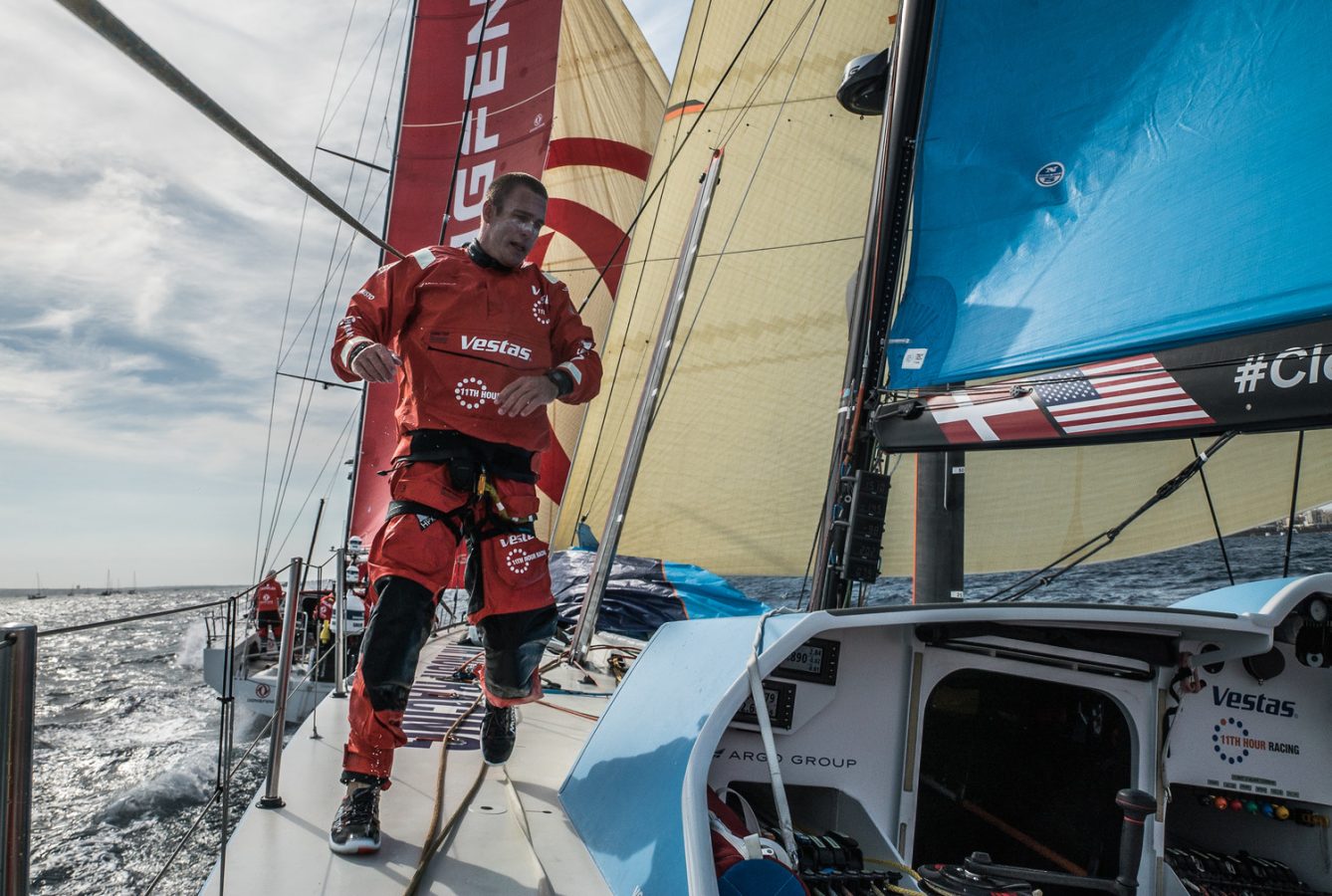
3Di FORCE FEATURED IN SEAHORSE TECHNICAL REVIEW
Fast Boats Just Got Faster
The 3Di Force Code 0 built for Volvo winner Groupama is now available for all
© Pedro Martinez / Volvo Ocean Race | Mapfre leads this year’s seven-boat Volvo Ocean Race fleet across the startline in Alicante. An increasingly popular application of 3Di Force can be seen here in the one design A3 in this year’s VO65 sail inventory.
Building on its success with 3Di across grand prix, offshore and superyacht fleets, North Sails has launched a new variant tailored specifically for downwind applications. For the Volvo Ocean Race 2011-12 sail limits on the outrageous VO70s were tightened down following the previous event from 24 to 17 sails for the whole race. North’s immediate focus was to try to figure out if any sails could be removed from the previous inventory without negatively affecting performance over the length of the course. 3Di was a new technology back then, and the bet was taken by both North Sails and some of the teams that it would perform better, and for more hours than string sails, therefore allowing fewer sails to be carried onboard.
Gautier Sergent, lead sail designer, had felt that in heavy-air downwind crews tended to back off to avoid breaking the boat – and the sailors. So if there was a sail that could be removed from the replacement cycle through less wear and tear, it might be the heavy-air downwind fractional Code 0 – as long as weight did not have to be added to make it bulletproof. Hence it was decided to develop a new fractional Code 0 that could last the whole race, while being light, fast and stable enough to reach at higher angles than the previous sail; the 3Di Force concept was born. This sail type not only went around the world on Groupama without any problems, it ended up becoming quite famous… as the team approached Lorient on the race’s epic penultimate leg.
With the wind blowing 48-50kt, it was time to gybe for the finish. The Groupamacrew decided to gybe with everything up, focusing their attention on the mainsail to ensure they did not break all their battens… or drop the mast. So the fractional Code 0 would have to survive this manoeuvre while being attended to last, left to flog in the howling conditions before being sheeted back in. The crew pulled it off, the sail survived. And they went on to win the leg and the race.
Skipper Franck Cammas later reported to Sergent that they had faith in their 3Di Force and were not unduly worried about breaking the sail – being more concerned about dropping the mast…
Similar on the outside… inside it’s a whole different story
The 3Di layout spreads filament pre-peg tapes in a multiplicity of orientations which enables a downwind sail to be engineered with high precision, and without the weight of the film required for a Mylar-based string sail. 3Di manufacture is also a vertically integrated process, North Sails controlling everything down to the tape manufacture. This allows the company to tailor materials for applications and opens up an infinite number of fibre combinations in terms of type, dpi and adhesive content/type.
This is what allows Force to be completely different from 3Di Raw. 3Di Force was designed from the outset for downwind applications, so loadings are quite different from the upwind case and more biased towards the luff than the leech. The AWS is typically much lower downwind and the sails much larger than upwind sails, so the weight becomes a greater factor in ensuring the sail flies correctly.
The loading is also more dynamic because of the broader angles and faster AWA changes as the boat accelerates/slows. This requires a high strength-to-weight ratio: the ability for a sail to sustain high loads for a given weight.
The sails are deeper than upwind sails as well, so the weight-tomodulus ratio (the ability of a sail to resist stretch for a given weight) can be slightly moderated. In fibre terms this typically means significantly more Dyneema than would be used in an upwind sail.
Combining those two factors – a luff-loaded structure and high Dyneema content – is a great solution for a light but durable downwind sail, while retaining the flying stability of 3Di. 3Di Force employs North’s proprietary 3D moulding technology with its precise control over shape, combined with the high-resolution
3Di tape structure. The end result is 3Di Force being capable of creating super-light sails with exceptional shape stability.
Why did it take North so long to release 3Di Force to the general market? Mainly because its application was limited due to the minimum weight of a 3Di sail at the time. Later, in 2013, North invented 3Di Raw, which reduced the minimum achievable weight without compromising the sail structure. Today 3Di Force has become the benchmark for downwind sails on fast boats. It is light, strong, very precisely shaped and more stable than other technologies. Sailors commonly highlight improvements in acceleration detected with sails built in 3Di Force; a big reason for this responsive performance is that the unmatched stability of these sails means better use of gusts, translating the extra power into speed. It also shares the attribute of every 3Di sail and increases the sweet spot/effective wind range of the sail, thereby reducing the number of sails needed.
From Imoca 60s to Ultimes, boats are doing away with paneled downwind sails completely. The 3Di Force fractional Code 0 is also a great addition to the armory when reaching with AWA ranging from as close as 45° upwards…
This story was originally published in Seahorse Magazine Technical Review, December 2017.
© Jen Edney/Volvo Ocean Race
READ MORE
READ MORE
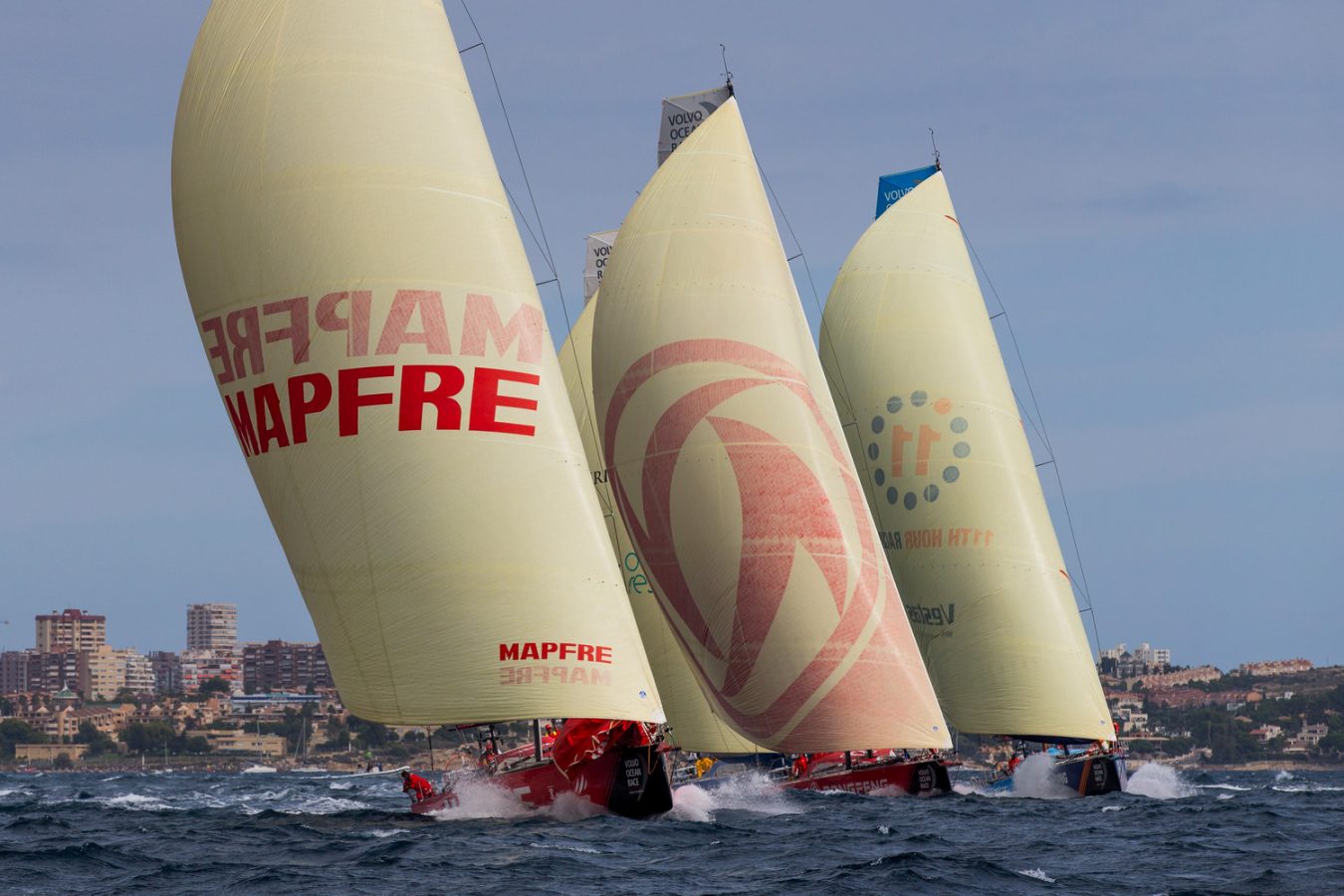
SAIL PROFILE: VOLVO OCEAN RACE A3
SAIL PROFILE: VOLVO OCEAN RACE A3
What are those yellow sails on the Volvo Ocean Race boats? North Sails CEO, Dan Neri, explains what’s so unique about the Volvo Ocean 65 A3
© Pedro Martinez / Volvo Ocean Race
The Volvo Ocean 65 A3 is unique because it is shaped like an Asymmetric Spinnaker, built like an upwind sail and furls like a genoa. The sail structure is 3Di Force, the lightest application of the 3Di composite sail product line.
3Di Force sails are made using prepreg tapes with a very high concentration of UltraPE material, co-mingled with Aramid filaments. The UltraPE provides high modulus and incredible toughness while the Aramid component resists compression and shrink. Like all 3Di sails, Force products are free of Mylar films which is one reason why the 3Di structures have extremely high strength to weight ratios. The newly developed 3Di Force product is so strong, and so reliable, that the Super-Maxi Comanche brought a single downwind Force sail for its recent Transpac record-setting run to Hawaii.
The yellow hue of the Force sails comes from the combination of UltraPE filaments (which are translucent, white) and Aramid filaments (which are gold). To keep the weight as low as possible, the A3 sails have very little branding so they show their true colors. All of the other sails in the Volvo Ocean Race 65 inventory are fully branded which masks the color of the sail structure. We are especially proud of the work done by the North Graphics team for this edition of the VOR. Our team painted 130 VOR sails over the course of just 6 months. We think the sails all look fantastic with the teams’ colors and logos.
All 3Di sails, including 3Di Force sails, are made on North Sails proprietary, full scale adjustable molds. However, a careful look at the photos will reveal a number of seams in the Force sails. The seams are required because these sails have very high camber ratios (remember, they are essentially spinnakers) and our molds are engineered for camber ratios found on upwind sails.* So the engineers at the 3D factories break each Force sail into sections for molding. Each section of the sail has camber in the range of an upwind sail, and when the sections are assembled the sail reaches the downwind camber dictated by the sail designer, with every square meter molded into a smooth 3-D surface. The seams are joined with a 2-part, ballistics grade Urethane adhesive. The width of each section joining seam is calculated to achieve a bond strength that is equal to the tensile of the 3Di composite in the area of the seam. The whole structure is in balance.
© Jen Edney/Volvo Ocean Race
3Di Force sails are proving to be downwind game changers for ocean racing boats that sail at high enough speeds to pull the apparent wind forward of the beam. The sails are too inelastic, and marginally too heavy to be used on boats that sail with wider apparent wind angles and less pressure on the sail. That might change in the next few years as we move further down the path of learning what is possible with 3Di composite sail construction.
*A good question is, “Why don’t you make deeper molds to allow one piece downwind sails?” The answer has more to do with real estate than engineering or economics. Our 3Di molds position the sail structure in space. The mold space has X,Y and Z dimensions. The tools we use to construct the sail structure on the mold hang from a gantry which is positioned over the mold. The gantry has to fit inside the building. Our current molds have a Z-throw limited by the height of the gantry (if the mold is adjusted to a camber exceeding the Z-limit, the gantry tools will crash into it). The gantries just clear the roof. To get more Z-throw we either have to raise the roof or lower the floor. Both of those options are ruled out by nature and government. The floor of the factory cannot be lowered because in the high desert of Nevada, the water table is just below the surface of the ground. If we dig down, we will make a swimming pool. The height of the factory building is restricted by local zoning ordinances because we are located adjacent to an airport. If we built higher, the local glider pilots might have trouble clearing our roof!
© Jesus Renedo/Volvo Ocean Race
READ MORE
READ MORE
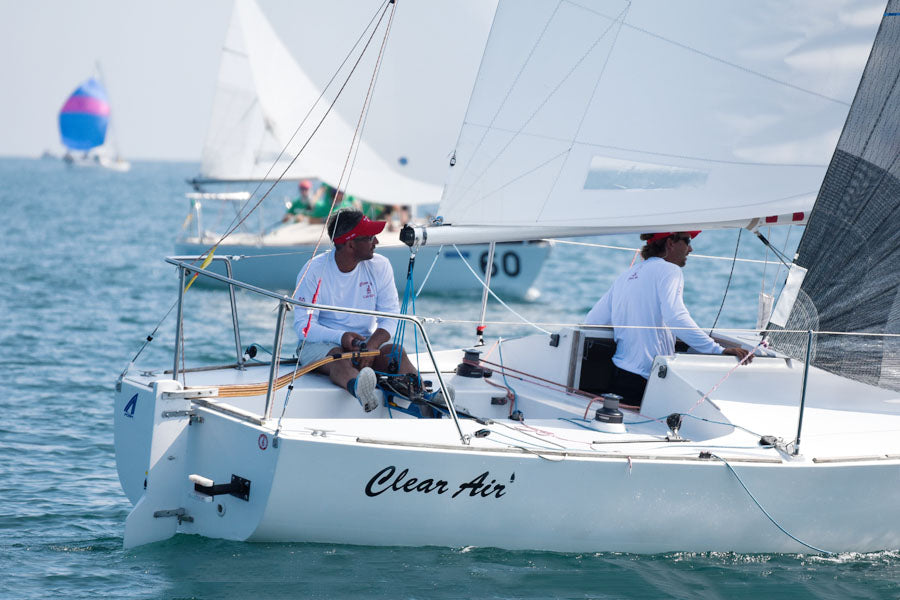
A WEEK OF CLEAR AIR
A WEEK OF CLEAR AIR
Interview with Rossi Milev, 2017 J/24 World Champion
Rossi Milev sailed his first J/24 Worlds in 2000 in Newport. He didn’t win, but really enjoyed the class and the boat, so like a lot of J/24 sailors, he kept coming back for more. Seventeen years later, he finally sailed to victory at his home yacht club in Port Credit, Ontario. He set his sights on the Worlds, which happened in September of this year. Boats began to collect in the parking lot days before the event with sailors who were eager to get their boats measured in and race-ready. Port Credit Yacht Club was so “on-point” for the World Championship, they were able to get all 63 boats registered and measured one day ahead of time. From a racer’s perspective, this speedy inspection was ideal, as sailors wanted to start focusing on racing and put in some practice time. Given the conditions that happened this year, and keeping in mind that weather is unpredictable, Rossi worked hard to get this regatta to his home yacht club, as he knew they would do a great job running a World Championship for the J/24 Class. Once they won the bid for hosting the event, Rossi set his sights on taking home the trophy.
Before the first race came to an end, the fleet knew this was going to be a very tough regatta. Rossi’s team Clear Air came across the finish line not quite where they expected.
“Looking at our results from the first race, local knowledge did not pay off. The fog was thick. Halfway through the beat we had committed to the left, which was normal, but it didn’t pay off at all.” Team Clear Air was disappointed, but before the second race they put their heads together and shared a prediction. “Everybody can have a 46th place. This is the World’s. It’s going to come down the last leg of the last race.”
“We had pretty good starts, and some not so good ones. When we had bad ones we flipped on port and made the best of it. It was the perfect opportunity to crack off the sails and get the boat going as fast as we could. We would take some sterns, and even duck, which wasn’t necessarily bad. Boat speed was so important.”
All the teams found their own challenges during 8 light air races, including current. Rossi stated; “The current here was going east to west, it wasn’t really normal. We usually see more in windier weather.” This unexpected adverse current became an obstacle when coming in on the starboard lay line and at mark roundings.
“Winning the J/24 Worlds is as hard as winning the Worlds in any other class. It may actually be harder, because the boats are all even. There are a lot of great sailors in the class who had deep results. Up until the last race it was still not determined who would win.”
Rossi’s team sailed the 2016 North Americans (minus 1 crew member) as well as many local races, so they knew each other; they just hadn’t been sailing the J/24 together leading up to the Worlds. Rossi only sailed one J/24 event a couple weeks before the Worlds at his home club, with a different team. “Everyone has families, work, growing businesses. We all kind of parted ways for a while.”
For the Worlds, he said, “Each day our communication got better.” He was very confident in his crew. Although they hadn’t been sailing much together, they were able to pick up where they left off. By the end of the week, they were right where they wanted to be. Rossi was also very familiar with his boat, which had won a previous J/24 Worlds. He claims she has unbelievable speed, especially in light air.
Rossi worked with Will Welles when he won the 2014 J/24 Worlds, and he says he learned a lot from his experiences sailing with and against Will about technique and boat setup during their tuning sessions. “I keep my rig just a bit looser than what the tuning guide says. I can feel the boat better, and I feel quicker and have more options and can settle into the groove.” He uses the tuning guide as a tool. He knows he is in a “safe” range, then goes by feel. He has a great feel for the boat and knows when changes need to be made for overall boat speed improvement. Rossi had trained on Lake Ontario in light air ahead of the Pan Am Games a few years ago. He said that contributed to his loose rig setting at this years’ Worlds; in the same conditions, he felt very confident in his settings.
“The steps I would move to on the rig were in increments, at a half-turn rate. Small adjustments are key in lighter air, and I never go the next full step unless the wind picks up more significantly. I have a great feel for the boat and helm, and can tell when changes need to be made.”
We asked Rossi what he thought about moving the mast butt. “I did move it a couple of times when I was training with Will and Tony Parker in the days prior to racing. I found a sweet spot that I liked and the boat felt great. I ended up leaving it there for the whole regatta, as it was the right balance between my sails, foils, and helm.” As for moving the mastbutt, he says, “just gives you a piece of mind.”
We asked Rossi what his number one tip would be to all J/24 sailors. He replied;
“Always look at your leeward shrouds. You want to see them dangle a bit. That’s how I decide how much I need to come on or off the rig.”
Rossi is focusing on work again, but he’d like to sail with other teams in 2018. He already has his sights set on the 2019 Worlds in Miami, and the upcoming winter circuit is of interest to him spending time sailing with good friends.
“Miami will be awesome. It will be another hard Worlds to win again. The stronger more prominent current, bigger breeze, and waves will have more effect on overall performance. It will be very different from this year.”
We asked Rossi what he likes about the J/24 Class and what keeps him coming back for more. He was humble as he replied;
“I like the J/24 Class because it is affordable and the sailors are very good. We wouldn’t have as many youth and women’s teams out there if it was expensive like a lot of other more high-performance classes. The J/24 is a great boat to learn from and race, and the events are a lot of fun. There is a reason why nothing has replaced it. How many young people have learned how to sail on a J/24? A lot of them. Because it is fun. It’s a good Class to be a part of.”
For the 2017 Worlds, Rossi’s inventory consisted of North Sails Fat Head Mainsail, DX-7TT Genoa, and FR-2 Spinnaker. Click here for more information on our products, or to speak with your local expert.
North Sails J/24 Tuning Guide
READ MORE
READ MORE
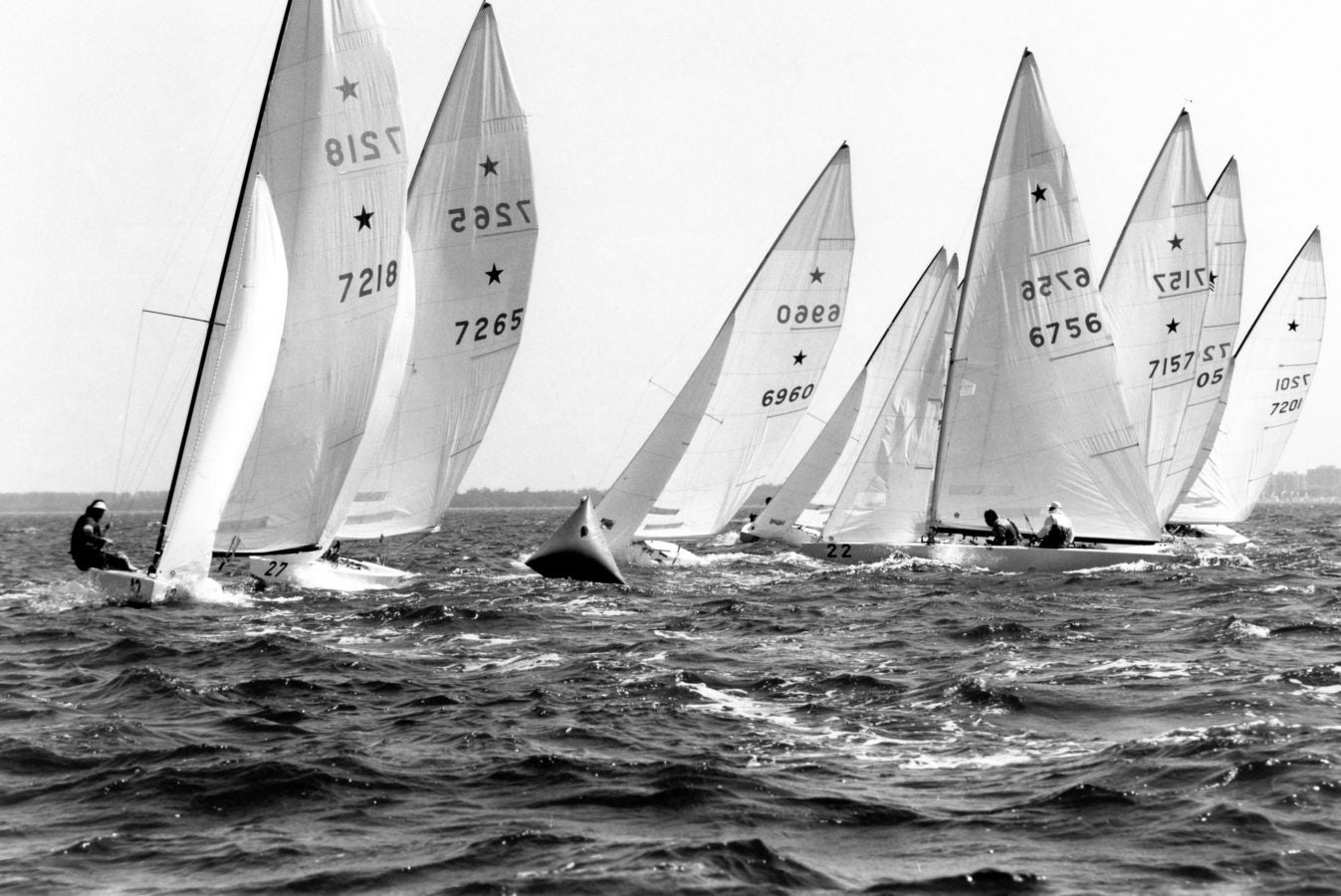
1968 - OLYMPIC SAILING SUCCESS
1968 – Olympic Sailing Success
In the original North Sails loft in San Diego, Lowell North initiated in-house testing of sail cloth and design shape. With a focus on the Star class, it was in this loft that he developed the sails he would win Olympic Gold with in 1968 in Mexico City. Olympic success has run strong throughout North Sails history, with numerous medal-winning staff members and a wide-reaching commitment to providing the best one design products across different classes. Recent examples include the Finn, Women’s 470, and Women’s 49er FX, in which North sailmakers work closely with Olympic sailors to achieve performance gains through cutting edge design and complementary trim and tuning.
In this video we hear from one design expert and Olympic sailor, Vince Brun, who’s leadership guided North Sails One Design for 35 years. In addition, Olympic medalist Caleb Paine (Finn, USA) shares how North influenced his winning performance at the Rio Games, and European President of North Sails One Design, Paul Hobson, gives a sailmakers’ perspective by drawing from his 20 years of working with the Finn class.
READ MORE
READ MORE
BEZOEK NORTH SAILS TIJDENS METSTRADE 2017
Bezoek North Sails tijdens METSTRADE
North Sails is aanwezig op de METSTRADE in de RAI Amsterdam van 14-16 november 2017
Bezoek North Sails tijdens de METSTRADE in Amsterdam, ons standnummer is 07.155. Kom langs of maak een afspraak met één van onze North Sails experts. Meer informatie over tickets voor de METSTRADE 2017 is te vinden op https://www.metstrade.com/tickets
READ MORE
READ MORE
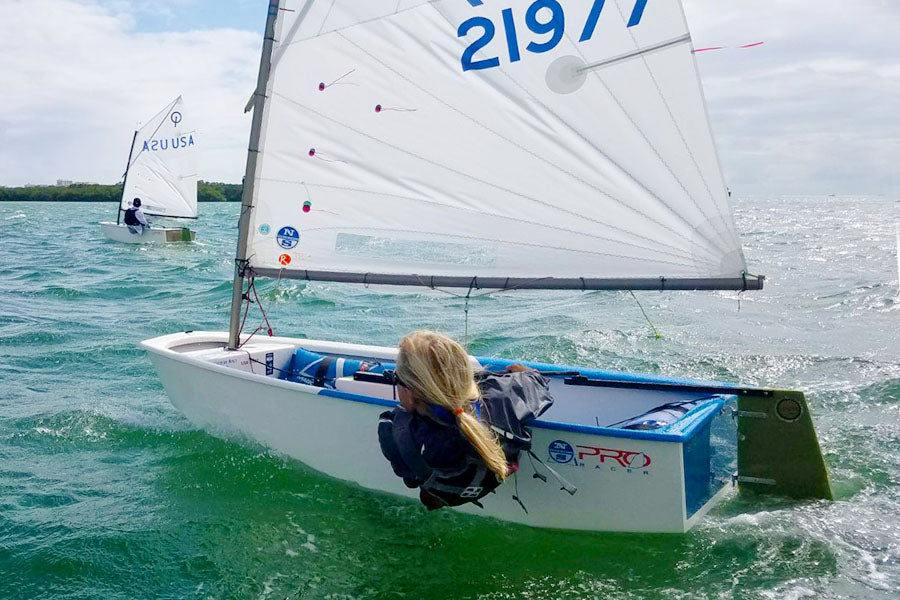
NORTH U LEADING EDGE OPTIMIST CLINIC
NORTH U LEADING EDGE OPTIMIST CLINIC
Optimist sailors in Miami, FL define their need for speed in two-day clinic with North Sails Experts and Coaches
In conjunction with the Southeast Dinghy Championships, North U hosted their inaugural Leading Edge Optimist Clinic at Key Biscayne Yacht Club to get sailors ready to take on the winter sailing season. Thirty-three Opti sailors from throughout the US, Puerto Rico, and the Virgin Islands participated in this first edition, which featured a curriculum spanning two days of on the water training and classroom sessions.
The sailors were challenged by a number of drills and races during the clinic, where boat handling, speed, and tactics all came into play. Miami delivered fresh conditions of sunshine and 10-15 knots of wind, a great platform for fun competition with new friends. North Sails Head Coach, Juan Carlos Romero, and Optimist expert Zeke Horowitz kept a close eye on the fleet to encourage participation and foster new experiences. Emphasis was placed on asking the sailors to think independently, as Juan explains,
“On the second day of the clinic, our main focus was to work with the sailors on their ability to develop a good strategy (game plan) and to help them make good tactical decisions. We incorporated two drills that forced our fleet to go through this thinking process, and then implement their tactical knowledge at its best to be able to execute their game plan.”
North Sails coaches reported the most effective drills were “Pick a Side” and “Long Line Starts”. In the Pick a Side drill, sailors learn to come up with a game plan and execute their decision to see how they end up at the top mark. The Long Line Starts drill gives sailors great practice in being able to tell how close they are to the start line by avoiding any potential line-sag.
North Sails designer, Mike Marshall was also on site, offering a fresh perspective on sail mechanics. Two seminars on “How Sails Work” gave sailors a deeper look at how the wind fills their sail to propel the boat forward, and how they can move the center of effort by fine-tuning their rigs with controls like sprit tension, boom vang, outhaul, and body movements to keep the boat flat. Lucas, who attended the clinic from Texas said:
“I usually sail on a lake. The chop and the breeze has been a nice challenge for me. The clinic has been great with all the help from the coaches. I learned a lot over the last two days.”
Sailors had the opportunity to try different sails over the two days, including the North Sails R1, R2, R4, and our latest design for the Optimist, the R5. Introduced this Summer, the R5 is made for specific weight ranges to increase point-ability. All sails in the R Series feature a radial cut.
Laura “Lulu,” who sails for Lauderdale Yacht Club tried the R2 product for the day. After three races in building breeze, she noticed when she put the bow down she was able to get speed while slowly pulling in her main to full trim.
“I was able to hold my lane, even when it was thin, and could get the extra point while my overall boat speed got faster.”
“The R1 has the right amount of power,” said Samara from New York. “It is super easy to get the extra point off the line at the start, where it’s really important to be fast.”
North Optimist sails are designed to produce the most power for their sailor, keeping them fast and able to maintain even the thinnest lanes. As sailors at the clinic tried out the R Series, we asked Mike about the benefits of radial vs. cross cut Opti sails.
“Radial sails have a more forgiving shape than conventional cross cut sails. They hold their shape better under different wind velocities. North’s cross-cut sails are not all that different from the R Series, but over time the cross cut will definitely break down more than the radial will. Are radials more sensitive to trim? Potentially, but that is the result of a design shape, not necessarily a sail’s construction.”
Amongst the many things addressed over the course of the two-day clinic, Juan wanted to make sure the sailors came away with something that would motivate them and help further their sailing careers,
“Put in time on the water. Don’t be lazy. Just get out there and spend as much time as you can on the water, in your boat. The clinic was an eyeopener for a lot of the kids who joined us, and it was nice to see the North designs bring success to those who used them over the course of the two days.”
Mike continued this sentiment from Juan,
“I encouraged them to try things on their own, don’t just do what you are told to do. Go out there and try to come up with solutions to your own questions you may have, or why you might not be going as well as someone next to you. Compare your sailing to someone else’s by finding the things they are doing that maybe you aren’t, and then try those things to see if it helps your performance.”
Special thanks to Agustin ‘Argy’ Resano, Brian Halloway, and Kristoffer Sarmiento who helped North Sails make this great event a success!
For more information on sails for the Optimist, or to speak with your local expert, visit our product page.
North Sails Optimist Tuning Guide
READ MORE
READ MORE
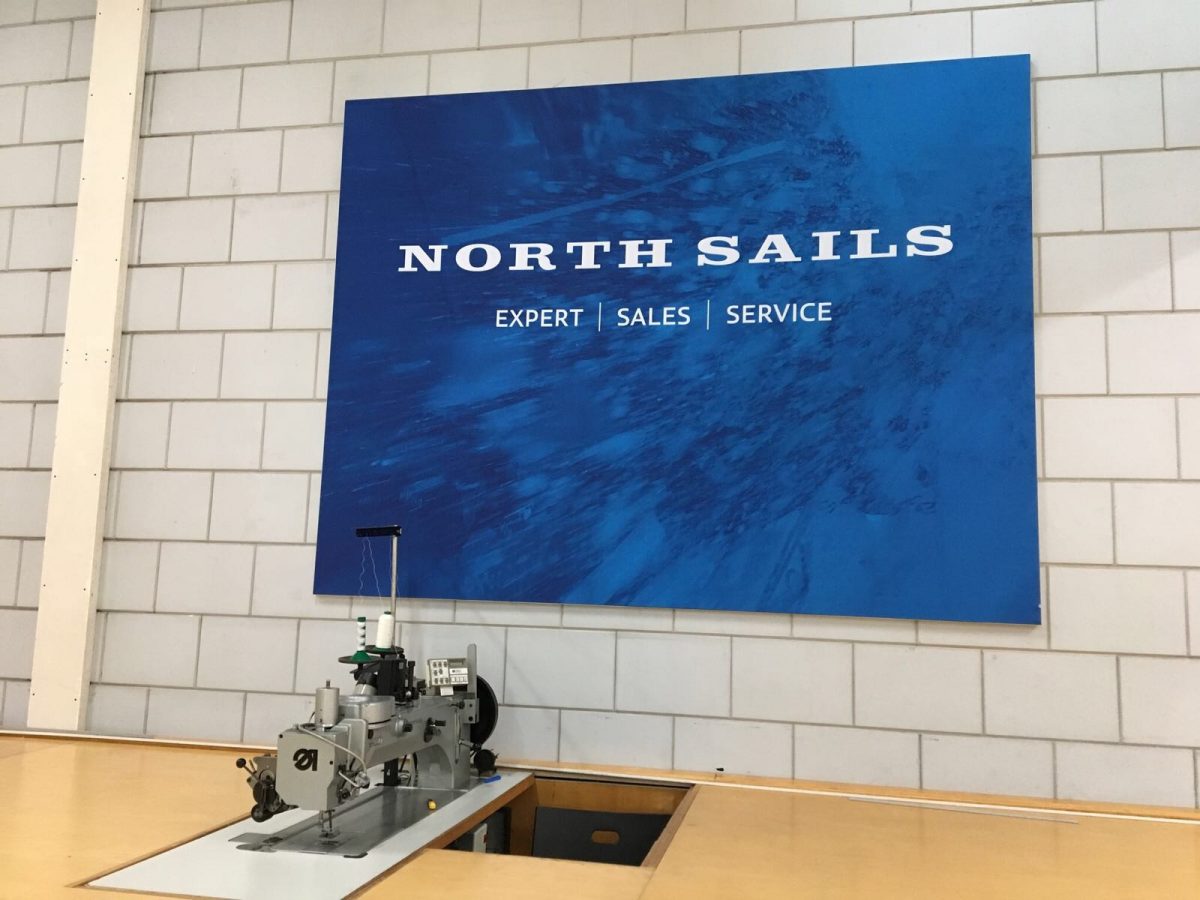
NIEUW VERKOOP EN SERVICE LOCATIE NORTH SAILS BENELUX IN ROTTERDAM
Nieuw: North Sails Benelux in Rotterdam
North Sails verkoop en service locatie in Rotterdam
Sinds 1 september is er een nieuwe verkoop en service locatie voor North Sails Benelux in Rotterdam. Benelux Sales manager Nic Bol en Jacco Huijgen zijn werkzaam vanuit deze locatie. De nieuwe North Sails loft bevindt zich vlak naast de A16 en is daardoor makkelijk te bereiken met de auto.
Nic Bol, Sales Manager North Sails Benelux:
"North Sails Rotterdam is een full service zeilmakerij. In de zeilmakerij kunnen vrijwel alle typen zeilen tot ongeveer 60 voet hersteld worden. Door de uitbreiding naar Rotterdam zijn wij beter in staat om de Zuidelijke Randstad te bedienen. Zeilers kunnen nu voor nieuwe zeilen en service terecht in Almere, Rotterdam en Stabroek, dus er is altijd een North Sails Servicepunt dichtbij."
De zeilmakerij wordt geleid door Jacco Huijgen, verkoper en service manager voor North Sails Benelux. De openingstijden zijn in principe maandag t/m vrijdag van 9.00-17.30 uur, maar er wordt ook vaak buiten de deur gewerkt. Het beste is om even bellen voor u langs komt.
Neem contact op met één van de experts in Rotterdam voor meer informatie of maak een afspraak.
READ MORE
READ MORE

2012: FIRST VICTORY FOR 3Di FORCE
The North Atlantic has never been a cake-walk for ocean racers, who historically encounter everything from 40-knot winds and high seas to the occasional floating container in the Bay of Biscay.
READ MORE
READ MORE
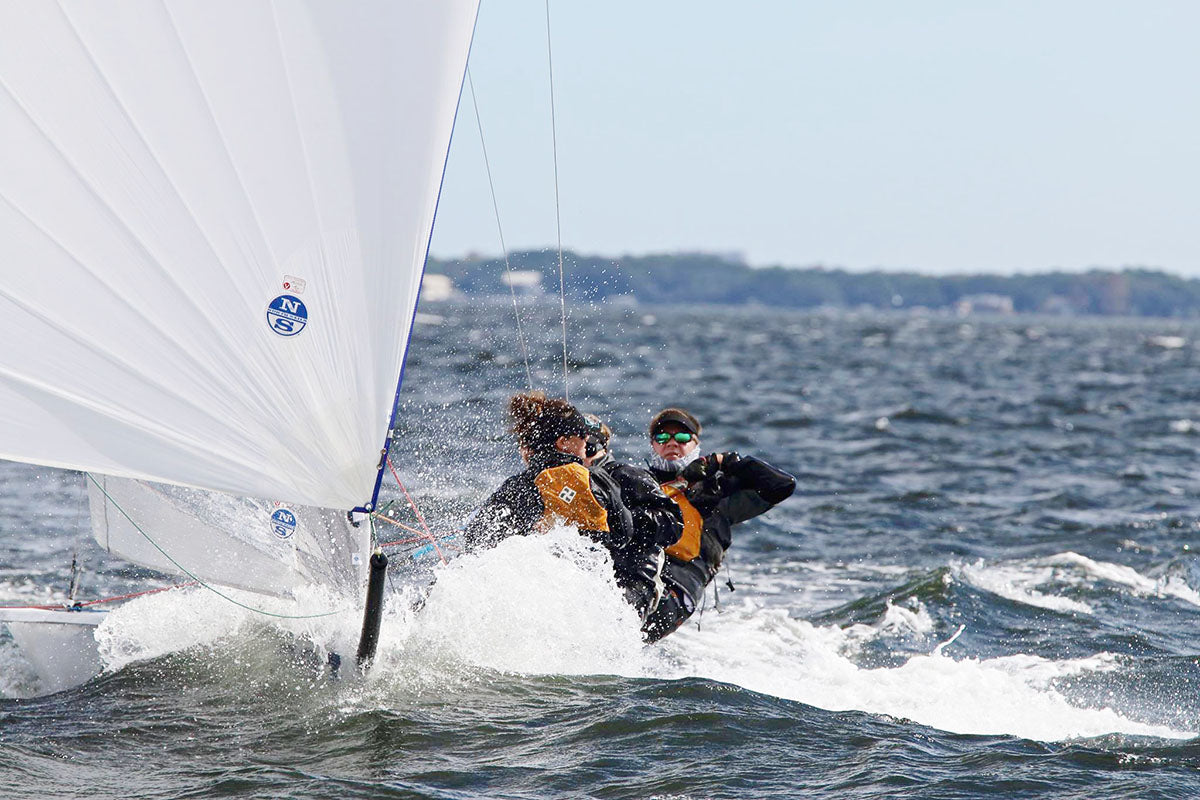
VIPER 640 NORTH AMERICANS
2017 VIPER 640 NORTH AMERICAN CHAMPIONSHIP
North Clients represent at North Americans, proving consistency and fine tuning really pay off
The 2017 Viper North American Championship was hosted by Fort Walton Beach Yacht Club in Florida, where 55 teams competed in one of the biggest and most competitive Viper regattas in the history of the class. On Monday, North Sails experts Ched Proctor, Zeke Horowitz, and Jackson Benvenutti led a clinic for competitors who were interested to practice straight line speed and starting techniques. A video debrief concluded the day, with tons of great questions from sailors trying to sort out any last minute fine-tuning before the big event began. On Tuesday teams went out for a final shakedown to practice boat handling and crew work before the regatta started on Wednesday.
Day one was a long day but successful as the race committee was able to get four great races off. North clients sailed fast on the first day, putting them at the top of the scoreboard and ahead of the game early. Very shifty conditions gave the fleet challenges throughout the remainder of the week with eleven races completed by Saturday. The racing was very close, with little points separating boats in the top half of the fleet.
What we learned:
Making sure you were ready for the shift and positioned to be in phase when the time came was key in this competitive fleet. Rig tension was a big topic, many teams setting their lowers tight enough to keep the mast straight and the headstay tight. Finding the right balance of mainsail trim to keep the boat flat enough did not allow too much headstay sag. The headstay tension on the Viper is key to maintain speed and point when boats are powered up in breeze and flat water.
Rocket tensioners are quite popular in this fleet, but careful attention to the tension of your battens is important and something that all competitors seemed to note. When your battens are too soft, you will see vertical wrinkles along the batten pockets. When they are set correctly, the sail is smooth.
Winning rig tune in big breeze was around 8 full turns on the uppers and 4 full turns on the lowers, when sailing with 3 ⅛” blocks. Flat sail, tight headstay, and windward sheeting was fast.
Vang-on hard the second the main has to be eased, while pulling on more cunningham to take the overbend wrinkles out of the sail, also produced great results. The vang and cunningham needed to be released at the same time, as soon as there is need for the vang to be eased.
Starting in the front row, as always, was the game changer. You had the first chance to be in pressure and get the first shift.
Having one person find the wind and make that their main job was also a plus. Even when you were sailing downwind, keeping an eye on what was happening behind you not only to stay in the puffs, but to be ready with a plan when it came time to go upwind again was huge.
Congratulations to our clients for your excellent performance all week in the shifty conditions. Special congratulations to team Cajun Underwriting, with skipper Marcus Eagen, his brother Andrew Eagen, and North Sails expert Jackson Benvenutti taking first overall, proving that consistency really pays off.
Click here for more information on our fastest Viper sails, or to contact your local expert
2017 VIper North Americans
1
Cajun Underwriting / Marcus Eagen
3
Choppy Seas / Thomas Loutrel
4
Moxie / Zeke Horowitz
5
Mambo Kings / Rob Crane
6
Terminally Pretty / Mary Ewenson
7
Mo’ Grins / Dave Nickerson
8
‘Merica* / Paul Kleinschrodt
9
Southern / Patrick Ryan
10
Chaos / Brian Harrison
Corinthian
1
Mo’ Grins / Dave Nickerson
2
‘Merica* / Paul Kleinschrodt
3
Southern / Patrick Ryan
* Denotes Partial North Sails Inventory
Full Results
READ MORE
READ MORE
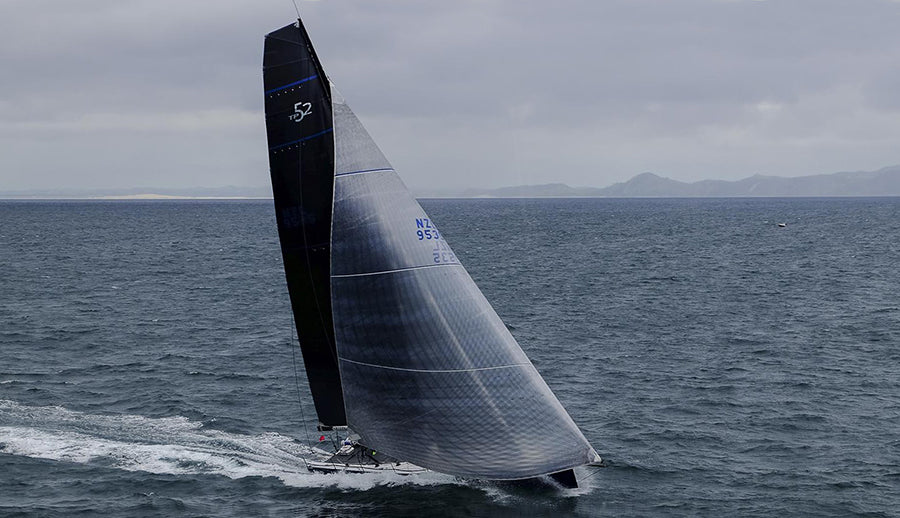
THE ANNUAL COASTAL CLASSIC FROM AUCKLAND TO RUSSELL
THE ANNUAL COASTAL CLASSIC FROM AUCKLAND TO RUSSELL TURNED ON ANOTHER GREAT RACE FOR THE 150 COMPETITORS.
A moderate southwesterly provided a fresh reach up the coast and a quick, if not record-breaking ride for the front runners, many of which carried North sails.
The headline battle this year was between giant trimarans Frank Racing and Beau Geste, recently arrived in New Zealand from Hawaii. Simon Hull’s ORMA60 Frank usually has the front of the field pretty much to itself; this year it faced a stiff challenge from the newer, larger MOD70.
North staff members were aboard both boats, with production manager Guy Hewson, sailing aboard Frank, facing off against Matt Kelway from the Auckland sales office.
Hewson says the Frank team enjoyed rising to the challenge of racing Beau Geste.
“We’ve put a lot of time and effort into getting the boat ready specifically for this race, including making a new force zero carbon gennaker,” he says.
After being held up at the start by their rival, Frank got its nose in front after going outside Tiritiri Matangi Island, and stayed in the lead and further offshore until the two boats came back together at Cape Brett at the entrance to the Bay of Islands. The Frank team got the best of a change of breeze here, to beat in to Russell and finish in just over six hours, nearly nine minutes ahead of their rival.
“This is the first Coastal we’ve done with the boat where we haven’t put a reef in,” Hewson says. “We were probably pushing more than we normally would, but knowing their main was a bit smaller than ours, we knew they wouldn’t reef so we wouldn’t put one in either.”
There was also a good battle between the big monohulls in division 1A. Anatole Masfen’s Fast 52 Temptation was second on line and took out handicap honours, with North sales and marketing manager Andrew Wills aboard.
“The boat was really well set up for coastal racing, rather than inshore stuff like some of the other 52s are,” says Wills. “It’s a little bit beamier and we have an inventory of R sails for reaching, which really came into play.”
After starting under gennaker, the crew peeled to an A3, then to a R2 at Kawau, which they held for the majority of the ride up the coast.
“It’s a really quick boat but it also sailed more efficiently with this sail, driving mor forwards rather than slipping sideways like it would with the A3 on,” he says. “We had a genoa staysail set inside it, which felt really good and was a really nice set-up for the boat.
“We’d also done a lot of homework on the weather, so we knew before the race 100 per cent where we were going and we stuck to that game plan.”
North Sails Auckland general manager Richard Bicknell also sailed in division 1A, on Elliott 50 Ran Tan II, which finished fifth on PHRF. For this crew, the emphasis was on preparation for this year’s Sydney-Hobart race, and for the Coastal the boat had a new North FRO (fractional code zero) and A5 gennaker.
“We basically finished the race, turned around and started sailing back, to do a bit more training for the Hobart,” says Bicknell. “It was a really good race, and a good opportunity to see the performance of the new FRO, before the boat heads over to Australia in mid-November.”
Also sailing in the race was North salesman Matt Steven, who made the trip on new 18.5 metre Roger Hill catamaran Cation. Despite being ostensibly a cruising boat, set up for two-handed sailing, she finished seventh on line, and Steven says owner Graham Catley was excited about the boat’s performance.
“He was reminding us the whole time that it is a cruising boat, but now there are a few things he wants to change to make its downwind performance better, including looking at a loose-luff running gennaker.”
North Sails appeared on many other boats in the fleet, including Division 2 winner Simply Red, single-handed division winner Katana (the former Sunfast 3600 owned by North Sails legend Josh Tucker, now owned by Nigel Garman), and the all-women’s crew on Cosmic Cruz, skippered by Tash Fickling.
READ MORE
READ MORE
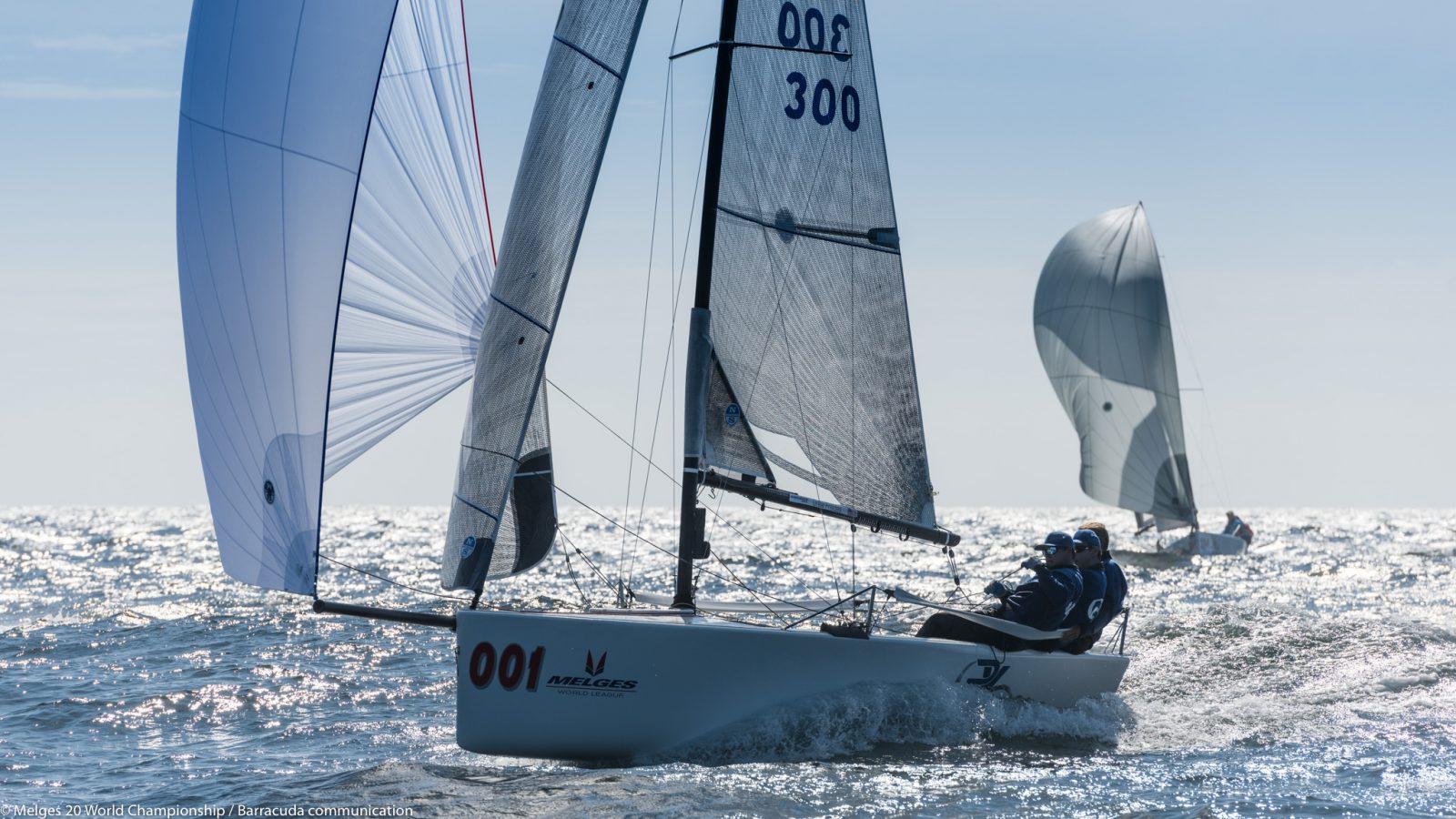
INTERVIEW WITH 2017 MELGES 20 WORLD CHAMPION
Melges 20 Worlds Interview
Client Drew Freides shares his team’s success story in the Melges 20
We caught up with client Drew Freides, this year’s Melges 20 World Champion. Here is what he had to say about his team and what they’ve been doing to prepare for the Worlds event this past September in Newport, RI.
NS- You’ve been a long-time crew sailing on many different boats mostly larger Grand Prix style, how was the transition to taking the helm, but also sailing a 20 Footer?
Having been a yacht designer and member of many big teams the one take away I’ve learned is to assemble the best team possible. Then I can allow everyone to work and take over their areas. I did college sailing at MIT, sailed 470’s I always loved sailing dinghies. Big boats are fun, and it was part of my job as a yacht designer, but I couldn’t afford a program like a Farr 40. Five years ago, I was sailing the Vineyard Race with Chad Corning and I asked him what kind of boat I should be looking at, he said I should get a Melges 20.
“I looked at the 20 and thought it was a great class that combined dynamics of a team but also the incredibly fun sailing on a skiff style boat. The 20’s are awesome! They are fast downwind and so responsive.”
NS- After finishing 2nd last year at the Worlds (with the same team), what did you and your team identify as things to work on for this year?
“We were gutted last year! Finishing 5th would have been palatable, finishing 2nd after leading going into the last race was just tough to take. After the event we crossed the finish line with our heads down. Our coach turned to us and said, “Coming into this event if I had said you would finish second in the world would you be satisfied?” We all responded “Yes.”
We put our heads together and asked how do we get one notch better? We took the next 12 months to do every single event that we could in the US so we could get better in every aspect of our sailing. Get a little fast and look for every opportunity to find speed in the whole program where others haven’t looked before. There are boats like Samba Pa Ti who are still faster than us in high winds, but we feel like we are good in all conditions. We always feel fast and consistent, and that is what keeps us in the hunt. We were talking to Ed Adams during the event and he said that we might be the only boat who doesn’t want one condition but all of the conditions because it would give us the ability to shine through the range.
NS- I think what showed that was the early part of the regatta when it was windy and then one of the light air days you were over early and came back to a top 10 race.
“That was the best race we have sailed as a team, EVER. We came off the line and everyone was in hyper focus. It’s the Worlds. We wouldn’t allow this to be our demise.”
Morgan to his credit picked out every puff and shift and we worked our way through the fleet picking up one boat at a time. One thing we learned last year in Italy was we were really slow in light air. We asked to tune with a boat named Raya, who weren’t the fastest in a breeze, but in light air they were rockets. We went out and looked at their set up and our coach said we should try their set up, and after we did we were rocket fast. Going into things like set up with an open mind is one of the things I felt we were good at.
NS- Did you have to make any major boat set up changes from last year in Italy to Newport this year?
No, honestly we’ve been refining our techniques of the last two years.
NS-How do you split the responsibilities among the team? (who looks at weather and the notice board? Who makes sure sails are ready, etc.)
Morgan is completely responsible for tactics and strategy of the boat, and where we want to be. He coordinates with our weather guy to stay aware of what is happening. Morgan is completely focused on boat positioning all the time when we are on the water. If I’m doing my job well, by steering the boat fast and giving Morgan feedback for his main trim, that really allows him to look around.
“The most important thing we have found is staying on top of the heel angle. Charlie’s job, besides making sure everything with the boat is great, is to work with me on boat speed. Because he has been all over every little part we’ve, ‘knock on wood’, never broken anything. Before the event, one of the other boats pulled a pad eye out of the back of their boat, so Charlie went and looked at ours and noticed a little rust, so he replaced them all. While sailing Charlie will work the rig and listen to what I’m saying about the helm load and if need be will start pulling the rig on to flatten the main. ”
I take on our sails, working with our coach, I make sure we are using our buttons properly and our sails are up to date. Helping to decide if it’s a non-sanctioned regatta to use a non-buttoned sail, saving the buttoned sails for sanctioned regattas. With that said, Morgan trims the main before we leave the dock, so Morgan chooses which battens to use and how tight he wants to make them.
“The good and bad thing about the 20 is the rig is complicated, so after making changes to the rig we went back out sailing and were much faster. It might have taken two years to achieve this, but we learned in 10 min by working with our coach and fine-tuning to have a better idea of where our base was. This made the difference.”
NS-You looked at the 3Di sails but used the 3DL. What pushed you in that direction?
“We had looked at the 3Di sails leading into the worlds. But we had worked so hard in our current set up and felt comfortable with 3DL sails. We got another 3Di jib days before the World’s, started and it looked great. Had we gotten the sail earlier I think we might have used it. I’m planning on getting a 3Di main next year.”
NS- How do you think you were crew weight compared to the fleet? (The Melges 20 has no crew weight)
Really Average. There were two top boats that had four people (2nd Nika & 6th Wildman). When it was really windy it forces us to work harder but in the light we make that up on them.
NS- It seems like the class has leveled itself out and everyone is in the same range of crew weight.
Absolutely. Ed Adams used to say to us that we were incredibly fast upwind but not that specular a lot of times downwind. This regatta we past most of our boats downwind.
NS- How did you fix your downwind speed?
By sailing as many regattas we could I learned how hard I could push the boat. Also Charlie worked super hard and did a great job trimming. Morgan did a great job of setting us up to jump past packs of boats when we jibed and keeping clear lanes.
NS-What races do you have planned for next year?
“We are doing the Miami Winter Series. Looking into racing in Charleston, but thinking about taking the boat to Europe and try to defend our title.” said Drew.
Find out more about our World Championship winning products for the Melges 20, or contact your local expert.
READ MORE
READ MORE
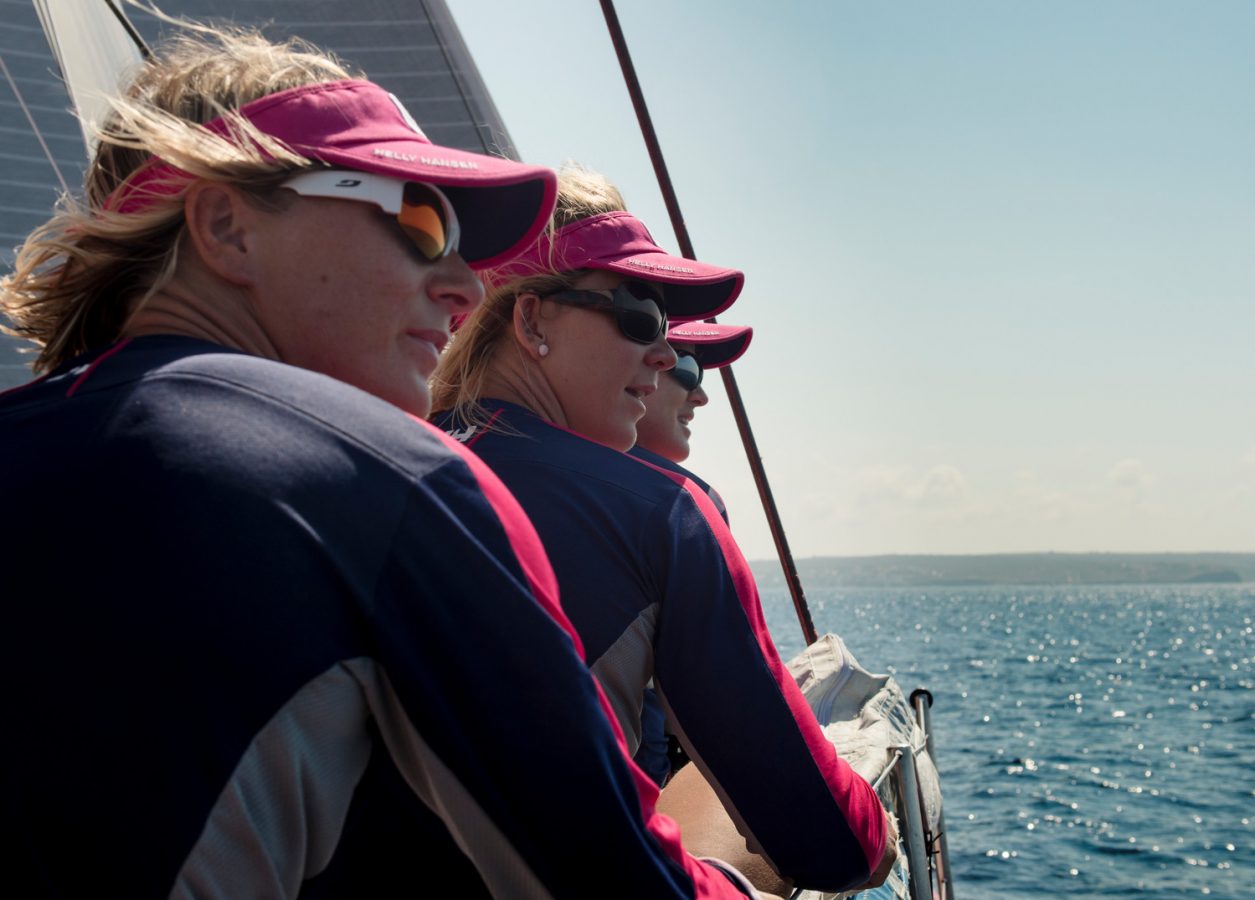
LET'S HEAR IT FOR THE GIRLS
LET’S HEAR IT FOR THE GIRLS
Recognizing A Shift In Momentum For The Ocean’s Leading Women
© Tanya Visser/PPL
A new rule change for 2017-18 has brought women back to the center of the Volvo Ocean Race by leaving all-male crews at a significant disadvantage.
The rule pays homage to the race’s history of female sailors, which began in 1977 with skipper Claire Francis and includes the first all-female Volvo Ocean Race team of 1989 onboard Maiden, the Whitbread maxi skippered by Tracey Edwards. A long hiatus from 2005 – 2012 was broken in the 2014 edition by Team SCA, another all-female team led by two-time Vendée Globe skipper, Samantha Davies. The enthusiasm surrounding Team SCA, as well as the mounting interest from female sailors throughout the globe, prompted race organizers to keep the momentum going. The Volvo Ocean Race will have a landmark edition in 2017-18, with every team in the race electing to have two girls among the crew – guaranteeing a female sailor at the top of the podium in Gothenburg.
North Sails is proud to have supported a number of offshore sailing’s most notable female trailblazers, drawing back to Ellen McArthur’s notable campaign on Kingfisher (2000) where she achieved both the women’s singlehanded transatlantic record (east-to-west passage) and women’s singlehanded, non-stop, monohull circumnavigation record. North’s support continued on to her multihull platform B&Q/Castorama, on which she broke Francis Joyon’s outright circumnavigation record with a time of 71 days, 14 hours, 18 minutes and 33 seconds. In more recent history, North Sails powered Sam Davies and the crew of Team SCA in the 2011-12 Volvo Ocean Race, as well as Dee Cafari, skipper of Turn the Tide on Plastic, who currently has 800 nm to go in Leg 1 from Alicante to Lisbon. Dee is the only female skipper in this edition of the Volvo Ocean Race and elected three female sailors to her crew.
Tracey Edwards competed in the Volvo Ocean Race in 1985-86 (then referred to as the “Whitbread Race”) and went on to skipper her own entry, Maiden, in 1989-90.
Team SCA completed the 2014-15 Volvo Ocean Race with a crew of 11 women. © Corinna Halloran/ Volvo Ocean Race
Team SCA would spark a flame of enthusiasm for female sailors around the globe, and encourage race organizers to promote participation from women. © Corinna Halloran/ Volvo Ocean Race
In 2006, Dee Caffari became the first woman to sail single-handedly and non-stop around the world “the wrong way” – westward against the prevailing winds and currents. © Jen Edney/Volvo Ocean Race
Dee is currently the sole female skipper in the 2017-18 Volvo Ocean Race, onboard VO65 Turn the Tide on Plastic. © Ainhoa Sanchez/Volvo Ocean Race
READ MORE
READ MORE

NAJWAŻNIEJSZE RZECZY, KTÓRE MUSISZ WIEDZIEĆ O ZESTAWIE ŻAGLI NA VOLVO OCEAN RACE
Od roku 1989 żagle North Sails wygrały osiem z dziewięciu regat Volvo Ocean Race. Za nami pierwszy In-Port race Volvo Ocean Race 2017-18. Zwyciężyła załoga Mapfre przed Dongfeng Race Team i Vestas 11th Hour Racing. Pierwszy etap oceaniczny wystartuje z Alicante w niedzielę 22 października. W edycji 2017-18 żeglarze będą się ścigać na jachtach klasy Volvo Ocean 65 (VO 65). Zmianą na tegorocznej edycji regat jest ograniczenie ilości żagli do ośmiu. Wszystkie jachty będą napędzane żaglami North Sails, oficjalnego dostawcy żagli regat. Oto ich najistotniejsze punkty, czyli co warto wiedzieć o żaglach wyprodukowanych i zaprojektowanych na edycję 2017-2018.
© Benoit Stichelbaut/Dongfeng Race Team
Żagle panelowe vs kompozytowe 3Di
Zamiast łączyć ze sobą materiałowe panele w konkretny kształt żagla, podczas Volvo Ocean Race stosuje się kompozyt. Taśmy 3Di układane są w odpowiednim szyku oferując stabilną strukturę tam, gdzie jest to najbardziej potrzebne. Prowadzi to do niezrównanego balansu wagi do sztywności i trwałości. Jest to proces opatentowany przez North Sails, wyłącznego dostawcy żagli Volvo Ocean Race.
Nad i pod pokładem
Projektowanie żagli obejmuje znacznie więcej niż kiedyś. Często projektanci jachtu angażują North Sails już od wczesnych etapów projektowania, aby wyprodukować doskonale zbalansowany jacht. W przypadku VOR 65, Farr Yacht Design pracował wspólnie z North Sails i Southern Spars, aby stworzyć spójny zestaw kadłub-takielunek-żagle, który zostanie na długo w pamięci. Efekt tej współpracy widzi każdy zespół otrzymując VPP (Velocity Prediction Program), który ilustruje potencjalne osiągi jachtu w zależności od nadanych wartości, takich jak rzeczywista prędkość i kąt wiatru, a ponadto zaleca jaki żagiel wybrać na poszczególne warunki.
Ośmioczęściowe Puzzle
Podobnie jak puzzle złożone ze sobą, żagle tworzą wspólna całość. Ośmioczęściowa układanka łączy ze sobą czystą wydajność jednakowo dostępną dla wszystkich ekip. Kiedy żagle są identyczne, różnice robi sposób ich użycia – w kącie, trymie i konfiguracji. Każda załoga ma swój własny sposób na uzyskanie najlepszych możliwych osiągów. Ekipy VOR 65 w październiku startują z całkiem nowymi żaglami. Co więc się zmieniło?
Żeglarze są ekspertami w wielu dziedzinach: gotowaniu wody na kawę przy 20 węzłach wiatru, kąpieli w sztormie, ubieraniu się jak Neptun i… oczywiście w sprawianiu, że łódka płynie szybko. Opinie i komentarze zawierające wiele danych z edycji 2014-2015 udowodniły, że na pokładzie VOR 65 potrzebny jest kolejny żagiel, zwiększając tym samym liczbę całego zestawu do ośmiu. Projektant North Sails Gautier Serent tłumaczy: "Załogi ciągle zmieniały konfigurację podczas żeglugi pod wiatr przy wietrze o sile 10-15 węzłów. Kiedy stawiali topowego Code 0 jachty były zbyt przeforsowane. Z kolei po zmianie na J1 brakowało mocy. Zatem jedną ze zmian jaką wprowadziliśmy na 2017 jest dodanie J0, który wpasowuje się i zamyka lukę pomiędzy topowym Code 0 i J1.”
Nowa konfiguracja
Wprowadzenie J0 doprowadziło do kilku kluczowych zmian w nowym zestawie żagli, szczególnie przy Frakcyjnym Code Zero (FR0). Poprzednio używany był przy bardzo małym zakresie żeglugi pod wiatr, pomiędzy J1 a topowym Code 0. Dodanie J0 oznacza, że teraz może być żaglem dedykowanym do kursów pełniejszych. FR0 na edycję 2017-18 wykonany jest w technologii 3Di FORCE, nowej pełnowiatrowej aplikacji North Sails 3Di. Żagiel o strukturze 3Di jest bardziej stabilny w większym zakresie warunków, dostarczając korzyści jakich pożądają projektanci i żeglarze. Dodatkowym bonusem żagli 3Di jest łatwiejsza powtarzalność niż ich panelowe odpowiedniki. Każdy typ żagla może być wykonany w sekwencji: ustawienie formy i produkcja żagli jeden po drugim, idealnie spełniając standardy One Design.
Trasa dookoła świata, którą płyną załogi Volvo Ocean Race 2017-2018 obejmuje trzy razy więcej żeglowania po południowym Oceanie niż ostatnio. Oznacza to trzy razy więcej płynięcia przy silnym wietrze i jeszcze większym rozkołysie. Dzięki obszernym prognozom pogodowym nowy zestaw żagli VOR 65 jest dobrze dopasowany do pływania z wiatrem. FR0 o którym wspominaliśmy ma pełny kształt i płaski lik tylny, które zaprojektowane są do wykorzystania wiatru i surfowania po 20 stopowych falach.
Przepowiadanie przyszłości
Nie ma kryształowej kuli, która mogłaby przewidzieć wszystko, co może stać się podczas wyścigu dookoła świata, ale projektanci żagli mogą przestudiować trasę wyścigu i naszkicować pewien plan na podstawie danych pogodowych z poprzednich lat.
„Skończyliśmy wnikliwą analizę z użyciem dwóch zestawów – 2014-15 i nowego, aby upewnić się, że zachowujemy równowagę. Wprowadzając J0 i zmieniając FR0 zauważyliśmy, że znacznie zmniejsza się potrzeba zmiany żagli,” tłumaczy Gautier. „Po dodaniu jeszcze jednego żagla załogi szybko wskazywały, że jest dodatkowy żagiel to stawiania i zrzucania. Po spojrzeniu na zestaw jako całość i łącząc poszczególne żagle w możliwe konfiguracje odkryliśmy, że ilość podmian znacznie się zmniejszy po dodaniu J0”.
© Jesus Renedo/Volvo Ocean Race
Łatwość w utrzymaniu
Stocznia VOR podróżuje razem z teamami, budując swoje bazy w każdym porcie-przystanku. Ten zespół szkutników, serwisantów takielunku i żaglomistrzów przejmuje łódkę zaraz po zacumowaniu i pracuje całą dobę, aby doprowadzić jachty do nienagannego stanu.
„90% uszkodzeń żagli powstaje podczas manewrów i podmian” podkreślają serwisanci. "Z doświadczeniem z poprzednich regat jesteśmy zdolni wprowadzić subtelne zmiany w wykończeniu żagla, aby ulepszyć obsługę i serwis. Mając 60-80 żagli do przejrzenia na każdym przystanku żagle muszą być niezawodne.
Długość liku przedniego Code 0 została zredukowana, aby pozwolić na łatwiejsze zmiany żagli, dodano nowe mocowanie rogów (nazwane "integratorem") w A3. Umożliwiło to użycie rollera "top-down", który ze względu na szybsze działanie i mniejsze szanse na uszkodzenie żagla jest korzystniejszy dla pełnowiatrowych żagli niż roller "bottom-up".
Co tak naprawdę się zmienia?
W 2014-15 każdy jacht one-design Volvo Ocean 65 okrążał Ziemię z 11 żaglami wyścigowymi plus jednym fokiem sztormowym. Tegoroczną poważną zmianą jest redukcja ilości żagli, a więc i kosztów. Dozwolone jest użycie tylko 8 żagli bez żadnych modyfikacji (z wyjątkiem napraw) i tylko 4 żagli zapasowych.
Tak, jak wspomnieliśmy, zestaw na 2017-18 będzie obejmował nowy, lekkowiatrowy, dedykowany na pływanie pod wiatr żagiel J0, i z wyjątkiem sztormowego foka, wszystkie żagle będą wykonane w technologii North Sails 3Di, używające preimpregnowanych taśm z żółtego aramidu i białych włókien dyneemy Sk75 (RAW 760 Yellow). Zespoły mogą kupić po dwie sztuki każdego żagla na regaty i dodatkowe 6 na treningi przed startem. Dozwolono nabycie tylko dwóch grotów.
Zabroniono użycia włókien węglowych w żaglach, aby nie zakłócały sygnałów wysyłanych i odbieranych z satelity, tak istotnych przy komunikacji i transferze danych. Produkcja i dostawa będą starannie kontrolowane. Żagle wyścigowe będą także budowane w seriach, więc ta sama forma będzie użyta do wyprodukowania ośmiu dokładnie identycznych żagli dla każdej załogi. Każdy żagiel będzie wykańczany w tej samej żaglowni przez ten sam zespół, aby zapewnić identyczny kształt i jakość produkcji.
© Jesus Renedo/Volvo Ocean Race
Inwentarz żagli:
Łączna ilość żagli wyścigowych: 16 + 1
Łączna ilość żagli na pokładzie: 8 + 1 fok sztormowy
Powierzchnia żagli na wiatr: 467 m2 (grot i topowy Code 0) / 333 m2 (grot i największy fok J0)
Powierzchnia żagli z wiatrem: 537 m2 (grot i genaker A3)
1 x Grot
Powierzchnia: 161.8 m²
Materiał: 3Di, RAW760 żółty, 27000 dpi
Szczegóły: 3 refy, 6 listew
Użycie – Cały czas
1 x J0
Powierzchnia: 171.3m²
Materiał: 3Di, RAW760 żółty, 22400 dpi
Szczegóły: żagiel topowy, instalowany na bukszprycie, wybierany szotami foka.
Szczegóły: J0 będzie głównie używany jako słabo i średniowiatrowy (6-13 węzłów) żagiel pod wiatr.
1 x J1
Powierzchnia: 132 m²
Materiał: 3Di, RAW760 żółty, 23800 dpi
Szczegóły: instalowany raksami na sztagu. Poziome listwy w tym dwie górne pełne.
Użycie: żegluga na wiatr (8-15 węzłów)
1 x J2
powierzchnia: 86.6 m²
Materiał: 3Di, RAW760 żółty, 32000 dpi
Szczegóły: nawijany na roller z pionowymi listwami.
Użycie: dobry na 13-25 węzłów. J2 będzie używany pod wiatr lub z wiatrem stawiany za topowym Code (MHO) lub A3 jako staysail. W przeciwieństwie do VO 70, J2 jest rolowany na rolerze.
1 x J3
Powierzchnia: 44.5 m²
Material: 3Di, RAW760 zółty, 32000 dpi
Szczegóły: nawijany na roller
Użycie: dobry na 22-35 węzłów. W silniejszym wietrze podobne zastosowanie jak J2. Załogi będą musiały zadecydować o tym czy J2 czy J3 jest bardziej efektywny jako staysail za A3 i MHO – może nawet użyją ich jednocześnie. J3 będzie używany za J1 i FR0 jako genoa staysail. J2 jest do tego za duże.
1 x A3 (Gennaker)
powierzchnia: 375 m²
Material: 3Di, RAW760 żółty, 7650 Dpi
Szczegóły: nawijany na roller
Użycie: A3 jest jedynym pełnowiatrowym żaglem dedykowanym do granicznych kątów, zwykle przy 120° i więcej wiatru rzeczywistego. Podobny do tego używanego na Volvo Open 70.
1 x Fractional Code 0 ("FRO")
Powierzchnia: 235 m²,
Material: 3Di, RAW760 żółty, 16800 dpi
Szczegóły: stawiany ułamkowo, tuż nad sztagiem
Użycie: FRO pełnowiatrowy żagiel na silniejszy wiatr (kiedy A3 robi się za duży) i na reaching (kiedy MHO jest za duży). Może także być używany na wiatr przy łagodnych warunkach.
1 x Masthead Code 0 ("MHO")
Powierzchnia: 305 m²
Materiał: 3Di, RAW760 żółty, 13600 dpi
Użycie: MHO jest lekkowatrowym żaglem (0-6 węzłów). Jest także używany przy umiarkowanych warunkach i na kursy pełne przy silnym wietrze.
1 x Storm Jib
powierzchnia: 29.7 m²
Materiał: spectra S395, konstrukcja panelowa
Użycie: dobry przy 35+ węzłach. Jedyny fok sztormowy dostępny przez cały wyścig.
READ MORE
READ MORE
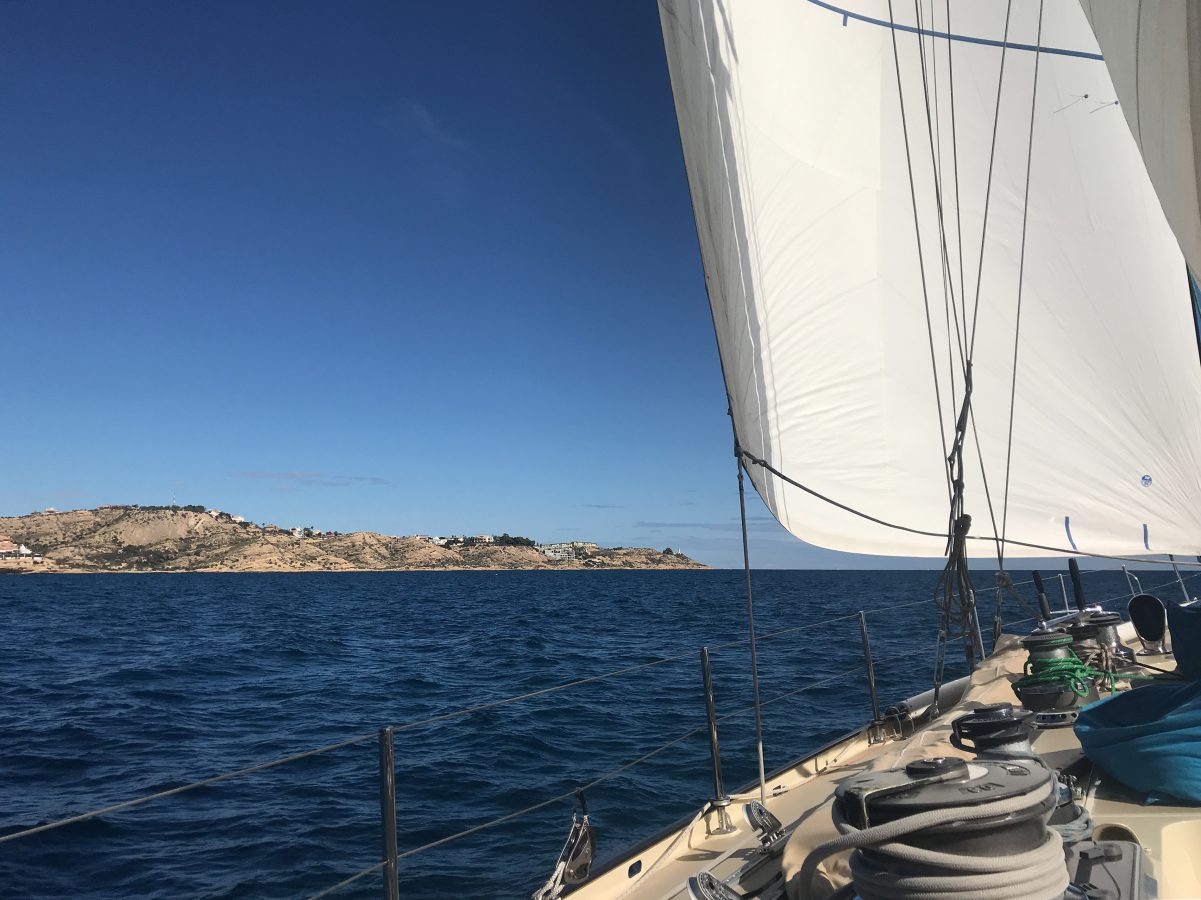
DE FLYER VOER AL 12.000 MIJL MET HAAR NORTH SAILS ZEILEN
De Flyer voer al 12.000 zeemijlen met haar North Sails zeilen
Onderweg van Alicante naar Lissabon
De Flyer voer de afgelopen maanden in etappes naar Alicante voor de start van de Volvo Ocean Race. Inmiddels is ze onderweg naar Lissabon, net als de Volvo Ocean Race teams. Alle etappes naar Alicante toe, en ook nu naar Lissabon, varen er liefhebbers mee aan boord. In Alicante, waar de Flyer in de Volvo Ocean Race Village lag, was het geen moment rustig aan boord. Waar ze ook ligt, iedereen mag aan kijkje komen nemen aan boord van het schip waar Conny van Rietschoten de Whitbread Round the World Race mee won in '77-'78.
Gerard Schootstra, schipper op de Flyer kan het verhaal niet vaak genoeg vertellen: "Het is de missie van de stichting Revival of the Flyer: zoveel mogelijk geïnteresseerden, zeilliefhebbers en belangstellenden kennis laten maken met de verhalen van de Flyer en haar overdragen aan de volgende generatie. We hadden tijdens de start van de Volvo Ocean Race een groep van MAPRFE aan boord, het is magisch om te zien hoe niet alleen Nederlanders de Flyer als een magisch schip beschouwen maar eigenlijk door iedereen die hier aan boord komt en de verhalen van ons hoort."
Zwaarweer spinnaker
Als we aan boord zijn in Alicante vertelt Gerard dat er hij al 12.000 mijl met de zeilen van North Sails op heeft zitten. De zeilgarderobe bestaat uit vijf zeilen van North Sails: een spi, blooper, mizzen, staysail, grootzeil en kotterfok. Wel zou hij graag nog een zwaarweer spi toevoegen aan zijn sail inventory voor deelname aan de legends race in juni 2018 van Gothenburg naar Den Haag, de finishplaats van de Volvo Ocean Race 2017-18: "Vanuit de stichting moeten we zorgvuldig kiezen waar we het geld van onze founders en donaties die binnenkomen aan besteden en een extra zeil heeft niet meteen prioriteit. Maar ik zou graag een zwaarweer spi toevoegen aan onze zeilgarderobe om met veel wind en hoge golven druk te houden."
Nieuwe benadering van het wedstrijdzeilen
De Flyer waarmee Conny van Rietschoten in '77/'78 de Whitbread Round the World Race voer veranderde voorgoed de benadering van het wedstrijdzeilen. Hij was de eerste schipper die deelnam aan de race om te winnen. Zo strak als hij aan zijn bedrijf leiding gaf, begon hij ook aan zijn Whitbread Round The World-project. In de zomer van 1975 vloog hij naar New York om met Sparkman & Stephens te overleggen over de deelname en de meest geschikte jacht daarvoor. In de editie voorgaand deden de S&S-ontwerpen het goed, en besloten werd om op basis van dat ontwerp een nieuw type te tekenen met daarin de wensen van Van Rietschoten verwerkt. Van Rietschoten had hierover een duidelijke en doordachte mening en doelstelling.Het doel van het schip moest zijn dat zij de WRTW-race zou moeten kunnen winnen. Daarnaast voer hij voor het eerst met professionele en betaalde bemanning.
Tussen de tewaterlating en de start van de WRTW-race werden al 10.000 mijl met de Flyer gevaren. Daarna ging de Flyer weer terug naar Wolter Huisman voor diverse aanpassingen. In augustus 1977 start de WRTW-race en is de Flyer onderweg voor 27.000 zeemijl. Ze finishte als 1e op 1e paasdag in 1978.
Revival of The Flyer
Sinds november 2013 is de Flyer weer in Nederlandse handen. The Orange Coast College, bij monde van bestuurslid Brad Avery, liet blijken bijzonder blij te zijn met het initiatief van ‘Revival of The Flyer’ en sprak zijn vertrouwen uit in een nieuwe toekomst voor de Flyer met de woorden: “We’re glad that you take her home!” 24 maart 2014 ging ze in refit bij Royal Huisman in Vollenhove om op 24 juli Royal Huisman te verlaten en te worden getuigd in Enkhuizen. 24 augustus 2014 lag ze zeilklaar in IJmuiden voor haar eerste proefvaart.
READ MORE
READ MORE
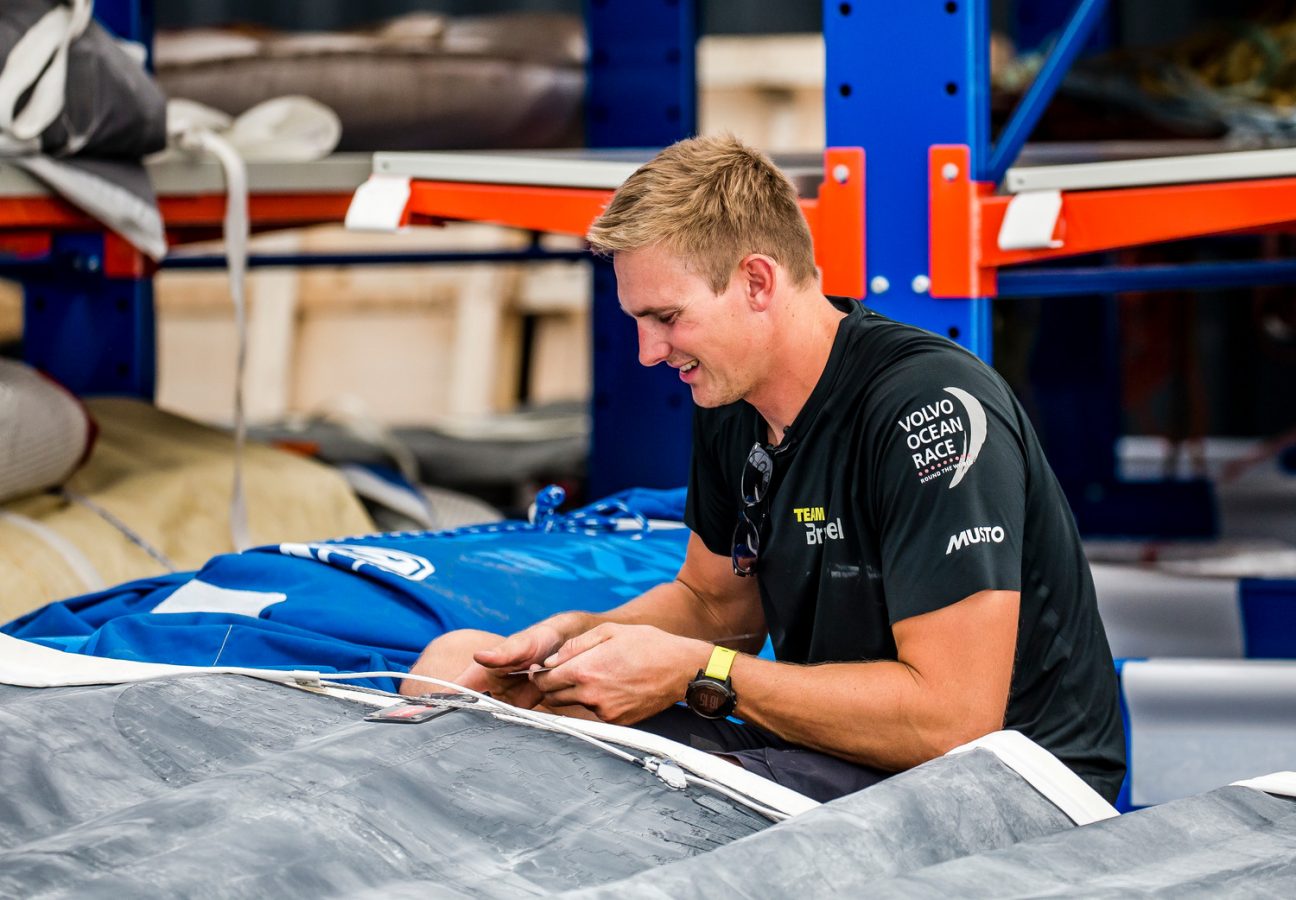
VOLVO OCEAN RACE VAN START IN ALICANTE
Volvo Ocean Race van start in Alicante
De eerste etappe van de Volvo Ocean Race is afgelopen weekend gestart met twee Nederlandse boten, Team Brunel geschipperd door Bouwe Bekking, waar ook de Nederlander Carlo Huisman aan boord zit en Team Akzonobel met schipper Simeon Tienpont. Daarnaast vaart Carolijn Brouwer aan boord van DongFeng en is Annemieke Bes de enige dame aan boord van Team Sun Hung Kai Scallywag. De finish van de race is na 46.000 zeemijlen in Den Haag in juni 2018.
De komst van 3Di technologie
30 jaar geleden maakte North Sails voor het eerste zeilen voor de deelnemende boten voor de Volvo Ocean Race. De ontwikkeling van de North Sails 3Di technologie zo'n 10 jaar geleden was in veel opzichten een antwoord op de vraag van zeilers voor lichtgewicht zeilen met een veel duurzamer karakter. Boatyard Sail Loft manager Nathan Quirk en Neil Cox, hoofd van de boatyard, leggen uit wat de impact is van de implementatie van de North Sails 3Di technology.
North Sails: Wat brengt de 3Di technologie de Volvo Ocean Race?
Nathan Quirk: "3Di zeilen zijn waanzinnig goed bestand tegen de omstandigheden die ze tijdens de Volvo Ocean Race tegenkomen. De zeilen worden meer en harder getest dan in welke race dan ook, maar ze houden het. De zeilers hebben daarnaast veel meer vertrouwen in 3Di dan welke andere zeilen dan ook. Zoveel zelfs dat de meeste teams niet eens meer een naaimachine aan boord meenemen. Twee of drie edities terug werd er veel gewicht in beslag genomen door reparatiematerialen, lijm en een 50 kilo wegende naaimachine. Toen we 3Di introduceerden in de race, realiseerden de teams zich dat ze lang niet zoveel reparaties meer hoefden te doen. De naaimachines werden thuisgelaten, de meeste teams hebben hem zelfs helemaal niet meer. Een grote verandering die de afgelopen 8 - 10 jaar is opgetreden door de ontwikkelingen op technologisch gebied."
NS: Wat betekent 3Di voor het Sail Loft team?
Nathan: We moeten de zeilen nog steeds goed onderhouden, checken op beschadigingen en de kwaliteit van het zeil in de gaten houden, maar we hoeven veel minder reparaties uit te voeren. In de editie van 2014-15, hadden we maar vier zeilen met problemen, en dat in de hele vloot. Dankzij de 3Di technologie konden we ze eenvoudig repareren waar we ze daarvoor echt moesten weggooien en vervangen. We hebben in principe vijf dagen de tijd om zo'n 50 a 60 zeilen te servicen. Vroeger besloten teams om hun zeilen bij te snijden en aan te passen zodat ze er optimaal mee konden blijven varen. Dat is nu niet meer nodig - de teams kunnen de wereld over zeilen met de 3Di zeilen en de vorm blijft. De grootzeilen in de laatste editie van de Volvo Ocean Race gingen zonder problemen 40.000 mijl mee. Drie edities terug had een team drie grootzeilen nodig terwijl het aantal mijlen minder was.
Neil Cox: "Nathan en zijn team in de loft gaan slim en efficient om met het servicen van de zeilen. Ze weten exact hoeveel uren welk zeil is gebruikt en hoeveel mijlen ermee zijn gevaren."
Volg de Volvo Ocean Race live via de tracker.
READ MORE
READ MORE

MC 38 TUNING GUIDE
Congratulations on the purchase of North Sails for your McConaghy 38. The MC38 is a new and exciting class which North Sails are proud to be associated with. The following information will allow you to set up your rig to our recommended base settings and allow you to be competitive from the first time you hoist the sails.We recommended you keep an accurate log of all rig changes you do with notes about the conditions on the day. This is the best way to refer your setup to past sailing days and will ultimately allow you to develop your own settings that work with the way you and your team sail your boat and your local conditions.The McConaghy 38 is a new class and developments are happening quickly as more and more sailors experience the boat. Please check with your local North Sails rep representative about the latest tuning developments and tips.
In order to complete this guide you will need the following tools;
30 meter tape measure
Retractable metal tape
Wet notes book
Bosuns chair
Rig adjustment tools
Straight edge
Marker pen
6-7 crew
1. Confirm the “J” measure
The mast chocks are factory fitted onto the mast cannot be altered in the mast gate at all however it is worth checking the position to ensure it is correct as this has a big influence on the masts pre bend. Measure from the front face of mast along the deck to the intersection of the forestay and sheer. Put a straight edge across the jib tack trough to get the sheer and measure to the center line of the forestay. This measure should = 4600mm
2. Confirm Mast butt position
Using the retractable metal tape measure from the aft face of the mast below deck straight across to the forward most keel bolt. This measure should be = 450 mm
3. Confirm the rake
Take a halyard and attach a heavy weight such as a bucket of water to it. Position the halyard so when it is lying against the mast the bucket of water is suspended off the deck. Mark the halyard at the top of the gooseneck band and then swing your halyard with bucket attached out to the forestay marking the forestay equal with your halyard mark. Take your metal tape and measure from this forestay mark down to the intersection of forestay and sheer . Use your straight edge across the jib tack trough to determine the sheer position. This measure should = 2240mm
4. Set the mast jack height
Check that the mast is all the way down on the mast jack and resting on the collar at the base. With all shrouds eased off so that they are slack pump the mast jack up so that the mast chocks which are bonded to the mast are flush with the deck. You may have to remove the neoprene cover to see. This is now your max jack up position. Measure from the top of the collar on the ram to the mast base. This is how much travel you have in the ram.
Note. Ensure there is wax/lubricant around the mast collar to reduce friction which may influence jack pressure
5. Step the V1 shrouds
Ease the jack all the way down then wind the V1 shrouds on 5 turns. Pump the jack up to your max jack height and check the pressure. You are aiming for a measure of 2000 psi. Keep winding on the V1’s evenly until this is achieved.
6. Check the mast is in the center
Take your 30m tape and attach it to the jib halyard. Hoist the halyard so it is in the lock and then measure down to the intersection of cap shroud and deck on both sides. If the mast is not in center adjust the X1’s accordingly.
7. Tension the D1 & D2 shrouds
Ease the mast down and adjust the D1’s until the jack reads 2350 psi. Once this is achieved adjust the D2’s until the jack reads 2600si. this is your max jack pressure. Sight up the mast to ensure it is straight sideways. If not adjust D1/D2’s accordingly
Note. All jack readings are based upon the Enerpac P392 jack
8. Jib leech trim marks
Mark the spreaders port and starboard with white tape parallel to the centerline of the boat. From the center of the mast measure along the front edge of the spreader and mark with tape.Upper spreader =540mmLower spreader = 840mm
9. Go sailing
Go sailing in about 10kts + . You need enough wind to have a full crew on the rail and hiking. To finish your tune ensure you are max jack pressure with the ram at max up position. Sight the rig looking up the aft face and check on each tack. The mast should be straight side to side. If not adjust D’s accordingly.
READ MORE
READ MORE
MALA MRDUJA - OPTIMIST CLASS CUP 2017
Mala Mrduja - Optimist Class Cup 2017
Osamdeset mladih jedriličara prijavilo se na ovogodišnje izdanje regate Mala Mrduja. Regata se održava svake godine u organizaciji JK Labuda i direktora regate Ede i Rubena Vujnovića, u čast njihova oca Borisa Vujnovića koji je mnogo godina bio jedan od istaknutih članova i predsjednik JK Labuda.
Eighty little sailors signed up for the 2017 Mala Mrduja regatta. Hosted by JK Labud and chiefly organised by Edo and Ruban Vujnović, the regatta is held annually in commemoration of their father, Boris Vujnović, who was an important member and president of JK Labud for many years.
Ovogodišnje izdanje počelo je nešto “sporije”. Bez vijetra i jedrenja prvog dana, dok se drugog dana cijelo jutro čekao vjetar. Sunce je sjalo, a mladi jedriličari su to iskoristili za vožnju skateboardom, penny-boardom, biciklama, bicikla sa zvonima, igru odbojke, nogometa i guranja jedno drugih na kolicima naprijed-natrag kroz lučicu, ispustajuči zvukove malih vikinga gladni borbe.
This year’s optimist cup began slowly; no wind and no racing on day one and on day two, the morning was spent waiting for wind. The sun was out and the young athletes kept themselves busy with anything and everything; skateboards, penny-boards, bikes with bells, volleyballs, footballs and pushing each other on trollies, back and forth, through the marina, shouting like little vikings; hungry for a battle.
Dva plova jedrena su u popodnevnim datima drugog dana. Tenzije su bile na vrhuncu, a među trenerima koji su obitavali uz sam rub regatnog polja mogla se čuti pokoja psovka ohrabrenja upućena njihovim jedriličarima. Helena Jakšić iz JK Mornara i Lovre Bakotić iz JK Splita, demonstrirali su svoje vještine i kući odnjeli svaki po pobjedu. U kasnijim popodnevnim satima vjetar je “pao” pa je treće regata tog dana bila prekinuta, a jedriličari poslani kući.
Two races were sailed on the afternoon of the second day. Tensions were high on the water and coaches from the whole of the Dalmation coast prowled back and forth at the racecourse-edge in ribs, shouting expletives of encouragement at their sailors. Helena Jakšić of JK Mornar and Lovre Bakotić, JK Split, demonstrated their skill and took home a first place each. Later that afternoon, the wind dropped and the third race of the day was abandoned.
Trećeg dana održala su se još dva plova te je u oba pobijedila Helena Jakšić. Nakon četri plova, JK Mornar i JK Omiš su bili pobjednički klubovi, s time da je trener Mornara Toma Višič kući odveo prve dvije cure (1. i 3.), dok je trener Omiša Vedran Mandić kući odveo prva dva dečka (2. i 4.).
Day three allowed for two more races, Helena Jakšić won both. After four races, JK Mornar and JK Omiš were the reigning clubs, with Mornar, coach Toma Višic, bringing two champ girls and Omiš, coach Vedran Mandić, bringing two champ boys…
Pobjeda Helene Jakšić, CRO 1026 iz JK Mornara, više je nego zaslužena jer je imala 3 pobjede u četri plova. Drugo mjesto osigurao je Josip Tafra, CRO 919 iz JK Omiša. Treće mjesto pripalo je Petri Marendić, CRO 1171 iz JK Mornara, a četvrto članu JK Omiša, Pavi Vidakoviću, CRO 1001.
Victory was well earned, with three bullets in four races, by Helena Jakšić, CRO 1026 of JK Mornar. Second place was secured by Josip Tafra, CRO 919 of JK Omiš, Petra Marendić, CRO 1171 from JK Mornar came third and Pave Vidaković, CRO 1001 of JK Omiš came fourth.
Moramo spomenuti Ivana Kraljevića, CRO 697 iz JK Marine Kaštela, kojeg trenira Stipe Česić, kojem je ovo bila prva regata u životu. Polako i mirno, mali Kraljević završio je prvu regatu na 76 mjestu i zaslužio krunu za zalaganje. Nagrada za najbolje “višenje” ide Noi Šangulinu, CRO 88 iz YC Biograda, koji je “visio” kao profesionalac na svome “X-cite Jr”, bez sumlje budući član “Teama X-cite”. Također treba spomenuti najmlađeg natjecatelja ove regate, a to je Niko Plečaš, CRO 1816 iz JK Splita, koji ima samo 7 godina te je završio regatu na ukupnom 59 mjestu.
Achievement mentions must go to Ivano Krajlević, CRO 697 of JK Marina Kaštela, coached by Stipe Česić, as he took to the water for his very first regatta. Slow and steady, little Krajlević finished in 76th place and earned his ‘good effort crown’. Top-hiking award goes to Noa Šangulin, CRO 88 of YC Biograd, who was hiking like a pro on ‘X-cite Jr’, a future crew member of ‘Team X-cite’ no doubt. Additionally, with just 7 years, the youngest sailor on the racecourse was Niko Plečaš, CRO 1816 of JK Split. He came in at a respectable, 59th place.
Peto mjesto otišlo je Noeli Petešić iz JK Uskoka, šesto mjesto Maroju Škori iz JK Splita, sedmo mjesto Lovri Bakotiću također JK Split, osmo mjesto Petri Gambiraža iz JK Uskoka, deveto mjesto Ivanu Proliću iz JK Marina Kaštela i deseto mjesto Niki Jakeliću iz JK Mornara.
Fifth place went to Noela Petešić of JK Uskok, sixth to Maroje Škoro of JK Split, seventh was Lovre Bakotić, JK Split, eighth place was Petra Gambiraža, JK Uskok, ninth place, Ivan Prolić from JK Marina Kaštela and Niko Jakelić, JK Mornar, came tenth.
Kažu da je radost jedriličara jednostavna kao djetetova i zato bi Boris bio pun radosti da vidi duh i veselje koje je donio u Hrvatsku jedriličarsku zajednicu i buduće generacije vrhunskih jedriličara.
They say a sailor’s joys are a simple as a child’s and Boris would have been full of joy to see the spirit and cheer he is bringing to the Croatian sailing community and it’s next generation of top sailors.
Full results here
Like Facebook za više
READ MORE
READ MORE
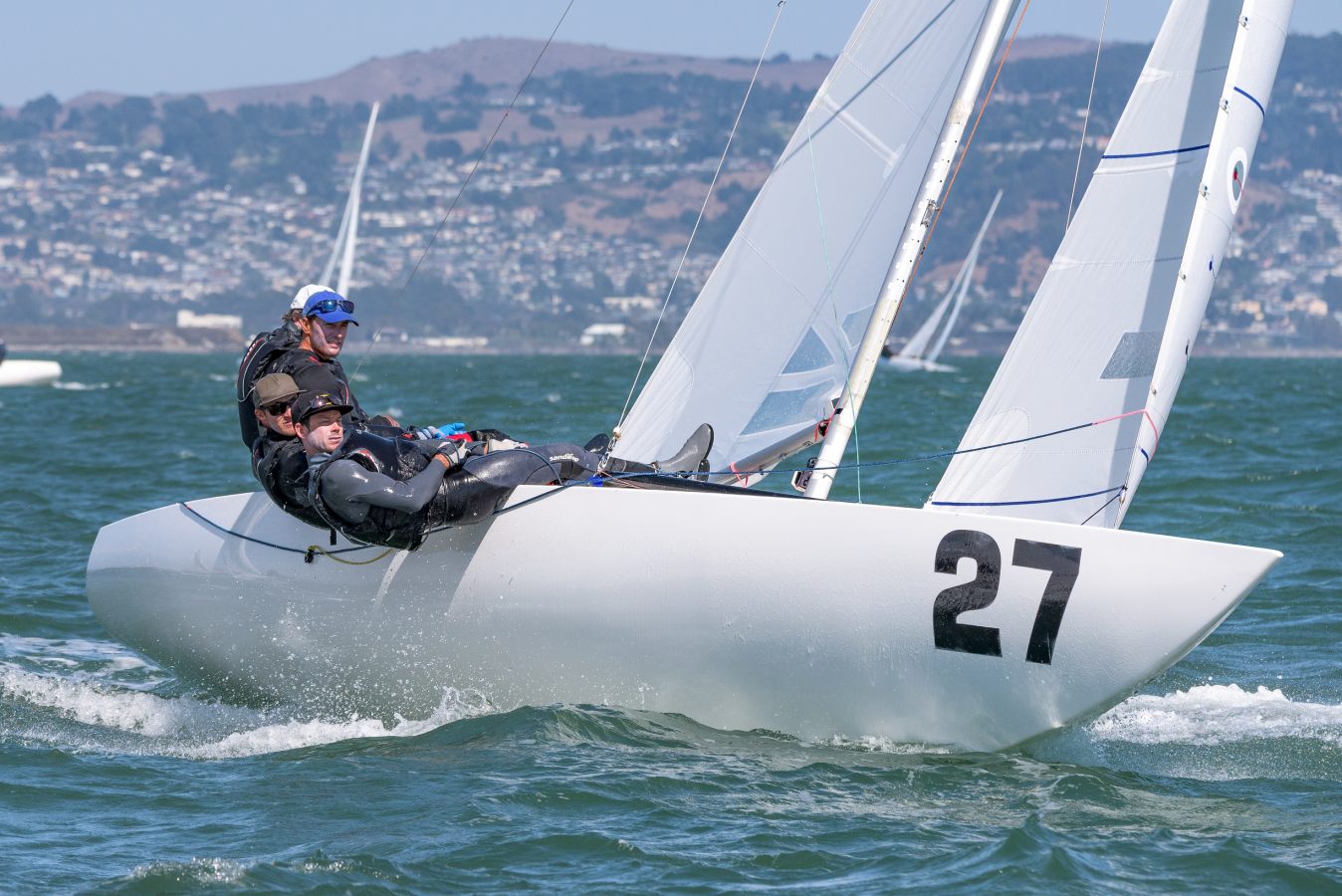
ETCHELLS WORLDS INTERVIEW
ETCHELLS WORLDS INTERVIEW
How North Sails Stella Blue conquered the Etchells World Championship in San Francisco
We caught up with Steve Benjamin to get his overall perspective on sailing the Etchells, which is one of the most competitive One Design Classes in the world. As many of you may already know, Steve has an impressive history of racing that sailing enthusiasts could only dream of from small boats to 52-footers in an open-ocean race setting. Here is our Q & A with Steve to see what had to say about the Etchells, what draws him to the class, and what he does to be the best in every Etchells event he competes.
NS: Steve, first off you have sailed many, different types of boats over the years. From 470’s (Olympic Silver medalist in 1984) to 505’s and big boats including the TP52. What is the appeal of the Etchells class to you?
Benj: There are three things that attract me to the class. First is the level of competition which is really one of the highest of any class in the world right now. A lot of teams in the US and abroad are putting so much effort into succeeding. Second is the technical nature of the boat. The Etchells is very sensitive to tuning and tweaking. I really enjoy working with North on developing the sails and tuning techniques. Third, is the teamwork aspect of the four (or three) person boat. The team dynamics of sailing with a four person crew are a great challenge. We all try to do our best to specialize in our individual roles.
NS: You’ve sailed with much of the same team for at least the last year, Michael Menninger, Ian Liberty and Dave Hughes. How do you divide up the roles? Who does what and when and where do you as the helmsman come in?
Benj: We do try to specialize. The specialization begins with Dave Hughes. He trims the jib upwind and the kite downwind. He is also in charge of the tuning of the boat. Michael is on tactics and also trims the main. He works on the weather and current. For example, Michael selects the battens for the main each day. Ian rigs the boat, cleans the bottom (thanks Ian), charges radios and does most of the boat prep stuff. Ian sits between Dave and Michael upwind. When the spinnaker pole comes into play Ian slides to the foredeck. Ian puts the pole up and Dave eases the jib sheet.
“My job is to give the guys feedback on how the boat feels. We do a lot of coarse adjusting depending the immediate conditions. If I see a set of waves ahead I’ll tell the guys we are going bow down or if we have to hold a lane I’ll verbalize that and say we need a high mode. My role is really as the coordinator. I schedule the practices and events, and handle the organization of the boats and the program.”
NS: You sailed a newer Ontario boat. Can you tell us a little bit about the mast and what you are looking for in how it bends. Did you have any special set-up with your spreader deflection fore and aft?
Crew set up:
Yes, we sailed a new boat that was launched in April. It was a birthday present from my wife Heidi, and the Ontario Yachts team did a great job. We put a lot of planning into the systems and the deck layout for sailing with a four person crew. For example the hiking line was moved to the back of the barney post for me. Michael hikes off the main sheet which is at the front of the console. Ian hikes off the spinnaker sheet and Dave hikes off the foot block and the jib sheet. I hardly ever touch the main sheet.
Boat set up:
We’ve done a lot of work on masts. We pretty much have one of each maker and have tried all of them except the Whale Spars mast that I would eventually like to take a look at. In the end we decided we did not have enough time to trial anything else and stuck with what we were familiar with, which is an older Proctor mast. We have two of these from 2001 and 2002. The one we used was the 2001 which incidentally was the same mast Ken Read used when he won the Worlds.
Our spreaders are pretty much straight out. We are looking at the swinging spreaders. I think these should always be better downwind as long as the rigs don’t blow out of the boat. We have not seen any evidence of that happening as yet. Certainly they allow the rig to go further forward which has to be faster and it seems like you should be able to restrict the aft sweep to whatever you want within the rules.
NS: The “Dog” mast lever is still fairly new in the class. Can you tell us how you use it normally and what changes you might make with it in special situations like when you want to point or go fast forward?
The mast lever is a must have. Downwind you always let it go all the way forward. If there are waves and the mast is rocking around you want to lock it forward with the mast ram forward control line. Some boats have shockcord to pull the mast ram forward. We tried that and prefer the positive aspects of the control line. Upwind over 8-9 knots (as soon as hiking) we always have the mast all the way back in the partners all the time. That presumes the mast butt is in the right location.
“Where the mast lever really comes into play is in lighter winds as a mechanism to power up the boat. If you are lacking power you call pull the lever forward which adds sag to the headstay and makes the jib more full. It also induces more prebend in the mast which opens up the leech of the main. This seems to work really well with North’s designs and allows you to go through the whole wind range quite well. Also when you encounter some chop in light air you can pull the lever back and tighten everything up, then stabilize the rig to get through it.”
Our rule of the thumb is to position the mast all the way aft in the partners once we are hiking. Then we adjust the mast step to the correct location. We move it further forward as the wind builds, aft as it lightens. We try our best to always create as much separation between the luff of the jib and the leech of the main as possible.
NS: How do you decide what spinnaker to use? The VMG or Runner?
We use the VMG until crossover, which is about 9 knots true wind speed in flat water. If it is wavy and choppy we push the VMG a little higher maybe to 10 to 11 knots. We have thought about using the VMG for planing conditions but we have not had a chance to try it yet.
NS: What about rig tuning? Do you follow the North guide and/or are there any rules of thumb you use when setting up the rig before the start?
Dave Hughes handles our rig tuning. One of things is we have tried really hard to develop is a solid base setting. We always return the boat to base after every day of sailing. The base setting may evolve a little during an event due to things stretching and settling. We check base every morning before we leave the dock so we are sure.
“We simplified the way we talk about where the mast butt is. We measure 3800 millimeters forward, from the aft deck (mark 12’ aft from the aft edge of the partners) through the barney post to the keel “I” beam. Then we talk about millimeters forward of this mark. We are generally between 7 and 25 mm from that mark. The step position is sort of the foundation of it all. Our base setting is around 14 on the new boat (1262) and closer to 18 on the older boats (1060, 1228 and 1262).
We are at about 47 ⅜” on the headstay length “arc.” We set the headstay to 10 on the gauge using just the backstay. At that tension we go to 19 on the uppers and 15 on the lowers for base. Another thing we have changed is that we use open body turnbuckles on the shrouds like you have on a J/70. We actually use half turns on those since the threads are finer and you are adjusting two studs at once. We have “third hands” on the shrouds and Dave has batten tool he can use to turn the turnbuckles. It has a loop of light shockcord on it so we can lock in the shrouds while we are sailing.”
We have the “Dog” (Andrew Palfrey) swivel on the headstay.
The rule of thumb that you want your leeward upper shroud just taut holds true up to a point. As the wind builds there is a point where you’ll need too many turns get the leeward upper taut. So many that the mast will suffer from over-compression bending. We have found that it is quite fast in breeze when the leeward lower is engaged. Especially with the PC-FM main.
NS: Lets talk about sails. You’ve mentioned that you really like the new PC-FM main. What other sails did you measure in for the Worlds? I suspect it was kind of a tricky decision based on the time of year in San Francisco where it can actually be pretty light on some days?
“Yes indeed we really like the PC-FM main, it is very versatile. Our “go to” jib is the LM-2H RH (Radial Head) and we have 100% confidence in that sail. We also had 100% consensus with the sailing team that we had to use this sail. Where it got tricky was whether to measure the light jib or the heavy (GM 6.5). I did talk to my good friend Stan Honey before the regatta and his models showed little temperature and pressure difference during the week between San Francisco and inland. That lead Stan to suggest we select the light jib, which we did. We like the LM-2L without the radial head. It seems to be a very powerful light air sail.”
NS: You’ve helped to start an initiative to get more younger sailors involved with the Etchells class. Can you tell us a bit about that?
Benj: With the help of David Franks, Senet Bischoff, and Michael Gavin we started with the Youth Program this year in conjunction with the Gertrude Cup in the UK. This year we sent two teams to it and they did great. One team, led by team captain Connor Needham was leading the event for a while and ended up second in the Gertrude Cup. Resulting in the US Team winning the first ever Etchells Youth Challenge.
NS: How does a youth sailor get involved?
Benj: This year there was an application process. We had about 15 youth sailors apply and we selected eight US youth sailors to go to the UK to compete. We are hoping to expand the program this year and get some other countries involved. We already have an invite from Australia for their event in January.
“I am really hoping many more of the other owners get behind this. There is a funding need as well as help needed with logistics and boats. It’s a great way to grow the class and create interest among younger sailors. To qualify, the youth sailors cannot have reached their 25th birthday as of the 1st of January in the competition year.”
NS: Steve, thanks so much for your time and wish you the best in the upcoming Winter events in Florida!
“Thanks for the fast sails, and we hope to see everyone in Miami this Winter.”
READ MORE
READ MORE

NEW J-6 JIB SHINES AT THE 2017 J/70 NORTH AMERICANS
JOEL RONNING WINS J/70 NORTH AMERICANS
J-6 proves to be the most user-friendly High-Clew Jib available
Team Catapult, 2017 J/70 North American Champions. © Chris Howell
Fifty-three teams met in New York at American Yacht Club for the 2017 J/70 North American Championship. Going into the first day, the wind was sustained at 25, with larger gusts to 30. The waves were very steep, due to the current going against them. Keeping safety of the teams and regatta personnel in mind, PRO Mark Foster made the right call to stay ashore.
Day two brought lighter sailable conditions with the wind ranging from 12 to 18 knots. The challenging aspect of the day was the steep chop that was left over from the previous days’ strong winds. Pounding through the disorganized, at times 1.2 meter waves, increased the difficulty of holding a lane off the line. To make up for lost time from the previous day, 4 races were sailed, each lasting about 1.5 hours. Exciting planing conditions downwind allowed sailors to exercise a variety of techniques, including wing on wing in the lighter patches.
Day three was a stark contrast from the start of the event, with winds from the same easterly direction, only peaking at ten knots in the morning tapering to almost nothing in the afternoon. Strong up-course current made starting and sailing downwind in the light air difficult. A late shift to the right on the last downwind in one race saw a bit of fleet inversion with the some of the boats that were last around the final top mark making it into the top ten. With the overall windspeed dying and oscillating between 40 degrees, racing was called for the day.
Due to the lack of races so far for the event, an earlier start time was in store for day four, meaning anything could happen with the scoreboard. Winds started out at 5-12 knots out of the southwest for the first two races of the day. Shifty conditions gave the edges flatter water and ended up paying for those who committed to the sides. For the final race of the regatta, the wind picked up to 15 knots, and by the end of the first beat , teams were back up to planing conditions for downwind. Joel Ronning and his team Catapult won the final race of the regatta, claiming the title. Congrats to Joel and his crew on some great sailing, and a special thanks to Mark Foster for getting in as many quality races as possible in trying conditions.
Catapult sailed with North XCS-1 Mainsail, J-6 Jib and AP-1 Spinnaker. We are very proud of the way our new J-6 jib performed at the North Americans. It delivers an untouchable mode of upwind speed and height. The new J-6 jib has again proved its top end speed in a wide range of conditions.
“The results at the NAs reinforce that the J-6 is the most user-friendly high-clew jib available.” said North Sails One Design President Tim Healy.
Here are some tips from the North Americans:
Setting Up the J-6 Jib for Max Speed
One key element of setup is the weather sheet. It is imperative to sail with enough weather sheet to give the sail some depth and power down low, while generating twist and keeping the upper leech open. Make sure the weather sheet comes on as quickly as possible after the tack as the boat needs the power from the bottom of the jib to get up to speed immediately after a tack. Some teams even experimented with “pre-setting” the weather sheet as they steer through the tack!
Another key to trimming the J-6 for maximum speed is to make sure that the main sail is flat enough down low to be sure that you aren’t getting too much return from the lower leech of the jib. Your lower shrouds shouldn’t be too tight, keeping in mind that you have enough outhaul on and, in over 13 knots, that you have some vang on to keep that lower main flat. Look for pre-bend wrinkles in the lower third of the main to be sure you’re set up correctly.
Detach from the Pack
In big fleets, it is incredibly helpful to be able to separate from other boats and give yourself the opportunity to use your boat speed to make gains on other packs. Packs create high traffic, and disturb the airflow. It is important that the tactician looks for the lanes that might allow them to “detach” from these packs and move up that half ladder rung, which leads to getting a narrow cross later on up the beat. This can make a difference between a top 10 rounding, and being stuck in the middle.
Having a good start in the front row is the first way to get yourself out and running away from the big pack of boats, but it doesn’t stop there in a 50+ boat fleet. The tactician needs to think ahead and ask themselves, “If I tack here, am I going to have a lane?” Or will I be putting the boat in a position to make a gain using my extra gear of boat speed?”
The same can be said for the downwind legs as well. Rarely it works to sail the middle of the course downwind because there is so much disturbed airflow from the big fleet. Pick a side and commit to it – doing your best to separate from other boats and keep your lane and air clear.
When picking which gate to round in a congested fleet, make sure you predict which mark will have the cleanest “escape”. Which mark does it look like the pack in front of you will round? After you round the leeward mark, there will still be boats coming down the run. Which side of the course has less boats on it? Even if you want the right side of the course on the next beat, it might be better to round the course-left gate mark if it means staying clear of downwind boats coming at you with spinnakers, creating a ton of chop. Every bit of separation you can get can lead to big gains at the finish line!
For more information contact our on-site support team at the NAs: Zeke Horowitz, Mike Marshall, Eric Doyle or Max Skelley.
Shop J/70 sails
READ MORE
READ MORE
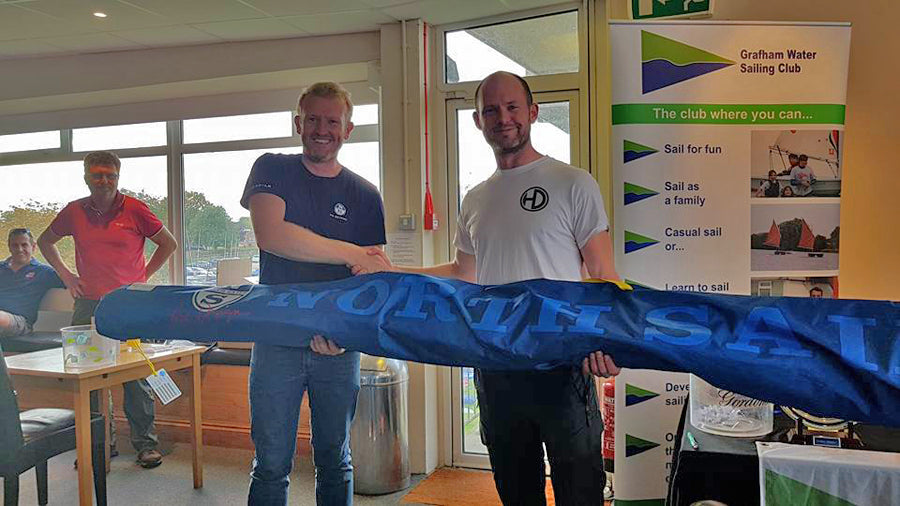
CHARLIE CUMBLEY WINS 2017 SUPER SERIES
CHARLIE CUMBLEY WINS 2017 SOLO SUPER SERIES
© Will Loy
North Sails’ Charlie Cumbley won the 2017 UK Solo Class Super Series, of which North Sails are proud to have been a sponsor of, with a new sail being donated to the class for the series.
The End of Seasons, hosted by Grafham Water Sailing Club concluded the 2017 series. The one-day event had three races sailed in perfect 13-18 knot conditions. With 3 bullets on the scoreboard, Charlie won the event and the overall series. This is a title he has held onto since the series’ inception in 2015.
Congratulations to Andy Davis who was the winner of the North Sails prize sail, finishing second in the Super Series and second overall at the End of Seasons.
If you are interested with any Solo products, get in touch with a North Sails expert.
© Will Loy
READ MORE
READ MORE
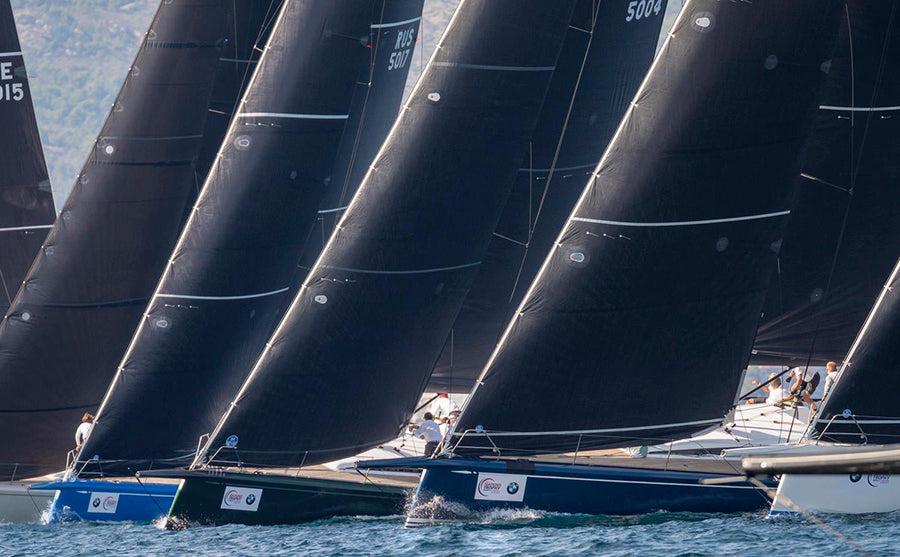
THE NATIONS TROPHY
THE NATIONS TROPHY
North Sails Clients Represent at Nautor Swan’s Inaugural One Design Challenge
Launched by Nautor Swan, the Nations Trophy is a one-of-a-kind event that promotes a national approach to competition across three classes. The trophy goes to one nation based on their performance in the ClubSwan 42, Swan 45, and ClubSwan 50.
Real Club Nautico de Palma, a gracious host to 11 teams this past week, was honored to be a part of the inaugural event and committed to providing top quality racing for competitors. Each fleet raced under one design standards, scored separately, and the winner of the Nations Trophy was determined by a Nation’s “top two” overall finishing places across the three competing fleets.
“The teams were very close all week which made some nice photo finishes. The starting line approach was very important in this fleet since the boats need more time to get to their target speed. Time on distance was crucial. Every maneuver could cost us seconds and even meters, so it was very important we had our tactical decision made,” said Giulio Desiderato, strategist on Swan 42 Mela.
In the ClubSwan 42 and 45 classes, Spain’s North-powered Nadir and Porron IX came away with the overall win. In the ClubSwan 50 it was Germany’s Earlybird who stole the victory, and in second was Vladimir Liubomirov’s Bronenosec, followed by Leonardo Ferragamo’s Cuordileone. Congrats to Spain for being the top performing nation team, and well done to our clients for a hard fought regatta amongst some of the world’s most elite sailors. This year is one for the history books.
“The event was a success and the Swan families together on the same race course is simply amazing. Throughout the week there was great racing and fun social experiences. I look forward to competing in the Nations Trophy next time”, said Giulio.
READ MORE
READ MORE
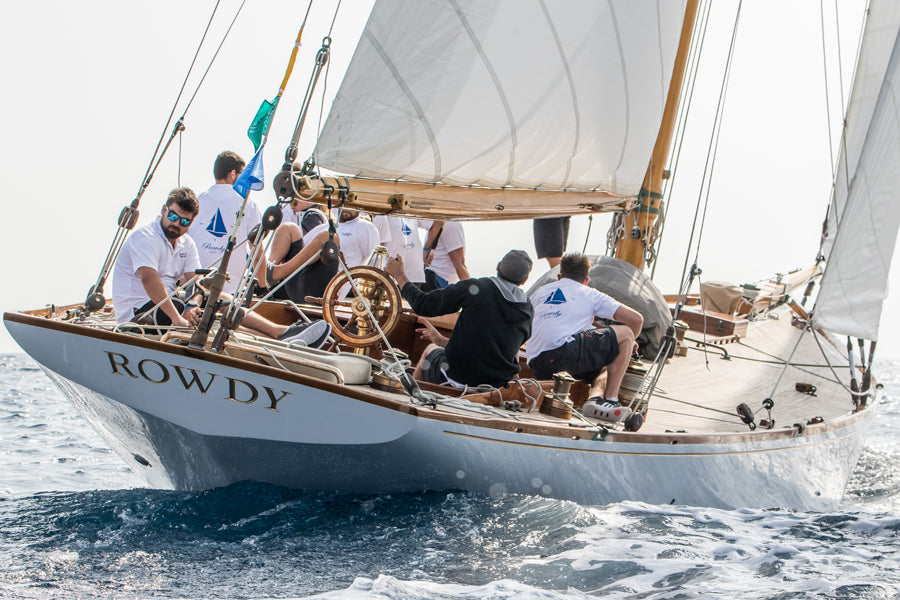
CLASSIC YACHT ROWDY WRAPS A SUCCESSFUL 2017
CLASSIC YACHT ROWDY WRAPS A SUCCESSFUL 2017 SEASON
© Robert Deaves
The one-hundred-year-old classic yacht Rowdy has completed another successful Panerai Classic Yachts Challenge around the Mediterranean. The season for Rowdy included wins at two of the most prestigious events on the Med - the Cannes Regates Royales and Les Voiles de St Tropez. She was outfit with a new North Sails inventory 2 years ago. After a successful season, we spoke to owner Donna Dyer about her 2017 racing experience.
North Sails: Every classic yacht has a story, tell us about Rowdy’s origins.
Donna Dyer: Rowdy is one of only a few NY 40s that has kept her original name. Howard and I purchased the boat in 2013 after a long history of success on the water. We have changed only a few things, including putting some of the original features back.
Rowdy is a NY 40 Herreshoff Design, built in 1916 in New York. Holland Duell placed his order to buy the boat on 14 October 1915, took possession the following May and immediately started racing. He won many regattas during 25 years of ownership; his success was followed by many and was often covered in popular publications such as The New York Times.
Following this initial success, sadly Rowdy fell on hard times before being purchased by Christopher Madsen (1928-2004), who completely restored her, and in 2006 Graham Walker assumed ownership of Rowdy. He raced her in the Mediterranean where they won many regattas, including multiple victories at the Panerai Classic Yacht Challenge.
NS: Rowdy was outfit with new sails two seasons ago, can you share your experience working with the sails and how they may have contributed to your success?
DD: Two years ago we changed to North Sails, this also coincides with our last two years of success. The sails are well designed and give us a winning edge.
Our Favourite Regatta this Season was Cannes Regates Royales. We have won numerous regattas over the four years but never Cannes until this year, which was a fantastic achievement!
"The best part about working with North Sails is we get wonderful support both at regattas and with sail design. We have only met fun, skilled, committed individuals who have added great value to our team and now are good friends."
With the continuity of our great team, we hope to succeed next year and win many regattas and the overall Panerai.
Congratulations to Donna and the team onboard Rowdy on a successful season! We look forward to watching your performance on-the-water next year.
Learn more about Classic Yacht sails by North here, or get in touch with your local team
READ MORE
READ MORE
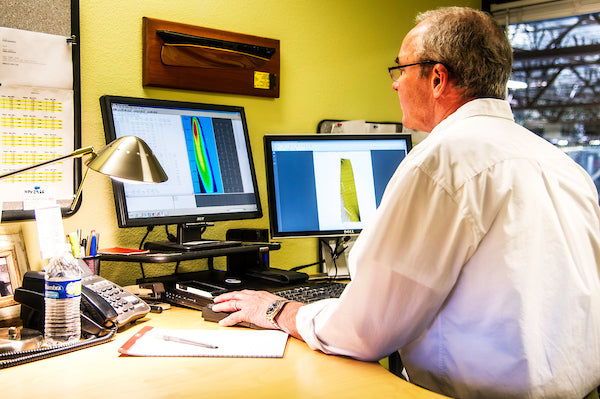
EKSPERTYZY PROJEKTOWE
Od początków w 1957 na B Street Pier w San Diego, North Sails wprowadził więcej technologicznych nowości niż wszystkie inne żaglownie razem wzięte. Postępy, które nadchodziły raz po razie, zdefiniowały w którą stronę będą podążać nowoczesne żagle. Z największym i najbardziej utalentowanym na świecie zespołem żaglomistrzów i projektantów North Sails zapoczątkował praktycznie każdy większy przełom w nowoczesnym żaglomistrzostwie. Wkraczając w swoją szóstą dekadę firma pozostaje na czele w projektowaniu i technologii.
W 1982 North Sails była pierwszą firmą, która użyła komputera 3D do modelowania i projektowania żagli. Od tamtej pory firma opracowała swój własny pakiet programów pozwalających inżynierom zdefiniować i udoskonalać żagle w znacznie większym stopniu niż tradycyjna metoda “prób i błędów” (aby dowiedzieć się więcej na temat programów przeczytaj “North Design Suite”). Choć North’owski proces projektowania może wydawać się przesadzony w przypadku niektórych zastosowań, zapewnia maksymalną spójność i optymalną równowagę kształtu, rozciągliwości,wytrzymałości i ciężaru.
Historycznie, projekty żagli na kursy pełne nie były tak zaawansowane numerycznie jak te do żeglugi na wiatr, a to z powodu trudności w dokładnej analizie przepływu powietrza wokół żagla. W 1995 zespół North Sails wraz z Uniwersytetem w Auckland stworzyli rewolucyjny tunel wiatrowy o “skręconym przepływie”, który symulował różnice w prędkości i kątą wiatru pozornego pomiędzy poziomem pokładu a górnymi częściami takielunku. Używając tego narzędzia projektanci North’a mogli obserwować modele żagli pod każdym kątem w ich warunkach pracy.
Poprzez obserwację kształtu pracującego żagla można zmierzyć jak się zachowuje, kiedy szoty są poluzowane a żagiel zaczyna się skręcać. Modele posiadają takie same regulacje jak prawdziwe jachty - regulowane napięcie szotów, wysokość i położenie spinakerbomu i pozycjonowanie “dziób-rufa”. To pomaga optymalizować projekty, zarówno w geometrii 2D (wielkość żagla) jak i kształtowaniu w 3D. Ponieważ warunki w tunelu są zawsze optymalne (brak zmian kierunku wiatru, brak fal), konieczna jest ekstrapolacja wyników, jednak dane pozyskane z subtelnych zmian kształtu są nieocenione przy opracowywaniu nowej generacji North’owych żagli asymetrycznych, symetrycznych i genakerów, które pracują lepiej i są łatwiejsze w prowadzeniu.
Rezultaty są imponujące - zwycięzcy w Vendée Globe, Volvo Ocean Race i Pucharu Ameryki na kursy pełne używali żagli North Sails. Pomogliśmy również armatorom wygrać niezliczoną ilość wyścigów na poziomie klubowym. Z kolei Gennakery z serii “G” sprawiają pływanie rekreacyjne jeszcze łatwiejszym.
Nauka North’a zredefiniowała nowoczesne żaglomistrzostwo w XX wieku. Kontynuujemy naszą pracę, aby żeglowanie stało się jeszcze przyjemniejsze i przystępne dla żeglarzy XXI wieku. Dziś nasz cel jest taki sam jak na początku, w garażu w 1957: zaprojektować i wyprodukować żagle, które są lżejsze, wytrzymają dłużej i będą łatwiejsze w obsłudze.
Źródło oryginału: North Sails
READ MORE
READ MORE
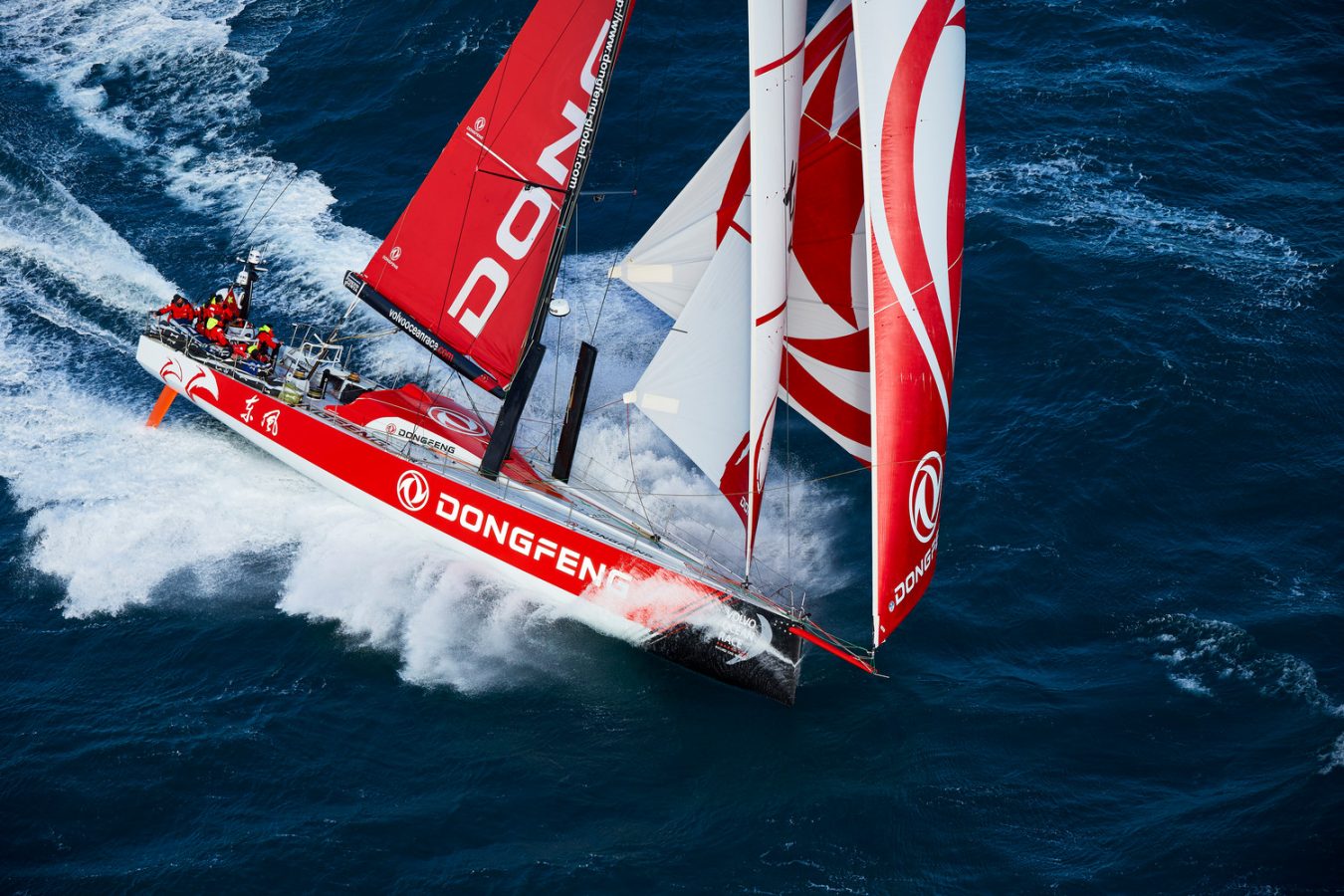
8 THINGS TO KNOW ABOUT THE VOR SAIL INVENTORY
8 THINGS TO KNOW ABOUT THE VOLVO OCEAN RACE SAIL INVENTORY
© Benoit Stichelbaut/Dongfeng Race Team
North Sails have powered eight out of nine Volvo Ocean Race winners to victory since 1989 – here are 8 things you should know about the bespoke sails designed and manufactured 2017-2018 Race.
1 ) Paneled vs. 3Di Composite
Instead of assembling cloth panels into a particular sail shape, the Volvo Ocean Race sails are composites. 3Di material “tapes” are laid in a specific arrangement, offering stable structure to the sail where it is needed most. This leads to an unmatched weight to stiffness ratio and advanced durability. This is a patented process at North Sails, the exclusive sail provider to the Volvo Ocean Race.
2) Above and Below Deck
Sail design today encompasses a lot more than it used to. When a new boat is commissioned, design stakeholders will often bring North Sails into the early stages of planning and collaborate to produce a well balanced boat. In the case of the VO65, Farr Yacht Design worked together with North Sails and Southern Spars to create a cohesive package where the hull, appendages, spars, and sails were each designed with the next in mind. The effect of this relationship sees each team receive a bespoke VPP (Velocity Prediction Program), which illustrates the potential performance of their boat according to inputs such as true wind speed and angle, and further, advises the proper sail to be used in each condition.
3) Eight Piece Puzzle
Similar to a jigsaw puzzle, the pieces of a sail inventory assemble to create a package. The VO65 eight-piece sail inventory combines to form a clear performance landscape, with the same options available to all teams. While the sails are identical, the difference is in how they are used – the slight variations of angle, trim and tuning. Each team will push their boat, rig and sails slightly different, inching out every bit of performance possible. The VO65 teams will start in October with all-new sails. So what’s changed?
4) We Love Feedback Loops
Sailors are experts at a lot of things – boiling water for coffee at 20 knots, bathing in a rainstorm, dressing up like Neptune and oh – making boats go fast. Feedback, including lots of data from the 2014-15 edition of the race, proved there was a need for another sail in the VO65 One Design inventory, pushing the final count from seven to eight. North Sails designer, Gautier Sergent explains:
“The teams were forever changing configurations in 10-15 knots upwind and tight reaching. When using the masthead zero the teams were pushing the boat too hard. Changing to the J1 made them under powered. So one of the changes we made for 2017 was to add a J0, which fits between the MHO and J1 and covers that range.”
5) Domino Effect
The introduction of a J0 led to a few key changes in the new inventory, most substantially to the Fractional Code Zero (FRO). Previously used in a very small upwind range between the J1 and masthead zero, the addition of a J0 meant it could now be a dedicated downwind sail. The 2017-18 FRO is made of 3Di FORCE, a new downwind application of North Sails 3Di composite sailmaking. The sail is more stable with a 3Di structure throughout an increased range of conditions, a benefit sought by designers and sailors alike. The added bonus of 3Di is the sails are more easily repeated, as molded sails offer more streamlined manufacturing and assembly than their panelled counterparts. Each type of sail can be made in sequence: the mold is set once and the sails are consolidated one by one, ensuring One Design standards are met.
Nathan Quirk, head of the Sail Loft Division for the Volvo Ocean Race explains: “The process of producing the raw sail shape is now fully automated and several quality control steps are taken along the way to ensure consistency. In the past, manually joining panels to produce a sail meant no two sails were ever identical. North Sails 3Di has solved this problem and is the only option for a One Design race at this level.”
6) Surf’s Up
The Volvo Ocean Race 2017-18 round-the-world course features three times as much Southern Ocean sailing as the last. That means twice as many skivvies for the crew, big breeze and even bigger swell. Thanks to extensive weather routing, the new VO65 sail inventory is well suited for a decidedly downwind course. The downwind FRO we mentioned? It’s full shape and straight exit are designed to harness the wind and send them surfing down 20ft swell.
7) Fortune Telling
There is no crystal ball when it comes to predicting a race around the planet, but sail designers can study the race route and draw decision making data from historical weather patterns.
“We have done extensive routing with the two inventories, the 2014-15 inventory and the new one, to ensure we were using the right balance. By introducing the J0 and changing the FRO, we’ve noticed there are a lot less sail changes required,” Gautier explained. “Typically, with the addition of one more sail, the crew are quick to point out that it’s one more sail to handle, one more sail to stack. After looking at the inventory as a whole and assessing the available configurations, we found that the amount of sail changes actually reduces significantly with the addition of the J0.”
8) Easy Maintenance
The VOR Boatyard travels with the teams, setting up and breaking down at each stopover port. This team of riggers, builders, and sailmakers receives the boats as they arrive, and work around the clock to maintain and repair areas of wear and tear. The sail loft crew were adamant that, no matter how fast they were, the sails had to be simple to care for.
“90% of all damage to sails happens during manoeuvers and sail changes,” Nathan said. With the knowledge gained from the last race, we were able to make subtle changes to the finishing of the sails to improve handling and speed up service. With between 60-80 sails to check each stopover the sails need to be reliable.”
The luff length on the code sails was reduced to allow for easier sail “peels” or changes, and a relatively simple fitting was added to the A3 (the biggest sail on board) called an integrator. This enables top-down furling which is preferred over bottom-up for larger running sails due to a faster, neater result and less chance of damage.
© Jesus Renedo/Volvo Ocean Race
© Jesus Renedo/Volvo Ocean Race
READ MORE
READ MORE
DEFINING PARTNERSHIP
DEFINING PARTNERSHIP
North clients Dave and Mary Ellen Tortorello feel the power of teamwork on J/111 Partnership
We caught up with Dave and Mary Ellen Tortorello, owners of J/111 Partnership and long-time clients of North Sails. Having competed in a large variety of regional regattas, including coastal and inshore PHRF, the pair are pleased with everything they have been able to accomplish, given all the right ingredients. Mary Ellen shared their story with us and we enjoyed hearing her explain how the experience has been so much fun. Through collaboration and new-found friendships, Partnership has defined a sailing experience that allows their team to perform at a higher level.
Before switching to the J/111, Dave and Mary Ellen enjoyed racing a J/122 out of Mary Ellen's home club, Black Rock Yacht Club, in Bridgeport, Connecticut. Their experience racing the J/122 instilled skills and best practices that apply well to the new program on Partnership. Both boats were outfit with complete North Sails inventories, the other constant being a focus on great crew, teamwork and exceptional preparation. "Every crew member brings a valuable skill set," said Mary Ellen. "Some like short course racing, others were great at distance racing. Most important is creating a supportive atmosphere, we back each other up 100%". Every sailing experience is one-of-a-kind. From an outsiders perspective, Partnership is a well-oiled machine, outfit with cutting-edge products and a great group of people onboard.
While Dave is the skipper, Mary Ellen brings a lot to her team while trimming the headsail and managing the pit. Her sights were set on Block Island Race Week, where they would take first place in PHRF 1 after a fun-filled week of exciting racing. "When you get her above 12 knots, she planes and it’s so much fun going downwind."
The Vineyard Race, a distance race out of Stanford Yacht Club and around Martha's Vineyard, would be the next test for Partnership. While Dave prefers short course racing these days, he sat this one out while Mary Ellen led the crew to finish first in their division and seventh overall.
"Honey, I'm going to put together a fantastic crew & we're gonna go out there and bring it!"
Partnership's season rounded out with an overall win in PHRF division at Black Rock Yacht Club during the Wednesday night series. At the AYC (American Yacht Club) Fall Series in Rye, NY they took first in their division and first overall in PHRF. Partnership is equipped with North Sails 3Di and the Tortorello's have pinned down a 'plug and play' set up they can tune easily. They notice the benefits and capability of their inventory, and continue to learn.
“The encouragement we get from the North Sails team and service crew has contributed to our success over the years. We couldn't be happier with their support.”
The Tortorello's have trusted North Sails for 10 years now, and have built a strong relationship with their sales team member, J/111 Expert Jack Orr, who has been there for them every step of the way. “I just want to thank Jack for being a terrific person, and for always representing North Sails in a professional manner. He always made sure we had the right sails for the season and kept us in the loop on the new products. He's such a great friend”. Another key North Sails contributor to the Partnership program is sails designer David Hirsch. His designs skills are amongst the top in the industry. Dave shared his wealth of knowledge in sail design & sailboat racing throughout the years to continually help us improve. We value his time, talent & friendship.
The Tortorello's and the Partnership team enjoy regattas for many reasons. They love to be challenged, enjoy racing, and most of all, enjoy sailing with friends who share the same passion for the sport.
“I’ve met some incredible people over the past 10 years racing Partnership, meeting other racers after regattas, making friends, trading stories, all good fun!"
All the best to the Tortorello's, and props from all of us at North Sails for offering an example of hard work, dedication and spirit making all the difference.
Click here for more information on North Sails J/111 products, or to speak with an expert.
Dave and Mary Ellen accepting their trophy at American Yacht Club for winning the spring series
Partnership at Block Island Race Week, securing their class win
READ MORE
READ MORE
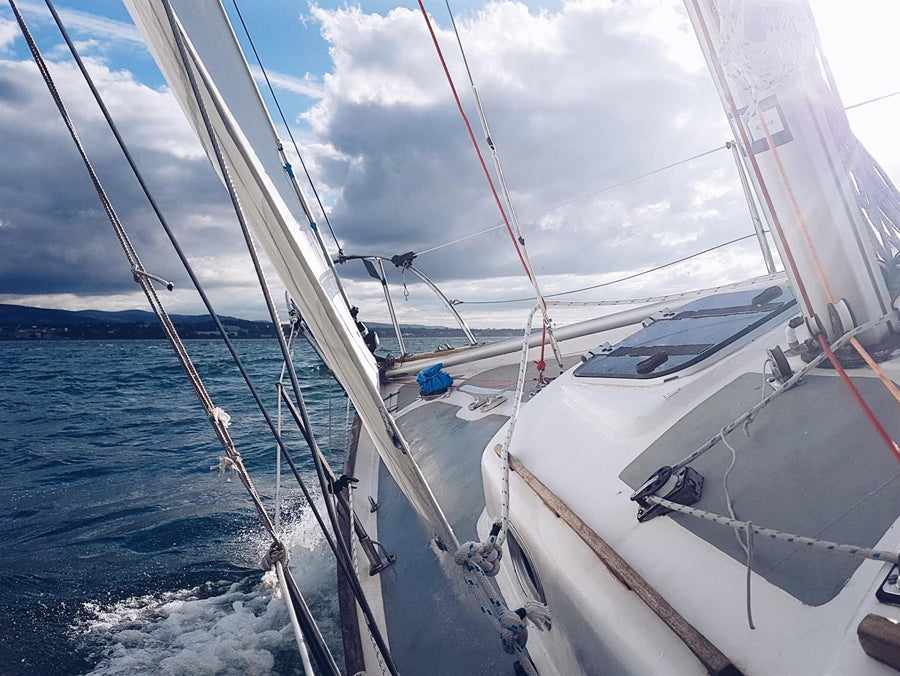
CONGRATULATIONS TO BAROSSA IN THE DBSC SATURDAY SERIES
CONGRATULATIONS TO BAROSSA
Congratulations for Neil McSherry’s and his team onboard Barossa who have won the DBSC Shipman Saturday series. With this being their second season on the boat, moving from the back of the fleet to the front of the pack is a vast improvement, with the help of a specially designed #3 Jib from the team at North Sails Ireland.
READ MORE
READ MORE
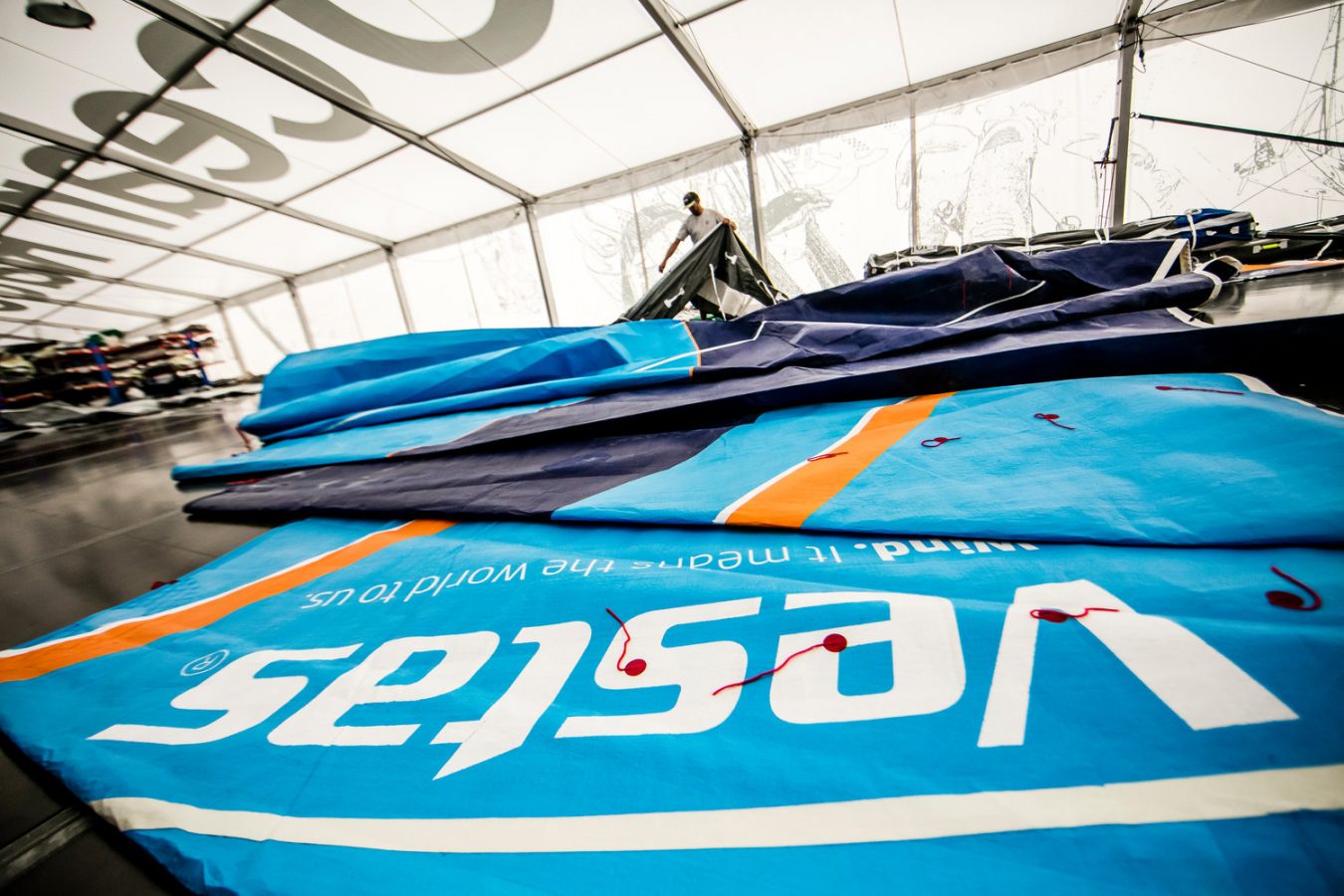
INSIDE THE VOLVO OCEAN RACE: THE BOATYARD & NORTH SAILS
INSIDE THE VOLVO OCEAN RACE: THE BOATYARD AND NORTH SAILS
© Jesus Renedo/Volvo Ocean Race
With the Alicante in-port race kicking off this weekend and the start of Leg 1 fast approaching, the Volvo Ocean Race’s Boatyard Sail Loft manager Nathan Quirk and Neil Cox, head of the Boatyard, explain how North Sails 3Di technology has changed the game in port.
It’s been 30 years since North Sails began making sails for the Volvo Ocean Race. During that time North Sails has equipped VOR teams with the highest quality sails to see them through the round the world epic. But a lot has changed in the past three decades, and as the race has evolved, becoming faster, more extreme and more professional, so the demand for cutting-edge sails has grown.
The development of North Sails 3Di technology was in many ways a response to the sailors’ demand for lightweight sails with increased durability. North 3Di sails are made using tiny pre-impregnated filament tapes to mirror the load-bearing and shape-holding qualities of a rigid aerofoil wing while remaining lightweight, durable, and easy to handle.
It was to prove a breakthrough in technology, one that completely overhauled the way Volvo Ocean Race teams approach sail management.
North Sails: What does 3Di technology bring to the Volvo Ocean Race?
Nathan Quirk: 3Di sails stand up amazingly to what the Volvo Ocean Race crews put them through. They push the sails harder than in any race, and yet the sails hold up. Also, the sailors have a lot more confidence in 3Di than other fiber film sails, to the point where most teams don’t take an onboard sewing machine anymore. If you think back two or three races ago, we were taking a lot of repair material and glue plus a 50kg sewing machine on each leg. As 3Di came into the race, teams realized they weren’t making anywhere near as many repairs. Then they started to leave the sewing machines on the dock, and these days most teams don’t even own one. That just shows the progress of these sails over the last eight to ten years. It’s a big change.
© Benoit Stichelbaut/Dongfeng Race Team
NS: How does the Sail Loft work within the Boatyard?
NQ: I have two full-time guys with Volvo Ocean Race, and North Sails supplies two sailmakers for each maintenance period we have. There are five guys in the loft at peak times during the stopovers, which isn’t many when you compare it to the old system, where teams independently managed their loft team – some with three or four sailmakers for their team alone.
Neil Cox: Nathan and the guys in the loft are really smart and efficient about how they do the servicing. They’re aware of how many hours each code has done, so they know which sails have been used the most. They work through the whole inventory knowing which sails have seen more miles. From Nathan’s perspective, the way the boats finish the leg and the way they sails are returned to him is second to none, and that’s reflected in the service they can provide to the teams.
NS: What does 3Di mean for the Sail Loft team?
NQ: We still have to service the sails, check for chafe and stay on top of the general condition of the sail, but we have very, very few major repairs to do. Across the whole fleet in the 2014-15 race, we only had four sails that had problems. Thanks to 3Di we could repair them easily whereas in the past we’d have thrown away those sails. We have five days to service between 50 and 60 sails. Previously teams would re-cut and modify the shapes of their sails to keep them straight and performing at their optimum level. We don’t do that anymore because we don’t have to – we can get these teams around the world with the 3Di sails, and they’re still in great shape.
The mainsails in the last race did 40,000 miles without an issue. Three races ago, each team needed three mains to get around the world, and the course was shorter then.
© Jesus Renedo/Volvo Ocean Race
NS: What financial impact has 3Di had?
NC: It’s definitely made things cheaper for the teams – they can buy two suits of sails and know they could probably get around on one set. The costs are definitely reduced for the Boatyard too – the loft is a tight unit with only three to five sailmakers and they handle the work nicely. It’s helped everyone in the Boatyard.
With 45,000 miles ahead of them, sailors in the Volvo Ocean Race will set off on an eleven leg, ten-month lap of the planet on October 22nd. North Sails 3Di will be their only engine – it’s proven durability and lasting performance backed up with a qualified team of sail technicians. North Sails is proud to provide sails that are not only a result of the company’s long-standing relationship with the race and its sailors; the 2017-18 sail inventory now has proven benefits to sailing performance as well as efficiency in organization, repair and overall cost. Good luck to all six teams – we’ll see you at every stop!
© Jesus Renedo/Volvo Ocean Race
© Jesus Renedo/Volvo Ocean Race
READ MORE
READ MORE

COUTA BOAT SAILING ON SYDNEY HARBOUR
ON TOUR IN SYDNEY AND PITTWATER FOR THE AUSTRALIAN NATIONAL TITLES.
Aaron Cole from North Sails Australia sailed with his client Jeffrey Richardson on his 26' Div 1 Couta 'Georgia'.
"We sailed in the 3 day regatta with our new Radian Gaff mainsail and Radial Jib. We placed in a few races and the competition was tight". Wagtail was probably the most on form boat and always finishing in the top 3 across 4 races! Close to 50% of the fleet (22) at the Sydney Regatta used NS. The National Titles are this coming weekend and we would like to wish our clients the very best of luck!
NS has been very successful over the last few years since developing the Radial Gaff Mainsail and Jib. Much effort and time has gone in from the clients and North Sails Team, NS legend Noel 'Nitro' Drennan lived in Sorrento at the beginning of our development period and working with Nick Williams and Wayne Johnstone ('Wagtail' C86) they worked on both sail designs to improve matching up the depth/twist in the mainsail and the jib which leads to a nicely balanced boat... VIP on a long keeled class that was originally designed for catching 'Barracouta' fish in the coastal waters of bass strait!
READ MORE
READ MORE
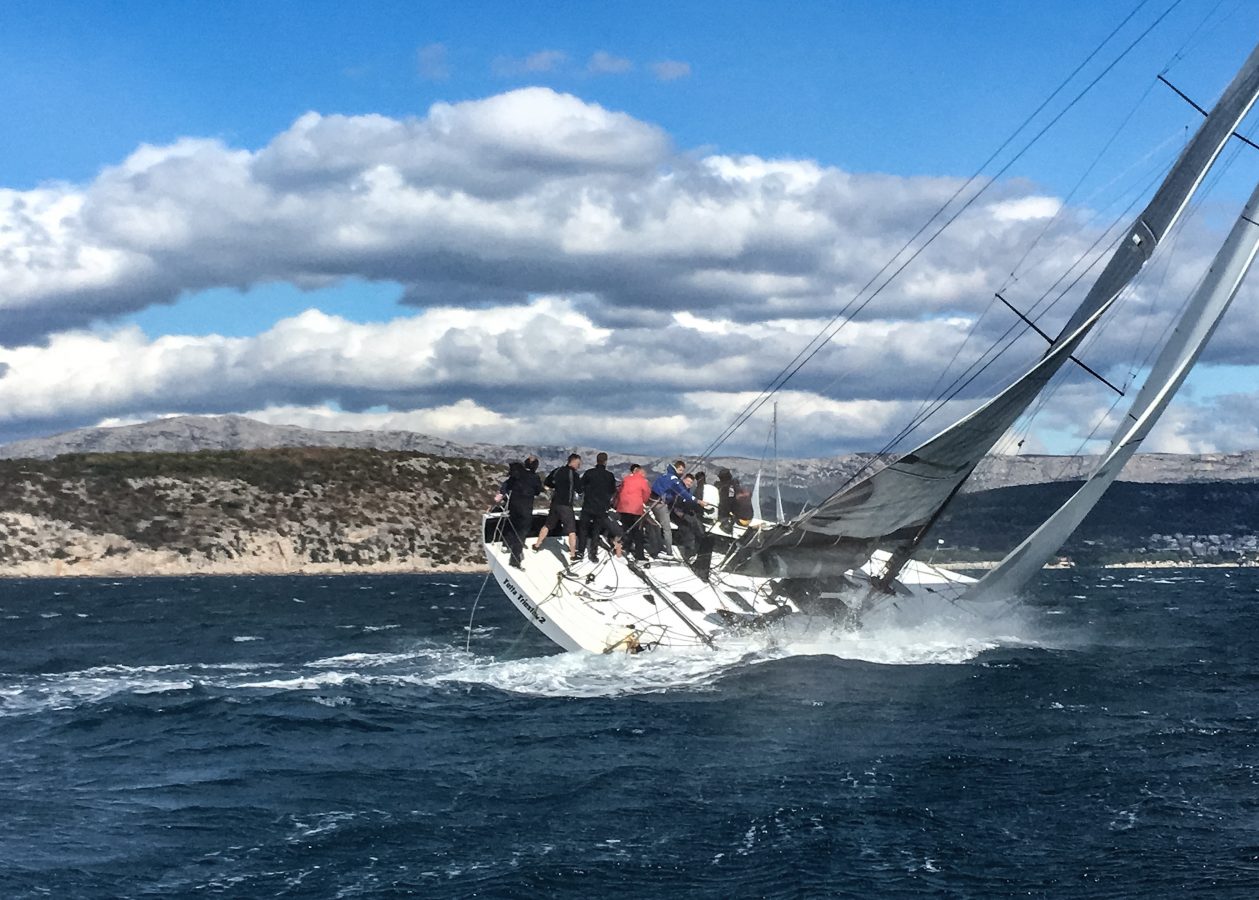
MRDUJSKA REGATA 86. S NORTHOM - PRVE HRVATSKE FOLIJE
U organizaciji JK Labud, skoro svake godine u listopadu od 1927. godine, jedri se Mrdujska Regata -jedna je od najstarijih regata u Europi, a ovo je bilo divlje 86. izdanje.
Organised by JK Labud, almost every year in October since 1927, the Mrdujska Regata is one of the oldest regattas in Europe and this was a wild 86th edition.
Flota od 191 jedrilice imala je predviđen start u 11 sati ispred veličanstvene splitske luke. Snažna i na refule još jača bura počela je dan sa oko 20 čvorova. Otac i kći, Emil i Nađa Tomašević, prvi put su jedili sa svojim novim Seascape-18. Prevrnuli su se samo nekoliko sekundi prije početka starta. Nađa je ostala plivati za brodom, dok se Emil, vlasnik Ultra sailing schoola, držao za bok broda koji je vozio punim jedrima bez posade i udaljio se 100 metara od Nađe. Uz malu pomoć JK Labud regatnog odbora koji je izvukao Nađu iz mora i vratio je na brod uspostavili su ponovo kontrolu nad brodom i pravodobno startali.
A fleet of 191 sailboats aimed to cross the start line at 11am on Saturday, right in front of the majestic, Split port. A strong and gusty Bura began the day with around 20knots. Father and daughter crew, Emil and Nađa Tomašević, sailing their new Seascape-18 for the first time, capsized just seconds before the start. Nađa was left behind in the choppy waters while Emil, owner of the Split-based, Ultra sailing school, was dragged several meters by the flailing boat. With a little help from the JK Labud race committee, they managed to remount, regain control and make it over the start line in good time.
Posada Arhimeda iz JK Orsana pronađena je kako spušta jedra i ljuljaju se nakon što su izgubili kormilo na putu prema otoku Mrduji. Bili su prisiljeni povući se iz regate te ih je gumenjak regatnog odbora vratio u luku no posada je i dalje imala osmijeh na licima.
Arhimed, JK Orsan, were found dropping sails and rocking around in the swell after they lost their rudder on the leg towards Mrduja island. They were forced to retire from the regatta and were towed back to the harbour by the race committee; the crew were still all smiles.
Oko 13, vjetar je na refule dostigao 35-40 čvorova! Tri broda su se prevrnula u blizini Mrduje, a još se jedna nasukao na tlo otoka Brača. Opsežna služba spašavanja uključivala je Lučku kapetaniju Split, MRCC, gumenjak HGSS i gumenjak regatnog odbora. Srećom, svi koji su bili uključeni, osim brodova i ponosa, izašli su bez ozljede.
At around 1pm, the wind had matured into a gusty, 35-40 knots; a further three boats capsized close to Mrduja and one more hit the ground of island Brač. The extensive rescue squad included the Split Port Authority, the MRCC, the HGSS Ship and the Race Committee Boat. Luckily, all those involved, except boats and egos, came out unhurt.
Vlasnik broda TP52 Polet Furioso, Niko Dešković i njegova posada imali su frustrirajući dan. Prva dionica regate izgledala je obećavajuće dok su obilazili Mrduju na trećem mjestu. Međutim, s podignutim spinakerom dostigli su brzinu broda od 26,5 čvorova na vjetru od oko 35 čvorova i postali žrtvom snažne bure. Furioso je razbio cijeli arsenal jedara. Oštetili su spinaker, flok i glavno jedro te su se bili prisiljeni motorom vratit natrag u luku. Posada je uočena kasnije ispred hangara Labud, postavljajući ogroman spinaker na betonu procjenjujući štetu.
Crew and owner, Niko Dešković, of TP52 Polet Furioso had a frustrating day. The first leg of the regatta was looking promising as they rounded Mrduja island in third place. However, with the spinnaker hoisted, they reached a boat speed of 26.5 knots in a wind of around 35 knots and fell victim to the strong Bura attack. Furioso blew their entire arsenal of sails. They damaged their spinnaker, jib and mainsail; forced to motor their way back into port. The crew were spotted later in front of the Labud hangar, laying out the huge kite on the concrete, assessing the damage.
27-godišnji skiper Miloš Radonjić iz JK Lahora Kotora i njegova crnogorska posada zauzeli su prvo mjesto na lijepoj TuttaTrieste 2. Novi, 18,5 metara dug brod s njegovim obrnutom provom iznimno je impresivan, gladak, oštar i seksi. Tijekom najjačeg vjetra od 35-40 čvorova, podigli su svoje najveće jedro i postavili novi rekord brzine broda od 26,5 čvorova. Prešli su ciljnu liniju s vremenom od 2,35 sati. Blizu, ali ipak nedovoljno blizu u usporedbi s postojećem rekordnom Mrdujske regate od 2,09 sati, koji drži Marina Kaštela iz JK Marina Kaštela. Ipak, Radonjić je postavio svoj vlastiti, časni rekord kao najmlađi skiper koji je pobijedio na Mrdujskoj regati. Bravo!
27 year old skipper, Miloš Radonjić from JK Lahor Kotor, and his Montenegrin crew took first place on the handsome Tutta Trieste 2. The new, 18.5 metre yacht, with it’s reverse-bow is remarkably impressive looking; sleek, sharp and sexy. During the strongest wind of 35-40 knots, they hoisted their largest sail and set a new, boat speed record of 26.5 knots. They crossed the finish line with a sailing time of 2.35 hours. Close, but not close enough, to the existing Mrdujska record time of 2.09 hours, held by Marina Kaštela of JK Marina Kaštela. However, Radonjić has set his own, honourable record as the youngest ever skipper to win the Mrdujska regatta. Bravo!
Osam minuta iza Tutta Trsta 2, Ola iz JK Marina Kaštela, skipera Tonia Bulaje, prošla je ciljem na drugom mjeste. 12 metarska Akilaria-RC2 čvrstog izgleda, često postiže dobre rezultate i čini se da se posebno dobro održava u grubim uvjetima.
Eight minutes behind Tutta Trieste 2, Ola of JK Marina Kaštela, skippered by Toni Bulaja, came in at second place. The sturdy-looking, 12 meter Akilaria-RC2 often achieves good results and seemed to hold especially well in the rough conditions.
Treće mjesto osigurala je Fatamorgana 2, vlasnika i skippera Mate Arapova iz JK Mornara. Arapov, njegov brod i posada bili su pod posebnim povečalom za ovu regatu. Zvijezde ove regate jedrile su s home-made, novoinstaliranim, nikad prije testiranim, karbonskim foilovima. Vireći kroz palubu, izgledali su poput dva divovska, bijela, rebra. Jedrilica s Fred Flintstone igledom. Uzbuđenje je bilo u zraku jer su fotografije i videozapisi snimljeni iz pratećih gumenjaka poslani diljem Europe lokalnim jedriličarima koji nisu bili tamo da svjedoče o samom spektaklu.
Third place was secured by Fatamorgana 2, owned and skippered by Mate Arapov from JK Mornar. Arapov, his yacht and crew were under particular scrutiny for this regatta. Stars of the show; they were sailing with home-made, newly-installed, never-before-tested, carbon foils. Sticking up through the deck, they looked like two giant, white, ribcage bones; a sailboat with a Fred Flintstone-esque, caveman appeal. Excitement was in the air as photos and videos were taken from the circling ribs and sent around Europe to locals who weren’t there to witness the spectacle themselves.
Nažalost, kako je jedna foil radila bolje pod pritiskom od drugoga, Mate i njegova posada prešli su ciljnu liniju sa samo jednim foilom koji je ostao netaknut. Svakako izvrstan napor, ali sada natrag na ploču za crtanje. Rim nije izgrađen u jednom danu, a svi smo željni vidjeti 'Flying Fatamorgan 2 - Faza 2’.
Sadly, after one foil was functioning better under the pressure than the other, Mate and his crew crossed the finish line with only one foil left intact. However, an excellent effort and now back to the drawing board. Rome wasn’t built in a day and we are eager to see ‘Flying Fatamorgan 2 - Phase 2’.
Izvanredne nagrade za napor moraju također ići još dvojice jedriličara. Olimpijcu, windsurferu, Luki Mratoviću, koji se odlučio pridružiti regati velikih brodova na svom RS:X, imao foto završnici sa salonom 34 Green Pepper i završio regatu za 3 sata i 15 minuta. Dok je Milan Vujasinović, hrvatski reprezentativac u kalsi Finn, obišao Mrduju 9. i završio regatu na 24. mjestu za 3 sata i 40 minuta.
Outstanding effort awards must also go out to two other sailors; Olympic Class windsurfer, Luka Mratović, decided to join the big-boat race on his RS:X Windsurfer, had a photo finish with Salona 34, Green Pepper, and completed the course in 3 hours and 15 minutes. While Milan Vujasinović, Olympic Finn Class sailor, rounded Mrduja in 9th and finished in 3 hours and 40 minutes at around 24th place.
Četvrto mjesto osvojio je skipper Mario Hrvoj iz JK Špinut, na Toto. Petio odlazi Gringu 2 i Robertu Sandaliću iz JK Uskok-Zadar. Šesto mjesto Orion 2, pod vodstvom Ivana Kureta, JK Labud. Sedmo mjesto Mirko Fatović, JK Labud na Bare V. Na osmom mjestu, Barba Branko i Filip Zlatan Zoričić iz JK Labuda. Marin Mišura, JK Labud, na Croatel One došao je na devetom mjestu, a deseto mjesto je otišlo brodu Dubrovnik, pod vodstvom Denisa Vukasa iz JK Orsana.
Fourth position is held by skipper Mario Hrvoj from JK Špinut, on Toto. Fifth went to Gringo 2 and Robert Sandalic, JK Uskok-Zadar. Sixth place Orion 2, helmed by Ivan Kuret, JK Labud. Seventh came Mirko Fatovic, JK Labud on Bare V. In eighth place, Barba Branko and Filip Zlatan Zoricic from JK Labud. Marin Mišura, JK Labud, on Croatel One came ninth and tenth place went to Dubrovnik, skippered by Denis Vukas from JK Orsan.
Od 191 broda koji je ove godine sudjelovao na Mrdujskoj regati, 99 ih je obišlo otok Mrduju, a samo 55 brodova je završilo cijelu regatu. Mnogi su otišli kući s novim popisom popravaka.
Out of the 191 yachts taking part this year, 99 rounded Mrduja island and only 55 boats actually finished. Many went home with a new repair list.
Like Facebook za više.
READ MORE
READ MORE
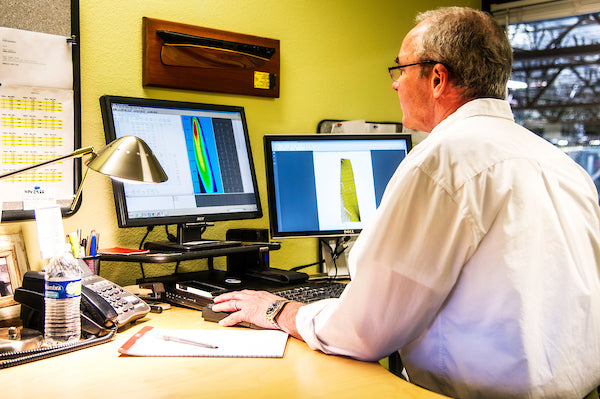
POZNAJCIE NORTH DESIGN SUITE™
Jako pionier w nowoczesnym komputerowym wsparciu projektowania (CAD) dla potrzeb żaglowni, North Sails opracował North Design Suite™ (NDS), najbardziej wydajne i wszechstronne narzędzie projektowe w branży. Rodzina 14 wyspecjalizowanych modułów dostarcza NDS niebywałą zdolność i elastyczność w projektowaniu żagli i analizie takielunku/kadłuba. Każdy moduł może współpracować z innym stwarzając projektantom i inżynierom North’a możliwość wirtualnego testu łodzi w nieskończenie wielu warunkach zanim w ogóle zostanie zbudowana. NDS znacząco poszerza możliwości projektantów do porównywania różnych kombinacji maszt-żagiel i dokładnego zbadania wyników. Co równie ważne, NDS znacząco skraca czas dostrajania i dopracowywania już po zbudowaniu jachtu.
Poznajcie the Suite…
Desman™
Tworzy trójwymiarowy model łodzi i takielunku.
Projektanci Northa proces projektowania żagla zaczynają od użycia Desmana, szkieletu North Design Suite. Wymiary masztu, geometria takielunku i punkty mocowań, położenie urządzeń do trymowania i wymiary żagli są ściśle określone dla konkretnej łodzi. System określa mechaniczne właściwości takielunku i żagli (momenty bezwładności, powierzchnię, sztywności materiałów i moduły żagla). W późniejszym procesie, “Membrain” użyje tych danych do określenia deformacji żagli pod obciążeniem, tak samo jak każdy element stałego i ruchomego olinowania czy naprężenia w szotach i fałach.
Spiral™
Wprowadza żagle na modelu Desmana
Spiral pozwala projektantowi na wprowadzenie trójwymiarowego projektu żagla na strukturę z Desmana. Trójwymiarowy kształt jest zdefiniowany jako kształtowalna membrana, bez uwzględnienia żadnych sił wiatru. Każdy wymiar żagla może być precyzyjnie dostosowany zarówno w osi poziomej i pionowej pozwalając Spiralowi zaaplikować projekty grotów, sztaksli, spinakerów i żagli asymetrycznych.
Warps™
Definiuje strukturę żagla
Tym programem projektant definiuje kompozycję materiałów w żaglu. Dla żagli panelowych potrzeby tkaniny lub laminatu są ustalone i generuje się poszczególne bryty. Dla kompozytowych żagli formowanych 3D układy i gęstość taśm jest ustalana i aplikowana w tej samej przestrzeni trójwymiarowej w jakiej żagiel będzie pracował.
Flow™
Aplikuje oddziaływanie wiatru na żagiel i kalkuluje powstające siły.
Używając Flow, projektant wprowadza ciśnienie wiatru na żagle stworzone wcześniej za pomocą Spiral i Warps. Ciśnienie róźni się na poszczególnych obszarach żagla, bazując na projekcie żagla, sile i kierunku przepływu powietrza. Flow także raportuje dane o napędzie i momentach działających na żaglach, które później mogą być wykorzystane przez moduł North Sails VPP dla określenia wydajności żagla.
Membrain™
Balansuje ciśnienie wiatru, kształt żagla, sily na takielunku.
Membrain używa pola ciśnień dostarczonego przez Flow, aby zdeformować zestaw maszt-żagiel jako jednolitą strukturę. Kiedy taka struktura jest zdeformowana, kształt żagla się zmienia, więc Membrain wysyła te zmiany z powrotem do Flow, aby nabyć zaktualizowane pola ciśnień na zdeformowanej powierzchni. To znowu zmienia kształt żagla w Membrain, więc proces jest powtarzany, dopóki nie uzyska się balansu pomiędzy ciśnieniem a deformacją kombinacji maszt-żagiel. Poprzez dostosowanie zmiennych w projektowaniu żagla i takielunku, projektant może użyć Membrain do udoskonalenia i optymalizacji kształtów żagli, projektowania masztów, regulacji takielunku i innych detali.
Virtual Wind Tunnel™ (VWT)
Modeluje przepływ powietrza na żaglach
VWT pozwala projektantowi na wizualizację i analizę kształtu żagla, działających na nim sił, stabilności kształtu i łatwości w trymowaniu. Jest to pierwszy symulator przepływu wiatru zarówno na żagle do kursów pełnych jak i ostrych, a ponieważ VWT może pracować z danymi definiującymi żagiel i takielunek z konkretnej łodzi, zapewnia niesłychaną dokładność.
Pierwotnie opracowany wspólnie przez Dartmouth College Thayer School of Engineering i North Sails, VWT jest obecnie zarządzany przez Stevens Institute of Technology. VWT jest w stanie zintegrować się z Membrain, pozwalając na optymalizację kształtów żagli zarówno do żeglugi pod wiatr jak i z wiatrem przy praktycznie nieograniczonej różnorodności wiatrów i stanów akwenu.
North VPP™ and Hull VPP
Łączy dane dotyczące takielunku, żagli i kadłuba.
North'owskie VPP i Hull VPP to potężne narzędzia pozwalające na efektywne zintegrowanie danych takielunku, żagli i kadłuba, dając projektantom jachtów i żagli możliwość analizy całej łodzi - od topu masztu po czubek kila jako zjednoczony działający system.
Najpierw żagle, takielunek konkretnego jachtu są generowane przez Flow, Membrain i VWT. Osobno Hull VPP generuje dane hydrodynamiczne dla tego samego kadłuba. Oba zestawy danych wprowadzane są następnie do North VPP. Na potrzeby niektórych analiz North’s Das Boot™ jest używany jako jeszcze skuteczniejsza alternatywa dla Hull VPP. W wyniku integracji, udoskonalenia żagla mogą być dopasowane do charakterystyk konkretnego jachtu jak również zoptymalizowane do docelowych warunków żeglowania. North VPP i Hull VPP to znaczący krok naprzód dla projektantów North Sails, pozwalając im dostosowywać żagle dla praktycznie każdej łodzi z niespotykaną precyzją.
Race Model™
Bada efekty zmian w żaglach i takielunku, ich wpływ na rating i vice versa.
Race Model pozwala projektantom Northa wprowadzać konkretne zmiany w ożaglowaniu, takielunku charakterystykach statecznościowych, w kursach zarówno na wiatr jak i z wiatrem oraz przewidzieć ich oddziaływanie na rating praktycznie w dowolnej formule. Proces ten może również działać w drugą stronę, aby znaleźć zmiany pozwalające osiągnąć określony rating.
SPP™
Szybko porównuje osiągi pomiędzy różnymi projektami i trymami żagli.
Sail Performance Prediction (SPP) pozwala projektantom Northa na szybkie porównanie nowego projektu do projektu wzorcowego. Dodatkowo SPP może sięgać po dane wydajności kadłuba na podstawie świadectwa pomiarowego, jeżeli nie dysponuje się wystarczającą ilością danych aby skorzystać z VPP.
Sailect™
Tworzy zestawienie żagli w przyjaznym dla użytkownika formacie.
Dobra karta doboru żagli jest jak instrukcja obsługi dla Twojego inwentarzu żagli. Dla wyścigów przybrzeżnych lub morskich kluczową sprawą jest mieć w gotowości kolejny żagiel do postawienia po znaku kursowym lub przy zmianie warunków wietrznych. Sailect jasno przedstawia optymalny zakres rzeczywistych prędkości i kątów wiatru dla konkretnych żagli, pozwalając aby cały czas były używane w najlepszych dla siebie warunkach. Dobry dobór żagla podczas podmiany minimalizuje także częstotliwość zmian.
SailScan II™
Porównuje kształt żagla do kształtu z projektu
SailScan II porównuje zdjęcia kształtu żagla z projektem stworzonym w Membrain. Jest to wartościowe narzędzie określające czy żagiel potrzebuje korekt w kształcie. Wspomaga także inżynierów i specjalistów produkcji żagli North Sails w doborze materiałów i metod produkcji, aby poprawić żywotność naszych żagli.
Router
Używa historycznych danych pogodowych z danego akwenu, aby przewidzieć wydajność żagli.
Router pobiera wykresy biegunowe jachtu, łączy je z historycznymi lub przewidywanymi danym pogodowymi na konkretnej trasie, a następnie “żegluje” jachtem od startu do mety. Porównanie może być przeprowadzone pomiędzy różnymi kombinacjami zestawów żagli, pozwalając projektantom Northa na wybór najszybszych żagli na konkretny fragment trasy. Router został opracowany przez matematyka Northa Michael’a Richelson’a pomagając zwyciężyć załodze jachtu Illbruck w regatach Volvo Ocean Race 2001-2002.
Źródło w oryginale: North Sails
READ MORE
READ MORE
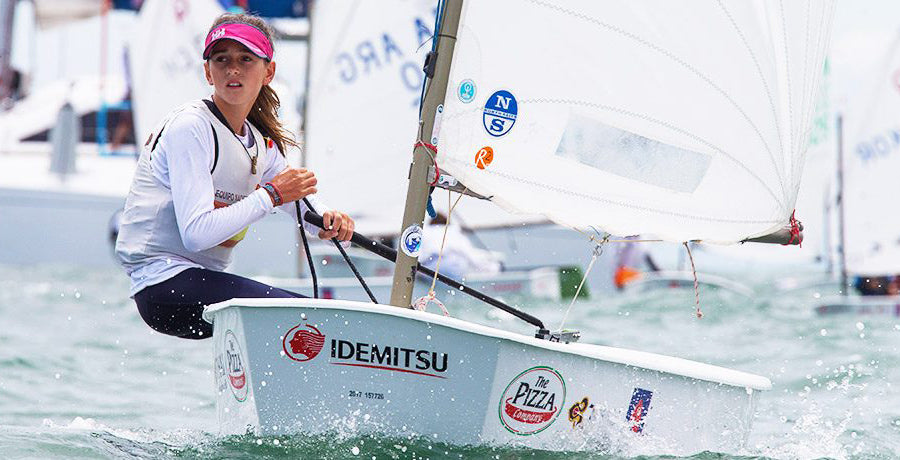
OPTI UPDATE
North Sails is committed to offering great solutions to our youngest sailors.
READ MORE
READ MORE

SALES AND SERVICE STAFF WANTED!
NORTH SAILS AUSTRALIA NEEDS EXPERIENCED SALES AND SERVICE STAFF
Create your path in yachting with North Sails Australia.
North Sails Australia has positions available for both sales and service staff.
Join the world’s largest Sailmaking company
With over 29 lofts and manufacturing facilities worldwide that build sails from One Design Optimist’s to 85 Metre Superyachts there are endless opportunities.
North Sails is the official Sailmaker of the 35th Americas Cup and 2017-2018 Volvo Ocean Race.
Contact:
For more information, please call Michael Coxon on 02 9998 8500.
READ MORE
READ MORE
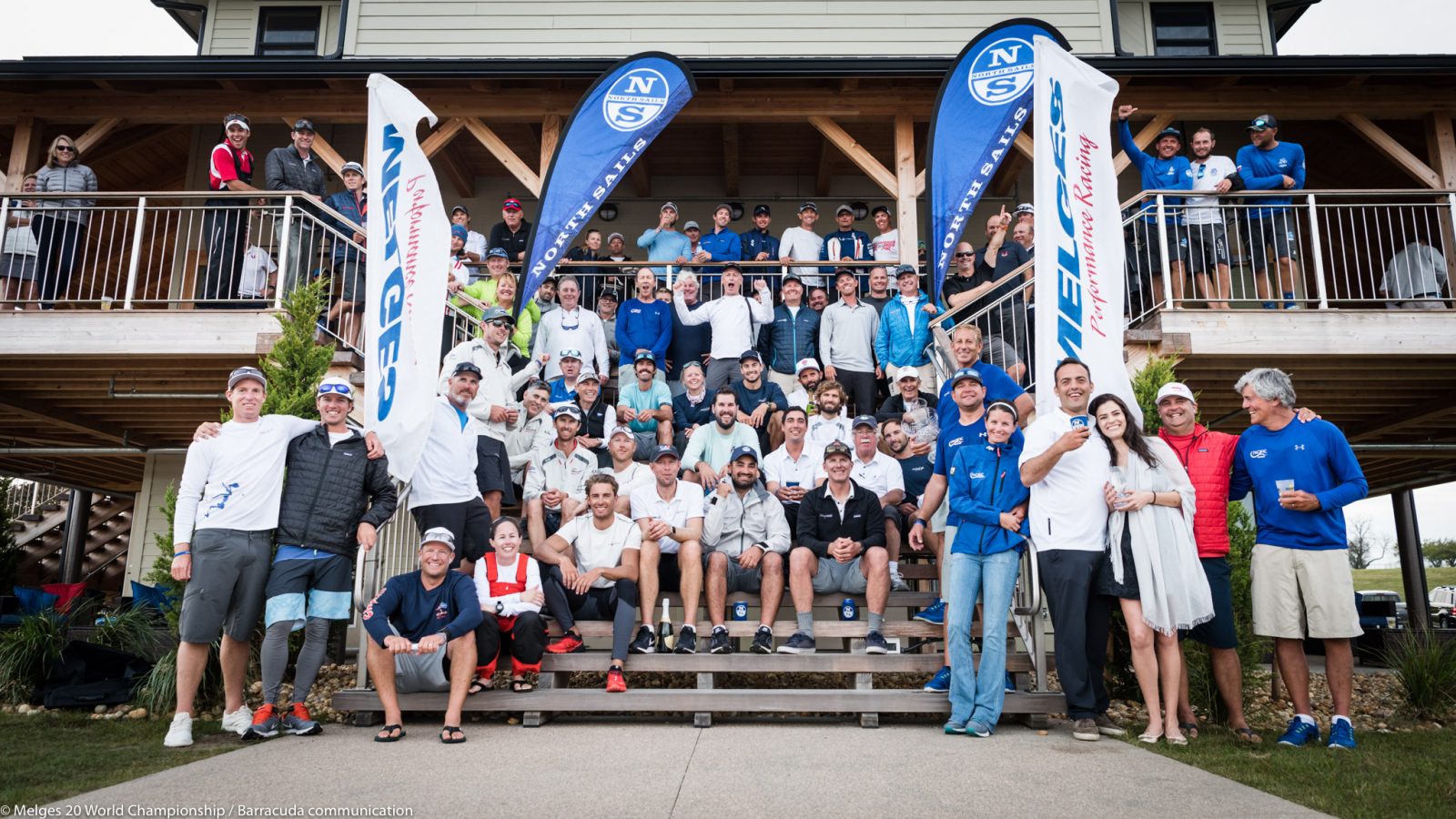
NORTH SAILS DESIGN AND 3D TECHNOLOGY SHINE AT MELGES 20 WORLDS
NORTH SAILS DESIGN AND 3D TECHNOLOGY SHINE AT MELGES 20 WORLDS
North clients win World and Corinthian title in Newport, RI
Drew Freides (USA) and his Pacific Yankee crew have been crowned Melges 20 World Champions after eight races in conditions ranging from 6-20 knots in Newport, Rhode Island. Friedes has put his time in with the Melges 20 over the last three years, and his first world championship is a sweet reward.
Special congratulations to Justin Quigg (CAN) who is the 2017 Melges 20 Corinthian Champion. Justin and his CHARACTER 2.0 crew commanded the World all-amateur division and finished 19th in the regatta overall.
With North 3D technology and design expertise as the common denominator, clients secured six of the top 10 World Championship places with North Sails inventories. Freides relied on the tried and true 3DL to power this win, while Quigg put all his trust in the new 3Di Melges 20 inventory.
“Not all sails are created equal. Most sails are fast out of the bag, but where 3Di shines is its longevity over a series,” said Tim Healy, North Sails One Design President. “The Melges 20 Worlds has proven 3Di as an all-purpose inventory that is versatile and holds its shape over a wide wind range. North’s development and design team have been able to adapt this Grand Prix sail technology to fit small keelboats with limited season buttons. We hoped that the Melges 20 fleet would embrace 3Di and we now have the results to support this.”
Shop the winning North Sails Melges 20 inventory or get in touch with a One Design expert.
Full Results
READ MORE
READ MORE
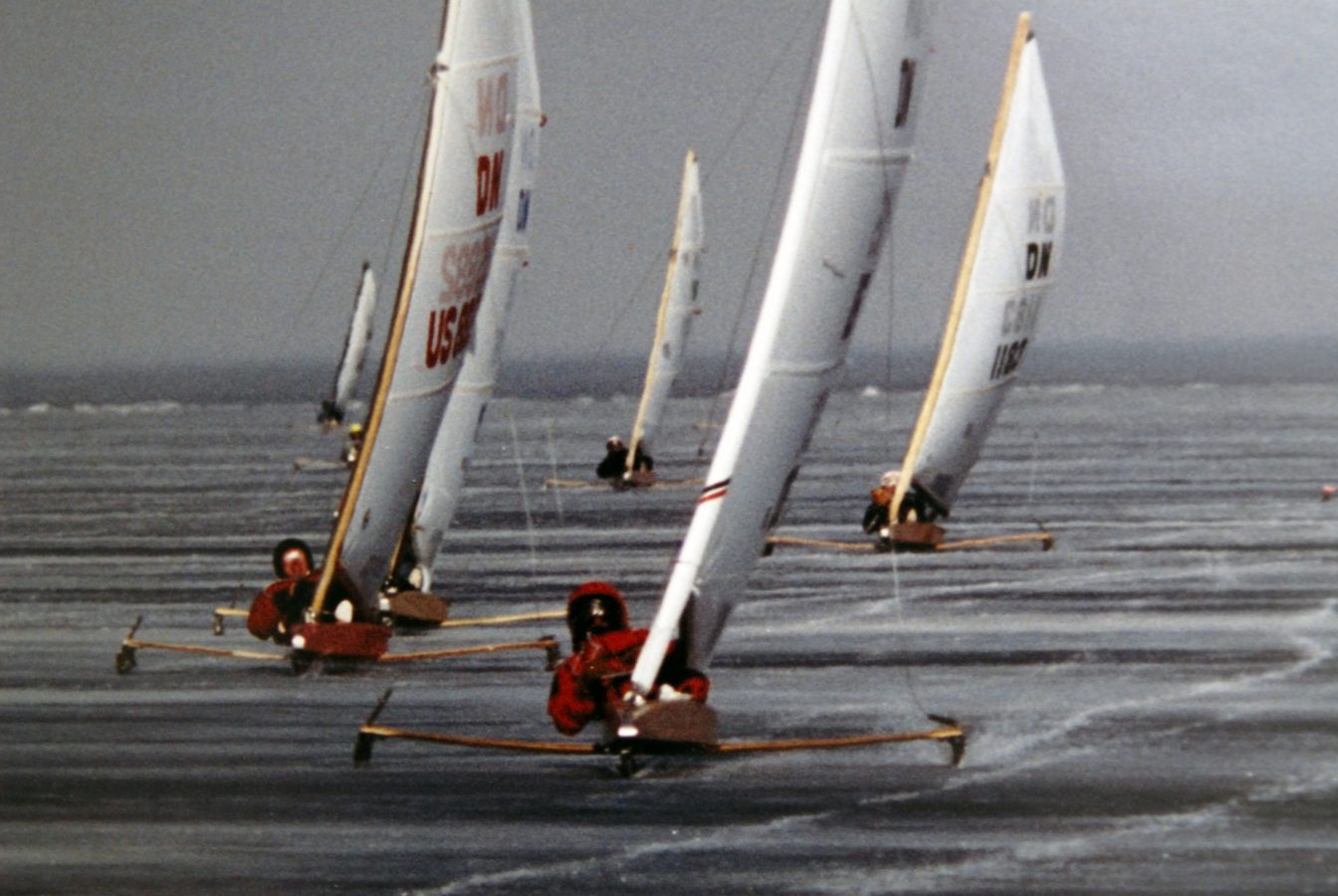
HENRY BOSSETT RETIRES AFTER 42 YEARS OF SAILMAKING
HENRY BOSSETT RETIRES AFTER 42 YEARS OF SAILMAKING
Owner Henry Bossett retires from North Sails, leaving New Jersey region in the very capable hands of long-time partner, Ron LaNeve
On the eve of owner Henry Bossett’s retirement, the North Sails team in New Jersey embraces changing times after 42 years in business. While the loft location is closing its doors, Ron LaNeve will become our traveling sails-man, providing expert sail advice and North’s signature Certified Service to our New Jersey customers.
North Sails would like to thank Henry for over two decades of fantastic service. After opening his doors in 1975 (then operating out of his garage as Bossett Sailmakers), Henry established the loft in New Jersey in 1982 as Shore Sails and converted to North in 1995. Sailors throughout the country sought service and guidance from Henry and the small New Jersey team, for activities ranging from offshore sailing to speed races on ice.
“Henry is very methodical in everything he does. He checked and double checked to make sure everything was right before cutting for a new sail. He’d measure not twice but three times. I was lucky enough to learn from him and adopt these practices,” said Ron, who began working with Henry out of the New Jersey loft in 1987.
It didn’t take long for their network to grow far past Henry’s haven on the Jersey Shore. By specializing in one design sail production - from design to finishing touches - Henry was able to leverage his experience in the field while building sails on the loft floor. From small boat one-design classes like the E Scow, M16 Scow and the International 210, to the Prindle, A-Class Catamaran, and Tornado multihulls, Henry’s customer base spread across the U.S. and abroad to parts of Europe. In the Tornado, Henry qualified for the 1980 Olympic Games in Moscow with crew Jeff Kent - unfortunately, the same event President Carter boycotted due to Russia’s occupation of Afghanistan. Nonetheless, the pair continued racing the Tornado and were consistently ranked top five in the world. Of course, his passion for sailing bridged onto hard water where Henry became known as a top ice boat sailor and sailmaker, namely in the DN and Skeeter classes. He earned his reputation on the race course by winning three World Championships in the DN (1977, 1981, 1983) and four North American Championships (1982, 1983, 1990, and 1993).
Some time ago... Henry leading the pack with fellow DN sailor, Meade Gougeon, just behind
Henry’s customers appreciated his keen eye for design and strict attention to detail. As Deb Whitehorse wrote for iceboat.org,
“I’ll never forget the day Skeeter skipper Tom Hyslop talked about getting a “new Henry” which was the way that Skeeter and Renegade sailors referred to any sail from Henry Bossett.”
Ron continued, “We thought jobs through from beginning to end. Henry is bright; he forced me to think ahead and think creatively for the best result. In 31 years - I can track the mistakes we made on one hand. Being thorough and detail oriented kept us on track and paid off. It was an honor and a pleasure working with Henry.”
So what’s next for Henry? Still plenty of sailing, but now he’ll be carrying his camera instead of a measuring tape.
“I'm looking forward to spending more time exploring the beauty and history of the East coast with my wife, who has supported me from the beginning, and with my children and grandchildren who have been there for me every step of this journey also,” he said. “Sailing is something that's in my blood, my passion doesn't disappear just because I put away my sewing machine. Now I'll have my camera along with me instead of my measuring tape.”
“I'd just love to thank all of my friends, supporters, and customers throughout the years. It's been one heck of a ride, and I've loved every minute of it. Lastly, the reality of this change is as our wedding invitations said all those years ago, in a quote by Gwen Frostic - “In a continuous living cycle each end becomes a beginning and life is becoming, always becoming…“
To honor Henry’s retirement, we’ll offer this 1986 advertisement from Chapstick, in which he proves looking good is still possible while sailing over ice at 40 knots! Thanks again to Henry for a fantastic tenure with North Sails.
https://youtu.be/lh9CxTCacS8
Henry at the helm, sailing the Tornado with crew Mike O'Brien
READ MORE
READ MORE
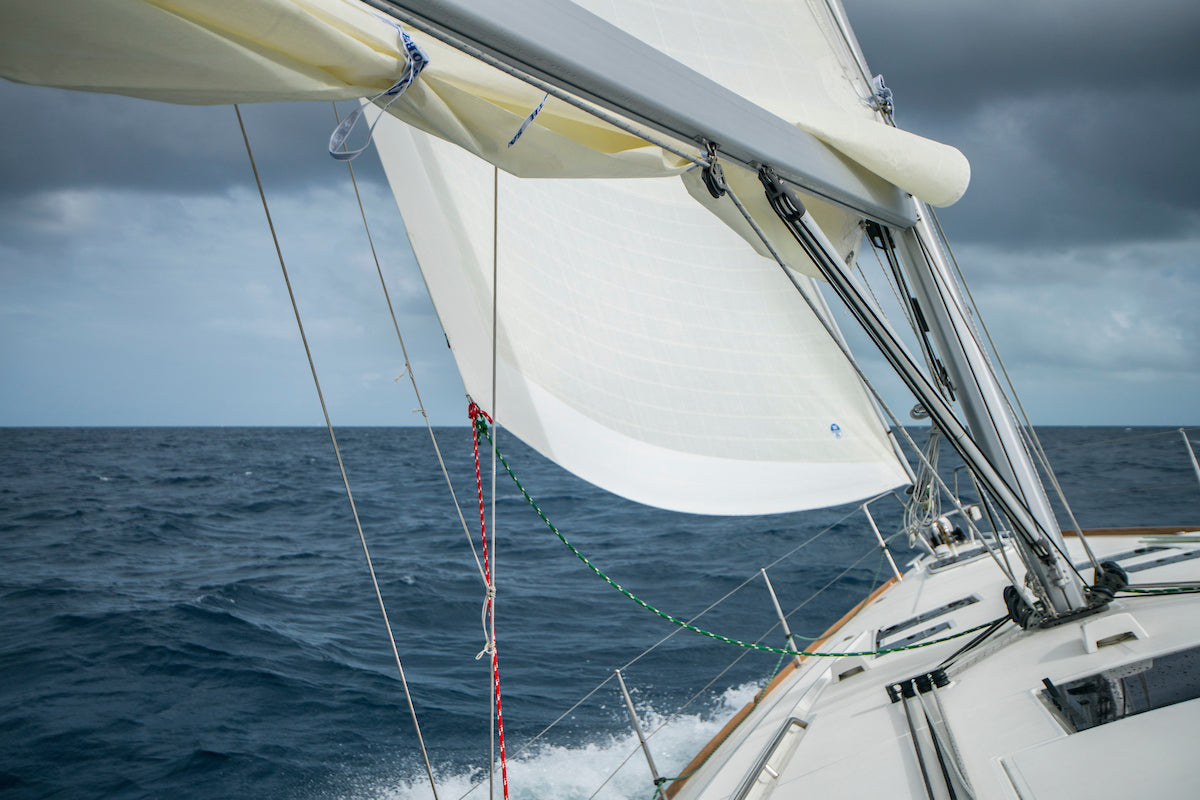
NIEUWE ZEILEN BESTELLEN MET TIPS EN ADVIES VAN ONZE EXPERTS
Hulp bij het bestellen van de juiste zeilen
Tips en advies van onze experts
1. Nieuwe zeilen bestellen, de meest voordelige tijd is het najaar
Denk in het najaar alvast na over nieuwe zeilen of advies over eventuele aanpassingen in uw huidige garderobe. Zo geeft u uzelf de tijd om goed na te denken over wat u wilt, zijn de zeilen op tijd klaar voor het nieuwe zeilseizoen en kunt u wellicht gebruik maken van onze winteraanbiedingen. Onze experts spreken graag samen met u de verschillende opties door en sturen u op basis daarvan een eerste offerte voor uw nieuwe zeilen. Voor aanschaf van nieuwe zeilen profiteert u op dit moment ook nog van onze najaarskorting.
2. Raadpleeg onze experts (op locatie)
Laat u voordat u nieuwe zeilen goed informeren door één van onze experts over alle mogelijkheden en opties, het zijn er vaak zoveel meer dan u zelf kunt bedenken. Ook de mogelijkheden in de zeilwereld veranderen snel, prijsverschillen worden kleiner en materialen steeds duurzamer. Ook in de weekenden zijn we bereikbaar en beschikbaar voor service en advies op diverse evenementenlocaties. Via onze website en social media proberen we u op de hoogte te houden van waar de North Sails experts te vinden zijn. Niet alleen wanneer u graag informatie en advies ontvangt over nieuwe zeilen, maar ook als u tijdens een evenement schade vaart aan één van uw zeilen, kunt u bij ons terecht voor hulp.
3. Mooi of duurzaam?
Met de komst van 3Di NORDAC hebben we een prachtig high perfomance product in huis voor toerzeilers; een duurzaam en betaalbaar zeil. 3Di NORDAC is een specifiek uniek cruising product voor de toerzeiler en heel goed betaalbaar wanneer u op zoek bent naar een beter zeil om de performance van uw boot te verbeteren , voor uw volgende vakantie naar Engeland bijvoorbeeld.
Uiteraard leveren wij ook nog steeds onze radiaal zeilen. We merken dat sommige zeilers radiaal zeilen toch nog mooier vinden dan een compleet wit 3Di NORDAC zeil. Maar met een miniem prijsverschil van slechts 2 tot 3 % zou het zonde zijn als NORDAC niet de voorkeur krijgt. 3Di NORDAC zeilen zijn een stuk duurzamer en blijven er prachtig op staan.
Heeft u vragen?
Neem contact op met één van de experts van North Sails Benelux voor meer informatie.
READ MORE
READ MORE
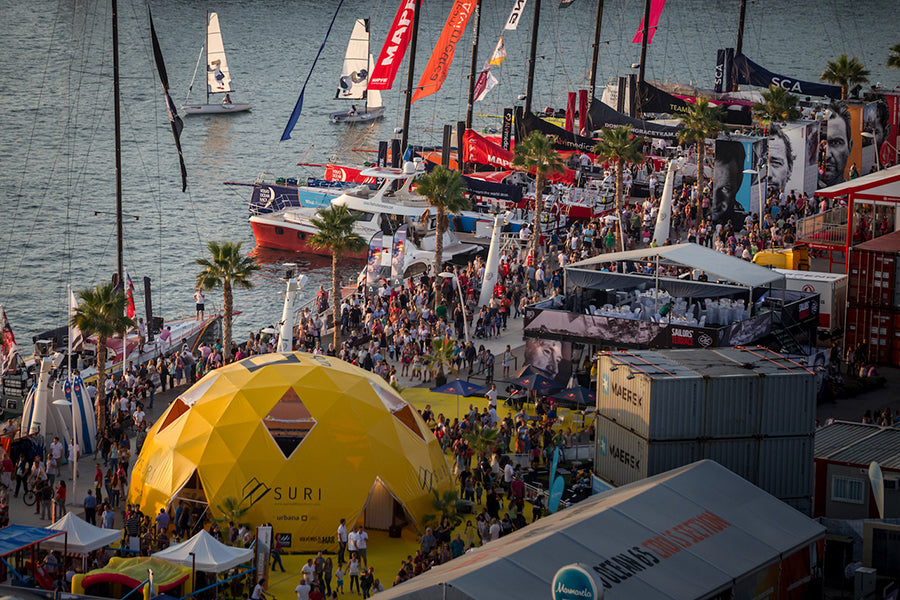
SALIDA DE LA VOLVO OCEAN RACE
SALIDA DE LA VOLVO OCEAN RACE
La Volvo Ocean Race 2017-18 comienza el próximo mes en Alicante.
© Ainhoa Sanchez/Volvo Ocean Race
El Race Village del puerto de salida abrirá al público del 11 al 22 de octubre, con acceso libre y un montón de actividades para todas las edades en horario ininterrumpido de 10 a 22 horas. El 14 de octubre acogerá la regata In-Port y el 22 de octubre despedirá a la flota, que partirá a las 13:00h rumbo a Lisboa para disputar la primera de las 11 etapas en las que se divide el recorrido de esta edición. Como velería oficial de la Volvo Ocean Race 2017-18, desde North Sails os invitamos a que os acerquéis a Alicante para vivir en primera persona la regata oceánica por excelencia.
Más información sobre la presencia de North Sails en la Volvo Ocean Race, aquí
READ MORE
READ MORE
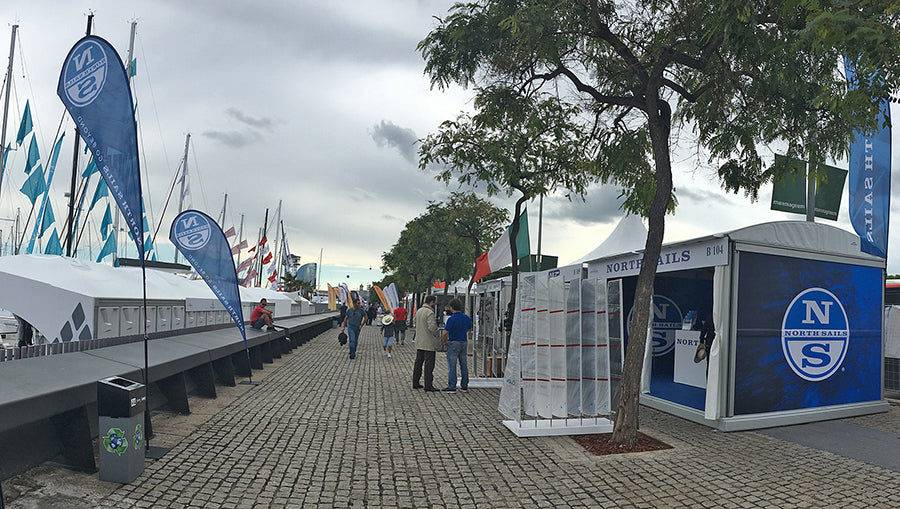
SALÓN NÁUTICO DE BARCELONA
SALÓN NÁUTICO DE BARCELONA
Entre los próximos 11 y 15 de octubre participaremos en el Salón Náutico de Barcelona con un stand espectacular en el que desplegaremos toda nuestra gama de productos.
© 42n.es
No faltará la última incorporación al catálogo North Sails, la 3Di NORDAC, la vela de tecnología 3Di para barcos de crucero de pequeña y mediana eslora que acaba de ser elegida “Mejor Producto Nuevo” en el Newport International Boat Show. Te esperamos en el stand B101.
Más información sobre North Sails en el Salón Náutico de Barcelona, aquí
READ MORE
READ MORE
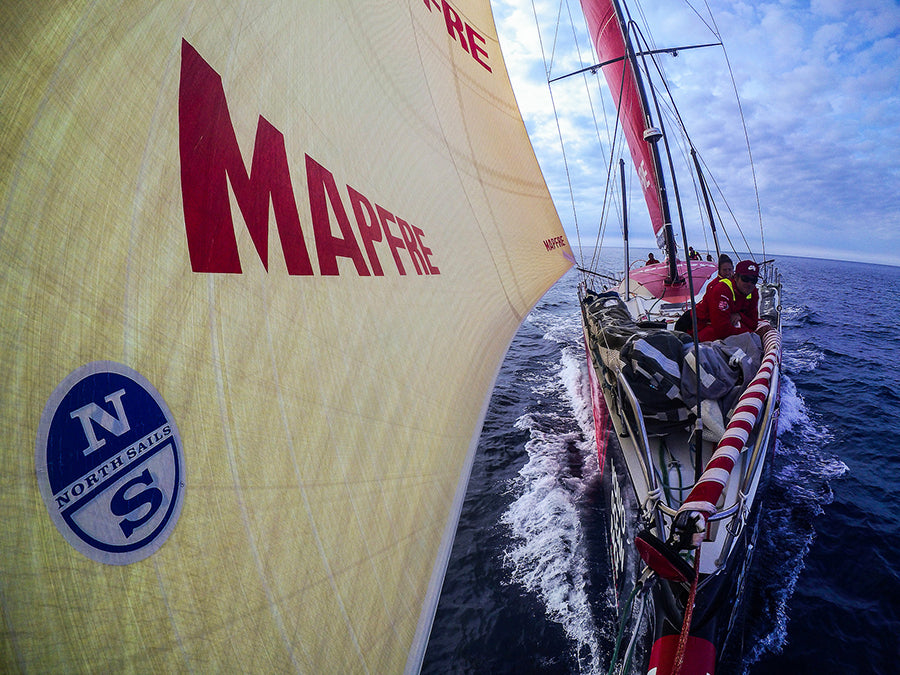
REFORZAMOS EL ARSENAL DE LA VOLVO OCEAN RACE
REFORZAMOS EL ARSENAL DE LA VOLVO OCEAN RACE
En su condición de velería oficial de la Volvo Ocean Race 2017-18, North Sails dotará a los VO65 de un inventario de velas íntegramente fabricado con su tecnología 3Di que incluirá el nuevo J0, una polivalente vela desarrollada a partir de los testimonios de los equipos de la anterior edición.
© Jen Edney
North Sails se convirtió en proveedor oficial de velas de Volvo Ocean Race en la edición 2014-15, pero su relación con la vuelta al mundo se remonta a la década de 1980. De cara a la edición 2017-18, la velería líder mundial ha revisado y mejorado el arsenal de velas de los monotipos VO65 en base a la información recopilada durante la pasada VOR y los testimonios de sus participantes.
“La conclusión más valiosa que recibimos tras la pasada edición fue que existía un agujero entre el J1 y el Código Cero”, explica Gautier Sergent, experto oceánico de North Sails. “Entre 10 y 15 nudos de viento, las tripulaciones tenían que hacer constantes cambios de vela para encontrar la mejor configuración. Nos fijamos el objetivo de cubrir ese hueco e introdujimos un nuevo J0 que encaja perfectamente entre ambos”.
El J0 tiene una superficie de 171 metros cuadrados, a medio camino entre el J1 (132 m2) y el Código Cero (305 m2).
“En los Volvo 70 teníamos el J1 solapado detrás del obenque, mucho más grande que el actual, ya que nuestro J1 es ahora al 100%, no tiene solape con la mayor y es relativamente pequeño”, explica Xabi Fernández, patrón del MAPFRE.
Una más a bordo
La regla VO65 en la edición 2014-15 limitaba el inventario a bordo a siete velas (más tormentín). La incorporación del J0 supone aumentar a ocho velas (más tormentín) el menú entre el que las tripulaciones pueden elegir para obtener el máximo rendimiento de sus barcos. Según Gautier Sergent, supondrá una reducción en el número de cambios de vela de proa:
“Encaja muy bien en la nueva configuración del recorrido, que ahora discurre más millas por el Pacífico Sur. Los equipos no tendrán que virar o trasluchar cada día, así que realizarán menos cambios de vela”.
La nueva incorporación está recibiendo buenas críticas de los participantes, cuya mayor preocupación es ahora saber cuál es su rango de utilización. Inicialmente diseñada para condiciones de ceñida en brisas ligeras entre ocho y 15 nudos, el J0 está demostrando ser mucho más polivalente.
Tras semanas de entrenamientos, Xabi opina que “es una vela tirando a rápida, que nos ayuda en vientos ligeros de ceñida, y a medida que vas abriendo rumbo, con más viento. Facilita que el barco no tenga que ir sobrepasado con el Código Cero, como nos pasaba antes”.
Pascal Bidegorru, tripulante del chino Dongfeng, explica que “la vela tiene un rango enorme desde ceñida con brisa ligera, pasando por rumbo de través, y hasta una dura empopada”. Su compañero Daryl Wislang, campeón de la pasada edición con Abu Dhabi Ocean Racing, apunta: “North Sails ha realizado un magnífico trabajo; han escuchado nuestros comentarios y han desarrollado la vela que necesitamos. Vamos a usarla mucho”.
Más novedades
El J0 es la mayor novedad del arsenal de velas a bordo de los VO65, pero no la única. De acuerdo con Xabi Fernández, todo el inventario ha sido mejorado.
“En general, han ajustado todas las velas: El Código Cero es un poco más pequeño y más plano que el anterior (pudimos verlo en la Leg 0, en la que algunos barcos usaron el antiguo), el fraccional es un poco más pequeño y la mayor se ha optimizado en la curva de grátil. El A3 es ahora de 3Di en vez de Cuben Fiber, un poco más plano, y vemos que es la vela que más ha mejorado”.
Este cambio supone que todas las velas a bordo de los VO65 serán por primera vez de 3Di, exactamente en su gama RAW específica para máximas prestaciones, con la que se logra la mejor relación peso-rigidez sin añadir las cintas exteriores. Sólo el tormentín seguirá siendo de Spectra.
“3Di es otra historia”
Desde su aparición, la tecnología 3Di se ha demostrado como el arma definitiva para circunnavegar el planeta, y desde 2010 ha propulsado a todos los barcos de cada podio de la VOR. Tras debutar en la edición 2005-06, Xabi Fernández ha vivido de primera mano la revolución que supuso la llegada del 3Di, la tecnología exclusiva de North Sails que domina los océanos.
“El 3DL ya fue un avance importante en aquellos años. Tuvimos unas velas de 3Di en el IMOCA en 2010, y una vez que se incorporó a la VOR en 2011, pensamos: esto es otro mundo; esto sí que es lo que toca”.
La llegada del 3Di supuso eliminar una preocupación de las mentes de las tripulaciones: Literalmente, no se rompen.
“Con el 3Dise ha ganado mucho no sólo en fiabilidad, sino también en prestaciones, porque no se deforman. Grandísima parte del entrenamiento del MAPFRE lo estamos haciendo con las velas de la edición anterior, como la mayor, que dio toda la vuelta al mundo y sigue en muy buen estado. Apenas se deforman y no se rompen, pero si tienes cualquier pequeña rotura se arreglan con un poquito de sikaflex y tejido de 3Di. Es otra historia”.
Inventario de velas a bordo del VO65
Mayor: North Sails 3Di RAW de 161,8 m2
J0: North Sails 3Di RAW de 171,3 m2
J1: North Sails 3Di RAW de 132 m2
J2: North Sails 3Di RAW de 86,6 m2
J3: North Sails 3Di RAW de 44,5 m2
A3 (gennaker): North Sails 3Di RAW de 375 m2
Código Cero: North Sails 3Di RAW de 305 m2
Código Cero Fraccional: North Sails 3Di RAW de 235 m2
Tormentín: North Sails Spectra de 29,7 m2
READ MORE
READ MORE
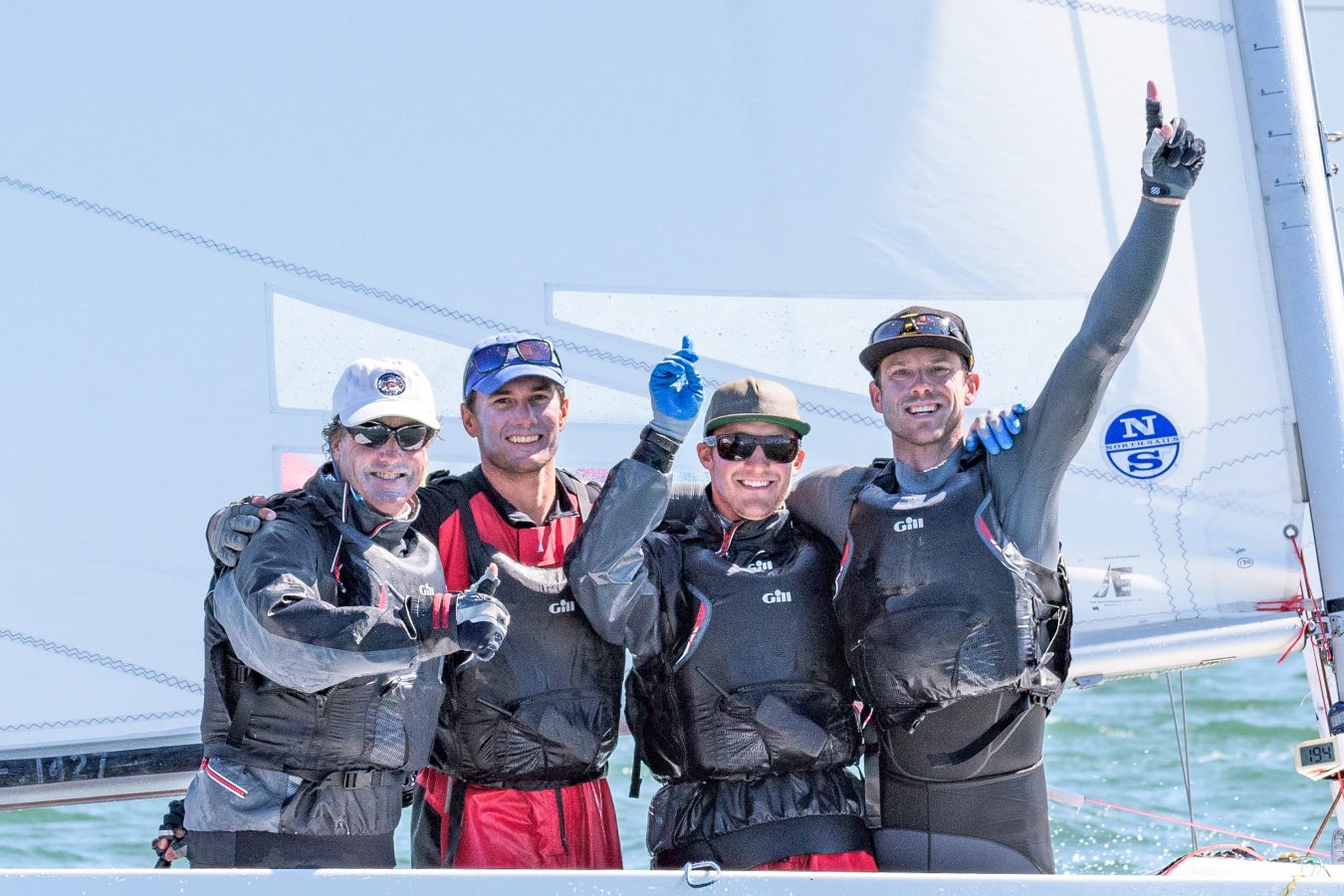
2017 ETCHELLS WORLD CHAMPIONSHIP
2017 ETCHELLS WORLD CHAMPIONSHIP
San Francisco Yacht Club hosts top Etchells sailors in the country, North Sails clients place top five overall and 1st place Corinthian
Stella Blue, 2017 World Champions!
On Tuesday September 26th, 51 of the world’s top Etchells teams gathered at SFYC for the opening day of the 2017 Etchells World Championship. The day began with a postponement on the water until the breeze filled in, but the fleet was able to sail two good races in challenging conditions. Winning the sides paid off, and those who got stuck in the middle felt the wrath of sailing amidst the competitive fleet.
Sailing was tough in this fleet – some would say tough is an understatement. Tuning, rigging, and sail set up made the difference between the front of the pack and the back of the fleet. North Sails Expert, Skip Dieball was on board Warcanoe and said there was always a constant flow of information about boat set up, since that was one of few things each team could actually control:
“Because the fleet is so tight and the sailors are top of the line, it never really felt great with our lanes being so thin and everyone’s speed is very much equal in comparison.”
Day two of the event was very much like day one; light air early on, building to wet and wild conditions. The RC postponed competitors onshore until proper racing conditions filled in for the afternoon. With a little extra prep time with their boats, sailors gained a sense of relaxation and the opportunity to get their heads in the game. When it came time to race, the wind gods provided great sailing conditions and two very competitive races were added to the scoresheet.
Thursday’s breeze filled in much earlier, allowing the fleet to launch on time. Race five provided winds between 10-12 knots, with the right side of the first leg being favored. Because this fleet is so tight competitively, sailors were forced to balance course tactics with fleet management. The windward mark roundings were a test for all, whether you worked the favored side of the course or not.
Throughout the first race of the day the wind was increasing and built to a solid 15-18 knots by the start of race six. Conditions downwind were perfect for the Etchells. Surfing and being able to connect the wave pattern gave a ton of power and speed. Carving down waves was vital, as Etchells rely on their edges in bigger breeze. Senet Bischoff and his team on KGB extended his lead in race six after taking a bullet. The top of each fleet was tight in scores, with still plenty of chances for big gains to be made with just a few points.
Friday was wet and wild one. Steve Benjamin’s North-powered Stella Blue moved up to first overall, with Magpie close behind in second place. KGB still held on to first in the Corinthian division, and was in third overall going into the day.
Saturday the scoreboard was solidified for good.
Congratulations to 2017 Etchells World Champs, Stella Blue, with Steve Benjamin at the helm and David Hughes, Ian Liberty, and Michael Menninger rounding out the crew. Stella Blue also took first in the Masters and Senior divisions. Congrats to Dirk Kneulman and team on Tiburon for being the top boat in the grand masters division and Senet Bischoff’s KGB for winning the corinthian division.
Learn more about Worlds-winning Etchells products from North by clicking here, or contact your local expert.
READ MORE
READ MORE
BRÜCKENTAG
Liebe Kundinnen und Kunden,
am Montag, den 02. Oktober sowie am Dienstag, 03. Oktober (Tag der Deutschen Einheit ) bleibt unser Büro in Hamburg geschlossen. Am Mittwoch sind wir wieder ab 09:00 Uhr für Sie erreichbar.
Unsere Kollegen am Bodensee in Langenargen sind am Montag mit einer kleinen Besatzung im Einsatz.
Gerne können Sie uns eine E-Mail schreiben, und wir rufen Sie dann am Mittwoch zurück.
Ihr North Sails Team
READ MORE
READ MORE
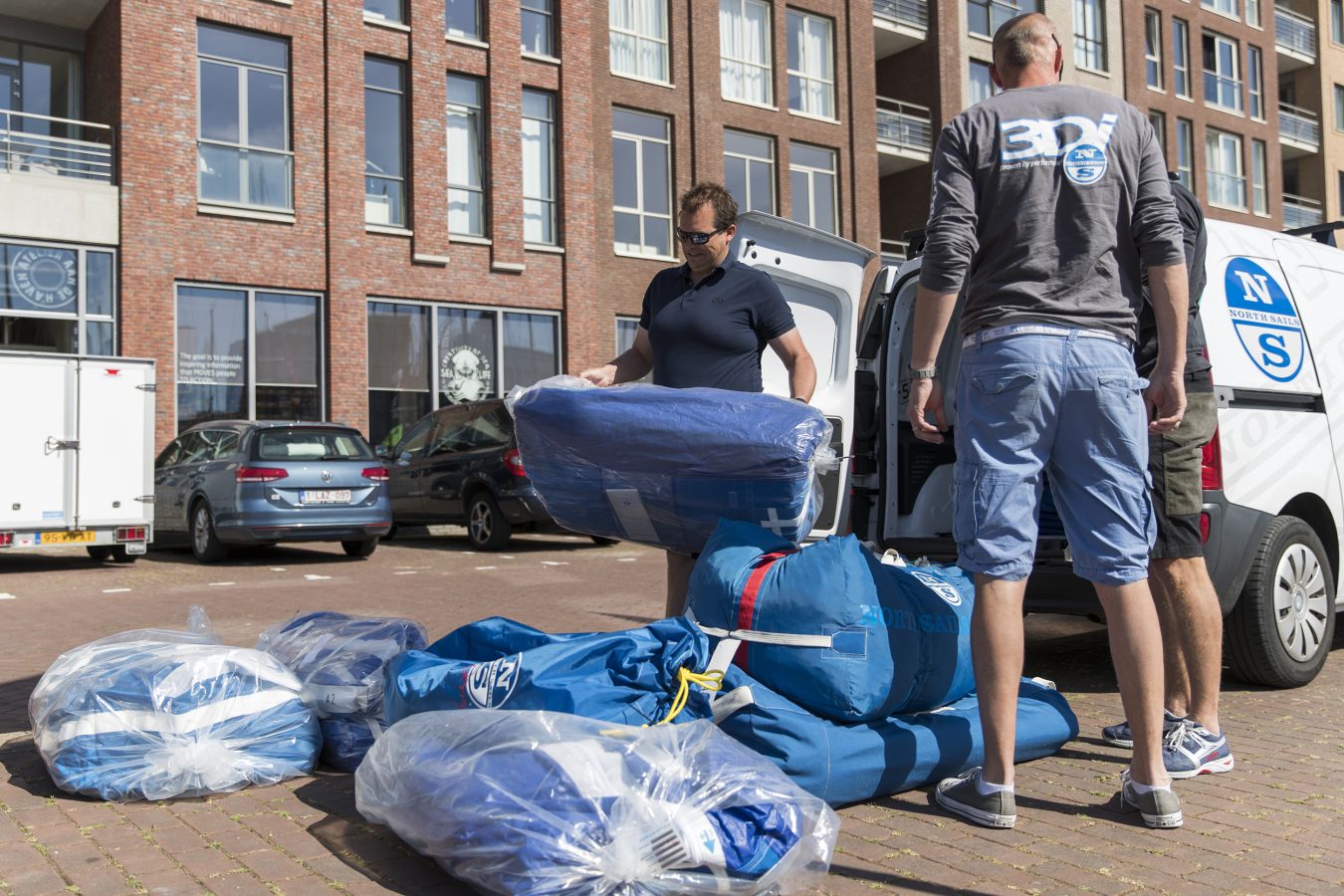
NORTH SAILS SERVICE EN ADVIES OP LOCATIE IN NOVEMBER
North Sails service en advies op locatie
Waar zijn de North Sails Benelux experts te vinden in november?
Photo Credits: Jasper van Staveren
North Sails service en advies op locatie in oktober en november
De experts van North Sails Benelux werken vanuit de vestigingen in Almere, Rotterdam en Stabroek. Bent u in het weekend een evenement aan het varen dan is de kans groot dat één van onze vijf North Sails experts in de Benelux ook meezeilt. Heeft u tijdens het evenement vragen over uw North Sails zeilen of zijn er reparaties nodig? De experts van North Sails Benelux staan zeven dagen per week voor u klaar met service en advies. In oktober en november kunt u onze North Sails experts vinden op de volgende evenementen:
29 oktober IJspegel Trophy Scheveningen
Zondag 29 oktober varen Wouter Kollmann en Nic Bol beiden mee met de IJspegel Trophy op Scheveningen. Wouter vaart op de A31 van Willem Schopman en Nic vaart op de Griel van Robert Jockin.
9-12 november Cannes Dragon Winter series
Joost Houweling vaart in november de Cannes Dragon Winter series
14 t/m 16 november: METSTRADE Show, RAI Amsterdam
Van 14 t/m 16 november zijn de experts van North Sails Benelux te vinden op de METSTRADE Show, standnummer North Sails 07.155. Meer informatie op https://www.metstrade.com
12 en 26 november: IJspegel Trophy Scheveningen
Jacco Huijgen zeilt 12 en 26 november de IJspegel Trophy wedstrijden mee op de Flying Dolphin van Willem Ellemeeet.
READ MORE
READ MORE
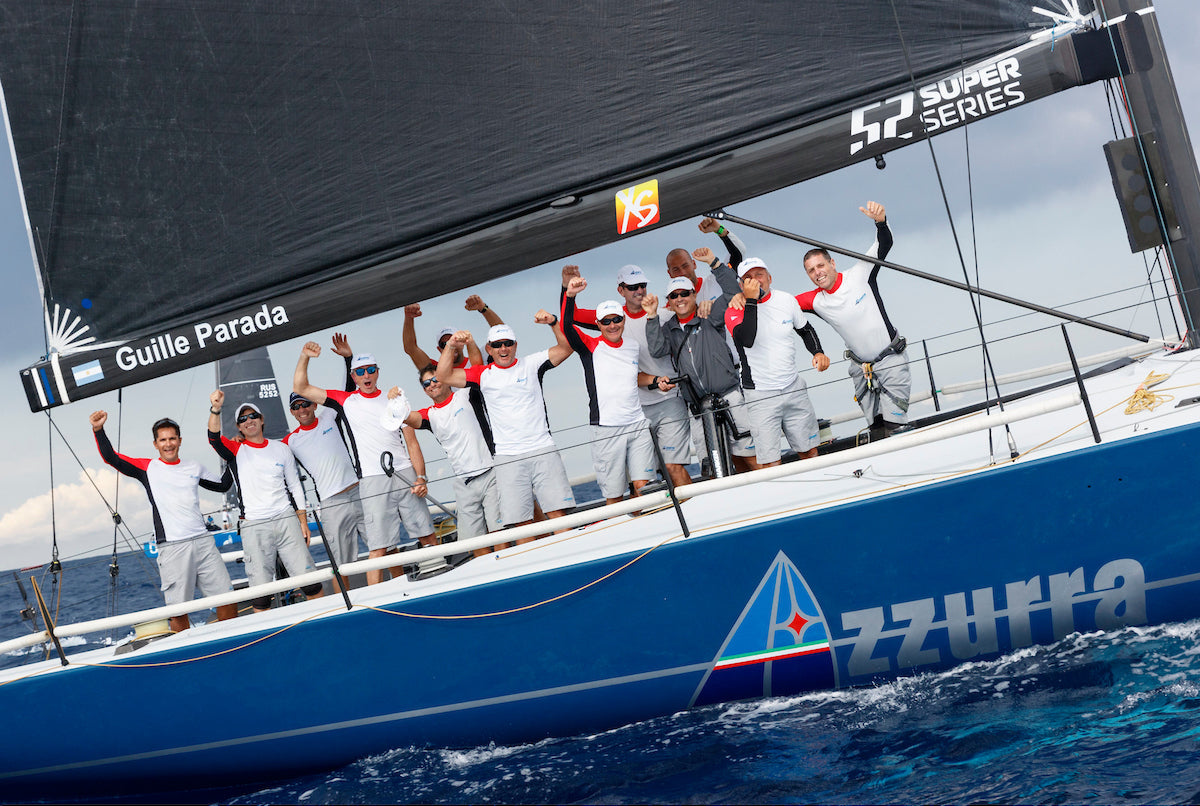
NORTH SAILS 3Di RAW POWERS TP52 SUPER SERIES SEASON SUCCESS
NORTH SAILS 3Di RAW POWERS TP52 SUPER SERIES SUCCESS
Azzurra was crowned 52 Super Series champions when they bested the fleet in the final series act in Menorca last week. Alberto Roemmers’ Azzurra, helmed by Guillermo Parada and tactician Vasco Vascotto, is the only team to win two series regattas in 2017, placing them seven points ahead of Platoon and eleven points ahead of 2016 series champs Quantum Racing.
The 2017 52 fleet may be the most competitive since the Super Series inaugural year in 2012. North Sails is proud to share in our clients’ success, with North-powered teams winning four of the six regattas – Azzurra finished 1st place in Miami and Menorca, Rán Racing topped the fleet in Porto Cervo with owner/driver Niklas Zennström and tactician Adrian Stead, and Ergin Imre’s Provezza claimed victory in Puerto Portals with helmsman Peter Holmberg and tactician Tony Rey. North-powered teams sailed well through the season, winning the last three events and the series overall; a testament to improved crew work and evolution of the 3Di RAW product within the fleet. Much of the North-powered results are attributed to the development of 3Di RAW 880, a Grand Prix 3Di product with limited distribution.
“3Di RAW 880 received proof of concept this season, coming on strong in the final three events of the Super Series,” commented Paul Westlake, North Sails Grand Prix sales leader and mainsail trimmer on Bronenosec Gazprom. “The product development of RAW 880 has led to a refinement of flying shape, and directly contributes to aggressive mode sailing abilities on the race course. The product has shown its strength and durability as the season progressed, as the class limits the number of sails that can be “carded” in a given year which allows 3Di’s performance to shine as the racing hours build up.”
“3Di RAW 880 is North Sails most current and ever evolving answer to perfect aerodynamic foils for inshore Grand Prix teams looking for the ultimate edge,” said Gautier Sergent, head of North Sails R&D. “Our 3Di RAW composite structure gives the sailors and designers the ability to push the limits of strength to weight ratio and stability. The performance and shape holding of these composite structures are exceeding our expectations based on our analysis and customers’ feedback. We had two very clear mandates and we were pretty spot on.”
With proof of concept complete, the North Sails 3Di RAW 880 development path will focus on fine-tuning the structure to maximize the range for each specific sail, resulting in more performance control for the trimmers and a wider groove for the helmsmen. With nine new boats expected on the start line in 2018, 2017 may quickly become the second most competitive year in the Super Series history. Countdown to the 2018 season is on.
READ MORE
READ MORE
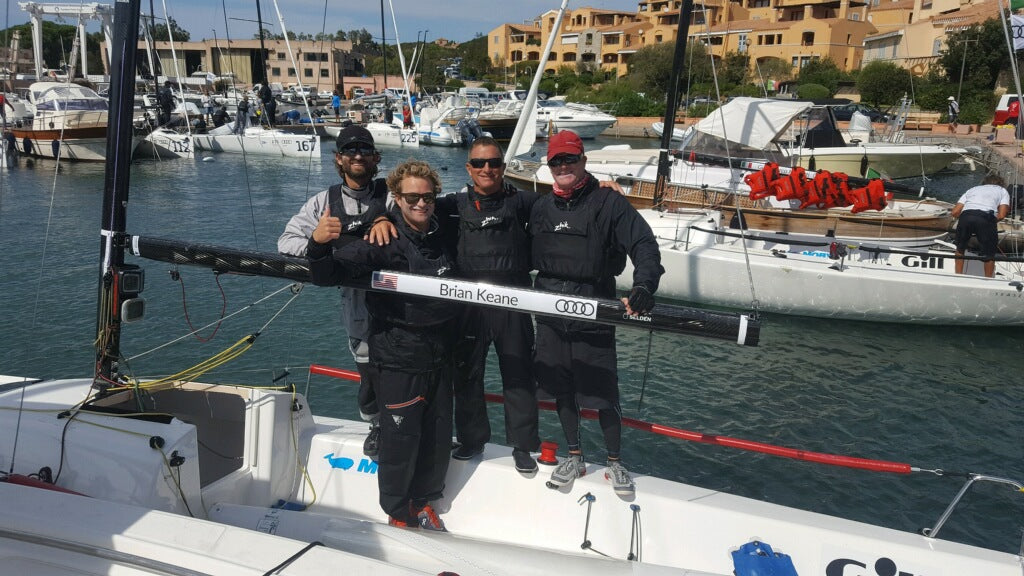
J/70 WORLDS: INTERVIEW WITH BRIAN KEANE
BRIAN KEANE, J/70 WORLDS RUNNER UP
Sail development, team consistency and practice-practice-practice – The keys to Team Savasana’s success
Brian, congratulations from all of us here at North Sails One Design on your second place finish at the just completed J/70 Worlds in Sardinia! You have been sailing the boat pretty much when it started. What is the appeal of the J/70 to you?
Brian – Many thanks for the kind words. We worked hard for this event and we are pleased with our performance and result. Porto Cervo is a beautiful place to sail, and we enjoyed conditions ranging from raging mistral to relatively moderate breezes.
As for the J/70, I have been in the class from the beginning. In fact, I have been a long-time J Boat owner having previously raced both a J/105 and a J/80. I love the J/70 and believe it may be the most exciting and competitive keelboat class anywhere in the world. Throughout the year, it is possible to attend numerous events with 30, 50 or even 70 boats competing. The biggest events, like the Worlds, can have more than 160 boats representing 24 countries. And the depth of the class is incredible, with dozens and dozens of boats having teams comprised of world champions, Olympians, and America’s Cup competitors.
“If you love one-design sailing and you like to compete against the best in big fleets, then the J/70 class is the place to be.”
Second overall in a 160+ boat fleet, the biggest one design championship we have had in decades, maybe ever, is not small feat. Can you tell us what you did to prepare for this big event?
Brian – Preparing for an event like this takes time and careful planning. After last year’s Worlds in San Francisco where we placed 8th, we got together as a team and discussed our goals for 2017. Obviously those goals were primarily focused on the World Championships in Porto Cervo, Italy. ,
As the year progressed, we knew that we were making advancements on multiple fronts. It sounds trite, but one of the most important things we did was make sure that we participate in enough events and had enough practice days as a team so we could build on our knowledge base week to week.
“Another important area of progress was in sail development, particularly as the class started moving towards more aggressive use of weather sheeting. We were pleased to work with North Sails and shared our thoughts about improvement opportunities.”
Sailing with North Sails, can you tell us what models you used and give us some insights on how you set your boat up? Watching the regatta it appeared to be a pretty windy week.
Brian – In terms of sails, we went with the latest and greatest from North. This includes the XCS-1 main, which we believe is very versatile across a variety of conditions. In the breezy conditions, we had the ability to make the main very flat, and when necessary in lighter conditions, we had the ability to add depth and power to adapt to the conditions.
“For the jib, we went with the new North J-6, which we really like a lot. It has a high clew which makes it very easy and efficient to weather sheet into the cabin top when the conditions are right. This allows us to maintain equal speed with competition while often providing us a height advantage. This is especially important in getting off the line and maintaining a lane in big fleets.”
For the spinnaker, we used the same North AP-1 spinnaker design that we have loved for the past few years.
Starting with that many top boats is a real challenge. Any pointers for the rest of us on how to get consistently good starts in such and large and competitive fleet.
Brian – The race committee at the Worlds did a terrific job in some challenging conditions. Generally, the lines were square and the first windward leg was pretty long, generally 1.4 or 1.5 miles. The race committee also located the course far enough away from geographic factors so it wasn’t a race to the left side of the course. The combination of these factors, plus our confidence in our speed, meant that we didn’t need to win any start. Instead, our focus was to start in lower density areas and try to hold our lane for at least 3-4 minutes. If we could do that, we figured we would already be in the top 25 percent of the fleet. And racing near the top of the fleet is way easier than being buried.
We also recognize that in big fleets random bad stuff can happen to anybody at the start. When this inevitably happens, it is important to be timely, yet smart about when to clear out so you can find a new lane. Hanging on too long will most certainly increase the difficulty and time required to find a lane. Bailing out too soon may result in excessive ducks and bad positioning.
Can you tell us a little bit about your crew and what roles each one plays on the team?
Brian – I am amazingly fortunate to have sailed with the core Savasana team for the past few years.
Team consistency is currency for performance.
Stu McNay, who is originally from my home club in Marion, Massachusetts, is our tactician. Stu is incredibly thoughtful and analytical and helps the program continue to move forward with continuous innovations and excellent use of data. Stu has also represented the United States for the last three Olympiads skippering a 470.
Thomas Barrows is the trimmer on the team and he has such an amazing feel for the boat, which he translates into subtle tweaks in upwind sail trim. Downwind he is a natural talent and is magical in orchestrating sail and weight trim to take maximum advantage of the sea state. Thomas is also a valuable sounding board for Stu in discussing tactics. Thomas represented the United States in the Rio Games skippering the 49er.
Ron Weed, from Annapolis, is our bow, but that doesn’t nearly capture what he really does for the team. He keeps us from getting into trouble. Sets, jibe, takedowns, and mark roundings are where most trouble happens in big fleets, especially in windy conditions. Ron is the guy who makes all of that a non-issue, even when we give him no notice. Ron is also “owner of the rig”, which means he knows where we are at any given time and he even knows how much the rig will stretch from day to day based on temperature. And finally, Ron is our conscience. He periodically throws out thoughts or observations about trim, backstay, traveler, or any other adjustment. These continuous contributions help our performance and help ensure that everyone’s head is fully into the game all the time.
Thanks so much Brian and congrats again. What’s next for team Savasana?
Brian – We will be participating in the North American Championships at American Yacht Club in a couple weeks. Unfortunately, we won’t hove our full core team, but we look forward to the event. Then we will head south for the winter circuit.
READ MORE
READ MORE

NORTH U HOSTS INAUGURAL OPTIMIST CLINIC IN MIAMI, FL
NORTH U LEADING EDGE OPTIMIST CLINIC PRESENTED BY NORTH SAILS
Advanced Opti clinic with top North Sails Optimist Coaches and Experts in Miami, FL
North U is hosting the Leading Edge Optimist Clinic on November 2nd and 3rd in conjunction with the Southeast Champs, Nov. 4-5th. Hosted by Key Biscayne Yacht Club in Miami Florida, the clinic will include on the water sail testing sessions with the North Sails Optimist product line test sails, where sailors will be equipped with GPS tracking. Sail set-up and advanced tuning techniques will be discussed, paired with seminars on ‘How Sails Work’ led by Optimist Experts Zeke Horowitz and Mike Marshall. Awards will be handed out on Friday to the top performing sailors at the clinic. Charter boats are provided by McLaughlin Boatworks. Join us in Miami on Nov. 2-3rd for an interactive sailing experience with one of the best Optimist coaches in the nation.
“I am really excited about our first ‘Leading Edge’ High Performance Clinic presented by North Sails. At this clinic we would provide all the sailors with top information on how to improve their techniques and have a better understanding on how sails work!” -Juan Carlos Romero
Looking for a boat to charter?
Registration is OPEN. Click here to sign up today!
Clinic Schedule:
THURSDAY, NOV. 2nd
8:30 am – Check-In / Breakfast Buffet & Make Your Lunch
9:00 am – All sailors rigged & ready
9:00-10:00 am – Sail Set-Up & Rigging Tips
11:30 – 4:00 pm – On-the-Water Training & Sail Testing
4:00 – 4:45 pm – Debrief / GPS Tracking Analysis
5:00 – 6:00 pm – ‘How Sails Work’ Seminar with North Sails Experts Mike & Zeke
FRIDAY, NOV. 3rd
8:30 am- Breakfast Buffet & Make Your Lunch
9:00 am -All sailors rigged & ready
9:00 – 10:00 am – ‘How Sails Work’ Seminar with North Sails Experts Mike & Zeke
10:30 – 4:00 pm – On-the-Water Training & Sail Testing
4:00 – 5:00 pm – Debrief/ GPS Tracking Analysis
Coaches: Who are they?
Juan Carlos Romero is one of the most accomplished and experienced coaches in the Optimist class with nearly 25 years coaching experience. Born in Ecuador, Juan has coached at many top programs such as the Annapolis Yacht Club, St. Petersburg Yacht Club, Lauderdale Yacht Club, Coral Reef Yacht Club and is currently the Sailing Director at the Key Biscayne Yacht Club in Florida. Juan has also coached the Ecuadorian and United States National Teams in international events such as South Americans, North Americans and Worlds.
Zeke Horowitz grew up in Sarasota, Fla. where he quickly took to sailing and began racing in the Optimist Class at the age of nine. His Optimist racing took him all over the world and inspired his passion for sailing and the camaraderie that comes with the sport. He continued on to race in other dinghies and small keel boats throughout high school, garnering multiple state and national championships along the way. Zeke attended The College of Charleston in South Carolina where he was selected as an Honorable Mention All-American twice, as well as an Academic All-Conference All-American. Zeke was team captain his senior year, and led the Cougars to their first ever ICSA Team Racing National Championship.
Mike Marshall grew up in Rhode Island racing Optimists, 420s, and Lasers. He graduated with a degree in Geophysics from Connecticut College, where he was co-captain of the sailing team for two years. He is currently focusing on designing sails for one-design boats and one-design custom projects, including designs for the US Olympic 470 teams and many other world-championship-level programs.
For additional information, contact:
North Sails Head Coach Juan Carlos Romero at 410-212-5303, juancarlos.romero@northsails.com
READ MORE
READ MORE
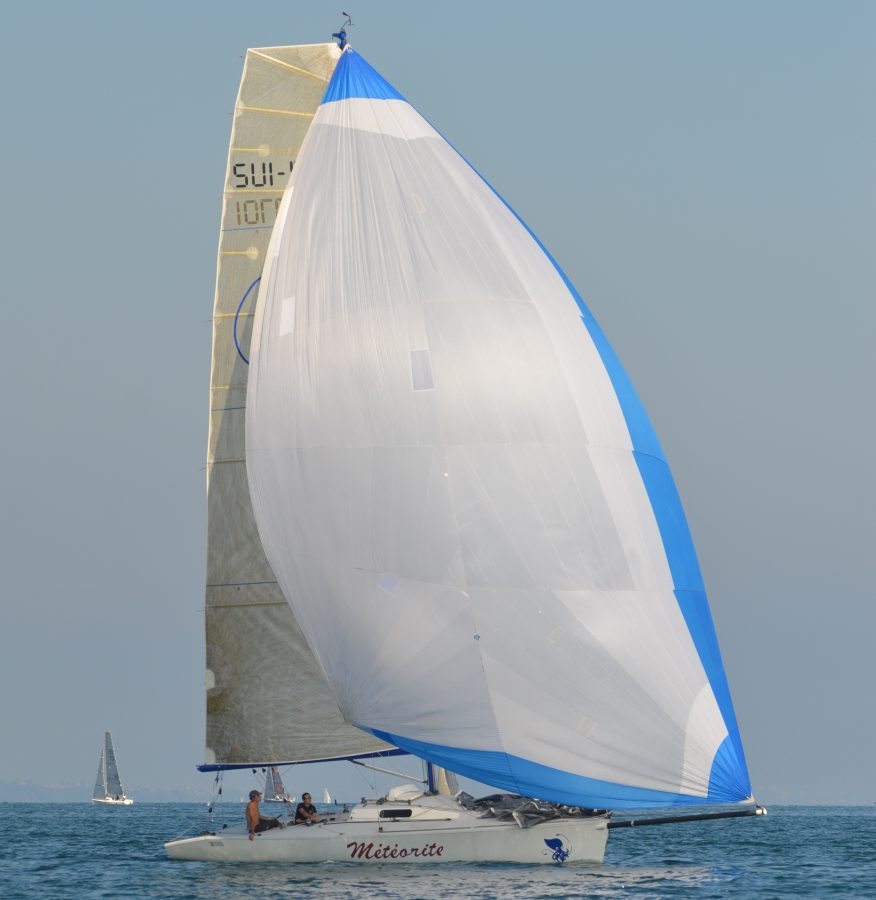
NEWS – UN GRAND BRAVO AUX TANDEMS QUI ONT PARTICIPÉ À LA DOUBLE !
UN GRAND BRAVO AUX TANDEMS QUI ONT PARTICIPÉ À LA DOUBLE!
Samedi dernier, une centaine de courageux équipages se sont placés sur la ligne de départ de La Double, régate qui, comme son nom l’indique, se court par équipe de deux. Père-fils, monsieur-madame, frère-sœur, amis, l’ambiance était belle et l’esprit de convivialité se faisait clairement ressentir au Club Nautique de Versoix !
Prévenus du petit temps (très, très petit par moments…) grâce au bulletin météo que notre équipe a distribué le matin même, les équipages n’ont pas été découragés en voyant le parcours raccourci pendant la course, et presque tous ont réussi à finir dans les temps !
Félicitations toutes particulières aux duos montés sur le podium en temps compensé, tous équipés par nos voiles au logo bleu et blanc : Thierry Paridant et Pierre Buholzer, amis de longue date, sur Météorite (Modulo 105), Jacques Emery et son fils Loik sur Makani (Melges 32), et Yves Tournier et Loic Savuin sur Triumvat (Luthi F10).
North Sails est fier d’être partenaire de ce club et de cette régate depuis longtemps, et toute l’équipe espère pouvoir y participer encore de nombreuses années !
READ MORE
READ MORE