



NORTH SAILS BLOG
All
Events
Guides
News
People
Podcast
Sustainability
Tech & Innovation
Travel & Adventure
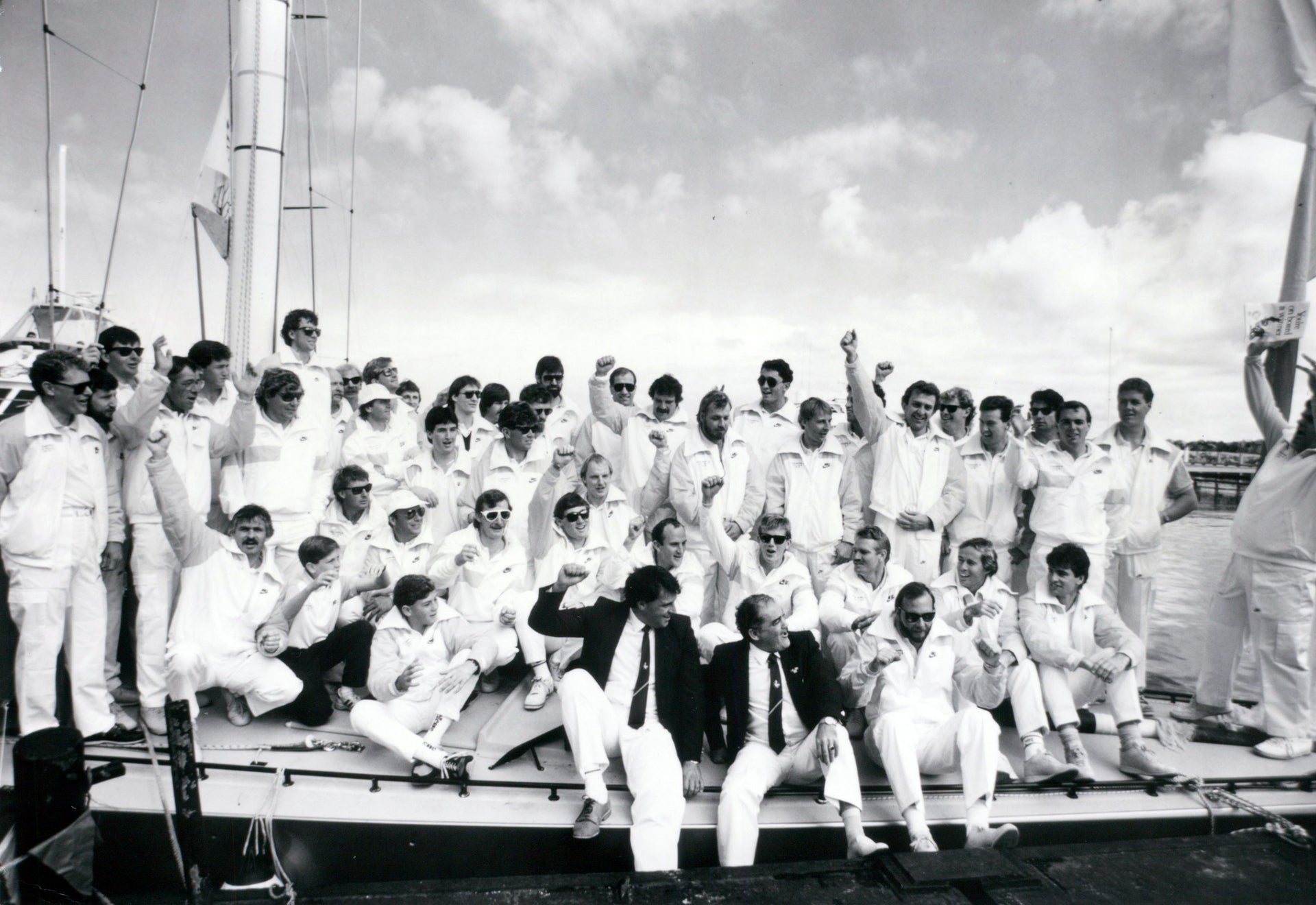
1983 - A 'WING' FOR THE BOOKS
One of the most dramatic events in modern sailing occurred in 1983. Australia II, with its famous winged keel, defeated US defender Liberty and took the America’s Cup abroad for the first time in its 200 year history. It was a stunning victory for the Aussies that resonated far beyond the sailing world. As both boats carried North sails, the company also rode the wave. Both Liberty and Australia II used revolutionary warp-oriented sail cloth for the first time. Aboard Australia II, a crew led by skipper John Bertrand hoisted sails of different material split front-to-back: polyester panels worked out of the luff and the layout switched to woven aramid, or kevlar, at the leech. The sails used a tri-radial layout, designed and developed by Tom Schnackenberg of North Sails in New Zealand, and were thought to be considerably lighter and less stretchy.
Aboard Liberty were skipper Dennis Conner and tactician Tom Whidden. In 1987 Conner and Whidden would have their revenge. With the whole world watching, the pair guided American challenger Stars & Stripes to victory over Aussie defender Kookaburra III in a tense, windy series held in Perth. The Cup returned to US shores, Dennis Conner became a household name and Tom Whidden was hired as President of North Sails. Today, the America’s Cup remains a key platform for North sail development. Whether racing 12Metres, IACC sloops or wing-masted foiling catamarans, AC teams have helped North pioneer breakthroughs in sail technology such as 3DL aramid/carbon laminates, asymmetric spinnakers, 3Di composite sails, and the design horsepower behind a wing and soft sail working together.
Commissioned by Alan Bond as a challenger for the 1983 America’s Cup, Challenge 12 (KA-10) was a point of reference for Australia II (KA-6). Here the two yachts are shown in the Challenger Series prior to the 1983 Cup.
At the launching of Kookaburra III in Freemantle, before the 1987 Cup where she lost to Dennis Conner’s Stars & Stripes ’87, returning the Cup to US shores.
READ MORE
READ MORE

NORTH SAILS TRIM CUP 2017 TAKKER AF FOR I ÅR
NORTH SAILS TRIM CUP 2017 TAKKER AF FOR I ÅR
North Sails Trim Cup begyndte fredag d.11 maj med en blæsende træningsdag i Lomma, nord for Malmø. North Sails Regatta Service team, bestående af Chuck Allen og Charlie McKee, gav råd om planlægning før start, bådhåndtering, hårdtvejrs trim og kommunikation på båden. Efter en dag med tips og coaching på vandet, præsenterede North teamet en detaljeret debrief til de fremmødte besætningerne, hvor der blev vist video og billeder for at hjælpe holdene med at forbedre deres præstation før weekendens kapsejlads.
Lørdag formiddag gik med træningsstarter og coaching på vandet med de lokale North Sails eksperter Jesper Feldt og Henrik Ottosson, hvilket gjorde opvarmningen og optakten til selve kapsejladsen helt perfekt for de 35 deltagende både.
Eftermiddagen bød på 2 kapsejladser efterfuldt af en detaljeret debrief, hvor der blev fokuseret på trim, besætningsplacering og kommunikation ombord.
Søndag bød på let vind, dog nok til at 3 taktisk svære sejladser blev gennemført. Herefter en detaljeret gennemgang af let-vejrs stagvendinger og bomninger, for at hjælpe besætningerne med at maksimere deres præstationer.
Tæt race mellem Melges 24 under North Sails Trim Cup 2017.
North Sails Trim Cup blev afrundet med præmieuddeling, øl og de bedste burgere i regionen!
Stor tak til alle deltagere og Lomma Sejlklub LBS. Vi glæder os til at gentage succeen til næste år!
Du finder resultaterne her: http://www.lbs.nu/Kappsegling/northsailstrimcup13-1452017/resultat2/
READ MORE
READ MORE
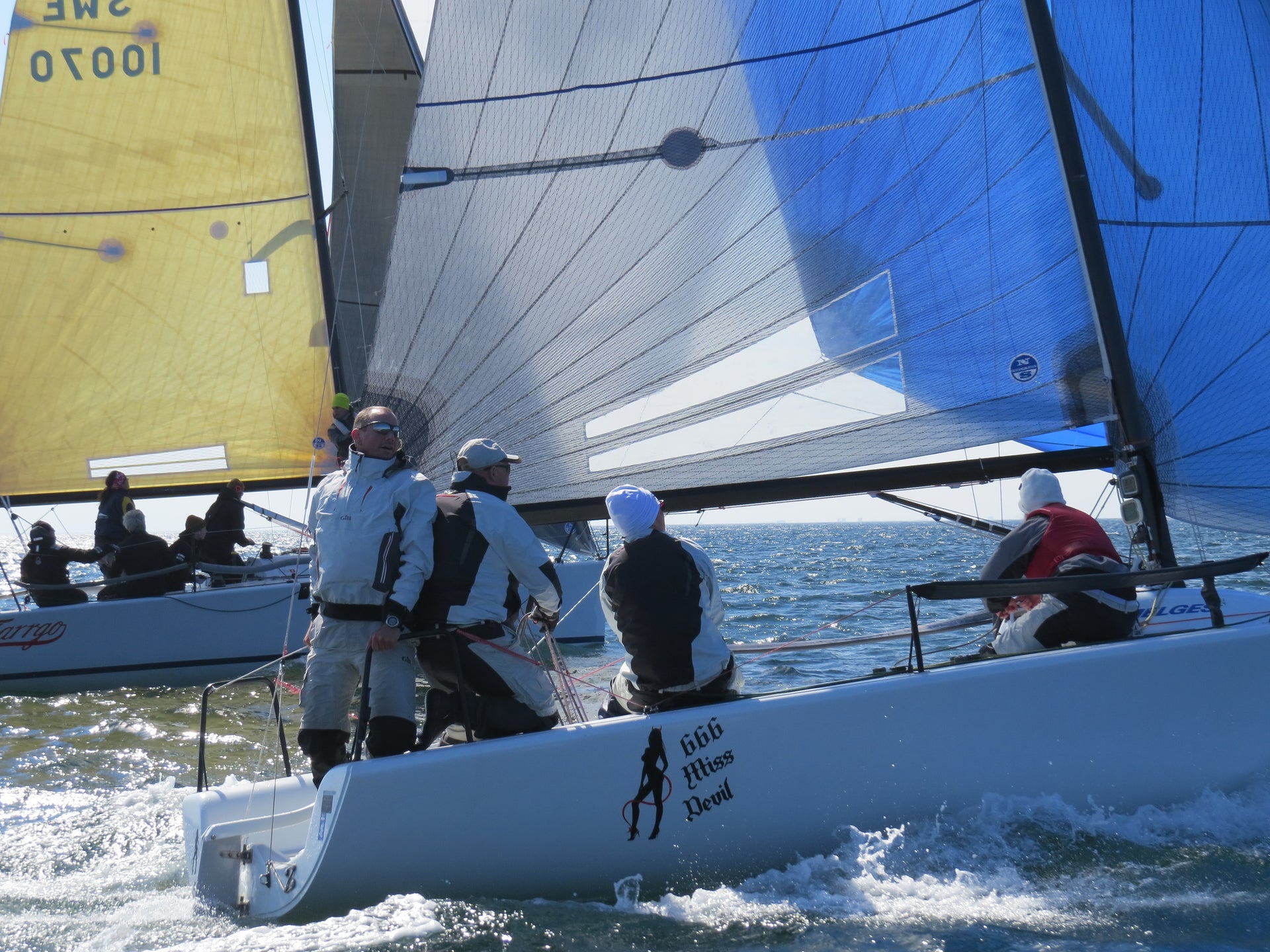
RECAP: NORTH SAILS TRIM CUP
Sailors gather in Lomma, Sweden to kick off the season
North Sails is a proud sponsor of the Trim Cup, a unique event in Lomma, Sweden with an emphasis on improvement. Sailors worked on their performance on the racecourse with training drills and personal coaching provided by North Sails experts. This year was no different than the last, making for a highly engaging training regatta, and a great way to start the sailing season off right!
A beautiful 16-22 knot breeze satisfied the fleet on Friday. Crew communication, maneuvers and starting techniques were key focuses of the day. With the help of North Sails’ Jesper Feldt and Henrik Ottosson, the race committee ran some practice starts coupled with short races for the fleet to warm up. Throughout the day, North Sails’ Chuck Allen and Charlie McKee took photos and video to review with the fleet after racing. All competitors showed great improvement in the span of the day, and awards were given to teams with the best starts and good communication, noted by experts on the water.
On Saturday morning, the North Sails team of experts collected training priorities from the fleet. First step was to drop a weather mark so boats could practice mark roundings upon arriving to the race area, with coaches Chuck and Charlie close by to provide feedback. The race committee gave the 35 boat fleet a few practice starts and some short races to warm up before an afternoon of racing. Chuck and Charlie focused in on sail trim throughout the afternoon, sharing pointers and planning a debrief of the afternoon with photo and video. Every boat was seen on camera, emphasizing their trim, weight placement, and crew communication.
On Sunday the breeze softened, giving sailors a chance to test their light air settings and crew work. North Sails experts reviewed notes and briefed sailors on the plan for the day. After three good races, Chuck and Charlie ran a short debrief on light air tacking and gybing with footage collected that day. Sailors appreciated hearing about individual techniques that worked for other members of the fleet.
Awards were given out to competitors from their host, the Lomma Yacht Club, making for a great learning and racing experience for all. A whole-hearted thanks goes out to all the volunteers who made this a wonderful, welcoming event.
Melges 24 downwind working on crew communication
Debriefing after racing at Lomma Yacht Club
1/2 Tonner Antheor won “Most Improved” on Friday.
FAREAST 28R working on boat speed in the lighter conditions on Sunday.
Sunday’s Awards Ceremony
READ MORE
READ MORE
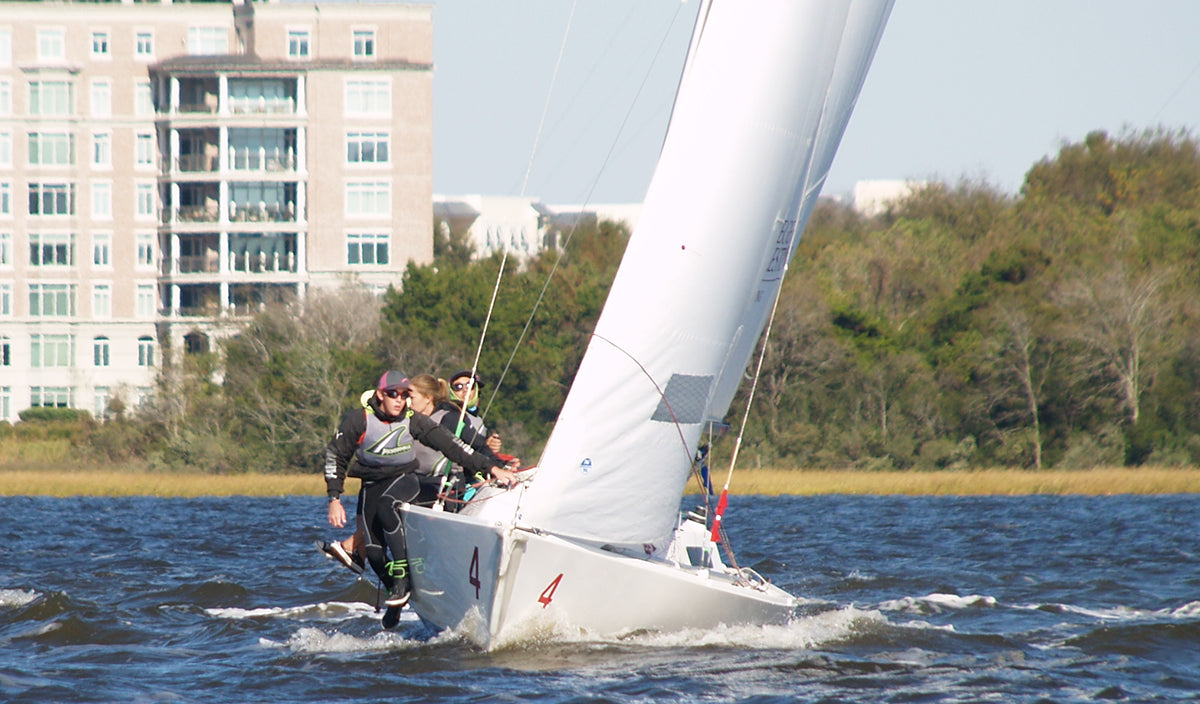
NORTH SAILS PARTNERS WITH J/22 CLASS SCHOLARSHIP PROGRAM
NORTH SAILS PARTNERS WITH U.S. J/22 CLASS SCHOLARSHIP BOAT PROGRAM
U.S. J/22 Class Initiative Gives Talented Young Sailors the Opportunity to Experience World Class One-Design Competitive Sailing
North Sails One Design is proud to partner with the US J/22 Class Association its J/22 Scholarship Boat Program. North Sails has committed to providing new sails for the program for the 2017 season for the team using the boat. We are looking forward to being able to foster youth sailing in the J/22 and see the Scholarship Boat Grant program as a prime opportunity to further our goals. We are thankful to all the donors who have made the programs possible so far and want to encourage more people to become a part of the programs to help it succeed.
Mike Marshall, J/22 World Champion and North Sails J/22 Class Leader, worked with the Class to organize the partnership. “I am so pleased and excited that our group is able to join with the J/22 Class to help provide opportunities for younger sailors to be involved with such a great Class. We are looking forward to continuing our support of the program for the next several years and help the Class build on its success.”
“We are super excited to welcome North Sails as a major sponsor and are looking forward to working with Mike Marshall and North Sails to further promote the J/22 Scholarship Boat Program,” said Mark Stuhlmiller, President of the US J/22 Class Association.
ABOUT THE PROGRAM
The J/22 Scholarship Boat Program was designed to encourage talented youth sailors to experience the J/22 and the Class’ tremendous community of one-design sailors – at virtually no cost. Recipients of the award receive a fully outfitted J/22 sailboat and trailer for the entire season. It is the hope that recipients’ experience in the program will escalate their level of competitiveness and inspire them to accomplish great things in the world of sailing.
THE 2017 WINNERS
We caught up with the winners for a brief interview:
WHY THE INTEREST IN THE J/22?
The J/22 Class is a highly competitive Class that is always willing to share their knowledge to grow the Class. The sailors in the J/22 fleet will not only provide great sailing experiences for us, but will also introduce us to a higher level of competitive racing.
HOW WAS THE TEAM WAS SELECTED?
The team is constructed of the Jacksonville University Sailing Team by choosing four sailors who have a good chemistry together and have previous experience on similar boats to the J/22. However, the team is not limited to these four sailors. Since we are a collegiate team of about 30 sailors, we can easily move players around and train less experienced sailors to create a team that we believe will perform best in certain conditions. Our teamwork will allow us to select the right sailors to be the perfect fit for each event.
FROM COLLEGE SAILING TO COMPETITIVE J/22 CIRCUIT
College sailing has prepared us for the J/22 Class by improving our teamwork skills and by teaching us to always keep our heads out of the boat. Through college sailing, we’ve learned how to be prepared for the unexpected which will help us in sailing as a whole. In college sailing we have a nice variety of racing exposure that goes from fleet racing to match racing to team racing, along with our team workouts which make us very dedicated and team-oriented sailors.
WHAT HAVE YOU LEARNED SO FAR?
Learning how to tune the boat by adjusting the upper and lower shrouds was hard to grasp, but everything made sense as soon as we had our first practice. Something that we would like to continue to learn about is finding the balance between the upper and lower settings when we sail in different conditions. Having a better understanding of proper rig tuning will also teach us how to properly adjust the rake and backstay.
EVENTS PLANNED?
For this summer, we plan to attend Cleveland Race Week, J/22 North Americans, J/Fest, and the 2018 J/22 Worlds in Annapolis.
For more information contact:
Mike Marshall
(401) 683-7997
mike.marshall@northsails.com
READ MORE
READ MORE
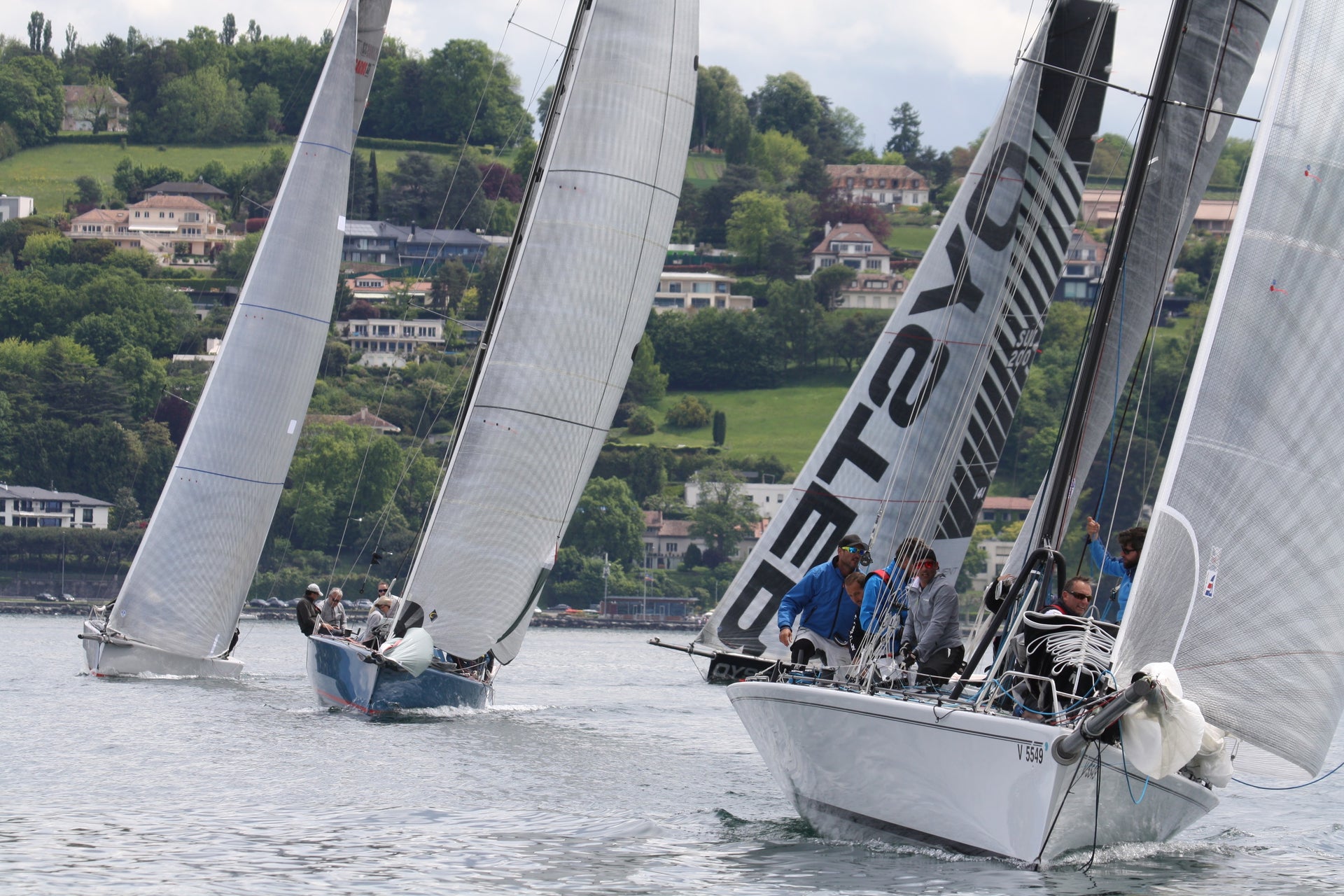
NEWS - SUR TOUS LES FRONTS, SUR TOUS LES PONTS !
SUR TOUS LES FRONTS, SUR TOUS LES PONTS !
Avec le retour des beaux jours, la saison nautique sur le lac est bel et bien lancée !
Quel que soit votre bateau, un membre de l’équipe North Sails n’est jamais bien loin de vous :)
Ca c’est passé la semaine dernière…
> North Experience des PS 33 (cliquez ici pour en savoir plus sur notre concept North Experience)
> Grand Prix des TCFX à Genève (cliquez ici pour l’album photos)
> North Experience à Neuchâtel (cliquez ici pour en savoir plus sur notre concept North Experience)
> Epreuve d'ouverture du Championnat du Petit-Lac au CNC (cliquez ici pour l’album photos)
C’est à l’agenda de cette semaine :
> 2ème Grand Prix des Décision 35 à Versoix
> 2ème épreuve du Championnat du Petit-Lac à la Nautique (Genève)
> Bol d'Or de Neuchâtel (cliquez ici pour en savoir plus)
> Critérium des Grand Surprise à la SNG (1ère manche du Challenge North Sails - cliquez ici pour en savoir plus)
Pour tout renseignement, cliquez ici ou appelez-nous au 022 782 32 22.
Bon vent à toutes et à tous !
READ MORE
READ MORE
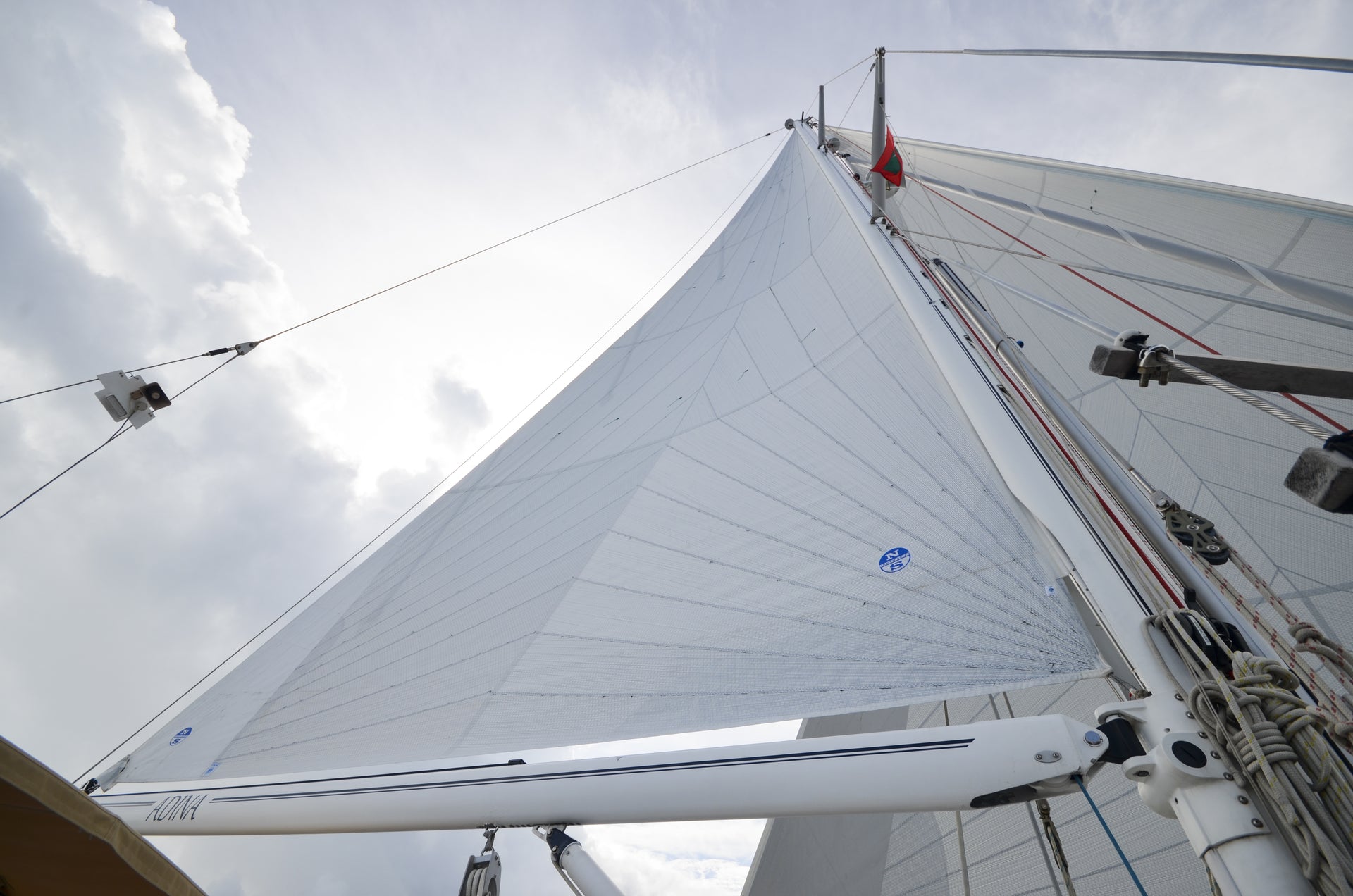
THE NORTH SAILS DIFFERENCE
Tom Partridge and Susie Plume recount their journey of selecting new sails for their Hylas 46, Adina
© Tom Partridge
Coming from a racing background, we set out with a goal of getting the best from Adina, our Hylas 46. Adina is an outright bluewater cruiser, designed to take on oceans while keeping her crew safe. She has an in-mast furling mainsail system which makes reefing easy and safe from inside the cockpit, something that proved particularly beneficial in big open seas.
Deteriorating sails
Her first set of sails were made from Dacron, the theory being they were sails made to last. The mainsail included full-length vertical battens and when new we were impressed how they helped the sail’s shape; all too often we had seen dacron sails that had lost their shape and the owners suffering inefficient sailing. Our mainsail was soon to go the same route; it wasn’t long before the battens were failing to furl straight, slowly but surely twisting. What shape there was also disappeared, the draft moving aft. Our genoa we struggled to trim effectively, telltales would dance in different directions no matter what we tried.
After constant sailing in the tropics the sun was taking its toll and much to our horror our mainsail was starting to get tears in it. We’d repair them but more and more appeared. The leech started to deteriorate, and we knew the sail’s days were numbered.
Selecting new sails
Like most sailors we reached out to various sail makers, considering the different options. North Sails was quick to respond, asking relevant questions about the conditions we sailed in, what we saw as important in a sail, making us think and helping us choose the right sails for our needs. We were curious but slightly nervous about laminates. We’d heard they had a good reputation for shape and performance, but we weren’t sure about their longevity in the harsh sunshine we typically sail in. North Sails encouraged us to go this route, saying their NPL TOUR product is designed to last longer and would give us superior performance. This would tick both of our ‘most wanted’ boxes – performance and durability.
Measuring up
We had heard many a tale from fellow cruisers of having to make their own measurements with no comeback and costly adjustments having to be made if there were errors. Not so with North Sails; they had experts come on board taking what felt like over one hundred measurements, checking, re-checking, filling in forms and also happy to share information with us as they went. An in-mast furling laminate mainsail is a complex sail and measurements needed to be spot on. The right size genoa for our boat was designed from scratch and we have a stay sail that we planned to use not just in strong winds but light winds too.
Fitting
Delivery day dawned and a North Sails representative arrived with our shiny new sails – it felt like Christmas, we were so excited. Time was taken to fit them and check them. The representative added value, stitching up batten pockets to ensure they would stay in place on the long ocean passages ahead before we took a test sail to make sure everything looked good and in order.
© Tom Partridge
Immediate performance
We’ll never forget our first passage from Thailand to Sri Lanka. We left on a moderate wind day and we were able to get all the sails hoisted. Suddenly Adina was off. The difference was immediate and electrifying. It was almost as though she had sensed she had a new set of clothes and she wanted to give of her best, we couldn’t stop smiling.
Lightweight strength from laminates
The sails certainly delivered on shape and there was no doubt our performance was boosted but there were additional surprises too. The lighter laminate sails were so much easier to control than our old chunky sails; furling and unfurling the genoa became so much easier, no longer lots of grinding, trimming was a joy. The mainsail, with its short battens, furled away effortlessly, working in the cockpit was easy. With the carbon fiber, you can see the strength in the sails; the shape in our main was spot on, the draft in the right position. In fact, the sails had so much power we later opted to replace our outhaul with a Dyneema line to hold the sail better; new running rigging is something people should consider when buying new sails.
Benefits in both light and strong winds
We learned some new tricks. In really light winds going upwind, we’d get the stay sail out in addition to the genoa, which would give us an extra knot of boat speed. Leaving the Maldives for Chagos in the company of friends on other boats, they were all impressed as Adina literally took off. In strong winds too, the sails still held their shape and, if anything, were more powerful; we pay more attention to reefing. And it is this power that got us through open seas with Adina carving through the waves – just what you want.
Being a heavy ocean boat, upwind we’ve always needed 7 knots of wind to get moving and 10 knots of wind downwind. We now find we can sail quite nicely in just 5 knots of breeze upwind and downwind we can move in 7 knots, albeit slowly. That’s a big difference for long passages where saving fuel is key. Our Chagos to Seychelles passage was just over seven days and winds were light, sailing in the doldrums. We knew we had only four days’ worth of fuel and weather forecasts were unreliable so we had to sail as much as possible in the early part of the passage. With winds of 7-9 knots we could still keep moving and even if it was just 3 knots SOG it kept us going – we were delighted.
Testing in all conditions
Our sails carried us safely down and around the bottom of Africa to Cape Town. By then it had been just under a year in which we had covered around 6700 nautical miles, putting them through several tough passages in the Indian Ocean; they were due for their one year service. Our only issue had been a small section on the foot of the genoa where the UV strip had pulled up from the base seam with the main body of the sail; this was duly replaced with a slightly heavier UV strip. Other than that not a single fault, all of the sails were still in excellent condition and ready to take on further duty.
Excellence all around
Looking back over the past fifteen months sailing with our North Sails NPL TOUR, we could not be happier. We have been struck by the extra performance they have given us and the ease of handling. Other cruisers who notice the laminates have questioned us and we can do nothing but sing their praises and recommend them for cruisers seeking performance. And as for the North Sails service, as can be expected with quality sails it has been nothing short of excellent.
In their next waterlog Tom and Susie share some tips on how to get the best out of your sails and techniques for open ocean cruising.
© Tom Partridge
READ MORE
READ MORE
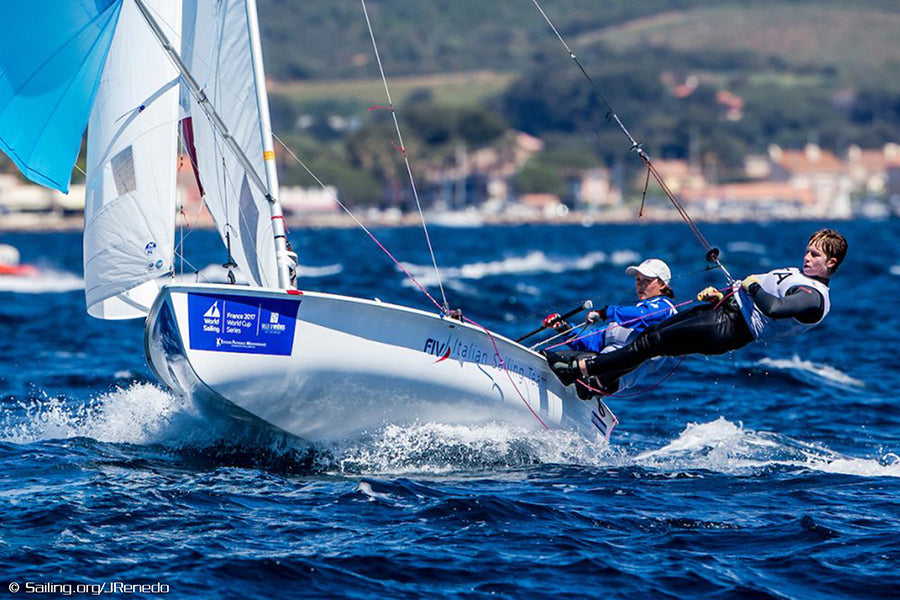
BERTA-CARRARO E NORTH SAILS: UN INIZIO DI STAGIONE IN GRANDE STILE
BERTA-CARRARO E NORTH SAILS: UN INIZIO DI STAGIONE IN GRANDE STILE
Hyeres - Elena Berta e Sveva Carraro, atlete rispettivamente del C.C. Aniene e dell'Aeronautica Militare, sono reduci da un quinto posto overall nella World Cup Series di Hyeres, ottenuto anche grazie all'affermazione nella Medal Race. In regata con i profili North Sails, le due atlete della squadra azzurra hanno chiacchierato con noi in merito alla loro esperienza in 470 e all'imminente Campionato Europeo di Montecarlo.
Elena, Sveva, da quanto tempo avete iniziato l'esperienza in 470 insieme?
E: È ormai un anno e mezzo che regatiamo insieme: abbiamo iniziato ad agosto 2015.
Le vostre esperienze, in termini di Classi Olimpiche, sono simili?
S: Ci sono dei punti in comune, ma il percorso formativo è stato in realtà molto diverso: Elena ha fatto esperienza in Optimist, 420 e 470, mentre io provengo dal mondo del Moth Europa, che ho iniziato a circa tredici anni perché anche da piccolina ero già abbastanza prestante a livello fisico. Poi ho fatto la scelta di passare al 470.
L'inizio di stagione è stato per voi ottimo e a Hyeres è arrivata un'altra bella soddisfazione: in cosa è consistita la vostra preparazione invernale che vi ha poi portato a vincere l'Italiano e a ottenere il quinto posto sia a Palma de Maiorca che in Francia?
E: Durante l'inverno abbiamo scelto di fare una preparazione centrata sulla crescita del nostro binomio, quindi dopo alcuni allenamenti con il gruppo della Nazionale ci siamo concentrate più su noi stesse, anche grazie al supporto del nostro allenatore Paolo Mariotti, lavorando sui nostri punti deboli e sulla nostra sincronia. I risultati si sono visti: è tangibile il fatto che siamo riuscite a colmare alcune lacune che con la preparazione fatta insieme a altri equipaggi non riuscivamo a risolvere. C'è poi stato tanto lavoro anche sulla preparazione fisica, che sta portando ottimi frutti: in questo caso, la scelta della preparatrice è stata affidata in toto a Sveva e oggi siamo seguite dalla bravissima Francesca Keper. I nostri circoli ci forniscono un supporto essenziale nella preparazione, così come gli sponsor tecnici che seguono la nostra attività. Quali sono i vostri punti di forza e su cosa, invece, c'è margine di miglioramento?
S: Anche a fronte di come sono andati i primi eventi di stagione, mi sento di dire che abbiamo una buona velocità in bolina e spesso le scelte tattiche si rivelano vincenti. Stiamo migliorando sulle partenze, che per noi sono sempre state un punto critico, e dovremo continuare a lavorare sulle andature portanti dove i margini di miglioramento sono notevoli.
La vostra attività è seguita anche da North Sails, tra l'altro fornitrice delle vostre vele: com'è lavorare a così stretto contatto con una veleria?
E: Quella di continuare a lavorare con North Sails è stata una scelta facile, anche dettata dal fatto che, in un momento di crescita dell'equipaggio delicato come questo, anche i più piccoli dettagli fanno la differenza. La cura della barca, lo studio sulle vele, la scelta dei materiali non possono essere lasciati da parte. Con North Sails siamo tranquille perché abbiamo la garanzia di avere materiali di prima qualità e, soprattutto, i prodotti consegnati, pur essendo tecnicamente differenti l'uno dall'altro, sono sempre simili, per cui non si deve impazzire per capire come sfruttarne a pieno le potenzialità e trovare il setting ottimale. Un grande aiuto ci arriva dal nostro velaio di riferimento Giulio Desiderato, amico ed allenatore che ci dispensa sempre ottimi consigli: stare con North Sails garantisce un rapporto di fiducia. E' una costante che accomuna tutto il nostro mix di fornitori.
In Italia il 420 è sempre molto attivo, voi siete un equipaggio che è di ispirazione per tanti giovanissimi nel mondo della vela: vi sentite di dare un messaggio a tutti coloro che scelgono di approcciarsi alla vela olimpica?
S: Sicuramente, prima di tutto, bisogna avere tanta pazienza, nel senso che la Classe Olimpica richiede costanza, voglia e impegno. Non bisogna scoraggiarsi se, inizialmente, come spesso succede, i risultati non arrivano subito o arrivano in modo scostante: ci si trova a regatare con gente che lavora sodo curando ogni piccolo dettaglio, non a caso si tratta di professionisti a tutti gli effetti. È comunque un ambiente molto bello, dove lo sport è il centro di tutto, dove gli stimoli sono tantissimi anche grazie al livello alto delle flotte.
E: Bisogna anche scegliere il tecnico ed il gruppo di allenamento giusti, perché il passaggio dalla classe giovanile a quella Olimpica è molto forte, quindi è necessario avere a fianco una persona che sia in grado di accompagnare l'atleta in questo percorso.
READ MORE
READ MORE
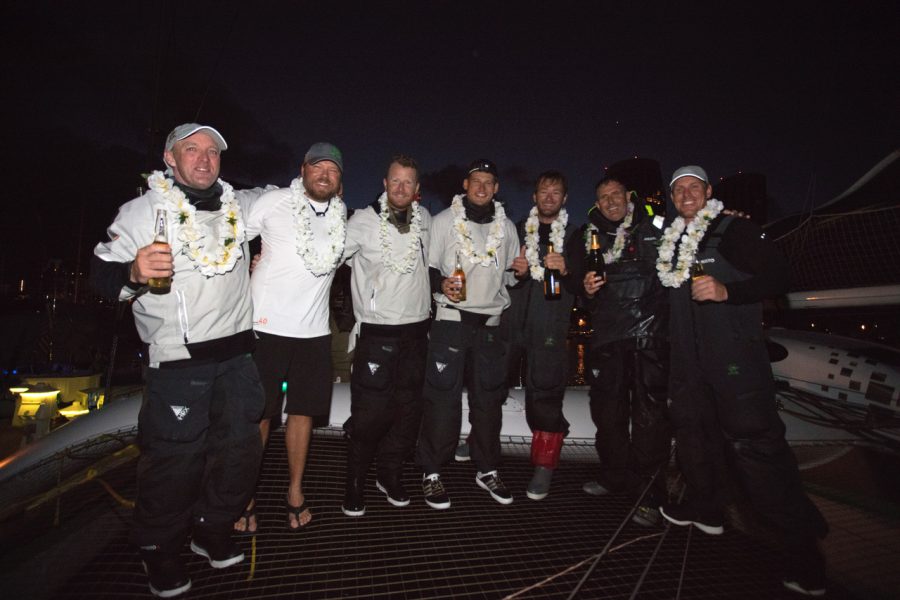
PHAEDO3 STRIKES NEW TRANSPAC RECORD
Thornburg and crew reach Hawaii, finish Trans-pacific crossing in record time
© Rachel Fallon-Langdon
In the darkest hour of Tuesday morning, Lloyd Thornburg and his crew aboard Phaedo3 sailed past Diamond Head Lighthouse buoy at 4:32:18am local time. The team raced their maxi trimaran from Los Angeles to Hawaii to set a new record, shaving roughly an hour off the previous time. Yet to be ratified by the WSSRC, Phaedo3‘s new time-to-beat is 3 days, 16 hours, 52 minutes and 03 seconds. Upon reaching the dock, owner-driver Lloyd Thornburg said,
“An unbelievable trip! Can’t believe we actually broke the record! This was the most difficult sail of my life. Everything went our way and the team put out a super human effort in order to keep the boat moving at nearly 30 knots through the entire trip. We are all excited for a well deserved rest and some sight seeing in Hawaii…”
Lloyd joined his crew of Brian Thompson, Fletcher Kennedy, Justin Slattery, Pete Cumming, Henry Bomby and David Swete for the record-setting crossing. The team hoisted North Sails 3Di RAW and 3Di FORCE sails built this year.
READ MORE
READ MORE
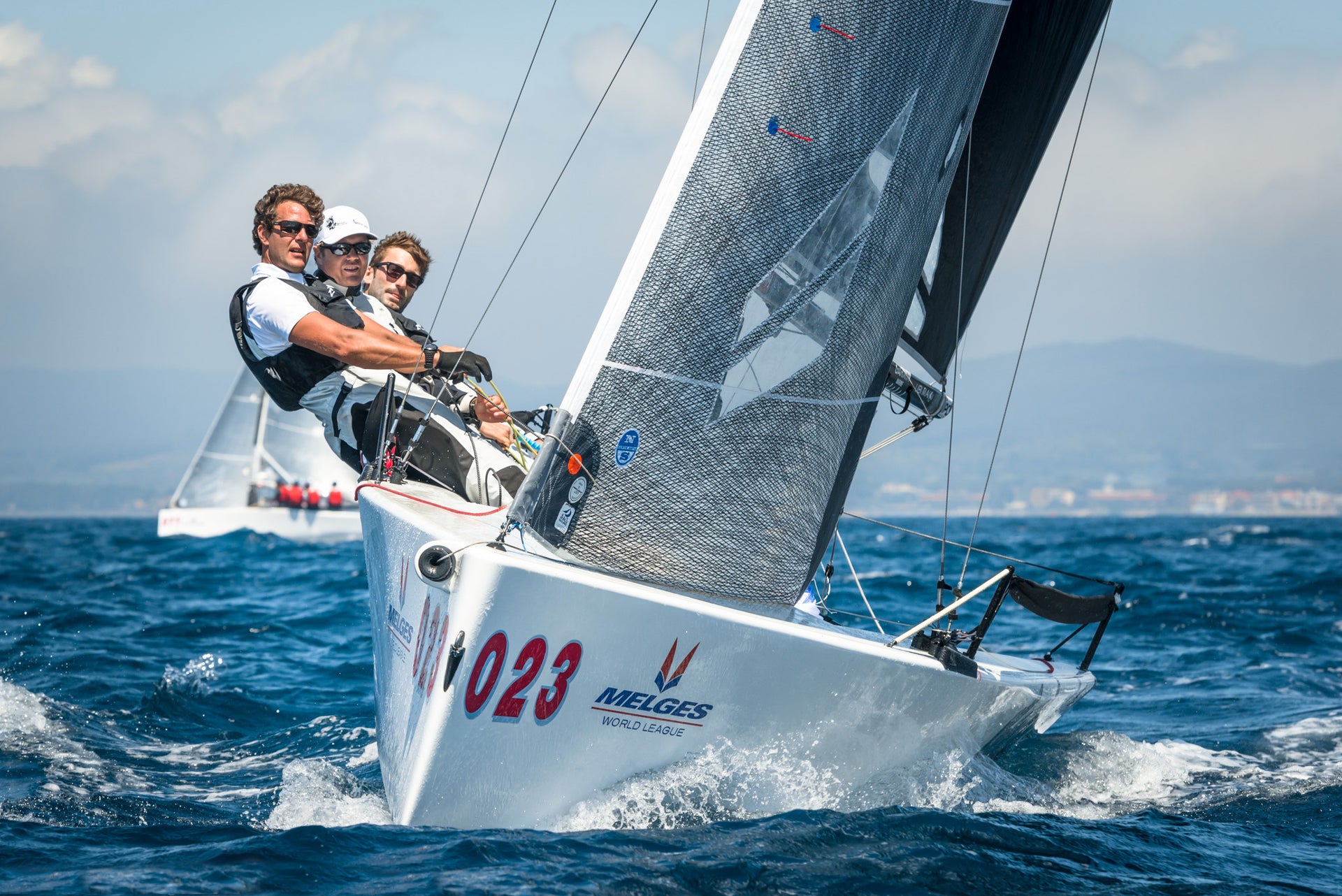
MELGES 20 EUROPEANS ACT 2
Mascalzone Latino Jr. Takes The Melges 20 Act 2 Overall Win In Scarlino
Wrapping up Act 2 of the Melges 20 European Division in beautiful Scarlino, Italy with 32 teams from 7 different nations. A very nice job by the event organizers at Circolo Nautico Scarlino and the race committee personnel for running an excellent regatta for the M20 class.
Day one was very light and the RC decided to call it for the day as the wind was not going to fill in with enough time to race. Saturday and Sunday were great sailing days, with 8-14 knots of breeze, the fleet was able to get in three good races. With the growth of the Melges 20 fleet as a whole, the boats are very tight on the race course, making speed a good start the most important take-away from the event. The starting line was just big enough for all boats, making it that much harder to find a hole and accelerate in a timely manner.
Saturday and Sunday allowed for the teams to really work the boat on the downwind legs. Getting your team in sequence and being able to transition through modes was very important. Knowing how hard to push the boat downwind allowed for separation within the fleet and with the different techniques teams had it was interesting from a spectators point of view to see how each team found their groove.
North Sails 3Di RACE is a fresh introduction to the Melges 20 class. The product has been demoed by a handful of fleet members including Leviathan, Raya, Cars 167, RUS 2, Mascalzone Latino Jr, and Maolca. Tactician Cameron Appleton had the following to report after using the sails on Mascalzone Latino Jr:
“I was extremely happy with the 3Di RACE sails. We noticed how the mainsail handled a range of wind pressure and rig tune. The design has transferred from 3DL to 3Di seamlessly, with the match being very close and the sail’s behavior on par with what we expect from 3Di RACE verse 3DL sails.”
“Each team will want to fine tune their own rig tune and setting with he new sail to suit there crew weight and style of sailing,” Cam continued. “So far we’ve gone approximately 85% off of the M-16 tuning guide with our own variations of tune for the conditions.”
Congratulations to our clients for finishing within the top 10 positions, and great job to Mascalzone Latino Jr. for their impressive victory at Act 2 of the Melges 20 European Series. Next stop for the Melges 20 fleet, Zadar Croatia for Act 3!
Stay posted on the North Sails offering for the Melges 20 here.
Melges World League / Barracuda Communication
Melges World League / Barracuda Communication
Melges World League / Barracuda Communication
Melges World League / Barracuda Communication
READ MORE
READ MORE
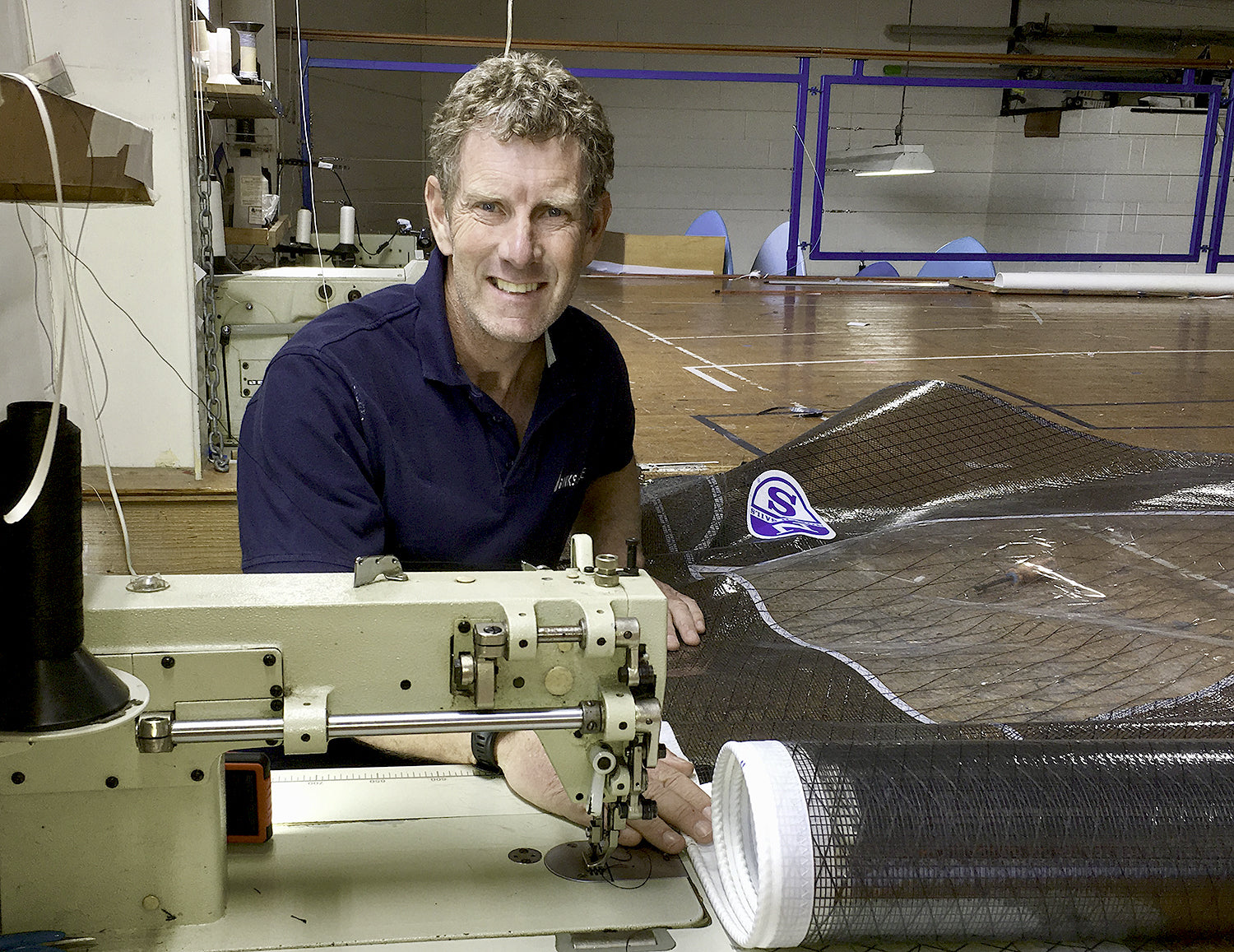
NORTH SAILS WELCOMES BINKS MARINE
North Sails welcomes Binks Marine to provide trusted service to clients in Somerton Park
North Sails is pleased to welcome Binks Marine in Somerton Park, Southern Australia, as an agent for North Sails. North Sails is presently celebrating 60 years of sailmaking, and Binks is not far from the same mark, having serviced the local market since the early 1960s. Today Binks operates under the stewardship of Sandy Higgins, who comes from one of those families that is always around boats.
“I got started sailing at about five years of age and went through the typical Junior Classes. 420’s were the main thing, and I won the 1998 Australian Championship at the helm. My brothers are sailors as well, so we had good, mostly friendly competition and that really helped me along the way. They still sail too, as do all of our kids!”
Higgins has since moved on to sailing 505s when the time permits, and has earned six national titles over the years. He also enjoys sailing Sharpies, big boats and One Design boats like the Farr 40. He joined David Urry for the 2005 World Championship in Sydney as tactician.
“Binks Marine has always been a North Sails loft, even in the 70s. Now as a strictly service loft, we were happy to partner with North and become part of the largest service network worldwide. It means we can increase our support for big boats while growing on the dinghy side of things, which is great given our background. South Australia has a large cruising market as well and we are happy to continue our support in that arena as well.”
The local knowledge and experience of Binks Marine will pair well with the bank of knowledge, support and technology within North Sails. Higgins concluded,
“As the premier outfit in the South Australian scene, our staff can support your sailing from dinghies to 50-footers with terrific products from North Sails, as well as chandlery and rigging solutions.”
Reach out to Sandy Higgins at Binks Marine or contact your North Sails representative for assistance.
Binks loft in South Australia
Sandy steering for the Hawaii Five-O
Sandy on the job, coaching
READ MORE
READ MORE
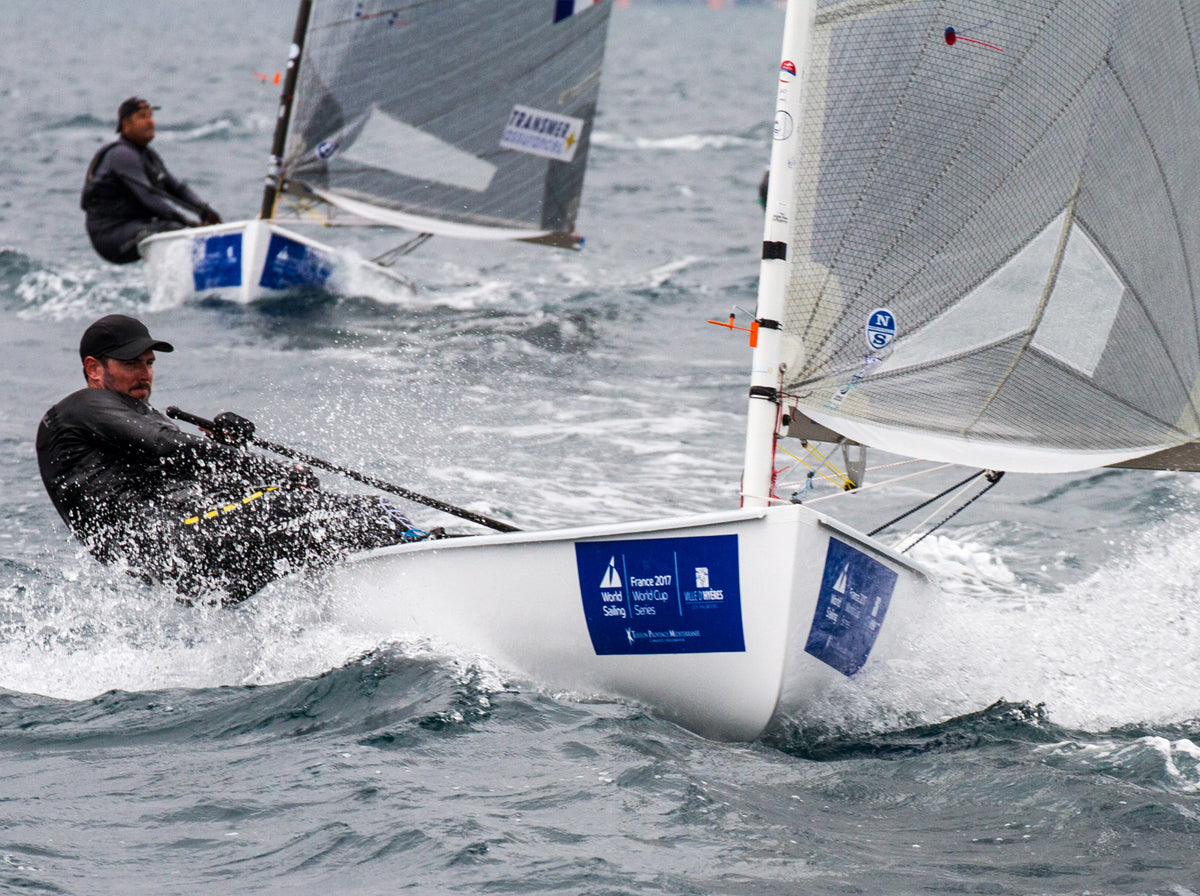
OPEN FINN EUROPEAN CHAMPIONSHIP
FINN EUROPEANS
Where The Heavyweights Come Out To Play
Finn Europeans is a wrap! Sixty five competitors spent a week in Marseilles, France at the Yachting Club de la Point Rouge for an exciting week of sailing in the utmost variety of conditions, ranging from two to 30 knots. This is the first championship held in Marseilles for the Finn class and 26 countries were represented. Formatted like the trials, there are 10 races in the opening round, with the top three finishers qualifying for the final round. Sailors that place between fourth and 10th will then sail a semi-final round, with the top two finishers moving on to compete in the five-boat final round. The final round was on Saturday in which a final champion was determined.
The week started out with heavy winds as a mistral moved through the region allowing two races to be completed on Monday. After the brunt of the storm passed, the winds became very light, too light to sail, so competitors were postponed onshore until enough wind built back up. They got one race in for the day. On Day two the race committee was successfully able to score one race in 8-10knots of breeze. Ed Wright began his event with two bullets, but was over early in the third race, allowing Ben Cornish to take the win and move into the overall lead. On day three, Ed Wright made it back into first place overall, leading the fleet by three points after three races and a long day on the water. Southeasterly winds and rain plagued the regatta site on Day four with sailors postponed ashore. The race committee made the decision that there would be no racing that day. Day five brought shifty light-to-medium conditions that challenged the race committee to find the fairest place to set the course. Lots of changes on the scoreboard at the end of day five; with the leaders close in points, anything was possible for the last few races of the regatta.
The competitors in the top positions have a ton of pressure on them the last day, knowing that everything they’ve worked for all week could be lost with one bad tactical decision. Lobart and Pedersen acheived 1st and 2nd, respectively, on the last day of the opening round. Wright was able to pick up third place and move into the final round.
The final round results confirmed Lobert in 1st, Wright in 2nd, and Cornish in 3rd. The semifinals resulted in Wetherell placing 6th, and Heiner in 10th.
A tough regatta, but the results show us that focus and patience was the key to success last week. Congratulations to our clients for taking the silver and bronze in the finals round, and placing 4th-8th, and 10th overall, wrapping up a big week for the heavyweight division in Marseilles.
Full Results HERE
Brendan McCarty © Robert Deaves
Ed Wright © Robert Deaves
© Robert Deaves
Day 2 AP- Tom Ramshaw, Ed Wright and Brendan McCarty hanging waiting for wind
Ed Wright © Robert Deaves
Ben Cornish © Robert Deaves
READ MORE
READ MORE

SOLL IHR SEGEL LÄNGER HALTEN
SOLL IHR SEGEL LÄNGER HALTEN?
Eine jährliche Inspektion verlängert das Leben Ihrer Segel erheblich und hält die Performance immer auf dem höchstmöglichen Niveau. Jedes Segel, das bei North Sails im Service ankommt, wird einer gründlichen Kontrolle und Durchsicht unterzogen. So erkennen wir kleine Schäden rechtzeitig und können diese beheben, bevor größere Probleme entstehen.
Certified Service™ steht bei North Sails für höchste Handwerksqualität und Effizienz. Unsere erfahrenen Segelmacher wissen genau, welche Behandlung Ihre Segel benötigen. So gehen Sie mit einer perfekten Segelgarderobe in die neue Saison. Wir kontrollieren auch den UV-Schutz Ihrer Segel, denn dieser muss regelmäßig erneuert werden damit Ihr Segel keinen Schaden nimmt.
JETZT TERMIN VEREINBAREN
Vereinbaren Sie noch heute einen Termin mit dem lokalen North Sails-Vertreter und vertrauen Sie unserem Certified Service-Team Ihre Segel an. Gerne holen wir die Segel auch bei Ihnen ab.
READ MORE
READ MORE
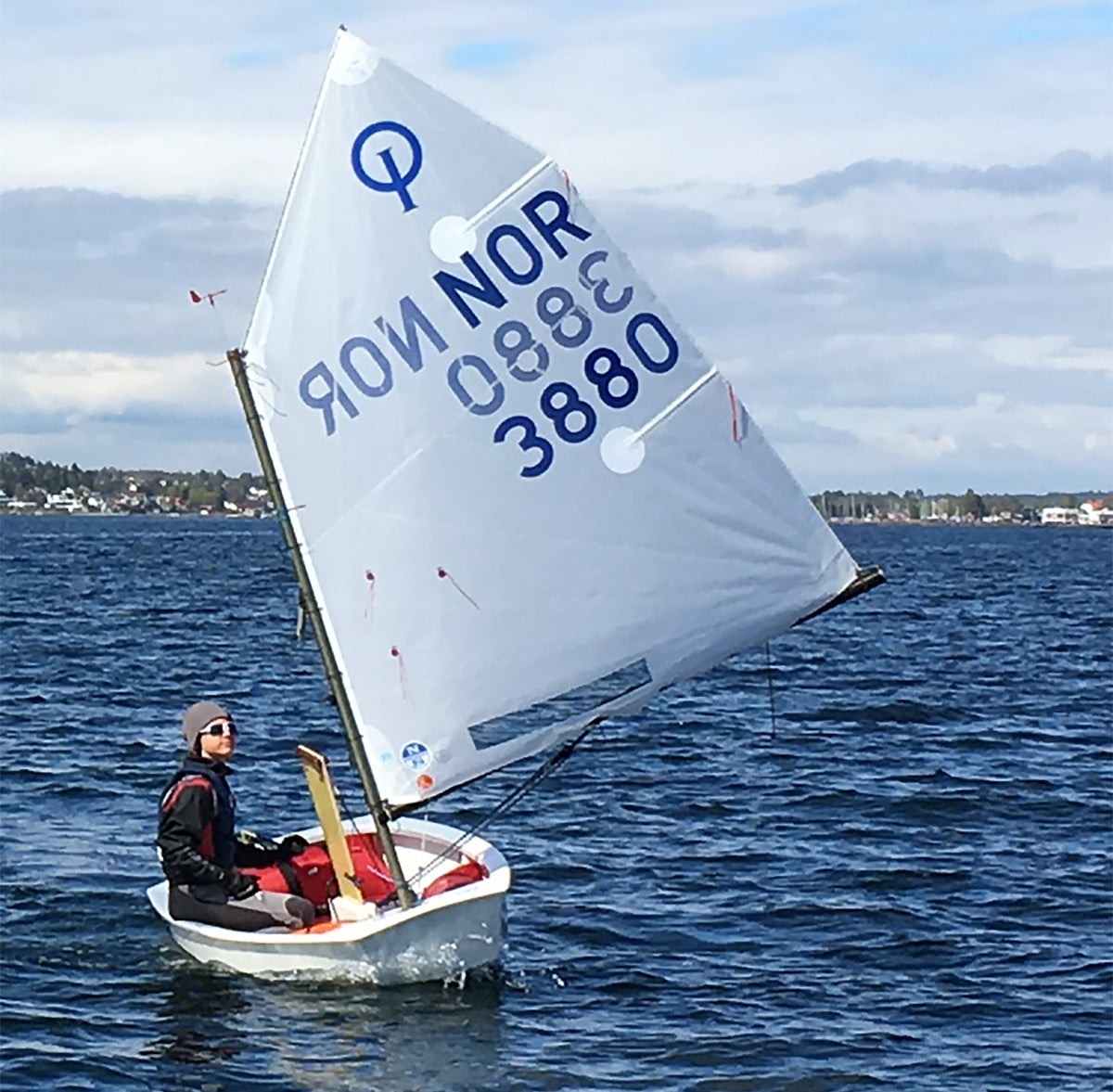
JOHN-ØYVIND GARVIK WINS FIRST EVENT OF OPTIMIST NORWEGIAN RANKING
JOHN-ØYVIND GARVIK WINS 91-BOAT REGATTA USING THE NORTH R-4 DESIGN
The New North Sails Optimist Designs Continue to Prove Superior Speed on the Race Course
We are happy to share yet another major regatta win powered by North Sails R-4 design. John-Øyvind Garvik won the first event of the Norwegian Ranking Series, the Norwegian Optimist Cup, taking first place out of 91 total boats. The conditions were light, but not too challenging for 14-year old JØ, who had strong finishes of 1-2-1 to win the first event for the Norwegian Ranking. JØ has been using his North Sails R-4 since last September and is also helping us test the new R-5 design, with the coordination of our Optimist specialist Thomas Nilsson and his coach Luka Radelic.
The North Sails Optimist designs have been winning many major events in 2017, including the Spanish Nationals, New Zealand Nationals and Irish Trials.
Learn more about the North Sails designs for the Optimist
READ MORE
READ MORE
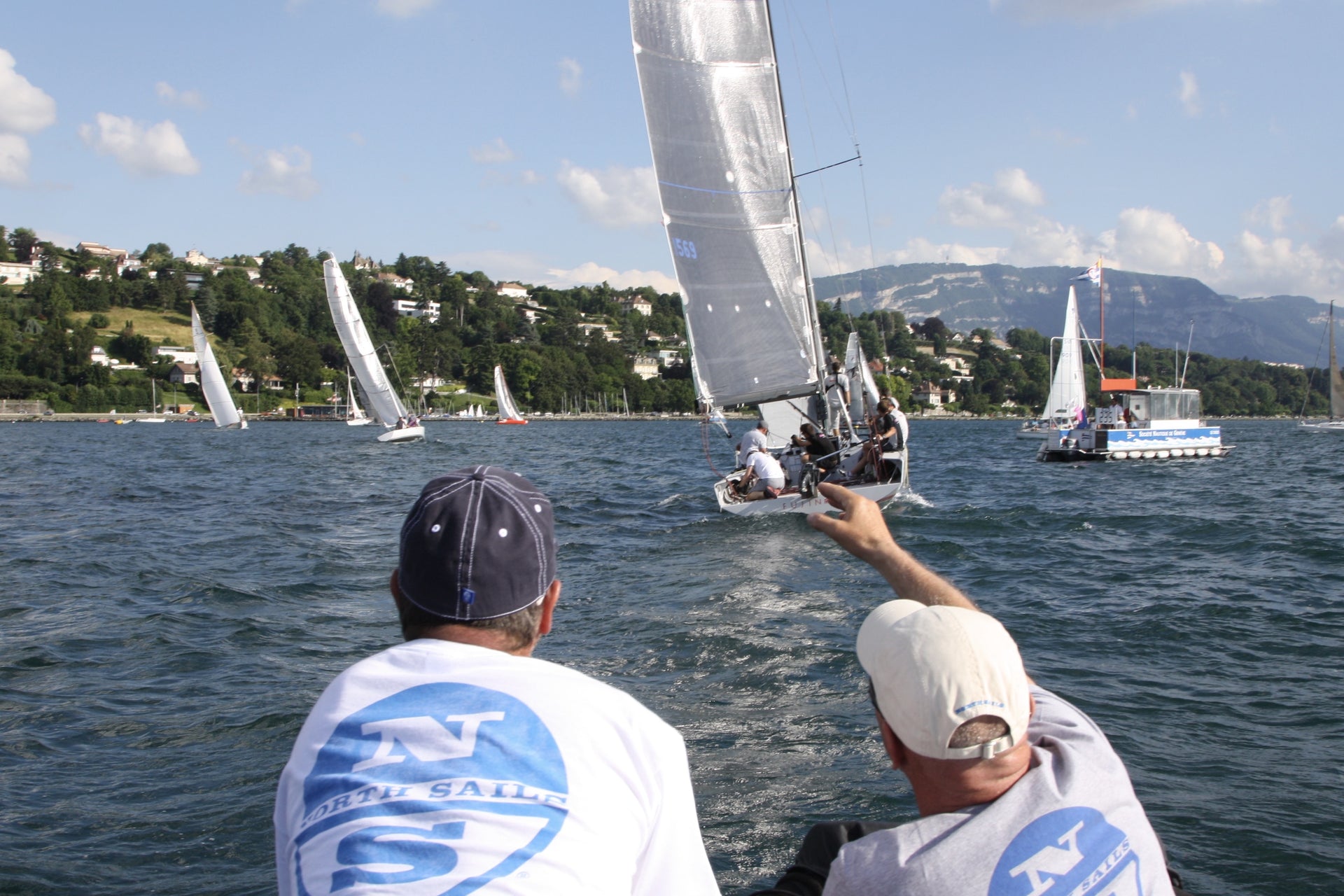
CONCEPT NORTH EXPERIENCE
Depuis mai 2015, North Sails Suisse vous propose son nouveau concept North Experience ! D'une part, nous avons besoin de vos retours afin de faire évoluer nos voiles et d'autre part, vous avez souvent des questions à nous poser sur les réglages de mât, l'entretien des voiles, leurs réglages selon les conditions etc.
Après le succès des premières sessions à Genève et Lausanne, nous continuons de vous proposer de passer une journée ensemble selon un programme type, puis adapté aux participants.
Livre d'or suite aux sessions North Experience ayant déjà eu lieu (Classe Surprise à Genève et à Lausanne, classe Esse 850 à Lausanne) :
Thierry et Edgar LANZ, Surprise Malice, SUI 671
"Merci pour cette journée fort intéressante. Les explications et les dessins au tableau ont été simples, clairs et logiques. Bravo !
Le manque de vent n'a pas vraiment été handicapant car ce sont également des conditions que nous connaissons parfois.
Un point que nous avons particulièrement apprécié car très intéressant et bien présenté : le réglage du mât. En effet, le format que vous avez choisi est parfait : très bonne introduction théorique suivie d'une mise en pratique : « astuces » pour prendre les mesures, séquence des réglages (galhaubans, puis étai, etc.), très instructif !
Notre appréciation sur le point de vue logistique : parfait ! Vraiment super que vous ayez pu nous suivre sur le plan d'eau avec le Zodiac afin de pouvoir nous faire vos remarques et donner les conseils « en live ».
Le plus : très sympa d'avoir pu prendre le repas de midi tous ensemble, et dans un temps relativement court pour ne pas perdre de temps.
Il y a un autre sujet qui nous intéresse de creuser et apprendre des « astuces » qu'on ne trouve pas dans les livres : le réglage du spi. Peut-être serait-il possible de combiner ce sujet sur une journée avec la tactique des départs ?
Encore une fois merci la journée d'hier !"
Daniel CHENAUX, Surprise, SUI 763
"Merci pour votre invitation et la qualité de votre présentation, de même que pour la sympathique prestation des collaborateurs de NS."
Sarah HENRY, Surprise Miss tick, SUI 435
"Au nom de tous les membres du CUST présents et de l'équipage de Miss Tick et Corto, je te remercie pour l'organisation de la journée de dimanche !
J'ai reçu beaucoup de mails de membres enchantés par leur journée et qui remercient Tosh, la voilerie North et toi.
C'était super bien organisé et très riche en apprentissage. Le concept théorie et réglages des bateaux le matin et pratique l'après-midi permet de travailler sur tous les aspects!
Et une fois de plus, le fait de pouvoir avoir des professionnels qui viennent directement régler nos bateaux et nous donner des conseils personnalisés, crée un lien de confiance avec la voilerie North que nos membres apprécient vraiment beaucoup.
Merci aussi pour l'apéro qui nous a été offert ;)
Si vous refaites une journée comme cela, c'est avec grand plaisir que nous y participerons à nouveau !"
Frédéric MACHERET, Surprise Mc One, SUI 644
"Voici mon feedback suite à la journée organisée pour les Surprises à la SNG :
- Excellent support théorique, très clair et dynamique.
- Présentations pro et explications très compréhensibles pour tous les niveaux.
- Application pratique idéale et excellent coaching sur les bateaux (excellent workshop)
- Programme prévu pas complètement abordé, mais par contre très bien adapté aux conditions de vent (trop peu de vent pour faire des départs ou utiliser le spi par exemple).
J'ai énormément profité de cette journée et je me réjouis déjà de la suite.
Un grand merci pour l'organisation de cette journée de formation."
Christophe BRUNETTO, Surprise Hinano, SUI 747
"La journée de dimanche était intéressante et bien organisée. Merci du temps consacré et des conseils prodigués."
Comment s'inscrire ?
Lorsqu'une session est programmée, le lien Doodle figure sur cette page (ou vous a été envoyé par email).
Cliquez sur le lien qui vous intéresse (c'est très simple, vous allez voir !)
Ecrivez dans la 1ère case : votre nom / le nom de votre bateau (si vous en avez un) / le nb d'équipiers présents / un email / un N° de téléphone
Puis cochez les jours selon vos disponibilités (Oui/Non/Peut-être)
Le jour où le plus de gens seront disponibles, nous validerons la date et enverrons l'information aux participants par email et sur cette page.
Deux membres du team North Sails Suisse se rendront alors le jour choisi, au lieu convenu avec canot moteur, bouées, appareil photo et ordinateur pour le debriefing.
Comment demander la création d'une session North Experience ?
Prenez contact avec Julien Monnier : julien.monnier@northsails.com / 079 574 11 15
Programme type de la journée:
10h00-12h30 : partie théorique en salle - Réglages de voiles et réglages de mât / questions diverses / mise en application sur les bateaux
12h30-13h30 : pause déjeuner (organisation possible d'un déjeuner commun sur inscription le matin)
13h30-16h00 : partie pratique sur l'eau (selon météo : séquences de départ, petits parcours autour de bouées, interventions VHF et à bord de chaque bateau etc.)
17h00 : debriefing en salle
18h00 : Apéritif offert par North Sails Suisse
Pour toute question, Julien Monnier est votre contact North Experience : julien.monnier@northsails.com / 079 574 11 15
READ MORE
READ MORE

ALBACORE TUNING GUIDE
Introduction
The settings in this guide will help you get the most out of your Albacore North Sails. As always experimentation and documenting will enhance your specific boat. The weight of the crew, the balance of the boat, the stiffness of the mast and local wind and sea conditions will impact your tuning. This guide was developed with the Superspar M2 mast and B2 boom.
Boat Set-Up: Foils
The basic hull and foil set up is similar for most Albacore builders and sails. Typically the centerboard is moved as far aft in the boat as the rule allows. The minimum allowable distance from the transom to the leading edge of the centerboard when lowered 90° to the hull is 2600 mm measured along the curve of the hull. It is normal to have the board within 1 5mm of this measurement.
It is increasingly common to rake the centerboard forward in flat water and in winds less than approximately 1 2 knots. Ensure the board can do this and that the 90° position is clearly marked and visible inside the boat. The trend is also to have flexible centerboards that have good gust response and give a slight gibing effect when raked forwards in light to moderate winds.
Make sure that the centerboard and rudder are aligned. With the mast off and the boat upside down, stand behind the boat and sight along the foils. I f they are not aligned, normally the rudder has to be moved to bring the foils into alignment.
Mast Butt Position and Rake
The maximum forward position of the mast butt is 3350 mm measured from the aft face of the transom to the fore side of the mast at the foot. 3335 mm is the recommended starting point for North sails. This will provide sufficient pre-bend without compromising the ability to ram the mast far enough aft to allow the boom to pivot around the leeward shroud while sailing downwind. The most robust measurement for rake is to mark the mast at the hull sheer line. Put a straight edge across the partners aft of your mast and measure down the shear line on both sides of the boat. Use the hull skin to deck intersection. Calculate the average of those two. Place a mark on your mast that same average distance down from the top deck. Disconnect the bottom of the headstay and swing it to the mark you just made on your mast. Mark the headstay at that point. (extend with line if necessary). Replace the headstay back to the bow. Hoist the jib and tighten the halyard just enough to take the slack out of the shrouds. The mark on your headstay measured to the top surface of the deck at the bow should be about 6”. I f it is not you may need to move your shrouds up or down to achieve the 6″. This is your max forward light air setting. In winds above 1 5 knots it is common to pin the shrouds down one pin from this position. Above 20 knots two pins is common.
North Sails
North Albacore Sails are cut to be powerful. Both main and jib have a fair amount of depth which is needed for superior downwind performance. In order to achieve superior upwind performance proper mast bend is required. The objective is to add just enough bend to keep the leech tell- tales flickering while in full power mode, and then as much bend as is required to flatten the sails in stronger winds. Bend is achieved primarily with boom vang, but pulling the mast forward at the partners, easing the jib halyard, and lots of main sheet all contribute to mast bend.
Pre-bend
A system to increase the bend of the mast at the partners is very important. A strut is the preferred method because it it raises the fulcrum where the bend occurs, but a simple tackle system at the partners will suffice. In most wind conditions upwind the mast must be pulled forward or “pre-bent” so that it resides about 1 ” -2” from front of the partners. In very light winds the mast will have to be bent all the way to the front of the partner to open the leech. In strong winds the mast should be allowed to bend to within 0.5” of the partner (any more than that and you risk over-bending and damaging the mast when you ease the head-stay). In light winds the mast will be fully pre-bent while reaching. The amount of pre- bend is gradually reducing as the wind increases. The correct time to reduce the pre-bend can be hard to judge, however if the mast is not pre-bent enough, the luff of the main is too full and the leech ticklers are difficult to fly all at the same times as the ticklers 1 /3 back from the luff. When this is correct, all ticklers can be flown.
Spreaders
A good way to check the spreaders is to set the mast at the max forward, light air position. There should be zero shroud deflection in any plane (I.E. totally straight shrouds with no deflection at the spreader tips). Put your eye close to the chainplate and sight up the shrouds. This should produce a spreader length of about 1 5-1 5.5” and a sweep of approx. 7” (Standard spreaders have to be shortened to achieve this). This position is a good starting point for crew weights of up to 360 lb. Above this consider increasing the length of the spreaders by 0.5-1 ”.
Jib Sheeting Position
A good way to start is to fold the jib head to the jib tack and mark the mid- point of the luff. Then draw a line on the clew patch from this point to the clew of the jib. By eye extend this line down to the jib track. Experience has shown that the best light/moderate jib lead position is about 4-6” aft of this point. Further forward of this and the lower third of the jib can get too full. As the wind increases the jib car needs to be moved aft. In very strong winds this sheeting position can be as much as 1 0” aft of the starting position. This will flatten the foot of the jib and open the leech. It is important not to over-sheet the jib so that the main is backwinded, or, the jib leech tell tail is stalled. The jib height must be adjusted so that the foot of the jib is in full contact with the foredeck upwind. The jib height can be adjusted through the lashing of the sail to the wire at the head. It is a good idea to raise the jib in light air to get extra sail area, and lower it in heavy air to keep the foot touching the deck when the jib car is moved aft.
Main/Jib Cunningham
The function of the cunningham is to move the point of max depth forward, or aft in the sail. Tightening the luff pulls the max depth forward. Maintain the max depth of the main just forward of half way. The more the mast bends the more Cunningham will be required. The jib max depth should be further forward about 1 /3 of the way back from the luff. (like an airplane wing) It is important that the jib and main cunningham are released off wind.
Outhaul
The North main is powerful at the foot so it is important that this is restrained upwind. In very light winds the outhaul is pulled so that the foot is taught. Above 1 5 knots it is pulled very tight. When reaching the outhaul needs to be eased. Maximum power is approximately 2-3” of release on the outhaul. This will be sufficient to open the foot of the main.
Jib Halyard Tension
In light winds upwind, the jib halyard is often set to allow for about 2” of sag at the mid luff. This should provide great speed and a wide groove. Tightened a little to improve pointing or slackened a bit to increase speed. Limiting Jib wire sag to about 2″upwind is important until the wind becomes overpowering. Above this, the sag is less important because the jib halyard is let off to increase mast bend and rake. It is a good idea to mark your halyard adjuster to know where your rake is. Check the section above “Mast Butt Position and Rake”. Mark your halyard adjuster on the mast at a point where you achieved 6” of rake. Then make a scale on it in 1 ” increments. 8-1 0″ of rake is common at the upper wind ranges. The halyard is loosened, the vang is tightened and the shrouds are pinned down. While reaching the jib halyard is eased to achieve 2-4” of jib wire sag. Many of the top boats have a system to tension the fore-stay while reaching in light to moderate conditions. With this applied, the halyard can be loosened to give jib luff sag and a powerful jib without affecting the mast bend control.
Vang
The vang is completely loose in light winds. As the wind increases a little use the vang to keep the top batten parallel with the boom. More and more vang is used as the wind builds. Once you are both hiking a harder vang will bend the mast and depower the sails. It is a sensitive control and too much vang can lead to a sail with too tight a leech, or too flat a main. Too little vang can lead to too deep a main, or too much twist. Correct vang adjustment and appropriate jib halyard are critical to maintaining good balance and the right amount of power. When reaching the vang is used to keep the top of the main from getting too loose. Good reaching speed is obtained with constant adjustment of vang and deck level mast bend in response to the changing conditions. Try to keep all of the main ticklers flying.
Wing on Wing
When wing on wing, it is important to get the boom out as close to 90° as possible, and the jib foot snug. With this in mind, the jib halyard is loosened off by at least 6” and the mast rammed all the way to the back of the partners. It is common to let the jib halyard off to give 8”+ of jib wire sag. Above 6-8 knots get the jib out and away from the mainsail. Normally the centerboard is fully in the case and the boat is heeled to windward. Vang should be set to give just a small amount of leech twist as can be seen from the photo.
George Carter
2015 International Champion
READ MORE
READ MORE
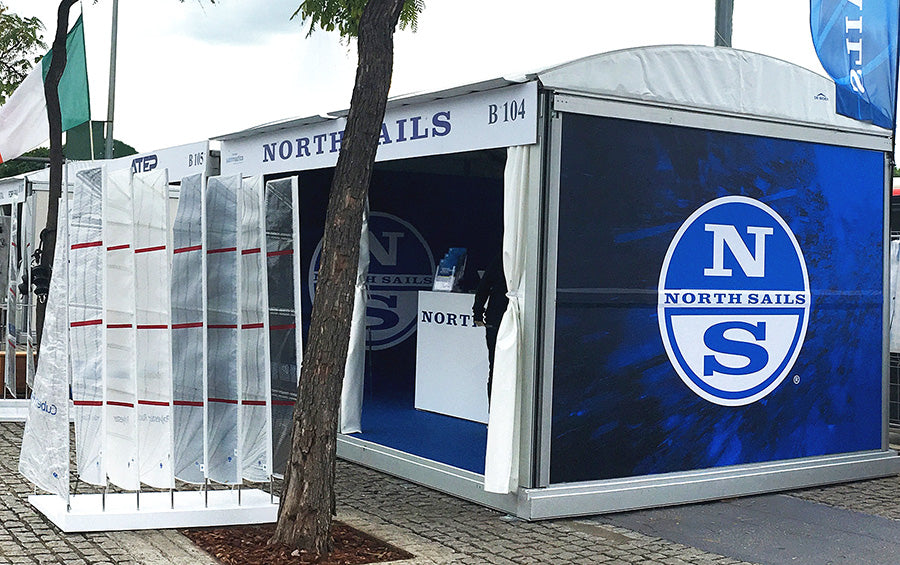
PORT GINESTA Y DÉNIA
PORT GINESTA Y DÉNIA
En North Sails España ya hemos comenzado nuestro programa 2017 de presencia en ferias y salones náuticos.
© North Sails
Entre el 21 y el 23 de abril participamos en el Sailing Meeting Barcelona celebrado en Port Ginesta (Barcelona), y el pasado fin de semana (28 a 30 de abril) nos desplazamos a Dénia (Alicante) para el Salón Náutico de Dénia. En ambos eventos ofrecemos precios especiales, una excelente oportunidad para realizar la compra de velas de cara a la temporada que comienza.
Para más información sobre la presencia de North Sails España en salones y ferias náuticas, y sobre las ofertas especiales, contacta con nosotros en info@es.northsails.com
READ MORE
READ MORE
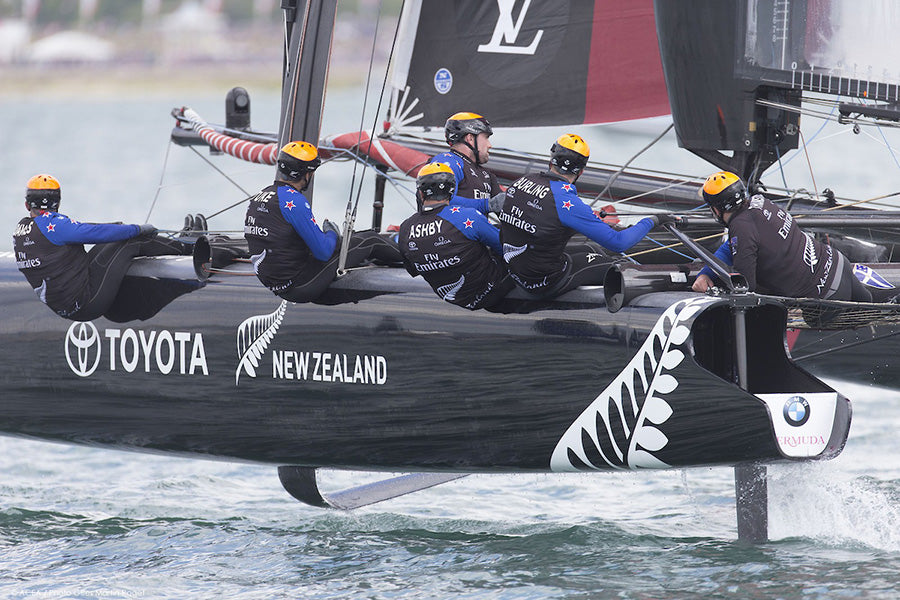
LLEGA LA 35ª AMERICA’S CUP
LLEGA LA 35ª AMERICA’S CUP
Las series de calificación para la 35ª America’s Cup arrancan el 26 de mayo y se desarrollarán hasta el 12 de junio en Bermuda bajo el nombre de Louis Vuitton America’s Cup Qualifiers.
© Gilles Martin-Raget
Competirán el sueco Artemis Racing, el neozelandés Emirates Team New Zealand, el británico Land Rover BAR, el francés Groupama Team France, el japonés SoftBank Team Japan y el ‘Defender’, el estadounidense ORACLE Team USA. Todos ellos tienen un denominador común: competirán con velas North Sails, firma oficial de la America’s Cup. El ganador se enfrentará al defensor de la Copa en el esperado America’s Cup Match a partir del 17 de junio.
Para más información, contacta con nosotros
READ MORE
READ MORE
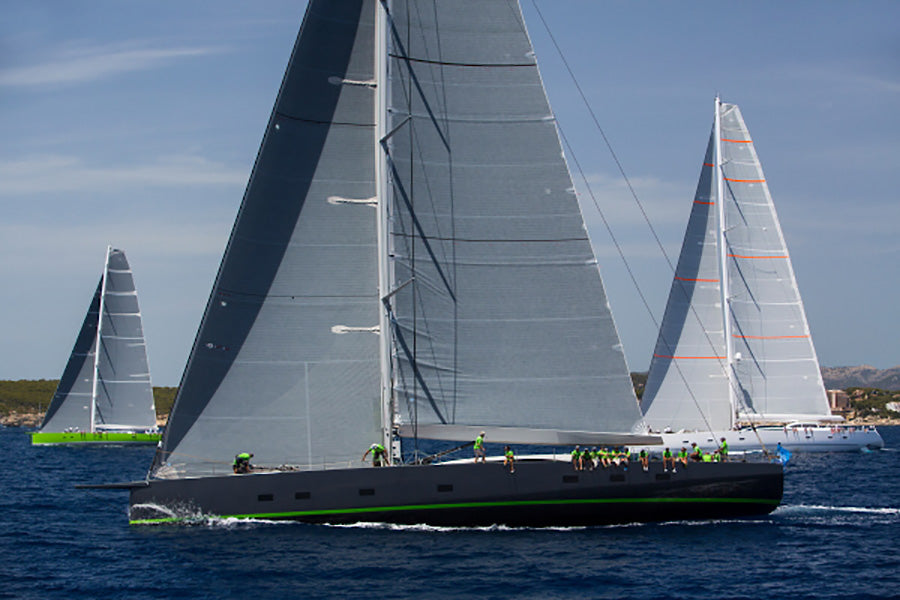
COMIENZA LA TEMPORADA
COMIENZA LA TEMPORADA
Comienza la temporada de grandes regatas en el Mediterráneo. La 14ª edición de la Sail Racing PalmaVela (Palma, 3 al 7 de mayo) reunirá a cerca de 150 barcos de 16 nacionalidades, y North Sails volverá a ser la velería de referencia para los equipos más potentes.
© Stuart Pearce.com
El listado de clientes North Sails en aguas de Palma incluirá a la práctica totalidad de la flota Wally –incluyendo los imponentes Magic Carpet Cubed, Open Season, Galateia, el español Galma o el J One, ganador de la categoría en la última edición–, el Maxi 72 Pepe Cannonball – en su estreno mundial –, los ClubSwan 50 –en su esperado debut europeo–, y buena parte del resto de participantes. Como siempre, el equipo North Sails estará prestando asistencia a todos nuestros clientes.
Más información sobre la Sail Racing PalmaVela, aquí
READ MORE
READ MORE
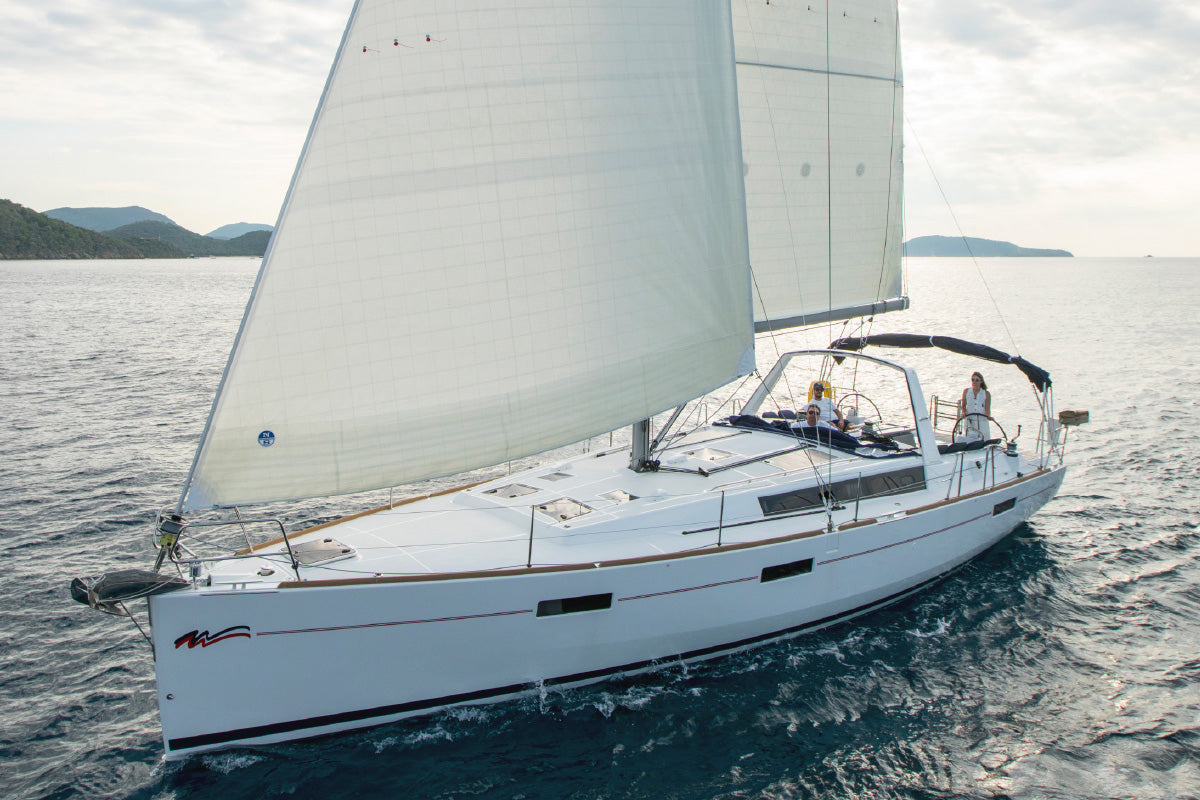
3Di NORDAC: REVOLUCIONAMOS LA VELA DE CRUCERO
3Di NORDAC: REVOLUCIONAMOS LA VELA DE CRUCERO
El próximo 1 de junio iniciaremos la comercialización de nuestra esperada 3Di NORDAC® para crucero, una revolucionaria vela que combina por primera vez el tradicional tejido de poliéster con la tecnología 3Di®.
El Dacron (poliéster) lleva años demostrando un buen equilibrio entre estabilidad ambiental, resistencia y bajo coste, características muy valoradas por el crucerista. Pero en North Sails estamos convencidos de que puede dar mucho más.
Tradicionalmente, las velas fabricadas con tejido entrelazado pierden su forma mucho antes que su integridad estructural se vea comprometida, con la consiguiente falta de satisfacción para el usuario. Los ingenieros de North Sails decidieron eliminar esa descompensación combinando por primera vez el Dacron con nuestra contrastada tecnología 3Di, toda una garantía de prestaciones y durabilidad. Así nació la nueva 3Di NORDAC, una vela para barcos de media y pequeña eslora que se incorporará al catálogo North Sails a partir del próximo 1 de junio.
La 3Di NORDAC extiende los beneficios de la tecnología 3Di (rendimiento, conservación de la forma y durabilidad) a un abanico más amplio de la comunidad de la vela, y a un precio asequible. El resultado es una experiencia de navegación con menor escora, menor carga de timón y menor deriva en una vela de Dacron más ligera y más manejable que nunca, sin sacrificar la durabilidad que es tan importante para los usuarios de crucero. Según Luis Martínez Doreste, director comercial de North Sails en España: “Las velas 3Di han sido probadas en todo el mundo, y estamos convencidos de que la 3Di NORDAC es la mejor inversión posible a largo plazo cuando consideramos el ratio precio vs. durabilidad/rendimiento”.
La incorporación de la 3Di NORDAC completa la familia de velas North Sails 3Di, de la que también forman parte las 3Di ENDURANCE® (para competición oceánica y crucero alrededor del mundo), 3Di RAW® (para todo tipo de competición de alto nivel) y 3Di RACE® (para barcos de regata club con esloras entre 20 y 40 pies).
READ MORE
READ MORE
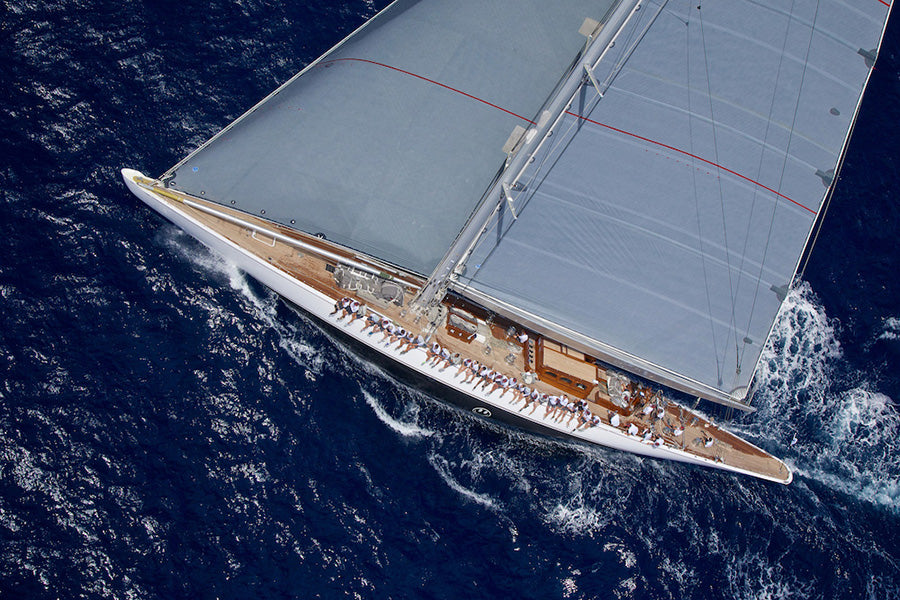
PROVEEDOR OFICIAL DE VELAS PARA LOS J-CLASS
PROVEEDOR OFICIAL DE VELAS PARA LOS J-CLASS
North Sails se ha convertido en proveedor oficial de velas para la J-Class Association. Los J-Class nacieron a principios del siglo XX y protagonizaron la America’s Cup en la década de 1930.
© J Renedo
Hoy disfrutan de una segunda juventud gracias a un grupo de apasionados armadores y una activa asociación que organiza un circuito de regatas en el que compiten unidades originales restauradas y réplicas, siempre con esloras en el entorno de los 140 pies. El acuerdo de colaboración con la J-Class Association incluye la creación de la Kohler Cup, un trofeo en memoria del ex propietario de North Sails, Terry Kohler. Premiará al mejor J-Class de la temporada y será entregado en el Mundial de J-Class a disputar en Newport (Rhode Island, Estados Unidos) el próximo mes de agosto.
READ MORE
READ MORE
CUMPLIMOS 60 AÑOS
CUMPLIMOS 60 AÑOS
En 2017 celebramos 60 años de extraordinaria historia como líderes mundiales en tecnología de diseño y fabricación de velas.
En 1957, Lowell North decidió abandonar su carrera de ingeniero espacial para fundar una pequeña compañía velera en su garaje de San Diego (California, Estados Unidos). “Era un poco sucio y polvoriento”, recuerda, “pero lo suficientemente grande como para fabricar la mayor de un Star”. Ganador de un oro y un bronce olímpicos, y cuatro mundiales de clase Star, North confió en la metodología científica para el desarrollo de las velas. Un enfoque que cambiaría el mundo de la velería para siempre.
North Sails revolucionó el mercado de las velas con la introducción del 3DL en 1992 y con el 3Di en 2009. En su condición de velería líder mundial, cuenta con siete centros de producción propios en seis países, una plantilla de 1.500 trabajadores y decenas de miles de velas izadas anualmente en puertos y océanos de todo el planeta. Miembro de la familia de compañías North Technology Group, North Sails juega un papel de liderato en desarrollo e ingeniería de materiales que ha producido tecnología sin igual en velas, mástiles, fibras y mucho más, y que le permite mantener una colaboración activa con compañías aeroespaciales, la Fórmula 1 y la NASA.
Fundada en base a un decidido enfoque científico aplicado a la fabricación de velas, North Sails se mantiene fiel a los valores que llevaron a Lowell North hacia el éxito: análisis y desarrollo interno de materiales de calidad, diseño enfocado al rendimiento, artesanía de calidad y servicio al cliente.
En North Sails seguimos haciendo historia.
Más información sobre la historia de North Sails, aquí.
READ MORE
READ MORE

GLOBAL SALES MEETING EN LISBOA
GLOBAL SALES MEETING EN LISBOA
Lisboa acogió la reunión anual de los delegados North Sails en todos los mercados en los que la firma tiene presencia.
Todos los departamentos estuvieron representados, desde marketing a ventas, pasando por fabricación y diseño. No faltaron nuestras marcas hermanas Southern Spars, Future Fibres y North Sails Apparel, así como la visita sorpresa de Thomas Coville. Intensas jornadas de trabajo en las que compartimos experiencias y nos asomamos al futuro de la marca, descubriendo apasionantes proyectos y productos que pronto os desvelaremos.
READ MORE
READ MORE
1720 TUNING GUIDE
Tuning Set-up
BEFORE YOU STEP THE MAST
Before stepping your mast there are a number of things to do that will make your boat easier to sail and the sails easier to trim.
MARKING THE SPREADERS
Before stepping the mast put a mark on the underside of each spreader (first spreader up) 100mm in from the spreader tip. Use either coloured tape or a felt tip pen. We’ll use this mark later as a guide to trimming the large jib.
JIB TRACKS
With a high aspect ratio jib like the 1720’s, the lead position is crucial to good speed. The stock hole spacing on the tracks is simply too far apart to get the lead right in all conditions. We suggest drilling one extra hole between stock holes on the track. Also drill out the heads of the screws to increase your adjustment possibilities. It is only necessary to do this at the back half of the track, as the front half is never used.
MAINSAIL
The 1720 main has one full-length batten at the head and three long battens at the base. The batten pockets on your North mainsail are a little different to accommodate these long battens. These pockets use Velcro closures rather that the traditional elastic to keep the batten in. The amount of pressure on the pocket is important especially on the upper batten. Be sure your battens are tight enough to remove any vertical wrinkles coming off the pocket, but not so tight as to induce curve in the batten. If the sails are new just put a bit more tension for the first outing just to allow for give in the batten pocket. Be sure to check your batten pocket tension when sailing.
TUNING THE RIG
These steps will get you set up to sail the boat in moderate conditions and give you all-purpose tune. In the following section we will describe adjustments to make the boat perform at it’s best in the full range of wind and sea conditions.With the rig in the boat and the forestay in place tighten the caps and lowers by hand until firm and you cannot tighten them any more. At this point adjust the gooseneck shrouds to centre the mast at boom height. To do this use a tape measure and check the exact length of each shroud to ensure accuracy. Again at this point the gooseneck shrouds only need to be hand tight. The next step is to measure from the masthead down to the chainplates on both sides. Tighten or loosen the upper shrouds until the mast is centred from side to side. Once you have achieved your AP setting you should mark the shrouds before de-rigging to make setting up the rig faster next time. Unfortunately at present the class rules outlaw the use of calibrated bottle screws, which in our opinion is a backward step as they make setting up the rig a piece of cake! Using a Loo’s model (PT-2) Tension gauge, tighten the uppers evenly, until the uppers measure 28 on the gauge. Then tension the lowers to 23 on the gauge and this will give you approximately 55mm of pre-bend at the spreaders. The gooseneck shrouds need to be set at around 5 on the gauge, and then you will be almost ready to sail! The final step is to tension the topmast shrouds. Now we are all using the double spreader rig these can be set a little looser than before, and we recommend that with only a 1/6th of the backstay travel applied the top shrouds should be hand tight. This is a little hard to describe in words but take a little time to determine the travel of the backstay, if in doubt put on slightly more rather than less!! Hook up the backstay, install the boom and you are ready to go sailing in moderate conditions. We have found these settings, to be good starting point for most people. Note: The rig tension measurement is taken without the backstay hooked up or the boom hanging off the main halyard. The weight of the halyard or tension in the backstay can effect shroud tensions. So to be consistent, we always leave these items loose when tuning the rig.
ADVANCED RIG TUNING
Adjusting the tension of the upper and lower shrouds changes the amount that the headstay can sag and the amount of pre-bend in the mast, which directly effects the fullness of the jib. Shroud tension also effects the mast and mainsail shape by controlling fore, aft and sideways bend of the rig. In general you will want the pre-bend reduced in lighter conditions and increased in a breeze. The aim of this is to increase and decrease the amount of power available from the up-wind sail plan. From our starting set up described above we will increase and decrease the tension on the lower shrouds to change the amount of bend in the rig. All the settings below start from the base settings which we have stated above:0-5 Knots – Take 2 turns off the caps and -1 turn on the lowers5-10 Knots – Take 2 turns off the caps
10-15 Knots – Leave as base
15-20 Knots – Add 2 turns on caps
20-25 Knots – Add 2 turns to caps and add 1 turn to the lowers
25-30 Knots – Add 3 turns to caps and add 2 turns to the lowers
The above settings are a good guide for changing gears but do not take into account the sea state. You will therefore find you can go tighter than those suggested in flat water, but will probably want to go looser in really choppy water down the wind range.
Sail Trim
MAINSAIL
Mainsheet
Upwind use the mainsheet functions to control the overall amount of twist in the leech of the mainsail. Once the traveller is set, we trim the mainsail until the back end of the top batten is parallel with the boom. We then fine tune the mainsheet tension depending on what gear we want to go in. If we want the boat to point we can trim the mainsail harder, reducing twist and the helm will load up a little allowing us to point higher. Eventually, as we point higher, we will slowly lose speed and need to foot off again. In order to foot we need to ease the mainsail slightly to twist open the leech and ease the load on the helm, we can then drop the bow down slightly to foot and build speed without heeling the boat over and inducing helm. The mainsheet can also bend the mast and flatten the sail (especially near the top).
Traveller
The traveller controls the athwartship’s position of the boom when sailing upwind. We’ve found that it never pays to have the traveller car more than 6″ above the centreline of the boat. In general the traveller will be on or very slightly above the centreline in light air, and below, or well below in moderate to heavy air. Once you are overpowered constantly, or sailing in waves, it is generally faster to keep the traveller fully down and drive the boat a little faster through the water. The 1720, like many other one designs needs to be sailed flat upwind. In puffy conditions it is often faster to play the mainsheet when a puff hits, than to ease the traveller or feather the boat. The goal when playing the mainsheet upwind is to keep the boat flat and on an even angle of heel through all changes in wind velocity. Start judging the angle of the jib against the horizon and work to keep it constant.
Outhaul
The Outhaul controls the depth of the lower third of the mainsail. Upwind, except in very light air and choppy water, the outhaul should be tight or out to the black band. Downwind, reaching or running, let the outhaul off so that the middle of the foot is 5″ away from the centre of the boom. In heavy air you may want to keep the outhaul tight to de-power on the reaches and project more sail area. We like to keep the outhaul tight upwind to reduce the amount of drag the lower part of the sail produces. The sheeting angle of the jib is very tight on the 1720 and easing the outhaul too much upwind will reduce the size of the slot and result in poor flow between the mainsail and the jib.
Boom Vang
In moderate conditions upwind we trim the mainsheet to where we want it and then take the slack out of the boom vang. This way when we ease the mainsheet for a puff and the boom does not rise up and twist open the mainsail leech. As the wind velocity increases the vang starts to become redundant up-wind and all of the loads are taken on the mainsheet only. The real benefit of this is that when you ease the mainsheet in a strong gust the sting is taken out straight away and the boat does not heal excessively.
Cunningham
The cunningham is used to control the draft position in the main. Our mainsail is made from very low stretch Mylar that does not change shape much as the wind increases. Because of this we find we do not need to use the cunningham much except in very heavy air. Upto about 16 knots, tension the cunningham enough only to leave slight wrinkles coming horizontally off the mast. After that if you feel that the draft has moved aft slightly, use only enough tension to pull it back forward to it’s designed position.
Backstay
The backstay is probably the least used mainsail control on the 1720. Upwind we do not use the backstay until about 18-22 knots of wind. At that point after dropping the traveller, the boat will still be slightly overpowered. Tighten the backstay very lightly to bend the top of the mast and de-power the sail. After tightening the backstay, the top of the main will twist open requiring you to trim the mainsheet slightly. Conversely, if you ease the backstay the main leech will tighten slightly forcing you to ease the mainsheet. If you find the mainsail starts to flog in an uncontrolled manner at this point remove backstay tension, as this is a sign of too much backstay. If in any doubt let it off and sail with the smallest amount on. Downwind in heavy air you will want to keep some tension on the backstay to keep the mast from moving too far forward. The swept back spreaders of the 1720 rig keep the mast from moving forward and you can keep the backstay loose downwind in light to moderate airs. As good practice get a crew member to sight up the mast to check for reverse bend. If the mast is bending forwards apply backstay until it comes straight.
Genoa Trim
We start by finding the correct lead position in the moderate air. Remember if the inside top tell tail breaks first, move the lead forward until all tell tails break together. In light to medium airs we usually sheet the genoa with 2 of the standard hole spacing showing. As the wind increases we quickly recommend moving the leads to the back of the track and twisting the sail but keeping the foot tight along the deck. In flat water and as long as the mainsail is not back winding, sheet the genoa onto the mark on the spreaders. As you get progressively over powered and waves are an issue, sheet the sail on or close to the spreader tip when sighting down to leeward in the cockpit. When you reach the top end of genoa conditions, sheet at the back of the track and ease the sheet as much as is required to stop the mainsail flogging. Anything that can be done at this point to keep the leech of the mainsail working will result in better speed upwind. At the other extreme be sure to keep the sheet well eased in light air to twist open the top of the jib and keep the slot open. You will probably be sheeting 85-100mm outside the mark in less than 6 knots. The halyard tension on this sail should not be over tensioned, small wrinkles should always be showing from the hanks, in all conditions. Take care when using the winch on the halyard as it is very easy to over tighten the luff and damage the sail. Extreme care must also be taken when raising and lowering this sail and always ensure that the sheets are not cleated when hoisting and lowering otherwise the sail will tear behind the hanks.
The Asymmetric System
The first thing you need to decide before rigging the spinnaker is whether you are going to gibe the spinnaker clew between the spinnaker luff and the jib or out around the spinnaker luff. We recommend that all gibes are done inside the spinnaker luff in all conditions. Gibing inside is faster, although it can get pretty exciting when the breeze is up. Gibing outside is usually safer in heavy air. But due to the long spinnaker pole on the 1720 we think it is safer to gibe inside all round.
Setting the Spinnaker
We always set the spinnaker to leeward underneath the boom. The first step is to set the pole (bowsprit). Next we hoist the sail up to the hounds before any attempt is made to pull on the tack line. One crew member usually helps to feed out the sail from the bin. As the boat heads downwind and before the boom is all the way out, we quickly pull the tack line while the mainsheet man trims the sheet. The idea is not to pull the tack of the sail out of the boat as you approach the weather mark, but to wait until the head of the spinnaker reaches the hounds. Keeping the tack back slightly helps to reduce the chance of the sail filling too early, and sliding under the boat! This is not fast!
Gibing the Spinnaker
Gibing the 1720 spinnaker is probably the most athletic job on the boat because there is a lot of sheet to pull in. We find that it is not how fast the old sheet is eased that is important, but how fast the new one is pulled in (at least on inside gibes).Start your turn slowly, easing the spinnaker sheet as the bow comes down. As the boat starts to lose speed, roll the boat to weather to turn the boat without using the tiller. As the boom comes over, quickly trim in the new sheet. Be careful not to trim the sheet too much, as it is easy to oversheet and slow the boat further. The outside gibe is much the same, except that easing the old sheet quickly is much more important to get the spinnaker clew out in front of the boat early.
Dropping the Spinnaker
We always try to take the spinnaker down on the port side, normally the weather side, so that we are already set up with the spinnaker on the correct side for the next set. The best way to do the weather take down is by coming into the leeward mark a little high. You can then run down right at the mark, making it easier to pull the clew around to the windward side of the boat. Drop the asymmetrical as you would a regular spinnaker by gathering the clew first, easing the tack line fully, and then finally the halyard checking the progress to ensure that the sail does not touch the water!
Trimming the Spinnaker
Trimming the 1720 spinnaker is very easy. Basically, you trim an asymmetric the same way you would a jib or genoa. Pull the sail in enough to keep 6-8″ curl in the luff. As with any other spinnaker, be careful not to over trim. Always keep the sheet moving in and out. This apparent wind moves around very fast on the 1720, so rapid trimming and easing of the sheet is important. When reaching it is important to keep the tack of the sail within 500mm of the end of the pole. This makes the luff straighter, opens the leech and increases the forward force of the spinnaker. When running or sailing deep, let the tack line off about 1.5 – 2 metres to allow the luff of the spinnaker to roll around to windward, this will allow you to sail a little lower. In certain conditions it will pay to have the tack line on the winch and trim it on and off to keep the sail working 100%.
General notes on sailing the boat
Always sail the boat as flat as possible.Be sure not to point or pinch too much. The foils on the 1720 are quite thin and stall easily at low speeds.Keep the crew weight forward upwind and downwind, when not on the plane.Move crew weight aft downwind in heavy air. We mean a long way back. Usually one of the crew moves behind the helmsman to the pushpit. This keeps the bow out of the water and keeps the boats planing.Keep the helm as neutral as possible upwind and downwind. The boat is meant to be sailed with a neutral helm. If you have a weather or lee helm, something is wrong with your trim or set up.
Caring for your sails
Your sails from North Sails One Design are constructed from the best materials on the market today. Before we made your sails, we tested many different fabrics from the best suppliers in the world.
MAINSAIL
It is not necessary to remove the battens from the main when storing it. Be sure to roll the sail up parallel to the battens to avoid putting a permanent twist in the battens. Watch the mainsail for signs of wear on the batten pockets where they cross the shrouds. Be sure to wash the sail off with fresh water when it becomes salty and make sure the sail is thoroughly dried before storage.
GENOA
Like the main, always roll the sail after sailing and do not remove the battens. Occasionally wash the sail off with fresh water. If you have been using a lot of leach line on the sail remove this before storing.
SPINNAKER
The best thing to prolong the life of your spinnaker is to always store the sail clean and dry. Although this is not always possible! When the sail gets wet in salt water (and it will) wash it off with fresh water and dry it thoroughly if leaving for a long period of time. Fold your spinnaker to store it if possible.
Good luck on the water!
READ MORE
READ MORE

505 TUNING GUIDE
This tuning guide has been put together by Ethan Bixby from North Sails in North America, who is the designer of our newest 505 sails.
The calibration scheme below does not reuse existing numbering schemes. We have tried to develop a calibration scheme that supports the following:
Standards
Uses reference points common to all builder’s 505s, forward tack and aft tack 505s, etc.Uses zero as the neutral, or basis datum setting.Uses negative numbers for LESS of a control and uses positive numbers for MORE of a control. If that is not clear, the light air settings are on the negative side of the datum and the positive numbers are heavier air settings, finally forward is negative, aft is positive.
Mast Step
Measure from the back of the mast along the top of the CB cap, aft, over transom, to the aft most point of the hull (it may be slightly aft of the transom). Ignore the rudder fittings. The mast should be stepped as close to 10′ 0″ as you can get it and still get the right low bend at max. rake and not hit the partners. Don’t worry if the step extrusion in the boat keeps you about 1/2″ or an inch forward of this point.Note: The aft end of the hull is where the class rule measurements are taken, not the actual face of the transom. This value is more reproducable across different hulls.
Rake
With no jib hoisted, connect a tape measure to the end of the jib halyard. Hoist and cleat the halyard to the point where the “O” on the tape measure starts at the top of the the “gooseneck band” on the mast, with reasonable tension applied. On a boat with an integral wire in the luff of the jib, you can use the topping lift as long as it is very close to the jib halyard/headstay intersection with the mast.
Take the jib halyard (or topping lift) forward and measure from the end of the halyard (at the same tension) to the top of the rail at the bow. This is the top forward part of the boat, regardless of where the headstay is.
Adjust the forestay/jib halyard and shrouds until a measurement of 3 ‘4″ is obtained. The shrouds should not be excessively tight, but snug. Mark that setting on the forestay tackle in the boat, where you can see it. This is the datum rake number, mark it in the boat as “0”. Measuring aft this should be 25’8″.
For future reference record the distance from the eye to the fork pin to some reproduceable point on the boat. On a Waterat I use the bearing point of the jib tack fitting to the headstay fork/eye junction, and on my boat the distance is 5.5″ as an example. Mark that setting as “0”.
All of your rake settings can be simply marked on the luff of the jib adjacent to the fork/eye junction. This is the best repeater and easy to see! Mark one inch increments at additonal inches, i.e. 1,2,3,4,5,6,7.
Note: that the forward rake measurement is much less sensitive to mast bend, shroud tension, hull rocker, and height of transom.
Mast Ram (Bend)
Set rake to 0 (3 ‘4″ forward) or 25’8″ (aft) with mast dead straight and the rig just snug.
Jib Leads (Fore & Aft)
In light or no wind, with the mast rake set to “0” as above, and the ram set to “0” as above, sheet jib in hard. Sight down lead lines on the jib clew. Move jib cars fore or aft until the jib sheet is lined up with the more vertical line. That is the standard power setting. Mark that hole on the jib track as “0”. Number holes with negative numbers forward from there, and positive numbers aft of that hole. The angled aft (slightly closer to the horizontal line) is for heavy air depowering when raked. In practice, you may not need to actually move the jib car for heavy air, as rake changes the lead angle for you. You may need to move the jib lead aft for light air, flat water.
Jib Lead Tension
With the jib still sheeted as above. Mark a spot on the jib sheet that is clear of the cleat and turning blocks. You will be calibrating the jib lead tension based on that mark, so mark the corresponding point on the seat tank as well.
Note: that we use the “normal” trim line on the jib as this allows us to reproduce fore-aft or up-down jib lead measurements across any jib sheeting system, long and short luff jibs, and forward tack and aft tack boats.
Centreboard
Roll the boat over on it’s side. Pull board out and put it in the down position. Set the leading edge of the CB perpendicular to the bottom of boat at the centreboard trunk. Mark the head of the board (perhaps aft end of the head) level with the top of the CB cap. Mark this as “0”. Mark increasing numbers in 1″intervals up the back end of the head. Mark “1,2,3,4,5,6,7,8”. Also mark a position with the board as far down (raked forward) as possible.Also measure from the top of the centreboard to the aft end of the hull on the centreline. With an HA board this number should be roughly (depends on rake and board depth) 122″.
Note: we’re open to suggestions on this. This measurement will result in different effects with different CB planforms. I think what we are really trying to measure is where the centre of area or pressure is fore and aft and below the hull.
Spreaders
Set the spreaders to 16.5″ length (measured from the side of the mast to the shroud), and for 6.5″ poke. For lighter teams, and in very light or very heavy air, increase sweep to 7″. Lighter teams can also shorten spreaders to 16″.
Note: that this measurement is from the shrould to the closest part of the mast, along the spreader. This measurement assumes that your spreaders are 124 inches above deck level (old US specs) AND assumes your shroud chainplates and mast step locations are the same as other boats. If any of spreader bracket height, mast step position and shroud chainplate location are different on your boat, these measurements will not result in the same effects we get.
We have a comprehensive measurement system to relate spreader height, hounds height, spreader details, and triangulation of the chainplates. Please contact us for this as it is a much better tool to obtain the actual deflections and angles.
READ MORE
READ MORE
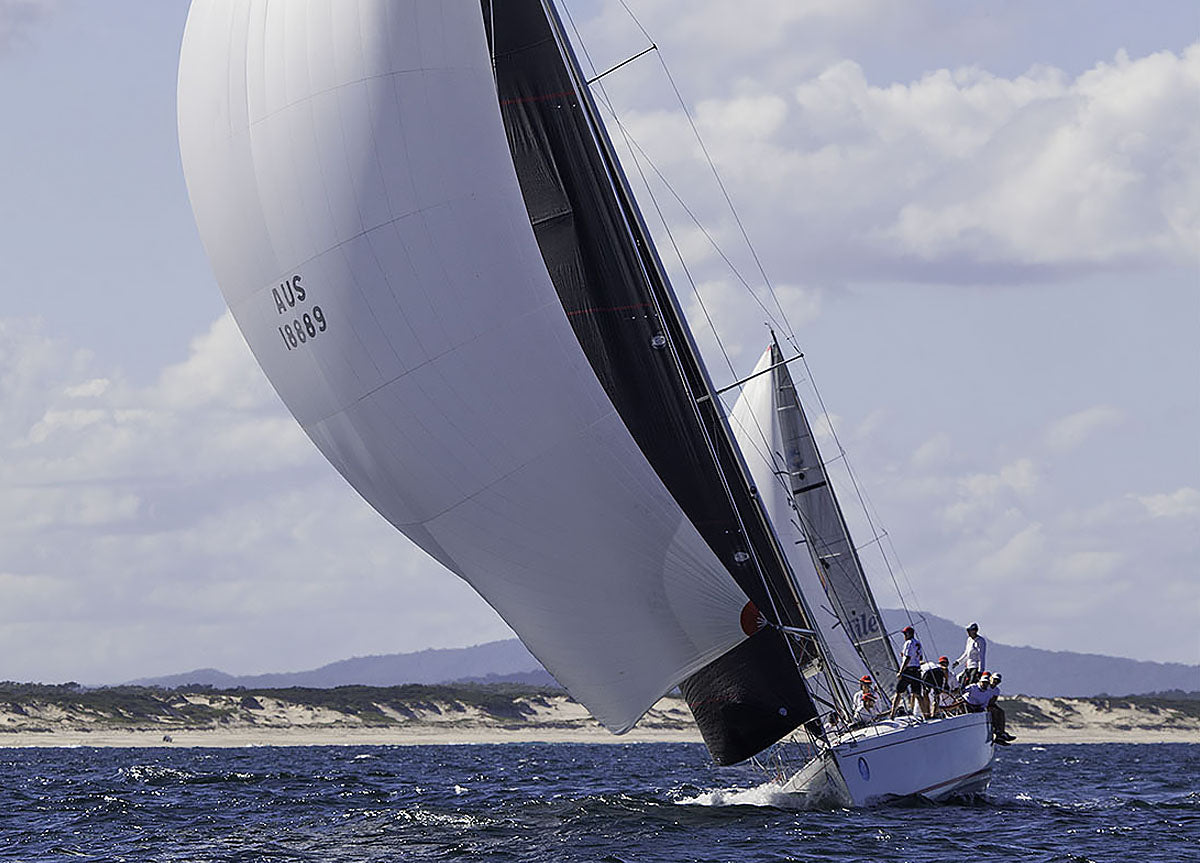
SAIL PORT STEPHENS & NSW IRC AUSTRAILIA
A gap of good weather opened up for the record 114-boat fleet which gathered for the 10th anniversary of Sail Port Stephens, a classic event in Australia’s New South Wales. It began with things calming down for the feeder race from Newcastle on Sunday, and just kept getting better. The best was left for the last day of racing on the following Sunday, April 9, before a blustery 40 knot Westerly took charge that night and into the following day. Indeed the highlight for many was Saturday’s passage race, which offered mild breezes from the Northeast and numerous opportunities to take in the glorious scenery of Tomaree Head and Cabbage Tree Island.
North Sails was proud to support the owners and their crews as they undertake their passion. Whether sailing on board, assisting with trim and tune, or completing overnight repairs, the North Sails team is committed to ensuring sailors get the best from their time on the water and importantly, their sails!
Four North Sails team members participated in this year’s event, racing on different boats at different times. Michael Coxon, Alby Pratt, Billy Sykes, and Nick Beaudoin would like to thank their clients for the opportunity to sail with them, and experience racing from a number of unique vantage points.
Racing for the Commodore’s Cup in performance cruising, Rob Aldis’ new and very stylish Azuree 46, which was penned by Rob Humphreys, secured an impressive third place on debut. ‘Kayimai’ featured North Sails 3Di working sails, a NPL code zero and NPC A1.5 asymmetric spinnaker. Greg Wilkins’ Archambault 32, ‘Esprit’ was celebrated a daily win with great gusto. North Sails Alby Pratt sailed with Anthony Bishop on the Dehler 38, ‘Rocksalt’ for the first half of the regatta from Monday to Wednesday.
The Super 12’s were bristling with power, really shining when the breeze got into the 12-14 knot range towards the end of the regatta. Brad Sewell’s Melges 32, ‘Breezin’, had North Sails Scott Beeby on board. Mark Griffith had his distinctively shaped, and equally memorably named Ker 40, ‘Showtime’ out there punching away. Adrian Walters had an impressive spinnaker on Shaw 11m, ‘Little Nico‘, grabbing your eyes from every angle on the course, even if it was simply returning back through the heads.
Just before the last race, Walter Lewin’s Farr 400 Vento was interfered with on the start line by another craft, and it did take some gel coat off. What it did not do was deter the crew, who assessed the damage, gave the thumbs up when asked if they were OK and then set about sailing well, especially downwind under their brand new A2 flying off their bowsprit.
The racing in IRC division II was predictably hot. Gerry Hatton’s MAT 1245, ‘Bushranger‘, nearly secured the win on the last day, needing only to scrape home by a point. Alas, they tied with Bob Cox’s DK46, ‘Nine Dragons‘, who beat Bushranger by just 11 seconds on corrected time in the final race.
It was great to see Tony Kirby back out on the water, and he brought his sleek Ker 46, ‘Patrice‘, to the regatta for IRC Division One. North Sails Certified Service Manager Nick Beaudoin was onboard and commented,
“Tony could not be happier with our result at Port Stephens. The yacht has had a few modifications below the water line and now it’s all coming together. Patrice had new crew Richard Allanson and David Chapman onboard, who delivered a superb debut performance. Although we’re smaller than the TP52’s, we found this to be to our advantage in the shifty conditions”. Patrice’s crew was constantly improving and saved their best performance for the last day which brought much lighter conditions where they enjoyed the power delivered by their 3Di jibs and A1.5 and A2 kites.”
Aaron Rowe’s TP52, ‘RKO’ (Reverse Knockout Option), was sailed near faultlessly to comfortably win IRC division. 1. Even when starting second row and to leeward, they set about their work, climbed back on top to secure yet another win for the regatta. As a mark of respect for the regatta and the competition, the whole crew was on hand to collect the trophy. Well-done team!
Matt Allen’s TP52, ‘Ichi Ban’, left Sydney with her offshore mast in place. They had not sailed her since the Sydney Hobart Race and were perhaps a little under-prepared in that regard. It certainly did not stop them from trying, and when they found the right gear, they certainly had more than enough hustle to streak ahead. Alas, that was not often enough to match her very high rating. Billy Sykes sails on Ichi Ban, and commented,
“Yes it was hard to tune the stiff offshore rig, and with no sailing since the Hobart, and in often trying conditions it meant we just could not get the results we expected. Finding the sweet spot was a bit hit and miss, but we certainly got better as the regatta went on, with the Sunday seeing us perform the best yet. We also had a crew in different positions, with one of the changes not having Wade Morgan being available, due to the birth of his son on Saturday.”
An impressive story to come out of it all is the large tear that appeared along the foot of one of Ichi Ban’s kites. It was replaced smartly at the time, but later than night, Billy and Nick drove an hour down to their agent’s loft in Newcastle to apply proper repairs. Given the forecast, they knew it would need it next day. Directly after racing on Sunday the guys put the offshore boom back on, and set the entire boat up for going back to sea. The very next morning she headed North in readiness for the Brisbane to Gladstone race which started on Good Friday. Hoping for a strong Southeasterly, Billy would be sailing on Ichi Ban, and Mark Bradford and Vaughan Prentice from the North Sails Brisbane loft were sailing aboard Black Jack.
RKO © John Curnow
Bushranger © John Curnow
Nine Dragons © John Curnow
Kayimai © John Curnow
READ MORE
READ MORE

TED & BEN KELLER WIN MC SCOW COW TOWN CLASSIC
TED KELLER WINS 2017 COW TOWN CLASSIC
Ted & Ben Use North Sails Z-Max
The first weekend in May can mean only one thing. Well, some horses run around a track for about two minutes. But to MC sailors it means it’s time for the Cow Town Classic. The 2017 edition of the Cow Town Classic, took place at Hoover Sailing Club in Westerville, OH on May 6th and 7th. Hoover is a reservoir on the northeast corner of Columbus, OH. The sailing club is active with multiple one design fleets and MC Fleet 54.
The weather forecasters again predicted dingy conditions for the weekend with rain, cold temps, and high winds. There were definitely some turned away as it looked mid-week like it would be hard to get any racing in at all. But late in the game, the forecast changed to dry and breezy but sailable conditions both days. Those who were not to be dissuaded made it to Hoover from Indianapolis and even Wisconsin, and a fleet of 18 sailors vied for the Cow Town title.
Saturday saw mostly sunny skies with NW winds from 10-20. We hear that range a lot, but the fleet saw every bit of that range as the lulls were down to 10 or even a bit less and the puffs were in the high teens and touching 20. This meant that it was a shifting gears day, depowering the boat and hiking through the puffs and then powering the boat back up for the lulls. The NW wind was quite shifty as well as the N and W winds fought to edge each other out. Pressure would shift from left to right and back again, pulsing in increments. With the puffs packing some punch, there were definitely some abrupt auto tacks as well. With the shifts coming quickly, it was important to work the middle with a ‘climb the ladder’ mentality. Getting too far to one side often meant missing a shift, ending up trying to get back to the middle out of phase. Staying conservative and patient was the key, finding the pressure on one side and maximizing it, while almost immediately looking to the other side of the course for signs that the switch was coming.
The Race Committee, led by PRO Steve Lavender, did a great job managing the shifty conditions and setting square courses and starting lines. 4 races were sailed on Day 1, each one with 7 legs. This made for lots of mark roundings, plenty of tight quarters racing and opportunities to pass a bunch of boats all at once. Or lose a bunch.
The highlight of this regatta is the prime rib dinner Saturday night. The Hoover fleet delivered again and the sailors enjoyed great food, drink and camaraderie, sharing stories of the day.
READ MORE
READ MORE
JUAN CARLOS ROMERO NAMED NORTH SAILS OPTIMIST HEAD COACH
JUAN CARLOS ROMERO NAMED NORTH SAILS OPTIMIST HEAD COACH
Experience and knowledge to help Opti sailors perform even better with North Sails
North Sails is excited to announce Juan Carlos Romero as the North Sails Optimist Head Coach in North America. Working with the North Optimist team, Juan will assist in developing sails and coordinating educational programs for Optimist sailors looking for opportunities to improve their performance.
“Juan brings a wealth of experience and knowledge to help Opti sailors perform even better with North sails, and develop new ideas for designs moving forward.” said Tim Healy, President of North Sails One Design.
Juan is one of the most accomplished and experienced coaches in the Optimist class with nearly 25 years coaching experience. Born in Ecuador, Juan has coached at many top programs such as the Annapolis Yacht Club, St. Petersburg Yacht Club, Lauderdale Yacht Club, Coral Reef Yacht Club and is currently the Sailing Director at the Key Biscayne Yacht Club in Florida. Juan has also coached the Ecuadorian and United States National Teams in international events such as South Americans, North Americans and Worlds.
“I am really excited to be a part of the North Sails team and I am looking forward to helping the North sailors in the Optimist Class!” said Juan.
“Juan is the perfect addition to the North Sails’ Optimist program. His experience and excellent demeanor combine to create a unique ability to explain the nuances of sail trim to young sailors, making him a one-of-a-kind weapon for us. We know he will share his knowledge, take care of our customers, and represent our brand with great character. We are thrilled to have Juan as our Head Coach!” said Zeke Horowitz, North Sails Class Leader for the Optimist.
Juan can be contacted at 410-212-5303 or juancarlos.romero@northsails.com.
See also: Coach Juan recently profiled on Sail1Design
READ MORE
READ MORE

ÉXITO EN SANXENXO
ÉXITO EN SANXENXO
El Real Club Náutico de Sanxenxo acogió nuestro primer clinic de la temporada. Más de un centenar de regatistas de la III Regata Interclubes de la Ría de Pontevedra participaron en un programa que incluyó una interesante charla técnica sobre tecnología 3Di y navegación en portantes impartida por Luis Martínez Doreste y Fernando Pazó.
© North Sails
El próximo clinic nos llevará a Denia los días 19-20 de mayo. Seguirán Algeciras (junio), Palma de Mallorca (julio), Alicante y Barcelona (septiembre).
Aprovechamos para informaros de que este mes estaremos en el Sailing Meeting Barcelona (Port Ginesta, 21-23 de abril) y en el Salón Náutico de Dénia (28-30 de abril), en ambos con interesantes ofertas. ¡Os esperamos!
Para más información, contacta con nosotros.
READ MORE
READ MORE

LA 3Di RACE YA ESTÁ EN ESPAÑA
LA 3Di RACE YA ESTÁ EN ESPAÑA
Como sabéis, las revolucionarias 3Di RACE han sido las últimas velas en incorporarse al completo dossier de North Sails.
© North Sails
Desarrolladas específicamente para barcos con esloras comprendidas entre los 20 y los 40 pies con longitudes de grátil inferiores a 16 metros, llegan con vocación de implementar la magnífica tecnología 3Di en el popular segmento de la regata de club: ligeras, con un excepcional mantenimiento de la forma, prestaciones extraordinarias, utilizables en un rango de viento más amplio y más duraderas. En North Sails España hemos entregado la primera unidad de 3Di RACE, un génova medio que ya se ha incorporado al inventario de un Dufour 34 en Valencia.
Pregúntanos sobre las 3Di RACE o sobre cualquier otra vela del dossier North Sails, y te informaremos.
READ MORE
READ MORE

NORTH SAILS BRILLA EN LA RORC CARIBBEAN 600
NORTH SAILS BRILLA EN LA RORC CARIBBEAN 600
La novena edición de la RORC Caribbean 600 ha vuelto a confirmar el excepcional rendimiento de las velas North Sails en competición. La flota 2017 reunió a 70 barcos y más de 900 regatistas en representación de 24 nacionalidades, cifras inéditas en la clásica oceánica que transcurre por 11 de las islas más emblemáticas del Caribe, con salida y llegada en Antigua.
© Tim Wright
La batalla por la victoria absoluta en tiempo real estuvo protagonizada por dos clientes North Sails: los MOD70 Phaedo 3 de Lloyd Thornburg y Maserati de Giovani Soldini, que disputaron un apasionante duelo de titanes en el que finalmente se impuso el barco estadounidense por apenas 13 minutos.
Entre los monocascos, el más rápido de esta edición fue el Juan K Rambler 88 de George David, propulsado por inventario de velas North Sails, que paró el crono en 2 días, 36 minutos y 17 segundos para alzarse con la victoria en tiempo real.
Otros clientes North Sails que lograron excelentes resultados en la prueba caribeña fueron: el Swan 115 Shamanna de Anders Nordquist, ganador de clase Superyacht; el J122 Redshift El Ocaso de Robert Hillier, que ganó tanto en IRC 2 como en CSA 2; el Reichel Pugh 37Taz de Bernard Evan-wong, vencedor en IRC 1; el Swan 48 Sleeper X de Jonty y Vicki Layfield, ganador en IRC 3; y el Class 40 Phor-ty de Peter Harding, campeón en Class 40.
Felicidades a todos ellos, ¡y gracias por confiar en North Sails!
READ MORE
READ MORE
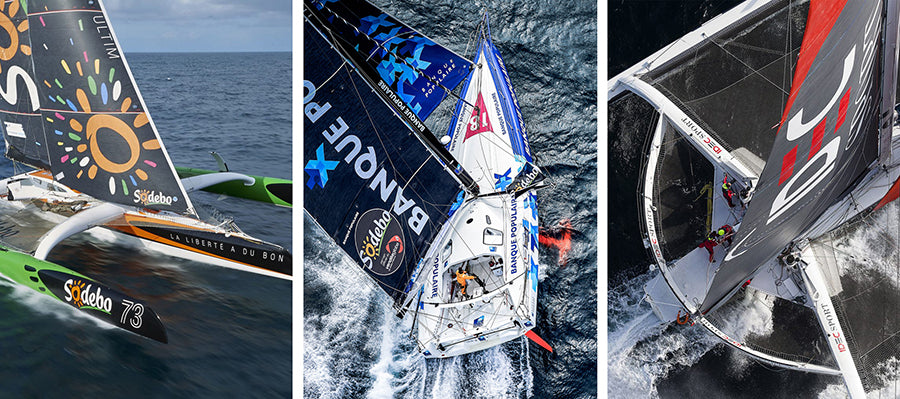
TRES RÉCORDS DE VUELTA AL MUNDO
TRES RÉCORDS DE VUELTA AL MUNDO CON VELAS NORTH SAILS EN UN MES PARA LA HISTORIA
Sodebo, Banque Populaire VI e IDEC SPORT han logrado reducir el tiempo de circunnavegación del planeta con marcas estratosféricas. Tres récords históricos realizados con velas North Sails.
© Yvan Zedda / Yvan Zedda / IDEC SPORT
Tres clientes North Sails han logrado pulverizar los tiempos de circunnavegación del planeta en apenas un mes. Esta histórica serie fue iniciada el 25 de diciembre por el maxi trimarán Sodebo de Thomas Coville, que destrozaba el récord absoluto de vuelta al mundo en solitario con una espectacular marca de 49 días, 3 horas y 7 minutos (mejorando el establecido en 2004 por Francis Joyon en 8 días y 10 horas).
Le siguió el 19 de enero el IMOCA Banque Populaire VI de Armel Le Cléac, que ganaba la Vendée Globe y establecía el nuevo récord de circunnavegación en solitario en monocasco con una marca de 74 días, 3 horas, 35 minutos y 46 segundos (mejorando por 3 días, 22 horas y 41 minutos el establecido en 2013 por François Gavart). “North Sails significa prestaciones e I+D. Team Banque Populaire tiene las expectativas más altas, está aquí para ganar, por lo que North Sails es la elección lógica”, comentaría Le Cléac, uno de los 12 patrones que confiaron en North Sails para todo el inventario de velas a bordo de sus IMOCA 60.
Por último, el maxi trimarán IDEC SPORT patroneado por Francis Joyon logró el 26 de enero su objetivo de alzarse con el trofeo Jules Verne, estableciendo un impresionante nuevo récord absoluto de circunnavegación del planeta: 40 días, 23 horas, 30 minutos y 30 segundos. Todo un hito de la navegación que mejora en casi cinco días el anterior récord establecido en enero de 2012 por el trimarán Banque Populaire V de Loïck Peyron (45 días, 13 horas, 42 minutos y 53 segundos). A bordo del IDEC SPORT compitió el español Alex Pella, quien definió la hazaña como “una surfeada planetaria increíble”.
READ MORE
READ MORE

FARR 30 TUNING GUIDE
Download the Farr 30 Tuning Guide Download the Farr 30 Quick Tune Guide
READ MORE
READ MORE


J/105 TUNING GUIDE
Download the North Sails J/105 Tuning Chart
Part 1: Boat Preparation & Rigging Setup
Before touching the rig, getting the boat itself right is important to top level speed. The following covers boat preparation fundamentals, followed by rigging recommendations that will help you get the most from your North Sails and make the boat easier to sail.
Minimum Weight
Keep the boat at minimum weight— anything not required is slow. Remove everything that isn’t needed for the race. Store all required gear as low as possible. No redundant dock lines, cooking gear, unnecessary tools, or cruising equipment. No bilge water. Crew weight is movable ballast and the one exception — position it deliberately, as described in Part 5.
Rigging Modifications
The following small changes should be made to stock J/105s to make the boat easier to sail and get the most from your sails.
Head Swivel Shackle
North Sails jibs come with a webbing loop at the head. It is critical to have a 90-degree “twist” shackle to attach the sail to the swivel. A standard shackle will cause a hard spot at the top of the jib as the sail is twisted.
Remove Backstay Toggle
Many J/105s come with a toggle that rotates the hydraulic cylinder 90-degrees so that the handle faces forward. While it is nice to have the handle forward, this toggle reduces the throw of the backstay adjuster too much so that you cannot get enough tension in heavy air. Some of the older boats need to have the backstay rod shortened to get enough backstay throw.
Change to 4:1 or 6:1 Cunningham
The standard Cunningham is 2:1 and led aft to a cabin house halyard stopper. This system should be replaced with the lower purchase with integral cleating shackled to the ring on the top of the Quik Vang (a common fitting on J/105s, though not universal — check your boat’s vang setup). This allows for easier and more precise Cunningham control by a forward crewmember. Many boats then rig the asymmetrical tack line through the free stopper.
Mark the Tack Line at the Cleat
Put marks on the tack line at the proper range of settings. As you approach the windward mark, you can pre-set the tack line so that when you extend the pole and set the spinnaker, the tack will be set properly. The tack line is much easier to work with in this placement than on the side of the cabin house.
Move Mainsheet Swivel Base Forward of the Traveler
This allows for easier trim of the gross tune by the main trimmer, especially when tacking.
Tapered Spectra Spinnaker Sheets
These sheets have a light uncovered portion that attaches to the sail, with a covered portion that goes on the winch. The sheets should be 3/8” Spectra cored line with the cover removed at the sail end of the sheet. These lightweight sheets are used in all conditions and help downwind performance in light air. Heavy sheets pull down on the leech of the spinnaker in light air, closing the leech too much.
Jib Sheet Attachment
The jib sheets should be attached to the jib clew with a soft shackle. If both sheets are tied into the same loop, the clew ring on the sail will not twist when weather sheeting.
Turnbuckle Maintenance
It is important to service your turnbuckles so they can easily, quickly and safely be adjusted. This entails taking them apart, cleaning the studs and turnbuckle, and applying an anti-seizing grease. Caliper numbers make returning the shrouds to base tune very easy!
Part 2: Rig Set-Up and Preparation
Tools and items required: Loos RT 10M Rod Tension Gauge (a wire tension measuring tool, available at most rigging suppliers), 2 wrenches and 50’ metric tape measure.
Part of the success of growth of the J/105 Class is the tight class rules and limited sail inventory. In the extreme conditions of light and heavy air, the rig must be manipulated to enhance the sail shapes for those conditions. The result of proper rig tuning is the correct relationship between mast bend and headstay tension to get fast shapes. The North inventory has been designed to make these transitions easily with the correct tuning to be fast in all conditions.
Step One: Set Mast Rake
Mast rake is set by the headstay length. We recommend the old class legal maximum rake, 13.035m (42’9.125”). Hoist a crewmember up the mast and have them hold the butt of the tape measure at the center of the pin that secures the forestay to the mast. Measure to the to of the furler drum (measurement A), then measure from the top of the furler drum to the bottom of the furler drum (measurement B), then from the underside of the furler drum to the intersection of the stem and sheer line of the boat (measurement C). The overall headstay measurement is then the sum of A+B+C.
If the headstay needs to be lengthened, add the toggle at the top of the headstay rather than the bottom — you want the jib tack as close to the deck as possible.
Step Two: Centering the Spar
Put a mark on the rail of the boat on one side even with the chainplates. Measure this distance from the headstay attachment on the bow. Put a corresponding mark on the other side, the same distance from the headstay. At this point the Upper Shrouds (Caps) should be tight, and the Intermediates (D2s) and the Lowers (D1s) should be very loose. Hoist the tape measure to the top on the centerline jib halyard. Measure the marks on either side and adjust the Caps till the mast is centered at the hounds.
Step Three: Check J Measurement
The J measurement is the distance from the headstay intersection to the deck at the forward face of the mast. This should be 4.14m.
Note: Measure to the headstay/deck intersection
Step Four: Centering the Partners
Move the mast side to side (athwartships) at the partners until the mast goes perfectly straight side to side. Then secure the partners at that point while maintaining the proper J dimension (4.14m). Spar tight is a good option. It is unlikely that the location you found will be the center of the partner hole.
Step Five: Check Mast Butt Position
Loosen the mast butt bolts. The mast should want to go straight on its own like a spring. Sight up the mast and confirm there is 0 prebend. Mark the floor at the forward edge of the mast step.
Bring the mast back 3/8” (9.5mm) from this mark and tighten the bolts.
Note: Prebend can be checked by holding the main halyard to the gooseneck. Sight up the mast and check the distance between the mast and the tensioned halyard.
Step Six: Tensioning the Shrouds
Tighten the D2s and D1s to hand tight. Make sure the caps read 41. Then tighten the D2s to 17. This should be done incrementally (2-3 turns at a time per side) sighting the mast to be sure that the mast is straight up and down (in column). Add turns to one side and remove turns from the other to bring the mast in column. As you add tension to the D2’s the cap shrouds will become slightly looser, so be sure to add tension to keep them at 41.
Note: Whenever you are checking rig tension, make sure the backstay is totally eased and the boom isn’t loaded.
All Purpose Base Tune (10-14 kts) Caps: 41 D2s: 17 D1s: 8 (just taking tension)
San Francisco Base Tune (for consistently strong breeze, typically 15–25 knots) Caps: 55 D2s: 25 D1s:10
You should double check to be sure that the mast is still in column at the dock when the rig is at full tension. At the base setting, the mast should sit with virtually no pre-bend.
You are now at the “base” setting and ready to go racing. From here, follow the Tuning Matrix for various wind conditions.
Advanced Tuning – Beyond the Numbers
Understanding the fundamental concepts of how tuning affects the rig and sails is important to be able to check that the settings are right for your boat, as well as customizing your own tuning numbers for your sailing style. Keeping good records is key. Keep a Wet Notes pad on your boat and record your rig settings, wind speed, sea state, and your speed and pointing relative to other boats. This will help you to see what is working best for you and fine tune your own numbers.
Changes to shroud tension affect the rig in two ways: 1) headstay tension & 2) mast bend. Tighter Cap shrouds generate more headstay tension by pulling back against the headstay. Tighter D1 (lower) and D2 (intermediate) shrouds generate more headstay tension by reducing mast bend. Tight D1s and D2s will make the mast straight (main full and draft forward) when no backstay is used, and conversely loose D1s and D2s will allow the mast to bend (main flat or inverted) when a lot of backstay is used. The final D1 and D2 rig tension will depend on mainsail shape you need for the conditions.
Part 3: Mainsail Trim
The J/105 relies on much of its power from the mainsail with the class inventory. The mainsail is very easily adjusted because there are many shape controls including mainsheet, traveler, backstay, cunningham, vang and outhaul. Proper mainsail trim is achieved by balancing the speed and pointing with its twist, angle of attack and overall power. Proper communication with the helmsman for the feel of the boat and performance vs. the boats around you are the key to establishing the correct balance of those three elements.
Mainsail Angle of Attack — The Traveler
The traveler controls the boom angle to the centerline of the boat, which is described as the angle of attack to the wind. Much like the sheet, a narrow angle of attack (traveler high) is used for pointing and powering up the boat. A wide angle of attack (low traveler) is used for acceleration and depowering the boat. Carry the traveler as high as possible without making the boat heel too much or getting too slow (drag).
In light to moderate conditions, the boom should be on centerline or slightly above. In very light air, when the main is twisted, setting the boom above centerline will put the lower third of the main parallel to the centerline of the boat.
As the breeze builds, the traveler should be played aggressively to control heel and keep the boat on its feet. The traveler should not be dropped below centerline as this makes it harder to twist the leech and closes the slot. If the boat heels too much, the helmsman will have to use the rudder to keep the boat going straight. This can create a lot of drag. Rudder angle can be monitored by putting a tape mark on the top of the wheel when it is perfectly straight. The main trimmer should notice when the helmsman is using too much helm (or not enough) and adjust appropriately.
Mainsheet vs. Traveler for Various Sea States
One of the more difficult things to determine is how to depower the main in moderate to heavy conditions. You can depower the main with twist by easing the sheet, letting the traveler down, and pulling on backstay. The technique used should be determined by sea state, which will affect how the helmsman needs to steer.
In flat water, the helmsman should be able to use very subtle steering changes. Hours of on-the-water testing has shown us that depowering by lowering the traveler and keeping a tight, untwisted leech produces the best VMG (Velocity Made Good — your effective speed toward the mark). You can point reasonably high in flat water without slowing down and the tight leech will help with pointing. We have found that twisting the main in flat water in moderate air only makes you lose height. With this style the traveler is played to maintain the proper angle of heel.
However, in waves, the opposite has proven to be faster. In choppy conditions the boat needs power to get through the waves without over heeling. Keeping the traveler higher (car above centerline) with less mainsheet allows the helmsman to steer through wider angles and accelerate. A slightly higher traveler helps keep the bottom of the main engaged, providing power, while the top twists off to reduce heeling. With this style, the mainsheet fine tune is played to maintain the correct trim and angle of heel.
Overall Power – The Backstay
The backstay is the most important sail control for setting the overall power of the sail plan. The backstay is the universal control to modify the shape of the main primarily, but also the jib. The North Inventory has been carefully designed so that backstay adjustment changes the shape of the main and jib in unison. As backstay is applied, the mast bends, flattening the main. It also pulls aft against the headstay, reducing headstay sag, which flattens the jib. By flattening the sails, the boat’s power is reduced.
How mast bend works with the luff curve built into the sail. The sailmaker designs extra curvature (luff curve) into the mainsail luff; when backstay bends the mast forward to match, the extra cloth is absorbed and the sail flattens.
As stated in the tuning section of this guide, having the rig set up properly for the wind conditions allows you to get the most benefit of the backstay, but it is also the control that allows you to set up the sails as best you can when the wind changes and you are no longer tuned correctly.
With a loose rig for the conditions, the main will flatten out faster than the jib. The loose D1s and D2s will allow the mast to bend, which will flatten the main. However, since the mast is bending, the main will get to a point where it over bends (large wrinkles from mast towards clew). By not being able to pump on more backstay, the jib will still be a bit fuller than is ideal as the mast is not stiff enough (overbending with loose D1+2) to fully tighten the headstay.
It is important to understand how backstay and rig tuning affects sail shape when you are caught under or over tuned. If your rig is too loose for the conditions, use the backstay to set the main up flatter, knowing that your jib will be fuller than ideal. You can also drop the traveler to center and use more mainsheet tension, which will help tighten the forestay. Use the cunningham aggressively to smooth out the sail.
If your rig is too tight, use less backstay to set the main up fuller, knowing that your jib will be flatter than ideal. You can also sail with a slightly higher traveler and loose mainsheet to help sag the headstay. It’s much easier to depower the J/105 than it is to power it up, so always tune for the lulls!
As the mast bends, it has an immediate effect on the luff and leech tension, so other controls must be adjusted in conjunction with the backstay. When you pull the backstay on, the mainsail will twist more so more sheet will have to pulled on to reset the twist. It is especially important when easing the backstay to also ease the mainsheet. Watch the top batten telltale as the backstay is eased!
We recommend taping a batten with marks every 1” on it to the backstay cylinder. This will help you to be able to record your settings and duplicate them later.
Backstay quick-reference: key controls by wind range. Use in conjunction with the Tuning Matrix.
Sailing the J/105 flat
The J/105 does not like to heel. In general, sail the boat as flat as possible — a skilled driver will keep it flatter than you think is necessary, and the boat will reward it with better speed and less weather helm. From around 11 knots true wind, the full crew should be fully hiked.
A boat sailing upright is easier for the helmsman to steer accurately and makes it easier to find and hold a consistent groove. Heel triggers weather helm, weather helm requires rudder angle to correct, and rudder angle creates drag. That chain of cause and effect is the main reason boats sail slower heeled over than flat. The most important indicator is rudder angle — if the helmsman is fighting the helm, depower the boat further before trying any other adjustment.
Other Mainsail Controls
Cunningham
The cunningham controls the luff tension of the mainsail. Luff tension controls the draft position of the mainsail. As backstay tension is applied, the mast compresses and the draft will move aft. Pull on the cunningham to move the draft forward to the desired position. As well as moving the draft, luff tension will also make the main somewhat flatter. In light air, you should see slight wrinkles coming from the sail slides. In moderate air, the luff should be smooth. In heavy air, the luff should be tensioned past being smooth to set the draft position and flatten the sail. When going around the weather mark or powering up, ease the cunningham first, before easing the backstay.
Vang
In underpowered conditions, for the mainsail to generate enough power, a certain amount of depth has been designed into the lower portion. In over 15 knots begin to pull on the vang to induce low mast bend to flatten the lower third of the main. Be sure to ease the vang at the weather mark! Before you ease the main, ease the vang to allow the main to twist as you bear off. CAUTION: If the vang isn’t eased before bearing away, you may not be able to bear away, or worse you could break the boom.
Outhaul
The outhaul also controls the sail shape in the lower third of the mainsail. Easing the outhaul makes the lower third of the mainsail fuller, and tightening flattens the lower third. In light air, the outhaul should be eased a few inches. It should be pulled slightly harder as the wind increases, but there should always be slight depth at the foot shelf.
Part 4: Jib Trim
The 3Di AX Jib uses modern grand prix technology. Our new design has been refined to be responsive to the controls that can change the shape. 3Di technology uses high modulus filaments on a full-size mould, to create a one-piece, lightweight, durable sail.
The primary controls that affect sail shape are the halyard, sheet, jib lead placement and headstay tension. The HELIX luff structure multiplies the effects of halyard tension, allowing for dramatic depth control.
Jib Halyard
The halyard is the most important sail control for shaping the jib. Just like the cunningham on the mainsail, the halyard controls the entry angle, draft position, and overall depth in the sail. A tighter halyard will produce a more draft forward, rounded entry shape, with less overall depth. A loose halyard will produce a more draft aft, finer entry shape with more overall depth. As a general rule, the halyard should be tensioned to just barely remove the wrinkles in the luff. In lighter air very small wrinkles can just be visible, in moderate air the luff should be smooth, and in heavy air the halyard should be pulled past removing the wrinkles.
In flat water, a looser halyard (very slight, small wrinkles in the bottom quarter of the jib) can improve pointing with a finer entry angle. In waves and chop, a tighter halyard will produce a more rounded entry and more open leech, which will have a wider steering groove and be better for acceleration. If you try the loose halyard and your helmsman seems to be struggling to find the groove, try a slightly tighter halyard.
As sails age, the entry tends to get finer and the draft starts to move aft. An older sail will require more halyard tension to achieve the same shape as a new sail.
Our HELIX luff multiplies the effect of the halyard tension. As you can see in the photo below, the luff design spreads the halyard load. More halyard tension will flatten the sail, less will make it fuller. This helps sailors adapt to changing conditions quickly.
Leeward Jib Sheet
The leeward sheet is the most important control for adjusting the jib. The general rule is to trim the jib as hard as possible without stalling the upper leech telltale.
The leeward jib sheet will need to be adjusted depending on how much weather sheet (inhaul) you are using. The primary effect of the leeward sheet is controlling twist, so you’d set this sheet so the jib leech at the top is almost parallel to the center of the boat. If the leech telltales stall, ease.
Put reference tape marks on the spreaders at 3” (7.6cm), 6” (15.2cm), and 9” (22.9cm) in from the spreader tip. In general, you should trim the jib so that it is at the spreader tip in very light air, 3” (7.6cm) inside the tip in light air, 6”–9” (15–23cm) inside the tip in moderate air, then back out to 3” (7.6cm) in heavy air.
Weather Jib Sheet (Inhauler)
In the J105, the weather jib sheet can be used to inhaul the jib. This narrows the sheeting angle (jib gets closer to the mast) which allows the boat to point higher. A good all-purpose setting is to have the jib clew sitting over the handrail.
More weather sheet will pull the jib to windward and forward. This narrows the slot, and deepens the jib foot. Less weather sheet will allow the jib to move outboard and aft, widening the slot and flattening the foot. It is critical to move the jib cars depending on how much inhaul you are using.
Weather sheeting requires practice and close attention. It helps to have marks on both sheets, so settings can be duplicated more easily.
Jib Cars
Base jib car position for 12kts is 196” measured from the headstay/deck intersection to the forward edge of the jib car block. This is a good position for weather sheeting to the cabin top handrail. You’ll notice that when you have no weather sheet on, the jib foot is very flat. And when you weather sheet, the foot has depth. So, it is important to move the jib car forward when weather sheeting less, putting shape into the foot of the jib.
Measure back from the headstay/deck intersection to the front edge of the jib car block. This should measure 196” or 4.98m at base.
Headstay Tension
Headstay tension has the most dramatic effect on the overall camber of the jib. This is a difficult thing to visualize, but it works much the same as mast bend affects mainsail shape. As the headstay sags, it pushes the luff towards the leech, which increases camber. Conversely as the headstay gets tight, it pulls the luff away from the leech, decreasing camber.
Headstay tension is achieved by a combination of a tighter rig and a tight backstay. As we have learned in the rig tuning and main trim sections, rig tuning and backstay tension has a great effect on mainsail camber as well. If you are tuned properly, when the main sets up correctly, the headstay tension will be correct as well.
Part 5: Crew Weight Placement
The goals of weight placement are to 1) control helm and 2) reduce wetted surface in light air. The positions below assume a crew of five (helmsman + four crew), which is typical for J/105 racing.
Light Air
In light air the crew should be well forward and to leeward both upwind and down. Two crewmembers should be forward of the shrouds to leeward. The remaining crew should be up near the shrouds. There should only be one person in the cockpit other than the helmsman. In light air the helmsman can make small adjustments to the main. Bodies to leeward helps heel the boat increasing helm giving a better feel. It allows for the best pointing and rudder lift. Being forward allows the bow to dig in which also helps pointing as well as reduces wetted surface by getting the transom out of the water.
Moderate Air
In moderate air, the crew can slide back as they begin to move to weather. Once anyone goes to weather, they should be stacked just behind the shrouds. If you have a dedicated main trimmer, he can slide back to his station. Downwind as soon as there is constant adequate pressure on the sheet the crew should move to weather (around 10 kts). This helps rotate the spinnaker to windward out from behind the main.
Heavy Air
In heavy air, the crew should continue to move aft, especially in waves. Since crew weight is limited, everyone on the rail needs to hike as hard and as consistently as possible — even small improvements in hiking discipline add up over a race.
Part 6: Downwind Sailing
Sailing the J/105 downwind can be one of the more difficult things to do well. Paying small attention to minor details can make a huge difference. The key to fast sailing downwind is good communication between the trimmer and the helmsman. The trimmer should constantly be telling the helmsman how much pressure they have in the sheet. This will allow the helmsman to know if they can bear off a little more, but more importantly when to head up to build pressure. Designate one crew specifically as the puff caller — downwind you will see roughly half as many puffs as upwind, and having dedicated eyes looking aft to identify them early is critical to staying in pressure. Before bearing away at the windward mark, ease the cunningham first, then the vang, then the backstay all the way off — a tight backstay downwind flattens the sails and kills power when you need it most.
The J/105 has an asymmetric spinnaker set on a centerline sprit. The goal of downwind sailing is to maximize downwind VMG (Velocity Made Good — your effective speed toward the leeward mark). This is achieved by sailing a wind angle tight enough to keep speed but sailing lower towards the mark whenever possible. The North Sails asymmetric has been designed as a running spinnaker for optimum downwind performance. The sail has been designed to rotate to windward to project the maximum sail area out from behind the mainsail. Always hoist the sail all the way to the top. Due to the luff length restriction in the rules, the tack of the sail is never set all the way down to the pole. Raising the tack helps the sail rotate to windward.
Light Air Sailing (0-9 knots TWS)
In light air, you must sail tighter angles for best VMG. The tack is set 1-2’ off the sprit. The crew should be forward and to leeward. Keep the crew weight as low as possible. Steer down in the puffs until the pressure sheet starts to get light and then head up slightly. Communication between the trimmer and the helmsman is key. Try to find the lowest angle you can sail before the speed drops. Don’t forget about the main! Proper mainsail trim is essential to good speed. The vang should be set so that the top batten is open by 5 degrees.
To gybe, the helmsperson should slowly bear away as the spinnaker is eased to the forestay and then quickly brought around with the new sheet. The main trimmer should hold the boom out. The boat is heading dead downwind as the spinnaker clew almost reaches the shrouds; then the driver can accelerate the turn. Boom comes over and the driver finds their exit angle. The goal is to have the kite beat the boom and almost fill on the new side before gybing the main.
Moderate Air Sailing (9-18 knots TWS)
In moderate air, there is a wide range where you can sail. Lower is best as long as you can maintain your speed. The tack line is eased 2-3’ off the sprit. The same principles apply to steering as in light air. Once the boat feels well pressured, the crew should move to the windward side to help rotate the spinnaker. In this range the crew should be very active moving to weather when you head down in the puffs and back to leeward when you head up in the lulls.
Gybing is like light air but can happen a little faster. The boom won’t need to be held and can be brought over as the spinnaker clew gets a few feet past the headstay. Pull the spinnaker around fast!
Heavy Air Sailing (18+ knots TWS)
In over 18 knots, the boat is well pressured up going downwind. At this point you want to sail as low as possible most of the time. There will almost always be good pressure on the sheet but when you sail too low, the sail will become blanketed behind the main and collapse. The sheet is well eased to get as much of the sail out from behind the main as possible. The crew should be windward at all times. Heel the boat to windward by as much as 10 degrees. The vang should be set so the top batten is parallel to the boom.
For a heavy air gybe you’d still like to see the clew of the spinnaker make it around the headstay before the boom comes over. Pull the spinnaker around fast!
Downwind Notes
Good coordination between the trimmer and helmsman will result in very subtle changes in the sheet. A properly coordinated team will only adjust the sheet by a couple of feet. If you find yourself constantly trimming and easing more than 3 feet of sheet than your coordination should be improved. Be careful not to try to sail too low and collapse the spinnaker. A collapse will result in around a three-boat length loss.
Part 7: Sail Care & Storage
Sails are expensive and performance-critical and the class’s limited inventory means you cannot simply replace a tired sail mid-season. How you handle the sails off the water matters.
Take the Jib Down After Racing
A furled sail still bakes in the sun along the exposed leech and foot. The jib should come down after racing, be flaked or rolled, and bagged out of the sun. Most competitive teams drop the jib at the dock every day rather than leaving it rigged.
Roll the Main and Jib — Don’t Leave the Race Main Flaked on the Boom
Most top teams roll both the main and the jib rather than flaking them. Roll the main from the head down, keeping the battens straight, and store it in the bag.
Inspect, Log Hours, and Service
Keep a rough log of how many days each sail has been used — as noted in the jib trim section, an older sail’s entry gets finer and its draft moves aft, requiring more halyard tension to hold shape. Tracking hours helps you plan when to rotate a sail to practice duty and bring a fresh one out for key regattas. If anything looks marginal, get it to your North Sails loft for service.
Glossary of Key Terms
Athwartships — Side to side across the boat (perpendicular to the centerline).
Backstay — The rod running from the masthead to the stern. Tensioning it bends the mast and tightens the headstay.
Caps / Cap Shrouds (V1s) — The upper shrouds running from the hounds to the chainplates. Primary support for the rig side-to-side.
D1s (Lowers) — The lower shrouds, attached at the bottom spreader. They primarily control fore-aft mast bend in the lower section as well as side sag.
D2s (Intermediates) — The intermediate shrouds, attached at the top spreader. They help control fore-aft mast bend as well as side sag.
Draft — The deepest point of curvature in a sail. “Draft forward” means the fullest point is near the luff; “draft aft” means it’s toward the leech.
Headstay Sag — How much the forestay (headstay) bows to leeward under load. More sag = fuller jib; less sag = flatter jib.
In Column — The mast is straight up and down, with no side-to-side bend. Checked by sighting up the sail track from the gooseneck.
Loos Gauge — A handheld tool that measures wire or rod tension. The RT-10M model is required for J/105 rod rigging. Numbers are relative (not pounds); use the values in this guide to match settings.
Prebend — A slight forward curve built into the mast at rest, before any sail load.
TWS — True Wind Speed. The actual speed of the wind, as opposed to apparent wind (what you feel on the moving boat).
VMG (Velocity Made Good) — Your effective speed directly toward a mark. Maximizing VMG means finding the best balance of boat speed and angle.
READ MORE
READ MORE

SWAN 42 TUNING GUIDE
Download a PDF: Swan 42 Tuning Guide Swan 42 Crossover Chart
READ MORE
READ MORE
J/111 TUNING GUIDE
See also: J/111 European Tuning Guide
NORTH SAILS J/111 QUICK TUNING CHART
Wind Strength
Jib
Asym
Mast Butt
Headstay
Verticals/Uppers
D1s/Lowers
D2s/Intermediates
Sheet Angle/In-haul
Traveller Car
Vang
0-6 Knots
LM
1.5A
-6
-2
Handrail
All Up
Off
6-8 Knots
LM
1.5A
-4
-1
1.5" - 2" inside handrail
18" Up
Off
BASE 9-11 Knots
LM
1.5A
44.3 cm
2.22M Arc 15.3M "pin-pin"
62 Units RT-10 Loos gauge
28 Units RT-10 Loos gauge
27 Units PT-2 Loos gauge
Handrail
4" Up
Off
12-15 Knots
MH
2A
5
1.5
Handrail
Centerline
Off
16-20 Knots
MH
2A
9
3
1/2 way handrail track
Centerline
On Hard
20+ Knots
HWJ
2A
14
5
1/2 way handrail track. "Twisty" sheet load
Centerline
On Hard
24+ Knots
Track, no in-hauler
READ MORE
READ MORE

J/88 TUNING GUIDE
Below are Vince Brun’s suggestions for boat set-up and pre-race routine, based on his experience sailing the J/88 North American Championship. You can also download PDFs of the following:
US Tuning Guide
US Quick Tuning Guide
EU Tuning Guide
EU Quick Tuning Guide
BOAT PREPARATION
Bottom
Needless to say the bottom of the boat being clean and properly maintained is a key part of any fast boat or program. Going fast starts there and I can assure you that not one boat ever won a big event with a poorly maintained bottom. Don’t matter how well the crew perform, the rig is set, the sails trimmed, or the helmsman skills, a clean and smooth bottom, will have a huge impact on the overall boat performance. For this reason, I always make sure that my boat bottom is as good as I can possibly get it, this will give me confidence which helps me focus exclusively on the mast and sail setup.
SAILS, RIG SETUP & PERFORMANCE
Rig Setup
I found that the current North Sails J/88 tuning guide was extremely accurate on the gauge numbers.
Light Medium versus Heavy Jib
At the regatta Velocity performed better with the Light/Medium jib up to 18 knots TWS, and this was made clear when we had the heavy jib in winds between 14 to 18 knots. The J/88 likes to be slightly overpowered and the small jib didn’t help in that range. This was noticed not only in the lack of acceleration after a wave, but also in the poor pointing ability. I would tend to use the Light Medium, even if the breeze is hitting 19 knots in the puffs, when the wind drops, the J-88 gets underpowered quickly when using the heavier jib.
Backstay
The backstay is a key control on the J/88 in all conditions, not only helping with the flattening of the mainsail but also critical on controlling the forestay tension, and therefore forestay sag. Find a good way to calibrate your “fast settings” with good backstay marks, so that they can be duplicated again, and again.
Inhaulers and Jib Lead Position
For anyone trimming the jib, the inhauler and jib lead position are key controls in achieving a well set jib. If these controls are set in the wrong position, the trimmer won’t be able to have the jib properly trimmed. During a race you don’t normally have the luxury to stay on the leeward side to get the sail set up just right, so having these settings established well before the race is extremely important.
In my opinion, the key to success on any boat, is the confidence to be able to repeat “fast settings” that were learned in previous races or training and only work on fine tune changes from there. These numbers should be constantly added into your boat’s tuning matrix, so that these adjustments can be made automatically, which will help free everyone’s minds to better focus on what is happening on the race course and strategy.
Running rigging with proper length and good marks
As emphasized above, I’m a firm believer that good marks on the control lines, are a tremendous help to crews allowing them to perform their tasks faster and with more precision.
Example: If the spinnaker halyard is marked when the sail is fully up, the mast person will know precisely when that job is done and be able to move to his next task quicker, and without hesitation.
Mainsheet
I would suggest having the mainsheet fine tune separated from the mainsheet gross, to avoid the lines tangling at the leeward rounding or during pre-start maneuvers.
Spinnaker sheet turning block position
It might be a good idea to have the turning block for the spinnaker sheet moved forward, so that the spinnaker and jib sheets don’t cross. This allows the spinnaker sheet to stay ahead of the jib winch and in line with the spinnaker top deck winch.
Folding Propeller
As we learned on the first race on Sunday, it’s extremely important to have the propeller properly closed before the start to avoid the extra drag. The boat should be traveling at full speed before turning the engine off and putting it in reverse, this will ensure that the prop is properly set.
PRE-RACE ROUTINE
Pre-Race Warmup
I have seen many different approaches to this, but ultimately everyone has the same items crossed, before the start. Below is the pre-race routine I try to execute before every race day. It’s very simple:
Get to the starting area and start sailing on starboard (hopefully against another boat) for a good period of time to record the wind oscillation range, and have the lifts and headers numbers well defined.
During this time, I also fine tune my controls so that I’m comfortable with the boat speed (this being the reason for another boat being around). If there are speed issues, I make changes and continue testing.
After this is done, I hoist the spinnaker to make sure all the lines are led correctly and practice a few jibes to get the crew polished and ready for the day.
At the starting area, I normally check in and inspect the starting line, by going head to wind near the committee boat. Checking the wind direction and comparing it with the line setup.
Now with all the data needed, the crew can discuss and prepare the starting and first leg strategy.
Starting around other boats
Obviously it’s hard to predict what others will do when approaching the starting line with a minute (or less) to the start. Possibly more important than how close you are to the line, is what “upwind lane” you will have 30 to 60 seconds after the start. A boat close to leeward with their bow slightly forward, will be a serious issue immediately after the gun. There are a couple of ways to escape this situation but the key is to identify the problem earlier rather than later, particularly when there are boats closer to windward.
If someone is close to leeward with a minute or more to go, you have two possible options:
Two tacks – which involve doing two quick tacks and opening the gap to the leeward boat and closing on the windward boat. This normally requires a nice gap to windward and great crew work to make this maneuver possible. This technique will require a well trained crew that understands the boat and can execute the tacks with relatively minimum loss of speed.
The other more common option is to “push” the leeward boat by bearing off and taking their stern, establishing a hook to leeward. In most cases this attempt will force the leeward boat to do the same, but if they are late responding, which is not uncommon, you will be in a controlling position since you will have more speed and be able to hook. If you are unable to execute the hook, because the leeward boat has mimicked your move, you will be forced to go with plan A and do a double tack to protect your hole and future lane.
Again, identifying the situation early will give you more options to avoid a bad starting position.
READ MORE
READ MORE
J/109 TUNING GUIDE
Base Settings
Rake – Swing Arc – Use jib halyard pulled down to top of black band on mast – swing fwd to mark headstay.
Rake – Distance from mark on headstay to deck at stem: 2230 mm
Cap Shroud Tension: #60 on RT-10 Loos Gauge
D1 Tension: #40 on RT-10 Loos Gauge
D2 Tension: #25 on RT-10 Loos Gauge
J Dimension: Measured from stem to Fwd face of mast: 4050mm
Mast Base: Measured from Fwd face of mast to bulkhead: 460 mm
Pre-Bend: without mainsail hoisted: 20mm
Sail Models
Jibs
0-14 TWS: LM-2 Light-Medium Jib
12-25 TWS: MH-2 Medium-Heavy Jib
Spinnakers
0-20 TWS: A2-4 AP Spinnaker
18-25 TWS: 4A Heavy Spinnaker
Quick Adjustments
Turns from Base Settings
Speed Guide
Check out our J/109 Speed Guide for race‑proven guidance on rig tune, sail trim, crew positioning, and boathandling—all tailored specifically to the J/109. It provides clear, repeatable cues that help teams sail more consistently, make smarter adjustments on the water, and maximize boatspeed in all conditions.
READ MORE
READ MORE
FARR 280 TUNING GUIDE
The Farr 280 is a relatively light boat which makes it very receptive to positive trimming. It is imperative to have thesail trim spot on but also the fore and aft weight trim correct and whichever team does this the best will be rewarded with the best boat speed. Up to 7 kts the Farr 280 is always looking for more power so keep the sails powered up, focus on building speed efficiently out of transitions (tacks, jibes, ducks and mark roundings) and don’t over trim or you can easily kill the speed.
Tools Needed
Take your rig tune seriously. Keep whoever adjusts the rig the same from the beginning to the end and you will be far more accurate all season long. It is one item on our list we can get right before we leave the dock.
Equipment Requirements
• Loos Gauge PT-2 (headstay, V1 and D1 shrouds)• Loos Gauge PT-1 (D2 shrouds)• 30 m (100’) tape measure (forestay pin-to-pin)• 5 m (16’) steel tape measure (mast heel)• Rig spanners (adjustments)• Setting Up the Mast
Step 1
Set the mast plate in the correct location.Before the mast is stepped, place the aftface of the mast step 455 mm (17.91”)forward of the forward keel bolt centerline. Measure from the white line to theforward keel bolt (Fig. 1).
Step 2
Step the mast and attach the headstaystrop to the lower headstay fitting
Step 3
Attach the cap shrouds only just past hand tight.
Step 4
Measure down from the uppermeasurement point (Fig. 3) and make amark on the headstay 11.92 m (39.11’) fromthe top point.
Step 5
Pump up the mast on the hydraulic jackso that it just lifts off the collar. Then pump the headstay down (shorter) so that your headstay mark of 11.92m (39.11’) becomes just even with the plate in the headstay well.
Step 6
Measure back from the headstay to the same location on both sides of the boat even with the partners. Make a mark on the partners halfway between these 2 points. This locates the centerline of the mast on the boat’s centerline.Using the supplied chocks center the mast on the centerline of the shrouds. This may entail sanding the supplied plates to fit the partner hole. Once centered, screw the plates to the chocks through the sidewall of the partners so that none of these fall out while sailing. Eventually the mast should be held in place with “Spartite.”
Step 7
Using the centerline halyard measure down to the mark from Step 6 on both sides of the boat aft of the headstay.Adjust the cap shrouds so that this number is the same on both sides. Now your “hounds” are centered.NOTE: It is extremely important that there is no “load” on the shrouds when you adjust the nuts (Fig. 6). If there is toomuch load you may either strip or cross thread the rod. To adjust the nuts you must “drop” the mast, adjust, then pump back up.
Step 8
Use an ARC measurement to get the correct 1.5° rake at the correctmast butt height. Take the centerline halyard, measure 1.00 m (39.37”) down from the boom band, swing the halyard to the headstay and mark headstay. Pump up the mast until this headstay mark is 684 mm (26.93”) above deck. Place a straight edge over the headstay well to get this measurement.Note: how high the bottom of the mast is relative to the mast plate. See Step 9.
Step 9
Obtaining the correct cap (vertical) shroud tension. With the mast pumped up so that the headstay ARC measures 684mm (26.93”), note the mast butt height. In the case here it is 78 mm (3.07”). With the headstay at 1.5° rake and the mastraised 78 mm (3.07”) (Fig. 8). You want the jack pressure to read 1925 psi or 133 bar on the cockpit dial with just the headstay and cap shrouds attached. You will need to raise and lower the rig a few times to make the necessary adjustments to the cap shrouds.
Step 10
Repeat Step 9 when attaching the D1s with the caps (verticals) and headstay. Use the PT-2 Loos Gauge to get 28 units on the gauge for the D1s.
Step 11
Repeat the Step 10 while attaching the D2s, D1s, caps and headstay. Use the PT-1 Loos Gauge to get 26 units for the D2s.
Step 12
With all standing rigging attached, check the finished tune with the Loos Gauges.You should have the Loos Gauge units listed below for the BASE settings. The mast butt height will be relative to your boat. Hull #1 was 78 mm (3.07”).
We set BASE settings for this boat at maximum load. From this point the tuning relates to lowering the mast buttheight combined with lengthening the headstay to soften the rig loads as the wind speeds diminish.
BASE Settings for 18+ kts TWSRake 1.5 °Mast Butt 78 mmHeadstay 39 PT-2 Loos GaugeCaps 43 PT-2 Loos GaugeD1s 28 PT-2 Loos Gauge
No diagonal or vertical shroud adjustments should be required with this rig. Primary adjustment is with the headstay and mast butt ram. Headstay and mast jack pressures can be referenced using the hydraulic pressure gauges on the control panel.
1° of rake change = 53 mm (2.09”) change to the headstay length. With the mastset at 1.5°, use a batten set down into the bottom of the headstay well to mark the batten at the centerline of the headstay pin shown in the photo below. Tighten and ease the headstay in 26 mm (1.02”) increments and mark the batten from 1.25° to 3°of rake. Use this batten for a quick reference when tuning.
Use the centerline of the headstay pin to measure rake while sailing the boat. The red line shows the centerline of the pin. D2s 26 PT-2 Loos Gauge For lighter winds we recommend a combination of dropping the mast down and lengthening the headstay. This promotes sailing with a softer rig laterally while sailing with more rake.
Three marks that help when sailing
1. On the under side of the spreaders make a mark to reference the headsail leech when sailing:
Lower Spreader: 635 mm (25.00”) from mast centerline
Upper Spreader: 476 mm (18.74”) from mast centerline
2. Mark the headstay to be visible from the cockpit/rail. The red marks below note 1.5° (upper) and 3° (lower) of rake when parallel to the deck height.
3. Mark the maximum down position on the aft face of the mast (shown below with white electrical tape. But this should be marked in a more permanent manner.
READ MORE
READ MORE

STARLING TUNING GUIDE
The object of the Starling class is for all sails and masts to be identical.
We pride ourselves on our ability to reproduce sails identically, so please feel free to contact us if you feel your sail isn’t the same as other sails. This is important as it allows us to improve our methods, and ensures all sails out on the water are the same. If for any reason your sail is outside the tolerances, then we will replace it.
The luff of the sail is 4040mm long.If you are fitting a fixed height gooseneck, then allow 4025mm from the top of the boom to the top of the sail.
The foot is 2115mm long.Allow for the outhaul to pull the sail out to a maximum 2125mm from the aft face of the mast.
The leech is 4370mm.
Sail Care
Always roll your sail and keep it in its bag when not in use. Ideally remove thebattens after use. If you don’t want to do this, then release the battens from the pocket elastic and roll the sail parallel to the pockets. If you are rolling onto a tube, tie the clew first and roll the sail a couple of turns before attaching the tack. This will allow you to roll the sail parallel to the batten pockets on the tube. Wash the salt from the sail every 3-6 weeks depending on how often it gets wet. Do this on a light day by hosing the sail while rigged, and leaving to dry.Setting up:The tack should be set on one of the holes on a standard gooseneck fitting (about 25mm from the mast) for. Choose the hole which makes the tack area of the sail setup smooth.There are no rules requiring black bands. To take maximum advantage of this, make sure your sail is as high as possible up the mast. Check that your mast is the maximum length allowed under the rules (4480 from base to tip.) If you have a fixed gooseneck, then you will want the sail to be at the top in heavy airs. You will need 2-3 talurits on the halyard strop so you can adjust the luff tension to make it looser for lighter winds.
Make sure that the boom is long enough so you can get maximum tension on the outhaul when the wind increases. Check that the sail doesn’t extend beyond the end of the track on the boom or it will damage the sail.
Battens
Your sail comes with a standard set of battens specially designed for the Starling.Smaller skippers will find a benefit from changing to a heavier #2 batten as the wind increases.
The basic shape of the sail features a very straight (or flat ) exit, so there shouldn’t be any need to change the lower battens from one condition to the next.
Remember – the stiff end of the batten is the back. Bendy end forward!!!
Outhaul
We suggest 4:1 purchase inside the boom, so you can make small repeatable adjustments. Make sure you have a system of marks so you can repeat your fast settings from upwind to downwind- or when the breeze changes. Use a shock cord system inside or outside the boom to help the system release.
Don’t ease the foot too much. If you are getting vertical wrinkles off the boom, then you have gone too far.
The Starling sail has the ability to be set up full, but then to flatten really well as the wind increases. Experiment with various settings so you know what is fast for your weight in each condition.
Rake
Following is a formula for working out the correct mast rake for your hull.Because there is a variation in the hulls, there is no correct rake to suit all boats. There is a correct rake for your individual boat and you should have a record of this and of the rakes you try. Another way to find a starting rake is to level your hull alongside a top boat. Then sightthe masts and set your mast up to the same angle. Measure this from a mark permanently etched on your mast to a mark on the stern. This is your rake.
The following system will give you a good all round rake. You should feel free to use this as a starting point and experiment slightly forward and aft of this point.
Measure up 3050mm from the deck and mark the back of the mast – this is the new rake measuring point.Measure from the 3050mm position to the intersection of the deck and transomA good starting mast rake is 3640mm.From this position, individual skippers will need to adjust the mast rake to suit their body weight and sailing style. If more speed is needed downwind, rake the mast forward, and if more pointing ability is required, rake the mast further aft
Sail Shape
It is a good idea to glance up at your sail occasionally especially when you are going fast- (or really slow) to see what your rig looks like and therefore be able to eventually memorise these shapes and settings.Look carefully at the top batten. Try and guage how open the top batten is and use this as a reference to compare withprevious settings. This tells you how much mainsheet and vang you should be using.
Rig Tension:Tight v’s loose. I prefer a firm rig. The tension should be so that by pulling forward on the mast you can just do up a shackle on the forestay. Any tighterthan this is unnecessary. My reasoning is purely practical.
There are pro’s and con’s for the 2 extremes. If you have a loose rig, it will give you more optimal fore and aft rake upwind and downwind, whereas a tight rig can’t move. However a loose rig also means it falls away sideways which isn’t desirable. I think that this is why the 2 styles ultimately perform equally. Of course what the top skipper is using will always appear fastest!!- but look carefully at what else he/she is doing.
My practical reasoning is simple. A loose rig is more susceptible to wear and therefore failure. The movement also makes it more prone to shackles etc working their way loose.
If you are a methodical type of person and check your gear often, then by all means go for a loose rig if you believe it to be the way to go.
If you have a rotating rig, you may need to have it a little looser to help it rotate more easily. Try a 1-2mm thick teflon washer under the mast.
Masts
All masts must be from the same F4 section from Fosters. There is a 150mm range between the maximum and minimum heights for the stays. We suggest having the forestay close to min (2800) and the sidestays close to max (2950).If you have a rotating mast, then we recommend an inner forestay at 900mm. This should be set very loose so that when the boom is right out there is still about 20mm slack in the stay.
Due to the nature of the mast construction, there will be variations in the stiffness of the masts. Beware of this as it can be the reason for consistently poor performance in certain conditions. Avoid masts which are too stiff.If you are over 60kg you will start needing a stiffener in you mast. If you are careful you can wait until you are over 65kg- however you run the risk of breaking rigs downwind.
Vang
Your vang is there to control leech tension once you run out of width on your traveller. If the breeze is light and you aren’t having to ease the main in gusts, then you don’t need any vang. In these conditions you should have it just eased, so that it isn’t taking any load.However, you don’t really want it too loose or else it will take too long to pull on should the breeze increase.
In the lighter breezes you are quite often sheeting quite loosely, so make sure there is no tension on the vang.
As soon as you find yourself easing the main in the gusts, you should have vang on. This should mean that as you ease the main in the gust, the boom moves outwards only- not upwards.
Remember vang bends the mast and flattens the sail a lot, so if you are hunting for power, make sure you don’t have too much vang on.
Be sure your rig and fittings are strong enough, so that you aren’t afraid to use a lot of vang when the wind increases.
Reaching is similar in trim to upwind. In the light you will have to be careful not to close the leech too much, however as the breeze increases, you will need to slowly increase the amount of vang to keep the leech under control and keep powered up. Again too much vang will bend the mast too much and lose power.
Downwind you will need less tension than you have had upwind or on the reach.Ease vang as you go around the mark.
If you can imagine looking up from the boom, the ‘twist’ or amount the leech opens, should be nearly the same on all points of sail, in all conditions.For this reason it is a good idea to get used to looking up at how open the top batten is and try to adjust the vang to keep it looking the same as the wind changes.
Cunningham
Cunningham does two things. It moves the shape forward in the sail, and then as you use more, it bends the the mast and opens the leech in the head.
Cunningham is the last control you should be using to depower. You will already have a good amount of vang and full outhaul before you use the cunningham. The more you get overpowered, the harder you pull on the cunningham.
Centreboard
Your centreboard is another very important control to how the boat sails. The rake and positioning of the centreboard changes the balance of theboat and makes it easier or harder to sail. Basically the further forward and further down the board is, the more poweryou will have. You may even try raking it forward a little in the light. As the breeze increases you will begin getting overpowered and the helm will start getting a little heavier. A heavy helmis slow, as you are holding the rudder against the water flow and creating drag just like a big brake. Therefore as it starts getting heavier, it is time to start moving the board. Firstly do this by raking the board. Leave the top at the front of the case, and let the bottom move as far aft as possible. You will probably find it faster if you begin doing this a little earlier in choppy conditions.
If you are still overpowered, you can now start lifting the board. Don’t be afraid to sail around with up to 150mm of board up if it is windy.
This will allow the boat to sail flatter, especially through the gusts, and to move faster through the water. Be aware to begin putting it down again if it lightens, or else you will find yourself not pointing.
Rudder
The rudder is very important. You sail the boat by feel. The position and rake of the rudder will effect this feel. As arough rule the rudder should be set up so the leading edge is square to the water.However it is even better to fine tune it from here by trying it a little back orforward from this position. Changing the tip postion by 10mm increments is about right. Once you are happy, then fix it in place with some sort of system which won’t allow it to move around.
The rudder ‘feel’ should be light in all conditions.
Make sure there is no slop in the rudder system. There is potential for wear especially in the gudgeons. If this is the case then replace them with a good positive system.
Calibration
Even the best skippers need calibration marks. These enable you to keep the best speed from week to week, and to keep learning how small changes effect your performances.
Highest priority is the Outhaul, the cunningham and the vang. I would also recommend some marks on themainsheet. Marks on ropes can be done with markers, or better still, by sewing contrasting thread into the lines.
Good luck, and please feel free to make comments and contributions to this guide.
READ MORE
READ MORE

DRAGON TUNING GUIDE
The purpose of this tuning guide is to give our clients in the Dragon class some guidelines on how to get the most out of their North sails. The tuning-guide was compiled by Jørgen Schönherr, Poul Richard Høj Jensen and Theis Palm.
Always experiment and try finding your own trim using these guidelines. The weight of the crew, the balance of the boat and the stiffness of the mast, together with specific local wind and sea conditions all have influence on the fastest and final trim.
MAST TRIM
Before stepping the mast in the boat, some very important measurements have to be checked to follow this tuning guide correctly:
1. Lead the upper shrouds and forestay along the mast, the uppers have to be outside of the spreader tips. Pull them as hard as you can and put a mark on all three wires at the top at the black band on the mast (it is 80 cm above deck level). These three marks are now used to check if the mast is straight from side to side in the boat, and to check the mast rake.
2. All measurements for the mast position is made from station 4, (you find station 4 between the forestay and the mast) which is marked on both port and starboard side of the hull with a dot. Draw a line in between the points. From the middle of this line to the front end of the mast (without spinnaker pole track) See the distance in the ‘on the water’ tuning guide below.
3. The mast rake is set by first fixing the forestay on the deck 1,86 cm from the front side of the mast. (This is the max. distance allowed in the class – rules). Then measure the distance from the black mark on the forestay to the deck (along the forestay). See the distance in the on teh water tuning guide below.
4. The upper shrouds proper position is located by measuring perpendicularly from the line on station 4 to where the shroud enters the deck. See the distance in the on the water tuning guide below. For light crews (220-240 kg) we recommend to leave the shrouds one hole forward.
5. The lower shrouds are placed in the hole just behind the top shrouds (approx. 3 cm), so that they don’t hold the mast back when going downwind.
6. The marks on the top shrouds (from step 1) are now used to control if the mast is placed in the middle of the boat. This is done best by measuring the distance from the mark to the deck. This should be the same on both sides. It is very important, that the mast is straight from side to side and not being distorted at deck level.
7. Setting up forestay tension, put the mast in strong wind position (tension 20 on the uppers and 8 on lowers). Next, put the tension gauge on the forestay around the black mark. Pull runners until the gauge reads 30. Make tape on runner exit above deck. Do the same on the other side. Now both runners have the same tension on the mark set-up. When you ease the runners until the forestay is just tight, the tape mark will be 15 cm above the deck as the uppers are both the same length.
8. The jumpers are adjusted by pulling the permanent backstay. Look up along the sail track and check that the jumpers are equally tight on both sides. If this is not the case, they should be adjusted till the mast is completely straight.
9. For all rig tension measurements we have used a Loose Gauge PT-2M. To get a more precise reading, cut the plastic of the upper shroud about 1.2 m above deck. You find all setting in the chart below.
10. The lower shrouds are tensioned, so that the mast is completely straight in the boat up to 20-22 knots. From here on, tighten them till the mast drops 5-10 cm off to leeward where the forestay meets the mast – the exact measurement is dependent on crew weight.
ON THE WATER TUNING GUIDE
Wind
Light – 0-5 knots
Medium – 6-16 knots
Heavy – 17+ knots
Comments
SailInventory
Mainsail A-7+ for Std. Petti & BBMainsail LM-2 for stiff Petti mastGenoa MG-15 / MJ-8Spinnaker CD-5 or R-5
Mainsail A-7+ for Std. Petti & BBMainsail LM-2 for stiff Petti mastGenoa MG-15 / MJ-8Spinnaker CD-5 or R-5
Mainsail A-7+ for Std. Petti & BBMainsail A-10 for stiff Petti mastGenoa HG-15 / MJ-8HSpinnaker CD-5 or R-5
The sea conditions and waves can change the wind range in the sail inventory
Mast Rake
123,5 cm (Petticrow)120,0 cm (BB)
122,5 cm (Petticrow)120,0 cm (BB)
122,5 cm (Petticrow)120,0 cm (BB)
Measure 80cm up from deck, transfer mark at mast to the forestay. Measure along the forestay to deck level
Mast Ram
Mast 1,5 cm forward at deck level
Mast neutral
Mast 2,5 cm forward at deck level
If you struggle with pointing, pull the mast back
Mast Position
83,0 cm (Petticrow)81,5 cm (BB)
83,0 cm (Petticrow)81,5 cm (BB)
83,0 cm (Petticrow)81,5 cm (BB)
Mast position at deck level is taken from station 4
Jumpers (adjustable)Jumpers (fixed)
Loose
Loos gauge tension 6
Mast straight
Loos gauge tension 6
Mast straight
Loos gauge tension 6
Make sure the mast is straight from side to side
Upper Shrouds
Loose gauge tension 14 for Std.Petti & BB and 12 for stiff Petti mastminus 1 turn
Loose gauge tension 14 for Std.Petti & BB and 12 for stiff Petti mastplus 1-2 turns
Loose gauge tension 14 for Std.Petti & BB and 12 for stiff Petti mastplus 3 turns
Tension is taken without plastic. Shroud position from station 4. is 83 cm all time, for light crew 80 cm
LowerShrouds
Let the mast bend 1 cm toleeward at spreader level
Mast straight
Mast straight plus 1-1½ turn so themast bends to windward
When you set the mast straight, look up at the sailgroove
Backstay
Little tension in the very light
Just tight to prevent the mast top from moving in waves
Just tight to prevent the mast top from moving in waves
Little tension in the very light to pre-bend the mast
Runners
Slack to 15 -16 cm above deckMark # 4
From 15 – 5 cm above deckMark # 3 – # 2
From 5 – 0 cm this is maximumMark # 1
Mark # 1 (tape) runners at through deck level such thatthe forestay reads 30 on the Loos gauge.This is the maximum runner setting
Mainsail
Light sheeting; upper teltalesflying straight back
Sheet until the top batten isparallel with the boom; uppertelltales 20% on leeward side
Sheet until the main is flying nicely, the top batten is 2 degrees twisted to leeward, telltales are flying straight back
If you struggle with pointing, you must pull the sheetharder, but check the mast ram first
MainTraveller
To windward; boom on middle
To windward; boom on middle
On the middle and up to 10 cm to leeward
The boat has to be light on the helm
Outhaul
2,0cm from black band
1cm from black band
All the way out to black band
The sail has to be flat along the boom in heavy wind
Cunningham
Loose
Loose – just remove wrinklesalong luff
Just remove wrinkles along the luff
In very heavy winds, you can pull hard to move draft forward
Boomvang
LooseMake sure it is cleated for the run
LooseMake sure it is cleated for the run
LooseMake sure it is cleated for the run
On the reach and run pull so the top batten is parallel to the boom
Genoa Sheet
Pull so the foot just touchesthe shroud at deck level
Pull until the foot is touching10 cm up at shrouds
Pull until the foot is touching25 cm up at shrouds
Genoa Barberhaul
Mark #4 / 15 cm out of cuddy15-18 cm from the spreader
Mark #2 / 9 – 10 cm out of cuddy5 cm from the spreader
Mark #3 / 10 – 12 cm out of cuddy8 cm from the spreader
GenoaHalyard
Small wrinkles along the luff
Just remove wrinkles alongthe luff
Just remove wrinkles alongthe luff
Make sure that the luff is NOT overstretched
READ MORE
READ MORE
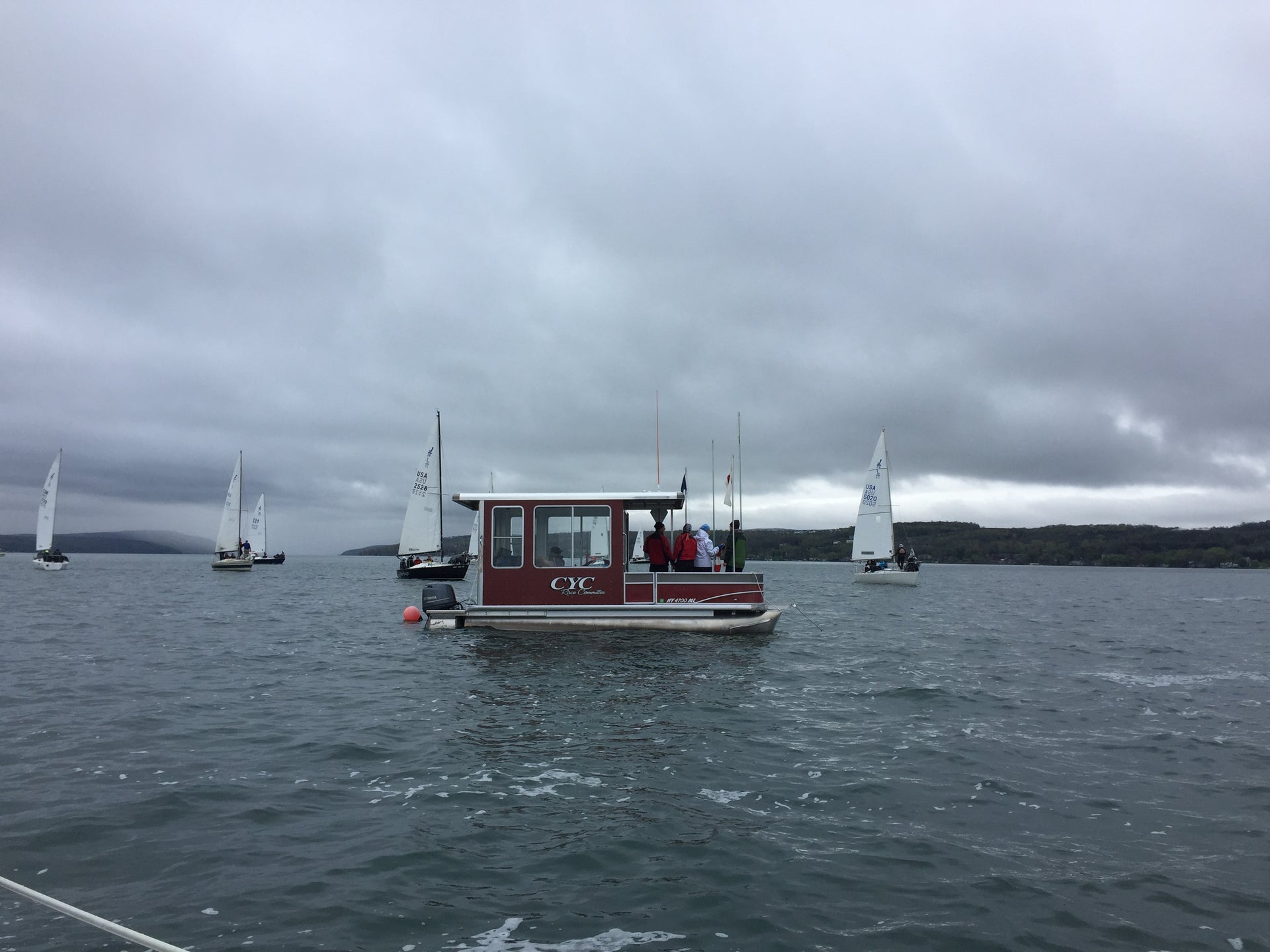
JDAZE-D IN CANANDAIGUA, NY
Finger-lake sailing at its best!
Spending the weekend in a J/24 on one of the most beautiful finger lakes in upstate New York; Who could ask for anything more? Well, maybe the sleet and rain were a little more than one would ask for, but the racing was competitive, fun, and very tricky, making for a great experience for all 27 boats.
Teams arrived Saturday morning at beautiful Canandaigua Yacht Club for some good old fashioned lake sailing. Fully suited in fowlies, everyone was prepared for the unpredictable finger lakes for a test of skills, crew work, and most importantly, patience. There is something to be said about the one liner: “Wait for it…”, as conditions were more shifty, puffy, and challenging than most could imagine.
A post-race debrief with Mike Ingham from North Sails offered great insight on maintaining control of your own destiny in short course racing. Most importantly, teams were advised to keep the comms up when Mike said,
“We did better when we were all talking about it. I noticed when things got quiet onboard we didn’t do as well.”
This was true for all sailors in the fleet as staying focused and keeping track of what was going on could make or break your next race. As pressure moved in from the West, large puffs were coming in on both sides of the windward leg, making decisions at the start very important. One start in particular that Mike reflected on was where there was a huge lefty right which caused the entire fleet to tack right at the start, making the next decisions very crucial. Keeping your head out of the boat, looking for what pressure is coming down, but also making sure there was a future after the first move was very important. Shifts were big enough to lift you 15 degrees, and force an auto tack seconds later. In other cases it was better to follow the header down and determine if it was significant enough to tack in. There were also some major fluctuations in velocity, making it difficult to sort through whether a decrease in pressure was in fact a header as well.
Boat set up was important as you never wanted to be too tight or too loose, the default for most was to set up for the lulls. You could easily make the fine-tune adjustments and crew weight to get you through the puffs, as they were not steady throughout the race course.
Another thing that teams practiced diligently throughout the weekend was never giving up. One minute you could be looking great, the next not so much, but keeping your head out of the boat, looking for the next pressure line to come down, being patient, and having faith and trusting in what you know gave sailors the best shot of staying between their competitors and the mark.
Congrats to Andrew Carey and team ‘Mr. Hankey’ for winning the J-Daze Regatta, and thank you to the Canandaigua YC Race Committee and staff for your hospitality and support. This was a great regatta for the J/24 class!
Full Results
CYC RC ready to run some races
READ MORE
READ MORE
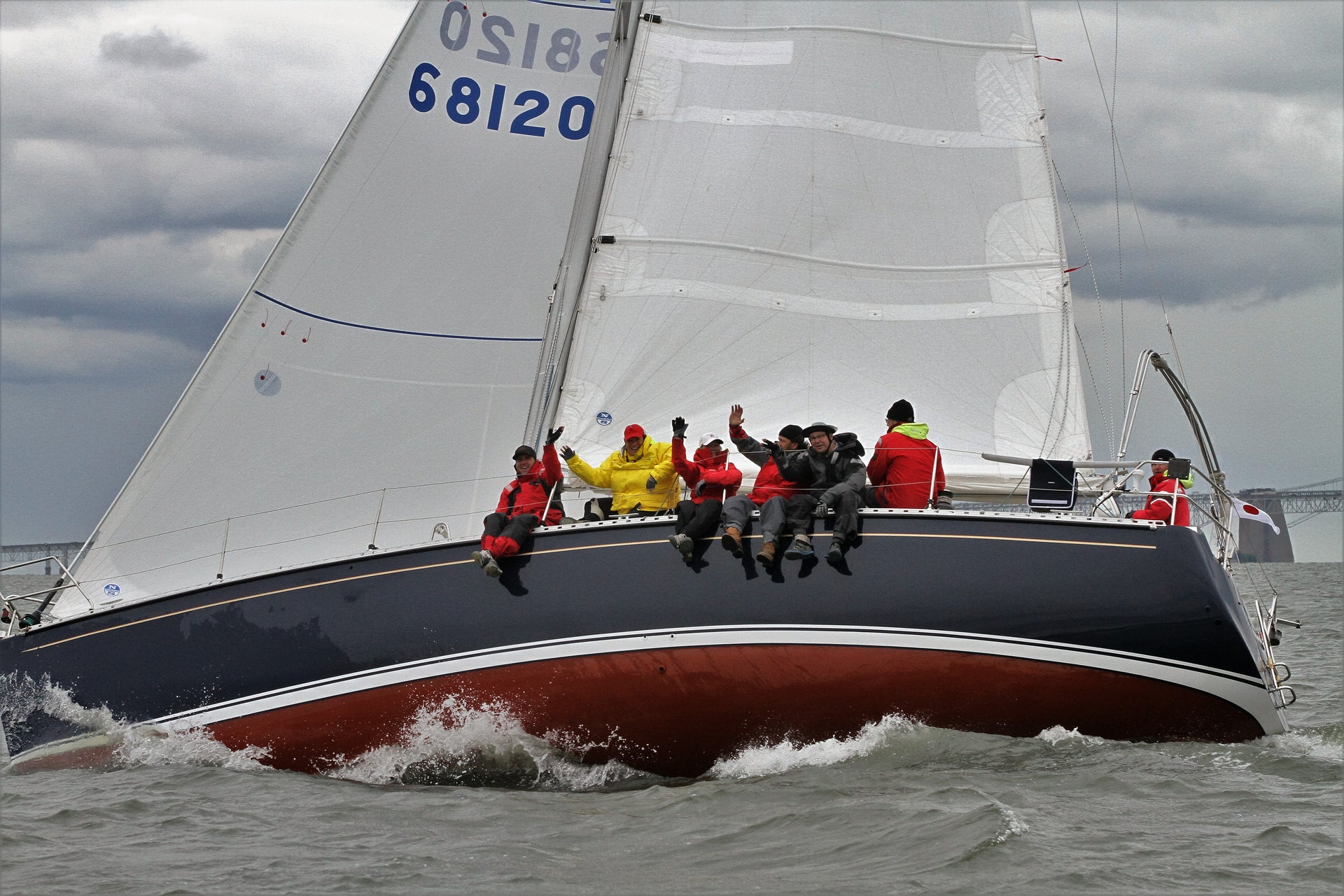
ANNAPOLIS NOOD
A wet and wild NOOD Regatta makes waves with record numbers and stormy weather
In one of the biggest NOOD events we’ve seen in years, Annapolis provided all the necessities for fun this weekend, leaving sailors on over 200 boats exhausted yet happy with their final results.
Friday was an absolute blowout, forcing the race committee to cancel racing for the day. Saturday served a full day on the water, followed by a debrief with North Sails experts Zeke Horowitz, Jackson Benvenutti, and Skip Dieball for the Viper 640 class. Viper sailors collected pointers from the North class experts on how to improve trimming techniques and find the best ways to tune their rigs in big breeze and waves. Discussion surrounding how to survive when your rig is too tight, different sailing angles, and adjusting head stay tension, created a great environment for sailors to unwind and think about improving their boat speed for the next day.
North Sails Saturday also opened the signature Rally Race – a one-day pursuit distance race. The Rally Race had a great turnout for both spinnaker and non-spinnaker divisions, with North clients taking 1st in both divisions. Conditions were superb with a WNW Breeze at 15-22 knots. Bill Adam and the Race Committee team selected an 18-mile race with the start and finish just East of the US Naval Academy. All competitors in the Rally Race enjoyed the North Sails party back onshore and had fun stories from the day to share over libations with fellow competitors.
Sunday was a full on thrill for sailors with big puffs and sustained winds over 20+ knots. Solid conditions to top off another great NOOD regatta on the Chesapeake. Congratulations to our clients for their outstanding performance this weekend!
Full Results
J/22 Start
J/22’s headed downwind
J/111 team ‘Skeleton Key’
‘Savasana’ wing-on-wing
Ensign team ‘Chowder’ took first in their division
J/70 fun in big breeze
‘Muse’ 2nd Place Corinthian J/70 team
‘Savasana’ catching one downwind
‘Skeleton Key’ edging upwind in big breeze
Rally Race RC lead by Bill Adams on point and enjoying their day on the water
Rally Racer’s loving the big breeze
READ MORE
READ MORE

YNGLING TUNING GUIDE
Congratulations on your purchase of North Yngling sails. Thank you for choosing us as your personal sailmaker. We have been working hard to design and build the fastest, easiest and most durable Yngling sails available.
Please use this guide as a reference and starting point. While we have found these numbers to be accurate and beneficial for most sailors, others may find different settings to be even more comfortable. We urge you to experiment.
While we cannot guarantee immediate victory by following this guide, we can assure you will be taking a major step in the right direction!
Please call on any of your North One Design Yngling experts if you have any questions. Good luck and good sailing!
Prior to stepping your mast
Check the length and cant of your spreaders, as they are important in shaping the mainsail. When set properly the spreaders help maintain control of the mast bend and indirectly, the tension/sag of the forestay.
The length of the spreader is measured from the side of the mast to where the shroud passes through the spreader tip. The length of the spreader should be very close to 60Cm (23 9/16”). The cant of the spreaders is measured by checking the distance of a taut line (bungee cord hooked at the tips works well) from the back of the mast. We have found this distance should range between 21.5-22.0 Cm ( 8 ½- 8 ¾”). The greater this distance, the bendier the mast. For the Abbot Boats/ Proctor Spar combination set up closer to 21.6-21.8. For the DeWolf Boats/Hall Spars combination set up the spreaders closer to 21.5 cm.
The butt of the mast is set so that the distance between the center of the forestay pin to the front edge of the mast is 1.925 m (6’ 3 ¾”).
Note: it is important to check that your mast does not sit squarely on the step (or casting). Ideally there should be a gap of nearly ¼ “ between the front of the mast extrusionand the casting or step. This gap will allow the mast to “rock” fore and aft easier and therefore bend easier, making for smoother gear shifting from light to heavy winds.
Hoist a tape measure on your main halyard and lock in your standard full hoist position. The mast rake is set so that the distance from the top of the mast ( main halyard in its locked position)to the top of the deck at the transom is 26’ 3”- 26’ 5”.
Using the tape on your main halyard, check that the mast is centered in the boat side to side.
Start with a tension gauge to measure your rig-tension. We suggest the Loos Model PT-1 gauge as it appears to be most consistent. These are good rough tune starting points for the upper shrouds at the dock: Light winds (below 6 mph) your gauge should read close to 6. In medium winds, and for your “base” setting your guge should be close to 9 and in heavy breeze the guage should be at 18. HOWEVER……
Note: As a final check in all conditions for your upper shroud tension, ideally the leeward upper shroud will just barely start to go slack…not sloppy.
The lower shrouds are best adjusted and fine tuned while under sail. They are tensioned so that the mast has a slight (3/8”) sag to leeward at the spreaders in light to medium winds. Only in heavier winds or when overpowered, will the lowers be tightened to straighten the mast laterally in the boat.
MAINSAIL TRIM
Trim the mainsheet hard enough to make the top batten parallel to the boom. You can check this by sighting from underneath the boom on a vertical plane. Once you have accelerated and you want to point higher, trim harder to cock the top batten slightly to windward. Generally, we recommend sailing with the top leech telltale stalling 70% of the time. In flat water, you can trim harder, but in light air and choppy water, you will need to ease to twist off the top of the main.
In light to moderate air, trim the traveller car to windward no more than 4-5” above centerline so the boom is on centerline. When you have the traveler to weather be sure to ease the mainsheet to maintain the upper batten parallel to the boom position. In light, sloppy conditions , or when trying to accelerate, ease the sheet so the upper batten is angled outbord from parallel 15-20 degrees.
As the breeze increases, gradually drop the traveler back to centerline to reduce helm, while at the same time trim the mainsheet. In very windy conditions, the traveler car may be dropped up to 2-3” below centerline. In these conditions the vang is tensioned hard to control leech tension and help bend the lower sections of the mast.
OUTHAUL
The outhaul controls the draft in the bottom of the mainsail. In nearly all conditions the outhaul is pulled tight enough to close the shelf foot so that the shelf seam is along the side of the boom. In heavier winds, the outhaul is pulled very tight, and to the band, so that the bottom of the main is very flat. Actually, the difference between standard “all around” trim and heavy wind trim on the outhaul is very slight. The outhaul, again, is pulled quite hard in most conitions.
CUNNINGHAM
The cunningham is used to position the draft of the sail. Your goal should be to keep the maximum draft point 50% back in the sail (sighting from luff to leech). We use no cunningham up to 10 knots, just enough to remove many of the wrinkles in 11-12 knots, and progressively tighter in higher winds to remove most of the wrinkles and position the draft forward in the top of the sail.
BACKSTAY
The backstay affects several different areas of sail trim and should never be overlooked as a power control. Pulling on the backstay does two things to the sail plan. First, it bends the mast by pulling on the tip, which opens the main leech and flattens the upper two-thirds of the sail. Secondly, it makes the headstay tighter, which flattens the upper entry of the jib and eases its leech; thus increasing pointing ability and reducing heel. Since pulling on the backstay has a large effect on main leech tension, whenever you adjust the backstay, you should check your mainsheet trim and vang tension.
JIB
JIB LEAD
As a basic starting point, set the jib lead at a distance of 2 m from the forestay pin to the center of the block. The jib should luff nearly even along the luff of the sail. In heavy winds move the lead aft a hole (no more than one inch). Note: Many sailors are raising the tack of their jib off the deck nearly 2-3” ( the skirt is still lying on the deck) to help make the bottom of the jib more powerful.
HALYARD TENSION
Be careful to avoid over tightening the halyard, as this will move the draft too far forward. Pull just barely enough to barely leave a hint of wrinkle off of each snap, but not more in all conditions. In heavy winds pull the halyard a slight bit tighter so as to make the luff smooth and position the draft properly.
SPINNAKER
The general rule of trim is to allow 8-10” of curl in the luff of the sail.
The outboard end of the pole should be even with the free floating clew and the pole should remain perpendicular to the apparent wind.
Pole height is important and has a big effect on the spinnaker. The luff break should appear approximately one-third of the way down from the head. If the break is lower, the pole is too high and it should be lowered, higher than this, the pole is too low and should be raised. Another effective guide is to position your pole so that the centerseam of the spinnaker (the vertical seam running from the head to the middle of the foot) is parallel to the mast.
Light Air
The most important area in light air is to concentrate on good communication between helmsman and spinnaker trimmer. The goal is to sail as low as possible while still maintaining good pressure on the spinnaker. An easy way to measure this is knowing the tension on the sheet. The important thing is not to sail too high with translates into longer distances, consequently do not sail too low thus sacrificing boat speed.If the spinnaker sheet starts to drag in the water, head up slightly!
Be careful not to pull the pole too far aft, which over flattens the spinnaker.
Heavy Air Reaching
Never allow the pole to rest on the headstay. Always maintain at least 2-3” of distance between the pole and headstay. When big puffs hit and the spinnaker is full, ease the sheet 2-3’ to help the boat accelerate. Trim as the puff subsides. Have the foredeck person keep a hand on the vang at all times and be ready to release if the boat begins to spin out. As soon as the rudder starts to have weather helm, the vang should be out of the cleat and eased until the boat is under control again. Hike hard on the reaches.
Mainsail
Ease the sheet until a luff appears then trim slightly to create more apparent wind. Dead downwind the boom will be out to the shrouds. Set the vang in light to moderate air so the top batten is eased out past parallel to the boom ( since the shrouds are set aft on the Yngling more twist in the main dead downwind is necessary to help the boat sail low enough.) The Cunningham, backstay and outhaul should all be eased for maximum downwind power.
Twings
It is critical to utilize the twings properly sailing both on the reaches and dead downwind. The windward twing should always be all the way down. It is critical to make sure the leeward twing is off during the set. If it is not, the spinnaker will fill prematurely, causing the boat to create weather helm and round up.
When sailing downwind in light air, the leeward twing is completely released. In very heavy air, pull the leeward twing as well, on about halfway or 2’ away from the deck to help keep the spinnaker under control.
READ MORE
READ MORE
Y-FLYER TUNING GUIDE
Congratulations on your purchase of North Y-Flyer sails. We are confident you will find superior speed over all conditions. Your sails are designed to be fast, as well as easy to trim and handle.
The following measurements are those we have found the fastest for your new North sails. After experimenting, you may find a slightly different setting may mean even better boats speed for you. We are anxious to help you go faster and win races!
Onshore Adjustments
Mast Placement – The mast step should be positioned so that the mast is near maximum aft position. In this position the back edge of the mast should be 16” to 16½” forward of the centerboard pin.
Mast Rake – the best method for measuring the mast rake on the Y-Flyer is by hoisting a 50’ tape to the top of the mast and measuring the distance from the top of the mast to the intersection of the transom and the back deck. Just hook the tape on your main halyard shackle and don’t worry about adding or subtracting any difference for the shackle. With the rig tensioned properly (discussed later) this measurement should be 24’1” to 23’10½”.
If you are trying to correspond this measurement to the older method of the bubble level on the top of the centerboard trunk, the measurement should be approximately 30”-31”.
While the tape measure is hoisted to the top of your mast it is important to check that your mast is set up straight in your boat laterally. To check this, take the tape and measure the distance from side to side at the bottom of the chainplates. Try to adjust your shrouds so there is no more than ¼” to ½” difference from side to side.
Rig Tension – We have found that the Y-Flyer performs best in medium winds with the rig set up fairly tight. It is best to use a powerful jib halyard adjustment system (a lever, magic box, block and tackle, drum, etc…) so that the leeward shroud just begins to go slack when it is blowing 10-12 mph.
To verify the proper rig tension we strongly suggest using the Loos Tension gauge. When using the Loos gauge, and checking the tension on your 1/8” upper shrouds, the number should read approximately 34-36 (not lbs.).
In light winds without changing the shroud position, it is advantageous to ease off the jib halyard slightly so the tension is reduced in the rig. This will allow the jib luff to sag slightly, making the jib slightly fuller. Using the Loos gauge to check the tension on the shrouds, you should find a number of approximately 28-30. If you still have your tape hoisted on your main halyard, you can check the rake number and see that it will become less (indicating more rake) by 1-2”. In heavy winds, when the boat is overpowered, it is fastest to rake the rig farther aft. If you set your mast up at 24’1” for medium winds, we suggest that you allow it to drop back nearly as far as 23’9” to 23’10”. Ideally, it is best to also drop the shrouds in their channel adjusters so that the rig, when raked farther aft, would still be close to the proper 34-36 Loos gauge number on the shrouds. However, if the breeze comes up during a race and since it is impossible (and Illegal!) to change the shroud tension it is still best to compromise and sail with a looser rig with the mast raked farther aft.
Loos Tension Gauge – This gauge is a very helpful guide in tuning your Y-Flyer.
Mast Bend – when the rig is properly tensioned with the proper rake and spreader settings, your mast should develop positive prebend, where the middle of the mast will move forward at the spreader and the top of the mast will come aft. In medium winds with the rig tensioned at 34-36 on the shrouds the mast should develop nearly 1” to 1½ of prebend. You can check this by pulling the main halyard down tight and holding it at the gooseneck so it will develop a straight line as a reference from the top of the mast to the gooseneck.
In light winds with less tension in the rig, there will be less prebend of approximately ¾”.
Listed below are suggested spreader positions for the various popular masts used the Y-Flyer Class. It should be noted that masts of a particular section may have slightly different bend characteristics depending on spreader height and rigging placement and differences in the extrusions themselves. Because of this, the following measurements should be used as starting points only with appropriate adjustments being make on the actual bend and tested while sailing.
Spreaders for the stiffer mast (W2, H2) – We have found that the spreaders that are 19¼” long and are free swinging forward but lock up when pushed aft at a point where they are 35” to 36” tip to tip will give the proper desired bend. this tip to tip measurement can be found by pulling the spreader together with a tape from one spreader to the other at the tips. Also, check and make sure that the spreaders are angled evenly on each side. These measurements are for masts with spreaders that are 9’1” to 9’2” from the deck. Spreader that are higher on the mast will need to be somewhat shorter.
Spreader for the bendy mast (DP1, C1) – These masts require spreader which are 18 ½” long and 38” measured tip to tip. These measurements are taken of masts when the spreader are approximately 10’ above the deck. To make adjustments to the bend, the “cant” in the spreader should be adjusted (forward for less bend-aft for more bend: or closer tip to tip measurement for more bend, greater tip to tip measurement for less bend).
The Mainsail Look When the Mast is Properly Bent: Basically on all masts we are looking for very slight overbend wrinkles (diagonal wrinkles that will appear from the spreaders to the clew) showing that the mast is beginning to reach maximum mast bend. In light to medium wind these wrinkles should barely appear while in winds above 15-18 mph, these wrinkles will be quite noticeable and in above 20-25 mph winds, will be quite severe. If these wrinkles are not developing, your mast is not bending enough.
Lower Shroud Tension – Your lower shrouds should be adjusted so that the mast is straight sideways when sailing upwind. Check this by sighting up the back of the mast, up the tunnel, and determine if the mast is sagging to leeward or bowing to windward at the spreaders. If sagging to leeward, tighten the windward lower shroud; if bowing to windward, loosen the windward lower shroud. Check both sides independently and when adjusted correctly the lower shrouds will be much looser that the upper shrouds with the jib up and the rig tension as described before.
If you find that it is necessary to sail with your lower shrouds quite tight to keep the mast straight sideways, it could be a good indication that your spreaders are too long. Lower shrouds that are tight can severely impair the mast’s ability to bend properly and therefore harm the boat’s performance. Shorten your spreaders in increments of 1/4” to 3/8” and readjust the lower shrouds to match. Again, your goal is that the leeward lower shroud will be much looser than the leeward upper when sailing upwind in medium winds. The lower shroud should be considered just as a “tweeker” to help control lateral mast bend, but definitely not to be the primary control. The spreaders are most important.
Jib Lead Placement – On your new North Y-Flyer jib you will notice a pencil line drawn from the clew grommet out towards the center of the sail. Use this “trimline” to position your jib lead by making your sheet a direct extension of this line.
In heavy winds, move your jib leads 1” to 2” aft of your medium/light air extension of the trimline position to help depower the jib and open up the slot.
Your leads should be positioned 13½” to 14” off centerline (27” to 28” lead to lead).
Centerboard Angle – It is important that your board is lowered to the maximum, with as little of the board as possible showing above the trunk when sailing upwind.
Sailing Adjustments
Main and Jib Cunningham – For both the main and the jib, never pull tighter than to just leave a hint of wrinkle along the luff of both sails. On your main, these wrinkles will appear in the lower 1/3 to 1/4 of the luff, and on your jib, will appear as small wrinkles approximately 2” long, perpendicular to the luff.
Note: do not attempt to pull out your overbend wrinkles by tensioning your main cunningham. Again, remember that the overbend wrinkles are a necessary guide in showing that the mast is vending properly and pulling the cunningham tight enough to pull these wrinkles out will pull the draft too far forward in your main, robbing your boat of necessary power.
Outhaul – The outhaul adjusts the depth in the lower part of your mainsail. as the outhaul is eased, the shelf on the bottom of the sail opens and the seam that attaches it to the sail moves away from the boom. To gauge outhaul tension, judge the distance from the seam to the side of the boom at roughly the center of the mainsail foot.
The outhaul will be pulled tight enough so that there is just a ½” to 1” gap between the side of the boom and the shelf foot seam in the middle of the foot. In breezes above 10-12 mph when the boat becomes overpowered the outhaul will be pulled tighter until the seam is snug against the side of the boom (max outhaul).
When reaching, ease the outhaul until vertical wrinkles appear across the seam perpendicular to the foot into the body of the sail. Tighten your outhaul until the wrinkles are just removed. When overpowered on a reach, with the spinnaker, leave the outhaul set as you had it upwind. For downwind sailing, leave your outhaul in the tensioned position for maximum projected area.
Jib Sheet Trim – Unfortunately, there is not an easy guide for jib trim. We are looking for a parallel slot between the exit of the jib and the entry of the main. A guide that has been used with some success is imagining a middle batten on the jib at mid leech. Set this “batten” parallel to the centerline of the boat, making the upper batten of the jib twist outboard slightly and the lower batten twist inboard slightly. In extremely flat water and winds of 8 to 12 mph, it is possible to trim the jib in slightly tighter so that the top batten is nearly straight back parallel with the centerline. This trim can be used for short periods of time when the boat is traveling at near maximum speed.
In light winds, or when acceleration is needed, ease the sheet out slightly so that the top batten is angled outboard approximately 15 degrees from parallel with the centerline of the boat. The imaginary middle batten will be angled outboard just slightly from parallel to centerline, and the jib will be fuller and less apt to stall.
Mainsheet Trim – The mainsheet on your Y should be pulled so that the upper batten is parallel to the boom. This is sighted underneath the boom looking up the sail, lining the batten and the boom parallel on a horizontal plane. In very light winds, it is usually impossible to keep the upper batten from hooking slightly to weather because of the weight of the boom hanging on the leech. In these conditions, ease the sheet out so that the top batten is parallel with the centerline of the boat.
In choppy conditions in winds above 2 to 3 mph, ease your mainsheet approximately 6 to 8 inches to slightly open the upper batten out from parallel to the boom. This will make your mainsail fuller, more powerful, and like the jib, less apt to stall.
In medium winds and flat water (ideal boat speed conditions) sometimes it is possible to slightly overtrim your main so that the top batten is looked to windward of parallel to the boom approximately 2 to 5 degrees for short periods of time.
Picture the mainsheet as your accelerator. As your boat picks up speed, pull the main tighter and tighter until the upper batten is parallel or slightly looked to the boom, and in lights winds or when the boat is hit with a wave and needs to accelerate, ease the mainsheet so that the upper batten will angle outboard slightly, inducing “twist” into the sail.
Boomvang – Upwind in medium to heavy winds the boomvang should be kept hard enough to keep the upper batten parallel to the boom. This may require a good deal of boomvang tension, but this will also help to bend the mast and flatten the sail. In light winds, never use any boomvang tension upwind. Downwind the vang should be tensioned only tight enough to maintain the upper batten parallel to the boom position. There may be a tendency to overvang downwind in light winds and undervang downwind in heavy winds. Basically, look for the main to set downwind as it does upwind. The traveler is used to help balance the helm of your Y and keep the boat upright. Upwind when the boat becomes overpowered, the traveler should be eased to leeward, with the boat slowly feathering up into the wind to help keep the boat level and the helm neutral. In the lulls, be sure to quickly pull the traveler back up to centerline, but be ready to ease back down to leeward in the puffs.
Downwind – When sailing your Y downwind with the whisker pole up, it is best to ease off your jib halyard as much as 10” to allow the luff of the jib to sag greatly. A loose luff, when sailing with a pole, will allow the jib to basically “turn around” with the leech becoming the luff and the luff becoming the leech. We need to remember that we are trying to create airflow across the jib with the wind entering the jib from the actual leech of the sail. Not attaching your jib to the forestay with the snaps or Velcro’s will make this procedure much easier. Instead, you can set the forestay so that it is loose enough to just allow the rig to lean back to your heavy air setting of approximately 23’9”. There will be slop in the rig, but that is necessary for top performance downwind. A shockcord retainer can help minimize the slop in the headstay when sailing upwind.
In addition, it is also suggested to sail with a longer whisker pole, which will help with better performance on beam and broad reaches. You will find that the pole will just barely fit in the cockpit of your boat!
Once again, a powerful jib halyard adjuster is helpful to make it easy to adjust the halyard tension properly and easily before rounding the leeward mark when the pole is dropped.
When sailing on a close reach, without the pole, be sure to use your barberhaulers and move your jib lead outboard. The proper position of your barberhauler lead, forward and aft, is determined by the trimline on the clew of the jib. This time, position the barberhauler lead so that the sheet is angled slightly forward of parallel to the trimline. This will make the jib slightly more powerful and help to support the upper leech.
We wish you good luck and fast sailing! Do not hesitate to give us a call if you have any questions or problems. Please consider us your personal sailmaker.
READ MORE
READ MORE
WINDMILL TUNING GUIDE
The following tuning guide is meant to be a good starting point in setting up your boat. Depending on your crew weight, strength, sailing style and local conditions, you may have to alter your rig slightly. As you read this, write down any questions you may have, and we will be happy to discuss them with you in more detail. We are trying to achieve a rig set-up that is fast in all conditions; upwind, reaching and running, and is very easy to adjust or change gears. Your new North Sails are designed around this all-purpose philosophy.
INITIAL SETTINGS
- The first item that should be checked is the mast step. It should be place at about 59-60” from station 0. Make sure that your mast is tight in the step and will not twist in the step.
MAST RIGGING
- The standard height for spreaders is between 104 to 106” above the theoretical top of keel. In checking the fleet, I have found some as high as 117”. While this is quite high, it seems to balance the mast bend nicely, and allow the jib to be sheeted inside the shrouds if you’d like and not foul on the spreaders. The length and angle the spreaders are set to determine the deflection that the shroud is moved away from a straight line between the mast and the chainplates. These factors control the stiffness of the mast. The spreader length should be set to deflect the shrouds about 2.5” to 3” outboard to restrict side bend and pinned to deflect the shroud about 1.5" to 2" forward which restricts fore and aft bend. These are checked at the light air rake settings. When measured from a straight line between the shrouds, the distance to the aft edge of the mast should be about 5" for a Kenyon “A” section, and 6.5” for a Proctor Lambda or Alpha Minus. Spreader length of about 15.5" from the surface of the mast works well with the spreaders at 106” and the chainplates inboard. With the spreader bracket at 117” above the keel, a length of 15.5” works well with the chainplates close to the gunwhale. These numbers will vary depending upon the location of the chainplates and height of the spreader brackets, but the overall deflection is the key. When sailing upwind in 8 to 10 knots, with the boom close to centerline the mast should be straight up to the forestay. If the spreader area goes to leeward, you need to either loosen the rig if it’s tight, or shorten the spreaders. It is also a good idea to have nicropress stops under the spreaders so the spreaders don't drop in angle.
CENTERING THE MAST
- Before calibrating your mast rake, check that the mast is even in the boat athwartships. You can do this by hoisting a jib and tensioning the rig until the shrouds are tensioned. Attach a tape measure to the end of the main halyard and raise it to full hoist. Check the distance to each chine directly below the chainplates, and adjust the shrouds until the mast is in the center of the boat. Next sight up the back edge of the mast to ensure that it's straight athwartships. If the measurement to the gunwales is even, and the mast isn't straight side to side, then either the spreaders are uneven in length or the mast partners at deck level are uneven and pushing the mast to one side. It is important that the mast is straight in the boat and nominally tight in the partners. Any side to side play in the partners depowers the rig too early.
MAST RAKE
- Mast rake and rig tension are the two very important tuning variables. We use a “boom band radius system” to measure and calibrate your rake, which uses your forestay. Hoist your jib without attaching the hanks to the forestay. Detach the forestay from the headstay fitting at the bow. Swing the headstay back to the mast, and mark the stay with tape where the wire is even with the top edge of the sail black band at the boom. This is your “zero point.” If your spar has two bands, use the upper band. If you are not confident that the band is in the right place, check the class rules and re- measure it. Now swing the wire back forward, attach a tape to the “zero point”, and measure down to the upper forward intersection of the deck and the bow. In light air and full power, this number should be about 34.5” An average light air setting would be 36”. For lighter crews or increasing breeze, rake back to about 37”. In heavy air rake back to about 38” To set the shroud tension, at your light air rake setting the shrouds should have about 150 lbs of tension, as measured on a Loos Gauge. If you don’t have a Loos Gauge, this is moderately tight where the shroud can be wiggled in a small circle without too much trouble. Heavier crews can use more tension to restrict mast bend, and lighter crews can sail with looser shrouds to allow more mast bend. As the breeze builds and you get more overpowered, just ease the jib halyard off to increase aft rake. This depowers the main through more athwartship and fore and aft bend. As a guideline, if you are pointing too much and going too slow, increase rake and loosen the helm up. If you are fast but not pointing, decrease your aft rake. With the mast in the 3’0” rake setting and the jib up, block the mast to have about 1/2” to 1” of pre-bend, that is where the middle of the mast bends forward.
DAGGERBOARD
- In my limited experience, it appears that the board should be as stiff as possible. It is also important that the board fit tightly in the trunk. The trunk can be shimmed within the WCA class rules with carpet, which will protect the daggerboard and keep it snug in the trunk. In conditions up to a full hiking breeze, keep the board all the way down and even forward in light air. As weather helm increases with the windspeed, you can balance the helm by either raising the board and/or angling the board aft.
MAINSHEET TENSION AND BOOM VANG
- Generally, the vang should just go slack when the mainsheet is at maximum tension. In light to medium conditions, trim your mainsheet so the top batten is about parallel to the boom. If you are sailing in very smooth water, trim hard enough to hook the top batten 5 degrees to windward. The boom vang is a powerful tool in that it will increase the mast bend and flatten the main. When sailing upwind, if you have speed with no pointing, try reducing aft rake, getting the traveller closer to the centerline, or vanging harder to tighten the leech and flatten the main. If you have pointing with not enough speed through the water, try increasing your aft rake, easing the traveller, bending more, or checking to see that you are not vanged too hard. Or just hike harder and sail the boat flatter!
MAIN CUNNINGHAM
- The main cunningham should be slack up to 10 knots. Above 10 knots, tighten enough to remove wrinkles along the luff. Always be aware that the cunningham pulls the draft forward and depowers the leech, which is not always good.
OUTHAUL
- Our sails are designed with a shelf foot, which makes the sail sensitive to outhaul control. Ease the outhaul 2-3” for power in a chop, and for offwind legs. Tighten in heavy air or overpowered conditions.
JIB LEAD POSITION
- As a starting point, your jib leads should be positioned so that the bearing point on the blocks is about 83” aft of the jib tack pin. Another guide is to set your leads so that the jib sheet lines up with the trim line on the clew of the jib. In choppy conditions it may be faster to move the lead forward from this point, and sheet just a little looser. If your sail does not have a trim line, you can install a line on the clew, defined by the center of the clew and intersecting the luff midway between the tack and the head. This is a good starting point. Move the jib lead aft as the wind increases, and/or more rake, to accomplish the same end result of twisting off the top of the sail. If you have speed with no pointing, try moving the leads forward. If you have pointing with not enough speed through the water, try moving the leads aft. Experiment with different lead positions, especially in stronger breezes, as changes are readily felt. The leads should be about 16” to 17” from the centerline. This can be adjusted by changing the length of the shackles which hold the ratchet blocks to the track slider. Generally, 16” is best for light air, and 18” or so best for heavy air.
READ MORE
READ MORE

SOLING TUNING GUIDE
The following tuning guide is meant to be a good starting point in setting up your boat. Depending on your crew weight, strength, sailing style and local conditions, you may have to alter your rig slightly. We are trying to achieve a rig set up that is fast in all conditions: upwind, reaching and running. Your new North sails are design around this “all-purpose” philosophy.
As you read this, write down any questions you might have, and we will be happy to discuss them with you in more detail.
MAST RAKE AND SHROUD TENSION
Most boats have an adjustable forestay which allows the crew to change the mast rake for different wind velocities. Our rake is checked by measuring the amount of forestay that exceeds the mast length.Hold your forestay along the front of the mast and simply mark the forestay at the point where the bottom of the mast would be. We check our rake by measuring the distance from this mark to where the forestay intersects with the deck. We suggest you set the rake at 29” inches. After the rake is set, It is possible to make marks on the mainsheet, backstay, and jib clew heights for different wind and wave conditions. In light wind conditions (under 7 knots) we suggest a 30” inches rake.
This will increase “feel” and make the boat easier to steer. Remember that every time you change the rake, all these control marks have to be changed.
SHROUD TENSION
Our shroud tension is measured with the shroud in the forward position, and the backstay on, so the headstay is snug at 29” inches of mast rake. Uppers should be at 700 lbs. at all conditions.Lowers should be set so the mast (when sailing), have 1 1/2” inches (one and half inches) of sag at the spreaders, for light air; increasing tension to 500 lbs. at 18 knots of wind.
NOTES:
The more upper shroud tension you have, the more pre-bend you will have.
If you have a soft mast, and or the mainsail looks a bit flat, you may need less upper tension.
SHROUD POSITION
We have five settings for the fore and aft movement of the shroud position at the deck. The total travel is 12” inches.
TRACK POSITION
WIND
WIND RANGE
#1 - Full forward
Light air
0-7 Knots
#2
Light to Medium
7-10 Knots
#3 - Middle track
Medium
10-16 Knots
#4
Fresh
16-20 Knots
#5 - Full aft
Strong
20+ Knots
Be careful not to depower the boat too quickly, especially in waves.
SAIL COMBINATIONS
We recommend the following sail combinations:
0-14 knots: AP-2 Main and V-1 plus Jib
8- 20 knots: AP-2 Main and V-1 Turbo Jib
18+ knots: AP-2 Main and A-1 Jib
BACKSTAY
There are two things that the backstay does. Controls the fullness in the mainsail and also the forestay sag. This is probably the most important adjustment in the Soling. The more backstay tension, the flatter the main, and the less forestay sag results in a flatter jib. I have my backstay marked on every inch, so is easy to repeat fast settings and have the boat ready, quickly after mark rounding. Our mainsail is designed so that the mast bend and forestay sag are matched for the conditions.
MAINSHEET TENSION
The mainsheet controls the top part of the mainsail. The quickest and most accurate way to trim the mainsail is to watch the angle of the top batten. Sighting from under the boom, the top batten should be parallel to the boom most of the time, if not in overpowered conditions. In flat water, the top batten can point five degrees to weather of the centerline, and when overpowered, it should open from centerline until helm balances.
BOOM VANG
The rule of thumb, is to have the vang adjusted for the downwind legs, so the top batten is parallel to the boom.This control is also important when close hauled, by helping control the forestay sag and making the jib either more or less powerful. In smooth water, the vang should not be used, so the forestay is as straight as possible. In choppy waters, boom vang should be used, and by experimenting you will be able to find the perfect tension, which is normally when helm is almost neutral.
MAINSAIL TRAVELER
The boom should be about 4 to 5 inches above centerline until both crews are over the side and boat is overpowered. At this point traveler should be placed on the centerline (not very often the traveler should be placed below centerline).
JIB TRAVELER
A good starting position is 10 to 11 inches athwart ship centerline. In heavy air, it should go outboard 2 to 4 inches (20 knots and above), this will help stop the back wind on the mainsail under heavy breezes.
CLEWBOARD POSITION
This will vary from boat to boat, but the third hole for the V-1 jib and the A-1 jib will be a good starting point. When it is light and crew is inside or not fully hiked, make the jib fuller down low, by going to a higher hole (or just by moving the whole jib up). When crew is fully hiked and the wind is stronger, make the foot flatter, by moving to a lower clew hole (or by moving the whole jib down). For full power conditions, the jib should luff evenly from top to bottom.
LUFF TENSION
All jibs should be set with minimum luff tension, just enough to take most of scallops out; DON’T OVER STRETCH. Too much tension moves the draft forward, which is very slow.
OUTHAUL
In light air the outhaul should be stretched to about 1 to 1 1/2” inches from maximum out. As the wind increases, pull the outhaul all the way out so the sail is perfectly flat right of the boom. In reaching, the outhaul should at maximum ease (about 3” inches).
RUNNING AND REACHING WITH SPINNAKER
A lot can be done in terms of speed when running and reaching, and if you are faster than the competition, that could be the necessary edge you need to win.When sailing downwind, the fastest setting is by moving the mast as far forward as your backstay would allow.The other important controls are the pole fore & aft and up & down. For fore & aft adjustments try to have the luff of the spinnaker perpendicular right out of the pole.For up and down control, the pole should be adjusted so the clews are even height from the water.
SAIL CARE
Always store your sails away from the sun and make sure they are clean and dry.Be sure that you always “roll “ your upwind sails, this will help them last longer and stay wrinkle free.If you have any questions or comments about our Soling Tuning Guide, don’t hesitate to contact us.
READ MORE
READ MORE

SANTANA 20 TUNING GUIDE
The following tuning guide is meant to be a good starting point in setting up your boat. Depending on your crew weight, strength, sailing style and local conditions, you may have to alter your rig tune slightly. As you read this, write down any questions you may have, and we will be happy to discuss them with you in more detail.
Our main goal is to help you achieve a rig setup that is fast in all conditions; upwind, reaching and running, and is very easy to adjust or change gears while sailing. Your new North sails are designed around this all-purpose philosophy.
It is important to mark all your shrouds, sheets, halyards, tracks, outhaul, backstay, etc. Keep records of your tuning setups, the conditions you sail in, and how your speed is. It is essential to be able to duplicate settings from race to race, and also to know exactly how the boat was set up when you were going fast. Experiment during practice races and clinics.
TUNING AT THE DOCK
Rake Setting: 51”
Once the mast is up, attach your jib or spinnaker halyard to the tack and tighten. Disconnect the forestay and bring back to the mast. Pull the forestay tight along the front of the mast and with a black marker, make a mark on the forestay at the location of the bottom of the black band. This should be 22” above the bottom of the mast. Mark the 22” spot on the mast if your band isn’t in the right place. Re-connect the forestay, apply enough backstay tension to straighten the forestay and measure from the black mark to the center of the forestay pin.
If you are sailing really light on crew weight, and the breeze is up you might want to go around 50”
Why do it this way? Because it’s the most accurate way and the measurement is the same for new and old style decks.
Next, make sure the top of the mast is centered in the boat. To do this place a pencil mark on the port and starboard rails at equidistant aft of the tack fitting at about 10” forward of the shrouds. Make sure your lower shrouds and aft lower shrouds are loose. With the upper shrouds hand tight hoist a tape measure on the Genoa halyard and measure from the Genoa halyard block to the pencil marks. Keep measuring side to side and tightening or loosening the upper shrouds until the tip is centered.
Hand tension each forward lower until they are evenly tensioned. Sight up the mast track on the aft side of the mast to see if it’s straight from side to side. You’ll find it helpful to take the main halyard and hold it stretched tight centered just above the gooseneck in the mainsail track. Use the wire as a straight-line reference with the track. Tighten or loosen the forward lower shrouds until the middle of the mast is in column with the mast tip.
We recommend investing in a Loos Tension Gauge Model PT-1. This gauge can hang on the shroud as it is adjusted and won’t stretch out like the Model A gauge.
Using the tension gauge adjust the upper shrouds to the base setting of 25 and the lower shroud to 20. Once the mast is centered it is important to take the same amount of turns on the port and starboard shrouds while adjusting tension in order to keep the mast centered. If the port and starboard spreader tips are at different heights above the deck, the mast will not be straight side to side or the shrouds will have different tension from the port side compared to the starboard side.
The aft lowers should be attached to an adjustable track, because adjustment of these throughout the race is essential. First make sure the backstay is released. If they are attached to a track make sure they are evenly set and when trimmed to maximum tension they invert the mast by at least 3 1/4 to 3 1/2 “.
Rig Settings
Apparent Wind
Uppers
Lowers
0-5
-1*
-1*
5-10
– ½*
– ½*
10-12
Base Setting
25
20
12-15
+1 ½*
+2*
15-20
Genoa
+2*
+ 2 ½*
15-20
Jib
Base
+2*
20-25
Jib
+2*
+2 ½*
* Denotes one full turn of the turnbuckle barrel using standard open body turnbuckles.
Set up the rig at the base setting before you leave the dock, adjust the rig as conditions change but remember to keep track of any changes. Just to make sure there is no confusion, all the changes reflect turns on or off from the base setting – not from the previous setting. Also, mark your deck with an arrow and a ‘T’ for the tightening direction and replace any cotter rings/pins with turnbuckle nuts – they’re much easier to adjust!
UPWIND TRIM
Light Air (0-5 Knots)
In these conditions keeping the boat moving fast and not worrying about pointing makes bigger gains around the racetrack. Therefore set the boat up to maximize boat speed instead of pointing ability.
The golden rule in all conditions is “If you want to point you have to be going fast first!”. In light air set your sails up for maximum power.
Main
First set the aft lowers at a position so the mast is perfectly straight yet there is enough tension that when the backstay is pulled the mast will not bend down low. Get in a habit of sighting up the backside of the mast to see how the mast is bending. Next, sheet in the main sheet so that the top batten cups slightly to windward. Now pull the backstay until the top of the mast bends enough to allow the top batten to twist to leeward so that it is parallel with the boom. Make sure the telltale on the top batten is not stalled. The small amount of backstay tension will provide the correct amount of headstay sag. The boom vang should be eased all the way and the traveler pulled to weather enough so the lower battens are just to leeward of the backstay. The outhaul should be 1-2” from maximum. The more chop there is, the looser the outhaul should be set. The cunningham should be pulled on just enough to remove major wrinkles from the luff.
Genoa
Tension the genoa halyard enough to remove the luff wrinkles. This will pull the draft forward and open the leech of the sail. With the draft forward the boat will be easier to steer. The open leech will help air flow across the sail without stalling. The foot of the genoa should be 3-4” from the shroud turnbuckle, and the leech should be 2-3” from the spreader tip. Make sure the leech lines are eased.
Remember in these conditions keep your head out of the boat and sail towards better wind velocity on the course.
Light to Medium Air (6-12 Knots)
These conditions call for a good amount of power as well as the ability to point.
Main
The aft lowers should be set at their medium position which puts 1” – 1 ¾” inverse bend into the lower section of the mast. Determine the medium air backstay setting by using the same technique as described for light air. The traveler should be pulled to weather with the boom on centerline to help the boat point, but eased to leeward if too much weather helm is felt or if the boat starts to heel too much.
The outhaul should be eased ½” from the maximum position. The cunningham should be pulled tight enough to remove all wrinkles from the luff. The boom vang should be pulled in just enough to snug up the line (preset for downwind). Start with the main sheet set with the top batten parallel to the boom. If your boat speed is good and you want to point higher, try pulling harder on the mainsheet and stall the top batten telltale 50-80% of the time. Beware, if your speed starts dropping off ease the mainsheet.
Genoa
Set the halyard so some wrinkles show in the luff of the genoa. This will flatten the genoa entry and move the draft aft in the sail, allowing for more power and higher pointing. Set the leads so the foot is 1” – 2” from the shroud turnbuckle and the leech is 2-3” from the spreader tip.
Medium to Heavy Air (13-18 Knots)
Once the wind has reached this level, it is time to start thinking about de-powering the sails to keep the boat from healing too much.
Main
The aft lowers should be set tighter with 3 ¼” – 3 ½” of inverse bend. This allows more backstay to be pulled on letting the top of the main twist to leeward, while at the same time placing more tension on the forestay which improves pointing and flattens the genoa. In order to determine backstay tension, pull the main sheet in enough so that the top batten twists to windward even while the backstay is at it’s medium setting. Then pull just enough backstay to let the top batten twist to leeward about 15 degrees. The cunningham should be pulled tight enough to remove all wrinkles from the luff. The boom vang should be tightened enough to hold the boom down at its sheeted height even without mainsheet tension. The outhaul should be at its maximum position.
Genoa
These conditions are at the upper wind range for the genoa. The decision to switch to the small jib will depend on crew weight, consistency of the wind and waves. Choose the size of your headsail based on the strength of the wind during the lulls. The larger the waves the larger a headsail needed to power through them. If the Genoa is used tighten the halyard to move the draft forward and open the leech. Set the leads so the foot is against the shroud turnbuckle and the leech is 4” – 5” from the spreader tip. To de-power twist the Genoa by easing the sheet 1” – 2”.
Remember the tighter the aft-lowers and backstay are, the tighter the forestay is and therefore the flatter the Genoa.
Jib
The crossover to using the class jib can be found in this wind range. Lighter crews, or sailing in flatter water can allow you to go to the small jib and still be fast.
Keep the leads forward and don’t strap the jib in! The S-20 likes to be rolled up to speed and a strapped headsail won’t get you there!
We also recommend a 2:1 jib sheet system. The sheet should be dead-ended at the jib car, go through the jib clew, through the jib block then back to the Genoa ratchet and up to the weather side. This makes adjustments to the jib easy while trimming from the high side.
Note: The 13-18 knot range of apparent wind can really separate the fleet. Make sure the boat is tuned for the conditions and the headsail. The key is to keep the boat moving fast and pointing high, you should roll the boat up to speed and keep the weather tell tales at about 45 degrees for maximum VMG to weather.
Heavy Air (19+ Knots)
In these conditions the sails need to be flattened as much as possible and set up so the boat is as easy as possible to steer.
Main
Pull the aft lowers on to their maximum setting of 4” of inverse bend. Tension the backstay in the same manner as in the 13-18 knot conditions, except that 20 degrees of twist is desired. Begin vang sheeting by pulling the boom vang on hard, which bends the lower section of the mast thereby flattening the lower part of the main. The cunningham should be pulled in enough to remove all wrinkles and move the draft forward. Set the outhaul at its maximum setting. Let the traveler all the way down to the edge of the cockpit.
If the boat is still overpowered with the top batten inverted and the main flogging it’s time to go into super twist mode. Pull the traveler all the way up past centerline and ease the mainsheet so the boom is on centerline. Keep the aft lowers, backstay and vang snug. The outhaul can be eased ½” for power in the lower section of the main.
Jib
The jib should be sheeted to tracks mounted on the round cabin top inside of the shrouds. The track should have a sheeting angle of 11° off centerline. To find this angle measure horizontally 19 ½” outboard from centerline behind the mast. This is where the jib track should be installed.
Pull the jib halyard tight enough to remove the wrinkles in the luff. Set the jib so the top tell-tales break slightly before the lower tell-tales. If the boat need a little bit more power, move the jib lead forward to give the bottom of the sail some depth and sheet the sail so the leech is pointing straight aft. To de-power move the lead aft to flatten the bottom of the sail and twist the top off.
The main and headsail need to work together. If the genoa or jib is twisting off at the top, so should the main. If the genoa or jib is sheeted hard, so should the main. When the wind is blowing hard, adding twist to the main and jib will help give the boat a larger groove to steer in.
Aft Lowers
Wind Speed (knots) 0-5 6-12 13-18 19+
Inches of inverse Tensioned yet 1-1 3/4” 3-3 1/2” 4”
bend straight mast
Outhaul
Wind Speed (knots) 0-5 6-12 13-18 19+
From black band 1-2” 1/2” Max. Max.
GENOA TRIMMING GUIDE
Wind Speed (Knots) 0-5 6-12 13-18 19+
Sail from spreader tip 2-3” 2-3” 4-5” 6”
Foot from turnbuckle 3-4” 1-2” against against
Luff Tension smooth——-><—-slight wrinkle—–><——-smooth
Leech Line <———-just tight enough to prevent flutter———->
Main Trim
Run
Downwind the main should be set at its fullest settings. The backstay should be eased. The jib halyard should be attached to the jib tack hook and tightened. This allows the mast to remain forward and stable at all times. In breeze over 15 knots it is a good idea to keep the backstay tensioned a little to prevent total mast inversion. The aft lowers should be released all the way immediately after the weather rounding. The outhaul should be 2” from maximum tension. The cunningham is always eased all the way on a run. Boom vang should be set so the top batten is parallel with the boom.
Reach
While reaching the main should be powered up most of the time. The backstay should be eased, aft lowers off, cunningham loose and outhaul eased. A little bit of twist in the top of the main is okay. Make sure the top telltale is not stalled. Once the boat starts to be overpowered on the reach it is time to depower the main. Pull the backstay on a little to keep the mast in column. Ease the vang to allow the top of the sail to twist off. Pull the cunningham on to open the leech of the main. Tighten the outhaul.
Spinnaker Trim
North’s full radial spinnaker likes to be flown with the spinnaker pole lower to project more area. A good starting point is for the pole to be connected at the mast 44 ½” up from the deck. The pole should be flown parallel with the horizon. The halyard should be raised as high as it will go to increase projected area and stabilize the sail. When running, square the pole so it is perpendicular to the apparent wind and make sure the sheet does not go past the headstay.
The trimmer should keep a slight curl in the luff of the sail. Remember that an under trimmed spinnaker is much faster than an over trimmed and stalled spinnaker. Spinnaker trim needs to be constantly adjusted due to the changes in apparent wind caused by velocity changes, steering, waves and changes in boat speed. To help the boat accelerate faster be ready to ease the sheet 5” – 12” when a puff hits. The ease of the sheet will move the driving force of the sail forward instead of healing the boat to leeward. Never let the pole rest on the headstay; it should always be at least 2-3’ aft of the headstay.
When running, concentrate on steering your optimum down wind angle. Good drivers are sensitive to small changes in boat speed. When the boat is going slow, head up a little to increase boat speed. If the boat is moving fast or in a puff, bear off to ride the puff longer and use your extra boat speed to sail lower. Good communication between helmsman and trimmer is important.
Make sure one of the team (not the spinnaker trimmer) is constantly watching for puffs and velocity downwind.
If you have any questions, comments or suggestions about your new Santana 20 sails, we will be glad to discuss them with you.
READ MORE
READ MORE
REBEL TUNING GUIDE
Congratulations on purchasing a new Rebel sails. We are confident you will find superior speed over all conditions. Time has been spent to insure that not only are your sails fast, but that they are also easy to handle and trim.
The following measurements are those we have found to be the fastest for your new North sails. After experimenting you may find slightly different settings may mean even better boat speed for you and your style of sailing. If you have any questions or problems, please don’t hesitate to call. We are anxious to help you go faster and win races!
Adjustments on shore
MAST BUTT PLACEMENT
Place the butt of your mast between 54” and 55” when measured from the stern (excluding the molding) to the center of the mast step.
MAST RAKE
To measure the mast rake, hoist a 50’ tape on the main halyard and measure the distance to the intersection of the transom and the back deck. Without the jib up and the rig leaning back on the forestay the measurement should be 26’. Now grab the forestay and pull the rig forward until the shrouds are just taut. The rake measurement should become 26’ 3”. Sailing with the jib up and the rig set properly, your boom should be just about parallel to the deck in an 8 to 10 mph breeze. (Please see “Rig Tension” for the rake measurement after the jib is up.)
RIG TENSION
We have found that the Rebel performs best in moderate to heavy winds with the rig set up fairly tight. After hoisting the jib, tension the jib halyard so that the rake is pulled up to 26’ 1” – 2”. In very heavy winds (15 to 18 mph), it is advantageous to pull the rig up as far as 26’ 3” – 4” to help minimize luff sag that can develop and make the jib too full. In lighter winds, set your jib halyard so that the rake measurement 26’ 1”- 2”.
As you tune your Rebel you will note that with the jib up, the forestay is always quite slack. This will put all the load on the luff wire of your jib. Your North jib is built with 3/32” 1X9 stainless steel wire, and is designed to withstand the loads of the entire Rebel rig. We feel your boat will perform better if you allow the rig to take this load. If you feel your jib halyard tensioning devices are not able to tension your jib halyard as suggested in the tuning guide, set your aft rake (the rake measurement taken when the mast is leaning back on the forestay) at 26’ 1”-2”. This way your rig will be set properly for all conditions.
DIAMOND TENSION
There has been a tendency over the past few years to set the diamond tension on the Rebel mast extremely tight. While this is perhaps beneficial in helping to control sidebend in the mast, it also greatly reduces fore and aft bend. In fact, in some masts it has been shown that excessive diamond tension can induce negative prebend. Obviously, negative prebend (where the mast bend is reversed with the middle of the mast going aft and the tip of the mast going forward) can be very slow as it will make the main much fuller than it is designed.
We suggest loosening the diamonds on your mast slightly so that when sailing upwind in an 8-10 mph breeze and sighting up the back of the mast, the slot appears very straight.When the diamond are too loose the mast will sag to leeward in the middle. The diamonds should be just loose enough that the windward diamond wire should almost (but not quite) go slack when sailing upwind in an 8-10 mph breeze. Again, if the diamonds are too loose the windward diamond wire will actually go slack and the mast will sag to leeward in the middle. If, when sailing upwind in these conditions on both diamond wires seems nearly equal we suggest experimenting with loosing the diamond wire slightly.
JIB LEADS
Your new North jib has a “trim line” in pencil which runs from the clew grommet of the jib out into the body of the sail approximately 18”. This line is inscribed on your jib to aid you in setting your jib leads correctly in the fore and aft position. In moderate winds, you should set your leads so that the jib sheet is an extension of that line to the deck of your boat. In lighter winds, or in medium winds with heavy chop, set your lead position so that the jib sheet is angled slightly forward of the trim line. This should place your jib leads forward of the moderate wind spot about 1”. In medium to heavy winds in flat water, or very heavy winds, place your jib lead so that jib sheet angles aft the trim line. This will place your jib lead 1” to 2” aft of the moderate wind/perfect extension setting.
As for the jib leads side to side, on new boats we suggest setting your lead positions so they are 3’ 6” apart when measured from bearing surface to bearing surface. This will place your leads on the inside edge of the seat. On older boats, place your leads as far inboard on the deck as possible. Even better, place them on a wood block so they are even closer together.
CENTERBOARD LEADING AND TRAILING EDGE TAPERS
We suggest that your board be tapered the full class maximum on both the leading and trailing edges. The trailing edge should come to a 1/16” squared-off edge. The leading edge should be a parabolic shape, coming to a near point, but carrying its roundness much farther forward than on trailing edge. A well-shaped centerboad can mean a great deal to the upwind speed of your Rebel in all conditions.
RUDDER SHAPING AND ANGLE
Like the centerboard, the rudder should be shaped to a 1 1/6” squared-off edge at the trailing edge, and to a parabolic, perhaps somewhat blunter than the centerboard, leading edge. There is no maximum on tapers, so a good faired- out rudder would help a great deal. The new rules allow the Rebel rudder to be angled straight up and down parallel to the transom. We suggest positioning your rudder so it is very close to this measurement, or at the most cocked up 15 degrees.
TRAVELLER/BRIDLE MAINSHEET HEIGHT
The traveller on the Rebel, like on most boats, is an important adjustment. Perhaps one of the most important adjustments to the traveller is that the height of the traveler be as high as possible. It should be set so that the V (the very top of the bridle running from the mainsheet sheeting to the back of the boom) should be nearly “two-blocked” in medium heavy winds. The closer you have the bridle to the mainsheet block, the better the boat will perform in light to moderate winds. It is as though we are pulling the traveller completely to windward for those conditions and pulling all from the windward side, it will then be much easier to trim the mainsail correctly and keep the boom closer to centerline.
On new boats the measurement from the seat to the top of the block if we have a double purchase at the end of the boom, should be 2’ 1”. This should bring the mainsheet bridle within 2” of being two-blocked in medium to heavy winds.
We suggest using the single purchase at the back as it allows you to make the traveller/bridle even higher, and the double purchase in the center of the boat near the mainsheet cleat.
Introduced in 1993 a mainsheet bridle where the legs of the traveller are actually sewn into the mainsheet. Several sailors have experimented with this and this actually makes the bridle height much less critical. It allows you to carry the traveler/ bridle height a little bit higher because the two legs of the bridle will actually be sucked up into the mainsheet block when the main is trimmed hard in a breeze. This is an excellent traveler/mainsheet system for the Rebel and we strongly suggest giving it some consideration.
Sailing Adjustments
MAIN AND JIB CUNNINGHAM
For both the main and the jib, never pull tighter than just to barely remove the wrinkles. It is best to leave just a hint of horizontal wrinkles from the luff of your main and jib to be sure you don’t have them pulled too tight.
OUTHAUL
Pull the outhaul to within ½” to 1” of the band except in very light or choppy conditions, or downwind when extra power is desirable. In these conditions it’s advantageous to ease the outhaul 2” to 3”. When the outhaul is pulled out tight, you will notice a crease just above the boom, which is normal. This crease represents the extra fullness designed into the sail for power when the outhaul is eased.
JIB SHEET TRIM
Unfortunately there is no easy guide for jib trim. We are looking for a parallel slot between the exit of the jib and the entry of the main. The guide that has been used with some success is that of imagining a batten on the jib at mid-leech. This batten should be set parallel to the centerline of the boat, which makes the upper leech of the jib twist outboard slightly and the lower leech twist inboard. It seems that 90% of boatspeed problems are due to faulty jib sheet trim.
MAINSHEET AND TRAVELER
The mainsheet should be pulled tight enough so that the upper batten is parallel to the boom when looking up the sail from underneath the boom.. In light winds, it is impossible to keep the upper batten from hooking slightly to weather because of the boom weight hanging down the leech of the sail. In these conditions, we suggest easing the sheet out so that the boom is approximately over the corner of the transom, and the upper batten will then become more or less aligned with the centerline of the boom.
Please do not get this guide confused with the guide for most other conditions where the upper batten is set parallel to the boom. In choppy conditions, ease your mainsheet approximately 6” to open the upper batten slightly out past parallel to the boom.
It has been found that the traveler is not as effective in depowering the boat in heavy air as is easing the mainsheet out. However, before easing the mainsheet it is important that the boomvang be applied quite heavily to keep the boom down.
This allows the mainsheet to act more like a traveler, allowing the boom to travel in and out sideways rather than up and down. The boomvang is helpful because it helps bend the mast and flatten the sail out in heavy air due to increased pressure forward on the boom into the mast.
BOOMVANG
When sailing downwind the vang should be set so that the upper batten is parallel to the boom.
Upwind in a breeze, we set the vang to keep the upper batten parallel to the boom when we ease the sheet in puffs. This will mean a heavy amount of vang tension and will allow the mainsheet to act like a traveler, the boom will just move sideways rather than up and down.
JIB HALYARD TENSION DOWNWIND WITH WHISKER POLE
If your boat is setup with an adjustable jib halyard, it is best to ease e halyard of when sailing downwind with the pole up so that the luff of the jib will sag and allow the jib to perform even better.
Imagine the leech of the jib becoming the luff and vice versa as we put the pole up. We suggest pulling the pole back as far as you can when the halyard is eased off slightly, so that the jib will almost break like a spinnaker, that is, the leech (new luff) will almost become unstable. Always be sure to ease off your jib cloth tension (jib Cunningham) downwind, to allow the draft to move back in the sail, and not to hook the luff when the pole is up.
Sail care
Your North Sails are constructed out of the best materials on the market today. We make sure of this by testing every roll of cloth we use. Through proper care and maintenance your sails will give you the performance you have come to expect from a North Sail.
The most important factor for a long life for your sails is to watch them for signs of wear and tear in high load and chafe areas. Be sure to wash the sails off with fresh water and dry the sails thoroughly before storing. A dry, mild climate is best.
Excessive heat can cause sails to shrink. It is best to roll the mainsail and jib.
READ MORE
READ MORE
PENGUIN TUNING GUIDE
Congratulations on purchasing your new Penguin sail. The following tuning guide is meant to be a good starting point in setting up your boat. Depending on your total crew weight, wind strength, sailing style and sea conditions, you may have to alter your rig slightly.
Onshore Adjustments
Set the mast butt position 21-23” from the Centerboard pin for older wood boats (Horners, Wrights, Beatons, Salentines) and 27-29” for newer Fiberglass or wood boats (Burtis, Freedom, Austin).
Step the mast and hoist a tape on the main halyard to its normal locked position.
Measure the rake of the mast to the top of the transom. This number should be close to 19’8” for the newer boats and as far forward as 19’ 10” on the older wood boats. Remember the goal to set the mast up in the boat so that when sailing with the main trimmed properly and the boat at the proper heel the helm should be nearly neutral. Too much weather helm would warrant moving the mast farther forward in the boat… too little, or lee helm would indicate a bit more rake.
Set the shrouds and forestay “snug” so that just gentle pressure forward is necessary to hook the headstay. As a visual guide for proper rig tension, the leeward shroud should become slack at 4-5 mph. Once set this rig tension is proper for all wind strengths.
Now put on the sail and go sailing.
OUTHAUL
There are a couple techniques used to gauge the outhaul adjustment. Perhaps the most precise is to measure from the back of the mast to where the aftermost edge of the sail would line up on the boom. For lighter winds or when more power is needed set your outhaul tension so this number is close to 99”. In more breeze, or flatter water set closer to 101” Another method is to measure the horizontal distance between the sail and the center of the boom. In all conditions set the outhaul tension so that this distance is about 6-8”. A “high-tech” double check is to use the width of the hand from the end of the pinky to the thumb as a guide. Note: If your mast is fairly bendy, easing the outhaul will allow the sail to maintain the necessary fullness as the mast bends and pulls the depth out. Inversion wrinkles (diagonal wrinkles in the lower ¼ of the main indicating the mast is bending and maximum bend has been achieved) should develop in all mains/masts in 10mph of breeze. If these wrinkles appear earlier, ease the outhaul slightly. If they seem to develop in wind above 10mph, pull more outhaul.
CUNNINGHAM
In lighter winds, be sure to leave slight wrinkles all along the luff from head to tack. Adjust as the breeze increases until in heavier breeze the luff is almost smooth. Be sure that your boom’s ability to be pulled below the band is restricted so that the luff wrinkles are easy to maintain in lighter winds.
VANG
In heavy winds pull the vang hard to help flatten the main and depower the boat. Tension the vang to the point where the inversion/ overbend wrinkles are evident and fall halfway back on the boom. Try to maintain the top batten parallel to the boom and the top telltale flowing. Downwind, and upwind when not overpowered, be sure to ease the vang so that proper mainsheet tension (and added “twist”) is developed.
MAINSHEET
Play the sheet to keep the leeward telltales flying in light air. Tighten the vang only in hiking conditions enough so that the boom doesn’t lift when the sheet is eased. When overpowered, play the sheet to keep the helm balanced and the boat flat. In choppy conditions play the sheet to keep the boat powered up. In conditions where acceleration is important, ease the sheet so that the upper batten is angled outboard from parallel to the boom (“twist”) and be conscious of driving the boat slightly lower.
TRAVELER
Set your traveler height so that the boom falls directly over the corner of the transom when the mainsheet is trimmed properly. The block should be close to 10-12” above the transom. The block will be positioned laterally about 12” below centerline except when overpowered at which time the traveler should be allowed to drop as far to leeward as possible.
HEEL
In very light air heel about 15 degrees. In winds above 3-4mph, try to sail the Penguin with the windward chine just clearing the water; about 5-8 degrees. Downwind, sail the boat heeled to balance the helm. With the board up dead downwind, heel the boat to windward until the helm is completely balanced.
WEIGHT PLACEMENT UPWIND
Ideally the fore and aft placement of the crew in all conditions will place the “knuckle” of the bow just kissing the water. Position the skipper and crew on opposite sides of the thwart and as close together when on the rail. When sailing in choppy, breezy conditions both should slide aft about 10”. In light winds with the crew to leeward, the skipper should slide forward a few inches to nearly on top of the thwart, still maintaining the bow just touching the water position.
WEIGHT PLACEMENT DOWNWIND
Maintain a fore and aft position to keep the boat on its lines. In breezy conditions, and especially when it is puffy, slide aft about a foot. In light winds, slide forward and again, be sure to heel the boat for proper neutral helm balance. When you have any questions please give us a call.
Sail Care
Your North Sails are constructed out of the best materials on the market today. We make sure of this by testing every roll of cloth we use. Through proper care and maintenance your sails will give you the performance you have come to expect from a North Sail. The most important factor for a long life for your sails is to watch them for signs of wear and tear in high load and chafe areas. Be sure to wash the sails off with fresh water and dry the sails thoroughly before storing. A dry, mild climate is best. Excessive heat can cause shrinkage. It is best to roll the mainsail and jib.
READ MORE
READ MORE