

NORTH SAILS BLOG
All
Events
Guides
News
People
Podcast
Sustainability
Tech & Innovation
Travel & Adventure
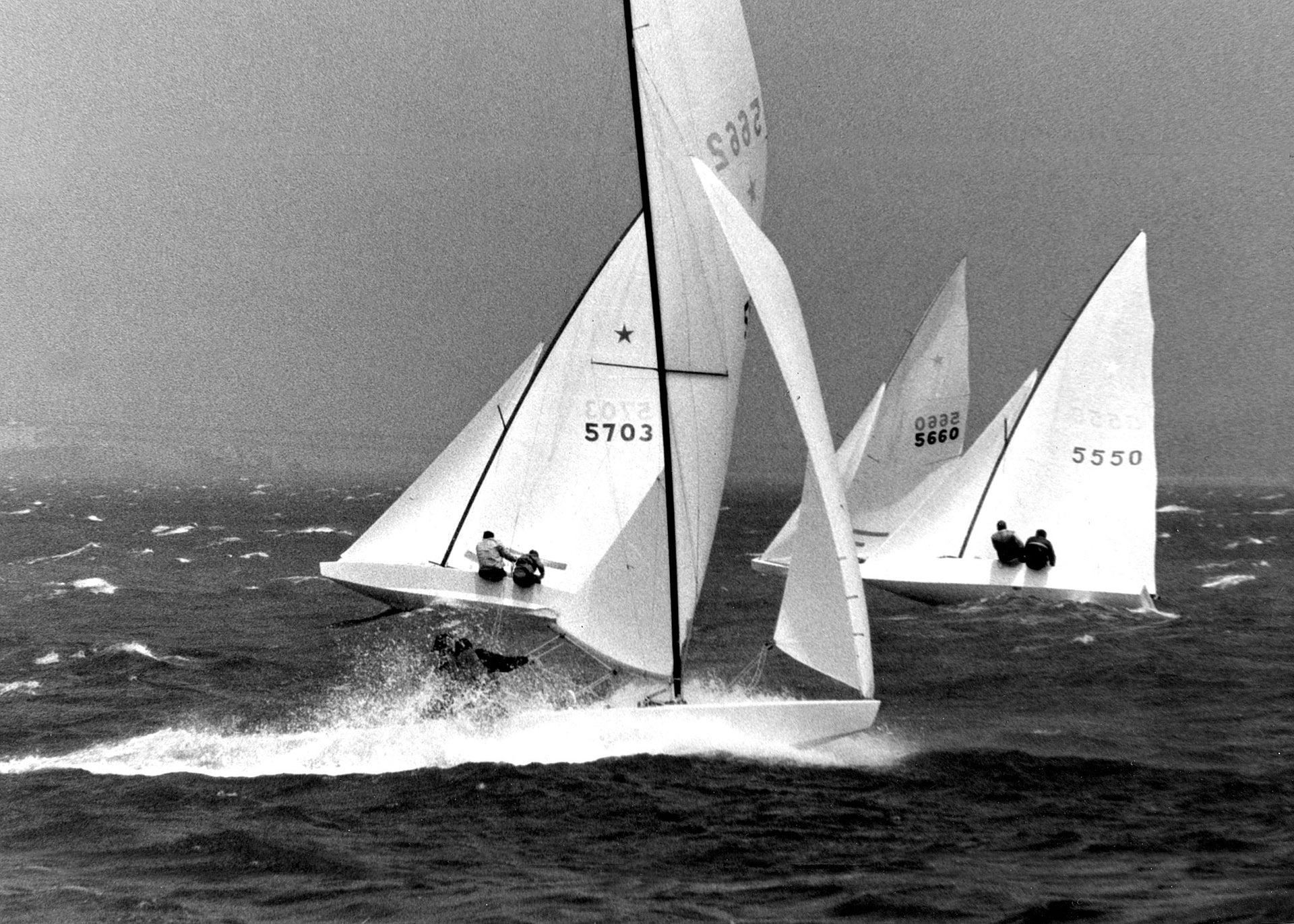
1945 - THE FIRST OF FIVE
Winning the Star Class World Championship is the holy grail of one-design keelboat racing. The classic 23-foot one-design class was launched in 1911, and has since attracted generations of highly skilled teams from around the world. Lowell North won the Star Worlds five times, a feat that has never been equaled. The first was in 1945, when a 15-year-old Lowell crewed for 17-year old Malin Burnham. In 1949 Lowell skippered North Star II in the Worlds and would have easily won except for a DSQ in the second race. His victory in 1957, however, was the most significant. Held in Havana, Cuba, the ’57 Worlds was a challenging light-air event featuring unpredictable winds and strong currents. Results were up and down for most in the fleet, but Lowell and crew James Hill sailing North Star III had an advantage…speed. Often finding themselves in the rear of the fleet like every other competitor, North and Hill displayed a remarkable ability to claw their way back to the front. Lowell followed with World Championship wins in ’59, ’60 and ’73, but 1957 was special. It was the year he started North Sails. Today, North Sails customers win more one-design championships than all other sailmakers combined.
On the water, Lowell is known as one of those guys who just “got it.” Renowned for his results in the Star Class, he medaled in 12 World Championships over 25 years and won gold at the 1968 Olympic Games in Mexico City.
The Star was the primary Olympic class keelboat from 1932 through 2012. Over 8,400 boats have been built, with more than 2,000 actively racing in 170 fleets.
You win some, you lose some. Peter Barrett and Lowell North work on their faces after barely losing the 1967 Star Worlds in Denmark, succeeding the win to Paul Elvstrom.
READ MORE
READ MORE
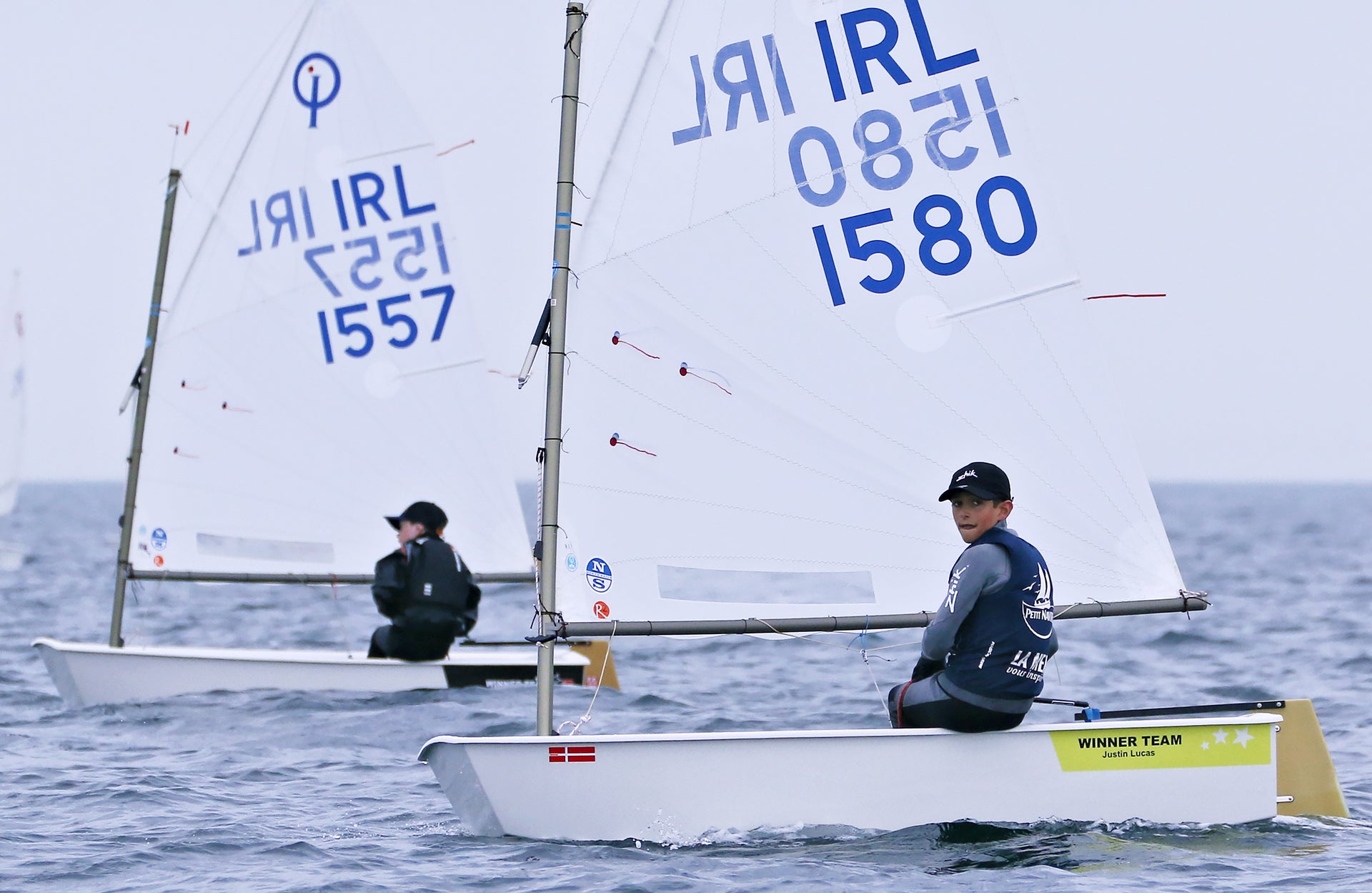
IRELAND OPTIMIST TRIALS WINNER - OLYMPIC HOPEFUL IN 10 YEARS!
Opti sailors all over the world are competing for a chance to sail at the premier IODA Optimist Worlds in Thailand and the European Championship in Bulgaria this July.
READ MORE
READ MORE
MELGES 24 EUROPEAN SEERIS #1
Thirty-three teams met in Portoroz, Slovenia for the 1st event of the M24 Euro sailing series!
North Sails teams finished 1,2,4,5,7,9,10 in Portoroz, Slovenia for the first event of the Melges 24 European Sailing Series. A fleet of 33 entries from 15 nations showed great representation from all over Europe and the United States. Beautiful spring weather blessed teams with sunshine, clear skies, and fair winds. Very close racing within the top, but the teams that got out ahead early were untouchable once in place. Andrea Racchelli and his team on ‘Altea’ came out 20 points ahead, with unbelievable teamwork and boat speed against their 32 competitors. ‘UpUpUp’ followed behind in 2nd, and ‘FGF Sailing Team’ came in third position.
This is event 1 of 6 total regattas within the 2017 Melges 24 European Sailing Series. The next event is held on Lake Garda in Italy, followed by Marstrand, Sweden in June, and Helsinki, Finland in July/August, where they will award an overall World Champion. The 5th event is taking place in Medemblik, NED just before the series ends with the 6th and final event in Luino, ITA in late October.
Some very competitive racing out there in Portoroz, we can’t wait to see who comes out on top at the end of the series!
‘Altea’, first place finisher in event #1 of M24 European Series © Mauro Melandri
READ MORE
READ MORE
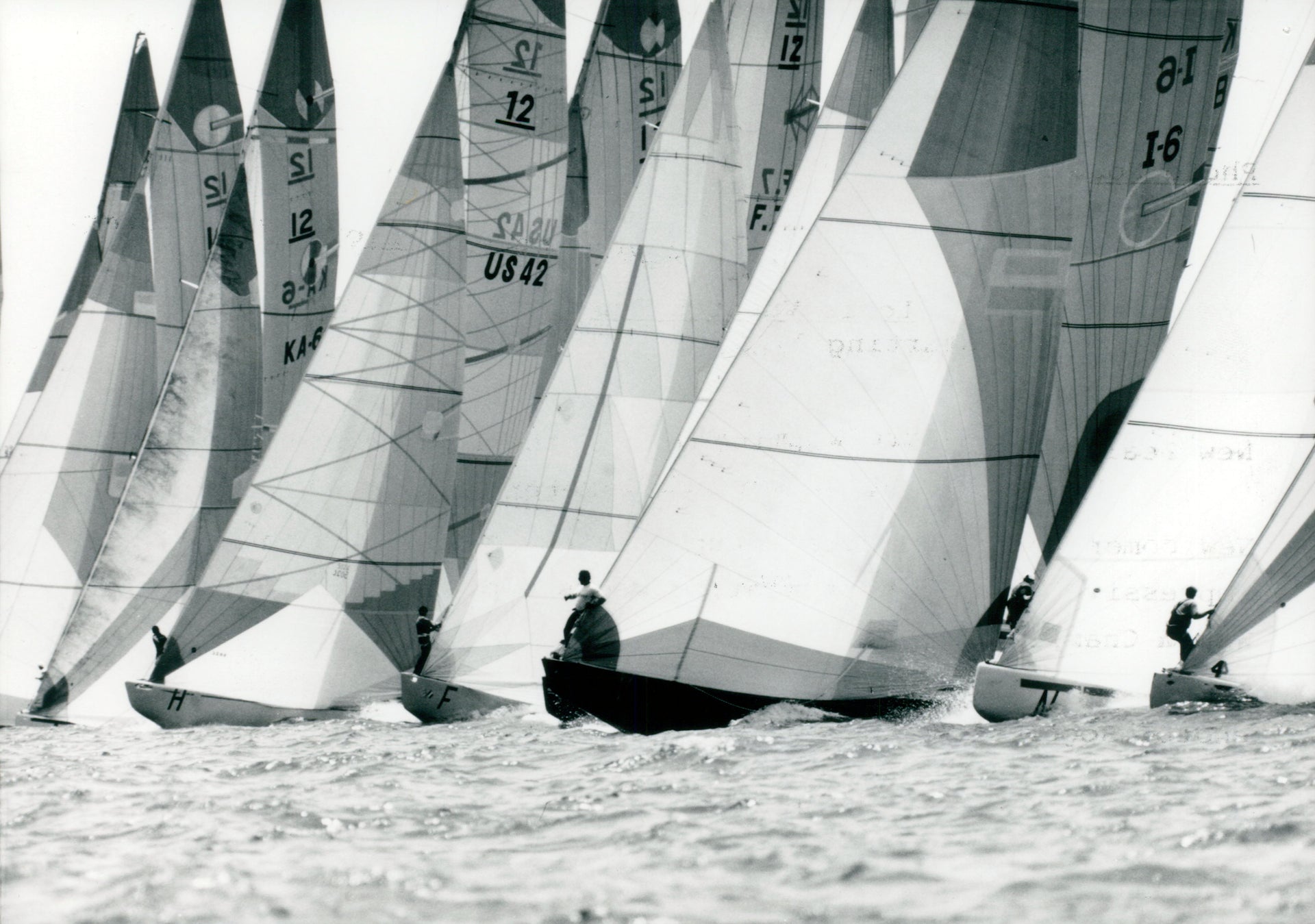
1986 - 12 METRE WORLDS
In early 1986, a series of races were held off of Fremantle as a precursor to the 1987 America’s Cup. Dubbed the 12 Metre World Championship, a dozen syndicates competed in what they considered a “shakedown series” to test their boats against the competition. Some of the teams had new builds, their first development boats. Others hit the line with retrofit, or modified yachts. Many programs built three to four boats in the lead up to the 1987 Cup.
Strong winds led to an extreme regatta, leading to four masts, a dozen booms and numerous sails being destroyed, and a few crew members overboard! Australia III, the heavy-weather Ben Lexcen designed successor to Australia II won the series. The New Zealand challenge boat KZ 5, a fiberglass Bruce Farr design, came in second, with the New York Yacht Club entrant America II third.
Of the visible genoas on the starting line pictured below, woven polyester and aramid cloth is predominant, some cross cut and some tri-radial. In this photo we see three sails made by North including the genoa at center (I-6) and three others (see caption). At this time, North Sails lofts around the word were individually owned and operated, and each loft used their own version of sail design techniques and production processes. This is apparent in the variety of layouts and materials used.
What has not changed is the independent development on each team. The difference between each of the sail plans in this photo is clearly visible in the variety of shapes and patterns. While less obvious today, variety in performance-related decisions, detail, and the resulting product, is still a hallmark of the America’s Cup.
At the starting line in the 1986 12 Metre Worlds off Freemantle. Visible from left to right: North Sails, Hood Sails, North Sails, unknown, Sobstad Sails, North Sails, North Sails.
READ MORE
READ MORE

RECAP: MELGES 24 EUROPEAN SERIES #1
Thirty-three teams met in Portoroz, Slovenia for the 1st event of the M24 Euro sailing series!
North Sails teams finished 1,2,4,5,7,9,10 in Portoroz, Slovenia for the first event of the Melges 24 European Sailing Series. A fleet of 33 entries from 15 nations showed great representation from all over Europe and the United States. Beautiful spring weather blessed teams with sunshine, clear skies, and fair winds. Very close racing within the top, but the teams that got out ahead early were untouchable once in place. Andrea Racchelli and his team on ‘Altea’ came out 20 points ahead, with unbelievable teamwork and boat speed against their 32 competitors. ‘UpUpUp’ followed behind in 2nd, and ‘FGF Sailing Team’ came in third position.
This is event 1 of 6 total regattas within the 2017 Melges 24 European Sailing Series. The next event is held on Lake Garda in Italy, followed by Marstrand, Sweden in June, and Helsinki, Finland in July/August, where they will award an overall World Champion. The 5th event is taking place in Medemblik, NED just before the series ends with the 6th and final event in Luino, ITA in late October.
Some very competitive racing out there in Portoroz, we can’t wait to see who comes out on top at the end of the series!
‘Altea’, first place finisher in event #1 of M24 European Series © Mauro Melandri
Link to final results
READ MORE
READ MORE
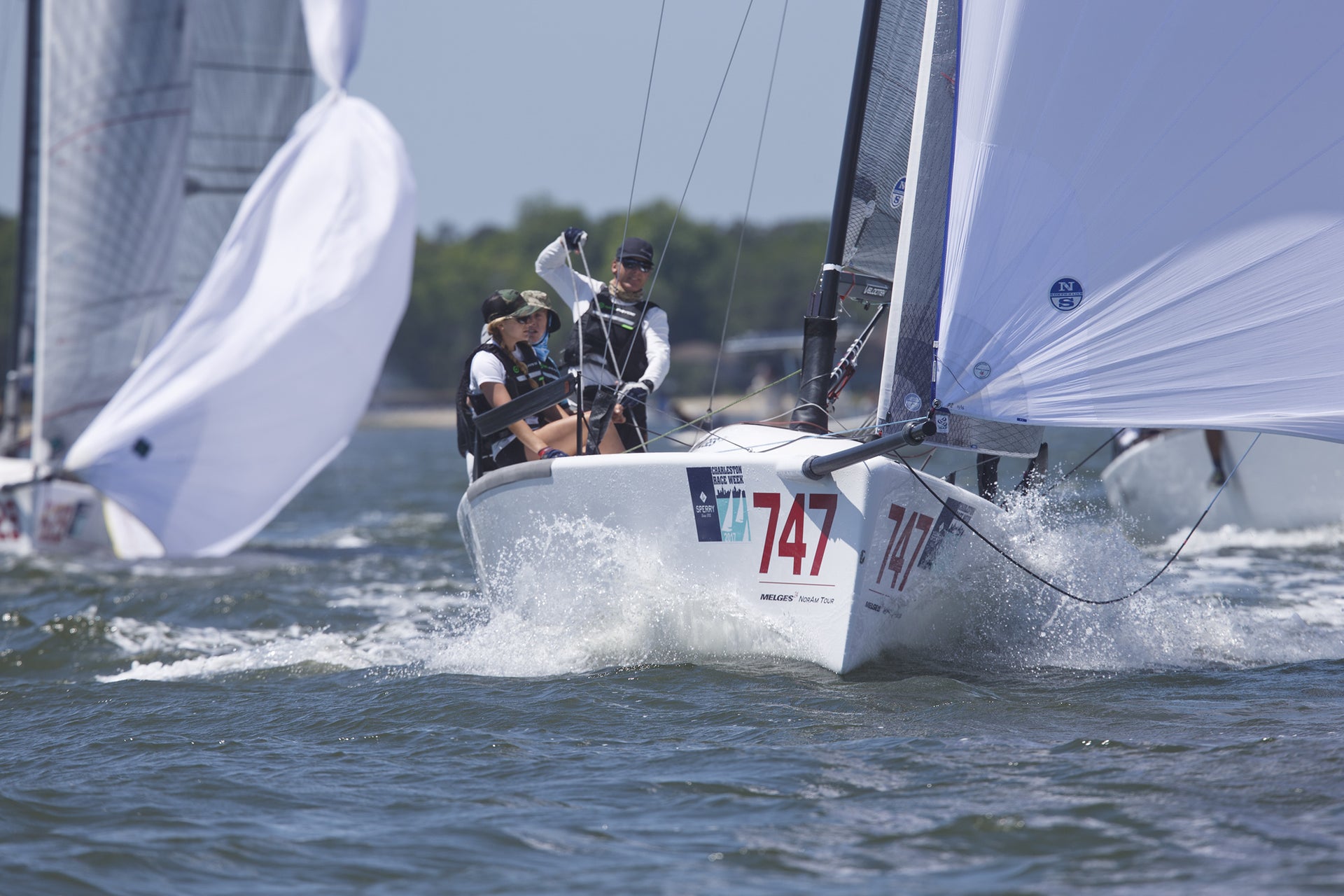
RECAP: RACE WEEK IN CHARLESTON, SC
A beautiful weekend in Charleston welcomed teams who traveled across the country to compete in one of the biggest regattas in the nation
Charleston Race Week 2017 saw 213 boats registered, which made for a fun and exciting week of racing! The J/24, J/70, and Melges 24 fleets were the largest this year with a lot of familiar faces ready to hit the water in one of the most exciting venues south of the mason dixon line, the Cooper River! With different locations and courses for each racing circle, current and land factors come into play and can make or break your strategic plan around the course.
Day one was a day to remember, with picture-perfect conditions for the OD courses inside Charleston Harbor. A building breeze made for fun racing later in the afternoon, especially in the J/70s who were up and planing for the last race. The current switched as the wind became shifty and puffy, which kept the sailors attentive to tricky course dynamics. Keeping track of the current direction in the different parts of the course was very important. “The best way to figure this out was to look at the marks and the committee boat to see which way they were sitting. The race committee boat is very helpful in determining just how strong the current actually is, and in what direction it is flowing which is helpful for starting techniques and calling the lay line,” said North Sails expert, Zeke Horowitz, of the J/70 class. “Constantly looking outside your boat is important as the angles are so apparent, and shifting rapidly,” he continued. “Having someone in the boat to keep an eye on fleet management makes it much easier to tell whether you have chosen the tack to get you ahead, or if you, in fact, need to tack.”
On day two, the J/22 and J/24 fleets were sent to a different location to race, south of the Cooper River Bridge. With the new location and new factors present in that area, it seemed that the leaders were successful by choosing their own destiny. “Looking beyond our current position, and thinking a step ahead allowed us to make gains in this area of racing,” said North Sails expert, Mike Marshall, who skippered J/24 USA 5208. Mike remarked on a solid showing in the J/24 and J/22 fleets this year, noting great competition and camaraderie in both fleets.
A front moved in slowly on Sunday and turned the big breeze on, which kept competitors on their toes while settling into the new pressure. The J/70s had a hard time starting together in both fleets, resulting in two general recalls which lead to the black flag. “Things got interesting when the second fleet finally got off to a good start, and the first fleet was already sailing downwind against the upwind sailors,” recalled Brian Janney of North Sails in San Diego, who sailed on 3 Ball JT. Brian noted the biggest factors of the final day were consistent, “Keeping your head out of the boat and staying in phase was an important part of maintaining confidence in your decisions. Tacking on each small shift made for big gains, as the fleet leaders dug closer and closer into shore.” With relatively flat water and consistent pressure, sailors reported a flatter sail plan worked well.
Another great race week in the books, with outstanding attendance in the J/70 division!
Melges 24 Team ‘SlingSHOT’ catching the perfect puff © Tim Wilkes
Joel Ronning’s “Catapult” coming around the offset mark-ready to roll downwind © Tim Wilkes
READ MORE
READ MORE
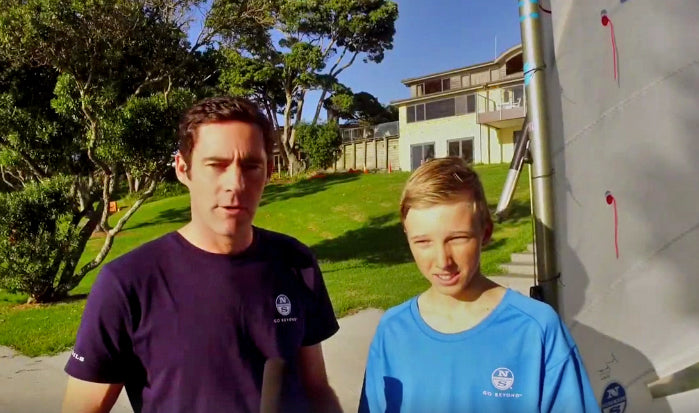
SEB MENZIES DOMINATES NEW ZEALAND OPTIMIST NATIONALS WITH 6 BULLETS
SEB MENZIES WINS 6 RACES AND THE CROWN OF THE 2017 NEW ZEALAND OPTIMIST NATIONALS
Seb on the North MZX4: “Always good in all conditions – You can rely on it!”
Our Optimist specialist Derek Scott caught up with Seb Menzies for a quick interview after winning all four New Zealand Ranking regattas and the Nationals championship. Seb used the North Sails crosscut design MZX4 which he describes as:
“Good pointing and fast downwind”.
Enjoy the interview!
READ MORE
READ MORE
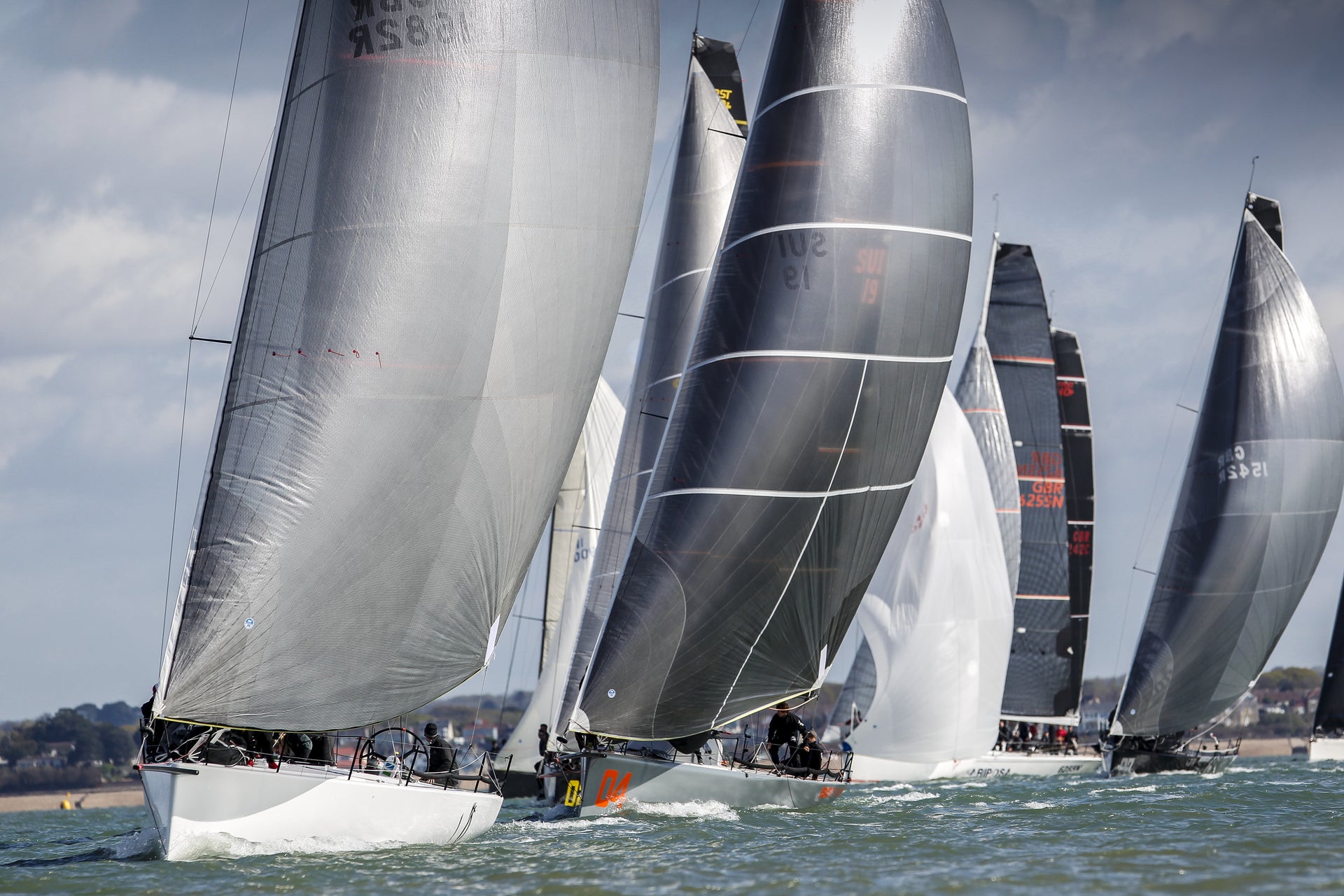
RORC EASTER CHALLENGE 2017
The Royal Ocean Racing Club (RORC) Easter Challenge is an annual event on the Solent off of Cowes, UK. North Sails is proud to sponsor the regatta and was thrilled to offer the Regatta Services program for the third year in a row, including on the water coaching and organized fleet debriefs.
The event was composed of three race days, kicking off with a high of 20 knot winds on Day 1. Temperatures were around 15-18 degrees celsius, which made for pleasant sailing conditions, and the pressure was pretty consistent in terms of speed from the Southeast. As day two came along, the breeze shifted toward the North and became significantly lighter. This made it very shifty and the water became much flatter. The fleet was postponed on Day 3 with WNW winds making for flat conditions again, yet so shifty it was nearly impossible to set an accurate course. Finally, the pressure filled in and was more consistent, allowing the RC to get races off in the best sailing conditions possible.
Tide has a major effect on the racing in this area. Race strategy is a huge part of pre-race set up and practice, which makes it key to get on the water a little early to figure things out. Starts are very important as it is very hard to catch up in a fleet like this. There are lots of experienced local sailors that compete at this event each year, which is obvious in the races as the competition is quite tough, and teams really know their way around this area with the crazy tides and current!
The fleet completed windward-leeward style races with three longer distance races around buoys that toured the Solent. Not the typical conventional racing, but it kept things interesting and was a lot of fun to sail all around the Solent. The event concluded with 8 total races, making for a successful finish for North Sails clients who secured places in the top five in all divisions.
Daily debrief with North Sails © Paul Wyeth
© Paul Wyeth
© Paul Wyeth
© Paul Wyeth
© Paul Wyeth
READ MORE
READ MORE

J/70'S AND J/24'S SPEND EASTER WEEKEND IN COLUMBIA, SC
Thursday before the event, North Sails Tim Healy ran a J70 clinic with practice races, and on-the-water coaching followed up by a well attended debrief.
READ MORE
READ MORE
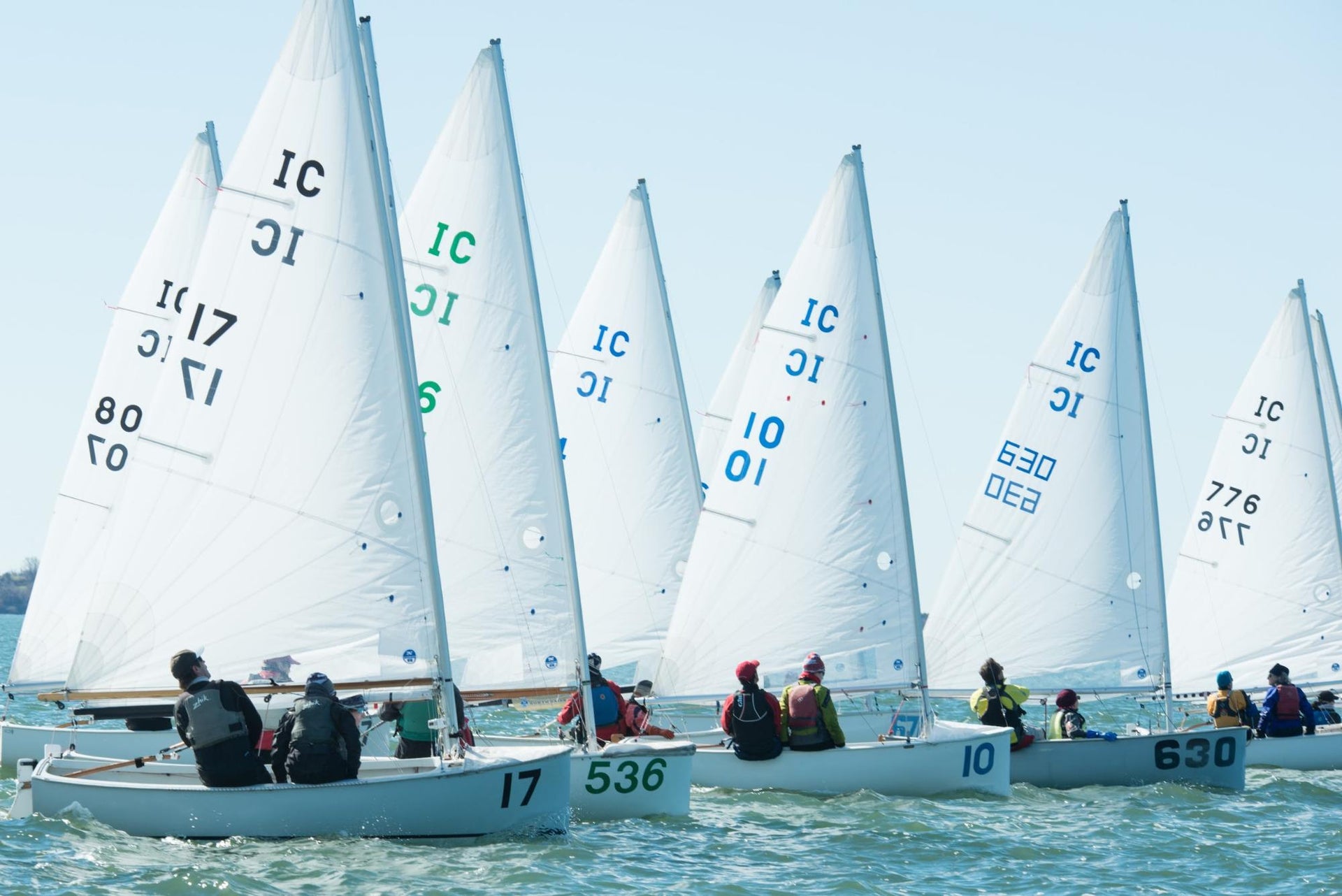
TED FERRARONE/MEREDITH KILLION WIN 2017 INTERCLUB NATIONALS
TED FERRARONE AND MEREDITH KILLION WIN INTERCLUB NATIONALS
The top ten finishers-all powered by North Sails
The weather is starting to warm up in the Northeast United States, and that means it’s time to pack up the boat for the summer! Sounds a bit strange, right? But for diehard Frostbiters, especially Interclub sailors, spring’s arrival and the penultimate event, Interclub Nationals, mark a close to the winter sailing season. This year 27 teams made their way to picturesque Cottage Park Yacht Club in Winthrop MA, for the 2017 edition of the event. Ten races were completed in the waters just north of the Logan Airport runway in shifty, nearly perfect spring breeze.
Ted Ferrarone and Meredith Killion found the secret formula for success; consistency. Team Ferrarone-Killion compiled a scorecard with a single race win and no finish worse than sixth. Their 37 overall points were enough to best Steve Benjamin and Daley Brooks by 19 points to secure the championship.
North Sails is honored to sponsor and support the 2017 edition, and we are proud to celebrate our clients’ successes with ten spots overall. The products of choice were the North RadIC or RadIC 12+ mainsail. Next fall will come fast. Contact our Interclub experts for more information on our Interclub sails and ways to prepare for the next frostbiting season!
Complete results
Champions Ted Ferrarone and Meredith Killion © Cedric Adams
© Cedric Adams
© Cedric Adams
© Cedric Adams
READ MORE
READ MORE
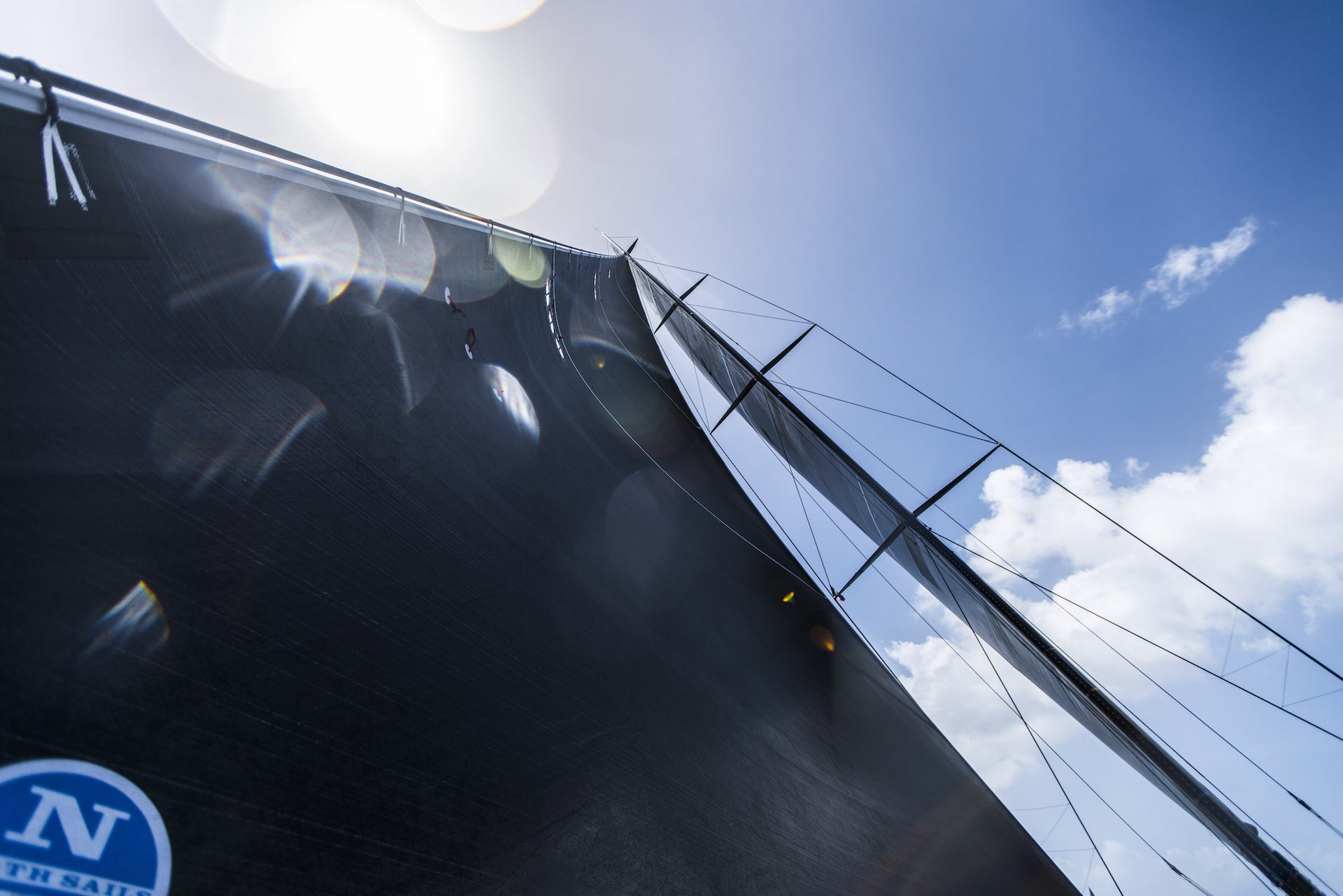
1997 - THE ENGINE ABOVE DECK
ENGINE ABOVE DECK
In 1997, North Sails designers and software engineers were given a mandate: to create a package that could model the forces of sailing, specifically those above the deck. What ensued was the process of synchronizing the capabilities of North Design Suite software, allowing a sail designer to link the design of a sail to that of a rig, and measure how they affect the performance of the boat.
READ MORE
READ MORE
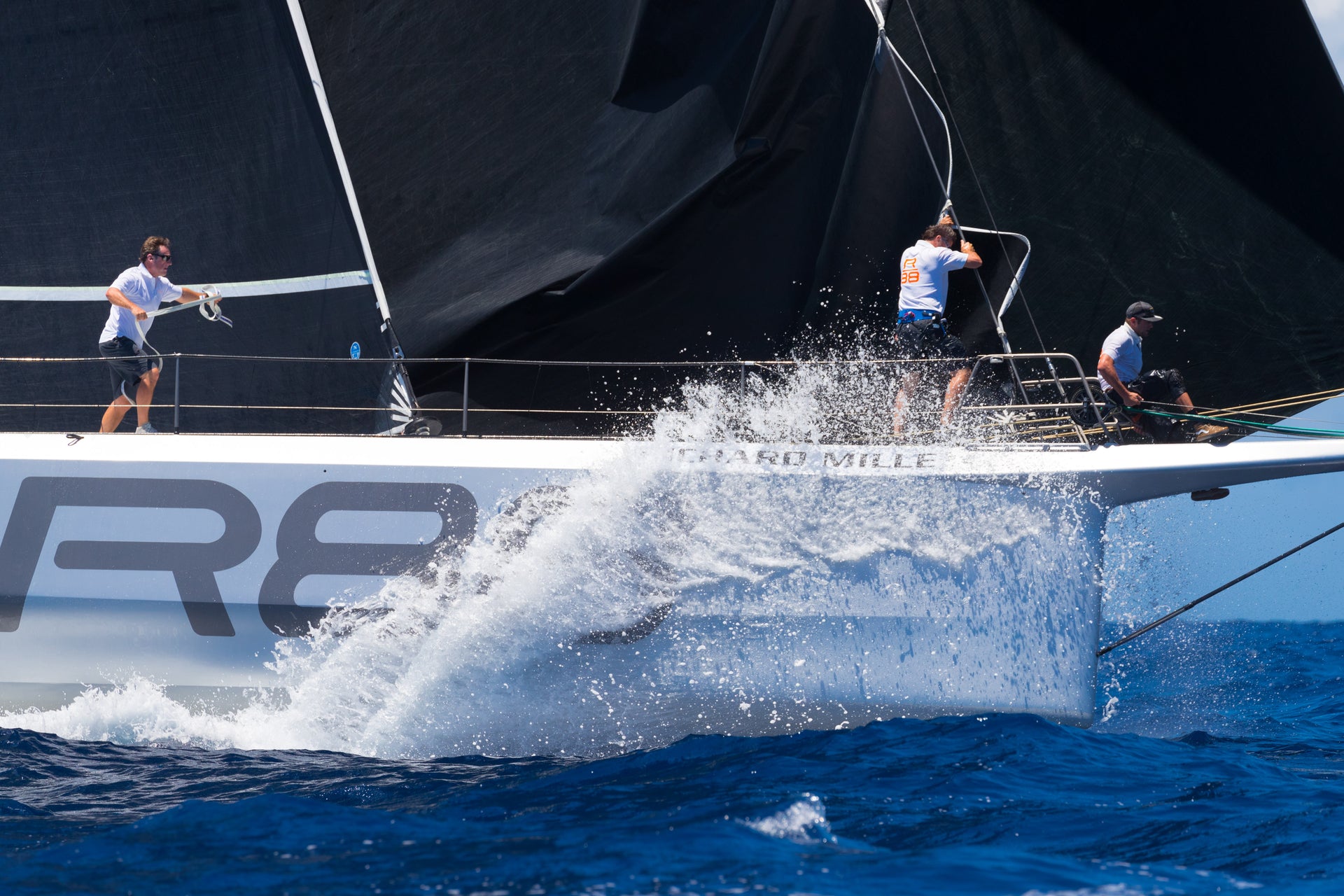
LES VOILES DE ST. BARTH 2017
LES VOILES DE ST BARTH 2017
Celebrating a week in paradise for the 8th edition of Les Voiles de St. Barth
Spending a week on the island of Saint Barthélemy for the Les Voiles regatta is a not-to-miss opportunity. Keeping the competition level high and the ‘island feels’ strong, the sailors are welcomed throughout the town of Gustavia for a long week of sailing in the sunshine, authentic French indie cuisine, and warm salty air that would make any sailor want to stay forever. With races that span up to 30 miles long, Les Voiles de St Barth puts forth very challenging (and rewarding!) racing that keeps a wide variety of sailing teams coming back year after year.
The regatta incorporates both IRC and CSA racing rules, motivating teams to challenge their ratings with modified rigs, hulls, and sails. Challenging and fun, each race is scored with the ‘time on time rule’, where a boat’s rating is converted to a corrected time factor, which is then used to convert her elapsed race time. In some racing, being the first across the line doesn’t achieve the ultimate win, as the boat’s time correction factor is multiplied by the elapsed time from start to finish. It’s not always about crossing the line first, but putting the most time between you and your competitors, which make this Caribbean event quite special and truly one of a kind.
With a selection of twenty courses to pull from, the Race Committee chose wisely according to sailing conditions. Winds were between 8-15 knots early in the week, which made for competitive timed finishes amongst all divisions. On Friday the wind was much lighter, ranging between 6-10 knots, and tapered off drastically during the last two legs down to 5 knots which made for a very challenging ending to what would be the last race of the event. The selected courses were between 17-26nm, which made for long days out on the water. On Saturday, the wind did not live up to its promise and, at around 11:30am, racing was called off for the day.
North Sails Regatta Repair was on site with an overnight service loft. Certified Service Director, Ben Fletcher went to work with a small staff assisting sailors needing repairs, including some advanced sail modifications. The team completed overnight repairs Wednesday – Saturday, allowing competitors to make the utmost of the long distance round-the-island racing.
Congratulations to our clients on a job well done!
READ MORE
READ MORE
TOM CARRUTHERS WINS THE ETCHELLS MIDWINTERS IN SAN DIEGO
ROAD TO NAS & WORLDS: ETCHELLS MIDWINTERS WEST
Congratulations Tom Carruthers, Chris Bush and Andrew ‘Dog’ Palfrey
Twenty eight teams descended upon San Diego Yacht Club to participate in the West Coast version of the Etchells Mid-Winters. After the great team at SDYC got everyone checked in and weighed on Thursday afternoon and Friday morning, the stage was set for a great weekend of sailing. Super race committee chairman Bill Stump was able to hold all 11 races over the three days in some very trying conditions. The breeze was generally 6 to 10 knots with some really large swell which made for some interesting driving and spinnaker trimming conditions.
Tom Carruthers with crew Chris Busch and Andrew ‘Dog’ Palfrey prevailed for the weekend with great starts, solid upwind speed, sharp crew work and excellent downwind tactics—a very strong combination to say the least! They used the standard PC-F mainsail, the VMG spinnaker, and the LM-2L radial head jib. This is a new jib Norths Sails has been developing and they have been testing it for the past year. The goal of this sail is to fly exactly the same as the very well proven LM-2L jib, but this model has a radial head to go up range a few more knots and to help with longevity. It has a little smoother transition in the lower section but is still very powerful to help drive the Etchells in light air. However, Team Carruthers have also used it in up to 15-16 knots of wind and are very happy with their speed. In fact this past weekend they were able to win 5 races and they complimented the sail’s smoothness and versatility throughout the wind and wave conditions.
Bruce Nelson and Eric Doyle fought it out for 2nd overall with Bruce prevailing in the end. The top 7 teams all used entire North Sails inventories. Some teams with softer masts opt for the PC+ mainsail which has more luff curve to accommodate the softer masts, the LM-2 light was the jib of choice, and the VMG spinnaker was in range pretty much every run. We actually never pulled the heavy jib or the full runner spinnaker out of the bag.
Big thanks to regatta chair and fleet captain Xavier Sheid and the whole team at San Diego Yacht Club for a great weekend. This was the first regatta in the West Coast Spring Series with the next event being the Pacific Coast Championships on April 28-29 and the series culminates with the famous Orca Bowl on May 28 and 29. All this racing and the summer One Design Weekends will be great practice for the North American Championships which will hosted by San Diego Yacht Club in August.
It is shaping up to be an amazing year for Etchells sailing on the west coast and our entire group is looking forward to a great year. If you have any questions about the latest developments we are working on or need more information for your clients please contact Eric Doyle or Skip Dieball.
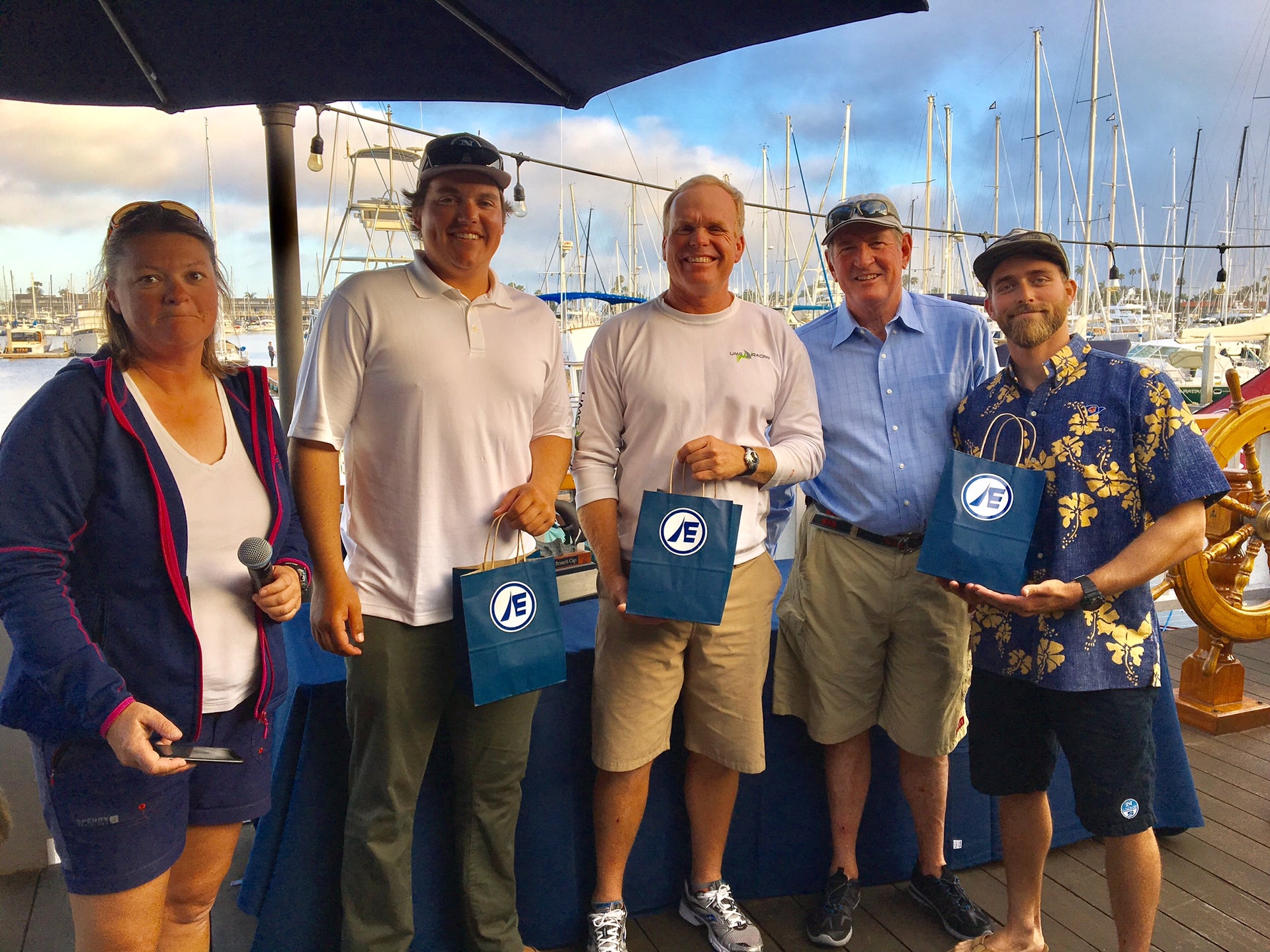
North Sails San Diego Team, 3rd place – Eric Doyle, Patrick Powell & Pike Harris
READ MORE
READ MORE
NORTH R-2 POWERS MARIA PERELLO TO WIN OPTIMIST SPANISH NATIONALS
NORTH R-2 RADIAL DESIGN POWERS MARIA PERELLO TO WIN THE SPANISH NATIONALS
“I Really Love the R-2!”
A short video-interview with Maria Perello
READ MORE
READ MORE
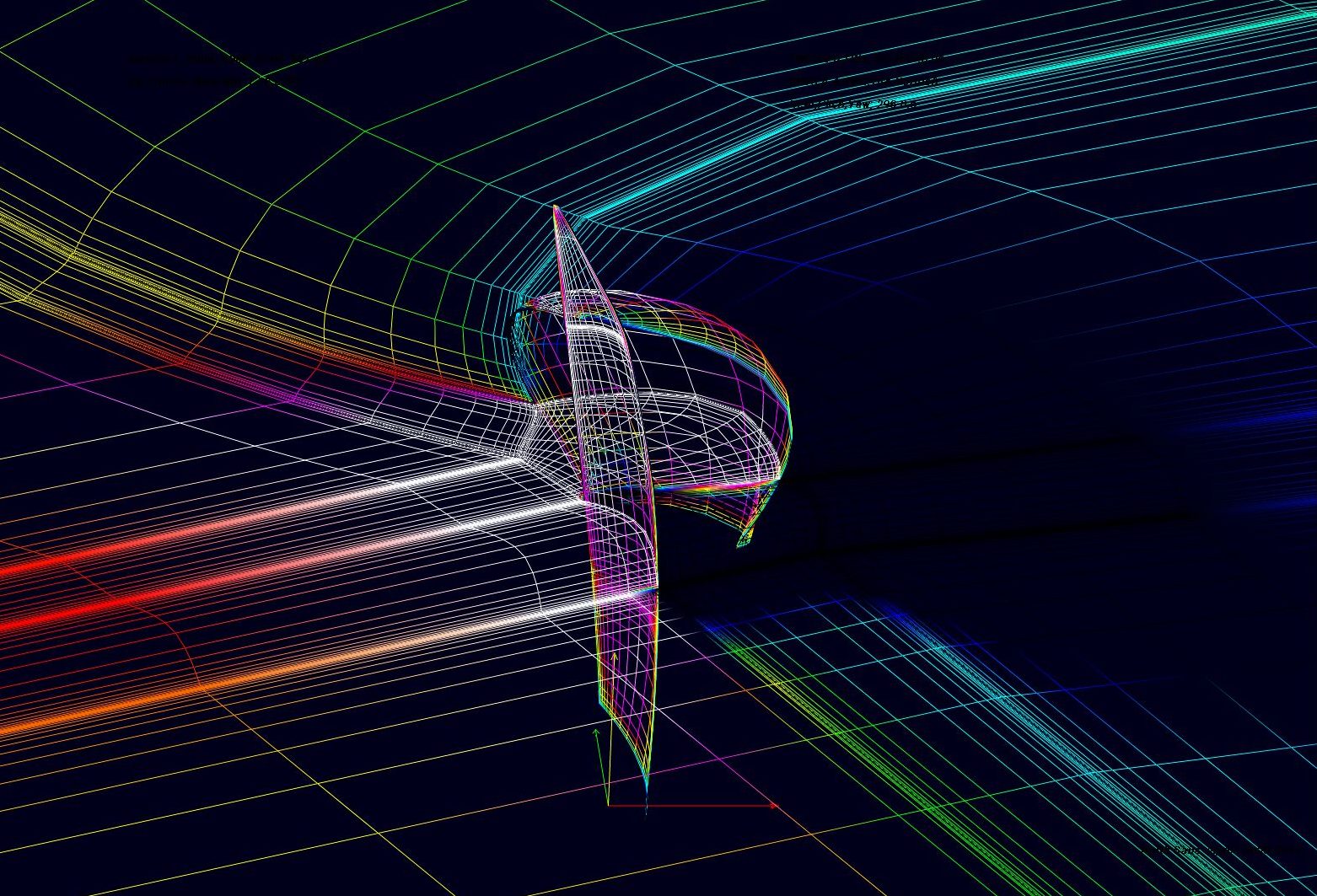
1987 - NORTH SAILS DESIGN SUITE EXPANDS WITH FLOW™ AND MEMBRAIN™
North Sails Design Suite Software Expands with Flow™ and Membrain™
Among the tools most commonly used by North Sails designers are the Membrain and Flow modules, which apply wind pressure to a sail’s surface and calculate the load forces created. Designers pressurize their sail shapes virtually to discover what their flying shape will be in the intended range. Flow and Membrain work in tandem with the sail shape moving back and forth between them. Designers first analyze the structure in Membrain and continue by applying pressure to see how the shape deforms when pressure is applied in Flow. They continue this feedback “loop” of testing and correcting until they are happy with both the sails’ structural integrity and flying shape.
Take a shallow dive into the technical and often intriguing world of Membrain and Flow with the screen captures below. Begin to understand the many ways design horsepower keeps North Sails at the forefront of sailing technology.
This image illustrating “Tip Vortex” was captured in North Design Suite Flow. When wind passes over a sail, the flow is disturbed more at the foot and the head of the sail, where it gets sucked from the high pressure side to the low pressure side, initiating the “vortex” which expands downstream. Flow Panel Code was introduced in 1984 and is still in use for upwind sails today. While this early version of Flow is less accurate than OpenFoam RANS, it is much quicker. Designers can run this type of analysis instantly, whereas RANS takes hours.
At left: This image of a Dubois 58 sail model was captured in MemBrain and demonstrates “Major Strain” or the amount of stretch occuring under applied pressure. The green areas signify the most amount of stretch in the sail (.0857%), whereas the deepest blue signifies no stretch. The small white lines represent the direction of the strain. At right: This capture shows a slightly different view within MemBrain, of strain analyzed per 3Di tape, measured in the direction of the tape. In this view, designers look at which tapes could potentially be removed (those deep, deep blue), and which will need additional reinforcement (red). They do this by adjusting the density of the tapes in those areas.
This Membrain capture shows the effect of pressure calculated in Flow (left image) and OpenFoam RANS (right image). Specifically, it shows the pressure distribution between the different sails on the rig, which all work together as a double slotted foil. Green and blue indicate high areas of pressure.
This image from Flow shows the close interaction between the headsail, mizzen and mainsail on a classic boat. The tip vortices merge and roll-up together in the downstream, illustrating the amount of induced drag.
Captured in RANS, this image illustrates the partially separated flow over the gennaker. One concept North designers work with is attached vs detached flow – where attached flow indicates areas of lift, and detached flow indicates areas of primarily drag. In this image, red indicates the area of the sail with attached flow, followed by areas where the flow detaches from the sail, marked by the zone in yellow.
READ MORE
READ MORE
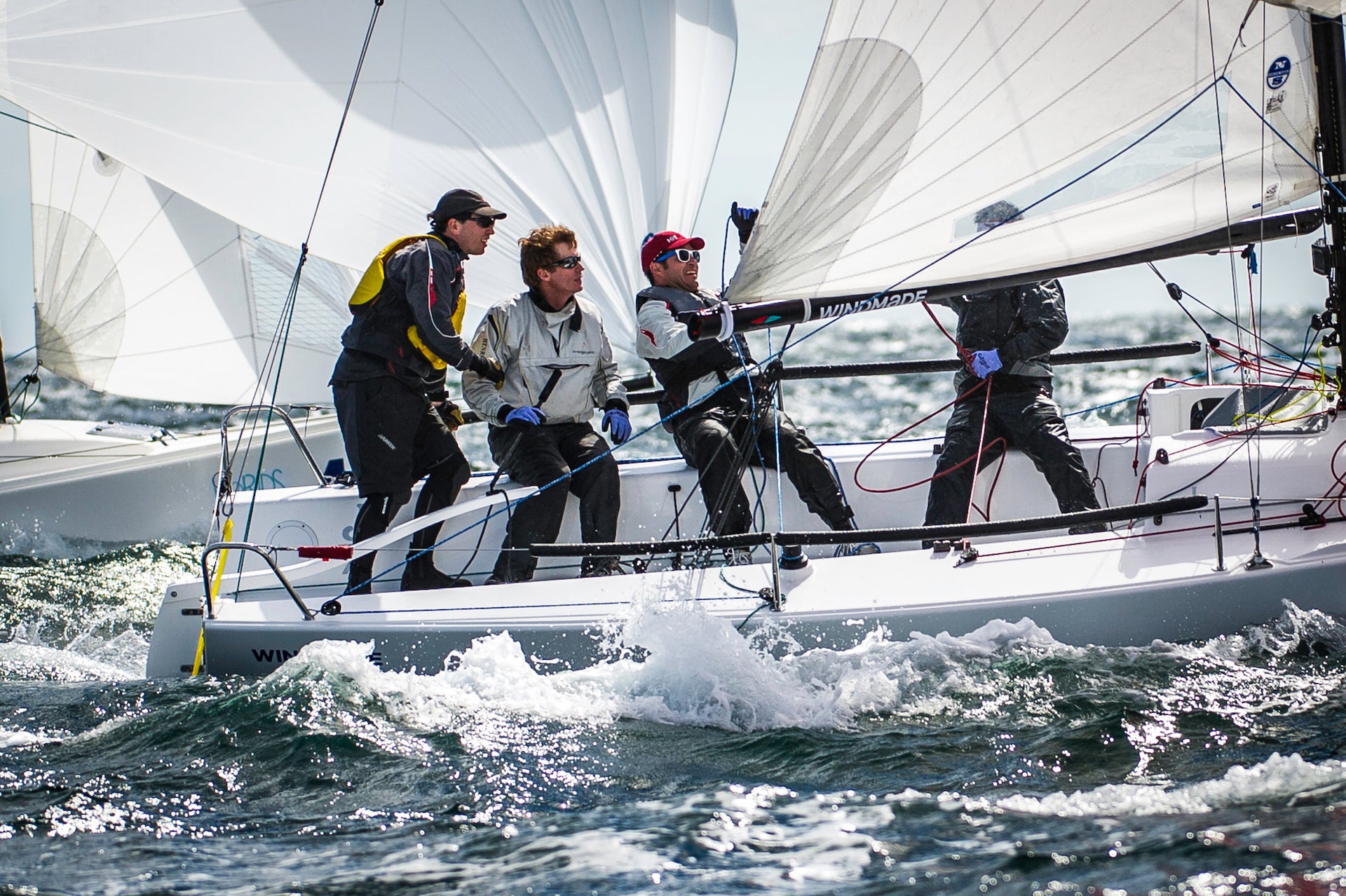
PRE-RACE PREPARATION: ARE YOU READY?
From sail selection to rig tune, a lot happens before you leave the dock. Follow these tips to help your team get race-ready before casting off.
1. Building a Crew
It is good to have the right number of crew onboard, but if no one can do bow, you aren’t in great shape! Ask yourself, do you have the key roles covered? Know who is responsible for what, and keep a roster of crew contacts on the back burner – these are the people you’ll call when someone can’t make it. Help your team by networking to fill open spots, spread the word and confirm new members as early as possible before an event. (Tip – try out a free service like Google Forms to get needed information, such as availability or gear requirements, organized and in a central place).
2. Weather & Sail Selection
Ask your navigator or tactician to inform the crew a few days out on what the forecast is expected to be. Helpful information about courses, start time, and how soon you want to get out on the water are important so everyone is on the same page. Include what time to meet at the boat (not the coffee shop) . Setting a specific dock call time will help the crew plan accordingly and get their gear and spare equipment onboard so dock-out time isn’t delayed.
The weather forecast and course information will also determine your sail choices for the day. Whether windward – leeward courses, round the cans or offshore distance racing is in your future, consult with the skipper, tactician and navigator to make a collective decision on the day’s inventory. Often, the biggest impact on sail power is the choice of genoa. Sail selection can be a tough call and North Sails is happy to help, so don’t hesitate to ask your local contact. Each sail has been designed for a specific range of wind strength and sailing angle, due to its size, weight or structural capacity (DPI). Batten up the jibs you will take for the day and stow the extra sails onshore in a safe, dry place. Extra sails are extra weight, so crucial decisions need to be made prior to leaving the dock.
Meanwhile, One Design sailors must remember class rules – Fast 40 rules allow sail changing each day, while J/109 rules require all sails to be carried. IRC events require you to have the same sails on board from the start of the event to the finish, and PHRF and ORR may also have separate restrictions.
3. Rig Setup
Tuning your rig is not a dark art but it is a whole job in itself. You will need to adjust your rig as the conditions change to get the best performance from it. Find out if your class, or boat, has a tuning guide, and follow it! As your team gets more experienced, practice fine tuning for your boat and see what feels fast. Work toward finding that little extra speed, it will make all the difference. Always carry a wet notes pad to make notes onboard. Record everything from the conditions, rig tune, and fast trim, and be sure to include TWA and TWS for reference. After racing, revert your rig back to base settings overnight so you can start with a clean slate the next day.
4. Leave time to Warm – Up
Maintaining communication with the crew on when to meet and being prepared can save you time so you can get out early and practice techniques, decide on which sails to use, and help the skipper get an idea of how long it takes to get the boat up to full speed off the line. Being able to sail around prior to the first race will help the tactician determine lifted tacks, where the holes are on the race course, and get the crew coordinated to get “in the groove” and up to full speed. Getting out there early will also allow for a quick snack and hydration before the warning signal. Something that can easily be forgotten, food and hydration helps focus and energy levels, which are key to doing well.
5. Notes on Sail Care
First rule of thumb, never walk/stand/or lay on sails. This crushes the materials and is devastating to your boatspeed! Just like an engine, your sails must be treated well and taken care of as you depend on them.
When putting sails onboard, make sure they are properly flaked so that the bowman can easily hook them up and hoist them. Although a leech flake gives the best possible flake with the battens in, the luff flake is best for your teammate to prevent the luff tape from tearing during the hoist.
When hoisting the mainsail, always slowly “back down” or reverse. This will take the apparent wind out of the sails, reduce flapping, and help prolong the life of the sail. This is a great method to practice, added bonus is it will clear any seaweed from your keel to limit drag. Extra precautions need to be taken in heavier air.
When hoisting the jib, you always want to do it when you are head to wind, or when you are dead-downwind. Never hoist your jib on a reach. Not only is it difficult for the guy on the halyard, it is not good for the sail if it gets dragged over the lifelines. Make sure there is slack in the sheets to avoid any friction on the hoist.
After sailing, it is a good habit to ease the batten tension. Sails tend to shrink a bit overtime, so tension will increase. Roll or flake your sails for storing , and lay them on a flat surface whenever possible.
Taking care of your upwind sails is just as important as tending to your kites. Make sure your spinnakers are dry and remove any luff cables before storing (tip: mark the cable where the luff should end to help when you go to use them next time). Flake the furling sails to make it easier on yourself, especially if it’s a top down furl. If laying a out to dry, make sure it is secured at the head and tack so they don’t escape!
6. Debrief
Often the best way to prepare for the next race (or the next regatta) is to review the race you just finished. This can happen on the way in, or upon return to the dock. What worked, didn’t work during the race? Review upwind and downwind tactics and boat handling. How can maneuvers be smoother, or boat speed be improved? For some crews, the discussion may happen organically. For others, you may want to develop a post-race checklist, or debrief outline, to encourage communication and keep the crew on the same page.
READ MORE
READ MORE
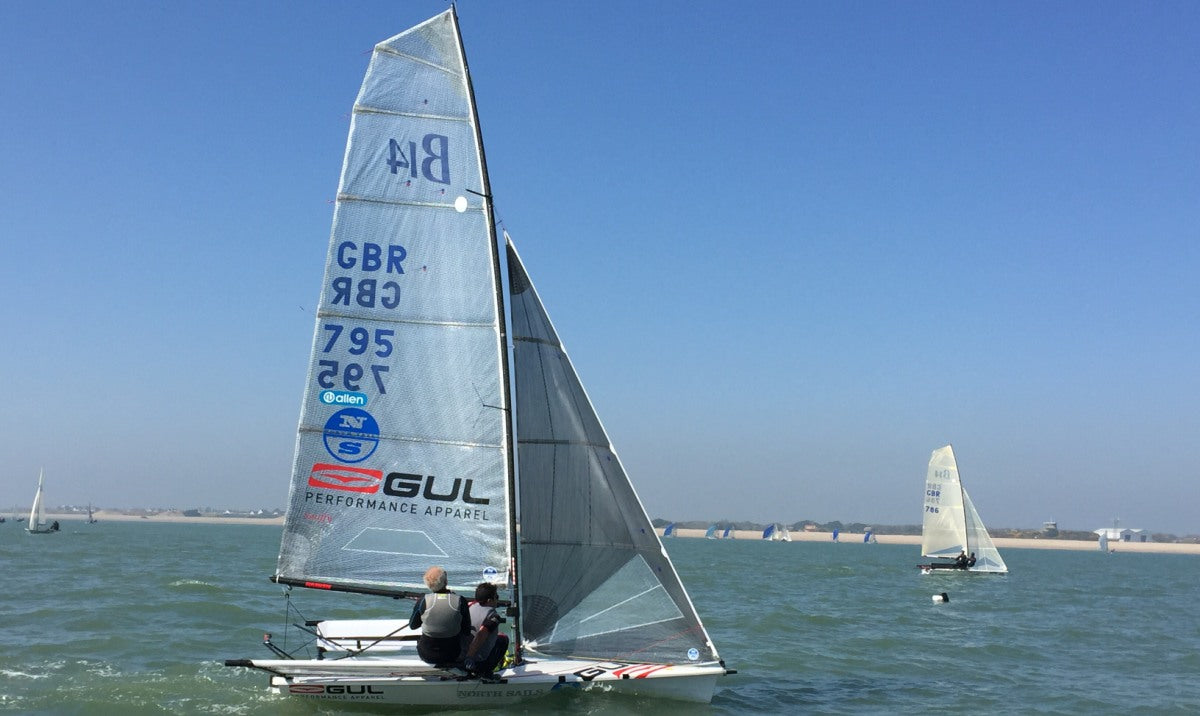
GUL B14 TT SERIES ROUND 2
GUL B14 TT SERIES ROUND TWO STOKES BAY
So, April arrives and the joker has been played. What did we do to Blue Badge and Team Marlow at Rutland. Both teams have doctor’s notes due to physical injuries to their helms, so both had to sit this one out, but will hopefully be seen again soon
However, Chapter two saw the resumption of the battle royal between Team P&B (Jasper Barnham/Ollie Wells) Wonkey Donkey (Mark Watts/Kathy Sherratt (Watts) (standing in for Bish) and Team GUL/North Sails (Mark Barnes/ Amir Shamuddin (standing in for Char). To add spice Torq (Gerry Fermor/Leakey Fermor) light airs specialists were in the mix.
Day 1 was all about the strong tide and shingle beach. The course was set in a SE force 2 – 3 and easterly tide. Russian roulette and holding one’s nerve would be a good way to put it. Over the first two races, places changed a lot both upwind and downwind with B14s skimming the shoreline with slightly raised boards. Go offshore and you lost places. All teams touched to varying degrees as did several RS800s. Wonkey Donkey in race 2 shook a leg and hit a rise hard, damaging their board and chipping their nice new B14. Alas end of race 2 and the 3 legged donkey, after capsize inspection retired to the grazing to be had ashore, not to be seen again over the weekend. GBR 789 (Henry Metcalfe/Jasmin Husband) also hit hard and bailed out with a capsize to save the kit which must have surprised the spectators but other than that, they held onto the coat tails of Torq, P&B and GUL/North Sails who battled throughout with little to chose at times. GUL/North Sails Held the lead by a nags head overnight from Torq and P&B not far behind. The classic fleet also fought their own battle between White Cover/GUL (Alex Horlock/Tim Pearce) and White Stilletto (Liam Willis/Abby Keightley-Hanson) with one point gap overnight. Throughout the fleet there were battles with some new faces attending their first B14 TT.
So it was to Dan Vincent’s quiz night and the mini Easter egg hunt. All great fun and the Mustos were hounded by the B14s. With little to choose between them, the B14s played their joker, 45 chickens eggs which would have won it. After the judiciary had sat, they were excluded and the B14s conceded to the Mustos and others
Sunday dawned bacon butties were consumed and more of the same once the breeze set in. Jousting commenced, and the runners and riders hit the shore in the westerly tide and SE force 2-3. As race 4 closed out it came down to a resurging GUL/North Sails doing a crash gybe drop with P&B a nose ahead, then the sprint to the finish with kites gathered on both teams crew’s laps, both driving hard. P&B got it by less than 0.5 m. More was to follow, with hopefully Torq not mounting the windward mark again as she was swept onto the mark in race 4.
Torq led race 5, but spent most of the race shadow boxing GUL/North Sails over the three laps, whilst the B14s chased down the bulk of the RS800s, who then became the pawns in the battle for supremacy in the race. In the dying breeze GUL/North Sails closed it out from Torq and P&B. White Cover/GUL also managed to close out White Stilletto with one advantage to each team
In the fading breeze, Mike the R/O and his team called it time before the breeze completely died and all retired to a well earned lunch and cold drinks.
So another nice sunny weekend and close racing with quick turn arounds and good catering ashore with Dan and co as the ring masters on Saturday night, and to GUL for the tokens that the fleet appreciate. The Merit prize went to James and Anne Gardener.
After a couple of the steeds including Wonkey Donkey have been refreshed by Solent Boatworks, they’ll be on their way to Porthpean for round 3 over the bank holiday 29.04.2017 to experience great Cornish hospitality.
Those looking to training, there will be training events going on in May with the first at Whitstable Yacht Club on the 5 – 6 May. So if wanting to be included, you need to let the class know ASAP.
North Sails Results
1. Mark Barnes & Amir Shamsuddin
2. Gerry Fermor & Leaky*
4. Henry Metcalfe & Jasmine Husband
5. Alex Horlock & Tim Pearce*
6. Liam Willis & Abby Keightley-Hanson
7. Alex Cappon & Tyler Stonebridge*
9. Mark Watts & Kathy Sherratt*
10. Barry Price & Gareth Lincun
* Denotes partial inventory
READ MORE
READ MORE
CHARLESTON LOFT SET TO INCREASE SUPPORT IN THE SOUTHEAST
EXPERT SAILMAKERS TRIPP FELLABOM & JOHN BOWDEN JOIN NORTH SAILS
Charleston sailmakers join forces to strengthen North Sails support in the Southeast
Newport, RI (April 11, 2017) – North Sails is pleased to extend its global network to a new location in Charleston, South Carolina. With the addition of local experts John Bowden and Tripp Fellabom, the world’s leading sailmaker will offer state-of-the-art products and certified service to the diverse sailing community in Charleston and throughout the Southeast region. Both John and Tripp bring a wealth of industry knowledge to a newly established loft in the Charleston City Marina, offering solutions for boats and sailors of all types.
A lifetime sailor with nearly 40 years experience in sailmaking, Tripp brings a strong foundation of knowledge to the North Sails team. His time on the water has earned recognition in classic southern regattas such as the SORC, the Charleston to Bermuda Race, and MORC International. Tripp won Key West Race Week in 1991 and has also tried his hand in competitive one design racing, especially in the J/24. “Joining North Sails presents a golden opportunity to offer the best sails on the market to our current and future clients,” said Tripp.
John, who opened his own loft in 2008, will rejoin the group after a nine-year hiatus. “I am excited to be back with North Sails, and I look forward to increasing support for sailors throughout North Carolina, South Carolina, Georgia and Northern Florida,” said John, who’s experience bridges hard work in the loft with fair play on the water. During his time at College of Charleston, John received the ICSA Robert H. Hobbs Sportsman of the Year award, and since then has achieved a number of notable sailing victories, including National Championship wins in the Melges 32, Melges 20 and J/88. John topped the 2014 Melges 20 world ranking as the tactician/trimmer on The Portobello. “Tripp and I are fortunate to work in a healthy sailing community, filled with great people and competitive sailing,” said John.
“North Sails is committed to improving our presence and providing more sales representatives and sail care lofts to the thousands of sailors in the southeast,” said Pete Colby, Director of Service Operations in North America. “We look forward to setting a new foundation in Charleston and trust that the wealth of experience between John and Tripp will put the region in great hands.”
Tripp can be reached by calling 843-722-0823 or by email: tripp.fellabom@northsails.com
John can be reached by calling 843-754-9547 or by email: john.bowden@northsails.com
READ MORE
READ MORE
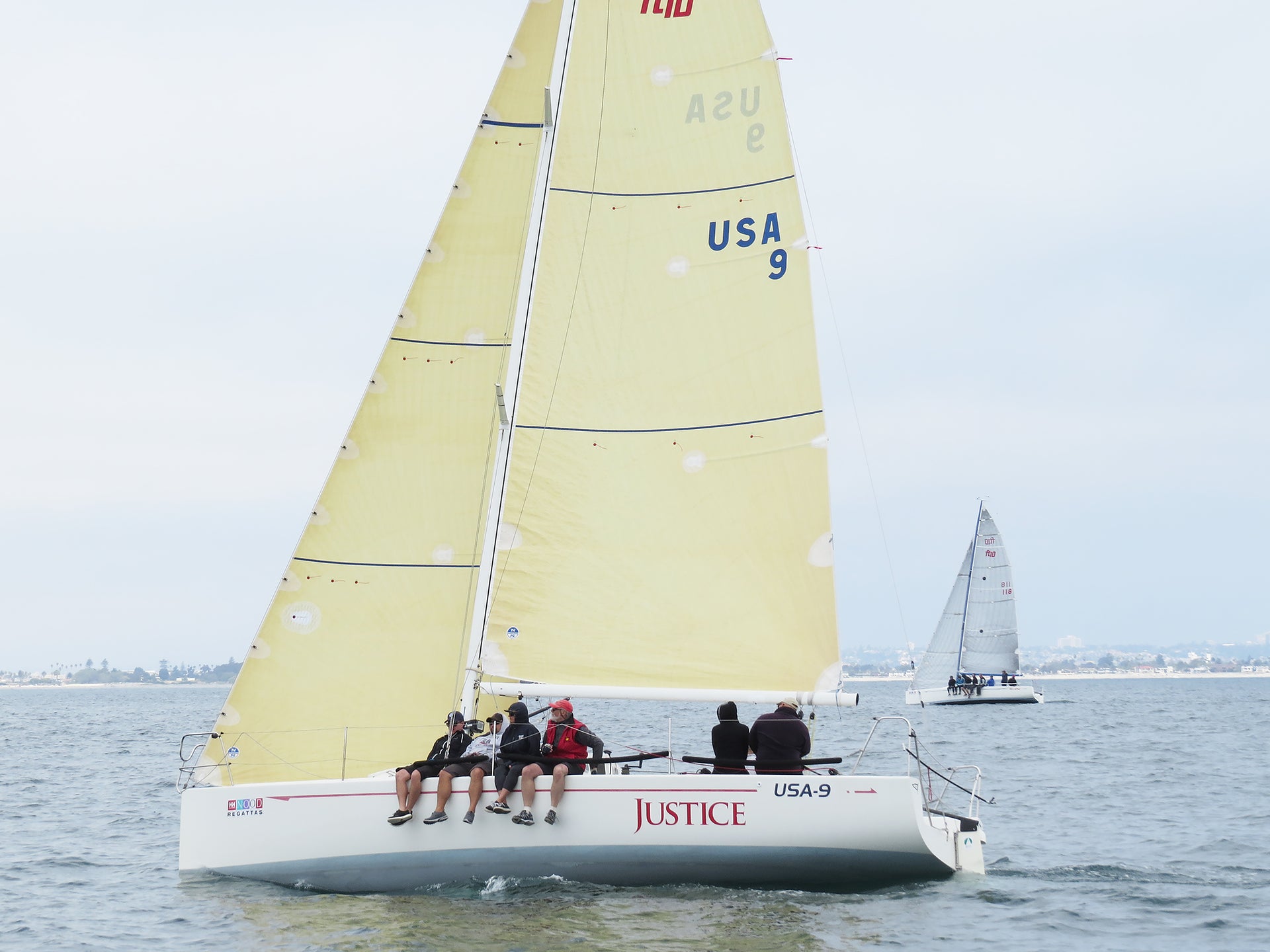
3Di RACE REPORT - FLYING TIGER 10M JUSTICE
John Harrop reports on his 3Di RACE sails after a year of use on Flying Tiger 10m Justice
A well known Southern California sailor, John Harrop spends his days off the water practicing as a licensed paralegal. His Flying Tiger 10m Justice was recently fit with a new set of gold North Sails 3Di RACE upwind sails, which John has repeatedly used to bring his competitors to “justice” on the race course! We caught up with John after he raced in the San Diego NOOD regatta to get his impressions on the sails.
“The 3Di RACE sails are truly awesome, a great plug and play product.” John reported that he and the crew on Justice had been able to try the new set in a variety of conditions over the last few months. “The sails are very sensitive and receptive to rig tune and setup. Halyard and headstay sag adjustments give the jib a great range of power and point through all conditions.” The latest application of North Sails proprietary technology, 3Di RACE is designed to be a practical and durable option for racing sailors.
“In theory, one of the main user benefits of 3Di RACE is sail longevity. These sails have proven to hold their shape longer, and shrink less than a laminate. This is what I’ve noticed that makes the product unique in its own way, in its construction and materials. It is innovative and has proven itself to work exceptionally well for me and my boat.”
With a 100% corinthian crew, John describes their sailing style as somewhat conservative, especially at starts. The Justice crew appreciates the reliability of 3Di RACE, coupled with its ability to perform well throughout a wide range. “After almost a year of use, the main and jib look great, they trim well and produce results that keep our boat at the front of the fleet. We are not a pro team, and we don’t really practice. We trust the confidence gained by a well prepared boat and great sails like these.”
READ MORE
READ MORE
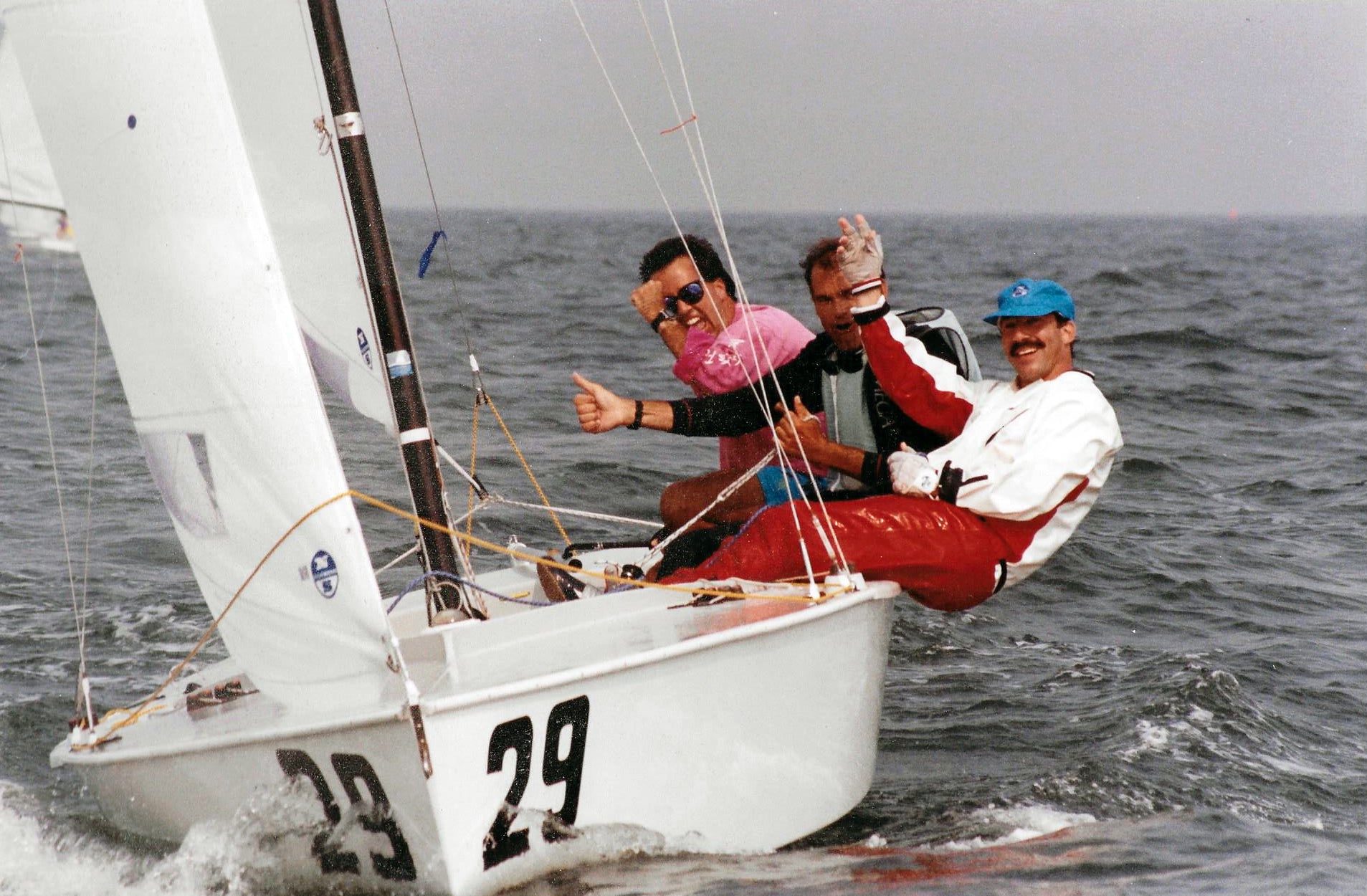
TRIBUTE TO THE "KING OF THE SOUTH"
THE ‘KING OF THE SOUTH’ WEARS THE CROWN ONCE AGAIN!
It was in the early 1990’s when the moniker “King of the South” became attached to Ched Proctor in the Lightning Class. By then Ched had been making waves in the Lightning Class for over a decade and, by 1995 had won the Lightning Southern Circuit four times over a nine year period. Fast forward to 2017, Ched recently secured his 7th Southern Circuit crown, a feat that no one, in the 70 year history of the Southern Circuit has accomplished. This year he and his team also managed to win his 4th Midwinters title (in Miami) and 2nd Winter Championship (in St. Petersburg).
Ched (middle) after winning the North Americans in 1991 for the first time as crew
To say Ched is knowledgeable about making Lightnings go fast is akin to saying “water is wet.” It’s unbelievably obvious that even mentioning it may make someone question your sanity! The fact is, Ched has been trying to help make everyone go as fast as him for decades. A bit of a “speed savant,” he has made a career out of trying to figure out how to make sails (and boats) go faster and has always been quick to share his thoughts and tips with anyone who asks (and sometimes even when they don’t). Ched, while generally a man of few words, has always been the guy in the parking lot, helping a competitor tune his or her boat, explain pre-bend and headstay sag or trying to explain why he trims the sails the way he does. Through his incredible comprehension of sail shapes and tuning details, he has likely helped more people understand how sails and boats work together to maximize efficiency better than anyone over the past 30 years. Ched’s advice spans everything from giving insights on how to trim in big breeze to how to play your backstay, and even providing intel on what cleaning methods he uses on his boat during major events. A legend to the Lightning Class and One Design sailing, his fellow competitors always enjoy competing against him, and if you do manage to beat him, you know you can compete with anyone because you will have managed to beat the best in the class!
Miami 1997
The Lightning resume Ched has produced over the past 30 years shows a consistency and commitment to excellence that is arguably unmatched and clearly locks him in as one of the top Lightning sailors of all time. In addition to his unequalled record on the Southern Circuit, Ched has won 4 North Americans (1993, 1994, 2000 and 2011), the International Masters Championship (2013), North Americans Masters (2013), and the Canadian Open National Championship (2000, 2009). He has also won multiple Atlantic Coast Championships, Districts, regionals and local events all while doing his best to help others in the class learn to get faster and enjoy Lightning sailing that much more. It is fair to say, for decades fellow sailors have looked to him for advice showing their admiration and respect for him. Ched is a role model both on and off the race course. He is an intricate part of the Lightning Class and has been sharing his amazing adventures with sailing enthusiasts over the last 30 years. In November of this year, Ched and his team head off to the World Championships in Salinas, Ecuador to chase down the one title that has eluded him in his illustrious career. We wish him luck and know that he has the skills, experience and talent to get to the top of the podium.
Miami 2017
St. Petersburg at the Winter Championships 2017
READ MORE
READ MORE
1977 - NORTH SAILS INTRODUCES DIGITAL SAIL DESIGN
DIGITAL SAIL DESIGN
Lowell North diverged from the traditional, artistic approach to sailmaking by closing his eyes. Lowell listened to the numbers. Historically, sailmaking depended on the eye of the craftsman, who drew from experience and tradition to create beautiful sails in a classic shape and style. From the beginning, Lowell embraced a scientific approach to making sails, and North Sails has followed a path of increased development in sail design and production ever since. Remaining at the forefront of design is possibly the clearest example of how Lowell’s core values enabled his company to prosper well beyond his own tenure.
This photograph from the mid 1980s shows the strength of Lowell North’s design team. It was taken at one of his regular meetings, which he hosted to foster the exchange of ideas and experience. *Names at base of page.
It started with testing raw material properties. The early North Sails team in San Diego pushed innovation in sailmaking to new heights by contriving devices that would apply measurable wear and tear to cloth samples, eventually introducing controlled environments with wind tunnel testing and model sails. The process took a digital direction in 1977, when North transitioned from shaping broad seams on the floor to generating 2D curves with a computer. Working from North Sails in New Zealand, Tom Schnackenburg based the software on a library of designs selected by group consensus. For a given sail order, a designer would select a curve type from the library, and the software would generate the broad seams for every seam in the sail. The term “consensus” was an important item of discussion at every design meeting, because it would ensure the same sails could be produced at every North loft. At the same time, Tom pioneered 3D design software for sails (insiders call this the “Tin Sail Program,” due to the sail shape being fixed in space), which he used to derive the 2D broad seam curves.
Prior to the arrival of common computers, a designer would run both the 2D and 3D programs on a dial-up service to a main frame. Essentially, they were connecting via a phone line to a computer the size of a hotel room.
The first in-house computer arrived at the loft in San Diego in 1979. It was a Cromemco, presumably considered the Cadillac of desktop computers if only because of its size. Tom had just opened a loft in Auckland, and a fellow North programmer, Michael Richelsen, brought the computer to New Zealand as checked luggage. Tom started to port his 2D and 3D design software from the main frame to the Cromemco, which was running an early version of Microsoft DOS.
Lead programmer, Michael Richelsen, works on a Norputer (large box underneath the Xerox matrix printer), which was a self-assembled desktop. This photo was taken at the North Sails loft in Milford, CT, in 1983, prior to the last America’s Cup in Newport, RI.
It was in the early 1980s when Michael began focusing on the work that would eventually expand the North Design Software to what it is today. By 1987, Flow™ and Membrain™ made it possible to apply wind pressure to a sail’s surface and calculate the load forces created. Designers could pressurize their shapes virtually to discover what the flying shape would be. This was the beginning of the Virtual Wind Tunnel™, which models air flow on upwind and downwind sails. By the early 1990s, the addition of the VPP (velocity prediction program) would allow designers to further quantify the performance of the flying shape.
Meanwhile, progression in design evolved into computer-driven production, with large plotter tables drawing and cutting panel shapes to the design spec. This required North to collaborate with early plotter table manufacturers such as Lawson; later the team would build their own and install them at central lofts throughout Europe, North America, and Oceania.
1977 was an important year because it put North Sails on the map in the earliest days of digitalization. Steve Jobs finalized the Apple 1 in the same year. The first microprocessor was only introduced by Intel in 1973. The first computer to use the standardized user interfaces of today, such as icons, a mouse and a desktop screen, was introduced by Xerox in 1975.
Today, North Sails Design SuiteTM (NDS) is the most powerful and diverse sail design tool in the industry. A family of 14 specialized software modules, NDS delivers unprecedented power and flexibility to sail design and rig/hull analysis. The modules interface with each other to make it possible for North Sails designers and engineers to virtually test a boat and sails in an infinite variety of conditions before the boat is even built. NDS significantly expands a designer’s ability to compare different sail and rig combinations and accurately measure results.
Thanks to North Sails’ heritage and design experience, we know that our software models accurately replicate how sails perform on the water. For 40 years this analysis, data and insight has been an integrated and crucial tool for clients all over the world, from huge new concept projects through to habitual cruising and racing sailors.
North Design Suite enables designers to generate realistic flying sail geometries, which puts them in a unique position in the marine industry with regards to computing sailing loads and undertaking VPP analysis. Soon the design suite will expand with hydrodynamic CFD (computational fluid dynamics) capabilities, assessing the load and displacement properties of a hull moving through water.
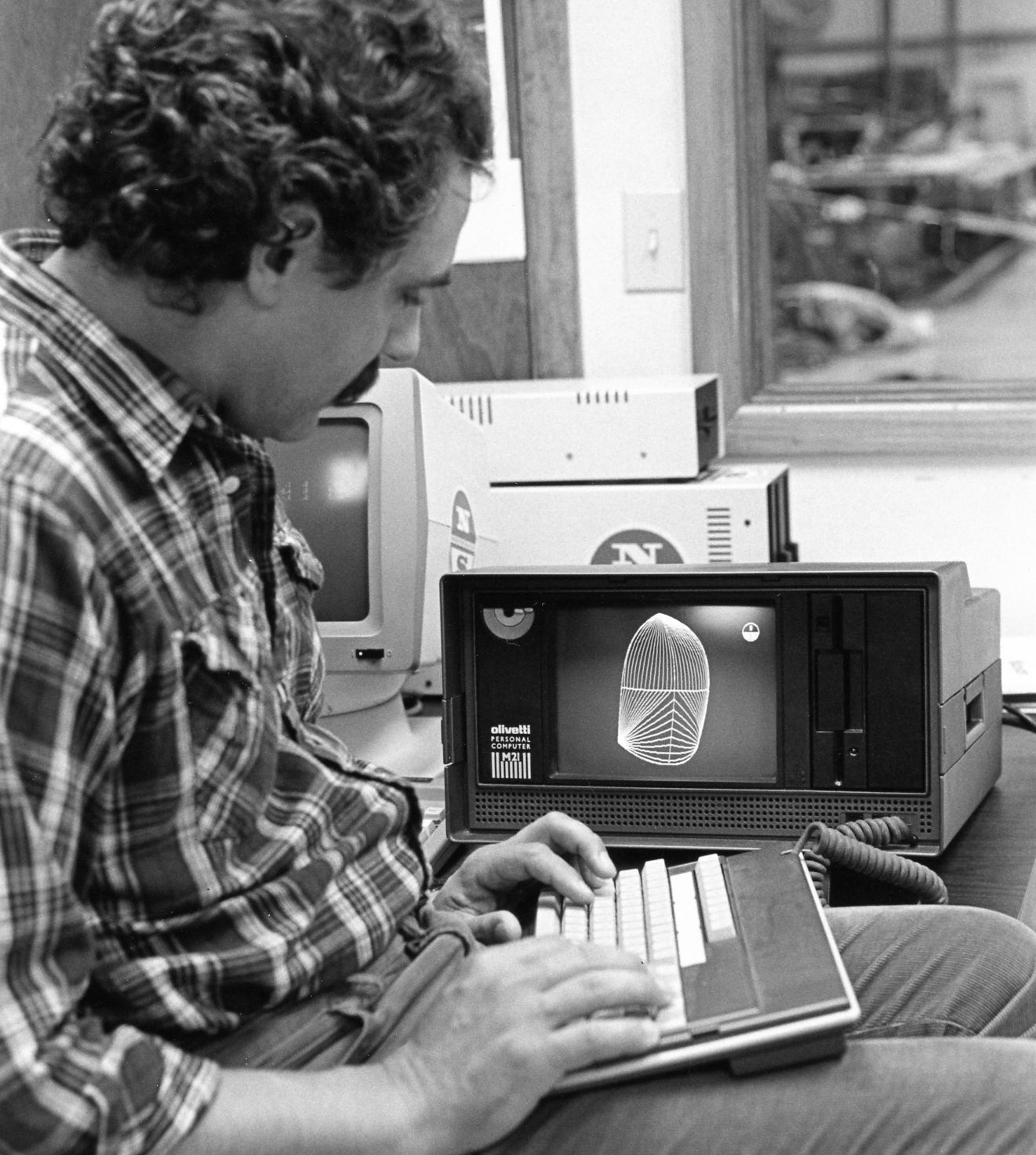
North Sails Designer, Dave Hirsch, at North Sails in Milford, CT, early 1980s. Dave is using an Olivetti portable – or “luggable”, as it was the size (and weight) of an overly stuffed carry-on piece of luggage. The keyboard he uses fits onto the screen end of the computer, to protect the monitor when traveling.
*Group photo: back row from left to right: Paul Davis, Keith Lorenz, Lowell North, Peter Mahr, Dave Hirsch, Albert Schweitzer, Angus Melrose, Larry Herbig, Jay Goebell (second from right). Front row from left to right: Joep Strauss, Mike Schreiber, Steve Reid (behind), Rick Sternkopff (in front), Steve Grover (behind), Michael Richelsen (in front), John Marshall, Monica McCantz, Tom Schnackenberg, Peter Kay, Robert Hopkins, Bill Bergantz.
READ MORE
READ MORE

CHED PROCTOR WINS LIGHTNING MIDWINTERS IN SOUTHERN CIRCUIT FINALE
VEGGIE SUB WINS LIGHTNING MIDWINTERS IN SOUTHERN WINTER CIRCUIT FINALE
The Lightning Midwinters ended Saturday with four races in windy conditions of 15-22 knots on beautiful Biscayne Bay in Florida. The Coral Reef Yacht Club race committee, led by Jane Anne Pincus, kept the fleet of 30 teams in the northern end of Biscayne Bay and ran flawless W4 and W5 courses in challenging but consistent breeze. There proved to be a definite left side advantage in the first three races, which gave those who got left early a chance to break free and gain a nice advantage on those who went right.
In race 1, Ched Proctor’s team Veggie Sub, consisting of Ben Cesare and Jay Lurie, was pushed hard by David Peck, his wife Nina and son David on 15215. Peck led around the windward mark in Sunday’s first race and benefitted greatly from Ched’s “nose dive” into a wave just after the weather mark that nearly filled the cockpit to the seats, which allowed the Peck team to run away with that race as Ched narrowly fended of Jeff Linton’s team on xx.
The left corner shifts seemed to pay off for Veggie Sub in the second race, working their way to the top mark in first place and avoiding all downwind hazards to win the race. The third race of the day was a close battle between the top three teams. Ultimately it was the Cristobal Perez and his team from Chile who caught the last big gust of the race, and surged ahead just before the finish to take the win. Jeff Linton was close behind until a mishap caused a capsize just before the finish line.
The last race of the series presented the fleet with a 15 degree right shift that made it hard to get out of the left corner for those who committed early on, although Dave Peck’s 15215 pulled off the feat by over-standing the windward mark and reaching in on port tack full speed, to just barely make it across the bows of the starboard tack lineup on the layline.
Team VeggieSub, with North Sails expert Ched Proctor at left, wins the Lightning Winter Championship, Midwinter Championship, and Southern Circuit Championship of 2017!
The final standings for the Midwinters saw North-powered teams in the lead with Ched Proctor’s Veggie Sub taking the overall win, the Peck family on 15215 finishing second, Chris Perez sailing No DesesPerez in third, and Jeff Linton with team xx finishing fourth.
We are very proud of all the North teams that performed so well this year on the Southern Circuit and dominated the results at all the events! The Midwinters marked the end of the Southern Circuit events, which also included the 70th annual St Petersburg Winter Championship that finished earlier in the week.
In the Southern Circuit overall results, North clients placed 1-14. Top five are Ched Proctor and team Veggie Sub, Cristobol Perez and team No DesesPerez, Jeff Linton with team xx, Tom Allen with team 9, and Neal Fowler with 11346.
Congrats to Ched and his team for winning the Midwinters, Winter Championship and overall Southern Circuit titles and to our clients for participating in and dominating the results in the Southern Circuit series events!
Complete results for the Southern Circuit HERE
Results for Miami Winter Regatta HERE
READ MORE
READ MORE
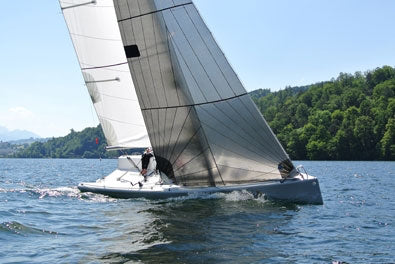
CLASSE BLU 26 - ONE DESIGN SUISSE
Classe Blu 26 - One Design Suisse
Newsletters
Cliquez ici pour obtenir les dernières news de la classe (blog officiel en anglais et en allemand)
Référent pour cette classe
> Julien Monnier
Tél. voilerie : + 41 22 782 32 22
Mob. : + 41 79 574 11 15
julien.monnier@northsails.com
Liens utiles
- Classe
- Chantier - Bluboats
READ MORE
READ MORE
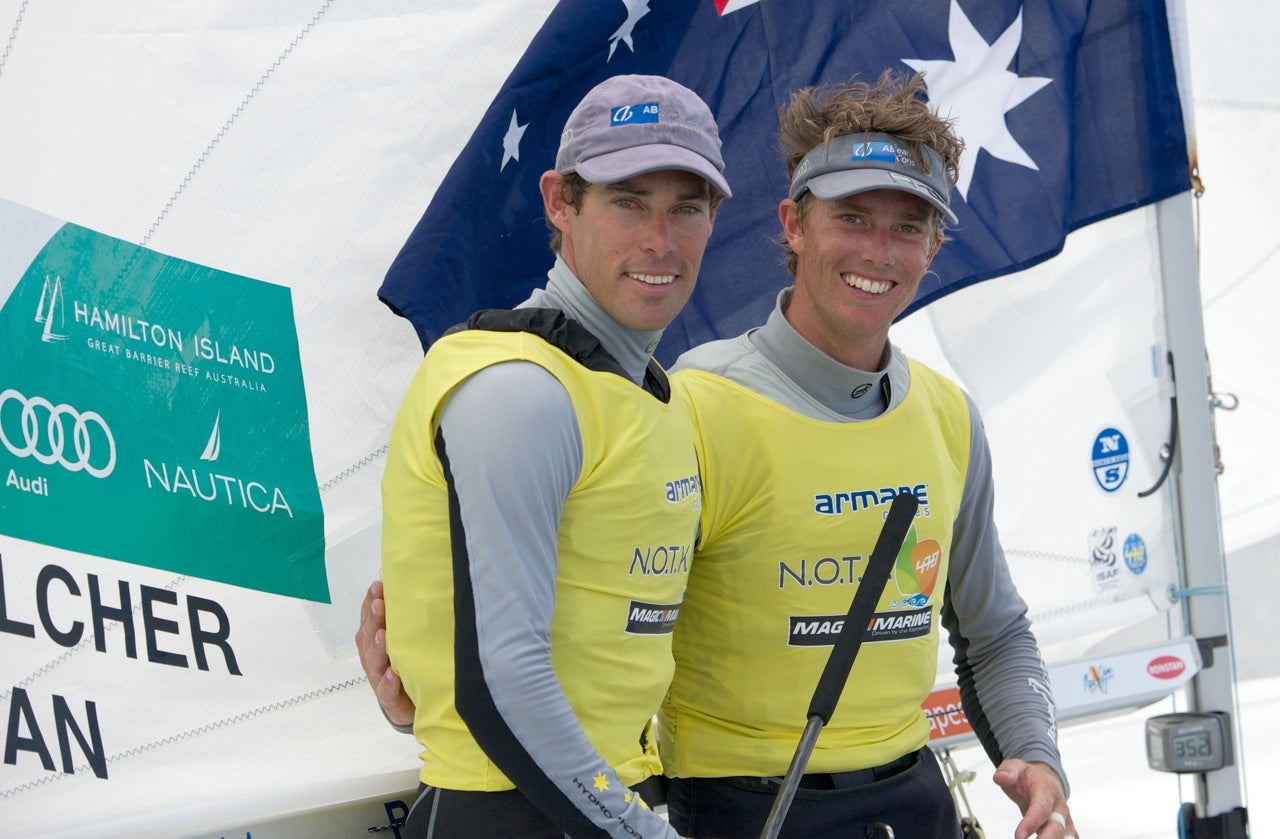
NEW 470 MAINSAIL: DEVELOPED BY MAT BELCHER AND NORTH SAILS JAPAN
NEW 470 MAINSAIL DEVELOPED BY MAT BELCHER & NORTH SAILS JAPAN
The New N14- L18 Mainsail
The N14-L18’s powerful depth in the head of the sail, gives an ideal twist for driving the boat to speed and for quick acceleration in planing conditions. Lower drag is created by the shape from the bottom to the middle which works for both speed and pointing performance under full power conditions, where you need to keep the boom completely at center.
“I am very fond of the N14-L18 Mainsail, which was developed during our last two Olympic campaigns. It is very special to us. We used this sail to win 6 world titles and 2 Olympic medals. The sail is fast in all conditions and easy to trim, which has enabled us to focus on racing and has helped us get out of a lot of tight situations.” – Mathew Belcher, Silver Medal Rio 2016″
Contact our 470 Class Experts for further information.
READ MORE
READ MORE
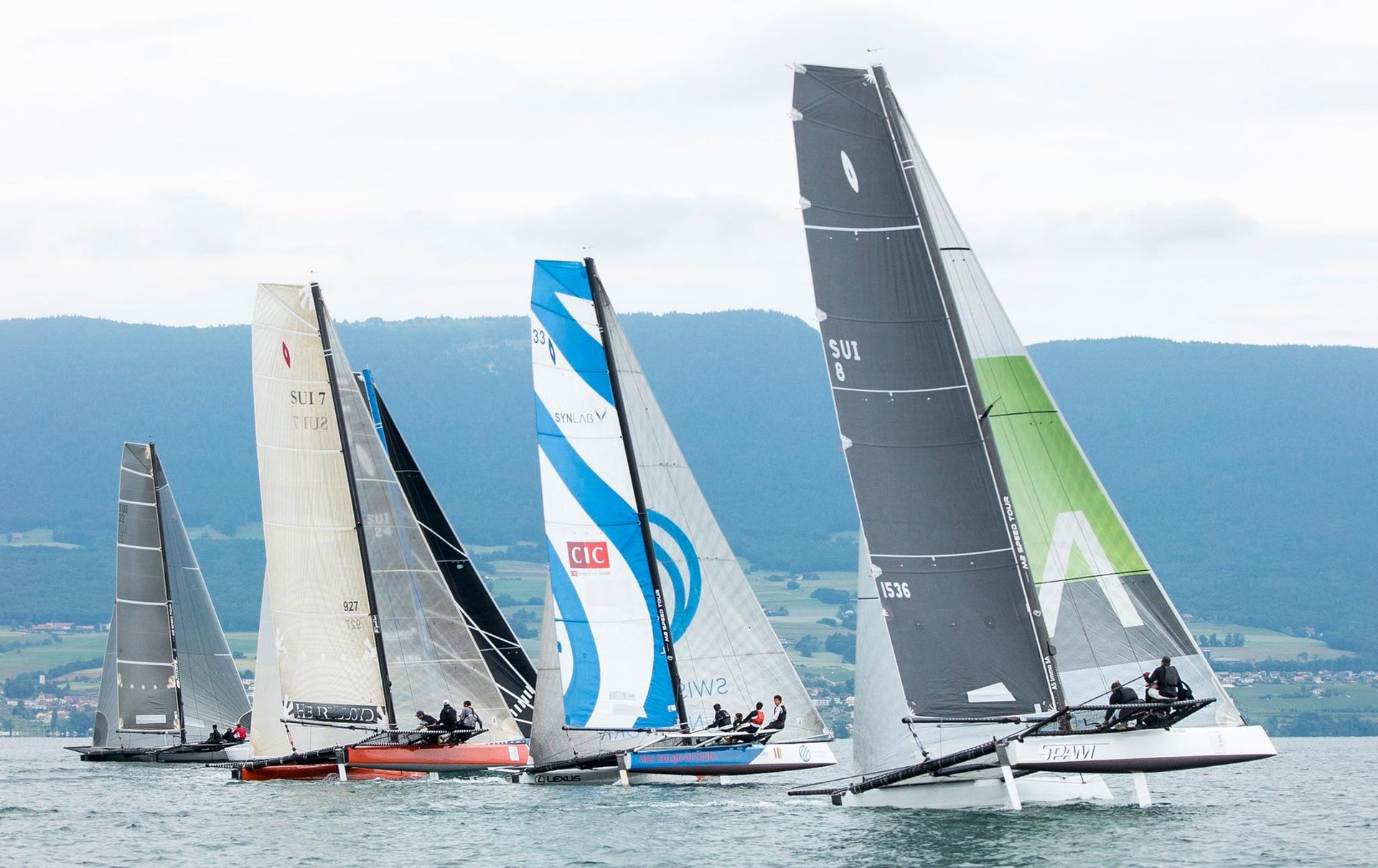
CLASSE VENTILO M2 - ONE DESIGN SUISSE
Classe Ventilo M2 - One Design Suisse
Newsletter
21 septembre 2016 : Infos classe M2
Référents pour cette classe
> Michel Vaucher
Mob. : + 41 78 898 20 24
michel.vaucher@northsails.com
> Julien Monnier
Tél. voilerie : + 41 22 782 32 22
Mob. : + 41 79 574 11 15
julien.monnier@northsails.com
Liens utiles
- Classe Ventilo M2
- Chantier - C-SYSTEM
READ MORE
READ MORE
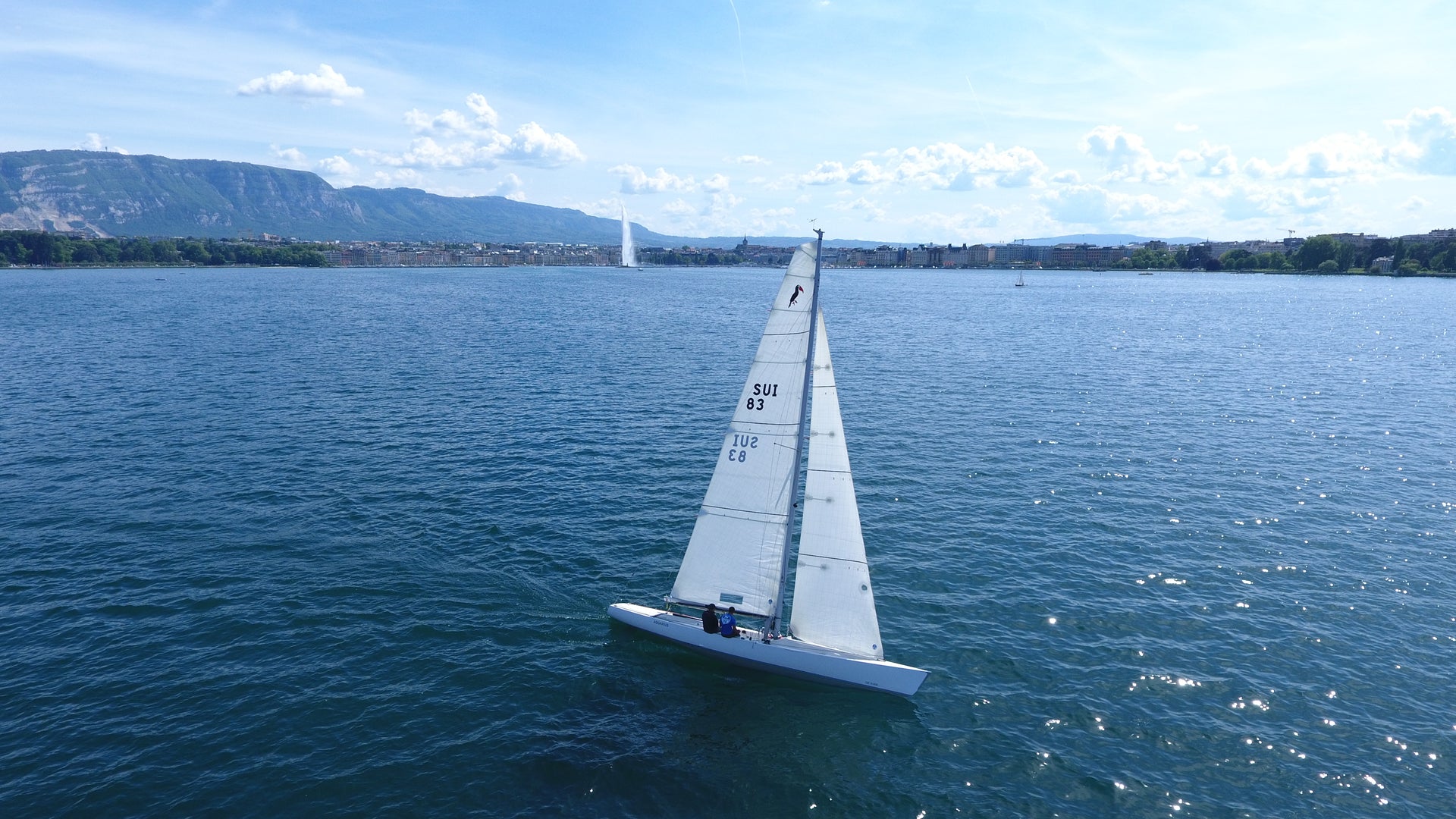
CLASSE TOUCAN - ONE DESIGN SUISSE
Classe Toucan - One Design Suisse
Référent pour cette classe
> Bernard Schagen
Tél. voilerie : + 41 22 782 39 43
Mob. : + 41 78 803 60 58
bernard.schagen@northsails.com
Lien utile
- Classe
©TrisDesign
READ MORE
READ MORE
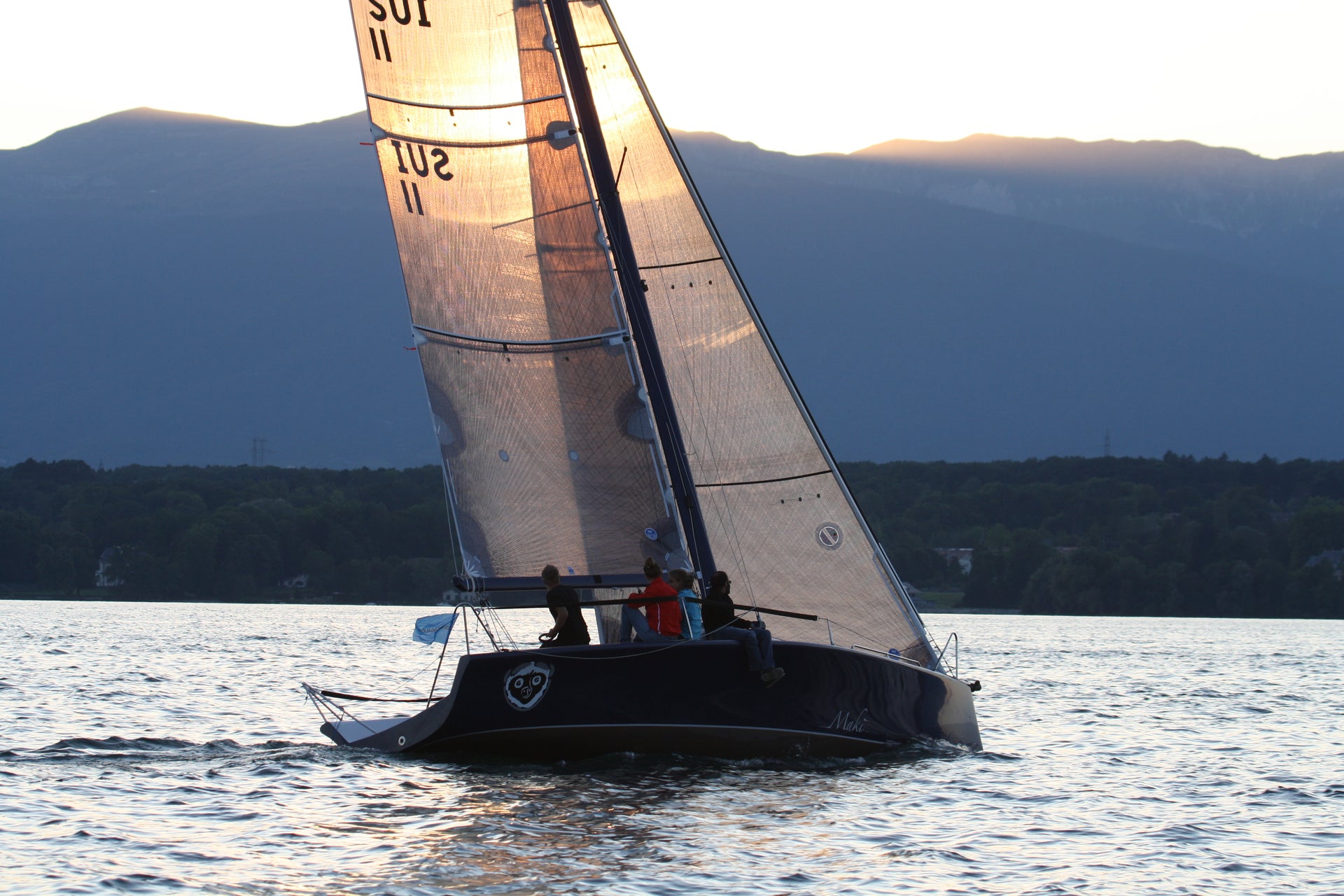
CLASSE LUTHI 870 - ONE DESIGN SUISSE
Classe Luthi 870 - One Design Suisse
Référent pour cette classe
> Bernard Schagen
Tél. voilerie : + 41 22 782 39 43
Mob. : + 41 78 803 60 58
bernard.schagen@northsails.com
Liens utiles
- 3DL 600 performance
- 3Di 760M
READ MORE
READ MORE
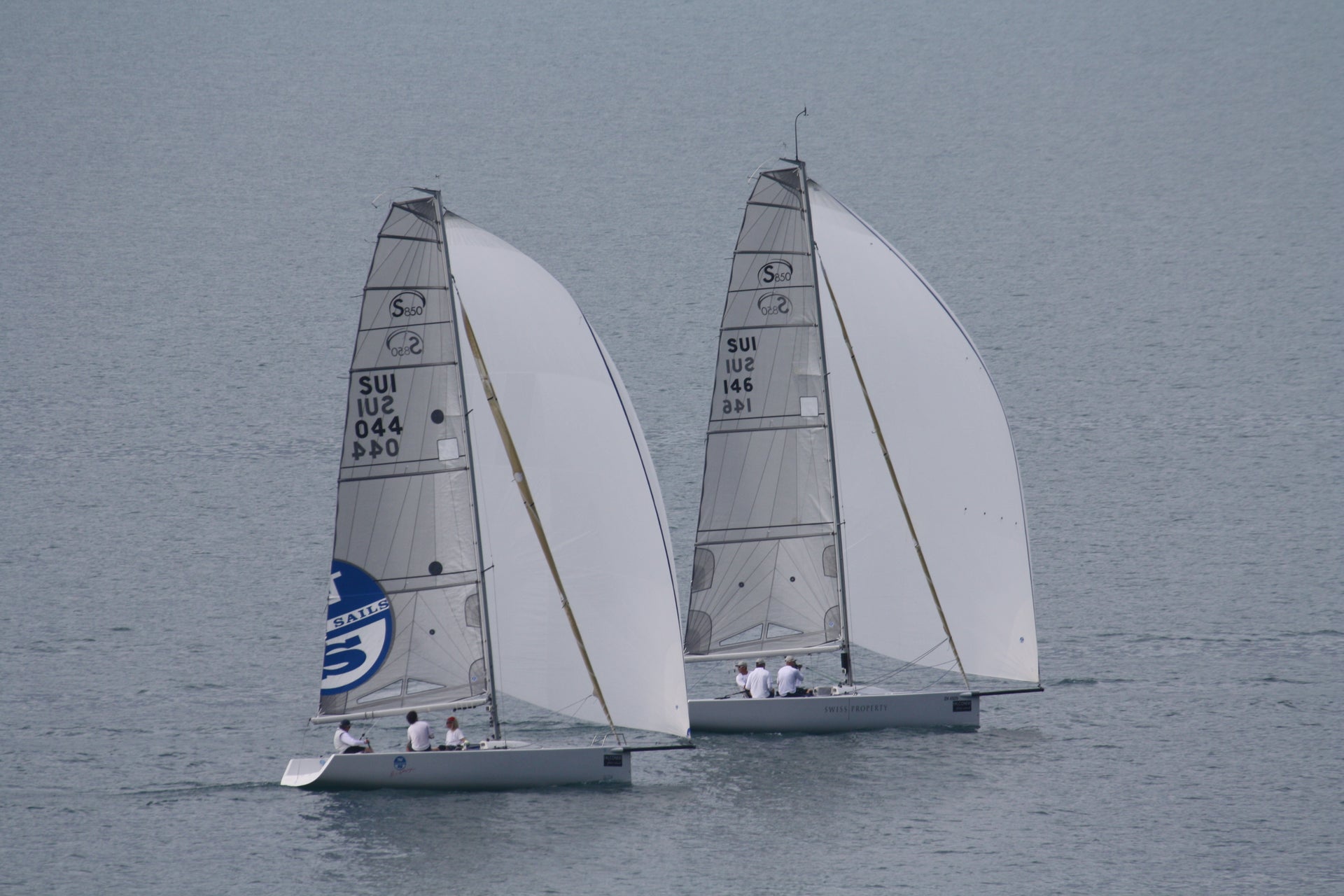
CLASSE ESSE 850 - ONE DESIGN SUISSE
Classe Esse 850 - One Design Suisse
Guide de réglage / Tuning guide
- Quick tuning guide (Fr. / Eng.)
Product list
- Tarif Esse 850
Newsletters
- 14 septembre 2015 : Saison 2015 et nouveautés pour 2016
- 3 septembre 2014 : promos d'automne, bilan positif pour la 1ère saison du 3DL en Esse 850, palmarès 2014, nouveautés 2015 & accessoires, trucs & astuces.
Référents pour cette classe
> Daniel Schroff (North Sails Schweiz)
Zelgstrasse 1
8280 Kreuzlingen
Tél. voilerie : +41 71 686 85 25
daniel.schroff@northsails.com
> Julien Monnier
Tél. voilerie : + 41 22 782 32 22
Mob. : + 41 79 574 11 15
julien.monnier@northsails.com
Liens utiles
- Classe Esse 850
- Chantier - Schuchter Sportboot AG
- Chantier - Chantier Naval de Vidy
READ MORE
READ MORE
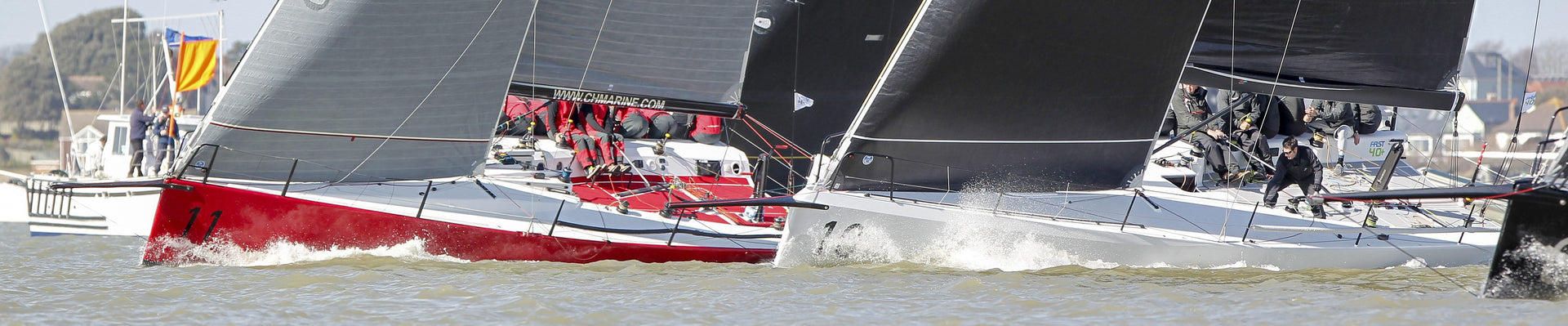
HOW TO TRIM LIKE A PRO
HOW TO TRIM LIKE A PRO
Everything You Need To Know
One of many key positions on a race team, the sail trimmer takes responsibility for optimizing sail performance. While the most important time to shine is during the race, a good trimmer knows that success starts before the boat leaves the dock. Read these tips from North Sails expert Sam Richmond, who moonlights as trimmer on Maxi 72 Jethou and Fast40+ Ino, and learn why attention to detail makes the difference between “good” and “great” in every situation.
Guidelines for Good Sail Trim
Power from your sails comes down to three sources: Angle, shape, and twist. A trimmer’s job is to achieve the most amount of power, while keeping in mind the balance of trim between sails.
Angles: Pull the sail in to add power and ease the sail out and to reduce power. Heading up will also reduce the power, whereas if you trim on or bear away you increase this. This is a common technique for the starting line.
Sail Shape: deeper sails generate more power. Flat sails generate less power and also create less drag. Depth is adjusted in a few different ways; sheet tension, forestay and backstay tension and lead/jib car position.
Twist: A closed leech will generate more power where as a twisted, open leech spills power. Twist is controlled with lead/car position and sheet tension.
Calibration
Always carry a wet notes pad to make notes onboard. Record everything from the conditions, rig tune, and sail trim, and be sure to include true wind speed and angle for reference. This will give you a foundation to base your decisions on, and provide a guide for making changes and improvements with your team.
Every line that can be adjusted needs a mark – use your marks to re-create settings that were fast. Aside from your sheets, think of your jib car position, in-hauler, outhaul, cunningham, halyards, traveller and backstay. These all affect the way your sails behave so try different settings until you find the sweet spot. Once you’ve found the groove, mark the line so you have a place to work from, and you know where to set it without hesitation.
When using an asymmetrical spinnaker, mark your sheet at the point where enough is pulled forward to prevent the windward sheet from going tight on the hoist. On a symmetrical chute, mark the guy so you know the foreguy/pole can still go up. Mark the inboard end of the pole on the mast so you can gybe as soon as possible if if you need to.
At the leeward mark, remind the pit person to hoist the jib and set the backstay to the mark you’ve made. This will allow for a smooth, clean mark rounding. Thinking about these things ahead of time allows the crew to focus on boat speed as soon as you round, while other competitors are struggling to get the set up correct for the next upwind.
Best Practices
The headsail trimmer should be constantly monitoring performance by using comparison tools onboard. Comparing your boat to other boats, target boat speeds and angles, how are “we” doing compared to just when we last made a change, and the feel of the boat. A good trimmer can feel a loss of power in the boat before it shows up as a loss of speed.
Take photos of your sails and send them to us so we can analyze the sail shape, compare them to new ones, and show you where improvements can be made. It is much easier to do this in the pre-start routine and shouldn’t be done during the race.
Communication is key. Making constant trim adjustments to improve or maintain performance, the trimmer must also communicate the current state of performance to the crew, suggesting how to improve, and reporting progress as adjustments take hold. Constant communication will keep your team attentive and working together. For example, if you encounter a lull in pressure, it would be common for a trimmer to call for the backstay to be eased. The mainsheet trimmer knows he needs to ease the sheet and the jib trimmer will ease too, while the helm “falls off” to help get the boat going again. Perhaps at the same time, the crew moves their weight to windward to help bear off.
Small efforts make a big difference in getting your boat back up to speed first. These constant changes or “transitions” in sail trim and crew weight placement can be the difference between the best and the rest.
Sail Changes
When conditions put you at a crossover between sails, a few extra factors come into play. Most notable are sea state, trending conditions, and past experience. In waves or chop you may opt to use the larger of two headsails for extra power when driving up and over waves. In flatter water a smaller sail can enable you to sheet harder and therefore point higher.
Consider the weather forecast and the conditions you have experienced up to the decision point. Are you anticipating the breeze to build up, drop off or shift? Also keep in mind that in a building breeze the sea state may remain flat, but in a dying breeze there will be leftover swell and power may still be needed.
As you gain experience with a specific boat and sail inventory, your notes on past performance will inform your decision on what sail to use. For example, in flatter water you may choose to use the J2 down to 8 knots, but as the chop builds, the J1 may be a bit faster with the slight increase in pressure. If time allows, you can try both options before the race and choose based on how the boat feels when testing your straight line speed.
Never Relent
A trimmers job is never done. Don’t cleat it and certainly don’t hang out to leeward! The jib trimmer will be the last of the crew to the rail, so only stay to leeward if conditions allow. Once the crew is fully hiked out, the trimmer should hike too, and take the tail of the sheet with you so you can ease quickly if you need to without leaving the rail. Keeping the boat flat in pressure allows the foils to do their job.
READ MORE
READ MORE
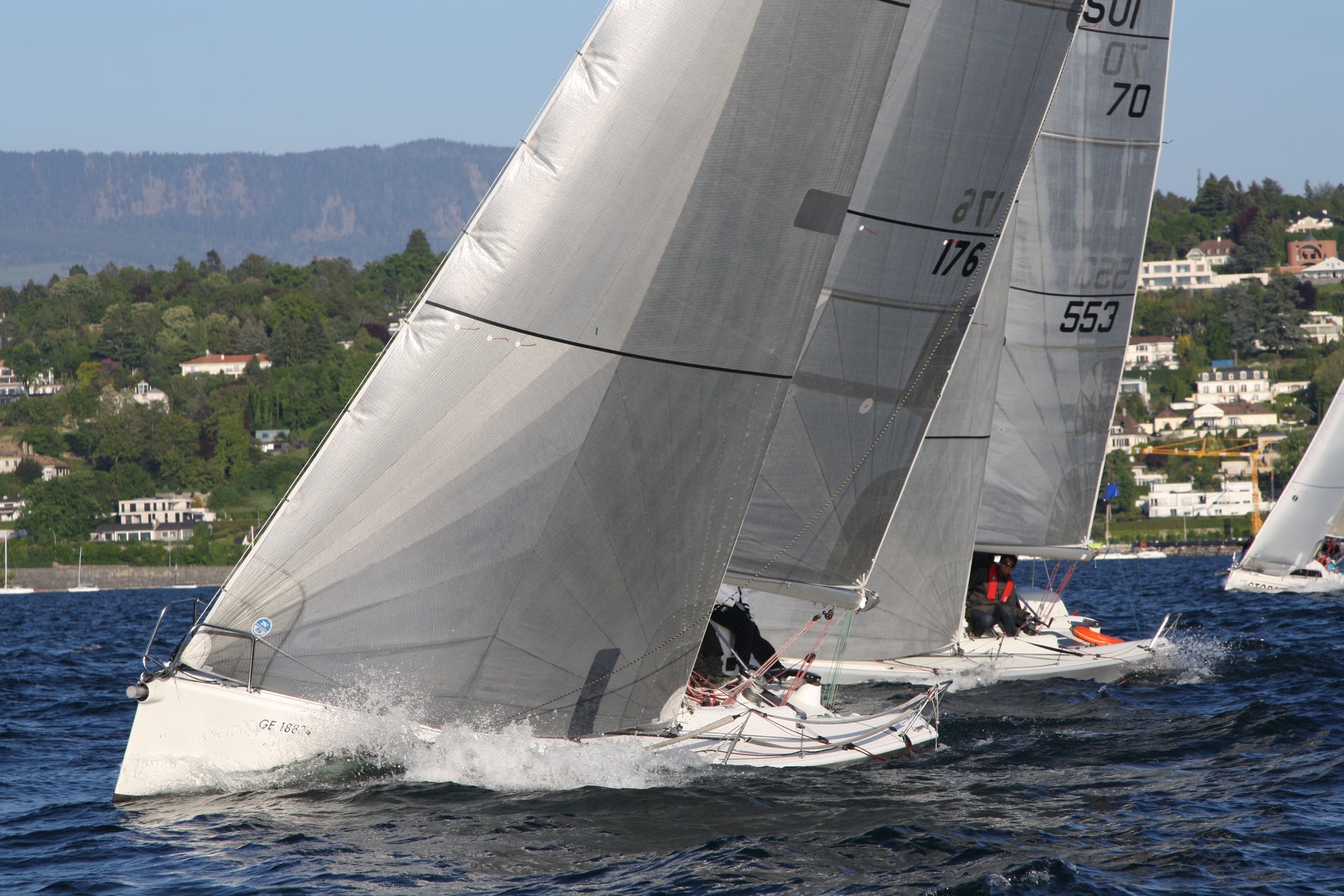
CLASSE GRAND SURPRISE - ONE DESIGN SUISSE
Classe Grand Surprise - One Design Suisse
Référents pour cette classe
> Pierre Ratajski
Tél. voilerie : + 41 22 782 32 22
Mob. : + 41 78 870 60 95
pierre.ratajski@northsails.com
> Julien Monnier
Tél. voilerie : + 41 22 782 32 22
Mob. : + 41 79 574 11 15
julien.monnier@northsails.com
Liens utiles
- Association suisse des propriétaires de Grand-Surprise
- Chantier - Archambault
- Chantier - François Séchaud
- Chantier - Léman Plaisance (Philippe Raphoz)
READ MORE
READ MORE
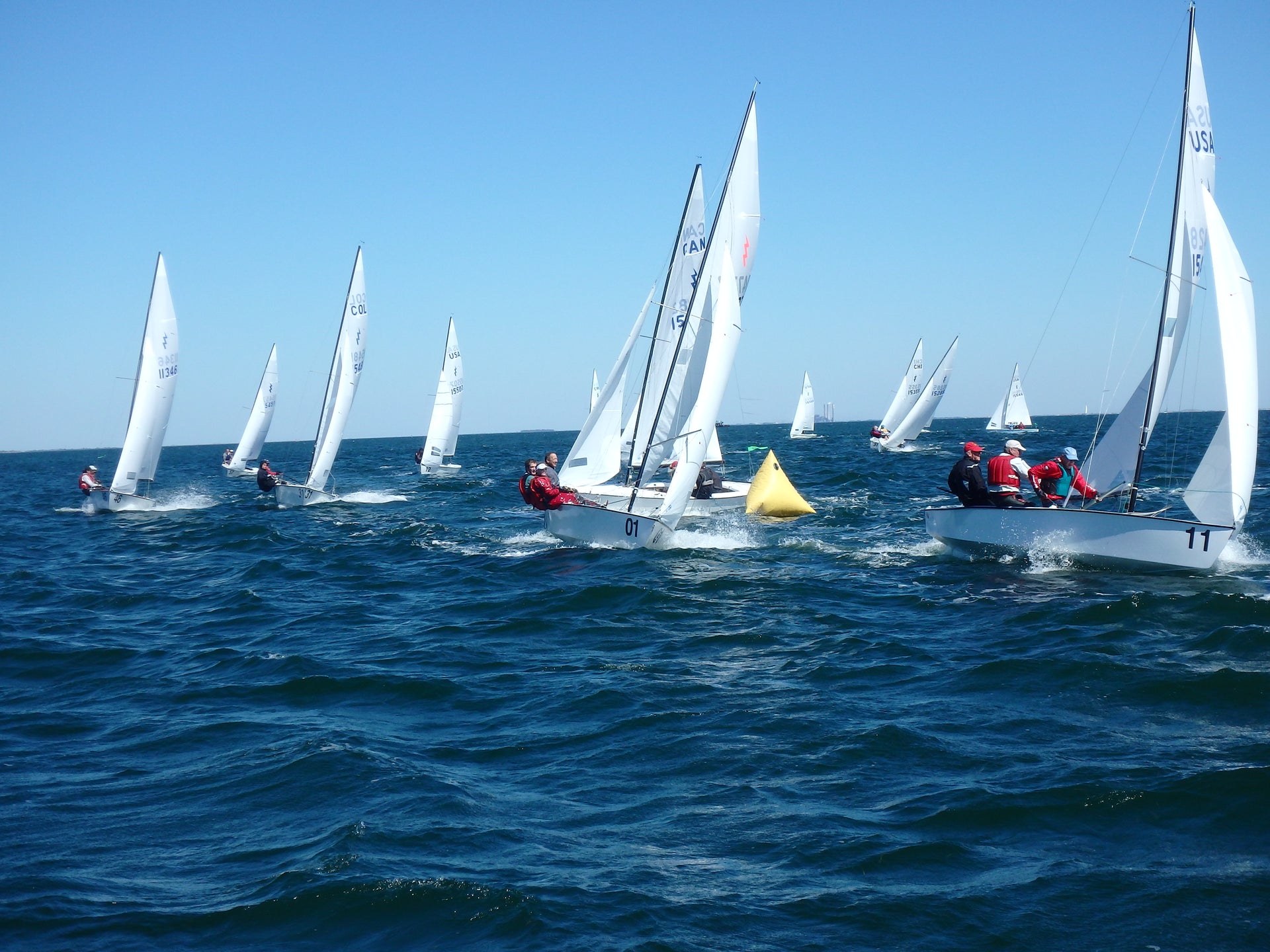
VEGGIE SUB TAKES THE LIGHTNING WINTER CHAMPIONSHIP IN ST. PETERSBURG, FL
CHED PROCTOR WINS LIGHTNING WINTER CHAMPIONSHIP
Ched and team ‘Veggie Sub’ in the lead!
Day one of the winter champs began with a front that brought NW breezes in the 8-12 knot range and built throughout the day to 22+ knots. The fleet successfully completed four races as attrition took its toll on the fleet. Capsizes, bent spreaders, and one broken mast resulted in very sore and tired sailors!
Day two was primed to be “moving day” with many teams set to work their way up the leaderboard. Unfortunately the wind wasn’t in the mood to get “moving” until late in the day as the fleet waited onshore until 3pm for the sea-breeze to build. Patience was rewarded with a very nice 5-leg race in a pleasant 8-12 knot westerly breeze, which was challenging to the fleet because of the shifty and puffy wind behavior.
David Starck on ‘Team Patstrong’ got out early in the first beat, never looked back, and took the race win. The rest of the top varied throughout the race and changed every leg with several teams moving into and out of second through fifth. In the end, Jeff Linton got to the right of Marvin Beckman and Mike Holly on the final beat to take second place. James Taylor was there to round out the top 5.
Fleet lined up ready for the start of the race
Once sailors got to shore, the ‘Lutz Rum Party’ at St. Petersburg Sailing Center was a nice way to end a solid day of racing.
The final day was a test of patience as the 40 teams were postponed onshore waiting for the promised afternoon seabreeze. After a little over four hours postponed the fleet headed out into the building breeze, which finally turned southwesterly.
While the majority of the fleet turned right after the start to chase the expected wind shift, event leaders Ched Proctor and David Starck got out to the left side of the course where they found a bit more pressure. This enabled them to get over the top of the boats on the right and round the top mark first and second again, with Ched holding a one-boat length lead on second place. From there it was protect and extend for team ‘Veggie Sub’ as they covered ‘PatStrong’ throughout the race to earn their third victory and overall regatta win. The Starck team crossed the finish line in the final race in second, followed by Tom Allen in third, Jeff Linton in fourth and Cris Perez in fifth.
In the overall result, team “Veggie Sub” with Ched Proctor, Jeff Eiber and Tim King won the 70th Winter Championship. This was Ched’s 2nd Winter Championship victory
The teams of David Starck, Marvin Beckman, Cris Perez, Tom Allen and Jeff Linton rounded out the top 6 places, all powered by North Sails.
Congratulations Ched Proctor and team ‘Veggie Sub’ for taking the overall win at the winter championships and to our clients for sailing well!
Full results can be found HERE
READ MORE
READ MORE
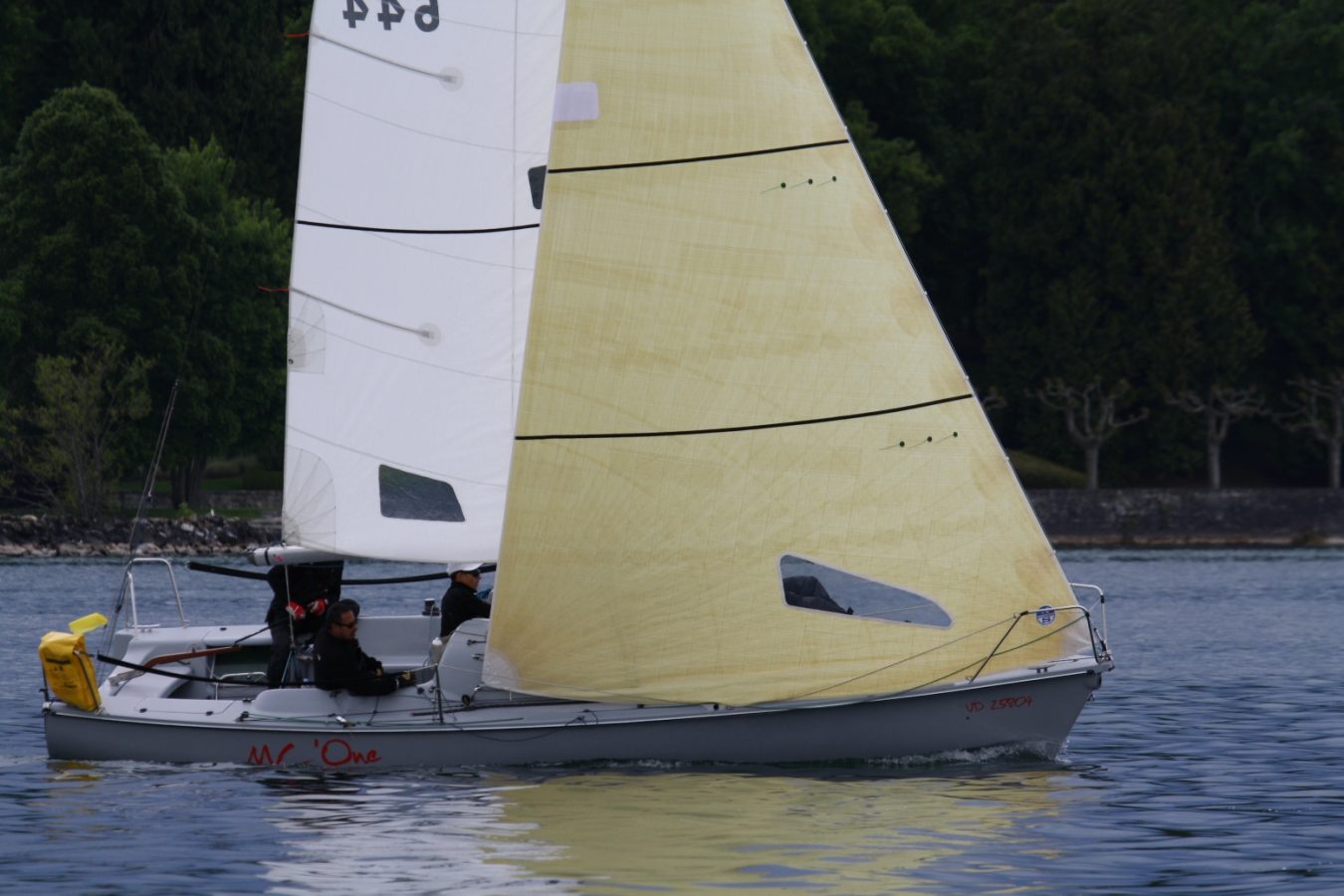
CLASSE SURPRISE - ONE DESIGN SUISSE
CLASSE SURPRISE - ONE DESIGN SUISSE
Guides de réglage / Tuning guides
- Tableau récapitulatif
- Livret de réglages complet (en français)
- Full tuning guide (English)
Référent pour cette classe
Julien Monnier
Tél. voilerie : + 41 22 782 32 22
Mob. : + 41 79 574 11 15
julien.monnier@northsails.com
Liens utiles
- Association suisse des propriétaires de Surprise
- Association française des propriétaires de Surprise
- Association autrichienne des propriétaires de Surprise
- Chantier - Archambault
- Chantier - François Séchaud
- Chantier - Léman Plaisance (Philippe Raphoz)
- Blog - CER
- Blug - CUST
READ MORE
READ MORE
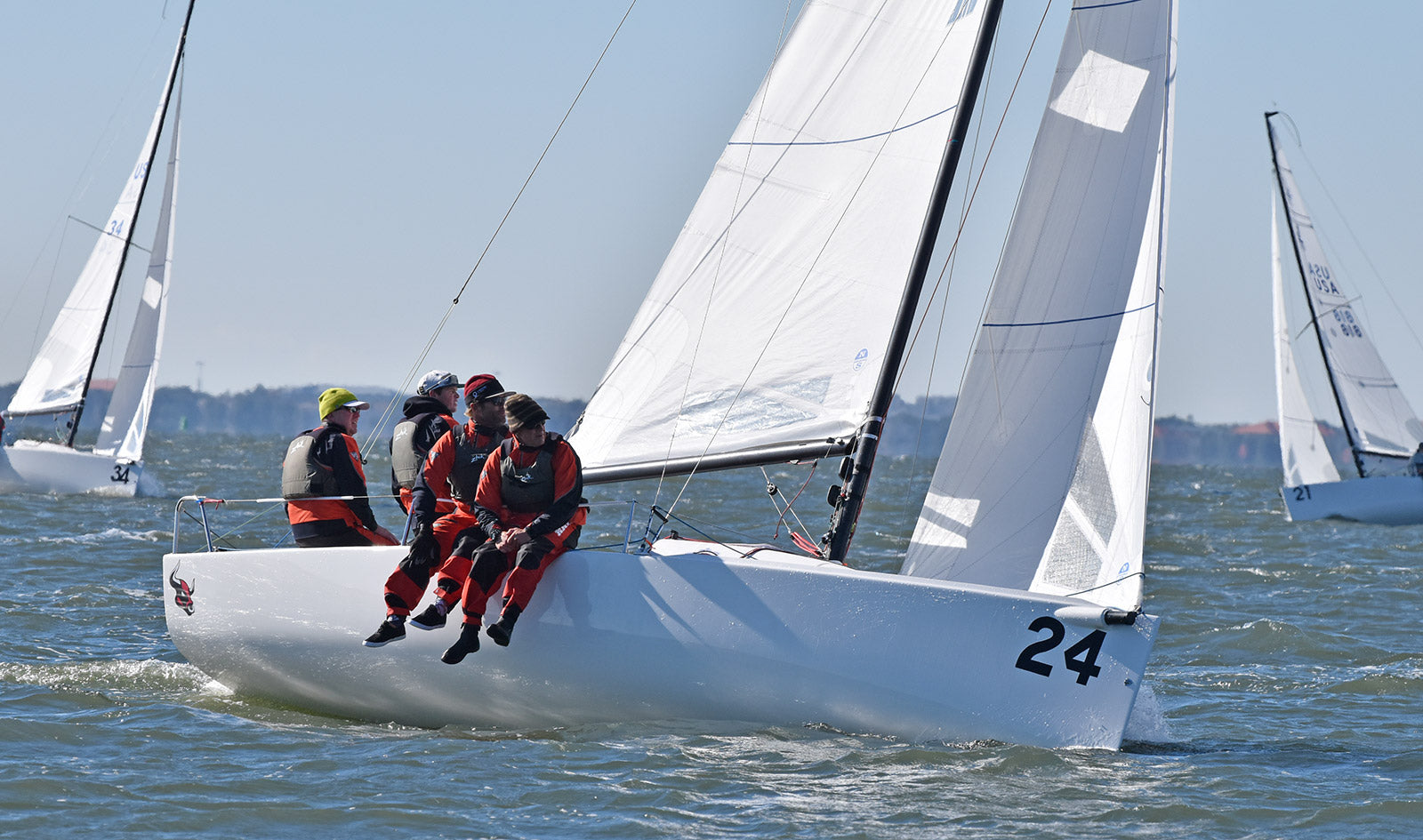
THREE REASONS 'STAMPEDE' CHARGED THE J70 WINTER SERIES
We caught up with Bruno Pasquinelli who is owner and helmsman for J70 “Stampede”. Bruno won the J70 Winter Series held in Tampa, Florida at the Davis Island Yacht Club this year.
The J70 Winter Series is composed of 3 events between December-February with one overall series winner. We asked Bruno how he prepares for events like this, and how it contributed to his success.
What are the three most important factors that helped you and team Stampede win the 2017 J70 Tampa Winter Series?
Boat/Sails/Crew
I have great ground support from Jay Vige. The boat is well prepared and maintained when we get to the regatta and need to go sail. The electronics have batteries, the radios work, preventive maintenance has been done, the rig is set to the micrometer settings, etc.
“We have confidence that our boat is ready for the event and are not distracted by boat issues.”
Work on my skills
Stampede sails each big event with a top tier team of sailors. I am the weak link on the boat. I am an amateur sailor with no formal training. I try and learn things every time I sail. I keep a detailed journal about the boat/rig/sails/conditions for each race we sail. This is helpful when we meet as a team prior to an event and then every day before we sail to make sure the boat is going out to the course with an effective setup for the conditions that day. I also put notes in the journal about skills or situations I don’t execute well. I have sailed with some great people over the last year and the first thing I tell them when they get on board is that this is recreation(fun), I want to do well, and that they are my coach. I want feedback on things that will up my game. These things go in my journal. Some of my notes over the last year include entry/exit angles for mark roundings, tiller movement on tack/jibe/mark rounding exits, slowing down at the leeward mark to not get stuck outside the pinwheel, starting techniques, etc. I draw diagrams in the journal and study them before I sail at each event. I have GoPro footage from every race and I review the footage on the plane while traveling to the events. The camera is mounted directly over the tiller and the video clearly shows when I drive well and when I don’t. I review the video of the “incidents” in my journal.
Sail a big event every month
This helps me retain the skills I am learning from each event and raise the performance of the boat.
“Trying these three things together gives me the confidence to concentrate on my job on the boat and leave everything else to the team. It is working.”
We had a great Worlds in San Francisco and won the Davis Island Winter series. Lastly, our sails are awesome, thanks North Sails!
READ MORE
READ MORE
WEST COAST REGATTA REPORT: SAN DIEGO NOOD
2017 SAN DIEGO NOOD REGATTA: WEST COAST RECAP
The San Diego NOOD was an all around success. Beautiful conditions gave sailors the opportunity to enjoy the fresh west coast air and all the things southern California has to offer. Coronado Yacht Club welcomed the fleet Friday, with heavy fog that cleared by the early afternoon allowing for a light breeze to fill in. North Sails assisted sailors with a weather briefing just prior to the skippers meeting, providing local insights to visiting sailors. Dock talks for the J70 and Ultimate 20 fleet featured photo and video and gave fleet members the chance to notice opportunities for improved speed, fine tuning, and steering.
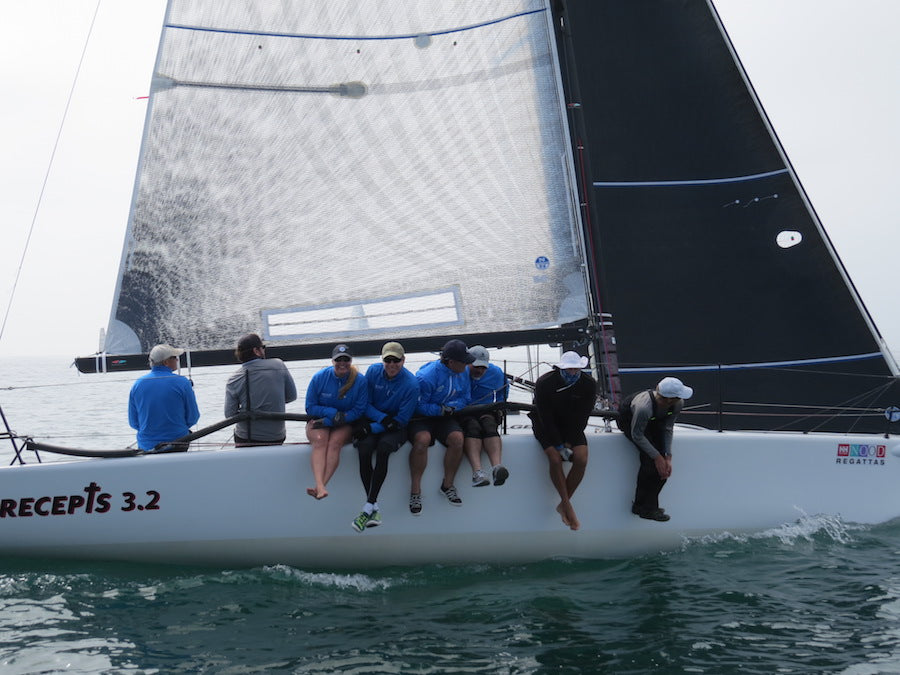
North Sails Saturday started with the Rally Race for cruisers. 11 miles were sailed in fresh breeze inside the harbor. Drew Belk’s Melges 32 ‘Precepts 3.2’ was awarded North Sails Boat of the Day. Sailors collected daily awards and viewed photos and video from racing at the North Sails tent after each day on the water. 1st place in Rally Race division A went to Corsair 31 ‘F- Bomb” with Lawrence Adams. 1st place in Rally Race division B went to 6m ‘Sprig’, with Greg Stewart.
Congratulations to our clients for taking 1st place in the J70, J105, Flying Tiger 10m, J120, Viper 640, and Rally Race fleets. Congrats to overall NOOD winner, Argyle Campbell with Etchells team “Rock n’ Roll”.
“Sanity”, 1st Place J105 with Rick Goebel
First Place – North Sails Rally Race- Greg Stewart’s 6m “Sprig”
Kym Kapalla’s “M2”, Melges 32 – 1st Place in ORC
North Sails Boat of the Day Winner, Drew Belk on “Precepts 3.2”
1st Place J70- Jeff Janov “Minor Threat”
North Sails Saturday- Rally Race!
1st Place Rally Race Winner Lawrence Adams “F Bomb”
READ MORE
READ MORE
OFFICIAL PARTNER OF THE J-CLASS ASSOCIATION
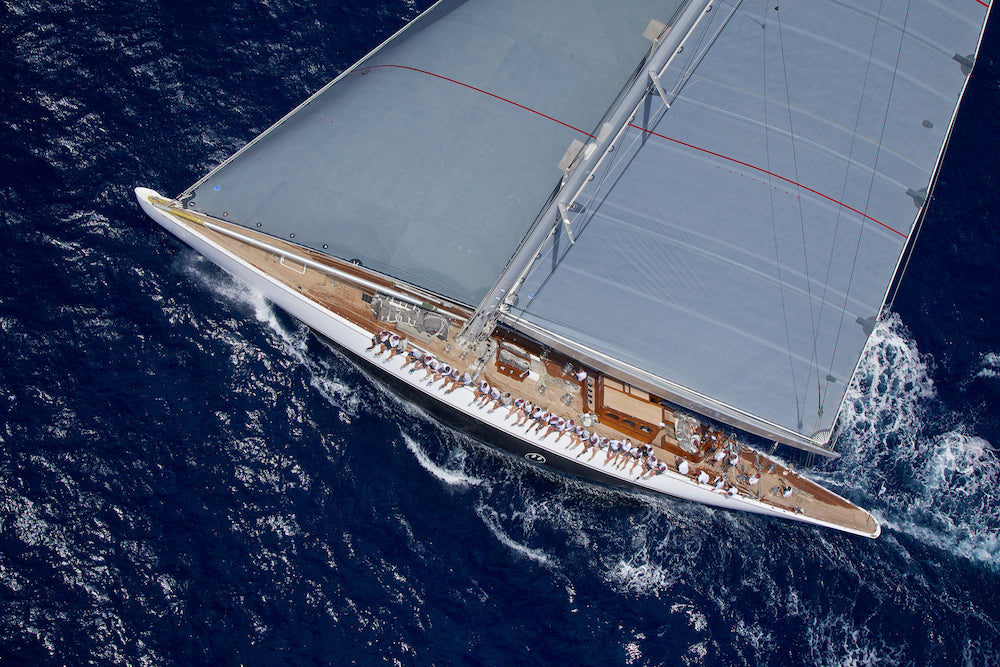
J-CLASS OFFICIAL SAILMAKING PARTNER
Combining unprecedented experience and heritage in the class, North Sails is the leading sailmaker of the J-Class fleet. Reinforcing the relationship further, this year North Sails also becomes the Official Sailmaking Partner of the J-Class Association.
J-Class Association and North Sails are proud to announce the inaugural Kohler Cup, a trophy named in memory of Terry Kohler, former owner of North Sails, entrepreneur and philanthropist. The Kohler Cup is a season-long points championship awarded to a J-Class yacht. Over the course of the season, each yacht will accumulate points based on their results, with events bearing more significance as the season progresses. The trophy will be presented at the J-Class World Championship in Newport, RI, August 2017.
High Scoring Point Breakdown for the 2017 Season:
St Barth’s Bucket = Total Fleet x 1 point
America’s Cup J-Class Regatta = Total Fleet x 1.5 points
J-Class World Championship = Total Fleet x 2 points
“North Sails looks forward to a historical year of J-Class Racing,” said Ken Read, President of North Sails. “The Kohler Cup, like Terry himself, embodies excellence, perseverance and sportsmanship. This award is exactly what Terry Kohler was all about.”
READ MORE
READ MORE
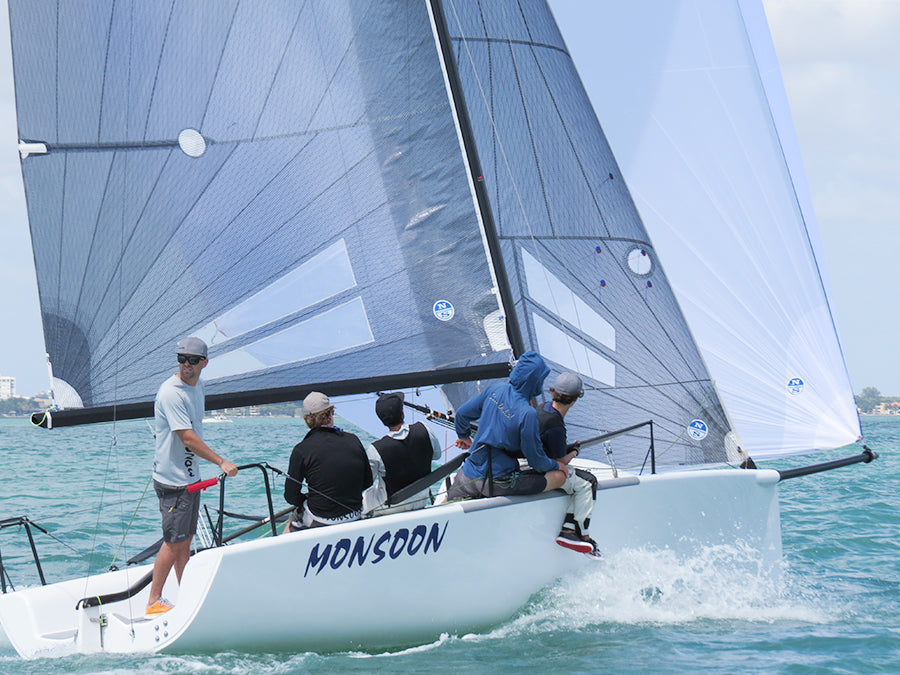
BACARDI SAILING WEEK RECAP
BACARDI SAILING WEEK RECAP
Bacardi Sailing Week is a wrap in Miami, Florida! Onsite support from North Sails Regatta Services included pre-event practice days and post-racing debriefs for select fleets. The event kicked off early for J70 and Melges 24 sailors who joined in practice starts and races run by North Sails for all competitors. This was a great way for sailors to warm up before sailing the event, especially those that were new to the fleet.
Competitors that had the opportunity prior to the start of the regatta to practice had the upper hand when it came time to race. North Sails Regatta Services team was on the water to take photos, give pointers, and provide constructive feedback for sailors.
Fleets had post-racing debriefs that allowed competitors to view photos and have an open discussion with onsite class experts. Zeke Horowitz (Viper 640), Tim Healy (J70), Ched Proctor (VX ONE) and Brian Hayes (Flying Tiger) all gave great feedback and provided insights. Talking about the racing after spending the day on the water is a great way to wind down and recognize things that can be improved within each team. The debriefings were quite informative and motivational, which was not only helpful but also was received well amongst the fleet.
Congratulations to our clients for sailing well over the course of the event, hanging in there when conditions got light and tricky, and motivating each other to keep working hard to improve their overall results!
READ MORE
READ MORE
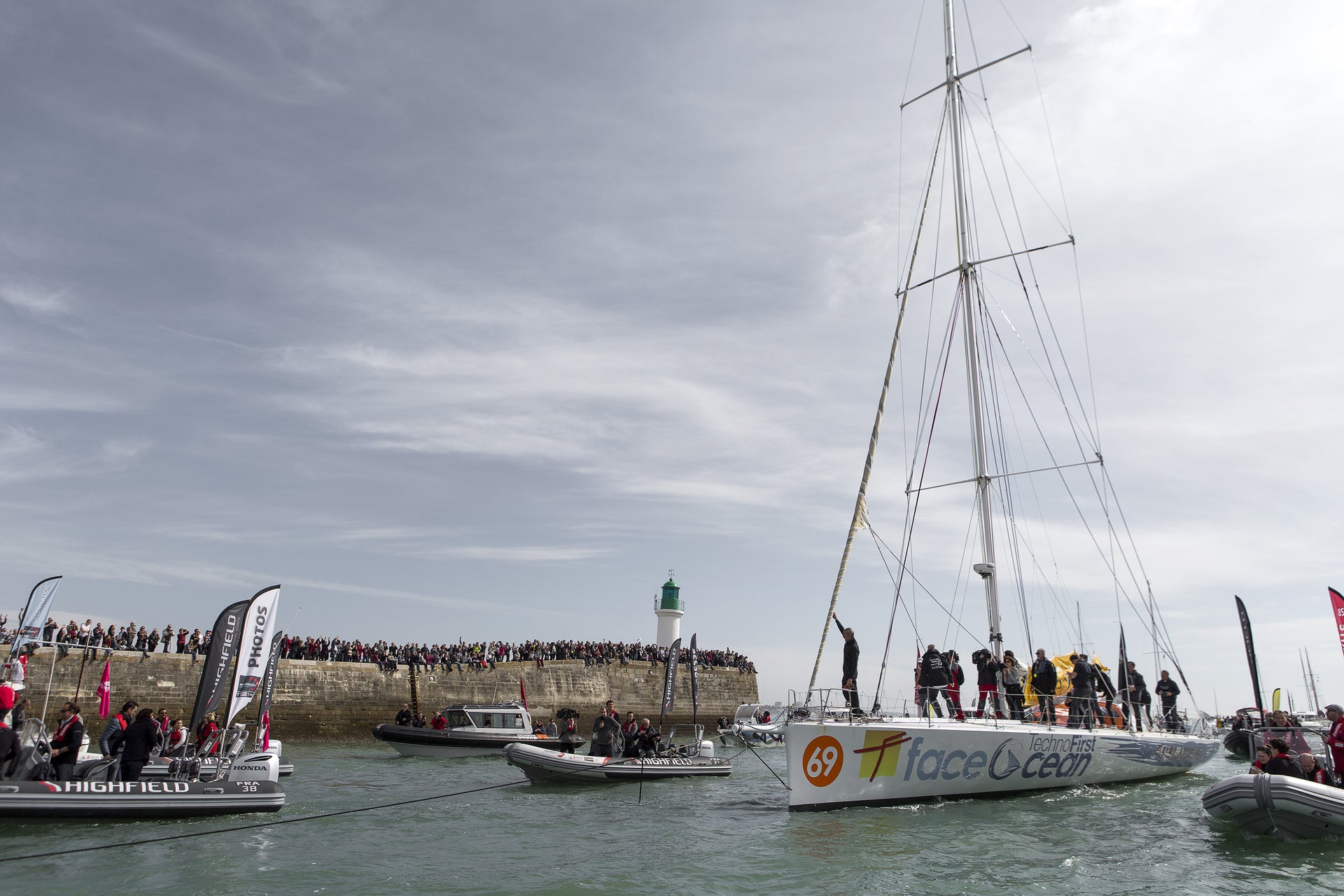
SÉBASTIEN DESTREMAU CLOSES THE 8TH VENDÉE GLOBE FINISH LINE
SEBASTIEN DESTREMAU FINISHES VENDEE GLOBE
The final skipper reaches Nouch Sud with 100% re-fit North Sails inventory
Following an intense career in inshore racing, Sébastien Destremau decided four years ago to go for the big one – the Vendée Globe. A singlehanded circumnavigation is a different game, and Sébastien’s determination pushed him past a number of obstacles including one of the tightest budgets in the fleet. Nonetheless, Sébastien sailed his IMOCA Technofirst – faceOcean across the finish line Friday night, March 10th, and entered the channel of Port Olona Saturday morning when the tide was high and the fans loud.
S
ailing on his IMOCA built in 1998, which has already been around twice in this iconic race, Sébastien had one of the more challenging races among the fleet. Dismasting two months before the start, enduring the loss of his start engine two weeks into the race, and capsizing in the Indian Ocean start to paint a picture of the hurdles this tough sailor surpassed. Add to it two broken ribs, having to stop a few days in Tasmania for repairs and maintenance, and losing his sea generators after Cape Horn, and you’re left thinking this guy may never brave the ocean again. However, the crowds that welcomed him into Les Sables on Saturday can vouch – his smile was as broad as the winner, and every finisher in between. Four months of sailing, even rationing his food for the last three weeks, it is water under the bridge of this heroic finish.
Stepping ashore, Sébastien thanked North Sails and especially his twin brother, Hugues, who helped patch a seaworthy inventory together from existing stock, recutting and reusing sails that had many stories already to their name.
“When I decided to go for North, I knew my brother was going to look after me. What I didn’t expect was that so many staff members (such as Thibault and others) put so much effort into my program, and worked tirelessly into completing our sail inventory.
North Sails France looked after this very small project probably the same way as they looked after the biggest Vendée Globe campaigns. There are no small or big customers with you guys. There is just a customer … and that’s a testament to your firm. So thank you very much for this.”
Sébastien’s inventory was made of used sails including a North Sails NPC TOUR mainsail, years old, North Sails 3DL jib, and a pair of re-fit North gennakers. Not one single sail was built for this boat, so the North team in France worked to modify stock sails, making adjustments so the sails would fit for the circumnavigation.
By crossing the line today, Sébastien wraps up a tremendous Vendée Globe for North Sails. Twelve boats carried full North Sails inventories including the record-breaking winner, Armel Le Cleach on Banque Populaire. In total, six of the top seven boats were powered by North Sails, and 22 out of the 29 Vendée skippers had North Sails onboard.
The Vendée Globe is above all a voyage to the ends of the sea and deep down into the sailor’s soul. Since its introduction in 1968, 167 sailors have lined up at the start of the Vendée Globe, while only 89 have managed to cross the finish line. This figure alone expresses the huge difficulty of this global event, where brave sailors set off alone to face testing seas immediately in the Bay of Biscay, hit record-breaking speeds through the Indian Ocean, leaden skies and crushing temps in the Southern Ocean, and the patience-testing highs and lows of the Atlantic. Starting alone is victorious.
“I made a key to close the door behind me in the Pacific and now I have another one to close the harbour entrance, as I’m the last one here in Les Sables d’Olonne.” – Sébastian Destremau closes the 8th Vendée Globe finish line on Saturday, March 11th, 50 days after the winner.
Congratulations to the skippers of the 8th Vendée Globe – that’s a wrap!!
READ MORE
READ MORE
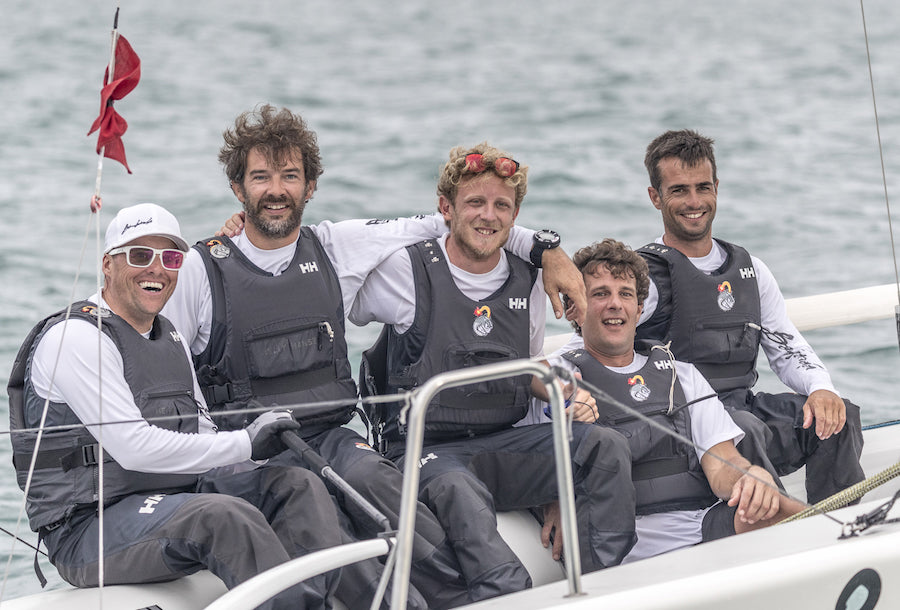
NEW MELGES 24 WORLD RANKINGS
NEW MELGES 24 WORLD RANKINGS
North Powered Teams Dominate Latest Melges 24 World Rankings
The World Rankings are determined by performance and participation at official class series events. Overall results are taken from high point scoring systems and are determined by four key events sailed for each team, with the highest scores accumulated. Ambitions of the IMCA World Ranking System set the tone within the class globally, giving sailors the aspiration to travel and attend the key events that will determine their overall ranking. There are 4 Ranking categories: European, North American, Australasian, and World.
Latest Melges 24 World Ranked Teams:
European Ranking Champion: Andrea Racchelli on ITA735 Altea
North American Ranking Champion: Conor Clarke/Stu McNay on IRL829 Embarr
Australasian Ranking Champion: David Young on AUS746/655 The Kraken
Overall World Ranking Champion: Andrea Pozzi/ Giulio Desiderato on ITA841 Bombarda
Team Bombarda, #1 World Ranked Melges 24 Team ©Carlo Borlenghi
The Melges 24 is fast, fun and provides sailors with the thrill of high-performance racing amidst top-level competition. Truth be told, over 800 boats are racing all over the world today, and for a good reason! Designed by Reichel Pugh and Buddy Melges, the Melges 24 has grown in popularity since its introduction in 1997. That same year, the class held its first World Championship with 98 boats participating. There are established fleets across the globe in North America, Europe, and Australia, and more developing in parts of South America and Asia.
“Embarr” 2016 Melges 24 World Champions, #1 Ranked in the US ©Pierrick Contin
We caught up with Giulio Desiderato, tactician on ITA841 Bombarda and asked him about his teams’ accomplishment as the top boat in the Melges 24 Class World Rankings.
How long have you been sailing with Bombarda?
“I met Andrea Pozzi two years ago during a Melges 20 regatta. The first time that I worked with him, I was coaching his Melges 20 team during an event in Riva del Garda, Italy. From the beginning, we’ve started something good after some key events racing together. He called me, and I started sailing with him on the Melges 24, calling tactics. Ciampalini (“Ciampa”) was already with the Bombarda team while myself, Carlo Zermini and Nicolas Dal Ferro started after the World Championships in Denmark. It has been a perfect combination from the beginning.”
What was a highlight onboard from the Kieler Woche Regatta?
“Kieler Woche was the first victory for the Bombarda team. We were coming from a productive winter preparation and getting up to speed, faster and faster. We started the regatta focused on doing our best, and not on the end results. Sincerely, we did not think we would win the regatta. We ended up with an incredible score, winning the last two races of the regatta.”
Bombarda and Altea sailing upwind. ©Mauro Melandri
What’s your next event as a team?
“We have stopped our journey for now. Andrea will be really busy this year, and for the moment he is focused on improving his skills in the International Moth. We want to come back next year, determined as usual to do our best on this fantastic boat and competitive fleet.”
Do you sail together on any other boats?
“Actually, no. For our team, we are all good friends and we are constantly in contact with each other. We see each other all the time in different sailing circuits, but at the moment we shall remain good enemies on the race course .”
“I’m speaking with the Pozzi family about another project, and will most likely have the pleasure again to sail with his team, calling tactics as usual, but this time in a bigger boat.”
How does it feel to be at the top of the Melges 24 World Rankings?
“Looking back, it’s incredible. As I told you before it has been a perfect journey. Our goal was to improve and grow up through every regatta, and now at the end of the season we can read the name Bombarda at the top of the world ranking. Andrea is one of the most passionate people I know, and I have to thank him for making this possible.”
Andrea Pozzi and his team Bombarda ©Carlo Borlenghi
Any advice for your competitors?
“Be focused on the journey and not the single race or regatta. Consider the team a group of friends and be determined to achieve the goal together. The strong point of Bombarda was that we didn’t give up. After a bad start or a wrong maneuver, or a bad tactical call we never got upset, but we were always determined to do our best and come back as a team. Racing with them I understand why these guys are such successful sailors.”
Congrats to all teams taking the top spots in the Melges 24 World Rankings for this year, and we wish you all the best in your future endeavors!
Team Altea, Ranked #1 in Europe ©Mauro Melandri
North Sails One Design | Melges 24
Melges 24 Class Association | Ranking Results
READ MORE
READ MORE
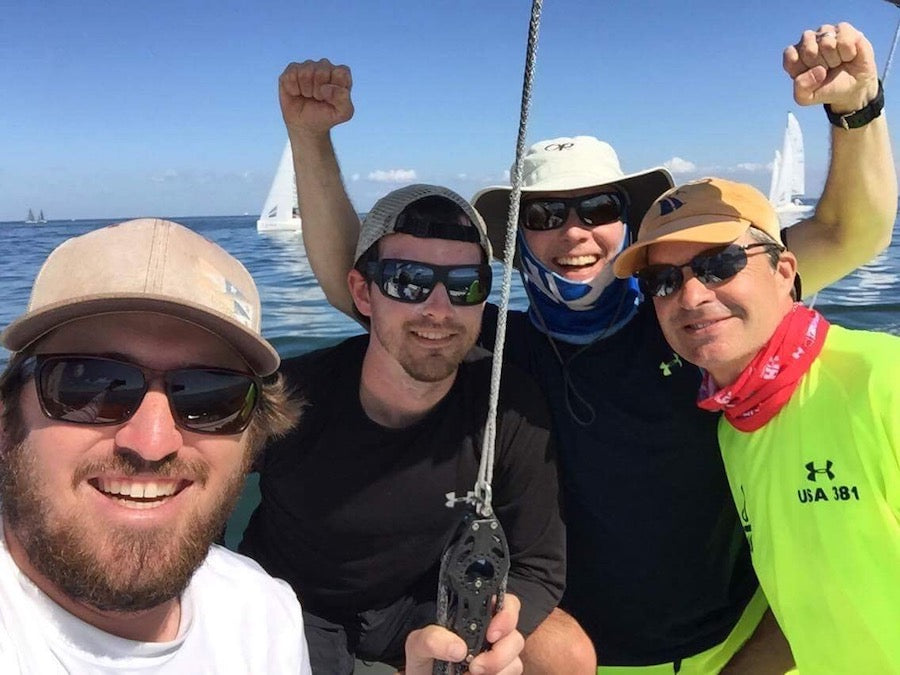
INTERVIEW WITH J70 TEA DANCE SNAKE
North Sails caught up with Todd Jenner and Peter Bowe from “Tea Dance Snake”, winners of J/70 class at the 2017 NOOD Regatta in St. Pete.
READ MORE
READ MORE
THURLOW FISHER LAWYERS CLAIMS JJ GILTINAN 18FT SKIFF CHAMPIONSHIP
The 2017 JJ Giltinan 18ft Skiff Championship did not disappoint! With seven official races over ten days, 26 teams participated in action packed racing on Sydney Harbor amidst spectators cheering from harbor ferries. Team Thurlow Fisher Lawyers of Michael Coxon, Dave O’Connor, and Trent Barnabas were declared champions with a race to spare. However, racing was tight among the rest of the fleet with only seconds between competitors at each mark. Ultimately the top-ten were determined in the series final, with only five points separating 2nd-6th place. Congratulations to North-powered teams who finished 1, 2*, 3, 4, 5, 6 & 7th with most using North Sails 3DL and some using a combination of North Sails 3Di RACE and 3DL.
The winning team of Thurlow Fisher Lawyers had 3Di RACE for their larger mainsail and jib, both new this season. 3Di RACE is a new product targeted to smaller racing boats, which benefit from the product’s wide wind ranges and increased “readability.” The 18ft Skiff is no doubt the smallest application we have seen for the 3Di product, so we asked Dave O’Connor, trimmer on Thurlow Fisher Lawyers, to report on how the sails have handled: READ MORE
2017 JJ Giltinan 18ft Skiff Champions, Thurlow Fisher Lawyers
Defending champion Smeg and Asko Appliances in close racing duel.
Charge from the first windward mark.
Appliances Online skipper David Witt competes in his last 18ft Skiff race!
READ MORE
READ MORE
CORINTHIAN SAILORS THAT INSPIRE US
INTERVIEW WITH THE TOP CORINTHIAN AT THE J70 MIDWINTERS
Andrew & Melissa Fisher, owners of J70 Button Fly
Andrew and Melissa Fisher are no new faces to the J70 Class. What’s inspiring about Andrew’s team is the dynamic they impose on their competition. The Button Fly program predated Andrew’s Paralympic campaign, where he competed for a spot to represent the US in the Rio Olympics. Andrew has since chosen the J70 Class because there are a lot of boats that compete and he finds it to be sporty and manageable for him and his wife, Melissa. Andrew truly has the best of both worlds sailing with his corinthian team Button Fly, and having fun with the ones he cares about most. This is truly what it’s all about. Without corinthians, the sport of sailing wouldn’t be what it is today.
We caught up with Andrew and Melissa after their big win to share their excitement and passion for sailing and find out what it means to them.
Team Button Fly
Melissa and Andy, congratulations on your 1st Corinthian Division win at the 2017 J70 Midwinters. It was a tricky regatta featuring nearly every condition. What were some of the keys to helping you to the to victory lane?
“Thanks. J70 is a very competitive fleet. Due to the crazy conditions during some races, luck played its part more than usual. That said, our team has sailed the J70 together for over 2 years and has put in quite a bit of time training and learning what makes this boat go fast.”
The ButtonFly program started a few years back when Andy was on the US Paralympic Team competing for a spot to represent the USA in Rio. Why did you guys decide to get into the J70 at that point in your sailing career and do a “defacto” 2 boat campaign?
“The Button Fly program predated my Paralympic campaign, going back to bigger boat racing. The J70 is a downsize for us. Melissa and I love racing together. We looked at other classes of boats but decided on the J70 due to its popularity and a good balance of sportiness without being overly athletic. Managing a 4-person team is far easier, and the fleet is big enough that there are usually plenty of boats at the regattas for great competition. I had the luxury of having enough time to spend time doing both.”
Melissa, you have been the one constant on your program as a key crew member. What makes J70 sailing so much fun for you and how has it helped your sailing?
“I sail the boat with my husband. evolving to the smaller, 4 person program has been a great learning experience in that everyone plays a bigger role in getting the boat around the race course. in addition to loving the racing, the social aspects of the class make going to regattas special.”
It seems every team has a style and adjusts their program to maximize their strengths so when you are working on tuning and trimming style how much do you deviate from the “standard” tuning guide settings and performance articles you read? Are there any things you have found that work with your team that stands- out as a performance “game changer”?
“Our program is somewhat unusual, in that I have disabilities that we need to work around. We spend a bit of time figuring what we need to do to minimize my weaknesses, and practicing the weakest ones. Our boat tuning is very close to standard; however, we’re very conscious of thinking forward to our set up for expected conditions. For example, before one race at Midwinters, we noticed that the wind vs tide current made it appear that there was more breeze up the course than there was, so we adjusted our rig accordingly. In the end, the biggest “game changer” is quality practice.”
A few years back you guys dedicated yourselves to sailing Corinthian and have really locked into a great team with the Burke brothers on board. Tell us how that came together and what Steve and Shawn have brought to the ButtonFly team.
“Steve and Shawn have sailed with us for over 10 years. They both have been racing their whole lives, and, while their careers don’t involve sailing, they view racing as their primary pastime. Melissa and I are lucky to have them want to sail with us. In addition to being good sailors, the consistent time we’ve put in sailing the J70 together has really allowed us to develop our race course dance and improve.”
Obviously, our team here at North is very excited for you guys as many of us have worked with the ButtonFly program in some capacity. Since Andy has an unquenchable thirst for knowledge and never seems to stop asking questions and learning to be a better J70 sailor, how has the experience working with the North J70 team helped your program?
“We have been North customers for many years, so when we moved to the J70 it seemed natural for us to continue our relationship. To our mind, the support surrounding the purchase, teaching and sharing technique, the on-water coaching, all are essential to picking the right sailmaker. North has been there for us. They’ve spent time with us when we first bought the boat, have provided training opportunities, have raced with us on occasion, and are always available and open to discussing the latest thoughts on go- fast techniques. From a sailmakers perspective, it helps when your sails win. We’re trying to do our part.”
If you could share any advice for other Corinthian teams to move up in the standings what would you tell them?
“It’s far tougher to field a good Corinthian team than one with pros. By definition, they have more to juggle to be able to make the events, so once you find your guys, treat them well. Consistency is key.”
USA 501 has become a staple at many of the J70 circuit events. What is on your calendar for the rest of 2017 and what are the long term plans?
“We’re off to Miami for the Bacardi cup, then Charleston on our way back to the Northeast. Our goal is to peak for the North Americans this fall at our home club in Rye, New York.”
Andrew and Melissa have a competitive road ahead of them. We wish Andrew and his team the best of luck in the upcoming events and can’t wait to see them shine. Sail fast and keep having fun!
READ MORE
READ MORE
ROLEX SWAN CUP CARIBBEAN WRAP-UP
THE 2017 ROLEX SWAN CUP CARIBBEAN IS A WRAP!
The 2017 Rolex Swan Cup Caribbean came to a close yesterday at the Yacht Club Costa Smerelda clubhouse in Virgin Gorda. This biennial event brings together the unique Nautor Swan family of yachts from 36 – 115 footers, and this year will feature the new one-design Club Swan 50, a self-professed “small revolution” in performance and sailing pleasure. Two entries of this newly competitive design joined 20 boats split between the Maxi and Grand-Prix/Mini Maxi divisions for three days of racing amidst the breathtaking scenery of the British Virgin Islands.
The final race of the event delivered 15-20 knots from the Northeast on a course that sent both fleets around “The Dogs”, a pair of islands on the Northwest side of Virgin Gorda.
Don Macpherson’s Swan 90 Freya sailed extremely well over the four days of racing, scoring three wins out of four races. Freya entered the final day of racing with a comfortable lead, despite a pair of penalty points off the starting line, and secured the overall trophy in the Maxi division. This week’s title makes her a winner on both sides of the Atlantic, having won the 2016 Swan Cup in Porto Cervo. She sails with an inventory of North Sails 3Di ENDURANCE and NPC DOWNWIND, including a four-year-old mainsail (shown below). North Sails Kimo Worthington was among the crew as tactician. Vicente Garcia Torres’ Swan 80 Plis Play earned second place in a tight fleet, followed by Stuart Robinson’s Stay Calm in fourth place.
Freya’s 3Di ENDURANCE mainsail, delivered 2013
With two Club Swan 50s in the Mini Maxi/ Grand Prix fleet, it became nearly a ritual for Leonardo Ferragamo’s Cuordileone and Hendrik Brandis’ Early Bird to find themselves in “match race” circumstances at least once per day! Ultimately Cuordileone claimed the class win with three bullets in four races. North Sails President, Ken Read, called tactics with Ferragamo at the helm, and both Cuordileone and Early Bird raced with an inventory of North Sails 3Di RAW and NPC DOWNWIND sails.
As the owner and driver of the winning boat as well as Chairman of Nautor’s Swan, Ferragamo was doubly satisfied with the week’s events:
“We had a fabulous week. The racing was phenomenally good, I think this place is pretty close to paradise and the sailing and racing conditions were just perfect. The racing was fun and competitive among all the various participants. I got to drive the ClubSwan 50 and it was great to see very tight racing and the two boats just seconds apart on the finish line and of course I’m extra happy about Cuordileone’s win.”
North Sails joined Nautor’s Swan and Juan Yacht Design to collaborate on the Club Swan 50 design, advising on solutions for a rig and sail plan that drew optimum performance from the boat and synchronized well with the hull and deck systems. Read more about the design process and the resulting sail inventory HERE.
Club Swan 50 Cuordileone
Club Swan 50 Early Bird
READ MORE
READ MORE
THE NEW CLUB SWAN 50
Speed and Elegance: The new Club Swan 50 Nautor’s Swan and Juan Yacht Design collaborate with North Sails and Southern Spars to create optimal performance out-of-the-box.
Nautor’s Swan, along with naval architect Juan Kouyoumdjian, have conceived a new 50ft yacht. The Club Swan 50 places great focus on
performance while staying true to the company’s world-renowned craftsmanship and attention to detail.
For customers that are looking for a racing class with something special, this boat will satisfy their expectations and more. When a well-known builder like Swan debuts a performance yacht it creates a high level of expectation throughout all levels of the industry. New performance boats like the Club Swan 50 must be fast out of the box with little or no lead time available for testing and sail refinement. This is where North Sails and sister company Southern Spars become instrumental in presenting the boat with a cohesive package that exceeds the high expectations of a new owner.
North Sails was approached by Nautor Swan and JYD to collaborate throughout the hull, rig, deck, and sail design. Participating in the early stages of design ensures accuracy not only in sail geometry details but in anticipating important aspects of performance that ultimately would affect the sails, such as deck layouts that support efficiency, and the overall balance with hydro foils matching the airfoils (or sails) above the deck. With the results of this collaboration in hand, North designers then identify how the major variables (such as spars, sails, and appendages) integrate to produce expected levels of performance throughout the wind range.
The North Design Suite of computational tools have been used successfully in this process for the past 20 years, and repeatedly refined through projects on a wide variety of boats, ranging from small keelboats, America’s Cup, to maxis. The process is a large contributor to the success of North Sails in all major classes. Of course, there is design and there is the reality. An important part of the design process is incorporating a group of on the-water experts – people who handle the products frequently and know how boats of similar spec behave in rough to light conditions and on different angles of sail.For the Club Swan 50, a big part of this discussion was driven by the durability of the sails and their ability to retain their shape through an acceptable lifespan for the class. That is why all agreed on North Sails 3Di RAW as the optimal material for the upwind sails. The same attention to shape holding and durability is given to the downwind sails, resulting in a combination of Superlite and Superkote nylon styles from Contender and North’s own Xi-09 NPL DOWNWIND for the A-0. Hitting the water with an accurate VPP gives tangible results, especially to a new fleet. Generating a basic tuning guide that is ready to use on your first sail is encouraging for all new owners, who want to come out of the box with fast results and remain fast as the class grows and develops.
Expect the Club Swan 50 to be a very special yacht, both in performance and comfort! The team at North Sails is extremely grateful for the opportunity to offer a well-developed sail inventory and performance package, and to have collaborated with so many innovative and dedicated professionals in the process. We are excited to see the Club Swan 50 results on the water and the progress of the class over time. About the Club Swan 50 Nautor’s Swan keeps high standards of performance and design to best complement their classic models throughout the racing and cruising range, making them great boats for the “all around” sailor.
They have pushed the limits of this concept a bit further with their newest model design, the Club Swan 50.
By enlisting the competitive edge of JYD, the 50 would be decidedly fast, elegant, and within one design parameters. In the end, the specifications are innovative, providing ample opportunity for competitive sailing while still having the optionality to transform the boat to comfort, even cruising mode. The hull reflects modern Swan models with a beam-y transom, reverse bow, clear-cut chines, aft sections, and shortened freeboards. A steel blade keel, lead torpedo, and dual rudders give a more balanced configuration, and a forward center of gravity gives the Club Swan 50 significant advances in overall speed while sailing downwind and when reaching.
Learn more about the boat at clubswan50.com
Technical Specifications:
Length overall: 15.24 m or 50 ft
Length of waterline: 14.00 m, 45.93 ft
Length overall with bowsprit: 16.74 m, 54.92 ft
Beam max: 4.20 m, 13.77 ft
Draught: 3.50 m, 10.49 ft
Ballast: 3,400 kg, 7,495 lbs Displacement (light): 8,500 kg, 18,739 lb
Sail upwind (TBD): 142 m², 1528 ft²
Sail downwind (TBD): 296 m², 18739 ft²
Designer: Juan Kouyoumdjian
Construction: OY Nautor AB, Finland
Full carbon: Hull, deck, mast, boom, rudders, bowsprit
READ MORE
READ MORE
RON JACOBS REPORT FROM PORT LINCOLN
RON JACOBS REPORT FROM PORT LINCOLN
FOR THE LUCKY FEW
I was fortunate enough to be invited aboard Kym Clarke's North Sails powered Sydney 47 CR "Fresh" which together with 47 Boats faced the starters gun for the 2017 Teakle Classic Adelaide to Port Lincoln Race, a 150 miler in what is typically a short beat to windward followed by a reach to Stanley followed by a 70 mile run to the finish. This year however was an uncharacteristic 15/20 knot work to Cape Stanley, then a jib top reach with the south westerly gusting to 35 knots which favoured the lighter displacement yachts that planed their way into Lincoln.
The "lucky few" that stayed for the well formatted 4 day regatta sailed within the confines of a not so large bay which made for some very enjoyable flat water racing, where treated to 4 windward leeward races sailed in 6 -12 knots together with 2 passage races, the 1st sailed in 15-20 and the second in 25- 35 knots.
All in all, a variety of racing where every yacht competing had their chance to shine under the various handicap categories, be it IRC, AMS or Performance handicap. On board Fresh we finished the regatta with a very creditable 3rd on IRC to the 2 Tp 52's Secret Men's Business and Celestial, 4th on AMS and winning the PHS Div 1 prize.
However, the main attraction of the Teakle Port Lincoln Race Week, in what could best be described as a lifestyle event showcased all that this destination has to offer.
The social side was reminiscent of Hamilton Island race week in days of past with the competing yachties all gravitating to the Marina Hotel for pre-race and post-race banter, where the daily presentations including random prizes of fresh lobsters where held.
Other Functions included the presentation of the 150 miler with beachside live entertainment playing all afternoon, a cocktail party that showcased what Port Lincoln is famous for "unbelievable seafood". Meggas Beachside bbq following race 4 is an institution!
The locals go out of their way to help make your stay memorable, I will be back to race but also to spend a longer time in this very enjoyable part of Australia.
Sponsor Peter Teakle has committed to backing the event for the next 4 years and I am sure he has some very impressive ideas to improve the regatta even further. Stay tuned!
READ MORE
READ MORE

1957 - THE PURSUIT OF BETTER SAILS
“If I started a sailmaking company, would you buy a sail from me?”
That’s what Lowell North asked his friend John Shoemaker, one afternoon in 1957, while seated at the bar of San Diego Yacht Club. John replied, “Yes, I would,” which surprised Lowell. Sure, they were friends, but neither man could predict that Lowell’s new company would eventually grow into the largest sailmaking business in the world. Or that along the way, Lowell would become a world champion sailor and two-time Olympic medalist.
During a recent interview at his house in Point Loma, Lowell told us John’s answer “gave me the encouragement to start North Sails.” He admitted that before starting the company, he hadn’t built many sails. He said it took him years to figure out how to make a fast shape, but Lowell quickly became known for his unique approach in an industry where he had little experience. And 60 years later, a scientific approach to material and product testing, as well as analytics-based sail design and performance development, continues to be the backbone of North Sails.
“The realization that I didn’t know anything about sail shape was really a big help,” Lowell explained. “I was then able to test a great variety of shapes, some of which tested faster. This objectivity helped us to make a lot of progress in sail shape.”
After that drink with John Shoemaker, Lowell dove in. It all started in a rented 20 x 80 foot space at the B Street Pier in downtown San Diego. He quit his job as an aerospace engineer at Narmco, and went to work on the floor building Snipe and Star sails. The early days were shaped by a tight group building a modest business. Lowell’s first wife Kay did the bookkeeping. Their first hire was a seamstress, Daisy. Next was Paul Merrill, who had worked for Herb Sinnhoffer sailmakers; he bridged the delicate gap between employee and teacher. Other early staff included friends like Earl Elms and Tom Nute, and later Pete Bennett from Murphy and Nye in Chicago.
“Pete brought a lot of really good production techniques with him, and established ways of cutting and sewing sails more accurately and efficiently,” Lowell said. “We started making Snipe sails, which was the first class we were really successful in. Meanwhile, Paul’s plan was to retire a few years from then and sail around the world.”
“Did he do it?” we asked.
“I haven’t seen Paul Merrill in years. I suspect he did.”
Around 1962, Lowell and production manager John Rumsey began empirically testing sailcloth stretch and fatigue. They read the numbers and confirmed the market standard was far too low. They could do better.
“The sails on the market weren’t good enough. I started re-cutting my Star sails from the prominent West Coast sailmaker at the time .”
“We began testing cloth samples by attaching them to the antenna of my car. We called it flutter testing, it seemed to match the real life degradation of the material and gave us a pretty good inkling of how the sail cloth would degrade in actual use. We later simulated the car antenna flutter testing by building an in-house machine which spun the attached samples on a rotating wheel or arm.”
This was the beginning of a long history in material development. The “30/30 benchmark” became known among cloth specialists: 30 minutes at 30 miles per hour. Looking past woven polyester, Lowell and textile converter Noah Lamport created the first laminated sailcloth, used on the 12 Meter Enterprise in 1977. In 1980, launching NorLamTM (a polyester/Mylar laminated sailcloth) complemented the company’s introduction of radial panel sail layouts.
Lowell’s legacy continued with patented three-dimensional membranes (1992), followed by the first warp-oriented polyester sailcloth, North Sails Radian™ (2008). North Sails 3Di composite membranes went to market in 2011, and they are continually improved by materials research out of the Minden loft. The capacity of North Sails 3Di technology continues to expand as designers and product engineers learn to adapt the product to new sailing markets. Ask North Sails designers today, and they’ll tell you it’s all about the strength and shape of the membrane – which goes right back to the same qualities Lowell was testing for.
On the water, Lowell is known as one of those guys who just “got it.” Renowned for his results in the Star Class, he medaled in 12 World Championships over 25 years and won gold at the 1968 Olympic Games in Mexico City. He also won a bronze medal in the Dragon at the 1964 Tokyo Games. It was during this time that North Sails was first getting off the ground, and Lowell met many people who would become key players in its expansion.
“Peter and I met in Japan at the 1964 Olympics. I think Eckart Wagner was there too. Charlie Rogers and Dick Deaver crewed for me in Japan. They were all instrumental in the early success of North Sails.”
Peter Barrett founded the second North Sails loft (Seal Beach, CA) before moving home to Pewaukee, WI to start North Sails Midwest, the first loft outside California. Eckart Wagner broke ground in Germany in 1966, followed by Andre Nellis with North Sails Belgium. Later, North Sails Italia came online with the arrival of Robin Morgan.
“At some point I went to a school for executives. They taught me if you put together a group of men that were fairly hungry for something, and you worked to provide them with what they wanted, they would help create a successful organization. The term Tiger seem to fit the personality of our loft managers at the time; they were hungry.”
At this point in the interview, Lowell’s wife Bea chimed in. “We were in Portofino, in a little medieval castle in the old port, to accept a “Life of Sailing” award for Lowell. The Italian TV guy asked me, “Do you know who you’re with? Do you really know who you’re with?” and I said, “Well, who am I with?” He said, “The man that revolutionized the world of sailing.”
Lowell replied, “I think I brought together a great group of guys whose ideas and thoughts made for a very innovative company, and a profitable organization.”
For 27 years, Lowell led North Sails to new heights by being a true pioneer. He crafted ways to test the strength of raw materials, introduced computer-driven cloth-cutting machines, and performed the first computerized structural analysis of upwind sails. Along the way, he built a trusted team from the ground up and found personal success with the products he offered. By devising his own approach, he established a new industry standard and left his company with an ideology that still survives today.
As we celebrate the 60th anniversary of North Sails, Lowell reflected on how the sport has changed by weighing in on a much-debated topic between traditional and modern sailors. “Sailing has changed very little, in that wind and water are the same. Racing and winning still rely more on the skill of the skipper then on the equipment. 60 years from now? Not much difference: bigger, faster and more aerodynamic boats, bigger sails and probably more foils.”
We asked, “What makes a master sailmaker?” and “What is the greatest strength of North Sails?” Lowell had the same answer to both questions: “The ability to build fast sails.”
We asked his favorite place to sail and he replied truthfully, “In the ocean off Point Loma in San Diego.”
“The worst place?” we asked.
“I stay away from places like that.”
READ MORE
READ MORE
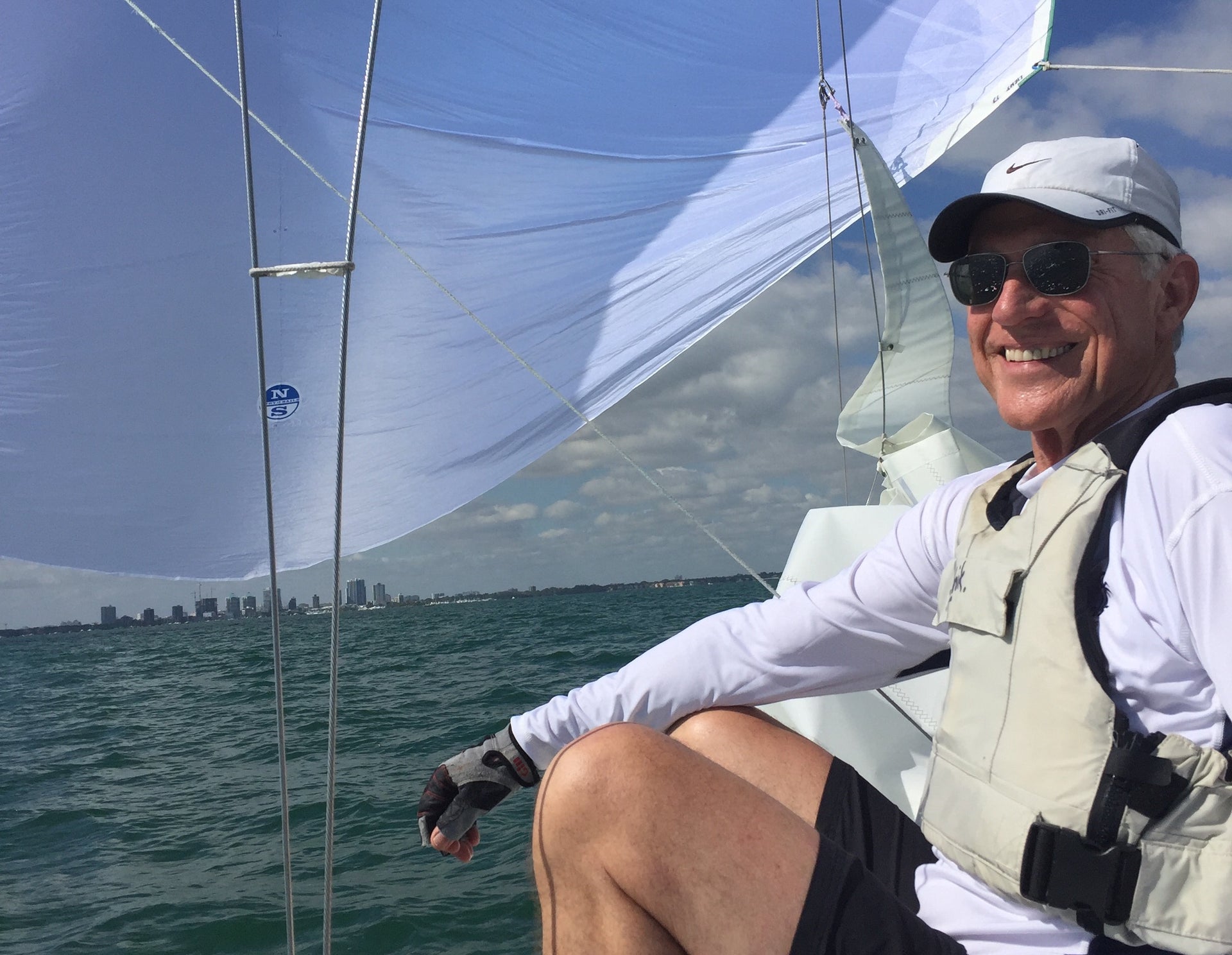
2017 ETCHELLS MIDWINTERS RECAP
North powered teams finished first through fourth
The Etchells Biscayne Bay Series hosted by Fleet 20 is one of the major Etchells regatta series dating back to 1994. Quality racing, heavy competition, and classic design are why sailors race Etchells. A big thank you to Fleet 20 for making regattas like these happen, as well as PRO Dave Brennan for running excellent races in the best possible sailing conditions. Your hard work and diligence is greatly appreciated!
The Etchells Midwinters this past weekend was a solid finish to a great series in Miami, FL. A total of 47 boats made it down to Miami for the warm weather and highly competitive racing. North powered teams finished in the top, placing first through fourth in all wind ranges. Friday and Saturday started out light, making for tricky tactical decisions. Boat speed and a clear lane was essential to do well. Sunday was more promising with winds in the 15-18 knot range, giving sailors a chance to sail in all conditions throughout the event. Lawrie Smith on Alfie took the win with 28 total points, followed by Steve Benjamin on Terrapin_x009d_ with 33 points. Skanky Gene ended up 3rd with 40 points and with Phil Lotz’s Arethusa finished close behind with 41 points. Featuring some of the toughest competition within the Etchells class, this event series is not to be missed!
Link to full results HERE
North Sails One Design
Congratulations to all North Sails powered teams!
Ernie Pomerleau, long time Etchells sailor and owner of 1300, enjoys the series each year
The fleet making its way to the finish line
Chris Morgan, skipper of 1300 and familiar face to the Etchells class -happy with his teams’ finish
READ MORE
READ MORE
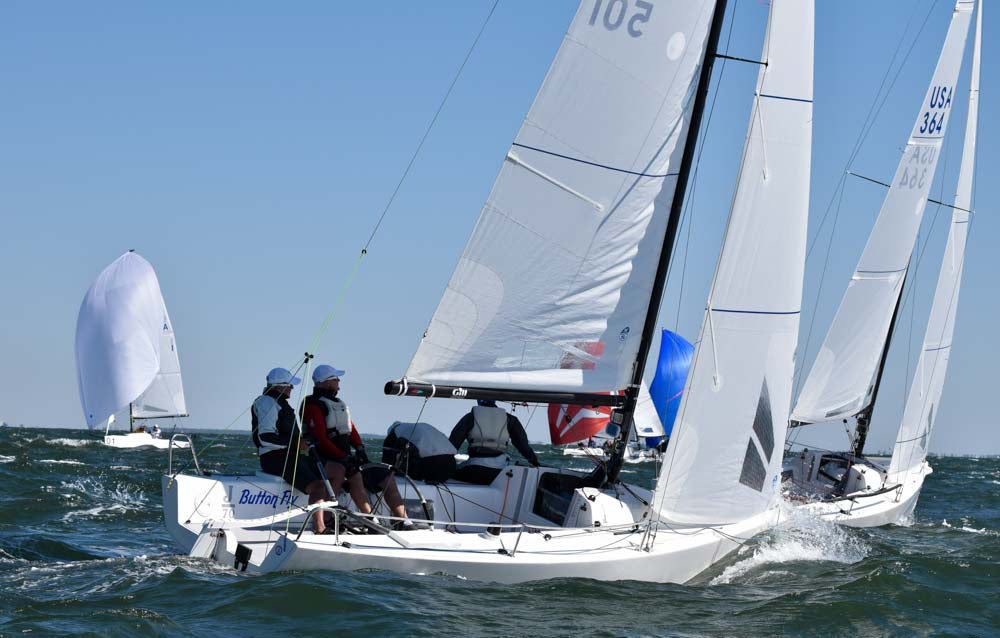
2017 J70 MIDWINTERS RECAP
The J70 Midwinters this past weekend were an all around success for North powered teams. Light air made for tough conditions-and a ton of patience.
READ MORE
READ MORE
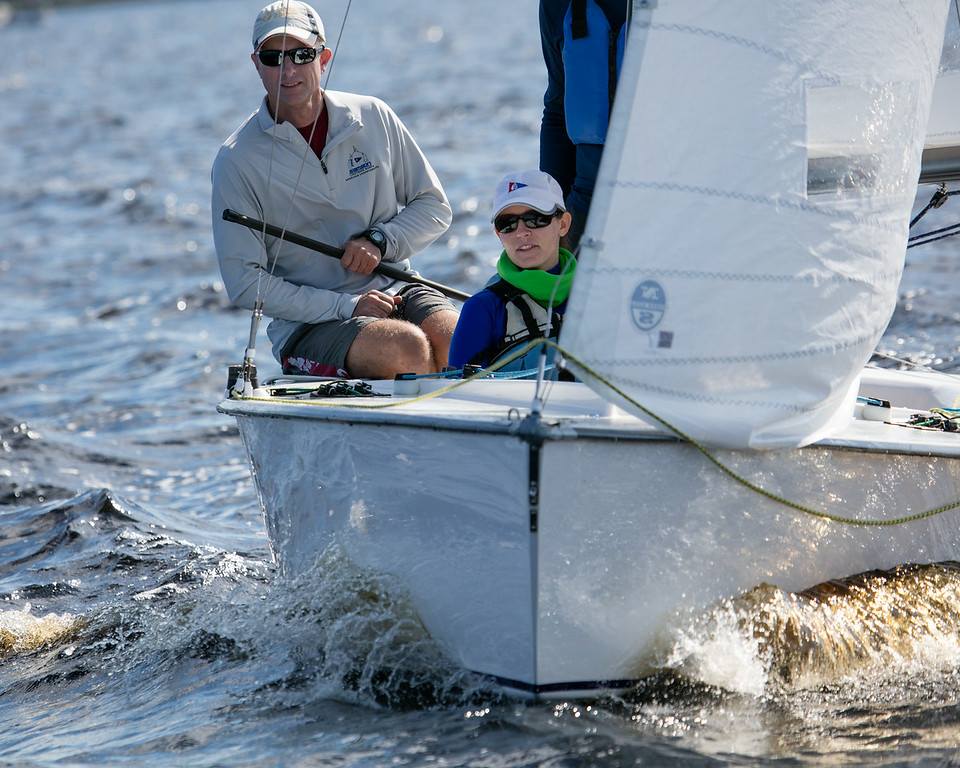
OVERALL WINNER - ST. PETERSBURG NOOD
North Sails interviews Steve Hayden, 2017 Overall Winner of St. Petersburg NOOD Regatta
The St. Pete NOOD is the first NOOD event of the series with boats from all over the country coming together to sail in key locations along the east and west coast of the United States. At the end of the series, the overall winner from each event competes in the overall championship held in the British Virgin Islands later this season. After the regatta we had a chance to catch up with Steve and asked him some questions about his win at the NOOD.
Steve (Gen5) and his son, neck and neck, rounding the leeward mark
Steve, how long have you been sailing the Lightning?
“Over 40 years.”
Have you ever crewed for your kids?
“Yes, almost as much as they’ve crewed for me.”
What would you say were the key factors to your win at the St. Pete NOOD?
“Patience and sticking with our game plan. I was also very confident in our North Sails and the setup we use.
And staying with some long-time friends…Mike and Junia Milvain.”
What is the most important thing to know about sailing a Lightning?
“That it’s a great boat with a great class of people who are willing to help you and include you. There is great competition because the boat is technical enough and challenging enough it attracts, and retains, many outstanding sailors of all ages.”
What was the funniest thing that happened on the water at the NOOD?
“Taking compass headings before one of the day’s races started. Pretty much wrote down the entire compass…”
Have you been to the BVI’s before? If not, how excited are you!?
“No. Very excited! Looking forward to it greatly! My Dad has been down a few times, so I’ve heard some great things. I’m sure it’s going to be a great time.”
In preparation for the championship in the BVI’s, what are the top three things you will focus on?
“Who is going with me…family and friends…I’ve been hearing from a lot of people I haven’t heard from in awhile for some reason.”
Steve Hayden, doing what he loves
A new overall winner of the St. Pete NOOD, but Steve is no new face to the Lightning Class. Steve grew up sailing the Lightning and got his kids involved too. For Steve back at home, it’s just a family affair.
READ MORE
READ MORE
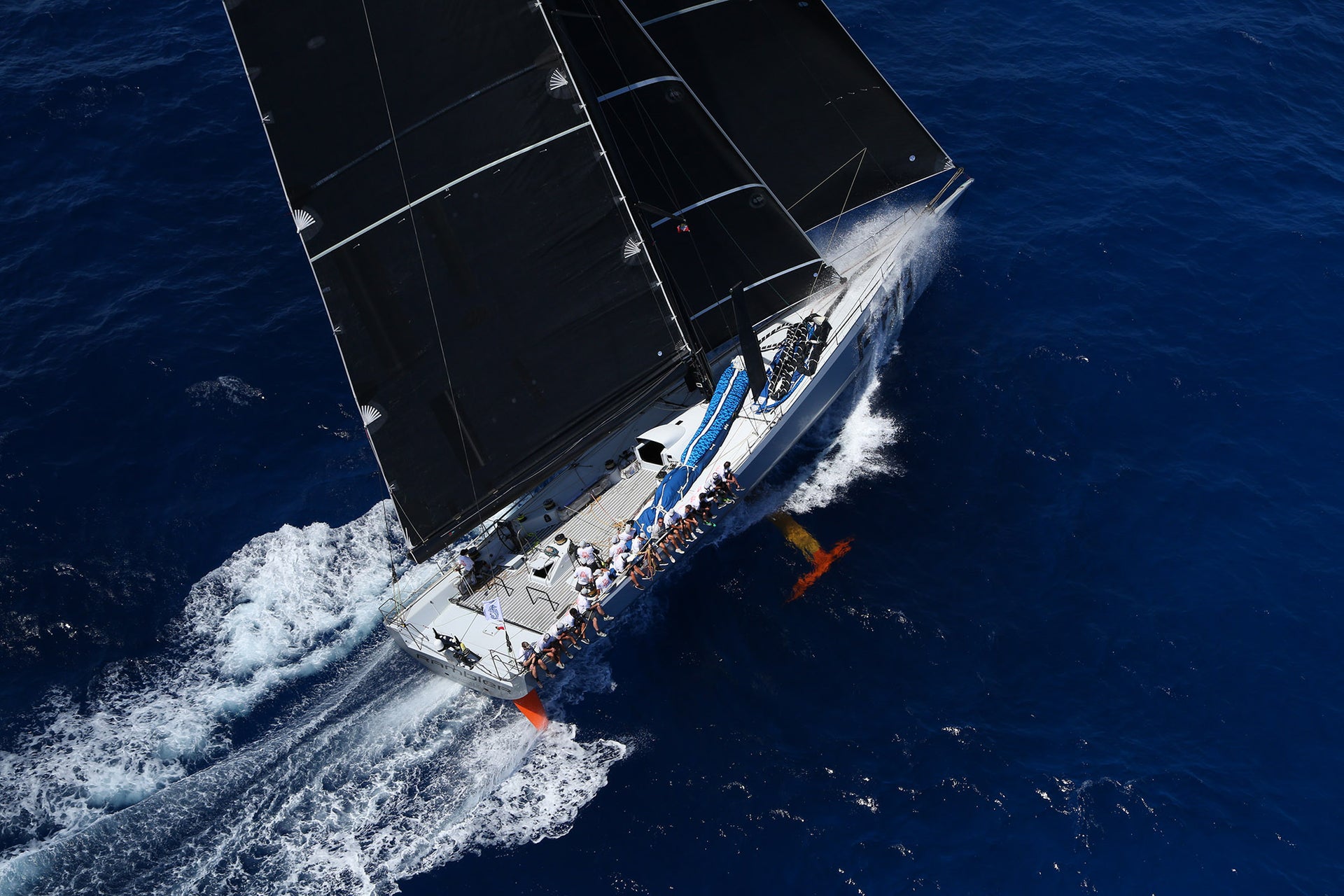
NORTH CLIENTS WIN LINE HONORS AT 2017 CARIBBEAN 600
This year was the ninth edition of the RORC Caribbean 600 with the largest offshore fleet the event has ever seen; 70 yachts, over 900 sailors representing 24 different countries. The most exhilarating fleet, with some of the most amazing boats built for speed, ready to sail in the most beautiful place on earth. The competition level was high, and the spirits were willing and able to make this year the best year we’ve seen in the history of the C600. North clients had a strong showing amongst the fleet in some of the fastest boats on the racecourse. The MOD70’s Phaedo 3 and Maserati came out hot from the start with one goal in mind: to break the current record. Flying along the water anywhere between 15-20 kts is ideal Caribbean sailing. While falling short of record speed, Lloyd Thornburg’s Phaedo 3 edged out Maserati to take Line Honours in the Multihull Class.
Most of the fleet were quite close during the entire week of sailing, having just a difference of one nm between them for most of the time which kept the racing tight, and staying in the pressure even more important. On Wednesday, Feb. 22nd, North client George David on Rambler 88 finished the Caribbean 600 at 11 hrs 56 mins 17 secs taking his third Monohull Line Honours. David continues to hold the race record from 2011 with his Rambler 100.
In their debut Caribbean 600, Anders Nordquist’s Swan 115, Shamanna won the Superyacht Class. While light wind and difficult conditions for most of the race, Shamanna saw 20 knots on their way down to Guadeloupe, giving the boat a chance to show what she was made for. For a Swan 115, 8-10 knts can prove a bit frustrating at times, pushing the team to focus on more tactical decisions. The upside is Nordquist’s team was able to take in the Caribbean scenery, which included dolphins and whales!
Congratulations to all North powered victories at the Caribbean 600.
Redshift El Osaco IRC 2, CSA 2
Taz* – IRC 1
Sleep X – IRC 3
Phor-ty* – Class 40
*Partial inventory
“Every year, I get reminded how insane a race this is and after this race, our navigator Miles Seddon said to me that we have turned the insanity up again this year. You never get used to this race – hanging on reaching at 36 knots, it is just incredible. All of our team had to dig so deep and we love Antigua and had an amazing reception.” – Lloyd Thornburg
“This year the race was not as tough as previous years, but it is far from a Caribbean holiday. We had to make a lot of sail changes which is very grueling on the crew. This boat is like a Volvo 70 on steroids; it has unlimited power and in these conditions the helm is still relatively easy to handle and there is a lot of water coming over the bow, but we don’t go up there!” – Brad Butterworth
“On the way down to Guadeloupe we had almost 20 knots, so we were really happy to experience the conditions that the boat was built for. The crew have been racing together since 2012 and they are a fantastic team. We know each other very well; the communication is good and the atmosphere is great. It was an excellent race.” – Anders Nordquist
READ MORE
READ MORE
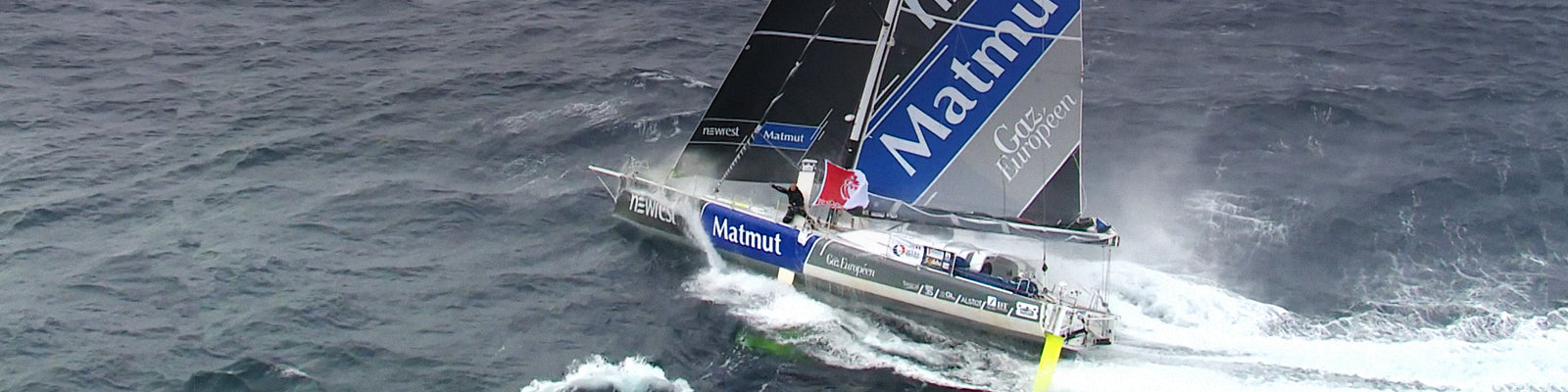
FABRICE AMEDEO FINISHES THE VENDÉE GLOBE ON NEWEST MATMUT
After 103 days at sea, Fabrice finishes 11th in the 2016-17 Vendée Globe and thanks North Sails for “globally fast” and reliable 3Di sails.
While sitting in the newspaper offices of Le Figaro in Paris, Fabrice Amedeo built up a dream over the years: attempting the Vendee Globe. He went from IRC events with his family to trying his hand in the singlehanded Figaro and Class 40.
A few days ago, the 39 year old journalist-turned-ocean racer finished 11th in the Vendée Globe, 103 days after he started. He went from exhilarating speeds in the Atlantic to “safety first” mode in the southern ocean, and kept sharing his joy and happiness to be at sea through fun videos. After being short on food for the last fifteen days at sea, he managed to cross the line in 103 days, 21 hours.
Fabrice took some time to rave about the longevity and shape of his sails after he crossed the finish line off Les Sables d’Olonne:
“First of all I would like to thank Alan Pennaneach from North Sails, who was with my team at the finish. He was at the start, it was important to me that he was at the finish.”
My sails have been globally fast and reliable, and I have been especially stunned by the incredible shape holding of the 3Di. Except for mainsail issues from my mistake during a 50 knot gale in the Indian Ocean, my set of sails is still in perfect condition. I told myself when I deployed my J2 just before the finish that it could very well sustain another 25,000 miles, although I pushed real hard on it! Same for my J1 and J3.
“I used my Cuben Fiber fractional Gennaker a lot. It was super versatile, and the angled luff allows the bow to rise and keep the boat fast and safe. I also had a Cuben Fiber Blast Reacher for strong winds in the Southern Ocean, but my systems were not reliable enough for me to use it safely. It will be for 2020.”
Congratulations to Fabrice, and to everyone who completes this grueling race around the world!
https://northsails.com/Portals/matmut.mp4
READ MORE
READ MORE