



NORTH SAILS BLOG
All
Events
Guides
News
People
Podcast
Sustainability
Tech & Innovation
Travel & Adventure
SÅ NEMT TRIMMES STORSEJLET
SÅ NEMT TRIMMES STORSEJLET
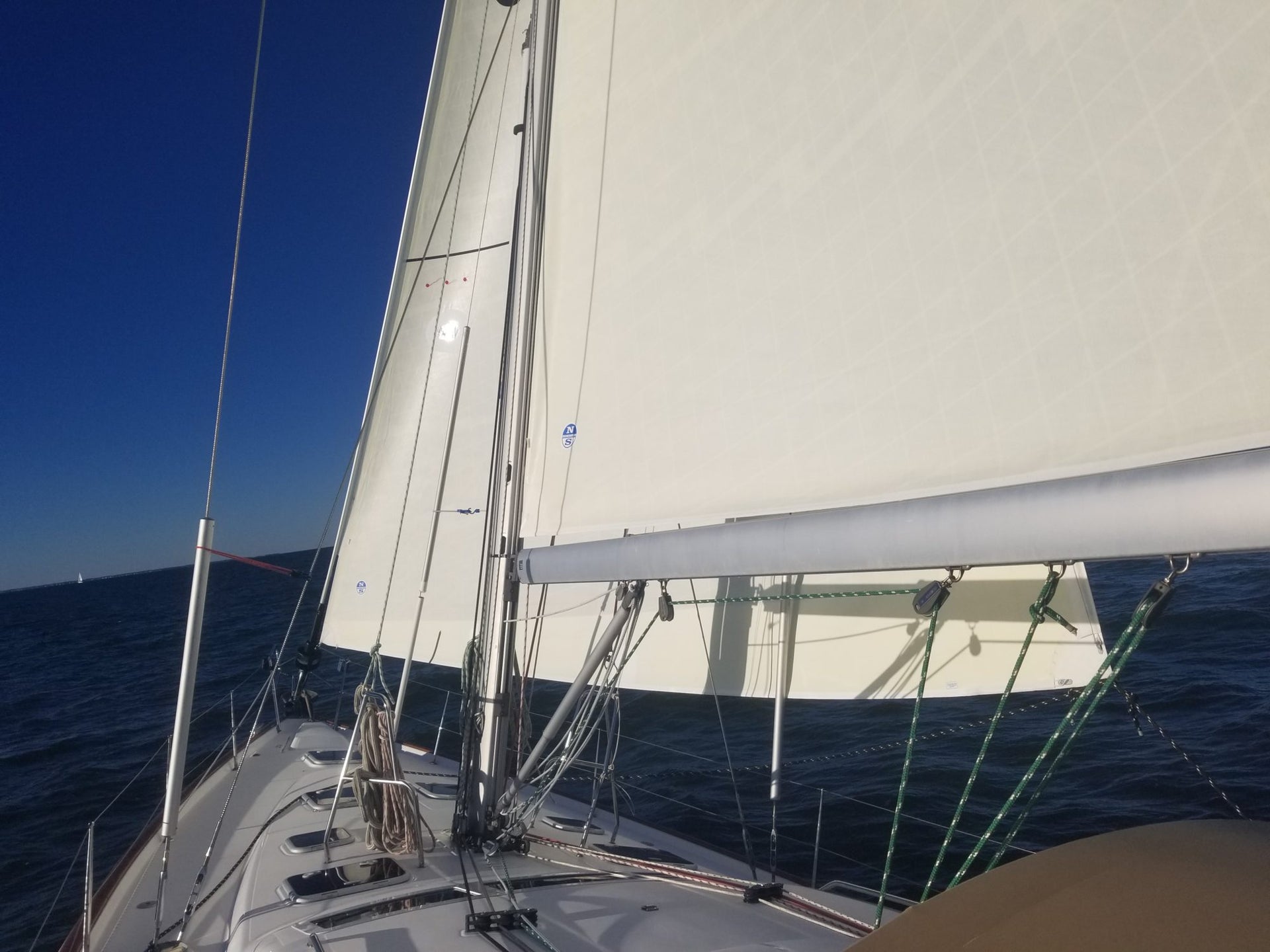
Det er især trimning af storsejlet, der gør båden velafbalanceret at styre, og behagelig at sejle, under næsten alle vejrforhold
Et veltrimmet storsejl i god form giver altid den mest behagelige sejlads, hvor båden ikke krænger unødvendigt og går godt gennem søerne. Det er en af de mest effektive måder at skabe sejlglæde og komfortabel sejlads for hele familien på kurser fra bidevind til halvvind.
Der er også mindre slid på sejl og rig, når storsejlet er veltrimmet, og det er godt for tegnebogen. Desuden mindsker det risikoen for havarier, der ellers kan stoppe ferieturen brat.
Det er en meget almindelig fejl, at for-liget ikke bliver strakt nok med faldet. Så bliver sejlet for hult, især fra midten og opefter, og det bliver sværere at styre båden og skøde sejlet ordentligt.
Det bliver også sværere at styre lidselinen, der skal forhindre at sejlet blafrer i agterliget mellem sejlpindene.
Når sejlet står og blafrer i agterliget, går sejlets syninger meget hurtigere i stykker og i værste fald kan man risikere at sejlet revner. Især med ældre sejl, der har fået meget sollys gennem mange år.
Manglende eller for bløde sejlpinde i storsejlet slider også på sejlet, ligesom båden ikke vil kunne gå så højt til vinden. Desuden kan det i nogle tilfælde medvirke til at riggen står og ryster.
Så snart skødes slækkes til dybere kurser end bidevind, ”skødes” storsejlet til det rigtige twist med bådens kickingstrap. Selv på læns bør sejlet ikke twiste nævneværdigt mere end på kryds. Her ses hvordan sejlet bliver fladere, og lukker mere i toppen, når man haler i storskødet. Sejlet bliver fladere, især forneden, når man haler i bomudhalet.
Storsejlets 7 vigtigste trimfunktioner anvendes således:
Storfaldet
Faldet skal som udgangspunkt altid hales, så forliget ikke rynker, og der-udover trimmer man dybde og facon med faldet. Når faldet tottes bliver sejlet fladere og sejlets største dybde flyttes fremad i sejlet.
Faldet skal derfor tottes, når vinden frisker fordi sejlet skal gøres fladere, og ved at hale faconen frem modvirker man at sejlets facon skrider for meget agterover, når sejldugen giver sig i den friske vind.
Hvis man sætter faldet for løst, bliver sejlet meget åbent i toppen, og når man så skøder hjem for at få toppen med, bliver sejlet dybt i bunden, og båden bliver hård på roret.
Storskødet
Skødet bruges især til at trimme sejlets twist og dybde på bidevind. Når man haler i storskødet bliver sejlet fladere og faconen rykker en anelse agterover. Sejlet ”lukker” også mere, dvs. at det twister mindre i toppen.
Mange vil opleve at de ikke kan trimme sejlet fladt nok uden at lukke sejlet for meget, så øverste sejlpind peger ind mod bomnokken. I dette tilfælde skal man få trimmet twistet korrekt med skødet og desuden flade sejlet yderligere med fald, bomudhal, cunningham og hækstag. På dybere kurser end bidevind overtager kicking-strap’en trimningen af sejlets twist.
Bomudhalet
Udhalet på bommen er et effektivt og nemt trimhal, som tursejlere burde anvende mere. Ved at hale bomudhalet bliver sejlet fladere – især i den nederste del af sejlet. Bomudhalet skal tottes i opfriskende vind, og slækkes i let og mellemluft med tung krapsø, hvor man behøver mere ”sejtræk” eller ”bundmoment” til at trække igennem.
Løjgangen
Løjgangen bruges til at trimme stor-sejlets vinkel i forhold til vinden og forsejlet og til at fintrimme rorbalancen, så båden nemt kan sejle ligeud og man kan styre båden med et minimum af kræfter.
En velafbalanceret båd skal kunne styres med en let hånd på rorpinden eller rattet.
Bådens grundlæggende balance på roret trimmes med riggen, men fin-justeringen af rorbalancen sker med løjgangen.
Her er det enkle princip, at man skal køre løjgangsvognen mod læ, hvis man føler båden er lidt for luvgirig, dvs. at der er lidt for meget pres på roret. Tilsvarende skal løjgangsvognen køres mod luv, hvis båden føles lægirig, eller det bare er svært at holde båden oppe på højden. Har båden ikke løjgang, kan man bruge kickingstrap’en.
Løjgangsvognen trimmes ofte med fordel lidt til luv i mellemluft og lettere vindstyrker, for at give mere højde og eventuelt lidt ekstra rorpres til at føle båden med. I opfriskende vind skødes løjgangen mod læ.
Kickingstrap
Bådens kickingstrap er beregnet til at holde bommen nede og sejlets profil in-takt, når kursen er dybere end bidevind.
Det er vigtigt for en behagelig sejlads og balancen på roret, at sejlets facon og twist bibeholdes ned forbi halvvind.
Når bommen holdes nede med kicking-strap’en, kan man mindske eller øge rorpresset, balancen på roret, ved at slække eller hale storskødet.
Hvis båden ikke har løjgang, kan kickingstrap’en overtage skødets twistregulerende funktion på bidevind, mens man lader skødet overtage løjgangens funktion.
På kurser mellem agten for tværs og læns er det også vigtigt at hale kickingstrap’en så hårdt, at sejlet ikke twister ret meget mere end på kryds. Det giver roligere sejlads og lettere styring i frisk vind.
Hækstaget
På brøkdelsriggede både anvendes hækstaget ikke kun til at totte forstaget med, men også til at hjælpe til med at åbne, twiste, toppen af storsejlet. Ved at hale hækstaget i frisk eller opfriskende vind, bliver toppen mere åben. Derved kan man flade storsejlet yderligere, ved at hale i storskødet, indtil toppen igen har det rette twist.
Cunningham
Sejlets facon bliver lidt fladere og en anelse mere åben i toppen, når man haler i cunningham. Samtidig trækkes sejlets facon frem og lidt nedad i sejlet.
Cunningham bruges til at "stramme op", når sejldugen strækker sig i frisk vind og til at hale faconen frem på sejl i strækstabil sejldug, når man bukker masten ved at hale hækstaget hårdt.
Når man trimmer storsejlet, kan man åbne toppen af sejlet lidt med hækstaget.
Reb i tide
Tursejlere skal altid huske at rebe i tide, og der skal rebes, så sejlføringen passer til pustene. Storsejlet skal altid rebes først. Det giver den mest behagelige sejlads. De fleste nyere cruisingbåde sejler mindst lige så hurtigt med rebet storsejl i frisk vind.
Husk også at holde rebegrejet i orden, så det er let at betjene. Hver bådejer bør prøve sig frem til, hvornår og hvor meget båden skal rebes, for at sejle godt og behageligt. Reb hellere for meget end for lidt. Her er sejlet også for hult, fordi faldet er for løst. Forstaget falder også ud, fordi riggen står for løst.
Trim af rullestorsejl
Der er en del forskel på trimmulig-hederne med et rullestorsejl efter om det er et sejl i en blød polyesterdug (Dacron) med negativ kappe, eller et moderne rullesejl i strækstabil dug med lodrette sejlpinde. De sidste er mere effektive end de gammelkendte rullestorsejl og giver mere sejlglæde.
Alle rullestorsejl flades til vindstyrke og sø med udhalet, og sejlets twist kan til en vis grad trimmes med skøde eller kickingstrap som beskrevet. Det kan dog være umuligt at twiste toppen på sejl i blød sejldug uden sejlet bare står og blafrer. Når sejlet er halet helt ud af masten, kan faldet bruges til at trimme sejlets dybde.
Pinden parallelt med bommen
Twistet i storsejlet er vigtigt for både komfort, fart og højde, men mange sejlere har vanskeligt ved at bedømme, hvornår sejlet twister rigtigt.
Her er det en nyttig håndregel for tursejlere, at den øverste sejlpind skal stå parallelt med bommen, når man kigger op i sejlet.
Tips
Det er en god og sjov måde at tjekke sit eget sejltrim ved at tage billeder lige op langs sejlet, og så kigge nærmere på trimmet i fred og ro hjemme ved computeren. Det bliver endnu nemmere at se trimmet, hvis man taper vandrette trimstreger på sejlet.
Læs også:
Nye sejl giver ekstra sejlglæde
Sådan sættes masten rigtigt
Så nemt trimmes genua og fok
Så nemt trimmes spiler og gennaker
Trim-tjekliste
Download hele vores trimguide til cruising her!
Få et tilbud på nye North sejl
READ MORE
READ MORE
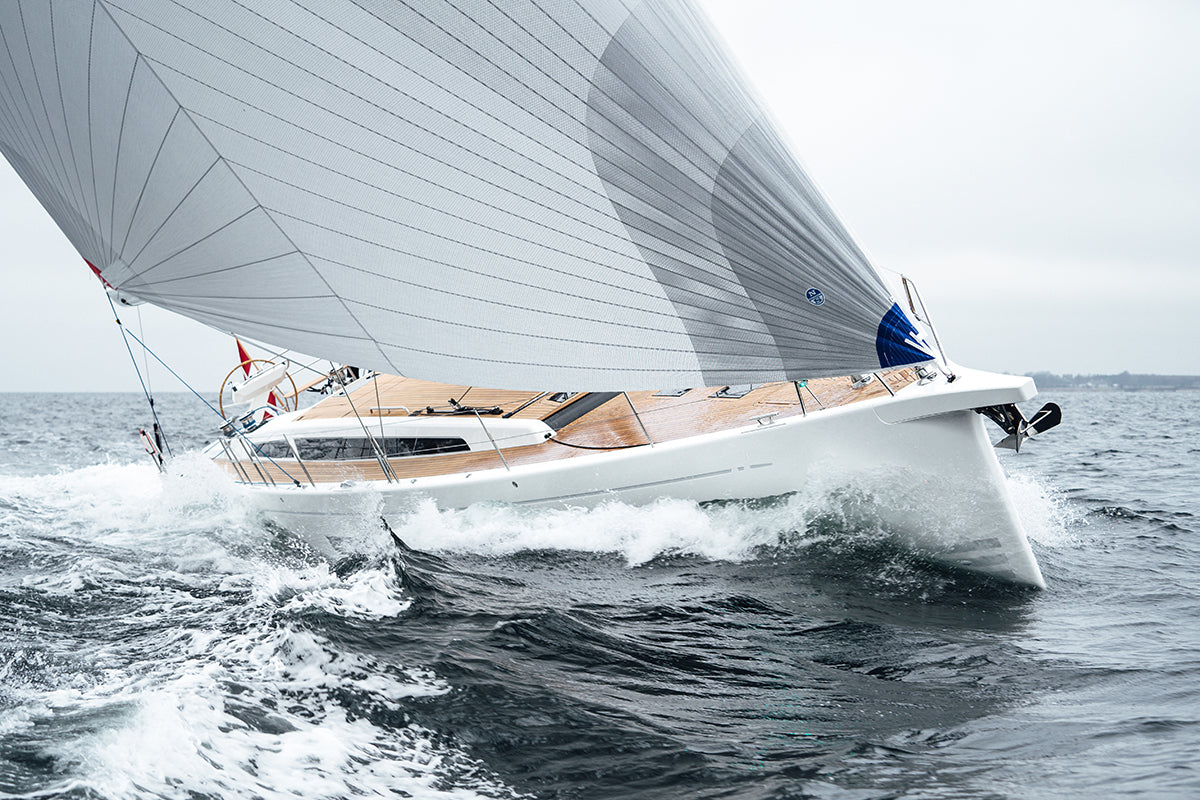
TRIM-TJEKLISTE
TRIM-TJEKLISTE
Denne liste er et trimtjek og en hurtig guide til at kontrollere riggen og trimme sejlene
📸 X-Yachts
Bådens trim
Riggens grundtrim
Har vantskruerne fået fedt eller olie, så de ikke brænder sammen, når de spændes hårdt og efterspændes?
Står masten helt lige sideværts?
Har masten den rigtige hældning, så båden balancerer på roret (sejl først med båden)?
Forkrummer masten en halv til en hel profilbredde?
Står overvantene meget hårdt?
(de må ikke stå slække i læ under sejlads).
Står mellemvantene korrekt?
Er kickingstrap’en i orden og velfungerende?
Sejlenes grundtrim
Er genuaen eller fokkens skødevisere sat til at twiste (åbne) forsejlet korrekt under de mest almindelige vindforhold?
Er der sat mærker på genua- eller fokkeskødeskinner til placering af skødevognene til forskellige vindstyrker?
Er der sat mærker på storskødet og evt. hal til løjgangen til hurtigt at trimme båden korrekt til de mest almindelige vindforhold?
Er der sat mærker på bådens fald, hækstag og evt. bagstag til det mest almindelige vind- og vejrforhold?
Båden rigges af
Dette afrigningstjek er vigtigt, fordi eventuelle skader kan blive udbedret i løbet af vinteren, så de er klar, når båden skal rigges til igen. Gå alle syningerne i sejlene efter og tjek om de er i orden. Især i agterliget.
Er lommelukningen til sejlpindene i orden?
Virker lukninger med velcro stadig som de skal?
Er alle fald, skøder og trimliner i orden med intakt strømpe? Vask dem evt. i vaskemaskinen i en lukket stofpose.
Er alle vant, stag og andre wirer i orden og fri for lus?
Hvad kan jeg gøre?
Når båden krænger for meget på kryds og halvvind?
Åbn kappen i toppen af storsejlet med hækstag og storskøde, og åbn genuaen ved at flytte skødeviseren bagud.
Flad sejlene yderligere med faldet, bomudhalet og cunningham.
Reb altid storsejlet først, hvis båden stadig krænger for meget.
Rul ind på genuaen, hvis båden stadig krænger før meget, når 2. reb er taget.
Hvis båden krænger for meget og storsejlet ikke kan flades tilstrækkeligt med trimhalene, så overvej at udskifte det.
Når båden er hård på roret med gennaker eller spiler?
Slæk så meget på skødet at båden bliver helt eller næsten neutral på roret.
Når båden ruller for meget på rumskødssejlads?
Tjek om kickingstrap’en er sat tilstrækkeligt, for ellers bliver sejlet for åbent. Ellers hal lidt ind på storskødet. I nogle kombinationer af vind og sø er det dog uundgåeligt at båden vil rulle.
Ved spilersejlads kan båden også rulle, hvis stagen står for højt og/eller skøde og gaj er sat for løst.
Når båden er lægirig?
Lægirighed er, når båden hele tiden selv vil falde af og skal styres op mod vinden.
Tjek om storsejlet er skødet for løst, eller løjgangen er skødet for langt mod læ.
Husk at øverste sejlpind skal stå parallelt med bommen.
Hvis det ikke hjælper at trimme storsejlet, så flyt om muligt mastefoden lidt tilbag i båden. Ellers læg masten lidt ned.
Når båden er luvgirig?
Luvgirighed mærkes på at man skal bruge kræfter på forhindre båden i at skære op.
Tjek om storsejlet er skødet for hårdt, eller løjgangen er halet for langt mod luv.
Husk at øverste sejlpind skal stå parallelt med bommen.
Tjek om genuaen er halet tilstrækkeligt hjem, og at den ikke åbner for meget.
Hvis det ikke hjælper at trimme sejlene, så flyt om muligt mastefoden lidt frem i båden. Ellers rejs masten lidt op, dog aldrig længere end til lodret.
Hvis båden er luvgirig og storsejlet hult på grund af alder eller blød sejldug, så overvej at udskifte sejlet.
Læs også:
Nye sejl giver ekstra sejlglæde
Sådan sættes masten rigtigt
Så nemt trimmes storsejlet
Så nemt trimmes genua og fok
Så nemt trimmes spiler og gennaker
Download hele vores trimguide til cruising her!
Få et tilbud på nye North sejl
READ MORE
READ MORE
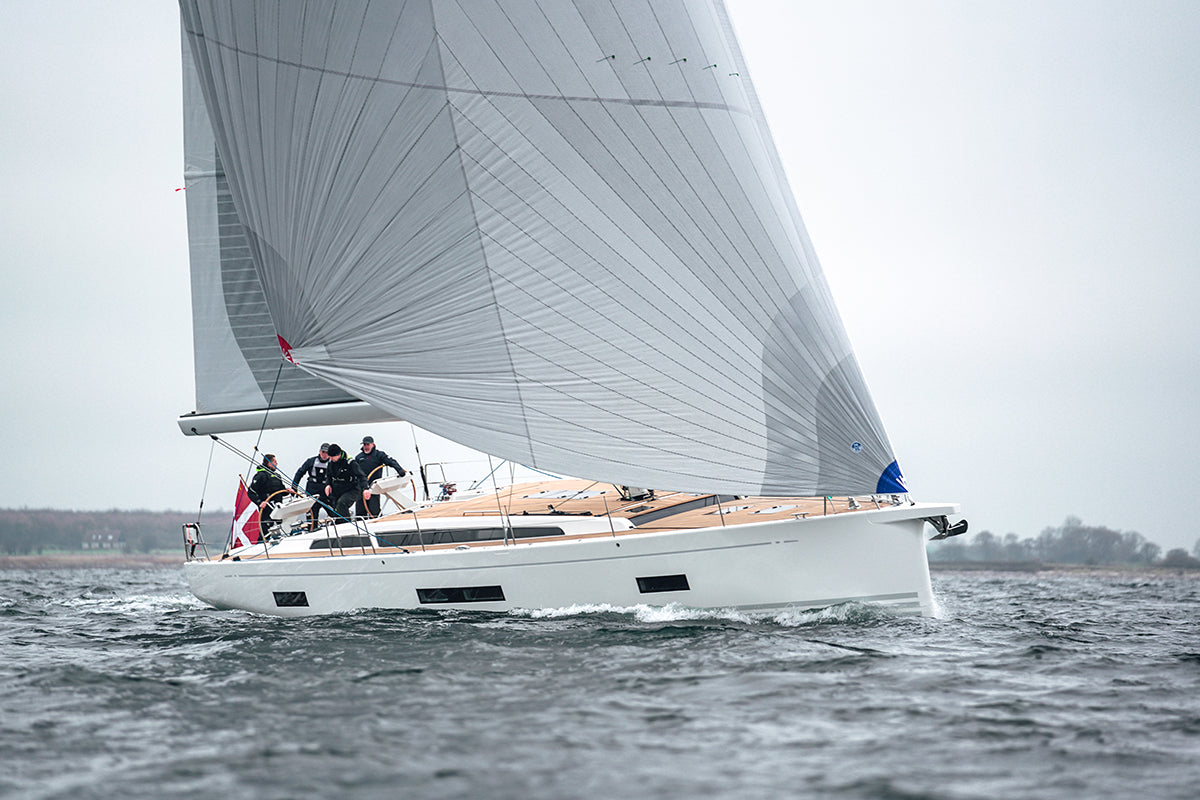
SÅ NEMT TRIMMES SPILER OG GENNAKER
SÅ NEMT TRIMMES SPILER OG GENNAKER
Spiler og gennaker er en spændende udfordring til sjovere og hurtigere cruisingsejlads
📸 X-Yachts
Alle cruisingsejlere kan have stor fornøjelse af at sejle med spiler eller gennaker, og det behøver hverken være besværligt eller skræmmende. Man skal bare ikke sætte disse sejl i for meget vind, og huske at bjærge dem i tide.
Vindstyrke afhænger af besætningens erfaring, men de fleste bør ikke sejle med spiler i over 7-8 m/sek.
Sejlere uden erfaring med flyvende forsejl, bør først øve sig i let vind.
Code 1 ideel til cruising
"De fleste cruisingsejlere vil have større glæde af en gennaker eller Code 1, end en spiler, fordi disse sejl er meget lettere at håndtere," fortæller Theis Palm fra North Sails Danmark.
"Personligt vil jeg anbefale en Code 1, der dækker hele halvvindsområdet. Det er et utroligt godt sejl, især i let luft, hvor man ellers ville starte motoren. Med Code 1 kan man ofte sejle lige så hurtigt for sejl som for motor. Bare uden støj. En Code 1 er ideel til moderne både med selvslående fok eller 105 % genua.
Code 1 er monteret på en rulle, så den kan rulles som en rullegenua. Man kan sagtens sejle agten for tværs med Code 1, men her er den ikke så effektivt som en gennaker. Man kan også sejle læns med en Code 1, ved at spile den til luv med spilerstagen."
En gennaker er enklere at trimme end en spiler, fordi der ikke er nogen spilerstage at holde styr på, medmindre man spiler den til luv på læns.
De flyvende forsejls 9 vigtigste trimfunktioner:
Gennakeren
Halsbarmen
Halsbarmen på de fleste gennakere til cruising sættes blot med en kort fast strop til fx bådens ankerrulle eller et lille bovspryd.
Man kan dog få mere udbytte af gennakeren med en trimline, tack-line, i halsbarmen, der skal gå gennem en blok i stævnen eller bovsprydet, og føres tilbage til cockpittet.
Halsbarmen trimmes så i forhold til, hvor meget man skærer.
På hård skæring sættes trimlinen hårdt. Det totter forliget, faconen flytter mere mod luv og det åbner agterliget. Med vinden mere agtenfra, slække man trimlinen, så sejlet får en mere jævn facon og mindre åbent agterlig.
Gennakerskødet
Gennakeren trimmes til vindretning og kurs med skødet. I praksis skøder man gennakeren på næsten samme måde som en spiler. Man trimmer skødet så gennakeren er lige ved at klappe i forliget ca. 2/3 oppe i sejlet.
North Sails’ gennaker er designet til at være meget overbærende med et stort vindue til at styre på, så man kan sætte skødet fast i læ.
I frisk vind skal man helst slække 5-10 cm på skødet, på forkanten af pustene, så båden ikke skærer op.
Barberhalet
Med barberhalet trimmer man gennakerens skødepunkt, som man trimmer genuaen med skødevognen.
Agterliget lukkes ved at hale barber-halet, og det gør man, hvis toppen af gennakeren har tendens til at blafre. Man skal dog passe på ikke at lukke agterliget, så båden krænger for meget.
Spileren
Spilerstagen
Stagen skal stå vandret, så man ud-nytter stagens længde maksimalt, og den skal stå vinkelret på vinden. Luv og læ skødebarm skal så vidt muligt stå lige højt. Stagens højde trimmer spilerens facon i toppen.
Op- og nedhalet
Ved at hæve eller sænke stagen, regulerer man dybden i midten af spileren og hvor meget sideligene åbner. Stagen holdes vandret og i ro med nedhalerlinen, aldrig med barberhalet.
Nedhalerlinen bør være fæstnet til stagen med en hanefod. Ophalet bruges til at hæve stagen inden spileren sættes og til at holde den oppe i let vind.
Gaj’en
Det luv spilerskøde, kaldet gaj’en, trimmer stagens vinkel til vinden, og styrer spilerens nedre facon. Hvis skødet skal hales hårdt, for at undgå spileren klapper, så skal stagen skødes længere frem med gaj’en.
Spilerfaldet
I let vind og på meget rumme kurser sættes faldet, så toppen flyver mellem 20 og 40 cm foran masten. I over 4-5 m/sek. og på skærende kurs, skal spileren hales tættere til masten, så den står roligere.
Spilerskødet
Spileren skødes så luv side hele tiden er ved at klappe ca. 2/3 oppe i sejlet.
Barberhalet
Med barberhalet trimmer man spiler-ens skødepunkt, som man trimmer genuaen med skødevognen. Man lukker spilerens læ sidelig og gør den lidt dybere i faconen ved at hale barberhalet.
Det er vigtigt, at halet ikke sættes for hårdt på skæring, hvor læ sidelig gerne må åbne lidt.
Tips
En gennaker eller Code 1 skal altid sættes og bjærges i læ af storsejlet på en kurs mellem agten for tværs og plat læns. Så ruller Code 1 lettere, og gennakeren er næsten håndtam, med eller uden snuffer. Man skåner også sejlet.
Sæt gennakeren med Snuffer
Det er meget nemt at sætte gennakeren med en "snuffer", hvor gennakeren ligger pakket i sin fulde længde.
Man sætter gennakeren ved at først at hale snufferen til tops i spilerfaldet i læ af storsejlet. Derefter hales tragten til tops, så gennakeren kan folde sig ud.
Man bjærger ved at hale tragten ned over gennakeren, også i læ af storsejlet, og sænke snufferen i faldet. Husk altid at følge vejledningen, der følger med snufferen.
Stagen skal stå vandret
Cruisingsejlere bør sejle med vandret stage. Hvis man hæver stagen, bliver spileren fladere og mere åben i siderne og man gør spileren dybere og mere lukket i siderne, ved at sænke stagen.
Stagehøjden trimmes med stagens fæste på masten og stagenedhalet.
Trim storsejlet 15-20 grader til stagen
Stagen skal stå vinkelret på vinden . Spileren bliver for flad i toppen, med stagen for langt mod luv (blå) og for dyb i toppen og urolig, med stagen for langt mod læ. Storsejlet trimmes, så der er en vinkel på 15-20 grader mellem stagen og bommen.
Måleskema til bådens rig
Når riggen er trimmet korrekt ind til bådens balance på roret, er det en god idé at måle trimmet op, så det er hurtigt og nemt at genskabe mastetrimmet næste sæson.
Målene tages fra overkanten af vantets terminal og ned til den nederste pindbolt i vantskruen. Til næste år spænder man bare riggen op igen efter disse mål.
Læs også:
Nye sejl giver ekstra sejlglæde
Sådan sættes masten rigtigt
Så nemt trimmes storsejlet
Så nemt trimmes genua og fok
Trim-tjekliste
Download hele vores trimguide til cruising her!
Få et tilbud på nye North sejl
READ MORE
READ MORE
SÅDAN SÆTTES MASTEN RIGTIGT
SÅDAN SÆTTES MASTEN RIGTIGT
Al trimning starter med riggen, fordi mast og rig skal være sat rigtigt, før man kan trimme sejlene korrekt
Heldigvis er det hverken indviklet eller tidskrævende at rigge rigtigt.
Riggen på en moderne turbåd skal altid stå meget tot, og meget mere tot end de fleste bådejere forestiller sig. Desuden skal masten sættes helt lige og lodret tværskibs, mens den bør være forkrummet i langskibs retning.
Moderne cruisingbåde har en rig med bagudvendte salinger, og det er specielt vigtigt, at sætte den rigtype hårdt, fordi det ellers ikke er muligt at holde forstaget tot. Moderne både er netop bygget til at sætte riggen hårdt.
Myten om at man kan stramme forstaget med hækstaget er til dels rigtig, men hvis over- og undervant er for løse, så komprimerer man i stedet masten med hækstaget. Det giver den modsatte effekt - nemlig at forstaget og riggen bliver for løs. Når forstaget ikke er helt tot, bliver genuaen for dyb i faconen og det vil få båden til at krænge mere end nødvendigt. Man kan ikke bare klare det ved at hale hårdere i skødet og åbne toppen af forsejlet med skødevognen, fordi derved mister båden noget af fremdriften og det vil også medvirke til at båden krænger mere.
Bådens balance på roret grundtrimmes bedst med mastens hældning og placering ved mastefoden.
De følgende fire trin til at sætte masten, giver et godt udgangspunkt for, at kunne trimme sejlene optimalt til balance og større sejlglæde.
Tilrigningens 4 nemme trin til en tot rig:
Sættes lodret
Først sættes masten helt lodret i båden med forstag og overvant, og det kan tjekkes ved at hænge lidt vægt i storfaldet og lade det hænge ned bag masten. Båden skal være i sin naturlige balance og man skal enten gå i land eller stå midt i cockpittet, når man bedømmer det.
Det er god idé at måle længden på vantene inden masten sættes på båden. Så kan man nemlig se om de er lige lange i begge sider, og fx sætte mærker på vantskruerne eller terminalerne Derved får man identiske punkter på vantene, som man kan måle fra og ned til dækket. På den måde er det lettere at sætte masten helt lodret.
Sættes helt lige
Når masten står helt lodret, sættes undervant og mellemvant i forhold til topvantet, således at masteprofi let er helt lige hele vejen op. Dette kan tjekkes ved at flugte op langs hulkehlen eller med et fald i stille vejr.
Overvant
Dernæst sættes overvantene meget hårdt. Husk at de skal spændes lige hårdt og skiftevis i begge sider. Det er en god håndregel, at de skal spændes, indtil man selv synes de er spændt for hårdt. Man kan også måle spændingen på de enkelte vant med en rigspændingsmåler.
Undervant
Derefter spændes undervantene lige knapt så hårdt, således at masteprofilet står med en let forkrumning på en halv til hel profilbredde. Bådens rigtype og især storsejlets mastekurve afgør, hvor meget den præcist skal krumme. Mastheadriggede master skal bare have en let krumning, moderne master med bagudrettede salinger skal have en krumning på godt en profilbredde, mens rullemaster skal stå næsten uden krumning. Mellemvant skal sikre at masten står helt lige under sejlads.
Sejl med båden og efterspænd
Riggens wirer strækker sig lidt, når de kommer under belastning i starten af sæsonen, så derfor skal man huske at efterspænde riggen, efter årets første sejlture i lidt frisk vind. Under sejladsen skal man holde et vågent øje med vantene i læ. De må ikke være det mindste slappe på bidevind. Hvis vantene er lidt slappe i læ, er det nemt at totte dem under sejladsen, og derefter totte vantene i den modsatte side efter en vending. Bare husk at vantene skal tottes præcist lige meget i begge sider, når masten én gang er sat lige.
Masten skal forkrummes
Kun på rullemaster skal masten stå ret i langskibs retning. Alle andre master skal forkrummes med en halv til en hel profil-bredde.
Hækstaget skal kun krumme mastetoppen
De fleste moderne cruisingbåde har en form for brøkdelsrig, og her skal masten sættes så hårdt i over- og undervant, at masten primært bukker i toppen, når man haler i hækstaget. Ellers kan man ikke totte forstaget med hækstaget.
Masten skal stå snorlige
Alle master skal trimmes til at stå snorlige sideværts, som den viste mast. Man kan kontrollere at masten er lige, ved at kigge op langs hulkehlen eller ved at hænge et lod i storfaldet og lade det hænge lige bag masten. Masten skal samtidig stå så hårdt, at den stadig står helt lige, når der er belastning på riggen under sejlads.
Trim rortrykket med masten
Mastens hældning trimmes enkelt med forstagets længde, og fodens placering i mastesporet. Det er især bådens balance på roret, man grundtrimmer med mastens placering og hældning. Princippet er enkelt. Hvis båden er luvgirig og føles hård på roret, så skal masten stå mere lodret, eller flyttes frem i mastesporet. Jo mere luvgirig båden er, jo mere skal masten fl yttes frem. Den må aldrig rejses mere end til lodret. Hvis båden er bare let lægirig, så skal masten lægges ned.
En cruisingbåd bør altid være en anelse luvgirrig. Så er den let at styre på foran-for tværs og bidevind, med et let tryk på roret. Roret bør ikke vinkle mere end 2-3 grader.
Det er en håndregel for mastehældning, at masten skal hælde 1 grad på mastheadrigge, 2 grader på 9/10s rigge og 3 grader på 7/10s rigge.
Læs også:
Nye sejl giver ekstra sejlglæde
Så nemt trimmes storsejlet
Så nemt trimmes genua og fok
Så nemt trimmes spiler og gennaker
Trim-tjekliste
Download hele vores trimguide til cruising her!
Få et tilbud på nye North sejl
READ MORE
READ MORE
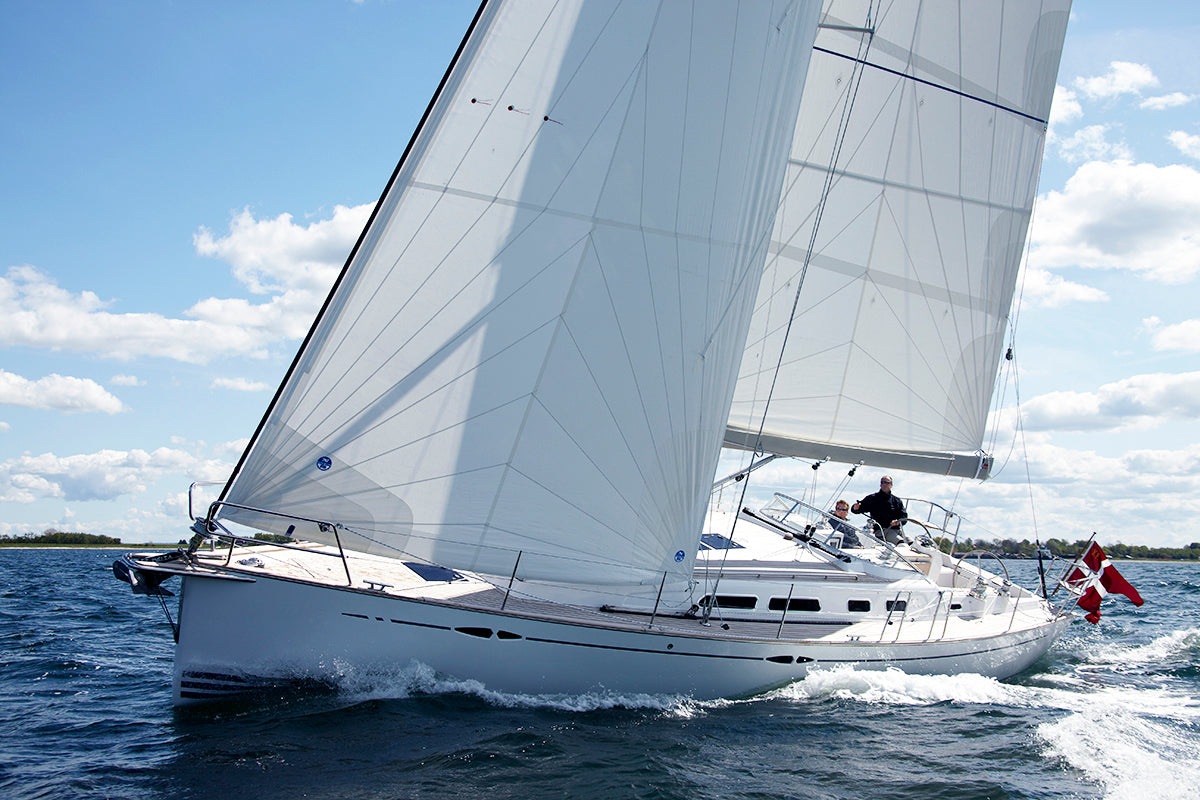
NYE SEJL GIVER EKSTRA SEJLGLÆDE
NYE SEJL GIVER EKSTRA SEJLGLÆDE
Det er dejligt at få nye, flotte og velfungerende sejl, der er lette at trimme
Og trimningen er vigtig for cruising-sejlere, for det handler om at sejle en komfortabel og glad båd i god balance.
Nye sejl giver cruisingbåden en klart bedre og mere komfortabel sejlads, med mindre krængning, bedre balance på roret, bemærkelsesværdig bedre højde og ekstra tiendedele på loggen.
Så klar var konklusionen, da vi testede et ældre mod et nyt stel sejl på en Granada 31. Først målte vi fart, højde og krængning med de ældre sejl og der-efter skiftede vi til et nyt stel North Sails.
Begge storsejl var syet med horisontale baner, også kaldet "C-cut" eller "cross cut", i en vævet polyester sejldug, bedst kendt som Dacron.
Tætvævet sejldug
De nye sejl var fremstillet i en sejldug fra Norths Sails egen dug-fabrik i USA. Det er en effektiv sejldug, der bliver vævet meget tæt med de mest stabile "high tenacity" polyestertråde der findes. "High tenacity" sejldug anvendes til kapsejladssejl og tursejl, hvor stabiliteten er vigtig.
Den aktuelle sejldug til det nye storsejl er specielt konstrueret til at klare de belastninger sejlet udsættes for langs agterliget. Det gør sejlet bedre i stand til at holde faconen i kappen. Det nye storsejl var desuden bygget med fire gennemgående sejlpinde, der sikrer sejlets optimale facon længere levetid.
Et roligt sejl
De gennemgående sejlpinde får også storsejlet til at stå roligt ved sætning, bjærgning og rebning, og sikrer at sejlet glider let og pænt foldet ned i bompresenningen. Bådens gamle rullegenua var traditionelt syet i "C-cut" med horisontale baner, mens den nye North rullegenua var konstrueret i et avanceret tri-radialt D-cut design, hvor paneler af sejldug stråler ud fra top, hals og skøde efter sejlets belastninger.
Bedre balance
Resultatet af sammenligningen var, at båden krængede langt mindre med de nye sejl. Desuden fik vi en klart bedre balance på roret, med mindre rortryk og dermed en lettere, roligere sejlads, fordi båden ikke blev så hård på roret i pustene. Alt i alt blev det en sjovere og mere komfortabel sejlads.
Højde og fart
Med de nye North sejl gik båden klart tættere til vinden og 0,3 knob hurtigere på kryds. Det giver ikke kun hurtigere, men også sjovere sejlads og gør det nemmere for cruisingsejlere at krydse, fordi den bedre balance på roret, også gør det lettere at styre båden i pustene.
Strækstabilitet
Der er især forskellen i sejldug, der giver dramatiske forskelle på nye og ældre sejl. I ældre sejl strækker sejldugen sig mere i pust og frisk vind, fordi sejldugen mister meget af sin strækstabilitet. Derfor glider faconen også mere agterover, og fordi det samtidig bliver for dybt, kan det i værste fald få båden til at skære ukontrolleret op i friske pust.
Det er derfor vigtigt, at få syet sine nye sejl i en god strækstabil dug. Så sejler de markant mere komfortabelt og holder meget længere. Med en billig, ikke stræk-stabil sejldug, mister sejlene deres facon langt hurtigere, og kan efter få sæsoner ikke trimmes fornuftigt.
Trim de nye sejl
Nye sejl i god facon og strækstabil sejldug er dog ikke alene nok. Sejlene skal også trimmes, og det bør alle cruising-sejlere tage alvorligt.
For cruisingsejlere handler trimning mere om at få en komfortabel sejlads med en glad båd i god balance. "Når jeg er af sted med familien på sommertur, ser jeg desværre for mange både, hvor sejlene ikke fungerer ordentligt, fordi de er trimmet forkert, eller riggen ikke er sat rigtigt," fortæller Theis Palm fra North Sails Danmark.
"Det er synd, for det kræver kun en beskeden indsats, at trimme rig og sejl ordentligt, så familien får en behagelig sejlads, hvor de bedre kan slappe af. De får samtidig den ekstra gevinst, at båden også vil sejle hurtigere."
Beskyt sejlene
Der var anvendt en sejldug med indbygget UV-filter, der beskytter sejl-dugen mod solens nedbrydende UV-stråler, og det forøger markant sejlets levetid. Den ekstra UV-beskyttende dækdug på agter-og underlig beskytter ogsågenuaen mod solen, når den er rullet op.
Storsejlet er ikke beskyttet mod sollyset, selvom det ligger pænt pakket sammen på bommen i havn, og derfor er det vigtigt at hele sejlet bliver dækket af en bompresenning, der også holder sejlet rent og pænt.
Sejlene skal også beskyttes mod mekanisk slid fra især riggen. Alle kanter og skarpe spidser på salingerne og vantskruerne skal tapes til, eller på anden måde beskyttes, så sejldugen og syningerne ikke kan blive revet i stykker.
Det er også vigtigt at storsejlet bliver lagt, eller rullet, pænt sammen efter brug. Hvis man lader riggen stå på båden vinteren over, bør sejlene altid afmonteres og tages med hjem.
Læs også:
Sådan sættes masten rigtigt
Så nemt trimmes storsejlet
Så nemt trimmes genua og fok
Så nemt trimmes spiler og gennaker
Trim-tjekliste
Download hele vores trimguide til cruising her!
Få et tilbud på nye North sejl
READ MORE
READ MORE
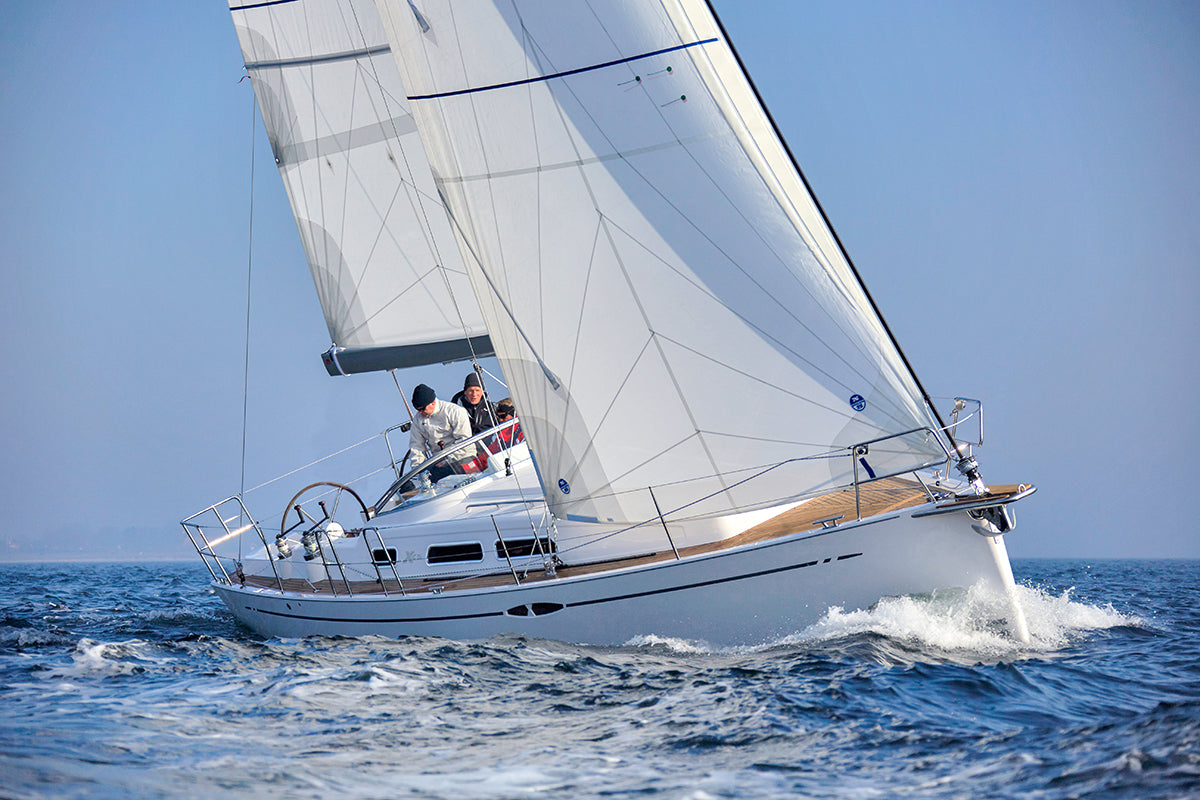
SÅ NEMT TRIMMES GENUA OG FOK
SÅ NEMT TRIMMES GENUA OG FOK
Genuaen er cruisingbådens vigtigste trækkraft
Vi anbefaler at også cruisingsejlere anvender strækstabile fald til at holde den gode facon i sejlene. Hvis faldene kan strække sig under sejladsen, må faldene tottes løbende, da sejlene ellers bliver dybere og mere lukkede.
Det er forsejlets trimning, der skaber den fartgivende vindstrøm hen over sejlplanet og gør sejladsen komfortabel under alle vindforhold.
Den gode trimning af bådens forsejl er vigtig, fordi forsejlet former vind-strømme hen over sejlplanet, og i korthed handler trimning af forsejlet om at forme vindstrømmen således, at vinden trækker båden bedst muligt fremad og skaber mindst mulig krængning. Det er hverken indviklet eller besværligt at trimme sin genua optimalt, blot man følger nogle få og helt enkle principper, der er de samme for nye som for gamle sejl.
"På mine sommerture med familien ser jeg desværre alt for mange både, hvor sejlene ikke fungerer ordentligt, simpelthen fordi de er trimmet forkert", fortæller Theis Palm, North Sails Danmark. "Jeg har set mange både, hvor de fx ikke har halet ordentlig hjem i genuaskødet eller sejlet twister så meget, at det meste af sejlet bare står og blafrer. Det er synd, fordi det nedsætter sejlets levetid og fordi disse familier kan få meget mere glæde af deres båd med en blot en beskeden indsats. Ved at bruge bare et par minutter på at grundtrimme, kan de få sejlene til at fungere ordentligt, og få en sjovere og mere komfortabel sejlads.
Båden vil også sejle hurtigere, men det er ikke det vigtigste her. Store overlappende 135-150 % genuaer er bådens motor, og man kører vel ikke rundt på tre cylindere i bilen uden at gøre noget ved det. Mange nyere både har mindre og familiemæssigt mere håndterlige ca. 105 % fokke eller selvslående fokke. De er også en del af bådens motorkraft og er med til at forme vindstrømmen over storsejlet, der er hovedmotoren i disse både.
Endelig er forsejlenes trimning medvirkende til at give en mere stabil sejlads med mindre krængning, blødere krængning i pustene og ikke mindst til at give en god rorbalance. Desuden har jeg gang på gang konstateret at faldet, på alt for mange turbåde, ikke bliver rørt efter sejlet er halet på rulleforstaget først på sæsonen."
Den følgende trimvejledning sigter på at trimme rulleforsejlene, så båden sejler velafbalanceret og behageligt under næsten alle vejrforhold.
Det hele handler faktisk kun om at justere på tre ting: Faldet, skødet og skødevognen. På moderne selvslående fokke svarer placeringen af skødet i skødbarmen til at trimme skødevognen. Vi forudsætter at bådens rig er sat rigtigt og hårdt, så forstaget reelt kan tottes med hækstaget i opfriskende vind.
En helt ny genua, der er trimmet korrekt på en hårdt sat rig, hvor forstaget kun falder minimalt ud i læen. Bemærk flyvingefaconen med den største dybde fremme i sejlet og den næsten rette afgang for vindstrømmen i agterliget.
Forsejlets 3 vigtigste funktioner anvendes således
Faldet
Faldet trimmer dybde og facon i sejlet og princippet er enkelt. Når faldet tot-tes, bliver sejlet ikke overraskende fla-dere og faconen flytter lidt frem i sejlet.
Tilsvarende får man et dybere sejl, med faconen liggende længere tilbage i sejlet, når faldet slækkes lidt. Her taler vi om justeringer på op til ca. fem cm på faldet på en mellemstor familiebåd.
Princippet for trimningen er enkelt Faldet tottes med opfriskende vind, så sejlet bliver fladere og båden krænger mindre.
Modsat kan det være en fordel at slække lidt på faldet i lettere vind. I samspil med lidt løsere skødning vil det give en dybere facon, der giver mere kraft til at holde fart i båden.
I krap eller tung sø i mellemluft har man også brug for dette "sejtræk" som et lidt slækt fald giver. Pas blot på ikke at slække for meget. Sejlet må kun lige akkurat trække små vandrette rynker fra forliget.
Skødet
Skødet bruges til at trimme sejlet til vindretningen og på bidevindkurser til at trimme balance og fart i båden.
På rumme kurser kan man bruge sejlets ticklers til at trimme til vindretningen, for også på rumskøds sejlads bør begge ticklers, på hver side af sejlet, flyve vandret og parallelt.
På foran-for-tværs hales genua- eller fokkeskødet efter de aktuelle forhold med vind og sø.
Når man vil gå højt i mellemluft, eller vinden er frisk til hård, så skal forsejles skødes hårdt. Det flader sejlet og trækker faconen lidt frem i sejlet.
I mellemluft kræver det også at man styrer mere præcist, for at opretholde farten.
Modsat giver det en lidt dybere og rundere facon, hvis man lige slækker et par cm på genuaskødet, og det giver mere råstyrke i sø og gør båden lidt mere tilgivende overfor styringen.
Det kan lidt sammenlignes med bilens gear, hvor de lavere gear bruges til at accelerere eller sejtrække, mens man kører hurtigst i de høje gear.
Et knap så hårdt sat skøde svarer til de lave gear, mens man går op i et højere gear, ved at skøde hårdere.
For at blive i sammenligningen, så kan man ikke accelerere så hurtigt, hvis man sætter bilen i for højt gear for tidligt, og tilsvarende skal man ikke hale for hårdt i skødet efter fx en vending, men hale hjem efterhånden som båden accelererer. Mange tursejlere skøder genua og fok alt for løst, men som tursejler skal man heller ikke skøde for hårdt, hvis man vil sejle afslappet med lidt ”tilgivelse” for rorsmandens håndtering af rorpind eller rat.
Husk at det kun handler om at slække mellem 2-5 cm i forhold til at hale hårdt hjem.
Det er også vigtigt at sejle med yder-ligere lidt slæk på skødet, hvis søen er grov i forhold til vindstyrken. Ellers ligger man bare og hugger i bølgerne.
Skødevognen
Bådens skødevogn til fok eller genua bliver desværre alt for sjældent brugt på mange turbåde, og det er netop med skødevognen tursejleren kan trimme god balance i båden. Skødevognen trimmer skødepunktet, der afgør sejlets vigtige twist op gennem sejlet.
Når sejlet twister for meget er det for "åbent", og så blafrer toppen af sejlet unødigt, ubehageligt og det er dyrt for sejlets levetid. I de lettere vindstyrker betyder det, at sejlet ikke trækker effek-tivt og at rorpresset bliver forøget. I frisk og hård vind betyder for meget twist at sejlet blafrer larmende i toppen, og især at denne "flageffekt" kun får sejlet til at holde kortere tid, i stedet for at sejlets top giver stabiliserende fremdrift.
Hvis sejlet twister for meget, skal skødevognen flyttes fremad. I princippet skal skødevognen stå for enden af en linje trukket fra midten af forstaget ned gennem øjet i sejlets skødbarm, men sejlets facon og alder kan betyde afvigelser fra dette.
Når sejlet twister for lidt, er det for "lukket". Så trækker hele den øverste del af sejlet ikke ordentligt og båden vil krænge unødigt meget, når det blæser en frisk mellemluft.
Båden kan blive hård og ubehagelig at styre, fordi den krænger mere brat og huggende i pustene. Endelig kan nogle både blive let lægirige af en stor overlappende genua, der lukker for meget i toppen.
Når sejlet twister for lidt, skal skøde-vognen flyttes agterover. Stort set alle cruisingbåde sejler i dag med rullegenua eller -fok, og reber sejl ved at rulle sejlet nogle omgange om forstaget. Når forsejlet rulles ind skal skødevognen flyttes fremad. Ellers vil toppen af sejlet blive for åben og blafrende.
Rul vognen frem med sejlet
Skødevognen skal køres lidt fremad, når man ruller genuaen lidt ind for at mindske sejl i opfriskende vind. Hvis man ikke kører skødevognen frem, når genuaen rulles lidt ind, så vil sejlet blive for åbent i toppen. Det vil blafre i toppen og og ødelægge sejlet.
Skødet trimmer dybde og form
Her ses hvad der sker med dybden i sejlet, når man trimmer genuaskødet. Vi forudsætter at skødevognen er placeret rigtigt. Når man haler fokke-eller genuaskødet hårdere, bliver sejlet fladere og sejlets dybeste punkt trækkes lidt fremad, som på den grønne faconkurve. Når man slækker fokke-eller genuaskødet bliver sejlets facon dybere og sejlets dybeste punkt flytter lidt agterover.
Sjæklen i skødebarmen
På moderne selvslående fokke, hvor skødevognen kører på en fast skinne, trimmes skødepunktet ved at flytte skødets sjækkel til et andet hul på skødbarmen. Man twister sejlet mere ved at fl ytte skødet til et lavere hul eller frem på skødepladen, og man lukker sejlet med mindre twist ved at flytte skødet opad i skødbarmen eller tilbage på skødepladen. Princippet er det samme, som at flytte skødevognen tilbage eller frem i båden.
Stil skødevognen efter sejlets ticklers
Øverst er sejlet trimmet optimalt (A) og de tre sæt ticklers i sejlet blafrer alle fint og parallelt. I midten (B) lukker sejlet for meget, der er for lidt twist i sejlet, og derfor slår den øverste læ tickler opad, mens den læ tickler i midten også er urolig. Nederst twister sejlet for meget (C), det er meget åbent, og derfor løfter den luv uldtråd sig i toppen. Ved (B) skal skødevognen flyttes agter-over til sejlet ser ud som i (A), og i (C) skal skødevognen flyttes fremad. I (B) sejler man for lavt med den øverste del af sejlet, mens man i (C) sejler for højt med toppen af sejlet. På tegningerne er de læ ticklers røde, mens de luv ticklers er grønne.
Tips
Skødevognene er med faste stop på hovedparten af alle cruisingbåde, men det er lidt bagvendt at man skal på dækket og flytte skødevognen i fx opfriskende vind og sø, når nu alt andet normalt kan trimmes fra cockpittet. Det kan derfor være en god ide at skifte til en såkaldt "flydende" skødevogn, der kan trimmes kontinuerligt fra cockpittet med et enkelt hal.
Det forlænger sejlets levetid, hvis man slækker 5-10 cm på faldet lige inden man ruller genuaen ind og går i havn, hvis båden ikke skal ud at sejle de næste dage. Det belaster sejlet unødigt, altid at stå med tot genuafald.
Læs også:
Nye sejl giver ekstra sejlglæde
Sådan sættes masten rigtigt
Så nemt trimmes storsejlet
Så nemt trimmes spiler og gennaker
Trim-tjekliste
Download hele vores trimguide til cruising her!
Få et tilbud på nye North sejl
READ MORE
READ MORE
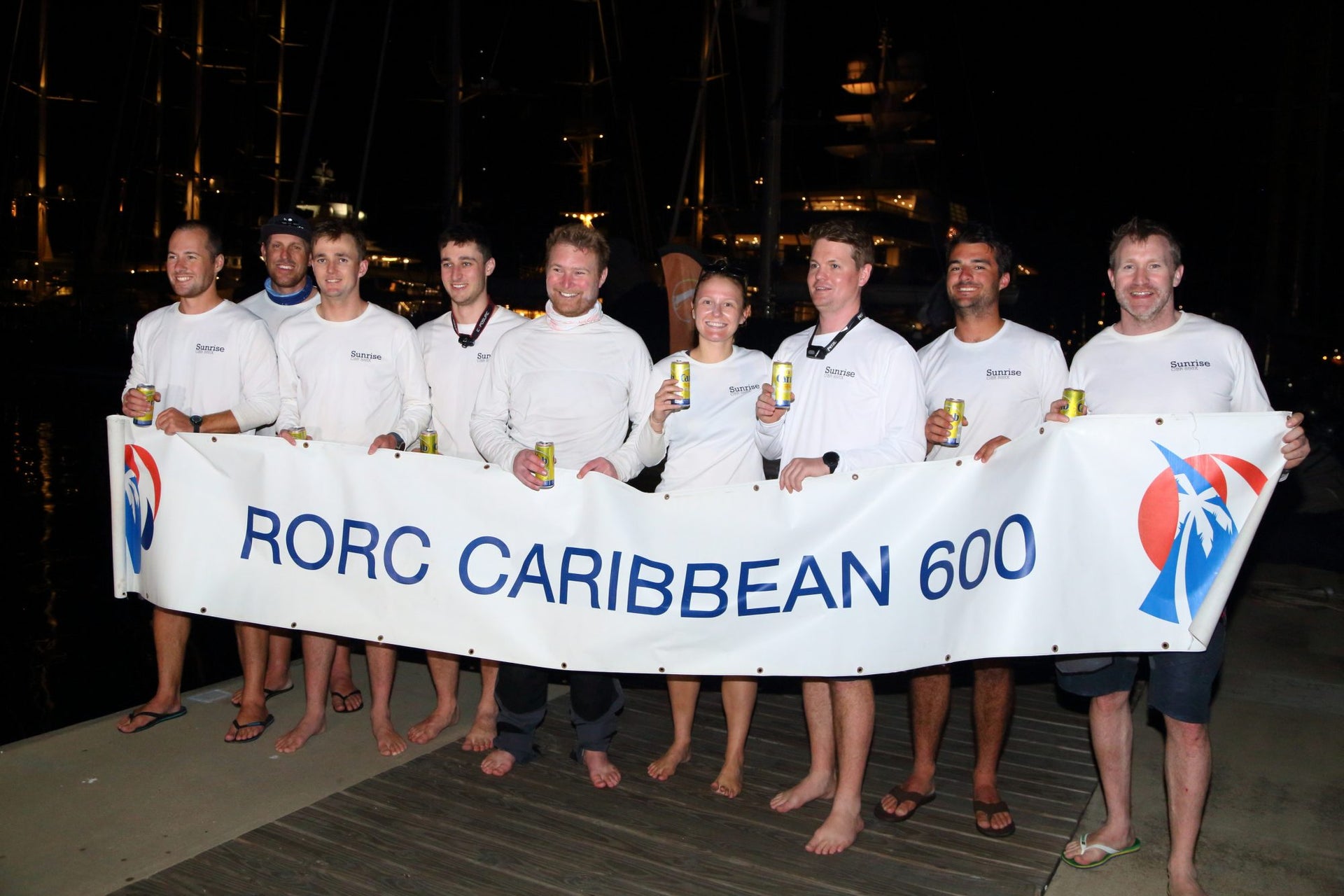
#NSVICTORYLIST: RORC CARIBBEAN 600 2022
#NSVICTORYLIST: RORC CARIBBEAN 600
A Strong Showing For North-Powered Teams. Here’s Our Race Recap
The RORC Caribbean 600 is a much-anticipated event on the winter sailing schedule. With pro teams and amateurs alike gunning for victory, the combination of North Sails products, on-island support, and expertise is proven to deliver results.
For the 13th edition of the race, North Sails was on board for a new multihull race record, multi and monohull line honors, and held a commanding presence amongst the fleet claiming 70% of the possible podium positions. And to top it off, Warrior Won’s 3Di sails carried owner Chris Sheehan and crew to the top of the overall leaderboard.
A navigational channel in, out, and around eleven islands in almost perfect condition, the race is as much a showcase for sailing as it is for the Caribbean’s beautiful islands.
“There is a reasonable amount of reaching in the 600-mile course, and it becomes a real test of a sail’s range,” explains Andrew Dove, manager of North Sails Antigua. “Our Helix Structured Luff Code Sails can make a huge difference here. Many of the legs are challenging, with conditions varying amount different islands; a hallmark of the race and a true test of a sails range. This is where 3Di and Helix sails excel.”
We’re incredibly proud of the North-powered results; they’re overwhelming in the best way and inspire us to keep coming back for more.
📸 RORC / Tim Wright / Arthur Daniel
READ MORE
READ MORE

SMALL BOAT, BIG RACES
SMALL BOAT, BIG RACES
Richard Palmer’s JPK 1010 Jangada Takes On The Doublehanded Offshore Scene
📸 Rick Tomlinson
Highlight Results
Twostar Transatlantic Race 2012 – 2nd IRC
Round Britain & Ireland 2-handed 2014 – 1st IRC
RORC 2018 – 2nd IRC overall
AZAB 2019 – 3rd IRC (1st family)
RORC Transat 2019 – 1st IRC overall
RORC 2020 C600 – 1st IRC 2-handed
RORC 2020 Summer series – 1st IRC 2-handed
RORC 2021 Morgan Cup – 1st IRC 2-handed
RORC 2021 De Guingand Bowl – 1st IRC 2-handed
UKDHOS 2021 – 1st Corinthian/Masters
RORC 2021 Series – 3rd IRC 2-handed
RMSR 2021 – 1st IRC 2-handed
RORC Transat 2022 – 1st IRC 2-handed / 3rd IRC1
RORC 2022 C600 – 1st IRC 2-handed / 3rd IRC2
Richard Palmer’s JPK 1010 Jangada has been turning heads as the doublehanded team on board continues to win multiple international offshore doublehanded trophies whilst also claiming some of the top spots against fully crewed teams. In 2020, they won RORC Yacht of the Year following their overall win in the RORC Transatlantic Race and RORC Caribbean 600 doublehanded win, they also took the Corinthian Trophy in the UK Double Handed Offshore Series.
📸 Arthur Daniel
Aiming for the coveted RORC Jazz Trophy for IRC overall and having just finished the RORC Transatlantic Race, bettering their 2019 record by just under 2 hours, we caught up with Richard to hear how a physicist turned finance professional who grew up dinghy sailing in Salcombe on family holidays is now winning international yacht races doublehanded.
Richard started sailing through a local club at 11 and caught the bug’ when his parents signed him up to an RYA course on the Thames. During family holidays in Salcombe, he was inspired to take up windsurfing as well and was later recruited for the Oxford University Windsurfing Team. Whilst working at the National Physical Laboratory he continued windsurfing competitively but also took up yachting after seeing an advert for the Civil Service Offshore Racing Club. This led to years of club racing, Junior Offshore Group (JOG) racing, and introduced Richard to Offshore racing. He was then thrown in at the deep end as a navigator on the club’s Sigma 33. His first two Rolex Fastnet Races were with the BT Offshore Racing Club in 1991 and 1993.
Following a busy few years starting a young family and focusing on his career, Richard joined the Yacht Owners Club in 2006 buying a J/109, Jangada Too. The decision to buy the J/109 was made over a glass of wine in Cowes with his friend Jeremy Waitt. After doing the first few seasons crewed, Richard and Jeremy decided to give doublehanded offshore racing a try in 2009 and haven’t looked back! Richard had several successes in the J/109, most notably winning the 2014 Royal Western Round Britain and Ireland Race with co-skipper Trevor Drew after being ‘pipped’ to the overall win by Pip Hare in the previous edition. Jangada Too sparked Richard’s relationship with North Sails.
📸 Rick Tomlinson
📸 Rick Tomlinson
“It became clear to me that most of the winning boats in the fleet at the time all had North Sails, that’s when we first got in touch with North and we have been with them ever since.” remarks Richard.
The reputable JPK1010 Jangada hit the scene in 2016. After a long stint in the J/109 getting fed up with being beaten by some of the French boats, Richard admitted “it was a case of, if you can’t beat ‘em join ‘em. When the 1010 was delivered it had a full suite of French sails, but the first thing we did was get North Sails down to do an audit of the wardrobe to work out which were fit for purpose and which needed replacing.” Over the course of the next two years, Richard replaced the full suite of sails with North Sails.
“The scale of the North operation is the main attraction, they have a great design team and the appeal is that they are always developing the materials, the shape, the cut. They’re always leading in the field. Our latest batch of sails in particular are great and very reliable. We saw that in the RORC Transatlantic Race this year. We had very little chafe or damage.”
As doublehanded sailors, Richard and his co-skipper’s often have slightly different priorities to fully crewed teams. Their priorities, amongst safety and energy/sleep management, include making maneuvers as easy as possible and minimizing sail changes, in particular headsail changes. Both their heavier jibs are reefable which means they can reduce the sail area without totally changing sail. This was added by North for the benefit of the team and tailored to their specific requirements.
Jangada’s newest addition to the sail wardrobe was the new Helix Structured Luff Code Zero. Richard and Jeremy tried it for the first time on the RORC Transatlantic Race and are very impressed. “We can carry it in higher wind strengths and to higher angles. We’re still pushing the boundaries with it, but it’s a very versatile sail.” Jangada finished the 2022 Transatlantic Race in an elapsed time of 16 days 11 hrs 59 mins 46 secs, winning IRC Two-Handed and placing third in IRC One. On top of this, Jangada’s IRC corrected time set a new race record for Two-Handed teams, bettering their 2019 triumph, and establishing the IRCRecords™ corrected time for the course of 16 days 13 hrs 58 mins 34 secs.
The team has recently completed the RORC Caribbean 600 having finished the race twice before. In 2018 they, unfortunately, had to retire due to injury but returned in 2020 and 2022 with back-to-back wins in the IRC Two-Handed class.
With the RORC Caribbean 600 over, Jangada is now on a mission to be back in the UK in time for the next RORC race of the season.
Richard is also planning on taking on the Round Britain and Ireland Race again this year with Rupert Holmes, his co-skipper from the first Transat Race. Keep an eye out for “Team Jangada” – big personalities, with big results on a relatively little boat!
📸 Rick Tomlinson
READ MORE
READ MORE
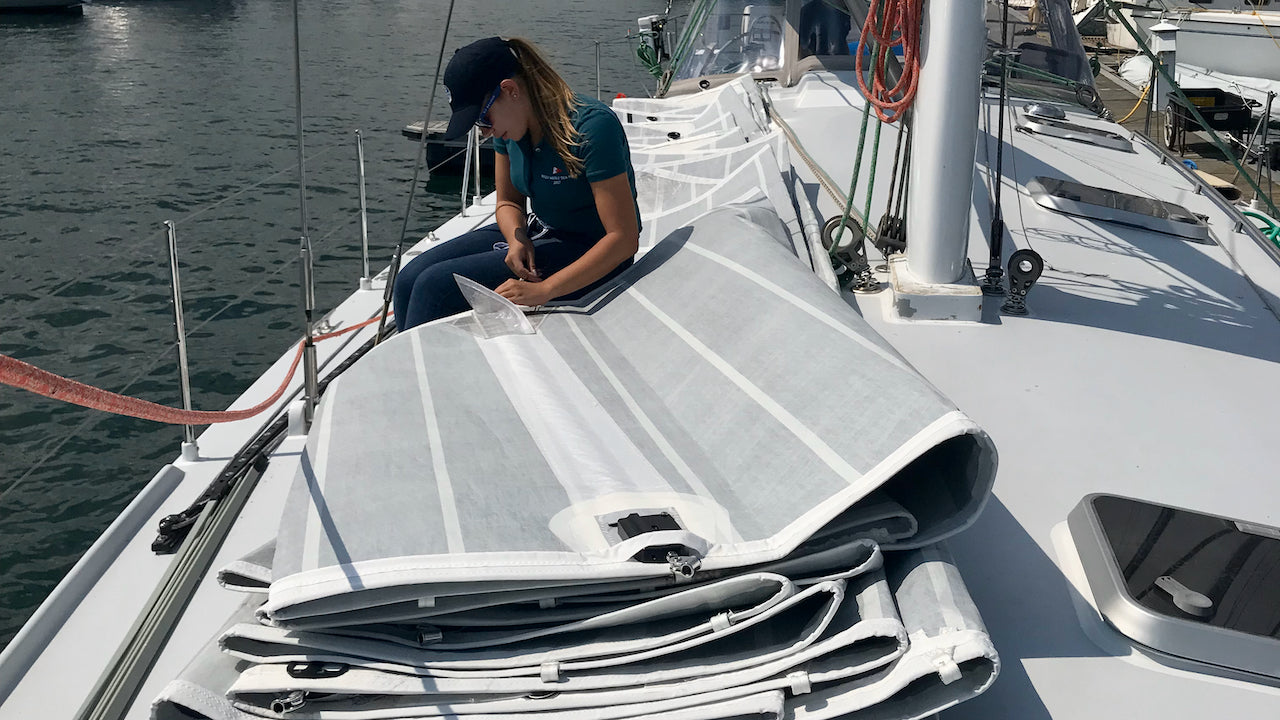
VAD DU BEHÖVER VETA OM LATTOR
VAD DU BEHÖVER VETA OM LATTOR
Instruktioner för montering och spänning av lattor
Seglingssäsongen närmar sig och vi vet att det är många som har funderingar kring sina lattor. Med all rätt. Oavsett om du planerar en långsegling eller ser fram emot vårens klubbkappseglingar är det viktigt att dina lattor monteras korrekt och att de har den rätta spänningen. Det innebär att seglet får en bättre form med högre prestanda – och säkrar upp att du inte tappar dem i ett slag eller en gipp.
Rätt montering ger den rätta segelformen
Se till att lattan sticks in i lattfickan med den mjuka (tunna) ändan mot förliket och den hårda (tjocka) mot akterliket. Vi ser ibland lattor som monterats på motsatt håll, och resultatet blir att seglet vare sig får rätt djup eller rätt kurvatur. Så det är värt att dubbelkolla att lattorna sitter åt rätt håll.
Se till att dina lattor är säkrade
En del lattor monteras framifrån och andra bakifrån, och beslagen ser lite olika ut, så det är viktigt att du säkrar lattorna på rätt sätt. I North Sails kardborre-lås finns det en särskild ficka för själva lattan och en annan ficka som låser kardborrebanden mot varandra. Andra lattsystem fungerar på andra sätt. Oavsett vilket system du har så kommer korrekt montering se till att dina lattor sitter på plats under hela säsongen.
Rätt lattspänning ger dig ett slätt segel
Det är också viktigt att du spänner dina lattor med omsorg och noggrannhet. Om spänningen är för låg kommer det uppstå vertikala rynkor längs lattfickan. Med för hög spänning blir resultatet synliga, horisontella kraftrynkor ovanför och under lattfickan, och duken ser överbelastad ut. Med korrekt spänning är lattfickan slät och lattan harmonierar perfekt med den inbyggda, designade formen.
📸Mike Egan
Har du frågor kring lattor? Eller behöver du hjälp att få dem korrekt monterade?
Kontakta oss på North Sails i Stockholm eller Göteborg, så hjälper vi dig med instruktioner och råd om hur du installerar dina lattor på bästa sätt.
READ MORE
READ MORE
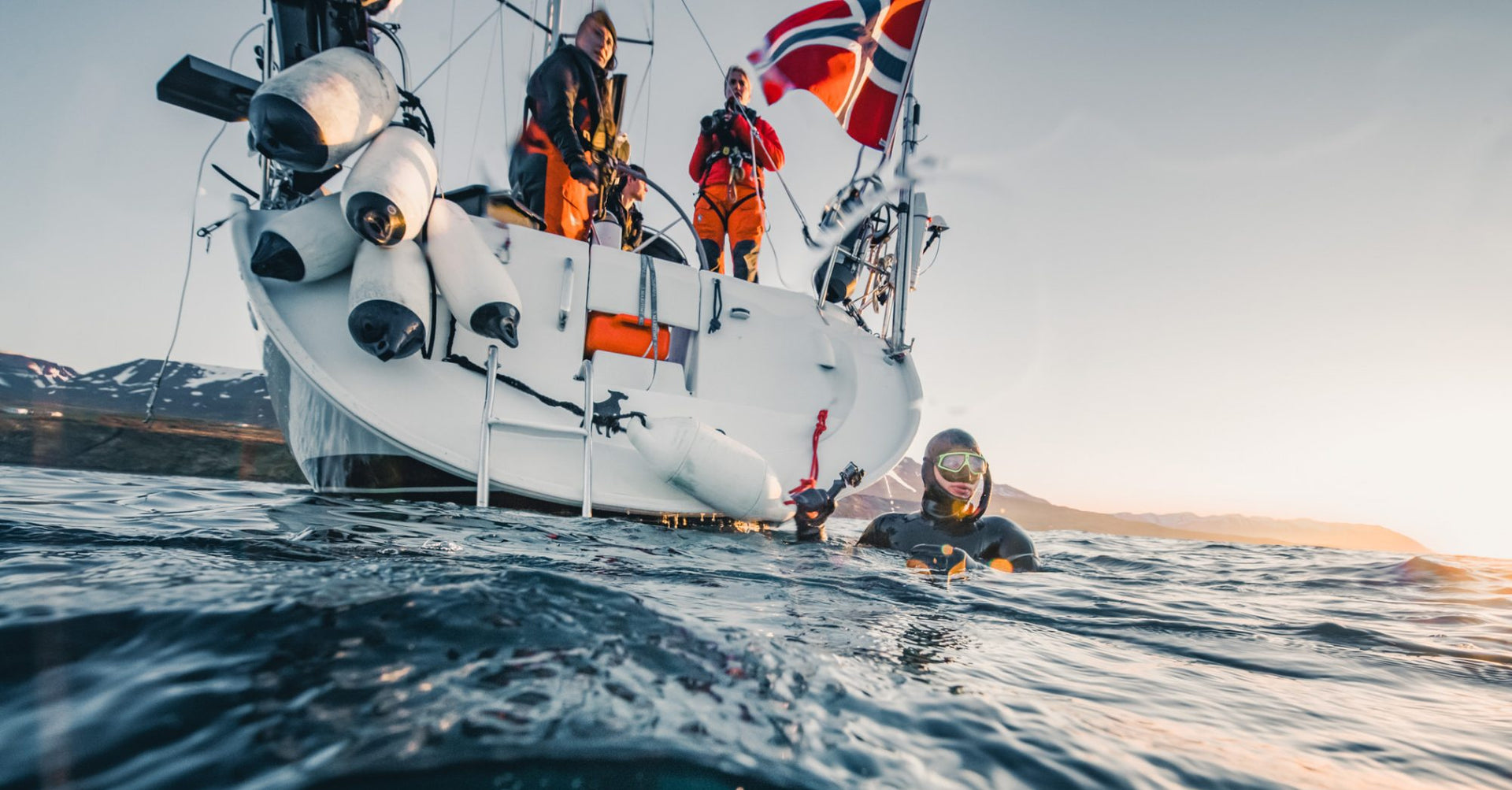
LETTER TO MY YOUNGER SELF: ANDREAS HEIDE
LETTER TO MY YOUNGER SELF
Andreas Heide Helmsman, Marine Biologist and Ex-Navy Diver, Takes on the Polar Atlantic Ecosystem
📸 Matthew Ferraro
The sailors and designers in the world of North Sails are some of the most inspiring people on the water, and we’re hoping to share more of their story with you. “Letter to my younger self” is a series told from our North Sails ambassadors. In each article, we bring to life their advice and personal journeys centered around the question: if your “now self” could give your “younger self” advice, what would it be?
Dear 12-year-old Andreas,
As you read this, I reckon you have just returned from a trip in your little boat or from freediving somewhere. Your parents might have been upset with you for coming home late, but shrug them off because this is the path you should stay on.
Stay true to your own journey, not the one expected by your parents or your surroundings. Let curiosity continue to drive you. Follow your instincts my boy and go for it. Know that everything you do now from climbing trees, skiing in the mountains, and rowing out to fish will help you better understand the great outdoors that you already love.
When you look at the horizon, wondering about the world that lies beyond the outer jetties, realize that one day you will adventure beyond the comforts of your home. When you look at the ocean wondering about what magnificent creatures live in the big blue ocean, know that you one day will get to meet many of these animals that fill your childhood dreams.
📸 Peter Svanberg
You will swim with whales of all sorts as well as the world’s second-largest fish, the basking shark (yes the kind you just read about in your favorite book), and have close encounters with polar bears, perhaps even a bit too close! And one day, you will sail as far north as you can, to the pack ice around the North Pole.
Getting there is not going to be easy though, sacrifices will have to be made. You will have to work hard and train harder. Join the Navy, learn to use a parachute, dive out of submarines and go on endless winter marches in the barren land of Northern Norway. But every day and every step is just a little closer towards your dream.
It’s not only about the physical side of what you do, having the smarts is just as important. Your teachers and parents will do a poor job of explaining why you have to go to school, but you have to suck it up. Trust me. If you realize that everything you learn will become useful later in life you will have fewer problems sitting still while doing your Algebra. (By the way, Algebra will become particularly helpful as you travel by boat in the high North) So listen to your parents and please be a good student. You will find marine biology studies a bit boring, but go with it because one day it will come to great use.
And whilst you should follow your instincts, make sure you surround yourself with good people and friends. Be humble and ask for advice when you need it. Nonetheless, self-confidence is really important as well. You will need that confidence at times, as it’s a lonely path you have chosen and few will understand what drives you. But you know: it’s the wonder of what lies beyond the horizon and beneath the surface; it’s the thrill of exploring; the excitement of pushing the limits that drives you through the challenges. If you stay true to your path then one day you will find many people like yourself. People with the same drive and same curiosity. These people will become your community to go out into nature and to sea, for the passion and for the love.
View this post on Instagram
A post shared by Andreas B. Heide (@andreas.b.heide)
It’s only when you grow up that you will discover sailing. Sailing is a wonderful platform that lets you sail beyond the horizon, from where you will see the white cliffs of Dover, the icebergs of Greenland, and the solid ice of the North. It will allow you to dive into remote caves of the Arctic and, ultimately, sailing will help you share your love for the ocean with the world.
But it’s not always going to be smooth sailing (pun intended). At times you will be cold, scared, and wishing you had chosen an easier path. There will be highs and lows, excitement and struggle. It will be a challenge. But this will also be what you will come to love, the challenge of going out there and working hard to reach your goals.
At times you will fail. But failing is fine, as long as you have done your best. Just make sure you push on, get back at it, and do better. Never give up, my boy, stay true to your path. It might be that you never achieve all your goals, but rest assured, that you will have an exciting journey regardless!
And one last thing, as you get older, keep reminding yourself never to lose your curiosity. As you stare out at the horizon and wonder, fret not, you will soon see so much. Trust me there is so much to explore!
Andreas
📸 Conor McDonnell
READ MORE
READ MORE
18FT SKIFF SPEED READING
18FT SKIFF SPEED READING
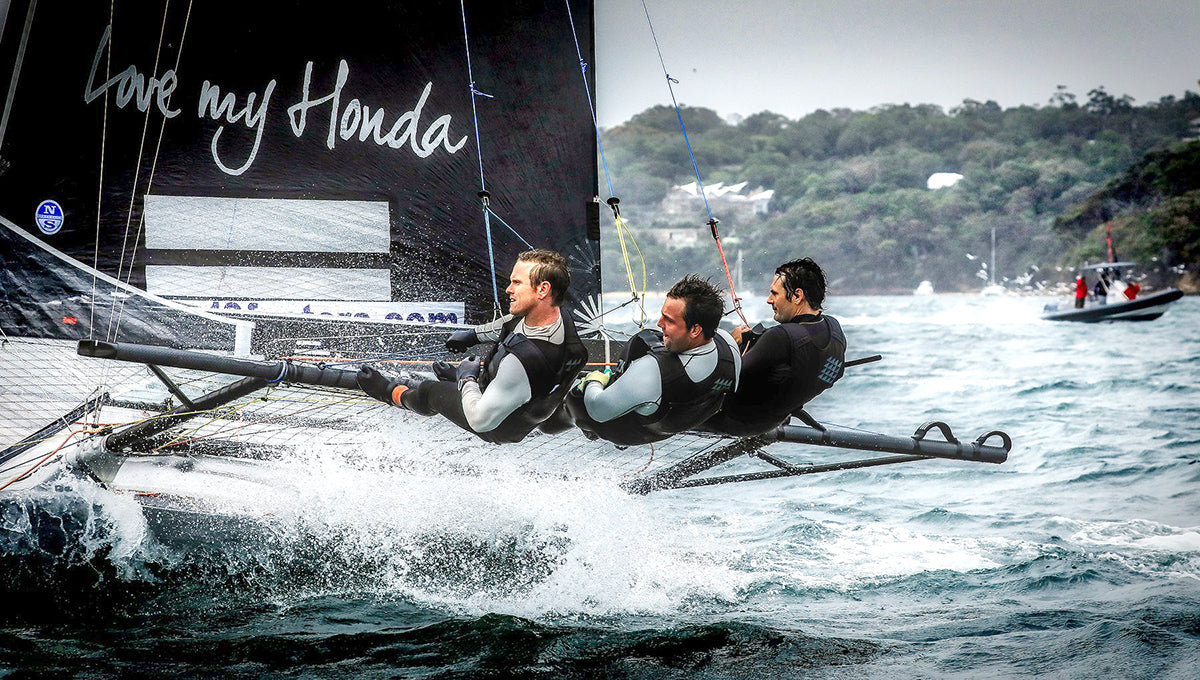
3x World Champion Matt Steven Provides Insights To Racing 18 Footers
© 18 Footers Australian League / Frank Quealey
David McDiarmid, North Sails Expert Matt Steven, and Bradley Collins (NZL) have claimed the most desired prize in the 18-footer class, the JJ Giltinan Trophy in 2018, 2019 and 2020, making them three-peat Champions in the competitive class. The 2018 win was the first time in 45 years that New Zealanders won this event, which is considered the world championship of 18-foot skiff racing. As a result of their big win in 2018, David, Matt, and Bradley were awarded Orbit World Travel Sailors of the Year at the Volvo Yachting Excellence Awards, along with Dongfeng’s 2017-18 Volvo Ocean Race winning sailors Daryl Wislang and Stu Bannatyne.
We checked in with middle crew Matt Steven about sailing 18-footers. Learn about what he has to say about choosing rigs, techniques, and how to sail an 18 to its full potential.
Crew work on an 18-footer can be challenging, especially in breeze. “We have pretty defined roles on the boat to keep consistency with boat handling,” says Matt. “It’s all about having as few crossovers as possible and not letting the boat slow down.” Crew weight also affects the technique. “I am the heaviest onboard, so it often pays to keep me out on the wire. Sometimes Brad , our bowman, gets loaded up with a few more jobs during the maneuvers. Luckily he is very fit and strong and lighter than me!”
One of the toughest things about 18’s, Matt explains, is rig choice. “You have two rigs for two wind ranges (0 -13 and 12-30 knots). However, within these ranges, there are a lot of different modes, so compromises have to be made, either at the top end or bottom end of each rig. It’s hard to have the ideal setup to cover an entire day’s worth of racing.” Though his team preferred their #2 rig, figuring out the right mode for each helped them adapt to changing wind ranges throughout each race day.
They weren’t the only ones wrestling with rig choice each morning. “There is often a standoff on the ramp,” Matt explained, as teams wait for others to make their choice. “Normally we are happy to be on the same rig as the majority of the fleet, but sometimes you just need to back yourself on the weather forecast.”
Rig tuning isn’t like other boats in the 18ft skiff. Matt explained that “the tuning tricks we have figured out ourselves over time, through practicing and spending time in the boat.” The 18ft skiff is fairly complicated, since almost every mast is custom built depending on crew weight and style, so there is not one specific guide for sailors.” Michael Coxon at North Sails in Sydney has a formula that most teams use. We have control over the rig with heel, and two sets of lower caps and primaries which we adjust accordingly as needed.”
©18 Footers Australian League /Frank Quealey
Starting line technique is pretty similar to other fleets concerning positioning and acceleration however, the 18-footer can accelerate a lot faster. “One of the hardest parts,” Matt says, “is staying stationary and holding your position. Once you lose flow over the foils, it can be very challenging to stay in control.”
Upwind and downwind techniques Matt said have similar concepts. “Body weight fore and aft, as well as knowing when to press hard are the keys to speed. Regarding tactics, staying in pressure is key… two knots of wind could make a 2-3 knot boat speed difference and a 10-degree angle change.”
Matt’s team typically replaces two or three sails a year, depending on the number of events they compete in. “We have a good relationship with our design team,” Matt says, “so we understand our gear and how to use it efficiently.” He says it’s helpful to understand shape changes, even though only minor tweaks were made for the 2018 season.
Matt’s team is sponsored by Honda, which enabled a wardrobe upgrade to 3Di for the 2019 season. This is a nice addition not only because of performance factors, but it meant they won’t need to replace sails as often. “The best thing about North Sails 3Di is that you know the shape is going to be the same each time you go sailing, and there is never a worry about structural failure. We have much confidence in the product. The added stiffness will allow us to have another dimension of rig tuning that was not available to us before. The sail controls will be more ‘tweaky,’ in a significant way.”
3Di + 18 FOOTERS
The Orbit World Travel Award came as a surprise to Matt, who was just happy to win the JJG Worlds, as it has been his primary goal since he started sailing 18-footers.
“We were very honored to be recognized alongside some amazing sailors for the Orbit World Travel Award. We are just normal guys who work day jobs that try and fit in as much training and sailing into our normal life. We have a desire to keep the trophy in New Zealand and make our fellow skiff sailors proud. We are happy to win for them, as well as ourselves and the New Zealand sailing community.”
CONTACT MATT ORDER SAILS NOW
© 18 Footers Australian League / Frank Quealey
READ MORE
READ MORE
SEGEL FÖR CLUBRACING – VAD FINNS DET FÖR MÖJLIGHETER?
SEGEL FÖR CLUBRACING
Vad Finns Det För Möjligheter?
Clubracing är ett engelskspråkigt begrepp som inte har någon självklar svensk motsvarighet. En rak översättning skulle ju bli ”klubbkappsegling”, men det känns för begränsat och fångar inte den innebörd vi är ute efter.
Clubracing är en mycket bred företeelse. Det kan innebära avslappnad kappsegling utanför hemmahamnen en kväll i veckan, utan spinnaker och med ankare och kätting hängande i stäven. Men det kan också innebära ambitiös kappsegling med ett erfaret, samtrimmat gäng i en planande sportbåt.
Redan här står det klart att frågan om vilka segel som är ”bäst för clubracing” egentligen inte har något svar. Samtidigt har nog ändå de flesta clubracing-seglare en likartad utgångspunkt. Man har inte en obegränsad segelbudget och är ofta ute en liten men effektiv segelgarderob med så få segel som möjligt. Seglens prestanda är viktig – i många fall helt central – men om investeringen ska kunna motiveras måste seglen även ha bra slitstyrka och lång livslängd. Ofta använder man dessutom samma segel för både kappsegling och semestersegling.
Som clubracingseglare måste man alltså kompromissa. Det man söker är egentligen inte seglen med absolut högst prestanda, utan snarare de segel som – på lite sikt och utifrån en given budget – ger mest pang för pengarna.
Vilken typ av segel behöver du?
Även detta är förstås en fråga utan generella svar. Vad som passar just dig beror ju på vad du har för båt, budget och ambitioner.
Och så har vi det här med SRS, som ju är det helt dominerande respitsystemet för det vi kallar clubracing. Är det något särskilt man ska tänka på?
Det talas ibland om ”SRS-optimering”, och det är uppenbart att det finns en del som ägnar sig åt sådant. Vår bild är dock att SRS i allmänhet ger din båt det mätetal den förtjänar och att det egentligen inte lönar sig att försöka ”lura” regel.
Värt att påpeka är att dock SRS är en breddregel och att en stor segelgarderob påverkar mätetalet. Du bör särskilt tänka dig för innan du beställer ett segel med smalt register. Detta eftersom du ju ”betalar” för seglets prestanda även när det inte används.
Om du inte vill ge bort något i onödan bör du se till att ditt mätetal baseras på korrekta uppgifter. Så gott som alla serietillverkare båtar väger avsevärt mer än vad tillverkaren har uppgett. Vikt är en central komponent i regeln och genom att väga båten går det ofta att få en klart märkbar sänkning av SRS-talet. Passa gärna på att mäta in seglen också. Även segelytan har stor påverkan på mätetalet och det har visat sig att många båtar seglar omkring med mindre segel än vad som anges i båtdatabladet. Dessutom är det så att segel krymper med tiden.
Inmätning av segel kan vi hjälpa till med. Att väga båten kräver en del arbete och lite pengar för lyft och hyra av en kalibrerad våg. Men om man går ihop några stycken i klubben behöver det inte kosta så mycket.
Överlag är annars SRS en enkel, välfungerande och rättvis regel. Så det enkla tipset är helt enkelt att skaffa de segel som passar bra till din båt och som gör den så rolig som möjligt att segla.
Om du upplever din båt som underriggad och trög får vi fundera över hur segelytan kan utökas – och tvärtom om den känns överriggad och svårseglad. Var du seglar spelar också in. En båttyp som i Stockholms skärgård ”kräver” en stor, överlappande genua kan på väst- eller sydkusten klara sig med enbart kryssfock. Om du har fock som enda försegel och förväntar dig förhållanden med mycket öppna bogar kan det vara motiverat att investera i någon form av code-segel.
Vilket segel ska du byta först?
Nya segel är en stor investering. För att sprida kostnaderna har många av våra kunder en plan som löper några år framåt och som innebär att de byter ut ett segel i taget i lagom takt. Då är förstås frågan: Vilket segel ska jag byta ut först?
Om inte dina segel helt uppenbart är färdiga för återvinning, så är det en bra början att göra en analys av deras skick. Ta gärna några bilder av seglen och mejla eller ta med dem till oss. (Fotografera seglen rakt underifrån, med kameran eller mobilen placerad exakt på mitten av underliket.) Om vi även får ta en titt på själva seglet kan vi göra en bra bedömning av dess potential.
Ibland kan vi medganska enkla medel ge nytt liv åt ett äldre segel som har börjat tappa formen. Genom att exempelvis sätta i hårda, profilerade lattor i ett storsegel går det att förlänga prestandalängden med ytterligare ett par år. Det kostar ett par tusenlappar men skillnaden kan vara förbluffande stor. Att byta från vertikala lattor till horisontella lattor kan göra en liknande skillnad på en fock. (Dock går den ju då inte längre att rulla in.)
Generellt kan man annars säga att det nästan alltid är bättre att ha ett bra försegel och ett sämre storsegel än tvärtom. Storseglet är ju trimbart på ett helt annat sätt än en fock eller genua – oavsett skick går det nästan alltid ”häcka ur” ett storsegel. Så om budgeten bara tillåter ett nytt segel är det sannolikt förseglet du ska byta ut först.
Vilket segelmaterial är bäst?
Okej. Du har insett att du behöver nya segel. Du har – på egen hand eller med hjälp av oss på North Sails – skaffat dig en bra bild av vilken typ av segel du behöver. Därmed är vi inne på nästa fråga: Vilken typ av material ska dina segel vara tillverkade av?
Det är nu det roliga börjar. Men det är också möjligt att det kan upplevas som något av en djungel. Vad finns det egentligen för alternativ? Och hur ska man tänka som clubracing-seglare?
– Dacronsegel
Först som sist ska sägas att gammal hederlig dacron många gånger är ett alldeles utmärkt alternativ. I Express, H-båt, 606. J/70, Drake, Starbåt och en uppsjö andra entypsklasser är detta det enda som är godkänt. Tar du en titt i resultatlistorna ser du att de presterar bra även på SRS-seglingar, trots att de då ofta konkurrerar med båtar med mer avancerade segel.
Detta förutsätter att seglet är tillverkat i rätt sorts dacron. Det finns en uppsjö olika dacrondukar på marknaden och de skiljer sig oerhört mycket ifråga om kvalitet, pris och egenskaper. Det du behöver för kappsegling är en högkvalitativ, hårt vävd prestandaduk med rätt ytbehandling. Den kostar en del extra men ger dig den formstabilitet du behöver för att vara konkurrenskraftig.
Tar vi ett steg upp från den klassiska crosscut-duken så hamnar vi på NPC Radian. Även detta är en vävd dacronduk, men den är starkare på varpen (längden) än väften. Det gör den lämpad för radialskärning, vilket gör att den hanterar krafterna på ett bättre sätt. För clubracing kan Radian vara ett alternativ för båtar upp till cirka 34 fot. Du kan då förvänta dig väldigt lång total livslängd men bör vara medveten om att det tappar formen tidigare än segel i mer avancerade material.
– Laminatsegel
På större båtar än så är krafterna som regel så stora att dacron inte länge räcker till. Om du bryr dig om i fall du vinner eller förlorar en minut på en timmes kryss är det läge att se dig om efter mer prestandabetonade material.
Laminatsegel är baserade på mylar. Panelade laminatsegel är oftast radialskurna och den bärande fibern kan vara allt från polyester till aramid och kolfiber. Fördelen gentemot dacron är att de har en helt annan formstabilitet och dessutom väger mindre.
De flesta segelmakare erbjuder också en typ av laminatsegel som brukar kallas för ”membransegel” eller ”stringsegel”. De tillverkas genom att knippen av kraftupptagande fibrer limmas in mellan två yttre lager av mylarfilm, och där fibrerna följer de förmodade kraftriktningarna i seglet. Ytterst lägger man ibland även på en taffeta som skyddar mot slitade, eller ett tunt skikt av ett svart eller grått non-woven-material som gör att seglen nästan ser ut som våra 3Di-segel.
I det här segmentet har vi på North Sails dock inget att komma med. Produktionen av våra 3DL-segel, som var föregångaren till dagens membransegel, avslutades nämligen redan i december 2017. Anledningen var att de, precis som alla segel tillverkade i mylar, hade en del inbyggda nackdelar som vi visste att det aldrig skulle gå att komma tillrätta med. Dessutom hade vi redan en ersättningsprodukt – 3Di – som var helt överlägsen på alla punkter.
– 3D-gjutna kompositsegel
3Di är en unik teknologi som North Sails är ensamma om. Ett 3Di-segel innehåller ingen som helst film, utan byggs på samma sätt som ett båtskrov eller en kolfibermast: Prepreg-behandlad fiber (fiber mättad med ett tvåkomponents resin) läggs upp på en tredimensionell gjutform, värme sätter igång härdningen och när det har härdat färdigt har de två materialen omvandlats till ett enda homogent material. Konstruktionen är extremt stabil, seglet kan inte delaminera och fiberhalten är nästan dubbelt så hög jämfört med ett membransegel.
Idag har vi tre olika produktlinjer – 3Di OCEAN, 3Di ENDURANCE och 3Di RAW – som tillsammans täcker allt från små och stora cruisingbåtar till små och stora racingbåtar.
Det är inga vattentäta skott mellan de olika kategorierna. 3Di OCEAN 330, som byggs helt i polyester, är exempelvis ett populärt val för clubracing i båtar upp till ca 40 fot. Prestandamässigt levererar det ungefär i nivå med ett bra membransegel i aramid eller kolfiber. Det är aningen tyngre men å andra sidan har det en livslängd som är skyhögt bättre. Det är inte på något sätt billigt men det kostar mindre än 3Di-segel i mer exotiska material.
3DI ENDURANCE–serien är utvecklad med tanke på seglare som vill kunna kombinera cruising med kappsegling på hög nivå. Har du en båt runt 40 fot är 3Di ENDURANCE 760 så nära det perfekta seglet du kan komma. Med ett sådant segel ger du inte bort en sekund till dina konkurrenter och sköter du om det kommer det leverera under många, många år.
Som clubracingseglare behöver du inte vara rädd ens för våra 3Di RAW-segel. De är visserligen våra minst hållbara 3Di-segel, men erfarenheter från bland annat Volvo Ocean Race och Vendée Globe visar att de klarar extrema förhållanden under lång tid.
3Di-teknologin resulterar i segel med prestanda, styrka och livslängd som går långt utöver alla andra typer av segel.De har bara en enda nackdel: Tillverkningsmetoden är kostsam och det återspeglar sig i priset på den färdiga produkten.
Vilket undanvindssegel passar bäst för clubracing?
Första steget är att bestämma dig för om du ska ha ett asymmetrisk eller symmetrisk segel. Generellt sett kan man säga att en asymmetrisk spinnaker (gennaker) halsad till stäven inte är ett konkurrenskraftigt alternativ. Däremot kan det funka med en gennaker halsad på ett fast eller utskjutbart peke. Om du har en båt utrustad med spinnakerbom är en traditionell spinnaker vanligtvis det bästa alternativet.
Nästa fråga är vilken typ av duk din spinnaker ska ha. Det finns två olika grundtyper av nylon. En är mer inriktad för cruising, en för racing. Fibrerna i den cruisingbetonade varianten är mättade med melaminresin, men saknar så kallad coating. Om du kan leva med ett lite tyngre segel är den klassiska 0.75 ounce-duken ett bra val. Den är tålig och klarar sig bra även om du skulle råka släpa den i vattnet några gånger.
Mer prestandabetonade nylondukar är vävda på ett tunnare sätt, vilket sänker vikten – en bra racingduk väger 35-40 g/m2 istället för närmare 50 g/m2. För att stabilisera duken har den istället en tunn uretan-coating ytterst. Denna coating bryts ner med tiden, vilket gör att den tappar i prestanda.
Om du bara vill ha en enda spinnaker (och detta gäller såväl symmetriska som asymmetriska segel) bör du sikta in dig på en allroundbetonad design. Med ett sådant segel kommer du vara konkurrenskraftig i de flesta clubracing-sammanhang. Om du vill ta ett steg till och kunna konkurrera i hårdare konkurrens vill du förmodligen ha två spinnakers. Den ena skulle kunna vara en väldesignad allroundspinnaker i en bra prestandabetonad 0.75-duk. Den andra skulle kunna vara en mindre och lättare spinnaker med smalare skuldror, designad för brantare vinklar. Det ger dig en fördel i lättare vindar där man brukar skär mer.
Vad ger just dig mest pang för pengarna?
Så där ja. Nu har vi gått igenom de möjligheter du har och vi har kort beskrivit de olika material som kan vara aktuella.
Så här mot slutet vill vi bara påpeka att det förstås är möjligt att välja en kombination av olika material. Ett sätt att komma ner i pris är att lägga extra krut på förseglet och välja ett enklare material i storseglet. Lite extra vikt i storseglet påverkar sällan prestandan på något märkbart sätt och det är möjligt att jobba med lattor som stärker upp konstruktionen.
På många mindre båtar (som låt säga NF eller Cumulus) är storsegel i dacron och en 3Di 330-fock eller en radialskuren genua i en bra laminatduk riktigt bra kombinationer. Har du en modern 35-fotare kan ett 3Di OCEAN 330-storsegel och en ENDURANDE 760-fock vara den lösning som ger dig mest prestanda och livslängd för pengarna.
Nyfiken? Kontakta oss så tar vi ett snack och tittar närmare på vilken kombinationen av prestanda, slitstyrka och livslängd som skulle ge just dig allra mest pang för pengarna.
READ MORE
READ MORE
LOST BOYS I NS DUGOPOLJE NA RORC CARIBBEAN 600
Lost boys i NS Dugopolje na RORC Caribbean 600
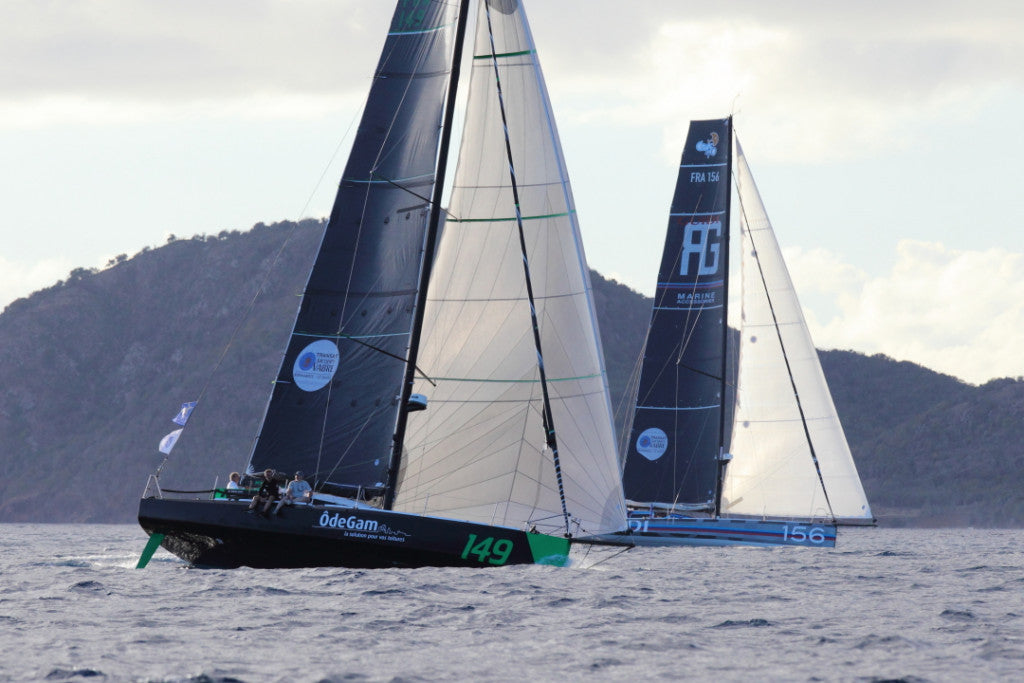
📸 Tim Wright/Photoaction.com
Jutros su u cilj dojedrile prve jedrilice iz skupine Class 40 koje jedre na kultnoj regati RORC Caribbean 600, a pobjednika je odlučila sama zona finiša.
Ekipa koja jedri pod imenom Lost boys, a koja je dio North Sails tima Dugopolje bila je na čelu skupine skoro cijelu regatu. U jednom trenutku su imali čak i dvadesetak milja prednosti.
Međutim, nedostajalo im je sportske sreće i upali su u zonu laganog vjetra i bonace pred samim ciljem, a što je iskoristila posada na Class 40 Finnimo i u posljednjih nekoliko milja preuzela vodeću poziciju, te sa 61 sekundi razlike ušla u cilj prije Charles-Louis Mourruau’s Guidi i njegove posade.
Detaljniji izvještaj možete pročitati na ovom linku.
READ MORE
READ MORE
OVOG PUTA PANJIĆ I CRO-A-SAIL NA VRHU CRO MELGES 24 FLOTE
Ovog puta Panjić i Cro-a-sail na vrhu CRO Melges 24 flote
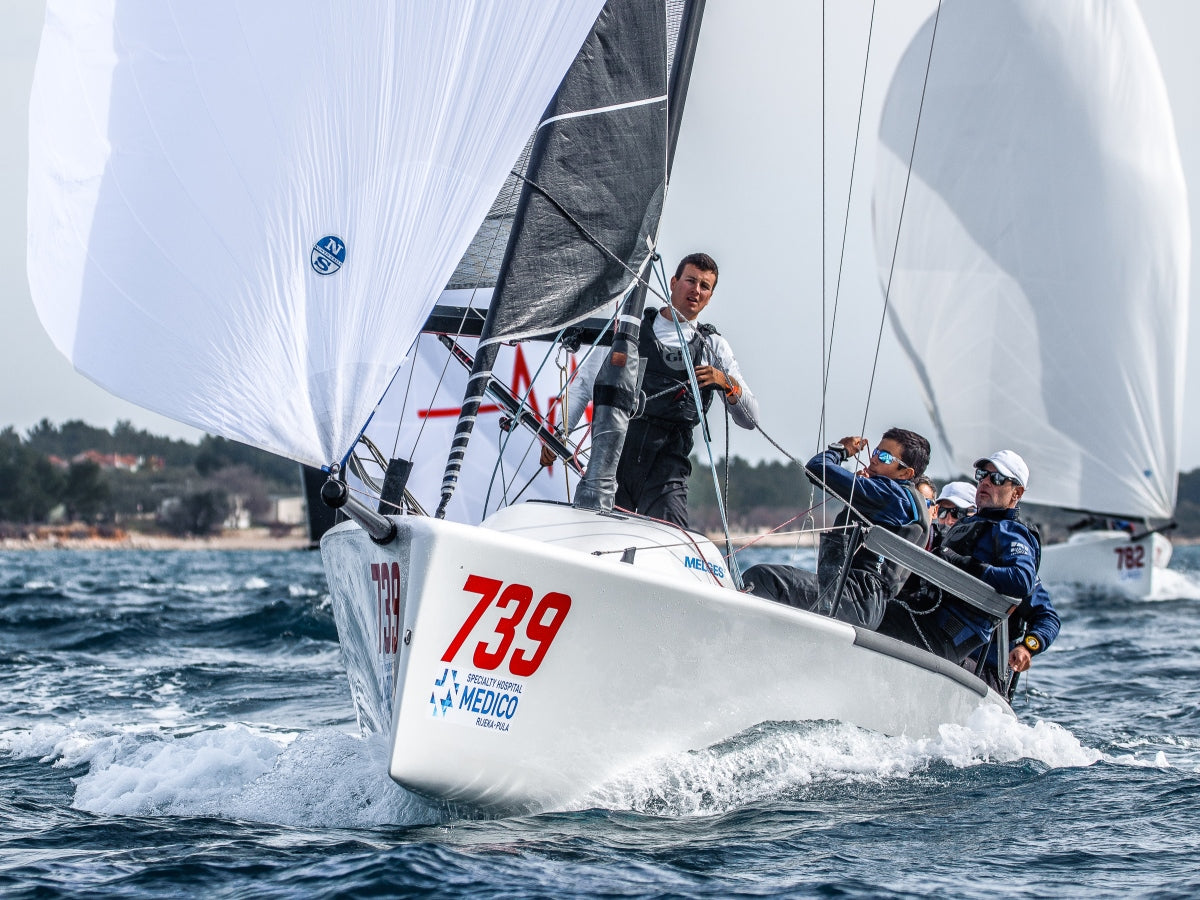
📸 regate.com.hr
Prije godinu dana u Biogradu odjedrena prva regata klase Melges 24 u Hrvatskoj, a prošli vikend je odjedrena druga ovogodišnja regata za Kup nakon što je otvaranje sezone 2022. odjedreno u Dubrovniku.
Na regati koju je organizirao JK Briva zajedrilo je 14 posada od najavljenih 15. Petnaesta posada trebala je imati premijerni nastup, a riječ je o ekipi jedrilice Razjareni, registrirana pod JK Split. Jedrilica je stigla u Biograd, ali nažalost nije niti skinuta s trajlera jer je jedan član posade morao ostati doma zbog Kovida.
Ostali nisu imali takvih problema, pa su od četvrtka i petka uživali u gostoprimstvu Biograjaca.
Program regate bio je standardan za dvodnevne regate. Dolazak jedrilica, njihovo bacanje u more, podizanje jarbola i trimanje, zajednički trening u petak, vaganje, roštilj party nakon vaganja i pripreme za dva službena natjecateljska dana.
Vremenska prognoza je najavljivala brzu i atraktivnu regatu za oba dana. Donekle je bila u pravu u subotu kad je puhalo jugo. Puhalo je od ranog jutra i kako se približavalo vrijeme isplovljavanje vjetar je postupno jačao, a svoj vrhunac imao je tijekom drugog plova. Do kraja tog plova bio je stabilan po snazi, ali nakon idućeg startnog signala postupno je slabio.
Za nedjelju je prognoza također bila vjetrovita, ali ovog puta iz smjera bure. Međutim, ponovno dolazi do pogreške prognostičkog modela pa cijelu nedjeljno jutro prolazi u iščekivanju bilo kakvog vjetra sve dok nije počela probijati tramontana koja je na kraju donijela i sunce i u jednom trenutku najjači vjetar po kojem se jedrilo tog vikenda u Biogradu. Vjerujem da ne treba posebno isticati da su se po ovako dobrim uvjetima uspješno odjedrila tri plova. Da budem precizniji, samo u četvrtom plovu RO je bio primoran signalizirati promjenu kursa u drugoj orci kad je vjetar otišao u lijevo, ali taj novi smjer ostao je takav do kraja nedjeljnih jedrenja.
Što se tiče taktike ovo je vjerojatno bila jedna od težih regata koje je do sada jedrila ova klasa, subota pogotovo.
Regatno polje je tada bilo postavljeno južno od Biogradske rive. Južni dio Pašmanskog kanala u tom dijelu je sasvim dovoljne širine i za regate mnogo većih jedrilica, pogotovo kad je u pitanju jugo. Međutim, konfiguracija terena i posljedično dvije različite zone po pitanju valovitosti, odnosno utjecaj vrlo jakog kurenta, stvarali su dosta glavobolje jedriličarima zaduženim za izbor prave strane regatnog polja. Ako se htjelo jedriti po manjem valu trebalo je ići bliže Pašmanu, ali jači kurenat bio je s druge strane, međutim u koliziji s jugom stvarao je oštriji i visočiji val, a samim tim i jedrilice su više "skakale" u orcu.
Posljedica ovih kalkulacija bila je da se vrlo teško moglo prognozirati tko će biti u vrhu u pojedinoj orci, a pogotovo krmi. Tako da se još jednom potvrdilo pravilo da je kod klase koja jedri krmu s genakerom ta faza jedrenja najpresudnija za finalni raspored.
Prvi dan regate u Biogradu bit će zapamćen i po relativno velikom broju izlijetanja na startu, što se u rezultatima može vidjeti pod oznakom UFD. Naime, RO je sve starteve organizirao sa Uniform zastavom. Za one koji nisu upoznati s njenim značenjem i posljedicama djelovanja kad je ona istaknuta, treba reći da je ona u stvari blaža verzija crne zastave. U stvari njih dvije imaju jednako značenje u predstartnoj proceduri u dijelu koji kaže da niti jedna jedrilica u posljednjoj minuti pred start ne smije biti unutar trokuta određenog sa startnom linijom i oznakom orce. Ako se jedrilica u posljednjoj minuti nađe u toj zoni automatski se isključuje iz tog jedrenja. Naravno, u ovo ulazi i preuranjeni start. A razlika između Uniform i "Black flaga" je u tome što u slučaju ponavljanja starta jedrilice isključene zbog preuranjenog starta kad je podignuta zastava "U" ponovno mogu pristupiti predstartnoj proceduri, a u slučaju prijestupa kad je podignuta crna zastava ne dobivaju novu šansu sve do idućeg plova.
U subotu su četiri jedrilice "skinute" s UFD-om. U prvom i trećem plovu po jedna, a u drugom dvije.
Prvi (ne)sretni dobitnici bili su momci i djevojčica s Universitas Nova-e. S obzirom na kvalitetu sudionika i svoje ambicije nisu smjeli sebi dopustiti ovakav početak. Istina, u nastavku dana su se donekle iskupili, ali značajno su sebi povećali pritisak po pitanju budućih rezultata i smanjili svoje izglede za penjanje na postolje.
Ovaj plov ostat će trajno zapisan i u memoarima jedrilice Cezibordo jer im je stotinjak metara nakon starta, nakon prve vire, popustila ogradica i cijela posada osim kormilarke završila je u moru. Naravno, brzo se vraćaju na svoju jedrilicu, skupljaju spužve po moru i moraju odustati da bi popravili štetu i mogli normalno nastaviti s regatom.
U drugom plovu ova ekipa pokazuje da je dovoljno koncentrirana na jedrenje i da im taj nesretni slučaj nije pomaknuo fokus, te u iduća dva plova ulaze u cilj kao trećeplasirani, te na kraju dana imaju jednak broj bodova kao i Universitas Nova koja je prvo završila kao 5., pa potom odnosi pobjedu. Ta pobjeda u trećem plovu pokvarila je namjeru posadi Panjića da se s idealnim rezultatom vrate u Marinu Šangulin, ali bar se mogu utješiti da su pobjedu izgubili za samo nekoliko metara.
Posade koje su u drugom plovu dobile UFD bile su Amor Wave i Palmina. Inače, Amor Wave-u ovo je bio premijerni nastup, ali unatoč ovom UFD-u mogu biti zadovoljni cijelom regatom s obzirom da su stalno bili u sredini flote, a u posljednjem plovu u cilj čak ulaze i kao četvrti, a i finalni plasman u regati im je u prvih deset.
Zadovoljni sa subotom bili su i momci s Point One-a. Istina, počeli su s izvrsnim drugim mjestom, a u nastavku dana su padali u plasmanu za po dva mjesta, međutim kad se uzmu u obzir oscilacije i problemi direktne im konkurencije, može se zaključiti da su uspjeli održati vrlo visok bodovni prosjek.
Također su se s osmjehom na licu u marinu vratili i momci s Matarana 24. Oni su se kao tim predstavili već u Dubrovniku, ali tada su jedrili na Strilici, a ovog puta na svojoj jedrilici. S novom jedrilicom u cilj ulaze kao 3., 8., pa 5. a posebnu draž ovako dobrom danu dalo im je i to što su im to bila i doslovno prva jedrenja.
A posljednji UFD subote, ujedno i cijele regate, osvojila je ekipa s Yikes-a. Do tada su bili bodovno izjednačeni s Mataranom i Tutta Forzom, ali bar su dobili šansu prvi se vratiti na suho.
Nažalost, na kraju dana na jedrilici Point One, kormilar Karlo Kuret, doživljava nezgodan pad na rame i nakon odlaska u Biogradsku bolnicu i obavljenog snimanja saznaje da mu je pukla ključna kost. Za njega jedrenje u nedjelju ne dolazi u obzir i posada se do jutra mora snaći naći dogovarajuću zamjenu!
U noći između subote i nedjelje očekivala se kiša nakon koje je trebala nastupiti promjena s juga na buru. Do promjene je stvarno i došlo, ali tek u zoru. Kiša je bila obilna i taj oblak je nastavio prema jugu, ali za njim se nastavila valjati oblačna masa koja je zatvorila cijeli obzor. Nisu postojali nikakvi uvjeti niti za isplovljavanje i čekanje nastavka jedrenja na regatnom polju, ali srećom kiša nije više padala.
Tek iza podne počelo se osjećati pomicanje najnižeg sloja atmosfere i dolazak vjetra iz pravca sjever - sjeverozapad. RO nije dvojio niti sekunde i odmah poziva flotu na more u sjevernu zonu koja je bila smještena točno ispred ulaza u marine.
📸 regate.com.hr
S dolaskom tramontane naoblaka se kida, dolazi sunce i transformacija vremenskih prilika bila je apsolutno na strani jedriličara.
Regatno polje postavljeno je na smjer od oko 310°, duljina orce bila je ako i u subotu oko 1.2NM i moglo se krenuti s jedrenjem. Ni u ovom, a ni u ostalim jedrenjima nije više bilo izlijetanja prije startnog signala, a jedini problem imala je Palmina koja je imala problema sa spuštanjem genakera u prvoj krmi drugog nedjeljnog plova.
Regatno polje bilo je manje zahtjevno po pitanju taktike i flota je ravnomjerno jedrila i na lijevoj i na desnoj strani. Istina, prve jedrilice odmah nakon okreta offseta odmah bi nastavile jedriti s genakerom na lijevim uzdama i to je na jedan način bila šablona ove pozicije.
Po pitanju rezultata, Panjić više nije dominirao kao dan ranije. Prvi plov ulazi kao četvrti, iza Cro-a-saila, Universitas Nove i Matarana. Ova pobjeda posadi JK Opatija bio je najbolji rezultat na ovom regati. U iduća dva plova završavaju kao 4. i 5., a u konačnom skoru im je ta pobjeda donijela prednost koja im je osigurala srebro.
Ekipa koja je u konačnom skoru imala jednak broj bodova kao i Cro-a-sail i osvojila broncu, bila je posada Ceziborda. Nakon dva 3. mjesta u subotu, na popis dodaju 5., 3. i 2. mjesto. Total od 16 bodova im je jednak kao i Cro-a-sailu, ali eto, ta pobjeda u četvrtom plovu prevagnula je na stranu Opatijaca.
U idućem plovu Panjić ponovno pokazuje da je najbolji poznavatelj lokalnih uvjeta na moru. To mu je ujedno i posljednja pobjeda na regati, te s obzirom na izvrsne rezultate u svim prethodnim jedrenjima opušteno ulazi u posljednji. U njemu završavaju kao 7. i taj plasman odbacuju kao najlošiji rezultat.
A posljednji plov, šesti ukupno, po tramontani koja je pomalo krenula sa slabljenjem, od početka pa do kraja na čelu flote je Mataran 24.
Tijekom cijelog plova jedrili su bok uz bok s Tutta Forzom, lanjskim prvacima Hrvatske. Nadmudrivanje je trajalo od početka do kraja ovog plova, ali kako to uvijek biva, treći iskoristi priliku. Ovog puta treći nije uspio proći obje jedrilice, već samo Tutta Forzu. Između njih se ubacio Cezibordo kojem je to ujedno i najbolji rezultat regate u Biogradu.
Analizom rezultata može se primijetiti da je najviše turbulencija u prosjecima svih posada bilo baš u posljednjem plovu. Neki su taj kiks mogli odbaciti, dok je neke taj uspjeh pomaknuo za mjesto ili dva prema gore. U svakom slučaju, rezultatski jedna od najneizvjesnjih regata klase Melges 24 do sada!
A što se tiče Point One-a, Karla Kureta je za argolom zamijenio Zvonko Jelačić. Zvonku je na Melgesu 24 jedrio lani u Dubrovniku kao član posade Yikesa. Brzom usporedbom rezultata od subote i nedjelje može se zaključiti da je Zvonkom izbor bio vrlo dobra odluka, jer je prosjek nedjeljnih rezultata s njim za kormilom bio 6. mjesto, dok je Karlov prosjek bilo 4. mjesto.
Iduća regata za CRO Melges 24 Cup je 19. i 20. ožujka, a u Ičićima će je organizirati JK Croatia, za koju jedri posada na Blue Label.
READ MORE
READ MORE

NORTH SAILS 2022 NEWPORT BERMUDA RACE TECH BRIEF
NORTH SAILS 2022 NEWPORT BERMUDA RACE TECH BRIEF
Sail Selection and Inventory Optimization
📸 The Ocean Race
When planning your offshore racing it is crucial to manage your sail inventory. An optimized inventory and sail selection will allow you to maximize performance and ensure your crew is prepared if and when conditions change. While necessary, multiple sail changes are time consuming and draining and having the right sails onboard will greatly contribute to a successful race. As Performance Partner to the Newport Bermuda Race, the North Sails team shares their expert advice on how to build a well planned sail inventory for the 2022 race.
Sail inventory preparation requires extensive research, forethought and planning to get right. One tool used in planning, as Peter Isler referenced in the webinar, is a heat map which uses historical data to predict wind speed and angle for future time periods. Weather and routing data used in conjunction with your boat’s crossover chart will help guide inventory recommendations.
Headsail and Spinnaker Selection
On a non-overlapping rig, jibs are coded with a J and a corresponding number. As the number goes up, the higher the intended wind range of the sail.
J1 – Performs best in 0-10 knots, while sailing close-hauled or close-reaching.
J2 – As the wind increases to 11-20 knots, a J2 comes into play.
J3/ J4 – Above 20 knots, a boat will carry a J3 and sometimes even a J4 (typically not full hoist, and sometimes set on an inner stay).
Jib Top (JT) – A high clewed (provides a better sheeting angle), non-overlapping headsail that is used when you need to bear off, but don’t want to lose your leech tension. The Jib top will be deployed at different wind speeds (boat- dependent), as it is less area than the big reaching sails, and it helps to bring the effort lower down to the boat, allowing more control over the boat as wind speed increases.
Overlapping boats will typically carry the following sails:
#1 – 155% Genoa
#2 – Typically between 130%- 140% depending on the track length and location
#3 – Non-overlapping blade jib
Genoa Top – Can be any LP smaller than the biggest Genoa. Handles the close reaching angles. Has the same high clew as a Jib Top for cracking reaching angles especially in breeze.
When it comes to asymmetric sails for the Newport Bermuda Race, North Sails experts recommend an A1 and A3, which will cover the 0- 20 knot range, reaching angles. The A5 would cover a higher wind range, however may not be as relevant for this year’s race, due to the fact that most forecast predictions do not call for this wind range. An A2 and A4 are considered broader winded, running sails. Your A2 will be your biggest sail, as it is intended for VMG running, straight downwind.
Staysails are often referred to as a “free sail,” in terms of a ratings hit. These sails increase performance when seeking extra height and essentially feed the wind on the back of the main. They also help reduce the gap between the headsail and the mast. Reach out to a North Sails expert to discuss options and recommendations for using a staysail.
Code Sail Selection
When thinking about your Code Sails, it is important to ensure your sails will cover the forecasted wind range and play to the strengths and weaknesses of your boat. Consider the rating penalties that correspond with each sail and your rig type. Try running a test certification and consult your North Sails experts for further insight.
The graphic above shows the difference in the luff curve as you move through the Code Sail range. The more you decrease the mid-girth, the flatter the sail becomes, allowing you to sail tighter angles to the wind. Anything between 55% and 75% mid girth is considered a “tweener”, and counts as a “large roach headsail”. Again, your North Sails experts can help you decode what is best for your inventory.
One option to increase range is using Helix Structure Luff sails. A radical design innovation once limited to Grand Prix Racing, Helix Structured Luff is now standard on all North Code Sails. A Helix sail uses load sharing technology with the sail’s structure to improve its aerodynamics and in many cases reduce the load on your equipment. The benefit in a distance race like the Newport Bermuda Race is maximizing performance since these versatile sails carry across a wider range.
When looking at the typical Newport Bermuda Race weather, there is a lot of time spent sailing at various reaching angles between 0-15 knots. An advantage of Helix is it allows for a wider crossover with other sails, whilst providing better luff projection for a more powerful sail shape through the range. By engaging the structured luff, trimmers can change sail shape on demand to meet the wind and weather conditions. When considering your course speed, Helix can help you limit multiple sail changes to maintain full power across more miles.
HELIX CODE SAILS
Safety Requirements and Precautions
Lastly, safety preparation is vitally important to ensure a successful offshore race and should be a deciding factor in sail choice. A storm jib and storm trysail should be in your inventory, but a mainsail with a reef that is 50% of P is an acceptable substitute for a trysail. It must attach from a different point than your main boom, be a highly visible color such as orange, red, or green, with easily visible sail numbers.
Make sure your sail repair kit is reviewed and freshly stocked prior to the race. The North Sails service experts recommend having glue, shammys/ towels to properly dry a ripped sail, denatured alcohol, a good knife, palm, leatherman, seam rippers, needles, thread and webbing in your inventory. North experts can provide tutorials for any repairs needed and can also provide a custom patch kit of sail cloths/colors to match your spinnakers.
Connect with Your Local North Loft
Get your sails into the loft ahead of time and consider remeasuring headsails if you are looking to help your rating. Connect with your local North Sails loft to get started today.
GET IN TOUCH WITH AN EXPERT
Still have questions? Watch the Newport Bermuda Race Sail Selection and Inventory Optimization Webinar with North Sails Experts Tim Dawson, Austin Powers, Jack Orr and Will Bomar.
READ MORE
READ MORE
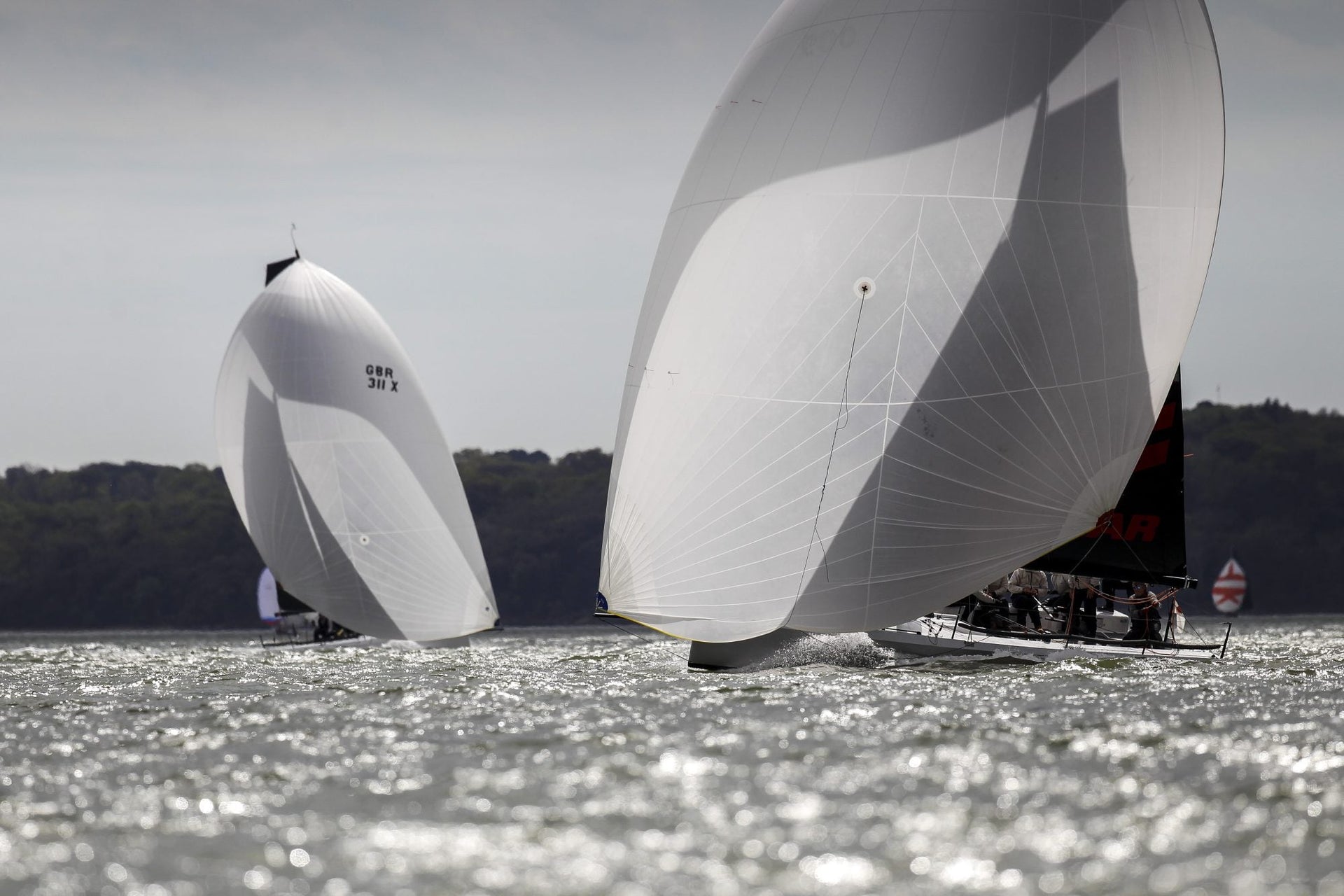
NORTH SAILS UK MUST-DO REGATTAS IN 2022
A LOOK AT THE SEASON AHEAD
North Sails UK Must-Do Regattas In 2022
📸 Rick Tomlinson
With the 2022 racing season just around the corner, North Sails UK has outlined its highlight events of the upcoming year. Your local North Sails experts will be sailing and on the dock for all of these regattas, so keep an eye out and we are looking forward to seeing you there.
If you haven’t placed your order for the upcoming season yet, to avoid disappointment, get in touch with the team of local experts today.
TALK TO AN EXPERT
Poole Regatta: 30th April – 2nd May
The first date for the diary is Poole Regatta, and with over 18 classes expected to line up in Poole Bay, what a way to start the season. As sponsors of the rapidly growing Cape 31 class, the North Sails coaching day on the Friday before racing will be the prime time to quiz Cape 31 Class Expert Ben Saxton. Teams will have the opportunity to utilise their skill and experience in sail trim and crew work to get the most out of the first Cape 31 regatta this year.
To reserve your spot, reach out to Ben Saxton today
CONTACT BEN SAXTON
Round the Island Race: 25th June
Round the Island Race is one of the world’s largest yacht races, with the extensive entry list comprising of Grand-Prix race yachts, superyachts, foiling trimarans, cruising boats, and small keelboats, all competing for the Gold Roman Bowl. Over 1000 boats are expected to take part, and the local North Sails team will be busy making sure your sails are delivered in time for the race.
Cowes Week: 30th July – 5th August
Following a slightly quieter event in 2021 due to the pandemic, you will not want to miss this years’ Cowes Week. One of the world’s most famous regattas, yachts will be coming from all over for a great week of racing on the Solent.
Cork Week, Ireland – 11th – 15th July
Following the cancellation of its 300th Anniversary event in 2020 due to the pandemic, the Royal Cork Yacht Club is raring to go with a rerun of their big anniversary of Cork Week. Welcoming everything from stately classics to the most modern race boats, all can expect a warm Irish welcome and great racing. We can’t wait for this renowned event to be back.
IRC Europeans, Netherlands – 25th – 28th August
Finally, at the end of August, the European IRC Champion will be crowned in Breskens at the seventh edition of this event.
Other notable events include –
RORC IRC National Championship
Sevenstar Round Britain and Ireland Race
Volvo Round Ireland Race
SIGN UP FOR NORTH SAILS NEWS
READ MORE
READ MORE
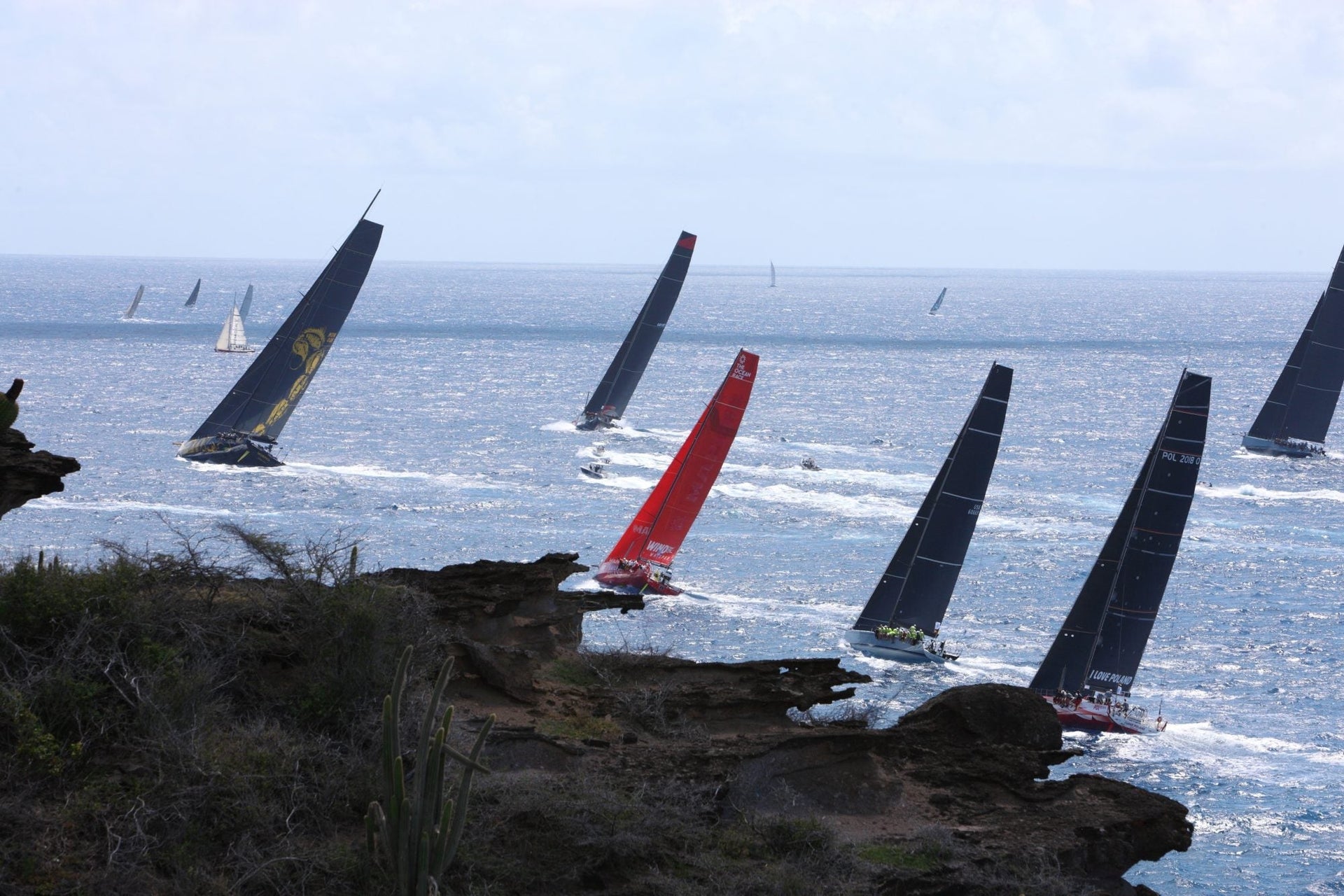
Q + A WITH ANDREW DOVE, MANAGER OF NORTH SAILS ACTIVITIES IN ANTIGUA
BEHIND THE SCENES AT THE CARIBBEAN 600
Q + A With Andrew Dove, Manager Of North Sails Activities In Antigua
📸 Roddy Grimes-Graeme
In anticipation of the 13th Edition of the RORC Caribbean 600 Race, we sat down with Andrew Dove, the manager of North Sails activities in Antigua to get a closer look at the preparation for this event from the loft manager’s perspective. Situated close to the docks, the loft is a gathering spot for crews from all over the world, and is the center of the excitement during the weeks leading up to the event.
What makes the “600” different? What is the “je ne sais quoi” of the race?
The 600 is a showcase of our beautiful islands. As the boats progress through the 600 mile-course, there are numerous challenges to keep it interesting: wind holes under islands and the currents running between them. In this race the navigator and tactician are especially vital to a team’s success as one wrong decision can be extremely costly.
For the Caribbean 600, both professional and amateur crews prepare in almost perfect conditions on the docks of English and Falmouth Harbour. There is a real buzz of energy about the village before the start. Then as the boats return, the whole community shares the stories that the crews have written during the regatta. It never gets old; even after 13 years, the buzz is still going strong.
Why is the 600 important to North Sails, and how is North Sails important to the race?
The North Sails loft is an unofficial regatta HQ from morning to night every day and has been for years. The loft comes alive with this event, and crews gather here often late into the night. So many North colleagues from around the world are on-island with us, and we all fly the North Sails logo proudly and with enthusiasm. With such a diverse fleet on the water, racing in varied conditions, our many North Sails experts are ready to assist the teams in every way we can.
As customers have booked in, our team has managed to stay ahead with a seven-days-a-week schedule, basically since the New Year. And now, as the boats are in their final practice sessions, we are confident we will meet the expectations that our customers bring, and our sails will meet the demanding conditions. I have developed a strong team over many years, and we approach our work seriously, but always with an Antiguan smile.
In your opinion, what will be the essential sails during this race?
There is a reasonable amount of reaching in the course, and it becomes a real test of a sail’s durability. Our Helix Structured Luff Code and A Sails can make a huge difference here. Also, 3Di is invaluable because of its unique performance and durability. Many of the beats are challenging, with steep, choppy seas, so the powerful and stable 3Di headsails give any boat a cutting edge. The Caribbean 600 provides ideal conditions for us to differentiate ourselves from our competitors and highlight the breadth and range of the North Sails products.
📸 RORC/ Tim Wright
In a race like the TJV, many teams worked with the North Sails France team to design and build sails; the sailors then provide feedback to the designers once they returned to France. The Caribbean 600 is different, though, but equally important– do teams (ex Skorpios) give feedback to you upon their return to Antigua? How does the feedback loop work with you?
The Antiguan loft sees sails used in extreme conditions. The seas and wind are much more demanding than one would believe. So after each event and especially the 600, we can give feedback to the North designers regarding what we see coming through the loft and suggestions for improvements based on the conditions experienced. There is a wealth of knowledgeable feedback with so many experts on the water.
Previous 600s have helped to prove that 3Di is exceptionally durable, as I mentioned, and overall a vastly superior product. We do very few repairs on them, and when we do, the materials available ensure the sails remain structurally sound and visually neutral. We are looking forward to seeing the Helix sails in the race this year. However, we don’t expect to see too many in the loft for repair. In terms of performance and practicality, Helix sails are incredibly durable and versatile across a wide range, reducing the number of sails required. This race should prove a great testing ground to further the Helix Structured Luff design philosophy.
Why is it important for the top teams to have the most technologically advanced sails on the market?
In these regattas, the teams have a lot to manage. Not having to worry about sail structure or wondering if the sail will perform, plus having top notch service removes a lot of pressure on the teams. In addition, the boats equipped with North Sails have more time to focus on non-sail-related race preparation.
📸 Roddy Grimes-Graeme
READ MORE
READ MORE
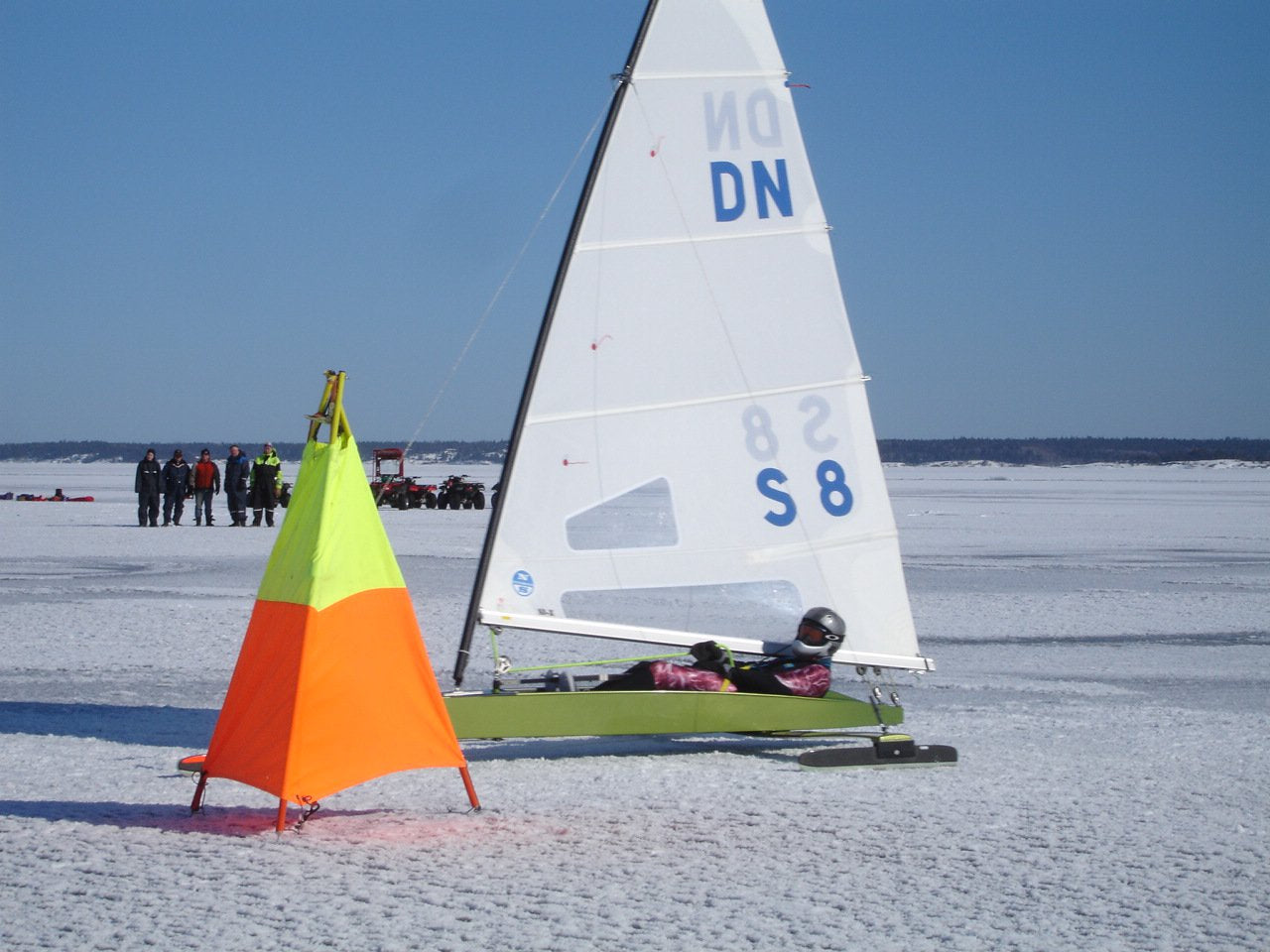
ÄNNU ETT SM-GULD 2021
ÄNNU ETT SM-GULD 2021
Och 2022 års första EM-guld!
När vi i höstas summerade säsongen 2021 kunde vi konstatera att våra segel varit med om att erövra 28 SM-medaljer (varav 11 guld) i 19 olika entypsklasser. Men det var faktiskt lite förhastat, för säsongen var inte riktigt slut, och strax innan jul trillade det in ytterligare ett SM-guld. Detta genom att Fredrik Lönegren vann SM i DN-jakt. Stort grattis!
Isjaktssäsongen är nu i full gång och vi kan redan nu föra in ett EM-guld på 2022 års vinnarlista. I början av februari var nämligen Bernhard Rost och Thomas Tennström över i Litauen och vann EM i XV-klassen. Grattis även till er!
READ MORE
READ MORE
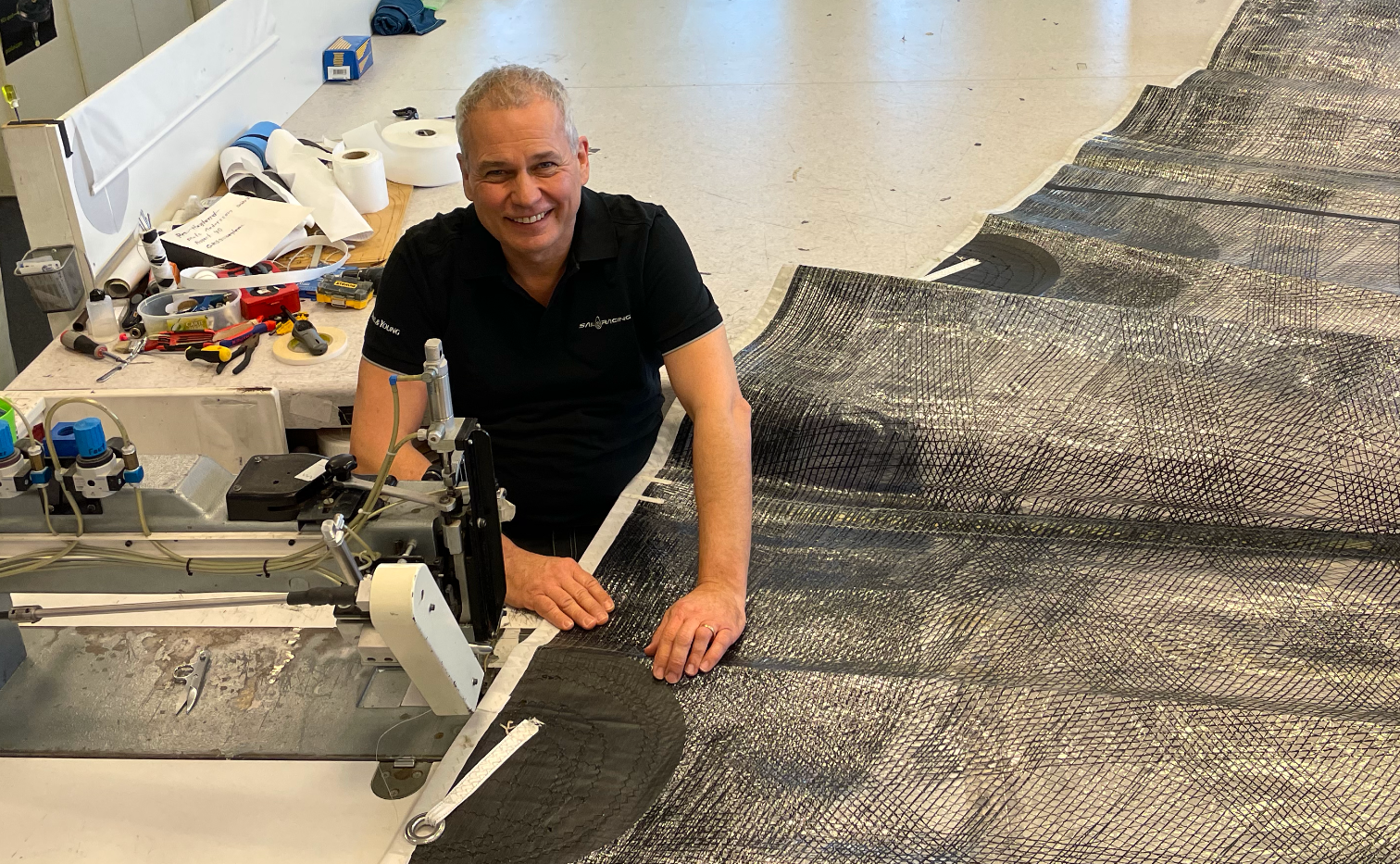
NU HAR PÄR LARSSON MÖNSTRAT PÅ!
Nu har Pär Larsson mönstrat på!
Vi har fått förstärkning
Vi har fått förstärkning: Sedan 1 december 2021 är Pär Larsson serviceansvarig på North Sails i Göteborg. Efter 23 år som segelmakare och ännu längre som framgångsrik kappseglare är han ett välkänt namn i seglingskretsar.
Pär är 58 år och har seglat sedan han var fem, då han fick en optimistjolle av sin pappa Tore. När han växt till sig lite började han segla kölbåt med pappa.
Familjen Larsson började, som så många andra under sjuttiotalet, med Maxi 77, men när kraven på seglingsegenskaper ökade byttes den mot en NF. Bara några år senare byttes den i sin tur mot en Smaragd, och man kan säga att det var nu Pär började kappsegla på allvar.
I mitten av åttiotalet var Smaragd en stor och aktiv kappseglingsklass. SM brukade samla mellan 40 och 50 båtar – ibland ännu fler. Bara i hemmahamnen, KMS Nordön några sjömil innanför Marstrand, fanns en handfull Smaragder så det var full kubbning på tisdagarnas klubbkappseglingar.
En av Smaragderna i klubben seglades för övrigt av familjen Ottosson, med det då unga brödraparet Thomas och Henrik i besättningen. Ja, det är samme Henrik Ottosson som idag är chef för North Sails Sverige och som nu alltså har anställt Pär.
Ett roligt minne var SM i Smaragd 1986. Regattan seglades i Smögen med 54 båtar på startlinjen och familjen Larsson slutade fyra, alldeles efter OS-seglaren Magnus Holmberg. Det kändes som en stor framgång.
Pär kom att ägna nästan tjugo år åt Smaragden. Han har varit med på ett tiotal SM och fått med sig ett par silver och ett brons hem till prisskåpet. Det har fyllts på med åtskilliga bucklor och medaljer sedan dess.
Pär har alltid varit en flitig kappseglare. Mest hemma på västkusten men även internationellt. Han har varit med på fyra ORCi-EM, sju Gotland Runt och 44 Tjörn Runt. Han har två totalsegrar i West Side Cup och har varit med om att vinna ORCi B-klassen i Gotland Runt.
Men kronan på verket är ändå de två VM-medaljerna, ett guld och ett brons, från VM i IOD. Guldet bärgades 2009, då VM gick på hemmaplan i Stenungsund, med Urban Ristorp – också det en gammal Smaragd-seglare – som skeppare och rorsman.
Segelmakare av en slump
Pär började jobba som segelmakare ganska sent i livet – och att han alls kom kom in i yrket berodde mest på en slump. Det var som så att Pär skulle börja kappsegla med en First 40.7. Det var ett ganska ambitiöst projekt med segelmakaren Bengt Falkenberg som frontfigur. Bengt drev då som nu Albatross Segel, och i upplägget ingick att seglen skulle tillverkas på lediga tider och att någon eller några i besättningen skulle bistå Bengt i arbetet. Pär kände sig manad och kom att ägna i stort sett varenda helg under en hel vår på Bengts loft i Göteborg.
Man kan beskriva det som en lång praktikperiod som innebar att han fick lära sig att göra segel från ax till limpa. Pär tyckte det var kul och Bengt tyckte väl att han hade fallenhet för yrket, så det hela slutade med att Pär började jobba heltid på Albatross. För att göra en lång historia kort blev han kvar i sjutton år innan han tog steget över till Lundh Sails vid Nya Varvet i Göteborg. Och nu i december började han alltså hos oss på North Sails i Göteborg.
På Albatross och Lundh jobbade Pär huvudsakligen med produktion och service men även försäljning. Någon produktion blir det inte för Pärs del framöver. Det var länge sedan vi tillverkade segel i Sverige. Däremot är båda våra loft fullt utrustade för service, och Pär är nu ansvarig för service och reparationer i Göteborg.
Det som blir nytt för Pärs del är att han får en ny ”bibel” – North Sails Bluebook – att följa. Han kommer också få lära sig att att jobba med delvis nya material. Våra 3Di-segel innehåller ju inte någon film utan bara fibrer och resin, och de byggs och repareras på helt annat sätt än andra typer av segel. Man kan förenklat säga att de ”plastas” ihop på samma sätt som ett glasfiberskrov eller en kolfibermast.
En minst sagt flitig seglare
Pär och hans fru har en First 40 döpt till La Veuve Noire. Man kan inte säga annat än att båten utnyttjas. I somras kombinerade de semester med barnledighet, och hela familjen – två vuxna, två barn och en katt – var ute med båten i åtta veckor.
Båten ligger i Skärhamn och trots att familjen bor i Göteborg, runt 70 km därifrån, nyttjar de båten nästan varje helg under den någorlunda varma årstiden.. Det brukar bli sisådär 55 till 65 övernattningar om året, säger Pär.
Då har ändå familjen Larsson trappat ner lite på seglingen. Pär och hans fru har seglat 505 i drygt fem år, men nu är båten såld. Med två små barn gick livspusslet helt enkelt inte ihop.
Det betyder inte precis att Pär tänker sluta kappsegla. La Veuve Noire är en fantastisk kappseglingsbåt, utrustad med bland annat kolfibermast, och lär luftas en del även framöver på västkustens kappseglingar.
Och så har han ju IOD:n. Och en Drake.
Med tanke på att Pär har seglat Smaragd i tjugo år, IOD lika länge och nu alltså är delägare i en Drake kan man möjligen ana en viss förkärlek för klassiska, långsmala båtar. Må så vara. Men det här med Draken är i första hand ett resultat av att han, Urban Ristorp och några till i IOD-gänget i Stenungsund tyckte att det efter tjugo år hade börjat gå lite rutin i IOD-seglandet.
De sökte kort sagt nya utmaning, och inför Dragon Gold Cup i Marstrand införskaffades en Drake. Mer att skruva på jämfört med en IOD, en kul och växande klass på hemmaplan och oerhört hård internationell konkurrens med välbetalda proffs i var och varannan sittbrunn.
Exakt vart det där Drake-projektet tar vägen är ännu inte riktigt bestämt. Men om man – som Pär Larsson – verkligen älskar segling och kappsegling så öppnar sig här nya möjligheter: Om man trailar ner Draken till Medelhavet över vintern kan man faktiskt kappsegla i stort sett året runt…
READ MORE
READ MORE
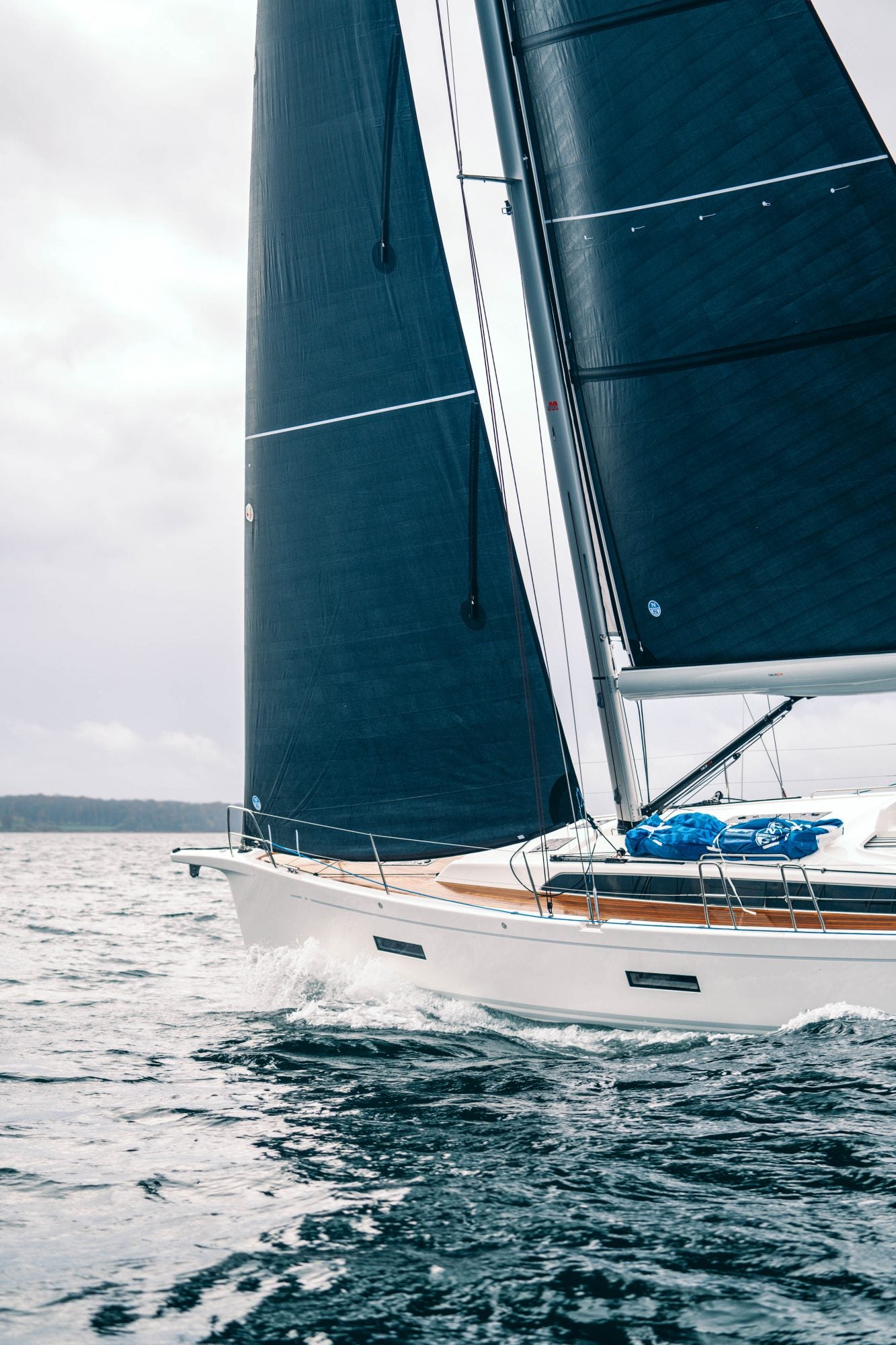
HVAD DU SKAL VIDE OM SEJLPINDE
HVAD DU SKAL VIDE OM SEJLPINDE
Instruktioner til montering og spænding af sejlpinde til alle slags sejlere
Har du styr på dine sejlpinde? Uanset om du planlægger at få din båd tilbage på vandet, forbereder en længere sejltur eller sætter dine sejl til kapsejlads i klubben, er det vigtigt at sikre dig, at dine sejlpinde er installeret og spændt korrekt. Det giver bedre trim og ydeevne på sejlene - og sikrer, at du ikke mister dem efter den første vending eller bomning! Vores eksperter giver her nogle tips, der er værd at huske på:
Korrekt installation sikrer korrekt sejlfacon.
Sørg for at sejlpindene er indsat med den bløde (tynde) ende mod forliget og den stivere (tykke) ende mod agterliget. Vi ser nogle gange sejlpinde indsat den forkerte vej, og som et resultat vil sejlet ikke få den rigtige dybde og krumning - så det er værd at dobbelttjekke, at sejlpinden er sat korrekt i lommen.
Sørg for, at dine sejlpinde sidder fast.
Nogle sejlpinde indsættes fra forliget, andre fra agterliget, så sørg for at sikre, at lukkesystemet, hvor sejlpindene er sat ind, er ordentligt sikret. I North Sails velcrolukninger er der en specifik lomme til sejlpinden, og en anden lomme til at de to velcroflader kan få ordentligt fat. Andre systemer lukkes på andre måder. Uanset hvilket system du bruger, vil korrekt installation i alle tilfælde holde sejlpindene sikkert på plads for sæsonen.
📸Mike Egan
Korrekt spænding skaber et glat sejl.
Spændingen på dine sejlpinde skal også kontrolleres. Hvis der ikke er nok spænding, vil der være lodrette rynker langs sejlpindens længde. Hvis der er for meget spænding, vil der være en synlig vandret fold eller rynke, der trækker langs begge sider af lommen, så stoffet ser "stresset/overstrukket ud". Når spændingen er korrekt, er sejlpindslommen glat og understøtter sejlets facon korrekt.
Har du spørgsmål til dine sejlpinde? eller har du brug for hjælp til korrekt installation?
Kontakt din lokale North Sails ekspert for gode råd til, hvordan du sikrer, at dine sejlpinde er installeret korrekt, og at dine sejl er klar til sæsonen. Lær mere med North Sails installationsvejledninger til sejlpinde.
READ MORE
READ MORE
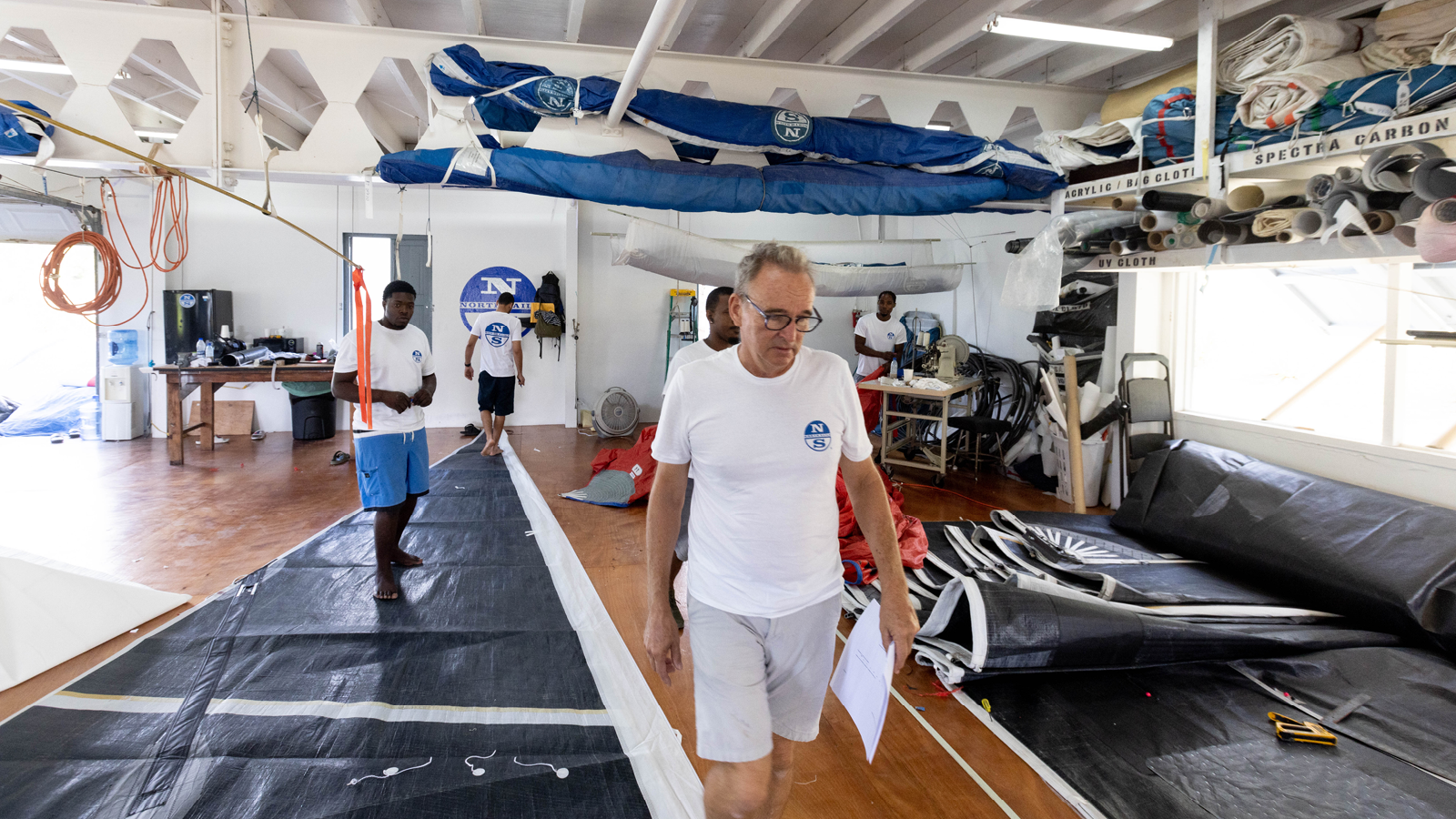
OUR UNIQUE PERSPECTIVE: THE RORC CARIBBEAN 600
OUR UNIQUE PERSPECTIVE: THE RORC CARIBBEAN 600
A Behind The Scenes Look Into The North Sails Antigua Sail Loft
Final prep for offshore races can mean long days and late nights for the North Sails team on the ground. On Monday 21 February, the RORC Caribbean 600 sets off from Antigua’s very sunny (and very warm) waters. The race then loops up, down, and around through the Caribbean’s windward and leeward islands.
Antiguan photographer Roddy Grimes-Graeme joined North expert Andrew Dove and his team as they gear up for the days before the start. Located in English Harbour, just a short walk from the docks, the North Sails loft serves as an unofficial pre-race clubhouse stocked with a bench of sailmakers on hand to assist in any way they can.
Following Dove from sunrise to sunset, Grimes-Graeme shows us how jam-packed the days leading up to the Caribbean 600 are; sail testing, adding finishing touches, and checking sails, both big and small. “The loft comes alive with this event, and crews seem to gather here often late at night,” Dove explains. “Many North colleagues from around the world are on island too, and we all fly the North Sails logo proudly and with enthusiasm.”
Join us on the ground in Antigua for a glimpse into what it’s like to get ready for a signature event of the winter sailing season.
READ MORE
READ MORE

YOUNG 88 TUNING GUIDE
Young 88 Quick Reference Chart
True Wind Speed (knots)
Cap Tension (Loos)
Lower Tension (Loos)
0-8
13
Slack
9-12 (Base)
17
7
13-18
21
13
19+
24
19
True Wind Speed (knots)
Mast Step
Chocks*
0-8
Aft 15 mm
10-20 mm behind
9-12 (Base)
Base 5370 mm
Neutral (Float)
13-18
Fwd 5 mm
10 mm front
19+
Fwd 10 mm
10 mm front
*Chocks: Measures from Neutral. Neutral is floating position of mast ad deck with slack out of forestay NOTES:
Dock Rig Measurement Position: measure rig with chocks taken out and slack out of forestay by pulling on backstay.
Base Mast Rake - Top of mainsail track to top of boom: 11.140 m; to deck: 11.950 m; to transom: 14 m
Mainsail Track at Hounds Height to transom - 11.380
Mainsail Track at spreader height: 7.785 cm
Arc measured from underside of bottom mast band on forestay
Young 88 Playbook
MORNING
Prior to Dock Out
Bow
Check spinnakers are packed
Mast
Run Sheets etc
Pit
Interior chief, check essentials are onboard, food/water
Floater/Brace
Run sheets etc. Bail boat out etc
Main
Check batten tensions
Helm
Check weather, tide, noticeboard, team briefing prior to dock out
Jib/Spin Trim
Check correct Sails are onboard before you leave the dock
Pre-Start Warm-Up
Bow
Set up spinnaker and pole on correct side. Get line transit.
Mast
Help Bow with set up.
Pit
Check Headsail halyard tension with trimmer.
Floater/Brace
Practice calling breeze, looking up the course.
Main
Check settings for first beat (outhaul, cunningham, etc)
Helm
Check in with the Committee boat. Go through course with team. Practice runs at the line, lay lines etc. Look up the course to plan your first beat.
Jib/Spin Trim
Select Headsail and Spinnaker to plug in.
PRE-START
Light Air
Bow
On bow calling time and distance.
Mast
Weight on rail where required.
Pit
Calling time every 10 seconds from 3 minutes down.
Floater/Brace
Looking at wind up the course. Tactical input.
Main
Mainsail trim, set traveler for the final approach.
Helm
Steering, work on final approach getting a good lane.
Jib/Spin Trim
Trimming and relay if there are boats to look out for.
Heavy Air
Bow
Weight up where possible, only on bow for final approach at line to call time and distance.
Mast
Weight on rail where required.
Pit
Calling time every 10 seconds from 3 minutes down.
Floater/Brace
Looking at wind up the course. Tactical input.
Main
Mainsail trim, set traveler for final approach.
Helm
Steering, work on final approach getting a good lane.
Jib/Spin Trim
Trimming and relay if there are boats to look out for.
UPWIND
Light Air
Bow
Weight on rail where required. Relay obstacles like weed.
Mast
Weight on rail where required. Lean in and out for lulls/puffs.
Pit
Weight on rail where required. Lean in and out for lulls/puffs. Make sure Headsail Halyard is left on Winch.
Floater/Brace
Calling breeze for the Helm/Trim team.
Main
Main trim, work with the helm to keep the boat balanced and fast. Traveler up.
Helm
Steering, looking at Headsail Woolies etc.
Jib/Spin Trim
Headsail trim, work with the helm to keep the boat balanced and fast, full power. Check Luff tension.
Heavy Air
Bow
Weight out. Relay obstacles like weeds.
Mast
Weight out.
Pit
Weight out. Make sure Headsail Halyard is left on Winch.
Floater/Brace
Calling breeze for the Helm/Trim team.
Main
Main trim, work for the helm to keep the boat balanced and fast. Traveler down in puffs.
Helm
Steering, looking at Headsail Woolies, etc.
Jib/Spin Trim
Headsail trim, work with the helm to keep the boat balanced and fast, de-power (car aft) if needed.
TACK
Light Air
Bow
Cross boat around mast, skirt headsail if need be.
Mast
Cross boat under boom.
Pit
Cross boat through companionway.
Floater/Brace
Cross boat through companionway.
Main
Traveler up on new side ASAP. Speed build, then final trim.
Helm
Call "Standby to Tack," followed by "Tacking in 3,2,1..."
Jib/Spin Trim
Cut and tail, speed build out of tack, final trim.
Heavy Air
Bow
Cross boat around mat, skirt headsail if need be.
Mast
Cross boat under boom.
Pit
Cross boat through companionway.
Floater/Brace
Cross boat through companionway.
Main
Ease a little mainsheet going into the tack. Sort traveler, speed build, back to final trim.
Helm
Call “Standby to Tack”, followed by “Tacking in 3,2,1….”. Be very loud so Bow team can hear.
Jib/Spin Trim
Cut and tail, speed build out of tack, final trim. Indicate if Headsail Skirt is required.
TOP MARK
Light Air
Bow
Pole up on final approach. Get ease in Windward Spin/Jib sheets. Drop Headsail after rounding.
Mast
Weight on rail. Bounce topper if needed. Hoist Spinnaker once Helmsman calls it.
Pit
Topper Up, Headsail halyard off winch ready to drop. Tail Spinnaker Halyard to Full Hoist with clutch CLOSED, Drop Headsail ASAP.
Floater/Brace
Weight on rail. Move to Brace if needed.
Main
Ensure Mainsheet is free to run, ease cunningham, outhaul at a suitable time.
Helm
Steering around mark. Call “Ready to hoist”, “Hoisting in 3,2,1…”.
Jib/Spin Trim
Ease Headsail and lock off for Hoist. Set Spin/Brace up. Sheet/Brace on. Trim.
Heavy Air
Bow
Pole up on final approach. Get ease in Windward Spin/Jib sheets.
Mast
Weight on rail. Bounce topper if needed. Hoist Spinnaker once Helmsman calls it.
Pit
Topper Up, Headsail halyard off winch ready to drop. Tail Spinnaker Halyard to Full Hoist with clutch CLOSED, Drop Headsail ASAP.
Floater/Brace
Move to Brace for hoist. Brace on and Trim.
Main
Ensure Mainsheet is free to run, ease cunningham, outhaul at a suitable time.
Helm
Steering around mark. Call “Ready to hoist”, “Hoisting in 3,2,1…”. Be loud!
Jib/Spin Trim
Ease Headsail and lock off for Hoist. Set Spin/Brace up. Sheet/Brace on. Trim.
STRAIGHT LINE DOWNWIND
Light Air
Bow
Weight in front of mast. Holding downhaul.
Mast
Weight to leeward holding out boom. Call wind.
Pit
Weight forward where needed.
Floater/Brace
Weight forward where needed if Spin Trim can do own Brace.
Main
Set Traveler, Main trim is crucial when sailing angles.
Helm
Concentrate on driving smoothly. Work with Trimmers.
Jib/Spin Trim
Be dynamic with Spin Trim, call pole forward/ aft where needed. Talk helm about pressure in spinnaker.
Heavy Air
Bow
Weight behind mast. Hold downhaul if you can.
Mast
Weight aft where needed. Call wind.
Pit
Weight aft where needed. Can stand in companionway hatch.
Floater/Brace
Trimming brace. Pole forward if needed to stop boat rounding out.
Main
Main eased. Look out for other boats, wind, etc.
Helm
Keep the boat on its feet, work with trimmers.
Jib/Spin Trim
Be dynamic with Spin Trim, call pole forward/ aft where needed. Talk to helm about pressure in spinnaker
GYBE
Light Air
Bow
Wait for Gybe Call, Trip both pole ends, clip new Brace in, push pole forward to clew as you push out and onto mast.
Mast
Human pole on new side. Hold shrouds for balance.
Pit
Weight across or in companionway. May need to ease more Downhaul for Gybe.
Floater/Brace
Grind Brace aft as you go into Gybe to help rotate the spinnaker.
Main
Pull Leeward Tweaker on for Gybe. Release Tweaker on Spinnaker sheet after Gybe.
Helm
Call “Standby for Gybe”, “Gybing in 3,2,1…”. Steer the boat smoothly. Only Gybe when Spinnaker is set!
Jib/Spin Trim
Keep Spinnaker Set throughout the Gybe!
Heavy Air
Bow
Wait for Gybe Call, Trip both pole ends, clip new Brace in, push pole forward to clew as you push out and onto mast.
Mast
Human pole on new side. Hold shrouds for balance.
Pit
Weight in companionway. May need to ease more Downhaul for Gybe, then pull back on once set.
Floater/Brace
Grind Brace aft as you go into Gybe to help rotate the spinnaker.
Main
Make sure tweakers are on for Gybe!
Helm
Call “Standby for Gybe”, “Gybing in 3,2,1…”. Only Gybe when Spinnaker is set! Be very careful about your exit angle, not too high or too low!
Jib/Spin Trim
Keep Spinnaker Set throughout the Gybe!
DROPS
Windward Drop
Bow
Wait for Jib Up and Pole off Call. Pole off and stowed between Jib Car and Cabin Windows Leeward side. Make sure Lazy Jib Sheet is behind the Hatch. Open Hatch ready for Drop. Human Pole will hand you the Clew for the Drop. Close Hatch and double check sheets are clear, then relay to the back of the boat “Clear for a Tack”.
Mast
Hoist Headsail once call is made, then shift to Human Pole as the Pole comes off. Hand Windward Clew to Bow person for Drop.
Pit
Tail Headsail Halyard, leave on winch and get to the correct setting for the Trimmer. Gently ease Topper as pole goes to Deck. Spin Halyard should already be run. Control the Spinnaker Drop for Bow team.
Floater/Brace
Ease Brace for Bow Team.
Main
Trimming Main. Get set up for Upwind – Outhaul, Cunningham etc.
Helm
Angle for Drop is critical! Cannot be reaching, you must be low downwind! Call “Ready to Drop”, “Dropping in 3,2,1…”.
Jib/Spin Trim
Release Spin Sheet and set up working Headsail sheet. Trim on Headsail for Drop. Final trim around Mark, then set up for a Tack.
Leeward Drop
Bow
Wait for Jib Up and Pole off Call. Pole off and stowed between Jib Car and Cabin Windows. Make sure Lazy Jib Sheet is behind the Hatch. Open Hatch ready for Drop. Reach under Headsail and grab Leeward Sheet to Drop. . Close Hatch and double check sheets are clear, then relay to the back of the boat “Clear for a Tack”.
Mast
Hoist Headsail once call is made, then shift to Human Pole as the Pole comes off. Help Bow person drop Spinnaker if needed.
Pit
Tail Headsail Halyard, leave on winch and get to the correct setting for the Trimmer. Gently ease Topper as pole goes to Deck. Spin Halyard should already be run. Control the Spinnaker Drop for Bow team.
Floater/Brace
Ease Brace for Bow Team. If Pole is on for the Drop, ‘smoke’ the brace out all the way off the winch!
Main
Trimming Main. Get set up for Upwind – Outhaul, Cunningham etc.
Helm
Angle not as critical, but make it as easy for the team. Call “Ready to Drop”, “Dropping in 3,2,1…”.
Jib/Spin Trim
Release Spin Sheet and set up working Headsail sheet. Trim on Headsail for Drop. Final trim around Mark, then set up for a Tack.
POST RACE
After Races
Bow
Rig check, area check, pack Spinnakers.
Mast
Area check, pack Spinnakers, flake sails.
Pit
Area check, Clean out interior. Check Water for following day.
Floater/Brace
Bail boat, help with Sails, get beers for team.
Main
Check Mainsail for chafe, Batten damage etc.
Helm
Check sheets etc are all in before turning engine on. Check noticeboard for protests, amendments etc. Team Debrief, Plan for next Race Day.
Jib/Spin Trim
Check Headsails as they are getting flaked up for chafe, Batten Damage etc.
A note about repairs/damage:
Deal with it right away, do not leave for the morning!
Take ownership of all your areas.
Race hard & have fun!
READ MORE
READ MORE
NORTH SAILS TOP 10 SOCIAL POSTS I 2021
NORTH SAILS TOP 10 SOCIAL POSTS I 2021
Her er vores mest populære social posts fra 2021, samlet ét sted
Én ting kan man sige om 2021: der var ikke mangel på sejlere, som delte deres lokation rundt om i verden. Fra det vidunderligt smukke blå caribiske hav, Palma de Mallorca og Saint Tropez, til den isnende kulde i Solent og Bassin Paul Vatine i Le Havre, til at foile Down Under – North Sails lagde det ud på de sociale medier, hvor dine "likes" afgjorde hvilke, der blev de 10 bedste indlæg i 2021. 10. Vi starter nedtællingen med den fantastiske video ombord på Gitana Teams Maxi Edmond de Rothchild, forud for dette års udgave af Transat Jacques Vabre, iklædt North Sails Collection’s Ocean-serie, Syet og lavet i GORE-TEX Pro, som er det mest holdbare, åndbare og vandtætte sæt sejlertøj på marked.
View this post on Instagram
A post shared by North Sails (@north_sails)
9. Slap af og nyd livet ombord på 191,6 fods Kokomo, bygget hos Alloy Yachts og selvfølgelig med nye #North3Di OCEAN-sejl.
View this post on Instagram
A post shared by North Sails (@north_sails)
8. Du elskede vores gætteleg, og endnu en video af en superyacht var bestemt ikke dårlig...
View this post on Instagram
A post shared by North Sails (@north_sails)
7. Optagelser fra Palma Superyacht Cup efterlader os altid mundlamme. Det er ærgerligt, at du muligvis ikke selv var der, men vi har den næstbedste måde at se med på...
View this post on Instagram
A post shared by North Sails (@north_sails)
6. Dmitry Rybolovlevs ClubSwan 125 Skorpios, levede op til forventningerne og vandt den prestigefyldte monohull line hæder ved 2021 #RolexFastnetRace. Skorpios, som er den største båd i kapsejladsens lange historie, satte ny banerekord i sin debut. Denne højtydende racermaskine brugte North Sails #EngineAboveDeck fuldt ud, ved hjælp af vores revolutionerende #HelixStructuredLuff-teknologi.
View this post on Instagram
A post shared by North Sails (@north_sails)
5. Vintersejlads fotokonkurrence 2021 – vi ved alle, at sejlere elsker en god konkurrence. Klik her for vores 2022 vintersejlads fotokonkurrence.
View this post on Instagram
A post shared by North Sails (@north_sails)
4. Det ville ikke være en top 10-recap uden en #FuldSendFriday! Ocean Race skuffer aldrig i denne afdeling...
View this post on Instagram
A post shared by North Sails (@north_sails)
3. Lidt Americas Cup - AC75 action fra finalen i Prada Cup...
View this post on Instagram
READ MORE
READ MORE
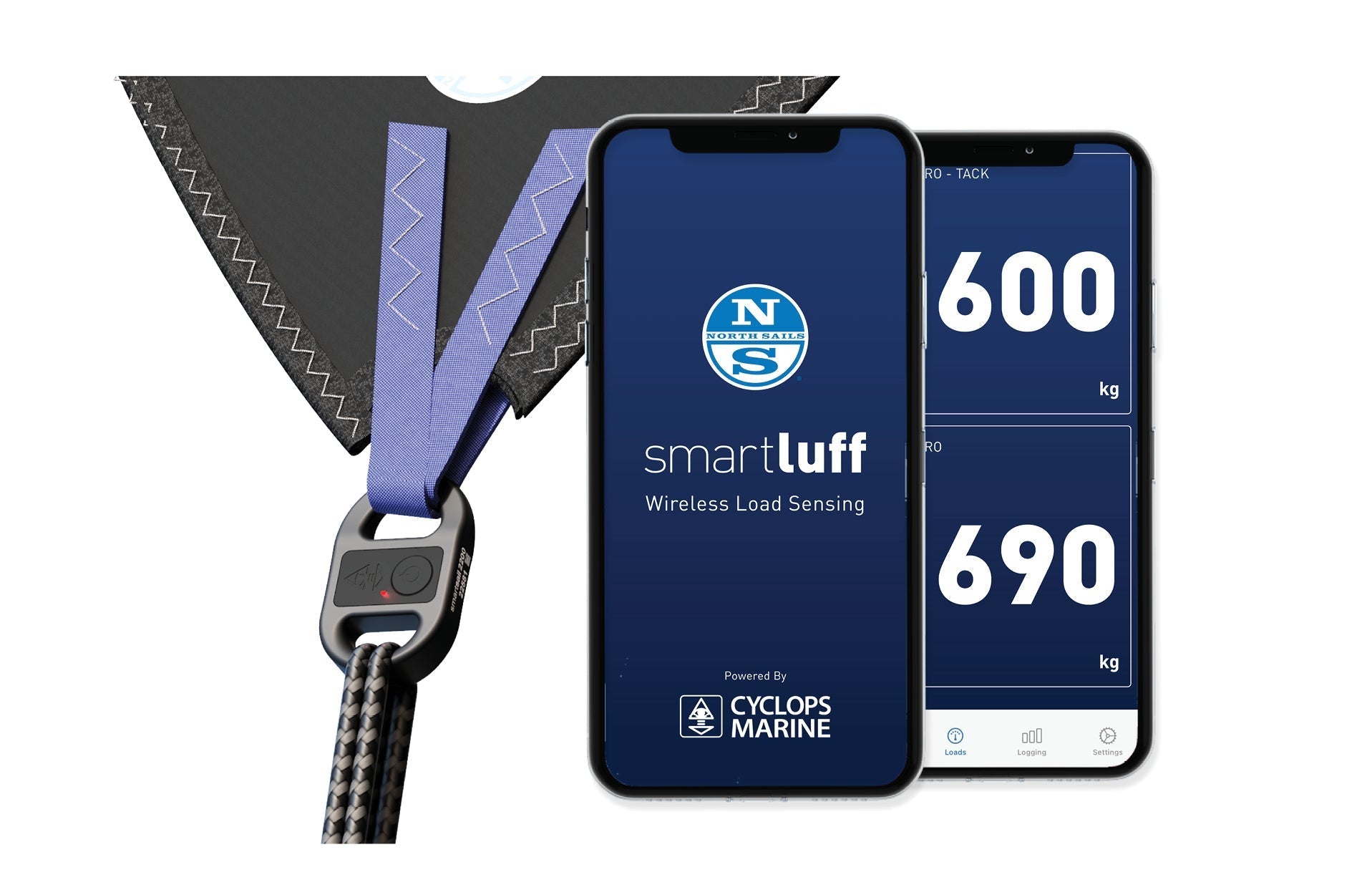
NORTH SAILS INTRODUCES WIRELESS LOAD SENSING FOR HELIX SAILS
Optimize Your Sail with SmartLuffTM
Having recently made the Helix design standard on all racing Code sails, North Sails now moves to digitize the Helix range – harnessing the latest wireless technology to maximize the benefits of Helix with this simple upgrade.
North Sails is proud to introduce SmartLuff, an easy-to-use Bluetooth smart sensor that optimizes your sail by monitoring sail load in real-time. This exciting new product is manufactured exclusively for North Sails by Cyclops Marine, whose data-driven approach has made them industry experts in load sensing. Installed as an optional upgrade to the tack fitting in North Helix Sails, the SmartLuff sensor quickly connects to your smartphone and onboard displays, providing live load data in a simple, intuitive format.
By visualizing sail load, you can adopt a data-driven approach to sail trim, repeatedly achieving the recommended sail/cable load sharing ratios provided with every North Helix sail. The free app continuously logs data, allowing you to analyze performance post-sail for ongoing improvement/fine-tuning.
The combination of the Helix design (which relies on optimal load sharing to deliver maximum power), paired with the ability to hit precise load settings with SmartLuff, promises to change the complexion of race fleets across classes – giving teams that adopt the new technology a significant advantage over those left behind.
Master Your Helix Sail
Since its introduction, Helix has become a widely adopted design philosophy. First applied to the headsails of Artemis Racing during the 34th America’s Cup, Helix has rapidly evolved into a necessity for sailing programs craving steady power across a wider range. Helix’s revolutionary internal structure provides sailors access to another gear, enhancing power potential by absorbing more load, for a proactive, positive sail shape.
Now, with the addition of SmartLuff, sailors gain heightened control of their Helix sail to access that power – enabling you to make data-driven decisions in-race, in set-up, and in your overall approach – while adding an element of interactive technology to enhance your sailing experience. Helix is standard on the full range of North Code Sails, and offered as an upgrade on racing headsails. All Helix sails can be upgraded with the Cyclops SmartLuff.
To find out more, or to add SmartLuff to your new or existing Helix sail, contact a North Sails representative near you.
More About Cyclops:
Cyclops Marine designs and manufactures highly accurate wireless load sensors for marine applications. Since launching their flagship range of rig sensors in 2019 they’ve been helping sailors win racers and move up fleets all over the world.
“At Cyclops, we empower sailors to get the most from their equipment and maximize performance, so applying load sensing to North Helix Code Sails is really exciting. Helix is already an innovation that gives sailors more from their boat, so if Cyclops can help provide an extra 20%, then that lives up to our vision perfectly. We’re incredibly excited this collaboration has come to fruition and can’t wait to see the results on the racecourse!”
– Ian “Chips” Howarth, CEO, Cyclops Marine
HELIX STRUCTURED LUFF | REQUEST A QUOTE | FIND A LOFT
READ MORE
READ MORE
OPTIMIST TUNING GUIDE
V-Series Important Settings for Key Performance
Power your new North Sails Optimist V-Series mainsail for speed following the recommendations on this quick tuning guide.
BASE SETTINGS
Sail ties can be adjusted in the range of 1-5mm in light wind and heavy wind to have comfortable depth and shape.
LIGHT WIND: Smaller space at the middle so that leech becomes easier open.
HEAVY WIND: Smaller space at the middle so that you can make the shape comfortably flat enough to reduce the power.
Sail Ties:
Top: 2mm
Middle: 2mm
Bottom: 2mm
* Parallel to the mast.
Distance of space distribution to be made from top to the bottom.
Adjustment is required only for suitable sail shape (depth) for each condition and to be done only when needed.These are sometimes required depending on mast stiffness and sailor’s weight, but only when if needed.
BASIC TRIM
Wind Range
0-8 knots
8-12 knots
12-16 knots
Mast Rake
2780 – 2800 mm
2770 – 2790 mm
2770 – 2780 mm
Sprit
Wrinkles
Some Wrinkles
A Few Wrinkles
Vang
No tension in upwind
Light tension in upwind
Tension
Prebender
2 turns /Some Slack at Luff
2 turns /Some Slack at Luff
No Wrinkle at Luff
Center Board
Max
Max
Max
Wind Range
16-24 knots
25+ knots
Mast Rake
2750 – 2760mm
2790 ±10mm
Sprit
Wrinkles
Wrinkles
Vang
Lots of tension
Cleat with main sheet trimming harder
Prebender
Tension on Luff
Tension on Luff
Center Board
0-50 mm up
30-70 mm up
OUTHAUL CONTROL – VERY IMPORTANT FOR KEY PERFORMANCE!
You have to pay attention to the outhaul to adjust it properly according to the conditions and sailors weight.
You need to find the best position that fits your weight, mast rake( boom position), sea status, weather helm feeling for each condition.
Playing outhaul in the range of 20mm at the boom end.
Ease it maximum in 10-14knots and clew end has to be located 30-40mm away from the boom end.
FLAT WATER – Trim 10mm more than the normal position.
LIGHT / VERY STRONG WIND – Bottom to be flattened comfortably.
READ MORE
READ MORE

LOFT 57: THE NORTH SAILS PODCAST
LOFT 57: THE NORTH SAILS PODCAST
I første afsnit taler vi om design, simulering og den skræddersyede North Design Suite
North er en helt unik sejlmager, udviklet og bygget på vindermentalitet. Vi skaber historie ved at se fremad og det er dét, der adskiller os fra andre sejlmagere. Vi er stolte af at kunne præsentere Loft 57, en podcast som åbner dørene op til verdens førende sejlmager. Med North Sails øverste chef, Ken Read, som vært, tager serien lytteren med bag scenen sammen med skaberne af vores produkter og de passionerede sejlere, som stoler på at vi kan føre deres eventyr ud i livet. Vi har været på denne rejse siden 1957 og fortsætter med at skabe historie ved at se fremad. Avanceret matematisk modellering komplimenterer North Sails innovative drive. I afsnit 1, taler vi om design, simulering og den skræddersyede North Design Suite med tre generationer af sejlingeniører. Michael Richelson, Marco Capitani og Brodt Taylor tilføjer hver især deres unikke færdigheder og bidgrager med at skabe banebrydende produkter, der giver North Sails sin karakteristiske konkurrencefordel. Du kan abonnere på Loft 57 podcast via Spotify eller følge North Sails fællesskabet på Facebook og Instagram. Loft 57er en North Sails produktion. Vi gør opmærksom på at Loft 57 podcast er på engelsk.
Kunne du lide dette afsnit og er du interesseret i at vide mere? Følg disse links herunder:
Video: What is the Engine Above Deck? Stories from the North Sails Design Team North Sails Innovation Video: Behind the Scenes with Marco Capitani at the 36th America’s Cup
READ MORE
READ MORE
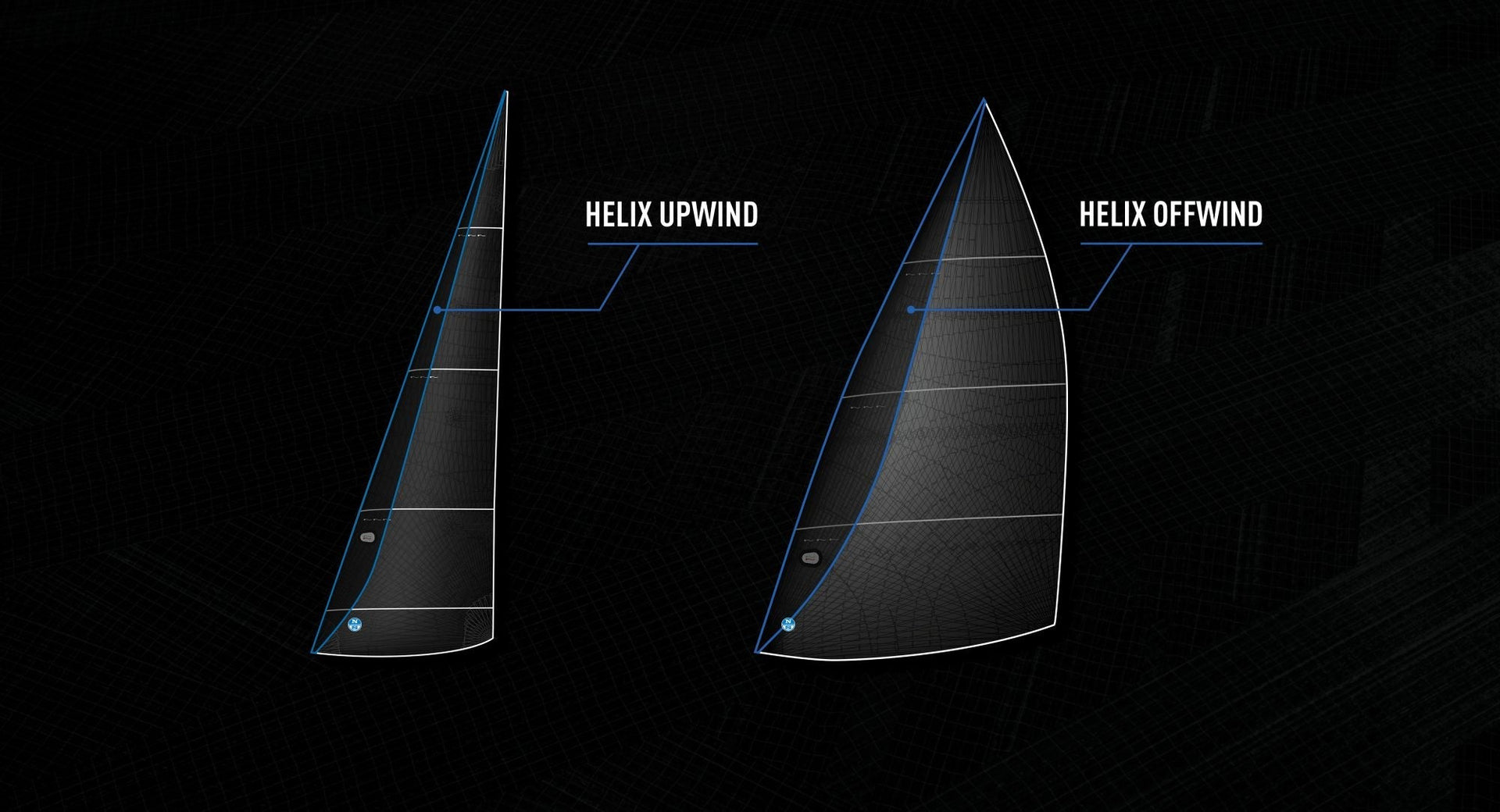
BANEBRYDENDE INNOVATION
BANEBRYDENDE INNOVATION
Nu er Helix standard på alle North Code-sejl
North Sails er verdens førende inden for sejlteknologi og rykker konstant på grænserne for ydeevne. 2022 er et skelsættende år for vores Helix Structured Luff-teknologi, da vi nu annoncerer, at den revolutionerende designfilosofi er blevet standard på alle North racing Code-sejl og Helix Rulle-gennaker til cruising, med øjeblikkelig virkning. North Sails har desuden udvidet sortimentet til at omfatte Helix som en opgradering til forsejl. I dens relativt korte levetid til dato, har effekten af Helix været en åbenbaring. Fra januar 2022 har North Sails solgt over to tusinde Helix Code-sejl, med utrolige resultater på tværs af klasser, fra Grand Prix-hold til weekendsejlere. Med disse to banebrydende udviklinger har North Sails til hensigt at videreføre denne skelsættende innovation, som vi forestiller os bliver en designfilosofi, synonymt med selve North Sails brandet.
Helix evolutionen
Engang var Helix Code-sejl begrænset til offshore Grand Prix, men er hurtigt blevet det bedste værktøj til at forbedre aerodynamikken og øge rækkevidden. Med sin unikke DNA-lignende strukturerede forlig har Helix givet sejlere endnu et gear, hvilket øger kraftpotentialet ved at optimere belastningsfordelingen for en proaktiv, positiv sejlfacon. Et afgørende gennembrud i udviklingen, var ved den 36. America's Cup, hvor Helix blev anvendt på opvindssejl for første gang (og med stor effekt), hvor Emirates Team New Zealand, Luna Rossa Prada Pirelli og INEOS Team UK kom frem med hidtil uset hastighed og kontrol mod vinden. "I dag er Helix mere end en enkelt funktion," forklarer JB Braun, North Sails direktør for design og teknik. "Det er en total designfilosofi, der radikalt ændrer, hvordan sejl konstrueres, bygges og flyves. Guidet af en skræddersyet, datadrevet proces, designer North Sails designere hvert sejls struktur for at forbedre dets aerodynamik."
Fordelene
I de fleste tilfælde er resultatet af denne proces en reduktion af belastningen af dit udstyr, hvilket har den åbenlyse umiddelbare effekt at minimere slidtage. Den primære fordel, hvad angår ydeevne og praktik, ved både Helix Upwind og Offwind, er dog en alsidig beholdning, der kan spænde over et bredt udvalg, samtidig med at det reducerer antallet af sejl, der kræves.
Helix Offwind
Helix Offwind kan reducere den samlede belastning på ethvert fritflyvende sejl, uanset om det er 3Di eller panelkonstruktion, for et mere fremadrettet sejl og øget rækkevidde. Helix Offwind-sejl giver forbedret stabilitet, forbedret forligprojektion og reduceret hoved- og hæftebelastning, med et strækbestandigt struktureret forlig og specialbygget Luff Cord med højt drejningspunkt, som er eksklusivt tilgængeligt for North Sails fra søsterselskabet Future Fibres.
Helix Upwind
Eksklusivt for North 3Di-sejl, udnytter Helix Upwind sejlets sammensatte struktur på en ny måde for radikalt at forbedre justering af dybde og profil. Med sin Dynamic Structured Luff trodser Helix Upwind traditionelle designbegrænsninger. Konstrueret til Active Camber Control™️, kan du med Helix justere formen og dybden af hele sejlet, og ikke kun forliget – styre kraften i farten ved hjælp af en Cunningham eller et fald til et bredere anvendelsesområde.
Helix Quick Guide
Helix Offwind og Upwind sejl kan bestilles nu. Kontakt dit lokale North Sails loft for levering til sommer.
FÅ ET TILBUD TAL MED EN EKSPERT MERE OM HELIX
READ MORE
READ MORE
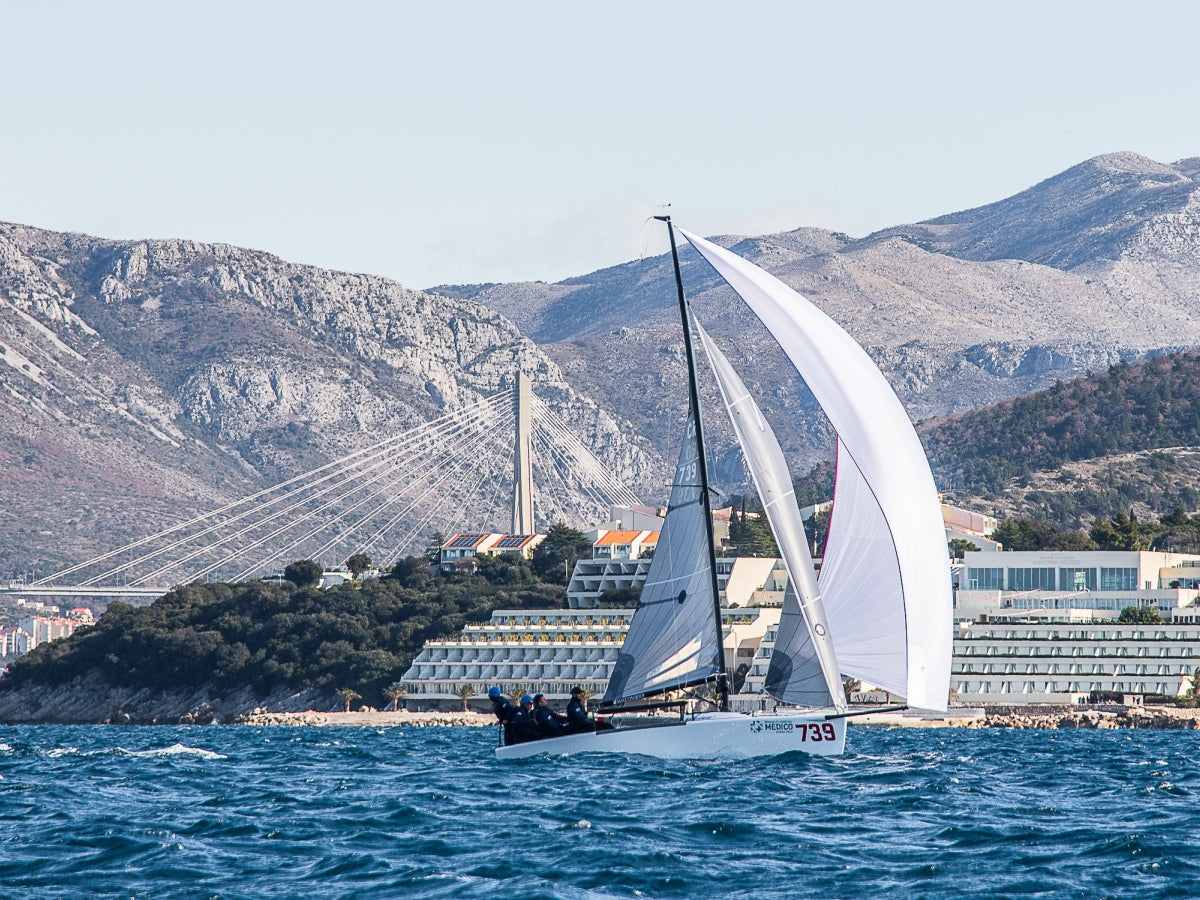
PANJIĆ I UNIVERSITAS NOVA NA VRHU CRO M24 FLOTE
Panjić i Universitas Nova na vrhu CRO M24 flote
📸 regate.com.hr
Prva regata CRO Melges 24 Cupa za 2022. godinu završila je kao fenomenalna najava aktivnosti ove klase u Hrvatskoj, a JK Orsan se pokazao kao vrlo dobar domaćin i organizator i ovako (pogotovo logistički) zahtjevne regate.
Ukupno je na regati nastupilo 13 posada koje su u Dubrovnik počele pristizati već od četvrtka. S obzirom na potrebu spuštanja u more 12 jedrilica, njihovo opremanje, te testiranje i trening na moru, to je nešto što je nužno i što je jedan od elemenata koji ovu klasu čini drugačijom od ostalih. Naravno, armavanje brodova dodaje novu dimenziju ovim druženjima, kao i povećavanje tehničkih znanja i vještina mlađim generacijama jedriličara i jedriličarki jer se u tom predregatnom periodu imaju priliku susresti sa stvarima koje nemaju prilike vidjeti i iskusiti u većini "malih klasa".
Naravno, osim što je tu riječ o kompleksnijem sastavljanju jedrilica nego što je to slučaj kod Optimista i ILCA, ovdje imaju priliku neposredno vidjeti što znači "tenzija u sarćama", odnosno različite postavke pri namještanju jarbola i kolika je važnost pravilnog izbora određenih vrijednosti za određene uvjete jedrenja. S druge strane ovdje također najbolje dolazi do izražaja značaj timskog rada cijele posade, što je većini mladih jedriličara nepoznato s obzirom da cijelu svoju karijeru provedu u jednosjedima. Da ne bi bilo zabune, nije riječ o kritici, već samo o primjedbi s obzirom da se vrlo mali broj naših klubova njeguje jedrenje bar u dvosjedima, a oni koji imaju u svom programu rada i jedrenje na pravim regatnim krstašima stvarno se mogu nabrojati na prste jedne ruke. Ali vratimo se samoj regati.
Akvatorij u kojem se jedrilo bio je u području na kojem i inače Orsanovci organiziraju svoje ostale regate. Brod RO-a se postavio ispred hotela President u blizinu Grebena, jer je vjetar dolazio iz četvrtog kvadranta.
Već od ranog jutra puhala je trambura s poprilično jakim refulima. Prosjek je bio između 20 i 25 čvorova, ali nije bilo niti govora o odgodama i eventualnim čekanjima da vjetar oslabi. Kasnije, tijekom jedrenja, vjetar je povremeno znao značajno oslabiti i istovremeno promijeniti smjer. Uglavnom je su te oscilacije išle u lijevo, prema tramontani i tada je znao padati na petnaestak čvorova. Međutim, takav smjer i snaga ne bi se dugo zadržavali, pa je RO morao stalno biti u pokretu i korigirati polje s Charlijem i po pitanju kursa i po pitanju duljine.
Ovakva situacija na moru rezultirala je čestim pritiskom na lijevu stranu polja, a osim toga u jednom plovu čak se morao signalizirati i prekid desetak minuta nakon starta jer se vjetar vratio u desno. U svakom slučaju vrlo težak dan bio je i za taktičare koji su bili pod pritiskom pravilnog izbora, a koji se na kraju mogao svesti i na kockanje s obzirom da je vjerojatnost pogreške bila vrlo velika.
📸 regate.com.hr
Što se tiče samog snalaženja u polju, tu su najbolji pokazali zašto imaju taj pridjev. Već od prvog starta posade Universitas Nove, Point Onea i Panjića pokazale su da imaju najozbiljnije namjere u osvajanju ove regate. I ostale posade imale su zvučna imena u svojim crew listama, ali oslanjanje na pojedince bez pratećih treninga u ovakvoj konkurenciji ipak nije recept za uspjeh! Bilo je dosta situacija u kojima bi jedrilice bile u dosta dobrim pozicijama ili bi na oznake stigle nakon dobre vožnje kroz polje, ali svi članovi posade ne bi na vrijeme i uigrano odradili svoje radnje u kokpitu i došlo bi do nepotrebnih padanja u poretku. Sad, da li do te uigranosti doći skupljanjem sati na moru ili s organizatorom rada posade koji će pravovremeno signalizirati pojedinom članu što treba napraviti to ostaje na vlasnicima i onima koje su okupili. Činjenica je da do takvih situacija ne smije doći, jer se nepotrebno rasipaju bodovi osvojeni dobrim jedrenjem i kvalitetnim taktičkim odlukama.
Do kraja subote odjedrena su još dva plova iako se RO nadao da bi se možda mogao odjedriti i četvrti. Što se tiče količine vjetra takav scenario bio je realna, ali nestabilnost po smjeru uzela je svoj danak.
Rezultati u drugom plovu najavili su da će regata bodovno biti neizvjesna. Ciljnu ravninu prvi su presjekli momci na Point Oneu, dok su odmah iza njih doletjeli njihovi klupski kolege na Cezibordu, a dominaciju ovog kluba u ovom plovu potvrdila je posada Universitas Nove.
Treći favorit regate, Panjić, ovaj plov nije završio jer im je na prvom podizanju genakera došlo do njegovog zapinjanja na križu i paranja po vanjskom porubu, te su se povukli iz ovog plova s obzirom da u danim uvjetima nisu mogli konkurirati niti jednoj posada koja je imala leteće prednje jedro. Zato su se u idućem plovu vratili u najboljem izdanju i odnijeli pobjedu, a na postolju im se pridružuju Joyrunner i Yikes dok Universitas Nova i Point One u cilj ulaze kao 7. i 5.
Bodovna situacija na kraju dana najbolje je odgovarala Point Oneu koji je proglašen jedrilicom dana u apsolutnoj kategoriji, kao i Mataranu 24 (Strilici) koja je bila 10. u generalnom plasmanu, ali zato najbolja u Corinthian skupini.
Osim Point Onea, bez velikog stresa nedjelju je dočekao i Universitas Nova, ali zato su Obi Wan, Yikes, Panjić, Joyrunner i Cezibordo bili unutar četiri boda razlike i svatko od njih bio je u mogućnosti osvajanja mjesta na postolju.
Drugi dan jedrenja osvanuo je prekrasno sunčan i s naznakom povlačenja jutarnjeg burina bez mogućnosti skorog razvijanja konkretnog vjetra iz bilo kojeg smjera. Situacija je bila takva sve do podne kad RO poziva flotu na more i priprema regatno polje za maestral.
Maestral je polako krenuo s popunjavanjem kanala između kopna i Elafita, a procjena da ga ima dovoljno za regularno jedrenje desila se oko 13 sati.
Ovog puta uvjeti za jedrenje bili su značajno drugačiji nego u subotu. Vjetar je bio značajno slabiji, nešto stabilniji u smjeru i ono što je sigurno bilo svima drago, manje hladno.
Dobru formu prikazanu u trećem plovu Panjić je nastavio prikazivati i u prvom nedjeljnom plovu. Na postolje se vraćaju Universitas i Point, a Cezibordo, Yikes i Mataran nastoje hvatati priključak.
Samo jedrenje nakon starta bilo je po 7-8 čvorova, ali kako se flota približavala oznaci orce tako je maestral krenuo s jačanjem i tada jedre po najjačem vjetru tog dana koji je išao i do 13-14 čvorova. Od starta, pa preko orce do gatea, Daleko ispred cijele flote bila je "studentska" posada, ali kasnije u drugom dijelu regate prolaze ih Biograjci. Slobodno se može reći da je ovaj plov bio jedan školski prikaz koliko je važna dionica jedrenja s genakerom u krmu. U orcu je to vrlo slično na svim jedrilicama, ali u ovoj klasi krma često rješava pitanje pobjednika!
📸 regate.com.hr
Što se tiče posljednjeg plova, tu se vjetar stabilizirao na oko 8 čvorova, a smjer je bio više lijevo pa je oznaka orce morala biti postavljena u sjenu otoka Koločepa. Inače, u drugoj orci prethodnog plova postavljen je charlie na otprilike jednaku poziciju.
U petom plovu najbolje starta posada Matarana 24. Oni su dominirali regatom od početka, pa do kraja i tako ostvarili svoju prvu pobjedu u ovoj klasi. Inače je riječ o ekipi iz JK Trogir, a koji zajedno jedre na Melgesu 32 - Mataran 32. Za ovu regatu su iznajmili Strilicu, a po njihovim najavama možemo ih očekivati i u nastavku Cupa za 2022. godinu. Ovaj bod na kraju ih je smjestio na peto mjesto i donosi im pobjedu u Corinthian skupini.
Odmah iza njih u cilj ulazi posada Universitas Nove kojima je to bilo drugo drugo mjesto dana. Oni su definitivno bili najradosnija posada u finišu, jer su izračunali da imaju najmanje bodova, ali veselje im je pokvario Panjić koji je u cilj ušao ispred Ceziborda. Finalna suma, nakon odbacivanja, rezultirala je jednakim brojem bodova Panjića i Universitas Nove, ali jedna pobjeda više posade Luke Šangulina presudila je o rasporedu za prvo i drugo mjesto u generalnom plasmanu.
Ovaj plov Point One u cilj ulazi kao peti i s tri boda razlike u odnosu na dva prvoplasirana regatu završava s broncom.
Raspored ostalih možete pronaći u rezultatima.
Kad se podvuče crta i napravi objektivna analiza može se reći da se je klasa napravila generalni napredak u odnosu na Prvenstvo Hrvatske kao prethodnu regatu. U Dubrovniku je jedrilo 12 "starih" posada i jedna nova. Razlike u cilju su sve manje, a kontrola jedrilica po jakom vjetru je sve kvalitetnija. Osim spomenutog rasparanog genakera i jedne nagnječene krme kao posljedice sudara zbog lijevih i desnih uzda, nikakve druge štete nije bilo.
Iduća regata jedrit će se 19. i 20. veljače u Biogradu, a očekuje se da će premijerne nastupe imati još nekoliko posada. Možda čak iznenadi i neka posada iz inozemstva...
Ono što je već sad sigurno je to da je Hrvatska flota klase Melges 24 trenutno apsolutni hit i da postaje jedan vrlo ozbiljan projekt kojeg je vizionarski pokrenuo Filip Jurišić. S druge strane, kao posljedica toga nameće se problem logistike svim sadašnjim i budućim organizatorima jer teško će biti izvediv izvorni plan o organiziranju regate u svakom klubu čiji predstavnici jedre u Kupu. Kako flota postaje sve veća tako i logistički zahtjevi postaju sve ozbiljniji i opsežniji... nabrojimo samo one koji su očiti: prostor za spuštanje i dizanje jedrilica iz mora mora biti veći, više vezova mora biti na raspolaganju, parking za trajlere i osobna vozila sve veći, broj ozbiljnih gumenjaka za suce i organizaciju sve veći, broj ljudi uključenih u organizaciju sve veći itd.
U svakom slučaju čestitke klasi i svima uključenima u njen rad, jer hrvatsko jedrenje je trebalo jedan ovakav projekt!
U Dubrovniku se započelo s primjenjivanjem direktnog suđenja na moru. Čak četiri suca vodila su računa o pravilnom provođenju jedriličarskih pravila, tako da neće više biti protesta i saslušanja nakon regate, već će se sve trenutno rješavati na regatnom polju.
📸 regate.com.hr
U proljetnom dijelu sezone, nakon Biograda, Melgese još očekuju regate u Ičićima 19. i 20. ožujka i u Rovinju 1., 2. i 3. travnja.
READ MORE
READ MORE
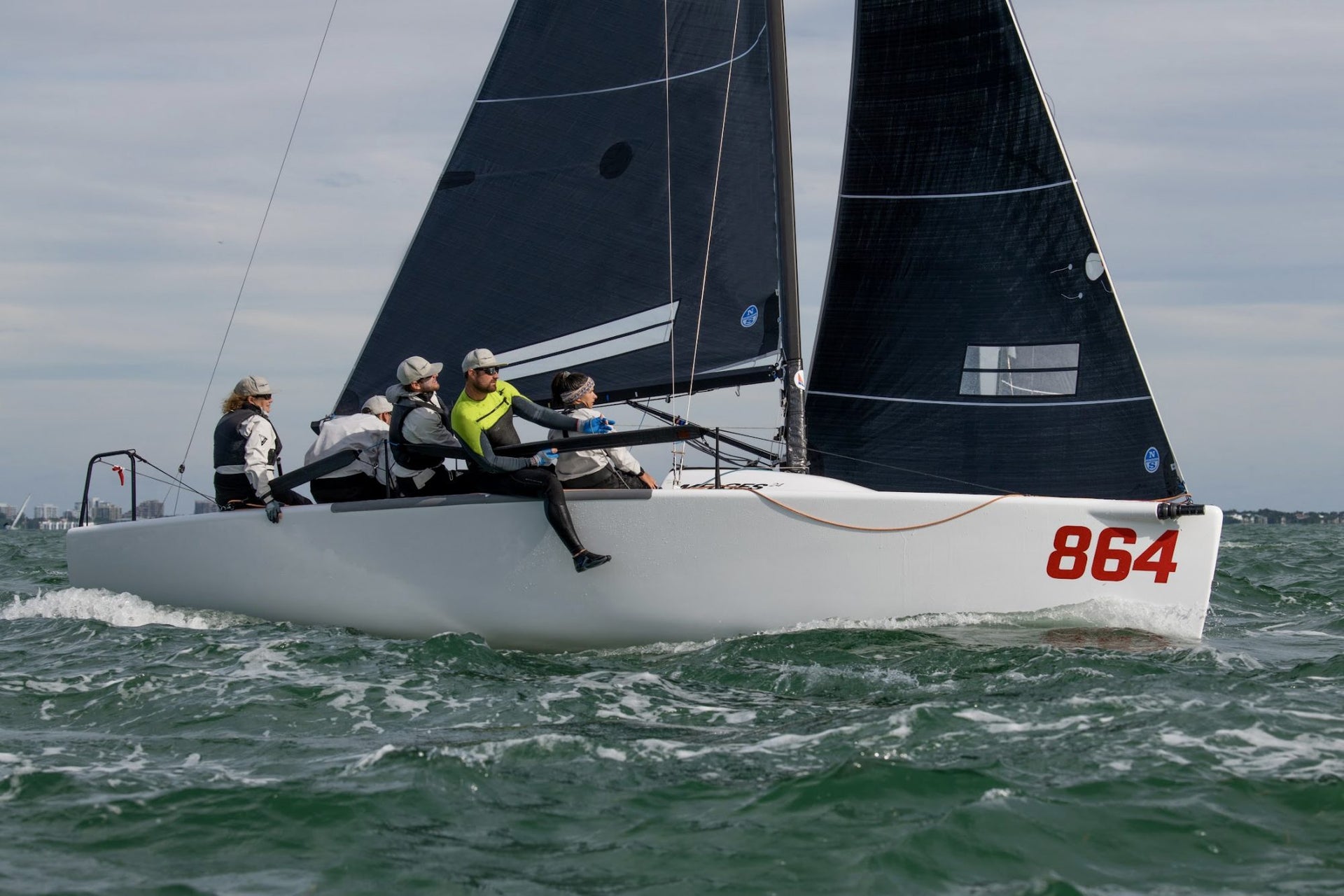
LAURA GRONDIN: WINNING IN MULTIPLE ONE DESIGN CLASSES
LAURA GRONDIN: WINNING IN MULTIPLE ONE DESIGN CLASSES
After A 20 Year Break From One Design Racing, This Executive Has Come Back Strong In Both The Melges 24 And J/70
📸 Katrina Zoë Norbom / Ocean Mountain Media
Laura Grondin grew up surrounded by sailors and raced with JJ Fetter at Yale, but it was only after twenty years of winning in the boardroom that she achieved success in the J/70 and Melges 24 fleets. “When I graduated from college in 1985, there really were not a lot of good opportunities to continue racing,” she says. So instead she threw herself into running a company and raising a family. It was only after a move to Groton, Connecticut, that she returned to the sport, first as crew for local fleet members. Then “I bought a twenty-four foot wooden boat , and we had some pretty disastrous races in the beginning. But I had this old book from my mother about how to tune and race an old wooden boat, so finally we got to the point where we won the fleet three years in a row.”
Her next purchase was a Melges 32, which she admits is not exactly an intuitive step from an old wooden classic. “It was a trial by fire for sure, and we mostly raced PHRF. At the same time, we had a growing fleet of Melges 24s in Fishers Island Sound, so we decided to buy one. And that really got us into fleet racing.” Though she makes it sound like those early days were a lifetime ago, the Melges 24 purchase was only about six years ago.
Laura had already volunteered to be the Melges 24 class treasurer when she learned that the international chair was leaving. As president of Virginia Industries, she understands what it takes to be a leader. “I’m one of these people … if I’m not sure who’s gonna be the new chair, I’d just as soon be the new chair!” So she got herself elected—and then, thanks to COVID, her first leadership act was to cancel the 2020 Melges 24 World Championship—”like three times; cancel, reschedule, cancel, just like everybody else.” The 2022 Worlds will be the first the class has held since 2019.
It was during this trying time that Mike Buckley introduced her to Taylor Canfield. “I guess you might say the rest is history,” she laughs, “because he and I seemed to work pretty well together on the boat.” In January 2021, the team started sailing the J/70 as prep for the 2021 Melges 24 Worlds. ”We were looking for more time starting, more mark roundings, all the things that are harder to get in smaller fleets,” she explains. “And there’s only so many events on the schedule. So that’s how we ended up on a J/70.” Less than a year later, the team finished third at the J/70 Worlds in Los Angeles, California.
2021 J/70 World Championships
“North Sails has been incredibly supportive,” she says. “John Bowden has come sailing with us, and anytime we have a question or concern or comment or anything else, he and North have been there.”
Asked about the differences between the J/70 and the Melges 24, Laura smiles. “I try to pretend that they’re not different, right? But I do need about a day switching back and forth. That first practice day, I might feel a little uncomfortable.” The transition from Melges 24 to J/70 is easier than the reverse, she continues, “because on the 70 I don’t touch the main at all. On the Melges 24, I have to take a hand in trimming the main. I do focus first on the driving; I have my little visual loop of telltales, water, wind and instruments.”
Running a business taught her the value of delegating, and she says one major reason for all of her racing successes is the team she’s built around her. Canfield is onboard, Buckley joined the team for the J/70 Worlds, and Scott Ewing was the fourth for their podium finish. Rich Peale came along with the first Melges 24 she bought, and “he’s been with us ever since; he’s a Corinthian, with a full-time engineering job. Cole Brauer has also been a part of the Melges 24 team consistently across events. It’s incredibly helpful to have a consistent team across the two boats.”
The team became early adopters of 3Di on the Melges 24, though Laura says she’s still getting used to what she calls “the black sails. But I figured we had to try them; we needed to not give that competitive advantage away.”
Asked to compare the 3Di inventory to the paneled inventory, Laura says the groove is a little narrower with 3Di, which makes them less forgiving. “There’s a theory that the paneled sails are better in light air, and the black sails are better in heavier air. But timing is everything; I’ve done more driving in the last year than I’ve done maybe in my entire life! So I’m better than I was a year ago. I was finally ready for the challenge.”
North Sails expert John Bowden says Laura’s team has been a big help with the development of 3Di. “When we first put 3Di on smaller boats like the Melges 24, the sails were too strong; they needed to be more dynamic. Through a lot of hard work with the team, we’ve been able to make them more forgiving. And now we’re seeing more success with them in lighter air. But ultimately, it’s important that people race with what they’re comfortable with. Laura’s got to look at the jib all day, and the difference in speed is not going to overcome the difference in her comfortability. She’s done a fantastic job of working with our product and helping us move forward.”
Laura’s team started out the winter season by winning regattas in both the Melges 24 (the first event of the Bacardi Cup Invitational) and the J/70 (DIYC Winter Series #2). Back in the Melges 24 again, she finished third at the Southernmost Regatta. Looking ahead, both the Melges 24 Worlds in May and the J/70 Worlds in October are on the calendar, along with several practice days and a few smaller regattas. “We’re also planning to do a couple of IC37 events,” she adds. “My husband does all our logistics and scheduling.”
Asked about her learning process, Laura says she carries “a little notebook” where she writes down a few things each day.
“Before we start up again, I look at my notes; what I find is that certain notes already have become ingrained. But there’s always one or two things in my head that I just did not do well at the last event. Taylor is a great tactician, but in his heart he’s a driver. So he is very quick with me if he’s unhappy with a maneuver; if we’re practicing, he’ll show me how to do things right. It’s like having an onboard coach, and it is really helpful. I don’t know that all tacticians do that; I told another skipper last week that he’s got somebody on his boat who knows how to drive—so if you’re struggling with that, let them help you! Taylor can’t tell me everything. And the less he has to coach me on my job, the more he can do as a tactician.”
“I’ve been leading in the business world for more than twenty years,” she says. “So I understand what it means to have people who take pride in themselves and in their work. North has been there for us, and so has my team.”
📸 Rodrigo Fernandez / AndesVisual
📸 Christopher Howell
READ MORE
READ MORE
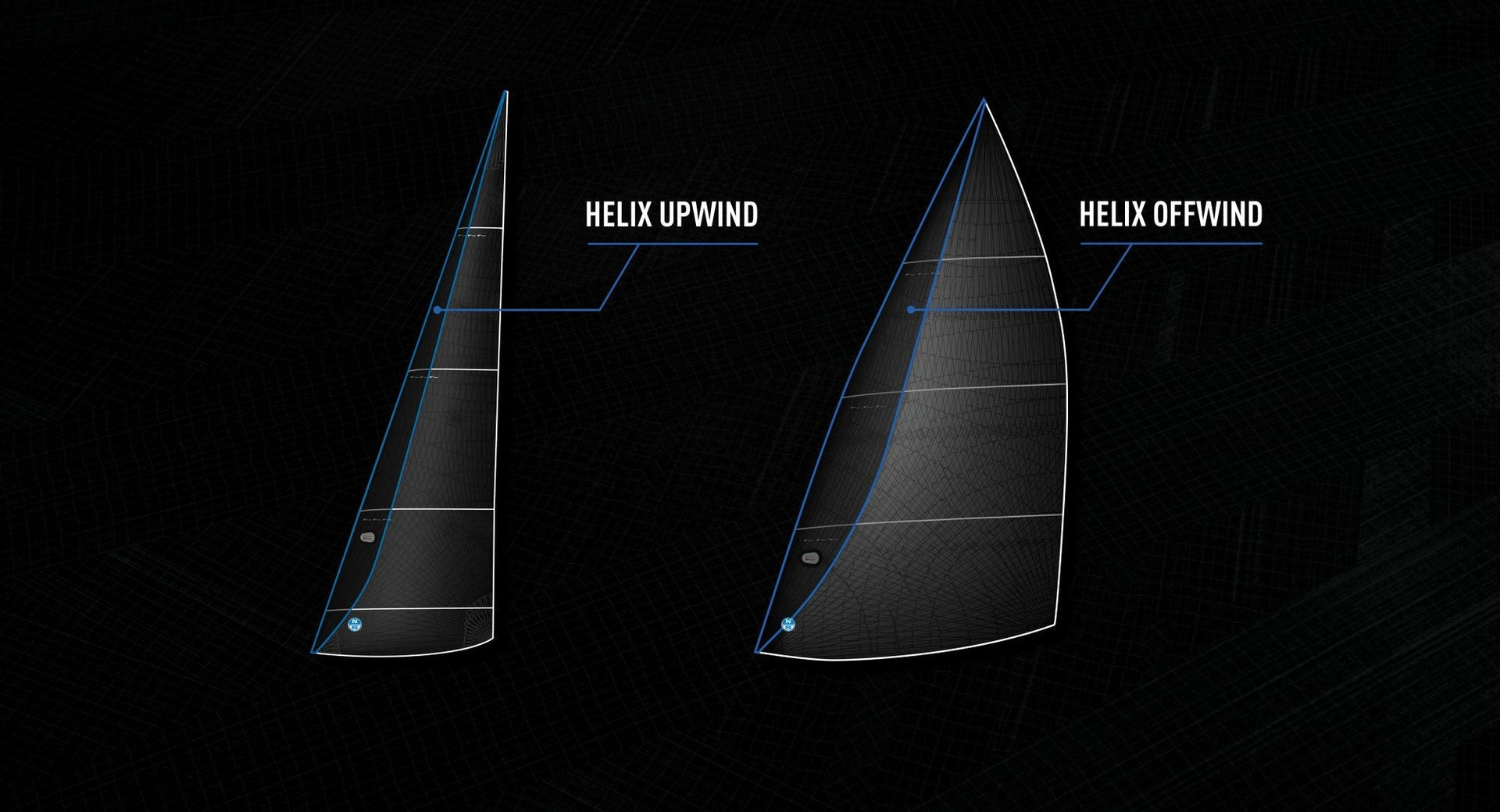
BANBRYTANDE INNOVATION FÖR BÅDE KRYSS OCH UNDAVIND
BANBRYTANDE INNOVATION FÖR BÅDE KRYSS OCH UNDANVIND
Nu är Helix standard på alla North Sails code-segel
Som världsledande inom segelteknologi flyttar North Sails ständigt fram gränserna för hur mycket prestanda man kan få ut av ett segel. 2022 är en milstolpe för utvecklingen av den revolutionerande Helix Structured Luff-teknologin: Från och med nu ingår Helix som standard på alla code-segel för racing och på Helix rullgennakers för cruising. Dessutom erbjuder vi nu Helix-teknologin även som tillägg på 3Di-försegel. Helix har på kort tid tagit marknaden med storm. I januari 2022 hade North Sails sålt över tvåtusen Helix code-segel till allt från Grand Prix-teams till vanliga semesterseglare. Med dessa två produkter tar North Sails nu nästa steg i vidareutvecklingen av denna banbrytande innovation. För North Sails är Helix en nyckelteknologi som inte bara bekräftar företagets vetenskapliga arv utan också ger det en rejäl skjuts in i framtiden.
Utvecklingen av Helix
Helix togs ursprungligen fram för kappsegling på Grand Prix-nivå, men har nu utvecklats till ett generellt designkoncept som förbättrar ett segels aerodynamik och breddar dess register. Helix unika DNA-liknande förlik är konstruerat för att ta upp mycket höga krafter, vilket ger dig helt nya möjligheter att justera formen i skiftande förhållanden. Prestandamässigt innebär detta att du får ytterligare en växel offwind. Ett grundläggande genombrott i utvecklingen gjordes under senaste Americas Cup, då Helix för första gången användes på kryssegel – vilket gav Emirates Team New Zealand, Luna Rossa Prada Pirelli och INEOS Team UK prestanda och trimmöjligheter på en helt ny nivå. ”Idag är Helix mer än bara en prestandahöjande speciallösning”, förklarar JB Braun, North Sails Director of Design and Engineering. ”Det är en helt ny designfilosofi som radikalt förändrar hur segel konstrueras, byggs och används. Med en skräddarsydd, datadriven process som bas konstruerar North Sails designers varje segels struktur för att optimera dess aerodynamik.”
Fördelarna
I de flesta fall sänker Helix krafterna på rigg och annan utrustning, med de fördelar som det ger i form av minskat slitage. Men den primära och absolut viktigaste fördelen – och det gäller såväl Offwind som Upwind – är att Helix resulterar i mer mångsidiga segel med bredare register, vilket i sin tur innerbär att antalet segel i segelgarderoben kan minskas.
Helix Offwind
Helix Offwind reducerar krafterna på flygande segel, förbättrar den aerodynamiska formen och vidgar seglets användningsområde. Helix kan appliceras på såväl 3Di- som panelsegel. Med sitt unika, kraftupptagande förlik och en extremt vridstyv förlikscord, speciellt framtagen av North Sails systerföretag Future Fibres, resulterar Helix Offwind i ökad stabilitet, förbättrad förliksprojektion och lägre krafter i fall- och halshorn.
Helix Upwind
Helix Upwind är exklusivt tillgängligt för North Sails 3Di-segel och kompletterar kompositstrukturen på ett sätt som dramatiskt förbättrar möjligheten att kontrollera seglets form och anpassa den efter olika förhållanden. Med sitt dynamiska, kraftupptagande förlik trotsar Helix Upwind alla tidigare kända begränsningar för segeldesign och segeltrim. Seglet är utvecklat för Active Camber Control™️, vilket innebär att du genom att justera spänningen i fall eller cunningham kan förändra formen och djupet på hela seglet – inte bara förliket. Resultatet är ett försegel som kan planas ut i takt med att vinden ökar.
Helix Offwind- och Upwind-segel går att beställa nu för leverans till sommaren. Kontakta ditt närmaste North-loft.
REQUEST A QUOTE TALK TO AN EXPERT MORE ON HELIX
READ MORE
READ MORE
NORTH SHORE P CLASS SAILOR BLAKE MCKINNON WINS TANNER CUP
NORTH SHORE P CLASS SAILOR BLAKE MCKINNON WINS TANNER CUP
2022 Tanner Cup Champion Used North Sails F1 Sail
North Shore P Class sailor Blake McKinnon drew on the ‘secret weapon’ used by 2020 Tanner and Tauranga Cup winner Tim Howse to carve his own name on the historic silverware, when he won the regional championship Tanner Cup in January. McKinnon, sailing Head First, used the North Sails-designed and developed F1sail, which has a radial clew and a cross-cut top. North Sails One Design expert Derek Scott says the radial design helps to spread the load out of the clew, and allows the top of the sail to twist off. 2019 Tanner Cup winner Blake Hinsley also used an earlier iteration of the F1 sail in his victory. The six-race 2022 series was held over two days at Auckland’s Murrays Bay Sailing Club, McKinnon’s home waters. On both days sailors had to contend with tough conditions- light, shifty south-southeasterly breeze and big tides—a contrast to the windy conditions in which Howse won the regatta two years ago. Representing North Harbour, McKinnon sailed a consistent series, with his lowest placing a seventh on the first day. Lying fifth overall, he then put the pressure on the series leaders on the second day by finishing with a second place and two bullets to take the cup.
Eighteen sailors from around the country represented their regions at the event, which was followed by the open Tauranga Cup event, in which McKinnon finished sixth overall. In this event, Tessa Clinton finished second female sailor, also using the F1 sail. Scott — a former winner of the Tanner Cup — says the North team has made some minor modifications to the F1 sail since Howse used it to win the past events, especially to the luff curve, to make the sail a better fit to the range of masts used in the class.
“We had been finding some quite big variances in the masts, so we have been tailoring each sail to the specific boat,” Scott says. “After testing each mast to see how stiff or soft it is, we create a custom luff curve for each sail, so it fits perfectly.”
📸 Live Sail Die
READ MORE
READ MORE
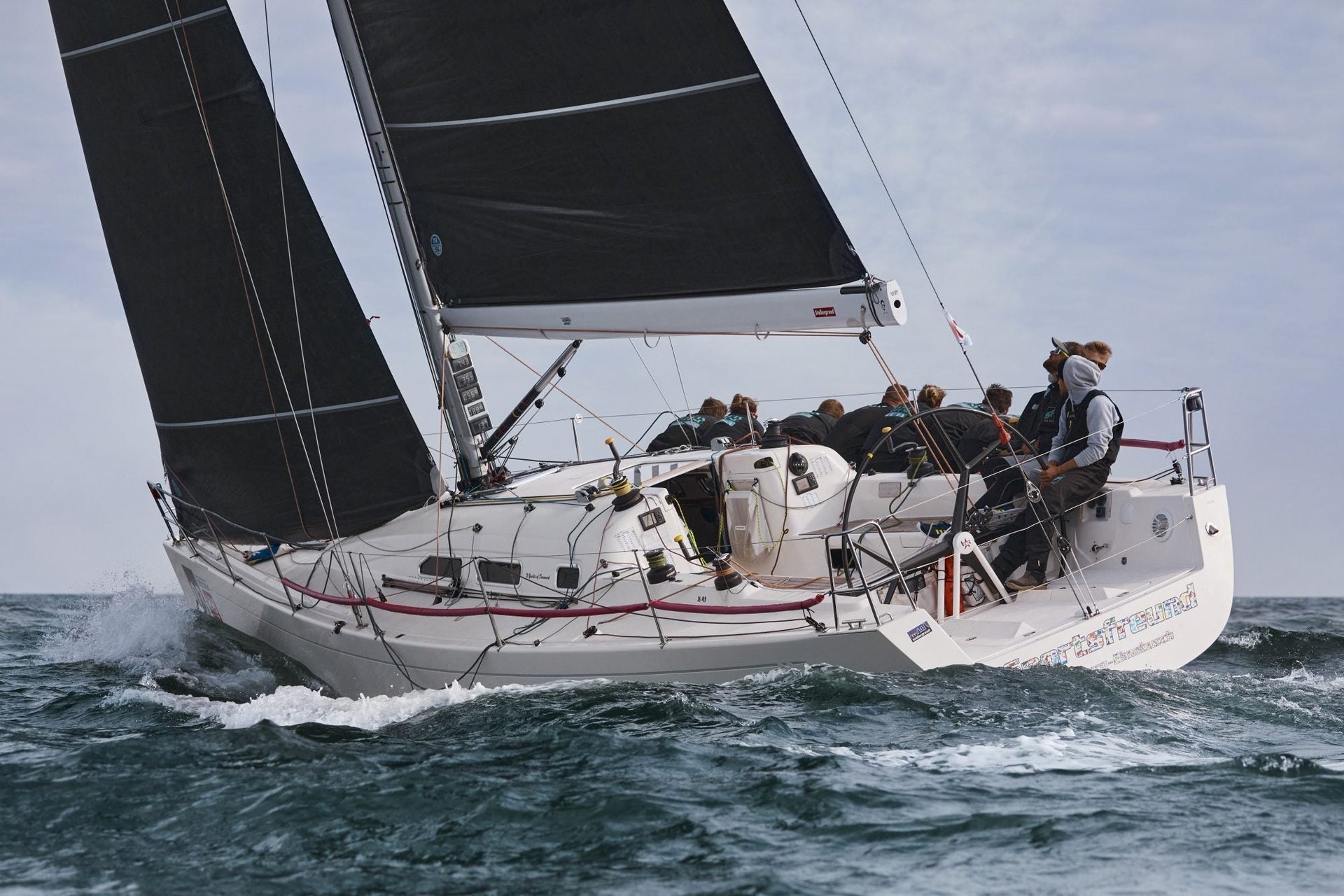
ORC WORLD CHAMPIONSHIP 2023: PREPARATIONS START NOW
ORC WORLD CHAMPIONSHIP 2023: PREPARATIONS START NOW
Sights Set on Kiel, Germany
📸 Felix Diemer
The news that the Offshore Racing Council, ORC World Championship is coming to Kiel again in 2023 has triggered a real hype throughout the worldwide fleet of ORC sailors. For the local fleet in Germany, this will mark the season highlight of the next two years and after two seasons of events being influenced by the pandemic, there are hopeful signs for a sporty and ambitious summer of sailing. If you want to be there in 2023, ideally, preparations should start now. Those who start preparing in good time not only reduce the risk of nasty surprises, but also go into the World Championship with greater composure.
Someone who knows the ORC scene like the back of his hand is North Sails expert and sailmaker Bertil Balser. As a native of Frankfurt, Germany, Bertil has been sailing since he could walk and took his first steps in the world of offshore racing in 1996, when ORC was still called IMS (International Measurement System). Several National and International successes later, as well as one or the other rule loophole (keyword: “Berta”), Bertil is not only an impressive sailor, but also the ideal contact for all questions about ORC sailing.
Reason enough, then, for us to quiz him with a series of questions in the run up to the World Championship, starting off with a few basic questions about ORC sailing:
How well do you know the ORC formula?
As there are countless measures that add to the overall rating, you can basically change and adjust virtually anything concerning the boat’s performance. This makes the ORC system both very technical but also somehow intuitive. The question here is: Which screw is worth turning and which one should you avoid touching in the first place? After more than 15 years in the ORC circuit, I can judge quite well what makes sense and what doesn’t.
What is key for a successful ORC campaign?
Good material and a clean underwater hull are one thing. But the other thing is having a crew that not only harmonizes, but also really trusts and works together.
I recommend North Sails 3Di RAW 780 for your upwind inventory, and our Superkote Spinnaker styles for your downwind inventory. We will be sure to find your weapon of choice amongst our product range.
📸 Felix Diemer
When should preparations for the 2023 World Championship begin?
Such a campaign always goes through phases of varying intensity and each team has its own dynamic. However, no matter how you choose to run your campaign, the following still applies: time is ticking.
If you want to be there in Kiel in 2023, you should start preparing today. The more time you have, the easier it will be to get material and crew into a competitive mode. As always, the devil is in the details.
What advice would you give to crews with limited previous experience?
Be sure to get started! Every project starts with the first step. What many do not know is that often the step from ambitious Wednesday sailing into the ORC world is much smaller than it might look from the outside.
How to contact you with questions?
To get in touch with Bertil directly, please email him at bertil.balser@northsails.com, or click here to talk with an expert at your local loft. We look forward to hearing from you and our team of experts will be happy to help you get closer to achieving your goal at the 2023 ORC World Championships.
What is your greatest personal success?
That is hard to say. The four victories at the IDM See – most recently with the X-41 Sportsfreund – were certainly just as much a highlight as various podium positions at World and European Championships. When “my” team became European Champions in 2019, I was involved with fatherly joy on the home front, so a gold medal is still missing. One more reason to attack again in 2023!
TALK TO AN EXPERT
READ MORE
READ MORE
PACIFIC CUP AND NORTH SAILS PARTNER AGAIN FOR 2022 RACE
PACIFIC CUP AND NORTH SAILS PARTNER AGAIN FOR 2022 RACE
Supporting Competitors In Their Preparation for the 2070 Mile Endeavor
North Sails and the Pacific Cup are thrilled to partner again for the 2022 edition of the race. As an Event Sponsor, North Sails will offer an educational webinar focused on weather and navigation tactics, with Chris Bedford and Peter Isler, during the race for current and aspiring participants of the Pacific Cup as well as an in-person training seminar for onboard sail repair.
A highlight of the West Coast racing scene, the Pacific Cup draws sailors from all over North America every other year. On July 4, 2022, more than 70+ boats will depart the San Francisco Bay and sail over 2070 miles to finish in beautiful Kaneohe Bay on the island of O’ahu. A true bucket list event, race participants undergo more than a year of mental and physical preparation in close partnership with race leadership, attending training and safety seminars, preparing their vessels, and building relationships with other race participants.
“The Pacific Cup and North Sails share a strong commitment to promoting the sport of ocean racing,” said Caitlin Gutekunst, Board Member and Sponsorships Chair for the Pacific Cup Yacht Club. “Together we are simultaneously driving performance and training for this sport, promoting diversity on the water, and protecting our oceans.”
Seadon Wijsen, local North Sails expert from San Francisco shares, “We are happy to be supporting the largest Pacific Cup to date. The Pacific Cup is more than just a race but a tradition for the west coast in bringing together new ocean sailors along with the most experienced ocean racers in the world. We enjoy educating new sailors as well as providing the necessary products and support to have a successful race to Kaneohe.”
North Sails prides itself on having the best sail solutions and accessible expertise for boats across the spectrum. North Sails is the world’s leading sailmaker with a vast network of over 100 sales and service sites globally. North Sails invites racers to get prepared for the race and sign up for the upcoming Pacific Cup webinar today and in-person training seminar.
READ MORE
READ MORE
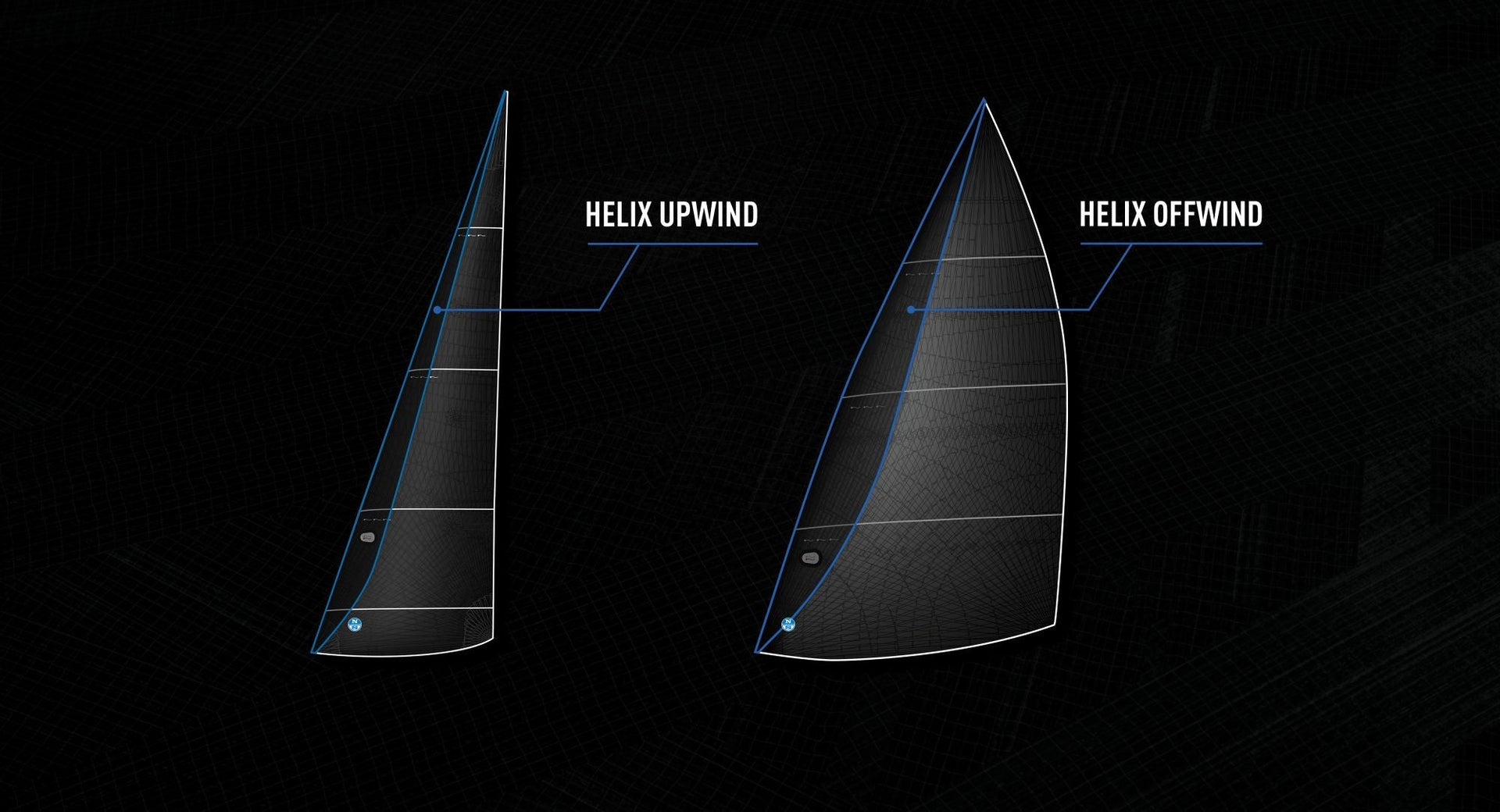
NORTH SAILS DOUBLES DOWN WITH LEADING-EDGE INNOVATION
Helix Now Standard In All North Code Sails
World leader in sailmaking technology, North Sails constantly pushes the boundaries of performance. 2022 is a landmark year for the brand’s Helix Structured Luff technology, as it is now announcing that the revolutionary design philosophy has been made standard on all North racing Code sails and the Helix Furling Gennaker for cruising, effective immediately. Furthermore, North Sails has moved to expand its range to include Helix as an upgrade for headsails.
In its relatively short life to date, the impact of Helix has been a revelation. As of January 2022, North Sails has sold over two thousand Helix Code Sails, with incredible results surfacing from across classes, from Grand Prix teams to weekend sailors. With these two bold developments, North Sails intends to extend the legacy of this game-changing innovation, which it envisions becoming a flagship design philosophy, synonymous with the North Sails name itself.
The Evolution of Helix
Once limited to offshore Grand Prix, Helix Code sails have quickly become the go-to tool for improving aerodynamics and increasing range. With its unique DNA-like structured luff, Helix has given sailors another gear offwind, enhancing power potential by optimizing load sharing, for a proactive, positive sail shape.
A defining moment in its development, the 36th America’s Cup saw Helix applied to upwind sails for the first time (and to great effect), with Emirates Team New Zealand, Luna Rossa Prada Pirelli, and INEOS Team UK displaying unprecedented speed and control upwind.
“Today Helix is more than a single feature,” explains JB Braun, North Sails Director of Design and Engineering. “It’s a total design philosophy that radically changes how sails are engineered, built, and flown. Guided by a bespoke, data-driven process, North Sails designers engineer each sail’s structure to improve its aerodynamics.”
The Benefits
In most cases, the result of this process is a reduction in load running through your equipment, having the obvious immediate effect of minimizing wear and tear. However, the primary benefit, in terms of performance and practicality, of both Helix Upwind and Offwind is a versatile inventory that carries across a wide range, while also reducing the number of sails required.
Helix Offwind
Helix Offwind can reduce the overall load on any free-flying sail, whether 3Di or panel construction, for a more forward projecting sail and increased range. Featuring a stretch-resistant structured luff and purpose-built high torque Luff Cord exclusively available to North Sails from its sister company Future Fibres, Helix Offwind sails deliver enhanced stability, improved luff projection, and reduced head and tack loads.
Helix Upwind
Exclusive to North 3Di sails, Helix Upwind harnesses the sail’s composite structure in a new way to dramatically improve camber control. With its Dynamic Structured Luff, Helix Upwind defies conventional design limitations. Engineered for Active Camber Control™️, with Helix you can adjust the shape and depth of the entire sail, not just the luff – controlling power on the fly using a Cunningham or halyard for a wider range of use.
Helix Quick Guide
Helix Offwind and Upwind sails are available for order now. Get in touch with your local North Sails loft for summer delivery.
REQUEST A QUOTE TALK TO AN EXPERT MORE ON HELIX
READ MORE
READ MORE

LOFT 57 PODCAST: BETTER BY DESIGN
With a team of 60-strong, North Sail designers are innovators and opinion leaders, and their collective experience is our competitive advantage.
READ MORE
READ MORE

THE NEW NORTH SAILS AUCKLAND
THE NEW NORTH SAILS AUCKLAND
Your Team Has Moved To Auckland. Visit Our New Location, Open Now
North Sails Auckland is pleased to announce that it has combined its sales, service and sail-making functions into a single location, at its large loft in Auckland’s Wairau Valley. The Sales and Management team, including General Manager Richard Bicknell, Sales Manager Andrew Wills, and Sail Experts and Designers Matt Kelway, Derek Scott, Matt Smeaton, Matt Steven, Guy Hewson, Ben Costello, Burns Fallow and Magnus Doole, will all now be based out of the Glenfield loft at 217 Archers Road, which is already home to the Production, Service and One Design departments.
For the convenience of boat owners based at Westhaven, sails needing servicing can still be dropped off and collected from North’s partner company Rig Pro at Unit 2/1 Westhaven Drive.
The large Glenfield loft, opened in early 2016, has plenty of space for all North’s sail making and servicing, and will enable the sales and production teams to work more closely together.
The new facility was optimized to accommodate the needs of each department, from upwind finishing to one design to downwind production. The result is a modern, efficient space with flexible systems and a main sailmaking floor of around 1500 sq m, large enough to lay out a complete J Class or 100 foot maxi sail. In order to manage multiple projects simultaneously, the loft has an A-frame furling system that accommodates luff lengths up to 60 m, plus North’s signature rotating sewing pits.
Up to 16 sailmakers work on the floor, with a mezzanine area for the one design team. The Glenfield facility also houses the service department, where a team of up to eight works with sails coming in for service or recuts, organizing parts and taking care of the needs of visiting superyachts.
As part of the worldwide North Sails team, the Auckland loft benefits from both international experience and local knowledge, with a team of highly experienced sailors both on the floor and in the sales and design offices.
MEET THE TEAM
READ MORE
READ MORE

LET'S TALK RIG TUNING WITH ANDY RICE & CHARLIE CUMBLEY
LET’S TALK RIG TUNING WITH ANDY RICE & CHARLIE CUMBLEY
North Sails One Design Expert Charlie Cumbley Joins Andy Rice To Discuss Etchells & J70 Rig Tune
Join North Sails One Design Expert Charlie Cumbley joins Andy Rice from Sailjuice.com to share the art and science behind optimal rig tuning and boat setup.
Browse the North Sails Etchells/ J70 class page for news, tuning guide, and inventory options or contact North Sails Expert Charlie Cumbley below.
ETCHELLS CLASS PAGE
J70 CLASS PAGE
CHARLIE CUMBLEY
READ MORE
READ MORE
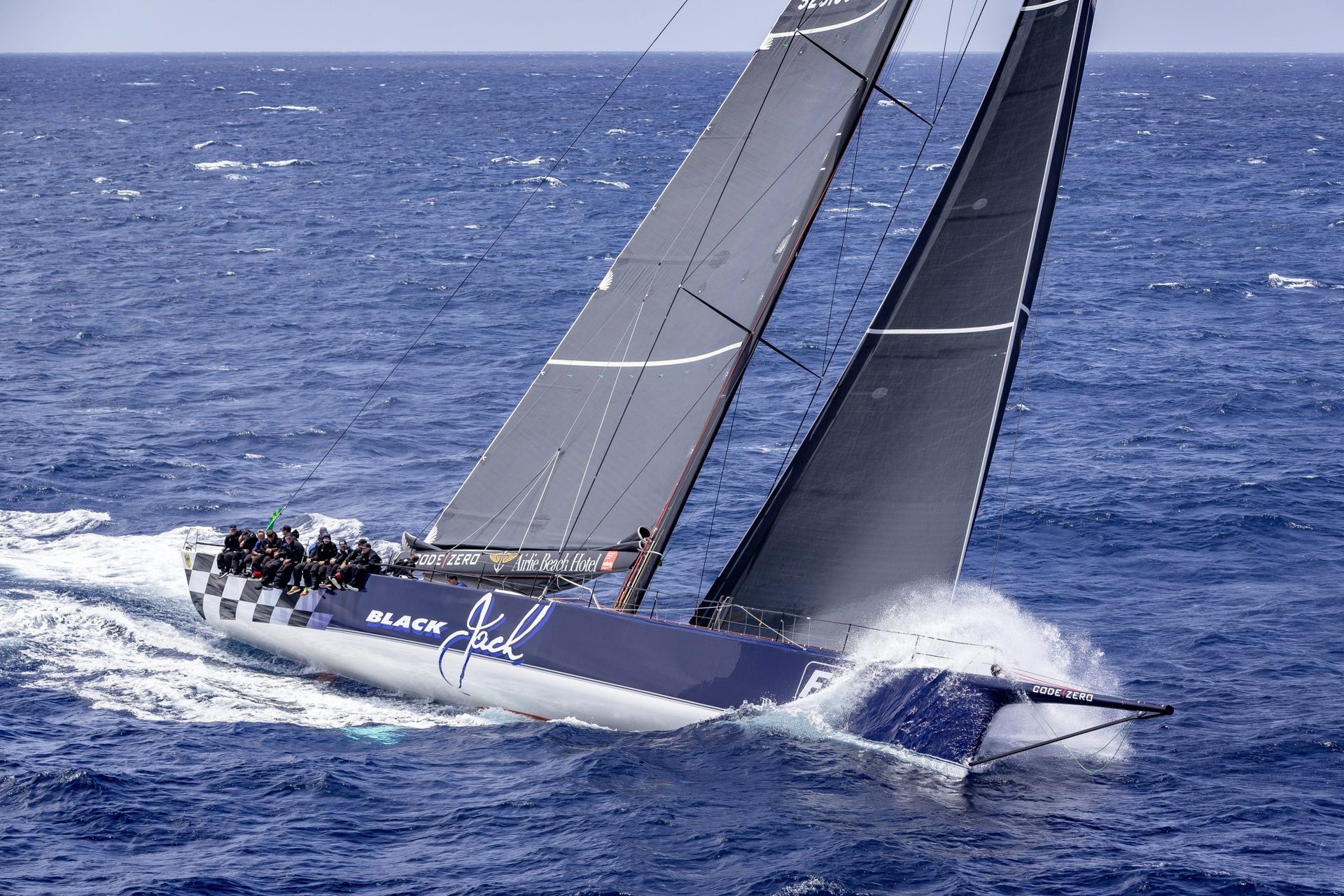
BLACK JACK'S WINNING COMBINATION
BLACK JACK’S WINNING COMBINATION
Sail Designer Magnus Doole and Black Jack Skipper Mark Bradford Explain The Steps That Lead To Owner Peter Harburg’s First Win In “The Great Race.”
📸 Andrea Fancolini / Rolex
When Black Jack’s mast fell over the side during a record-setting run last April, the team quickly decided to turn their devastating loss into a performance upgrade. That decision paid off when Peter Harburg’s team claimed line honors in the 76th edition of the Rolex Sydney Hobart Yacht Race.
The RP100 had always struggled upwind against Christin Beck’s wider LawConnect, a Juan-K design. So we wanted to understand how an experienced team of sailors and North Sails design engineers overcame this boat’s known weak point. The answer? A new aero package that took advantage of Helix’s load-sharing technology.
Magnus Doole, the team’s New Zealand-based sail designer, says that the brief for Black Jack‘s new inventory called for more than simply replacing the old sails and rig. While the majority of Black Jack’s sails had minimal hours on them due to canceled regattas in 2020, the Helix design philosophy had evolved significantly.
North Sails Australia Managing Director Mark Bradford is Black Jack’s skipper. “We knew we wanted all our sails to focus around Helix’s load sharing capabilities,” Bradford says. “It was then a question of figuring out the target ratio and trade-off of luff load vs. stay load. Whether you’re incorporating Helix onto a new build or upgrading your inventory, it’s all about the balance between reliability, performance, and sail stability. North Sails has an arsenal of design tools and a deep bench of talent like Magnus. It was really an easy solution to come up with for our team.”
Doole and Southern Spars’ Jarrad Wallace modeled a new aero package with the North Design Suite that optimized the combination of load-sharing Helix sails, a new mast, and Future Fibres rigging. “We set out to deliver a more efficient package using recent advances in sail structures,” Doole explains. “The boat has always had an Achilles heel. She is very skinny and low drag, but has a lower righting moment than her competitors. Upwind in a breeze has been her downfall.”
“Magnus used Membrain to run various upwind, reaching and running sail configuration simulations,” Bradford says. “We then handed the sail designs, structural information, pressure files, and load data to Jarrad and the Southern team who ran rig-specific analysis along with the North software.”
Together, the Black Jack crew has sailed over 200 Sydney- Hobarts, so their practical onboard experience was factored in as well. Bradford, Black Jack’s Sailing Master and mainsail trimmer, Bruce Clark, and North Expert Vaughn Prentice all provided input, along with Alex Nolan, Will McCarthy, Ryan Godfrey.
“Thanks to Helix,” Doole says, “we netted a 10% savings in the rig and rigging while making significant gains in stiffness. With load sharing comes less mast compression, so we turned part of that gain into a lighter and stiffer mast. If you were doing all of this on an existing mast, it would be like creating more stiffness overnight for the same rig.”
This kind of optimization has been done with many other projects, he adds. “North Sails can easily pass this type of experience on to boats of all sizes and shapes, whether you have a new mast on order or will use an existing mast and rigging package.”
The first big offshore test for Black Jack’s new aero package was the grueling race to Hobart—so winning line honors was an important validation. Besides adding inherent stability to a skinny boat by reducing weight aloft, the new Helix sails adapted well to the wide range of upwind sailing conditions along the 628-mile course. More range from each sail allows boats like Black Jack to reduce the number of sail changes, which in turn reduced crew fatigue.
“The key advantage of Helix is range,” says Bradford. “It directly contributes to reduced sail changes and a more optimized sail shape through a much wider range of conditions. You can significantly change sail shape when the sails get out of range to put them back in range. The benefit is carrying fewer sails, less weight, fewer sail changes, reduced downtime, increased performance.
“By taking advantage of Helix design philosophy and reducing weight in our sail structures,” he concludes, “we managed to hold off a much faster upwind boat when it was windy. Then when the conditions turned in our favor, we could extend. Black Jack is now a far better all-around boat, and this has mostly come from the changes we’ve made above the deck.”
Advanced mathematical modeling complements the North Sails innovative spirit. In Episode 1 of the new North Sails podcast, we talk design, simulation, and the bespoke North Design Suite with three generations of sail engineers. Michael Richelson, Marco Capitani, and Brodt Taylor all bring their unique skills to the table and help create cutting-edge products that give North Sails its signature competitive edge.
READ MORE
READ MORE
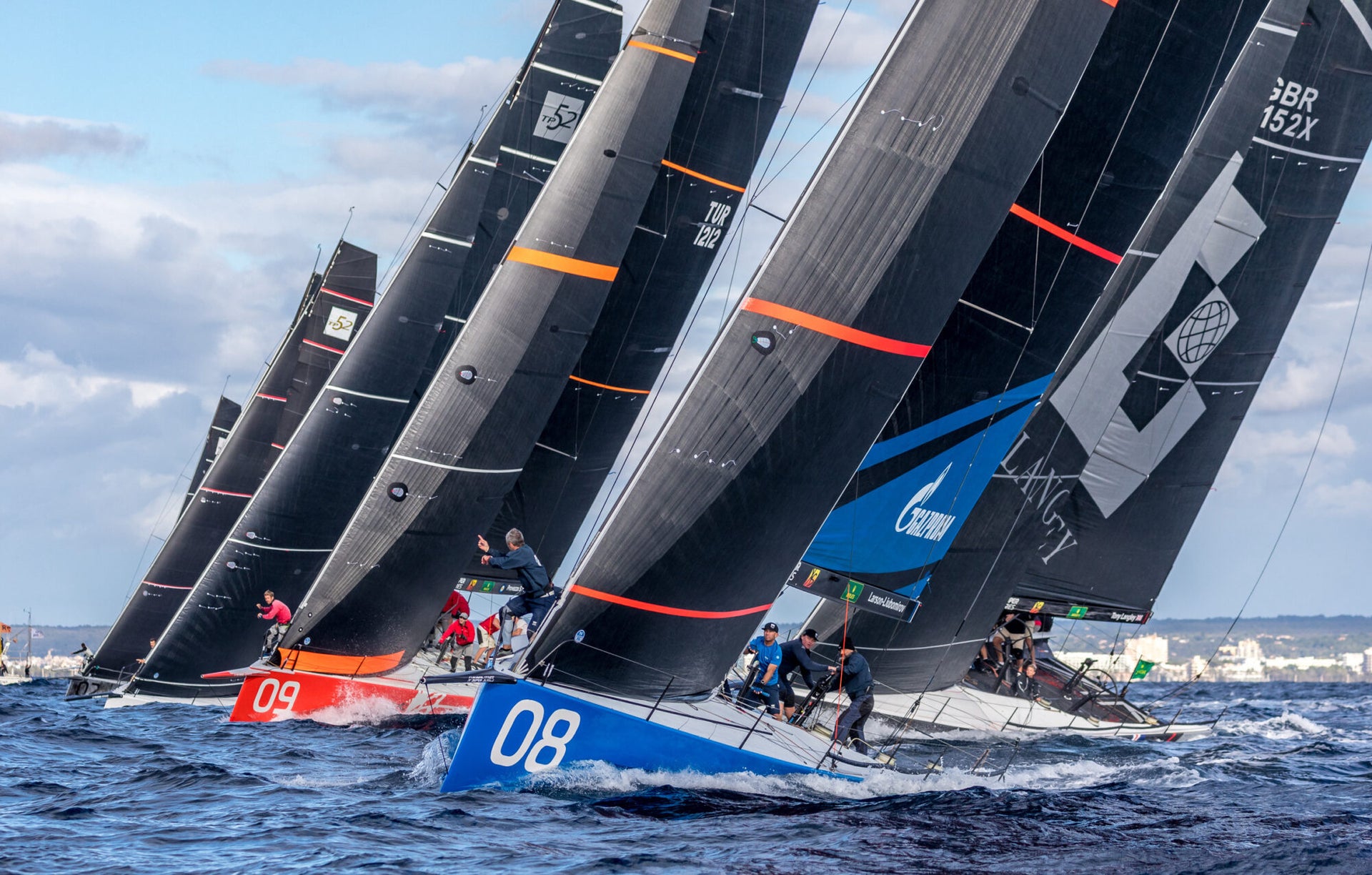
JAKTEN PÅ DEN VINNANDE SKILLNADEN
JAKTEN PÅ DEN VINNANDE SKILLNADEN
Vad är det som driver utvecklingen inom segling? Svaret är enkelt: Professionell kappsegling på högsta nivå i klasser där det mesta är tillåtet och där teknisk utveckling betraktas som en del av sporten. Americas Cup är förstås det tydligaste exemplet. Här är speed allt. Vill du ta en titt på världens absolut lättaste, stummaste och snabbaste segel är det här du hittar dem. De tre toppbåtarna (av totalt fyra) i senaste cupen var utrustade med våra 3Di-segel. Vendée Globe, ensamkappseglingen nonstop runt jorden i enskrovs 60-fotare – så kallade IMOCA 60s – är ett annat exempel. Här är förutsättningarna delvis annorlunda. Bara att ta sig i mål är en utmaning och förutom prestanda finns det ett stort fokus på tillförlitlighet. I senaste upplagan levererande vi 3Di-segel till 22 av 33 startande båtar – inklusive de åtta första i resultatlistan. Och så har vi då TP52. Klassen har nu tjugo år på nacken och dagens båtar är resultatet av ett oändligt utvecklingsarbete. Skillnaden i prestanda är knappt mätbar – det handlar om millimetrar eller centimetrar snarare än båtlängder – men i slutändan efter en lång serie är det just dessa små skillnader som fäller avgörandet. Flera av de stora utvecklingsstegen för North Sails 3Di-teknologi kan härledas till TP52-klassen. Det vi idag kallar 3Di RAW är exempelvis ett direkt resultat av utvecklingen inom TP52-klassen, liksom steget från 3Di RAW 870 till RAW 880.
Det vi idag kallar 3Di RAW är exempelvis ett direkt resultat av utvecklingen inom TP52-klassen, liksom steget från 3Di RAW 870 till RAW 880.
När vi nu summerar säsongen kan vi konstatera att sju av de nio båtar som deltog i årets 52 Super Serie var utrustade med North-segel – inklusive Sled, totalvinnare i årets serie, tillika årets världsmästare. I filmen berättar Paul Westlake (försäljningschef för North Sails Grand Prix-verksamhet) och Marco Capitani och Juan Messeguer (två av våra segeldesigners) mer om den teknologi och det mödosamma utvecklingsarbete som ligger bakom framgången.
READ MORE
READ MORE
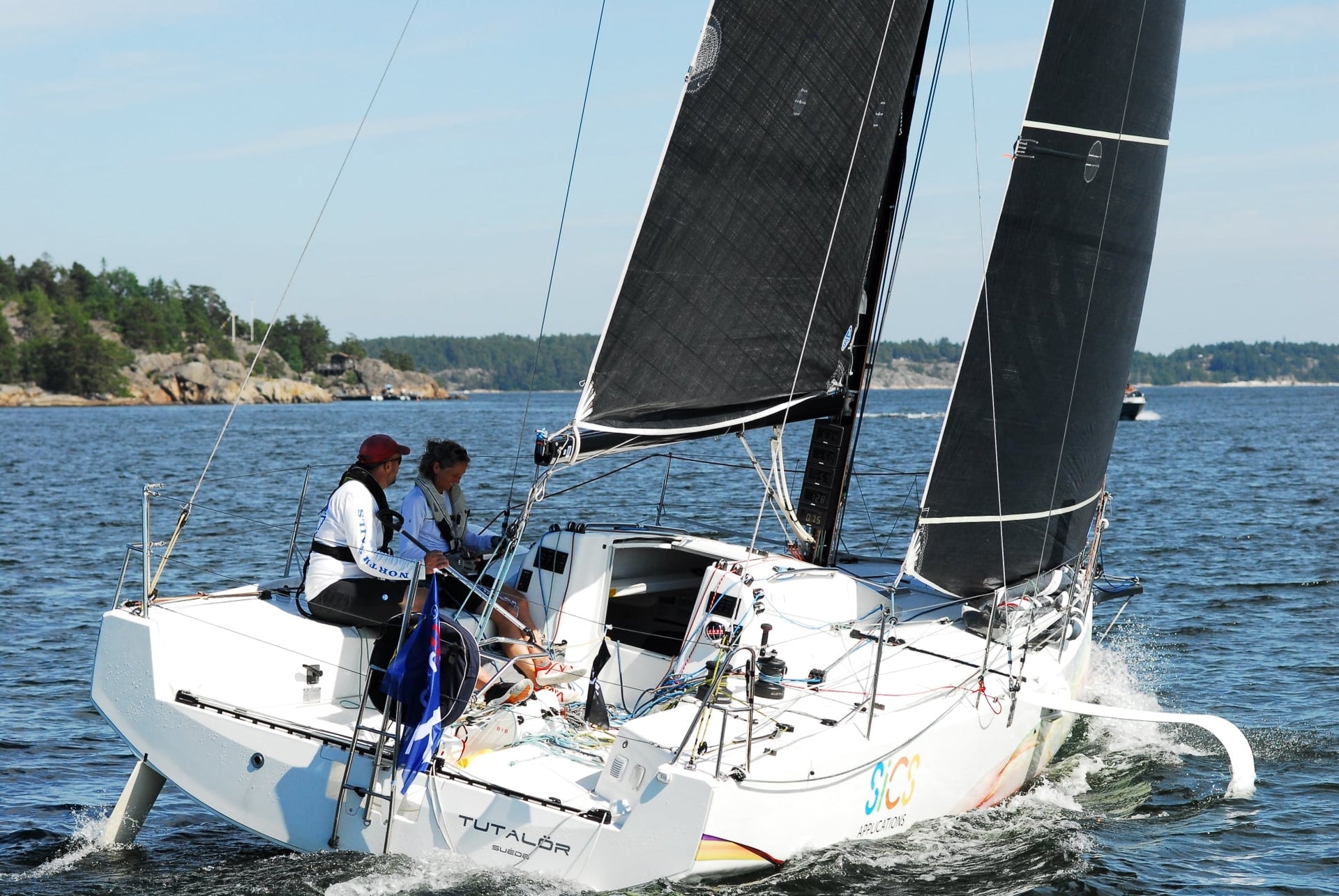
ERFAREN SEGELMAKARE MED FOKUS PÅ SHORTHAND-SEGLING
ERFAREN SEGELMAKARE MED FOKUS PÅ SHORTHAND-SEGLING
Nu siktar Martin Angsell mot VM på hemmaplan
Shogun 50, ritad av Håkan och Oscar Södergren och byggd i kolfiber är ett fantastiskt spännande båt som visar att svensk design och svensk ingenjörskonst håller internationell toppklass. Martin är djupt involverad i projektet – både som segelmakare och seglare. 📸 Linjettbåtar
Martin Angsell är en segelmakare av den gamla stammen, om man nu kan säga det om en person som ännu inte fyllt femtio. Men han har varit i branschen i över 25 år och har lärt sig yrket från grunden, krypandes på golvet, med en sax i ett hölster på höften. Han vet hur man gör en recut, hur en revförstärkning är uppbyggd och vilka travare som passar i likrännan på en Scampi Mk2.
Om vi bortser från några praktikperioder – den första redan under högstadiet – inledde han sin karriär som segelmakare på Royal Sails. Det var i mitten av 90-talet, direkt efter lumpen, och för Martin var det en barndomsdröm som nu gick i uppfyllelse.
2004 inkorporerades Royal i North Sails och Martin hängde med i flytten till Lidingö. På Royal hade han arbetat med produktion, och det fortsatte han med när han kom till North Sails. Men det var ju länge sedan och både Martin och North Sails har utvecklats. Vi tillverkar inte länge några segel i Sverige och Martin jobbar nu framför allt med försäljning.
”Fast jag är egentligen inte något försäljartyp”, säger han, och menar nog att han inte har den krängar-mentalitet som ibland sägs utmärka duktiga säljare.
Det behöver han inte ha heller. Ett North-segel är inte en färdig produkt som plockas från en lagerhylla. Det är en tekniskt avancerad produkt som skräddarsys efter varje enskild kund och som med hjälp av olika material kan optimeras för olika användningsområden. Det kunden framför allt behöver är en god rådgivare, och det är Martin.
Det handlar om att lyssna av kunden, identifiera det verkliga behovet och lotsa kunden fram till det mest förnuftiga valet. Ibland är processen enkel, ibland oerhört komplex. Att exempelvis sätta samman en segelgarderob till en seriöst satsande havskappseglingsbåt kräver att Martin har koll på – och kan värdera – allt från mätregler, mätbrev och polardiagram till väderstatistik på de race som är aktuella.
Säljare, ja. Men man skulle också kunna beskriva Martin som en rådgivande konsult kring allt som påverkar en segelbåts prestanda.
Gilmour, Coutts, Cayard och… Angsell
Martin ser sig framför allt som kölbåtsseglare och har provat på allt från pappas Cumulus till VO65 och det mesta däremellan. Entyp. Havskappsegling. Shorthand-segling.
Och inte minst matchracing. Martin har ägnat ungefär ett decennium åt denna typ av segling och var under en period rankad bland de femton bästa i världen. Kul och utvecklande, tycker han. Och så har det gett honom möjligheten att mäta sig mot seglare som de flesta bara läser om i båttidningar eller på Internet.
Som år 2000, då Martin var inbjuden till Swedish Match Cup i Marstrand. Då som nu en av världens mest prestigefyllda matchracingregattor med prispott i miljonklassen och totalt runt 100 000 åskådare på klipporna runt banområdet. Någon framskjuten placering blev det visserligen inte den gången. Men bara att få gå upp i ringen och fajtas mot legendarer som Dean Barker, James Spithill, Peter Gilmour, Jesper Bank och Magnus Holmberg är ett minne för livet.
Den mest minnesvärda framgången var annars när Martin och hans besättning 2006 var över i USA och vann Knickerbocker Cup. Det är en klassisk tävling som seglats årligen sedan 1982 och där listan över tidigare vinnare omfattar några av världens främsta seglare genom tiderna. Att det gav segern en extra krydda noterade även Sail-World i sin rapportering från eventet:
”In addition to the prize money, Angsell will have his name permanently placed on the Cup along with such past winners as Peter Gilmour, Ed Baird, Paul Cayard, Russell Coutts, Terry McLaughlin and Dave Perry”
Bénéteau Figaro 3 är utvecklad för att vara den ultimata shorthand-båten. Snabb är bara förnamnet – Martin har som mest varit uppe i 26 knop! 📸 yachtservice.se
Fokus på storbåt och shorthanded
Utöver matchracing har Martin seglat en rad entypsbåtar, som Express, 606, J/80 och J/70, Farr 30 och Fareast 28. Men på senare år har han allt mer glidit över till olika former av respitsegling i större båtar. Det tenderar att bli mer av havskappsegling än bankappsegling. Med full besättning eller på tu man hand.
Särskilt shorthand-kappsegling har haft en enastående tillväxt under många år, såväl i Sverige som i resten av världen. Martin är något av en veteran och har seglat mycket med Anna Drougge, Sveriges kanske mest rutinerade kvinnliga havskappseglare med både Whitbread och Volvo Ocean Race på meritlistan. De trivs ihop och är ett välfungerande team – 2021 vann de exempelvis silver på SM i Shorthanded Mix, som avgjordes som en del av Gotland Runt.
I det här sammanhanget är det omöjligt att inte ägna några rader åt Gotland Runt 2019. Det var ett tufft race med vindar som stundtals var uppe på 25 m/s. Ett hundratal båtar – cirka 40 % av hela Gotland Runt-flottan – tog sig aldrig i mål. Martin deltog i doublehandklassen, där han tillsammans med Christian Martin seglade Tutalör, en splitter ny Bénéteau Figaro 3. Det är en 30-fotare speciellt utvecklad för shorthand-kappsegling. Båten är utrustad med foils som visserligen inte lyfter skrovet ur vattnet men som skapar ett rätande moment motsvarande ett par hundra kilo på lovarts reling.
Det hela utvecklade sig till rena julafton för Martin och Christian. På de öppna bogarna var farten ofta uppe i över 20 knop, med topp på 26. De seglade banan på lite över 45 timmar och vann doublehand-klassen med nästan åtta timmar på beräknad tid.
Men det var kämpigt. Vindar över 20 m/s på öppet hav är jobbigt i vilken båt som helst, även med full besättning. Och hur det är att segla på två i ett äggskal som en Figaro 3 är svårt att föreställa sig för den som inte var med.
Parets bedrift väckte berättigad uppmärksamhet, och den minskade inte när totallistan offentliggjordes. De två första platserna togs av två Volvo Ocean Race-båtar, båda med full besättning. Men sedan kom Martin och Christian i lilla Tutalör.
Temperaturen stiger inför VM 2022
Den kommande säsongen händer det osedvanligt mycket på doublehand-fronten i Sverige. På västkusten har vi Bohusracet som 2022 får status som mästerskap. Det är det första steget mot ett officiellt svenskt mästerskap, som om allt går som planerat kan genomföras 2024.
Men det riktigt stora är förstås att Sverige har tilldelats 2022 års ORC Double Handed World Championship – för övrigt det allra första i sitt slag. VM seglas parallellt med Gotland Runt och starten går den 3 juli inne i centrala Stockholm. Som namnet antyder behöver deltagande båtar mätas in i ORC International, men säkerhetskraven är ganska modesta – det är kategori 3 som gäller och livflotte är inget krav – vilket gör det möjligt för många att vara med.
Så lär det bli också. När detta skrivs strax innan jul har nästan 70 besättningar anmält sig, och anmälningstiden går inte ut förrän i början av juni.
Tre gånger har Martin seglat doublehanded på Gotland Runt. Resultatet är två vinster och en andraplats. Martin har alltså bra koll på den kommande VM-banan och är klart att han är sugen på att vara med.
Vi får se hur det blir med den saken. Men han ser i vilket fall som helst fram mot VM med stor förväntan. Och han lär bli involverad upp över öronen. Förmodligen som kappseglare och helt garanterat som segelmakare.
READ MORE
READ MORE
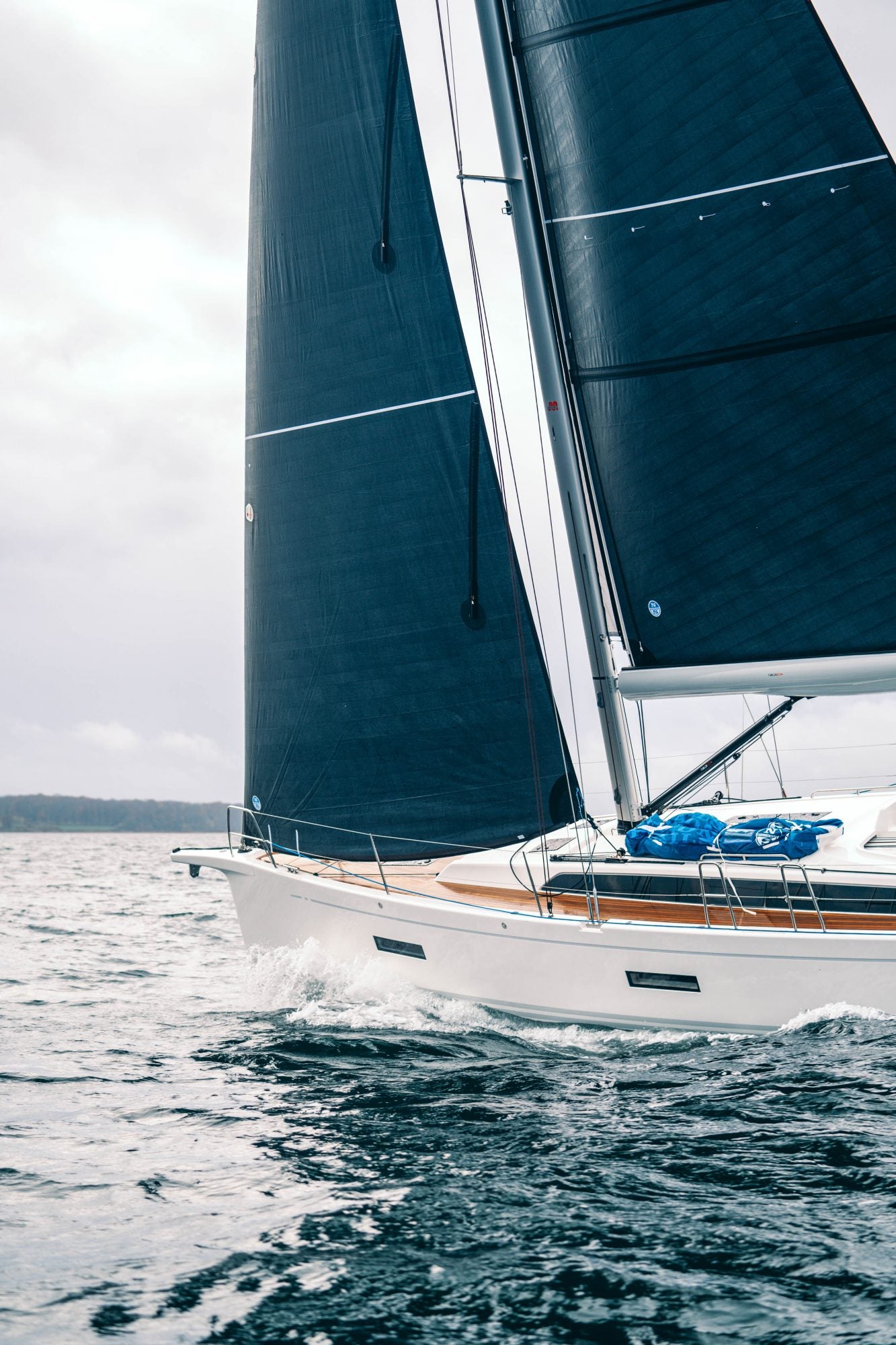
WHAT YOU SHOULD KNOW ABOUT BATTENS
WHAT YOU SHOULD KNOW ABOUT YOUR BATTENS
Batten Installation and Tensioning Instructions for All Sailors
Thinking about battens? Preparing for a new season is something that is on everyone’s mind. Whether you’re staging your boat to launch, planning an extended cruise, or hoisting your sails for a weeknight club race, it’s important to make sure you’ve got your battens installed properly and tensioned correctly. Checking your battens will provide better sail shape and performance – and ensure you don’t lose them after the first tack or jibe!
Sail expert Hugh Beaton from North Sails Toronto explains some important details to remember.
Proper installation for proper sail shape.
Make sure the battens are inserted with the tapered (thin) end towards the luff and the stiffer (thick) end towards the leech. We sometimes see battens interested the wrong way and as a result, the sail will not have the correct draft (depth) and curvature (location of maximum depth) – so it is worth double checking that the batten is oriented correctly.
Make sure your battens are secure.
Some battens enter from the luff, others from the leech so check to make sure that the closure system where the battens have been inserted has been properly secured. For North Sails Velcro closures, there is a specific compartment for the batten, and another for the two surfaces of Velcro to make contact. Lashing systems have another procedure to follow, as do RBS wing tip end caps. In all cases correct installation will keep the battens securely in place for the season.
📸Mike Egan
Correct tension creates a smooth sail.
Your batten tension also needs to be looked at. If there is insufficient tension there will be a number of vertical wrinkles along the length of the batten. If there is too much tension there will be visible horizontal tension pulling along both sides of the pocket, with the fabric looking stressed. When the tension is correct, the batten pocket is smooth and correctly supports the designed flying shape of the sail.
Have questions about your battens? or need help with proper installation?
Please reach out to your local North Sails representative for guidelines and instruction on how to make sure your battens are loaded correctly and your sails are ready for the season.
Learn more with North Sails batten specific installation guides.
READ MORE
READ MORE
THE STORY OF ARGO: PART I
THE STORY OF ARGO: PART I
An Opal 46, Has Been Shared by Three Generations of the Ravelius Family
After years of sailing with his father on board his beloved schooner, Argo, based in Sweden, John Ingvar Ravelius has taken part ownership of the boat, alongside his brother and his father and has been updating and refitting her with the dream to create memories with his young daughter and pass the tradition along. Ravelius shares the first chapter of his several part series, about how a sailboat, and the work that goes along with it, is bringing three generations together.
In 1974, my father, Ingvar Ravelius was a young 24-year-old walking around the Stockholm boat expo with his father, in Sweden, dreaming of sailing around the world on a boat of his own.
Ingvar had plenty of experience on smaller sailboats, but his dream was sailing around the world and he wanted something bigger and more reliable. As the pair wandered through the expo, they bumped into a friend, who knew of a boat being built by a local, revered boat builder called an Opal 46. This hull would be the first of only six ever built.
A couple of weeks later, Ingvar contacted the designer of the Opal 46 and visited the marina where this boat was being built with his father.
After seeing the work underway, it didn’t take much time for my father to decide that this is THE boat he wanted to sail around the world on, pick up his wallet and make a down payment to rent the molds for the hull, despite his father’s protest. He didn’t think that 24-year-old Ingvar was going to be able to build such a boat without any experience.
My father answered, “this is the boat that I want, I don’t know how to build it yet, but I am going to find out.”
The building of Argo began, Ingvar took on the messy and time-consuming work of hand fiberglassing the hull. Adding layer after layer, thinking that when he is on the ocean, the boat should be able to withstand heavy impacts without breaking. He made the thickest part of the hull 12 centimeters thick.
After the fiberglass set, he continued the work on the build outside his house in Sollentuna. My father’s neighbors did not know that they were going to live next to this build for the next six years.
Often, Ingvar would leave his home building site, and visit the marina where the first Opal 46 was being built, he asked them how they did things and took measurements, wrote them down on a notepad and went home and did the same thing the professional boatbuilders were doing.
A couple of years into the build, my father and the owner of the first Opal 46, which was christened and seaworthy, became good friends and invited him to sail across the Atlantic Ocean to the Caribbean.
In 1980 Ingvar took a break from building Argo to do a transatlantic crossing on his boat’s twin. On this trip, he learned a lot about how the Opal 46 handled the sea but also discovered how he could improve things on Argo.
One of the things that he changed from the original was the dining table in the saloon, they had trouble using this table while sailing, so the table in Argo was built to balance so that it is always horizontal when the boat is heeled.
One and a half years later, in 1982 Ingvar returned from adventures sailing and launched Argo for the very first time.
Seven long years after he hatched the idea at the expo, Ingvar’s dream was a reality. His friends and family came with him on the first test drive and everybody was celebrating. On Argo’s first voyage, they almost crashed, because of a backward connection on the hydraulic steering system, but she was sturdy, sound, and ready for adventure.
Later the same year, Argo and her crew participated in the famous race around the island Gotland named “Gotland runt” and a Swedish sailing magazine took a picture of Argo during the race, my father was very proud that they used the picture of his work the same year he was finished.
Ingvar is a very special man, and now that Argo is my project too, I want the details to be perfect. My father and I began refitting and converting Argo to sloop together in the past few years, giving her new North Sails and new life. Many times, when I was a child he showed me a special metal file and said; “I built Argo with this metal file”. When I was younger, I didn’t believe him, but today after I have worked a lot with him refitting Argo, I understand that he really did. He built Argo with his hands and a metal file, He put in every screw with a screwdriver, and Argo has thousands of screws. All the teak on Argo, both the deck and the interior is made from raw planks sawed outside his house in the suburbs of Stockholm.
Stay tuned for the next installment of Argo’s story, where Ravelius shares more stories from cruising with his parents aboard Argo, and how they sailed around the Mediterranean with a 1-year-old child.
READ MORE
READ MORE
NORTH SAILS TOP 10 SOCIAL POSTS OF 2021
NORTH SAILS 2021 TOP TEN
Here Are Your Favorite Social Posts From This Year – All In One Place
One thing can be said about 2021 – there was no lack of sailors #sendingit worldwide. From the gorgeous blue waters in the Caribbean, Palma de Mallorca and Saint Tropez, to the icy-chill of the Solent and Bassin Paul Vatine in Le Havre, to foiling Down Under – North Sails put it out there for you, but your “likes” decided the top 10 posts of 2021.
10. Starting the countdown off with the great video onboard Gitana Team’s Maxi Edmond de Rothchild, preceding this year’s edition of the Transat Jacques Vabre, outfitted with the North Sails Collection‘s Ocean range, constructed in GORE-TEX Pro, their most durable, breathable, and waterproof kit.
View this post on Instagram
A post shared by North Sails (@north_sails)
9. Relax and unwind onboard 191.6-foot Kokomo, custom-built by Alloy Yachts and newly outfitted with #North3Di OCEAN sails.
View this post on Instagram
A post shared by North Sails (@north_sails)
8. You loved a guessing game, and another video of a superyacht certainly didn’t hurt…
View this post on Instagram
A post shared by North Sails (@north_sails)
7. Superyacht Cup Palma footage always leaves us in awe. It’s too bad you may not have been there in person, but we’ve got the next best way to watch…
View this post on Instagram
A post shared by North Sails (@north_sails)
6. Dmitry Rybolovlev’s ClubSwan 125 Skorpios, lived up to the hype and claimed the prestigious monohull line honors at the 2021 #RolexFastnetRace. The largest yacht in the race’s long history, Skorpios set a new course record in her maiden race. This high-performance racing machine fully utilized North Sails #EngineAboveDeck using our revolutionary #HelixStructuredLuff technology.
View this post on Instagram
A post shared by North Sails (@north_sails)
5. 2021 Winter Sailing Photo Contest – we all know sailors love a good, healthy competition. Click here for our 2022 Winter Sailing Photo Contest.
View this post on Instagram
A post shared by North Sails (@north_sails)
4. It wouldn’t be a top 10 recap without a #FullSendFriday! The Ocean Race never disappoints in this department…
View this post on Instagram
A post shared by North Sails (@north_sails)
3. A little AC75 heat going into the finals of the Prada Cup. Reminisce on the fun…
View this post on Instagram
READ MORE
READ MORE

LOFT 57 PODCAST: TOOLS OF THE TRADE
North Sails makes history by looking ahead. Let's talk design, simulation, and the bespoke North Design Suite in Episode 1 of our Podcast.
READ MORE
READ MORE
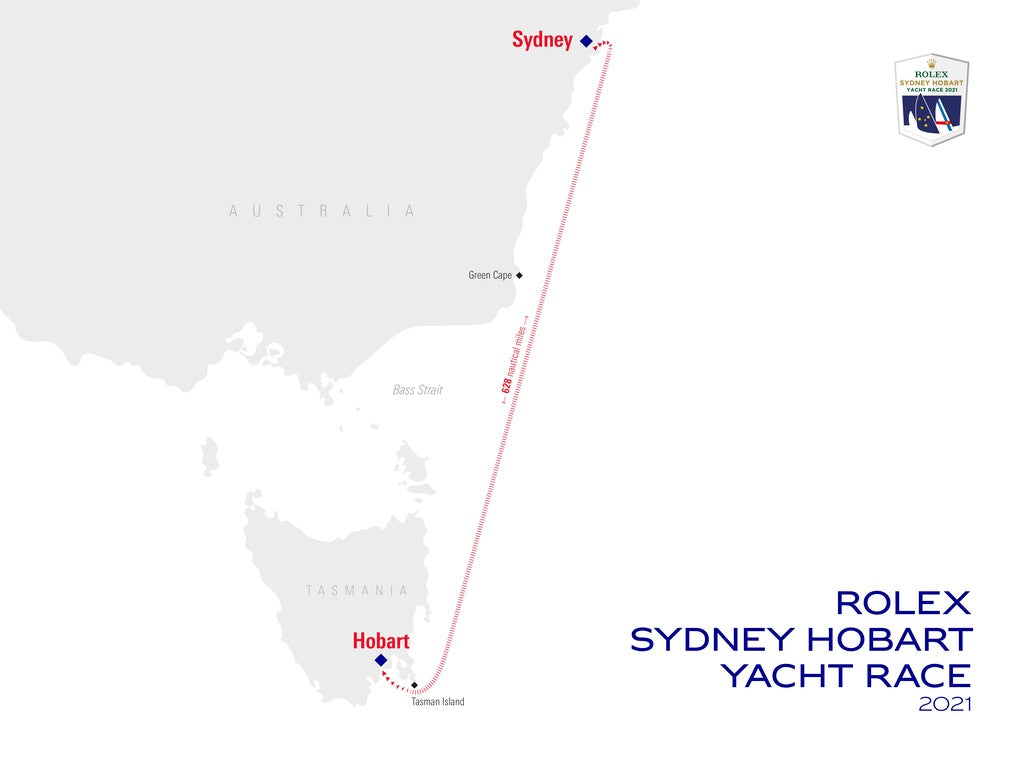
ROLEX SYDNEY HOBART YACHT RACE 2021: HOW TO FOLLOW
ROLEX SYDNEY HOBART RACE 2021: HOW TO WATCH THE GREAT RACE
North Sails Has You Covered For the 76th Edition
The Rolex Sydney Hobart Yacht Race is a staple on the Australian sailing calendar, and a much-anticipated event for sailing fans around the world. Each Boxing Day, hundreds of sailors, watched by thousands of shoreside spectators (pre-Covid of course), depart Sydney Harbour for the trek to Hobart.
This 628nm offshore classic is renowned for being one of the most difficult races in sailing. Throughout the years there have been both moments of triumph and tragedy. Our sport’s highest-profile teams sign up for the Sydney-Hobart with hopes of claiming line honors and, if the weather is right, smashing course records. Amongst the fleet there is a variety of boats- comprised of unique sailor skillsets and crews made up of professional sailors, family members, and friends. Take for example North Sails apprentice Manny Scott and Sail Expert Aaron Cole. 2021 marks Manny’s third Rolex Sydney Hobart Race, and he’s sailing with his father— a 15-time race veteran. Aaron Cole is participating in this year’s race for the nineteenth (!) time alongside his wife Jade, who is celebrating her milestone 10th race. They say this race is a family tradition for many participants, and we’re proud to have been onboard for these memories.
North Sails has a storied history with the Rolex Sydney Hobart Yacht Race. Our Australian-based teams have collectively sailed in hundreds of races, while North clients have consistently found themselves at the top of leaderboards over the years.
With the 2020 race canceled, the year’s fleet is chomping at the bit to get the 76th edition of “The Great Race” underway. Here is what’s in store and how you can follow along:
Weather Forecast:
Gabrielle Woodhouse, forecaster from the NSW Bureau of Meteorology, delivered the race’s long-range weather forecast. The fleet should be ready for southerlies and possible thunderstorms early after the Boxing Day start, and a series of transitions afterwards, which all but erase expectations of a record-breaking race.
Read more from the official pre-start press conference on the Rolex Sydney Hobart website.
If you’re in Sydney…
Spectator boats positioned in the eastern channel can watch the race start, then can follow the fleet down the harbour to the iconic Sydney Heads before heading out to sea. Once underway, the fleet will move quickly, so if you want to see the leaders sail through the Heads, it’s recommended to get a ways down the harbour towards Middle Head before the start. At the Heads, make sure to keep well clear of the rounding marks.
If you only plan on watching the start, head to the western side of the harbour. Good vantage points for spectator boats include: Taylors Bay, Chowder Bay, Obelisk Bay and North Head on the west and Rose Bay, Watsons Bay, Camp Cove and South Head on the east.
For our global audience watching from home:
Watch a webcast of the live broadcast on the homepage of the Rolex Sydney Hobart Yacht Race website.
If you miss the live webcast, a replay of the start program will be available on the website as well.
Included on the website is the complete list of yachts entered in the 2021 edition of the race.
You can also view past race data including past results, historical reports, and statistical information; designers of line and overall winners; and profiles of some of the race luminaries over the years.
Follow along on Social:
Official race social channels will keep followers updated start through finish. There will be a live stream of the start (which can be viewed after the fact), as well as race updates, Line Honors announcements, an Overall Winner Declaration, as well as a Regatta Recap.
Rolex Sydney Hobart @rshyr @RolexSydneyHobart
North Sails @north_sails @NorthSailsWorldwide
Track the fleet:
Track the 2021 fleet from start to finish by utilizing the link for the Tracker below. Yacht Tracker uses a specially designed tool that calculates the predicted results for each and every boat in the fleet, so you can see how each boat is performing. Each competing boat is given a tracker that will obtain a position using the GPS satellite network and then transmit that position back to HQ using the Iridium satellite network.
Positions will be updated every 10 minutes
TRACKER
Play along:
Cruising Yacht Club of Australia has teamed up with Virtual Regatta to provide the Rolex Sydney Hobart Race Game, allowing virtual skippers to race the same route as the boats that will be participating in the Rolex Sydney Hobart. Sign- up and join the Race by clicking the link below.
JOIN VIRTUAL REGATTA
📸 Carlo Borlenghi / Rolex
READ MORE
READ MORE
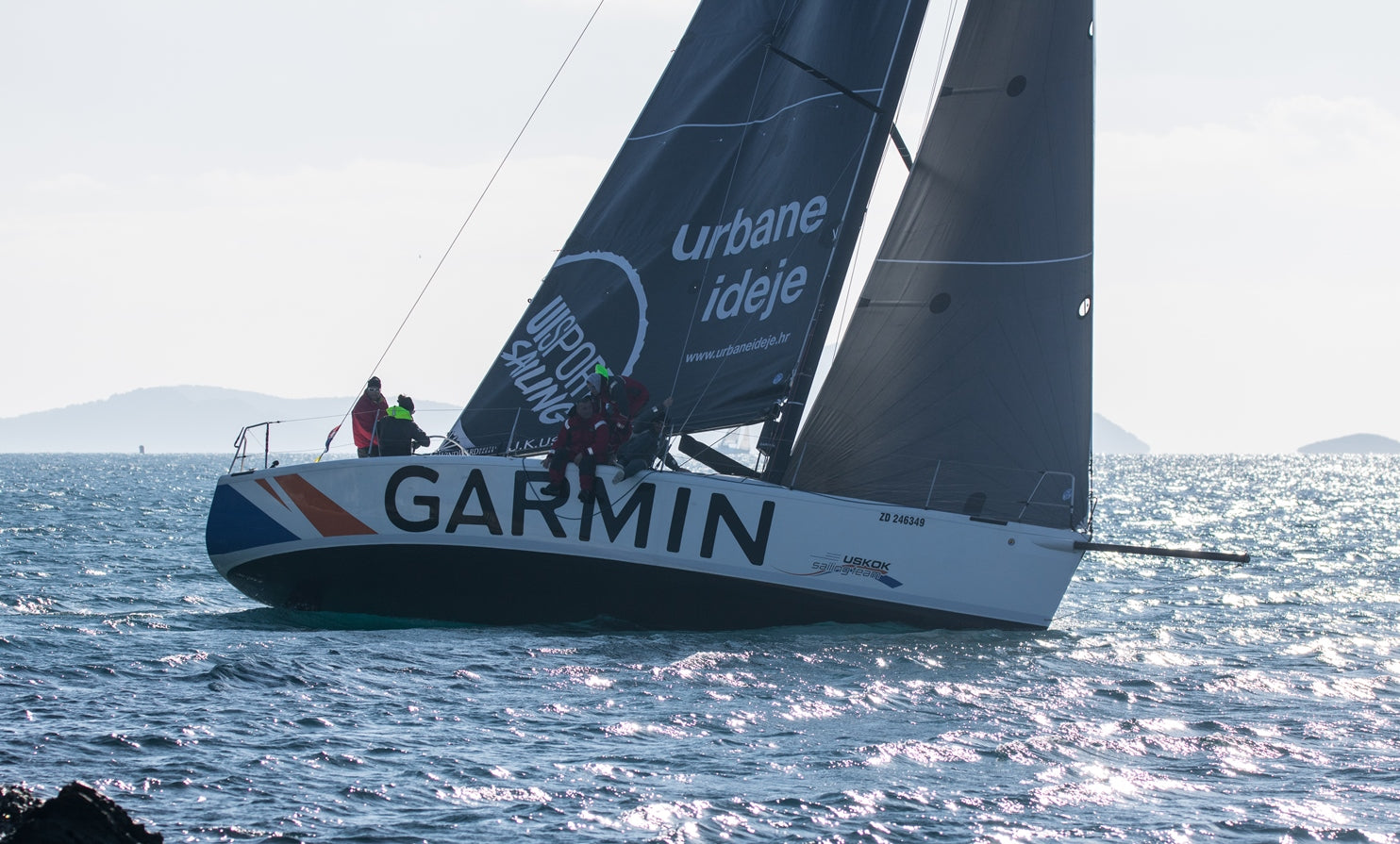
GRINGO 3 & MR.J NAJBRŽI NA BOŽIĆNOJ REGATI U BIOGRADU
Gringo 3 & Mr.J najbrži na Božićnoj regati u Biogradu
📸 regate.com.hr
YC Biograd i JK Uskok već dugi niz godina zajedničkim snagama organiziraju Božićnu regatu, a ono po čemu se diče je to da ni za vrijeme Domovinskog rata, kad je Hrvatska bila najtanja na potezu Zadarskog zaleđa, nije bilo prekida u organizaciji. Također, u sklopu tog dijela povijesti ove regate čak je bilo i situacija kad su četnici pucali i prema natjecateljima, pa je na kraju te regate u jednoj jedrilici pronađeno nekoliko zabijenih metaka!
Uglavnom, sad su ta vremena daleko iza nas i sad jedinu opasnost mogu predstavljati opasni uvjeti na moru. Ove godine bilo je jakog vjetra, ali srećom nije da bi uvjeti jedrenja mogli smatrati opasnima.
Svake godine klubovi se izmjenjuju po pitanju domaćinstva starta i cilja, a ove godine krenulo se iz Zadra.
Na regatu se prijavilo ukupno 17 jedrilica od kojih je samo 11 završilo obje etape. Ostale su ili se priključile regati na drugoj etapi ili su morale odustajati zbog tehničkih problema koji su uglavnom bili produkt jake bure koja je puhala i u subotu 18. i u nedjelju 19. prosinca.
Start ispred Uskoka odvio se po laganoj buri koja je postupno jačala kako se jedrilo prema jugu. Naravno, na čelo flote odmah su svoje pozicije uhvatile najbrže jedrilice, konkretno, Furiosa, Gringo 3, Mr.J i Easy eleven. Za njima su se poslagale ostale, a uglavnom je raspored u cilju išao po veličini, jer su većinom to bile charter jedrilice s klasičnim "bijelim" jedrima.
Iz Zadra je startalo 13 jedrilica, a u Biograd ih je dojedrilo 12. Jedino je Ruzina iskoristila svoj motorni pogon za završavanje ove dionice jer je pred Biogradom u jednom trenutku vjetar iznimno pojačao na oko 35 čvorova, pa su se odlučili na spuštanje jedara da izbjegnu oštećenje istih.
Do cilja u Biogradu najbrže je dojedrila Furiosa. Može se reći da je taj rezultat bio očekivan s obzirom da je u pitanju jedrilica koja ima mogućnost korištenja vodenih balasta, a s obzirom na kut jedrenja u lašku orcu uvjeti su bili povoljni za razvijanje maksimalnih performansi po kojima su bili u velikoj prednosti u odnosu na ostatak flote. Inače, njihova jurnjava trajala je nešto više od sat vremena!
Za njima je ubrzo u Biograd dojedrio i Gringo 3, krstaš koji je inače optimiziran za ORC, ali u ovom slučaju baštun je bio izvučen već od starta s najvećim jedriljem podignutim i spremnim za otvaranje. Međutim u prvoj etapi Furiosa nije ostavila prostora za iznenađenje.
U nedjelju na startu puhala je tramontana koja je konstantno bila iznad petnaestak čvorova, ali nije išla u ekstrem kao bura dan ranije. Na startu su se našle dvije jedrilice više, ali tu drugu etapu nisu završile njih 3, a među njima se našla i Furiosa.
Ruta po kojoj se jedrilo bila je identična onoj koja je bila na memorijalnoj regati "Nenin đir" par tjedana ranije:
Ruta je uključivala nezaobilaznu oznaku Kočerka, a potom su se u "osmici" obišli Planac i Sv.Katarina, te jedna bova jugoistočno od Biograda.
S obzirom na smjer vjetra startalo se bliže Biogradu, izvlačilo prema Sv.Filipu i Jakovu, te potom oko Kočerke i u slalom na jug. Flotu je ponovno predvodila ista skupina jedrilica, a Furiosa odmah na početku ostvaruje respektabilnu prednost koju je držala do južne strane otočića Sv.Katarina gdje imaju problema s glavnim jedrom, te moraju odustati od regate.
Gringo 3 koji je bio na drugoj poziciji odmah preuzima vodeću ulogu koju potom bez ikakve ugroze drži do kraja i s pobjedom u ovoj etapi osigurava ukupnu pobjedu na regati, te još jednom ukazao na kvalitetu i postojanost North Sails jedara.
Što se tiče drugog mjesta, njega u ovoj etapi osvaja Mr.J i tako uzvraća mnogo većem Easy elevenu za subotnji poraz u međusobnom duelu, te po jedriličarskim pravilima zauzima i drugo mjesto u generalnom plasmanu. Naravno i posadi jedrilice Mr.J to polazi za rukom uz pomoć NS proizvoda.
Vrlo dobro jedrenje pokazala je i posada Ruzine, koja je u cilju unatoč značajne razlike u veličini bila blizu Easy elevena, te etapu završava na četvrtom mjestu, odnosno osigurava dovoljno bodova za 10. mjesto u generalnom plasmanu.
Dobro su jedrile i posade Alegrie, Silbe i Izabele, koje su prikazale ujednačenost u obje etape, te tako osigurale dovoljno malo negativnih bodova da sve tri zauzmu u konačnom plasmanu mjesta ispred Furiose.
Generalne rezultate regate možete pronaći na ovom linku, dok su rezultati po grupama dostupni ovdje.
Božićna regata u Biogradu dio je triptiha koji organizira istoimeni jedriličarski klub, a čiji naziv je "Adventske humanitarne regate". Uz ovu regatu tu su još i regata povodom Sv.Nikole i Marina Kornati Cup.
Na sve tri regate se već godinama skupljaju donacije i pokloni koji se uoči Božića odnose u Dom za nezbrinutu djecu.
Foto galeriju s ove regate možete pronaći na ovom linku.
READ MORE
READ MORE
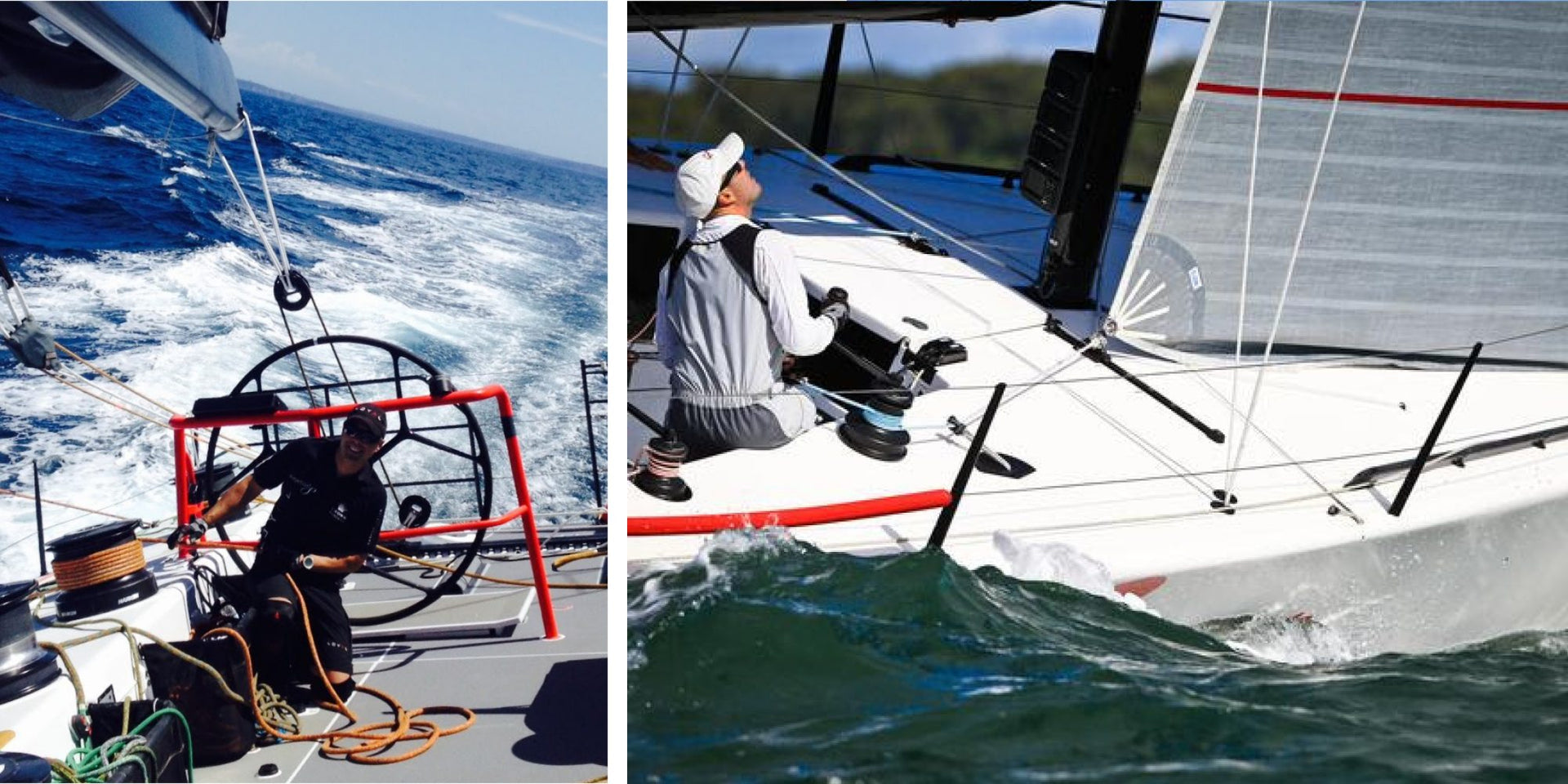
LETTER TO MY YOUNGER SELF: NICK BEAUDOIN
LETTER TO MY YOUNGER SELF
13X Sydney Hobart Sailor, Nick Beaudoin Reflects On How He Became A “Great Race” Veteran
The sailors and designers in the world of North Sails are some of the most inspiring people on the water, and we’re hoping to share more of their story with you. “Letter to my younger self” is a series told from our North Sails ambassadors. In each article we bring to life their advice and personal journeys centered around the question: if your “now-self” could give your “younger self” advice, what would it be?
Dear Younger Nick,
I’m writing to you on the eve of my 14th Sydney to Hobart. This year (in 2021) I’m sailing in the 76th Sydney to Hobart on board the boat JV62 “Whisper.” I’m going to be short and simple with my advice to you, but that doesn’t mean it will be easy advice to follow. Here we go: nothing happens overnight. Be patient. Keep at it.
I know! If only it was that easy but trust me on this one; having patience and trusting that it will happen will get you further than you can imagine. How far you’re wondering? Well, what if I told you that one day you’d be racing in the Sydney to Hobart regularly. And, not just sailing “The Great Race” on your average boat either, but winning it on a 100’ Super Maxi.
How does a boy from Canada, sailing on the Detroit River with his dad, get all the way to Australia and then go on to win the Sydney to Hobart? Well, I wish I could say it would be smooth sailing (no pun intended) but it won’t be an easy path, in the end though, the goal was met (and then surpassed). The journey all starts in 2006 when you move from Canada to Sydney to do “The Great Race” – your big sailing goal at the time. Later that year you’ll begin working for the world’s best sail maker, North Sails.
One of the most important things that I have learned over the years, especially in offshore sailing, is that a solid work ethic and dependability will carry you through. Over the years, I’ve created a motto to live by: “do the thing you said you were going to do, when you said you were going to do it.” Whether it is in your working career or your sailing career, stay true to this motto.
A bit of words from the wise, young Nick… the Sydney to Hobart is the biggest race on the sailing calendar in Australia. You talk about and prepare for it all year. If you are not looking forward, you are always reminiscing about the race. That said, the Sydney to Hobart is definitely “type 2 fun.” Meaning, it is not fun while you are doing it, but it is fun to talk about when it’s over. It’s a character builder.
I do have to thank Micheal Coxon, the former Managing Director of North Sails Australia for giving me many opportunities over the years. Micheal hired me, sponsored my Visa to stay in Australia and put me on the right boats to build a career on. Without him and his support over the years, I would not have had the experiences that I have had. For that, I am grateful to have a mentor like him.
Best of luck over the years, keep your head up, sail safe and don’t forget to share your love for sailing,
READ MORE
READ MORE
LETTER TO MY YOUNGER SELF: AARON COLE
LETTER TO MY YOUNGER SELF
It’s More Than Results For 19x Sydney Hobart Race Veteran Aaron Cole
The sailors and designers in the world of North Sails are some of the most inspiring people on the water, and we’re hoping to share more of their story with you. “Letter to my younger self” is a series told from our North Sails ambassadors. In each article we bring to life their advice and personal journeys centered around the question: if your “now-self” could give your “younger self” advice, what would it be?
Dear 17-Year-Old Aaron,
It’s safe to say that I’m quite proud of the person you’ve become. There are many reasons why, but one that stands out is in 2021, you’ll be gearing up to sail your 19th Sydney to Hobart. Yes, you read that right— 19! If you think it will be a rinse and repeat each year, you’re wrong; each race will be different. And trust me, after 18 races, no two have ever been the same. Getting to the start line of your nineteenth Sydney to Hobart will be an adventure and a half too, complete with stints with America’s Cup and Volvo Ocean Race teams as a sailmaker. And number 19 won’t be your average Sydney to Hobart either, it will also mark your amazing wife’s (Jade) tenth race. Jade is a real catch and a very good sailor. She’s so good on the boat and to do her tenth race together is pretty cool.
However, in order to get to the top, you have to be prepared for what’s coming. It will make you a better sailor—especially in “The Great Race.” Start taking advantage of situations now, and really aim to improve your long term vision. This will prove invaluable when you’re on the water and beginning to think about doing the race. In time, your life’s motto will become “when we’re sailing, you’re better off looking at it than looking for it.”
Veterans will tell you that you can never be too prepared to race in the Sydney to Hobart and they are right.
Now, I know it’s summer and I know it’s Christmas, but young Aaron, you really must do the best job you can looking after yourself in the lead up to the race. It’s a fun time of year, it’s busy, everybody’s sailing, and all sorts of stuff is going on, but make sure you leave a little bit in the tank so you can smash it during the race. In other words, make sure to get a bit of rest in the lead up to the race (which starts the day after Christmas lunch). Set yourself up right so you can really enjoy the challenge.
One piece of advice to live by in this race is from your future boss: Ross Lloyd. He said, “do what’s best for the boat.” It’s a good way to sail. We’re always sailing on different boats, in different situations and with different people. At the end of the day it’s about getting the best out of the boat with (or for) the owner. If you focus on that, everything else falls into place. You won’t have many obstacles otherwise. Make sure the boat’s sails are right and do everything you in your power to make that happen; whether it’s little recuts here or modifications there or replacement sails when needed. Then, make sure everybody looks after the equipment, including taking care of the sails.
The next twenty years will fly, so enjoy every moment—from the start to the finish. The result is important but it’s not everything. Stay inspired by the likes of Barney Walker; 2021 will be his 34th Sydney to Hobart! Over the years you’ll see him stay switched on, do a good job, put everything into the race and the boat, and keep pushing himself. His passion for the race is seriously inspiring (not to mention impressive).
Sail safe and enjoy your wife’s 10th race,
READ MORE
READ MORE
LETTER TO MY YOUNGER SELF: MANNY SCOTT
LETTER TO MY YOUNGER SELF
The Sydney Hobart Race Is a Family Affair for the Scotts
The sailors and designers in the world of North Sails are some of the most inspiring people on the water, and we’re hoping to share more of their story with you. “Letter to my younger self” is a series told from our North Sails ambassadors. In each article we bring to life their advice and personal journeys centered around the question: if your “now-self” could give your “younger self” advice, what would it be?
Dear Younger Manny,
I have so much I want to share with you in this letter. I feel like I’d make you (15 year old me) pretty damn stoked—but I’ll try to keep things short and sweet.
First off, don’t worry, you’ll get your chance at sailing in the Sydney to Hobart—just like dad. I know he’s got quite a few races on you, but you’ll eventually catch up, and, in the journey, you’re going to make him (and yourself) really proud. And, don’t worry, you’ll even get to sail a few with him.
Don’t fool yourself though, the Sydney to Hobart won’t be easy. In fact, the race will be quite miserable at times. You’ll be scared, frustrated, and wondering why in the world you’re doing the “Great Race”. The complete exhaustion you’ll face is overwhelming, but you need to push through because when you cross the finish line and pull into Hobart with hundreds of people cheering you in, congratulating you on the enormous accomplishment, the pride you’ll feel is indescribable. That experience alone is completely overwhelming.
Throughout your journey though, whatever you do, don’t forget your roots. Do not, under any circumstances, forget the Scott family motto.If you feel frustrated with something, take a moment, calm down, and do not give up. Just like dad said, that’s it: “Don’t let it beat you.”
You’re right to think about it every time you’re faced with a challenge (and believe me, you absolutely will!). Just relax a bit, roll with it, and take the opportunities you’re offered. Stay humble and let yourself make some mistakes—it’s the best way to learn.
Your love for sailing will not waver. Ever since your Boxing Day tradition, from when you were a little kid and you’d go down to the Yacht Club with dad to see him off the dock, you knew you wanted to race in the Sydney to Hobart. Remember when you used to draw pictures in kindergarten of what you wanted to be when you grew up? See if you can find them – there’s one picture of you and dad standing together on one of the boats he sailed the race. You knew then you wanted to be like dad when you grew up, although you also knew you wanted to make sailing a career, not just a hobby.
With that in mind, just do what you love. Over the years, your biggest obstacle might just be yourself. There’s always going to be that anxious voice in the back of your mind, trying to throw you off. You know the one: “Am I good enough? Do they think I’m actually good, or are they just saying it? Is that the truth?” Turn the voice down and really listen to the feedback you’re given. Take it on board as much as you can. You’re a perfectionist—but that’s a good thing, it will get you far (including an apprenticeship at North Sails).
Stay driven and thirsty for knowledge. Keep absorbing the information and stay curious. The boats, the sails, the rigging, and how it all works together to get you from one place to another is really cool and it will only get cooler and more fascinating. What will surprise you, is how connected we all are. Not just about sailing around the world, but there’s something that connects every single person on the planet in some way or another. The more you look for those connections to people and places the more you will find them, and that’s pretty incredible.
This year (2021—the year I’m writing this letter to you) will be your third race with dad, and your third race overall. You will be sailing on King Billy. To experience it all with dad standing next to you is pretty cool. This will also be his 15th race so make sure you celebrate extra together. You’re a lucky kid—but you already know that.
Sail smart and sail safe,
📸 Andrea Francolini Photography
READ MORE
READ MORE
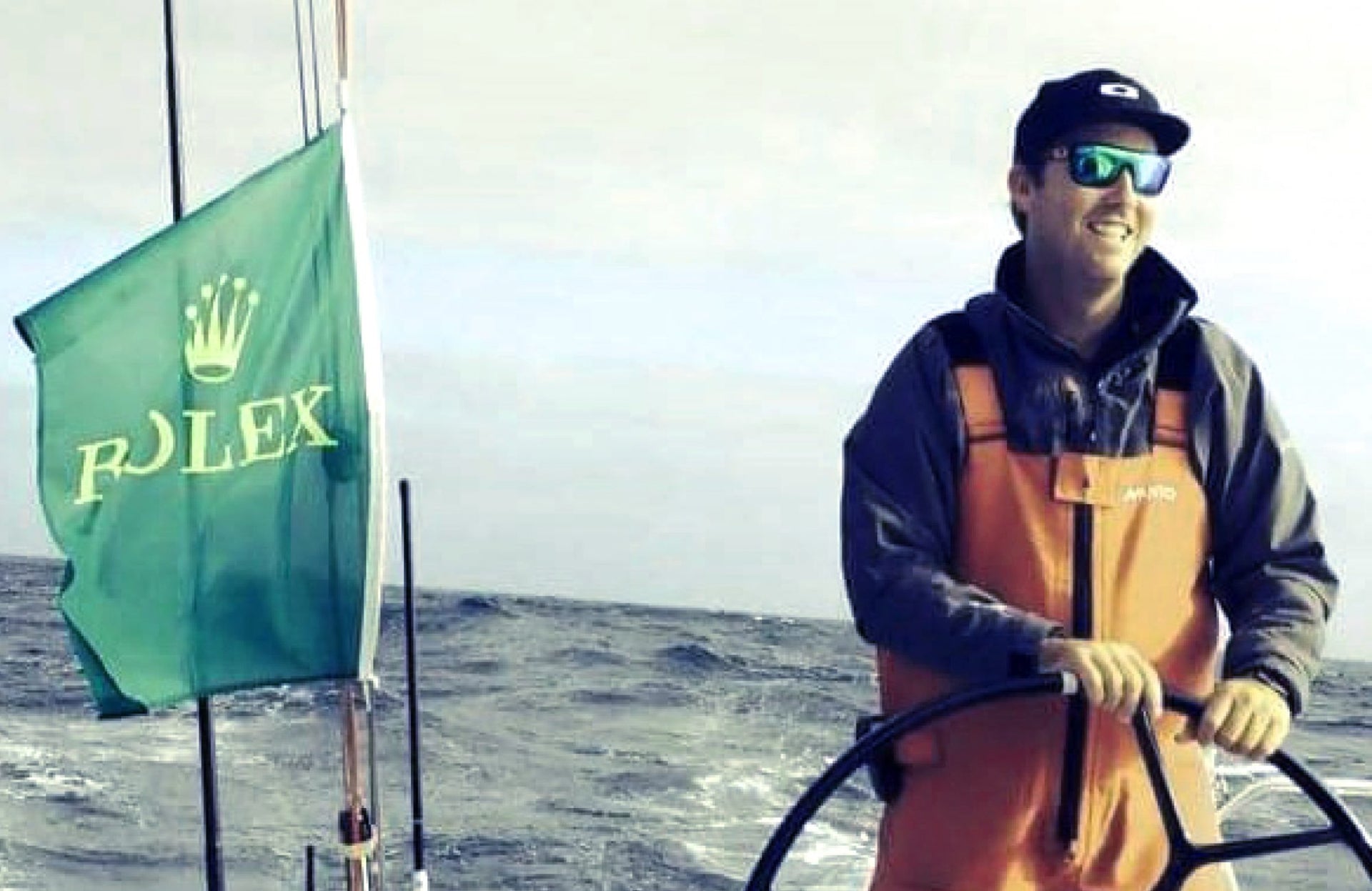
LETTER TO MY YOUNGER SELF: KYLE DODDS
LETTER TO MY YOUNGER SELF
Kyle Dodds – Fostering The Need To Push Himself To The Next Level
The sailors and designers in the world of North Sails are some of the most inspiring people on the water, and we’re hoping to share more of their story with you. “Letter to my younger self” is a series told from our North Sails ambassadors. In each article we bring to life their advice and personal journeys centered around the question: if your “now-self” could give your “younger self” advice, what would it be?
Dear 12-Year-Old Kyle,
I’m going to let you in on a secret because I know you’re wondering; ‘what’s next?’
In a few years you’re going to be a sailor. And not just your average sailor, but a professional sailmaker for the best sailmaking brand in the world, North Sails. Then one day, you’ll be racing in the Sydney to Hobart—not once, but the 2021 race will be your SIXTH race.
Now, I know what you’re thinking, “adult Kyle, you live in the country, in Western Australia, and your family doesn’t even own a boat—let alone know how to sail.” This is true, however that doesn’t matter right now. What does matter is your work ethic. Both your grandfathers have a lot to teach you—after all, you don’t just move out from the UK to Australia on a whim. Both men were very respected with a great work ethic. Let that help you to keep going forward and be a better person.
Try to be a better version of yourself every day. Whether it’s personal or in the sport of sailing or in your career, always strive to get better. Your good work ethic and willingness will come naturally for you, and it will prove to be a valuable asset in the long run. You’re already seeing it now but keep fostering your need to push yourself to the next level, to learn and develop yourself and your skillset. Your thirst to keep doing better will be essential in the Sydney to Hobart (especially when training). Your days on the football pitch will lay the groundwork for becoming a team player.
The term ‘ubuntu’ is a good motto to live by, especially in these long races like the Sydney to Hobart. This is the South African word for ‘I am because we are.’
Take this with you. Work as a team and identify people’s strengths and weaknesses—make sure you have people in the right places to get the best from them.
As I’m sure you’ve heard, the Sydney to Hobart is not an easy race. As you know, you can never be over-prepared. There’s always something more you can do to get yourself or the boat ready. To succeed in “The Great Race,” you’re going to need to get comfortable with being uncomfortable. Move beyond your comfort zone and surround yourself with people that have more knowledge than you. Your football coach will instill a mindset that will eventually prove to be invaluable. He will push you to work smarter, and train. It’s gritty but it will help you get the best out of yourself. Your reward will be incredible adventures.
One last thing, in 2021 you’ll be chomping at the bit to start the race. I can’t go into why, but 2020’s race will be canceled. Stay focused. You’ll be sailing onboard the TP52, Gweilo, and things are looking good for the team. Even though there will be a lot of other boats in the fleet who are also pumped, just keep putting in the hard work.
Good luck and sail smart,
P.S. Definitely move to Sydney—you’ll thank me later.
READ MORE
READ MORE