CATCHING UP WITH DN ICEBOATER TREY ROSE
CUSTOMER SPOTLIGHT: TREY ROSE
Catching Up With Trey Rose After The 2020 North American DN Iceboat Championships
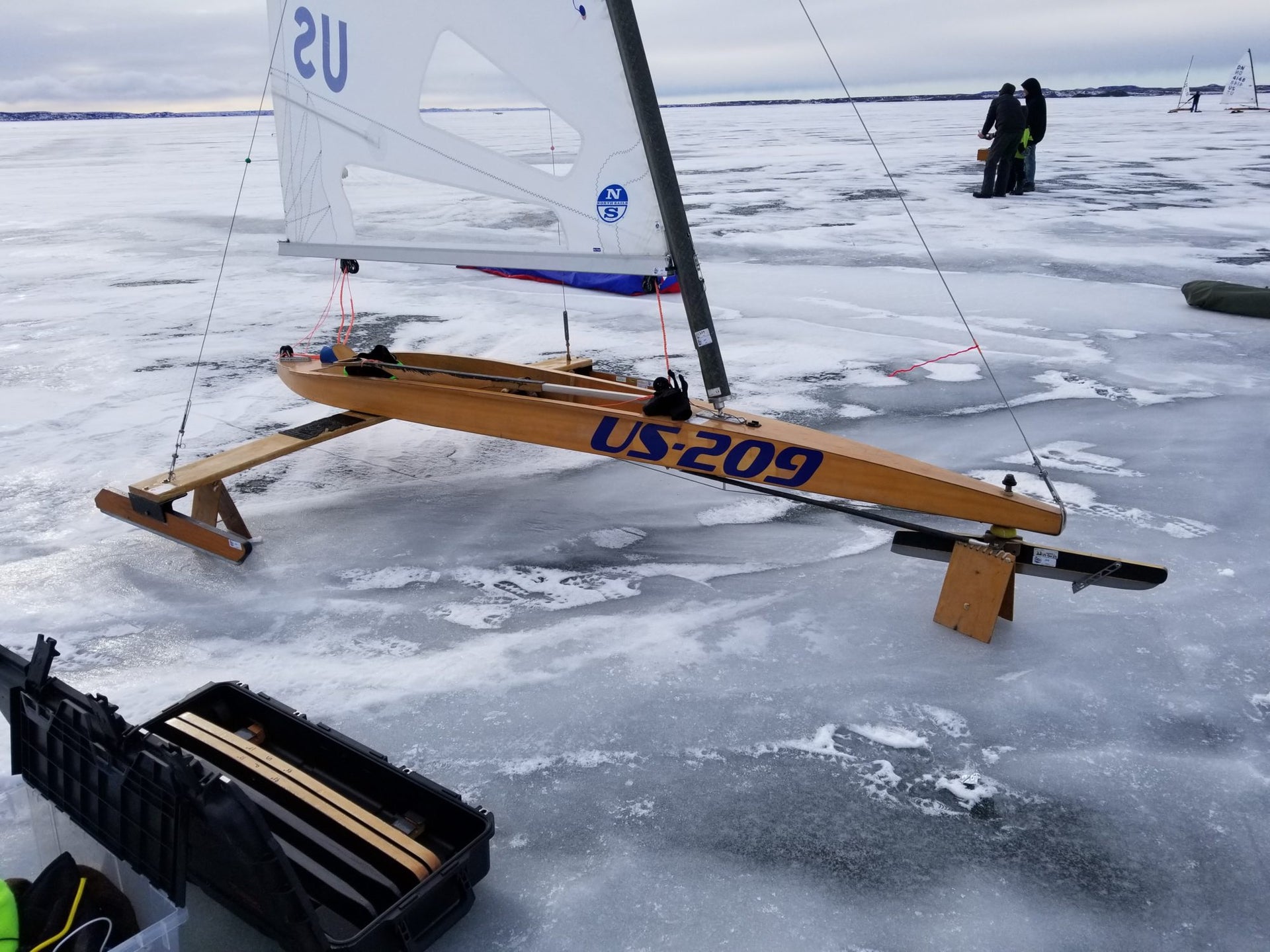
 For those that are unaware, Iceboating, simply put, is sailing on ice. There are many different types of iceboats, but current designs tend to have three runners or blades that support the main body of the craft. There are international and local competitions and the sport flourishes in the northern regions of both Europe and the US.
We got a chance to speak to a local Detroit area customer, Trey Rose, who recently returned from Fort Peck Montana after competing in this year’s DN Iceboat North American Championship Regatta. As with any sport there are certain characteristics that challenge participants and make the sport unique.
“The sport is difficult in the aspect of good wind, good ice and no snow on the ice” says Trey when asked about his participation in the sport. Finding this trifecta requires ice boaters to be flexible on time and location of any ice boating events. “These guys will say hey, we have a regatta this weekend and they’re like ok. And Thursday an email will go out and you find out it’s in Minnesota or Wisconsin” A lot of ice boaters have the ability to take time away from work with little to no notice, or people are retired from work.
Often times, soft water sailors are drawn to the sport because it’s similar to warm weather sailing and it keeps Great Lakes boaters active year round. However, Ice boats are known for their sometimes extreme speed and differences in maneuverability. When asked what’s different between soft and hard water sailing, Trey had this to say: “The components and how to de-power. Talking about bending your rig how many feet versus hey can I get an inch or two of mast over here….everything is a lot more extreme, speed, etcetera” For Trey, Ice boating keeps him intrigued for more than one reason. “It’s been fascinating to me. I’m really into sailing and it was a new challenge, and it certainly is all of that. I’m hoping as I comprehend and excel at this I can convert it over to soft water.”
For locals, there are several different groups that get out on the ice together whenever possible, including the Iceboating in Michigan and Ohio Facebook Group. According to Trey, “It’s a pretty active page for people posting hey, my backyard lake looks like this and they have get-togethers.” Trey has a few locations that make it easier to get out more often and have spots where people can take a break, warm up and get back out there for more action. “My favorite location, I suppose is Walled Lake. There’s a nice little beach area there that we can utilize. There’s a bar and grille right next to the beach. Its where I have been able to easily go. And I can bring new people into the sport and rotate them in a warm environment. The best place locally, I think is Maumee Bay, just because there’s so many people that sail there. There's a little shallow water area and a cove and you get a lot of great ice conditions frequently.”
The DN Iceboat was created first here in Michigan, spurred by an active community of skilled craftspeople and the Detroit News taking notice. Trey shared his knowledge on the history of the craft and how it all got started. “The intent was for anybody to get these
For those that are unaware, Iceboating, simply put, is sailing on ice. There are many different types of iceboats, but current designs tend to have three runners or blades that support the main body of the craft. There are international and local competitions and the sport flourishes in the northern regions of both Europe and the US.
We got a chance to speak to a local Detroit area customer, Trey Rose, who recently returned from Fort Peck Montana after competing in this year’s DN Iceboat North American Championship Regatta. As with any sport there are certain characteristics that challenge participants and make the sport unique.
“The sport is difficult in the aspect of good wind, good ice and no snow on the ice” says Trey when asked about his participation in the sport. Finding this trifecta requires ice boaters to be flexible on time and location of any ice boating events. “These guys will say hey, we have a regatta this weekend and they’re like ok. And Thursday an email will go out and you find out it’s in Minnesota or Wisconsin” A lot of ice boaters have the ability to take time away from work with little to no notice, or people are retired from work.
Often times, soft water sailors are drawn to the sport because it’s similar to warm weather sailing and it keeps Great Lakes boaters active year round. However, Ice boats are known for their sometimes extreme speed and differences in maneuverability. When asked what’s different between soft and hard water sailing, Trey had this to say: “The components and how to de-power. Talking about bending your rig how many feet versus hey can I get an inch or two of mast over here….everything is a lot more extreme, speed, etcetera” For Trey, Ice boating keeps him intrigued for more than one reason. “It’s been fascinating to me. I’m really into sailing and it was a new challenge, and it certainly is all of that. I’m hoping as I comprehend and excel at this I can convert it over to soft water.”
For locals, there are several different groups that get out on the ice together whenever possible, including the Iceboating in Michigan and Ohio Facebook Group. According to Trey, “It’s a pretty active page for people posting hey, my backyard lake looks like this and they have get-togethers.” Trey has a few locations that make it easier to get out more often and have spots where people can take a break, warm up and get back out there for more action. “My favorite location, I suppose is Walled Lake. There’s a nice little beach area there that we can utilize. There’s a bar and grille right next to the beach. Its where I have been able to easily go. And I can bring new people into the sport and rotate them in a warm environment. The best place locally, I think is Maumee Bay, just because there’s so many people that sail there. There's a little shallow water area and a cove and you get a lot of great ice conditions frequently.”
The DN Iceboat was created first here in Michigan, spurred by an active community of skilled craftspeople and the Detroit News taking notice. Trey shared his knowledge on the history of the craft and how it all got started. “The intent was for anybody to get these  The location of the regatta was chosen a bit later than usual and much farther away than usual, due to a weather system that came through the mid-west just days prior to when the regatta was set to take place. Trey details, “We had this crazy weather system that came by and dumped a bunch of snow, like 6 inches or so and more north. All of our North Americans thus far have been between Minnesota and Maine and we have different regions. The west region goes all the way up to Minnesota but not past that. That weather system took any safe ice that we had in the region and put 6 inches of snow on it. You can’t do an even on that.
Thankfully, some Iceboaters from Montana reached out with good ice conditions and with little other options, the race was scheduled for a water basin in Fort Peck Montana. “The water basin that we sailed on is a dam with a reservoir that feeds the Missouri river. The Army Core of Engineers manages it. The ice was great, well, ok
The location of the regatta was chosen a bit later than usual and much farther away than usual, due to a weather system that came through the mid-west just days prior to when the regatta was set to take place. Trey details, “We had this crazy weather system that came by and dumped a bunch of snow, like 6 inches or so and more north. All of our North Americans thus far have been between Minnesota and Maine and we have different regions. The west region goes all the way up to Minnesota but not past that. That weather system took any safe ice that we had in the region and put 6 inches of snow on it. You can’t do an even on that.
Thankfully, some Iceboaters from Montana reached out with good ice conditions and with little other options, the race was scheduled for a water basin in Fort Peck Montana. “The water basin that we sailed on is a dam with a reservoir that feeds the Missouri river. The Army Core of Engineers manages it. The ice was great, well, ok