
THE NEW GUARD: MEET THE GRIFFIN TEAM
Bringing young athletes into offshore sailing is at the heart of the RORC Griffin Offshore Pathway.
For most talented sailors, the barrier to entry into offshore racing is not for a lack of perseverance and dedication, but rather a lack of access. The circuit has traditionally been an ecosystem of established teams and a case of “who you know”, with opportunities for new sailors being rare and hard-won. Many talented sailors spend years on the periphery before they ever secure a full season offshore. It is a discipline where the learning curve is steep and the environment is unforgiving.
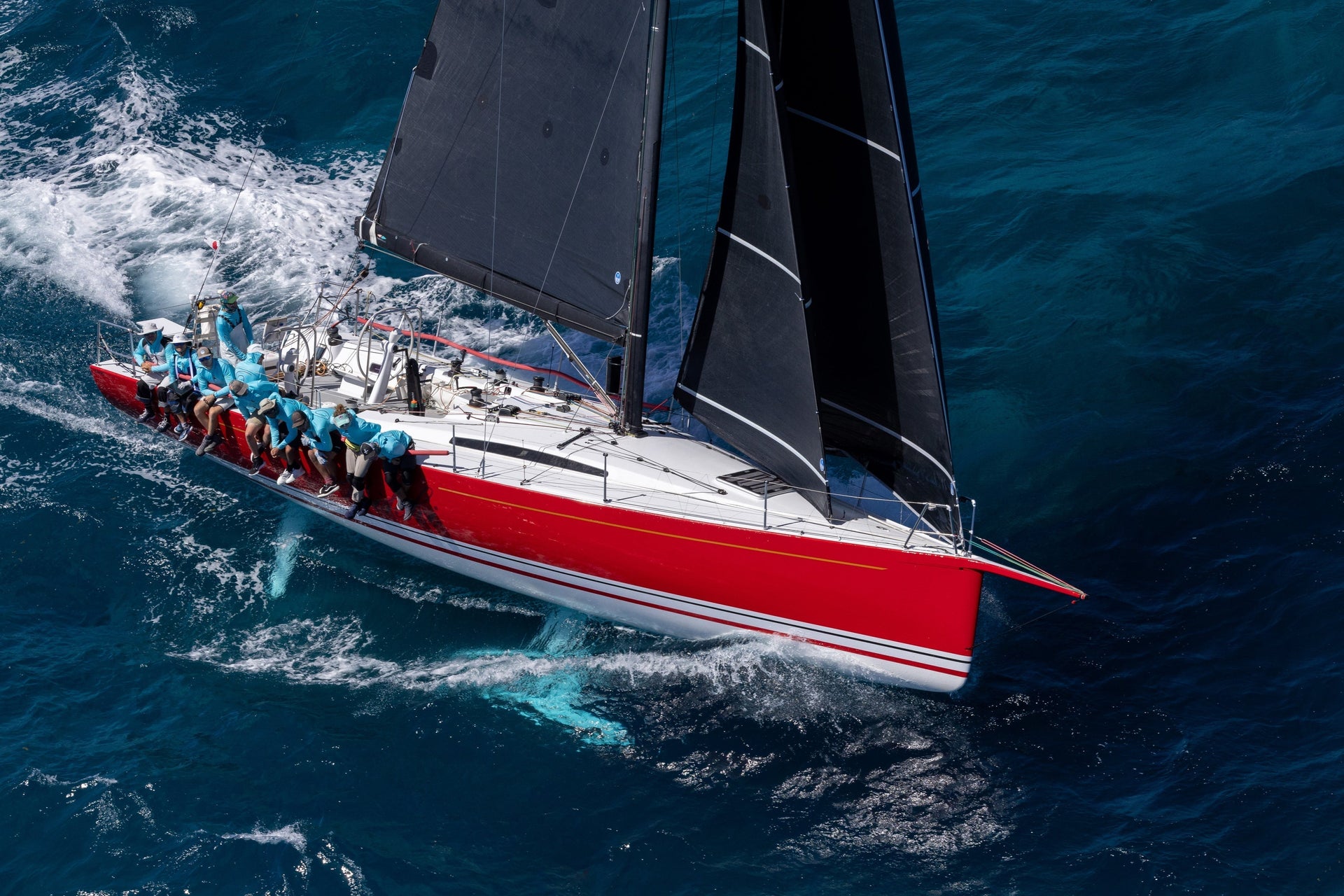
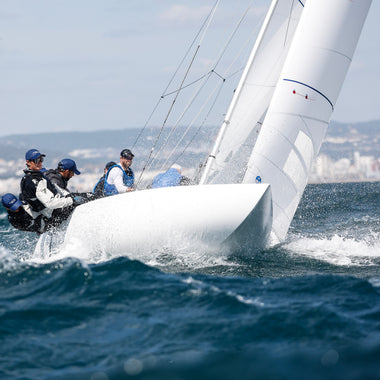
The RORC Griffin Offshore Pathway is working to change that by offering young people, who wouldn’t otherwise have the opportunity, a chance to build experience in the world of offshore racing. Managed by the Royal Ocean Racing Club (RORC) and sponsored by North Sails, the programme consists of four teams of sailors aged 18-30. Each team, chosen via a competitive application process, receives structured training led by world class coaches, along with access to a competitive boat and a season of racing opportunities.
For North Sails, the programme is a natural extension of a long-standing commitment to offshore sailing and to building the next generation of sailors. Through this partnership with RORC, North equips the Griffin boat with sails, and the teams with the offshore kit they need to race at the level the programme demands.
Young athletes are at the heart of keeping sporting disciplines alive, fresh, and competitive and the RORC Griffin Offshore Pathway embodies that for sailing.

The Griffin Team Stepping Up
This year, the Griffin's Round Britain and Ireland crew is stepping into one of the toughest tests on the offshore racing calendar. Spanning approximately 1,800 nautical miles, the Round Britain and Ireland course is a relentless gauntlet that forces crews to negotiate some of the most complex tidal gates and volatile weather systems in the Northern Hemisphere. Unlike trans-oceanic crossings where a team might settle into a consistent trade-wind rhythm, this race demands constant tactical vigilance. The rugged coastlines of the British Isles offer no respite, requiring 24-hour precision in navigation and sail trim as conditions shift from coastal shallows to the punishing Atlantic swells off the West Coast of Ireland.
The team is made up of eight sailors – six in their second year of the programme, two joining for the first time. At the helm is Albert Barber, stepping into the role of skipper and navigator, overseeing both the big-picture strategy and the constant stream of onboard decisions that define a race like this. Alongside him, Nuala Sellwood takes on first mate duties, combining offshore mileage with a strong background across dinghy and keelboat racing.
Around them is a group that reflects a well-trodden route for young sailors; starting in dinghies, moving into keelboats, and building offshore experience wherever possible. Abby Hire and Ollie Baddeley both come from high-performance dinghy backgrounds, with experience at national and international levels before transitioning into keelboats and offshore sailing. Rachael Cross, a naval architect by profession, brings both technical understanding and thousands of miles of double-handed offshore experience. Thomas Woodall has built his pathway through hands-on experience across a wide range of boats, developing into a reliable bowman and all-round crew member in competitive Solent racing.
The newer additions, Eimer McMorrow Moriarty and Finian Morris, add depth to the team’s offshore capability. Eimer brings significant mileage, including ocean passages, while Finian combines elite dinghy racing with sailmaking experience – linking performance on the water with an understanding of how the sails themselves work.
Individually, they’ve all built strong foundations. This campaign is about putting it together – racing consistently, making decisions as a team, and stepping fully into the offshore environment.

A Race Defined By Decisions
What makes the Round Britain and Ireland Race notoriously challenging isn’t just its length, it’s the density of decisions packed into every mile.
From the start in Cowes, crews are immediately dealing with strong tidal streams, where getting the ebb or flood wrong can cost teams early on. Further up the course, key headlands – Land’s End, St David’s Head and the Mull of Kintyre – are critical decision points. Timing these correctly can deliver major gains, while mistakes are often measured in hours, not minutes. And the scale of the course is worth a moment’s reflection: Muckle Flugga, the northernmost point of the UK in Shetland, sits closer to the North Pole than Cape Horn does to the South Pole – a reminder that this isn’t just a 1,800-mile race, it’s a race into some of the most exposed sailing waters in the Northern Hemisphere.
Then there’s the weather. Atlantic systems roll through constantly, often bringing multiple fronts over a single race. Sail handling becomes equally critical as this is a race of transitions, and the ability to shift gears efficiently, both in sail selection and trim, is what keeps teams competitive over the full course.

Powered By the Right Tools
For a race defined by variability, the sail setup becomes a critical part of the equation, and the choice of what's onboard Griffin is as much a strategic decision as it is a performance one.
That choice starts with 3Di ENDURANCE EDGE. EDGE is the most durable 3Di build North Sails offers, at this boat size, engineered specifically for programmes that live primarily in coastal and offshore racing – exactly the kind of calendar the Griffin crews sail. Across a full season of training blocks, qualifiers and offshore events, the same inventory has to stay race-fit for multiple crews and back-to-back events. ENDURANCE EDGE is built to do that: hold its shape and structure under sustained loading, race after race, without the performance drop-off often seen from less robust offshore builds.
The inventory was built around two priorities: keeping in-race decisions manageable for a young crew, and keeping the boat as competitive as possible. Both pointed to the same answer – sails with wider wind ranges, and fewer of them. Wider working ranges mean fewer sail changes per front, which matters when you're managing crew energy across 1,800 miles. Fewer sails declared on the IRC certificate also keeps the rating leaner without giving up capability. And on a race this long, there's a practical layer too: every sail you don't carry is one less item to manage onboard, where stowage and weight always count.
The Full Inventory:
- The 3Di ENDURANCE EDGE mainsail is designed for both reliability and performance. With two reefs built in, it allows the team to adapt quickly as conditions build; maintaining control and balance without sacrificing efficiency.
- Upwind, the 3Di ENDURANCE EDGE Light/Medium Jib (A.K.A the all-purpose jib) delivers shape and consistency across a wide wind range, particularly important when moving from flatter coastal waters into Atlantic swells. Supporting this is the J4, a heavy-weather option when conditions demand reduced power.
- Bridging the gap between upwind and downwind is the Helix Code 75, giving the team a fast, efficient option in reaching conditions and lighter offshore angles.
- The A2 asymmetric (Norlon 75) is the team’s engine in downwind and reaching conditions – designed for power and stability when pushing at speed. For heavier winds and more demanding angles, the A4 asymmetric (Norlon 150) provides a robust alternative, allowing the team to stay on the pace without overloading the boat or the crew.
Together, this setup reflects a key reality of this race: versatility wins.

Building the Next Generation of Offshore Sailors
The Round Britain and Ireland Race will be one of the defining moments of this Griffin crew’s offshore development. 1,800 miles, four critical headlands, constant weather transitions, and the kind of decision density that separates offshore racers from offshore sailors.
But the race is only part of the story. The RORC Griffin Offshore Pathway exists to answer a question the sport has been circling for years: how do you bring young athletes into offshore sailing when the barriers to entry are this high? The Pathway’s answer is to give them the boat, the coaching, the inventory, and the calendar they need to actually do the work — and to do it alongside a peer group that will shape their sailing for decades.
North Sails’ role in that is to make sure the tools underneath them — the sails, the offshore kit, the support on the dock — are built for the job. Versatility wins the race. Preparation builds the generation. And every mile this Griffin crew puts on the water moves the sport a little further toward a circuit where talent, not access, is what opens the door.

What's in Their Gear Bag: Offshore Kit for the Conditions
Offshore racing is won and lost on the small stuff: stepping into dry salopettes at the beginning of your watch, being able to move freely on a wet foredeck, not losing focus because you’re cold. North Sails’ offshore range is designed for exactly those conditions – sustained exposure, constant movement, long stretches away from shelter. For the Griffin crew, this kit is the difference between arriving at the next sail change sharp and ready, or spent.
The Offshore Jacket
For a young crew tackling 1,800 miles of British and Irish coastline, the jacket has to do two things at once: stand up to relentless weather and shed water fast enough that they aren't racing in soaked kit days later – a non-negotiable on the West Coast of Ireland. Built from GORE-TEX® Pro with TightWeave™ face fabric, the Offshore Jacket is engineered to do just that.
TightWeave™ fabric holds very little water, so the brief windows of drier conditions become real opportunities to dry the kit out between fronts. When the crew are fully exposed on deck, the high-cut collar and integrated hood take over, while the 2-way AquaGuard® zipper and storm guard minimize water seeping through during the long upwind slogs the Round Britain and Ireland is known for. And because this race is defined by relentless movement on deck – sail changes through every watch, grinding on the rail, working the bow – the 4DL™ reinforced panels in the high-wear areas are what keep the jacket performing right through to the finish, not just the first 48 hours.
The Offshore Salopette
If the jacket is about exposure, the salopette is about endurance. Same GORE-TEX® Pro build, designed for the rail-to-foredeck-to-rail rhythm of a Round Britain and Ireland watch. Articulated fit and 4DL™-reinforced seat and knees let the Griffin crew move freely on a wet, pitching deck for days, not hours.
Just as importantly, the breathability of GORE-TEX® Pro moves moisture away from the body during the high-exertion moments – sail changes, gybes, headland approaches – so when the crew sit back down for another couple of hours on the rail, they're not soaked in their own sweat. For a developing offshore crew, staying dry from the inside is directly tied to staying warm, focused, and ready for the next call. High-capacity pockets with drainage allow for practical storage – spare hood, gloves, a snack bar – without water build-up, and the 2-way zipper system enables quick ventilation and easy access during long watches.