NORTH SAILS BLOG
Tout
Events
Guides
News
People
Podcast
Sustainability
Tech & Innovation
Travel & Adventure
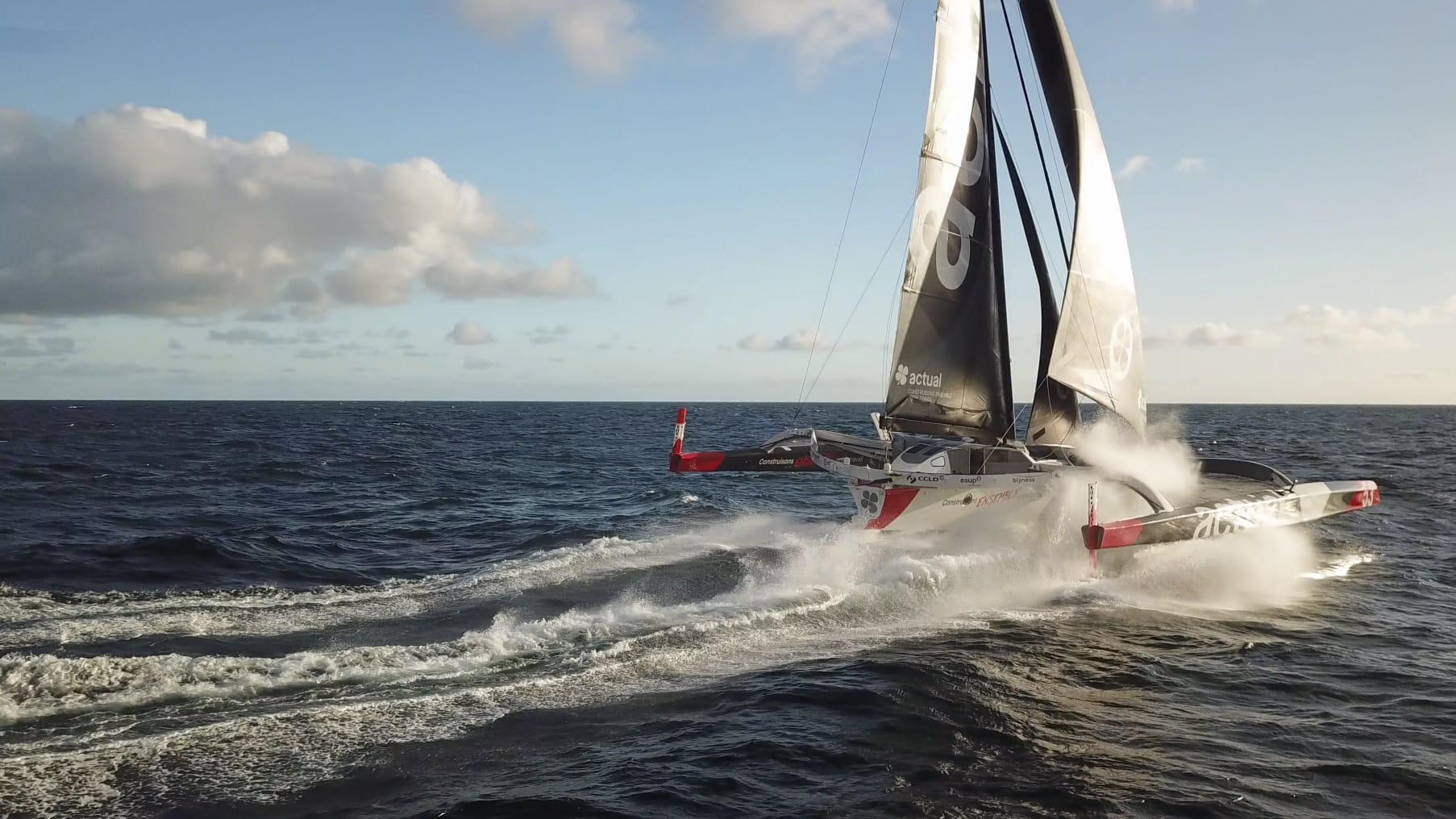
TEAM ACTUAL AIM FOR VICTORY AT THE ROLEX FASTNET RACE
THE ULTIMES AT THE 2021 ROLEX FASTNET RACE: TEAM ACTUAL
Skipper Yves Le Blevec and Team Actual Aim for Victory
After an ankle injury that required a few weeks onshore to recover, French Brittany-based skipper Yves Le Blevec is eager to get back on the helm of his trimaran Actual Ultim 3 (formerly Francois Gabart’s Macif) for the Rolex Fastnet Race. While he wasn’t able to sail, he continued to gather information from his sailing team, which includes: Anthony Marchand, co-skipper of the Transat Jacques Vabre; Yoann Richomme, skipper of the V065 Mirpuri Foundation Racing Team; Hugo Kerhascoët, in charge of Actual Ultim 3‘s electronic foil regulation systems; Jean-Baptiste Le Vaillant, historical specialist of Maxi Trimarans; Amélie Grassi, sailor; and Anne-Kristell Jouan, mediaman.
“It’s great to be back on the boat and prepare to compete on the water,” says Le Blevec. “I feel 100% confident in my ability to be onboard, thanks to the extraordinary work by the medical team at the Kerpape Center in Morbihan.”
Last April, the trimaran was relaunched under the Team Actual colors after a five-month refit. To familiarize himself with the new boat, Le Blevec committed to a handful of sailing sessions with the boat’s former skipper François Gabart. “Watching the way François sails is very instructive. You learn something new every day because we don’t operate in the same way. We know how these complex machines work. But the principle of performance is to constantly question and challenge ourselves. This allows us to constantly evaluate what we know. With Mer Concept, who designed this boat, we have defined a feedback program to evaluate performance. When we return from the Fastnet, we will have some joint training sessions with SVR Lazartigue to compare the data from the two boats.”
View this post on Instagram
A post shared by Team Actual (@team_actual_officiel)
The changes made to the trimaran since she was acquired are minimal, Le Blevec adds. “This boat is a well thought-out design. So we followed the roadmap set out by the previous team to develop the new daggerboard and a new central rudder. There will be some progress, but no major revolution. As we sail, we’ll see how to get the most out of the boat. There are still some subtleties to discover. After the Fastnet, we could change the galley space for the crew, because right now it’s very confined.”
The boat was delivered with a set of sails in good condition, notes Le Blevec. “Like the boat, we didn’t make any major modifications to the sails. We spent a lot of time with North designers Alan Pennaneach and Quentin Ponroy, to review each sail and their history, according to the specifications initially set up with MerConcept. The mainsail had been modified for the Transat, and we completed those modifications.”
For the Fastnet, they were still deciding which headsail to use. “We have two J1s, one that is tucked inside the mainsheet and the other on the draft point of the J2, and we will have to choose which of these we will take onboard for the race. We will also have to think about it before the start of the Transat Jacques Vabre next November. For that, we need to log miles, which will allow us to identify the gaps depending on the weather conditions. We have some ideas for modifications, but there is no need to change the sails for the moment.”
Compared to his previous Ultime, Le Blevec notes a real gain in performance at certain points of sail: “We have entered another mode of navigation! Her target speed upwind in a 25-knot wind can reach 27-28 knots on foils. The crew has already experienced sequences of flying at 40 knots, with a peak of 44 knots. It’s exciting.” He also observes that in heavy seas, the boat is more fluid and hits the waves much less than his old trimaran.
“There are still a lot of adjustments to be made, but we are excited to be sailing against the other competitors,” Le Blevec says. “Alone in training it’s always difficult to evaluate your performance, especially since these Ultimes are by nature very fast machines.”
The Rolex Fastnet Race remains a classic among classics, he concludes, and it’s always a pleasure to return, even if there can be only one winner in the end. According to him, the finish in Cherbourg, France, represents a great demonstration of freedom from borders. “The course is significantly longer, even if it remains short for the Ultimes. But to complete the Fastnet in just 24 hours is an extraordinary thing.”
North Sails equips three Ultimes taking part in the 2021 Rolex Fastnet Race. We spoke to the crews about their project, the evolution of their boat and sails, as well as their Fastnet training program and their expectations for this edition. You can access our other stories via the links below.
Edmond de Rothschild Sodebo Other Fastnet Stories
📸 Thomas Deregnieaux
READ MORE
READ MORE
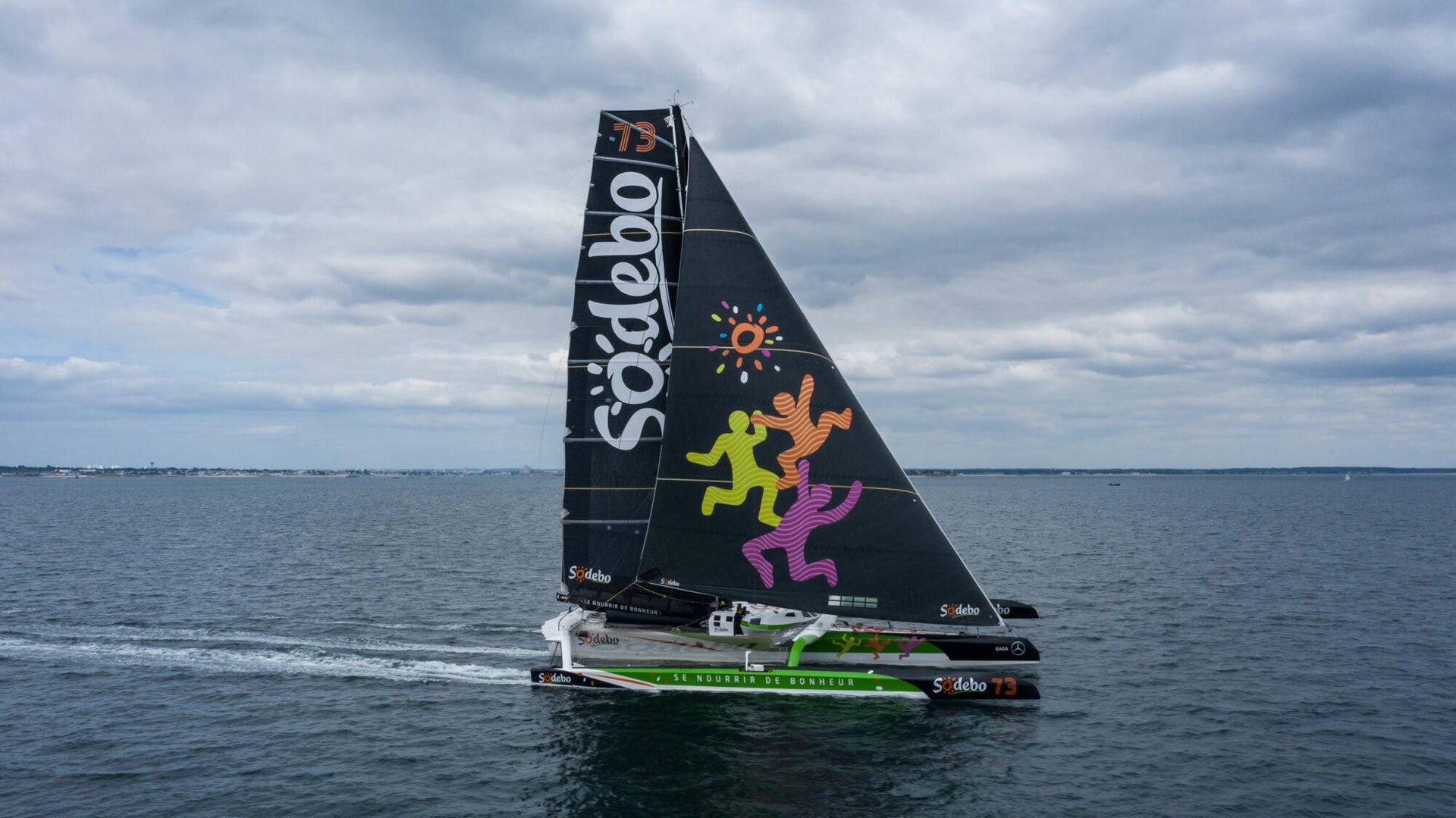
SODEBO ULTIME 3 IS ROLEX FASTNET RACE READY
THE ULTIMES AT THE 2021 ROLEX FASTNET RACE: TEAM SODEBO
Offshore Veteran Thomas Coville Expects Intense Competition
📸 Martin Keruzoré
Sodebo Ultim 3, a latest-generation boat skippered by Thomas Coville, will line up at the start of the Rolex Fastnet Race against the other Ultimes. The sailing team includes Thomas Rouxel, Corentin Horeau, François Duguet, Matthieu Vandame, Léonard Legrand and Thierry Douillard, and part of the crew was also involved in the team’s 2020 Jules Verne Trophy attempt.
“We are probably one of the boats that has sailed the most,” Colville says. “These 32-meter boats are technically complex and very demanding. It’s exciting, because the project management is constant.”
Despite ever-changing circumstances since the launch in 2019, Coville has a positive assessment of the last two years. “We have experienced a dynamic and creative period with a vast amount of internal collaborative work. We have set up a design office to coordinate our work with the best experts in each specialty, and a rotating leadership that adapts according to the skills of each person.”
Right from designer Renaud Banuls’ very first drafts, the team focused on aerodynamics and worked closely with North Sails.
“To design this boat, we started with the experience of the previous boat, and the old sail surfaces. We then redesigned the sail plan,” explains Coville. “We are very much linked to North’s studies and involvement on our internal platform. With Gautier Sergent, we started with the sail plan and aerodynamics to think about how we could integrate with different parameters linked to the boat’s behavior, such as the centering of the weight. Each element interacted with another element to make the whole reflection loop work. From the power of the boat generated by the sail plan, we created a hydrodynamic package to balance these forces. That was pretty innovative.”
This interactive approach continued right up until their 2020 Jules Vernes Trophy attempt, and the sailing team returned with a wealth of data combined with a rich experience to further evolve both the boat and the sail plan. “There were some sail shapes that we were happy with, and we made some nice changes to the mainsail and gennaker. For each sail, we are looking for an optimization between the structure and the shape. As far as Helix technology is concerned, we’ve seen clear improvements, especially on the second version of the new set with the data feedback.”
Coville is a Rolex Fastnet Race veteran and says each edition is different. “I love this race, because it was one of my first competitions as a young sailor, which introduced me to ocean racing and to the Anglo-Saxon sailing world. At the time, Cowes was the Mecca of ocean racing and all the nations came to compete. You could meet all types of sailors, from amateurs to professionals, in a festive atmosphere and with good chemistry.”
He doesn’t think the new course format will change the race very much. But he predicts this first match-up between the Ultimes will be quite intense; “We have been sailing a lot lately, but with a team led by Franck Cammas and Charles Caudrelier, two sharp sailors on a boat that has reached maturity, and another team skippered by Yves Le Blevec, who has a boat with a solid track record…” it will be a great battle for line honors into Cherbourg.
North Sails equips three Ultimes taking part in the 2021 Rolex Fastnet Race. We spoke to the crews about their project, the evolution of their boat and sails, as well as their Fastnet training program and their expectations for this edition. You can access our other stories via the links below.
Team Actual 3 Edmond de Rothschild Other Fastnet Stories
📸 Martin Keruzoé
READ MORE
READ MORE
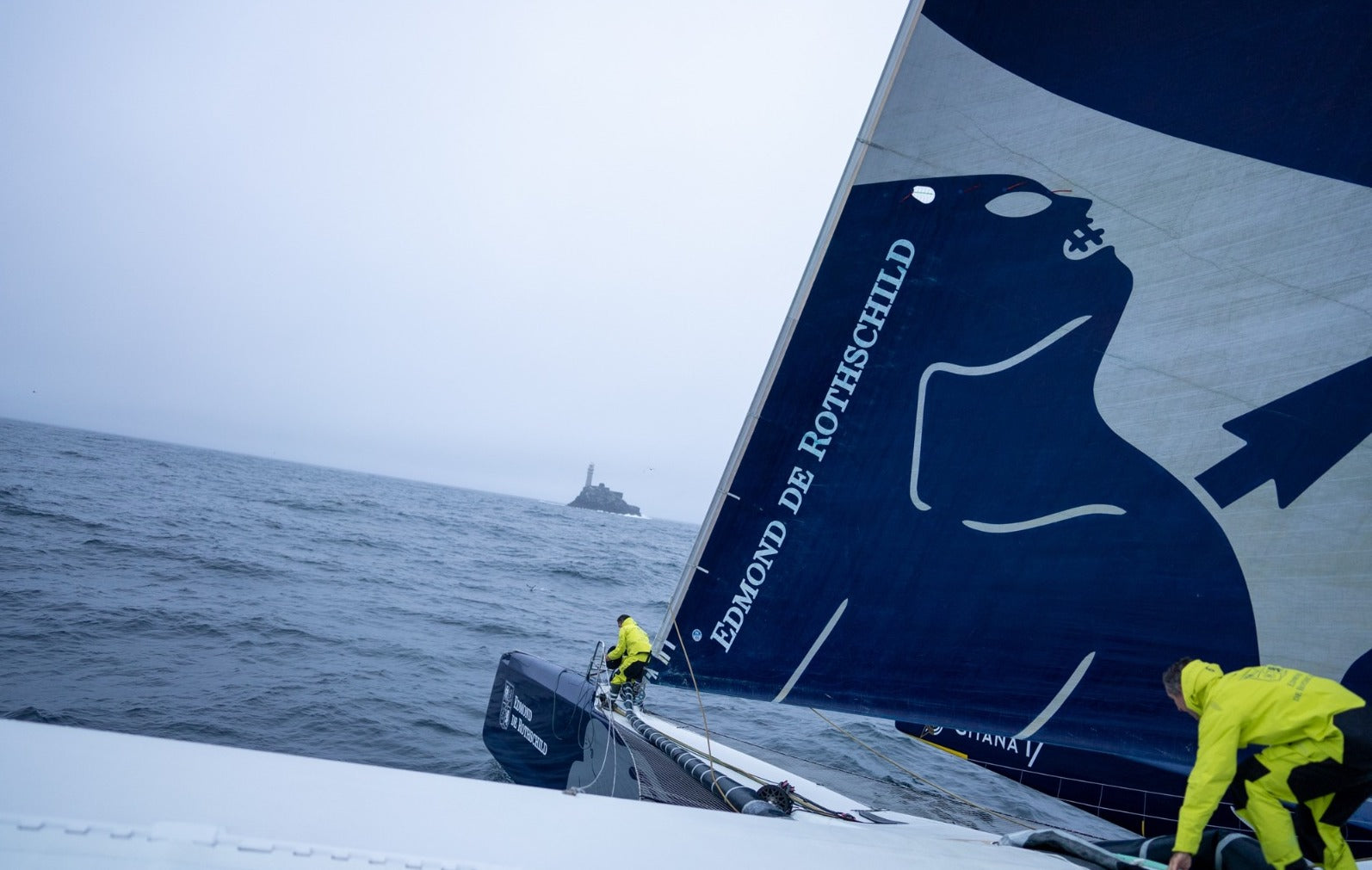
ULTIME EDMOND DE ROTHSCHILD BACK TO DEFEND FASTNET TITLE
THE ULTIMES AT THE 2021 ROLEX FASTNET RACE: GITANA TEAM
Edmond de Rothschild Back to Defend Their Title
📸 Yann Riou / polaRYSE / Gitana Team
The winner of the previous Rolex Fastnet Race, the Maxi Edmond de Rothchild is back to defend her title. In 2019, the trimaran led by Gitana Team beat François Gabart’s Macif by a mere 59 seconds. Since then, many improvements have been made to the boat’s appendages and systems; they’ve also added a brand new North Sails inventory. “The emphasis has been placed on aerodynamics,” says co-skipper Franck Cammas. “We’ve worked on many aspects in detail, but no revolutionary changes.”
The team has noticed real performance gains with their Helix structured luff sails. “We had problems with heavy loads deforming the forestay,” explains co-skipper Charles Caudrelier. “With Helix, the loads are redistributed, which allows us to have a straighter, stiffer luff. In particular, the Helix J0 is a small revolution. We are still in a discovery phase, but the gains are clear.”
Thanks to these upgrades, Edmond de Rothschild has been logging 30-40 knots depending on wind conditions. At those speeds, the team could cross the finish line in Cherbourg in less than 24 hours. Caudrelier points out that the new course allows for a more open game, as they have the whole English Channel to cross. “It will be interesting for the Ultimes. There will be close racing with a more technical course off Cherbourg. And of course this French city provides a nice setting for an arrival celebration.”
But first, the giant trimarans must maneuver their way through a start off Cowes, a tricky feat for the largest boats in the race.
“The English coastline is a great playground and one of the most complicated in terms of sailing,” Caudrelier says.
Cammas agrees. “Even if the course is short for Ultimes, this race remains a great pre-game for the Transat Jacques Vabre.”
In order to maximize options in all possible conditions, the team will also keep its standard set of sails onboard. “A gennaker covers a range of wind speeds from 10 to 40 knots,” Cammas explains. “This reduces the number of sail changes, very physical maneuvers that require the crew’s full attention.”
The entire team is fully committed to continued evolution, and the boat will be fitted with new foils after the Fastnet. Caudrelier says that they also want to keep refining the sail plan. “Do we want deeper sails, flatter or more twisted? We made some modifications in a direction that interested us. But it is difficult to evaluate the performance of a sail because the figures from one day to another are different. In the previous Fastnet, we were a bit faster downwind. But our preferred points of sail are upwind and reaching. That said, this edition is more competitive, and we expect to uncover feedback to help close these gaps.”
“We don’t have the human and technical resources to change sails or appendages every year,” Caudrelier explains. “But we change what we think is most relevant.”
It is also difficult to make comparisons across the fleet, because each Ultime features very different design concepts and structure, which demand different sail combinations.
“The two new boats Banque Populaire (Armel Le Cléac’h) and SVR-Lazartigue (François Gabart)> will be absent from this edition,” Caudrelier says. “Some teams have added larger foils and larger wings on the daggerboard to improve their hydro. Obviously, the tweaks are not revolutionary, but it is the sum of the small things that make the difference. In the end, we all have weak and strong points. The Fastnet will be an opportunity for us to both gauge our performance and test some sails to design the set for next year.”
📸 Yann Riou / polaRSYE / Gitana S.A.
Aside from the high-caliber competition, what the Edmond de Rothchild crew fears most is hitting UFOs; submerged objects plagued the team throughout training and during last year’s Jules Verne Trophy attempt. “There is always a risk and an apprehension of hitting something,” says Caudrelier. “The impacts are often violent, and the damage is significant.”
The crew includes Morgan Lagravière, David Boileau, Erwan Israel, and Yann Riou, and all are looking forward to their first competition since the Brest Atlantiques and to measuring themselves against their opponents. Will their continuous improvement be enough to defend their 2019 title against such tough competition? Stay tuned for an exciting finish in Cherbourg.
North Sails equips three Ultimes taking part in the 2021 Rolex Fastnet Race. We spoke to the crews about their project, the evolution of their boat and sails, as well as their Fastnet training program and their expectations for this edition. You can access our other stories via the links below.
Sodebo Team Actual Other Fastnet Stories
📸 Eloi Stichelbaut / polaRYSE / Gitana S.A.
READ MORE
READ MORE

THE BATTLE OF THE BEASTS AT THE 2021 ROLEX FASTNET RACE
BOATS TO WATCH IN THE 2021 ROLEX FASTNET RACE: BATTLE OF THE BEASTS
Each boat has a hunger for one thing: the Fastnet Challenge Cup
Three incredible speed machines are making their final preparations before the start of the Rolex Fastnet Race this Sunday; Rambler 88, the new ClubSwan 125 Skorpios, and the MOD70 Argo. Expect this year to be a showdown of the ages as we anticipate a thrilling battle of some of the world’s fastest boats. Each boat has a hunger for one thing: the Fastnet Challenge Cup (and bragging rights, of course). Seriously, what’s not to love about this year’s edition?
The boats at a glance:
Rambler 88 – a 88′ Juan Kouyoumdjian (aka Juan K) design born out of owner George David’s commitment to getting back on the water after Rambler 100 lost her keel during the 2011 Rolex Fastnet Race. Launched in 2014, the 88 is a fast, versatile, IRC-optimized maxi yacht with an extraordinary racing record under her belt.
Skorpios – the recently launched ClubSwan125, a high-performance racing machine also designed by Juan K. Combining Nautor’s Swan’s pioneering design approach and the latest innovation, she’s been hailed “the fastest monohull ever” and a “record-breaker.” Still, she’s yet to line up and prove her potential on the water.
Argo – Jason Carroll’s MOD70 trimaran is equipped with new third-generation foils and sailed by a stellar crew who smashed the Bermuda-Plymouth record in June this year.
From the sail designer’s desk:
“I have three horses in the race,” enthuses North Sails designer Steve Calder. “They’re Rambler 88, the 125, and the MOD70 Argo. All three boats showcase the future of sailing.”
The two monohulls are competing in the IRC Zero class, and while they’ll be each other’s main competition, they’ll want to test themselves.
“Despite practicing with almost a shell of a crew on the 88 because of COVID quarantine conditions, most of the original Rambler guys have come back for the race,” explains Calder. “It’s George David’s favorite race, and he wouldn’t miss it for anything. And it’s great to see the seasoned vets and loyal crew back onboard. I expect they’ll be extremely competitive this season.”
Rambler’s pitman Curtis Blewett, who’s done the race seven or eight times, admits he’d love to “try and get the course record. We’ve missed it a few times on the Rambler, which means we’ll be more focused on boat performance and sailing our own race. I like sailing here because it’s usually really windy.”
“Our biggest competition? The new 125,” remarks Blewett. “But obviously, after 16 months off, our biggest challenge: sailing the boat well after a long break.”
📸 Nautor’s Swan
Having faced similar COVID-related challenges, Skorpios will be skippered by the Spanish Olympic Tornado gold medallist and former Volvo Ocean Race skipper Fernando Echávarri. In addition, Volvo Ocean Race winners Brad Jackson, Michael Joubert and Jan Dekker, fellow Volvo Ocean Race veterans, Antonio ‘Neti’ Cuervas-Mons, David Pella, and navigator Campbell Field also join the team roster.
“They’ve spent the last couple of weeks getting prepared as the Rolex Fastnet Race approaches,” says Calder. “They’ll have onboard a new Helix fractional Code Zero, which they’re super happy with.”
Skorpios’s true potential will soon be revealed. “I never experienced the boat fully loaded up with the water ballasts and all of that,” comments Calder, who joined the team for sail trials a few weeks ago in Finland. “But every now and then, you’d touch some apparent wind with the A3 on, and she would want to light up. She powers up very quickly. With that boat length, the laws of physics favor her speed potential.”
In the MOCRA category, the 70′ Argo faces about a dozen multihulls, including Giovanni Soldini’s Maserati Multi 70. Argo’s foil upgrade, created by the MOD70’s original designers VPLP, brings her performance package closer to Maserati and the latest 30m long Ultim trimarans
“Argo has done some impressive miles over the past couple of weeks,” adds Calder. “They have this new foil mode now, and the boat is being pushed very, very hard.”
Sailed by Charles Corning with British offshore legend Brian Thompson, America’s Cup sailors Alister Richardson and Thierry Fouchier, and US Olympian Charlie Ogletree onboard, Argo has everything she needs to eat some miles between Cowes and Cherbourg.
May the fastest boat win.
READ MORE
READ MORE

OLYMPIANS TRIUMPH IN ENOSHIMA
TOKYO2020: RECAP
Olympians triumph in Enoshima
📸 Sailing Energy / World Sailing
Here at North Sails, we’ve been avidly following the Tokyo2020 Olympics as all the sailors put on an incredible display in the waters off Enoshima, Japan. Five of our 8 Olympians to Watch made it onto the podium, and we were very impressed with everyone’s speed and poise as they dealt with the widest possible variety of conditions. Here’s a recap of the Finn, 470, and 49er results.
Finn Finale
📸 Sailing Energy / World Sailing
This singlehanded men’s class never disappoints with its mix of physicality and grace. The British champion, Giles Scott managed to defend his 2016 gold medal, even after restarting the double-points medal race. Great boat speed jumped him back up to silver medal position by the first mark, but Hungary’s Zsombor Berecz rounded the first three marks with the gold medal in sight. It wasn’t until the final gate, just before the reach to the finish, when Scott was able to luff up inside two boats and finally lock up the gold, relegating Berecz to silver.
North Sails expert Mickey Ickert developed the very first laminated Finn sail before the 1996 Games, and we’re very sad to see this boat leave the Olympic family—but we also predict the class will continue to thrive. We’ve built 10,000 Finn sails to date, and we will soon launch an updated product range that includes several improvements we made while working with Giles Scott, Zombor Berecz, and other top teams.
470 Showdown
📸 Sailing Energy / World Sailing
In the men’s fleet, all of the top nine teams used North Sails. Australia’s Matt Belcher/Will Ryan bested their Silver winning Rio 2016 performance for Olympic Gold in Tokyo. With this win, Belcher became Australia’s ‘most successful Olympic sailor.’ The battle for the other two podium spots was eventually won by Sweden’s Anton Dahlberg/Fredrik Bergstrom and Spain’s Jordi Xammar/Nicolas Rodriguez Garcia-Paz. Between them, this trio of teams won all but two of the eleven races.
All 21 women’s teams used North Sails. As expected, the British duo Hannah Mills/Eilidh Mcintyre took the top spot on the podium. With this win, Mills cemented her position as the most successful female Olympic sailor to date. A tie for silver between Poland’s Agnieszka Skrzpulec/Jolanta Ogar and France’s Camille Lecointre/Aloise Retornaz was won by Poland, since they had the most race wins (3).
For long-time 470 teams, Tokyo2020 also marked another bittersweet final regatta; at the next Olympics in Paris 2024, this doublehanded boat will become a mixed gender event. North Sails Japan will continue to develop successful sails for the many new teams that are already forming.
49erFX Repeat Gold
📸 Sailing Energy / World Sailing
Defending gold medalists Martine Grael/Kahena Kunze of Brazil went into the medal race on the losing end of a tie with the Netherlands’ Annemiek Bekkering/Annette Duetz . But a third place finish (behind Argentina and Norway) gave them another decisive overall victory. Tina Lutz/Susann Beucke of Germany finished fifth to win silver, forcing the Dutch team to settle for third overall.
49er Upset
Ties for first and third at the Tokyo2020 Games show how close the racing was in the men’s skiff. Great Britain’s Dylan Fletcher/Stuart Bithell won the medal race by only a few meters over the German team, earning the gold medal. 2016 gold medalists (and America’s Cup champions) Peter Burling/Blair Tuke of New Zealand finished second. Germany’s Erik Heil/Thomas Ploessel beat out Spain’s Diego Botin le Chever/Iago Lopez Marra for the bronze.
With only three years left before Paris 2024, we have already started work with several top Olympic hopefuls. We are also very excited to work with the 49er and 49er FX classes as they transition to North 3Di for the Paris 2024 Games. Congratulations to all!
To receive future updates on all the Olympic classes, sign up for our newsletter.
READ MORE
READ MORE
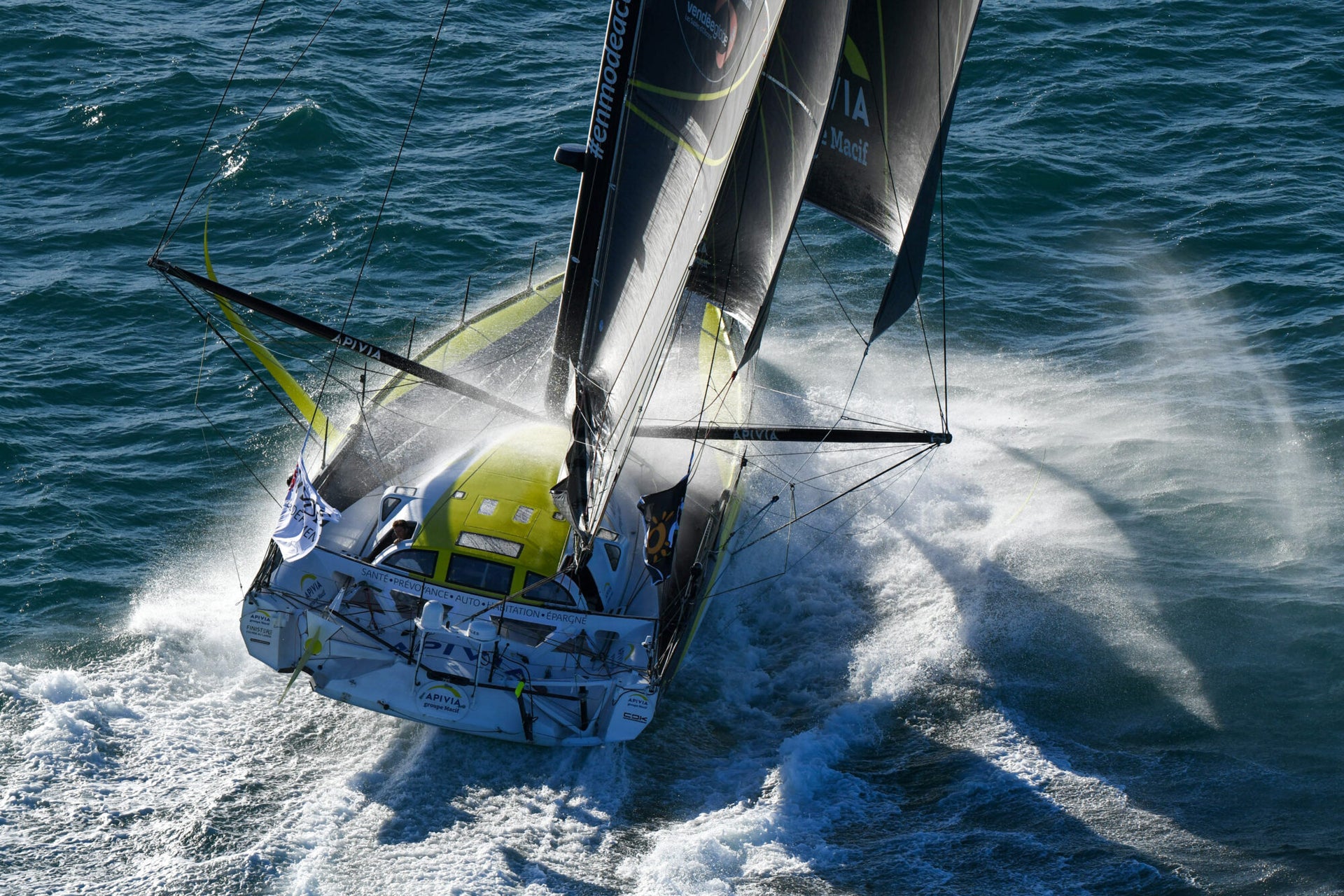
GRAND PRIX MACHINES AT THE ROLEX FASTNET
GRAND PRIX MACHINES AT THE ROLEX FASTNET
Check out the high-profile boats to watch in the World’s largest offshore race
📸 Yvan Zedda/Alea
The world’s largest offshore yacht race begins this weekend, the legendary Fastnet. With so many boats on the water, including some very high-profile racing boats, we sat down with North Sails experts to find out more about the competition. With this story, we’re looking into the Grand Prix boats. Just who are the IMOCAs and Class 40s we need to watch out for in the 2021 Rolex Fastnet Race?
Alan Pennaneach is really looking forward to this year’s Rolex Fastnet Race. At North Sails France, he’s worked with lots of IMOCA and Class 40 teams to fine-tune their sail plans for the race. Plus he’s getting ready to take part in the race himself onboard the Class 40 Banque du Leman.
IMOCAs
📸 Gauthier LEBEC / Charal Sailing Team
“The IMOCA teams we work with are looking forward to testing all the modifications we’ve done to their sails after the Vendée Globe,” he says, before discretely adding that he “can’t really detail the changes done. New sails and existing sails that have been re-cut will be onboard for the Rolex Fastnet Race. The sailors will give us their feedback directly afterwards.”
That will allow North Sails to modify the sails before the Transat Jaques-Vabre in November. “That’s one of the advantages of the 3Di technology,” adds Pennaneach. “You can tweak things easily as long as the sails are in an okay shape. We’ve done that lots in the Spring and Summer this year, and we’ll keep testing these throughout the season before creating brand new sails in 2022.”
So who are the boats to keep an eye on? It’s hard for Pennaneach to decide on just one favorite. “All the new generation boats are favorite – Vendée Globe winner Yannick Bestaven & Roland Jourdain on Maitre Coq, Jeremie Beyou & Christopher Pratt on Charal, Simon Fisher & Justine Mettraux on 11th Hour Racing Team, Charlie Dalin & Paul Meilhat on Apivia…”
Throughout the fleet, their main goal is to win the 2021 edition – and to prepare for the Transat Jacques-Vabre. This also holds true for Pennaneach too, but his presence onboard Banque Du Leman serves an additional purpose.
“We’ve delivered new sails last week, so the Rolex Fastnet Race will allow us to validate all the modifications done during the summer, prepare for the Transat and decide on any further modifications. Being onboard will allow me to immerse myself in the project and see what improvements can be made.”
Pennaneach has specifically worked on a new J1 that got rolled out two weeks ago. “It led to more changes in the mainsail because of the class rules. We cut the old main again, so we can see if it leads to any gain, and how it affects the balance of the boat.”
Class 40s
📸 Pierre Bouras
With lots of new Class 40s being built at the moment, the fleet isn’t quite complete but still features some big names. Antoine Carpentier on Courrier Redman is sailing with previous overall winner Gery Trentesaux, and British legend Mike Golding is racing with Alex Mehran on the Akilaria RC3 Polka Dot.
Pennaneach’s crew is one of the favorites too, just like the team onboard Palanad 3. “They’ve got the same boat than us, but skippered by a father and son who’re amateurs and surround themselves with professionals. They can definitely be at the front.”
Find out which doublehanded teams at the Rolex Fastnet we’re keeping an eye on.
READ MORE
READ MORE
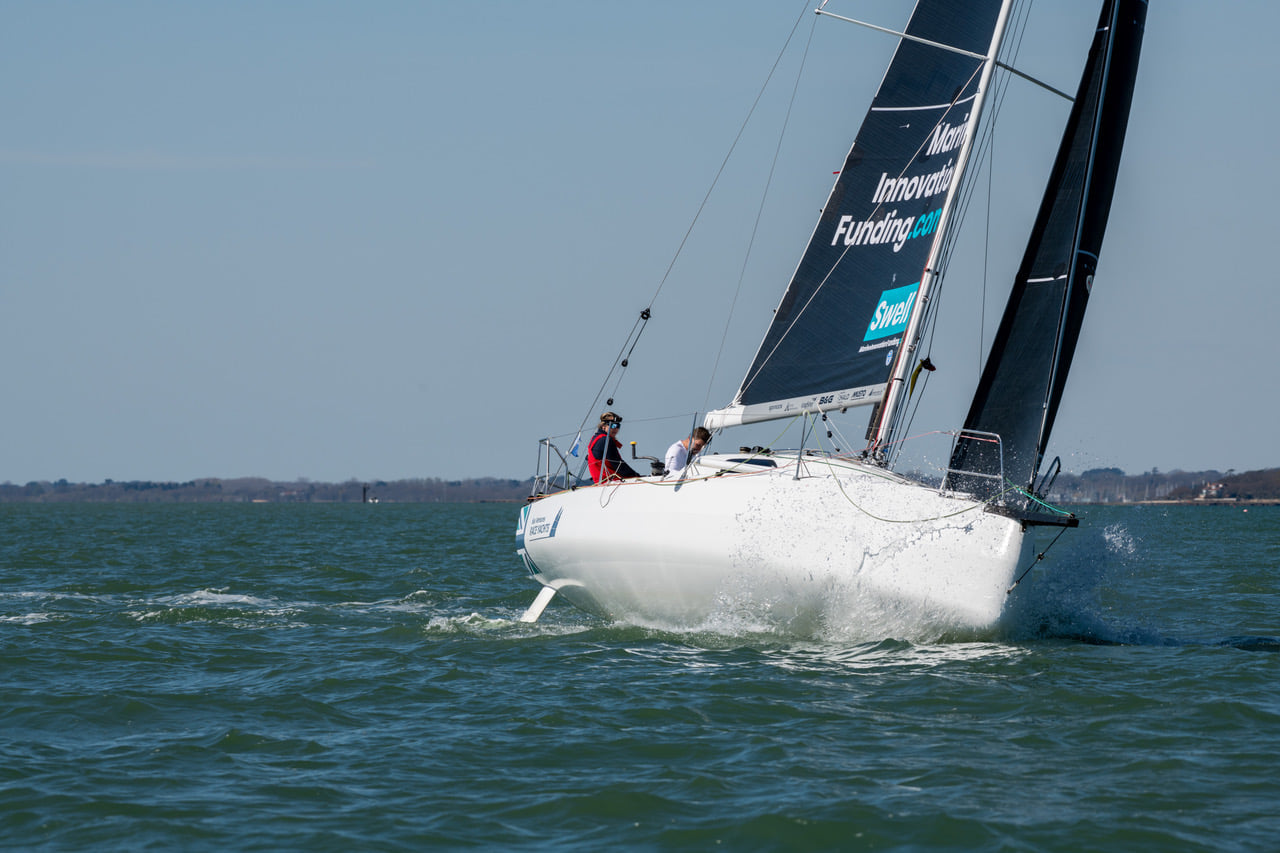
DOUBLEHANDED TEAMS AT THE ROLEX FASTNET
DOUBLEHANDED TEAMS AT THE ROLEX FASTNET
Of 89 duos, who will stand out from the crowd?
📸 Bomby/ Robertson
With almost a fourth of the entire fleet sailing doublehanded, the duos lining up on the start line of this year’s Rolex Fastnet Race already own the race. But who will stand out from the crowd?89 doublehanded boats will gather in Cowes to take part in the 2021 Rolex Fastnet Race, a number that reflects the growing popularity of doublehanded offshore racing – and everyone’s excitement for that format.
“It’s going to be super competitive,” rejoices Henry Bomby, who helped create the UK Double Handed Offshore Series. This IRC format has been created for all boats that are sailed doublehanded with a rating between 0.990 and 1.055 TCC, and the Series represents 29 crews entering the race this year and aiming to round the Fastnet Rock.
“All the boats are actually really similar in terms of size and rating,” says Bomby. “They’re all between 30 and 35, 36 feet, so it should be some really close racing.”
“The reality is if you haven’t made the right choices with IRC, then you won’t win the race,” Bomby’s sailing partner Shirley Robertson said. “We’ve generally found lots of the boats are pretty close, but you also have to sail well. But, fundamentally, you have to have made the right decisions around the IRC rule.”
Coming from Britain, the Figaro, MOD70 and Volvo Ocean Race sailor will be competing with Shirley Robertson onboard the SunFast 3300 Swell. She’s the first British women to claim consecutive gold medals in the Olympics – and is currently in Tokyo covering the Games. “She’s literally coming back the day before the race,” explains Bomby. “Our goal is to try and win the doublehanded Rolex Fastnet Race together. We’re supported by Nigel Colley at Sea Ventures, we’ve got a new boat and new North sails. Our whole programme has been building towards this event so it should be exciting.”
📸 Bomby/ Robertson
Together with North Sails, Bomby and Robertson have worked on their sail programme and have come up with something that’s “quite different” for the extended downwind section to the finish line in Cherbourg, France. With that section having virtually doubled in distance, downwind sails are more important than ever.
“It should be VMG downwind, so we’ve got an A sail but with a spinnaker pole. It’s a different setup from any of our competitors and we’ve been testing it this year – it will be interesting to see how we do in that aspect. I don’t know if any other boat has done the same… at least not that I’m aware of.”
In 2019, Bomby and Hannah Diamond finished the Rolex Fastnet Race in second place, losing to Frenchman Alexis Loison. He still sees the Cherbourg native and his crewmate Guillaume Pirouelle as key contenders – “they’re very strong in a very competitive JPK 1030 boat, Region Normandie (Léon).” In fact, back in 2013, Loison became the very first doublehanded Fastnet Challenge Cup winner with his father Pascal aboard their JPK 10.10 Night and Day – and he knows the Cherbourg area like the back of his hand.
Bomby is paying attention to all the other SunFast 3300s as well, starting with round the world legend Dee Caffari and James Harayda on board the former’s Gentoo, a boat that was built for them to trial for the 2024 Paris Olympics. He’s also got his eyes on Kelvin Rawlings and Stuart Childerley on Aries. “These two seem to be the best of the 3300 – we always seem to be racing with them. Kelvin Matthews and Tim Goodhew on their Sun Fast 3200 Cora have been leading the series so I’m sure they’ll be doing well too.”
No matter the predictions though, it will all be down to the battle on the water. “If the weather is different from its historic average, we might struggle a bit,” adds Bomby. “If we have the typical Rolex Fastnet Race weather, we’ll be very happy and will be in a good place to do well.”
READ MORE
READ MORE
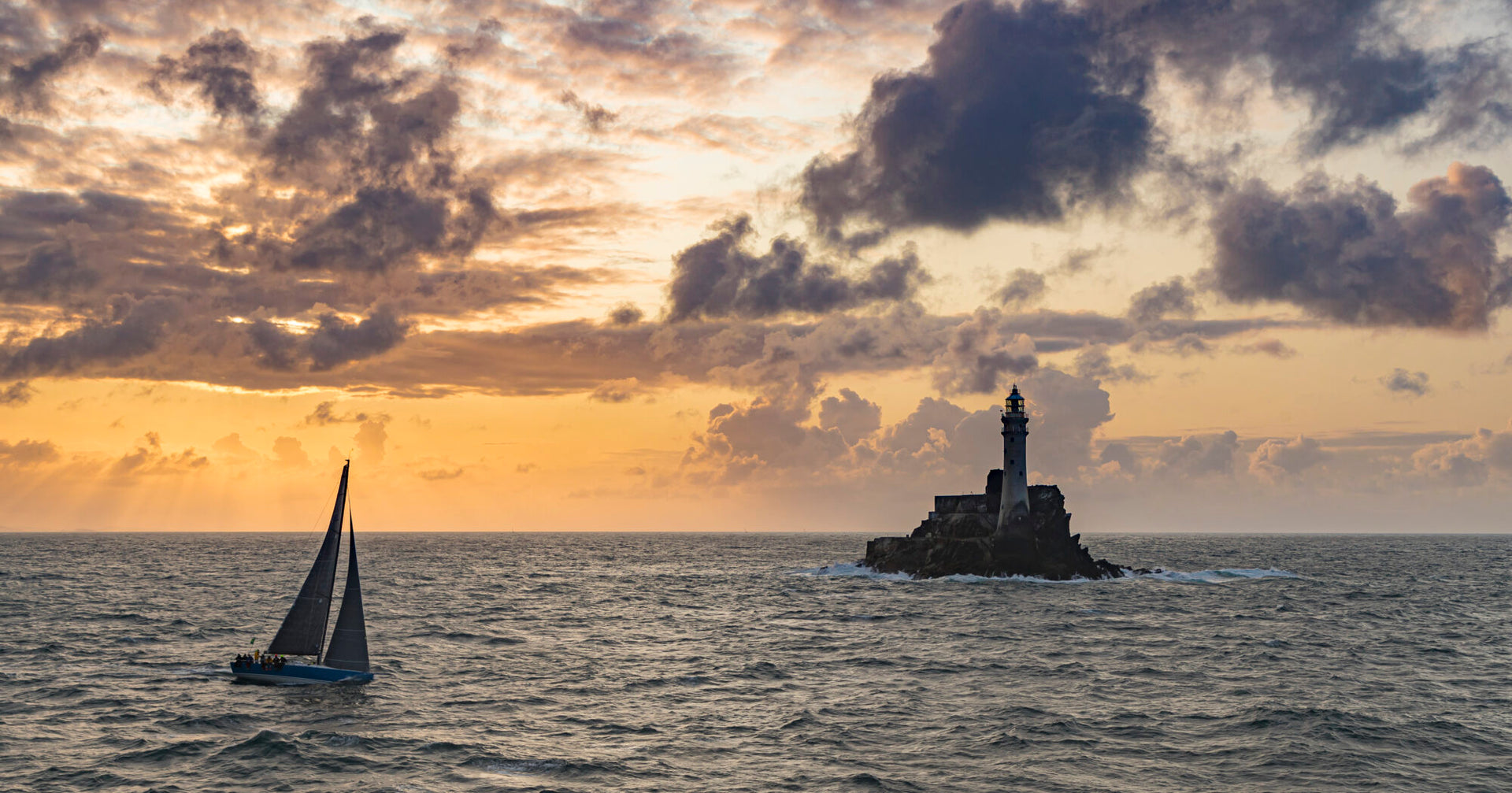
ROLEX FASTNET RACE 2021 PREVIEW
A NEW COURSE, NEW CLASSES, THE ROLEX FASTNET RACE ENTERS NEXT CHAPTER
The 49th Edition of the Offshore Classic Begins Sunday, August 8th
📸 Carlo Borlenghi/Rolex
The Rolex Fastnet Race is widely considered one of the most challenging offshore races by Corinthian and professional sailors alike. Local sailors learn about it at an early age and dream of one day competing in it. For the pros, it is a chance to compete with your best peers, and, if the weather is favorable, perhaps set a new course record. Registering for this offshore classic is so anticipated that the race “sells out” in less than an hour.
The 2021 race boasts a 350+ boat entry list and a new finish location, which tacks 87 miles onto the previous 608 nm racecourse. Now that both boat sizes and participation numbers have outgrown the original finish destination of Portsmouth, England, this year’s race will finish in Cherbourg, France.
“Cherbourg is the perfect venue for the finish of the race,” explained Race Director Chris Stone. “It has amazing facilities for competitors, berthing that allows us to grow and expand the event, plus the city is right on the doorstep of the race village. Of course, coupled with that is the enormous love for offshore sailing in France. That popularity brings interest and visitors to the city and the race village – it’s going to be amazing.”
The new course announcement has been met with mixed emotions, but the strategy looks like a success so far. Race participation is has increased by almost 20%, and the entry list reads like a who’s who of today’s best offshore teams: four newly launched Ultimes, race record holder Rambler 88, the newly launched ClubSwan 125 Skorpios, as well as Vendee Globe winner Yannik Bestaven and a handful of other IMOCAs. With 100% certainty of a new course record, the only questions are who, and how fast?
This year’s Fastnet includes the traditional race landmarks, and a handful of new navigation challenges. After sailing along the south coast of England and across the Celtic Sea to Fastnet Rock, the fleet then rounds Bishop Rock west of the Scilly Isles and heads to Cherbourg. As the race website puts it, “tactically it will place fresh demands on crews with a final hurdle of tackling the fast-moving currents of the Alderney Race before reaching the finish.”
One thing the race organizers could not forecast? The impact of planning a new route around a global pandemic. Race organizers in the UK and France have been working together to ensure they can adapt and accommodate the forever moving target of health and safety and cross-border logistical challenges. “We will continue to adapt in order to accommodate the finish of the Rolex Fastnet Race, as we have done since the beginning of the pandemic,” commented Jean-Louis Valentin, president of the Arrival Fastnet Cherbourg association. As far as the finish is concerned, we will be able to respond to several scenarios, in conjunction with the race management.”
At the time of publishing, the 2021 Fastnet fleet is expected to finish in Cherbourg. While it’s sometimes easier to cancel these events under the current constraints, all of us at North Sails (and sailing fans worldwide) applaud the Fastnet for getting boats to the start line.
The 49th edition of the Rolex Fastnet Race is scheduled to begin on Sunday, August 8th, 2021.
📸 Carlo Borlenghi/Rolex
READ MORE
READ MORE
SEVEN OFFSHORE SAILORS YOU NEED TO KNOW
7 OFFSHORE SAILORS YOU NEED TO KNOW
We’d like to introduce you to seven names we have our eye on right now
Sailing is a multi-faceted sport, but nothing matches the salt-sprayed challenge of racing offshore for days on end. Sailors willing to test their own limits (mentally and physically) often compete well away from the limelight, so we’d like to introduce you to seven sailors we’re watching right now—and will continue to watch.
Each of these seven came to offshore sailing for different reasons, which reminds us of the range of opportunities within this challenging and exciting sector of the sport. Keep your eye out for more on these guys and gals, both here and on their own platforms.
Justine “JuJu” Mettraux
📸 Amory Ross / 11th Hour Race Team
Justine, a Swiss native, hails from Lake Geneva but she’s got more offshore miles than most. Now living in Lorient, France, her backyard is one of the most prestigious bodies of water for offshore training.
In 2013, JuJu finished second, overall, in the Mini Transat. After this success, she (and her sister) rounded out the all-female squad on Team SCA in the Volvo Ocean Race 2014-15. More recently, she helped Dongfeng win the Volvo Ocean Race 2017-18 becoming one of the first women to have their name on the trophy. This summer season she’s sailing as a co-skipper with Simon Fisher on 11th Hour Racing after having finished second in The Ocean Race Europe. Next up for the Swiss sensation? You won’t be too shocked– her dream is to sail the 2024 Vendée Globe.
To be honest, we’re not quite sure what impresses us more about Justine “JuJu” Mettraux– a CV that is enviable amongst the best in the sport or that she grew up in the mountains and is now out most in the sport . Who says you need to be sailing offshore before the age of five to be considered one of the most elite offshore sailors in the world right now?
Francesca Clapcich and Jesse Fielding
View this post on Instagram
A post shared by Francesca Clapcich (@francescaclapcich)
Clapcich is a one-design champion who is quickly becoming a top female offshore sailor. Born in Italy, she represented her country at the 2012 and 2016 Olympics (Laser Radial and 49erFX crew). After Rio though she began to shift her attention and focus to the big blue. In the Volvo Ocean Race 2017-18, Francesca joined Dee Caffari’s Turn the Tide on Plastic team. From this moment on she hasn’t looked back.
Francesca’s co-skipper is Jesse Fielding, an already established American offshore sailor. Jesse has been involved with some of the more well known offshore programs out there, including the Roy Disney (senior) project: Morning Light. After the Morning Light program, Jesse went back to school to graduate from the University of Rhode Island. He did a stint in finance in New York City but the sea continued to call his name; after a couple of months, Fielding hung up his suit and tie and put all his focus into his real dream: sailing around the world.
In 2020, when Francesca joined forces Jesse, they set their sights on becoming a strong American doublehanded team (Francesca emigrated to the United States in early 2020). This Italian/American duo have their own Beneteau Figaro 3s for this season’s solo races and then team up for the doublehanded events. Together, the two have gotten some pretty solid miles under their belts in the US and will soon start the infamous Solitaire du Figaro.
Conrad Colman
📸 Aiste Ridikaite/ Ambersail-2
Colman holds dual citizenship (NZL and USA), but he has lived in France for more than ten years as an important member of the offshore racing fraternity. As you can imagine, he’s not your average offshore sailor. Like the others, Colman has a bit of a unique backstory which includes a mountain biking business, a single backpack filled with his worldly possessions and a dream to sail solo around the world (ideally without fossil fuels).
And so, in 2007, his offshore sailing career began. It was a bit wild to say the least, taking many opportunities that would leave any seasoned professional with their jaw resting comfortably on the ground. “Business consultants would call these years extreme team building but I’d lay awake at night, despite crushing fatigue, hoping it wouldn’t end in disaster,” Colman once said.
But, the risks of his youth (like saying yes to the Barcelona World Race five weeks before the start) led to some incredible adventures and (eventually) the realization of his dream. His three circumnavigations include winning the Class 40 doublehanded Global Ocean Race; completing the IMOCA doublehanded Barcelona World Race; and finishing the 2017 Vendée Globe sans fossil fuels.
Probably one of the best words to summarize Colman is “resilient.” On the eve of his Vendee Globe finish, he dismasted—but instead of dropping out and starting his engine, he set up a jury rig, dug into his liferaft’s ration bag for sustenance, and pushed on. Colman sailed the remainder of the race under the jury rig and finished 16th overall. He is the first Kiwi to compete in (and now complete) the Vendée.
Most recently, Conrad competed in The Ocean Race Europe as navigator for Ambersail.
Clarisse Crémer
View this post on Instagram
A post shared by Clarisse Crémer (@clarissesurlatlantique)
Crémer is a young french star who had the great opportunity and responsibility of being the Banque Populaire skipper for the 2020-21 Vendee Globe Race. She was a formidable race rookie who set a new solo female around the world record when she finished the race in 87 days 02 hours and 24 minutes. Her smart and sensible approach paid off, besting Ellen MacArthur’s 21-year monohull solo non-stop record for a female skipper of 94 days 4 hours which placed Ellen in second during the 2000-2001 Vendée Globe.
Born in Paris, Clarisse now lives in Brittany, where she first caught the sailing bug. If you had asked her ten years ago, even Clarisse might not have imagined her record-breaking finish. That’s because in 2013, she tacked away from a path in the business world, “quit her day job” (as they say), and headed to Brittany for her next adventure as an offshore sailor.
While the Vendée Globe put her on a world stage, Crémer has been building an impressive collection of podium finishes. She finished second in the 2017 Mini Transat, a race that opened her eyes to the incredible freedom of solo sailing. From there, she went on to participate in the circuit familiar to many young French sailors; Offshore French Youth Championships, Rolex Fastnet, Défi Azimut, and the Transat Jacques Vabre.
She recently helped LinkedOut finish third overall in The Ocean Race Europe and win both inshore races.
Yann Riou
Riou is no stranger to our world. He is one of the industry’s most well-respected Onboard Reporters on the water these days. The age old saying goes “if it’s not on camera, did it even happen?” Well, Riou makes sure to prove “it” happened. As a result, the Frenchman has sailed around the world more than most, being a part of two winning Volvo Ocean Races and two World Record attempts. Riou is not fixed on around the world sailing though, also been onboard for several offshore record-breaking runs like Comanche’s dash across the Atlantic in 2016, an experience later showcased on CNN’s “Great Big Story.”
But, Yann is not just hired by these elite offshore sailing teams because he brings the world of offshore sailing to your laps, the man can also sail– and sail well. Yann can sail so well that he’s continuously included in around the world speed records. When racing for records offshore, a team can’t sacrifice weight so they need everyone to multi-task. Although he was limited to content creation during the Volvo Ocean Race, skippers feel confident with Yann’s onboard capabilities– the last thing a skipper wants when sailing offshore is a cameraman who doesn’t know port from starboard. Fortunately, Riou knows his stuff.
Jean Le Cam
📸 Vendée Globe
Le Cam is affectionately known as Le Rio Jean (King Jean), a nickname he earned due to ruling the leaderboard during his Figaro days. Le Cam is a fan favorite known for his navigational prowess, colorful personality, and passion for sharing the experience with both sailors and the general public alike.
A fierce competitor, Le Cam holds stories that are the stuff of ocean racing legends. Four decades ago, he was onboard with Éric Tabarly, France’s best-known yachtsman, during the 1981 Whitbread Round the World Race. King Jean has completed the Vendée Globe five times and finished second to Vincent Riou in 2005. In addition, he won the Barcelona World Race in 2015, and finished fourth in the 2020-21 Vendée Globe. And while his CV is indisputably impressive, it’s the stories from the 2008 and 2020 Vendée Globe that will see this 61-year old around-the-world sailor into the history books.
In 2008, 58 days into the Vendée Globe, Le Cam’s Open 60 lost its keel bulb and capsized 200 miles from Cape Horn. Vincent Riou sailed his PRB back upwind to rescue Jean from a capsized boat. The dangerous and challenging rescue mission took Riou four attempts before safely recovering his fellow competitor. In 2021, King Jean returned the favor when he rescued PRB-sponsored Kevin Escoffier after Kevin’s boat folded in half amongst strong winds and big seas 840 nautical miles SW of Cape Town. In a post-recovery interview, Escoffier was quick to mention his confidence in Le Cam; “as soon as I had seen Jean, I was sure I would be saved.”
All together now: Yes We Cam!
READ MORE
READ MORE
FIRST IMPRESSIONS OF THE HELIX FURLING GENNAKER
FIRST IMPRESSIONS OF THE HELIX FURLING GENNAKER – PURPOSE-BUILT FOR CRUISING
North expert Bob Meagher gives his first-hand experience and explains why you should consider adding this sail to your cruising inventory.
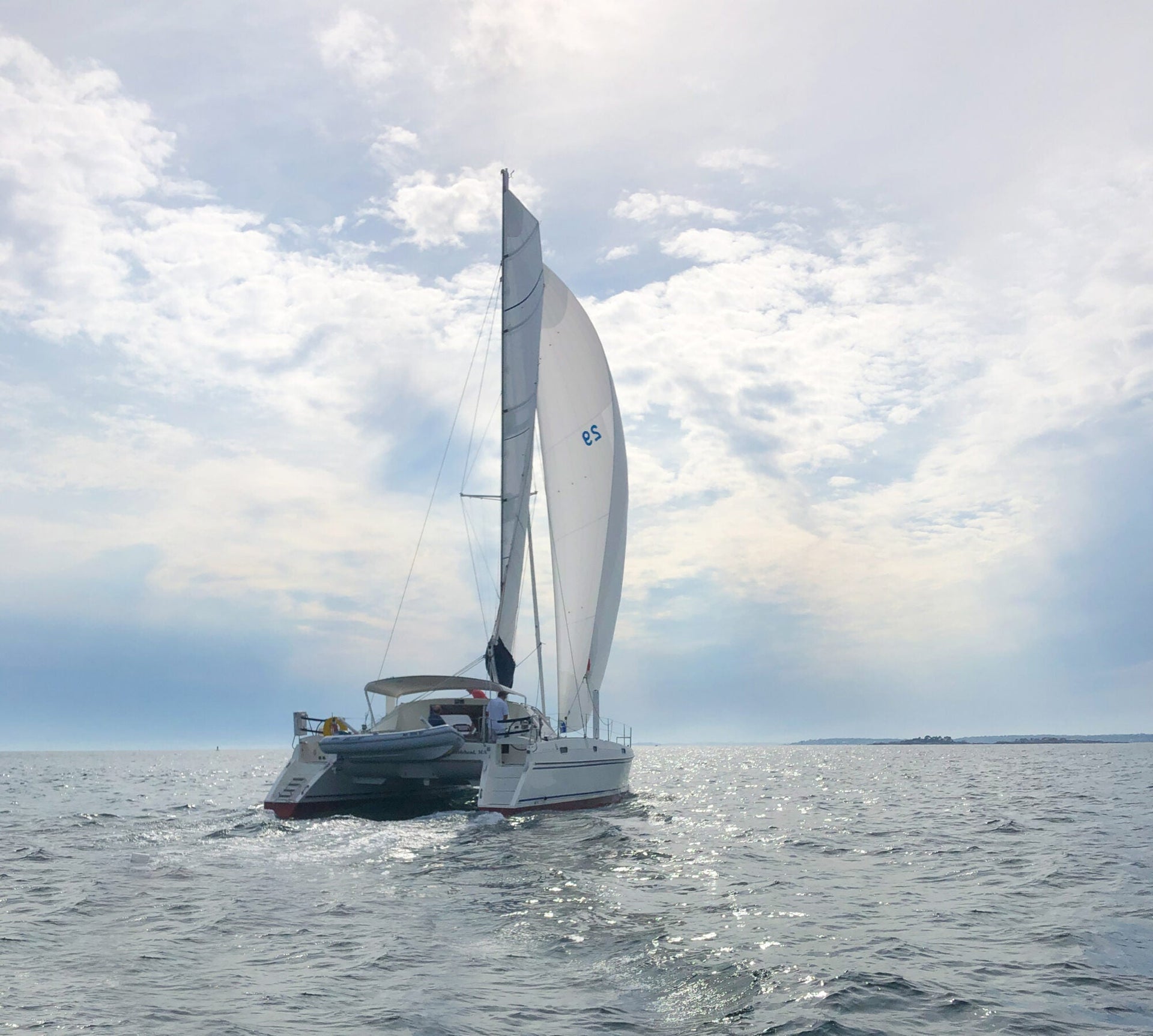
I’ve been fortunate to serve hundreds of cruising multihull sailors in the past 20 years, often with downwind sails designed to eliminate the terrible feeling of performance loss when these boats bear away under mainsail and genoa. Apparent wind, boat speed, and the sense of freedom all plummet when the upwind sail plan just can’t make the boat go past a certain point, and you can almost hear the engine key whispering, “turn me!”
Most owners have learned how cruising Code Zeros offer very convenient “ beam reaching” performance but require larger-than-zero asymmetrical spinnakers for sailing deeper angles. I was always happy to offer two sails to cover wind angles from close reach to broad reach/run. And while this is still the best choice for those wishing to have optimum performance over the greatest possible wind range (ie. long-distance cruisers), I’m honored to have been part of the North Sails development team for a new “single-sail” solution – the Helix Furling Gennaker. I’ve experienced the Helix Furling Gennaker on various catamarans, from high-performance cruising McConaghy 60 to a more traditional Lagoon 46. I have been thrilled to learn its benefits and satisfied with its inevitable limitations.
At the dock, you’d think you’re looking at a Code Zero. It lives up, and furled, on the bowsprit or bow, ready to deploy. Looking more closely, you see a very tight roll in the top third, an area where other Code Zeros can roll too loosely. Unlike standard Code Zeros, North designed the Helix Furling Gennaker to roll from the top-down, not the bottom-up, eliminating a loose furl toward the head that tends to catch the wind and sometimes even shake loose in a big breeze. And once unrolled and sailing, other differences compared to a Code Zero become clear.
A cruising Code Zero has a straight luff, supported by a thick (12mm – 19mm) cable in a sleeve up the luff, and a relatively straight leech, approximating a Genoa, but fuller. The Helix Furling Gennaker is cut more like an asymmetrical spinnaker, with a curved, forward-projecting luff and a rounder leech, resulting in a deeper sail, but one carefully designed to strike a balance. It has a very light, skinny, and flexible (8mm – 10mm) anti-torque cord running along the luff – but this cord has to carry only about half the load of an old-style luff cable. The sail itself features a structured luff to shoulder the other half of the load; allowing this lighter, smaller diameter cord to do a superior, trouble-free, job of top-down furling. When sailing closer to the wind, the halyard is tensioned tight like a Code Zero, enabling apparent wind angles of 70 degrees or a little better. The boat will perform exceptionally well when the sail is used like a traditional reacher (though the added shape in the sail does make it look a bit “knuckle-forward” when in Code Zero mode). It’s when you turn downwind that the real magic happens.
Our goal was to make a sail that can point and perform like a Code Zero, and furls easily like a Zero – but with a significantly deeper downwind range. Bear off with the sail’s luff pulled tight and the sail suffers from the exact thing Code Zeros do: it ends up blanketed by the mainsail, and power is lost. But this isn’t a straight-luffed Code Zero – it’s an especially agile Gennaker, whose superpower activates when easing the halyard and sheet. Easing the halyard, so the sail takes its “spinnaker” shape, transforms the luff into a large, positive curve, deepening the center of the sail. Easing the sheet simultaneously allows the whole sail to rotate to windward, capturing more breeze, undisturbed by the mainsail. What was previously a beam-reacher just became a powerful broad reaching sail. If you want to sail even deeper on a cat, you can move the furled sail to a pad-eye on the windward hull and unroll it there, gaining another 10-12 feet of windward projection.
We’ve sailed deep and stable to 125-130 degrees apparent wind angle (about 160 degrees true wind angle) in 18 knots of true wind speed. We didn’t need to sail above 90 degrees AWA in that much breeze because at that angle and higher, the main and genoa drive the boat just fine. When sailing deep with the halyard eased, the head will have a mild tendency to move around a bit. We experimented with achieving the same luff projection by allowing the tack to raise, but this meant allowing the furler itself to rise to maintain furling ability. It doesn’t make sense to have the furling unit bounce around two to three feet up in the air.
Furling the sail does require a bit more attention than furling a cruising Code Zero. The thumb-thick cable in a code zero is always pretty tight, and it’s a skinny sail without much roach in the back, so furling a Zero can be almost as simple as a genoa (as long as you take care to not let it get too loose up top). With the Helix Furling Gennaker, the halyard should be re-hoisted fully, if it had been eased for broader angle sailing. A firmer halyard/cord transmits torque to the head better, and even more critically, a loose cord could be damaged if it kinks at the bottom when furling. Simple advice: get it tight before starting the furl. With larger sails of this type an electric winch is almost mandatory – not because there’s extreme load on the furling line, but due to the much greater number of rotations needed to furl a top-down system versus a bottom-up. Finally, unlike a straight or hollow-leech code zero, there’s more area toward the leech of a Helix Furling Gennaker, so you will want to keep an eye on the leech to ensure it furls without folding under or over on the way into the roll. If it does, stop furling and trim a bit of sheet — it will unwind some of the sail, and you can ease it back and try again. Learning the relative sheet tension to use when furling takes a time or two, but it’s pretty straightforward. And remember, if you’re furling in a hurry, ignore “neat and tidy” and just roll it up if you need to get the sail away.
By far, the most gratifying successes of these sails came after I left the boat. All these owners sail with few crew – usually it’s just a couple enjoying their retirement, not interested in hassle. Following up with each of my clients some weeks later, I was thrilled to hear that the sails worked as well for them as they had during our trials. They remembered to tighten the luff before furling, had determined the ideal sheet tension when rolling the sail in, and were already playing with relative luff tension at various points of sail to get the most out of the sail. For each, gone are the days of struggling to get a large asymmetrical up out of a bow locker, or going forward in too much breeze to struggle with a snuffer sleeve on a pitching deck. Instead, the Helix Furling Gennaker offers a single-sail, from-the-cockpit solution, for sailors wanting more power. This is a terrific new sail type for a wide array of different boats around the world.
READ MORE
READ MORE
HIRW: RACING PREPARATIONS
HAMILTON ISLAND RACE WEEK: RACING PREPARATIONS
Be Ready For A Variety Of Conditions
Hamilton Island Race Week provides plenty of conditions that provide challenging sailing for all types of boats. The wind swirls around the islands and the water funnels down passages and taking these local effects into account is both an essential tactical tool and great fun. While the wind is difficult to predict even a short distance ahead, the movement of water, being directly related to the positioning of the sun and the moon around the earth, can be predicted with great accuracy well into the future. This provides a good opportunity to familiarize oneself with the anticipated flow patterns around the islands during each race and can be done well in advance of even arriving at Hamilton Island.
I find that it helps to visualize the movement of the water around the islands and to aid this visualization it is useful to review a few basic principles of how water responds in certain situations.
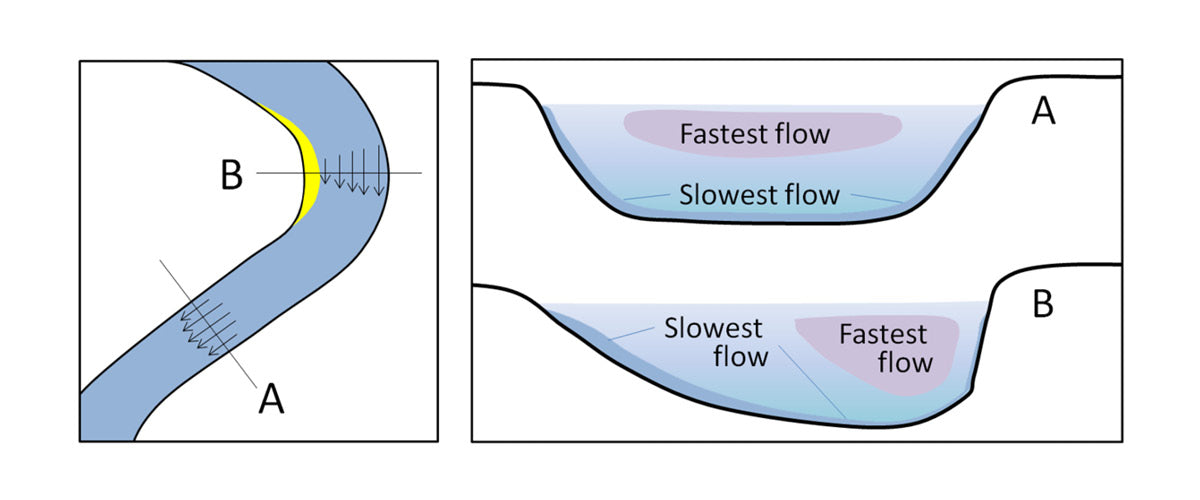
Because water is relatively heavy it has a high inertia. That is, once it has started moving it wants to keep moving and keep moving in the same direction. This means that if there is a bend in a channel then the current will run strongest on the outside of the bend.
When an obstruction is put in its path the volume of water flow cannot change, so the water must accelerate to compensate for the reduced flow path denied it by the obstruction.
Typically, tidal flow is slower in shallow water, than deeper water.
Downstream effects are much more pronounced than the upstream effects. An extreme example of this is seen at a waterfall. Upstream of the falls the water can be calmly meandering along in an almost unnoticeable flow, but upon the water reaching the edge it cascades down the face in a catastrophic flow that continues a great distance downstream.
Now let’s look at some aspects of the tides in the Whitsundays. The tidal currents in the Whitsundays generally flow parallel to the coast of Queensland. So, it floods to the SE and ebbs to the NW.
The tidal range increases the further south one travels. That is, Thomas Island in the south has bigger tides than Hayman Island in the north. This translates into stronger tidal flows in the south when compared to the north. The tide turns slightly earlier in the north than in the south, so have a good look at the tide tables that are applicable to your race area. The BOM has 2021 tidal predictions available for download for Hayman Island, Shute Harbour, Cid Harbour, and Thomas Island.
The tidal streams will generally turn between 10 and 30 minutes before the time of high or low water. This may vary with atmospheric pressure, and duration and intensity of the prevailing winds and can be difficult to pick exactly but is nonetheless critical to watch for. Times of tidal change is particularly important in deciding when to cross the Whitsunday Passage. Look up and understand the “Rule of Twelfths” which gives a simple prediction for the flows during a typical 12-hour tidal cycle. If the tide is in the first part of the cycle it may be better to cross early, whereas if the tide is in the latter part of the cycle it may pay to work up the side you are on and cross later when the stream has decreased.
Look at the tidal range between high and low tides. The bigger the difference the stronger the flow and the more significance the currents will have. When you get to Hamilton Island a good place to put to practice your visualizations is right in front of the marina in the Dent Passage where the Dent start/finish line is located. Sail around exploring the currents (being careful not to intrude on the runway exclusion zone) and practice a few of the following situations likely to occur during the week.
Starting in a flood, the current will be flowing south down the passage. Because the area upstream is fairly open the strongest flow will be in the center and can run at 2 – 3kts, so it is important to stay close to the line or risk being late for the start. Titan Island projects into the flow on the west side and there is a small submerged spit just north of the Yacht Club on the east side. Look for the small back eddies on the south side of both these intrusions.
Starting in an ebbing tide, the flow is to the north. Cowie Island at the center of Dent Island and the airport runway extension into the passage both influence the currents markedly. If you look at the depth contours on the chart you will see how the western shore to the south of Cowrie Island has been scoured out by fast-flowing water. This fast flow is then constricted at Cowrie Island and is directed to the NE. This constriction and acceleration produce quite a narrow river of water aimed at Hamilton Island which in earlier days would have run along the eastern shore of the Island. However, with the construction of the runway extension, this river of flow is now deflected NW. This makes for a strong concentration of flow near the middle of the passage which decreases slowly toward the western side but decreases quickly into a back eddy in the current lee of the runway at the marina entrance. Great care is needed not to be swept across the start line early with the ebb. When finishing from the south this rapid change of current direction from NE at Cowrie Island to NW at the runway coupled with a geographical wind header coming down the runway usually provides great entertainment for onlookers as boats struggle to make the finish limit mark while trying to hold their spinnakers.
Finishing from the north with a flood tide is relatively straight forward but finishing from the north with an ebb tide is a little trickier as the river of flow off the runway extension fans out evenly across the passage as it moves north and there is no easy escape route. Throughout your practice look for clues on the water surface that might show what is happening with the current. Wind against current produces choppy water while wind with current produces calm-looking water. Look for current indications on the mooring buoys by the Dent shore. Watch the movement of the land across your bow as you head across the passage. Every available resource should be used to spot where the current might be accelerating in your favor or where there might be a back eddy to be used against the general flow.
Be aware that current patterns will change depending on the state of the tide. Flow around a rock that is awash at low tide will be very different from when there is 4m of water over it at the top of the tide. This is what makes reading the currents such an interesting exercise. Potential current gains from close inshore back eddies also need to be balanced against potential losses from island wind shadows. A prime example is when beating down the western shore of Dent Island in an ebb tide. With the current flowing NW, there is good relief to be had along the shore by tucking into some of the small bays, particularly north of the lighthouse, but there are also some very light patches of wind and big shifts because this area is in the lee of the island.
Despite the likely benefits of getting very close to the shore to avoid the tidal flow, don’t get too greedy. There are numerous rocks and bommies which are not necessarily marked on the chart which you might pass over one day, but not be so lucky the following day at a slightly lower tide. When it comes to regatta time, before every race, as part of your race briefing, it is a good idea to show all the crew a laminated chart of the race area and draw in the currents expected during the race and show how they will change with time. Time spent understanding the currents for the regatta will not only benefit your race results but will also increase the participation and enjoyment of all the crew.
READ MORE
READ MORE

#NSVICTORYLIST: TRANSPAC 2021
#NSVICTORYLIST: TRANSPAC 2021
Winning the 51st edition of the race from all angles
41 boats raced the 51st Transpac, and at first glance, especially for the Grand Prix boats, it was a pretty straightforward boatspeed race down the great circle rhumb line. Digging a little deeper, though, each division’s winning approach depended on the boat’s best downwind mode: from heated apparent wind angles for newer designs, to the more traditional dead downwind surfing that has always made the Transpac such an epic adventure.
First, though, the fleet had to get upwind around Catalina and as far north as possible—at least that was the plan on the TP52 Warrior Won, winner of the First to Finish Merlin Trophy (all manual power) and the King Kalakaua Trophy (first to finish on corrected time). Owner Chris Sheehan says they won the race by splitting from the pack early on and taking a more northern route. For this stretch, Warrior Won found power with their 3Di main and 3Di square head jibs, a unique design choice for a TP52.
“The other boats were getting very giddy under spinnaker, sailing low and fast,” Sheehan said. “In general, you want to get low to avoid any chance of touching the Pacific high just north of rhumbline. We were confident that it was a short term pain for long term gain, and there was enough breeze to stay very close to the rhumb line.”
Once the wind went aft, they jibed onto port. “We were behind the entire fleet of boats in our class, but we came down on them like thunder, going thirty percent faster on a better angle toward Hawaii. And that sends a signal: that, soon, you’re going to be in our rearview mirror for most of this race.”
After that, Warrior Won kept the pedal to the floor. “Planing is what allows us to correct out over non-planing boats,” Sheehan explains. “25 knots of breeze is the absolute sweetspot; we can sustainably sit at 23 knots of speed.” They were the third boat to finish off Diamond Head, a fantastic result for Sheehan’s first Transpac.
Sailing Hot, Hot, Hot
First to finish was Pyewacket 70, a modified Volvo 70 owned and sailed by Roy Disney. They were fully committed to apparent wind sailing; with true wind angles of around 145, the apparent wind would quickly clock forward to 70 degrees. Pyewacket used their new gear: triple-headed 3Di Helix headsails to win the Barn Door trophy for first to finish, combining either an A2 or A3 up front with a J4 in the middle, and an inner reaching staysail closest to the mast.
North Sails expert Brian Janney says, with this set up, they managed to fit in some quantified sail testing during the race. “We figured out the A3 is actually 5-6 percent faster in 14 knots of breeze, which we thought would be in the heart of the A2. The flatter sail is just more forgiving to drive in waves, with a larger groove. You can go lower without it collapsing on you. If we had to do this race again, we might have left the A2 on the dock.”
They also took a slight detour to set a new race record for a 505.75-mile run in 24 hours. “We did the math and figured out we couldn’t drop down or move up in the standings,” Janney explains. “And the weather was looking good. So we took a poll and Roy said, ‘let’s do it.’” Instead of jibing down the rhumb line with the rest of the fleet, Pyewacket only completed one jibe during the 24 hour record run. “If you stay on a straight line, you get a better chance of covering more miles” in the same time period, Janney points out.
Though Pyewacket finally chased down Ho’ohkolohe (the Division 8 winners, who’d started five days earlier), they could not save their time on BadPak for the Division 1 win. BadPak also embraced the hot-angle approach, with a new 3Di mainsail that North Sails expert Jon Gardner calls “absolutely glamour” and a few bow-up reaching sails. The R2 (an overlapping “genoa” on a furler) went up as soon as they rounded Catalina, and he says they probably left it up a little too long. “Then we went to our fractional zero, and then the A2.5.” They’re still learning the boat’s optimum angles, he admits, because owner Tom Holthus only took possession of this boat in March. “We’ve been preparing for Transpac all spring and summer. We did pretty well for our first race.” Gardner was also aboard in 2019 for a division win on the previous BadPak (a Pac52). “It was great to repeat,” he concludes.
Deep Down True
Peligroso, a Kernan 68, won division 2. North Sails expert Patrick Murray was onboard for his sixth Transpac, and he calls the boat a “souped-up sled, a unique kind of tweener boat.” Driving the boat, he says they made their biggest gains by “cutting the corner” and sailing lower angles than their competition. “You have to relearn how to keep it going fast downwind. Mast vertical, a symmetrical bow wave, 160 apparent, and just plugging straight into the wave in front of you. You don’t turn, you just push through; it’s a very different mode of sailing. A lot of us were used to pushing the bow up, but the boat just loads up and didn’t really like that. So we had to buy in as a team to that lower mode, and concentrate on keeping flat with consistent pace. That’s where we would make major gains, because the other boats were sailing higher angles and extra distance.”
Classic Transpac
No matter what angle each boat sailed, all the sailors mentioned the joy and challenge of riding epic Pacific waves for days at a time. And almost everyone had some sort of boat breakdown, or spinnaker blowup, or both—though Jon Gardner said the boat captain on the R/P 63 GoodEnergy made a special point of finding him after the race was over, to thank him for their trouble-free inventory. “He was so appreciative of what we delivered as a company. They had no failures, and just absolutely loved the sails. Steve Calder did the designs, and not one came back to the loft for any type of recut or adjustment or anything. They just clobbered us on the last day, coming into Molokai, and beat us boat for boat. They just had a fantastic race.”
Patrick Murray says he has more respect for the Transpac every time he sails it. “We always talk about trying to be prepared, but nobody sails these boats in conditions like this until you come to the race. It’s beautiful in the open ocean, and the conditions are just epic.”
READ MORE
READ MORE

TOKYO 2020: 8 OLYMPIANS TO WATCH
TOKYO 2020: 8 OLYMPIANS TO WATCH
We wish everyone a PB (Personal Best) at the Olympics!
📸 Sailing Energy / World Sailing
As athletes get ready for a much-anticipated Olympics, it’s even harder than usual to guess who will be stepping onto the podium this time around. The only prediction we feel completely safe in making is that we’ll have a plenty of new entries for the #NSVictoryList. Here’s a little background on 8 favorite Olympians we’ll be watching when the Games begin.
Giles Scott GBR (Finn)
The 2016 gold medalist dominated the entire Olympic quad leading up to Rio, so Giles has to be at the very top of our list. Calling America’s Cup tactics for former Finn rival Ben Ainslie on the foiling Ineos Team UK has undoubtedly honed already fast reaction times, and afterward this versatile sailor stepped right back onto the Finn podium with a silver medal at the 2021 Europeans—though he did have to “settle for second.”
Alex Maloney and Molly Meech (49erFX)
📸 Graeme Murray/Red Bull Content Pool
Kiwis Alex and Molly both grew up on boats and both sailed around the world before the age of ten. When the 49erFX class was introduced into the Olympics roster for the 2016 Rio Olympics, the Kiwis began sailing together full time. It paid off when the dynamic duo won a silver medal at Rio 2016. To get ready for Tokyo, they’ve been taking advantage of New Zealand’s Millennium Institute of Sport state-of-the-art heat chamber—and also doing the occasional sail after dark, to test their non-visual senses.
Watch their story on RedBull.com
Matt Belcher and Will Ryan (470M)
After training at home in Australia for the past year and a half, the 2016 silver medalists Matt Belcher and Will Ryan have not yet posted any international results. That said, Matt already knows how to win 470 gold (2012, with Malcolm Page), and he’s also won a record-setting seven 470 Worlds. Back in 2000, he won the 420 Worlds, a reminder of that class’ importance as a feeder to the Olympic 470.
Hannah Mills and Eilidh Mcintyre (470W)
Hannah Mills (GBR) won gold in 2016 and silver in 2012 with crew Saskia Clark. She and first-time Olympian Eilidh Mcintyre won the 2019 Worlds in Enoshima, which turned out to be the last 470 regatta held on Olympic waters ahead of the Games. After a rough start at the 2021 Worlds, they took the last three bullets before the medal race and finished fifth overall. With an entire fleet of North Sails and both 2016 medal-winning skippers sailing with new crews, this will be an especially fun battle to watch.
Josh Junior (Finn)
Josh finished seventh at the 2016 Rio Olympics and joined the winning America’s Cup Team New Zealand shortly afterward, along with close friend and Finn tuning partner Andy Maloney. In 2019, he became the very first New Zealander to win a Finn Gold Cup. Andy won this year’s Gold Cup, while Josh finished third, so awarding the country’s single Olympic slot must’ve been a very tough call. With Andy as his primary training partner, Josh will be well-prepared for the pressure-cooker uncertainties of Tokyo.
We’re looking forward to watching all the 2020 Olympians adapt to the special challenges of this year’s competition, which runs July 25-August 5. Let the Games begin!
READ MORE
READ MORE
NASMIJEŠENI NS KLIJENTI NA 10. JEZERSKOJ LANTINI
Nasmiješeni NS klijenti na 10. Jezerskoj lantini
Foto: Igor Turčinov Stijić
U nedjelju 18. srpnja završila je ovogodišnja manifestacija Jezerski dani mora s 10. izdanjem regate latinskog idra, ujedno prvom ovogodišnjom regatom tradicijskih jedrilica na Šibenskom području.
Program u Jezerima krenuo je u utorak 13. srpnja otvorenjem izložbe fotografija Boška Lučeva s temom tradicionalnih barki na latinsko idro, a među kojima je bilo i fotografija snimljenih na ranijim izdanjima ove regate.
U srijedu se održao "Koncert na gajeti", pa dan kasnije tematska likovna radionica za djecu, a u petak su gajete ponovno bile glavni akteri, ali ovog puta na veslačkoj regati. Organizirala se muška i ženska veslačka regata sa simpatičnim nazivom "Svon forcon na četiri vesla".
Na veslačku regatu prijavilo se 14 posada s cijelog Murtera, a možda najzanimljivije je da je ženskih posada bilo čak 10, dok su se samo četiri muške ekipe odlučile za ovu disciplinu. Uglavnom, među ženskim posadama pobjedu odnosi ekipa imena "Cool bebe" s gajete Kalamita, dok je među malobrojnim veslačima pobjedu odnijela ekipa na gajeti Godulica na kojoj je veslao tim "Škver Ćiro".
U subotu se organizirala gastronomsko - enološka "Slovenska večer" u suradnji s prijateljima Jezera iz Slovenije i u veselom tonu se stiglo do finalnog događaja, 10. Jezerske lantine.
Foto: Igor Turčinov Stijić
Posade su se dočekivale na Velikom mulu od 10 sati ujutro, dok su se prijave zaprimale do 14 sati, da bi start uslijedio u 15:00. Flota je u ogromnoj većini bila sastavljena od gajeta, među kojima su bila samo dva leuta i tri kaića.
Start je postavljen ispred ulaza u jezersku luku. Cijeli dan je puhala bura po kojoj je ipak bilo moguće rastegnuti lancanu na koju su se gajete, leuti i kajići vezali krmom sa sidrima bačenim ispred, u smjeru jedrenja. Tu se posložila 31 prijavljena posada, a nakon startnog signala jedrili su prema otočiću Hrbošnjaku, pa Dražemanskom, Maslinjaku, Ljutcu i natrag u Jezera s ciljem postavljenim između "đige" ACI marine s jedne strane i kopna s druge.
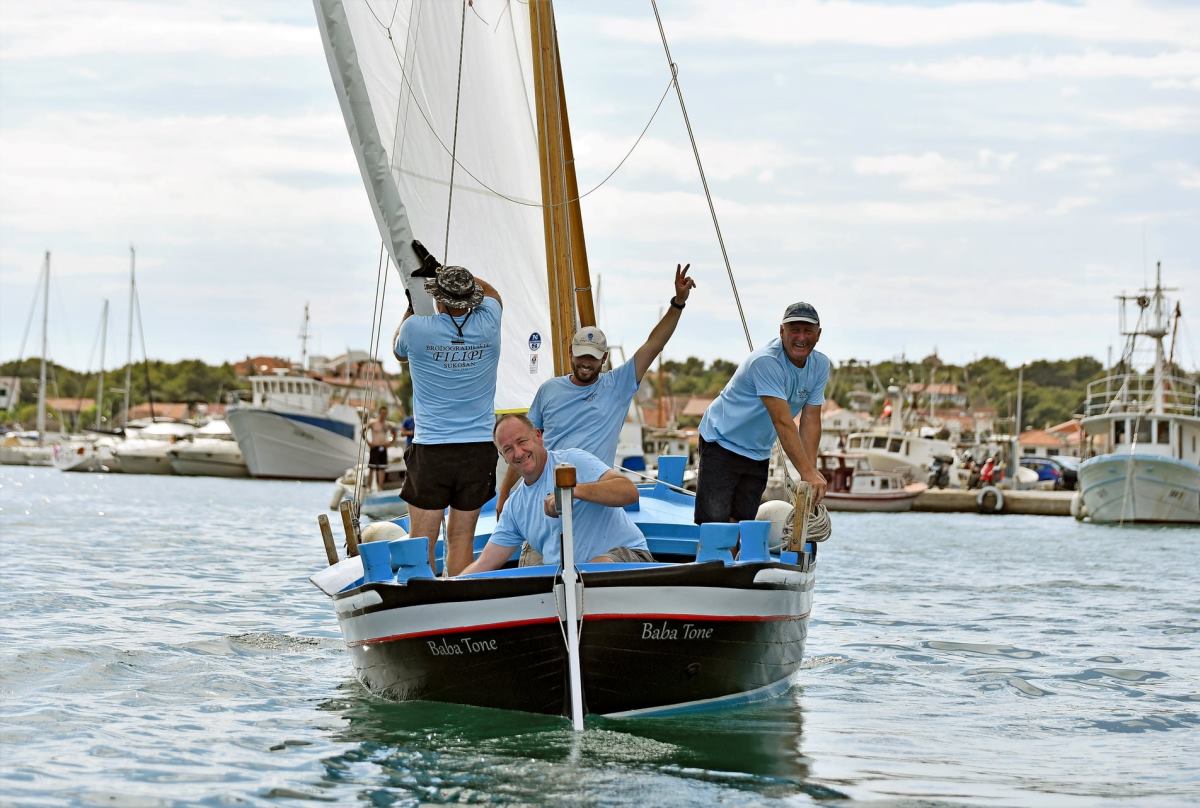
Da je na moru bilo stvarno zanimljivo posvjedočio nam je ovogodišnji pobjednik, vlasnik i kormilar gajete Baba Tone, Dario Filipi:
Na startu smo bili na lošijoj poziciji. Stali smo više niz buru, bliže plaži, jer svi favoriti su se dali više na buru gdje je bila bolja pozicija, pa smo očekivali da će tamo biti veća gužva i da će se vrlo lako dogoditi neka zapetljavanja.
To je vrlo bitno na svakoj našoj regati, da se dobro starta i da se izvućeš do prve bove među prvih 5-6.
S obzirom da je vjetar bio dosta zeznut s obzirom na mjesto gdje smo bili, izvukli smo se stvarno dobro. Po mojoj procjeni puhalo je dvanaestak čvorova, a na refule je sigurno bilo i više.
Poslije starta išli smo do sike pored južne punte otoka Murtera i tu kako je puhala bura jedrili smo s njom u bok, u stvari negdje između boka i pola krme. Kako je bilo dosta vjetra svi brodovi su išli dosta dobro i tu smo se dosta dobro držali, bili smo među prva dva, tri. Međutim, tu do Hrbošnjaka veći i masivniji brodovi s većim jedrima su nas počeli stiskati.
Među njima je bio i lanjski pobjednik, Tomislav Bašić, jedriličar iz Zadra. On je jedrio na gajeti s Preka koju je radio Mile Pile u Betini - Baba Majo.
Taman su nas uhvatili oko Hrbošnjaka, kad smo se okretali. Mi smo tu bili oko 5. ili 6. mjesta.
Nakon toga smo jedrili u orcu prema kopnu, da bi uhvatili ovu drugu siku gdje je svjetionik, Dražemanski.
Tu smo dosta dobro procijenili gdje trebamo virati da bi iz iduće bordade odmah uhvatili tu siku, drugu bovu. Bašić i još neki koji su ga pratili su prerano napravili burtiž (virali, op.a.), pa su kasnije morali napraviti još jedan na drugu stranu, a mi smo tu pravovremeno okrenuli i tu siku prošli u knap.
Tada su ovi što su bili ispred nas išli još više pod kraj od straha da neće uhvatiti Dražemanskog i od straha da ga neće uhvatiti kako treba otišli previše naprijed i napravili viška puta.
U toj grupi je bio i Fržop, on je ove godine jedrio u gajeti Modravka Ognjena Jakovčeva. Za njima su bile Bodulica, Sirotica, Marina Betina, Lipa moja... i mi smo tu stekli dobru prednost.
Do iduće oznake jedrili smo isto u orca, vjetar je bio tu negdje između orca i boka i do nje smo uspješno držali prednost.
Poslije smo ukrmili i u cilj ušli s vjetrom u bok, oko 50 metara ispred drugog, trećeg, četvrtog i petog. Oni su svi zajedno uplovili u cilj.
Sirotica je cijelo vrijeme bila na krmi Godulice koja je završila na drugom mjestu. Tu je bilo napeto cijelo vrijeme. Sirotica ju je pokušavala proći s privjetrinske strane, ali Godulica joj to nije dozvoljavala.
Dok su se njih dvoje tu nadmetali to je iskoristila Baba Majo i izbila na treće mjesto, te je Sirotica u borbi za drugo izgubila i treće.
Stvarno su bili odlični uvjeti za jedrenje, vjetra taman koliko treba. Možda smo samo jednom zagrabili, iznenadio nas je jedan reful kad smo već bili blizu cilju, kad smo se opustili. Uglavnom, ovo novo jedno koje smo nabavili za ovu sezonu u North Sailsa odradilo je izvrstan posao. I na Ugriniću, na Pašmanu pokazalo se izvrsnim. Zadnju oznaku smo okrenuli peti, a na kraju smo regatu završili kao drugi s tim da smo prvo mjesto izgubili za dužinu broda. U orcu smo se s ovim jedrom izvrsno dizali i hvatali smo ove koji su bili ispred nas.
Dario Filipi, Baba Tone
Inače je Dariju Filipiju ovo druga pobjeda u gajetama, prvi put je pobijedio na regati "Vanka škvare" u Betini, regati na kojoj jedre samo gajete. A posada koja je pomogla Dariju da dođe do pobjede u Jezerima bila je u sastavu Guliano Šeparović (Filipi), Ljubo Zrilić (škver Filipi u Sukošanu) i Boris Lazić, iskusni kalafat.
Foto: Igor Turčinov Stijić
Kompletne rezultate regate možete pronaći na ovom linku, dok na Facebook stranicama Turističke zajednice Jezera posvećenim Jezerskim danima mora možete pronaći bogatu fotogaleriju Igora Turčinova Stijića.
Za ovo ljeto trenutno su potvrđeni još "Latinskim idrom na kureja" na otoku Zlarinu 25. srpnja, "Regata za dušu i tilo" u Betini 15. kolovoza, te "Šepurinski burtiž" 22. kolovoza, dok će veliko finale biti na murterskom "Latinskom idru" najavljenom za 29. rujna. Također se šuška o tome da će i Tišnjani kao jedino Murtersko misto bez regate napokon organizirati svoj event, a da su za to predvidjeli 8. kolovoza.
READ MORE
READ MORE

2021 IC37 NATIONAL CHAMPIONSHIP
2021 IC37 NATIONAL CHAMPIONSHIP
Pacific Yankee Takes the Title
📸 Melges Performance Sailboats / Felipe Juncadella / UP TOP MEDIA
Three days of offshore buoy racing tested IC37 competitors at the 2021 National Championships, and the last race of the event determined who would take home this year’s National title. Drew Freides and Bill Ruh’s Pacific Yankee made only one major mistake (race 6, an OCS) and were the swiftest boat out there, racking up only 15 total points after seven races and one discard.
Skipper Drew Freides says they pride themselves on having a really good team. “We’ve got the crew work down pretty well. But it’s more of shifting gears and always keeping the boat going fast . I don’t think we’re faster than anybody, but we’re better at getting up to top speed more quickly.”
John Brim’s Rima improved each day which put them in second overall with 22 points. John commented, “This is our first full season with a steady crew, and we feel like we’re learning how to sail the boat.”
Jay Cross, Ben Kinney, and Hannah Swett’s Members Only showed great speed and perseverance, taking third overall with 30 points. In fourth was team Sertl on Das Blau Max, with the most consistent scoreline of all teams, throwing out an 8th place with a total of 35 points. Close behind with 39 points was Peter McClellan’s Gamecock.
📸 Morgan Kinney / IC37 Class Association
Like all one designs, time in the boat was vital. All boats in the IC37 fleet are set up identically, so it’s up to the crew to adapt to changing conditions and how that affects each role. Here are some tips to help you at your next event:
Communicating boat speed out of tacks. The main trimmer can communicate this to the crew so they know when the boat is up to full speed. This helps the helmsman know when to put the bow down, and allows the runner and the jib trimmers to coordinate trimming efforts. This is not only crucial to starts but can be big in port/starboard crossing situations.
Get familiar with your mast settings. Adjusting the mast shims is crucial for maintaining boat speed and set up as conditions change. Depending on how much power you’ll need and the wind speed you add or remove the mast shims which control shroud tension and headstay. If the headstay tension isn’t right you’ll have a hard time going upwind at full speed.
Boat Handling & Crew Communication. From the beginning of the race to the end, there should be constant conversation about what is happening. Mainsail trimmer communicates to the runner trimmer when more power (or less) is needed. Jib trimmers are listening in, making sure they can adjust leads if needed for more power in the foot, and where they are as far as trim angle with where the leech hits the spreaders. Designating one person to communicate crew weight downwind with wave state was huge and big gains were made on jibes and working up and down on the waves.
Congratulations to Chris Culver’s Blazer II for qualifying for the NYYC Invitational Cup which will take place later this year.
Big thanks to Moose McClintock, IC37 fleet coach. His support for the class and sailors has been above and beyond. The daily debriefs have been helpful, and the feedback he’s provided to teams on the water has helped elevate the competition and contribute to the class’s success.
FULL RESULTS
📸 Melges Performance Sailboats / Beigel Sailing Media
READ MORE
READ MORE
DESIGNING WORLD CHAMPIONSHIP WINNING SAILS
WOLRD CHAMPIONSHIP WINNING SAILS
Results are a culmination of many years working behind the scenes
📸 Andrea Lelli
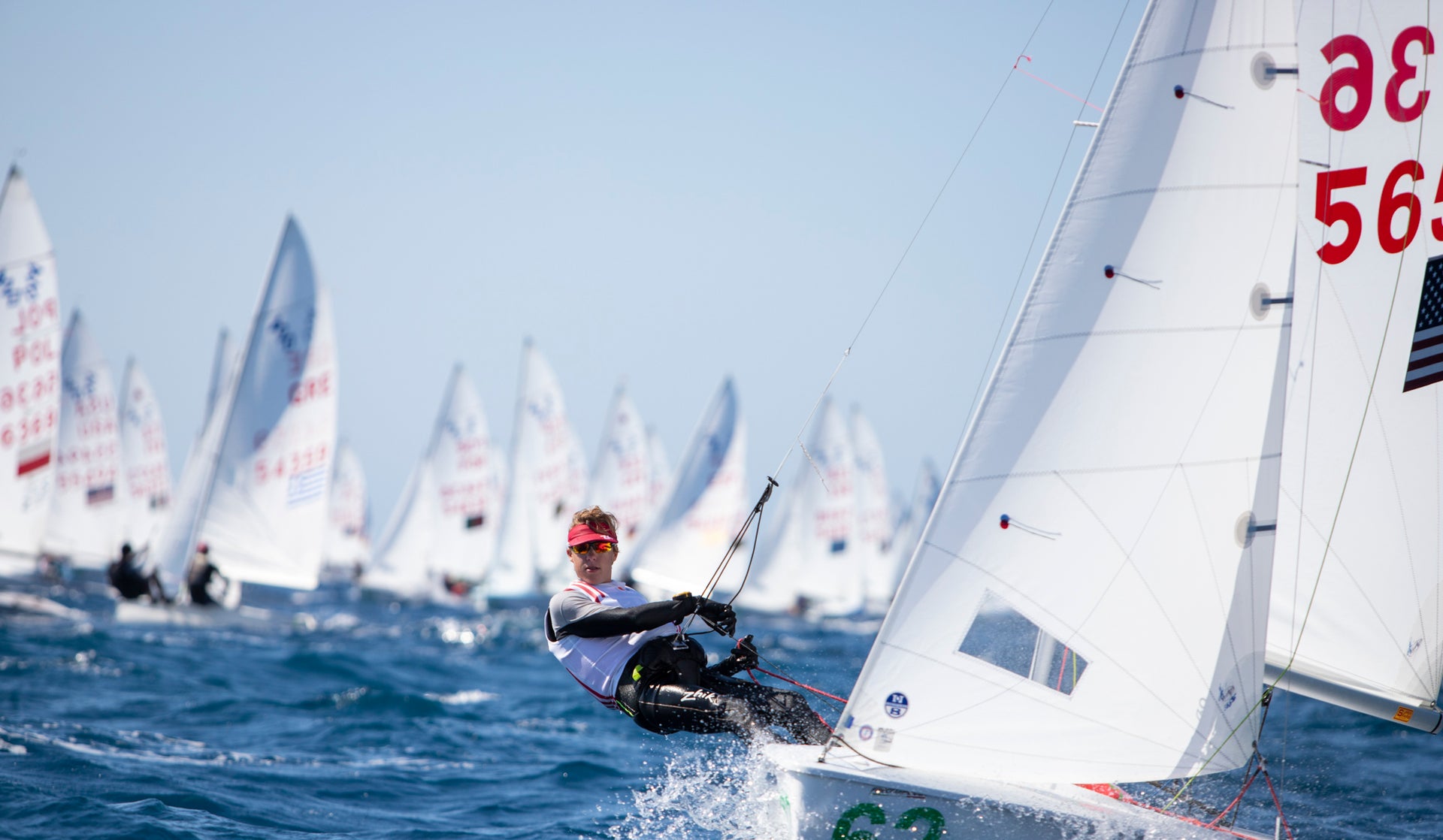
Whether it’s the World Championship or a local Wednesday night, here at North Sails we thrive on seeing our clients at the top of the leaderboard. These results are a culmination of many years working behind the scenes: sail design; material selection; on the water testing; and developing accurate tuning guides. With one design sails in particular, the North team must work within strict class rules to model the masterpiece.
The most recent example of “everything coming together” is the 2021 420 Worlds, where North-powered teams swept the Mens-Mixed Division podium and claimed the majority of top three finishes in the Women’s and U17 divisions North Sails offers an extensive lineup of 420 sails, and the race results were not dominated by any single model. We asked two onsite North Sails experts to explain why so many different sail designs achieved such great results.
North Sails One Design expert Tom Sitzmann says that all the North Sails 420 designs are capable of winning. “It’s a question of the best fit for each particular team’s sailing style and weight. The best sails are easy to trim well, are consistently built, and offer durability. So you need to buy North Sails, because we have the sailing and design expertise, dedication, and passion to find the best fit for you.”
North Technology Group CEO Tom Whidden was also on the water in San Remo, cheering on his grandson Thomas who crewed for Freddie Parkin and took the world title in the U17 division. With his sailmaker’s eye, Tom shared his observations:
“The M-11 and M-9 are both very adjustable and very flexible from 0-18 knots, more than the Zaoli sails I observed—and even more dominant compared to the Olimpic sails in anything above 12 knots. All three sailmakers had jibs with similar twist profiles, although the non-North sails seemed to stretch more on the breezy day…..and consequentially, had less twist.”
“I thought North had the greatest edge downwind,” Whidden added. “North spinnakers project better, with slightly less curvature in the upper leeches. Both Sitzmann/Woodworth and Parkin/Whidden were able to sail deeper in all breezes.”
📸 Andrea Lelli
The Sail Design Loop
Both Sitzmann and Whidden were quick to compliment North Japan, which has dominated the 420 and 470 classes for two decades. Masanobu Katori (known as Nobu) is very busy preparing for the Olympic Games, but he took time to explain how important the 420 class is to Olympic 470 development.
“In the upcoming Olympics, 100% of the 470 Women use North Sails exclusively, and 16 of the 19 Men’s teams have our sails. In the 420 class, many of the coaches are ex-470 sailors. Australian gold medalist Mathew Belcher tested our 420 sails to provide the crucial feedback during the product development cycle. Our sales manager, Kei, has been developing vast connections between the 420 and 470 class. So they know us and our products, and how well we can support their teams.”
Nobu says that 420 sail design is approached in the same methodical way as a Grand Prix program. “We have developed Spiral for dinghies, the same North Design Suite tool used for America’s Cup projects. We redesigned our two-boat testing system to suit small boats so we can better evaluate straight-line speed; to develop better designed sails, it is necessary to distinguish performance from race results. Of course, easy handling is also a key factor.
📸 Andrea Lelli
“For good design, it is crucial to have good feedback. Based on that feedback, we re-design a sail, then manufacture and test it. The more you run this circle, the better sails you can have. People assume that in such an established class, there isn’t any room to develop. But every time you do this, you find something new—the cycle is never-ending.”
Sailors and coaches are a critical piece of this development loop, Nobu insists, though sometimes the words they use are different from a sailmaker’s. “Fortunately we have a team with experienced people, so we can discuss what they’re feeling and then follow a logical redesign path. Then it is easy to track and re-route the path if the sail does not perform as expected.”
The end goal is not to have a secret weapon, Nobu insists; it is to continue to improve the sails so 420 sailors can be confident in their speed. “This confidence is the big deal for every race, and we have been trying to provide it with good sails.” So whether it’s a 420 Worlds or your next Wednesday night beer can race, we’ve got the right sails for you.
📸 Andrea Lelli
READ MORE
READ MORE

WHAT IT TAKES TO WIN THE 420 WORLDS
WHAT IT TAKES TO WIN THE 420 WORLDS
North Sails Sits Down with Lior Lavie, Coach of Team USA
📸 Andrea Lelli
The chatter about the 420 Worlds kicked off in the North Sails offices on the second to last day of the regatta. The results coming from San Remo, Italy, looked good—so good that we spent the final day hitting refresh. North-powered teams claimed six of the nine podium positions, with a full sweep in the 90-boat Mixed Division, and we’ve also added two new world champion teams to our #NSVictoryList: Tommy Sitzmann/Luke Woodworth won the mixed division, while Freddie Parkin/Thomas Whidden claimed the top spot in the U17 fleet. It’s the first time in 44 years that Team USA has won a 420 World Championship.
Sailing in a world championship is an honor; winning is a privilege that comes only with hard work and is never guaranteed. Team USA’s victory in San Remo is a credit to the entire American squad: all 17 teams, the coaching staff, plus the parents (and grandparents).
We caught up with Team USA coach Lior Lavie, owner of Outfit Sailing, to get his insight into the team’s success, and to ask his advice for aspiring young sailors.
How did Team USA train for the 420 World Championship?
Preparation began in September of 2020, with training in Miami. During the fall and winter months, our calendar included intensive days of training on weekends, block training camps during the holiday season (Thanksgiving and Christmas), and events such as the US Nationals, North Americans, Midwinters all in Miami.
In the spring we migrated up north to Annapolis and Newport before our departure to Europe. The many days of training on the water were combined with video debriefs, boat work, sail testing, speed tuning, and fitness.
What were your expectations on Day 1?
Team USA had four coaches in San Remo, and we all agreed that this year was a difficult year to predict how our sailors might perform, and where we, as a country, might stand compared to the rest of the world. There were no international events to set a baseline, and we had only a handful of sailors who had previously competed on the world stage. The majority of Team USA are young, talented sailors who were attending their first international event in the 420 class.
Therefore, the coaching staff laid out the foundations and mindset for the team: treat each day as if it is the first day of the event while collecting data points, studying our competition, and making adjustments as needed.
North Technology Group CEO Tom Whidden, with this grandson, Thomas Whidden, and Freddie Parkin. Whidden/Parkin are the 420 U17 World Champions. 📸 Andrea Lelli
What did you focus on each day? Did each team have a unique focus?
Each morning, we gathered all the athletes and coaches to discuss the day’s weather report, our overall strategy, and any updates we had about the racing. Afterward, we split the team into two groups (based on the assigned racing areas) for more specific conversations.
On the water, I collected wind and current readings and shared that information with each team, so that they could develop their own game plan for the next race.
We also discussed how to control the uncontrollable. Thinking ahead about different scenarios with opponents helped our teams deal with any situations that required an immediate reaction. The goal was for the skipper to focus on sailing the boat at max speed, trusting the crew to report potential crossings, fleet positioning, and weather/wind observations. This communication is a critical component to the success of our top teams.
What are some things you feel Team USA is especially good at? (Technique, conditions, starting in big fleets?)
Our US sailors showed versatility in their skills. It was amazing to observe and to be a part of. The 2021 Worlds delivered almost every type of condition: light with strong current, half trapezing, side shore winds, onshore winds, and full planing conditions. Our gold medalists showcased their ability to adapt while maintaining excellent sail trim and boat speed both upwind and downwind.
Team USA won each division by a large amount. How did you manage momentum during the event?
The competition is fierce at this level, so, mental preparation is what makes the difference. Day 5 of the championship is probably the best example. All three fleets (U17, Mixed, and Women’s) completed 9 races. Our three gold medalist teams scored a combined 8 wins—11 points in total. I don’t think any country has ever had such a dominating single day at a 420 World Championship, and that is why we had such a healthy lead going into the last day.
For the final day, Team USA went back to our foundations and preparation. We were the team to beat, so it was even more important to sail clean and smart. Based on the standings, we evaluated different scenarios and how to react to each one.
📸 Andrea Lelli
With young sailors, how do you help them deal with the pressures of both competition and success?
Each athlete reacts differently, and our strong relationship to keep them calm and focused. One of my strengths is to customize my coaching style to a particular sailor; knowing when we need to break the tension with a joke, when the sailor needs reassurance, and when I may need to raise my voice to get them to refocus.
These young sailors are very mature in their minds. The ability to handle pressure is a skill that’s under development years before the event. As a coach, I emphasize and teach my athletes to always be humble and to keep a low profile on and off the water. And I remind the sailors of this each day throughout the event. The key is preparation and maintaining your routine—until the last day when you can celebrate your victory.
What does pre-race look like for you? Did you go out early each day to speed test, rig test, etc?
For me, the pre-race routine is the most important part of each racing day. It is the only part of the race that is not “equal” to all competitors because not all sailors arrive at the same time and prepare the same way. What you do BEFORE racing can set you up for success the entire day.
At this event, we were always the first team to arrive at the racing area. This provided a clear view of the water to observe wind patterns and wave action before the other coach boats and sailors arrive and disturb it. Looking upwind from the start line before the other competitors gave the sailors a boost of confidence. After that, we tuned up together in order to gather as much information as possible.
What advice do you have for young sailors who want to move up in the fleet, and maybe someday participate in a World Championship?
The best advice I can give is to develop healthy habits that will lead to success…both on and off the water. It is also helpful to identify any destructive or unhealthy habits (which we all have) and make them less appealing while rewarding yourself for positive behaviors. As you begin to accumulate good habits in time management, communication, rules, respect, and routines, you will set yourself up for improved results. Healthy communication with your partner and developing mutual respect for each other are also keys to success in any sailing career.
The team of Tommy Sitzmann/Luke Woodworth (bow #95) claimed the Worlds title in the Mixed Division. 📸 Andrea Lelli
READ MORE
READ MORE

FROM THE LOFT FLOOR TO THE RACECOURSE
FROM THE LOFT FLOOR TO THE RACECOURSE
North Sailmaker Tom Gillard’s Winning One Design Streak
Salcombe Gin Merlin Rocket Week is the highlight regatta for Merlin Rocket sailors in England, so much so that the 120 available spaces in the entry list get snapped up in a matter of minutes. As well as a fantastic sailing venue, Salcombe is also a popular holiday destination, making it a family-orientated yet competitive event.
Winning the regatta with impressively consistent results despite having never sailed together was North Sails One Design expert and sailmaker Tom Gillard with his crew, 470 Olympic Development squad sailor Aaron Holman.
Conditions varied from a mid-week windy day with big squalls to the final two days of lighter airs. “The North sails responded well to these huge changes in conditions,’’ Tom remarks. “The Mainsail is so versatile and performs perfectly to meet the conditions, as well as being easy to set up. I recently changed the sail plan to have the bigger MJR-4 Jib and smaller M-9 Mainsail, alongside the K-7 Spinnaker.’’
Tides are an essential factor when racing in Salcombe, and wind shifts are influenced by the hills on either side of the estuary. Moored boats also take up room in the harbor, making for lots of variables that can affect the results of this tightly packed fleet. “We made sure to play it safe on the start, especially as it was a black flag start meaning it would be an immediate disqualification if we were over the line.’’ comments, Tom.
Salcombe Gin Merlin Rocket Week 📸 John Murrell
The results don’t stop here as Tom seems to be winning every boat he steps into at the moment. Very similar boat design to the Merlin, Tom recently won the Scorpion Inland Championship and the Solo Midland Championship. He is looking forward to competing in the Nationals for both classes later this year.
What has driven this winning streak? we asked Tom: “A lot of boat preparation in lockdown!’’ he replies. “The sails have come a long way in development as well. David Lenz has put a lot of work into the Merlin sail designs, which makes them fast from the get-go. North Scorpion sails have always been leaders in the fleet.’’
“It is great to See Tom winning with the latest Merlin Rocket sail designs, which we optimized based on the winning sails from Salcombe Week in 2019. We had some great input from Simon Potts, George Yeoman, Team Rockatross, and Chris Gould, who all now use the same sail plan for the bow tack jib. It is a very user-friendly, all-round package, and these designs have now won four UK events so far in 2021. As Tom says, lockdown has been a great time to get faster.’’ comments North Sails sail designer David Lenz.
“The sails have come a long way in development as well. David Lenz has put a lot of work into the Merlin sail designs, which makes them fast from the get-go.”
Tom splits his time at North Sails in Gosport between production and sales, particularly enjoying sticking, joining, and second-laying One Design sails. Second-laying involves cutting the sail to physical size and ensuring it is compliant with the class rules.
The team has recently had the exciting opportunity to work on building the Finn sails for the Tokyo Olympic Games. The material is manufactured in Sri Lanka, and the rest of the sail is completed at Gosport. “On average, we made six sails for each sailor, and from those, they chose two to compete with. Each sail had intricate modifications as requested by the team, which made it tricky but amazing to be involved in.’’
SHOP ONE DESIGN SAILS
READ MORE
READ MORE

TRANSPAC 2021: 5 BOATS TO WATCH
TRANSPAC 2021: 5 BOATS TO WATCH
Winning isn’t the only goal for these teams
Ho’okolohe 📸 Emma Deardorff / ultimatesailing.org / Transpacific Yacht Club
The Transpac begins this week, with three staggered starts to keep the finish times close. This iconic bluewater classic always attracts a range of programs, from full-on professional teams to families looking for some cool downwind sailing. Here’s a little background about five different boats we’ll be following as they make their way to Hawai’i.
Pyewacket was well-known even before 2019, when Roy Disney and crew rescued the nine-member OEX crew from their life rafts. For 2021, the boat’s official title is Pyewacket 70—because the ride is now a Volvo 70. This experienced group includes past North Sails president Gary Weisman, who will be starting his 24th Transpac. (He and Disney are tied for most races sailed.) And all the forward sails include Helix, which has drastically reduced rig loads on their preferred triple-header sail plan. “We have to balance all the tack loads so they don’t go over a certain combined number,” North Sails expert and trimmer Brian Janney explains. “With Helix, it takes a lot of pressure off the mast.” Once around Catalina, he is looking forward to some fast offwind sailing under 3Di main, Helix A3, Helix J4, and Helix Inner Staysail.
Peligroso is a Ker 68 owned by Doug Baker, who’s sailed an impressive 21 Transpacs. His veteran team includes North Sails designer Steve Calder, who will put his extensive Helix knowledge (and perhaps a few kiting skills) to work. North Sails expert Patrick Murray is one of the trimmers on this purpose-built sled, which has added a new A7 and A2 for the race.
Onboard Pyewacket
North Sails expert Fuzz Foster worked with Peligroso to tailor their inventory. “The A7 is a true reaching kite to help the boat in the early stages of the race,” he says. “The A2 is aimed specifically at running—more so than the boat’s previous A2, which was an all-purpose sail.”
Foster will be sailing his fourth Transpac on Ho’okolohe—as self-designated “Cat 3 cooler jockey”—and this year will check off a very important bucket list item: both his sons, Fizz and Travis, will be onboard. “I made a deal with Travis in 2019 that if I ever did another Transpac, he would be part of the crew. Every parent should be as lucky as me to do something like this.”
Oaxaca 📸 Sharon Green / ultimatesailing.org / Transpacific Yacht Club
Oaxaca is back to defend her 2019 class win, but so is her arch-rival Horizon. These two Santa Cruz 50s were designed forty years ago by Bill Lee to win races to Hawai’i; on the 2019 race, their corrected finishes were only twelve minutes apart—after over nine days of racing. Oaxaca navigator Liz Baylis will be sailing her fifth Transpac, and she says each one is memorable in a different way.
One of Liz’s teammates will be racing from LA to Honolulu for the very first time. “I started following Bill Lee and his designs when I was a kid,” Paul Cronin says, “and I’ve always wanted to do the Transpac on a Santa Cruz 50. Now I have the opportunity, thanks to Liz. And we have some very nice new North sails!”
BadPak won their class in 2019, and this year Tom Holthus and his team have a new boat. The 2018 Botin 56 looks very fast, says Pyewacket’s Janney. “They haven’t done a race with this boat yet, but they’re probably going to beat us on corrected time.” BadPak has an all-North inventory.
BadPak 📸 Sharon Green / ultimatesailing.org / Transpacific Yacht Club
Compadres is the same Andrews 77 that Cal Maritime’s offshore team sailed to third in division for the 50th Transpac in 2019. Now jointly owned by a group of friends, the boat has had an extensive refit above and below decks. The team includes two generations of two different families: David Dahl with sons Michael and Sean, and Bart Scott with daughter Brett. Their stated goal is to sail a race that will be “safe, fast, and fun.”
The first seven boats start on Tuesday July 13th; 15 more leave LA on Friday July 16th; and the fastest 19 entries start on Saturday, July 17th. The long-term weather forecast predicts a fairly traditional race breeze-wise, so Comanche’s 2017 race record of five and a half days is probably safe. There are only two marks on the 2225 mile course: leave the west end of Catalina Island to port, and finish at Diamond Head off Honolulu. Expect boats to begin arriving in Hawai’i on about July 23.
BOAT BLOGS RACE TRACKER ENTRY LIST
READ MORE
READ MORE

UNLOCKING THE POTENTIAL OF NORTH CLUB RACING SAILS
UNLOCKING THE POTENTIAL OF NORTH CLUB RACING SAILS
J/122 Racing in Hong Kong
📸 Takumi Images / Panda Man
Nicolas (Nico) Cohen-Addad’s J/122 Jinn captured the attention of the North Sails team in Hong Kong after winning a host of recent regattas, including the Royal Hong Kong Yacht Club Summer Cup (IRC) and the Waglan Series (IRC 1). We spoke with Nico about these recent triumphs in the popular club race class and also learned how a Frenchman who grew up in the Alps came to live, work and sail competitively in Hong Kong.
Nico was introduced to sailing at age four by his father, who was keen for his children to get their sea legs as early as possible, near Chambery in France. In 2001, Nico followed his finance career from London to Hong Kong, and even though he’d never been to Asia he instantly knew he would never leave. “I got the job, jumped on the plane, landed in Hong Kong, and it just struck me,’’ he remarks.
His first racing was on an Etchells he bought to race against 21 highly competitive Hong Kong teams. After five years, however, work and family duties took precedence—until 2018, when his wife spurred him to mark his 50th birthday with a unique purchase. “Buying Jinn became a pet project, some sort of experiment,’’ says Nico. “I wanted to know what could happen if you buy a racer-cruiser to optimize and build the crew from the ground up. Our crew are family and friends from completely different backgrounds; some had never sailed, only a few had raced (mostly small boats), and one of them was entirely new to water sports. That was the diversity of the crew, and I decided to see what we could do!’’
The extensive fleet of North-powered J/122 boats in the UK made it clear that North Sails knows best in this club race class. Sails are a sizable yet critical investment, and choosing the right setup translates into better results. I think every boat owner should put a lot of thought into choosing the right sailmaker.’’
2020 was when things started to fall into place for team Jinn. Restricted travel allowed the crew to commit more time to sailing, and they racked up an impressive 60 days on the water; that would set them up well for regattas to come.
Nico also decided to replace the original set of sails. “Changing sails was an essential step for us to get the boat to where it is now,’’ he explains. “We now have lighter, 3Di RAW sails which maintain their great shape, and we are happy with the performance in all conditions so far. The extensive fleet of North-powered J/122 boats in the UK made it clear that North Sails knows best in this club race class. Sails are a sizable yet critical investment, and choosing the right setup translates into better results. I think every boat owner should put a lot of thought into choosing the right sailmaker.’’
“Most notably, moving to North Sails has improved the overall handling of the boat.’’ he continues. “Trimming and helming consistency has improved, which has, in turn, made us quicker. We are now better at sailing on an optimal TWA closer to the expected maximum boat performance. We found it hard to unlock this potential with the previous sailmaker, and North has enabled us to do that.’’
“We are now better at sailing on an optimal TWA closer to the expected maximum boat performance. We found it hard to unlock this potential with the previous sailmaker, and North has enabled us to do that.’’
Nico also says the support of North experts in Hong Kong has been critical. Nico and Isamu Sakai have raced and won doublehanded races together and hope to compete in the Hong Kong to Vietnam Race in October.
Now that the team has unlocked their speed potential, they can afford to play it safer at the start and count on upwind boat performance to give them an edge against their closest competitors, a J/109 and J/111. “Ultimately, it comes down to training, time spent on the water, and striking the right balance between the boat design and sail design,” Nico says. “Winning races is rewarding, and the more you win, the higher the pressure on every race – but as Doc Rivers says, ‘pressure is a privilege.’’
For other sailors looking to make a similar leap from a small keelboat to a 40-foot racing yacht, Nico says the skills translate better than one might think. “The pace and maneuvers are the biggest difference; a larger crew requires a different approach to coordination and communication, so it is all about getting used to that.’’
Aside from the occasional typhoon, Hong Kong weather permits year-round racing. “The sailing community is thriving,’’ Nico says, adding that the pandemic has encouraged many to upgrade their boats as a way to get out on the water. , “There are not many places in the world where you can drive 15 minutes, get out of your car and jump on your boat.’’ He also enjoys taking Jinn day cruising to the hundreds of islands, pristine white beaches, and small Hong Kong harbors.
“All the crew loved the journey we have been on with Jinn,’’ Nico concludes. “The fact that none of us had experience racing bigger yachts meant it was a great learning experience to optimize the boat, crew, and sails which we feel has now come together. If I had the opportunity, I would do it again.’’
📸 Takumi Images / Panda Man
📸 Takumi Images / Panda Man
📸 Takumi Images / Panda Man
📸 Takumi Images / Panda Man
READ MORE
READ MORE
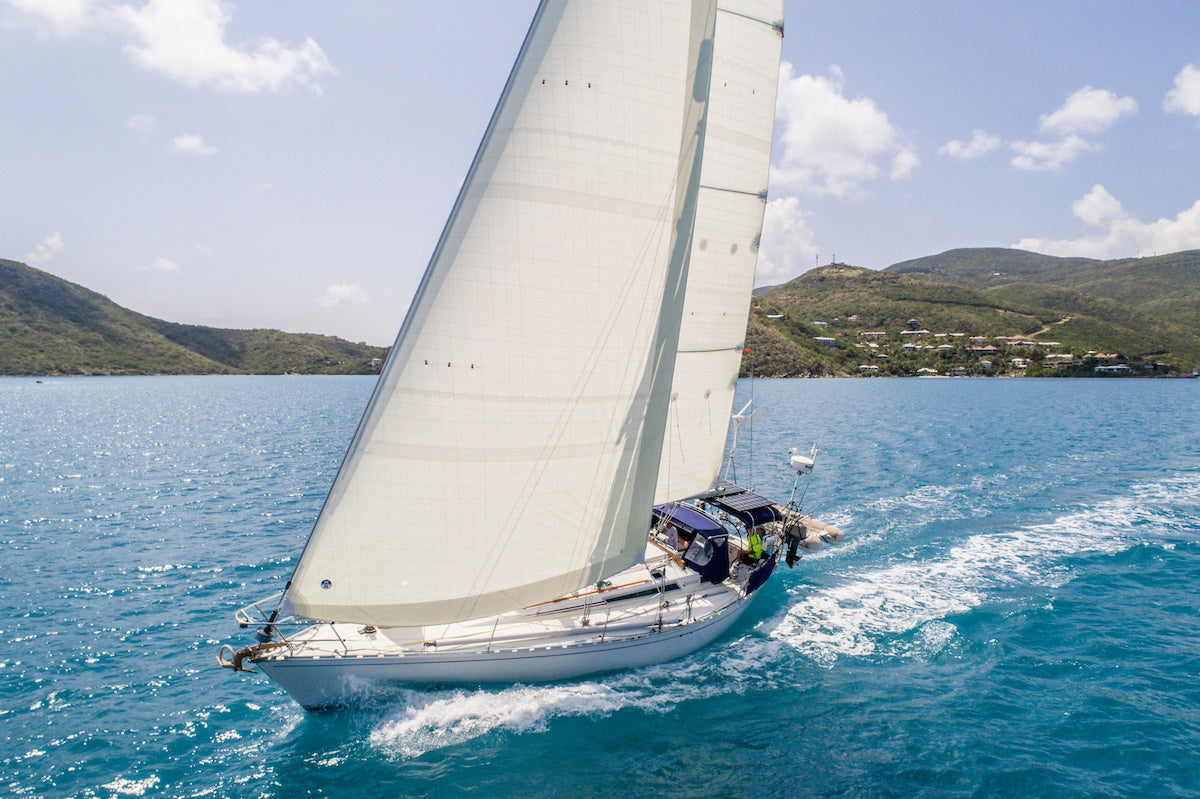
SOMMARENS ÖPPETTIDER
SOMMARENS ÖPPETTIDER
North Sails Stockholm
Vecka 28
Måndag - Fredag 9.00 - 14.00
Vecka 29
Stängt
Vecka 30
Måndag - Fredag 9.00 - 14.00
Vecka 31
Måndag - Fredag 9.00 - 14.00
Vecka 32
Måndag - Fredag 9.00 - 14.00
Vecka 33
Måndag - Fredag 8.00 - 17.00
Vi önskar alla en fin sommar!
READ MORE
READ MORE
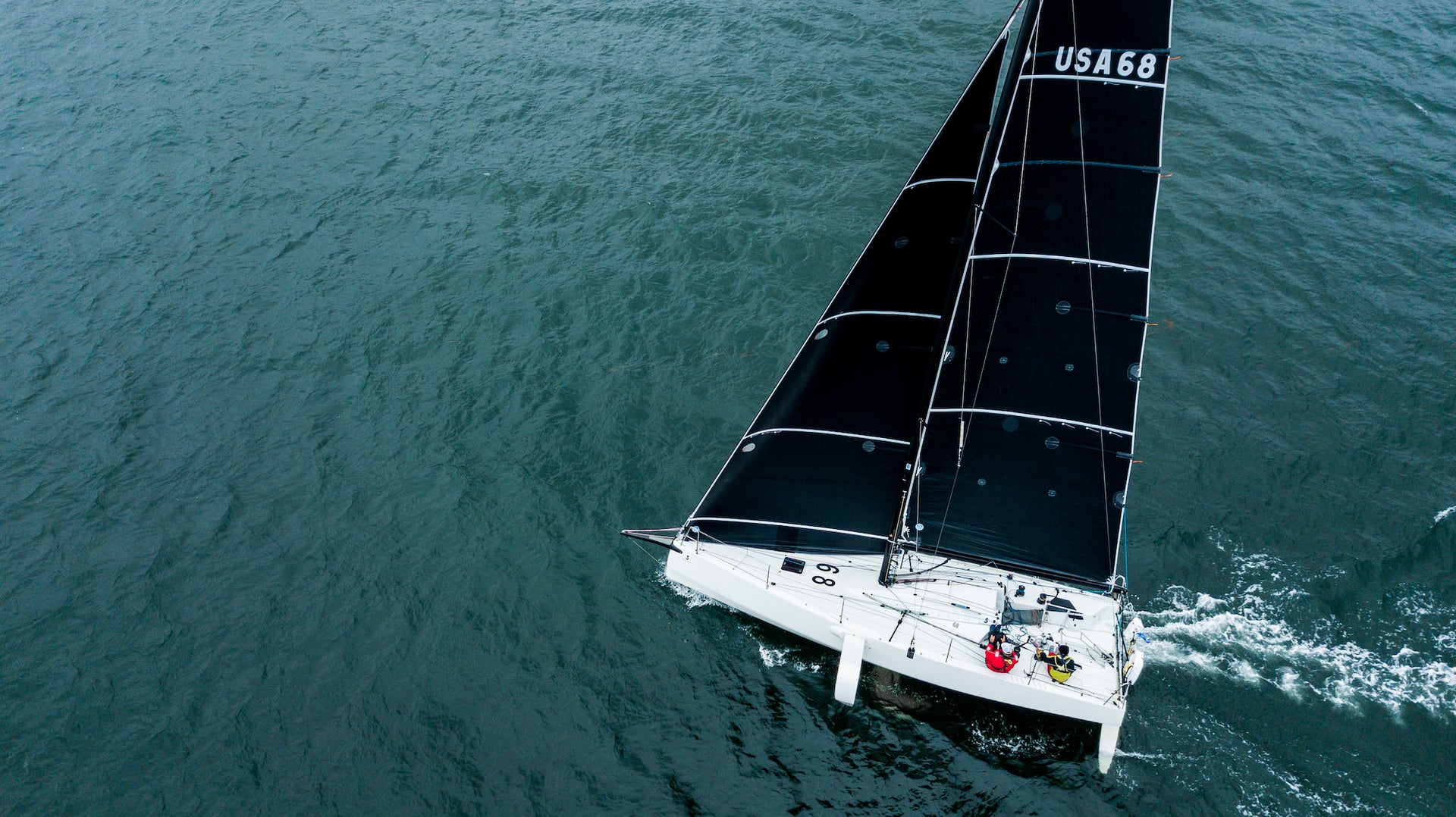
DOUBLING DOWN ON DOUBLEHANDED
DOUBLINGDOWN ON DOUBLEHANDED SAILING THIS SUMMER
North Sails Recommended Events for Shorthanded Sailing in New England
Last year was rough for sailing, but one bright spot was the surge of doublehanded sailing. For countries like France and the UK, double and shorthanded sailing is ingrained in their culture. This style is still catching on here in the US, but we highly recommend giving it a shot.
Interested and wondering how to get started? It’s simple really, find a friend and sign up for an event. We have three events dedicated to, or featuring doublehanded divisions for those of you in the Rhode Island area. There is something for everyone in the mix; a sprint-sail, an offshore overnight, and one day race.
Below are three events North Sails recommends for doublehanded sailing this summer.
Edgartown Race Weekend 'Round the Island Race
July 22-24, 2021
Edgartown Race Weekend is one of the nation’s oldest distance races, occurring every summer on and offshore the island of Martha’s Vineyard. A staple on the East Coast racing calendar, the highly competitive and exceptionally fun race weekend includes buoy racing and ‘Round-the-Island segments. Given the popularity of doublehanded racing at last year’s weekend, the event team is again offering doublehanded scoring in 2021. Doublehanded scoring will utilize PHRF-NE rating for spinnaker and non-spinnaker settings.
Race day is approaching. Sign up today!
New England SOLO/TWIN Championships
Friday, July 30, 2021
Hosted by Newport Yacht Club, this racecourse consists of ocean triangles ranging 65-125 miles in length. This annual race begins and ends in Narragansett Bay. Course lengths vary based on race division; Monohulls, Multihulls, and Cruising Canvas divisions.
Registration is Now Open
Ida Lewis Distance Race
August 19-21, 2021
The 17th edition of the annual Ida Lewis Distance Race offers something for every type of big-boat sailor. The popular Newport-based event features classes for ORC, PHRF (including Cruising Spinnaker) and Double-Handed (Mixed Gender and Open), and Youth and Collegiate challenges. In addition, entrants have a choice of racing in either the traditional OFFSHORE overnight distance race, starting on Friday (August 20) or the shorter IN BAY distance race, starting and finishing Saturday (August 21).
Get Your Name on the Entry List
READ MORE
READ MORE
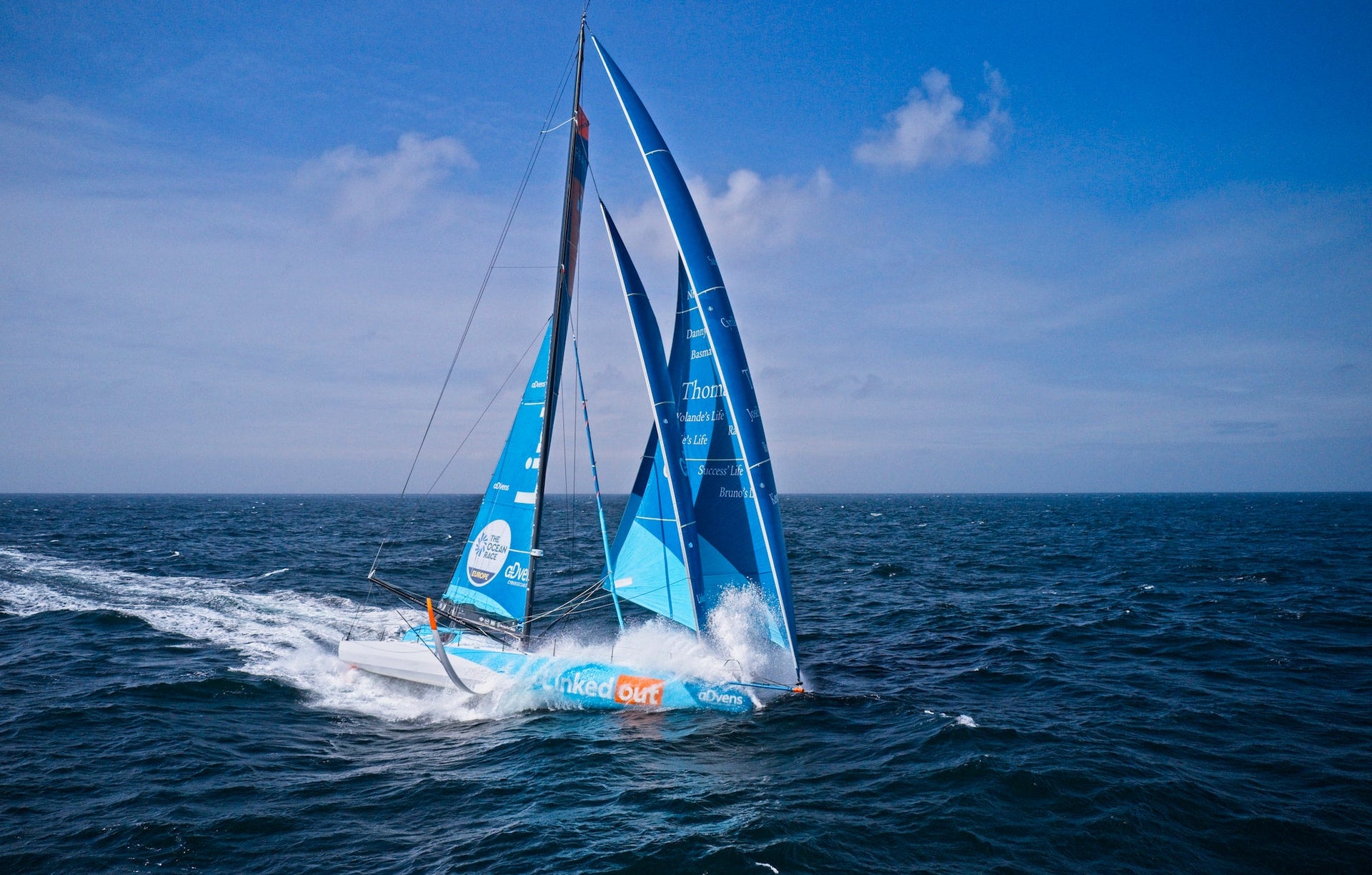
SAILING OR DESIGNING?
SAILING OR DESIGNING?
Why choose when you can have both (and benefit from it)
📸 Pierre Bouras
For North Sails designer Quentin Ponroy, creating the sails for the LinkedOut IMOCA 60 didn’t stop once the plans left his desk. A keen sailor, the Frenchman took it one step further and joined Thomas Ruyant and his crew for The Ocean Race Europe, a committed way to put the theory to the test – and think of solutions for the future.
“I’m a field designer”, says Ponroy in his distinctly analytical tone. “I work with computer models, but I’ve got a racing background and I need to go onboard and connect the theory to what’s happening at sea.”
Having wrapped The Ocean Race Europe on June 19 in Genova, Italy, Ponroy is so modest he plays the whole thing down by focusing on the technical aspect of the race and the learnings he’s bringing back to North Sails. The reality is though, he did join a professional crew of four sailors (skipper Thomas Ruyant and fellow Vendée Globe 2021-21 finisher Clarisse Crémer, Morgan Lagravière, Laurent Bourgue and François Pernelle ) during an offshore race from Lorient to Genova via Cassis, Portugal and Alicante, Spain. In a way, he’s used to it: he’s more of an inshore and coastal racer, but he’s crossed the Atlantic on maxi multihulls before, including during The Bridge on Francis Joyon’s IDEC Ultim.
“This was a first for me in many ways though,” he adds. “I’m not used to this style of boat and competition.”
📸 Pierre Bouras
It went well, very well for Ponroy– the conditions were varied, allowing them to try all the sails and trim non-stop, and the crew eventually took third overall. But Ponroy doesn’t dwell on that. As he steps back into his office routine he has tons of learnings he can use going forward.
“We’ve already designed two sets of sails for this boat together with Antoine Koch (who’s in charge of the sails at LinkedOut) and France-based North Sails designers Gautier Sergent and Yann Andrillon: one set for the last season, and one set for the 2020-21 Vendée Globe. That’s eight sails per set. But those working sessions on the water were short. Boats are often at the boatyard or out racing and we, the technicians, don’t usually have much time to work onboard.”
That’s what convinced Ponroy to join the team– well that, and his love for sailing. To have a good period of time onboard, in actual racing conditions, to help him see the things he just couldn’t anticipate back on land at the computer.
“In offshore racing, there are uncertainties related to the sea conditions, the time of day, the weather, the manoeuvres… The models can be far from reality, I think, and we see that in the sailors’ feedback. Sometimes, the sails aren’t behaving like we thought they would. We’re confident in our upwind sails, but some of our downwind sails have a lot more volume and are harder to design. We must be doing better, in particular in rough seas where the boats accelerate and slow down a lot.
“At North Sails, we want to find answers to these questions.”
#1 Reliability
Reliability. It’s “one of the most important factors when designing a sail” according to Ponroy. It needs to last– especially when it’s going around the world.
“We already noticed some unusual things after the Vendée Globe, in particular on the sails of the new foiling boats. In light winds, LinkedOut behaves like a traditional IMOCA 60 equipped with only a keel and daggerboards. When she accelerates though, the foils create a lot of power and the boat feels like a multihull. The loads, the speed, the sounds – everything is higher. But the hull remains the same big monohull so when you hit a wave you’re brought to a violent halt.
“I think I now understand some things that we didn’t quite foresee in our models: on foiling boats like these, it’s not just the boat but the sails that are submitted to higher loads, too.”
The loads are higher and the speed range wider. When their target sailing speed was 25 knots, Ponroy observed the boat’s speeds actually fluctuated between 20 to 30 knots– and no that wasn’t because of a novice helmsperson.
“This impacts the sails in two different ways,” he says. “First, when the boat stops in a wave and suddenly loses 10 knots of speed, there is a load peak in the sails that’s very high. That was my first strong impression and it’s something we need to take into account in our design.”
Because the crew tend to trim based on the lower speed range, the sails aren’t trimmed enough and flap a lot whenever the boat accelerates. The Stay Sails suffer from that more than the others.
“Sails don’t particularly love flapping,” he jokes, “so we need to implement solutions to stop it from damaging the sails.”
📸 Pierre Bouras
#2 Sail shape & Helix Structured Luff
A North Sails exclusive, Helix Structured Luff sails are designed to redistribute rig loads from a cable or headstay into the sail membrane, placing more load on the luff.
“The IMOCA 60 class started to adopt it a couple of years ago,” Ponroy said. “We’re now noticing that Helix Structured Luff is good when out at sea with the auto-pilot on, but could be better. That’s exactly why it was so beneficial to be onboard.”
“Having observed it onboard LinkedOut, I think a full, 100% Helix sail isn’t quite realistic on these boats that are mostly single-handedly sailed. If the loads are entirely placed on the sails, it causes luff instability. I think 50/50 is a good target for now, allowing us to benefit from Helix’s main quality, an optimal and evolutive sail shape.”
With these boats performing faster every year, Ponroy reckons we’re heading towards very flat sails with forward volumes. “The downwind sails look more and more like upwind ones these days. The surface difference between the main and foresails is key and needs to be calculated properly.”
📸 Pierre Bouras
#3 Manoeuvres
“I did almost all of them at the bow with Thomas,” he smiles. “It’s been great. I knew most of the moves but learned how long and how complex some of them are. We were a five-person crew so it’s not even single-handed sailing, but it was really enlightening and will allow me to be more precise and think of more coherent sail selections going forward.”
For Ponroy, allowing more overlaps between every sail is a key learning from these weeks at sea. “It allows the sailor to delay some manoeuvres and not always have to change a sail. It gives them more options.
“The more versatile a sail is, the more you can use it, the further you can push it.”
📸 Pierre Bouras
READ MORE
READ MORE
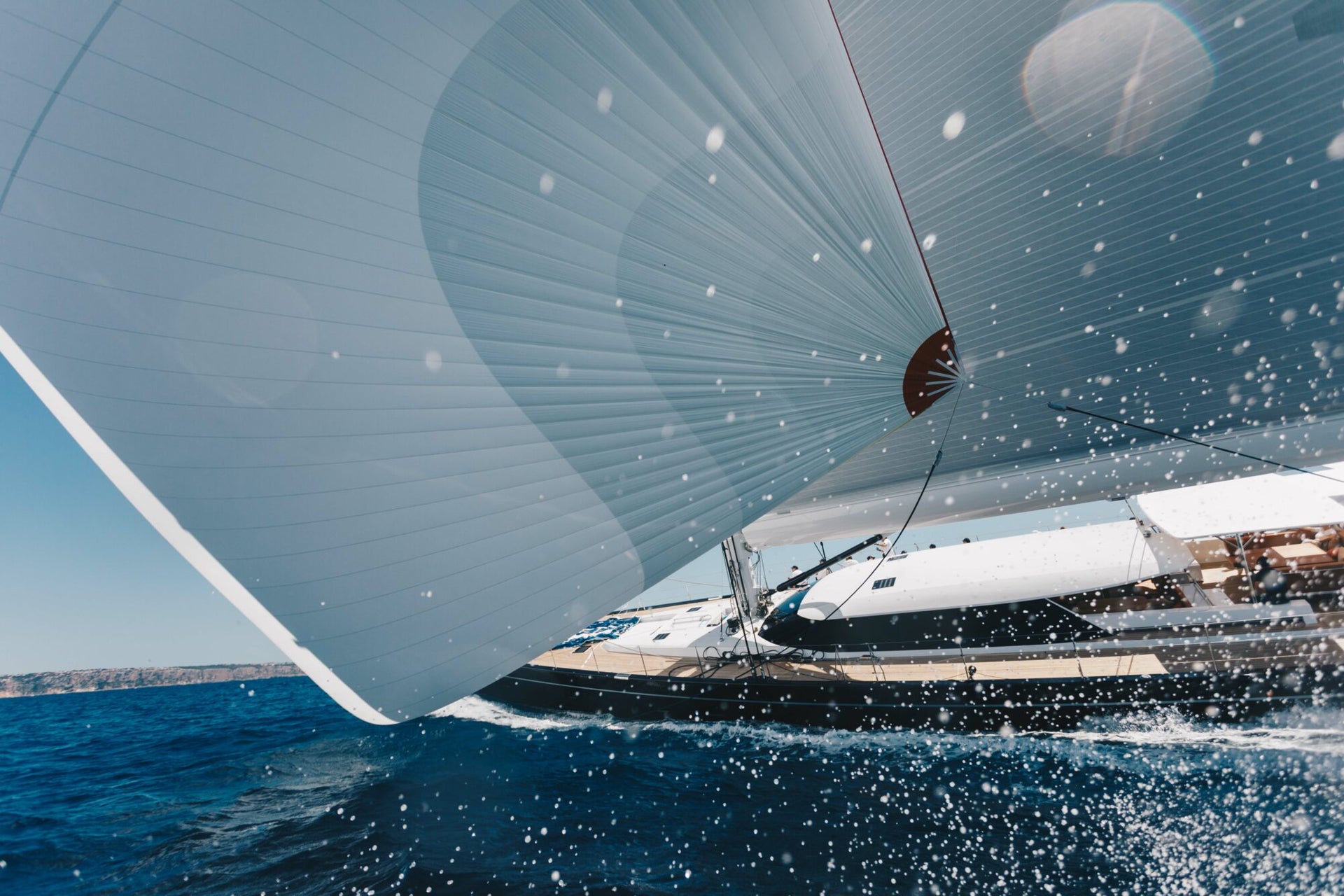
DELIVERING A WINNING COMBINATION FOR SUPERYACHTS
DELIVERING A WINNING COMBINATION FOR SUPERYACHTS
The right people, and product paired with a heavy dose of passion
📸 Atila Madrona
I think if you asked Lowell North, he’d be pleasantly surprised by the growth of superyacht sailing but not shocked that North Sails is the leader in this segment of the sport. That’s because his founding philosophy is particularly well suited to outfitting the biggest boats in the world; get the best people, commit yourself to make the best product, be clear, creative, methodical, and competitive, and surpass your wildest expectations.
There is no such thing as a production superyacht; each owner has their unique concept, which requires a unique solution. Reflecting on the past 15 years, the size and power of superyachts have slowly been creeping up, demanding our team to work hand in hand with owners, yacht designers, shipyards, captains, and project managers to find solutions to challenges that never existed before. You take these projects one-by-one but then quickly remember that the 3Di sail we molded last month broke a new manufacturing record, set by the previous 3Di superyacht inventory we delivered.
A handful of the North team recently participated in the Superyacht Cup Palma. This long-standing regatta is always a much-anticipated event on the superyacht racing calendar. Both in 2019 and then again this year, the fleet was entirely powered by North Sails. Hosted in the heart of activity, the Superyacht Cup is a whole team effort for North Sails. We have our sail experts and sail designers onboard many of the competing yachts. In addition, our Palma loft is onsite with sail service. We work closely with our sister company Southern Spars, to make sure all our clients have access to the necessary support.
During the event, our team sat to share their thoughts on how here at North Sails, we deliver a winning combination.
READ MORE
READ MORE
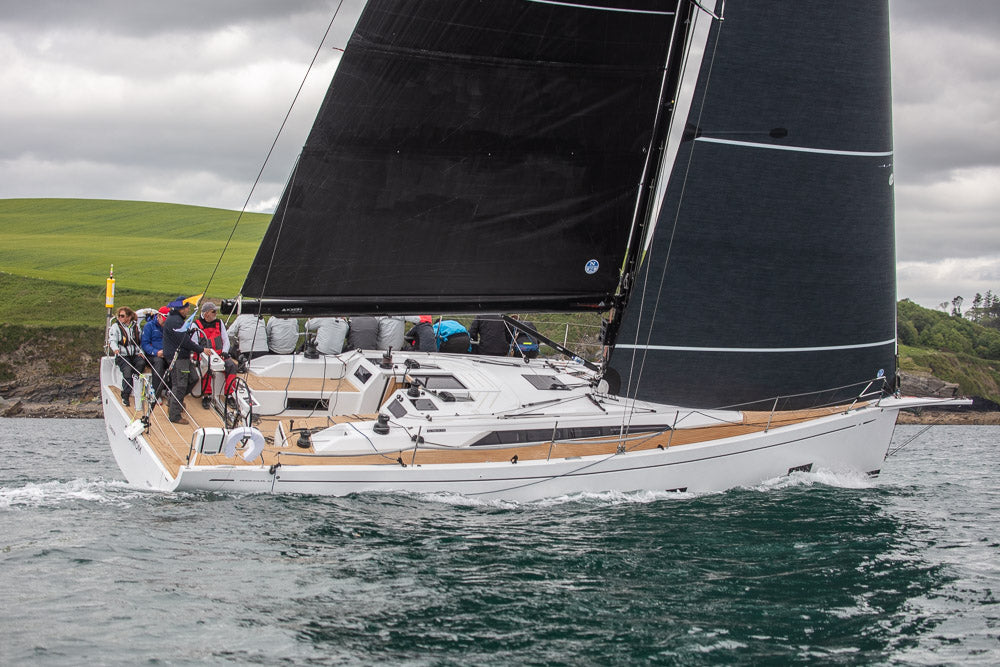
NORTH SAILS CLIENTS AT THE SOVEREIGN CUP IN KINSALE
NORTH SAILS CLIENTS AT THE SOVEREIGN CUP IN KINSALE
A Report from North Sails Ireland
📸 Bob Bateman
Well, what an amazing event that was!
Congratulations to the team in Kinsale Yacht Club for another fabulous Sovereign Cup. We had a nice mixture of wind speeds and directions, tons of shifts, plenty of sunshine, and the odd light smattering of rain. We were thrilled to see so many of our customers on the water and you were all flying!
Your North Sails Ireland team was all afloat and racing hard. I had a fantastic time doing the tactics on Conor Phelan's Jump Juice in the Coastal fleet, North expert Shane Hughes was mainsheet trimmer on the IRC 1 winner Snapshot and North expert Nigel Young guested on the GS37 Frank Caul's Prince Of Tides, Fiscala the Jeanneau Sun Odyssey 49 owned by James Matthews and the Elan 37 Cappella Of Howth owned by Graham Vickers.
We had fun each day catching up with our friends and customers every day after sailing in Kinsale YC.
North Sails powered so many class winners and stacked the podiums. It was great to see Mike and Richie Evans winning both their class and the overall trophy in their first event "out of the box". Here's what Mike had to say after the event:
"We chose North Sails for our new J/99 Snapshot. We were looking for all-around performance with a focus on inshore racing. The team at North sails worked with us to provide us with a wonderful suit of sails which gave us really competitive upwind and downwind performance. We are delighted with our results at our first major regatta here at Sovereigns Week."
"The team at North sails worked with us to provide us with a wonderful suit of sails which gave us really competitive upwind and downwind performance. We are delighted with our results at our first major regatta here at Sovereigns Week."
Another winner "out of the box" was Bob Rendell's GS 44 Samatom. Here's what owner Bob Rendell had to say after his epic win:
"We were delighted to take the coastal class win at Sovereigns Cup. Certainly, the new North Sails inventory made a big contribution to Samatom's performance across the range of conditions we experienced. The service and support from Shane and the North Sails Ireland team has been crucial in getting this project off the ground so successfully.''
Here is a quick summary of our North Sails clients' wonderful results - thank you everyone and well done!
IRC Coastal Fleet
1st Samatom - GS 44 - Bob Rendell - Howth YC
2nd* Nieulargo - GS 40 - Denis Murphy & AnneMarie Fegan
3rd Jump Juice - Ker 37 - Conor Phelan
IRC 1
1st Snapshot - J99 - Mike & Richie Evans - Howth YC
2nd* Artful Dodger - J109 - Finbarr O'Regan
3rd Storm II - J109 - Pat Kelly
IRC 2
2nd* Kind One - 1/2 Tonner - David Kelly
IRC 3
1st YagottaWanna - J/24 - David Lana - Royal Cork YC
White Sails 1 IRC
2nd Price Of Tides - GS37 - Frank Caul - Royal Cork YC
3rd Valfreya - Sigma 33 - David Riome & David Leonard
White Sails 2 IRC
1st Shillelagh - Blazer 23 - John Twomey - Kinsale YC
3rd* Miss Charlie - Tofinou 8 - Patrick Beckett
White Sails 1 ECHO
1st Fiscala - Jeanneau Sun Odyssey 49 - James Matthews - Kinsale YC
2nd Capella Of Kinsale - Elan 37 - Graham Vickers - Kinsale YC
3rd Prince Of Tides - GS 37 " Frank Caul - Royal Cork YC
* denotes partial inventory
If you would like to discuss any aspect of your boat's performance, then please do not hesitate to get in touch with us. We're always delighted to chat!
📸 Bob Bateman
📸 Bob Bateman
READ MORE
READ MORE
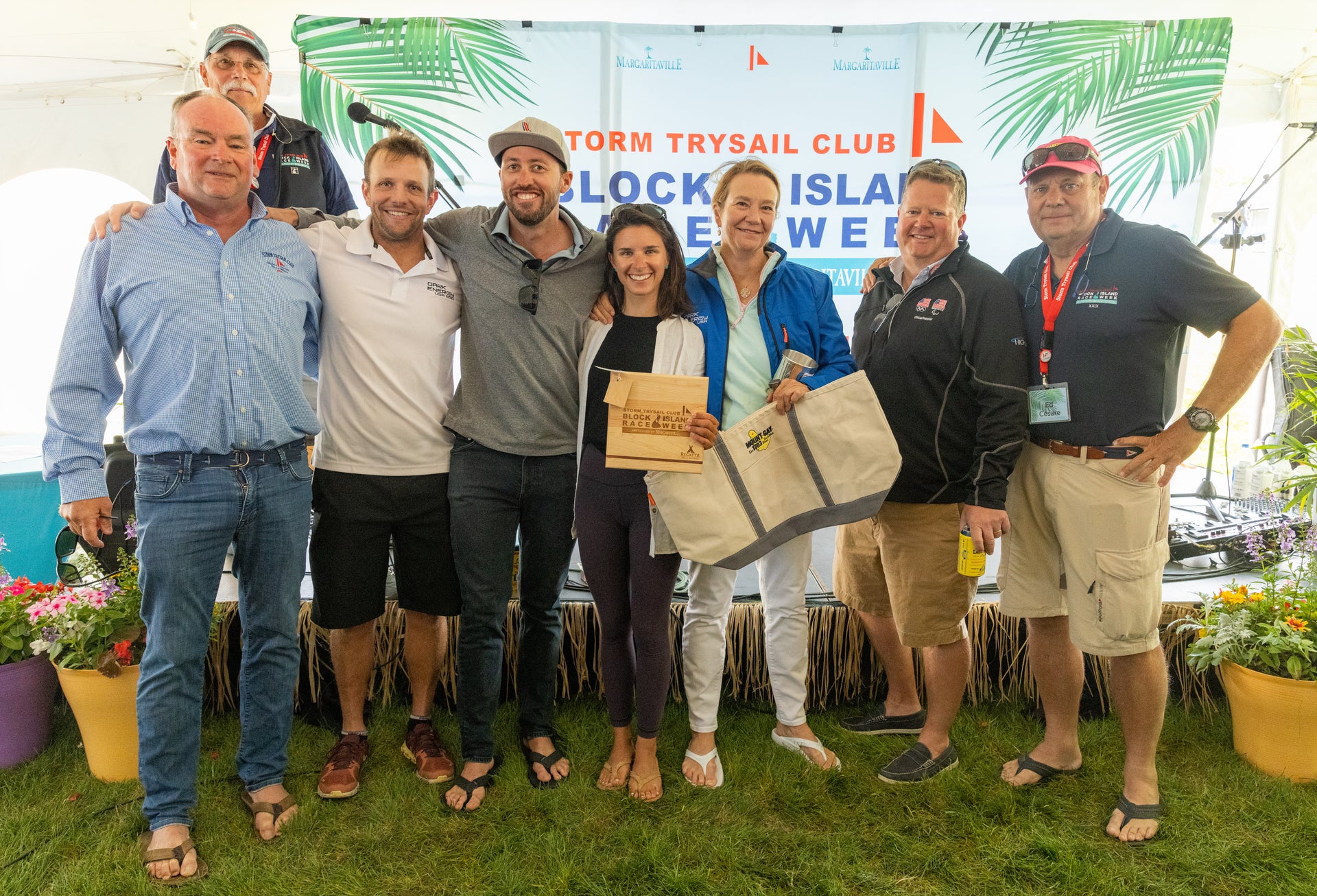
DIALED-IN WITH DARK ENERGY
DIALED-IN WITH DARK ENERGY
Smallest Boat at Storm Trysail Club BIRW Makes Waves in PHRF Division
📸 Storm Trysail Club Block Island Race Week 2021
Not every day was easy for the smallest boat, a Melges 24, competing at Storm Trysail Club Block Island Race Week. Still, Laura Grondin's Dark Energy was well seasoned to take on the PHRF 2 division, which was an exciting change compared to her typical one design fleet race. After six races in her 17-boat fleet, Dark Energy secured first overall by nine points ahead of second place, Farr 30 Seabiscuit.
"Each day, executing our routine, e.g., practicing maneuvers, checking mast tension, upwind angles, pinging the line, assessing tide and wind, was part of our usual schedule," said Laura. "If we could find another comparable boat, we would've done some boat on boat upwind and downwind speed testing to see how we were going."
When things didn't go their way, they didn't look back. "We don't spend a lot of time looking back when things turn south," says Laura. The team stays focused and tries to pass boats on each leg until the very end." On the way in, they go over the highlights of the day to prepare for the next. "We try to make a note of our mistakes and learn from them, but we don't dwell." Taylor Canfield, Dark Energy tactician, commented, "As the smallest boat in PHRF 2 and the regatta, we had plenty of obstacles. We worked hard to sail in clean air as much as we could. So starting at the boat was key to tack out if needed and not get rolled by some of the 40+ footers. We had some good battles and got put in some tough spots by some of the boats in our fleet but getting away from other boats was always a good way for us to reset during a race if needed."
"During BIRW we tried to have a quick chat between races and then also a short talk over dinner," said Taylor. "In handicap racing, you know when things don't go perfectly, but since all the boats are going at different speeds, it is hard to tell when and where the most costly race points were. In contrast, in one design racing, it is undeniable how costly a mistake is because the number of boats that pass you is recognized immediately. At this event, we tried to keep it positive, not always knowing how the previous races went, and talk about our rig and sail set up to make sure we would be fast for the races to come.
Race week was a bit different since we did not have any other boats to tune against leading up to racing to ensure our speed and settings were dialed in. That said, we just went through our usual routine of checking in at the committee boat, doing an upwind to have a look at our sail shapes, get compass bearings and tacking angles, and get used to the conditions and sea state for the day. Following the upwind, we go downwind and test the angles and practice a couple of jibes. When we arrive back to the committee boat, we get our line pings and start determining a game plan for the race, where we want to start, what the line bias is, and what the big risks for the day are. The sea state made quite a big difference most days of the event. On the first day of racing, we had pretty large swells, so the difference in wind speed between the crest and trough of the waves was significantly different, so we made sure we were set up to make sure we had enough power in the bottom range. We also had a day where the sea state was much more on the nose on one tack, so making sure the boat was set up more powerful on port tack was necessary."
"What my team does well," says Laura, "is that we all have clear roles on the boat, and we stick to our jobs no matter what." It is pretty crucial on the Melges 24 as things can get wild, but Laura and her team do it quite well. Taylor adds, "I think we have done a great job as a team getting off the start line. A lot of this comes down to communication and trust that everyone will do their job as best they can. We have developed a playbook that contains different terms and phrases and what each person should be doing and focused on during that time. For example: "high kill" vs. "high slow." Laura is also great at keeping the boat going well at all times. Her focus and attention to driving the boat is next level and does not go unnoticed when the conditions get hard."
Dark Energy trusts and relies on North Sails. "We have developed a close relationship with North Sails and view North as a key partner to our program and our success," says Laura. "We strive to understand the technology behind our options and make the best choices for our team." Taylor comments, "we use the J-7K jib and AP3K. We use the P-1 spinnaker all the time, which is the flatter of the two available. It has been great working with North Sails in the Melges 24 class. They have always been open to feedback and are always willing to share thoughts about setups and ways to get faster."
North Sails expert John Bowden has been working closely with Laura's team. He commented;
"It has been great working with Laura over the last few years. It's exciting to see her improve so dramatically. I think her time on the water with Taylor has been huge as we have seen her sailing not only the Melges 24, but the J/70 and the Melges IC37 as well. Time in the boat is so important and as the International Melges 24 Class President it is great to see her out enjoying the Melges is something other than just strict one design racing. Congrats to her team and I look forward to helping her continue to get stronger in all the classes she races."
📸 Stephen R Cloutier
READ MORE
READ MORE
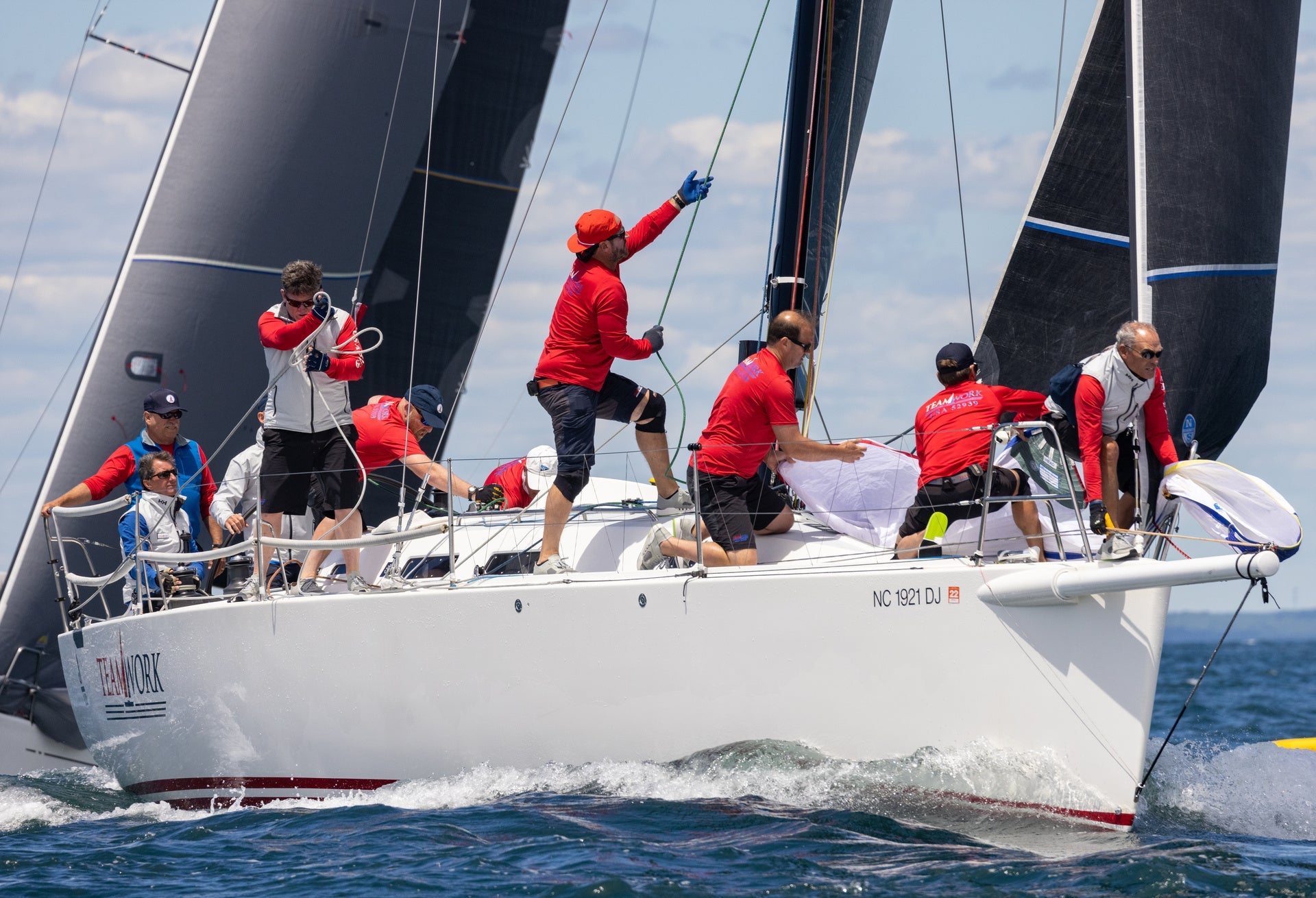
THE DEFINITION OF TEAMWORK
THE DEFINITION OF TEAMWORK
Robin Team’s Teamwork Has it All Figured Out
📸 Stephen R Cloutier
Robin Team, skipper of J/122 Teamwork, finished second in the ORC D Division at Storm Trysail Club Block Island Race Week. Robin says they focused each day on sail selection that would match the day’s forecast and expected courses, but they also tried to stay flexible and remain positive when things didn’t go exactly to plan. “Everyone is always complimenting the others,” he explains. After racing, Robin says they discuss the day’s racing and what they could’ve done better. Though it’s not a formal debrief, they always keep things positive. “We focused on improvement, even though our crew has sailed together for a very long time.” As for the crew work, he says "It’s spectacular. We consistently have the first kite set and drawing, and always carry it further into the downwind gates than almost anyone else. We have confidence in each other that allows us to be aggressive in the corners. Our upwind speed always seems to be very good, especially when the wind is above 15kts. He calls 12kts their 'break point'; below that we have a harder time keeping pace with lighter boats. Above 12, we are in a groove all our own."
What did you focus on going into each day at BIRW?
"We prep the boat and sail selection based on the SI’s and courses expected. We take wind pressure into consideration on sail selection of course, but also plan sails for the unexpected. We brief the crew on what we expect, and talk about any unusual goals for the day."
How did you and the team overcome obstacles (bad results, missed a shift, bad starts?)
"We try to remain positive throughout a race and regatta. It comes from different individuals on the boat, from the bow, all the way back to the “brain trust”. Everyone is always complimenting the others. Also our North Sails expert and tactician, Jonathan Bartlett, is a master at keeping our head in the game and focused on recovery and maximizing our potential for each circumstance."
Each day after racing, do you debrief together on the way in? What are some things you talk about?
"We don’t have a formal debrief as such, but our chatter usually covers the days racing, and what we could do better, and where we may have made mistakes. It is usually very positive, and focused on improvement even though our crew has sailed together for a very long time."
What are some things your team is especially good at? (Whether it be technique, conditions, starting in big fleets)
"Our crew work is spectacular. We consistently have the first kite set and drawing, and always carry it further into the downwind gates than almost anyone else. Again, sailing together for a long time, we have confidence in each other that allows us to be aggressive in the corners. Our upwind speed always seems to be very good, especially when the wind is above 15kts. 12kts is our break point, where below that pressure we have a harder time keeping pace with lighter. Boats, and above 12, we are in a groove all our own."
What sails do you have in your North inventory and can you share a few thoughts on how you work with North Sails?
"Jonathan Bartlett is our North guy, our tactician, and our coach. He is what really makes Teamwork go, and has always helped us reach our potential as Cat 1 sailors. We carry a full North inventory, mainsail, two different # 1’s, #2, #3, staysail, Code Zero and a full quiver of downwind kites, A1,2,3,4 and my favorite, our A6. We also have North Spectra cruising canvas, although we now typically just use this on deliveries. We started with our J/122 14 years ago with 3DL sails, then 3Di ENDURANCE, and now a full 3Di RAW 780 package. We love our North Sails and our Jonathan. Nuff said!!"
📸 Stephen R Cloutier
READ MORE
READ MORE

#NSVICTORYLIST: STORM TRYSAIL CLUB BLOCK ISLAND RACE WEEK
#NSVICTORYLIST: STORM TRYSAIL CLUB BLOCK ISLAND RACE WEEK
10 Class Wins and Three Podium Sweeps for North Sails Clients
Around the Island Race 📸 Block Island Steve
Storm Trysail Club Block Island Race week is always a much anticipated and highly-competitive regatta that attracts a mixed-class entry list from Maine to Annapolis every other year. This year a number of first-timers joined the record-breaking fleet of 158 boats, a positive sign for sailing after so many events in 2020 were cancelled due to Covid restrictions.
For North Sails, this event showcased both our sailing expertise and full-service support. Preparations for the 2021 edition began in early spring with a webinar to help participants prepare for a week of Block Island Sound racing; topics included local knowledge, sail recommendations and race-winning tips and tricks. Service and support continued on the island, where North Sails set up a Certified Service pop-up sail loft at the Block Island Maritime Institute that provided overnight repairs for all regatta participants.
Incognito, winner of Performance Cruising 1 Spin 📸 Stephen R Cloutier
North Sails inventories and experts helped several clients win their division and added 30 new results to the #NSVictoryList. Below are the highlights from a great week of sailing.
Ken Read sailed with Jim Grundy on the Dunning 44 Rigadoon, winner of ORC B.
Jim says that winning Block Island Race Week was a goal established in 2019, after a tough regatta in their previous Harry Dunning-designed 42. “The new 44 was planned to compete at a much higher level, with extensive design support and performance analysis from K&D engineering and North Sails. We chose North to support our design team recognizing their ability to support the entire aero package and design development. Mike Marshall, a brilliant young sail designer, delivered near perfect sails out of the box. Ken Read, who was onboard for our BIRW win, backed up our program with his infinite knowledge and generous on-the-water support. I’ve always recognized preparation and practice are essential components of winning. Our mostly family and amateur team put in the time, and all our effort came together at Block Island.”
Rigadoon, winner of ORC B 📸 Stephen R Cloutier
North Sails expert Tom Castiglione sailed with Jonathan “JR” Rechtschaffer, owner of the J/109 Emoticon*, won the J/109 East Coast Championships as well as the regatta’s One Design Trophy. The secret was the excellent crew work that only comes with a consistent team, JR says—combined with excellent speed and height across the wind range.
“We were lucky to sail with the same team that we had at the Cedar Point One Design Regatta, and we sailed a near perfect regatta as far as crew work was concerned. We have developed an upwind sail and rig tune package with the North team that allowed us to get ourselves out of sticky situations. Steve Kenny’s team Gossip sailed a heck of a regatta and it was a great battle from the very first race. They kept the competition tight and were about a boat length apart for just about all of the Around the Island race.”
📸 BIRW 2021
Bill Clemens, owner of Bolt 37 Coyote, winner of the PHRF Div 1 commented;
“Our Block Island win was a special one. We have never won- placed many times but never won, and we did it with my children, their friends and my close friends of thirty-plus years. No pros! And totally old school, because of course our new instruments weren’t working. The boat was doing what it was supposed to do and the sail development since we started sailing her has proven very fast. This was truly a team family effort from onboard crew to shore crew.”
Coyote, winner of PHRF 1 📸 Stephen R Cloutier
Robin Team, skipper of J/122 Teamwork, finished second in the ORC D Division with North Sails expert Jonathan Bartlett onboard.
Robin says they focused each day on sail selection that would match the forecast and expected courses, but they also tried to stay flexible and remain positive when things didn’t go exactly to plan. “Everyone is always complimenting the others,” he explains. “Our North Sails expert and tactician, Jonathan Bartlett, is a master at keeping our head in the game, focusing on recovery and maximizing our potential for each circumstance.”
Teamwork, second place ORC D 📸 Stephen R Cloutier
FIND A LOFT FULL RESULTS REQUEST A QUOTE
Banjo, winner of Performance Cruising Non-Spin Pursuit 📸 Stephen R Cloutier
Peacemaker, winner of ORC C 📸 Stephen R Cloutier
Ramrod, winner of J/111 One Design 📸 Stephen R Cloutier
READ MORE
READ MORE
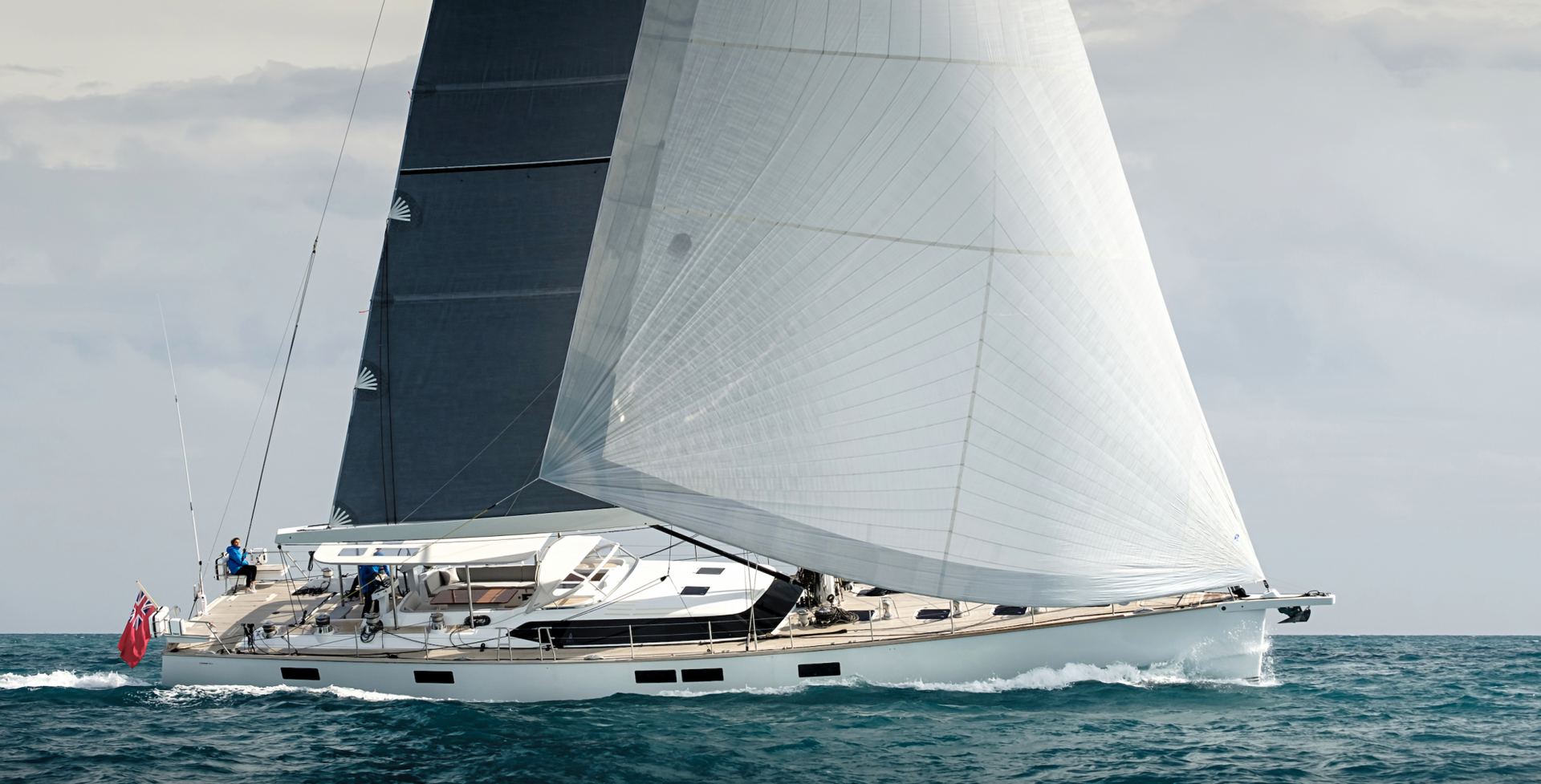
FULL-BATTEN VS. STANDARD CRUISING MAINSAILS
Here’s a summary of the differences to help you understand which sail type is best for you.
READ MORE
READ MORE

RAVENGER CLAIMS WIN AT THE SUPERYACHT CUP PALMA
RAVENGER CLAIMS OVERALL WIN AT THE SUPERYACHT CUP PALMA
Premier Superyacht Sailing in Palma with a Full North-Powered Fleet
📸 Atila Madrona
Superyacht Cup Palma’s 25th Anniversary Regatta has concluded in dramatic fashion with a first-time entrant, 43m Ravenger taking home their class and the overall regatta win. North expert and Palma local Quinny Houry was onboard trimming Ravenger’s newly installed North 3Di inventory.
Finishing behind Ravenger in Class B was Ganesha in second, Baiurdo VI in third, Scorpione of London took fourth and Aquarius rounded out the fleet in 5th.
📸 Atila Madrona
Nilaya won Class A. Crew member Bouwe Bekking stated, “the competition has been really good, and everyone sailed well. Missy is extremely fast upwind, a real weapon, and Shamanna also – we had some excellent racing.” Missy took home second, Shamanna in third and Umiko in fourth.
35m Frers designed Nautor’s Swan Shamanna won the special North Sails ‘Spirit of the Event’ award at the prize-giving in memory of North Sails founder Lowell North. Baiurdo VI was also a special prize winner, having the best race start in the event.
The 25th Anniversary of the @superyachtcuppalma is officially complete. We’ve already blocked the dates on our calendars for next year. Superyacht Cup Palma 2022 will be held from June 22-25.
READ MORE
READ MORE
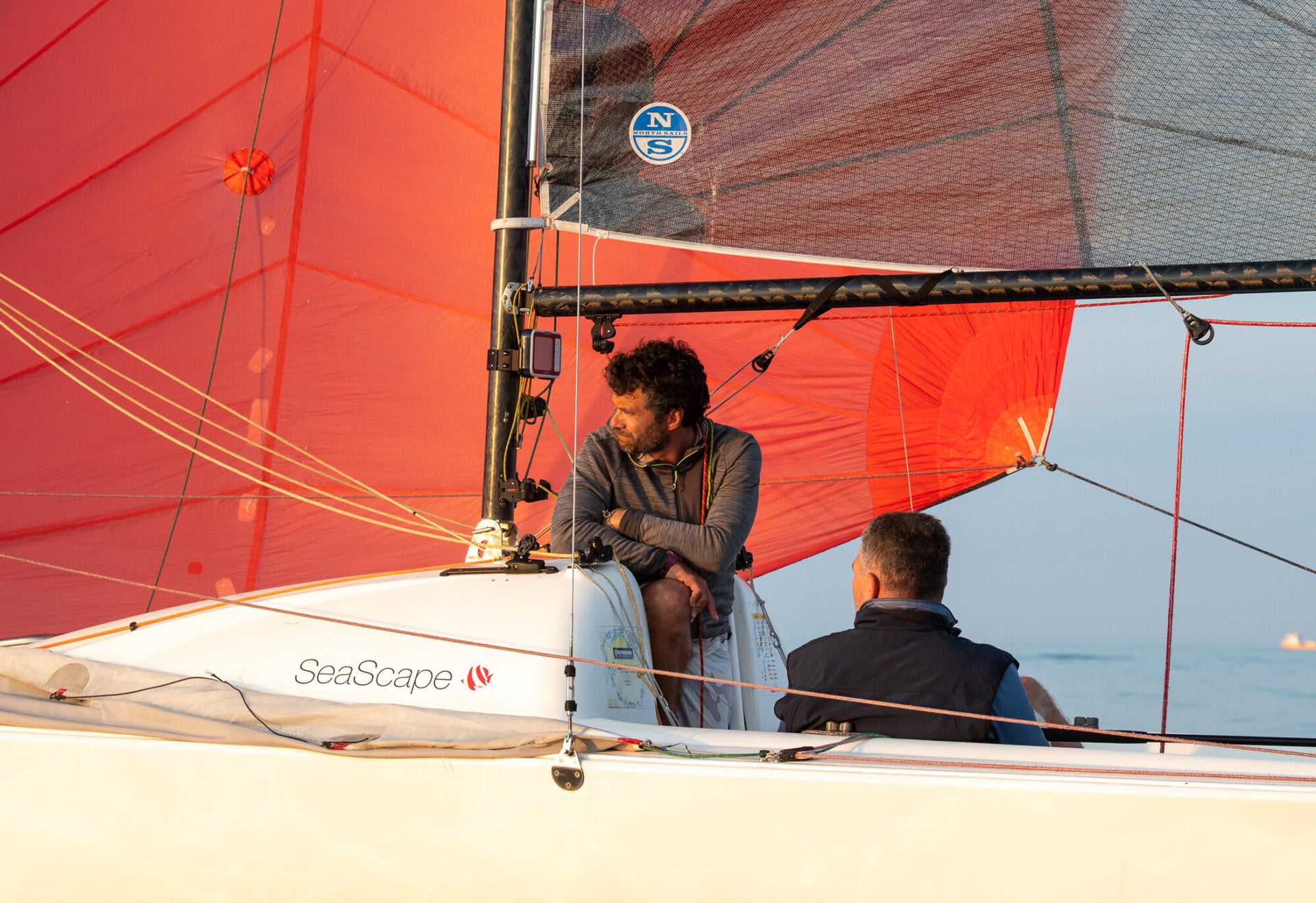
FIRST & SEASCAPE CHALLENGE
FIRST & SEASCAPE CHALLENGE
Race Debrief
I can't explain sunrises on First & Seascape Challenge. When we visit the boats that have just spent the night on the water, the feeling in the air is so delicate that it dissipates into thin air when I try to catch it. The small, speedy RIB has a massive advantage of making it possible to visit more than one set of sailors in the dawn, giving us an exclusive chance to feel the overall atmosphere. We see everyone's tired eyes looking at the support boat with depth you don't get sleeping with a roof over your head and a pillow under. They have changed for a tiny bit of wisdom, which now quietly shines out of them, while they casually tease you with a famous line; „Do you have coffee?“
It has been more than a year without this kind of events, sunsets and sunrises (except for the Silverrudder 2020) - things we mostly took for granted have begun to show their actual value. It was only Friday, a whole week before the race, when I was ready to sit in any given car to take me to Jezera as soon as possible. Full four days later, or what felt like an eternity, I finally got there, only to see that many have had a similar itch. When I ran into Lukas and Philipp, they proudly exclaimed that the two days sailing in the Kornati they already had were so spectacular that the trip has paid off, even if we cancel The Challenge right now. But cancellation was finally not an option.
We did have to postpone it. The original idea of The Challenge was to make the long-distance race, in the Kornati archipelago, in early spring, which will give sailors 'challenging' conditions to sail in, quite some miles, and stretching their comfort zone. However, we live in interesting times, where we often have to adapt. This mid-June edition didn't come with the usual challenges, but some new ones – at the forefront, patience for low, low wind zones and the power of the summer sun.
By the time of the start, on Friday at 11 AM, everyone was fully aware that the race will be a battle of nerves. Nonetheless, at 11:00 sharp first twenty-nine of the 18s started marching through the inner bay of Murter, closely followed by the 24s and 27s. It took only fifteen minutes, and the aquatorium became richer for 44 sailing boats. I know it sounds like a lot of numbers, but just imagine 44 of anything moving harmoniously through some of the nicest places you have ever seen, and you still won't quite get the right picture.
The race itself was a windy road. Soon enough, the wind died out, and sailing skills came secondary to the navigational ones. This year the marks in the race weren't set to close a narrow passage for everyone but had more of an open character, which allowed everyone to choose their fate. All of the teams chose the wrong path, at least once, apart from the 27 Czech Mermaid. While the leaderboard on the tracker was changing rapidly for everyone else, Czech Mermaid seemed to be the only constant in the race, always sailing in front of everyone else, somehow avoiding the frustration others might have felt. Still, when we passed through the fleet at sundown, no one was in a really bad mood.
I dare you to be in a bad mood when sailing in the sunset in the Kornati. The yellow islands with small dark green spots served as a mirror for the light show that was going on in the sky. There wasn't only one epic red-pink side of the view to look at, but 360 degrees of „oh wow“. Still, once the night has fallen completely, and the glorious scenes remained behind, and no wind appeared with sticky moisture in the air, the high spirits have fallen. More than a sunrise, the fleet needed wind. But first came one, then the other.
The second day of the race started with a slow windless part for many but turned for better after the Blitvenica lighthouse in the middle of the day. The wind finally picked up, and the barely moving boats lifted and started flying to the finish ahead. Once again, many of them arrived simultaneously, with the first three 18s – Blue Sardina II, Corna and Lenčina being a minute apart. The winners in the 24s – Franz and Falko - were actually debuting on First SE boats, which didn't stop them from having a spectacular race. The Czech Mermaid won the 27 category by such an advantage that the others decided to pretend they were sailing in a different class. And some came later, but just in time for the ceremony and party we had on the pier.
Official results
It's a funny thing that party. Keep in mind that people who participate in it didn't sleep more than short naps last night, and the organizers had the luxury of stretching that to a couple of hours. But nobody wants to go to sleep.
The next morning I woke up, many hours after the dawn, the usual shore life was already up and running and the stillness of yesterday replaced by plans, obligations and what we tend to call normal life. Still, another Challenge sunrise got locked up in every single person, building a different code, a different look, and something else I can't really explain.
Ana Šutej
READ MORE
READ MORE
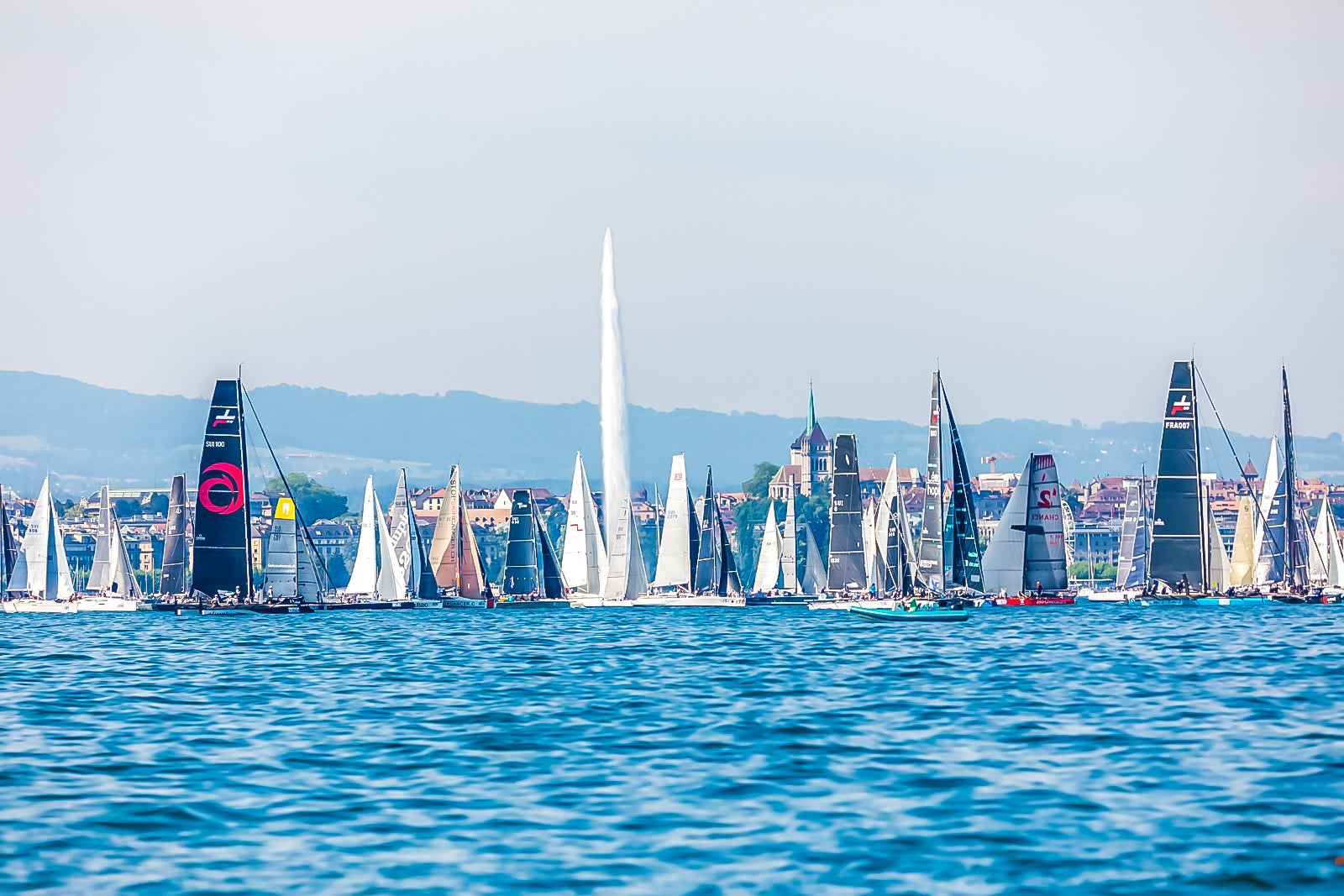
BOL D'OR MIRABAUD : LA PLUS COOL DES RÉGATES EN BASSIN FERME
BOL D'OR MIRABAUD : LA PLUS COOL DES RÉGATES EN BASSIN FERME
La régate annuelle de voile la plus importante et la plus populaire d'Europe
Le Bol d'Or Mirabaud a débuté en 1939 et est aujourd'hui l'un des événements nautiques annuels les plus importants et les plus populaires d'Europe. Le parcours de 66 miles est d'une simplicité déconcertante : départ de la Société Nautique de Genève (SNG), navigation jusqu'à une marque au large du Bouveret, à l'autre bout du lac Léman, puis arrivée sur les quais de la SNG. Mais chaque année, le parcours offre un défi différent, qui incite les marins professionnels et amateurs à revenir.
Les monocoques et les multicoques partent sur des lignes séparées et contournent des marques différentes afin de minimiser les interactions entre les flottes. Le lac est connu pour ses vents légers et son eau plate, mais de temps en temps, de forts coups de vents viennent des Alpes. En 2019, une tempête à mi-parcours a apporté des conditions dignes des océans du Sud avec des rafales à 60 nœuds qui ont soulevé d'énormes vagues, ainsi que de la grêle qui a réduit la visibilité à presque zéro. Les concurrents ont été contraints de s'abriter et de baisser les voiles, mais grâce à des prévisions météo précises, les seuls dommages qui ont été causés étaient matériel.
© Jean Michel BILLY
Pour le Bol d'Or Mirabaud 2021, une nouvelle flotte monotype de TF35 à foils était de la partie pour la première fois. Pierre-Yves Jorand, directeur de North Sails Suisse et directeur d'équipe d'Alinghi, a travaillé avec son équipe et en étroite collaboration avec les concepteurs de ce catamaran innovant pendant plus de deux ans. "Le TF35 est un foiler monotype muni d'un système de contrôle de vol assisté électroniquement pour une meilleure stabilité de l'assiette.
Le TF35 est un descendant direct du Decision 35 du lac Léman et peut décoller avec une brise de 6 nœuds seulement. Ils ont été conçus pour être transportés dans le monde entier, mais l'un des objectifs déclarés est d'être performant sur les courses les plus longues sur les eaux suisses.
Pour y parvenir, les conceptions des voiles et des foils ont été soigneusement coordonnées. "Pour réussir, des échanges constants d'informations et une coordination permanente est essentiels", explique Patrick Mazuay, designer chez North Sails Suisse. "La surface des foils détermine la vitesse de décollage. Si cette surface est trop grande, cela ralentit le bateau à haute vitesse car le foil en forme de "T" reste tout le temps dans l'eau. Cela a une incidence sur les voiles qui étaient adaptées... donc, tout est lié." Le plan de voilure à été réalisé en 3Di 870 RAW et comprend une grand-voile decksweeper, deux focs et un Gennaker 3Di Downwind 600.
© Jean Michel BILLY
Résumé de cette édition 2021
News complète sur le site du Bol d'Or
Victoire au bout du suspense pour le TF35 Ylliam XII Comptoir Immobilier Les 6 premiers sont arrivés en l'espace de 2 minutes : 19 secondes entre le vainqueur et le second, perchés sur leurs foils à plus de 25 noeuds pour leur premier vol de nuit à quelques mètres de la ligne d’arrivée ! Le grand vainqueur, Ylliam XII Comptoir Immobilier de B. Demole, aura eu besoin de 12 heures 49 minutes et 27 secondes pour entendre enfin le coup de canon libérateur. Le TF35 s’est imposé avec 19 secondes d’avance sur Zen Too, barré par Fred Le Peutrec, et 25 secondes d’avance sur Artexplora, barré par Loïck Peyron. Alinghi a franchi la ligne 9 secondes plus tard, Realteam 14 secondes après et Spindrift avec encore 6 secondes de plus… Autant dire que le moment était intense. Avec ces nouveau catamarans TF35, mais aussi d’autres monocoques très spectaculaires, le Bol d’Or Mirabaud est très clairement entrés dans une nouvelle dimension cette année. A noter que les 8 premiers bateaux en temps réel sont équipés quasi exclusivement d'un inventaire North Sails 3Di.
Bol de Vermeil
Le Libera hongrois Raffica s’est imposé après 14 h 07 23’’ de course et a conquis le Bol de Vermeil. Détenteur du Trophée depuis 2016, et vainqueur en 2019, il sera donc à nouveau candidat pour remporter définitivement le Trophée (ce serait son troisième!) l’an prochain. Mais attention, les lignes bougent, la flotte des monocoques évolue à grands pas! Grand animateur de la course, Thomas Jundt et son QFX à foils a longuement mené les débats avant de terminer troisième, derrière le splendide Luthi 1090 Katana de Philippe DeWeck, avec à son bord Michel Vaucher et Patrick Mazuay. Ces trois voiliers bénéficient de performances très différentes et ont joué à l’accordéon, se démarquant à tour de rôle en fonction de l’angle et de la force du vent du moment. Derrière ce beau podium, les leaders habituels de la catégorie des monocoques, menés par le Psaros 40 Notre-Dame Du Lac, puis les Psaros 33 Carpediem cube (L. Munier, G. Bordier) et Pétrel (M. Wettstein), n’ont jamais été en mesure de rivaliser avec le trio de tête mais réalisent une superbe performance ! D’autres prétendants, à l’image du Monofoil Gonet, ont peiné à s’extraire de la masse dans ces conditions très légères. Reste que le paysage évolue et que la suprématie de Raffica, qui demeure un « dinosaure » avec ses douze équipiers en équilibre instable au trapèze, finira bien par être contestée par des voiliers plus modernes. Mentionnons enfin certains exploits individuels, avec le 18 pieds de Cyril Peyrot, 43è au scratch !
Surprise surprise…
La flotte la plus nombreuse de ce Bol d’Or Mirabaud, celle des Surprises (95 inscrits), a été dominée de bout en bout par Miss Tick, skippé par Sarah Jaccaud. Grâce à sa persistance le long de la côte Nord, Miss Tick a creusé une avance impressionnante et contrôlé la régate de bout en bout, même si son avance a fondu dimanche matin. Il s’impose finalement avec 3 petites minutes d’avance sur VELASCO, barré par Arnaud Machado, et quelques secondes de plus sur Forum EPFL 1 (Yann Payen). Et coup de tonnerre chez les Grand Surprise : Carolive too, barré par Fabrice Rigot, a frappé un grand coup dans la catégorie des Grand Surprises en dominant la course de bout en bout et en terminant avec près de trois heures d’avance sur Little Nemo, de Bernard Borter, le grand dominateur de la classe. Blue Moon, barré par Charles André Haenggli, se classe troisième.
Chez les M2
Emineo aura vécu une belle demi-journée de gloire, avec une fin de course difficile et le retour gagnant de ses concurrents, Degroof Petercam Banque Privée, barré par Fred Moura, vainqueur de la classe, quelques secondes devant Swiss Medical Network (Didier Pfister) et deux minutes avant Patrimonium (Yannick Preitner).
© Jean Michel BILLY
READ MORE
READ MORE
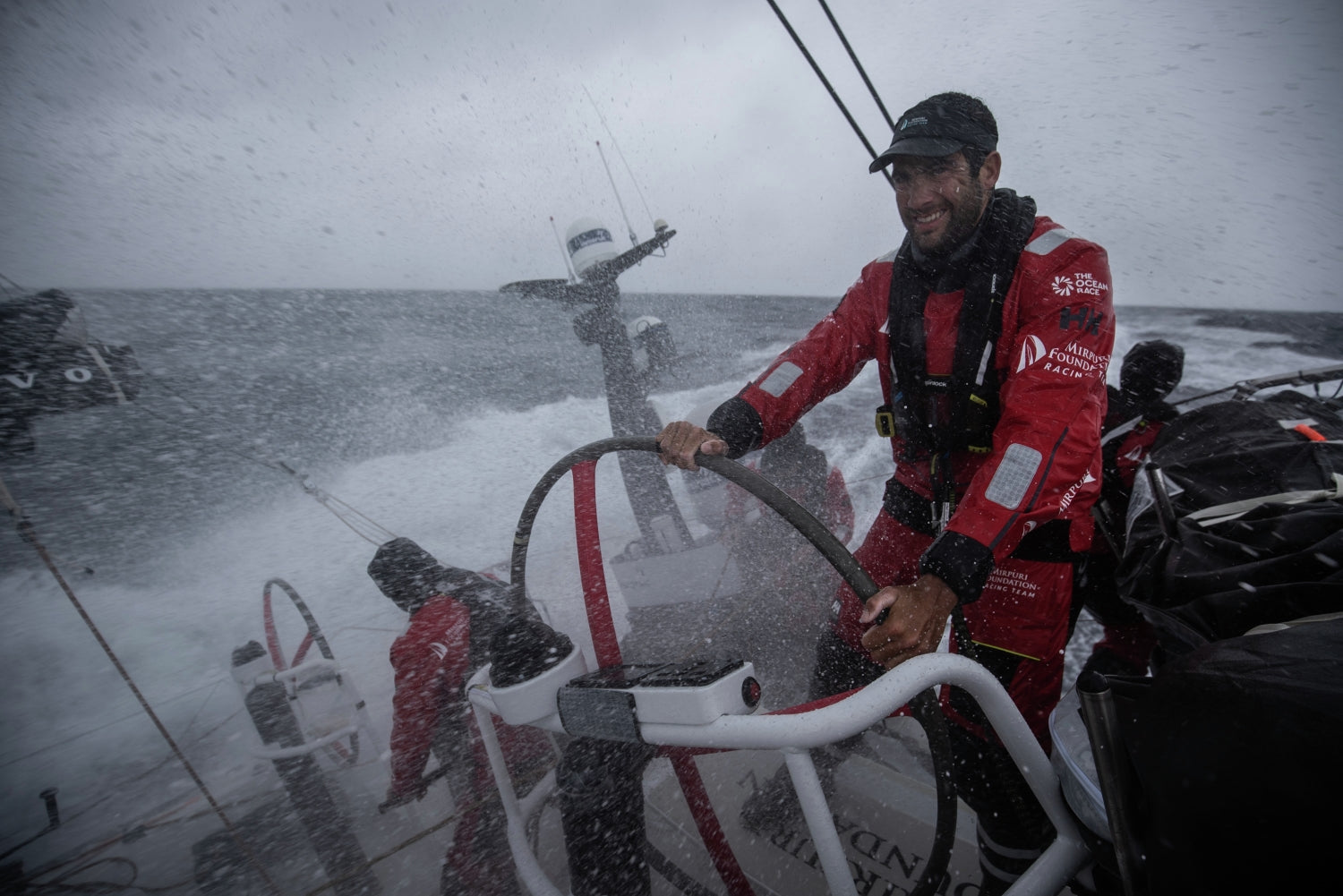
THE OCEAN RACE IS JUST BEGINNING
THE OCEAN RACE IS JUST BEGINNING
This month-long sprint provided a glimpse into the new two-class format, and we can’t wait for the around-the-world race to start in October 2022
📸 Mirpuri Foundation Racing Team / The Ocean Race
It is officially the end of the Ocean Race Europe– a really fun event that I think brought a lot of enthusiasm back after quite a long absence for obvious reasons.
So what did we learn? First of all, racing in the Volvo 65s is still incredibly intense and fun to watch– not to mention really hard. Overall, the teams clearly used this event as a trial-run for crews and strategy. They also started their long-term planning of how they want to put their programs together for The Ocean Race that starts in October 2022. It’s really an amazing opportunity if you think about it because all of these teams had many new faces onboard. This summer’s experience will prove to be invaluable. There’s nothing like learning about yourself and your teammates in tough situations and under racing conditions.
In the 65s, we also learned that new sails are faster than old sails. The A4 was clearly a big hit on all the boats that had them, which was all but one. Race winner, Mirpuri Foundation Sailing Team, was the only team with a new sailing inventory, and of course they practiced a lot before the event started. Congratulations to skipper Yoann Richomme and their entire team; well done on starting to gain some enthusiasm and some momentum for the actual Ocean Race. You can be sure the rest of the fleet will be gunning for you when you meet again.
As for the IMOCAs, that fleet was fascinating to watch. We learned that boats designed to reach and go down wind, offshore, and around big weather systems, may not be the best boats for light air, short-tacking, or light air jibing down coastlines. A few times, you would see the boats get into a situation where they could start to light it up and hit their best best angle, but probably not often enough for their liking. I’m guessing it’s quite frustrating to sail the boats in sprint-sailing conditions because they’re not made for that whatsoever. Nonetheless, hopefully more people took notice in the IMOCA class, and it will help build a new fan-base and possibly attract new entries for their class representation in just over a year.
Finally, the two class fleet is really effective. It’s reminiscent of the Whitbread days when there were the 60s and the Maxis. As they say, every dog will have their day. And in the light air weird conditions, clearly the 65s were a little bit better all around boats. But look out, when the IMOCAs get out in the ocean and get into their ideal conditions, they could be literally going 10 knots faster at certain times. How much fun will that be to watch for all of us fans sitting on the sideline?
Congratulations and thank you to The Ocean Race for putting together The Ocean Race Europe as a prelude to the big event. I know with CoVid-19 restrictions added a layer of logical-complexity, but we all applaud the fact that sailors are getting back out there and that regatta organizers are working hard to get it all done.
📸 Viva Mexico / The Ocean Race
READ MORE
READ MORE
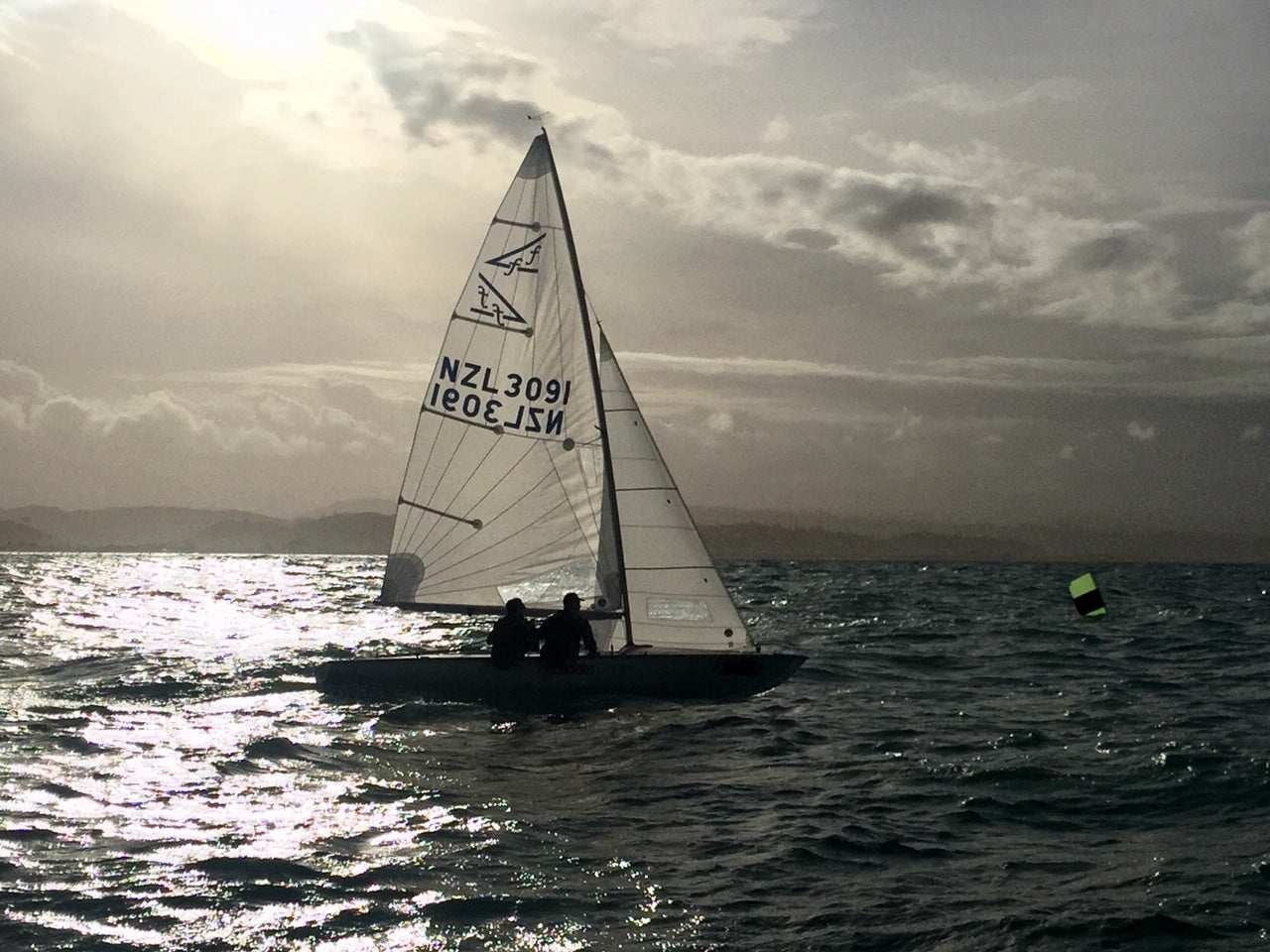
NORTH SAILS FLYING FIFTEEN DESIGNS LEAD THE WAY
NORTH SAILS FLYING FIFTEEN DESIGNS LEAD THE WAY
Triumph at the New Zealand Nationals
North Sails are delighted to see Flying Fifteen duo Hayden Percy and Scott Pedersen win in Napier at the New Zealand Nationals, with their victory made even sweeter as they raced with the FR-3 Mainsail and NGX-3 Genoa.
Conditions were variable throughout the three days of racing, putting the sails and the sailors to the test on the racecourse. This did not stop Percy and Pedersen who stayed at the top of the leaderboard throughout, despite the changeable conditions. Saturday was light, Sunday was a lumpy sea state with 15 knots of wind, and Monday was similar conditions but with the occasional 30-knot gusts sweeping through the fleet.
Commenting on the new designs, Pedersen remarks: “The sails felt nice, set up well, and easy to trim.”
“Percy and Pedersen were right on pace’’, North Sails One Design expert Derek Scott comments. “Even with their older 'silver fleet' boat that is over 30 kilos overweight, they powered out of the starts and kept pace with the brand new boats. Percy and Pedersen used the North Sails Tuning Guide to set up the sails which helped them optimize their sails.’’
Napier, New Zealand is a familiar venue for Flying Fifteen sailors. The great Hawkes Bay has a wide, open sailing area that gets the perfect sea breeze in the summer. With the New Zealand Nationals being later in the season this year due to lockdown, the 2021 New Zealand Nationals saw cold gusty NE breeze, combined with a sharp chop, making the sailing hard work on the bodies but very close racing.
With the Flying Fifteen Worlds in Perth postponed, Percy and Pedersen are now getting back into their Paper Tiger's, working towards the upcoming season. They will get back into the Flying Fifteen for next year's National and Regional Regattas.
READ MORE
READ MORE
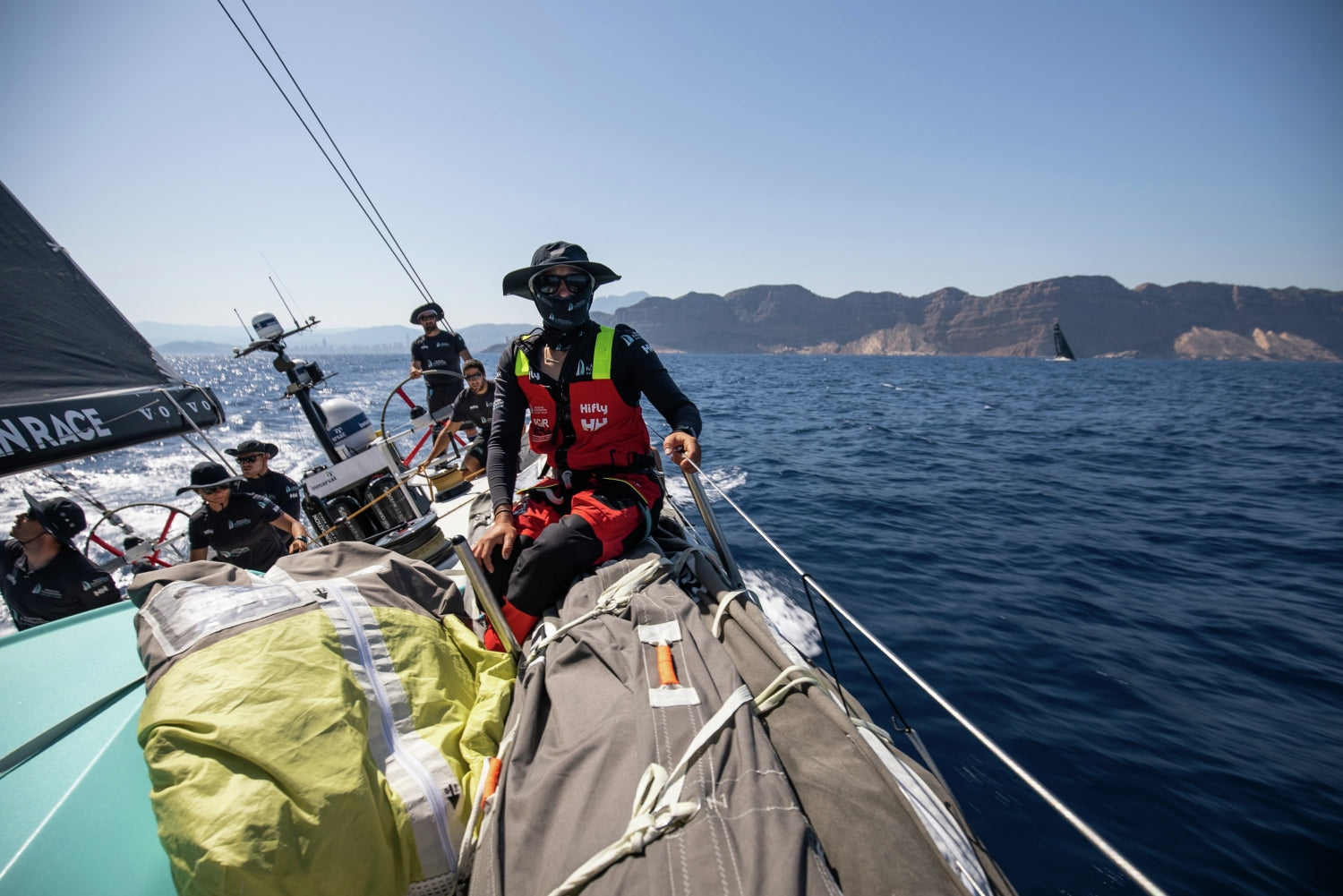
SPRINT SAILING EXPLAINED
Ken Read dives into sprint sailing, and how to best manage what little time you have to the finish line.
📸 Mirpuri Foundation Racing Team / The Ocean Race
First of all, you can really break sailing into three categories: around the buoys or laid marks, sprint sailing, and full blown offshore distance sailing. Around the buoys sailing is everything from your dinghy sailing, weeknight Beer Can racing, TP52 events or America’s Cup. Full blown offshore events are a minimum of three days, in the ocean, mostly away from land. Events like the Ocean Race Europe are classified as “sprint sailing.” But what exactly is sprint sailing and how is it different from the other type of sailing we do?
For a lot of us, it’s a fine line between sprint sailing and offshore sailing. So I’ll classify sprint sailing as typically 1-3 days, around a lot of headlands and other natural features that you wouldn’t find in the middle of the ocean. With sprint sailing you have to manage your time and you have to tweak a crew to really be able to withstand lack of sleep. It’s all about not losing a meter when the opportunity comes and gaining a meter when the opportunity presents itself. In this type of sailing, very often races are won and lost by very small distances.
📸 Sailing Poland / The Ocean Race
I personally think that sprint sailing is as hard or in some ways harder than full blown distance racing. And the reason is simple: You can’t really find your rhythm. You can’t find a good watch pattern and sleep pattern so you can replenish your batteries. In these short races, often you do it with very, very little sleep. And when the sleep that comes, it comes due to true exhaustion. Therefore, as soon as you start to wake from your sleep, you’re panicked that you’ve missed something really important because, frankly, in sprint sailing, those little things are really important.
Building a crew around sprint sailing is probably a little different as well. In our last article here, we talked about the need for fixing things and having a crew who is very adaptable to several different types of boat maintenance or types of jobs on board a boat. Well, in sprint sailing, you really can’t afford to slow down and fix things. So you’re either full bore, 100% or you’re not. Which makes it even more about speed and trimming and navigation than your typical offshore racing.
Finally , sprint sailing is reliant on navigation and often local knowledge; how and when to use the shoreline, how and when to use sea breeze, how and when to get away from shorelines and sea breeze. Local knowledge might affect a race course too, especially around headlands. And then of course, current and how current affects the race course. Because again, you’re going around places where current is probably far more of an opportunity or deterrent than what it would be in the middle of the ocean.
📸 11th Hour Racing Team / The Ocean Race
I personally think it is really hard and that’s why I love it so much. The double handed sailing that I did this past summer on Alchemist was classic sprint sailing, where you really just couldn’t sleep. Not only were you under manned onboard the boat, but the race was going to be short enough that any meter you could gain was a good meter.
For the Ocean Race Europe, my final thought is that quite a few of these teams are using this event as a try out for the main event next year—around the world. This sprint sailing is a bit of a teaser for what an individual sailor or entire team is like on board the boat. With a three day race, you start to get a good feel about what a crew person is going to be like for the long haul, out in the middle of the ocean when the chips are down or when things are good. And it’s a great opportunity for the skippers and team leaders of these programs to get a feel for who is good at what. However, they have to remember that this is still a sprint and that it is a different world once you get out, offshore, in a 20-plus day leg. I guess at the end of the day, a little bit of an interview, no matter how short the time may be on board the boat, is better than nothing.
Linked Out / The Ocean Race
READ MORE
READ MORE
J-CUP WEATHER SIGN UP FORM
J-CUP WEATHER SIGN UP FORM
Powered by North Sails & Sailing-Weather
North Sails are delighted to be working with professional meteorologist Chris Tibbs of Sailing-Weather to offer all competitors of the Landsail Tyres J-Cup daily weather forecasts throughout the regatta.
The forecast will be delivered to your chosen email address between 07:30 - 08:00 each morning before racing. Don't miss out and sign up below before 17:00 on Wednesday, 23rd June:
READ MORE
READ MORE
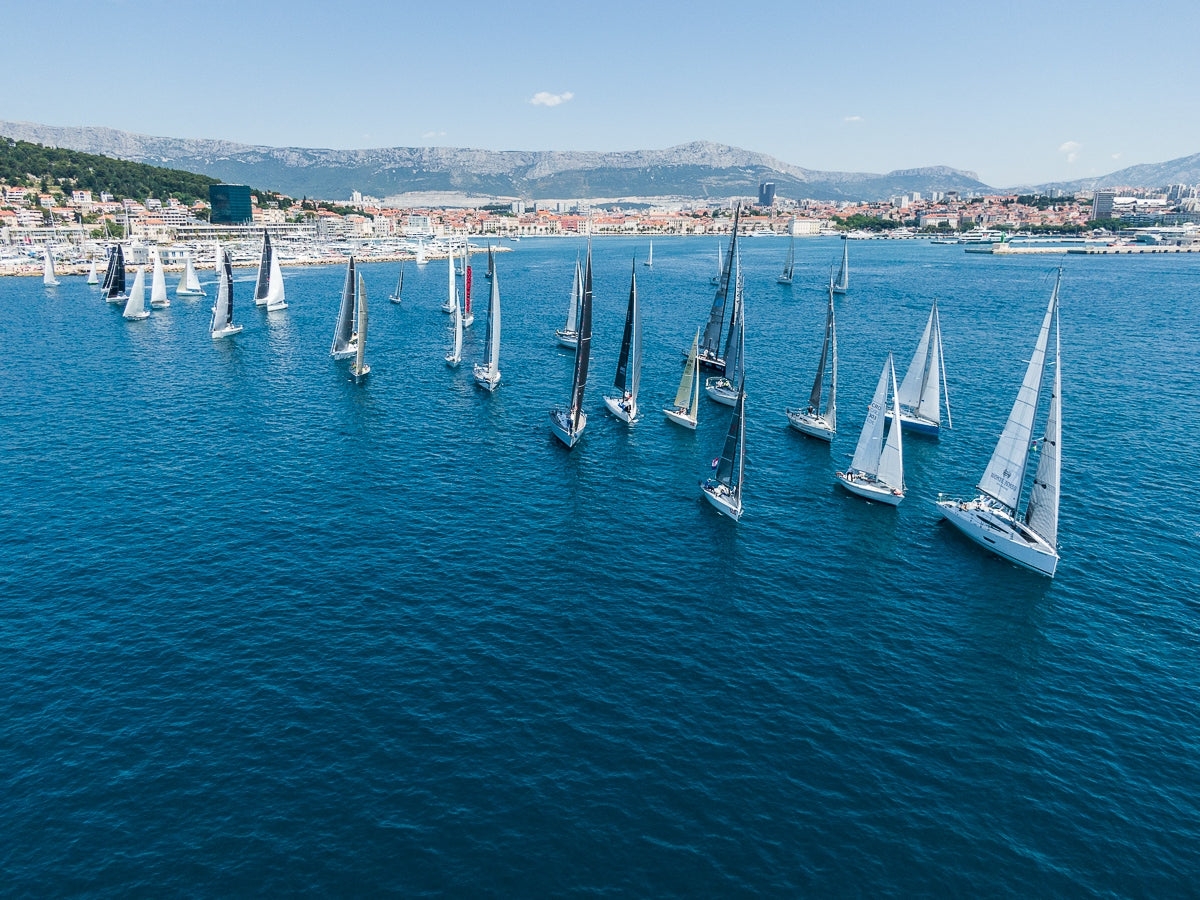
NORTH SAILS KLIJENTI NAJZADOVOLJNIJI NA OVOGODIŠNJEM SUŠCU 100X2
North Sails klijenti najzadovoljniji na ovogodišnjem Sušcu 100x2
📸 regate.com.hr
Čak 43 jedrilice bile su na startu ovogodišnjeg Sušca 100x2, regate koja se na ruti od 100 NM jedri u dva člana posade. Ruta je bila uobičajena, pravila također, sustav razvrstanja kao i svih godina ranije, većinom posade koje su redoviti sudionici, a ono što je bilo malo neuobičajeno je ogroman broj jedrilica koje su regatu završile na 13. mjestu.
Naravno, razlog je DNF u rubrici bodova, a razlog tom bodovanju lako je razumljiv s obzirom na vremenske uvjete koji su vladali na regatnom polju.
Matematički modeli koji su se generirali vremenske prognoze za period od 4. do 6. lipnja uglavnom su bili složni u prognoziranju vrlo laganih vjetrova, pa čak i bonaca koje su na kraju bile kobne za 31 jedrilicu. Čisto usporedbe radi spomenimo lanjsko izdanje regate kad su se na startu okupile rekordne 54 posade, a do cilja nije stiglo samo njih 8.
Start regate signaliziran je u petak u podne, a svi koji su dojedrili do cilja stigli su u subotu i to do oko 3 i pol poslijepodne. Isključivo je bila riječ o najlaganijim i najsportskije pripremljenim jedrilicama opremljenim s odgovarajućim laganim jedriljem. Jedini koji među njima može proći i kao jedrilica koja osigurava više nego ugodno i lagodno krstarenje za kompletnu posadu bio je Swan 45 - Damaco koji je ujedno i prvi koji je ušao u cilj u realnom vremenu. Od ostalih jedino Gringo 3 i Dubrovnik imaju još i kakve takve ležajeve, dok je preostala devetorka u kategoriji asketskih isključivo jedrenju namijenjenih bolida. A i jedan mali kuriozitet po jednom od kroničara Sušca... Damaco je prva jedrilica koja je u 26 godina regate pobijedila, a da ima tikovu palubu. Možda ovaj podatak i nije točan, ali u svakom slučaju je vrlo zanimljiv i pokazuje da je tim veći uspjeh posade Berislav Vranić i Hrvoje Petrović na ovoj vrlo zahtjevnoj regati.
📸 regate.com.hr
Znam da smo 16 puta mijenjali jedra. Gore - dolje su išla dva driftera, dva genakera, a dignuli smo čak i jedan spinaker, plus jedan flok.
Najzanimljivije je bilo pratiti što drugi rade. Na osnovu toga često smo se ravnali, pozicionirali brod i dizali jedra.
Moram reći nešto i o konkurenciji... Ovog puta Dubrovnik nije imao sreće ovog puta. Oni su htjeli proći kroz Ždrelac, ali tamo su ostali bez vjetra, pa su se morali vraćati natrag. Drugi put su došli do Sušca, okrenuli ga i stali u bonaci. Mi smo to vidjeli i napravili veliki luk oko njih.
Zatim su se ponovno vraćali, ali nisu nas više mogli sustići. Imaju znanje, dobar im je brod, ali ovog puta jednostavno nisu imali sreće.
I Gringo 3 je bio blizu nas do Sušca. Uvijek iza, ali blizu. Na Sušcu smo se odvojili i oni nakon toga više nisu niti jednom bili blizu.
Najteže mi je bilo to što kad smo stigli na dvije milje od cilja. Tek onda se prvi brod u pratnji pojavio u Splitskim vratima, a mi smo stajali u bonaci. Morali smo čekati dok cijela flota nije stigla i u cilj uspijevamo ući tek s ono malo maestrala što nam je puhnulo.
Inače vjerujem da smo imali neprekidno vjetar do kraja da bismo uspjeli pobijediti regatu i u korigiranom vremenu.
Brod stvarno ide prekrasno!
Berislav Vranić, Damaco
Damacu je do cilja trebalo 25:21:44, a nakon korekcije po Sušac openu vrijeme jedrenja im je bilo 22:38:40 i nakon usporedbe s ostalim koji su stigli do cilja to je bio 5. rezultat regate.
Drugi u cilju u realnom vremenu bili su Makarani na Otto e mezzo. Lani su bili osmi i u realnom vremenu i nakon korekcije, tako da im je ovogodišnje izdanje sigurno mnogo draže. Uvjeti su definitivno bili takvi da su Antonio i Mario Vuleta možda očekivali i bolji rezultat, ali moraju biti zadovoljni što su ove godine uspjeli napredovati i po pitanju korekcije, jer ih je korekcija dovela na drugo mjesto. Koliko su im uvjeti išli na ruku najbolje pokazuje to da su na samom startu, dok je puhalo 7-8 čvorova, morali na svojoj jedrilici staviti prvi krat na glavno jedro! Kasnije je jedro u potpunosti išlo gore, ali sigurno su imali najbolji omjer površine jedrilja i dobivene snage s obzirom na kretanje zračnih masa.
Treća jedrilica koja je u realnom vremenu ušla u cilj bila je Adriatica. Ovaj Farr 280, na kojem su jedrili Andrej Šooš Maceljski i Luka Jerčić bio je u prvoj dionici regate na samom vrhu, ali u dijelu između Splitskih vrata i Hvara, kad je bio najvjetrovitiji dio regate, prestižu ih veće jedrilice. Međutim, pametnim jedrenjem uspijevaju držati priključak, a kasnije kao što smo sad vidjeli i vratiti se u sami vrh. Na kraju je matematika pokazala da ipak nisu bili dovoljno brzi za pobjedu, a korekcija im je donijela 4. mjesto. U realnom vremenu su kasnili za Damacom 26 minuta i 11 sekundi, a po korekciji su bili brži od njega skoro sat i pol.
Redoslijed ostalih u realnom vremenu bio je sljedeći: Dubrovnik, Magnum x3, Gringo 3, Lucky, Mataran 32, Arhimed, Strilica, Yikes i Pinocchio. A trebali napominjati koliko je zanimljivo bilo nadmetanje ovih devet jedrilica, ako se zna da su nakon 100 nautičkih milja sve ušle u cilj u intervalu od pola sata! Koja su točno vremena bila u pitanju možete pronaći u službenim rezultatima po Sušac openu.
Pretposljednji koji su dojedrili u Splitsku luku, Tonko i David Kuzmanić na kraju su i službeni pobjednici regate.
📸 regate.com.hr
Iako su kasnili za Oto e mezzo skoro dva sata u realnom vremenu, uspijevaju ga prestići za korigiranih minutu i 12 sekundi. Što su točno radili da bi stigli do ovog izvrsnog rezultata ispričao nam je Tonko Kuzmanić:
Start je bio dosta dobar, jedino što je vjetar padao kako smo se približavali bovi od orce, a nakon što smo je okrenuli skroz je zabonacalo.
Tu smo upali u kurenat s kojim smo išli od boveod orce do bove od krme i tu smo mi i Mate Arapov (Strilica) najviše profitirali. Tada smo prošli sve teže jedrilice koje su bile ispred i nakon okreta bove smo odmah išli prema Vratima. Dobro, ne baš direktno jer je smjer vjetra bio od njih i vozili smo lijevo.
Mi smo prvi virali, a Mate je produžio dalje. Tutta Trieste 2 i još neke od jedrilica koje su okrenule krmu ispred nas otišle su put Čiova i tamo upadaju u bonacu.
Taj vjetar koji nam je na početku puhao iz Vrata okretao je kasnije za suncem i mi smo najkraćim putem jedrili prema Vratima. Najviše su profitirali ovi što su bili "šoto", došao nam je prije nego ovima na Čiovu, tako da je tu najviše profitirao Mate. Mi smo malo prije njega prebacili se prema desno i tu se stvorila razlika između nas dvoje. Taj dio regate jedrili smo s flokom jer nemamo drifter za razliku od ostalih koji su ga mogli koristiti.
Kad je to zapuhalo veći brodovi su nas stizali u orcu. Tada je iz Vrata puhalo između 10 i 15 čvorova i svi se prebacuju na flokove.
Većina se dala pod Brač. Neki su otišli baš ispod njega, dok je drugi dio bio malo više prema Šolti. Mate je npr. od punte Brača u jednom repiketu otišao skroz pod Šoltu. A mi smo po nekom svom, lijevom, vjetru vozili uz Brač... sredina lijevo.
Na kraju su nam se putevi spojili tako da smo došli na 50 metara jedni od drugih.
Tada u Vratima skroz pada vjetar. Mate diže drifter, a mi i dalje s flokom, a nakon što je vjetar još više okrenuo prema maestralu mi dižemo genaker. Ostali su se također prebacili s flokova na driftere i genakere.
Kako smo digli genaker prije Mate malo se odvajamo od njega u toj dionici do punte Pelegrina. On je morao prvo spustiti drifter prije dizanja genakera, jer nema dva gindaca. Tu smo ga ostavili oko 300 metara i takva razlika ostaje do Pelegrina.
Oko milju pred Pelegrinom vidimo da ne možemo izorcati s genakerom, pa se vraćamo na flok, a isti problem su imali i ostali. Da je bio maestral vjerojatno bi mogli to sve odjedriti s genakerom. Ovo je bilo nešto između maestrala i lebića.
Kad smo okrenuli Pelegrin ponovno dižemo genaker i idemo pod Paklenjake. Mate i neki drugi rade jednu pojalabandu i idu pod Hvar, međutim ostali su tu dosta, a mi odlazimo.
Sad smo na raspolaganju imali dvije opcije... ići na Ždrelac ili na Pokonji dol. Izabrali smo Ždrelac iako smo znali da nas s druge strane čeka totalna bonaca. Logika je bila da ćemo brzo izaći na otvoreno i imat ćemo najkraći put do Sušca.
Mate je vidio da smo tu stali i produžio je dale prema Pokonjem dolu.
Kad smo izašli iz Ždrelca vidjeli smo da je Damaco skroz daleko, poviše Visa, bio je naprijed, ali je stajao... u stvari, svi su stajali. Dolje ispod bili su Dubrovnik, Magnum, Mate i još neki.
Konkretno je Mate izašao oko 2 milje ispod nas i oko 200 metara ispred.
Nakon nekih sat vremena stiže par čvorova nekog vjetra za kojeg ne znam koje bi mu ime dao :) to je sve bilo nekakvo mreškanje. Inače u Ždrelcu skidamo genaker i vraćamo flok, a kroz njega prolazimo zahvaljujući kurentu jer nije bilo ništa vjetra.
Kad je to zapuhalo išli s flokom ravno na Sušac.
Prvo je vjetar počeo puniti onima što su bili ispod, put Korčule. Tek nakon njih mi ulazimo u taj vjetar, nakon što su nas oni polako stizali.
Tu Mate vozi s drifterom, mi smo s flokom, imamo manju brzinu i do mraka nas je sustigao i prošao od ispod.
Po mraku je bila bar teška bonaca. Povremeno su dolazili neki refulčići od burina... na nekih 5-6 milja od Sušca. Puhalo je i s drugih strana, tako da se genaker dizao, spuštao i on nam je tu baš dosta pobjegao zbog tog driftera.
Sušac smo obišli na jedvite jade, na kurenat... oko tri i pol ujutro.
Sad već lagano sviće. Mi smo na čelu druge grupe. Prva grupa je vozila desno, prema Korčuli i penjala se prema Hvaru po nekom burinu. Nama je kasnije isto došao taj vjetar, ali mi smo sa Sušca vozili ravno prema Visu. I kako je taj vjetar ponovno okretao za suncem vrtilo je i nas i vodilo ravno na Vodnjak. Tako da od Sušca praktički nismo ni viravali, osim kad smo bili treso od Visa dok nam nije došao kut za genaker.
S genakerom smo prošli Vodnjake... tu smo napravili par pojalabandi da možemo proći, jer smo bili malo poviše.
Mate je prošao kroz Ždrelac i nastavio jedriti kroz kanal. Tamo im je baš uz Hvar bio jači vjetar, a mi smo ga kasnije dobivali.
Kad smo prošli Vodnjak vidjeli smo da su brodovi u Hvarskom kanalu usporili, da su upali u bonacu, a vjetar koji je puhao je sad bio samo s vanjske strane. Neki su se dali na istok, a Mate je s tim vjetrom išao put Šolte.
Mi se također nismo htjeli davati mnogo istočno, već smo vozili više lijepo, po rubu, može se reći za Matom. I tu smo uhvatili dosta brodova.
Kad smo bili negdje na pola kanala prvi brodovi su došli do Vrata, a Mate ih je zaobilazio s lijeva s tim svojim vjetrom.
Kako smo vozili s genakerom prema Šolti, tako nam je vjetar dolazio sve više od maestrala... to je već oko ure poslijepodne i tada smo od Mate oko 2.5 - 3 milje.
Ovi što su bili ispred nas polako ulaze kroz Vrata i više ih ne vidimo, a u toj zoni puše baš iz Vrata. Mate je tu vozio s genakerom do granice gdje ima vjetra, baš uz samu Šoltu i onda je napravio jednu pojalabandu nakon koje odlazi skroz na puntu Brača.
Mi smo isto tako odvozili jer je vjetar tako diktirao. Da smo išli ravno put Čiova ostali bi u bonaci.
I tako smo tražili priliku kad ćemo se i mi ubaciti u reful. Bilo je očigledno da će vjetar doći sa zapada, samo često se desi da tu preskoči. Mate je tu očekivao maestral i spuštao se šoto od kursa za nekih milju i pol - dvije... ako se gleda linija punte Brača i Splita.
Mi smo to vidjeli i vidjeli smo da svi brodovi tu stoje. U jednom trenu smo spustili genaker i počeli se penjati da se uključimo u taj vjetar sa zapada. i u roku od par minuta smo zaklapali, skroz smo stali, ali uspjeli smo prvi stići u taj vjetar i nakon par minuta ponovno dignuti genaker i zajedriti prema Splitu.
Za to vrijeme ostali brodovi ispod nas, zajedno s Matom koji je bio najistočniji, još su klapali nekih desetak minuta.
Mi smo znači vozili s genakerom put Splita, a on se s drifterom penjao put gore ne bi li uhvati ovaj naš vjetar. Kad je konačno stigao do njega isto je digao genaker, a kako je bio dosta ispred i šoto, uspio je u cilj ući ispred nas za 150 - 200 metara.
Inače nije bilo spavanja jer toliko je lagano puhalo da ako ne bi iskoristili to što je puhalo ne bi stigli do cilja. Tako da ako jedan od nas dva ode šoto i ne stisne brod kad je reful brod bi išao 3.5, a trebao bi ići 5 čvorova. Ono, milja, milja i pol je razlike ako netko krivo sjedne ili legne! Tako da smo non stop radili, prebacivali se da budemo u optimalnom položaju za brzinu broda. Ono, sve izgleda da ne puše, ali ako ne iskoristiš sve te momente ostaješ iza.
Tonko Kuzmanić, Yikes
Iz ovog iscrpnog opisa s Melgesa 24 - Yikes, vidi se da je stvarno trebalo biti u regati koncentriran svaku minutu. S obzirom na prevladavajuće stanje bonace sve je bilo mnogo napornije, jer kao što je Tonko ispričao postavljanje jedrilice u optimalni balans nije ostavljalo prostor za traženje mjesta gdje se može bar malo odmoriti, a o skrivanju od sunca ne treba ništa posebno dodavati. Upravo zbog takvih karakteristika malenih i laganih jedrilica u kojima pravilan položaj posade može puno pomoći, a i pogrešni položaj odmoći, u cilj su uglavnom i stigle jedrilice u kojima je posada mogla utjecati na jedrenje svojih bolida na takav način.
Potvrda o svemu napisanom dolazi s palube jedrilice Adriatica. O jedrenju na njoj popričali smo s Adrejem Šooš Maceljskim.
📸 regate.com.hr
U zonu starta, ispred Galebova, stigli smo sat pred start. Najviše zbog našeg vanjskog motora za kojeg trebamo odvojiti nešto vremena za spremanje, ali i da ispitamo zonu starta da vidimo gdje bi moglo biti najviše vjetra.
S obzirom na veličinu našeg broda i veličinu ostalih, iako je pin bio malo favoriziran i bilo je potrebno manje manovri do bove od orce ako se starta s njega, odlučili smo da nećemo ići na njega jer smo pretpostavili da će većina velikih brodova pokušat startati na njemu. Odluku nam je olakšalo i to što smo primijetili da je stalno vjetar bio jači za oko jedan čvor s desne strane. Stalno je puhalo između 7 i 8 čvorova.
Tu smo također pažljivo pratili naše direktne konkurente, Otto e mezzo i Arhimeda.
Startat smo odlučili uz sam desni kraj linije i to s flokom. Tada je još uvijek bilo dovoljno vjetra za normalno jedriti s njim, ali kasnije kad je vjetar pao na oko 4 čvora osjetilo se da nam je jarbol manji od ostalih, kao i snaga koju smo mogli dobiti iz podignutih jedara.
Startali smo među prvima. Mataran je tu bio nešto brži od nas, ali i ispod nas i pomalo se dizao, ali kako je vjetar slabio nije uspio to držati već je počeo otpadati, dok smo se mi još uvijek dobro držali.
Ubrzo smo primijetili da vjetar ispred nas značajno pada, pogotovo s lijeve strane i tada se odlučujemo za viru. To je ispalo super jer smo dobili i povoljni dric koji nas je i dodatno podigao. Tako smo jedrili dok nismo došli blizu laylinea. Tad smo ponovno virali i vozili na bovu do koje mislim da smo stigli kao treći brod.
Genaker smo pripremili za dizanje na lijevoj strani, ali desio nam se mali problem. U trenutku dizanja genaker zapinje za križ jer je vjetar sad već značajno pao, ali brzo smo to riješili. Zbog toga smo ostali najdonji brod, svi koji su okrenuli orcu su odmah pojalabandali, a mi smo zbog toga otišli još oko 50 metara prema Sustipanu. Ali na kraju se ispostavilo da smo tu isto imali dosta dobar vjetar, a i dobru poziciju u odnosu na ostale.
Uskoro vjetar pada na interval između nula i jedan čvor, pretežno nula. Svi smo plutali...
Ja i Luka skidamo genaker jer smo vidjeli da nema šanse da se napuše, a mijenjamo ga s drifterom. Inače, za Sušac smo pripremili J0, drifter, A0, A2, flok i glavno. Kad pogledam unatrag to nam je bilo dosta dobar izbor, a jedini problem je bio što smo tri roll jedra imali na jednoj muri. To je dosta komplicirano, jer između svake izmjene moramo ići na flok.
Na kraju smo od svih jedara koristili isključivo flok, drifter i A0.
Uglavnom, uspijevamo uhvatiti par driceva do bove od krme i okrećemo ju je kao drugi, iza Damaca.
Nakon okreta Damaco bira stranu Čiova, a mi smo primijetili da se na jugoistoku formira naizgled bolji vjetar i da bi duže mogli biti u njemu, pa smo nakon bove produžili u tom smjeru oko 100 - 150 metara kad radimo viru i jedrimo ravno prema Vratima.
Kurs koji smo držali s drifterom bio je prema Splitskoj, a kako smo se približavali Vratima tako nas je pomalo dizalo. Tada vjetar počinje i jačati i moramo se prebaciti na flok, a kad smo stigli u zonu Vrata bilo ga je i oko 15 čvorova.
S obzirom na veličinu polja tu više nismo mogli držati vodeću poziciju i prolazi nas Dubrovnik koji je prvi prošao kroz Vrata. Polako se počinju šuljati i Mataran, Gringo, Lucky...
Mi smo tu napravili dvije vire koje su bile baš u pravim trenucima. S prvom smo išli prema Mini, a nakon druge upadamo u dric koji nas je i malo podizao i jedrimo ravno prema Livki. Uglavnom iz Vrata mislim da smo izašli kao 3. ili 4. brod.
Van Vrata je bilo dosta vjetra, a kurs nekakve laške orce. Veći brodovi nas polako hvataju, ali taj vjetar vrlo brzo pada. Prvo je pao na pola, a ubrzo na samo 3-4 čvora.
Kad smo vidjeli što se dešava hitno prelazimo na drifter i s drifterom uspijevamo držati smjer do punte Pelegrina. Tad ulazimo u kanal između Hvara i Paklenjaka i repiketajemo.
Tada smo se čuli i s našim glavnim savjetnikom, kraljem bonaca - Tončem Antunovićem. Vidjeli smo da je vani apsolutna nula i bojali smo se ići previsoko, premda su prognoze davale mogućnosti burina, pa čak i laganog južina predvečer. Dosta konfuzna je bila prognoza, ali nadali smo se da ćemo poslije Paklenjaka ići s maestralom koji će se kasnije ukrmiti i prebaciti u tramuntanicu koliko god da je ona slaba. Zato smo odlučili biti najdonji brod i gađamo Pokonji dol.
U jednom trenutku prešao nas je Otto e mezzo s ogromnim genakerom, a za njim i Dubrovnik... Onda smo vidjeli da je Dubrovnik pokušao ići kroz Ždrelac, ali ga je kurenat stalno vraćao, pa se na kraju okreće i ide za nama, a Gringo je vozio na nekih 20 metara od nas. Mi smo nastavili repiketavat uz sam Hvar jer je uz njega još uvijek bilo nešto vjetra, dok je uz Paklenjake sve umrlo.
Iza Pokonjeg dola bilo je sve bijelo... SVi brodovi koje smo vidjeli da su prošli kroz Ždrelac i Vodnjake su doslovno stajali.
Mi smo tada vidjeli da su uz Hvar još bili neki refuli koji su imali tendenciju da se spoje u nekakav vjetar s te strane. Kako smo željeli što duže ostati u vjetru onda smo napravili još 2-3 repiketa i produžili uz Hvar i otišli još niže. Tu nas je vodilo i iskustvo s prošla dva Sušca kad smo išli direktno na njega, pa nam se to obilo od glavu, pa smo odlučili ove godine ići što niže prema Vela Luci i kasnije s tim umirućim vjetrom se ponovno dizati.
Ostali nisu pojalabandali kad i mi, već kasnije i to je bilo dovoljno da ih sviju prođemo. U stvari osim Dubrovnika kojeg nismo vidjeli gdje je i nismo znali u kojoj je on poziciji, kao i Luckyja koji je bio negdje skroz daleko prema Italiji.
Tad smo prvi put dignuli A0. Jedro se pokazalo kao izvrstan plitki roll genaker koji omogućava da se bez nekog pretjeranog opterećenja i karinavanja da se vozi između 95 i 110° stvarnog vjetra. Mislim da se pokazao kao najbolje "Oružje" koje smo imali u ovoj regati. Ponijeli smo ga umjesto A1 i s njim smo se spuštali ispod Sušca, jer se stvarno dobro nosi s manjkom vjetra, a kako smo dobili informaciju od ljudi koji su pratili regatu u tim trenucima smo bili i najbrži brod na regati.
Kad smo vidjeli da smo najniži brod i da nema više smisla na silu pojavati počeli smo se dizati prema Sušcu.
Tu našu poziciju su kao dobru prepoznali i drugi, pa su se u jednom trenutku Gringo i Damaco spustili i ispod nas, a također i Mataran koji nam je bio u šiji.
Do Sušca prvi stiže Dubrovnik i bio je stotinjak metara ispred nas, a s Lucky-jem nam se križaju putevi nakon što je stigao skroz s druge strane. Imali smo križanje s njima doslovno ispred punte Sušca koja gleda prema Vela Luci.
S desne strane stigli su i Mataran i Magnum i bili na toj punti, a mi smo nastojali ostati što više vani jer smo se bojali kurenta, a i iskustvo ranijih izdanja regate mi je bilo takvo da uvala ispod lanterne ima tendenciju uvlačenja jedrilica i tamo se ostane parkiran dosta dugo.
Tu oko Sušca smo se dosta vodili sa savjetom Tonča Antunovića koji nam je rekao da ako nema vjetra da samo laškamo jedra i da vozimo bilo gdje, samo da ne stojimo. Kretali smo se polako, malo bi zastali, ali uglavnom smo uspjevali držati smjer i uspijevamo okrenuti Sušac kao prvi brod!
Cijelu noć smo vozili s A0. Ideja nam je bila da idemo na Vodnjak. Najavljen je bio nekakav vjetar koji nam sa strane Pokonjeg dola nije baš odgovarao, tako da smo potvrdili odluku o izboru Vodnjaka. Malo iza i ispod nas jedrio je Damaco, a dosta više iza nas vozi Otto e mezzo koji nas polako počinje stizati. Uvjeti su u tim trenucima bili baš za takav brod s toliko jedrilja, pogotovo kad smo se s A0 prebacili na drifter mi ga više ne uspijevamo pratiti s brzinom.
U toj etapi primijetili smo nekakva raz između Vodnjaka i Visa i željeli smo stići do njega. Primijetio ga je i Otto e mezzo i oboje smo napravili jedan dodatni repiket prema Visu. Za to vrijeme Damaco bira Pokonji dol.
Neko vrijeme jedrimo prema Visu i pokušavamo uhvatiti potrebnu visinu za Vodnjake i kad smo procijenili da treba virati vjetar pada na totalnu nulu. MOžda je u nekim trenucima bilo 0.3 - 0.4 i tada u odnosu na sve ostale brodove Otto e mezzo doslovno leti.
On nas je tada vrlo brzo obišao s gornje strane... mi smo tu čekali oko sat vremena da se nešto pokrene. Dočekali smo nekakav povjetarac s Paklenjaka, premda je bilo teško točno odrediti...
Oni su vozili drifter i po našem mišljenju bili su tada sporiji nego mi s genakerom. S njim smo jedrili dosta blizu Paklenjacima, toliko da smo se u nekim trenucima bojali dubine koliko smo blizu bili. I tu smo ga uspjeli sustići i biti na oko 50 metara od njega.
U jednom trenutku smo vidjeli da oni staju i da mijenjaju jedro. Promjena dolazi i do nas i bila je takva da smo se morali prebaciti na flok. Tu promjenu je Damaco izvrsno iskoristio i već okrenuo Pelegrin. Mislim da je to bilo nekakvo jugo.
Kad smo mi stigli do punte Pelegrina Damaco je već bio na pola puta prema Vratima. Otto je malo pao prema Braču, a mi se nešto trudimo i tada se dešava prokletstvo svih regata, a to je da vodiš cijelu regatu i onda se odjednom flota počne okupljati na krmi.
Na oko pola milje - milju krenuli su se okupljati Mataran, Lucky, Magnum... i u toj zoni između Pelgerina i Vrata bili smo bar tri sata.
Mi smo se malo bolje snalazili po tim refulčićima i uspijevamo se približiti Otto e mezzu.
Kad smo prošli Vrata digli smo genaker i nastavili jedriti po jugu. U Vratima je bilo stvarno dosta vjetra i tu smo razvijali brzine od 10-11 čvorova, ali kad smo izašli iz Vrata to sve drastično pada. Tad smo imali kurs prema Gospi od Prizidnice.
Ostali su gađali dosta visočije i ostali su u zoni koja je imala manje vjetra. Nama je uz Čiovo bilo dosta vjetrovitije, a primijetili smo da je čak u tim trenucima i Otto stajao, a i Damaco je tada još uvijek stajao pred ciljem.
Dosta toga se promijenilo pred ciljem. Mislili smo da ćemo moći jedriti s flokom, ali smo se morali prebaciti na drifter. Za to vrijeme cijela grupa s gornje strane je stajala i nadali smo se da ćemo ući ispred sviju. Međutim, Otto e mezzo uskoro kreće i taman su se ušuljali u cilj s gornje strane pored terminala, a mi smo s donje s drifterom.
A ovu priliku koristim da zahvalim svima koji su nam pomogli u pripremi broda, od Josipe Prosinečki, Marka Bertolina, Ante Kriletića, Kolje Dumanića s tim da posebna zahvala ide glavnom konzultantu Tonču Antunoviću, te da čestitam svima koji su dojedrili do kraja, a poseban naklon posadama Otto e mezza, Damaca i Yicesa!
Andrej Šooš Maceljski, Adriatica
Nakon ovako iscrpnih i detaljnih opisa jedrenja stvarno više nemam što za dodati, osim da su rezultati bili objavljeni i po THC sustavu razvrstanja i možete ih pronaći na ovom linku.
Još jednom čestitke organizatorima i svima koji su zajedrili ove godine i nadajmo se da će već iduće biti više vjetra i da će cijela flota prejedriti kompletnu zadanu rutu.
Foto galeriju sa starta možete pronaći na ovom linku.
A sad nezanemarivi dio cijele ove priče, jelovnik:
Damaco - ragu, grah i nudle soup, spavanje/odmor samo po jedan sat svaki od jedriličara
Yikes - pohana piletina, tunjevina u konzervi, keksi i čokolada. Puno vode i ništa alkohola. Bez spavanja.
Adriatica - pašta s tunom, slatkim vrhnjem, paprikom i kaparima, kg po osobi, te po dvije čokoladice i dvije banane. Puno vode. Pola sata spavanja po jedriličaru.
A zašto je naslov napisan baš ovako pokazat ćemo vam na sljedećem popisu:
Damaco: kompletno 3Di NS
Adriatica: djelomično 3Di NS
Yikes: NS downwind sails
Strilica: kompletno NS
Pinochio: većinom 3Di NS
Arhimed: djelomično 3Di NS
Gringo 3: kompletno NS
Dubrovnik: kompletno NS
Lucky: kompletno NS
Ili statistički gledano 75% onih što su dojedrili do cilja bili su opremljeni North Sails asortimanom!
READ MORE
READ MORE
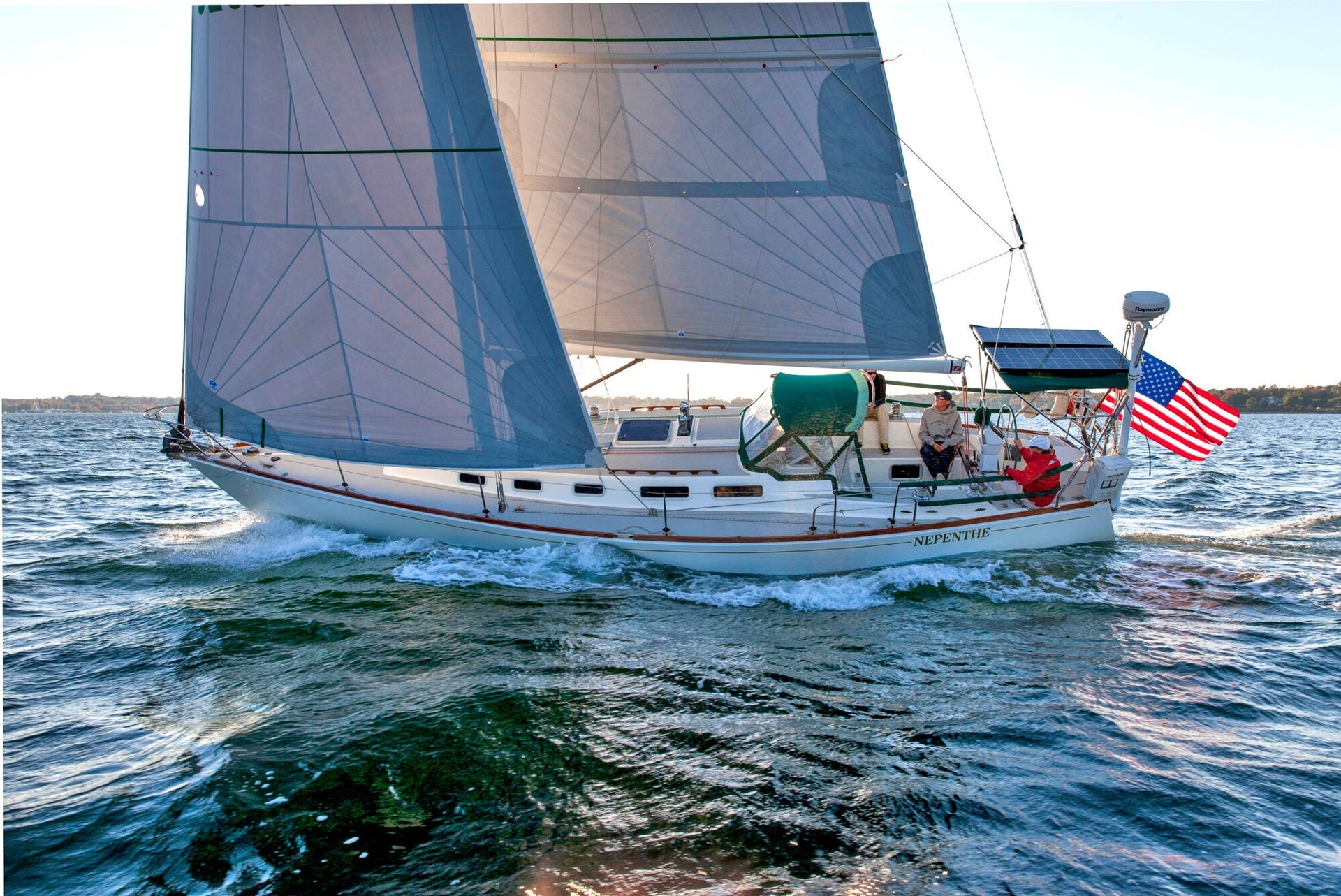
BEST SAIL INVENTORIES FOR CRUISING
NPL TOUR
Day Sailing vs. Coastal vs. Bluewater
One of the many great things about sailing is the ability to choose how long you want to be out on the boat. Day sailors prefer to sleep on dry land, while coastal cruisers might go off for a weekend or even longer. Bluewater sailors like to get away from land altogether, some for as long as they can. Free time and sailing experience do play a big role in determining the type of sailing you do; often, beginners start off as day sailors and increase their time on the boat as their skills improve.
Though a wide variety of sailboats could be adapted to fit any of these time-based sailing specialties, some will obviously be better qualified than others for each one—especially if you’re looking to head offshore. The same is true of your sail inventory. For maximum enjoyment, it’s important that both boat and sails match the time frame you choose, which is why the North Sails cruising experts put together the following summary of what you’ll need for each type of sailing adventure.
Best Equipment for Day Sailing
Cruising daysailers are typically 25-40 feet long, though there are some purpose-built models as big as 50 feet. Day sailing is a great starting point, because it prioritizes a relaxed time on the water without the added challenges of darkness or bad weather.
Most daysailers have a fairly simple sail plan that includes a mainsail and jib or genoa. These can be built of NPC Cross-Cut materials. (If your boat is one of the recent performance daysailer designs, you may want to step up to 3Di OCEAN.
Struggling with sail handling? Consider adding a furling system for jib, main, or both.
NPC CROSS-CUT
Best Equipment for Coastal Cruising
Coastal cruising boats need enough cabin space for the crew to sleep comfortably and have bad-weather shelter, so they are generally in the 30-55 foot range. Both boat and sailors need to be ready for a wider range of weather conditions, as well as the occasional after-dark arrival, and both increase the focus on efficient sail handling systems. You’ll also need a sail inventory that can handle winds over 25 knots.
We have several sail materials that match this type of sailing, including NPC CROSS-CUT or Radian, NPL TOUR, and 3Di OCEAN. The key is to match the sails to your boat and preferred type of sailing. If you’re heading south for the winter, Radian will provide the best combination of longevity, durability, and ability to handle high heat and UV. For performance cruisers, 3Di Ocean is a great fit. Your local North expert can help determine which materials would best match your boat and cruising plans.
3Di ENDURANCE, the racer/cruiser crossover.
Best Equipment for Bluewater Sailing
Bluewater boats and crews will sail away from the conveniences (and stresses) of shore life for many days at a time, so they need to be fully self-sufficient. Purpose-built bluewater cruisers are generally larger than 40 feet, with sail-handling systems designed to handle any kind of weather. For a bluewater sail inventory the priority is durability, because despite the worldwide coverage of North Sails lofts, there’s no off-season—repairs will always slow down the next voyage.
UV is also a big concern. Dyneema has very high strength and toughness, and our NPL TOUR ULTRA paneled sails have been setting the bluewater standard for many years. 3Di ENDURANCE is a great crossover option that provides both offshore durability for cruising and high-level racing performance. 3Di OCEAN will provide performance without sacrificing durability, which is the best option for cruising sailors. To figure out the best materials that will help you achieve your bluewater dreams, talk to your local North expert. Bottom line– no matter what upwind sails you choose, you will not be disappointed.
3Di OCEAN
Easier sailing
Whether you’re a first-time day sailor or a seasoned offshore cruiser, there are many innovations that will help make sail-handling easier. Mainsail luff track systems, inner forestays for heavy weather jibs, and small bowsprits for setting downwind sails are all increasingly common in harbors and marinas around the world, because they reduce the time and aggravation in changing sails.
For day sailing and coastal cruising, furling jibs are standard. More and more boats are adding furling or full-batten mainsails as well. Another innovation that can help ease mainsail stowage is the Quickcover. As the name suggests, it’s a cover that’s always right there when you need it—and that means a longer lasting sail, because you won’t forget or find it too much trouble to protect your investment from UV.
Another addition that will help your downwind enjoyment is a cruising gennaker, along with a snuffer to make it easier to set and douse.
Helix Furling Gennaker
Increasing your boat’s possibilities
If you are a day sailor who aspires to coastal cruising, another important upgrade would be to add an inner forestay for a second jib. Another great addition is the Helix Furling Gennaker. It combines the power of an asymmetric spinnaker with the convenience of a Code Zero. Hoist it once and you have an easy-to-fly sail that will take you to that next harbor fast, even when your apparent wind angle is too far aft for your Code Zero reacher. Plus, this new gennaker is top-down furling, giving you a tight, neat furl that protects the sail.This addition will add versatility to your sail plan and allow you to carry less sails onboard.
If you are a coastal sailor who aspires to head offshore, there are several sail upgrades we recommend. You’ll definitely need a heavy weather jib, a storm jib, 3 reefs in your mainsail, and at least one versatile downwind sail that can be furled. Reefing the main will be easier if you add mainsail luff tracks and cars. For longer-distance downwind cruising, we recommend either a Tradewind or a Helix code sail on a furler.
Sailing is a lifestyle, and many of our customers who started out as beginner day sailers are now off on life adventures, cruising the world. Whether you’re keen to do more day sailing, go off on a coastal cruise, or head offshore to bluewater, the most important key to an enjoyable cruise is to have the right boat—and the sail inventory of your dreams.
FIND A CRUISING EXPERT REQUEST A QUOTE
Tradewind
READ MORE
READ MORE
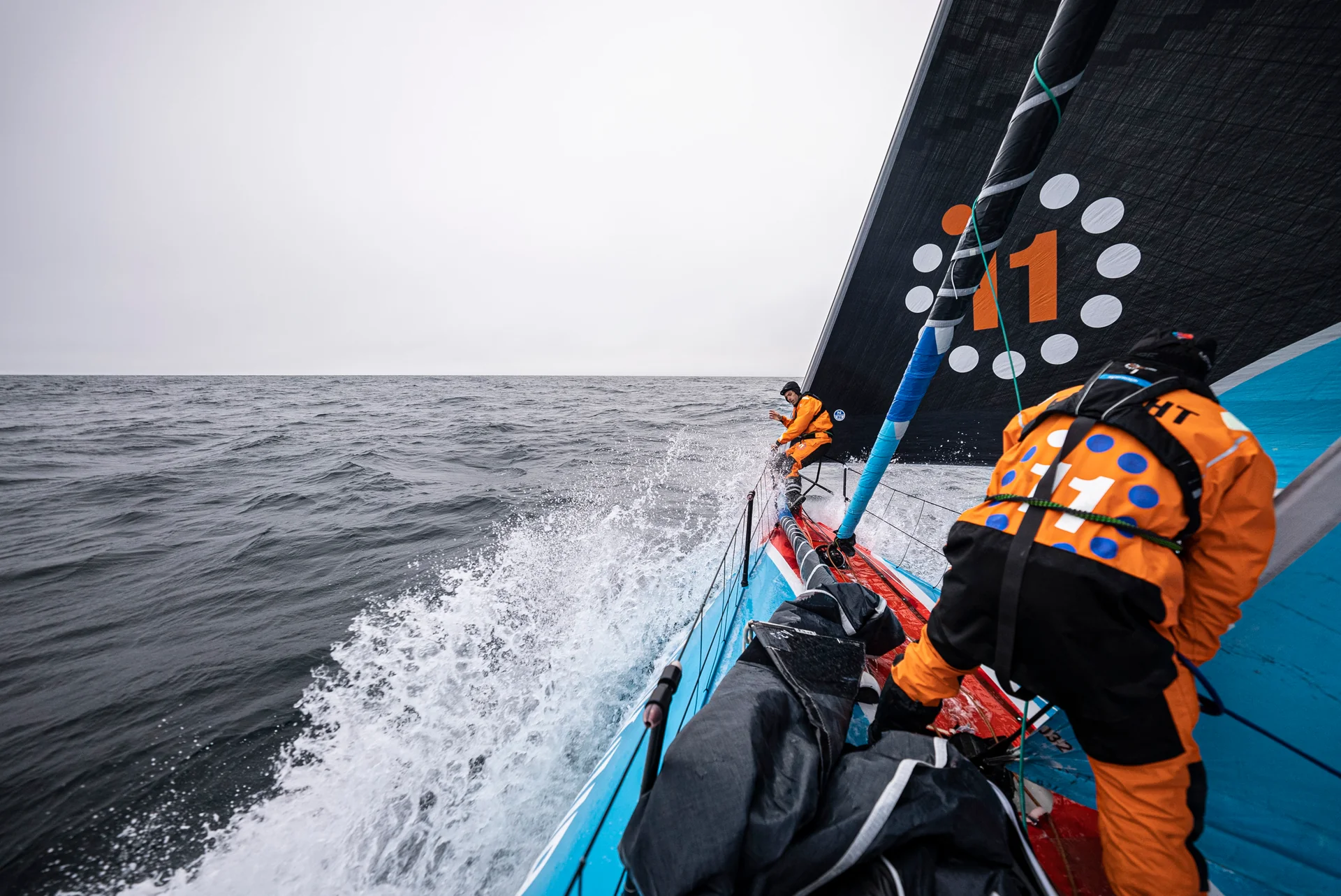
ADVICE FOR BUILDING AN OFFSHORE TEAM
The first thing to always talk about when going offshore is, what are the rules? They’ve created fantastic rules to be incredibly inclusive for people who may not otherwise have a chance to join high-profile sailing teams.
READ MORE
READ MORE
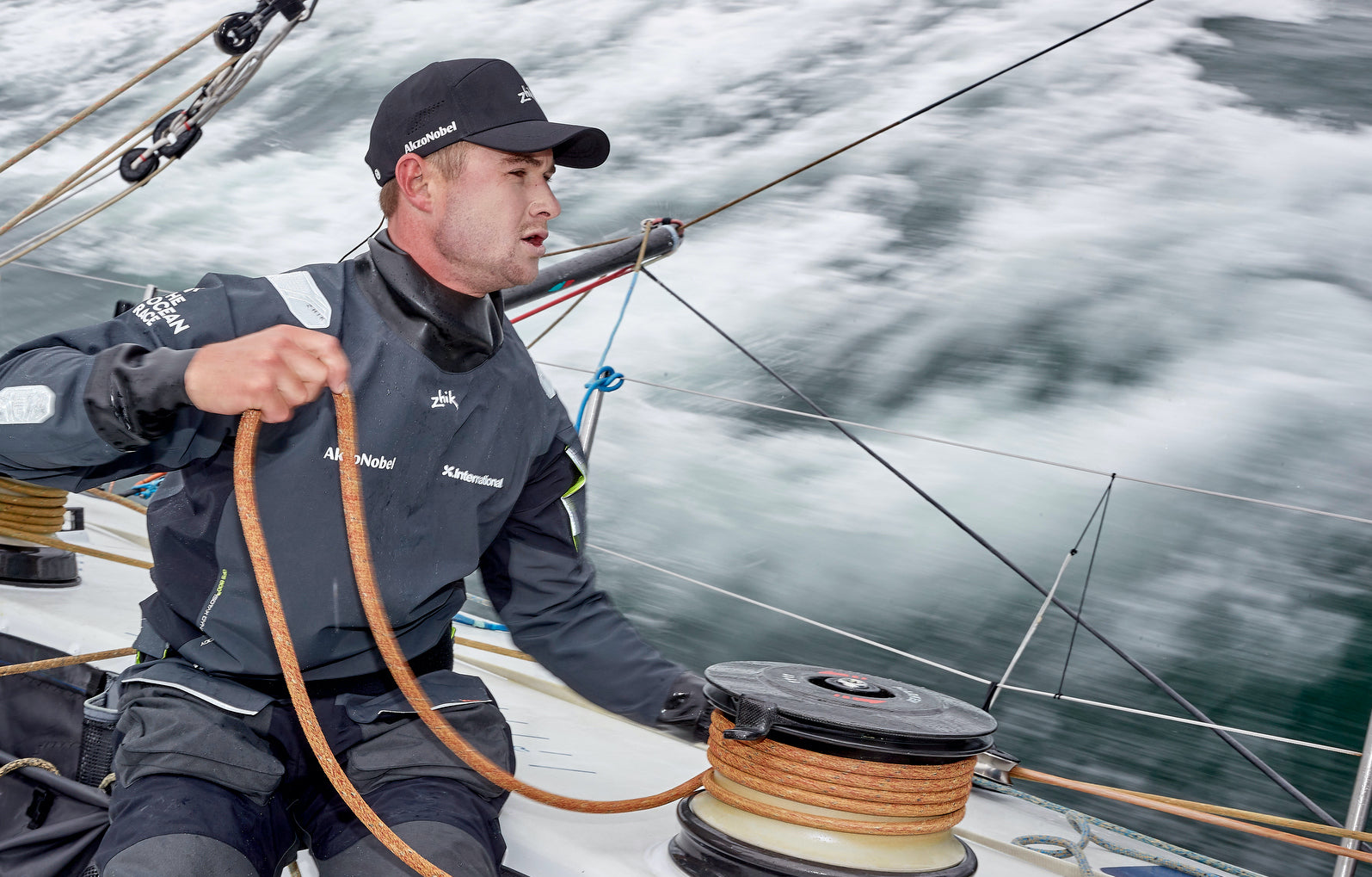
LETTER TO MY YOUNGER SELF: LUCAS CHAPMAN
LETTER TO MY YOUNGER SELF
Lucas Chapman, Watch Caption Onboard AkzoNoble Ocean Racing, Shares His Journey of Ocean Racing as a Dream Turned Reality
📸 Thierry Martinez / AkzoNobel Ocean Racing
The sailors and designers in the world of North Sails are some of the most inspiring people on the water, and we’re hoping to share more of their story with you. “Letter to my younger self” is a series told from our North Sails ambassadors. In each article, we bring to life their advice and personal journeys centered around the question: if your “now-self” could give your “younger self” advice, what would it be?
Dear 19 year old Lucas,
Right now you’re sitting in the university computer labs and you’re supposed to be working on the engineering dynamics assignment. Instead, you’re spending your time devouring every video you can from the 2011-12 Volvo Ocean Race yachts tearing their way through the Southern Ocean. They’re going at speeds you can’t even fathom, racing through massive weather systems and far off locations you are yet to know of. All of this seems a far cry off the 16ft skiff sailing you did over the weekend on the lake.
You see this year you will do something that will change the course of your life, you will do something that will, from that moment on, occupy your every thought, actions, and steps forward. You will go ocean racing. Don’t worry! At first it will be an easy introduction, a short coastal race from Sydney to the Gold Coast. But then later this year, you’ll do your first Sydney to Hobart yacht race. And boom– you’re hooked.
You’re probably wondering how two simple sailing races can make such a difference in your life, but, believe me, an addiction will be formed that even now, ten years later, I still struggle to explain. Standing behind the helmsman as he sends it down the coast on that first afternoon of the Hobart race you will begin to wonder what would it be like to race around the world, just like in those videos you watch from the yachts in the Southern Ocean. It’s this small insignificant thought that will someday allow you to make it to the top of the sport and race racing with and against the people in those videos. You will eventually sail on those boats and be one of the people in those videos. Almost seems impossible, right?
View this post on Instagram
A post shared by North Sails (@north_sails)
I guess it’s time for some advice– after all, how are you going to go from this computer lab to the Southern Ocean. Rule number one: Back yourself. You need to get your mind and thoughts aligned with what you want to achieve. If you want it and you begin to believe it, then all that’s left to do is to go and achieve it. Too often you will spend time doubting and wondering if it is really possible to get to that elite level, but thoughts become your actions so don’t waste time on those negative thoughts. Don’t be concerned if you haven’t won a World Title or Olympic medal– there is no right or wrong way to get to where you want to be.
Rule number two: stay in school. Before you get too carried away and jump on a plane to chase your dreams, it is important to finish your studies though. Although it may seem like a delay to your career as a professional sailor, these skills as a mechanical engineer will become invaluable in the future. Problem-solving and analytical thinking will become an integral part of what you do and make you a valuable member of many racing teams.
While you’re finishing your studies use the time in between to get as much experience sailing on good boats as you can. Chase down rides doing all deliveries and races you can, the experience and things you pick up along the way will all add to your resume, which in the end will make you a more well-rounded sailor. Make sure you are multiskilled, invest in doing some extra courses in basic navigation, learn skills in rigging and sail making, you want to make sure they have no excuses not to hire you.
Over the next five years you will achieve almost every goal you set your mind to. There will be sacrifices, hard times, long days on the road traveling around the world but believe me, it will be worth it.
Rule three: enjoy every step of the way, enjoy the small moments, the friendships, the incredible places and experiences you are so lucky to see along the way which most people are unable to do. Remain humble in every situation, become less impressed, and more involved. When you get to the top, learn to change your game in order to stay in front and always fuel that fire that keeps you motivated to achieve the impossible.
Enjoy every moment and stay safe,
📸 The Ocean Race
READ MORE
READ MORE
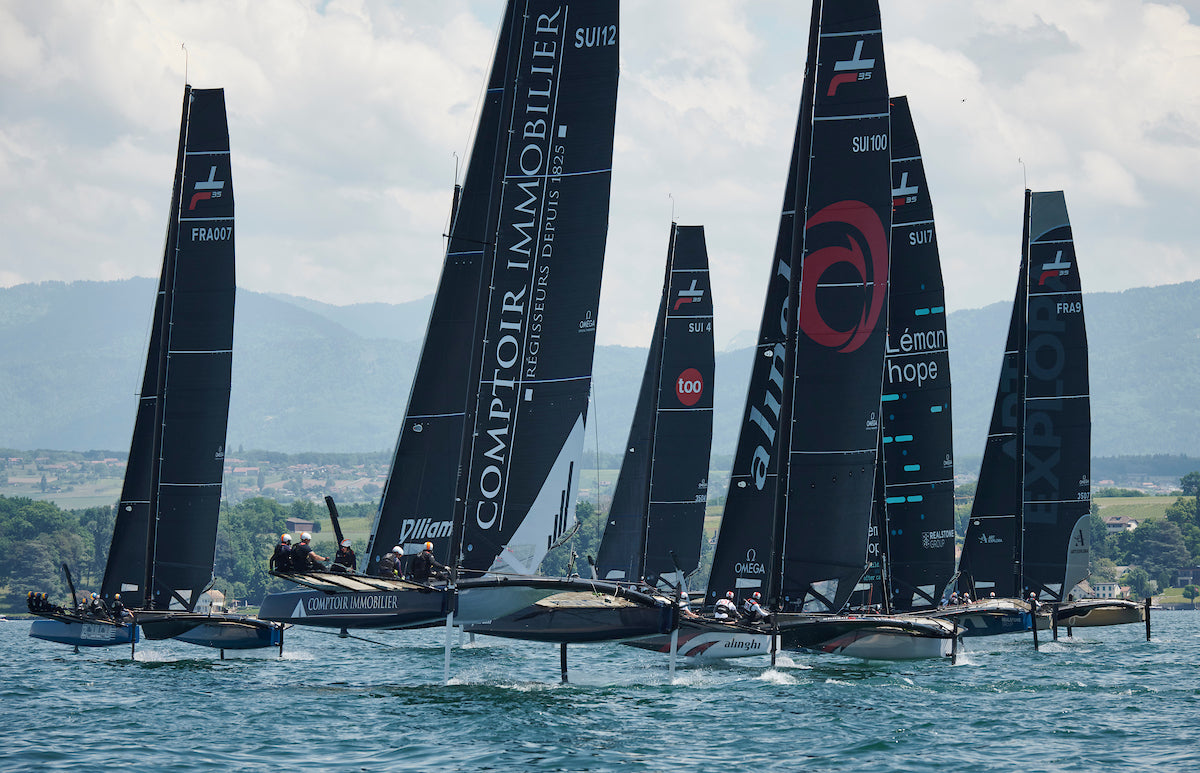
THE COOLEST REGATTA YOU HAVEN'T HEARD ABOUT
BOL D’OR MIRABAUD: THE COOLEST REGATTA YOU HAVEN’T HEARD ABOUT
Europe’s Biggest and Most Popular Annual Sailing Events
📸 Loris Von Siebenthal
If you don’t know anything about the Bol d’Or Mirabaud, you’re not alone—even though it began in 1939 and today is one of Europe’s biggest and most popular annual sailing events. The 66 mile course looks deceptively simple: start off Switzerland’s Société Nautique de Genève (SNG), sail to a mark off Bouveret, France, at the opposite end of Lake Geneva, and then finish again off the docks of SNG. But every year the course provides a different challenge, which keeps both professional and amateur sailors coming back for more.
26 boats participated in that very first Bol d’Or, and the winner finished in just under 24 hours. The current race record (set in 1994) is just over 5 hours, and today over 500 boats participate; everything from custom carbon multihulls to wooden classic cruisers. In 2017, the largest one design class, the 7.5m Surprise, had 132 entries.
Monohulls and multihulls start on separate lines and round different marks to minimize interactions between the fleets. The lake is known for its light wind and flat water, but every few years some serious weather rolls down from the Alps. In 2019, a well-predicted storm halfway through the race brought Southern Ocean conditions with gusts to 60 knots that kicked up huge waves, as well as hail that reduced visibility to almost zero. Competitors were forced to take shelter and drop sails, but thanks to excellent seamanship (and that accurate forecast), the only damage was to equipment.
📸 Loris Von Siebenthal
For the 2021 Bol d’Or Mirabaud, a new one design fleet of foiling T35s will join the fun for the first time. Pierre-Yves Jorand, Director of North Sails Switzerland and Team Director of Alinghi, has worked closely with the designers of this innovative catamaran for more than two years. “The T35 is an accessible foiler that can be sailed well with limited foiling experience,” he says. “This is possible because of flight control on the T-foils and rudders, for maximum stability and safety.”
The T35 is a direct descendant of Lake Geneva’s pace-setting Decision 35 and achieves lift-off in as little as 6 knots of breeze. They were designed to be easily transported around the world, but one stated goal is to beat the D35s on the longer races of their home waters.
To achieve that, sail and foil designs were carefully coordinated. “To succeed, constant exchanges of information and ongoing coordination is crucial,” North Sails designer Patrick Mazuay explains. “The surface area of the foils determines the speed of takeoff. If this area is too large, it slows the boat at high speed because the “T” foil remains in the water all the time. That affects which sails were suitable… so, everything is linked.” The 3Di 870 RAW sail plan includes a decksweeper mainsail, a low-aspect jib, and a drifter. For winds under 5 knots, there’s also a 3Di Downwind 600 gennaker.
Seven teams have been training and racing on the Swiss side of Lake Geneva since early May, with three Grand Prix events completed. RealTeam Sailing leads the overall results and Alinghi is in second, but it was Zoulou (one of two French teams) that beat Alinghi in the lake’s other iconic distance race, the 30-mile Genève-Rolle-Genève. Foiling in six knots of breeze—and a broach-near capsize by Alinghi when they were hit with an unexpected gust right after the start—enthralled the spectators.
There will definitely be more exciting action during the 2021 Bol d’or Mirabaud, which is available to stream live starting Saturday 13 June at 10am CET.
Click here for more info.
📸 Loris Von Siebenthal
READ MORE
READ MORE
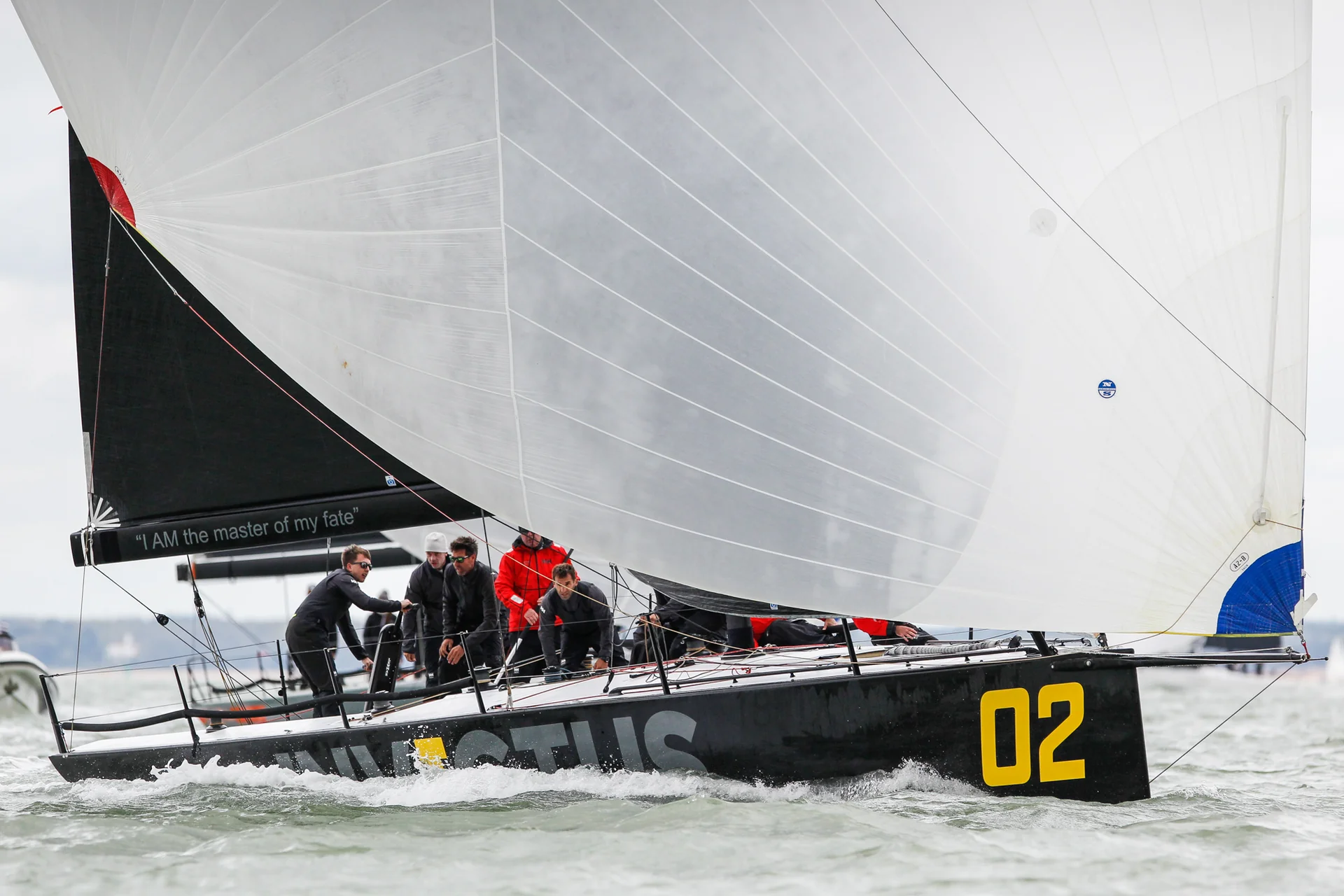
HOW TO: SPINNAKER ZIPPER SYSTEMS
HOW TO: SPINNAKER ZIPPER SYSTEMS
A Smoother, Cleaner, Quicker Hoist
📸 Paul Wyeth
When it comes to hoisting your spinnaker, there are some details to consider that make everyone’s life easier (or harder).
Angle off the wind is often underestimated and this can cause issues when the kite is hoisted too soon. Especially in heavier air, sneaking the halyard is really just to clear the head so it can freely go up in front of the spreaders as soon as the boat turns down around the windward mark or offset. If the kite is fully hoisted before the boat turns down, you can count on a broach or altercation if there is a boat close to leeward trying to make a mark. In a perfect world, the spinnaker is pre-fed, tack out, and the head flows freely, clear from the rigging and the jib or genoa, and as soon as the boat turns down it’s a game of who can ring the bell the fastest.
Why use zippers?
Zippers help keep the kite contained, making it easier to sneak and hoist your spinnaker. As the kite goes up, the zippers hold it together so it doesn’t fill, allowing a few more seconds for the mast position to get it fully hoisted. Zippers help keep the foot and the tack of the kite neat and tidy too, which your bowman will appreciate. The head is easier to bring forward if the kite is properly zipped, which will guarantee a smooth, clean hoist that can even help set you up for an immediate jibe if needed.
Older systems used velcro bands, woolies or rubber bands. They worked, but didn’t hold as long and after time would fail and the debris would be lost overboard. Having zippers instead of bands is a great way to simplify things and help keep trash out of the ocean. In offshore racing, it’s mandatory–as it should be. Here are the steps you should take when properly setting up your kite zipper system.
After the take-down, hook the head to the inside of the bow using a carabiner or slip knot. This will help hold the sail in place and make it easier, as you’ll be below deck while the race is still on!
From there, gather the material between the zipper sides like they are a hotdog bun, and feed the zipper onto the track (the same as zipping up your jacket, making sure the two zipper ends are even).
As you work your way down, very carefully run your finger along the underside of the zipper car to keep the spinnaker material out of the teeth. This is imperative as catching in the zipper will tear the material!
Once you get to the end, hold it together with one hand and pull the zipper off the track. Then use the fixed velcro strap to temporarily secure the zipper from unzipping, by pulling the velcro across and pressing it down to secure it.
Once the velcro retainer is in place, gently break the zipper end so under pressure it will naturally unzip.
Use this same technique on the foot, making sure to keep tension on the material as you work your way towards the clew. This will keep it from bunching up and not fitting in the zipper.
Once you are zipped, remove the zipper car and store it on the spinnaker bag, or below deck on the carabiner, ready for the next douse. You can pack the kite easily now that the spinnaker is more manageable.
It sounds easy, and generally it is! But keep in mind you’ll be doing this as soon as the kite comes down and some boats don’t have a ton of headroom. You also may be doing this alone. Hooking up the head so you don’t have to hold, feed and zip at the same time is very helpful. Practicing this method and timing yourself is a great place to start. Depending on how long the upwind leg is, you may be strapped for time. Getting comfortable using the zipper method and being able to do it on your own puts you on the fast track to becoming a great bowman.
Pro Tip: If the breeze is up and weight on the rail is necessary, try to position yourself down below so you are on the same side as your teammates.
READ MORE
READ MORE

IN THE MIDWEST, WE'VE GOT YOU COVERED
IN THE MIDWEST, WE’VE GOT YOU COVERED
North Sails Certified Service Lofts Keep Clients On the Water
Service no matter where you are. With three North Sails Certified Service locations across the Midwest, your sails are in good hands no matter where you are in your sailing adventures. What makes the difference in North Sails service? The quality of work and the extra mile the team goes to make sure your sails are 110%. The three lofts expertise expands beyond sailors and sailing needs; the teams are able to assist with kiteboarders, windsurfers, canvas or custom projects. As Detroit service manager Bill Lesnek says, “the service work, it’s just a higher level of standards compared to everybody else, you know? North people care a little more, and put a little more heart and soul into what they do.” Beyond that, Bill shares, he is grateful to have a really strong team in Mike Stark and Karl Kuspa. “Mike and I work really well together. He’s got a lot of experience, and we’re on the same page. We all get along like a little family over here. Which is the way it should be, you know?” This idea of teamwork is a common thread woven throughout the Midwest lofts and the North Sails environment. It is a consistency that holds everyone to a certain standard, ensuring customers' needs are met, no matter where they are. When Bryan Sims from Toronto took his Perry 57 down to Chicago, he was connected with the North Sails Chicago team, where Perry Lewis has been assisting him in getting ready for racing. Toronto North Sails expert Hugh Beaton shares, “It is really great knowing that when one of your long-time customers starts travelling around the Lakes, that the North Sails team will jump in to support him with local advice and excellent service.” The lofts work together on a consistent basis. If Chicago needs assistance, the Detroit team helps out and vice versa. The same with Milwaukee. Miles apart but the spirit and attitude across the Midwest lofts is the same. Backed by their years of experience, the team is ready for whatever walks through the door; whether it’s regatta service, annual inspection, sail washing, or a new UV cover. North Sails expert Tom Pease, with 40 years experience in sailmaking, from our Milwaukee loft shares, “From a sales standpoint I've found that one of our strengths is being able to support our clients throughout the Great Lakes region no matter what their sailing requirements or criteria might be. If one of our clients that I'm working with needs help right before one of the larger events out of the area, the lofts in Chicago and Detroit are standing by.” Our team has you covered wherever your travels take you in the Midwest. Connect with our team for your repair needs today.
FIND YOUR LOFT REQUEST A QUOTE
READ MORE
READ MORE
KEN READ RECAPS LEG 1 OF THE OCEAN RACE EUROPE
KEN READ RECAPS LEG 1 OF THE OCEAN RACE EUROPE
First of all, it’s great to see the boats back out there.
📸 The Ocean Race
Let’s face it. The world is itching for good things, and in the sailing world we’re just itching to get back on the water and do what we do. The Ocean Race is jumping into the season with a great idea that’s built a lot of enthusiasm in a very short period of time– the Ocean Race Europe. Simply a great showcase for the teams, the crews, and the programs to get miles in before they set off on an around the world adventure in 2022.
Practice is always good, and a vital element in preparation. Some of the boats are getting their feet wet. Newer teams, younger crews, all mixed gender, all trying to learn how to sail the boat. Other teams are pretty far down the path and have (for the most part) sponsorship reasonably secure and are a little more prepared to take on what a 56,000 mile around the planet race can throw at them. I think, for all the teams though, it’s just really great to get back out there.
Enter the IMOCA class as an additional class inThe Ocean Race, which feels more like the so-called “development era” of the past. The Volvo 70s for example were a reasonably tight box rule, but nonetheless allowed designers and teams creativity with regards to the final boat, the sail package, the setup– nearly everything. The IMOCA 60s take it one step further with only a few one-design parts like the keel fin, the mast and the rigging. But, for the most part, it’s a wide open development class. In my opinion, it feels like we’re getting back to those roots of The Ocean Race.
Yes, you could say the One-Design 65 footer class may have saved the Ocean Race a few years back when the event was looking to increase participation numbers. But now with the addition of the two different classes and the ability to choose whether it’s strict One-Design or wide open with crazy offshore development, it’s really a good thing for the race. Also it’s an outstanding thing for us as spectators to watch.
In the One-Design 65 fleet, there are very few changes to the rule. Head of operations, Neil Cox, still has to get all the boats through a mandatory checklist including any minor rebuilds in order to get them prepared to take on the rigors of offshore sailing . But besides that, it is still a strict One-Design rule with only one real “new” wrench thrown into the situation: the new A4 spinnaker.
Let’s talk about that A4 spinnaker. First and foremost, it opens up quite a few new opportunities, both tactically as well as boat speed wise. The teams are just going to have to figure out how and when to use them, and it really depends on weather systems and whether you need to go high and fast to the next weather system, or it’s more of a VMG situation where it’s optimal VMG towards the next mark.
From a North Sails perspective, it’s been fun developing the A4 with the sailors right down to a brand new sail bag that was modified to help sails get in and out of the hatches with ease. They’re going to have to get out there and spend a lot of time on the water with these new sails, put them to their test, and figure out how to use them and how the boat likes to use them.
On the other hand, the IMOCAs have a crazy amount of development in their sail plans. Very similar to the America’s Cup, with the engine above the deck and the engine below the deck needing equal development time with regards to how to make a boat go fast. It’s important to remember, if the development teams only concentrate on the radical hydrofoils, then they’re going to miss out on the other half of the operation. The sail plans and the sail sizes, the aspect ratios, the anticipated wind angles, and the ability to flatten sails quickly all take on a whole new dimension when it comes to these boats. It’s the ability to have depth and size in their sail plans to get the boat popped out of the water. Not all the way out of the water, but what’s called skimming. When the IMOCA 60s are skimming, the apparent wind goes forward and as the apparent wind builds;the sailors have to have the ability to flatten the sails dramatically just using conventional tensioning devices. Enter the huge advantage of 3Di to make this happen.
It’s an interesting set of lessons to be learned over the next year in the IMOCA class, and the sailors, I think, are just on the tip of the iceberg at this stage. We’re going to see some great new concepts and designs coming out of races like this, especially when the boats are now crewed, compared to solo or Double Handed, which is more typical for the IMOCAs. It’s anticipated, according to the sailors on board, that they can sail the IMOCA upwards of 15-20% faster on average than when they’re sailed by the rule maximum crew of 5 compared to short handed. Think of that for a minute. That is a massive amount of miles gobbled up around the world just by having a few extra crew. They still had the ability to use the autopilots, which essentially are steering the boats better than a human in most conditions at this stage, and the autopilot doesn’t have nerves. When the boats get going so fast, the autopilot doesn’t know to bear off, it doesn’t know to bail out of a big wave, it just sends it. So the sailors are going to have to figure out when to pull back on throttle a little bit to keep these boats in one piece.
Anyway, it’s a fresh, brave new world for the Ocean Race. It’s just great to see it back out of the water, and we look forward to sharing some of our observations as we go along.
📸 The Ocean Race
READ MORE
READ MORE
LETTER TO MY YOUNGER SELF: EMILY NAGEL
LETTER TO MY YOUNGER SELF
Emily Nagel from Mirpuri Foundation Racing Team Leads-Off Our New Series
📸 Martin Keruzoré / The Ocean Race
The sailors and designers in the world of North Sails are some of the most inspiring people on the water, and we’re hoping to share more of their story with you. “Letter to my younger self” is a series told from our North Sails ambassadors. In each article we bring to life their advice and personal journeys centered around the question: if your “now-self” could give your “younger self” advice, what would it be?
Dear 10-year-old Emily,
I promise you that one day your sailing dreams are all going to happen, but not until you start ignoring the people who say “you can’t.” I need you to stop getting out of people’s way and start fighting. I need you to go for it.
Yes, starting to sail the Opti at age ten was always going to be hard. It doesn’t help that you’re too big for the boat, and coming in last all the time is discouraging. I get it.
But your dream to race around the planet is not crazy. Whatever you do, do not give up on this dream. That might seem a little wild to hear right now but trust me, you will one day see albatross soaring in the Southern Ocean. Stay inspired by Ellen MacArthur and her book, “Taking on the World”– the way she puts her head down, works hard, and makes things happen. Even if people tell you that you can’t do it, pretend you are Ellen; just get after it, and eventually you’ll prove them all wrong.
One thing, though: you must listen to your parents. Go to school, study hard, get good grades and be practical (trust me, it will make sense one day). But don’t lose focus on your love of sailing. Because, 10-year-old-Emily, despite what so many people say, you’re really quite good.
One of the most instrumental projects you’ll work on is in 2016 (just over ten years away!) is a Red Bull project called “Flying on Water.” Together with Jimmy Spithill, Rome Kirby and Shannon Falcone, you’ll sail from New York to Bermuda. It will be intense, but it will be a real eye-opener. You’re going to really see that this dream you have now, at the age of ten, really isn’t so crazy after all. You’ll realize that your dream to sail around this world is in reach, and that all you need is a bit of a kick to get yourself moving. There might be some low days between now and then, but that fire inside you will always exist and the spark will reignite on this trip.
After “Flying on Water”, you’ll be mentored by Jimmy Spithill. You’ll ask him for advice and he’ll stay involved with your progress. He will keep inspiring you to chase after your “crazy little dreams,” whether it’s offshore sailing or high-performance foiling.
If you want to do professional sailing correctly, become as well-rounded as possible and get as many different offshore skills as possible. Get on the bow, be a trimmer, get to know a winch inside and out, and figure out how to fight for the helm. Get onto both big boats and little boats, and when Moths come on the scene, start racing on those as well. Match racing and other inshore tactics will come in surprisingly handy when you start racing VO65s. (These don’t exist yet, but one in particular will become your offshore home.)
Equally, don’t limit yourself to sailing. Your degree in naval architecture and engineering experience will lead you first to the design office and then to working with shore teams. You’ll get your hands dirty servicing winches and repairing carbon boats. And —this might sound funny because it’s only 2004– but computers are going to become an essential part of sailing. One day, your ability to crunch numbers and data will make you even more valuable.
View this post on Instagram
A post shared by North Sails (@north_sails)
One day not too far in the future, 10-year-old Emily, you’re going to work for some of the best teams in the sailing industry—and be an asset to each one. From the Ocean Race to the America’s Cup, you’ll get stuck into incredible projects, learn from the best, and share in the victories. You’ll love working towards these high-performance goals.
But, to do this, you’re going to have to make things happen. Opportunities won’t be handed to you, so you’ll have to stop worrying about what other people think and trust yourself. Stop listening to the haters. Get over any fear of failure, and give it everything. You can do it, even if it terrifies you, it will be a brilliant challenge to race around the world. This mental mindset will make you a little different. It will make you stand out. It will give you that cutting edge.
Decide now that you don’t want to be pushed around anymore and that you’re good enough. Once you do that, you’ll get your foot in the door with the high-performance world and you’ll break into professional sailing. You must back yourself, you have to shut out the noise. 10 year old Emily, believe me: you have to go for it.
Stay hungry,
📸 Martin Keruzoré / The Ocean Race
READ MORE
READ MORE
#NSVICTORYLIST: ATOMIC BLONDE WINS THE SISKA TROPHY
#NSVICTORYLIST: ATOMIC BLONDE WINS THE SEASON
Congratulations Team on Winning the WA Offshore Yacht SISKA Trophy
📸 Lindsay Preece
The JPK 10.80 Atomic Blonde placed 3rd overall in the recent Fremantle to Exmouth race, being also Division 2 line honours winner. Highly variable weather patterns ranging from drifting conditions to near gale force made it a challenging race. This capped off a very successful year for Atomic Blonde and her crew, and emphatically sealed the coveted SISKA trophy for overall best offshore race yacht in Western Australia. This is the first time in 14 years a Division 2 yacht has won the trophy and was especially pleasing for the crew who are all Corinthian sailors.
📸 Lindsay Preece
Atomic Blondes owner Dr Simon Torvaldsen filed the following report; “A key factor in the success was the decision to use North Sails for the new mainsail and jibs. Upwind performance is critical to winning races in Western Australia. Having the 3Di RAW sails resulted in 20kg less weight loft compared to the previous configuration and the one piece moulded construction delivered performance as promised, being precisely shaped to the boat design. The fact that North Sails had extensive experience in JPK sail design in Europe was a big factor in the decision to use their sails and the results speak for themselves. Utilising high tech construction and very precise design means that sail settings and rig tune need to also be very precise, small differences in settings can have a big impact on performance. So time needs to be spent by crew in getting the rig and sail settings correct. This is where after sails service and back up from the sailmaker is important, and the North Sails team spent considerable time on the water with Atomic Blonde and her crew to optimize the boat tune and enable the performance potential of the new sails to be unleashed. Winning the major offshore trophy over a whole season requires a lot of time, effort and teamwork, especially when competing against highly competent, motivated and professional opponents. It needs a top boat, crew, gear and sails. North Sails became an integral part of that team and the quality of the sails and tuning advice played a key role in securing the SISKA trophy for Atomic Blonde.”
📸 Lindsay Preece
READ MORE
READ MORE
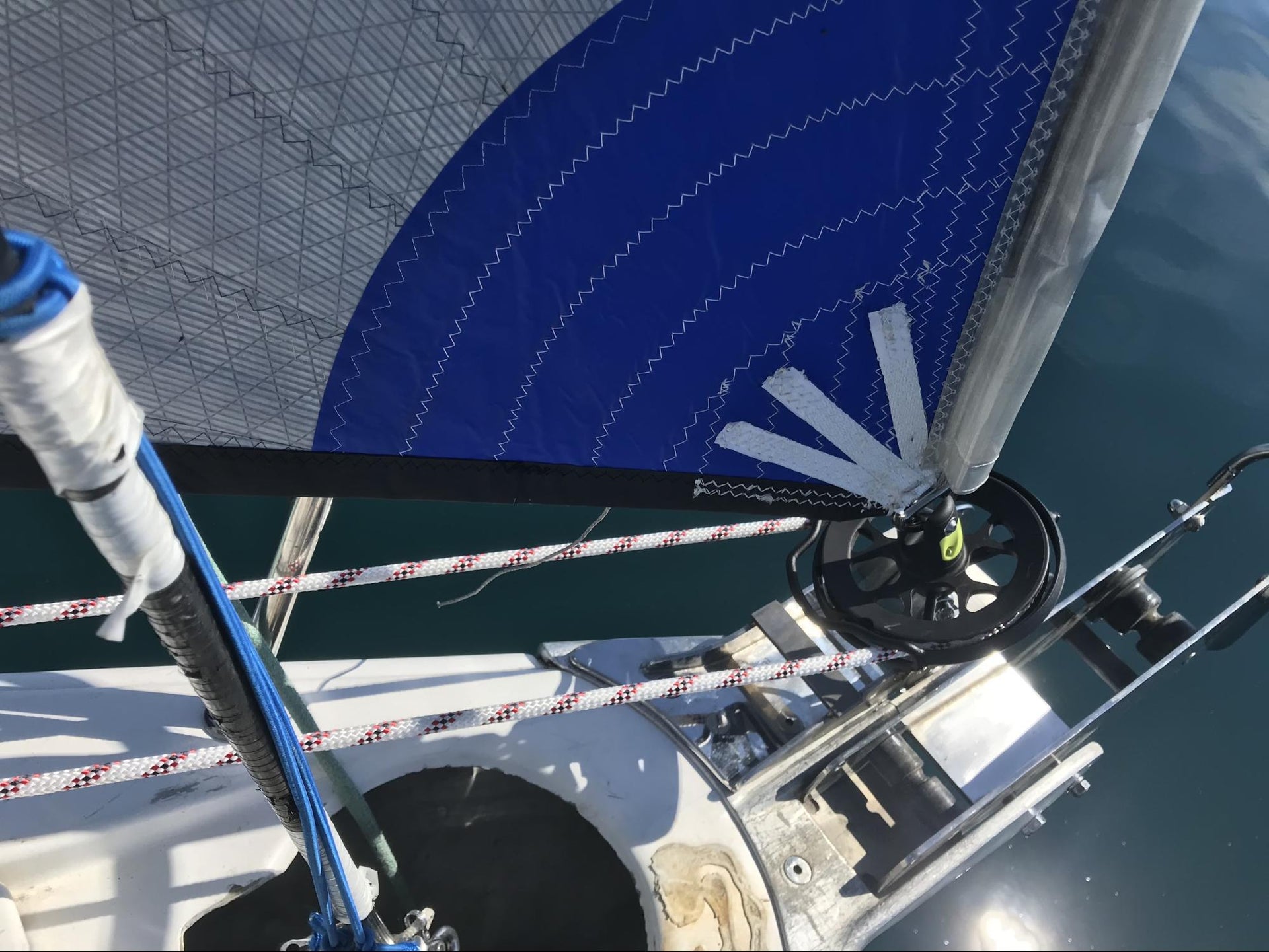
CODE ZERO'S: WHAT'S NEXT
CODE ZERO'S: WHAT YOU NEED
A Look Into What's Important to Think About When it Comes to Your New Code Zero
Local North Sails expert Hugh Beaton shares insight into what you need to think about when it comes to setting up your new Code Zero on your boat. So you’re either thinking about adding a code zero to your mix or you’ve already bought one and probably wondering what’s next. We’ve put together a list of what we’ve learned in the past year from our trials and tribulations with Code Zero’s.
Learned the Hard Way
You need more space at the top otherwise the sail can’t unfurl if it’s too close to the forestay. It’s not the swivel, it’s the head of the sail itself that needs room. Tip: Hoist your code just a few inches short, unfurl, and winch it up the remaining distance.
Helix Sails are the Easiest to Handle
Perhaps more important for the cruisers than the racers, Helix sails are lighter, more flexible and easier to stow away. You can fold it in half and put it in your car. Helix sails offer significant handling benefits that makes it a great choice for cruisers and racers alike.
UV Protection
We’re seeing more and more cruisers that are wanting to leave these things up so you need to have a plan for UV protection whether it’s paint or UV suncover. Whatever you do, do not leave it up without protection. Leaving it up for a long weekend is okay, but leaving it up long term is not. The material will eventually be broken down by the UV rays and you’ll be needing a replacement faster than you think. When thinking about how to set up your code zero, it’s best to ask yourself the following questions. Understanding your attachment options will help your sail expert design the best possible sail with the right fittings so you can sit back and enjoy your experience.
Where does your spin halyard come out at the top?
Where are you going to put the drum? Will the bow pulpit be in the way?
Do you need a prod?
Having a bowsprit isn’t necessary as it depends on the location of the drum and how much room there is in the pulpit.
Is your anchor roller strong enough to be used? Or would it need to be reinforced? This is especially important for cruisers.
There are a few hardware items you need to think about before your sail arrives to make sure your boat is ready to go.
Furlers
Yes your sail needs to furl around something! There are multiple setups that you can do that work best for your boat and sailing needs. We’ve had great success with the ProFurl NEX units for local sailors on Lake Ontario. When purchasing a furler, you can opt to get stanchion leads. These assist the furling line and cam cleats should you wish to have the furling line come all the way back to the cockpit; however it’s not a must. This would be most ideal for shorthanded crews.
Attachment Points
You’ll need to think about potential attachment points in relation to your furling unit. Almost any cruiser built in the last 10 years has attachment points already in place for Code Zeros. This is because there’s a bit of space above the mast therefore there is always a pass through via the pulpit. Hanse always has it built in already, same with Beneteau.
The Furling Line
When it comes to the furling line, there are two main things to consider: the grip and the length. It’s all about grip. The line needs to be able to spool in the drum and not slip when you’re pulling. We recommend talking to a rigger when getting a furling line, specifically Cam from Fogh Marine. We have worked with Cam many times to create furling lines for Code Zero’s; he is well versed in what line to use. The length itself for the furling line is critical. This all depends on where you want to control the line from therefore how far does it need to come back? Cruisers may want it to come through a cam cleat so they can stand up and pull the line from the back of the boat; whereas racers may want it to come through tweakers to the cockpit. Additionally, this also impacts usage if you get a velcro patch on the sail. Cruisers typically don’t need the velcro patch on the sail whereas racers like the velcro patch so that it keeps the sail closed once it’s furled up (which also makes it easier to drop).
Tweakers
An additional add-on to your setup that could be beneficial. Many racers use them because they allow you to set the sail for all kinds of different wind angles. We recommend speaking with Fogh Marine about options and sizes for your boat specifically.
READ MORE
READ MORE
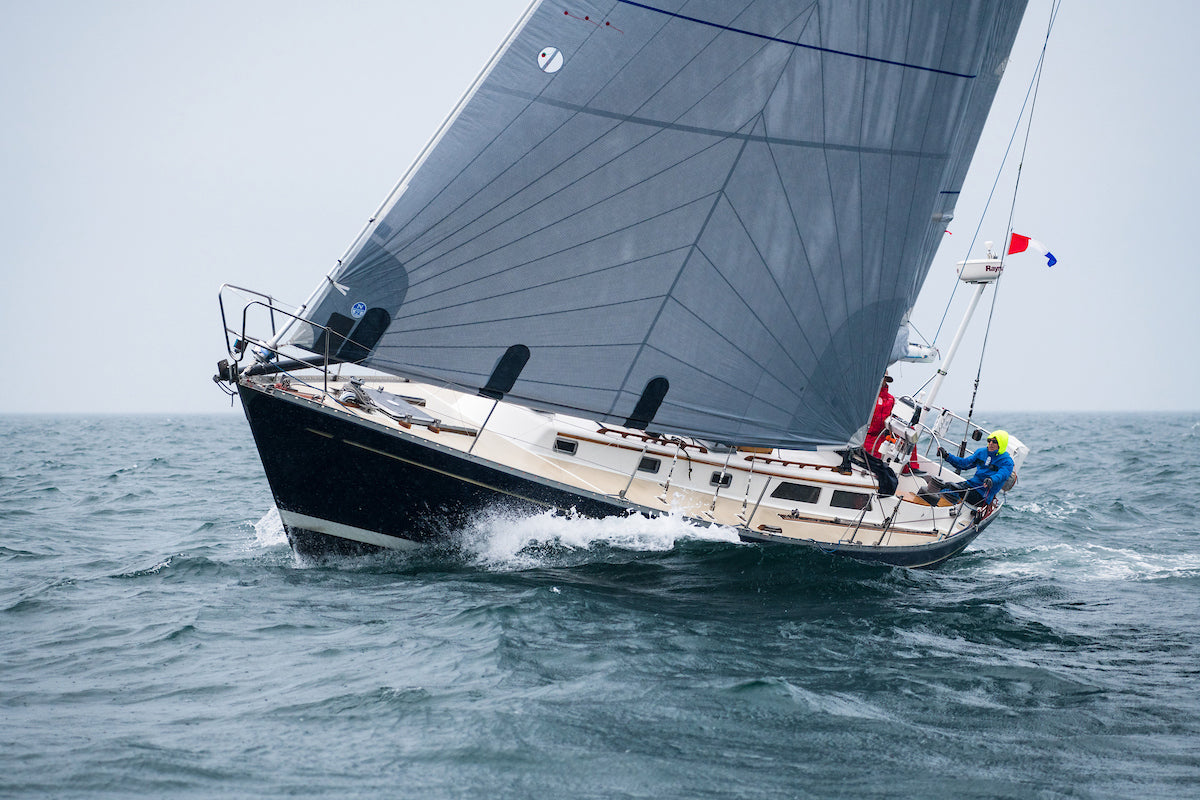
Consejo North Sails
CONSEJO NORTH SAILS
Elegir un inventario a medida de nuestras necesidades y las características de nuestro barco puede parecer complicado
📸 Cate Brown
Afortunadamente, la combinación de eslora y plano vélico reduce las opciones y podemos centrarnos en el material que mejor cumple nuestros objetivos. A partir de ahí, nuestro agente especializado nos indicará cómo afinar detalles en base al uso que vayamos a dar a nuestras velas.
"Si alguien busca durabilidad, le dirigiremos a nuestra gama 3Di Endurance", indica JB Braun, director de diseño e ingeniería de North Sails. "Si lo que busca son prestaciones, la 3Di RAW. Si prefiere un compromiso entre ambas, también tenemos opciones".
Otra forma de que los agentes puedan ayudarnos a elegir la vela más apropiada para nuestros intereses es midiendo el barco, incluso si ya está en la librería de diseño de North Sails, que cuenta con datos de todas las velas fabricadas desde 1990.
"Un cliente puede haber variado la caída del mástil o tener un enrollador diferente. Hay quien prefiere un puño de escota más alto o más bajo". Para todos ellos, North Sails ofrece un producto a medida.
READ MORE
READ MORE
CALENDARIO NORTH SAILS
CALENDARIO NORTH SAILS
A las puertas de la temporada de verano, el equipo de North Sails España continúa organizando charlas, webinars y presentaciones
Del 3 al 6 de junio estaremos en el Palma Superyacht Show; visítanos en el stand SY03.
El 10 de junio, en la previa del Trofeo Carburo de Plata de Cartagena (11 a 13 de junio), el equipo North Sails España al completo impartirá un interesante webinar sobre materiales de crucero.
Y recuerda que puedes contactar con nuestros expertos para resolver cualquier duda a través del email info@es.northsails.com
READ MORE
READ MORE
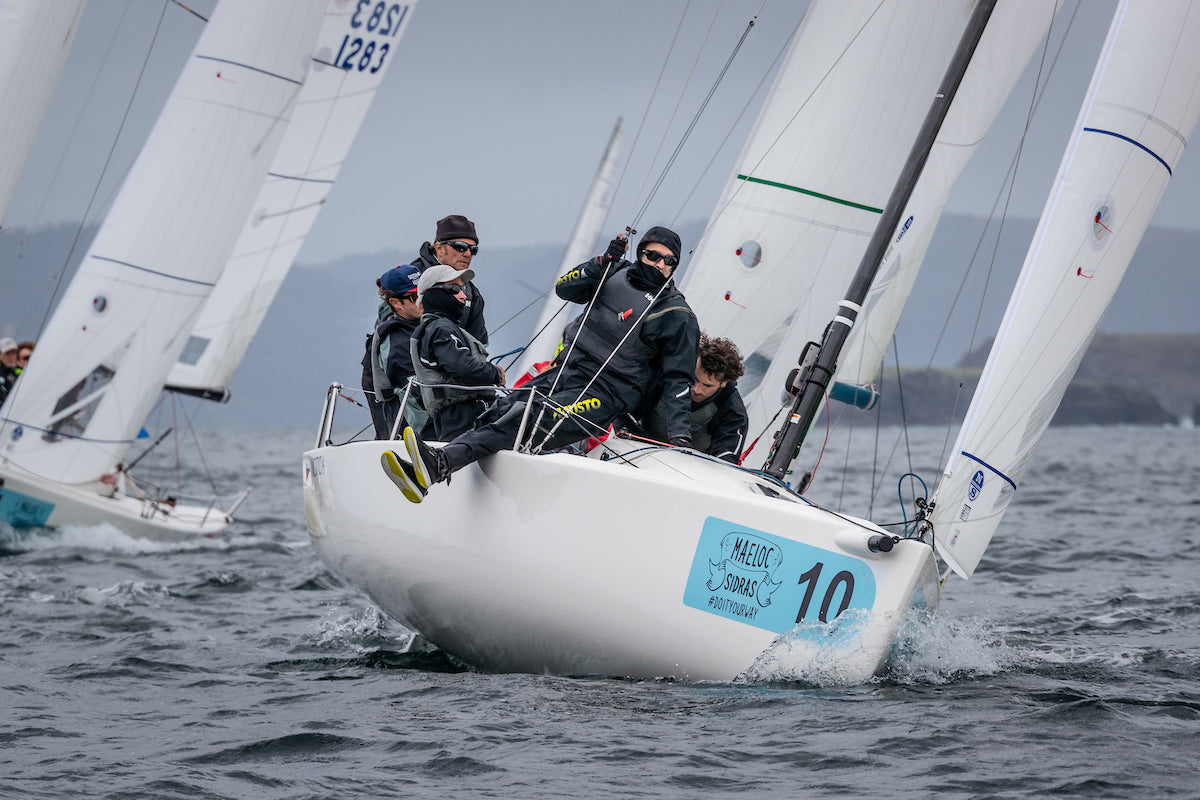
NORTH SAILS COPA EL PODIO EN J70
NORTH SAILS COPA EL PODIO EN J70
Barcos equipados con inventarios North Sails coparon el podio del Maeloc Open de España
📸 Maria Muina / Sailing Shots
Barcos equipados con inventarios North Sails coparon el podio del Maeloc Open de España, regata de J70 que reunió a una potente flota formada por 19 equipos de España, Argentina, México, Finlandia y Portugal en aguas de A Coruña entre los días 14 y 16 de mayo.
Un intenso programa de nueve mangas resolvió el título en favor del Noticia de Pichu Torcida, seguido por el Solventis de Alfredo González y el Marnatura de Luis Bugallo. El Noticia será el único representante español en el próximo mundial de J70 (que se celebrará en Marina del Rey, California, del 7 a 15 de agosto), y desde North Sails España le deseamos la mejor de las suertes.
¡Gracias por confiar en North Sails!
READ MORE
READ MORE