

KEN READ INDUCTED INTO THE SAILING HALL OF FAME
Honored, humbled and still at full speed. The Sailing Hall of Fame recognizes his lifetime of achievement—but Ken’s story is still being written.
Ken Read’s induction into the National Sailing Hall of Fame is a defining milestone in a career distinguished by decades of achievement and a lasting impact on the sport of sailing. From his early days on Narragansett Bay to leading global sailing campaigns while at the helm of the most influential brand in sailmaking, Read's journey is one of passion, perseverance, and leadership.
Before Ken Read became a world-renowned sailor, two-time Rolex Yachtsman of the Year, and the president of North Sails, he was a kid from Seekonk, Massachusetts, who spent his summers sailing on Narragansett Bay in Rhode Island and his winters at the hockey rink.
His father, a passionate sailor, introduced Ken and his brother Brad to cruising aboard the family's 30-foot Pearson Wanderer. Every weekend, they'd head out on the water, towing a dinghy, then eventually a Sunfish behind them. By the age of six, Ken was sailing solo. But sailing wasn't love at first tack.

At eight, Ken joined the Barrington Yacht Club's summer sailing program. By nine, he was desperate to quit. He faked seasickness to skip lessons until a deal with his dad and a newfound friend turned the season around. It was then that sailing stopped feeling like a chore. It became fun and it came easy.
"I still hear my mother's voice echo: "Hustle, Kenny Read, hustle!" Read reflects. "Whether on the ice or on the water, effort was our family's currency. Winning wasn't the priority—effort was. After every game or regatta, the question wasn't "Did you win?" but "How was your effort?"
That mindset, instilled early, became the bedrock of Ken's approach to competition, leadership, and life.
By the time Ken arrived at Boston University, he was still a relatively unknown name in collegiate sailing. But Coach Skip Whyte quickly recognized his raw talent and competitive drive, appointing him as the starting skipper for the New England Freshmen Championship at the Yale Corinthian Yacht Club. Read's bold, aggressive style—shaped in part by his years on the hockey rink—immediately set him apart. He took risks, pushed boundaries, and proved he could go head-to-head with the best young sailors in the country. That breakout performance marked a turning point. In 1982, Read was named College Sailor of the Year, the first of many honors in a career that would become a benchmark for excellence in the sport.
Sailing was a passion, not a career plan. "Not in a hundred million years," he said. In fact, during his sophomore year at Boston University, he was dabbling in pre-law courses, unsure of the path that lay ahead.
But one winter, Moose McClintock, a respected sailor from Newport and a key figure at Shore Sails, approached Ken with an unexpected offer: to helm a J/24 that Shore Sails owned. "We want you to be our driver," Moose said. "Let's build a program around you." Moose even volunteered to crew for him.
For Ken, it was like someone had handed him the keys to the coolest boat in the world. That moment—being trusted with a competitive J/24, and the opportunity to lead a campaign—was a launch pad. It wasn't just about the boat. It was about being seen as someone who could take the helm and deliver results.
That same year, Ken was named an All-American sailor. The momentum was undeniable. Soon, Shore Sails offered him a job, and by his senior year, he was the only person he knew with a career waiting for him after graduation. "It was a miracle," Ken recalled. "Just because I knew how to sail."

But it wasn't just luck, it was the effort-mindset Ken's parents had instilled in him from day one. And when Shore Sails came calling, it wasn't just a job, it was the moment he realized that maybe—just maybe—you could make a living doing what you love.
Ken Read's journey from college sailing to the world's biggest stages wasn't an overnight success; instead, it was a steady climb, each step building on the last. The J/24 was Ken's grad school. It taught him how to win, but more importantly, it taught him how to lead. Success in the class wasn't just about speed or tactics; it was about building a team, organizing logistics, and arriving at regattas with a well-planned strategy. Without realizing it, Ken was running his campaign like a small company. Each crew member had a role: one handled the boat, another the sails, another the equipment, and someone else managed the paperwork. Ken, naturally, was the communicator—the one who spoke to clients and kept the team aligned.
"I didn't know I was doing it at the time," Ken said, "but I was essentially managing a five-person business." That realization would shape his leadership philosophy for decades to come. He learned that micromanaging didn't work, and that winning required trust, delegation, and structure.
As his reputation grew, so did the boats. The J/24 led to Etchells, One Tonners, then to IOR 50s, and eventually to the call that changed everything: an invitation to join Dennis Conner's America's Cup campaign. Initially, Ken was hired as Chris Dickson's tactician. But after a shake-up in the team, he was told he'd be driving the boat instead. "I thought it was a crank call," Ken joked. But deep down, he knew he was ready.
Confident and ambitious, Ken began assembling a team of trusted sailors, including Peter Holmberg for match racing expertise, Chuck Brown, and others who brought skill and chemistry. That first Cup campaign was a breakthrough, not just in competition, but in leadership. It was about building a team that could perform under pressure, and Ken was at the helm in every sense.
Meanwhile, his work within sailmaking was gaining momentum. He and Dan Neri had just sold their company to North, and Ken was developing sails for the Etchells class. When Dennis Conner chose Ken's sails for testing, he offered a backhanded compliment: "Now I know you're the best sailor in the world—because your sails suck and you still win with them." It was a wake-up call, and Ken embraced the challenge.
Then came the Volvo Ocean Race—a partial race with Ericsson and twice around the planet with PUMA Ocean Racing, in conditions few sailors ever experience. Ken never saw himself as an offshore guy, but when the opportunity came, he couldn't say no. The campaigns were grueling, transformative, and unforgettable. They tested every skill he had and taught him new ones. And they deepened his understanding of what it meant to lead—not just a crew, but a mission.
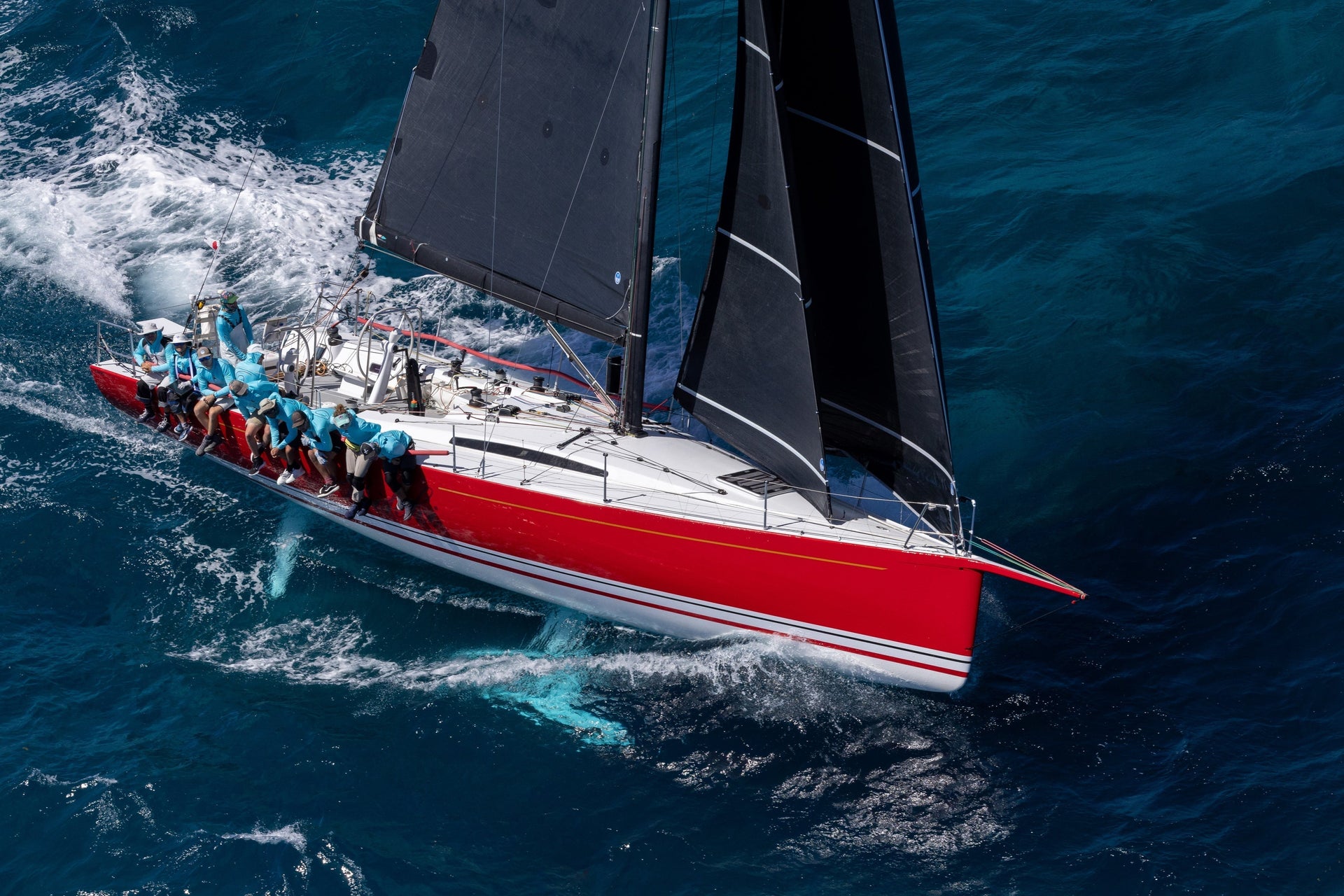
After the Volvo, Ken's focus shifted to coastal and offshore racing, culminating in the build and campaign of Comanche, one of the most advanced racing yachts ever constructed. Once again, Ken assembled the right team, built the right product, and delivered results. Comanche wasn't just a boat—it was a statement—a symbol of what happens when leadership, innovation, and execution align.

From the J/24 to Comanche, Ken Read's career has been a masterclass in scaling up. The boats got bigger, the stakes got higher, and the lessons got deeper. But through it all, the core remained the same: build the right team, trust your people, and never stop pushing for excellence.
For Ken Read, being inducted into the National Sailing Hall of Fame is more than a personal accolade—it's a deeply humbling moment that connects him to the legends of the sport. "It's joining a list of legends, of which I will probably humbly never think I belong," he says. "It's just such an unbelievable honor." Many of the names on that list are people with whom Ken has sailed, competed against, or admired throughout his career. To be counted among them is both surreal and deeply meaningful.
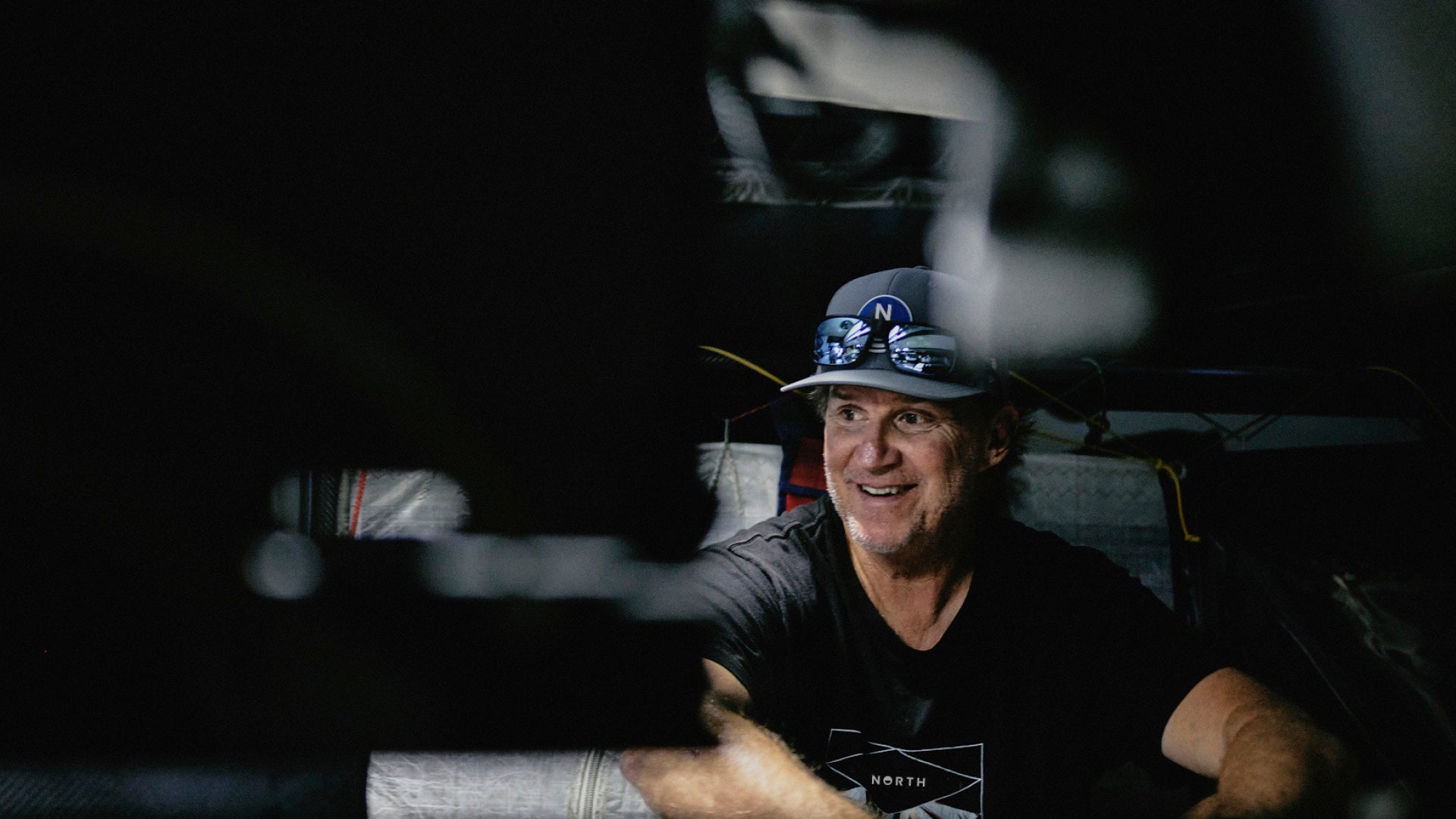
He sees the honor as a recognition of a lifetime of work—not just the victories, but the effort, the leadership, and the commitment to the sport. "It's kind of a lifetime achievement award," he reflects. "But I want to make it clear: it's not over yet." Unlike many Hall of Fame inductees, Ken's career is still very much in motion. He's not retiring. He's not stepping back. If anything, he's leaning in.
"It's something you can always put next to your name," he says. "But it doesn't mean you stop. You win this and then go sailing again."
One of the most emotional aspects of the honor is that Ken's 90-year-old father was able to witness it. His mother, who passed away suddenly in 1997, was his biggest fan. "She would've been jumping up and down right now," Ken says. "Having my dad at the ceremony was a massive part of it."
As someone who has not only raced at the highest levels but also served as a spokesperson and ambassador for sailing, Ken sees the Hall of Fame honor as a platform to continue advocating for the sport's future.
His advice to the next generation is grounded in the values that shaped his own journey: effort, humility, and service. "Sailing is a privilege," he says. "And you have to earn it—not just by winning, but by contributing.
Ken Read's induction into the Hall of Fame isn't a closing chapter—it's a call to action. For him, the journey continues. And for those who follow, it's a reminder that greatness isn't just about what you achieve—it's about what you give back.