
INNOVATION MEETS VICTORY AT THE MAXI YACHT ROLEX CUP 2026
New technologies enabled North-powered teams to set the standard in Grand Prix racing.
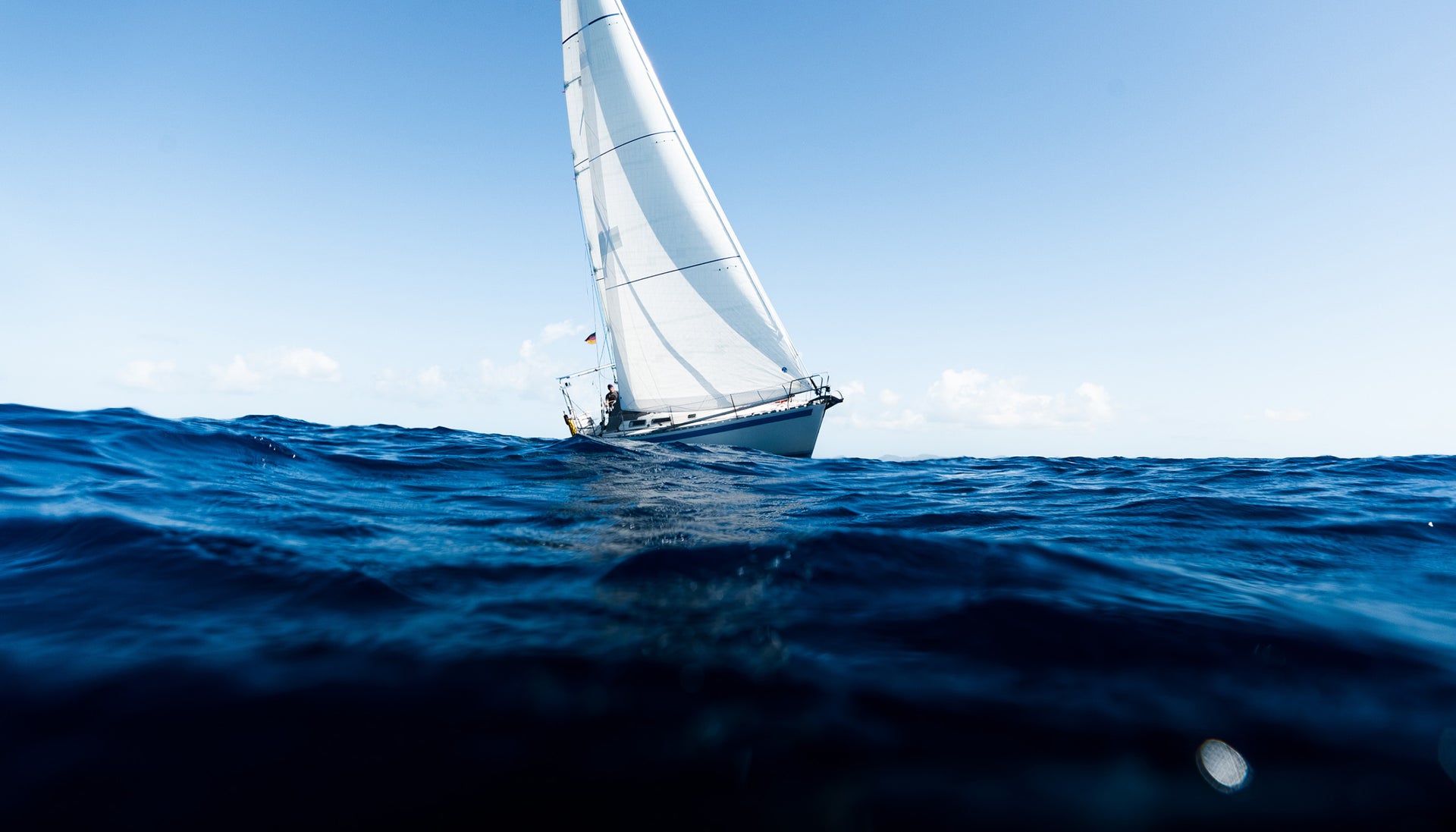
North Sails delivered a landmark set of results at the Maxi Yacht Rolex Cup 2026, hosted by the Yacht Club Costa Smeralda and the International Maxi Association (IMA) in Sardinia, Italy.
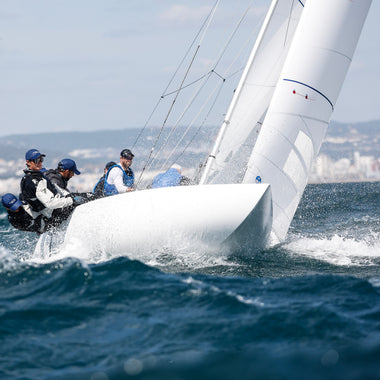
Northstar III, Balthasar and Jolt led the charge to sweep the podium in the premier class, the Rolex IMA Maxi Grand Prix World Championship. The crews of all three boats turned in top-flight performances, as Sardinia delivered a wide range of conditions. There was everything from light winds to a 28-knot Mistral – with all the action set against the glorious backdrop of the emerald coast.
North Sails also powered the winners in two more of the six Maxi Yacht classes competing at the event. James Neville’s Artemis Bleu won Maxi 3, the Botin 65 closing the event out with three consecutive wins. While in Maxi 5, Riccardo De Michele’s North-powered Vallicelli 78, H2O won four out of five races.

These victories can be set alongside North’s overall dominance: across the entire fleet of 40 yachts, over two-thirds of those competing carried North sails. Notably, all three of the podium finishers in the Rolex IMA Maxi Grand Prix World Champion class used the new 3Di RAW 900 carbon sails, with Northstar III and Jolt also using the new North Sails X-Series downwind sails.
The results mark a highly successful first season for both of these new-for-2026 material technologies, the former developed from innovations originating in America's Cup competition, and the latter derived from North’s constant investment in materials science with the common theme of bringing lighter and stronger sails into the market. Dave Lenz, the General Manager, North Sails Gosport, was part of the Jolt team, “All the upwind sails are our newly launched 3Di RAW 900 technology, and everything I've seen through the TP52s, and through the Maxi 72s, the RAW 900 is a significant step forward in shape holding and longevity.”
Owned by Peter Harrison, Jolt showed the benefits of a conversion to a full North inventory over the previous winter; also winning the IMA European Championship at the start of this season. While Balthasar’s second place was a very happy improvement for owner Filip Balcaen, after their results in the previous Maxi Rolex Cup just a year ago.

In a week of remarkable performances, it was Peter Dubens’ brand-new Northstar III that really turned heads, though – opening with four straight race wins and clinching the Rolex IMA Maxi Grand Prix World Championship with a race to spare.
This achievement was all the more remarkable because the boat has only been in the water a few months, and the crew should by rights, still be working on the snagging list. The reason Northstar III launched in such a developed state was that the new Judel/Vrolijk 76 has been the focus of an intense technical program. Initially, this involved North Design Services (NDS), before expanding to incorporate the North Sails Gosport sail design team.
To provide a sense of the attention to detail, NDS’s Jeremy Elliott explained how they used the NDS virtual wind tunnel to devise an accurate calibration for the masthead anemometer that, because of the innovative rig design, was otherwise expected to take the first full season. The work exploited the advances in the virtual wind tunnel technology to create a practical solution to a performance development problem. It’s hard to tune up a new boat if you don’t know the wind speed and angle. For Northstar III navigator Miles Seddon, that problem was solved before the yacht met the water.

Innovation can be seen throughout Northstar III from the canting keel, to the deck shape and layout, through the mast and onto the sail shapes and structures. Jeremy Elliot commented on the collaboration with the three men from Northstar III that were leading the project; Pom Green, Nick Rogers and Mark McCafferty. “I think it's fair to say they didn't just allow us to push. They really did expect us to push. They demanded it.”
The unusual deck shape and structure began with a set of deck geometry concepts drawn up by structural engineer Mark McCafferty. “The very first thing that we did when we got into this in December 2024 was to run those deck geometry candidates through the virtual wind tunnel to see if any of them stood out and to understand why they might be good, bad, or indifferent,” said Elliott. The resulting work led to a complete divergence from the fleet’s standard solution of minimizing structural weight with flat decks and modest chines.
The mast is a refinement of previous work done by Southern Spars. “The team at Southern Spars were super keen to develop their passively rotating rig,” said Elliott. An idea previously used in the class, it involved more work in the virtual wind tunnel. “We got to understand and to quantify accurately the actual performance delta attributable to that passively rotating mast.” There was also research on the jib planform, and that led to a new spreader design.
The Helix structured luff on the jibs also attracted some attention. “Through our simulation work we convinced the team to go way higher on load through the jib luff than they had been used to in the previous boat,” explained Elliott.

“It’s an example where a new boat really allows us to push the design and the structure of the sails,” added Kevin George, the North Sails Gosport sail designer that worked on the project. “We can reimagine it and do much better, and that's part of the improvement to the Northstar III rig and sail plan.”
In Dave Lenz’s mind, sail range was once again key to the performance edge through 3Di RAW 900, the X-Series downwind sails and the Helix structured luff technology. “In the Maxi Worlds… you're starting a race, starting a beat in eight knots, and then the beat's an hour long and the top of the beat is 17 knots, and you can't change jibs, so we're turning a J1-5 into a J2-5…” A transformation achieved by materials science, design know-how and sophisticated modeling.
It was the breadth and depth of North Sails technology that translated cutting-edge innovation into race-winning results and did it at the highest level of Grand Prix sailing. The attention to detail in the work and the process delivered results that showcase the quality of North Sails' technology and people: delivering a complex, custom new build straight to the front of a highly competitive world championship fleet, just months after the launch.