NORTH SAILS BLOG
Todo
Events
Guides
News
People
Podcast
Sustainability
Tech & Innovation
Travel & Adventure
events
SÉBASTIEN DESTREMAU CLOSES THE 8TH VENDÉE GLOBE FINISH LINE
SEBASTIEN DESTREMAU FINISHES VENDEE GLOBE
The final skipper reaches Nouch Sud with 100% re-fit North Sails inventory
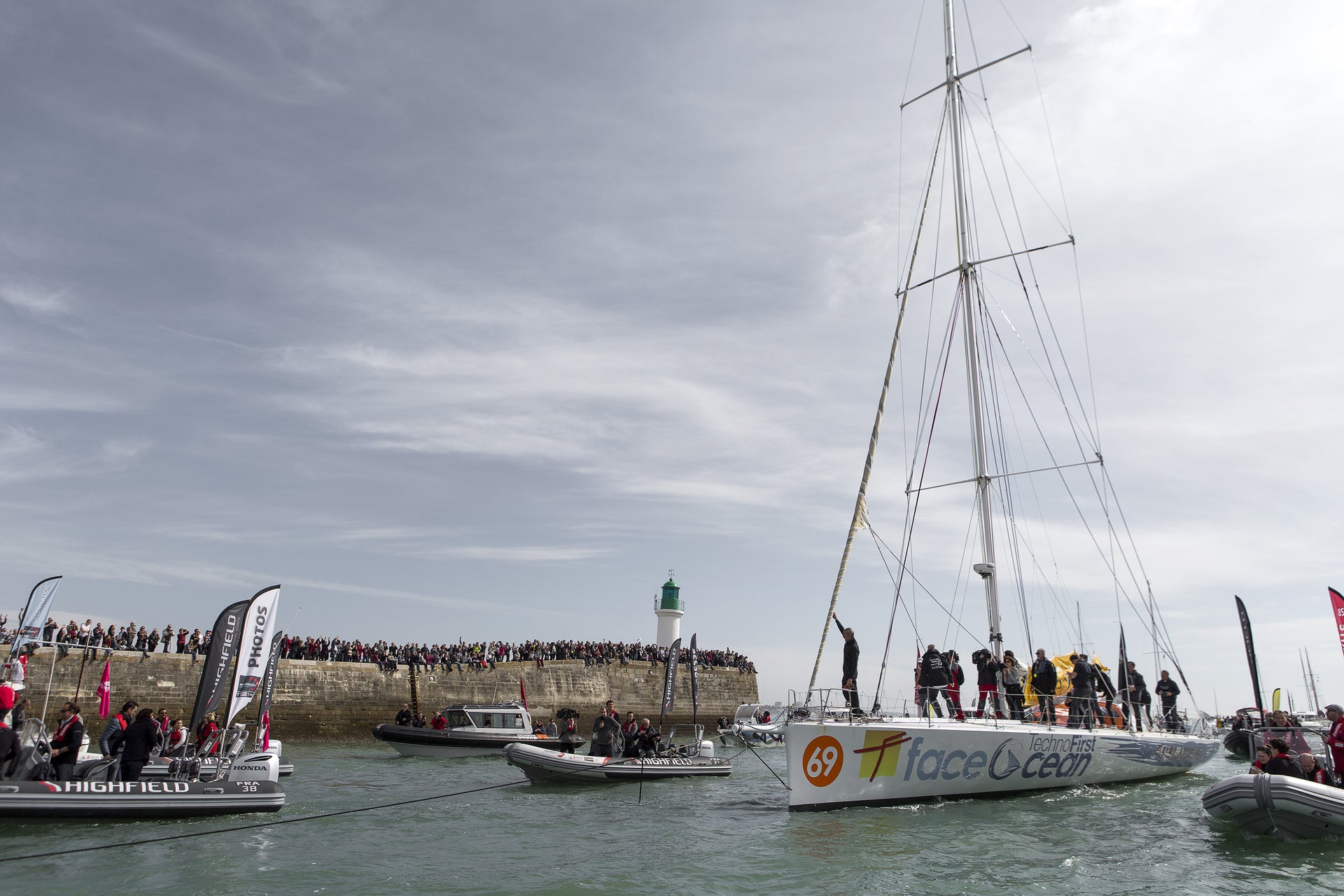
Following an intense career in inshore racing, Sébastien Destremau decided four years ago to go for the big one – the Vendée Globe. A singlehanded circumnavigation is a different game, and Sébastien’s determination pushed him past a number of obstacles including one of the tightest budgets in the fleet. Nonetheless, Sébastien sailed his IMOCA Technofirst – faceOcean across the finish line Friday night, March 10th, and entered the channel of Port Olona Saturday morning when the tide was high and the fans loud.
S
ailing on his IMOCA built in 1998, which has already been around twice in this iconic race, Sébastien had one of the more challenging races among the fleet. Dismasting two months before the start, enduring the loss of his start engine two weeks into the race, and capsizing in the Indian Ocean start to paint a picture of the hurdles this tough sailor surpassed. Add to it two broken ribs, having to stop a few days in Tasmania for repairs and maintenance, and losing his sea generators after Cape Horn, and you’re left thinking this guy may never brave the ocean again. However, the crowds that welcomed him into Les Sables on Saturday can vouch – his smile was as broad as the winner, and every finisher in between. Four months of sailing, even rationing his food for the last three weeks, it is water under the bridge of this heroic finish.
Stepping ashore, Sébastien thanked North Sails and especially his twin brother, Hugues, who helped patch a seaworthy inventory together from existing stock, recutting and reusing sails that had many stories already to their name.
“When I decided to go for North, I knew my brother was going to look after me. What I didn’t expect was that so many staff members (such as Thibault and others) put so much effort into my program, and worked tirelessly into completing our sail inventory.
North Sails France looked after this very small project probably the same way as they looked after the biggest Vendée Globe campaigns. There are no small or big customers with you guys. There is just a customer … and that’s a testament to your firm. So thank you very much for this.”
Sébastien’s inventory was made of used sails including a North Sails NPC TOUR mainsail, years old, North Sails 3DL jib, and a pair of re-fit North gennakers. Not one single sail was built for this boat, so the North team in France worked to modify stock sails, making adjustments so the sails would fit for the circumnavigation.
By crossing the line today, Sébastien wraps up a tremendous Vendée Globe for North Sails. Twelve boats carried full North Sails inventories including the record-breaking winner, Armel Le Cleach on Banque Populaire. In total, six of the top seven boats were powered by North Sails, and 22 out of the 29 Vendée skippers had North Sails onboard.
The Vendée Globe is above all a voyage to the ends of the sea and deep down into the sailor’s soul. Since its introduction in 1968, 167 sailors have lined up at the start of the Vendée Globe, while only 89 have managed to cross the finish line. This figure alone expresses the huge difficulty of this global event, where brave sailors set off alone to face testing seas immediately in the Bay of Biscay, hit record-breaking speeds through the Indian Ocean, leaden skies and crushing temps in the Southern Ocean, and the patience-testing highs and lows of the Atlantic. Starting alone is victorious.
“I made a key to close the door behind me in the Pacific and now I have another one to close the harbour entrance, as I’m the last one here in Les Sables d’Olonne.” – Sébastian Destremau closes the 8th Vendée Globe finish line on Saturday, March 11th, 50 days after the winner.
Congratulations to the skippers of the 8th Vendée Globe – that’s a wrap!!
READ MORE
READ MORE
events
NEW MELGES 24 WORLD RANKINGS
NEW MELGES 24 WORLD RANKINGS
North Powered Teams Dominate Latest Melges 24 World Rankings
The World Rankings are determined by performance and participation at official class series events. Overall results are taken from high point scoring systems and are determined by four key events sailed for each team, with the highest scores accumulated. Ambitions of the IMCA World Ranking System set the tone within the class globally, giving sailors the aspiration to travel and attend the key events that will determine their overall ranking. There are 4 Ranking categories: European, North American, Australasian, and World.
Latest Melges 24 World Ranked Teams:
European Ranking Champion: Andrea Racchelli on ITA735 Altea
North American Ranking Champion: Conor Clarke/Stu McNay on IRL829 Embarr
Australasian Ranking Champion: David Young on AUS746/655 The Kraken
Overall World Ranking Champion: Andrea Pozzi/ Giulio Desiderato on ITA841 Bombarda
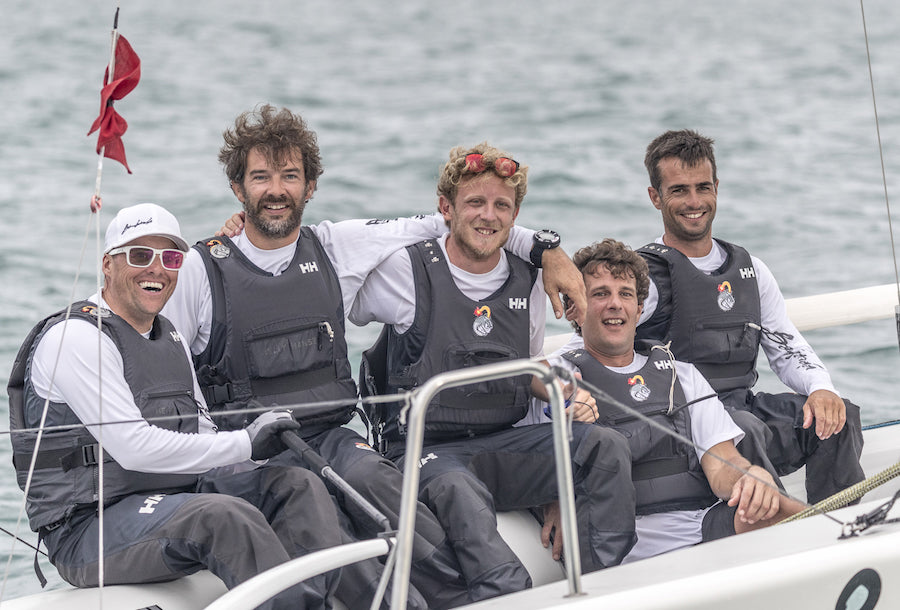
Team Bombarda, #1 World Ranked Melges 24 Team ©Carlo Borlenghi
The Melges 24 is fast, fun and provides sailors with the thrill of high-performance racing amidst top-level competition. Truth be told, over 800 boats are racing all over the world today, and for a good reason! Designed by Reichel Pugh and Buddy Melges, the Melges 24 has grown in popularity since its introduction in 1997. That same year, the class held its first World Championship with 98 boats participating. There are established fleets across the globe in North America, Europe, and Australia, and more developing in parts of South America and Asia.
“Embarr” 2016 Melges 24 World Champions, #1 Ranked in the US ©Pierrick Contin
We caught up with Giulio Desiderato, tactician on ITA841 Bombarda and asked him about his teams’ accomplishment as the top boat in the Melges 24 Class World Rankings.
How long have you been sailing with Bombarda?
“I met Andrea Pozzi two years ago during a Melges 20 regatta. The first time that I worked with him, I was coaching his Melges 20 team during an event in Riva del Garda, Italy. From the beginning, we’ve started something good after some key events racing together. He called me, and I started sailing with him on the Melges 24, calling tactics. Ciampalini (“Ciampa”) was already with the Bombarda team while myself, Carlo Zermini and Nicolas Dal Ferro started after the World Championships in Denmark. It has been a perfect combination from the beginning.”
What was a highlight onboard from the Kieler Woche Regatta?
“Kieler Woche was the first victory for the Bombarda team. We were coming from a productive winter preparation and getting up to speed, faster and faster. We started the regatta focused on doing our best, and not on the end results. Sincerely, we did not think we would win the regatta. We ended up with an incredible score, winning the last two races of the regatta.”
Bombarda and Altea sailing upwind. ©Mauro Melandri
What’s your next event as a team?
“We have stopped our journey for now. Andrea will be really busy this year, and for the moment he is focused on improving his skills in the International Moth. We want to come back next year, determined as usual to do our best on this fantastic boat and competitive fleet.”
Do you sail together on any other boats?
“Actually, no. For our team, we are all good friends and we are constantly in contact with each other. We see each other all the time in different sailing circuits, but at the moment we shall remain good enemies on the race course .”
“I’m speaking with the Pozzi family about another project, and will most likely have the pleasure again to sail with his team, calling tactics as usual, but this time in a bigger boat.”
How does it feel to be at the top of the Melges 24 World Rankings?
“Looking back, it’s incredible. As I told you before it has been a perfect journey. Our goal was to improve and grow up through every regatta, and now at the end of the season we can read the name Bombarda at the top of the world ranking. Andrea is one of the most passionate people I know, and I have to thank him for making this possible.”
Andrea Pozzi and his team Bombarda ©Carlo Borlenghi
Any advice for your competitors?
“Be focused on the journey and not the single race or regatta. Consider the team a group of friends and be determined to achieve the goal together. The strong point of Bombarda was that we didn’t give up. After a bad start or a wrong maneuver, or a bad tactical call we never got upset, but we were always determined to do our best and come back as a team. Racing with them I understand why these guys are such successful sailors.”
Congrats to all teams taking the top spots in the Melges 24 World Rankings for this year, and we wish you all the best in your future endeavors!
Team Altea, Ranked #1 in Europe ©Mauro Melandri
North Sails One Design | Melges 24
Melges 24 Class Association | Ranking Results
READ MORE
READ MORE
events
THURLOW FISHER LAWYERS CLAIMS JJ GILTINAN 18FT SKIFF CHAMPIONSHIP
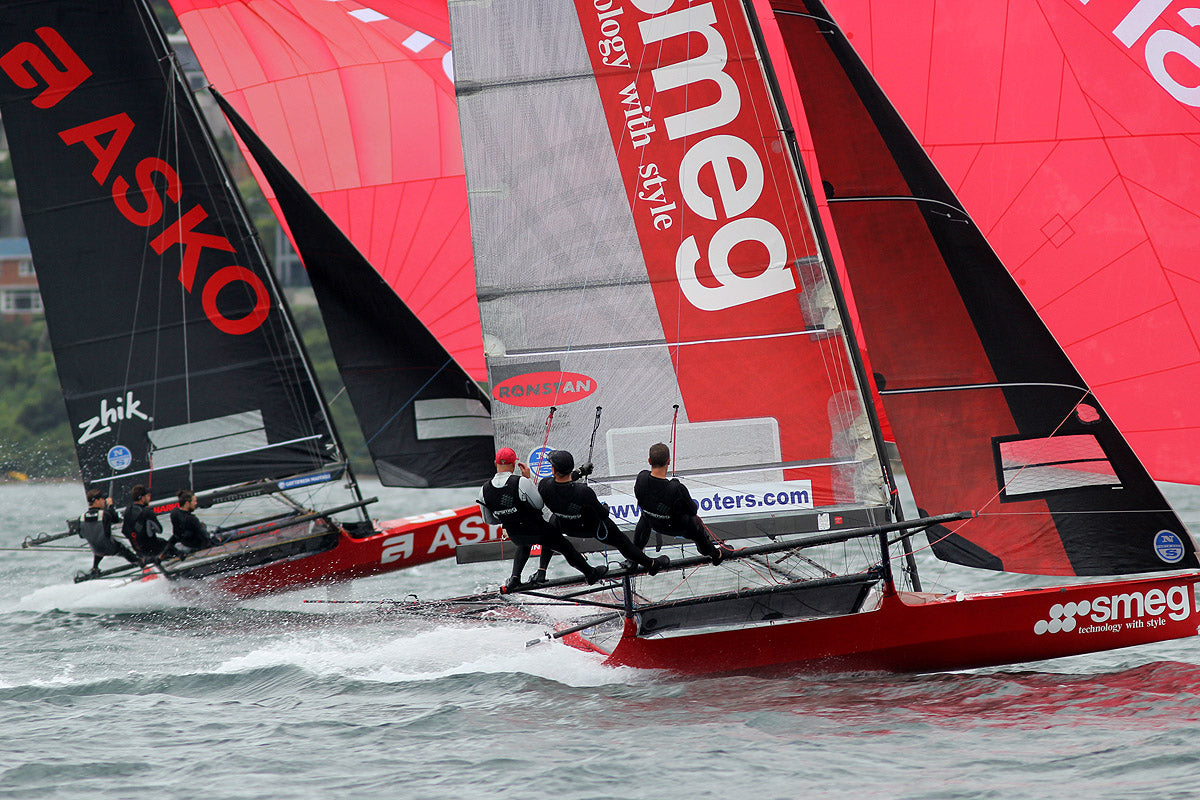
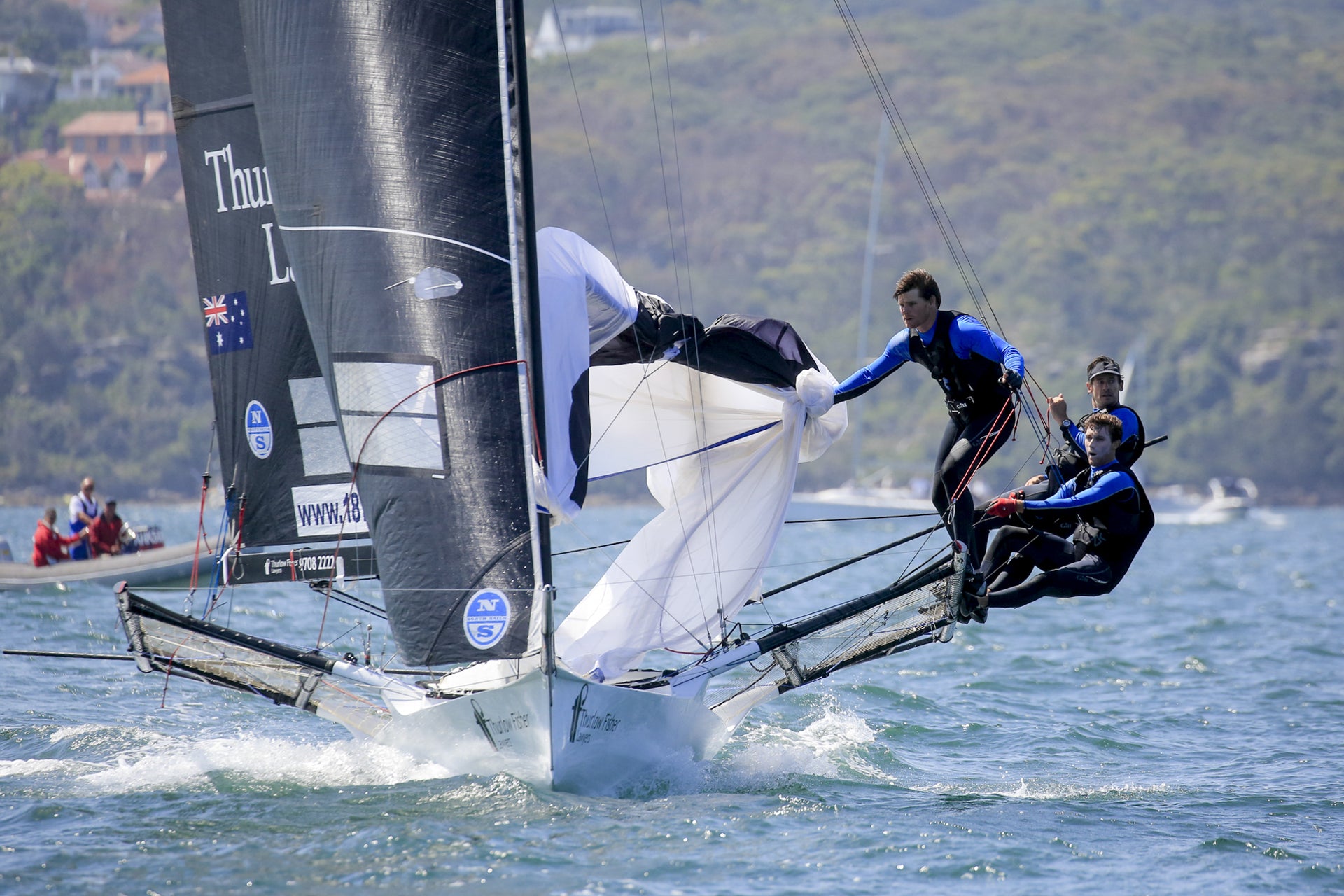
The 2017 JJ Giltinan 18ft Skiff Championship did not disappoint! With seven official races over ten days, 26 teams participated in action packed racing on Sydney Harbor amidst spectators cheering from harbor ferries. Team Thurlow Fisher Lawyers of Michael Coxon, Dave O’Connor, and Trent Barnabas were declared champions with a race to spare. However, racing was tight among the rest of the fleet with only seconds between competitors at each mark. Ultimately the top-ten were determined in the series final, with only five points separating 2nd-6th place. Congratulations to North-powered teams who finished 1, 2*, 3, 4, 5, 6 & 7th with most using North Sails 3DL and some using a combination of North Sails 3Di RACE and 3DL.
The winning team of Thurlow Fisher Lawyers had 3Di RACE for their larger mainsail and jib, both new this season. 3Di RACE is a new product targeted to smaller racing boats, which benefit from the product’s wide wind ranges and increased “readability.” The 18ft Skiff is no doubt the smallest application we have seen for the 3Di product, so we asked Dave O’Connor, trimmer on Thurlow Fisher Lawyers, to report on how the sails have handled: READ MORE
2017 JJ Giltinan 18ft Skiff Champions, Thurlow Fisher Lawyers
Defending champion Smeg and Asko Appliances in close racing duel.
Charge from the first windward mark.
Appliances Online skipper David Witt competes in his last 18ft Skiff race!
READ MORE
READ MORE
events
CORINTHIAN SAILORS THAT INSPIRE US
INTERVIEW WITH THE TOP CORINTHIAN AT THE J70 MIDWINTERS
Andrew & Melissa Fisher, owners of J70 Button Fly
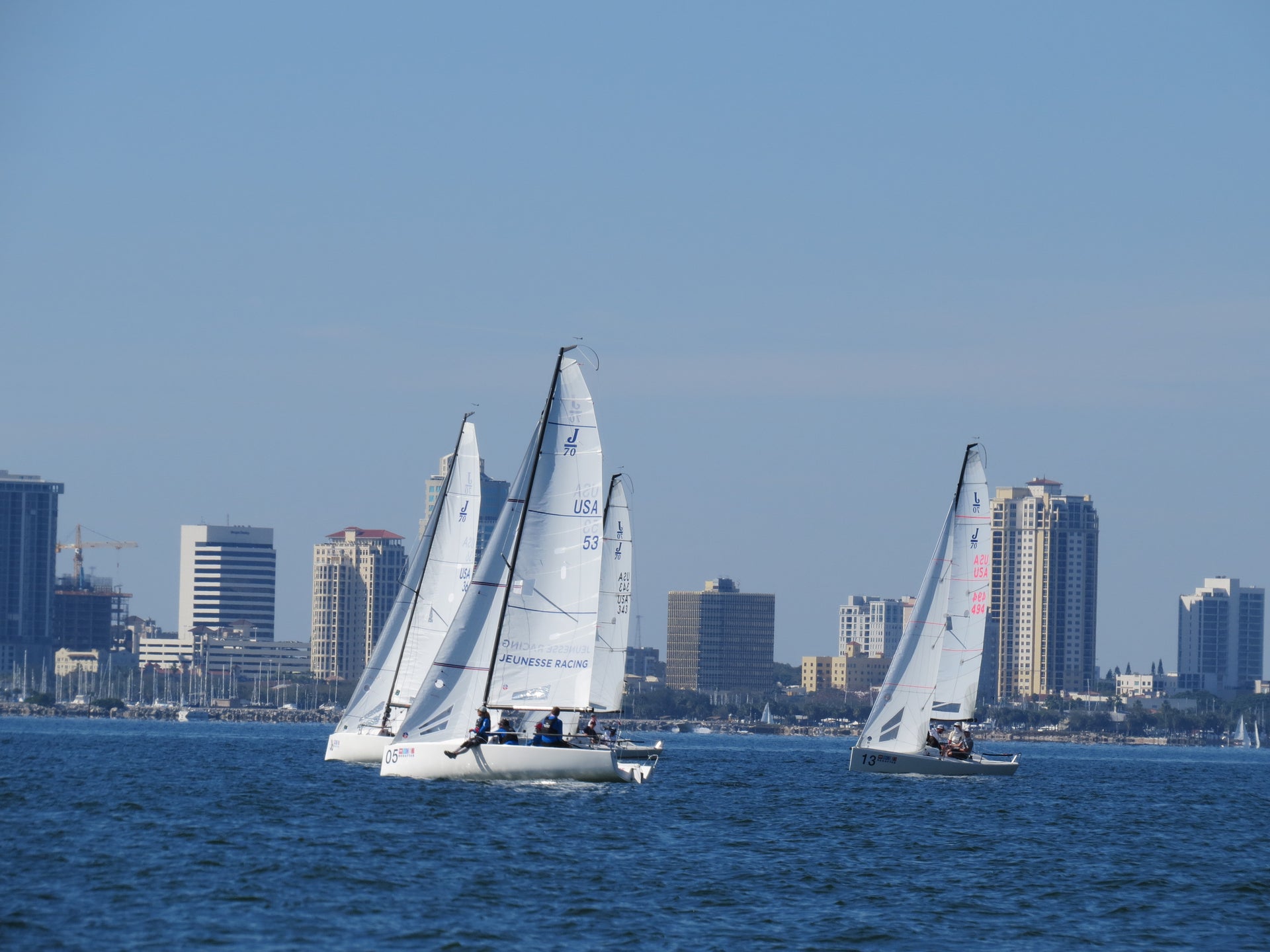
Andrew and Melissa Fisher are no new faces to the J70 Class. What’s inspiring about Andrew’s team is the dynamic they impose on their competition. The Button Fly program predated Andrew’s Paralympic campaign, where he competed for a spot to represent the US in the Rio Olympics. Andrew has since chosen the J70 Class because there are a lot of boats that compete and he finds it to be sporty and manageable for him and his wife, Melissa. Andrew truly has the best of both worlds sailing with his corinthian team Button Fly, and having fun with the ones he cares about most. This is truly what it’s all about. Without corinthians, the sport of sailing wouldn’t be what it is today.
We caught up with Andrew and Melissa after their big win to share their excitement and passion for sailing and find out what it means to them.
Team Button Fly
Melissa and Andy, congratulations on your 1st Corinthian Division win at the 2017 J70 Midwinters. It was a tricky regatta featuring nearly every condition. What were some of the keys to helping you to the to victory lane?
“Thanks. J70 is a very competitive fleet. Due to the crazy conditions during some races, luck played its part more than usual. That said, our team has sailed the J70 together for over 2 years and has put in quite a bit of time training and learning what makes this boat go fast.”
The ButtonFly program started a few years back when Andy was on the US Paralympic Team competing for a spot to represent the USA in Rio. Why did you guys decide to get into the J70 at that point in your sailing career and do a “defacto” 2 boat campaign?
“The Button Fly program predated my Paralympic campaign, going back to bigger boat racing. The J70 is a downsize for us. Melissa and I love racing together. We looked at other classes of boats but decided on the J70 due to its popularity and a good balance of sportiness without being overly athletic. Managing a 4-person team is far easier, and the fleet is big enough that there are usually plenty of boats at the regattas for great competition. I had the luxury of having enough time to spend time doing both.”
Melissa, you have been the one constant on your program as a key crew member. What makes J70 sailing so much fun for you and how has it helped your sailing?
“I sail the boat with my husband. evolving to the smaller, 4 person program has been a great learning experience in that everyone plays a bigger role in getting the boat around the race course. in addition to loving the racing, the social aspects of the class make going to regattas special.”
It seems every team has a style and adjusts their program to maximize their strengths so when you are working on tuning and trimming style how much do you deviate from the “standard” tuning guide settings and performance articles you read? Are there any things you have found that work with your team that stands- out as a performance “game changer”?
“Our program is somewhat unusual, in that I have disabilities that we need to work around. We spend a bit of time figuring what we need to do to minimize my weaknesses, and practicing the weakest ones. Our boat tuning is very close to standard; however, we’re very conscious of thinking forward to our set up for expected conditions. For example, before one race at Midwinters, we noticed that the wind vs tide current made it appear that there was more breeze up the course than there was, so we adjusted our rig accordingly. In the end, the biggest “game changer” is quality practice.”
A few years back you guys dedicated yourselves to sailing Corinthian and have really locked into a great team with the Burke brothers on board. Tell us how that came together and what Steve and Shawn have brought to the ButtonFly team.
“Steve and Shawn have sailed with us for over 10 years. They both have been racing their whole lives, and, while their careers don’t involve sailing, they view racing as their primary pastime. Melissa and I are lucky to have them want to sail with us. In addition to being good sailors, the consistent time we’ve put in sailing the J70 together has really allowed us to develop our race course dance and improve.”
Obviously, our team here at North is very excited for you guys as many of us have worked with the ButtonFly program in some capacity. Since Andy has an unquenchable thirst for knowledge and never seems to stop asking questions and learning to be a better J70 sailor, how has the experience working with the North J70 team helped your program?
“We have been North customers for many years, so when we moved to the J70 it seemed natural for us to continue our relationship. To our mind, the support surrounding the purchase, teaching and sharing technique, the on-water coaching, all are essential to picking the right sailmaker. North has been there for us. They’ve spent time with us when we first bought the boat, have provided training opportunities, have raced with us on occasion, and are always available and open to discussing the latest thoughts on go- fast techniques. From a sailmakers perspective, it helps when your sails win. We’re trying to do our part.”
If you could share any advice for other Corinthian teams to move up in the standings what would you tell them?
“It’s far tougher to field a good Corinthian team than one with pros. By definition, they have more to juggle to be able to make the events, so once you find your guys, treat them well. Consistency is key.”
USA 501 has become a staple at many of the J70 circuit events. What is on your calendar for the rest of 2017 and what are the long term plans?
“We’re off to Miami for the Bacardi cup, then Charleston on our way back to the Northeast. Our goal is to peak for the North Americans this fall at our home club in Rye, New York.”
Andrew and Melissa have a competitive road ahead of them. We wish Andrew and his team the best of luck in the upcoming events and can’t wait to see them shine. Sail fast and keep having fun!
READ MORE
READ MORE
events
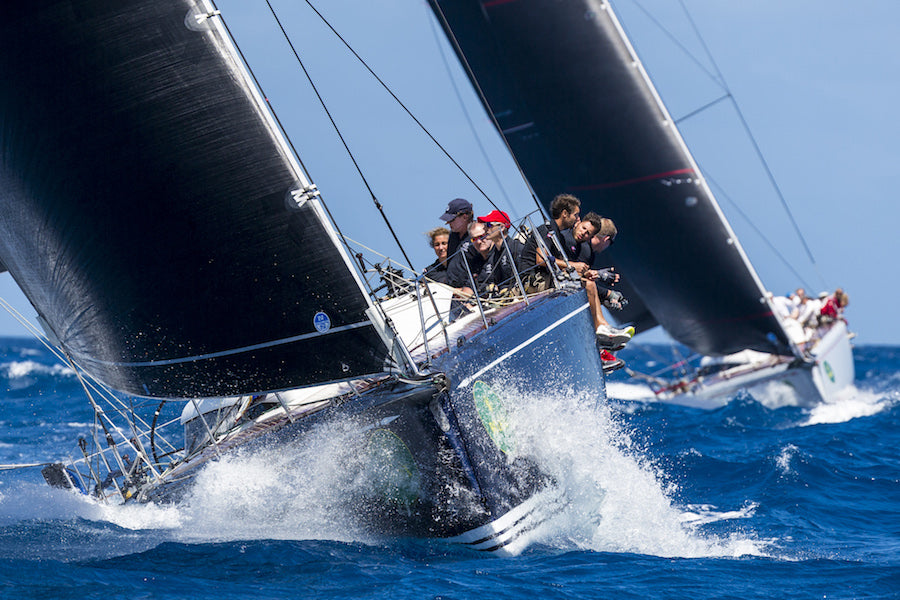
ROLEX SWAN CUP CARIBBEAN WRAP-UP
THE 2017 ROLEX SWAN CUP CARIBBEAN IS A WRAP!
The 2017 Rolex Swan Cup Caribbean came to a close yesterday at the Yacht Club Costa Smerelda clubhouse in Virgin Gorda. This biennial event brings together the unique Nautor Swan family of yachts from 36 – 115 footers, and this year will feature the new one-design Club Swan 50, a self-professed “small revolution” in performance and sailing pleasure. Two entries of this newly competitive design joined 20 boats split between the Maxi and Grand-Prix/Mini Maxi divisions for three days of racing amidst the breathtaking scenery of the British Virgin Islands.
The final race of the event delivered 15-20 knots from the Northeast on a course that sent both fleets around “The Dogs”, a pair of islands on the Northwest side of Virgin Gorda.
Don Macpherson’s Swan 90 Freya sailed extremely well over the four days of racing, scoring three wins out of four races. Freya entered the final day of racing with a comfortable lead, despite a pair of penalty points off the starting line, and secured the overall trophy in the Maxi division. This week’s title makes her a winner on both sides of the Atlantic, having won the 2016 Swan Cup in Porto Cervo. She sails with an inventory of North Sails 3Di ENDURANCE and NPC DOWNWIND, including a four-year-old mainsail (shown below). North Sails Kimo Worthington was among the crew as tactician. Vicente Garcia Torres’ Swan 80 Plis Play earned second place in a tight fleet, followed by Stuart Robinson’s Stay Calm in fourth place.
Freya’s 3Di ENDURANCE mainsail, delivered 2013
With two Club Swan 50s in the Mini Maxi/ Grand Prix fleet, it became nearly a ritual for Leonardo Ferragamo’s Cuordileone and Hendrik Brandis’ Early Bird to find themselves in “match race” circumstances at least once per day! Ultimately Cuordileone claimed the class win with three bullets in four races. North Sails President, Ken Read, called tactics with Ferragamo at the helm, and both Cuordileone and Early Bird raced with an inventory of North Sails 3Di RAW and NPC DOWNWIND sails.
As the owner and driver of the winning boat as well as Chairman of Nautor’s Swan, Ferragamo was doubly satisfied with the week’s events:
“We had a fabulous week. The racing was phenomenally good, I think this place is pretty close to paradise and the sailing and racing conditions were just perfect. The racing was fun and competitive among all the various participants. I got to drive the ClubSwan 50 and it was great to see very tight racing and the two boats just seconds apart on the finish line and of course I’m extra happy about Cuordileone’s win.”
North Sails joined Nautor’s Swan and Juan Yacht Design to collaborate on the Club Swan 50 design, advising on solutions for a rig and sail plan that drew optimum performance from the boat and synchronized well with the hull and deck systems. Read more about the design process and the resulting sail inventory HERE.
Club Swan 50 Cuordileone
Club Swan 50 Early Bird
READ MORE
READ MORE
events
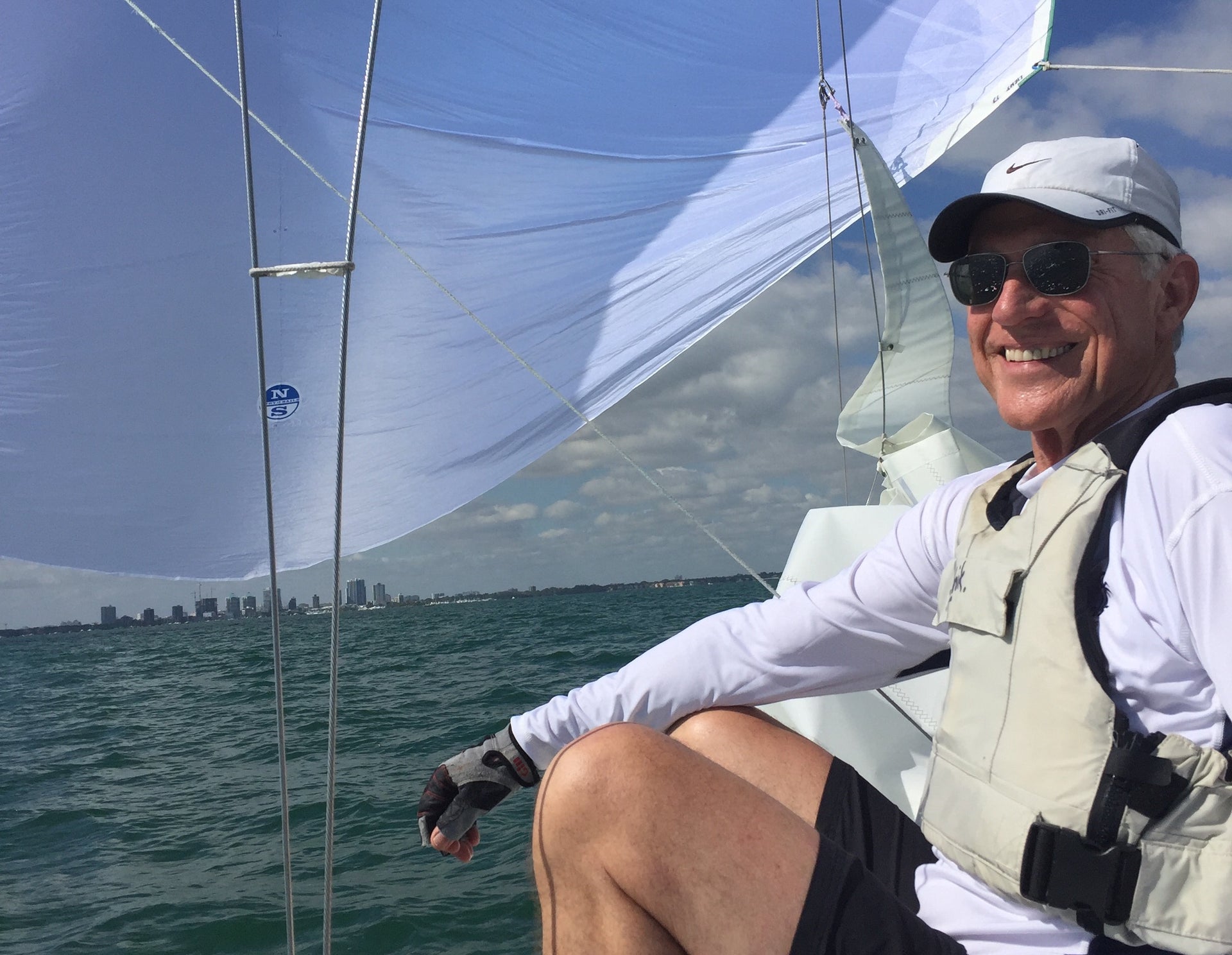
2017 ETCHELLS MIDWINTERS RECAP
North powered teams finished first through fourth
The Etchells Biscayne Bay Series hosted by Fleet 20 is one of the major Etchells regatta series dating back to 1994. Quality racing, heavy competition, and classic design are why sailors race Etchells. A big thank you to Fleet 20 for making regattas like these happen, as well as PRO Dave Brennan for running excellent races in the best possible sailing conditions. Your hard work and diligence is greatly appreciated!
The Etchells Midwinters this past weekend was a solid finish to a great series in Miami, FL. A total of 47 boats made it down to Miami for the warm weather and highly competitive racing. North powered teams finished in the top, placing first through fourth in all wind ranges. Friday and Saturday started out light, making for tricky tactical decisions. Boat speed and a clear lane was essential to do well. Sunday was more promising with winds in the 15-18 knot range, giving sailors a chance to sail in all conditions throughout the event. Lawrie Smith on Alfie took the win with 28 total points, followed by Steve Benjamin on Terrapin_x009d_ with 33 points. Skanky Gene ended up 3rd with 40 points and with Phil Lotz’s Arethusa finished close behind with 41 points. Featuring some of the toughest competition within the Etchells class, this event series is not to be missed!
Link to full results HERE
North Sails One Design
Congratulations to all North Sails powered teams!
Ernie Pomerleau, long time Etchells sailor and owner of 1300, enjoys the series each year
The fleet making its way to the finish line
Chris Morgan, skipper of 1300 and familiar face to the Etchells class -happy with his teams’ finish
READ MORE
READ MORE
events
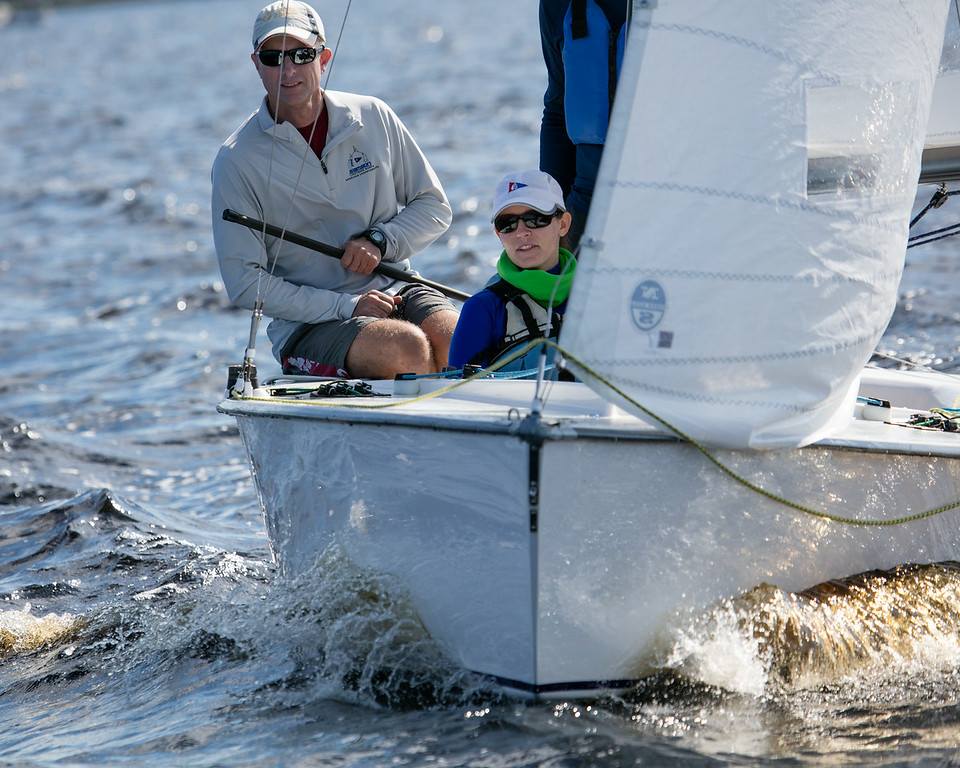
OVERALL WINNER - ST. PETERSBURG NOOD
North Sails interviews Steve Hayden, 2017 Overall Winner of St. Petersburg NOOD Regatta
The St. Pete NOOD is the first NOOD event of the series with boats from all over the country coming together to sail in key locations along the east and west coast of the United States. At the end of the series, the overall winner from each event competes in the overall championship held in the British Virgin Islands later this season. After the regatta we had a chance to catch up with Steve and asked him some questions about his win at the NOOD.
Steve (Gen5) and his son, neck and neck, rounding the leeward mark
Steve, how long have you been sailing the Lightning?
“Over 40 years.”
Have you ever crewed for your kids?
“Yes, almost as much as they’ve crewed for me.”
What would you say were the key factors to your win at the St. Pete NOOD?
“Patience and sticking with our game plan. I was also very confident in our North Sails and the setup we use.
And staying with some long-time friends…Mike and Junia Milvain.”
What is the most important thing to know about sailing a Lightning?
“That it’s a great boat with a great class of people who are willing to help you and include you. There is great competition because the boat is technical enough and challenging enough it attracts, and retains, many outstanding sailors of all ages.”
What was the funniest thing that happened on the water at the NOOD?
“Taking compass headings before one of the day’s races started. Pretty much wrote down the entire compass…”
Have you been to the BVI’s before? If not, how excited are you!?
“No. Very excited! Looking forward to it greatly! My Dad has been down a few times, so I’ve heard some great things. I’m sure it’s going to be a great time.”
In preparation for the championship in the BVI’s, what are the top three things you will focus on?
“Who is going with me…family and friends…I’ve been hearing from a lot of people I haven’t heard from in awhile for some reason.”
Steve Hayden, doing what he loves
A new overall winner of the St. Pete NOOD, but Steve is no new face to the Lightning Class. Steve grew up sailing the Lightning and got his kids involved too. For Steve back at home, it’s just a family affair.
READ MORE
READ MORE
events
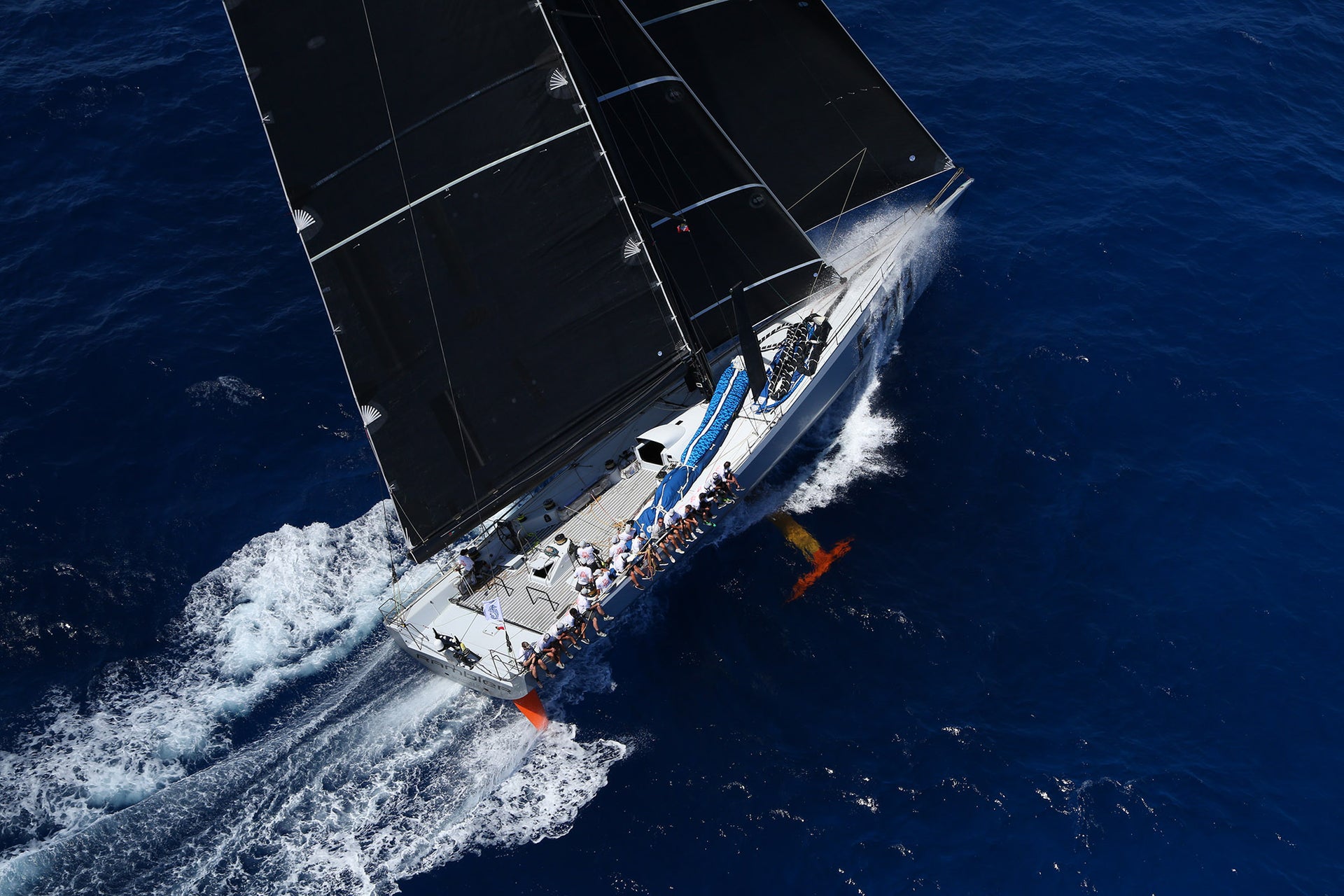
NORTH CLIENTS WIN LINE HONORS AT 2017 CARIBBEAN 600
This year was the ninth edition of the RORC Caribbean 600 with the largest offshore fleet the event has ever seen; 70 yachts, over 900 sailors representing 24 different countries. The most exhilarating fleet, with some of the most amazing boats built for speed, ready to sail in the most beautiful place on earth. The competition level was high, and the spirits were willing and able to make this year the best year we’ve seen in the history of the C600. North clients had a strong showing amongst the fleet in some of the fastest boats on the racecourse. The MOD70’s Phaedo 3 and Maserati came out hot from the start with one goal in mind: to break the current record. Flying along the water anywhere between 15-20 kts is ideal Caribbean sailing. While falling short of record speed, Lloyd Thornburg’s Phaedo 3 edged out Maserati to take Line Honours in the Multihull Class.
Most of the fleet were quite close during the entire week of sailing, having just a difference of one nm between them for most of the time which kept the racing tight, and staying in the pressure even more important. On Wednesday, Feb. 22nd, North client George David on Rambler 88 finished the Caribbean 600 at 11 hrs 56 mins 17 secs taking his third Monohull Line Honours. David continues to hold the race record from 2011 with his Rambler 100.
In their debut Caribbean 600, Anders Nordquist’s Swan 115, Shamanna won the Superyacht Class. While light wind and difficult conditions for most of the race, Shamanna saw 20 knots on their way down to Guadeloupe, giving the boat a chance to show what she was made for. For a Swan 115, 8-10 knts can prove a bit frustrating at times, pushing the team to focus on more tactical decisions. The upside is Nordquist’s team was able to take in the Caribbean scenery, which included dolphins and whales!
Congratulations to all North powered victories at the Caribbean 600.
Redshift El Osaco IRC 2, CSA 2
Taz* – IRC 1
Sleep X – IRC 3
Phor-ty* – Class 40
*Partial inventory
“Every year, I get reminded how insane a race this is and after this race, our navigator Miles Seddon said to me that we have turned the insanity up again this year. You never get used to this race – hanging on reaching at 36 knots, it is just incredible. All of our team had to dig so deep and we love Antigua and had an amazing reception.” – Lloyd Thornburg
“This year the race was not as tough as previous years, but it is far from a Caribbean holiday. We had to make a lot of sail changes which is very grueling on the crew. This boat is like a Volvo 70 on steroids; it has unlimited power and in these conditions the helm is still relatively easy to handle and there is a lot of water coming over the bow, but we don’t go up there!” – Brad Butterworth
“On the way down to Guadeloupe we had almost 20 knots, so we were really happy to experience the conditions that the boat was built for. The crew have been racing together since 2012 and they are a fantastic team. We know each other very well; the communication is good and the atmosphere is great. It was an excellent race.” – Anders Nordquist
READ MORE
READ MORE
events
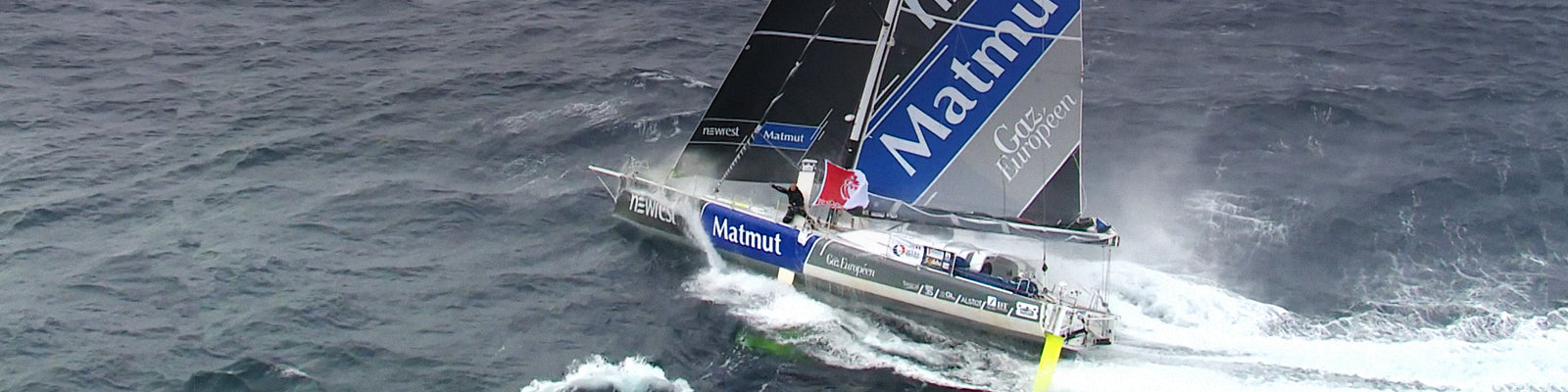
FABRICE AMEDEO FINISHES THE VENDÉE GLOBE ON NEWEST MATMUT
After 103 days at sea, Fabrice finishes 11th in the 2016-17 Vendée Globe and thanks North Sails for “globally fast” and reliable 3Di sails.
While sitting in the newspaper offices of Le Figaro in Paris, Fabrice Amedeo built up a dream over the years: attempting the Vendee Globe. He went from IRC events with his family to trying his hand in the singlehanded Figaro and Class 40.
A few days ago, the 39 year old journalist-turned-ocean racer finished 11th in the Vendée Globe, 103 days after he started. He went from exhilarating speeds in the Atlantic to “safety first” mode in the southern ocean, and kept sharing his joy and happiness to be at sea through fun videos. After being short on food for the last fifteen days at sea, he managed to cross the line in 103 days, 21 hours.
Fabrice took some time to rave about the longevity and shape of his sails after he crossed the finish line off Les Sables d’Olonne:
“First of all I would like to thank Alan Pennaneach from North Sails, who was with my team at the finish. He was at the start, it was important to me that he was at the finish.”
My sails have been globally fast and reliable, and I have been especially stunned by the incredible shape holding of the 3Di. Except for mainsail issues from my mistake during a 50 knot gale in the Indian Ocean, my set of sails is still in perfect condition. I told myself when I deployed my J2 just before the finish that it could very well sustain another 25,000 miles, although I pushed real hard on it! Same for my J1 and J3.
“I used my Cuben Fiber fractional Gennaker a lot. It was super versatile, and the angled luff allows the bow to rise and keep the boat fast and safe. I also had a Cuben Fiber Blast Reacher for strong winds in the Southern Ocean, but my systems were not reliable enough for me to use it safely. It will be for 2020.”
Congratulations to Fabrice, and to everyone who completes this grueling race around the world!
https://northsails.com/Portals/matmut.mp4
READ MORE
READ MORE
events
3Di RACE REPORT - PUTTING 3Di RACE TO WORK ON AN 18’ SKIFF
Putting 3Di RACE to work on an 18’ Skiff
Sydney Harbor’s 18’ skiffs are legendary for their all-out speed and micro-technical gear changes. Dave O’Conner, a member of the Thurlow Fisher Lawyers team, describes sailing these boats as “a wild craft… like riding a bucking bronco.” We caught up with Dave right after his team won the 2017 Australian Championship, a five race series. He was very happy with the way their new 3Di RACE sails had performed for the event.
“The World Championship starts in late February, and the weather at that time of year is often lighter. Teams are always thinking, how do we change things, and given that it’s the same location each year, the rigs just get bigger and bigger.
“But we still have to sail the boats up range, so we need to be able to depower. We’ve got two reefs in our smaller #2 rig, but the #1 rig doesn’t have any reefs. With the #1 rig you’re searching for power… up to the crossover at about 12-15 knots. We have to be able to change gears from 0-12 with the same sails.”
18 Foot Skiff class limits mast height, but changing over to 3Di RACE and raising the hounds allowed Dave’s team to add sail area with what they call a “square top jib.”
“There’s no area limit on the sails, you can make them as big as you want. So the sail area tends to just keep getting bigger, as much as can be supported on a rig of that size. What’s nice about 3Di is that it’s so stable, we can actually go up in area and still maintain the shape of the jib. If you have a softer fabric it will just fall away, and you don’t want to put too many battens or too much weight in the sail to support it… so 3Di is pretty powerful.”
© Michael Chittenden
Working closely with the North Design team, Dave requested several design changes for their new 3Di RACE sail, to extend its range and improve its shape.
“We’d actually been struggling quite a bit with our number 1 reef, which was a sore point for us because we used to be quite competitive. So we really put a lot of effort into making sure the main was going to perform for us. We went for a straighter, cleaner leech profile, and then we made sure we got the luff curve right—so a lot of bend tests on the rig, to make sure top-to-bottom the mainsail had a really smooth flying shape. It’s just so smooth, we’re very happy with that and it’s performing very well for us.
“What’s also nice is it goes through the range. When we compress the rig to depower, the actual shape of the sail maintains this great profile and blades out really nicely. Likewise when we ease off the rig and start to power up, we get a deeper sail but it maintains its good flying shape.”
Dave chose 3Di RACE over a paneled laminate or 3DL sail because his team was looking for an edge—and they got one with the smooth flying shape. What his team didn’t realize until after they first used the new sail was how much weight they were saving.
“Paneled sails are significantly heavier than 3Di. We’ve actually weighed both! And if we can reduce weight up high, then we’re making massive, massive gains. The biggest factor in our increasing performance is being able to reduce the weight of the sails.
“We were worried the 3Di wouldn’t be forgiving enough to allow the boat to work and maintain its stability when we’re sailing… but that wasn’t even an issue.”
Right before we let him go to get ready for an afternoon sail, Dave added one more aspect of 3Di Race he really liked; it’s so easy to read. “We’ll go out and do a tuning session this afternoon, and we might change our D1s or D2s one or two turns… the impact can be seen instantly in boat speed or height. That stuff is priceless when you’re trying to maximize your performance.”
© Michael Chittenden
READ MORE
READ MORE
events
2017 ETCHELLS RACING CALENDAR AT-A-GLANCE
PLAN AHEAD AND JOIN US FOR GREAT YEAR OF ETCHELLS SAILING
2017 Etchells Racing Calendar At-a-Glance
This year’s North Americans and Worlds will he held in San Diego and San Francisco – great reasons to head West to sail at two of the best sailing places in the world! Give our team in San Diego a call and we will be happy to help with logistics, local information and anything that can make your 2017 program successful.
Here are the main events that the North Sails team will attend:
Sidney Doren
Jan 7
Miami
Goblets Sydney
Jan 31
Sydney
Florida States
Feb 4
Miami
Midwinters East
Feb 24
Miami
Victoria State Champs
Mar 10
Brighton
West Aus State Champs
Mar 11
Royal Freshwater
Bill Bennett Memorial
Mar 18
San Diego
Midwinters West
Mar 30
San Diego
PCC
Apr 29
San Diego
UK South Coast Champs
Apr 30
Cowes
NOOD Annapolis
May 5
Annapolis
Orca Bowl
May 20
San Diego
Saida Cup
May 13
Cowes
Europeans
May 26
Cowes
US Nationals
Jun 2
Newport
Australasian Winter Champs
Jun 8
Mooloolaba YC
Sir Kenneth Preston Trophy
Jun 10
Cowes
UK Nationals
Jun 23
Cowes
Atlantic Coasts ACC
Jun 24
Shelter Island
Bedrock Trophy
Jul 8
Cowes
Long Island Sound Champs
Jul 15
Larchmont YC
NOOD Marblehead
Jul 28
Marblehead
North Americans
Aug 16
San Diego
Worlds
Sep 22
San Francisco
Queensland State Champs
Sep 30
Southport YC
READ MORE
READ MORE
events
LOUIS BURTON FINISHES SEVENTH IN THE VENDÉE GLOBE ON BUREAU VALLEE
Powered by a North Sails NPL TOUR paneled mainsail, the young Frenchman Louis Burton completes his first solo non-stop circumnavigation
Finishing in the early hours of Thursday morning in Les Sables D’Olonne, Louis Burton finished a comfortable seventh place in his first ever Vendée Globe, with a buffer of more than 2,000 miles on his closest competitor. Racing in many parts of the world in splendid isolation, Louis benefited from regular periods of excellent conditions that saw him pile on consistent miles with no breakdowns that ultimately set him out alone, ahead of a chasing pack of older generation boats.
Burton, whose father is Welsh, was the ‘benjamin’ – as the French call rookies – as the youngest skipper to start the last race in 2012 (aged 27). But a collision with a trawler shattered his first Vendee Globe dreams within a few days of the start. But 2017 has seen the amiable sailor finally achieve his dream, and he is the first skipper in the race to finish with a paneled mainsail (North Sails NPL TOUR, built in 2015).
Speaking from just before the finish line as he experienced challenging conditions in the Bay of Biscay, Burton concluded: “I have been very impressed by the shape holding and resistance of my paneled mainsail and 3DI J1 and J2. I had to push really hard to pull away from the others especially in strong breeze. The sail that impressed me most is my fractional Gennaker in Cuben Fiber. I didn’t have a chance to use it in past Transats, but it just so happens that it is the ultimate weapon in the Southern Ocean. I put it up west of Cape Town and didn’t drop it until after the Falklands! With it, the bow comes up and the boat feels like it is flying! In addition, its versatility and tolerance far exceeded my expectations.”
Louis will next take on the Transat Jacques Vabre in November with his partner Servane Escoffier, onboard their new steed: winner of the 2016 Vendée Globe, Banque Populaire.
Congratulations Louis from everyone and North Sails! We look forward to continuing our support in the journey ahead.
https://northsails.com/sailing/wp-content/uploads/2017/02/170202_sujet-pad-108_visionnage_va.mp4
READ MORE
READ MORE
events
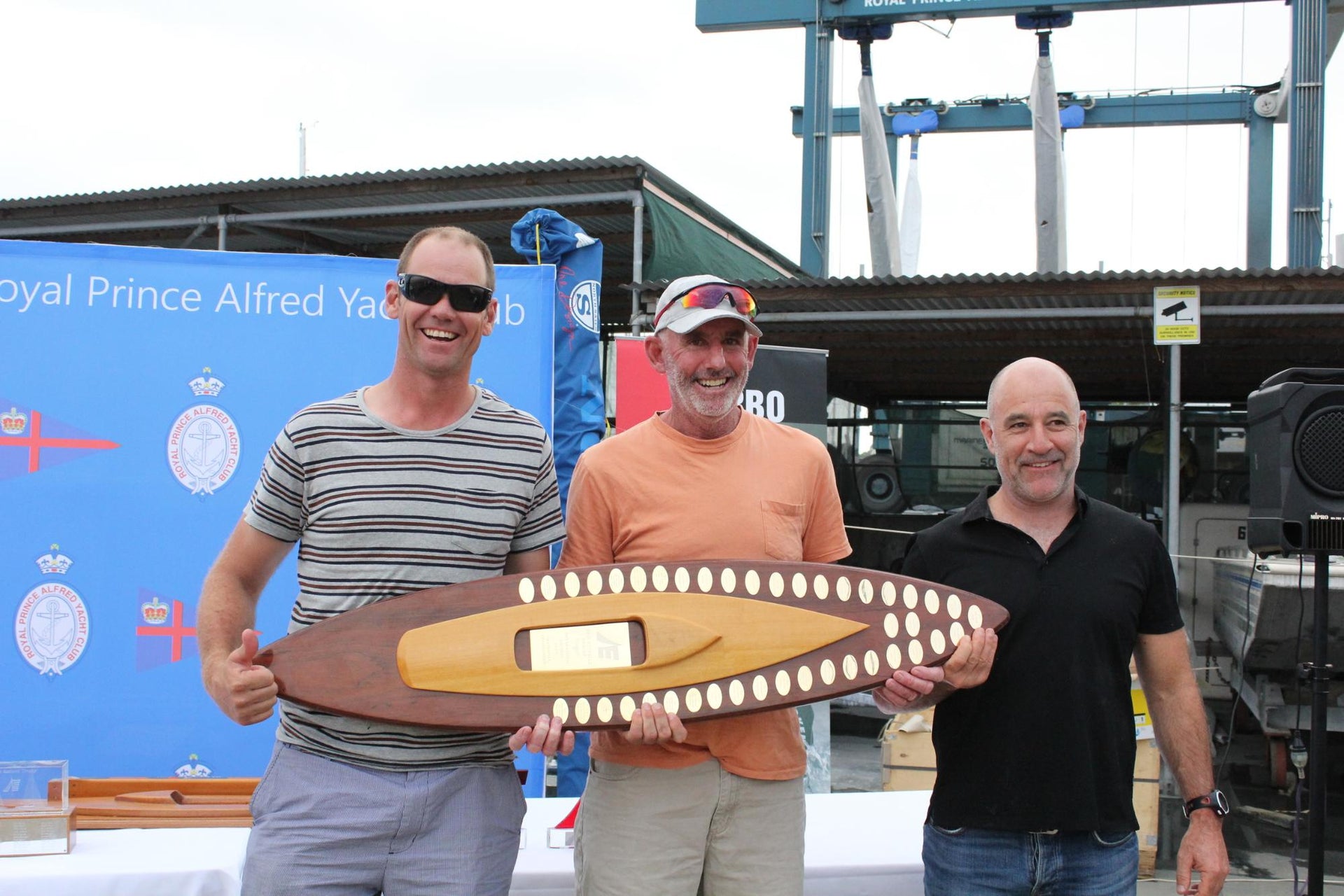
2017 ETCHELLS AUSTRALIAN CHAMPIONSHIP
GRAEME TAYLOR WINS ETCHELLS AUSTRALIAN CHAMPIONSHIP
The Australian Etchells championship has been run and won for another year. North Sails would like to congratulate The Magpie AUS 947 team of Graeme Taylor, James Mayo and Steve Jarvin on a very consistent regatta in not very consistent conditions. And also Iain Murray and John Bertrand on their 2nd & 3rd places, showing the depth of the Australian fleet.
The Magpie team was behind the eight ball from the start with Mothy having travel issues and not turning up till later in the regatta and GT flat out and turning up on the first day of racing.
North Sails delivered a full new card of sails to the boys for the regatta which they pulled up for the first time on the way to race one. GT kindly thanked Cocko and the North Sails team “for again delivering consistent regatta winning sails straight out of the blue bags, no problem”, a testament to North Sails One Design culture.
North customers took out the top 1,2,3*,4,5,6,8,9 in the regatta with all of our models featuring in the results.
From my point of view on Tango, the versatility of the sails is a key feature. We have used the same models on the boat at the the flat water Cowes Worlds as we did for the bump on the Palm Beach Circle for the Australian, with many commenting on our speed edge. Versatile designs is our one design goals and North’s results at both the worlds and Australians highlight this point.
Hope to see you all at the next event and working with you all as we lead into a very exciting couple of years of Etchells sailing in Australia. Please get in contact if you have any questions regarding anything Etchells.
Report by Sam Haines, Melbourne, Australia
READ MORE
READ MORE
events
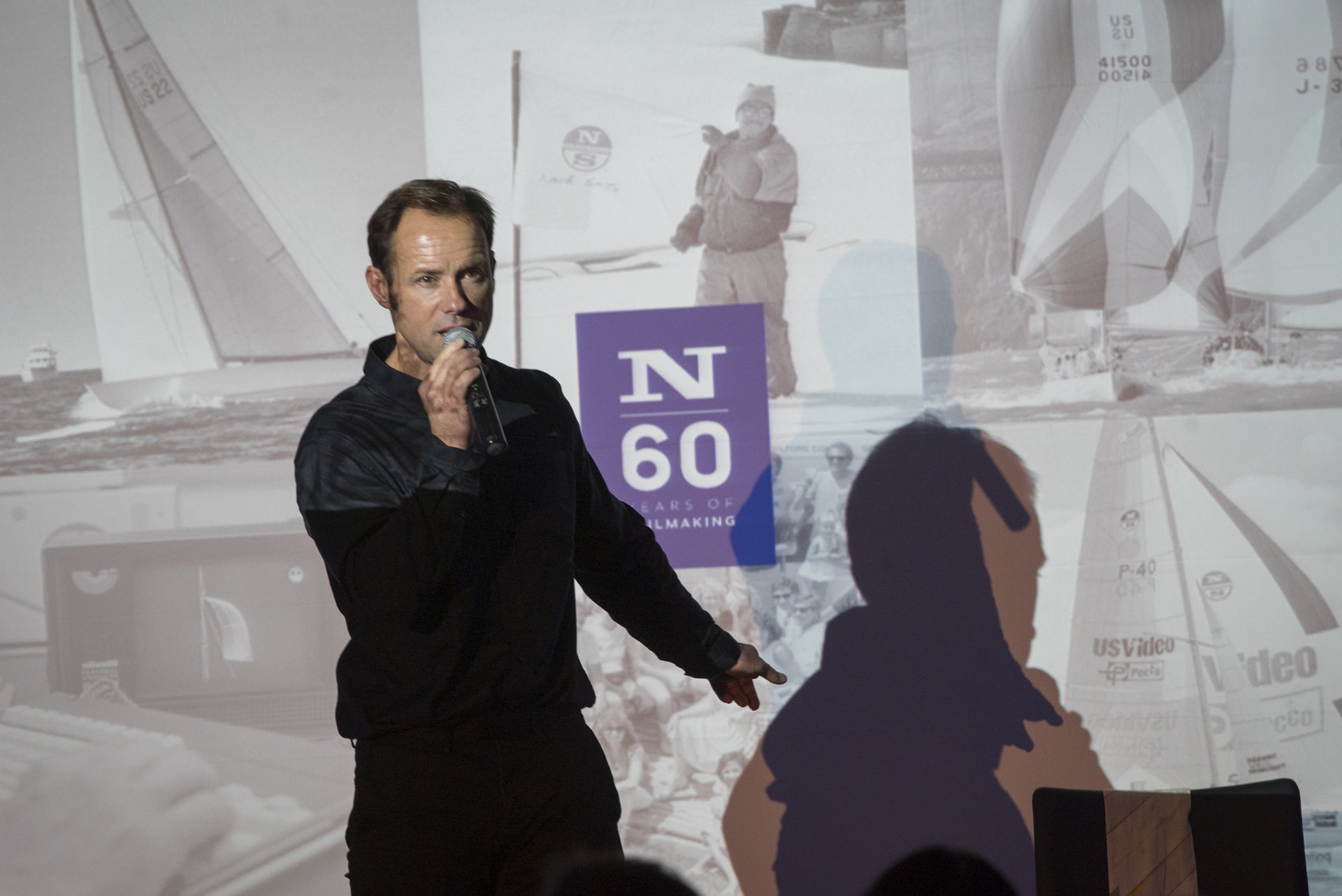
COVILLE THANKS NORTH SAILS AT 60TH ANNIVERSARY DINNER
Record breaker and legend in the making, Thomas Coville, joined North Sails at their 60th Anniversary Dinner in Lisbon, Portugal last week. Thomas was a surprise guest of honor for the 200+ in attendance during North Sails first-ever global sales meeting.
On Christmas Day, Thomas cemented his name in sailing’s history books by breaking the solo around the world record, chopping eight days off the record last set by Francis Joyon in 2011. At the completion of this incredible feat, Thomas’ North 3Di mainsail had 75,000 nm on it. That’s equivalent to three laps around the world.
Thomas shares North Sails’ passion for speed and the brand’s appetite for pushing the limits of what is possible. He thanked North Sails for believing in his dream,
“I want to thank North Sails for trusting in me,” said Thomas. “It’s easy to find people to trust you after the idea works, but North Sails was with me from the start. And that is why I am here today. With our project, with our dreams, you prove there is nothing and no one who can stop you if you have a dream.”
North Sails is honored to be onboard with Thomas, and we are excited to see what he dreams up next.
READ MORE
READ MORE
events
NORTH SAILS PRESENTS EXCELLENCE IN LEADERSHIP AWARDS AT "MEET IN THE MIDDLE" GLOBAL SALES MEETING
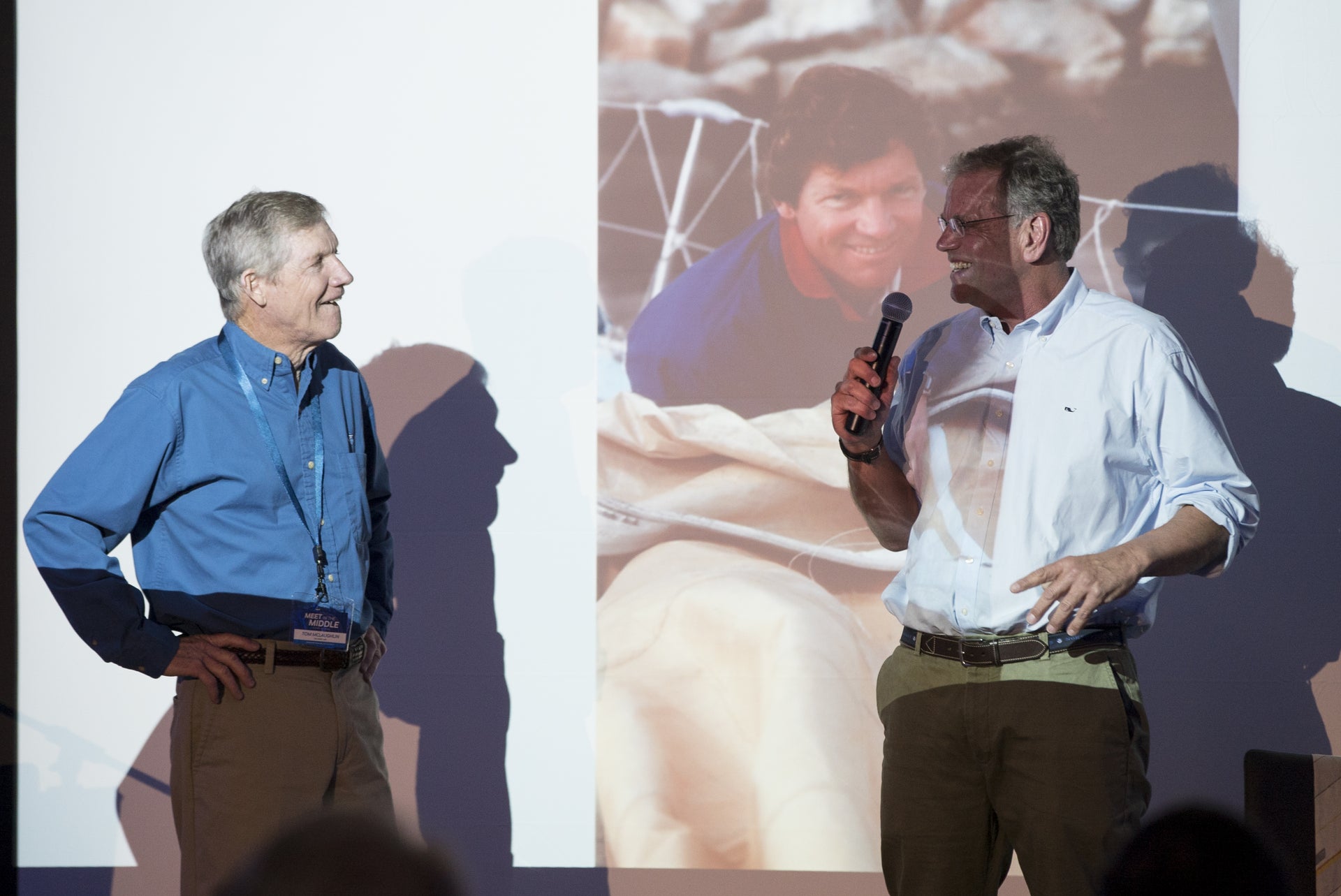
Inaugural Excellence in Leadership Awards presented at North Sails “Meet in the Middle” Global Meeting
North Sails celebrates 60 Years in Business
Founded by Lowell North in 1957, North Sails is the leader in sailmaking technology and innovation. In celebrating our rich history, the brand’s inaugural Excellence in Leadership Awards were presented at the North Sails global sales meeting in Lisbon Portugal.
It was Lowell North’s philosophy that great sailors made great business people, and he famously dubbed his leadership team “The Tigers.”
The first two recipients, Robin Morgan and Tom (Tomac) McLaughlin are examples that have proven Lowell spot on.
Sailing legend and North Technology Group CEO Tom Whidden presented the first award of the evening to Robin Morgan. In Tom’s words, Robin was “one of the best salesmen who has ever been at North Sails. He is the kind of guy our brand is about.”
Robin has a considerable history with North Sails, first as a customer in 1967, and then hired by Dick Deaver in 1978. He joined North Sails at a time when the brand was fighting for their position in the industry. Upon accepting his award, Robin noted,
“North Sails is always trying to do better than anybody. This company is incredible because we’re determined to stay number one, always be number one and I really enjoy my association with North Sails.”
The second award of the evening was presented by Mike Toppa, to his mentor Tom (Tomac) McLaughlin. Tomac is one of Lowell’s original Tigers, having joined the San Diego loft on the handwork bench. Like Robin, Tomac is renowned as one of the best salesmen in the history of North.
On the 60th Anniversary of North and the trend to push speed records and sail limits, Tomac reflected on change. “Change is always a bit shocking and a bit frightening,” he remarked,
“Yet change will always be there and with change brings opportunity. As market leaders, North Sails is never sheltered from that. I know Lowell would be so proud of all the competence in this room tonight.”
Everyone at North Sails congratulates our first two Excellence in Leadership award recipients. Robin and Tomac have set the bar high, and we look forward to giving this annual award out in the future.
READ MORE
READ MORE
events
IDEC SPORT WINS JULES VERNE TROPHY FOR FASTEST CIRCUMNAVIGATION ON RECORD
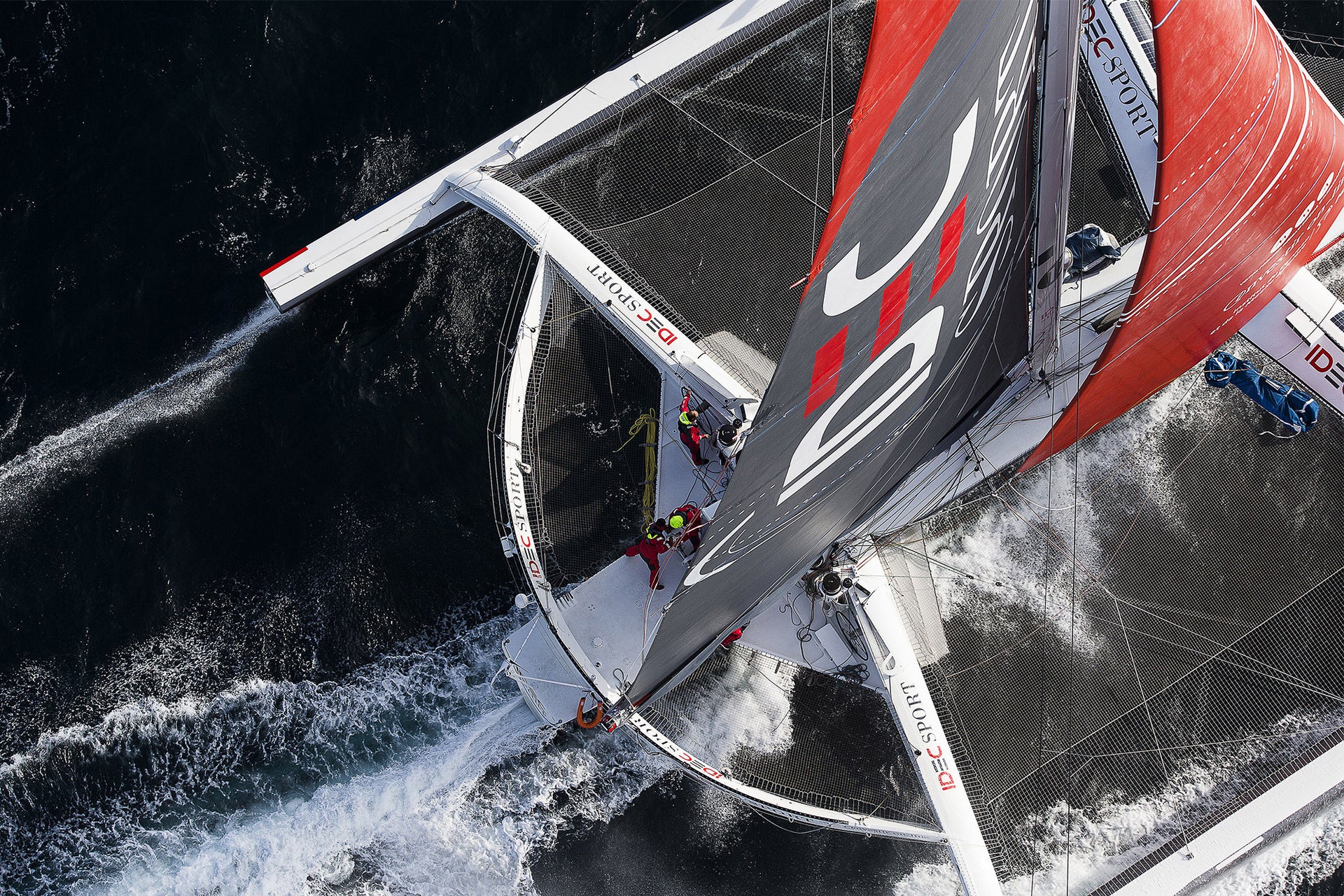
IDEC SPORT Wins Jules Verne Trophy for Fastest Circumnavigation on Record
Another entry in the sailing logbook. On Thursday, January 26 at 0749hrs Francis Joyon’s team on IDEC SPORT completed their east-about circumnavigation of the globe, finishing in 40 days and 23 hours. This groundbreaking elapsed time is four days under the Jules Verne Record set in January 2012 by Loïck Peyron and his crew on the VPLP-designed trimaran Banque Populaire V.
Lead by renowned offshore sailor Francis Joyon, and his crew of Bernard Stamm, Alex Pella, Sébastien Audigane, Clément Surtel and Gwénolé Gahinet, the 31.5m VPLP-designed trimaran IDEC SPORT averaged 22.84kn over their 40-day adventure. Rather than chasing fronts, this crew rode them as fast as the wind, peaking on their 14th day when they covered 894nm averaging 37.3kn in 24 hours.
With their Jules Verne record, the crew joins an elite group of eight prior record holders. Their official time of 40 days, 23 hours and 30 seconds will now stand as the time to beat.
Francis Joyon is one of many legendary offshore sailors who entrust their sail design and manufacture to North Sails. Working with the team in Vannes, France and collaborating specifically with North Sails experts Quentin Ponroy and Yann Reginiau, Joyon pushed off the dock with a selection of new and old sails.
Two key sails, the mainsail and gennaker, were built in 2016. The mainsail is North Sails 3Di ENDURANCE, a durable and high-performance option, while the gennaker is 3Di FORCE, a new application of 3Di technology specific to downwind sails. The J3 and J1 headsails were built in 2015 and were used on IDEC’s Jules Verne attempt that year, making this latest circumnavigation their second lap of the globe. The J2, the oldest sail on the boat, was built in 2014 for Banque Populaire VII and has served well for two Jules Verne attempts plus a Route du Rhum and return transatlantic.
It is rare that Francis decided only to take one gennaker. On their 2015 Jules Verne attempt the IDEC team brought two – one 3Di and one made of Cuben Fibre. Joyon’s confidence in 3Di grew, and soon they were convinced they did not need a spare.
When asked which sail in the IDEC inventory is his favorite, Francis replies:
“It is, of course, the mainsail which is the principal motor of the boat and which is used 100% of the time, of which 95% of the time with the full mainsail up. Then there is the J1 which Quentin designed for us last year. This sail perfectly completes the inventory of the boat.”
“The J1 is a downwind sail in strong winds as a little gennaker, but also an upwind sail in lighter winds,” Quentin explained. “The Ultime trimarans are very big and their sails are hard to maneuver, so to minimize changes the J1 can double as a smaller gennaker.”
Currently, North Sails is manufacturing a new J1 for the team for The Bridge, a new crewed regatta in June which starts in St Nazaire, France, and goes across the Atlantic to finish in New York, USA.
In the past two years, North Sails clients have broken nearly every milestone in offshore sailing while using 3Di sails. In addition to the Jules Verne record of Francis Joyon and his IDEC crew, just in the past four weeks, we have seen Thomas Coville smash the singlehanded around-the-world record in 49 days, and Armel Le Cléac’h set the east-about monohull and singlehanded monohull around-the-world record in 74 days.
READ MORE
READ MORE
events
FRENCH TRIO DUKE IT OUT IN TRIPLE-THREAT VENDÉE GLOBE FINISH
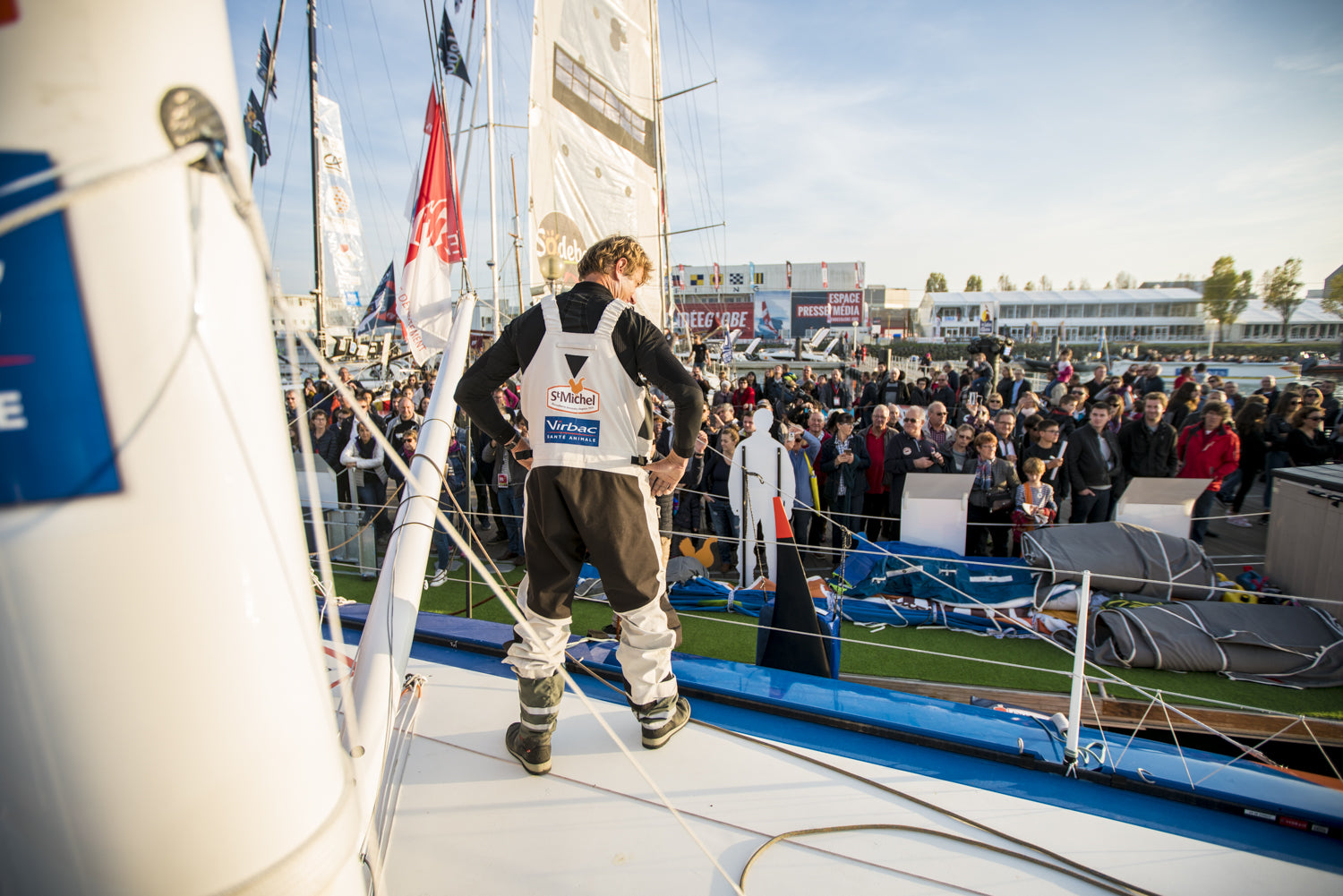
Celebrated solo sailors Jean-Pierre Dick, Jean Le Cam and Yann Eliés close in on Les Sab with a mere 80 miles between them.
On Wednesday morning, January 25th Jean-Pierre Dick led a pack of three toward the Vendée Globe finish line off Les Sables d’Olonne. His foil-clad IMOCA 60 StMichel-Virbac was first to reach the lighter winds off the coast of Brittany and hence the first to tack toward the finish. In this situation we do not always envy the leader. Because the the two skippers chasing Jean-Pierre had not yet hit the weather, Yann Eliès on Quéguiner-Leucémie Espoir and Jean Le Cam on Finistère Mer Vent slowly closed the distance he had worked so hard to put between them.
The trio have battled in close proximity since rounding Cape Horn, Jean-Pierre patiently defending his lead through tantalizing weather systems off the coast of Argentina and further North as he crossed the equator with Eliés and Le Cam close behind. As of this morning they were less than 100 miles from the finish with only 80 miles between them.
In the end Jean-Pierre defended his lead with determination and finished first at 1347hrs UTC, welcomed by a sea of fans, friends and his family on a partly cloudy afternoon. He finished in 80 days 1 hour 45 minutes and 45 seconds. Later this afternoon, Yann Elies on Quéguiner-Leucémie Espoir is due to become the first non-foiler of the 2016 fleet to finish. Local legend Jean Le Cam is close behind.
From the nav bench, the skippers reported to the North Sails team on the performance of their sails. “The real surprise was the little gennaker that I used like a code zero and which allowed me every time, during each transition, to build the difference between Jean and I,” explained Yann Eliés. “We had some transition periods where I was successful in getting more out of the change and the weak conditions than he. I think he even talked about this in one of his videos when he saw the sail through his binoculars.”
Yann, Jean, and Jean-Pierre have worked with the North Sails team in France for many years. For this Vendée Globe, an inventory of North Sails 3Di ENDURANCE, 3Di RAW, and NPL SPORT sails was developed for each of their IMOCA 60s. Extending a friendly shout-out to North designer Yann Reginiau, Jean Le-Cam wrote from onboard Finistère Mer Vent, “Knowing Yann, I never doubted for a second that my sails would not be powerful. Everything is absolutely perfect. Aside from the mainsail (which is a given), I have used the J2 a lot. It’s the sail with the largest range of use.”
From all of us at North Sails: Congratulations Jean-Pierre, Yann, and Jean on a safe and successful Vendée Globe! We are glad you found some company along the way.
READ MORE
READ MORE

events
SUNSHINE AND SUCCESS IN KEY WEST
Last week 99 boats invaded the city of Key West, USA to kick off a new year of sailing.
Competitors reported tough competition in each division at Quantum Key West Race Week, and ideal conditions for matching up against top-of-the-line sailors in each fleet. The constant drive for boat speed provided individual successes for many within each class.
Tim Healy and his J70 team New England Ropes. 1st Place!
True to form, the J/70 class composed the largest of the event with 42 boats. Led by North Sails-powered New England Ropes with 60 points after 12 races, North clients sailed well to claim four of the top five places; Carlo Alberini’s Calvi Network in 3rd, Brian Keane’s Savasana in 4th and Joel Ronning’s Catapult in 5th overall.
Another stand-out fleet in Key West this year was the Flying Tiger 7.5, where seven teams enrolled in the North U Regatta Experience program. The experience includes a pre-regatta clinic and entry to the regatta, which featured a dedicated one-design start for a unique, and competitive, group of sailors. Arriving with a crew ready to improve, coupled with onboard coaching and on/off-water sessions results in a great offshore one-design experience.
Nigel Brownett’s team with Jahn Tihansky and coach Andrew Kerr dominated the Flying Tigers, followed by Brian Tyrell in 2nd, who’s team of Melges 24 refugees had a fresh experience of their own in the FT class. In a three-way tie for 3rd, Rachel Bryer’s team came out on top of Guy Williams’ crew in 4th. North U director Bill Gladstone was joined by North Sails expert Mike Marshall, who coached Rachel Bryer and crew for the event.
“Our partners in the Regatta Experience program – 1D Sailing Academy – have provided a great fleet of boats and support; we’re excited to continue the North U Regatta Experience program at St. Pete NOOD and Bacardi Miami Race Week,” said Bill.
“We all met for the first time at this event to grasp the “know how” of the Flying Tiger, and got to race together to develop the teamwork and welcome new friendships. Our coach, Rod Favela, did a fantastic job helping us to function better every day, not just on the maneuvers but on the analysis of the race course and improving our feeling of the boat (balance, search for speed, pointing, etc.).
The video sessions led by Bill Gladstone after sailing carried lots of integrated analysis, and he opens the floor for sharing experience and expertise between boats.”
-Elizabeth Pattey, helm of Flying Tiger, bow 03
The TP52 class made their Key West debut to mark the start of their 2017 Super Series. Among the crews were a handful of North Sails experts. Sailing on Bronenosec was Paul Westlake, who remarked on the level of competition on the course. “Every point counts. As always, the fleet was tight and we went into the final day with roughly seven points between the top six boats,” he recalled. “We are thinking big picture at the start of the series. So far no one has made a clear breakthrough – it’s all on for Miami”. Last week’s ten races came down to a three-way tie for 2nd place.
Also enjoying the racing were North clients Pete Wagner of Skeleton Key and Martin Roesch of Velocity, who finished 1st and 3rd respectively in the J/111 class.
Thank you to the Storm Trysail Club, race committee staff and regatta organizers for a fantastic week!
READ MORE
READ MORE
events
JEREMIE BEYOU COMPLETES VENDÉE GLOBE PODIUM ON NORTH-POWERED MAITRE COQ
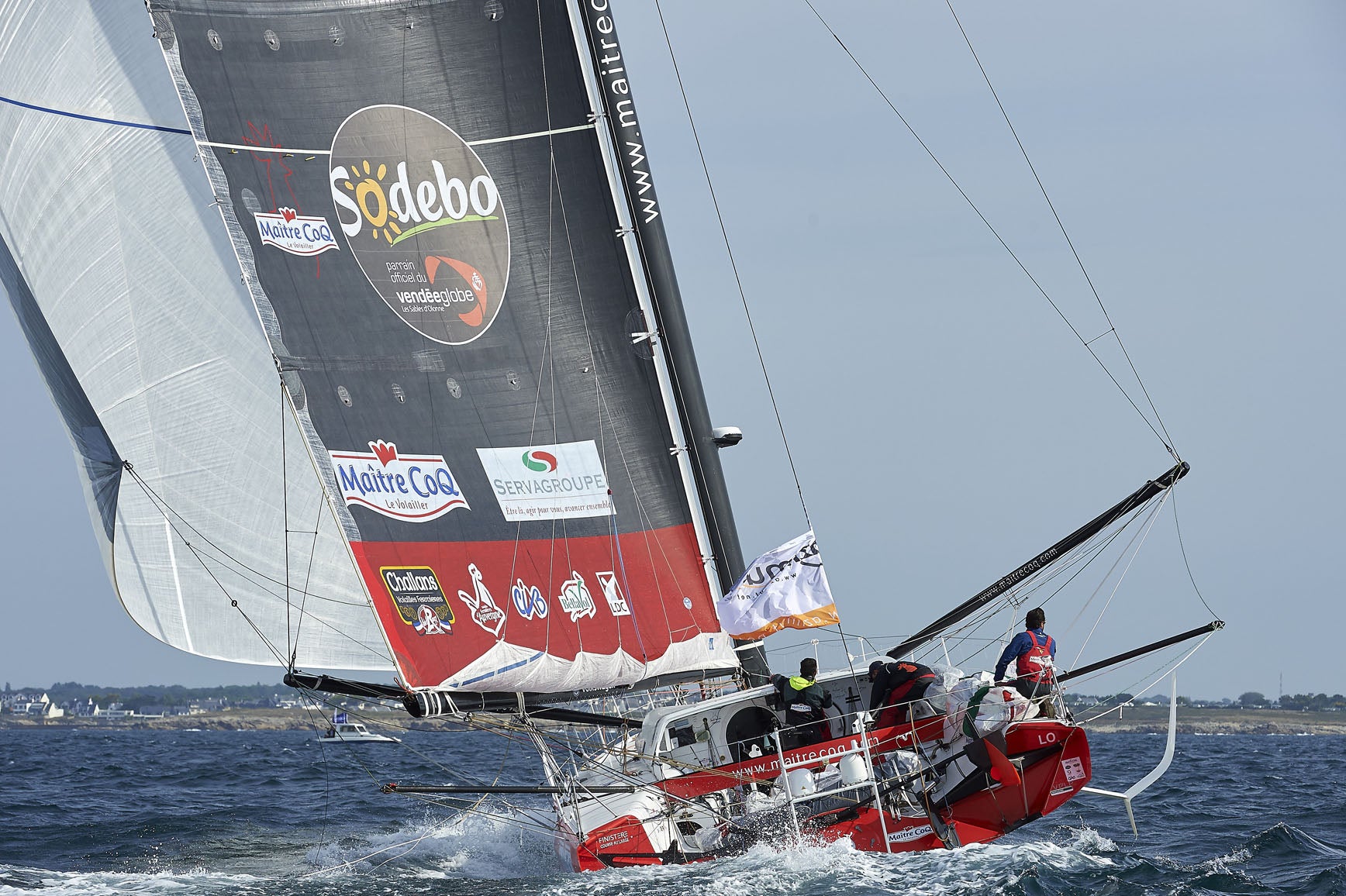
Jeremie Beyou completes Vendée Globe podium on North-Powered Maitre Coq
French skipper Jérémie Beyou finished the Vendée Globe today on his IMOCA Maitre COQ, at 7:40 pm local time after 79 days at sea. Beyou has participated in this iconic singlehanded around-the-world race twice before, in 2008 and 2012, and on his third participation he finished in third place behind race winner Armel Le Cléac’h and second place finisher Alex Thompson.
On the foredeck of Maitre COQ after reaching Nouch Sud, Jeremie told reporters, “After all the challenges of this race, to finish third is awesome!” Later he followed with, “Since this morning I have relaxed, after 78 days, we are very comfortable, I took advantage of it.”
Past winner of La Solitaire du Figaro, Jeremie is an experienced offshore sailor, and this Vendée Globe race has put his experience to the test. Shortly after his departure from Les Sables d’Olonne on November 6th, Jérémie lost the use of two autopilots. Later his fleet antenna broke which prevented him from receiving regular weather updates. He kept rolling with the punches, and recalled today, “When my mainsail hook broke, I almost gave up. It was pitch dark, and I told myself I would never be able to repair it. Afterward, I don’t know where I got the energy, but I managed to do it. Each decent maneuver is a victory, and you have to be pleased about that.”
Jérémie sailed a total of 27,101 nautical miles before reaching Nouch Sud. His average speed was 14.43 knots, his top distance in 24 hours was 504 miles (November 21, averaging 21 knots boat speed).
The 8th Vendée Globe started on the 6th November from Les Sables d’Olonne. 22 of 29 skippers left the dock with North Sails onboard, and Jeremie Beyou’s Maitre COQ is one of 13 boats with complete North Sails inventories.
View North Sails coverage of the Vendée Globe, featuring commentary from the North team and brand ambassador, Sam Davies, on our dedicated race webpage.
READ MORE
READ MORE
events
ARMEL LE CLÉAC'H WINS 2016 VENDÉE GLOBE
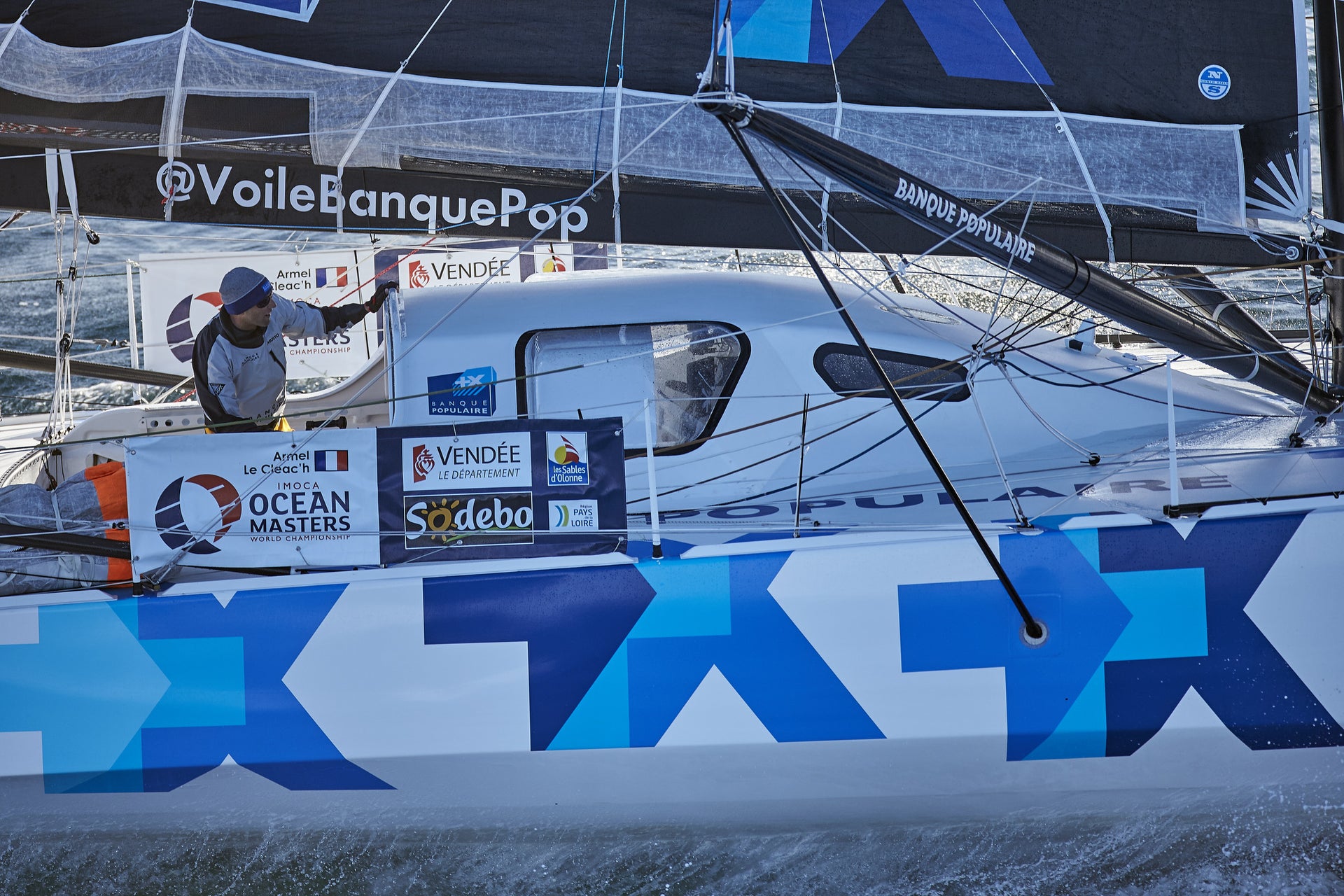
Armel Le Cléac’h reaches Nouch Sud, makes Vendée Globe history under North 3Di sails
In likely the most breathtaking finish of the Vendée Globe singlehanded around-the-world race, Armel Le Cléac’h and his IMOCA Banque Populaire VIII finished just hours ahead of his fierce competitor, Alex Thomson on Hugo Boss. After 74 days at sea, both boats will finish within the east-about circumnavigation record set by Francois Gabart in 2013.
Armel reached the iconic finish buoy “Nouch Sud” at 4:30pm on Thursday, January 19, 2017. Today thousands of sailing fans will line the channel in Les Sables d’Olonne to welcome him, having successfully completed his third Vendée Globe race, this time stealing the win and securing a new world record for the fastest circumnavigation by a singlehanded sailor on a monohull 74 days, 3 hours, 35 minutes, 46 seconds (yet to be ratified).
100 miles behind, Alex Thomson was close on his heels in hot pursuit of an epic comeback. The world watched in anticipation as the pair worked their way North through the complex patterns of the Atlantic, with Alex slowly chipping away at Armel’s lead. But Armel, known to his fellow sailors as the Jackal for his unrelenting pace, knew he would have to work hard for this win, as all Vendée skippers do. After he finished second to François Gabart in 2013 by a mere three hours, Armel knows that every minute counts in this marathon event.
The Vendée Globe is above all a voyage to the ends of the sea and deep down into the sailor’s soul. It has been won by some of the greatest names in sailing: Titouan Lamazou, Alain Gautier, Christophe Auguin, Vincent Riou, Michel Desjoyeaux and François Gabart.
Perhaps their fellow competitor on Spirit of Hungary, Nandor Fa, said it best on Tuesday when he called into Vendée Live from the South Atlantic for an interview: “I’ve watched these guys match race round the world and what they’ve done has been fantastic,” he added. “Both of them deserve to win because their performances have been incredible.”
Armel has worked closely with the North Sails team in France over the past five years, and for the 2016-17 Vendée Globe, an eight sail inventory including 3Di RAW, 3Di FORCE and NPL DOWNWIND was developed for Banque Populaire VIII. Before the race start on November 6, 2016, Armel reported:
“After the last Vendée, I had a good idea of what I would do for the next boat. Looking back it is now radically different, and I feel confident about our choices because of all the design and testing work that has gone into it. The sails match the boat and my way of sailing, and I’m happy with the performance and durability – it’s a well-rounded inventory for this race.”
Alex Thompson on Hugo Boss is due to finish this evening. He will soon be followed by Jeremie Beyou on Maitre Coq who is roughly 700nm from the finish. As for the tight trio of Yann Elies, Jen-Pierre Dick and Jean Le Cam, they have just under 2,000nm to go with roughly 20 miles between them – this will get interesting!
Congratulations to Armel from all of us at North Sails, third time’s a charm! Now please, get some rest!
READ MORE
READ MORE
events
NEPTUNE GRANTS PRIME CONDITIONS FOR 2016 SYDNEY - HOBART
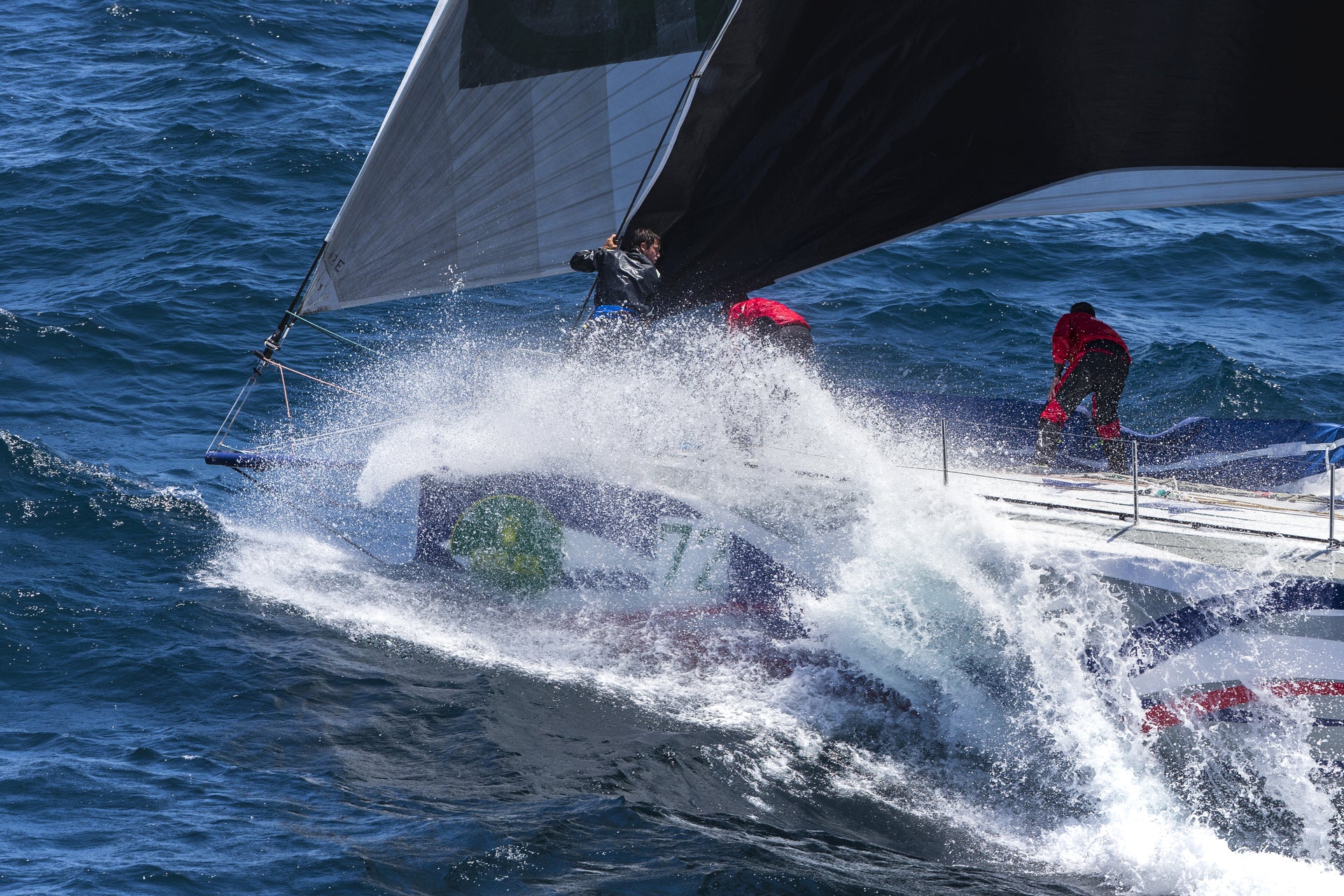
Neptune Grants Prime Conditions for 2016 Sydney – Hobart
North Sails clients reap the benefits of fastest Rolex Sydney – Hobart Yacht Race on record
The 2016 Sydney To Hobart was raced in an amazing weather pattern that allowed 3 boats to break the course record set by Wild Oats in 2012 (18 hours and 23 minutes and 12 seconds).
The year proved a successful installment for North clients as well, who claimed 1st and 2nd line honours; 1st, 2nd and 3rd in IRC and 1st and 3rd in ORCi. Early finishers were led by Anthony Bell’s Perpetual Loyal, which took line honors and slashed 4.5 hrs off the record, while Jim Delegate‘s Giacomo was granted the coveted Tattersalls Trophy for placing first in IRC, and Bin Wang’s team UBox claimed ORCi (we look forward to seeing more of this crew in the upcoming Volvo Ocean Race!).
Perpetual Loyal finally got to show her true potential after abandoning mid-race in 2013 and 2014. North Sails Expert Alby Pratt manages the sail program for the team out of the loft in Sydney and joined the crew for the race south.
”The 2016 race was fantastic. This was my 21st race and the most enjoyable conditions by far. The heavy downwind stretch we had on the first afternoon allowed us to use our massive running spinnaker to good effect. This sail was built for the boat last year to improve her achilles heel which was VMG running, and we developed a custom Cuben Fibre cloth for the project. The sail kept us within striking distance of the Oats until transitioning on the first night,” said Alby, who sailed on Wild Oats in 2015 and has overseen the sail inventories for both programs over the years.
Due to a more powerful hull shape and higher displacement, Perpetual Loyal is always at a disadvantage to her maxi competitor Wild Oats in the fresh running conditions the fleet experienced at the outset. The crew were happy to report a noted improvement while using the newly developed North Sails NPL DOWNWIND runner.
On the morning of the 27th, Perpetual Loyal showed what she could do in the moderate reaching conditions, gaining distance on Wild Oats until the yachts were a beam. Unfortunately, around this time, Wild Oats suffered a keel ram failure and the crew were no longer able to cant the keel – a maneuver granting added righting moment, and a key component to Wild Oats’ safe and effective performance. The team was forced to abandon their charge for line honors and the new course record.
Perpetual Loyal charged on as the breeze became lighter on the afternoon of the 27th. The crew hoisted the boats new NPL DOWNWIND A3 reacher which was purpose built for this year’s race. Designed to capitalize on the boats powerful reaching ability it allowed Loyal to sail away from Scallywag and the next group of boats behind which included the fast finishing Volvo 70’s Blackjack and Maserati who were also reveling in the reaching conditions.
Loyal’s sails were designed by JB Braun, who is based in Massachusetts, USA and designs many high-profile projects for North Sails including super maxi Comanche, the latest J-Cass performance inventory, and sits on the Aero design group for ORACLE Team USA. JB worked closely with Alby and Loyal’s Sailing Master on Perpetual Loyal, Tony Mutter, to design a sail that would push the boat’s reaching ability to maximum advantage.
By dusk on the 27th the breeze had swung aft, enough to hoist the A2 running sail for the last stretch into Tasman light. “Perfect conditions up the Derwent was icing on the cake, we had an amazing race,” said Alby
Jim Delegat and his New Zealand team on Giacomo were second over the line holding off the much bigger Scallywag and taking out IRC honors. Giacomo also flew North Sails 3Di sails with Richard Bicknell from North Sails in New Zealand among the crew.
Bin Wang’s U box was a late campaign for the race and her victory in ORCi is a fantastic result for the team. U Box was led by Charles Caudrelier of Dongfeng Racing, who took the opportunity to trial and train with crew for the Volvo Ocean Race, starting this October in Alicante, Spain. U Box had a new North Sails 3Di RAW mainsail and 3Di ENDURANCE headsails, fitted days earlier on Christmas Eve. North Sails Expert Billy Sykes managed the sail order for U Box and, after sending them off, hopped on board Matt Allen’s Ichi Ban which took 3rd in IRC.
Ichi Ban also reveled in the fresh running conditions and at the entrance to Storm Bay was leading the IRC standings. Unfortunately for Matt and his team including round-the-world veteran Gordon Maguire, the notoriously fickle Storm Bay did not want to play and they could only watch as the distance they had gained evaporated with the breeze.
No doubt, the 2016 Rolex Sydney-Hobart course record will be broken in the future as faster and faster boats are designed and built every year. The conditions in 2016 were ideal for high-speed ocean sailing – and the competitors jumped off the line to reap the benefits. The big question is, how long will we wait for King Neptune to grant these prime conditions again? Time will tell, and we’ll be ready!
READ MORE
READ MORE
events
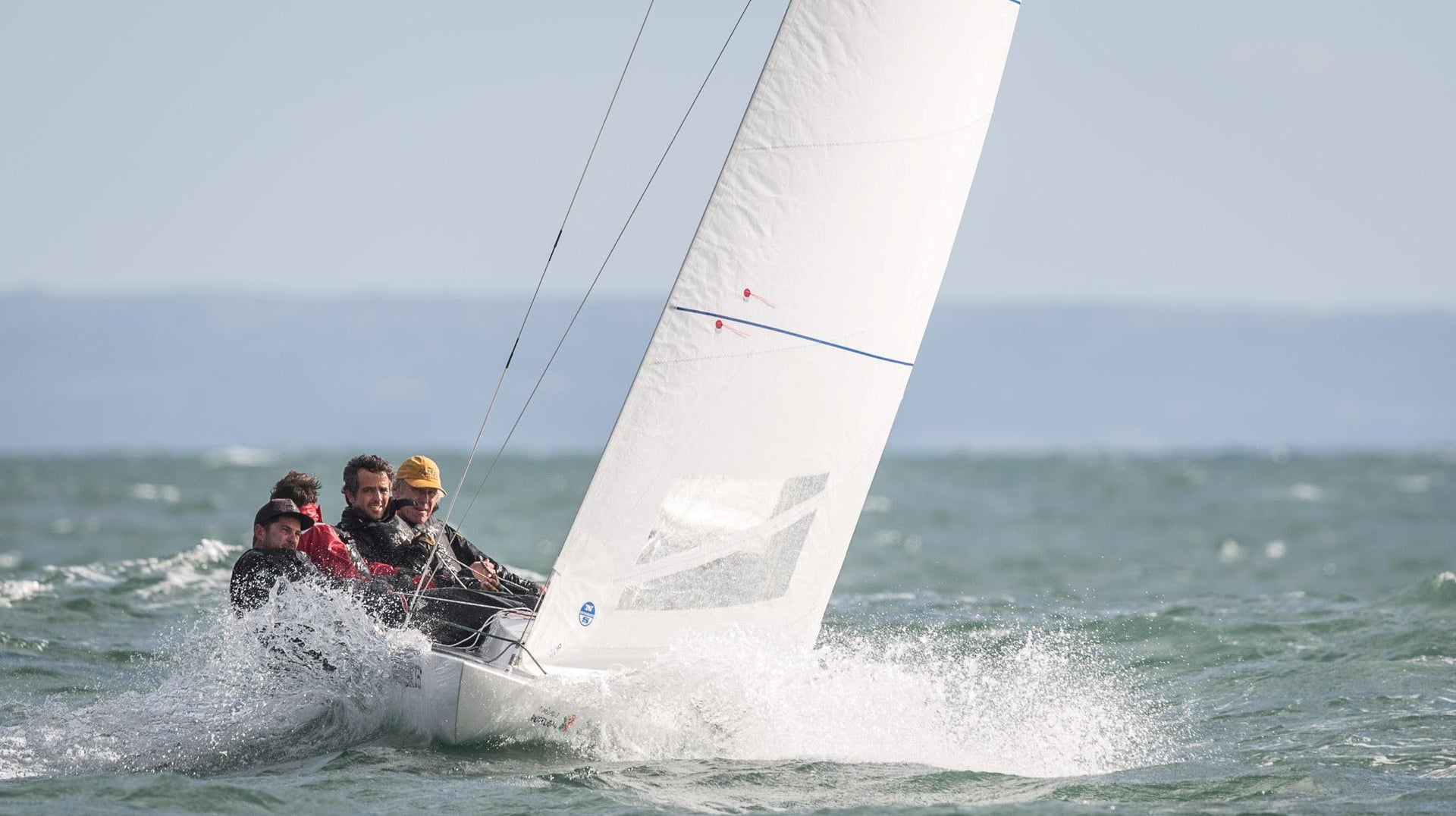
DRAGON CASCAIS WINTER SERIES #3
DRAGON CASCAIS WINTER SERIES ACT THREE
Top three powered by North Sails
Congratulations to the top three Dragons at the third event in the Cascais Winter Series – all were powered by North Sails .
In first was Lawrie Smith’s ‘Monday’ GBR801, he raced with North Sails Hugo Rocha on board. Second place was Andrey Kirilyuk on ‘Strange Little Girl’ RUS76 and third Klaus Diedricht’s ‘Fever’ GBR758 with Jamie Lea on board.
Also congratulations go out to the first Corinthian boat, in 5th place overall, Benjamin Morgen’s ‘Rosie’ GER1180.
The date for the 4th round of the Cascais Winter Series is 10th Feb.
Thanks to Richard Pinto for the photo www.rspinto.com
READ MORE
READ MORE
events
NORTH SAILS ACQUIRES AUSTRALIAN LICENSEE
On January 3rd 2017, the North Sails Australia licensed operation was purchased by North Technology Group. In line with the ethos of North Sails Group, the purchase of the renowned Sydney loft will enhance the customer experience. It will ensure that whilst benefitting from the shared technology, greater efficiencies and wealth of knowledge from within the Group, the core of the business is still understanding the local culture and sailor. As a result, Managing Director Michael Coxon and his team at North Sails Australia will now be spending more time on their core business of selling and servicing sails than ever before.
Michael Coxon, Managing Director, North Sails Australia: “Over my 33 years as a North Sails loft manager I have benefited from, and enjoyed, great relationships and experiences with my peers both on and off the water. During this time, I have observed and participated in a lot of change and challenges in our company and industry. Over my tenure, North Sails Australia has been a viable operation, keeping the North Sails name and brand at the forefront of Australia’s sailing market. As North Sails is the only truly international vertically integrated sailmaking company, to me it is a logical step forward for North Sails Australia to proceed into the future under the secure umbrella of our parent company. This shall offer long term security and direction to our loyal and experienced staff and as we truly work as one, provide our clients with the best products, service and value into the future.”
North Sails Australia is the country’s leading sailmaker with a diverse market ranging from dinghy, One Design, 18′ Skiffs, cruising, racing, Grand Prix and Maxis. Dating back to when Australia defended the America’s Cup in Fremantle in 1987, North Sails Australia was the sailmaker of choice, supplying both the Bond and Kookaburra defense challenges and building some 323 panel America’s Cup sails for the Cup. Since then, the loft has continued to be at the forefront of campaigns and teams from the America’s Cup all the way through to around the cans racers and offshore racing, dominating the fleet in classic blue water races such as the Rolex Sydney Hobart Race.
Ken Read, President North Sails Group: “North Sails Australia is a world-renowned sail facility. We take very seriously the notion of ‘think global, act local’ and we feel that with this latest addition to the North Sails Group of centrally owned lofts we are doing exactly that. We fully understand that each individual loft is as much about the people, relationships and local knowledge as it is about our products. In working more closely with Michael and his team, we allow them to further enhance our customers’ experience and ensure that everyone gets the best possible sail, and sailing experience. We are delighted to welcome Australia into the Group and look forward to all that we can achieve together.”
North-powered Perpetual Loyal running with a custom A2 built at the Sydney Loft, on her way to breaking the Sydney – Hobart course record on December 28, 2016.
READ MORE
READ MORE
events
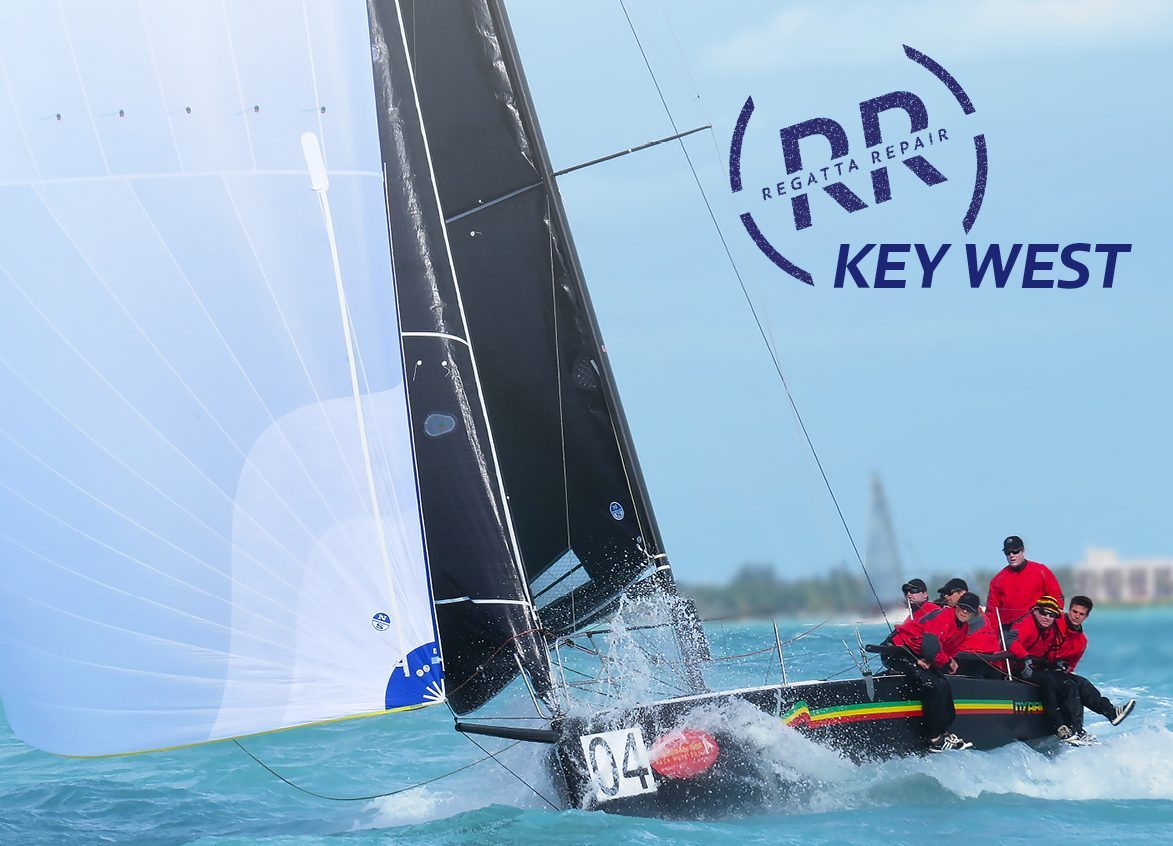
NORTH SAILS REGATTA REPAIR IN KEY WEST
With a long week ahead in Key West, North Sails will be on site and at your service to keep you having fun on (and off ) the water!
Our goal is to provide expert repairs and maintenance in a timely manner. Your sails are a major investment, and we’re committed to helping you maximize their performance and lifespan.
With our service location being on Stock Island, our North van is on call and ready when you are for immediate pick-ups from your dock locations. Keep our numbers on speed dial and as soon as you get in we can come to you! Since we all know parking isn’t easy, the van will be making rounds to assist everyone and anyone in need.
Florida Keys Community College in Stock Island
5901 College Rd, Key West, FL 33040
Yana – 631-805-4949
Alexei – 954-663-4556
Every sail serviced by North Sails undergoes a thorough inspection designed to identify maintenance issues early, so they do not become major problems later on. Our unmatched worldwide network means you get the same quality service whether you’re at home or at a regatta.
As soon as you know you will be needing service, don’t hesitate to call us and we will be there, at your service!
READ MORE
READ MORE
events
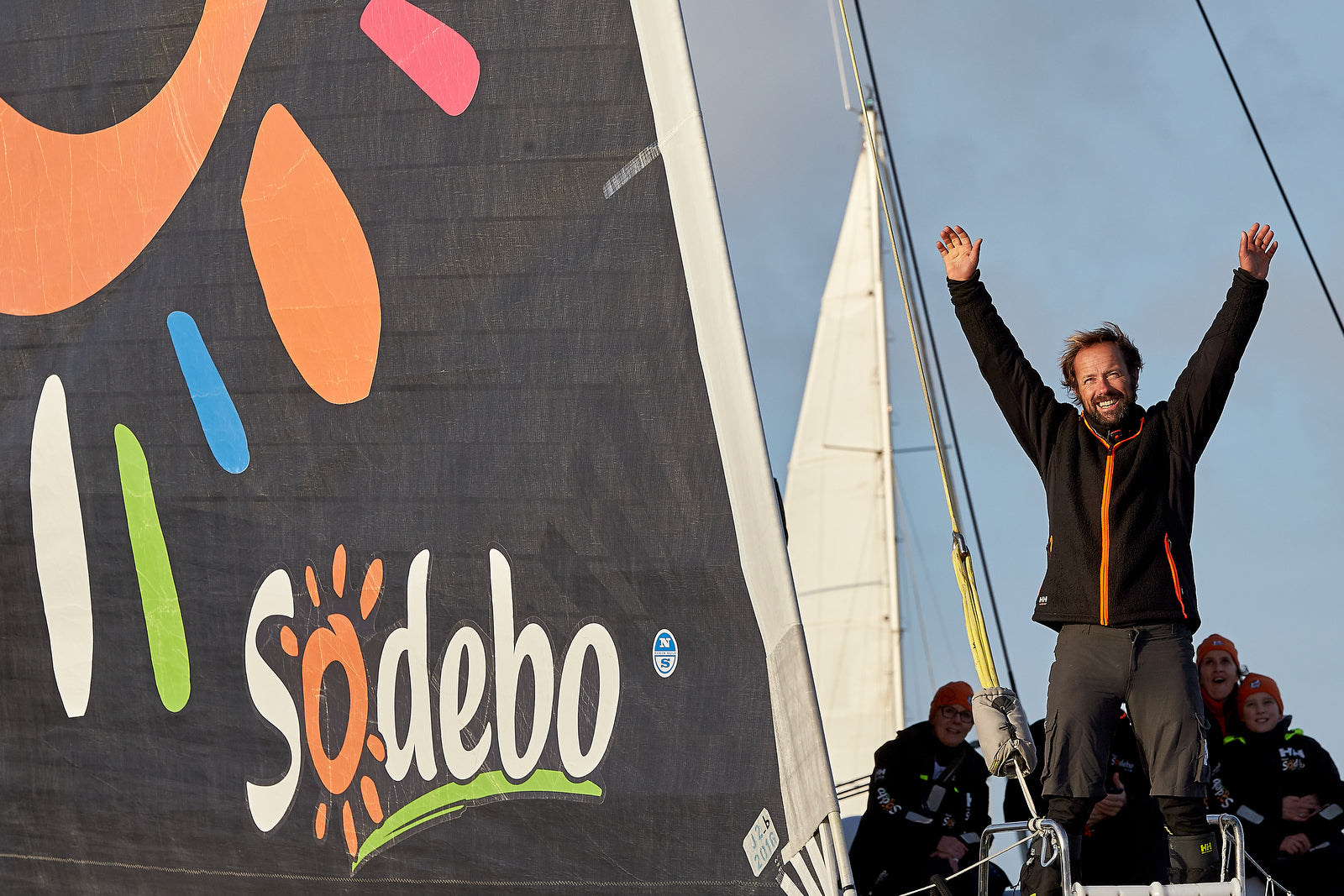
THOMAS COVILLE SETS SOLO AROUND-THE-WORLD RECORD WITH NORTH SAILS 3Di
Some athletes are endurance runners, others sprint. If Thomas Coville were a runner he would be the former, with a jet-pack.
On Sunday he accomplished his lifelong goal of breaking the record for sailing solo, non-stop around-the-world. As a matter of fact, he smashed it by over eight days.
The French sailor boasts a myriad of offshore sailing experience beginning in the 1997 Mini Transat, sailing across the Atlantic alone on a 6.5m boat. He later moved onto the Vendée Globe, around the world alone on a 60ft monohull. He sailed in crewed offshore races such as the Volvo Ocean Race, winning with Team Groupama in 2011-12. He also won two benchmark solo offshore races – the Route du Rhum in 1998 and the Transat Jacques Fabre 1999. It has all been in preparation for this ultimate challenge: to set the solo, non-stop, around the world sailing record. Thomas Coville finally achieved his dream, on Christmas Day 2016, after four prior attempts.
Thomas joins Dame Ellen MacArthur and Francis Joyon in a prestigious, small group of three multihull sailors who have sailed around the world, nonstop. The difference with Thomas’s tour du monde is his daily average speed, not to mention the difficulty a 31 meter Ultime trimaran imposes on a sailor. These make his achievement unique, incredible, amazing, and quite surprising, even for those closely involved with his campaign.
“Sometime after Thomas’s departure, I joked that it would be perfect if he finished in 48 days to match his age,” said Gautier Sergent, a comrade of Thomas’s and the North Sails designer for the Sodebo Ultime campaign. “It was so funny at the time because we never predicted he could finish that quickly. In the end, it was 49 days… and we are all in disbelief.”
North Sails has a long-standing relationship with Sodebo, and Gautier bonded with Thomas during his stint on Groupama 4 in the Volvo Ocean Race 2011-2012. Gautier was the sail designer for that program, too, and many offshore programs before and after.
“From this and past experiences with Ultime campaigns, I can say that sailing these boats is tough, they are unforgiving. If you lose your concentration for two minutes, the boat will take over, and you risk breaking equipment in what quickly spirals into life-threatening situations. You can not back off and 49 days of intense sailing is a long time to maintain your mental focus and physical strength.”
Gautier works collaboratively with Sodebo’s appointed sail coordinator, Loic Le Mignon and North Sails expert, Quentin Ponroy. The sail design team is part of a wider group of trusted designers, engineers, craftsmen, meteorologists, sailors and coaches, marketers, and operations professionals that make up Sodebo Ultime. Numerous times Thomas credits his achievement, while a “solo” sailing record, to the people who have supported and pushed him on the record-breaking journey, not to mention four prior attempts. It takes a lot of faith to take a leap into the unknown hoping each person got his contribution right.
Addressing the challenge, and nodding to his support, Thomas explained:
“For example, when you leave Brest and you know that the weather sequence is going to be difficult in the South Atlantic, but in the end, you turn this seemingly bad window into a good one because you gybe 20 times in 48h along the ice limit to extricate yourself from the St. Helena high. I did what was needed to turn this route into a good one. So there is, at the same time, a share of risk, a part of chance, and a share of fortune that you create. It is a window, and you can decide to open it or leave it closed. For me, Jean-Luc Nélias, Sam Davies, Thierry Douillard, have an analysis that they propose to me, and sometimes they challenge me, push me, Jean-Luc pushes me a lot. Then there is the third parameter of technological breakdown. This boat is faster down the Atlantic and in the Southern Ocean. But the counterpart of that is it’s more physical to maneuver. The gennaker is 120 kg, or even 130 when it gets wet, and there it becomes a huge physical commitment. I did not spare myself, and I do not think I have done fewer maneuvers than if the boat was crewed.”
He didn’t let up for 49 days, an intensity unmatched, apparent in his average boat speed of 24 knots over 28,400 nautical miles. What any sailor can learn from Thomas Coville is that determination and a passion for the process pay off.
“What I would like to keep from this record is not so much the 49 days and 3 hours, it’s mostly the way I traveled, I fell, I got up, I dared. Ten years, a dream very difficult to reach, but a dream that I lived, that I live.”
READ MORE
READ MORE
events
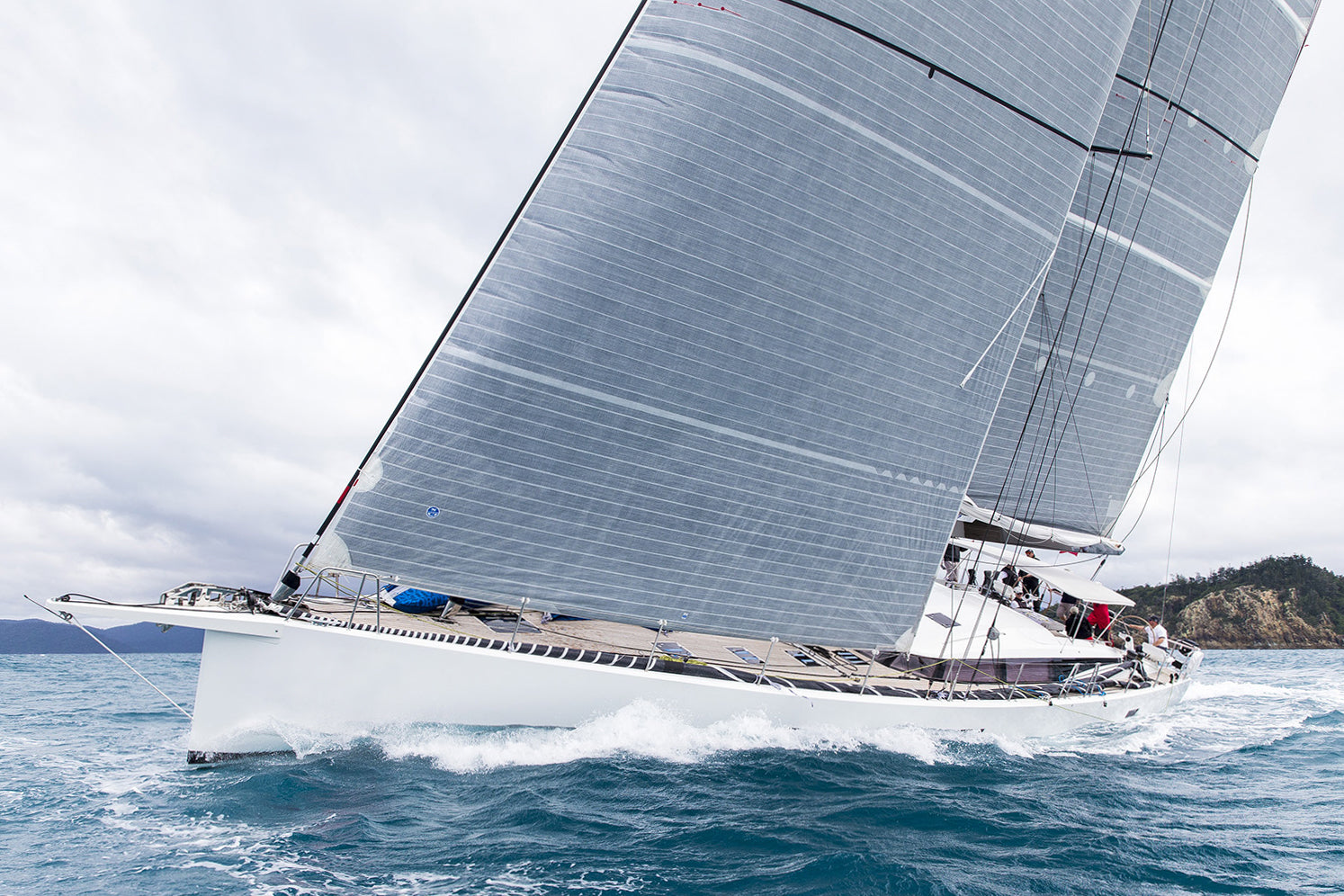
RACING A PERFORMANCE CRUISER THROUGH BASS STRAIT
The annual Boxing Day departure of the Rolex Sydney-Hobart Race is approaching fast. We caught up with the North Sails team in Sydney, AUS, who are now in full-swing getting sails serviced and ready to go. The Sydney to Hobart course is 628 nautical miles, out of Sydney Harbor and past the Heads, down the Australian coast and through the Bass Strait to Tasmania. The race is known to be extremely challenging, due to its ever-changing conditions and legendary squalls in the strait.
A new kid on the block this year is the CNB76 luxury cruiser, Charlotte. This will be her first Hobart race and she is in good hands, with an experienced crew including owner Ervin Vidor, who has entered the race six times. Preparing a premium cruising boat for an offshore race of this caliber can be tricky. North Sails Expert Jason Antill has supported the program along with his father, Rob; building a trusted crew, outfitting the deck and cockpit, and ramping up the inventory with three new downwind sails.
“While Charlotte is a high performance cruiser, once the day’s sailing is complete the design spec calls for the boat to be at anchor and the crew to get a fine night’s sleep… That’s a bit hard when you’re 120nm off the Australian coast in a 40 to 50 knot headwind,” said Jason, who explained that safety will be a top priority.
“We took care of safety concerns by placing additional hand holds and safety lines on Charlotte’s vastly spacious foredeck and cockpit. Managing halyards at the mast was another challenge, especially the 2:1 halyard for the new Code 0. This is where having the North Sails collective experience was helpful. We asked a member of our team, Michael Coxon, to join us for a crew training day. In the end he helped us create a custom halyard bag to avoid tangling.”
Charlotte launched with a North Sails 3DiTM ENDURANCE hydraulic furling jib and staysail. Now with over 10,000 bluewater miles logged, these core working sails are up to the Sydney-Hobart challenge. Jason and Rob have added a VMG gennaker, a North 3Di Raw Code Zero, and a North Panel Laminate (NPL) light-medium asymmetric runner.
Regarding the durability of Charlotte’s first 3Di sails, owner Ervin Vidor commented, “The 3Di working sails have covered 6000nm in Europe and 4000nm in Australia, one service and they are good as new.”
In gathering the ideal crew, Jason used his contacts to find sailors with extensive experience on big boats.
“I’ve called every friend I have to put the program together, there’s no one left now!” he laughed. “We basically pulled from our previous campaigns, which provided a nucleus of people who have done the Hobart before. They’re all experienced in big boats, not just racing, and short handed deliveries.”
Among the crew is Jason’s father Rob Antill, who was instrumental in the opening of North Sails in Sri Lanka and Sydney, and certainly has his fair share of Hobart bragging rights. Rob will be “Sailing Master” for this year’s race.
“Dad has forgotten more than I will ever know about the Hobart,” said Jason. “Not surprisingly, when I suggested the boat was longer plus a few feet than his age he was more interested in coming along this year. From where I stand, being able to trust my father, knowing he has the experience to understand the limits of a boat this size, means I’ll sleep a lot better off watch.”
READ MORE
READ MORE
events
SOLO SUPER SERIES
SOLO SUPER SERIES
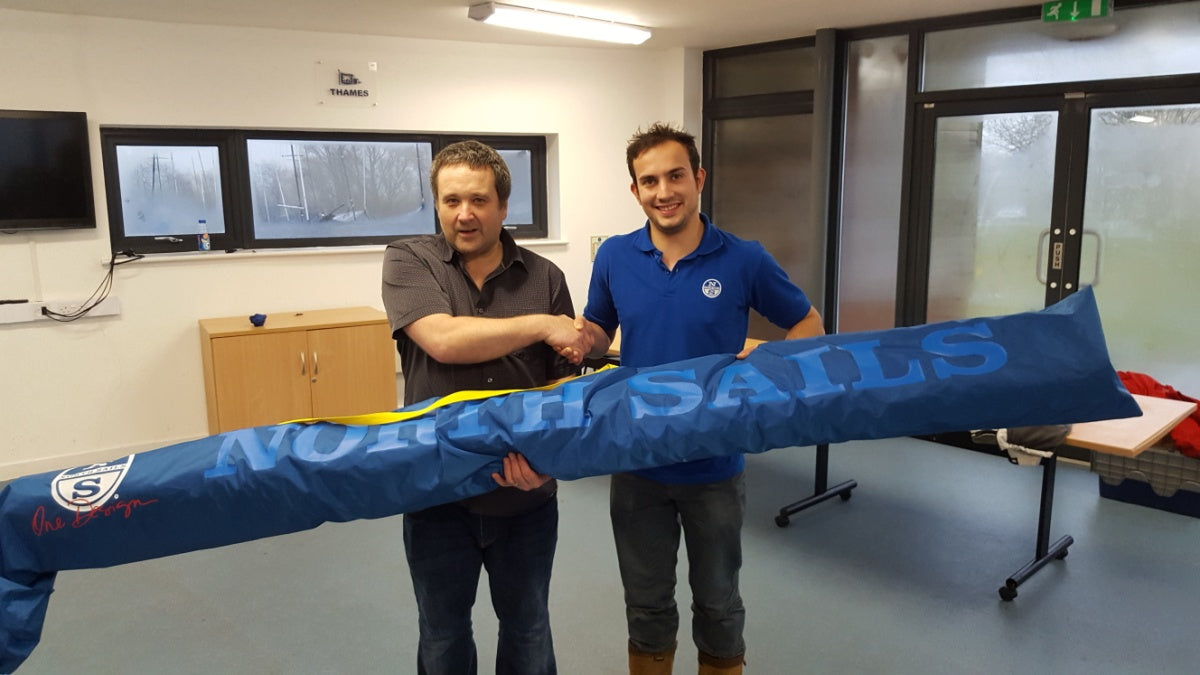
Congratulations to Chris Brown who was the winner of the Solo Super Series draw held at the End of Season Champs over the weekend.
Unfortunately due to the lack of wind all racing was cancelled for the last event, however overall results can be seen on the Class website.
North Sails Lawrence Creaser presented Chris with his prize, a new North Sails F-2 Solo sail!
North Sails are proud to continue their sponsorship with the Solo Super Series in 2017.
To find out more about the F2 and our other new designs for the 2017 season please see our class page.
READ MORE
READ MORE
events
INTERVIEW: DREW FREIDES, WINNER OF THE 2016 WORLD RANKING
PACIFIC YANKEE WINS THE 2016 MELGES 20 WORLD RANKING
Interview with Drew Freides
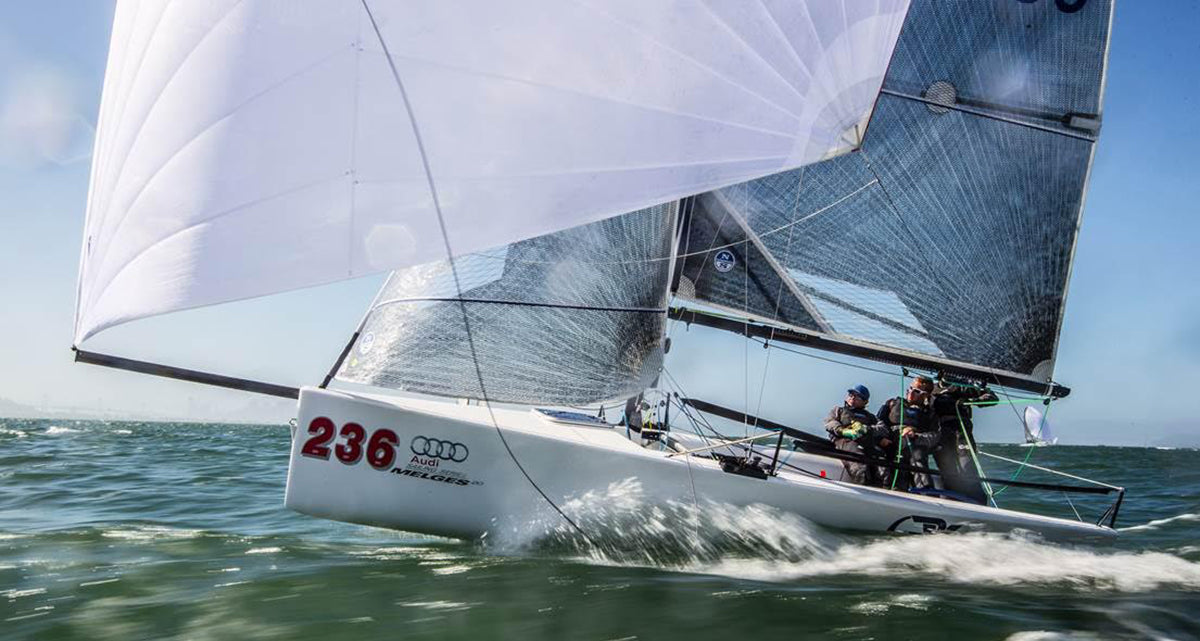
The final rankings for the 2016 Melges 20 World Series have been announced and Drew Freides and his Pacific Yankee team finished the season as the top ranked team and are the series champions for 2016. Drew and his team culminated the 12 event series with a victory in this years final event which put the finishing touches on Pacific Yankee’s #1 ranking over seventy other teams in the series. Our team at North Sails is proud that Pacific Yankee, as well as the teams and boats that finished the season ranked 1,3,4,5,6, all chose to be powered by full North Sails inventories!
The Pacific Yankee team worked closely with North Sails expert Vince Brun to make sure the team was learning all they could through a thoughtful sail development program to make Pacific Yankee go fast and be the best they could be. We got in touch with Drew and asked him the key factors to such a successful year:
Boat Setup
“From day one, Vince wanted us to focus on learning how to set up the boat correctly. With so many options for adjustments we developed a complete matrix with the boat & rig setup for every wind speed. Vince’s goal for us was not to have to think about how to make the boat go fast during racing and just focus on boat positioning as well as racing”.
Training
“We spent a lot of time on the water tuning and training, always with an open mind to try new things. We would see another team doing something different, and we would try it, often times going against standard logic. Some things worked, while other things didn’t, but we constantly learned from the experimentation and testing.”
Team
“We sailed all year with the same team. Charlie Smythe focused on boat setup, constant rig adjustment and overall boat speed, both upwind and down. Morgan Reeser worked with me on my driving as well as tactics and boat positioning vs the fleet and the race course”.
Sail Program
“We switched from the AP-6 mainsail to the new standard M-16 main from North which was the right direction. There is no question that North is recognized as offering the fastest sails by the majority of the Melges 20 fleet.”
Final Thoughts
“I seriously had chills running down my spine when I saw the results. I can’t believe we ended 2016 ranked #1in the World! I can’t thank you all enough!!!!!!! We did it. Now we just need to win a World Championship. Just before my mom passed away almost three years ago, she told me to buy this boat – she would never believe what we have accomplished. Thank you again for all of your commitment and hard work!!!!!!! I owe you guys!!!!!!!!”
Thank you Drew! Seeing sailors have fun and great success while learning to go faster is one of our favorite things to see at North Sails. Thanks for making our day and congratulations to you, Charlie, Morgan & Vince on a great year!
Learn more about our sails for the Melges 20.
READ MORE
READ MORE
events
3Di RACE REPORT - DOUBLE TIME
Only in eternally sunny Newport Beach, California could you race in a Sunkist Series during the dead of winter! Taking advantage of the long sailing season are Alan Andrews and Molly Lynch, who sail in the monthly series with their Andrews 38, Double Time. Sailing with family and friends compliments the more serious racing Alan does with clients of his firm, Alan Andrews Yacht Design, and in 2016 the family-friendly program had a busy season, entering 14 races in total. Last Sunday marked the second Sunkist, and Alan & Molly broke out their new North Sails 3DiTM RACE genoa for the first time.
The boat’s #1 genoa is a key sail: last year there were only two races they didn’t use it. The sail they had was seven seasons old, so a lot of new options were on the market when Alan and Molly decided to replace it.
“We were looking for a #1 jib that would cover the whole range. This weekend we sailed our first event with the 3Di RACE genoa in very light wind, probably four knots to start and it went down from there.”
It was a bit of a “drifter” with light, shifty breeze and lumpy water, the kind of conditions many sailors dread. In the end Alan and Molly’s team claimed the win and, having used the new sail at one end of the range, Alan was encouraged by the readability of the new sail in light conditions.
“The sail absolutely met our expectations at that end of the range. Having raced a lot with clients and friends over the years, my impression with some of the earlier 3Di sails was they were a bit on the stiff side. On Sunday we were sailing at the bottom end of the range with a little bit of chop, really shifty light air, and we were able to read the sail. The material was supple enough to respond to subtle changes in pressure. For an all-purpose #1, that’s a good deal. We expect this sail will bring us up to 14 knots.”
The new 3Di RACE genoa replaced a 3DL SPORT #1 jib with a taffeta layer for added durability. In switching to 3Di RACE, Alan noticed that the new sail was lighter in weight while promising superior durability to string sails.
“Compared to the 3DL™ taffeta sail, the 3Di sail shifts the material weight into the load bearing thread, which gives the sail potential to hold its shape higher up the wind range. While shape retention was not an issue with our last sail, we immediately noticed that the new sail was much lighter.”
Being a numbers guy, Alan weighed his new 3Di sail vs the old 3DL sail and found the 3Di to be 10% lighter. The ability to place material in a load bearing pattern, adding weight to the sail where it’s needed most, and saving where it is not, is an inherent trait of 3Di technology.
And the best news? It’s still ‘summer’ in California. The Balboa Yacht Club hosts racing every month of the year, so we’ll be checking back in to hear how Alan and Molly’s new 3Di RACE sail performs up the range.
READ MORE
READ MORE
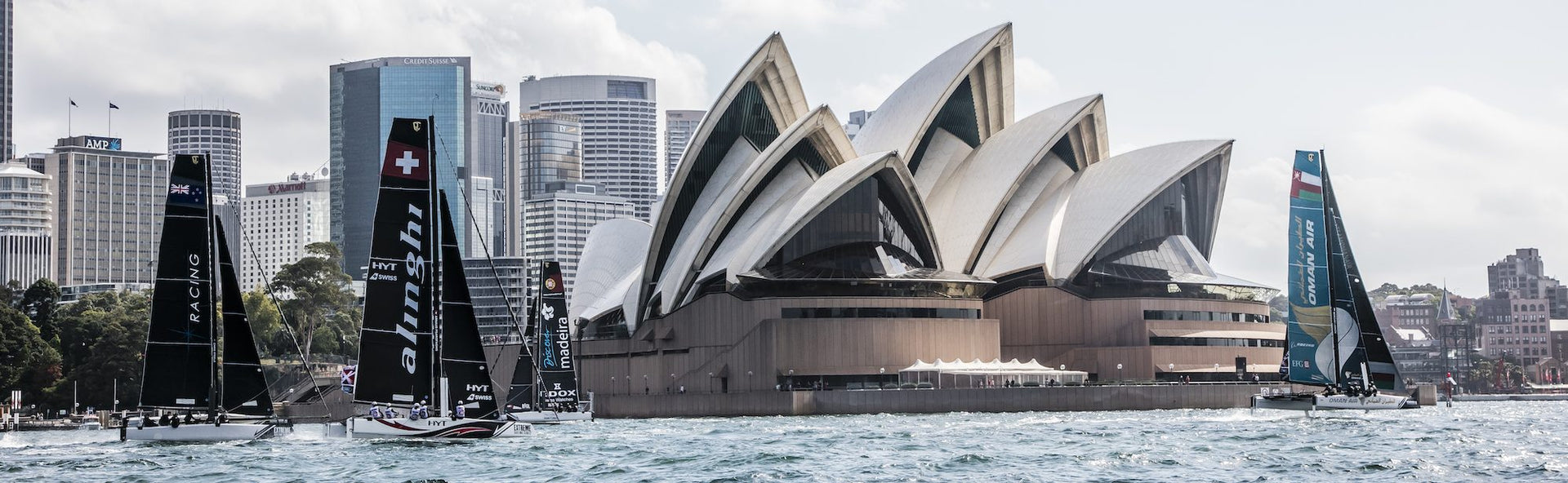
events
ALINGHI CLAIMS EXTREME SAILING SERIES TITLE WITH NORTH SAILS 3Di
Our congratulations to team Alinghi for securing the 2016 Extreme Sailing Series (ESS) world title this weekend on Sydney Harbor. This is Alinghi’s third series win, following victories in 2008 and 2014, and the first time they’ve done so ‘flying’ on the new lightning fast one-design GC32 catamarans. As the official supplier to the GC32 Class, North Sails delivered eight one-design inventories to the fleet in early 2016.
Co-skipper of team Alinghi, Arnaud Psarofaghis, said, “The GC32s are perfect. At the beginning of the season we thought it would be hard to compete on small courses in foiling boats but now the Extreme Sailing Series is even better than before.”
Considering his work as a sail designer for North Sails in Switzerland, Arnaud maintains an envious balance of work and play. Originally from Corsier, he has risen as one of Switzerland’s top sailors and has a broad range of experience across the multihull world, having found success in the D35s, the Ventilo M2, the Extreme 40 and also the AC45.
“I have been a designer at North Sails Geneva for 10 years and enjoy it a lot. We face new challenges every day to build the fastest sails whilst also meeting demands set by our clients. It’s nice to be able to create something new every day.”
When designing sails for the GC32, North Sails designers had a unique set of requirements from the new one design class. In an interview prior to the ESS series opener, project leader Gautier Sergent said, “The difficulty (and the fun) is that the GC32 are foiling catamarans sailing in a wide variety of racing formats (GC32 circuit, ESS, Bol d’Or long distance sailing) and on many different stretches of water (from lake to ocean). You need to cater to all this with only four sails in total.” Learn more about designing sails for the GC32 here.
Image credits © Jesus Renedo / Lloyd Images
READ MORE
READ MORE
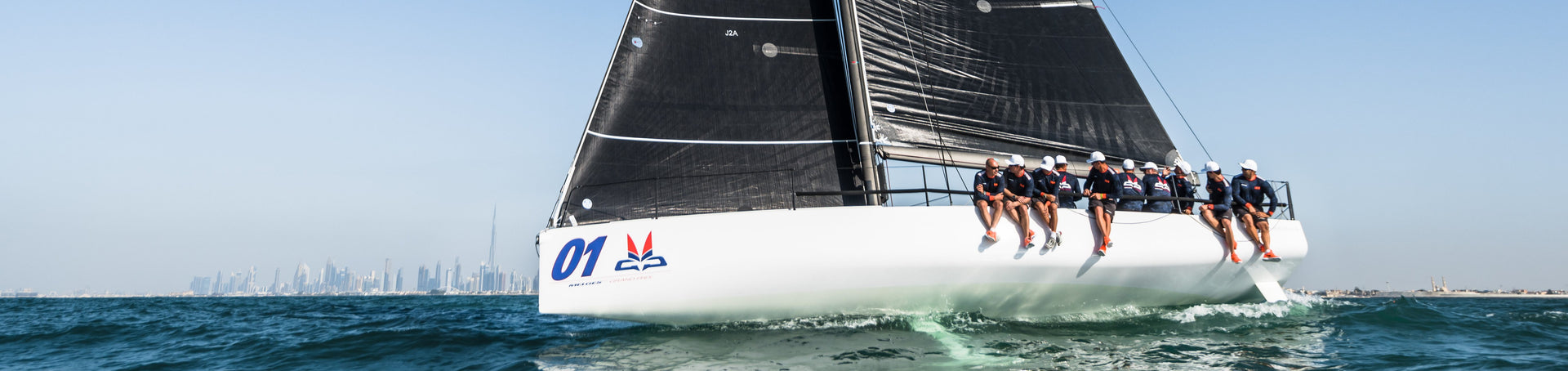
events
NORTH SAILS EXPERTS COMMENT ON THE NEW MELGES 40
Last week North Sails joined the Melges 40™ team for sea trials in Dubai. The Melges 40 is the largest, fastest and only canting keel sailboat ever offered by Melges Performance Sailboats. North experts were on site to help with testing the above-the-deck package, including North Sails 3Di RAW™ sails, designed in collaboration with the yacht designer and sister company, Southern Spars. Ultimately working the boat through the range over two days of thorough testing, the group is happy to report the new boat has successfully completed sea trials with flying colors.
“North Sails has been involved with the development of the sail plan and class rules since day one. The company has been a great partner in this project and helped make it a big success. The “engine above the deck” is so important for the performance of any sail boat, and what is most impressive is how spot-on the first set of sails are, right out of the bag. A big thank you to the entire North team for helping make this dream a reality!
– Harry Melges, Melges Rep and North Sails expert in Zenda
With the launch of the new boat, Melges have embarked on their mission to redefine the highest level of windward/leeward one-design racing. Boat no. 1, owned by Melges Premier Performance, has been used for overall product development including fine tuning systems in an effort to finalize one-design Class Rules. Currently, new Melges 40 owners are sailing the boats for the first time, including Richard Goransson’s Inga From Sweden which uses a full North Sails inventory.
“I think it’s a great concept. There have been a lot of boats that use a canting keel (mostly offshore). So while the concept is not new, it is new to one design boats in the sense of round-the-buoys racing… and it will offer you a whole new understanding of the sport.”
– Cameron Appleton, North Sails Sail Development
The Melges 40 is different from what we have seen lately in the 40’ range. It’s retractable bow sprit and twin rudders aim to offer more control for the driver, easier maneuvers in tight quarters and greater downwind speeds. The canting keel with centerline canard is push-button operated, keeping tacks smooth and simple.
Foiling catamarans are awesome boats in their own right. We wanted to create a platform that would maintain the purity of traditional monohull racing: around-the-buoys tactics with the thrill of speed and performance that the Melges brand is known for. Not just a speed race to the corner, but a boat that is fast, fun and easy to sail while still offering the maneuverability of a monohull to maintain the close fleet tactics we love.
– Harry Melges, Melges Rep and North Sails expert in Zenda
Learn more about North Sails 3Di on our dedicated product page.
READ MORE
READ MORE
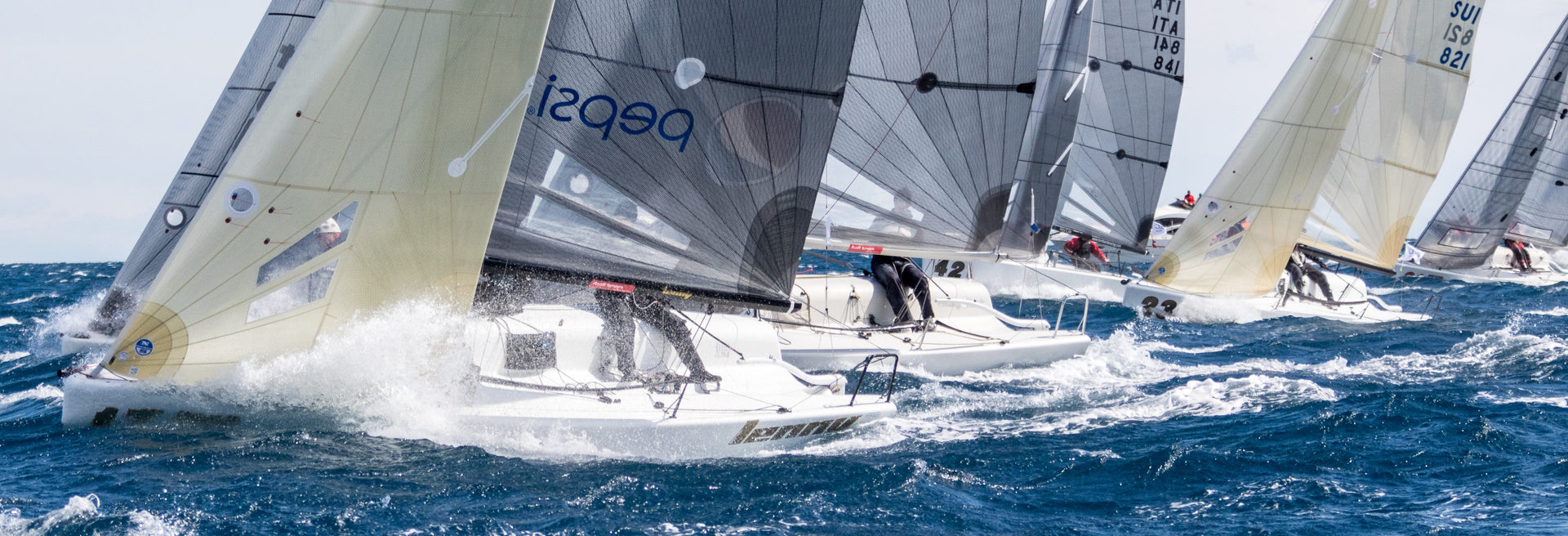
events
IRELAND’S TEAM EMBARR WINS 2016 MELGES 24 WORLDS WITH 100% NORTH SAILS
The 2016 Melges 24 World Championship came to a close on Saturday, December third. The fleet sailed 12 races in 10-20 knots over five days. In the ocean off Miami, the sea state was challenging upwind and downwind with some great surfing. Congratulations to North Sails clients who finished 1,3,4,5,6,7,8,10, and to North-powered Corinthian teams Lenny and Accru, who finished second and fourth respectively in the Corinthian Division.
North-powered team Embarr took the win with only 38 total points – a 30 point lead over second place. Onboard Embarr were Conor Clarke, Aoife English, David Hughes, Stuart McNay, and North Sails’ Maurice O’Connell. The team showed spectacular boat handling technique and impressive speed upwind and downwind. O’Connell trimmed the chute for the Worlds and reported the standard North models were fast.
“The week was a tough one for sure. Our results showed a dominant performance, but it sometimes didn’t feel like that! We had one or two sketchy starts that forced us in the wrong direction.”
“What was satisfying is we never felt under pressure boat speed wise. We used the standard North Sails models which were very fast. In the moments our performance was sub-optimal, there was always a simple reason for it: rig settings, sail trim, hiking or kinetics. By staying proactive in these areas, Embarr kept ripping along, and our speed got us out of trouble – more than a few times!”- Maurice O’Connell, North Sails
There is a reason for a regatta like this to be held in a place like Miami in the Fall. The best chance for breeze and primetime ocean sailing make for a top event of the year, and an excellent way to welcome the winter season in the south for the Melges 24 class.
With a solid 75 boats on the starting line, threading the needle through traffic upwind and holding your lane made for the biggest challenges. Participants reported that rig tune, crew placement and communication from the front to the back of the boat kept you in the groove and able to maintain boat speed.
“Set-up wise, we kept a near-constant discussion of how the boat felt and what it needed at the moment. We weren’t timid on changing hard and soft controls. Within the “noise” of the race, being totally honest about a boat’s performance is one of the toughest challenges,” reported Dave Hughes, tactician and headsail trimmer on Embarr.
With winds between 10-20 knots, an important part of upwind set-up was to keep the boat powered up in big waves, with just enough tension for the 20-knot winds yet still allowing enough space to breathe when necessary. Still, the breeze was relatively consistent in pressure, giving the World’s teams some time to fine-tune.
“Please pass on my thanks to the North Sails team in San Diego. The green kites look amazing and are now famous in the Melges fleet. They are obviously super fast too! North Sails have been a great help to the Embarr team and we really appreciate it,” said Embarr’s Conor Clarke.
READ MORE
READ MORE
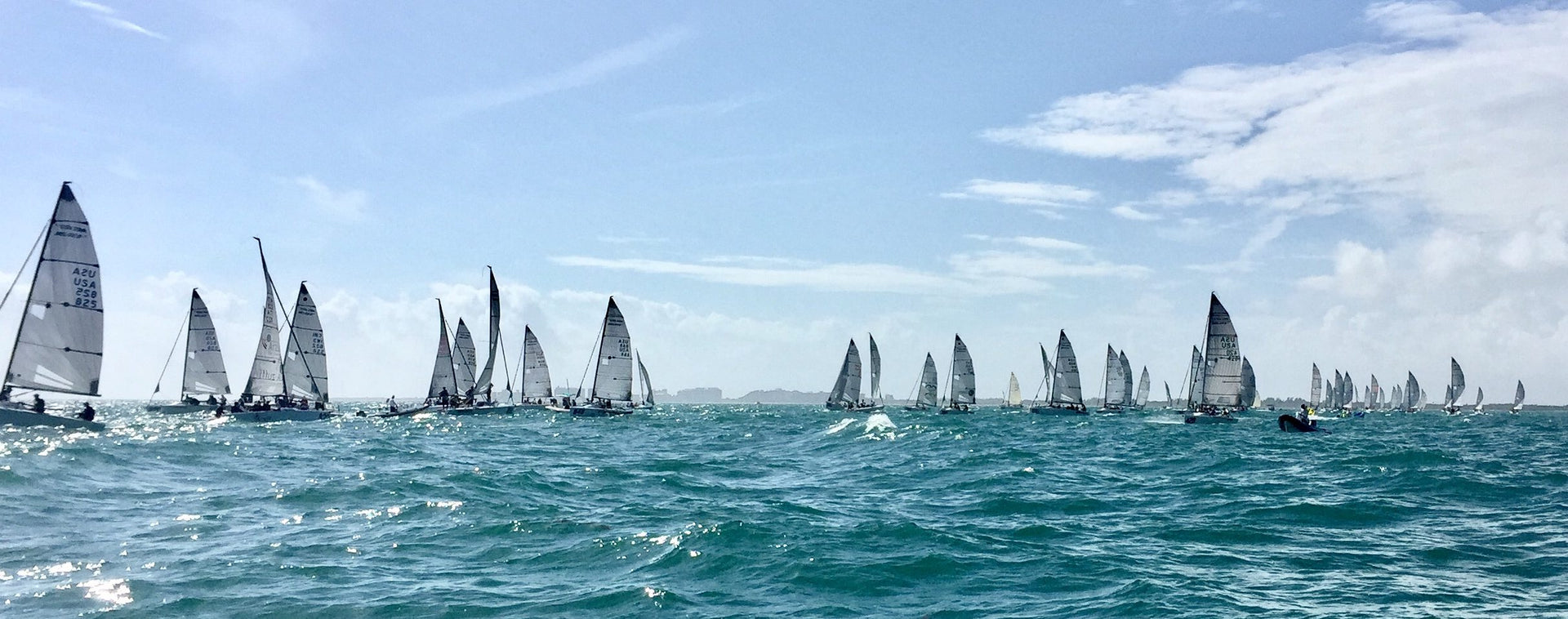
events
NORTH SAILS DEBRIEF MELGES 24 WORLDS WITH DAVE HUGHES, TACTICIAN ON EMBARR
The 2016 Melges 24 World Championship was held in the open ocean off Miami Beach, November 29-December 3rd. In five days of racing, Conor Clarke’s Melges 24 team Embarr sailed an amazingly consistent regatta (finishing just on race out of the top five). Tactician Dave Hughes credits onboard communication and teamwork to their World’s success.
Hi Dave, how does it feel to win the Melges 24 World Championship?
Winning is a mixture of elation and fatigue! This was a long, hard-fought event. It’s wonderful to prove to ourselves that our preparation and approach to the event was a winning formula.
What would you say were the three key factors to your success this week in Miami?
A heads-up, alert attitude to the race course is key in any regatta and definitely helped us in the big fleet, big waves conditions in Miami. In addition, always sailing the boat hard no matter our position and working with our coach, Morgan Reeser, kept us going fast.
What was the biggest “take-away” you gained from this event?
World Championships throw a lot of curve -balls at you, both on and off the water. Rest up, shoulders back, and keep fighting.
If you could share with your fellow competitors one thing that you would consider the most critical part of your set-up this week, what would it be?
Set-up wise, we kept a near-constant discussion of how the boat felt and what it needed in the moment. We weren’t timid on changing hard and soft controls. Within the “noise” of the race, being totally honest about a boat’s performance is one of the toughest challenges.
What did you find to be the most successful in your upwind strategy?
Lane management.
What was the most unexpected contribution to your win?
Where do I start?!! Truth be told, it was surprising just how many people had a hand in making this win happen, both on and off the water. Our ‘thank you’ list is long! You can’t win a major event without help along the way.
What are your crew positions/jobs?
Conor is the owner of the boat, hardest hiker, and responsible for about 100 things onboard. Aoife is the bow extraordinaire. Maurice (AKA ‘Prof’) was on the spinnaker. Stu drove the boat and I was on the jib and tactics (both good and bad!!)
What’s the next event for your team?
Uncertain at this point, we need to take a breath first!
What was your team dynamic like compared to your Olympic Campaign on the 470?
The similarities are fairly obvious with Stu driving and me on jib/tactics. As a boat, the Melges 24 has a great number of parallels to the 470 (a reference the Embarr team is definitely sick of hearing!). However, as with any boat, the team takes on its own character and personality. In the end, hard work is the key.
We all saw your downwind technique. Where did you learn how to move like that?
The 470, of course!
What was your funniest moment of the event? (Any funny sayings you had on the boat/ or a funny thing that happened on the water)?
The Embarr team has its fair share of go-to sayings, re-told jokes, and “I can’t believe that just happened.” I’ll leave it at that…
Learn more about North Sails Melges 24 products at: North Sails One Design
READ MORE
READ MORE
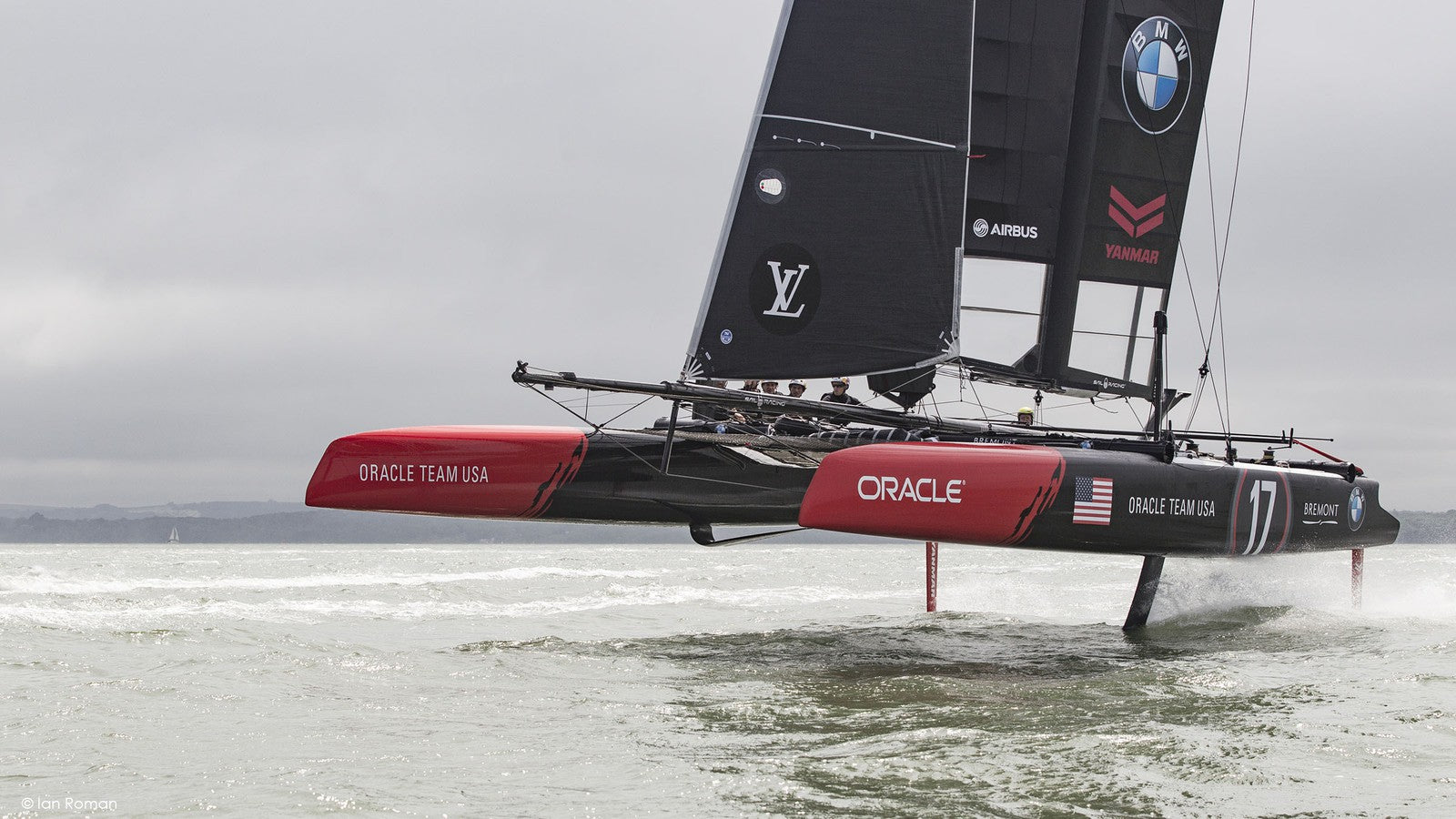
events
ORACLE TEAM USA FEATURES NORTH SAILS 3Di ON TECH TUESDAY
America’s Cup defender Oracle Team USA visit the North Sails loft in Minden, NV where the one-design 3DiTM sails are being built for the ACC cup boats.
READ MORE
READ MORE
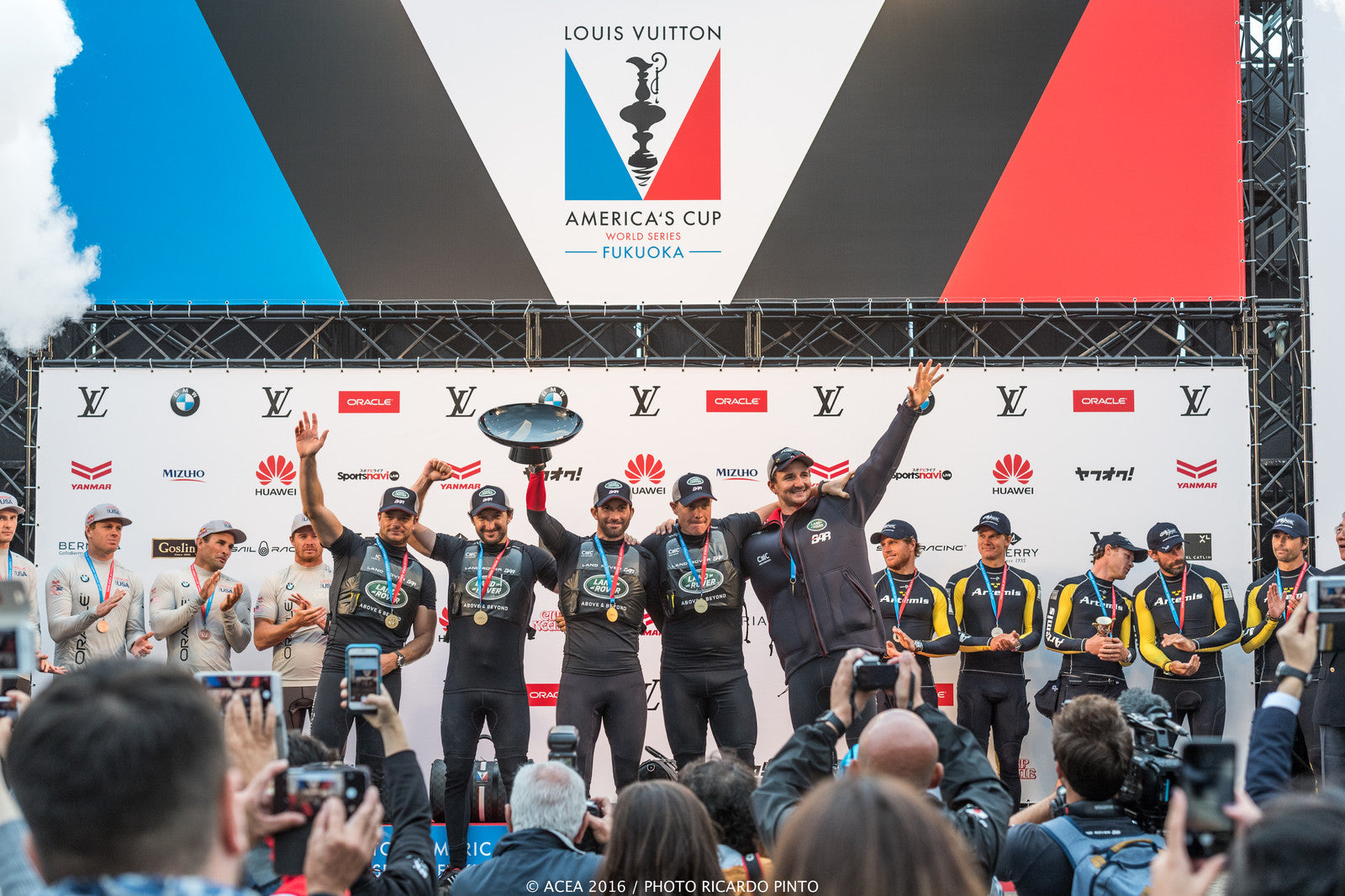
events
THAT'S A WRAP | AMERICA'S CUP WORLD SERIES FUKUOKA
America’s Cup World Series ends with spectacular grand finale in Fukuoka, Japan
Land Rover BAR was fast out of the blocks on Day 1 and ultimately stole the show in Fukuoka with regatta and overall series wins on Sunday. They will carry bonus points into the America’s Cup Challenger Series, as well as ORACLE TEAM USA who claimed second in the series overall.
SoftBank Team Japan scored a hometown win in Race 2 under the roar of fans cheering from the beach. Fukuoka, Japan was an excellent host for the World Series final and it was awesome to see such enthusiasm for sailing and hometown pride for the Softbank team.
Artemis Racing sailed a fantastic Sunday, winning the first two races of the day and coming second in the regatta under Land Rover BAR.
Competitive spirit was alive and well on the course this weekend with tight maneuvers, match-racing tactics, and penalties abundant especially in the final day. Nathan Otteridge’s comment “Makes it easy when everyone else is fighting!” is a good indication of the aggressive approach we saw, especially from Land Rover BAR, this weekend. It is clear the stakes are rising and if you ask me, it’s a preview of what we’ll see in the America’s Cup Challenger Series!
When the teams meet again in Bermuda, May 2017, they will be racing America’s Cup Class (ACC) boats. The ACCs are built by each team within a design rule: they are 15 meters long (just over 49 feet) and much higher performance than the boats we have watched in the World Series this year. All of the America’s Cup events this spring, up to the finals, will be sailed in the ACCs:
Louis Vuitton America’s Cup Qualifiers
America’s Cup Challenger Playoffs
America’s Cup Match
The America’s Cup event schedule is updated here: https://www.americascup.com/en/event-schedule.html
North Sails’ sister company, Southern Spars, has taken on boat and wing construction for Emirates Team New Zealand. Very cool stuff. You can check out their progress here:
http://www.southernspars.com/etnz-sailors-meet-ac50-southern-spars/
READ MORE
READ MORE
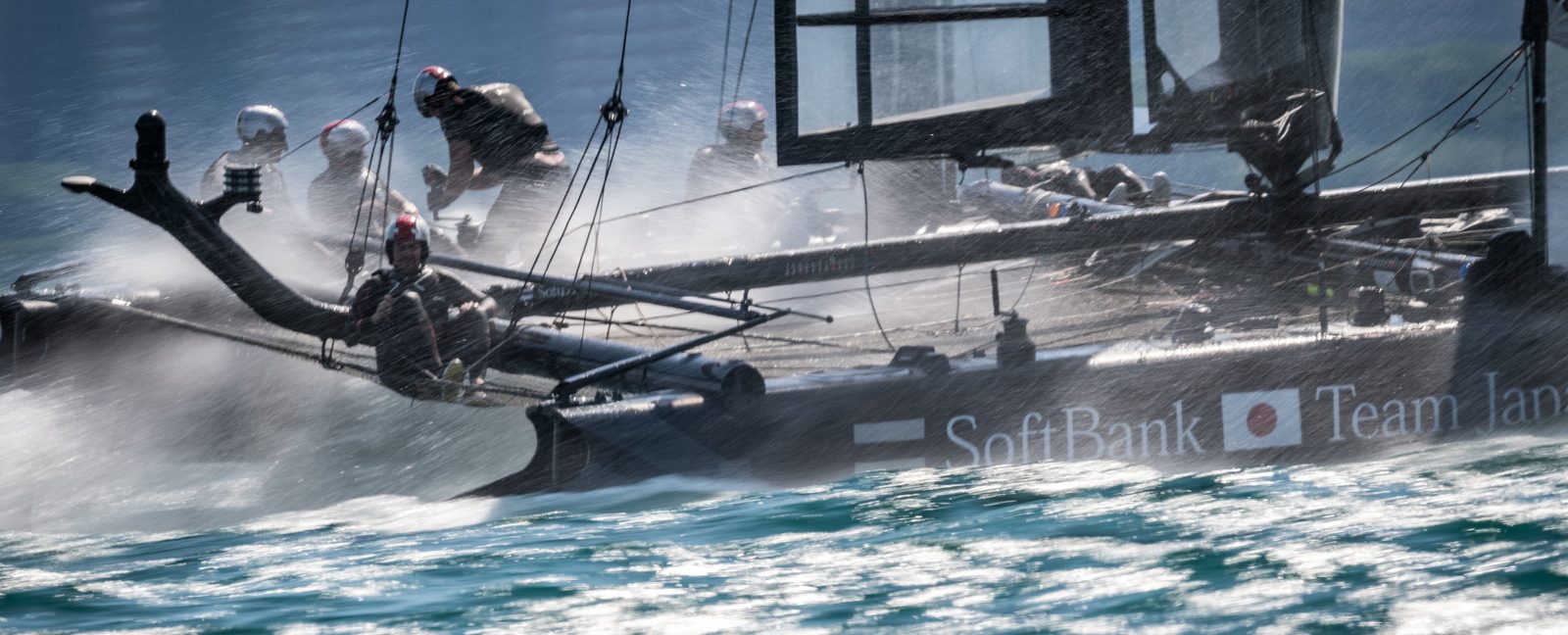
events
POINTS AND MOMENTUM | AMERICA'S CUP FUKUOKA
North Sails President and ACWS Commentator, Ken Read, forecasts this weekend’s final match up in Fukuoka, Japan
This weekend is all about points, and a little momentum. Entering the final event of the series, Land Rover BAR has a 14 point lead and will be tough to beat. The winner of the Louis Vuitton America’s Cup World Series trophy is will also receive two points toward the America’s Cup qualifying round robin – each point is a race won. Each team will match up twice in the qualifiers, so to enter the round robin with a two point lead puts them at a considerable advantage toward the big finale – the Luis Vuitton America’s Cup Challenger Playoffs.
That aside, momentum is a powerful thing. You don’t want to head into the long winter of testing and training coming off a loss, and each world series team will have their goals heading into the event this weekend. At the end of the day, positive momentum may not be the ultimate prize, but it can be transformative for a team.
And of course, we’re going to Japan! I love Japan. I’ve spent a lot of time there and have some great friends and memories. The first World Championship I ever won was in 1985, in the J/24 in Atsumi Bay. Since then I’ve participated in a lot of great sailing there, big boats to small, and taught clinics. The community is enthusiastic, and the food is great, so I’m excited for Fukuoka to host the final event.
Promotion of the America’s Cup is really what drives the World Series, which is important. At this point in the build up, I think the teams are ready to officially move on to the next phase of testing and training on their new boats, the America’s Cup Class. The ACCs are what they will sail the Cup in, and they are leaps and bounds from the AC45 platform. As radical and cool looking the 45 footers are – wing sailed, foiling cats – they are drastically slower and lower tech than the ACCs are. These sailors have a unique perspective on performance. That is certain. Fleet racing in the AC45f is a different game than match racing the ACC – night and day. So I think after Fukuoka, the guys will be eager to resume preparation for the big dance (the America’s Cup, that is)!
READ MORE
READ MORE
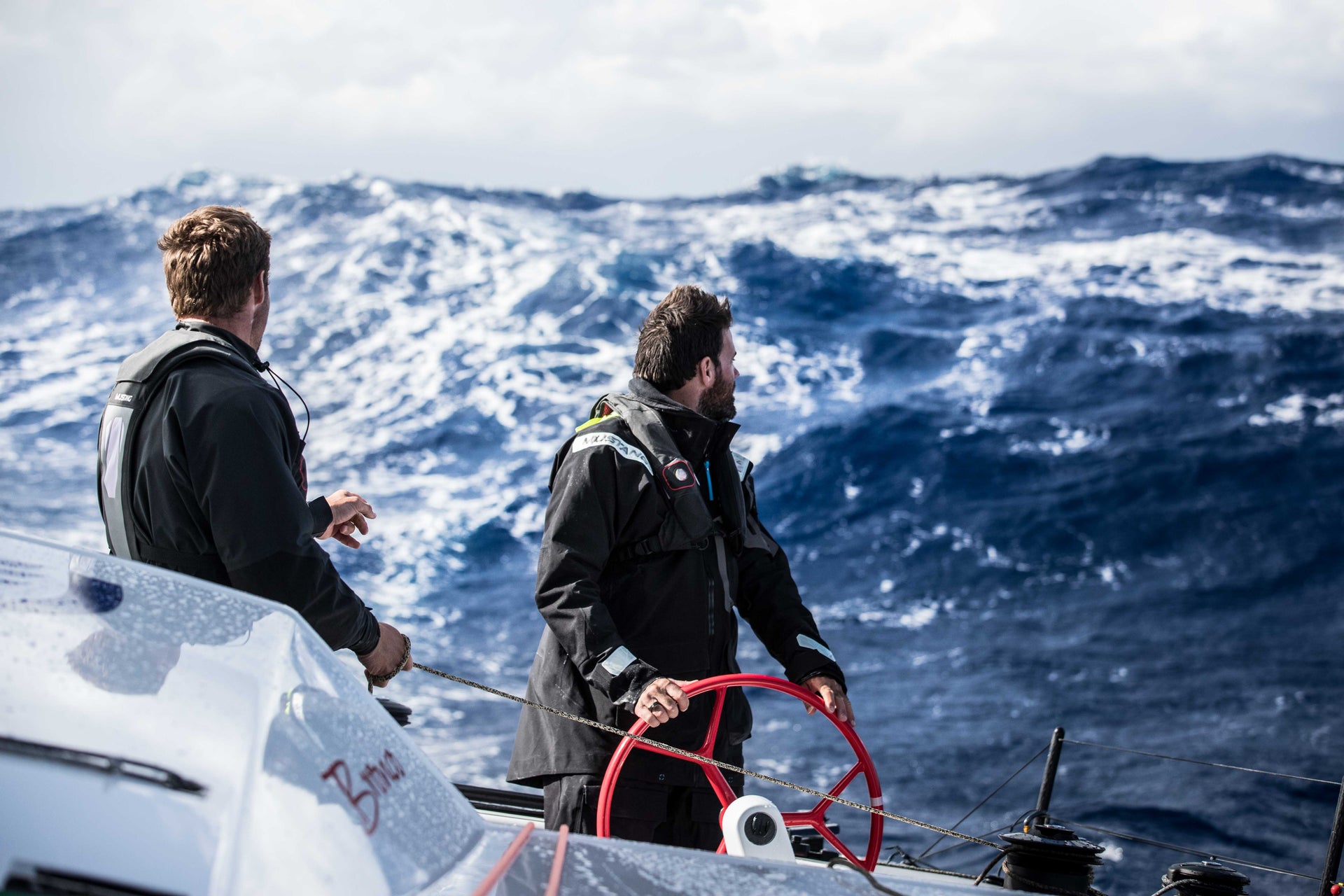
events
TEAM FALCON TAKES ON THE ULTIMATE OPEN-OCEAN CHALLENGE POWERED BY NORTH SAILS 3Di
Team Falcon takes on the ultimate open-ocean challenge powered by North Sails 3Di
Red Bull’s Flying On Water project debuts with epic adventure from New York to Bermuda. Thirty knot winds and waves up to 25 feet hammered onto the 46-foot F4 foiling catamaran and it’s six crew. Flying on Water is a project in which Team Falcon built the first vessel specifically produced for open ocean flight – a one-design platform that is the definitive prototype for the future of open ocean sailing. North Sails is a proud sponsor of Team Falcon, who sent it to Bermuda with a fresh set of North Sails 3Di ENDURANCE and NPL SPORT gennaker.
READ MORE
READ MORE
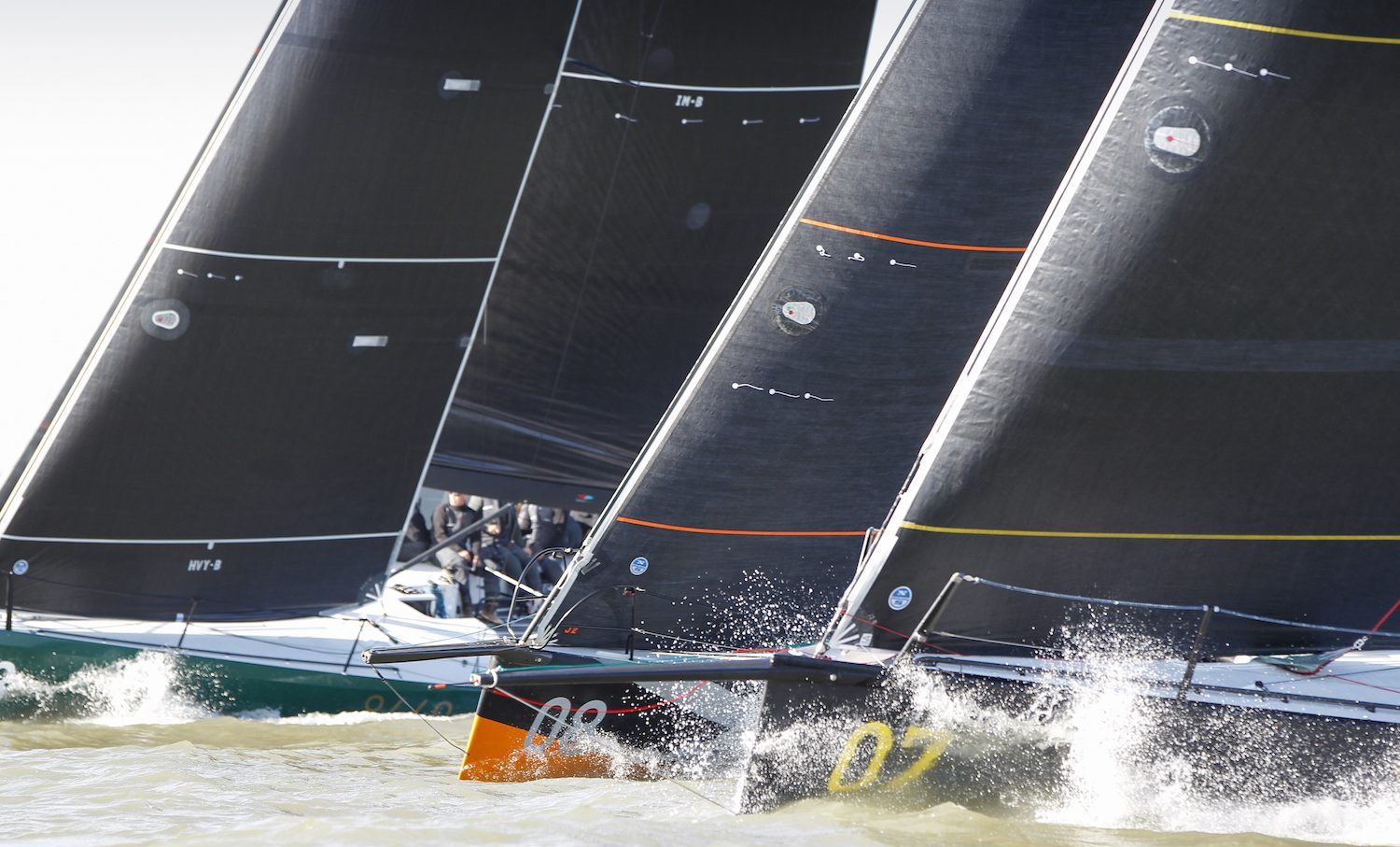
events
YACHT RACING FORUM 2016
November 28th-29th
As the world’s leading sailmaker, North Sails is proud to be a long term partner in supporting the Yacht Racing Forum. In 2016, a number of North Sails representatives will be in Malta to give presentations, contribute to panel discussions and meet with representatives from across the yacht racing industry.
As leaders in a number of fields from engineering and aerodynamics through to sales, sailing and business, the global team from North Sails are available on request for interviews and commentary. Please contact Bridgid Murphy on bridgid.murphy@northsails.com / + 1 617 697 7724 to request access to people and North Sails content.
READ MORE
READ MORE
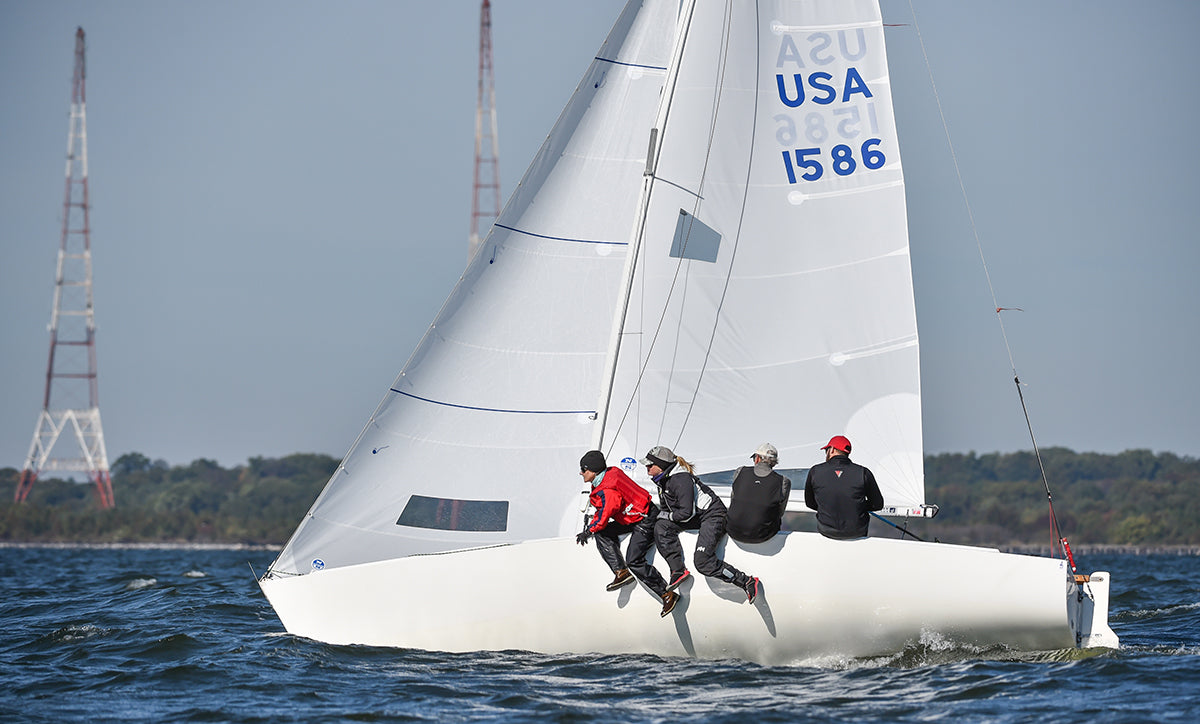
events
J.R. MAXWELL WINS 2016 J/22 MID-ATLANTIC CHAMPIONSHIP
CONGRATULATIONS JR MAXWELL, WINNER OF THE 2016 J/22 MID-ATLANTICS
The 2016 J22 Mid-Atlantic Championship was one for the record books. Competitors could not have asked for a better weekend for sailing. Annapolis delivered unbelievably beautiful sailing conditions for a Halloween weekend regatta.
Seventeen J/22’s went out on Saturday morning and sailed three spectacular races in a Southerly breeze that came in at about 9-14 kts. Regatta chair Jason Goscha worked with the J/24 fleet to organize a stellar team of volunteers from the Severn Sailing Association who ran absolutely perfect races. The J/24 and J/22 fleets mingled together for the post race festivities which included a daily debrief hosted by Mike Marshall and Zeke Horowitz from North Sails.
The Southerly was back in on Sunday morning and while it was a bit lighter than Saturday it hung in there long enough to get three more fantastic races. Boat speed and execution was the name of the game all weekend. The left side of the course seemed to be favored on almost every beat so whoever could start well, go fast, and get left tended to be in top group at the weather mark. JR Maxwell and his crew on “Scooby” put on a speed and execution clinic as they were able to get punched off the line and let their boat speed shine – winning 4 of the 6 races in the series.
J/22’s and J/24’s weren’t the only boating enthusiasts enjoying the beautiful weekend though. Dozens of power boats were out on the bay as well and that led to “washing machine” type wave conditions for most of the series. At one point we saw the front of the keel on “Hot Toddy” as Jeff Todd’s team skipped over the wake of a 60 footer down wind!
TIP OF THE WEEKEND
A very important factor to get through the big chop going upwind is where to put the traveler. On “Uncle Fluffy,” we adjusted the traveler fairly often to make sure it was high enough to allow a slight ease of the main sheet to twist open the main and help accelerate if we had a bad set of chop. Having the traveler in the right place also enables the helmsman to pull on the main sheet and load up the helm a little bit which can help the boat power through some of the nasty chop.
Congratulations to J.R. Maxwell for the dominant win and a huge thank you to Jason Goscha and all of the volunteers at SSA for a fabulous weekend of racing. The J/22’s in Annapolis are now on to “Frost Biting” for the rest of the year… Here’s a tip for those that will be competing in their own local “Frost Bite” series: Make sure you have a cup holder in your cockpit big enough for a full thermos of hot chocolate (whiskey optional)!!
North-powered boats finished 1,2,3,7,8,9 at the 2016 J/22 Mid-Atlantic Championship.
Learn more about North J/22 fast sails.
READ MORE
READ MORE
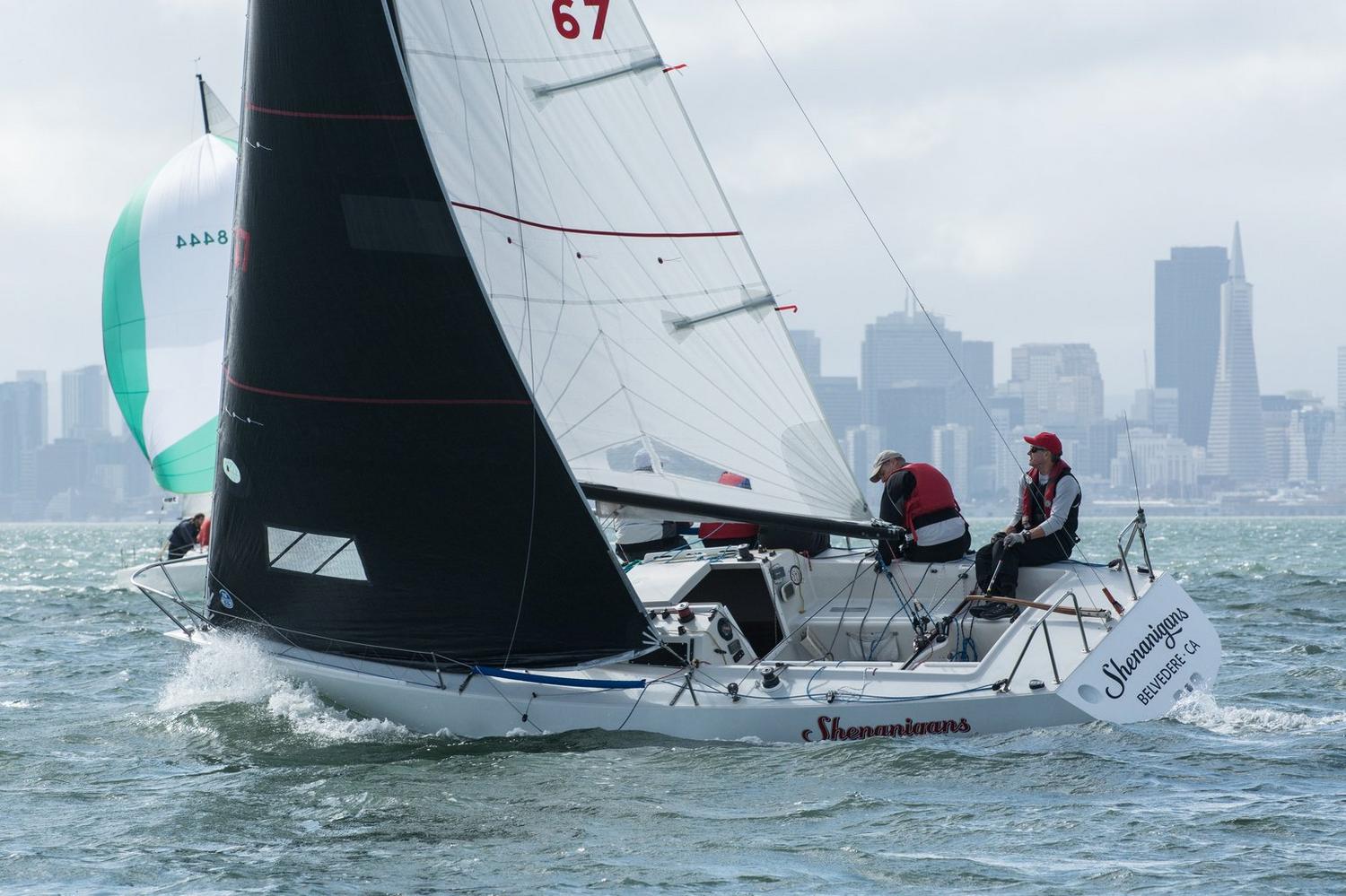
events
3Di RACE REPORT - SHENANIGANS
Last week we heard from Nick Gibbens in San Francisco, a client who owns an Express 27 called “Shenanigans” and recently collected the first victory for North’s new 3Di RACE sail. North Sails expert, Seadon Wijsen, reported on Shenanigans’ success with their new #1 genoa at the class National Championship:
“Just a quick note to say thanks for helping my client upgrade from a 3DL genoa to a 3Di RACE genoa in time for us to use it in the Express 27 Nationals this past weekend. Overall, the sail did well in lighter wind and chop but looked great when used above its wind range. I’m sure many of you already know this about 3Di RACE, but it was a great opportunity for me to see the product first hand on a type of boat not many of us sail very often. This sail combined with a new Radian main helped us win the regatta. Needless to say, the client and crew liked the sails a lot!”
We quickly contacted Nick, for feedback on a sail only introduced in September. Over the past year, designers, salesmen, and test sail recipients have compiled feedback and data on how RACE should behave within its target environment. The entire North development team was curious to see if Nick’s feedback matched our hypothesis.
“The things I noticed about this sail, and why I think it works well with the Express 27… This boat isn’t a particularly new design; they only have two jibs. A 155% and a 100%, which in One Design is all that is allowed. It’s a big step down to the #3 if you need to go there, so it helps to have a sail that covers a broad range especially when your options are limited. The RACE sail was very light, I noticed when I picked it up, considerably lighter than the other sail we have. It responded really well in light air to backstay and halyard adjustments, behaving much like an L1 would. As the wind increased and we worked through the range of the sail, it turned into a heavy air sail by adding backstay and halyard adjustments. It was pretty obvious the sail had a lot of range, which is important because, you may or may not know: we hank our jibs on, so any change is done downwind. In San Francisco, you are going to hit the upper limit of the L1 at some point during the day. You often end up starting with the large jib, but by the top mark wishing you didn’t have it up. It needs to be robust enough to handle those situations yet light and shapely enough for the lighter end stuff, and we had all those conditions in our series.”
Having confirmed our theory that RACE would carry through a wider range, Nick elaborated on the end-user benefit of carrying a smaller inventory.
“You usually sacrifice one thing for another. If you designed the sail a year ago – before you had this technology – you would basically make the sail heavier than you really wanted to just so that it could handle the windy days when you couldn’t make changes quickly. In our area, the winter season always brings lighter conditions, so you’d be carrying around a sail that isn’t a great option for the conditions and may be sailing against someone who sacrificed strength and opted for a lighter range sail.
“In my experience, 3Di really holds shape well and is durable. I am looking forward to the next couple years to see how it does.”
We consider Nick’s initial feedback a win for the (3Di RACE) books and will continue to follow his progress. To discover how 3Di RACE can transform your inventory, contact your North Sails expert today.
To stay in touch with RACE REPORTS subscribe to our newsletter below, and tag your own updates with #builttorace.
READ MORE
READ MORE
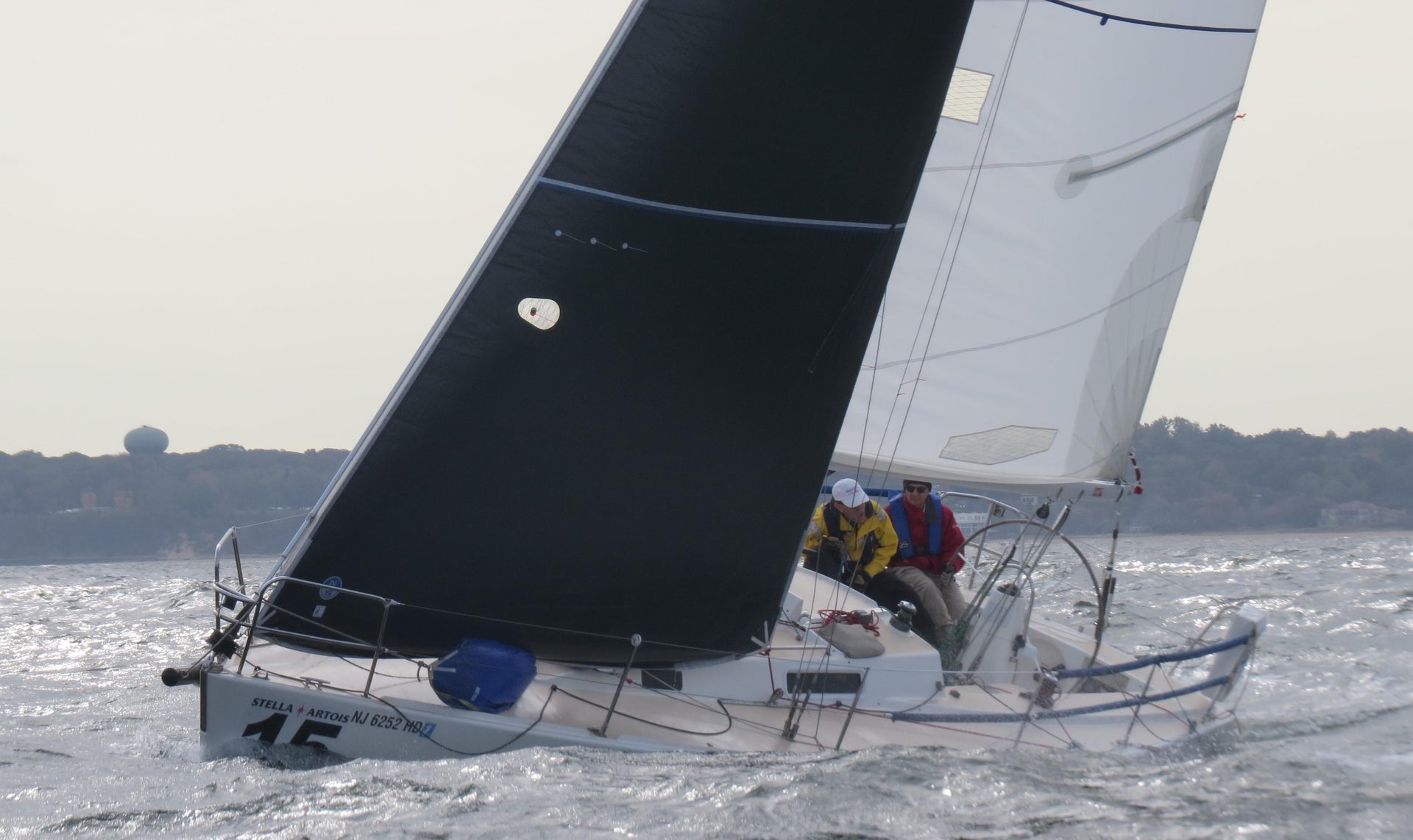
events
VICTORY LIST - J105 NORTH AMERICANS
OCTOBER 22-23, LARCHMONT, NY
The J/105 North American Championships wrapped yesterday at Larchmont Yacht Club with seven races total. North-powered teams sailed and finished well among the competitive 40 boat fleet, with Terry McLaughlin on Mandate ultimately stealing the win! As the current Canadian champion, this is the second high-powered win for Mandate this season. Tight racing took place between 2nd and 3rd place with Bruce Stone and Nicole Breault on Good Trade coming out ahead on a tie-break. Not far behind was Adrian Owles on Mad Blue with 51 points, placing 5th overall. An illustrious victory for North teams, and notable participation victory for the J/105 class as a whole!
READ MORE
READ MORE
events
SWAN 45 WORLD CHAMPION ELENA - WINNER'S INTERVIEW
SWAN 45 WORLD CHAMPION ELENA- WINNER’S INTERVIEW
In eight races, Christian Plump and his team on Elena Nova posted only one score out of the top two at the Rolex Swan 45 Worlds—so he won his new watch by eleven points. This consistency was especially impressive in the ever-changing conditions found off Porto Cervo, Italy, where seven countries were represented by the sixteen boat fleet.
1. What conditions did you encounter at this event and how prepared were you and your team?
We encountered wind from 8-32 kts with substantial shifts. We adapted to the changing wind conditions by adjusting the rig and sail trim accordingly. As our team is racing many years with the same set-up, we have a good routine in boat handling and communication.
2. What was the biggest contributor to your success in winning this regatta?
There is not only one contributor to success. Teamwork, sail trim, tactical and navigational decisions, concentrated helming and new North Sails designs were all very important.
3. What was the most important part about your boat set up?
Our boat was prepared to adjust for light air and strong winds as we expected both in Porto Cervo. The rig and trim worked well with our new North sails. Also the boat had no breakdowns of sails or mechanics.
4. Can you give us three things that you and your team did during the event to be “in the groove”?
Working constantly on boat speed
Focusing on crew weight management
Using tactically all wind shifts
5. As the skipper, can you tell us how you communicated with your crew during each race?
We constantly communicated on the changing environment of wind and waves and adjusted sail trim and heel angle accordingly.
6. What was the most important part of each race?
Launching off the start in good position to be first at the windward mark.
7. Which leg of the race did you find you had the best boat speed, boat handling, and tactics?
In race number seven, with 30 knots on the downwind course, nailing the jibes.
8. When is the next time you will sail with your team?
Our next sailing event will be Palma Vela 2017.
10. If you could choose, where would you have the Swan 45 Worlds next year?
We would prefer to have the Worlds in Palma in September/October 2017.
11.What was your favorite moment of the regatta?
Passing the finish line in the last race and winning the Worlds. This is the third time we won a World Championship: in 2007 we won the IMS Worlds, in 2010 the ORC Worlds, and now in 2016 the Swan 45 One Design. It is important to us not only to win performance-rated races under ORC but also in One Design.
READ MORE
READ MORE
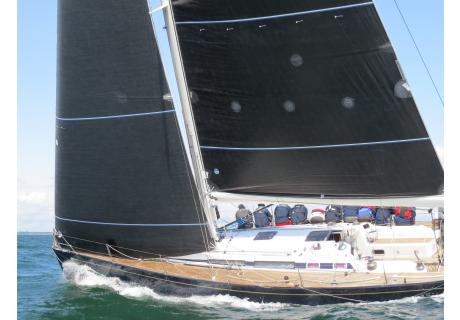
events
SWAN 45 WORLD CHAMPION ELENA
In eight races, Christian Plump and his team on Elena Nova posted only one score out of the top two at the Rolex Swan 45 Worlds—so he won his new watch by eleven points. This consistency was especially impressive in the ever-changing conditions found off Porto Cervo, Italy, where seven countries were represented by the sixteen boat fleet.
1. What conditions did you encounter at this event and how prepared were you and your team?
We encountered wind from 8-32 kts with substantial shifts. We adapted to the changing wind conditions by adjusting the rig and sail trim accordingly. As our team is racing many years with the same set-up, we have a good routine in boat handling and communication.
2. What was the biggest contributor to your success in winning this regatta?
There is not only one contributor to success. Teamwork, sail trim, tactical and navigational decisions, concentrated helming and new North Sails designs were all very important.
3. What was the most important part about your boat set up?
Our boat was prepared to adjust for light air and strong winds as we expected both in Porto Cervo. The rig and trim worked well with our new North sails. Also the boat had no breakdowns of sails or mechanics.
4. Can you give us three things that you and your team did during the event to be “in the groove”?
Working constantly on boat speed
Focusing on crew weight management
Using tactically all wind shifts
5. As the skipper, can you tell us how you communicated with your crew during each race?
We constantly communicated on the changing environment of wind and waves and adjusted sail trim and heel angle accordingly.
6. What was the most important part of each race?
Launching off the start in good position to be first at the windward mark.
7. Which leg of the race did you find you had the best boat speed, boat handling, and tactics?
In race number seven, with 30 knots on the downwind course, nailing the jibes.
8. When is the next time you will sail with your team?
Our next sailing event will be Palma Vela 2017.
10. If you could choose, where would you have the Swan 45 Worlds next year?
We would prefer to have the Worlds in Palma in September/October 2017.
11.What was your favorite moment of the regatta?
Passing the finish line in the last race and winning the Worlds. This is the third time we won a World Championship: in 2007 we won the IMS Worlds, in 2010 the ORC Worlds, and now in 2016 the Swan 45 One Design. It is important to us not only to win performance-rated races under ORC but also in One Design.
READ MORE
READ MORE
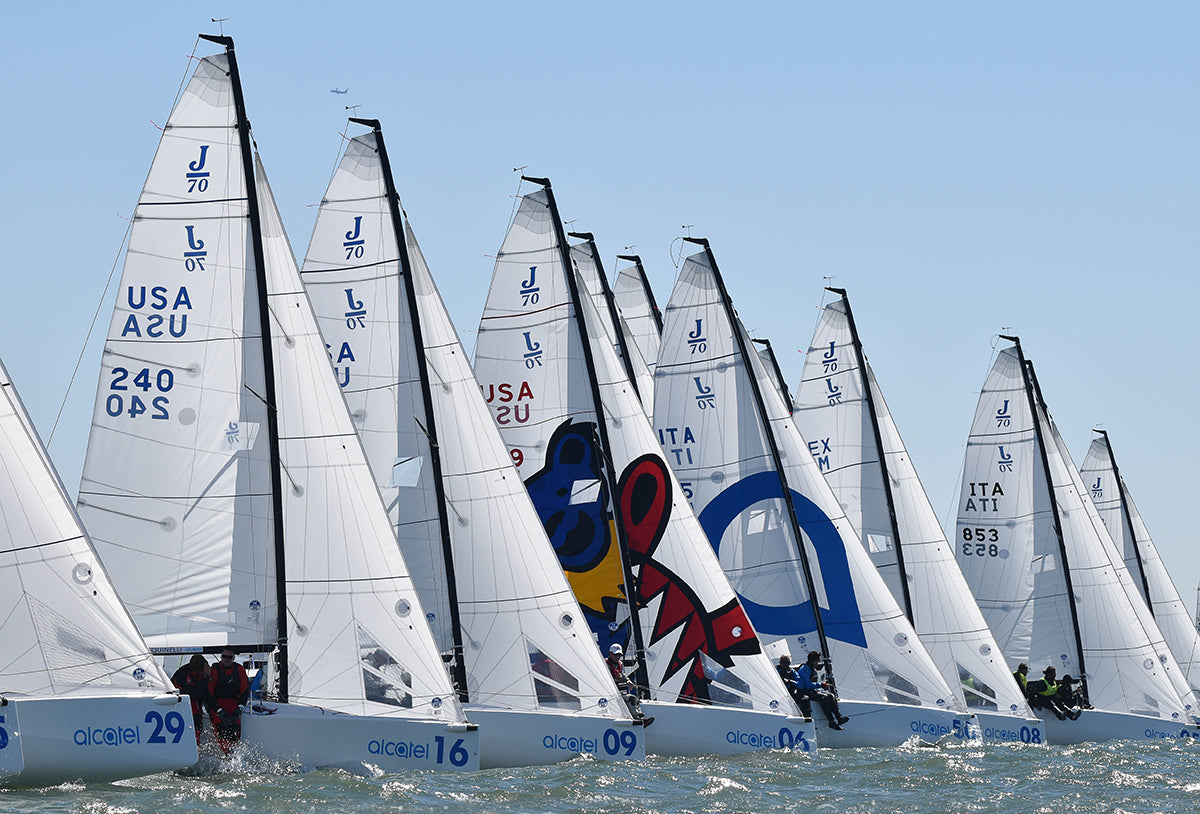
events
NEW XCS-1 MAINSAIL POWERS "CATAPULT" TO WIN THE 2016 J/70 WORLDS
JOEL RONNING AND TEAM CATAPULT WIN THE 2017 J/70 WORLDS
Innovation in Design Leads to Success on the Water
The team at North Sails One Design is very proud of the results our clients achieved in San Francisco at the 2016 J/70 Alcatel World Championship. Congratulations to Joel Ronning and his team on Catapult for a brilliantly sailed regatta with consistent top 10 results, which proved to be the most critical element in the 12-race series.
North Sails is a company that never stops the quest to design and construct better and faster sails and our recently launched XCS-1 Mainsail is another example of that process. The XCS-1 was developed to meet our clients’ requests for a more dynamic and less rig tune critical sail. The results at the Worlds couldn’t be more rewarding to our sail designers and experts. Five of the top 10 teams used theXCS-1 Mainsail, including the winning team. Here’s the top 10 break down:
Photos Chris Howell | One Design Association Management
READ MORE
READ MORE
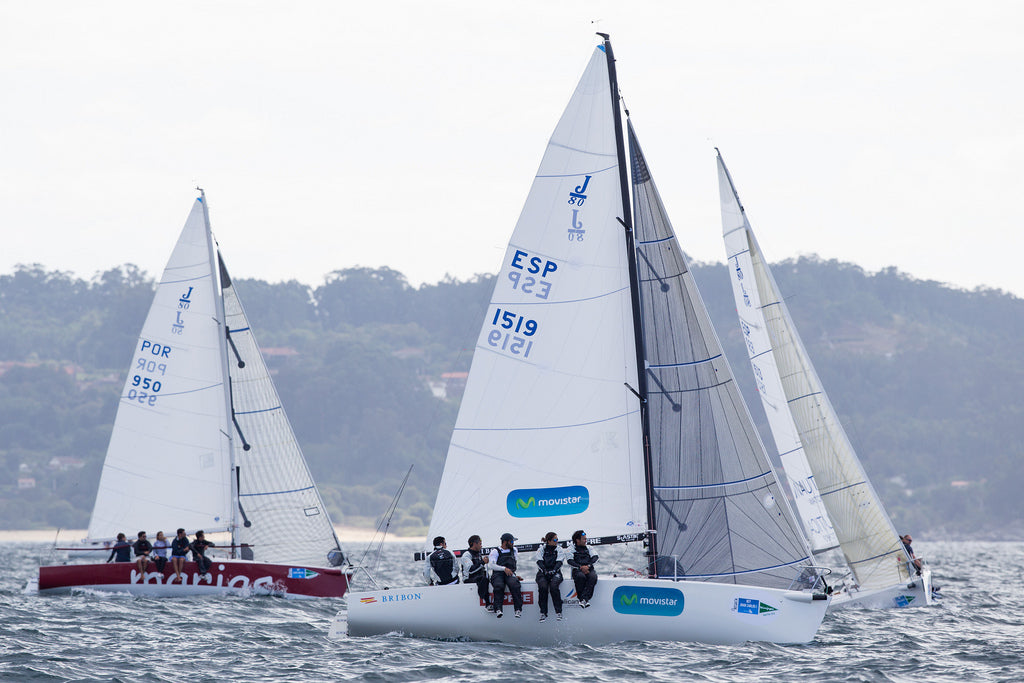
events
J/80 PRODUCT RANGE 2017
J/80 PRODUCT RANGE FOR 2017
Spanish Cup 2016 – Winners Bribon/Movistar racing with the new BTY-15 Jib
The 2017 range of products for the J/80 are now ready. Check out all the details below. Our Class Experts are ready and waiting to advise if you need information or have any questions, so please do not hesitate to contact them.
J/80 MAXM1 All-Purpose Mainsail
The MAXM1 World Championship winning design by Max Skelley is manufactured with a crosscut panel layout using Dimension 260B HTP Dacron. The crosscut layout provides for a forgiving, user-friendly and easy to trim mainsail.
J/80 T-6R All-Purpose Mainsail
The World Championship winning T-6R Mainsail uses a full radial panel layout, which allows the sail to cope with the loads running through it when sailing. This gives a smoother sail, which holds its shape longer than a more conventional cross cut sail. The T-6R is made from North Sails’ own Radian 6.3oz Dacron. This is the world’s first high performance warp oriented Dacron.
J/80 BTY-12-3DL All-Purpose 3DL Jib
The BTY-12-3DL All Purpose thermo moulded sail offers a stronger more durable sail with excellent performance and longevity. The BTY-23DL has proved to be an outstanding all round sail around the globe.
J/80 BTY-15 All-Purpose Panelled Jib
New for 2017 the BTY-15 All Purpose full radial jib has seen an instant success winning its first regattas straight out of the blocks. The sail is manufactured from North Sails’ NLXI14 Aramid, which offers a quick and easy to trim sail throughout all conditions.
J/80 MR-5 Spinnaker
World and multiple national winning design, the MR-5 is an all purpose sail giving excellent all round performance. It is manufactured using 0.6oz Superkote 60 spinnaker fabric from Contender and comes standard in red, white or blue.
READ MORE
READ MORE
events
B14 INLAND CHAMPIONSHIP
B14 INLAND CHAMPIONSHIP
North Sails 1,2,3
The B14 Flying Circus headed to Datchet for the last event in the GUL 2016 TT series. The weekend was to be more about ghosting round the course rather than flying, with lots of rain and some sun on Saturday, which did for one of the B14s on the way to the event with trailer light socket failure but 17 B14s still made the journey. Sunday started with mist and eventual sun.
Up for grabs, was the GUL TT series overall, GUL B14 Inlands and the top prize from GUL, a weekend at the Watergate Hotel in Watergate Bay with surfing or SUP lesson for the winning team. So all eyes were on the prizes as well as the racing
Both days were to be very close with real snakes and ladders. Many teams were to have their turn at the front during Saturday, but the holes (or should we say snakes and ladders) led to several changes in the lead. As the rain/clouds came through, some gusts bounced off the surface with little warning. The one capsize occurred on a leeward mark rounding whist dropping the kite to GBR 724 (Steve Hollingsworth/Elliot Holman) whilst in the lead. A couple of new teams turned up for their first event prior to the assault on the 2017 series. A couple of guest helms (Jasper Barnham (Merlins/2000s) and Ian Horlock (Supernova)) had a run out and had some good results as well. All the way through the fleet there was good competition to be had with a right ding dong over the 4 races at the front between the top 4 with little quarter given or taken. On the day, Team Harken (Nick Craig/Toby Lewis) pulled many rabbits out of the hat to lead overnight from Blue Badge (Mike Bees/Ferrett) Team GUL/North Sails (Mark Barnes/Char Jones) equal second. What could they do the following day to reverse fortunes. Could Team GUL/North Sails crack the settings on the Dacron jib they were running for the weekend or Blue Badge find its parking bay on the start line
Saturday evening the fleet disappeared off to Spices for dinner in Datchet village, whilst Nick headed off to go line dancing at a village get together. Unfortunately there is no footage as we’d all love to have seen it.
Sunday dawned and we were greeted by mist and fickle wind. After bacon butties, coffee/tea, the sun did its business, a very patchy light breeze kicked in. The day’s star team was to be Team Ullman (Kathy Sherrett/Alex Horlock) achieving 4, 3, 2, 3 so dragging them close to the podium as both Blue Badge and Team GUL/North Sails had an indifferent day finding to many holes and headers, and NA Another Asbo (Crispin Taylor/Guy Harrell) sailing round the front 6 boats on one run and winning a race. Team Harken, Nick was still stepping to the right then left and doing a turn, but the team were still pulling rabbits out of the hat and creeping through in stealth mode. Must be all that time sailing on a pond called Frensham Pond in his youth. So at the end of the day, Team Harken won out from Team GUL/North Sails and Blue Badge just holding on to beat Team Ullman
Blue Badge won the TT Series from Team GUL/North Sails and Donkey (Mark Watts/Chris Bishop)
Great prizes and tokens from GUL were spread out through the fleet with the youth getting the merit prizes. GUL B14 Inlands Tin rig went to GBR 707 (Ian Horlock/Amir Shamuddin)
Then came the big prize. Each team that attended an event, got one entry for every event they attended. This was the one we all wanted to win. So the bag was opened and out came one entry. The team in question had only done 2 TT series events. Team Customised Composites (Carl Raynes/Guy Raynes) were the winners of the biggest rabbit pulled out of the hat all weekend
The club ran a great event on the water with quick turnarounds and good courses in very difficult conditions where we saw big wind shifts and pressure changes. Off the water early breakfasts were greatly appreciated and the bar on arrival ashore
The next events will be the Seavolution Winter Pursuit Series, with some great prizes, consists of 4 events over the winter. Pre-event indications are that attendances should be good. We’ll see all there
Draycote Dash Draycote SC 19-20 November 2016
Datchet Flyer DWSC 10-11 December 2016
Grafham Grand Prix GWSC 2 January 2017
Starcross Steamer Starcross SC 5 February 2017
GUL B14 TT Series 2017 is now online on the B14 Facebook page B14 Sailors and B14 website www.b14.org
GUL B14 Inlands
1. Team Harken – Nick Craig/Toby Lewis – Frensham Pond SC
2. Team GUL/North Sails – Mark Barnes/Charlotte Jones – Whitstable YC/Exe SC
3. Blue Badge – Mike Bees/Ferrett – Brightlingsea SC
Gull TT Series 2016 Overall Winner
1. Blue Badge – Mike Bees/Ferrett – Brightlingsea SC
READ MORE
READ MORE
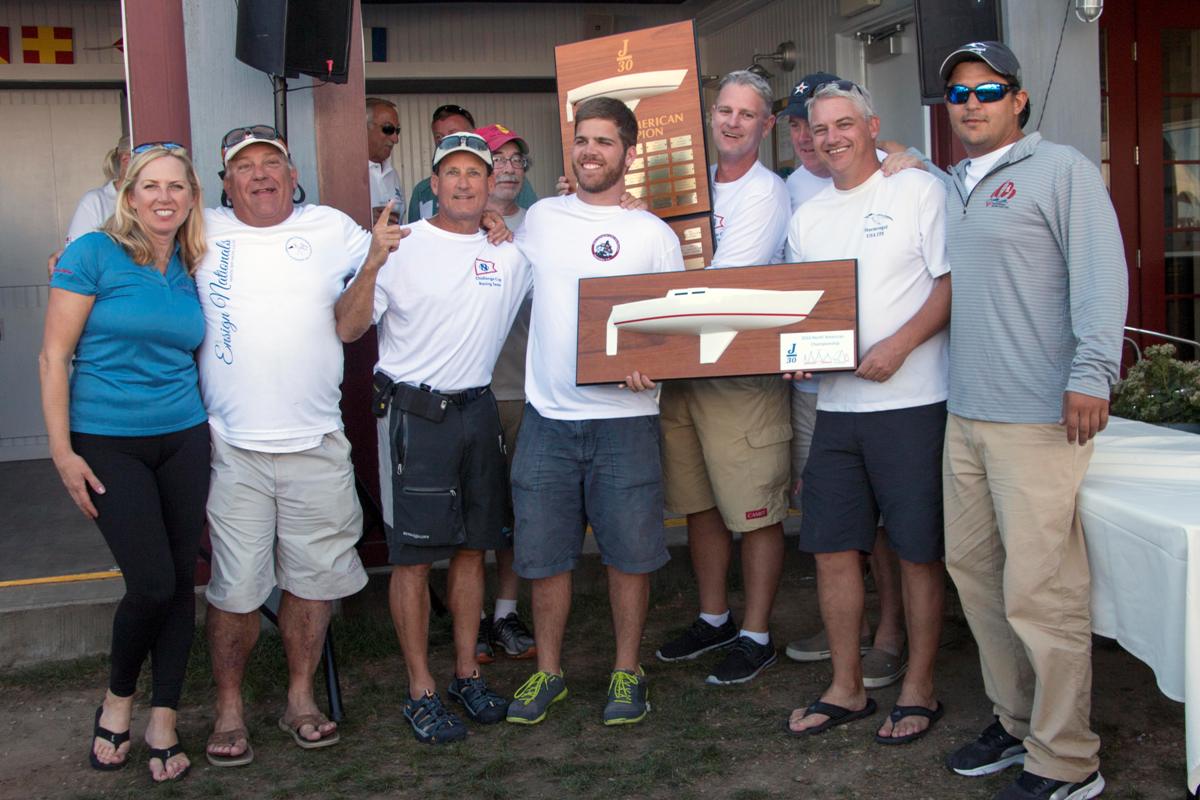
events
J30 NORTH AMERICAN CHAMPIONSHIP
J30 NORTH AMERICAN CHAMPIONSHIP
Zephyr Dominates the Event
Scott Tonguis and team Zephyr won four of the seven races at the 2016 J/30 North American Championship in Annapolis, MD. We spoke with him shortly after the event.
1. What conditions did you encounter at this event and how prepared were you and your team?
We saw winds of 3-20 knots. We were armed with new North Sails designed by Benz Faget. We were the top fundraising team in the nation for the Leukemia Cup Regatta series (we raised $127,000), so the Leukemia and Lymphoma Society and North Sails awarded Zephyr a 25% discount, which helped us purchase a great set of sails from Benz.
2. What was the biggest contributor to your success in winning this regatta?
Great sails along with proper rig tuning.
Having a least seven loaner boat J30 NAs under our belt. Our past experiences have proven that you can take a boat that may not have seen the race course in quite a while and clean the bottom, check the rigging, tune the rig, host some new North Sails, and go give ‘em a hand full. So we were confident that we would be in the hunt.
3. What was the most important part about your boat set up?
Making sure the rig tuning was close to optimum so the sails could do their magic. If the rig tune is right, then the sails are working great. If the sails are working great, then the boat is going fast. If the boat is going fast, then the crew can get their heads out of the boat to look around the racecourse for wind shifts and fleet management. If you are going fast, you can keep your lane. If you keep your lane, you can go to the side of the course you think will be favored.
4. Name three things that you and your team did during the races that proved to be fast.
Rig tuning
Due to the shifty winds, we seemed to sail most of the regatta with our bow down trying to speed across the course to the next shift. Whenever we were fortunate enough to find ourselves on the inside of a lift, we would press the bow down to speed to the next shift. Most of the time it worked out quite well.
The J30 does not really like to accelerate, so while sailing downwind you want to make sure you use some of a header to build boat speed before turning a little deeper. Do not get it slow!
5. How long have you been sailing in the J/30 class?
I cannot believe it has been this long: 30 years, 3 decades! I was a senior in high school when my family purchased the original Zephyr, which was destroyed in Hurricanes Katrina & Rita. We hope to have a 30 year Zephyr reunion in late Oct. 2017 down in New Orleans, in conjunction with the J30 NA’s on Lake Pontchartrain at New Orleans Yacht Club. It is quite humbling to realize the Zephyr program is still very relevant after thirty years. I guess we are doing something right. I have been blessed to meet some wonderful people along the way, many of whom are my best friends and mentors.
6. What were your strengths on the racecourse? Which leg did YOU favor the most?
I know the strengths and weaknesses of the boat. I guess that is where thirty years of experience on the boat comes into play. If you are able to keep the boat out of its areas of weakness, you are usually able to avoid a bad situation on the racecourse.
7. What was your most memorable moment of the regatta?
I can tell you my least memorable moment, the first start, it was bad! Luckily we were able to tack to port just after the start and rumble over to the right side. Great boat speed along with a little righty got us back in the race.
Otherwise, my most memorable moment was catching up with friends! I no longer live in New Orleans, so I do not get a chance to spend too much time with my good friends who just happen to be my crew. Traveling to the NAs is special for us because everyone is away from the distractions of home, work, and family—a four day hall pass to hang with the boys.
READ MORE
READ MORE
events
NORTH-POWERED J/30 ZEPHYR DOMINATES NORTH AMERICAN CHAMPIONSHIPS
Scott Tonguis and team Zephyr won four of the seven races at the 2016 J/30 North American Championship in Annapolis, MD. We spoke with him shortly after the event.
1. What conditions did you encounter at this event and how prepared were you and your team?
We saw winds of 3-20 knots. We were armed with new North Sails designed by Benz Faget. We were the top fundraising team in the nation for the Leukemia Cup Regatta series (we raised $127,000), so the Leukemia and Lymphoma Society and North Sails awarded Zephyr a 25% discount, which helped us purchase a great set of sails from Benz.
2. What was the biggest contributor to your success in winning this regatta?
Great sails along with proper rig tuning.
Having a least seven loaner boat J30 NAs under our belt. Our past experiences have proven that you can take a boat that may not have seen the race course in quite a while and clean the bottom, check the rigging, tune the rig, host some new North Sails, and go give ‘em a hand full. So we were confident that we would be in the hunt.
3. What was the most important part about your boat set up?
Making sure the rig tuning was close to optimum so the sails could do their magic. If the rig tune is right, then the sails are working great. If the sails are working great, then the boat is going fast. If the boat is going fast, then the crew can get their heads out of the boat to look around the racecourse for wind shifts and fleet management. If you are going fast, you can keep your lane. If you keep your lane, you can go to the side of the course you think will be favored.
4. Name three things that you and your team did during the races that proved to be fast.
– Rig tuning
– Due to the shifty winds, we seemed to sail most of the regatta with our bow down trying to speed across the course to the next shift. Whenever we were fortunate enough to find ourselves on the inside of a lift, we would press the bow down to speed to the next shift. Most of the time it worked out quite well.
– The J30 does not really like to accelerate, so while sailing downwind you want to make sure you use some of a header to build boat speed before turning a little deeper. Do not get it slow!
5. How long have you been sailing in the J/30 class?
I cannot believe it has been this long: 30 years, 3 decades! I was a senior in high school when my family purchased the original Zephyr, which was destroyed in Hurricanes Katrina & Rita. We hope to have a 30 year Zephyr reunion in late Oct. 2017 down in New Orleans, in conjunction with the J30 NA’s on Lake Pontchartrain at New Orleans Yacht Club. It is quite humbling to realize the Zephyr program is still very relevant after thirty years. I guess we are doing something right. I have been blessed to meet some wonderful people along the way, many of whom are my best friends and mentors.
6. What were your strengths on the racecourse? Which leg did YOU favor the most?
I know the strengths and weaknesses of the boat. I guess that is where thirty years of experience on the boat comes into play. If you are able to keep the boat out of its areas of weakness, you are usually able to avoid a bad situation on the racecourse.
7. What was your most memorable moment of the regatta?
I can tell you my least memorable moment, the first start, it was bad! Luckily we were able to tack to port just after the start and rumble over to the right side. Great boat speed along with a little righty got us back in the race.
Otherwise, my most memorable moment was catching up with friends! I no longer live in New Orleans, so I do not get a chance to spend too much time with my good friends who just happen to be my crew. Traveling to the NAs is special for us because everyone is away from the distractions of home, work, and family—a four day hall pass to hang with the boys.
READ MORE
READ MORE
events
TRIBUTE TO A GREAT LEADER
The North Sails Group is deeply saddened by the passing of Terry Kohler, owner of North Sails from 1984-2014. North Sails and all of its employees around the world would like to pass their condolences to the family Terry leaves behind, especially his wife Mary.
Terry bought North Sails from Lowell North upon North’s retirement in 1984. Terry was passionate about North Sails and helping North maintain it’s position as technology leader within sailmaking. A graduate of internationally renowned Massachusetts Institute of Technology, Terry saw the huge potential in embracing technology. It is under his guidance that North Sails introduced 3D sailmaking and our technologically advanced manufacturing and logistical systems.
In 2008 Terry brought North Sails and Southern Spars under the North Technology Group, putting in motion the concept of “The Engine Above The Deck.” North Technology Group has since grown into a diverse family of companies serving marine and manufacturing markets worldwide. Each company was built on the principle of delivering advanced performance through superior technology and a commitment to quality craftsmanship and customer service.
Terry’s love of sailing spilled over into the wider sailing community. He was a generous supporter of the sport, in particular women’s sailing. Terry was especially interested in women’s match racing, having worked with the last US Women’s Olympic Team in 2012. Some of his greatest legacies will be the Sail Sheboygan Sailing Center and the non-profit Sailing Education Associate of Sheboygan (SEAS).
“Terry’s business acumen and discipline were the perfect fit for North Sails when he bought the company from Lowell,” commented Tom Whidden, CEO of North Technology Group. “He was first passionate about sailing but secondly passionate about making North a more business-like company. He was insistent on using computer technology and communications systems that were very progressive at the time. His aggressive approach to wild ideas is a trait that has been filtered through our entire company culture. Personally, I will miss Terry’s guide, but his passion for North will stay as part of our DNA.”
READ MORE
READ MORE
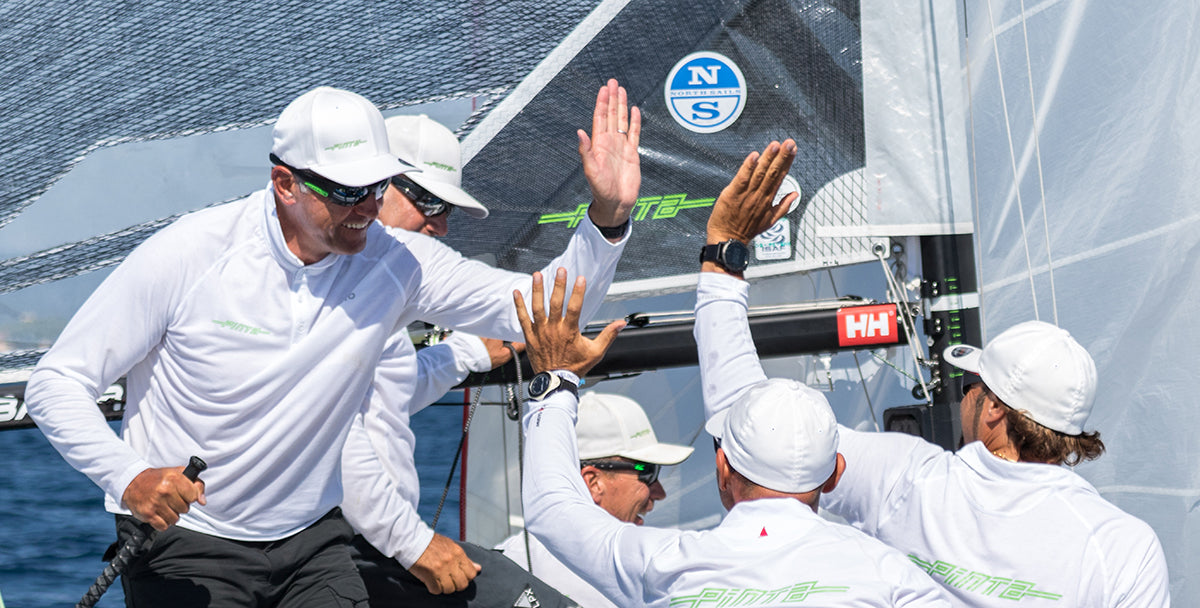
events
2016 MELGES 20 WORLDS Q&A
2016 MELGES 20 WORLDS Q&A
Interview with Frederico Michetti, Trimmer on Pinta – Winner of the 2016 World Championship
Freddy, let’s begin at the end! You are now the only sailor in history to have won all the Melges sportboat design titles having won the M24, M32 and now the M20 Worlds. How does it feel ?
FREDDY: For more than 20 years I’ve considered Melges boats to be the best monohull sportboat to race. Capturing the Melges 20 Worlds title with our incredible team makes me really happy and proud. Looking back, I have had incredibly happy moments with all the teams that I raced with. They are always in my heart and this victory is dedicated to them too!
The first world title I won was with the Melges 24 “Sabino Express” in La Rochelle back in 2000. Certainly that first title is one I will never forget as I was able to compete side by side with an unforgettable friend who is no longer with us. Our win with the PINTA team is a victory that certainly punctuates my sailing career in the fantastic Melges world. I am very thankful to Michael Illbruck and to the team for making it happen!
What can you tell us about the “journey” with the PINTA Team? It is an incredible feat for you guys to manage to win the Worlds right after one racing year… fantastic!
FREDDY: I have been following Michael’s sailing adventures since I was a kid. That’s why PINTA represents more than a simple sailing team to me. It represents a real icon and legend in our world which started writing its own history back in 1969 with Michael’s father, Willy.
In this first season Melges 20 PINTA was aiming only to be adequately competitive with the goal of being prepared for a run at the 2017 Melges 20 Worlds being held in Newport so we knew already that we had to commit to achieve our goal.
The “journey” is a little strategy that we created to focus on what we were doing without being overloaded with stress or, even worse, with high expectations which can do more harm than good. Therefore the “journey” has helped us as we allowed ourselves to concentrate on learning and on sailing empathetically. We were going back onshore after each race or practice satisfied that we had given our best. So, the short story for our preparation was:
“Let’s focus on the Journey and not the goal…”
At the end we respected the original plan and we worked really hard from the first day we began sailing together. We also teamed up as much as possible onshore increasing our positive and serene attitude. To this extent Micheal is a indeed a very special sailor!
These things have helped the team grow together and improve our racing performance without any form of pressure or anxiety. Defeats are painful though!
Willy (Michael’s father, one of the most winning owners in the history of sailing) used to say: “You must experience a defeat before you learn how to win!.” We found this to be very true and helpful in our less successful moments.
Winning the world title wasn’t in our dreams even as we realized that our performance was improving and we were becoming very competitive race by race. John Kostecki’s expertise of Team PINTA – he has been sailing for the team for the past 22 years! – has indeed been a key factor and essential to winning the championship!
You are the “Speed Boss” on board which means you trim the sails, tune the mast, take care of managing the boat handling, etc. Can you give us tips to keep in mind to go fast upwind and downwind ?
FREDDY: The Melges 20 is an intriguing, fun-to-sail boat. The three-person team sails with their legs onboard creating totally new dynamics: each team member contributes to tactics, trim and tuning.
On PINTA start with a setting which can easily be adapted or changed in case the conditions change. We choose a tune that uses the tracks in their full range. Heeling angle is the key to success – being able to keep a stable and constant angle seems to ensure consistent, successful performances.
I reckon that the heeling angle is the key to success in that being able to keep a stable and constant angle seems to ensure consistent, successful performances.
In the Melges 20 class there is no crew-weight limit. Some teams sail with three while others opt for four crew. What are your thoughts about crew weight and numbers on the Melges 20?
FREDDY: The class does not foresee a weight limit which takes away the stress of compulsory weigh-in and related extreme diets. The fleets swings between 240 – 275 kg (530-605 lbs). I think that 260kg (573 lbs) is the optimum weight. On PINTA our average weight was +270kg (595 lbs) which doesn’t really help in light wind conditions!
What sails & codes you would recommend ? Could you define wind-range & sea-state to choose if flying a Runner or a Reacher ?
FREDDY: In the last two seasons North Sails has worked really hard to develop an easy to use, all-round inventory. I’m really proud of what we came up with. The results speak for themselves. On PINTA we sail with standard North sails:
M-16 mainsail
LM Jib (former J-11B)
V4-2R and R2 Runner. The V4 has proven to be a great all-round sail and is a must in the lazy planning condition where the heeling angle is the most important factor. The R2 is a great sail in the range of 7 to 11 knots.
As President of Melges Europe what can you tell us about the future of this Class and upcoming Melges 20 racing ?
FREDDY: The Melges 20 class is experiencing extraordinary momentum, especially considering a perceived downturn in sailing industry worldwide.
The world championship in Scarlino had record attendance with the highest number of competitors ever registered for a Melges 20 World Championship. Not only have the attendance figures been encouraging but also the feedback of the owners after the event has been particularly brilliant. It is exciting for me that more and more clients are supporting us and asking for more races with the typical “Melges style” support both on the water and onshore.
Never before have I personally experienced such an inviting, addicting and comfortable class. Top teams that compete with Corinthians or family driven teams under the eyes of an always competent and trustful jury. This is what makes the class so special and allows us to enjoy a racing schedule of more than 20 events in venues such as Monte Carlo, Miami, Toronto, The Med and Japan.
This is the Melges 20 class heritage! Our commitment at Melges is to offer to our client an attractive and unique sailing experience. Team Melges is working hard to make this happen now and in the future.
READ MORE
READ MORE