


NORTH SAILS BLOG
Todo
Events
Guides
News
People
Podcast
Sustainability
Tech & Innovation
Travel & Adventure
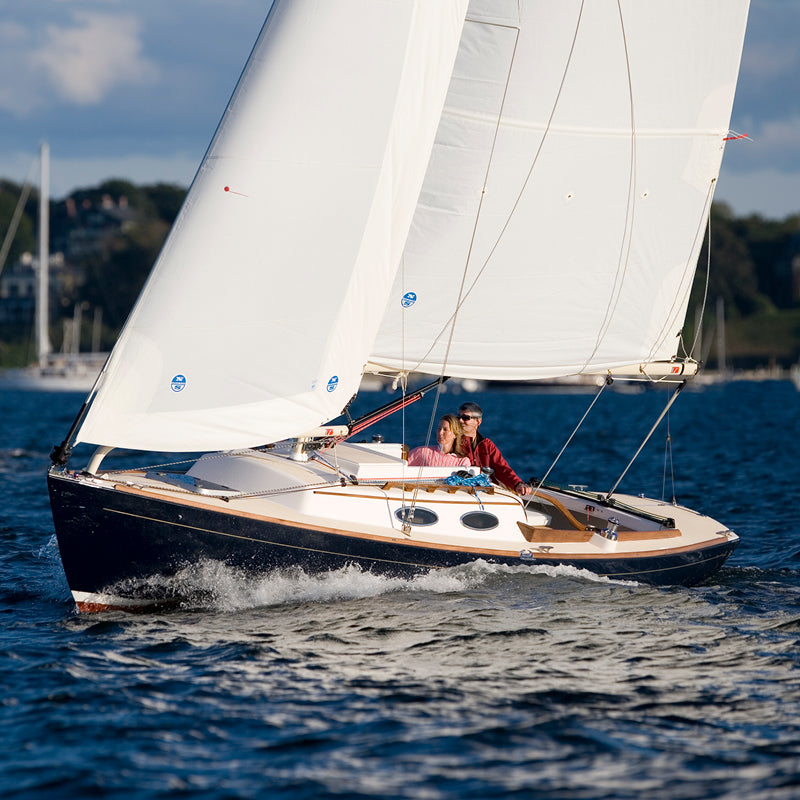
CROSS-CUT
CROSS-CUT - KÖNNYEN ELÉRHETŐ TARTÓSSÁG
Mindennapi és Általános Használatra
NPC Horizontál szabású vitorlákat nagy szakítószilárdságú NorDac Fill™ Polyester szövetből készítjük. North Sails már több mint 50 éve finomítja a NorDac anyagokat, jellemzőjük a lehető legsűrűbb szövés, a jó alaktartás, a kiemelkedő ellenállás a mechanikai behatásokra és a magas UV ellenállóság.
NPC CROSS-CUT ideális választás:
• olyan csúcsminőségű vitorlát szeretne, amelyek megfelel a költségvetésnek
• magas élettartamú vitorlát szeretne
• könnyedén, egyszerűen vitorlázna
VÁLTOZATOK + AJÁNLOTT FELHASZNÁLÁS
NorDac Fill Low Aspect (LA) : 2.5/1-nél kissebb magasság/szélesség arányú vitrolákhoz tervezve
NorDac Fill high Aspect (HA) : különösen alkalmas magasabb, keskenyebb vitorlákhoz.
taví túrázás, tengeri túrázás, óceáni túrázás, klub versenyzés
ELÉRHETŐ VITORLATÍPUSOK
standard nagyvitorla/átmenőlatnis nagyvitorla/árbocba és boomba tekerős nagyvitorlák/betekerős és nem betekerős orrvitorlák
NPC CROSS-CUT ELŐNYEI
• magas minőségű dacron szövet
• könnyen kezelhető
• versenyváltozatok sebességre és tartósságraoptimalizálva
• széles spektrumú szélviszonyokra
• horizontál szabással, a hátsóéllel párhuzamosra igazítva a legalacsonyabb nyúlás érdekében
READ MORE
READ MORE
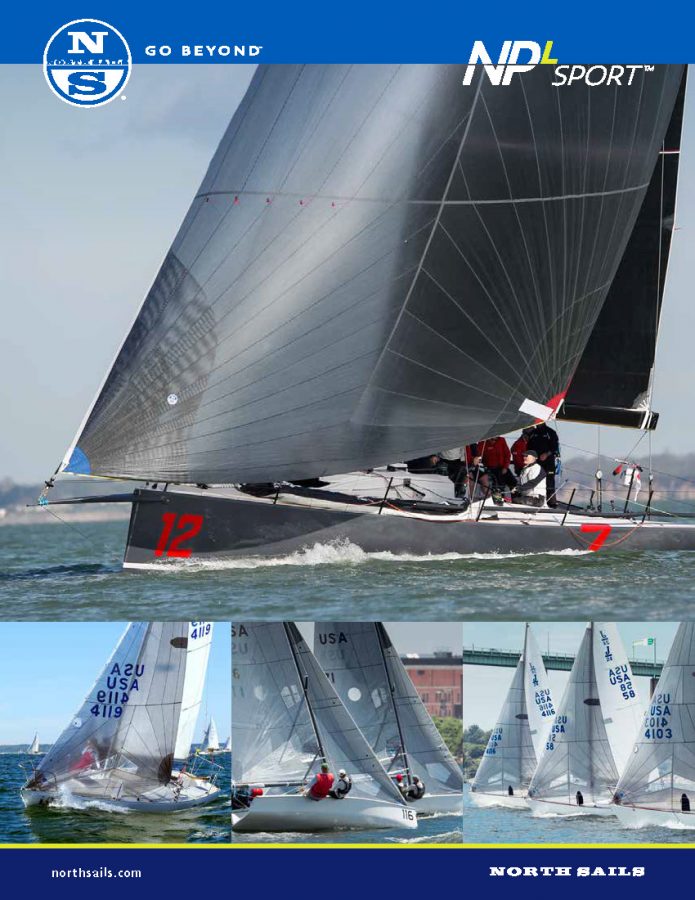
NPL SPORT
NPL SPORT - VILÁGVEZETŐ LAMINÁLT ANYAGOK
Verseny Paneles Vitorlák
NPL SPORT vitorlákat a nagyteljesítményű NORTH SAILS Xi Race laminált anyagból készítjük, amit a világ legfejlettebb gyártósorán állítunk elő. Az eredmény: kivételes minőségű kötés, minimális agasztóanyag felhasználásával. Az iparágban egyedülálló eXact™ eljárás lehetővé teszi, hogy gyártás közben módosítsuk a teherviselő szálak irányát a teherviselő hálón belül. A precíziós eXact eljárás előnye a hagyományos fix szövésű hálóval szemben, az anyagba fektetetett kevesebb, de hatékonyabb teherviselő réteg.
NPL SPORT ideális választás:
• osztályelőírás nem engedi a 3Di technológiát
• kedvezőbb árú vitorlákat szeretne versenyzéshez
• magas teljesítményű ”CODE” vitorlákhoz
VÁLTOZATOK + AJÁNLOTT FELHASZNÁLÁS
Xi RACE : tiszta Mylar külső rétegek, fekete Twaron/Technora® teherviselő szálak, eXact X-háló
Xi RACE T : kiegészítő egyoldalas taffeta
Xi CODE : könnyebb (0.75mil) külső film
Xi CODE T : kiegészítő egyoldalas könnyű taffeta
one design/tavi versenyzés/tengeri versenyzés
ELÉRHETŐ VITORLATÍPUSOK
standard nagyvitorla / átmenőlatnis nagyvitorla / square
top nagyvitorla / verseny orrvitorlák / CODE vitorlák
NPL SPORT ELŐNYEI
• vezető paneles vitorla a one design és klub versenyzésben
• erősebb, könnyebb, kisebb nyúlás a többi laminált anyaghoz képest
• egyedülálló mélynyomásos gyártósor, integrált eXact variálható hálókészítővel
READ MORE
READ MORE

3Di NORDAC
3Di NorDac - ERŐS, LETISZTULT , VARRÁS NÉLKÜL
A Dacron Vitorla Újrafeltalálva
3Di NorDac egyesíti a kompozit 3D sablonon formázott technológiát a megbízható, tartós polyester szálakkal, amiket a vitorlázók évtizedek óta bizalommal használnak. Az eredmény egy innovatív vitorla, simább felülettel és permanens aerodinamikai formával. Az exkluzív gyártástechnológiának köszönhetően, magasabb teljesítményt lehet elérni a hagyományos teherviselő szálakkal.
North Sails kifejezetten a kisebb és közepes méretű hajók számára fejlesztette a 3Di NorDac-ot. 3Di NorDac gyorsabb, könnyebben kezelhető, elérhető árú és nagyon tartós.
3Di NORDAC ideális választás:
• értékeli a nagyszerű formájú vitorlákat
• szeretné hajójából kihozni a legnagyobb teljesítményt
• tartósságot és a kitűnő értéket várja
• paneles szövet vitorláknál nagyobb teljesítményt szeretne
VÁLTOZATOK + AJÁNLOTT FELHASZNÁLÁS
3Di NORDAC : 100% Polyester
tavi, tengeri és földkerülő, kis és közepes méretű hajókra
ELÉRHETŐ VITORLATÍPUSOK
standard nagyvitorla/átmenőlatnis nagyvitorla/árbocba
és boomba tekerős nagyvitorlák/
betekerős és nem betekerős orrvitorlák
3DI NORDAC ELŐNYEI
• egy részből álló, 3D formázott kompozit vitorla
• 100% polyester, a legtartósabb anyag
• fehér szín, kiváló ellenállással a mechanikus behatásokra
• változó anyagsűrűség, irány és rétegek a terhelések szerint
• integrált latnizsákok, erősítések és reff struktúra
• magas UV tűrés
READ MORE
READ MORE
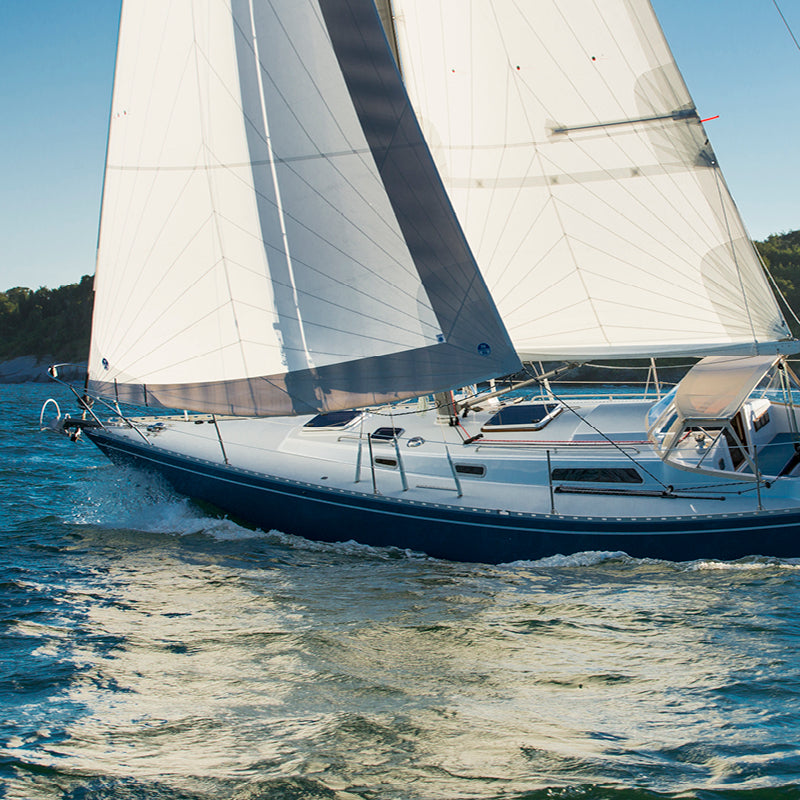
RADIAN
RADIAN - RADIÁL SZÖVÉSŰ FORRADALOM
Alacsony Nyúlás A Szövetvitorlákban
Saját szabadalmú NPC Radian egyedi vitorlaszövetünk, nem laminált polyester, radiál paneles konstrukciókhoz készül. A hosszirányú, egyenes szálak közé, speciálisan formázott keresztszálakat fonunk. Ez teszi lehetővé, hogy a vitorlákat radiál szabással, szofisztikáltabb panel elrendezéssel készítsük, mint a hagyományos horizontál szabásúakat. NPC Radiannal vitorlázók film és ragasztás mentesen élvezhetik a szabás előnyeit és az alacsonyabb nyúlást.
NPC RADIAN ideális választás:
• szeretné a polyester szövet tartósságát
• szeretné a triradiál szabás fejlettebb szerkezetét, nagyobb formastabilitását
• kis, közepes méretű verseny, túraverseny hajója van
• one design osztályban versenyez, ahol előírás a szövet anyaga
VÁLTOZATOK + AJÁNLOTT FELHASZNÁLÁS
NorDac Radian : magas szakítószilárdságú polyester, szabadalmaztatott szövésminta, melemine impregnált bevonat NorDac Radian OLY : exkluzív „magas molekula tömegű” urethane „OLY” bevonat (One Design vitorlákon)
tavi túrázás, tengeri túrázás, tavi versenyzés, tengeri versenyzés, one design és klub versenyzés
ELÉRHETŐ VITORLATÍPUSOK
standard nagyvitorlák / átmenőlatnis nagyvitorlák / square top nagyvitorlák / árbocba és boomba betekerős nagyvitorlák / betekerős orrvitorlák / nem betekerős orrvitorlák
NPC RADIAN ELŐNYEI
• polyester szövet bizonyított tartóssága
• magas szakítószilárdságú polyester
szabadalmaztatott szövéssel
• magas ellenállás a mechanikai hatások és az UV károsodás ellen
• one design verseny nyerő teljesítmény
READ MORE
READ MORE
SCOR REGATTA 2019
PREPARATION FOR THE SCOR REGATTA
North Sails Charleston Is Always On Your Team
2018 SCOR Regatta 📸 Priscilla Parker
The North Sails team in Charleston will be on hand to lend support to all teams in preparation for the the upcoming SCOR Regatta. Taking place February 15 - 17, all teams will have the support of local experts John Bowden, Tripp Fellabom and Ervin Grove as they prepare their crews and boats for the collegiate regatta.
Kicking off on February 15th at 1pm in Carolina Yacht Club, the North experts will be available to provide guidance on crew handling, placement and maneuvers. | Notice of Race
Carolina Yacht Club Sailing Center | Friday February 15th | 1pm
READ MORE
READ MORE
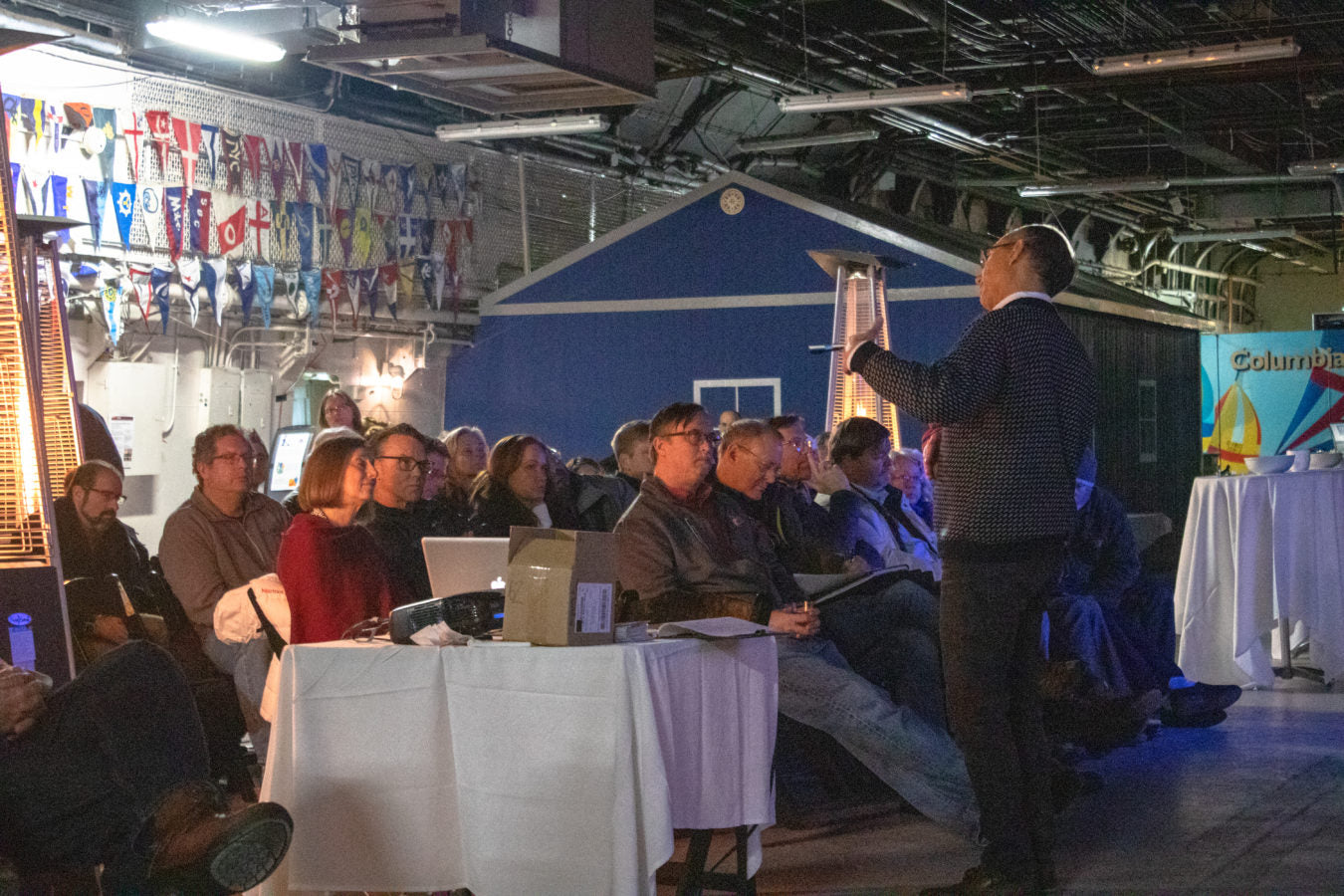
NORTH U AT COLUMBIA YACHT CLUB
NORTH U AT COLUMBIA YACHT CLUB
Bill Gladstone Shares Advice on Tactics & Speed
It was great to have our old friend & former Evanston resident Bill Gladstone back in Chicago at Columbia Yacht Club for the first of our winter seminars. In conjunction with CASRA and Columbia Yacht Club, our objective this winter is to give all involved sailors the opportunity to invest time in the development of their sailing knowledge base.
"If nothing else, it helps keep the memory of warmer sailing days alive as we wait for the next season on the water. We are inspired when knowledgeable sailors let us know they came away with a few bits of clarification or a deeper knowledge of tactics at these events."
We had 80+ participants on a cold, snowy Wednesday night for Bill’s introductory North U. survey seminar on “Tactics Tips & Go Fast Topics”. The North U courses take a full day, each discussing Speed and then Tactics, so Bill had his work cut out trying to fit as much as he could into two hours.
Bill began his seminar with the “pyramid of success” for sailboat racing. Starting with a foundation of Boat Handling, he emphasized the importance of practicing with specific drills and tips on increasing proficiency of captain and crew alike. With better Boat Handling, you can then start to focus on increasing your Boat Speed, which in turn will allow you spend more effort on maximizing your Position on the race course.
Sailboat racing is a bit like chess, in that the maximum enjoyment comes from mastering the mental aspects of the game; but you cannot get to that point until you first know how all the pieces can move! Those sailing components include boat handling, crew teamwork, boat & equipment prep, understanding sail shape & trim, steering, & more – all topics that are dealt with, in detail, at the full North U Speed course.
Thank you, Bill, for a very enjoyable learning experience. We hope to see in March at another event!
Upcoming events include:
March 2: Chicago
March 3: Milwaukee
March 3: Chicago - CYC Monroe Meet'n'Greet
March 13: Chicago - Chicago Mac Strategy Seminar
READ MORE
READ MORE

STRATEGY, SAIL TRIM & TUNING SEMINAR
STARTING STRATEGIES, SAIL TRIM + TUNING
New Year, New Skills With Your Local Experts
Wednesday March 20 | 6:00PM
The margin between a mid-fleet finish and winning is often less than 2%. At our racing seminars, you will learn the fundamental concepts and nuanced techniques that can deliver your winning margin. Join North Sails experts Chuck Allen, Tim Healy, Will Welles, and Mike Marshall for a night dedicated to starting strategies, sail trim and tuning. RSVP today for this complimentary seminar, open to all boats, and join us in March at the Portsmouth, RI loft
READ MORE
READ MORE
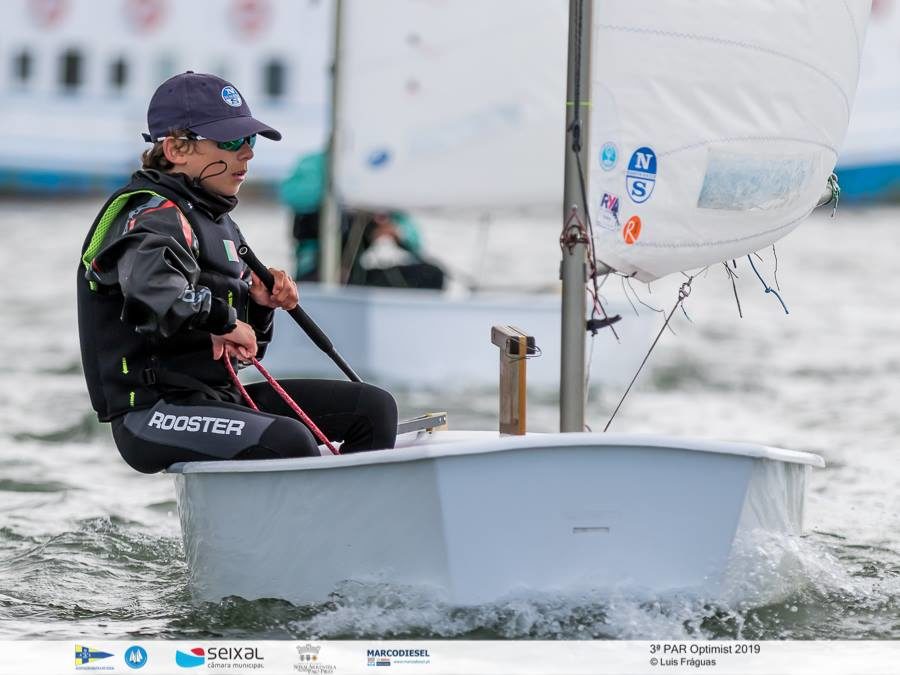
NORTH SAILS NO PODIUM DA 3ª PAR CENTRO OPTIMIST
PARABÉNS A TODOS OS VELEJADORES NORTH SAILS PELOS RESULTADOS NO SEIXAL
Na regata do passado fim-de-semana, o Francisco Uva e o Augusto Castelo Branco tiveram uma grande prestação e subiram ao podium como 2º e 3º classificados, respectivamente.
Francisco Uva Photo Credits:Luis Fráguas
Augusto Castelo Branco Photo Credits: Luis Fráguas
As velejadoras Katharina Leite e Matilde Bandeira fizeram, também, um excelente trabalho!
A Katharina conquistou o 1º lugar e a Matilde o 3ºlugar, em Feminino.
Katharina Leite Photo Credits: Luis Fráguas
Matilde Bandeira Photo Credits: Luis Fráguas
Entre os onze primeiros classificados foram 6 os velejadores North Sails.
Competiram com os modelos de vela R-1 o Francisco Uva e a Matilde Bandeira, com a R-2 o Augusto Castelo Branco, com a R-4 o Salvador Baptista-Fernandes e o Maxx de Groot e com a R-5 a Katharina Leite. Não podemos deixar de referir que o velejador Maxx de Groot está na sua primeira época de competição. Parabéns pelo bom trabalho!
No final, o Francisco Uva consolidou, assim, a sua posição no ranking centro, mantendo-se no primeiro lugar da tabela.
Agora é continuar a treinar com empenho, pois Vilamoura está mesmo à porta! Até lá, não deixem de nos consultar para mais informações sobre as North Sails.
Photo Credits: Luis Fráguas
Contacte-nos já hoje!
Sail Fast and Good Luck!
READ MORE
READ MORE
THE NEW NORTH SAILS LONG BEACH
THE NEW NORTH SAILS LONG BEACH
Your Team Has Moved To Long Beach. Visit Our New Location, Open Now
North Sails is excited to announce the opening of our new loft in Long Beach, CA. Managed by local experts Bill Herrschaft and Zack Maxam, the North Sails loft previously based in Costa Mesa has moved operations to a new location: 5752 E 2nd Street, Long Beach, CA 90903.
Open now, the new loft is ideally located in Long Beach, the racing hub of central California and is in close proximity to serve local clubs including Long Beach Yacht Club and ABYC. The new location will be convenient for sail pickup and drop off and service work on the extensive dinghy fleet in the area. Working in close partnership with North's West coast superyacht hub in San Diego, the majority of larger sails will be transported and serviced in San Diego where the extensive floor space is designed to handle any service needs.
North Sails has a long history in the Long Beach area, stemming from the original location in the late 70's. The team is excited to return to the area as the new location allows full coverage and support for clients based in Marina Del Rey down through to Dana Point, with Long Beach as the central hub.
"One of the many benefits for everyone in the relocation effort is that we can now provide customer service to a broader range of territory, and we have a great location for clients to visit and talk about their sails"
- Bill Herrschaft, Loft Manager
The new loft is a fresh addition to the downtown Long Beach area and a prime space for clients to meet with the sales and design team. Contact your local team at 949-645-4660 and make sure you stop in and visit.
READ MORE
READ MORE
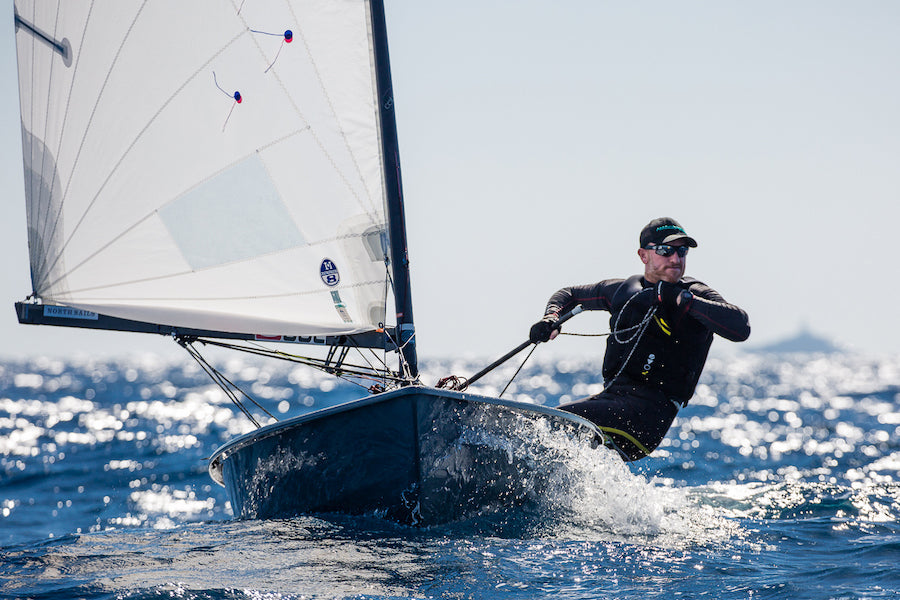
NEW OK DINGHY CLASS LEADER
NEW OK DINGHY CLASS LEADER
Singlehanded Champion Takes Lead In Sail Development
© Robert Deaves
Charlie Cumbley came into sailing through his family. “My grandpa worked for a boat builder, and then I got started just for leisure,” he says. “I wasn’t involved in any junior race teams. I just went out and found any boats I could sail, and that’s how it progressed until I got relatively serious in Finn sailing in my late teens and ended up meeting Paul Hobson. For my sins,” he adds, laughing.
Hobson invited him to join North Sails One Design in 2006, which Charlie describes as “an awful long time ago.” Today his title is One Design Sales Manager for the UK and gets involved in “everything from Optimists to J/80s.” He’s recently been named class leader in the OK Dinghy.
By his own estimate, Charlie has won something like fifteen national championships “across a little range of vessels.” He earned a spot on the podium at many international OK events the last couple of years and was winning the 2018 OK Dinghy Europeans until the last race, when he lost a tight battle with Star champion Freddy Loof. Though he feels he has the most experience in singlehanded boats, Charlie also sails Etchells and J/70s. “Nothing gets too stale, which is quite nice. And,” he adds, laughing, “I’ve got someone else to blame.”
© Robert Deaves
OK Resurgence
When Charlie first started sailing the OK, the fifty year old class was just starting what he calls its second wind. “130 boats at the 2018 Worlds; it’s definitely on the up.” Older designs like the OK are coming back, he thinks, because people get tired of just going fast. “They like getting back into a boat where the racing’s really close and really tactical.” And unlike the Finn, “you don’t need to be a monster of a guy” to sail the OK, though there are plenty of Olympians (like Loof) in the fleet.
“Sailors who maybe aren’t quite as strong as they used to be can get involved in this class, and if they’re good, they can have some decent results. People always like doing well, don’t they?”
The OK offers enough tweakability for retired Finn and Star sailors, thanks to its origins as a trainer for the singlehanded Olympic class. The masts are carbon, “not quite as exotic as the Finn mast, so it’s not like a small mortgage to buy one, but they’re quite nicely refined now. The new boats they’re knocking out are really nice bits of kit.”
© Robert Deaves
Sail Development
The class is strong in northern Europe and also in New Zealand and Australia. Charlie says having design groups in both hemispheres helps ensure year-round progress. “They can push on things through their summer, when it’s our winter and a bit quieter, and vice versa. They give help and feedback and design input, and then I compare it to what we’re getting over here, and then we make a decision on where we go. So, there’s been quite a lot of development in 2018. The sail that won the Worlds was the Kiwi design, which was great. Our UK design was third and leading up until the last race.”
North offers three different OK sail designs, so there’s something for everyone regardless of “where you sail, how heavy you are, and how stiff your mast is.” For big events, each competitor can measure in two sails. “You could quite happily measure in a full and a flat sail, which is what I do and what other guys do. You end up with a two sail inventory.” And each design has a large crossover, he clarifies, “so that you don’t get into that situation where you’re sailing round in five knots with a sail that’s designed purely for 20 knots and pulling your hair out.”
Mast stiffness used to be a large variable, but over the last few years the masts have become more one design—which means sail design can be more refined as well. “All the sails are built with custom luff curves to fit the mast,” Charlie says, “ just like we do in the Finns for the Olympic guys. It’s pretty customizable.”
Charlie travels quite a bit to sail, so when he’s home he tries to spend as much time as possible with his wife and two kids. His older daughter is almost big enough for Optimists, which means “I’ll become an Optimist parent. Scary things happen then!”
As for the OK Dinghy, Charlie hopes to one day step on to the top of the Worlds podium—but not in 2019, since he couldn’t make it to New Zealand. “Hopefully, the Kiwi guys nail the Worlds and we’ll sit down after that and have a little chat and see things we can improve on,” he says.
“Work on through the season. With more good sailors coming in, you need to keep pushing, getting those little details right.”
© Robert Deaves
READ MORE
READ MORE

DEPOWERING & POWERING-UP
SAIL POWER: DEPOWERING & POWERING-UP
By Bill Gladstone
This article is derived from the North U Trim Seminar. North U offers seminars, clinics, books, media, online training, and coaching. Visit NorthU.com to Learn More
In the previous segment we explored sail shape and sail power in moderate air, and how proper shape varies with sea state. In this segment we explore Angle of Attack in moderate air trim and also techniques for de-powering in heavy air and powering-up in light air.
Moderate Air Trim
Angle of Attack
At full power in moderate air we adjust the mix of depth and twist to suit the conditions – adding depth and twist as chop increasing to improve acceleration and create a wider steering groove, or trimming with less depth and less twist for higher pointing and higher speed in smooth water.
Meanwhile we adjust and fine tune angle of attack through steering and traveler to maintain full power, speed, and balance. Much of the time this falls largely to the driver – footing off when underpowered or feathering up when overpowered to keep the boat at full power.
As we push to the high end of moderate air, and particularly in puffy conditions, a helm response alone is not enough. In these conditions playing the traveler is also critical to maintaining proper heel, balance, and speed. (On boats without a traveler there are alternate techniques, covered in Sail Controls, later.) When the main trimmer is doing a great job the angle of heel and helm load will not change – the trimmer will play the traveler as the wind changes, down in the puffs and up in the lulls. When perfectly executed the main trimmer is really driving the boat upwind, with the rudder following along as a trim tab.
Fig. 401 Angle of attack is controlled both by the driver and sail trimmers. Increase power by bearing off or trimming in; reduce power by feathering up or lowering the traveller down. Pulling the traveller up and sailing higher might provide the same speed at a higher angle. It would be worth a try…
Heavy Air
De-Powering
In overpowering conditions sail power can be reduced by reducing angle of attack, by flattening the sail depth, or by increasing twist. Each reduces power, but which is preferred? Often it is best to start to de-power by flattening sails while keeping closed leeches to maintain pointing ability. This is the case as the wind often builds more quickly than the waves, so we get relatively smooth water in a building breeze.
In chop or waves it may be preferred to use twist to control power while maintaining depth for acceleration. If steering is difficult, then de-powering with twist can create a wider, more forgiving steering groove. Most commonly, the de-powering progression would include changes in both depth and twist.
Angle of attack is played moment to moment by the driver and trimmers to maintain speed, pointing and balance at full power: neither overpowered nor under-powered. A core challenge of upwind sail trim is achieving not just the correct total power, but the correct blend of angle of attack, depth and twist; and then adjusting total power and the mix to keep up with ever-changing conditions.
Fig. 402. The boat shows great trim in fresh breeze, with sails flat and twisted, and the traveler down. Note the modest heel and balanced helm. Note also matching shape of the jib and main.
Steering in Waves
When the boat is difficult to steer in the waves that often means it is out of trim. If you’re underpowered as you squeeze up and knocked on your ear as you bear off it is not bad steering – it’s poor trim. Adding some twist and depth will create a wider steering groove and provide more punch to get through the waves. We are often told to steer up the faces and bear off down the backs of waves. We’re going to change that: If the boat is well trimmed it will find its own best path through the waves. You can help by playing the traveler (or sheet if vang sheeting) rather than steering with the rudder.
Fig. 403. For best performance in waves set up with some depth for punch and with twist to provide a more gradual onset and release of power.
Light Air Trim
Less than Full Power
And what about light air, when we don’t have power to trade? When sailing in underpowered conditions we sail with a wide angle of attack to increase power, a deep sail shape for added power, and as little twist as possible without stalling airflow. As we’ve seen in earlier segments, trimming to the wind gradient often requires substantial twist in light air. The wide angle of attack and deep sail shape that add power in light air are also prone to stalling, so substantial twist in needed in lighter winds to encourage airflow and prevent stalling.
Fig. 404. In light air we maximize power with a wide angle of attack, deep sail shape, and just enough twist to prevent a stall.
Re-Powering
In a fading wind the chop will often linger so power is added with depth as the breeze fades while twist is maintained to preserve a wide steering groove.
One final bit
We’ll see more on this theme of Mix of Power throughout the remaining Upwind Trim segments. We’ll also address the balance of power between the main and jib as part of our ongoing mix of power discussion.
Pro Tip (wink wink)
To protect your reputation as a sail trim expert NEVER make a change in trim as the breeze fades. Here’s why:
In a building breeze pretty much any change you make will improve speed, so when you see a puff coming, make a change. The puff hits and voila – performance and your reputation improve.
In a fading breeze, no matter what you do, performance will suffer. If you make a change as the breeze fades then your reputation will suffer along with performance – DON’T do it.
© Copyright Bill Gladstone
READ MORE
READ MORE
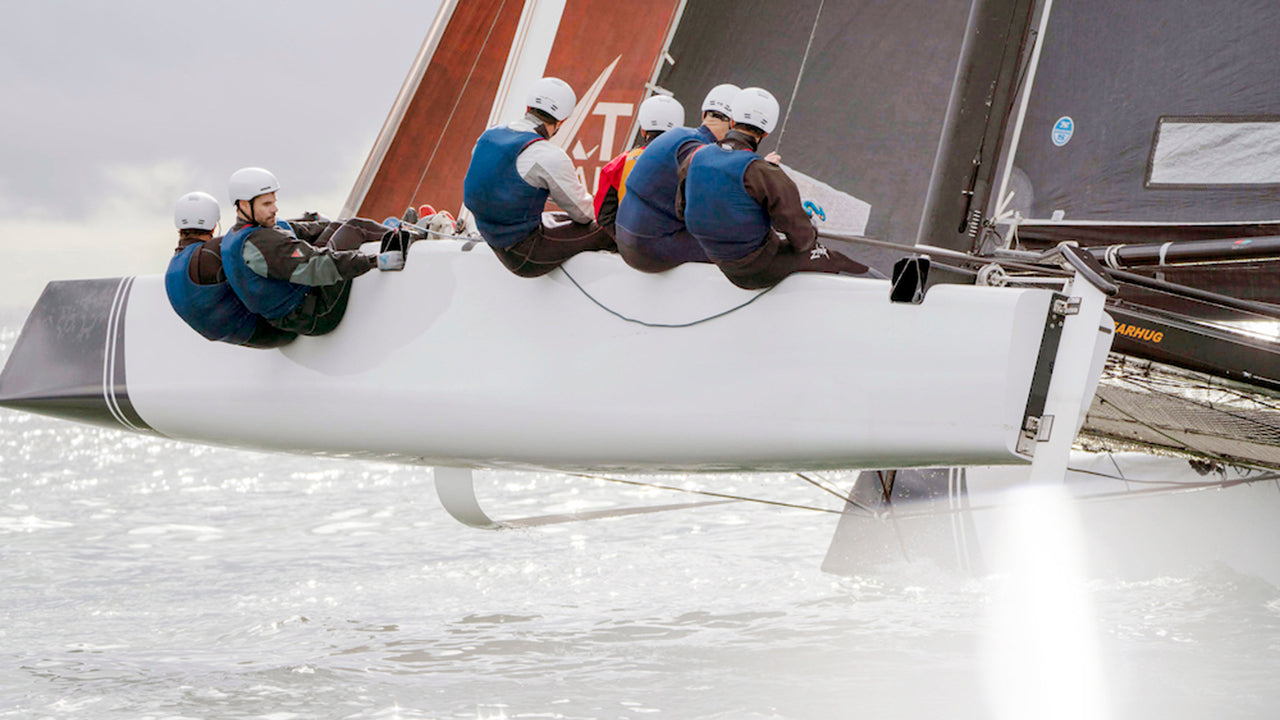
STARS + STRIPES SELECT NORTH SAILS
NORTH SAILS CONFIRMED AS SUPPLIER TO STAR + STRIPES TEAM USA
The New, All-American Team Have Picked The World’s Leading Sailmaker In Its Quest For A Historic Victory
📸 Stars + Stripes Team USA
North Sails is proud to announce they have been selected to supply sails and design expertise to Stars + Stripes Team USA, one of the American challengers for the 36th America’s Cup. This follows the news (Nov 2018 ) that North Sails is the sailmaker of choice for defender Emirates Team New Zealand, and Challengers Prada Luna Rossa and INEOS TEAM UK, who are all vying to win the oldest trophy in international sport.
JB Braun, Director of Design and Engineering for North Sails, will also serve as technical director for Stars + Stripes Team USA. In doing so, JB joins an enviable roster of North Sails designers who are currently embedded with North Sails’ confirmed teams. They all bring with them expertise and innovation to a highly complex and competitive challenge in building a boat to win this event. As part of his role, JB will be looking at how to maximize all the elements that make the ‘Engine above Deck’ on these powerful foiling monohulls. He will also lead further development and optimization of the design package Star + Stripes Team USA have purchased from Emirates Team New Zealand.
📸 Stars + Stripes Team USA
JB Braun commented: “I have been involved in the America’s Cup for over 18 years and in that time I have seen technology and innovation change things beyond recognition. But one thing remains the same – the fastest boat wins. That means every part of your boat, from the carbon hull and foils to the mast and sails, with an emphasis on the sailing team, have to be the very best and able to sail faster and smarter.”
“Our challenge this time, with a new boat and much to learn, is how we ensure we are sailing the boat close to optimum trim a higher percentage of the time than our competition. I am excited to be a part of Stars + Stripes Team USA and see how we develop the boat and team into a winning unit.”
Braun’s expertise with America’s Cup programs is rivaled by few. His America’s Cup career began with Young America in 2000, then he joined Stars + Stripes in 2003, followed by 12 years with Oracle Team USA. Braun was an integral part of the aero design and analysis that helped Oracle Team USA make their famous comeback during the 34th America’s Cup in San Francisco.
Staying true to their American roots, Stars + Stripes Team USA will work closely with the North Sails design and construction team in Minden, Nevada, the birthplace for North’s 3D sailmaking innovation.
Ken Read, President of North Sails, commented: “We pride ourselves at North Sails as having the best minds, known for pushing boundaries and finding answers to challenging problems. There is no doubt that this new boat will be cutting edge and very fast, but how you combine this new aero package with crew limitations and reliability will be the key to victory. JB is a proven success in the America’s Cup but more than that, he understands how to bring all the elements of design, technology and innovation together to create something that delivers. I am delighted that he has been able to join another Stars + Stripes team, this time with a new generation of sailors and a whole different ball game. I can only look forward to watching how things move from the design process to the sailing stage and where the teams get to with this new rule.”
Stars + Stripes Team USA Co-Founder Mike Buckley (L) and Helmsman Taylor Canfield (R) 📸 Stars + Stripes Team USA
READ MORE
READ MORE
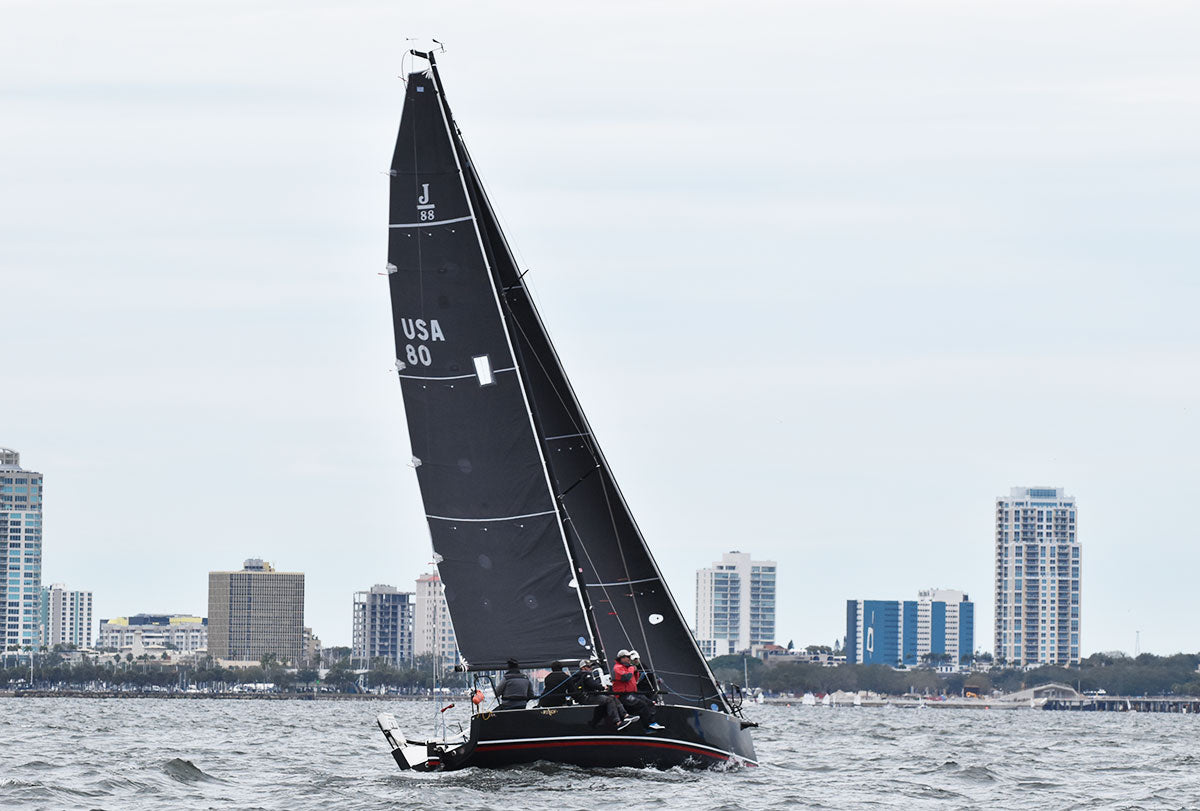
WINGS WIN J/88 MIDWINTERS IN ST. PETE
3Di BRINGS WINGS TO NEW HEIGHTS AT THE J/88 MIDWINTERS
Five Bullets Guarantees The Title in St. Pete
© Chris Howell
Taking on a new sailing challenge is nothing new for Mike Bruno. Through nearly 3 decades of racing he and his team have raced, and succeeded, in several different boats. So when the J/88 launched onto the scene Mike jumped in and the Wings program had a new sailing challenge to conquer. Fresh of their recent win at JFest in St. Petersburg we wanted to know more about the Wings team and their thoughts on their 3Di sails.
Mike, first of congratulations to you and your team on Wings for your continued success in the J88. Can you share with us a little bit about your sailing background and how long have you been sailing in the J88 class?
Thanks! We are having fun with Wings and continue to learn more and more about sailing the J88 fast. As how we got this far, I started out as casual cruising sailor and began racing about 25 years ago. I would say that in the past 15 years or so we have gotten fairly serious about racing and being competitive. We had a Jonmeri 40’ named Karjala, which I built and raced for many years, then a series of ‘Wings’. First was a J/124 I raced for 2 years. It was a nice boat but we found it to have a tough rating to sail, so we traded it for a J/122. The J/122 really was a great step and I successfully campaigned that boat, with a few partners, for 8 years initially, as a one design. The J/122 program brought us some great results including winning the North American title twice and a Rolex award at a NYYC regatta. That brought us to the current Wings, the J/88, which I bought the 3 years ago. We have really enjoyed this program and had great wins including the inaugural J88 North Americans as well as a big win at Key West Race Week.
The pictures from the JFest Regatta in St. Petersburg made it appear that you had good breeze for the event. Did the conditions match up with the pictures throughout the championship?
St. Petersburg Yacht Club runs excellent events and Tampa Bay can be a bit “challenging” so you really never know what you will get on any given day, especially in the winter. That said, the sailing conditions at the JFest were certainly fair. Across the entire event I’d say the breeze ranged from 8-20 knots. I think the cooler conditions (locals may call it “unseasonable”) played a role in how much pressure we had throughout the weekend. Also, Tampa Bay is quite shallow so there was a reasonable amount of sea state but the very steady breeze overall and significant shifts kept every team on their toes and working hard looking for opportunities to be gained via tactics and gear changing.
Can you tell us a little bit about your team, who does what and how long have you all been together?
The team is really made up of a large group of great friends and awesome sailors and, like many others, we find we are rotating in and jumbling pieces for any particular event to make sure we, not only do well, but have fun. For JFest Midwinters I held the tiller and had Chris Morgan, a local Floridian, trim main and work with me on our overall speed. Stu Johnstone was our tactician and really had a great feel for the bay the entire weekend. Tim Randall ran the pit for us while Mike Booker did all the headsail trimming and Stephen Yip ran the bow.
Looking back through the weekend what were the keys to your success at the mid-winters?
It’s a great question as it forces me to look back and try to pinpoint a few things I think we did really well.
1. The biggest thing was we were just able to sail a bit higher and faster than the fleet much of the time. A lot goes into that for sure. The team really worked hard on proper rig tune and working the sails and trim constantly to maximize the boats potential but our new North 3Di sails were probably the most significant difference in our ability to make that happen.
2. Our crew work was excellent! As a skipper knowing that your team can execute any maneuver at a seconds notice and pull it off without a hitch is a huge confidence builder for the entire boat. It seems that at almost every mark rounding we seemed to gain 1-3 boat lengths.
3. I mentioned earlier that Stu Johnstone called or tactics for the weekend and he was really on tactically this regatta Stu didn’t miss anything which also gave us terrific confidence. We did make a few mistakes in the event, including being over early at the start in 2 races.In the last race we were over (again) and we started, probably, 300 yards behind fleet but Stu kept us in the game, and we kept using our boat speed and crew work to do all we could to gain distance and we still nearly won the race!! I guess maybe the new saying is “When you have a great team and fast sails it’s never over until it’s over!”.
What are your 2019 sailing plans for the J88?
Wings has a very full 2019 sailing calendar. We have already done the Egmont Key Race and St. Pete J Fest. Up next in February is the St Pete NOODs then we head up to Charleston Race Week in April. From there the team will go back north for the American Yacht Club Spring and Fall, Cedar Point One Design Regatta, Block Island Race Week, possibly the New York Yacht Club 175th Regatta as well as J Fest in Newport with a focus on the J88 NAs in mid October.
Thanks Mike and congratulations again. Sounds like you have a full schedule set with an awesome team. Good luck the rest of the year, have fun and sail fast!
Learn about North 3Di products for the J/88 Class.
READ MORE
READ MORE

DIE NÄCHSTE MESSE STEHT VOR DER TÜR!
DIE NÄCHSTE MESSE STEHT VOR DER TÜR
SuisseNautic in Bern
Vom 20. - 24. Februar finden Sie uns an der SuisseNautic in Bern in der Halle 3.2 am Stand E02.
Gerne können Sie schon heute einen Termin mit uns abmachen: 071 680 00 80
READ MORE
READ MORE

TOP HONOURS AT THE BAY OF ISLANDS SAILING WEEK
NORTH SAILS TAKE TOP HONOURS AT THE BAY OF ISLANDS SAILING WEEK
A record-breaking number of boats turned out for the 2019 CRC Bay of Islands Sailing Week, with yachts carrying North Sails taking top honours in many divisions.
Ker 40 Icebreaker 📸 Lissa Reyden
A total of 116 yachts entered this year, up from just over 100 in 2018, and an extra Island Racing division had to be created to accommodate all the entries.
The biggest winner of the regatta was local boat Kia Kaha, skippered by Chris Hornell, an older TP52 which took out the South Pacific PHRF Championships trophy with a local crew and an inventory including many North sails. Division A was won on line by TP52 Mayhem, with a full North Sails wardrobe.
But everyone was a winner who got to spend three days sailing around one of New Zealand’s most beautiful bays, enjoying near perfect conditions with 8–12 knots and sunny skies every day.
North Sails designer Magnus Doole, sales and marketing manager Andrew Wills, loft manager Guy Hewson and master sailmaker Casey Bellingham raced on different boats in the highly competitive B division. Doole and the crew on Ker 40 Icebreaker came out on top, winning on line, PHRF and general handicap, after taking out every race on line.
Doole says conditions were perfectly suited to Icebreaker, which was utilising a new North 3Di mainsail and number 1.5 jib.
"The 1.5 design is based on the latest-generation TP52 Super Series mould, and we definitely had a noticeable VMG gain in its range," he says. "We decided that with the configuration changes we had made to the boat, we wouldn’t get a new number 1, but get a 1.5 and focus on having a great result in this regatta, where we knew conditions were often in that 8–12 knot range."
There was a slight hiccup on the last day, when Icebreaker started prematurely and had to go back, but they quickly managed to get back out in front, before the first mark.
"We had boat-speed to burn when we needed it," Doole says, adding that the Bay of Islands "is a pretty great place to go yachting."
Also in the B division, Stomp 38 Titanium (now owned by Bellingham and his brother) finished second and Clockwork (with Hewson aboard) third on PHRF, while Soto 40 Alegre, with Wills in her crew, finished second on line.
📸 Lissa Reyden
Boats with North sails also took honours in the various Island Racing divisions, where yachts sail longer courses around the beautiful Bay. Ran Tan, with North general manager Richard Bicknell on board, won Island Racing A on PHRF and general handicap, with Bull Rush third on general; First Picasso took out general handicap in Island Racing B; Rattle n Rum was first on PHRF in Island Racing C, and Black Magic first on PHRF in Island Racing F.
The sportsboat division provided some close and exciting racing, with pro sailor Stu Wilson and his crew on Shaw 7 Angry Dragon, using North sails, taking out line and handicap honours. North One Design manager Derek Scott steered Magic 25 w-8 Up to second place on general handicap.
There was also tight racing in the Young 88 division, where North Sails expert Matt Kelway sailed aboard Flash Gordon, using a North Sails main cut to the new radial design.
"We had a really great week, doing two windward-leewards and a harbour race each day," he says. "It was all tied up going into the last day and we had close racing the whole time."
Kelway says it’s great to see Bay of Islands continuing to be so well supported by local sailors, with the fleet this year reaching record numbers in the event’s 17th year.
"It’s fantastic that there were so many boats, and so much interest in the island racing divisions. You can do windward-leewards anywhere, but people want to get out and see the islands and what the Bay has to offer."
READ MORE
READ MORE
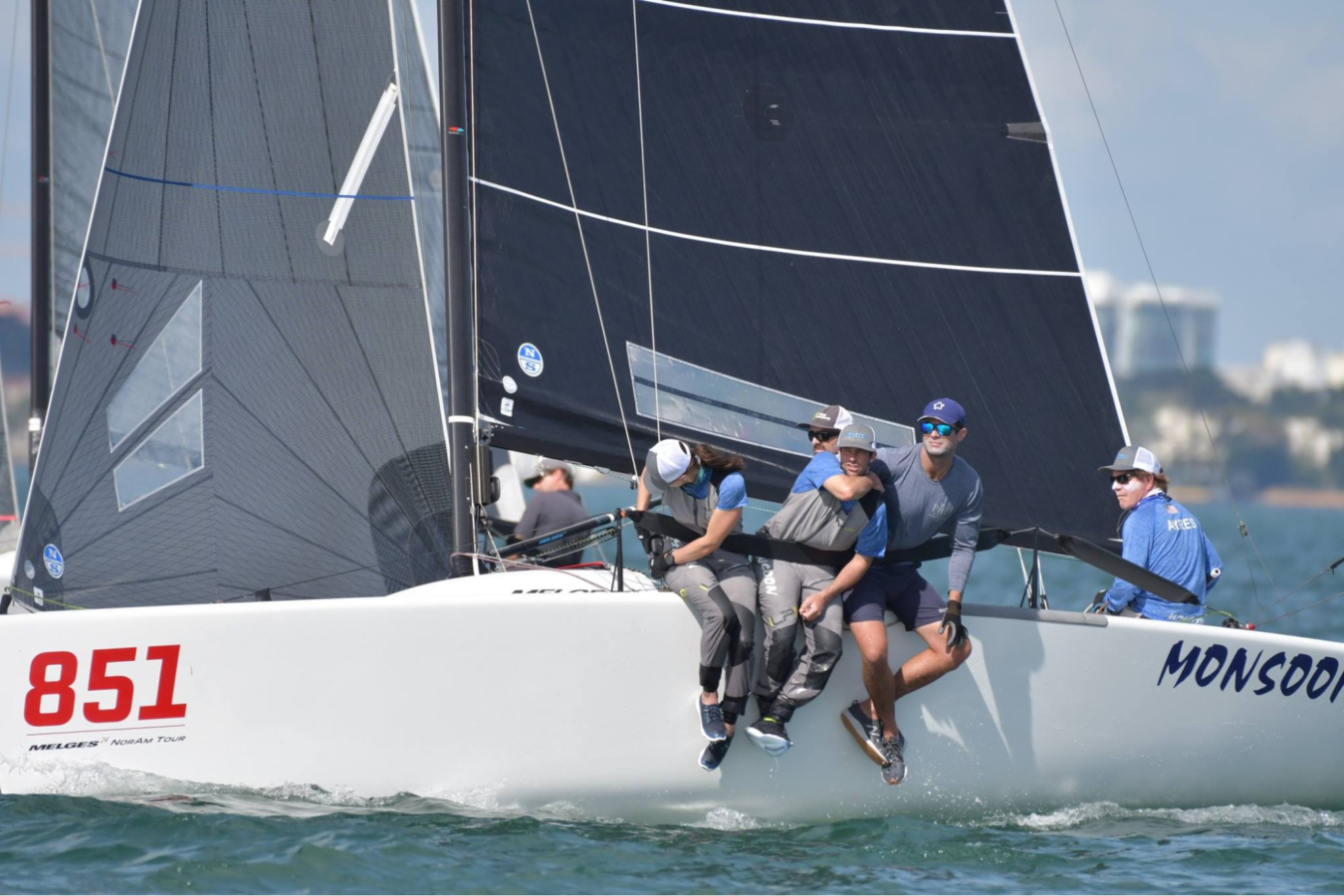
MELGES 24 3Di SAILS SHINES AT BACARDI WINTER SERIES
NEW MELGES 24 3DI SAILS SHINES IN MIAMI
Bruce Ayres’s Monsoon Dominate The Bacardi Winter Series
If there is one thing that is a constant at North Sails it is our team is never satisfied. We are constantly working to make better and faster sails and the recent 3Di development for the Melges 24 sails is not different. The North M24 team, along with sail designer Mike Marshall, spent time in Miami for the Bacardi Winter Series working with M24 teams, including teams Monsoon and Lucky Dog, on the new 3Di designs. The results were amazing with Monsoon combining 3Di speed with a talented team of sailors to win the event.
North Melges 24 expert John Bowden caught up with Stars + Stripes Team USA Skipper and Monsoon’s tactician Mike Buckley to get some insights on the success of his team along the series and his impressions on the new 3Di mainsail for the Melges 24 class.
Mike, congratulations again to the team on Monsoon. You had an incredibly impressive score line at the Bacardi Winter Series with top 5 in the all races of both events. Can you share with us a few key points, in your opinion, are some of the keys to success with your Melges 24 program?
Thank you, John, fun sailing against you and the other teams in the class. Sailing with the team on Monsoon is always fun as we work really hard and complement each other quite well. That said, there are some key points that we really focus on that I think any team can utilize to improve.
Keep it simple, no home runs.
Pass a boat or two each leg and trust the process.
Speed, good crew work, no major errors.
Though these may seem overly generic I really feel this helps us gain the consistency you mentioned and keeps the team prepared for success.
You guys were very open to work with the new 3Di mainsail and spend time with our team optimizing the sail. How did the North 3Di main respond and perform in the range of conditions?
The sails certainly performed really well across quite a broad range. We were happy with our speed which made my job easier!
Did you make any changes to your tuning for the new 3Di main?
That is a good question. The Melges 24 is a fairly high tech boat with strict one design rules so making sure the tuning is spot on for every condition is critical. We found that we are tending to sail a little bit tighter on our rig tensions, on average, with the 3Di main. Also, we found we were trimming a bit harder across the board. Not a huge amount but certainly something we talked about which, possibly, gave us another gear at times.
What do you see as the biggest advantage of changing to the new 3Di main?
One thing that is great about sailing with Bruce and the team on Monsoon is we always try to be on the front of the technology shift. When sailing in tight, competitive fleets like the Melges 24, it is fairly important to be leading the pack when looking for a competitive edge. Having that technology available in the Melges 24 and being open to test and lead the way made the path to using 3Di a great option.
Monsoon is one of the best Melges 24 teams in the fleet. How are you preparing the 2019 season and what do you attribute your team’s success?
We have a really fun team to compete with and I think that’s important. As we build Stars + Stripes Team USA I always have in the back of my mind the fantastic culture we have on Monsoon. We all want to hike harder for each other, we all want to trim better for each other, I want to hit shifts for my teammates. It’s not easy to find that chemistry but it’s probably the most important aspect of sport.
Congratulations Team Monsoon!
Power your Melges 24 with 3Di sails.
Lucky Dog powered by the North 3Di jib for the Melges 24 class.
READ MORE
READ MORE
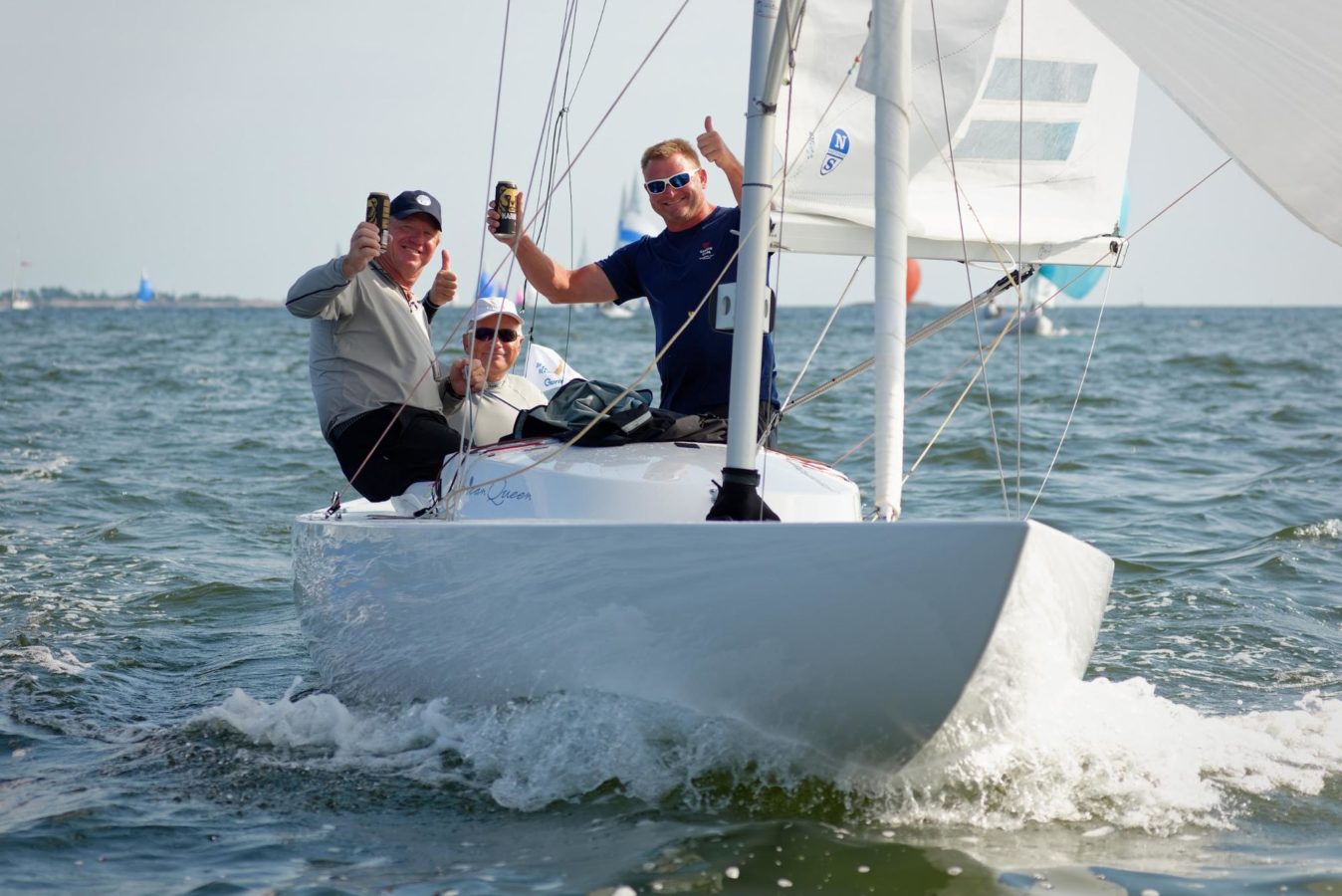
THEIS PALM TAMES THE DRAGON
THEIS PALM TAMES THE DRAGON
Introducing Our New Class Leader
Theis (far left) racing with his team African Queen celebrating the win at the 2018 Gold Cup. ©sailpix.fi
North Sails expert Theis Palm, has been appointed class leader for the Dragon. Theis has sailed on a lot of different boats in his 42 years as a sailmaker—including the Crown Prince of Denmark’s Farr 40 and his Dragon. He’s won eight world championships (Soling, Yngling, H-boat, Dragon, and 1/4 Ton), 3 Gold Cups (Dragon and Nordic Folkboat), two Europeans (Dragon and X-79), and 28 Danish Nationals in a whopping nine different classes. He feels lucky to sail almost exclusively in One designs.
“On a one design sailing day you sail one hundred percent of you time spend, but on a big boat you only sail forty percent and the rest of the time is organizing.”
He’s based out of the loft in Herlev, Denmark, less than half an hour northwest of Copenhagen, though he spends a lot of time traveling to regattas.
Palm began sailing in the Optimist in 1968, and moved on to other dinghies like Europe, Flipper and OK, before an opportunity to sail with double gold medalist Poul Richard Hoj Jensen led him to sail small keelboats. He was part of a medal-winning Danish Olympic training squad, and his team finished 3rd at the Pre-Olympics in 1995. He has been working as a sailmaker since 1977, and spend five years as Head coach for Danish Olympic Sailing Team up to the 2004 Olympics in Athen. He went to his first Dragon regatta in 1998.
“I like the Dragon because it’s a true three person boat. It was designed back in the 1920s, and it’s a very sensitive boat which makes it fun to sail. Many very good sailors sail the boat up to a high age, and that is great.”
He also enjoys the high level of competition. The annual Gold Cup has “between 10-15 boats that could win. There’s not many classes where you have so many boats that can win an event. There are many good sailors and a lot of professional sailors from Russia, England, Germany and United States.
“I had been helping some Russians teams and then they actually switched over to our brand. I am a little bit happy about that because they are pretty strong in the class at the moment, and most of them are using our sails. So that has been a good effort there.”
©sailpix.fi
Palm enjoys sharing his expertise with other Dragon teams and also helping North’s design team fine-tune the sails. “I’ve been sailing a lot in my life, so I have a good feeling for how sails should look to be fast… and I started sailmaking when we made them 2D on the floor. Understanding that can help to transfer good designs into 3D is a Big advantage.”
Dragon class rules currently limit sail materials to woven cloth, which he says limits the design options to improve already fast sails.
“We have very nice shaped Dragon sails, so it’s hard to find another two to three percent in the sails. Maybe you find it in a very, very narrow wind range, but we build huge crossovers sails so you don’t take the wrong sail. We’ve been very conservative with designs, because we are hard to beat.”
His customers also appreciate design stability. “They know our product. I have sailors who order a new sail and say, ‘No changes please? Good, I can use same mark on my mainsheet. Don’t change anything because we are fast!’ We have a very good product line.”
Because development happens very slowly, Palm focuses “more on the service, or the tuning, or the setting on the boats, where you can move clients to be better. I like helping them to better understand what happens with the sails when you tune the rig. That’s why it’s so important to meet clients in the field.”
And Palm says North Sails will be ready to evolve when the class is ready.
“The company is really looking into the future all the time. 3Di on smaller keelboats is an outstanding product. I hope in the next five years we can convince many One Design class to change their class rules.”
Until then, Palm will keep learning new tricks and passing them along to other Dragon sailors. “There are so many things to trim on the boat and the rig, it really makes a difference even if you make very small changes.”
Interested in sails for your Dragon? Contact your local expert today.
READ MORE
READ MORE
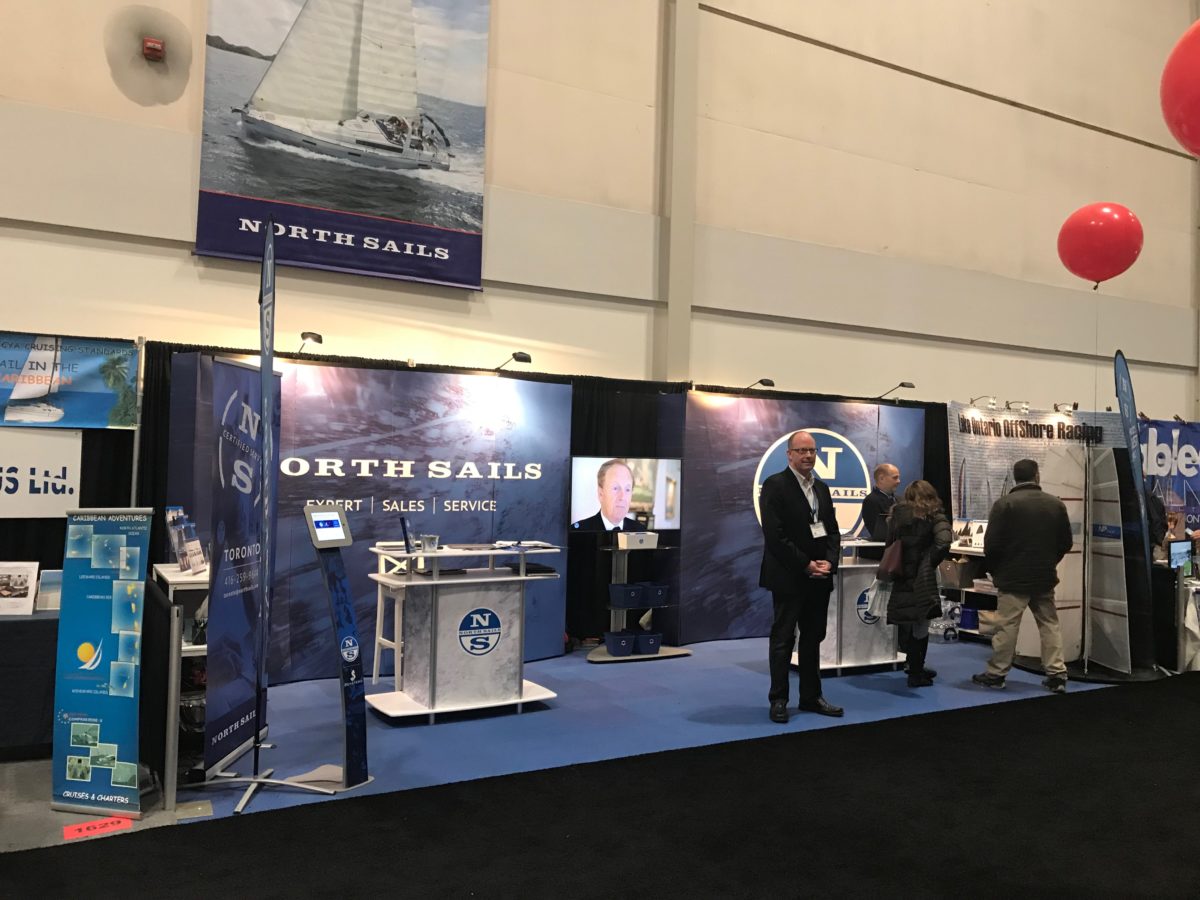
2019 TORONTO BOAT SHOW RECAP
WHIRLWIND WEEK AT THE TORONTO INTERNATIONAL BOAT SHOW
10 Days of All Things Sailing for North Sails Toronto
What a jam-packed 10 days it was for our Toronto crew at #TIBS2019. While the weather was less than favourable the first weekend, it was still a great time with friends old and new. Our reps from Kingston (George Jackson), Quebec (Miro Balcar) and Hamilton (Doug Folsetter) also joined us for the show! Office manager, Louisa Sonosky, shares how “the show was an amazing way to kick off the New Year and get people thinking about sailing again.” Everyone was able to put a little bit of summer in their winter and start getting ready for summer 2019. In addition to our local team, Bill Gladstone of North U, along with Geoff Moore, was on hand presenting North U Seminars during the first and second weekend. Gladstone & Moore shared information on Tactics, Tips & Tricks as well as Upwind Sail Trim in the hour-long complimentary sessions. NEW this year was our 3Di RAW 360. Boats with North 3Di RAW sails command podiums worldwide in the most competitive events and classes. For 2019, North has applied this advanced technology to 3Di RAW 360, a new product tier which combines 3Di's signature shape holding with an easy to read, easy to trim, and notably long-life racing sail that is perfect for Club Race sailors with smaller boats. Sales expert, Hugh Beaton, says “this is an exciting new product that is pushing North Sails technology to club racers and the local racing circuit.” The Toronto crew of North Sails would like to say a big THANK YOU to everyone who stopped by and supported the team!
READ MORE
READ MORE
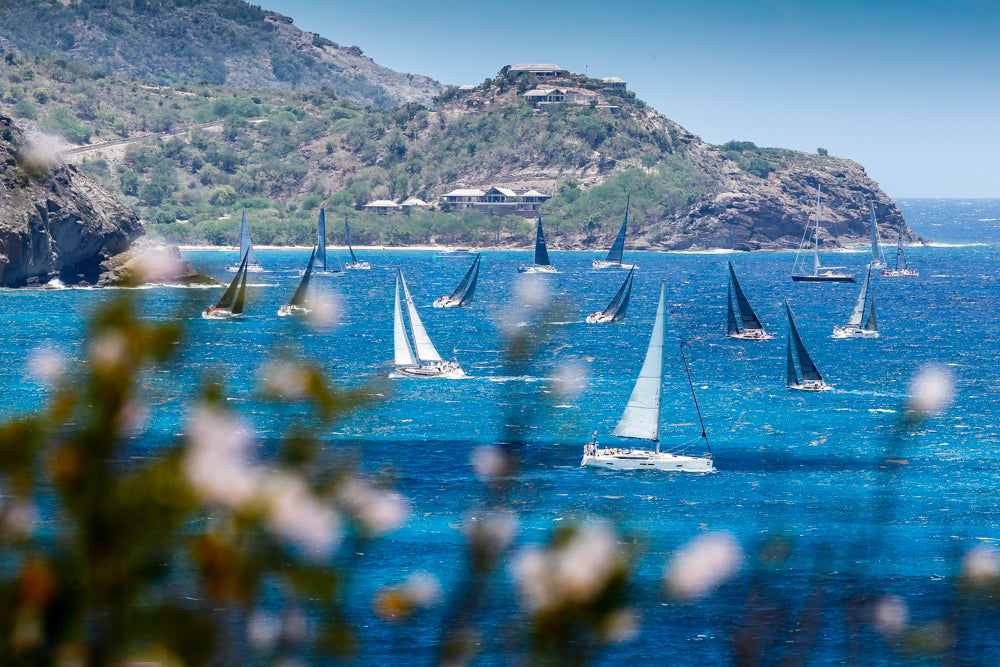
CARIBBEAN COMEBACK
CARIBBEAN COMEBACK
Experts Share Thoughts About the 2019 Season
Antigua Sailing Week ©Paul Wyeth
According to Andrew Dove, North Sails Caribbean Area Manager based in English Harbor, Antigua, 2019 is on track to be the best year ever for sailboat racing in the islands.
“We’re having a good year,” Andrew told us, when we caught up with him just after the New Year. “The work is piling in. The Caribbean is foolproof, it’s friendly. And obviously this is one of the ideal places in the world to sail.”
Mike Toppa, who is based at North Sails in Fort Lauderdale and races several Caribbean events, agrees that 2019 is going to be a great season. “After the hurricanes last year, regattas were at maybe 80 percent capacity; this year it seems like everyone’s making up for lost time. We’re all ready to get racing again.”
Organization Increases Numbers
Good planning—of the overall winter calendar, and of regattas—is part of the reason for increased participation across the board, Mike thinks.
“The Caribbean Racing Association has done a really good job coordinating all the schedules around the Caribbean so they don’t overlap. People have the ability to go to any regatta they want without missing out on another they might want to do. All of the events have stepped up their game with good, well-trained, race committees. Laying out courses, managing the regattas as people expect at a world class level.”
“Mike is quite right,” Andrew says. “There’s definitely professional management for racing in the Caribbean. The people who don’t live here participate for a whole range of reasons, but one is that the racing is very good nowadays.”
Andrew is predicting that the Caribbean 600 will have a record number of entries this year. All the events are growing, Mike adds. “It must be something that’s calling people in. Definitely an optimistic feel.”
Les Voiles de St Barth © Paul Wyeth
Antigua: Great for Cruisers, Racers, and Duty-Free
Each Caribbean season begins with the Salty Dawg Rally, a group of cruisers who travel south in tandem each autumn. Usually their destination is the Virgin Islands, but last year’s hurricanes sent them to Antigua—and they liked it so much, a large number came back again this year.
“For that week,” Andrew says, “there were events every night. We organized a 3Di evening at the loft, we had videos going, and we were giving away crepes and drinks. Most of the people didn’t have a clue what 3Di was, but now they appreciate its real advantage. And it was quite the party.”
Antigua has become a favorite hub for larger yachts as well because of its easy logistics, Andrew explains. “In the past it was difficult to ship things in and out; now it’s very easy to get provisions and sails delivered. And we’re very lucky with North Sails, they now allow us to deliver sails to the boats and catch up with the paperwork afterwards. Which means that when people come to regattas here and leave things for the last moment, it’s not a disaster.”
Docks of Antigua in English Harbour
Yacht Transports
Another reason the Caribbean is attracting more boats is that it’s now easy to get there without sailing across open ocean.
“In Fort Lauderdale,” Mike says, “a lot of yacht transport ships come in from Europe with a lot of the same boats you see on the racecourse. There are direct ships to St. Maarten and Antigua and different places. The costs are coming down, convenience is up, the scheduling is a lot more regular, and it’s definitely an option a lot of people take advantage of.”
Multihulls Multiply
Andrew says he’s been noticing a larger percentage of multihulls joining the Caribbean regattas. “Five years ago, you’d see one or two. Now there’s a class or even two classes of them.” Adding a widely accepted French handicap system has made it easier for regattas to handle scoring.
At the opposite end of the size and age spectrum, he adds that Antigua will host the 2019 Optimist Worlds in July, out of Nelson’s Dockyard in English Harbor. “That’s a major event because of the number of participants—not only the children but parents and staff. It’s offshore racing because they sail a few hundred meters and they are out to sea.”
Antigua Sailing Week © Paul Wyeth
3Di: Fewer Overnight Repairs
For this year’s regattas, Andrew plans to race with his customers by day and repair sails by night—though with 3Di, he says, the volume of repairs are way, way down. “In the past whether it be string sails or even 3DL, we would have to do sail repairs throughout the night. Now at big regattas, we’re asked to do small modifications but we’re not actually repairing the sails.” As 3Di NORDAC becomes more popular with cruisers, he predicts that repairs will drop off even more. “Fortunately we have a growing number of customers; if we didn’t, we’d be losing business.”
3Di is a huge advantage over laminated sails in the Caribbean, Mike agrees, because heat and humidity don’t affect 3Di. “We see it here in Florida too; all of a sudden sails are lasting six or seven years. Whereas a string sail would last three years. One of our customers has a 37m Dubois sloop,” Mike continues. “Their 3Di sails are three years old and are doing the St. Barth’s Bucket this year. I was talking to the captain the other day and asked how the sails are holding up, and he said they look like they’re brand new. They’re excited to race and they’ve got the sails to do it.”
“I actually don’t think we can overstate the change 3Di has brought into our market,” Andrew adds. “People here go sailing for more than a couple of hours, so it’s a real advantage. The only big repairs we have now are non-3Di.”
“You’ll get your evenings back,” Mike replies, chuckling.
Onsite pop-up loft, St. Barth
READ MORE
READ MORE
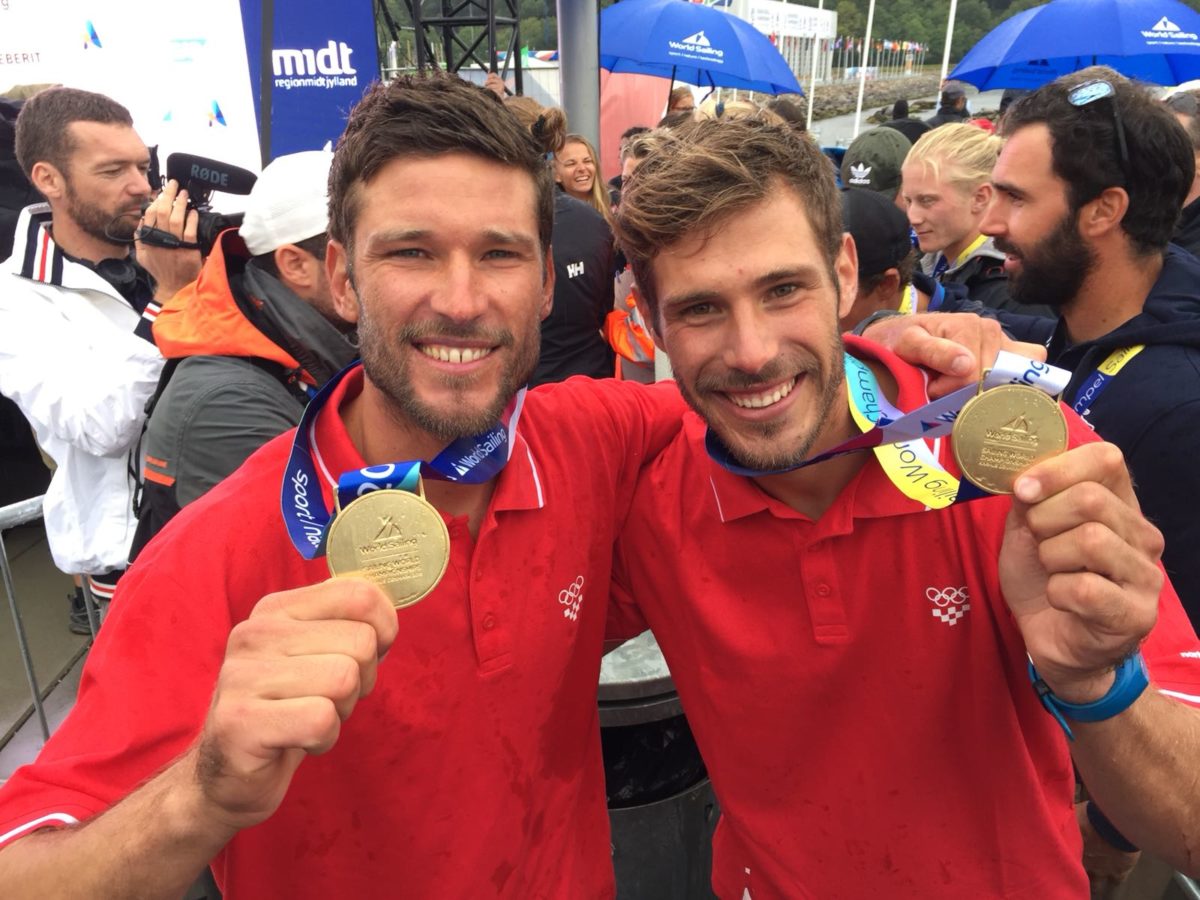
CROATIAN OLYMPIC GOLD MEDALIST ŠIME FANTELA JOINS NORTH SAILS
OLYMPIC GOLD MEDALIST ŠIME FANTELA LATEST TO JOIN NORTH SAILS
World’s Leading Sailmaker Recruits Olympian To Grand Prix Team
Sime Fantela (L) and Mihovil Fantela (R) after winning their gold medal in the 49’er class at the 2018 Sailing World Championships in Aarhus, Denmark.
North Sails today announced that Šime Fantela will be joining the Grand Prix segment, putting to use his experience across a range of classes. Šime will work closely with Grand Prix Segment Leader Paul Westlake, helping the design and product development teams to quantify their ongoing innovations.
After winning gold in the 470 class at the 2016 Olympics, Šime has his sights firmly set on a second Olympic gold medal in Tokyo 2020—this time in the 49er. He’s also sailing as strategist in the 52 Super Series on the newly launched Bronenosec.
North Sails Global Head of Sales John Welch commented: “We are really delighted that Šime has agreed to join North Sails. Not only is he a great sailor with a wealth of experience, but he is a huge asset to our pro sailor network, working across sail development and testing. We firmly believe that we need the best people out on the water pushing our sails to the limits and it is only in doing this we are able to give our customers what they want – the best product for whatever type of sailing they are doing. Through the addition of Šime to our team, we continue to learn from the best of the best to deliver the highest performing products.”
Paul Westlake added: “With such depth of experience and raw talent, Šime can help us develop our understanding of sailing campaigns and Grand Prix boats even further. He is an exciting, talented sailor and is quickly turning into an important opinion leader who can help us engage and inspire the younger generation of pro sailors. We believe that the North Sails team and technology can enhance his challenge for Gold in Tokyo and in turn we can learn so much from him, competing at the highest level of the sport. In order to continue to innovate we need to be challenging ourselves to think differently, and through working with Šime we see a great opportunity to do that.”
Šime commented: “I was delighted to have been asked to work with North Sails alongside my Olympic campaign. I really believe that I need to surround myself with the best possible people and to work in the best possible environment in order to become not only a good sailor, but also the most technically skilled sailor I can be. I have always been interested in the technical side of sailing and I really enjoyed making sails for myself in my campaign for Rio 2016 – I know how important it is to know everything you can about the sails you use in order to get the most out of them.”
“There is no better place to continue growing my knowledge than joining the greatest team in the world, North Sails. I am excited to be working with some of the best designers out there as well as the technically most advanced computer programs that exist. I look forward to learning more about how to apply them both to my campaign but also to help others get more from their sails and understand as much as they can about their ‘engine’.”
📸 Star Sailors League / Gilles Morelle
READ MORE
READ MORE
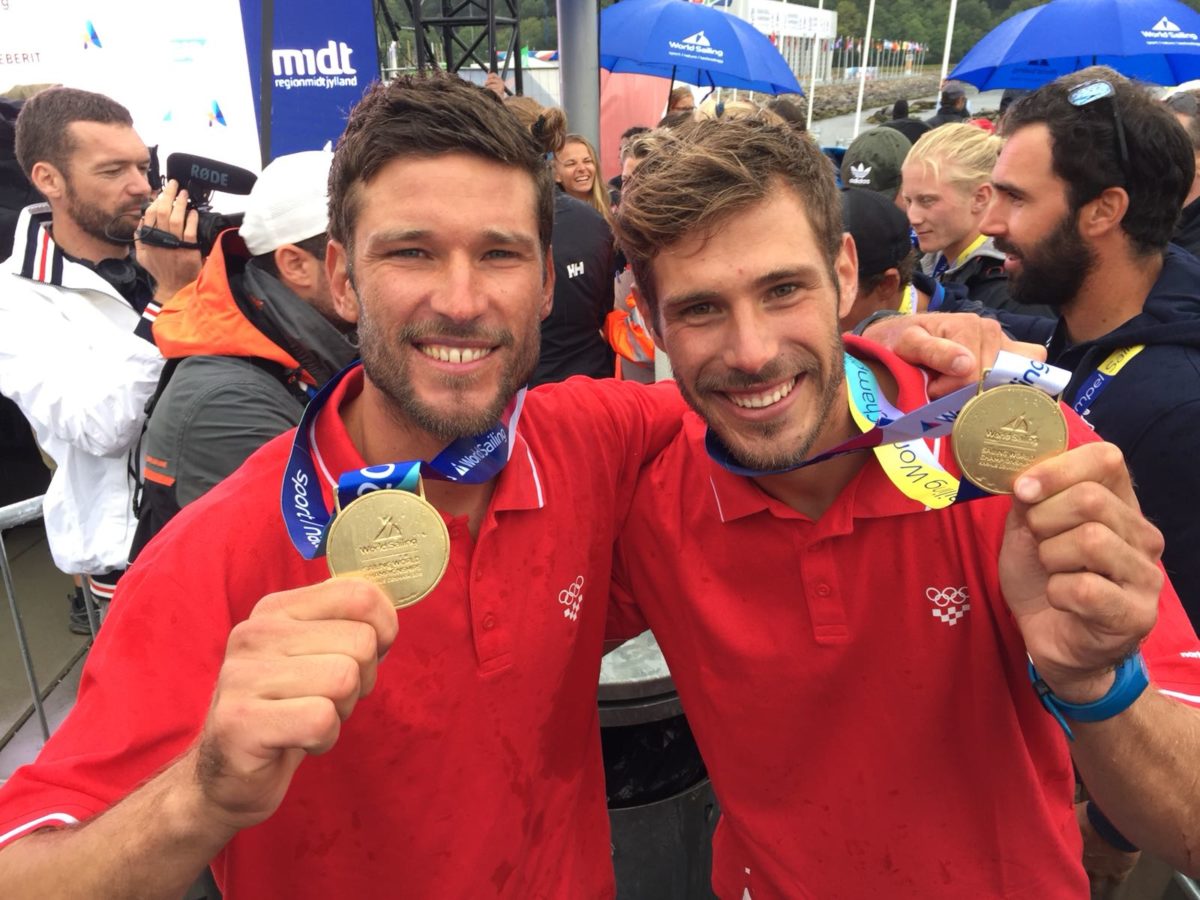
ŠIME FANTELA NAJNOVIJI ČLAN EKIPE NORTH SAILS
ŠIME FANTELA NAJNOVIJI CLAN EKIPE NORTH SAILS
Vodeći svjetski proizvođač jedara regrutirao je olimpijca za svoju Grand Prix ekipu
Šime Fantela i Mihovil Fantela, nakon osvajanja zlatne medalje u klasi 49er na prvenstvu svijeta u Aarhus-u, Danska.
Kuća North Sails objavila je da će se Šime Fantela pridružiti njihovoj ekipi za Grand Prix i svoje dugogodišnje iskustvo upotrijebiti u više segmenata. Šime će surađivati s voditeljem odsjeka Grand prix, Paulom Westlakeom, i ekipama za dizajni i razvoj proizvoda s ciljem inovacije. Nakon zlata u klasi 470 na Olimpijskim igrama 2016. Šime je odlučan u namjeri da uspjeh ponovi i 2020. u Tokiju, a odnedavno je i strateg u 52 Super Series nove posade Bronenosec.
Predsjednik prodaje North Sails John Welch kaže: "Oduševljeni smo što se Šime pridružio našoj kompaniji, jer on nije samo izvrstan jedriličar s golemim iskustvom, nego i važan dodatak našim timovima koji se bave razvojem i testiranjem jedara. Čvrsto smo uvjereni da naša jedra na vodi mogu najbolje testirati samo najbolji jedriličari, jer samo tako možemo klijentima ponuditi vrhunsku kvalitetu – najbolje jedro za njihov brod i njihov stil plovidbe. Šime će našem timu ponuditi svoje znanje; od njega ćemo mnogo naučiti o tome kako stvoriti proizvod spreman za vrhunske performanse."
Paul Westlake dodaje: "S tolikim iskustvom i tolikim urođenim talentom Šime će nam pomoći da još bolje razumijemo kako misli i plovi vrhunski jedriličar i njegov Grand Prix brod. Šime je vješt, nadaren jedriličar koji evoluira u jednog najvažnijih jedriličara našeg vremena i koji će nam pomoći da privučemo pažnju i nadahnemo nove generacije profesionalnih jedriličara. Vjerujemo da će ekipa North Sails i tehnologija koja nam stoji na raspolaganju pomoći Šimi da ostvari svoj cilj, zlato, u Tokiju, a zauzvrat ćemo mi od njega naučiti od njega sve što zna o natjecanju na najvišoj razini. Da bismo mogli ponuditi inovacije potrebno je razmišljati u drugim okvirima od ustaljenih, a suradnja sa Šimom važna je i velika prilika da to postignemo."
Šime Fantela prokomentirao je buduću suradnju: "Bio sam oduševljen kad su mi North Sails predložili suradnju. Uvjeren sam da se potrebno okružiti najboljim suradnicima i raditi u najboljim mogućim okolnostima da se postane ne samo dobar jedriličar, nego i najvještiji jedriličar koji mogu biti. Uvijek me zanimala tehnička strana jedrenja i bilo je lijepo surađivati na izradi jedara za natjecanja u Riju 2016. - znam da je važno znati sve o jedrima da biste iz njih znali izvući najbolje."
"Nema boljeg mjesta za nastavak razvoja mojeg jedriličarskog znanja od najbolje ekipe na svijetu, North Sails. Uzbuđen sam pri pomisli na suradnju s najboljim dizajnerima i na najnaprednijim kompjuterskim programima koji postoje. Veseli me i što ću naučiti više o tome kako da primijenim naučeno u pripremama i natjecanjima, ali i pomognem drugima da dobiju više od svojih jedara i razumiju sve što znaju o pogonu svog broda.”
📸 Star Sailors League / Gilles Morelle
READ MORE
READ MORE

ROYAL CORK YACHT CLUB U25 ACADEMY
ROYAL CORK YACHT CLUB U25 ACADEMY
North Sails Ireland enjoyed a great day out on Friday with the Royal Cork Yacht Club Under 25 Academy.
We were looking at some new 1720 3Di Nordac upwind sails and the North 1720 T-6 Class spinnaker complete with the EY logo.
EY have sponsored the U-25 squad and as part of that North Sails Ireland were delighted to be involved with the provision of a new spinnaker complete with the EY Logo.
We were blessed with amazing conditions for the photo shoot on Friday, 10 knots of wind, 10 degrees temperature and even the odd glimpse of the sun!
As well as the official pictures we had our own media guys on the case Young Productions who were filming on shore and flying the drone to give a different view on proceedings.
We would like to wish the U-25 squad good luck for the 2019 season and we look forward to playing our part as the season unfolds. Please take good care of that new spinnaker!!
Sail FAST!
READ MORE
READ MORE
Consejo North Sails
CONSEJO NORTH SAILS
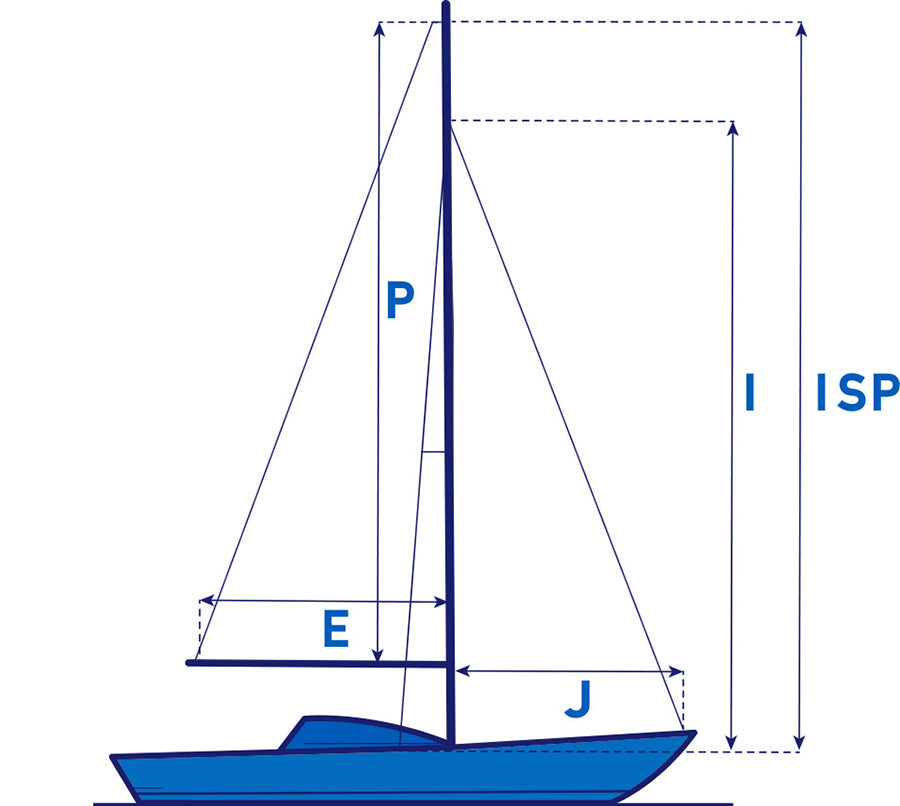
Revisamos el significado de las principales medidas de una embarcación según definición de la federación internacional de vela, World Sailing.
I – Altura del triángulo de proa: Distancia entre la intersección del stay de proa con el palo y la línea de cinta (el nivel de la cubierta).
J – Base del triángulo de proa: Distancia horizontal entre la base del estay y la cara de proa del mástil
P – Altura de grátil de la mayor: Distancia desde la parte superior de la botavara (la posición más baja del puño de amura) y el extremo superior de la mayor (el punto más alto al que se puede izar el puño de driza). Esta distancia está delimitada por bandas de color.
E – Pujamen de mayor: Distancia horizontal medida desde la parte posterior del palo a la altura de la botavara y el punto más a popa de la botavara, marcada con una banda de color, donde alcance el puño de escota de la mayor.
ISP – Altura de driza de spinnaker: Altura de la driza más alta del spinnaker hasta la línea de cinta.
READ MORE
READ MORE
REUNIÓN FAMILIAR
REUNIÓN FAMILIAR
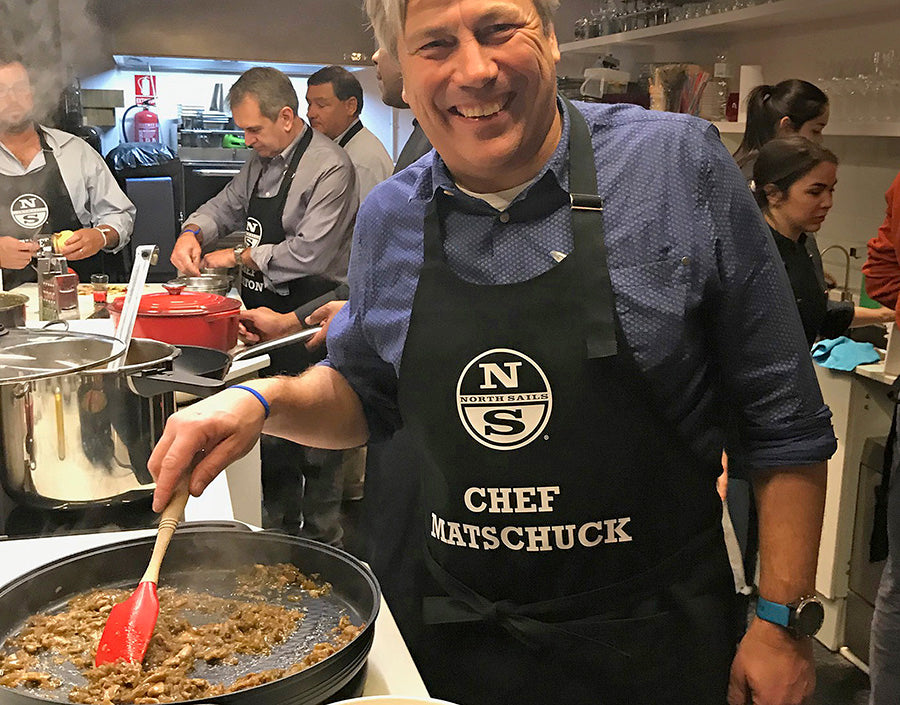
North Sails escogió Barcelona para su reunión anual de responsables comerciales de todo el mundo.
40 miembros de la familia North Sails participaron en la convocatoria para analizar la situación actual de la velería en cada mercado, valorar las acciones realizadas este año y planificar la próxima temporada, en la que se incorporarán interesantes novedades al catálogo de la marca. La elección de Barcelona como sede del evento resultó un éxito absoluto, y los participantes pudieron disfrutar de la gastronomía española protagonizando una entretenida edición especial de Master Chef.
READ MORE
READ MORE
PROVEEDOR OFICIAL DE LA 36 AMERICA'S CUP
PROVEEDOR OFICIAL DE LA 36 AMERICA’S CUP
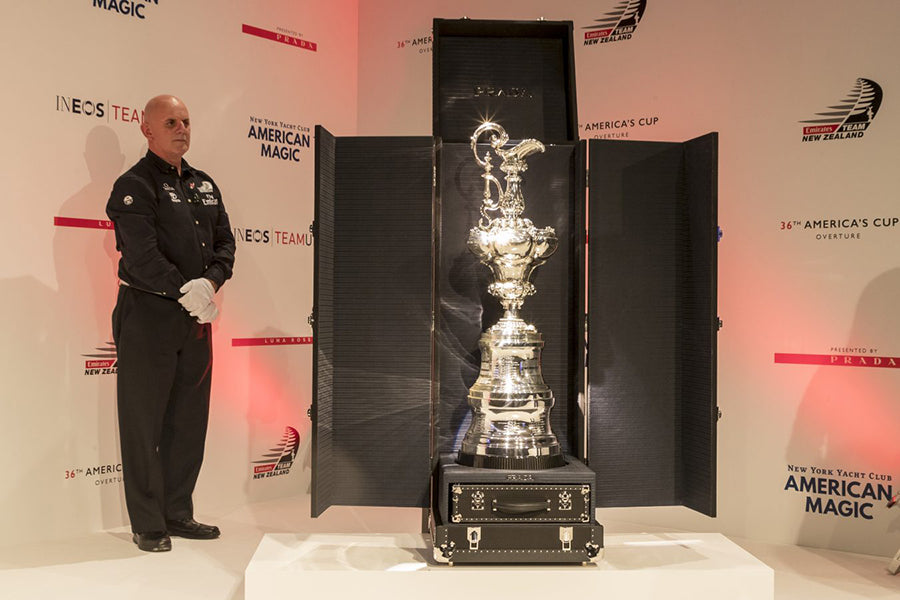
Tres de los cuatro sindicatos confirmados para competir por la 36 America’s Cup han elegido North Sails como proveedor oficial de velas.
📸 Luna Rossa Challenge
Se trata del defensor Emirates Team New Zealand y los desafíos Luna Rossa e INEOS Team UK. Los tres equipos se beneficiarán de los más de 35 años de experiencia en America’s Cup que posee la velería líder mundial, que ya trabaja en el desarrollo de la revolucionaria vela flexible que equiparán los monocascos voladores de esta edición, los espectaculares AC75.
READ MORE
READ MORE
BARCELONA MARINE STORE, NUEVO PUNTO NORTH SAILS
BARCELONA MARINE STORE, NUEVO PUNTO NORTH SAILS
North Sails inicia un acuerdo de colaboración con Barcelona Marine Store, centro de suministros y servicio consagrado a la náutica con una ubicación privilegiada en Marina Vela Barcelona.
📸 Ben Zucker
Su eslogan ‘don’t worry about a thing’ refleja la vocación de Barcelona Marine Store de “ayudar al cliente”, como indica desde la firma Toni Belles.
"Todos somos navegantes, y ofrecemos soluciones personalizadas de forma similar a como un médico de cabecera hace con sus pacientes".
Como nuevo Punto North Sails, ofrece servicio de entrega y recogida de velas para su mantenimiento, además de ejercer de lugar de encuentro entre clientes y el equipo comercial North Sails.
"Este acuerdo nos permite estar más cerca de nuestros clientes y beneficiarnos de la experiencia y el excelente servicio de Barcelona Marine Store",
destaca Luis Martínez Doreste, director comercial de North Sails España.
READ MORE
READ MORE
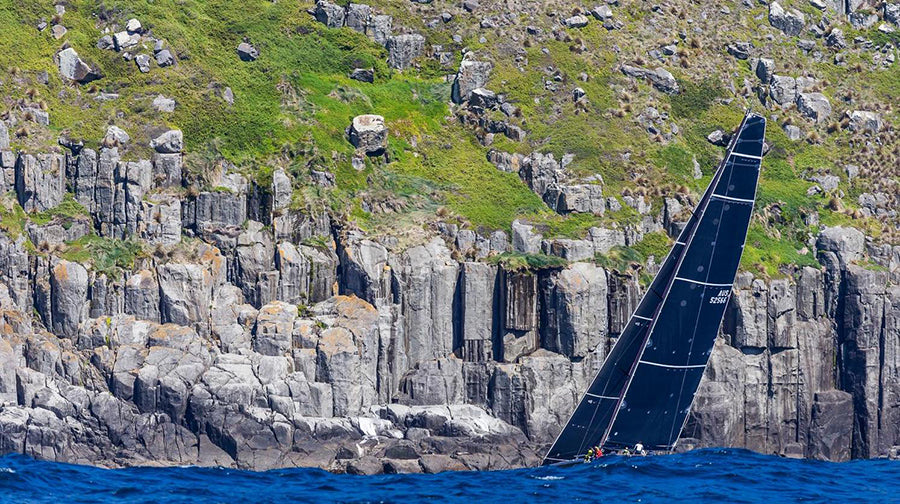
DOMINIO EN LA ROLEX SYDNEY HOBART
DOMINIO EN LA ROLEX SYDNEY HOBART
La 74 edición de la clásica oceánica del Hemisferio Sur reunió a una heterogénea flota de 85 barcos, incluyendo cinco supermaxis de 100 pies de eslora.
La Rolex Sydney Hobart partió de la bahía de Sídney el 26 de diciembre y dejó estampas históricas como la de cuatro de los supermaxis remontando juntos el río Derwent, en la aproximación final a Hobart. La victoria en tiempo real correspondió al Wild Oats XI patroneado por Mark Richards y con la navegación del español Juan Vila. El coloso australiano batía así su propio récord al sumar su noveno triunfo en 14 años. El título absoluto bajo fórmula IRC fue para el RP65 Alive de Phillip Turner. Ambos equipos eligieron velas North Sails, pero además la firma dominó los podios de las diferentes clases, incluyendo presencia en los tres primeros clasificados en tiempo real y en los absolutos de ORCi e IRC. Desde North Sails España felicitamos a todos por sus resultados y les agradecemos su confianza en North Sails.
📸 ROLEX / Studio Borlenghi
READ MORE
READ MORE
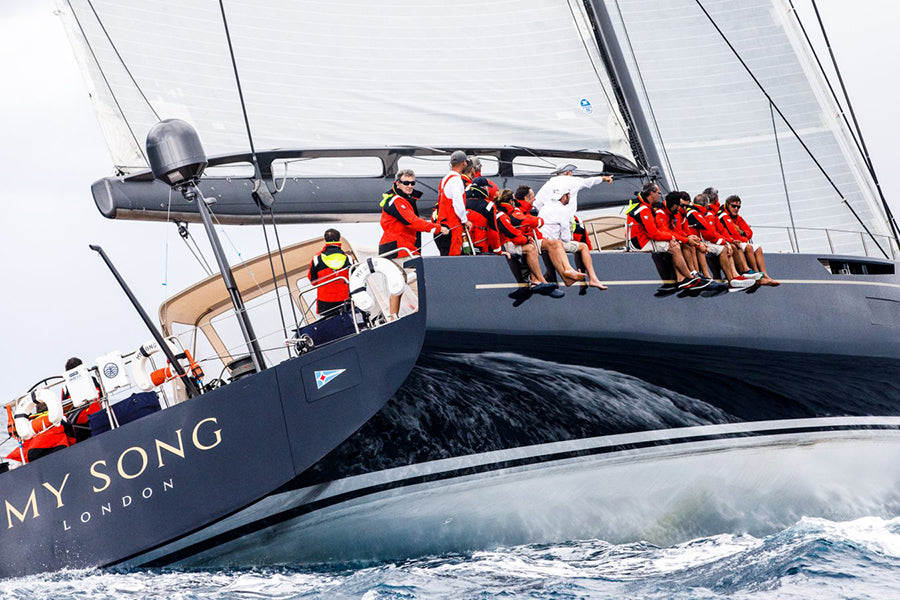
NUEVO AÑO DE RÉCORDS
(NUEVO) AÑO DE RÉCORDS
El año 2018 ha sido especialmente prolífico para los clientes North Sails.
📸 Arthur Daniel
Varios de ellos han establecido marcas históricas que se han convertido en récords a batir en diferentes disciplinas: En febrero, el Rambler 88 de George David completó la RORC Caribbean 600 en 1 día, 13 horas, 41 minutos y 45 segundos; en marzo, el Maserati de Giovanni Soldini navegó entre Hong Kong y Londres en 36 días, 2 horas y 37 minutos; en mayo, el Warrior de Stephen Murray realizó la Antigua Round the Island en 3 horas, 55 minutos y 38 segundos; en agosto, el Imerys Clean Energy de Phil Sharp completó la Sevenstar Round Britain & Ireland en 8 días, 4 horas, 14 minutos y 49 segundos; en noviembre, el IDEC Sport de Francis Joyon finalizó la Route du Rhum en 7 días, 14 horas y 21 minutos; en diciembre, el Baltic 130 My Song de Pier Luigi Loro Piana –con nuestro compañero Nacho Braquehais a bordo–, estableció el nuevo récord de la RORC Transatlantic (3.000 millas entre Lanzarote y Grenada) en 10 días, 5 horas, 47 minutos y 11 segundos. Enhorabuena a todos ellos, y gracias por confiar en North Sails.
READ MORE
READ MORE
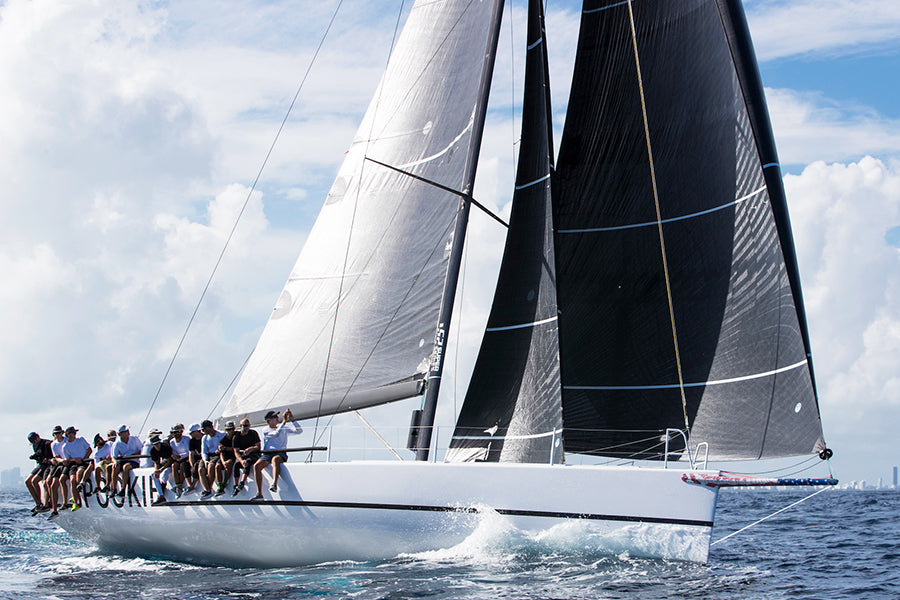
HELIX LO ÚLTIMO DE NORTH SAILS PARA VELAS DE PROA
HELIX, LO ÚLTIMO DE NORTH SAILS PARA VELAS DE PROA
Bajo la denominación HELIX, North Sails propone la eliminación del cabo antitorsión en velas de proa con una solución que logra una óptima redistribución de cargas, garantizando las prestaciones asociadas al 3Di con una reducción de peso sin precedentes. Ya disponible para todas las esloras.
📸 North Sails / Ian Roman
Los diseñadores de North Sails comenzaron a trabajar sobre el concepto de vela d eproa sin cabo antitorsión junto a Oracle Team USA y Emirates Team New Zealand durante la 34 America’s Cup, cuando el radical diseño de los barcos implicó cargas extremas sobre las velas de proa 3Di. El desafío en diseño e ingeniería supuso proporcionar una solución en la que las cargas de las velas de proa fueran redistribuidas desde el cabo antitorsión/estay de proa y repartidas por la vela. Conocido en el seno de North Sails como Load Sharing Technology (Tecnología de Reparto de Cargas), este concepto, cuando se combina con la estructura de grátil 3Di HELIX Luff, es la respuesta de North Sails a lo que otros podrían considerar concepto de vela de proa sin cable.
JB Braun, director de ingeniería y diseño de North Sails, explica:
"Intentar reducir las cargas en barcos y aparejos al tiempo que se mantiene la tensión del estay de proa se ha convertido en una tendencia y ha abierto el campo de las ideas en diseño para reconsiderar la importancia de los cabos de grátil, y en el caso de las velas HELIX, transferir las cargas desde un cabo antitorsión tradicional y redistribuirlo por la vela. La tecnología 3Di encaja mejor con la aplicación de reparto de cargas porque todas las velas 3Di están realizadas con capas de cintas en diversas orientaciones y profundidades para optimizar la distribución de cargas por la vela. Las propiedades de distribución de cargas intrínsecas al 3Di, unidas a la estructura de grátil 3Di HELIX Luff, alejan efectivamente la dependencia de cargas del cable/estay de proa y la redistribuyen por la estructura de la vela, reduciendo potencialmente las cargas totales".
Es precisamente la optimización en la redistribución de cargas por la vela lo que permite conservar las prestaciones de la tecnología 3Di.
"El principal avance con las velas HELIX consiste en que la redistribución de cargas permite a la vela de proa proyectar hacia adelante la estructura en la parte frontal de la vela para conseguir tensión del estay de proa y proyección del grátil, al tiempo que reduce las cargas en el barco, el mástil y el aparejo”, continúa JB Braun. “El diseño enfatiza la estructura innovadora de grátil Helix Luff sin apenas carbono visible, una manipulación del diseño 3Di que proyecta la vela hacia adelante, presionando el grátil hacia la proa del barco. La Tecnología de Reparto de Cargas, unida al HELIX Luff, está permitiendo a North Sails volver a imaginar tanto enrolladores de velas de portantes (Código Cero y velas tipo A3), como velas de través, e incluso traducirlo a ciertos tipos de velas de ceñida. Es casi como un nuevo punto de trimado. La tecnología 3Di, unida a las herramientas del potente North Design Suite, permite mapear y desplazar las cargas para ofrecer velas más ligeras, eficientes y hermosamente lisas".
Sin límite de eslora
Las velas North Helix no están limitadas a una eslora o tipo de embarcaciones, sino que pueden aplicarse a casi toda clase de barcos, desde diseños IRC de mediana eslora a TP52, Imocas, Volvo, WallyCento o maxis de 100 pies, e incluso superyates. El feedback recibido recientemente del TP52 Spookie de Steve Benjamin utilizando velas North HELIX indica que registran aproximadamente la mitad de las cargas de amura que un Código Cero convencional, con protección de grátil similar o incluso mejor. Esto significa menor arrufo del tope de palo, menor flexión lateral, carga de botalón significativamente inferior, cabos, winches y equipamiento de cubierta... Todo con una vela que proyecta mejor y crea más fuerzas de avance. Se reducen muchas de las cargas de cualquier tipo de barco, y para un diseño nuevo existe un potencial significativo de reducción de peso a lo largo de toda la embarcación.
En opinión de Ken Read, presidente de North Sails Group:
"Las velas HELIX son el último avance del 3Di, una tecnología en la que en North Sails invertimos la mayoría de nuestros esfuerzos en I+D. Normalmente avanzamos sin demasiada ostentación, porque conseguir velas más ligeras, rápidas y eficientes es la base de North Sails. Los grandes avances logrados con Helix y la Tecnología de Reparto de Cargas, especialmente en velas de través y enrollables de largo, es la reducción del peso total y la habilidad de ajustar realmente el borde de entrada de la forma de la membrana con un cable o cabo de gratil muy pequeño. No los grandes y pesados cabos antitorsión que se han estandarizado. Estamos muy emocionados con el abanico de oportunidades que ha abierto para la utilización del 3Di en este proceso".
(Extracto del artículo publicado por Seahorse Magazine)
READ MORE
READ MORE
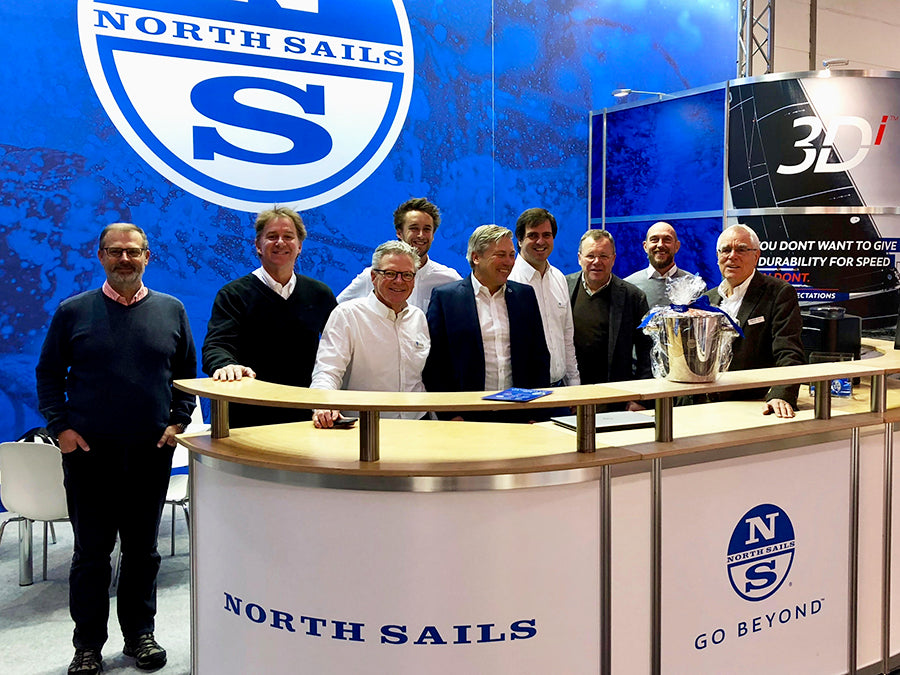
NORTH SAILS AUF DER 50. BOOT DÜSSELDORF
NORTH SAILS AUF DER 50. BOOT DÜSSELDORF
Die Bedeutung der Boot Düsseldorf für die Wassersport Branche zeigt sich auch in der kontinuierlichen Beteiligung der Marke North Sails.
Am Dienstagabend erhielt die deutsche North Sails Vertretung vom Bürgermeister der Stadt Düsseldorf ein besonderes Dankeschön. Als eine von lediglich sechs Firmen wurde Sie für Ihre 50-jährige Messebeteiligung geehrt.
Um dem mittlerweile internationalen Charakter der Messe gerecht zu werden, beraten bis zu 10 Sales Experts aus fünf Ländern unsere Kunden auf dem Messestand. Insgesamt sind in Spitzenzeiten mehr als 25 North Kollegen auf der Messe vertreten.
Einer von ihnen ist dieses Jahr North Sails President Ken Read. Im Interview mit Segelreporter.com zeigt er sich beeindruckt von der Messe, spricht über Technik, Innovation und über Olympia. Reinhören lohnt sich.
Noch bis Sonntag, 27. Januar steht unser North Sails Team um Sales Manager Stefan Matschuck in Halle 11 auf Stand H24 direkt für Sie zur Verfügung.
READ MORE
READ MORE
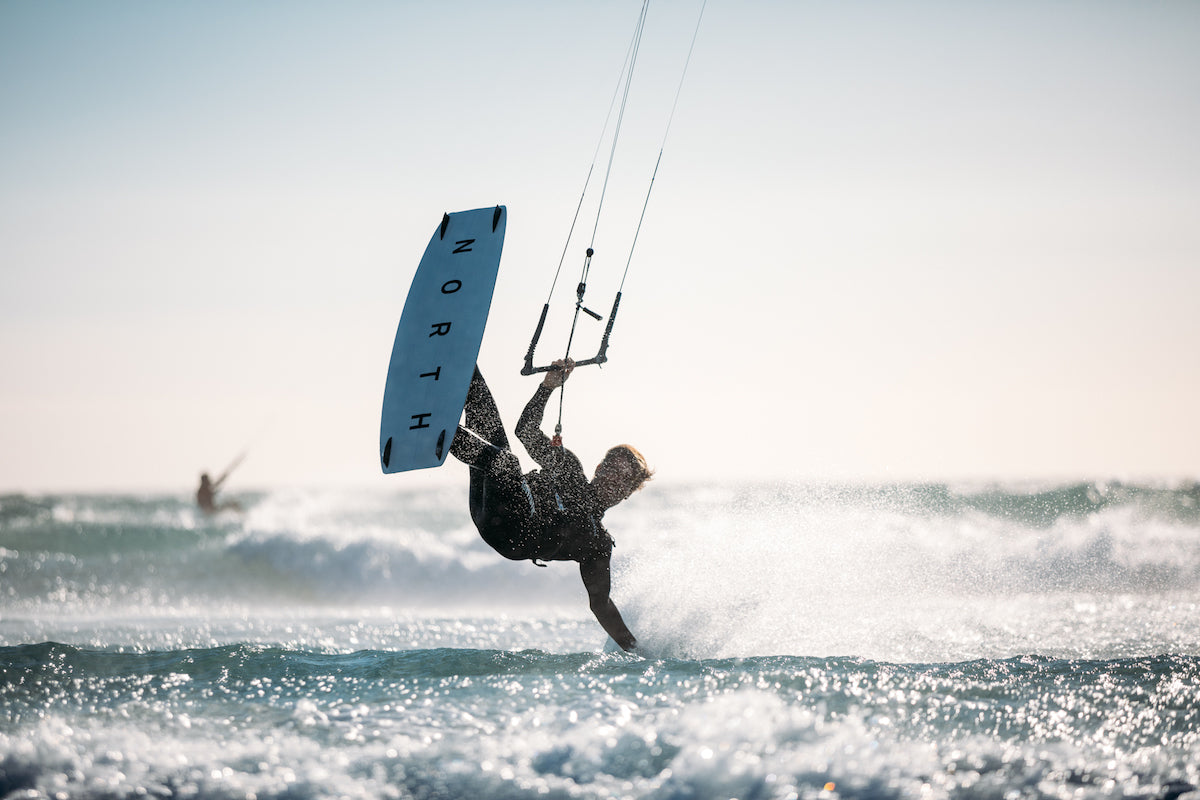
RED BULL KING OF THE AIR
RED BULL KING OF THE AIR
Counting Down To The Main Event In Cape Town, South Africa
Make sure you’re following @northkiteboarding to find out exactly what day the competition is called within the two week window, so you can watch the livestream at redbull.com.
Want to tune into the world’s most jaw-dropping big-air contest?
The Red Bull King of the Air competition, proudly sponsored by North Kiteboarding will be returning to Kite Beach, Cape Town on the 26th January, until the 10th Feb. It’s all about the amplitude as contestants go head-to-head in a “flag out” competition format. During the two week weather window riders will only face-off in the perfect conditions – wind speeds of over 30 knots are ideal for providing the perfect swell from which to boost some extreme maneuvers.
The field for 2019’s Red Bull King of the Air will be made up of top nine riders from the 2018 edition as well as nine wildcards and video entrants. After much deliberation the last nine participants have been chosen, securing their place for the showdown on the windiest day during the waiting period in early 2019.
Confirmed for the 2019 event is defending champion Kevin Langeree, as well as North athlete Nick Jacobsen. He is currently the only person in the world with a set of North prototype kites. Nick won the event in 2017, however missed out on a chance to defend his title last year due to injury.
READ MORE
READ MORE
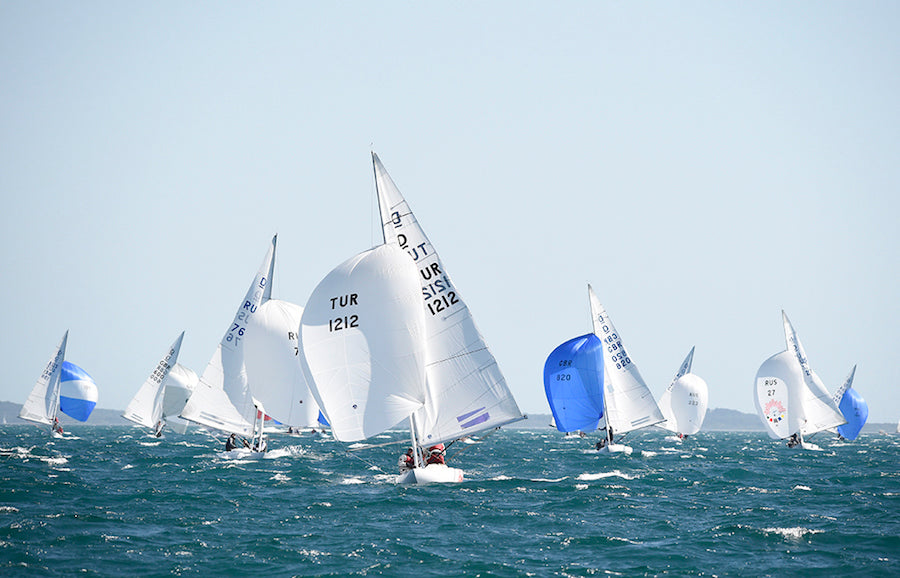
DRAGON CLASS SPEED READING
DRAGON CLASS SPEED READING
A Helmsman’s View
North clients lead the pack to the podium at the 2019 Worlds in Fremantle ©Tom Hodge Media
The Dragon World Championship in Fremantle kicked off the 2019 racing season on a high note for North Sails, with North customers making it a clean sweep on the podium claiming Gold, Silver and Bronze medals.
We talked to Grant Gordon, Silver medalist and first owner-driver about his campaign build up, crew and choice of equipment.
Team Louise Racing, second place finishers ©Tom Hodge Media
You have had a fantastic 12 months in the Dragon class. Tell us about your year and setting up the campaign?
The 2018 season saw our team change format to sail four up on our Dragon. The first step in this process was to scout for talented sailors, and we soon identified two excellent additions to the team. Jimmy Williamson joined us as jib & spinnaker trimmer and Sophie Weguelin in the role of bowman and extra pair of eyes on board. Ruairidh Scott, with whom I have sailed regularly, continued in his key role of tactician and mainsail trimmer. Spending time on the water would unmistakably be critical, and we teamed up with my friend and former Dragon World Champion Klaus Diederichs and the FEVER team. Together we ran a two boat training camp on Lake Garda; which was an ideal venue to prepare for sailing in Fremantle.
Your speed this year has been regularly commented on by fellow competitors. Can you explain a little about how you have achieved this so consistently?
Naturally, we have worked on tuning the rig using the North Sails Tuning Guide as a start point which gives you instant speed out the blocks. From there it’s just fine tweaks in changing winds and sea states as well as finding the optimal trim settings for the sails depending on the conditions. Making sure the boat is well balanced is critical so you can avoid using any unnecessary helm adjustments. As helmsman, I have focused on finding the right heel angle upwind and working with the trimmers to maintain this. Through our training time in Lake Garda, we were able to find trim settings which worked for us and allowed us to be fast consistently.
©Tom Hodge Media
What sails/equipment did you use and why?
We took delivery of a new Pettricrow V6 Dragon in February 2018. Once the mast was tuned correctly, we were confident that we had an accurate platform to build on. The North sail inventory is made of standard production sails, including an A-7+ Mainsail, R-5 Spinnaker, and V-6M and V-6H Genoas. The heavier wind conditions in Fremantle most often favored sailing with the Heavy Genoa. The combination of the A-7+ Mainsail and V-6H Genoa was very fast in the 14-22 kts wind range we often raced in Fremantle. We have also been equally fast with the V-6M medium Genoa in other venues throughout 2018.
What would be your top tip be for success in the Dragon class?
Assemble a team of talented sailors who respect each other and sail together as often as possible. During training, work hard to address your weaknesses. During the race, when the going gets tough, never give up; it isn’t over until you have crossed the finishing line!
©Tom Hodge Media
2019 Recommended Inventory
North Sails has been prominent in the class for many years. We are trusted and supported as our sail products are well developed. Our clients finished first through fourth overall at the 2019 Worlds, all using North Sails Mainsails, Genoas and Spinnakers which speaks for itself.
Louise Racing’s recommended products are: A-7+ Mainsail, LM-2 Mainsail, V-6L Genoa, V-6M Genoa ,V-6H Genoa, BR-9 Spinnaker, and the R-5 Spinnaker.
To upgrade your racing program to World Championship winning sails, contact your local Dragon expert for more information.
©Tom Hodge Media
READ MORE
READ MORE
AN AMAZING YEAR FOR NORTH SAILS IRELAND
AMAZING RESULTS FOR NORTH SAILS
"What an amazing year 2018 was for North Sails Ireland and its clients",
Nigel Young, manager of North Sails Ireland says.
© Bren Fogarty
"We are extremely proud of these results and it's really great to play a part in the success of so many winning teams around the country and beyond. The depth of these accomplishments and the spread of classes is down to the hard work and dedication of the North Sails Ireland team, our products and of course our great clients. It is almost impossible to pick stand-out results from the 2018 list but I asked my North Sails Ireland colleagues Prof O'Connell and Shane Hughes for their thoughts. Over to you guys!"
Maurice "Prof" O'Connell (with North Sails Ireland since October 2007)
"It was impossible to pick but I had to try. Stand out inshore boats for me were Dave Cullen's team on "Checkmate XV" and Andrew Algeo's team on "Juggerknot". Standout offshore results were in ISORA with "Mojito", "Aurelia" and "Windjammer" taking overall and class wins".
Dave Cullen has been a North Sails client since 2007 and Andrew Algeo since his J24 days in 2001.
The Half Ton Cup was a particular highlight for "Checkmate XV" and of course their ICRA Boat of the Year award.
Dave had these kind words to say:
"North Sails have been powering "Checkmate XV" and my previous boat "King One" for many many years. I am constantly impressed with their superb quality and attention to detail in design, production and after-sales service. Our 2018 season was a great success - we are always fast. Keep up the good work Prof and the North Sails Ireland team".
It was also fantastic to see Andrew and his team (including my Olympic Star class crew-mate Ben Cooke) taking the J-109 Nationals 2018 title this year (in addition to winning the inaugural WAVE Regatta and the J109 East Coast Championships). It was the icing on the cake for him in a very competitive One Design class.
© Fiona Brown
Andrew said:
“The team on Juggerknot enjoyed the 2018 J/109 and IRC1 season immensely. Better than expected results certainly helped in that and the advice and after-sales service from Prof O'Connell and the North Sails Ireland team played a large part in our achieving those. The products and after-sales support is fantastic, and we have no hesitation in returning to North for "Juggerknot 2" in 2019. Keep up the great work guys!"
Shane Hughes (Started with NSI Oct 2016)
"As Prof says it's hard to chose but the stand out result for me was with Eleuthera GS44 Owner Frank Whelan. Frank has been a North Sails client since 2014 and the turnaround from a slow start at Cork Week to finishing with FIVE straight wins and taking Class Zero / One victory was fantastic. He also lifted trophies in Dublin Bay and in Schull at GAS Calves week. The upwind boat speed was the difference and the new 3Di 780 J2 (Medium Jib) was a big part of that.”
Frank said:
“Working with North Sails has offered the Eleuthera team some real advantages. The New 3Di medium jib performed really well for us in a variety of conditions and the service and support from the North Team is ever present and valuable to us.”
Nigel Young (Founded North Sails Ireland in March 2004)
"What an amazing list of results. Great credit must go to Prof and Shane for making so many of these happen. Stand out for me personally was the Mermaid "Innocence" owner Darragh McCormack who was a new North Sails client in 2018. We had the absolute minimum amount of time to meet, consult sail, photograph, re-design and build his new sails for the 2018 class Nationals. For Darragh to win the Championships was the highlight of the year for me".
See the full story here: Mermaid Fairytale
Darragh said:
"When I contacted North Sails they treated me as an equal and when we discussed my needs, they listened. I quickly felt comfortable working with them and the sails worked amazingly well from the start. Winning the first race with the new sails gave me immediate confidence to go on and win the Nationals. Thanks guys for a great job"
The Final Word from Jonny Swan!
Jonny had this to add:
"I made the decision in 2018 to move to North Sails Ireland. Nigel Young and Shane Hughes have been superb. I cannot thank them enough for all they have done and having Nigel on board in Cork Week and the recent Half Ton Cup in Belgium was a great addition to Harmony. His input contributed to the best result I have achieved out of the 4 half Ton Cups I have competed in and also a significant result in Cork Week where we won the prestigious Harbour Race by a comfortable 2 minutes from over 90 boats that started on the one start line. The expertise and quality of the North Sails product have significantly improved the performance of the boat"
What can I say except a big THANK YOU to all our clients and for their kind words. As one of my old mentors used to say, "nothing happens until someone sells something!", but the selling of the sails is just the beginning of the journey when you work with us.
Next time you are thinking about new sails there is only one place to go... North Sails Ireland.
Take a look below for all our clients results from 2018.
Download Victory List
Sail FAST.
READ MORE
READ MORE
SAIL TRIM TALK AT FOYNES YACHT CLUB
TRIM TALK AT FOYNES YACHT CLUB
Friday 15th February at 19.30.
Presented by Nigel Young & Shane Hughes
North Sails Ireland would like to offer the members of Foynes Yacht club and visitors a presentation on the latest theory and techniques for improving and refining upwind trim and boat speed. The presentation draws on the North U syllabus so successfully used around the world by North Sails representatives and includes the use of North Sails proprietary Sail Trim Simulator to help illustrate some of these trim solutions.
Upwind Sail Trim & Boat Speed
Topics Covered:
This session shows how the angle of attack, depth, and twist combine to control upwind speed, pointing and balance; and how to change the trim to improve performances as conditions change.
Mainsail trim
Jib trim
Helming in light, moderate and heavy air
All are welcome, members and visitors. No entry fee.
READ MORE
READ MORE

FRANCISCO UVA NO TOPO DO RANKING CENTRO
FRANCISCO UVA NO TOPO DO RANKING CENTRO
O velejador de Optimist, Francisco Uva, posicionou-se no Topo do Ranking Centro, ao conquistar o 1o lugar na II PAR, depois dos 3o lugares alcançados na I PAR e na Regata de Natal.
Photo: Luis Fráguas
Parabéns ao Francisco por esta vitória, resultado da consistência do seu trabalho!
Na terceira prova da época, realizaram-se cinco regatas, nas quais velejadores North Sails somaram três vitórias. Augusto Castelo-Branco venceu duas regatas, com a sua North R-2 e Francisco Uva venceu uma, utilizando a North R-1.
Para saber mais sobre as velas North Sails contacte-nos já hoje por email para office.cascais@northsails.com ou por telefone para o 916 857 896.
Good Luck & Sail Fast!
READ MORE
READ MORE
VELEJADORES DE OPTIMIST FECHAM O ANO
VELEJADORES DE OPTIMIST FECHAM O ANO NA XMAS NORTH SAILS CLINIC
Foi com grande satisfação que recebemos 14 velejadores de Optimist, de cinco clubes nacionais, na nossa Xmas Clinic.
Depois de treinos de Natal, seguidos das festividades da época, é com admiração que olhamos para estes pequenos-Grandes velejadores como uns guerreiros. Foram três dias de empenho a trabalhar com base no enorme gosto que têm pela Vela.
Com idades compreendidas entre os 8 e os 14 anos, estes Opti Kids mostraram grande sentido de união e entre-ajuda nos diferentes níveis em que se encontram. Trabalharam em equipa e isso deu-lhes oportunidade de ensinar e aprender através das partilhas que fizeram.
Vicente Pinheiro de Melo (North Sails) e Pedro Bolina (Treinador convidado) foram os responsáveis pelo acompanhamento do grupo.
Foi com entusiasmo que contámos com a presença e colaboração do velejador convidado Frederico Melo, que participou na última edição da Volvo Ocean Race.
"Foi um prazer poder acompanhar a clínica de Optimist organizada pela North Sails Cascais. Foi bom ver um grupo grande de jovens velejadores a tirarem o máximo partido desta excelente iniciativa."
Frederico Melo
Trabalharam-se vários aspectos técnicos com a gama das velas “R” (R1,R2,R4,R5) e os velejadores tiveram oportunidade de observar/ testar modelos de velas North Sails.
Ficamos satisfeitos com as evoluções verificadas entre as clínicas de Setembro e Dezembro e fechamos o ano com objectivos traçados para a continuação da época. Continuar o bom trabalho para alcançar resultados ambiciosos, à escala de cada um, é o desafio lançado.
"Do que gostaste mais/menos? Gostei mais de estar com os velejadores e com os treinadores e, claro, aprender. Gostei menos... de nada... gostei de tudo."
Francisco, 13 anos
"O que foi mais importante para ti? As aulas teóricas foram muito produtivas!! E é algo que eu valorizo muito."
Katharina, 13 anos
"Em que aspecto saíste mais forte? Mais confiança na vela."
Salvador, 12 anos
"Do que gostaste mais/menos? Eu gostei do trabalho de grupo e do convívio."
Constança, 12 anos
À Marina de Cascais deixamos o nosso agradecimento, o seu apoio foi fundamental para o sucesso desta actividade. Queremos dar um especial obrigado à equipa de Marinheiros que foram incansáveis e prestaram um serviço de excelência.
Continuaremos a marcar presença nas próximas regatas de Optimist para apoiar os nossos velejadores e estamos, sempre, disponíveis para dar mais informação sobre a nossa actividade, em Portugal.
A todos os velejadores, que são para nós um motivo de orgulho, desejamos um Ano de 2019 cheio de força, empenho, concentração e sobretudo um ano de Objectivos Alcançados!
Good Luck & Sail Fast!
READ MORE
READ MORE
CELEBRATING 50 YEARS WITH BOOT DUSSELDORF
CELEBRATING 50 YEARS WITH BOOT DUSSELDORF
Growing Together With The World's Largest Boat Show
L-R: Stjepan Marinovic, Ken Read, Daniel Schroff, Hinnerk Muller, Stefan Matschuck, Jen Christensen, Gunnar Bahr, Thomas Jungblut
The North Sails team is toasting 50 years of attending the Dusseldoft Boat Show. Our local loft in Germany is one of six brands that have been a part of the show since 1969. Last night the show showed their appreciation by delivering North Sails a bottle of champagne chilled in an engraved ice bucket.
“This show has been crucial for North Sails in building a strong local and global market like few events can,” remarked Stefan Matschuck, country manager for North Sails. Our brand has been around for over six decades, and we’ll be around for many more. Our 50-year presence at Boot Dusseldorf is proof that the global business sees Germany as an essential market. Our stability and position as market industry leader ensure North Sails is an excellent choice for racers and cruisers, Superyachts and one design classes.
Boot Dusseldorf is open through Sunday, January 27th. You can visit Stefan and his local team in Hall 11, Booth H24.
READ MORE
READ MORE
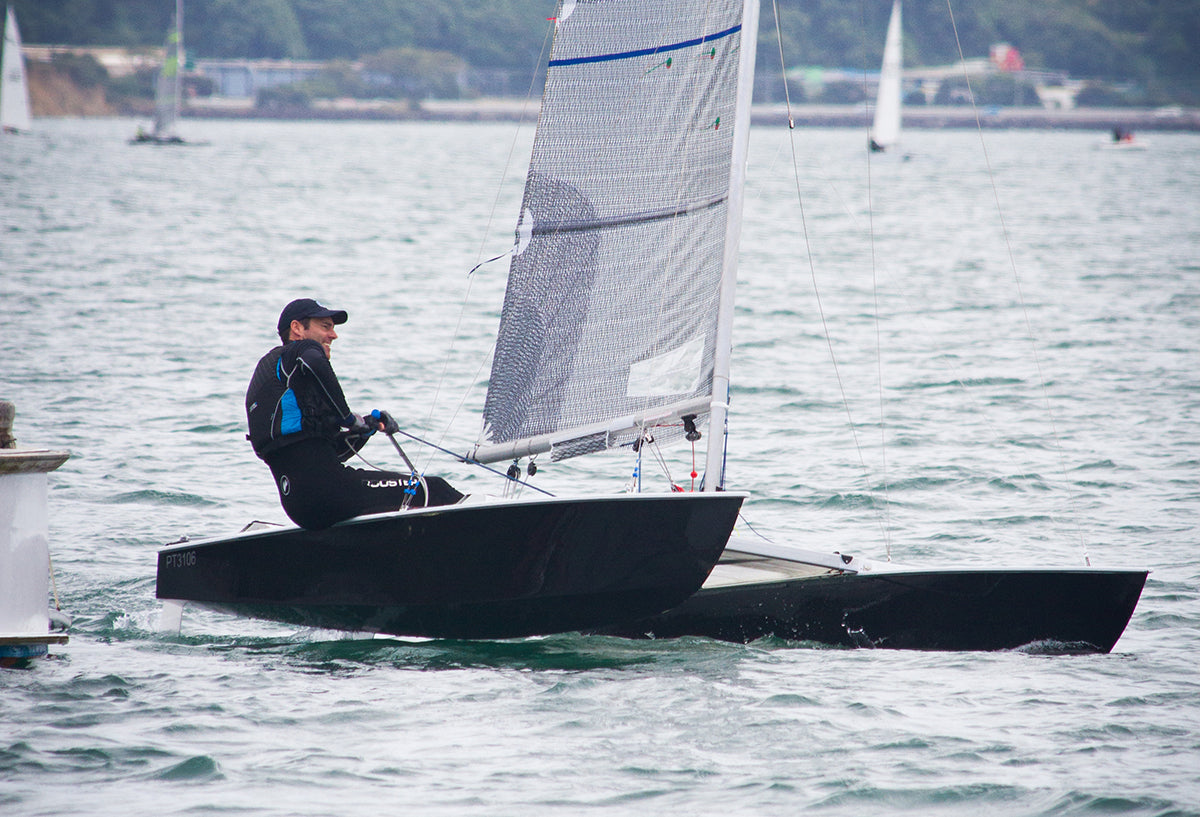
PAPER TIGER NEW ZEALAND NATIONALS
SCOTT’S SECRETS TO WIN PAPER TIGER NEW ZEALAND NATIONALS
Start well. Keep moving. Don’t rest downwind.
A strong fleet of forty-six Paper Tigers battled for the 2019 New Zealand National title on the waters of Evans Bay. North Sails expert Derek Scott dominated the regatta with five bullets in the 8-race event followed by Dylan Tayler in second and Heyden Percy in third. A full North Sails podium!
We caught up with Derek to learn about his secrets to win in such convincing way:
Derek, Congratulations! What were the conditions during the Nationals?
We had a good mix of conditions at the Nationals. The first day was 15 knots at the start of the first race, building to 20 knots by the end. The second race started in 24 knots and built quickly to above 30 knots. Hence the racing being called off for the rest of the day due to excess wind and quite a bit of damage. The rest of the regatta was sailed in shifty conditions with the wind ranging from 5-15 knots.
How long have you been racing the Paper Tiger? Do you sail other one-design boats?
This is my second season in the Paper Tiger. Before the Paper Tiger I have sailed a whole bunch of one-design boats ranging from Olympic 470 to Etchells.
Eight races, five bullets and a second-place discard for a total of only nine points – Amazing consistency in a 46-boat event! What were the three key factors for such great results?
START WELL: The first and biggest aspect is to get a good start and get into the first wind line or shift after the start gun. In the Paper Tiger if you are in 3 kts more wind than another boat the speed difference is huge.
KEEP MOVING: Keep the boat moving fast all the time. Sounds simple but you need to keep full concentration when sailing Paper Tiger as it is easy to “get out of the grove” and the boat will slow down.
DON’T REST DOWNWIND: Keep the intensity up once you have rounded the top mark. Don’t treat downwind as a time to rest. I work harder on the reach than I do upwind. Make sure the sail is trimmed perfectly and you have powered you sail up to get max speed. If there are waves, make sure you are trying to catch as many as you can and rest when the race is over.
What’s next in your calendar?
This week I will be sailing in the Bay of Islands Regatta in the sportboat division on a Magic 25. The next Paper Tiger regatta is in Auckland on the 2nd and 3rd of February with a few more regattas around the country in February and March. The Paper Tiger season ends with the International Championship when the Australians bring a fleet of 10-20 boat and we all race and have fun together.
Full results
Learn more about the North Sails products for the Paper Tiger.
READ MORE
READ MORE

THINK YOU KNOW 3Di?
3Di Outlasts The Adventure
Francois Gabart and his 30-meter trimaran Macif broke the solo around-the-world speed record in December 2017 with a 3Di mainsail that had 45,000 miles BEFORE the start of his record run. 3Di powered all three around-the-world speed records currently held.
No Film. No Delamination.
3Di is composite technology, not a sail laminate. All other sailmakers use laminates of which Mylar film is an integral component. Moisture, sunlight, and fatigue degrade both the adhesives used with the film, and the Mylar itself. These cause delamination and film failure over time.
Another Dimension
North Sails created 3D technology and is the only sailmaker to utilize full-sized molds. 3Di uses reconfigurable molds that are set to the sail’s intended flying shape.
Made By Robots
(mostly)
The only sewing on a 3Di sail is for attaching details such as corner reinforcements and clew straps. The majority of the 3Di process is automated and run by computers.
Unique To You
North Sails has four versions of 3Di to suit different sailing styles and budgets.
It Has To Be North
3Di is a patented sail technology that is exclusive to North Sails. There are many “black” and “gray” sails on the market, but they are actually Mylar based string sails hidden underneath a cover layer giving them the superficial appearance of 3Di without the performance.
READ MORE
READ MORE
SAIL TRIM TALK AT ARKLOW SAILING CLUB
TRIM TALK AT ARKLOW SAILING CLUB
North Sails Ireland will be hosting a Sail Trim talk at Arklow Sailing Club on Friday 25th January at 19.30. Presented by Shane Hughes.
North Sails Ireland would like to offer the members of Arklow Sailing club and visitors a presentation on the latest theory and techniques for improving and refining upwind trim and boat speed. The presentation draws on the North U syllabus so successfully used around the world by North Sails representatives and includes the use of North Sails proprietary Sail Trim Simulator to help illustrate some of these trim solutions.
Upwind Sail Trim & Boat Speed
Topics Covered:
This session shows how the angle of attack, depth, and twist combine to control upwind speed, pointing and balance; and how to change the trim to improve performances as conditions change.
Mainsail trim
Jib trim
Helming in light, moderate and heavy air
All are welcome, members and visitors. No entry fee.
READ MORE
READ MORE
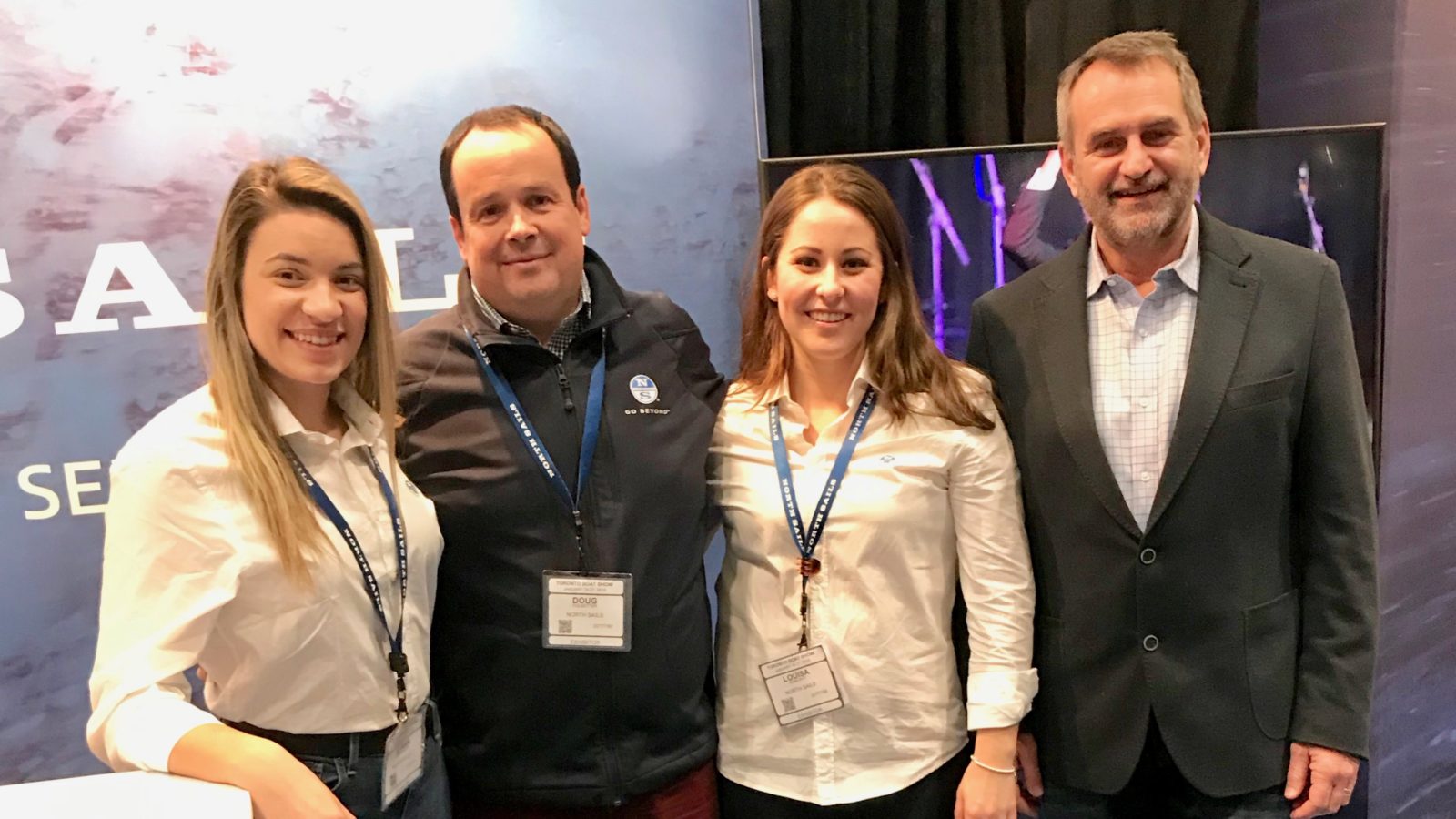
2019 TORONTO INTERNATIONAL BOAT SHOW
TORONTO INTERNATIONAL BOAT SHOW
Visit The North Sails Team at Booth 1623
Our Toronto team kicked off the 2019 Toronto International Boat Show this past weekend with a bang! The team including Hugh Beaton, Louisa Sonosky, Doug Folsetter, Miro Balcar, and Kyann Rentzelos were on hand for preview day to welcome friends and customers.
The team will be on site for the entire show to help you find the right sail for your needs. Take advantage of North Sails Boat Show Special by placing your order today for preferred pricing.
Calling all Beneteau owners! Learn how North Sails can assist you! Make sure to sign up for product information and expert advice. Ask the Toronto team how when you visit the booth.
Not to mention North U Seminars with expert Bill Gladstone will be occurring throughout the show. Bill will be sharing information on Tactics, Tips & Tricks as well as Upwind Sail Trim. Join Bill for these hour-long complimentary sessions, and don’t forget to stop by booth 1623 to talk to our local crew about finding the right sail for you.
Looking for cruising sails? Check out our award-winning 3Di NORDAC for a better cruising experience. 3Di NORDAC reinvents the traditional dacron cruising sail providing more aerodynamic shape without compromising control, speed and comfort; rather it enhances and improves all the above. Order the revolutionary cruising product today!
Interested in our products? Visit us at the Toronto Boat Show or Contact our local loft today!
READ MORE
READ MORE

HELIX SAILS WITH LOAD SHARING TECHNOLOGY
HELIX WITH LOAD SHARING TECHNOLOGY
North Sails Is Changing The Narrative on Cableless Sails
This article is republished from Seahorse Magazine, February 2019.
There are few areas of race boat technology harder to keep secret than the latest sail designs and engineering solutions. One of the hottest – and most publicly visible – areas of development right now is perfecting a cable-free headsail that not only goes fast… but that also lasts.
There has been a significant amount of hype and hyperbole about the development of headsails without furling torque-cables, and, like most good ideas, this concept has been around for a while. At North Sails their designers began working on this concept with Oracle Team USA and Emirates Team New Zealand during the 34th America’s Cup, when radical boat designs placed extreme loads on the 3Di headsails. The design and engineering challenge was to deliver a solution where headsail loads were redistributed from the torque cable/headstay and shared with the sail. Known within the North offices as Load Sharing Technology, this feature, when paired with a 3Di Helix Luff, is the North Sails answer to what others may call the cable-less headsail concept.
North Sails new Helix Luff technology transitions headsail loads out of a traditional anti-torsion cable and redistributes them, optimizing the load distribution throughout the sail and potentially reducing the overall loading. 📸North Sails / Ian Roman
North’s head of engineering and design JB Braun explains;
“Trying to reduce loads on boats and rigs while maintaining headstay tension has begun a trend and has opened up design ideas to rethinking the significance of luff cables, and in the case of Helix sails, to transition load out of a traditional anti-torsion cable and redistribute it into the sail.”
3Di technology is better suited to the sharing application because all 3Di sails are engineered with tapes laid in varying orientation and depth to optimize load distribution throughout the sail. 3Di’s intrinsic load sharing properties, coupled with a Helix Luff effectively move load reliance away from a cable/headstay and into the sail structure thus potentially reducing the overall loading.
“The critical breakthrough with Helix sails is that redistributed loads allow the headsail to project forward the structure on the front of the sail to achieve headstay tension and luff projection while reducing the load on the boat, mast, and rigging. The engineering emphasis is focused on the innovative, barely visible carbon Helix Luff structure, a 3Di design manipulation which projects the sail forward, punching the luff out in front of the boat.”
Load Sharing Technology coupled with the Helix Luff is empowering North to reimagine both roller furling downwind (Code Zero and A-3 style sails), reaching sails, and even may translate to some styles of upwind sails. It’s almost like another trim point. The 3Di technology paired with the powerful North Design Suite tools enables mapping and displacing loads to deliver lighter, more efficient, and beautifully smooth sails. North Helix sails are not aimed at one size or class of boat, but are suitable for most boats from mid-size IRC designs to TP52s, Imocas, Volvo Ocean Race boats, WallyCentos and 100-foot Maxis and even Superyachts.
Recent feedback from Steve Benjamin’s TP52 Spookie using North Helix sails was that they were recording about half the tack loads of a conventional Code Zero with similar or even better luff projection. This means less mast tip sag, less sideways sag, significantly less loading on the bowsprit, ropes, winches and deck gear… all with a sail that is projecting better and creating more forward driving force. Many of the loads on an existing boat are reduced – and for a new design, there is significant new potential for weight reduction throughout the entire boat.
North Sails Group president Ken Read expands, “Helix sails are the latest advancement of 3Di, a technology where North Sails focuses the majority of our R&D effort. We often move ahead without a great deal of fanfare because making lighter, and faster and more efficient sails is the bedrock of North Sails.”
“The big gains with Helix and Load Sharing Technology, especially on reaching and broad reaching furling sails, is overall weight reduction and the ability to really adjust the leading edge of the membrane’s shape with a very small luff cable or rope. Not the large and heavy Torque cables that have become commonplace. We are very excited as to all of the avenues that this has opened for the use of 3Di in this process.”
Above: TP52 Spookie. Using North Helix sails they have reduced the tack loads by half while also achieving more forward drive. This creates a lot of potential for weight reduction throughout the boat. 📸North Sails / Ian Roman
Ken Read, President, North Sails Group comments; “The beauty of North Sails is the amount of technology and software that goes into what we create. We made some new Helix Code Zeros in the summer when our brief was to be conservative. Now we are reaching into the finer details with our North Design Suite which allows us to map deeper into these same sails. The best part of being a part of this company is letting our smart people loose to go explore with our North Design Suite. This is a generational opportunity for using 3Di structure and how it all works; these sails will keep evolving and have already spread into non-furling sails, where load-sharing is going to potentially allow upwind headsails to have similar characteristics without the sideways sag. We believe that the North Helix sails are now lighter and faster than any other sail out there.”
“I can tell you that the new sails coming out now are nothing short of phenomenal! With any new concept, North Sails are always searching for a downside. Right now, we are aware that none of these new types of furling sail have been in the marketplace long enough to fully assess their true working life; we are also aware of longevity issues with sails from other manufacturers. That said, 3Di sails outlast the most extreme conditions, and of all the options, we’re confident 3Di will always stand up better than a mylar laminate.”
“What is important for us now is to cover all the bases with a focus on both performance and longevity. Our commitment is to a smoother sail that will furl and perform better than anything else out there. With North Helix sails, this is happening right now.”
Click here to request information about Helix Sails
READ MORE
READ MORE
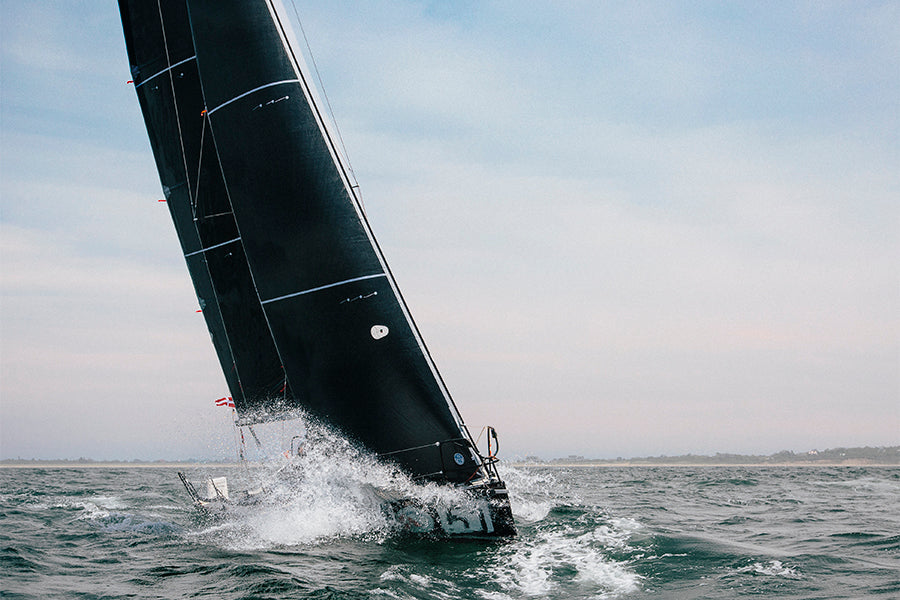
SAILS FOR ORC WORLDS 2019
GET AHEAD OF THE GAME
For the ORC Worlds in Croatia, 2019
Get in touch with your local expert today and order your race-winning sails!
Contact Your Local Loft in Croatia Today
READ MORE
READ MORE

WINTER SERVICE
WE'RE HERE FOR YOU!
Portugal, Continent and Islands
Missing summer already? Contact North Sails Cascais and make sure your sails are ready for next season! Our Certified Service experts are here for you to guarantee your sails inspection and maintenance. Contact us and get information about services provided for sails and canvas.
It's our mission to provide you with expert repairs, maintenance, and upgrades. We know that whether you race or cruise, your sails are a major investment, and we're committed to helping you maximize their performance and lifespan.
Estamos aqui para si 365 dias por ano!
Portugal, Continente e Ilhas
Já está com saudades do Verão? Contacte a North Sails Cascais e garanta que tem tudo pronto no início da época! Os nossos especialistas em Certified Service estão cá para assegurar a inspecção e manutenção das suas velas. Contacte-nos e receba informação sobre os serviços prestados para Velas e Capas.
É a nossa missão prestar-lhe serviços especializados de reparação, manutenção e upgrades. Sabemos que, tanto em cruzeiro como em regata, as velas são um grande investimento e por isso temos o compromisso de ajudá-lo a optimizar a sua performance e durabilidade.
Book your Service Today/ Faça Hoje o Agendamento
Winter Sails Check
It's that time of year to bring your sails in for their annual check up and winter storage. Schedule your 10-Point Inspection now. Our service
1 Year Free Sail Care
If your sails were delivered within the last 12 months, you qualify for our sail care program. Read more
READ MORE
READ MORE

CHICAGO WINTER SEMINAR SERIES
NEW YEAR, NEW SKILLS
Start The Year On The Right Track By Preparing For Your Season Of Sailing
READ MORE
READ MORE
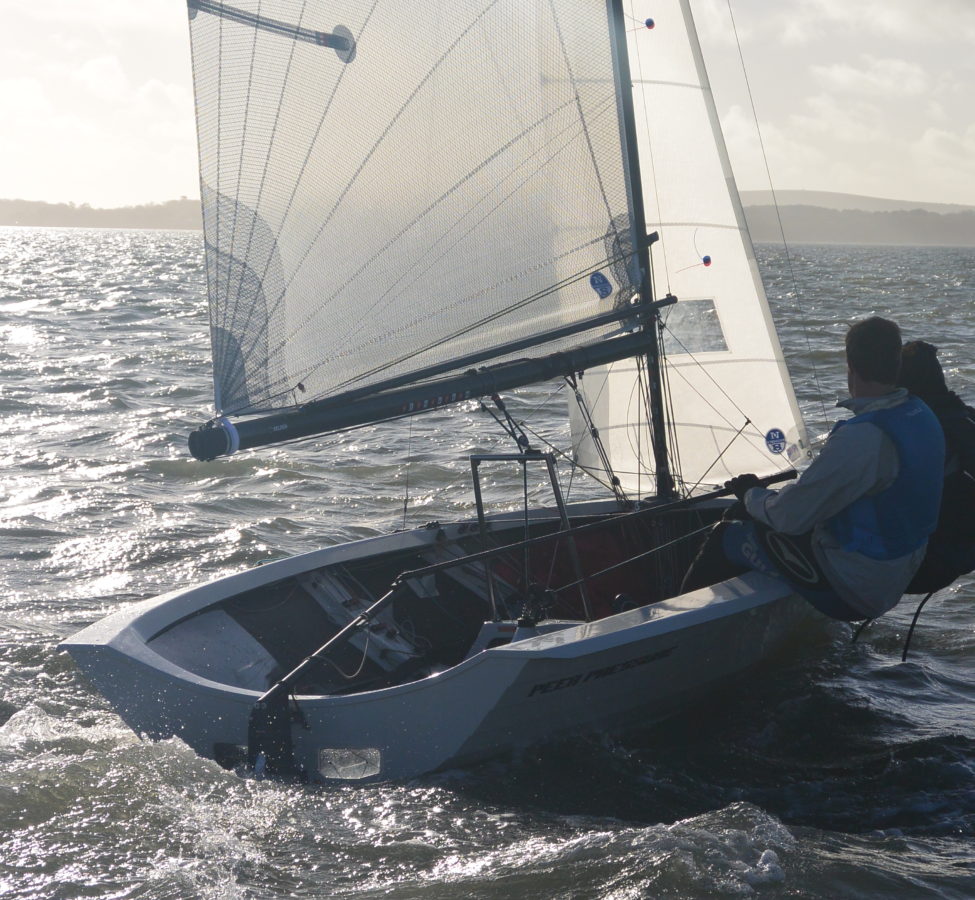
DAVE LENZ TAKES ON THE MERLIN ROCKET
DAVE LENZ TAKES ON THE MERLIN ROCKET
Announcing Our One Design New Class Leader
As the Head of European Design for North Sails, Dave Lenz likes making sailboats go a little faster. He spends his workday with his “fingers in lots of pies,” developing sails for big boats like the TP52 and Fast 40. Now, on the weekends, he’ll be trying to make a Merlin Rocket go a little faster—with his wife as crew.
“She’s a good sailor,” he says. “She was keener than I was actually. It’s a personal sort of thing, just to go sailing and have some fun.”
Dave started sailing as a small child and then moved into Optimists and up through the British Youth Squad system. Olympic skiff sailing eventually led him to big boats, which led to a few jobs in sailmaking before he landed at North Sails in 2006.
“Back then, one design was in a separate building,” he remembers. “Now there’s less distinction, although with unique challenges.
Dave was a member of a top Melges 32 team in the late 2000s. “We won a European championship, and the combined winter championship at Key West, Miami, and Fort Lauderdale. Second and a third in Key West; good, solid results.”
Solid results in the Merlin Rocket will have to wait for more time in the boat. “We’ve only sailed it three times, and only one race,” he laughs. “Hit a top mark, the spinnaker sheets came untied…”
The Merlin Rocket appeals to Dave because it is a development class and tweaky enough to keep his interest. “You can work on sails or rig or foils for slightly different crew weights. There’s lots of controls to power up and depower the rig. And it isn’t as weight sensitive as some other classes.” Newer designs with less rig controls come and go, Dave says, because a lot of people like to be able to fiddle with their boat.
For a sail design expert, there’s also a fresh challenge written into the class rules.
“It has a combined sail area between mainsail and jib, so how you distribute the area between the two sails can vary. There’s definitely development to be done there. We’re also working on developing a 3Di mainsail, and longer term I think we’ll try a jib. The Merlin is a class that lends itself to that technology, and lessons we learn there will be very applicable to the rest of the things we do. It’s a good area for us to grow.”
Yet another appeal is fleet size and quality around the UK. “They have a seasonal circuit of open meetings, you’ll get between 30-60 boats at those events. National championships will be about 70-80 boats. Every year, there’s a regatta in Salcombe, a very nice town; they limit the entries to 120 boats. The boats are cool. And because it appeals to lots of good sailors, it appeals to lots more good sailors which means it is very competitive.”
Dave’s Recommended Inventory for 2019
A new mainsail model will launch very soon, Dave says. “We’re also looking at developing a larger jib than people have been using. That will be a good option, but doesn’t fit a lot of boats at this stage. You have to have a different measurement certificate, but it’s very feasible if it makes crews faster.” Dave is also focusing on other challenges to prepare for next season;
“We need to get a bit fitter. It’s a hiking boat, and there’s a bunch of youngsters that crew on these boats and they’re probably very fit.”
Dave steers and his wife crews, which he says suits the boat well.“The boat does lend itself to slightly heavier helm. It can be a bit nosey downwind, quite a handful when it’s windy.” The couple sailed together before their two kids, currently five and seven, came along. “It’s quite nice to get a chance to do it again,” Dave says. “And there’s a fleet of twelve boats at our local sailing club.”
Looking ahead, he’s excited about their kids joining the fun. “As they get a bit bigger, they’ll be able to come out with us, or replace us at some point.” Meanwhile he’ll just keep trying to make big and small sailboats go faster, seven days a week.
READ MORE
READ MORE
BB-10 TUNING GUIDE
INTRODUKTION
Formålet med denne tuning guide er at give vores BB-10 meter kunder nogle retningslinjer i, hvordan man får størst mulig udbytte af sine nye North Sejl. Tuning guiden er udarbejdet af Theis Palm.Følg vejledningen så nøjagtigt som muligt. Det er dog altid en god idé at eksperimentere på sin egen båd, da mandskabets vægt, bådens balance, riggens beskaffenhed samt lokale forhold også kan have indflydelse på det absolut optimale trim.
MASTETRIM
1. Salingshornenes længde og vinkel er vigtig for storsejlets facon, da disse er med til at kontrollere mastens krumning og dermed også forstagets spænding. Længden af salingshornene måles fra siden af masten til wiren der er placeret i salingshornet, målet er 86 cm, målet tages i midten af salingshornet. Salingshornenes vinkel måles ved at binde en tynd snor fra det ene overvant til det andet og her efter måles afstanden fra snoren og ned til bagkanten af masten skal være 12 cm. Ved samme lejlighed afsættes et tapemærker på 76 cm målt fra siden af masten. Dette mærker bruges senere til trim af fokken.
2. Herefter holdes forstaget og overvanterne ind langs masten og strækkes så meget som muligt. Der afsættes et mærke på wirerne, ud for overkanten af det sorte ved bomfæste. Dette mærke er nu udgangspunkt for mastens hældning.
3. Forstaget placeres i det forreste af de fem huller i skinnen på fordækket.
4. Kontroller at afstanden fra overkanten af det sorte mærke ved bomfæste til dæk målt på siden af masten er 64 cm. Differencen skal korrigeres på det mål på forstaget som følger.
5. Mastens hældning bestemmes således, afstanden fra det afsatte mærke på forstaget til dækket målt parallelt med forstaget til dækket er 1,39 m.
6. Kontroller nu – når den korrekte mastehældning er konstateret – at masten hviler på hele sin trædeflade på mastens fod. I modsat fald vil rig trykket blive ukonstant og forstaget hermed uroligt.
7. Mærkerne på overvanterne bruges til at kontrollere at masten står lige i båden ved at måle fra mærke til dæk i begge sider. Dette er mere præcist end at måle fra mastetoppen.
8. Riggens spænding er svær at definere, da ikke alle er i besiddelse af den samme rigmåler.Til denne vejledning har vi anvendt en Loose Gauge type PT-2 M, hvor vi har følgende mål.
Overvant
Undervant
Let
0-2 m/sek.
27
23
Mellem
3-9 m/sek.
31
28
Hård
10+ m/sek.
4
34
9. Når undervant spændingen er sat, kontrolleres om masten står lige. Tallene på undervanter er kun en guideline, som er erfaringer fra vores egen båd. Det er vigtigt at masten står lige op til 10 m/sek. Herefter strammes undervanterne til masten falder 5-10 cm til læ ved fokke godset alt eftermandskabets vægt.
10. Strutten sætte meget let, masten skal krumme i en jævn kurve fra mastetop til fod.
STORSEJL
TRIM AF STORSEJLStorskødet er meget kritisk og små justeringer har stor betydning for højde og fart. Skøder man hårdt, lukker agterliget mere og giver større rorpres, men til gengæld mere højde. Dette trim kan anvendes i mellemluft på fladt vand, så længe man kan hænge båden ned. I let vind slækkes skødet således at ticklers ved den øverste sejlpind flyver ret bagud. I hård vind skødes godt hjem og hækstaget hales indtil båden igen bliver let på roret uden at man mister højde. I forholdsvis store bølger skal sejlet twiste mere, for at få så stort et styreområde til vinden som overhovedet muligt, samtidigt giver det også bedre fart og hermed også højde. Som tommelfingerregel trimmes den bagerste halvdel på den øverste sejlpind parallelt med bommen i stort set alle vindstyrker.
UDHAL PÅ BOMUdhalet er en anden vigtig trimfaktor. I let vind (0-2 m/sek.) skal sejlet være 4 cm fra sort mærke. I mellemvind (2-5 m/sek.) 2 cm fra sort mærke og over 5 m/sek. hales helt ud på mærke.
CUNNINGHAMUndlad helt at bruge cunningham i let vind. I mellem vind hales kun så meget at rynkerne langs forliget forsvinder. Når vinden er over 7 m/sek. hales der hårdt for at medvirke til at åbne kappen og holde faconen fremme i sejlet.
LØJGANGENJustering af løjgangen påvirker rorpresset væsentligt og bruges alt efter mandskabets vægt. Løjgangsvognen justeres således at bommen, så længe som overhovedet muligt, er på centerlinien af båden, altså til luv (dette for at bevare så stor vindkanal mellem storsejl og genua/fok som overhovedet muligt og for, at kunne sejle maximal højde). Når vinden så frisker og hækstaget er halet maximalt køres løjgangen til læ indtil båden er i balance og let på roret.
HÆKSTAGETHækstaget har to funktioner: at kontrollere dybden i storsejlet og hvor meget forstaget falder mod læ. Det vil sige, at et strammere hækstag betyder et fladere og mere åbent storsejl, mindre forstags fald og hermed også fladere genua/fok. Vi har mærket vores hækstag op for hver 3 cm, så vi hurtigt kan komme tilbage til et godt trim og have båden veltrimmet lige efter mærke rundningerne.
BOMNEDHALBrug aldrig bomnedhalet på kryds. Bomnedhalet bruges på følgende måde: hal til den bagerste halvdel af den øverste sejlpind står parallelt med bommen, både på halv vind og læns, under alle vind forhold.
GENUA/FOK
SKØDEPUNKTSkødevognens placering er kritisk for forsejlenes trim. Som udgangspunkt måles 4,90 m. fra pinboldt i forstag til centrum af skødeblokken til genuaen og 3,10 m til fokken. Forsejlene skal luffe jævnt langs forliget, det vil sige, at ticklers skal stå ens både i top og bund.
SKØDESPÆNDINGGenuaen halse til den står 3 cm fra enden af sallingshornene i alle vindstyrker, underliget er helt inde ved overvant fæste i over 3 m/sek og 1 cm fra under 3 m/sek.Fokken hales til den lige røre salingshornet og akkurat bliver stram langs underlig mærkrt på salingshornet bruges som reference.
FALD SPÆNDINGStræk aldrig faldet for hårdt, da faconen ellers kommer for langt frem. Stræk kun lige så folderne ved løjerterne forsvinder. I let vind må der gerne være små folder ved løjerterne, idet faconen i fokken derved flyttes lidt bagud og dybden øges en smule, dette giver det bedste profil.
SPILER
Spilerstagens fæste på masten bør sidde i en højde af 1,60 m. over ruffet. Stage justeres således, at den står vandret. Derved opnås den størst effektive længde af spilerstagen og det størst mulige projicerede areal til vinden. Vores spiler er designet hertil. I let vind justeres stagehøjden således, at skødebarmene på spileren flyver lige højt, for at få den bedste indfaldsvinkel på det luv sidelig, samtidig med at det læ sidelig er maximalt åbent.På skæring i hård luft må spilerstagen under ingen omstændigheder komme nærmere til forstaget end 50 cm for at forhindre båden kommer ud af kontrol og skærer op.
READ MORE
READ MORE
KNARR TUNING GUIDE
Download – Knarr Trimguide (Danish)
The purpose of this tuning-guide is to give our clients in the Knarr class some guidelines on how to get the most out of their North Sails. This tuning-guide was compiled by Henrik Søderlund and Theis Palm.
Always experiment and try finding your own trim using these guidelines. The weight of the crew, the balance of the boat together with specific local wind and sea conditions all have influence on the fastest and final trim.
MAST TRIM
Before stepping the mast in the boat, some very important measurements have to be checked to follow this tuning-guide correctly:
Lead the upper shrouds and forestay along the mast, the upper have to be out of the spreader tips. Pull them as hard as you can and put a mark on all three wires at the top at the black near the gooseneck on the mast. These three marks are now used to check if the mast is centered in the boat, and to check the mast rake.
Place the mast foot the following way. First measure 1.21 meter from the bow and place the forestay here. Move the foot of the mast aft, until you measure 2,00 meter from the forestay position (this is the maximum J measure to the class rules) block the mast on the backside. Leave 20 mm free space on the front side of the mast.The mast foot adjusts the following way: In light winds (0-8 Knots) the mast should be relative hard on the aft edge and pressed 10 mm aft along the mast foot rail for the mast to bend smoothly, and make the forestay loos. In winds above 8 knots move the mast foot back to basic position.
Set the mast rake. Pull the permanent backstay until the forestay stays straight. Then measure the distance from the black mark on the forestay to the deck (along the forestay) the distance is 1,13 meter. Control the distance from the deck to the upper black band at the gooseneck measured on the backside of the mast, the measurement is 80 cm. If there is a difference it should be adjusted on the forestay measurement.
The upper shrouds proper position is located measuring perpendicularly from the center of the mast to the attachment point on the shroud base.
The marks on the upper shrouds (from step 1) are now used to verify that the mast is vertical. This is best done by measure from the mark on the upper shrouds to where the turnbuckles enter the deck – the distance should be the same on both sides. It is very important, that the mast is straight from side to side and not being distorted at deck level.
The lower shrouds are placed 35 cm behind the upper shrouds according to the class rules.
All rig tension measurements we used a Loose Gauge PT-2. The upper shrouds should read 11 as a base setting. In 9 – 15 knots tighten 1½ turn and from 16 knots and up, another 1½ turn.
The lower shrouds are tensioned, so that the mast is completely straight in the boat. The lowers is tighten in the same time as the upper shrouds. In general the rig is very slack to get the mast as fare forward as possible on the downwind leg.
The jumpers are adjusted by pulling the permanent backstay. Then look up along the sail track and check that the jumpers are equally tight on both sides. If this is not the case, they should be adjusted till the mast is completely straight. When the mast is relaxed it will bend slightly forward.
SAIL TRIM
Mainsail Trim
The mainsheet is critical in setting the shape of the sail and small adjustments can have a big effect on speed and pointing. If the mainsheet is sheeted tight, the leech will close and put more pressure on the rudder – on the other hand pointing ability is improved. This can be used in medium winds and flat water, where the boat can be kept flat by hiking. In light winds the mainsheet is eased so that the top tell-tale flies straight. In heavy winds, sheet tight and pull the backstay until the rudder feels light again (but without losing pointing). In large waves, let the leech twist a little more to have a wider steering angle. This increases speed, and therefore pointing, at the same time. As a thumb rule the top batten is trimmed parallel to the boom in almost all wind strengths.
OUTHAULThe outhaul is also an important factor when trimming as it controls the draft in the bottom of the sail. In very light winds (0-5 knots) the sail should be 2 cm from the mark. In medium winds (5-12 knots) about 1 cm from the mark and in more wind than this pull the sail all the way to the mark.
CUNNINGHAMDo not set the cunningham in light winds. In medium winds set the cunningham so that the wrinkles along the luff disappear. When the wind exceeds 15 knots pulled it hard to open the leech and keep the draft forward in the sail.
TRAVELLERAlways to windward in any condition
BACKSTAYThe backstay has two functions: To control draft in the mainsail and to control forestay sag. When the backstay is tightened, the mainsail flattens, the leech opens, and there is less forestay sag and therefore, a jib with less draft. It is a good idea to put marks on the backstay, e.g., every 5 cm, to facilitate finding the right trim after mark roundings, etc.
KICKINGSTRAP/BOOM VANGThe kickingstrap is used when sailing upwind in strong wind and also downwind. Upwind, the kickingstrap push on the mast and opens the leech in the bottom part of the mainsail and keeps the boom down when easing in the gusts. Never use the kickingstrap upwind in less than 18 knots and use caution. Remember always to ease the kickingstrap for downwind sailing when bearing off, otherwise the boom might break. Downwind the kickingstrap is trimmed so that the top batten is parallel to the boom – on all sailing angles and in all conditions.
Jib Trim
North Sails jibs are made for sheeting points both on deck and cabin top. However, we recommend sheeting from the cabin top to make the jib-leech twist more freely and thus allowing the gap between main and jib to be as wide as possible. Furthermore, the control of the jib is improved (particularly in heavy winds) because of the shorter distance from clew to block. The jib-lead track is placed with its center 48 cm (fig2A) from the boat’s centerline.
When sheeting from the cabin top, we recommend using a swivel block on the deck, so that the jib sheet does not create an overwrap on the winch.
SHEETING POINTThe position of the jib lead is crucial for the jib trim. As a reference point measure 2.68 m from the pin in the forestay to the centre of the block (if the lead is on the cabin top). The jib shall luff evenly, i.e. tell-tales must fly at the same time in top and bottom.
JIB SHEETAs a general rule sheet the jib so that the middle batten is parallel to the centerline in most conditions, but in light winds (0-5 knots) leave 2-3 degrees of twist. If the sea is lumpy, move the jib lead 2 – 3 “holes” forward to get more draft and power in the jib (the middle batten shall still be parallel to the boat’s centerline). In heavy winds move the lead 1 – 2 “holes” back without letting the foot of the sail become tight and flutter.
HALYARD TENSIONNever pull the halyard too tight. This will cause the draft of the jib to move too far forward. Pull it until the wrinkles in the luff disappear. In light wind the best shape is obtained when leaving small wrinkles in the luff.
Good luck on the water!
READ MORE
READ MORE