NORTH SAILS BLOG
Tout
Events
Guides
News
People
Podcast
Sustainability
Tech & Innovation
Travel & Adventure
events
CONSISTENT IN TOULON
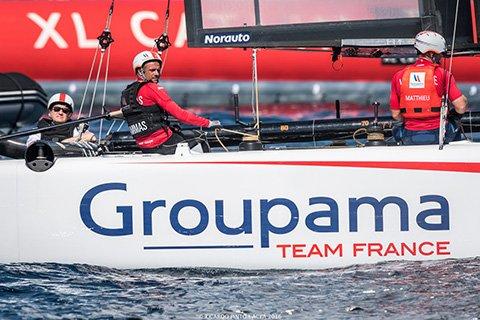
It has been a beautiful weekend here in Toulon. It was as we had all anticipated – a light air regatta – so there were no surprises there but it is a really interesting fleet when its these sort of conditions. A couple of the players are super competitive in the light air, especially the local heroes on Groupama so it was set up to be a great regatta. I’m not sure I would have much liked to be taking part but it turned out to be nail biting to watch and a really fun event. One of the other things that I was interested in this weekend was – will TEAM USA struggle with Jimmy Spithill being out and them having to use a new helmsman in Tom Slingsby? I think we have seen time and again now that no matter how talented the ‘stand in’ helmsmen is in their own right (and we have had a pretty stellar list in Franceso Bruni, Glenn Ashby and now Tom Slingsby), it is not easy. Oracle Team USA certainly scuffled at this event but it shows that practice really makes perfect. Let’s be honest these guys are superstars in the sport but they have all found it hard to be catapulted into the helmsmen position, it also gives you an idea of the level of talent that is out there, it is incredible.
In terms of the racing, it was a ‘streaks’ weekend – the longest streak won the regatta and that was Artemis Racing here. They looked prepared, organised and very calm. The first question I asked Outerridge yesterday, when we talked to him post-race, was whether he thought it was a coincidence that the two teams led by helmsmen who had just competed in the Olympics Games in Rio (Outerridge and Burling) were also the two teams who came out of the blocks hardest and best. He did not think it was coincidence at all. I reckon it shows that racing and testing are two completely different things. Testing in a boat that is actually very different to these boats versus actual racing – hand to hand combat, keeping your mind sharp and making those split second decisions better are just not the same. He felt race ready and super sharp and look where they ended up….
The slight irony is that Artemis have struggled with consistency throughout this series yet it was their performances over the whole weekend that won them this regatta. They have either done really well or really badly but haven’t managed to string together the bits in the middle. The problem with that is you can quickly lose quite a lot of points and see yourself slipping down the leader board. On the flip side of that, if in between the wins you can grind out some middle of the fleet finishes you can keep yourself in contention. I think the other teams that did well showed this to be true – Softbank Team Japan had a lousy streak of races on Saturday but a streak of great races today (Sunday) and they are second overall. It feels like we hardly even talked about them that much this weekend but there they are on the podium. The same thing with Land Rover BAR – shocking first day with two last places on Saturday and then you look at the scoreboard and they came out having extended their overall lead at the end of the regatta.
I would say the big surprise of the event was Burling – he came out fast, and they looked great but I am guessing the team will be disappointed in how it finished. You could make a case that he was still celebrating and his mind wasn’t quite fully back into it, I mean a gold medal would make you a little giddy but they said that wasn’t the case, they said they were mentally ready and I think they will feel they under performed in the end. They had a real shot at getting back solidly into the overall standings but they didn’t really do that. They are fighting for a big two points going into the challenger series and right now with all the scuffling and weirdness of this weekend, Land Rover BAR comes out with a reasonable result and a pretty substantial lead to fight for those two points going into the last, Japanese regatta.
Looking to Japan, it is going to be really interesting as what we saw here is the ability to make up standings and gains in just a few races. So still the top three are right in the hunt but I think Land Rover BAR might look at Japan a bit differently in terms of strategy. Up to now it has all been about winning the regatta but in Japan it becomes more about winning the ‘war’. You have to forget the battle now and look to the bigger picture – who is second, third etc and make sure you don’t do anything silly and keep the guys behind you in check. So maybe the top three will now be looking at the overall standings rather than just on the individual regatta standings. None of them, across the whole fleet, will give up anything and we have seen how so much can change so quickly so it is going to be all to play for. I love Japan and they have a great sailing fan base and I know lots of people are really excited about the America’s Cup reaching their shores, so I am really looking forward to the final stop in this tour before the countdown to Bermuda.
READ MORE
READ MORE
events
CONSISTENCY SHINES THROUGH IN AN INTRIGUING AND EXCITING LIGHT AIR REGATTA IN TOULON
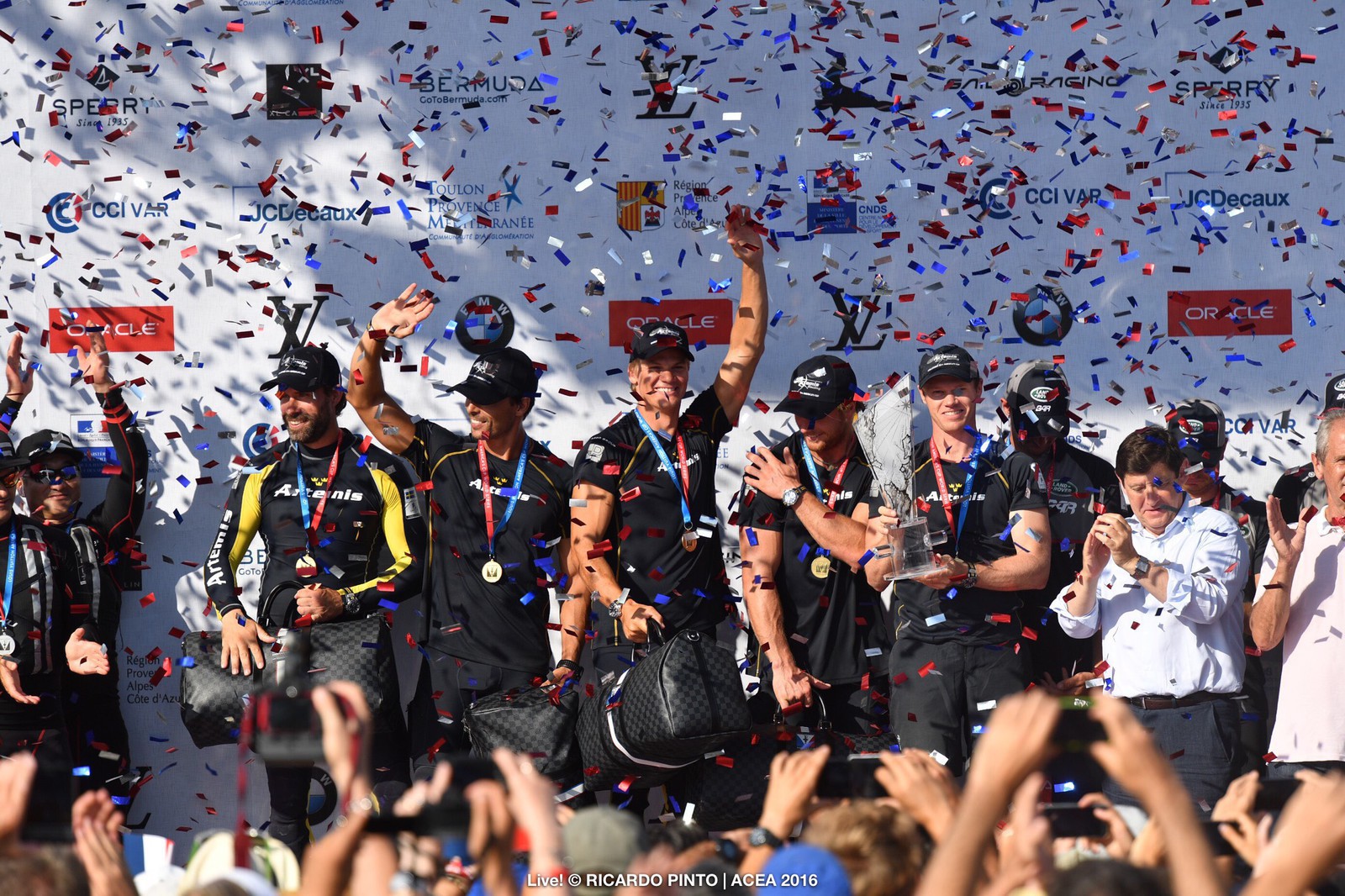
It has been a beautiful weekend here in Toulon. It was as we had all anticipated – a light air regatta – so there were no surprises there but it is a really interesting fleet when its these sort of conditions. A couple of the players are super competitive in the light air, especially the local heroes on Groupama so it was set up to be a great regatta. I’m not sure I would have much liked to be taking part but it turned out to be nail biting to watch and a really fun event. One of the other things that I was interested in this weekend was – will TEAM USA struggle with Jimmy Spithill being out and them having to use a new helmsman in Tom Slingsby? I think we have seen time and again now that no matter how talented the ‘stand in’ helmsmen is in their own right (and we have had a pretty stellar list in Franceso Bruni, Glenn Ashby and now Tom Slingsby), it is not easy. Oracle Team USA certainly scuffled at this event but it shows that practice really makes perfect. Let’s be honest these guys are superstars in the sport but they have all found it hard to be catapulted into the helmsmen position, it also gives you an idea of the level of talent that is out there, it is incredible.
In terms of the racing, it was a ‘streaks’ weekend – the longest streak won the regatta and that was Artemis Racing here. They looked prepared, organised and very calm. The first question I asked Outerridge yesterday, when we talked to him post-race, was whether he thought it was a coincidence that the two teams led by helmsmen who had just competed in the Olympics Games in Rio (Outerridge and Burling) were also the two teams who came out of the blocks hardest and best. He did not think it was coincidence at all. I reckon it shows that racing and testing are two completely different things. Testing in a boat that is actually very different to these boats versus actual racing – hand to hand combat, keeping your mind sharp and making those split second decisions better are just not the same. He felt race ready and super sharp and look where they ended up…
The slight irony is that Artemis have struggled with consistency throughout this series yet it was their performances over the whole weekend that won them this regatta. They have either done really well or really badly but haven’t managed to string together the bits in the middle. The problem with that is you can quickly lose quite a lot of points and see yourself slipping down the leader board. On the flip side of that, if in between the wins you can grind out some middle of the fleet finishes you can keep yourself in contention. I think the other teams that did well showed this to be true – Softbank Team Japan had a lousy streak of races on Saturday but a streak of great races today (Sunday) and they are second overall. It feels like we hardly even talked about them that much this weekend but there they are on the podium. The same thing with Land Rover BAR – shocking first day with two last places on Saturday and then you look at the scoreboard and they came out having extended their overall lead at the end of the regatta.
I would say the big surprise of the event was Burling – he came out fast, and they looked great but I am guessing the team will be disappointed in how it finished. You could make a case that he was still celebrating and his mind wasn’t quite fully back into it, I mean a gold medal would make you a little giddy but they said that wasn’t the case, they said they were mentally ready and I think they will feel they under performed in the end. They had a real shot at getting back solidly into the overall standings but they didn’t really do that. They are fighting for a big two points going into the challenger series and right now with all the scuffling and weirdness of this weekend, Land Rover BAR comes out with a reasonable result and a pretty substantial lead to fight for those two points going into the last, Japanese regatta.
Looking to Japan, it is going to be really interesting as what we saw here is the ability to make up standings and gains in just a few races. So still the top three are right in the hunt but I think Land Rover BAR might look at Japan a bit differently in terms of strategy. Up to now it has all been about winning the regatta but in Japan it becomes more about winning the ‘war’. You have to forget the battle now and look to the bigger picture – who is second, third etc and make sure you don’t do anything silly and keep the guys behind you in check. So maybe the top three will now be looking at the overall standings rather than just on the individual regatta standings. None of them, across the whole fleet, will give up anything and we have seen how so much can change so quickly so it is going to be all to play for. I love Japan and they have a great sailing fan base and I know lots of people are really excited about the America’s Cup reaching their shores, so I am really looking forward to the final stop in this tour before the countdown to Bermuda.
READ MORE
READ MORE
events
WINNER’S DEBRIEF: ONE REGATTA J/105 SKIPPER DAVE NELSON
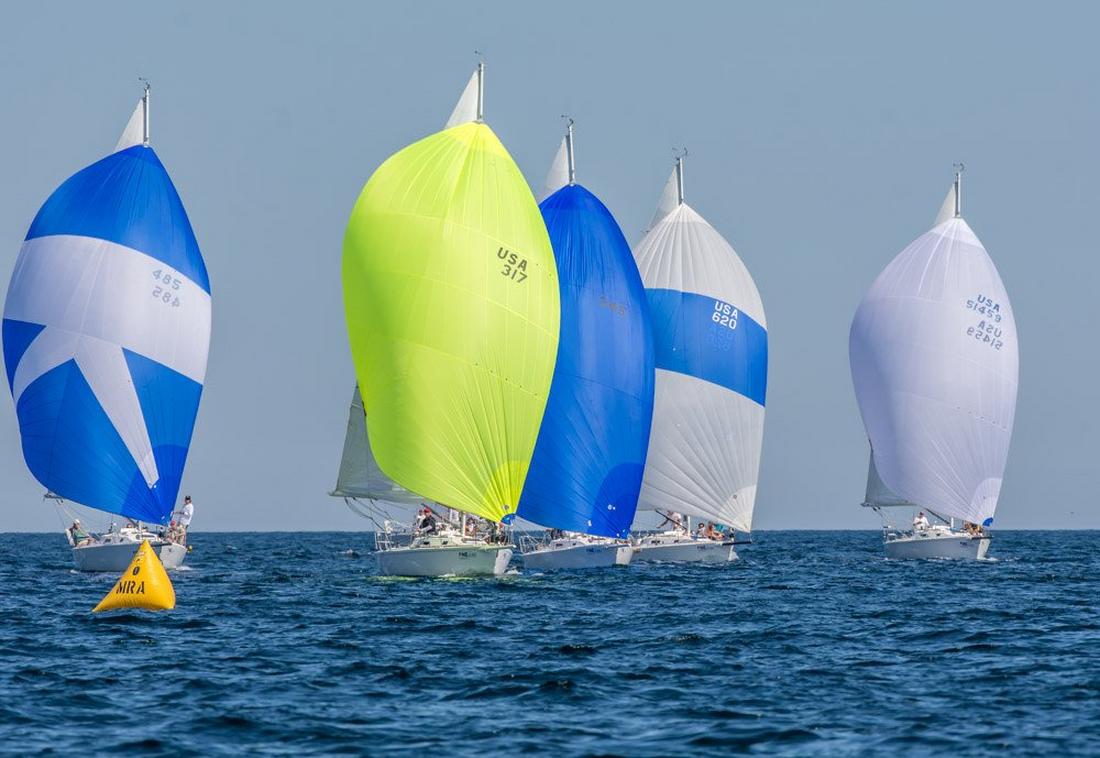
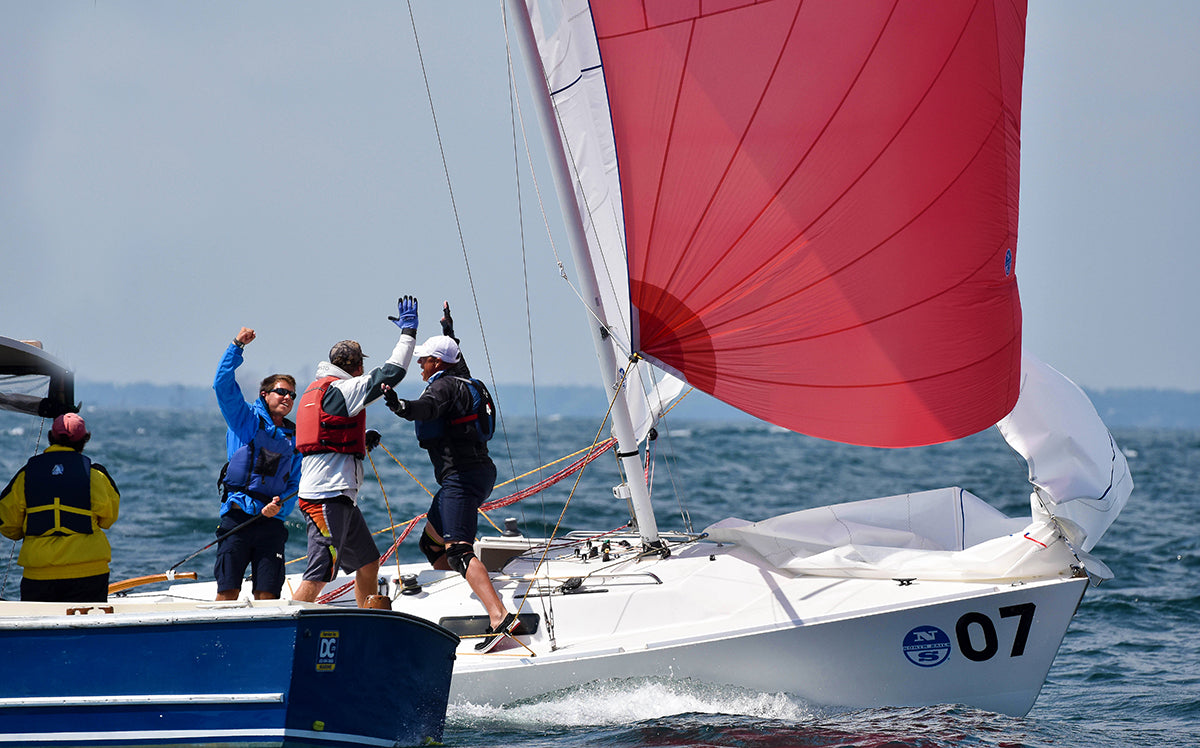
The 2016 ONE Regatta (Offshore New England Championships) took place in late August out of Marblehead, MA. 13 J/105s competed as a one design fleet, and Dave Nelson’s team on Got Qi won the ten race series by posting only one finish out of the top four. We caught up with Dave after the event.
What conditions did you encounter at this event?
We saw fairly light conditions on day 1 of the regatta, probably around 5-10 knots. On days 2 and 3 we saw better wind, ranging from 8 – 15 knots.
How prepared were you and your team and the boat?
The core of the team (myself, owner Matt Pike, Dennis Bell, and Bill Collins) have been sailing the boat every Wednesday night in Hingham for the past eight years. We sail with spinnakers in a very competitive fleet in a challenging venue (lots of current, islands, shifty winds). Over the years, we have been able to perfect our boat handling to the point where we don’t have to think about it.
Just prior to the event we hauled the boat to make sure the bottom was clean. We have black bottom paint and it is difficult for the diver to see where he has cleaned. I’m glad we did this because there were a couple of areas that the diver had missed, on the bottom of the keel and the bottom of the rudder (big clumps of grass growing off the keel and rudder).
What was the biggest contributor to your success in winning this regatta?
We had consistently good starts at or near the favored end. After that, our boat speed kept us in the hunt even when the wind didn’t quite go our way. We had one bad start and rounded the windward mark in twelfth, but were able to claw back to a fourth. Lastly, our team work and boat handling never cost us a place in any race.
We heard from your competitors that you were quite quick; can you give us some insight on why you guys were so fast?
We purchased a North Light Air Jib and a North spinnaker just prior to the event, and we think this was a big factor in our boat speed. We had used the sails in only one PHRF race before, so we were a little nervous about what to expect. Upwind the light air jib gave us the punch we needed to get through the Marblehead chop. Downwind, the new spinnaker really rotated to windward nicely, allowing us to sail low and fast.
Also I think the light air design was the right sail for this regatta. There were other boats with all purpose jibs and I know of at least one competitor that switched from the AP to the light air sail. The J/105 class now allows for each boat to carry two jibs, so picking the right jib for the conditions is becoming a factor in the boat set-up decision making process.
Can you let us know how you and your team were setting the boat up?
I always check the morning of the first day to make sure the rig is at the tuning guide’s base setting. We adjust from there based on the wind conditions. On days 1 and 2 we sailed at the light air rig setting (0 – 6 knots). On day 2 the wind came up over 6 knots and we talked about tightening to the next setting, but decided against this since we felt fast. On Day 3 we tightened up to 7-12, one below the base, for the last race of the day. I’d say we were usually one setting looser than what the tuning guide called for.
Can you give us three things that you and your team would do in making your boat go fast?
Because the jib was new to us, we were constantly evaluating the jib car setting and in the end we set it a little further forward than what the tuning guide specified.
The crew was constantly adjusting sails, while giving feedback to the skipper and trimmer about our relative speed and point.
We were very conscious about where the crew was placed, especially downwind; we made sure the crew was grouped together and forward, heeling the boat to windward once the wind conditions made this feasible.
Tell us about your team and their crew positions.
All of the team members have college sailing experience and now sail a variety of other one design and PHRF boats. We have a very deep team.
Dave Nelson, Skipper
Matt Pike (owner), Pit/Jib Trimmer
Tom Robinson, Mainsheet/Tactician
Ken Delpapa, Spinnaker Trimmer
Dennis Bell, Bow
Bill Collins, mid bow (halyard jumper/sewer)
As the skipper, can you tell us how you interact with the crew during a race?
Upwind, I have a fairly constant flow of information with the tactician and the jib trimmer about boat speed and positioning on the race course. Downwind, I am in constant communication with the spinnaker trimmer about speed and pressure. When the boat speed or pressure is up, we sail deeper; when the speed or pressure is less, we head up.
Lastly, what are some things you and your team would like to work on for future events?
I want to try going wing and wing with the asymmetric spinnaker. We haven’t yet been able to practice this enough to try it in a race.
READ MORE
READ MORE
events
LESSONS FROM THE 2016 J/22 WORLDS
LESSONS FROM KINGSTON
A conversation between J/22 World Champ Mike Marshall and class newcomer Zeke Horowitz
What a pleasure it was to be a part of the J/22 World Championship in Kingston last week. As a newcomer to the class, it took no time at all to realize what an awesome group of people sail in this class, and how deep the talent pool is. I had a lot to learn about making the boat go fast and improving my boat handling so I was extremely grateful for the daily debriefs where the top performers of the day shared lots of tips. My team and I had a tremendous amount of fun, we learned a lot and made many new friends – all of whom I look forward to seeing at the next J/22 regatta! As a first time helmsman in the J/22, I had lots of opportunities to try different techniques and learn what worked best for me but I was very interested to compare what I thought was working to what the new World Champion, Mike Marshall, was doing to keep his boat speed up. Mike was kind enough to listen to my thoughts and help clear it all up for me in the interview below:
ZEKE: This was a pretty “breeze on” event with most of the races sailed in 16 to 20+. Early on, one thing I learned from all the experts in this class was that once the breeze is into the teens, it is fast to center the traveler and forget about it. This leaves you with the mainsheet and backstay to play along with the jib sheet. I found that I liked the main set so it was just about to the point of inverting. I noticed lots of the fast boats were maxing out the backstay to the point where the main was totally “washed out” and appeared to be luffing with big wrinkles pointing from the mast down towards the clew. I found it faster to get the main to this point, but then ease the backstay just a couple of inches to get rid of those inversion wrinkles. Though I don’t think my pointing ability was particularly special…Tell me your thoughts on this and, in particular, how hard should I have been trimming my mainsheet to match this “inverted” main look with the backstay maxed out?
MIKE: Interestingly, I was trimming the main in Kingston a bit differently than I would trim it for most other venues. Because the waves were pretty square, it was important to keep the boat moving at all times. So, while there are conditions when inverting the main is fast (big breeze and flatter water), these weren’t the Kingston conditions. In Kingston, we found that the backstay had to be much looser than we normally would have it. I think the reason was that we needed the power and return in the leech of the main to keep the bow up and pointing and to keep the boat powered up.
I generally consider the backstay a coarse adjustment for the boat’s heel. Once we had that set properly, I’d trim the mainsheet so that the main’s top telltale was stalled at max 50% of the time. Stalled more, the boat would stop in the waves; any less stalled, and we’d be giving up height. I think that may have been the reason we had a slight edge with pointing over some teams so, while it can work to “wash out” the main we tried hard to make sure we had some “kick” in the leech of the main.
ZEKE: Well, that’s the first thing we maybe weren’t quite doing right and that makes a lot of sense as to why we didn’t feel all that special in the pointing department. So, on our boat, we had a lot of discussions about jib lead positioning. We found that when the breeze was in the mid-teens, we liked the jib car 2 holes back from “base” because it would flatten the sail up top, but left a little bit of “punch” in the bottom of the jib to power through the waves. But once the breeze was up in the 20’s, we felt better moving the car back to 4 or 5 holes back from “base.” What visuals can I use to know that my jib car is in the right place, and how much is based on the feel of the helm or “return” on the main?
MIKE: My easiest visual guideline for the jib car position is how the front of the jib’s foot sits on the deck. I look for the “Big Foot” sticker area of the jib to be on or just inside the toe rail when the jib is trimmed correctly for the condition, the heel of the boat, and how much the main is eased. Our goal in trimming the jib was that it be in as tight as possible as long as the top jib telltale wasn’t stalling and the main wasn’t luffing when it was eased. If we eased the main to keep the boat upright, we’d ease the jib to match. When all of this is correct, the foot of the jib in the area around the “Big Foot” sticker should be on or just inside the toe rail. If it was trending outside the toe rail, we’d move the car back. If it was trending well inside the toe rail, we’d move the car forward. This is a pretty good rule of thumb for the jib car position in almost any condition. In addition, I also use the feel of the helm. If the boat wants to turn up and I want to trim the jib tighter to balance it out but the top jib leech telltale is stalling, I’ll move the jib car back to be able to trim the sail tighter without the top telltale stalling. I try to sail with a pretty neutral helm in all conditions.
ZEKE: That’s a great tip and one I can easily remember. As you know, and as predicted, CORK gave us big wind and big waves. At times, we were sailing in 3-4 foot waves that were fairly square and close together. In other boats I race regularly, I would be steering aggressively through this type of wave condition to try to minimize the slamming of the bow and keep the boat moving through the water as smoothly as possible. But in the J/22, I found that when I moved the tiller too much, it was quite difficult to maintain a steady level of heel and a balanced helm. And isn’t that what it’s all about? Tell me how you find the balance between maintaining steady heel and helm, and steering the boat through the waves as smoothly as possible.
MIKE: You are certainly right about the sailing conditions at CORK. It was breezy and wavy, so having a solid game plan for those conditions really helped our team. I was lucky enough to have Todd Hiller do the bow for me. As anyone who has sailed in the J/22 class the past 20+ years knows, Todd is an extraordinary sailor. His main job going upwind was to call the breeze and waves. He was spot on for the whole event and this was a game-changing asset for almost everything I had to do. When I heard there was a puff or a lull coming, I could preemptively adjust the controls to be set for it and keep the heel of the boat constant. Even more importantly, when Todd called the waves, he was descriptive, calling flat spots, waves, chop, and big waves.
When I heard flat spot and I could see it in my field of view, I’d pinch to keep the boat flat. When I heard waves, I knew I had to drive normally to keep the boat at full speed. When I heard chop or big waves, I’d wait until I could see them and then make a split-second decision to either put the bow down and power through them or try to steer around them, working the sails in conjunction. If the waves looked organized, I’d try to steer around them, which at times required a lot of tiller movement to stop from slamming (remember: up the front, down the back). I’d also trim the main pretty aggressively to keep the heel constant. If the waves looked disorganized, I’d ease the main and jib a little to keep the heel constant and simply power through the waves. Of course, there’s a lot going on in the back of the boat, and everything isn’t going to be perfect all the time. The ultimate goal is to keep the boat flat and up to speed. For that, I mostly use a combination of tiller and main trim because I have only two hands.
ZEKE: That is a great point about how important teamwork and communication are in being successful in sailboat racing. It makes a lot of sense that having great information from your bow person (who is a top flight skipper in his own right) helps you keep the boat going fast. Certainly an important aspect for any team to work on is communication and it sounds like it really helped make your job a little bit easier.
So my next thoughts are on overall game plans and how you guys worked through your strategies. I think the fleet was very fortunate to have a top quality race management team, led by David Sprague, and they did an absolutely stellar job setting a course and a starting line totally square to the breeze. On such a long course with a very long starting line, it is very difficult to decide on the game plan for the first beat. My team was always focused on picking the side of the course where we thought had the most pressure and then starting at the end that would get us to that side of the course the fastest. We did NOT want to go in the middle, though we ended up there more often than we wanted. How did your team decide which side of the course you wanted to go to and where to start? Did you ever change your game plan based on the start you ended up with?
MIKE: I don’t think our overall process was much different from yours. Generally the decision of where to go rested on the shoulders of my trimmer, Luke Lawrence, and wow, did he impress! Luke really was dialed into what was going on around us which allowed me to focus on spending my time and energy making the boat go fast. Luke was correct about the side to go to almost every time, which really made the rest of the jobs easier. That said, it sounds like our strategy was very similar to yours. We’d look up the course at 4-5 minutes before the start and decide which side had more pressure. If we weren’t expecting a shift, we’d plan to head that way. Knowing that it was important to stay out of the middle, we went to our chosen side as fast as we could for almost every one of our races. We were a bit less conservative at the start than you were depending on how confident we were about the side. If we were very confident, our goal was to win the same side of the line as the side of the course that we wanted to head to. If we were less confident, we’d start near the boat so that the option to tack was still open if we didn’t like how things were unfolding.
I also have to reiterate what you said about the fantastic job that David Sprague and the Race Committee did. It was one of the best jobs I’ve seen in quite a while. They set very square lines, moved marks when needed, and had almost no downtime between races. There’s not much more you can ask for.
ZEKE: As important as it was to stay out of the middle of the beats, it seemed it was even more important to stay out of the middle on the downwind legs. My team learned that it was easy to get into trouble by doing an early jibe around the offset because you end up in the “cone of death.” With the fleet so tight at the weather mark, how did your team decide your exit strategy from the offset to set yourself up for success on the downwind?
MIKE: Downwind is pretty exciting for me because it’s one of the few times that I’m actually allowed to look around! We’d always have a decision on whether we were gybing after the offset mark before we got halfway down the offset leg. From there, it became my job to execute the plan. If we were rounding and going straight, my job was to keep us in a clear lane while Todd and Luke had their heads in the boat. If we were gybing, my job was to jibe and keep the boat going fast as we sailed through the upwind boats. The only time we jibed in the “cone of death” was when we were already on layline to the next mark. Even if there were only 400 yards of starboard on the downwind, we’d sail them first to extend away from the cone of no wind under the mark. Otherwise, our strategy, much like yours, was to stay out of the middle on the downwind because there was always more breeze on the edges.
Air doesn’t like to flow between objects where there’s lots of resistance, so when you go downwind with a large mass of boats, the air tends to flow around that mass, not through it. This is why the best wind is on the edges.
ZEKE: Speaking of going downwind…. That was certainly exciting! I learned a lot about sailing downwind in big breeze and big waves and the biggest lesson was – do whatever you can to keep surfing! When the boat is surfing, the sails are much more unloaded which makes them easier to trim, and the boat is less likely to get “wobbly.” I found myself using a lot of rudder to try to steer the boat down the waves while surfing, and to prevent it from crashing into the next wave in front of us. I know it is slow to use lots of rudder. Tell me the secret to helping the boat stay on the waves downwind without using too much rudder.
MIKE: Yes, in big breeze, the J/22 can be quite a handful downwind, but you can use a few tricks to keep everything under control a bit better. I think that the time when things get the most “sketchy” is when you try to go too low or get caught in a bad wave and the boat heels to windward. But the J/22 is just an overgrown dinghy, so if Luke gave the sheet a quick pump when we heeled to windward and I gave the main a sharp pump, the boat would settle back out. Both pumps help to make the bow turn up, which aids in keeping the hull under the top of the mast and the boat from falling over. Beyond using the sails, Todd was always on his feet downwind, moving from side to side to keep the boat flat. Because he was facing aft already while calling the wind, he could just look at the end of the tiller, and whichever way it was pointing was the direction that I needed him to move. As far as the amount of rudder is concerned, you’re going to have to move the tiller, but less is better as long as you accomplish the goal of keeping the hull under the top of the mast.
ZEKE: So it sounds like at least we were doing that right! You mentioned pumping the main and spinnaker to help steer the boat. It had been a while since I’d raced a boat that was so rewarding to pump downwind. The boat seemed very responsive to a pump of the mainsheet to promote surfing. We thought that pumping the spinnaker sheet and the guy together was OK too, but I wasn’t sure it was totally necessary. With so much load on the spinnaker, do you really need to pump it downwind when there is that much breeze? Or is a pump of the mainsheet enough? Maybe you can help me decide where that line is. Can you tell me how you decide when it is time to pump?
MIKE: Yes, the boat is very lively downwind and reacts very well to pumping. We’ve tried a lot of different ways to pump the kite, but we’ve found that the fastest is just to pump the kite sheet. Since you’re already sailing such a low angle, trimming the guy further back seems only to pull the boat sideways and not down the wave. I think that in the bigger breeze conditions a pump of the mainsheet might be all that’s needed but a kite pump too certainly doesn’t seem to hurt. As it gets lighter, pumping the kite gets more and more important because there is less power in the main alone to get the boat on the wave. It seems that as long as you can pump and initiate a surf on a wave, it’s important to be pumping. If the waves are small enough that you’re not steering to be surfing on them, then pumping isn’t needed.
ZEKE: Mike, thanks and congratulations again on being the 2016 J/22 World Champion.
MIKE: Thanks Zeke and congratulations to you and your team on a great regatta. Considering this was your 1st J/22 event ever, I think we are going to have to work even harder to keep you behind us at the next event!
Lastly, before we wrap, I’d like to thank my team of Luke and Todd for all their skill and hard work as well as the PRO and Race Committee again for doing such an excellent job. Thanks are due as well to the entire staff in Kingston for putting on a wonderful event: the regatta chair and regatta team, the measurement team, and everyone else involved. Finally, I need to say once again how much fun and what a pleasure it is to sail in the J/22 class. Although I really love sailing these boats, it’s the terrific people in the class who make the racing experience so awesome!
NORTH NOTES:
North-powered boats finished 1,2,3,5,6,8,9,10 at the 2016 J/22 Worlds.
Both Mike Marshall and Zeke Horowitz are members of the North Sails One Design team. Mike is a sail designer based in Newport, RI and can be reached at (401) 965-0057 or by e-mail mike.marshall@northsails.com. Zeke is based in Annapolis and services the Mid-Atlantic region. He can be reached at (410) 269-5662 or zeke.horowitz@northsails.com.
Photos © Chris Howell / One Design Association Management
READ MORE
READ MORE
events
B14 UK NATIONAL CHAMPIONSHIP
B14 UK NATIONAL CHAMPIONSHIP
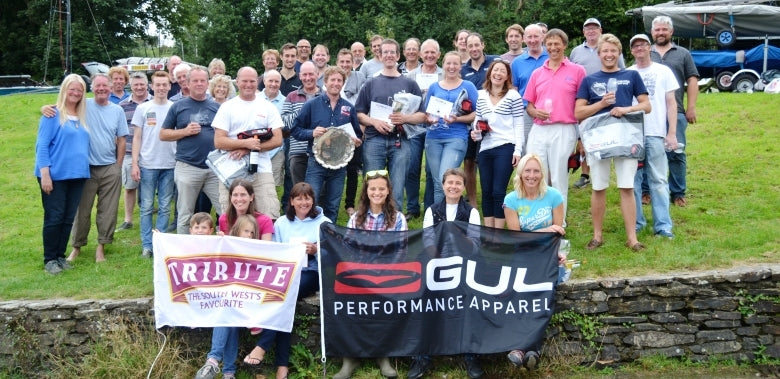
After a great close event, the B14 National Champions for 2016 are Team Harken with Team GUL/North Sails 2nd and Troublegum/North Sails 3rd.
For daily reports and full results please see here.
North Sails Results
1. Nick Craig & Toby Lews
2. Mark Barnes & Charlotte Jones
3. Alan Davis & Rich Bell
4. Peter Knight & Jane Reeves
6. Stephen Hollingsworth & Elliot Holman *
7. Kathy Sherratt & Dec Clamp *
9. Alex Horlock & Jim Pearce *
10. Henry Metcalfe & Jasmine Husband
*Denotes partial inventory
READ MORE
READ MORE
events
AMERICA’S CUP A-TEAMS
Olympians Return For The Louis Vuitton America’s Cup World Series Toulon
I think for all of these programs, having a home regatta is really important for two reasons: one, is to gain notoriety in your home country for the team, the sport of sailing and the America’s Cup in general; and secondly, for many teams it is about fundraising – bringing new corporations and publicity to your team and the event. Knowing that Groupama Team France was late to the party with regard to organizing their program, I have a sneaking suspicion that this event is as important to them as any of the other events have been for the home teams.
On the competitive side of things, Groupama Team France is also showing signs of life, especially in lighter air. On the first day of the Louis Vuitton America’s Cup World Series Portsmouth I believe they were ahead at the end of every single leeward mark before getting a first and second place finish, which is a massive improvement for them. Now with that said, they have been struggling in foiling conditions. When it’s lighter air, displacement mode, Franck Cammas and his team seem very comfortable. Once they get back into foiling mode, it was back to the drawing board, especially on Day 2 of the Portsmouth event. I know they have been doing a lot of sailing on GC32s, which are foiling catamarans, and hopefully a bit of practice on their AC45 prior to going to Toulon.
The Louis Vuitton America’s Cup World Series Toulon will also be known as the event where all the A-Team sailors show back up again. Fresh from a Gold medal in Rio in the 49er Class come Peter Burling and Blair Tuke to jump back into the Skipper and Trimmer roles on Emirates Team New Zealand. Also back fresh from the Olympics with a Silver medal, losing to the Kiwis, are Nathan Outteridge and Iain Jensen. On the one hand I’m sure they were bummed not to win a Gold medal but, on the other hand, they made a last minute push to go from Bronze to Silver on the final day so they have got to be really pleased with that. Then, of course, there is a Gold medal for Giles Scott in the Finn Class, with a totally dominant performance. He will be back after a fairly lengthy lay-off with Land Rover BAR as their tactician. And then finally, Jason Waterhouse returns with a Silver Medal from the Nacra 17 Class in Rio to race with SoftBank Team Japan.
I say “A-Team” with some trepidation because when your B-Team includes Glen Ashby, who might just be the most heralded multihull sailor on the planet, it’s not exactly a low-end B-Team! But there’s no doubt that getting everyone back in position, which includes Ashby as Wing Trimmer on Emirates Team New Zealand, has to be not only more effective for these Louis Vuitton World Series events, but also better training for their long term solution once they move up to the AC50s. So I’m sure everyone will be very excited to see all the top teams back together in one piece.
And finally, we’ve had a bit of a shake up at the top of the leaderboard. Emirates Team New Zealand, for the first time since the beginning of this Series, is not leading overall going into Toulon. So let’s see where the learning curve is with some of the teams that have struggled at times and let’s see how quickly the big boys respond to get their A-Teams back together and up to the top of the leaderboard.
READ MORE
READ MORE
events
OLD DOG, NEW TRICKS: ADAGIO
A 46 year old trimaran wins the 2016 Bayview-Mackinac Race with a new custom sail package.
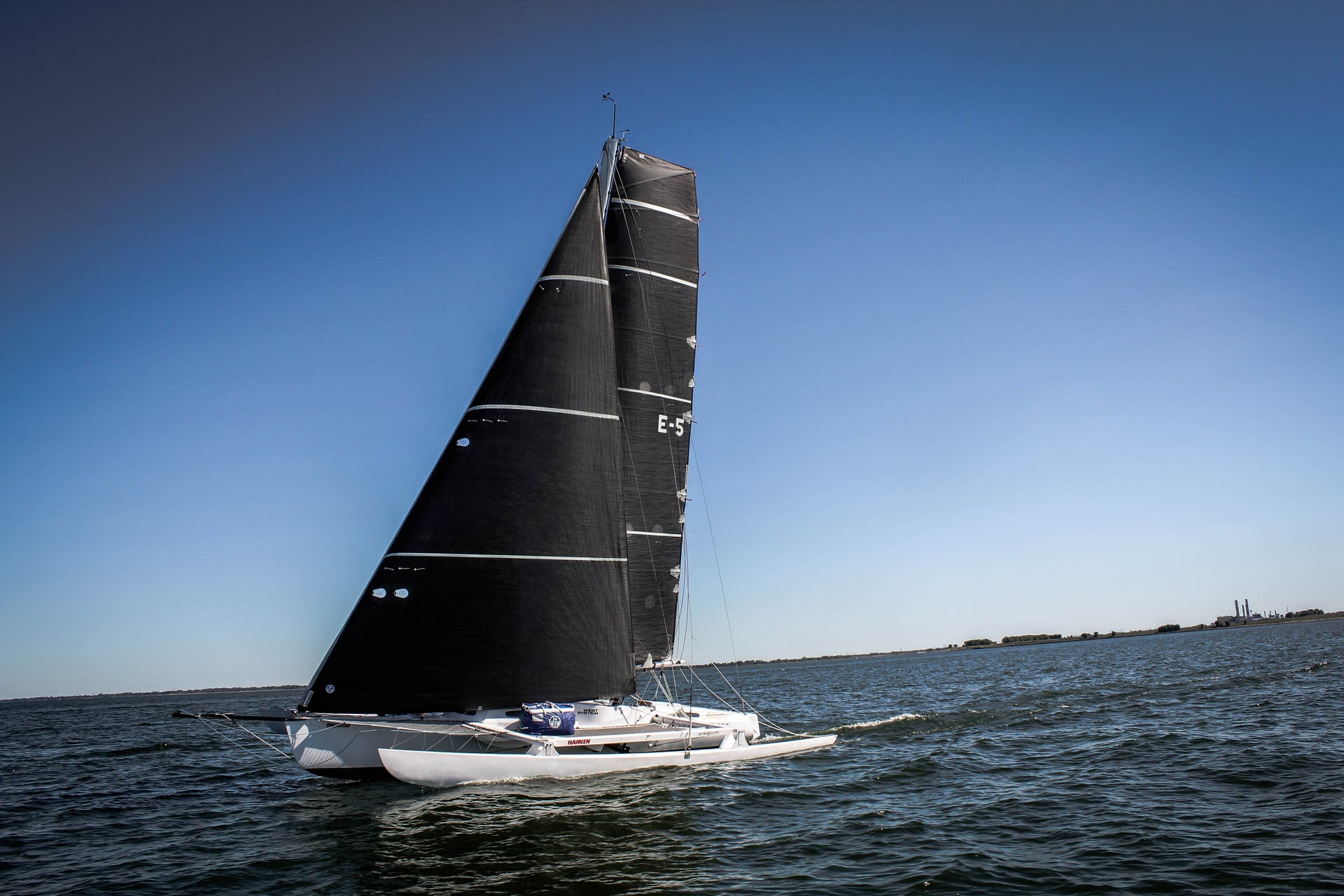
On July 17, 2016, Adagio won her class in the Bell’s Beer Bayview Mackinac Race—thanks to her latest upgrades and a new set of North Sails.
“Old Adagio has taken on a new life,” said designer and builder Meade Gougeon. The 35 foot trimaran, built in 1970, was the first to be constructed entirely with WEST SYSTEM epoxy, which Meade and his brother Jan developed. Adagio won her first Bayview-Mac in 1999. In 2000, she celebrated her thirtieth birthday by winning the race again—and then also took both line honors and first overall in that year’s race from Chicago to Mackinac Island. The crew was Meade and Jan Gougeon, Butch Babcock and JR Watson. “In 2000 the crew was at the peak of their sailing wisdom and in excellent physical condition,” reported project manager and 2016 Bayview-Mac crew member Matt Scharl. “Adagio was also at the peak of technology for that era.”
Adagio was again the first multihull to finish both races to Mackinac Island in 2006. But despite several upgrades to appendages and rigging, she couldn’t produce another race win. “In recent years she had gone downhill,” Meade Gougeon explained, “with both the boat and crew aging out. This year we decided to tackle the problem.” Toward the end of the 2015 sailing season, Meade asked Matt Scharl to oversee the upgrades needed to bring the boat back up to race-winning speed before the 2016 race. Matt grew up sailing locally on his grandfather’s Tartan 41 Naiad, and to him the project felt like “coming back home.”
“We only got one opportunity to sail Adagio before it came out of the water ,” Matt explained, “but that sail was telling.”
The boat’s sails, which were only a year old, made it so difficult to stay in the groove that only Meade, with his forty-five years of experience driving the boat, could keep things rolling. “The sails weren’t right for the boat at all,” Matt said, adding that the genoa’s entry was too fine. The spinnaker was “simply what I describe as a beach ball—too deep to promote any flow across the sail.” In contrast, the mainsail was so flat it was hard to trim properly. The result was very little overlap between sails, and very little forgiveness on any point of sail. “The old suit had very definitive wind and angle ranges,” Matt continued. “It was hard to obtain and maintain optimal trim. Getting the boat up and running was achievable, but keeping it there was very finicky.”
So in addition to helping his race teammates, brothers-in-law Ben Gougeon and Alan Gurski, with their ongoing modernization of Adagio, Matt brought in North Sails designer Magnus Doole to work up a new sail inventory. “Matt agreed to help us do a makeover of Adagio,” Meade explained, “but only if we included Magnus to consult on the rig, and design a new set of sails.”
“The Gougeon organization could not be happier with the North Sails effort, which has helped our beloved Adagio to carry on a competitive effort for more years to come.”And those designs, Matt says, were “spot on.” Magnus came up to Bay City from New Zealand to help Matt accurately measure the boat. Then the sailmaker created a 3D model from the measurements using Desman, which is part of the North Design Suite. Back home again, Magnus designed a sail package that would maximize crossover and make the boat easier to sail fast. The sails included a North Sails 3Di ENDURANCE mainsail, solent genoa and trinquette staysail, a North Panel Laminate (NPL) code zero and North Paneled Cloth (NPC) yellow gennaker. They were built at two separate North facilities according to strict manufacturing standards, and then shipped directly to Michigan.
Meade Gougeon was impressed with both the seamless process and North’s attention to detail. “The sails were delivered on time and fit like a glove, due to the careful job of measuring. The collaboration between Matt and Magnus was like magic, and Magnus went beyond the call of just being a sail designer, engaging with both Matt and us on any number of related sail handling issues.”
As for performance, Matt noticed one key difference as soon as they raised the new sails: a wider groove. “The boat was lively, responsive and accelerated fast.”
Adagio’s crew for the 2016 Bayview-Mac (Matt, Ben, and Alan) wasn’t able to practice as much as they would’ve liked before the start, so it wasn’t until they had already started the 259-mile course that they realized just how much range each of the new sails had.
“The race started out as a one-sided beat on starboard,” Matt said, “so we started with the genoa, with great boat speed on the other boats. When we got lifted we switched to the Code 0, an hour late.” They were still learning the crossovers for the new sails. When the wind lifted them even more, they switched to the spinnaker—”again an hour too late,” Matt said. “Clearly the new sails had larger ranges than we had expected.”
The thirty-five footer was able to keep pace with the Santa Cruz 70s, though until Adagio rounded the Cove Island mark, they lost some distance to the multihulls behind them that were sailing in better breeze.
“After rounding,” Matt explained, “we sailed with the genoa and jib on a beam reach.” It was here that the boat (with Ben Gougeon on the helm) reached her top speed of the race, which Matt described as “17-ish” knots. He believes it was on this leg of the course where the team gained enough distance on the boats behind to secure the class win. “I’ve never sailed a small trimaran that is able to hold apparent wind so well.”
“We were passing lots of the Santa Cruz 70s along the way,” Alan Gurski added, “so we had a good feeling that we were near the front of the fleet.” Adagio won the multihull division with an elapsed time of 28:46:04. “It was a hoot!” said Alan afterward.
Having sails that were easy to trim and fast to sail also made it easier for the three man team to gel so quickly. Alan and Ben had sailed Adagio with Meade for the past five years, but this was Matt’s first season on board. “We all can do every job on the boat,” Matt said, “so roles are interchangeable.” As for sleep, “we all got about two hours.”
This winter, Adagio has one more major upgrade scheduled. And then, Matt says, “she is good to go for the next fifty years, we think.”
Meade Gougeon agrees. “The Gougeon organization could not be happier with the North Sails effort, which has helped our beloved Adagio to carry on a competitive effort for more years to come.”
READ MORE
READ MORE
events
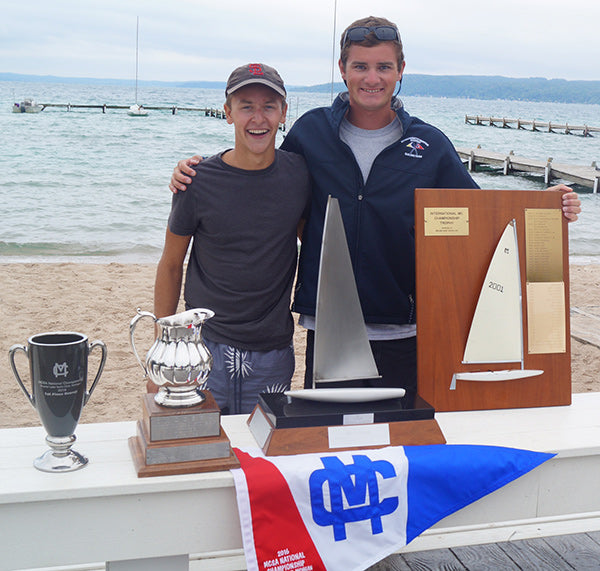
FRANK REEG AND JONATHAN PRINS WIN THE 2016 MC SCOW NATIONALS
FRANK REEG AND JONATHAN PRINS WIN 2016 MC NATIONALS
Top Nine Teams Powered by North Sails!
Imagine this 101 MC Scows, championship racing and Crystal Lake, Michigan one of the world’s nicest lakes. That was our setup for this year’s MC National Championship. This regatta was almost three years in the making with preparations by Regatta Chair – Kelly Winter and her team of over half of the yacht clubs family membership joining in to help get ready for and to run the championship. The efforts simply put were incredible. Every single detail you could think of was handled with servant volunteers at every turn this past week on the water and off the water. More about that in a bit further down in the article. Let’s get right to some results.
I will break this down into results right away. Then conditions for the races. Some key learnings for the races. Also, Race highlights , Social Activities and Future Class News.
RESULTS
Incredible line-up of sailors. Average age is falling in our class which is great for our future as we see a large younger group of sailors joining our class. For full results go to www.2016mcnationals.com
RACE WINNERS – Powered by North Sails!
Race 1 – Cam McNeil
Race 2 – Frank Reeg
Race 3 – Scott Harestad
Race 4 – Frank Reeg
RAce 5 – Andy McDonald
Race 6 – Scott Slocum
Race 7 – Eric Hood
DIVISION WINNERS – Powered by North Sails!
Top Youth – Frank Reeg
Top Woman – Emily Oltrogge
Top Master – Scott Harestad
Top Grand Master – Matt Fisher
Top Mega Master – Mike Keenan
Top Old Salt – Ed Schindler
TOP TEAMS POWERED BY NORTH SAILS
1. Frank Reeg Spring Lake, MI 30pts
2. Cam McNeil White Lake, MI 43 pts
3. Scott Harestad Spring Lake , MI 53pts
4. Ted Keller Torch Lake, MI 61pts
5. Brian McMurray White Lake , MI 70 pts
6. Eddie Cox White Bear YC, MN 72 pts
7. Tony Pugh Crystal Lake, MI 74 pts
9. Daniel Guidinger White Bear YC, MN 88 pts
READ MORE
READ MORE
events
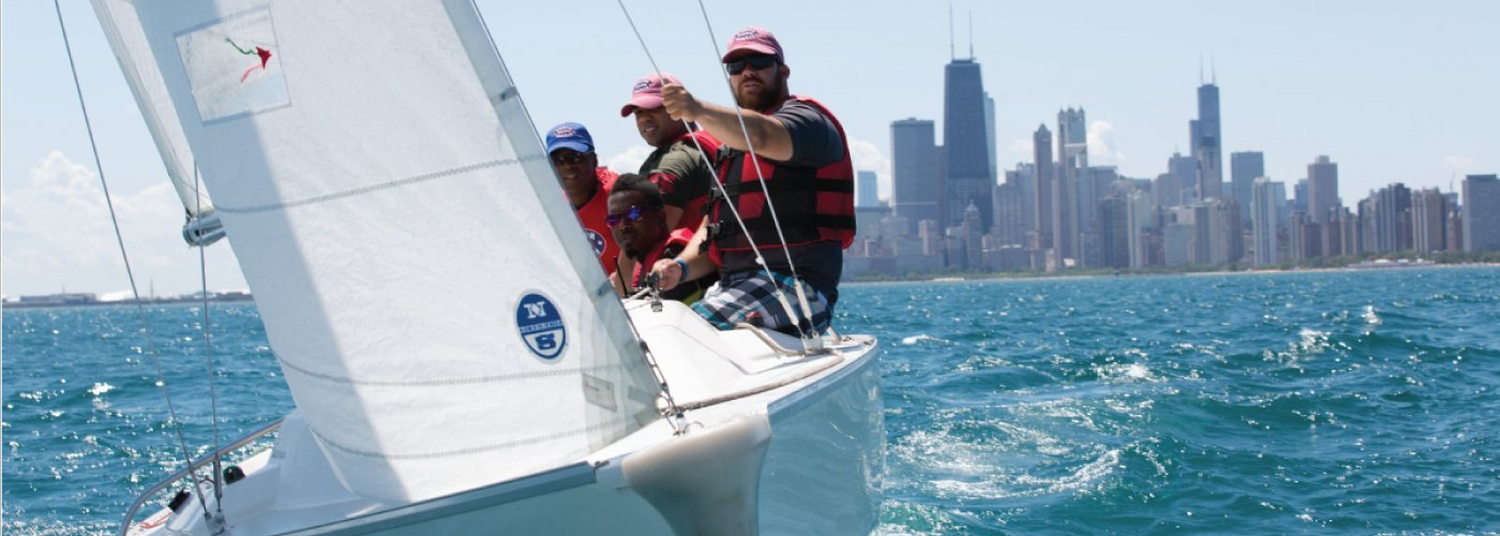
WARRIOR SAILING PROGRAM TAKES ON J/22 WORLDS
North Sails partners with Warrior Sailing Program Competitive Team for the J/22 Worlds in Kingston, Ontario
Since 2013 the Warrior Sailing Program has introduced 165 wounded veterans and active military athletes to the sport of sailing. Continuing to surpass all of the original expectations, the program is expanding to provide it’s training camp graduates with opportunities beyond just ‘learning how to sail’. An option for graduates is to earn a spot on the competitive race team. Other options include sailing certifications, big boat racing, small boat racing, and regional sailing.
This year the Warrior Sailing team made a decision to compete in the J/22 world championship in Kingston, Ontario. With the tremendous support of the USMMA Sailing Foundation and partnerships with companies like North Sails, we are ready to take on the WORLD.
Competing in the event on the WS team is Scott Ford (Navy), Sammy Lugo (Army) and team head coach Ed Norton (sailor not actor!). Additional team members, David Caras (Coast Guard) and Josh Agripino (Marine), made the trip up to learn from this experience on a spectator boat.
A new suite of J22 sails will help enhance boatspeed. Program director Ben Poucher says, “Without the support of North Sails, our team was going to start out at a disadvantage on the World stage. The J/22 sails North provided on short notice has helped our team generate positive results and pushed our team to be more competitive during each race. Thank you North One Design!”
The Warrior Sailing competitive team is looking to continue in the J22 class and also expand its horizons to provide more spots on the competitive team in the near future. We are always seeking ‘ready to race’ boat donations and monetary support to offset event costs. The support of the donation allows us to use the boat for our team for 3 years, and then sell the boat to help fund new and promising initiatives.
Learn more about the program
READ MORE
READ MORE
events
RACING YOUR HOUSE
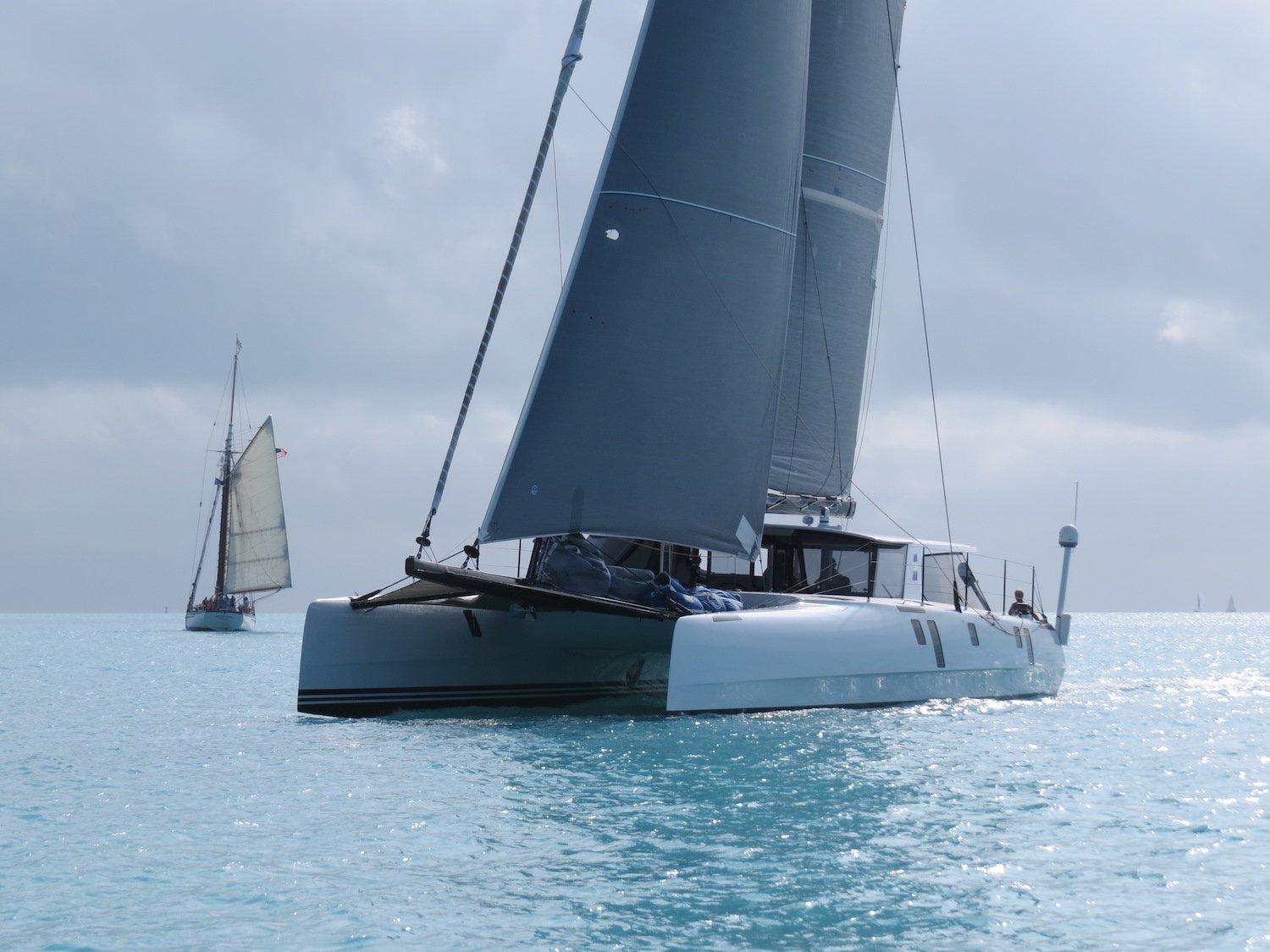
Accomplished One Design sailors Phil and Wendy Lotz have embarked on a new project: a liveaboard multhull. We caught up with them after their first two regattas on their new Gunboat 60 Arethusa.
The Fort Lauderdale-Key West Race is considered a feeder race for Key West Race Week, and in 2016 it was also the shakedown event for the Gunboat 60 Arethusa and her owners Phil and Wendy Lotz. According to Phil, the 160-mile sprint down the Keys was a great way to figure out their new offshore catamaran. “We got a chance to put the boat through its paces, on all points of sail and in varying wind conditions.”
Once they arrived in Key West, they made the transition to day racing, even though “it is not really a ‘round the buoys’ boat.” And that was actually a nice plus in a location where housing costs are typically a large part of the team budget: “We lived on her at Key West and plan on doing so at all our race events.”
Arethusa raced with 8-10 crew (though only six stayed aboard), and they’re still settling into an exact number for the team. “We think 8 to 9 (depending on skill set) is needed for day racing with any frequency of turning marks or sail changes.”
Transferring racing skills from offshore one design monohulls like the Swan 42 class, where Phil and Wendy were national and KWRW champions, required several adjustments. “The rig is very powerful, so we are getting used to the rig and the sails and how to handle them.”
And then there’s the high speed. “That takes a little getting used to, especially approaching maneuvers and sail changes.”
The couple’s favorite sail is the A4, which is launched from a snuffer. “it is a very large chute so the snuffer helps control the sail. Plus it would be very hard to pack as the sail is bigger than the working space onboard.” And during the weeklong race series, “we used almost everything—we really think the inventory is great and found a real need for every sail.”
Arethusa is equipped with North Sails 3Di ENDURANCETM working sails (Main, J1, J2), North Sails NPL DOWNWINDTM R1 and R3, and an NPC DOWNWINDTM A4.
The original plan was to head from Key West to the Caribbean for the racing season there, but instead Phil and Wendy have decided to spend the winter/spring in Fort Lauderdale, to “get the boat perfect.” Phil added, “We look forward to finishing up the work list early to mid-March and conducting some sea trials off Lauderdale.”
After that, the racer-cruiser benefits of their new boat will again be a plus. “We want to do some cruising in the Bahamas in late April before returning back to Newport late May.” Summer racing plans include Annapolis-Newport, NYYC Race Week, the NYYC Cruise, and the Vineyard Race. So by next year’s Lauderdale-Key West Race, the new Arethusa will definitely be a racing veteran.
READ MORE
READ MORE
events
EXTREME LATITUDES ONLY
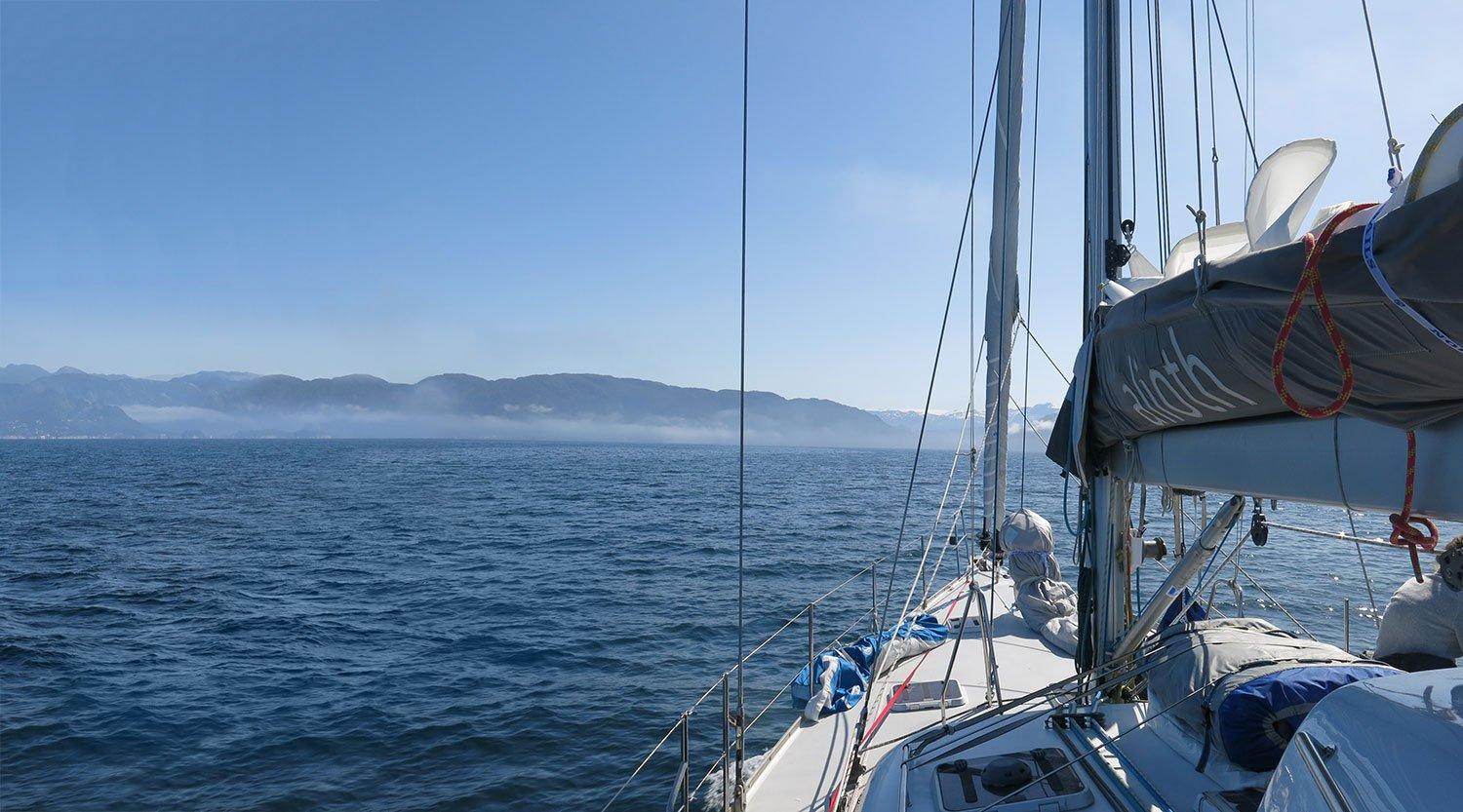
In late 2015, childhood friends Vincent Moeyersoms, Olivier Moeyersoms, and Marc Vander Stricht bought the 53’ aluminum, French-designed exploration sailboat, Alioth. Why? Because these Belgian cruising sailors share a love of extreme latitudes—now they have the vessel to get them there.
Built in 2009, Alioth is fully kitted-out with a lifting keel, water ballast, twin rudders, and crash bulkheads in the bow and stern. She is an ocean-goer with some miles in her wake, having completed a circumnavigation with her previous owners. Alioth came with sails that Vincent describes as “old” since they have 50,000 miles on them and her year-old North Sails spinnaker is a “keeper.” Next month she will receive North Sails NPL TOUR heavy-duty cruising sails.
For Vincent and crew, expedition sails might be a better term.
For 2-3 months out of the year, Alioth will serve as home for Vincent, Olivier, and Marc. Within five years they hope to lap the Americas on a zig-zag route reaching far North, and far South. In May, the crew delivered Alioth from Belgium to Norway. Over the next few months they will make their way from the Lofoten Islands, down the coast of Norway, and start ticking the boxes on the Atlantic. “Next summer we should be coming up the coast of the US to Maine, Nova Scotia, and Newfoundland,” Vincent said. “If the conditions are right, we could then attempt the Northwest Passage. If not, we will delay a year.”
Completing the Northwest Passage would leave them in Alaska. From there, the planned route would deliver them down the coast of Canada, across the Pacific to New Zealand, across the South Pacific to Chile, then onto Antarctica, South Georgia, and back up to Europe
“I sailed professionally years ago and I took part in the Round the Word Race and raced maxi boats,” Vincent said. “Later I ran a few campaigns in the Maxi class and America’s Cup. In 1992, I managed the winning America’s Cup team America3.”
Five years aboard Alioth is the next challenge.
Alioth’s name signifies the brightest star in the Big Dipper. “We decided to keep the name,” Vincent said. This decision is a nod to the crew’s shared ambition to add a greater purpose to their exploration. “We would love to adopt an environmental aspect of the journey, to contribute toward trying to find a solution to the ocean’s plastic pollution problem we’ve seen growing for so many years. In 40 years spent on the water, we have seen trash accumulating on the ocean, and we want to be part of the solution.”
READ MORE
READ MORE
events
WINNING TIPS FROM A WORLD CHAMPION
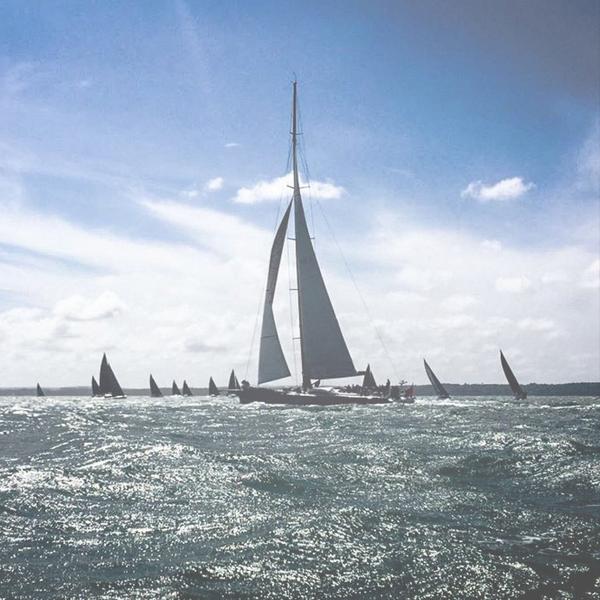
Looking to take your team to the next level? Off the back of J/111 Worlds, North Sails catches up with Martin Dent on how he and the team on North-powered JElvis played their strengths to secure a world-class win in this highly competitive class. Narrowing it down, Dent shares 5 tips to up your game and approach the next regatta ready to win.
IT ALL STARTS WITH A GREAT TEAM
Most of us have now raced together since the 2014 Winter Series, add in some practice, and then finally some good fortune. We were especially lucky with the windy conditions, which played to our strengths.
Last year my wife and youngest daughter sailed on the boat in Newport, this year my elder daughter and 16 year old son did the bow and pit respectively. No Worlds places are guaranteed for family members (!) but these two both did the full training during July and earnt their spots. My wife did an amazing job this year, catering for the whole team in our house in Cowes and also being out on the rib for each race.
MASTER THE FAR ENDS OF “SAILABLE CONDITIONS”
We started training with the Round the Island Race on July 2nd. This was the windiest conditions that we’d sailed the J/111, and it is hard to imagine deliberately going out for a practice session in 25 to 35 knots. So when we found ourselves round the back of the island, wiping out on every other gybe, the process started to develop techniques that would ultimately pay for us in the Worlds one month later. Then in mid July, North Sails organized a training weekend. As it turned out we were lucky that during this training it was also blowing 20+ knots: again, the exact same conditions we were to face in the Worlds.
BRING YOUR A-GAME
It was noticeable, as with previous Worlds, that everybody raises their game. Whether it’s new sails, A-teams, a bit of practice, or just the general focus and concentration that everyone puts in, every team was sailing well. You get boats and teams from all over the world coming together at the warning signal and the true one design of the J/111 makes the racing so tight.
KNOW YOUR COMPETITION
Peter Wagner’s team, Skeleton Key, from San Francisco, were a hot ship. They always seemed to be in the right place going fast, and they were very competitive tactically: the tacking duels started on Day 1. Going into the final day, we were hanging on to a 2-point lead but we were carrying a much higher discard (15) than Skeleton who had only discarded a 5. So we knew that they would try to sail us down the fleet, it was just a question of whether they would do the damage in Race 1 or 2… Whilst we ate our pancakes at breakfast, Ruairidh, Annabel and I were drawing sketches of the various boat-on-boat scenarios that might develop… Sure enough Skeleton came at us in the pre-start on the first race. We went into a match racing dial-up, which then turned into a dial down. Somehow we got out of there ok and got a reasonable start, so going into the final race it was back to fleet racing.
KEEP YOUR LID ON
The final race was underway and we needed a top 5 finish, yet we had to work our way through the fleet having struggled to hold our lane off the start. We’d worked our way to 3rd at the leeward mark, only to get a bonner in the jib and let 3 boats through. After all that work it was a basic boat-handling mistake under pressure! So we’d have to work our way back up through the fleet a second time, which was no easy task as everyone was fighting for places. In the end we fought back to a second place finish, granting us the overall win with four points to spare.
Want more tips? Check out our full-length interview with Martin on OffshoreOneDesign.com
READ MORE
READ MORE
events
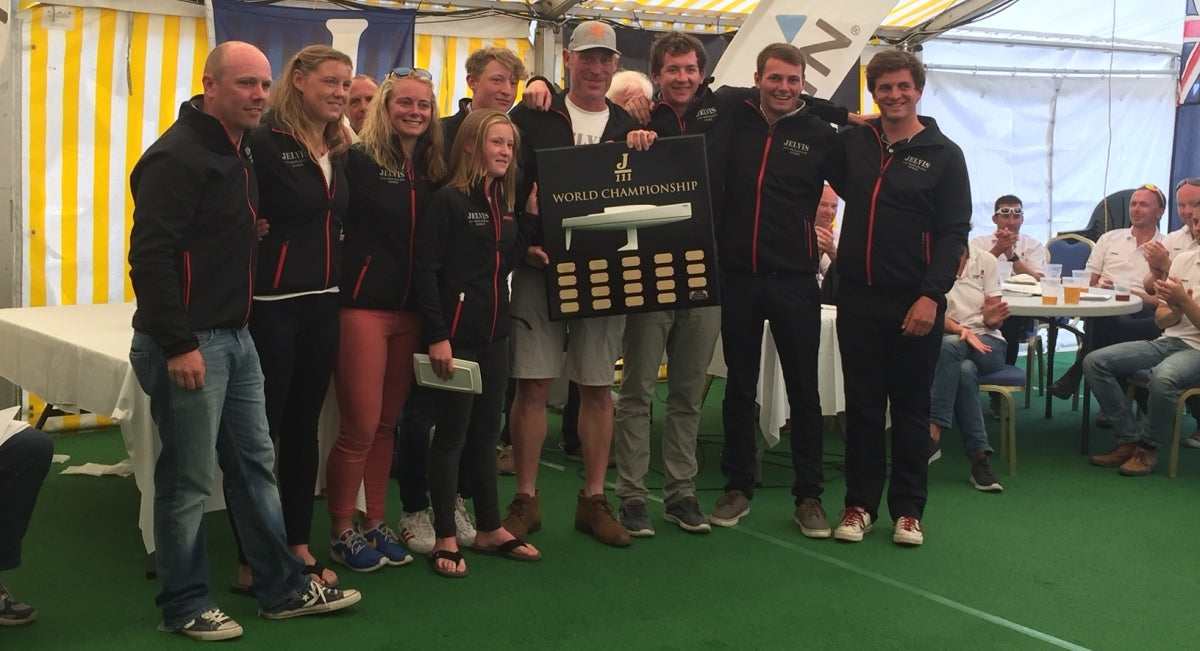
INTERVIEW WITH MARTIN DENT SKIPPER OF JELVIS THE 2016 J/111 WORLD CHAMPION
INTERVIEW WITH MARTIN DENT SKIPPER OF JELVIS THE 2016 J/111 WORLD CHAMPION
North Sails Jeremy Smart caught up with Martin to find out the secrets to their success.
What were the key ingredients of your World Championship victory?
That’s easy: it’s all down to a great team, most of which have now raced together since the 2014 Winter Series, add in some practice, and then finally some good fortune. We were especially lucky with the windy conditions, which played to our strengths.
How did you prepare for the Regatta?
We started with the Round the Island Race on July 2. This was the windiest conditions that we’d sailed the J/111, and it is hard to imagine deliberately going out for a practice session in 25 to 35 knots. So when we found ourselves round the back of the Island, wiping out on every other gybe, the process started to develop techniques that would ultimately pay for us in the Worlds one month later. Throughout July we spent time refreshing the boat handling basics. Then in mid July, North Sails organised a weekend of with some video training practice with starts, upwind tuning and downwind techniques. As it turned out we were lucky that during this training weekend it was also blowing 20+ knots: again, the exact same conditions we were to face in the Worlds.
How competitive was the racing during the Worlds?
It was very tight racing in each of the races throughout the four days. It was noticeable, as with previous Worlds, that everybody raises their game. Whether it’s new sails, A-teams, a bit of practice, or just the general focus and concentration that everyone puts in, every team was sailing well. You get boats and teams from all over the world coming together at the warning signal and the true one design of the J/111 makes the racing so tight. The starts were intense, it was a challenge to hold a lane, and the mark roundings were congested on each leg. If you made a mistake you’d immediately let through boats and it was a truly international final podium…the top 6 boats were: UK, USA, UK, USA, Netherlands, Cornwall.
There was high drama on the final day and it was all on until the last race?
Peter Wagner’s team, Skeleton Key, from San Francisco, were a hot ship. We knew this from their US performances and from when they flew in and with just one day’s acclimatisation white-washed the Pre-Worlds giving us an exhibition in nailing every shift and slick boat handling. The weather during the Pre-Worlds was closer to “normal”, but as the Worlds got underway in heavy Solent conditions, that favoured us, it seemed like Skeleton were getting faster throughout the week as they worked out both the conditions and the Solent. They always seemed to be in the right place going fast, and they were very competitive tactically: the tacking duels started on Day 1. Going into the final day, we were hanging on to a 2-point lead but we were carrying a much higher discard (15) than Skeleton who had only discarded a 5. So we knew that they would try to sail us down the fleet, it was just a question of whether they would do the damage in Race 1 or 2… Whilst we ate our pancakes at breakfast, Ruairidh, Annabel and I were drawing sketches of the various boat-on-boat scenarios that might develop… Sure enough Skeleton came at us in the pre-start on the first race. We went into a match racing dial-up, which then turned into a dial down. Somehow we got out of there ok and got a reasonable start, so going into the next and final race it was back to fleet racing. We needed a top 5 finish, and yet we had to work our way through the fleet having struggled to hold our lane off the start. We’d worked our way to 3rd at the leeward mark, only to get a bonner in the jib and let 3 boats through. After all that work it was a basic boat-handling mistake under pressure! So we’d have to work our way back up through the fleet a second time, which was no easy task as everyone was fighting for places.
How did the 2016 Worlds compare with the 2015 Worlds in Newport, USA?
Conditions were completely different. In Newport there was a 25 boat fleet but it was light and shifty winds: a lot of J1 upwind and A1.5 downwind sailing, soaking low to target VMG numbers. This year was pretty much all 20+ knots so it was J2’s and J3’s, and on the downwind legs it paid to get the boat up and ripping on the plane asap.
How many family members did you have on the team?
Last year my wife and youngest daughter sailed on the boat in Newport, this year my elder daughter and 16 year old son did the bow and pit respectively. No Worlds’ places are guaranteed for family members (!) but these two both did the full training during July and earnt their spots. My wife did an amazing job this year, catering for the whole team in our house in Cowes and also being out on the rib for each race.
You bought your J/111 in 2014. Why did you pick the J/111?
As a family we had spent the previous decade doing a lot of blue water cruising on an Oyster. The displacement Oyster was perfect for its task but when, in 2014, we switched the focus to racing we didn’t want another boat that went downwind at the same speed as it went upwind. So it had to be a planing boat, and a one-design fleet with a future, that we could grow into. I noted that the J/111 fleet was strong in the UK and was growing world wide, with an ISAF international class status. The J/111 has surpassed our expectations. I was delighted that the first year, we were firmly at the back of the fleet; this was a fleet of good sailors. The fleet has been great, there’s a good bunch of friendly owners, who share ideas and knowledge freely. Cost-wise the J/111 is not expensive, it’s just the same as any other 35 footer, and yet you get a different league of performance and racing. You can’t modify your boat so you can’t spend any money even if you wanted to, and there is a sail tag system that limits the numbers of new sails you can buy. Most importantly sailors enjoy sailing the J/111. Finding crew is not difficult: the boat is so responsive to even minor trim adjustments and to body positions, it sails like a dinghy, and downwind it is truly exciting sailing, and this keeps everybody coming back!
How have you found the North Sails product?
I had North Sails on my Oyster, but if I am honest, I wouldn’t have been able to tell you, in 2014, which of the sail-makers were building the best sails for the J/111. The 2014, 2015 and 2016 J/111 Worlds have all been won by different sail-makers. But what made the difference for me was that from the minute I bought the J/111, I received so much help and support in terms of actually sailing the boat from the North team. Over the last three years we have had 8 different North Sails sailors help us! The North team has led the development and transfer of knowledge across the fleet. This was great for us when we were starting out, and it continues to help us today and to help the fleet keep improving. We use the standard North Sails tuning guide and targets. In three years I have only bought two sets of sails, despite doing a lot of sailing and 3 World Championships. We switched from 3DL to raw 3Di and this included a different sail design and undoubtedly we had a step change in boat speed. In Newport (2015) with our 3di sails hung on a local US boat that we chartered, we had good boat speed on the US teams, including the Quantum boat that ultimately won, but we were just out-sailed, ending up 7th out of 25. It is therefore no surprise to me that, this year, North Sails have monopolised the J/111 podiums on both sides of the Atlantic in the respective Nationals, and Worlds: just deserts, in my opinion, for a full service effort.
Will you continue with the J/111?
Undoubtedly, yes. It’s simple: there isn’t any better racing. As an example and in complete contrast to the Worlds, immediately following the Worlds this year we did Cowes Week. Given some understandable fallout after the Worlds, there were only six J/111 entries and all with family and friend type crews. And yet despite this and the typical Cowes Week round the can races, it was still nip and tuck all the way; after 3 and a half hours, just 3 seconds separated McFly and us on the first day and each subsequent race the finishes were matters of seconds not minutes. To find another boat that planes downwind, the alternative in the UK fleets is to go to the Fast Forty fleet, which is a massive increase in price and a much more complex proposition. Whilst the Ker 40’s etc look awesome, and it is great that this fleet has developed, I do notice that after every event the Fast Forty fleet talk is generally about rigs, keels, etc. I’ve got great admiration for the boat development, but I prefer the J/111 post race talk, which is simply about shifts, tactics and boat handling. The 111 racing is just about the sailing, and it is exciting to the finish with boats seconds apart.
What do you think of the J/111 Class Rules?
They all make sense: the 650kg weight limit, for Class events, is perfect and most teams sail with 8 comfortably. Without the weight limit it would be a competition in finding 6 big guys for the rail. With it, we find a few teams that manage to get 9 on board with either young nippers and also it is great to see women who are typically lighter weight, amongst the teams. There is a one Cat 3 (professional sailor) limit: this is also about right, keeps the cost down, and keeps it from becoming too serious. There are IRC events where Class Rules don’t apply and in the UK we have adjusted Class rules per local events to accommodate various teams and this has worked well.
Final question, will you go to the US to defend the Championship next year?
It’s one of the great benefits of the class that the World Championships move around to great sailing venues. I can’t think of a better holiday than a week racing in San Francisco Bay, under the Golden Gate Bridge and seeking tide relief from Alcatraz on the America’s Cup race track. We will be there.
READ MORE
READ MORE
events
OLYMPIC HISTORY: HUGO ROCHA REMEMBERS
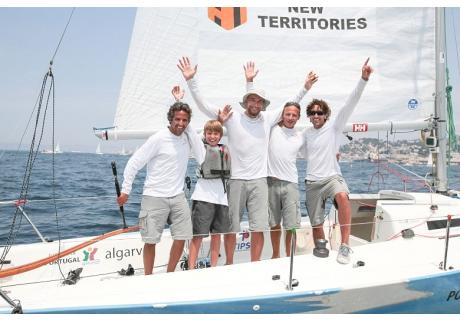
Hugo Rocha of North Sails Spain recounts Olympics past and present, plus the tactics that got him through three editions of the Games in the Men’s 470, ultimately medaling in Atlanta, 1996.
You were a young guy when you first went to Barcelona in 1992. Can you put into words what a first Olympic experience is like? The scale, the excitement, the camaraderie, etc. How did this affect you and what impact did it have?
I have been a very big fan of sports since I was a little child. When I was eight I used to practice gymnastics and I remember watching on TV the Moscow’s Olympics Ceremony, and obviously being there was something unthinkable. At 10, I started sailing in the Optimist class, and by that time the idea of attending the Olympics was definitely on my mind.
So when I finally could attend, my excitement was huge. Living in the Olympic Village, sharing the facilities with your sport idols, those whom you had seen only on TV, was an unforgettable experience.
I still remember the inauguration day and the walk we did from the Village to the Stadium, I was astounded at how incredible everything was, surrounded by police, helicopters above us, like in the movies, I felt really important. Being there during the ceremony in the Stadium was a breathtaking and incredible experience.
You must be extremely proud of your Bronze Medal in Atlanta (well, Savannah!) in 1996. Can you describe your emotions on the podium and the memories you now have looking back?
Reaching your goal after 4 years of hard work represents an enormous joy. However, sailing in Savannah helped us to focus on the Olympic racing just as we would any other, since we stayed in the local Olympic Village which was far away from the hustle and bustle of the Olympic Games.
For Atlanta, the real excitment came when we arrived in home in Portugal. A country with just a few Olympic medals, we had won two medals that year: Fernanda Ribeiro won gold in Women’s 10000mn, and us with bronze in the Men’s 470.
Overnight, we became famous. Everybody stopped you on the street, the restaurants. Suddenly you felt a strange but nice pressure.
“…That’s why it is important to follow a methodology and, above all, to build your strength based on psychology, which means that you have to work hard at what you believe, feel and want.”
From your three Olympic Games, other than the medal, what stands out from the different cities, teams and experiences that are all part of the world’s greatest sporting event?
Barcelona was my first Olympic experience and I still remember some special moments like it was yesterday. I will never forget the image of Olympic flame cauldron being lit by a flaming arrow, and listening to the athlete’s oath of my friend Luis Doreste during the opening ceremony.
In the Atlanta Games, sailing was hosted at a location far from the Olympic environment so it felt more like a common international competition rather than the biggest sporting event in the world. A curious thing was the giant platform where all the sailboats were standing, only accessible by boat. Everyday we had to take a 30 minutes ferry ride, enjoying the beautiful landscape.
Sydney was the first time that I felt sailing was valued by the crowds, just as much as the other sports. It was amazing to see the great involvement of the city during the races. In fact, it was one of the few occasions that we could see such big crowds supporting a sailing event. The match racing finals in front of the Opera House had incredible and unprecedented participation from the public. Even today I ask myself why match racing does not have a place in the Olympic Games.
Where do you keep your medal?
I keep it along with all my trophies and sailing items in a personal work room.
Tell us about the emotional and physical journey required to compete at the Olympic Games? Years of training, dreaming and pushing yourself must require a lot of discipline and dedication…
It is a minimum of 4 years with just one goal on your mind: winning the medal. Obviously it’s not an easy journey. The competitors are tough and all of them are struggling hard to reach the same reward. That’s why it is important to follow a methodology and, above all, to build your strength based on psychology which means that you have to work hard at what you believe, feel and want. Having a good team around you that can give support and advice is another key factor for success, because they must know you very well, giving you the confidence to destroy your fears.
The level of competition at the Olympics is so strong in all fleets – with an experienced eye, what is your assessment of the Men’s 470 Class? Who are the top podium contenders?
The 470 has always been a very strong Olympic Class both in the number of participants and the level of the athletes. In this Class, everyone struggles to get the best tuning and use the right materials to achieve the fastest boat. It is a very complete boat that requires a broad understanding of all tactics and technical items to compete on the top. It is definitely an incredible boat and it will push you to become an experienced sailor.
From my point of view, the top podium contenders are from Australia, Croatia, Argentina and Great Britain.
How do you think the Class has changed since you raced? How have the sails also evolved to improve performance?
During the last years, the class has faced several changes, the most important in my opinion is allowing the pumping from eight knots which demands a major physical effort. Regarding the evolution of the sails, I have seen important advances on the tuning guide directions, and the rake as well, besides a much flatter mainsail – especially on the bottom.
Have you ever sailed in Rio? What do you make of the courses?
The race area inside the bay is more tricky due to all the changes in pressure and currents. Outside the bay, there is a pretty nice course with good conditions and a nice swell.
Finally, which country do you think will emerge at the top of the sailing medal table?
Great Britain.
READ MORE
READ MORE
events
J/FEST NEW ENGLAND
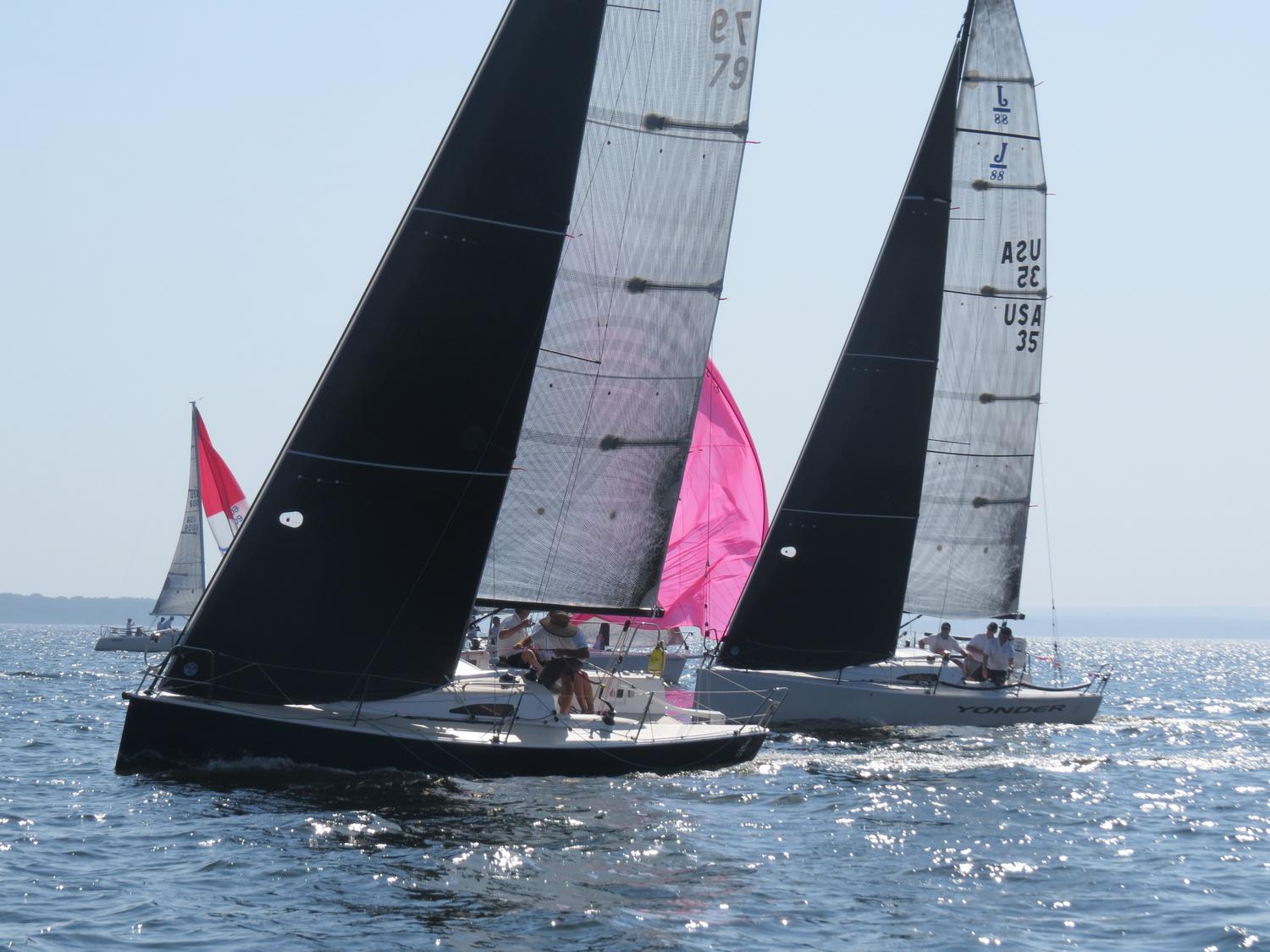
Thirty six J/Boats hit the water to ring in the area’s inaugural J/Fest regatta.
Sponsored by North Sails and hosted by Bristol Yacht Club, the inaugural J/Fest New England kicked off Friday, August 12th with afternoon practice led by North Sails Offshore One Design, followed by a local knowledge weather briefing at the club.
Working with the J/105, J/109 and J/88 classes, North Sails experts Chuck Allen, Bill Gladstone and Jack Orr helped teams tune up and stretch their legs in 12-15 knot southerly winds. Heading in a little early due to incoming weather, sailors were met with a local knowledge briefing by North Sails experts Charlie Enright and North Sails President, Ken Read. A review of local weather trends including current, obstacles and wind direction was complemented by burgers and an open bar, all sponsored by North Sails.
“If it weren’t for the rise of J/Boat racing, I would still be in Bristol Harbor sailing Mercuries,” said Read, a multi-world champion in the J/24, acknowledging the impact of J/Boats on competitive One Design racing throughout North America.
Saturday brought the first races to fruition slowly, with a wind delay at the club and on the water. In the 90 degree heat and humidity forecast, soon more sailors were swimming than waiting patiently aboard. Nevertheless, the sea breeze filled mid-afternoon and the race committee squeezed in two quality races in a fairly stable southerly at 12 knots and ebb tide. Early on, boats starting off the pin end who worked the left shoreline fared well before the wind began to shift slightly right toward the end of the day.
Sunday brought a light southerly gradient breeze. Hopes for a bolstering seabreeze were eventually burned off with the high heat, and pressure was generally up and down with big oscillations. Three to four races were completed by all fleets.
North Sails sponsored three awards for the event which were presented by NA Sales Manager, Kimo Worthington, who sailed onboard J/109 Vento Solare for the event. The North Sails Overall award was presented to Ted Hearlihy’s J/109 Gut Feeling, the Sportsmanship award was presented to Brooke Mastrorio on J/109 Ursa, and most improved went to Kevin Dakan on J/110 Memory.
Looking back on the long weekend, local North expert Charlie Enright commented that J/Fest New England is “a great event with a bright future. It’s wonderful to see a new regatta surrounded by such enthusiasm. Events like J/Fest will strengthen local classes both on the water and off.”
READ MORE
READ MORE
events
FIREBALL UK NATIONAL CHAMPIONSHIP
FIREBALL UK NATIONAL CHAMPIONSHIP
Tom Gillard & Richard Anderton first with a day to spare
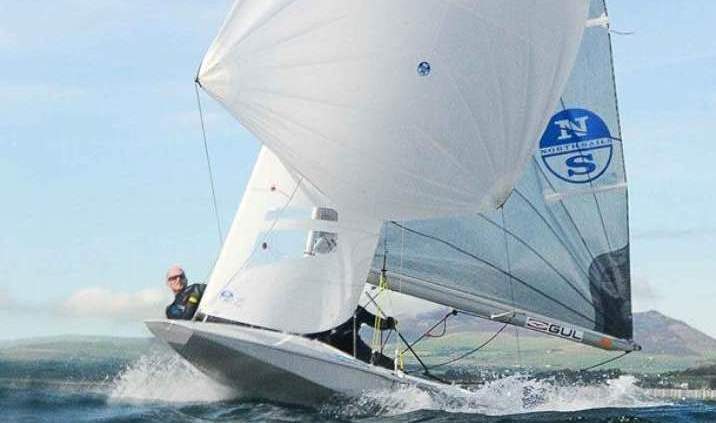
North Sails Tom Gillard with crew Richard Anderton has won the Fireball UK Nationals at Hayling Island with a day and two races to spare.
The regatta saw mixed conditions with the the first two days raced in 12 to 18 knots and days three and four in lighter winds of 4 to 12 knots.
Other top scoring North Sails powered boats were Kevin Hope and Russell Thorne who finished in 5th place and Peter & Tom Kyne who finished in 9th place.
Overall results can be seen on the event results page.
To read a full report see yachtsandyachting.com
READ MORE
READ MORE
events
NORTH CLIENTS 1,2,3 AT 2016 J/111 WORLDS
North Sails J/111 expert Jeremy Smart re-caps the recent world championship regatta on the Solent.
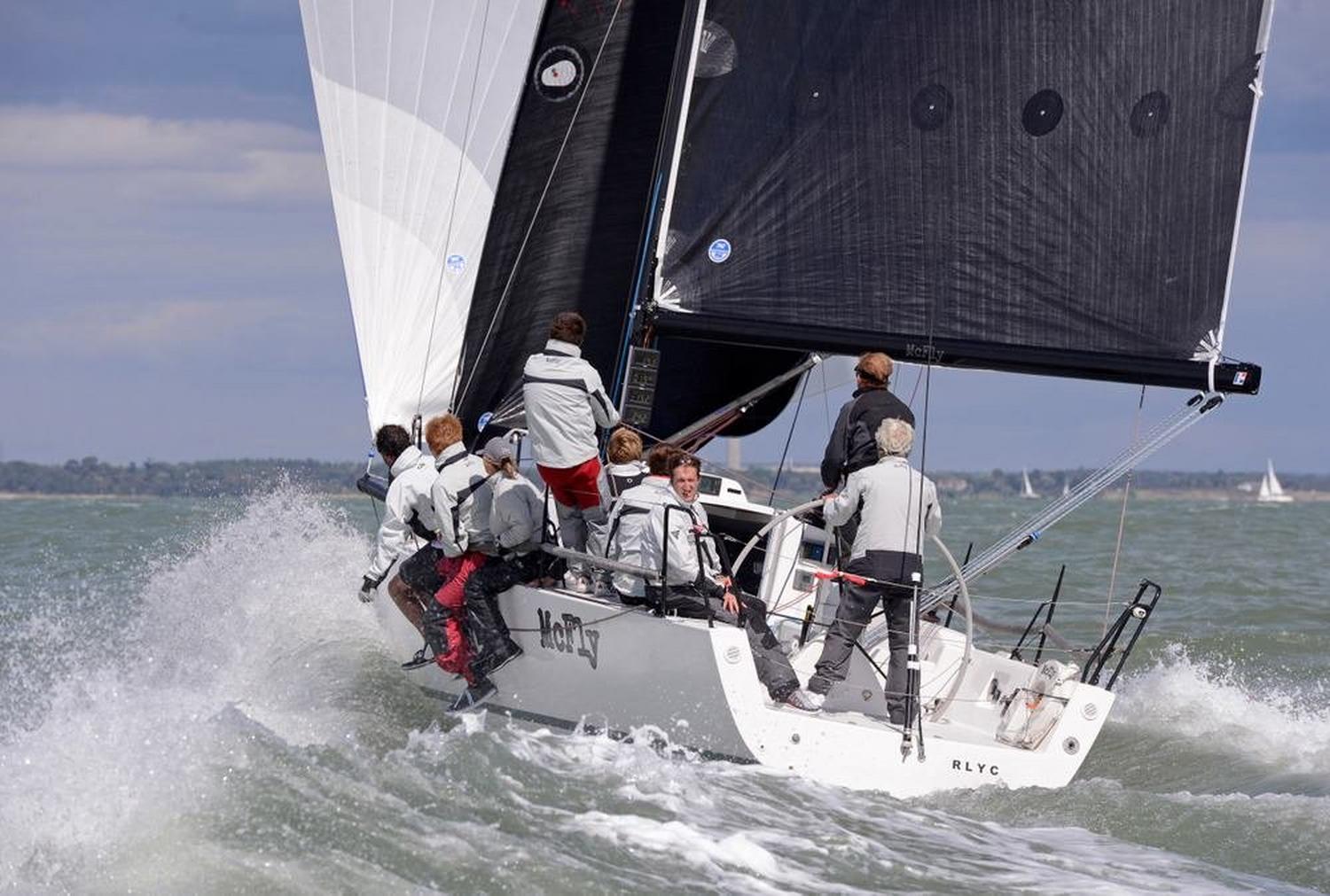
The Pre-Worlds were hosted by the Royal Southern Yacht Club in Hamble on the mainland side of the Solent. Six races were sailed over two days with breezy conditions on Friday and calmer conditions on Saturday. Peter Wagner and the crew on Skeleton Key made their mark, winning five of the races and discarding a second. In second overall were Martin Dent’s JElvis on 10 points and in third Stuart Sawyer’s Black Dog on 22 points. All of the top three used North Sails 3Di RAW upwind sails.
On Sunday 31st July the 14-boat fleet moved across the Solent to Cowes for a day of weighing in and race briefings. North Sails was a sponsor for the Pre-Worlds and Worlds and provided weather forecasting each day with Libby Greenhalgh, who has forecast for the British Olympic Sailing Team and Team SCA in the Volvo Ocean Race. North also donated daily prizes and had planned some drone filming but the weather proved too windy to allow this. North representatives at the event were myself on McFly, Ruairidh Scott on JElvis, Seadon Wijsen from North Sails San Francisco on Skeleton Key, Aaron Cole from North Sails Melbourne on Kestrel and Wouter Kollman from North Sails Holland on Lällekönigl.
The first day of the championship proved to be the light wind day of the regatta, with the breeze between 8 -15 knots. Three races were sailed. JElvis were the winners of the day followed by Skeleton Key and McFly.
For the remaining three days the wind rarely dropped below 18 knots and topped at around 30. Day Two proved to be the windiest and was to be dubbed ‘Big Tuesday’! It was the Dutch boat Sweeny who showed their form in the windy conditions taking two firsts. Video footage from the day can be seen here: https://www.youtube.com/watch?v=X3nThVJc-1M
By the evening of the third day a gap was opening up between the top three boats and the rest of the fleet. In first place was Skeleton Key with 11pts, followed by JElvis with 13pts and McFly with 19pts; while the next placed boat was Sweeny at 27pts and then Kashmir with a total of 29pts. On the morning of the final day, with two races to go, these three had it all to play for! Skeleton Key didn’t get off to a good start in the first race and then struggled to fight their way back. This gave JElvis a five point lead going into the last race, and Skeleton Key nine points ahead of McFly. Skeleton Key made a good start in this race and led most of the way around. Behind them places were changing rapidly meaning the final result wasn’t certain until the second run of the race when JElvis fought back from 6th to 2nd.
The final race win for Skeleton Key, however, was not enough for them to take the overall title. JElvis had sailed incredibly consistent and were counting all top three scores, securing the win by four points from Skeleton Key. McFly was third, Kashmir fourth, Sweeny fifth and Black Dog sixth overall and first Corinthian boat.
North Sails is proud to have outfit 13 of the 14 boats in the fleet with a complete sail inventory for the Worlds.
Martin Dent’s winning team on JElvis began sailing the J/111 in 2014 and, during their short time in the class, have shown massive improvement. Martin commented that whilst the sails are undoubtedly fast, it’s the support and advice that they have received from North Sails that has enabled them to improve so quickly.
Congratulations to the crews of JElvis, Skeleton Key, and McFly; and to all the fantastic sailors throughout the J/111 fleet, on a week of exceptional racing.
Full results
READ MORE
READ MORE
events
RECAP: 2016 THISTLE NATIONALS
WHAT WE LEARNED AT THE 2016 THISTLE NATIONALS
Tuning Tips from Mike Ingham
Eugene Yacht Club is a special place both on and off the water. We have raced the last two Nationals there, so we immediately signed up again this year, barely consulting our calendars. Everything else could take a back seat. When I’m asked what it is like, I say “The wind comes in like clockwork (no foulies required), the RC is spot on, the club members are gracious hosts, the camping is perfect, the scenery beautiful and there is never a drop of rain.” Fortunately, the 2016 Nationals lived up to those expectations.
We got all seven races off in Northerly winds 12-15 kts out of the north: the thermal direction. This is the long direction on the lake, so the legs were full Nationals length, meaning a lot of hiking. The water was relatively flat, and the shifts pretty big. The high end of the puffs blew into the low 20’s and the low end was light where we had to sit in. Tricky stuff! The reaches were full-on planing. It was good, fun racing! The challenge to going fast was shifting gears. Those who shifted well usually finished well. It was one of the keys to our win. Here are some of the things we did:
Constantly looking out for puffs and lulls and communicating. Delia counted down the puffs and lulls: “puff in 3, 2, 1 puff on”, or just as important “big lull in 3, 2, 1, lull”. She was relentlessly observant.
I was clear about what mode we were in. If it was marginally overpowering, I would say: “full hike” and I would balance the helm by easing just the right amount. But if it got lighter I would say; “I am fully trimmed” so Dan and Delia would know to balance the boat by moving their body weight and I would trim to the top telltale.
Dan played the vang a lot with the increased wind. The more it blew, the more he would put it down to match my easing the mainsheet to keep the mast bent. He would make his best guess at where he thought it should be and then we would talk to fine tune it.
Same with the jib. If I eased the main enough to get a big bubble up front, or even flog it, Dan would crack the jib just enough to get that bubble down a little. We found if we eased too much, we would lose height, so the ease was subtle.
In the lulls, when we were in that mode where Dan and Delia balanced the boat, I was very careful to trim to the top mainsail telltale. It was easy to sheet too hard because having just come off a puff, I would trim in as it got lighter. So I kept looking up at that telltale and Dan would too. He would take a quick look every time the wind changed significantly and we would talk about how much trim was right. In the flat water, I could stall it a good amount and still keep the boat moving.
We adjusted the cunningham and outhaul a little, but not much. Things happened quickly and getting the “big lines” (main sheet, jib sheet, vang) and boat balance right was more important than fine tuning of the “little lines” (like the cunningham).
Most of the fleet camped together, enjoying the perfect weather. The yacht club served dinner every evening. Afterward we hung out by the fire and “karate chop” sailed through the evenings. Then we started it all over again breakfast together in the morning. There was no reason to leave the grounds.
We all are looking forward to the Nationals in NY next year. Those making the trek: keep in mind that there are two other regattas in NY, one in late August and one the first weekend of September. Feel free to leave your boat at Rochester Canoe Club and stick around or fly back for those. Let me know in you’re interested and I will set you up! Learn more about North Sails’ fast Thistle designs.Learn more about North Sails fast Thistle designs.
NORTH NOTES: 1,2,3,4,6,7,8,9,10 Powered by North Sails!
READ MORE
READ MORE

events
J/88 YONDER CLAIMS NYYC RACE WEEK
Doug Newhouse and his team on the J/88 Yonder won the 2016 New York Yacht Club Race Week, posting three firsts and three seconds over the eight race series. We caught up with Doug to collect some words of wisdom and reflection on racing.
What conditions did you encounter at this event and how prepared were you and your team?
The Race Committee really gave us the full range of sailing experiences—a stadium course, round the island, racing up the bay, and racing in the open ocean. The breeze was strong for most races, including a driving rainstorm—but in the strangest race, the breeze changed from a 10-12 knot southerly on the first four legs to zero on the fifth leg, and then to an 8-10 knot northerly in about five minutes! Our tactician wisely realized that even though we had just dropped the kite we needed to hoist it again; his quick thinking plus great crew work allowed us to win that crazy race.
What was the biggest contributor to your success in winning this regatta?
It all starts with the team. We have a good core group and almost everyone is a twenty-something ex-college racer. They provide energy and are excited to have fun on a new boat like the J/88. Importantly, we participated in the Sail Newport one design regatta the weekend before Race Week, and we were able to work out some issues.
Everyone is talking about your incredible downwind speed. How did you guys go so fast downwind?
We need to give a salute here to North Sails. Last year we had a first generation kite, and when we switched to the newest North design it made a huge difference. The shape and overall performance was a game changer. Also the crew works the weight aggressively, like a dinghy, which allows me to keep a calm tiller and focus on keeping the boat balanced.
How did you set up the boat?
North tuning guide all the way.
Can you give us three things that you and your team would do to make your boat go fast?
It’s important to keep a balanced boat—heel angle makes a big difference. Crew consistency.
Practice, practice, practice…
Tell us about your team; they always looked to be well positioned on the boat.
Most of the crew comes from smaller boats. They are always trying to give us the best boat balance. Hopefully everyone is choreographed and can handle every situation.
As the owner, driver and skipper; can you tell us how you interact with the crew during a race?
No yelling—it adds stress and is counterproductive. Before we go out every day, we have a team meeting to discuss every issue that might come up. I ask everyone their opinion, starting with the youngest. After each race, we debrief if time permits. Also everyone has a defined role and mine is to drive—I don’t call tactics, I don’t trim sails, I only try to focus on moving the boat forward in the most efficient manner.
What do you and your team plan to work on for future events?
We need to get better. Our competitors are really great sailors and every race is up for grabs. We need to go faster—great tactics are easy with great speed. We want better sail shapes—always working to refine the sails. Crew work is always ongoing. Lastly, better starts—we were never over early but seldom first. The playbook is never finished.
READ MORE
READ MORE
events
TIM SADLER & RICHARD SAULT ENTERPRISE NATIONAL CHAMPS 2016
SADLER & SAULT ENTERPRISE NATIONAL CHAMPS
Winners Tim Sadler & Richard Sault with Commodore David Faithfull © Gareth Fudge
Congratulations to Tim Sadler & Richard Sault who have retained their title – winning the Enterprise UK National Championship for 2016!
Well done also to Alice Allen and Sharky who took the prize for first Lady’s helm.
Our North Sails powered boats dominated the top 20 coming in at 1,2,5,6,7,8,9,11,12,15,17,19.
Enterprise Fleet Nationals 2016 © Gareth Fudge
Johnny Allen & James Hobson © Gareth Fudge
Ladies National Champion Alice Allen & Sharky with Commodore David Faithfull © Graham Fudge
READ MORE
READ MORE
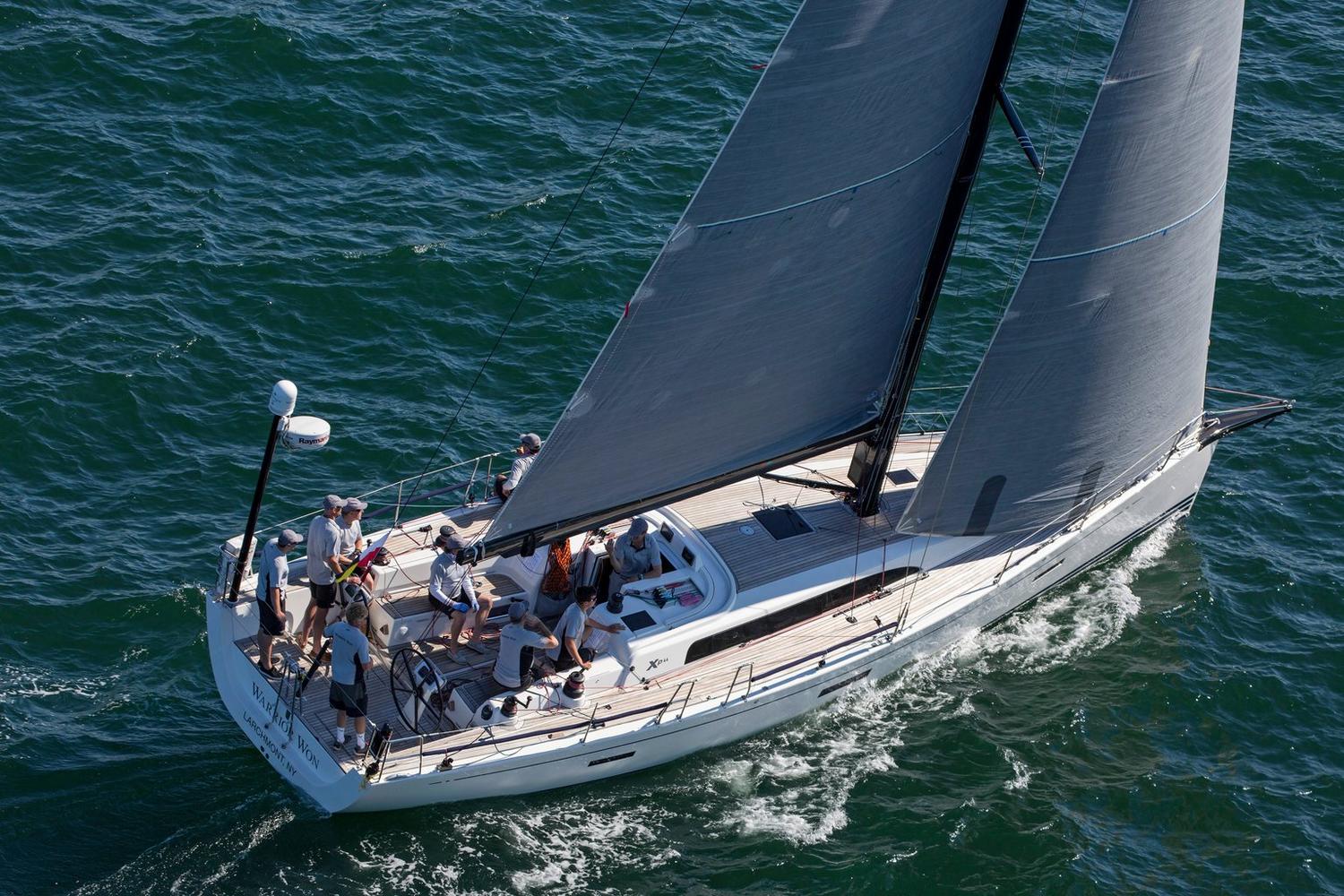
events
WARRIOR WON WINS NEWPORT TO BERMUDA RACE
Christopher Sheehan purchased Warrior Won, a new XP-44, in 2014 with the express goal of competing in the the 2016 Newport Bermuda Race. Warrior Won took the St. David’s Lighthouse Trophy in the historic race, and we caught up with her skipper after he returned to the east coast.
Approximately one third of the fleet dropped out of this year’s Newport – Bermuda Race because of the forecast (upwards of 40 knots and an especially rough sea state in the Gulf Stream). What was your thought process before leaving the dock?
The decision to race was never in question. We are all seasoned offshore racers and the boat was extremely well prepared. The fact is the conditions were near perfect. I respect the owners who did withdraw out of concern for crew who may have not been prepared for even thirty knot winds, or because they had boats that may be prone to expensive breakage in sustained high winds and seas.
Who was on the crew?
I have always felt that the individuals with small one design racing experience are the best crew on a big boat. The final 11 were: Skipper Christopher Sheehan; Watch Captains Paul van Dyke and Doug Lynn; Navigator H.L. DeVore; Bowmen, Ryan Zupon and Chris Simon; additional crew, Peter Carpenter, Roland Schulz, Andres de Lasa, Joost-Olan Sheehan, and Carter Holliday. Collectively we had extensive ocean racing experience on board.
Reviewing the tracker, it looked like Warrior Won worked hard to get east on Saturday morning, and then stayed relatively close to Rhumbline through to the finish. Was working the eastern edge your game plan from the beginning or did you improvise?
Between 36 and 12 hours before the start of the race, Commanders Weather and many others suggested going S-SW to capture breeze and avoid a huge high pressure system forming over Canada and northern New England. That was sound advice, however, by Saturday morning a few very astute navigators noticed that the wind was crashing to the SW and all boats were getting severely lifted. We and a few others gybed out crossing the back of half the fleet for 25 miles heading perpendicular to the course due east, giving up a top five position to be middle of the fleet.
It paid off tremendously to get east of Rhumbline and send it 161 degrees to Bermuda. Thirty miles from the finish the wind got very light but our position favored us as we stayed on Rhumbline and found ourselves in a small rain squall that carried us to the finish. In the words of our navigator, it was a “slow motion knife fight” with the four boats ahead of us. We gybed dozens of times and picked up three spots passing Siren, Maximizer and Crazy Horse. Only High Noon crossed the line before us in the St. David’s Lighthouse Division. Many boats finished under very light conditions.
What was the discussion like onboard when making the decision to gybe east?
Ultimately every course heading for the entire 89 hours was determined by H.L. He deliberated methodically with the watch captains and bowmen based on data gathered from various weather sources and would put Expedition Software to use to come up with an optimal course based on the data. I would say that a mere 30% of the time the computer models were right. H.L. would therefore constantly observe, with his own eyes from on deck, the condition on the water and ahead and finally would reconcile the two to make his own decision which ultimately was the winning decision.
“We raced one boat length—44 feet— at a time, despite 635 miles to Bermuda. Each person would focus intensely on his role every minute whether driving, trimming, navigating, calling tactics, or observing the weather.”
Which sails did you use the most and why?
Once H.L would determine our course, the on-duty watch captain (Doug or Paul) would decide exactly which sails we should use. We were sailing downwind or broad reaching probably 60-65% of the race. Percentage wise we used the Jib Top and Genoa Staysail and the A1 the most amount of time. In addition we used the A0 and Staysail quite frequently as well as the A4. We had the mainsail double-reefed any time winds exceeded 18 knots, which was for a solid third of the race. The boat and sails performed fantastically under these conditions.
Any other secrets to success?
We raced one boat length—44 feet— at a time, despite 635 miles to Bermuda. Each person would focus intensely on his role every minute whether driving, trimming, navigating, calling tactics, or observing the weather. Even when off watch, we’d concentrate on eating, hydrating and sleeping in order to be fresh and strong in four hours. Our navigator focused intensely for the hundreds of hours before and during the race to stay on top of the ever evolving conditions and make hundreds of brilliant decisions.
Unnecessary chatter is a huge distraction which slows the boat down almost immediately. A lost half a knot over 100-150 miles potentially means the difference between 1st or 4th. It’s not a cruise we are on. We all wanted to win. Our definition of fun is doing our absolute best every time we leave the dock, and winning is the only satisfactory result when you put in maximum effort.
Finally, were there any stand-out heroes among the crew?
I am extremely appreciative of Chris Simon who looks after Warrior Won twelve months of the year, and H.L DeVore for the thousands of hours of preparation that he put into setting us up for victory. Additionally my son Joost-Olan, age 16, deserves a great deal of credit for having the courage to race in any conditions and the mental focus to commit to the program, all while playing spring sports and attending to his school work. They are the stand-out heroes.
READ MORE
READ MORE

events
READY FOR RIO: SASKIA CLARK AND HANNAH MILLS INTERVIEW
Silver medal 470 sailors Saskia Clark and Hannah Mills are ready for their most challenging venue yet in Rio de Janeiro.
“We use North Sails from Japan for our full suit and have found the reliability and attention to detail of the product better than anything else out there.”
For those not familiar with dinghy sailing, what are the characteristics of 470 racing?
The 470 is a great mix of what sailing is all about. At the lighter end, the racing is a close, tactical battle. The boats are moving quite slowly, so there is time to think through your strategy and tactics like a game of chess. As the wind increases the boats get planing, becoming more physical. You need a more dynamic technique through the waves and the decisions on strategy need to be made faster as you react to the wind and your competitors.
Going in with good form must give you some confidence?
We are pleased with the process we have gone through this four years and feel we are a better, more competitive team than in 2012. Winning the final two World Cups in the run-up to the Games has given us a clear indication of the areas we have improved on and what still needs to be done, but at this point in time, we are pleased with where we are.
What are the biggest challenges with Guanabara Bay concerning tide, the wind, etc.?
It’s a hugely tricky venue, surrounded by high land which the wind has to find a way through and lots of bays and headlands for the tide to flow and eddy around, which is massively affected by the amount of rainfall. So lots to think about!
What changes have you had to make to your boat set-up to account for the conditions?
It’s a hugely varied venue from the flatter water inside the harbor to ocean swell outside so learning how to adapt and optimize our equipment over this range has been critical as we only measure in one set of equipment.
Have you had to change anything else significant, for example in your training program?
We have changed hulls this cycle from the Mackay to the Zeiglemayer. Programme wise, it varies as to where you are in the cycle and the priorities but this cycle we have spent a significant amount of time on breaking down and rebuilding our race observations and communications, so they are robust under the stress of the Olympic competition and venue.
Who do you see as your biggest competition? Are there any dark horses in the fleet?
There are obviously a few key contenders that have a good track record either in Rio or at the big events. However, Rio is an opportunistic venue and the Olympics inspire and stress people out in different ways so we expect that any number of people could get themselves into contention.
What is the dynamic like between helm and crew and therefore you and Hannah?
Hannah and I are lucky that from the beginning we just got on well and enjoyed the challenge and journey of an Olympic campaign together. We’ve managed to drag each other through some lows and enjoyed the highs together and will go into this Olympics with a great understanding of how we both enjoy working as individuals and how this feeds our team dynamic.
What were the key factors behind your decision to be powered with North Sails? What products are you working with?
We use North Sails from Japan for our full suit and have found the reliability and attention to detail of the product better than anything else out there.
In that sailing will be much closer this time, do you expect to see any other events or hang out with any other members of British team?
Ironically now that sailing is in the heart of the city, most of the action is happening at the Olympic village which could be up to a two-hour drive away with traffic (even though it’s not that far)! Until we have finished our racing, I expect it will be much the same as the other Olympics I have been to. Hopefully, afterward, we can get a taste of all the excitement of being in the center.
What is your final run-in plan to Rio?
We leave for Rio on Sunday (7/24) and have the potential for 15 days training before we begin racing. So there is still a lot of time to refine things. We are pretty clear on what we need to get done in that time. It will focus around short course boathandling and set pieces which are easier to do in a confined space when all the race courses are occupied around us.
How do you think this Games will be different from the others you have done?
Rio is the hardest venue of all so dealing with that under pressure will be key. Most of the course areas are very tricky and even if you are out in front you can’t relax and think that you’ve got that race in the bag. It really won’t be over until the finish line of the medal race.
Finally, what are you looking forward to the most about the Rio Olympics?
We just LOVE the Olympics! I love watching it, love competing in it, it’s just so exciting! It’s an absolute privilege to represent Team GB, so we’re looking forward to getting out there, racing and delivering.
READ MORE
READ MORE
events
PORTSMOUTH RECAP - SAILING FOR THE MASSES!
I think this ACWS Portsmouth will go into the books as an all-around style regatta – it has had a little bit of everything. A bit of light air, medium air and then some breeze- on yesterday. I wouldn’t say that we got to ‘heavy air’ per se yesterday but certainly we got into a good fun foiling day. And you know what, the best team won with the second best team coming in second. Its not actually often that you can say that in a regatta format like this but there is no doubt Land Rover BAR looked smooth. They get themselves out of jams when things weren’t going their way or they had a not-so–perfect start and they just didn’t make mistakes… Jimmy Spithill will be kicking himself for one race on Saturday which was held in quite light air and they made a series of mistakes at the bottom gate that turned into a 6th place, they are going to look back on that race and think what could have been. But also, what is it going to take to win one of these regattas? Its not that they aren’t trying but they just aren’t converting to wins.
Britain and specifically Portsmouth came out for this event, there were literally tens of thousands of people there, the grandstands were packed, the waterfront full and you could hear the cheers when Land Rover BAR did something well, went into the lead or won! This was crowd noise and cheering in a condensed space that made stadium sailing real. It was impressive. The roar of the crowd was really something else – you did have to stop and remind yourself that we were at a sailing regatta not a hockey or football game. It was really fun.
There were a few other notable things from this regatta – Groupama showed incredibly improved form in the light air but as soon as it went to foiling with a bit more breeze on they weren’t to be seen. They are the dark horses and certainly have potential but not up to the consistency and pace of the other top teams at the moment.
Artemis and Emirates Team New Zealand were being steered by people who have never steered a foiling catamaran in a regatta like this before – their number one helmsmen are on Olympic ‘duty’ so their tactics were a bit different. Emirates Team New Zealand tried to cling to a podium position in order to keep their overall series lead and got nipped in the end at this regatta. They have never not been in first since the start of this years ACWS so it is not a natural place or feeling for them. Glenn Ashby said many times during this event (as he was lowering expectations) that they were here to ‘survive it’ and in a way they did but they lost a full 20 points to Land Rover BAR and Oracle which is a fair chunk of points. So they are still on the podium for the overall series but with two (or maybe three) regattas to go, its a shame for those guys to lose quite so much.
With regards to Artemis, Francesco Bruni is an amazing sailor, one of the best in the world but he was thrown into the hot seat. At least Glenn Ashby, as the Olympian replacement, has been sailing on the boat nonstop for three years and is quite possibly the most heralded multihull sailor in the world. I’d say officially there is no better stand in than that right there! But for Artemis, Francesco sailed these boats when they are non foiling in the lead up to the last AC and of course, he was then Prada’s tactician, but he is new back into the game with these foiling machines so its not really a shock that they found it harder going.
Oracle must be just really, really annoyed now. Listening to Jimmy’s interview at the end of the regatta he was putting a good spin on it and they didn’t do badly, don’t get me wrong. But they didn’t win and I have sailed with, and against, Jimmy enough to know that he wants to win. He will be downright angry. It will be interested to see the rebound into France. They are just sick of coming second or third so they need to find that extra gear somehow.
But from a sporting perspective it was great to see the home team win, it just lifts an event and it certainly was the icing on the cake for Portsmouth. The energy, enthusiasm and wild scenes on the waterfront were expanded dramatically as the home town hero won again. There was a great vibe that couldn’t be matched if any other team won.
And as a final moment, the royals were out on the water yesterday which was great. Anytime the royals show up at a regatta, sailing is doing something right! It is exposure that is amazing for the sport. It was a awesome to see. And also the Duke of Edinburgh was out on the water on Saturday – at 90, he looked in his element! William and Kate looked very comfortable out there yesterday and there is no doubt it was pretty bouncy! Anyone with a slightly weaker constitution might have not enjoyed the experience so much but they were in the right boat in the chase boat with Land Rover BAR, the winning team in their home port.
Its an exciting and interesting time in the history of the Americas Cup and Im looking forward to seeing what happens next.
READ MORE
READ MORE
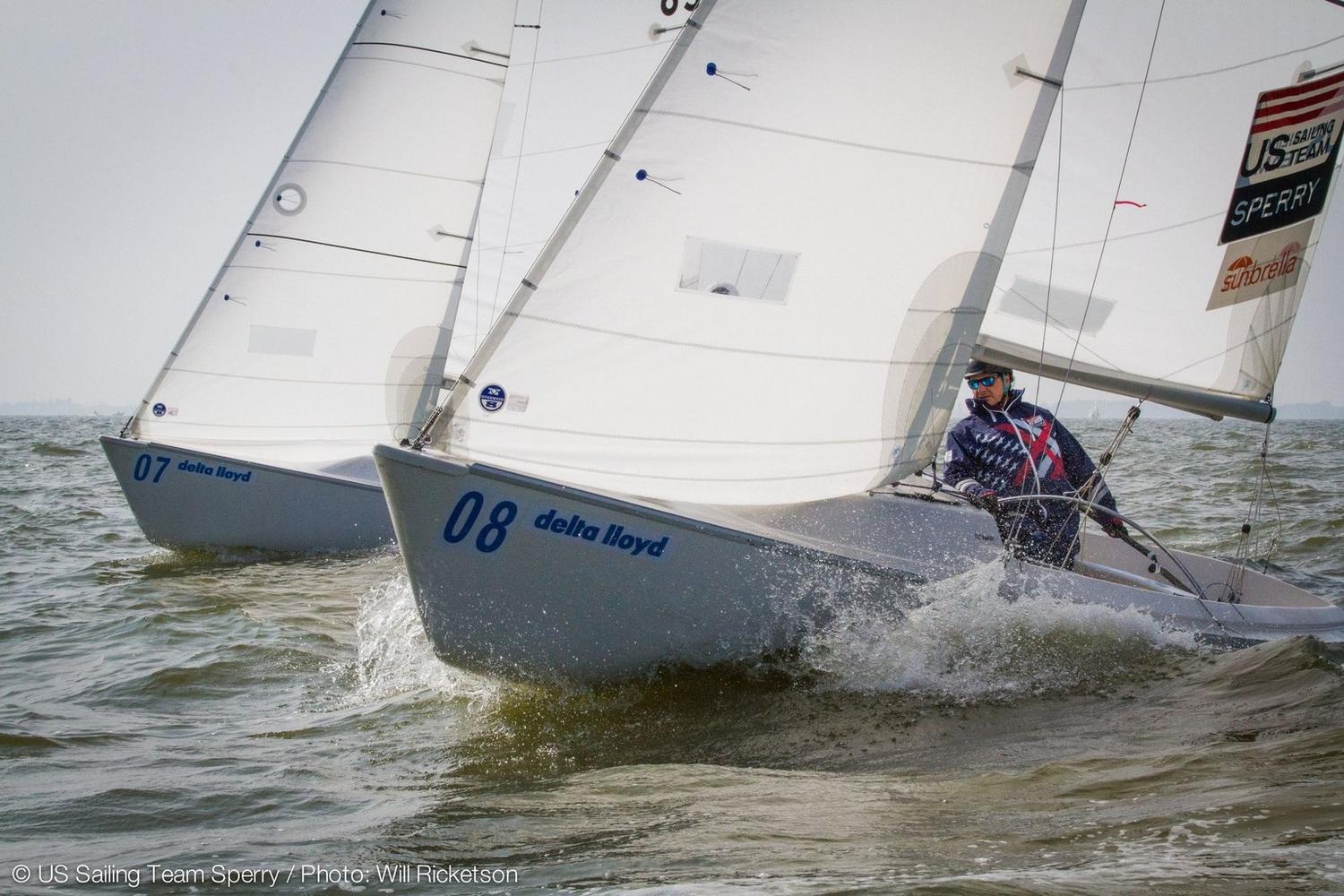
events
THINKING BIG PICTURE: COACH MIKE INGHAM
US Paralympics Sonar coach, Mike Ingham, is leading Doerr, Kendell, and Freund off a World Championship win into the highly anticipated Rio Games.
Tell us about your role with the US Paralympic Sonar team?
I am the team’s coach. I started a few years ago helping US Sailing with some clinics, and it grew from there. Now I am full time focused on the team of Ricky Doerr, Brad Kendell, and Hugh Freund. I help organize their training, and have been with them every step of the way for the year leading up to and including the Paralympic Games in September.
The US team must feel confident going into the Rio games after their recent world championship victory and a strong run of results. What are the success factors for the team within such a competitive Sonar fleet?
Yes, we have had a good run and, with that, confidence. The team is talented, and their strengths diverse. Ricky Doerr has the ability to focus on driving fast for long periods of time. Brad Kendell is a highly competitive guy with a knack for seat-of-the-pants tactics. Hugh Freund is more methodical and is the glue that organizes the team both on and off the water. That combo is pretty powerful. My job is to be the objective observer that focuses them on the most important things. That’s usually reinforcing what they do well already, and constantly working on just a few of the key things that need improvement.
For those people not familiar with the Sonar, can you give us an insight into the racing, boat characteristics and Paralympic classification?
The Sonar is a small keelboat with a lot of cockpit room – perfect for the Paralympics. There are minor modifications based on the disability. For example, in our boat, Ricky is a Paraplegic so we have a bench that spans from seat to seat in the cockpit and a stainless bar that goes from rail to rail so Ricky can pull himself across. Brad is a double leg amputee above the knee and wears “stubby” legs to get across the boat with no additional equipment. Hugh is a single leg amputee below the knee and wears a giant eraser-like cover to his leg. He has an additional set of purchase on the jib so he can trim without the stability of two legs. The Paralympic Sonar has no spinnaker, and instead uses a pole mounted on the boom to hold out the jib downwind. Other than the bench, extra purchase on the jib sheets, and no spinnaker, the boats are standard Sonars.
A team of international doctors runs classification. Each sailor is given a classification from 1 (Quadriplegic) to 7 (an 8 would be able bodies if there were such a classification). The max number is 14 total for the 3 athletes. On our team, Hugh is classified as a 7, Brad as a 4, and Ricky as a 3.
How has north sails worked with the leading teams in the class and what cloth materials are you working with to deliver optimal performance?
As a strict one design class, we can’t use North Sails 3Di, mylar, or anything else like that, so we are “stuck” with standard polyester cloth. That is a good thing for the class as it limits the arms race. There are two mainsail cuts for the Sonar. We have chosen the flatter version because the Paralympic athletes sail with three people and only two are allowed on the rail, so we don’t have a lot of righting moment. We can measure in two jibs; one flatter and the other fuller and we switch depending on the conditions.
A couple of the teams have worked with North for special designs, most notably using North Sails Radian TM cloth in a radial design.
Most of the fleet uses the standard crosscut North Sails. All but one of the Paralympic teams at the games will be using North Sails.
We have not modified these cuts,. We use the standard off-the-shelf designs because they are solid and it is more important to learn to use what we have than develop something. Part of our “secret” to success is that we spent much of 2015 learning the subtleties of tuning so we can go fast. Hard to do well without going fast!
The Paralympics has a unique and inspirational atmosphere – what do you find special about working with these athletes?
I have done a lot of coaching in other classes, but before this, almost no Paralympic. Most of the time it is just the same as coaching anyone else. Sure there are some equipment differences like Ricky’s bench, but that is really no different than coaching say hiking vs. trapeze. Those are just details that need to be sorted. What IS different though is that these guys have a broader view on life than most sailors. I was told when I first started coaching Paralympic athletes that, for most athletes, chasing the Olympic dream is the hardest thing they have ever done – not so for Paralympians, many have already been through something much harder. That perspective is hard to put a finger on, but I can say they enjoy life, and don’t get rattled easily. To coach them, you have to show them that it matters; you can’t just go the tough love route!
How has training been going in rio? what insights can you give us to racing in Guanabara Bay?
I have to start with all the negative publicity because the press has made it on top of everyone’s mind. Sure it is not perfect there, but it is pretty cool in Rio. The scenery is spectacular, the people could not be friendlier, and we have yet to miss a day of sailing due to weather. It’s a pretty nice place to sail.
The bay itself is tricky, the most likely courses for us are “Naval” and “Pao”, each near the mouth of the Bay. The tide can come in on Naval really hard. I just last week measured 10 boat lengths a minute before one of the starts. There is an island just upwind of the course that looks like something out of a James Bond movie, and it offers some current relief –but it is not always clear exactly where.
On Pao, there is current too, but not as much. It is just to the West of Naval with the windward mark often tucked under the huge rock known as Sugarloaf. So the start is in current and relatively steady wind, but by the top 1/3 of the course it is shifty like a small Midwest US lake. We need to study the course more so are heading back down to spend time on the water, get used to the ripping currents, and the fluky winds.
That all said, it is really nice sailing. Mountains surround the bay blocking all but the strongest systems, so there is a reliable thermal that comes in early afternoon almost every day.
What are you most excited about for the Rio Games?
Lots can happen in sailboat racing, but we are in the hunt to do well and are proud to represent our country as a legitimate competitor! Some will argue that a World Championship is just as hard and should be treated the same, but having just won the Sonar Disabled World’s last month I can tell you first hand that yes, it is just as hard, but the Games are different because the non-sailing world watches. You are part of something bigger – nothing can match representing your country in the same place and time as all the other sports.
Catch up and stay in touch with Team USA One:
Follow US Sailing Team Sperry on Facebook
Ricky Doerr, Brad Kendell & Hugh Freund – UNCHARTED WATERS: https://youtu.be/GT5r1fbgfVo
World Championship Title for USA Sonar, Medemblik 2016: https://youtu.be/PO15rct-Z-k
READ MORE
READ MORE
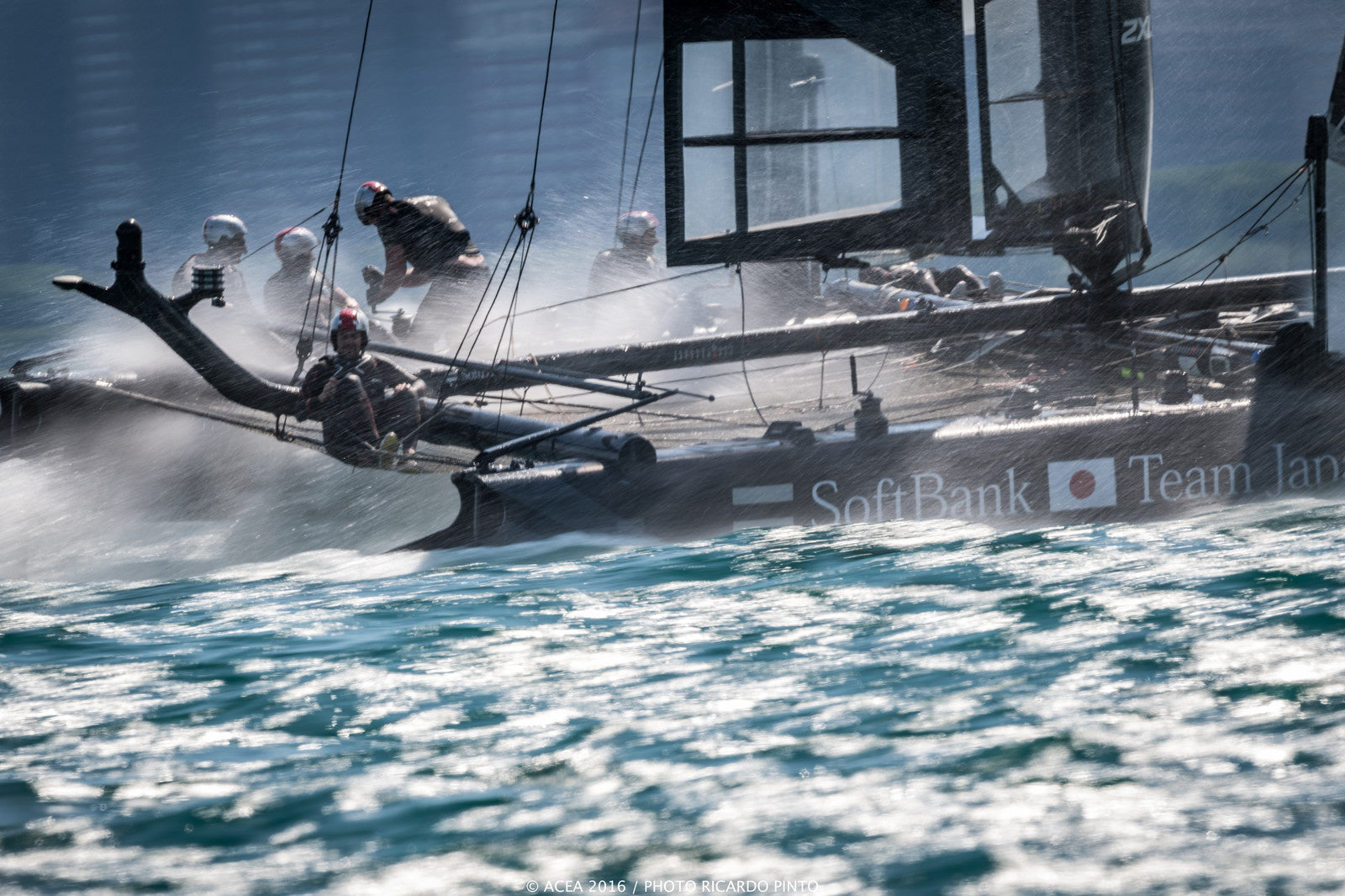
events
PORTSMOUTH, UK: SAME CITY, DIFFERENT RACE
The most unpredictable event yet in the America’s Cup World Series. Why? An interruption of Olympic proportion.
A few of the America’s Cup teams will temporarily lose key players as we build up to the Olympic Summer Games next month in Rio de Janeiro. Many of the young America’s Cup studs will compete for medals – Peter Burling and Blair Tuke from Emirates Team New Zealand, as well as Nathan Outteridge and Ian Jensen from Artemis Racing, will all compete in the Men’s 49er. Competing in the Finn class will be Giles Scott, tactician on Land Rover BAR. Scott has missed the past two ACWS events for Olympics practice, however, making his absence less of a shock to Ainslie and the BAR crew in Portsmouth.
With these sailors chasing Olympic glory, new talent will step onboard the boats. It makes sense the teams have put Veteran leaders in crucial on-deck positions – making the crew arguably as strong as before, now with an added element of surprise. When Glenn Ashby (ETNZ) is your stand-in skipper, a 15-time multihull world champion, you are in pretty good hands! The same for Francesco Bruni, filling for Outteridge on Artemis Racing. Bruni was the tactician on Prada for the last cup, he is one of the most talented sailors on the planet!
Even outside of the Olympics commitments, there are interesting crew rotations happening with all of the teams. Lets see how they play out before we make any judgements.
In addition, Portsmouth itself provides an interesting twist for this weekend’s event. Last July we witnessed a fantastic show from the town, region and wider nation. Huge support, massive crowds. Of course there will always be home town pressure, and interestingly for some reason it always seems enhanced with Ainslie and England. Ainslie’s sailing success has built up a super human quality – he can’t loose. But in the past few events he was not first – he did lose. I know his supporters and the amount of passion among English sailing fans. They all mean exceptionally well. I have to ask, is it too strong a praise that they expect him to win? Does the expectation rule anything else a failure? The pressure was on after New York, their poorest finish to date, from which they retaliated in Chicago. It will be interesting to see how Portsmouth plays out for the home team.
Plenty of intrigue, plenty of mystery. Portsmouth will be different, but the million-dollar question is: How different?
READ MORE
READ MORE
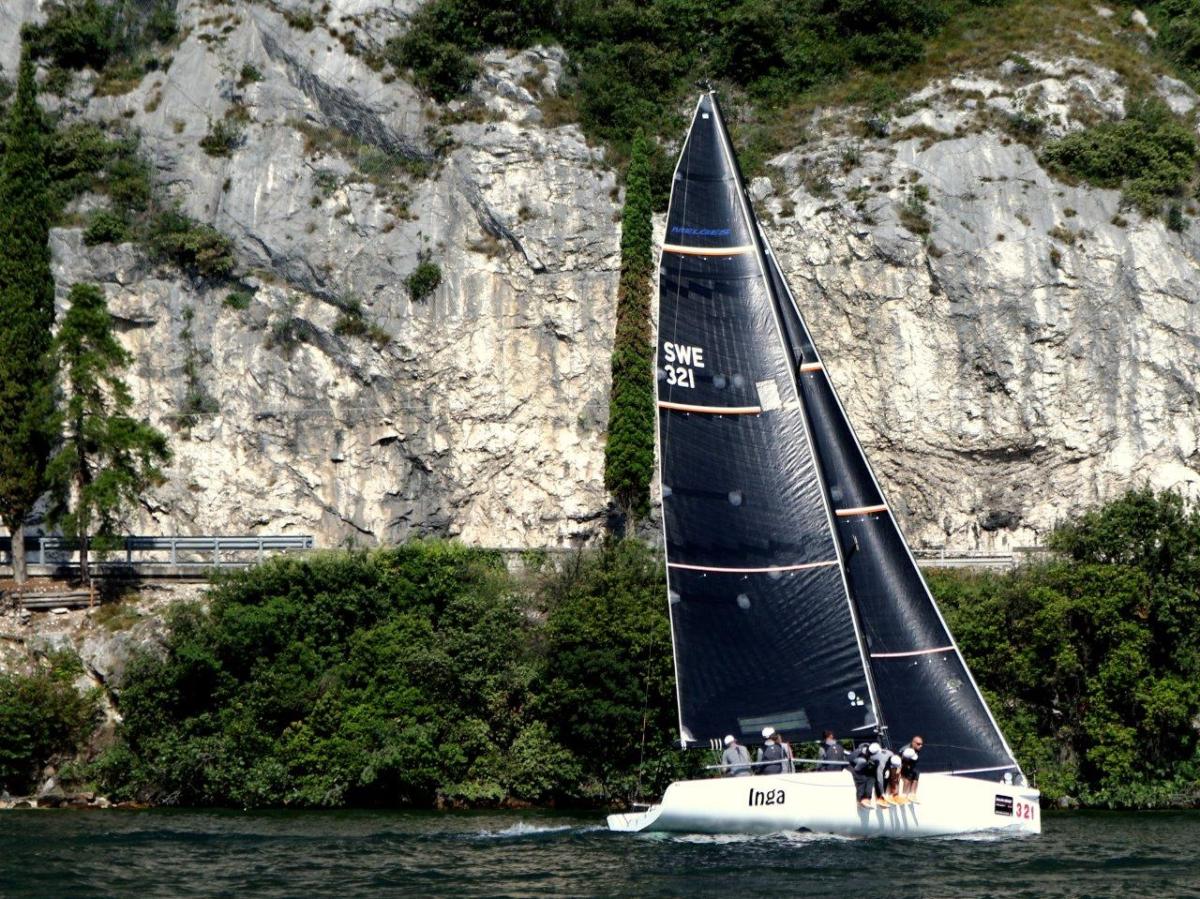
events
NORTH SAILS CLIENTS DOMINATE MELGES 32 RACING IN EUROPE
NORTH SAILS CLIENTS DOMINATE MELGES 32 RACING IN EUROPE
Congratulations to North Sails Melges 32 clients for sailing exceptionally well in the European circuit.
North Sails powered every overall podium position in the 2016 Sailing Series®. The fourth and final act in the Series also served as the Melges 32 Europeans, with North outfitting the top three boats.
2016 Sailing Series Results
1. Richard Goransson – Inga From Sweden
2. Matteo Balestrero – Giogi
3. Vincenzo Onorato – Mascalzone Latino
2016 European Championship Results
1. Vincenzo Onorato/Cameron Appleton – Mascalzone Latino
2. Matteo Balestrero/Andrea Casale – Giogi
3. Richard Goransson/Vasco Vascotto – Inga From Sweden
The North Sails class leaders for the Melges 32 are Cameron Appleton, Daniele Cassinari, Chris Larson and Federico Michetti. Class leaders are committed to increasing performance through sail design and tuning. Feel free to reach out to them if you have questions on the recent Melges 32 results or the North Sails Melges 32 sail inventory.
Inga From Sweden – Federico Michetti, Giovanni Cassinari, Marco Capitani
Giogi – Andrea Casale, Danielle Cassinari
Mascalsone Latino – Cameron Appleton
3Di RAW™ was the sail of choice for all winning teams. The recent Melges 32 results are another testament that RAW’s speed without compromise is the choice of champions.
Next up for the Melges 32 class is the US Nationals in August followed by the Worlds in September.
READ MORE
READ MORE
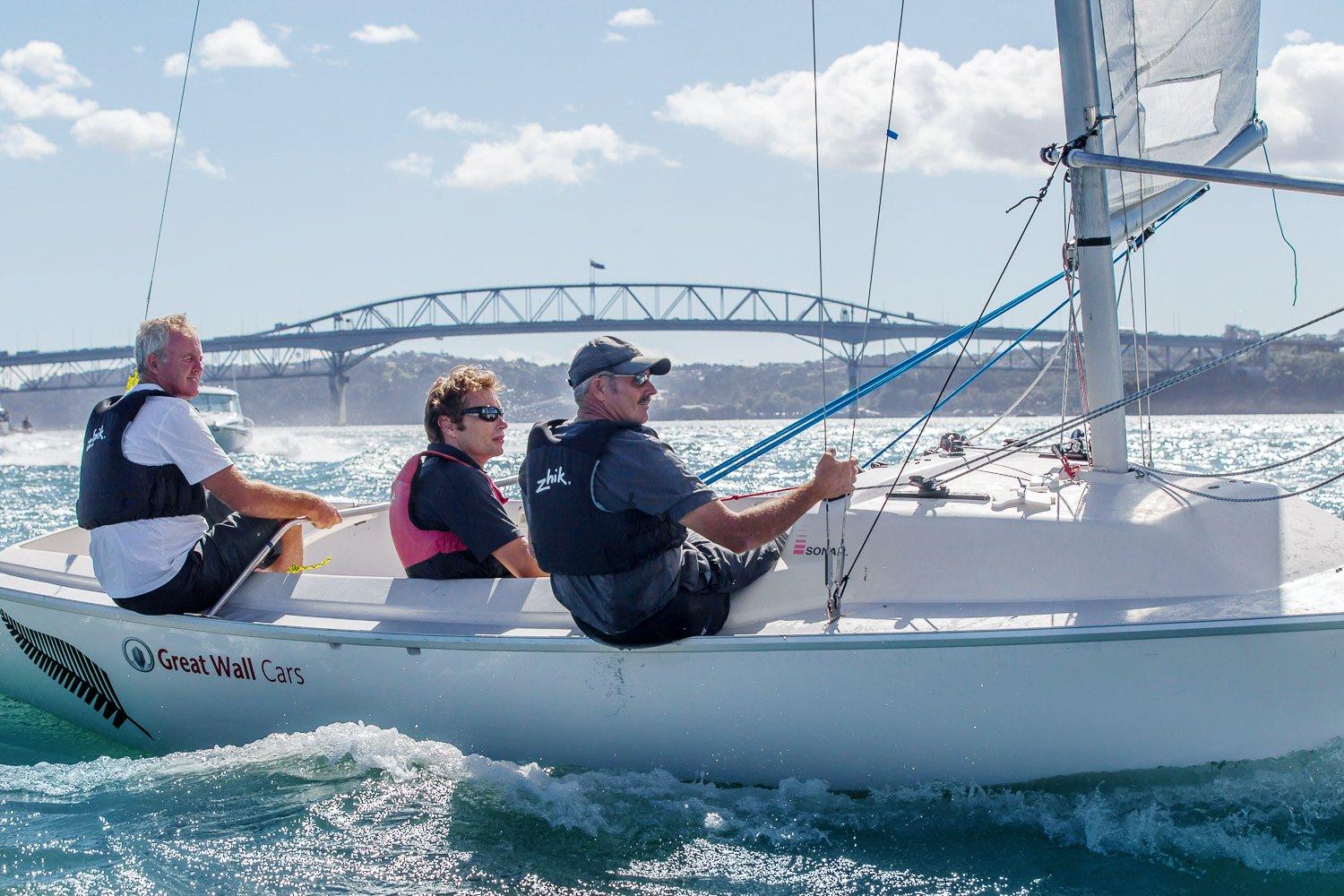
events
THE KIWI WAY: RICHARD DODSON
Richard Dodson, two-time America’s Cup Winner and former owner of North Sails in New Zealand, was forced to stop competitive sailing due to MS. Here he tells us of his journey into Paralympic sailing, and the motivation to claim New Zealand’s first-ever Paralympic gold.
Richard, please tell us about your journey from the America’s Cup to the Paralympics?
I progressed from AC sailing to the J boats which was a good progression for the changes MS was having on my sight and balance (my two worst symptoms). Sailing with MS got a little tricky especially at the top level. One World was my last AC Campaign. It took a little convincing to try Para-sailing, as I didn’t appreciate the high level Para-sailing was at. David Abercrombie, CEO of Yachting NZ, suggested David Barnes (my previous team mate who is also ex AC and has MS. David’s MS has progressed to the stage he had to pull out of the campaign) and I give Para-sailing a go as they felt it was not recognized enough in NZ and having two well known yachties involved would heighten the profile of Para-sailing in NZ. NZ is top in the world at sailing and blind sailing, but has never really been recognized in Para-sailing. After our first Para-sailing regatta in Ireland three years ago we realized the incredibly high caliber of the sailors we were to start competing against.
After that first regatta I was blown away by the positive, happy, upbeat attitude of the Para sailors. However, they are still highly competitive and as tough as any in the protest room. At this regatta, which was the Para-Worlds in Ireland, I thought we would either come first or second. We finished eighth. The competition was so much higher than first anticipated. That wiped the grin off our faces, and got the competitive juices flowing again.
How has Paralympic sailing influenced your life after such a successful sailing career before you were diagnosed with MS?
You either embrace it and take it on or you don’t, and you let life pass you by.
How does it feel to represent your country once again at the highest level?
It feels great to be representing New Zealand at this level again. There has been a massive amount of interest and support for our team. Quite mind blowing, and makes us feel extremely humbled. For instance, last night we had a meeting with Russell Coutts, Joey Allen, Matthew Mason and my brother Tom Dodson. Amazing line-up of talent coming out on a wet winter night to debrief our Rio test event and give us words of support and advice for Rio. As we told them, the support from the NZ yachting community and NZ AC yachties is astounding.
Once we had to wet sand the bottom of the boat and Matty Mason said he would rally some guys to help us. This was shortly after the AC in San Fran. We had Simon Daubney, Warwick Fleury and Matthew Mason from Oracle sanding alongside Richard Meacham and James Dagg from Team NZ. We also often will have mixed crew from different AC teams on our number two boat.
The New Zealand Sonar crew looks to be a very strong team. What are your goals, who are the big threats and where do you see your strengths on the water?
We have a fast boat. North Sails New Zealand, with technical advice from our coach Don Cowie, have built us FAST sails. Dimension Polyant has kindly supplied cloth free of charge during the whole campaign. Until very recently we had our office at North Sails in the Auckland Viaduct which they gave us at no charge.
We have had the top sailors in the world to train against. However, being on the other side of the world means we have not competed in many overseas regattas. So whilst we have tough opposition here it is still only the two Sonars to line up and start against. So we really miss not having one design fleet racing. We sail against the RNZYS Youth fleet in their Elliot 7ms and they like nothing better than to give the “old boys” a hard time.
Our goal is the same as the whole fleet. To podium. It’s in the lap of the Gods (or Christ the Redeemer statue overlooking Rio :). The difference is we are the new kids on the block. Almost the whole fleet is capable of winning Gold. And they have all competed in Paralympics at least once.
We have a great team around us. Between them and Paralympic NZ team they have everything in place we could possibly need to take any stress or unexpected issues out of play.
Have you had a chance to train in the bay in Rio? What are your expectations for the racing conditions and will this play to your strengths?
We have just returned from Rio where we had 14 races in 7 days. The Paras will be 11 races over 6 days. The tides are extremely tricky and frustrating, but it’s the same for everyone. We are lucky that our coach has spent a great deal of time in Rio coaching Torben Grael’s kids so knows the area well. On the start line you can have one end of the line with the tide going out and on the other end the tide coming in. Takes a bit of getting used to.
It’s a beautiful venue to sail, and we’re really looking forward to September.
We know it’s going to be light, which suits us as we are a light crew. The winds are quite fluky which we are OK with.
The Paralympics has a unique and inspirational atmosphere – what are you most excited about for Rio 2016?
We’re staying at the village which sounds amazing and will be great to get involved in the atmosphere and see all the other teams and NZ Paralympians who have achieved so much. I’m looking forward to the opening Ceremony which should be exciting.
New Zealand has a proud sailing heritage and has huge support. What will it mean to claim Gold in Rio?
I couldn’t begin to tell you how many people have supported our team, not only financially but also morally. It would be great to be able to pay this back and be the first ever NZ Para-Sailing team to win a medal.
We are extremely disappointed that Para-sailing has been dropped from Tokyo, as there is a very large disabled sailing community in NZ. We just hope this doesn’t make anyone drop the sport for another. It is always great to have a goal to work toward and it will be hard for those that don’t have the pinnacle of all sport, the Olympics or in this case the Paralympics to work toward. It’s a hard road being disabled but this is just another unnecessary hurdle.
You have had a long relationship with North Sails in New Zealand, which boasts some of the best sailors in the world and brightest minds in the sport. What makes North Sails stand out and attract such talent?
I have been involved with the North Sails family since I was 27 sailing Finns against my brother Tom. We became involved when Tom Schnackenberg was in Perth working with Alan Bond’s Australian AC campaign, and he needed someone here in NZ as his partner to run the loft, so brother Tom and I bought half off him. That’s approximately 30 years with the company. There is no doubt North Sails is the leading sailmaker in the world which makes me proud to be involved. For any sailor or sailmaker it is the most prestigious company to work for.
We imagine you still follow the Cup closely – what do you make of the current state of the oldest trophy in sport?
I love the fact they are sailing cats now, it’s extremely exciting to watch. Just because we’re getting old and a little fragile and can’t stay involved, that’s fine. We can be armchair admirals.
Follow Rick, Andrew and Chris via their website, kiwigoldsailing.co.nz
All images © Ainhoa Sanchez / courtesy of Kiwi Gold Sailing
READ MORE
READ MORE
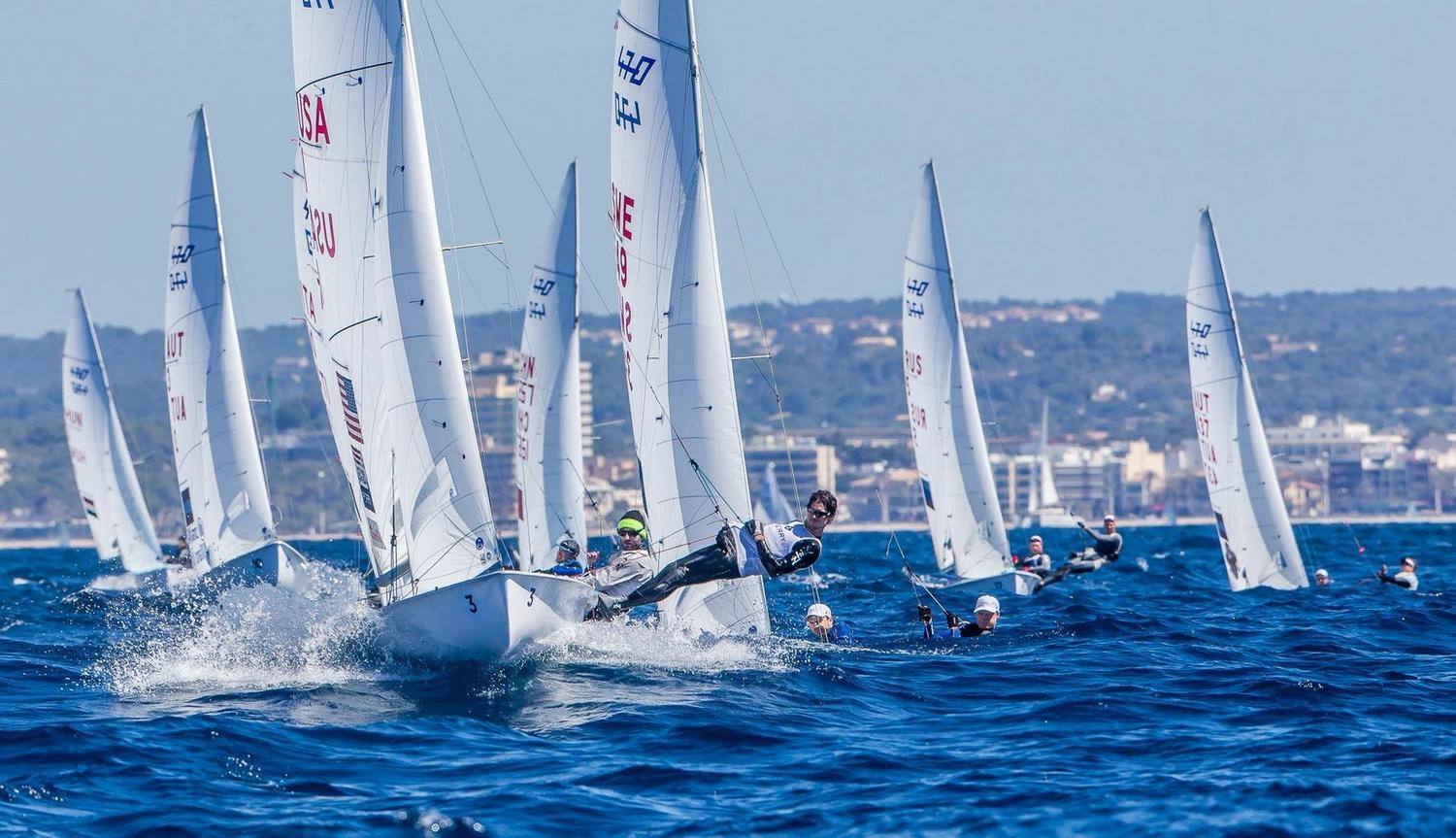
events
PERSONAL BEST: MCNAY AND HUGHES ROLL INTO RIO 2016
US Men’s 470 Olympic contenders Stu McNay and Dave Hughes take up final preparations for the Rio Games. Hear from Dave on the importance of training, drawing from experience, and setting goals for the Big Event.
With your first Olympics as an athlete just around the corner, how are you feeling? After an impressive run of podium finishes over the last few seasons, you must be approaching the Games with a certain level of confidence?
Those medals do hold importance. They prove to ourselves and our competitors that we have what it takes to win big events. More importantly, repeat medalling shows it’s not just a fluke. That said, you can never rest on past successes. Yes, they give confidence, but the real confidence comes with focused training and processes, and the calmness with which you can execute on game day.
What are your goals for the Games? Which other teams will be pushing you hard?
Our goal has always been the same — race a solid regatta at the standard we expect from ourselves. If we do that, we will be rewarded with an Olympic medal. Every team will be pushing hard. That’s what makes the Games so special. We are looking forward to competing within that vibe of excellence.
You’ll be racing with an experienced Olympian in Stu McNay, tell us how important this is.
Stu is a true champion. Being a veteran of the Olympic experience is an irreplaceable asset. Even now during our final preparations, Stu clearly has the mature perspective that can only come from having danced the Olympic dance before.
You were part of the coaching team for US Sailing at London 2012 – what were you able to learn and take away from this experience? It must have given you an insight into the scale of the games?
Yes, I was the US Olympic Team coach for the 49er. Similar to Stu’s Olympic experience, having been on the coaching side also gives awesome insight into the entire Olympic experience and, specifically, managing the Olympic regatta as a stand-alone event. Coaching forces you to take a holistic approach to the regatta. I lean on that experience almost daily.
Give us an update on your final training?
We’ve just completed two longer stints in Rio during May and June. Each training block culminated with a coaches’ regatta (“Acts”) with all or most of the Olympic players on the water. These were excellent formats for testing final equipment, learning more about the courses, and executing against teams at their best. We were fortunate enough to win both Act-1 and Act-2. In July, we are back in Rio for two weeks for Act-3. Final US Olympic Team processing takes place in Houston at the end of July, after which we’ll fly down for the Big Event.
For those not familiar with dinghy sailing, what are the characteristics of 470 racing?
Frankly, I love the 470. It’s a lively boat. I’m constantly learning new ways to make it sail faster. It performs in 5 knots to 30+ knots. It races well as a light-air displacement boat or heavy-air planing dinghy. There are so many technique modes both upwind and down, so it’s never one-dimensional. The overall level of the fleet is extremely high, ensuring tight racing at every regatta. Sail the 470 in a Mistral in Southern France and you’ll be hooked!
What were the key factors behind your decision to be powered with North Sails to give you a competitive advantage? What products are you working with?
Our entire inventory is North Sails – main, jib, spinnaker. It has been that way throughout our campaign. The sails are smooth and consistent. The finish work is superb. We’ve taken on a variety of special projects and testing, and the North team has always been a pleasure to work with. Their knowledge and technology are second to none. We love the products and saw no reason to go elsewhere.
The US Sailing Team for the Olympics looks one of the strongest rosters in recent memory – do you think dinghy sailing in the States is in good shape? Do you get to hang out with the wider team in the build up to the Games?
Most of us have been traveling together to the same World Cup events for years. The same has been true with our training in Rio, although each fleet might hold slightly different schedules. As we lead into the Games, the entire team is logging time down in Rio. Bigger picture, dinghy sailing in the States is in fine shape, particularly with youth classes and established classes, like the Snipe. Even with all the foiling options out there these days, one design dinghy sailing is still by far the best bang-for-your-buck racing available. I’d love to see more college graduates find their way into local fleets. I wish the 470 would make a comeback as a local, non-Olympic-path, racer in the US. Dinghy sailing enthusiasts, like myself, always want to see more growth.
Finally, what are you looking forward to the most about the Rio Olympics?
Being at my personal best and attacking the Olympic Regatta with my good friend, Stu!!
Images (c) Sailing Energy/ Jesus Renedo
READ MORE
READ MORE
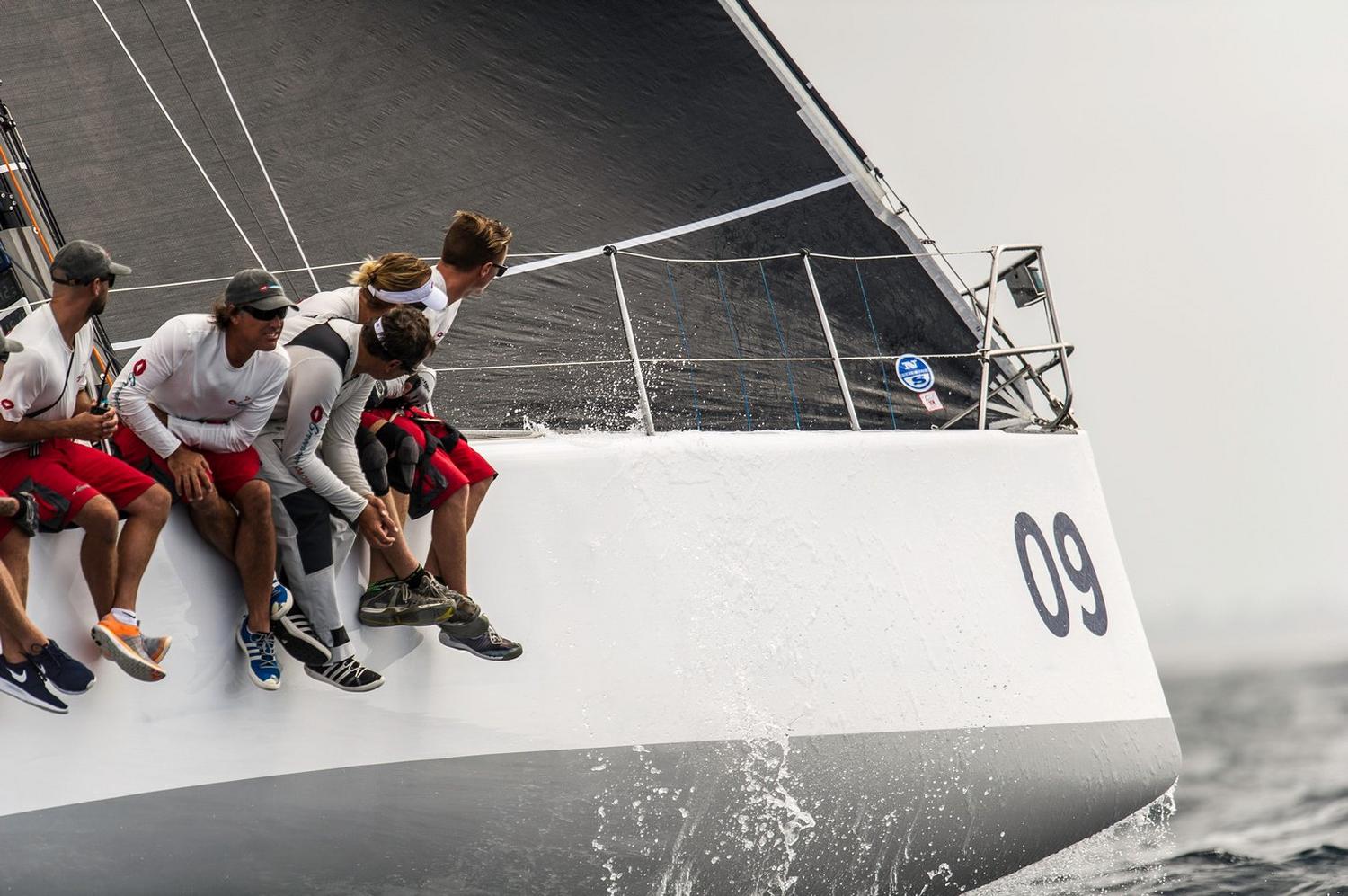
events
VINCE BRUN TO LEAD OFFSHORE ONE DESIGN
North Sails is pleased to announce that Vince Brun has accepted the role of Director of Offshore One Design (previously called Class Sail Development-CSD). Brun, a renowned Brazilian-American Olympic sailor, brings a lifetime of one design experience to the position including a 35 year career as President of North Sails Small Boat One Design division.
North Sails President Ken Read said: “Class Sail Development has always been a focus for our company and this will mark a fresh start for the division now called Offshore One Design. From Farr 40s to J/109s, we consider all One Design Keelboats a major part of our sail development and customer service here at North Sails. Having a leader like Vince, who will focus 100% on creating class sails that can win at every single level, is imperative for our company and our clients. It is great to have Vince back full time. He is exactly the right person for the job.”
North Sails Offshore One Design division will support teams in the following classes:
BENETEAU 36.7
C&C 30
BENETEAU 40.7
FARR 280
FARR 30
FARR 40
J/30
J/88
J/105
J/109
J/111
M-32
MC 38
MELGES 32
SOTO 40
SWAN 42
Vince will work hand in hand with current Offshore One Design leaders at North Sails such as Chris Larson and Cam Appleton, two of the world’s best sailors who have helped raise the level of design and tuning in a large number of classes. “In my 38 years of sailmaking experience with North Sails, my focus was small dinghies and keelboats in the one design market,” said Brun. “Moving to larger classes is a natural progression and I’m honored to be asked to lead North Sails’ Offshore One Design division. Because I have worked for North Sails for nearly four decades, I am familiar with the people, product line, and company culture, which will be a tremendous help in my new position,” said Brun, whose tenure as Small Boat One Design President culminated in a record year of client regatta wins in 2013.
In addition to his proven business leadership, Brun’s on-the-water success includes nine collective world champion titles in the Soling, Star, J/24, Melges 24, and Etchells classes. “For the last 15+ years, North Sails has been the sailmaker of choice for the majority of the Offshore One Design classes. We will continue using our experience, design knowledge and technology to further our position with both product and sail care for all classes,” Brun concluded.
Managing the confluence of sail design with market trends, the outflow of information on tuning and technical trim to clients, and coordinating regatta and organizational support for key classes will be central to the new role. Brun will work with a team of hand-picked “class leaders” to monitor activity and effectively manage designs, ensuring North Sails products are consistently on the cutting edge.
READ MORE
READ MORE
events
HAVING TROUBLE POINTING?
HAVING TROUBLE POINTING?
Tim Healy’s Tips to Help You Get More Height When You Need It
There are times where you may find yourself struggling to either keep your upwind lane, or just can’t get that height to pinch off a boat to weather. We all know that speed creates point, so the faster you go the more lift your keel or centerboard will create giving you better height, point and VMG. That said, there are still times when you think you are doing it all correctly and still aren’t matching your competitors. Here are a few “tips” that Tim Healy has picked up sailing a variety of boats through the years that he found has helped him. Try one or more of the following tips on your boat next time you are looking for better pointing.
TIM’S QUICK TIPS:
Check your backstay
Is it pulled on in light air? If so make sure it is loose. Also, check to see if you may have too much pre-bend in the mast. Prebend helps your mainsail match it’s designed shape in lighter air but a mast that is set with a lot of prebend will make for a sail that may end up too flat for your sailing style. Less prebend will make your mast straighter which will make the main deeper and can help create the power needed to point higher so try a slightly straighter mast to push some depth into your main and create a more powerful shape.
Did you pull your outhaul too tight?
Try easing it some to get some depth in the bottom of the main. A “slightly” looser outhaul will add depth to the lower ⅓ of the main and and create more depth in the back of the sail down low which will add a little “kick” and help with some height. Just be careful not to ease it too much as the sail can get too deep quickly and add a lot of drag. Less than an inch can make a difference..
Where is your traveler set?
Try moving the traveler a little higher on the track and concentrate more on where the end of the boom is and not where the traveler car or block are on the track. Most sloop rigged boats can sail upwind with the boom on centered, or even a few degrees higher, in light to moderate wind without creating too much drag. Setting the traveler so the end of the boom is as much as a “boom width” above centerline can help balance the boat and make it want to sail closer to the wind.
Are your jib leads too far back?
Sometimes we don’t think of the jib lead position as helping to point higher but it certainly can keep you from pointing higher so making certain that the leads are set far enough forward will make for a fuller jib and can help create the power needed, especially in choppy conditions, to increase forward drive and allow you to sail closer to the wind.
These are simple tips that can make a big difference. Feel free to e-mail Tim Healy or any member of the North Sails One Design Team if you have other questions on how to make your one-design boat GO BEYOND.
READ MORE
READ MORE
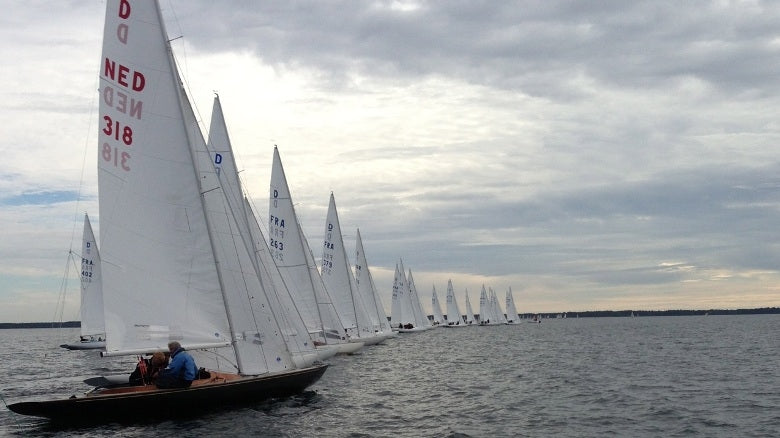
events
DRAGON LINKERS INTERNATIONAL DE DEAUVILLE
DRAGON LINKERS IINTERNATIOANL DE DEAUVILLE
Last weekend twenty five Dragons from five countries raced at the Linkers International de Deauville.
After 6 races, in varied weather conditions, Paul Hoj Jensen won the regatta.
North Sails powered boats dominated the top 10 scores.
North Sails Results: 1, 2*, 4, 5, 6, 7, 8, 9, 10
© Michel Tréhet
© Michel Tréhet
READ MORE
READ MORE
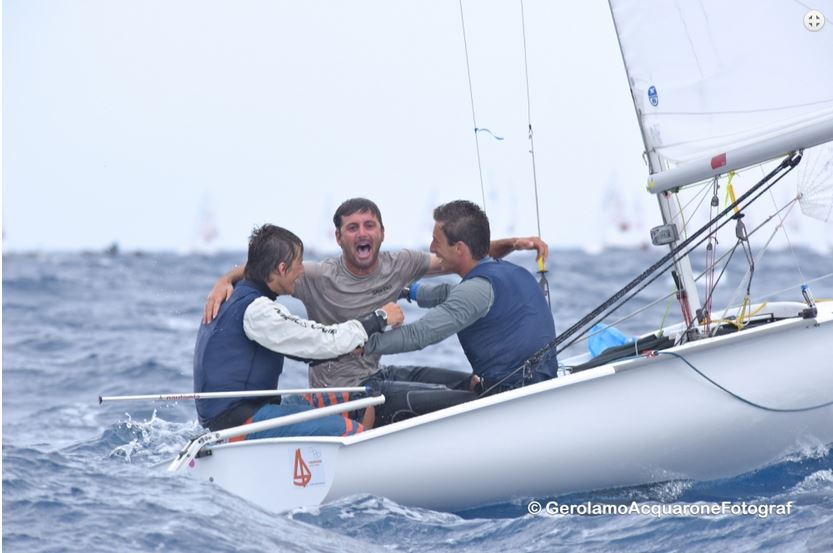
events
2016 420 WORLD CHAMPIONSHIP
2016 420 WORLD CHAMPIONSHIP
Portuguese Costa brothers win
Last week the 420 Championship was held in San Remo, Italy, with the attendance of 262 boats from 23 countries. In the Open class, Portuguese brothers Diogo and Pedro Costa won the Championship using a full inventory of North Sails.
Besides the Open class, North Sails achieved outstanding results in other classes taking first in the U17 category with the Greek sailors Athanasopoulos Yogo and Dimitris Tassion, and second position in the Ladies class with the Spanish sailors Maria Bover and Clara Llabrés. All of them used North Sails full inventories during the regatta.
Congratulations to all and we wish you good luck in the next international event – the European Championship in Hungry.
Results
420 Open
1. Costa/ Costa
2. Rogers/ Parkin
3. Gourgiotis / Batsis
420 Ladies
1. Russo Cririllo / Linussi
2. Maria Bover/ Clara Llabrés
3. Marchesini / Fedel
U17
1. Telis Athanasopoulos Yogo / Dimitris Tassios
2. Eduard Ferrer / Carlos De Maqua
3. Enzo Balanger / Gaultier Tallieu
For more information about the Championship see the event website.
READ MORE
READ MORE
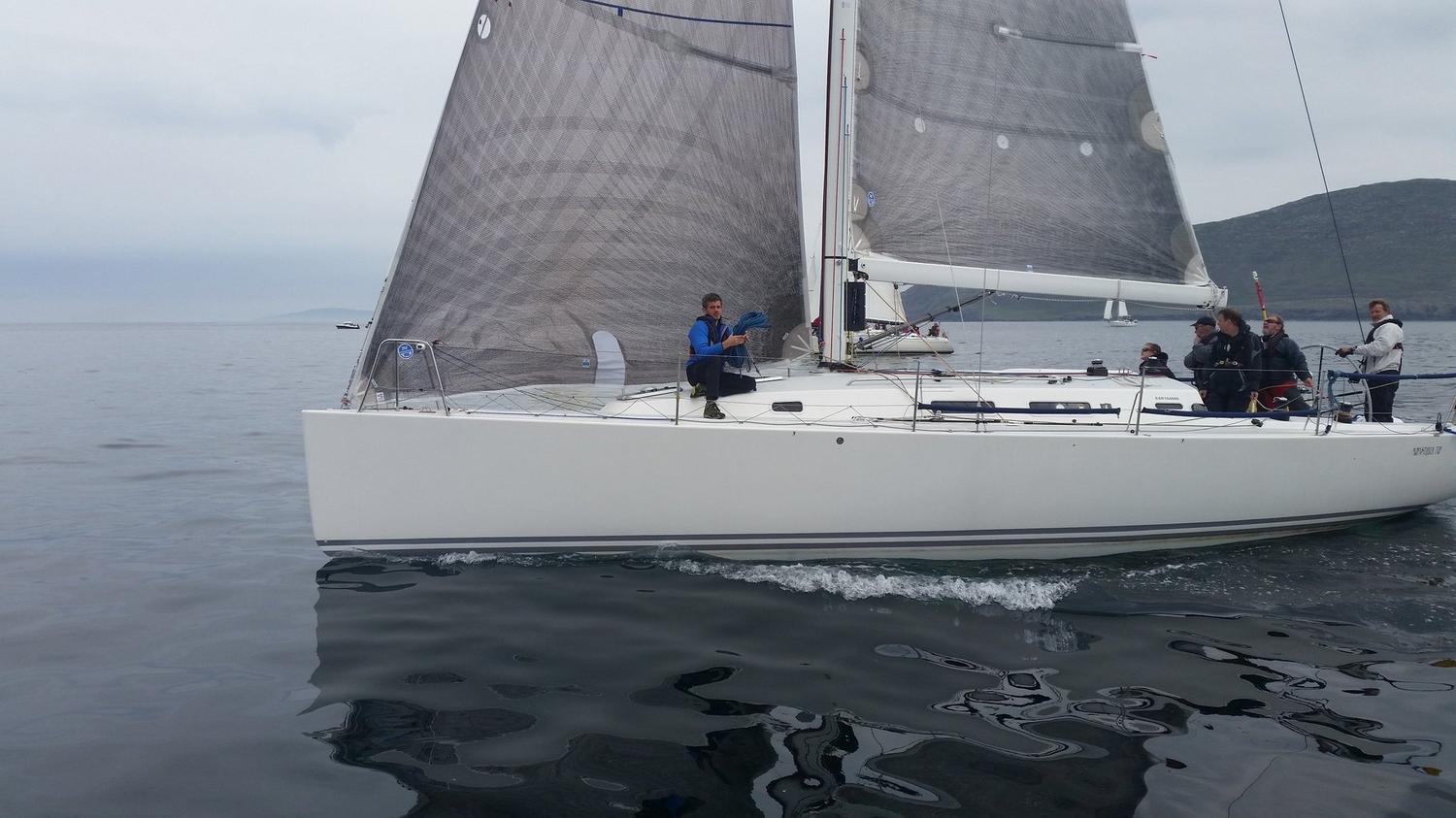
events
THE RACE AROUND ST. KILDA
After 100 nautical miles and almost exactly 23 hours at sea, Moon struck Too, Gordon Lawson’s J122, took victory at the inaugural St Kilda Challenge.
Organized by North Uist’s Comann Na Mara, the challenge brought together 27 yachts from all corners of the UK and beyond to a far nook of the Western Isles with a long-held and shared common goal – to reach the alluring, mysterious, rugged cliffs of St Kilda.
Of those 27 boats, 15 of them went in the racing fleet and the remaining 12 cruised in company. Despite having been at sea for such a prolonged period, it was a nail-biting finish between Grant Kinsman’s Sigma 400 Thalia and Port Edgar Yacht Club’s Moonstruck. The fastest boat on handicap, Moonstruck was the only one of the racing fleet to make the return journey in under 24 hours – 22 hours and 59 minutes to be precise. Dublin Bay-based Thalia, meanwhile, sailed in after 24 hours and 31 minutes.
Thus ensued several hours of nervous waiting for the final yachts to arrive and the much-anticipated results – and when they came, they were exceptionally close. In the end, Moonstruck prevailed with a tiny corrected time margin of five minutes and 50 seconds over her rival. An astonishingly tight result after such distance, and so many vagaries of tide, swell and fickle breeze; a real testament to a very long night of grit and determination in some very difficult conditions. And Fraser Gray’s First 40.7 Pippa VI from Helensburgh rounded off the top three with a respectable time of 24 hours and 57 minutes.
In all of the hundreds and hundreds of hours of planning which had gone into this short 24 hour race, it had been expected that the yachts would probably have to dig deep to overcome some perilous seas and howling wind – so typical of even summer weather in this notoriously exposed and blasted outpost of the UK. There were strict guidelines in place about how much wind could actually thwart even a start. Inclement weather could have seen the flotilla shorebound while the racers were set free to pit their wits against the elements. They could all have made the journey for nought.
What had not been expected was yachts peaking at a mere seven knots, struggling against a sometimes unpleasant swell, crews toiling from fatigue and occasional seasickness as windless conditions made pacey progress impossible.
“Sailing in conditions like that is much harder than racing hard in heavy weather,” said race officer John Readman. “It is very hard work to keep morale up and attention span lively when you are wallowing in the sea like that with barely a breath of air and no real sign of any to come.”
Of the 15 racing yachts which started, seven of them judged that discretion was the better part of valour and joined the cruising flotilla – allowing the luxury of switching on the engine. Of the cruisers, just a single one – Sea Fever – actually made the determined journey to St Kilda under sail.
And yet, despite a voyage which had clearly taken its toll and after a well-earned nap, there was universal praise ashore from the participants – both the racers and the cruisers.
Phrases like ‘a mission accomplished’ and ‘a real sense of pleasure and achievement’ pervaded across Lochmaddy’s packed marina. It was an epic in ways few had considered, but an epic nonetheless.
Most regattas are run by yacht clubs or sailing organisations – the St Kilda Challenge, however, was run not only by sailing experts, but by a whole community. A community which had a vision many years ago and has worked tirelessly to bring it to fruition.
“We are exhausted but thrilled,” said Comann Na Mara chairman Gus MacAulay. “The intention is to make this a biennial event, so we will start planning for 2018 shortly.
“There was great camaraderie among the sailors and a tremendous buzz on North Uist. We simply could not have asked for more and I would like to thank all those who helped and collaborated to make it happen.”
Perhaps the greatest achievement of the St Kilda Challenge was for a small community in what cannot be described as anything other than a remote area, to pull together a dream so fascinating that the rest of the country (and a few more besides) wanted to join them.
This content has been shortened from its original version. To read the full-length article, please visit the St. Kilda Challenge webpage.
READ MORE
READ MORE
events
CHECKING IN WITH THE TRANSAT BAKERLY FLEET
Gautier Sergent, North Sails designer, recently met up with the Transat bakerly fleet as it finished in New York City. Sergent had helped design new 3Di sails for several teams, helping each singlehanded sailor pick the best possible inventory based on the type of boat, skipper’s experience and preferred modes, predicted routing, and of course computer-aided design and VPP analysis. And with eighteen boats in four classes (Ultime, IMOCA 60, Multi 50, and Class 40) sailing over 3,000 miles from England, it was a great opportunity to see how the new sails lived up to durability and performance expectations. “It is always best to debrief right upon arrival to get unbiased first impressions,” Sergent said during a recent interview. “Rewind and redo the race with all the key moments: where the boat performed and where it did not, compared to others.”
Sergent also wanted to assist with any service that might be required, since many of the boats were quickly heading back across the Atlantic, either as part of the New York-Vendée Race or to attempt a North Atlantic record. And with the start of the ultimate solo race, the Vendée Globe, less than five months away, “the Transat bakerly is one of the last big events before the Vendée Globe for the IMOCA and the Jules Verne for some Ultimes.”
Overall, Sergent was happy with the feedback he received. “The new sails we made matched expectations—how the sailors were hoping they would use them and how they would perform. Our upcoming downwind product 3Di FORCE has made a very strong impact on the maxi tris and IMOCAs. It retains deeper angle performance, while offering better acceleration and more potential to sail tighter angles.”
And now Sergent will take this data back to the drawing board and share with the rest of the design team, material engineers, and R&D lab. “Interpret the results, project this onto the next race, etc…” At the end of the day, client impressions help create and improve these designs and each is tailor made to suit. “The latest layout updates seem a good improvement, thanks to field feedback.”
It’s important to be involved from the start of each project, Sergent explains. “The teams enjoy our expertise and our involvement right from the beginning of the design of the boat, giving us a unique understanding of how the boat works and what the skipper expects.” And the sailors appreciate the proven track record in performance and durability that North 3Di offers. “We have powered every single major IMOCA race win since 2011: Barcelona, Vendée Globe, Route du Rhum, Transat Jacques Vabres… Same with the Ultime.”
Of the Ultimes, Coville on Sodebo recently broke the 24 hour solo sailing distance record: 714 nautical miles. The Ultime MACIF is on stand by for a North Atlantic/24 hour record attempt, while the IMOCA 60s have just finished their return sprint across the Atlantic as part of the inaugural New York-Vendee Race, their last chance to qualify for the Vendée Globe. The Class 40 and Multi 50 will do the Quebec / St Malo race next. Then, Sergent says, “We will have more debrief and analysis before the sprint to the start of the Vendée Globe or Jules Verne, to confirm the choices and final sail inspection.” Records may fall, but for this sail designer, the learning never ends.
READ MORE
READ MORE

events
FIRST HOIST
FIRST HOIST
When summer arrived in Newport, RI, Onne and his family were excited for their first hoist of the sailing season
Onne van der Wal and his family spent the winter restoring their 1972 Pearson 36, Snoek. And then came summer, and their reward: the first sail. The skies opened up for their first day with the new sails. Onne and his daughter, Read, teamed up with North Sails’ Bill Fortenberry to rig up and sail the boat, and together they captured the day through Onne’s lens. Following are some highlights with their remarks.
READ MORE
READ MORE
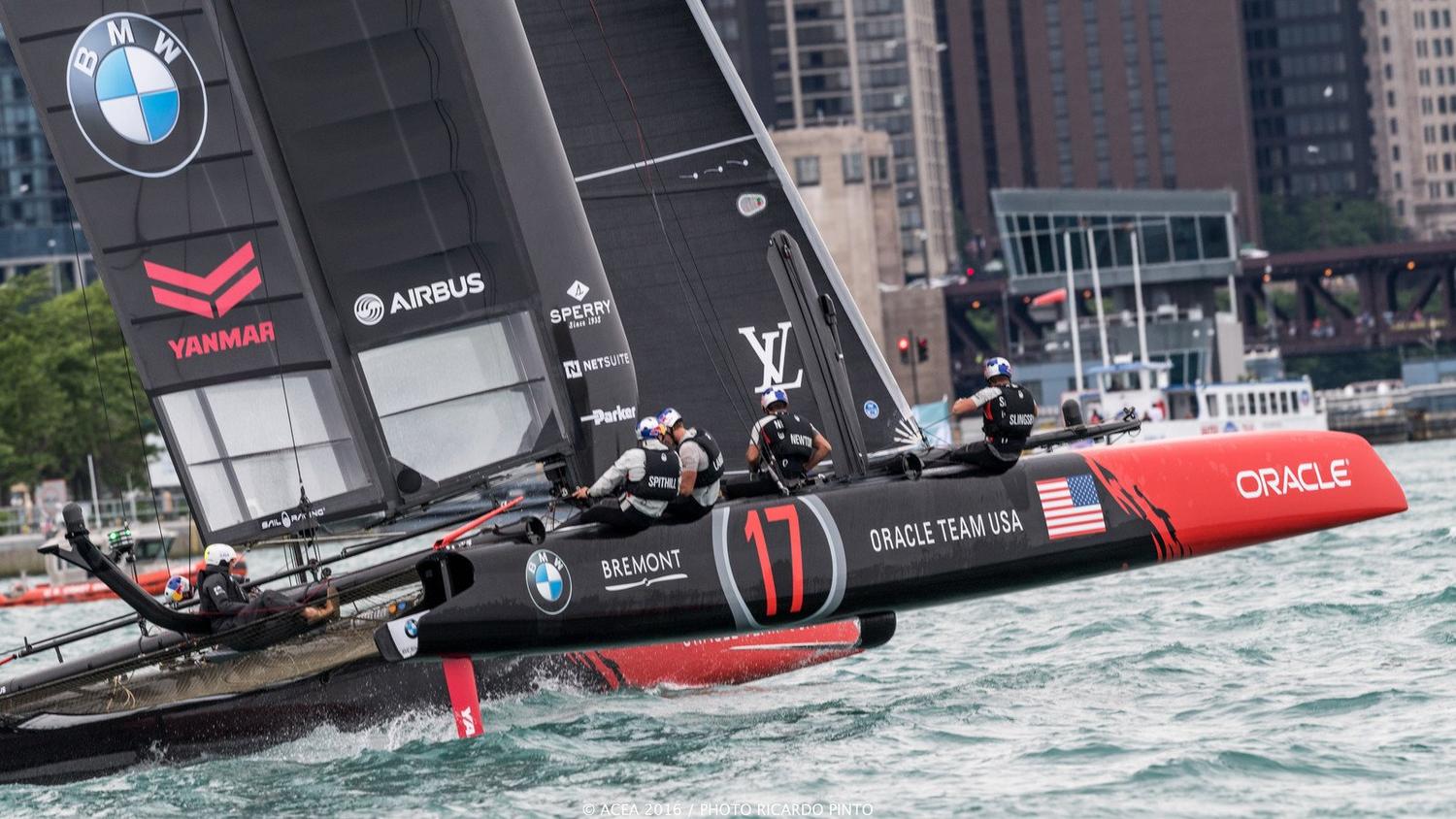
events
HIGHS AND LOWS IN CHICAGO WRAP WITH SPECTACULAR SUPER SUNDAY
This Louis Vuitton America’s Cup World Series has been snake-bit like I have never seen. They’ve lost more days due to too much wind or lack of wind, to a point that is really unprecedented. Usually it happens once in a blue moon, but in the past year it has become all too common. The America’s Cup solution is the Substitute Race. So, if there are good conditions on the practice day, they put a race in the can and use it on a day where there potentially is no racing. On Saturday in Chicago the first race ended up being counted as the substitute race from Friday. I haven’t talked to the teams, but if I was a competitor I would say put three substitute races in the can on Friday. Television and promotion of our sport is a huge part of what the America’s Cup is trying to do, so it’s simply being a bit more creative and open-minded about how to pull it all off in less than ideal situations.
“The enthusiasm of not just Mid-West sailors but sports fanatics was out there on the Navy Pier. Anyone who was out there Sunday walked away going “Woah, that is not the sailing I’ve seen before”. That’s good for sailing.”
The other thing that sailors don’t realize is that every time you go out on a race course, in your local bay for example, and conditions are too light or windy in the morning, you just delay and wait for the conditions to get better. So essentially you have an all day window to pick the right conditions. Well, because of television and when the racing goes live around the world, you don’t have that luxury. You go when you go. That’s it, whether it’s the best or worst conditions of the day. It’s one of the drawbacks of modern, televised sailboat racing. The substitute race buys a little bit of broadcast time. And the great thing in Chicago was that after the race period expired for live television, they kept the boats out and the wind filled in to deliver a terrific race that afternoon, and that became a substitute race for Sunday. But what it also did was offer a sailboat race to the thousands and thousands of spectators on Navy Pier. Too put it perspective, it’s tough to hold a crowd during a rain delay in baseball, but on Saturday in Chicago, nobody left the pier. The boats put on a great show in a good breeze later in the day, and everyone went home happy.
Then Sunday doesn’t even compare: on schedule, three race day, drama, upsets, cool passes and great sailing by Artemis. Although they did try pretty hard to lose it at the end of the final race! It was great to see some of the new blood thriving. I felt really happy for Soft Bank Team Japan finishing off the regatta with a win, and getting on the podium. I’m also happy that Artemis pulled together a string of consistent races. And some of the big guns like Ainslie figured out how not to sail his best but at the same time come within a couple of points of winning the regatta. And Oracle Team USA and Emirates Team New Zealand did not have their best regatta. You can really see how the breaks come your way from time to time. They didn’t get any breaks and they didn’t sail perfectly. All of a sudden the overall series is really tight.
Chicago was great: the venue was unbelievable. The enthusiasm of not just Mid-West sailors but sports fanatics was out there on the Navy Pier. Anyone who was out there Sunday walked away going “woah, that’s not the sailing I’ve ever seen before”. That’s good for sailing. But venues, and venue times, are becoming more and more critical with televised sailing. Everyone is really learning that you have to consider the time and place based on historical wind and weather data. But I’m really proud of Chicago – the VIP experience through to the fan experience was especially well done.
Next is Portsmouth – the first time for me that I’ll be returning to a venue for the second time. The first event was terrific, heaps of people. But it was only a one day regatta. So let’s all root for two good race days. And we know the British are enthusiastic not only for their team but also for sailing and for the America’s Cup. I have no doubt that what they have learnt across all the events since last time, it should be a great experience and a heck of an event.
READ MORE
READ MORE

events
COVILLE STRIKES AGAIN
North Sails 3Di ENDURANCE powers Coville to another offshore milestone
Thomas Coville has broken the 24 hour solo distance record by sailing 714 nautical miles in a single day. The record was broken at roughly 2000 UTC on June 8th after departing New York City on a record attempt onboard the 100’ trimaran Sodebo Ultim. Coville was racing with one reef in Sodebo’s North Sails 3Di ENDURANCE mainsail and a 3Di RAW J1 when he set the record, averaging just under 30 knots.
This whopping 714nm beats Armel Lecleach’s 2014 record on Banque Populaire VII (now IDEC Sport) of 682 miles in 24 hours. Coville’s record marks the first time a single-handed sailor has broken the 700 mile mark in 24 hours. The record was announced this morning by Team Sodebo, and must still be ratified by the World Sailing Speed Record Council.
North Sails is proud to supply Sodebo Ultim with a full inventory of offshore sails including North Sails 3Di ENDURANCETM and 3Di RAWTM:
North Sails 3Di ENDURANCE Mainsail (built in 2014)
North Sails RAW J1
North Sails Endurance J2
North Sails Endurance J3
North Sails Panel Laminate (NPL) J0
North Sails 3Di composite sailmaking technology is proprietary and exclusive to North. Launched in 2010, the 3Di product has now sailed around the world multiple times on varied platforms and applications. In addition, 3Di has powered the following sailing speed or distance records:
Sodebo Ultim: 24 hour solo distance record with Thomas Coville | 714 nautical miles
Spindrift 2: Ushant to the Equator | 4 days 21 hours 29 minutes
Spindrift 2: Ushant to the South of Tasmania, the entrance to the Pacific | 20 days 04 hours 37 minutes
IDEC Sport: Crossing the Indian Ocean
Spindrift 2: Ushant-Cape Horn | 30 days 04 hours 07 minutes
Dona Bertarelli: Fastest circumnavigation by a female sailor | 47 days 10 hours 59 minutes
Comanche: 24 hour monohull distance record (fully crewed) | 618 nautical miles
Phaedo 3: Bermuda to Plymouth | 2870 nautical miles
Phaedo 3: Rolex Fastnet Race original course | 595 nautical miles
IMOCA Macif: 24 hour solo distance record on a monohull with Francois Gabart | @550 miles
“I am sat(sic) at the nav table on Sodebo and as I looked up out of my window at my mainsail I was thinking: this is the most beautiful mainsail I have ever had.” – Thomas Coville describes his 3Di Mainsail just before finishing the 2015 Transat Jacques Vabre
We congratulate Coville on his third time setting the 24 hour solo distance record, this time surpassing his previous record by nearly 100 nautical miles!
READ MORE
READ MORE
events
NORTH CREW JEAN-PHILIPPE GALLOIS
Jean-Philippe, could you describe what you do at north sails and why you enjoy it?
At the base level I work as a Salesman to improve the experiences of our local customer on and off the water, and to support various local events. I also work to discover new prospects and I enjoy collaborating with them to optimize their boat and onboard performance.
As a Technical Consultant I contribute to racing teams with sail plan optimization, sail charts, rating and often assist as a sail trimmer or tactician. I would love to design the sails but I’m not good enough with the software (laughs…), so I leave this to the real designers and try to give precise, useful feedback on behalf of me, the owner and crew.
I like my job first of all because it is a passion and without passion you cannot do a good job, especially when striving to push the limits, be as precise as possible and go beyond the status quo as we do at North. It is very exciting to work in a company where the goal is to give to the customer the best product with the best service. North Sails is considered a luxury brand in the yachting field, often compared to Formula 1 for the high level of products we deliver.
I’m also lucky to have met very interesting people. It helps me to grow and continually improve. Now 16 years have passed since I entered the company and I have the same motivation because each project is unique. I started from the bottom of the ladder and I intend to continue to growing within the company.
Most recently you have completed a re-configuration for the Volvo Open 70 SFS. Can you tell us about this process and the end results you are experiencing?
The objective for SFS was to move from the Volvo Ocean Race (VOR) box rule to a true IRC plan, where we know the rating is a big part of the equation. It was not an easy job. On SFS we have been running a Pro-Am system with six different guests on board during racing. We wanted to adjust the sail inventory in order to be quicker in maneuvers, reduce effort for the crew and increase performance inshore and offshore.
In March 2015, a new spinnaker staysail, A2, and a North Sails 3Di RAWTM IRC Code 0 were added. The Code 0 replaced the original Masthead Code 0 with equal area and 48kg weight savings. More recently, we switched from overlapping genoas to small jibs and added some padeyes to play more with the in-hauler and up & down system.
The new configuration gives us more ability to manage the sails. Other notable sailplan modifications included a larger and lighter #4 Jib; increased apparent wind angle in the new #2 Jib. The #1 Jib (largest Jib) was switched from a standard overlapping genoa on hanks to a furling masthead genoa with equal area (191m²). The inshore mainsail was built with three full battens instead of 6-7 in the previous main, plus one reef.
This new configuration give us more flexibility managing the sails.
In total we saved more than 200kg in comparison to the Volvo inventory and experienced even, or faster, speeds and a higher angle. Today the boat handles more like a TP52. Overall we have experienced even or faster speeds and a higher angle. We have two certificates for IRC: one with and one without the spinnaker.
On the Offshore Side, we still use the original Masthead Genoa and we had a new furling Cuben Fibre A3 for IRC racing.
What advice do you have for a young person with big aspirations in sailing?
This question makes me smile because it means I am passing to the other side of the barrier, even if I am still 18 years old in spirit (smiles).
To someone with aspirations in sailing, I will advise them to tell the truth and not be afraid to say “I don’t know, but I can find out” instead of saying something wrong, as I hear too often in this business. Stay humble. Because we are fortunate to sail on such prestigious boats does not permit us to forget where we come from (by instance, I still sail on 7m boats with friends / customers. Sometimes it is good to trim a sail you can bring in with two fingers).
In the end don’t hesitate to share and smile. I am convinced the more you give, the more you will receive. But this is more a way of spirit and a philosophy than a piece of advice, so you may take it or leave it!
Images © Gilles Martin Raget
READ MORE
READ MORE
events
INSIGHTS FROM J/30 ANNAPOLIS NOOD WINNER BOB RUTSCH
INSIGHTS FROM J/30 ANNAPOLIS NOOD WINNER BOB RUTSCH
After Bob Rutsch won the J/30 class by one point at the 2016 Annapolis NOOD with two firsts on the final day, Jonathan Bartlett from North Sails Chesapeake asked him a few questions about his program.
How do you fit successful resutls into such a busy life?
There’s never enough time. An injury this winter didn’t allow me to get to the boat put away properly or get winter upgrades done so it was a struggle to get the boat ready on time. Not sure how we would do it without Bobby Muller. His crew had the bottom ready as always and installed a new hatch that we broke at the end of last year. Then our crew all pitched in to get us ready before Annapolis Yacht Club One Design event, which we used as a shake down for the NOOD. Good thing as we broke the topping lift.
Who is on your crew? What are their responsibilities? Do you always sail with the same people?
My boat partner and brother-in-law Mike Costello handles tactics and main. After 20+ years he can do it all and we always have fun. But he’s so busy with three kids playing baseball and soccer that I only get him out for a couple events a year: NOOD, Race Week and NA’s.
Daughter Poncie Rutsch, now 25, trimmed spinnaker. Matthew Wienold was bow and has been my most dependable crew since he joined us ten years ago. Barry Deren did mast. He’s been on the boat since we bought it in 1984. Brad Blash is our primary jib trimmer. He’s been with us five years and is good for jokes and morale. Janie Gittleman was our floater/squirrel.
I also have a couple of new people I can call on who are still learning. After that it’s friends, neighbors, and crew on loan from boats in the fleet that are not sailing a particular event.
How critical is rig tune through the range of conditions?
For many years we used a median setting with Class maximum headstay and only cranked on turns when it blew over 15. We had to up our game when John White joined the fleet. Since we don’t have wind instruments after every race I download ten-minute wind and sea conditions from NOAA and log it with our tune and sail usage. I also look at our GPS track to see what we did right or wrong. We can generally hit our desired tune on the water by adding or subtracting turns for wind speeds from 6-20 at two-knot intervals.
If you have to give three pointers to other teams on how to get the best performance out of the J/30 what would these be?
Only three? After thirty-two years in this boat there’s more but I’ll try to keep it short.
Boat prep is a necessity–a smooth and clean bottom, good sails, and up-to-date rigging.
Sail inventory
So far the 3DI Genoa has been everything I hoped for. It has maintained its shape through two years—52 races and counting. No apparent material deterioration. Normally after 50 races I would be planning on a new genoa for the NA’s this fall.
A typical laminated genoa would be getting brittle, starting to delaminate at this point. The J/30 with a 162% overlap takes a beating during the tacks from the mast, the halyard turning blocks, spin pole ring and stanchions. The extra thickness built in for this down low and wear patches seem to have helped.
After a year the #3 3DI has only been up to see if it fit and an couple tacks while warming up on opening day this year. Looking forward to using that next time it blows.
As for care, we try to rinse it off occasionally if it gets salty and give it time to dry. It probably helps that we take our sails off the boat and store them inside when we are not out sailing.
Crew work
I like to sail with people I enjoy spending time with, who are willing to commit to our program. Talk about or show your crew how you want to handle maneuvers, and cross-train so everyone is at least able to step in and help if needed. There are good crew guides for the J/30 available online but adapt them to your needs. Get the sails up before the first race of the day and practice at least a few tacks to get your compass numbers. Then do a set, some jibes and a douse. Use time between races or on the way in to the dock to work out any problems and find solutions.
Change gears with the conditions
Keep making adjustments as wind and sea conditions change–crew weight, sail trim, and settings like outhaul, halyard tension, traveler and backstay. Compare speed and angle to competitors around you: always speed first, then angle.
There’s lots more but that will do for now.
READ MORE
READ MORE
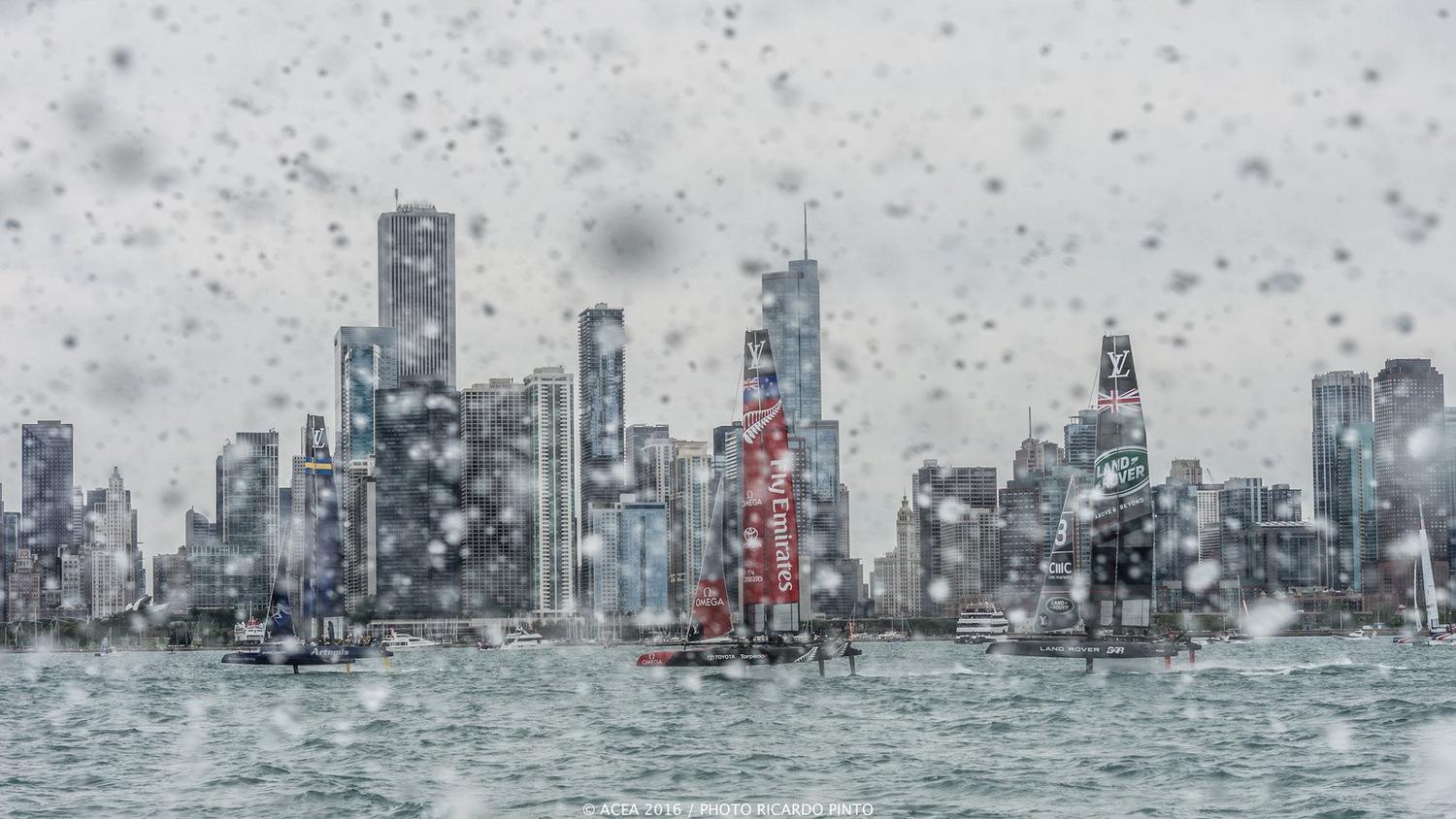
events
AFTER THE CRAZINESS OF NEW YORK, DON’T EXPECT THINGS TO GET EASIER IN THE WINDY CITY
New York was more than slightly crazy, it was fully fledged crazy! Even with all of the insanity on the water, the same couple of teams keep coming out ahead. If I were a competitor I’d be saying “That was a fluke! It was crazy! That was luck of the draw!” And isn’t it strange that Emirates Team New Zealand and Oracle Team USA are consistently right there. Land Rover BAR has certainly had their moments. Chicago will be difficult, but things are possibly becoming more predictable…
I was quite nervous that New York was going to be just another event happening in the biggest city in the world. I was very, very surprised and thankfully wrong! Good for New York! Even on Saturday, which was a complete washout breeze-wise, there was an incredible number of people. The Louis Vuitton America’s Cup World Series always puts itself in a bit of a tough spot with its time restrictions for television and its location restrictions for helicopters, security and everything else. Some people complained, but they couldn’t just move the race course around the island, it’s not possible. We’re committed to time and space because there are so many other variables that none of us can ever imagine. But even without the perfect race track and with a flukey wind blowing across the channel, the same teams keep winning.
Chicago, as a venue, will potentially impress and surprise people. Some of the diagrams I’ve seen of the race locations show that it could be really fun for spectators right off the Long Docks. That said, the most wind I have ever seen in my whole life on a sailboat has been in Chicago: 70 knots. To think that you’re going to a cute little lake to zip around and have fun, like your grandparents, is not necessarily the case! You can get really steep waves there, it can be windy and rough – it can be nasty. But hopefully the weather prevails and we’ll finally get a series with the races and schedule going off on time. We’re due for a good weekend!
It’s interesting to see how each team has its own level of expectation. For example, I think Groupama Team France were thrilled to come in third in New York, whereas Oracle Team USA were devastated, in a way, to come in second. There’s no question that Ben Ainslie and his supporters have very high expectations. But if you follow America’s Cup tradition and history, expectations from your most avid supporters tend to be far overblown, almost unreachable. So it’s a big job for skippers and CEOs of these projects to manage those expectations. And I think they have to be managed, because if you just come out every other day and say “We’re going to win the America’s Cup, we’re going to win all the regattas, we’re the best, look at us” – OK, maybe it helps raise money in the short term – but for the long term, you’re setting yourself up to be in the serious hot seat given any little hiccup. So I’m sure all these guys are figuring out how to manage expectations as they go, and they’ll have to keep that high on their list of daily priorities.
Bring on Chicago!
READ MORE
READ MORE
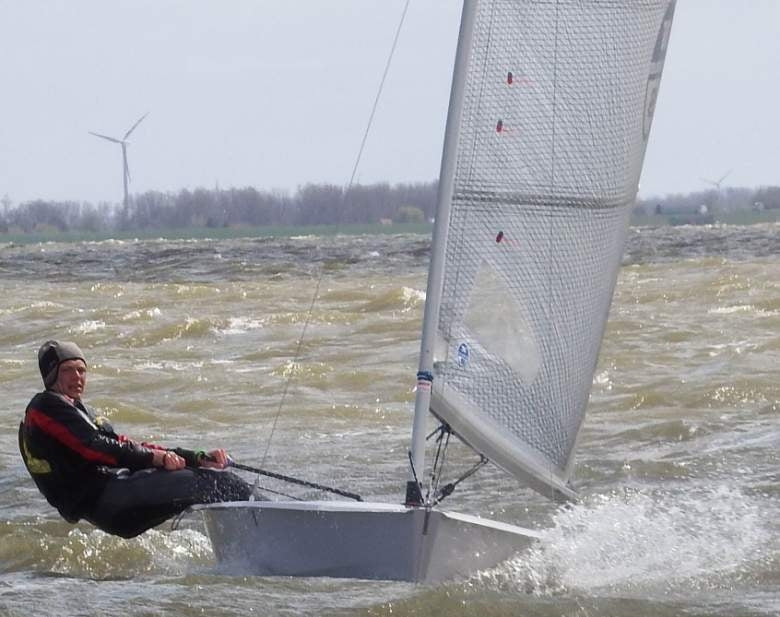
events
SOLO UK SOUTHERN CHAMPIONSHIP
SOLO UK SOUTHERN CHAMPIONSHIP
Won by Pete Mitchell
Congratulations to North Sails Pete Mitchell who won the Solo UK Southern Championship at the weekend.
Pete won 3 of the 4 races and sailed using an ST-2K design.
Well done!
READ MORE
READ MORE
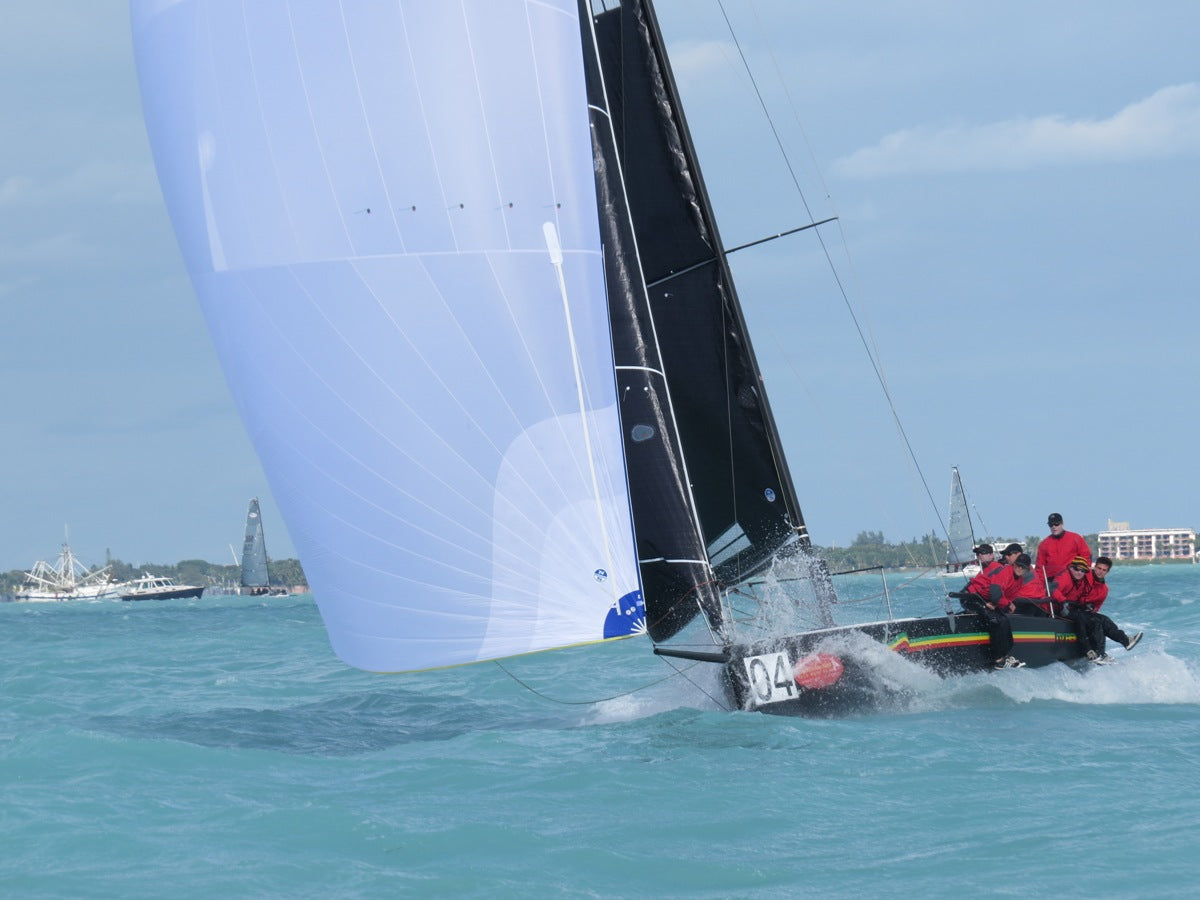
events
INTERVIEW WITH C&C 30 OWNER ANGUS DAVIS
INTERVIEW WITH C&C30 OWNER ANGUS DAVIS
Angus Davis took time out of his busy day job to answer some questions, after winning the 12 boat Annapolis NOOD on Nyabinghi in this hot new one design class.
YOU ARE AN EXTREMELY BUSY GUY, HOW DO YOU ORGANIZE YOUR PROGRAM TO HAVE SUCH A SUCCESSFUL RESULT?
Racing the C&C 30 is a “mind clearing event” … during my time on the water, I am in control of boat speed and the maneuvers, and everything else fades away. The key is being able to focus on sailing—and this is what attracts me. For a busy business person, competitive sailing is an oasis.
WE UNDERSTAND YOU COME FROM A WOODEN BOAT BACKGROUND. HAS IT BEEN DIFFICULT LEARNING A NEW PLATFORM?
I grew up sailing Herreshoff S Boats with my dad, in Narragansett Bay. They were the C&C 30 of their day: 28 feet long, high performance for their time, and most importantly, one design. The Narragansett Bay fleet is the oldest one design fleet in America still racing in their original boats. I thought my lack of planing keelboat experience would be a disadvantage, but I picked it up quickly thanks to good teachers. And my experience one design racing is an advantage over those with backgrounds in IRC or other handicap racing.
WHO IS ON YOUR CREW? WHAT ARE THEIR RESPONSIBILITIES? DO YOU ALWAYS SAIL WITH THE SAME PEOPLE?
We have some “steady” folks on the crew, like our runner guy. We call him Bobcat but his real name is Nick Campagna. When he drops the winch handle overboard, usually once every few regattas, we call it a “Bob-splash.” On one occasion, he dropped a VHF overboard, which we refer to as a “Bob-squawk.”
In the pit we have a rotation between Leeds Mitchell and Chase Hogoboom. Both are longtime personal friends who would bail me out of jail if afforded the opportunity. (I hope to avoid this.)
On bow, we usually have Norm Berge. We have been fortunate to have him aboard… and like all the folks on the boat, he has a positive attitude.
Usually on main trim we have Pete Levesque, who is one of our two Cat 3s. His knowledge of rig tune gives us a leg up, and sometimes we share dad advice between starts.
In Annapolis, Charlie Enright trimmed main and trimmed the kite downwind. Every day on the water with Charlie I consider a privilege.
On headsail trim, we have many “friends and family” helping with different events. In Annapolis, Chuck Swanson did a good job in this position. Sometimes the headsail trimmer becomes the whipping boy for the tactician, but in reality, any boatspeed problems upwind are usually the owner/helmsman’s fault.
Over the last year we’ve had a range of folks calling tactics and I have learned different things from each of them. In Annapolis we had Mike Buckley. Mike is able to raise our level of competition without unduly raising our personal stress levels.
HOW WAS YOUR SPEED THROUGHOUT THE COURSE OF THE EVENT?
On the last day, we had some sort of asymmetry in our rig setup, which hampered our speed on one tack. Otherwise, our upwind boat speed was an effective weapon against the competition. Over the last year, I have really improved with our team in a range of different wind conditions, and also in tight tactical situations where you need to “live in a tight lane.” I feel like we definitely have this gear in all conditions now.
Off the breeze, we have moments of greatness for sure, but it’s not yet the strength I know it will be with a bit more work.
HOW CRITICAL IS RIG TUNE THROUGH THE RANGE OF CONDITIONS?
The boat is highly sensitive to rig tune adjustments. You have to live with your rig tune for the entire race, so part of this means skating to where the puck is going to be. Having the right rig tune won’t win races on its own, but having the wrong tune can lose them.
You looked to be consistently in the top group in most of the races, how did you manage to do that in such different conditions? The biggest contributing factors to our success were: competitive boat speed, smart tactics, and not making too many bad boathandling mistakes.
WHAT ARE A COUPLE THINGS YOU AND YOUR TEAM DO DIFFERENTLY THAN OTHER BOATS?
The name of our boat is a tribute to reggae music, which is full of positive energy. We are serious about winning, but we try to have a lot of laughs. Look forward, let’s go: that’s our team’s attitude, and it has served us well, in both victory and in defeat.
Also some of our other close competitors sail with another brand of sails. On Nyabinghi, the focus with our friends at North is always on learning, development and improvement. Working with North Sails gives us a technological edge, which appeals to me as the executive of a software company.
NOW THAT YOU HAVE SAILED A COUPLE EVENTS IN THE C&C 30 CLASS, WHAT COMMENTS DO YOU HAVE ON THE BOAT AND CLASS?
The boat is a pocket rocket that offers true one-design competition. The class is owner-driver with clear, strict rules that give everyone a chance to win. The racing is close, and the camaraderie off the water is strong. And the sailors are very welcoming of newcomers.
IF YOU HAVE TO GIVE THREE POINTERS TO OTHER TEAMS ON HOW TO GET THE BEST PERFORMANCE OUT OF THE C&C 30 WHAT WOULD THESE BE?
Manage your heel angle, and get the foils working for you upwind.
Don’t get too cute at the start, i.e. don’t strike out at the plate swinging only for home runs.
Always remember it is a privilege to be able to go sailing, so have fun on the course and keep a positive attitude.
WHAT’S NEXT FOR THE NYABINGHI PROGRAM?
We’ll compete in the NYYC Annual Regatta in June, and in the Race Week at Newport in July, which are our North American championships. That event ends on July 16, just 5 days before our third child’s due date! My wife Joanna told me, “With a sufficient outboard motor, you are no more than an hour or so from anywhere the next baby may be born.” In our family, sailing runs deep.
Nyabingi races with North Sails 3Di RAW upwind and North Paneled Cloth (NPC) downwind sails.
READ MORE
READ MORE
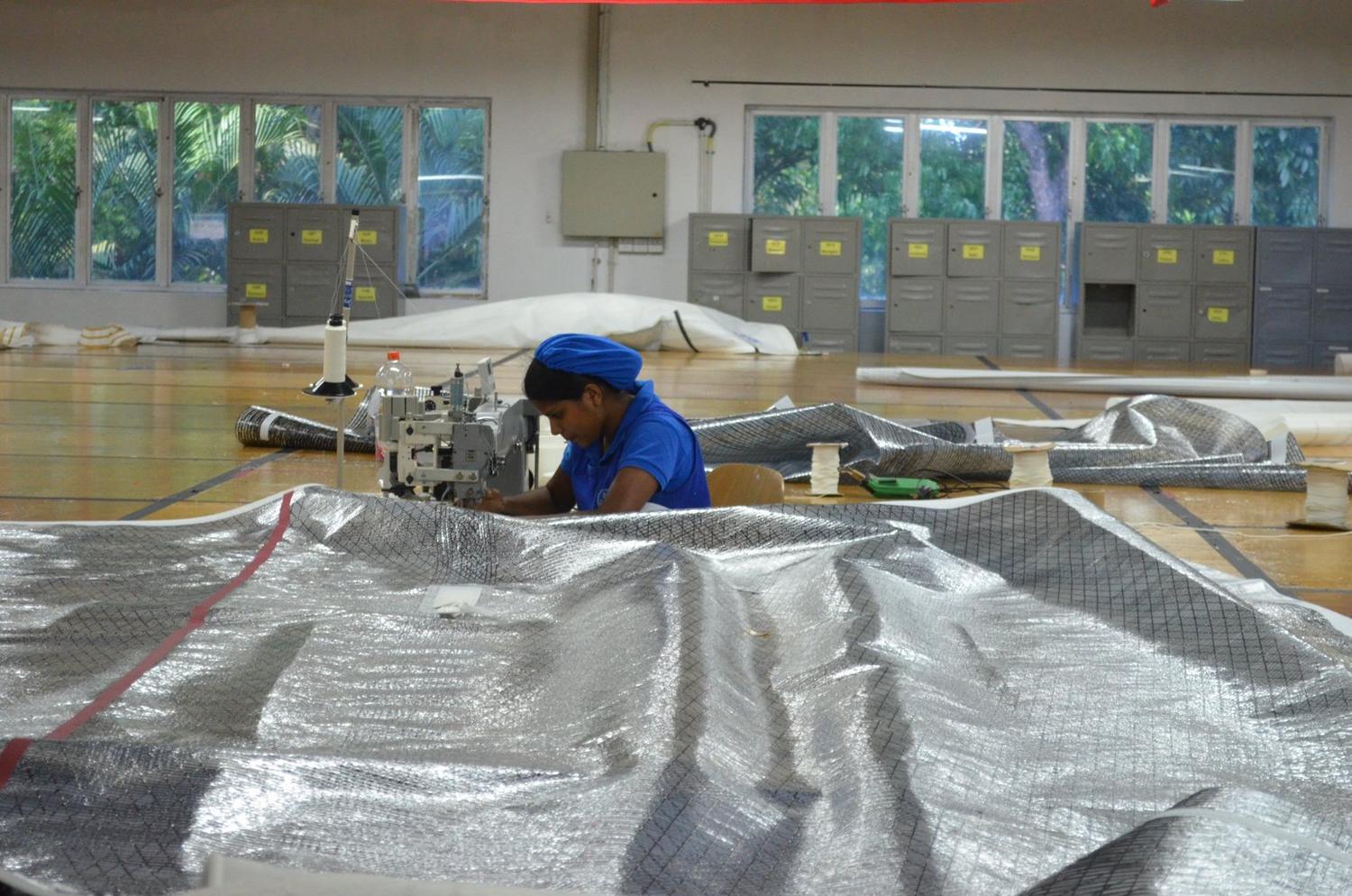
events
ADINA EXPLORES SRI LANKA PART II
After just over two weeks of exploring Sri Lanka we returned to Mirissa and worked to prepare Adina for her next leg to the Maldives. A break in our preparations involved a trip to the North Sails loft just outside Colombo. It’s not every day you get to see where your sails are made and we had heard a lot of good things about the loft so were quite excited to see it all. During our visit many things stood out giving us a fresh perspective on Adina’s new sails.
Scale: North Sails seek to manage everything in-house meaning the sheer scale of the operation immediately impressed us. But more than that, what really stood out was the combination of technology, skilled craftsmanship and quality control. Everything from sails for dinghies to large offshore racing yachts were being made with the same meticulous level of detail. Machines using bobbins of thread that took a week to set up weaved away, plotter machines precision-cut sail panels, yet more machines laminated cloth and carbon using hi-tech adhesive. At the top end, machines followed by a person suspended in the air laid out carbon on huge automated platforms modeled to replicate the exact shape of a sail.
Expertise: Alongside the technology, each and every sail was being made with some element of human craft and skill. Spinnaker panels were laid together by ladies with an eye for precision, looking up and down the panel to determine where it needed to be laid before gently but confidently pressing it down. People sat in pits in the midst of huge platforms with sewing machines carefully stitching sails or sewing parts into them. Even top of the range carbon sails were hand finished by a professional with a pair of scissors and an eye for detail.
Pride: It was all carried out in a calm focused manner, people going about their jobs, knowing what they needed to do. Stopping to ask any Sri Lankan supervisor a question soon made you realise these people took pride in their job – quite often they would lose us as they leapt into intricate detail!
Quality: And then there was the quality control. Each sail is accompanied by a ‘ticket’, essentially a number of pages explaining the make-up of that individual sail, what needed to be done, what parts would accompany it and a list of checks to make sure it was delivered as it was designed. The name of the yacht was given and the sail’s destination – literally sails being made for the world!
Chamini Kanchana (left) and Nadisha Liyanarachchi (right) measure the placement of reinforcement panels on a 3Di sail.
Dilki Kumari lays nylon spinnaker panels on a small-boat downwind sail in building eight.
A loom sits loaded in Building 2 at North Sails in Sri Lanka. North Cloth takes up one of nine buildings at the North Sails complex in Sri Lanka.
As an owner of a set of North Sails sails, it really did give us the assurance that our sail had been made to a very high standard by a factory well equipped, by talented people and that it had all been quality checked. We now look at our sails with a different eye. On our sail is a little label that has the North Sail logo and states ‘Made in Sri Lanka’. It should read ‘Made with Pride in Sri Lanka’.
Adina’s time in Sri Lanka was up far too quickly. We had thoroughly enjoyed this land of variety, its people kind, warm and welcoming – it certainly sits high on our list of countries that should be visited.
Next…Adina visits the many atolls of the Maldives before heading to the remote British Indian Ocean Territory islands, azure blue seas are promised.
At Top: Chanika Panapitiya stitches the leech tape on a 3DL RACE sail.
READ MORE
READ MORE
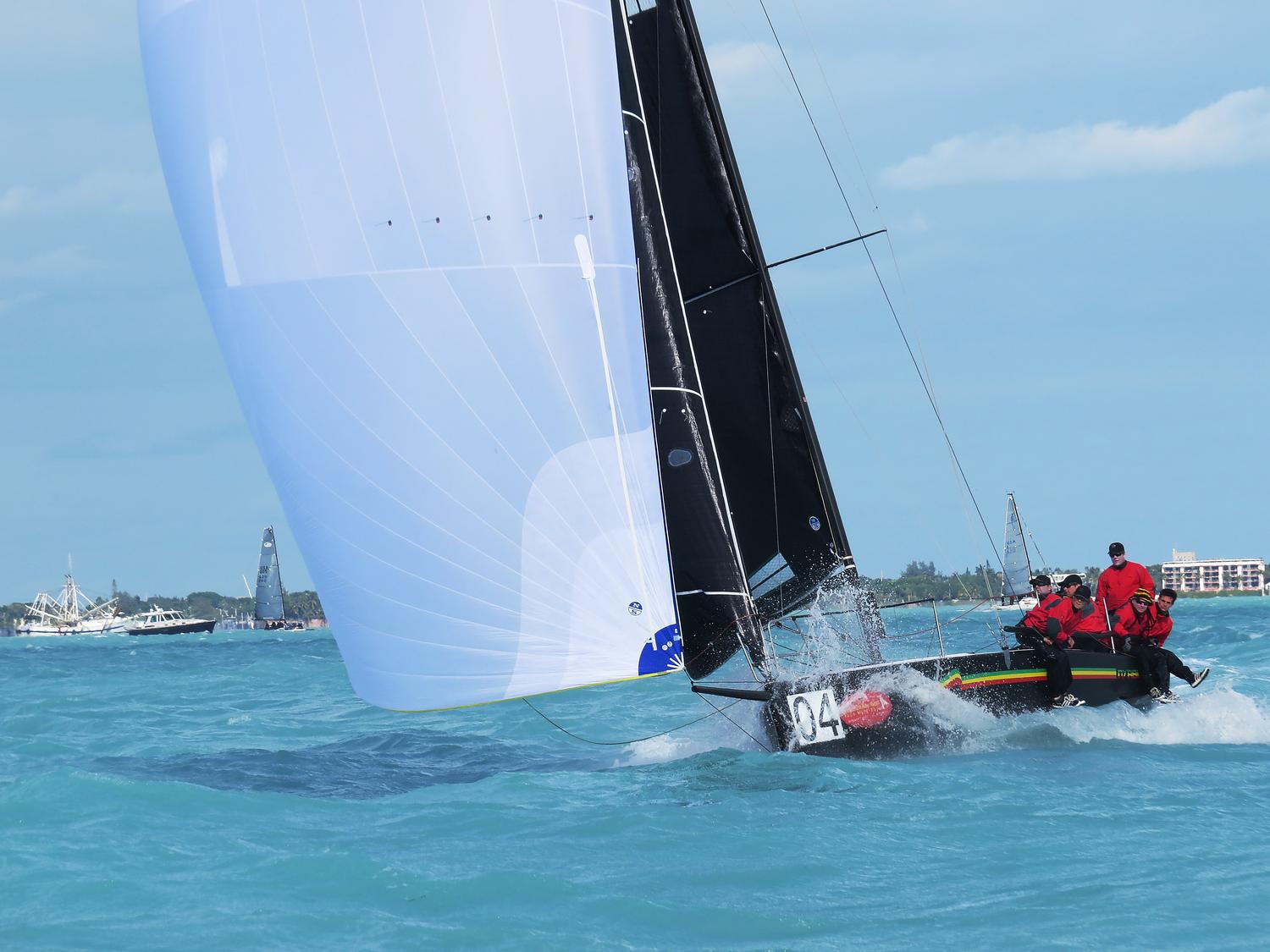
events
C&C30: NYABINGHI'S QUICK VIBES
You are an extremely busy guy, how do you organize your program to have such a successful result?
Racing the C&C 30 is a “mind clearing event” … during my time on the water, I am in control of boat speed and the maneuvers, and everything else fades away. The key is being able to focus on sailing—and this is what attracts me. For a busy business person, competitive sailing is an oasis.
We understand you come from a wooden boat background. Has it been difficult learning a new platform?
I grew up sailing Herreshoff S Boats with my dad, in Narragansett Bay. They were the C&C 30 of their day: 28 feet long, high performance for their time, and most importantly, one design. The Narragansett Bay fleet is the oldest one design fleet in America still racing in their original boats. I thought my lack of planing keelboat experience would be a disadvantage, but I picked it up quickly thanks to good teachers. And my experience one design racing is an advantage over those with backgrounds in IRC or other handicap racing.
Who is on your crew? What are their responsibilities?
We have some “steady” folks on the crew, like our runner guy. We call him Bobcat but his real name is Nick Campagna. When he drops the winch handle overboard, usually once every few regattas, we call it a “Bob-splash.” On one occasion, he dropped a VHF overboard, which we refer to as a “Bob-squawk.”
In the pit we have a rotation between Leeds Mitchell and Chase Hogoboom. Both are longtime personal friends who would bail me out of jail if afforded the opportunity. (I hope to avoid this.)
On bow, we usually have Norm Berge. We have been fortunate to have him aboard… and like all the folks on the boat, he has a positive attitude.
Usually on main trim we have Pete Levesque, who is one of our two Cat 3s. His knowledge of rig tune gives us a leg up, and sometimes we share dad advice between starts.
In Annapolis, Charlie Enright trimmed main and trimmed the kite downwind. Every day on the water with Charlie I consider a privilege.
On headsail trim, we have many “friends and family” helping with different events. In Annapolis, Chuck Swanson did a good job in this position. Sometimes the headsail trimmer becomes the whipping boy for the tactician, but in reality, any boatspeed problems upwind are usually the owner/helmsman’s fault.
Over the last year we’ve had a range of folks calling tactics and I have learned different things from each of them. In Annapolis we had Mike Buckley. Mike is able to raise our level of competition without unduly raising our personal stress levels.
How was your speed throughout the course of the event?
On the last day, we had some sort of asymmetry in our rig setup, which hampered our speed on one tack. Otherwise, our upwind boat speed was an effective weapon against the competition. Over the last year, I have really improved with our team in a range of different wind conditions, and also in tight tactical situations where you need to “live in a tight lane.” I feel like we definitely have this gear in all conditions now.
Off the breeze, we have moments of greatness for sure, but it’s not yet the strength I know it will be with a bit more work.
How critical is rig tune through the range of conditions?
The boat is highly sensitive to rig tune adjustments. You have to live with your rig tune for the entire race, so part of this means skating to where the puck is going to be. Having the right rig tune won’t win races on its own, but having the wrong tune can lose them.
You looked to be consistently in the top group in most of the races, how did you manage to do that in such different conditions? The biggest contributing factors to our success were: competitive boat speed, smart tactics, and not making too many bad boathandling mistakes.
What are a couple things you and your team do differently than other boats?
The name of our boat is a tribute to reggae music, which is full of positive energy. We are serious about winning, but we try to have a lot of laughs. Look forward, let’s go: that’s our team’s attitude, and it has served us well, in both victory and in defeat.
Also some of our other close competitors sail with another brand of sails. On Nyabinghi, the focus with our friends at North is always on learning, development and improvement. They have a technological edge, which appeals to me as the executive of a software company.
Now that you have sailed a couple events in the C&C 30 class, what comments do you have on the boat and class?
The boat is a pocket rocket that offers true one-design competition. The class is owner-driver with clear, strict rules that give everyone a chance to win. The racing is close, and the camaraderie off the water is strong. And the sailors are very welcoming of newcomers.
If you have to give three pointers to other teams on how to get the best performance out of the C&C 30 what would these be?
Manage your heel angle, and get the foils working for you upwind.
Don’t get too cute at the start, i.e. don’t strike out at the plate swinging only for home runs.
Always remember it is a privilege to be able to go sailing, so have fun on the course and keep a positive attitude.
What’s next for the Nyabinghi program?
We’ll compete in the NYYC Annual Regatta in June, and in the Race Week at Newport in July, which are our North American championships. That event ends on July 16, just 5 days before our third child’s due date! My wife Joanna told me, “With a sufficient outboard motor, you are no more than an hour or so from anywhere the next baby may be born.” In our family, sailing runs deep.
Nyabinghi races with North Sails 3Di RAW upwind and North Paneled Cloth (NPC) downwind sails, check out the North Sails full offering for the C&C30.
READ MORE
READ MORE
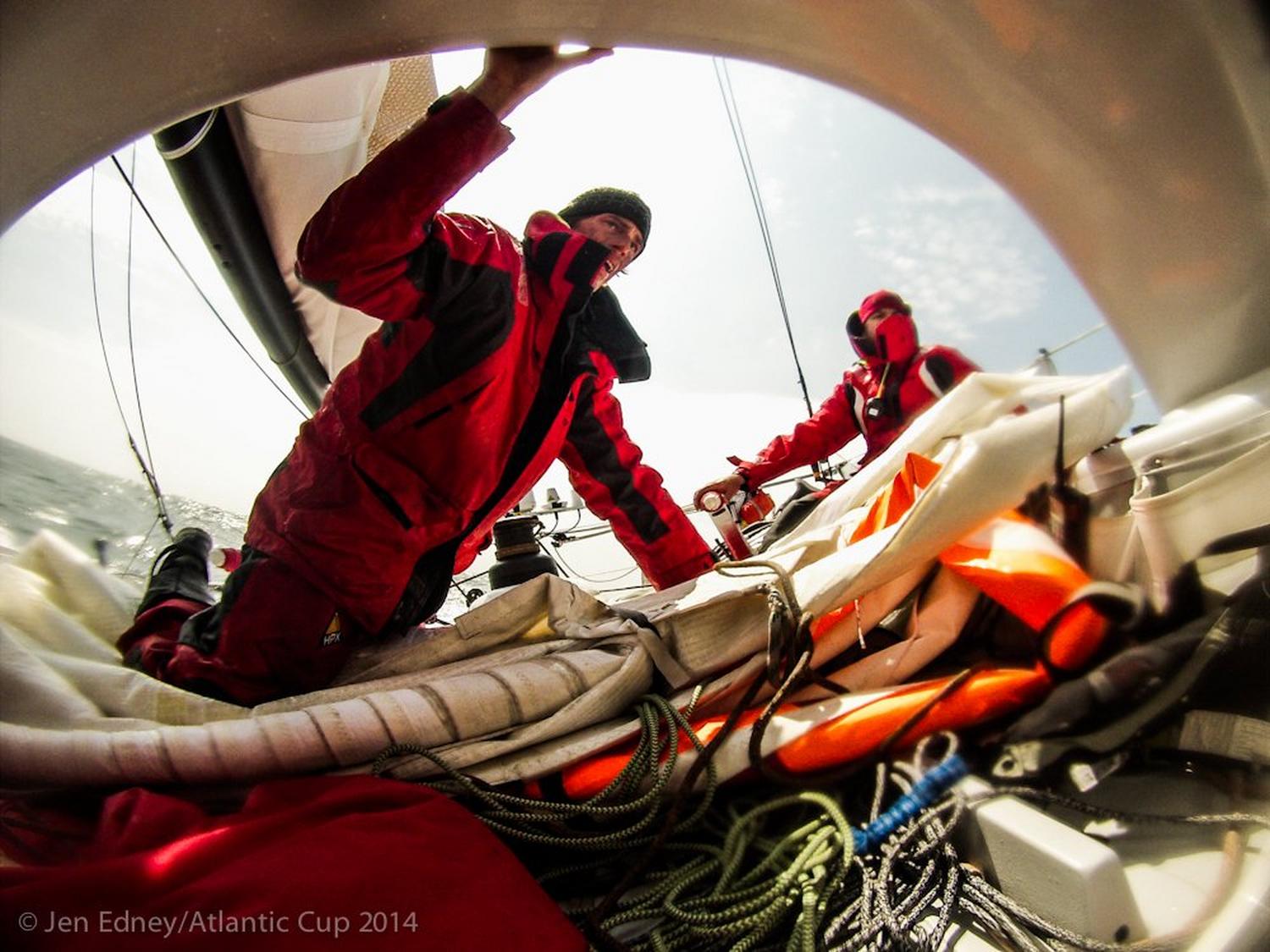
events
ATLANTIC CUP EXPERT PREVIEW
Have a question? Ask them here.
Never finish an ocean race in a location colder than where you started: this is one of the golden rules of offshore sailing and one which The Atlantic Cup knowingly breaks for all the right reasons. This May, the best Class 40 sailing in the United States is back for its fifth edition and here at North Sails, we are thrilled to be a part, sponsoring the “Ask The Expert” forum throughout the event. The Atlantic Cup, the brainchild of Hugh Piggin and Julianna Barbieri of Manuka Sports, challenges sailors over three weeks of sailing across all disciplines. Starting with two double-handed offshore legs and then switching to fully crewed inshore racing, it is a true test of all around sailing skill. While the Portland inshore series is crucial and weighs heavily on the overall win, it is the two offshore legs which provide the greatest variety in challenges faced. For the twelve competing teams, those who are the most studious and nuanced in their approach will find themselves entering that decisive weekend with a sizable advantage. Here is a quick guide on each of the two offshore legs.
CHARLESTON TO NYC
New York City is quite familiar to people arriving by boat, but rarely do they arrive on such toys as a Class 40. Small but powerful, and built purely for offshore sailing, the class has been hugely successful due to the boat’s versatility and stability. However, the Class 40 still suffers from the age old problem of being unable to sail when the winds are light, and the opposing current is strong. Many an Atlantic Cup have been decided in the waning moments as boats struggled against the mighty Hudson River in the light springtime breezes and this year a large number of teams and the even skill amongst them could well set us up for another nail-biting finish. But we’re getting ahead of ourselves… Let’s start at the beginning.
Read more on Pg. 3 of the Atlantic Cup Race Preview.
NYC TO PORTLAND
Leaving NYC on June 4 will take our fleet of twelve back out from the city on a route the reverse of how they came in. With a packed schedule of events while in New York, teams will be feeling as though they need some time off following the grueling Leg One. However, that is not the case. They’ll jump right back into it facing the same challenges as when they entered, as the “city that never sleeps” is an accurate description of NYC on the water as well as on land. The sailors will quickly find themselves dodging ferries, barges, and large commercial ships (not to mention one another) on their way back to the open ocean down a narrow channel.
From there, turn left and head to Maine. Sounds so simple, right? Read more on Pg. 3 of the Atlantic Cup Race Preview.
After teaming up for the last Volvo Ocean Race, Charlie Enright and Anderson Reggio are North Sails’ offshore experts for the Atlantic Cup 2016! Have a question? Ask them here.
READ MORE
READ MORE
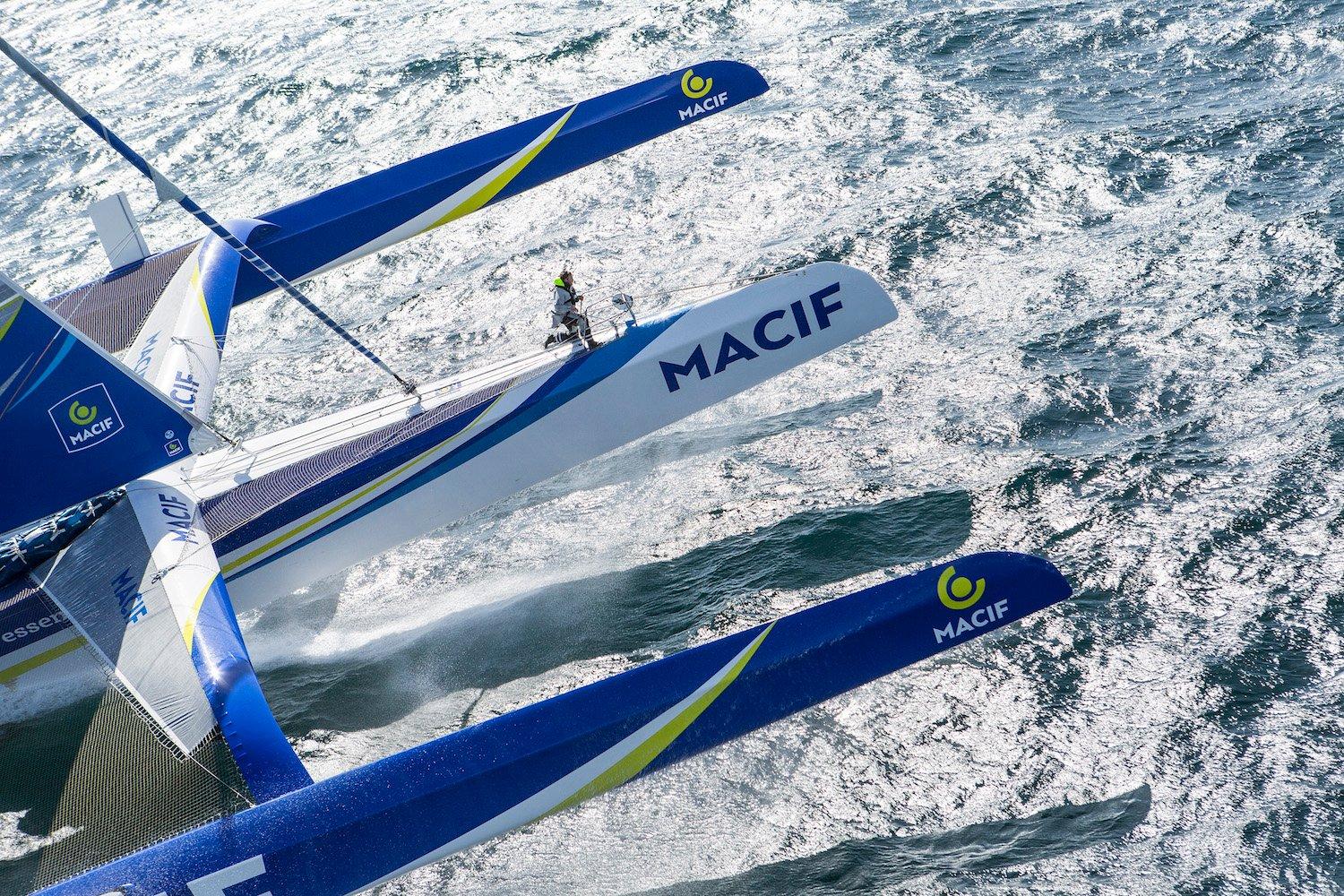
events
GABART CLAIMS "GRAND SLAM" WITH TRANSAT BAKERLY WIN!
The French skipper chose North Sails 3Di ENDURANCETM patented composite three-dimensional sailmaking technology to claim unprecedented victory in the four pillars of offshore racing – 2012-2013 Vendée Globe, 2014 Route du Rhum, 2015 Transat Jacques Vabre, 2016 Transat.
A winner has emerged from the Transat bakerly fleet after 33 year-old Francois Gabart was first to cross the finish line off of New York City last night at 18:24 EDT (22:24 GMT)! Gabart sailed into the star-lit city skyline accompanied by cheers and celebration from the MACIF team and sailing fans.
This is Gabart’s first solo win aboard the giant MACIF Trimaran, a 100’ VPLP design that launched last summer. Although a great initial test for him and the boat, today is only the beginning of the MACIF program as the young, yet experienced, ocean sailor sets his sights on a solo non-stop round-the-world record attempt.
“It was a big challenge for me. You should have 10 or 15 people to manage these boats, and it’s just me. It was my first solo race on MACIF, and I didn’t know if I would be able to do it, so I am really proud of what I did… To arrive into New York was perfect. The boat is in good shape. Me? Well, maybe not! I’m very tired, but I’m incredibly proud.”
The similarly sized Sodebo was close at his heels, reinforcing the fantastic potential of class competition among the Ultime 100’ trimarans – indeed on a grand scale! Gabart recalled:
“The competition with Thomas on Sodebo was wonderful. It made the race incredible for me. We are working together to organize more races for these type of boats, and when we see what happened in The Transat bakerly, and how close the competition was, we know there is a place for it. This is just the beginning of the journey.”
Gabart on MACIF and Thomas Coville at the helm of Sodebo spent the first three days within sight of each other after the start in Plymouth, UK. All three Ultime trimarans in the Transat bakerly, including Gabart’s MACIF, Coville’s Sodebo, and Yves Le Blevec’s Team Actual race with North Sails 3Di ENDURANCE.
:::
Now, to put this initial success for Gabart and MACIF in perspective, by winning the Transat last night, François has achieved the “Grand Slam of Offshore Sailing”. In just four years he has won:
2012-2013 Vendée Globe (solo nonstop round the world race) on his IMOCA 60 MACIF establishing a new race record at his first participation and, at age 29, the youngest to ever win the race.
2014 Route du Rhum (solo race between France and the Caribbean) on his IMOCA 60 MACIF
2015 Transat Jacques Vabre (double-handed race between France and Brazil) on his new trimaran MACIF, 1st race on this boat.
2016 Transat (solo race between the UK and the US), his 1st solo race on the boat.
Only the greatest offshore sailors have achieved this level of success: Loïck Peyron, Michel Desjoyeaux, and Franck Cammas among them.
Gabart has won all of his major offshore titles using patented, three-dimensional composite sailmaking technology from North Sails. North Sails 3Di™ is the only sail on the market made with Thermoset adhesive (no delamination), precisely mapped load patterns using CNC laid tapes, three-dimensional molding, and proven durability over 50,000 miles. Patented technology with proven results – North Sails 3Di will perform better and last longer than any other sail on the market.
About North Sails
North Sails, the largest division of North Technology Group, has become the world’s leading sailmaker through an ongoing commitment to superior performance, technical innovation and elevating the sailing experience of our customers. North Sails holds the patents for 3DiTM, a unique composite construction process resulting in high-performance sails that approach the shape holding of a rigid foil. By competing at the highest levels of our sport, North Sails tests and improves our products in the most demanding environments. The success we enjoy in the America’s Cup, Around-the-World challenges, Grand Prix racing circuit and One-Design Championships translates into sails that perform better, last longer and provide more enjoyment… no matter what and where you sail. That dedication has reshaped modern sailmaking. It is what drives us to push boundaries, pursue adventure, and always #GoBeyond. 87
READ MORE
READ MORE
events
BRITISH DUO STEAL VICTORY FOR 470 WOMEN IN HYERES WORLD CUP
The 470 Women delivered some dramatic action on the final day of racing at the Hyeres World Cup in France as the countdown to the Olympics reaches its climax. The French pair of Camille Lecointre and Helene Defrance had been leading the regatta, one final big event ahead of Rio, after some tight racing between some of the biggest names in the competitive class. But the home favorites went into the final race only one point ahead of the British duo of Hannah Mills and Saskia Clark, and only two points ahead of Brazilians Fernanda Oliviera and Ana Luisa Barbachan.
It was the Brazilians who got off to the superior start in the decisive medal race, leaving Mills and Clark in a dogfight to defend their position against the home favorites. However, Oliviera and Barbachan could not hold their position out front from New Zealand Olympic champions Jo Aleh and Polly Powrie. And when the Kiwis moved into the lead on the second lap, the British girls, the 2012 World Champions, were then able to take advantage of the Kiwi’s work to beat the French team to third and ensure their gold medal. The strong showing from the Brazilian pair saw them claim a silver medal overall, finishing only one point behind the Brits and tied on points with the French.
With the British pair aiming to convert their silver medal from London 2012 into more gold this summer, Sunday’s victory could not have come at a better time. “It was exciting – it was absolutely freezing as well,” said Mills. “I think some English weather may have helped us today. It was really exciting and really tight, and all the top boats were right up there in the mix so it was a ‘who beats who’ scenario. We had our eyes on what was going on and we caught the Brazilians up quite a lot on the second beat. Once we saw that the Kiwis had definitely passed them, we relaxed a bit and really wanted to protect the French to make sure we got the win.”
North Sails are the sail of choice for all the leading pairs, holding a market share in excess of 90%, and the podium of Britain, Brazil and France all use North Sails mainsails. The North Sails radial-cut offering for the Women’s 470 is designed and produced in Japan.
For more results, please visit: http://www.sailing.org/worldcup/regattas/hyeres_2016.php
READ MORE
READ MORE
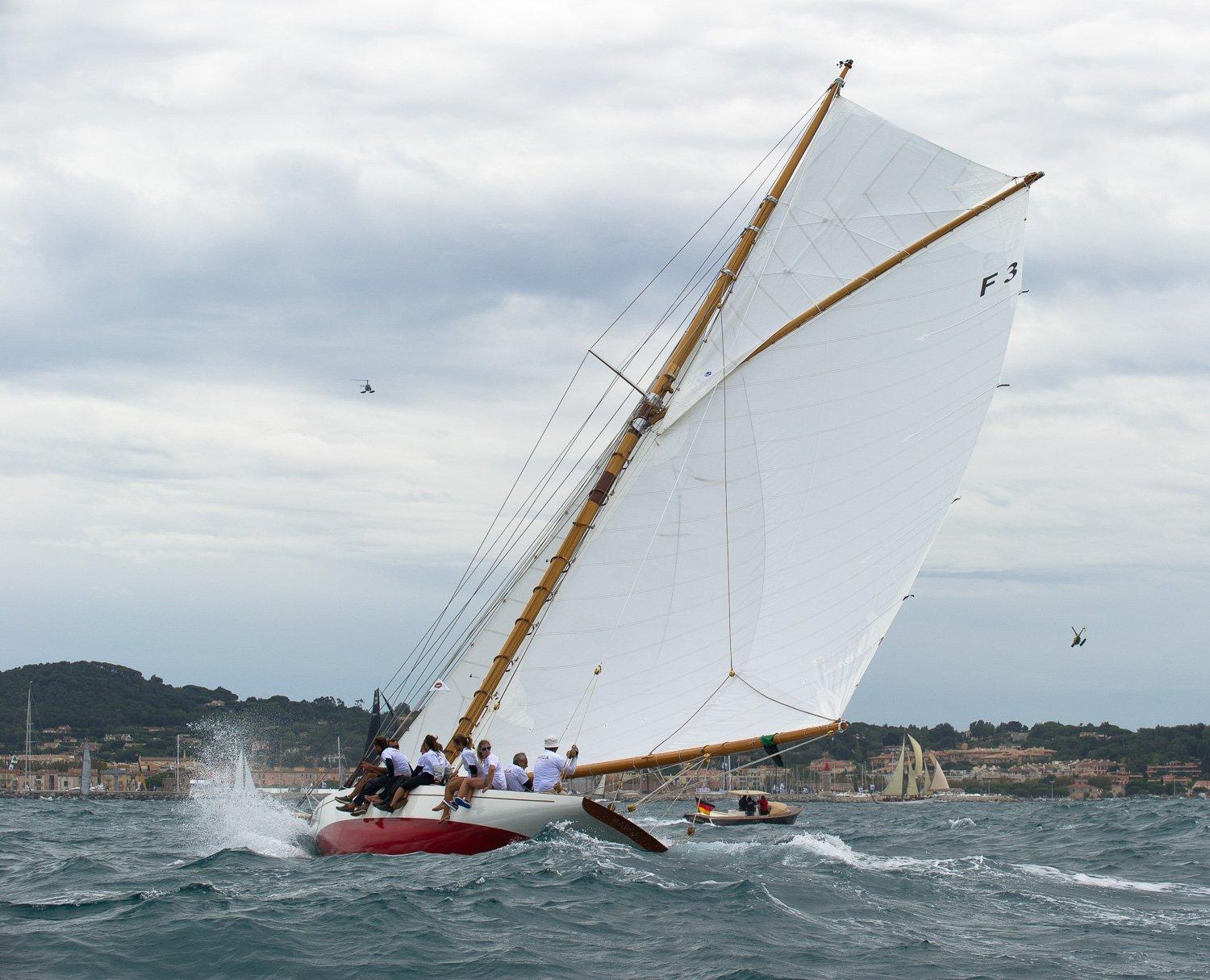
events
CLASSIC YACHT MARGA BEGINS NEXT CHAPTER
North Sails designer, Guido Cavalazzi speaks about his involvement in the yacht Marga, recently awarded Restoration of the Year by Classic Boat Magazine, as voted by readers for the Classic Boat Awards 2016.
I love sailing boats like this and in particular, this boat. I have spent a lot of my sailing career working with modern boats including lots of Americas Cup teams – I was involved with different campaigns over 7 America’s Cups finishing with Luna Rossa in 2014 so this is very different, but a great project.
This boat has a very interesting history. When the owners bought it, it needed a lot of attention. The hull had a little house thing built on top of it, which was being lived in. It’s a very sleek boat – it was a metre boat of the first rule when the rigs were gaff riggers in the early 1900’s – and very beautiful. So imagine that hull with a little house thing on top – really horrible! But that was what it was, laying in the boatyard just outside of Rome when the owners bought it and decided to restore it.
They basically ripped everything off and started to make everything as it was originally. They did a lot of research into how it looked back then, the sail plan and everything. And now you just have to look at it to see that they did a very good job.
For lots of reasons, I actually only came on quite late in the project. I knew one of the owners, he was a friend of my son’s from his sailing days in Sardinia and also, I knew Enrico who was in charge of the restoration. He has restored lots of boats in Italy and I know him, as he is very involved in association of sailing yachts in Tuscany. Anyway, I made a presentation to the owners about the sails and what
I thought we could do for them and some time later they asked me to come and start working with the project. I think they liked the work we had done on the NY-40 one design, gaff-rigged boat, Chinook, and on a 15m Int’l, Mariska. I started talking to Enrico about the sail plan and we went on from there.
You have to remember about this boat, that there are no winches – everything has to be done by hand, it is all block and tackle and no mechanics. I actually also did some consultancy with them on the deck plan as I was familiar with what this sort of boat needed. The deck plan is also very closely linked to the sails as it matters a lot what the deck layout is when you are working with just rope and nothing mechanical!
When it came to making the sails it was very different to modern boats. The modern racing boats we design sails for are done using the technique of one molded piece (whether that be 3Di, 3DL etc) so there is no stretch at all. This delivers very good power but would not work for this sort of boat as everything stretches on this boat – the wood (the hull), the shrouds – everything is moving so we have to make the sails the same. It’s nice actually as I use Dacron for these sails – it is a technique and material that I used to use when I first started in sail making, when racing sails were made in Dacron, and I have now gone back to it. Dacron started as the material of choice for sailmaking but then moved on to being used in cruising sails as racing sails changed to Kevlar and then carbon. In this case, the spars bend and then affect the sail shape and we have to take that into account when we design these sails. In fact, we have to treat the stretch in these boats as part of the design rather than a problem. It’s a bit like the fact that when you sail against a strong tide you take that into account when you work out where you put the bow, you adjust your course a bit. It’s the same for this – we have to aim the shape in a substantially different direction to make sure that with all the stretch factors we end up where we want to be.
We delivered the sails in August 2015 and then the owners decided to go to Cannes to race. I went with them and to be honest we didn’t do that well, but that was really because we hadn’t done it before and we were all just learning about how to sail the boat. They are now planning for the 2016 season, which is really like the first racing season for this boat. The boat will go to Antibes for the start of the Panerai series and I am very happy they have asked me to sail with them and do again the mainsail. Like I said at the beginning I really like sailing this boat. Most Classic boats owners have a very nice attitude towards their boat – they don’t really see themselves as owners but instead custodians. Its like the well being of the boat has been assigned to them for a certain period and then it will be passed on to be sailed by someone else and in the meantime it is their duty to make it nice. It is like a 1700 Stradivari violin – its life will go on after you have used it, you would never throw it away. It’s just like that. In modern sailing and modern boats there is not that same feeling so it is very nice to be involved with a project like this.
Guido Cavalazzi has been with North Sails for nearly 40 years, the majority of which he spent designing sails. He designed 11 sails for Classic Yacht Marga including a Gaff Mainsail and a Delivery Main (Bermudian), a Jack Yard Top sail, Working Top Sail, Jib and Jib Top, Staysail, Light Reaching Staysail, Yankee, Medium Asymmetrical runner, and a Heavy Asymmetrical reacher. The upwind sails are all made of North Sails NPC COASTAL dacron product and NPC DOWNWIND were used for the runner and reacher.
Image credits: © James Robinson Taylor
READ MORE
READ MORE
events
PEARSON 36 SNOEK PREPS FOR THE FIRST ADVENTURE
Onne van der Wal and his family have spent the winter restoring their 1972 Pearson 36, Snoek. This summer they will take to the waters of Narragansett Bay to stretch their legs and get to know the boat. One of Snoek’s many upgrades was a new suit of North Sails.
A renown nautical photographer, Onne spent some time on the “other” side of the lens for this project! We look forward to hearing more from the van der Wal clan as they set off on various adventures this season. Stay tuned!
Onne van der Wal and 17 year old son Adrian recently unpacked their brand new North cruising sails for their 1972 Pearson 36, Snoek. They were closely supervised by Lucy the beagle, who will join the family cruising on Narragansett Bay this summer.
While Lucy looked on from a safe distance, Onne gave each of the three sails (mainsail, genoa, and gennaker) a careful inspection, partly to familiarize himself with what state-of-the-art cruising sails look like. “The level of detail and finish work are very impressive,” he said.
Telltales have been carefully placed to provide the best trim information for a variety of sailing angles, and the gray sunshade will protect the rest of the sail from UV. The sails are made of North Sails NPC RADIANTM, a patented warp-oriented cloth with superior shapeholding qualities. The blue rope luff reefing pad maintains optimum shape when the sail is reefed.
Surrounded by a backyard full of boats, the spring lawn became a sunny sail loft for the afternoon. Adrian, a racing sailor, spotted the batten pocket detail on the main.
“I can’t wait to use this genoa,” Onne said. “The leechline and footline have been really well thought out for ease of use, without leaving any loose ends that could catch on something. And the soft clew will really save the mast from getting beat up if our tacks aren’t quite perfect.”
The genoa leechline has a purchase and retractor system, making for easy adjustment. “We’re not going racing,” Onne reminded us. “We want these sails to last many years. So it’s nice to see North has thought out how to keep the leech from fluttering, once they’re not quite as new as they are now.”
Onne and his family spent much of the winter updating the Pearson 36, so they will proudly display the Pearson logo every time they hoist the mainsail. “It’s a great classic design, so we want people to know what she is as we sail her around Narragansett Bay.”
Each sail has a unique number stamped on the logo. The serial number matches Onne’s order number and is used to reference the sail’s history and service record.
They saved the best for last: pulling the Gennaker™ out of its turtle. “The boat’s getting repainted at Bristol Marine in Awlgrip’s Stars and Stripes blue,” Onne said. “So this red white and blue kite is going to look really good.”
“Family cruising should be easy, but I like to set a kite,” Onne said. “So the gennaker’s a good compromise.” The North SnufferPlus™ will make deploying and dousing a breeze.
Once the careful inspection was complete, Adrian and friend Alden Grimes made quick work of packing the Gennaker back into its turtle.
Lucy the beagle declared the afternoon a success, though she is still wondering when her own big box of treats is going to be delivered.
READ MORE
READ MORE
events
NORTH SAILS UK HAMBLE VILLAGE, HAMPSHIRE
The purpose of this new base is primarily for after sales & service care. We have chosen to open it in this location in order to support our growing customer base and have feet on the ground in this very active marina setting. Every type of yacht is catered for in Hamble and we recognize the importance of having staff there at key times.
The office will be staffed on Mondays and Fridays and any other time by appointment. Please contact Frank Gerber to make an appointment – frank.gerber@northsails.com or 07887 555 779.
During opening hours we will also be on hand to quote for new sails, be a source of information for all things North Sails and help answer any questions as they arise. There will be a stock of common items from battens and batten ends to clew straps.
Please drop by and say hello if you are in Hamble or the local area and need our assistance.
Image credit © Paul Todd / OUTSIDEIMAGES.COM
READ MORE
READ MORE