NORTH SAILS BLOG
Tout
Events
Guides
News
People
Podcast
Sustainability
Tech & Innovation
Travel & Adventure
events
PIOTR TARNACKI WINS MICRO WORLD CHAMPIONSHIP
PIOTR TARNACKI WINS MICRO WORLDS
Eight-Nation Battle In Slovakia In Super Light Conditions
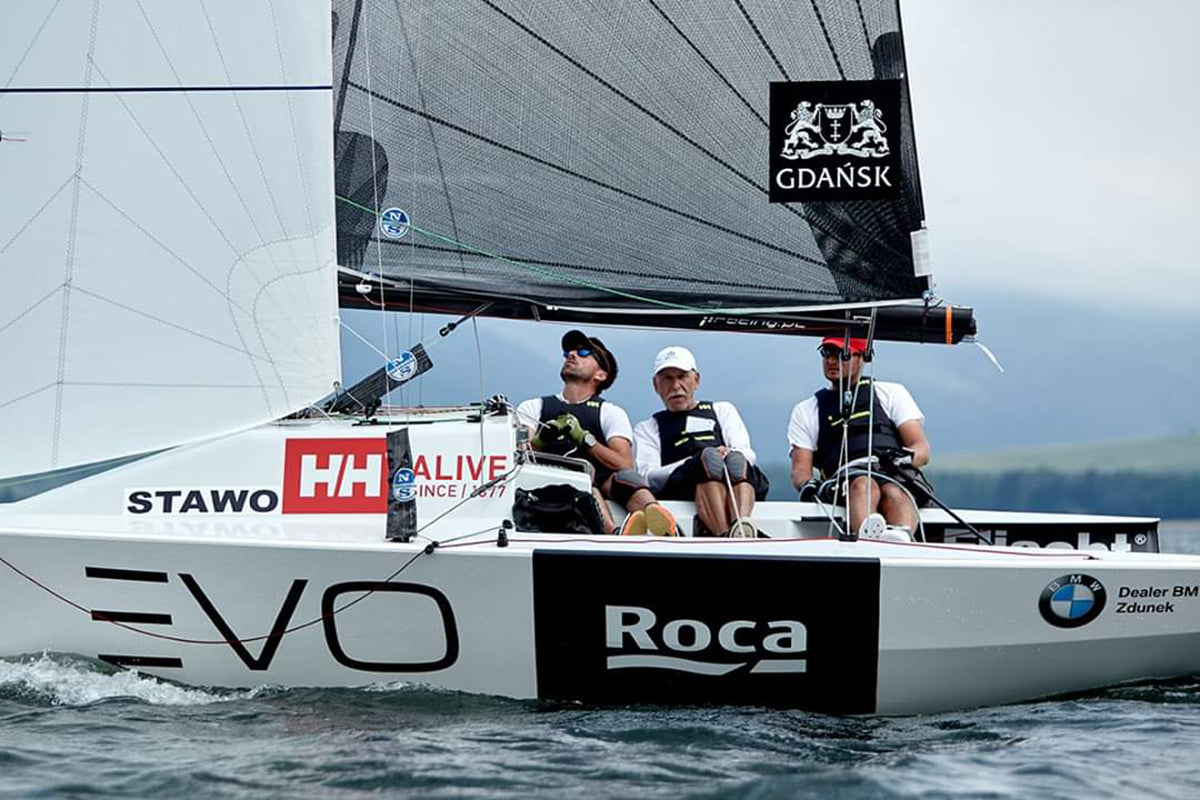
Thirty-six crews from eight nations battled it out at the Worlds in Slovakia, hosted by Marina Liptov. With light wind conditions, the fleet could only complete five out of the fifteen planned races. Scoring 1,4,1,1,1 results POL 77, with Piotr Tarnacki at the helm, secured the Championship title – their 3rd World Champion title in a row, and 9th Micro Class World championship title for Piotr Tarnacki. Superb performance was also shown by second place POL 290 helmed by Marcin Celmerowski with 2,6,2,2,2 places. Special mention too for POL 15, who could only sail with a 2 person crew – Piotr Kowalewski and Rafał Trzciński, winning the Racer Division with a massive 23 point advantage. Maciej Grodzki took the Bronze medal in the Racer division on POL 80.
North-Powered Boats:
1. POL 77 Piotr Tarnacki
2. POL 290 Marcin Celmerowski
4. RUS 174 Arkadiy Kistanov
5.POL 88 Maciej Twarowski
Racer Divison :
1. POL 15 Piotr Kowalewski
3. POL 80 Maciej Grodzki
North Sails powered teams used the new Super Light SS-1-0,5 Spinnaker and improved for 2019 Jib JK-1L with the MK-1 Mainsail.
Learn more about our fast designs for the Micro class.
READ MORE
READ MORE
events
PODIUM SWEEP AT J/24 NATIONALS
PODIUM SWEEP AT J/24 NATIONALS
Will Welles’ Buckaroo Saddles-Up To Snatch The 2019 Title
© Chris Howell
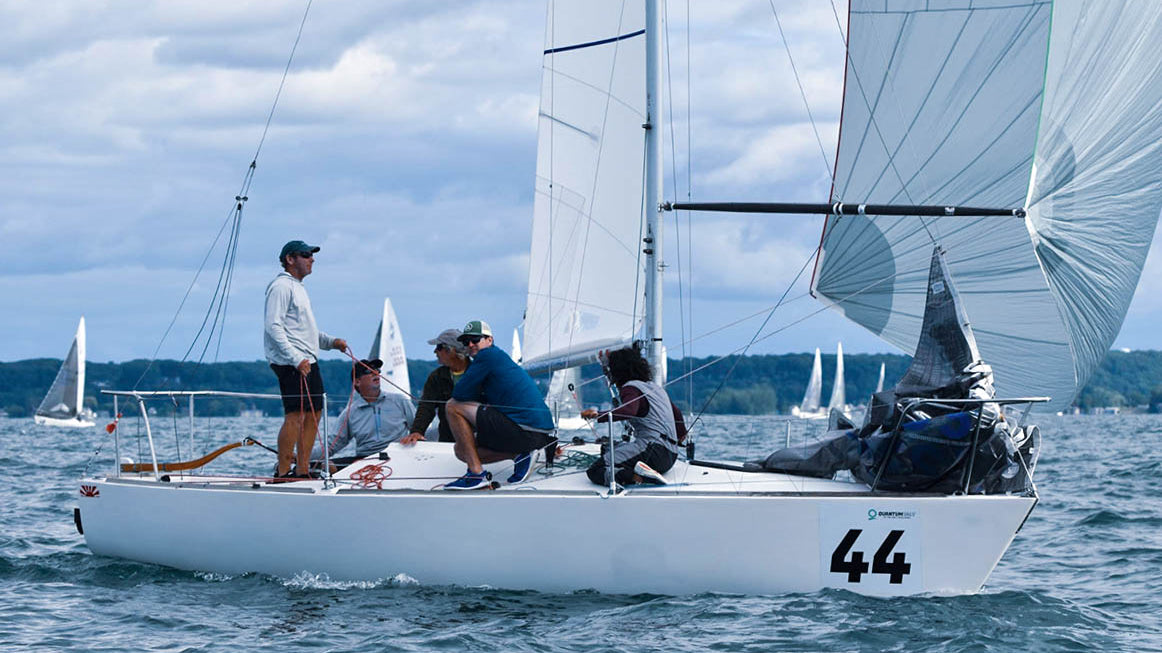
Rochester Yacht Club hosted the J/24 Nationals on the beautiful waters of Lake Ontario, with 48-boats in attendance. North Sails clients had the upper hand on the competition, bringing their best game to the race course to take the fleet by storm with a full podium sweep. Congratulations to North Sails Will Bomar on team Bangor Packet for taking third overall, 2018 National Champion Robby Brown and team Angel Of Harlem for their second place finish, and first overall, now five-time National Champion, North Sails Will Welles and his power-house team of Chris and Monica Morgan, Jeff Linton, and Erik Rexford on Buckaroo.
The weekend kicked off on Thursday with an official practice race with winds out of the WNW at 15 knots and 2-3 foot seas, which was a great way to warm up. The practice race however was completely different conditions than what competitors would experience for racing on Friday and Saturday. On the final day, a strong thermal filled in later in the morning from the East at around 15 knots. Staying in phase became even more valuable since there was pressure across the course. 2019 National Champion Will Welles shared some of his insights on how his team, from start to finish, put together a championship-winning regatta.
“Having a good team that works well together is the key!”
“First of all, it was great to be back in the boat with this team, we have a lot of fun on and off the water. I’ve been pretty lucky to sail on a few great teams like this one. Having a good team that works well together is the key! We focused on getting off the line and being able to sail in good lanes from the start so that we could place the boat in the pressure both upwind and downwind. Keeping the boat at maximum speed was very important. The first two days were pretty light with short steep chop so pinching upwind was not an option and the downwinds were even harder, if you sailed to low for too long and hit the back of a wave you just stopped. We found the key for optimum downwind speed was to focus on the biggest lanes we could to keep the bow up a touch more than normal and keep our speed on and the boat stable. We worked really hard to just stay in the pressure the best we could, our tactician Jeff Linton did a really good job at that!”
Extremely tight racing in the top 10, with Will Welles (bow 44) finishing 1st Place, John Mollicone (bow 52) finishing 5th Place, and Robby Brown (Bow 22) finishing 2nd overall. © Chris Howell
North Sails Mike Ingham on Nautalytics placed seventh overall, and provided his take on local knowledge prior to the regatta, which gave perspective as to what sailors could expect with the challenging conditions. Although there was a concept for ‘typical’ shift trends, Rochester, also known as ‘left-chester’ was still very unpredictable, and often presented irregular patterns that were not always easy to read.
© Chris Howell
Day one and two were similar, with trending wind directions from the NNW to ENE, with roughly 5-7 knots giving the left side of the race course the upper hand the majority of the time. The right side did pay off every now and then, but it depended on when you went right and ideally, you could do it and stay in phase to connect back with the left. The top women’s team, Sea Bags Sailing Team with skipper Erica Beck Spencer had a great regatta result, finishing 13th overall. “The biggest part of each race for us was the start,” said tactician Hillary Noble. “We had to get off the line, and we had to be at full speed. Prior to the gun, we would practice our approaches to the line. Knowing how long it would take to get up to full speed , allowed us to figure out what time we should make our final approach. A few times there was a righty at the start, which made it very tempting to work the right side of the course, but we found it safer to play the middle towards the bottom then connect to the left side.” The Sea Bags Women’s Sailing Team purchased new sails just prior to the event, and expressed how much of a difference it made in their overall boat speed.
“Our sails were so fast. There were times where it felt like we were shot out of a cannon!” – Jessica Harris, bowman
© Chris Howell
North Sails Paul Abdullah trimmed for John Mollicone and North expert Tim Healy was the tactician on team Helly Hansen, who placed 5th overall. “It was a great weekend for Helly Hansen,” said Paul. “The conditions were extremely difficult on Friday and Saturday, but we were able to post consistent scores due to having good communication and boat speed. Trimming the genoa was non-stop upwind, and being sure to ease the sheet to keep the boat accelerating through the chop was very important. We wouldn’t try to point the boat upwind until we had good flow over the keel so the foils could work. Downwind was even more difficult, so we pretty much sailed with the pole forward to maintain any sense of boat speed.”
Skipper of Bangor Packet, North Sails Will Bomar had some great takeaways to share. “The biggest key to a good result was keeping the boat moving by having the crew weight low, keeping the tales on the genoa streaming, and not chasing every lift, which was normally just increases in pressure. Not using the tiller to steer was also great to maintain speed. We used our body weight to steer the boat and manage our transitions. On Sunday when the thermal built to 15 knots, rig tune was the key to having a good result. Being able to keep the boat flat while sailing up wind in the pressure worked well for us.”
North Sails Austin Powers also had some great takeaways from the regatta, serving as tactician for Will Bomar on Bangor Packet. “The key to sailing in the light and lumpy conditions were to find bigger lanes. The bigger lanes were especially important to leeward to give Will the room to steer through the waves, and maintain speed. Rochester lived up to the billing for most of the event with the left side generally winning out, but Sunday saw a much squarer course with boats coming off of both the left and the right with success. After debriefing with the team we thought that our boat speed came from constant weight adjustment as the breeze came in and out. Upwind the crew focused on weight placement shifting from “dogs in the house” to full hiking and everything in between.”
Bangor Packet, skippered by North Sails Will Bomar, raced to third place overall © Chris Howell
North Sails Ryan Lashaway on Rumming on Empty was also fighting to get off the starting line and break free of the traffic. He commented; “Getting to the top of the fleet required clean breeze, especially on the first upwind leg. The large fleet made it critical not to get caught in traffic in the middle of the course. You had to get to an edge and go fast. In choppy, light conditions the boat was sailing it’s fastest when we had clean breeze and the freedom to change gears as the boat needed it.”
“We sailed with a full new set of North’s and felt we had speed in both choppy and flat conditions. Couldn’t be happier with how the boat and sails performed.”
The top three teams at Nationals were powered by the Fathead Mainsail, and FR-2 spinnaker. First and second place finishers used the DX-7TT genoa, and 3rd place used the SD/TH genoa.
Interested in Championship-winning sails? Check out our products and contact your local North expert today.
Congratulations to North Sails clients for finishing 1,2,3,5,7,11,13,14,15 at the 2019 US Nationals in Rochester! #NSVictoryList
Full Results
READ MORE
READ MORE
events
LUCKY DOG WINS MELGES 24 NORTH AMERICANS
CLIENTS WIN MELGES 24 NORTH AMERICANS
3Di Raises the Stakes in the 41-Boat Fleet
© IM4CA/©Bill Crawford,Harbor Pictures Company.
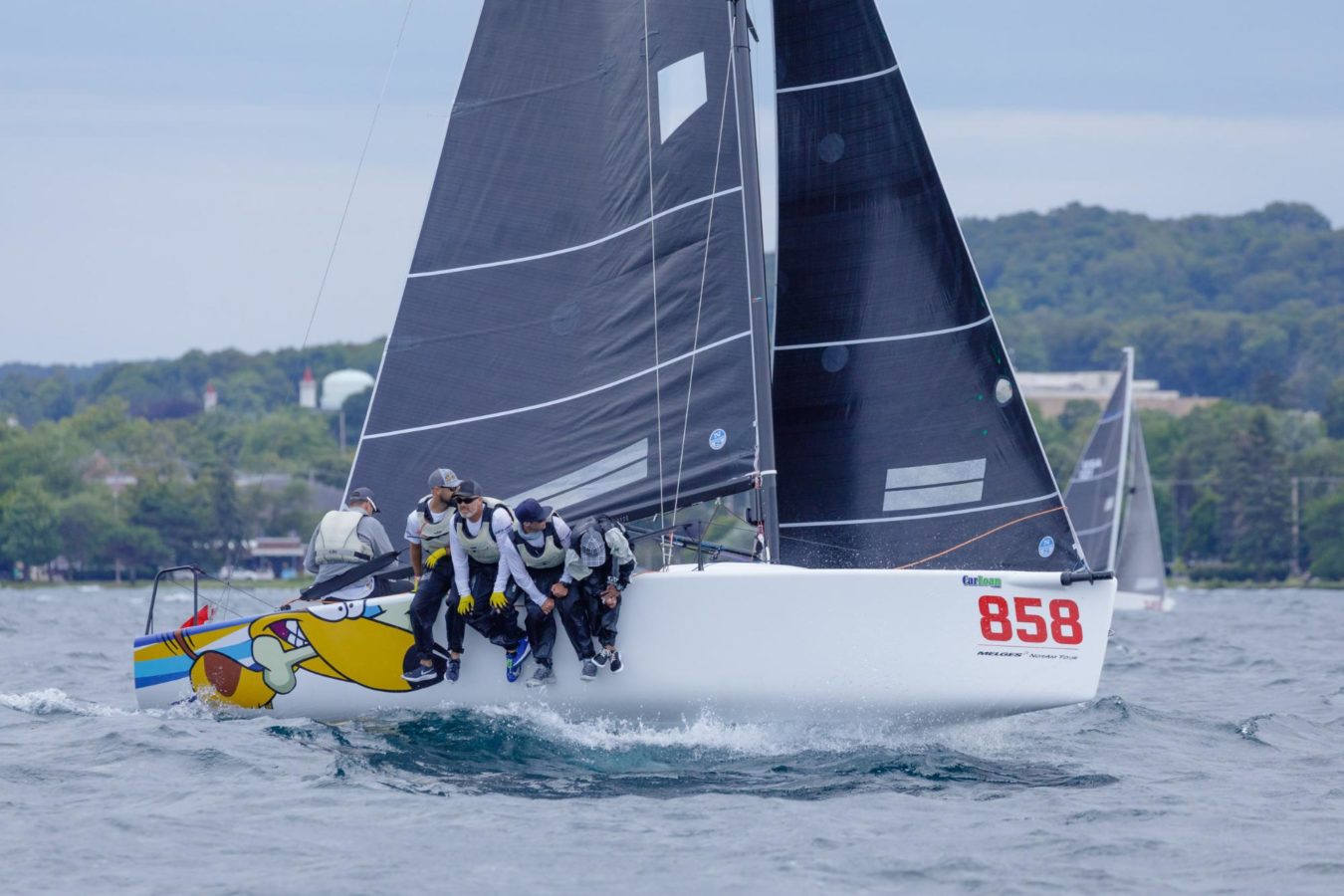
North clients took two podium spots in the Open Division at the 2019 Melges 24 North American Championship in Traverse City, Michigan. Travis Weisleder’s Lucky Dog/Gill Race Team scored only one race out of the top 4 to win the regatta by one point. Kevin Welch’s Mikey finished third.
In the Corinthian division, clients swept the podium. Fraser McMillan’s Sunnyvale won the division by 14 points and took 5th overall. In second place was Mike Dow’s Flying Toaster, and rounding out the podium was Marty Jensen’s Zig Zag.
After light air the first two days, the breeze came on stronger for the last day but continued to be quite shifty. North Sails expert John Bowden, onboard Lucky Dog, has been sailing with Travis for six years, but only one team member had sailed in Traverse City before. “We focused on sailing our own race,” he explains, adding that a great boat, great sails, and a great team proved more important that local knowledge. “Travis does a good job of surrounding himself with talented sailors, and makes sure the boat and sails will never be an excuse for failure. It all led to a great result in the end.”
© IM4CA/©Bill Crawford,Harbor Pictures Company
The team keeps the North tuning guide handy, but they also pay attention to the feel of boat and helm. “If you’re overpowered, you’re probably not tight enough.” He also explains that their 3Di sails don’t stretch like paneled sails do, so they have to be trimmed a little bit tighter. “Other than that, everything else is the same.”
The team used an Mi-1 and the new Ji-2, developed with North designers Mike Marshall and Per Andersen. “We really love them,” John says. “We were very happy with the AP-3 and J-7 paneled sails. They were certainly the standard for Melges 24’s. But there is always room for improvement. When we had the opportunity to switch to 3Di and help with the development process, we jumped at the chance. It’s nice to see all of the top teams running the 3Di sails. We have all been extremely happy with them.”
© Bill Crawford, Harbor Pictures Company
READ MORE
READ MORE
events
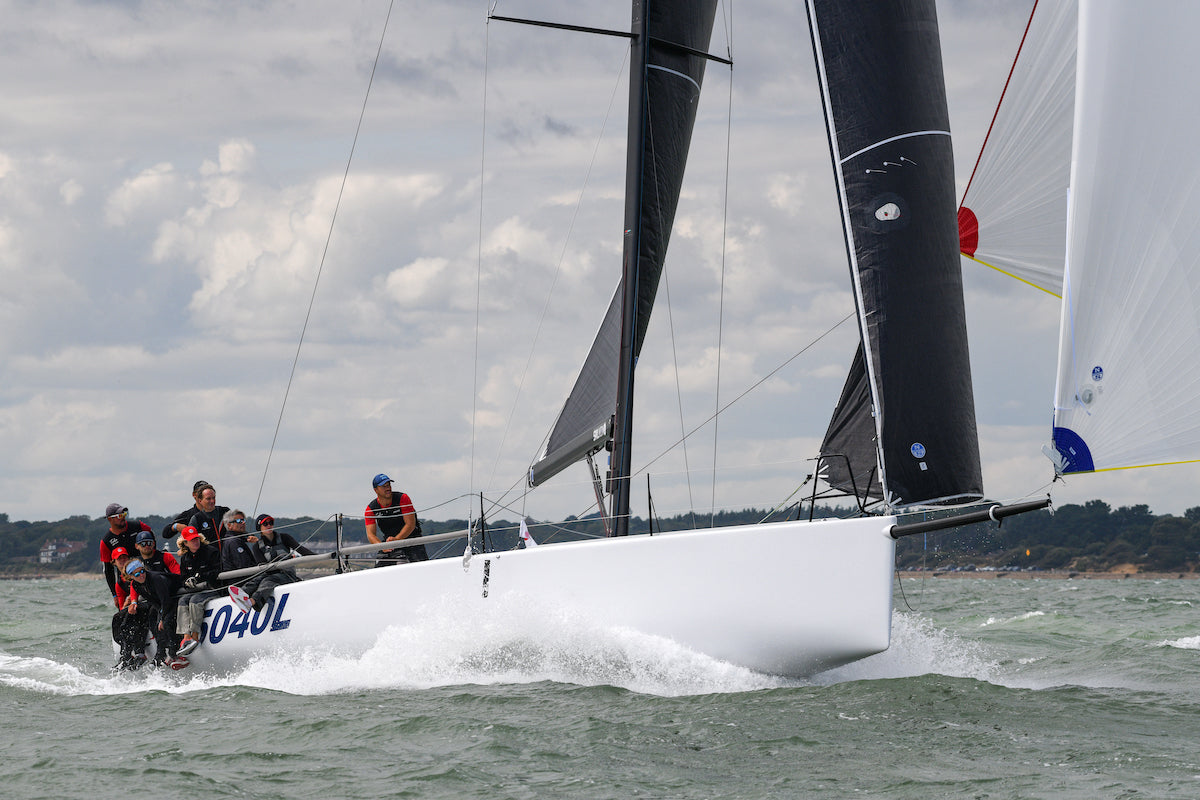
MELGES IC37 EXCELS AT COWES WEEK
MELGES IC37 EXCELS AT COWES WEEK
The First IC37 in Europe Debuts With a Win
📸 North Sails / James Tomlinson
After making one design waves in North America with a full summer of events, the first IC37 delivered to Europe won IRC class 1 at Cowes Week with conviction— Kanreki finished first in four of six races.
Such impressive IRC results from a boat originally drawn as a one design concept are a nice by-product of the tight collaboration between North Sails/Southern Spars, Melges, and boat designer Mark Mills.
North Sails expert Pete Redmond was onboard for Cowes Week and experienced firsthand how this fun, modern 37-foot race boat performed under IRC. “The IC37 had the advantage of planing speeds, especially in breeze where boat lengths can be gained quickly,” Pete explained. He was also impressed by the IRC-adapted sail inventory. “The sails fit perfectly out of the bag. “We used the standard one-design tuning and our IRC inventory included a slighter smaller mainsail, full-sized jibs that were purpose-built for Cowes Week, and a North Helix Code Sail, which we easily flew off the bowsprit with no modifications needed. Finishing off the inventory we had two A sails for lighter and heavier breezes.”
📸 North Sails / James Tomlinson
IRC is very popular in the UK. Pete feels the IC37 is a great contender, as it is suited for a wide range of sailing styles. “The boat is set up very simply, and everything runs well. Anyone will be able to get this boat around the corners, and switching between modes isn’t hard either.”
Kanreki’s crew, a mix of family and friends, was able to get the boat up to speed quickly, even though they hadn’t actually sailed the boat together before the first race. “They found racing the IC37 to be a lot of fun,” Pete added, “and that’s the only reason they wanted to sail Cowes Week – to have fun.”
Sam Pearson, class leader of the IC37 for the UK, was also impressed by Kanreki’s performance and optimistic about the future. “Although it was never our intention to focus on IRC when launching this new one design circuit, we knew we had to keep it in the back of our minds. If we wanted to see one design flourish, the design had to appeal to a broader audience. With these wins straight off the bat, the IC37 is 100% the weapon of choice to re-energize big boat one design racing in the UK.”
📸 North Sails / James Tomlinson
READ MORE
READ MORE
events
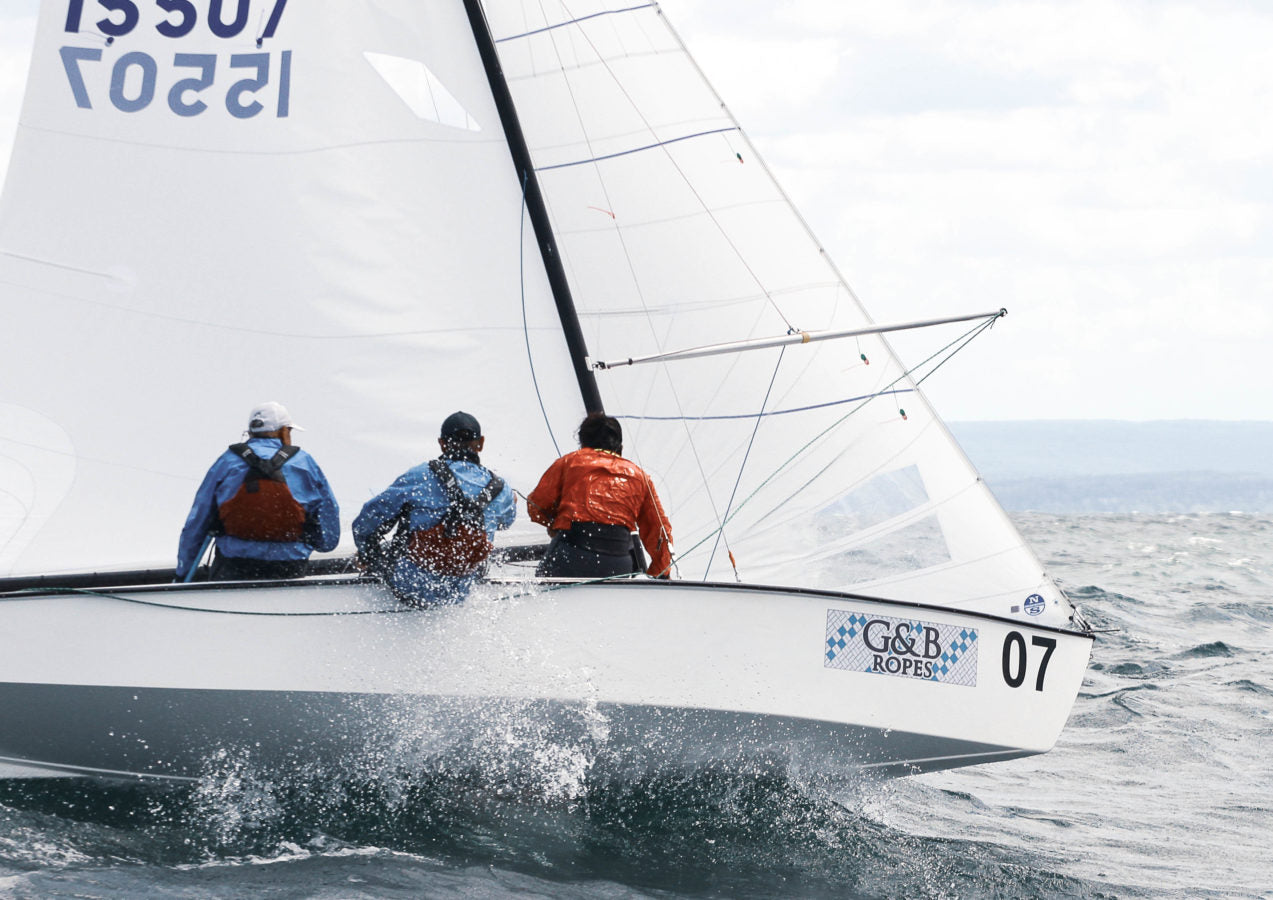
LIGHTNING LEGEND WINS 6TH NORTH AMERICAN TITLE
LIGHTNING LEGEND WINS 6th NORTH AMERICAN TITLE
Ched Proctor Bests a 72-Boat Fleet
2019 Lightning NA champions Ched Proctor, Chris Morgan, and Monica Morgan 📸 Art Petrosemolo nauticalphotography.us
According to the dictionary, “legend” is a person or thing that inspires. According to sailors, it describes a sailor who has performed and contributed to the point of being incomparable. After winning his sixth Lightning North American Championship last week, Ched Proctor has cemented his place as a “legend” under both definitions. With teammates Monica Morgan and Sam Blouin, he bested a fleet of 72 boats at the Buffalo Canoe Club in Crystal Beach, ONT, a week after winning the Masters North Americans with Chris and Monica Morgan.
Ched won his first North Americans in 1993, when he was in his 40s. Since then he’s won two International Masters Championships, 2 Canadian Opens, 7 Southern Circuits, and 4 Midwinters—along with dozens of wins in other one design classes.
Womens, Masters, Juniors NAs
The 11 day gathering brought teams from around the country. First up was the Women’s, Masters, and Junior Championships. On day one, a strong westerly sidelined all the fleets, so many teams headed to Niagara Falls. Day two’s fresh breeze allowed each fleet to get in two races. Day three saw lighter breezes but still in the mid-teens; Masters and Women’s teams each got in two races, while the Juniors snuck in a third before the deadline.
Women’s NAs champions: Deborah Probst, Monica Jones, and daughter Allie Jones 📸 Art Petrosemolo nauticalphotography.us
10 Women’s teams came from as far away as South Carolina and Florida. Regatta Chair Debbie Probst, with Monica and Allie Jones, bested Boat Grant recipient Christine Maloney with crew Grace Woodcock and Anna Flaherty by two points. Joy MacDonald grabbed the final podium spot with Kathryn Maloney and her sister Julieanne, a clean sweep for the BCC teams.
Doug Wake and his team (Noah Bartlett and Lars Osell) found the heavy air to their liking and won 4 of the 5 races to dominate the fleet. Parker Coluntuano/Jackie Morrison/Ben Markert had a solid last day and moved up from 6th to 2nd. Locals Robbie Robinson and brothers Gunnar and Garrett Grenauer finished third.
Meanwhile, Ched the legend won three of the four Masters races, beating 5-time World Champion Tito Gonzales, who was sailing with son Alberto and Rodrigo Zuazola, by six points. Tom Allen, the ILCA MVP, put together his NAs winning team from 1989 (!) of John Humphrey and Bill Pictor, and he used their “maturity” to finish just one point behind Tito’s team.
Juniors NAs champions Douglas Wake, Noah Bartelt, and Lars Osell 📸 Art Petrosemolo nauticalphotography.us
North American Championships
The NAs started with four qualifying races over two days to determine the 34 boat Championship Division. The qualifying races are often called the toughest regatta of the year, as your chances to be the North American Champion rest upon sailing well enough to “make the cut.” After the final race Tuesday, the line was drawn right below John Birkett and his team from Ecuador, with 25 points earning them the Tom Fallon Trophy as “the last one in.”
An easterly breeze dominated the first day of the championship series. The locals said this was the most unpredictable and challenging breeze direction, and they were certainly right!! The three race winners were Adam MacDonald, David Starck and Tim Scanlon, and most teams had scores that looked like they belonged on a Bingo card. David Starck took the overall lead with a 2,1,18, while Ched and team opened the series with a 15, 11, 3.
The next morning’s breezes mimicking the previous day and it was another tricky day to be consistent. Jim Barnash won the first race of the day. Bob Martin, after a 25 the previous day, hit the consistency button with a 4,4,5,4 to bring his team into the hunt. Overnight leader David Starck opened the day with another 2nd, but a 15 in the second race allowed Ched’s more consistent 3,1 to take over the lead.
Friday dawned as predicted: a beautiful sunny day with not a whisper of wind. Once the RC cancelled racing for the day, Ched, Monica and Sam were the 2019 North American Champions. Regatta Chair David Starck, with Jody Lutz and Dylan Farrell, finished 5 points back. Bob Martin, with Steve Hunt and Diego Escobar, won the “regatta of the final 4 races,” but without a discard they had to settle for 3rd overall.
Presidents Cup
The Presidents Cup became the “Allen Family Cup” this year as Jim Allen, with daughter Abby and sister Jane, bested older brother Tom Allen IV, with his daughter Shelby and Jim’s son Tyler. Third was Sjoerd-Jan Vanderhorst with his wife Kathy and Laurie Dieball guiding him around the course.
Lightning experts Skip Dieball and Brian Hayes running morning tips
READ MORE
READ MORE
events
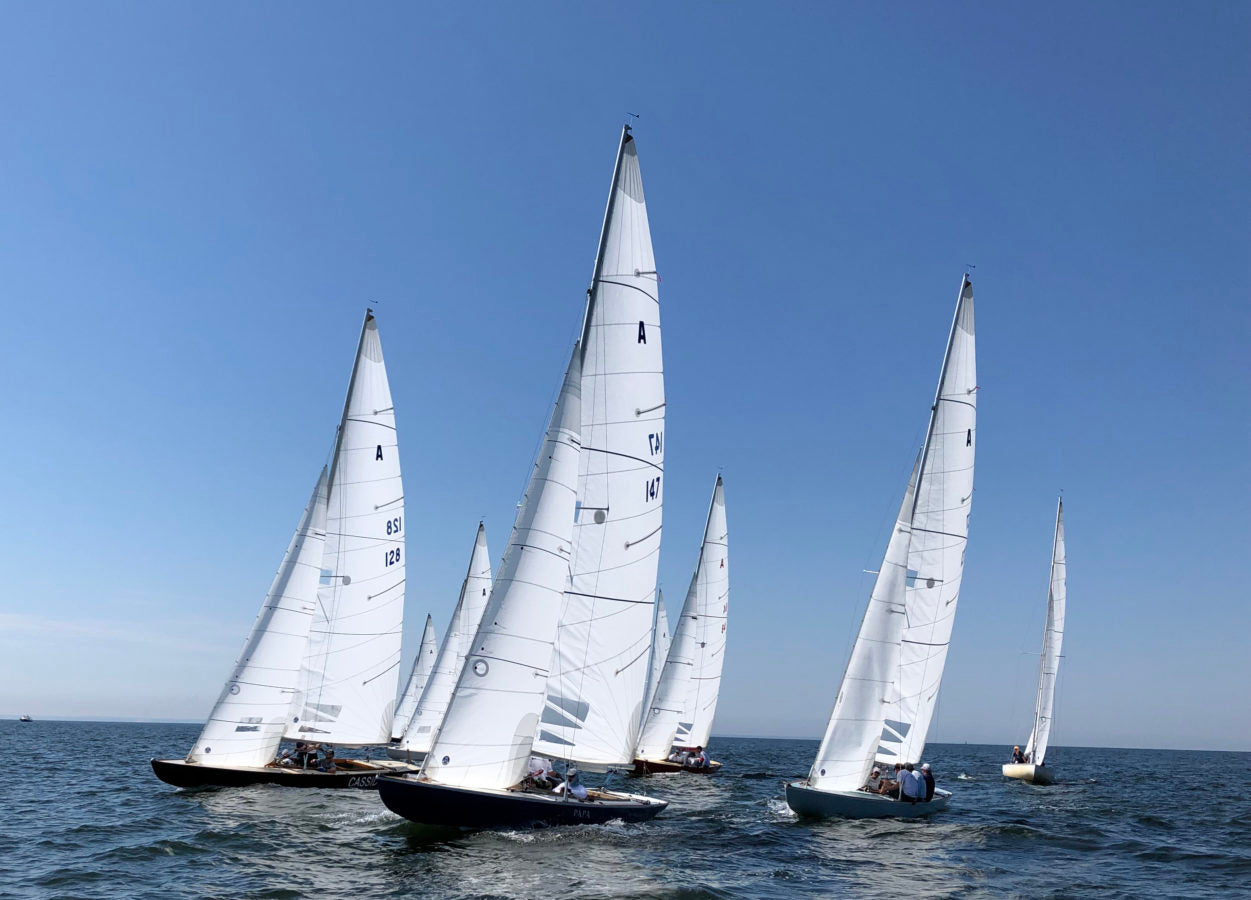
ATLANTIC NATIONALS TAKEAWAYS
ATLANTIC NATIONALS TAKEAWAYS
Experts Tim Healy and Rodrigo Meireles Share Key Tips
📸 Cedar Point Yacht Club
The 2019 Atlantic Nationals took place at Cedar Point Yacht Club in Connecticut with twenty-seven teams attending the three day regatta. 6-12 knots from east to southeast with moderate to heavy chop made for intense competition in these classic boats, followed by great hospitality ashore.
After the first day of racing, North Sails expert Tim Healy led a debrief with Dave Peck, Bill Healy, Steve Benjamin and Morgan Trubovich on the panel (representing skippers, trimmers and tacticians). The crowd had a lot of good questions and sailors found the panel very helpful.
David Peck from Niantic, CT won the regatta convincingly, posting only seven points after six races and a drop. Steven Benjamin finished second with 14 points and Rodrigo Meireles finished third with 19 points. We are happy to report that the top twenty teams used North Sails.
The top five boats all used the FRC mainsail, AP Jib and V-2 spinnaker.
Tim and Rodrigo’s Takeaways
JIB SETUP
Set the height of the jib so that the foot overlaps on the deck by 1″ max. In light air, move it down as low as ⅛”. This will prove a good deck seal to trap the wind from going under the sail, which will maximize its power.
Never let the upper jib leech tell tale stall. Find max trim by trimming so it just stalls, then easing just enough so it is flowing 100% of the time.
CHECK PREBEND
At the base setting for your rig, it should be about 1.75-2″ for speed in a range of conditions. (The fastest boats at CPYC use 2.5-2.75”, as they sail mostly in 5-8 knots.)
DOWNWIND TIP
Work hard to separate the spinnaker from the mainsail. The main is so big that it easily shadows the spinnaker. Be careful not to pull the guy back too far or set pole too low. You can even try easing the halyard up to 6″.
HEEL ANGLE
Try to keep the upwind heel angle as constant as possible. Crew weight adjustment is key.
Full results
📸 Cedar Point Yacht Club
Rodrigo Meireles and team Elan sailing fast. 📸 Cedar Point Yacht Club
READ MORE
READ MORE

events
COUNTDOWN TO ROLEX TP52 WORLDS
COUNTDOWN TO ROLEX TP52 WORLDS
North Sails Designer Mickey Ickert’s Insight on the Next Big Event
📸 52 Super Series / Martinez Studio
The 2019 52 Super Series has been one of the most competitive to date. At T-minus one week to the Worlds, there are just 17 points separating first from fifth after three of five events, and not one team is clearly running away with the big prize right now. Nine of the eleven boats competing are powered by North sails, including Azzurra who is currently at the top of the leaderboard. We’re excited to see how this final event unfolds.
Mickey Ickert is a veteran North Sails designer who specializes in Grand Prix sail design with a specific focus on TP52 development. We sat down with Mickey to get his take on who’s who, how the fleet is sailing, and where we should place our bets next week.
What are your crystal ball predictions for the Worlds?
Palma is very well known and was the location of the first pre-season event. The familiarity with Palma will require teams to focus on subtle differences and fine-tuning. The fleet is so close this year that any of the top five boats could win the 2019 Worlds. The one wildcard could be Sled, who had an impressive pre-season showing at Palma Vela in May.
How do you see the North sails stacking up for the expected conditions in Palma?
Speed is king for getting off the start line to the first shift, and our 2019 3Di structures are proving to have an edge. Typical Palma conditions will call for using the light main with the light-medium jib. We’ve been focusing on pushing the sail weight down to maximize the advantages of 3Di against string sails, and maximizing the crossovers between the light and AP mains. Jib-wise, the new Raw 890 light-medium jib should excel through all the puffs and lulls.
📸 52 Super Series / Martinez Studio
People, product and practice are all factors that play into a successful season. What do you see as the game changers in 2019?
People are a real game-changer this level of sailing. Provezza’s new afterguard gelled well and sailed the most pre-season, giving them confidence. Bronenosec is winning races with the addition of Sîme Fantela as the strategist. My observation is the younger sailors in the fleet are pushing the boats harder, racing is more dynamic, reaction times are faster, and sail changes are happening more quickly.
Product-wise, I am expecting the newly developed 3Di Raw 890 has given our teams more sail card options through the Worlds and then heading into the final event of the season. So far it’s hitting our design targets; better shape-holding, and cleaner aesthetics.
What’s 2020 going to be like?
The new venues have already been announced and we know South Africa will be more breeze. We’ll fully review that plan at our global design meeting in November, but for now, all eyes are focused on the 2019 Worlds—and after that, the final Super Series event in Porto Cervo.
📸 52 Super Series / Martinez Studio
READ MORE
READ MORE
events
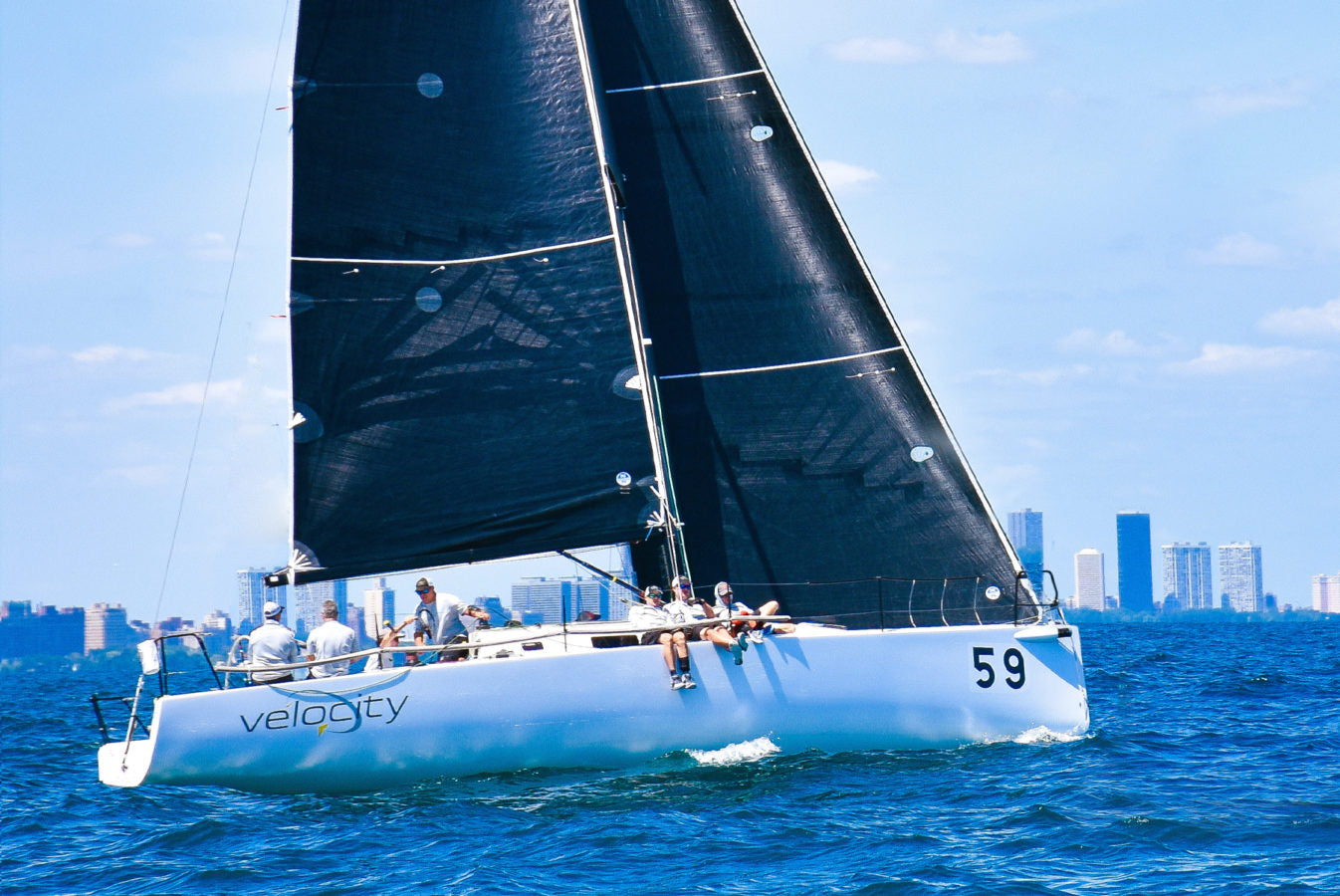
SPEED READING: J/111 PRE-WORLDS
SPEED READING: J/111 PRE-WORLDS
Preparing For The Grand Finale
Tough racing conditions at the Verve Cup / J/111 Pre worlds © Sara Proctor
North Experts Seadon Wijsen on Skeleton Key and Allan Terhune on Velocity sailed the Verve Cup, which was also the J/111 Pre-Worlds. After three days and eight races, both teams had plenty of takeaway lessons. Here’s what they had to share.
“The racing conditions were typical for Chicago,” says Seadon. “Light and lumpy, and extremely challenging at times. Our light air speed and technique was top priority.”
Allan agrees. “There were bands of wind that came down the course, forcing you to connect the dots and stay in the pressure as long as possible. Light air boat speed was definitely a big factor, but it soon became apparent to us that getting clean starts were going to be the key to this event.”
Lessons learned from Pre-Worlds
The fleet got eight races in, a chance for both boats to experiment with settings in the search for better light air speed. Seadon’s team played with jib halyard, jib leads, and in-haulers to help transition through the wind ranges. They also tried a looser rig. “It helped our accelerations, but didn’t make much of a difference in our straight-line speed. Moving the jib lead forward helped, so maybe we were just carrying the lead too far aft in general before.”
Allan says Seadon was able to help his team with an off-the-boat observation. “We learned from Seadon that we had too much inhauler on in the light stuff. I had this inclination that if the crew was on the rail hiking, we’d need to pull the inhauler in all the way. What it actually did was close the slot and create stall, which was easy to do in the light air. Onboard we couldn’t see it, but Seadon noticed from off the boat. Too much inhaul was deadly.”
Both sailors agree that the most important thing for J/111 boat speed is keeping the boat in the right mode. You don’t want to pinch, especially if there is chop.
“You need to keep an open mind on every leg. It’s easy to doubt yourself, so you can’t focus too much on the fleet, rather sail your own race and focus on what you think will have the best outcome.”
In the light air, it was easy to over-trim the sails. “That was slow, and we had to be super sensitive to this,” said Seadon. Allan added that course corrections had to be very subtle as well. “When we felt slow, we’d put the bow down to help build speed, but if we went too far, this caused us to stall.”
Racing in Chicago, Seadon says, it’s hard to find any consistent pattern to the wind. “You need to keep an open mind on every leg. It’s easy to doubt yourself, so you can’t focus too much on the fleet, rather sail your own race and focus on what you think will have the best outcome.” Allan has sailed out of Monroe Harbor in many different classes, and he agrees. “It is very easy to think that it will always do this, or it will be this way—and it most definitely does the opposite.”
© Sara Proctor
What to work on
Seadon has been racing with Skeleton Key for four years and says his team’s consistency is what’s led to their success. “Our rig tune, sail selections, and techniques through the wind ranges are all the same as they usually are. We don’t try to change much last minute, and we usually improve each time we sail.”
In the short gap between the pre-Worlds and Worlds, they have a list of things to work on. “We need to improve our leeward mark roundings. We can do that by discussing the planned maneuver, and weight placement. We are also going to look at different batten combinations for light air and windier conditions.
“The key for us is to try to improve the things we are lacking, but also focus on what works; we don’t need to reinvent the wheel.”
On Velocity, Allan says they will primarily be looking at their acceleration off the starting line, the leeward mark, and speed out of tacks.”
Looking ahead to the Worlds, Seadon admits Chicago is one of the toughest places to race—and they face some great competition. “We will have to be mentally tougher. I think we will be better in the lighter air conditions this time around. We are hoping to have a nice range of different conditions throughout the regatta, and maybe even some breeze.”
Both teams plan to sail as much as they can, and want to line up with as many boats as possible. As Allan puts it, “It’s about getting as much data as you can before the regatta starts.”
Skeleton Key initiating a jibe in tough light air conditions © Sara Proctor / Verve Cup 2019
Have questions about tuning? Check out our J/111 Tuning Guide
Click here to view all of our products J/111 inventory
READ MORE
READ MORE
events
WIZARD'S WINNING RECIPE
WIZARD’S WINNING RECIPE
A Methodical Approach to Setup, Schedule, and Sail Choices
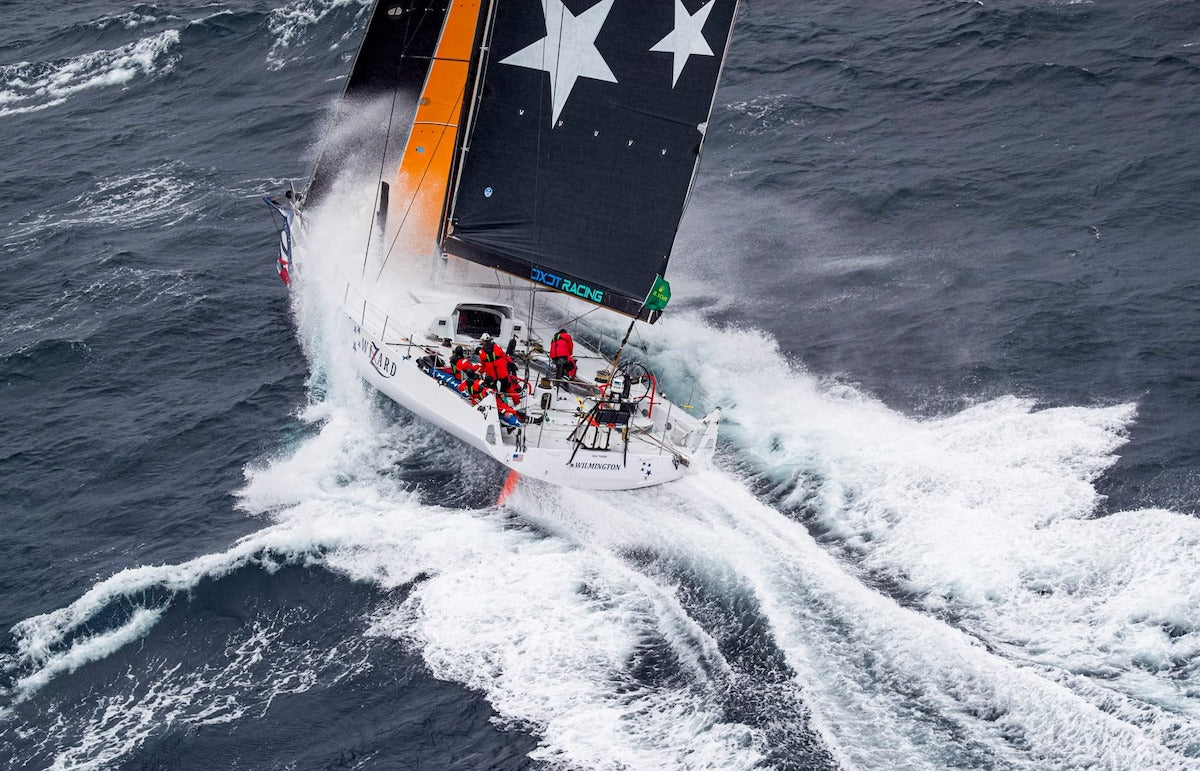
Peter and David Askew are on a hot streak with their VO70 Wizard in this year’s Atlantic Ocean Racing Series. They’ve won three of the five events in the series so far; RORC Caribbean 600, 2019 Transatlantic Race, and Rolex Fastnet Race. Their chance to complete the season with a sweep comes on October 19th, when the Rolex Middle Sea Race starts.
Winning ocean races is why the brothers purchased Wizard (the VO70 that won the 2011-12 Volvo Ocean Race 2011-12, as Groupama) in 2017. As Peter puts it, “Our entire program has been deliberately focused on winning.” That program started with a core team that raced a custom-built Reichel/Pugh 74 on the Great Lakes and won the Transpac Barn Door in 2013. Once the brothers set their sights on the Transatlantic Race, though, they knew they needed a canting keeler. Groupama, then sailing as Giacomo, was for sale in Sydney, Australia after winning overall honors in the 2016 Sydney Hobart Race. “Chris Larson from North Sails helped us put a group together to get the boat to the starting line of the 2017 Sydney Hobart Race, where we won our class,” Peter explains. “We then brought the boat back to the USA, did the 2018 Newport Bermuda Race, and won the Gibbs Hill Lighthouse Division.”
Next, boat captain Chris Maxted took apart and overhauled all the major components and systems, while the sailing team returned to the Great Lakes for another successful season on the R/P 74. Once the Volvo Ocean Race 2017-18 concluded, Charlie Enright and Phil Harmer rejoined the team. “It was at that point,” Peter explains, “that we decided to go after the AORS events, starting with the Caribbean 600 in February 2019. David and I knew full well we had a weapon with Wizard, and the right people in place.”
A combination of ocean-ready boat and crew, plus all their planning and preparation, is why they’ve posted such an impressive string of victories, he adds. “You have to go pretty far back in sailing history to find another boat that has been as successful as this particular Volvo 70. Maybe Dorade, but in the last 30 years, I don’t recall a boat being this dominant in the world’s most challenging ocean races. Over its life this won the Volvo Ocean Race as Groupama, the Sydney Hobart Race as Giacomo, and Newport-Bermuda Race, Caribbean 600, Transatlantic and Fastnet with our Wizard team. It’s an amazing run and the next challenge is the Middle Sea Race.”
“Are we pleasantly surprised by the string of victories?” Peter asks. “Of course, but we never set out to be second or third. Our goal of having a competitive program has been very deliberate. David and I are competitive guys, and we always play to win.”
Charlie Enright has worked closely with the Askews to methodically build a program that could handle a heavy schedule of offshore racing. “Most races are won before they even start,” Charlie reminds us. “Wizard’s off-season and pre-race approach are to leave no stone unturned and to be efficient and rational with our decision-making. Chris Maxted does an exceptional job making sure the boat is ready to race.” The experienced crew includes Will Oxley, Rob Greenhalgh, Phil Harmer, and Mitch White; Phil won the VOR on the boat, and Mitch sailed a lot of miles under the Giacomo name.
“We have good sailors on our team,” Charlie continues, “but so do most of the other boats. The important thing is that we work well together. The boat is 75% American and 25% international, which is cool and somewhat rare.” And Team Wizard is only twelve people, while other similarly sized boats might have 20 crew. “A consistent, tight-knit group is key,” Charlie says. “When that gun does go off, we feel confident that we have as good a chance to win as anybody.”
Winning still takes sailing well and some good luck, he admits, “but the results are pretty consistent over the past year, regardless of what conditions we’ve been sailing in.”
The boat had done a lot of miles by the time the Askews bought her, but Charlie says they also used a methodical approach to replacing the inventory, initially a mix of 3Di Endurance and 3Di RAW. “Some programs take delivery, look at the year in which a particular sail was built, and just start replacing things sight unseen.” Instead, the team has been replacing “about one new sail an event,” which allows for learning and conceptual changes. For example, they’re now using a whisker pole reaching with the J0, a concept they took from the VO65s. The sail’s versatility allows the team to leave some other sails behind, Charlie adds. “It can take the place of the G1 in a pinch upwind. It comes at a rating hit because of its luff length, but we only really use it in events where there’s no real VMG.”
Putting together the best sail package isn’t “voodoo,” Charlie laughs. “We just try to think logically about what we’re doing and the best sail package to get there.”
For the 2019 Fastnet, Wizard added a Helix Code Zero to power them through the light spots. “We used it to VMG downwind off of Start Point,” Charlie says, “and then used the same sail to help us upwind in the light spot east of the Scilly Islands.”
Designer Max Tringale worked on Wizard’s Code Zero. “The size target was similar to the boat’s older style cabled sail, with the goal to not reduce the area or change the sheeting location. By combining Helix with Load-Sharing Technology, we were able to design a lighter, flatter sail that works across a wider wind range.”
Over the past year, Max continues, there’s been “a tremendous amount of collaboration within the North Sails Design Team to develop our latest Helix mold shapes, allowing us to build the flattest and most efficient sail possible. The flying shapes produced, along with Load Sharing between a small luff cord and the sail itself, allows the luff of the sail to project away from the boat, instead of sagging aft and leeward like traditional cabled sails.”
Charlie confirms that the Helix sail can be carried through a wider range of conditions. “It’s lighter, and the luff is not constrained by the cable. We’re learning how to optimize adjustments, not only with the sheet and the tweaker but also with the tack line. The self-supporting sail structure for sure reduces tack load for a given flying shape.”
Charlie predicts that Wizard will see even more benefit from the Helix, once they upgrade the 2015 mast that came with the boat. “That said, we have definitely seen a performance bump by adding the Helix sail.”It’s also easier to put in the bag, and lighter to carry around.
“Peter and David like this kind of sailing because every race is different,” Charlie concludes. They’re really good about picking a goal, picking a tool, and surrounding themselves with the right people. That’s why they’ve been able to achieve such good results in the last couple of years. I’m proud of what we have accomplished—we’ve got a good thing going.”
Peter agrees, and he’s optimistic that their hard work will continue to pay off in the Rolex Middle Sea Race. “ We will approach the final AORS event as we have the others, and see where it shakes out.”
READ MORE
READ MORE
events
VIPER 640 WORLDS: LOCAL KNOWLEDGE BY ALEX CURTISS
LONG BEACH LOCAL KNOWLEDGE
What To Expect For The 2019 Viper 640 World Championship
Long Beach is hands down the best place to race sailboats in Southern California. With sunny skies, warm temperatures and consistent breeze, the 2019 Viper 640 Worlds should be a spectacular event. We spoke with North Sails expert and local Alex Curtiss to learn what sailors should expect when they leave the dock.
What will the breeze be like?
For the most part Southern California breeze is very predictable, but the morning marine layer will tell you a lot about what to expect on a given day. For example, if you wake up in the morning, and it is very overcast, maybe even a little hint of mist is in the air: expect lighter winds for the afternoon. If you wake up and it is a beautiful sunny day, I would imagine that it will be a typical Long Beach Day.
What is a “Typical” Long Beach day?
Essentially there are three sections to the breeze. Usually just before noon the breeze will be somewhere between 190-210 degrees. This will also mean the breeze is relatively light (5-8 knots). Then the breeze will trend to the right. A lot of times the second race is sailed in a breeze direction between 215-235 degrees, with velocity gradually picking up. Then by about 2:30 pm or 3:00 you could expect the breeze to progress further to the right (240-255 degrees). The velocity will be 15+knots and beautiful.
What are some things to look for to see the trend?
I like to pay attention to the marine layer, the clouds and the haze-line. More often than not, the cloudier it is, the more the breeze will stay to the left. The sunnier it is, the more the breeze wants to move right.
Another thing I pay attention to is the clouds inland over the mountains. If you see big towering clouds in the backdrop of the race course, that means the conveyor belt is going and expect a strong sea breeze in the afternoon. The last thing I pay attention to is the haze line offshore. The angle of the haze-line will tell you how the pressure is filling across the course. Sometimes the haze-line late in the day can run parallel to the port lay line forcing a left twist in the breeze near the top of the course.
What to expect from the different courses?
The NOR calls for three courses:
Course A is the “traditional” ocean course. Everything that was outlined in the previous comments hold true to race track. If there was one thing I would say is when the breeze goes past the 240 mark, the race to the right is real. Getting to the break-wall first with leverage will generally lead to good scores.
Course B is what I call the “Seal Beach” course. A lot of times the water is a little more chopped up due to being so close to shore. Waves will bounce off the beach and then wash together with the incoming swell, so speed is of major importance on this track. There also seems to be a little more left twist in the breeze down there as well, but there are probably more shifts to be played than course A.
Course C is probably my favorite of the three courses. This course is inside the breakwater, so flat water in the mornings and a bit of chop when it gets breezy. It is a bit more college style due to the oil islands, and how they affect pressure and shift. There isn’t a lot of rhyme or reason too much inside, but I would pay attention to the haze line angle if they set a course up near the breakwater.
What about Tide or Current?
Since you are in the ocean, there is really always current going down coast. There is really no relief but keep it in mind approaching marks and laylines.
Favorite Post-Sailing Nosh spots?
You can’t go wrong with the beers and food at Ballast Point Brewing company across from ABYC. Also anywhere on 2nd street is a great place to chill out and debrief with the team.
READ MORE
READ MORE
events
HOBSON & WHEATLEY WIN ENTERPRISE UK NATIONALS
HOBSON & WHEATLEY WIN ENTERPRISE UK NATIONALS
Close Scores Make Every Point Count
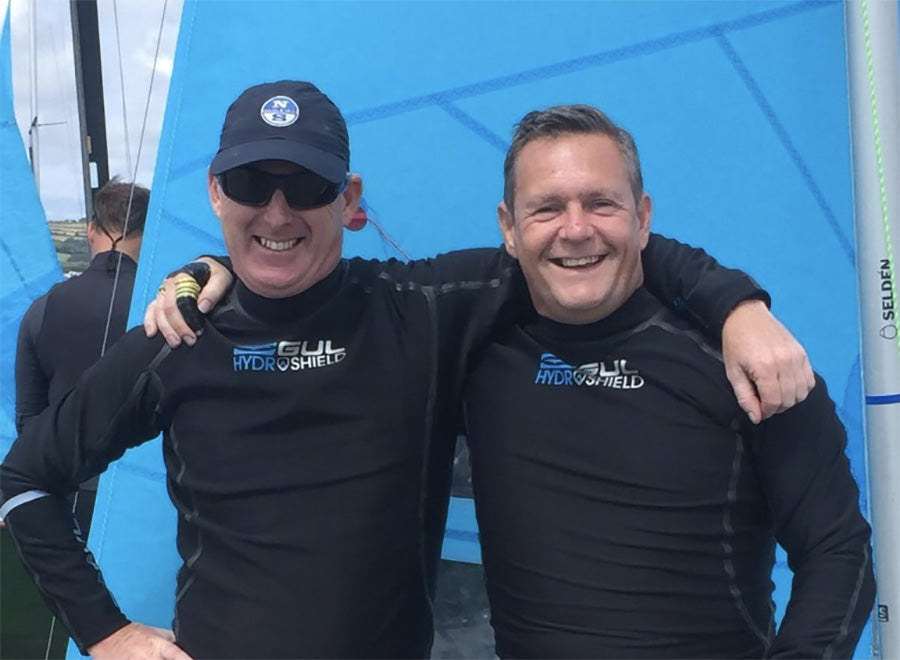
46 teams raced at the Allen, North Sails and Selden Enterprise UK Nationals held at Mounts Bay. After four days of heavy air racing the wind dropped on the last day giving the teams a complete new outlook for the last race. Defending champions Dave and Chris Jackman, and North Sails expert Paul Hobson and Craig Wheatly battled every inch of the race course. Heading to the final race both teams had four bullets with Paul and Craig having less points which guaranteed their win after a dramatic final race.
This is the first time Paul Hobson has won the Enterprise Championship on the helm making him the only sailor to win the event both as a crew and as a helmsman.
Class Expert Paul Hobson’s Key Points For Success:
Flat is fast. Always work on keeping the boat flat.
On gate starts, try to keep a nice space to leeward, making the mark rounding close and tight to the gate boat.
Don’t be greedy; minimise your risks and focus on the boats ahead.
Hobson/Wheatley used the North Sails SJ-4+ mainsail and the FG-3 jib.
Next for Paul and Craig are the October Looe SW Regatta followed by Winter Championships at Northampton in November.
READ MORE
READ MORE
events
SANTANA 20 NATIONALS: KERR DID IT AGAIN
SANTANA 20 NATIONALS: KERR DID IT AGAIN
North Sails Helps Andrew Kerr Win His 13th National Title
📸 Richard Aaring
The 2019 Santana 20 National Championships were hosted by the Triton YC and Eugene YC’s on Fernridge reservoir in Eugene, Oregon 22 teams from Mexico, Colorado, Washington and Oregon were challenged with a seven race series over the course of three days with winds varying from 5 to 12 knots.
North Sails expert Andrew Kerr coordinated a practice day with on-the-water videos and a post-racing comprehensive debrief with all teams in attendance.
“The practice day with Andrew coaching the teams was very well received and helped them to get ready for the Nationals”, said Kerry Poe, North Sails Oregon
The racing featured a lot of gear shifting, particularly powering up in lulls and then responding to a quick build in the velocity. The goal was to be in phase at all times and connect the velocity upwind and downwind.
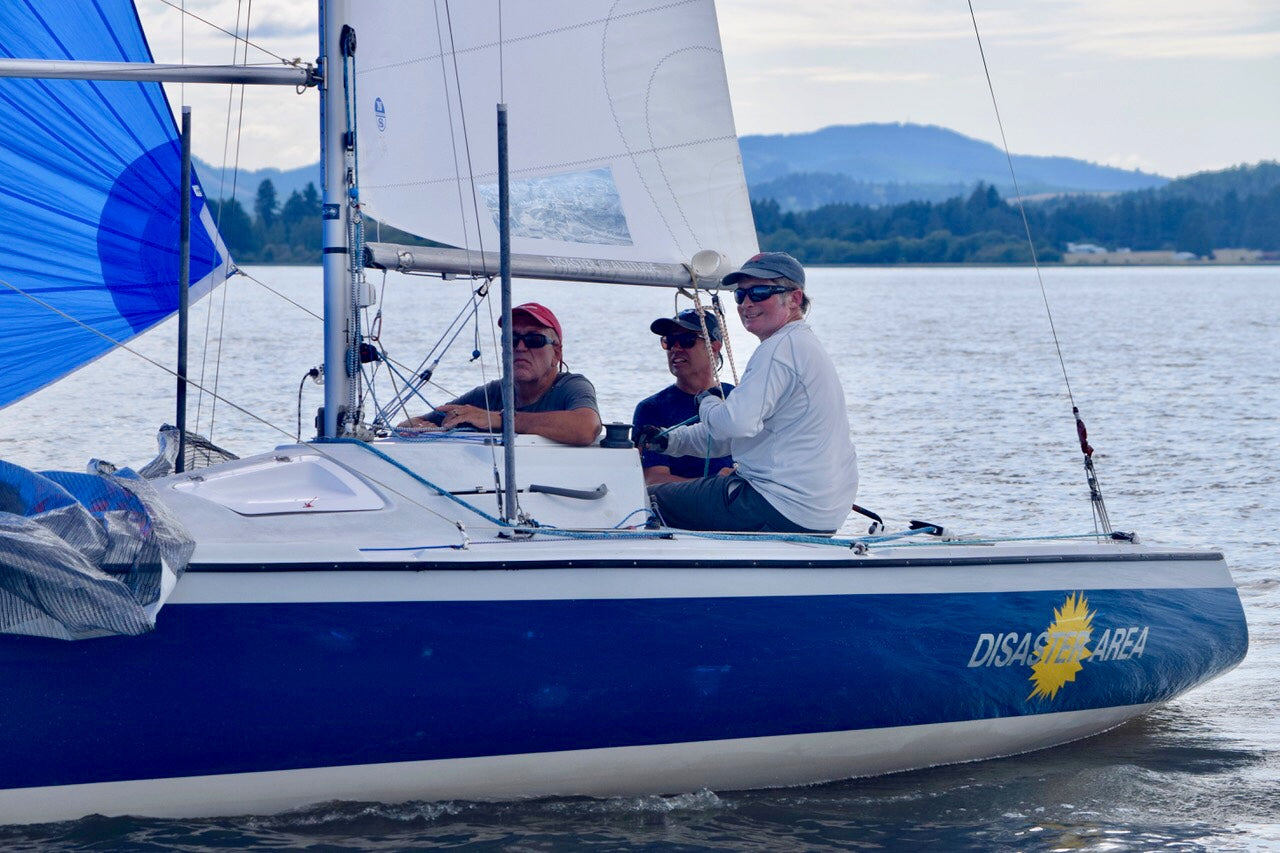
Starts were hotly contested. Team Disaster Area sailed with Kerry Poe on the helm, boat owner and tactician Andrew Kerr in the middle and former Class President, Phillip Infelise on the foredeck. “We focused on starting in the front row in the biggest space we could find, rarely did we start at the favored end. We would be toward it but in a lower density area so we could get off the line in phase and sail fast to the velocity and next shift”, said Andrew.
Patience paid as it generally always does on a lake. Very often a detrimental 30 degree shift would come in and the key was to wait it out until the wind came back to the median heading to then tack in the best gust of wind. Like many venues, it was critical to have your head outside the boat at all times to not miss big opportunities.
“The North designs gave us excellent speed in all conditions. The vision window in the genoa enabled our team to see starboard tack boats early and formulate a solid game plan for our boat to boat tactics.
The mainsail gave us all the flexibility of speed and shape that we needed with playing the backstay and the aft lowers. The spinnaker was stable and fast in all conditions. These designs have won the Nationals many times!,” said Andrew.
North Sails customer Evert Slijper and his team What about Bob? showed excellent speed and won race six. In fact, North-powered teams won four out of the total seven races. North Sails customers Jorge Murrietta’s Mexico and James Stinson’s Creamsicle also had excellent speed throughout the regatta. Congratulations to team Disaster Area for winning the Nationals with three bullets and consistent scores. This was Andrew Kerr’s 13th win at the Nationals. Very impressive!
Learn more about North Sails Santana 20 designs.
Team Disaster Area, winners. Kerry Poe (left), Phillip Infelise and Andrew Kerr (right). 📸 Richard Aaring
📸 Richard Aaring
READ MORE
READ MORE
events
38TH COPA DEL REY
38th COPA DEL REY
North Clients Return To Defend The Title On The Bay Of Palma
© María Muiña / 38 Copa del Rey MAPFRE
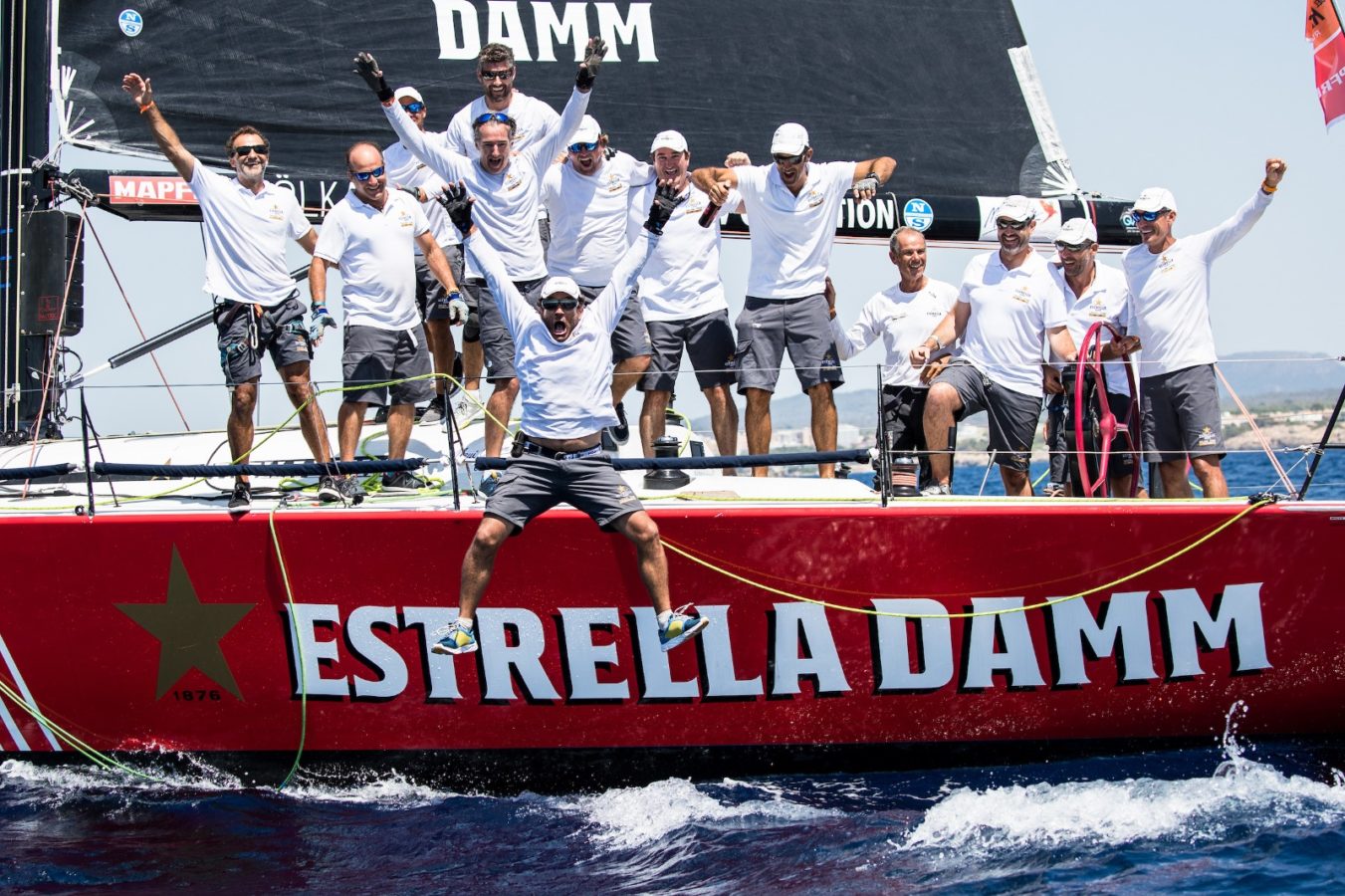
The 38th annual Copa del Rey MAPFRE, organized by the Real Club Náutico de Palma and held on the Bay of Palma, once again boasted a record number of entries in the ORC fleet. North clients took home trophies in six divisions as well as both top performer awards (won by Leonardo Ferragamo’s ClubSwan 50 Cuordileone, and Nacho Montes and Oscar Chaves’ DK 46 Estrella Damm).
Copa del Rey is a big deal for North Sails each year, and there is plenty of onshore support required to keep our sailors on the water and up to speed. Our Palma loft provides overnight service most nights, working diligently on sails for yachts anywhere between 30-60 ft. The pre-regatta days are some of the busiest, with 20-30 new sails coming from all over Europe to be inspected before delivery. There are roughly seven sail and service experts working for seven straight days, with five on the evening shift which can sometimes turn into the morning shift. Over the course of the event, North Sails worked with 37 different team inventories, and over 90 sails passed through the hands of our loft. We are proud to not only show our numbers on the race course and on the scoreboard, but also on land to support all regatta participants.
Estrella Damm’s skipper, North Expert Luis Martinez Doreste, says the team came into the event ready to defend their title from last year. “We trust each other to accomplish our assigned jobs and do them well. Combining a talented crew and the right boat for ORC 1 were key factors. Not to mention having the right rig setup, and perfect sails; it is the best combination we could ever achieve.”
© María Muiña / 38 Copa del Rey MAPFRE
Before Copa del Rey, the team had multiple training weekends together. “That gave us the time to improve in so many ways,” explains Luis. “We focused mainly on our boat speed and maneuvers, and it paid off.” This year, there were changes to the ORC fleet, giving it a new distribution system to divide the fleet into four classes, depending on boat length and speed benchmark. If anything, this worked in favor of Estrella. They knew they would be matched well with their arch-nemesis, Rats on Fire, a Swan 45 owned by Rafael Carbonell Pujol.
© María Muiña / 38 Copa del Rey MAPFRE
The breeze was light to medium early on, but by mid-week a mistral provided sporty conditions. Estrella Damm’s new 3Di RAW 780 mainsail and S2 symmetrical kite helped improve their speed over the course of last year. They also used a one-year old A1.5 spinnaker for light air. “Our new sails lived up to their promise,” says Luis, adding, “they made a huge impact on our boat speed and performance. The new main has more twist and downwind speed, and the rig tune gave us a more bendy mast. Also, I highly recommend the A 1.5 for this type of boat, especially dead downwind with a spinnaker pole in under 10 knots TWS.”
This year was Luis’ 7th Copa del Rey. Defending Estrella Damm’s ORC title and taking the overall Copa del Rey Trophy, he says, was the result of combining preparation and a great crew with the right equipment: “For us, it was the perfect mix.”
https://www.northsails.com/sailing/wp-content/uploads/2019/08/copa-del-rey-winners-story.mp4
READ MORE
READ MORE
events
TAKEAWAYS FROM THE THISTLE NATIONALS
TAKEAWAYS FROM THE THISTLE NATIONALS
Breathtaking Venue Delivers Great Racing & Lots Of Fun
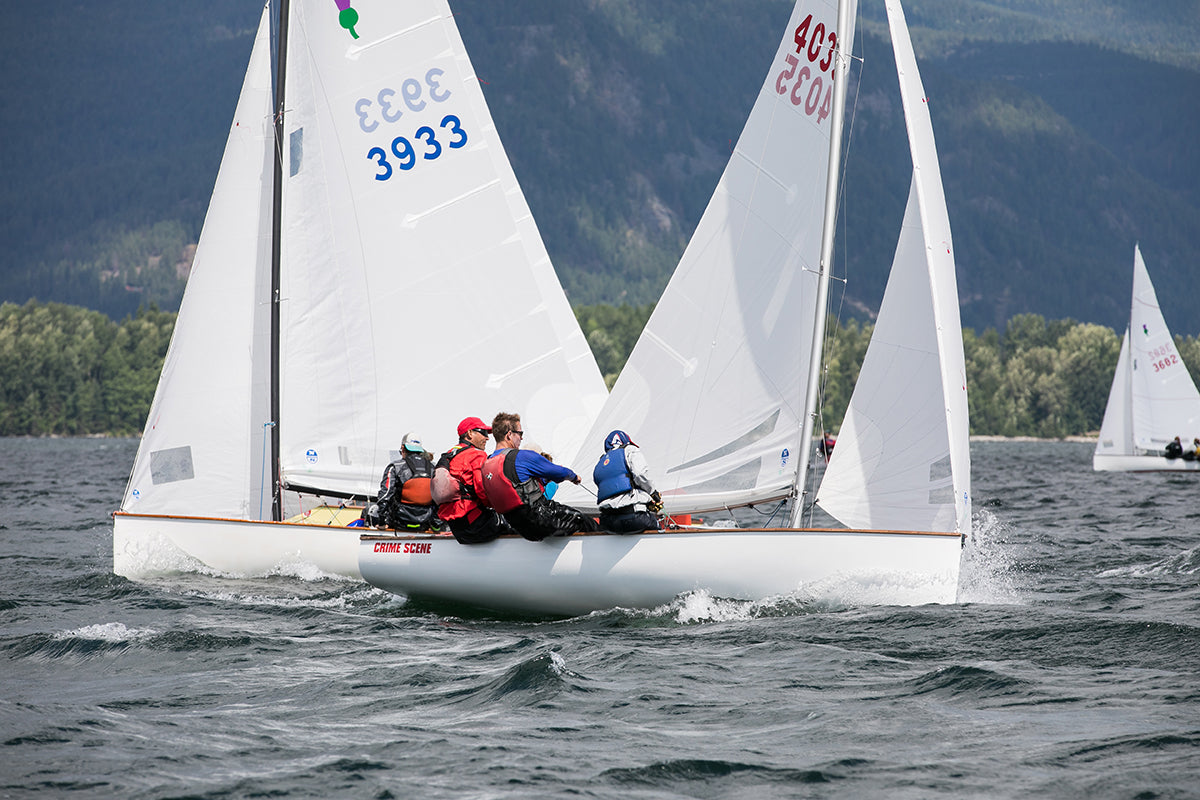
North Sails expert Paul Abdullah and team Crime Scene 📸 Paul Bickford
The 2019 Thistle Nationals were held in Sandpoint, Idaho July 20th-26th. Sandpoint is a beautiful resort town located in the Northwest part of Idaho. Wayne Pignolet and his team followed the script: “If you build it, they will come.” They did a fantastic job! The sixty-six teams that attended left with a smile on their face.The Thistle class loves a good destination, and everyone enjoyed the experience Sandpoint had to offer.
On Saturday morning the teams were finding their way through measurement and over to the beach where the boats would be kept for the week. A clinic was postponed until later in the day when the wind was going to be better. North Sails experts Mike Ingham and Paul Abdullah with Greg Griffin provided on the water coaching to the group. Greg and Paul had a little scare when their boat took on some water while trying to rescue a capsized Thistle. They successfully returned the boat to shore. It’s true… You can’t sink a Boston Whaler!
On Sunday the Women’s and Junior Nationals were held. There was a great breeze for four races. Nicole Shedden notched another win to her string of Woman’s Nationals, and Conrad Miller won the Juniors. Congratulations!
📸Mike Jewell | Sandpoint Sailing Association
The Thistle Nationals format is not about winning or leading on the first day, but more about not losing it. The first three qualifying races determine the Championship and Presidents divisions. The Championship fleet has to keep its scores, so points are very important. Doug Kaukeinen was the leader at the cut posting a 1-1-6. As tradition goes, Doug would be passing the Mint Juleps around the awards banquet later in the week.
The Thistle Nationals format is not about winning or leading on the first day, but more about not losing it.
Heading into the last four races, 5-6 teams had a shot of winning the Nationals. Paul Abdullah won race 4 and was leading on the water, but Tom Lawton had a great day and was the leader after race 5 was over. It was all going to come down to the last day, and the field had thinned itself. Tom was leading with Greg Griffin close behind, and then there was 12 and 13 points between 3rd and 4th placed boats. Tom had a bad 6th race and fell a bit, and that left Greg Griffin in a good position going into the last race. Scott Meyer continued to have a solid regatta and was able to fight off Paul Abdullah for 2nd beating him by a point, but it was Greg’s week capping off a lifelong journey to win the Thistle Nationals. Congrats to him and his team, Mark Reddaway and Amy Thompson for accomplishing a dream!
Paul Abdullah’s Takeaways For Success
First And Foremost Is Preparation! I am OCD when it comes to boat prep and making sure that everything works. The last thing I want is gear failure. Make sure the rig is tuned properly after a long cross country trip.
Be Sure The Team Knows Their Roles. In the heat of battle you need to have everyone focus on their job and not get caught up spectating. I know personally that driving fast takes a lot of concentration, and trusting your team allows me to be my best.
Sailing Flat And Fast Was The Key To Our Success. We had great breeze in Sandpoint. Steven (our middle crew) did a great job playing the vang and the jib sheet in the puffs and lulls, and Marie (forward crew) adjusted the jib halyard and main cunningham accordingly. As a team, we kept to boat balanced so we sailed fast instead of fighting it.
North Notes
Fifty-seven out of the sixty-six boats were powered by North fast Thistle sails.
Championship Division: 2,3,4,5,6,7,8 used North Sails
President’s Division: 1,3,4,5,6,7,8,9,10 used North Sails
We are looking forward to the 75th Thistle Nationals in Cleveland in 2020!
Learn more about our fast Thistle designs.
📸Mike Jewell | Sandpoint Sailing Association
📸Mike Jewell | Sandpoint Sailing Association
📸Mike Jewell | Sandpoint Sailing Association
📸Mike Jewell | Sandpoint Sailing Association
READ MORE
READ MORE
events
B14 SKIFF WORLD CHAMPIONSHIPS
B14 SKIFF WORLD CHAMPIONSHIPS
North Sails Powers The Podium
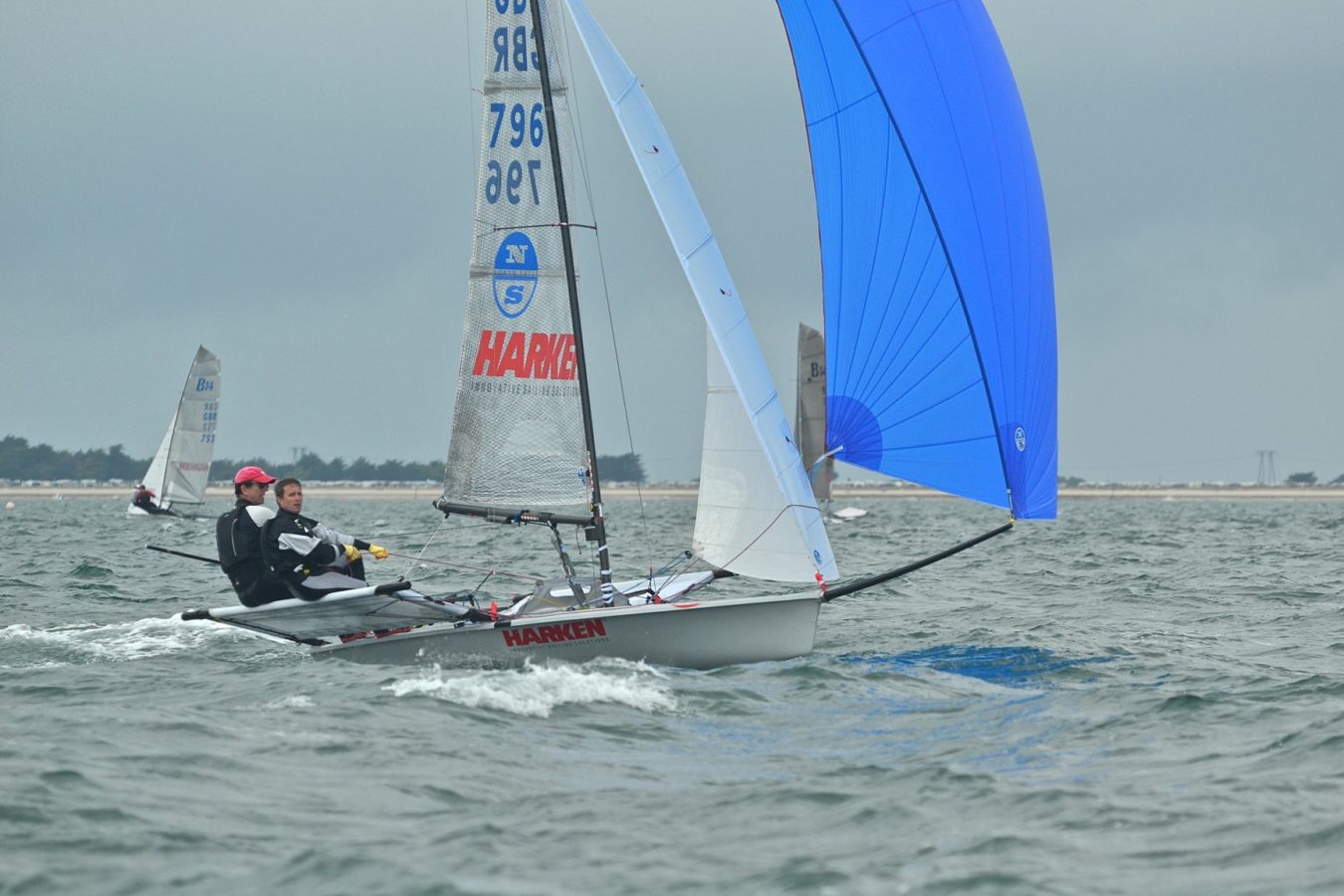
B14 World Champions, Nick Craig/Toby Lewis (GBR 796) 📸 Alex Hayes
30 boats met at the Yacht Club de Carnac for the annual B14 World Championships. With close competition all round, particularly for the top ten boats in the fleet, it came down to the last day of racing to determine who would would be fit for a podium finish.
The final day was tense and particularly exciting for the top two boats; current UK National Champions, Nick Craig/Toby Lewis (GBR 796) and Craig Garmston/Louis Chapman (AUS 375). The fleet were held ashore waiting for the wind to arrive and when it did they headed straight out, eager to get two races in before the shortened last day.
In a variable 3-5 knots, race one was straight underway with AUS 375 out in front and Mark Barnes/Charlotte Horlock (GBR 795) chasing closely behind. French team, Alaine Cadre/Francois Cadre (FRA 773) charged up the middle with impressive speed, but they lost out after hitting the windward mark. GBR 795 also had a stroke of bad luck, picking up seaweed on their foils resulting in a tough, slow upwind beat.
Going into the last race, the top two boats were dangerously close in points so the title was all to play for. GBR 796 had a fantastic start coming up the beat in top position with AUS 375 sailing fast, but buried in the fleet. As the race unraveled, the front three remained ahead of the fleet, finishing with GBR 796 taking their sixth bullet of the regatta to win the World Championship title.
Winning team Nick Craig and Toby Lewis raced with a full North Sails inventory, including the LGM-8 Mainsail, LJ-4D Jib and SS-04 Asymmetric Spinnaker.
‘’With eight of the top ten boats racing with North Sails, our B14 sail designs continue to contribute towards winning boat speed and top end results, no matter what the conditions.‘’ Rich Bell, B14 Class Expert.
Browse the B14 Shop Inventory or talk to a Class Expert.
📸 Alex Hayes
Paul Roberts/Rob Taylor (GBR 321) 📸 Alex Hayes
📸 Alex Hayes
📸 Alex Hayes
READ MORE
READ MORE

events
FASTNET FIRST TO FINISH
#NSVICTORYLIST: FASTNET FIRST TO FINISH
North Powers Early Success Into Plymouth
Records have fallen fast at this year’s Rolex Fastnet Race and North Sails is proud to be a part of our client’s success in the 2019 edition of the historic event. First-to-finish were North powered boats, Maxi Edmond de Rothschild and Rambler 88 who now hold three new race records between them.
Co-skippers Franck Cammas and Charles Caudrelier sailed their North 3Di powered Ultim Maxi Edmond de Rothschild to record-smashing success, claiming both the overall race record and the multihull record to Fastnet Rock. The French duo completed the 605-mile race in 1 day, 4 hours 2 minutes and 26 seconds, breaking the previous multihull record by 4 hours, 45 minutes and 34 seconds.
Cammas and Caudrelier had their work cut out for them in a marathon match race with MACIF, also powered by North 3Di and co-skippered by François Gabart and Jimmy Spithill. “It was a true match race with MACIF, explained Cammas. “We were within 3.5 miles of them, and in sight of each other the whole race. It was so exciting to be able to race this style in very fast giant multihulls. It was intense and the whole crew had to be totally focused. We pushed to the max, and we didn’t get much sleep.”
Rambler 88 was first to finish amongst the monohulls. Owner George David and crew beat a fleet stacked with heavy competition in the 48th edition of this race. Rambler 88 arrived into Plymouth with an elapsed time of 1d 19h 55m 2s- just 1 hour, 16 minutes shy of the monohull race record set by Abu Dhabi Ocean Racing in 2011.
Although they came short of the overall race record, Rambler 88 did set a new monohull record to Fastnet Rock. This is the second time one of David’s race boats has broken that record, rounding the Rock in 2011 at record pace just prior to losing the keel and miraculously having the entire 21-person crew rescued. With the Rock safely behind them, the team was hopeful of an overall race record, but the weather was not in their favor. “Our route plan at the Rock was we would finish at six or seven this morning, which would have been ahead of the record,” explained David. “The problem was we turned the corner at the Scillies and came down the Channel and it was VMG the whole way. So we sailed probably an extra 40 or 50 miles. And that extra distance sailed added maybe another two or three hours on to our time.”
Seeing our clients squeeze every ounce of performance from their equipment motivates all of us at North Sails to build sails that are fast and stand up to whatever Mother Nature serves up. You can track the remaining Fastnet finishers on the Official Race Tracker.
READ MORE
READ MORE

events
ROLEX FASTNET : HOW TO WATCH
ROLEX FASTNET: HOW TO WATCH
A Record Number of Entries To Set Off In This Historic Race
© Rolex
A record number of entries are making their final preparations in Cowes for the August 3rd start of the Rolex Fastnet Race. This is the 48th edition of Europe’s oldest offshore race, which attracts a range of boats, from local teams competing with their family and friends, to the highest performance multi and mono hull racing machines.
The start line for the 2019 race features numerous high-profile racing programs, many of whom work closely with North Sails to build sail inventories that deliver results. The three largest boats in the 2019 fleet are the 100’ Scallywag, Thomas Coville’s new 105’ Sodebo Ultim 3 and George David’s Rambler 88, all of whom have chosen North Sails 3Di to power their performance. Our design and engineering team will also be tracking the performance of a handful of North Helix sails across a range of boats throughout the fleet. The most recent #NSVictoryList for Helix comes from 2019 Fastnet entry VO70 Wizard, who used the specialized sail structure in their recent Transatlantic Race win.
The first start sequence begins at 12:30 local time and will see boats and crew representing 26 countries head westward down the Solent before exiting the English Channel and sailing towards the turning point at the famous Fastnet Rock. The history of this race is quite extraordinary, and crossing the finish line in Plymouth is an accomplishment in itself. This 605 nautical mile, non-stop offshore challenge is known to be one of the hardest sailboat races in our sport, with westerlies that can trigger gale force winds and meteorological disturbances that all competitors should expect to endure. The keys to winning are perseverance and getting ahead of the weather, and in some cases, using it to your advantage.
Here are some ways you can follow the race, no matter where you are in the world.
Live Stream The Start: Saturday 3 August
The entire start sequence will be streamed online from the official website and on Facebook Live.
Fastnet Website and Race Tracker:
Latest press releases, race news, images, video, tracking, Live Blog and the Virtual Regatta can all be found on the dedicated race minisite: www.rolexfastnetrace.com
All boats will be fitted with a fleet tracker: http://www.rolexfastnetrace.com/competitors/race-documents/fleet-tracking
Social Media:
Follow all the action on RORC social media: Don’t forget to tag your photos and videos with the official race hashtag, #RolexFastnetRace
The starts sequence will be streamed live on RORC Facebook and follow via the Royal Ocean Racing Club Social Media Channels.
You can also follow us on social, @North_Sails on Instagram and @NorthSails on Facebook.
Watch on BT Sport:
You can watch the start of the Rolex Fastnet Race from the comfort of your home with three hours of live coverage broadcast on BT Sport, the home of the 2019 SailGP series and 2019 Rolex Fastnet Race. Beginning at midday local time, BT Sport’s specialist sailing team will bring all the build-up, the race start and the first phase down to The Needles with live helicopter and chase boat coverage and commentary from experts and guests. This will be broadcast simultaneously on the RORC’s website, YouTube channel and Facebook, as well as The World Sailing Show YouTube channel.
Fastnet Radio:
Follow the Rolex Fastnet Race with full coverage on Fastnet Radio. Previews of the race from 29th July on the extended Cowes Radio 87.9fm, with full live commentary and coverage of the starts on Saturday 3rd August, as well as during the race and right up until the Prizegiving on Thursday evening, 8th August. Fastnet Radio 87.9fm will broadcast 24 hours a day in Plymouth, live from the docks with all the breaking race news, features and link-ups with race teams out on the course and online: http://www.879fm.uk/
READ MORE
READ MORE
events
NORTH OUTFITS WINNER OF 2019 CANDY STORE CUP
SIRONA’S SWEET SUCCESS
North Sails Outfits Overall Winner Of The Candy Store Cup
📸 Billy Black
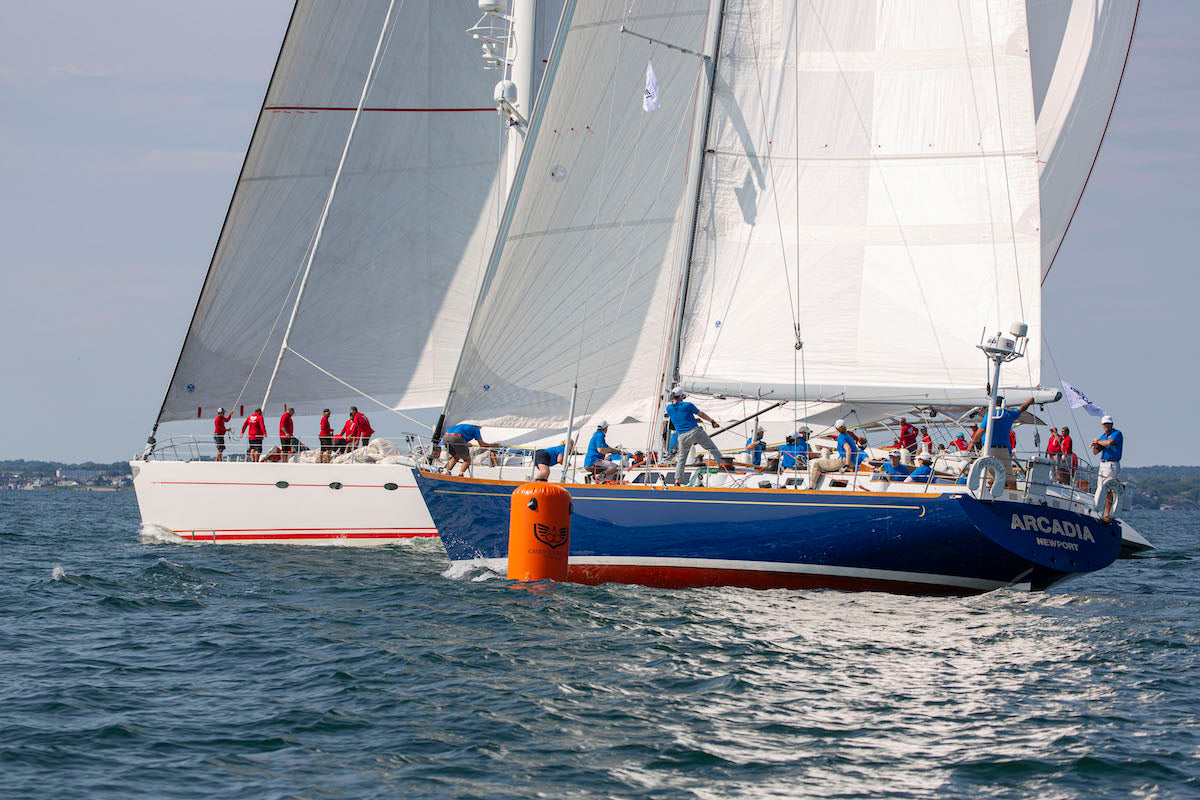
Congratulations to Sirona who went home with all the candy and champagne at the Candy Store Cup Regatta. The 22m Sloop was named the overall winner of the Newport, Rhode Island-based event, co-hosted by Bannister’s Wharf and the Newport Shipyard. North Sails contributed to the success of six podium positions across three classes and in all powered nine of the twelve yachts racing in Newport.
North superyacht expert Mike Toppa sailed on the 56m Perini Zenji, a multi-year Candy Store Cup entry for the two days of racing on Rhode Island Sound. “The race committee did a great job of arranging the course with a far turning mark at First Beach with the leg back to the finish touring the famous Ocean Drive coastline. Wind conditions were on the light side but Newport delivered and the sailing was fantastic. I saw a lot of smiles on the dock at the end of both days of racing.”
📸 Billy Black
North Sails has been a partner to the Candy Store Cup since 2016. The event carries on the tradition of the Newport Bucket and is a ‘must-do’ regatta for superyachts spending their summer on the East Coast USA. The two-day regatta kicked off with an owner’s party at the popular Clarke Cooke House, followed by two days of competitive racing.
“Partners like North Sails make the Candy Store Cup possible,” remarked Veronica Brown, head of marketing for Newport Shipyard and event coordinator for the Candy Store Cup. “Our goal has always been to carry on the tradition of the original Nantucket Bucket style of racing by keeping it fun, casual and light-hearted. The owner and crew-friendly environment, based out of a working shipyard, creates a sailing event that is unique to superyacht racing. We look forward to growing this event with North Sails’ support for years to come.”
📸 Billy Black
📸 Billy Black
READ MORE
READ MORE
events
ETCHELLS WORLDS: THE AUSTRALIANS' SECRETS
ETCHELLS WORLDS: THE AUSTRALIANS’ SECRETS
Interview with winners Iain Murray and Richard Allanson
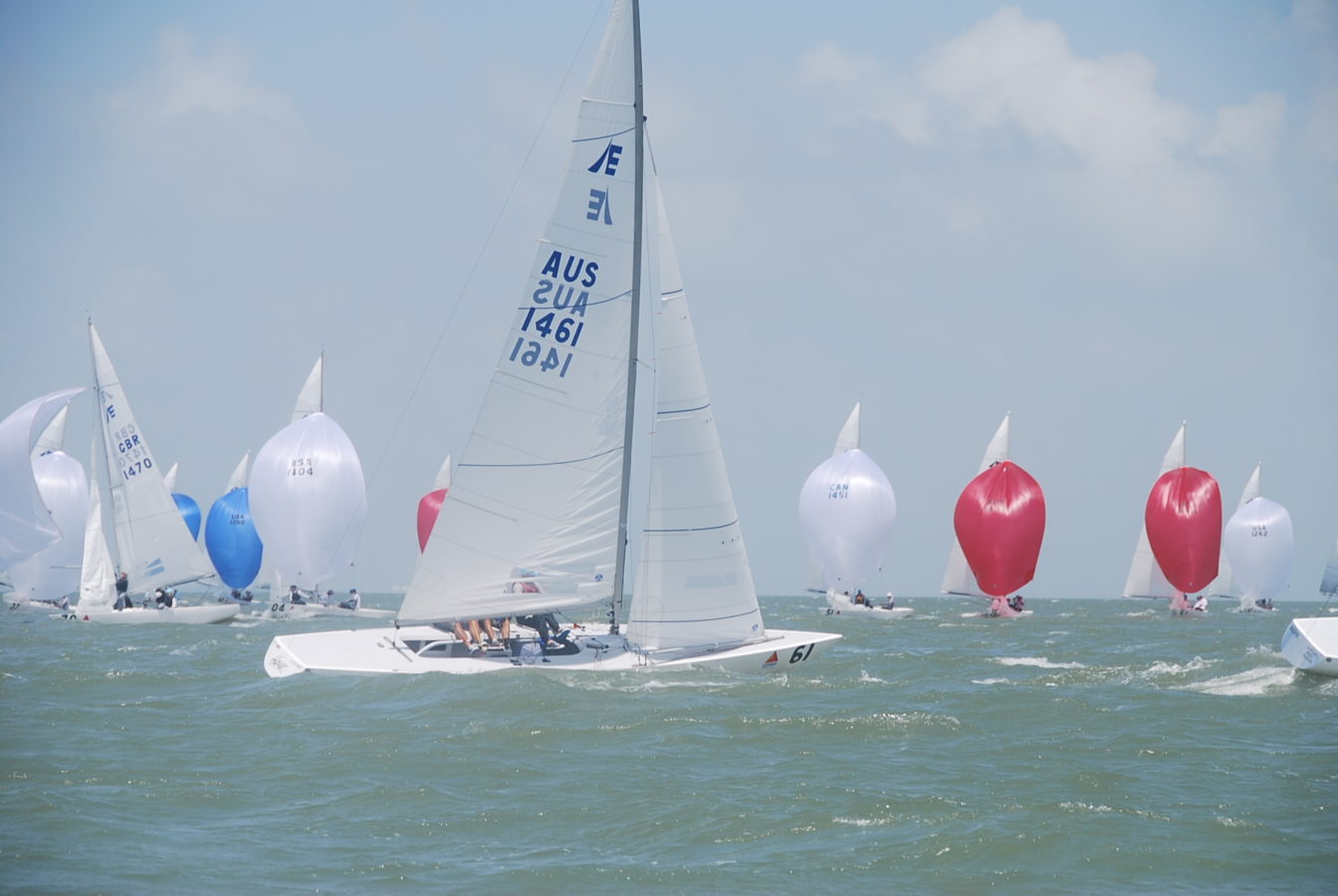
After a brilliant regatta at the Etchells Worlds in Corpus Christi, Texas, we were curious to know what was special for the Australians to give them such an advantage on the race course winning 7 out of the total 9 races. North expert Noel “Nitro” Drennan had a chance to catch up with Iain Murray and Richard Allanson and here are their secrets:
It was very impressive to see how you handled the regatta. It appeared to me that the boat was ready to win from the day it got there. Could you expand on the development of the boat, from its launch and the lead up to the Worlds?
Iain – It has been a sort of a longer term project. It really started out with the Worlds in Brisbane. We had a brand new boat for Brisbane and, unfortunately, we hadn’t quite finished getting ready for that regatta. We addressed the things that weren’t right and did a lot of campaigning in Australia, working on the full range of conditions that the boat might have to sail in across the board.
Knowing that the boat had to arrive in Corpus Christi ready to race , we locked in what we wanted to do in terms of sails and rigs and set up a long time before. One area we got a little bit caught out was the chop and the amount of water on board, and a revision to the bilge pump system was necessary to cope with Corpus Christi.
The mast had a slightly different set up than the standard and no fitting looked like it hadn’t been looked at, from the mast, the hull and the sails….
Iain – That’s the kind of operating procedure within this group – we just want to do the very best that we can. When we start a project, we start with a clean sheet of paper and go down through the boat. First, the weight. We questioned every single piece of the boat, whether it be the spinnaker pole, how the topping lift is attached, the end fittings on the pole, the diameters of the pole, the boom, how the block and tackle system works with the outhaul. Every single part and every single fitting in the boat has been scrutinized.
2nd Place Graeme Taylor, James Mayoa and Tom Slingsby 📸 Corpus Christi Yacht Club
The two-boat tuning aspect of your campaign was really evident that it was a big part of your success.
Richie – The two boat is a pretty unique opportunity to have. Essentially we had one team with two boats and it was an open book between the two. The boats were identical in terms of the set up, the hulls, the rigs, the sails and it allowed us to validate a lot of things that in particular Iain wanted to have in place. Iain has been quoted as someone that thinks in color rather than the black and white.
All the subtleties of these boats is one of the great things about sailing. It never ceases to amaze me how one turn on the lowers can make such a big difference to the performance of the boat. We looked at Magpie’s rake and mast step position and they were subtly out by not a huge amount. We put them back to where we believe they should be and it made an astonishing difference. All of a sudden they were comfortable. It’s really cool that you can adjust two things on the boat, the rake and the mast step, and make a significant difference to the performance.
With the two boats it allowed us to validate a lot of ideas that he wanted to try, in particular the rig set up. A lot of people that said they tried that 20 years ago and with the greatest respect to those people, they were dismissed pretty quickly because they weren’t open minded to seeing these things through. There’s been subtle changes in materials and techniques that have allowed us to pursue these things fully.
When we look at the set up of the Havoc and Magpie we notice headsails are deeper cambers than I’ve ever seen and in-hauled more than been seen previously. It definitely was working with impressive performance speed and height. Have you in hauled the entire time of the boat set up or is it just something that got developed?
Iain – No, it was part of the concept of building the boat. The boat was built to evolve and the sails were built to evolve, and the selection of the sails and going back to older sail designs as a base is all part of in-hauling. It’s a trend that we’ve seen in a lot of classes, whether McConaghy 38, or TP52 or Farr 40 or whatever. But we wanted to test that. But to do that you have to have a boat that will do it and the secret, as you say, there’s fuller jibs, they’re in further, they pulled on hard. There’s no free lunch in sailing and when you start doing things like that, it’s gotta be compensated for in other areas. Keeping all that in check and balance is the key to making that work.
You had a WHALE spar mast with slight modifications and they looked impressive finish detailing. My understanding is the mast was close to minimum tip weight which is quite unique for the Etchells class.
Iain – Yeah, as I said at the beginning, every part of the boat was scrutinized for weight and the mast was no different to the boom, to the spinnaker pole, to the bilge pump system, to everything in the boat. We had a spreadsheet and targets through every part of the boat. Since the Brisbane Worlds we have posted a bigger emphasis on all that sort of thing. Then, while some people have been chasing adjustability with spreaders and all sorts of things, we’ve kept it pretty simple, wanting to minimize what we actually got up there in the air. We focused on stiffness for weight.
With the next Worlds being in Perth we are expecting a strong fleet. After the success of your campaign this year it is evident that the fleet will have to step up their game and get better at two-boat programs to improve their boat speed. If you want to stay ahead of the game, what’s next for you?
Iain – We’ve got the boat to a very good place. Having a consistent team on the boat, learning how to sail, tweak here and tweak there, making some of the systems a little more finessed in terms of user adjustment and, the way we do the actions. Sailing the boat particularly in choppy conditions, there’s a lot of things that you have to adjust. On the mainsheet hand you got the backstay, traveler, outhaul, fine tune, plus hiking etc. You only have two hands, getting the rig to be more automated through that is an area of future focus for us.
📸 Corpus Christi Yacht Club
Iain, you were a governor in the Etchells class. Do you see a bright future for the class?
Iain – At its core there’s a lot of very devoted strong people and, and the governance of the class is in a really good place. Having the class stable and having it very clear what the rules are and where the governors are going with them is important to the class. As a class, we need to tidy up some things that are not threats to people’s future in the class. Certainly the youth of the class, which we’ve seen with the youth teams in Corpus Christi whether they’d be American, or all the Australian youth teams that are emerging, or the English youth teams, is a really important thing. We heard continuously in Corpus Christi, we need to flow on into Europe, get an event in Holland maybe as a starting place.
You look at classes like the Dragon class where there’s big numbers. We need to be very aware of the venues that we go to. When someone comes to a championship, they want to have fun and they’re spending considerable amounts of money and it’s a big parcel of time for them. We need venues where people have fun and it’s enjoyable to sail. Also, the way the races were organized is important. In Corpus Christi Mark Foster did a really good job of not having us out there for eight or nine hours a day.
All those things that make the experience for the owner and the crews are important. The people in the class, they all want to do well and they all want to have fun and they all want to be competitive. The governors have to work through boats, venues, championships,etc. Looking at Corpus Christi with 37 boats, when there’s probably another 50 boats sitting in Miami. There’s a lesson there.
📸 Corpus Christi Yacht Club
With the Worlds coming to Perth, the Sydney fleet will have a very competitive season coming up.
Richie – The future is bright for the class. It’s in a good place. We need to keep this balance. We need to recognize that the majority of the fleet are people just want to want to compete. I think about managing expectations. People might say, “I want to win this world championship”. There are probably, at every regatta, 10 former world champions that are competing. You will be racing against the best in the world, whether they’d be America’s Cup sailors, world champions or Olympic medalists. That’s one of the big attractions and the Sydney fleet enjoy having those sorts of people competing. There’s a mix of people that enjoy beating John Bertrand to the top mark. Because of that, the Sydney fleet has grown to a point where people want to come and race against the previous World Champions, America’s Cup sailors etc.
Iain – I wouldn’t underestimate what Richie is doing within the Sydney fleet. Because he is there at the club, providing all of the information and communication about their campaigns and what they need to do next.
I agree. Thanks Richie, thanks Iain. And once again, congratulations to the two of you and Colin Beashel. It was a very impressive effort from the get go. It was a pleasure to watch.
Iain – Yeah, thanks. We haven’t really spoken about Colin’s input into this, but that’s not to be underestimated. His experience as a six-time Olympian and two World Championships as a skipper is amazing. And, to have another skipper alongside you, feeling the controls, understanding the helm, the balance and all the tricky things that we’re trying to take to another level in this boat.
READ MORE
READ MORE
events
#NSVICTORYLIST: RUSSIA WINS 2019 NORD STREAM
RUSSIAN TEAM WINS 2019 NORD STREAM RACE
The Leviathan Sailing Team Collects The Fourth Nord Stream Race Trophy For The Nation
📸 Nord Stream Race 2019 / Anya Semeniouk
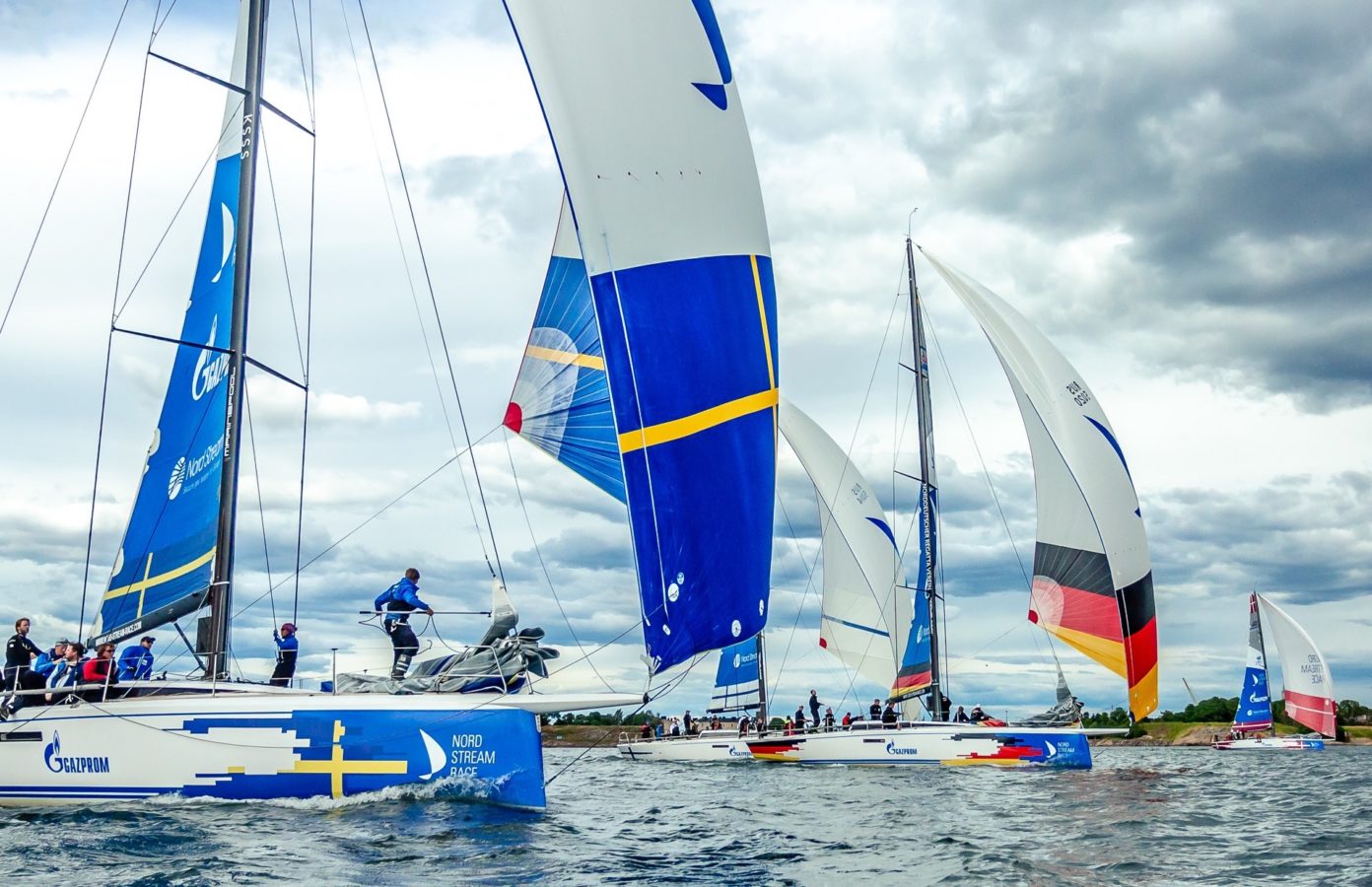
The Nord Stream Race began in 2012 with the mission of connecting the Baltics through sport. This 1000 mile race begins in Kiel, Germany, and finishes in St. Petersburg, Russia, with stops in Copenhagen, Stockholm, and Helsinki.
In 2017, the Nord Stream Race moved into the high performance, Juan-K designed ClubSwan 50. Since then, North Sails has worked closely with the event to produce identical sets of sails for the entire fleet. Teams from Germany, Denmark, Sweden, Finland, and Russia qualified for the 2019 event by winning their respective country’s National Sailing League, and each of the five one designs carried the following inventory: 3Di Endurance Two Reef Offshore mainsail, AP jib, J4, A4 spinnaker.
“The ClubSwan 50 is a strict one design class,” explains Paul Westlake, North Sails Grand Prix segment leader. “The level playing field works hand in hand with our ability to deliver sails that are consistent across the fleet. North 3Di allows us to achieve a very high level of reliability in weight and shape. It also delivers high performance, yet these durable sails have held up for three editions of the 1000 mile race in unforgiving Baltic conditions. It is an honor for us to be selected as a sailmaker to the event and support the sailors representing their home countries.”
The Leviathan Sailing Team from Russia won the 2019 edition by a single point, the fourth Nord Stream title for that nation.
Plans for the 2020 Nord Stream Race are already underway. The organizers’ goal over the next three years is to include four more teams, through the successful partnership for high energy yacht racing between the Saint Petersburg Yacht Club, Nord Stream, and Gazprom.
📸 Nord Stream Race 2019 / Anya Semeniouk
📸 Nord Stream Race 2019 / Anya Semeniouk
READ MORE
READ MORE
events
#NSVICTORYLIST: 50TH TRANSPAC
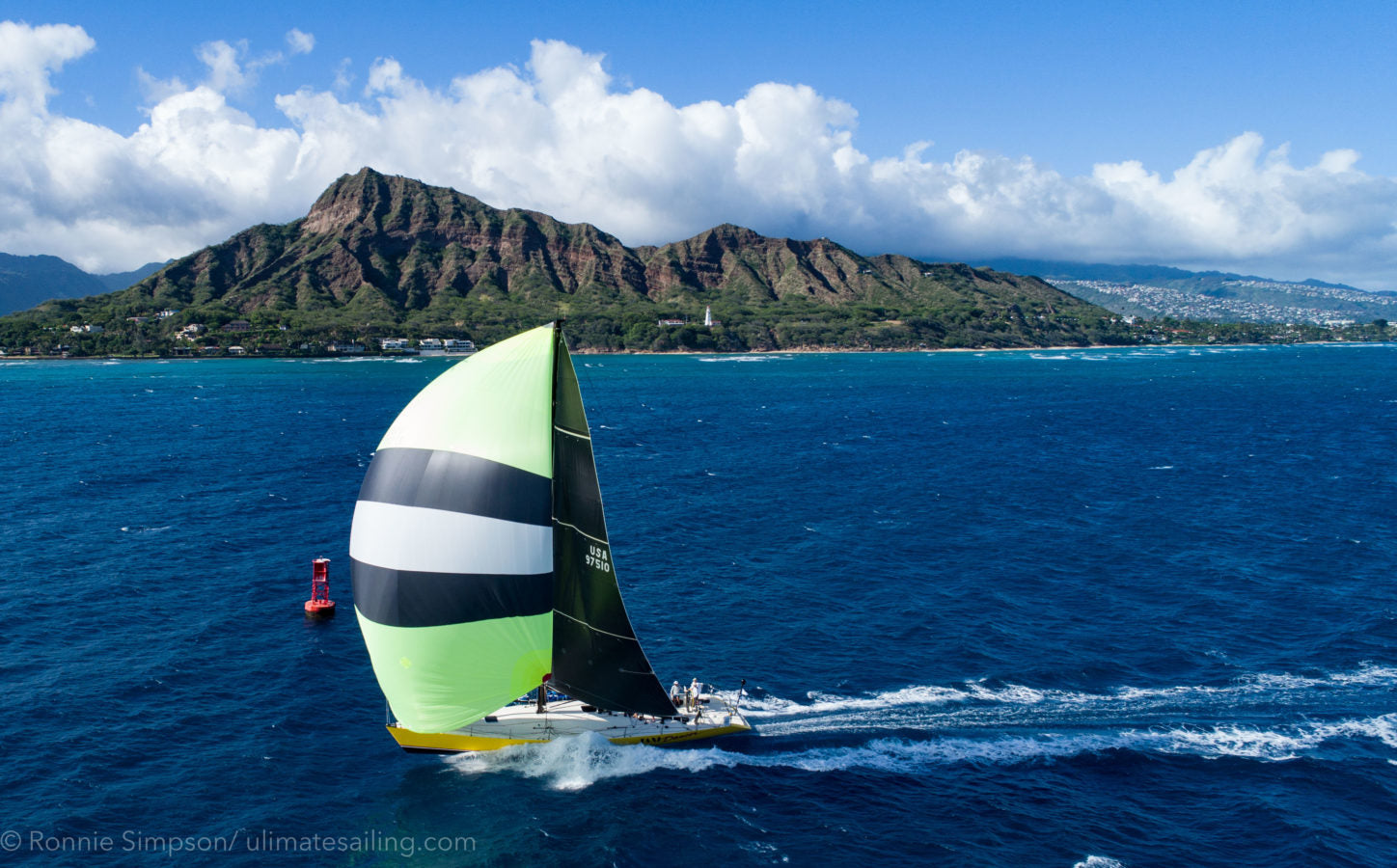
In division 1, Tom Holthus’ Pac 52 BadPak (with North expert Jon Gardner) beat out Duncan Hine’s Alive* by more than two hours. In division 2, Yabsley/Compton’s RP70 TaxiDancer finished just ahead of Santa Cruz 70 Buona Sera and Bill Lee Custom Merlin (with North expert Brian Malone). In division 3, the J/125 Hamachi owned by Shawn Dougherty and Jason Andrews claimed first, and, once the clock ran out, also the overall Transpac victory. In the Santa Cruz 50/52 division, Oaxaca, Michael Moradzadeh and David Ritchie’s SC50 took the win. Division 5 was won by Tom Barker’s Swan Good Call. In division 6, Corinthian team J/121 BlueFlash skippered by Scott Grealish took the win, followed by Ho’okolohe with two North experts (and father and son) Jim and James Foster. Michael Yokel’s Quester took second in division 7, just ahead of the all-Corinthian J/44 Patriot (Paul Stemler). In the Cal40 division, Callisto with the Eddy family and Kerry Deaver as navigator took first, powered by their North 3A spinnaker. In the multihull division, Jason Carroll’s ARGO was first to finish, ahead of Peter Cunningham on Powerplay and Giovanni Soldini on Maserati. Great job to all!
Read the full interview with Liz Baylis, Navigator on winning Santa Cruz 50, Oaxaca
Here are our favorite photos from the race:
Team Hamachi, based in Seattle, Washington, USA on their J/125, overall winner of the 2019 50th Transpac © Rachel Rosales
RP70 TaxiDancer, winner of Division 2 © Ultimate Sailing
Tom Barker’s Swan Good Call, winners of Division 5 © Ultimate Sailing
Chip Merlin’s Bill Lee Custom “Merlin”, Division 2 third place © Ultimate Sailing
Jason Carroll’s MOD70, first place multihull division © Ultimate Sailing
Cecil & Alyson Rossi’ Farr 57 Ho’okolohe, second place finisher in division 6
Dave MacEwen’s Lucky Duck, Santa Cruz 52, third place
READ MORE
READ MORE

events
470 SPEED GUIDE BY SÎME FANTELA
2016 Gold medalist and North Sails expert Sîme Fantela answers your questions about sailing the 470
Who sails the 470?
The International 470 has been an Olympic double-handed class since 1976, with separate men’s and women’s divisions since 1988. Today most sailors are full-time Olympic hopefuls, and because the boat is so technically and physically challenging many teams stay together for several four-year training cycles. The boat can be sailed by a range of weights and heights, though most helms are shorter and smaller than their crews to maximize righting moment. Men’s helms range from 55-65kg and crews from 65-80kg, aiming for a combined weight between 130-140kg. Women’s teams are usually bit smaller, targeting between 120-130kg of combined weight.
What does it take to be successful in the 470?
You need to be passionate about it. You need to be focused on the training process, you really need to enjoy the boat and sailing and the hard work that comes with it. Competing successfully is not only about sailing and tactic; it's a lot about the technical side of the class. To be successful, you need to understand how the boat works, how the foils work, how the mast and the sails work, and how all these things work together. It’s very important to feel all these things, so you can tune the boat well in different wind ranges.
Who does what on the boat?
Upwind, the helm is steering and controlling the mainsheet, cunningham, and vang, as well as adjusting the centerboard up and down. The crew is responsible for trimming the jib, and obviously for hiking and the balance. Most of the boat handling and the kinetics are the crew’s job. Downwind, the helm hoists the spinnaker and trims it temporarily while the crew is setting or dousing the pole. The crew trims the spinnaker and balances the boat both fore and aft and side to side.
470 Tuning
What are the keys to rig set-up?
The most important aspect is to understand what suits your team. If you are a standard size (small-light helm and tall-heavy crew), follow the North Sails Tuning Guide. If you are not a standard size, you will have to work at finding the right mast stiffness, spreader length, mast step position, centerboard pivot position, centerboard stiffness, and model of sails. Then you can start to fine tune the boat and rig, depending on feedback from sailing against other teams.
What are the keys to rig tuning?
The key adjustment is rig tension. There are two different setups: the “standard” has less purchase, and the "soft" is easier to play while racing. You can choose which kind of purchase you want when ordering a boat. Many experienced teams choose the soft purchase, so it’s not just how much experience you have; everyone has their own tuning styles and ways. There are some very useful photos of this and other systems on the McKay Boats website.
Upwind Sailing
Where does each person sit on a 470 in light air?
Sit as far forward as possible. If the crew is not on trapeze, then they sit on the deck and try to press the boat flat by leaning out. As the breeze comes up, they move onto the trapeze, first with knees bent and then with knees straight. Once the crew is fully extended, the helm starts to hike.
What are the key changes in different conditions?
It is very important to understand when you go from underpowered to overpowered. Sail trim and crew position are important adjustments until you are fully hiking. Then you start depowering the boat with the different controls.
What do you focus on when trimming the 470 main?
Trimming the main, the focus is the leech and twist. The perfect amount of twist depends on the sea state. If it's flat water, I like a tight leech, but I don't ever close it completely. In waves, more twist makes it easier to steer.
What do you focus on when trimming the 470 jib?
You need a different setup depending on whether it's flat water, chop, or swell: more twist in the waves, and less twist for flat water. I play with the lead in gusts and lulls; you can move it fore and aft, and also in and out (there are 5 positions, and 1 is max inboard while 5 is max out). In light wind, you want it inboard and forward; for strong wind, ease it out and/or move it aft. This helps to open or close the slot between main and jib.
What are the key adjustments to make when wind and sea state increase?
Key adjustments are centerboard height, jib lead, vang, outhaul, cunningham, and the height of the jib. Let's say the wind is starting to build. To depower the main, pull on cunningham, outhaul, and vang. For the jib, lower the height, pull on jib cunningham, and move the jib lead aft/out. If you are still overpowered, raise the centerboard.
Any other advice about gear changing in a 470?
You need a lot of hours in the boat to understand how it feels in different conditions and what the boat wants to be quick. You need to have all these tools in your hands and to adjust when conditions change, or when you want to change the mode of sailing. If you want to go quick and low, or slow and high, you need to be able to do it—and this doesn't come easily.
What's the typical conversation between 470 helm and crew?
It's mostly about who is doing what on the boat. On our boat, as helm I was doing the tactics and my crew was focused on speed, but sometimes when the conditions changed we would swap roles; I would focus on speed and the crew would take over tactics. The other loop is talking about boat speed: how do we feel, should we change something? You always compare yourself with the boats around you about the speed and mode of sailing.
Downwind Sailing
What 470 spinnaker would you recommend?
North Sails has three different models: V2, A2, and V3. The V2 is flatter on the top and easier to steer to. The A2 has the biggest projected area, it’s the most powerful one. The V3 is a bit fuller on top. So each team should decide which kite to use depending on their style of sailing—if they want to sail low, or want to play with the waves and sail high. For more details, view the North Sails 470 Inventory.
Where does each person sit in a 470 downwind?
Downwind, the helm sits on the leeward side and the crew sits to windward to trim the spinnaker. In lighter breezes the crew sits as far forward as possible, close to the shroud; one trick in super-light winds is to sit in front of the shrouds, just at the splash rail, to lift the stern out of the water and minimize the wake. As the breeze comes up, the crew moves aft—sometimes even behind the traveler bar. In really extreme big breeze and waves, both the helm and crew will sit all the way aft, close to the rudder, to put the bow up and surf as much as possible.
What are the key adjustments to make sailing downwind?
It’s important to feel the sea state and decide how high to sail compared to the waves; you don't want to stop in the waves, you want the boat to plane. You have to find your own way of sailing depending on the fleet, the waves, and the wind. The fastest teams spend a lot of time sailing the boat downwind in different wind conditions, because in this class the biggest gains are made downwind. Downwind, you want the main as deep as possible in almost all conditions. Ease outhaul and cunningham, and adjust the vang so that the leech is open for a nice flow around the main. Having the top batten parallel with the boom is good as a starting point, and then you fine tune from there. Another good rule is to keep the spinnaker pole parallel with the boom as it goes in and out. If you let out the boom, move the spinnaker pole aft. If you start to sail higher angles and pull in the boom, let the pole forward. These rules work in most conditions.
What’s the most important thing about 470 trimming downwind in light air?
Keep the slots open between kite, jib, and main. If it's really light, so you can't pull back the spinnaker pole, you’ll need to trim in the main.
What’s the most important thing about 470 trimming downwind in heavy air?
Let the boom out to the shroud and raise the pole to close the leech of the kite, keeping as much power as you can handle. Then focus on crew work: working the waves, balancing the boat. The higher the centerboard, the faster you will go, so you want to lift it as much as possible—but that depends how much stability you need. As a beginner, start with the centerboard down more, to have a more stable boat. As you get better controlling stability with bodies and sails, the centerboard can go higher and you’ll go faster.
What is a typical conversation downwind?
Here are the two questions:
What mode do we want to achieve (high and fast, or low and slow)?
Is the Oscar flag up so we are allowed to pump?
If we are pumping, usually the helm counts down the timing: three, two, one, pump. We try to move our bodies together and pump the main and spinnaker together. The most important thing downwind is to catch waves while being synchronized as a crew.
Any special considerations to sail the 470 well downwind?
You have to listen to what the boat tells you and how it feels, then listen again to how it reacts to a change of mode. One mode might suit your team best, but you still have to master the others to be quick in different tactical situations.
Boat Handling
Top three tips to starting a 470 well?
Try to keep the flow on the rudder and centerboard as long as you can. Once you lose that, it can take some time to attach again.
Always fight for space down to leeward. If you don't have enough, you're not going to survive the first 100 meters.
Identify the last possible moment for a double tack. And whether you double-tack or not, know the right time for good acceleration and the right exit angle.
Any tips for 470 downspeed boat handling?
The most important thing is to keep flow on the rudder and centerboard. If you are going slow, keep the main in. If you have to kill speed, luff the jib but try to keep flow in the main as long as possible. Work bodies and sails together. It is really crucial to be synchronized: at the start, both helm and crew go to leeward, prepare for the acceleration, and then squash the boat flat and trim in main and jib at the same time. Sheeting and flattening the boat together is the only hope for a good start.
What is the most common mistake when tacking a 470?
Not synchronizing helm and crew with rolling the boat into the tack, not flattening at the same time on the exit, and not maximizing the roll.
What does each person do in a tack?
The helm sheets the main in tight as you come head to wind and then eases it out again. Once on the new tack, trim in as the boat accelerates. The crew needs to balance the boat and provide the right amount of heel, while at the same time trying to be precise with jib trim. It's quite a tough job for the crew to do a really nice tack.
Key tip for good light-air tacks in a 470?
Maximize the roll of the boat by putting the leeward shroud almost into the water before the tack. When you roll to windward, put that side into the water, and then squash the boat flat on the new tack. All this must be combined with simultaneous trimming of jib and main. The most important thing tacking in light winds is to maximize the power that you have in the boat and what you create with the tack.
Key tip for good heavy-air tacks?
Don't roll the boat; keep it flat both entering and exiting the tack.
Key tip for good light-air jibes?
In light air, try to turn with minimum rudder and work on the kinetics for roll jibes. The biggest mistake is not to roll the boat.
Key tip for good heavy-air jibes?
Keep the spinnaker full through the jibe, and keep the boat flat; if you roll the boat at all, you risk a capsize.
What’s the best way to set a 470 spinnaker? Who does what?
It's really important to have a solid routine for spinnaker sets. The fastest set we found was for the crew to:
Come in off the trapeze wire.
Take the spinnaker tack out of the spinnaker bag with one hand, while pulling on the windward barber-hauler/twing with the other hand.
Hook the pole to the sheet, topping lift, and mast - Jaws up!
As the crew sets the pole, the helm stands up and hoists, then grabs a sheet in each hand. (In medium and strong breeze, steer with the rudder between your legs.) You can fill the spinnaker before the crew sets the pole. It's important to have the leeward sheet marked at the right amount of trim, so when the spinnaker goes up, it fills automatically before the crew or helm takes it from the cleat.
What’s the key to a good 470 spinnaker takedown?
The best spinnaker takedown is when the helm stands up and trims the spinnaker with a sheet in each hand, so when the pole comes down the spinnaker is still flying. At the last possible moment, the crew grabs the tack and drops it into the sock. The goal is to keep the spinnaker flying as long as possible.
Personal Tip: We always have a windward takedown, because we have a storage bag on each side of the boat.
Doing a 720 penalty turn is slow. What are the keys to minimizing the pain?
Try and synchronize the roll of the boat while minimizing the steering. When crew and helm act as one body, that's the best. If you can, do the spins almost without the rudder, and start with a tack. On the bearaway, have a nice windward heel into the jibe, again minimizing the steering by working the bodies together. Always tack first, even from downwind.
How easily does the 470 broach or capsize?
Not that easily. Downwind, or reaching in strong breeze, you might broach if you lose control of the rudder because it ventilates, which happens quite often. Or in strong breeze if you lose your balance, or roll the boat too much in the jibe, you definitely will capsize.
How do you recover from a 470 capsize?
Try not to let the boat fully capsize, unhook the spinnaker pole, and right the boat.
What are the most common boat helming mistakes made in the 470 class?
When you are not in control of the boat. Control the feel of the boat upwind and downwind, and you're going to do well.
Any suggestions for drills to improve 470 boat handling?
Sailing a figure eight in any wind will take you far. Circling around one mark, even in 20, 25 knots, is a really good drill to be strong in boat handling. Or set up a short race course that gives you just enough room to put up the kite, do one jibe, take it down, and go back upwind. That will improve your boat handling in all conditions.
READ MORE
READ MORE
events
50TH TRANSPAC: HOW TO WIN YOUR CLASS
50TH TRANSPAC: HOW TO WIN YOUR CLASS
Making a Plan, Executing Well, and Trusting Your Team is What It Takes
© Michael Moradzadeh
Winning any ocean race requires a complicated combination of preparation, teamwork, persistence, and experience. To understand what worked on the 50th Transpac, we reached out to Liz Baylis, navigator for Santa Cruz 50 Oaxaca, which won a very competitive Division four and took sixth overall.
This year was Liz’s fourth Transpac (she’s also sailed seven Pacific Cups, from San Francisco to Hawaii), but the 2019 edition scores high on her list of favorites. Why? “Winning helps,” she laughs. “It’s a special race, and each one is memorable in a different way, but I’m really proud of how the team trusted me and we worked so hard together to succeed.”
That team combined two Transpac rookies with seven race veterans and included The Ocean Race skipper Dee Caffari. “It was a nice blend,” Liz says, adding that the trust the group developed during California Offshore Race Week was a big key to their success. (Oaxaca also won their class and finished third overall in that series of hops down the coast.)
© Ultimate Sailing
Before the Transpac started, Oaxaca’s co-owner Michael Moradzadeh provided some background on the team blog that shows just how much preparation went into their eventual victory. “We have been building the program since 2015. A set of carefully researched modifications and upgrades to the 1980 Santa Cruz 50, together with an increasingly challenging practice schedule and, most importantly, recruiting world-class sailors to drive the team forward. With powerhouses like Liz Baylis, Dee Caffari, and Molly Noble, we pretty much let the women run the show. This is not to shortchange the other members of the Transpac crew: Harry Spedding, Brett DeWire, Tom Paulling, and Patrick Lewis.” They also added a flatter A2 and genoa staysail to their sail inventory.
While most Transpac competitors only have time for the minimum requirements of safety and offshore training, Liz points out that 2019 “is the third Pacific race we’ve done since Michael and David bought Oaxaca in 2014. So the basic prep was done, and we could focus on improving performance and practice racing.”
Liz also put in a lot of prep time herself, away from the boat. “I sat down with navigating legend, Stan Honey, in February,” she says, “and then spent a few hours each week on the boat’s navigation computer, ‘Baby Lenovo’, downloading weather files and then running routes and critiquing them.” She also reviewed past races and race reports. The result was a carefully pre-planned track that corrected to first place for Team Oaxaca, just ahead of nine other Santa Cruz 50s and 52s. “The crew on deck did a great job executing the plan and trusting me to guide them the right way,” Liz adds.
© Michael Moradzadeh
With such a tight fleet, though, there was plenty of stress—and after nine days of racing, Oaxaca won by a mere twelve minutes. The last hundred miles into a light-air finish were both the best and worst parts of the race, Liz says. “We had moved into the lead, but we going slow and two others were going fast. I was stressing over the deltas between us and the other boats, trying to enjoy a spectacular run past the cliffs of Molokai, and dreading that I had made a mistake. But the team kept working, and in the end we got it done!” As Michael put it just after the results were posted, “When you sail with rock stars, expect a concert.”
Liz didn’t stand a watch and spent little time on deck, so it’s no surprise that her two best memories involved escapes from the navigation “cave.” “My first time on the helm with the kite up, we hit 27 knots within 5 minutes!” she says. “And the second to last night was beautiful; I came up to drive for an hour at dusk, and the sky transitioned to the most incredible star-filled night I had ever seen.”
Preparation, teamwork, persistence, and experience. Congratulations to Liz and the entire Oaxaca team, and to all the other North clients who completed Transpac 2019!
© Michael Moradzadeh
© Michael Moradzadeh
READ MORE
READ MORE
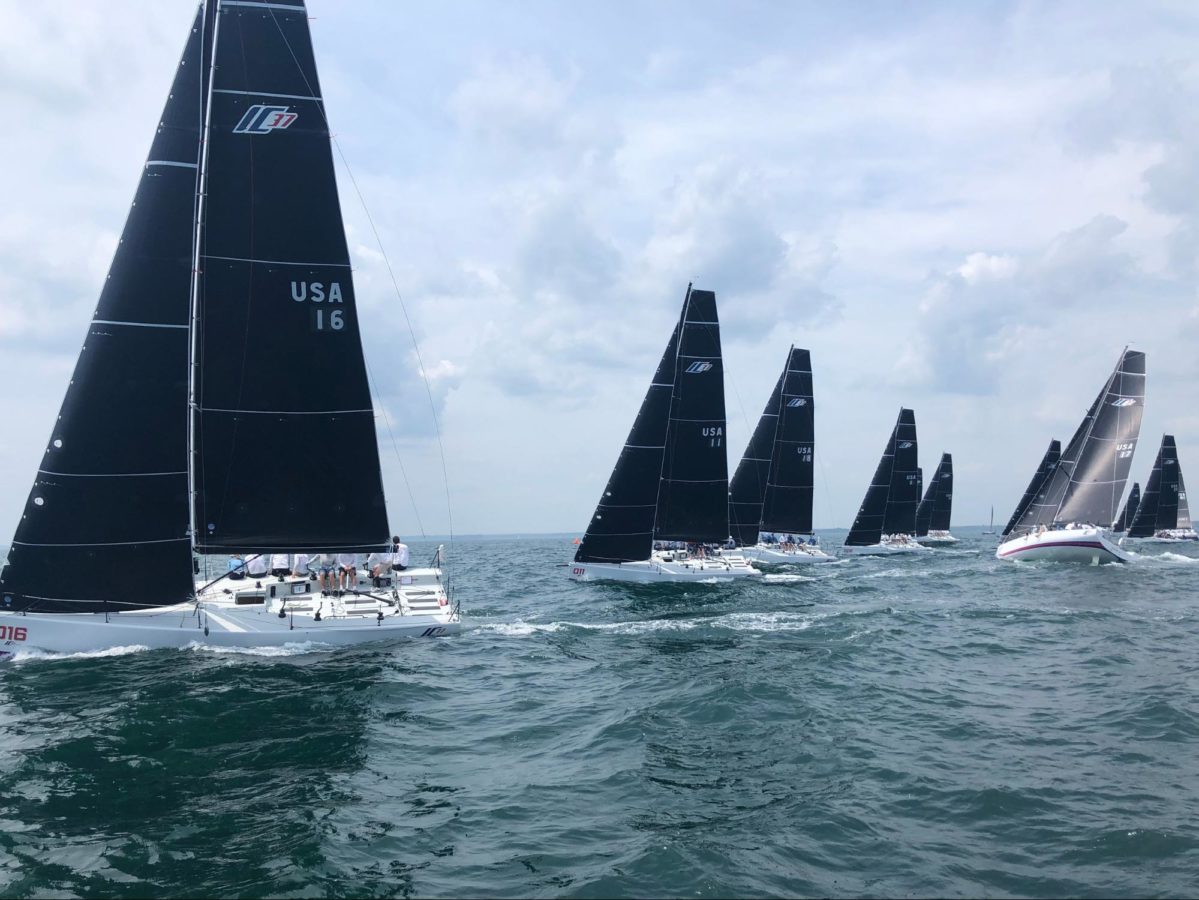
events
175TH NYYC ANNIVERSARY REGATTA
NYYC 175TH ANNIVERSARY REGATTA
Setting the Standard for New England Summer Racing
2019 marked the 175th year of the New York Yacht Club Anniversary Regatta, first run in 1844. A variety of yachts with an LOA of 30 feet or greater came to Newport, RI, and sixteen divisions of IRC, ORC, and classics had a week of racing with stiff competition, camaraderie, and the chance to earn bragging rights. Even the New England weather cooperated for once.
Participation in this grand event opened NYYC doors to four invited yacht clubs; Royal Thames Yacht Club, Royal Yacht Squadron, St. Francis Yacht Club, and Yacht Club Costa Smeralda. United States service academies also took part. Racing took place both inside Narragansett Bay and out in Rhode Island Sound, with a building sea breeze each afternoon. The 12s were back in action after their World Championship, divided up into vintage, traditional, modern, and grand prix fleets.
The hot new one design Melges IC37 class boasted 21 teams, an intensely tight fleet that highlighted Corinthian sailing. Other divisions matched up classic yachts, offshore multihulls, and an assortment of J/Boats, Swans, and high-performance grand prix racers. Daily socials after racing brought teams together to share what they learned. What better place to make new friends than the New York Yacht Club lawn, with its stunning view of Narragansett Bay?
North Sails clients had a solid showing, claiming ten division wins across 16 fleets: Good Trade in PHRF-Spin Navigator, Flow in offshore multihull, Apparition in ORC 2, Beau Geste in IRC 1, Rougarou37 in IC37, Outlier in Classic Yacht/ Spirit of Tradition, Kookaburra II in 12m Grand Prix, Nyala in 12m Vintage, Columbia in 12m Traditional, and Challenge XI in 12m Modern. Big congrats to all!
READ MORE
READ MORE
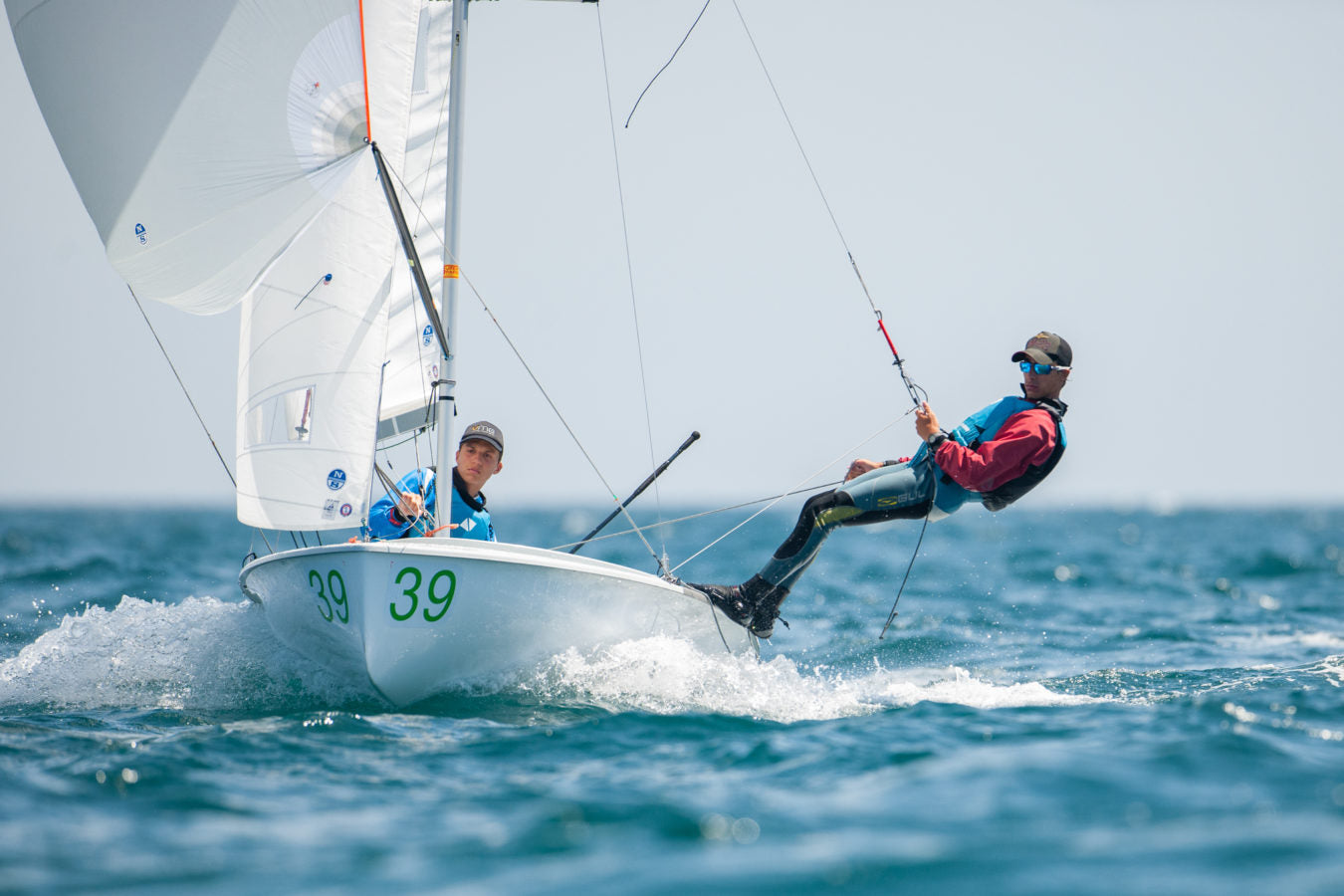
events
#NSVICTORYLIST: 420 WORLD CHAMPIONSHIPS 2019
#NSVICTORYLIST: 420 WORLD CHAMPIONSHIP 2019
North Sails Powers Two World Titles in Vilamoura
📸 Joao Costa Ferreira / osga.pt
The ten-race 420 World Championships 2019 concluded with two North Sails powered teams claiming gold medals in Vilamoura, Portugal. Wizner/Ameneiro of Spain won the Open class and the Greek team of Spanakis/Michalopoulos were victorious in the U17 Open class.
Wizen/Ameneiro, who won bronze at the 2018 Worlds, headed into the final day with a 16 point deficit. They chewed their way through the lead established by New Zeland’s Menzies/ McGlashan in Race 9 and secured their place at the top of the podium with a final attack in Race 10. North Sails 420 class leader Riccardo De Felico watched the competition unfold from the coach boat. “The last day of racing delivered tricky conditions, starting with a nice 13-knot shore breeze and dropping down to 4 knots. The Spanish team played their cards well and maximized opportunities in challenging conditions.”
Greece’s Spanakis/Michalopoulos, using the North Sails M11 main, J13 jib and S-05 Spinnaker was hungry for gold at the 2019 Worlds after their silver medal finish last year. The duo had a competitive series with France’s Delerec/Rossi nipping at their heels for the top podium position. “I am very happy,” commented Spanakis. “We managed to finish first even though we had a setback the day before because of our protest. But, we came back stronger and won the Championship.”
It is a great day at North Sails when we see our clients climb on top of the podium and receive their gold medals. And it’s extra special when we have two gold medal-winning teams at a single event. This success fuels our motivation to continually develop products that deliver results. “North Sails is so dominant because we are able to provide our customers with perfect sails,” explains De Felice. “Our 420 range is easy to control and trim, they are fast in all conditions, and we select materials that allow the sails to hold their shape longer.”
Next up for the 420 class are the Junior Europeans beginning July 23. Good luck to all our North Sails clients competing, and sail fast.
📸 Joao Costa Ferreira / osga.pt
📸 Joao Costa Ferreira / osga.pt
READ MORE
READ MORE
events
#NSVICTORYLIST: A TRIO OF 12 METRE WORLD CHAMPS
A TRIO OF 12 METRE WORLD CHAMPS ADDED TO THE #NSVICTORYLIST
North Powers Three World Champions and Packs The Podium in Newport
📸 Ian Roman / North Sails
North Sails is proud to add three new world champions to the #NSVictoryList off the back of the 12 Metre Worlds in Newport, RI. Beyond cleaning up on World Champ titles, North Sails outfitted the inventories on 12 of the 14 podium finishers. It has been an exciting five days of racing and we can’t think of a better conclusion to this historic event.
Conditions, competition, and camaraderie are three words that sum up the 2019 12 Metre Worlds. The nine-race series featured 21 boats hailing from six countries and is the largest gathering of 12 Metres to have ever sailed in North America. The crew lists were stacked with familiar names from past America’s Cups; trimmers from the late ’70s and ’80s getting the job done and giving the young crew onboard a run for their money.
“This has been a historic event and something the sailing world is going to remember for a long time”
Throughout the week, race mornings were plagued by postponements which gave way to a solid sea breeze in the afternoons. US12 Nyala, packed with current and former Luna Rosa teammates, clinched their Vintage Division victory on the penultimate day of racing to finish the regatta with eight bullets across the series. Jack LeFort’s KA 10 Challenge 12 had a strong regatta but began the final race day with uncertainty after a DSQ in Race 7. They docked out in second place for the Modern Division, two points behind US 27 Enterprise, won their final race and docked back in having been named World Champs. US 16 Columbia claimed their place on the World Champ roster after winning the event’s final race. The team under the guidance of Kevin Hegarty and Anthony Chiurco put all their cards on the table with the bold decision to cover US Nefertiti, a gamble that paid off for the Traditional Division winner. And although they were not sailing for a World Championship, US 42 America II bested their New York Harbor Sailing Foundation sparing partner US 46 America II in the Spirit Division.
“As cool as the racing on the water was- all the participants are going to remember walking down the dock each morning,” said Ken Read, President of North Sails and tactician on World Champion Challenge 12. “Seeing these boats in one place, and all your friends from past regattas is really special. The boats were evenly matched and each of the teams sailed really well. This has been a historic event and something the sailing world is going to remember for a long time.”
North Sails was the Official Sailmaker to the 12 Metre Worlds and teamed up with sailing photograph Ian Roman to document both racing and shoreside activity. We have made a selection of images available for download and encourage you to share these on your own social media channels. All sailing fans can access the images by clicking this link. Hashtags: #12MetreWorlds2019 #12mRClass #NorthSails Photo credit @ianroman.
READ MORE
READ MORE
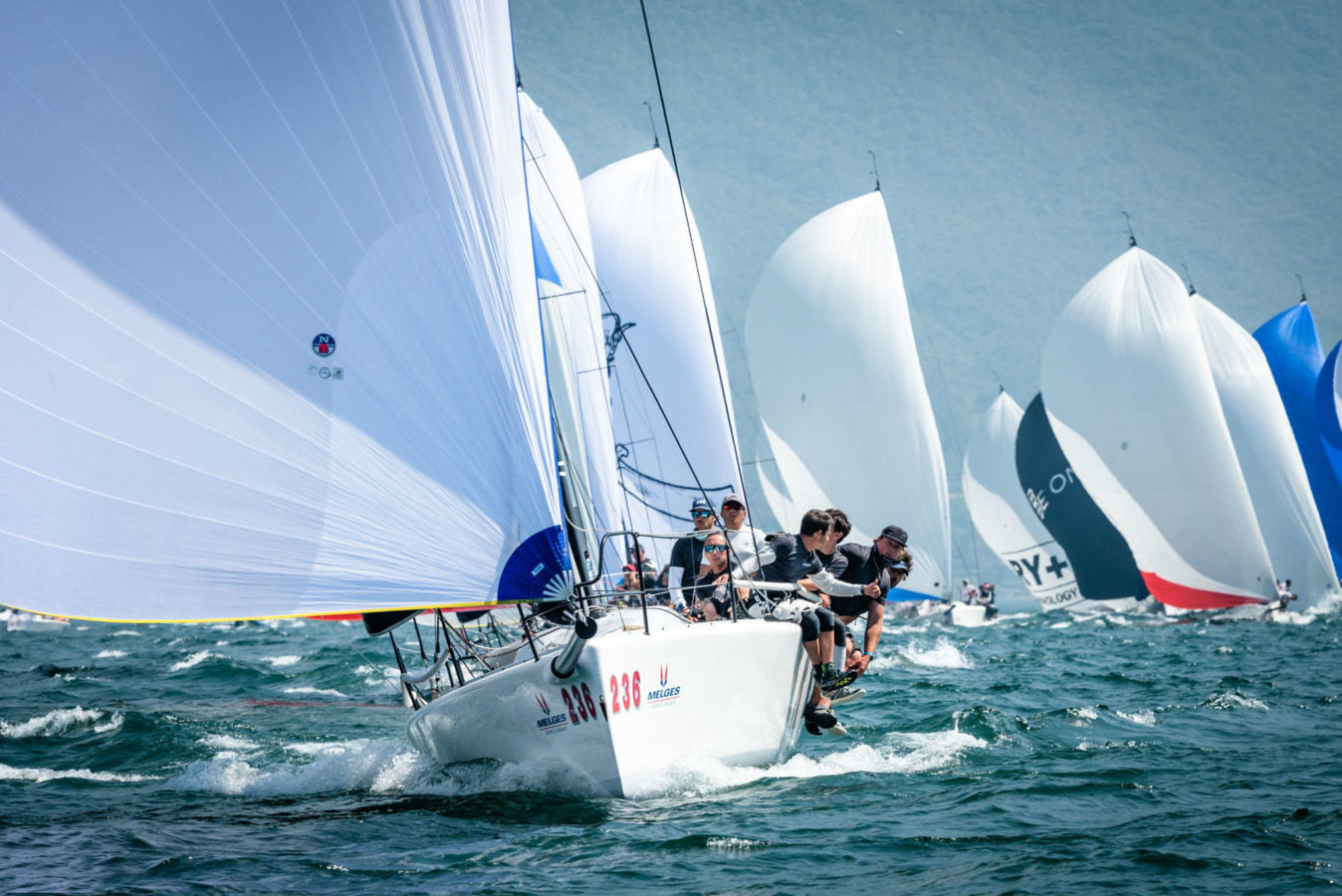
events
MELGES 32 WORLD LEAGUE: DONINO DOMINATES
MELGES 32 WORLD LEAGUE: DONINO DOMINATES
North Sails Fuels Victory Through Tough And Exciting Racing
Melges 32 World League Event 3 Champions, Donino, ARG 236 📸 Barracuda Communication
Luigi Giannattasio’s boat Donino (ARG) took gold at Event 3 of the Melges 32 World League after completing seven races in Riva del Garda. This is the team’s second victory in the Melges 32 World League 2019.
The team sails under the Argentinian flag of the owner Luigi and his son Pilu, but the rest of the team is a mix of nationalities: Kiwi, Russian, Italian, and Spanish. This event marked only their second time sailing together as a team, so we asked the winning tactician, Manuel “Manu” Weiller (ESP) how they became successful so quickly.
“The Melges 32 fleet is hugely competitive. With 19 boats all determined to win and very high level sailors, every race was exciting and tough! We used the MNi-5 3Di RAW Mainsail and the Mi-4 3Di RAW Jib.”
With medium winds all week thanks to the reliable Ora wind, Manu says they were always one of the fast boats. “Our team has the knowledge to get 100% out of our boat and how to sail fast in every situation. 3Di Raw and the Airex 650 spinnaker cloth have proven to be a great materials, very good for this size of boat. The Melges fleet is very familiar to Lake Garda, sailing here every year. For this regatta, the race course was much further south than normal, which opened up the game tactically a bit more.”
“3Di Raw and the Airex 650 spinnaker cloth have proven to be a great materials, very good for this size of boat.”
Asked what he thinks was most important to the win, Manu adds that “gains in this fleet are made by reducing the number of mistakes. Anticipating laylines to the next shift was the most challenging part.”
We look forward to watching the team onboard Donino at the World League Event 4 in Barcelona, Spain.
Browse the Melges 32 Shop Inventory.
Podium Celebrations 📸 Barracuda Communication
Giogi, ITA 172 📸 Barracuda Communication
Casino Royal, POL 204 📸 Barracuda Communication
Vitamina, ITA 194 📸 Barracuda Communication
READ MORE
READ MORE
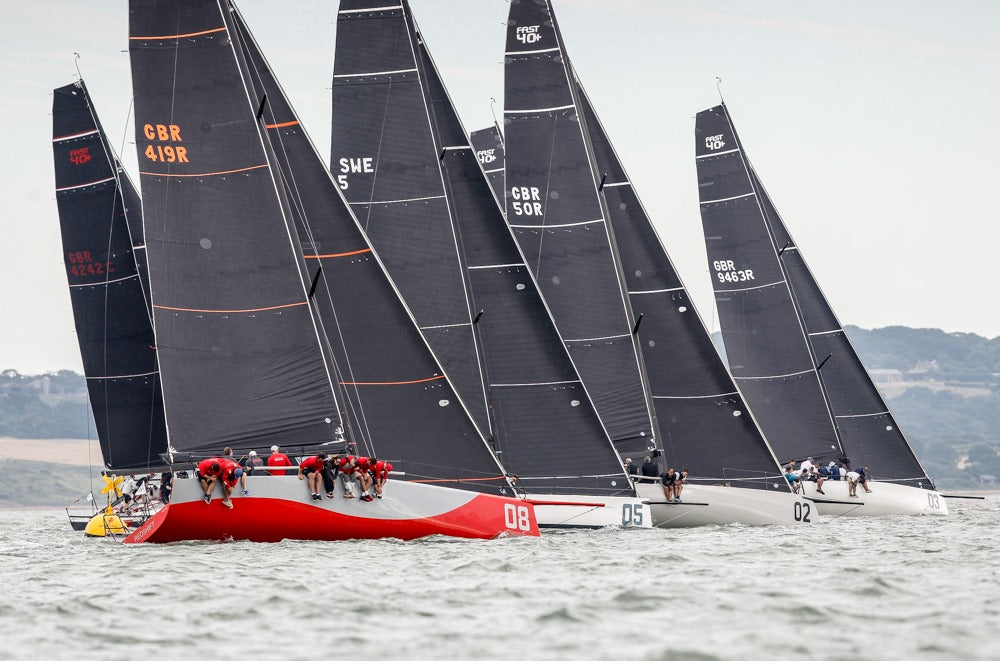
events
#NSVICTORYLIST: IRC NATIONAL CHAMPIONSHIP
#NSVICTORYLIST: IRC NATIONAL CHAMPIONSHIP
Seven Division Wins, Four Podium Sweeps, And A National Title
📸 Paul Wyeth / pwpictures.com
The Royal Ocean Racing Club’s 2019 IRC National Championship was dominated by strong Solent tides and varied wind conditions. North clients had an excellent showing in the 22-boat fleet, snagging trophies in seven divisions.
The overall winner was a surprise to many, since the owner/skipper hails from Falmouth, doesn’t regularly race on the Solent, and was a first-timer at the IRC Nationals. Stuart Sawyer’s J/122 Black Dog posted four bullets in eight races and only had one score out of the top five, winning both the IRC Performance 40 division and IRC Nationals overall by 15 points. “We were constantly having to change gears, but my crew was amazing.I have never seen them hike harder,” he said. Read the full interview.
In the HP30 division, the Farr 280 Toucan scored seven bullets. Anthony and Alex Locke took charge in father/owner Glyn’s absence. “It was a great regatta,” Anthony stated. “We were really pleased with the organization. It felt like we sailed well and we had great racing with all of the HP30s. Today was quite challenging—very puffy—and the race committee did a good job getting two races in… I didn’t think it was going to happen.”
In the Fast 40+ fleet, Peter Morton’s Girls On Film won by 14 points over Tony Dicken’s Jubilee and Ed Fishwick’s Redshift. “We had a pretty good weekend with seven firsts and a second place finish,” explained Girls On Film boat captain Nick Butt.
Tony Langley’s Gladiator finished first in IRC One, just ahead of David Collins Tala. North clients swept the podium in both IRC Two (Black Dog, Cobra, and Yes!) and IRC Three (Leon, Incognito, and Xanaboo). In IRC Four, Christopher Preston’s J/109 Jubilee swept the division by a notable amount, and Nigel Goodhew’s Sunfast 3200 Cora placed third.
📸 Paul Wyeth / pwpictures.com
📸 Paul Wyeth / pwpictures.com
📸 Paul Wyeth / pwpictures.com
📸 Paul Wyeth / pwpictures.com
📸 Paul Wyeth / pwpictures.com
READ MORE
READ MORE
events
12 Metre Worlds Photo Journal
12 METRE WORLDS PHOTO JOURNAL
Sharing Our Favorite Images From the 12 Metre Worlds in Newport, RI
📸 Ian Roman
North Sails is proud the be the Official Sailmaker to the 12 Metre World Championship, which began in Newport, Rhode Island on July 8th. Our sponsorship included bringing in sailing photographer Ian Roman, to document racing and shoreside activities at Sail Newport. We hope you’ve had as much fun following along with us as we’ve had sharing Ian’s content. The event is heading into the final few days, so it’s time to share some of your favorite 12 Metre class images so far.
We encourage you to check out our free social media library, and download and share the event photos on your own channels. Just be sure to credit Ian Roman, and tag @12mmetreclass, @12mrworldchampionship and @north_sails on Instagram and add #12metreworlds2019.
📸 Ian Roman
📸 Ian Roman
📸 Ian Roman
📸 Ian Roman
📸 Ian Roman
📸 Ian Roman
Watching the 12 Metres race by Castle Hill on Narragansett Bay brings a whole new light on spectator sport 📸 Ian Roman
READ MORE
READ MORE
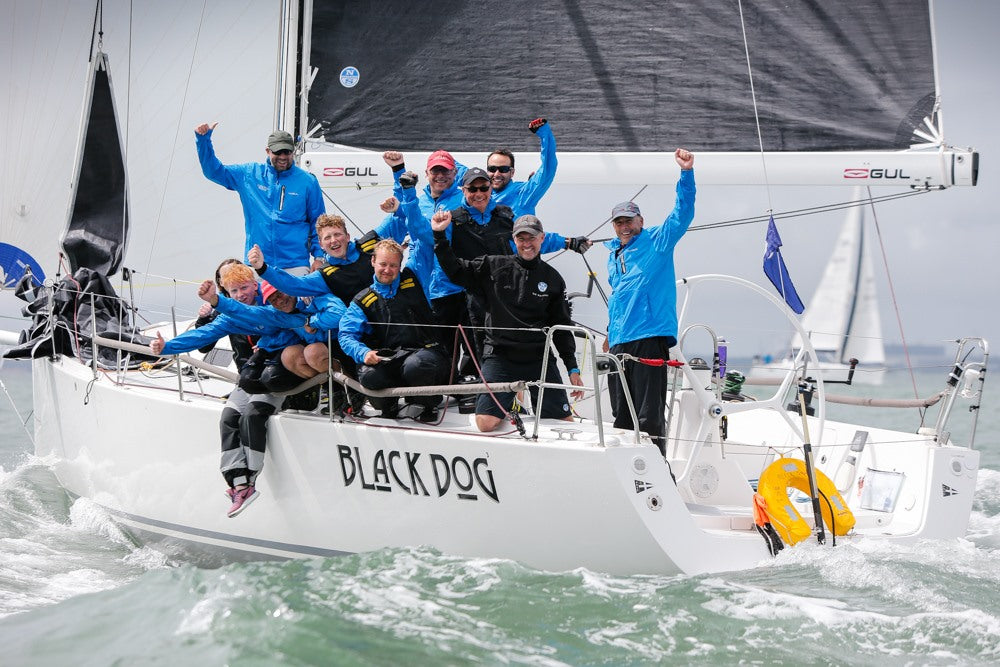
events
FALMOUTH TEAM TAKES ON THE SOLENT AND WINS IT ALL
FALMOUTH TEAM TAKES ON THE SOLENT AND WINS IT ALL
Interview With Stuart Sawyer’s Black Dog, 2019 IRC National Champions
📸 Paul Wyeth / pwpictures.com
The IRC National Championship in Cowes, UK, attracted over 100 boats and twenty-two boats in IRC2, the most competitive fleet . Stuart Sawyer’s J/122 Black Dog scored four bullets in eight races to secure the IRC Performance 40 division win and the Overall IRC title by 15 points. Stuart has been racing with the same team for the better part of nine years, but this was their first time competing in the IRC Nationals. It was an idea that came to him after the Dartmouth Royal Regatta race last year, when North Expert Jeremy Smart was onboard calling tactics; “we may have a chance to do well if we keep this up,” Stuart realized.
“It was encouraging racing with Jeremy,” he told us a few days after the IRC Nationals victory. “That planted the seed—maybe this year, we should go a bit further and push ourselves. Jeremy was pleased with how the boat was running, and that was very encouraging. Believing in our boat, and our sails, was all the positivity we needed.”
Stuart was “over the moon” with his crew’s hard work over the course of the weekend, which required every bit of the team’s attention. He grew up racing dinghies with his brother Andrew and windsurfed professionally for many years. In 2007, after a hiatus, he came back to racing sailboats. “I’m a surfer at heart,” says Stuart. “So I like asymmetrical sailing, the A2 is great, you can play all the waves and soak better, it just suits my style of sailing.”
Stuart had a J/97 for three years, and after winning the Nationals he upgraded to a J/111—where he also won the Vice Admirals Cup and National Championships in his third year. He says the J/122 is a “significantly stiffer boat,” with more displacement, and goes upwind very well. “It doesn’t plane like the J/111, but for a 40-footer it sure can surf and is responsive downwind. The best part about racing J boats is that the layout is mostly the same. The loads are greater as we increased our waterline, but we were able to quickly adapt and connect with the boat as a team.”
📸 Paul Wyeth / pwpictures.com
Stuart claimed the 2019 title with his long-time team of friends: Mainsail trimmer Garth Weaver, also known as “company secretary” as he handles all the logistics, Roger Ford in the pit, aka the Terrier for pushing everyone to hike harder and never let up; jib trimmer Josh Redgrave, who joined the team when he was 16 years old and now runs the boat; kite trimmer Jonathan ‘JB’ Barnicoat; Tom Redgrave (Josh’s brother), pit #2 for the Nationals and also covered navigation as normal navigator Simon Boote didn’t race; bow was run by Sandy Proctor, who has been sailing with Stuart for 11 years; mast Hans Wehmeyer; and mid-bow/grinder Jack Elsby. Two new crew also joined for the regatta: floater Ruby Dent ; and tactician and North expert Shane Hughes.
“There is something special about sailing with friends,” says Stuart. “I think that’s why we’ve come so far and done so well over the years. The crew work was spot-on, and we know each other very well. When we get into the moments where we felt slow we are happy to change gears, if we have a bad start or there is an issue we are able to shout ‘reset!’, and everyone knew to work harder to improve boat speed.”
“One of our best moments last weekend was race 2 on the Saturday: we didn’t get off the line well, and we were buried at the start. We were outside the top 15 around the windward mark but we kept working at it, making huge gains on the downwind leg. Shane focused on keeping our air clear and the crew worked the boat really hard to keep fast and deep. We were able to get ourselves ahead of a pack and into a place where our tactician Shane had some freedom to make decisions, and we had a great second beat, a pulled out a 4th in that race. Being able to fight back helped us win overall.”
“It took a lot of time to get the rig right on our 11-year old boat, he adds. We put new rigging on the boat in 2017 when it was refurbished, but we weren’t happy with the set up. Dave Lenz then analyzed some photos and we went about a re-set before Dartmouth last year. I feel our settings now are good and we have found a sweet spot for performance”.
Shane Hughes says it was a pleasure to join this team. “The event went very well for us—better than expected in many ways. We had a lot to figure out, in a very short period. Stuart and the guys were great, very welcoming, and open to taking on a few new ideas and suggestions. The team (other than me) has been together for 9+ years, which makes them quite a cohesive unit. They sail the boat well and know how to get the most out of the boat. So it was easy to step in and add a little extra value to that.”
There is something special about sailing with friends. I think that’s why we’ve come so far over the years.
The effort that the team put in was impressive, Shane continues. “They wanted to get a good result at the event. The whole atmosphere on and off the water helped their performance. I have been lucky enough to sail with some great Cornish sailors in the past, and there is always plenty of banter flying around, which helps create a relaxed and inclusive team culture. There is a good mix of experienced, very keen, and talented younger guys too. It was a fun process and a successful regatta.”
After the regatta, the boat went home to Falmouth, where it will do some local sailing before competing in the Dartmouth Regatta later this summer.
“I look forward to joining the guys again in the future,” Shane concludes, “but in the meantime, keep an eye out for them as I’m sure there will be more great things to come from this team!”
North Sails expert Dave Lenz delivered Black Dog‘s new 3Di sails in 2017. “I have been working with Stuart for a few years now and we’ve done quite a bit of work with various J/122s, so we were able to pass some of the lessons learned. I’m very happy for Stuart and his team.”
📸 Paul Wyeth / pwpictures.com
READ MORE
READ MORE
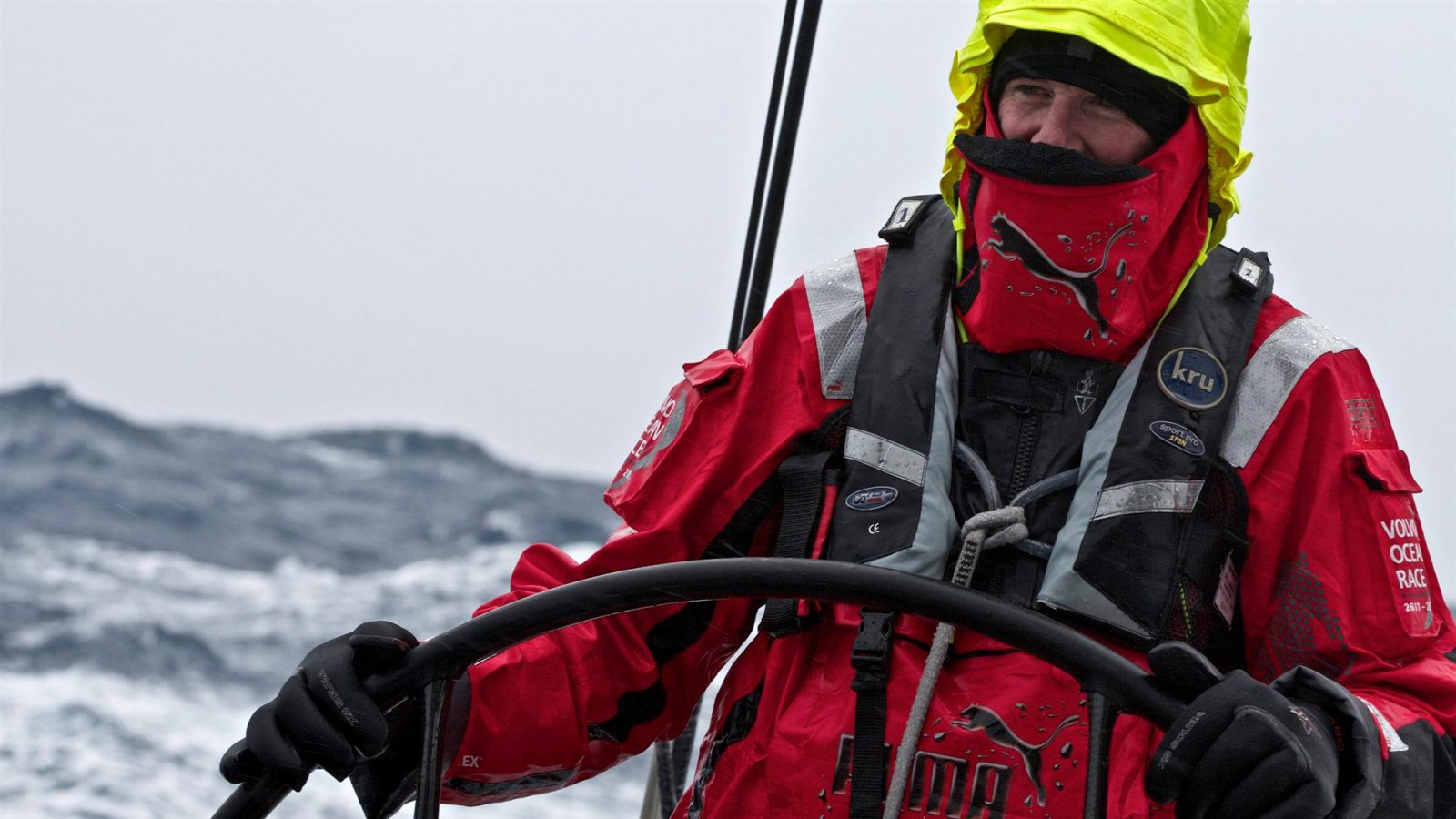
events
KEN READ ON CROSSING OCEANS
CROSSING OCEANS
Ken Read Shares His Perspective on Sailing Across the Atlantic and Pacific Oceans
There are currently two big ocean races on the radar this week; finishers are trickling in from a very light air Transatlantic Race, while the Transpacific Race fleet sets off for the 50th edition of this West Coast Classic. North Sails President Ken Read has done his fair share of ocean sailing—eight Transatlantics alone, plus plenty of other crossings.
We asked Ken for his perspective on these two races, and to share a bit of insight into his experience in crossing both the Atlantic and Pacific Oceans. He says these two sailing events could not be any more different.
Transatlantic Race
Typically cold and windy and rough, this year’s race was often painfully light with high pressure and rain and upwind sailing dominating the race track. Crossing the Atlantic is predictable in its unpredictability.
I have had the distinct pleasure of crossing the Atlantic eight times, and each time brought its own craziness. My first time was with Ericsson for a leg of the Volvo Ocean Race 2005-06, when a life was lost and a boat sank. Talk about unpredictable.
On another Atlantic crossing aboard the 90’ Rambler, we sailed through a low pressure so large that one edge of it hit America and the other edge bumped up against Ireland. On Comanche, we set a new 24-hour speed record during the 2015 Transatlantic Race. And although it was not a Transat race year, in 2016 Comanche set a new monohull Transatlantic record of 5 days, 14 hours, 21 minutes and 25 seconds.
Transpac
And then there’s the Transpac, about as predictable as it gets. This race is a downwind sleigh ride mostly in T-shirts and shorts. Too much sun is about the biggest issue. Breaking the elapsed time record (5 days, 1 hour, 55 minutes and 26 seconds) with Comanche was about the most pleasurable multi-day sail I’ve ever done—by far! (For more memories from other North Sails veterans, read 50th Transpac.)
Quite different, but…
All of these crazy adventures had one thing in common for me, and that was North Sails. We are proud to help people prepare for whatever conditions these famous distance adventures can throw at a yacht and crew. Whether you are crossing large bodies of water in days or weeks, racing or cruising, you need a safe working sail package that covers the entire gamut. Our company’s team of experts thrives on helping people reach their dreams, and seeing the smiles and hearing your stories at the end of each adventure—predictable, or completely unpredictable—makes it all worthwhile.
Congratulations to the Transatlantic fleet, and good luck to the Transpac sailors!
READ MORE
READ MORE
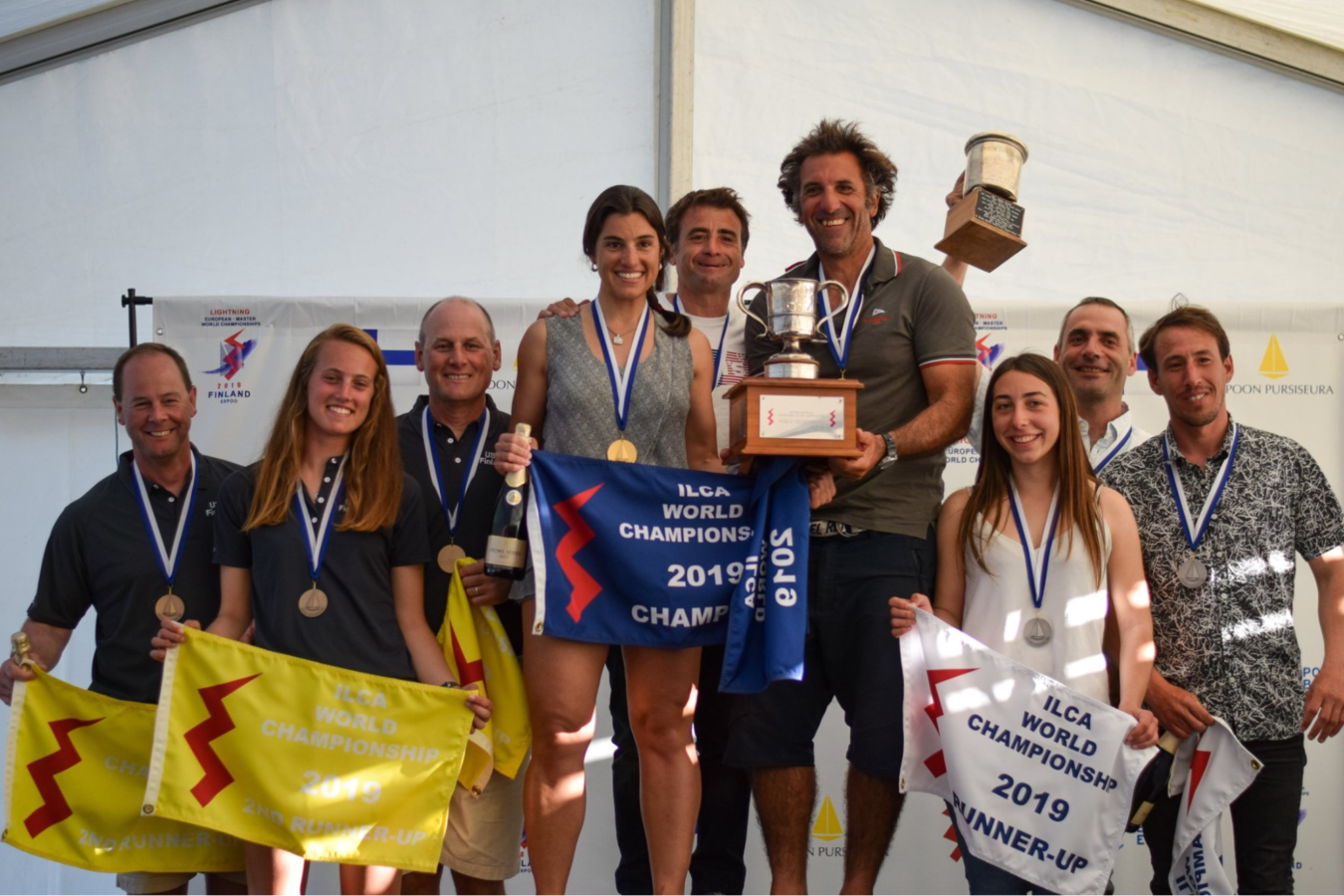
events
NORTH LIGHTNING CLIENTS ON TOP OF THE WORLD
NORTH LIGHTNING CLIENTS ON TOP OF THE WORLD
Top 24 Teams At The Worlds In Finland Powered By North Sails
Congratulations Javier Conte and team. 📸 International Lightning Class Association
The 30th Lightning World Championship was held in beautiful Espoo, Finland. Defending champion Javier Conte (ARG) with teammates Ignacio Giammona and Paula Salerno were able to hold off several strong challenges to defend the World Championship. Conte joins Lightning legends Tito Gonzalez (2003-05) and Tom Allen (1961-63-65) as the only three to successfully defend their Worlds title.
While the 2017 title came a bit easier for Team Conte, this year the team faced strong challenges from several teams in the 49 boat fleet. Felipe Robles (CHI) with Andres Guerva and Paula Herman started the series with a 1,2 for an early lead. They continued to sail well with solid finishes including winning the final 2 races of the series but a couple of 9th place finishes added just enough to put them 3 points out of the top place on the podium. David Starck (USA) sailing with his brother Tom and Jenna Probst posted all top 7 finishes in the 8 race series for the final podium spot just 6 points behind Team Conte.
The week before the World Championship the class held its European Championship in conjunction with the International Lightning Masters Championship. Ched Proctor (USA), Meredith Killion and Bill Faude scored a 1,3,1,2 to secure his 3rd International Masters Championship. Team Proctor edged out the all family team of Tom Allen (USA) with sister Jane and daughter Shelby (2,1,2,3). Larry MacDonald (CAN) with Jody Starck and Ian Jones filled out the top 3.
In the Open European Championship, Team Conte showed the fleet what they might expect by winning 3 of the 6 races and besting Class President Todd Wake (USA) with his son Doug and Jeff Coppens, by 2 points to earn that title as well. Bill Mauk (USA) with young guns Rafael Menendez and Alberto Gonzalez Jr. sailed a magnificent series to take 3rd place.
The next World Championship will be held in 2021 in Wrightsville Beach, NC (USA) with qualifying at the 2020 North American Championships in Cleveland, OH.
Learn more about North Sails Lightning products.
2019 Lightning World Champions Javier Conte, Ignacio Giammona and Paula Salerno. 📸 International Lightning Class Association
Breeze on in Espoo. 📸 International Lightning Class Association
2019 International Masters Champion Ched Proctor, Bill Faude and Meredith Killion. 📸 International Lightning Class Association
Team North in Espoo. Jody Lutz, Ched Proctor, Brian Hayes and Jackson Benvenutti.
📸 International Lightning Class Association
No hoist, no problem. 📸 International Lightning Class Association
US team in style. 📸 International Lightning Class Association
READ MORE
READ MORE
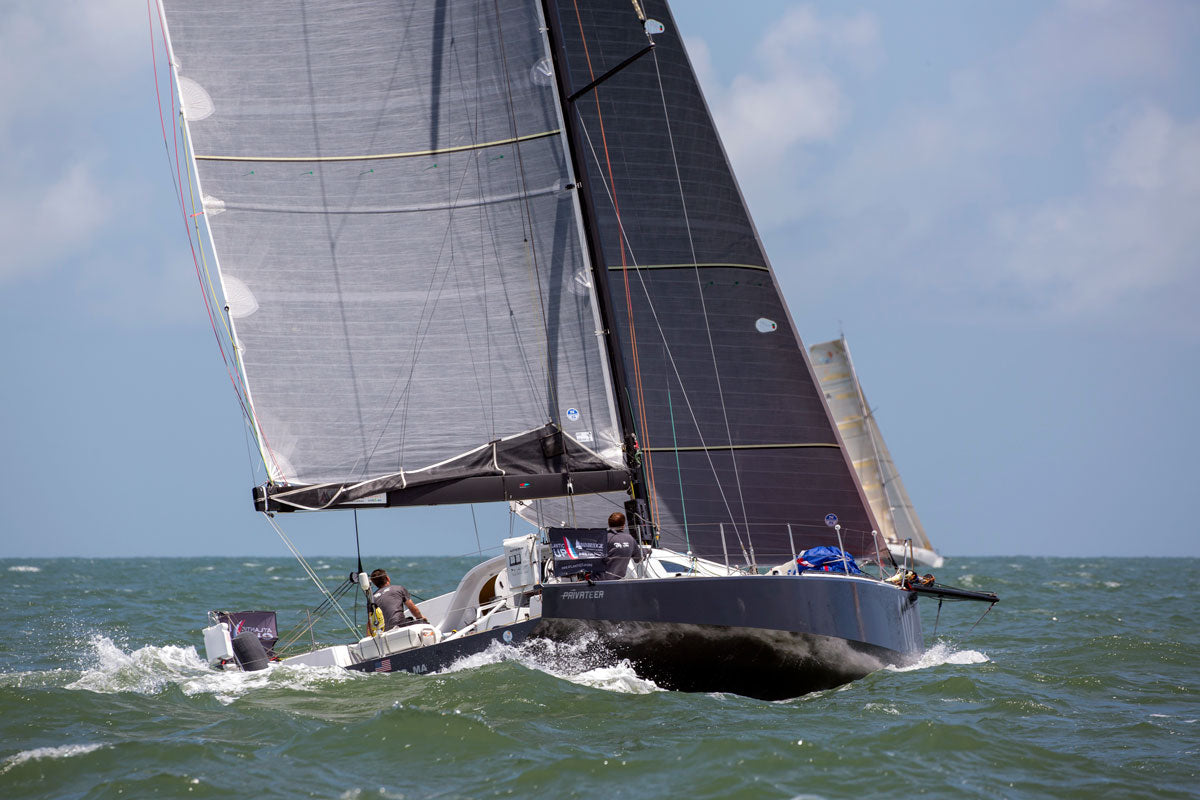
events
CLASS 40 PRIVATEER TAKES OVERALL BERMUDA 1-2 VICTORY
CLASS 40 PRIVATEER TAKES OVERALL BERMUDA ONE-TWO VICTORY
Owner credits North Sails for great sail design and durability
Photo: Billy Black
One week after finishing the second leg of the Bermuda 1-2, Jonathan Green, owner of the Class 40 Privateer, is still grinning. The unique race takes a fleet of singlehanded sailors across the Gulf Stream to Bermuda, 635 miles away. A week later, the boats race back to Newport doublehanded. Elapsed times for the two legs are combined to find an overall winner.
Racing was tight among the Class 40s, and on Leg 1, Privateer was only able to manage a fourth place finish. “First, I had some equipment failures that hindered my competitiveness in less than 15 knots,” Jonathan admits. “Second, I had some strategy missteps that ate away at my initial lead and allowed my competitors to walk on by.”
For leg 2, Jonathan was joined by co-skipper Jeff MacFarlane. “Jeff always amazes me with his attitude, drive, and determination—a true competitor. We did some racing together on Privateer last summer so were well familiar with each others’ sailing style, and knew we had a good shot at the title.”
At the restart off Bermuda on June 20, Privateer hit the line first and quickly gained 15 miles on the other Class 40s. Jonathan gives a lot of credit to their Solent sail. “Some of the conditions far exceeded the design specs, but it held together beautifully and allowed us to extend a big lead on the competition over the first 50 hours of the second leg. Most of our competitors were probably sailing their J3. It was a risk, because if the Solent blew up, we’d be far less competitive later in the race, but it persevered and put us in a fantastic position over the fleet.”
After finishing on 23 June at 1507, Privateer more than made up the time deficit from Leg 1 to take the overall win.
Conditions for leg 2 included thunderstorms and 35 knots from the northeast. Asked if there were any scary moments, Jonathan says, “We were definitely on the edge of our seats reaching in wind gusting over 35 knots, with big walls of water thrown up against the Solent. If we were sailing conservatively, we’d have dropped it at 25 knots, but with the monumental gains we were making, it was too tempting to press on and hope North built it strong. Sure enough, the sail held together and allowed us to post enormous gains.”
Working with the North Sails team on sail design, testing, and refinement has allowed Privateer to become more and more competitive over time, Jonathan concludes. “With North’s help, I think we can continue to climb the ladder among the Class 40 fleet. Next year’s Atlantic Cup will be a true test of our program, as we set out to score wins against US and European programs with very experienced teams. Tune in June 10, 2020 for some exciting Class 40 racing!”
READ MORE
READ MORE
events
NORTH SAILS IS OFFICIAL SAILMAKER OF THE 12 METRE WORLD CHAMPIONSHIP
NORTH SAILS IS OFFICIAL SAILMAKER OF THE 12 METRE WORLD CHAMPIONSHIP
The World’s Leading Sailmaker Joins The Celebration Of This Iconic Class
© SallyAnne Santos | WindlassCreative.com
Lowell North founded North Sails in 1957, one year before the America’s Cup ushered in 30 years of storied racing in the 12 Metre Class, creating some of the most memorable moments in sailing history. 60 years of innovation and development kept North Sails at the heart of America’s Cup victories, and now the world’s leading sailmaker will be on hand to provide world-class service and support when the 12 Metre World Championship is raced off Newport, R.I. from July 8-13th.
The World Championship will be the largest-ever gathering of 12 Metre yachts in the United States, featuring 21 boats from six countries. North Sails will be offering its signature Regatta Repair service to ensure the sails on every boat are optimized for the expected tight racing in this fiercely competitive fleet.
The 12 Metre has always been at the forefront of sailing development. Today the class combines the sleek lines of historic hulls with cutting edge technology above deck, offering both nostalgia and world-class racing. North Sails has worked closely with many owners and the class association itself, to understand more about the needs and challenges faced in developing modern sails for these boats. Both North inventories and North experts will be onboard many of the boats to help the teams meet their goal of being the next World Champion.
“We have a shared history of success and pioneering development, and we are privileged to be able to be a part of this event and help keep these boats performing to the highest level.” -Ken Read
The President of North Sails will be racing on Challenge XII in the Modern Division. “The 12 Metre class is unique in every way,” Ken Read continued. “There is nothing else like it in the world, and it’s a testament to the owners, crews, class association, and suppliers that the fleet remains so competitive and we are able to get 21 of the 12 Metres to Newport for this amazing event. What better place to be watching these boats go head-to-head than Newport, the site of so many memorable America’s Cup battles. North Sails prides itself on finding the best sail solutions for any client, from the smallest to the biggest, and these amazing boats have to rate as one of the most iconic.”
Peter Gerard, Vice President of the International Twelve Metre Association’s (ITMA) America’s Fleet added: “Without the best partners to help us deliver optimum performance, we would not be able to put on such an ambitious event as this. Whilst the boats are historic and look beautiful, the loads that they carry and the equipment that they use is cutting edge. and for this, we need the world’s leading suppliers to help keep everyone race-ready. We are delighted that North Sails has partnered with us and are greatly looking forward to working with them.”
READ MORE
READ MORE
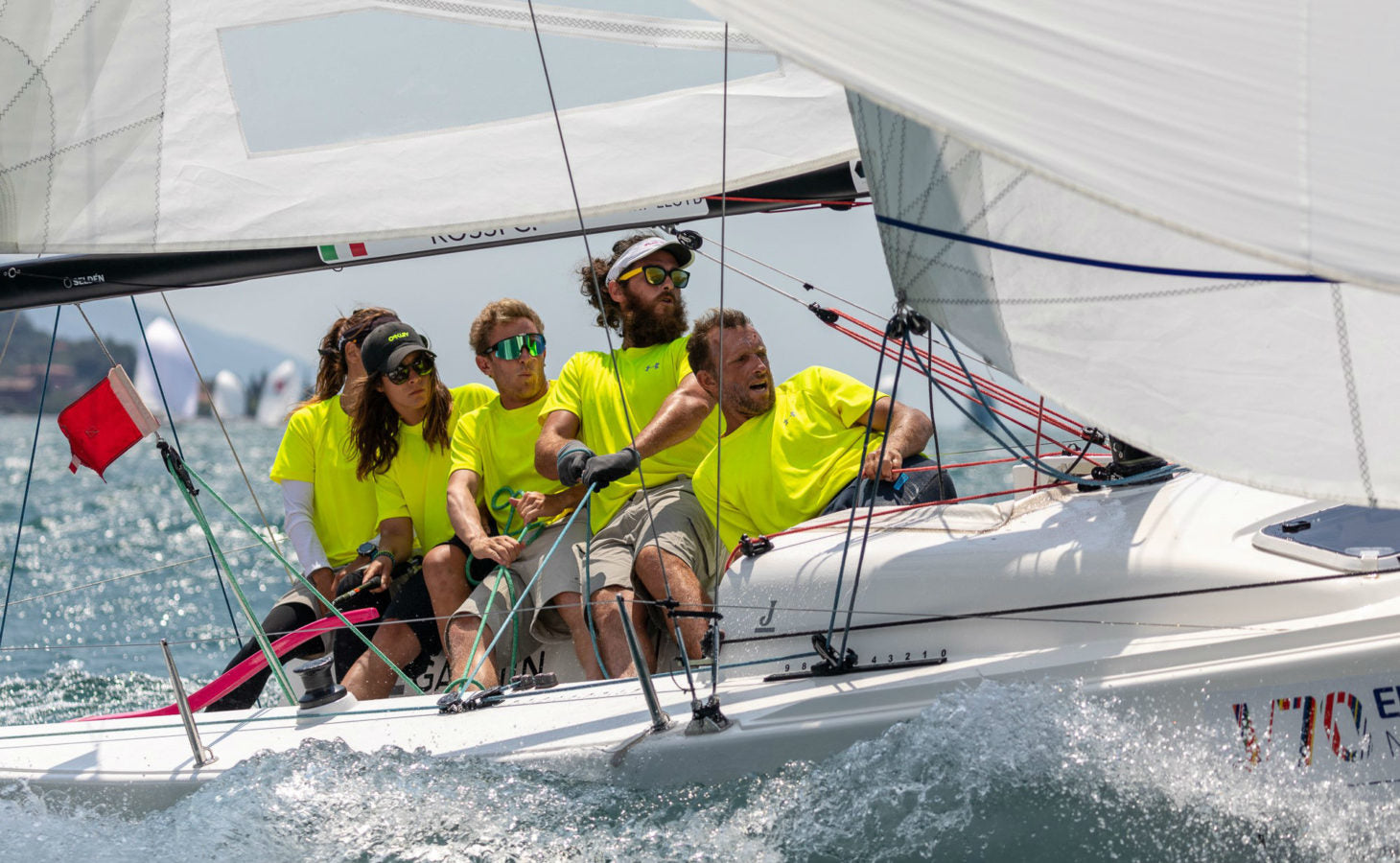
events
ITALIAN TEAM WINS J/70 EUROPEAN TITLE
ITALIAN TEAM WINS J/70 EUROPEAN TITLE
We Talk To Giulio Desiderato, Main Trimmer And North Class Expert Onboard
J/70 European Champions 2019, Petite Terrible 📸 Zerogradinord
After a tough battle at the J/70 European Championships in Malcesine, Lake Garda, the North powered Petite Terrible won the European title. With Italian Class Expert Giulio Desiderato sailing onboard as Main Trimmer, he gives us the low-down on how the team came to be at the top of the podium in the largest and arguably most competitive One Design class.
Amazingly, this victory is not unusual for the Rossi family. Helm of Petite Terrible, Claudia Rossi, won the Europeans in both Kiel and Hamble after Claudia’s father won the Europeans with his team in Vigo last year, all with North Sails inventories.
Claudia Rossi gives us her account of the regatta: “I have been sailing in J/70 class for four years and after trying various sails, I am happiest with North Sails. The boat is fast and easy to drive which is also helped by having Giulio Desiderato onboard. He knows the sails very well and can therefore ensure we trim them in the right way. Of course, having a fast boat makes things easier, but I think the key to our success was our team. We were always united, we believed in it until the end and when we needed to push, we all gave 110% resulting in an exciting and well deserved victory, an incredible experience!”
“I have been sailing in J/70 class for four years and after trying various sails, I am happiest with North Sails. The boat is fast and easy to drive which is also helped by having Giulio Desiderato onboard. He knows the sails very well and can therefore ensure we trim them in the right way.”
The regatta brought a fantastic mix of wind strengths, with some very light days proving testing for the healthy fleet of 124 boats. We asked Giulio how the sails handled in these tricky race conditions: “The regatta has been difficult and intense with some conditions as light as 5-6 knots. However, luckily the Championship finished with a nice 15-17 knot wind blowing from the south. We found the right way to tune the mast and trim our sails properly and as a result, have been leading the fleet most of the time, no matter what the conditions. This consistency is the key to our success.”
The team are very familiar with Malcesine and Lake Garda, but the Europeans brought unusual conditions. For most of the regatta, although all races were sailed, it was too hot for the well-known Ora wind to develop.
“The XCS-2 Mainsail we raced with had been used at two previous major events which says it all! We are very impressed with the sail quality and shape. We also used the North Sails J-2 High Clew Jib and AP-1 Spinnaker.”
Petite Terrible 📸 Zerogradinord
Petite Terrible started racing together in 2015. Giulio first became involved as a coach, helping to prepare the crew for the World Championship in San Francisco. This season, they chose to work together have him as part of the team as Main Trimmer.
“The last race is one that I will never forget,” says Giulio. “All the races before this, we fought with the other boats in the top of the fleet to win the title. In the final race, we decided to sail our own race by not making it too complicated and just pushing hard until the end. We had a great start close to the pin end, sailed fast passing various opponents and when we got close to rocks we tacked onto port crossing in front of the whole fleet!”
“The last race is one that I will never forget. We decided to sail our own race by not making it too complicated and just pushing hard until the end. We had a great start close to the pin end, sailed fast passing various opponents and when we got close to rocks we tacked onto port crossing in front of the whole fleet!”
We wish the team good luck at their next event in August, the World Championships in Torquay, UK.
Talk to Class Expert, Giulio Desiderato, and browse the J/70 Shop Inventory.
“I would like to thank my team – Claudia, Michele and Matteo e Ross. Also, a huge thank you to our team mates onboard Enfant Terrible and all the people that support us during the season and the fantastic week. Big thanks to Alberto Rossi that made it possible. Finally, a big hug to Simone Spangaro, the previous Petite Terrible Main Trimmer. He is the team’s number one supporter and never stops helping us.”
Congratulations to North clients who won all three podium positions 📸 Zerogradinord
📸 Zerogradinord
Arttube 📸 Zerogradinord
Petite Terrible 📸 Zerogradinord
📸 Zerogradinord
READ MORE
READ MORE
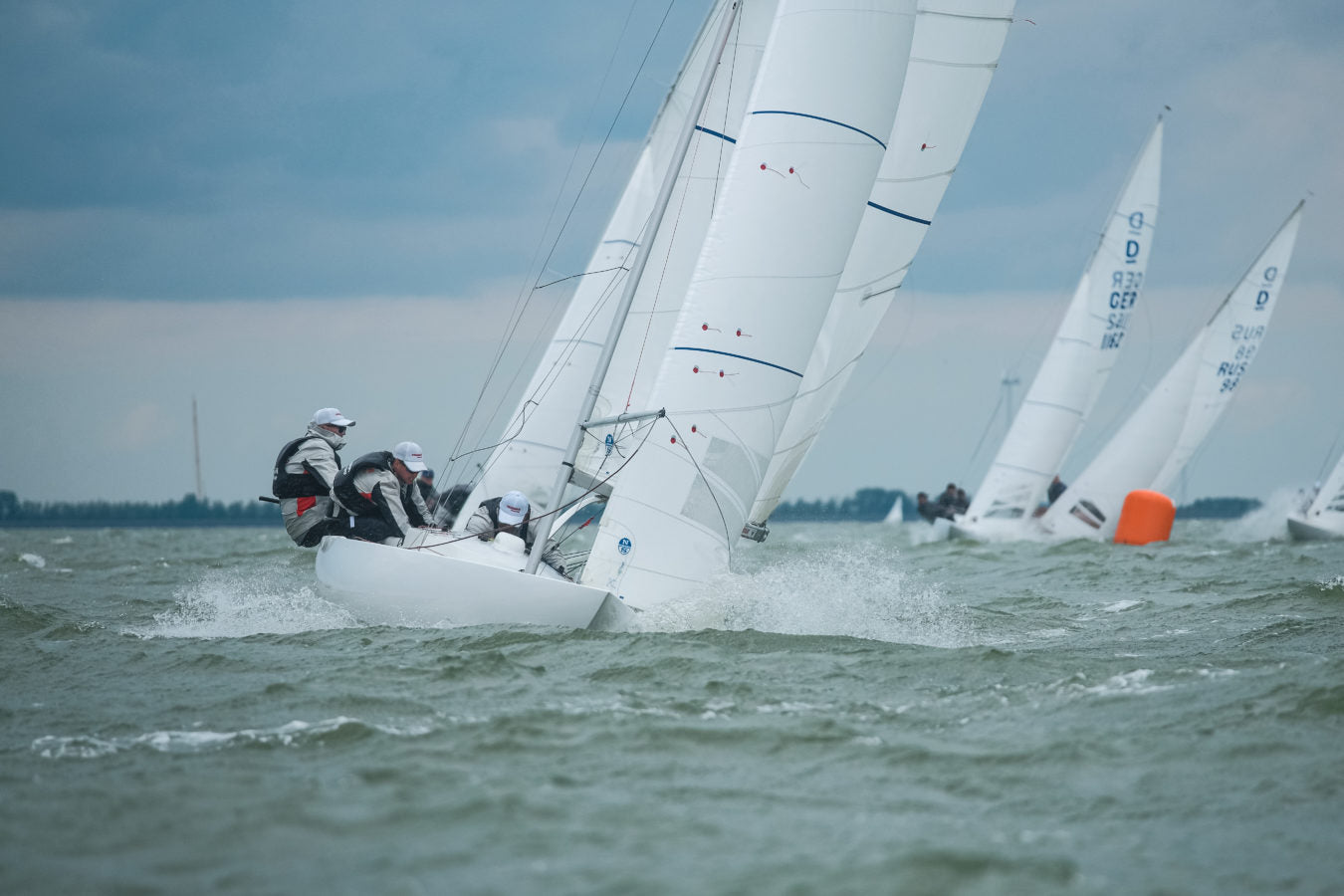
events
NORTH SAILS CONNECTS WITH YANMAR RACING
NORTH SAILS CONNECTS WITH YANMAR RACING
Impressive Podium Finish at the Dragon Gold Cup
Yanmar Racing, JPN 56 📸 Eric van den Bandt
Right after they won bronze at the prestigious Dragon Gold Cup 2019, we talked to North-powered Japanese-based team Yanmar Racing about their impressive result.
They’ve only sailed together in the Dragon class for one year, but the podium finish in Medemblik proves they have already clicked in the boat. The team consists of three sailors: boat owner and helmsman, Peter Gilmour, who lives in Perth, Australia; Yaji San who is based in Yokohama, Japan; and Sam Gilmour, who lives in Gothenburg, Sweden.
A major perk of the International Dragon Association (IDA) Championship Events and Grade 1 Grand Prix competitions is the friendships developed within the class. Coming from a match racing background and used to racing just one other boat, the team found it a big change being part of a fleet of 90 boats.
📸 Eric van den Bandt
Setting the mast to the mainsail has been a key mission for Yanmar Racing. “A stiffer mast section has allowed us to use a lower luff curve main, along with the standard North A-7+ . We used the North V-6L, V-6M and V-6H Genoa for light, medium and heavy wind respectively, and also used the R-5 Spinnaker.”
“The cloth quality is good for the Mainsail, Genoa and Spinnaker. They hold their shape well throughout the range specified.”
The Medemblik event was very well managed, Peter says. The starts were difficult with a 1 km line, but Danbuoys provided additional assistance along the line.
The sails handled the strong winds and choppy sea state well, Peter Gilmour says. “We typically change up our Genoa in slightly lower wind ranges than most specify, and this may cause us to get caught out below range with the heavy, for example. The sails seemed to handle these conditions fairly well and we were happy with the sail choices we made.
“Responding on board and changing gears to get the most out of the sail/mast combination as well as optimising course position is something that is evolving for us in each race and regatta we do.”
Race five was particularly exciting. With a steady 22 knots and gusting 28 knots, the team did not get off to their best start. However, after prioritizing boat speed until they found clear air, they reached the top mark in fourth. The downwind leg was fantastic, with some big windward rolls, nail-biting jibes, and a generous amount of fun.
Next up is the Dragon Grand Prix in Kuhlungsborn, Germany on the 2nd – 6th July. Good luck!
Talk to a Dragon Class Expert or browse the Shop Inventory.
Louise Racing, GBR 820 📸 Eric van den Bandt
My Way, DEN 266 📸 Eric van den Bandt
My Way, DEN 266 📸 Eric van den Bandt
📸 Eric van den Bandt
FRA 428 📸 Eric van den Bandt
READ MORE
READ MORE

events
TED KELLER WINS MC SCOW MASTERS
TED KELLER WINS THE MC SCOW MASTERS NATIONALS
North Clients Sweep The Podium
Masters champion Ted Keller and son Ben | Regatta Girl Photography
This past week the MC Scow sailing season kicked off with one of our major championships the MC Masters Nationals being sailed on Keuka Lake in New York. Here’s the recap by MC expert Eric Hood:
The Regatta
Next time you see Keuka on any regatta calendar and schedule you absolutely have to come. Plus bring family or friends. There is so much to do here, see and enjoy. The original wine country in the United States. Keuka is one of the famous Finger Lakes. It is one of the smaller ones and is still 20 miles long with a width of ½ to 1 mile wide. Check it out on the map. The club is a MC, E Scow club and also has some good junior sailing going on as well. The MC class brought in Chip Mann and Larry Krause to help the local Keuka crew run four great races for us. Winds for practice day Thursday were 12-17 mph out of the north. Friday day one of racing saw two races with winds 9-15 mph with wind direction of 0 degrees. Saturday was more wind with two more races. Wind speed was 15-22 mph wind direction 340. We raced those two races up in the north branch if you look at the map. Sunday we tried to go for two more morning races with a noon cutoff but the morning thermal died as we launched. No racing on Sunday. So our scheduled 7 race regatta turned into a four race series.
The Sailors
The 46 boat fleet had some of the best MC sailors in scow world and the MC Class. Former Lightning World Champ Matt Fisher, former MC National Champ Glen Walborn, two time winner Brett Hatton, Scott Harestad 2017 MC Masters Champ, 2018 Masters Champ Vince Driessen, Former ILYA and Masters Champ EHood, CScow legend Bruce Rosenheimer and really a bunch more great sailors. As we look through the roster and now look back at the results you had probably 20 sailors capable of winning a race and probably at least 10 capable of winning the event. What was really great was seeing how well the mid-pack and back-end groups were sailing. That was special. The Masters group is really doing well. 15 states and two countries represented (U.S. and Canada).
MC Masters Winners | Regatta Girl Photography
The Results
Only two teams survived with all top ten finishes. Double digit finishes were the game changer for the top 15 boats with 3rd through 15 all having a tough race. Not because of bad conditions. 18 of the 20 legs sailed were good, fair and steady legs. We had two legs of the 20 legs sailed where giant race changing shifts came through. Most of us who have sailed here before were surprised at actually how steady it was all week.
The new champion is Ted Keller a newcomer to the Masters fleet. Ted along with his son Ben won with a four race total of 15 points. Ted and Ben sail out of both Torch Lake, MI and Hoover in Columbus, OH. 2nd place former Lightning World Champ Matt Fisher sailed all four races with wife Lisa finishing with 17 points. The Fishers sail out of Hoover as well in Columbus, Ohio. The Keller and Fisher teams were out a ways on third place former Masters Champ Scott Harestad from Spring Lake who had a great regatta with 26 points.
Race winners were: Scott Harestad race 1, Bruce Rosenheimer race 2, Vince Driessen from Gull Lake race 3 , Ted Keller race 4
Top Old Salt – Phil Ecklund from Union, CO.
Top Mega Master – Allan Haeger from Lake Beulah, WI
Top Grand Master – Matt and Lisa Fisher from Hoover SC in Columbus, OH.
Top Woman – Katie Arvesen from Gull Lake, MN
North Clients finished 1,2,3,4,7,8,9 using the ZMax mainsail.
Lessons Learned
Certainly I think the biggest lesson learned was a good one that Ted Keller our new champion just shared with me. He was saying when things look like they might go sideways on you to make the bad less bad. His example was race three the biggest wind race for sure. Ted was caught without his crew and he knew it could be a 15-20-25 type finish real easy. Instead he gutted it out, hiked hard and was super focused to stay in top 10 no matter what. He finished 6th . Good lesson for sure. Other lessons not getting off to the edges on this lake. That really never worked. It was always center, center left or center right for 18 of the 20 legs raced. Downwind sailing with waves for the last two races was critical not to submarine. So vang on steer more by the lee with a good windward heel took care of that challenge. Race 4 was the most challenging race with velocity changes. One of our two challenging legs was the last leg where we went from 22mph down to 4mph in a matter of a couple of minutes . That was at the top near the shore and finish. So shifting gears was a big deal. Vang on , vang off. If you had a crew then smooth in and out moves so you as skipper could focus on being still with your body, looking forward with focus on the breeze coming on you. All in all a fun and challenging week. All conditions, lots of shifting gears.
Other Regatta News
The season is just getting started with some big events coming soon.
MC ILYA Invite at Gull Lake, MN, what a cool site if you have never been there. Then we have the Nationals at Minnetonka, MN. Then the ILYA Champs at Winnebago. I will be going to the 90th Western Michigan Yachting Association Championships on my old home lake which is White Lake, Michigan. All of these events will have big fleets for the MC. So lots of opportunities coming up. Stay tuned at www.mcscow.org , www.melges.com , www.wmya.org, www.ilya.org.
Big thanks to Mari Johnson with incredible photos, check out and download at Regatta Girl Photography at www.regattagirlphotography.com .
Ronnie Hull the MCSA Communications director has fantastic videos, interviews in lots of places. Facebook – MC Sailing Association, Instagram – @MCSailingAssociation, YouTube – MC Sailing Association.
Race 1 winner – Bruce Rosenheimer | Regatta Girl Photography
Vince Driessen, 2018 Masters Champ powered by North ZMax | Regatta Girl Photography
READ MORE
READ MORE

events
#NSVICTORYLIST: PALMA SUPERYACHT CUP
SUPERYACHT SUCCESS IN PALMA
North Sails and North 3Di Power The Superyacht Cup Palma
Win Win is the Overall Winner of the 2019 Palma Superyacht Cup, making this their third time collecting title. 📸 Sailing Energy
Another year has closed on The Superyacht Cup Palma, and North Sails were on every boat to have claimed a place on the podium. Beyond that, all boats sailing in the regatta had North 3Di onboard to power their superyacht performance.
Owners and crews alike look forward to this annual event for the competitive sailing and welcoming onshore atmosphere created by event organizer Kate Branagh and her expert team. The Palma based North Sails loft were busy helping the 13 yachts racing prepare for the 2019 edition of Europe’s oldest superyacht event as well as making time to check in with North colleagues who were also in town for the three days of racing. Sail deliveries in the morning, racing during the day, and sail pick in the afternoon, press repeat all week long.
Win Win had three wins across three races, making them the Overall Winner of the 2019 Palma Superyacht Cup and also placing them on top of the podium in Class A. Topaz, Velsheda and Missy each collected a bullet in one of the three races for class B, with Topaz ultimately winning their class overall. Bequia won two of three races in her class to be named the overall winner of Class C.
Win Win is the Overall Winner of the 2019 Palma Superyacht Cup, making this their third time collecting the title. 📸 Sailing Energy
Huckleberry was awarded ‘North Sails Boat of the Day’ by North Technology Group CEO Tom Whidden and Head of North Sails Palma Quinny Houry during the North Sails Happy Hour on Friday. In its inaugural year, the award is dedicated in memory of Lowell North who passed away in early June 2019. “Nobody cared more about performance than Lowell North and coming from a boat that hasn’t sailed a lot of regattas Huckleberry sailed beautifully,” explained Whidden. “The award wasn’t necessarily for the boat that’s going to win, it was for the boat that we felt did the best job with what they had to work with. They had their sails up at every mark rounding, and a lot of sails, they are sailing their boat hard and well. I think Lowell would really have liked it. He cared about winning but it wasn’t all about winning, he just wanted to do things as well as he possibly could.”
North Sails Boat of the Day winner Huckleberry, who was sailing with the new North 3Di Ocean superyacht product 📸 Sailing Energy
The Palma Superyacht Cup is the unofficial end of the superyacht racing season in Europe. 2019 was a successful and productive season for North Sails and our clients, and we look forward to the next superyacht meet up at Maxi Yacht Rolex Cup in September.
J Class Topaz wins Class B of the 2019 Palma Superyacht Cup 📸 Sailing Energy
Bequia wins Class C of The Superyacht Palma with a three-point advantage
📸 Sailing Energy
READ MORE
READ MORE

events
NEWPORT-BERMUDA RACE X NORTH SAILS
NORTH SAILS RETURNS AS PERFORMANCE PARTNER TO NEWPORT-BERMUDA RACE
Performance Seminars To Be Hosted In Newport, Annapolis, And Milford
The Bermuda Race Organizing Committee announces the North Sails return as the Official Performance Partner for the Newport Bermuda Race in 2020, which will include running a number of the hugely popular ‘Performance Seminars’ that were introduced before the 2018 edition of the race. As the world’s leading sailmaker, North Sails not only powers the podium but offers all competitors in the popular 635-mile offshore race the chance to optimize their sail inventories with seminars focused on weather, navigation, racing strategies and beyond.
The highly anticipated event, which always draws an international fleet of yachts of all sizes, opens for entry registrations on June 21, 2019. In advance of next year’s test of blue-water seamanship, North Sails will be hosting seminars along the East Coast in Newport RI, Annapolis MD, and Milford CT – dates and any additional locations will be announced over the course of the next 12 months.
“The Newport Bermuda Race will always deliver changeable and challenging conditions that require a flexible sail inventory, solid preparation and adaptable thinking on the water.”
“North Sails strong technology and personnel provide a great asset to the Newport Bermuda Race,” said Jay Gowell, Chairman of the Bermuda Race Organizing Committee, “and we welcome them back as Official Performance Partner for 2020. The pre-race seminars they stage for competitors align perfectly with our belief that preparation of crew and yacht is the most important ingredient to sailing a safe and successful race.”
Commenting on the continuing partnership, North Sails President Ken Read, who helmed Comanche to race record victory in 2016, concluded, “Personally I have fantastic memories of watching and competing in this blue water classic. And the feedback from our Performance Seminars in 2018 was so positive that we knew we wanted to grow and develop the partnership for 2020. The Newport Bermuda Race will always deliver changeable and challenging conditions that require a flexible sail inventory, solid preparation and adaptable thinking on the water. We’re looking forward to helping all the competitors in any way we can as the entry list grows and can’t wait to make sure the boats are as ready as they can be when the starting gun fires.”
North Sails has a long history with the Newport to Bermuda Race, powering Corinthian cruisers and 100 ft plus racing machines alike. North Sails clients have enjoyed a number of victories and race records over the years. North Sails has more offshore miles, around the world records and ocean racing victories than all other sailmakers combined and prides itself on offering the best sail solutions and services for all boats, no matter what their size or goals. Much of the North Sails offshore success can be attributed to their unique 3Di technology that delivers speed, durability, and reliability. North Sails are constantly refining, redeveloping and innovating their 3Di products so they fit the needs of cruiser-racers under 35 ft through to grand prix racers and super maxis.
First run in 1906, the Newport Bermuda Race is a biennial event, co-organized by the Cruising Club of America and the Royal Bermuda Yacht Club. It is managed by the Bermuda Race Organizing Committee, a joint working group which organizes and presents the race for up to 220 boats. Learn more.
READ MORE
READ MORE

events
GIRL POWER ON THE MELGES IC37
GIRL POWER ON THE MELGES IC37
A Weekend of First Experiences With A Positive Reflection For The Season Ahead
Amina Brown (runners), Katja Sertl (trimmer 1), Cory Sertl (co-skipper/tactician), Meredith Carroll (mast), Hollis Barth (trimmer 2), Colette Fortenberry (with the La Croix in her hand* float, squirrel, assistant), Hillary Noble (bow), Kathy Kirk (pit)Going into the weekend, I had no idea what to expect. With a new crew and new fleet, there were bound to be unplanned obstacles that we’d encounter, but I was so unbelievably excited to share my first racing experience with this crew! Our team at the New York Yacht Club 165th Annual Regatta had 11 total crew members – three were males and eight were females, one of which was under 16 years of age. The Melges IC37 Class Rules require mixed-gender crews, which meant every team had at least two women on board this weekend, and most teams had more. But we were the only team with such a vast female majority. It made for an enjoyable and refreshing experience. What also made it special was that each crew member brought a particular set of skills to the program, making it a positive learning experience for all of us. Our main goals were to be safe, have fun, figure out the boat, and learn together. We accomplished all of the above!
📸 Melges Performance Sailboats
Although it was looking to be a sporty and challenging weekend for our team, we didn’t let it get the best of us. We were there to give it our all and come away from our experience as better sailors, together. Friday was the Around-the-Island Race, where we headed South upwind rounding the bottom of Jamestown, RI, where conditions were wet and wild as we sailed out of Narragansett Bay. Surrounded by boats of all sizes made things exciting, watching all the crews moving about the boats, working hard to keep the throttle down, and maintain control. Turning the corner around the southern tip of the island gave us a great show, watching the faster boats peel down like freight trains, and the groans of the winches as the grinders eased off. We rounded and got our bearings for the leeward mark. At first, we were at a beam reach, so we had a late hoist, but once the kite was up and we were in the pressure, the fun really began. Shotty puffs came down in streaks, which made it challenging for our female trimmers, but they did an excellent job communicating with each other to keep the wheels rolling. We hit 18.8, and that was an absolute thrill! We may have had a few wipeouts, , but I can’t say it wasn’t fun! After we cleared the Jamestown Bridge, we could see the leeward mark, and it was fast approaching. Our female tactician was great at communicating the game plan with the crew, and we set up for a squaggle-down to get the kite in. With the retriever line, it is all about angle-off the wind and timing. Our female pit crew did a fantastic job watching us at the bow before we pulled the kite around to windward, making it as easy as possible in the 20+ knots. Our squirrel was our 16-year-old local rockstar Colette Fortenberry. She had a great attitude and was excited to help any way she could. After the rounding, it was an uphill race under the Newport Pell Bridge to the finish off of Fort Adams. The rest of the weekend was much of the same, but with windward-leeward drag races which was great practice for our crew work.
Overcoming obstacles as a team, celebrating those little moments of glory—I think that’s what the Melges IC37 class was made for. Teamwork. Corinthian sailing at its finest, making new friends and learning to be better sailors. The IC37 is truly a boat for anyone, from the small boat one design sailors to grand prix fanatics. It’s the perfect in-between with all the one design simplicity but has that grand prix fun and exhilarating edge that other classes can’t match. Last weekend was just the beginning for our team, but all in all, it was a great place to start and get our bearings. We may not have won the regatta, but in our own way, I feel like we still won the weekend.
📸 Melges Performance Sailboats
📸 Melges Performance Sailboats
By Hillary Noble, Republished from Scuttlebutt & Melges IC37 Class Association
READ MORE
READ MORE

events
2019 ROLEX GIRGALIA RACE RECAP
A MUST-DO SUMMER EVENT FOR CLIENTS AND NORTH SAILS EXPERTS
Our Lofts In France And Italy Combine Resources To Be On-hand And Onboard For This Fun And Demanding Week-long Event
📸 ROLEX/Carlo Borlenghi
The 67th edition of the Rolex Giraglia Cup finished last weekend and North Sails powered top finishers across the numerous classes, including overall winner Caol Ila R. Originally a 241-mile offshore race, this Mediterranean classic attracts hundreds of sailors and has grown to include both inshore and offshore racing. While the racing is always competitive on the water, the fun starts once the boats hit the dock at the end of the day.
Boats sailing at the 2019 Rolex Giraglia range in size and the event attracts a mix of professional race crews and amateur sailors. Maxi 72 Caol Ila R won big this year, taking home the ‘Trofeo Challenge Ruota Dentata’ for the best corrected time in the offshore race, and the ultimate honor of being named overall winner. Caol Ila R, with owner Alex Schaerer, is one of the many teams who have added a new North Helix sail to their inventory. Developed through North’s specialized Load Sharing Technology, Helix is an innovative self-supporting structure, which delivers a versatile, fast and forward-projecting reaching sail. Caol Ila R’s Rolex Giraglia win follows closely on the heels of their class win at the Rolex Capri Sailing Week.
📸 ROLEX/Carlo Borlenghi
Additional North Sails clients in the ORC Racer class also found success during the event. George David’s Rambler 88 was the offshore winner in real time to claim the ‘Trofeo Levainville’. Rambler 88 also won the ‘Beppe Croce’ for the first boat to round the Giraglia rock. Sir Peter Ogden’s Jethou sat on top of the leader boat in the Inshore IRC O Racer Class.
“Historically, these Code Zeros were light upwind sails but the Helix sail is more versatile. I’d want the Helix sail for reaching every time.”
Like Caol Ila R, Jethou has unlocked a new level of performance with the new North Helix sail, which eliminates the need for heavy torque cables. An early adopter of the product, Jethou took delivery of the Steve Calder designed sail in 2018. According to the trimmer Joey Newton, Helix has become the team’s go-to reaching sail. “We use this sail as a catch-all reaching sail,” explains Newport. “Historically, these Code Zeros were light upwind sails but the Helix sail is more versatile. I’d want the Helix sail for reaching every time. The way the whole sail loads up and that it can be trimmed easily using small tack line adjustments are all positive.”
Rolex Girgalia served as the third event of The Nations Trophy Med League 2019. North Sails-powered Swans outperformed their competition, sweeping every podium position in the Club Swan 50, Swan 45 and Club Swan 42 classes. ClubSwan 50 Stella Maris placed first in the ORC Class and won the coveted ‘Nucci Novi Challenge Trophy’. As a team new to the ClubSwan 50, owner August Schram was pleased and somewhat surprised with Stella Maris’s success. “We started this campaign less than a year ago at the Copa del Rey Mapfre,” commented Schram. “In under a year we have won a major race, which is way above anything we could have imagined.”
📸 ROLEX/Carlo Borlenghi
READ MORE
READ MORE

events
UK NATIONALS VICTORY WITH G-3R SAIL
UK NATIONALS VICTORY WITH G-3R SAIL
North Sails Clients Take Over The Podium
Streaker UK Nationals Champion, Martin Penty 📸 Karen Langston
The Streaker UK Nationals brought of a mixed bag of conditions at Portland Harbour, with Martin Penty claiming the title using North Sails G-3R sail. Congratulations to all North clients, who took the top four places with the G3-R and G3-L sails performing well and winning every race. With a healthy 31 entries, the regatta was held at the 2012 Olympic venue, Weymouth and Portland National Sailing Academy (WPNSA) which offered fantastic facilities.
Friday was windy but three races were sailed. Saturday was gusting up to 40 knots so racing was cancelled and Sunday was very light, approximately 3-6 knots. Martin Penty and Steve Blackburn (first and second overall) had near untouchable boat speed in these light conditions on Sunday, both using North Sails G3-R sail.
Browse our range of Streaker sails or talk to Class Expert, Thomas Gillard.
📸 Karen Langston
Tom Gillard 📸 Karen Langston
Steve Blackburn 📸 Karen Langston
Tom Gillard 📸 Karen Langston
Chris Jones 📸 Karen Langston
READ MORE
READ MORE

events
NEW S-5 STEALTH MAINSAIL
NEW S-5 STEALTH MAINSAIL
The Powerful And Versatile Go-To Sail
📸 Brett Hord
The secret is out… the new and competitive North Sails Stealth S5 Mainsail can now been revealed having already been successful for top Paper Tiger sailors, Derek Scott and Hayden Percy. The sail helped Scott, North Sails Paper Tiger Class Expert, win the 2019 New Zealand Paper Tiger Nationals and Percy win the 2019 Paper Tiger International Series in Napier.
Throughout the summer, Scott has been testing the new-shape mainsail which has been developed from the success of the S-4 shape. “It has more power in the light, but you can still flatten it off in heavier conditions. It’s going to be the go-to sail for all Paper Tiger sailors,” he says.
The sail is made from the same Contender Max sail cloth used for easily Stealth designs, but has an improved corner patch to reduce wear and fatigue in the tack and clew areas. It is also lighter than earlier designs.
As well as being lighter than earlier designs, the new S-5 Mainsail has an improved corner patch to reduce wear and fatigue in the tack and clue areas.
Scott has raced the sail in a mix of conditions, including the 2019 Nationals at Wellington’s Evans Bay Yacht Club where the fleet faced 10 to 30 knots. Scott achieved first and second place in all eight races, becoming the 2019 Paper Tiger National Champion. Former National Champion, Hayden Percy, then used the sail at the International Series over Easter. With a mix of Australian and Kiwi boats, Percy took gold, proving himself in the light conditions and Scott took silver.
“Last year when we went to Melbourne for the same event, we found we had more speed than the Australians, but since then we’ve sold numerous North S4 sails over there. Skippers using that sail finished in the top seven positions at the Australian nationals.”
This year, 10 of the Australian teams were using the North S4 for the internationals, but the Kiwis had their new weapon which proved much faster — the S5. The international was sailed in very light, tricky conditions, which made it difficult for the heavier Australian crews, but throughout the summer season, the S5 has consistently proven itself to be a high performer.
Scott, one of the lighter sailors in the class, was keen to develop a new sail since starting sailing the Paper Tiger two years ago. “I could see that there was a need for a more powerful sail to cover the heavier weight range of the sailors,” he says. “We started developing a deeper sail, and then after testing, we found it was working well for all sailors of varying weights. We began designing the new S-5 for heavier sailors, but it turned out to be a good all-round sail for everyone. It can still be flattened off easily while also creating more power when needed.”
“We began designing the new S-5 for heavier sailors, but it turned out to be a good all-round sail for everyone. It can still be flattened off easily while also creating more power when needed.”
Learn more about the S-5 Stealth Mainsail or talk to Class Expert, Derek Scott.
📸 Brett Hord
📸 Brett Hord
READ MORE
READ MORE

events
NORTH SAILS TO HONOR FOUNDER AT SUPERYACHT CUP
NORTH SAILS TO HONOR FOUNDER, LOWELL NORTH, AT SUPERYACHT CUP
2019 ‘North Sails Boat Of The Day Award’ In Memory Of Sailing Legend
North Sails is proud to announce an all-new award at the prestigious Superyacht Cup. The ‘North Sails Boat of the Day Award’ will be handed out to the superyacht who has the best daily results on Friday, June 21. In its inaugural year, the North Sails trophy will be dedicated to the memory of Lowell North, who recently passed away and is recognized as an inspirational figure who shaped the culture of North Sails and the sailmaking industry.
This year’s award will commemorate one of the most popular characters in sailing at an event which is the longeest running superyacht regatta in Europe. Lowell founded North Sails in 1957 with a commitment to using a unique science-based methodology to develop faster sails, revolutionizing the sport along the way. His analytical approach to sailmaking is the backbone of North design and is the foundation on which the brand pushes boundaries of technology and design, resulting in cutting edge products for Superyacht. The North Sails patented 3Di technology has been a game changer in the Superyacht industry, which has always been an early adopter of innovation.
North Technology Group CEO Tom Whidden, who will race on Bequia in the Superyacht Cup, commented, “North Sails have a long-standing partnership with the Superyacht Cup where we power so many of the boats racing in Palma and work with teams to get podium finishes. We wanted to create an award that helped us showcase success within the Superyacht fleet and, following the passing of Lowell North in June, it felt like dedicating this year’s award to him would be a fitting way to recognize his legacy and celebrate his contribution to the sport. We look forward to presenting the award to the winner in memory of a great man to whom we all owe so much.”
The award will be presented on June 21 by North Technology Group CEO Tom Whidden and Quinny Houry, Head of North Sails in Palma.
The Trophy is a beautiful, limited-edition crystal Admiral ship’s decanter with Sterling silver neck, which comes with crystal glass tumblers with Sterling silver bases that the winner will be able to retain for life.
Lowell North was famous for sporting a floppy sun hat and this iconic image became synonymous with the great man. As a tribute to his memory, the trophy winners each year will also receive commemorative floppy hats for all the crew.
READ MORE
READ MORE

events
LORO PIANA SUPERYACHT REGATTA
LORO PIANA SUPERYACHT REGATTA
A Showcase of Success For North Sails Clients
📸 Carlo Borlenghi
The Loro Piana Superyacht Regatta saw North Sails clients do a podium sweep across the three fleets. These results showcase another example of North Sails delivering a new level of performance to superyacht racing.
Sir Lindsay Owen-Jones’s Magic Carpet 3 collected three bullets to win the Performance Class. This Wallycento recently took delivery of a North Helix sail in advance of Palma Vela a few weeks ago. Using Palma Vela as their “dress rehearsal,” according to tactician Jochen Schümann, Magic Carpet 3 was able to dial in their performance to fly past the competition.
In the cruising division, Silencio*, Mariette of 1915*, and Meteor battled it out for four days, with owner Nikita Bourtakov on Silencio*, taking the win after scoring three bullets. Nikita commented; “I’d like to thank the Yacht Club Costa Smeralda and Loro Piana for creating this amazing platform where people with a shared passion can come and enjoy sailing, we had four days of amazing sailing. I’d like to thank the crew, which was really international, for getting us through the race and achieving this result. We are definitely going to be back next year.”In the Southern Wind division, Grande Orazio* came out on top, just two points ahead of Kiboko Tres and AllSmoke to win the division trophy. This was Kiboko Tres first event, which went well as they consistently improved over the course of the regatta and even won race two. Owner and helm of Grande Orazio* Massimiliano Florio was humbled by his overall victory commenting; “Winning is always nice. Sardinia is an ideal place for sailing, with its courses between the islands and the continuous changes in the wind. I would like to dedicate this victory to the engineer Willy Persico, an almost father-like figure who believed in me and accompanied me on this journey. For me, it is an honour to have brought Grande Orazio to victory.”
📸Carlo Borlenghi
READ MORE
READ MORE

events
ORC WORLD CHAMPIONSHIP
ORC WORLD CHAMPIONSHIP
Clients Win Two World Titles In Sibenik, Croatia
📸 regate.com.hr
North Sails clients had a top-notch showing at the 2019 ORC World Championship, held in Sibenik, Croatia, sweeping the podium in both Class A and Class B. Sibenik served up fantastic racing conditions, with a mix of offshore racing and windward-leeward races making an exciting challenge for all participants.
In Class A, Skipper Marco Serafini on the TP52 XIO was crowned World Champion. Sandro Paniccia’s Scuderia 50 Altair 3 finished second, followed by Roberto Monti’s TP52 Air Is Blue in third.
In Class B, the Swan 42s came out hot, taking all three podium spots. Massimo de Campo’s Selene* won overall, taking the Class B World Championship title. Alberto Franchi’s Digital Bravo was second, while Andrea Rossi’s Mela finished third.
North Sails was a proud sponsor and official sail supplier, supporting sailors worldwide with onshore support and Certified Service, led by the North Sails team in Dugopolje and Sukošan. Due to the windy forecast, the client support was significantly valued over the course of the regatta.
North Sails Expert Giovanni Cassinari raced on the Class A winner TP52 XIO and reported that his entire team was very pleased with their performance. XIO is a 2012 generation TP52, and the team has maintained her original sail plan configuration. By winning all the inshore races and placing second in the distance race, XIO swept Class A with a 12 point lead.
📸 regate.com.hr
“We were by far the fastest boat in our class,” said Giovanni. “We stayed conservative on the starting line, organized a game plan for our maneuvers so they could be executed without any hangups. When it came to tactics, we always tried to be one step ahead.”
Winning all but one race, the team knew they would likely win the regatta—but that didn’t mean they got lazy. Giovanni was responsible for tuning the mast and trimming the mainsail, and he says they were always sailing the boat to its maximum potential. “The trimmers would work very hard to stay in sync and were ready to make even the slightest adjustments to keep the tactician happy, so he could continue to put our boat in the best possible place on the racecourse for us to stay in the lead.”
When it came to tactics, we always tried to be one step ahead.
North Sails was a proud regatta sponsor as official sail supplier, and the North Sails team in Dugopolje and Sukošan supported sailors from all over the world with both dockside support and Certified Service. Giovanni commented, “Due to the windy conditions we experienced throughout the regatta, the loft support onsite was greatly appreciated.”
Congratulations to our clients on great racing and a big thanks to our North Sails local experts in Dugopoljie and Sukošan for being hands on to make sure our clients were race-ready.
📸 regate.com.hr
📸 regate.com.hr
READ MORE
READ MORE

events
ANTIGUA LOCAL KNOWLEDGE
ANTIGUA LOCAL KNOWLEDGE
What To Expect For The 2019 Optimist World Championship
The island of Antigua is excited to host the 2019 Optimist World Championship. This is a record-breaking year, with over 250 sailors from 64 countries registered. We spoke with North Sails expert and local Andrew Dove to learn what sailors should expect when they leave the harbor.
Hurricane Season
July is the beginning of hurricane season, so there could be some days where the winds are built up from storms that have established nearby. Small squalls are common, but typically the rain and wind are localized and pass by quickly. The best part about these squalls is a break from the sunshine.
Heat & Dehydration
When competitors get off the plane, they will instantly notice the humidity (98%) even if they are arriving from Florida. They will also have to work to avoid a sunburn. Staying out of the sun whenever possible, and wearing protective clothing while racing, is essential.
Dehydration is another concern, especially since it will be hard to identify. A key indicator is heat exhaustion, which may be easy to mistake for the natural fatigue from hiking all day in strong winds. Sailors will need to drink water (adequately supplemented with electrolytes) constantly to stay ahead.
Water, Waves, and Current
It is very rare to have no wind and smooth waters here; deep water racing with waves is what you should expect. Because the ocean swell has crossed the Atlantic, the wave crests will be quite far apart. Water temperature will be warm, in the upper 80s.
Close to shore, the water is only a few meters deep and there’s a current of 1.0-1.5 knots running from east to west. If the sailing area is more offshore, the current won’t be as noticeable in the deeper water. The course marks will be attached with high-grade fishing line, because chain would drag in the deeper water and strong currents.
The Wind
Except for localized squalls, there is always a concern during hurricane season, winds typically come from the easterly quadrant and are not very shifty. Gusts that build from passing squalls storms may last five to ten minutes, then will transition back to what was there originally. The wind is generally more onshore in the mornings and increases in the latter part of the afternoon. Trends will be evident after a few races, and there shouldn’t be too many surprises. It would be very unusual to have a calm day, but you never know!
Club members here in Antigua run great regattas each year, and our island will serve up some fantastic racing conditions that your sailors will remember forever. Just remember: avoid sunburn and heat exhaustion!
📸 Benedicte Beckers
READ MORE
READ MORE

events
THREE GENERATIONS OF THISTLE SAILORS
THREE GENERATIONS OF THISTLE SAILORS
The Tumlin Family Shares Their Secrets on Keeping The Tradition
If you have been on a Thistle regatta, you know how the Thistle class is like a big family. For some families, Thistle sailing is a tradition that holds them together for many generations. North expert Paul Abdullah had a chance to interview Beth Tumlin to learn more about their passion for the boat and their secrets on how to keep the whole family sailing in the class for three generations and counting.
How the Tumlin Family Started Sailing Thistles?
Bill’s parents, W.L. and Jeanne Tumlin, joined the Atlanta Yacht Club (AYC) in 1952 and bought their first Thistle, #598, the same year Beth’s family, the Norwood’s joined and started racing Snipes. Bill was 8 and Beth was 9 years old when they each learned to sail. Both came from families of four children and seven of the eight children sailed and most of them ended up marrying sailors. AYC provided a sense of community, extended family and breeding grounds for love.
Speaking of love, Bill Tumlin and Beth Norwood’s romance began at the Snipe Districts in 1968, and they married in 1969. The headline of the AYC newsletter, the Scuttlebutt, read “Thistle Marries Snipe, Object Prams.” From 1972 – 1975 Bill and Beth had three daughters who would become the third generation in the family to fall in love with the Thistle and sailing in general.
Your Daughters are Both Sailors, and You Have Grandchildren Sailing. How Were You Able to Get Them to Fall in Love With the Sport?
Jennifer, the first daughter, attended her first regatta in Knoxville at 3 weeks old and Tracy, the second daughter attended hers at 3-1/2 weeks old. This was possible because W.L., Bill’s father was also racing and his mother Jeanne, a.k.a. Mimi, was the built-in baby-sitter. Early exposure and inclusion allowed all three daughters, including Natalie, the third, to become quite curious about sailing. Before becoming of age to crew in races, adventures to Kowabunga Island (on Clark-Hill Lake in Augusta, GA) on the family’s Aquacat made sailing fun. The trampoline on the Aquacat made sailing possible for Natalie who was in a wheelchair and had “round legs”. Sailing was an every weekend activity that the whole family participated in, whether it be pleasure sailing, classes, fleet races or travel regattas. Having parents, grandparents, aunts, uncles and cousins race together or against one another, sailing was a family affair. This, combined with the strong and lifelong friendships made, sailing is not only in the DNA but woven in the fabric of Jennifer and Tracy’s life.
Sailing was an every weekend activity that the whole family participated in, whether it be pleasure sailing, classes, fleet races or travel regattas.
Tracy met her husband, Darryl Allardice, sailing Thistles. He was a product of AYCs Adult Sailing program and crewed with Kay Redmond. Jennifer met her husband Mike at AYC at a party. Darryl and Mike sail several regatta together every year, with copper mugs filled with Dark and Stormies along with a plate of cheese and sausage. They have helped teach the Tumlin family the concept of “PPR – Professional Pleasure Racing”.
The Atlanta Yacht Club Hosts the Dixie Regatta Every Year Over Memorial Day Weekend. Who’s Idea Was It to Have an Annual Theme, and When Did That Begin?
The first Dixie Regatta was held in 1952, but it wasn’t until 1994 that several clever and creative fleet wives started developing themes. The club had had a mechanical bull for 4th of July and it was a huge success! The gals proposed that the fleet bring back the mechanical bull, and the “Western Dixie” was the first theme. Every year since has been a different theme. For years they designed t-shirts appropriate to the theme – giving one to every skipper. Each year, the Dixie welcomes 50-65 competitors and their families.
The gals proposed that the fleet bring back the mechanical bull, and the “Western Dixie” was the first theme.
What Keeps Your Family Committed to the Thistle Class Over Other One-design Classes?
The reason for sticking with the Thistle is multi-faceted. The performance of the Thistle is second to none. It is fast, agile and can be sailed as a beginner boat (without the spinnaker) or as a high—performance racer. It is versatile. It can be sailed with two of us or we can pile lots of friends and kids on it.
The biggest motivator to stick with the Thistle during the teenage years was the friendships that were made. There was a strong preference to hang out with sailing friends as opposed to going to high school parties or participating in other sports. Travelling to regattas on the weekends was fun, and although friends didn’t live in the same towns, there was quality time together on and off the boat. These relationships have continued through adulthood.
The biggest motivator to stick with the Thistle during the teenage years was the friendships that were made. These relationships have continued through adulthood.
Although Bill and Beth grew up in different boats, together they have been strong competitors in Snipes and Y-Flyers. But they always come back to the Thistle. It’s the people, the fleet camaraderie, and the boat. Beth would say it’s the fabulous flying spinnaker! Thistle Fleet 48 is one of the largest Thistle fleets in the U. S., boasting 67 active families. In the past few years, the Fleet has instigated the “Rally Mentality” where on Saturdays, we race for the fun of it, laid-back, water guns shooting, kids dragging off the back, and yet they usually make it around the whole race course and are excited to win. The boats get points for participation, then on Sunday, the more serious racers sail to win on Sundays.
What Advice Would You Give to Sailing Families With Young Children?
Advice to young families: try to get the kids engaged early – don’t leave young ones out, make it fun, inclusive, encourage friendships, and learn competitiveness. Let your kids put their hands in the water to feel how fast the boat is moving through the water. Explore the waterways, beach the boat and bring a picnic lunch to enjoy on land. Fun experiences like these, where “sailing” or “racing” aren’t the primary focus will lead to a comfort level on the boat. These type of experience are what enabled our family to love sailing from very young ages.
Advice to young families: try to get the kids engaged early. Let them put their hands in the water to feel how fast the boat is moving. Explore the waterways, beach the boat and bring a picnic lunch to enjoy on land.
Bill and Beth’s two grandkids, Brynn (11) and Addie (9) Garrett have spent time in the Thistle. They’ve yet to sail a regatta but they have participated in rally days and fleet races. Brynn likes controlling the sails and experiencing the freedom of going out on the lake and not having any concerns. Addie likes to steer the boat. She said having the experience of going wherever she wants to go and choosing where she wants to go is fun. Both girls agree that Thistle gunwales are fun to walk on, like a balance beam, and that on light wind days, it’s really fun to jump off the Thistle and drag behind. Their friends have even hooked up tubes behind their Thistles. Bottom line, according to the Tumlin-Garrett Girls, a Thistle for kids can be fun, scenic and be peaceful.
READ MORE
READ MORE

events
CEDAR POINT ONE DESIGN REGATTA KICKS OFF SEASON
CEDAR POINT REGATTA KICKS OFF SEASON
Fast Sails And Regatta Support At Its Best
The Cedar Point One Design Regatta kicks off the sailing season in Connecticut. After a long winter, fifty teams competing in five different classes were avid to get on the water and have some quality racing time. Great sailing conditions with easterly winds on the light side 4-10 knots with strong currents on both days. A stellar organization by the CPYC volunteers members guaranteed the weekend fun.
North Sails provided daily pre-racing tips and weather debrief. One Design experts Allan Terhune, Zeke Horowitz, Brian Hayes and Jack Orr shared insights during the morning meetings while sailors grabbed some freshly brewed North coffee.
Here’s a quick summary of each class:
J/70
Very close racing for the top three boats going into the last day and last race. Oivind Loretzen’s NINE won the event with Joshua Goldman’s team Building A in second and Molly & John Baxter Team Vineyards Vines in third place. All top three boats powered by North Sails XCS-2 mainsail and J-6 jib.
Our J/70 experts Allan Terhune sailed on Building A: “Our goal was to sail the races as best we could. We were actually leading all three races, but could not hang on. It was a very competitive and fun regatta.”
North clients dominated the J/70 Class finishing 1,2,3,4,5*,7,8 . Top three boats used the XCS-2 Mainsail and the J-6 High Clew Jib.
Here’s Allan’s three takeaways from the regatta:
Rig Tune – Most folks knew to loosen the rig, but when they do this, they fail to pull on some backstay to help keep prebend in the rig and also keep the rig static. Building A was very fast upwind with this set up. It let the main be a little more draft aft and you could feel the boat accelerate quite well.
Crew Work – Crew work on the J/70 is key. You can tell teams that have sailed together for a while and those who have not. Our team struggled because we have not sailed together that much and we were not in perfect harmony on all the maneuvers.
Conditions Change From Day to Day – On Saturday the teams who went right did really well, due to current and pressure.This was discussed at the debrief on Sunday morning. On Sunday the left was pretty strong because the course was further out into the sound and the current was more even, putting emphasis on pressure and angle of wind more than current. Keeping options open and an open mind are key to venues like CPYC.
Beneteau 36.7
Alistair Duke with his crew on Frequent Flyer finished strong with four bullets in a row, to win the regatta. He struggled in the first race, but once he changed gears was the boat to beat. Alistair used a North Sails 3Di NORDAC mainsail and a 3DL Class Genoa. Lou Melillo and his Surface Tension team was a strong second using standard 3Di sails. Third place was Dave Schrader from Housatonic Boat Club. Learn more about Beneteau 36.7 sails >>
Clients on Frequent Flyer finished strong with four bullets in a row, to win the regatta. They used North Sails 3Di NORDAC mainsail.
J/88
Iris Vogel and her crew on Deviation held off Mike Bruno’s Wings to win the J-88 Class by one point. Third place was Kevin Marks with his team on Velocity. Mike and Kevin both use North OOD standard Class sails. Learn more about J/88 sails >>
J/109
Bill Sweetser’s Rush sailed consistently, placing in the top four every race, won the class and the trophy for winning the biggest class in the regatta. Emoticon skippered by Jonathan Rechschaffer, started the regatta with three bullets, but struggled to shift gears and had a couple bad races, moving them into second. Third place was Julia ODowd and her team on TBD with her best class finish to date. Julia is one of the original owners and has stuck with the class since 2006. Both Jonathan and Julia have North OOD class sails. Learn more about J/109 sails >>
J/105
The light air was very challenging for the J/105s. The 105 results were extremely tight with five boats within one point for first place, three of them all tied for first. The regatta title came down to the last race to determine the tiebreaker. Conundrum from Larchmont Yacht Club took the top spot, followed by Atraxis from Lloyd Harbor Yacht Club. Third place was Laura Bea, who traveled up from New Rochelle. Learn more about J/105 sails >>
J/70 expert Zeke Horowitz sharing his thoughts for the day
Saturday observations & Sunday Tips with Brian Hayes
READ MORE
READ MORE

events
MERMAID MUNSTER CHAMPIONSHIPS
MERMAID MUNSTER CHAMPIONSHIPS
North Clients Sweep All Three Podium Places
© Ted Kelly
North Sails would like to congratulate Darragh McCormack on his win at the Mermaid Munster Championships last weekend at Foynes Yacht Club, Ireland. Darragh dominated the racing by taking four straight bullets in the small but competitive fleet.
The top three boats were all fully powered by North Sails and it was great to see so many North Sails making their way into the class. Nigel Young, One Design Expert and founder of North Sails Ireland, was very happy to accept Darragh’s invitation to sail with him to have a look at the sails and offer any tuning tips. We talked to Nigel after the regatta:
”I was delighted to sail my first competitive “work outing” with my own son, Jack Young, as part of the crew. This was his first time bag launching the spinnaker and handling a regular spinnaker pole – he comes from the one string A-sail school of spinnakers! All in all, the Father and Son crewing duo could not slow Darragh down and he went on to take his fourth straight Munster tittle in the Mermaid Class with the picket fence score line as my American friends would say… 1,1,1,1!”
Congratulations to sail no.135 ‘Cara 2’ who finished in second place – Frankie Browne snr, Frankie Browne jnr and Brendan Dunne and to no.119 ‘Three Chevrons’ taking third – Vincent McCormack, Michael Lynch and Roisin McCormack.
Both Nigel and his son, Jack, look forward to their next Mermaid outing!
© Ted Kelly
© Ted Kelly
© Ted Kelly
© Ted Kelly
READ MORE
READ MORE