NORTH SAILS BLOG
Tout
Events
Guides
News
People
Podcast
Sustainability
Tech & Innovation
Travel & Adventure
ENCUÉNTRANOS EN EL VALENCIA VIRTUAL BOAT SHOW
ENCUÉNTRANOS EN EL VALENCIA VIRTUAL BOAT SHOW
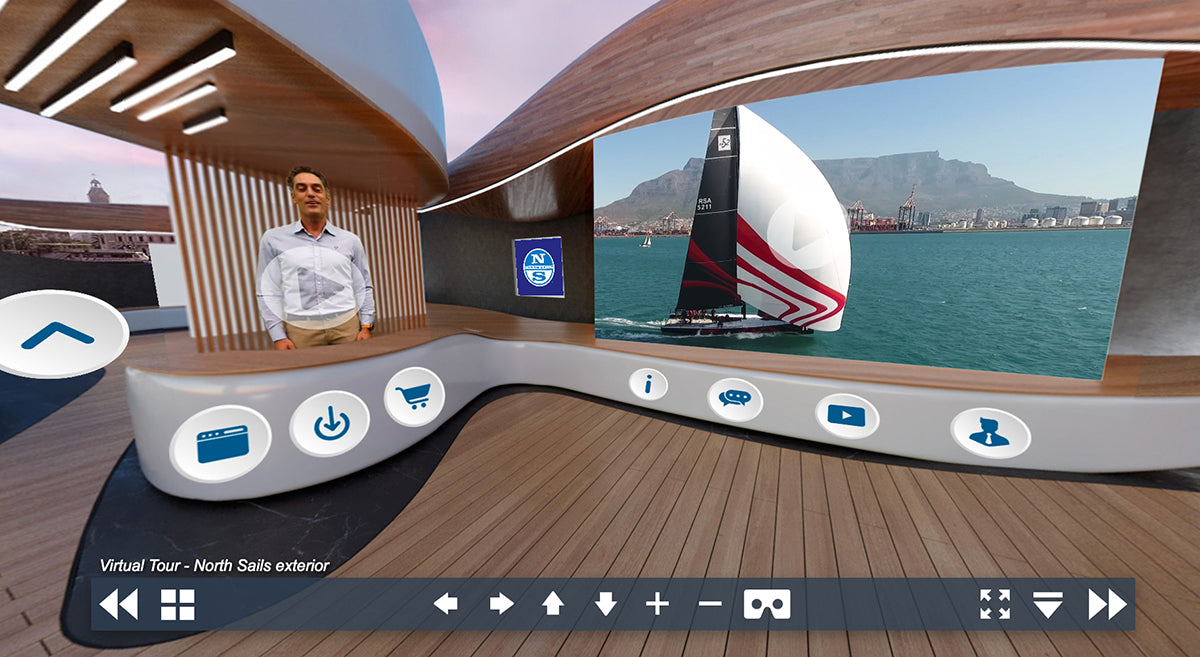
El Valencia Virtual Boat Show inaugura una nueva generación de salones náuticos
North Sails apoyará la iniciativa con su participación. Visítanos en nuestro espectacular stand y déjate guiar por nuestro equipo para descubrir las últimas novedades de la marca, revisar el catálogo de velas, disfrutar de espectaculares presentaciones de producto o incluso contactar con nuestros expertos de North Sails España vía chat o por vídeo conferencia. El stand North Sails en el Valencia Virtual Boat Show está disponible a partir del 28 de octubre aquí.
READ MORE
READ MORE
DOMINIO EN EL MUNDIAL DE SWAN
DOMINIO EN EL MUNDIAL DE SWAN
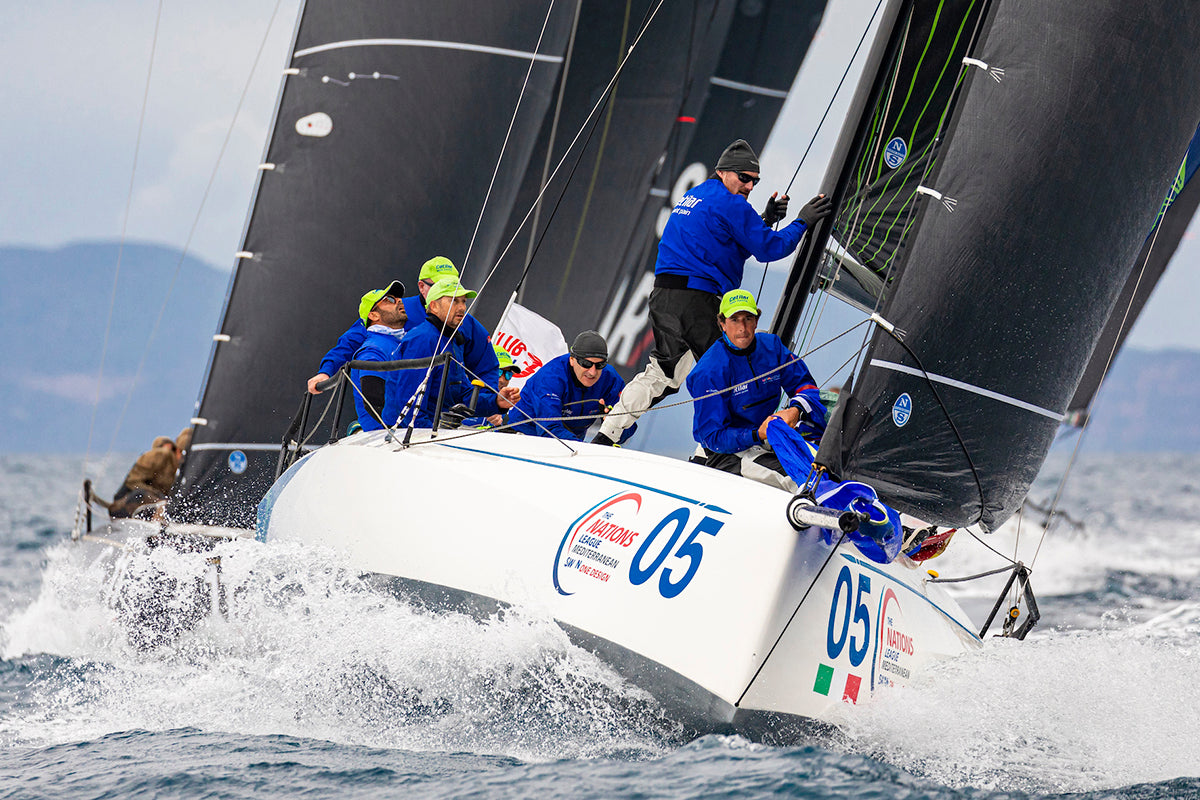
Clientes North Sails dominan el Swan One Design Worlds
© Nautor's Swan / Studio Borlenghi
Las coronas mundiales de clase ClubSwan 50, Swan 45 y ClubSwan 36 se disputaron en aguas de Scarlino entre el 13 y el 17 de octubre. Clientes North Sails ocuparon siete de las nueve plazas de podio, incluyendo las victorias absolutas en clases ClubSwan 36 y Swan 45. Clientes North Sails ocuparon siete de las nueve plazas de podio, incluyendo las victorias absolutas en clases ClubSwan 36 y Swan 45. Desde North Sails España felicitamos al nuevo campeón del mundo de ClubSwan 36, el Cetilar-Vitamina del italiano Andrea Lacorte, al subcampeón Sease y al tercer clasificado, Goddess; al campeón del mundo de Swan 45, el Motions del holandés Lennard van Oeveren, y al subcampeón K-Force; al Niramo del alemán Sonke Meier, subcampeón del mundo de ClubSwan 50, y al Skorpidi, tercer clasificado.
¡Muchas gracias por elegir velas North Sails!
READ MORE
READ MORE
SERVICIO CERTIFICADO NORTH SAILS: CIRUGÍA Y ESTÉTICA PARA VELAS
SERVICIO CERTIFICADO NORTH SAILS
Cirugía y estética para velas
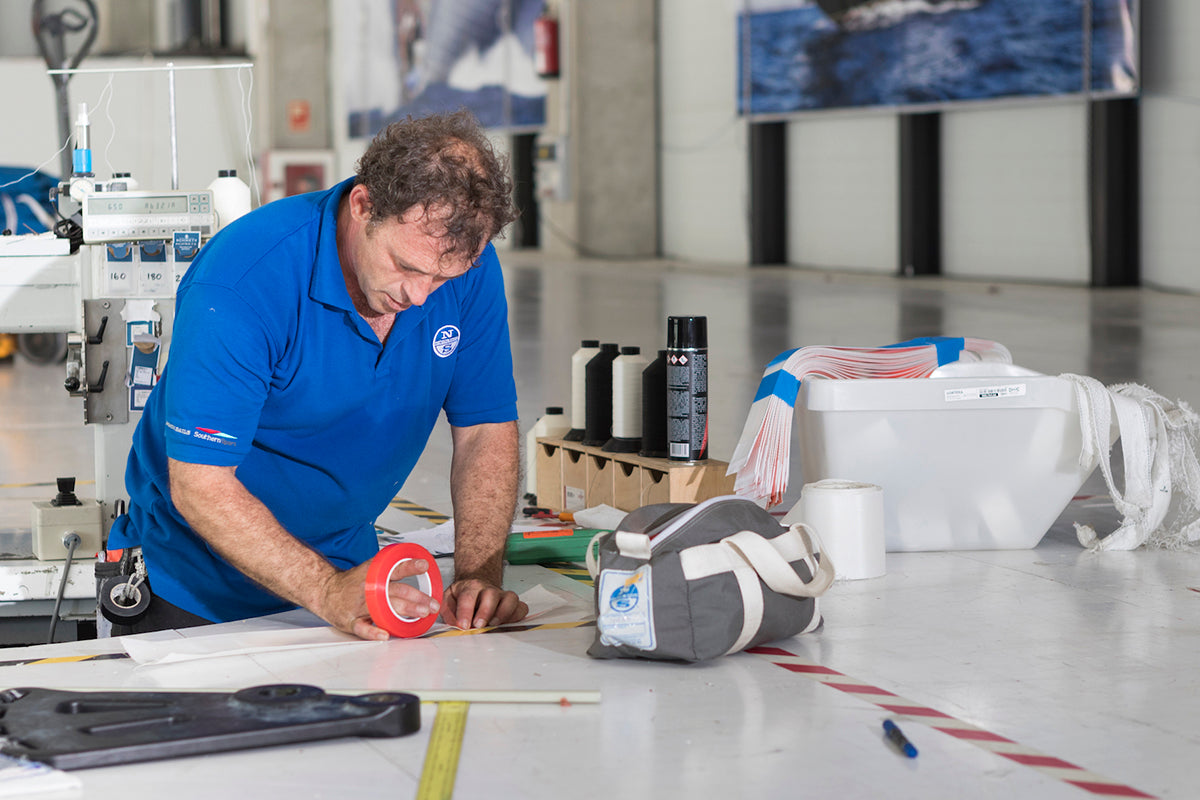
Un correcto mantenimiento de las velas es la mejor forma de prolongar su vida útil, optimizar sus prestaciones y amortizar el desembolso inicial. A través de su Servicio Certificado, North Sails convierte su red de velerías en auténticas clínicas de cirugía y estética en las que se miman velas de cualquier fabricante, con protocolos estandarizados que garantizan la máxima calidad de mantenimiento, cuidado, reparación, modificación y almacenamiento. Las velerías North Sails en Lluchmajor, Palma y Valencia son tres de las 110 instalaciones certificadas de la firma en el mundo.
North Sails lleva más de seis décadas de diseño, producción y comercialización de velas. Fabrica y vende más de 33.000 velas cada año y cubre literalmente todos los segmentos, desde pequeñas embarcaciones de vela ligera hasta colosales superyates o trimaranes de competición oceánica. Pero diseñar, fabricar y vender velas es sólo parte de la habilidad de la firma fundada por Lowell North en 1957. Una red mundial formada por 110 velerías garantiza la satisfacción del cliente con el Servicio Certificado North Sails, un extraordinario servicio postventa de mantenimiento, cuidado, reparación, modificación y almacenamiento de velas.
"Nuestro trabajo no termina con la entrega al cliente de las velas nuevas", explica Luis Martínez Doreste, director comercial de North Sails en España. "Diría que en ese momento comienza la labor de nuestras velerías. El servicio postventa es un elemento crucial para garantizar la satisfacción y fidelidad del cliente, y el Servicio Certificado North Sails es nuestra mejor herramienta para conseguirlo". Y es que las velas requieren un mantenimiento mínimo para su correcto funcionamiento. Varios son los factores que aceleran su deterioro, como la exposición solar, el contacto con el mástil, jarcia y backstay, la unión entre punteras de sables con la vela o la humedad. La buena noticia es que esos daños pueden revertirse: sólo se necesitan manos expertas.
En España, tres velerías ofrecen el Servicio Certificado North Sails: Lluchmajor, Palma y Valencia. Las delegaciones de Málaga y Barcelona realizan labores de apoyo y gestión.
"Los servicios más solicitados, además de la completa revisión de las velas, son el de cambio de bandas solares y el de lavado", explica Marc Patiño desde North Sails Palma. La aplicación de productos especiales para eliminar elementos indeseados como moho, restos de salitre o manchas persistentes, no sólo mejora el aspecto de las velas, sino que facilita la posterior inspección para detectar incidencias existentes o anticipar problemas. Tras la limpieza, los veleros inician el estricto protocolo de Inspección de Diez Puntos con el que se revisa cada elemento de la vela para garantizar que nada se pasa por alto. El Servicio Certificado North Sails está disponible para velas de todas las marcas, tamaños y materiales.
"Un servicio muy valorado por nuestros clientes, especialmente por los de los veleros de mayor eslora, es el de desmontaje y transporte de las velas a nuestras instalaciones, donde las desplegamos y revisamos delante del responsable del barco. Vamos haciendo fotos con un iPad e intercambiando información con el cliente, sugerimos dónde recomendamos actuar, confeccionamos un reporte completo de las velas y se lo remitimos junto al presupuesto. Él decidirá qué se hace y qué no. Esta relación directa y en directo refuerza la confianza del cliente". Una veintena de expertos trabajan en North Sails Palma, la mayor velería del mundo especializada en superyates.
"La situación tan extraordinaria que vivimos este año ha modificado los hábitos de nuestros clientes", explica Andrea Marengo desde North Sails Valencia. "La ausencia de regatas ha reducido el número de servicios para barcos de competición, pero, or otro lado, familias que llevaban años sin usar sus barcos han aprovechado para hacer una vacaciones más seguras al aire libre. Así que hemos hecho más trabajos como reparar velas y sustituir protecciones solares. Hemos visto un incremento en el servicio a velas usadas de barcos en el rango de 35 a 50 pies".
Servicio a domicilio
La logística asociada al transporte de velas puede resultar complicada, especialmente cuando hablamos de grandes esloras. North Sails ofrece una solución muy valorada por el cliente: "Estamos disponibles para descargar las velas del barco, recogerlas en la marina con nuestro camión grúa y volver a montarlas una vez completado el servicio", explica Andrea. La estandarización del Servicio Certificado North Sails garantiza la aplicación de los mismos protocolos y la misma calidad en todas las velerías. "Chequeamos las velas, hacemos el informe con fotos, lo enviamos al cliente, realizamos los trabajos acordados y organizamos el envío de regreso al barco o las almacenamos hasta que el cliente las necesite". El servicio de almacenamiento en las velerías North Sails ofrece un entorno perfecto para preservar la integridad de las velas, alejadas de factores que puedan degradarlas, como la humedad, el sol, productos agresivos o la presión de elementos pesados. La velería de Valencia tiene capacidad para almacenar cerca de 400 velas; la de Palma, más de 2.000.
La vacuna
Los expertos de North Sails recomiendan la prevención como mejor medicina para prolongar la vida de las velas, evitar su deterioro y anticipar posibles problemas. Mantenerlas secas y protegidas del sol, revisar las bandas solares, desenrollarlas con frecuencia cuando no se usan, endulzarlas generosamente al término de una jornada de navegación y chequearlas constantemente son los ingredientes básicos de la vacuna que evita la mayoría de las enfermedades de las velas. "Yo insisto mucho a los clientes que hagan fotos y vídeos para poder ayudarnos a entender los problemas y roturas", concluye Andrea Marengo.
Más información sobre cómo preparar las velas para el invernaje, en este artículo.
READ MORE
READ MORE
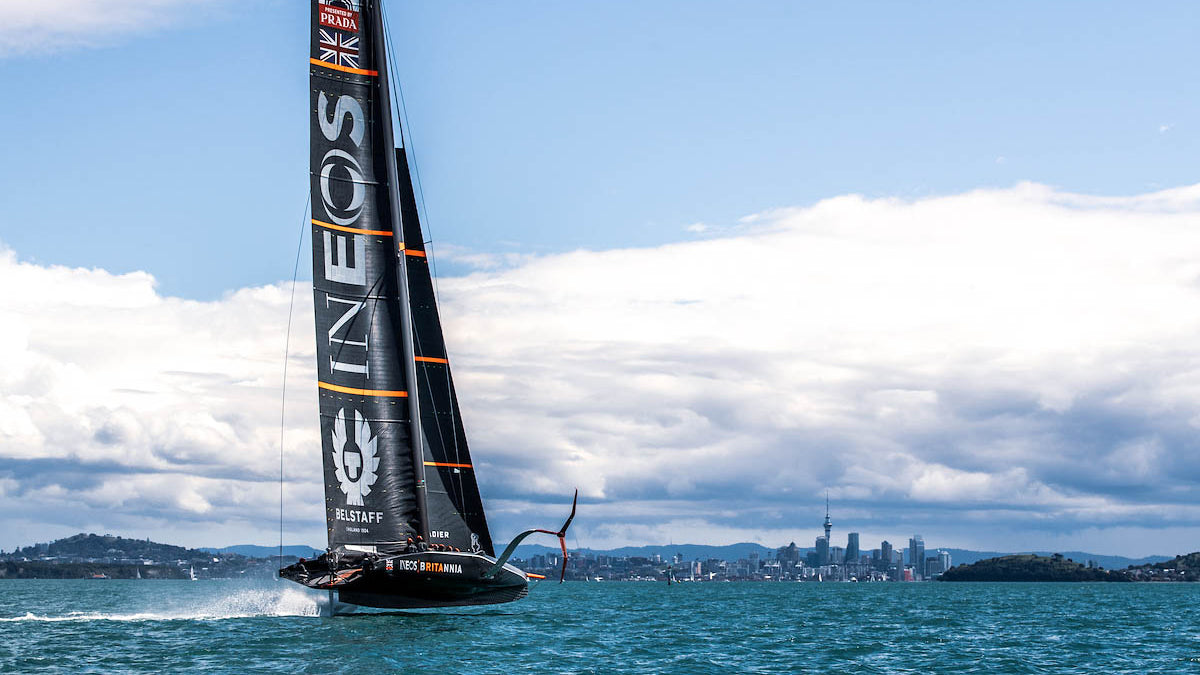
#FIRSTSAILFEELING: INEOS TEAM UK
Gautier Sergent is a behind the scenes force within the North Sails family and the name attached to many of our sport’s most influential projects. He is our Head of R&D and is often a skipper’s first call for bouncing (what seems like insurmountable) ideas around until they together find a way for them to become a reality.
READ MORE
READ MORE

VENDÉE GLOBE 2020 VIDEO SERIES: EPISODE 4
THE SOLO EXPERIENCE
On Your Own but Not Alone
Singlehanded ocean racing is demanding and not for the faint of heart. It is a profession that requires a certain state of mind and a great ability to adapt. “It may not sound like much but being alone changes your state of mind,” says Clarisse Crémer, who is taking part in her first Vendée Globe. In addition to taking on all the roles on board and managing your mind, stress, sleep and the unexpected, you also have to accept that you are not always at 100%,” admits Kevin Escoffier, who is embarking on his first solo circumnavigation after many years as an ocean racing crew member. “If the wind is different from what is expected, you have to deal with it and choose sleep over perfection for a few hours.”
Today, ocean racing has become much more competitive than it was in the early days of the regattas. Modern boats are equipped with an impressive technological arsenal that almost forces skippers to hide inside their boat and think about their strategy all the time.
In this fourth episode, Loïck Peyron looks back at the history of sailors venturing onto the sea. This week’s special guests include Escoffier, Jean Le Cam, and Vendée Globe rookie Clarisse Crémer, who will soon be departing for the solo, non-stop, and without assistance competitive journey around the world.
READ MORE
READ MORE
PIC COASTAL CLASSIC
2020 PIC COASTAL CLASSIC
A Race To Remember
Just after the start, the fleet heads out of Davonport. 📸 Lissa Photography
The 119 mile PIC Coastal Classic is an event many New Zealanders look forward to each year. With a start off Devonport Wharf and a finish at Russell Wharf, the course includes several memorable landmarks. With the typical strong southwesterly breeze, boats expect to finish around dusk. But this year, as dusk approached, not one team was anywhere close to the finish line, and the wind continued to decrease. Ocean Race 65 NZ Ocean Racing, the line honours winners, didn’t cross the finish line until early the next morning. Of the 170 teams that started, only 20 eventually made it to the finish line. Most dropped out at Cape Brett, knowing that the usual 20 mile final sprint up the coast—avoiding rocks, islands, and competition—was not to be this year.
North Sails expert Bianca Cook was onboard NZ Ocean Racing. “The PIC Coastal Classic was the first race for the boat since the end of the 2017/18 Volvo Ocean Race, and the first race for New Zealand Ocean Racing,” she said after the race. “Not quite the conditions everyone gets excited about, but we were extremely happy with the crew’s attitude. Our masthead code zero ended up being the sail for the race with a brief change to the J0 before Sail Rock, when the breeze picked up to 14 knots. We chose to sail outside Cape Brett, and was a park up… I had flashbacks to the doldrums, but the team kept patient and the breeze picked up enough to push us around the Brett. We managed to finish at 03:49am, the first monohull to win since 2009. We are extremely happy with the results: First boat to finish, first on handicap, and claiming the North Sails Trophy for First overall on PHRF Handicap.”
Prepping for the code zero onboard Bianca Cook’s NZ Ocean Racing 📸 Georgia Schofield
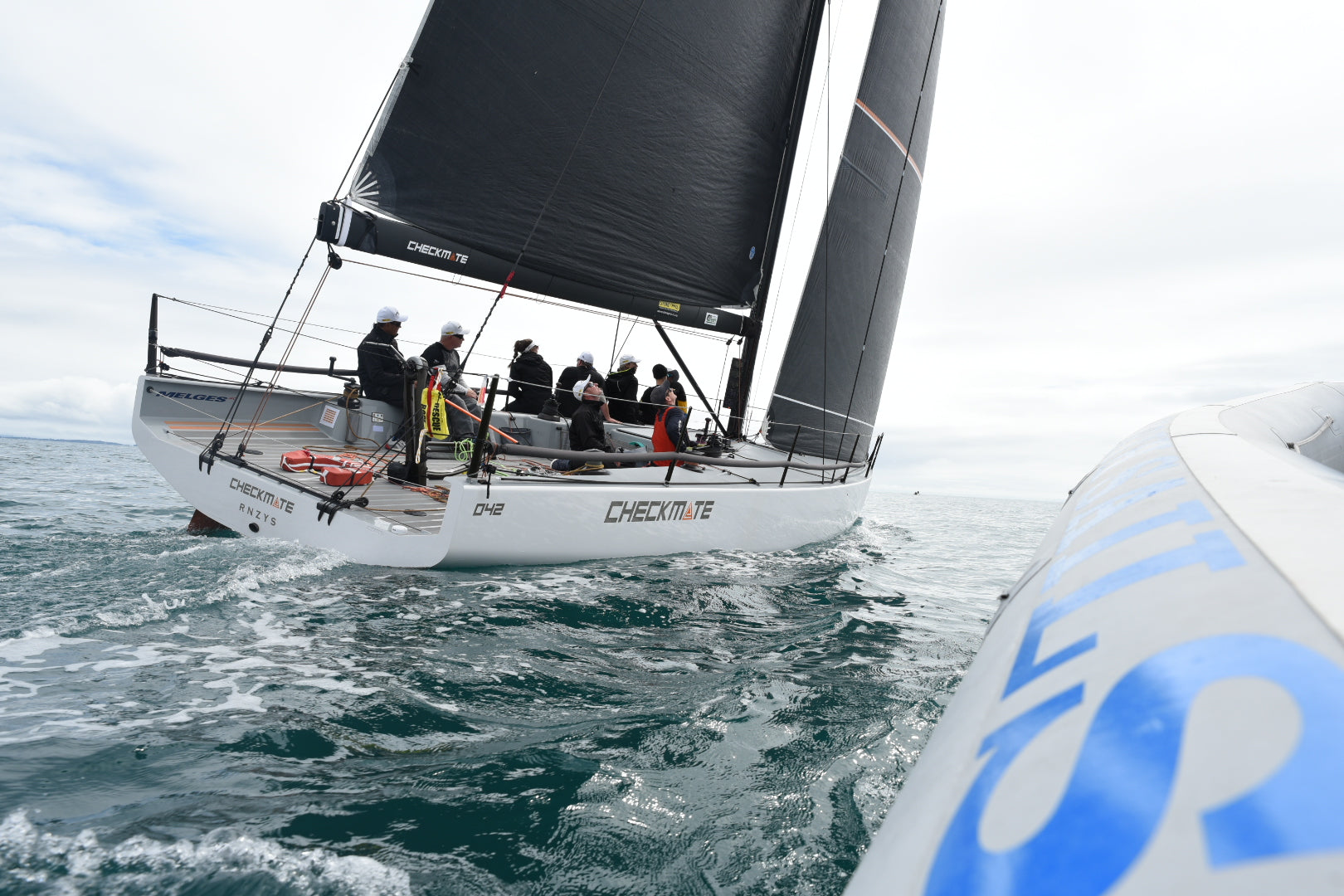
North Sails expert Andrew Wills was onboard the Melges 40 Checkmate. “This year’s Coastal Classic was unlike any other over the last 15 years. The traditional strong southwesterly breeze that would push you up the coast was replaced with a light northerly, which made for a long, slow upwind. The start of the race had a lot of tactical decisions and opportunity. As the day wore on, it was more of a long starboard tack. At times we were slightly cracked sheets and making good speed towards the finish line in Russell. But as night fell, the breeze died to pretty much nothing. The boats out further to sea seemed to do better, but still had to make the tricky transition into the bay towards the finish.”
“It was the first Coastal Classic for Melges 40s in New Zealand,” Wills explains. “I was lucky enough to sail as tactician for the RNZYS commodore, Aaron Young, and crew morale remained high despite the lack of wind. I was stoked to have been one of the few finishers in a real test of perseverance. Next year I am hoping for the traditional southwest blast up the coast!”
📸 Lissa Photography
North Sails expert and designer Magnus Doole was onboard the Ker 40 Icebreaker. “We knew it was going to be a challenging day of gear changes with the opportunity to define the race once the sun began to set behind Whangarei Heads.” Despite overtaking and extending their sistership, Icebreaker stopped in the “parking lot at Cape Brett” early Saturday morning. “We made the difficult decision to retire given the forecast and non-sailing commitments for some of the crew; one consolation was to be the first boat in our division to get to dry land! Nevertheless, a fantastic race with a great group of people and plenty of stories to tell afterwards.”
North expert Richard Bicknell sailed on V5, an old TP52 with a canting keel, which also got stuck at Cape Brett and retired. “We had a great start and were really happy with the way we had the boat going on only our second sail. We’re looking forward to our next race.”
📸 Lissa Photography
On Cation, a Roger Hill 18.5, North expert Matt Steven was thankful for his talented crew. Cation finished second in the multihull division. Matt commented, “We were lucky to have some of NZ’s top sailing talent including Murray Jones on tactics, and Owen Rutter who did an excellent job at the helm. We couldn’t have started the race much worse after a small 8.5 catamaran pinched us off at the boat-end, forcing us into a full circle and starting three minutes late! However, with our masthead J0, we powered back into the pack of other 55 to 65ft performance multihulls. Thanks to our self appointed chefs on board, Roger Hill and Simon Gundry, we were well fed going into the night with a full cooked meal served with silverware.
As Cation went into the night, their large tacking angles helped them establish decent speed. “There was more breeze offshore,” said Matt, “so we kept heading out to eventually overtake the whole fleet coming into Cape Brett, except for the Bianca and NZ Ocean Racing. As the Sun started to rise, we sailed into Russell with a jubilant crew– happy we made it. This was by far the longest Coastal Classic I have done, but also the best result!”
Congratulations to all competitors who finished the race, especially to NZ Ocean Racing for an outstanding debut! For more info about their sail choices, contact your local North Sails loft.
Contact Auckland Contact Bay of Islands
📸 Georgia Schofield
📸 Lissa Photography
📸 Lissa Photography
📸 Lissa Photography
📸 Georgia Schofield
📸 Lissa Photography
📸 Lissa Photography
READ MORE
READ MORE

#NSVICTORYLIST: ROLEX MIDDLE SEA RACE
FAMILY FIRST THE AT 41ST MIDDLE SEA RACE
North Sails Powers a Clean Sweep of 2020 Race Scoreboard
📸 Rolex / Kurt Arrigo
In the year of Covid, the Rolex Middle Sea Race was a much-anticipated event before many participants tucked their boats away for the season. At the end of the 606 miles, Elusive 2, a Beneteau First 45, claimed overall honors, corrected time for the 2020 race. Their victory is memorable because this is the second consecutive win for the team, co-skippered by Maltese siblings Maya, Christoph, and Aaron Podesta. Elusive 2’s back-to-back success is the first since Nita IV, who won three races between 1978 and 1980.
“It is a huge achievement to have won this race in back to back years,” remarked Christoph. “It is really hard to win the race at the best of times, so winning it twice in a row is massive and something we are all going to be very proud of for a long time to come. We are sailing with our family boat with a family team, and I am struggling to find words to describe the feeling!”
Rolex / Kurt Arrigo
Multi70 Maserati and VO70 I Love Poland took multi, and monohull line honors, respectively. Maserati reached the finished line under the stars in 2 days, 08 hours, 31 minutes, 31 seconds, 15 minutes ahead of their closest competition. Meanwhile, I Love Poland took home the RLR Line Honours Trophy after a match race duel to the finish line with Zbigniew Gutkowski’s E1, formerly Abu Dhabi Ocean Racing, which won the Volvo Ocean Race 2014-15.
“We are very happy,” commented I Love Poland’s skipper Grzegorz Baranowski. “It was tough from the beginning, with a lot of tacks at the end. Our boat is a special government program for young sailors to learn offshore sailing. For them, this has been a perfect experience. They now know you have to fight to the end. They will remember this forever.”
North Sails celebrates the numerous victories picked up by our clients across the six classes. And a special round of applause for the Rolex Middle Sea Race organizers who, despite challenging circumstances, made it possible for 50 teams representing 14 countries to go sailing.
📸 Rolex / Carlo Borlenghi
📸 Rolex / Carlo Borlenghi
READ MORE
READ MORE
LET'S TALK E SCOW | UPWIND TUNING WITH JEFF BONANNI
LET’S TALK E SCOW
Upwing Tuning & Sail Trim with Jeff Bonanni
Informative webinar featuring E Scow expert Jeff Bonanni, multi-class World Champion Eric Doyle, and our one-design expert Allan Terhune. This webinar focus on upwind tips to make the E Scow fast in different conditions. Jeff, Allan and Eric share their thoughts as they review photos and a video taken during a training session. Very interesting and informative for those looking on improving performance.
The E Scow class is one of the best Scow classes, and boats powered by North Sails have dominated the past fine National Championships.
The North Scow designs are the exact same design that you have been winning with, that you know and you want.
The proven Scow designs are only available from North Sails.
Shop E Scow North E Scow Victory List E Scow Experts
READ MORE
READ MORE
NEW SAILS FOR ISLAND PACKET AD ASTRA
NEW SAILS FOR ISLAND PACKET AD ASTRA
Tom Fortner Embraces the Cruising Lifestyle With 3Di OCEAN 330
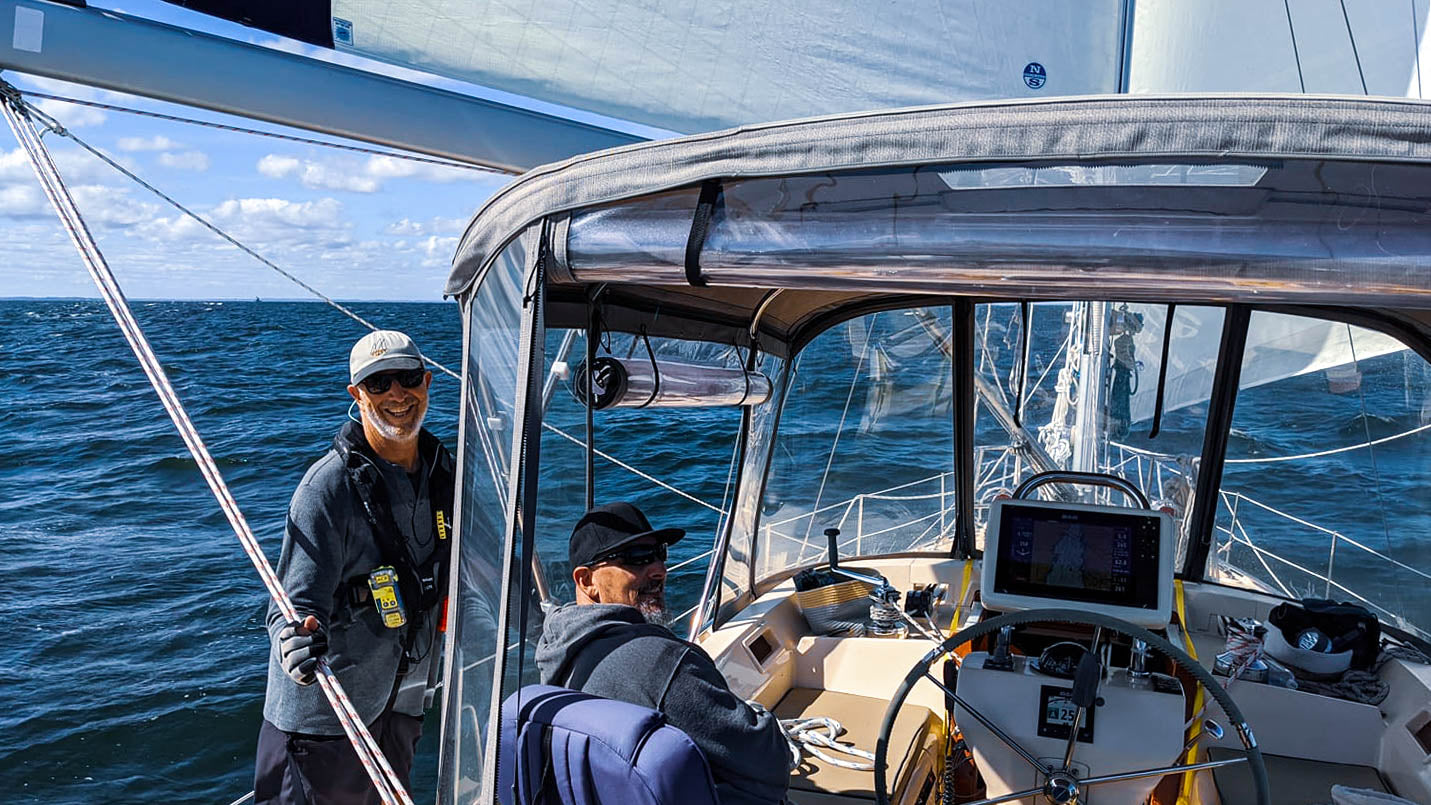
Tom Fortner lived most of his life in Prescott, Arizona, but set his sights on moving to Florida to buy a boat and begin his next life adventure. He took ownership of the Island Packet 45, Ad Astra, in January and has been sailing as much as possible since then. “I’ve always wanted to get a boat and learn how to sail so I can cruise around,” said Tom. Now he’s cruising up and down the United States’ east coast.
Though he has been sailing for ten years, Tom still considered himself a novice. That all changed when he acquired Ad Astra; he’s been sailing more than ever, almost non-stop. “I got my bareboat and ASA certifications to be better prepared. I don’t race, so I have also never learned how to trim sails properly. The times I did spend sailing, I likely wasn’t trimming properly and never had my telltales flying right.
Ad Astra is currently outfitted with a new inventory of a 3Di OCEAN mainsail and genoa. Tom worked with Ft Lauderdale based cruising expert Bob Meagher. “When I got my new sails and trimmed them in, I was amazed by how perfectly they looked,” he remarked. “The telltales were flowing in the right direction naturally on both sides, and the sails noticeably had a great shape. Once North Sails delivered my mainsail in St. Augustine, FL, I was ready to head North.”
Ad Astra’s Journey North: Florida to Maine, Summer 2020
Tom began his east coast adventure in Dayton Beach, FL, headed North towards Charleston, SC. There, he met with sail expert John Bowden to have his new 3Di OCEAN genoa installed. “It was perfect,” Tom said. “The North team in Charleston also helped me with my gennaker sail bag that needed some new stitching.” From there, Ad Astra’s trip up North had officially begun.
The next stop was Beaufort, NC, then on to round Cape Hatteras. “Fortunately, we had decent weather to Norfolk, VA, and it was smooth sailing up and around the cape,” Tom reported. After a few days, Tom departed and headed up the coast, making little stops and checking off locations on his bucket list. Passing by Hampton, VA, Ad Astra took a pit stop in Annapolis, MD, for a few days before continuing North. Tom stopped in Newport and Block Island in RI, and Cuttyhunk, MA, eventually sailing to Maine.
A ripped gennaker on the way to Maine required a call to the North Sails loft in South Freeport. “I had ripped my gennaker on the spreader, which I now call the ‘shredder.’ Sail expert Eric Baldwin and team couldn’t have done a better job making sure I got back on track. They quickly fixed my sail and returned to me on the boat within a couple of hours.”
“I got live Maine lobsters straight from the boat for the price of a hot dog. It doesn’t get better!”
In Maine, Tom took in all the sights, cruising around Pulpit Harbor and Seal Bay. He spotted a lobster fisherman and snagged a few bugs for dinner, where he and some friends cooked on the beach that night. “For my first trip to Maine, it was spectacular,” he said. “The fact that I sailed from Florida made it even more satisfying!”
Reaching his Northern limits, Tom and Ad Astra turned south, first stopping in Boston, MA. Tom picked up his son-in-law for the trip down to Long Island, NY from Massachusetts. Sailing into New York harbor for the first time under the shadow of the Statue of Liberty is a moment Tom won’t soon forget.
Tom in New York Harbor visiting Lady Liberty for the first time on a sailboat.
Working his way back south, he returned to Annapolis, MD to spend a couple of weeks before heading back to Florida.
What’s next on the bucket list? Tom commented, “I am thinking about venturing to the Bahamas at some point. Maybe attempting a circumnavigation. I’m getting to an age where I’ll miss my opportunity if I don’t do it now. A big sailing trip is something I’ve wanted to experience for quite some time. I am so glad I’ve taken the leap to check off an experience I’ve wanted to do my whole life.”
East Coast Support + Service with North Sails
“What I enjoyed most was being able to work with the different lofts all along the east coast, no matter where I was. North Sails has a great network with easy access for a transient sailor.” This trip was his first time Tom had ever sailed offshore overnight for an extended amount of time. For someone new to cruising, Tom was impressed with the North Sails support; both close to home and during his trip. He commented, “It’s nice to know that I can travel around and get the same service and expertise no matter where I land.”
Why 3Di? “I chose North Sails 3Di because I knew they would last,” said Tom. “I can’t do this forever, but I am confident these sails will last the entire time I own this boat. It was a choice I made that I know I won’t regret.”
READ MORE
READ MORE
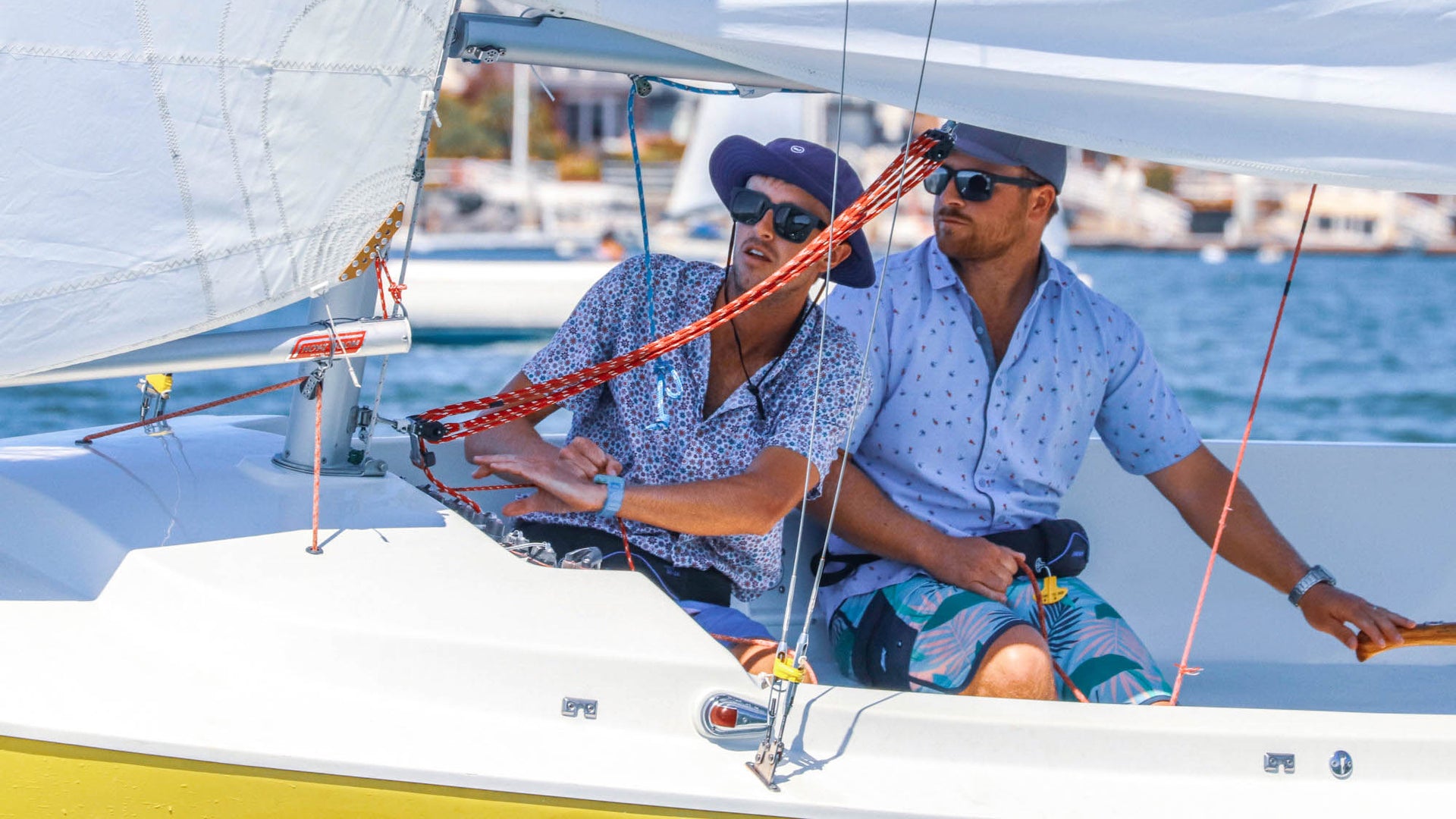
IN DEPTH LOOK AT YOUNG POWERHOUSE ALEX CURTISS
IN DEPTH LOOK AT YOUNG POWERHOUSE ALEX CURTISS
His Top Tips & Tricks For Sailing
A self-described “one design guy,” Alex Curtiss grew up in Chicago sailing Optis, 420s, and Lasers, as well as other one design and PHRF boats. In 2016, he graduated from St. Mary’s with an economics degree and two All-American awards, and moved to California to work as a sailmaker. He also sailed Etchells, J/70s, and TP52s; recent victories include the Etchells North Americans (as part of Scott Kaufman’s team) and the Prince of Wales U.S. Match Racing Championship.
Asked to name his favorite boat, Alex laughs. “Honestly, if bathtubs were racing each other and they were all similar, I’d be happy to go race bathtubs. I wouldn’t say that I have one particular class that is better than the rest. I just love the game.”
Although he helms when team racing dinghies, Alex really enjoys crewing. “I feel like I can help the team more if I’m organizing and coordinating the crew. It is a little bit more fun and a little bit more of a challenge, just because there’s more moving parts.”
When not sailing, Alex loves to surf and play golf. Looking ahead, he’s excited to be part of North Sails. “There’s so much tradition, with great roots here in southern California. Building on everything that the team has already created, and being part of a winning and successful culture—that is what I’m most excited about. North has always been well known for its one design sails, and now I’m part of a rich history
Tell us about Champions of Champions. How does it feel to take first place honors as a representative of the Lehman 12 class?
The CofC’s this year were literally in my backyard which was something cool to be apart of. Our local Lehman 12 class is definitely on the map now. It had been quite a while since our class was nationally recognized. We are very proud of that. It was also very cool to share the experience and crew for my best bro Jake LaDow. He and I do a lot of sailing together in a wide variety of different classes and disciplines. It just felt like another weekend hanging out.
What are your top 3 tips for someone just getting involved in the class?
Get comfortable with starting in close quarters. This is applicable to Harbor 20’s especially. Traditional starting techniques can often lead to not so ideal starts. Understanding what your time and distance is will help you and your crew know when to set up, then knowing how long it takes to accelerate, and then starting at full speed at go. These three things are super important to getting a jump on the guys around you.
Be scared of going slow. Never let your boat get to pinchy, I call it “keeping the rope on”, but try and be full speed all of the time.
Understand what the longer breeze phase is. Especially in SoCal, its all about the phase of the breeze. Whether you are sailing sabots, J70’s, or TP 52’s. This is an important part of scoring well in every race.
How did you get involved in sailing, especially One Design sailing?
I got involved with One Design sailing at a very early age. I grew up sailing Optimist’, Club 420’s and lasers. I was lucky to have very supportive parents and siblings who pushed me to do as much racing as I possibly could. My dad had several Offshore OD boats growing up too. My first job was the backstay adjuster. I had to pump the backstay around leeward marks, and let it off at the weather mark. Often times my brother in law was the tactician, he taught me a lot about basic tactics and was very patient with me when I asked dumb questions.
What keeps you coming back, even after a bad day on the water?
I would say just the curiosity I have with sailing keeps me coming back. There are so many variables in any boat you get in on at a given time. Everytime that I think I am a little burnt out, I go for a harbor cruise here in Newport Beach, have a few beers with friends and it makes me realize just how much I love the sport of sailing, and why I do what I do.
What stands out in your mind as the biggest learning curve in sailing?
Just staying open minded. Especially working in the industry, it is easy to get complacent with what you are comfortable with. I really rely and question my mentors, recently Eric Doyle, to help just expand my general knowledge of the sport. I sail in so many different boats and in different disciplines, its just really important to keep pushing myself to learn more, ask questions, and then try and apply them to my sailing.
Looking ahead, how does one prepare for offshore races, such as the Transpac?
Preparation has so many different aspects to it. The first thing people need to do is to make sure their boats and sails are structurally sound. I would encourage anyone who is considering the Transpac to consult their local sailmaker and boat builder. Last go around, there were several people who had their rudder posts crack or break entirely. That would be where I would start. From there making sure you have the right crew. Remember you are spending anywhere from 7-12 days on a boat with these people. You need to trust them and probably get a long with these people. Finally, go spend some time offshore, and get some experience doing sail changes, watch systems, and make sure all of the sails look good and are ready for serious use.
READ MORE
READ MORE
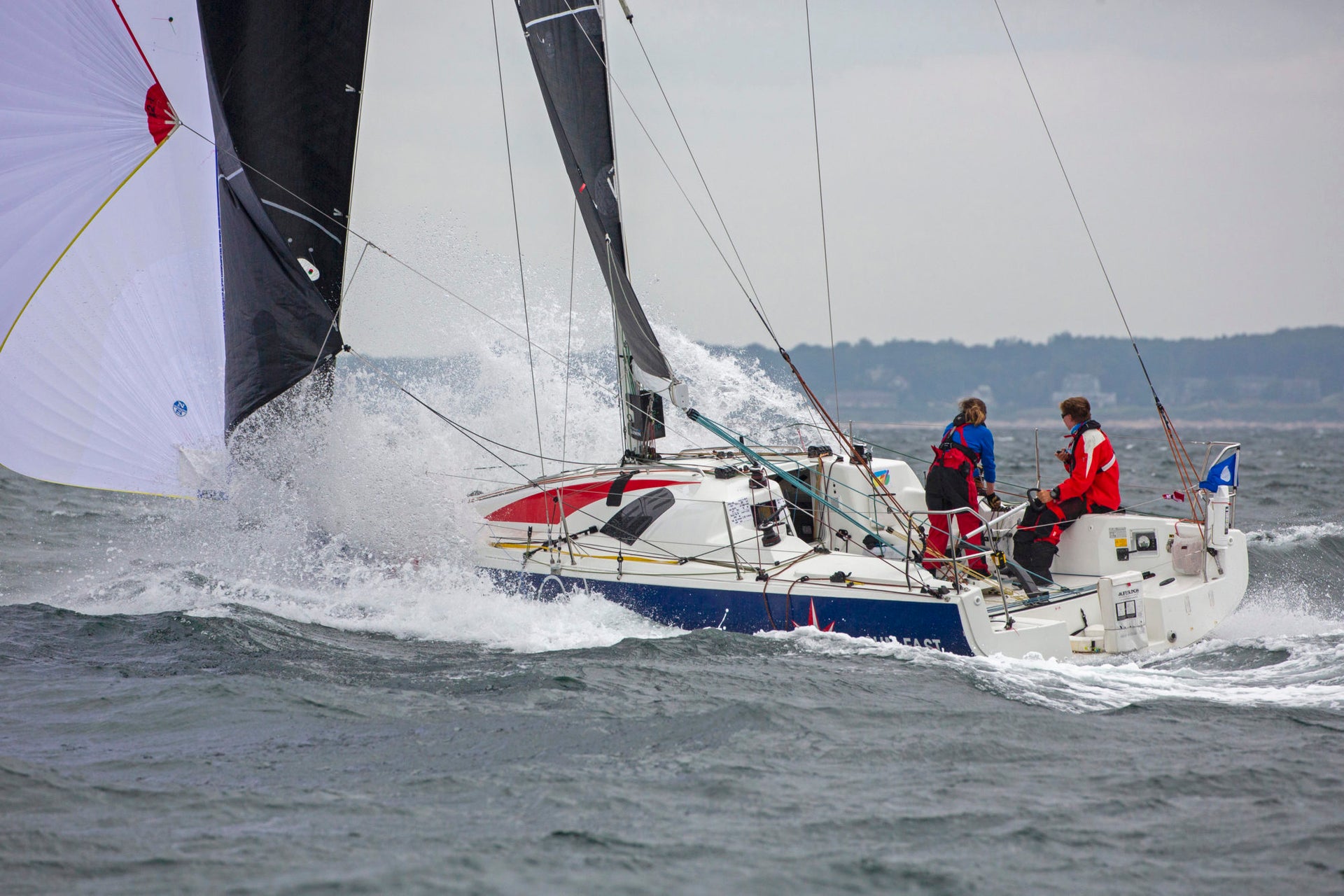
OFFSHOREDOUBLES.ORG LAUNCHES MEMBERSHIP DRIVE
JOIN THE COMMUNITY OF ENTHUSIASTS AT OFFSHOREDOUBLES.ORG
Calling All Sailors to Action in Advance of the World Sailing Annual Conference to Determine if the Offshore Mixed Doubles Event Will Continue to be Included in the Paris 2024 Olympic Games
The Offshore Doubles Sailing Association has launched its membership drive in advance of the World Sailing Annual Conference. A non-profit sailing association, Offshore Doubles is committed to strengthening the community of sailors, events, and boat classes who are in the fastest-growing sector of the sport.
In one week since launching the campaign, OFFSHORESHOREDOUBLES.ORG has signed up more than 600 members from 52 countries, with women sailors making up 16% of the base. The group hopes to reach a substantial membership list in efforts to keep the Olympic Offshore Mixed Doubles on the slate for Paris 2024.
There are more than 5,000 boats racing doublehanded under rating rules and many strong one design fleets around the world and the inclusion of doublehanded trophies in most major events around the world, it was time to bring the community closer together to accelerate learning and growth and help sailors get into this exciting discipline,” said Larry Rosenfeld, founding President of Offshore Doubles.
Ken Read, a world-renown, multi-discipline sailor and the President of North Sails is one of the many sailors who are actively participating in the doublehanded discipline. Read campaigned Alchemist, a Jeanneau Sunfast 3300 throughout 2020. He sailed in four events, two with Suzy Leech and two with brother Brad Read. The Alchemist team won on handicap in all four doublehanded races entered, including taking line honors in the New England Solo/Twin.
“My doublehanded experience kicked off in January 2020, not long before we knew that socially distanced, short-handed sailing would be so popular this summer,” commented Read. “Luckily, talented crew and world-class competition are never hard to find in Newport, Rhode Island. A summer of sailing Alchemist was the most fun I’ve had sailing in a long time, and doublehanded has been a way to re-energize and rediscover my love of the sport.”
The group is calling all sailors into action in advance of the World Sailing Annual Conference next week which will determine if the Offshore Mixed Doubles Event will continue to be included in the Paris 2024 Olympic Games. NOW is the time to show the global sailing community and the International Olympic Committee that Doublehanded sailing has broad global support. DOUBLEHANDED ENTHUSIASTS ARE INVITED TO JOIN TODAY (at no charge) at www.offshoredoubles.org
READ MORE
READ MORE

VENDÉE GLOBE 2020 VIDEO SERIES: EPISODE 3
THE SPIRIT OF ADVENTURE
Vendée Globe 2020 – Episode 3
In search of a challenge, a record, or an adrenaline rush, the sailors participating in the Vendée Globe are constantly testing their boundaries and pushing their equipment in an attempt to rack up a few miles, hours, days. From them, the open ocean beckons with the taste of adventure and a fascination for the unknown.
“What’s interesting is what you don’t know,” says 61-year old Jean Le Cam, who is taking part in the Vendée Globe for the fifth time. “You are constantly questioning yourself to avoid getting bored.”
More than a race, the Vendée Globe is the ultimate adventure. The skippers hunger to get out of their comfort zone and exceed their limits, and it is their story that fascinates the spectators. This race is one of the rare sporting events where completing the single-handed non-stop round the world race is seen as a remarkable accomplishment in and of itself.
Join our Vendée Globe 2020 narrator Loïck Peyron as he uncovers why the race, even for veterans like Le Cam, is a once in a lifetime adventure.
READ MORE
READ MORE

FINDING THE FIGARO FORMULA
FINDING THE FIGARO FORMULA
Setting the Pace for Irish Offshore Sailors
Kenneth Rumball has been sailing since he was a toddler with his parents, making a name for himself in dinghies and then adding a number of impressive offshore miles to his resume. With fewer opportunities in Ireland to make full-time career professional sailing, he went the academic route and studied accounting, only to be pulled back into the sailing industry. Rumball took on the Irish National Sailing School’s ownership and running, using his own experiences to inspire youth sailors in Ireland to pursue the sport and even invite them to race with him.
Rumball is a bundle of energy and enthusiasm, and a leader for Ireland in sailing, so it was no surprise that when the Olympics added a double-handed offshore event, he would take that challenge on too, teaming up with co-skipper Pamela Lee in the Figaro class, and enlisting the help of North Sails Expert Nigel Young and his loft team. Rumball and Lee learned some sailmaking skills with the North Sails team to prepare them for any surprises offshore better.
“We’ve got the standard Figaro 3 setup, a full mainsail, a big spinnaker, a small spinnaker, a Code Zero, and a J3,” Says Pam. “When we returned from France, we got the sails off the boat and took them to the North loft, and we got a full sail check and any repairs that needed to be done. North Sails Shane Hughes at the Wicklow loft talked us through everything he had done and showed us what to look for, what to be worried about, and prepped us with a sail repair kit that we hopefully will not have to use. Having everything checked over gives us the confidence to push the boat to maximum performance.”
Rumball describes pulling the sails out of the bag for the first time, “they fit, and they worked. With our training schedule, I didn’t want to buy sails and then go back and ask for things to be changed. I wanted sails that worked would be fast and long-lasting. Nigel Young was my first call to make that happen.”
Together, with the North Team in Ireland and France, RL Sailing was able to get their full 3Di set-up dialed in and tuned. “The product support has been just fantastic,” says Rumball.
With events canceled across the globe, including the double-handed worlds in Malta, Rumball used the Solitaire Du Figaro as the jumping-off point for his training schedule in the Figaro.
“We’ve been charging forward on the Figaro, so we looked to the Solitaire, and I decided to give it a go. The Solitaire is an incredibly tough race,” says Rumball. “We were not as planned as we could have been, but Pam was there shoreside to support me. It was a great training experience.”
The team has been based in France for most of the summer for the Solitaire and Spi Ouest, eager to train against the French teams that will be their competition in 2024. They’ve delivered the boat back to Ireland for the fall, where Pamela teamed up with Catherine Hunt for the ‘Round Ireland record, setting a benchmark for female sailors while getting more time in the Figaro.
“When they announced the Paris 2024 Olympics would have a mixed crew double-handed offshore event, many avenues in the sport opened up for female sailors to gain experience offshore because suddenly, people need offshore female training partners, and that’s how I started sailing with Kenny for Ireland,” says Pam.
These offshore experiences are an integral part of their training regime; double-handed sailing requires a different approach focused on endurance, managing multiple roles on the boat on your own, and having excellent self-discipline. Lee and Rumball are looking for every opportunity possible to test their offshore stamina, despite the pandemic’s challenges.
“The reason we also chose the Figaro circuit is because the French are the best short-handed offshore sailors in the world.” Attests Rumball, “If you wanted to compete in an event like Paris 2024, and represent your country, you’ve got to race against the best people in the world, and that is the French.”
The team is serious about their fitness and has been exploring different ways to train up. Encouraged by Lee, who is already a seasoned kiter, Rumball has taken up kiteboarding as a full-body cross-training workout. They also bike, practice yoga, lift, and run. They are also augmenting their freeze-dried meals with fresh foods pre-packaged to last for a few days at sea, although Rumball still loves porridge in the jet boil.
The pair plans their calendar for next year and hopes to compete in all the French Figaro events they possibly can, making a name for their country in the latest Olympic discipline.
READ MORE
READ MORE
VINTERTIPS: MODIFIERA DINA SEGEL!
VINTERTIPS: MODIFIERA DINA SEGEL!
Seglingssäsongen är slut och våren känns kanske oändligt avlägsen. Men det är nu du lägger grunden inför 2022.
Börja med att lämna in dina segel på service, och fundera på om något av dem ska modifieras när vi ändå har dem hos oss. Vi har en rad spännande lösningar som till en rimlig kostnad kan ge ditt befintliga segel ett riktigt lyft.
Shorthand-anpassa ditt försegel
Att kappsegla ensam eller på två ställer delvis andra krav än på kappsegling med full besättning. Inte minst när det kommer till båthantering.
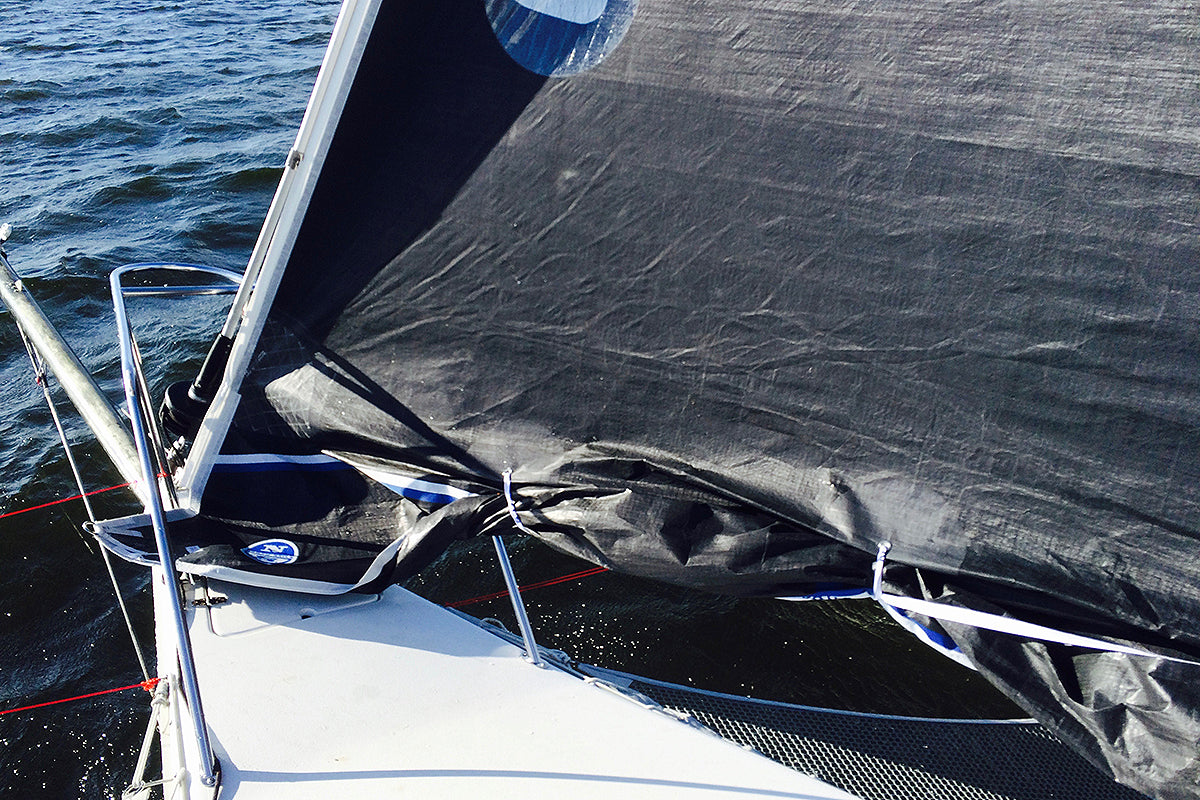
Många seglar för enkelhetens skull med rullfock. Problemet är att formen på seglet blir riktigt dålig om man behöver rulla in några varv för att minska segelytan. En lösning som blir allt vanligare, framför allt på så kallade ”fockbåtar”, är istället att använda sig av ett revbart försegel. Och det fina är att du inte behöver köpa ett nytt segel. Det går lika bra att modifiera den fock du redan har.
Det vi gör är att vi sätter in ett bindrev. På segel gjorda för förstagsprofil brukar vi också sy fast ”softhanks” längs förliket. Det gör att seglet inte åker i vattnet när det tas ner på däck.
Enklare kan det knappast bli, och på köpet får du ett segel som är väldigt effektivt på öppna bogar. Ett stort problem med högsmala fockar är ju att de tappar formen så fort man faller av från bidevind. Men här fungerar revhornet som ett reachinghorn; genom att skota (det orevade) seglet i revhornet får du kontroll över twisten och seglet drar mycket bättre. Skillnaden är faktiskt påtaglig.
Det här är en typ av segel som vi verkligen kan rekommendera för all typ av segling med liten besättning – oavsett om du kappseglar eller semesterseglar.
Montera dragkedja i dina undanvindssegel
Sättning av spinnakers eller gennakers är inte alltid enkelt. Det är mycket duk som ska upp och även mycket rutinerade besättningar får ibland problem med segel som fyller innan det är hissat i topp, som snor sig eller hamnar i vattnet.
Det där löser vi genom att sy in ett blixtlås längs ena liket. När du drar ihop dragkedjan formas hela seglet till ett långt, korvliknande paket som kan hissas i lugn och ro. När det är i topp och du drar i skot och gajar öppnar sig blixtlåset och seglet fyller.
På båtar över 50 fot är det här närmast ett måste, men vi tycker att det hör hemma på egentligen alla båtar där sättningarna känns utmanande. En ”zippad” spinnaker eller gennaker resulterar i både snabbare och säkrare sättningar, och det har man lika stor nytta av på bankappsegling i en 40-fotare som på semestern i en 33-fotare.
Mät om seglen och sänk ditt mätetal
Segel krymper. Ganska mycket till och med. En procent låter kanske inte så mycket men det innebär att ett par år gammalt storsegel till en 40-fotare kan vara en decimeter kortare i förliket än när det var nytt.
Det är en naturlig process och egentligen inte mycket att oroa sig för. Att seglet de facto blir mindre är istället något du kan dra nytta av. Minskad segelyta innebär att handikapptalet kan sänkas, och ambitiösa kappseglare mäter därför rutinmässigt om sina segel inför varje säsong.
Det är kanske att ta i. Men om du har ett individuellt mätbrev bör du överväga att göra det åtminstone någon gång ibland. Vi har befogenhet att mäta våra egna segel och om vi passar på att göra det när seglet är inne för service är det inte någon stor eller kostsam operation.
READ MORE
READ MORE

HÖG TID ATT LÄMNA IN SEGLEN FÖR SERVICE
HÖG TID ATT LÄMNA IN SEGLEN FÖR SERVICE
Service av segel är lite som att gå till tandläkaren eller besiktiga bilen.
Det är något man bör göra en gång varje år, även med segel som är i fint skick. Det gör att du slipper problem nästa säsong och förlänger livslängden på dina segel.
När vi får in segel upptäcker vi ofta slitage och skador som ägarna har missat. Det kan handla om småsaker som knappt är synliga för ett otränat öga, men om de inte åtgärdas kan skadan snabbt förvärras. I värsta fall kan det leda till att seglet totalförstörs och att hela semestern måste avbrytas.
Att fladder och nötning sliter hårt på segel inser de flesta. Men solens UV-strålar är faktiskt ännu värre. Detta gäller för alla typer av segel, men där vi ser mest skador är bland rullseglen, som ju ofta sitter uppe från tidig vår till sen höst. Med ett bra UV-skydd är det helt okej, men här slarvas det tyvärr en del, har vi märkt. Det händer att vi får in segel som är helt slut i akterliket, trots att de bara är ett par år gamla.
Det finns flera olika typer av UV-skydd, men alla (även strumpor och kapell) har ett bäst-före-datum som inte bör passeras. Hellre byta lite för tidigt än lite för sent, är den enkla principen. Det kostar en slant. Men om du vill kunna använda dina segel i många år är det en investering som går att räkna hem många gånger om.
Fukt är förresten ett annat problem som du bör ta tag i så fort som möjligt. Efter en säsong i båten är seglen fuktiga och risken är stor att de utsätts för mögelangrepp som det är nästan omöjligt att bli av med. Det finns visserligen medel som biter men de är så starka att de bryter ner segelduken, så det är inget vi rekommenderar i första taget.
Den enkla lösningen är att helt enkelt hänga seglen på tork. Det är viktigt att seglen får hänga fritt från marken eller golvet, och att de får hänga tillräckligt länge. Förstärkningar, lattfickor, snörplinor, likband med mera suger åt sig mycket fukt och det kan ta lång tid innan seglen torkat ut ordentligt.
Det är alltså inte svårt, men det tar sin tid och är ganska utrymmeskrävande. Om du inte har möjlighet att göra det själv gör vi det gärna åt dig!
READ MORE
READ MORE
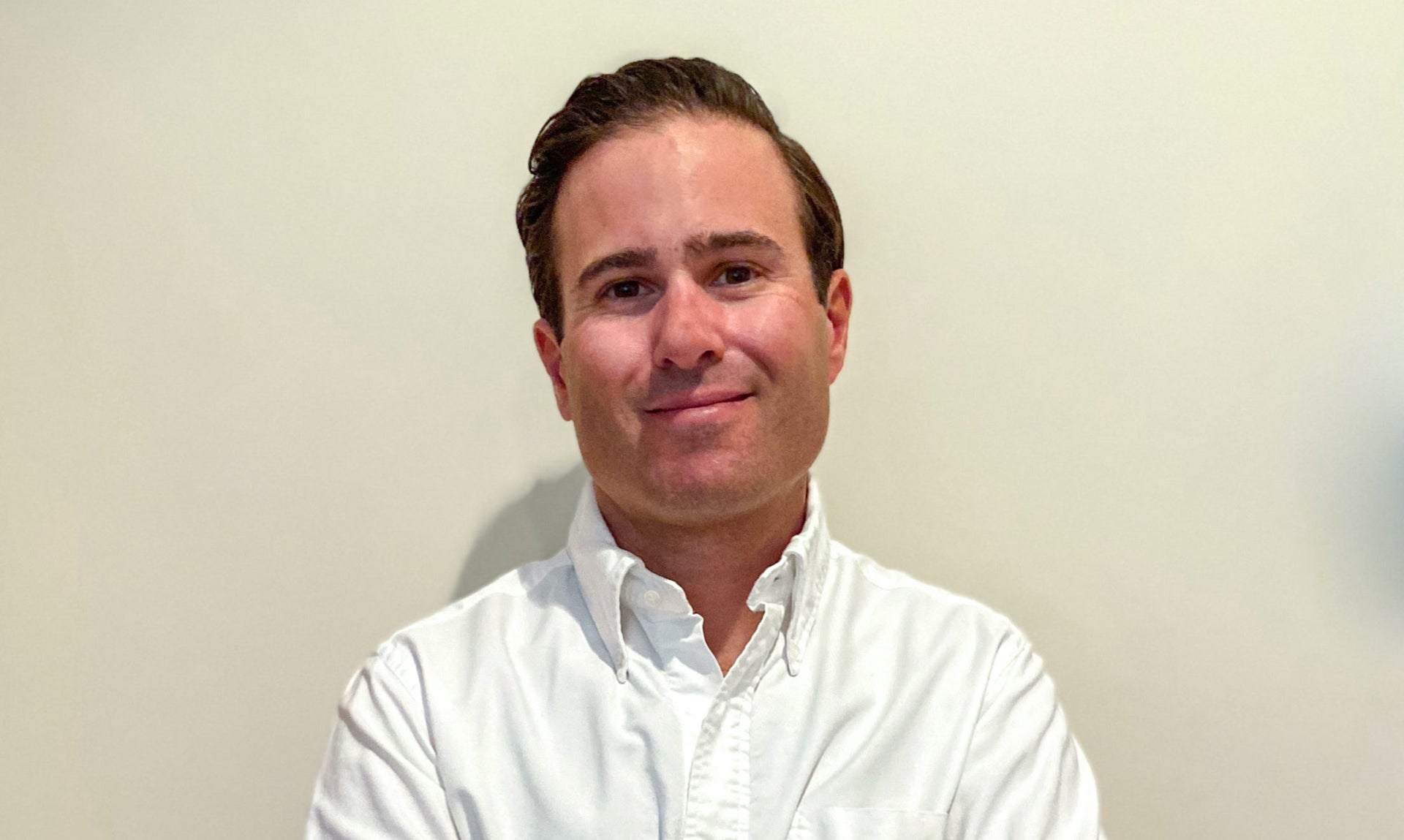
JEFFREY BONANNI JOINS THE NORTH SAILS TEAM
JEFFREY BONANNI JOINS NORTH SAILS
Bringing Extensive Experience to the Class as an E Scow One Design Sales Representative
Bonanni is a five-time National and North American Champion, including the 2015 E Scow Nationals, and brings extensive experience in the E Scow class as the North Sails one design representative. An active racer in the New Jersey area, Bonanni also serves on the National Class E Scow Associations Board of Directors and as the Commodore of the Eastern Class E Scow Association. He is one of a small handful of helmsmen to have won all six National Championship trophy races.
Bonanni has been an integral part of the leadership team propelling the E Scow class forward and now brings that passion to the North Sails class support.
“I’m thrilled to be joining North Sails and excited to help the E scow fleet raise the bar competitively.” Says Bonanni, “I look forward to engaging sailors both new and old to the class, and hope to be viewed as a resource to all.”
Bonanni is most proud of leading two yacht clubs to win the Torch Lake Team Trophy for best-combined scores for a club at the National Championship, fostering an atmosphere of information sharing, inclusion, and fleet building. In his new role at North Sails, Bonanni will facilitate communication and innovation within the E Scow Class, forging stronger partnerships and support for E Scow sailors.
“Jeff fits in well at North Sails; his dedication to one-design sailing is evident through his continued work fleet building and sharing information.” Says Tim Healy, President of North Sails One Design, “He is always helping someone, trying something new to make the fleet faster, and sharing his expert knowledge of the boat. Jeff realizes that this sport is more fun when information is shared, and the overall level of competition is raised.”
Bonanni is a resident of Little Silver, New Jersey, and a graduate of Boston College, where he was an ICSA All American Skipper.
North is the only sailmaker for winning Scow sails that have dominated the circuit for decades. Designs like the MC Scow Z-MAX, the E Scow AP Main and LM/MH Jibs, the C Scow I-1 Gold, the A Scow designs that command the circuit scoreboards, the XBoat Powerzone main and RAD Blue jib, among other designs for the M-16 Scow, M-20 Scow, Inland-20 Scow and more.
Contact Jeff E Scow Sails E Scow Tuning Guide Find Your Scow
READ MORE
READ MORE

VENDÉE GLOBE 2020 VIDEO SERIES: EPISODE 2
THE IMOCA TAKES FLIGHT
Vendée Globe 2020 – Episode 2
The Vendée Globe is a race exclusively reserved for the IMOCA, a 60-foot monohull machine built for racing. The open rule gives the naval architects great freedom of design when imagining the next generation of boats. A class known for technological experimentation, the IMOCA has seen radical innovations such as foils appear in recent years. These appendages, placed on either side of the hull, provide power, reduce drag, and propel the IMOCA to fly above the surface at speeds that were once inconceivable. In two decades, the modern IMOCA has shaved close to 40 days off a circumnavigation. The 2020 race start is on the horizon, and many of us onshore wonder- how fast these boats will fly?
In Episode 2 of our Vendée Globe 2020 video series, French sailor and storyteller Loïck Peyron explores the phenomenal high-tech advances of the IMOCA. Loïck brings us beyond visual appearances and dives deep into the construction and materials, most notably carbon, used in the boats. Today, the IMOCA is lighter, faster, and more reliable. The manufacturing methods of these boats are closer to those of airplanes than to sailboats. “We use the same terms, the same mathematical formulas and the same prediction and simulation tools as those used in aircraft,” stresses Loïck Peyron. Generally speaking, “the speeds of the boats have been multiplied by four in forty years.”
READ MORE
READ MORE
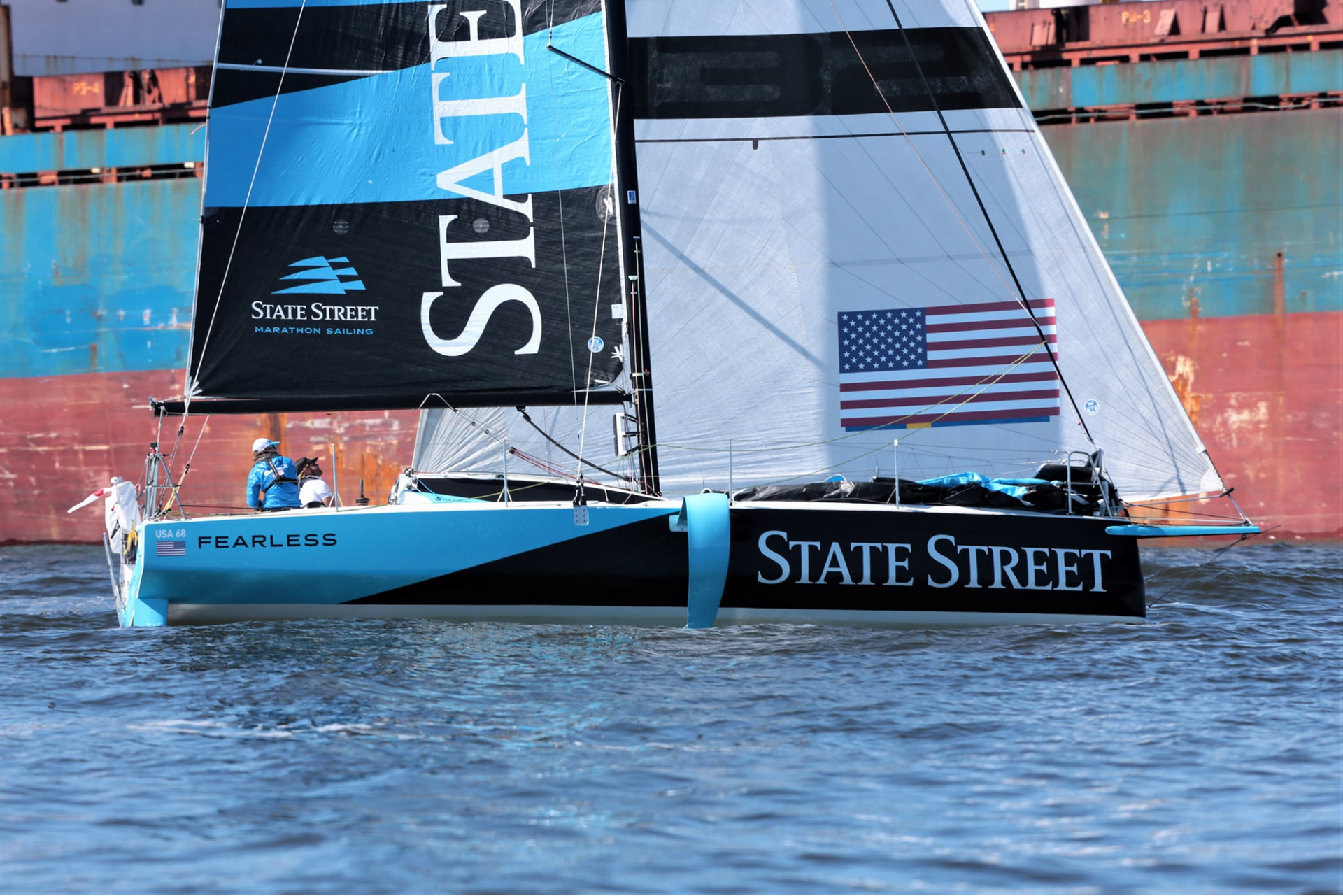
2020 FALL SAILING WRAP UP
2020 FALL SAILING WRAP UP
North Sails Expert Austin Powers Shares Highlights from AYC Fall Series + Double Handed Race
© Will Keyworth / North Sails
This year’s edition of the AYC double handed distance race brought lots of boats, lots of competition, and a serious challenge to complete the course in less than 7 knots of wind. With three fleets: ORC1, ORC2, and a one design fleet of J/105’s (mixed crew), there was a little something for everyone who was interested in this growing discipline of the sport.
The competition this year included aspiring Olympians, former America's cup sailors, Volvo Ocean race veterans, professional sailors, Father-son teams, and newlywed couples alike. With the unique challenge of sailing in the Northern bay with lots of wind changes and changing current, the course provided a true test for teams to show their skill.
All in all, even with sub 7 knots, the majority of the fleet made it across the finishing line.
Results for North Sails clients included:
ORC 1: 1*,2,3,4,5
ORC 2: 1,3,4,5
J105: 1,2,3,4,5
The 2020 AYC fall series is underway. J/22’s, J/30’s, J/70’s, J/80’s and Viper 640’s are all on the water ready to compete in this year’s Fall series racing right in Annapolis. The racing is on the following days for the month of October 3-4th (already occurred), and the 10, 17-18. We encourage anyone in these classes to get out sailing during one of the best times of the year in Annapolis. We will check in next month at the conclusion of the series to check in the winners.
Mark your calendars for the upcoming events:
ORC East Coast Championships: October 23-25
J/70 Fall Brawl + J/80 East Coasts: October 31 - November 1
J/24 + J/22 East Coast Championships: October 17-18
J/105 + J/111 East Coast Championship: October 31 - November 1
Photo Credit: Will Keyworth
Photo Credit: Will Keyworth
Photo Credit: Will Keyworth
READ MORE
READ MORE

PACIFIC YANKEE'S DREW FREIDES, 2020 NATIONAL CHAMPIONS
PACIFIC YANKEE’S DREW FREIDES
2020 IC37 National Champion Interview
📸 Morgan Kinney / IC37 Class Association
Drew Freides is a well-known face in the sailing world. His list of impressive results includes back to back Melges 20 World Champion in 2017 and 2018, two IC37 Winter Series wins, 2019 Farr 40 World Champion, and most recently, winning the 2020 IC37 National Championship.
Drew commented, “This year has been a crazy one, more like musical chairs trying to organize and reorganize. We planned to spend our entire summer in Newport, RI, yet we had to be as flexible as possible. Fortunately, we were able to keep our core crew together for the back to back events; Rolex Race Week and the NYYC Annual, which served as the IC37 National Championship. I hadn’t done much sailing this summer before these last two, and half weeks, so I was thankful for the opportunity to spend solid time on the water. Our goal this year was to win the Nationals, and our entire program came together to make that possible.”
NS: The IC37 is a fun boat with strict OD rules in place. What makes the IC37 Class set up so successful?
Drew: This class is great because you don’t have to get into an arms race; you put together the best crew combination you can think of, and every team has the same restrictions and rules to follow. Some may not favor it, but I believe that the class has done an excellent job of limiting costs. Every rule in place is to get more sailors involved. The IC37 is an extremely competitive fleet but also has a collegial feeling as well. Long term, it’s not about focusing on the top boats at each event, but instead getting more and more people involved in sailing.
📸 Morgan Kinney / IC37 Class Association
NS: What do you enjoy most about sailing in the class?
Drew: My favorite thing about sailing in this class is the camaraderie. We have many friends out there racing on other boats in the fleet, and it’s fun to compete with each other on a fun, fast boat. Another thing I like is that the IC37 class offers excellent coaching and support. Greg Fisher and North one design expert Tim Healy went out together before the events and helped us fine-tune. They provided tips and took photos and video to debrief with the fleet at the end of the day. We worked on boat handling around the corners and left no details out. By the end of the day, we were ready to compete.
NS: What do you feel has helped make the class so successful?
The team at North Sails have put a ton of effort into boat set up and sail configuration. I am a believer in reefing the sails when the wind pushes the class limit. It may look weird while onboard, but once you do it, you can sail in anything, and the boat is still fast and just as competitive. It’s a good option to have. For example, it was blowing 37-30 knots on Practice Day 1, and we reefed both sails and went out and had a great day on the water. Having this option to make things more manageable in higher wind limits is a direct result of sail experts and the class working towards a common goal.
In particular, this season, having two events go off without a hitch, has been a massive factor in our year’s success. We can’t thank the New York Yacht Club enough for putting together two great events, back to back, in such challenging times. The competitors very much appreciated it. The club could have canceled this thing at any time, but I think they knew it was necessary to go racing for our sanity as sailors. This is the first regatta I have done since we the winter series in Florida back in January. Kudos to the club and race organizers for pulling this off. Every sailor appreciated it.
📸 Morgan Kinney / IC37 Class Association
Drew’s Tips for a Successful Season and Top-Notch Program:
1. The crew is crucial in getting people to fit the roles. There are no passengers on this boat. There’s just no room. So thinking through who’s going to be your team and what roles they play is critical. Finding the right people that are the right weight is also crucial. Rather than having simply great sailors, we have great sailors who are even better for their specific role. The rule of having two women onboard is also a secret weapon for our team. They are light and can do many roles that contribute to every success of the team. We choose to have a woman always “trim” the runner because they can’t hike out when doing so, so being lighter is an advantage—that said, they need to be highly skilled because that role is so essential to our boat speed.
2. Having an agile bowman and a strong mastman. Both roles require strength and timing. Clean hoists and kite takedowns are equally important because they set you up for the next leg or maneuver. Our excellent takedowns also enabled us to keep the chute up long and gave us the one-up on other boats at the leeward gate.
3. Having crew members that can do different jobs. Myself and Bill Ruh could helm the boat, but we could also trim. This worked out nicely as Bill steered for Race Week and I drove for the Nationals. We have a couple other crew who also fit into this all-around ability. To say it’s beneficial would be an understatement.
As the driver, I receive a lot of the credit, but I’m only the guy driving at the end of the day. My job is to drive in a straight line –The crew makes the boat go fast and gets us around the corners.
4. The power of the runners. The runner is the one thing that constantly has go up and down based on wind strengths. I would consider it one of the most essential trimming tools onboard. Our female crews are unbelievably valuable on the boat for roles like this. They are small and can be our primary runner trimmers and help around the boat; a great weapon for any team.
5. Confidence in boat speed is key. If you don’t have confidence, you won’t do well. Our team has confidence in our boat speed. This lets us take less risk tactically, knowing that our boat speed can get us out of jams. We don’t need to bang corners to win races, but rather play the shifts and let our boat speed enable us to pass boats when required. That consistency wins regattas.
6. Mark your settings. Where to trim the jib for certain settings, the vang, marks for the leads, marks on the jib sheets, marks on the runners, marks for the outhaul, how many plates we needed beneath the mast for each wind speed, etc. We knew what settings we had without having to waste time and energy thinking about it. This allowed us to focus on sailing the boat fast and smart rather than worrying about the boat tune.
“The one thing Vince Brun taught me is that when you’re racing the boat you don’t want to be thinking about your settings. You should know where they go.”
7. Weight placement. Depending on wind speed, we all knew where our crew weight needed to be. Shifting crew weight according to wind strength helps you minimize wetted surface in light air, control the balance of the boat, and maximize the power of the boat as the wind picks up. Controlling not only the heel but also the fore/aft trim is important.
8. Preparation is key. We always make a point to have two solid days of practice with most, if not all, of the crew in attendance before every event. Practice day one is about getting everyone acclimated. Practice day two we hit it hard. The nice thing about giving yourself two full days is that you spend the first part of the first day getting things organized. When all the other boats show up for their first practice day, we’re already set up for speed and ready to go.
From your team at North Sails, well done to all competitors on a successful event! Special congrats to Drew Freides and rockstar team on Pacific Yankee, 2020 National Champions!
IC37 Class Page Tuning Guide Contact an Expert About the Class
📸 Morgan Kinney / IC37 Class Association
📸 Morgan Kinney / IC37 Class Association
READ MORE
READ MORE
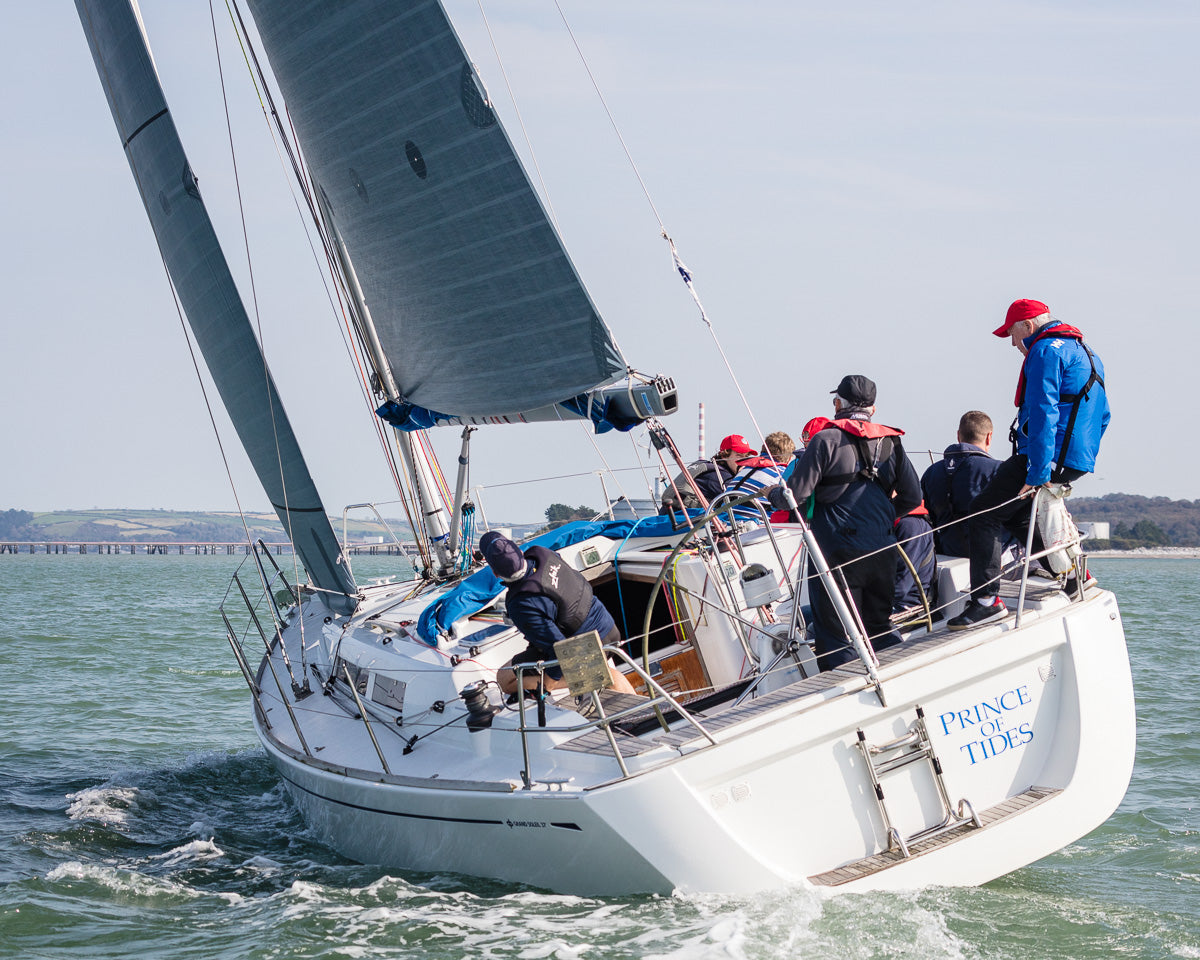
THE PRINCE OF TIDES
PRINCE OF TIDES MAKES A STATEMENT IN LOCAL RACING
New 3Di Wardrobe Propels Local Sailors to the Front of the Pack
📸 Bob Bateman
Frank Caul and John Molloy, sail out of the Royal Cork Yacht Club and together own Grand Soleil 37, Prince of Tides. Frank comes from a cruising sailing background, and John is more experienced in the racing platform. They’ve been traveling down to the Caribbean annually for fun getaways for the better part of 20 years, and during the week, they take part in local racing out of Royal Cork Yacht Club which is celebrating a very special tri-centenary, being the oldest club in the world.
The Boat
Prince of Tides was a ten-year-old boat kept safely indoors in Hamburg, Germany until Frank and John acquired it last summer when they were ready to step up their game and get more competitive in the local racing fleet.
Frank said, “I found myself in a position to buy a new boat. We had been to the boat show, Das Boot, in Dusseldorf, Germany. Once we figured out what we were looking for, John went again last year on his own and wrote back to tell me that he found us a boat! We went to Hamburg right away and checked her out.” The Grand Soleil 37 would be the perfect fit for the two friends to share more sailing adventures. All they needed was to find the right sailmaker to help get her up to speed.
The seven person crew sailing on Prince of Tides is very much amateur.”We have a few trimmers on the boat, said Frank, “and John probably has the most experience as he’s been racing for quite some time, which is why he normally helms. The rest of us are very new to sailing, but we’ve been working hard to improve, and with the help we’ve received from North Sails, it’s been a positive experience for us all.”
Sails + Expertise
“Last November, we met sail expert Nigel Young, based in Myrtleville, Ireland, who not only helped design a new rudder for our boat with the help of Mark Mills but also introduced us to the power of 3Di,” said Frank.
“We haven’t looked back since! Nigel is fantastic. We didn’t have any particular allegiance to any sailmaker at the time, but working with Nigel was such a great experience, it was obvious that choosing North Sails would be the right decision for our sailing.”
Frank and John were excited to get back on the water again; their season was delayed until mid-June due to COVID restrictions, so they arranged for Nigel to see what they needed to get their boat up to speed to be competitive at their local club.
“Nigel stepped on board, and it was a world of difference,” said John. “We got a new 3Di ENDURANCE 760 mainsail and a new #2 and #3 jib, and we were ready to go. From the first day we hoisted our new sails, things have never been the same!”
This year, Prince of Tides has won just about everything they’ve come up against in IRC non-spin, and both Frank and John are very excited about what their future holds. They recently competed in the Cobh to Black Rock race and won with a really fast finish time. “People were asking us if it was a record we broke, said Frank. “The following week we also won the Naval Race White Sail division.”
Nigel commented, “This year’s Cobh to Black Rock race was a quick one. Prince of Tides had the fastest elapsed time of all the classes at just 57 minutes and 18 seconds, although hard to compare with the Spinnaker one division as we started 10 minutes after them, but even so, a great performance from the team. Frank and John’s new set up has set the tone for many good things to come.”
Prince of Tides crossing the finishline in the Cobh to Black Rock race, where they took first place. 📸 Bob Bateman
Having a Reliable Sailmaker is Vital for Success.
“What sets 3Di apart from traditional materials we’ve used is that it doesn’t stretch. We can see the camber lines on the sail, which help us trim properly. North Sails has completely changed our perspective on racing. Before we were looking forward all the time, now we’re looking back at our competitors. It’s been a game-changer,” said John.
“3Di has transformed everything,” said Frank. It has made such a difference in our sailing, speed, and has made it easy for us to find the right trim settings.”
Prince of Tides started their Autumn sailing season just a couple of weeks ago with two bullets on two-four mile course races. Their biggest competition is an X-Boat. “She’s fast,” said John, “but we are faster now!”
Working with Nigel Young + North Sails Ireland
“Nigel’s attention to detail is just unlike anyone we’ve ever sailed with,” said John. “We learn so much every time we sail with him. From the headstay to the tiniest adjustments, he’s always communicating with us to tell us what we need to do, pushing us to be better sailors and make the most of time on the water.”
“Nigel is passionate about sailing and about helping his clients perform their best,” said Frank. “His enthusiasm is unlike anything else we’ve had on board. If things are not going right, he makes sure we get it figured out quickly. His patience and enthusiasm have really motivated us to push harder each time we go out. We knew by choosing North Sails we would be most competitive, and we’ve been pleased with our decision.”
How did they come up with Prince of Tides as a boat name? “It’s a great movie featuring Barbara Streisand and Nick Nolte. You best grab a bottle or two of wine for that one,” said Frank.
Although the sailing season is coming to a pause for some, they will be sailing through mid- December in Ireland. Prince of Tides will be out there, aiming to continue their winning streak.
📸 Bob Bateman
READ MORE
READ MORE
PÓDIO NORTH SAILS NA CLASSE 420
PÓDIO NORTH SAILS NA CLASSE 420
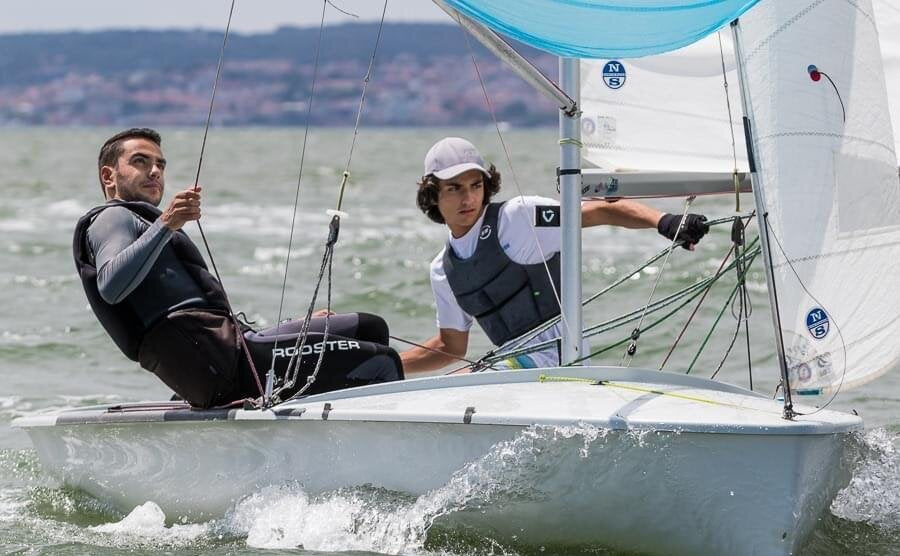
É com orgulho que anunciamos que no Campeonato de Portugal de Juniores e Absolutos da classe 420 o pódio foi North Sails.
📸 Luís Fráguas
Ricardo Alves e Tiago Alves são os novos Campeões Nacionais da Classe 420 e estão de Parabéns pelo seu fantástico desempenho , durante a regata que se realizou no início do mês, acumulando também o primeiro lugar também em Masculino.
Juntaram-se ao pódio da geral as equipas Manuel Fortunato/ Laura Pontes, que se classificaram em segundo lugar, seguidos da Mafalda Gonçalves/ Maria Pereira, que alcançaram o título de Campeãs Nacionais.
📸 Ingrid Fortunato
📸 Luís Fráguas
De realçar, ainda, que os velejadores Mário Soares/ Vasco Soares obtiveram o primeiro lugar na categoria Juniores.
Em resumo, velejadores que escolherem a North Sails, alcançaram os 1º, 2º e 3º lugares da Geral, 1º lugar Masculino, 1º lugar Feminino e 1º lugar Juniores.
A todos os nossos Parabéns!
Para mais informação sobre a gama de Velas North Sails para a Classe 420, contactem a vossa velaria nacional, através dos contactos que podem encontrar aqui.
READ MORE
READ MORE
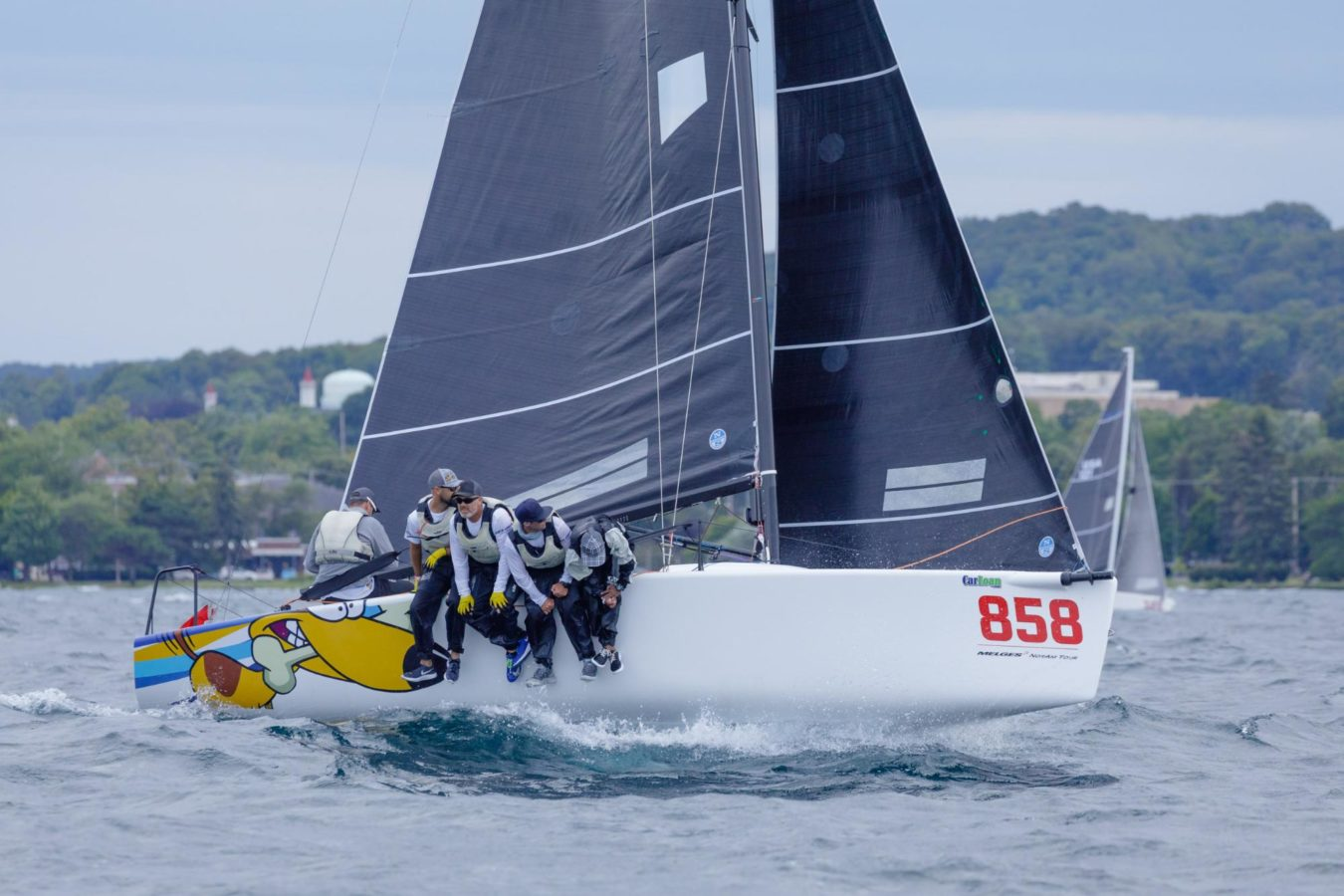
IN DEPTH WITH MELGES 24 CLASS LEADER JOHN BOWDEN
IN DEPTH WITH MELGES 24 CLASS LEADER JOHN BOWDEN
The North Sails Expert Shares Tips + Tricks And Much More
© IM4CA/©Bill Crawford, Harbor Pictures Company
John Bowden started sailing very young and was a competitive youth sailor in Texas where he grew up. He started working for a sailmaker at 16 in Austin, TX. He went to college at the College of Charleston graduating in 2004. John won the sloop nationals and was awarded the Robert H. Hobbs Sportsman of the Year award. He has won National Championships in the Melges 20, Melges 32, Lightning, Melges 24, Coronado 15, and J-80 classes. He won the world series in the Melges 20 class. Since joining the North Sails team in Charleston, John has been awarded the George Lockwood Trophy as one of the top sailors and contributors to the sport as a member of the Charleston Yacht Club. He gives us an inside glimpse to the Melgse 24 class uniqueness, what keeps him coming back and his top three tips for newcomers ahead of the Melges 24 Charleston Open in October.
Tell us about how you go involved in the Melges 24 class.
We started a small fleet here in Charleston and I began racing with a few of the local teams as they began to branch outside of Charleston. We had about 8 boats that were active for a short period of time. As those boats moved on I got back into the fleet when Travis Weisleder sold his Melges 20 after a successful campaign and bought his 3rd Melges 24. We are now onto our 3rd boat since then and have been racing the Lucky Dog Racing Team very hard.
What is it about the Melges 24 class that keeps you coming back?
The Melges 24 is one of the best boats ever built. We have really seen a resurgence in the fleet from its peak. Small local fleets are popping up again and we are seeing a great group of amateur owners jump back into this super competitive fleet.
What are your top 3 tips for someone just getting involved in the class?
Practice, Practice, Practice. Time in the boat is just the best way to get your boat going. Ask questions. There are a ton of people out there in the fleet that are always willing to help. We are seeing boat owner, sailmakers, and pro sailors now being one of the best resources for new people in the fleet. A once secretive fleet of sailors that used to keep all of their tricks to themselves are now more than happy to share information. Don’t be shy!!! Get to the big events. Local racing is great, especially in these tough times, but the experience you can get from going to these big events can be priceless. The best of the best are out racing somewhere almost every month. Do what you can to make it to these events. The practice starting, the tips from the best sailors, and the comradery with other sailors is something you just can’t get anywhere else.
What is the biggest thing you’ve learned during your time sailing Melges 24?
Everyone is working with the same gear. The class is so well established and the tuning, the boats are all very close. It really comes down to how hard you work. Sailing has come a long way from when I started racing. The top teams are really leaving it all out there on the water. The harder you work the better you will do.
How does it feel to be class leader?
I think it is a great opportunity. This is such an amazing class and such an amazing group of people I am very lucky to get a chance to work with everyone. North Sails has done a great job for so many years it is great to see us still pushing the envelope. The development of 3Di sails has been a challenge, but the results are speaking for themselves. It is nice to be the person to go to if you have questions or problems. I am the go between for the sailors and our production and design team. It really gives me a chance to work on a product and see how it helps our teams.
Looking ahead, what are your hopes for the Melges 24 class?
I am excited for this class. We have had to postpone the Worlds this year and much of the racing, but we are starting it right back up here in Charleston with the first in a series of regattas leading up to the World's being sailing in Charleston, SC. The fleet and the organizers have done an amazing job of planning for people of all makeups to get to race at the top levels in the World. The upcoming events are fast and furious leading up to the worlds. October in Charleston, November in Mobile, AL, December, January and March in Miami, FL and the Charleston Race Week as the leadup to the Worlds in Charleston just after race week. To learn more about North Sails product offering for Melges 24, see here.
READ MORE
READ MORE
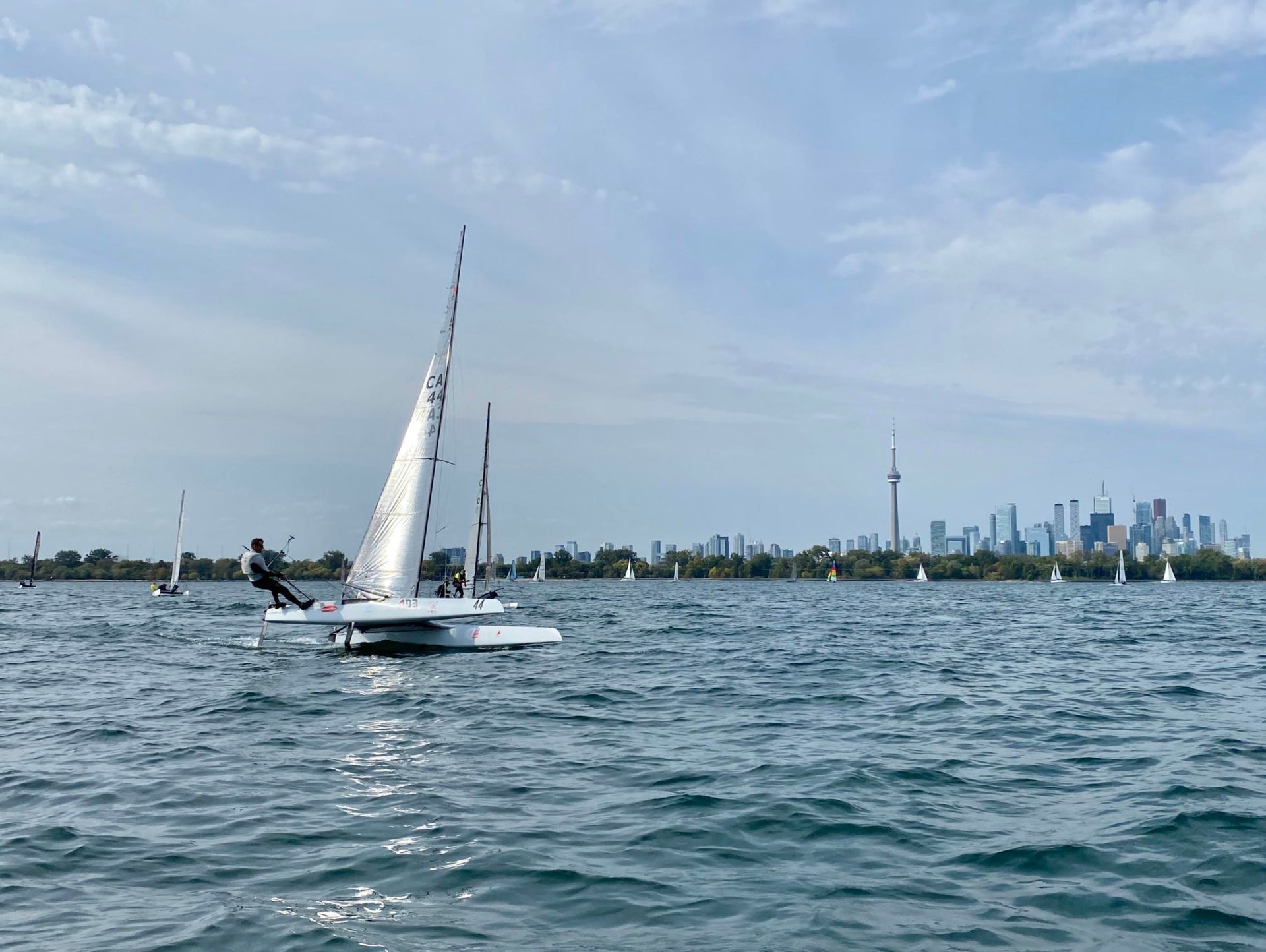
EVENT SPOTLIGHT: WATER CATS FALL REGATTA 2020
EVENT SPOTLIGHT: WATER CATS FALL REGATTA 2020
Safe & Successful Event For Cat Sailors
To many, 2020 has presented challenges unlike any in recent history. But the positive spirits and can-do attitude of cat sailors, sponsors and organizers at Water Rats Sailing Club contributed to another successful Regatta. Water Rats hosted the Water Cats Fall Regatta on September 26 & 27. Twenty-four (24) catamarans competed in light to medium air on the first day with strong breeze on the final day. The sun and the beautiful skyline of Toronto were shining along with all those who contributed to the event by supporting the sport. It revealed the remarkable passion, enthusiasm and love for sailing that is present in the sailing community in Toronto.
It is hard to find words to thank the large team of volunteers who dedicated their time and efforts who made this Regatta successful, Fogh Marine and North Sails taking the lead. A special thank you goes to Morten Fogh, Geoffrey Moore and Louisa Bobyk.
Huge thank you to Race Committee Maxim Newby, Jimmy Sabourin, Kevin Smith, Peter Eagar, Andrew Mahoney, Rahm De-Undergrad and David Chennels; Race Chairs Beata Sejane and Marvin Coulson; Communications Matthew Burpee and Ed Young; Results Dan Borg, Rahm De-Undergrad and Marty Vandenberg; Weekly race practice Jimmy Sabourin and Dan Borg; OHCC, JTown and Westwood Sailing Clubs for extra crash/pin boats; Jessica Lee, Michael Williamson, Kate McMurray, Dean Goodwin, Murray Kibler for awesome photos and videos; Benoit Friolet, Jessica Lee, Mike Doell and Ray Davies for terrific rescue/race support; Greg Brothers for purchasing and delivering 15 gallons of gas; and a very special shoutout to Robert Wessel for lending us his big cat to be used as a Committee Boat.
Thanks to everyone from near and far who came out to make this event a success, from Burlington Beach Catamaran Club, Westwood Sailing Club, Outer Harbour Centerboard Club, St. James Town Sailing Club, Toronto Multihull Cruising Club, Etobicoke Yacht Club, and Mississauga Sailing Club. Congrats to all winners and a special shout out to first in their fleets, Andrew Woods of Burlington Beach Catamaran Club in his foiling super cool A Class cat (Low Portsmouth), along with Andy Warwick and Mike McKnight of Etobicoke Yacht Club in their supercharged Hobie 16 (High Portsmouth).
READ MORE
READ MORE
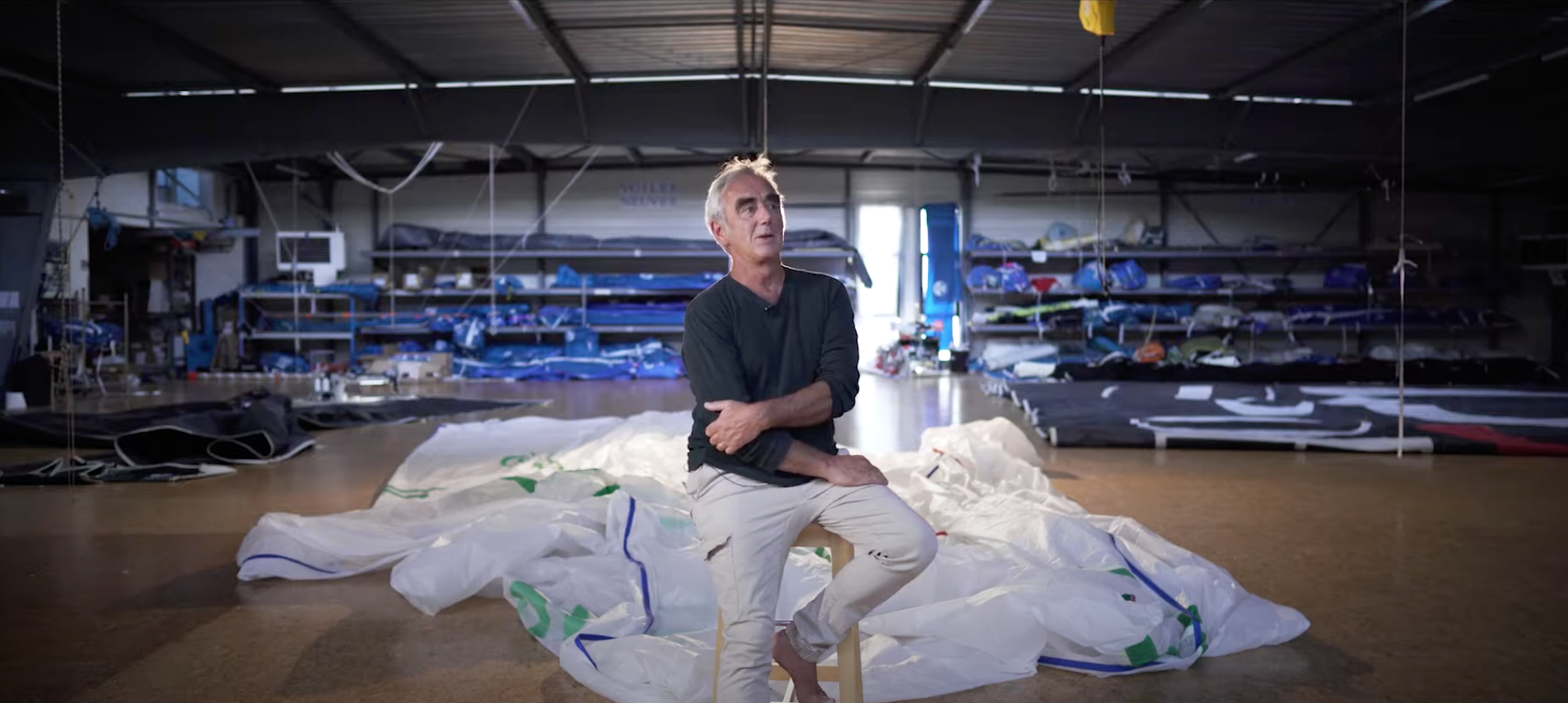
VENDÉE GLOBE 2020 VIDEO SERIES: EPISODE 1
VENDÉE GLOBE 2020 VIDEO SERIES: EPISODE 1
Introducing Loïck Peyron as the North Sails Narrator of a Six-Part Video Series in the Lead Up to the 2020 Race Start
The Vendée Globe was born in November 1989. It began as a daring challenge launched by a group of 13 sailors, including French navigator Loïck Peyron. For the skippers who participate, the lure of this race outweighs the risk of sailing non-stop, solo, and without assistance around the world. And for fans, we all gather every four years to be captivated by the next generation of IMOCAs, see who will reach the finish line and if we’re lucky, witness the setting of a new speed record.
Peyron joins North Sails to lend his voice as our narrator in a six-part video series. He offers his perspective on this legendary race by telling the story of the exceptional skippers who dare take on the challenge, the passion that drives them, and the quest for open-ocean adventure. Beyond, the modern Vendee features the emergence of women and international sailors, the ever-evolving technology of the IMOCA, not to mention the growing enthusiasm amongst spectators and all those who are passionate about this unrivaled competition.
Vendée Globe Special – Episode 1 – Thus was Born the Vendée Globe
With his impressive list of accomplishments, and collection of offshore miles, Loïck Peyron is regarded as one of the greatest French sailors. He took part in the first edition of the Vendée Globe, where he finished second. In this first episode, he recounts the history of the Vendée Globe through his eyes, from its origins to the present day, a race that has left an indelible mark in people’s minds.
READ MORE
READ MORE
LET'S TALK MC SCOW | MASTERS DEBRIEF WITH MATT FISHER
LET’S TALK MC SCOW
2020 Masters Champion Matt Fisher Shares His Z-Max Tuning Tips
Informative webinar with 2020 MC Scow Masters Champion Matt Fisher and North Sails One Design experts Allan Terhune and Eric Doyle. Matt talks about his dominant win at the Masters in Iowa using the North Sails Z-MAX mainsail. He shares his experiences of his 12 year journey in the MC Scow Class, from his challenges as a class novice to becoming the 2020 Masters Champion.
“The North Z–Max mainsail is the only sail I have used since I have been sailing MCs. The Z-Max is easy to use, I follow the North Sails tuning guide and if I have any issues, it’s because I am over trimming.” – Matt Fisher
North Sails is the only manufacturer of the Z-Max mainsail that has won the 2019, 2017, 2016, 2105 and 2014 MC Scow Nationals.
It’s the exact same design that you have been winning with, that you know and you want. This proven design is only available from North Sails.
Shop MC Scow North Z-Max Results MC Scow Experts
Matt & Lisa winners of the 2020 MC Scow Masters powered by the North Sails Z-Max. 📸 Regatta Girl
READ MORE
READ MORE
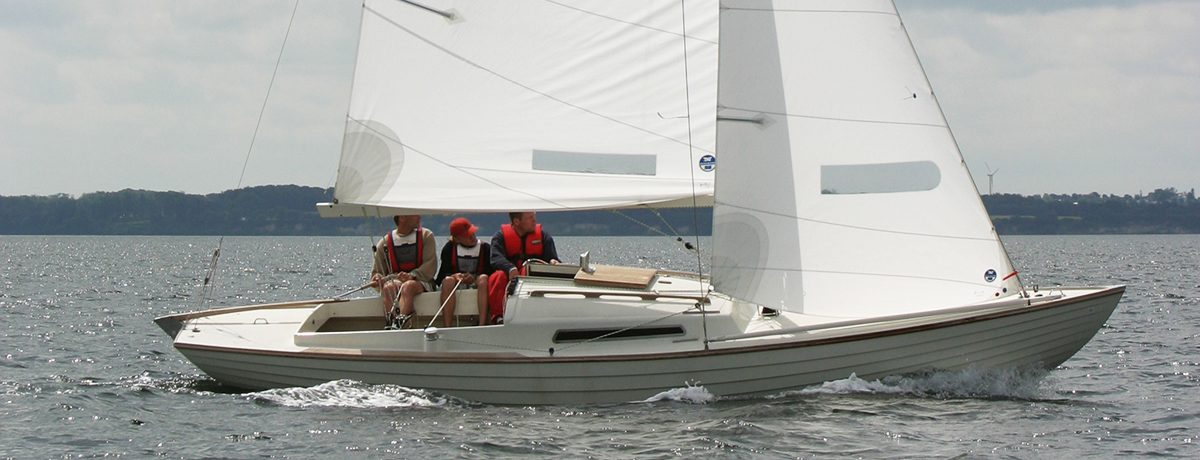
NORDISK FOLKEBÅD TUNING-GUIDE TIL TRÆMAST
NORDISK FOLKEÅD TUNING-GUIDE TIL TUNING-GUIDE TIL TRÆMAST
INTRODUKTION
Formålet med denne trimvejledning er at give vores Folkebåds kunder en standardiseret vejledning, samt bedst mulig udnyttelse af deres nye North Folkebådsejl.
Denne trimvejledning er udarbejdet af Søren Kæstel, Per Jørgensen og Theis Palm.
Følg vejledningen så nøjagtigt så muligt. Det vil altid være en god ide at eksperimentere på din egen båd, da mandskabets vægt, bådens balance, mastens beskaffenhed samt lokale forhold også vil have indflydelse på det optimale trim.
MASTETRIM
Masten på en folkebåd er nok det mest kritiske, da træets beskaffenhed er utrolig vigtig for mastens krumning og spændstighed. Nedenstående er de udbøjnings tal som vi anbefaler til en folkebåds mast, senere i denne vejledning giver vi en ide om hvor hårdt masten skal stå på agterkanten i mastehullet. Den ultimative bøjning er svær at definere, udbøjningen skal ligge mellem 10,5 cm til 14,5 cm, målt med 16 Kg, 4,8 meter fra toppen.
1. Kontroller at din mast står lige i båden. Dette gøres bedst ved at føre vanterne ind langs masten og afsætte et mærke ud for overkanten af det sorte mærke ved bomfæste – herefter måles til dækket hvor vant skruerne er befæstet – målet skal være ens I begge sider.
2. Mastens hældning måles på følgende måde – forstaget tages af ved dækket og føres ind langs masten. Wiren strækkes så meget som muligt – der afsættes et mærke ud for overkanten af det sorte mærke ved bomfæste. Forstaget sættes på plads – der måles nu 1,31 meter fra mærke til dæk målt langs forstaget.
3. Herefter skubbes mastefoden agter over til den den lige akkurat røre bagkanten af mastehullet. Hvis masten er stiv skal den stå forholdsvis hårdt på bagkanten og trykkes 22 mm agterover for at få masten til at krumme jævnt, hvorimod hvis masten ligger omkring 12,5 cm i udbøjning trykkes 16 mm, er masten blød 14,5 cm skal den kun lige berøre bagkanten af mastehullet.
4. Strutterne justeres ved at trække hårdt i hækstaget – kig op langs hulkilen og kontroller, at strut stagene er lige stram i begge sider. Hvis ikke justeres strut stagene til masten står lige. Strut stagene skal står forholdsvis løst i let vind, og i hård vind, hvor man i mellemluft strammer 2-3 omgange på den fælles vant skrue, det svare til at faconen i toppen af storsejlet ligger ca. 47% tilbage fra forliget. Det vigtigste er at masten krummer jævnt fra dæk til top, hvis strutten står for stramt krummer masten for meget i bunden og bliver for stiv i toppen, hvorimod hvis strutten står for løst krummer masten kun i toppen og masten forbliver stiv i bunden, den jævne krumning giver et pænt jævnt twist i storsejlets agterlig.
5. Sidevanterne – er med dette trim med til at kontrollere forstagets spænding da trykket på bag kanten af masten, i mastehullet er med til at presse masten fremover og hermed får forstaget til at stå løst. I let vind skal man sejle med et forstags-fald på ca.8 cm. dette gøres bedst ved at stramme sidevanterne lige meget under sejlads til de 8 cm. er opnået. Når vinden så frisker til mellemluft strammes 1½ omgang på sidevanterne og yderligere 1½ omgang i frisk vind, på denne måde strammes forstaget op under øget vindpres. På de bløde master bruges en 2 cm. tyk kile på bagkanten til at opnå samme virkning.
STORSEJLS TRIM
Storskødet er meget kritisk og små justeringer har stor betydning for højde og fart. Skøder man hårdt, lukker agterliget mere og giver større rorpres, men til gengæld mere højde. Dette trim kan anvendes i mellemluft på fladt vand, hvor man lige kan hænge båden ned. I let vind slækkes skødet således at den øverste ticklers flyver ret bagud. I hård vind skødes godt hjem og hækstaget hales indtil båden igen bliver let på roret uden at man mister højde. I forholds vis store bølger skal sejlet twiste mere, for at få så stort et styreområde til vinden som overhovet muligt, samtidigt giver det også bedre fart og hermed også højde.
Som tommelfingerregel trimmes den øverste sejlpind parallelt med bommen i stort set alle vindstyrker.
1. Udhal på bommen. Udhalet er også en vigtig trimfaktor. I let vind (0-2 m/s) skal sejlet være 3 cm fra sort mærke. I mellem vind (2-5 m/s) 1,5 cm fra sort mærke og over 5 m/s hales helt ud på mærke.
2. Cunningham. Undlad helt at bruge cunningham i let vind. I mellem vind hales kun så meget at rynkerne langs forliget forsvinder. Når vinden er over 7 m/s hales der hårdt for at medvirke til at åbne kappen og holde faconen fremme i sejlet.
3. Løjgangen. Det er en god ide at have to vogne på løjgangen, disse to vogne forbindes med to wire stropper af ca. 40 cm længde, til en blok hvor storskødet løber igennem, dette gør sejlads i let og mellem vind væsentligt nemmere. I let vind (0-3 m/s) skødes 15 – 20 cm. til luv. I mellem vind (3-6 m/s) sættes vognene på midten. I vindstyrker der over køres vognene mod læ, således at båden retter sig op og bliver let på roret.
4. Hækstaget. Hækstaget har to funktioner, At kontrollere dybden I storsejlet og hvor meget forstaget falder mod læ. Det vil sige, at et strammere hækstag betyder et fladere og mere åbent storsejl, mindre forstags fald og hermed også fladere fok. Vi har mærket vores hækstag op for hver 20 cm, så vi hurtigt kan komme tilbage til et godt trim og have båden veltrimmet lige efter mærke rundingerne.
5. Bom nedhal. Bom nedhalet bruges på kryds, til at krumme masten i hård vind og hermed åbne sejlet forneden, samtidigt
med at den holder bommen i niveau når storskødet bliver slækket i de hårde pust.
Brug aldrig bom nedhalet på kryds under 8 m/s og gør det med varsomhed, husk altid at slække til lænse position når der faldes af til slør for at undgå at bommen knækker. Bom nedhalet bruges ellers på følgende måde, hal til den øverste sejlpind står parallelt med bommen, både på halv vind og læns under alle vind forhold.
North Sails fokke er skåret til skødning både på ruftag og på dækket .Vi må dog anbefale at skøde på ruftag for at få bedre twist i agterliget og så stor spalte imellem storsejlet og fokken så muligt, man har også væsentligt bedre kontrol over fokken, jo kortere afstanden er fra skødbarm til blok, dette viser sig specielt i hård vind.
Med skødning på ruftag må det anbefales at have en vendeblok forrest på hænge bræt for at undgå at skødet kinker på spillet.
1. Skødepunkt. Skødevognens placering er kritisk for fokkens trim, men som udgangspunkt måles 2,65 meter fra pind boldt i forstag til centrum skødeblok (hvis der skødes på ruftaget).
Fokken skal luffe jævnt langs forliget dvs. at ticklers skal stå ens både i top og bund.
2. Fokkeskødet. Skødespænding – der skødes hjem så den midterste sejlpind er parallel med centerlinien i båden under de fleste forhold, med I det lette vindområde (0-2 m/s) twistes dog 2-3˚ mere. Hvis der er meget sø skødes 2-3 huller frem på skødeviseren for at få mere dybde og trækkraft (husk midterste sejlpind skal stadig være parallel med centerlinien i båden. I hård vind skødes 1-2 huller tilbage, med aldrig så at underliget bliver løst og begynder at blafre.
3. Faldspænding. Stræk aldrig faldet for hårdt, da faconen ellers kommer for langt frem. – Fokken er designet på denne måde – . Stræk kun lige så folderne ved løjerterne forsvinde. I let vind må der gerne være små folder ved løjerterne, dette giver det bedste profil.
Din kontakt hos North Sails er Theis Palm.
READ MORE
READ MORE
NORTH SAILS STRENGTHENS GREAT LAKES PRESENCE
NORTH SAILS STRENGTHENS GREAT LAKES PRESENCE
John Baxter + Christina Donnermeyer the Join North Sails Team in Chicago
North Sails is pleased to announce that John Baxter and Christina Donnermeyer have joined the Chicago loft team. Baxter, the former owner of Doyle Midwest, brings over three decades of sailmaking industry experience and consolidates a wealth of expertise and personnel under the North Sails banner. He will work closely with North veterans Perry Lewis, Keith Church, and Tom Pease to deliver world-class customer support and products to sailors in the Midwest region and beyond.
Bringing Baxter in the North Sails family is a strategic move for North Sails to expand their presence in the Great Lakes. A quintessential sales expert, Baxter prides himself on combining an in-depth understanding of the latest technology with a deep appreciation for individualized customer service. With North Sails, he now has the ability to tap into the brand’s patented in-house software programs and the full spectrum of world-leading products to ensure local customers get the most out of their sailing experience.
Commenting on the merger, longtime North expert Perry Lewis said: “Well-known and respected amongst clients and competitors, Baxter is a true industry professional. He is a valuable addition to our Midwest team. We’re all looking forward to having his local knowledge and experience to offer our clients, as well as his industry insights to help us strengthen our local support.”
Baxter has sailed in some of the world’s most prestigious races including the Montego Bay Race, two Rolex Sydney Hobart Races, multiple SORCs, Key West Race Week, RORCs Admiral Cup, St Barths Bucket, and much more. He has 35 Chicago Mac and 20 Port Huron Race races under his belt. His wide knowledge of multiple classes, make him a valuable addition to the North Sails Chicago team.
Baxter is now integrated into and supported by the global network of 110 North Sails sales and service lofts. Commenting on joining the team: “Perry Lewis and Tom Pease have been with North Sails forever and I’m privileged to be affiliated with the North Sails family. Technology and sailing are moving forward at a very rapid pace and North Sails will allow me to provide all of my customers with a level up in service and sails.”
Commenting on this next chapter, Baxter shared: “I come from a sailing family and I am proud to now be a part of North Sails! I am most excited about working with a great group of people. It’s a lot more impressive than I ever imagined.”
Baxter will continue to be supported by his long-time office manager Christina Donnermeyer who will also be joining North Sails. Her experience in customer service, running a sail loft, and regatta services will be invaluable to the local team.
North Sails will have two locations operational in Chicago through the end of 2020. Customers can drop sails off at Baxter’s current location or the current North Sails Chicago location at 1665 N. Elston Ave.
The expanded North Sails team in Chicago is ready to assist you with all your sail care needs. To learn more about the North Sails Chicago team and loft, please contact us at 773-489-1308.
READ MORE
READ MORE
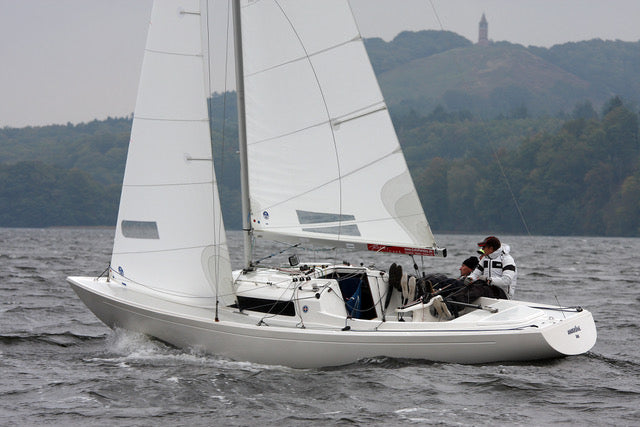
H-BÅD TUNING GUIDE
H-BÅD TUNING GUIDE
INTRODUKTION
Formålet med denne tuning guide er at give vores H-Båds kunder nogle retningslinjer i, hvordan man får størst mulig udbytte af sine nye North sejl. Tuning guiden er udarbejdet af Theis Palm.
Følg vejledningen så nøjagtigt som muligt. Det er dog altid en god idé at eksperimentere på sin egen båd, da mandskabets vægt, bådens balance, mastens beskaffenhed samt lokale forhold også kan have indflydelse på det absolut optimale trim. Før masten rejses skal nogle meget vigtige mål og afmærkninger følges for at kunne bruge denne trimguide.
MASTETRIM
1. Salingshornenes længde og vinkel er vigtig for storsejlets facon, da disse er med til at kontrollere mastens krumning og dermed også forstagets spænding. Længden af salingshornene måles fra siden af masten til wiren der er placeret i salingshornet, målet er 83 cm, målet tages langs midten af salingshornet. Salingshornenes vinkel måles ved at binde en tynd snor fra det ene overvant til det andet og her efter måles afstanden fra snoren og ned til bagkanten af masten den skal være 19 cm. Ved samme lejlighed afsættes to tapemærker på henholdsvis 44 cm og 55 cm målt fra siden af masten. Disse mærker bruges senere til trim af fokken.
2. Herefter holdes top-vanter og forstag ind langs masten og strækkes så meget som muligt. Der sættes et mærke på alle tre wirer, ud for overkanten af det sorte ved bom-fæste. Disse tre mærker er nu udgangspunkt for mastens hældning og om masten står lige i båden. Masten rejses.
3. Mastefoden placeres således, at afstanden fra centrum af forstagets pin-bolt til forkant mast er 2,42 m.
4. Kontroller at afstanden fra overkanten af det sorte mærke ved bom-fæste til dæk målt på siden af masten er 54,8 cm. Differencen skal korrigeres på det mål på forstaget som følger.
5. Mastens hældning bestemmes således, at afstanden fra det afsatte mærke på forstaget til dækket målt parallelt med forstaget til dækket er 1,37 m.
6. Kontroller nu – når den korrekte mastehældning er konstateret – at masten hviler på hele sin trædeflade på mastens fod. I modsat fald vil rig trykket blive ukonstant og forstaget hermed uroligt.
7. Mærkerne på overvanterne bruges til at kontrollere at masten står lige i båden ved at måle fra mærke til dæk i begge sider. Dette er mere præcist end at måle fra mastetoppen.
8. Riggens spænding er svær at definere, da ikke alle er i besiddelse af den samme rig-måler. Til denne vejledning har vi anvendt en Loose Gauge type PT-1 M, hvor vi har følgende mål:
9. Når undervant spændingen er sat, kontrolleres om masten står lige. Tallene på undervanter er kun en guideline, som er erfaringer fra vores egen båd. Det er vigtigt at masten står lige op til 10 m/sek. Herefter strammes undervanterne til masten falder 5-10 cm til læ ved fokkegodset alt efter mandskabets vægt.
STORSEJL
1. TRIM AF STORSEJL: Storskødet er meget kritisk og små justeringer har stor betydning for højde og fart. Skøder man hårdt, lukker agterliget mere og giver større rorpres, men til gengæld mere højde. Dette trim kan anvendes i mellemluft på fladt vand, så længe man kan hænge båden ned. I let vind slækkes skødet således at ticklers ved den øverste sejlpind flyver ret bagud. I hård vind skødes godt hjem, og hækstaget hales, indtil båden igen bliver let på roret, uden at man mister højde. I forholdsvis store bølger skal sejlet twiste mere for at få så stort et styreområde til vinden som overhovedet muligt. Samtidigt giver det også bedre fart og hermed også højde. Som tommelfingerregel trimmes den bagerste halvdel på den øverste sejlpind parallelt med bommen i stort set alle vindstyrker.
2. UDHAL PÅ BOM. Udhalet er en anden vigtig trim faktor. I let vind (0-2 m/sek.) skal sejlet være 3 cm fra sort mærke. I mellemvind (2-5 m/sek.) 1,5 cm fra sort mærke og over 5 m/sek. hales helt ud på mærke.
3. CUNNINGHAM. Undlad helt at bruge cunningham i let vind. I mellem vind hales kun så meget at rynkerne langs forliget forsvinder. Når vinden er over 7 m/sek. hales der hårdt for at medvirke til at åbne kappen og holde faconen fremme i sejlet.
4. LØJGANGEN. Justering af løjgangen påvirker rorpresset væsentligt og bruges alt efter mandskabets vægt. Løjgangsvognen justeres således, at bommen, så længe som overhovedet muligt, er på centerlinien af båden, altså til luv (dette for at bevare så stor vindkanal mellem storsejl og fok som overhovedet muligt og for at kunne sejle maximal højde). Når vinden så frisker, og hækstaget er halet maksimalt køres løjgangen til læ, indtil båden er i balance og let på roret.
5. HÆKSTAGET. Hækstaget har to funktioner: At kontrollere dybden i storsejlet, og hvor meget forstaget falder mod læ. Det vil sige, at et strammere hækstag betyder et fladere og mere åbent storsejl, mindre forstags sag og hermed også fladere fok. Vi har mærket vores hækstag op for hver 5 cm, så vi hurtigt kan komme tilbage til et godt trim og have båden veltrimmet lige efter mærkerundingerne.
6. BOMNEDHAL. Bomnedhalet bruges på kryds til at krumme masten i hård vind og hermed åbne sejlet forneden, samtidigt med at det holder bommen i niveau, når storskødet bliver slækket i de hårde pust. Brug aldrig bomnedhalet på kryds under 8 m/sek. og gør det med varsomhed. Husk altid at slække til lænseposition, når der faldes af til slør, for at undgå at bommen knækker.
Bomnedhalet bruges ellers på følgende måde: Hal til den bagerste halvdel af den øverste sejlpind står parallelt med bommen; både på halv vind og læns, under alle vind forhold.
FOK
1. SKØDEPUNKT. Skødevognens placering er kritisk for fokkens trim. Som udgangspunkt måles 2,88 m fra pin-bolten i forstag til centrum af skødeblokken. Fokken skal luffe jævnt langs forliget; det vil sige, at ticklers skal stå ens både i top og bund. Hvis der er meget sø og over 3 m/s, skødes 1 hul frem på skødeviseren, og under 2 m/s skødes helt op til 5 huller frem på skødeviseren.
2. SKØDESPÆNDING. Her bruges de afsatte mærker på salingshornene. I vindstyrker under 3 m/s skødes til yderste mærke (54 cm). Over 3 m/s skødes til inderste mærke (44 cm).
3. FALDSPÆNDING. Stræk aldrig faldet for hårdt, da faconen ellers kommer for langt frem. Stræk kun lige så folderne ved løjerterne forsvinder. I let vind må der gerne være små folder ved løjerterne, idet faconen i fokken derved flyttes lidt bagud og dybden øges en smule, og dette giver det bedste profil.
SPILER
Spilerstagens fæste på masten bør sidde i en højde af 1,50 m over ruffet. Stagehøjden justeres under de fleste forhold således, at den står vandret. Derved opnås den størst effektive længde af spilerstagen og det størst mulige projicerede areal til vinden. Vores spiler er designet hertil.
I let vind justeres stagehøjden således, at skødebarmene på spileren flyver lige højt for at få den bedste indfaldsvinkel på det luv sidelig, samtidig med at det læ sidelig er maximalt åbent.
I vindstyrker over 7 m/s sættes læ barberhal for at hindre spileren i at blive for levende. På skæring i hård luft må spilerstagen under ingen omstændigheder komme nærmere til forstaget end 60 cm for at forhindre, at båden kommer ud af kontrol og skærer op i pustene. Hvis du har spørgsmål vedrørende trim, så kontakt Theis Palm.
God fornøjelse på vandet!
READ MORE
READ MORE
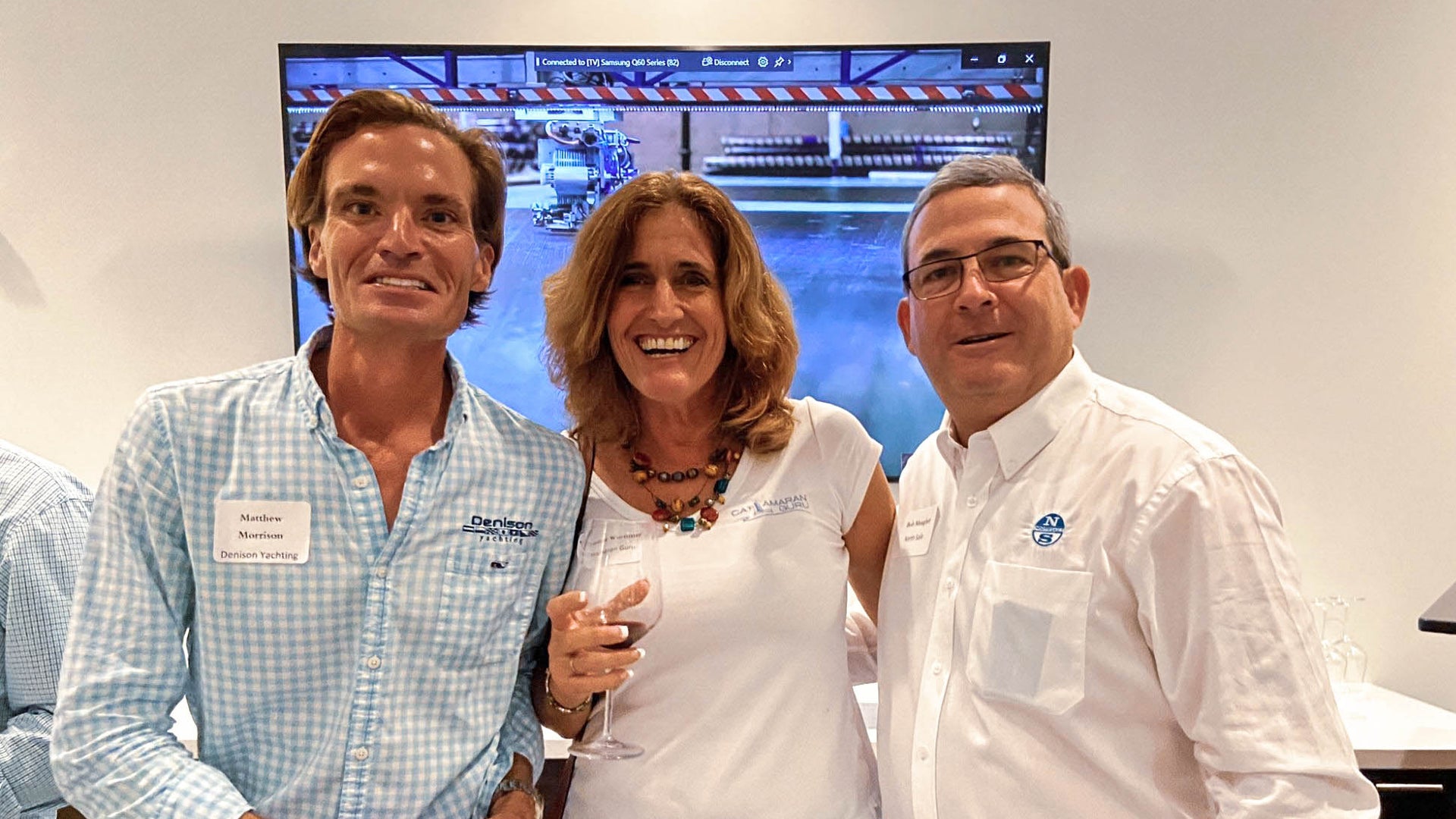
FORT LAUDERDALE SAILING INDUSTRY GATHERS
FORT LAUDERDALE SAILING INDUSTRY GATHERS
North Sails and Maz Ocean Sponsor Meet and Greet
Key players in the Fort Lauderdale sailing industry gathered Thursday night for a fun meet-and-greet hosted by North Sails and Maz Ocean. Representatives from area brokerages, rigging companies, and yacht service companies joined at the newly-renovated Lauderdale Yacht Club to swap stories and learn about new developments affecting sailors. “It’s important to get the players together every once in a while,” noted North Sails’ Bob Meagher. “A good team serves sailors better and keeps them coming back to Fort Lauderdale.” Craig Allison, owner of Maz Ocean, echoed the sentiment.
“The more we know each other, the easier it is to work together on any project.”
Meagher opened the evening with a welcome and short explanation of North Sails 3Di performance cruising products, “ideal for premiere multihulls and monohulls in Florida and the Caribbean.” Then Maz Ocean’s Alex Hill briefly summarized his company’s focus on internet connectivity and off-grid power solutions for cruising owner-operators. Maz Ocean specializes in the fields of integrated marine charging systems and electrical, navigation electronics, satellite TV and mobile internet connectivity, systems monitoring and vessel security and marine systems for sail and power yachts. Offices are located at Harbour Towne Marina in Dania Beach, and the company services vessels in Broward, Miami-Dade, and Palm Beach counties. North Sails is the world’s largest and most advanced sailmaker, with 150 locations and 2,000 people worldwide serving cruising and racing sailors of all kinds. North Sails Ft. Lauderdale leverages this global expertise to serve cruising, racing, and superyacht customers up and down the east coast of Florida. The event marks the first in a series of industry meet and greets led by North Sails designed to foster greater cooperation among those serving sailors in South Florida.
READ MORE
READ MORE
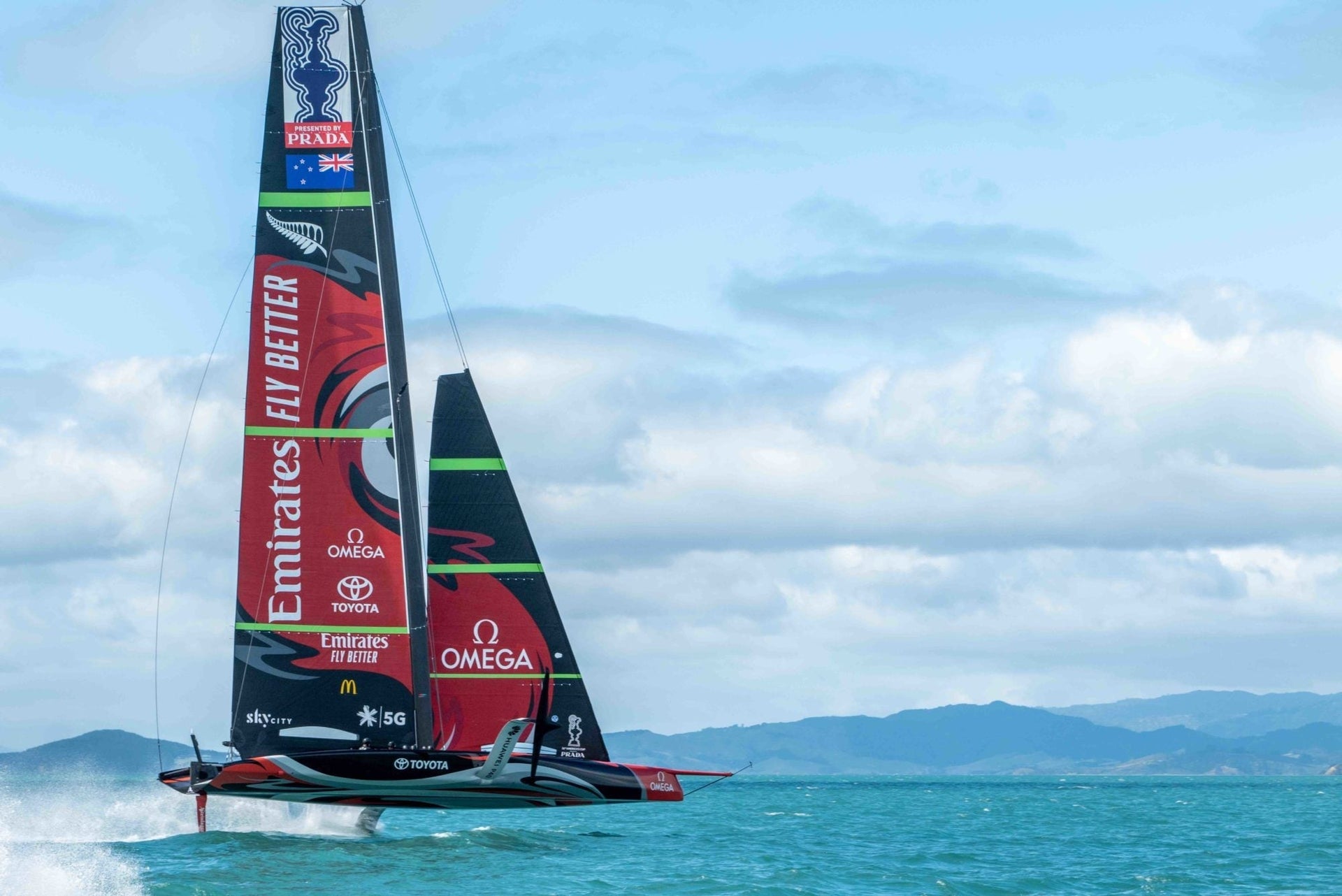
FOILING IS THE NEW FRONTIER
Many of today’s flying creations are conceptualized as pure foiling boats, which means they don’t have restrictions that impede the designer’s vision of the best way to foil. The evolution is dramatic, as with things like foiling kiteboards, Moths, and even the revamped AC50’s (now called F50’s) used in the SailGP circuit.
READ MORE
READ MORE
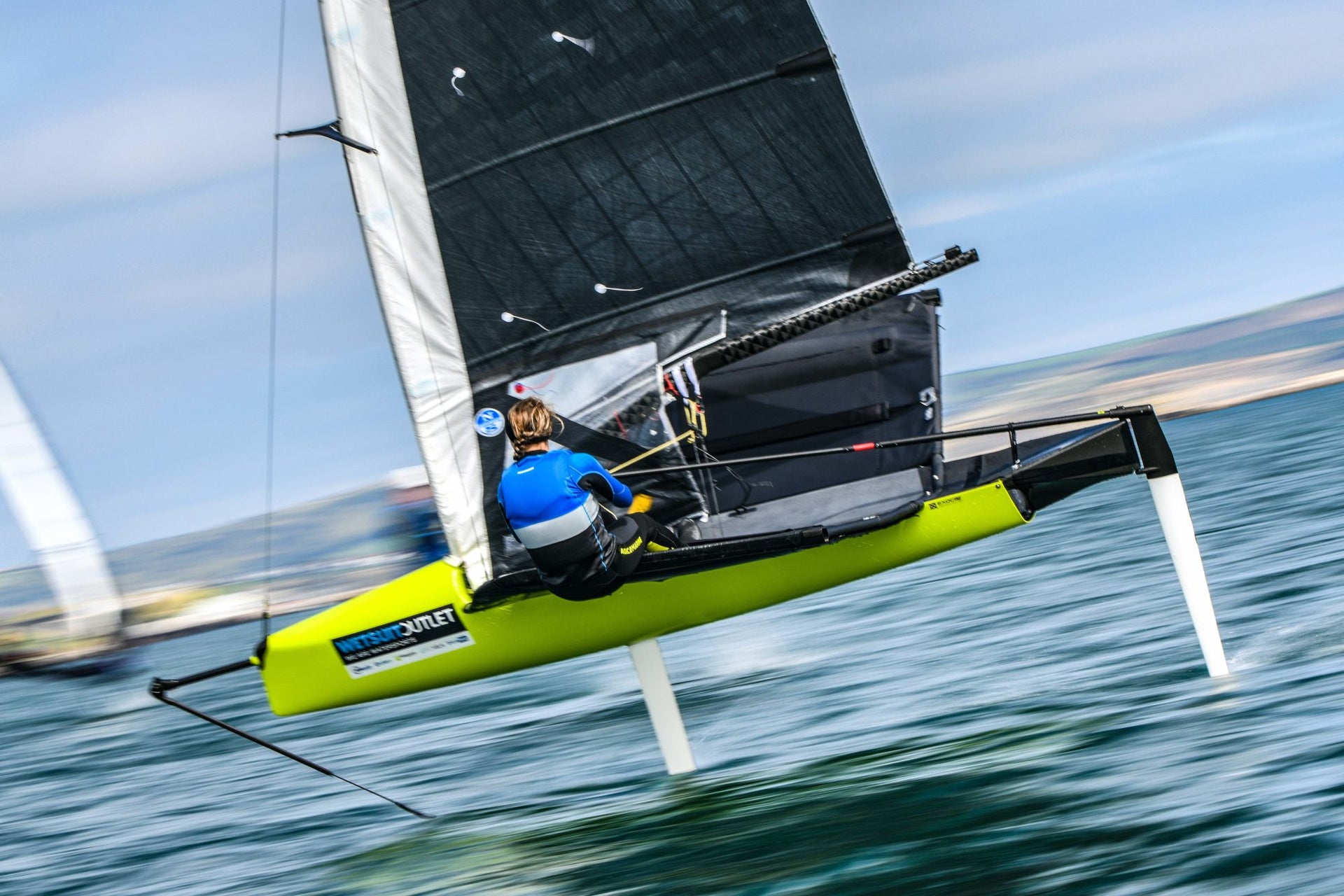
FORCE OF NATURE: JOSIE GLIDDON
FORCE OF NATURE: JOSIE GLIDDON
Josie Gliddon Works for North Sails as an Accountant by Day, But On the Weekends, She’s a Powerhouse Paving the Way in the Moth Class.
On the starting line with some of the top sailors in the world, Josie Gliddon is making a name for herself in the Moth class, and encouraging other women to join her on the racecourse. During the week, you can find Josie at the Gosport, UK loft in the accounting department. We caught up with Josie at Moth UK Nationals to talk to her about her career at North Sails, trialing new Moth sails and her time on the water. Watch the video to learn.
READ MORE
READ MORE
PRÉVOYEZ VOTRE HIVERNAGE
CONTRÔLE GRATUIT EN PRÉVOYANT VOTRE HIVERNAGE
La fin de saison approche, il est temps de prendre contact avec nos experts !
Faire un bilan de votre inventaire de voiles, dresser la liste des travaux d’hiver à effectuer, planifier le stockage pour l'hiver et la mise à bord au printemps prochain : nous sommes là pour vous ! Nos services hivernaux à la carte sont à votre disposition pour prendre soin de vos voiles et augmenter leur longévité. Pour toutes les marques de voiles, nous vous proposons 2 options : 1) un contrôle complet "Certified Service" gratuit de vos voiles, quelle que soit la marque. Pour cela il suffit de les amener à la voilerie (en les déposant 24/24 dans notre SAS sécurisé à l’entrée de la voilerie), ou auprès d'un revendeur North Sails certifié. Liste disponible ici. 2) un forfait premium comprenant l'enlèvement, le contrôle complet "Certified Service", le stockage durant tout l'hiver, et la mise à bord au printemps : vous ne vous souciez de rien, on s'occupe de tout ! Qu'est-ce qu'un contrôle complet "Certified Service" ? Apprenez-en plus. Appelez-nous au 022 782 32 22 pour avoir plus d’infos ou prendre rendez-vous avec l'un de nos experts.
READ MORE
READ MORE
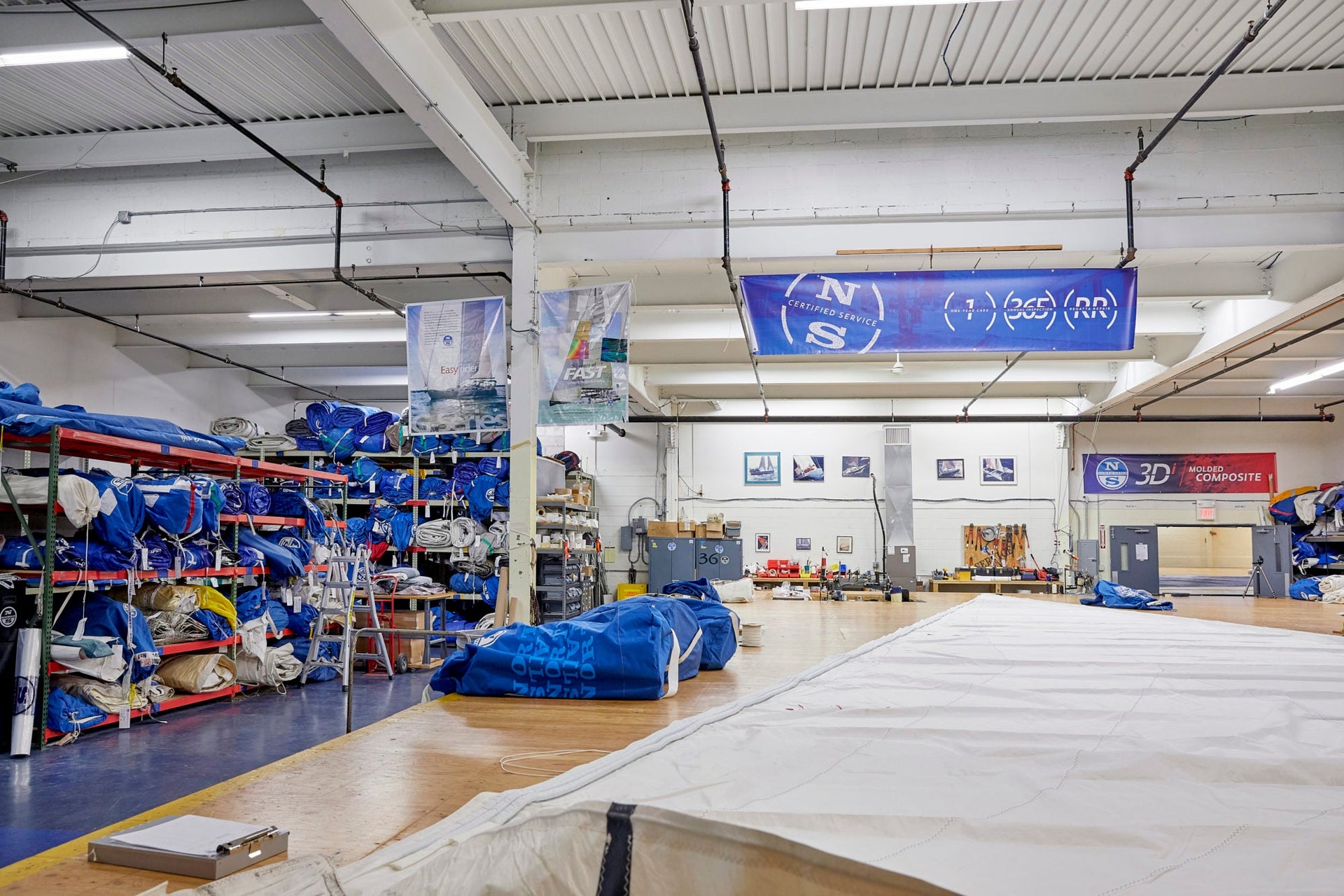
PUTTING AWAY YOUR TOYS
PUTTING AWAY YOUR TOYS
End of Season Storage and Sail Care Is Key to Prolonging Sail Life
North Sails Expert Tom Davis is particular about sail storage. He’s shared his best tips below to ensure your sails remain in top shape for next season.
Given how strange 2020 has been in many respects, sailing has, fortunately, turned out to be an ideal activity in the great outdoors. While the way many of us have put our boats to use in 2020 has differed from prior years, sailors have been able to spend lots of time under sail – perhaps even getting in more sailing days than usual.
For those living in areas where sailing has a defined season due to the approaching winter months, properly buttoning up the boat and equipment is a routine either underway or about to get started. Ensuring it is done right is critical for an effortless restart a few months from now when warmer weather returns.
While by no means intended to be an exhaustive list, here are a few tips based on personal experience to keep in mind when preparing to store your sails.
Dry
If nothing else (and as you’ll see below, there is plenty more to be done), your sails must be scrupulously dry before you put them away. That’s true of short-term storage (between sailing days during the season) and becomes essential when storing for the longer term. Why?
Moisture will encourage mildew growth, causing ugly dark stains on your sails.
Moisture will promote dye migration of colors in spinnakers, causing discoloration.
Neither of these bad outcomes is covered by sailmaker’s or sailcloth manufacturer’s warranties. After-the-fact cleaning will rarely remove all mildew staining, and cleaning will do nothing to undo dye bleeding in a spinnaker.
Mildew and dye migration are unsightly, but they don’t significantly reduce sail performance. Where long term moisture exposure will harm more than just the look of your sails is damage to adhesives, impregnations, and coatings on-and-in the sail material. Moisture hydrolyzes the components of sailcloth that keep your sails flying like foils and maintaining zero porosity. Hydro is water; Lysis is destruction. Enough said, right?
Clean
Is there any part of your boat that is well served by being dirty? Probably not. Dirt certainly damages sail material – sometimes through chemical interaction, sometimes by mechanical action. For example, dry salt crystals embedded in cloth act like tiny internal files, sawing away on fibers and films, clean sails will last longer and perform better, particularly as the hours of use increase.
So, how do you clean sails properly and effectively? For fundamental care, sail materials will handle a combination of water with a bit of detergent, some very gentle scrubbing by hand or soft brush, and liberal rinsing with fresh water. And as noted above, thorough drying after washing is essential.
Where it gets tricky is when more aggressive measures are needed to remove stains. Some fiber/film/resin types are quite robust and will accept exposure to reactive chemistry and more vigorous handling. Other materials can be very susceptible to damage from specific exposures. It’s complicated! Eliminating a grease stain from woven dacron is very different from removing a rust stain on a cruising laminate or mitigating mildew in a high modulus material. I suggest using a well-established sailing industry professional to clean beyond the basic soap/water/rinse/dry process (sailmaker, sail cleaning agency). A web search for sail cleaning tips and contacts is a good place to start, whether planning to DIY or sending your sails to a professional.
A few cardinal rules to remember (but far from everything you need to know before proceeding):
Be super careful with bleach. Some plastics have a high tolerance for bleach (polyester, aka dacron), while others are destroyed immediately by contact with small amounts (bleach is deadly to aramid fibers and nylon, among others).
Be wary of any cleaning agent other than mild detergent in a low concentration. Sometimes rust removers, “oxy” cleaners, and the like will do the intended job nicely. Still, when these are not suited to the cleaned material, disaster can strike quickly (and expensively).
“Race” sails can be cleaned with a simple water-rinse and dry.
Never rinse a nylon spinnaker in a swimming pool (you’d be surprised how often this happens!).
Once upwind sails are clean and dry, some products can be spray applied to help keep them that way – McLube Sailkote is a favorite of North Sails. Applications like these are best left to specialists, in my opinion.
📸 Michael Egan / Egan Images
Repair
A clean sail is undoubtedly nice to have – but not much use if the sail requires repair to be fully functional. Getting a needed repair completed before storage for the off-season is the right thing to do. That sounds a bit like “floss every day” or “avoid carbs”: easy to say, not so easy to do. But it will pay off (same with flossing and limiting carbs, of course). Sail washing does present an excellent opportunity to inspect and identify needed repair, whether you do the cleaning yourself or contract these services with a sailmaker or sail cleaning specialist.
Isolate
I’ve seen many examples of damage to stored sails inflicted by mice, squirrels, and raccoons. Where I live in Connecticut, I’m convinced that we’re never going to win that war by eliminating these creatures (our always stocked bird feeders aren’t helping). So, the next best thing is to keep the little devils out of your sail bags. That starts with clean and dry sails. Don’t leave salt on your sails or their bags (this is a good time to soak away salt and crud on the zippers and zipper cars of turtle bags). If you flake and bag your sails on your lawn, make sure there’s no leaves or grass in the folded sails. Store your sails in a place where small animals cannot reach them. Spinnakers are particularly attractive to rodents as it’s a meal and good nesting material. A few years ago, I started hanging my (clean, dry) spinnakers from lines attached to the ceiling rafters in my garage rather than leaving them on a shelf or the floor. So far, so good.
For questions about sail storage, reach out to your local loft!
📸 Urban Haglin
READ MORE
READ MORE
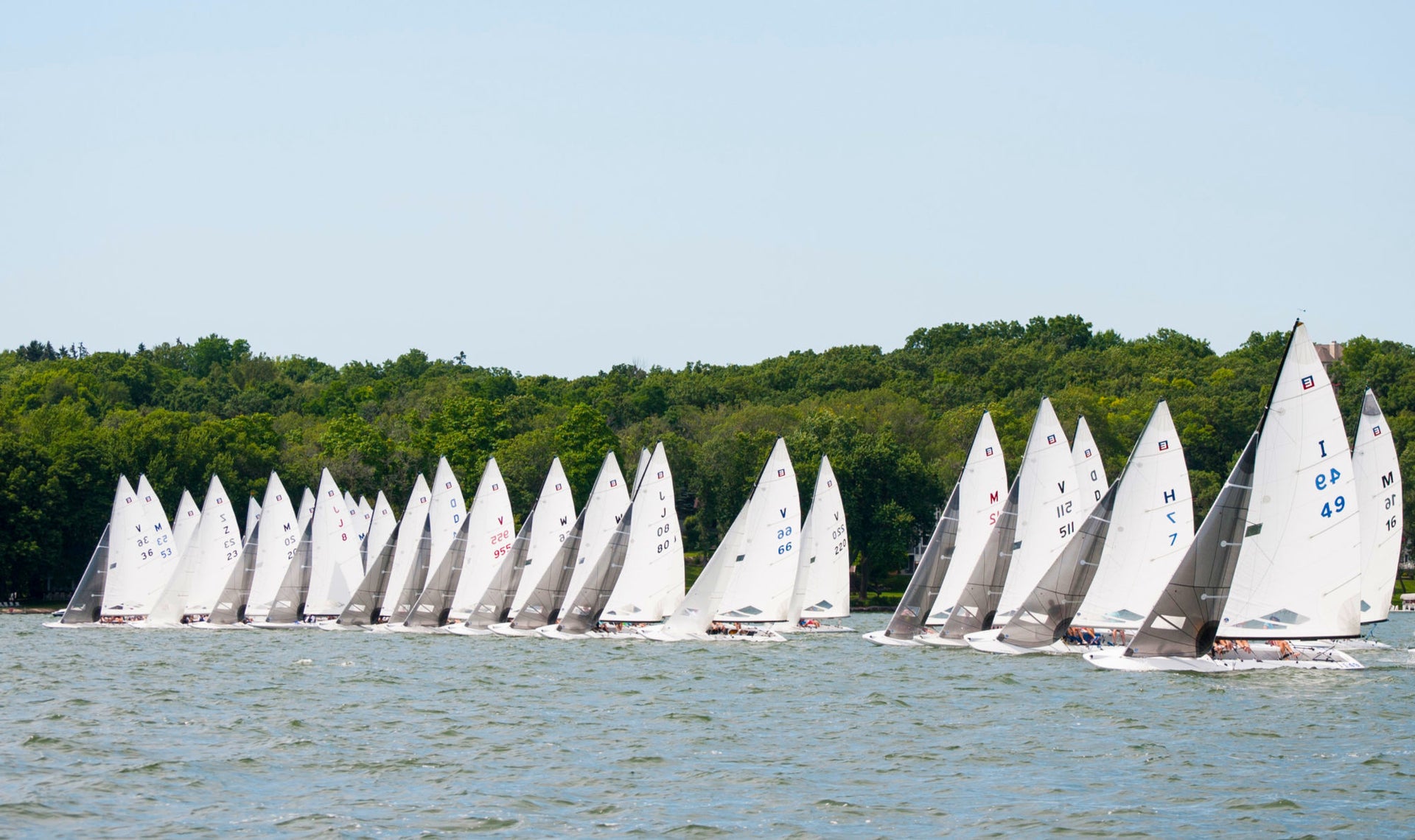
NORTH SAILS CONTINUES THEIR SUPPORT OF SCOW ONE DESIGN CLASSES
NORTH SAILS CONTINUES THEIR SUPPORT OF SCOW ONE DESIGN CLASSES
Providing Users with Championship-Winning Sails that have Dominated Scow Classes for Decades
📸 Hannah Lee Noll
As you may know, North Sails and Melges Boatworks (North Sails Zenda) have worked in conjunction in the past to provide sails and service to the Scow fleets across the U.S. We are writing to let you know that while Melges Boatworks has decided to change tacks and represent a different sail brand, we remain committed to providing top level performance to our Scow customers. North Sails views this as an opportunity to raise the bar in terms of our service, accessibility, and commitment to the Scow Fleets. North Sails owns all of the current winning designs you have become accustomed to.
We have been manufacturing and designing championship winning scow sails for over forty years and look forward to doing so for forty more. The North Sails One Design team has a long tradition of serving one design fleets all over the country and we look forward to working with you! Our network of local one design experts and dealers are available to help you get the most out of your sails so you can reach your goals whether it is an informal evening race, or the Class Championship.
We will continue to develop and sell the North Scow sail models that you have been using to win all the major Scow Championships, the same sails that you have learned to trim and tune. The sails with the quality and consistency that you expect from a North Sails product. As always, North Sails stands behind our products and we take pride in developing and delivering the fastest sails available.
Please feel free to reach out to us or anyone on the North team if you have any questions. We are excited to open up the entire North Sails team to work with you directly on your scow program.
Our team is looking forward to seeing you on the water soon.
A Scow C Scow E Scow MC Scow X Boat
READ MORE
READ MORE
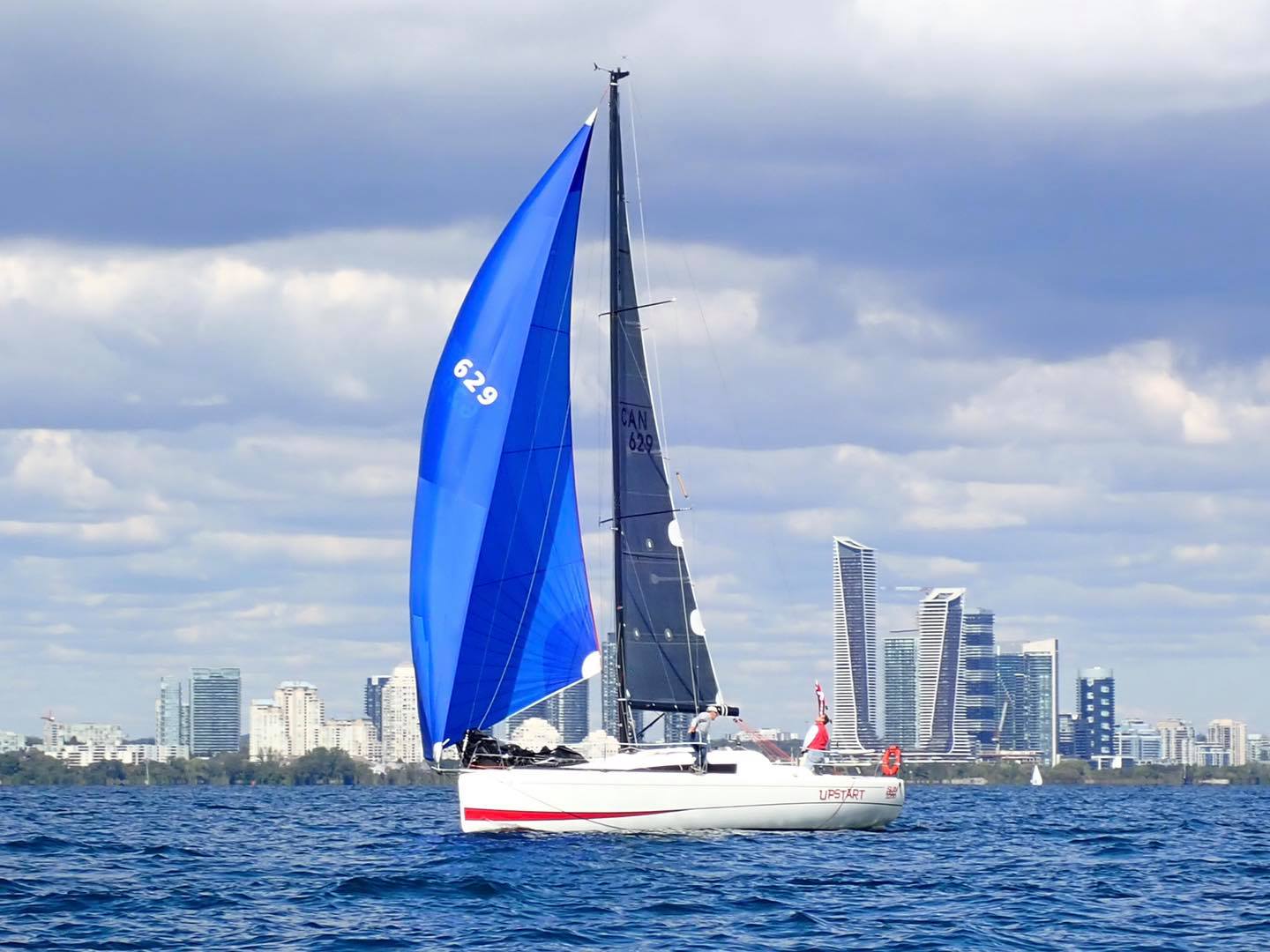
EVENT SPOTLIGHT: FINAL LOSHRS RACES
EVENT SPOTLIGHT: FINAL LOSHRS RACES
Short Handed Sailors Took To The Water For Races 5 & 6
North powered Upstart owned by Bert Barrett. Photo courtesy of LOOR Chair Monica Doedens
Conditions were predicted to be less than ideal for the last races of the LOSHRS series on September 19th and 20th. That said, the wind gods prevailed and a lovely 10-12 knots came through on Saturday with fantastic sunshine to boot. While races 5 & 6 usually take racers to Port Dalhousie from PCYC with an epic party on the Saturday night, this year the Lake Ontario Offshore Racing (LOOR) committee broke it up into two days races. Saturday saw racers head to Oakville from PCYC while Sunday they headed east to Humber Bay from PCYC.
The 49 boats that came out were able to enjoy two days of racing filled with Fall temps, sunshine and good times. North powered Messing About skippered by Andre Beese, a J27, from OYS took first in their division, beating out new to Lake Ontario Saffier 37 Isley from PCYC. Well done Andre and crew! Tonic from RCYC skippered by Chris Jones, powered by w, also took first in their division followed by fellow 36.7 racers Don French in 2nd with Arriba and Richard Reid in 3rd with Zingara. Ken Martin with Star Chaser, took first in his division as well for solo non flying sails on his Beneteau First 45, well done Ken!
It’s great to see the support these sailors have shown to the sport and the committee that runs these races. A great deal of effort, coordination and safety precautions were taken to ensure these races were able to happen for our short-handed sailors. A tremendous round of applause for the Lake Ontario Offshore Racing committee, especially their RC, for adjusting to the times to get races off and encourage sailors to come out on the water.
Photo courtesy of LOOR Chair Monica Doedens
READ MORE
READ MORE

FAREAST 28R TUNING GUIDE
Rig Tuning Guide
All turns from base.
TWS Knots
Forestay
V1
D1
D2
0-5
-5
-3
-1
-1
5-10
-3
-1
0
0
10-14
BASE
BASE
BASE
BASE
14-18
+5
+2
+1
+1
28-22
+10
+3
+1
+2
22+
+10
+4
+3
+2
BASE TUNING - PT-2
V1
30
D1
25
D2
7
BASE Swing
1853 mm
Using the jib halyard, pull the halyard taught against the mast at the level of the top BAS (black band). Swing the halyard to the forestay and mark the forestay at this height. Measure from the mark down to the top of the stainless steel forestay fitting. This measurement is 1853mm for base setting.
READ MORE
READ MORE
CONNECTING KITING AND SAILING
CONNECTING KITING AND SAILING
Steve Calder Brings Years of Sail Design Experience and a Passion for Kiting to a New Project
📸 Ydwer van der Heide
It wasn’t flashy imagery or action sports videos that got Steve Calder, North Sails designer, interested in kiting. His love for the sport began when his son decided he wasn’t interested in sailing optis while the family was in Valencia, Spain working on America’s Cup. A couple of months later back in Delray Beach, Florida, Kai Calder, Steve’s son, called his dad down to the beach where he and some friends had a trainer kite set up.
That Christmas, Kai was fully outfitted with all the gear needed to start his kiting career. He said, “come on Dad. It’s just water, it’s wind. It’s all the stuff you do. But it’s something that I like doing and it’s kind of an expressive sport.” As a result, Calder was hooked on the sport too. Kai is now a professional foil racer on the Pro World Tour, taking after his dad developing and innovating new gear for the sport he loves.
Steve Calder is one of the most lauded designers at North Sails, starting as a great sailor, winning a Bronze medal for Canada in the Soling class at the 84’ Olympics, and upwards from there. He has designed for programs like BMW Oracle Racing, Artemis, Ericsson, Puma Ocean Racing, and Rambler; and was instrumental in the development and the continued development of the Helix Structured Luff system. Calder has seen North Sails through many iterations of America’s Cup sails, as the rule has evolved. Calder is the pinnacle of sail design at North Sails, designing, engineering, and putting forth revolutionary products applied to the boats that are the highest caliber in the sport.
He’s one of the lead designers that the North Sails Design team turns to for guidance in solving design challenges. The company looks to Calder to help guide them in aerodynamic and structural solutions for Grand Prix products and Grand Prix customers.
“The goal of a sailmaker is to provide the best aerodynamics solution for a set of objectives,” says JB Braun, Director of Design and Engineering at North Sails. “Steve’s love of creating faster sail designs has driven him to the top of the sport of sailing. He gets intimately involved with the structure of the sails. He’s exploring new ways of working with materials, like 3Di to refine sail structure. You give him a challenge and he’s right in it, making sure that the design satisfies the customer’s goals.”
Calder uses the North Design Suite for designing top end, leading-edge solutions for race boats. The sophisticated, proprietary software, allows North designers to push the boundaries of sail design and be confident in the results. Calder is combining the North Sails foundation of data-driven design with his own intuition, as a kiteboarder, and applying it to the kites to help innovate and create the next generation.
Steve Calder tests a prototype. Courtesy Steve Calder.
Taking on a kite design project was an exciting and very different challenge for the designer, what he brings to the table here is his ability to innovate and apply his aero expertise that can be prototyped and applied to kite designs.
Calder began working with sailmaker Dave Little and the North Kiteboarding chief designer, Pat Goodman, who is an industry authority on kite design and innovation. Goodman’s ability to understand and translate rider requirements into high-performance kite designs puts him among the world’s most awarded, respected, and successful kite designers.
The team, combining their respective skills and knowledge, have found it fascinating to brainstorm and push the envelope with kite design and its applicability across a wider audience. Starting from scratch and having the opportunity to work with Pat Goodman is a dream in some ways for Calder. Goodman is known for being the guru of kite design, in the same way that Calder is with sails, he is able to fly a kite and sense what can be streamlined to make the product better.
“It just kind of kept moving on from there.” Says Calder, “North Kiteboarding hired Dave to do further explore the development for the kites. And we became a team, I wanted to be involved. We built several prototypes and put them to the test. Some of the impetus for the 2021 launch of the new North kites was a result of our collective work. Dave and I gave some input to that process.”
Pat Goodman says, “it’s so nice to have that opportunity to bring together the North Sails design and material development expertise into the mix. A modern day dream team working towards the goal of crafting a perfect kite.”
Steve and Kai on the water together. Photo courtesy Steve Calder.
“The core aerodynamic principles are the same,” says Calder, “it’s all, lift and drag. Having an idea and appreciation for how a kite or wind wing behaves and what the requirements are to build a good wing are the first principles of aerodynamics. In a way, it’s similar to designing sails but in other ways, it’s brand new. You can make a kite that’s too stiff, right. And oftentimes with sails, you can’t make a sail stiff enough. With kiting there are all sorts of design acumen that you would have that doesn’t relate really to sails at all because the kites behave in an entirely different way.”
Calder says that for most kiters, choosing a kite is all about the feel, whether they understand the physics or not, a concept that translates easily for sailors who are interested in getting into the sport. If you can find the groove in a sailboat, you can likely tell the difference between a well-designed kite and a lemon.
There is an opportunity to set a higher design benchmark in the kite industry and Pat Goodman is at the peak. “Goodman has basically spent a lifetime designing kites. As much as I’ve spent my life devoted to sailboats and performance sailing,” says Calder, “I can get on any boat and I can look up and tell what will improve the performance of that boat, whether it’s the boat, the sails, or the rig. Goodman can do that with a kite.”
Most sailors will find that kiting augments their sailing experience, as the basic principles are very similar. Pulling down on the bar is similar to pulling in the mainsheet. Making adjustments to the center lines on a kite is similar to tuning the check stays on a sailboat.
📸 Ydwer van der Heide
In Calder’s words, “that’s changing the entry angle of the kite. As you pull down, you power the kite, you pull the entry angle down, so you basically release the trailing edge. By doing so, the more you open it up, you’ll notice that the kite’s going to luff, and you’re de-powering the kite. Like when you ease your check stay on a sailboat, the sail gets flatter, and therefore you can sheet it harder.”
In a way, when kiting, your body takes the place of the boat. If you are sailing upwind, and the boat gets a puff, everyone feels it and hikes a little harder. The helmsman makes an adjustment. Kiting makes you more attuned to the wind and allows you to take immediate advantage of that puff, instantaneously, you can edge up and gain speed. There is nothing between you and the power of the kite.
“The feel is amazing.” Says Calder, “if a teammate is sitting on the rail sailing with us and leans over and asks, ‘Hey, what about kiting? You’re really into that. What do you think about it?’ I tell them, the first time I jumped on a laser as a kid, all I wanted to do was pull the centerboard up and just go planing around because it was really fun. The boat was fast, the water was flying everywhere. Anytime the conditions are conducive to kite, it’s the starting point for kiting. And it only gets better from there…”
READ MORE
READ MORE
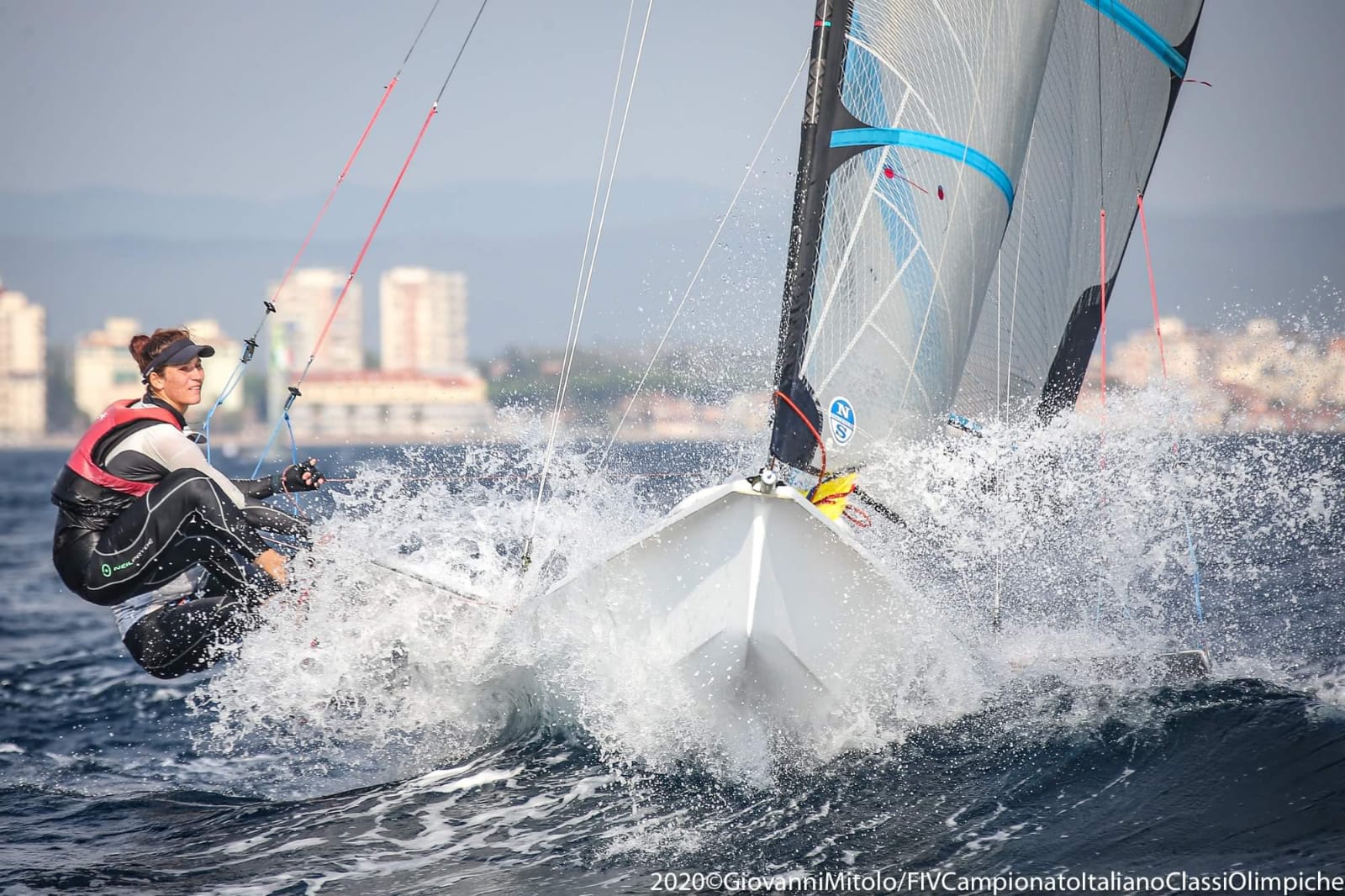
ENIA I MIHAELA, SREBRENE NA PRVENSTVU ITALIJE ZA 49ERFX
Enia i Mihaela, srebrene na Prvenstvu Italije za 49erFX
FOTO: GIOVANNI MITOLO
Od 17. do 20. rujna na zapadnoj Talijanskoj obali u mjestu Follonica, malo južnije od Toscane, jedrilo se Prvenstvo Italije za olimpijske klase. Na njemu je sudjelovala i naša najbolja ženska posada u klasi 49erFX, Enia Ninčević i Mihaela de Micheli Vitturi.
Dok su im se kolege iz JK Sv.Krševan vraćale s regate u Kielu, ove dvije članice JK Uskok otišle su na ovu nešto bližu lokaciju i zajedrile s talijankama. Nakon dugog perioda bez regata u ovoj klasi i njima je ovo bio dugo očekivani povratak na regatna polja s ipak nešto brojnijom i ozbiljnijom konkurencijom nego što su je imale na treninzima tijekom ljeta.
Ukupno je sudjelovalo 8 posada. Osim naših djevojaka sve ostalo su bile posade s ITA registracijama na jedrima. Među njima najviše se isticala posada Jana Germani i Giorgia Bertuzzi koje su prije ovog prvenstva sudjelovale i na regati u Kielu, tako da su stigle na start svog nacionalnog prvenstva već dobro zagrijane i u visokom natjecateljskom modu.
Naše djevojke su unatoč izostanku s regate u Njemačkoj bile na visini i u skladu sa svojim statusom na međunarodnoj sceni, a više o tome saznat ćemo od Enie koju smo uhvatili za vrijeme opremanja jedrilice u Austriji u koju je naša posada otputovala direktno na Europsko prvenstvo:
Za odlazak u Italiju smo se odlučili u posljednji tren. Jedrilo se na moru i uvjeti su bili stvarno izvrsni.
Prva dva dana puhalo je iz otprilike 225°, nekakav njihov maestral... sea breeze od 16 do 20 čvorova. Imali smo po četiri plova svaki dan... prekrasni uvjeti! Šteta što nije tamo Europsko :)
Tako da su ta prva dva dana bilo ono pravo "muška". Tih dana smo uglavnom završavale kao druge. Ispred nas je bila samo Jana Germani koja je u Kielu osvojila 6. mjesto. Tako da samo je tih dana uglavnom hvatali.
Treći dan nismo jedrili, pokušali smo startati dva puta, ali je svaki put bilo prekinuto.
A zadnji dan smo odjedrili dva plova po nekom južiniću. Na početku su bili srednji uvjeti, ali je kasnije vjetar pao.
Nakon deset odjedrenih plovova, nakon dva odbacivanja koja su se kalkulirala nakon 9 plovova, Jana i Giorgia bile su ispred nas za dva boda, ali i s jednim odbacivanjem su bile bolje jer su imale više prvih mjesta. Tako da je bilo napeto od početka do kraja i stvarno se svaka greška naplaćivala.
Enia Ninčević, JK Uskok
FOTO: GIOVANNI MITOLO
Što se tiče prvih mjesta koja je Enia spomenula, naše djevojke su četiri puta pobijedile, dok su talijanke to uspjele napraviti 5 puta, a u generalnu sumu nakon odbacivanja ušla su im još tri druga mjesta i jedno treće, a talijankama samo druga.
Tako da se može reći da je u regati presudno bilo otvaranje po jakom vjetru, odnosno prvi dan jedrenja kad se domaća posada mnogo bolje snašla.
Kompletne rezultate možete pronaći na ovom linku.
Iz Follonice je naš kombi za Austriju otputovao preko Milana, gdje je u tvornici obavljeno popunjavanje opreme. U Austriju su stigle u ponedjeljak navečer i do srijede ujutro su morale vrijeme provesti zatvorene u apartmanu jer su čekale rezultate testa na Koronu koji su obavile u utorak ujutro. Rezultati su dobri i sad su u tijeku posljednje pripreme za predstojeće Europsko prvenstvo na kojem će još jedriti i braća Fantela, te posada Igor Marenić - Anđela de Micheli Vitturi u floti Nacri 17.
READ MORE
READ MORE
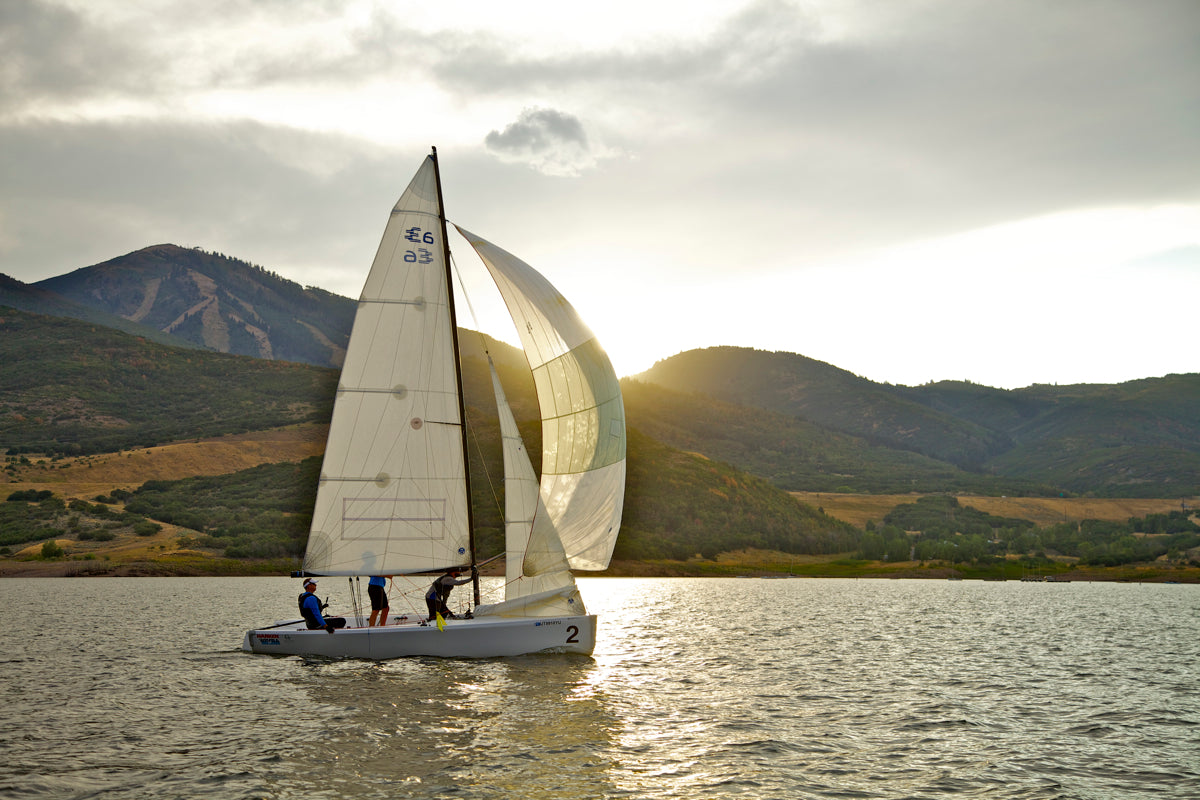
SPOTLIGHT ON PARK CITY SAILING
SPOTLIGHT ON PARK CITY SAILING
At Park City Sailing, an Empty Boat is a Wasted Opportunity
In the Wasatch Mountain Range, the team at Park City Sailing has created a sailing haven, where people from all backgrounds, in all stages of life, have experiences and make memories on the water that stretch beyond the sport.
Park City generally brings to mind winter Olympic games, extreme snow sports, and high-end resorts, but nestled under the slopes of Deer Valley Ski Resort is the Jordanelle Reservoir, 6,200 feet above sea-level where Executive Director Scott VerMerris conducts socially impactful sailing programs from May to October. VerMerris studied human development and family studies and has an extensive background in alternative forms of education and therapy.
The adaptive program accommodates people of all abilities, adapting their fleet to handle sailors with visual impairment, amputation, cognition, autism, muscular dystrophy, cerebral palsy, hearing impairment among others.
Similarly, the therapeutic program is a space for those whose impairments may not be visible to those around them. Park City Sailing is an innovator in the utilization of mindfulness as a component of the sailing experience. Participants include veterans with post-traumatic stress disorder and traumatic brain injury, struggling with addiction, children, and families supporting a family member with mental or chronic illness.
The program is a recipient of the Robbie Pierce Award for outstanding adaptive programming.
The idea began with Ken Block, former Vice President director of Park City Sailing. Block is retired now, but his passion for the programs is still a major part of his life, and he is involved with countless organizations that promote accessibility in sailing.
Block did not enter the sport of sailing in a typical way. He did not come from a family of sailors, but he knew he had an emotional connection to the sport, so he worked his way onto several Swans competing offshore and eventually he campaigned 3 International Etchells.
Initially, Park City Sailing started as a Tuesday night around-the-cans Laser sailing, but with Block’s passion, it grew into the program it is today. A turning point was when the SEAS program in Sheboygan put out a notice that they were looking to donate their fleet of eight Elliot 6 Meters. Park City Sailing worked very hard to get the boats, calling upon now retired North Sails expert Tom McLaughlin to help them close the deal. McLaughlin was one of the program’s first and best volunteers.
“It’s a very positive experience,” says McLaughlin. “We did a lot of sailing with wounded warriors, special needs people of all ages, people with learning disabilities, and so on. To really see their sort of joy or freedom when they’re on the water was really heartening because a lot of these people were beaten down, or told they can’t do things. We put them behind the tiller and encouraged them, ‘you can do this!'” He continues, “the beauty of being on a big open lake is that you chart your own course. You go where you want to go. You don’t have to stay on a path, there is symbolic freedom in that.”
“Our way of introducing the boats to the community was a partnership with the National Ability Center based in Park City,” says Block. “They brought 24 wounded women warriors, to our program and we took them out sailing. The impact on us was palpable, that while sailing is a lot more than taking two turns off the lower to see if we can get a little more power to go through the lump on the next beat. We actually made a difference in people’s lives.”
Park City Sailing continued to strengthen its relationship with The National Ability Center to create their own programs. Those programs have grown into the current work done at Park City Sailing. The program works with groups and individuals, like Big Brother, Big Sister, to specific requests, like one terminal patient named George, whose final wish was to go sailing one last time.
When sailors ask about the program, Block says, “There’s a reason why you’re still sailing after 30, 40, in my case, 60 years.” And it’s not, ‘Hey, how can I induce a little bit more prebend today?’ No, that’s not what it’s all about. Something happened the first time you got on a sailboat that made you continue to get on a sailboat decade after decade.”
The stories that Scott VerMerris and Ken Block share about the sailors in the program are hopeful, powerful stories about inclusivity and the positive effect that participation in sport and being outside can have on our lives. One participant, Dani, had recently lost her husband to suicide when she went on the water with Park City Sailing. Dani started to open herself up to share her story and talk to others about her experience.
Another sailor, Sarah, was in a mountain bike crash that left her paralyzed. After the accident, she felt hopeless but learning to sail made her feel proud to be disabled.
“I always have this limiting thing going on in my head and can’t fully have fun. For the first time, I completely let everything go and I was so happy and laughing and cackling and having the time of my life,” said Sarah of the experience.
Another is Shane, an improvised explosive device specialist in Afghanistan who was suffering from severe anxiety and PTSD, who shared after a day on the water, “Today, I found a place where I feel safe.” Now, Shane continues his recovery and has gone back to school to become a recreational therapist himself.
These benefits have strong enough data behind them that Block and VerMerris have co-authored two scientific papers on their experiences under the guidance of Dr. William Marchand of the Salt Lake VA hospital. on their experiences. They encourage other programs to expand their horizons to work with a more diverse audience.
VerMerris says, “We can all benefit from good mental health, and sailing can contribute to well being. We’ve become fascinated with the effects that combining mindfulness, meditation, being outdoors, learning about sailing, a new skill that involves physics, and nature, and science, and all these different things, as well as comradery, can treat post-traumatic stress disorder.”
“The more you spend time in a cockpit of a J/22 with three or four people in recovery, you’re like, “Wow, these are amazing stories,” says Block.
Tom McLaughlin, who was hired by Lowell North in 1967, and has been involved with countless high-performance programs, attests that his hours spend volunteering with Park City Sailing strengthened his love of the sport. “I will reach out and I’ll help others because it not only is it rewarding, but it regenerates your love for sailing. And I think no matter how good of a sailor you are, even on the professional level, if you don’t really love it, you’re not going to do it as well.
“When you sail, like for an America’s Cup program and you’re working six and a half days a week, and your focus is on incremental improvement. It’s easy to lose sight of the original joy that brought you into it. Volunteerism is something that allows you to work with people that have never been exposed to sailing or are struggling with real-life problems, and to see them leave those problems onshore and have some real joy, that takes the competitor and harkens back to that happy place. That gets you through another week of the grind of going out and sail testing and boat testing.”
Block makes himself a resource for those who want to share their time on the water, and encourages people in the sport to lean-in to adaptive inclusivity, even if they might feel uncomfortable at first.
VerMerris adds, “I think that’s why any member joins. It’s so that they can escape the stresses of whatever lives onshore and get out on the water as we all do. Our program also focuses specifically on how we can use our boats to offer people experiences that have different physical abilities, or different cognitive abilities, or the two combined.”
The team attests that starting a socially-impactful sailing program begins locally, partnering with groups like adaptive sports centers, any therapeutic treatment center, or their local VA.
“Be fearless in reaching out to the community,” says Block.
Sending instructors to US Sailing’s adaptive sailing course adds to their confidence levels. Block raises his hand to speak at as many events as he can, and also offers his personal cell phone number up as a resource (you can email us for it.)
The work done at Park City Sailing is proof that sailing is good for our well-being, giving participants transferable skills that relate when you get home and the stresses of real life. No matter the walk of life, we can all benefit from more time spent under sail.
READ MORE
READ MORE
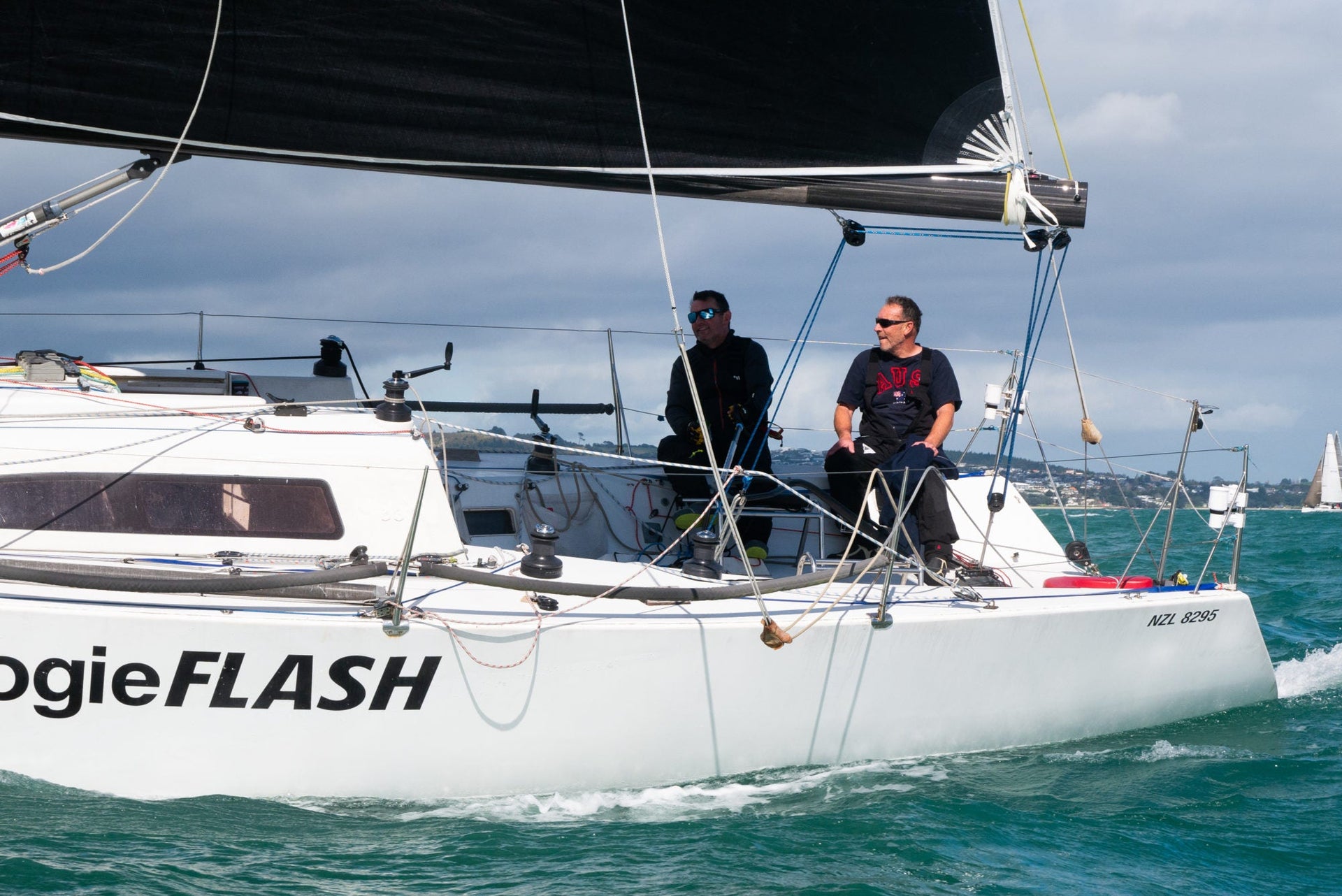
CLIENTS GIVE NEW LIFE TO AN OLD BOAT
CLIENTS GIVE NEW LIFE TO AN OLD BOAT
The Rebuild & Sail Inventory Upgrade on Mumm 36 Boogie Flash
📸 Lissa Reyden / Live Sail Die
Local sailors and longtime friends David Wyeth and Vaughan Hunt rehab racing boats as a hobby. The pair spend a lot of time together, participating in weeknight sailing around Auckland and an occasional doublehanded race throughout the season. But what they love most about co-owning a boat is the rebuilding process. “If the boat is perfect, where’s the fun in that,” David remarked.“Most of our enjoyment of this co-ownership is the journey to get her back on track,” said David. “Reinventing systems, changing hardware–it’s about building something and seeing the project come to life. Our conversations aren’t about how we win races; rather, we can focus on keeping the boat moving forward and going quicker.”
What about Boogie Flash drew David and Vaughan’s attention?
David and Vaughan owned a few boats together, most recently, Moving Violation, an Elliot 5.9, which they had for 15 years. Once they ran out of things they could do, they were ready to tackle a new project. “We found this old Mumm 36, called Boogie Flash,” said David. “She needed some work, but it’s been a fun challenge, and we have both enjoyed our time figuring out how to improve every aspect of the boat.”
“There was nothing particularly attractive about her,” David explained. “But she had potential. We were most attracted to the fact that she looked like she needed saving.”
David and Vaughan race the Boogie Flash in the Rum Series on Friday nights and the partake in the summer series on Wednesday’s which will go through January. “There’s a few two-handed races in there that we try to fit in as well,” said Vaughan. “The Mumm 36 wasn’t designed to be two-handed, but we’ve got her in great shape for it these days, and boy, is she fun!”
New sails made a difference.
Talking to our team at North Sails, new sails bring life to older boats. Coming up with a new sail plan, changing the deck layout, seeing how things go, that’s what we like most. It’s about the whole process, not just about the racing.”
Sail expert Andrew Wills and sail designer Mickey Ickert at North Sails in Auckland were hands-on to help David and Vaughan design a sail package to get Boogie Flash back in action.
“We decided to go with a full 3Di RAW upwind inventory. Boogie Flash now has a square-top main and a new #1 & #2 jib. We cut a hole in the bow and installed a retractable pole, allowing us to add a brand new, huge symmetric kite. At the moment, the hull looks like a stolen and recovered car, but our sails are gorgeous,” David remarked.
Mickey Ickert designed sails for David in the 90s, so he knew Mickey would be the right choice for this new project. “We talked about what we were looking for in new sails, how we could optimize the rig, and fine-tune our settings to make her faster,” said David. “He designed a big symmetrical kite with broad shoulders, and it amped up our off-wind sailing. We also got a new #1 jib, which trims block to block like a dream.”
📸 Lissa Reyden / Live Sail Die
The duo modified the boat from its original factory settings, which made it more of a challenge. David commented, “Working with Andrew and Mickey made the sail part easy. When we hoisted our jib for the first time–it was perfect.”
“Every day we put the sails up, you could feel the difference,” said Vaughan. “The boat just lit up. It was effortless. The sails and rig are now balanced, and the boat builds speed constantly. Boogie Flash is so much faster and points four degrees higher compared to where she was when we bought her.”
North sail designer Mickey Ickert enjoyed working with David and Vaughan on their new project. “The most interesting part about projects like these is that an existing hull can be upgraded and still be competitive with the right sail inventory. The Mumm 36 is a great platform and a fast boat. The communication between David, Vaughan, Andrew, and myself was vital in this project’s success. The guys encouraged us to get larger sails on the rig and looked for solutions that were not driven by rule constraints.”
“Andrew was helpful because of his excellent knowledge of the racing format and was the perfect facilitator in this project’s communication,” said Mickey. “Once we had the ideas, I shared visuals with David and Vaughan using North Design Suite, which is a great way to show boat owners what we envision. By the end of the day, everyone was on the same page.”
What do David and Vaughan enjoy most about working with their local North Sails team?
“What we like about the support we’ve received from the North team is that they understand us and the boat. They know what we are looking for and understand what type of sailing we do. North has the best advice and the right sail options. Being fast out of the box is the bonus.
We haven’t looked back since,” said Vaughan. “It was like night and day. You could instantly feel the difference. Having a straight mast, new sails and wide spreaders swept back 20 degrees; we don’t need to use the runners all the time; thanks to Andrew and Mickey, we found the sweet spot for headsail trim.”
📸 Lissa Reyden / Live Sail Die
READ MORE
READ MORE
LIFELONG WATER LOVE LEADS TO SAILING ADVENTURE
LIFELONG WATER LOVE LEADS TO SAILING ADVENTURE
New Life To 1976 Catalina 27 Tall Rig
Krizia Marban and Doug Hampton share a glimpse into their sailing adventure aboard their 1976 Catalina 27 Tall Rig with their two pups in Vancouver.
How Did You Get Into Sailing?
Krizia was born and raised in the desert, but always knew that she loved the water! The very first time she got into a dinghy was a high school field trip to Jericho Sailing Club. A few years later she was invited to race on Thursday Nights with a rowdy crew on a Schock 35, named Fancy Free, skippered by the legendary Ian Lloyd. Doug grew up on Vancouver Island, and has always grown up by the water and boating. This year is his first year of sailboat ownership.
Word around RVYC is there is a real nice-looking Catalina 27 getting a big refit on the West Walk, when did you purchase it?
Doug and I purchased the boat August 1, 2019, so we are still reeling from that boat ownership high. The conversation of owning a boat only amounted to window shopping in January that year, until a friend made an offer we could not resist. When all documents were signed, we went down to celebrate on the boat, only to find that the lock on the hatch was seized! So, we literally had to break into “our” boat on day one. The hull and deck is a faded banana yellow hull, with green accessories, so the boat stands out a bit.
Why did you choose the Catalina 27 design?
The influence of purchasing a Catalina 27 was mainly due to the popularity of the boat and the 4KSB lifestyle. I’ve raced, shared, and leased a few Catalinas around the bay. They are the perfect starter cruiser, easy weeknight racer and have very comfortable accommodations. The supplier of parts and the online owner forums are also all very active. There is nothing like racing in a regatta with the BBQ on.
Since the purchase of the boat what are some of the projects that you have completed?
Even though the boat is 44 years old and has had 3 previous owners, it was well kept and dry inside. The first week of owning the boat though, we gave it a deep clean inside and out. We also wanted a boat survey completed to have a sense of expectations to what we really got ourselves into. The list of recommendations was expected, so it was a great base to prioritize which project we wanted to tackle first. There was some struggle with planning and organizing with the global pandemic shutting the city down in the spring, but we just patiently worked on some minor tasks, like bringing a few pieces of teak home to strip, sand and varnish. Some of the major tasks we have accomplished the last 7 months include a haul-out to power wash the buckets of mussels at GIBY; contracted Skookum Yacht Services to repaint the bottom, replace through-hulls, and keel bolts inspection; and rewiring of all electrical by A-Sea Marine Electrical Ltd. One major unplanned upgrade was the gutting of the galley.
What is the next project on the list?
Each project is a mushroom project, so there’s always something new. We replaced the halyards and sheets recently, so we are looking forward to purchasing/replacing deck hardware… to have her race ready, haha. We held off on replacing the interior upholstery, since we’ve always been fascinated with the grooviest decade! We are currently loving the original yellow retro wool in the cabin. We also scrubbed the mildew green Dacron jib and main sails, a true test to any relationship. The sails work okay for the cruising we do but purchasing new North Sails is on the horizon.
Have you ran into any issues with the boat since having it?
Since replacing the old, oversized halyards and not having a halyard restrainer, we had issues with the jib halyard wrapping around the forestay, which could potentially be a very serious problem out on the water. Luckily, we had Chris Walter from the Vancouver loft of North Sails as a boat neighbor at the yacht club most of the summer. He assessed our issue, added a strop at the tack to raise the sail, and get it dialed to furl, it worked wonderfully! Shout out to Chris! He knows there's always a beer or more for him on the Gidddy Up.
I’ve noticed you go cruising with two smaller dogs. How do you accommodate them when on the water and what are their names ?
Dude (white/fawn), he’s 8 and the swimmer, and Opie (white/black), he just turned 6, he’s the sinker. We may look into getting lifeline netting since Opie’s a bit of an explorer on the deck. They both wear lifejackets, and instantly go to nap mode under sail. At first, Opie wasn’t really into the motion of the ocean being down below in the cabin, but it sucks down there on a choppy day. “Boat” is a now trigger word, so it only means beach, boat rides, treats, sun, and good times!
Your partner Doug is fairly new to sailing. How is he enjoying it?
Doug is loving it! Doug went on his first cruising trip to Gambier Island; summer of 2017 and he loved every bit of it. We live downtown, so it always makes sense to wanting to be elsewhere on the weekends. We have spent almost all our weekends taking the boat out, tinkering and or having dinner out in the bay this past year. We do a lot of land camping, so cruising is just another way for us to go camping, this time on the water. Thinking back to our first test sail out in the bay, hoisting the mildew sails for the first time. I had him on the tiller, so he could watch what to do in the cockpit. There wasn’t much breeze at first, but we turned off and lifted the motor, I told him to ease his gorilla grip on the tiller, let the sails flop and fill and just feel the wind in his hair. Once he got the hang of it and we were heeled over and moving, he smiles and says, “Where do you wanna go?”, to which I responded, “Ahhh, we forgot to bring in the fenders!”…Phew, no one was around to see that!
Doug’s a professional photographer, other than taking surreal pictures while cruising, what else does he enjoy about being on the water?
Doug’s got a busy work schedule, so time spent on the water is always peaceful, but can also be stressful for him. He’s mastering taking the boat in and out of our slip and I’m very proud of how quickly he’s learning it all. At the same time he’s been burning through film with a few of his cameras, and so keeping with the retro theme, he’s managed to develop and process film by turning the cabin into a dark room!
What type of cruising did you get up to this summer?
To celebrate finishing some of the projects and our first anniversary owning the boat, we booked the last week of August for our first family cruise around Howe Sound. The plan was to stop over on Bowen, Gibsons, and Keats but with pandemic restrictions in mind, we decided to just spend 6 days on Alexandra Island (RVYC Outstation). Alexandra is a small but quaint island located in Centre Bay of Gambier Island. By the 6th day, all the ice had melted in our cooler, so we decided to sail home, it was a nice slow reach to Jericho.
Do you have any plans to go cruising this fall? If so, where do you plan to explore?
Fall is surprisingly our favourite season! Crisp sunny fall days, foggy mornings, rain, as some would detest! We’ve re-attached the windows on the dodger and patched up the vinyl with clear sail repair tape, so it’s ready for one more season. We are monitoring the pandemic restrictions this fall, and hoping to be able to do some weekend trips to Bowen, and to Wigwam Inn (another RVYC outstation) at the end of the Indian Arm. The previous owner installed an oversized Dickinson propane heater on the boat, so just firing that up to warm up the cabin and ready to dunk some cookies in some tea will be top notch.
READ MORE
READ MORE
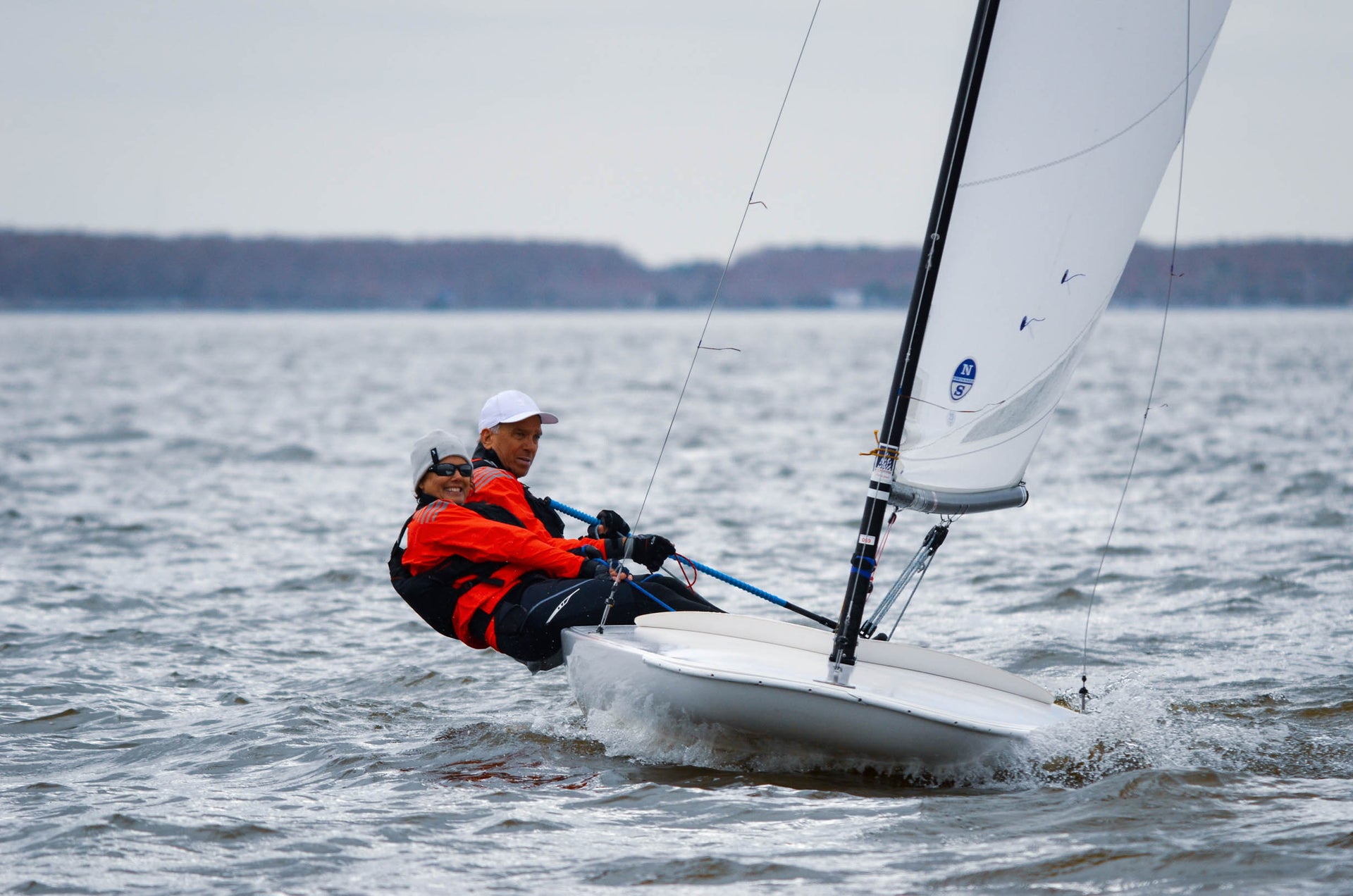
#NSVICTORYLIST: MC SCOW MASTERS
#NSVICTORYLIST: MC SCOW MASTERS
Q & A With Overall Winner, Matt Fisher
Congratulations to 2020 MC Scow Masters Champions Matt & Lisa Fisher! 📸 Regatta Girl Photography
We spoke to 2020 MC Scow Masters Champion, Matt Fisher, to get the full download what has helped him raise the bar to be even more competitive in the MC Scow fleet.
NS: Where and when did it all start for you?
Matt: I have been sailing MC Scows for 12 years out of Hoover Sailing Club, Fleet 54. We have about 25 boats in the fleet and get about 10-15 on the line every Wednesday and Friday. It is a tenacious fleet. I sailed quite a bit this summer and am in 4th place in local fleet standings. I grew up at Buckeye Lake YC about 30 miles east of Columbus, sailing the Lightning and Thistle. We moved to Hoover about 35 years ago.
NS: How did you prepare for the MC Masters under the current sailing conditions?
Matt: Hoover Sailing Club has been very active this summer. We have not had social activities at the club, but 2020 has been one of the healthiest years of participation that I can remember. Between sailing the MC Scow, the Laser, and crewing for my son Stu on the Thistle, I have sailed more in 2020 than I have since college. I sailed at least 35 races with the MC Scow fleet this summer and had a lot of time to practice. As I mentioned, we have a highly competitive fleet, and one of our fleet members, Ted Keller, is one of the top 2 or 3 in the class. He won the MC Scow Blue Chip five times and is considered one of the fastest MC sailors in the class. Ted and I did one-on-one tuning – or sometimes maybe 3 or 4 boats came out – 20 + times since April.
I am retired, so going out on a Tuesday morning when conditions are right was easy to organize. During our practices, we focused on straight-line speed, boat handling, gear changing, and more. I did this with Ted before the Nationals in 2014, where we gook 2n and 4th overall. We practiced last year before the 2019 Masters, where we placed 1st and 2nd overall. Ted is a great coach and has brought me along. I spent a lot of time in the boat this summer working on boat handling.
When comparing notes with other folks at the Master’s Nationals, this past week, a lot of fleets in the MC class had a strong year despite, or really because of COVID.
NS: You have used the Z- Max Sail for some time. Can you give us a few tips on set up and trim? And why do you prefer this model?
Matt: The Z – Max mainsail is the only sail I have used since I have been sailing MCs. I follow the North Sails tuning guide and have been much more conscious of knowing the tune numbers than in previous years. The week before the regatta, we knew we would get some big breeze at Clear Lake. We had a light day Friday and two medium to heavy days Saturday and Sunday. I tightened the forestay on Friday night a few turns. The Z-Max is easy to use, but if I have any issues, its because I am over trimming. I am getting better at using the telltale in reference to the top batten, which has helped a ton.
NS: You started off the regatta with a 1-1 on Friday. You must have been fast. What can you tell us about this?
Matt: Going from Thistles and Lightnings to an MC Scow has always been a big adjustment for me, and I think it is more challenging to make a new boat go well in lighter air than in a breeze. I have always been impressed with people like Allan Terhune, my brother Greg, and Skip Dieball, who would go to three different class midwinters three weeks in a row. Most of the tuning that Ted and I did was in lighter wind speeds, under 10 knots. Most of our club races were in light air also.
With a scow, keeping a constant angle of heel and having the ability to change gears quickly is the key to having the best speed in the softer conditions. Keeping the boat going through the lulls and making the 2-3 adjustments to weight and trim make a huge difference. On Friday, I was able to get good starts and clear lanes so I could go where I wanted. The conditions changed drastically, from blowing about 10-12 in the morning on Friday to less than 5 knots by the end of the second race. We went from sailing the shifts to sailing for pressure and were able to keep the boat moving. I was very fortunate and borderline lucky on Friday to get off the line clean and then have a good lane on the first tack. But changing gears and staying in the breeze was essential for getting out in front of the fleet.
NS: When it’s windy, you sail with your wife, Lisa. It must be great to share the racing aspect with her. What does she do onboard to help in windier conditions?
Matt: That is one of the neat things about sailing scows. We can take on crew up until the 5-minute gun. I am in the “middleweight” category, and its an advantage to take on an additional crew with its blowing 12+. At the masters, it seemed like 80% of the boats took an additional crew on Saturday and Sunday. I think some of the big guys don’t like the rule, and I understand why. But it does help allow kids and spouses to sail. I like it when so many boats bring on an additional crew because everyone sails a similar lane.
I will say that Lisa and I only went out to practice a couple of times before the event, and it showed on Saturday. We weren’t quite as good at holding our lanes; I started trimming a little looser on Sunday, and we were going much better.
What is kind of funny is that now the only time that Lisa sails with me is when conditions are over 12mph. We sailed Snipes together for a long time and Lightnings and Thistles, so it’s very relatable. She is a great crew. Lisa also has the best, high-tech gear to keep her warm and dry, which is perfect because when it’s windy, it’s chilly, which is when I need her. It has made the Christmas season much easier to navigate too. A couple of years ago, I got her a drysuit. She tried it on and looked good in it. But she then realized she would only need it during cold and windy conditions. She sent it back because she didn’t want to sail in those conditions, but it has been fun to sail together, and it has allowed us both to get more involved in the class.
NS: What are your future MC Regattas on the schedule?
Matt: I am hoping that the Florida circuit will take place. There are three regattas at Lake Eustis, one in November, another in early February, and then the Midwinters. It is an excellent break from the winter months up north, and we have enjoyed being able to go south to sail regattas in February and March. We expect a crazy winter, so we have not made plans yet, but I hear that regattas will happen. We hope to go, but I will admit we are more on the cautious side of COVID.
Looking for race-winning sails? You can now order directly from your North Sails expert. Call or email us today for the same quality, consistency, and expertise. We look forward to helping you make the most of your next event.
Ask an Expert Tuning Guide Shop Sails MC Scow Class News
READ MORE
READ MORE
THE STORY OF ARGO: PART III
THE STORY OF ARGO: PART III
A New Adventure on the Mediterranean
Read Part I and Part II.
Ingvar Ravelius had a dream when he was 24-years-old that he wanted to build his Opal 46, Argo, and sail around the world. 10 years later, in 1984, he had sailed across the Atlantic ocean and around the Caribbean. When he was ready to take off, he met his future wife Leena, sold everything, and sailed away, departing from Sweden then on to the Mediterranean with no plans to return.
Ingvar and Leena sailed from Gibraltar, east along the Spanish coast, then to Ibiza to visit their friends. They stayed in Ibiza a couple of weeks to pull Argo out of the water for maintenance. While Argo was on the hard, they flew home to Stockholm for a couple of weeks. After sailing for 6 months straight, flying home in just four hours felt strange for the couple. When they returned to Ibiza, they sailed east, deeper into the Mediterranean. Their adventures the following year took them to Mallorca, Menorca, Sardegna, Malta, and Greece.
One sunny day in Lavrion, Greece, Argo was docked and Ingvar was working on deck. He was sanding the varnished surfaces to get the boat to shine, taking great care of each detail.
The tender to Argo was tied to the side of the hull when Ingvar was working. He was so concentrated on his work that he did not notice that his tender had floated away, and the only thing left was the short end of the line, tied to Argo. Ingvar was frustrated that it could’ve been stolen, and was convinced that someone swam out and cut the rope.
Dismayed, Ingvar and Leena decided to pull Argo for maintenance once again and spend their winter at home in Sweden. They made friends with a fellow Swede, who was driving back to Sweden after a road trip to Greece. They joined him for the return trip back home.
Upon their return, they planned to sail through the Mediterranean and across the Atlantic Ocean down to the Caribbean.
But that plan changed soon after they came home to Sweden.
In December of 1985, shortly after they arrived in Stockholm. Leena and Ingvar found out that Leena was pregnant. They couldn’t go back to their adventure as soon as they planned. Leena stayed home in Stockholm until I, John, was born in August of 1986. Ingvar went back and forth to Argo to check up on her. In March of 1987, they returned to Greece with me as a newborn to set off once again. I was 7 months old when I saw Argo for the first time. She was on land in Olympic Marina, in Lavrion, Greece.
Ingvar had bought a new tender. He wrote with big letters on it: TENDER to ARGO and then put a lot of layers of varnish on it. My father is extremely picky and careful with all the things when it comes to the boat. The red inflatable tender is now over 34 years old and is still the Tender to Argo today, it has been with the boat as long as I have.
We sailed away through the islands of Greece and into Turkey. By my first birthday in August of 1987, we had docked in Bodrum. A man selling fruits at a market started talking to my parents about my blond hair. They told him that it was my first birthday and he gave me a watermelon as a gift, which started a tradition. Since that day, I have enjoyed watermelon on all of my birthdays.
It was on this adventure, I took my first steps, onboard Argo.
READ MORE
READ MORE
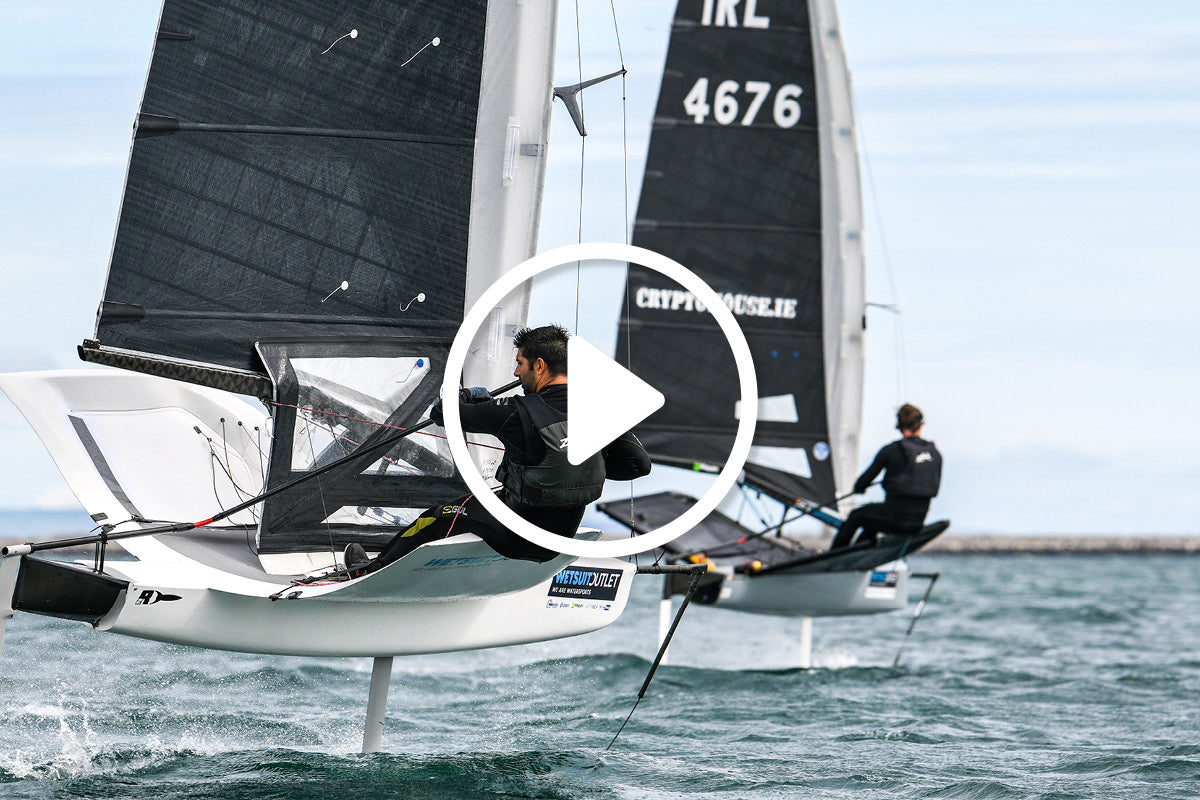
TUNING TIPS FROM THE TOP
TUNING TIPS FROM THE TOP
North 9DSX Moth Sail
Pros at the top of the fleet share how the North 9DSX Moth sail takes them through the range of conditions and their personal tuning tips.
Shop Moth Sails
READ MORE
READ MORE

TOP-LEVEL FOILING: TF35
TF35: FLIGHT CONTROL
A New Class Launches on Lake Geneva
📸 Loris Von Siebenthal
Their take off was a bit delayed but the newly developed foiling TF35 fleet recently met on Lake Geneva for the first of two training weekends. The sessions provide sailors, class organizers and the development team an opportunity to see their vision in action, and trial a format for future regattas. For North Sails, these early training days serve as a chance to analyze the performance of the new TF35 sails.
The TF35 is built on an ambitious design brief; bringing top-level foiling to a wider range of sailors. While the idea of an accessible, high-performance foiler sounds like a strange pairing, a big focus of the training weekend was testing out and then dialing in the boat’s flight control system, which makes the platform more stable and safe. A mere 6 knots of TWS downwind are needed for take-off and the TF35 gets foiling upwind in 8 knots TWS. The flight control system brings stability and safety to the platform, addressing the class’s wish to make a high-performance foiling experience available to more owners.
📸 Loris Von Siebenthal
Lake Geneva is known for varying conditions, but the weekend presented ideal weather for dialing in the TF35. Arnaud Psarofaghis, sail designer and Alinghi co-helmsman said: “Our specific wind conditions on the lake are really challenging in terms of sail range, boat can accelerate quickly, boat speed can vary from 12 to 20 knots within 2 knots of TWS.”
The much anticipated training session saw dream conditions on Lake Geneva, allowing the race committee to complete nine races in winds ranging from 4 – 12 knots. It was a unique opportunity for each of the seven TF35 crews to assess their level and progress within the fleet after training independently over the summer months.
📸 Loris Von Siebenthal
Summarizing the weekend, North Sails Suisse director Pierre Yves Jorand said, “It was a very rewarding weekend we were able to test the TF35 in different sail configurations. The objective of the series is to have boats that offer the great experience of foiling in the typical Lake Geneva conditions. It’s now up to us to optimize the sail combination and boat set up to maximize the level of fun and performance of the boat in the lead up the 2021 TF35 Trophy Championship.”
North Sails has been deeply involved in the development of this new class and our lofts in Switzerland and France worked together to outfit teams with North 3Di.
📸 Loris Von Siebenthal
Patrick Mazuay, North sail designer, member of TF35 Class design team responsible for sail development explains: “We have seen a great improvement already in just one weekend from all of the crews. As one of the sail suppliers, all of us at North Sails are thrilled to see the positive development of everyone on the water. We now have the advantage of the October training session to improve and tweak the sail configuration.”
The overall feeling on sails from everyone involved at the end of the three days training is of great satisfaction, both performance and robustness wise.
Coming up next on October 9-12 is test event #2. Learn more about the class here.
📸 Loris Von Siebenthal
READ MORE
READ MORE
ETNZ AMERICA'S CUP TALK: RSVP
JOIN US FOR A SPECIAL EVENT
An Evening with North Sails & Emirates Team New Zealand
READ MORE
READ MORE
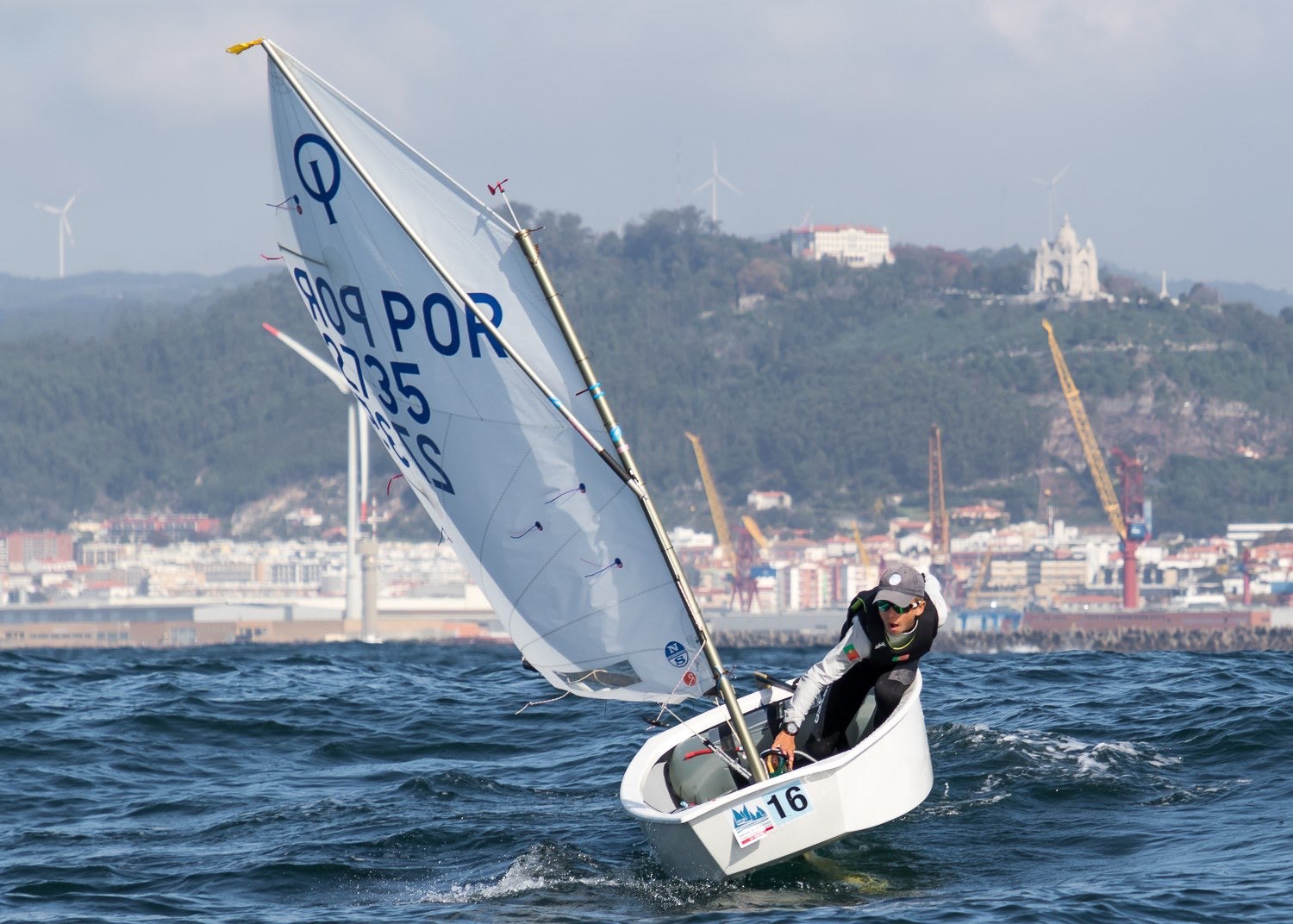
FRANCISCO UVA SAGRA-SE CAMPEÃO NACIONAL DE OPTIMIST
FRANCISCO UVA SAGRA-SE CAMPEÃO NACIONAL DE OPTIMIST
Brilhante prestação do velejador Francisco Uva, o novo Campeão Nacional da Classe Optimist! Muitos Parabéns Francisco!
Francisco Uva 📸 Luis Fráguas
Terminou, ontem, o Campeonato Nacional de Optimist com o velejador Francisco Uva a alcançar o título de Campeão Nacional.
Os velejadores Francisco Uva (Por 2735) e Júlia Cardoso (POR 2651) lutaram taco-a-taco pelo primeiro lugar, durante o decorrer do campeonato, ambos a utilizarem velas R-2.
No Top 6 da Classificação Geral são quatro os velejadores NorthSails. Utilizaram a vela R-2 (Francisco Uva , Júlia Cardoso, Augusto Castelo-Branco) e a vela R-4 (Salvador Baptista-Fernandes). A todos, os nossos Parabéns pelo desempenho e resultados na regata!
Apurados para o Campeonato Europeu estão o Francisco Uva (1ºgeral, 1ºmasculino), a Júlia Cardoso (3º geral, 2º feminino), o Augusto Castelo-Branco (4ºgeral, 2ºmasculino) e o Salvador Baptista-Fernandes (6ºgeral, 4º masculino).
Parabéns a todos os velejadores que participaram no Campeonato, numa época tão particular como esta!
Para qualquer dúvida ou informação sobre a gama de Velas North Sails contactem o Class Expert, Vicente Pinheiro .
Júlia Cardoso 📸 Gonçalo Melo
Augusto Castelo Branco 📸 cedida por Augusto Castelo Branco
Salvador Baptista-Fernandes 📸 cedida por Laura Artiaga
READ MORE
READ MORE
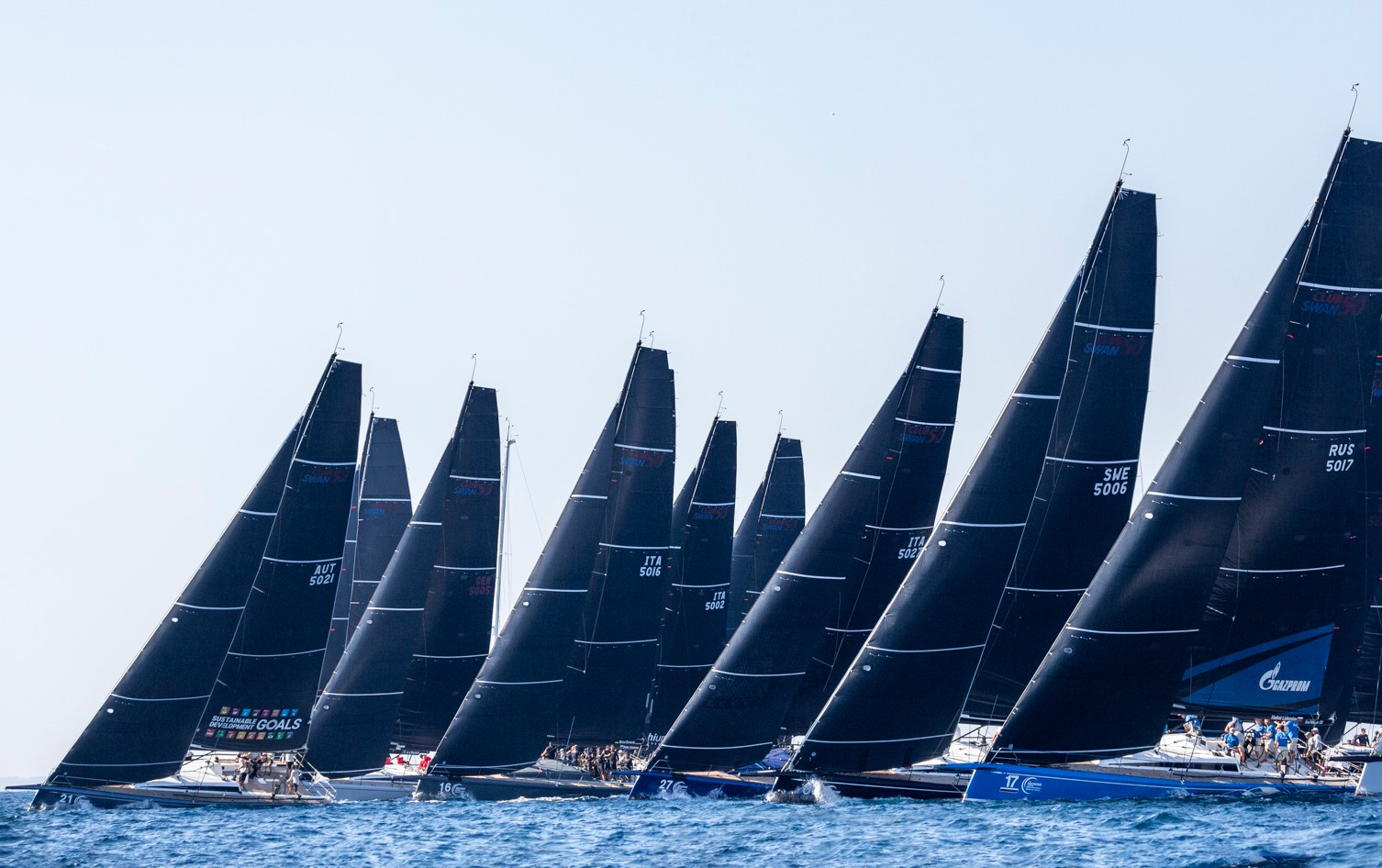
SWAN TUSCANY CHALLENGE
SWAN TUSCANY CHALLENGE
Successful Worlds Warm-Up For ClubSwan 50 Clients
📸 Nautor Swan / Studio Borlenghi
Days before the Swan Tuscany challenge began, owners were rallying their teams as organizers pulled together to put on a successful event. Yachting, in the midst of coronavirus, hasn’t been easy, but members of the class were eager to make the first real event of the season happen, on short notice.
With scheduled events canceled for the class across the calendar this summer, one of those events, the Rolex Swan Cup in Porto Cervo, the Swan Tuscany Challenge was a late addition to the schedule and brought 13 ClubSwan 50 teams to the starting line to battle for a podium finish. The racecourse served as a preview for the extremely close competition ahead of Swan One Design Worlds in Scarlino, Italy in October.
The success of the last-minute event is, no doubt, a testament to the strength of the Swan class and the owner’s dedication to the fleet.
The North Sails ClubSwan 50 Class Expert Arnd Howar on EarlyBird, was thrilled to be back out on the water. He commented, “The biggest highlight was this event coming together in such short notice. For teams to act fast shows the true strength of the ClubSwan 50 class. It is a testament of commitment from each program to get a fleet of 13 boats to the event, and pull off a successful regatta.”
“It was great to see teams spending more time preparing and tuning at the dock to be ready for the Worlds in a few weeks,” said Howar. “The racing was unbelievably close, which shows just how competitive the Worlds will be,” he commented.
Hatari leading the ClubSwan 50 fleet around the offset 📸 Nautor Swan / Studio Borlenghi
“After seeing the fleet together last week, it shows that anyone has a chance, and each team will bring everything they’ve got to win this Worlds,” North Sails Expert Daniele Cassinari onboard Cuordileone commented.
The team had not sailed together for nearly a year, and it was vital for the group racing Cuordileone to get the rig tuned properly and gauge their performance in the fleet ahead of the world’s event.
There were only about 20 sailing days this year for the class, and not all, but most teams were able to take advantage of that, which helped create a cohesive dynamic amongst the fleet.
Howar commented, “I think it shows how strong the class is and how good communication among the owners makes the bond that much stronger. Setting up fleet practices and clinics are unique for the ClubSwan 50 class. The Class wouldn’t have been as successful without Nautor Swan, the boat owners, and crews for their communication that helped keep us together this season.”
Marcus Brennecke’s Hatari, overall winners of the 2020 Swan Tuscany Challenge, Club Swan 50 📸 Nautor Swan / Studio Borlenghi
Tactician Markus Wieser on winning ClubSwan 50, Hatari, is elated with how well the fleet performed in Tuscany. Wieser is a familiar face around the sailing scene. He is involved in many classes, from the J/70 to the Superyacht range. The core team on Hatari sails TP52’s and also together on Maxi 72, Momo.
“Being part of the Swan family for the first time– we felt very welcome. To race in this fleet with 13 boats on the starting line was extraordinary. That’s one design sailing at its best!”
Once August came around, the Hatari team trained together with other teams at clinics, which was vital once Copa del Rey got canceled. Wieser commented, “We were building confidence while sailing in Palma, and so were the other teams. That time in the boat helped us win this first event in Tuscany, and was a great feeling of accomplishment. Things were on point for us. Our crew work, our set up. Our skipper, Marcus Brennecke, did an excellent job driving the boat, too.”
Well matched, highly competitive one design racing for the ClubSwan 50 fleet. 📸 Nautor Swan / Studio Borlenghi
“The competition was very tough,” said Wieser. “We didn’t have it easy. We were always fighting to be in the top-end of the fleet each race.” The ClubSwan 50 fleet is unbelievably tight. Any mistakes made would push you back. Once you lost that one-up, it was tough to get back into range with the race leaders,” said Wieser. “In one-design classes, the boats are practically identical, so everyone is very closely matched. “That’s the best part about this type of racing. It’s an even playing field.”
The Worlds are currently scheduled for October 13-17th, and Hatari plans to be there. Racing location means everything, and the class goes above and beyond when choosing venues that will give sailors the best possible racing conditions. “Scarlino was a superb host for all of us,” said Wieser. “Especially considering they had very little time to prepare for this event.”
North Sails Grand Prix expert Ignacio Braquehais (Nacho) onboard second-place finisher, Stefan Heidenreich’s OneGroup is honored to be a part of the ClubSwan 50 Project, “It’s not only about increasing the number of boats on the line,” said Nacho, “but also to make sure that each team is optimized and at the highest level of competition. We want to share our experiences and help each team evolve, not only in technical ways but also in trimming and tuning.”
“The 2020 Swan Tuscany Challenge was the perfect warm-up after this last COVID lockdown in Italy,” Braquehais explained. “It was apparent that all teams are grateful for the support they’ve received from both the class and North Sails.”
📸 Nautor Swan / Studio Borlenghi
Full Results
READ MORE
READ MORE
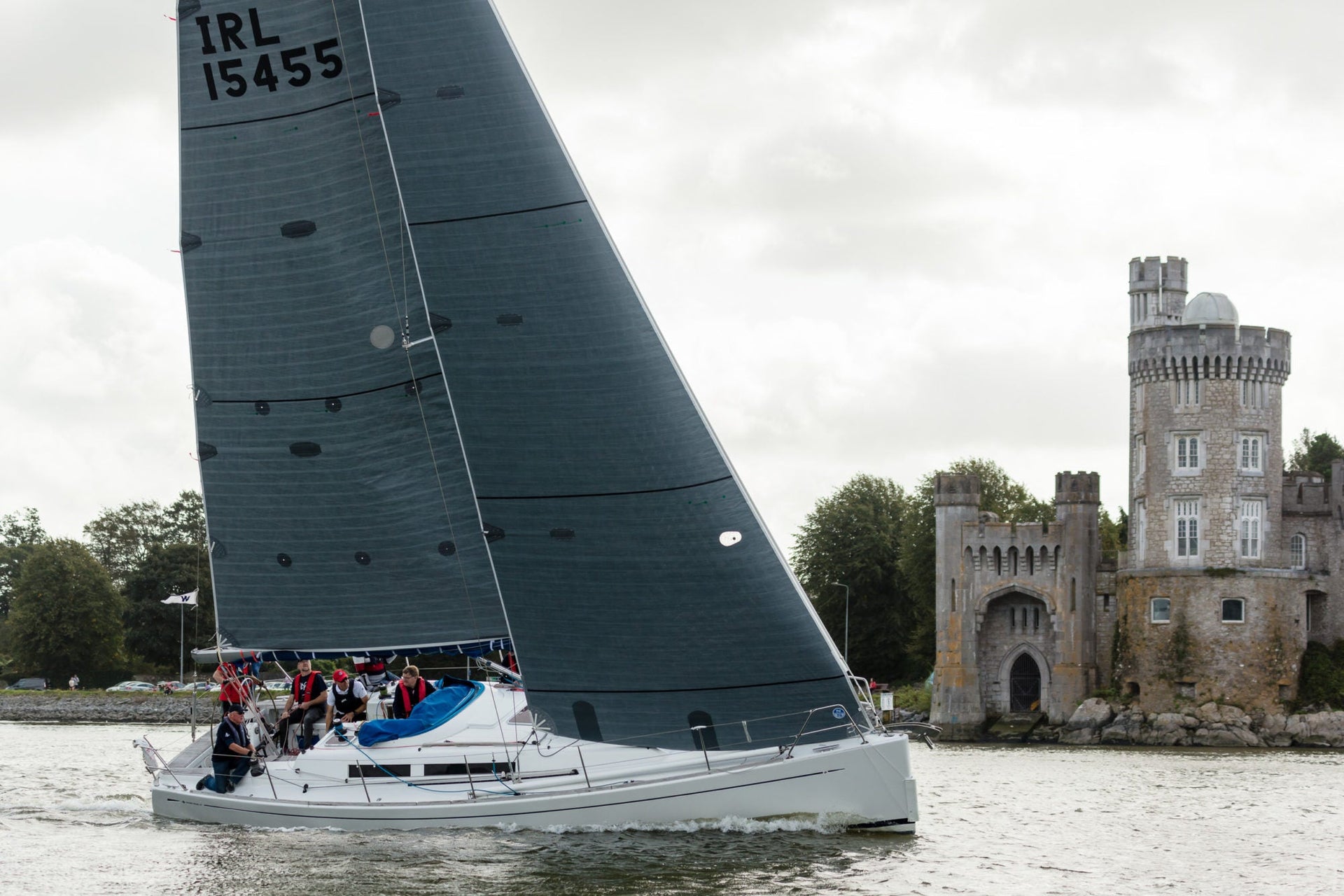
3Di POWER FOR THE COBH TO BLACKROCK RACE
3Di POWER FOR THE COBH TO BLACKROCK RACE
Winners of Each Class Set New Race Record
Frank Caul's Prince of Tides, overall winner of White Sails class 📸 Robert Bateman
North Sails clients demonstrated the power of 3Di last weekend in the Cobh to Blackrock Race taking a clean sweep across all the classes. The top two boats in each class used 3Di upwind sails, which drove the leaders to set a new race record. Congratulations to all the winners; we are very proud to be your sail suppliers:
IRC Spinnaker 1
1st: Nieulargo - Denis & Annamarie Murphy 2nd: Miss Whiplash - Ronan Downing
IRC Spinnaker 2
1st: Cracker - Denis Byrne 2nd: Luas - Sean Hanley
White Sails
1st: Prince of Tides - Frank Caul 2nd: Magnet - Kieran O'Brien North Sails Ireland Loft Manager, Nigel Young, took part in the Blackrock Race this year for the first time, so we got his account of the race: "This year's race was a really quick one. It was my first ever Blackrock Race and I was lucky enough to be sailing with Frank Caul and John Molloy on Prince of Tides, the Grand Soleil 37 from the RCYC. Prince of Tides had the fastest elapsed time of all the classes at just 57 minutes and 18 seconds, although hard to compare with Spin 1 as we started 10 minutes after them, but even so, a great performance from the team. North Sails got involved with the Prince of Tides team in November 2019, helping them with a few key bits and pieces over the winter. Then in the spring of 2020, we added two 3Di Endurance 760 sails with a third one on the way. The old sails were very tired and it was really hard to keep the boat in the groove upwind - flat at the front and round in the back is not a great combination. The new sails mixed with the boat modifications over the winter have resulted in a complete change of performance from the boat. It is like sailing a different boat thanks to Mark Mills for his help and advice, as well as the new North sails. Back in Spinnaker 1 Class Nieulargo stuck to their winning ways and it was great to see the family sailing together and sharing the helm between sisters Molly and Mia. There is nothing better than family sailing and it's very nice to be a part of it. Congratulations to the Murphy family for another Trophy race win. Keep up the good work. Nieulargo also uses 3Di Endurance 760 sails for their upwind inventory and the race-winning sail for them this year was the Helix Xi Aramid Code Zero. Talking to Denis after the race, he said the new Zero had won the race for them. They flew the sail from the start of the Foaty Channel almost right up to the Blackrock Castle. It's one of those sails when the wind angle is right, they are unbeatable. I could not finish the report without a shout out for Denis Byrne and the mighty Trapper TS250 Cracker. Denis has been getting faster and faster in that little boat and although he could be a long way back on the water, you can never write him off from the podium! The Blackrock Race was no different this year and Denis won both Spinnaker Class 2 overall as well as the coveted Moonduster Trophy. Congratulations Denis; great work from you and your crew. For more information about North Sails unique 3Di product, please get in touch. See you on the race track!''
Denis & Annamarie Murphy's Nieulargo crossing the finish line, overall winners of IRC Spinnaker 1 class 📸 Robert Bateman
Denis Byrne's Cracker, overall winners of IRC Spinnaker 2 class 📸 Robert Bateman
READ MORE
READ MORE
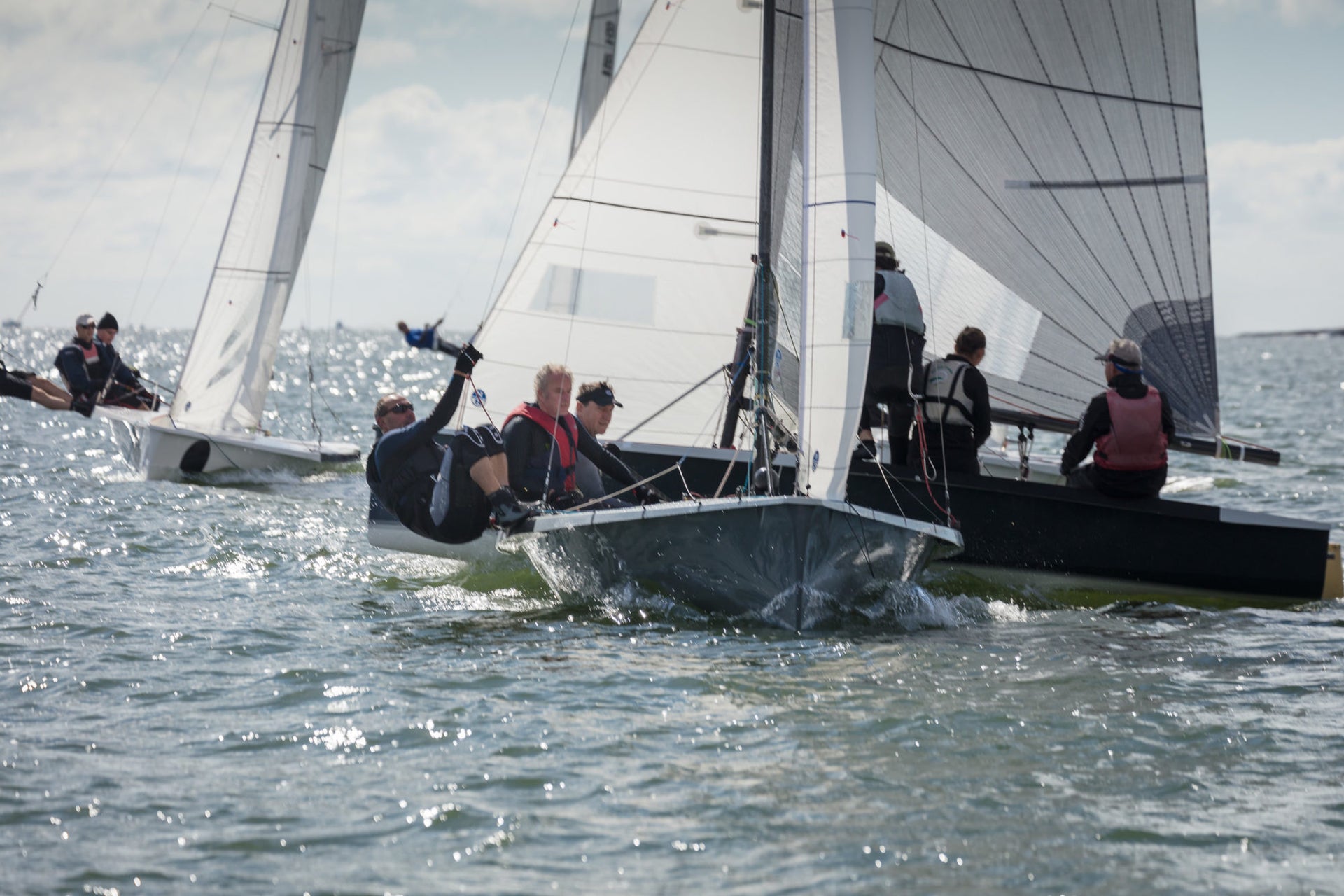
NORTH CLIENTS LEAD THE NATIONAL 18 FLEET
#NSVICTORYLIST: NATIONAL 18's
Clients Sweep The Podium at the 2020 Irish Nationals
Nick Walsh, Rob Brownlow and Eddie Rice, 1st place Irish Nationals
Whilst we were all heading up to Blackrock on Saturday the National 18 Class were holding the Irish Nationals from the RCYC. Reduced numbers this year due to our friend C-19 but no let up in the racing. Talking to some of the sailors after the event on Sunday this was one of the hardest fought Championships in many years.
North Sails have been heavily involved in the class since 2004 and we had a very intense period again in 2015/16 with the development work on the new Morrison Ultra 18. That was great fun out in the freezing conditions with Colin Chapman and many of the other sailors trialing the new designs and working out the new class rules for the sails with my old friend David Chivers.
Out at Roches Point the fleet enjoyed some lovely racing on Saturday under the leadership of the one and only John Crotty. Lots of compliments were coming his way after sailing inside the harbour on Sunday. Well done John for taking such good care of the fleet on the water.
After the eight race series I was delighted to learn that North Sails clients had taken the top three spots overall in the 2020 Irish Nationals.
Congratulations to all the winners:
1st Overall: Nick Walsh, Rob Brownlow and Eddie Rice on 13 points.
2nd Overall: Alex Barry, Andrew Woodward and Grattan Roberts on 19 points.
3rd Overall: Colin Chapman, Eric Lyons and Morgan O'Sullivan on 22 points.
Colin Chapman, Eric Lyons and Morgan O'Sullivan finish 2nd Place Irish Nationals
2020 South Coast Champs
Back at the end of August the class enjoyed their Southern areas and North Sails customers had another clean sweep of the podium.
Congratulations to Alex Barry, Sandy Remington and Richard Leonard for taking the win. 2nd overall this time was Ewen Barry, Stanley Brown and Dion Barrett and third overall Nick Walsh, Rob Brownlow and Eddie Rice. Very close racing again which is one of the big draws for the National 18 class.
Congratulations again to all the North clients performing so well with our sails. We are proud to be a part of your success.
Our 2020 Autumn Savings Deal is currently running so now is a great time to buy your new One Design Sails ready for 2021.
Ready to get the most of your National 18 sailing? Contact us today. We look forward to working with you.
Sail Fast!
Contact the Loft
Colin Chapman, Eric Lyons and Morgan O'Sullivan 3rd Place Irish Nationals
READ MORE
READ MORE