NORTH SAILS LORIENT IS AT THE HEART OF THE ROUTE DU RHUM
Years of close collaboration culminate in an offshore racing classic.
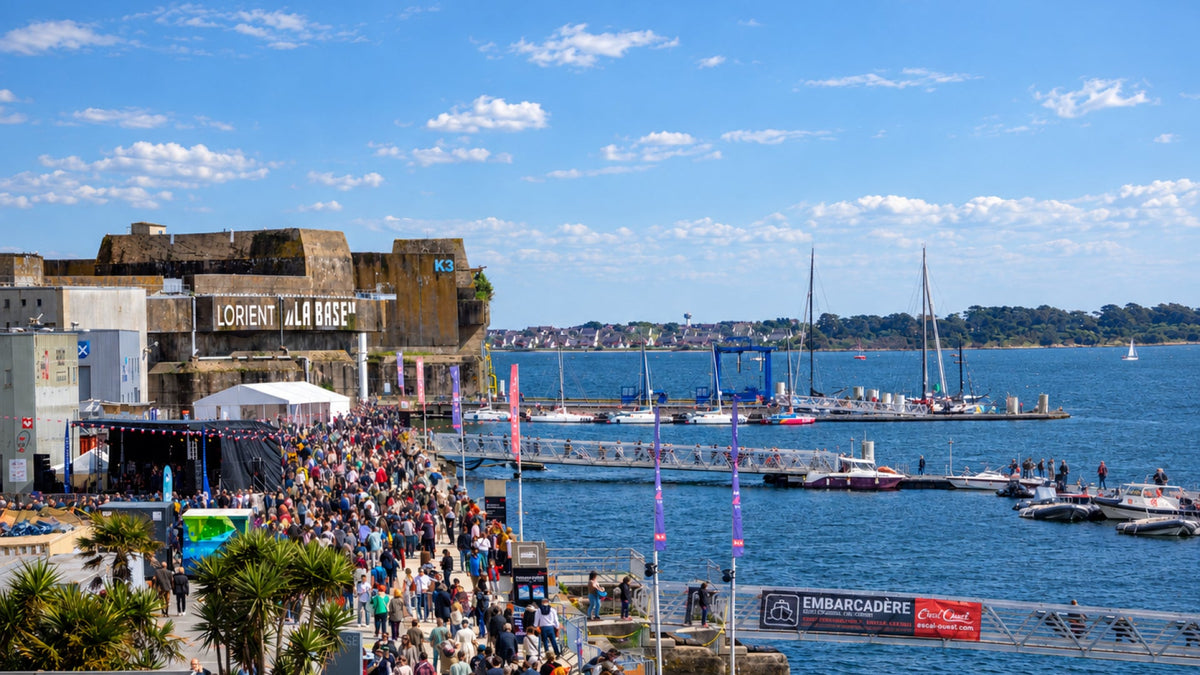
Over 90% of the 115 solo racers taking the start line of the Route du Rhum on Sunday November 1st, in Saint-Malo hail from France. Lorient has long been considered the global epicenter of offshore racing and it is no surprise that this port city in Brittany is the home for a huge number of these skippers. The North Sails Lorient loft is at the heart of this preparation, bringing together a team of highly experienced sail designers and technical consultants to equip teams with the expertise, innovation and performance they need to compete at the highest level.
North-powered boats make up a significant share of the Route du Rhum fleet, reflecting the trust placed in the brand across the sport's leading offshore racing classes. 75% of the Ultim fleet, more than 50% of the Ocean Fifty and IMOCA fleets, and roughly 35% of the Class40 fleet, place their trust in North Sails. Such a dominant market share across the six classes in this famous transatlantic race is the result of years of work, founded on experience, trust, and customer service.

LORIENT: THE WORLD'S LEADING OFFSHORE RACING HUB
The experts at North Sails, Lorient, have established long-term relationships with their offshore clients, working with them day in, day out to create new sails, evolve designs, provide service and support, make modifications and repairs, and undertake technical studies to optimize both boats and sails.
Alan Pennaneach, Commercial Director for North Sails France, is based in Lorient and has been with North Sails for 18 years, working on high-profile offshore projects such as Banque Populaire and racing onboard the Ultim Actual:
“The (Lorient) advantage for racing teams is that they have access to all the key players in the offshore racing sector in one place — from sailmakers, electronics specialists, and hardware suppliers, to boatyards. Teams that set up in Lorient have everything they need at their fingertips to successfully carry out their projects.
“The most important thing for us is that our clients have placed their trust in us — consistently, for several years — and we work hard to maintain that trust. Our primary goal is to provide the highest-quality service and we are continuously seeking ways to optimize performance, whether to outperform the competition or simply to sail better than the last time out.”

UNIQUE PROJECTS, TAILORED SOLUTIONS, AND LONG-TERM RELATIONSHIPS
As Alan notes, “Every project has its own unique identity and objectives, which can vary from one to the next. The challenge is finding the right balance, tailored to the specific goals of each client, skipper, or project.”
This is particularly true for the latest generation of foiling offshore racing boats, where each set of foils act differently — how early a platform can take off, its ability to maintain stability while "flying," and its speed. Determining the optimal sail area is specific to each individual vessel.
A critical part of the optimization process is sailing onboard with clients. Olivier Douillard, Project Manager and Sail Design Expert with North Sails, Lorient, has a wealth of experience from two America’s Cup campaigns, multiple transatlantic races in the IMOCA and Ultim classes, and from sailing on other large, high-performance vessels. Douillard is currently working closely on the cutting-edge Gitana 18 Ultim, one of the most eye-catching boats in this year’s Route du Rhum fleet:
“The feedback from sailing with the team is incredibly valuable; it helps us translate the sailors' sensations — getting a better understanding of what they’re feeling while using our equipment — so that we can refine the sails based on any gaps we identify or specific performance gains we’re aiming to achieve. And we continue to provide ongoing support — helping with further development, making adjustments where necessary, and preparing for future sails.”

📸: polaRYSE / GITANA SA
Pierre Brasseur, North Sails Technical Sales Representative, is a former offshore racer, having competed in transatlantic races such as the Route du Rhum and the Transat Jacques Vabre, and now looks after Class 40, IMOCA, and Ultim projects. He understands why a long-term commitment is essential to building a relationship of trust with skippers, which takes time, so the longer it lasts, the stronger that bond becomes:
“We work closely with the sailor and the design office over many years to refine the specifications and define the requirements for the sails. Then comes the manufacturing phase, which naturally includes some custom details tailored to each individual team. Following that, sea trials are essential for validating (or challenging) the theoretical work done beforehand. Heading out to sea allows us to gain a clear understanding of how things play out in practice — how the sails are actually used and what the sailors truly need. This insight enables us to make recommendations for refining or evolving the sail inventory.”
Beyond the close working relationships developed with skippers at the team bases, in the loft, and out at sea, North Sails offers a unique combination of expertise, technology, and manufacturing capabilities that sets it apart from other sailmakers.
Its patented, in-house software tools enable North Sails experts to work alongside design teams to develop the precise shape of each sail. The resulting designs are brought to life through cutting-edge sail structures, molded from fibers in North-owned facilities in Minden, Nevada, and Sri Lanka, before the individual sail skins are finished to meet the specific requirements of each project at the North Sails loft in Vannes, France.

Building on the advantages of North’s 3Di technology, which offers enhanced longevity and ultimately improved performance, the Lorient team continuously refines sail design and identifies opportunities for further performance gains. As Olivier notes, “In terms of technical solutions, we are increasingly looking to improve aerodynamic efficiency — specifically by closing off the gap at the bottom of the sails so that they make contact with the deck. This requires us to develop large foot sections supported by battens, and we have to adapt to the specific configuration of each boat and the shape of its foredeck.”
The Route du Rhum start line may capture the world's attention, but for North Sails, the work begins years earlier. As the sailmaker of choice for many of the race's leading offshore skippers, North Sails builds partnerships over time — grounded in trust, close collaboration, and bespoke technologies developed to deliver performance when it matters most. By the time the fleet leaves Saint-Malo, years of shared expertise and preparation are already built into every sail.
As Pierre concludes, “In Saint-Malo, we do one last, comprehensive check of all the sails to ensure everything is in good order — making minor adjustments if necessary, or adding small reinforcements where needed. We might discuss the upcoming weather and how to best utilize the sails, or simply ensure the team has a clear plan in mind. It’s about being present through the process and on the docks, should the skipper need anything, even at the last minute.”