NORTH SAILS BLOG
Tutto
Events
Guides
News
People
Podcast
Sustainability
Tech & Innovation
Travel & Adventure

QCYC WOMEN'S SKIPPER REGATTA
EVENT SPOTLIGHT: QCYC WOMEN SKIPPER'S RACE
Encouraging Women To Take The Helm
© Don Hinchley / P. Broecker
On Saturday, August 10th, the women of Queen City Yacht Club (QCYC) set out to show off their skills on the race course. The conditions presented were challenging, forcing the skippers to sail in a little bit of everything. With the wind coming down the course in puffs from the north west, the conditions were very shifty. The skippers started in the harbor before heading out through the eastern gap. Once out there, they sailed out along the island and across to the pier to round the Gibraltar mark before heading back through the eastern gap to round a mark in the north-eastern corner of the harbor before finishing just off of the QCYC clubhouse. While the wind flowed off the island, it provided some fantastic conditions out of the harbor for racers. While traveling through the eastern gap, the skippers had to be patient and adjust to the wind shifts, making things extra challenging. In true QCYC fashion, the skippers and crew rose to the challenge and had tremendous success on the race course.
Following the race, the skippers were rewarded with a party on the QCYC lawn. Awards were presented to the top finishers overall, as well as the top three in each class. In addition, QCYC recognized skippers for a variety of accomplishments, including the best showing for an all-women crew and the best showing for a first-time skipper. The event was a great success, in no small part because of the continued support we receive from sponsors such as North Sails. Thanks to the volunteers and our sponsors, QCYC is able to put on this event year after year and continue to encourage women to take the helm and get involved in this great sport.
For more details about the regatta, including race results.
© Don Hinchley / P. Broecker
© Don Hinchley / P. Broecker
© Don Hinchley / P. Broecker
READ MORE
READ MORE

NORTH SAILS JOŠ JEDNOM SLAVIO NA LATINSKOM IDRU!
North Sails još jednom slavio na Latinskom idru!
22. regata tradicionalnih brodova s latinskim idrom odjedrena je u nedjelju 29. rujna i na najljepši mogući način završila ovogodišnji ciklus navigacijskih jedrenja drevnim stilovima.
Čak 79 kaića, gajeta i leuta, zajedno s jednom batanom, okupili su se na ovom festivalu jednog nostalgičnog i mnogima više nedohvatljivog stila života. Naravno, dio sudionika ovakve regate shvaća i izrazito natjecateljski, pa su im u prvom planu rezultati, priprema, oprema, taktika... sve ono što regatu čini regatom.
S obzirom na značaj Murterskog okupljanja već u petak su počeli pristizati i sudionici iz udaljenijih krajeva Jadrana. Uz standardne sudionike iz svih mjesta s otoka Murtera, te susjeda iz Šibensko-Kninske i Zadarske županije, na rezultatima se mogu pronaći još i jedriličari iz Rovinja, Moščenićke Drage, Opatije, Cresa, Raba, Trogira, Hvara, Jelse i Splita.
Regatno polje je bilo prilagođeno vremenskim uvjetima, nešto kraća varijanta nego na lanjskom izdanju. Start u uobičajenih 15 sati bio je postavljen "na lancanu", konop rastegnut između lanterne na murterskoj rivi s jedne strane i usidrene koče. Svi sudionici su se krmom vezali na lancanu, a prije toga bacili sidra ispred prova.
Nakon signala starta krenulo je povlačenje po sidrenim konopima, otvaranje jedara i jedrenje u krmu prema izlazu iz Murterske luke. Iduća ključna točka na ruti je bila kardinalna oznaka pored otočića Arta mala. Nju je trebalo ostaviti lijevim bokom i zajedriti natrag istim putem prema cilju u Murteru.
Već na startu su se izdvojili brodovi koje smo u istim ulogama naučili viđati na ostalim regatama latinskog idra, a poprilično ispred sviju se izdvojio dvojac koji je i lani predvodio cijelu flotu. Riječ je bila o gajeti Trtuša braće Turčinov i kaiću Marinka obitelji Fržop.
Vrhunsko jedrenje oba tima bilo je izjednačeno sve do obilaska kardinalne oznake gdje je razlika među njima bila svega dvadesetak metara, ali u povratku Trtuša uspijeva napraviti malo veću razliku i u ulasku u Murtersku luku držati desnu, malo vjetrovitiju stranu regatnog polja. Taj odlazak prema Vinicima je prevagnuo, jer Fržopov kaić nije imao izbora već otići lijevo prema Murterskom groblju i pokušati iznenaditi s te strane, ali zavjetrina koju je radila marina Hramina i,ala je svoj negativan utjecaj.
Iza njih u cilj je dojedrila ekipa gajete Sirotice, još jedan favorit regate.
Analizom rezultata može se primijetiti jedna bitna razlika između Trtuše i Sirotice, s obzirom da su obje gajete, a to je da je Trtuša u kategoriji "BM - bez motora". Jednako tako je i Marinki u rezultatima naglašeno da je u istoj toj kategoriji, pa se može vidjeti u kolikoj prednosti je prvi dvojac bio u odnosu na ostale po uvjetima laganog vjetra koji je puhao tu nedjelju u Murteru.
Fotogaleriju s ove regate možete pronaći ovdje, dok su ukupni rezultati dostupni preko ovog linka.
22. Latinsko idro u Murteru je manifestacija koja traje cijeli mjesec, a završetak joj je u nedjelju 6. listopada na sportskoj regati "Gajeta kup".
READ MORE
READ MORE
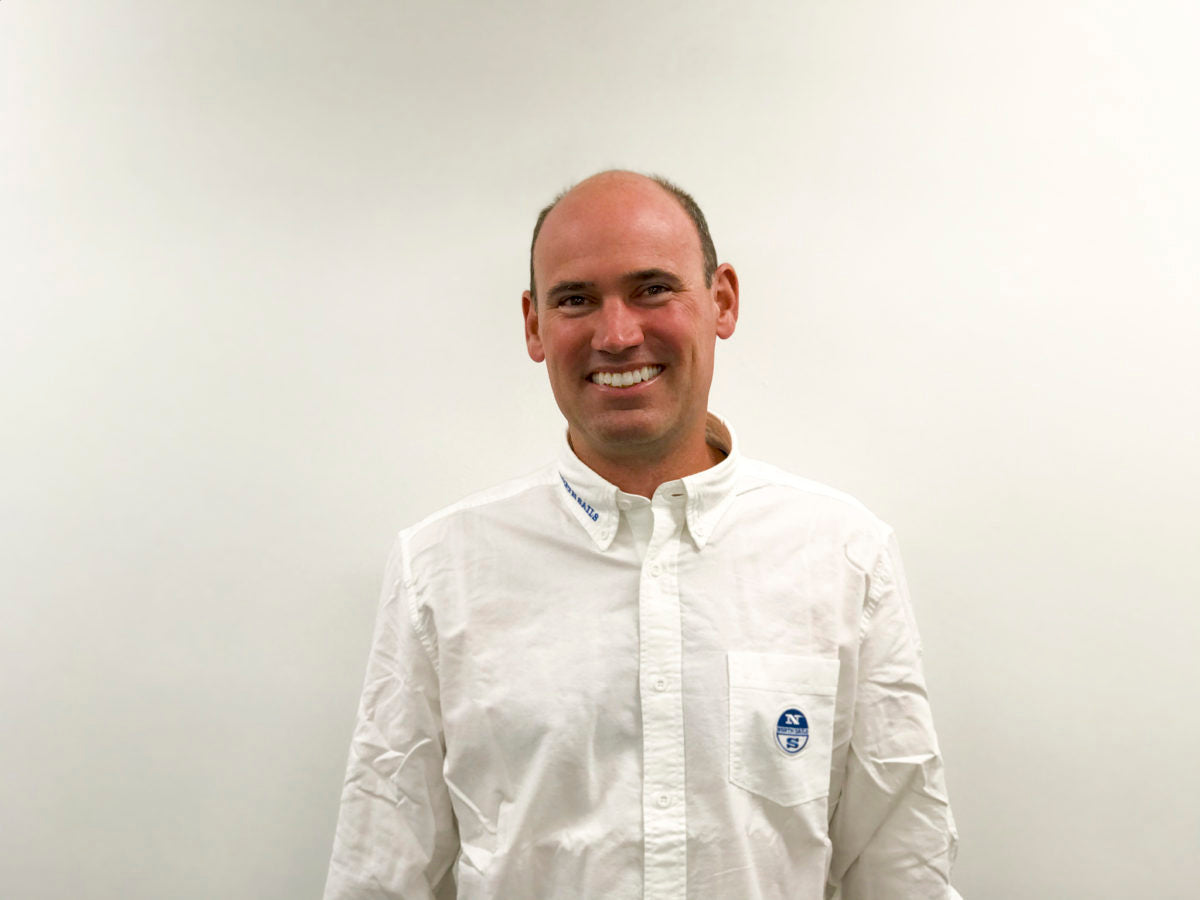
SENIOR SAIL DESIGNER GLENN COOK JOINS NORTH SAILS
SENIOR SAIL DESIGNER GLENN COOK JOINS NORTH SAILS
The World’s Leading Sailmaker Continues To Attract The Brightest Stars In The Superyacht Industry
Senior Sail Designer and Superyacht Sail Design Expert Glenn Cook will join North Sails from October 2019. After 16 years with Doyle Sails North America as Head Designer, Glenn will play a key role as part of North’s global Superyacht team. He has an impressive track record of leading the design work for some of the most notable Superyachts to hit the water in the last 15 years. Standout projects include the iconic 147 metre Sailing Yacht A, as well as the eye catching 106 metre Black Pearl and 88 metre Maltese Falcon. For Sailing Yacht A in particular, Glenn developed sailing systems over the course of four years in partnership with Dykstra Naval Architects, Magma Structure, Future Fibres, Cachini and Bamar.
As Head Designer at Doyle, Glenn was responsible for the design and engineering of sails for a range of boats, from dinghies to Superyachts. As a Senior Sail Designer at North, he will be focused primarily on the Superyacht market from the outset. Glenn will be charged with bringing his unique experience and skill set to the preliminary design and engineering stages for new Superyacht builds and refits, and importantly acting as a link to the product team to ensure the right sails are manufactured and delivered for each owner.
Commenting on the new hire, North’s Director of Design and Engineering JB Braun concluded, “Glenn joining the North Sails team is another important step in ensuring we have the very best people working on our global Superyacht team. North is known for its groundbreaking 3Di technology and world beating products, but we know that success only comes from the people working within the company. All our product innovations and breakthroughs come from the dedication, hard work and skills of our team. And complete customer satisfaction is our goal. I have no doubt Glenn, with his unprecedented experience and talents, will be a key part of our ongoing commitment to our clients and everyone will benefit.”
The move continues the trend of world class talent in the Superyacht sector joining forces at North, with Commercial Manager, Andrew Schneider also joining from Doyle in 2019. Combine this talent with a number of young rising stars in North America, Europe and Asia-Pacific joining the Superyacht group, the outlook for clients seeking design, product and service support around the world has never looked stronger.
Glenn also has years of experience in software development, so will play a critical role in the further development and optimization of the North Sails Design Suite, with a particular focus on the Flow™ and MemBrain™ programs. The suite of in-house design software is key to analyzing and developing 3Di sail structures to create optimal custom layouts. Glenn’s career as a Head Designer will therefore add value across the entire design and product development process.
Glenn Cook added, “As a long time competitor to North I have followed their product developments and technology very closely. Ultimately I wanted access to these tools and products to better fulfill increasingly complex and demanding superyacht projects. Many of the best minds in sailmaking and sail design reside at North. I am honored to join this team and looking forward to working with such a talented and motivated group of people.”
Glenn will be based in Marblehead, MA and will work closely with international clients, project managers and industry partners to deliver custom sail solutions for many of the world’s most unique sailing vessels.
READ MORE
READ MORE

J/105 CANADIANS GOT IT ALL
J/105 CANADIANS GOT IT ALL
One Of The Best One Design Fleets On The Great Lakes
Fleet 4 Captain for the J/105's, Rod Wilmer, shares his report from the 2019 J105 Canadian Championships held at the Royal Canadian Yacht Club on September 27-29th. A total of 16 boats came out for the event over three days. Heartfelt congratulations to all competitors from the North Sails team!
Once again the J/105 fleet championship produced a great competition amongst the best keelboat fleet on the Great lakes. Congratulations to the RCYC, the race committee and particular the regatta chairman Doug Bullock for putting together a fantastic eight race event over three days in late September.
Mandate skippered by Terry McLaughlin and co-owned with Rod Wilmer and their experienced crew of Sandy Andrews, Ian Howse, Fraser Howell, and Andrew McTavish came through as repeat Canadian Champions leading from the first race onwards accumulating 10 points. Frank McLaughlin’s Starcross with 22 points challenged their rival Mandate throughout the regatta and beat them with superior downwind speed in the breezy race six. Jim Rathburn’s ever-present HEY JUDE rounded out the top 3 with 33 points. Notable finishes from Jamaica Me Crazy (Peter Hall) and Thunderstruck (Andrew Moor) came through the competitive fleet for 4th and 5th place. Late September on Lake Ontario can deliver a variety of racing conditions and this regatta got it all. Friday started with an AP for an hour followed by a light air race building to winds in the mid-teens for the second race and light wind for the third. Saturday saw stronger winds with a steady 12-16 knots for the first race, however a line squall came in and hit the fleet on the final downwind leg of the second race with a 180 degree shift ending the day for racing. It is a credit to the seamanship of the fleet that the un expected line squall resulted in only minor mishaps and the sailors were able to adjust quickly to the challenging conditions. The last day saw large seas building from the east topping out at 10-12 feet and winds 16 to 18 with gusts over 20 knots for all three of the final races. These were challenging conditions for crews up wind but Ideal surfing conditions down. The regatta dinner held on Saturday night featured 400 Oysters, shelled in a record time of one hour by one server followed by a Steak Dinner for 140 all included in the entry fee. The legendary reggae musician, Errol Blackwood, provided the night’s entertainment. A Gold Clean Regatta, for the third time in a row from the Sailors for the Sea, this regatta had it all covered, from responsible dinnerware and reusable signage to refilling water bottle station and paperless race management. Our goal was to eliminate one use plastic and reduce the garbage coming off all boats at day’s end. Our J/105 fleet is very fortunate to have incredibly generous members who were able to raise an astonishing $29,500 that supports our local Broad Reach Foundation that introduces kids at risk to sailing. The J/105 Fleet 4 Lake Ontario has been supporting Broad Reach for over 15 years. It is an important part of this regatta and our Fleet culture. North Sails Toronto was thrilled to support the Clean Regatta efforts of the event by donating water bottles to encourage reusable drink ware and reduce the garbage impact. While it was not needed we were happy to provide overnight repair services for racers, just in case! To learn more about J/105 One Design Products and Services, see here.
READ MORE
READ MORE

WATER CATS FALL REGATTA 2019
WATER CATS FALL REGATTA 2019
Big Turn Out For Local Cat Sailors
© Dean Goodwin
Early this September, local catamaran club Water Rats Sailing Club hosted their annual Water Cats Fall Regatta for 20 cat sailors. Conditions were awesome with good wind and sunshine amongst the gorgeous backdrop of the Toronto skyline. North Sails loves supporting local community events such as this because we love seeing the participation, enthusiasm and dedication from sailors for catamaran sailing.
Thanks to everyone who helped to make this regatta a success. Our dedicated PRO Ralph Glass, power boat captain Jimmy Sabourin, Rob Wessel and his committee boat, Peter Eager and his Canada National Team experience, Olga Veselova Andrew Lewycky, Marvin Coulson and Ted Kerr for meals, JTown sailing Club for support boat, Water Rats Sailing Club, North Sails and Fogh Marine for prizes.Dan Borg who got the Kadafi trophy resurrected, Roy Spencer for registration, Marvin Coulson as Race Chair, Jen Forkes, Stephen Neprily and Benoit Friolet on flags and elapsed time, Paul McHugh, Dean Goodwin and Dinesh Ram on crash boats, and Dean Goodwin for photography!
Thanks to everyone from near and far who came out to make this event a success. Special thanks to Kevin Smith who chartered his boat to a team from Ottawa, and thanks to all out of owners who came to sail with us - from Burlington Beach Catamaran Club (Burlington) and from Nepean Sailing Club (Ottawa).
Congrats to all winners and a special shout to first overall Floris Van Laar, and to Mauro Spagnolo and his crew for winning the largest one design fleet prize, the Kadafi Cup.
© Dean Goodwin
© Dean Goodwin
READ MORE
READ MORE

CUSTOMER SPOTLIGHT: DON CONDIT
A Summer Of Fun And Success
It was a jammed packed summer for Don Condit and his crew aboard his Tartan 4000 Roxy, which is powered by 3Di Endurance Main, Jib and Genoa as well as an AirX A2. Over the course of 4 weeks, Don participated in the Chicago to Mackinac Race, the Bell's Beer Bayview to Mackinac Race and the Biennial Trams Superior International Yacht Race taking an impressive 1st in Class/ 2nd overall in the Chicago Mac Cruising Division, 1st in Class/ 51st Overall* in the Bell's Beer Bayview to Mackinac Race Double Handed Division and 1st in Class/ 1st Overall in the Trans Superior PHRF Division. In all Don raced 875 nm for an elapsed time of 7 days: 5 hours: 51 min: 54sec. This doesn't include the deliveries. We caught up with Don to learn a little bit more about his experience this summer.
How Did You Prepare for Your Season And All The Racing?
As a crew we've kind of been at this for about eight years on this boat. So every year we make a few less mistakes and get a little better, I think.
Have Your North Products Contributed to Your Success? And If So, In What Ways?
Definitely. Our main sail gave us better performance in a wide ranges of wind conditions. We had new North main this year and a new North number three. And then we had a North Genoa that we've had for a couple seasons that's reefable. It's been in a very effective in a wide range of conditions as well. For us, you know we're a Tartan 4000 which is a racer cruiser. I love it because I can sail my wife and I, and our grand-kids, but we can also put eight sailors on do Mackinac races or Superior races and being competitive amongst our peers.
Did Your New Main Perform How You Expected It To?
Well, you know, better light air performance, get a more powerful shaped, the light air. Our boat's a shoal draft boat. You only draw five nine and so we don't have a lot of lifts from our keel. But we're able to sail higher and in lighter areas than we have with our previous main.
For The Mackinac Races, What Is Your Favorite Aspect Of Sailing Those Races?
Enjoying the beauty and the Great Lakes with family and friends.
What Has Made You Choose North Sails Over The Years?
I've been sailing for 50 years and I sailed in college, and North sails have always been the best, the best sails you could get. I even had a chance to do a race with Lowell North one time. A favorite, you know, the best, the best, best sails that you can get.
Where Do You See You And Your Crew Racing In The Next Two Years?
We'd love to compete and perhaps do a Newport Bermuda race. But you know, compete in the Caribbean. I was doing the Trans-Superior race this year was an opportunity to take our crew and boat to a new level and compete in waters that we've never sailed in before and in a wider range of conditions than we've normally seen.
READ MORE
READ MORE

WINTER SERVICE
It's That Time Of The Year!
Bring in your sails for winter service and free storage.
It's that time of year to bring your sails in for their annual check up and winter storage. Your local team offers washing and drying services with an added sail check at no extra cost. Letting us check over your sails will enhance performance and extend their life.
We offer free winter storage in our air-conditioned rooms (dry and heated) until March 2020. Don't leave your sails in the garage or on the boat - talk to us about our storage area at North Sails Italy.
Schedule Winter Service
READ MORE
READ MORE
MELGES 24 WORLDS TOOL KIT
Fine Tune With North
Find your groove. Get your numbers. Be confident in all wind conditions. After countless hours sailing, testing, and competing in the Melges 24 our tuning guide will help you achieve race-winning speed.
Raise The Bar With 3Di
Lucky Dog confirms new 3Di sails make a difference in the race course at the Melges 24 North Americans.
What To Expect In Villasimius
Fresh from winning the Pre-Worlds, North Sails Expert Giulio Desiderato provides his intel on what competitors should expect at the upcoming Melges 24 World Championship.
Get Up To Speed
Pulling all the pieces together can be challenging. The North Sails Melges 24 Speed Guide leverages our expertise to help you improve your team’s performance.
World Champions Tips
What worked for Team Altea in the past Worlds? Take a look at the tips from the winning team and get inspired to sail fast.
Our Experts Make It Happen
Have questions? Contact your local Melges 24 expert today for more information on choosing the right sails for your Melges 24.
READ MORE
READ MORE
MELGES 24 WORLDS LOCAL KNOWLEDGE
MELGES 24 WORLDS LOCAL KNOWLEDGE
What To Expect In Villasimius
North Sails Expert Giulio Desiderato provides his intel on what competitors should expect at the upcoming Melges 24 World Championship.
It is hard to say exactly what we expect to see at the Worlds. The pre worlds event was my third event in Villasimius this year, and each time I’ve sailed here we’ve had different conditions – a strong Mistral, strong northeasterly with flat water, light sea breeze, big waves, and even one time with wind from the south. Each day at the pre worlds the wind was out of a different direction, so it will be very interesting and we should expect a variety of sailing conditions.
Because Villasimius is not a very common place to hold regattas, there isn’t really any local knowledge as not a lot of people of sailed here very often. This means it will be an open playing field when it comes time for the championship. It could be anyone’s game, which will be exciting.
I’ve sailed here in the tactician role and as main trimmer, and now most recently I’ve coached. What I’ve observed over those experiences on the boat and from the sidelines is that if the wind comes from the North, it will be really important to keep an eye on it and try to figure out which side the newest pressure will fill in.
During this time of year in Sardinia, the wind can be anything. The sea breeze is still common, but because of where Villasimius lies geographically, it is close to a cape and exposed to storms and wind lines that can be frontal and come up quickly.
Tips For Clients:
Manage your risks and get a good start. It will be important to manage your risks with the large fleet. Avoid big mistakes during the starts, and focus on finding a good place to get a clear lane off the line. Ideally, if you can start and sail for three minutes straight before having to make any moves, this will be key.
Keep an eye on pressure. Try to figure out where it’s coming from most often. They may drop the windward mark in an area where the pressure is filling in, which may put you on one particular side of the race track.
Tuning. Don’t be afraid to adjust your rig. If you try different settings, you can find what works best with the conditions at the time- which are going to be changing a lot at this location. It could be beneficial to set up for a certain condition knowing you’ll see it at the top-end of the course.
Sailing with 3Di? With 3Di, you won’t have to play with your tuning settings as much as teams using paneled sails will. We always use the same numbers. Our jib track setting also remains the same. The benefit is that there is not much play required. It is very user friendly.
Recommended Sail Inventory
For the championship, I recommend the following inventory: Mi1 mainsail, Ji-2 Jib, P-1 and P-3 Spinnaker.
Have questions about sails? Interested in upgrading your Melges 24 inventory to Championship-winning sail power? Contact your local expert today.
READ MORE
READ MORE
J/24 WORLDS LOCAL KNOWLEDGE
J/24 WORLDS LOCAL KNOWLEDGE
Get To Know Biscayne Bay
To help you prepare for the 2019 J/24 Worlds, we asked the local Star and Snipe World Champion Augie Diaz to explain about his home waters of Biscayne Bay in Miami, FL.
Biscayne Bay is I think pretty straightforward. The weather is driven by cold fronts approaching, and we don’t get as much breeze as we used to because the city’s grown so big. But generally, any breeze from the northeast around through the southwest is great sailing. From this direction, the breeze is usually under fifteen knots, with relatively flat water (chop but no swell). Spring and fall are the best seasons, because we don’t get many fronts.
Dominant wind direction: easterlies
The old rule of thumb is still the case: if the wind’s to the left of the south end of Key Biscayne, you go left. Near the Key, from 120-160 degrees, there is a little more pressure closer to the end of the Key, and also a geographical shift off the land. How favored is somewhat current-dependent; from 70 degrees to 160 degrees with an outgoing current, then left is really good, what we call the “Old Man Expressway”. At the top of the beat on the J/24 Worlds course, the Old Man Expressway could be important.
On what I call the Cuba Course, where the Etchells sail, way down south of Matheson Hammock, there’s less left down there than there is closer to the point of Key Biscayne. So you have to keep in mind where you are on the Bay.
Current
Understanding the current is very important. People think the current comes in and out of the Bay from the east, but it actually runs in and out from Bear Cut. If you get close to what we call the Valves, which are the channels through the shallow areas that on the chart are labeled Biscayne Flats, there is a component of current going in and out of there. But you have to be very close to the Valves for that to be the net effect. Otherwise, the current basically ebbs from the southwest to the northeast, and goes the opposite way when it floods.
As for the timing relative to high and low tide, I’ve seen it as much as an hour off, so I just use tide change as a gauge and then keep checking the buoys, all the time. Sometimes seaweed will show lines of current, but I’ve never really seen a change in the color of the water.
Other wind directions
Once the wind gets to about 170-180, it’s pretty important to protect the right. That’s true all the way to 220 degrees. Anything right of 220-230, it’s going to march quickly to the northwest because that’s a frontal-driven direction, which doesn’t doesn’t have the ability to stick.
If the wind’s right of 230 degrees, I like coming in from the top left because you get some really nice puffs off the left shore. It depends where you are on the Bay; on the J/24 course, close to the west shoreline, you’ll definitely want to come in from the top left.
Northwesters are like you’re on a lake: very shifty, very up and down. But in late October, it’s actually less frontal, so that’s less likely.
Secret to success
Focus on what the current’s doing, and in the easterly understand how important it is to go left.
Thanks Augie!
READ MORE
READ MORE

HEATING UP FOR THE NATIONS TROPHY
HEATING UP FOR THE NATIONS TROPHY
North Sails Supports ClubSwan 50 Training Weekend In Palma
Preparation for The Nations Trophy began in Palma when eight ClubSwan 50s came together for a pre-regatta clinic. Team One Group spearheaded the organization of bringing the fleet together for this training weekend. North experts were amongst the fleet onboard with clients, helping improve techniques, tuning, boat speed, accelerations, and timing. The main goals of the weekend were to collectively raise the bar of competition in advance of The Nations Trophy, which begins on October 8th.
Local conditions delivered, making drills efficient and effective. A mixture of practice starts and races, with emphasis placed on sail trim and starting line strategies, skills that will be important when this one design class lines up in the 20-boat fleet during The Nations Trophy. All in all the racing was extremely close, and there was no ‘slow’ team in participation.
Over the course of the training, it became clear just how important it is to get into the groove as fast as possible. “All boats have very similar speeds, given they are all sporting the same one design class inventories,” said North class expert Arnd Howar. “From what we saw during this training session, starting, boat handling, sail trim, and boat positioning will make all the difference in overall speed and performance for individual teams when it comes time to race.” Boats that stood out during the training weekend were Skorpio, EarlyBird, and Stella Mares, consistently arriving at the corners of the racetrack in the front of the pack.
Thank you to our clients for helping make this training session a success. And a special thank you to North expert Marc Patino who ran the coach boat and daily debrief sessions. At North, we dedicate our services to improve the quality of racing for our clients with leading sail designs and support. After catching the group in action throughout this training, it looks to be an exciting regatta for our clients.
North Sails is a proud partner of the 2019 edition of the Nations Trophy. Here is a selection of our favorite photos from our ClubSwan 50 training weekend.
Fleet start at training weekend. 📸 Jesus Renedo / Sailing Energy
Norwegian team on Fram XVIII 📸 Jesus Renedo / Sailing Energy
📸 Jesus Renedo / Sailing Energy
Hendrik Brandis’ German team on Earlybird. 📸 Jesus Renedo / Sailing Energy
Sweedish team on Regina 2.0 📸 Jesus Renedo / Sailing Energy
Norwegian team on Fram XVIII 📸 Jesus Renedo / Sailing Energy
📸 Jesus Renedo / Sailing Energy
📸 Jesus Renedo / Sailing Energy
📸 Jesus Renedo / Sailing Energy
READ MORE
READ MORE
HOW TO BUILD YOUR MOTH SKILLS
HOW TO BUILD YOUR MOTH SKILLS
Dan Neri Explains How To Get Started Sailing this Foiler
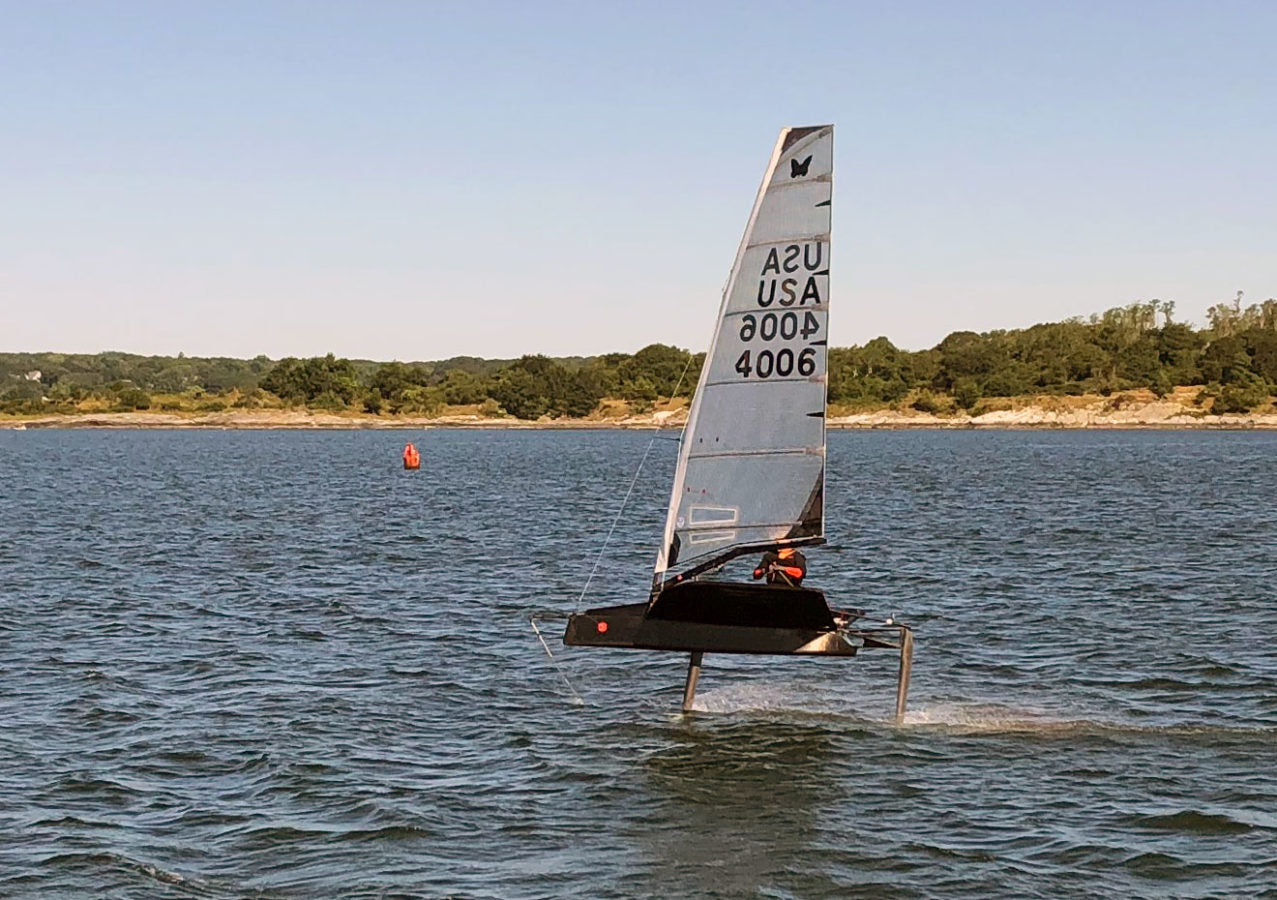
Compared to most dinghies, building the basic skill set for the Moth takes a long time. After about 40 hours of sailing the Moth, I can foil with confidence in all directions in the limited window of 8-14 knots of wind. I feel like I am close to executing a foiling jibe but have not connected two of them yet, and every tack is still an adventure with a surprise ending.
The experienced Moth sailors tell me that I am on a typical timeline. I was told that my decades of Laser sailing would help, but I don’t recognize a lot of cross over to the Laser. A skiff sailor will get there more quickly. Younger sailors probably learn faster than older sailors, but older sailors can afford to replace the broken parts! It all evens out.
Here are some lessons I have learned in my first nine months of Moth ownership that might help a fellow beginner.
First Assembly: Study the boat manufacturer’s assembly guide. Then get an experienced Moth sailor to help you. Plan on two full days. Take your time and you will break less parts.
Rigging: Watch the Nathan Outteridge tutorials. Then get a Moth sailor to help you the first time.
(And make sure to read How to Rig a Moth in 20 Steps)
Launching: Watch the Nathan Outteridge tutorials. Rig up in your yard and practice carrying the boat around in an area with no obstacles. You will find a balance point with the boom and mainsheet on your shoulder and the mast tip and wing bar both off the ground.
Flight setup: Get a Moth sailor to help you set the ride height control (see Flight Controls below). Pull the wand all the way up. Put the gearing in the middle. Then forget about the flight controls, and pretend it is a regular dinghy.
Balancing the Moth at low speed: Look for a day with 8-10 knots of steady breeze. Practice low riding while focusing on keeping the wings out of the water. Learn to tack at low speed. Hint: you can not scull with a Moth rudder. Try to not get stuck out on your Moth in less than six knots of wind. The Mach II is happier in reverse than in forward in very light wind.
Foiling: Watch the Nathan Outteridge tutorials. Look for a 10-12 knot day. Less than 10 knots makes taking off tricky. More than 12 knots feels like a hair-on-fire experience until you get some confidence.
Plan to sail for one hour with equal time spent swimming and foiling. Sail back and forth on a beam reach and enjoy the ride. Upwind and downwind can wait for another day; the first sensations of liftoff and controlled flight are the foundation that will keep you working up the steep and frustrating learning curve.
Turning downwind: This might be easier for sailors with skiff or catamaran backgrounds than it was for a lifetime Laser sailor, but the upwind-to-downwind transition is where I’ve had my most violent crashes. It is mostly a matter of starting with windward heel and then committing to the maneuver. The more breeze there is, the more aggressively you need to move through the transition zone. Waves make it more exciting. If you don’t go home with a few bruises, you probably did not progress. Get comfortable making the turn up and down in 10-12 knots before you try it in 14-16.
Foil Jibing: Watch the Nathan Outteridge tutorials. Then plan to crash a lot.
The maneuver has a few distinct steps; get moving at maximum speed with a slight windward heel, set your back foot on the hull and tuck your front foot, swing the tiller extension to the new wing bar, and lunge across and under the boom. Let the boat carve through the turn while getting your butt fully onto the new wing bar, then switch hands. While doing that make subtle steering adjustments, pushing the tiller slightly toward whichever wing bar is higher, to keep the boat under the rig. Simple.
Sail Trim: The Moth is extremely sensitive to sail trim, but for me, there was so much other stuff to deal with (balancing the boat in particular) that I took a set-it-and-forget-it approach at first. That was a mistake. Sail trim makes a huge difference in lighter wind by generating take-off speed (with a powered-up sail) and then by reducing drag and heeling moment once you are foiling (a flatter sail than you’d think). Again, the learning curve is steeper than other boats. To make sail trim adjustments, you have to learn to grab the right control lines (vang and cunningham) without looking down to find them, and then you have to pull two feet of line without upsetting the boat, while steering with the mainsheet in your tiller hand. Easier said than done.
Flight Controls
There are four controls that dictate lift-off and ride height.
1.) Ride height adjustment: It’s critical to set the ride height adjustment barrel in the correct position. The ride height mechanism connects the wand to the main foil flap. The ride height range is set while still on land but after the boat is fully rigged, on its side. Once the range is set correctly, you can dial in a little more or less lift with the control line while sailing.
The ride height adjustment controls the position of the main horizontal foil flap. If the linkage is set with the rod too long (barrel screw opened up), the flap will be pulled up (no lift) and the boat will not take off. The opposite adjustment (barrel screw closed down) creates too much lift (a big gap between flap and vertical foil indicates the flap is pushed down, making a lot of camber) which will cause the boat to lift off and keep rising until the horizontal foil catches air (and you crash).
The long black barrel is a telescoping screw that changes the length of the wand connecting rod. The barrel is turned by the control lines wrapped around it that lead out to the starboard and port wing bars. The aft end is connected to the curved arm (between my hands in this picture). The curved arm connects to a vertical rod that is in turn connected to the flap on the main horizontal foil. The “gearing” adjustment moves the ride height barrel up or down on the curved arm. A lower position results in more direct response between the wand and flap, while a high position dampens the action. Got it?
Experienced Moth sailors set the ride height by eye and it is a bit of a black art. If there are no expert Moth sailors available, adjust the barrel so that the flap and forward part of the foil form a fair curve when the wand is angled back about 45 degrees. Another gauge on the Mach 2 is to measure the gap between the flap and the vertical foil, which should be about 7mm with the wand all the way forward.
This shows the camber amount needed when you are up on the foils with just enough lift to keep you flying, with the wand hanging straight down and ticking the water.
Set up your ride height control line so that this neutral lift position is at the middle of the range of adjustment. If the breeze is very light, dial in more lift. If the breeze comes up, dial out some lift. As a newbie, it is easy to second-guess the ride height adjustment when in fact your technique is the problem, or to assume your technique is bad when in fact the ride height is way off. Get some help, so you can have confidence in this setting and focus on sailing.
2.) Gearing: Gearing comes into play once the boat is flying. Anthony Kotoun explains the function of the gearing control as “how much information do you want the wand to deliver to the flap.” If you find your boat is bouncing when passing over small surface waves, you have too much gearing (the flap is moving too much). If your boat is too floaty and slow to respond, the flap is not moving enough and you need to pull the gearing control down. Setting it in the middle is a pretty safe bet.
On my boat, the gearing control is the red line. If you follow it forward (towards the lower left of the photo) it connects to the black slider that is pushing down on the ride height adjusting barrel, along the curved arm. Most boats have the gearing led to both wing bars for adjustment on the fly. For now I leave it in the middle, so I have less lines to get tangled in!
The blue control line adjusts the shock cord that pulls the wand forward. In very light air, you want very little tension on the shock cord; as the breeze comes on, you want a little more. Worn shock cord makes the boat hard to control in windy conditions.
3.) Rudder angle: The rudder pin (the long pin that goes through both the upper and lower gudgeons) slides forward or aft in the rudder head, which changes the pitch, or angle of attack, of the foil at the bottom of the rudder. Changing the pin position and foil pitch controls the fore and aft flight trim. With the pin forward the rudder head moves aft, which in turn tips the foil up and creates more lift. More lift results in easier take off and more bow-down fore and aft trim. Moving the pin aft causes the rudder foil to sink and makes the boat fly with the bow higher than the stern. The pin position is adjusted by a big plastic screw inside the tiller, which is adjusted by twisting the tiller extension.
4.) Wand Length: The wand is telescoping with the length adjusted by a continuous-loop control line led to both wings. Shorten the wand for a lower fly height (better control but more drag and lower speed) and lengthen the wand to fly higher with greater righting moment and less drag (higher speed).
Left: shorter wand, lower fly height (better control, but more drag and lower speed). Right: long wand = higher ride height.
That probably seems like an awful lot to learn. It is, but it is also much easier to understand once you get your boat rigged up and laying on its side at the water’s edge. Pre-launch set up and check over is the only part of the Moth sailing game that you can learn while comfortably on land, without fear of crashing.
READ MORE
READ MORE

CLIENTS MAKE A STATEMENT AT MELGES 24 PRE WORLDS
CLIENTS MAKE A STATEMENT AT MELGES 24 PRE WORLDS
Gearing Up For The Ultimate Showdown In Villasimius
📸 Zerogradinord
Act four of the 2019 Melges Tour was the last hurrah before the World Championship in Villasimius, Sardinia, Italy. Andrea Pozzi and his team Bombarda have been chomping at the bit in their final preparations before the Worlds which begins October 5th and after spending a week at the worlds venue, they have set the tone for the main event. “Since the very first day of training here in Villasimius, the feeling with the racecourse and the boat has been positive,” said Andrea. Bombarda took the fleet by storm at the pre worlds, scoring three bullets in the first three races, upping the game from the very beginning for the remainder of the fleet.
In conditions of all kinds, Bombarda came out on top in 20-knot gusts, steep waves, and even in the light and lumpy conditions; they couldn’t be beaten. After eight races and one discard, Andrea’s team sat at the top of the leaderboard with six points to spare, ahead of Taki 3.
“Other than having great race results,” said Giulio, “Bombarda had great speed, executed perfect maneuvers and made smart tactical calls which made the difference in their overall result.”
North Sails expert Giulio Desiderato was in Villasimius working with Bombarda for the pre worlds. “The team’s goal for the worlds was to be comfortable and confident with the Villasimius venue. We developed a sense of local knowledge during the days of training and sail testing, which helped build our confidence.”
Andrea has had quite the season, always working to improve on the team’s weak points. “From the very beginning, said Giulio, we felt confident in the windy conditions, so we focused a bit more on our light air techniques.”
📸 Zerogradinord
“We started our campaign with the long term goal of doing well at the worlds, and we’ve taken small steps each time to get closer to that goal.”
From a coaches perspective, Giulio is very proud of team Bombarda. “They never give up,” he said. “That’s what I love about this team.”
Giulio gives a ton of credit to debriefing with the team after racing. Seeing what is going on from an off-the-boat perspective can be very beneficial when it comes to critiquing each position. “After racing, we watch the video footage and look at the photos together so we can see where changes could be made. We discuss the conditions, boat handling, and they make improvements. For me, as their coach, this is a winning approach.”
“The decision on what sails to use was made before the pre worlds,” he commented. “After the Bacardi Cup in Miami, we were confident with North Sails 3Di. Our goal was to test configurations in all conditions from then until now to get more confident with tuning.”
When asked what he loves so much about racing and coaching the Melges 24, Giulio replied; “I love this boat. From the rib, you can see all the action, too, which makes it hard to watch from the sidelines.” The Melges 24 is a great mix- providing technical upwind legs, fast and fun downwind sprints, and is super sensitive to boat handling. I have a feeling that more owners are coming back because it’s a great time. Andrea and his team are the perfect examples of owners that love being apart of this class.”
Andrea Racchelli’s Altea, a solid contender for the 2019 Worlds, was also at the top of the leaderboard, but suffered a UFD along with two finishes out of the top five, keeping him off the podium. Altea is an absolute contender for the Worlds, and fast-clean sailing will help their average. Kevin Welch’s MiKEY, as well as Bruce Ayers’ Monsoon, and Brian Porter’s Full Throttle are also a likely contender for the title.
The Corinthian division has a fair battle with Tõnu Tõniste’s Lenny, Miles Quinton’s Gill Race Team and Michael Tarabochia’s White Room all in the hunt for a podium spot.
There are 62-boats registered for the worlds, with 15 nations from three continents, which shows how much the class has evolved in numbers over the last 20 years. The Worlds will be a five-day test for all, combining some of the best sailors around the globe in one of the most popular small-boat one design racing platforms. The unique location will make for a real grand finale to the class season circuit.
Are you interested in championship-winning sails for your Melges 24? Contact your local expert today.
📸 Zerogradinord
📸 Zerogradinord
READ MORE
READ MORE

HOW TO DOMINATE THE VX ONE NORTH AMERICANS
HOW TO DOMINATE THE VX ONE NORTH AMERICANS
Here’s The Recipe From The Winners
Mike Marshall, Madeline Gill and Jo Ann Fisher, 2019 North American Champions 📸 Jeff Westcott
36 VX Ones gathered in Newport, Rhode Island from September 19-22 to race in the 2019 North American Championship. Class expert and designer Mike Marshall, sailing with North Sails design expert Madeline Gill and Jo Ann Fisher, dominated over the largest fleet in class history, with only one finish out of the top three. Newport breezes were shy for the first two days, and it wasn’t until Sunday’s seabreeze filled that the team was able to fully showcase the versatility of the North Sails inventory. North-powered teams finished 1,2,3,5,6,7,8,9,10.
Mike Marshall commented after the event:
“North Sails offers the fastest VX One sails on the market. The main allows for a wide range of rig tuning. You are able to ease the lower shrouds in light air to get headstay sag, but also tighten them in the bigger breeze to get headstay tension. The jib pairs well with the main, allowing for tight in-hauling and hard sheeting. The AP spinnaker is perfect for all the different modes, from slightly more bow down, almost planing mode in light air, to the much higher planing mode in medium and heavy air.”
Here’s their recipe for their success:
Conservative Plan
Madeline Gill had never sailed with Mike before, but as the team trimmer she says that consistency was the biggest factor in their success. “We formed a conservative plan and stuck to it – arrive early to the venue, launch the boat as soon as everything has been checked over, and get off the dock before as many other boats as possible. We quickly settled into a reliable routine that allowed us to focus fully on our individual responsibilities and quickly bounce back from most mistakes.”
Conservative Setup
Before each race, Madeline explains, the team would sail upwind to get a visual on the power in the sails. “We would then make minor adjustments to the rig tune to have adequate power in the lightest breeze we expected, without sacrificing too much depowering ability. We rarely adjusted any shroud more than one turn between races. Even when things weren’t going our way and we were not sailing well, we resisted making large scale or multiple changes.”
Marshall crossing the line to win race 7 📸 Jeff Westcott
Build Before You Burn
Mike adds that the key to speed in the VX One is to “match the speed of the boats around you before you match the angle. The chord of the keel and rudder are short; in order for them to work efficiently, the boat has to be going fast. If you ever felt like you were not pointing with the boats around you, it was probably because you weren’t moving fast enough forward. As the boat speed increases, the boat slides sideways less so it feels like you are pointing higher than the boats around you. For most of the event, I think that we kept the driving telltales of the jib with the windward one at 45 degrees lifted and the leeward one straight. If we were a little low on point, but faster than the boats around us, I would trim the main harder. If were were still low, I would potentially trim the jib a little harder, but not to the point where the top leech telltale was stalling.”
Flat Is Fast
Another part of making sure that the boat is going fast is to be able to get the bow down; Mike points out that can only happen with the boat flat, upwind and downwind. “In most conditions, I was looking to sail the boat with 8 degrees of leeward heel upwind and slightly more than that downwind. Only half of the hull is in the water, but it’s still a nice planing hull shape. Any more heel and the leeward corner is digging in, loading the rudder. Any less heel and the wetted surface is causing extra drag. When I was overpowered, I absolutely had to ease the mainsheet—in the biggest breeze, as much as two feet. Lighter teams might have to ease it a bit more, while heavier ones will have to ease it less.”
HIKE!
“I really couldn’t say it enough times all weekend!” Mike laughs. “The harder we hiked, the less I had to ease the mainsheet to get the boat flat. I’m quite sure that my team was tired of hearing me say “big hike here,” but it really is a difference-maker and in looking at the event photos, we were one of the hardest-hiking teams.”
North Sails fast VX One sails 📸 Jeff Westcott
Tuning
Forward crew Jo Ann Fisher says that tuning was a constant discussion on the boat. “Between every race, we would go upwind and check the rig. We were looking for the leeward upper shroud to be just going slack. If it wasn’t, we would put turns on the uppers. Once that was done, we would look for overbend wrinkles coming from the spreaders toward the clew, about halfway back in the sail. Any farther back, and we would tighten the diagonals until it went away. Any farther forward, we would loosen the diagnonals. Then we’d move our eyes down the sail, looking for overbend wrinkles from the gnav attachment to the clew. To reduce them, we would put a turn on the checks. From the lightest air to the windiest, we only adjusted the checks three turns. As with all tuning, the key is to be sailing upwind in race mode before you check: jib trimmed, vang on (if needed), and crew hiking hard.”
Weight Placement
Another topic Jo Ann mentioned was fore-aft weight placement. “Upwind in light air, we were trying to get as far forward as possible. If you could hear bubbles come out from behind the boat, you were too far back; if you took two or three waves over the bow, you were too far forward. Downwind too, we pressed as far forward as possible in light air. Mike was to windward sitting on the floor, Madeline was a little more to leeward, and I was sitting out leeward.”
In bigger breeze, Jo Ann says the team moved a half body width back from the shrouds upwind. “Downwind, we moved to all sitting on the weather side and then to all hiking a body width back from the shouds. Again, the goal was to not hear any bubbles from behind the boat. When you are planing, it is more about keeping the bow out, but unless the wide part of the boat near the mast is digging in, you don’t need to move any further back.”
Communication
Finally, Jo Ann points out that the team’s communication was crystal clear, well in advance of each maneuver. “At five minutes to the start, we knew where we’d start and what we were going to do upwind. 10-15 boat lengths before the windward mark, we knew what boats we would be ducking and whether we would be setting the kite at the offset (or before) and going straight, or looking to jibe. Three quarters of the way down the run, we knew which gate we’d round and which way we wanted to go upwind. It was not a lot of words, but everyone was prepared. Some of the biggest opportunities to pass boats is at marks, so knowing what the plan is long before you get to them is critical to having a good rounding.”
For more information about VX One North Sails products or to talk with your local expert, visit the VX One class page.
Mike’s superb concentration on the race course. 📸 Jeff Westcott
READ MORE
READ MORE
CLEAN SWEEP AT BENETEAU 36.7 NORTH AMERICANS
CLEAN SWEEP AT BENETEAU 36.7 NORTH AMERICANS
North Sails Clients Dominate The Podium
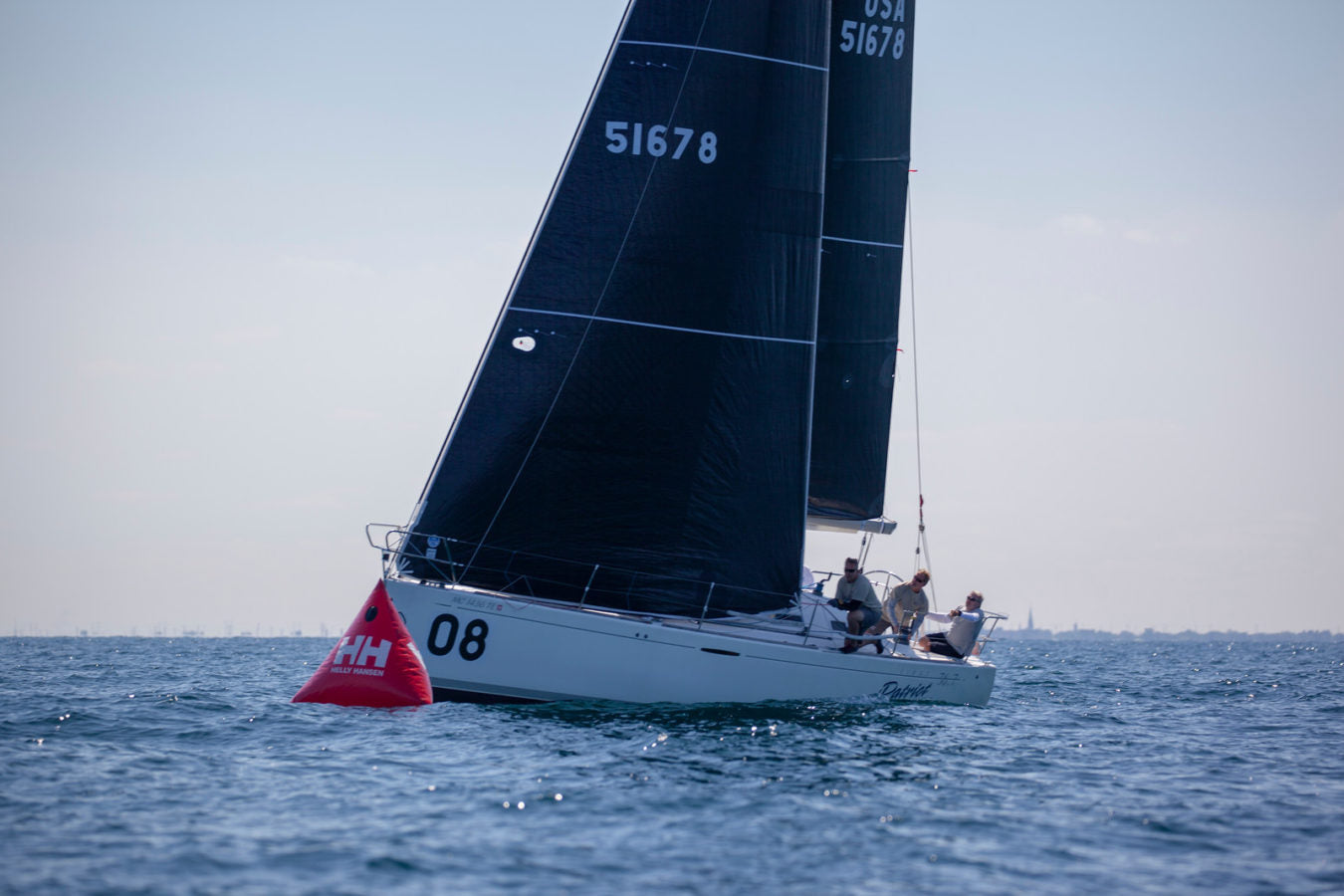
Patriot Owner Ken Sharpe and his crew for their overall victory, winning six of 11 races. Chris Duhan's Tequila Mockingbird took second, and Jarrett Altmin's Soulshine took third and was also the Corinthian Champion. "Our upwind speed made my job pretty easy. There was still another option to switch gears when we needed to," said Todd Jones, tactician on Patriot.
Wind conditions for the four-day event ranged from light with flat water to light with a leftover chop to the top end of buoy Number 1. All three of the top boats sported 3Di for their upwind inventory. "The sails performed well and were easy to shape for the wide range of conditions we saw," says North Expert Karl Kuspa, mainsail trimmer on Patriot. Kuspa shared one of his favorite parts of the event was that the host club was very accommodating and opened up their doors to competitors. "Columbia Yacht Club ran a first-rate event." Looking ahead to future regattas, Karl noticed one area of improvement that all Beneteau Owners could takeaway. "Gear shifting- with the varying winds we had, there was a lot of on-the-fly gear shifting going on. I watched a fair number of boats fall off a cliff because they were not shifting gears frequently enough."
Karl's three tips for 36.7 sailors:
Upwind playing the backstay is crucial. Puff on, backstay on. Puff off, backstay off. I played the backstay way more then I played the sheet.
Consistent heel angle. This is done through crew weight (hiking), main trim, and most importantly driver.
When in doubt heat it up! This is especially true in light and slop with these boats when sailing downwind. It is easy to lulled into sailing too deep.
READ MORE
READ MORE

2019 CANADIAN OPTIMIST NATIONAL CHAMPIONSHIPS
For all of these “green”sailors this was their very first time participating in a National event. Not only did young sailors have an opportunity to develop their racing skills and meet new friends, they learned that even in light wind it is possible to have fun on the race course.
READ MORE
READ MORE

ROLEX BIG BOAT SERIES RECAP
2019 ROLEX BIG BOAT SERIES
From Low To High On The San Francisco Bay
📸Rolex / Sharon Green
It is safe to say that it’s never a dull experience sailing in the San Francisco bay. For the crews taking part in the 55th edition of Rolex Big Boat Series, the culmination of sailing events in the bay area, there was a mix of confusion and unfamiliarity for the first two days of racing, as light winds and scorching sunshine limited time on the water. “Sailing in shorts and a t-shirt is not typical for San Francisco in September” noted local North rep and regional manager Seadon Wijsen. “But it was pretty awesome to do so, and we had just enough wind to sail one race each day”. With wind picking up later in the afternoons, boats enjoyed 12-18 knots with beautiful sunshine on the iconic waters.
The first two days of racing were anticipated to be light, and boats encountered exactly what the weather man predicted. That particular weather man being expert meteorologist and guest speaker Chris Bedford from Sailing Weather Service. Chris joined racing expert and sailing legend Peter Isler as part of the North Sails pre race briefing, held at the St Francis yacht club on the morning of race day one. Peter was able to provide teams with valuable insight into navigating the complex bay waters and tides, while Chris provided tactical weather forecasting for the four days. Commenting on the Expert Briefing, local North rep Pete McCormick said,"At North Sails we aim to add value and experiences to the events we support, so bringing experts like Peter Isler and Chris Bedford in to provide expert advice really benefits every boat and sailor. That’s what it’s all about."
With the first two days permitting two total races, everyone was delighted when the full on San Francisco breeze returned for the weekend. On Saturday, 18-24 knots quickly became 24-30, with gusts hitting up to 35 later in the afternoon. This proved too much for some, with three boats in the race losing their rigs.
Kuai, the melges 32 owned by local Daniel Thielman was on a mission to dominate the regatta, and excelled in all conditions to score five bullets out of six races, taking the win for the ORR B division. “Daniel and his team really put in the work for this win. They prepare the hardest and it’s great to see with a well deserved win” Seadon Wisjen commented.
📸Rolex / Sharon Green
Ray Paul and his crew on Blue, the Swan 53 battled it out in the OOR A fleet to take second place at the end of the weekend. Claiming a bullet on the first and last race, they just scathed the top position on the podium by one point and four seconds.
For the final day of racing, teams enjoyed cool temperatures, gathering breeze and flooding waters to take on the bay distance tour. Ending just off of the St Francis Yacht Club gave a perfect stadium style finish to end the regatta.
As part of North Sails’ commitment to supporting the Rolex Big Boat Series, Certified Service experts were on hand each day at the North Sails dockside lounge to pick up sails for overnight repair. “The weather on the bay is always so unpredictable, and this regatta surely represented that” commented Sailmaker Charlie Jenkins, “ We want to make sure all boats have the support to be able to get back on the race course, so having our team of sailmakers on standby at the club is a priority for us.”
📸Rolex / Sharon Green
📸Rolex / Sharon Green
📸Rolex / Sharon Green
📸Rolex / Sharon Green
📸Rolex / Sharon Green
READ MORE
READ MORE
HOW TO RIG A FOILING MOTH
HOW TO RIG A FOILING MOTH IN 20 STEPS
Dan Neri Gets Ready to Sail this Singlehanded Foiler
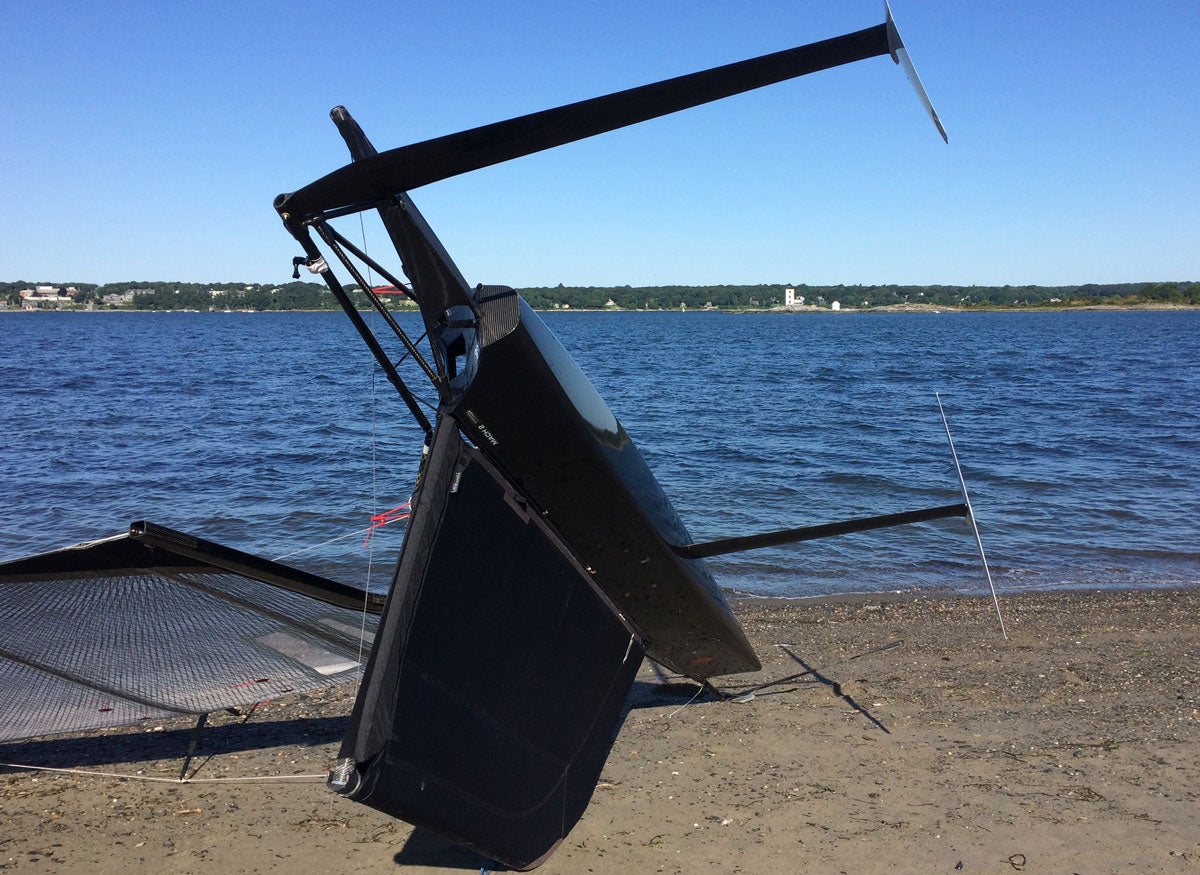
When I first set up my Moth, I broke a lot of stuff. Since then I’ve learned what to do (and what not to do) and in what order. First, bring everything to the beach. Set the foils off to the side, safely out of the way of the boat and any spectators.
Rig sail and spreaders
1. Slide the mast into the sail, keeping the mast above all the camber inducers. It is easy to get the mast past the lower cams. You’ll have to shove it past the top two one at a time.
2. I keep a string with a couple of spliced loops in my pocket to use as a temporary cunningham. I pull it just enough so the spreader bracket is positioned in its sleeve cutout. After stepping the mast this string is replaced by the regular cunningham.
3. Push the cams onto the mast and zip up the sleeve, starting at the top (when you derig, take them off starting at the bottom). To load the cams, put the mast on your knee, push down on the batten (against your knee) with one hand and push up on the cam with the other hand.
4. Before you lay down the sail and walk away, make sure the battens are pushed down so the sail doesn’t fly down the beach.
5. With the sail laying across the wing bars, untangle the stays, install the spreaders, and then attach the forestay and side shrouds to the mast.
Step the mast
Note: My boat has an adjustable headstay, so I can step the mast with the headstay adjustment at its loosest setting. If you have a fixed headstay, you’ll need to use a longer temporary headstay.
6. Position the boat so that it is pointing about 10 degrees away from head-to-wind. Hook up the shroud on the windward side and the long headstay. Pick up the mast between the two attached shrouds with the masthead into the wind, put the mast butt into the step, and push the mast up into place.
7. The wind will do most of the heavy lifting and the mast will fall to leeward, toward the loose side shroud. Hook up the leeward shroud, but leave the headstay long until after you attach the clew to the outhaul.
8. Attach the boom to the gooseneck and then hook up the cunningham and pull it tight. The tight cunningham will help to bend the mast and make it easier to hook up the outhaul.
9. Attaching outhaul to clew requires three hands; two hands to pull the sail and boom together against the boom vang, and a third to install the clevis pin. I have learned a little trick; I set the boom in the crook of my elbow and simultaneously pull down on the leech with that same hand, until the clew grommet lines up with the outhaul car. Then I install the pin with my other hand. Don’t forget to tension the headstay.
Install blades
10. If you’re rigging on a beach, remember to put a flat rock or a towel or anything other than sand under the tip of the bowsprit and the wand axle bolt. Then capsize the boat so you can install the blades.
11. Make sure the sail battens are popped down so the sail does not lift the boat. Tighten the mainsheet so the wind is pushing the sail towards the ground.
12. Assemble tiller/rudder and install on transom. Remember to put the tiller under the shock cord.
13. Take away the dolly and insert the main foil into the slot. Insert the daggerboard retaining pin. (You may need a hammer to tap it in if you are having trouble lining it up perfectly.)
Final adjustments
14. Hook up the ride height adjuster and gearing (on the floor just aft of the mast).
15. Pull the gearing to the middle of the range.
16. Attach the ride height uphaul/gearing cap.
17. Pull a little tension onto the wand shockcord.
18. Use a stiff ruler to check the foil flap gap with the ride height adjustment barrel control line in the middle of its range. For the Mach II, with the wand all the way forward, a 7mm gap is a good starting point.
19. Install a GoPro on the tiller so you can compare yourself (unfavorably) to the Nathan Outteridge tutorial videos.
20. Go find your hat if you are bald, and your cheapest sunglasses. Take off the foil covers. Ready to go sailing!
Read Moth Newbie: Dan Neri Learns to Foil
READ MORE
READ MORE
NORTH SAILS SUPPORTS ETCHELLS U.S. NATIONALS
NORTH SAILS SUPPORTS ETCHELLS U.S. NATIONALS
Etchells Fleet One Celebrates 50th Anniversary
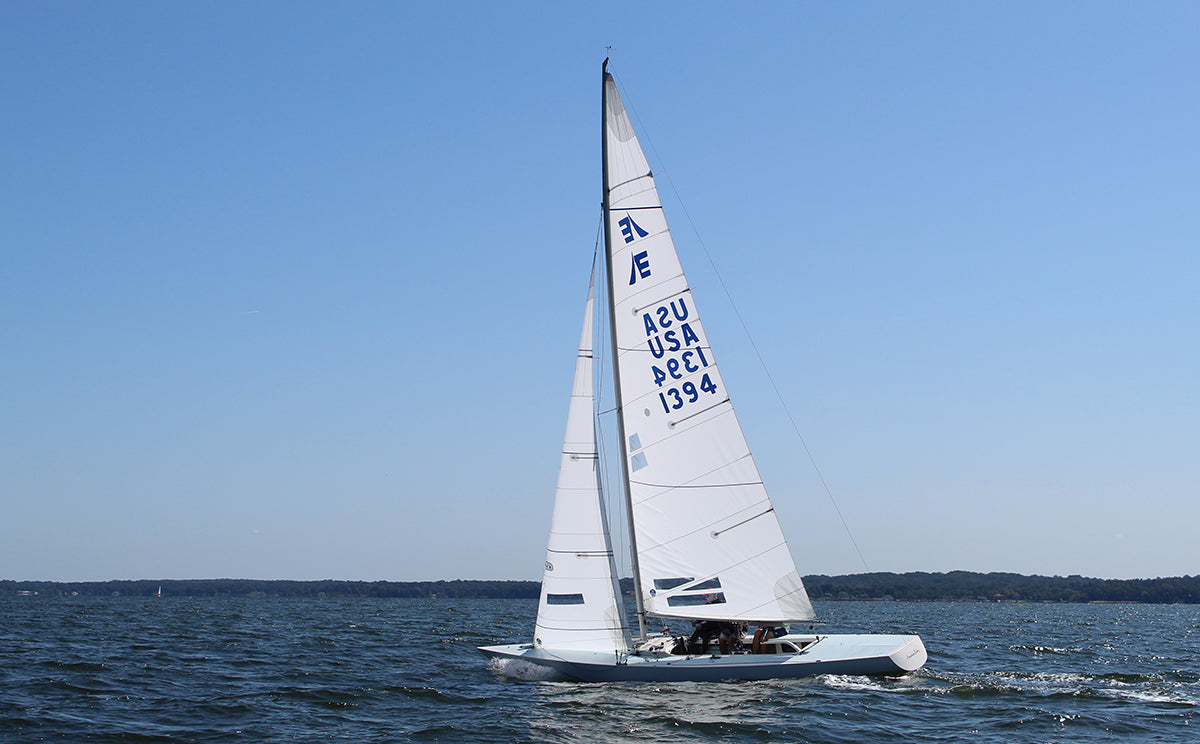
George Francisco’s American Baby (USA 1394) sailing in the light airs which dominated the weekend
American Yacht Club, located in Rye, NY delivered more summer than fall weather for the 2019 Etchells U.S. Nationals. The hot temperatures created instability in the breeze making it difficult for the Race Committee to complete races, but they did the best they could with the conditions they had. Frustratingly, this meant that only four races were completed in the three-day regatta.
Talking about the event, North Sails Ched Proctor explains the tricky conditions: “It was light air with a lot of goofiness, often coming down to catching puffs of air which scattered the race course. The organizers worked hard to put on a good event, so it was a shame the wind didn’t cooperate.”
Jim Cunningham (Etchells International Class Chairman) and his team of Erik Shampian, Steve Hunt and Carrie Wiley onboard Lifted (USA 1461) took the title after achieving consistent, top ten results throughout. New boat Lifted was sailed by Iain Murray’s team to win the recent World Championship in Corpus Christi where Iain thought outside the box with the boats rigging and sail set-up. Whilst the fleet waited for wind on Saturday morning, it provided great entertainment with easy viewing of Lifted’s several unique features which allowed the jib to be sheeted further inboard and and smaller lines with more appropriate purchases to make things easier.
Although the racing was not as prominent, class camaraderie was top notch. While waiting for wind, the fleet spent time together sharing stories about the past. This is a great indicator of how important it is to bond with your fleet members!
50th Anniversary Stories To Remember
Formed in 1969, the Saturday night dinner celebrated the 50th anniversary of Etchells Fleet One with several speakers coming to laud the Etchells sailors. Dewy Eisdale referred to the founding members going against the club traditions, saying “there’d never be an Etchells fleet here”. The IOD was the boat of choice at the time, but a few stepped up and bought an Etchells. Jim Mertz is one name that came up, which then initiated a great fleet story to share in the downtime.
Peter Duncan (PD) spoke about crewing for Jim Mertz one summer when he was 11 years old. He was part of the first four-man Etchells team and he recalled one funny yet exciting time when they were rounding the offset mark, while leading a race in the Larchmont Race Week. The crew was composed of Jim’s wife and ten-time Adams Cup winner, Alegra “Leggy” Mertz, and a large Labrador retriever which ideally cowered by the base of the mast (best place to carry weight in an Etchells!). As they approached the offset, there was a flock of ducks making a racket which sprung the dog into action, along with the crew. Jim jibed the boat trimming both sheets, he also grabbed the dog by the tail performing a dog-flip, slinging it forward over Leggy’s shoulder into the front of the cockpit. 11 year old PD managed to jibe the pole, while viewing the flying Labrador. As they calmly sailed away from the jibe mark, Jim commented “Good job PD”.
The stories kept on coming – multi-time World Champion Dave Curtis talked about four ways to lose an Etchells Worlds that he should have won and reviewed the losing tactics in the 1980 Olympic trials. It was a reunion for several long-time Etchells sailors.
North Sails was proud to sponsor the Etchells U.S. Nationals and despite the conditions, the top twelve boats used North Sails. Ched Proctor sailed with his son Charlie, and friends Monica and Chris Morgan who finished in a respectable sixth place.
Learn more about our championship-winning Etchells sails.
View the full results
Steve Benjamin practicing the day before the regatta
North Sails, proud sponsor of the 2019 Etchells US Nationals.
READ MORE
READ MORE

MOLO LONGO I NS ZA 7 I POL SATI OKO KRKA
Molo Longo i NS za 7 i pol sati oko Krka
Ponovno vrlo dobro posjećenu regatu s 24 jedrilice na startu organizirali su u suradnji JK Jadro iz Selca, te JK Burin i Mitan marina iz Novog Vinodolskog.
Ove godine su na redu za start bila Selca, a cilj se organizirao u Novom Vinodolskom ispred Mitan marine, a ruta na kojoj se ove godine jedrilo je vodila u smjeru obrnutom od kazaljke na satu, odnosno prvo prema Krčkom mostu, pa na jug kroz Senjska vrata i prema cilju.
Dugo se raspravljalo o smjeru obilaska, na svim organizacijskim instancama. Razlog razmjeni mišljenja bili su vremenski uvjeti. Nekoliko dana pred start vremenska prognoza za Senjska vrata je bila nepromijenjena. U najavi je bila umjerena do jaka bura u toj zoni, pa je glavna tema tih diskusija bila da li je bolje Vrata proći na početku regate u noćnim satima ili po dnevnom svjetlu u završnoj fazi regate.
Na kraju je odlučeno da to bude pred finiš, ali tri vodeće jedrilice su kroz taj tjesnac ipak prošle po noći. Razlog je bila vrlo brza regata.
Naime, na startu je puhalo oko 15 čvorova, naravno bure, tako da je start u Selcima bio s vjetrom u bok. Sve jedrilice su to iskoristile maksimalno i odmah se moglo naslutiti da će rekord regate biti oboren. Osim standardnih sudionika većine prethodnih izdanja, svoj drugi nastup je imala i najveća jedrilica Kvarnera, Molo Longo Tutta Trieste.
Startnu liniju je presjekla u punoj brzini i odvojila se od ostatka flote već od samog starta, a u tom dijelu regate, ispred Crikvenice, ostvarivala je brzine oko 15 čvorova!
DSK, Extreme 37 i mali openaš Joker su bili najbliži posadi Rajka Kujundžića, ali ipak u samoj blizini ostatka flote tako da u slučaju bilo kakvog posustajanja doslovno za desetak sekundi bi bili preteknuti od jedrilica iza njih.
Ostatak potjere, s nekoliko desetaka metara prednosti ispred ostalih, vodili su Cocoon i Trogir. Jedini koji su zaostali odmah nakon starta su bili Senjani na Vještici (Striga del vento) jer su imali problema sa sustavom za kraćenje. Problem su riješili za oko pola sata, a u to vrijeme je Molo Longo bio već između Jadranova i Krčkog mosta.
U ovoj zoni brzina flote malo pada, tako da i vodeća jedrilica jedri brzinama oko 5 čvorova, ali zato sad do izražaja dolaze i performanse ostalih bolida, pa se DSK značajno odvaja od ostalih, dok lagani Cocoon dolazi na svoje i izbija na treće mjesto. Jednako tako jedina jedrilica u regati koja je stigla s Kariba, Wild Devil Baby - Melges 24, zajedno s Blu Labelom koji je trenutno na trećem mjestu i s My Wayom prelazi Jokera i Trogira koji se trenutno može samo pohvaliti pozicijom najbržeg od tri JOD-a na regati.
Otprilike ovim rasporedom jedrilice prolaze ispod Krčkog mosta između otočića Sv.Marko i Krka. I dalje su im u toj zoni brzine u prosjeku 5 čvorova, osim Molo Longa koji je Omišalj obišao u širokom luku i nastavio jedriti s brzinama većim od 10 čvorova!
Glavnine flote i dalje nastavlja jedriti u grupi i svi prate rutu vodećih, te su u jednom dijelu regate čak i bliže Cresu nego Krku. Razlog tomu je izbjegavanje sjene vjetra koju stvara Krk između Omišlja i Malinske, a očito je na ostvarenim brzinama koje sad dosta padaju u odnosu na jurnjavu nakon starta.
Tri i pol sata nakon starta Molo Longo već dolazi do otoka Plavnika i tu kreće rodeo. Ova posada prvi put od kad su na ovom bolidu, regatu jedri s kratom! Nagli udari bure koji su od 5 čvorova puhali do preko 40 su tražili i dizanje olujnog floka da bi se jedrilica mogla kontrolirati. Tu su im brzine u prosjeku oko 8 čvorova.
Za to vrijeme ostali biraju rutu bliže Krku da bi što manje bili izloženi buri. To im djelomično uspijeva, ali sviju čeka "čistina" ispred Krka i Punta.
Malo iza ponoći, pet sati nakon starta, Molo Longo je stigao do otočića Prvića, desne vratnice Senjskih vrata.
Kako je ova zona tradicionalno najizloženija udarima bure, a i po njoj je nadaleko poznata, sa zanimanjem se očekivao izbor jedriličara o strani obilaska. Jedan dio publike je očekivao prolazak kroz vrata s povećim brojem viravanja, a drugi dio je kalkulirao da li će se posade odlučiti na rute starih Senjskih kapetana koji su u burno vrijeme tradicionalno birali obilazak Prvića s istočne strane.
Na kraju svi koji su ušli u ovaj završni dio regate izabrali su kraću rutu, direktno kroz Senjska vrata. Molo Longo ih je čak odradio sa samo dvije vire i nakon prebacivanja na desne uzde imao je samo na istim uzdama jedriti do cilja.
Dok je bio na nekoliko milja od Mitan marine DSK stiže do Vrata, a najbliži pratioci, Cocoon, Sjena vjetra i Trogir bore se s burom nasuprot Punta.
Ekipa Cocoona tada zbog sigurnosti jedrilice donosi odluku o prekidanju regatnog jedrenja i povratku u Rijeku. Procijenili su da su premali i prelagani za forsiranje orce po tim uvjetima. Osim njih slične poteze je povukla većina manjih jedrilica, te jedan dio odlazi u Krk i Punat, dok se neki odlučuju za čekanje na otvorenom dok bura ne oslabi.
Jedini koji u to vrijeme nastavlja jedriti dalje je Trogir. Solidna gradnja i relativno velika masa osigurali su mu i dosta dobar prosjek brzine jedrenja u orcu po ovim teškim uvjetima, te uspješno zadržava vrlo visoko treće mjesto do samog kraja regate!
Do kraja regate u cilj ulazi još osam jedrilica, a kako je koja ulazila u cilj i na koje načine su izbjegavali buru možete pronaći u playbacku na ovom linku. A osim bure koja je natjerala većinu flote da potraži zaklon, regata će dobiti svoj poseban status jer je Molo Longo postavio novi rekord regate od 07:32:56!
Za razliku od ranijih 5 izdanja ova regata je pomaknuta za dva tjedna kasnije. Taj pomak je napravljen u dogovoru s organizatorima regate na Malom Lošinju koja je organizirana tjedan ranije i s organizatorima Galijole koja će se odjedriti vikend kasnije. Na ovaj način se omogućilo jedriličarima iz daljih klubova da svoje jedrilice ostave na mjestima održavanja idućeg eventa, te da se im se tako pruži mogućnost sudjelovanja na ovom vrlo kvalitetnom jesenskom ciklusu.
READ MORE
READ MORE
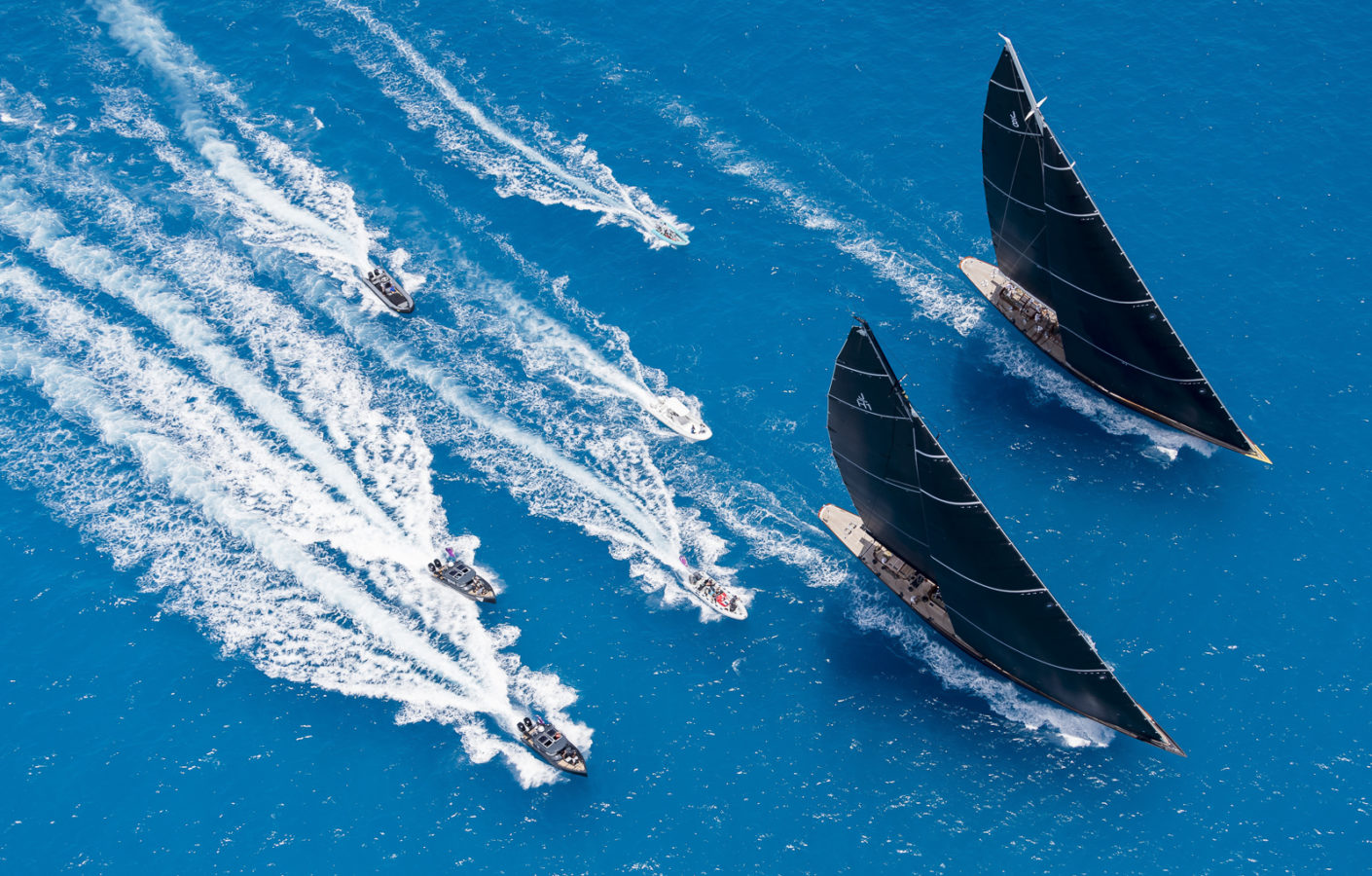
J CLASS OFFICIAL SAILMAKING PARTNER
NORTH SAILS OFFICIAL SAILMAKING PARTNER OF THE J CLASS
Ramping Up Racing With An Eye On New Zealand
📸Carlo Borlenghi
North Sails is excited to confirm continuing our partnership with the J Class Association as the Official Sailmaking Partner. Combining unprecedented experience and heritage in the class, the world’s leading sailmaker is the sailmaker of choice for the J Class fleet and is set to continue to provide support on and off the water as the Class builds towards and exciting year in 2021 as the current America’s Cup cycle culminates in New Zealand.
The J Class Association was founded in 2000 to protect the interests of the Class, present and future. Class Secretary Louise Morton said: “The J Class Association is pleased to continue our very successful partnership with North Sails. North Sails will continue to provide on-site service at regattas, as well as helping to showcase our class to the wider sailing world. Feedback from our owners is unanimous that they truly benefit from the North Sails design expertise, global loft network, world class customer service and cutting edge products as the racing gets ever more competitive and international.”
North Sails have an exceptional team working across the J Class fleet with relationships built up over many years. The team understands the needs and desires of the owners combined with their knowledge of the latest technology to ensure the perfect sail selection. Combining performance, strength and durability, 3Di is the perfect technology for the J Class and the owners have benefited from the ever growing expansion of North 3Di product offerings to improve and optimize performance. A range of North sails are used across the fleet to fulfill needs from racing to cruising, more advanced racing, charters and day sailing.
“The J Class is a rare blend of classic designs using the latest advancements in modern technology,” said North Sails President Ken Read. “Following a raft of new builds, refits and renewed energy on the circuit over the last few years, the future looks bright for J Class owners as they ramp up racing with an eye on New Zealand when these beautiful classic yachts will be able to join the excitement of racing alongside the America’s Cup. The J Class boats are the most unique fleet of boats in the world and North Sails is proud to power the majority of the class. Combining the old and the new in a way that no other boat can do, the fleet showcases so much that is great about sailing.”
In 2021 the Royal New Zealand Yacht Squadron will host regattas in the Bay of Islands and Auckland to commemorate the Squadron’s 150th year and celebrate the return of the America’s Cup to their shores. In the meantime, the fleet will continue to race at the world’s most prestigious events in 2019 and 2020, including the Superyacht Challenge Antigua, and then full schedule of events in New Zealand in 2021.
📸Breed Media
READ MORE
READ MORE
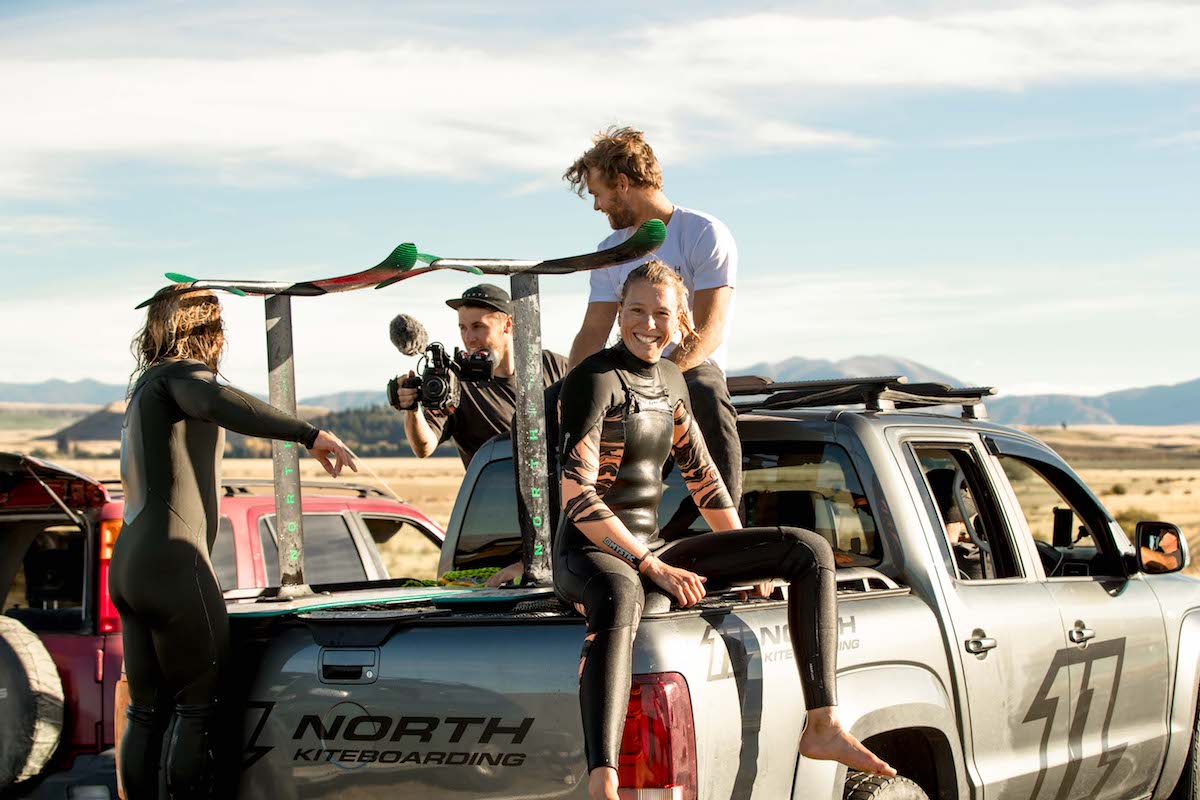
NORTH KITEBOARDING COMES HOME
NORTH KITEBOARDING COMES HOME
We Celebrate The Launch of North Kiteboarding
By Victoria Stuart
With a hand-picked team of the industry’s most experienced and respected designers, engineers and brand managers at the helm, the freshly re-calibrated brand delivered their thoughtfully refined range of kites, boards, foils and accessories to market under the North Technology Group (NTG) umbrella on the 8th August.
Kite-buffs around the world speculated if it was even possible – bringing to market a new premium brand almost twenty years into the sport? Especially with only one year to turn a blank slate into a full product range. But applauded for their intuitive, less-is-more approach to design, North Kiteboarding has rocketed, like their flagship kite the Orbit, above and beyond expectations.
Alongside the product designs, the team were instrumental in shaping a new brand philosophy that holds to our North heritage while also inspiring groundbreaking innovative solutions.
“The new North range is like nothing you’ve ever ridden before… bringing a high-quality, much needed, masterfully minimalist approach to their gear.” – Nathan Patterson, MACKiteboarding 📸 Vincent Schaap, Dakhla, Morocco
A Powerful Alliance Under NTG
North Kiteboarding’s return for the model year 2020 came about after NTG announced it would make a significant investment in its brand North Kiteboarding – bringing the design, innovation and manufacturing of its products home under the umbrella of the group and ending its third party licensing agreement. In January 2019, North Kiteboarding joined forces with world-leading accessories group Mystic BV under a new part of NTG called North Actionsports Group. This merger gave the brand instant access to one of the biggest distribution networks in the kite world, further strengthening its foundations and infrastructure.
North Actionsports Group represents a powerful alliance of world-class kiters and experienced industry innovators and leaders, determined to make kiteboarding more accessible, sustainable, innovative and exciting.
“I firmly believe creating great products is all about investing in incredible people,” says Mike Raper – North Kiteboarding Brand Director.
“At North, we are always seeking, always asking; ‘Where can there be more power, greater performance, more intuitive intelligence?’. Then, always: ‘How can it be simpler?’.
“I’m very proud of how our team has collaborated, working hard to leverage years of experience and passion and develop a high-performance range of gear.”
Working closely with the NTG’s composite engineers and designers, North Kiteboarding is excited to continue leveraging the unmatched aero and hydro expertise the Group has within its portfolio.
Engineered. Refined. Intuitive.
“We are determined to drive the sport of kiteboarding forward through unprecedented technological development and an unwavering commitment to our principles,” says Raper.
North Team Riders Jesse Richman, Jalou Langeree and Graham Howes after a foil session on the Hydro Canals captured by Content Creator Jonty Norton, with Mike Raper in the driver’s seat. 📸 Scott Sinton, MacKenzie Country, NZ
Tom Whidden, CEO of NTG, comments: “We have so much technology within our group which we can better share with our fellow lovers of wind and waves. Sailing and kiting are equipment-driven sports – when you have the best gear, being out there in the wind, on the water is so much better – in fact, it’s the greatest feeling on earth.”
Discover North Kiteboarding at www.northkb.com or join the conversation on:
Facebook: @northkiteboarding
Instagram: @northkiteboarding
READ MORE
READ MORE

NEW LOOK FOR THE US SAILBOAT SHOW IN ANNAPOLIS
LOOKING TO THE 2019 US SAILBOAT SHOW
Annapolis Loft Manager Jonathan Bartlett Talks New Offers & New Looks
North Sails has been a fixture at the United States Sailboat Show in Annapolis MD for well over 40 years. And for 2019, visitors to one of the most popular boat shows in North America (October 10-14) will be able to come and meet the team of experts from the world’s leading sailmaker in a brand new space at booth Dock-F1. Visitors will be able to discover how North Sails has the technology, products and global loft network to match any needs, whether for One Design Classes, racing or cruising. And for cruisers particularly, seeking a game-changing sail, they will be able to take advantage of the special Annapolis boat show promotion on 3Di NORDAC or NPL Tour. In an Annapolis boat show exclusive, North Sails are offering a special promotion: any customer who buys a 3Di Nordac or NLP Tour main and headsail together will receive a free G1 gennaker as a bonus sail. 3Di NORDAC is a revolutionary cruising sail made of 100% polyester fiber. Tailored for small to medium sized cruising boats, 3Di NORDAC transforms polyester fiber into seamless, one-piece sails that are uniquely strong, marrying the shape holding technology of 3Di with the toughness and affordability of polyester sails. Commenting on their presence as one of the longest exhibitors at the show, Jonathan Bartlett who is site Manager of the North Sails loft in Annapolis, said, “We are very excited to unveil our sleek new customer space at the Annapolis Boat Show. We are still at our usual location on the floating docks, which is always popular, but we have a bigger and brighter space to welcome anyone who wants to discuss our range of products, technology and service solutions. The Annapolis Show is one of our busiest events of the year, with up to five North experts working the booth at any point throughout the day and we leave the show with a number of leads and sails sold . We have a really experienced team working in our Annapolis loft, from both our sales and service sides - and it is our people that really make a difference for our clients so the chance to meet with them here at the Show is a great opportunity.” JB concluded, “3Di NORDAC has been a revolutionary product which has been hugely popular at the show for the last couple of years, so we’re delighted to be able to have this special offer here on our flagship cruising product. Alongside 3Di NORDAC, our range of cross-cut Dacron sails are also ideally suited to meet the cruising needs of any size of boat. We expect to see strong interest in the latest NPL SPORT Xi and 3Di RAW 360 from our racing clientele here in Annapolis. And finally, there are a lot of offshore One Design keel boats on the water in the Chesapeake Bay region and we are confident we can offer these owners the best products available in the market.” Key representatives from North Sails at the show include Allan Terhune, Will Keyworth, Austin Powers, Scott Allan, Ron LaNeve, and Certified Service Manager Ridgely Mackenzie.
READ MORE
READ MORE

AC36 REVENGE OF THE SAILMAKERS
AC36 REVENGE OF THE SAILMAKERS
The America’s Cup Is Back To The World Of Battens And Sailcloth
📸 Emirates Team New Zealand
By Ivor Wilkins, first published in the Royal NZ Yacht Squadron magazine, Breeze
On the eve of Emirates Team New Zealand’s new AC75 launch, the waterfront was buzzing with speculation about how these boats would perform. Would they crash and burn, or majestically rise up on their foils and race away? Within the halls of the team’s smart base at the Viaduct Basin, faith in what the sophisticated simulation programs had indicated remained strong. But the sense of eager anticipation and just a touch of nerves was palpable. For North Sails designer Burns Fallow, AC36 is a return to the America’s arena. This is his sixth America’s Cup campaign, but he was forced to sit out AC35 in Bermuda, when the sails were limited to one-design jibs. With hard wings no longer featured and a sail plan now made up of soft sails, albeit in an unfamiliar form, could this be regarded as the revenge of the sailmakers? He laughs at the notion, but doesn’t dismiss it. “It is a bit like that. We have had no mainsails for two cycles, so for this one we have two. We have to keep this configuration for one more go-around and then we will be equal again.”
His reference to two mainsails relates to the double luff twin-skin arrangement introduced for this cycle. Double luff mainsails are not entirely new, but have been largely confined to experimental craft. They are about to come under very close attention at this cycle of the Cup. Fallow says the first thing observers will notice is how short the rig is. “The sail plan is very small. If you go back to the Version 5 monohulls in Valencia, these rigs are more than 8m shorter. “Everybody understands that once you are foiling, you don’t need a large sail plan.” In displacement mode, this keel-less monohull does not need a large sail plan either. With low stability at slow speeds, excessive sail would be a liability. “It is quite different in that respect from a catamaran, which has massive stability from the get-go,” Fallow explains. However, regardless of the hull form, the name of the foiling game is to get up and out of the water as quickly as possible and to remain flying as long as possible. Surely, a monohull, which is considerably heavier than the previous America’s Cup catamarans, would require more power to achieve lift-off? Fallow says all the teams are going to be very coy about their lift-off speeds. “The aim is certainly to get foiling as soon as possible.”
A glance at the figures indicate that the sail designers have a challenge on their hands delivering the power to achieve that. The hard wing on the AC50 in Bermuda was 3m shorter than the AC75 with about 40m2 less area, but the monohull is three times the weight. The AC72 wings in San Francisco were 11.5m taller than the AC75 rig, with a surface area of about 260m2 and an overall weight (platform + wing but without crew) of approximately 7,200kg. The new AC75 is slightly lighter with an overall weight of 6,450kg (platform + wing but without crew) powered by the double luff mainsail with about 100m2 less surface area. The AC75 does gain from jibs that are proportionally much larger than the catamaran jibs, with the forestay attaching 2m below the top of the 26.5m mast.
These yachts can also carry masthead code zero sails flying from a bowsprit. Code zeros were allowed but seldom used on the AC72s and dispensed with altogether with the AC50s in Bermuda. Fallow also points out that, although the wings were very efficient, the soft-sail system is much lighter – “about half the weight of a solid wing.”
The value of the code zero remains a question mark. “Just where this sail fits in is one of the big questions,” says Fallow. “All the teams will be keen to find out how it works at full scale. “The rule is very open on how deep the code zero can be, how triangular, how big or small. There is a wide range of options, from almost like an A1 on an IRC boat in its most extreme version, down to a small, flat jib-top, or anywhere in between. As always with code zeros it will come down to ease of deployment and how to cope with the transitions from non-foiling to foiling and vice verse.”
📸 Emirates Team New Zealand
“It is a big mode change and there is an awful lot happening all at once for the guys trimming the sails. It is not like shifting gears on an IRC boat. This is like changing the whole transmission in an instant. It is a time of very high energy demand, that is for sure.” All those factors suggest that code zeros will probably carry a considerable “handle with care” warning and will probably come out only in light conditions. Within the triangular space created between the mast and the forestay, considerable freedom is given to jib designs. While most of the early design effort has gone into the double luff mainsails, the jibs are likely to play a big performance role and Fallow expects that once the yachts are trialing more attention will be devoted to headsails.
The objective with the new mainsail arrangement is to achieve a wing-like shape without the tremendous logistical demands involved in stepping and removing a cumbersome solid wing structure every day. It is accepted that the efficiency and control of the soft sail will be less than the solid wing, but considerably more than a conventional mainsail. The rule provides teams two zones within the sail plan – a 4m upper zone at the top and a 1.5m zone at the bottom – to install custom control systems to influence shape and twist. The area between what Fallow refers to as the “trickery” zones has to be passive. Glenn Ashby was seen as king of the wing at Bermuda as he reclined in his foxhole with his thumbs dancing over an X-box type controller to shape the wing for maximum performance. He acknowledges the soft system will have less control, but is confident of enough trickery in the freedom zones to achieve considerable shape-shifting.
In terms of design tools, Fallow says Michael Richelson of North Sails Group had done a lot of FEA work on solid wings using their proprietary Membrain software, so they used that as a starting point for investigating the new system. “During the rule development, I was debugging,” Fallow says, “and Michael was writing code. We were going backwards and forwards two or three times a day. It has been an invaluable tool.” In practice, the two skins are hoisted on separate luff tracks 400mm apart on the aft face of a D-shape mast that rotates 45° either way.
📸Emirates Team New Zealand
Teams are free to decide whether to join the two leeches, or leave them separate. Bearing in mind the leeward side has more curvature than the windward side, allowance has to be made for the natural tendency of the skins to slide backwards and forwards along the leeches on opposite tacks. Sheeting and tensioning arrangements are left open to the teams, as is the decision on whether or not to have a boom.
Fallow says the sheet loads would be comparable to a conventional maxi yacht at equivalent speeds. There was talk early on about whether the mainsails would be reef-able. Fallow: “The rule has been written in such a way that you could still have a mainsail that did not go to full hoist, but that would leave the top of the rig creating turbulence and drag.” More likely, teams will have full hoist mains designed for different wind ranges. “You would not have to necessarily make your final sail selection at the dock,” says Fallow. “You could switch mainsails on the water, but it is a considerable exercise by the time you have the two skins hoisted, with all the attachments and internal controls connected. You would not want to be leaving that decision to the 10-minute gun. It would be more like 40-45 minutes.” With the long-awaited on-water phase of the program about to begin, the sailors and team will soon learn the capabilities of this radical new design. Fallow expects it will follow a similar progression to the catamarans, first coming to grips with the foiling transition, then moving to foiling gybes, upwind foiling, foiling tacks and finally the ultimate goal of 100% dry laps Looking back, Fallow says the two years since they set about framing the new rule have rushed by. “We have learned a great deal in that period. Now we are about to go in the water and we will learn a great deal more. We are fully aware that this is just a milestone along the way. There is a long way to go.”
READ MORE
READ MORE
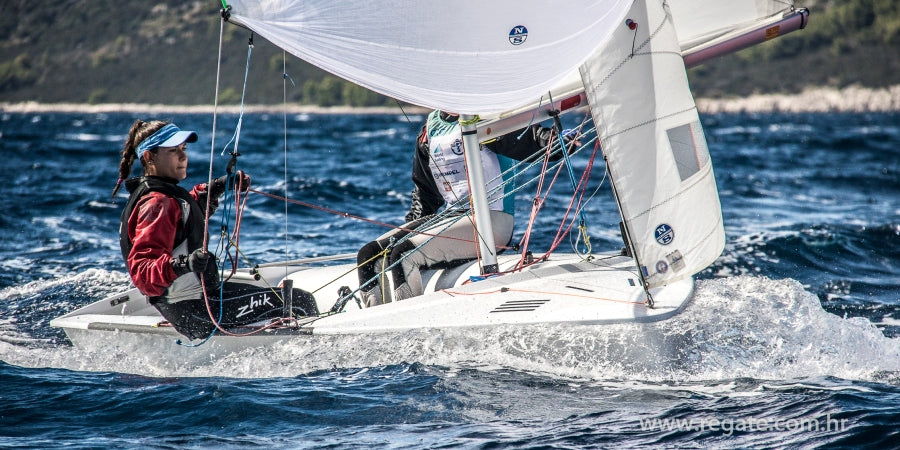
OTVORENO PH NEOLIMPIJSKIH KLASA
Otvoreno PH neolimpijskih klasa
Jedriličarski klub Marina Kaštela je od 13. do 15. rujna organizirao drugo ovogodišnje Prvenstvo Hrvatske za "male klase". Nakon ekipnog jedrenja za klasu Optimist ovog puta je bila riječ o Otvorenom PH za neolimpijske klase.
Jedrilo se u Laser 4.7, Laser Radialu, 420 i Techno 293, a uz domaće jedriličare nastupili su predstavnici Crne Gore i Slovenije.
Uvjeti na moru su bili takvi da su samo svestrani natjecatelji mogli računati da će se popeti na postolje. U petak se jedrilo u Kaštelanskom zaljevu po laganom burinu i sve klase su na kraju dana napravile konto sa po dve plova.
Subotnja prognoza je obećavala puno više vjetra sa zapada, pa je RO flotu pozvao na regatno polje s druge strane Čiova. To se pokazalo punim pogotkom jer su tamo odjedreni puni programi za sve flote po uvjetima koji su uključivali jedrenje po malom i umjerenom valu, kao i laganom, te umjerenom vjetru.
Jedino se nije jedrilo u nedjelju jer je vladala bezvjetrica s obje strane Čiova.
Sve flote su jedrile na istom regatnom polju postavljenom u trapez, samo su surferi imali štap varijantu, a startali su po redu koji je predvodio dvosjed 420, a iza kojeg su slijedile 4.7, pa Radiali i na kraju daske.
Pravu renesansu na ovom PH je doživjela klasa 420. Konkurencija je imala 11 posada iz 5 klubova od Istre do Splita. Posade su bile u svim kombinacijama, djevojke, momci i kombinirano, a od petka su liderski status preuzele članice Uskoka, Antonia Kuštera i Maris Bašić. One su prvenstvo započele s dvije pobjede, a u istom stilu su nastavile i u subotu kad su nastavile idealni niz.
Ove dvije djevojke su ujedno jedrile u kategoriji U19. U mlađem razvrstanju, U17, najbolje su bile klupske im kolegice Eva Šiško i Marta Mavar. Njih dvije su inače zauzele 4. mjesto u generalnom poretku.
Što se tiče laseraša, te dvije flote su bile najbrojnije. Lasera 4.7 je bilo ukupno 46, a prvog dana je najbržio bio gost iz Crne Gore, Nikola Golubović. On je regatu otvorio s dva prva mjesta, dok je oba puta prva iza njega bila naša trenutn najbolja jedriličarka u ovoj klasi, Ursula Balas.
Idućeg dana situacija se okrenula i njih dvoje su zamijenili mjesta, a svoje pozicije su zadržali unatoč tome što je Ursula dobila BFD u 4. plovu, a Nikola što nije startao u 3. pa je dobio DNC. Srećom, zbog ukupno odjedrenih 5 jedrenja mogli su odbaciti ove rezultate.
Zanimljiv podatak je i da je Nikola imao jednak broj bodova kao Lovre Bakotić koji je završio kao brončani, ali za konačni plasman je presudilo to što je Nikola pobijedio u dva plova, dok je Lovre uknjižio samo jedno prvo mjesto. Također je zanimljivo da su Nikola i Lovre, jednako kao i četveroplasirani Luka Fatović, u kategoriji U16.
Na 5. mjestu je finiširala jedriličarka Eleonore Borgin koja je vikend prije osvojila Europa Cup u svojoj kategoriji na Balatonu, a iza nje je završila pobjednica u skupini U16, Lea Rakovac.
Lasri 4.7 su u subotu imali i najproblematičnije starteve. Vjerojatno je razlog što je ovo bila prva ozbiljna regata mnogima koji su izašli iz klase Optimist i još uvijek nisu svladali ovu jedrilicu dovoljno dobro da je mogu staloženo kontrolirati na startnoj liniji. S druge strane veseli činjenica da neki od novopridošlih su se odmah ugurali u sam vrh klase i to sigurno obećava rezultatski zanimljivu jesen.
I Laseri s većim jedrom, Radiali, imali su jednako efektivno otvaranje regate kao i dvije prethodne klase, bar po pitanju lidera. Dva prva mjesta u petak je napravio Roko Stipanović. Jednako dobro je nastavio jedriti i u subotu, ali mu je poziciju na vrhu ugrozio Božo Golubić koji regatu završava s jednakim brojem bodova, ali Roko u svojoj rubrici ima tri pobjede, dok je Božo imao "samo" dvije. U svakom slučaju vrhunsko nadmetanje za zlatnu medalju.
Na vrhu ljestvice su dominirali stariji jedriličari. U prvih 7 svi osim Luke Vukovića su bili U19, dok je jedini senior u klasi, Krešimir Buneta, završio PH na desetom mjestu.
I za kraj su ostali surferi, jedini koji su odjedrili 4 plova na prvenstvu. I ovdje je situacija definira prvog dana regate. Na vrh su se odmah smjestili naš Nikola Stipčić i mlada slovenka, Marina Vrščaj.
Posebnost ove klase u odnosu na ostale je što je ovdje bilo i nekoliko natjecatelja u stvarno najmlađoj kategoriji, U13! To je i glavni razlog zašto je u subotu nije bila cijela flota na moru, jer je vjetar za najmlađe bio stvarno prejak.
U nedjelju, na proglašenju pobjednika, podijeljeno je ukupno 17 kompleta odličja! Tko je sve nagrađen i u kojoj kategoriji možete pronaći na ovom linku.
Ukupne rezultate Otvorenog PH za neolimpijske klase možete pronaći na web stranicama organizatora, fotogaleriju subotnjih jedrenja možete pogledati ovdje, dok se video izvještaj može pronaći u video galeriji.
READ MORE
READ MORE

AUGIE DIAZ, PURE STAR SPEED
AUGIE DIAZ, PURE STAR SPEED
Back-To-Back Victories At North Americans And Eastern Hemispheres
Augie Diaz and Henri Boening, 2019 Star North American champions. 📸 Art Petrosemolo, Nauticalphotography.us
There is no better reward for us at North Sails than seeing a client win a big regatta. Witnessing world-class sailor Augie Diaz win two back-to-back Silver Star events using our recently launched Star designs is the best product testimonial we could ask for. Congratulations Augie Diaz, sailing with Brazilian Henry Boening, for the victories at the North Americans in Barnegat Bay and the Star Eastern Hemispheres in Austria with crew Christian Nehammer.
A competitive 32-boat fleet and four days of the best conditions on Barnegat Bay made for close racing throughout the seven-race series for the North American title. It all came down to the final race and in the end, Augie and Henry secured the title. Augie used our M-25 mainsail throughout the series along with the J-6 Jib for four of the seven races.
“Fresh off his win in the Eastern Hemispheres using North Sails, Augie felt pretty confident in his speed to be able to win the North Americans,” commented North Sails rep John Macausland.
“Extensive R&D and uncountable hours of sail testing have paid off,” exclaimed North expert Eric Doyle. As the Star Class Leader for North Sails, Eric devoted the past two years to figuring out how to make Star sails faster. His decisive victory at the 2019 Bacardi Cup proved the time was well spent. “We were really pleased with our performance throughout the wind range in Miami,” Eric explained, adding that he used the new M-25 mainsail for the entire event.
Last May, the story wasn’t different at the Star Sailors League Breeze Grand Slam. “We were extremely pleased with the newly developed sails as were SSL League Champions, Sheidt/Boening. Rohart/Ponsot finished second in the league, using the North M-25 Mainsail and J-6 Jib throughout the regatta,” said Eric.
Get ready for the next SSL event and the Star Worlds in Nassau with the fastest Star sails. Contact your local North Star Expert today.
North Sails Allan Terhune sporting the M-25 main and J-115 jib. 📸 Art Petrosemolo, Nauticalphotography.us
📸 Art Petrosemolo, Nauticalphotography.us
READ MORE
READ MORE

#NSVICTORYLIST: MELGES 20 EUROPEAN CHAMPIONSHIP
#NSVICTORYLIST: MELGES 20 EUROPEANS
Brontolo Racing Declared European Champions In Malcesine
: Federico Michetti, Andrea Pacinotti, Manu Weiller, Filippo Pacinotti, 2019 Melges 20 European Champions! © Melges World League / Barracuda Communications“Winning the Europeans is a like a cherry on top of a cake,” says Filippo Pacinotti, skipper of the 2019 Melges 20 European champion Brontolo Racing. Along with trimmer Federico Michetti, tactician Manu Weiller, and MVP/ Bowman Andrea Pacinotti (Filippo’s son), Filippo took first place in the 37-boat fleet by seven points.
Racing with his 13-year old son Andrea was a dream come true, Filippo explains. “Being able to share the same passion is truly a gift.” It also added to the regatta’s challenge, because Filippo was concerned that he would be too emotional during the races. “But Federico has known my son Andrea since he was a child, so it helped a lot. He is like an uncle to him.” And the rest of the team was excited by the family connection as well.
“Having Filippo at the helm and his son on the bow,” says tactician Manu Weiller, “it was a very special win for them to share.”
MVP Andrea and his father Filippo © Zerogradinord
Filippo’s son Andrea started sailing at age nine in the Optimist and is now an active windsurfer in the Techno 293. “We sailed together since he was six,” said Filippo, “but that was only when we were cruising. Never have we raced together until this season on the Melges 20.”
“This has been a perfect season for us,” Fillipo continues. “A joy that has a special flavor because my son Andrea raced for the whole season by my side, and with two champions and special friends like Federico Michetti and Manuel Weiller.”
Melges 20 Expert Giulio Desiderato says he is always excited to sail on Lake Garda. “I always go home with nice memories. This year’s Europeans was challenging, with the Ora in the afternoon being particularly light, and the Peler being stronger in the morning. For Brontolo to win the championship, that’s a big honor. They had incredible scores.” Brontolo Racing scored three bullets and no race worse than a ninth, allowing them to skip the last race and take a victory lap to the dock.
© Zerogradinord
Manu Weiller was elated with the team’s overall result. When asked what the team did particularly well, he talks about the challenges of sailing in a deep Melges 20 fleet. “One of the hardest parts for me as tactician was calling the layline during the first upwind. Once we tacked, it was all about finding the best pressure, and quick. Big gains were made with the right calls, and it was very important to start well.”
When it comes to trusting their sailmaker, Filippo says that North has been key to the Brontolo program. “North’s Melges 20 inventory is efficient and easy to trim.The tips and tricks from class leader Giulio Desiderato were taken in great consideration. From sails to service, I believe the speed we had was a demonstration of a great partnership.”
“From sails to service, I believe the speed we had in Malcesine for the Europeans was a demonstration of a great partnership.”
Giulio Desiderato agrees that all the Melges 20 development work has provided great results: “2017 and 2018 Worlds victory with Pacific Yankee, the 2019 victory with STIG, and now with Brontolo at the Europeans! It shows we at North Sails are always focused on this class, providing our maximum efforts towards the knowledge and technology when it comes to sail design and expertise. The new jib, the Ji-4, designed by experts Giovanni Cassinari, with the help of Michele Melandri and Mike Marshall, has been a concrete upgrade for the performance of our teams.”
© Zerogradinord
For Brontolo, winning the European title completes a path that started when they finished second at the Worlds last year. “I want to dedicate this victory equally to my family and to all those who have raced with Brontolo over the last ten years,” Fillipo explains. “On this foundation, it was possible to build the success achieved at this year’s Europeans. It’s great to say we’ve earned our title now.”
Both the World Champion winning teams and the European winners used Mi-2 mainsail, Ji-4 headsail, V4-2R reacher, and R-2 runner, which are North Sails standard products for the Melges 20.
European Championship Full Results
© Zerogradinord
© Zerogradinord
© Melges World League / Barracuda Communications
READ MORE
READ MORE

NUEVA MAYOR BI-RADIAL PARA OPTIMIST
NUEVA MAYOR BI-RADIAL PARA OPTIMIST
North Sails lanza una nueva mayor para Optimist: la serie MNR.
Se trata de una vela bi-radial multiuso diseñada para incrementar el ángulo de ceñida y facilitar el trimado. De acuerdo con el diseñador Mike Marshall: "Queríamos crear una vela que proporcionara una ventaja a cualquier regatista de Optimist, y los comentarios que estamos recibiendo confirman que permite aumentar el ángulo de ceñida sin sacrificar velocidad, ni ciñendo ni de popa".
La serie MNR está disponible en tres versiones en función de las características del regatista: MNR-1 (ideal para peso por debajo de 34 kg), MNR-2 (entre 34 y 42 kg) y MNR-3 (más de 42 kg). La gama North Sails para Optimist está disponible aquí.
READ MORE
READ MORE

ALBACORE RACE SEASON ENDS ON A HIGH NOTE
ALBACORE RACE SEASON ENDS ON A HIGH NOTE
Solid Winds Make For Great Racing At St. James Town Sailing Club
The final club regatta of the Toronto Albacore racing season was held on Saturday, September 14. Hosted by St. James Town Sailing Club, the racing was on Lake Ontario, south of the Toronto Islands, in steady winds blowing 15 to 20 knots through the day. The solid winds and long rollers made for planing reaches, great surfing and more than a few wet spills. 30 Albacores, each with two onboard, participated in the event. The racing was tight, with only three points separating the top four boats after five races. In the end, Darren Monster and Joel Yatscoff of the Outer Harbour Centreboard Club placed third, Paul Clifford and Mia Brandt of the Westwood Sailing Club placed second, and top honors were taken by George Carter and Robin Coady of the Mooredale Sailing Club.
Thanks go to the many volunteers who, onshore and off, made the event a success. Special thanks to North Sails and the other local businesses who generously donated prizes in support of the fleet. The Albacore remains the most popular one design race boat in the Toronto area, and days like this explain why!
READ MORE
READ MORE

Consejo North Sails
CONSEJO NORTH SAILS
Velas blancas, velas negras...
La alternativa a los colores naturales de las velas se llama North Graphics, el departamento de North Sails especializado en personalizar velas con los mayores estándares de calidad del mercado. Nacido en 1991 para dar respuesta a las necesidades de nuestros clientes de America’s Cup, North Graphics cuenta con un equipo de expertos y artistas que utilizan la más avanzada tecnología de imprimación para garantizar la satisfacción del cliente. El cuartel general de North Graphics se encuentra en Estados Unidos, pero también produce en Sri Lanka y en la velería de Cuntis, responsable entre otros proyectos de la espectacular decoración de las velas de los Volvo 65 en la pasada Volvo Ocean Race. ¿Quieres personalizar las velas de tu barco? Habla con nuestros expertos; ellos te asesorarán mejor que nadie.
Para más información, contacta con tu agente North Sails o escríbenos a info@es.northsails.com
READ MORE
READ MORE

WIZARD GANA LA ROLEX FASTNET RACE CON NORTH SAILS
WIZARD GANA LA ROLEX FASTNET RACE CON NORTH SAILS
El Wizard de Peter y David Askew se proclamó campeón absoluto de la Rolex Fastnet Race 2019.
📸 Rolex / Kurth Arrigo
Imponiéndose entre la flota más numerosa de la historia de esta clásica oceánica de 605 millas náuticas: 388 barcos. El VO70 (ganador de la Volvo Ocean Race 2011-12 como Groupama y de la Rolex Sydney Hobart 2016 como Giacomo) equipó inventario North Sails, incluyendo un nuevo Helix Code Zero que, según la tripulación, resultó clave para gestionar las zonas de brisas ligeras en su camino hacia la victoria. También equiparon velas North Sails los barcos más rápidos en categoría absoluta y en monocascos: El trimarán Ultim Maxi Edmond de Rothschild, copatroneado por Franck Cammas y Charles Caudrelier lo hizo estableciendo un nuevo récord absoluto de 1 día, 4 horas, 2 minutos y 26 segundos; entre los monocascos, el más rápido fue el potente Rambler 88 de George David, que tuvo que conformarse con la victoria en tiempo real y ver cómo se le escapaba el récord en el tramo final entre la roca Fastnet y la llegada en Plymouth. Los resultados completos de la Rolex Fastnet Race 2019 están disponibles aquí.
READ MORE
READ MORE

CAMPEONES DEL MUNDO DE VIPER 640
CAMPEONES DEL MUNDO DE VIPER 640
La localidad californiana de Long Beach acogió del 19 al 24 de agosto el campeonato del mundo 2019 de Viper 640.
📸 Viper 640 Association
El evento constó de 13 mangas con dos descartes, y reunió a 41 equipos para cuatro jornadas de competición disputadas en condiciones muy variadas. El campeón Cajun Underwriting, patroneado por Marcus Eagan, eligió inventario de velas North Sails, firma que dominó el campeonato al equipar a nueve de los diez primeros clasificados. La propuesta de velas North Sails para monotipos Viper 640 está disponible a través de este enlace.
READ MORE
READ MORE
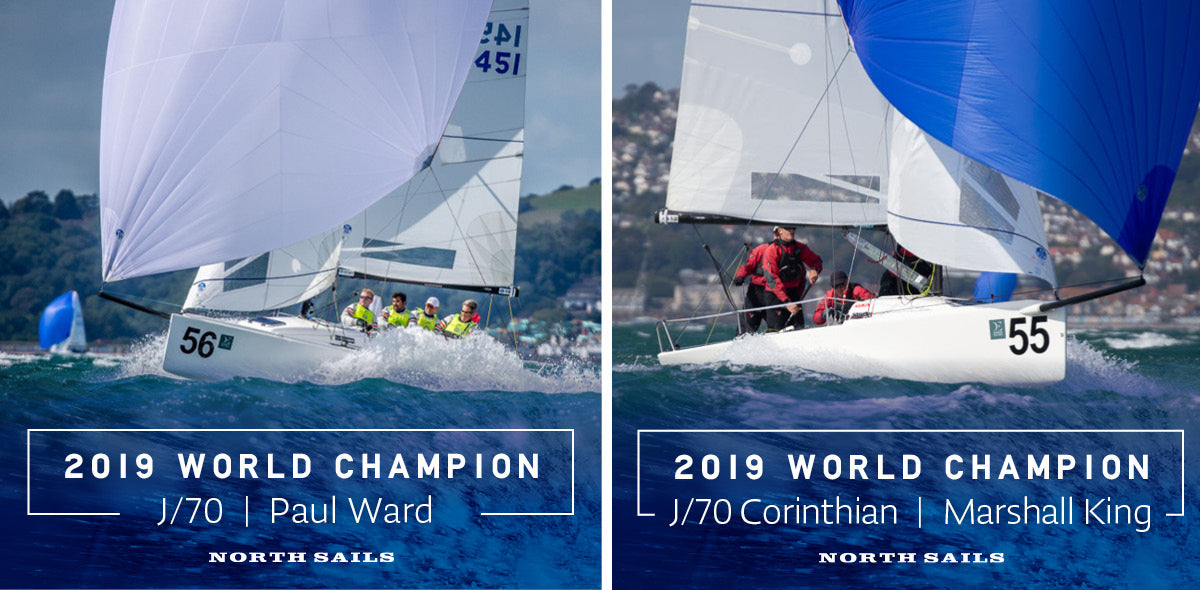
CAMPEONES DEL MUNDO DE J70
El campeonato del mundo 2019 de J70 se celebró en la localidad británica de Torquay entre el 26 de agosto y el 6 de septiembre.
READ MORE
READ MORE

NORTH SAILS BRILLA EN PORTO CERVO
NORTH SAILS BRILLA EN PORTO CERVO
La 30ª Maxi Yacht Rolex Cup reunió en Porto Cervo (Cerdeña, Italia) a medio centenar de barcos con esloras a partir de 60 pies divididos en ocho clases.
📸 Rolex / Carlo Borlenghi
Cinco intensas jornadas de regatas en espectaculares condiciones decidieron a los campeones de la considerada regata más importante del mundo para monocascos de categoría maxi. Clientes North Sails dominaron siete clases, copando los podios de cuatro de ellas. Desde North Sails España felicitamos a los campeones: Supernikka (Mini Maxi Racer 2), Flow (Mini Maxi Racer/Cruiser), H2O (Mini Maxi Cruiser/Racer), Highland Fling XI (Maxi Racer), Nefertiti (Maxi Racer/Cruiser), Velsheda (Super Maxi) y Lyra (Wally). ¡Gracias por confiar en North Sails! Los resultados completos de la Maxi Yacht Rolex Cup están disponibles aquí.
READ MORE
READ MORE

NORTH SAILS ONE DESIGN: REFERENTE MUNDIAL
NORTH SAILS ONE DESIGN: REFERENTE MUNDIAL
La clave está en el detalle
Melges Performance Sailboats 📸 Sarah Wilkinson for Beigel Sailing Media
Un extenso catálogo con referencias para 320 clases monotipo y más de diez mil velas fabricadas y comercializadas anualmente en todo el mundo hacen de North Sails la referencia absoluta en velas One Design. Analizamos qué diferencia a la velería en un segmento en el que todos los barcos compiten con velas (prácticamente) iguales. El término One Design se traduce al español como monotipo, y en el mundo de la náutica se refiere a embarcaciones de dimensiones y forma normalizada de manera que todos los ejemplares tengan las mismas características para que sea la habilidad de los tripulantes la que defina su rendimiento en regata. Como concepto amplio, significa que los barcos son iguales. Pero incluso las embarcaciones más idénticas admiten ajustes para mejorar sus prestaciones, y las velas destacan entre los elementos susceptibles de marcar una diferencia. El departamento One Design de North Sails da servicio a 320 clases diferentes de barcos a vela, todo un universo de diseños y especificaciones en el que los matices marcan a menudo la diferencia entre victoria y derrota. El equipo de North Sails España cuenta con varios expertos especializados en monotipos. Es el caso de Hugo Rocha, con base en Barcelona. Tres veces olímpico por Portugal y medalla de bronce de clase 470 en los JJ.OO. de Atlanta 1996, cuenta con un extenso palmarés plagado de títulos en diferentes clases monotipo y es miembro de la familia North Sails desde 2008. Hugo gestiona todo el catálogo One Design en España, mercado en el que las clases más populares son Optimist, 420, 470, Patín, Snipe, J70 y J80. North Sails España comercializó más de 700 velas One Design en 2018. La cifra superó las 10.000 velas en todo el mundo. Pero si hablamos de monotipos,¿no significa que las velas deben ser iguales? ¿Qué margen de maniobra existe en diseño y fabricación? "Depende", explica Rocha. "Por ejemplo, en la clase olímpica FX, las velas son North Sails y todas iguales por reglamento, pero en la clase 470 tenemos diferentes diseños para diferentes pesos de tripulación. Lo mismo ocurre con las clases Optimist, 420, J70 o Snipe, para las que disponemos de diferentes modelos y diseños en función de las particularidades de cada tripulación". "Por norma general, las clases One Design dejan muy poco margen tanto en diseño como en tamaño para las velas", explica el medidor internacional Pablo Ferrer, encargado de certificar que los barcos cumplen las exigencias de sus respectivas reglas de clase. "Para limitar el tamaño, normalmente se limitan las medidas básicas, por lo que los diseños son generalmente los mismos, siendo la mayor diferencia el tamaño y la posición de la profundidad. Normalmente, las reglas de la clase establecen unos límites (muy pequeños) para evitar que una vela pueda estar fuera de medidas y declarada no válida, porque son tejidos que encogen y estiran en función del uso, la humedad y la temperatura". La clave está en el detalle Con más de seis décadas de experiencia en diseño y fabricación de velas, 110 velerías certificadas, siete centros de producción y un equipo de más de 1.600 trabajadores repleto de expertos en todo tipo de clases, North Sails es la referencia mundial en diseño y fabricación de velas One Design. Y no sólo por la calidad de sus productos, como indica Jorge Martínez Doreste: "Una buena velería se diferencia por tener un buen trato con sus clientes, por aportar diferentes alternativas y opciones a medida en cuanto al diseño y acabado de la vela, y por tener al mejor equipo desde la pre-producción de las velas hasta su entrega y prueba de navegación". Hugo Rocha coincide con su compañero. "Lo que nos diferencia es sin duda la parte humana. North Sails trabaja con muchas clases pero tiene diseñadores y expertos específicos para cada una, que acompañan y ayudan a los regatistas a conquistar sus objetivos deportivos. Las velas están en continua evolución, y el feedback de nuestros regatistas es muy importante para el desarrollo conjuntamente con el desarrollo de nuestros nuevos tejidos, por lo que el contacto con ellos resulta vital". El catálogo One Design de North Sails está disponible en www.northsails.com Principales títulos 2019 de velas North Sails en clases One Design:
Optimist: Mundial 2019 femenino (María Perelló)
420: Mundial Open 2019 (Martín Wizner y Pedro Armenteiro)
420: Europeo Junior Open 2019 (Conrad Konitzer y Fernando Rodríguez
470: Mundial Open 2019 (Mathew Belcher y Will Ryan)
470: Europeo 2019 masculino (Anton Dahlberg y Fredrik Bergström) y femenino (Camille Lecointre y Aloise Retornaz)
J70: Mundial 2019 (Paul Ward)
J70: Europeo 2019 (Claudia Rossi)
Snipe: Europeo Masters 2019 (Fernando Rita y Juan Magro)
International Moth: Europeo 2019 (Francesco Bruni)
Finn: World Cup (Andrew Maloney)
Finn: Europeo 2019 (Giles Scott)
Viper 640: Mundial 2019 (Marcus Eagan)
Etchells: Mundial 2019 (Iain Murray)
Dragon: Mundial 2019 (Andy Beadsworth)
El palmarés completo de velas North Sails One Design está disponible en www.northsails.com
READ MORE
READ MORE

NORTH SAILS ET BÉNÉTEAU, UN MARIAGE DE QUALITÉ
NORTH SAILS ET BENETEAU, UN MARIAGE DE QUALITÉ
Le First Yacht 53 de BENETEAU est équipé North
📸 Gilles Martin Raget
Entre Bénéteau et North Sails France, c’est un mariage de qualité. Le dernier-né de la gamme BENETEAU First, présenté officiellement au Yachting Festival de Cannes la semaine dernière (10-15 septembre 2019), porte une garde-robe North Sails. Le constructeur vendéen et la voilerie vannetaise collaborent depuis de nombreuses années pour allier leurs compétences au service des plaisanciers et coureurs. Les deux entreprises, toutes deux leaders dans leur domaine, partagent le même engagement, à savoir offrir la meilleure expérience à leurs clients, et les mêmes exigences de qualité. North Sails se réjouit de poursuivre sa collaboration avec Bénéteau et d’accompagner le constructeur dans sa nouvelle ligne de bateaux de croisière performants. Ainsi, après avoir équipé les First 35 et 40, les Oceanis 51.1 et 46, North Sails réalise aujourd’hui les voiles du First Yacht 53 sorti fraîchement du chantier Bénéteau. Ce voilier de croisière rapide et luxueux marie confort avec un intérieur particulièrement soigné et performance pour une pratique à la fois familiale, amicale et compétitive. North Sails a confectionné un jeu de voiles qui répond aux subtilités de ce monocoque de 15,98 mètres de longueur à la carène épurée, dessiné par l’architecte naval italien Roberto Biscontini. La grand-voile et le génois sur enrouleur sont en 3Di Endurance, un matériau robuste et polyvalent, idéal pour la grande croisière comme pour la course au large. Le gennaker est en NPL, un tissu laminé stable et propice à de belles accélérations. Et enfin le Spi asymétrique, en Norlon, convient parfaitement aux bords de portant abattus.
📸 Gilles Martin Raget
« First 53 a été l’occasion de travailler avec North Sails et les équipes de Bénéteau pour choisir les voiles les plus adaptées et garantir les meilleures performances pour un bateau d’Excellence, commente Edouard Vincent, chargé des achats projets voile chez Bénéteau. Ce partenariat fait suite à plusieurs collaborations préalables sur la gamme First et Oceanis. Ce rapprochement avec North Sails nous permet de renforcer l’identité de performance et de qualité sur nos bateaux à travers un choix de voiles haut de gamme. »
READ MORE
READ MORE

ROLEX NYYC INVITATIONAL CUP GRAND FINALE
ROLEX NYYC INVITATIONAL CUP GRAND FINALE
14 Countries. Five Continents. Five Days Of Racing.
© Daniel Forster / Rolex
20 amateur teams representing 14 countries qualified to compete for a week of racing at the 2019 Rolex New York Yacht Club Invitational Cup. In its sixth edition, the event is host to teams from 14 countries, across five continents. The Southern Yacht Club returned to defend their title this year, having won the 2017 edition, but early on it was San Diego Yacht Club dominating the race course. After the first four days of racing in dynamic conditions, the scoreboard remains tight. September 14th is the final day of racing and you’ve got front row seats to all the action. Tune in to the live broadcast on Facebook or YouTube where commentators Andy Green and Tucker Thompson will bring you the play-by-play direct from the race course as we watch a champion emerge from the 20-boat fleet.
More Ways To Watch:
Follow on Instagram
Watch Live 2D Tracking
New York Yacht Club Regatta Website
Results
© Daniel Forster / Rolex
© Daniel Forster / Rolex
© Daniel Forster / Rolex
© Daniel Forster / Rolex
© Daniel Forster / Rolex
READ MORE
READ MORE

(USING) THE RIGHT TOOLS FOR THE JOB
(USING) THE RIGHT TOOLS FOR THE JOB
North Sails Leads The Way In Modern Sailmaking Tools
📸 52 Super Series / Martinez Studio
Seahorse Magazine has given us special permission to republish this Tech Brief featuring JB Braun, North Sails Head of Engineering and Design, along with Grand Prix sail designers Dave Lenz and Mickey Ickert.
After three decades of development and investment, the North Design Suite is able to produce reliably fast sails, that keep their shape, leading the way in modern sailmaking tools. The legendary figures in the history of sailmaking made their reputations by having a keen eye for recognizing what they knew from experience to be fast shapes. Their methods to achieve this were mostly variations of the long process of trial and error, where proven fast shapes were first recognized and then cataloged for later reproduction. Some were more rigorous than others at this process, implying that the trade of sailmaking was more art than science.
With an engineering background, Lowell North was a pioneer half a century ago in developing this process with more rigor and detail than his peers and embracing the important role that complex computational tools were to have in transforming ideas developed about 3D shapes into the reality of cutting panels in 2D. Along with this, a thorough understanding of the material properties of sailcloth was needed so that when assembled, those panels could predictably hold their shapes. North’s mastery of this made them an early leader in the field of computational sail design built mostly on developing their own tools in what’s now known as the North Design Suite.
Leap forward to now after three decades of development and investment in these tools, and we can marvel at the astounding computational power available to reliably produce not just fast shapes out of the box, but sails that remain fast as well. The software in the North Design Suite not only models sail shapes in detail for production purposes, but these shapes are the product of a complex process where everything that affects that sail while in use is now also modeled within North’s Flow and Membrain programs: stiffness of the mast and rigging, sheet tensions and sheeting angles, luff tension, leech tension, etc. can be characterized as the sail is virtually brought through a broad range of wind angles and speeds.
And the advent of bespoke fiber sailcloth construction for upwind sails that started with North’s 3DL technology 27 years ago has since evolved in sophistication and now there are many more fiber types available – such as carbon and Dyneema – that provide the strength used in 3Di technology. With 3Di construction, an advanced composite structure is now possible to better handle all loading scenarios. North’s software has also evolved to where deformation of shape can now be made not only predictable but manageable through clever engineering and design.
Likewise, for off-wind sails, what started as a catalogue of flying shapes tested in the Twisted Flow Wind Tunnel at the University of Auckland two decades ago has become a simulation program called the Virtual Wind Tunnel, which is used to observe laminar and turbulent flow of off-wind sails as a tool, to better understand flying shapes and how they change through varying wind conditions.
Flying shapes can now be coupled with North’s own Velocity Prediction Program (VPP) to model their effect on boatspeed. And to refine this even further, North has also been at work for some time with support from the Sailing Yacht Research Foundation (SYRF) on a comprehensive Performance Prediction Program (PPP) that can be used to iterate through not just sail sizes, but shapes as well to accurately predict their effect on performance.
Putting the tools to work: Collaborative partnership
The strong reputation North has developed over the decades is based on having organized feedback loops from its sales experts, sail trimmers and customers back to the sail designers, who in turn could adopt and adapt this important information into their design work. Now their role has become more complex and has evolved into a performance consulting service that can become an added value to North customers, whether working directly in a grand prix environment or benefitting indirectly from how those innovations may become adopted through the broader fleet.
Take for example a customer who has an interest in building a new 65-ft boat that will race primarily inshore on day races, with the occasional short offshore race. He and his project manager and naval architect would derive great benefits by meeting with the North Design Services team at the very outset of the project to collaborate on how to help efficiently transform ideas to expectations and then on to realities even before lines are drawn. “We first need to understand some basic parameters in the design of the boat,’ says North’s head of design and engineering, JB Braun, “like righting moment, the center of effort in the sailplan, and whether a fixed or rotating mast is planned. Then, with our rig design software, we can start the design iteration process. With our experience and from being involved at an early stage, we can not only provide answers, but also help shape the relevant questions that arise to help the client define their goals. This becomes a real partnership, whose mission is to deliver performance in line with the definition of the project. Working through this is where we can help clients explore options in the available design space since we have tremendous experience and a huge knowledge base from many different fields.”
With this approach the team at North are also able to assist clients competing in a contrasting situation like the TP 52s – the 52 SuperSeries formats are fixed and the boats and class rules are highly evolved and extremely tight. The best teams on the best boats therefore make a winning edge in performance very difficult to find, so this pushes everyone to their limits looking for some incremental advantage. North team member Dave Lenz, who is based in the UK and is a regular observer and coach on this circuit, says, “so much of our strength comes not just from the software and design tools, but in knowing just how they can be put to use alongside our observations. We spend hours and hours on the water analyzing everything related to performance in the 52 class so we know how the data can be used in context to refine our tools to explore new ideas.”
📸 Rolex / Kurt Arigo
North’s ongoing association with successful teams in this and numerous other classes and events is an important core strength since all members of the team can benefit from the contributions made to the knowledge base. The value of these are not just at the front end of new projects, but insightful debriefs held during and after projects are complete are also vitally important. Imagine, for example, all that North learned from their experience in two multiple cycles of the Volvo Ocean Race, the numerous course records set by Comanche and other first-to- finish programs, the Imoca 60s and other trans-oceanic classes, and how that is put to use in every new sail built to race offshore?
Not to mention the America’s Cup, which is pushing toward the next generation of sails in an attempt to marry the practicality of a “soft” carbon sail with the performance of a “hard” wing. The solutions arrived at and the process of engineering and design is very relevant throughout sailing, which is why so many of North’s talent base are involved with teams in every cycle. This includes Burns Fallow who is embedded with Emirates Team New Zealand, Gautier Sergent who is with INEOS Team UK, while Michael Richelson and Juan Garay are at Luna Rossa.
📸 Emirates Team New Zealand
These projects often have a single point of contact on the North team, who can then reach out to the broader North group of experts to get help when needed in a collaborative style that Lowell encouraged in the early days and is very much in the DNA of the company. And with that group also now including sparmakers and riggers at Southern Spars and Future Fibres, that reach goes very deep indeed into the knowledge base. “This communication across the group has made huge progress in the last few years,” says NZL-based veteran sail designer Mickey Ickert. “We’re getting really good at having an open string of communication among team members and a stream of valuable info from both the design and sales forces.” The importance of this process cannot be overstated – teams in the Grand Prix arena have dedicated professional sail trimmers who collect and manage the settings and performance data, so North has developed the protocols and tools to best digest their valuable input.
Having been both a sailmaker and pro sailor for decades himself, North Sails president Ken Read says he’s impressed with what the design group has developed with their tools, such as the new HELIX approach to designing and building the next generation of performance sails. The use of Load Sharing Technology to produce a new generation of self- supporting sail structures is “nothing short of being a game-changer”.
“I sat in on a meeting of the design group recently, and I hardly understood what they were saying,” Read said. “This is how I know I’m doing my job, having guys this smart working on innovation. And I’m really encouraged that we have new members of the team fresh out of school that are really familiar with the latest ideas and the software tools to pursue them. This is great news for the future.”
📸 52 Super Series / Martinez Studio
READ MORE
READ MORE
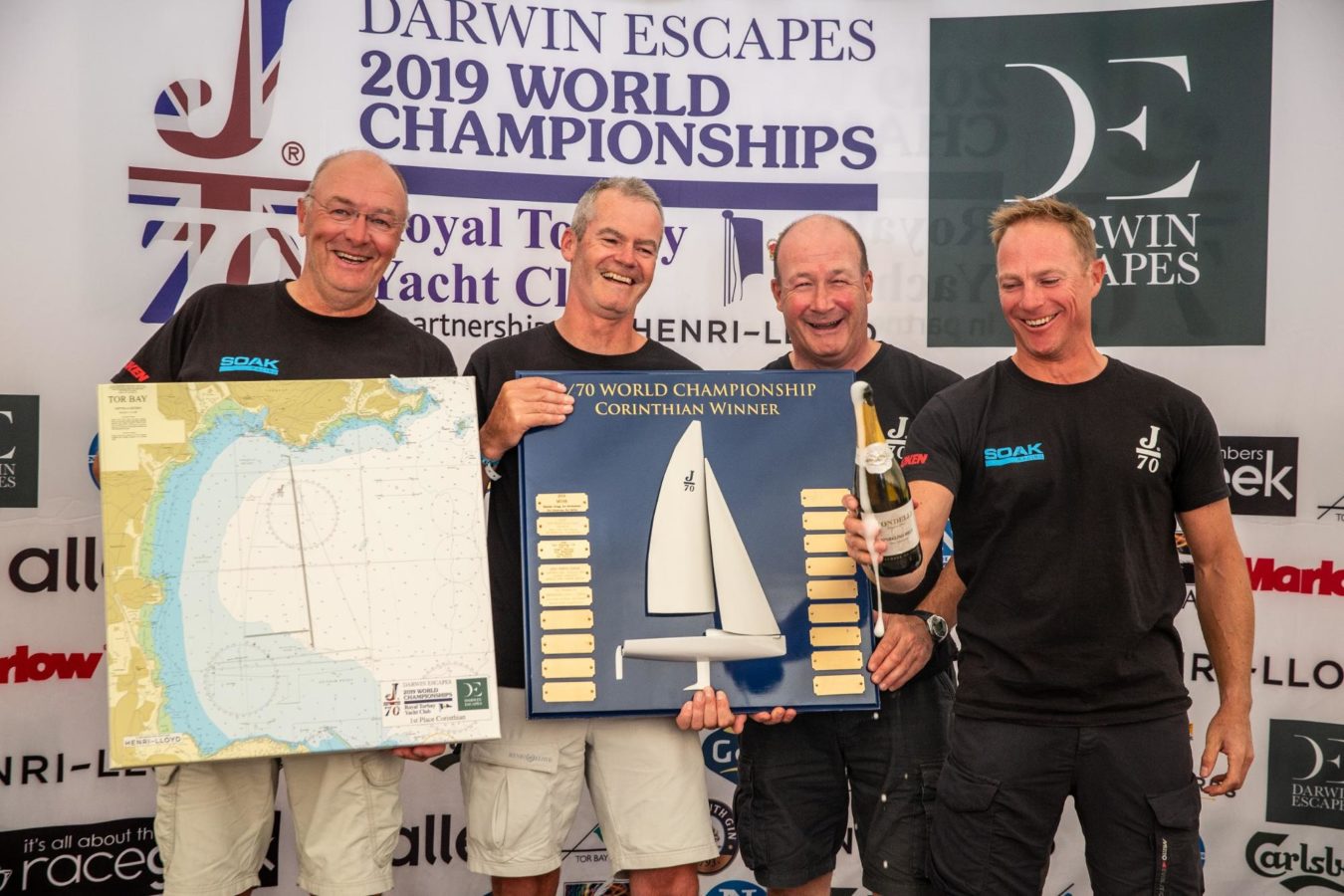
SPEED READING: J/70 WORLDS
SPEED READING: J/70 WORLDS
Marshall King’s Corinthian Team Soak Racing
The 2019 J/70 Worlds had a great showing, with 77 boats and 36 Corinthian teams. We interviewed Marshall King on Soak Racing about winning the 2019 Corinthian World title, his team (Ian Wilson, Adam Brushett, Andrew Shorrock), and their success.
Maximizing Their Potential
For Marshall, it started three years ago. He and co-owner Ian Wilson knew they wanted to put together a competitive team for the Worlds, so they focused on ways to maximize their potential. “I felt quite strongly that the J/70 rewards accurate trimming, particularly of the jib, but also the main, and so we decided to set up the team in a way that had someone fully dedicated to just boat speed.
“We distributed the tasks so that the strategy and tactics were the main points of focus for Ian and Adam,” he continued. “Once the jib trim was completed, Andy would take over the main trim and work hard on keeping consistent boat heel angle and have the two sails working well together.” Conditions varied all day, every day, so the sail trim was continually adjusted. “When it was gusty or shifty, or the sea state changed, he’d switch back to the jib, and I’d handle the main. That level of attention to main trim is a key part of making the J/70 go fast. We never really cleated the main.
“Ian looked after the big-picture strategy and was also our spinnaker trimmer. Adam, our bowman, focused on the shifts upwind and where we were in relation to other boats. He was all about the numbers and compass headings.” Adam and Ian were always talking, keeping the entire team aware of how they were doing.
Preparation Started Way Before The Worlds
“This year we went to the Monaco Winter Series in January, February, and March, and the Spring Series in Warsash—all with the same crew,” Marshall said. “We focused on getting the boat going as fast as possible and after each event, we would share our notes and try to be our own coach. We found that other boats were faster from time to time, but we felt more consistently fast because we focused on those small trimming details.”
Trusting North Sails Design & Expertise
Why did Soak Racing choose North for their J/70 campaign? “The reason we came back to North was that we felt their product was consistent,” said Marshall. “They were faster than any other sails out there. We thought the sails were manufactured well. We used the same XCS-2 mainsail all year, and it was still fast in Torbay. We also used the J-2 High Clew jib and AP-1 spinnaker downwind.”
“Consistency is important to me,” said Marshall. “Our sails were great all-around performers and we felt fast in all directions. We were happy in all conditions.”
“We used North’s tuning guide as a base,” added Marshall. “We found that the suggested settings were great in certain sea conditions, and in some cases, we modified them slightly until we were happy with how we were going.”
How They Won The Regatta
Soak Racing finished second in the seventh race. “It was probably one of the windiest races of the regatta. We had a bad start, but we were able to get out and find clear air, and we had unbelievable boat speed. We hit the shifts and rounded the top mark in good shape. We got to the bottom of the run right behind Eat, Sleep, J, Repeat. The second beat was a challenge, and Paul’s team extended on us. On the last run, we made sure to hang in there for a solid second-place finish.
Going into the final race of the regatta, there were two boats close on points. “At the last start, we made a late call to go right just before the gun. From there, we didn’t take any risks.” Soak Racing finished even on points with DSP but won the tiebreaker.
“DSP pushed us hard, and it came right down to the wire in the end – but that’s the excitement that comes with J/70 racing. It just doesn’t get much closer than that!”
2019 J/70 Corinthian World Champs, Team Soak Racing © Sportographytv
Second place corinthian team DSP © Sportographytv
Third place corinthian Joyfull © Sportographytv
READ MORE
READ MORE
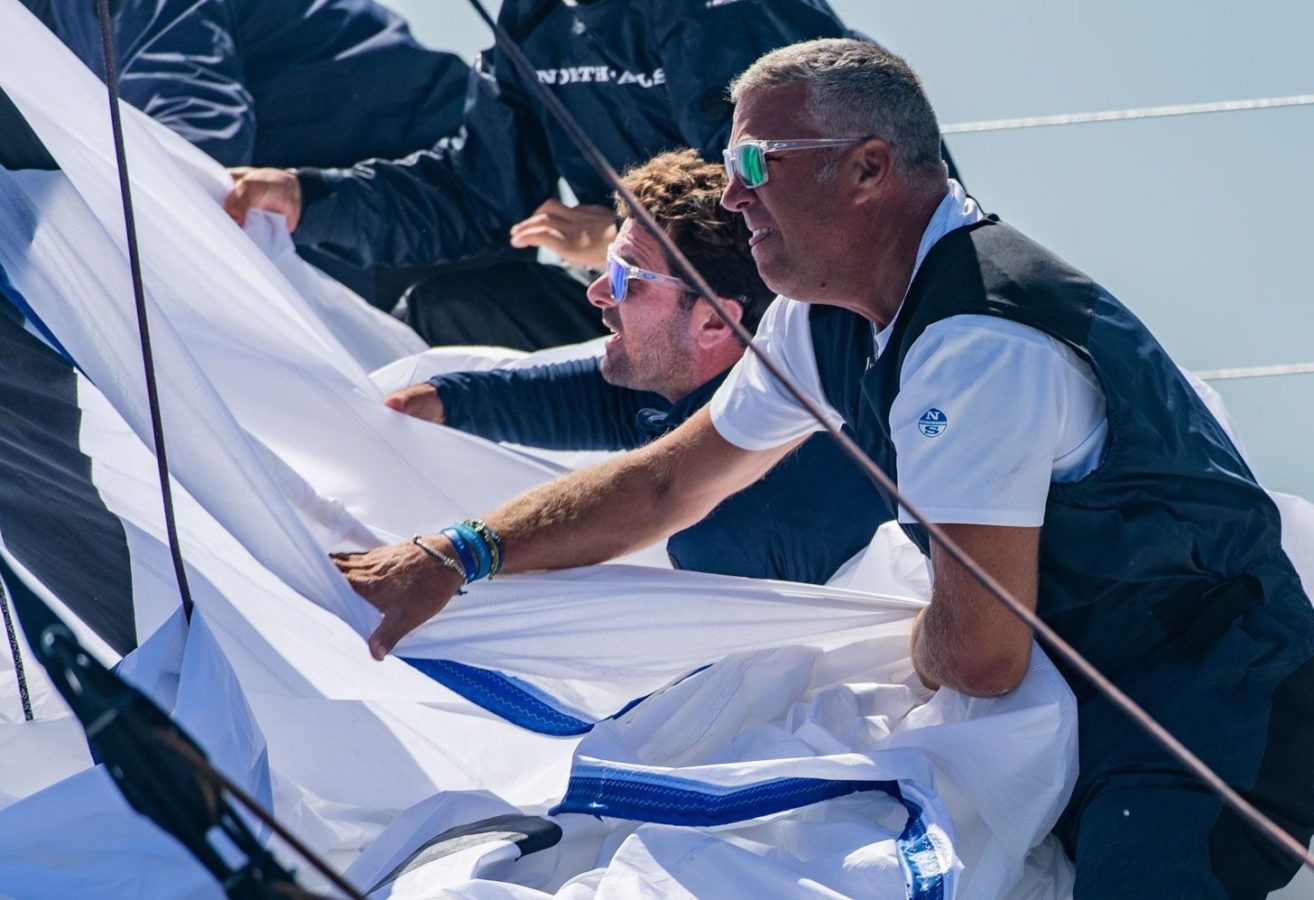
CLIENTS TRIUMPH IN PORTO CERVO
📸 ROLEX / Carlo Borlenghi
After five days of racing on coastal courses between the islands of the La Maddalena Archipelago, it’s possible everyone who participated in the 30th annual Maxi Yacht Rolex Cup in Porto Cervo went home feeling like a winner. “The Costa Smeralda gave us the gift of a perfect week,” said event organizers. “This event is much more than a regatta; it is a combination of the sea, the wind, the natural scenery, the organization, and the spirit of its participants—the owners and crews.”
North clients swept the podium in four classes and won a total of seven divisions, but one of those winners, Highland Fling XI’s strategist and North superyacht expert Mike Toppa, was equally proud of the overnight sail service provided by the company. The North Sails pop-up loft in Porto Cervo was run by Italian service manager Bacci Sgarbossa and his crew of sailmakers. “Maxi sails are not small or light,” Mike points out. “Our service guys showed up on the dock with a special flat bed truck that had a built-in crane to pick up and deliver sails. They were professional, highly skilled, and enthusiastic.” Best of all, there were surprisingly few repairs needed, even after the breeze topped 30-knots in race three.
📸 ROLEX / Carlo Borlenghi
Courses for Maxis
Tom Dodson, North superyacht expert and longtime tactician and on the J-Class Velsheda, which won the Super Maxi division, says there were 43 possible course options—a mix of windward/leewards and coastal racing—and the wind was different every day. “Before we left the dock, it was important to choose sails so that most options were covered. All our 3Di sails are from early 2017, halfway through their competitive life, and they’re going well.”
📸 SuperNikka / Fabio Taccola
Mini Maxi Racer 2
SuperNikka won both races the first two days, eventually taking the overall division. “We have been racing with the same crew for five years,” owner/helm Roberto Lacorte says. “Every year we have acquired more performance, and with a fast boat we are free to choose the best tactics and defend ourselves when it’s time. The races are always very tight and close, mistakes are not allowed. I have the good fortune of having a superior crew by my side.” Next year, a bigger boat will be a whole new challenge; “Closing the cycle of SuperNikka with a victory is the best way to start this next adventure.”
Alessio Razeto is one of SuperNikka’s superior crew, and he agrees the team definitely earned the win. “We made almost 40 sail changes!” he says, adding that there was “not one single issue with the sails.”
📸 ROLEX / Carlo Borlenghi
Mini Maxi Racer/Cruiser Victory
Jack Slattery, US-based sales expert and tactician on Stephen Cucchiaro’s Swan 601 Flow, says the Boston-based team came into the regatta thinking they could win. Along with an upwind inventory of 3Di RAW, they used a Helix Code Zero and asymmetric spinnaker. “We were stronger in the moderate and heavy conditions,” Jack admits. “We had a new rig tune going into the event which favored 12+ True, so we’re working on an improved tuning matrix.”
Flow had a three point lead going into the last day, but they got behind early in the last race. “We had to fight our way through the pack and finally engaged our closest competitor in the last mile and a half, pushing them back just enough to win.” Their secret to success was a combination of good starts, excellent crew work, and sailing their own races, Jack says. “We often made subtle gains around the corners. Those small gains can add up to exponentially larger ones.”
📸 ROLEX / Carlo Borlenghi
Maxi Racer/Cruiser: Podium Sweep
Nefertiti, a Swan 90, won the Maxi Racer/Cruiser division, where North inventories swept the podium. North sail designer Gonzalo Ramos Vertiz trimmed main, and he says believing in their inventory was a huge part of the victory. “The boat’s owner, captain and crew all have complete confidence in North Sails. In this kind of heavy big boat, it’s crucial to be able to push the sails to the max.”
📸 ROLEX / Carlo Borlenghi
3Di shape “just locked in”
Mike Toppa agrees that 3Di sail inventories meet the high expectations set by owners and crews. “It was a tough fleet with competitive boats and talented sailors. We hit a mark in race four and had to take a scoring penalty, which put us a point behind Rambler going into the last day.” Fortunately, he adds, Highland Fling XI is a great all-around boat that performs well throughout the wind range—and so are the sails. “We saw everything from eight to 30 knots in Porto Cervo, and I’m continually impressed at how stable 3Di sails are when it’s windy. The shape is just locked in.”
📸 ROLEX / Carlo Borlenghi
READ MORE
READ MORE
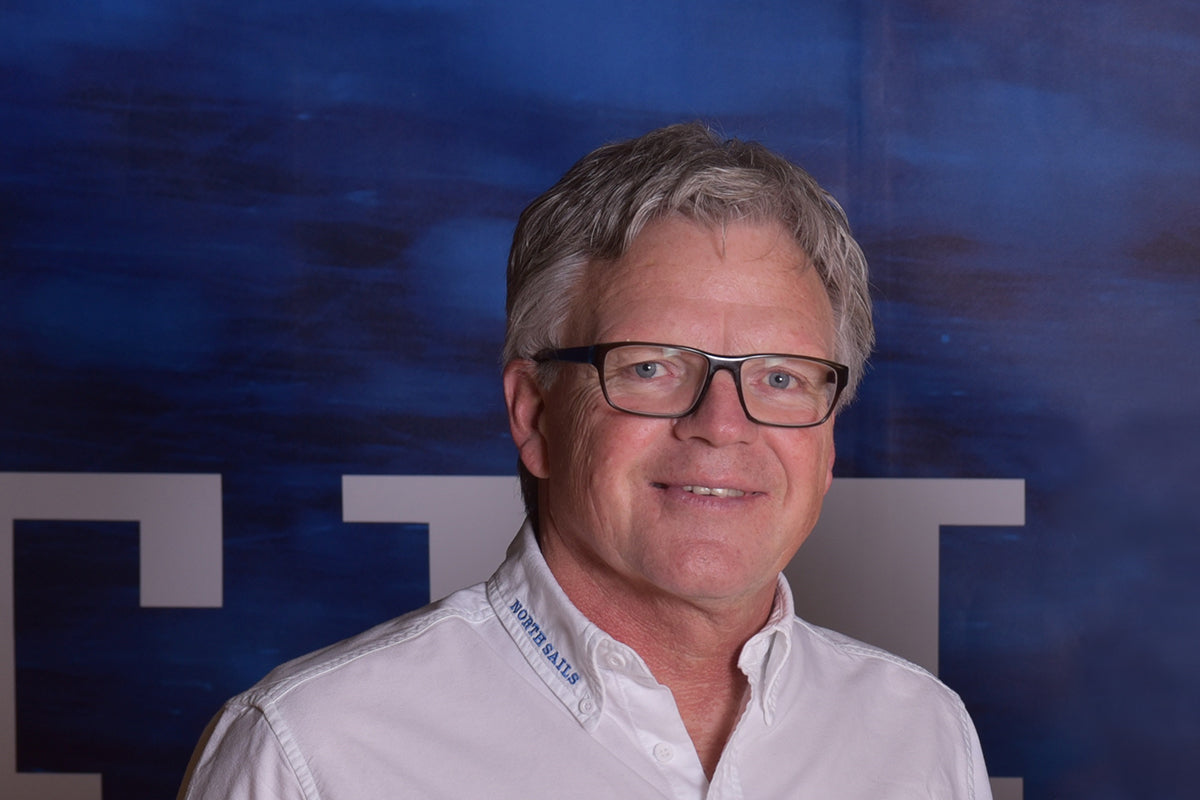
30 JAHRE ERFAHRUNG IM SEGELSPORT
30 JAHRE ERFAHRUNG IM SEGELSPORT
Seit nunmehr 30 Jahren kümmert sich Daniel Schroff darum, die Wassersportler mit speziell auf ihre Bedürfnisse zugeschnittenen Segel zu bedienen.
Die Segel sind der "Motor" für alle Segelschiffe, sagt man. Hochwertige Materialien, passende Schnitte und eine hohe Langlebigkeit sorgen für gute Leistungen, für Erfolge auf der Regattabahn und ganz generell für mehr Freude am Sport. Seit nunmehr 30 Jahren kümmert sich Daniel Schroff darum, die Wassersportler mit speziell auf ihre Bedürfnisse zugeschnittenen Segel zu bedienen. In der Kreuzlinger Segelmacherei North Sails Schweiz GmbH geben sich sowohl erfolgsverwöhnte Regattacracks, wie aber auch gemütliche Fahrtensegler die Klinke in die Hand.
North Sails ist der weltweit führende Hersteller für Segel aller Art. Der Segelmacher mit Hauptsitz in den USA ist bekannt für die hohen Qualitäts- und Innovationsstandards. Nicht umsonst vertrauen die besten und erfolgreichsten Regattasegler weltweit auf die Marke North Sails, so auch sämtliche Teams im sagenumwobenen America’s Cup, der Krone des Segelsports. Aber auch Fahrtensegler kommen voll auf ihre Kosten, können sie doch von den Erfahrungen im Regattabereich profitieren.
Dank der jüngsten 3Di-Technologie kann North Sails jetzt für alle Nutzungsbereiche Segel anbieten. Bei dieser werden die Segel über individuell einstellbare Formen hergestellt, sind nahtlos und eignen sich sowohl für den harten Regattaeinsatz mit maximaler Formstabilität wie aber auch für reine Fahrtenyachten mit hoher Langlebigkeit.
Daniel und Alexander Schroff im Flying Dutchmann 1988 an den Olympischen Spielen in Seoul.
Daniel Schroff startete seine Seglerkarriere früh und schaffte es in der Klasse "Flying Dutchman" zusammen mit seinem Bruder bis zur Teilnahme an den Olympischen Spielen 1988 in Südkorea. 1989 machte der gelernte Hochbauzeichner seine Leidenschaft zum Beruf, gründete in Bottighofen am Bodensee die Firma Schroff Sails & Elektronik und übernahm die Vertretung der dänischen Segelmarke Diamond Sailmakers, dem damals führenden Hersteller von Segeln in Europa. Zwei Jahre später hat dann Diamond Sails die Firma North Sails Europa (inklusive Name) übernommen.
Heute führt Daniel Schroff die Segelmacherei North Sails Schweiz GmbH in Kreuzlingen am Bodensee zusammen mit seiner Frau Claudia Böhm, einer ebenfalls sehr erfahrenen Seglerin. Als freischaffender Mitarbeiter sitzt zudem Christoph Burger mit im Boot.
Daniel Schroff 1991 nach dem Zusammenschluss von Diamond Sails und North Sails
Kurzinterview: Drei Fragen an Daniel Schroff
Daniel Schroff, Sie haben die rasanten Entwicklungen in der Herstellung von Segeln über viele Jahre miterlebt und mitgeprägt. Wo sehen Sie die heutigen Herausforderungen in dieser speziellen Branche?
Die wichtigste Aufgabe wird für uns darin bestehen, auf das immer vielfältiger werdende Angebot an Segelbooten die dafür geeigneten Segel bauen zu können. Unsere Produktpalette entwickelt sich stark in die Breite und wir liefern Segel für alle Arten von Schiffen, von der kleinen Jolle bis zur exklusiven Super Yacht. Das heisst für uns: noch mehr Entwicklungsarbeit und noch mehr Individualität. Die grösste Herausforderung ist und bleibt aber, sich jeweils genau in den Kunden hineinzufühlen, um zu spüren welche Art Segel am besten zu ihm, zu seinem Boot und zu seinen Anforderungen passen.
Denken Sie dabei auch an "fliegende" Boote, die jetzt mit Foils abheben können?
Ja natürlich. Keine andere Technologie hat den Segelsport in so kurzer Zeit so stark geprägt und revolutioniert wie das so genannte Foilen. Durch die hohen Geschwindigkeiten von bis zu 40 Knoten und mehr, werden vor allem die Segel mit extremen Lasten strapaziert. Das verlangt auch von uns komplett neue Herangehensweisen mit neuen Materialien und neuen Schnitten.
Mit der innovativen 3Di-Technologie kann sich North Sails von der Konkurrenz absetzen und hochwertige Segel noch effektiver herstellen. Ist das nun das Ende der Fahnenstange?
North Sails hat sich auf dem Markt schon immer mit aussergewöhnlich innovativen Verfahren zur Herstellung von Segeln positionieren können. Mit der legendären 3DL-Technolgie, bei dem die Segel über individuell verstellbare Formen laminiert werden, haben wir uns einen weiteren markanten Vorsprung gegenüber unseren Mitbewerbern geholt. Diesen exklusiven Prozess haben wir in den vergangenen Jahren immer weiter verbessert. So werden zum Beispiel bei der heutigen 3Di Filament-Technologie nahtlose Segel hergestellt welche nicht mehr delaminieren können. Und ich bin überzeugt, es wird noch sehr, sehr viel mehr nachkommen!
Daniel Schroff 2018 bei seiner Lieblingsbeschäftigung...
READ MORE
READ MORE
INTERBOOT 2019
INTERBOOT 2019
Friedrichshafen, 21. - 29. September
Auch wenn wir es nicht wahrhaben wollen; der Herbst kommt unweigerlich näher - und damit auch die Zeit, sich um die Segelgarderobe fürs neue Jahr zu kümmern und zu sparen.
Sollten Ihre Segel diesen Sommer gelitten haben, sind wir gerne bereit, diese bei Ihnen an Bord zu prüfen. Oder wir beraten Sie an der Interboot in Friedrichshafen vom 21. – 29. September 2019 am gewohnten Stand 101 in der Halle A1.
Kontaktieren Sie uns:
+41 71 680 00 80 oder schweiz@northsails.com
READ MORE
READ MORE
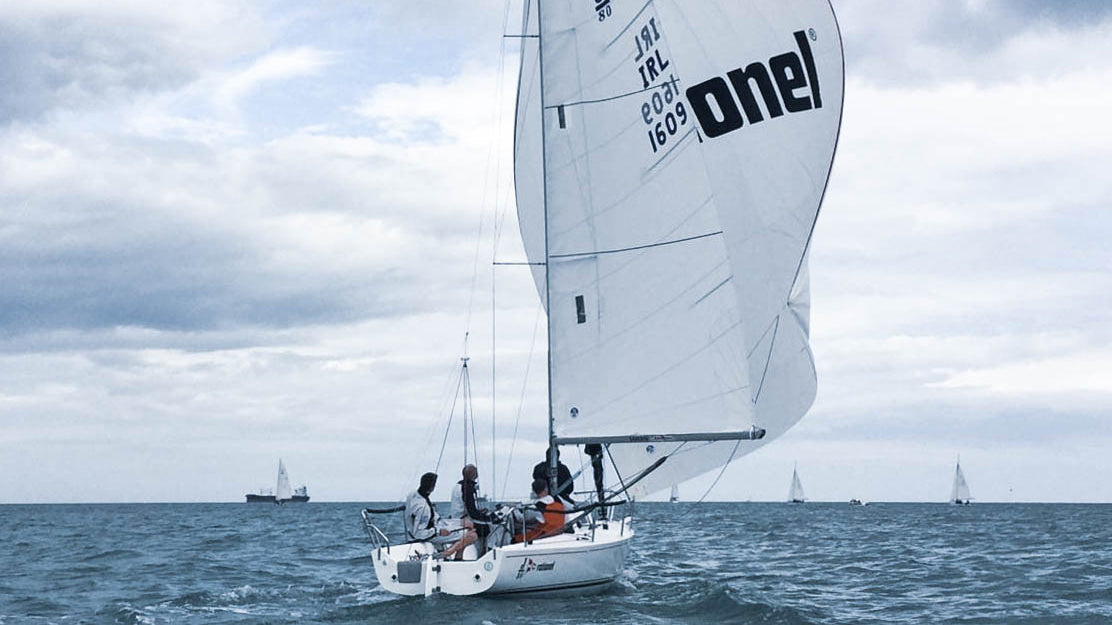
SUCCESS FOR NORTH CLIENTS AT J/80 UK NATIONALS
SUCCESS FOR NORTH CLIENTS AT J/80 UK NATIONALS
North Sails Fuels Top of the Fleet in Lymington
Jonny O’Dowd’s Jabs 📸 Shane Hughes
Eleven boats fought through three days of light to medium conditions at the J/80 UK Nationals on Christchurch Bay, hosted by the Royal Lymington Yacht Club. The top four finishers used North Sails; 3Di jibs won six out of seven races.
North Sails Ireland’s Shane Hughes sailed onboard Nick and Annie Haigh’s Slightly Steamy, and the team posted consistent firsts and seconds in the first five races. But when Corinthian team No Regrets scored two bullets in races six and seven, they moved into the overall lead. With no sailable wind on the final day, Slightly Steamy did not have the opportunity to recapture the lead and finished just one point out of first. Despite this, sailing with the 2019 APi-1 3Di RAW and APi-2 3Di RAW jibs, Shane and the team had impressive speed throughout the regatta.
Finishing third was Jabs, (Jonny O’Dowd, Ross McDonald, Patrick Good and Paul Quinn). Shane coached this team in the lead-up to the event and says ”it was clear that this talented group would be competitive in their debut J/80 National Championship. It will be great to see how this team develops; I’m sure there will be more top results to come.”
Jonny adds, “As this is our first year sailing J/80’s, this was a key event to learn and evaluate our progress over the season. Using the North Sails Tuning Guide, we felt we were very much on the pace and hugely look forward to the 2020 season.”
“As this is our first year sailing J/80’s, this was a key event to learn and evaluate our progress over the season. Using the North Sails Tuning Guide, we felt we were very much on the pace and hugely look forward to the 2020 season.”
All three podium teams used the MR-5 Spinnaker and either the crosscut MAXM1 All Purpose or T-6R Radial-cut Mainsail. With our September One Design promotion, now is the time to refresh your sail inventory. You can also ask your local J/80 North expert about boat/rig set up and improving your results in 2020.
READ MORE
READ MORE
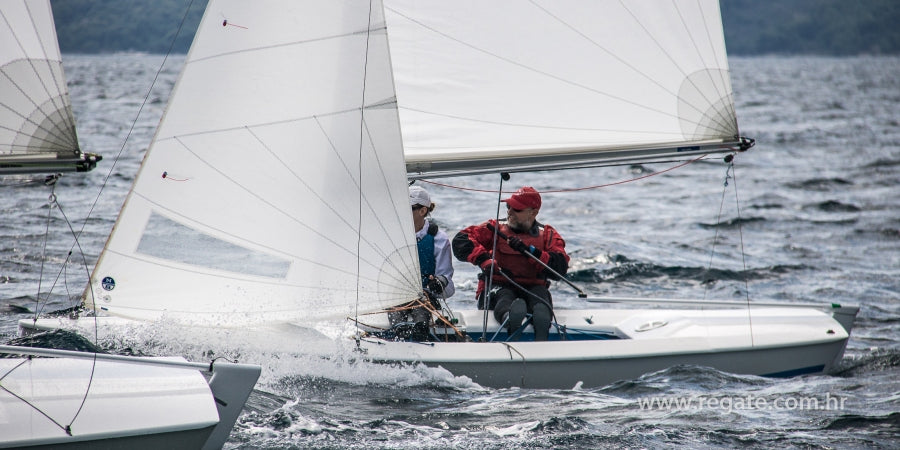
POSADA MARINOVIĆ - ZELIĆ NAJBOLJE NA SPLIT SNIPE PRE-EUROPEAN TEST EVENTU
Posada Marinović - Zelić najbolje na Split Snipe Pre-European Test Eventu
Kombinacija znanja i sreće donijela je slatku pobjedu domaćoj posadi na regati za koja je bila uvertira za Europsko prvenstvo klase Šljuka koje je zakazano za točno godinu dana.
Organizatori regate su članovi JK Split, može se reći trenutno najaktivniji po pitanju klase Šljuka u Hrvatskoj. Na ovoj regati su imali čak tri svoje posade od čega su se dvije popele na postolje!
Ukupno je sudjelovalo 15 posada iz 6 Europskih država. Stvarno impresivan podataka s obzirom da je bila riječ o dvodnevnoj regati. Naime, planirano je bilo da su subota i nedjelja, 7. i 8. rujna, natjecateljski dani.
Ali vrijeme nije baš bilo naklonjeno jedrenju, pa je subota prošla bez i jednog održanog plova. Lijepo sunčano vrijeme i nestabilan vjetar su jedino dozvolili sunčanje koje su spremno dočekale članice posada sa sjevera Europe.
Zato je nedjeljna prognoza ispunjena u potpunosti i uvjeti na moru su riješili eventualne frustracije zbog izostajanja natjecateljskog segmenta prethodnog dana.
Zapuhalo je jugo koje je dozvolilo jedrenje u Kaštelanskom zaljevu. Baza RO-a sa startnom linijom je postavljena ispred Kaštel Kambelovcai jedrilo se u kurso 160°, a snaga je oscilirala između desetak pa do 17-18 čvorova.
Tijekom prve predstartne procedure jugo je vrlo brzo eskaliralo do svojih najjačih refula, a za vrijeme nastavka jedrenja je polako slabilo, da bi ponovno pojačalo za vrijeme trećeg plova, ali tada je stigao i oblak koji je donio pljusak koji je dosta ugušio vjetar.
S obzirom na ove oscilacije postavljači regatnog polja su imali dosta posla s promjenama duljine regatnog polja, ali srećom dubine mora u ovoj zoni nisu pretjerane pa je taj posao bio obavljan na vrijeme.
Što se tiče jedrenja na polju je dominirala španjolska posada Damian Borras - Jordy Triay Pons. Damian Borras je inače jedan od najboljih svjetskih jedriličara u Šljuci, a već je bio u Splitu početkom srpnja kad je bila organizirina klinika za naše jedriličare. Tada je svojim bogatim iskustvom i znanjem optimizirao sisteme na njihovim jedrilicama, poboljšavao postojeće sisteme, a također i treninzima na moru usavršavao njihove manevre i vještine.
U nedjelju je na regatnom polju pokazao zašto je najbolji, ali u žaru borbe napravio je prijestup na drugom startu i unatoč dvije pobjede u preostala dva plova ipak ostao bez mjesta na postolju.
Pobjednici regate, domaća posada Marko Marinović - Ana Zelić, svoj rezultat su ostvarili s jednim bodom prednosti ispred drugoplasirane i trećeplasirane posade koje su imale jednak broj bodova. Marko i Ana su najmanje bodova skupili u prva dva plova kad su završili na 2. i 3. mjestu, dok su u trećem plovu finiširali na 6. mjestu.
Drugo i treće plasirani su imali po 12 bodova, pa je presudila pobjeda u drugom plovu posade Manli Hens - Maj Kristin Hansen Borgen.
Na treće mjesto postolja popela se druga Splitova posada, Luka Jerčić - Josipa Prosinečki. U prvom plovu su imali najlošiji rezultat. Završili su ga kao 7. ali zato su u preostala dva plova u cilj ušli na 2. i 3. mjestu.
Prva iduća naša posada je bila braća Grego iz YC Galeb, a zbog UFD-a u trećem plovu završavaju na 9. mjestu. Gdje su završili ostali, a ujedno i konačne rezultate regate, možete pronaći na ovom linku.
Regata u Splitu je bila treća regata iz ciklusa 2019 Adriatic Snipe Series. Na početku godine su se još jedrile regate u Trstu i u Moščenićkoj Dragi, a njihovi zajednički rezultati su iznjedrili konačen pobjednike u posadi Jerčić - Prosinečki. Prigodno proglašenje je napravljeno u sklopu proglašenja pobjednika Split Snipe Pre-European Test Eventa.
Uz klasu Šljuka, koju još nazivaju i malom Stellom, veže se i zanimljiv podataka s kojim možda nisu svi upućeni, a to je da se njihovi rezultati boduju vrednuju za globalnu ljestvicu koja se zajedno s ljestvicama nekih drugih klasa može pronaći na web stranicama Star Sailors League.
Foto galerije s regate možete pronaći na ovom linku, a video izvještaj možete pronaći u video galeriji.
READ MORE
READ MORE
INTRODUCING MARK ROBINS
INTRODUCING MARK ROBINS
New Sales Expert in Western Australia
Mark Robins
Mark (“Skid”) Robins, a Sales Expert based in Western Australia, has been sailmaking since the mid 1980s. He started with Elvstrom Sails WA; when that closed in 1992 he started Robins Sails, and quickly claimed a healthy share of the Western Australian market.
Mark started sailing as a junior at South Perth Yacht Club, which led to success at a state and national level in various dinghy classes. He won three consecutive Western Australian championships in the S80 class and represented Western Australia at a national level as crew and helm in the Ben Lexcen Cup. He also competed in the Australian keelboat championships in Victoria, sailed at Hamilton Island Race Week, and added his experience as both sailmaker and trimmer to a number of WA’s offshore racers.
“I’m excited to be able to offer our customers the latest in sailmaking technology with the 3Di product,” Mark says. “I have seen sail construction evolve since the 1980s, and I’m looking forward to future developments with North Sails.”
READ MORE
READ MORE
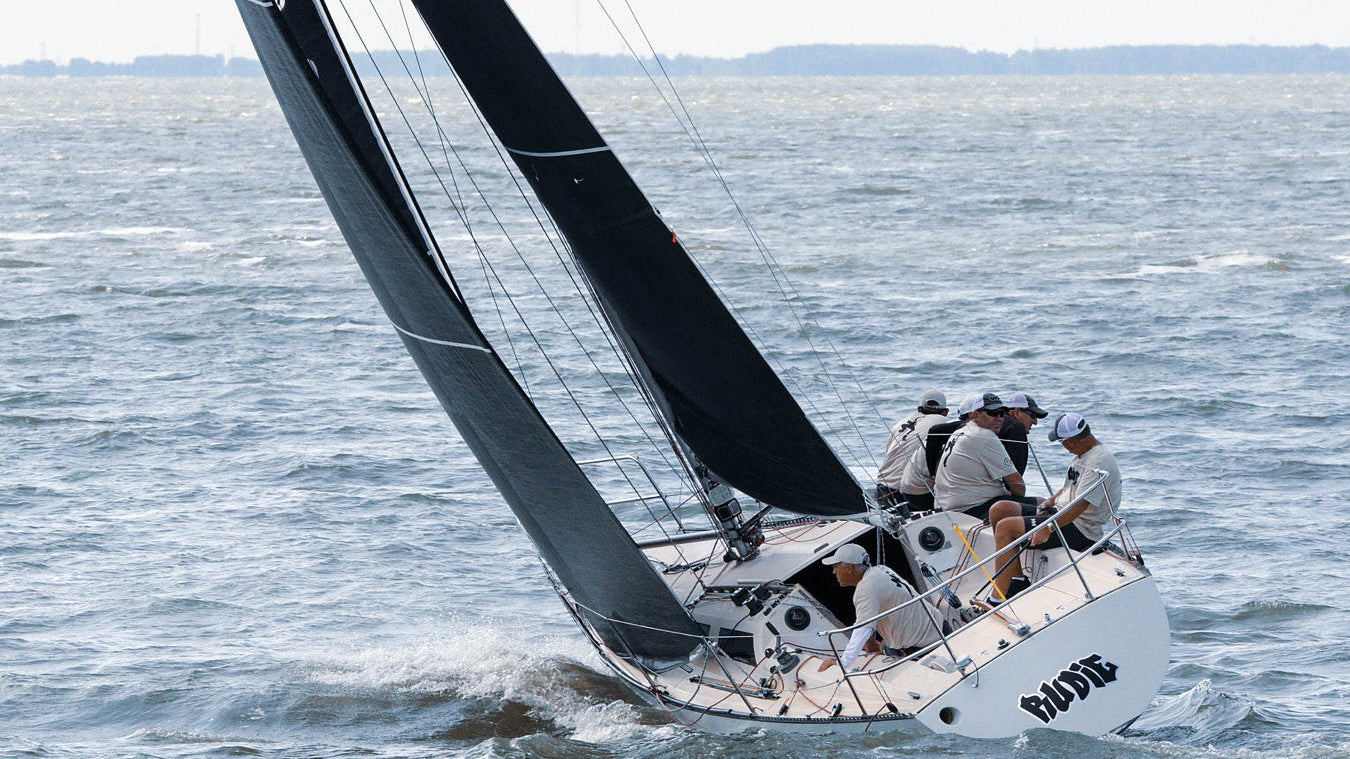
A RACE TO VICTORY AT HOBIE 33 NORTH AMERICAN CHAMPIONSHIPS
RACE TO VICTORY AT HOBIE 33 NORTH AMERICAN CHAMPIONSHIPS
North Powered Rudie Takes It Home
© Doug Haag
North Sails expert Skip Dieball shares a recap of his winning weekend!
The 2019 Hobie 33 North Americans were held at my home club on the North Cape the first weekend of September. The format was unique this year where windward/leeward courses were sailed on Friday and Sunday, with an 18-mile fixed course event on Saturday. The fleet completed seven races total.
The racing on Saturday was tight as the wind was slowly dying throughout the day leading to an abandoned race in the afternoon. My team (consisting of George Sipel, Ernie Dieball, Mike Stark, Rob Fox and Dan Synowiec) put all of our little boat experience into play as we played the shifts and focused on good starts and clean roundings. The result for us was two bullets! We had very good battles with Al Michaud's Pink Panther from Monroe and Tim Arndrews's Holy Toledo from NCYC.
"Straight out of the box, the 3Di sails were fast."
Saturday's "medium distance" race was a lot of fun. The wind was, again, in the low teens as we started on a 6 mile run. Finding the puffs was hard in the morning sunlight, but we were able to beat Steve Attard's Viva Las Vegas to the government buoy, R18. Another six-mile fetch to Monroe's G1 buoy was uneventful, but quick. Speeds around 8 knots had us rounding for home well ahead of our projected early afternoon finish. Not much changed until the last mile of the beat home. The wind would shift 35-40* and the breeze would soften. Positions changed as Al Michaud nosed out my Rudie. The Hobie 33s took the top Overall in PHRF against a full field of boats ranging in size from 40' to 25'.
© Doug Haag
Sunday was overcast and brisk with breeze 8-12 out of the North, going East. Boatspeed was key. Our rehabbed speedster did not let us down. Fresh from the shop with new bulkheads and fresh North Sails 3Di 360 sails, the boat was dialed in. Strong tactical calls from Ernie Dieball and flawless crew work made this a day to remember for Rudie. Four races, four bullets.
For the Hobie 33 class, as with other vintage OD keelboat classes, we struggled with attendance as the commitment to travel and time seemed to be the biggest obstacles. Midwinters were announced at the prize giving for February in conjunction with the St. Pete NOOD event. Make your plans now!
I was asked often over the weekend what I thought of the sails and how we set the boat up. Straight out of the box, the 3Di sails were fast. With years of Hobie 33 design knowledge both within my office and with the design team at North, we zeroed in on a nice L/M genoa design that would go through the range of adjustment in the rig. We didn't have that much variability in the breeze, so we only stepped up one time on the rig. Most adjustments were via backstay. We were pretty constant on it and the headsail reacted to the tighter forestay perfectly. Matching the mast set up with that forestay tensioning was easy because the mainsail had perfect luff curve for a base setting, which yields about 2" of pre-bend.
I thought I learned the most in the downwind legs. The boat fools you into wanting to sail it deep, but you can fall off the speed pretty quick as the pressure decreases, so you need to be pretty quick to heat up to maintain good speed. If you got caught too soft and too low for too long, you would lose boat lengths.
For more info on H33 sails or set up, feel free to call or send an email.
READ MORE
READ MORE
EXCEEDING EXPECTATIONS WITH HELIX
EXCEEDING EXPECTATIONS WITH HELIX
J/145 Main Street Has A New Secret Weapon
When J/145 owner Bill Schanen III was looking to gain that extra edge for racing this season he knew he wanted something cable-less. He contacted North Sails expert Tom Pease on what his options were. Lucky for him, Tom has just the thing; enter Helix, a new cable-less system from North Sails. Bill added a Code 75 Helix sail to his inventory with a Harken bottom up furler, which was delivered in time for the Queens Cup and Chicago Mac Races. Main Street finished 2nd in the Chicago Mac for section 2 and used their new Code 75 Helix extensively during the race.
Tell us about the process in selecting the Code 75 Helix.
Our boat, which is a 48 foot J/145 has an extremely long centerline spinnaker pole that's not supported by a stay to keep it firm. We've always wanted to have a Code Zero type sail, that we could fly from the end of the pole. We had others that we flew from other points, but to use the power that is inherent in our boat, we needed to get a Code Zero out on the end of the pole. But we didn't want one that had a torsion cable in it because it's extra weight and bother and plus we thought we couldn't get the luff tight enough to make it work. When we learned North Sails had developed a Helix system with a luff of a sail that makes it easy to furl, and that Harken had come up with a new generation of furlers to work with a sail like that, we just pushed the issue. I rang up Tom and said, look, we need to talk about this Helix sail and at the same time we touched base with folks that we know at Harken. We ordered the sail and Harken produced the furler . The best part of the story is that it worked great, and proved to be just what we expected it would be, which is a rather devastating weapon.
You used it at the Queen's Cup and the Chicago Mac. Tell us what it was like.
In the Chicago Mackinaw race. It was particularly effective there. We sail on a very competitive class and beginning of the race was sort of close reaching. We were doing okay with our North Genoa, but the wind just freed a little bit. And then we set that Code Zero slash 75 and immediately just zoomed to the head of the fleet. Everything made sense. The only question about it was really in this design of the sail. We had no problem with that. We figured that out long ago that that was going to be an effective weapon on our boat. But what was rewarding was the fact that the furling part of it worked. Frankly there were some skepticism about that, that it would furl in all conditions without a cable. And so that was the only question mark, we expected the sail to perform, but was it going to furl properly, when we needed it, and the answer to that is yes.
"We figured that out long ago that that was going to be an effective weapon on our boat. But what was rewarding was the fact that the furling part of it worked."
How long have you had this boat?
It was actually one of the first J/145's, which is a carbon hulled boat, and we've had it since 2000.
Tell us more about your crew.
We have a crew of 12 and it just happens that a number of members of the crew are members of the family and that they're all terrific sailors. Some of them are sort of professional level almost. So that all fits in my daughter's husband, and my daughter and her husband are great sailors. My son is really, runs the boat and his wife is a terrific sailor and we've got some big strong grandsons who are here also. The crew is solid and we expect to do well, and often do. And these weapons, like the sail and the furling device make that easier.
READ MORE
READ MORE
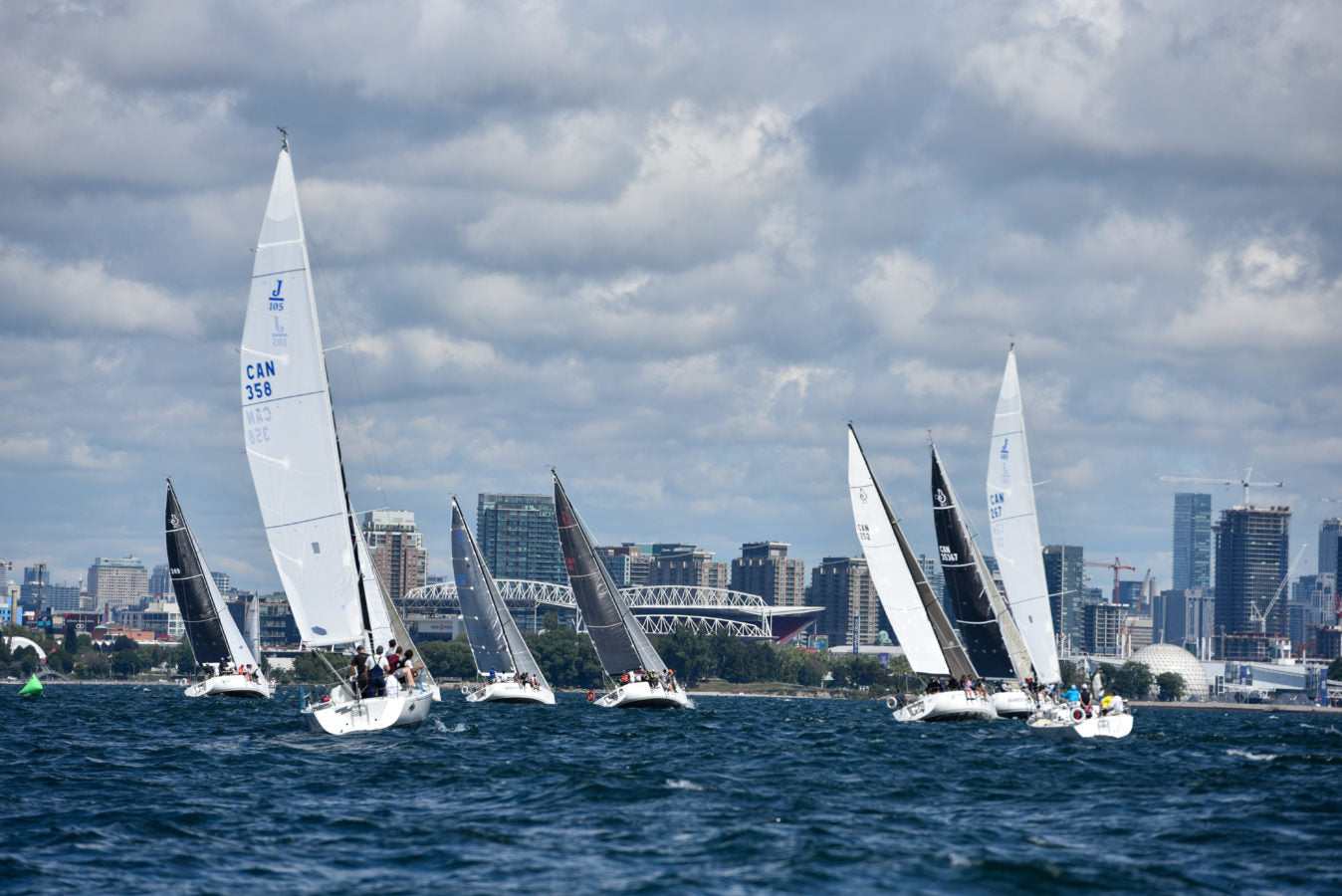
A MIX OF EVERYTHING AT EYC OPEN 2019
A MIX OF EVERYTHING: EYC OPEN 2019
North Sails and Etobicoke Yacht Club Join Forces To Focus On Sustainability And Sailing
The weather treated the 2019 EYC Open quite well, with light air on Saturday and a heavier breeze on Sunday sailors had an opportunity to show their skills in both conditions.
On the water, Notorious, Xoomer Xpress, Glenmorangie (EYC), Zingara, Hey Jude, Black Swann and Magic (EYC) all took home fleet titles. The rain stayed away and made for great après-sail activities on Saturday evening. With sights on fostering the next generation of sailor, the Saturday night entertainment took on a more modern feel with Big Furry Tractor playing songs from the 2000's with a dusting of 80's and 90's as well.
This year’s EYC Open, with help from North Sails focused on encouraging sustainable practices in sailing. To do away with plastic water bottles EYC and North Sails partnered to ensure that competitors received steel bottles that they could refill throughout the event and reuse moving forward. The Regatta also served as an opportunity for sailors to find a second home for their less than race-worthy sails. North Sails was on site and collected sails to donate to not-for-profit organizations who use them for shelter, fishing and recreation such as sailing schools and racing.
For many years EYC has used reusable plates and cutlery for the EYC Open and is now looking into ways to reduce the amount of single use plastics used at the bar. Leading up to the event, the number of posters produced to promote the event were reduced, while the club focused more on social media and web exposure in order to market the regatta. Posters that were used were printed with water-based ink on post-consumer recycled products.
There’s still a long way to go in creating more environmentally friendly regattas. Copious paper copies of sailing instructions, amendments, results, scoresheets are still heavily relied upon in sailing, and EYC hopes to be a trend setter in helping to reduce the use of these products at events. While this year’s focus was on bottles and sails, moving forward, the regatta committee and EYC will continue to find ways to reduce regatta impact on the environment.
With two marquee events in J-fest and EYC Open on the Horizon for 2020, you can expect that EYC will continue to work with North Sails and other partners to reduce the impact of regattas on the environment. Keep an eye on EYC and North Sails websites and social media to find out more about next season’s events and initiatives.
READ MORE
READ MORE
THE BASICS OF SAILING THE IC37
THE BASICS OF SAILING THE IC37
2019 Rolex New York Yacht Club Invitational Cup
With more than 30 boats sold, the IC37 is officially the next big thing in one-design keelboat racing. This Mark Mills design is purpose-built for close racing in large fleets. Strict class rules that mandate mixed-gender, amateur crews and limit teams to one set of three one-design sails per year are intended to level the playing field and create a competitive environment where the team with the most talent and dedication and teamwork wins, rather than the one with the largest bank account. The first few years of a new class are always a time of tremendous learning and the IC37 class is no different. The winning techniques are evolving regatta by regatta. Here is a overview of the boat and the core maneuvers required to get around the racetrack.
READ MORE
READ MORE

NYYC INVITATIONAL CUP WEATHER
BE PREPARED. KNOW THE WEATHER
Complimentary Forecasting For The 2019 NYYC Invitational Cup
North Sails is offering complimentary weather forecasts to all teams competing in the 2019 Rolex New York Yacht Club Invitational Cup. Sign up today for your free daily forecast delivered right to your inbox, prepared by our expert friends at Sailing Weather Service.
READ MORE
READ MORE