NORTH SAILS BLOG
Tutto
Events
Guides
News
People
Podcast
Sustainability
Tech & Innovation
Travel & Adventure
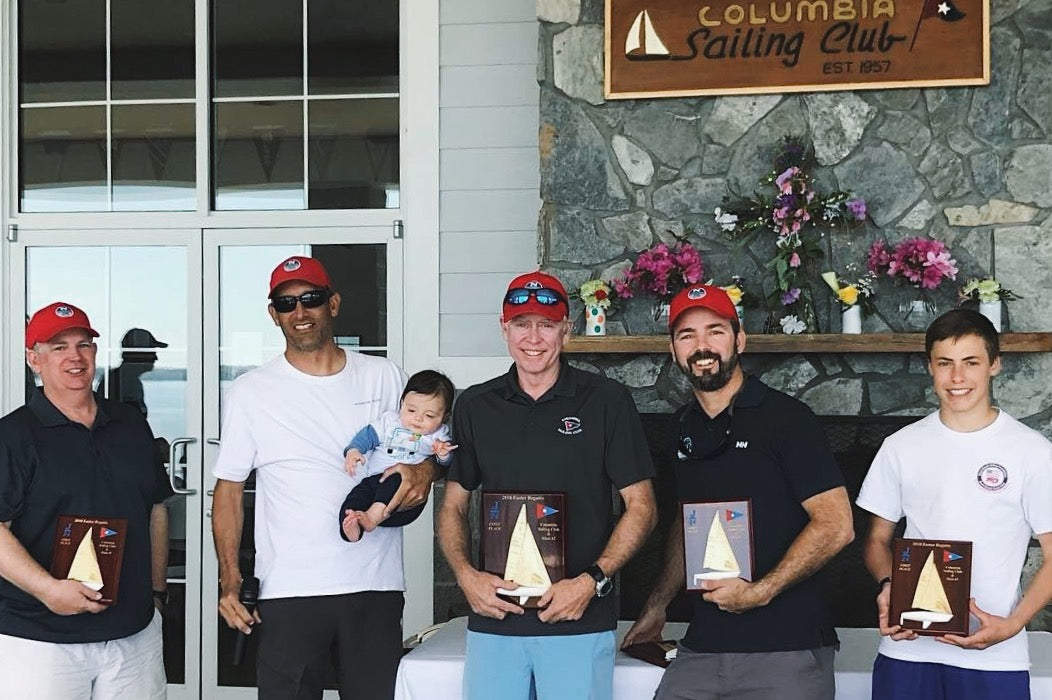
J/24 EASTER REGATTA, COLUMBIA SAILING CLUB
J/24 EASTER REGATTA
Paul Abdullah’s Team Tarheel Finishes Strong With Five Bullets
Easter came earlier this year but didn’t stop anyone from having a great time at the 2018 J/24 Easter Regatta at the Columbia Sailing Club. Eighteen teams were blessed to fabulous conditions and the excellent hospitality from the club and its members who made all feel very welcome.
Friday’s conditions started out 10-15 knots and slowly dropped to 7-12 as the day went on. The Saturday’s forecast wasn’t great, but what do those weathermen know! The winds blew and the PRO was able to get another four races off. Team Tarheel started the regatta strong with a 1-2-1-1 and remained strong on Saturday with a 2-1-1-2.
There was little breeze early Sunday morning and the PRO postponed waiting until the wind filled in. After 20 minutes passed, the RC decided it was time to race. Team Tarheel closed it out finishing 3rd, and using that as their drop. The RC sent the fleet in with the 2018 Easter Regatta in the books.
We caught up with Tarheel’s skipper Paul Abdullah:
Paul, 5 bullets! What were the 3 key factors for team Tarheel to have such success?
Our boat speed was incredible! Knowing what mode to sail in with each pressure line approaching was important. Also, we attacked the wind instead of waiting for it to come to us.
Which North designs did you use?
We used the North Fat Head Mainsail, SD-TH Genoa and FR-2 Spinnaker. Boat speed and pointing was excellent.
Do you have any tips for the North Americans in Charleston?
I would always stress boat prep. Make sure everything works well for your team. Replace any lines or blocks that aren’t working properly.
Charleston has a lot of current. Understand the depths of the harbor and where you can “hide” from current.
Thanks Paul and congratulations for a brilliant regatta!
Learn more about the North fast J/24 designs.
2018 J/24 Easter Regatta
1. Paul Abdullah
3. James Howard
4. Christopher Stone
6. Steve Wood
9. Bill Derr
Full Results
READ MORE
READ MORE
VELA E VELERIE, PER NORTH SAILS UN CICO RICCO DI SODDISFAZIONI
VELA E VELERIE, PER NORTH SAILS UN CICO RICCO DI SODDISFAZIONI
© zerogradinord
Genova – Quella che si è chiusa lo scorso week end a Genova è stata un’edizione del Campionato Italiano Classi Olimpiche ricca di soddisfazioni per North Sails che, tra gradite conferme e piacevoli sorprese, ha di che essere orgogliosa dei piazzamenti raggiunti dagli atleti impegnati tra le boe con i suoi profili.
Tra i risultati più convincenti ottenuti nell’ambito dell’evento organizzato dallo Yacht Club Italiano, spicca il successo di Benedetta Di Salle e Alessandra Dubbini, vincitrici del titolo italiano nel 470 Femminile davanti a Paternoster-Caruso e a Berta-Carraro, tutti equipaggi North Sails. Un’affermazione commentata da una felicissima Di Salle: “Siamo sicuramente molto contente, per non dire contentissime del risultato. È stata una regata difficile, combattuta fino all’ultimo bordo con le nostre compagne di circolo Ilaria Paternoster e Bianca Caruso e con l’altro equipaggio femminile della squadra italiana, composto da Elena Berta e Sveva Carraro. Il campionato è stato caratterizzata da condizioni variabili: vento forte il primo giorno e vento più leggero e instabile nei giorni successivi. Grazie ai profili North Sails, che abbiamo iniziato a usare da pochi mesi, ci siamo sentite subito veloci. Una sensazione che si è confermata anche a Genova, dove siamo state competitive in tutte le condizioni. Ora iniziamo a concentrarci in vista della World Cup di Hyeres, che prepareremo con due settimane di allenamenti a Ostia”.
Bene hanno fatto anche i ragazzi del 470, con due equipaggi North Sails finiti sul podio dietro ai confermati campioni italiani Ferrari-Calabrò. Il secondo posto è andato a Matteo Puppo e Matteo Capurro, mentre sul gradino più basso sono saliti Cesare Massa e Mattia Panigoni. Matteo Puppo ha spiegato: “Siamo soddisfatti, anche se rimane l’amaro in bocca per non essere riusciti a conquistare il titolo. Certo, quanto abbiamo visto in regata è la conferma che il lavoro svolto negli ultimi mesi è stato fatto nella direzione giusta e ne vediamo i frutti. In fatto di velocità, soprattuto in poppa abbiamo fatto un bel passo avanti. Alla luce di tutto ciò siamo molto ottimisti e propositivi per il futuro”.
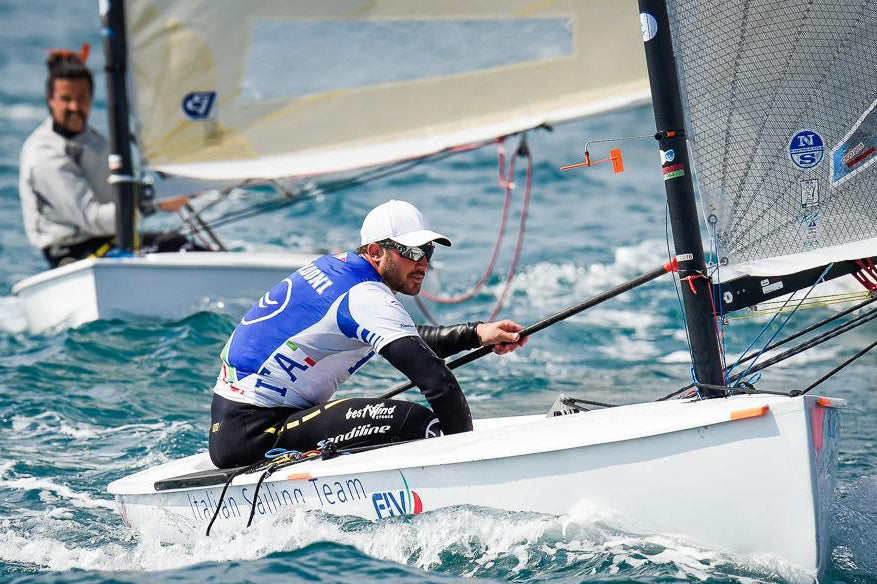
Un altro titolo italiano per North Sails è giunto dalla classe Finn, con il talentuoso Alessio Spadoni sugli scudi e il promettente Federico Colaninno, invelato anch’esso North, ottimo quarto: “Sono veramente felice di aver vinto il titolo italiano Finn – commenta Spadoni – il primo giorno le condizioni erano molto dure fisicamente e non ero sicuro di avere il passo sufficiente, ma mi sono sorpreso e ho tirato fuori un’ ottima giornata. Nelle giornate successivi con vento leggero ho amministrato, gestendo al meglio il margine. Un grazie a North Sails, con cui ho scelto di gareggiare questa stagione e che mi sta seguendo con grande attenzione”.
© zerogradinord
READ MORE
READ MORE

O PODIUM FOI NORTH SAILS NO XXIX CAMPEONATO DE PORTUGAL DA CLASSE 420 EM ABSOLUTO E JUNIORES!
O podium foi North Sails no XXIX Campeonato de Portugal da Classe 420 em Absoluto e Juniores!
É com orgulho que acompanhamos as classificações do Campeonato Nacional da Classe 420, onde vemos recompensado o trabalho das equipas realizado ao longo dos últimos meses. Valorizamos e reconhecemos o empenho dos velejadores e seus treinadores e, assim, queremos aqui deixar os nossos Parabéns a todos os participantes!
Francisco Mourão/ Luis Pinheiro_Photo Credits:Luís Fráguas
Ao Francisco Mourão e Luís Pinheiro (CNSesimbra) Parabéns pela conquista do título de Campeões de Portugal em Absoluto e às duplas João Bolina/ Rafael Rodrigues (CVBarreiro) e Francisco Rodrigues/ Tiago Alves(CVBarreiro) por teram, também, alcançado o podium ocupando o segundo e terceiro lugar, respectivamente.
João Bolina/ Rafael Rodrigues_Photo Credits:Luís Fráguas
Na categoria de Juniores os vencedores foram o João Bolina e Rafael Rodrigues seguidos da equipa Francisco Rodrigues/Tiago Alves que se classificaram em segundo lugar e dos velejadores Francisco Fráguas/Tomás Carreira que alcançaram o terceiro lugar.
Mafalda Gonçalves/MariaPereira_Photo Credits:Luís Fráguas
Rita Lopes/Matilde Cruz_Photo Credits:Luís Fráguas
Nas classificações Feminino duplamente vencedoras foram a Mafalda Gonçalves e a Maria Pereira -Naturea Sailing Team - (CNSesimbra) que conquistaram o segundo lugar em Feminino Absoluto e Feminino Juniores!
A dupla Rita Lopes/ Matilde Cruz (CNCascais)- Oakland - marcou também a sua posição no podium, classificando-se em terceiro lugar de Feminino Absoluto!
Parabéns a todas!
Photo Credits:Luís Fráguas
O Campeonato Nacional foi disputado no Clube Naval Sesimbra e os os velejadores competiram sob condições de vento variáveis. As equipas vencedoras conseguiram tirar máximo rendimento das suas velas North Sails sendo que a dupla Francisco Mourão/ Luís Pinheiro competiu com a vela grande M9, estai J12 e spi S05, a dupla João Bolina/ Rafael Rodrigues utilizou o novo estai J13, vela grande M9 e spi S05 e dupla Francisco Rodrigues/ Tiago Alves tinha como inventário a vela grande M7, estai J12 e spi S01.
Em Feminino a equipa Mafalda Gonçalves/ Maria Pereira - Naturea Sailing Team foram a este campeonato com a vela grande M9, estai J13 e spi S05 enquanto que a dupla Rita Lopes/ Matilde Cruz - Oakland optou por diferir apenas na escolha da vela grande e utilizou a M7.
Se queres saber mais sobre as nossas velas clica aqui.
A nível de ranking nacional as equipas clientes North Sails dominam fortemente o topo da tabela: 1º, 2º, 3º, 4º e 5º Lugar em Absoluto; 1º, 2º, 3º e 4º Lugar em Juniores e 1º e 3º Lugar em Feminino.
A todos desejamos a continuação de um bom trabalho!
READ MORE
READ MORE
FIVE SAIL PREP TIPS
FIVE SAIL PREP TIPS
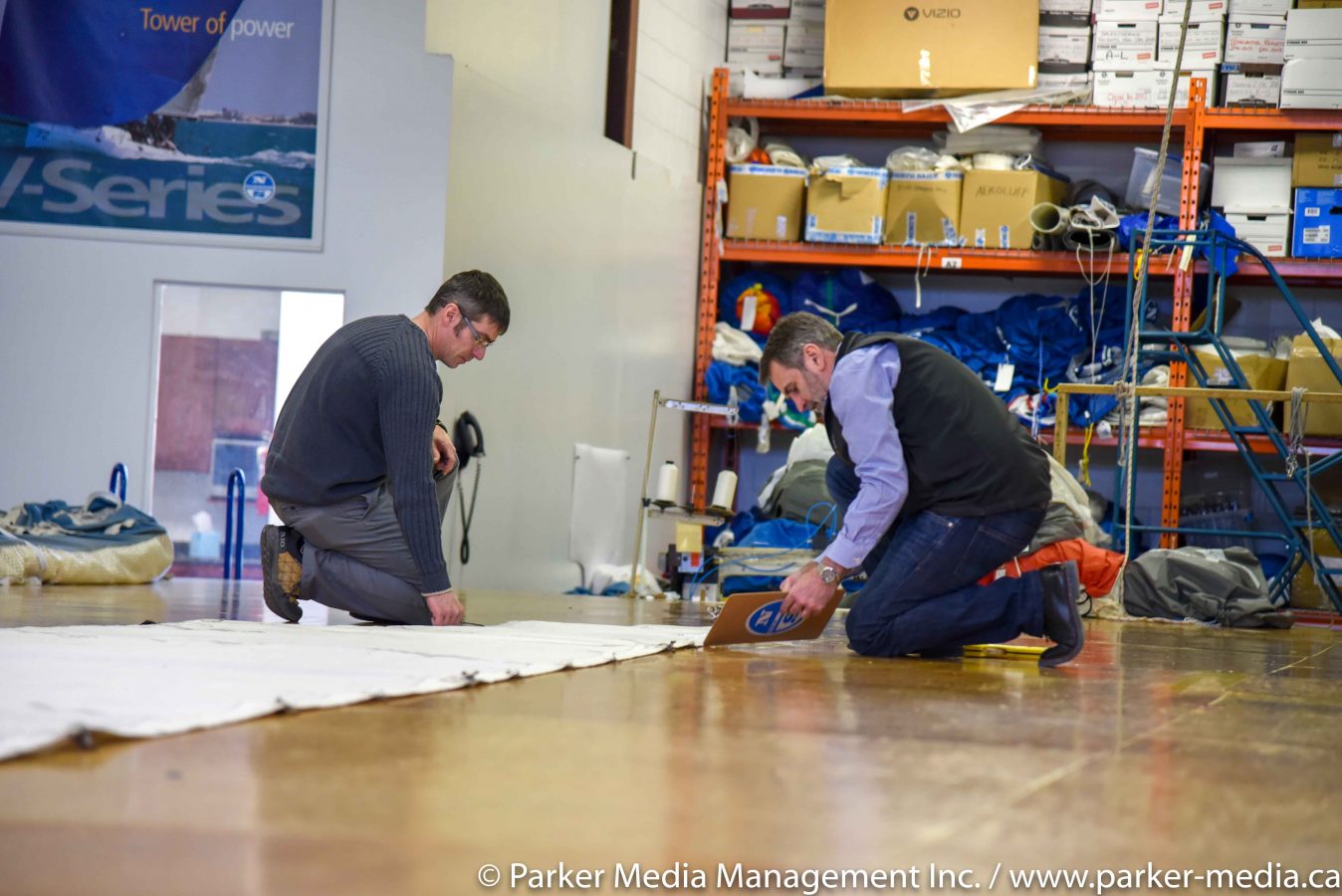
Here are some easy things you can do on your own to make sure your sails are ready for the season.
1. MAINSAIL
Inspect the luff of the sail to see if the luff slides, or the boltrope, require attention. Make sure to look for loose or missing slides, chafing through the boltrope cover.
2. MAINSAIL
Inspect the batten pockets, both ends, to make sure that the battens will be secure, tight and doing their job. Velco can wear out over time and may need to be replaced.
3. FURLING GENOA
Inspect the UV cover to see if it has any loose stitching or fabric that has been fatigued by the sun. Most UV covers require some maintenance every two years.
4. RACE GENOA
Inspect around the spreader patches looking for impact and abrasion damage. Pay particular attention along the full length of the foot and leech - this is where sails take the most abuse.
5. JIBS w. BATTENS
Inspect the battens pockets looking for fatigue and wear at both ends of the pockets.
If you find anything that needs attention - Better Call Joel!
READ MORE
READ MORE

WHO WE ARE: DOMICIANO MANGUBAT
WHO WE ARE : DOMICIANO (KID) MANGUBAT
Get to know your local service expert
Domiciano, or as many know him Kid, Mangubat has been with North Sails for many years. His experience in the industry is unparalleled and speaks for itself with every sail he touches. He has been with the Toronto loft since he started with North Sails.
How long have you been working with North Sails?
I've been on the North Sails team for nearly 33 years now. I joined the team in January of 1985.
How did you get involved in the sailmaking industry?
I was 17 years old when I first came to Toronto. I was looking for work and was fortunate enough to have a friend of my sister offer me a job in the sailmaking industry. Since then I have trained with respected veteran sailmakers such as Hans Fogh, Steve C and Mark. They all taught me how to make a variety of different sails; anywhere from small dinghy sails to mega yacht sails. Since then, I knew this would be the job for me.
What do you enjoy about sailmaking?
Each day is a different day and each sail is different, so I enjoy the challenged that come along with sailmaking. I would describe myself as a handyman so building sails is a lot of fun for me. On top of sailmaking, I enjoy the opportunity that comes along with it such as travelling. During my here with North Sails, I've gone to places like Sri Lanka and places all over the United States.
Everyday is a new opportunity to learn something new. I know how sailmaking allows me to connect with customers in terms of their needs, whether it's cruising or racing.
What’s your best advice for sailors when it comes to sail care?
My best advice when it comes to sail care is:
Inspect your sail regularly and have an expert do so
Keep your sail clean and bag it
Learn more about the North Sails Toronto team, see here.
READ MORE
READ MORE
ALTEA WINS MELGES 24 EUROPEAN SERIES ACT 1
ALTEA WINS MELGES 24 EUROPEAN SERIES ACT 1
Andrea Racchelli and Team Altea Nails the Series in Punta Ala
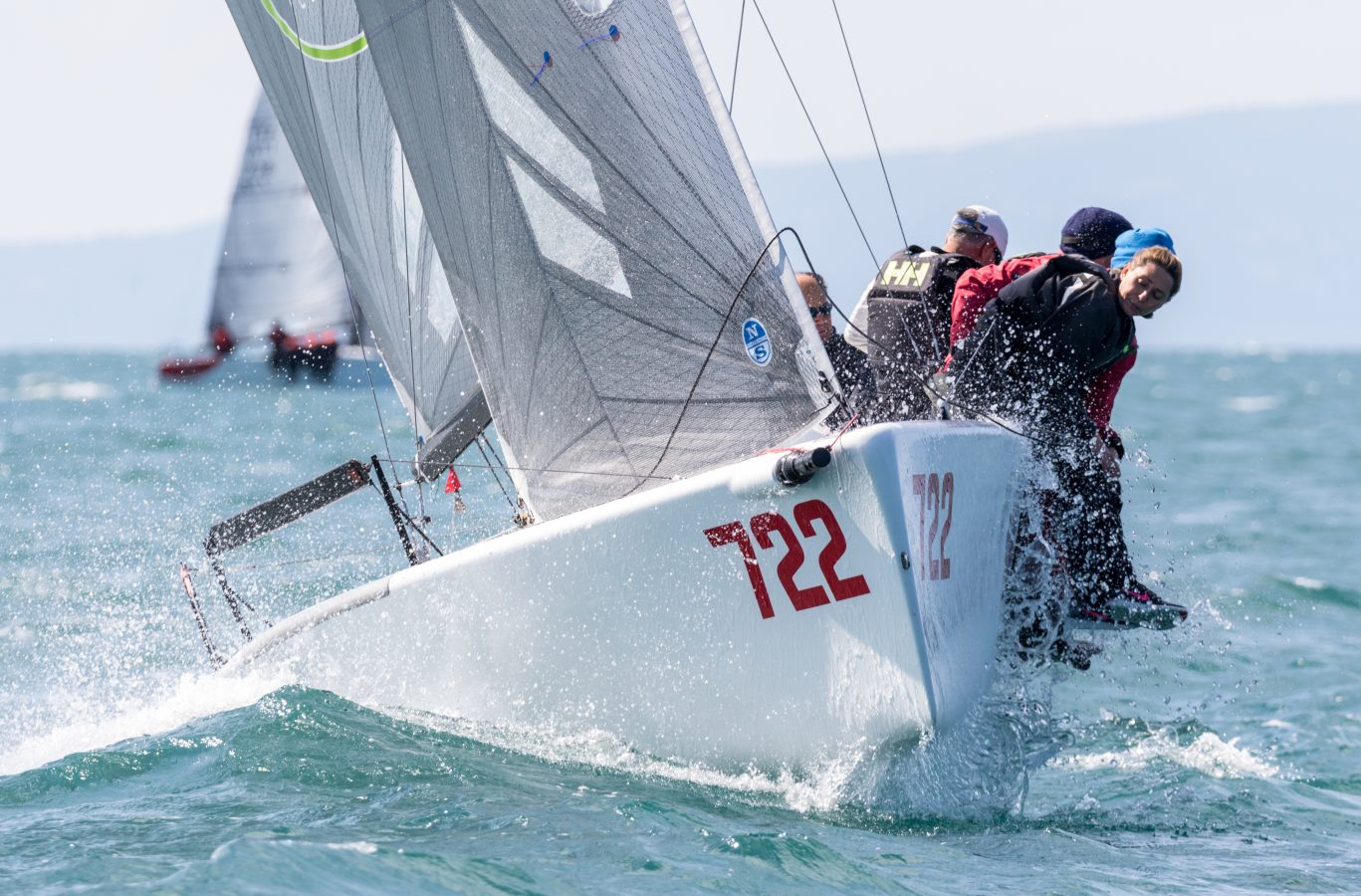
The event in Punta Ala marks the start of the European summer sailing season for the Melges 24 class. Despite variable conditions across the 3-day regatta, the race committee completed nine races. A battle between Altea and the Hungarian FGF Sailing Team broke out, however Altea lead by Andrea Racchelli repeated their success from 2009 to take the win in Punta Ala. Andrea is a veteran to the Melges 24 class having sailed in the boats for nearly 20 years! He now also acts as class president in Italy. We spoke to Andrea about his team and asked for a few tips for sailors in the class.
How long have you been racing the boat and why did you choose to sail the Melges 24?
I have been sailing Melges 24 since 2001. We bought the first boat at the end of 2000, at that time the Melges 24 was the best one design class, with a lot of great sailors competing. The boat was so modern compared to other one design boats like the J/24, which for us was a big challenge.
Tell us a little about your team; who does what on the boat and why you chose this team.
The Altea team was born in 1997. During all these years many people sailed on our boats, but always as a group of friends! I’m the helm and tactician of the boat and the team manager. The trimmer is Enzo Bonini – we have sailed together since 1992. In Punta Ala the bowman was Alberto Verna while the pit was Tiziano Auguadro, the oldest member of the group. He has been with us for many adventures. Finally we had the new entry Marta Conti, she will be with us for sure also in the future. During next season we will have onboard also Michele Gregoratto, Filippo Togni e Matteo Ramian.
In the light/medium wind conditions that you had in Punta Ala, what would your top tip be for going fast upwind and downwind?
On Melges 24 the setup of the boat and the boat handling is very important. Having the full crew hiking is the secret to have good speed upwind. On the downwind you have to work hard on the angle to keep boat speed always right. Of course you need very good sails, fresh as possible!
How do you set-up the rig for a days racing and what adjustments would you make throughout the day?
On Melges 24 you always have to change setup during racing. I have a base setup for 8 knots of wind. We always dock out with that and change tensions for every change of conditions. (For more information on Melges 24 tuning, check out the Melges 24 North Sails tuning guide)
Which North Sails products do you use? Why did you choose North Sails and what is it that makes you keep using them?
At the moment I use AP-3 mainsail, J-7+ jib and P-2 Spinnaker most of time, however sometimes theP-1. I chose North Sails in 2002 because North is the most experienced sailmaker in the class and a great team of experts working on the sails.
What tips would you give to new teams coming into this highly competitive fleet?
Train hard on maneuvering, always try and keep the crew consistent. Always ask class experts about initial setup and then work on it yourself and most important, have fun!
What events do you have coming up in the calendar and what can we expect from you and your team this season?
The two main events will be the World Championship in Victoria (Canada) and the European Championship in Riva del Garda (Italy). Our best result was 2nd at the Worlds in 2015 and so we will try to do better than this!
For more information for the Melges 24 class and the North Sails products, visit our class page and speak to your local expert.
Full results
READ MORE
READ MORE
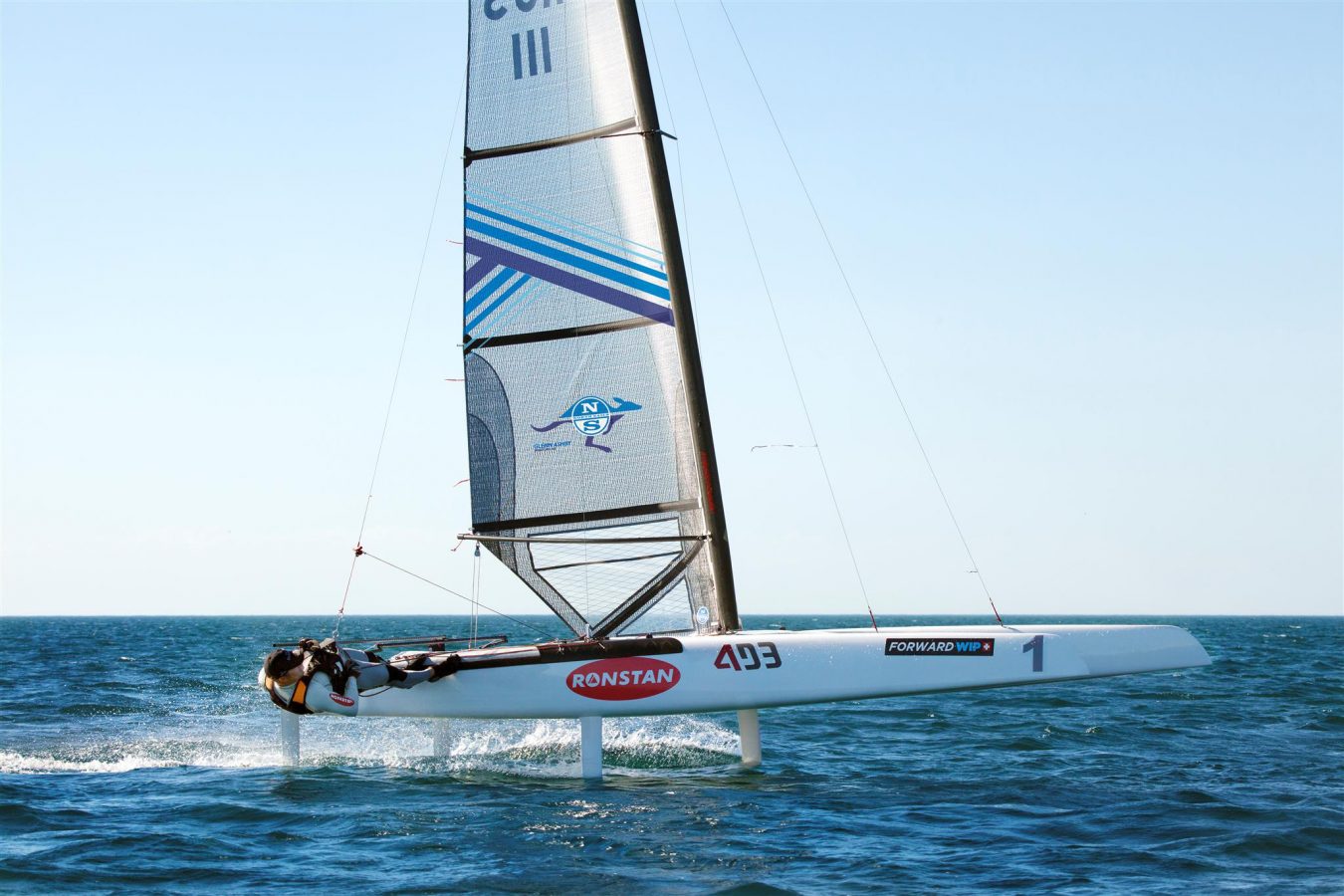
NORTH SAILS INTRODUCES NEW DECKSWEEPER 2 MAINSAIL FOR THE A-CLASS
NORTH SAILS INTRODUCES NEW DECKSWEEPER 2 FOR THE A-CLASS
Glenn Ashby redesigns the original Decksweeper for the high speed foiling catamaran
North Sails has continued their partnership with America’s Cup sailor and foiling superstar Glenn Ashby to create a new state of the art sail for the A-Class Catamaran, the Decksweeper 2. After his recent victory in the A-Class Australian Championship using the original Decksweeper mainsail, Glenn worked with North Sails One Design experts to further develop the mainsail into the Decksweeper 2. This new version of the sail is built and optimised to make full use of the high speeds that the boats are now put through, as well as coping with the lighter wind speeds when foiling is more challenging.
Ian Johnson, North Sails Australia One Design expert, commented:
“Following his success at the 2018 Australian Championships, Glenn has re-defined the A-Class aero package in partnership with North Sails. The new 2018 Decksweeper has been designed for high speed sailing, with much attention being paid to the bottom loading of the sail and twist profiles. Overall depth and entry and exit angles have been tailored to support the sail through a large range of conditions and with a variety of mast set-ups, the sail can be set up to suit a good range of weights and wind conditions.“
The new Decksweeper 2 has been designed with a smaller head with more sail area further down the sail. After experimenting with a boomless option, Glenn decided having a boom was the best option for speed and foiling wind range. A foot shelf has also been added to create an airtight seal between the trampoline and the sail.
Glenn Ashby said, “The North Sails Decksweeper design evolution incorporates its proven solid light air performance with an all new profile and shaping throughout, adding a new dimension in up range foiling conditions.”
The Decksweeper 2 is now in stock and ready to ship for your next A-Class regatta.
Contact your nearest North Sails A-Class expert today.
READ MORE
READ MORE
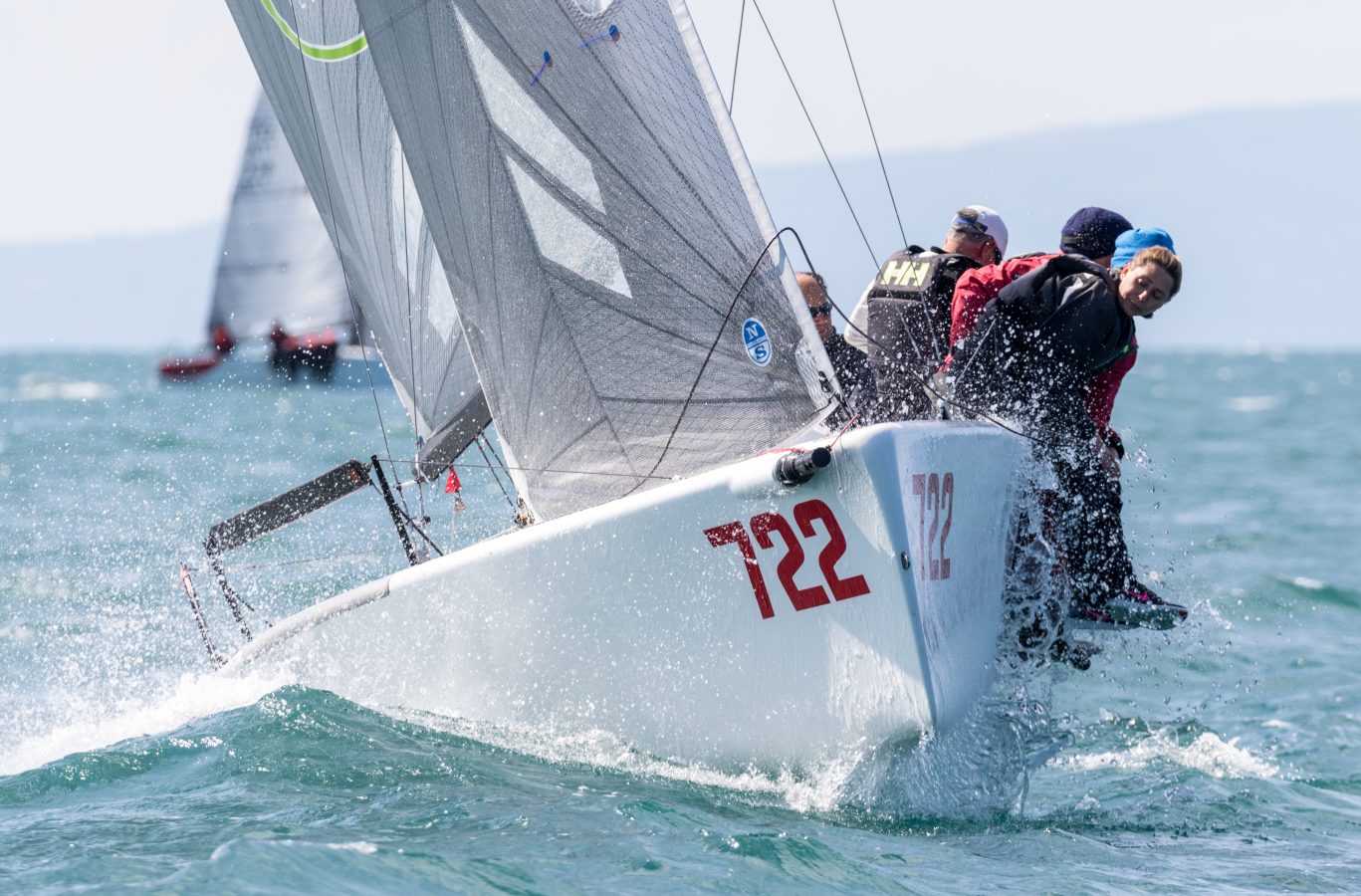
MELGES 24 EUROPEAN SAILING SERIES, ALTEA BRILLA A PUNTA ALA
MELGES 24 EUROPEAN SAILING SERIES, ALTEA BRILLA A PUNTA ALA
© zerogradinord
Punta Ala – Cala il sipario sulla prima tappa del circuito internazionale Melges 24 European Sailing Series, organizzato da International Melges 24 Class Association con il supporto logistico, per la prima frazione, dello Yacht Club Punta Ala.
Condizioni meteo variabili e vento irregolare hanno comunque consentito al Comitato di Regata presieduto da Alessandro Testa di portare a termine una serie completa di nove regate, tre per ciascuna giornata: non poteva sperare in meglio la flotta di quindici Melges 24 scesa in acqua a Punta Ala dopo la lunga pausa invernale.
A brillare dopo un lungo testa a testa con gli Ungheresi di FGF Sailing Team è stato Andrea Racchelli con la sua Altea che, dopo nove anni e al primo ritorno della flotta Melges 24 in quel di Punta Ala, ha replicato il successo ottenuto nel 2009 oggi come allora utilizzando profili North Sails.
Più in generale, l’evento si è rivelato un grande successo per North Sails, che ha piazzato sette barche nella top ten di questa manifestazione che ha aperto ufficialmente la stagione del più longevo tra i one design prodotti dalla Melges Performance Sailboats.
Per la classifica finale dopo nove prove e uno scarto clicca qui.
READ MORE
READ MORE
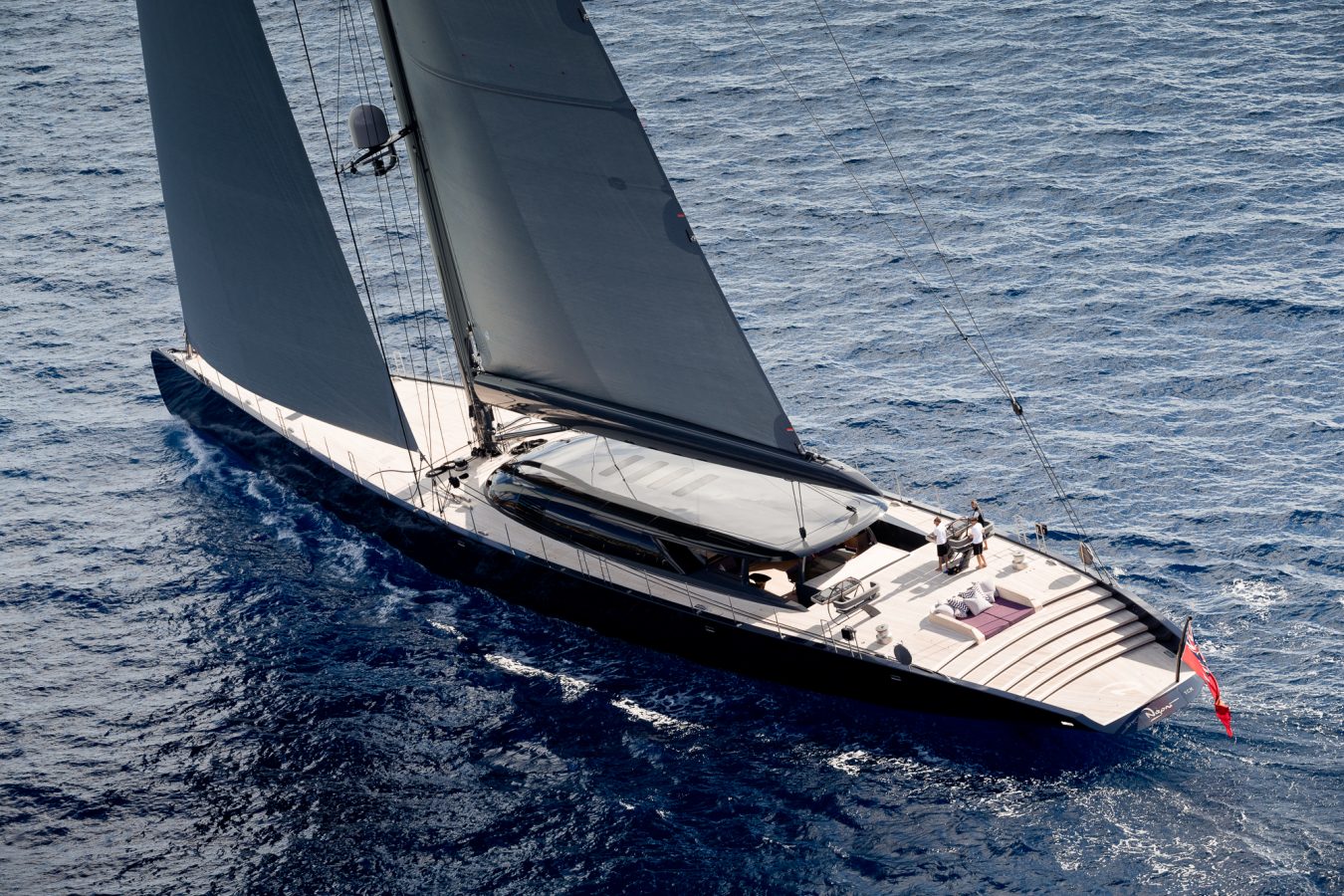
DESIGNER SPOTLIGHT: JEREMY ELLIOTT
DESIGNER SPOTLIGHT: JEREMY ELLIOTT
North Design Services Goes Beyond Sail Design
From Maxi’s to Grand Prix, the North Design Services team employs the power of the North Design Suite to help yacht designers better understand the complete performance package. The result is owners get the most out of their sailing experience, whether it’s racing or pleasure. © Jeff Brown
The North Design Services is a team of sail design-engineers who specialize in optimizing a yacht’s total performance. Under the radar, yet super effective, this elite group is the North Sails version of the Special Forces.
“We’re getting invitations from yacht designers to help them look at different optimization options,” remarked Jeremy Elliott, Head of North Design Services. “Some underwater, some over the water, some both, our team is tasked with figuring out how to get the most performance out of these boats. It’s a real privilege for us to be trusted by the designers, owners, and teams to help optimize performance of their projects.”
Elliott is a North designer based in Gosport, UK. Educated in Southampton as a naval architect, his experience is made up of projects young sailors dream of adding to their CV. Volvo Ocean Race, America’s Cup, TP52, time spent learning sail design from the likes of Tim Corben, Henrik Soderlund, Guido Cavalazzi and many more.
The power of the North Design Services lies in the tools and personnel. The North Sails design team has a long tradition of being embedded in America’s Cup and Volvo Ocean Race teams where design collaboration is key. Out of that experience grew development to the North Design Suite, whose capabilities now extend far beyond the analysis of rig and sails. The North Design Suite is a tightly integrated suite of software capable of advanced hull, rig and sails modeling. Once a tool only used by North Sails designers, the suite is now in demand by yacht designers, owners and teams as a key resource to understand how hydro and aero packages interact for best total performance – be that for racing, cruising or both.
“Our software gives North Sails the capability to model the total performance of the yachts. North Design Services is about extending our experience, and the North Design Suite to our clients, their designers and teams,” explains Jeremy Elliott, the designer heading up North Design Services. “We can help our clients to get more from their yachts”.
Evolving sail designs start on the race course. North designers collect data on sail shape, boat speed, and performance before plugging it into the North Design Suite to create optimized sail structure models. ©Jeff Brown
Analytics is an integral part of how North designs sails and adds to our credibility to lead the most exciting and innovative projects in the sailing industry. 35 years of the brightest minds in sailmaking has made North Sails the undisputed worldwide leader in sail structure, aerodynamics, hydrodynamics and optimizing yacht performance. The experience and expertise of North Sails designers are the essentials required to utilize our powerful suite of design and analytics tools.
The power of North’s software is illustrated by its inclusion of an integrated Velocity Prediction Program (VPP). There are many VPP’s available, but North’s VPP is unique because the aero and hydro models are not embedded but totally open in structure allowing sail, rig, hull design features to be integrated independently with as much or as little detail as required for each project. The tool gives sail and yacht designers enormous flexibility and the ability to analyze an entire sailboat as a unified working system.
“The secret weapon is our VPP, where we can simulate how the sails and the rig interact with everything that’s happening underwater – or indeed above the water if it’s a flying boat,” remarked Elliott. “How the sails work and how they de-power is very much related to the hydrodynamics of the yacht. Our VPP brings the aero and the hydro data together. At North Sails, we customize the VPP aero model to represent the exact sails built or proposed for the project. So instead of a “black box” the North VPP is a fully transparent tool balancing aero, hydro and anything else for best total performance.
“Many of the questions we help to solve are too tricky for any one party to answer on their own,” explained Elliott.
“North Design Services acts as a collaboration partnership to bring structural engineers, or the yacht designer and sail designers onto one team. Projects are most successful when everyone involved brings their best experience and information together, then we at North Sails have the software to bring it all together to understand the interactions and the result. It’s not unlike how an America’s Cup or Volvo design team operates.”
“The work often feels closer to yacht design than sail design,” commented Elliott. This may seem like a bold statement to hear from a North sail designer, but it rings true to those familiar with Jeremy Elliott and North Design Services. “In reality, however, it is none of these exclusively – it’s about bringing all the parts and parties together so that we can – together – gain the clearest and most accurate understanding of our project and get the best result for our clients – when a collaboration such as this works out well it reflects well on everyone”.
The key difference between traditional sail design and North Design Services is that much of the data North generates is distributed to outside the sail design team and to yacht designers. In many projects, North Design Services groundwork happens well in advance of the boat concept or before the sail plan or deck layout is defined. It’s only when the rig and the sail plan are defined that North designers can start thinking about designing the sail inventory; work you’d normally think of as sail design.
Shows a Maxi 72 at TWS. Southern Spars & Future Fibres supply the “Windage” component which captures the aero drag of the standing rigging. The VPP balances all of these components together and computes the resulting boat performance over whatever range of wind speeds or angles you require for the project. It also allows North Sails to understand in detail what sail shapes are required for best overall boat performance. © Hull shape and hydro data courtesy of Judel-Vrolijk Yacht Design
Downwind VPP simulation of Malcolm McKeon Design #023, a 34m High Performance Sloop currently in build at Baltic Yachts. For this Project North Design Services delivered a total performance assessment program to assist client and designer understand the unique characteristics of 5 candidate designs. The simulation shown was run to quantify the downwind VMG performance of one of those candidates. A horizontal planar cut through the sail-plan at the height of the gennaker clew is shown below the 3D model in order to visualize optimal sail shape for this condition. © Hull shape and hydro data courtesy of Malcolm McKeon Yacht Design
“North Sails have focused our efforts on analyzing hydro and aero as a total performance package. Each tool in the North Design Suite is powerful, but the real power is the integration of the whole package. North Sails, using our Design Suite can model everything from the keel to the Windex, and then tweak the performance as required.”
READ MORE
READ MORE
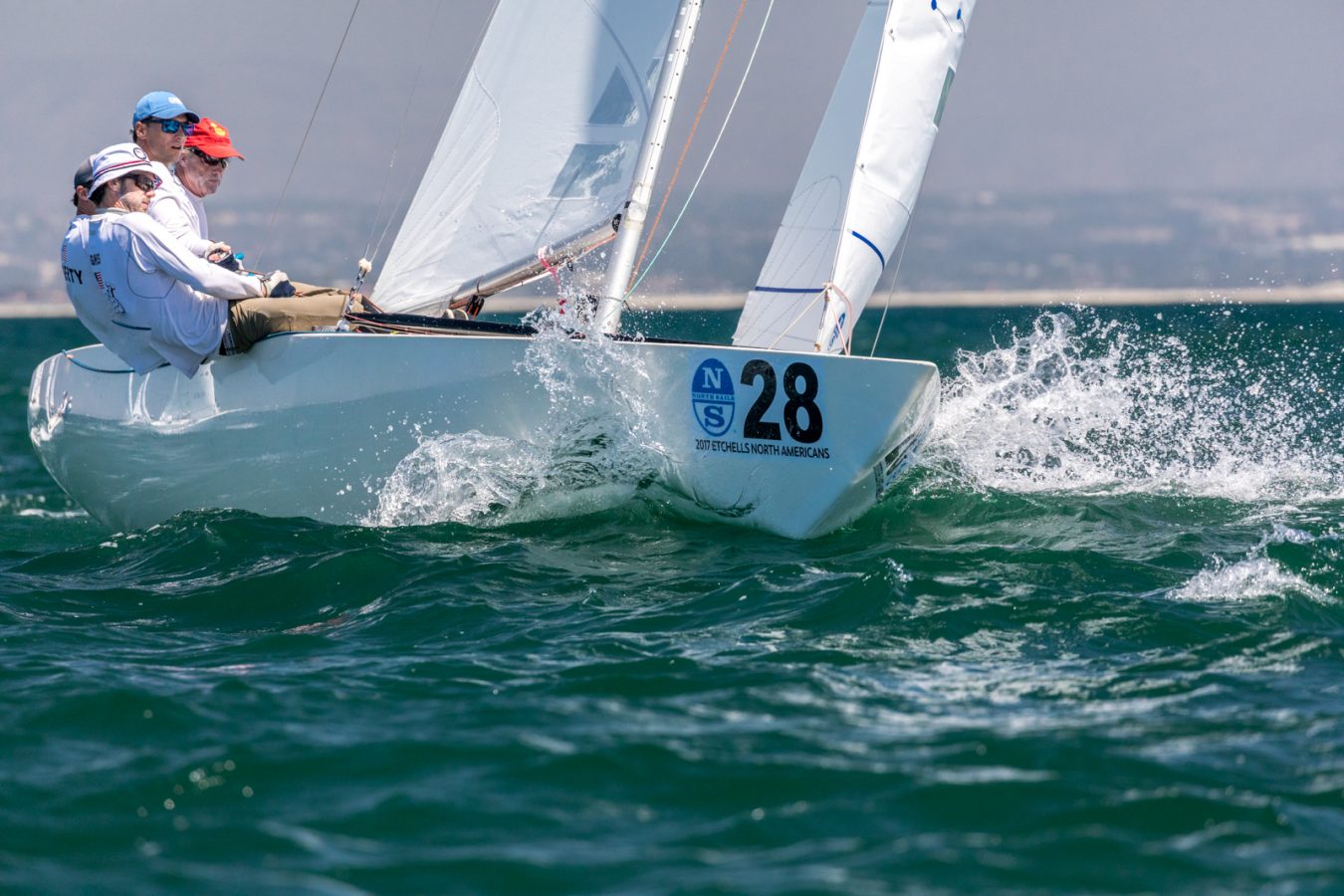
THE TACTICIAN ROLE: INTERVIEW WITH MICHAEL MENNINGER
THE TACTICIAN ROLE
Michael Menninger, tactician on SCIMITAR, 2017 World Champion and 4-time Etchells Winter Series winner
Michael Menninger is on a roll. In September of last year the young professional sailor and tactician won the Etchells Worlds in San Francisco with Steve Benjamin. Just a couple of weeks ago Michael and SCIMITAR team wrapped up an overall win of 2017-2018 Etchells Biscayne Bay series, the de facto winter championship for the class. Using North Sails at all these events their team has been truly dominant. Chris Snow from North One Design caught up with Michael to get some insights sailing for one of the worlds best.
Would you say you’re kind of like the quarterback in a way for the team?
A little bit. I mean I’m super lucky to sail with someone like Benj, who has so much experience and knowledge already. He is the quarterback in a way because he does all the organization behind the scenes. Sailing is seemingly always on his mind, and he’s always thinking of ways to improve the team, sails, parts, etc.
He is also the best driver I’ve ever sailed with because he’s not only very skilled but also very receptive and trusting with all the crew. He never dictates or tells us what to do. He is always really quiet and making sure that he is driving to the best of his ability, and then listening to us on where to go and what to do.
During regattas, I guess you could say the football gets passed, and I take on the role of the the quarterback. I just try and make sure that everyone is rested, calm, and ready to race.
Before the start, what’s the discussion on board like? What kind of things are you guys talking about together before the racing starts?
We monitor a few things: the geometry of the race course, as well as the wind strength and how our rig tune, sail and batten selection matches up with the conditions. We also closely monitor our wind forecasts to see how they are matching up with our observations, and it can help us guess what we expect to see next.
In your role as tactician, how do you manage the last couple critical minutes before the start? What type of information are you giving to the team and what are you getting from them?
This is, for sure, the biggest moment in the whole race. I come up with a general plan of where to start. Sometimes, it’s very specific and sometimes it isn’t, but it’s nice to have some sort of plan. A main priority for me is just to stay clear of any big packs and making sure we keep our destiny in our own hands. I find if you have a very specific plan, sometimes it will take you into a crowded situation and then you have greater odds of getting mixed up with another boat or two and not being able to execute on the important things, like hitting the line with speed. That being said, our top priority is to always be in our own water and do what we can to control the boats around us. So once we get into a comfortable place on the line, it’s all about time and distance and managing our hole from that point forward.
What I’m doing at this point is just painting a picture of what we will do next, and take in information such as time, and distance to the line. I’m basically trying to keep us in relatively low-risk situations from 2:00 – 1:00 to go to the start.
I think it’s a really big advantage to have four people on the boat because we have more eyes. We have someone spotting for poachers and hookers. A poacher is someone that is coming in on port and can potentially tack to leeward of you and take up your hole to leeward. And a hooker is someone who is reaching down the line behind you on starboard who is going faster through the water than you and can potentially hook you and control you.
Someone is calling the time, and in some cases, we put Ian on the bow so they can monitor our line sight. If we’re in the middle of the line, it’s nearly impossible to judge how far away you are, and it’s really helpful to have someone on the bow telling us how many boat lengths we have. Given all this information, I dictate which mode we should be in and I work with Benj and the jib trimmer on what needs to be done in those final seconds. I am the voice on the boat so the communication at this stage needs to be clear. If we are controlling the boats around us, the goal is to hit the line at speed at the gun.
It sounds like you would rather start in an uncongested area versus completely at the favored end.
Yea most of the time. It’s so hard to come back in this fleet, if you start in 30th, it is really unlikely that you’re gonna get back to the top eight. So just being able to start and go straight for longer than most, and pick the next best decision and try to get on the next shift, may get you into 15th place right away. Staying clear, keeping our options open and making sure we can pass boats on every leg and not start out at 30th or 40th, is a big priority.
In such a tight fleet there are many times upwind and crossing situations where you have to decide whether or not to cross-tack or allow another boat to cross even though you have right-of-way. How do you typically make these decisions?
The two biggest things that I monitor are where is the max pressure on the course and if we are lifted or headed. Knowing those two things will help you make a lot of good decisions. Sometimes I will sit in a compromised lane for a long time just to stay on the lifted tack, or if I know it will bring me into better pressure or the next shift sooner. I try my best to be patient, but if you see something that you are confident in you should act immediately such as sailing to the pressure.
Ian is kind of my eyes for macro pressure. Focusing on boat-speed, staying in mode with Benj, and trimming the main keeps me pretty busy so having another set of eyes looking forward is key. I rely on the guys up forward with just keeping me honest where the best pressure is. I think you have to be ready to take some transoms in order to stay in the best pressure. If you can do that you will pass all the boats that are hoping something will come their way even if they are sailing away from the pressure. Don’t be hopeful.
Is Ian the second person back?
Yes, he’s the second person back. Previously we had Dave on the jib and now we have Johnny on the jib with Ian just behind. Ian is pretty much just hiking upwind so he has the time to keep his head out of the boat. The jib trimmer is also busy trying to adjust the jib and rig so we can keep the boat at max power. We have the jib trimmer calling micro pressure, counting down the puffs. That’s really helpful for me because there is a lot of different controls to play once a puff hits you (the traveler, the mainsheet, the cunningham, the backstay). Ideally, finding out how strong a puff is going hit us and for how long it gives me time to change the mainsail as the puff is actually hitting us instead of after.
The last third or quarter of the first beat is critical. The boats are still close together and getting around the top mark in good shape can make or break your race. How do you handle this part of the race? Do you have any pointers on that?
I think it goes back to are lifted or are you in the best pressure. You may think that getting out to an edge for clean air and a clean rounding may be best, but if you are sailing away from the best pressure, then that’s obviously no good. It’s pretty tough. You have to imagine the race course without any other boats and ask yourself, what would you do if you were out there alone? If there’s more pressure on the left, you have to go there. You have to spend a tack to go to that pressure and then do your best from that point on.
On the flip side of that, if you have 20 boats going to a single puff, you definitely don’t want to sail behind them all. You want to make sure you are leading them back to the next shift or the next layline. If there’s a puff on the left and there are literally 20 boats in that puff that are taking it back, I don’t think you really want to take all the transoms just to get in that puff because you’ll still be behind them. In that case, you really want to lay up underneath, see if you can get a little bit of the puff on the edge, and be in a position to where, once that puff goes away, the people that are a little bit compromised out of that 20 boat pack are going to be slowly pushed back behind you.
One last thing is to really avoid the laylines at all costs. Since these boats are so windshift-driven and especially in a place like Miami, where the wind’s oscillating all the time and oscillations can be pretty short, getting out to a layline early means that you’re going to miss the last shift and lose boats.
How do you play the downwinds? How early do you decide which gate mark to go to?
I spend a lot of my time looking behind us, just to make sure that we are in a clear lane. Ian on the bow is also looking back a lot and helping me with the macro pressure. One other thing downwind is overstanding is a massive penalty in these boats. Big penalty both upwind and downwind, really. I’m always trying to lead people back to the middle in most cases unless there is big pressure on the side.
As for the gates, sometimes I leave that decision pretty late. I am open-minded on either gate and it can be really difficult to tell which one is closer. I try to not be overly committed to a gate until I’m really sure of which one is going to be favored, and a huge factor in making that decision is which turn is cleaner. Cleaner means which rounding will get you into clearer air and the clearest water as soon as possible.
For example, let’s just say that the majority of the fleet is on the course right side looking upwind, and as you approach the gates there is a right-hand shift making a left turn, favored. A lot of people may think that making a left turn would be better because of the shift and the mark is further upwind. But if it takes you into 25 spinnakers, and chop from all those boats coming downwind, that’s not really good either. In that particular situation, I’d be taking a good look at the other turn, as it could potentially get me into clear and clean water sooner.
It seems to me if you’re rounding directly behind five boats or so, it’s extremely difficult to get the boat going. It turns into a massive pinch fest, and everyone’s going really slow. If you compound that with a lot of boats coming downwind and giving you bad air and more chop, then that’s so painful. If you can take the other rounding, even though it’s not quite as favored, but you have a little bit more room to breathe, you can get the boat moving quicker, then that’s something to really take into consideration.
Actually, I made this mistake on Sunday of the Midwinters on the very last race. I chose the gate to get some more pressure and the shift but it wasn’t quite as clean and we lost a boat that was way behind us. It was super frustrating because I felt like I made the correct decision at the time based on the wind strength and the shifts.
If you sail in a place like San Diego or San Francisco you really have to make sure that you’re going to be rounding a favored gate. That’s going to take you to a side that’s clearly going to pay. In a place that’s oscillating, making sure your rounding is the clearest, it should be a very high priority as well.
You’re just getting started in your sailing career. Is there anybody that you could credit with influencing you in sailing?
Definitely. My family got me into sailing and have given me the tools to succeed from an early age. In the recent years, there hasn’t really been anyone guiding me per say. Sailing’s a great sport because there are so many amazing things to do. You have America’s Cup, Volvo and offshore racing, high-performance sailing like the Moth fleet, the Olympics, professional one-design sailing. They’re all fantastic and have incredible competition.
I think being guided would be easier if you wanted to do just one thing, such as the Olympics. I feel like for myself and for a lot of other sailors who want to keep their options open, there really isn’t a guidebook or a right thing to do and a wrong thing to do.
For me, I just try my hardest to be the best teammate I can be and help our team win in any way that I can, and see where it takes me. In the last few years, I’d have to say a big thank you to Argyle Campbell who gave me a start in the Etchells fleet. He trusted me to put a team together and that was my first year ever sailing Etchells. We ended up winning the JAG series that year too.
Lastly, a huge thank you to Heidi and Benj for giving me all the opportunity I could hope for. Sailing on one of the best Etchells programs is amazing, and bringing me onboard their TP52 Spooky as a tactician has been a fantastic experience.
It’s all been a fun ride these last two years and it has opened the door to other sailing opportunities which I’m really excited for such as doing tactics on Rio for the TransPac 52 West Coast Series. I’m looking forward to sailing more in the Etchells class and also expanding into other classes as well. It’s all been good.
Michael, thanks so much and we wish you the best of luck in all your upcoming adventures!
READ MORE
READ MORE
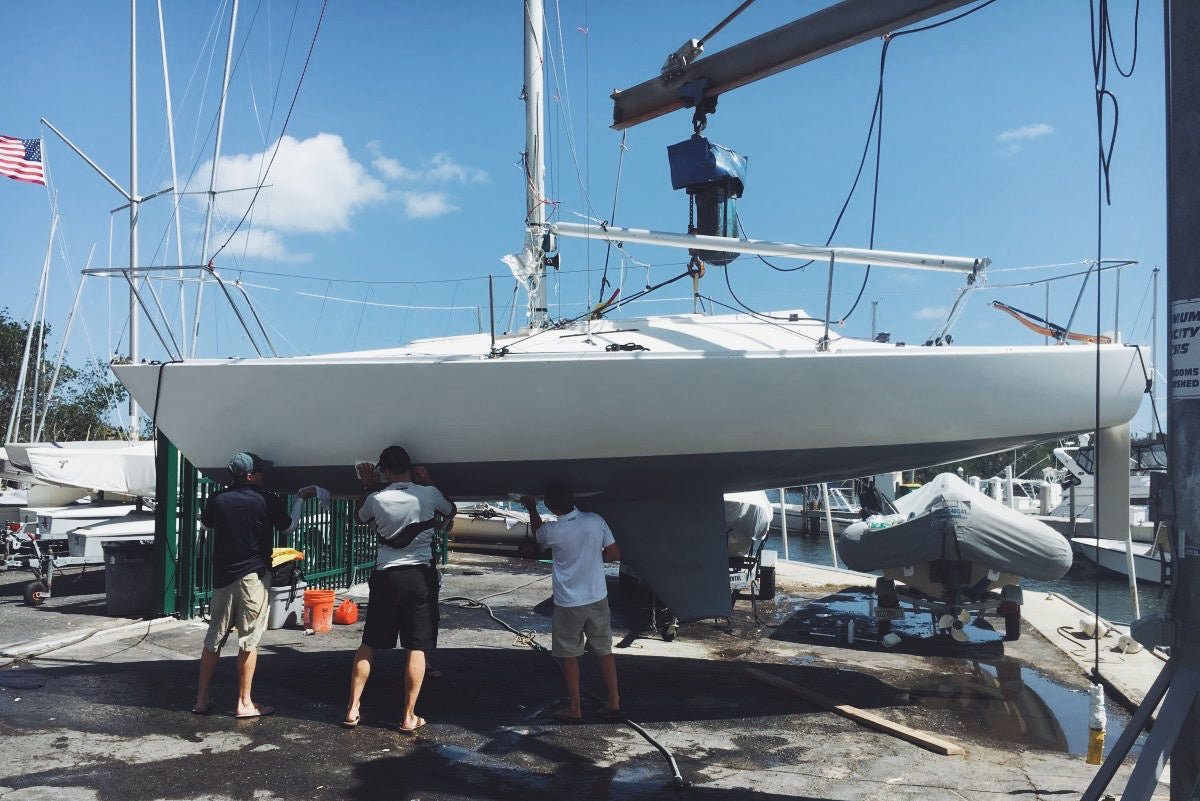
CHARTERING A BOAT - TIPS TO MAKE IT A POSITIVE EXPERIENCE
DON’T BE AFRAID TO CHARTER A BOAT
Tips to make it a positive experience
Will Welles won the 2018 Midwinters in a chartered J/24. With his organization skills and attention to details, we think Will has come up with a system that helps minimize surprises when chartering a boat for an event. Here are his top tips:
We have all had good and bad experiences with chartering. Most people say it is luck of the draw, but I believe there are some things you can do to improve the odds.
First thing is to do your homework!
Make sure you find the best boat you can. Whether it is a particular builder, hull number, etc, make sure you dig until you find what you are looking for. I am pretty particular about the vintage of the boat, what mast it has, keel shape, rudder, etc… and if you can find a boat that already has good pedigree then that is a plus! What you are looking for is as close to turn-key; a boat that will need the minimum time to make it ready to sail.
Where to start?
First, start with the local regatta organizers and people you know and trust in the area who may know the local boats. It’s not what you know, it’s who you know at this stage.
Once you find a couple of boats that fit the bill, ask the owner for the class measurement certificate, history of the boat, recent upgrades, and what extra parts and pieces would be included.
Ask for detailed photos
Photos are always worth a thousand words! Ask for photos of the keel, rudder, rudder hardware, tiller, bottom, deck, mast, boom, running rigging, standing rigging, etc. I like to see how the deck hardware is laid out. While most boats run the same set up, it is not worth risking any surprises. The deck pictures should allow you to zoom in on hardware to see its age and condition.
After I have reviewed the photos, I ask the owner a few simple questions that can usually be answered with either yes or no, to speed up the reply. For the J/24, this is the list I use:
Bottom, foils, rudder? Silky smooth?
Headstay max class length?
Protest flag?
Yellow flag?
Carbon spin pole?
Good lifting strap?
Tension gauge? Loos Gauge B?
Optional equipment – weight, right at minimum all up?
Five good life jackets?
Compass – (I’d like to use yours if ok, just because I don’t think mine will fit on that older cradle)
Velocitek – (I can bring mine)
VHF – (I’ll bring my own)
Boat tools?
Windex masthead fly?
Blocks, boomvang, etc., all good?
Mast still straight?
Mast butt adjuster?
Dedicated rig tools?
Once I have these answers for each boat on my list, it’s time to choose the best boat for the event. However, the work doesn’t stop here; this is where the journey with your new charter boat begins!
Time is Precious!
I think we all can agree that time is precious at the regatta, so anything we can do to save time will help maximize our on the water time, which is how we’ll get used to our new best friend.
A big time-eater is trips to the marine store. Who even knows if there is a marine store near the regatta site, or how bad traffic will be? Even if the store is right around the block it still takes time away from going sailing. Put together a spares kit and either ship it to the regatta site or bring it with you. You don’t need to pack every spare part, just what you know you will need based on the information you have about the boat. I also take a few things that makes me feel comfortable right away: tiller extension, favorite mainsheet or windex, etc. Part of getting up to speed in a charter boat is having some familiar things around you. Here’s a list of stuff I bring with me:
Running rigging (spin sheets, jib sheets, mainsheet)
Karl’s Boat Shop tiller w/tiller extension
Loos tension gauge
Wetnotes with tuning matrix
Calipers (depending on turnbuckles)
Metric tape measure
KG Fish scale (to weigh all up boat items)
Spare blocks, clevis pins, ring dings, etc.
Sail repair tape, sailmaker’s palm, needles, telltales
Spare compass and bracket
Velocitek and bracket
Spinnaker launch bag
Spectra lashing line
Electrical tape
Teflon tape
Tools? Drill?
Add to this any parts you know you will need for the boat, based on the pictures and information you got from the owner.
Make sure you allow yourself plenty of time to get the boat sorted before going sailing. Hopefully you and/or someone else on your team likes and is good at boat work; ask other team members to figure out the lay of the land, so if you do need a part or a tool you can get it without too much fuss. In my experience, there are always nice locals who will loan you a missing item or help find one for you if you treat them well in return. I always try to help traveling sailors when they come to Newport, because it works both ways!
Check the Mast
Once the boat work is done and the mast is stepped I always measure to make sure the mast is in the center of the boat. There are a few ways to do this. I like to measure aft from the stem down each rail towards the mast and make a mark on either rail (starboard and port). Then I measure from the keel tip up to said mark on each side. Next, I get the mast straight at the base rig setting (20/15) and hang a bucket full of water over the rail. The goal is that the mark lines up on each side. If it doesn’t line up, I adjust the upper shrouds and use the lowers to make the mast straight at base dock tune.
If the mast is already stepped, I suggest sending someone up in a bosun’s chair to tape and check over fittings, etc., once the boat is in the water.
Time to Sail
Time to splash the boat, hook on the sails and head out for a shakedown cruise to see how everything looks and trims. You may add a few more things to the work list; if so, allow time in the early morning so you can sail most of the next day. Ideally, we will line up with another fast boat to see how we are going. Fingers crossed, everything aligns! At the end, we always try and leave the boat better than we found it.
2018 J/24 Midwinter winners used a chartered boat
Keel looks good on the photo
Preparing the bottom
Time to sail! Photo Chris Howell
READ MORE
READ MORE

Consejo North Sails
CONSEJO NORTH SAILS
Hoy hablamos del Código 0. Si a bordo de nuestro barco disponemos de Código 0, recomendamos combinarlo con una driza de Dyneema.
© Alex McKinnon
Si disponemos de enrollador top-down (que, como su nombre indica, enrolla desde driza hasta amura), aunque no lo utilicemos en regata, es importante una buena driza de Dyneema; esto evita que el cabo gire sobre sí mismo y estire. Para enrolladores bottom-up (enrolla desde amura hasta driza), la combinación más recomendable es disponer de un buen cabo antitorsión y driza de Dyneema. Por norma general, si además de navegación en crucero queremos realizar alguna regata, un buen consejo es equipar todas las drizas de Dyneema. Su menor estiramiento facilita el trimado de las velas y hace que no tengamos que ajustarlas constantemente.
READ MORE
READ MORE

VOR: COMIENZA LA ETAPA REINA
VOR: COMIENZA LA ETAPA REINA
La flota Volvo Ocean Race partió el pasado domingo de Auckland (Nueva Zelanda) rumbo a Itajaí (Brasil) para disputar la séptima etapa de esta edición 2017-18.
© Ugo Fonolla - Volvo Ocean Race
Considerada la etapa reina del recorrido, transcurre a lo largo de 7.600 millas náuticas por el Océano Sur y el Océano Atlántico, e incluye el paso por el temido Cabo de Hornos, en el extremo Sur del continente americano. Cada Volvo Ocean 65 afronta la travesía con un inventario de ocho velas North Sails 3Di (más tormentín). North Sails es la velería oficial de la Volvo Ocean Race 2017-18.
READ MORE
READ MORE

MASTER CLASS EN SANXENXO
MASTER CLASS EN SANXENXO...
El Real Club Náutico de Sanxenxo acogió los días 16 y 17 de marzo una Master Class North Sails para los participantes de la 4ª Regata Interclubes Ría de Pontevedra, la tercera consecutiva dentro del programa de la prueba pontevedresa.
© Desmarque
En esta ocasión, corrió por cuenta de nuestros expertos Jorge Martínez Doreste, Marc Patiño y Fernando Pazó, que hablaron sobre el catálogo de velas North Sails e impartieron nociones sobre trimado en ceñida. Durante la segunda jornada, nuestro equipo salió al agua a grabar y fotografiar a la flota para posteriormente debatir con los regatistas cómo mejorar su experiencia de navegación.
READ MORE
READ MORE

NORTH DESIGN SUITE: CIENCIA APLICADA AL DISEÑO
NORTH DESIGN SUITE:
CIENCIA APLICADA AL DISEÑO
North Sails ha desarrollado una potente herramienta para optimizar el diseño de sus velas: el North Design Suite, una familia integrada de programas especializados que permiten analizar todos los parámetros de las velas antes de ser fabricadas. Juan Garay y Juan Meseguer, integrantes del equipo de diseñadores de velas North Sails, nos explican en qué consiste.
© North Sails
Juan Meseguer y Juan Garay llevan una década en las mejores escuadras de competición del mundo. Hoy, ambos se encuentran inmersos en la súper profesional clase TP52, considerada la vanguardia del I+D en monocascos de competición, y que está sirviendo como campo de ensayos y plataforma de entrenamiento para potenciales equipos de la próxima America’s Cup. Mucho de ese desarrollo se realiza utilizando el North Design Suite, la herramienta de diseño más potente y versátil de la industria velera, que ayuda a los diseñadores a crear velas a medida y optimizadas al máximo.
“Todo pasa por el North Design Suite, lo utilizamos a diario”, explica Garay. “Somos buenos diseñadores, pero en gran parte es gracias al software”. Y aunque la alta competición es el campo de ensayos para esta evolución tecnológica, los avances no se quedan en el campo de regatas. “El resultado de este trabajo repercute en todas las velas que diseña North. Tenemos herramientas para conseguir que cualquier barco navegue más rápido y podemos ayudar a los tripulantes a optimizar el trimado y puesta a punto de las velas. Todo ello es posible utilizando el North Design Suite”.
Software especializado
La magia del North Design Suite es posible gracias a la combinación de sus 13 módulos de software especializados. Cada uno de ellos está desarrollado específicamente para una función y puede interactuar con otros módulos.
“Aplicamos tecnología de última generación para ayudar en la toma de decisiones”, explica JB Braun, jefe de diseño e ingeniería en North Sails. “La herramienta VPP (o Velocity Prediction Program, que predice las prestaciones del barco con especial atención a las formas de las velas) nos permite organizar todos los parámetros de las prestaciones del barco en un modelo: Cómo diseñamos la vela, qué velas combinamos para lograr las mejores prestaciones, qué impacto tienen los diferentes diseños en la velocidad del barco,...”.
Gracias al North Design Suite, los diseñadores ahorran tiempo y consiguen diseños más precisos.
“Eliminamos un nivel de incertidumbre que no sería posible conseguir sin esta herramienta”, indica Garay. “Realizamos pruebas para analizar la causa y el efecto de diferentes variables. La herramienta reduce el proceso de experimentación y conjeturas de los programas de test tradicionales y proporciona mejor información para conseguir diseños más precisos antes de que el barco toque el agua”.
Juan Meseguer coincide en la importancia del software para mantener el estatus de North Sails como líder indiscutible del mercado.
“El North Design Suite es exclusivo de nuestra compañía, y nos permite ofrecer velas más específicas al tiempo que limita la cantidad de velas de pruebas que un programa deportivo tiene que comprar”.
Para más información sobre las velas North Sails, visita www.northsails.com o contacta con nosotros en info@es.northsails.com
READ MORE
READ MORE
MEASURED & READY TO GO
MEASURED & READY TO GO
Local North Sails sales experts get racers measured & certified for the upcoming racing season
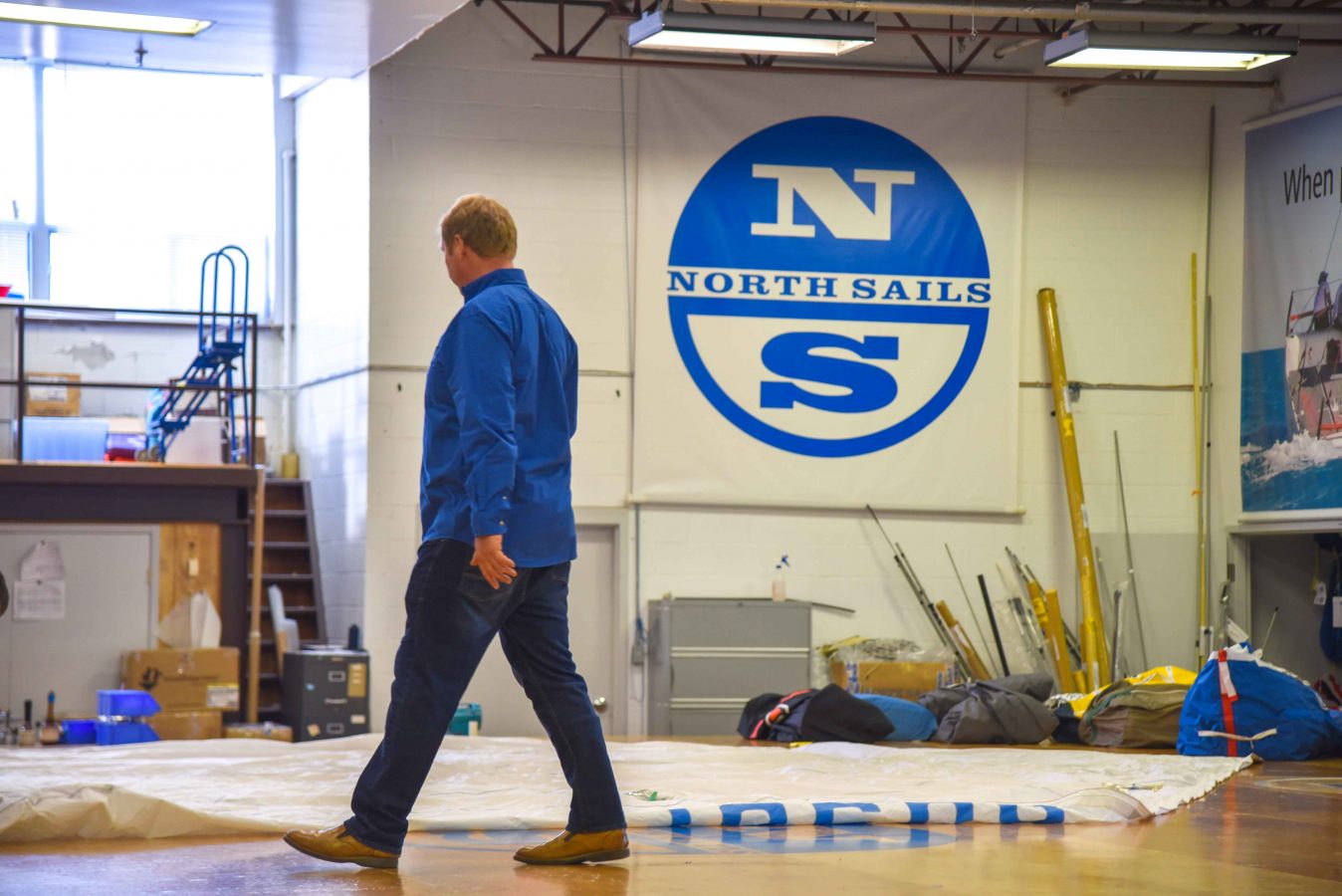
Racers gathered at our Toronto loft this past weekend to prepare for the upcoming season by getting their sails measured & certified. Our sales experts, Hugh Beaton and Mike Wolfs, and service team, Joel Caro, were on hand answering questions & providing service advice for sails brought in.
Our team of experts walked sailors through the measurement process, what would be involved in servicing them including a brief overview of our 10 Point Inspection and recommendations for improving sail handling. LOOR Chair Joe Doris stopped by with his Genoa for his Hanse 40 to get ready for the Lake Ontario 300 and the Susan Hood Trophy Race this year. Last year's Lake Ontario 300 Scotch Bonnet line honour winner & Yachtsman's Cup winner Mike Brown also stopped by with his A3 and S2 to prepare for the season.
It was a great event, in conjunction with Lake Ontario Offshore Racing, which helped racers cross off another item on their to-do list for the season. Our Toronto team thanks racers for coming out!
Missed the event? Not to worry. Bring your sails in anytime and our service team can help get your sails measured & certified, both for PHRF and IRC ratings.
To learn more about LOOR's yacht racing/handicap requirements for racing, please see here for more detail.
Learn more about North Sails Certified Service and how it can help your sailing experience.
READ MORE
READ MORE

ROAD TO THE J/22 WORLDS: KEEPING IT SIMPLE
KEEPING IT SIMPLE
Four basic rules to simplify your race days
Hop into my DeLorean, buckle up, and let’s go “Back to the Future”!
It’s September 2018. Imagine yourself at the dock at the start of day 2 of the 2018 Worlds in Annapolis. It’s currently blowing 18 knots with even bigger puffs because a front has just rolled through. There’s a 50% chance of this wind speed persisting all day and a 50% chance of the breeze dying to 8 knots in a few hours. What’s going through your mind? What should you set the rig to? Is the bay full of waves and steep chop? Should you think about changing your forestay? Where is the sweet spot for your jib halyard? Are the jib cars too far forward, too far aft, or just right? What about the top main batten? Should you stick with the standard or use the heavy-air batten? What is the competition going to do? Who do you have to watch out for? When should you leave the dock? Do you have enough food and water onboard? All these questions and more are swirling around in your head. How can you manage to answer them all correctly?
Hopefully, many of these questions will be answered in your preparation leading up to the “Big Event” because, if you try to focus on all these questions simultaneously, it’s easy to get muddled and over-complicate things. That’s why, as the season gets rolling, now is a good time to put in place a plan for your team to “keep it simple” as an important foundation to successful sailboat racing. To simplify your race days, try following these four basic rules.
First, have a plan and stick to it.
You’ve raced before, so set a routine that works and stick with it. For instance, you can keep provisioning simple by bringing the same food every day. You know what’s been successful in the past, so why overcomplicate things? As for how much water to bring, it’s better to have too much than too little. You can always dump some over the side if it’s not getting used. Knowing when you need to get to the boat and when to leave the dock should also be part of your premade plan. Again, keep it simple. Start with when you want to get to the racecourse (not too late but also not so early that you wear yourself out) and work backwards from there. Your daily schedule should then fall into place and won’t be an added concern.
Second, don’t leave things to the last minute.
When you come in from racing, it’s rare that something doesn’t need to be fixed or tweaked. How tempting is it to say, “I’m tired. I’ll just do that in the morning. What I need right now is a beer!” But how many times do projects on boats take longer than expected? (Hint: Every time!) That’s why you shouldn’t wait until later to get a job done. Just bite the bullet and do it when you get back to the dock. Avoiding stressful, last-minute work is part of keeping things simple. Good boat preparation isn’t last-minute.
Practice isn’t last-minute either, even though we’ve all heard people say, “I’d like to get out to the racecourse early to practice.” During a major regatta is not the time to try to improve your skills. That’s what practice before the event is for. The mornings of a major regatta are for getting out to the course and perfecting your setup for the day. So keep it simple and eliminate practice from your race-day plan.
Third, don’t sweat the details you can’t change.
As you head out to the racecourse, the question of whether your tuning is right always weighs on your mind, but don’t dwell on it now. Getting these details right is what the time before the first race and between subsequent races is for. When you get to the course, find a boat to tune upwind with, make some changes to go faster, and then get ready to race. Once the race has started, don’t obsess about the rig. It’s set; you can’t change it; so don’t think about it. Too many times I hear people say that they weren’t fast because their rig was too tight when the breeze dropped a knot or two during a race. But remember that everyone else is probably dealing with a tight rig too, so quit worrying about the rig and just make the boat go as fast as you can. If you’ve practiced and your team is ready, the tuning will be good enough to allow you to win the race. The point is not to focus on something you can’t change. Keep it simple and focus only on important decisions you’re able to make.
Fourth, make sure you’re going fast.
Speed is king in keeping things simple. Both upwind and downwind, speed makes everything easier because it allows you to concentrate on the race and your tactics. Whatever your problems may be on the racecourse, speed will help you overcome them. For instance, it you’re having trouble pointing, it’s probably because you’re not going fast enough to make the keel work, so you’re sliding sideways more than the boat next to you. The solution? Keep it simple. Put the bow down, go faster, then trim the main harder and let the boat do the work. You can also minimize risk by being conservative when you’re going fast, enabling you to tack in easy lanes. Keeping it simple with conservative tactics means that you’re apt to round the top mark with the leaders and move forward from there.
So back to all those questions that were swirling around in your head before the second day of the Worlds. You already have answers to them, so don’t overcomplicate things. Filling your head with questions and raising self-doubts is never helpful. Instead, keep it simple and don’t overthink. Have a plan and stick with it, never leave things to the last minute, and avoid getting stressed over details that you can’t change. Above all, make sure to go fast so you can focus on the racing and your tactics. As some of you may have already heard me say: Sailboat racing is like NASCAR – just go fast and turn left!
Mike Marshall crossing the finish line to win the 2016 J/22 World Championship
READ MORE
READ MORE
BUCKET BRAGGING RIGHTS
BUCKET BRAGGING RIGHTS
North Sails Superyacht Clients Sweep Podium at 2018 St Barths Bucket
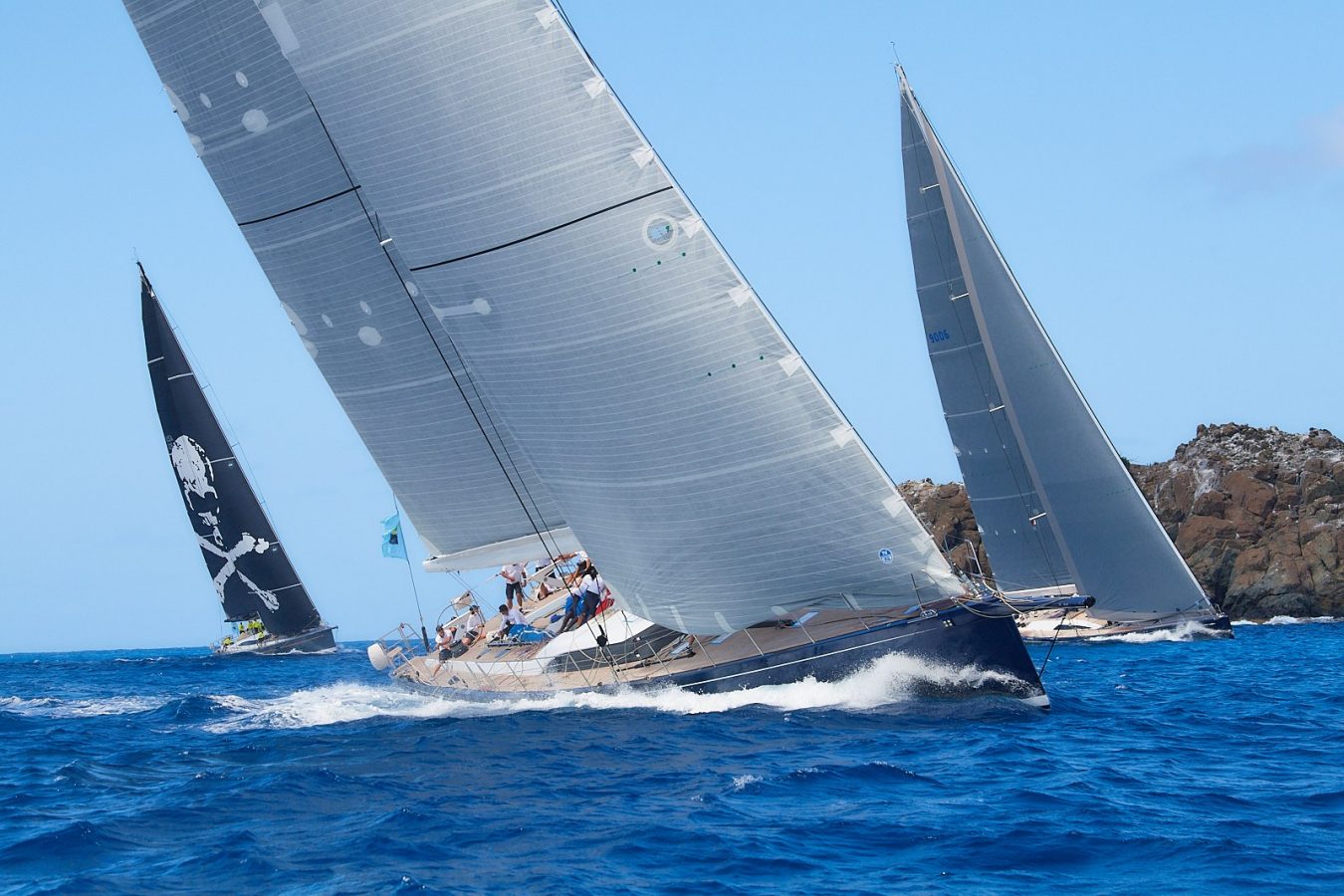
Competitive superyacht sailing and onshore camradaries are hallmarks of the St Barths Bucket © Michael Kurtz
Superyachts were on parade this past weekend for the St Barths Bucket Regatta. Founded in 1986, “The Bucket” is an annual three-day invitational regatta that plays host to the world’s most breathtaking superyachts. This year is especially significant as many worried about the island after the 2017 hurricanes, but St Barths has bounced back, and island hospitality was running at full force.
“A huge amount of credit to the island of St Barths, the event organizers, and the owners who had faith the island would recover in time,” said Ken Read, President of North Sails. The Bucket is always an amazing, well-run event and everyone who sails these superyacht machines looks forward to a beautiful week in paradise. Superyacht racing is alive and well because of events like the Bucket.”
North Sails inventories powered all first place finishers and overall winner Nilaya in the Pursuit Classes, as well as Svea, first place overall on the J Class. It was a busy week of North Sails who had close to thirty sales and service reps on the island. Global Service Manager Ben Fletcher once again had the North pop-up loft working to ensure all boats were race ready should they need repairs. North’s sales and service presence is a testament to their global superyacht structure, which is enhanced with our expanded presence in Palma.
“It was a great week for North Sails and our clients,” remarked Tom Whidden, CEO of North Technology Group. “Bucket racing is competitive, yet there is a tremendous amount of friendship and camaraderie once the yachts hit the dock. Having been involved in North’s decision to leap into 3Di, the Bucket is proof that this technology creates the highest performance and most durable Superyacht sails. You used only to see 3Di on race yachts, but we’re now seeing many of the cruising oriented yachts sailing with 3Di inventories. The product holds its shape and will not delaminate making it possible to carry a single inventory for both racing and cruising, a quality owners and crews can appreciate. I sail on SPIIP whose 3Di mainsail has outlasted our expectations by years and still has amazingly good shape.”
Three J Class yachts participated in the 2018 Bucket. Svea collected six points to take first place with Velsheda and Topaz with 12 and 13 points respectively. © Michael Kurtz
Crew pulls in the spinnaker onto the deck of SIIP © Claire Matches
READ MORE
READ MORE
DESIGNER SPOTLIGHT: MAX TRINGALE
DESIGNER SPOTLIGHT : MAX TRINGALE
Developing Tools To Help Visualize Performance
There is a lot happening behind the scenes in a sailmaker’s world – things you wouldn’t know about unless you asked. North Sails Designer Max Tringale, based out of Portsmouth, Rhode Island USA, is teaming up with North U. on an exciting new project that will help to better educate sailors on sail trim. Max has a very defined background in boat building, marine systems engineering, and yacht design. Along with the North Sails design team, Max is building an easy-to-use application called Sail Trim Simulator. The tool will help clients and sales experts make sense of sail trim, fundamentals of sail shape, and understand how these variables impact performance.
Max explained;
“Our goal with the Sail Trim Simulator and with this new technology is to provide more enjoyment out of sailboat racing for our customers through a better understanding of what their boat is doing and how their sails are working.”
The North U. Sail Trim Simulator is being developed to help clients visualize how sails and rig interact together and how that relationship is manipulated by the different sail controls to achieve desired sail shapes. “We currently have two sail models, the TP52 and J/35, loaded into the simulator,” explained Tringale.
Bill Gladstone, director of North U. commented;
“There are specific boat designs for each model, and the user can select which performance factors they want to turn on or off. The Sail Trim Simulator has the ability to alter everything from wind speed to sea-state, which can all be altered to create a simulation of what you’d expect when you are out on the water. The user will be able to see the performance difference so they will understand how they should set the sails up for maximum speed in given wind conditions.”
In both screens, the J/35 is sailing at a little over 12 knots. In the upper right-hand corner, you have adjustments for wind speed and sea-state.
The Sail Trim Simulator is particularly suited for one design sailing, where it can be used as part of North Sails tuning guide to further explain rig set up and tuning. When supplied with various rig settings and tensions, the tool provides a visual aid to show why North recommends particular settings. The app provides targets for rig adjustments and trim settings before even getting on the water.
User optionality for viewing angles to see the slot of the genoa and mainsail and what the leech looks like from the top down view, showing flatness of the sail when the trim is applied.
“We’re looking at seven different control factors; mainsheet, backstay, traveler, cunningham, jib sheet, jib lead, and jib luff tension,” explained Tringale. “For each one of those controls, we are developing optimum sail shapes. We identify the optimum for each control point, understand how it is correlated with the other points, and then define optimum sail shapes for each wind speed. Other controls like rig tension and mast rake are left standard at this time to simplify the tool.”
When the user opens the application they will notice that each control point has a working range. For example, if you want to pull on more backstay tension, you can adjust in millimeter increments and watch as the output numbers change. The app has a function called the Magic Wand, allowing the user to set a desired TWS and having the app find the optimum upwind boat trim for that wind speed. Also shown is the VMG and TWA the boat is sailing at, showing optimum sail trim.
Image shows boat trimmed to 16 kts TWS. By dropping the traveler and adding more backstay, the main is flattened and the genoa can be sheeted in and the lead moved aft to twist the head. Image shows boat trimmed to 6 kts TWS. Using the magic wand, the boat sails naturally at 45.6 deg TWA with no backstay and the traveler set below centerline. Notice how the jib luff tension is softened.
Users can gain an understanding of how certain sail controls are used to de-power, and power up the boat. By adjusting controls, the shift in draft location manipulates twist, which affects boat speed, point, and VMG. All the controls are connected so the user can work towards their target boat speed for selected TWS.The rudder angle indicates if you have too little helm, which would tell the user sail trim adjustments are needed.
North U. is currently beta-testing the application during their Trim Seminars to make sure that the data that we’re developing is real, useful, and user friendly.
North Sails enjoys having a lot of talented designers contributing to their product development and are always looking to improve. “The Sail Trim Simulator is one tool that can help our designers (as well as our customers) understand the cause and effect of sail and rig trim,” remarked Tringale. “Not only the actual change in sail shape but also overall boat performance, which is ultimately what we are looking for.”
“It is incredible how much data and work has gone into the Sail Trim Simulator because it really shows the power of the North Design Suite software. We’re the only ones that are developing something like this that we know of. This project is special because we’ve developed real flying sail shape and rig data, developed using Membrane™ program coupled with Flow™, our program for the fluid surface interactions. From there, those optimized flying shapes are run through the North VPP, which is doing integrations between the various flying shapes. It really is a unique thing that we have; the ability to produce a tool like this.”
The creation of the Sail Trim Simulator is just the beginning of a new generation of designers at North Sails who strive to create the best products for our clients.
North U Seminars provide classroom training with a roster of top instructors and the latest in interactive multimedia training. Check our schedule of upcoming full and evening seminars, or get info on how to bring a North U seminar for your club, fleet, or association.
READ MORE
READ MORE

BESØG NORTH SAILS
BESØG NORTH SAILS
Forskellige bådtyper og forskellige interesser - North Sails dækker det hele
Har du lyst til og se et moderne sejlloft og de nyeste sejltyper og materialer?
Så inviter dig selv på en kop kaffe eller arranger, at din klub, klasse etc. kommer på besøg hos North Sails i Herlev.
”Vi får dagligt besøg af vores kunder og andre interesserede, som vil se vores topmoderne sejlloft. Ikke mindst er interessen for at se vores nye kompositsejl 3Di Nordac i polyester enorm.
Vi har 1000 kvadratmeter moderne faciliteter. Fx et sejlmagerbord på 400 kvadratmeter, hvor vi kan vise alle typer sejl og materialer,” fortæller loftmanager Jesper Feldt.
12-meter og Bavaria på besøg
Der har netop været besøg fra alle danske 12-meter både, og før det medlemmer af Dansk Bavaria Klub.
12-meter folkene oplevede en aften med fokus på den teknologiske udvikling hos North Sails med et oplæg fra designer Heine Sørensen.
Efterfølgende fortalte Mikkel Røssberg, der sejler professionelt på 18. år om kommunikation på båden under kapsejlads.
Det faldt i god jord hos de besøgende, der har et stort crew, hvor det kræver disciplin at få vigtig information tilbage til fx rorsmanden.
Designer Henrik Søderlund afsluttede med at fortæller om, hvordan man bedst tager foto og bruger anden teknologi til analysen af sejlegenskaberne, når båden og sejlene er i funktion.
Aftenen blev afsluttet på det store sejlmagerbord, hvor flere typer sejl kunne inspiceres.
Rullemaster og andre detaljer
På samme måde sluttede en aften for Dansk Bavaria Klub, der inden da have fået et oplæg omkring udviklingen af sejl og muligheder til netop deres typer af både. North Sails er eksperter i og lave sejl til rullemaster, som flere af Bavaria bådene er udstyret med.
”Vi har altid kaffe på kanden og er der særlige interesser, så giv os et kald i forvejen, så finder vi netop de sejl og materialetyper frem. Er I flere med samme interesser, så sammensætter vi gerne et program netop til jer,”, slutter Jesper Feldt.
North Sails kan træffes på 39 20 40 90 og besøges på adressen Lyskær 10 i Herlev
Der er altid flere North Sails-eksperter tilstede, som kan give råd og vejledning til de besøgende.
READ MORE
READ MORE
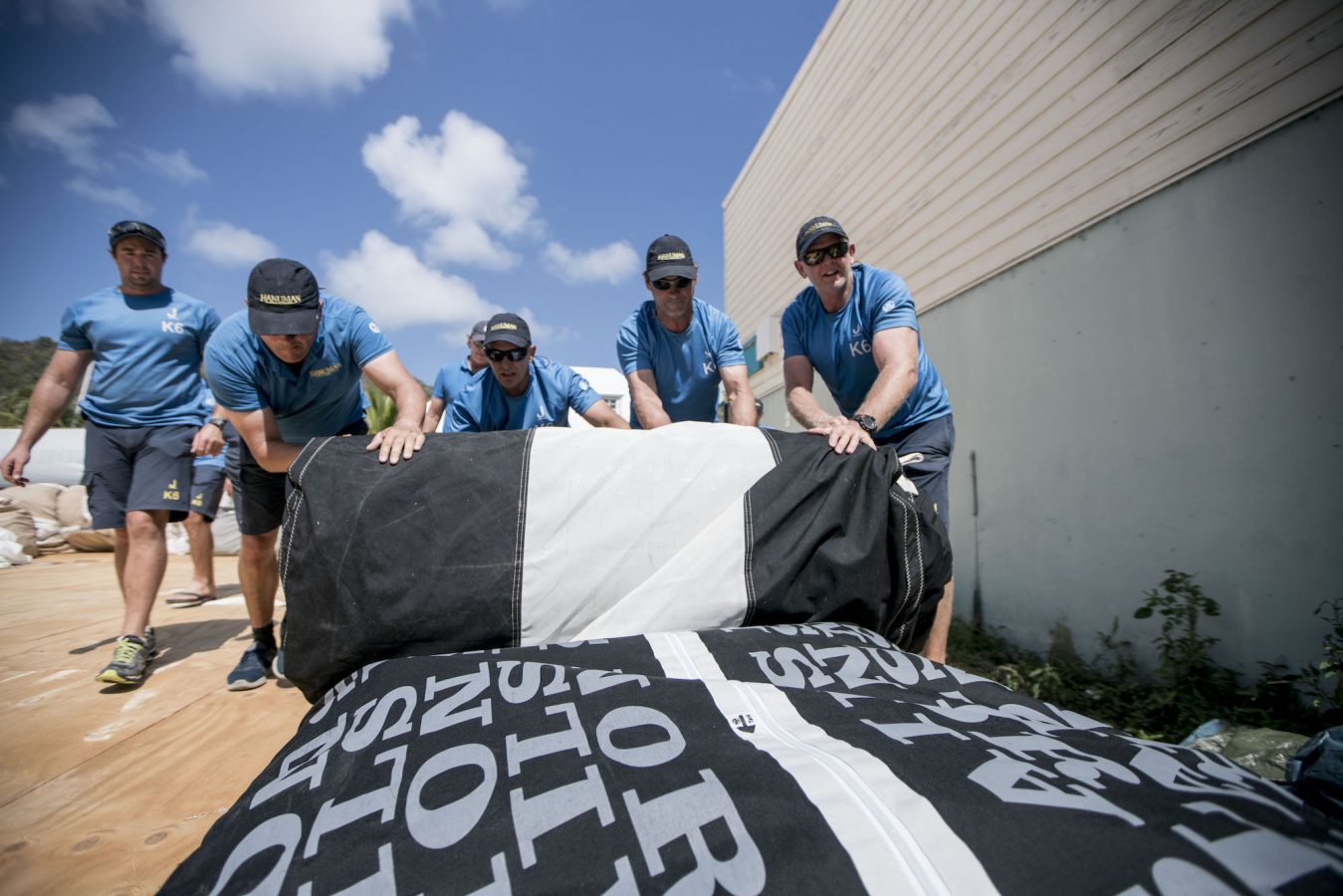
NORTH SAILS PALMA: THE LEADING SUPERYACHT SERVICE CENTER IN THE WORLD
NORTH SAILS PALMA: THE LEADING SUPERYACHT SERVICE CENTER IN THE WORLD
The completed merger of North Sails and the former Doyle Palma team creates the world’s most extensive sales and service facilities in Mallorca, Spain
Following the January announcement that the experts from the former Doyle Palma team would join forces with the local North Sails loft in Mallorca, Spain, the newly combined facilities and the team are taking shape in the heart of the global Superyacht industry. The enhanced personnel, increased capacity, and expanded resources look set to offer clients, for both Superyachts and local boat owners alike, a market-leading customer service unrivaled anywhere in the world. With a combined loft space of 6,518m2, 42 staff, three vehicles for sails transportation, two with 1.5-ton cranes, as well as storage for 2000 sails, North Sails in Palma is unquestionably the best service site in the world for quality, capacity and turn around.
Since announcing the merger, both senior management teams from North Sails and the former Doyle Palma team, have been working collaboratively to structure the combined operations and organizations to optimize the customer experience. With unparalleled experts, loft space, knowledge, technology and facilities, the newly restructured Palma lofts build on years of experience to ensure the best service and results for clients. The two lofts feature modern high-powered specialist sewing machines, two sail washing facilities; and the dockside office facilities located in STP will serve as a convenient customer meeting point.
The former team from Doyle Palma headed by Quinny Houry, Fiona Bruce, and Russell Thom have always placed a high priority on customer service. “By joining forces with North Sails we can together give all our clients the customer service they expect while improving our offer through North Sails products and the worldwide sales and service network,” says Fiona Bruce, Palma Site Manager overseeing the newly combined loft management for all three locations.
Quinny Houry, Superyacht Sales:
“Our combined team of sail experts have enjoyed sharing insights and knowledge with our new North colleagues, and we feel confident our customers will only see improvements going forward. We are also very excited about the opportunity to offer all our clients the cutting-edge 3Di technology and the world’s largest network of lofts across five continents.”
The combined North Sails Palma loft will now have three operational centers:
Dockside Office in STP; customer meeting point
Edificio Global
Muelle Viejo de Palma
Camí de l’Escullera
Palma de Mallorca, Balearic Islands 07012
Palma Loft*; sail design, sales, service assessment
Calle Ca Na Melis 11a
Poligono Son Morro
Palma de Mallorca, Balearic Islands 07007
READ MORE
READ MORE

J/24 MIDWINTERS: BOGUS SAILS TO WIN
NORTH POWER SWEEPS J/24 MIDWINTERS
North’s Will Welles Shares How They Sailed To Win
© Chris Howell
35 teams met at Shake-a-leg Miami for the 2018 Midwinter Championship where sunny skies and beautiful breeze greeted sailors with ideal racing conditions for the three-day event. Each day brought building breeze from the NNW that slowly clocked NNE by the end of each day, keeping sailors on their toes with oscillating shifts that were as high as 30 degrees. As the breeze increased, teams concentrated on maintaining boat speed in the developing chop, which made for some great opportunities to gain both upwind and downwind if you could catch the right shift and make smart decisions.
At the end of day one, Will Welles’ team Bogus was hot as ever, ending the day with snake eyes giving them 4 points total. This would be a precursor to the remaining race days, as Will’s team never scored worse than a 5th place, allowing them to win the race to the dock as the last race would be their victory lap. Consistency paid off the remainder of the weekend, driving Welles to win the overall championship by 18 points, with one discard. In second place was Tony Parker’s North-powered Bangor Packet. Mark Laura’s Baba Louie was unstoppable, stepping up the level of competition in the Corinthian division. Congratulations to our clients on a successful weekend. A great start to the 2018 spring sailing season.
Full Results
The truth About Bogus, 2018 J/24 Midwinter Champs
We caught up with skipper Will Welles who was driven to success in Miami for the J/24 Midwinter Championship with his team Bogus. Hear the truth, first-hand from Will, on how his team sailed to win the regatta.
What were some of the things you focused on during some of the practice days leading up to the first day of racing?
We had a lot to do in a little time because we borrowed a boat that was already down there, we picked a boat that we knew had good pedigree, but we knew we’d have to spend a day or so changing a couple things to make it the way we wanted it (Thank you Nick Turney!). Once the boat was set and the full team had arrived we were able to head out sailing spending a few hours on Wednesday and then a few more hours on Thursday.
“Our main focus was to make sure the boat was up to speed, that it had the straight line speed that we are use to with our own boat. We just set the boat up to our dock tune and then went out and lined up with a few boats and pretty quickly found our speed, straight from the tuning guide!”
When you get out on the race course, what are some things that your team focuses on? Of course you probably sail upwind a little bit, make sure your rig feels right, your boat speed is good, get the trimmer warmed up- but what else are you doing to get ready for the first race?
“The big thing is, we don’t want to rush, so we get out there at least an hour early and spend at least an hour on the race course before the first warning signal.”
In Miami we actually got out there about an hour and a half early each day, and without rushing, your heart rate isn’t too high and you can just focus on getting your homework done. The homework is sailing the course and seeing what the wind is doing. Logging in some compass numbers upwind and checking the rig setting. We like to meet at least another boat out there to sail upwind together to make sure we’re going alright and that our rig set is where we want it to be. We get some numbers and then go back to the line and check in. Note: As far as rig settings go, we were always making sure we weren’t ever caught too tight on the rig, we’re always gearing towards maximum power. There were some big holes (lighter air patches) on the course, and they lasted a long time, so max power was key.
Sometimes we’ll do a split tack where both boats start at the committee boat, one on starboard and one on port and we sail for five or maybe six minutes then tack and see where where we are when we come back together. Sometimes this is helpful, but it’s not always helpful. You just have to take it as more data.
“You can’t always think that if a boat that sailed the right side crushed the left side, that’s how it’s going to be by the time you get the first race started.”
So we do the split tack and then we go back to the line and take a little water break, maybe eat a granola bar and then start doing our starting line homework. We ping the line at both ends, then log some head to wind compass readings which helps us get an idea of what the shifts are doing. Then the big focus is getting off the line on the favored side of the starting line and getting to the side you want to sail the first beat. We usually discuss all this stuff as a group, then try to execute our plan.
So after the start, you guys are heading up the first beat. Is there a lot of communication between you and the trimmer? And if so, what kind of information is discussed?
Rich and I have sailed together for a bunch of years, so the talking is minimal, but that’s just because we know what to expect with one another and we know what we’re looking for. There’s not a lot of conversation. Depending on sea state, the bigger the waves he might be playing a little bit more sheet than he would if it was flatter water. In conditions like Miami, it wasn’t that wavy, there was some small chop. We’d get out of the tack, he’d get the genoa inside the lifeline then to the rail, I’d put the winch handle in and when the boat was up to speed I’d grind it the rest of the way in.
We pretty much leave it in unless I was flogging the main more than I wanted to in a puff, he listens to that and I might tell him for some waves, burp the genoa (sheet) a little bit. Or if the breeze drops down a little bit, I might tell him to burp the sheet or if I adjust the backstay I’d let him know that too. So there’s little chatter. We’re always talking about the sheet. I do the final winch handle fine trimming, in and he’s doing the easing out of the sheet up wind.
As you approach the downwind leg, rounding the top mark, you crack off and start the pre-feed. Who makes the calls from there?
We have a discussion, soon as we round the top mark, I’m asking the tactician (PJ Schaffer in this case) are we extending or looking to jibe? We’ll have that discussion and I know before we get to the offset what the plan is. It’s my job to get the boat setup so that we can either jibe or continue and extend. I’m watching the boats around close behind us, or close in front to make sure we are clear to make a move if we decide that is the plan. The breezier it is, the less weight you want off the rail from the weather mark to the offset. So we try to keep weight on the rail and trim the sails to the angle we’re sailing to the offset so we can get maximum speed. Making sure the main is trimmed just right, the vang, and the genoa, we go for the pole and pre-feed the guy and be ready to set the kite at the offset when I call for it.
Then once the spinnaker is set we’re always talking about angle and pressure. I’ll ask Rich if he likes the angle out of a jibe if we do execute. I’ve got a good feel from the rudder and the wind on my neck, and he’s got probably the best feel with the pressure in the kite from the sheet. I’m always looking to hear what he’s feeling in the sheet and that kind of helps me plan whether I want to start putting the bow up or start pushing the bow down.
“We usually have someone on the boat giving us a heads up on what’s coming big picture pressure wise, whether it’s a long lull or a big puff or just medium pressure. That’s also good information for me to decide where I need to put the boat. It’s just good communication so everyone is on the same page.”
The key is that we don’t talk constantly, we talk as needed. I think sometimes people can talk too much, so when you’re communicating less words are usually better than trying to sprinkle lots of extra words in there. Just getting right to the meat of what we’re trying to talk about whether it’s a puff or a lull or good pressure works the best.
What would you say are three things that contributed to your team’s success at the Regatta?
Everyone on the team brought a lot of skills to the team, and so it was almost easy. We all just fit together really well and everyone knew their jobs and did their jobs and it just worked. Having a good boat and a good team is so crucial and it’s a key to success. Once you have that stuff, it’s getting good start, picking some shifts correctly, .and having fast sails of course.
Give us three tips that would help a J/24 class sailer get faster on the race course?
The boats have been around for a long time, and the tuning information that we have is pretty solid. You can get a boat, set the rig up right to the tuning guide and have speed straight away, which is really good. That takes one huge thing off the plate. Boat speed is a crucial part, thankfully the tuning guide and our sail designs offer boat speed to all the teams that use our product. Boat preparation is also key. Making sure you have a good keel, rudder, bottom, mast and rigging, and make sure they won’t fail you on the race course or hold you back. That’s all relatively easy stuff to get sorted. Once you get those things figured out, get sails and needed boat speed then the real difference becomes the crew.
“Sailing all you can together in all the conditions and approaching it as a team and all growing as a team is so important.”
Knowing ahead of time you’re going to be doing an event or even back to back events, is there any mental preparation involved to get your mind right?
The key is the people you surround yourself with. It’s a lot of work to get a sailboat to a starting line and if all that work is on one person’s shoulders then that can create some stress, so having a good team with good teammates that all know their strengths and weaknesses and bring what they can to the table to help scratch things off the to do list is kind of what it’s all about.
“It’s who you surround yourself with and the teammates you go to battle with.”
If you don’t have good teammates, then you get on your heels with the boat work and boat preparation and that creates stress and makes it hard to succeed. Making sure you leave enough time to do everything you need to, be prepared, eating good food, getting good rest, and having good teammates that are helping with the workload is very important in mental preparation not just for the skipper, but for the entire crew.
Interested in regatta winning J/24 sails? Contact our experts!
READ MORE
READ MORE
SERVICE TIP: DEALING WITH CORRODED ZIPPERS
SERVICE TIP: DEALING WITH CORRODED ZIPPERS
One of the more frequent service jobs we have here at North Sails revolves around sail bag zippers. They are easily over looked yet are a fundamental component of your sail.
To keep your zips functioning try these tips from our service manager Nick Beaudion:
Rinse the zipper cars with fresh water after use. This will greatly extended the life of your metal slider. Using the last bits of the crews water bottle at the end of the day is a simple solution.
Silicone spray your zipper cars. Any number of silicone sprays will accomplish the same goal of protecting the metal slider from salt water.
Keep your sails dry. After the fresh water rinse and silicone spray, storing your sails in a dry environment will greatly extend the life of the slide over longer periods of time.
If you do have a corroded zip there are a number of things you can do to rectify
Pour fresh, boiling water over the zip to help clear the sail buildup
Gently pull the zip apart and tap on the slider with a screwdriver. This will dislodge the sail buildup and help move the slider
If worse come to worse drop your sail bags off to your local North Sails service loft to have your old sliders replaced before your next big regatta
READ MORE
READ MORE

A NOD TO FEMALE SAILORS ON INTERNATIONAL WOMEN'S DAY
A NOD TO FEMALE SAILORS ON INTERNATIONAL WOMEN'S DAY
Celebrating 8 years in the sailing world through my lens
Sailing, as a kid, was something we did on weekends or at camp; never did it come into mind that it could be a career avenue. Growing up, I never would have thought I’d be working where I am today or in the industry I am. But now? I couldn’t imagine working anywhere else. The people you met, the stories you hear and the adventures you experience are some of the most unique that it will always keep you coming back for more. There’s never a dull day.
My start in the sailing industry began in high school when I took a summer job at a local chandlery with what I’d soon learn was minimal sailing knowledge. It was quite literally a whole new world I had just embarked on. Sure, I grew up sailing at camp and on the family boat here and there, but it was nothing compared to the world I was thrust into. Overwhelming to say the least but I was hooked. I returned for another summer the following year – and 6 more after that second one. Gradually learning more along the way while also getting out on the water more.
As time went on I noticed a great imbalance in the number of women in the industry though. There were a small handful of us who were familiar faces in the local sailing scene in Toronto, be it leisurely or professionally, creating a sense of community. The more involved I became the more I was introduced to this network of female sailors who welcomed you with opened arms, such as Kristina Gilbert. It’s been great to become a part of this community and help grow the sport.
After 10 years of volunteering on Race Committees and 4 years of participating with Club Level Racing, I can truly say that sailing is in my DNA. I have done everything from recording sail numbers to being RO on Race Committee; my passion though is mark setting. When it comes to racing, as with most, I started out as rail beef gradually transitioning into different positions throughout the boat. Currently, I am testing my skills as pit.
There is no better place to be than on the water and with the craziness of our daily lives, sailing is the one thing that makes my soul smile within two minutes of leaving the dock. At the end of the day it is exactly what the doctor ordered and spending time with people that have the same sort of passion for the sport is the cherry on top!
-Kristina Gilbert, Port Credit Yacht Club
I joined North Sails almost a year ago and have not looked back since. It has been a fantastic environment to learn and grow; one that encourages women to become more involved in the sport and overall community.
The past eight years as fantastic as they’ve been have not come without their own trials and tribulations. The sailing world is for the most part a male dominated industry with even greater inequality for women when it comes to the professional yachting industry. It’s a familiar scene walking the docks, crews upon crews getting ready to head out during weeknight racing or a weekend of racing. The ratio of men to women is probably 80 to 20. A ratio that needs to become more balanced.
We’ve seen teams like Team SCA from the 2014/2015 Volvo Ocean Race to Team Magenta 32 who competed in the World Match Racing Tour have helped change the stage for women in professionally yachting. Further changes such as the crew options for the 2017/2018 edition of the Volvo Ocean Race have also opened up new opportunities for female sailors to compete on a level playing field in professional yachting. While we have made great strides, there is still room for improvement. I have no fear that the tides are turning, and we will see the realm change for the better in the years coming.
Happy International Women’s Day to all!
Check out more leading ladies changing the tides in sailing.
READ MORE
READ MORE

GIORGIO TORTAROLO SCELTO COME SPECIALIST NORTH SAILS
SAIL AND VELERIES, GIORGIO TORTAROLO CHOSEN AS SPECIALIST NORTH SAILS
Carasco - A few weeks after the entry of Matteo Sangiorgi in the North Sails network, the Carasco sailmaker announces the entry of a new important reinforcement in the technical-commercial staff, that of Giorgio Tortarolo.
Winner of three world titles, two continental and five national, Tortarolo, already engaged on board the TP52 Orlanda and Anonymous, boasts affirmations in all the circuits connected to the Melges classes (20 and 32), including the newborn Melges 40 Grand Prix. In addition, the activity carried out in the maxi area is also of absolute level, thanks to its involvement in Stig's projects, protagonist on the international regatta fields with a Baltic 65 first and a Mini Maxi 72 then. Thanks to the highlights of a career dedicated to sailing and regattas, Giorgio Tortarolo obtained the titles of Azzurro d'Italia and was awarded the CONI of the Star for Sports Merit.
Backed by an experience of three hundred and sixty degrees deriving from having managed some of the shipyards, the last of which Savona ShipYard, Tortarolo, which in recent years has concentrated its competitive activity mainly on monotype, is ready to make available to North Sails and his clients as he matured in years of activity linked to sailing: "Being part of the North Sails network is undoubtedly a prestigious step in the career of every sailor. We are talking about a reference brand for each professional, one of the first to become familiar when deciding to devote himself to sailing and regattas. Over the years I have been able to appreciate the constant search for performance by North Sails: a goal pursued through major investments in research and development, that have equipped the technicians with the most modern and technologically advanced instruments and the boats of fast and reliable profiles. Moreover, looking beyond monotype, North Sails is a reference veil in the world of offshore and offshore regattas, areas that fascinate me because they leave great space for optimization and custom solutions ".
Available along the docks of the main Italian and international sailing events, Giorgio Tortarolo and his collaborators are available to customers at the North Service Point in the Marina di Varazze, where they offer services such as consultancy, sale and washing of sails and clothing supplies for crews.
Welcome to Tortarolo in the North Sails working group was the management of the Italian loft of Carasco: "Giorgio is one of the most active Italian sailors in the world of monotype: present at all the main events of the season, for years collaborating with the teams flagship and this makes it one of the most profound connoisseurs of the one design classes of reference. It is one of those elements able to make the difference, whose point of view helps to achieve the objectives to be achieved more effectively ".
READ MORE
READ MORE

VIPER 640 WORLDS: INTERVIEW NICK JERWOOD
INTERVIEW WITH 2018 VIPER 640 WORLD CHAMPION NICK JERWOOD
Top Ten Teams Powered by North Sails
North Sails is proud of all clients for their dominant performance at the Schweppes Viper 640 World Championship in Perth. All top ten boats at the Worlds were powered by North. Our own Viper expert, Zeke Horowitz, had the pleasure of catching up with new World champion Nick Jerwood to pick his brain on the key factors that led to his team’s success. Please enjoy the interview with the Champ below!
Tell us a little bit about your team and what it’s like to sail as a family at such a high level. How long have you guys been sailing together and how much Viper experience do you have as a team?
Brian is the father of my daughter’s crew in the 470 Class and he asked me back in September 17 whether I would be able to sail the Viper with him, potentially on up to and including the Worlds. I jumped at the chance never having sailed with Brian before but knowing full well what a really top bloke he is, it was an easy decision! The choice of middleman was the next piece of the puzzle that we had to solve, the answer came to us fairly quickly after Matt (my son and helm of the World Match Racing Tour team “Redline Racing”) confirmed he would be able to sail the Worlds with us. To sail with Matt was quite an honor, I haven’t had the pleasure of sailing with him in a regatta for many years, so to see first hand how much he has matured as a sailor and to benefit from the professional approach that he brought to the team was a real learning experience for both Brian and I. Brian had sailed Vipers to a limited degree prior to September 17 but my exposure to the class had been ZERO. Matt had very little prior experience of the Viper but thankfully he had good experience of asymmetric classes, 49er, M32, GC32 etc. which proved invaluable. My sailing experience has almost entirely been on symmetrical spinnaker classes so early on in our campaign I was quite lost on the downwind legs, initially always sailing way too low and then too high, downwind sailing was definitely the aspect of Viper sailing that took the longest to get to grips with.
What was your practice/training schedule like as you prepared for the Worlds?
Matt couldn’t sail regularly with Brian and I due to his other sailing and coaching commitments for most of the run-up to the event, but this didn’t stop Brian and I sailing at every opportunity we had. During 2017 training opportunities were quite rare for us due to work commitments but my time freed up in early January 18 at which time Brian and I ramped up the effort to get out on the water three to four times a week with various experienced crews who helped us learn a lot about the boat. Matt trained with us whenever he could but this was limited to maybe six or seven- sessions until the week before the event when he returned to Perth from Sailing a GC32 in Melbourne and we were able to get out on the water for some solid practice sessions most of that week. Little did we know the conditions during the worlds were going to be totally different to those we had been practicing in.
How did you approach the tuning to make sure you were going really fast in all conditions? What were the three things on your “tuning checklist” you double checked before starting each race?
We knew we had very little time to experiment with the boat’s setup prior to the event, choosing instead to set the boat up to replicate the North Tuning Guide as closely as we could, hoping that this would be a quick easy way of dialing up boat speed. The hope being that this approach would enable us to spend more of our time concentrating on boat handling and starting rather than setup.
We gained confidence quite early on from the feel of the boat, the response of the rig and look of the sails that the North Sails tuning guide had set us on the right track to be as fast as any boat out there, so we were able to save many hours of tuning up time just by following the straightforward North guide.
One of my sailing tenants is to make sure you have the basics covered, build on a strong footing so to speak. So before each race, we would make sure the basics were in place as far as rig setup was concerned then the three most important considerations for us would be, Cap shroud setting, chocks and luff tension. All three of which tended to be set to the conditions while most other adjustments were more, set and forget.
You ended up winning the Championship by a pretty large margin. How did your strategy and approach to each race change as you could start tasting the Championship near the end of the event?
We were very conscious of the quality of competitors in the fleet, we have a huge respect for their abilities so were at no point confident that the win was ours until it was in the bag. We had a UFD on the first day so could not push the starts at any point, this coupled with the random light gusty conditions that prevailed, and the close proximity of the shore to the top of the course meant that the potential for a deep finishing position was always present and that would put a huge dent in our regatta prospects. The last day was particularly difficult, we were determined to get the job done (win the event) during the first race of the day but after going for what appeared to be a certain pin bias start the wind started playing tricks and we quickly found ourselves in the middle of the fleet bouncing around the 13th position that we needed to achieve the win. We had talked together during the event about how we needed to trust each other’s abilities and that, as long as we did our best and sailed to keep the odds in our favor then things would turn out for the best. We did just that, didn’t panic, just stayed close to our nearest opposition sailing as fast and free as we could in the conditions. It paid off, and to our great relief we won the event with a race to spare. To go on to win the last race was the icing!
What is your favorite thing about racing the Viper?
Without doubt, sailing downwind in 20 knots, or even 25 knots and above on a good day when we get blessed with a good seabreeze. It’s what we live for. A close second is the mateship and friends you get from participating in such a tight fleet, really lovely people following their passion for the sport. Can’t think of a better way to spend leisure time.
What are three tips you would give a first-time Viper sailor to help them have success in their racing?
Keep it simple and make sure you have the basics covered before worrying about the 1%. The standard boats are excellent, while the off-the-shelf sails from North set up beautifully to their guide to give a fast responsive package. Just concentrate on pointing the boat in the right direction and you will have everything you need to make the boat competitive. Don’t put up with anything that doesn’t work properly, the equipment needs to be the best quality and in good working order so that you can enjoy sailing and get the most out of the experience.
What’s next for team Jerwood?
That is quite a funny question for us, but not in the way you may first think. As mentioned earlier, my daughter Nia sails with Brian’s Daughter Monique in the 470 class and they set-up a facebook page called “Nia Jerwood / Monique deVries – AUS 470 Sailing Team“. So, as a result, the AUS Viper sailing team from the same families has been named in jest by the girls as “Jerwood and de Vries Sailing Team B” 🙂 But in all seriousness, we will continue on sailing Vipers, Flying 15s and various other classes just having fun for the foreseeable future. Always with an eye on ramping up again for the next Viper Worlds at some point..! Can’t wait.
North clients finished 1,2,3,4,5,6,7,8*,9,10 in Perth.
Learn more about North’s fast Viper sails.
READ MORE
READ MORE

NEWS – PARTENARIAT 2018 AVEC LE CHAMPIONNAT DU PETIT LAC
LE CHAMPIONNAT DU PETIT-LAC ET NORTH SAILS SUISSE SONT HEUREUX DE VOUS ANNONCER LA POURSUITE DE LEUR COLLABORATION POUR LA SAISON 2018.
L’équipe de North Sails sera présente sur la plupart des régates pour faire de jolis clichés afin de récompenser par des agrandissements photos les podiums de chaque classe en fin de saison lors de la soirée de gala qui se tiendra au Château de Bossey le 30 novembre.
L’action principale de cette collaboration sera de nouveau le coaching personnalisé, réalisé sur certaines épreuves du Championnat (hors Genève-Rolle-Genève, Bol d’Or et la Double). A noter qu’une fois un équipage tiré au sort, il ne pourra pas être sélectionné une deuxième fois (voir le règlement du tirage au sort dans le billet du CPL).
Dans une atmosphère conviviale et avec pour objectif de partager notre passion commune, ce coaching personnalisé comprendra les actions suivantes :
J-5 Lundi matin, tendance météo, check-list performance avec le skipper (carène, voiles à bord, électronique etc.), établissement de la liste d’équipage pour l’entraînement et la régate
J-4 Entrainement du mardi soir avec l’équipage complet (lieu à définir ensemble)
J-1 Briefing météo, réglage du gréement, lecture des instructions de course, derniers conseils pour la préparation du bateau
H-3 Météo finale, stratégie générale, check-list des priorités
H Suivi de la régate, photos et vidéos techniques, prise de notes ou navigation à bord
J+3 La semaine qui suit, débriefing avec l’ensemble de l’équipage autour d’un café à la voilerie (ou d’une bière J), avec analyse des photos/vidéos et établissement de la liste des points « à améliorer ».
Avec nous, les pros, c’est vous ! Nous partagerons nos trucs et astuces pour booster les performances de votre speedo, améliorer vos manœuvres en toute sécurité, affiner vos réglages et tactiques sur des bases simples mais efficaces.
Toute l’équipe North Sails Suisse, composée de Christine, Arnaud, Ben, Jonas, Julien, Michel, Nicolas, Patrick, Philippe, Pierre-Yves et Rata, est à votre service tout au long de l’année pour vous prodiguer de bons conseils en toute simplicité. Pour cela, un seul numéro, le 022 782 32 22 !
Nous tenons à remercier chaleureusement le Comité du Championnat du Petit-Lac pour le renouvellement de sa confiance et pour l’ensemble du travail accompli depuis plus de 40 ans.
Nous vous souhaitons à toutes et à tous une excellente saison et un super Championnat du Petit Lac 2018 !
Votre team North Sails Suisse
READ MORE
READ MORE

VIPER 640 SPEED GUIDE
North Sails expert Zeke Horowitz answers your Viper 640 speed and boathandling questions.
Who sails a Viper 640?
The Viper achieved status as a World Sailing international class, yet its sailors are mostly amateurs—pro sailors are welcome but by rule may not be paid. As a result, this class has a grassroots, sail-with-your friends feel to it. Many sailors in this sporty 21-foot keelboat have college or dinghy background, and in the Northeast part of the U.S., many come from the V-15 dinghy class. Strength helps, but sailors range in age and many women sail, including some husband-and-wife teams. Boats can sail with three or four aboard; the ideal target weight is between 500 and 600 pounds.
The Viper 640 is a fast, sporty boat that rewards a crew that loves hiking out.
What’s involved in crewing?
Most boats have three people aboard, and the skipper trims the mainsheet and vang while steering. On some boats, the middle crew may trim the main or vang at times, but otherwise is mainly hiking, calling wind pressure, and tactics. The Viper is a relatively physical boat, with a shallow and wide cockpit that requires some athleticism to cross. The spinnaker halyard has high loads, and we always like to have the strongest person pulling it up! The chute emerges forward, from a tube, and comes down the same way, with a spinnaker-retrieval line. The middle person also trims the chute on most boats.
Top three Viper speed tips?
Hiking hard counts upwind.
Know the tuning guide—the boat is sensitive to rig adjustments.
Practice! Good tacks, jibes, chutes sets, and douses make a big difference.
What should buyers know when choosing a boat?
Rondar in the UK is the builder and is always building new boats. There are also plenty of used boats for sale, spanning four generations. Built in the ‘90s, the first generation boats had aluminum rigs and lighter keels. Since the carbon rig and keel weight were added in the second generation, the boats have become easier to bring up to current standards. Recent changes have provided big improvements in equipment durability, and a recent shift to a vertical rudder has enhanced the boat’s downwind capabilities in breeze. Adapter kits are available from Rondar. Overall, the class has worked hard to make it possible for older boats to remain competitive. The majority of used boats cost $15,000 to $27,000, and new boats are $38,000.
How does a Viper get around on land?
At 750 pounds and with low windage, a Viper can be towed on a trailer behind a small car. The carbon mast can be stepped and un-stepped by one or two people, and the boat can be rigged or de-rigged in an hour or less. The keel, which has a 220-pound bulb, is secured with a few bolts and is easily lifted via block and tackle in about 30 seconds. Some owners remove the keel completely from the boat when towing, putting it in their vehicle to reduce the chance of damage to the keel cassette.
How many sails are required?
The Viper 640 carries a main and a jib made of woven Dacron or Mylar laminate with polyester scrim, plus an asymmetric spinnaker made of nylon. North Sails offers a racing jib, mainsail, and spinnakers made from DK75, the slipperiest nylon sold, for easier hoisting and dousing in the spinnaker tube. For more general details, visit the Viper 640 class website.
Viper 640 Tuning
What are the keys to rig set-up?
When tuning the Viper 640 rig to race, we pay the most attention to headstay tension, shroud tension, and mast rake. Of these three adjustments, maintaining ideal headstay tension is No. 1 when it comes to maximizing speed. It’s worth noting that without a permanent backstay, mainsheet tension on a Viper is a major factor in creating and easing headstay tension. In light air, sighting up the headstay, you want about 2.5 inches of sag to leeward to power up the jib. As soon as the crew has enough wind to hike out, your goal should be to make the headstay as straight as possible; if you hit a lull and ease the mainsheet, the headstay will sag again and power up the jib in the process. Putting mast blocks in front of the mast at the partners reduces prebend, making the mast stand taller and reducing headstay sag. Typically, top boats have 2.25 to 3.25 inches of mast blocks in front of the mast.
Mast prebend is controlled by adding and subtracting mast blocks. The mast bends easily so it is sensitive to upper shroud tension. The leeward upper provides a good guide to know if your shroud tension is in the ballpark: when you’re fully trimmed in, it should just be starting to go slack. This requires a big range of adjustment – 8 or 9 full turns from light air to heavy. See the North Sails Viper 640 Tuning Guide for more detail.
What else is important?
Other speed controls like the mast butt position can be set in one place and then ignored. While the headstay length can be adjusted, it is generally kept at maximum length. Spreader brackets and tips are also adjustable, but need only be set once. (See North Sails Viper 640 Tuning Guide)
Spreader angles need only be set once, per the North Sails Tuning Guide. The upper shrouds are adjusted frequently, but top sailors adjust the lower shrouds less frequently - using them as a fine tune to keep the mast in column. They maintain just enough tension to be sure there is no leeward sag in the middle of the mast.
Viper 640 Upwind Sailing
Which is better, sailing high or fast?
On the Viper 640, we make a conscious choice at any given time between two modes of upwind sailing—faster and lower, or higher and slower. In light air, we find it’s usually better to sail low and fast due to the keel’s small surface area. With more wind, the choice often depends on the wave state. In smooth water, the boat can sail well in a high, heeled mode. When it’s choppy, we shift to more of a vang-sheeting faster and lower mode. Your crew weight and hiking ability makes a difference in your choice, and you can also use the modes in different tactical situations. For instance, it’s often beneficial to use the higher, more heeled-over mode coming off the starting line in a big fleet so that you work up to the pack on your hip and get clear to tack. Use the bow-down vang-sheeting mode when you want to get over to a puff on one side of the racecourse or roll over a pack to leeward. Our tactician keeps “moding” as a top priority and will relay the preferred mode to the driver, so that the set-up can be adjusted to get the boat as fast as possible in the new mode.
Upwind, where does the crew sit?
The rule of thumb in the Viper is to stay as forward as far you can while keeping the boat very flat. In light air, one crewmember is positioned in front of the shrouds. When everyone starts hiking, the forward crew stays there as long as they can tolerate it, then moves just aft of the shrouds. As it gets windier, everyone slides farther aft, because the boat is wider there.
How do you trim the Viper 640 mainsail upwind?
The mainsail trimmer’s primary focus is on leech tension: being sure to keep it tight enough to power the boat fully. Leech tension flattens the sail plan, tensions the headstay, and gives power to the boat. In normal conditions, we like to see the top telltale on the verge of stalling. When the breeze comes up, using the Viper’s GNAV compression vang helps maintain leech tension. Mainsheet trim requires a fair amount of strength. There are three different mainsheet set-ups, and it’s worth taking the time to study the rules on the Viper 640 class website and understand them all. If you’re in any doubt about what’s best for you, we advise that you choose the rig with the purchase aft so you can always generate the needed leech tension in a breeze.
Three mainsheet set-ups are allowed. Our default recommendation places the purchase aft.
How do you trim the Viper 640 jib upwind?
We adjust the jib leads fairly often, through a range of up to 3 or 4 inches. With more waves and more breeze, we move the lead aft to flatten the sail and/or twist the leech. In strong wind, the key is getting the sail itself flat enough to depower it while still trimming it hard. Otherwise, jib trim is fairly standard: trim in as much as you can but keep the leech telltales streaming. In some conditions, we trim in a little windward sheet to in-haul the jib, but it’s not a major factor like it is in other classes.
How do you shift gears upwind?
Between races, we often adjust shroud tension. During a race, if the wind comes up, we may add mast blocks forward of the mast and move jib leads aft. There’s also a jib halyard fine-tune, which allows us to easily add tension when the wind builds.
Who says what when sailing upwind?
Driving well in the Viper requires focus—watching telltales and waves while maintaining top boatspeed. On our boat, we leave it to the tactician to execute the game plan and determine whether to tack or duck in crossing situations. Another crewmember typically counts down the puff and lulls and relays relative speed information for nearby boats.
Keeping a constant angle of heel is fast when sailing in a breeze.
Viper 640 Downwind Sailing
How fast is the boat downwind?
Sailing downhill is what the Viper 640 is all about. In light or heavy wind, you always feel you’re going very fast. And when it’s windier, you truly are sailing fast—17 to 18 knots in a 20-knot breeze.
Where does your crew sit when sailing downwind?
Like upwind, the Viper likes weight forward to keep the wide stern sections lifted. It’s also good because the sprit is bendy and when the asymmetric spinnaker is flying, it pulls the bow up out of water. In light air, the forward crew stands in front of mast and looks aft to call puffs. The trimmer is at the shrouds, and the skipper sits on the floor, leaning against the wall of the cockpit. As it gets windy, if you’re hiking, you’re sailing too high a course. For stability, load the weather rail with your crew, with the forward person sitting just behind the shrouds.
Under spinnaker, how much heel should be carried?
The key is finding balance in the helm. Usually it comes with 5 to 8 degrees of leeward heel. Our rule of thumb is this: If you have leeward helm, push the tiller until the helm goes away. If you have weather helm, pull the tiller until it goes away. Use main trim and crew weight, along with tiller movement, to keep the boat in this mode with a balanced helm. Unlike heavier boats, the Viper never sails rocked to windward in a deep mode.
What are the keys to trimming when flying the chute?
As with any spinnaker, focus your trim on easing the sheet to the point that the luff curls. It’s a fairly flat sail, so you don’t do a lot of easing and trimming. You do need to be ready for apparent wind shifts, which can be drastic due to speed changes in puffs and lulls. The jib remains set for extra sail area but should always stay slightly eased, with the top of the jib light to avoid interrupting airflow across the spinnaker. The main always stays trimmed in pretty tight for two reasons. First, without a backstay, when it’s windy the mast can invert if you turn downwind by mistake with the sheet eased—this is another reason to sail with the lowers eased. Keeping the boomvang fairly tight also supports the mast. The second reason to keep the main trimmed in is that with the apparent wind forward, trimming with the leech twisted open at the top is faster.
How do you shift gears downwind?
The main downwind gear change relates to positioning crew weight. Move weight forward when you can, and then, when planing, move bodies aft. In waves, use a more aggressive steering mode—you’re passing the waves downwind, so use mainsheet and crew weight to maintain heel angle. Finally, be mindful of the need to stay in control and avoid wipeouts. If you feel the boat starting to wipe out, move crew weight aggressively aft to make the rudder more effective.
Viper 640 Boathandling
What are your top tips to starting well in a Viper?
The Viper 640 does not have a good “slow mode” prior to the start. You are either reaching fast or parked. You’ll need to practice steering with crew weight for those times when you’re ready for a big bearaway to get the boat going again. Like many boats, Vipers don’t go fast when sailing in a pack. Look for separation from others boats so you can go full speed after the start.
What are the keys to tacking a Viper well?
Light air tacks are the biggest challenge in the Viper; the most common mistake is not turning the boat far enough and not rolling it hard enough with your combined crew weight. It’s also important to backwind the jib. The turn takes time, and you need to wait before you roll, usually until the jib is fully backwinded. In light air, the forward person handles the jib sheets and the middle person rolls, aided by a hiking line—on our boat it’s a soft, fluffy, large-diameter line attached to lifting rings on the cockpit floor. The helmsman steers, trims the main through the tack, and aids in the roll of the boat. When it’s windy, the jobs don’t change, but you don’t usually need to roll the boat. Our crew crosses quickly and only backwinds the jib for a moment. In this condition, the helmsman needs to be sure not to oversteer the boat and give up distance to windward.
What are the keys to jibing a Viper well?
Jibing is one of the more fun, challenging aspects of sailing in this class. Big gains and losses are made on jibes. In most conditions over 6 knots, crews do a “blow-through” jibe as described below. (Remember that the jib remains set downwind.) As the boat turns, the forward crew lets the jib backwind so the chute can fill against it on the old leeward side. The trimmer tugs on the old kite sheet a couple times so the chute is slightly over-trimmed. The forward crew then gives the leech of the chute a tug until the trimmer yells to release it (when the sail is full and backwinding on the jib); the chute blows through and fills on the new jibe, and with three or four big tugs on the new sheet, it’s properly trimmed. Good footwork by the crew is key, and of course none of this works if the skipper turns too slowly or too fast. If you turn too slowly, the chute doesn’t blow through; if you turn too fast, you risk wiping out. In less than 6 knots of wind, the crew jibes the spinnaker conventionally, by simply pulling it around jib. The helmsman should turn the boat more slowly, so the trimmer can ease the chute until it’s in front of the headstay. When it’s really windy, say 18 to 22 knots, a blow-through jibe is still fastest. If you prefer something more conservative, try catching a wave, point dead downwind, and pull the spinnaker around in a more conventional jibe style. This eliminates the risk of wiping out in a blow-through turn, but it can also get tippy if you stay dead downwind so long that the boat comes off the wave.
How do you make a fast spinnaker set?
The key to a quick set is a strong middle crew and a well-lubed spinnaker and bag. The tack and and the pole-out line are the same, which means you raise the chute most of the way before setting the pole. On our boat, we make sure to mark the sheet and always have it cleated before the set. On a jibe-set, the middle person hoists (without pre-cleating the spinnaker sheet) and the pole goes out normally. As the sail is going up, the skipper turns the boat dead downwind or to a broad reach and waits for the chute to reach full hoist before making the jibe. The pole goes out as the chute goes up and the spinnaker-retrieval line comes free.
What are the keys to a good spinnaker takedown on the Viper?
Put your strongest person on the spinnaker-retrieval line, which is attached to the middle of the sail. They will use their whole body—legs, arms, and back. The helmsman should leave room to turn downwind briefly during the drop. As the helmsman turns the boat down, the trimmer releases the sheet and takes up on the retrieval line until it’s taut; then the forward crew pops the halyard and immediately lets go of the pole-out line. As the middle crew hauls in the chute, the forward crew watches out for tangles in the halyard or anything else. In light air, you can drop the spinnaker at the leeward mark; in a breeze, at 18 knots, it’s good to leave some extra time. Like other top teams, we dedicate a lot of practice to this maneuver!
How do you recover from a broach or capsize?
Although it’s not common, you can capsize and turtle the Viper 640. Recovery is like any other dinghy. It’s not difficult but it’s not fast either. On the other hand, it’s easy to recover from a broach. Make sure you move crew weight aft in the boat, release the vang, and backwind the jib. Often, that’s all it takes to make the boat bear off; if necessary, release the spinnaker halyard. Or, if you’re strong enough, you can try the “pro move” of pulling the chute around the headstay to backwind the chute as well as the jib.
What are recommended boathandling drills?
On the Viper 640, you can’t practice too many spinnaker sets, jibes and douses, including making layline calls in all wind speeds. You might bear off 15 degrees between 7 and 12 knots. Also, learn how to do hot drops when you’ve overstood and are approaching the mark at a fast angle.
The coolest thing about the Viper 640 class?
What’s great about this class is the culture of knowledge sharing among all the top sailors, sailmakers, and builders. People are easy to talk to and learn from if you’re struggling. Daily debriefs are the norm and people hang out together after racing; it’s common for sailors to eat from a pasta buffet and stand around the keg, listening in a big circle for nuggets of wisdom.
READ MORE
READ MORE
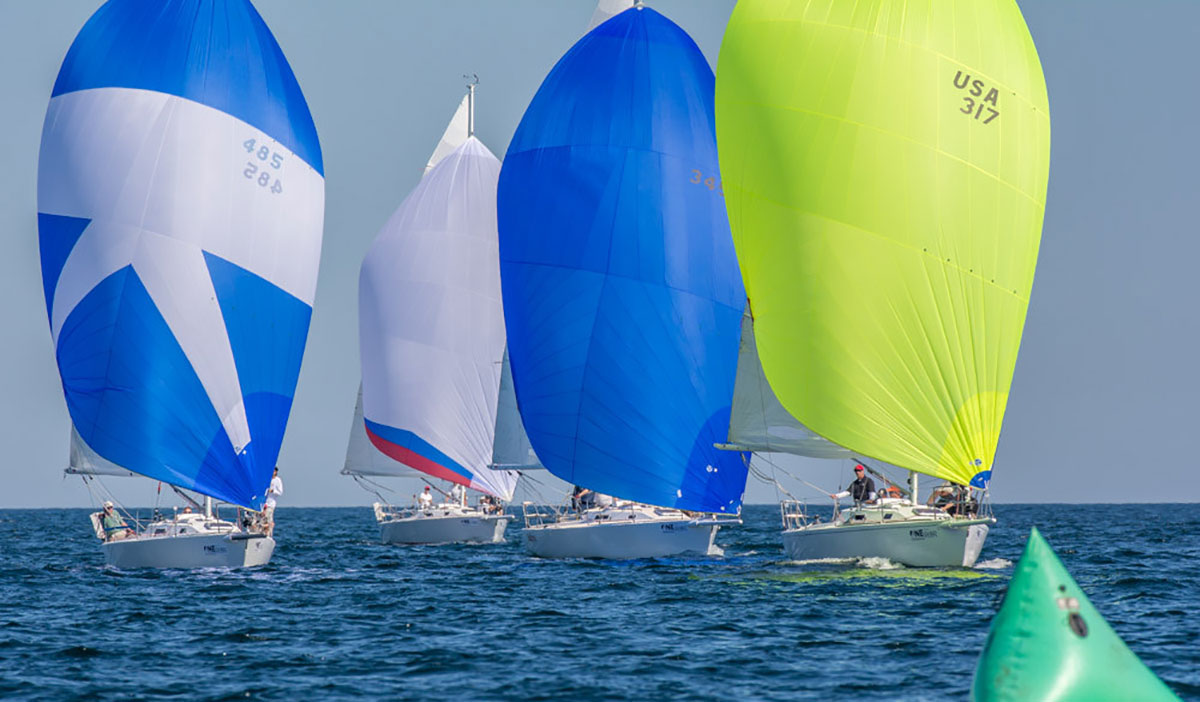
J/105 DOWNWIND TIPS AND TRICKS
J/105 DOWNWIND TIPS AND TRICKS
How to sail as deep as possible while still keeping your speed up
We often see teams get a little too relaxed when sailing downwind, even though this is where you will make the largest gains (and losses) when racing your J/105. You are trying to get to the bottom mark as fast as possible, so you need to sail as deep as possible while still keeping your speed up. Since the J/105 is primarily a displacement boat and doesn’t plane easily, the key is to coordinate several critical elements as you sail through velocity changes.
Puffs and lulls
Sailing with the wind, you will only see about half as many puffs as you did sailing upwind, so it is critical to designate one crew to call the breeze. A constant stream of verbal puff and lull communication will help keep your team in sync and anticipate the next change in velocity.
Helming
The goal for the helm is to minimize rudder movements while steering the boat downwind, using crew movement and sail trim to steer the boat. Make sure you are in a comfortable position with good visibility. We often see the helm trying to sit too far forward, which makes it difficult to steer accurately. As a driver, you are going to be working hard all race, so get comfortable!
Kite Trimming
The spinnaker trimmer and helm should maintain a continuous dialogue, discussing the pressure on the spinnaker and the correct angle to sail. “Up in the lulls and down in the puffs”…right? Yes, but make sure the angle changes are slow and smooth. As the breeze starts to drop, begin to “heat” up slowly—before the boat speed crashes—until you reach the angle that will keep your speed up in less breeze. When the puff returns, bear away and gradually build speed until you reach the new lower target angle.
In non-planing boats like the J/105, the goal is to get the spinnaker to rotate to weather, which increases its projected area and gets the sail out of the disturbed air behind the mainsail. To accomplish this we use both heel angle and tack line ease. In all but very light wind, keep the boat flat (or even slightly heeled to weather). This will also help the boat sail deeper in the puffs with less helm movement. Generally speaking, you can ease the tack line of the spinnaker as long as it goes straight up or to weather; if it goes to leeward when eased, keep it tight.
Weight placement
The J/105 is very responsive to weight placement, and moving crew weight to help turn the boat will minimize the amount of rudder needed.To head up, the crew leans to leeward; to head down, the crew hikes/leans to windward. In light air, we like to keep only the helm and main trimmer behind the cabin top winches; put the rest of the crew at the shrouds. As the breeze picks up, we move weight back just enough to keep the bow from digging in.
At least once a season, we like to completely empty the boat of EVERYTHING. This is a great way to see how much excess weight is on board, as well as an opportunity to pare back to the bare necessities.
Stabilize the rig
Keeping the rig from bouncing around in puffs and waves will mean the sails are pulling the boat forward and not just moving the mast. Apply enough backstay tension to make it “just snug”, and tension the jib sheets after furling to take the “slop” out of the headstay.
Four Modes of Downwind Sailing
Light air VMG
In VMG mode, the apparent wind will be around 90 degrees. Make sure the trimmers are easing sails in the puffs so the driver can work lower. The crew will be sitting forward and to leeward in the light spots, moving to the centerline and even up to weather in the puffs to help steer the boat down. Constant communication between the trimmers and helm is critical!
Moderate air running
The crew sits just behind the shrouds, heeling the boat to weather to help rotate the spinnaker out from behind the main. Ease the tack line as much as possible while keeping the spinnaker stable; don’t let the tack fall to leeward.
Heavy air running
The crew slides aft to help grind in the spinnaker and to keep the bow from digging in. If you are having a hard time steering straight, there is too much weight forward.
Wing on Wing
Sailing wing and wing can be very beneficial, especially for tactical reasons. Our recommendation is to sail conventionally, unless the water is very flat or you need to dig low for tactical reasons. A winged-out spinnaker is not as stable, and recovering from a collapse is very slow.
When all of these variables work in harmony, huge gains can be made by continuously sailing lower and faster and smoother than the boats around you. By working on these elements in practice and then applying what you learn on the race course, you can definitely “up your game.”
10 knots of wind. Crew forward and to weather to help the spinnaker rotate to weather. The tack line is eased to increase luff windward projection. Two people looking aft to ensure that we get into and stay in the puffs.
Crew forward and to weather with good spinnaker rotation.
Wing on wing in FLAT water. Crew forward and to weather with spinnaker trimmer holding sheet out to ensure that it is not affecting trim. Crew looking aft to help find puffs.
READ MORE
READ MORE
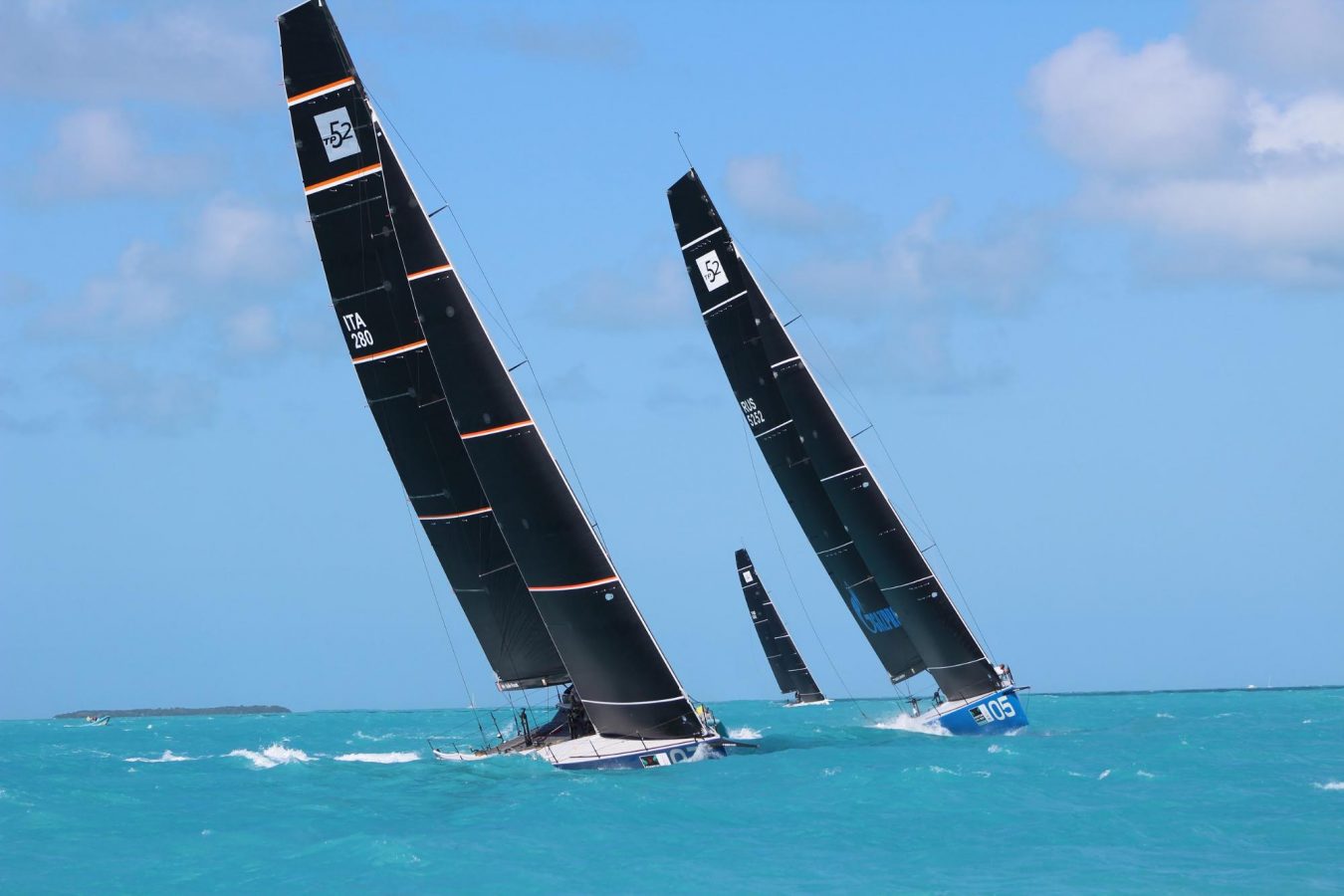
DESIGNER SPOTLIGHT: JUAN GARAY & JUAN MESEGUER
DESIGNER SPOTLIGHT: JUAN GARAY & JUAN MESEGUER
How Science And Numbers Guide North Sail Design
For the past decade, both Juan Garay and Juan Meseguer have been sought after by the most competitive inshore Grand Prix teams because they combine sailing experience and sail design expertise. Juan Garay works closely with the TP52 team Azzura and has worked with America’s Cup team Artemis Racing. Juan Meseguer has been a designer since 2000 and helped BMW Oracle Racing win the 2010 America’s Cup.
Today the two Juans are at the vanguard of ground-breaking monohull R&D, because the TP52 class is serving as a test and training platform for potential America’s Cup teams. Much of this development work happens behind the scenes at North Sails, powered by the North Design Suite. With this specialized software, the North design team is able to analyze performance in the most efficient way possible: on the computer.
Today North designers use the VPP tool within the North Design Suite to investigate how the changes they make to their sail designs impact the sailing performance.
“We’re applying high-end technology to aid people in making decisions. The VPP tool allows us to organize all of the inputs to the yacht’s performance in one model.,” explained JB Braun, Head of Design and Engineering at North Sails.
“How do we design the sail? What sails do we put together for the best performance package? What impact do different designs have on boat speed? VPP allows us to answer all these questions. Juan G. and Juan M. are using the VPP tool to help teams improve their performance with better-designed sails.”
The advantage of working with VPP is that North designers can deliver a more optimized inventory from the start. “We remove a level uncertainty that you can not achieve without the tool,” remarked Juan G. “We run tests to see the cause and effect of different variables. The tool cuts down on the experimenting and guesswork of a large test sail inventory. VPP gives North designers better information to deliver more accurate designs before the boat hits the water. An inventory designed with good VPP saves a team budget, but also valuable time because you are working with sails that we feel already have a head start.”
Above is an example of a TP52 cross-over chart showing VPP results comparing a light vs. all-purpose (AP) mainsail. The results show the light mainsail (blue light) is the optimal choice in 8-11 knots, whereas you’d want to switch to the AP in more wind. Overall, the VPP gives designers an opportunity to predict how much faster a sail will be in given conditions, and rework their designs if they want a different wind range.
“The TP52 is an example of the most competitive fleet that we have right now,” says Juan Garay. “And it’s like a football game because everything is moving so quick and hectic. It’s very important to be part of the sailing team, to understand what they want.”
Juan G. recently wrote a paper entitled Quantifying Gennaker Performance by Virtual Wind Tunnel-VPP simulation in the TP52 Class. “The purpose of this new process is to have the ability to give a quick answer in a short period of time. North Sails Virtual Wind Tunnel is used to generate sail force data that in turn powers the VPP,” he explains. Combining two tools within the North Design Suite provides quicker results for initial performance analysis.
Our first question for Juan G. was to translate the article from designer-speak to something our customers could digest. “We can go into very deep studies, but sometimes the full analysis is not needed and we want to have an answer in two or three hours,” he says. “I cannot tell you exactly if will be 9.2 knots, but I can tell you that it will be .2 knots faster than the previous . These small differences are important in classes like the TP52 where teams are looking for inches rather than big gains.”
A screenshot from VPP, the NDS tool that Integrates rig, sail, hull and appendage performance data allowing North Sails designers to customize and refine sails for virtually any boat with unprecedented precision
North Design Suite Importance
Juan G. says the North Design Suite has industry-wide impact. “While the development in the TP52 fleet is what makes the news, the impact of this work is transferred to all sails that North designs. We have tools to help make any boat fast, tools like VPP, Membrain™ and Flow™. We can help designers build better boats through our Design Services department, we can improve a boat’s performance, and we can help sailors improve trimming of the sails and their setup. All of this is made possible by using the North Design Suite.”
A screenshot from Flow, the program within NDS that applies wind pressure to sail surface and calculates forces created
Juan Meseguer agrees the software is very important to North’s leading role in the industry.
“There are a lot of good sail designers out there who do not work for North Sails. They’re good competition for us because we cannot sleep. But our access to the North Design Suite is unique to our company and allows us to deliver more exact sails, while also limiting the amount of ‘test’ sails a program needs to purchase.”
How important is the North Design Suite to the work Juan G. and Juan M. are doing? “Everything goes through the North Design Suite. We use it daily,” says Juan G. “It is the best sail design software. There’s nothing even close to it on the market. We are good designers, but the software is a big part of how good we are.”
“Sail designers are tailors,” he continues. “Every sail is unique. Our job is to make a sail fit perfectly on the yacht. It is essential to take and input the proper measurements into the software. Whether we have AutoCAD drawings for a new project or exact measurements for older boats, getting it right is key to getting the sails to fit. Beyond that, there are variables: is the boat heavy or light, are we dealing with a carbon or aluminum mast, etc. With the 52’s we have a lot of detail, as specific as where the jib tack will be placed. The more detail we have, the better we can design the sail.”
Design Team Collaboration
Both Juan’s also mention collaboration among 80 experienced designers as a significant company strength. A designer working on a multihull project in North America can employ the expertise of a designer in France who’s worked on projects for Francois Gabart’s MACIF and Thomas Coville’s Sodebo. “Someone really specialized can speed up any sail designer on the specific task or specific boat,” Juan G says.
“I can ask any other sail designer in the company and they can give me the best starting point. That’s the strength of North.”
Juan M. describes how collaboration helped move the entire TP52 fleet forward in 2017. “We exchanged all our ideas and a lot of experiences throughout the season. We shared a lot of good ideas that led to next steps of design, and we also debriefed what went wrong. Which boats were fastest in which conditions, which designers worked best for which teams, etc. Everything was independent during the season, but we all come together in the end and agree on next season’s ‘baseline’ package. The baseline is used for new teams who are coming into the class for the first time. We have very high standards, and I am confident any team could be competitive with these designs.”
The North design team can also bring together an unprecedented depth of experience to solve a specific problem. At a recent meeting, nine designers focused on optimizing the North Design Suite for the America’s Cup monohull designs that will soon be announced. Juan M. points out that;
“Nine is more than other brands have on their entire staff, but it’s only a fraction of the North design team. Add up their cumulative experience, knowledge, and ideas, and it’s no wonder why North Sails has become the authority on sail design.”
Want to read more stories like this? Sail back to 1977 to get the full scoop on how digital sail design all began here at North Sails.
READ MORE
READ MORE
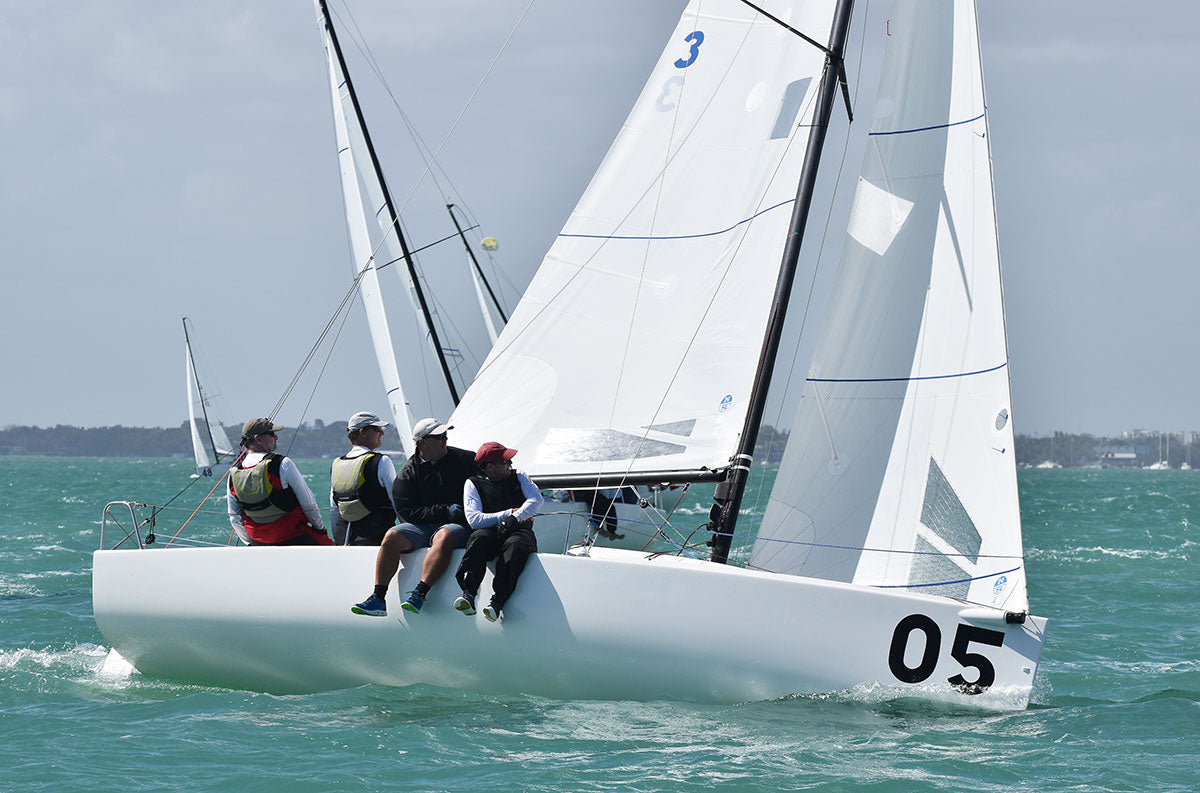
NORTH POWERS 1,2 AT THE J/70 MIDWINTERS
NORTH POWERS 1,2 AT THE J/70 MIDWINTERS
Following up on wins at the Davis Island Winter Series and North Americans, North customers win again – Jack Franco (Open Division) and Jenn & Ray Wulff (Corinthian Division)
Jack Franco’s 3Ball JT, 2018 J/70 Midwinter Champions
The J/70 has become one of the most competitive classes in one-design racing and North clients have consistently taken the top spot on the podium. In fact, North products have powered the winners of all three events at the US Winter Series and the North Americans, proving again that North has the fastest J/70 sails available. Jack Franco’s 3 Ball JT did it again last weekend in Miami, sailing to success in a 61-boat fleet with consistent single-digit race results in a variety of conditions. We caught up with North Sails’ Allan Terhune who sailed on the 3 Ball JT to learn what worked for them:
There were a few things we worked on diligently on the 3 Ball JT both during practice and also during the actual regatta to make sure it was a success.
Practice
We worked hard on two things during practice.
Have the maneuvers down. It is imperative to be able to turn the corners cleanly.
Do as many line ups as possible to have confidence in the settings – rig tune and sail trim. We have marks on everything to make sure the “fast” settings are repeatable.
Make practice pointed and concise. Its very easy to over practice leading up the event and end up being tired. Having a detailed plan and goals went a long way to getting the desired results from the sessions.
Great Starts are Key
We had great starts throughout the Midwinters, other than our BFD which happened on a general recall. The goal for is to identify a general area on the line where you want to be and then focus on finding space. It’s a team effort:
Bow guy calls time
Jib trimmer talks distance and speed control
Mainsail/Tactician calls on speed and positioning
Driver focus on the execution of the acceleration when it is time to go.
Sail Trim
Mainsail – Make sure the mainsail is trimmed in a way to help keeping the boat flat. De-power or power-up to keep the boat from heeling back and forth. This is crucial for good steering.
Jib – It is important to trim the North J-6 jib with the correct ratio of in-haul to leeward sheet. We sailed with the halyard a tad looser than normal so the jib was a little fuller to get us through the chop. When we needed to ease for power, we eased the leeward sheet not the in-haul. The only time the in-haul was eased was when the main started to luff. The J-6 proved to be a real weapon in the Biscayne bay chop.
See also: How to Trim Your J-6 for Max Speed
Steering
This is the hardest part of the boatspeed wheel and Jack did a great job for us. The groove is quite fine and it’s very easy to be too high, which is easy to identify as the luff of the jib will go soft and the inside tell tale is up. But the critical error is to be TOO LOW. The boat heels and doesn’t go any faster and you lose a lot of height if you get too low. This is common in chop. If the leeward tell tale is ticking hard, you are generally too low.
Remember it’s a team game.
We would not have had success without the four of us doing our jobs, communicating well and always working at it. There was never a down moment on the boat (Ok thats not true, the BFD penalty was a bummer) but we work hard on being positive and not letting any other team out work us. Keeping it light, communicating the important points and thinking the situations through will lead to great results.
2018 J/70 Midwinters
Open
1, 2, 4*, 5, 8, 9*, 10, 11, 12, 14, 15, 16 – Congratulations Jack Franco!
Corinthian Division
1, 4, 5, 6 – Congratulations Jenn & Ray Wulff!
* Denotes Partial North Sails Inventory
Jenn & Ray Wulff’s Joint Custody, winners in the Corinthian division
Joel Ronning and team Catapult, 2nd place at the J/70 Midwinters
Brian Keane, winner of the Davis Island Winter Series, flying fast at the Midwinters
John Brim’s Rimette, powered by North Sails
Will Welles’ Scamp, sailing with our sail designer Mike Marshall
READ MORE
READ MORE
WHO WE ARE: HUGH BEATON
WHO WE ARE: HUGH BEATON
Get to know your local sales expert
What do you sail? How long have you been sailing?
I learned to sail in Barrie ON, working through Lasers, 470, International 14 and small keelboats.
What boats/classes do you sail?
Early in my career I was introduced to the International 8 Metre, which quickly became my class of choice working with over 40 boats from 12 countries. The boats are beautiful to sail, and highly technical making them an ideal platform for North Sails' range of design services and 3D manufacturing. I have attended 21 World Championships winning 9 titles along the way. It has been very rewarding to work with so many great sailors, and to develop products and tuning guides for the class.
Aside from the 8s, Hugh enjoys distance racing on the Great Lakes, and cruising with his family in the North Channel area of Lake Huron.
What got you into the marine industry?
I started in the marine industry by working at local sail loft during summers while attending the University in Toronto. During this time, I learned to design and build spinnakers - developing a passion for racing IOR boats throughout North America.
How long have you been working in the industry?
I joined North Sails in 1990 and was privileged to work with some great people in the Toronto office: Hans Fogh, Steve Calder, Bruno Dubois, Larry MacDonald to name a few.
READ MORE
READ MORE

WHO WE ARE: LOUISA SONOSKY
WHO WE ARE: LOUISA SONOSKY
Get to know your local sales expert
What do you sail? How long have you been sailing?
I’ve been sailing since I was a kid in middle school flipping between dinghies and keelboats. I grew up sailing Hobie’s and Laser’s at camp while my father had a Beneteau 36.7.
What boats/classes do you sail?
The last classes I sailed were J/24s and Beneteau 36.7s.
What got you into the marine industry? What’s your favorite aspect of working in the industry?
I started in the marine industry through a Summer job at a local chandlery, Fogh Marine, and ended up working there for 7 years; learning just about everything I could about sailboats. I definitely was not the most knowledgeable when I started as I had taken a bit of a hiatus from sailing during my teenage years, but over the years I learned a ton thanks to colleagues and customers. My favorite aspect of working in this industry is getting to spend time on the water and photographing regattas.
What is your earliest sailing memory?
My earliest sailing memory is sailing at camp. It was a sunny – but chilly – day and they took us out in a small Hobie Bravo.
How long have you been working in the industry? What keeps you coming back for more?
I have been working in the marine industry for 8 years now – time flies. For me, what keeps me coming back is the people you meet and the stories they have! Everyone has a story and it’s great getting to know the different paths everyone took to get into sailing.
If you could have any boat in the world, what would it be? And why?
I’ve always wanted a J Boat; either a J105 or J97E. Photographing J Boats has always been one types of boats to photograph – the crisp lines can’t be beat.
READ MORE
READ MORE

OUR TYPICAL MORNING REGIMENT, ONE FLAKE AT A TIME
OUR TYPICAL MORNING REGIMENT, ONE FLAKE AT A TIME
A birdseye view of a typical morning with our service team at the North Sails Toronto loft
Kidd and Joel hard at work on varies sails in for our 10 Point Inspection. They provide a glimpse into a typical morning at the loft, demonstrating a sails journey from start to finish when in for service. While Summer is the height of our teams’ busy season, they are equally full during the offseason getting everything ready for another season on the water. Sail washing is our most popular offseason service type.
https://youtu.be/dCObHN7ODo4
READ MORE
READ MORE
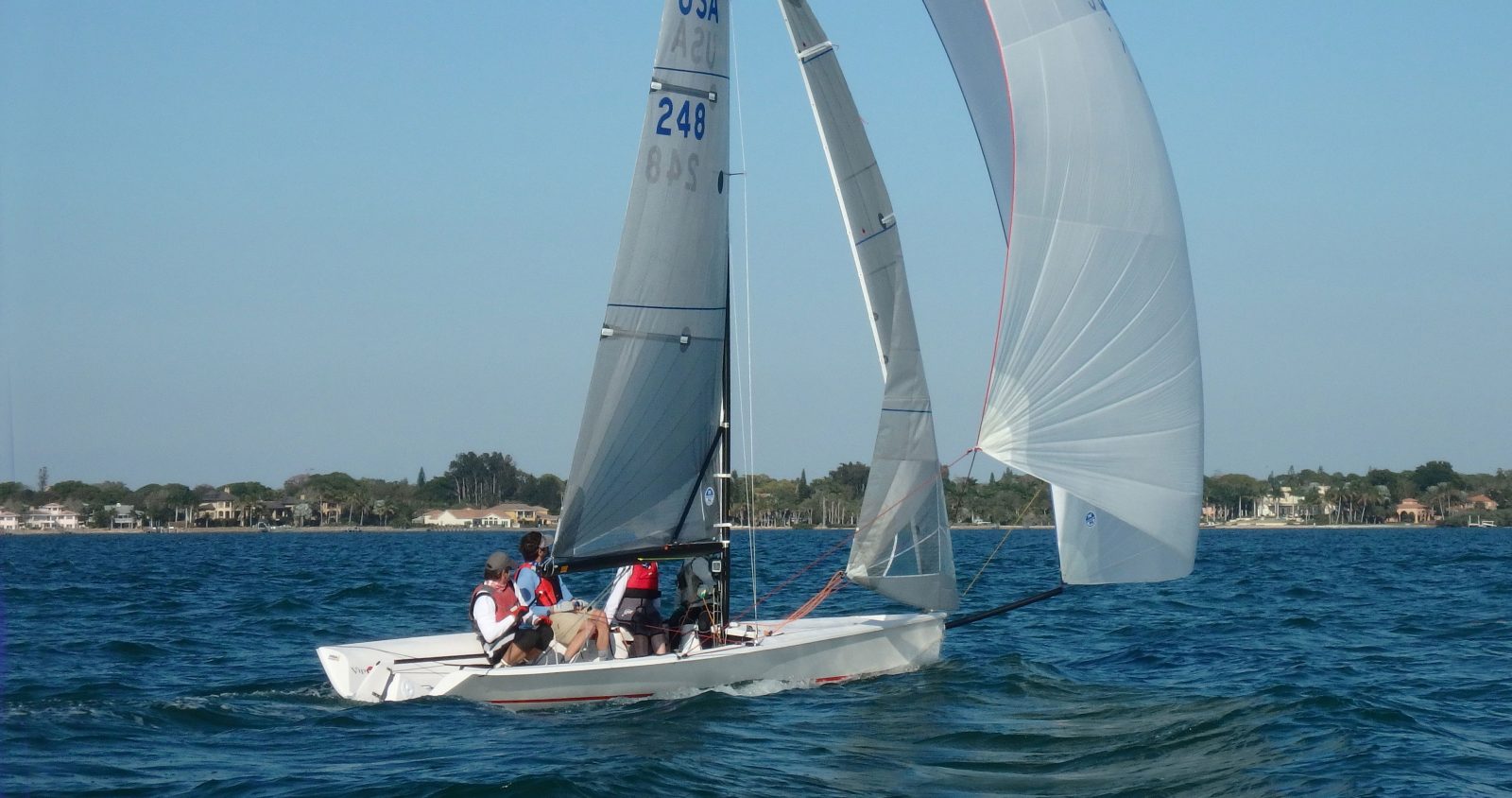
GYBING LIKE A HERO
JIBING YOUR VIPER 640: HERO OR ZERO
Boat Handling Goes A Long Way
Whether you are gybing your Viper in 5 knots, 15 knots or 25 knots, A LOT can be gained or lost. Having the confidence that your crew can nail a stellar jibe at just the right moment in any condition is a truly liberating feeling that can see your team leaving other boats in the dust. No matter how much wind there is, the keys to a successful jibe are:
Steering with your body weight
Rate of tiller movement
Getting the spinnaker filled on the new jibe
Hitting the exit angle
CONVENTIONAL JIBE
If the wind is very light (under about 6 knots or so) you should try doing a “conventional jibe”. This method guarantees that the spinnaker is going to make it around the headstay (as long as everyone keeps their feet off the sheets!) which takes away the risk of messing up the “blow thru” part of the blow thru-jibe. There is nothing worse than having to pull the spinnaker off the windward side of the jib after failing to execute a blow-thru in light air. You’re dead in the water!
To execute the conventional jibe, the first thing to do is move body weight to weather to induce a down turn. The turn down can be slow so don’t move the tiller too much at first. The trimmer should slowly ease the sheet out as the boat turns down until they feel the pressure leave the sheet. This is usually right at about dead down wind with the clew of the kite eased to being nearly even with the head stay.
At this point, the trimmer drops the existing sheet and starts whaling on the new sheet, pulling it around as the helmsman speeds up the rate of turn, ultimately hitting the right exit angle, which needs to be high enough on the new jibe that the spinnaker is able to fill. This depends a lot on how light it really is. Whatever the crew can do to generate a bit of roll throughout this process is really helpful to keeping the speed up in the jibe.
Both the helmsman and the forward crew should stay on the old windward (or new leeward) side as long as it takes for the trimmer to fill the kite and get situated on the new board. There is always time to cross the boat!
BLOW-THRU JIBE
As soon as the wind is above 6 knots, we use the blow-thru method all the way up the wind range. To execute a good blow-thru, first be sure that both sheets are ready to run clean. Just like in light air, it is important to try to steer the boat with body weight, so have all the crew lean to weather to start the jibe.
As the boat begins to turn down, the trimmer should give 1-3 good pumps of the existing sheet (depending on how long their arms are!) which flattens out the spinnaker and makes it easier for the breeze to now fill it on the new side. The jib trimmer can also trim the existing sheet in at this time.
It’s very important that, after the initial down turn using body weight, the helmsman really tugs the tiller and turns sharply. The forward crew should have to hang on tight so they don’t get ejected! A good blow-thru means that the kite goes from full one side to full on the other side as quickly as possible. Doing a fast turn enables a quick transition for the kite so practice over-exaggerated turns and then start to slow yourself down if you are too quick (I bet you won’t be!).
As we are passing dead down wind and the spinnaker has lost all its pressure (and while the helm is still hard over) we recommend having the forward crew reach up to the spinnaker clew and give it a nice yank down and back. This puts tension on the leech and flattens the sail, making it much easier to fill onto the backwinded jib. A critical part of the sail actually blowing around the headstay is that it actually fills from the leech first. This little yank makes this much for likely to happen.
At about the same time the forward crew does the yank, the trimmer should now be over to the new sheet which should only require a few big pulls since the wind is now doing most of the work for you. This is the time when it is really important that the helmsman finds the right exit angle. As soon as they see that they’ve turned fast enough to execute the blow-thru, they can slow the turn down a bit and start to try to feel the boat based on its heel angle. If the boat is dead flat, you need to keep turning up to the appropriate exit angle. If you feel you’re starting to wipe out….. Time to ease the sheets, get to the high side and try to turn back down a bit! (scooting aft in the boat can help avoid a wipe out too)
After the kite is all the way around the head stay and filling on the new side, the jib trimmer can go ahead and switch the jib as well. The method of this jibe really doesn’t change much in the different wind speeds – you just need to practice a lot in all conditions to hone in on the variables like rate of turn, exit angle, and how much sheet you need to go through.
HEAVY AIR
If you are starting to get towards “survival conditions” for your team, you can reintroduce the “conventional jibe” again. It may be a little less risky in terms of wiping out. The key here is to try to find a good wave to surf down as you begin the jibe so that the load on the sails decreases. As you are surfing down the wave, you can ease the kite out a few feet, get to dead down wind and then flick the main over and cross the boat. Once the main and the crew have switched sides, the boat becomes a lot more stable. Then the trimmer can pull (hard!) on the new sheet to start to pull it around as the helmsman conservatively turns up to find the angle where the kite will fill again. This method won’t be quite as fast as a perfectly nailed blow-thru jibe in 25 knots, but it is a heck of a lot faster than turning over from messing one up!
READ MORE
READ MORE
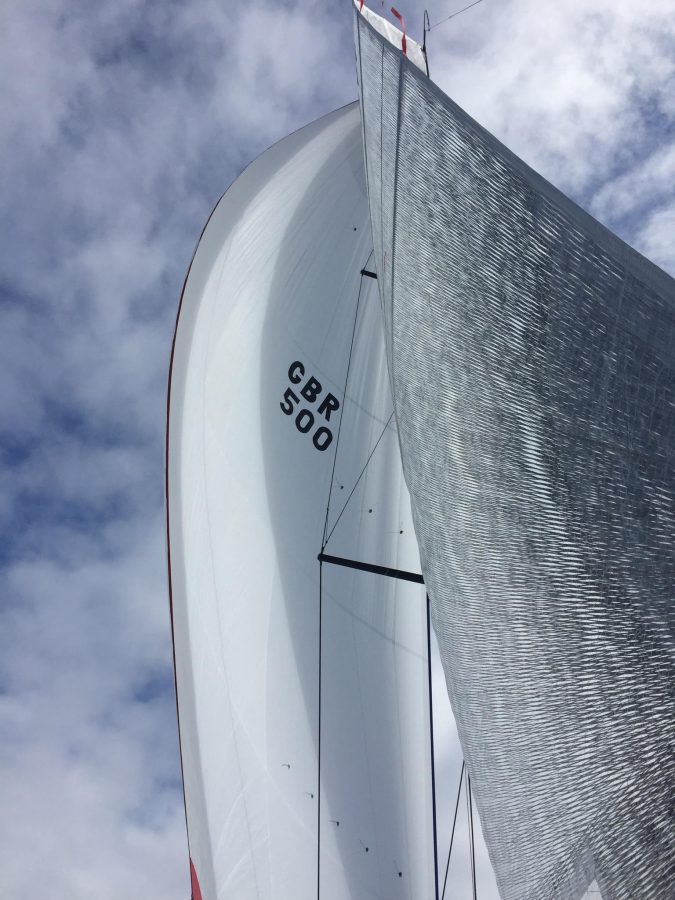
THE IMPORTANCE OF SAIL SELECTION
THE IMPORTANCE OF SAIL SELECTION
Shane Hughes tells us about the A-Zero and the longevity of North sails onboard Melges 32 ‘Red’ at the Regata Chiloe Santander in Chile
This January, North Sails Shane Hughes left the cold Irish weather and the Northern hemisphere behind and headed south to Chile to compete in the bi-annual Regata Chiloe, one of Chile’s biggest and most prestigious regattas based around the beautiful southern island of Chiloe and the protected waters between it and the Chilean mainland. Shane had been invited by Pablo Anfruns and Rudolf Mijac to race with their team on the Melges 32 Red. For those who have not experienced it, Melges 32 racing is fantastic fun. The boat is very powered up and can easily sail in as little as 4 knots of wind but really comes into her own in 15 knots plus downwind! Having had a break away from sailing the 32 for a few years, it reminded me what a truly special boat it is. With only one other Melges 32 based in Chile right now (the newly acquired ‘Pepe Pato’ owned by Jose Tirado and Patricio Lopez) both boats were entered into the IRC division, not historically the Melges 32’s strong point with its big sail area and light displacement. So expectations were set firmly in pessimistic mode. However, Shane underestimated how the format of the regatta along with the traditional winds for this event (light!) would play into the Melges’ strengths rather than its weaknesses. Thankfully Pablo, the helmsman, and co-owner had not overlooked these factors and this had formed his reasoning for purchasing the Melges 32. The regatta format is a mix of coastal races, with some inshore windward-leeward races. While the 32 would struggle a little on some of the inshore races, the longer coastal races actually suited the boat, especially with downwind or light upwind legs.
©Regatachiloe.cl
One area of concern in the lead up to the regatta was the absence of a Code Sail on the Melges 32. The boat had been almost exclusively raced in One Design configuration, with no need for any code sails, but this regatta format demanded a sail that would work on the reaching and super light wind legs. With the help of Dave Lenz in the North Sails UK design office, we set about designing an A-Zero for the race. With such a long bowsprit the Melges 32 does not offer the option to set a true Code Zero sail, as you can not generate the cable/luff tension required to furl the sail properly thus the choice of an A-Zero which is hoisted, deployed and retrieved the same as any other spinnaker onboard. This in itself presents a challenge because if you build the sail from too stiff a material (laminate or 3Di) the sail will be very difficult to hoist and recover through the fore-hatch but use a softer nylon material and the sail will not have the stability to retain its flying shape, especially as an IRC zero which requires a big mid girth (>75% of foot length) . The compromise we struck was with Contender’s MaxiKote 200P. A great choice that produced a really stable sail shape that was easy for the crew to handle and work with. We also added North’s Velcro stop tabs which allowed us to roll the head and tack sections to make strong wind hoists easier and safer. The sail performed superbly and despite us using it infrequently (as is often the case with code sails!) it ended up winning us a coastal race where we were trailing our opposition Melges 32 for 70% of the race up until we hit a parking lot under a headland. They hoisted their biggest A2 Asymmetric and we hoisted our A Zero. From 100 meters behind, we sailed straight by them and even caught up to the other boats in our size range! We hit the new breeze first and won the race by some distance! The lesson learned, bigger is not always better especially in very light conditions. Shane stated:
"We used a full North Sails inventory, which bar the new A Zero, was from 2011 when the boat competed in its last World Championships in Palma. The Main and J1/Light jib were 3DL, while the J2 and J3 were 3Di Endurance. The A-2 asymmetric we used was a little newer, both made of AirX nylon. It really was a testament to the durability of both 3DL but especially 3Di that the sails had retained their flying shapes incredibly well. Granted they had not been used extensively in the interim but as you will see in the below pics, you would not guess they were 7-year-old sails."
The 3DL sails were just beginning to show the first signs of de-lam in high-density fiber areas and while this did not affect the performance of the sail at all, it does highlight what a huge advantage 3Di has over all of the ‘string’ sails from this perspective. The 3Di sails still looked brand new! No ill effects of being sat in the bag for that extended period. Unfortunately, the predominantly light winds meant they mostly remained in their bags, but the J1 held up superbly and ended up being the workhorse headsail for the team. At the end of a thoroughly enjoyable weeks racing, both Melges 32’s ended up at the top of the leaderboard with our team taking the win. This surpassed expectations on all fronts for the owners, especially in their first year in the boat. This promotes the future growth of the Melges 32 in Chile. There was quite a lot of interest in the boat, especially regarding its performance against other boats of similar size in the coastal races. Find out what we can do to improve your sail inventory or get in touch with one of our experts here!
©Benjasans.com
©Regatachiloe.cl
READ MORE
READ MORE

RORC CARIBBEAN 600: BAM SAILS TO WIN HER CLASS
RORC CARIBBEAN 600: BAM SAILS TO WIN HER CLASS
BAM wins her class in RORC Caribbean 600 crediting North Sails speed and reliability
Conor Fogerty, skippering the smallest boat in the fleet, his Jeanneau SunFast 3600 BAM, won his class in the RORC Carribean 600. The race was very windy with Conor and his team emerging victorious after five days of wet and wild racing. Conor has been working on his sail inventory with Maurice ("Prof") O'Connell from North Sails Ireland since the first launch of "BAM" in 2015, notching up an OSTAR win and a previous class win in the C600 in 2016. He took delivery of a new 3Di offshore main just prior to the C600 this year.
Speaking after the race Conor was fulsome in his praise of North Sails ;
"The new main is perfect, it was great to be able to totally rely on our sails, whilst boats around us dropped off due to sail failure. "BAM" returned to Antigua with a full intact wardrobe, and a class win which were are delighted with!"
Congratulations also to the HYC team on Pata Negra who finished 2nd in their class. Great racing for Irish offshore teams!
© RORC Racing / Tim Wright
© RORC Racing / Tim Wright
© RORC Racing / Tim Wright
© RORC Racing / Tim Wright
READ MORE
READ MORE
GREAT LAKES. GREAT RACES.
GREAT LAKES. GREAT RACES.
Our Top 5 To Tackle
A perfect combination of pristine waters, spectacular scenery and ever changing weather conditions makes the Great Lakes an exciting place for sailors of all levels. Distance racing in this unique environment can teach even the oldest dog new tricks. From helming, sail trim, navigation and night sailing, the entire crew can take part and experience the thrill of offshore racing. Our team have picked their favorite races across the Great Lakes to take on this year, have you signed up to any yet?
“The Bayview Mac is more than a race, it's a life experience. From week long activities leading up to the start, to the awards party on the island, there is fun for everyone! This race draws more attention to the sport we love, and in my 30+ years of taking part in this race, I have been able to share experiences with so many other racers. Once you have sailed it with someone, you have developed a lifelong bond.”
- Karl Kuspa, North Sails Expert, Detroit.
Register now to start planning your season of sailing and talk to your local team about how North Sails 3Di is the #1 choice for offshore distance racing.
Lake Erie Interclub Cruise
Lake Ontario 300
Bell's Beer Bayview Mackinac Race
CYC Race To Mackinac
Lake Superior International Offshore Series
READ MORE
READ MORE
GREAT LAKES. GREAT RACES.
GREAT LAKES. GREAT RACES.
Our Top 5 To Tackle
A perfect combination of pristine waters, spectacular scenery and ever changing weather conditions makes the Great Lakes an exciting place for sailors of all levels. Distance racing in this unique environment can teach even the oldest dog new tricks. From helming, sail trim, navigation and night sailing, the entire crew can take part and experience the thrill of offshore racing. Our team have picked their favorite races across the Great Lakes to take on this year, have you signed up to any yet?
“The Lake Ontario 300 has become one of the most significant races on Lake Ontario, entering its 29th edition in 2018. Having done this race many times, including the first one in 1990, I have learned something new each time. One of the most important takeaways from races like this is the value of seamanship and thoroughly enjoying your time on the water.”
- Hugh Beaton, North Sails Expert, Toronto.
Register now to start planning your season of sailing and talk to your local team about how North Sails 3Di is the #1 choice for offshore distance racing.
Lake Erie Interclub Cruise
Lake Ontario 300
Bell's Beer Bayview Mackinac Race
CYC Race To Mackinac
Lake Superior International Offshore Series
READ MORE
READ MORE
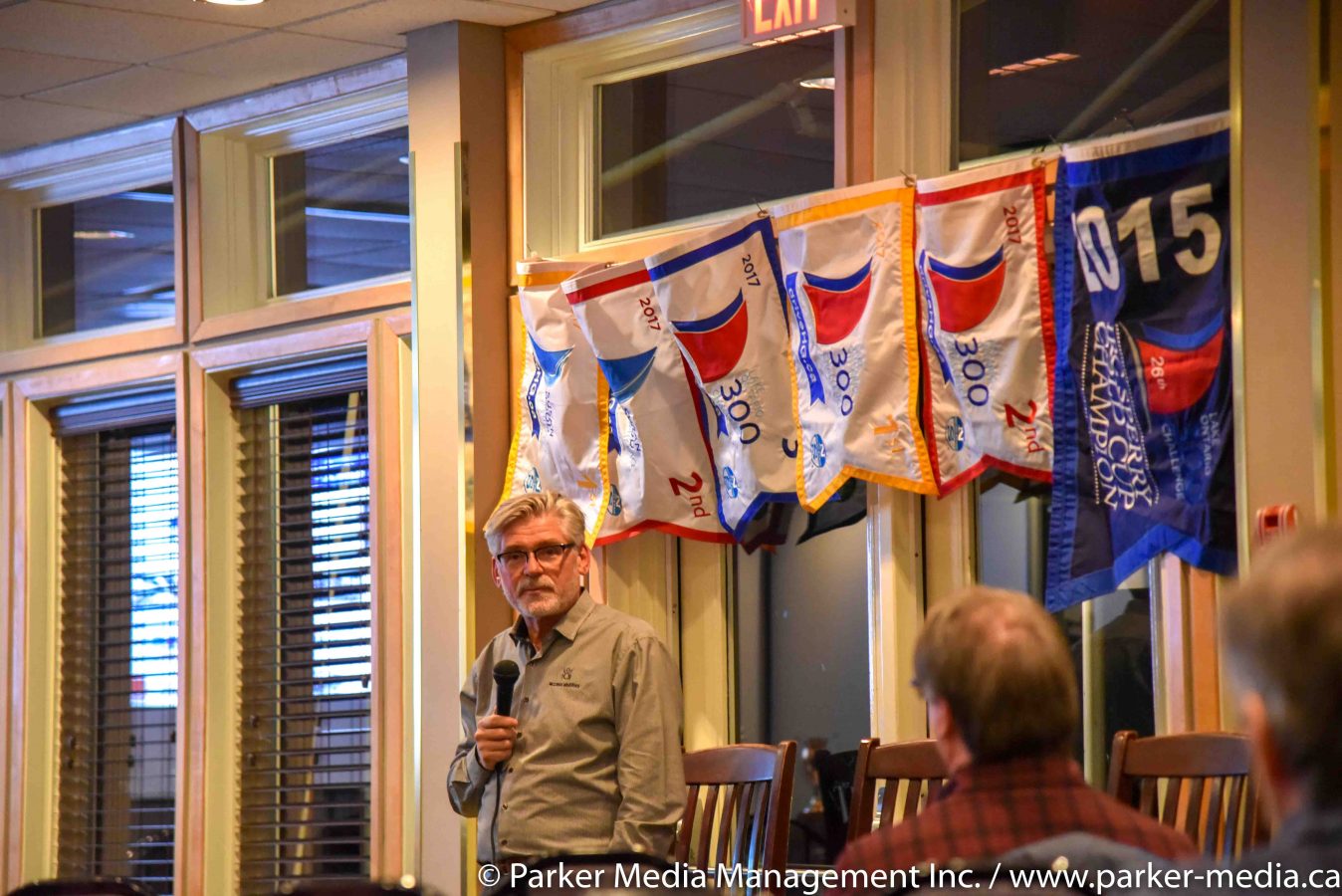
SPEAKERS NIGHT WITH LAKE ONTARIO OFFSHORE RACING
SPEAKERS NIGHT WITH LAKE ONTARIO OFFSHORE RACING
An evening of seafaring stories & laughs
Racers gathered this past Wednesday at Port Credit Yacht Club to share their tales from the race course. Countless stories were told from years past with many racers highlighting favourite seconds from the Lake Ontario 300 and the Susan Hood Trophy Race.
Local North Sails expert, Hugh Beaton, was on hand to partake in the evening with North Sails Toronto providing several swag prizes.
READ MORE
READ MORE
GREAT LAKES. GREAT RACES.
GREAT LAKES. GREAT RACES.
Our Top 5 To Tackle
A perfect combination of pristine waters, spectacular scenery and ever changing weather conditions makes the Great Lakes an exciting place for sailors of all levels. Distance racing in this unique environment can teach even the oldest dog new tricks. From helming, sail trim, navigation and night sailing, the entire crew can take part and experience the thrill of offshore racing. Our team have picked their favorite races across the Great Lakes to take on this year, have you signed up to any yet?
“CYC's Race to Mackinac remains the single most important focus for many Lake Michigan Sailors. Not only does the race end in a truly beautiful and fun spot, but it offers uniquely different and challenging conditions along the way - from excruciatingly slow drifting to exhilarating summer thunder storms, to upwind bashing.”
- Perry Lewis, North Sails Expert, Chicago.
Register now to start planning your season of sailing and talk to your local team about how North Sails 3Di is the #1 choice for offshore distance racing.
Lake Erie Interclub Cruise
Lake Ontario 300
Bell's Beer Bayview Mackinac Race
CYC Race To Mackinac
Lake Superior International Offshore Series
READ MORE
READ MORE

NORTH U TRIM SEMINARS COMING TO THE MIDWEST
CALLING ALL SAILORS IN THE MIDWEST
North U Trim Seminars Are Coming To A City Near You!
The North U Racing Trim Seminar is offered as a one-day course focusing on boat speed and sail trim, and it's coming to your city! Two locations, back to back, Chicago and Milwaukee. Get the most out of your sailing experience and up your game on the race course!
WHERE?
CHICAGO-MARCH 3RD
DePaul University
Lincoln Park Campus
2320 N. Kenmore Ave.
Chicago, IL 60614
(near Fullerton & Halsted)
Seminar Location: Schmitt Academic Center
Room: SAC-161
MILWAUKEE- MARCH 4TH
Hosted by the University of Wisconsin-Milwaukee Sailing Team!
University of Wisconsin-Milwaukee
3210 N. Maryland Avenue
Milwaukee, WI 53211
Seminar Location: Lubar School of Business
Room: TBA
Can’t make a seminar in your location? Try our Trim Webinar, available on-demand anytime.
“You’ve got to be fast to win!”
North Sails President Ken Read – AC TV commentary
Turning sailors into racers and racers into winners. Sign up HERE!
READ MORE
READ MORE
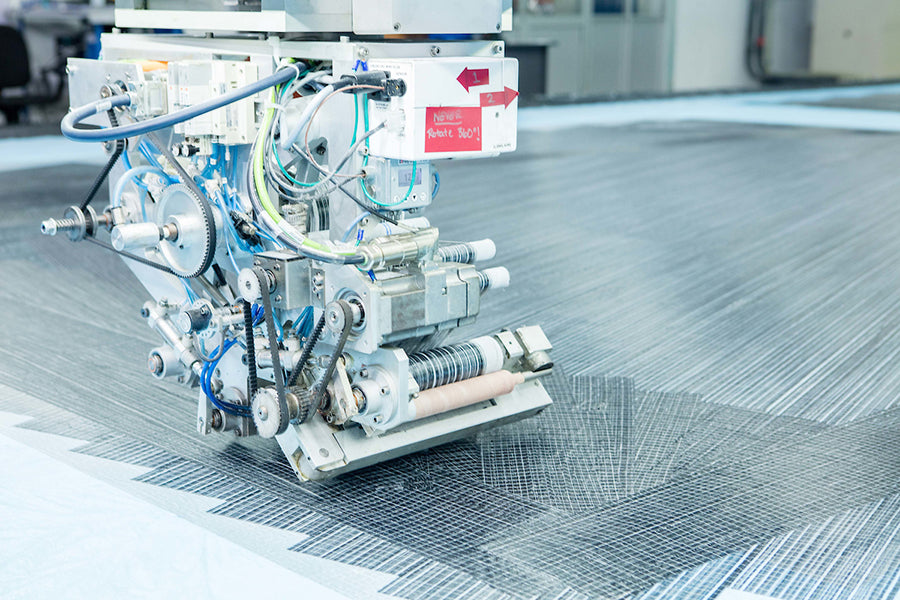
NORTH SAILS COMPLETA SU EVOLUCIÓN HACIA LA TECNOLOGÍA 3Di
NORTH SAILS COMPLETA SU EVOLUCIÓN HACIA LA TECNOLOGÍA 3Di
El comienzo de 2018 marca un hito en la historia de North Sails. La velería líder mundial completa un ciclo de diez años de transformación desde su tecnología de 3DL, velas laminadas en 3D, a estructuras de composite moldeadas 3Di. Las plantas de la firma en Minden (Estados Unidos) y Sri Lanka ya sólo fabrican 3Di, la vela de mayor éxito de la historia.
North Sails lideró la tendencia de construcción laminada de mylar e hilo con sus revolucionarias velas 3DL, que dominaron la velería de altas prestaciones desde principios de 1990 hasta la America’s Cup de 2007. Con la aparición del 3Di, la compañía fue abandonando la producción de velas laminadas a favor de estructuras 3D de composite con filamento esparcido y preimpregnadas. Las velas 3Di proporcionan propiedades de conservación de la forma y de durabilidad muy superiores a cualquier otra vela de construcción laminada. El moldeado en tres dimensiones a escala real es la piedra angular de la tecnología North Sails.
Desde que el sindicato suizo Alinghi sorprendió a la comunidad de la vela probando estructuras 3Di en preparación para la defensa de la 32 America’s Cup en Valencia, el concepto 3Di no ha dejado de evolucionar y expandirse a lo largo y ancho del extenso catálogo North Sails, y hoy está disponible para todo tipo de embarcaciones, de grand prix a monotipos, de superyates a cruceros. La introducción el pasado año de las 3Di NORDAC para crucero y 3Di RAW 760S para regata supuso la aplicación del 3Di a barcos de menor eslora y su consiguiente popularización.
En respuesta a una demanda en constante crecimiento, North Sails ha ido adaptando sus instalaciones de producción en Minden (especializada en velas grand prix y de superyates) y Sri Lanka (barcos hasta 50 pies de eslora) a medida que la tecnología evolucionaba de velas de paneles y 3DL a 3Di. La última línea de producción de 3DL se cerró definitivamente en septiembre de 2017, y hoy las dos factorías fabrican exclusivamente 3Di. North Sails cuenta con líneas de preimpregnado idénticas en ambas plantas trabajando 14 turnos por semana, con siete líneas ATL (Automated Tape Laying o sistema de colocación automático de cintas) en Minden y otras cinco en Sri Lanka funcionando 24 horas al día y siete días por semana. Las líneas de preimpregnado y ATL alimentan ocho grúas y diez moldes a escala real ajustables de 3D.
Dan Neri, director general de North Sails, explica la evolución de la estrategia de producción de la firma: “La expansión de la factoría de Sri Lanka responde al éxito de la nueva 3Di RAW 760S para barcos de competición de menor tamaño y de la 3Di NORDAC para cruceros de pequeña eslora. Las velas 3Di siguen respondiendo a las necesidades de navegantes de todas las clases, desde Skiffs de 18 pies en Australia hasta la flota Ultime de 100 pies en Francia. Nuestra tecnología está detrás de un número sin precedentes de victorias en regata y de récords mundiales, además de infinidad de historias de cruceristas gracias a la consolidación de la 3Di NORDAC entre la comunidad de crucero”.
La planta 3D Minden es el centro de referencia para investigación de materiales, ingeniería y fabricación de productos tridimensionales, exclusivos de North Sails. Por su parte, Sri Lanka Manufacturing cuenta con instalaciones de última generación que ocupan a cerca de 1.200 personas distribuidas en ocho edificios. Ambos centros de producción envían las velas 3Di a todo el mundo.
La gama North Sails 3Di incluye las líneas 3Di RAW, 3Di ENDURANCE, 3Di NORDAC y 3Di Downwind.
Para más información sobre las velas North Sails 3Di, visita www.northsails.com o contacta con nosotros en info@es.northsails.com
READ MORE
READ MORE
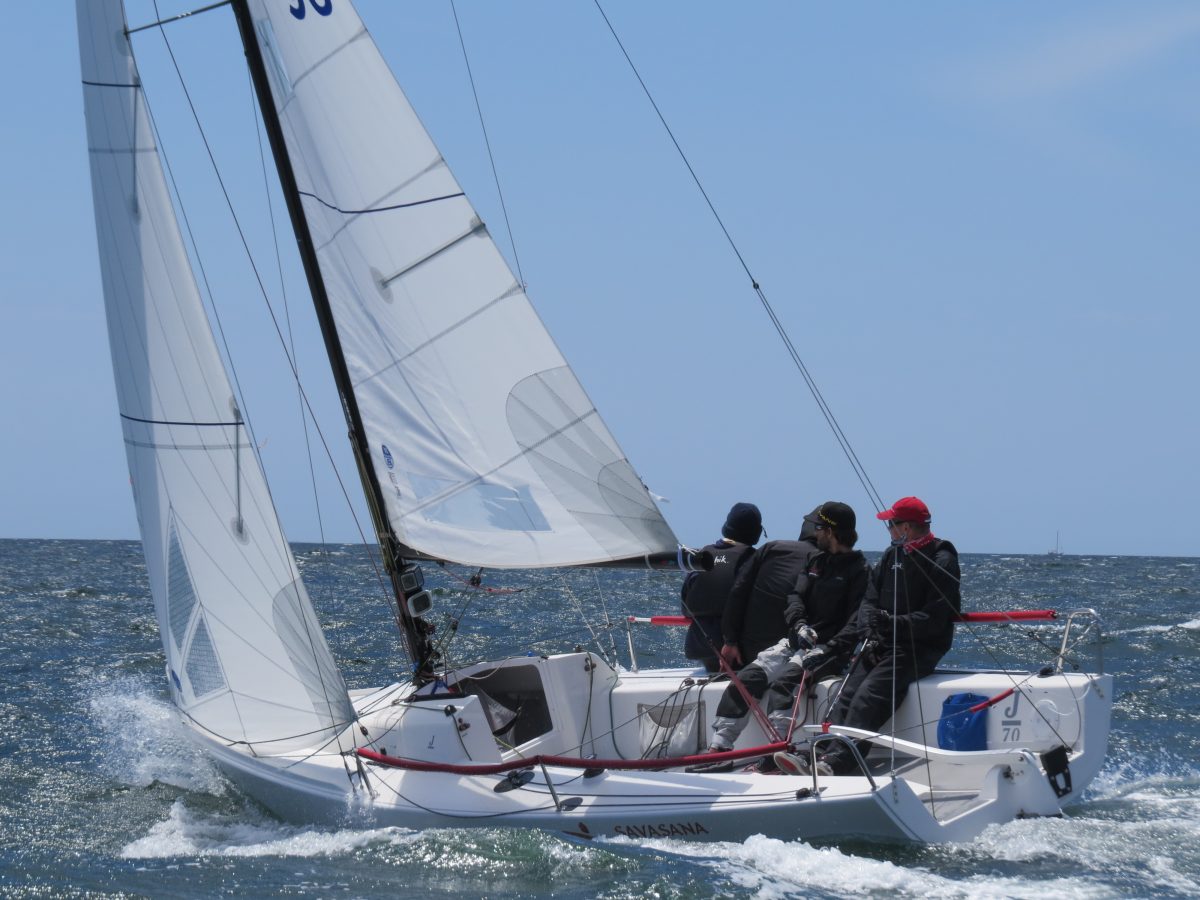
HOW TO TRIM THE J/70 JIB FOR MAX SPEED
J/70 JIB TRIMMING FOR SPEED
Jib Lead and In-hauling Settings for the J-6 Jib
Trimming the jib on the J/70 involves both technique and accuracy. Proper jib trim will help balance the boat and help in boat speed and pointing ability. While achieving the proper trim is the goal, being able to repeat the trim consistently will also make a big impact on your boat’s performance. The important factors in proper jib trim are the lead car position, jib sheet tension, in-hauler tension, jib halyard tension and reference marks to repeat all the settings. The final trim position for the J/70 jib is a balance between the sheet tension and in-hauler tension.
When the jib is trimmed in, the leech of the jib should be lined up with the spreader stripes (between 18”-22” from the side of the mast). Within this range, your upper jib leech telltale should be flowing 90-100% of the time. Trim in until it just stalls then ease a hair until it starts flowing again. This is your max trim.
Jib Car Position
The first step in jib trim on the J/70 is jib lead car position. Setting this position is important as it affects all of the other settings. Combining the jib lead car position with the amount of sheet tension, in-hauler and halyard tension allows the trimmer to manipulate the sail to fit the conditions and style of the skipper. When discussing the position of the jib lead car, we reference the number of holes visible behind the first deck mounting screw in front of the car once in a position.
Windward Sheet
On the J/70, we use the windward, or lazy jib sheet as an ‘in-hauler’ to pull the clew of the jib to windward and more inboard. When setting the in-hauler tension, our reference point is the distance the clew of the jib is away from the side of the cabin house.
J-6 Jib: For the J-6 some in-hauler is always required. In very choppy conditions, use less in-hauler with the clew at 2”-3” from the cabin house and the lead at 5-6 holes showing. In light to moderate chop the clew can be at or just inside the cabin house with the lead at 6 -7 holes showing. In very flat water the lead can go back more to 7-8 holes showing.
J-2 Jib: Our go to setting for the J-2 is 2” from the cabin house. In Flat water we may go to 1” away and in moderate chop conditions 2.5-3.5”. In big waves and chop we may go with no in-hauler. Remember that the less in-haul is used, the farther forward the jib car needs to be.
For the J-2 jib with no in hauler, the car should be around 3-4 holes showing and with a lot of in-hauler on and the jib clew is at 1” from the cabin house, there should be 5-6 holes showing in front.
Jib Halyard
The jib halyard on the J/70 is rigged with a fine tune purchase that can be adjusted while sailing. In lighter winds, the jib halyard should be set so that there are slight wrinkles appearing in the first panel along the luff of the sail (approx. 4-8” back from luff of sail). If wrinkles extend further back in the sail, or no wrinkles appear at all, the halyard should be adjusted to compensate. As the wind gets stronger, and the sails need to be de-powered, the jib halyard should be tightened just to the point where the wrinkles along the luff disappear. As the halyard is tightened and loosened, it is important to keep in mind that the halyard tension also affects the leech tension of the jib and the sheet and/ or in-hauler may need to be adjusted to compensate.
Make Marks
Make reference marks on jib sheets for both the sheet tension and in-hauler tension. Having reference marks will make it much easier to duplicate your trim settings quickly. Jib sheet and deck reference marks help accurately repeat trim settings It is a good idea to experiment with different settings for each control to get used to how each control affects the sail and how they interact with each other
The basic effect of the three jib controls, lead car position, in-hauler and jib halyard is:
Jib Lead Car Position
Forward = Tighter leech, round foot
Aft = Open leech, flat foot
In-hauler
More = Tighter leech, round foot
Less = Open leech, flat foot
Jib Halyard
More = Flatter sail
Less = Deeper sail
** Counting the number of open holes in front of the jib lead car and after the first bolt identifies jib lead position.
*** The distance (in inches) from the clew of the jib to the side of the cabin identifies in-haul measurement. Use less In-Haul when lead is forward and more in-haul when lead is aft.
After setting the sheeting position of the jib, the trimmer needs to constantly check to ensure the trim remains correct as the conditions change. Since the jib on the J/70 is high aspect (tall and thin) changes in the conditions have a significant impact on the trim of the sail. For this reason, there are telltales attached to the upper leech of the jib to help the trimmer know when the sail is going to stall. When the sail is trimmed properly for upwind, the leech telltales will be flowing and if the telltales begin to stall, the sail will need to be adjusted to regain the flow. Most often, only a small adjustment is needed to help return the proper trim and flow to the sail. The reference marks on your spreaders will also help with jib trim. You will find that in 10+knots in flat water you may be able to sheet so the jib leech is at the inside, 18” spreader mark and the leech telltale is still flowing. When it is light and lumpy you will find that the leech will need to be closer to the outside 22” spreader mark. Easing the jib sheet slightly is the first step in returning flow to the jib. Normally, this will only require an inch (or less) of sheet to be eased out. If the leech telltales continue to stall when the leech is sheeted in to the spreader stripes, other adjustments need to be made to properly trim the sail. Since the telltales indicate the stalling of the upper leech of the sail, adding twist is likely the solution. The two ways to best achieve more twist in the jib, is to move the lead car aft and use less sheet tension. As described earlier, both adjustment will add twist to the sail and help regain the twist and flow at the top of the sail.
Other J/70 Speed Resources:
J/70 Speed Guide
J/70 Full Tuning Guide
J/70 XCS-1/J-6 Quick Tuning Chart
READ MORE
READ MORE
WELCOME TO THE MIDWEST
WELCOME TO THE MIDWEST
Our Midwest Team Welcomes A New Expert
We are pleased & excited to welcome Allan Terhune back to North Sails and introduce him to our Midwestern sailors!
Many of you know that we have had a consistent veteran staff for quite a long time now – Perry Lewis has been a mainstay here nearly 40 years, Tom Pease (North Sails in Milwaukee) has been with the company for just as long, Luke Logan has been Service Manager approaching 20 years, and Deanna Trejo has been managing our office for nearly 5 years. So it is high time to welcome a new face!
Allan brings a fresh enthusiasm along with a wealth of experience & knowledge. His extensive sailing resume, both racing & coaching expertise speaks for itself. Allan has built a foundation in competitive One-Design classes, while maintaining his most important interest in helping sailors at all levels achieve maximum performance. We know that he will be a valuable asset to our team in providing superior service, both to our existing client base as well as to newcomers.
Welcome Allan- We are proud to have you on our team!
READ MORE
READ MORE
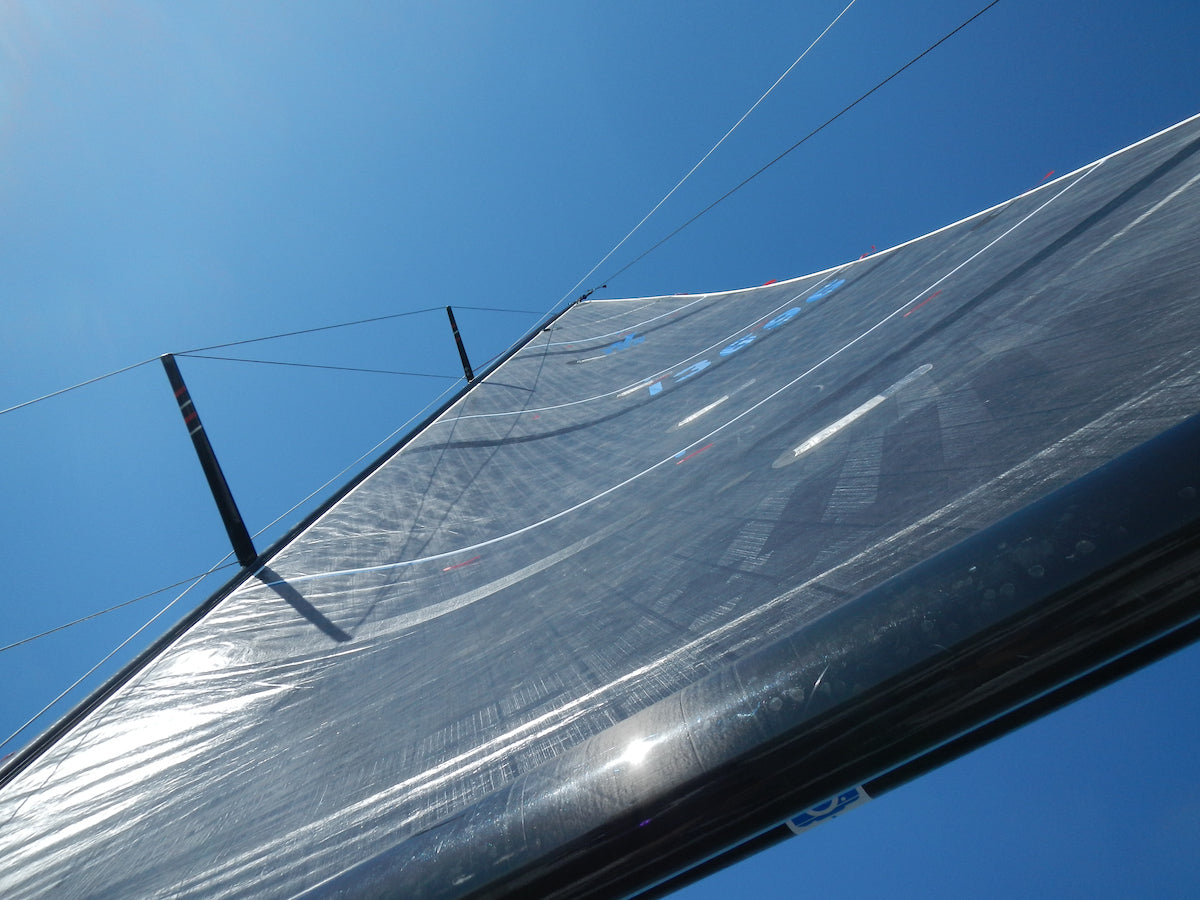
TIPS FOR TAKING PROPER SAIL SCAN PHOTOS
TIPS FOR TAKING PROPER SAIL SCAN PHOTOS
Investigating your sail twist profile with onboard imagery
First, position your camera(phone) at the mid‐foot area of your sail. Angle your camera to catch all three draft stripes from luff to leech. Usually the bottom stripe will have one end in a corner and the other end in the opposite, higher or lower corner of the frame.
To get a good angle of your headsail, you'll need to get down to deck level, so lay on your back and shoot up from the middle of the foot. (Hopefully a friend is driving, especially if it’s choppy!)
To get a good image of your mainsail, you'll need to position your camera so the angles are similar, and at the same time try to include the center of the boom in the bottom of the photo to assure you are in the right place. This will help us calculate the twist profile when the photo is measured by your sail expert.
READ MORE
READ MORE
DESIGNER SPOTLIGHT: JB BRAUN
DESIGNER SPOTLIGHT: JB BRAUN
One of the world’s leading sail designers talks about the next generation of innovation
© Joe Berkeley
JB Braun loves making sailboats go faster, and that’s his job as Director of Design and Engineering at North Sails. “There’s a lot that goes into it,” he says. “It’s not only developing a product but developing the tools and software to help create it.”
JB manages the 80-person worldwide design team for North Sails. “I’m trying to develop and bring more communications, more design expertise into it. I want it to be recognized because it’s part of what makes North Sails different.
“We have 80 designers around the world, mostly working independently. In the past few years, we’ve implemented some great systems that help our design team be more efficient, which allows more time for collaboration and creativity. Exploring the design space will provide more performance for our customers.”
Before taking on his current role, JB was part of the design team for Oracle Team USA, helping to create the revolutionary foiling cats that defended the 2013 America’s Cup. JB was also instrumental in teams adopting 3Di during the Volvo Ocean Race 2011-12. “My job now is to try to take those skills and that type of development and bring that back into North Sails. Our process is the engine above the waterline, which is making boats perform better and increasing the enjoyment for our customers.”
JB’s on-the-water sailing career includes a cabinet full of youth trophies, two Team USA Olympic campaigns in the Flying Dutchman, and a Transatlantic record onboard Nicorette. Educated as a Mechanical Engineer at Northeastern University (Boston, USA), JB combined his passion for sailing with his engineering background to develop software and products that lead to faster sails. Today he is one of the world’s leading sail designers, having served as lead designer for various America’s Cup and Volvo Ocean Race teams and helping boats like the 100’ Comanche break records.
JB has helped revolutionize upwind/downwind sail design. In 2000 he developed Virtual Wind Tunnel, a program within the North Design Suite that made possible the first accurate simulation of downwind sails in action. Ten years later, he became the project leader for 3Di, developing and integrating sail design and construction techniques into the North Sails production line. “I helped bring 3Di from an idea that was not really a product into a mainstream product,” he explains. “The proof of concept for 3Di was the Volvo Ocean Race 2011-12. The product proved itself able to stand up to the brutal conditions of that race, and has since gone on to be further proven as the highest performance and most durable sail in the industry.”
Now that 3Di is sought after by both racing and cruising customers, JB is working on several new innovations. “We’ve changed MemBrain™, our finite elements analysis (FEA) tool, to engineer and analyze the winged sail combination that Team New Zealand is trying to apply for the next America’s Cup,” he says. “We’re also working on what we call the Sail App for North U, to help people better understand sail shape. You’re sailing along, you pull on the backstay, and you can see the performance change as you change sail shape. It’s still in the development phases, but I believe it’s the next step in how we communicate, both internally and with our customers.”
Other development projects include new velocity prediction (VPP) tools for the TP52 class. “That’s the premiere racing class right now,” he says. “We have some specific tools we’ve developed in the North Design Suite to help us quantify differences in design.”
What excites JB the most is making sails perform better, and he sees a fantastic opportunity in North’s fully integrated design approach.
“We’re unique in the industry because we design and analyze the sails with our North Design Suite software, and then use those same tools to physically build the 3Di sails. When we go through our analysis process, we have complete confidence that what we’re designing is actually what gets built and delivered to our customers. The design of the sail will have a huge impact on the performance of the boat.”
Industry experts like naval architects, engineers, and project managers now rely on North Design Services for information that will help them design and build faster boats. “From the very concept of a boat,” JB explains, “we’re helping these professionals by providing design software and tools to do a better job in their area of expertise. All these things start off as a concept or idea. North Sails helps grow that into a final product.
“Historically, a naval architect would design the hydrodynamic model, then ask for the aerodynamics,” he continues. “For us to do a really good job with the sail plan, we need to balance the two. It’s a seesaw, with aero on one side and hydro on the other. When the seesaw is balanced, you get the best performance, so if you start off with the seesaw at the beginning, the design loop gets much more refined. Change the hydro to balance with the aero. Design refinement before the boats get made.
“The IC37 by Melges is a perfect example. It went through design revisions and we developed aero models before the boats were even laid up.”
Naval architects and designers are finding this information so valuable, they’re coming back and wanting more.
“Our tools are now refined in a way that has a direct impact on the designs that this team is coming out with,” JB says, “and that will help us make boats go faster and be more efficient.”
READ MORE
READ MORE

CRECE LA FAMILIA NORTH SAILS PALMA
CRECE LA FAMILIA NORTH SAILS PALMA
North Sails anunció el pasado mes de enero la incorporación de Doyle Palma al equipo de superyates de North Sails Palma.
Quinten “Quinny” Houry, Fiona Bruce y Russell Thom, respetados especialistas en fabricación de velas de superyates, refuerzan el potente equipo de la velería de Palma, una de las 16 específicas para superyates que North Sails posee en todo el mundo.
READ MORE
READ MORE
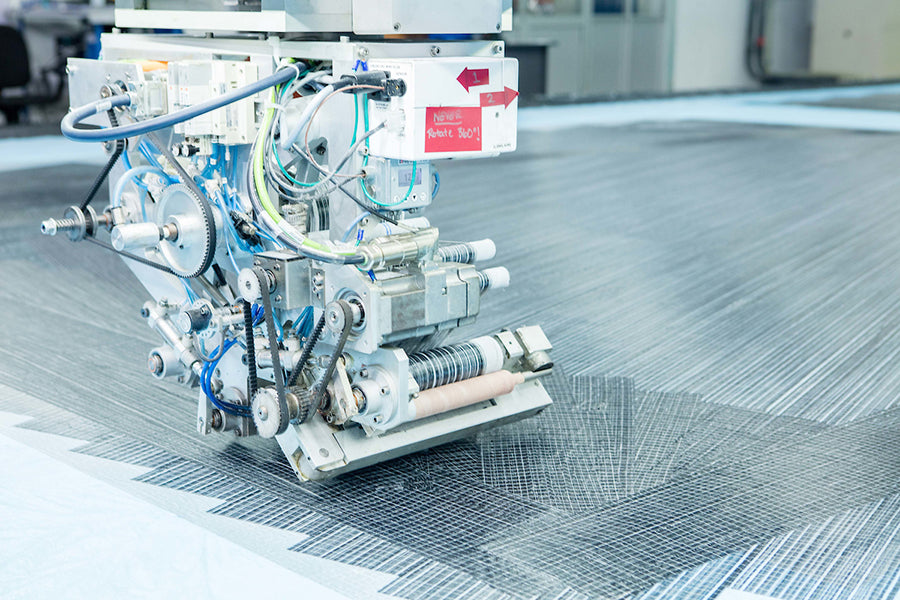
NORTH SAILS COMPLETA SU EVOLUCIÓN HACIA LA TECNOLOGÍA 3Di
NORTH SAILS COMPLETA SU EVOLUCIÓN HACIA LA TECNOLOGÍA 3Di
El comienzo de 2018 marca un hito en la historia de North Sails. La velería líder mundial completa un ciclo de diez años de transformación desde su tecnología de 3DL, velas laminadas en 3D, a estructuras de composite moldeadas 3Di. Las plantas de la firma en Minden (Estados Unidos) y Sri Lanka ya sólo fabrican 3Di, la vela de mayor éxito de la historia.
North Sails lideró la tendencia de construcción laminada de mylar e hilo con sus revolucionarias velas 3DL, que dominaron la velería de altas prestaciones desde principios de 1990 hasta la America’s Cup de 2007. Con la aparición del 3Di, la compañía fue abandonando la producción de velas laminadas a favor de estructuras 3D de composite con filamento esparcido y preimpregnadas. Las velas 3Di proporcionan propiedades de conservación de la forma y de durabilidad muy superiores a cualquier otra vela de construcción laminada. El moldeado en tres dimensiones a escala real es la piedra angular de la tecnología North Sails.
Desde que el sindicato suizo Alinghi sorprendió a la comunidad de la vela probando estructuras 3Di en preparación para la defensa de la 32 America’s Cup en Valencia, el concepto 3Di no ha dejado de evolucionar y expandirse a lo largo y ancho del extenso catálogo North Sails, y hoy está disponible para todo tipo de embarcaciones, de grand prix a monotipos, de superyates a cruceros. La introducción el pasado año de las 3Di NORDAC para crucero y 3Di RAW 760S para regata supuso la aplicación del 3Di a barcos de menor eslora y su consiguiente popularización.
En respuesta a una demanda en constante crecimiento, North Sails ha ido adaptando sus instalaciones de producción en Minden (especializada en velas grand prix y de superyates) y Sri Lanka (barcos hasta 50 pies de eslora) a medida que la tecnología evolucionaba de velas de paneles y 3DL a 3Di. La última línea de producción de 3DL se cerró definitivamente en septiembre de 2017, y hoy las dos factorías fabrican exclusivamente 3Di. North Sails cuenta con líneas de preimpregnado idénticas en ambas plantas trabajando 14 turnos por semana, con siete líneas ATL (Automated Tape Laying o sistema de colocación automático de cintas) en Minden y otras cinco en Sri Lanka funcionando 24 horas al día y siete días por semana. Las líneas de preimpregnado y ATL alimentan ocho grúas y diez moldes a escala real ajustables de 3D.
Dan Neri, director general de North Sails, explica la evolución de la estrategia de producción de la firma: “La expansión de la factoría de Sri Lanka responde al éxito de la nueva 3Di RAW 760S para barcos de competición de menor tamaño y de la 3Di NORDAC para cruceros de pequeña eslora. Las velas 3Di siguen respondiendo a las necesidades de navegantes de todas las clases, desde Skiffs de 18 pies en Australia hasta la flota Ultime de 100 pies en Francia. Nuestra tecnología está detrás de un número sin precedentes de victorias en regata y de récords mundiales, además de infinidad de historias de cruceristas gracias a la consolidación de la 3Di NORDAC entre la comunidad de crucero”.
La planta 3D Minden es el centro de referencia para investigación de materiales, ingeniería y fabricación de productos tridimensionales, exclusivos de North Sails. Por su parte, Sri Lanka Manufacturing cuenta con instalaciones de última generación que ocupan a cerca de 1.200 personas distribuidas en ocho edificios. Ambos centros de producción envían las velas 3Di a todo el mundo.
La gama North Sails 3Di incluye las líneas 3Di RAW, 3Di ENDURANCE, 3Di NORDAC y 3Di Downwind.
Para más información sobre las velas North Sails 3Di, visita www.northsails.com o contacta con nosotros en info@es.northsails.com
READ MORE
READ MORE
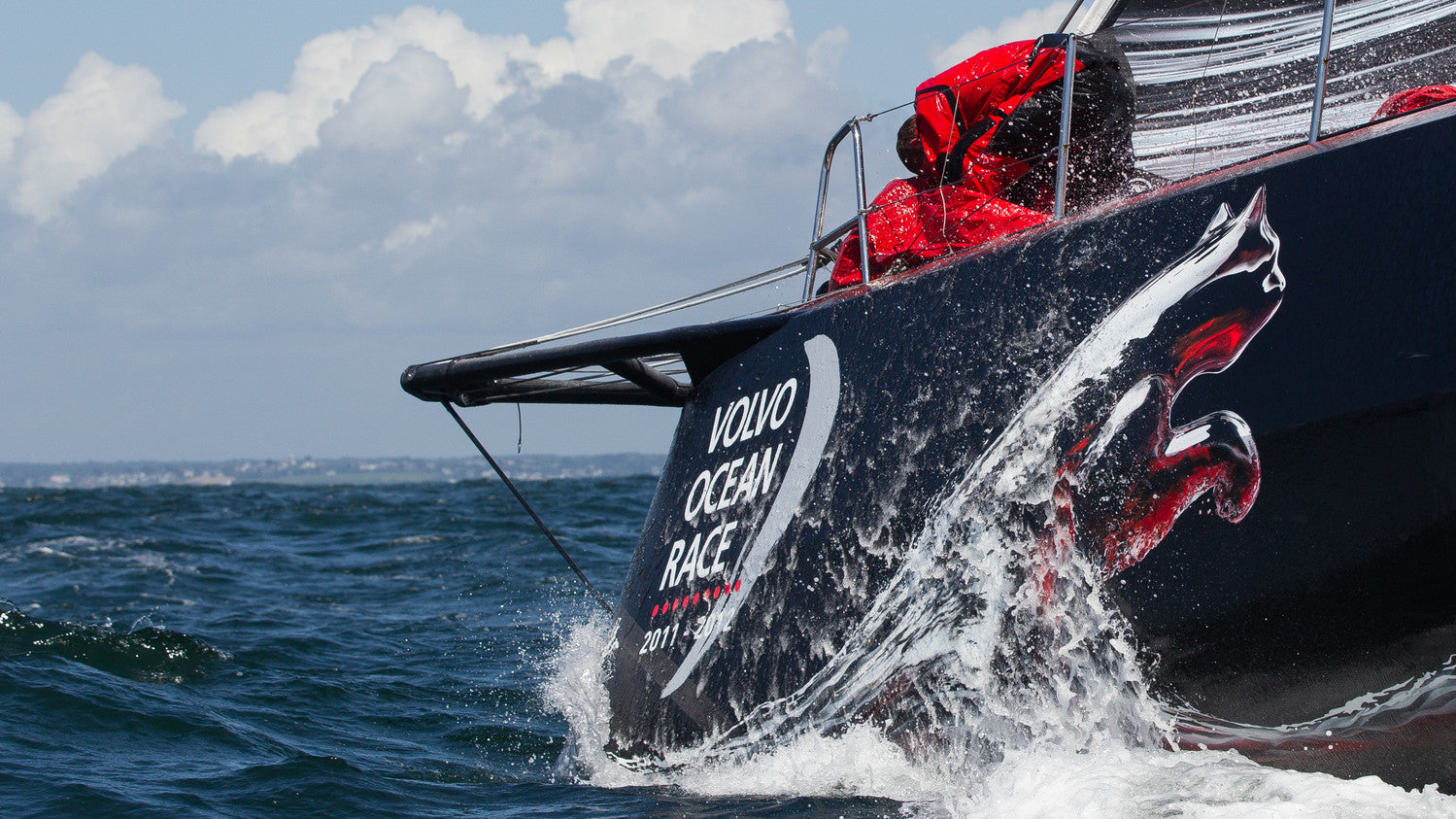
VOLVO OCEAN RACE: JUST ANOTHER YACHT RACE, ONLY LONGER
VOLVO OCEAN RACE: JUST ANOTHER YACHT RACE, ONLY LONGER
Around the World racing veterans from North Sails share their biggest lessons learned
What does an extreme event like the Volvo Ocean Race have in common with the distance racing most of us do? We asked race veterans (and North Sails employees) for lessons learned; read on for a few tips that just might help you on your next race.
The biggest screwups teach valuable lessons.
North Sails Vice President Kimo Worthington won the 1997-98 Volvo Ocean Race on EF Language
“On our first Southern Ocean leg from Cape Town to Australia, we didn’t have any idea what we were doing and we wiped out in a big squall, blew out our kite. We ended up in irons, and when I looked over the side the spinnaker pole had somehow wrapped itself around the front of the keel. Huge mess. Four hours of cleanup, and then we crashed another four times before the leg was over.
“As soon as we got into Fremantle, we had a very frank team meeting—not rah rah, but how did we screw up, how could we do it better? Instead of imploding, we decided to stack harder and farther back than anyone else. We also decided reefing was the key. Once we reefed, we could carry the kite in 40 knots of wind. By the time we passed Cape Horn, we were 500 miles ahead. That debrief was key to winning the race.”
Tune up with the fastest team before the start.
North Sails President Ken Read skippered PUMA Ocean Racing around the world in 2008-09 and 2011-12.
“MAPFRE and Dongfeng did something very interesting before this race. They both must’ve decided they were good enough to win a two boat race, so they trained with each other to create an even bigger speed advantage over the other teams. So now what you have is two arch rivals going out to play with each other. Tuning up beforehand is about three things: Time, money, and smarts. Time to do some serious training. Money to buy the best drivers. And then enough smarts to team up for pre-race training with the other top guys… that’s a pretty powerful combination.”
© Ian Roman / Volvo Ocean Race
Keep working with your sail designer to get faster.
North Sails Designer Mickey Ickert has worked with several Whitbread and Volvo Ocean Race teams, including 2005-06 winners ABN AMRO.
“Back when the Whitbread and Volvo were on the cusp of satellite communication, periodically I would get a call from the boat discussing the next sail or sail recuts to be made in port. In those days, the sails were consistently developed and updated by each team, with the aim to catch up or outperform the opposition. It’s a long race, with plenty of opportunity to learn and improve, so it was possible to outperform the early leader if everyone kept talking as a team with the designers.”
© Oskar Kihlborg Volvo Ocean Race
READ MORE
READ MORE